
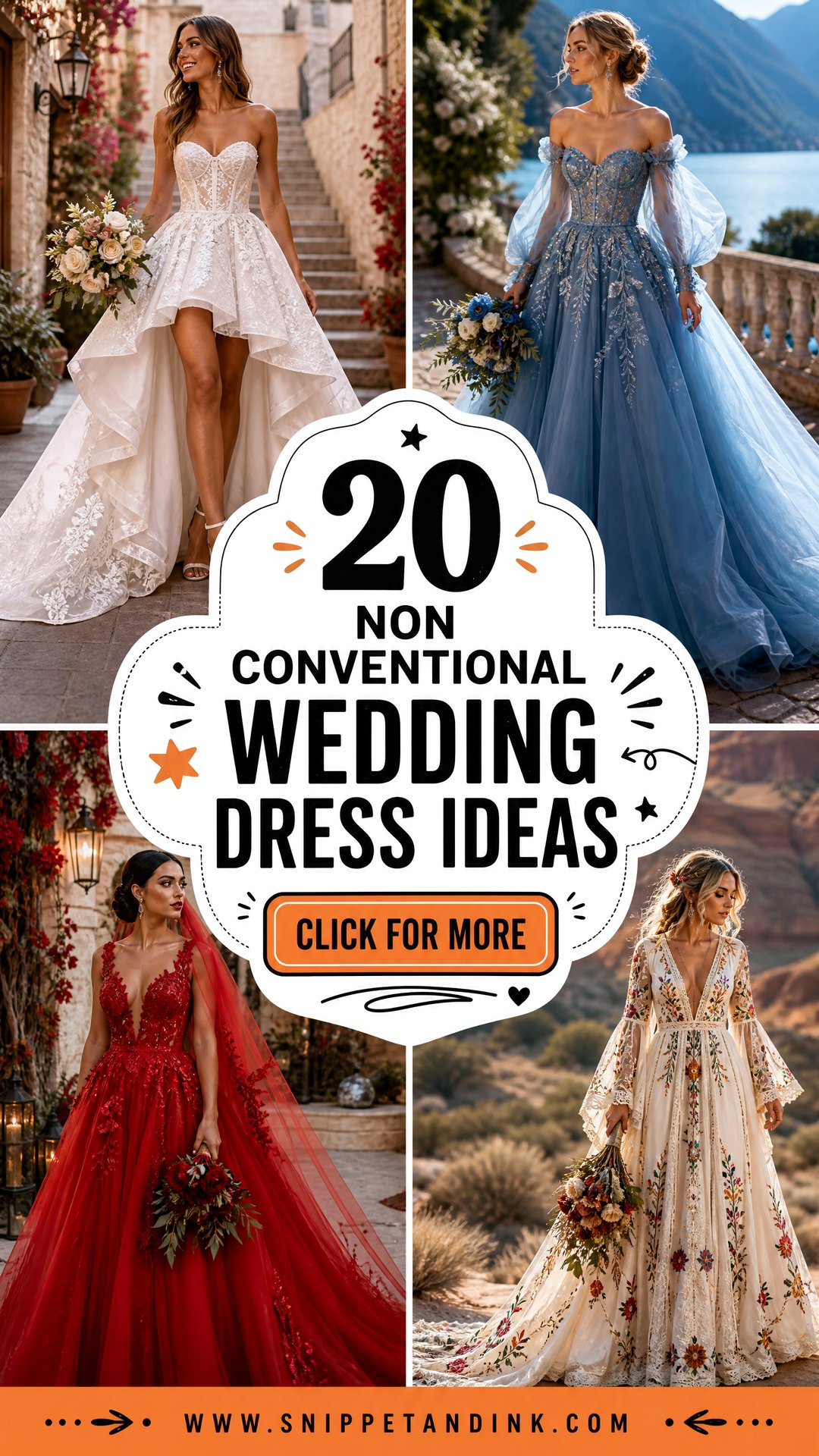
Bridal wear has never had one correct answer, and some of the brides I’ve dressed looked most like themselves in something no salon would call a wedding dress. Colour, tailoring, a short hem, heavy texture or a garment from your own culture can all read as bridal when the outfit is fitted properly and finished with care. A black gown suits an evening ceremony, a printed floral dress belongs in a garden, and a sleek jumpsuit makes sense at a city registry office. What I look at first is never the trend. It’s your venue, the season, how much you’ll move, and whether the outfit can survive ten hours of hugs. The ideas below come with the shoes, accessories and fitting notes I’d give a bride trying each one.
Where Brides Actually Find Non-Traditional Outfits
Most bridal salons stock white and ivory gowns and very little else, so an alternative outfit often comes from somewhere unexpected. I usually point brides in four directions, and each has its own timing.
- Bridal designers who offer colour options. Many will make a sample style in blush, black or a custom shade, but production times are similar to any made-to-order gown, often several months.
- Eveningwear and occasion departments. Coloured gowns, sequins and velvet are easier to find here, and they ship far faster, though the construction may need upgrading by your seamstress.
- A tailor for suits, shorts suits and tuxedo dresses. Menswear-style tailoring needs several fittings, so start early.
- Cultural specialists for a lehenga, qipao, kente or any traditional garment, where embroidery and fitting can take months.
Whichever route you take, leave room for alterations. Non-bridal garments are rarely cut with a wedding day’s demands in mind, such as strong boning, a bustle or a secure hem, and adding those takes time.
1. Black Wedding Dress
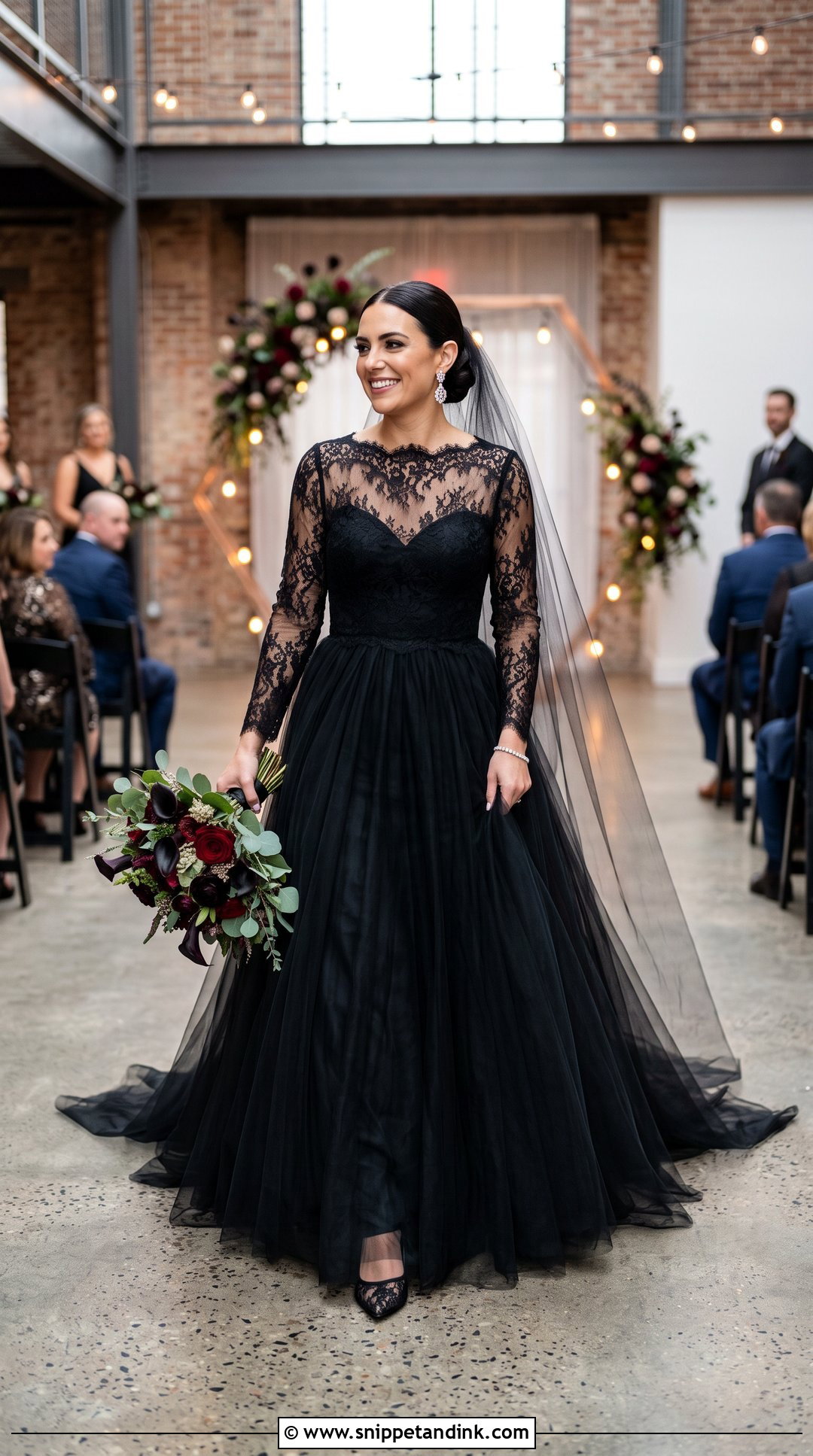
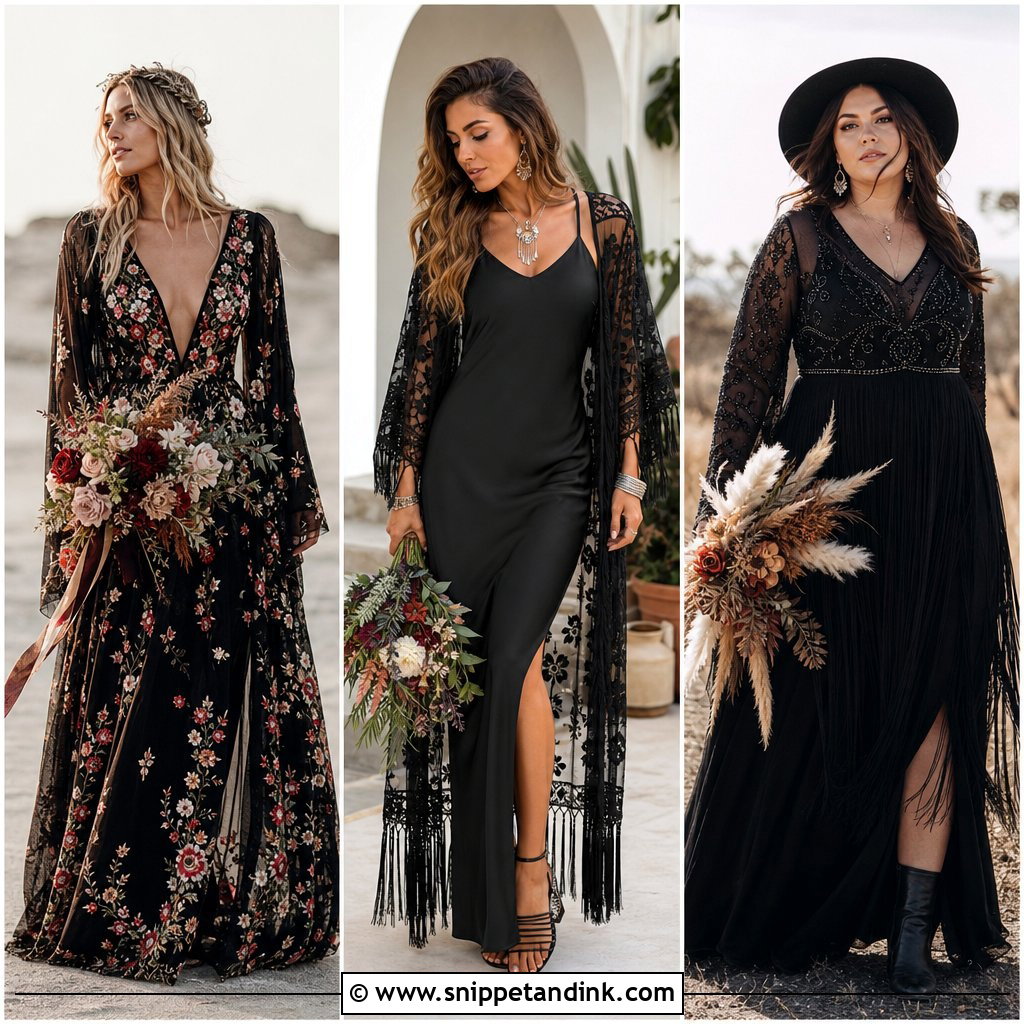
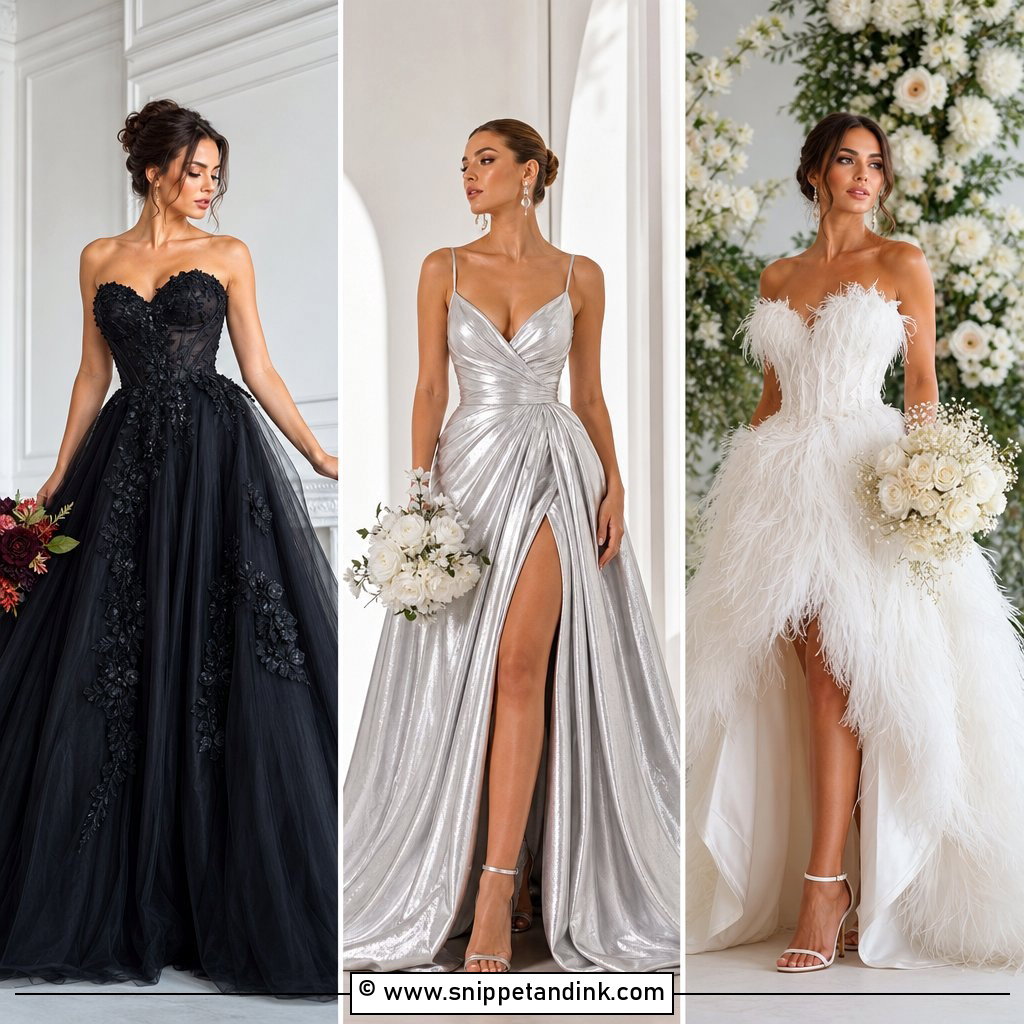
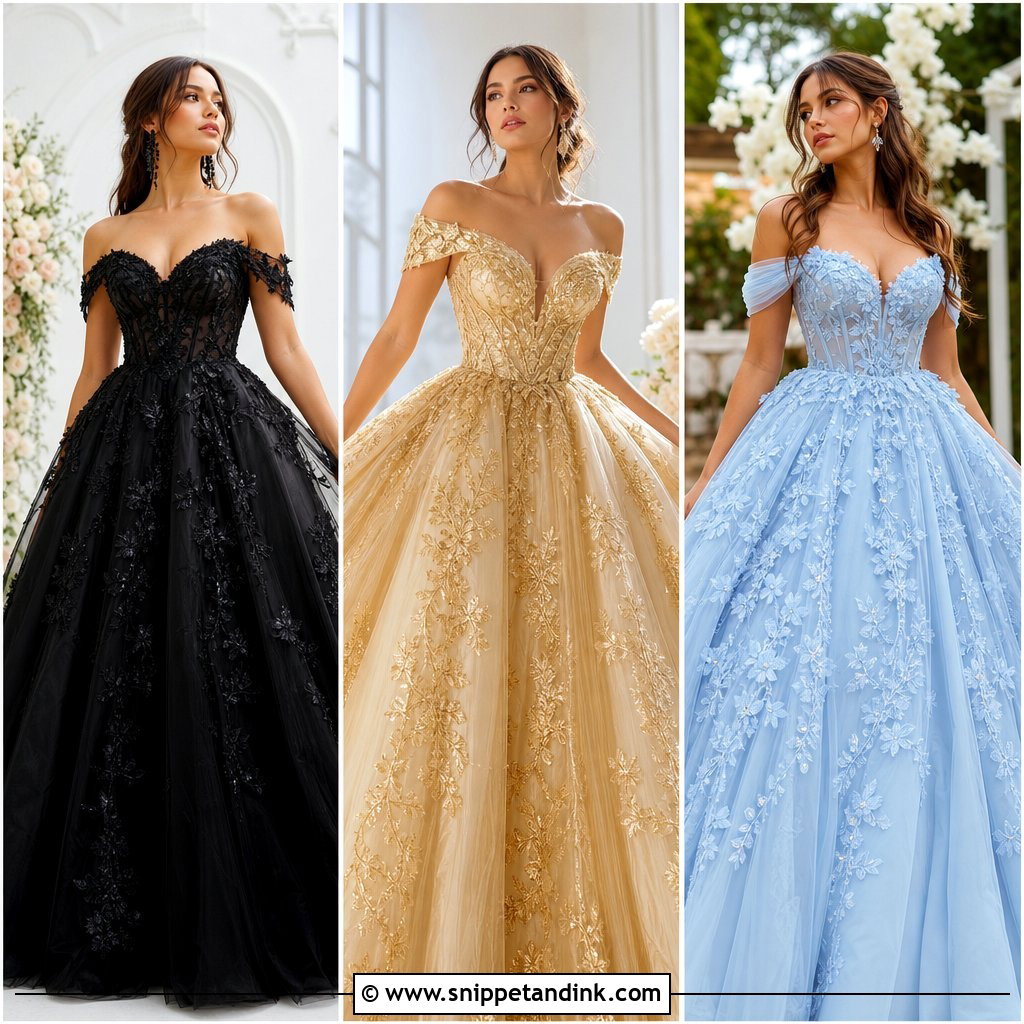
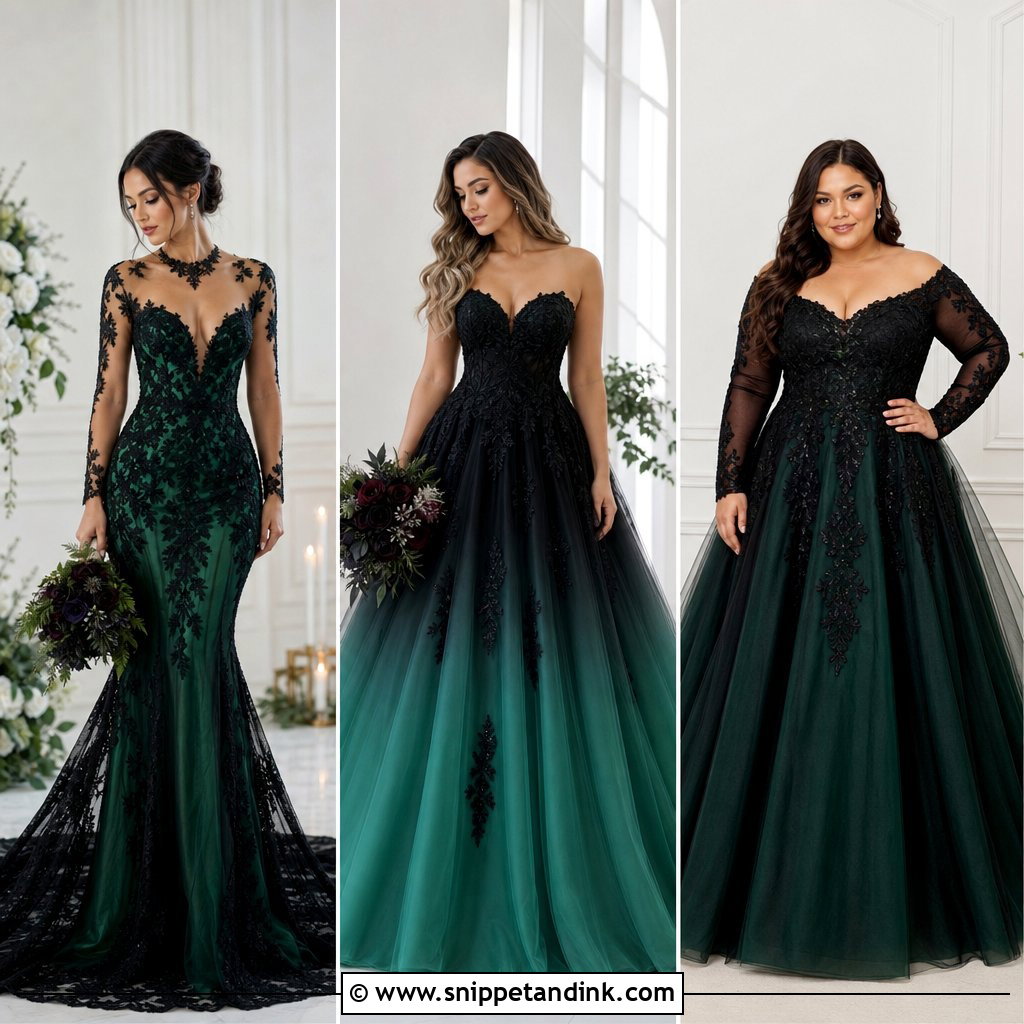
Black is the hardest colour to fit and the easiest to get wrong in photos. A fitted crepe gown gives you clean modern lines; a full tulle skirt adds movement and keeps the colour from looking flat. Some texture, such as black lace, velvet trim or a little beading, helps the camera find detail in the dark fabric, because plain black often reads as a silhouette with no shape inside it. Pointed black heels, crystal earrings and a structured mini bag finish it, and you can pick a sheer black veil or an ivory one for contrast. I keep the bouquet pale with white flowers and green foliage so the whole figure doesn’t go heavy. Evening ceremonies, industrial venues and formal fall weddings suit it. Tailoring is everything here: loose seams on black look sloppy, while sharp ones look deliberate.
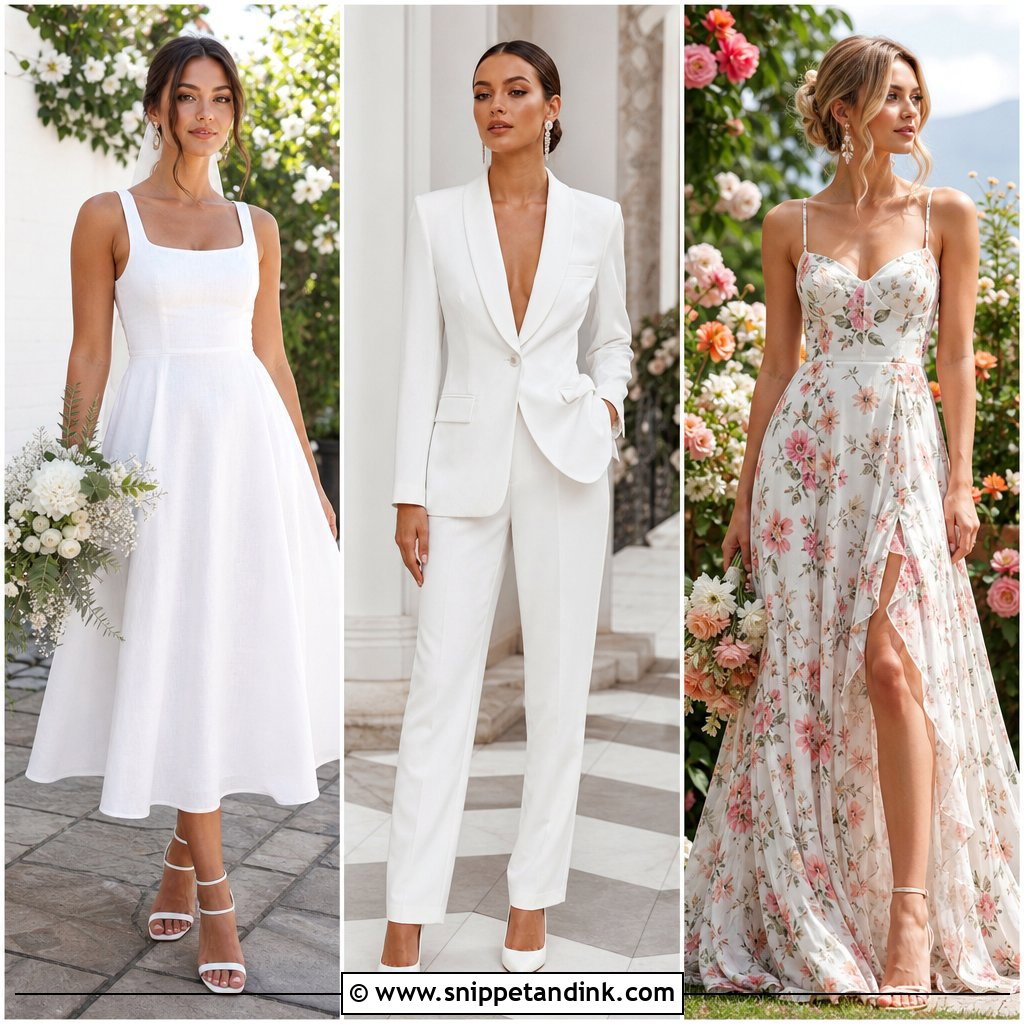
2. Floral Wedding Dress
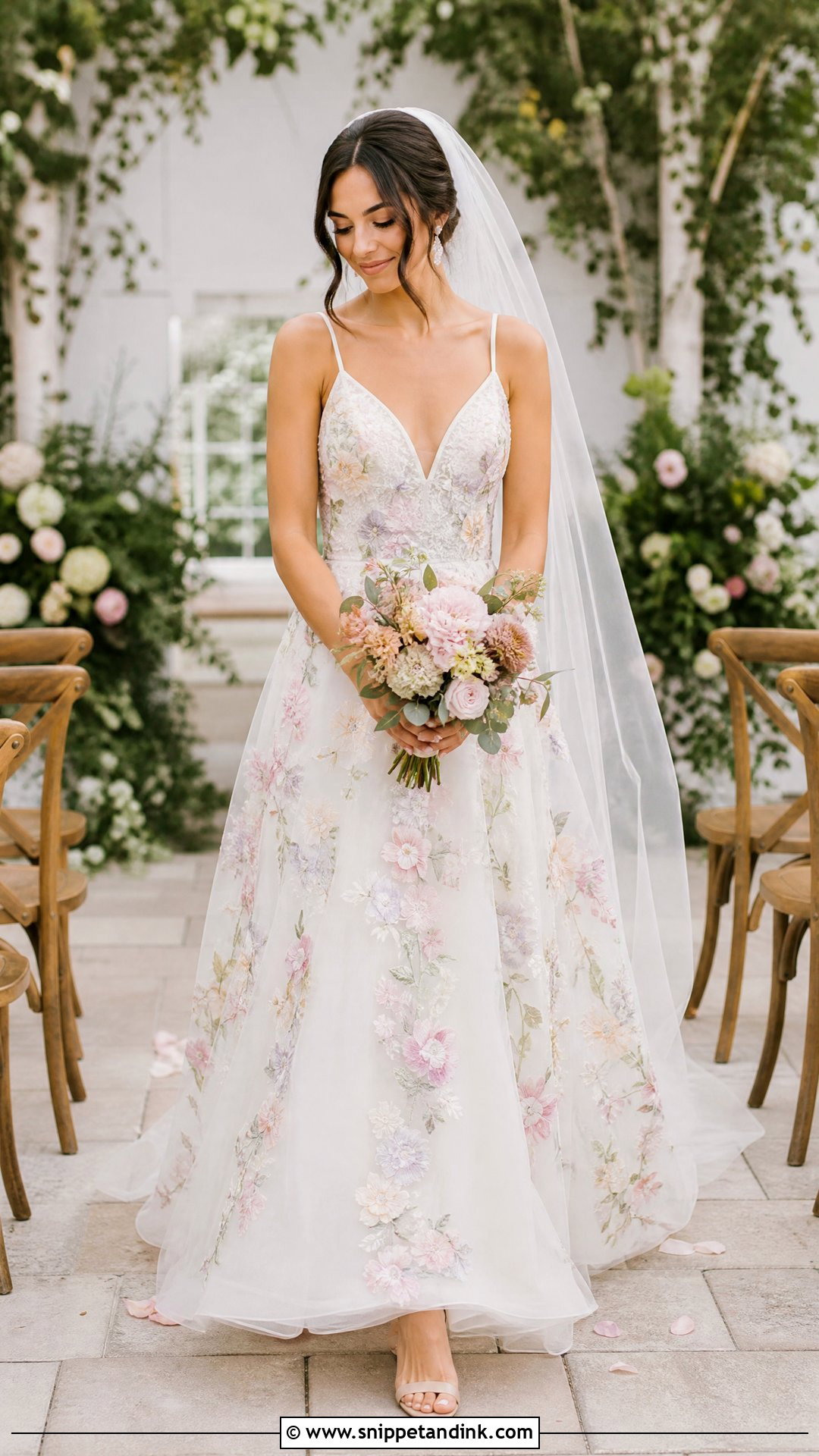
A floral print earns its place outdoors, where it echoes the setting instead of fighting it. Embroidered flowers, watercolour prints or raised appliqués on organza or tulle in pastel pink, blue or lavender give a softer alternative to solid white. When I fit a printed dress, the first thing I check is the seams. The print should line up across them, and any alteration has to leave the largest flowers where the designer placed them, not chopped in half at the side seam. Block-heel sandals, small drop earrings and a bouquet that picks one colour from the print, rather than copying all of it, keep it calm. Leave the veil plain. A dark floral background with a fitted cut is the bolder route.
3. Gold Sequin Wedding Dress
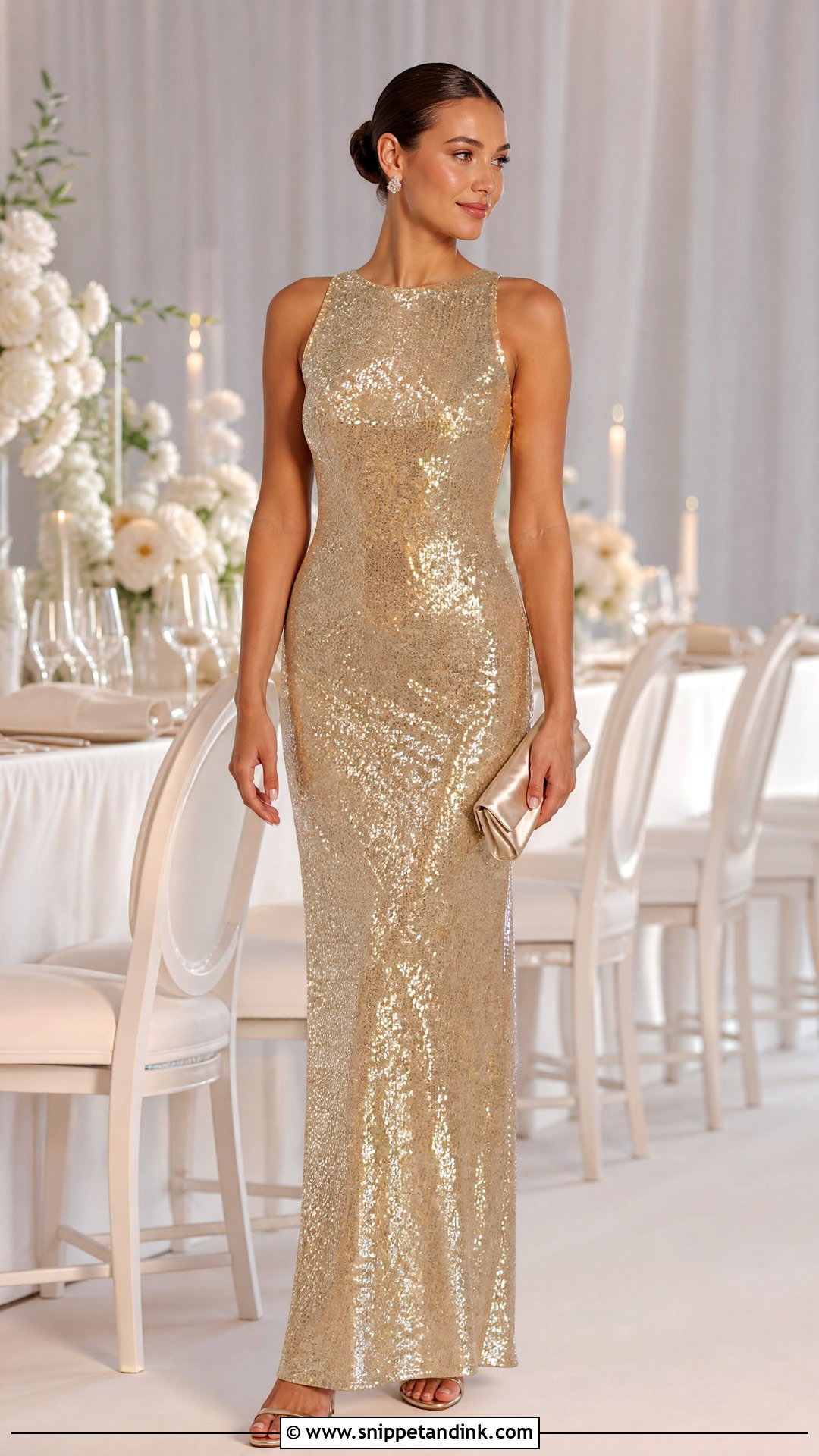
Sequins do the work, so everything else should step back. Soft champagne gold is the quieter option and brighter metallic gold is the louder one. A column, slip or relaxed A-line keeps the surface from looking busy; anything with ruffles or a huge skirt starts to look like a costume. Neutral metallic sandals, a compact satin clutch and small pearl earrings are enough. Too many sparkling accessories and the eye has nowhere to rest. Sequins have sharp edges, so I check two things in a fitting: that the lining is soft where skin touches it, especially under the arms, and that the veil doesn’t snag when it brushes the back. A sleek bun or smooth waves suit the shine at an evening reception or a New Year wedding.
4. White Bridal Pantsuit
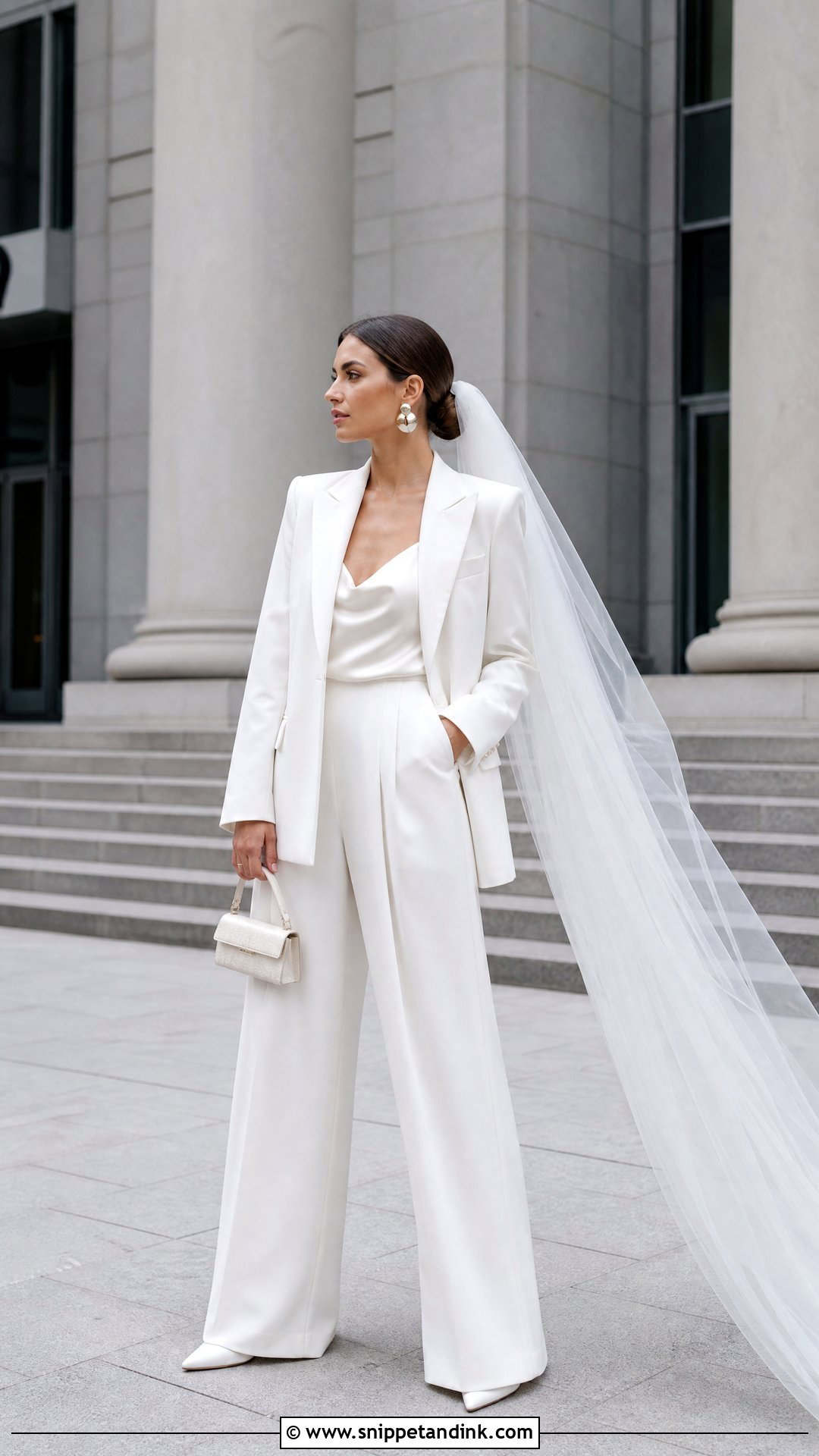
Not every bride wants a gown, and a well-made white pantsuit looks every bit as formal. Start with a sharply tailored blazer and high-waisted trousers in crepe, satin or lightweight wool, and a silk camisole or a minimal bodysuit underneath for a clean base. The detail I fuss over is trouser length. They should just skim the floor in your wedding shoes, showing the toe, and that means hemming in those exact shoes. Pointed pumps lengthen the leg; loafers give a slightly androgynous finish. Sculptural earrings, a small top-handle bag and a birdcage veil or a long veil set under a low bun complete it. If bright white feels severe against your skin, cream or pale blush suiting is gentler. City weddings, courthouses and galleries suit a suit.
5. Bridal Jumpsuit With Overskirt
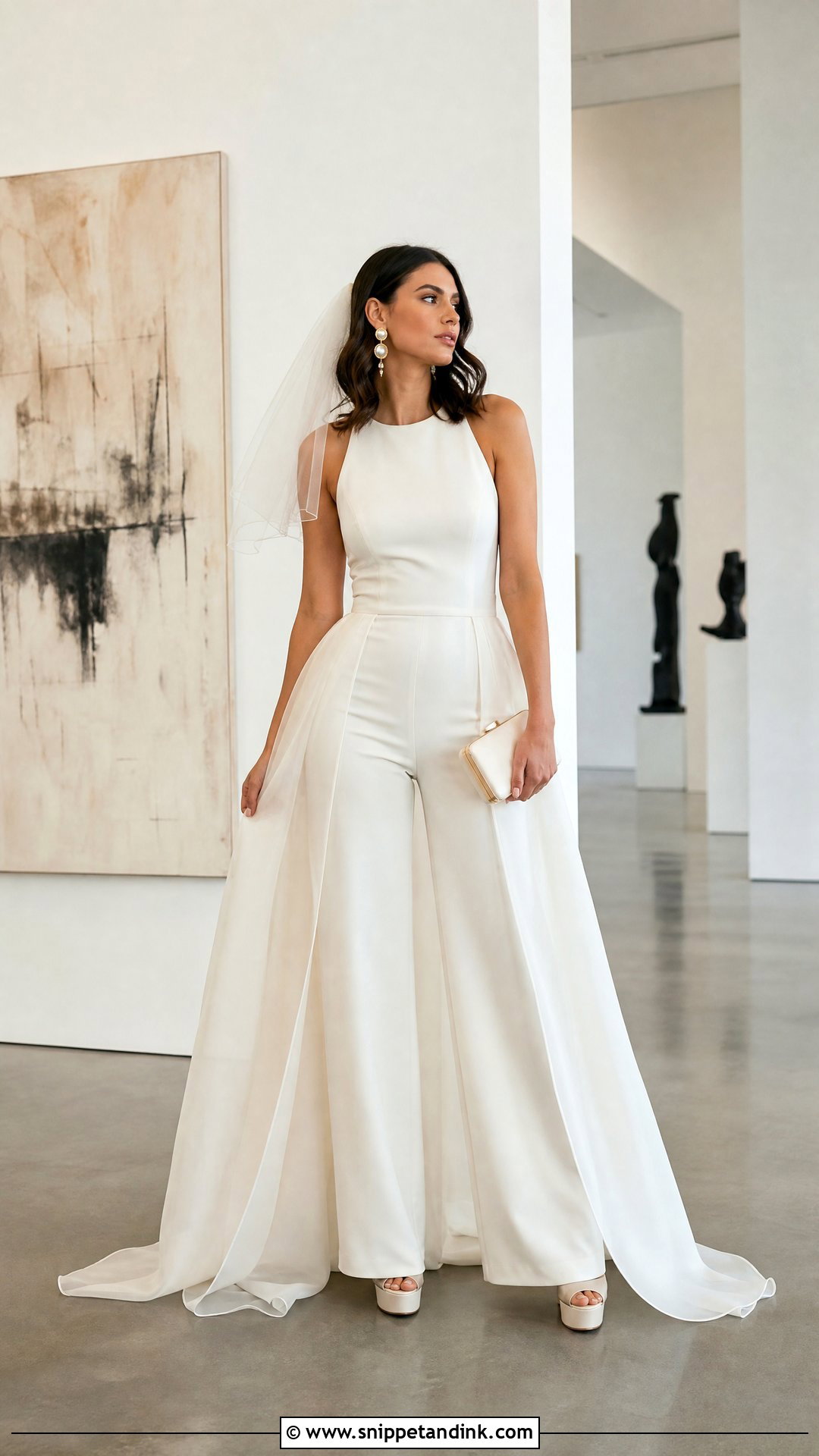
Two looks, one outfit. A bridal jumpsuit with an overskirt gives you the drama of a skirt for the aisle and the freedom of trousers for the dance floor. A wide-leg jumpsuit with a defined waist and a supportive neckline is the base, with a detachable organza, satin or tulle overskirt on top. The fastening is where these go wrong. I want it secure enough not to shift during the ceremony and simple enough for a bridesmaid to release in under a minute, so we practise the removal at the final fitting. Platform heels, bold earrings and a sleek clutch suit it, and a shoulder-length veil keeps the neckline visible.
6. Two Piece Wedding Dress
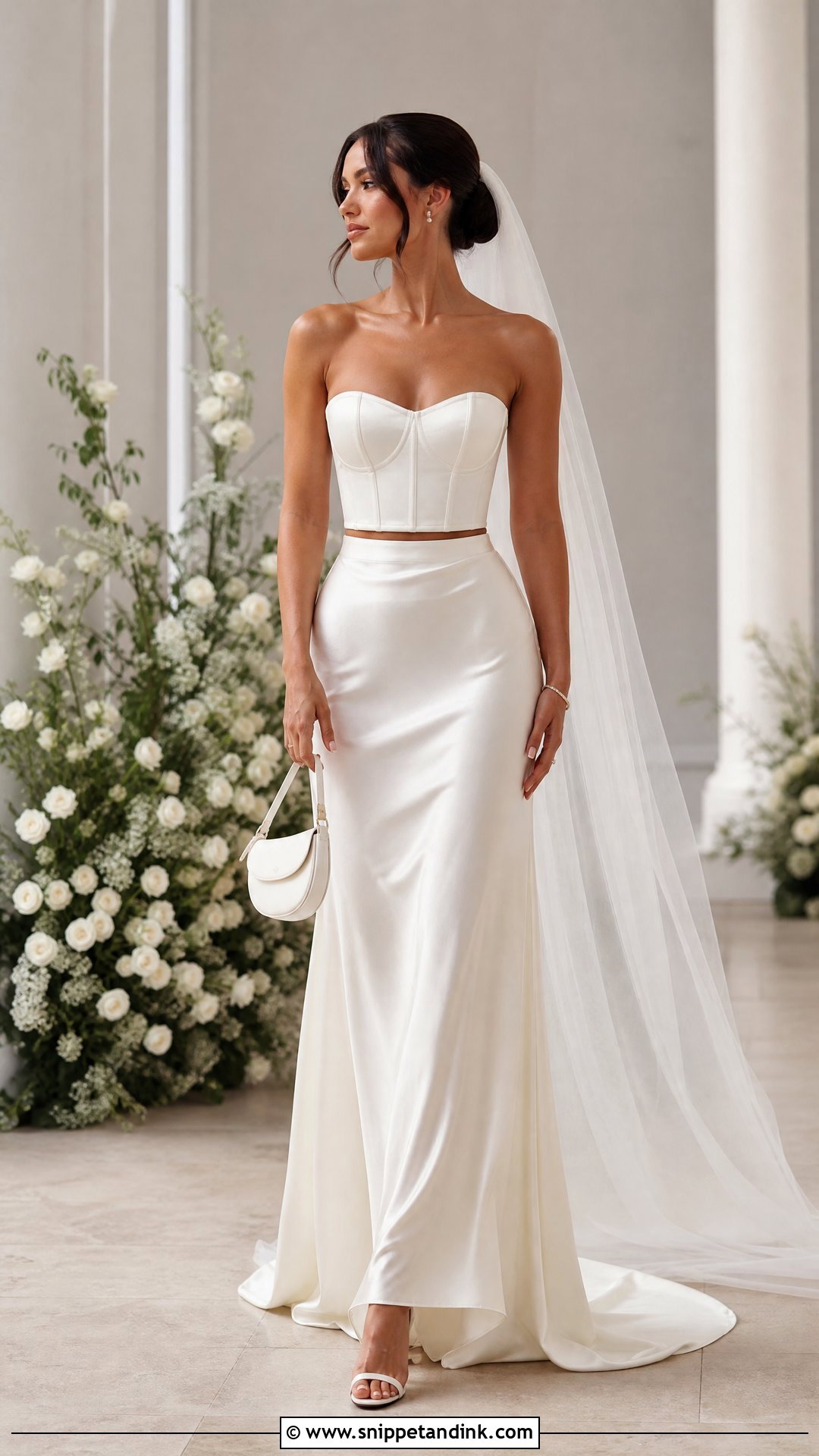
Separates solve a fitting problem that one-piece gowns can’t. If your top and bottom are different sizes, a two-piece wedding dress lets each part fit properly, and you can wear either piece again later. Pair a structured corset or silk camisole with a high-waisted satin, tulle or crepe skirt, keeping both in the same colour family so they read as one outfit. I check the waistband while the bride sits and reaches: it should sit smoothly without pinching, and the top should not ride up to show a gap of skin unless you planned it. Sleek heels, a fine bracelet, a small shoulder bag and a cathedral veil make simple separates feel ceremonial. A cropped jacket or a removable lace top adds coverage for the ceremony.
7. Tea Length Wedding Dress
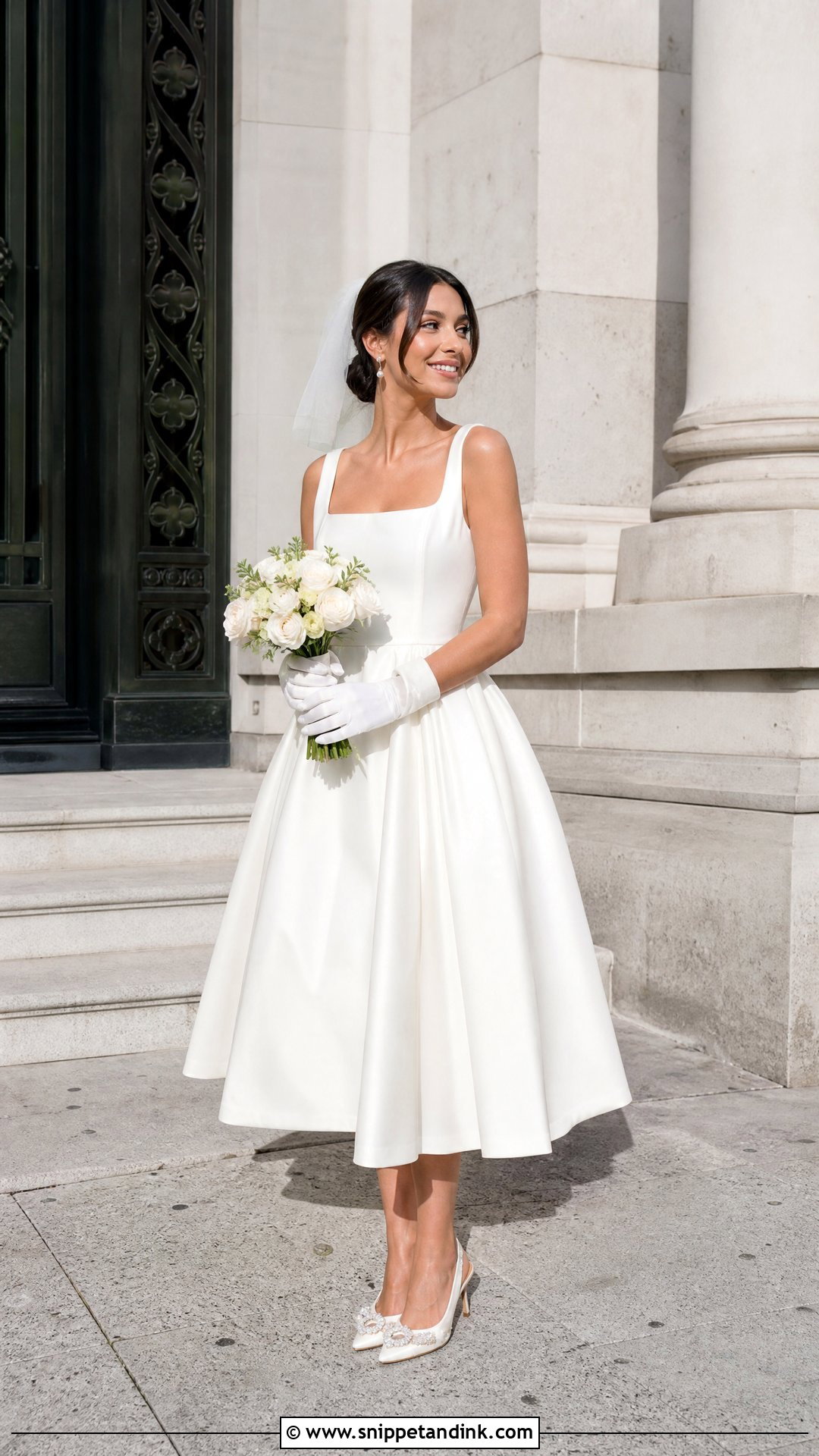
Tea length puts your shoes centre stage, since the skirt falls between the knee and the ankle. A fitted bodice with a full skirt gives the retro version; a streamlined midi is the modern one. This is the length where I tell brides to spend on footwear, whether that’s embellished pumps, satin slingbacks or a colour you love. A short veil, pearl earrings and a compact bouquet keep the proportions right, and gloves add polish without crowding the shorter hem. Courthouse ceremonies and daytime receptions suit it. Have the hem adjusted while you wear the actual shoes, because two centimetres of heel changes where the skirt hits your calf.
8. High Low Wedding Dress
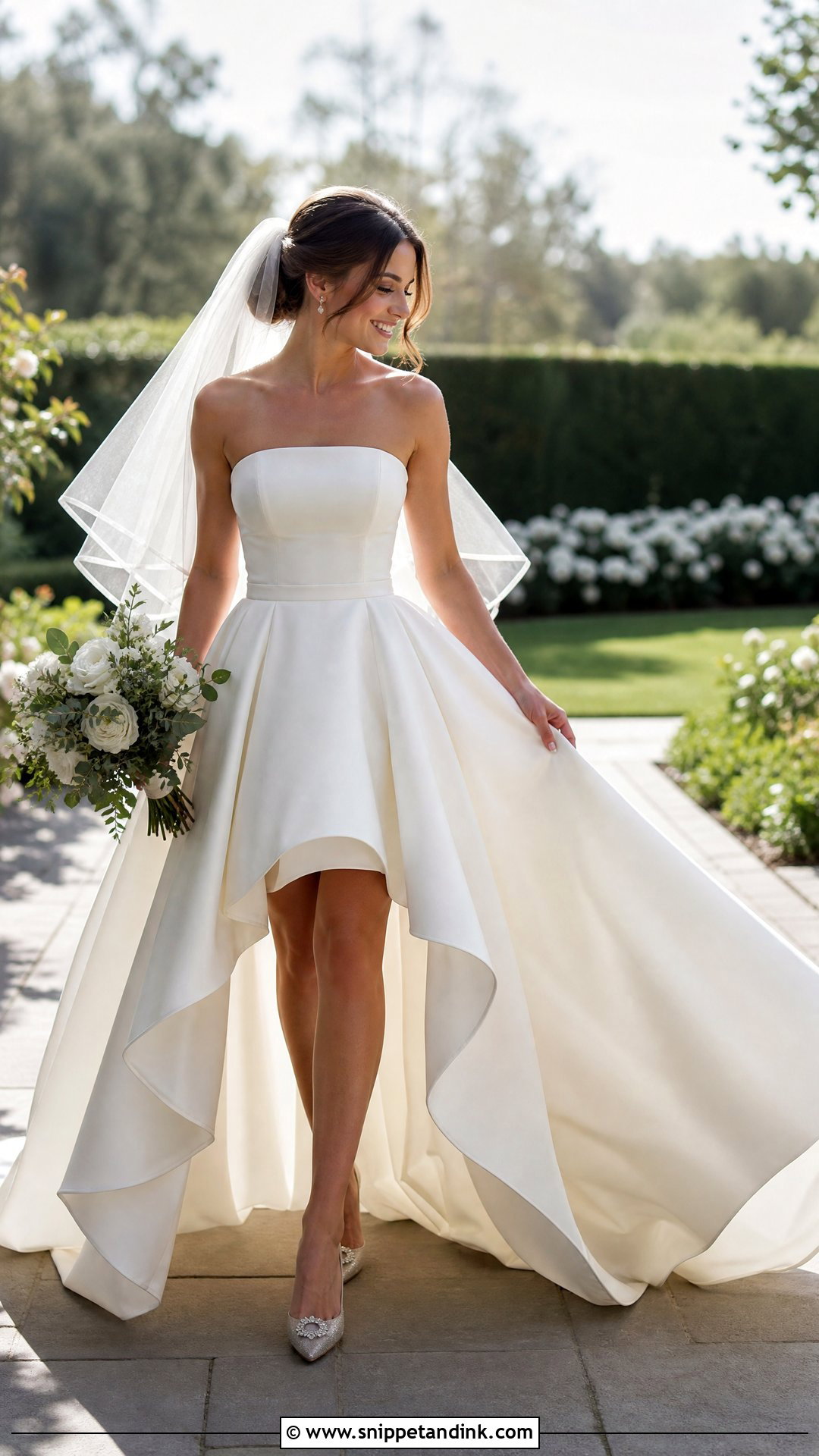
High-low hems are practical in a way people don’t expect. The short front keeps the skirt off wet grass and uneven paths, while the long back still trails behind you for the aisle. Structured satin gives architectural volume; layered tulle softens it. Your legs are on show, so footwear becomes part of the design, and ankle boots can work well at a barn or a woodland site. Keep the jewellery streamlined and attach a simple veil to a low hairstyle. My one test: walk, turn on the spot and sit down. A back panel that’s too long trips you on the turn, and one that’s too short looks like an accident rather than a choice.
9. Ombre Wedding Dress
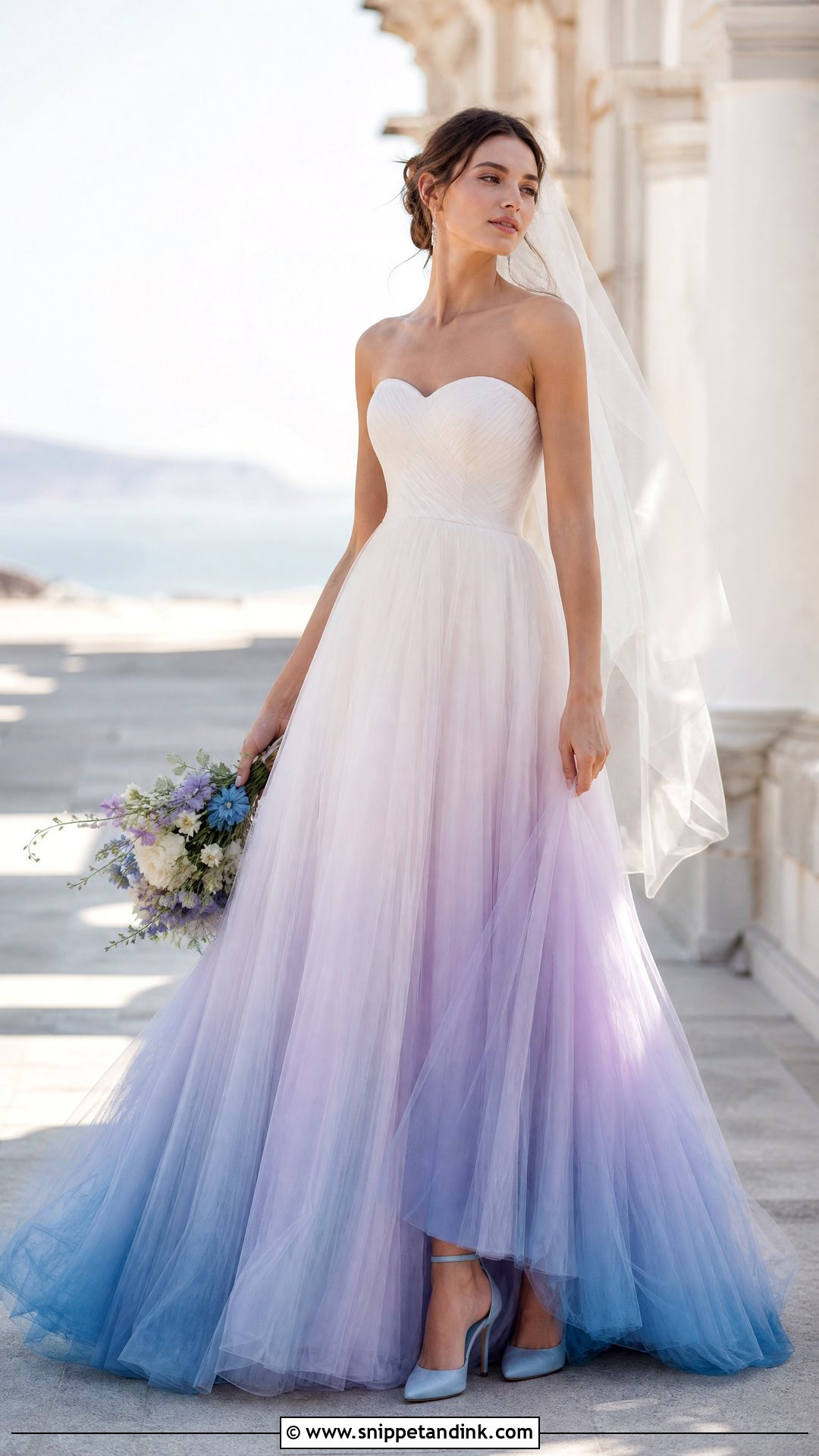
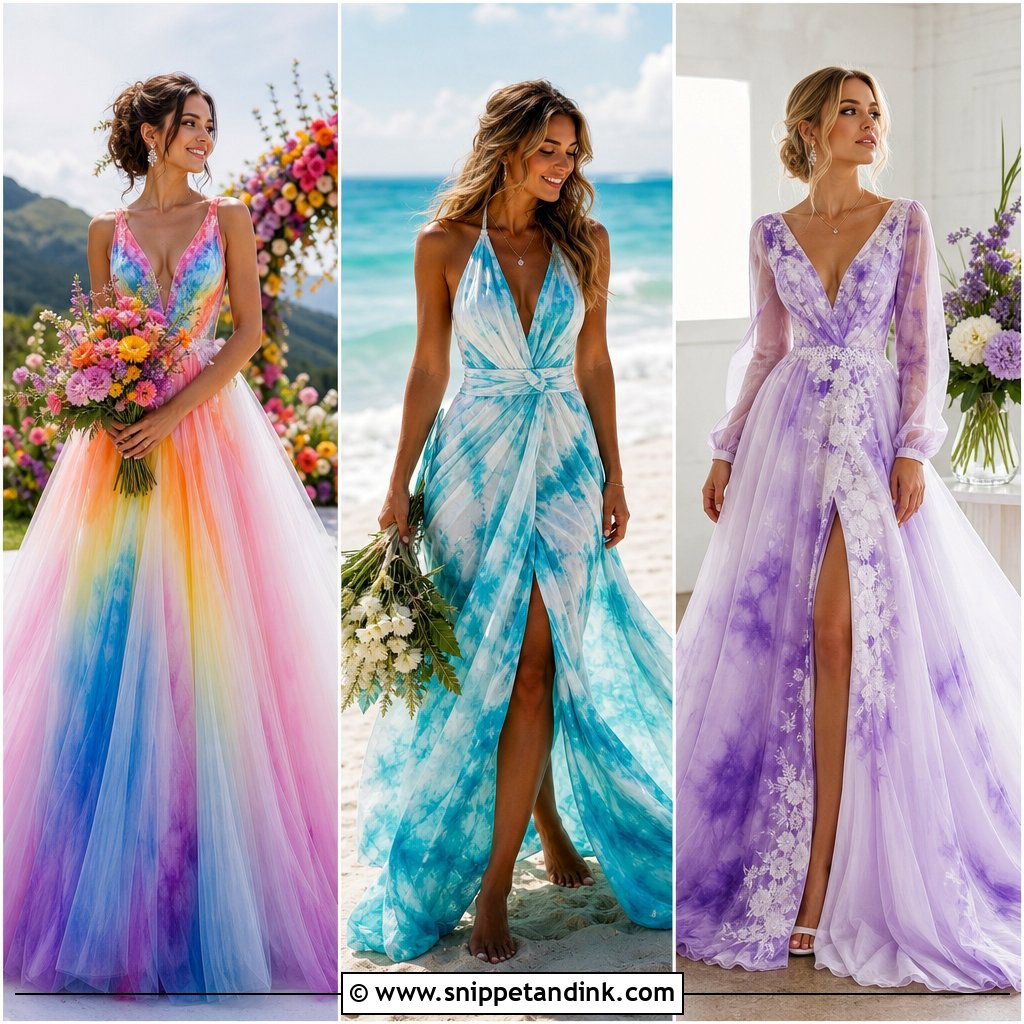
Ombre introduces colour gradually, which is why it suits brides who want some white but not only white. The gown fades from ivory into blush, blue, lavender or orange, and a flowing chiffon or tulle skirt shows the transition best as it moves. A plain ivory bodice keeps the top half distinctly bridal; an all-over gradient is more artistic. Shoes in the lightest shade, quiet earrings and a bouquet with one or two matching tones suit it, and I’d avoid accessories in an unrelated colour. Before any alteration, find out where the deepest colour sits. Shortening the hem of an ombre skirt can cut off exactly the part you bought it for.
10. Blue Wedding Dress
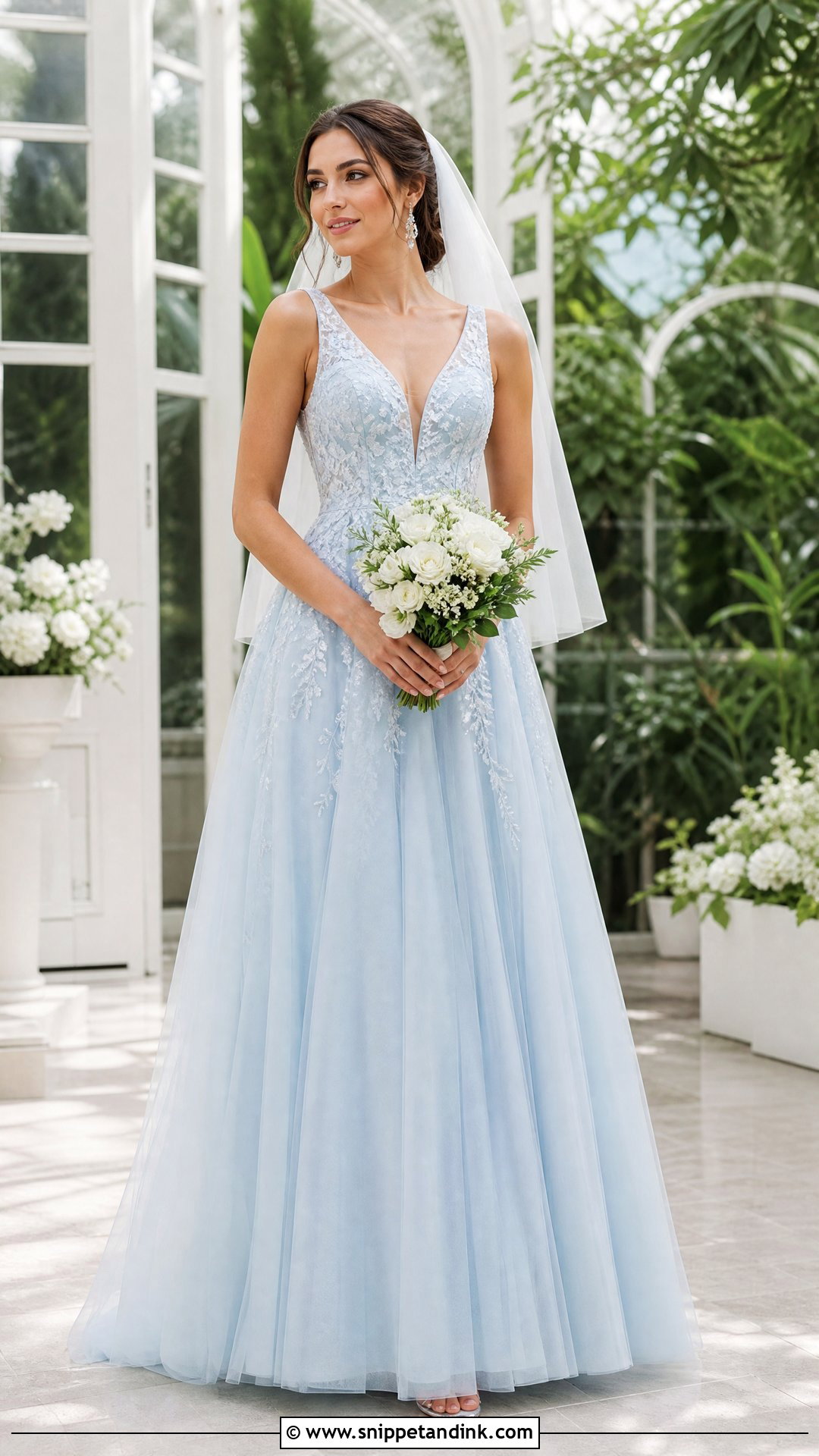
Shade decides everything with blue. Powder blue tulle reads soft and romantic, while navy satin is an evening colour with real weight. The fabric should match the shade: a flowing A-line works in chiffon, and a structured column suits heavier satin. Silver heels, crystal earrings and a cool-toned clutch go with most blues, and a white bouquet stops the outfit looking too matched. Look at your venue’s colours too, because a blue dress against blue linens can disappear. I always ask for fabric swatches and look at them by a window, under warm indoor bulbs and on a phone camera, because blue shifts more than most colours between those three.
11. Red Wedding Dress
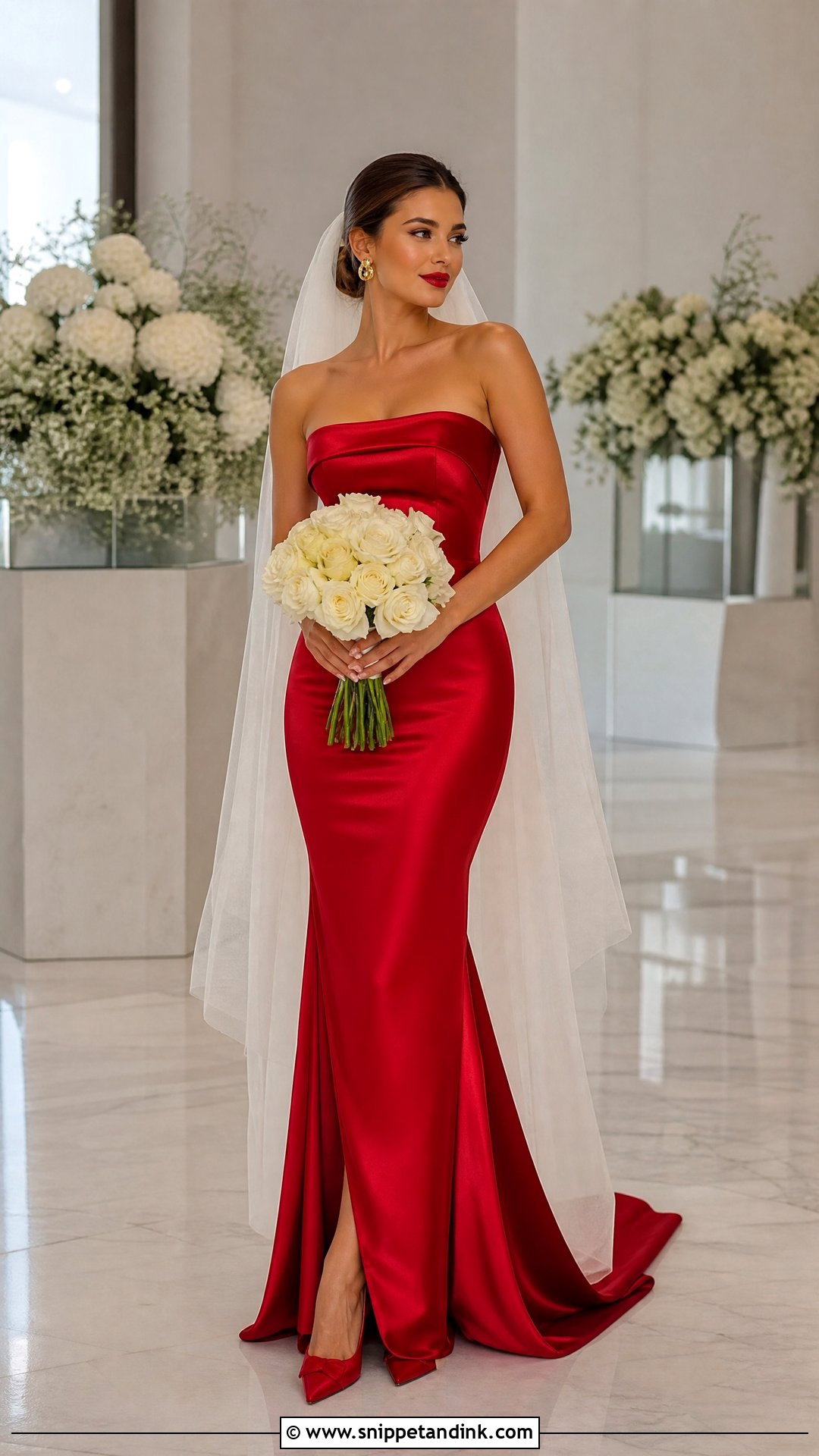
Few colours enter a room like red. Burgundy and crimson feel formal, cherry red brighter and more playful. Plain satin lets the colour speak, while embroidered fabric adds richness. For many brides, red also carries family or cultural meaning, and it can be a way to honour that tradition. Matching or neutral heels, gold jewellery and a compact clutch suit it, with a red veil for full impact or ivory to soften the effect. The thing I insist on is testing shades against your face before you order. Red with a blue undertone and red with an orange undertone flatter different skin tones, and the wrong one makes skin look flushed or sallow in photos. Bring your makeup artist into that decision if you can.
12. Silver Metallic Wedding Dress
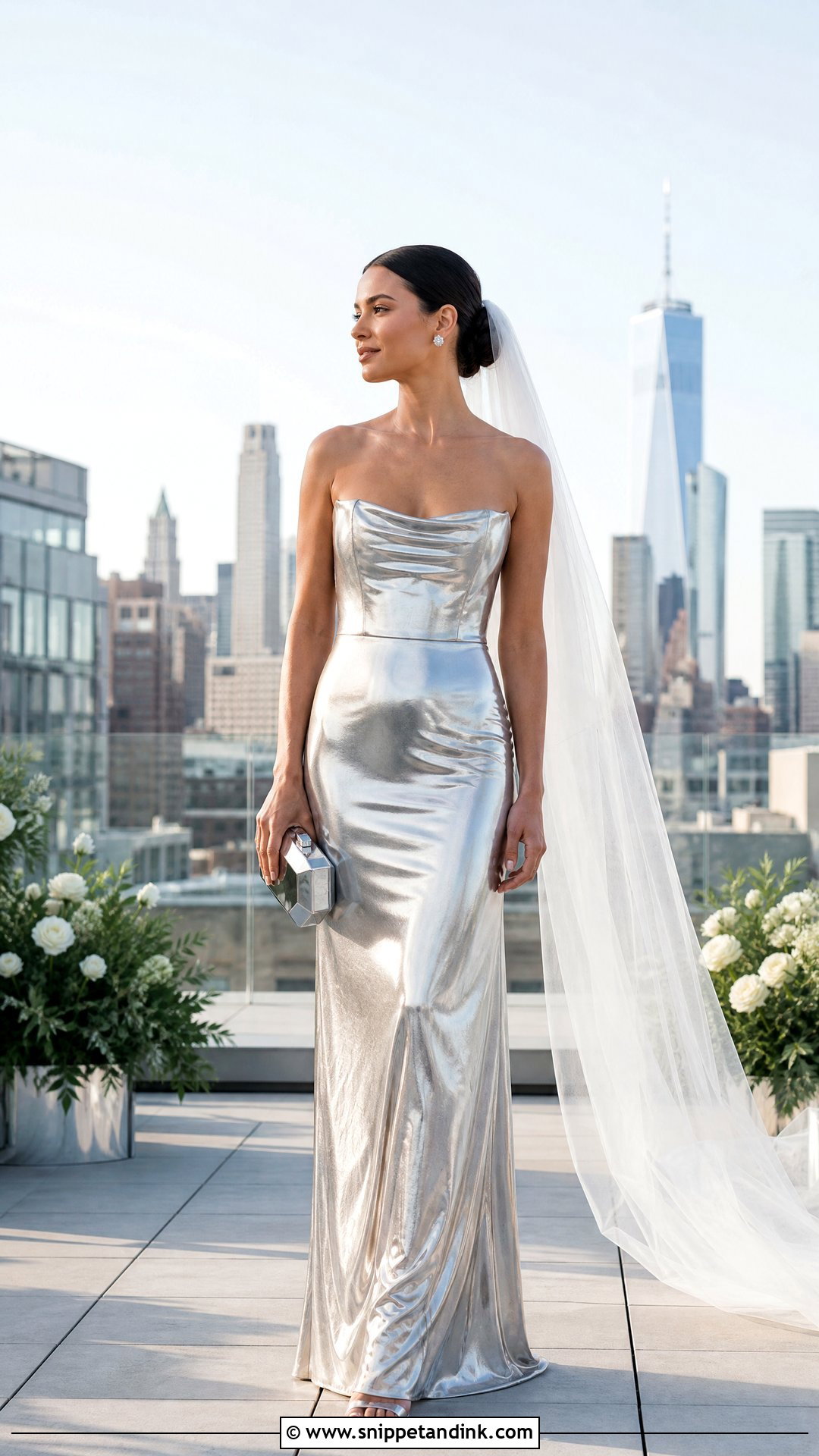
Silver can tip into costume quickly, so I keep the shape very simple. Liquid satin, metallic jacquard, fine sequins or beaded fabric with a soft sheen on a slip, column or sculpted A-line keeps it sleek. Silver sandals, crystal studs and a satin clutch are enough; with heavy embellishment, skip the necklace and wear one clean bracelet. A sheer white veil gives contrast without hiding the texture. Before you commit, photograph the dress with a phone flash in a dim room. Highly reflective fabric can blow out to white patches or turn grey on camera, and you want to know that at the boutique, not from the gallery. A smooth lining stops metallic yarn from scratching.
13. Embroidered Boho Wedding Dress
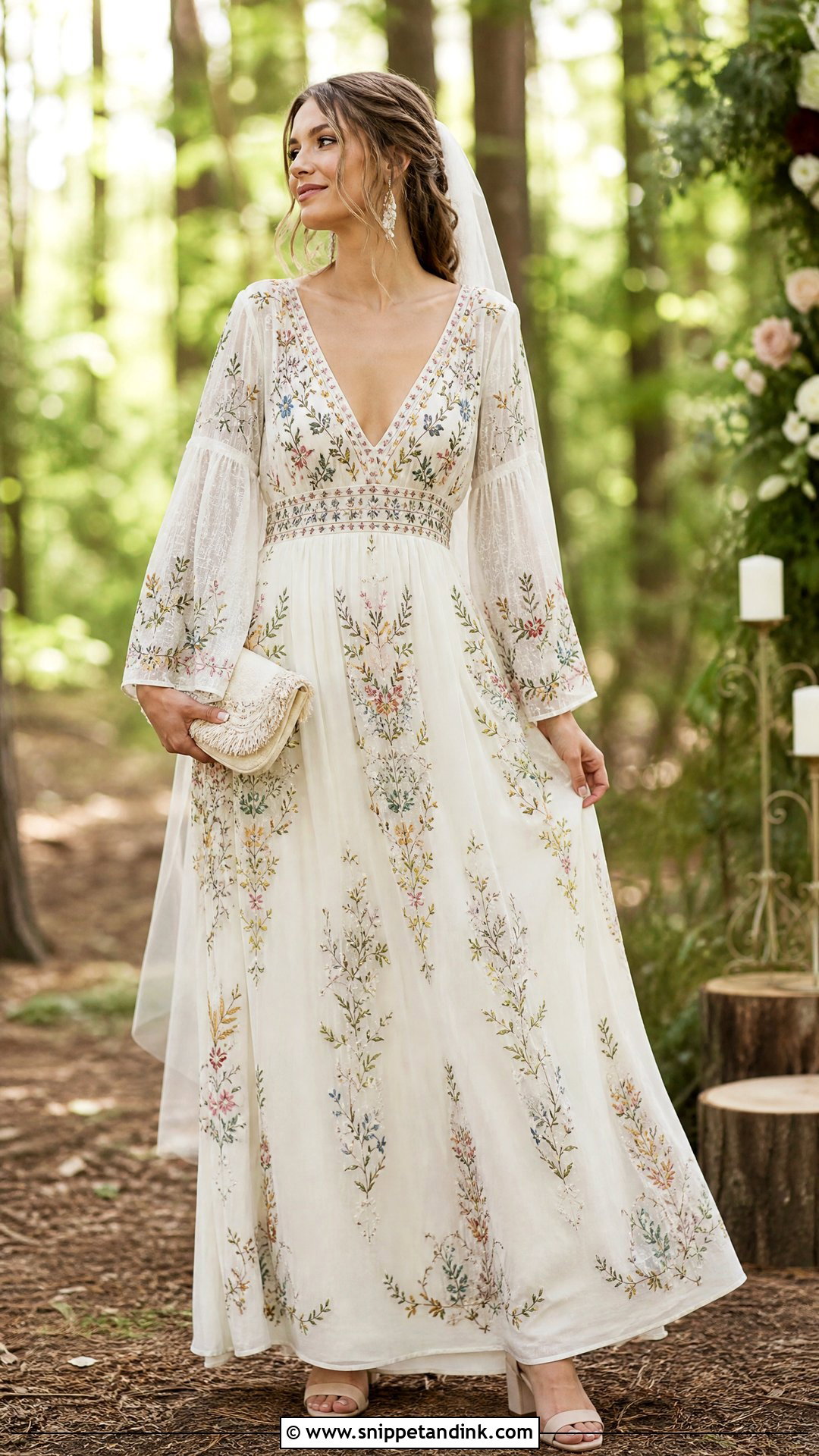
Embroidered boho gowns rely on handwork, and handwork needs checking. A flowing A-line or column decorated with botanical motifs or colourful threadwork, perhaps with bell sleeves or a cape back, moves freely and suits woodland settings, desert elopements and outdoor celebrations. I run my hand over the embroidery at the neckline and waist during fittings. Thick motifs can add bulk exactly where the dress is taken in, and after alterations they sometimes sit stiffly or pucker. Block heels, smart ankle boots or flat leather sandals suit the ground you’ll stand on. Small drop earrings, a textured clutch and loose waves or a braid finish it, and a minimal veil usually balances it better than a floral crown.
14. Velvet Wedding Dress
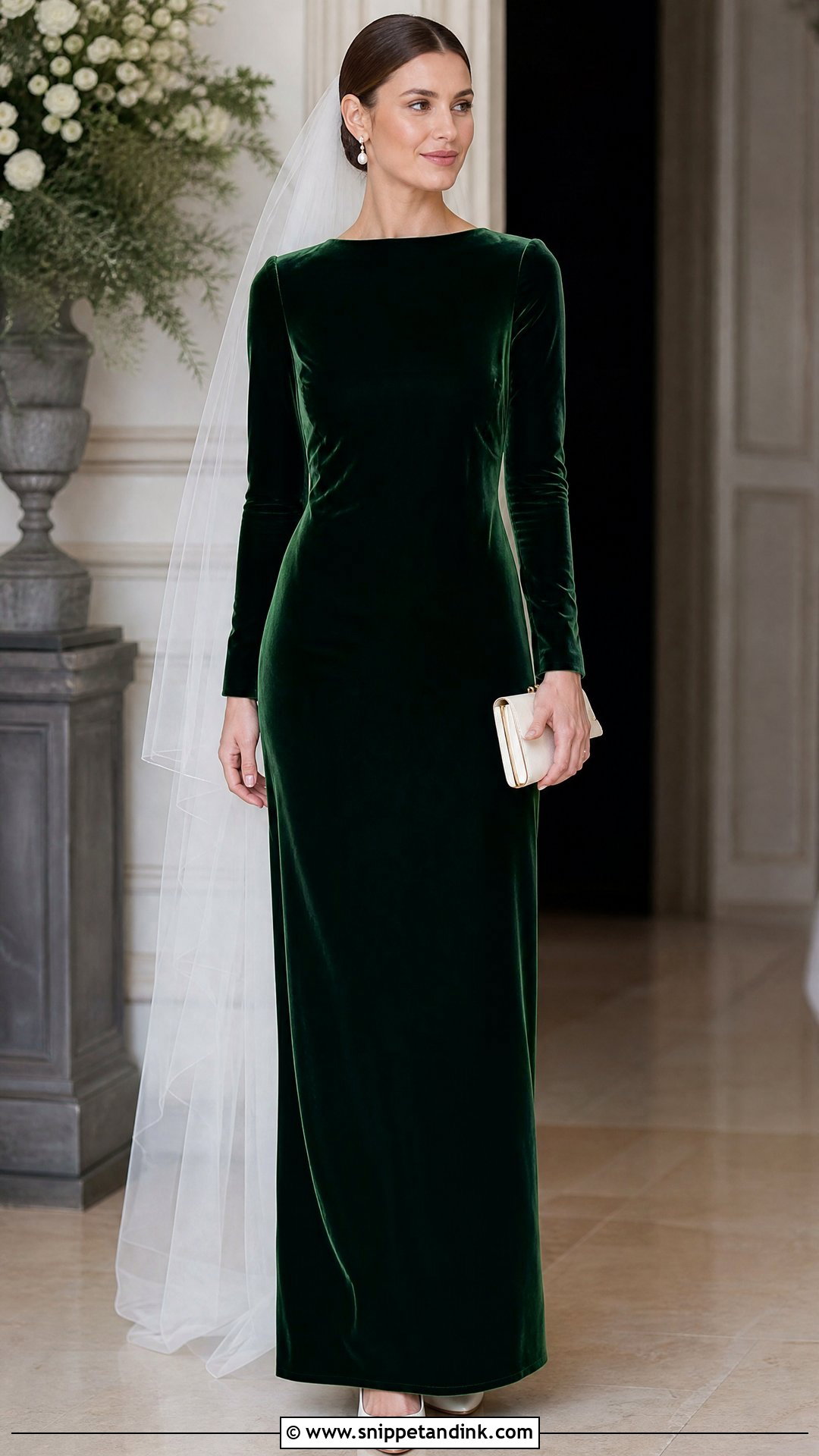
Velvet is a cold-weather fabric, full stop. It’s warm, heavy and rich, which is wonderful in a December ballroom and miserable at a summer garden party. Ivory velvet is a gentle step away from tradition, or you can go to emerald, navy, plum, or burgundy for a stronger statement. Long sleeves and a clean column let the surface show. Velvet has a pile that runs in one direction, so I look at the dress in different lights: if one panel was cut the other way, it reads a shade darker. Closed-toe heels, a structured clutch, metal or pearl earrings and a light tulle veil to lift the weight are all you need.
15. Feather Trim Mini Wedding Dress
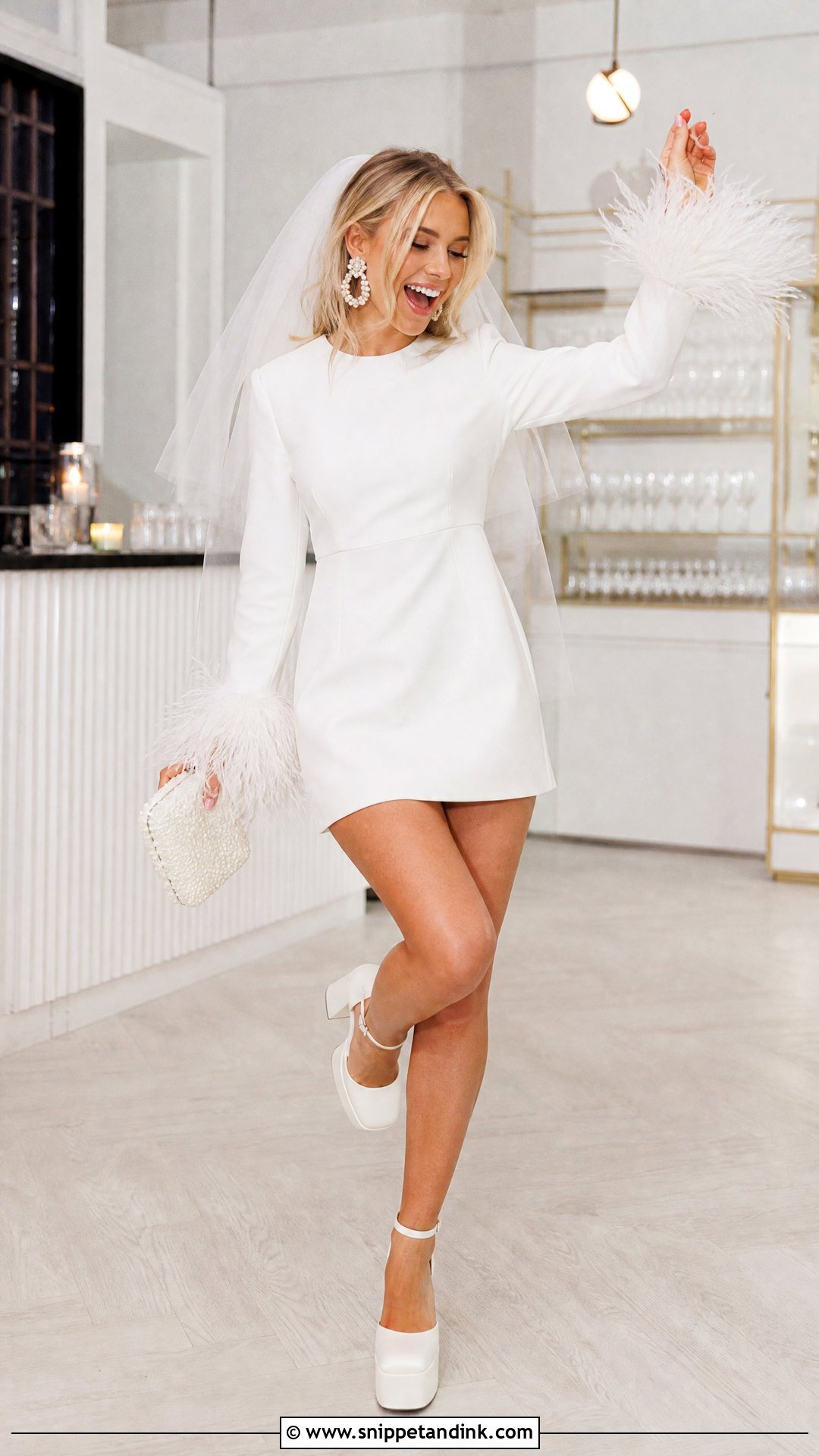
Feathers move with you, which is the fun of a feather trim mini wedding dress. A simple shift, a blazer dress or a structured A-line mini with feathers at the cuffs, neckline or hem keeps it chic, and I’d limit the trim to one area. Think carefully about where. Feathers at the cuff brush against the bouquet stems and your food all evening, and feathers at the neckline tickle when you turn your head. Platform heels or embellished flats keep you dancing, with statement earrings, a small clutch and a short veil or hair bow. Sheer tights give cooler-season coverage. It suits a courthouse, a reception change or an intimate dinner.
16. Bridal Shorts Suit
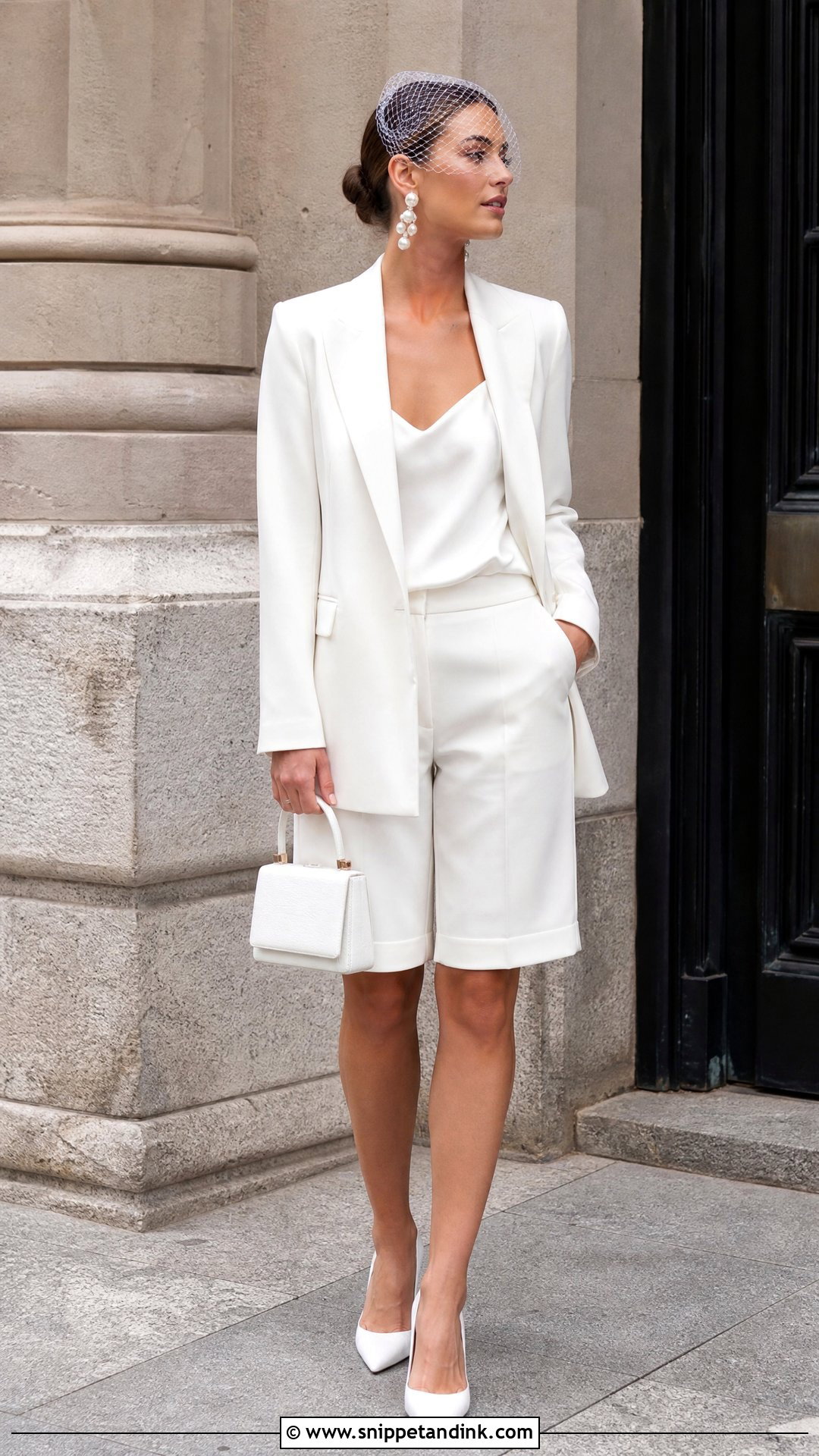
A shorts suit is pure tailoring in a relaxed shape. High-waisted shorts and a matching blazer in white, cream, blush or a colour that means something to you, with a silk camisole or a minimal bandeau underneath, make a clean base. Proportion is what I adjust most. The blazer should end above the hem of the shorts so both pieces show; one that’s too long makes it look as if you forgot your trousers. Bermuda length gives more coverage, and a shorter cut feels lighter for the reception. Pointed pumps keep it formal and ankle boots add edge, alongside bold earrings, a structured mini bag and a birdcage veil. Warm-weather ceremonies and courthouse weddings suit it.
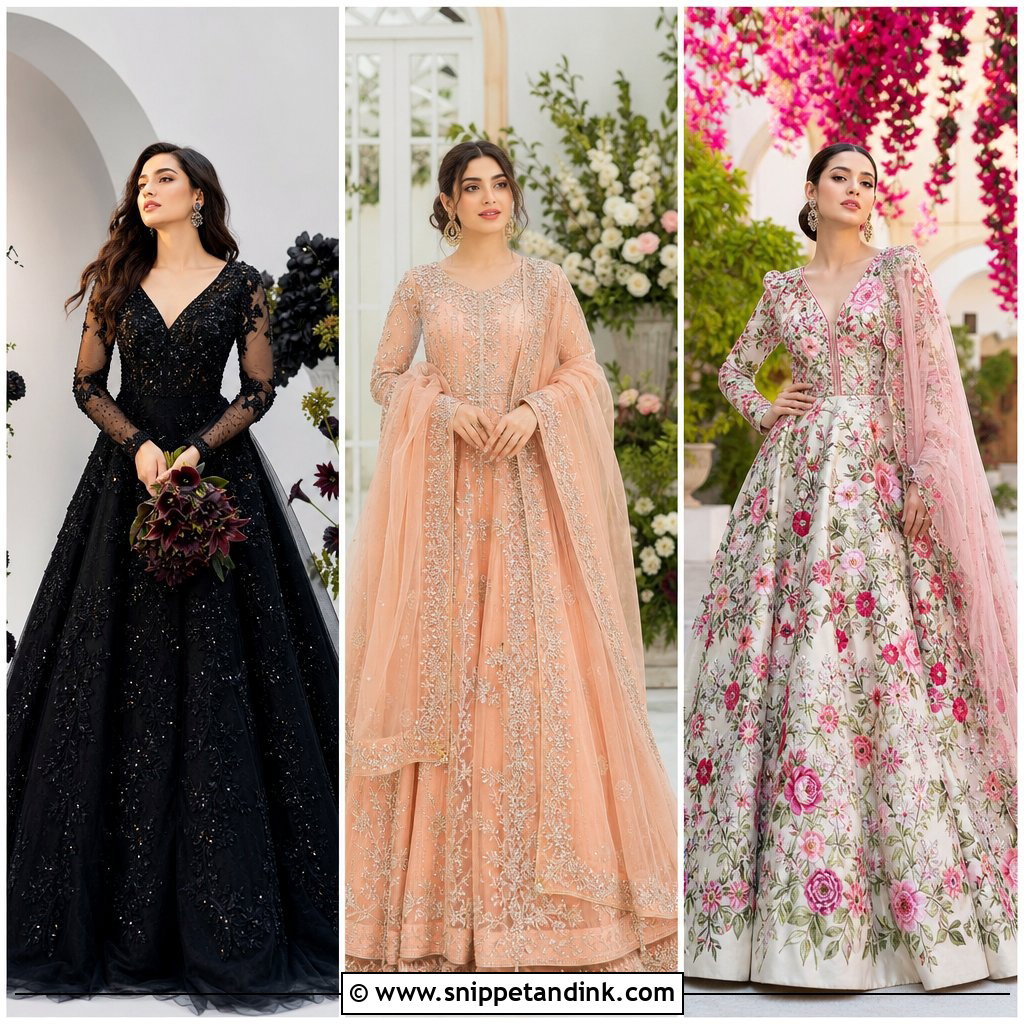
17. Bridal Lehenga
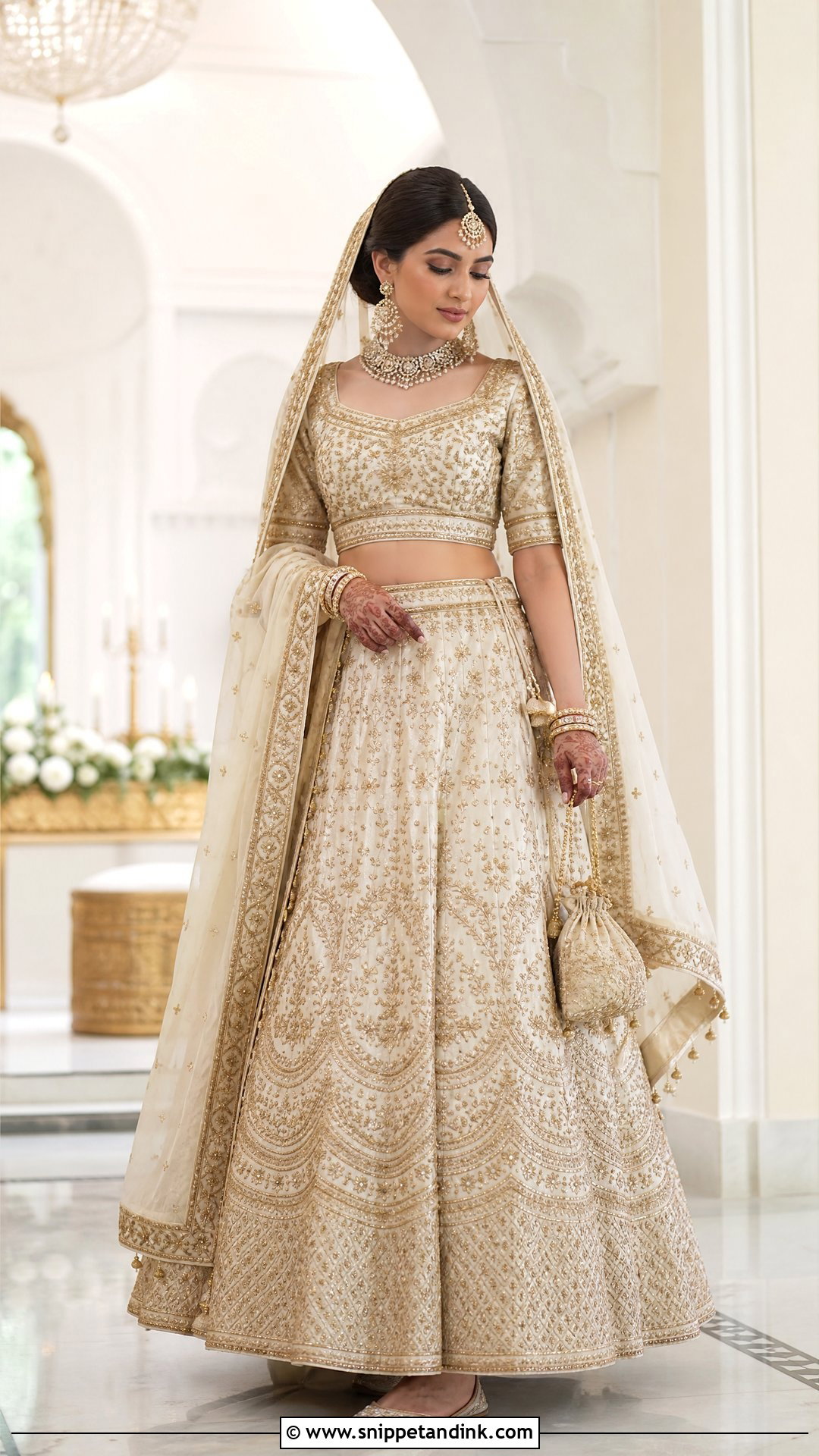
A bridal lehenga is a tradition in its own right rather than an alternative, and it deserves to be fitted with the same seriousness. The outfit is a fitted blouse (choli), a full skirt and a dupatta, in traditional red, jewel tones, pastels or modern ivory. Heavy embroidery makes the skirt weigh more than most brides expect, so I look at blouse support and how the skirt sits on the waist before anything else. The skirt length should be set with your actual flats or block heels on. The dupatta can go over the head, across the shoulders or around the arms, depending on family custom and personal choice, so ask the people whose customs matter to you before the final fitting. Finish with appropriate jewellery, a small embellished bag and hair accessories.
18. Sculptural Wedding Dress
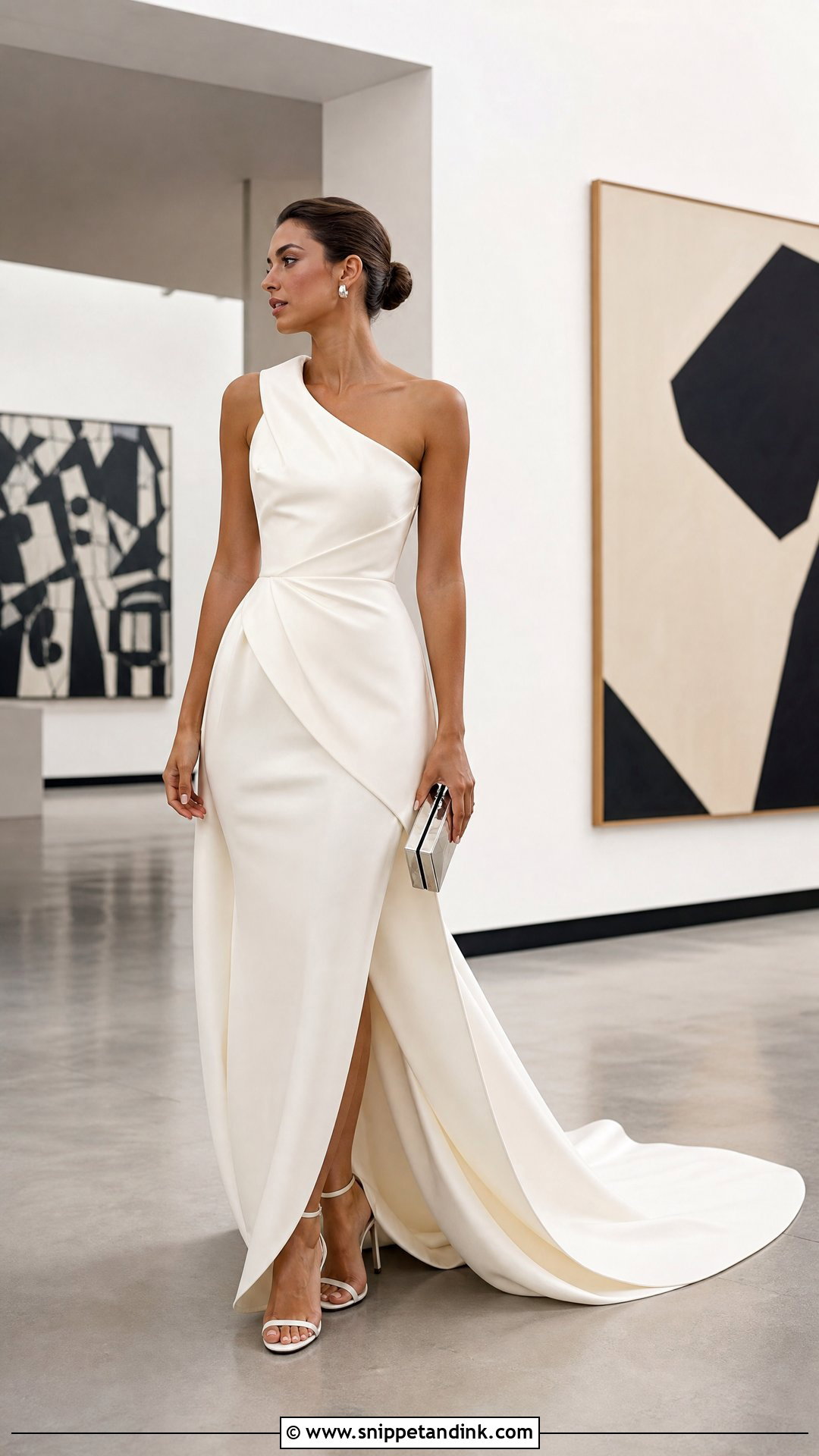
Sculptural dresses are art pieces, and art pieces need a plain frame. An asymmetric neckline, exaggerated hip detail, folded fabric or a bubble hem carries the whole outfit, so choose a solid colour and very little embellishment. Minimal heels, small metal earrings and a geometric clutch suit it, with a bun or slick ponytail so the construction stays visible. Skip the veil if it hides the shapes. I ask brides to sit down, stand up and hug me in the fitting. Some sculptural pieces crush on contact, and you need to know whether yours springs back or holds a dent. Museums, galleries and architectural venues suit it best.
19. Vintage Brocade Wedding Dress
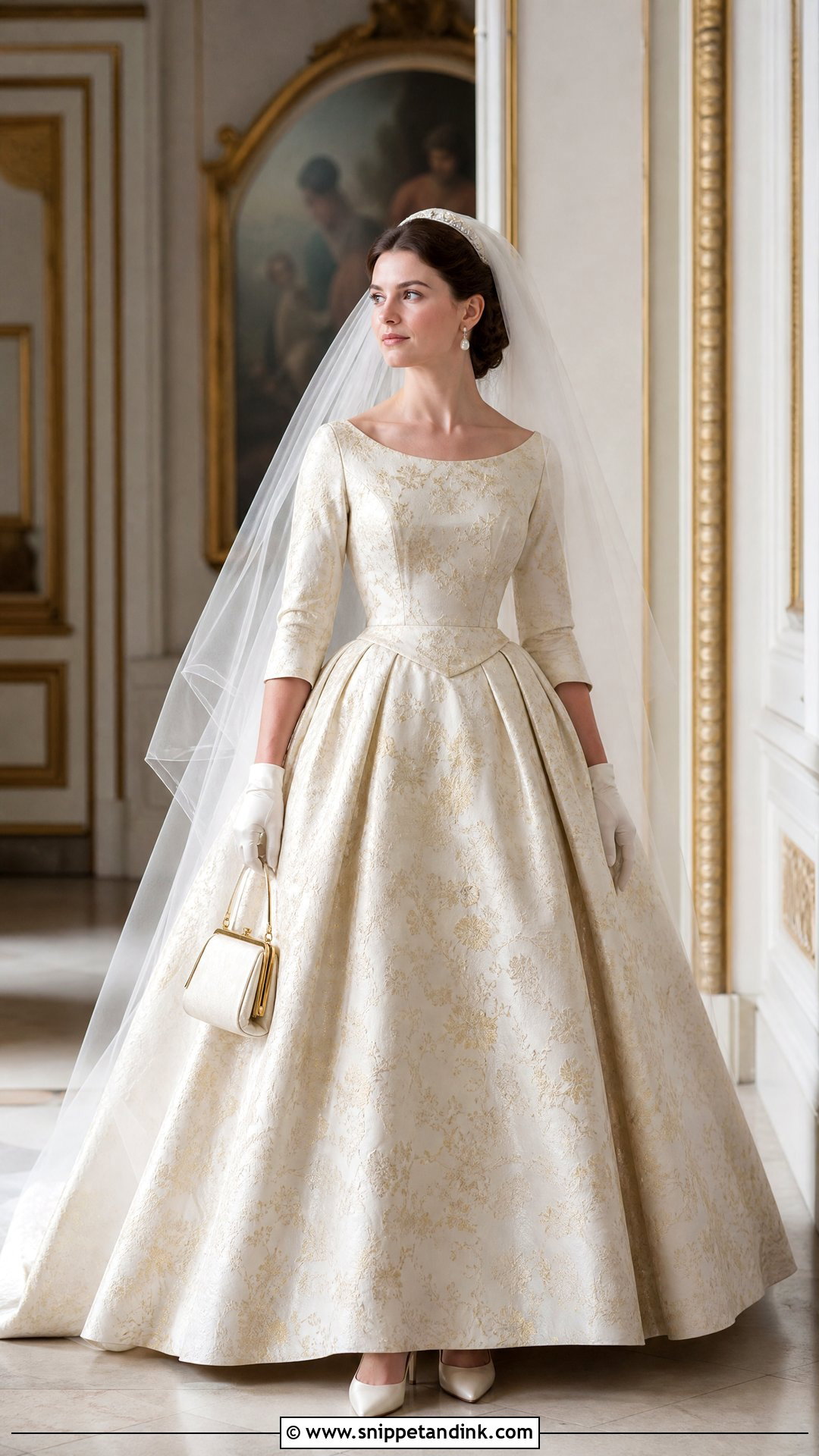
Brocade is woven, not printed, and that structure is why it holds pleats, fitted bodices and full skirts so well. Ivory floral brocade is the quieter choice, while gold, blue, pink or green brocade carries real colour. Classic pumps, pearl or gemstone earrings and a small framed handbag suit it; a short veil works with tea length and a clean cathedral veil with floor length. Gloves add period character. With a true vintage piece, I examine it in daylight for weakened seams, yellowing at the folds and splitting in the weave, because old silk brocade can shatter where it was creased for decades. If you commission new brocade, ask for a lightweight lining and enough ease through the waist and hips to sit through dinner.

20. Bridal Tuxedo Dress
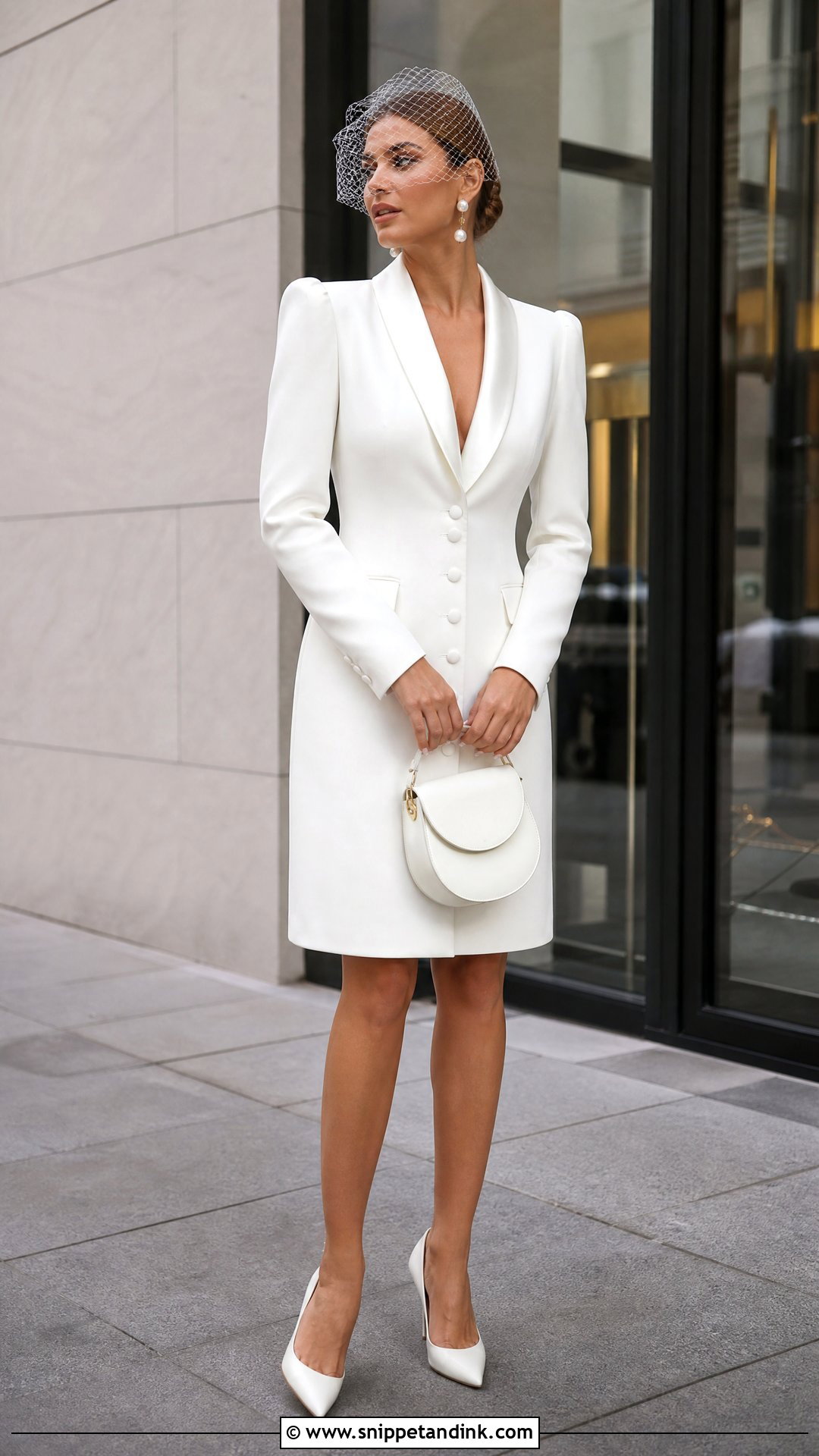
A bridal tuxedo dress gives you the structure of tailoring in one piece. A double-breasted mini, a knee-length blazer dress or a floor-length design with a front opening, sharpened by satin lapels, covered buttons and padded shoulders, all suit different heights and venues. I always check three points: the shoulders should sit smoothly without a dent at the sleeve head, the waist button should close without pulling, and the hem should cover what you want covered when you sit. If the skirt opens as you walk, wear tailored shorts or a slip underneath. Pointed heels, loafers or ankle boots, sculptural earrings, a top-handle bag and a birdcage veil finish it. White feels classic; black or jewel tones push it further.
Will Colour and Shine Look Right in the Photos?
This is the question I hear most once a bride commits to something bold, and it’s a fair one. Colour behaves differently in a lens than in a mirror.
Dark fabrics lose their detail
Black and navy absorb light. Without texture, seams or some sheen, they photograph as a flat shape. Send your photographer a picture of the dress before the day so they can plan for it.
Reflective fabrics flare
Sequins and metallics bounce flash straight back. Take test photos in the shop, once with flash and once without, and look at them on a large screen rather than the phone.
Warm venue light shifts colour
Candlelight and tungsten bulbs push blush toward peach and pale blue toward grey. If your reception is lit warm, view your fabric swatch under similar light before you order.
Telling the Family Before the Fitting Photos Leak
A red gown or a suit can surprise relatives who pictured white. I’ve found it goes better when the people closest to you hear about it from you early, ideally with a picture, rather than discovering it at the ceremony. Their reaction is theirs to have, but it’s easier for everyone when nobody is caught off guard.
The Outfit That Still Feels Like You at Midnight
An unconventional outfit isn’t about rejecting tradition for attention. It’s about wearing something that fits your personality and how you want to spend the day. Coloured gowns, tailored separates, short hems, cultural dress, heavy textures and convertible pieces all belong at a wedding when they’re made and fitted well. Weigh the venue, the weather, how much you’ll move and how it photographs alongside how it looks in the mirror. Let shoes and accessories support the main idea instead of competing with it. And try on at least one shape you’d normally walk past. I’ve seen that one surprise more brides than anything they arrived wanting.
You'll Like These Ideas:






Leave a Reply