
Colour on a wedding dress can look every bit as considered as plain ivory, as long as someone has thought about where it sits. The designs here run from gentle ombré and watercolour washes to full rainbow skirts and elegant dip-dyed hems. In almost every one the bodice stays light and the colour gathers lower down, which keeps the face clear and the shape bridal. I have added the shoes, jewellery and flowers for each, and where a fabric or dye method affects the result, I say so.
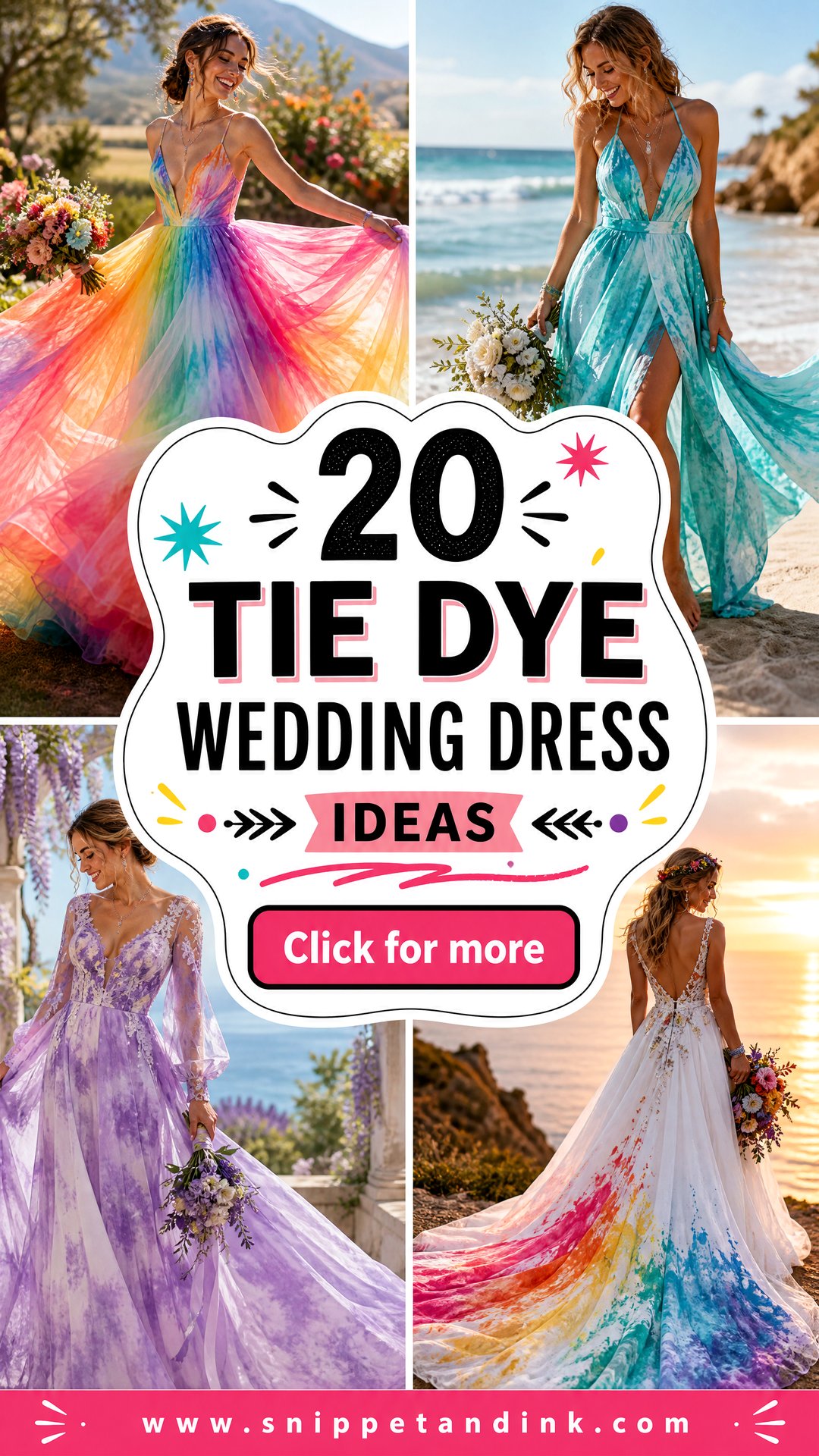
Read the Fibre Label Before Any Dye Touches the Gown
The first question I ask about any tie dye bridal idea is what the dress is made of, because dye chemistry depends entirely on the fibre. Getting this wrong is the most common reason a home-dyed gown comes out patchy or barely tinted.
- Silk, cotton, linen and rayon: these natural and plant-based fibres take dye well, and silk in particular gives clear, luminous colour.
- Nylon tulle and nylon lace: accept acid dyes and colour reasonably evenly with heat.
- Polyester satin, chiffon and tulle: this covers most modern bridal fabric. It needs disperse dyes and near-boiling temperatures, so ordinary tie-dye kits leave it pale or untouched.
- Mixed gowns: a polyester lining under silk chiffon, or cotton lace on a nylon net, will take colour at different rates, which can be lovely or messy depending on the plan.
Beading, sequins and glued appliqués often do not survive a hot dye bath. Where a gown has them, colour is better painted or sprayed onto the skirt only, or added through a separate dyed overskirt.
1. Rainbow Tie Dye Wedding Dress With Tulle Skirt
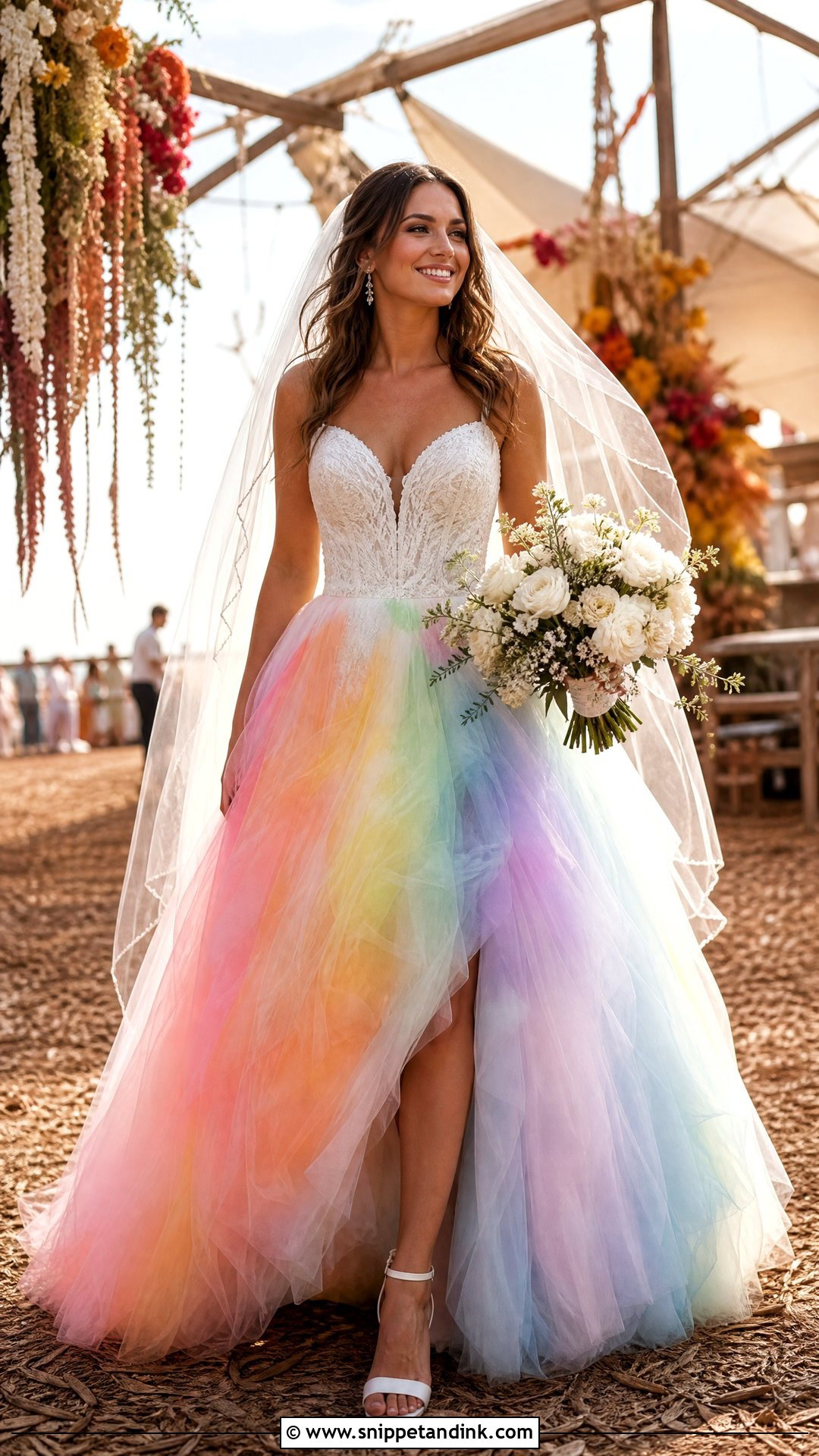
Full rainbow is the boldest dress on this list, and it only works when the colours blend into each other. Hard edges between bands look like a craft project; soft overlaps look like a sunset. The fitted white bodice stays plain and the tulle skirt carries pink, yellow, blue, purple and green, which keeps the colour away from your face. Tulle is layered, so dyeing each layer slightly differently gives depth you can’t get from one printed layer. White block-heel sandals, small silver earrings and a fingertip veil keep things calm, and a white bouquet with a few blooms picking up the skirt ties it together. This is a job for a textile artist, not a home kit.
2. Blue Ombre Tie Dye Wedding Dress
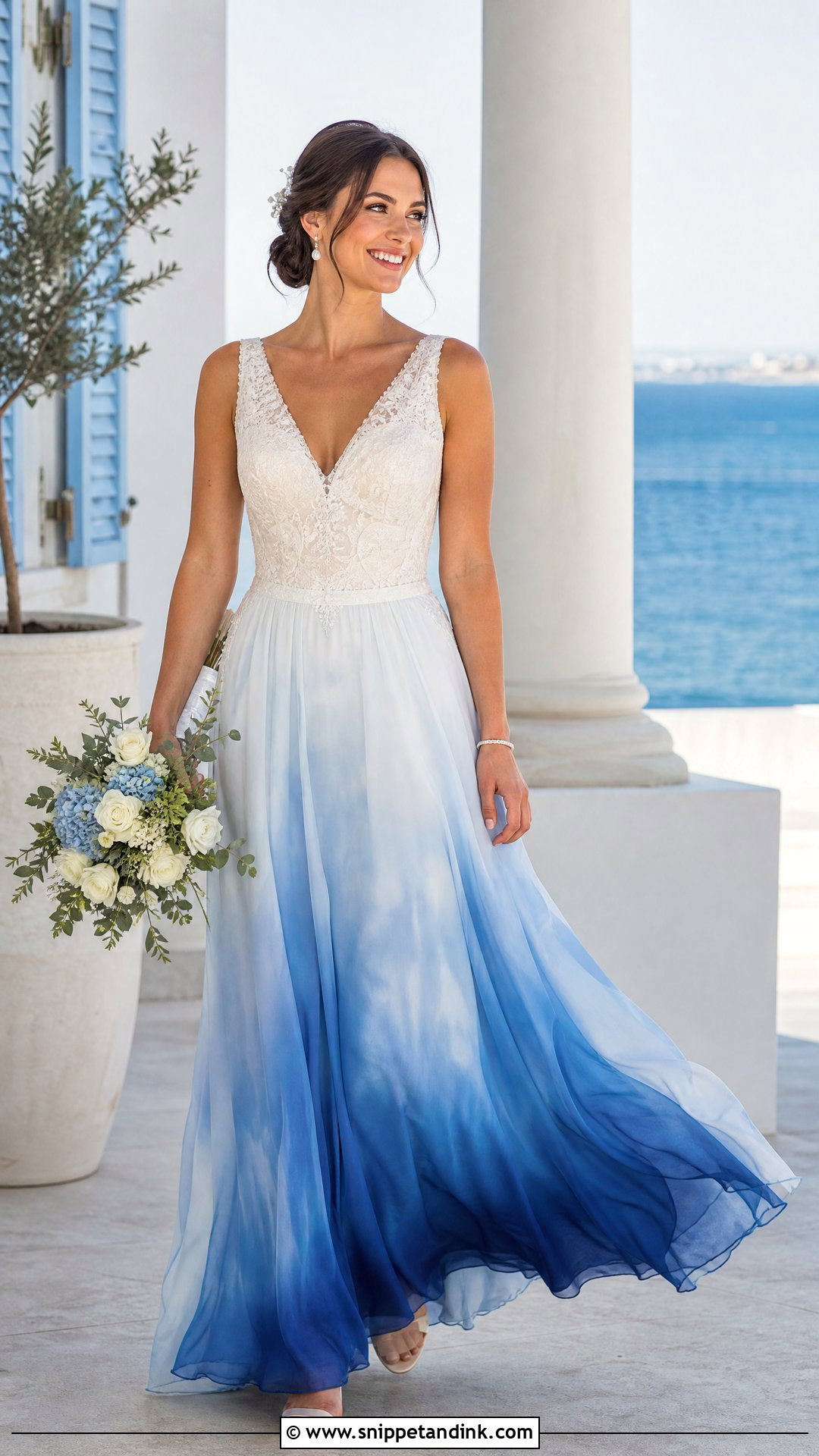
Blue ombré is the version I suggest to brides who want colour but feel nervous about it. On an ivory A-line with a soft waist and flowing chiffon, the shade starts pale around the knee and deepens to ocean blue at the hem. Keeping the colour that low leaves lace appliqués or delicate straps on the bodice completely untouched. Pearl drops, a slim silver bracelet and ivory low heels suit it, with loose gathered hair or polished waves. A white and blue bouquet tied in satin ribbon finishes it, and the palette belongs by water.
3. Pastel Tie Dye Wedding Dress With Watercolor Pattern
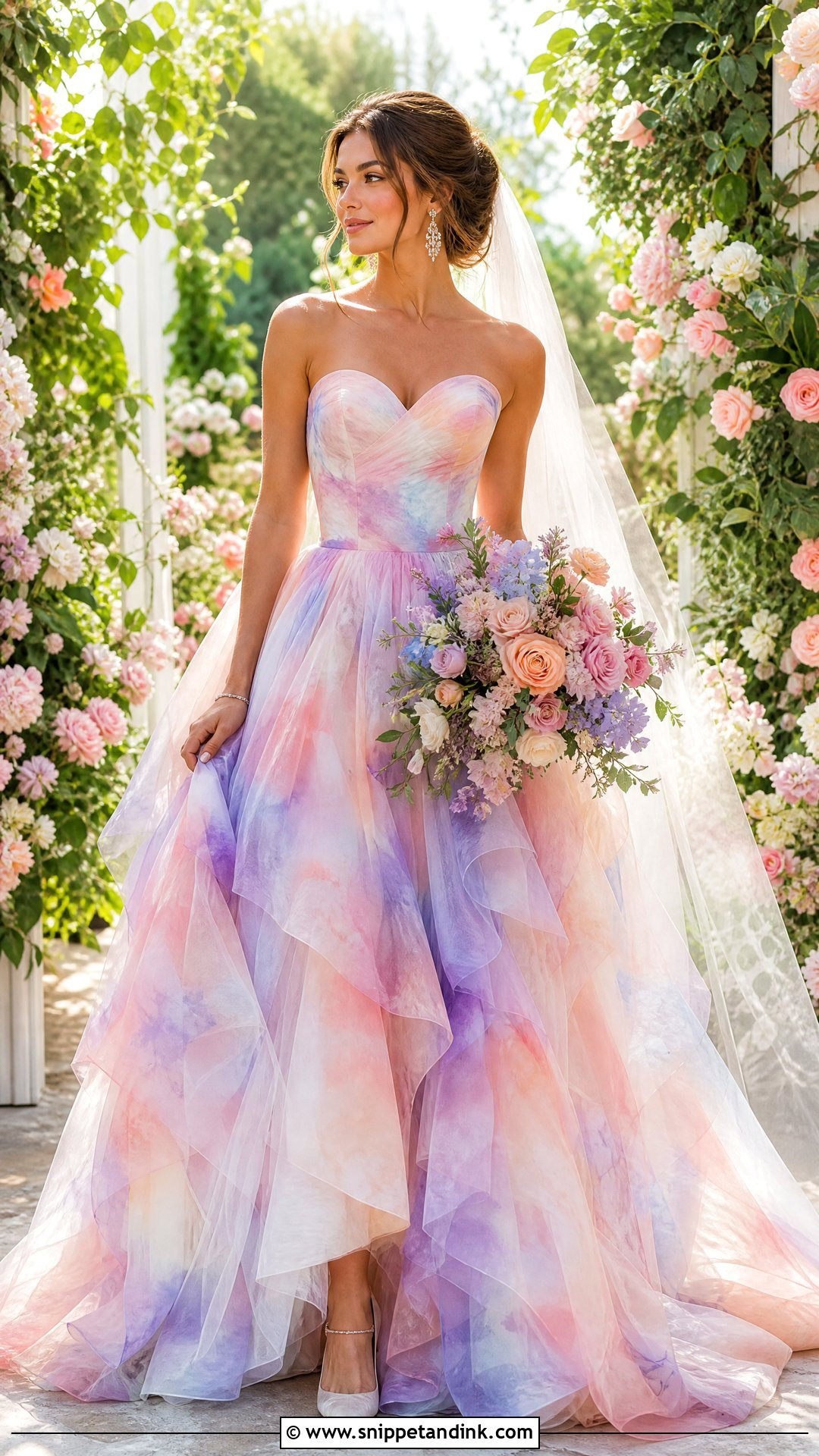
Pastel watercolour is a softer route than rainbow. Cloudy patches of blush, lavender, powder blue and pale peach float over an organza or tulle skirt, with a sweetheart neck and structured bodice holding the shape. Organza is usually polyester or silk, and that matters a great deal here: silk organza takes dye in soft, even blooms, while polyester needs specialist high-heat dyeing to hold any colour at all. Ivory pointed shoes, crystal studs and a thin rose-gold bracelet are plenty. A plain translucent veil and a bouquet of pale roses and lisianthus suit a spring garden or greenhouse.
4. Pink And Orange Tie Dye Wedding Dress
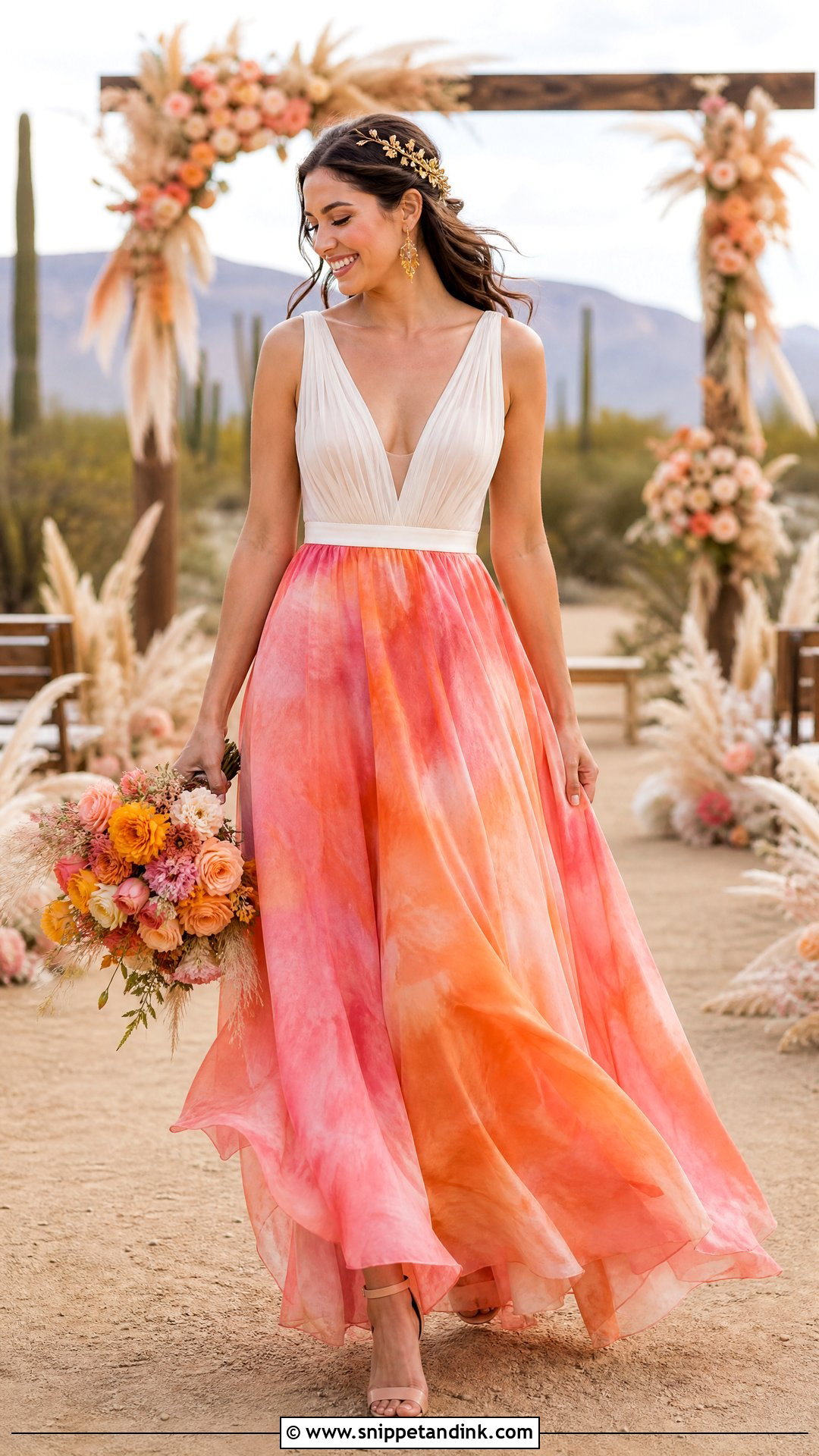
Sunset colours glow in late light, which is why this one wants an evening ceremony outdoors. A sleeveless chiffon gown with a fitted waist and wide skirt carries coral, peach, hot pink and soft orange rising from the hem, while the upper bodice stays ivory. Warm tones like these can tip toward sallow next to some skin, so hold the swatch at your collarbone in daylight before you commit. Nude block heels, small gold hoops and a gold hair comb work. Repeat two or three shades from the dress in the bouquet, perhaps peach roses and pink ranunculus, rather than introducing new colours.
5. Purple Geode Tie Dye Wedding Dress
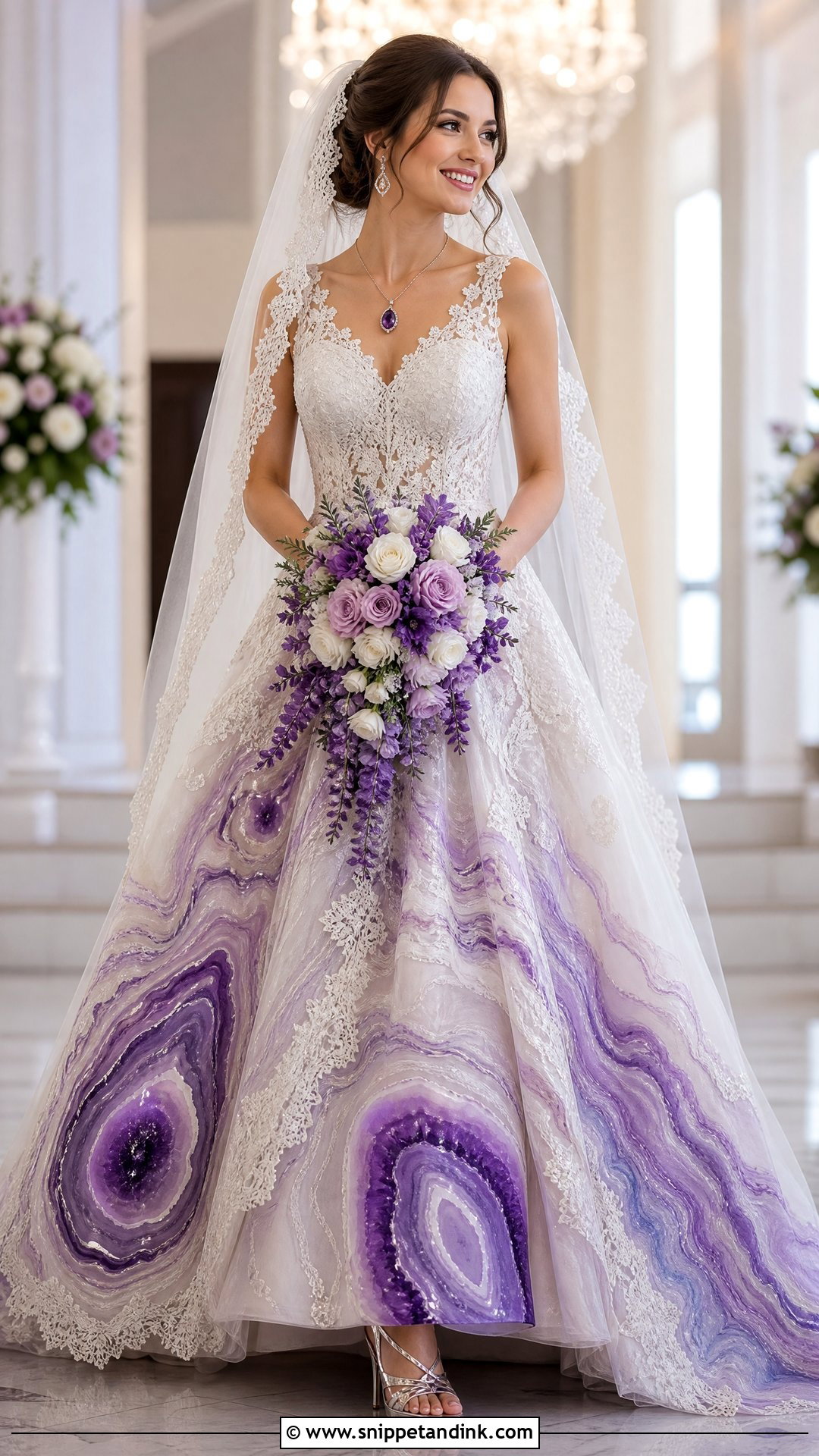
Deep purple geode patterns are made by binding the fabric in rings so the dye forms irregular concentric bands, much like a cut stone. On an ivory lace A-line the rings of violet, plum, lilac and a hint of blue stay on the lower skirt, where layers of chiffon or light tulle soften them. Lace often takes dye differently from the fabric beneath it, so keep the bodice neutral and let the pattern live on the skirt. Silver heels, an amethyst-toned pendant, crystal earrings and a low bun suit it, with white, lavender and deep purple flowers. Evening and indoor venues show it best.
6. Indigo Shibori Tie Dye Wedding Dress
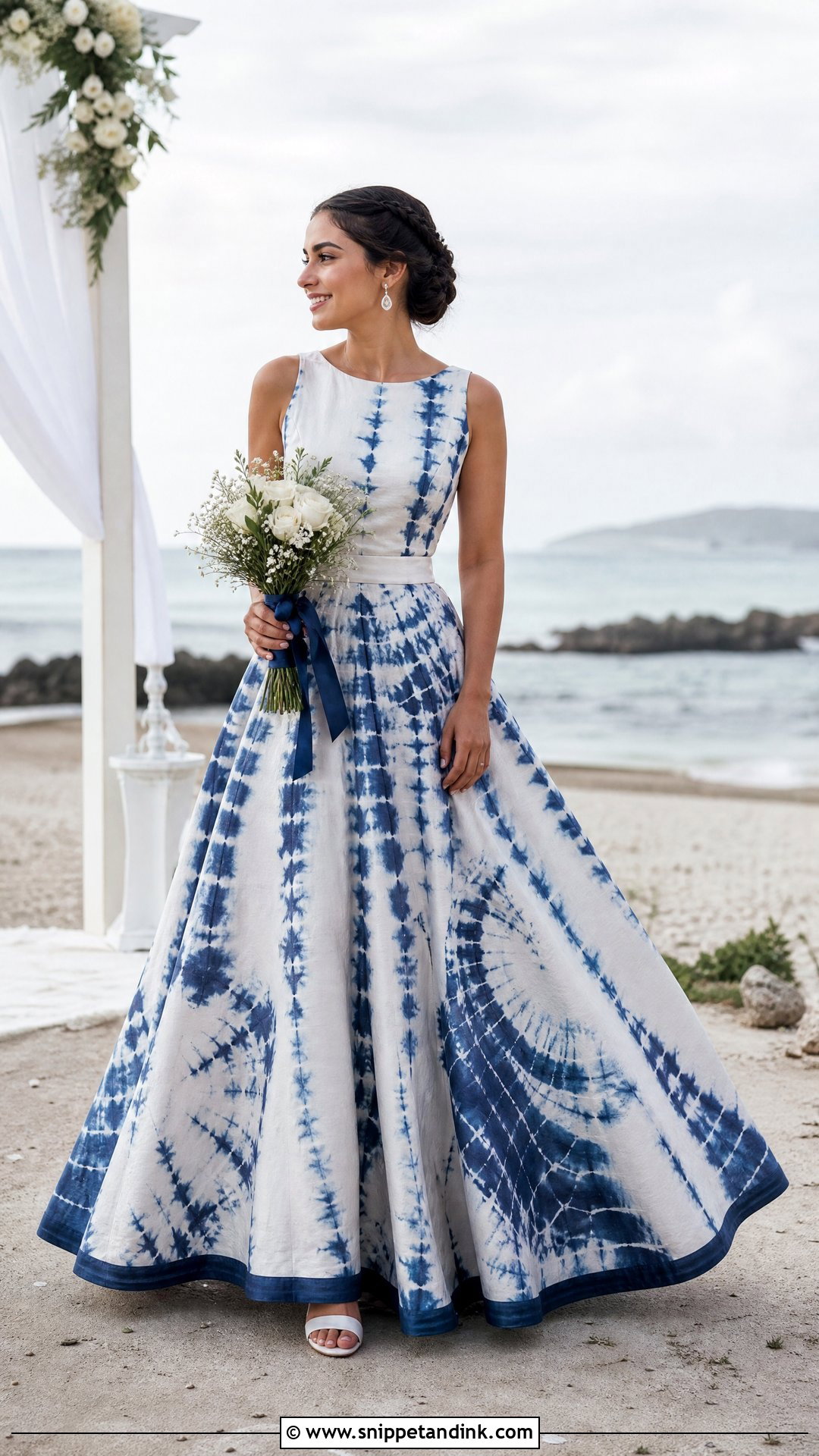
Shibori is the Japanese family of resist techniques, where fabric is folded, stitched or bound before it goes into the dye, and indigo is its classic partner. Indigo builds colour through repeated dips and air exposure, so a darker hem simply means more dips. It takes best on natural fibres, which is why a cotton-silk or soft linen gown with a fitted bodice and sweeping skirt suits it so well. White leather sandals, silver drops and an indigo ribbon on the bouquet are all the accents it needs. A clean ponytail, braided updo or natural curls fit the handmade feel at a coastal or relaxed outdoor wedding.
7. Sage Green And Blush Tie Dye Wedding Dress
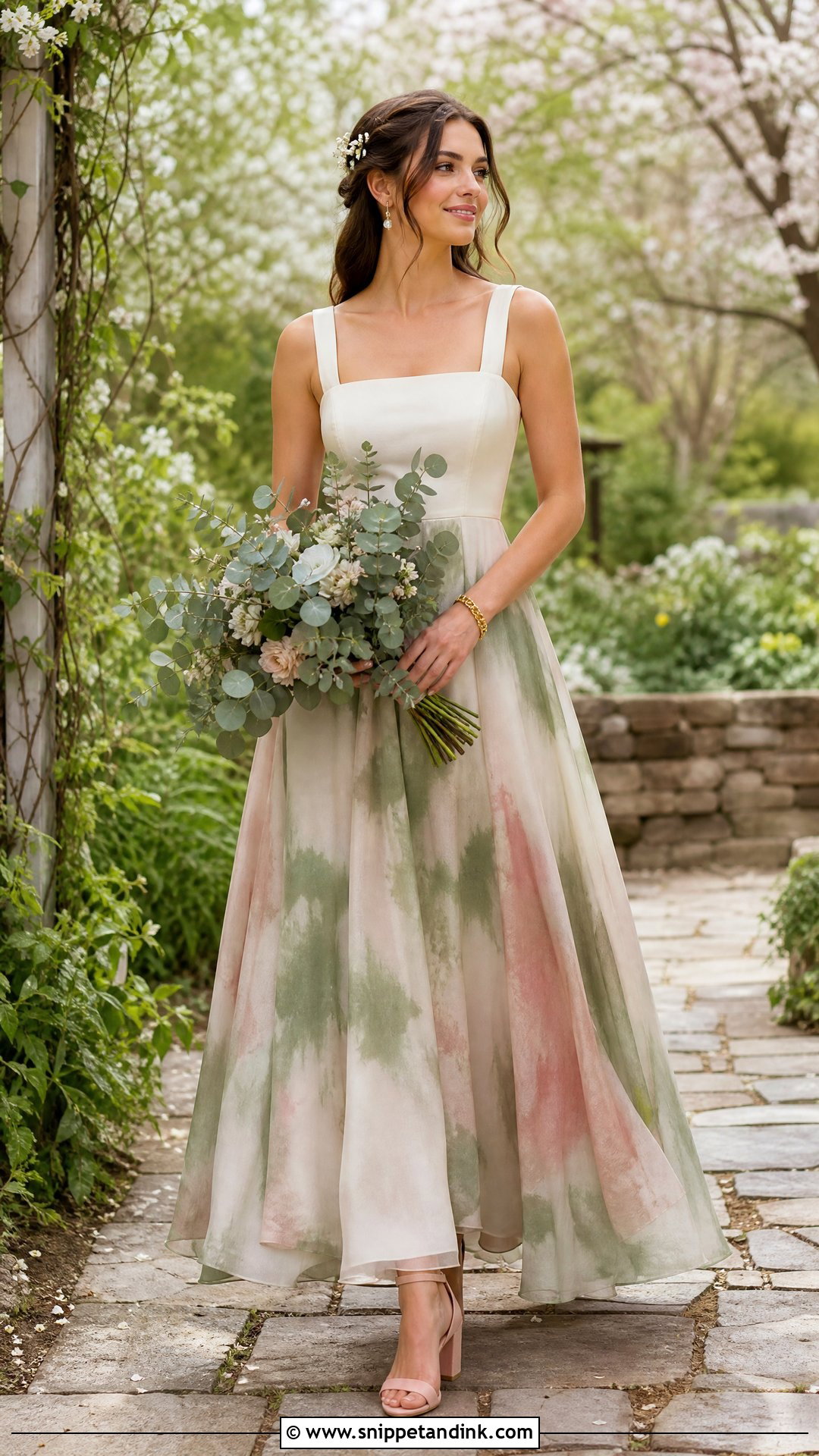
Sage and blush are close in depth, so they blend without fighting, and they almost disappear into a garden backdrop in the nicest way. The base is an ivory gown with a square neck, supportive straps and an airy A-line skirt, with the green and dusty pink fading up from the lower half. Blush block heels, pearl earrings and a small gold bracelet suit it. I’d mix white roses, eucalyptus and muted pink flowers so the bouquet echoes the dress without matching it exactly. A simple veil or a few floral pins in a textured updo is enough. Spring and early autumn are its seasons.
8. Black And White Tie Dye Wedding Dress
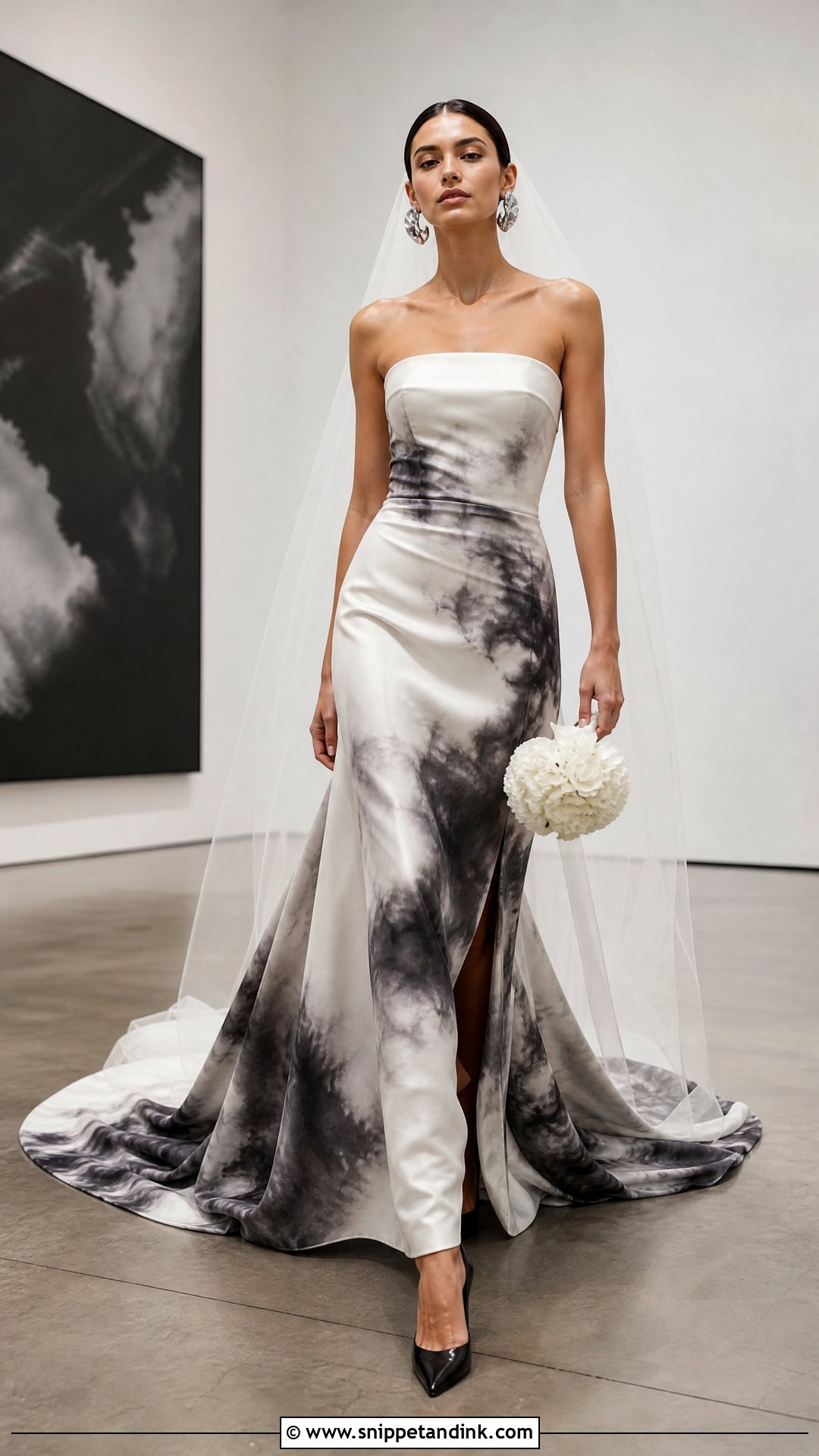
Monochrome tie dye is the most fashion-led option here. A satin column or a structured A-line gives the swirling black, smoky grey and white a sleek base; keep white at the face and let the darkness gather in the skirt and train. Black dye is the hardest to make look even on a large piece, since it often turns blue or green in patches, so ask to see the maker’s previous black work. Black pointed heels, sculptural silver earrings and a compact white bouquet keep it crisp, and a sheer white veil softens the darker sections. Galleries and lofts suit it; no other colours, please.
9. Turquoise Tie Dye Beach Wedding Dress
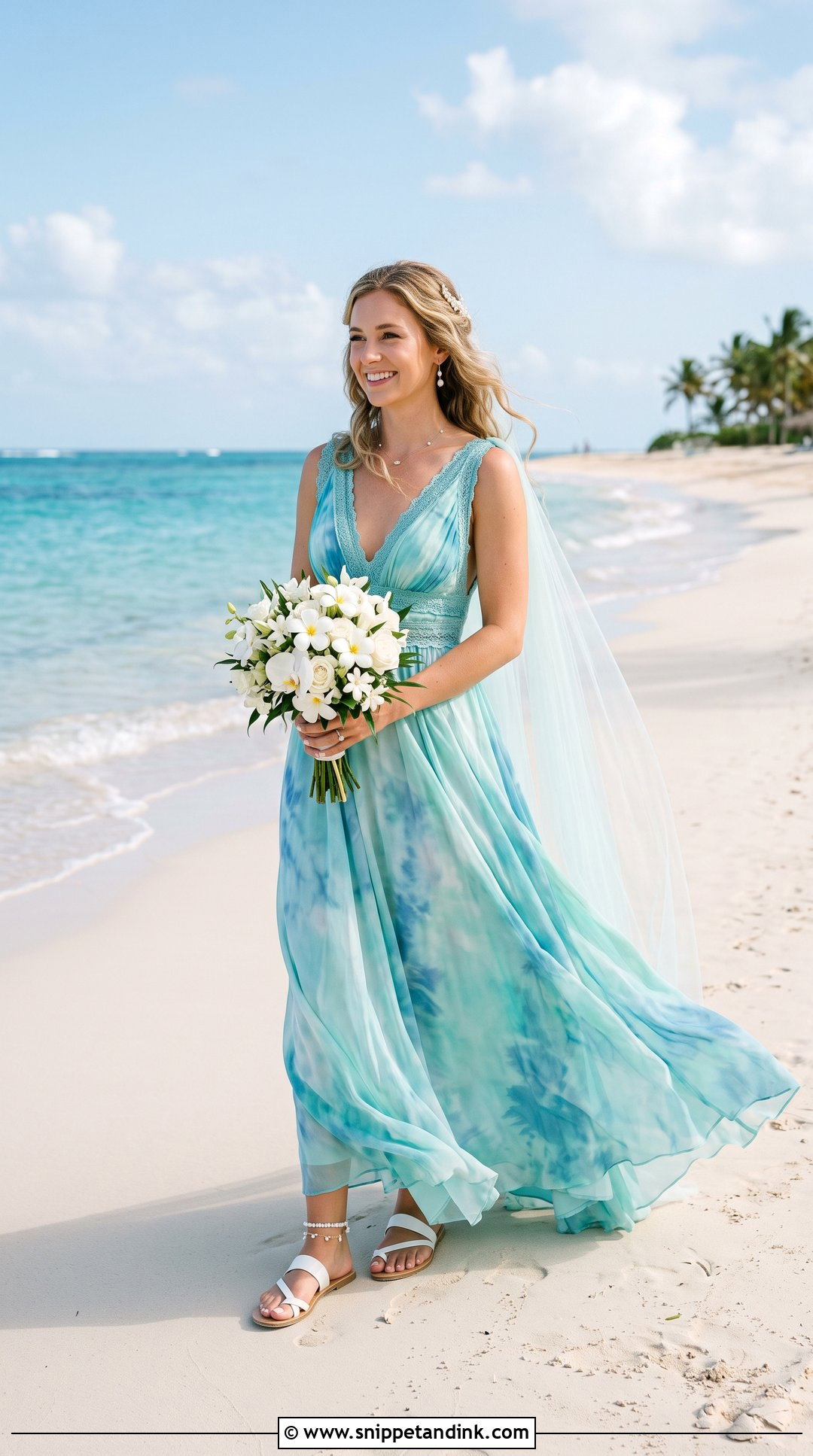
Turquoise reads ocean straight away, and on a breathable chiffon gown with a V-neck and a waist that moves in the breeze it feels right for a beach. The aqua, turquoise and pale blue can run vertically or rise from the hem. Flat white sandals, small pearls and a fine anklet keep it barefoot-casual. A cape veil looks wonderful but catches every gust, so near the water I’d usually pick a short veil or a floral hair piece. This turquoise tie dye wedding dress stays bridal through its shape, so keep makeup natural and accessories plain.
10. Pink Tie Dye Wedding Dress With Lace Bodice
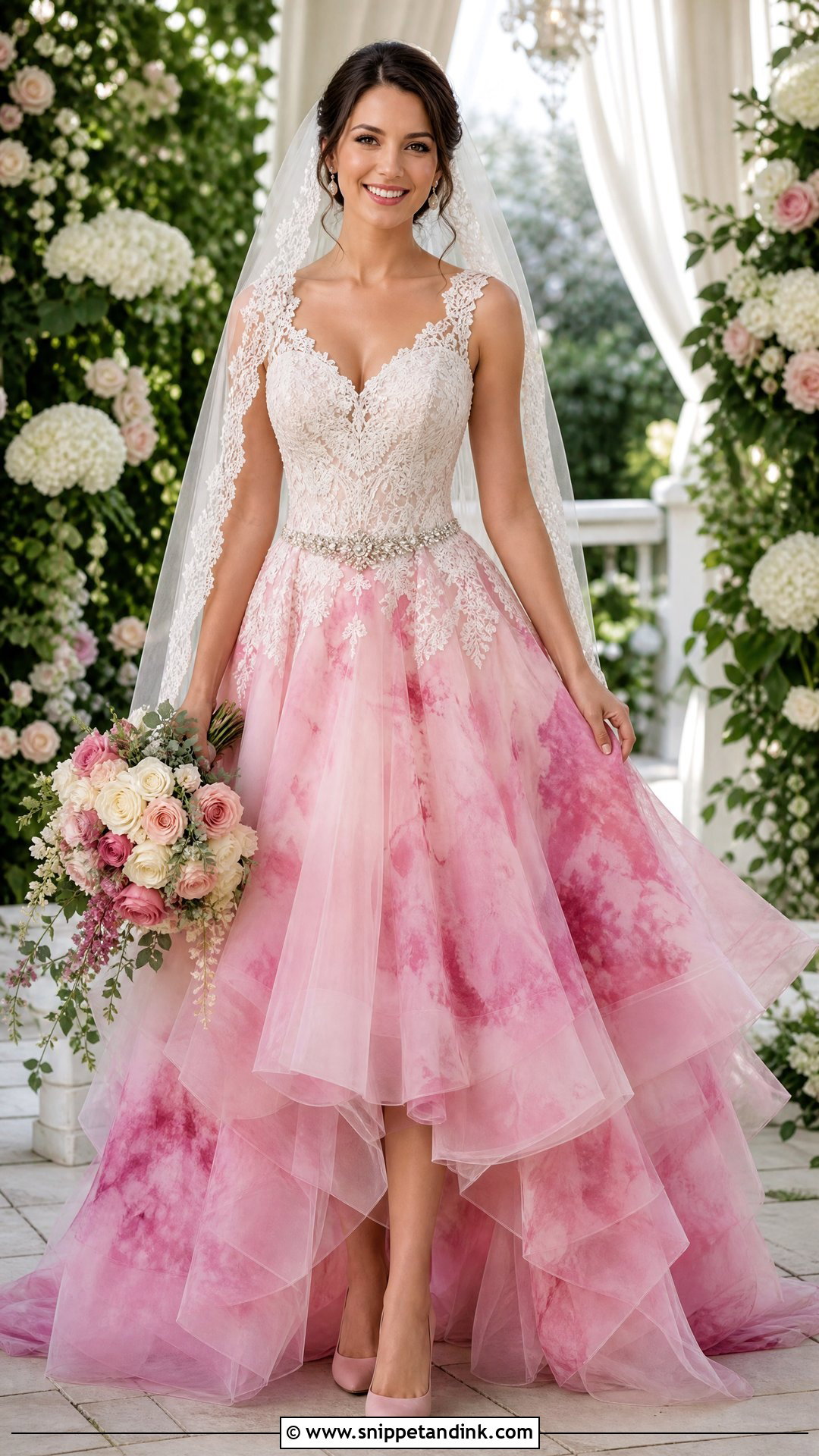
Lace and pink dye combine well if the lace is left alone. A fitted ivory lace bodice, defined waist and layered tulle skirt carry blush, rose and raspberry across the lower layers only. Dyeing lace that is still attached to a bodice risks uneven blotches where the thread and the net take colour at different rates. Pale pink pumps, pearl drops and a slim crystal belt (if the waist needs it) suit the look. A white veil with a narrow lace edge links the plain top to the coloured skirt. Stick to related pinks so the dress feels layered rather than busy.
11. Rust And Terracotta Tie Dye Wedding Dress
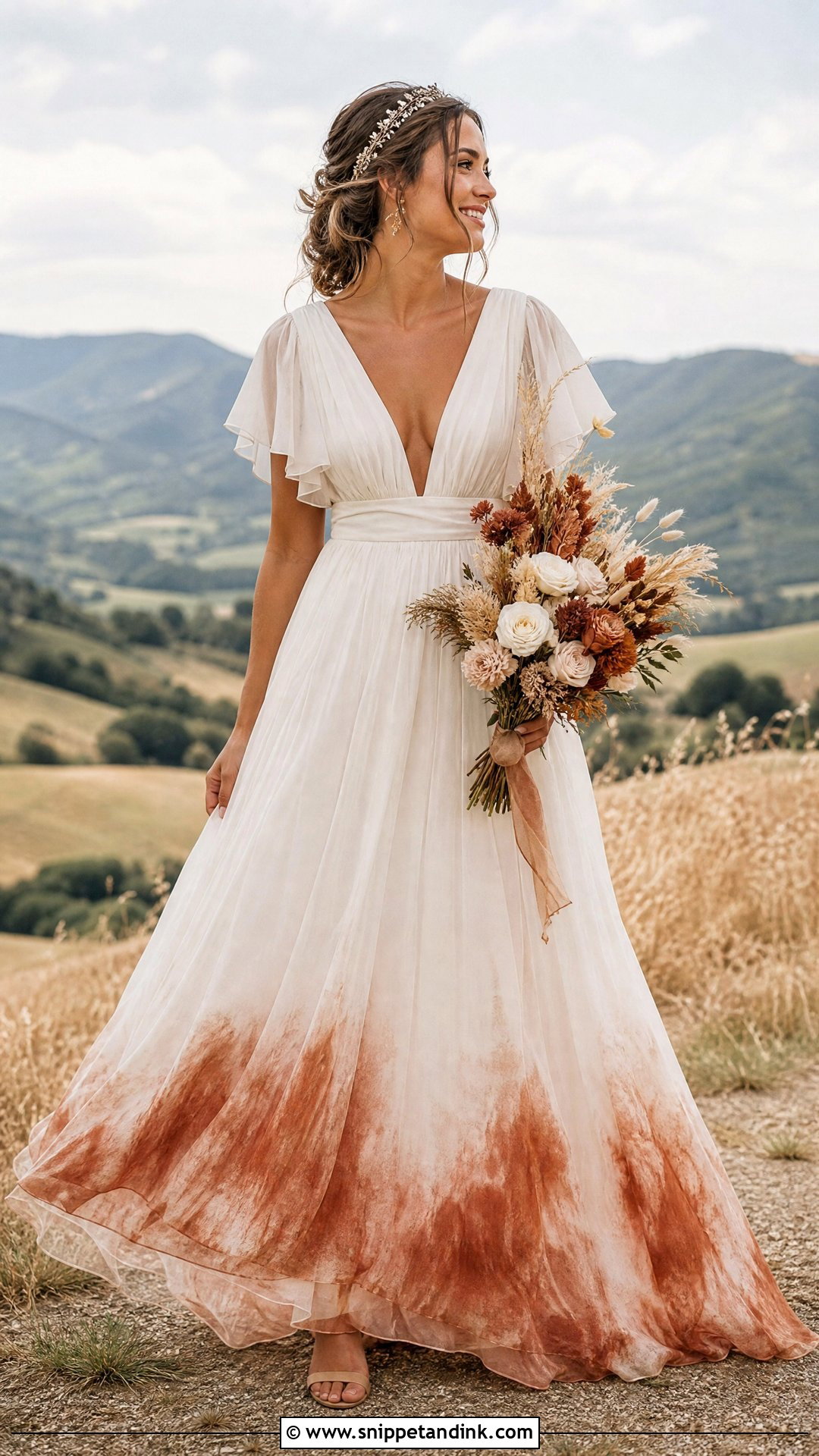
Rust, terracotta, muted peach and warm brown make an autumn gown that sits naturally among dried grasses and turning leaves. An ivory chiffon or crepe gown with flutter sleeves, a fitted waist and a softly flared skirt carries the earthy pattern around the hem. Dark colours read heavy, so I keep them at the very bottom and let the bodice stay pale to frame the face. Tan block-heel sandals, brushed-gold earrings and a hair vine fit the mood, and a bouquet of cream flowers, dried grasses and rust blooms finishes it. Woodland, desert or countryside settings all work.
12. Lavender Tie Dye Wedding Dress With Sleeves
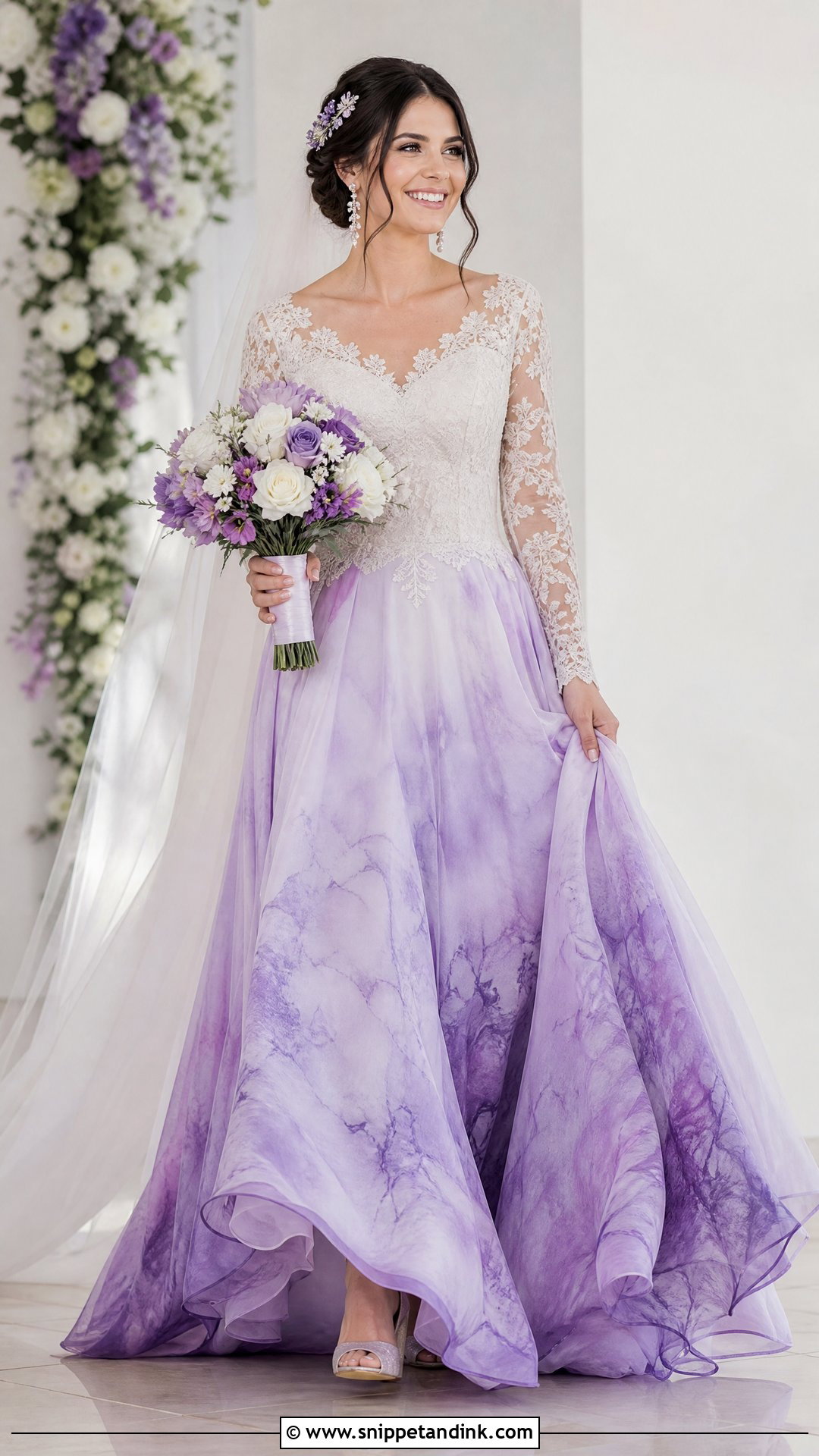
Lavender gives noticeable colour without the commitment of deep purple. A long-sleeve gown with a fitted lace bodice and a flowing chiffon or tulle skirt starts pale lilac near the waist and deepens to violet on the lower skirt and train. Sleeves mean you can keep the veil completely plain. Silver low heels, pearl and crystal earrings and a small lavender comb are enough. Purples are among the colours most prone to fading in sunlight, so store this dress away from windows before and after the day. White, lavender and soft green flowers with ivory ribbon suit spring, autumn or an indoor ceremony.
13. Short Tie Dye Wedding Reception Dress
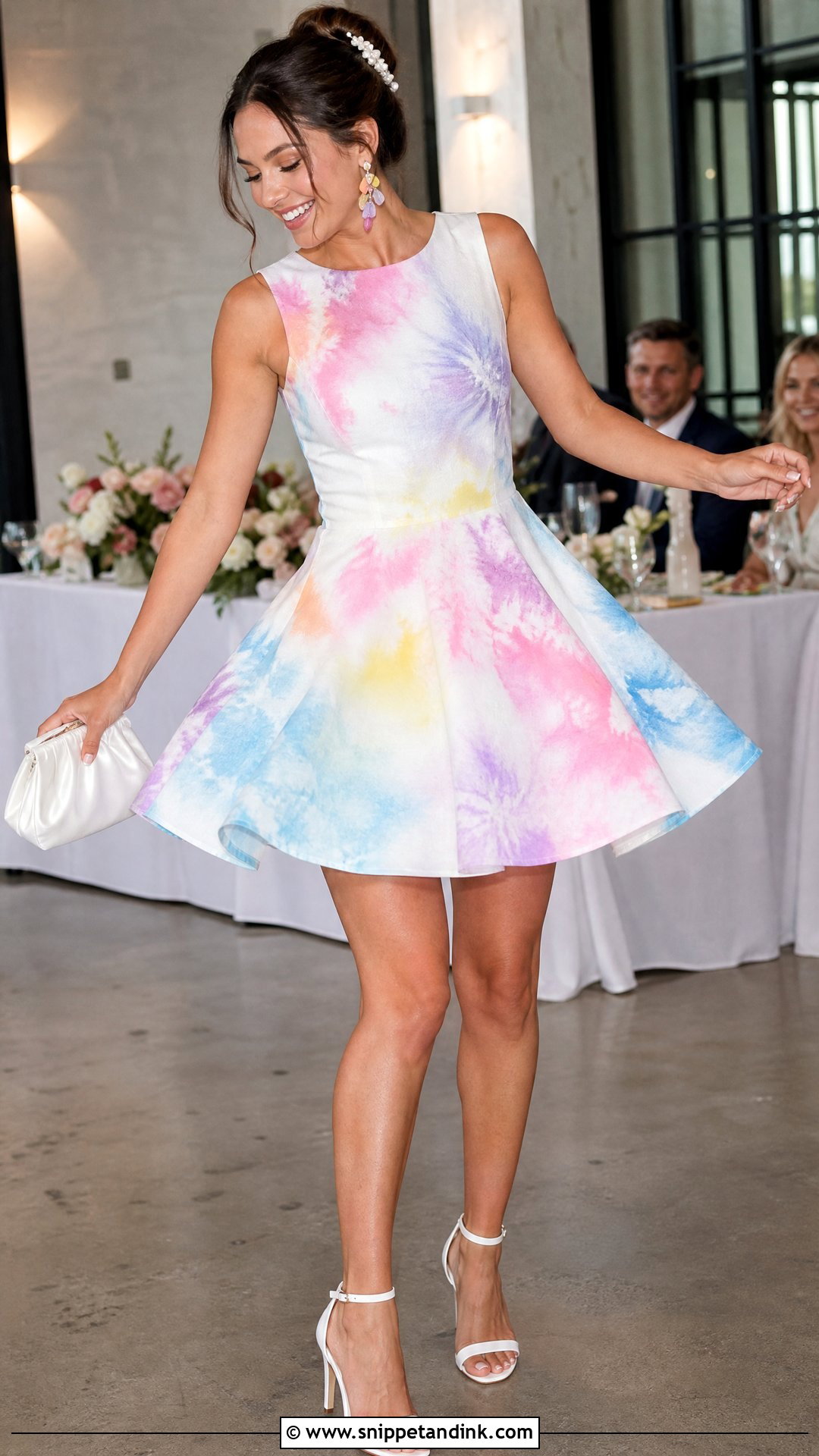
As a reception change, a short tie dye dress is pure fun. A structured mini or knee-length fit-and-flare with a white base and bright watercolor sections in pink, blue, yellow and purple keeps a clear bridal outline while giving you room to dance. White ankle-strap heels hold the foot securely, and colourful statement earrings can come out now that the veil is off. Swap the ceremony veil for a short bow veil, headband or pearl clip. I’d keep the jewellery to one statement piece, since the dress already carries four colours.
14. High Low Tie Dye Wedding Dress
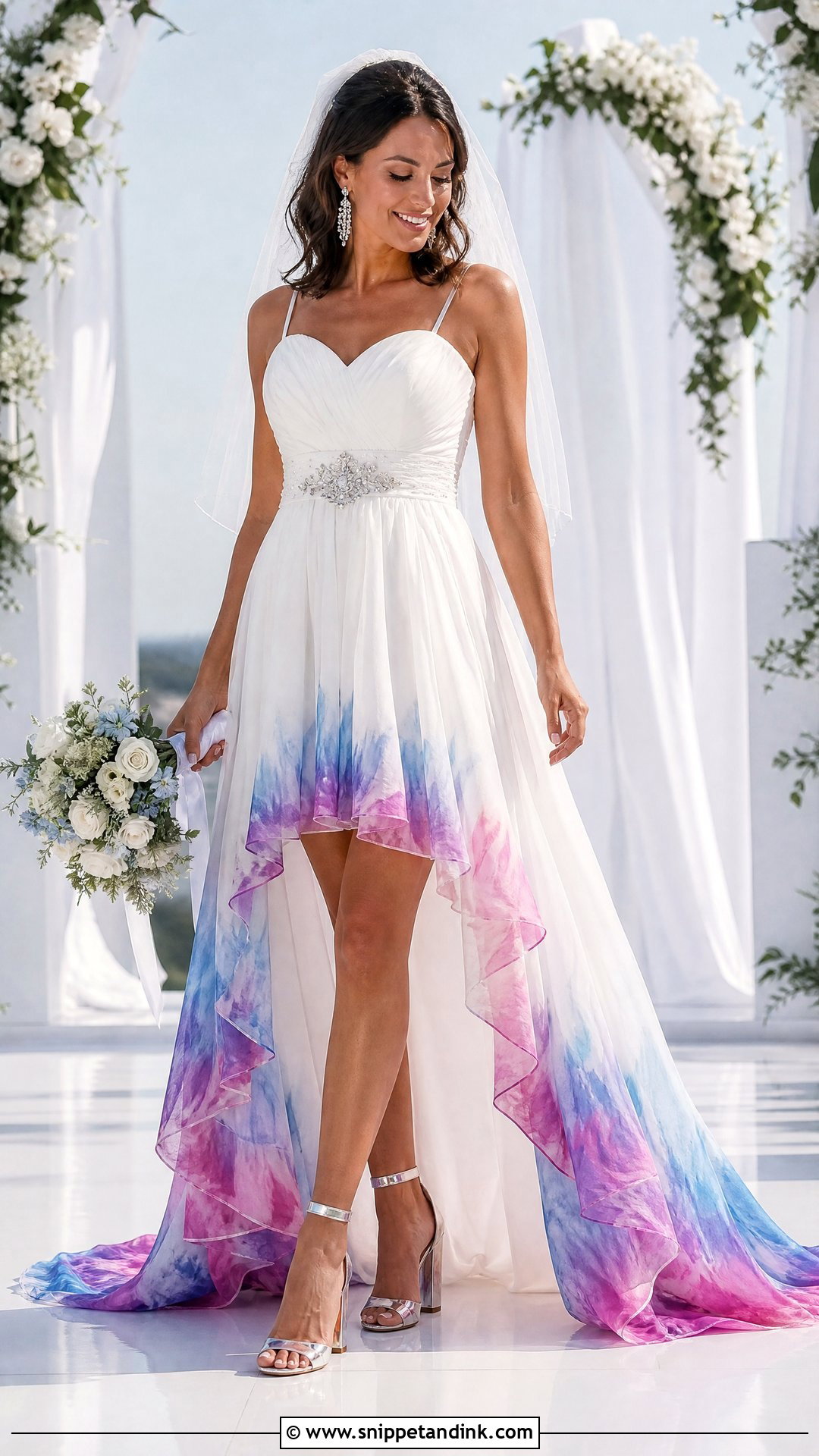
A high-low hem shows off the dye along its curved edge and gives you a reason to wear good shoes. A white chiffon gown falls to the knee in front and into a short train behind, with blue, purple and pink ombré following the uneven line. Chiffon frays and twists, so the hem needs a fine rolled finish, ideally done after dyeing so the stitching doesn’t show a different colour. Silver block-heel sandals, crystal earrings and a cuff bracelet suit it, with a shoulder-length veil or a hair comb instead of a long veil. Courthouses, outdoor parties and lively receptions all suit it.
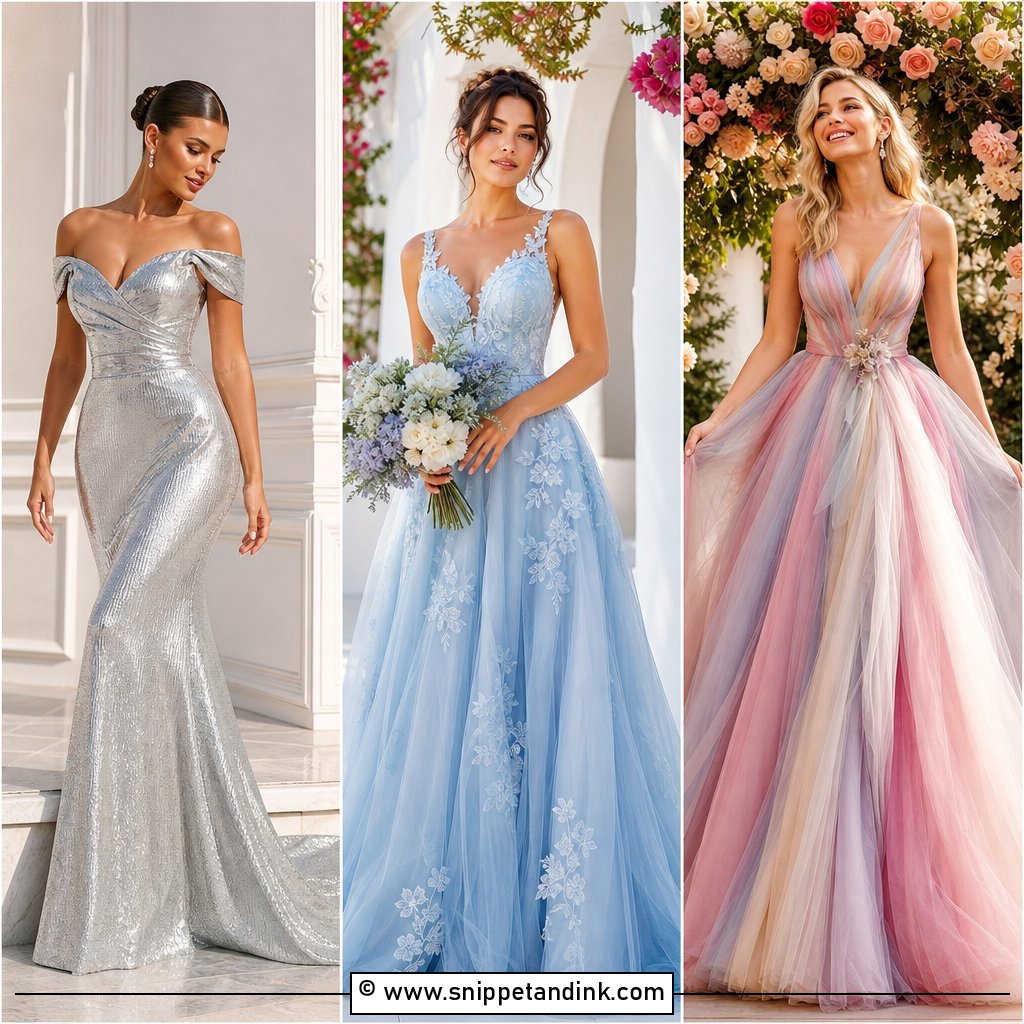
15. Plus Size Tie Dye Wedding Dress With Wrap Bodice
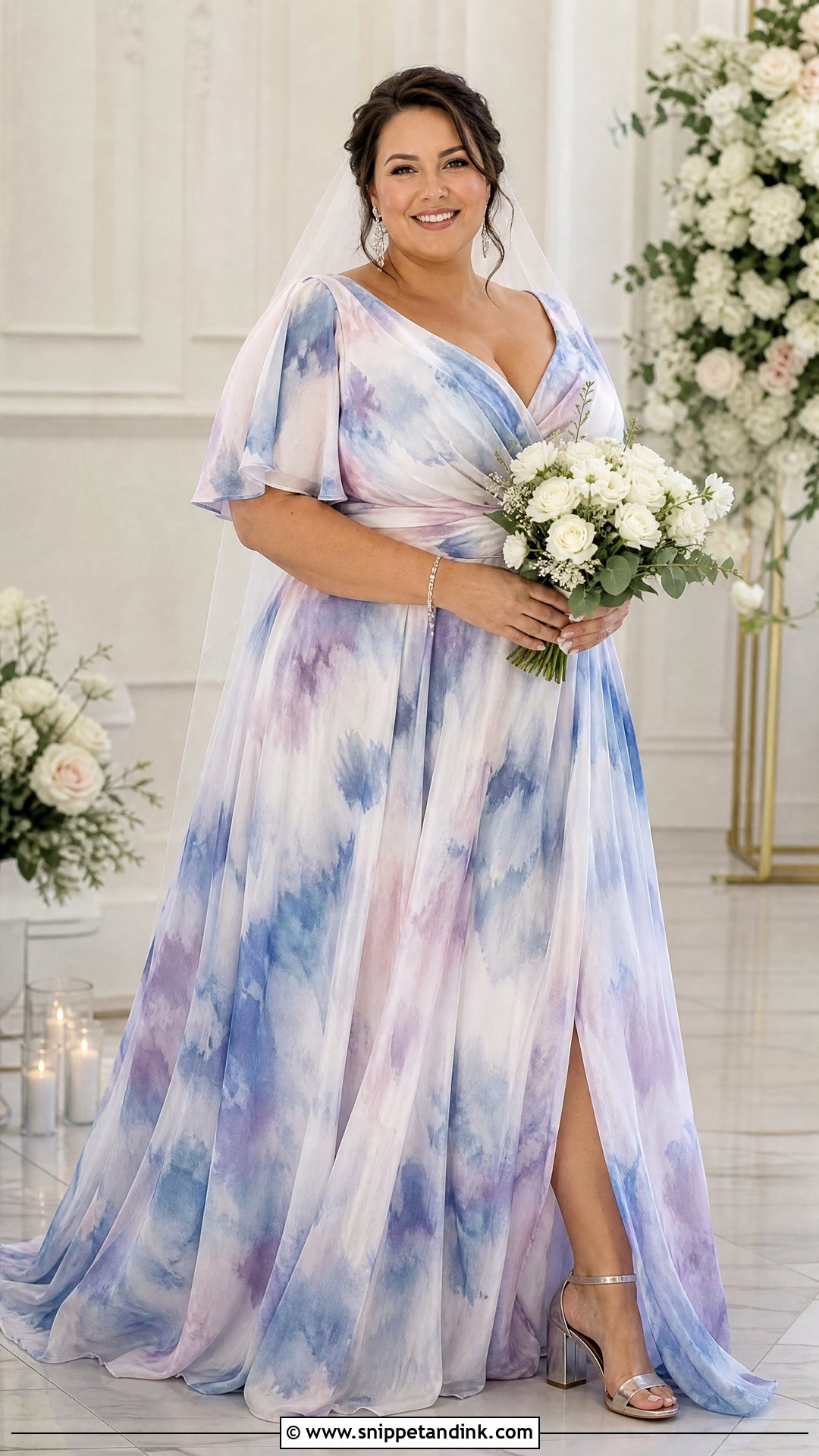
A wrap bodice adjusts to you, which makes it a comfortable starting point for a plus size tie dye gown. Look for a V-neck, a secure waistband, supportive sleeves and a flowing A-line skirt. Run the watercolour of blue, lavender and blush vertically: it carries the eye up and down rather than across. Stable silver block heels, medium drop earrings and a delicate bracelet are enough, with a softly draped veil and side-swept hair. Check that the wrap is anchored with a hidden snap at the waist so it can’t open when you sit. Choose a bouquet in proportion, neither tiny nor very wide, and have the hem and sleeves altered for your heels.
16. Maternity Tie Dye Wedding Dress With Empire Waist
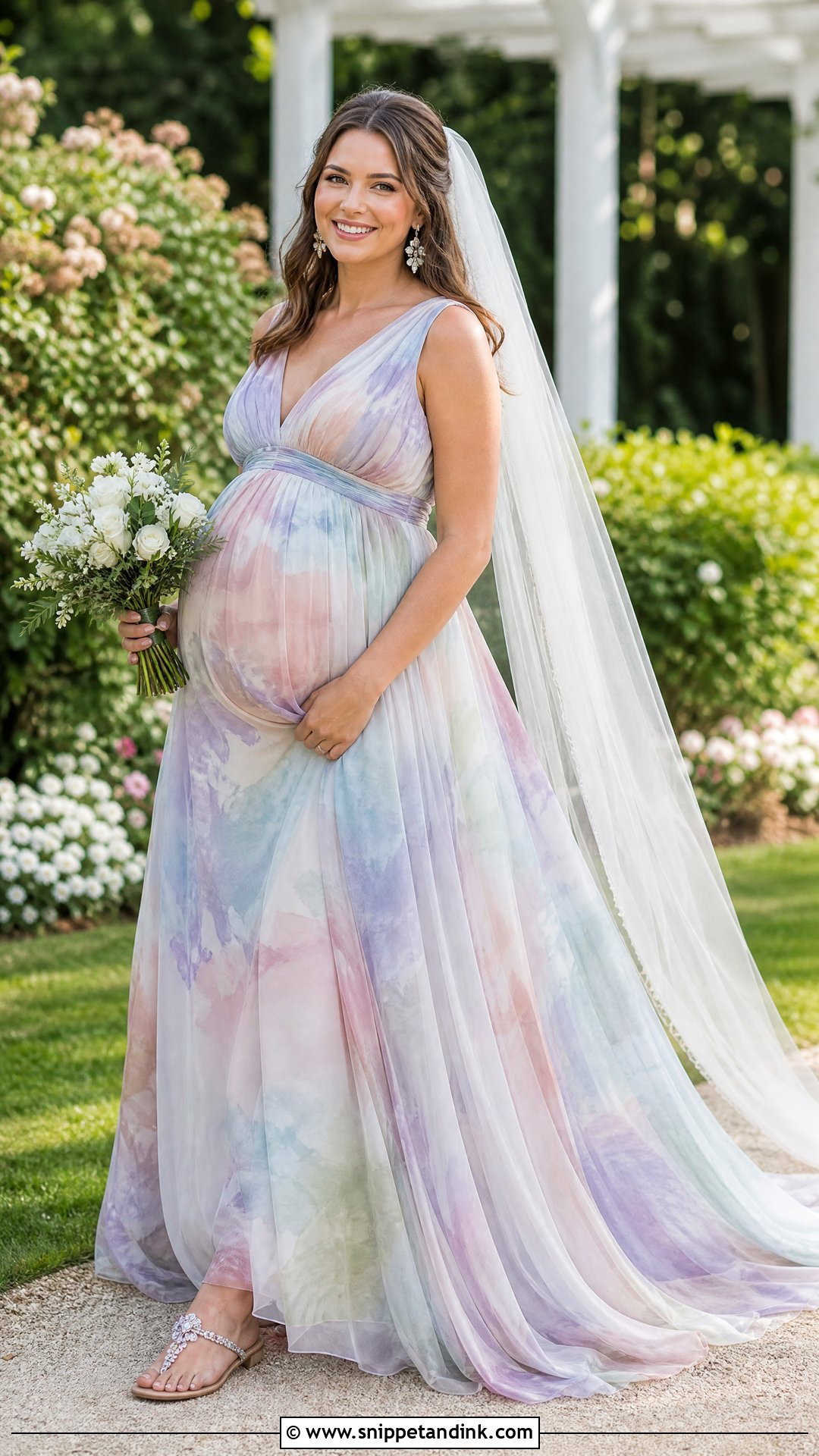
An empire waist gives room where it’s needed and stays comfortable through a long day. A soft jersey or chiffon gown with supportive straps and a fitted band under the bust lets the skirt fall freely, with pale blue, blush, lavender or sage blending vertically. Jersey is often a cotton or rayon blend, which takes dye well and feels kind on the skin. I’d fit it no more than a couple of weeks out, since a bump changes quickly. Flat embellished sandals, light earrings and a comfortable hair piece suit it, with a small white bouquet and a fingertip veil. A soft wrap handles cooler evenings.
17. Winter Tie Dye Wedding Dress With Long Sleeves
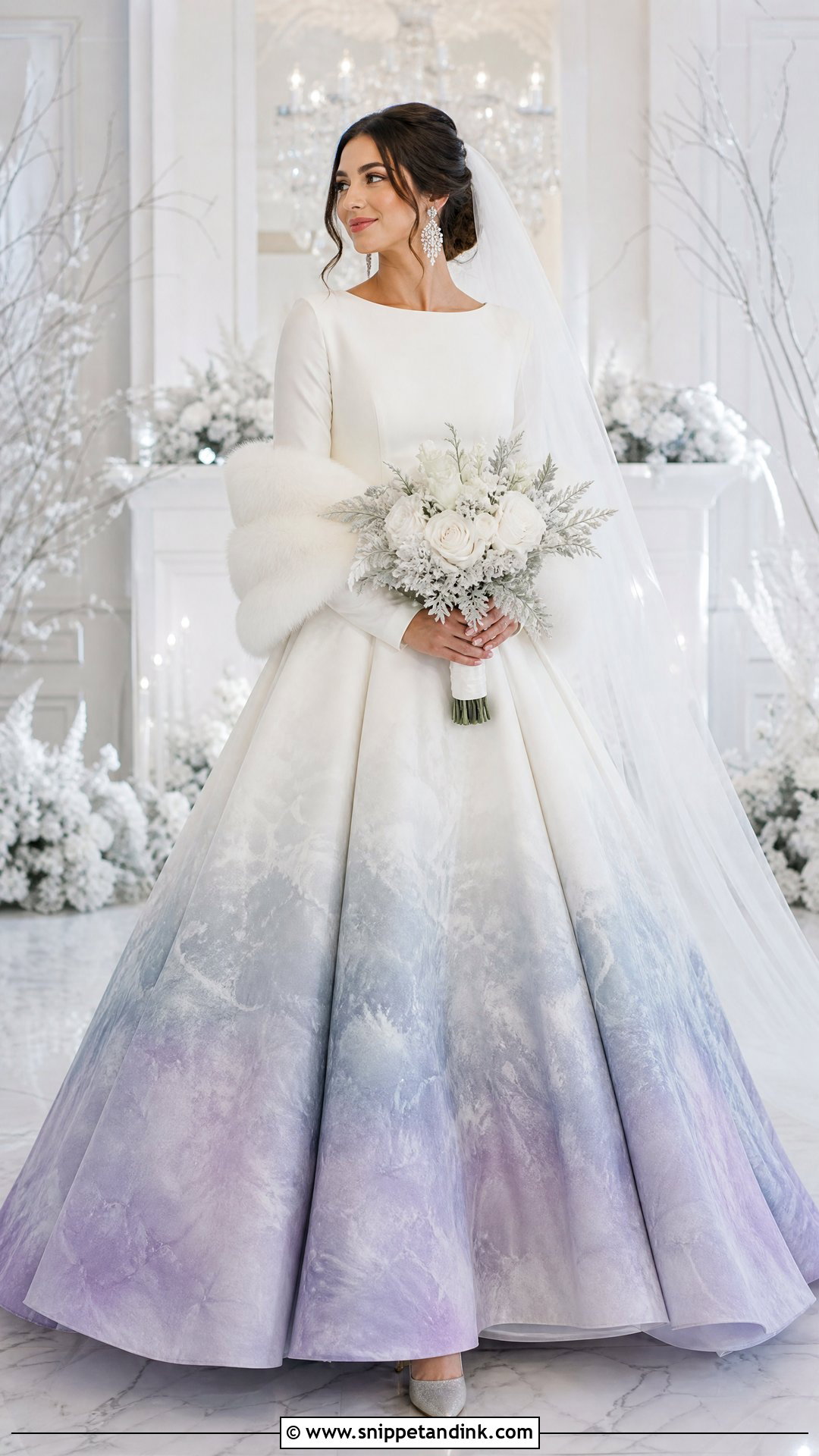
For winter, the dye turns icy: silver-grey, pale blue and soft lavender fading up from the hem like frost on glass. The gown has long sleeves, a fitted crepe or lace bodice and a full skirt. Keep the upper bodice light, because cool grey near the face can wash out a winter complexion. Closed-toe silver heels, crystal drops and a white faux-fur wrap for outdoor photos keep it practical. A polished updo with a crystal comb and a plain cathedral veil make it formal enough for an evening venue, and a bouquet of white flowers with silvery greenery completes it.
18. Satin Tie Dye Slip Wedding Dress
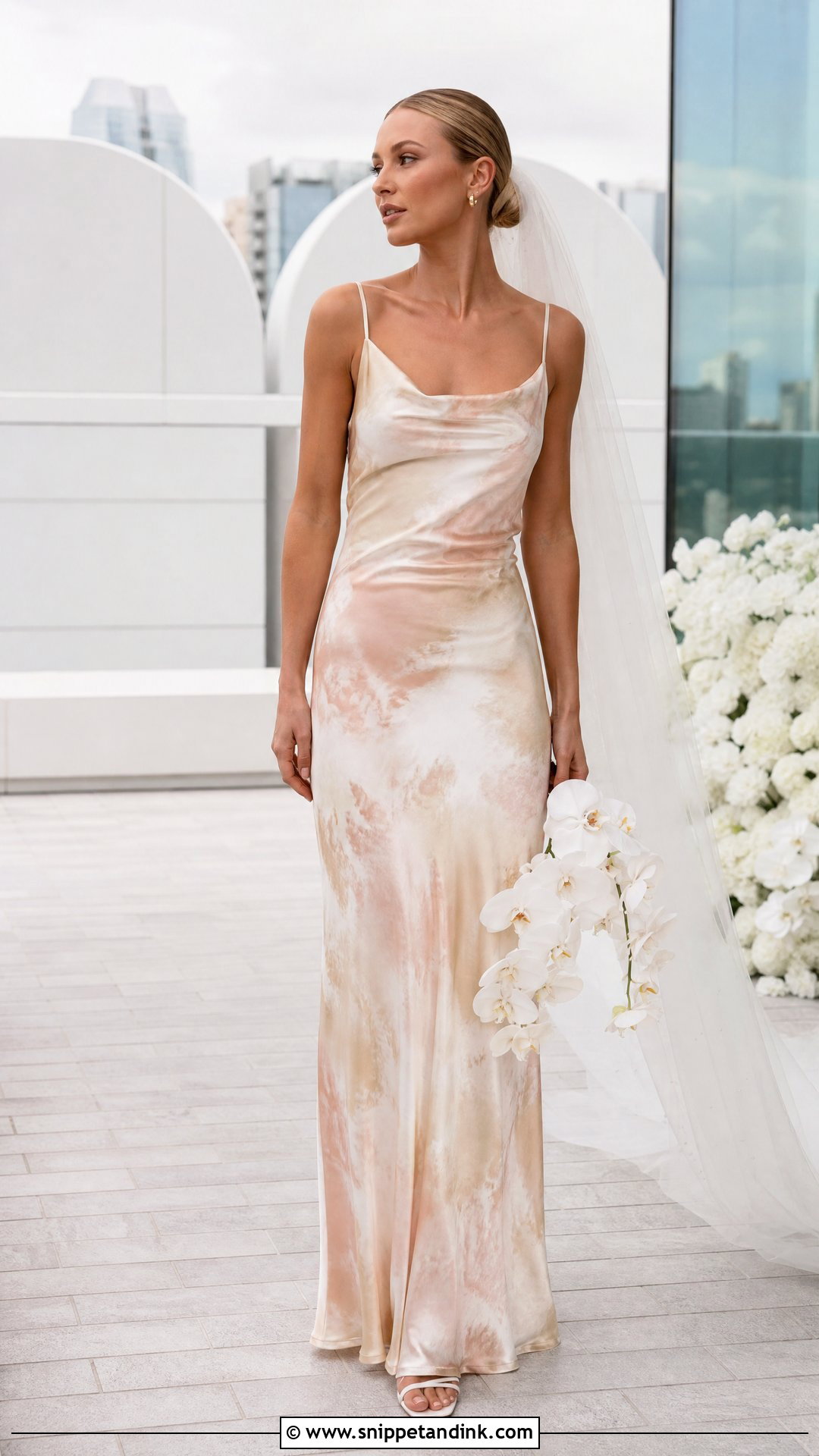
Satin catches light, so dye on a slip dress needs to stay soft. A bias-cut gown with a draped neck, narrow straps and a floor-length skirt suits a diagonal sweep of champagne, blush and pale gold. If the satin is silk, it will take dye beautifully; if it is polyester, which most bridal satins are, only specialist disperse dyeing at high heat will colour it evenly. Bias cut also clings, so the dye pattern will show every movement. Minimal ivory heels, small gold earrings, a cream clutch, a sleek low bun and a fingertip veil keep it streamlined. A long orchid bouquet suits a rooftop or city hotel.
19. Two Piece Tie Dye Wedding Dress
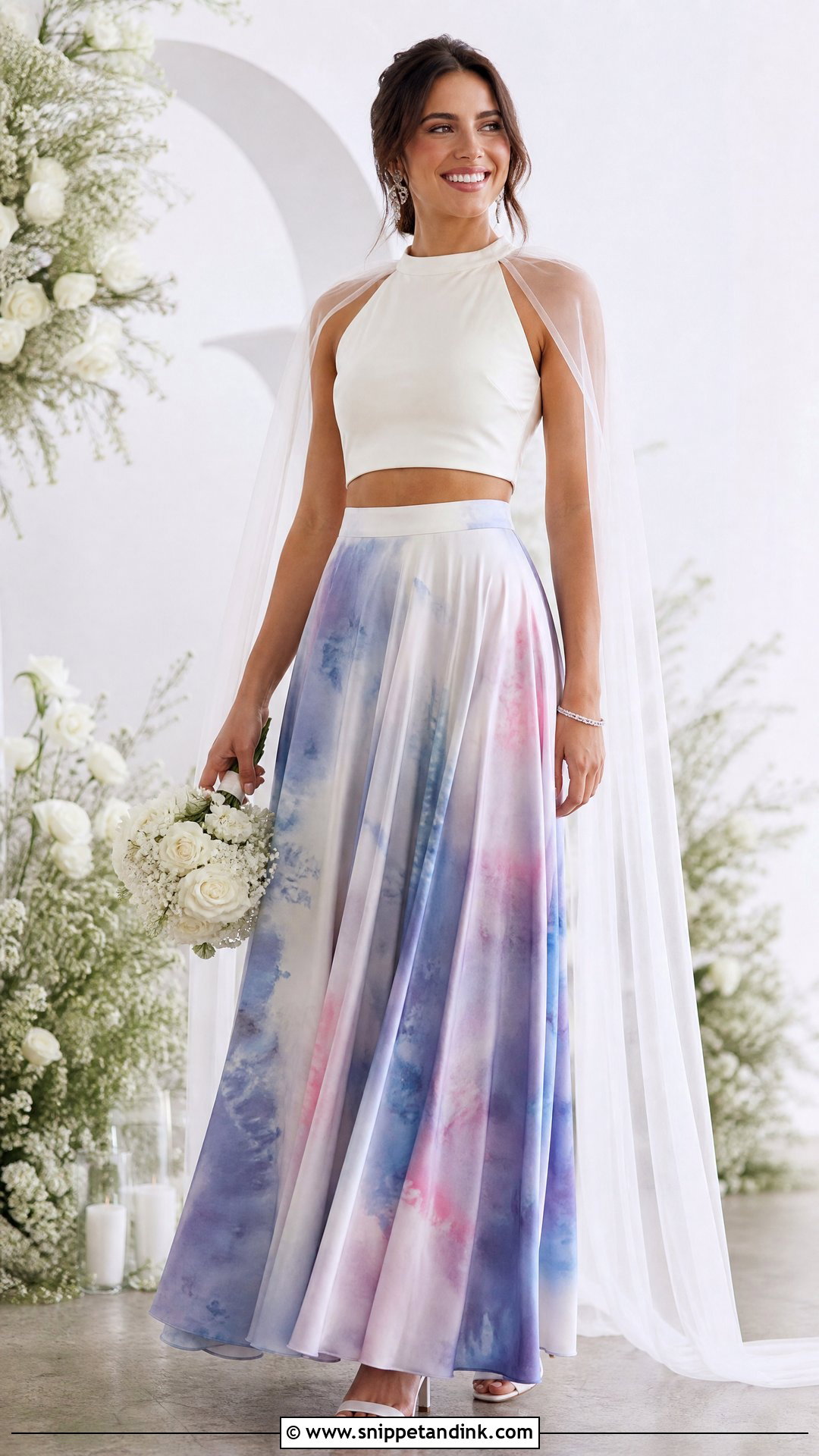
Separates give you more say over the fit. A fitted ivory crop top with supportive straps or sleeves pairs with a high-waisted floor-length skirt carrying blue, purple and pink watercolour, with a touch of matching colour along the top’s hem or sleeves. The gap between the two pieces should be planned, not accidental: decide at the fitting whether you want a sliver of skin or none, and have the waist placed accordingly. White heeled sandals, silver earrings and a slim bracelet work, and a sheer cape at the shoulders can stand in for a veil. Carry a plain white bouquet.


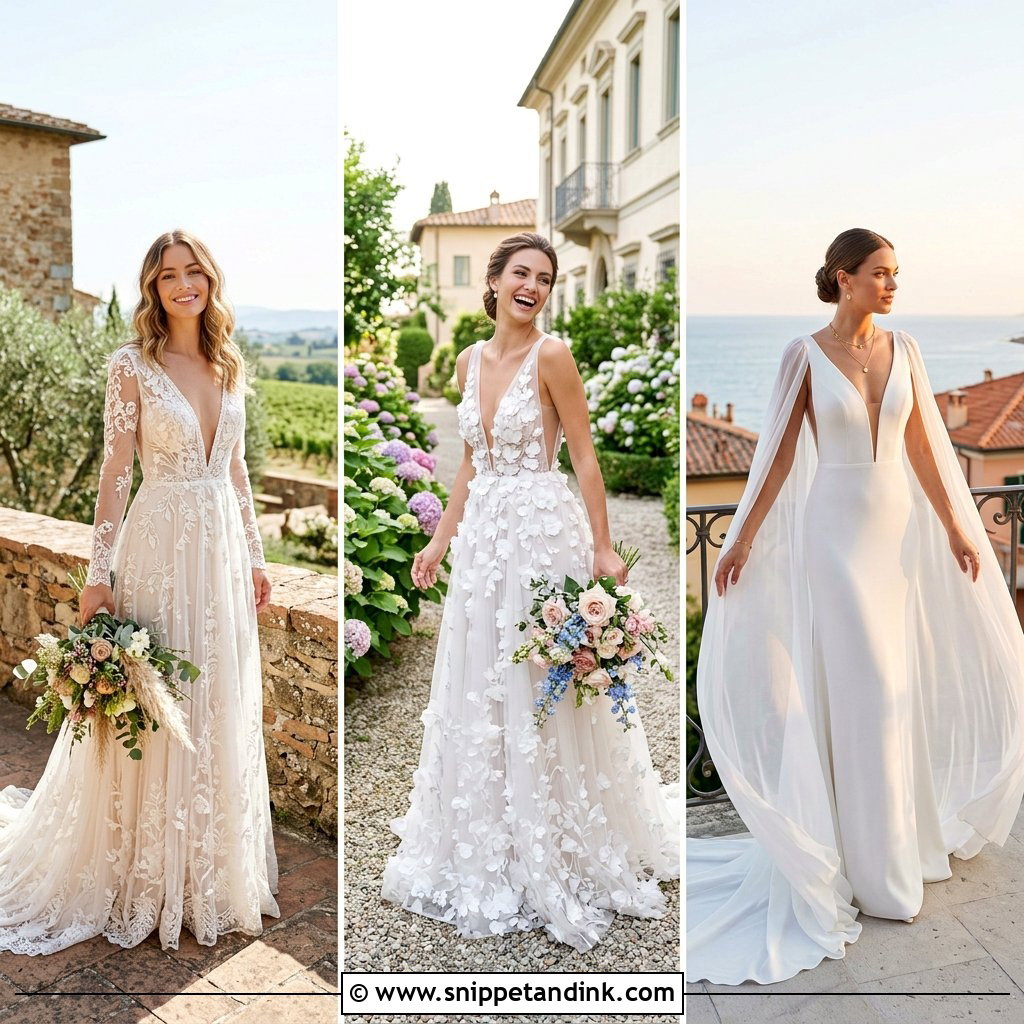
20. White Tie Dye Wedding Dress With Colorful Train
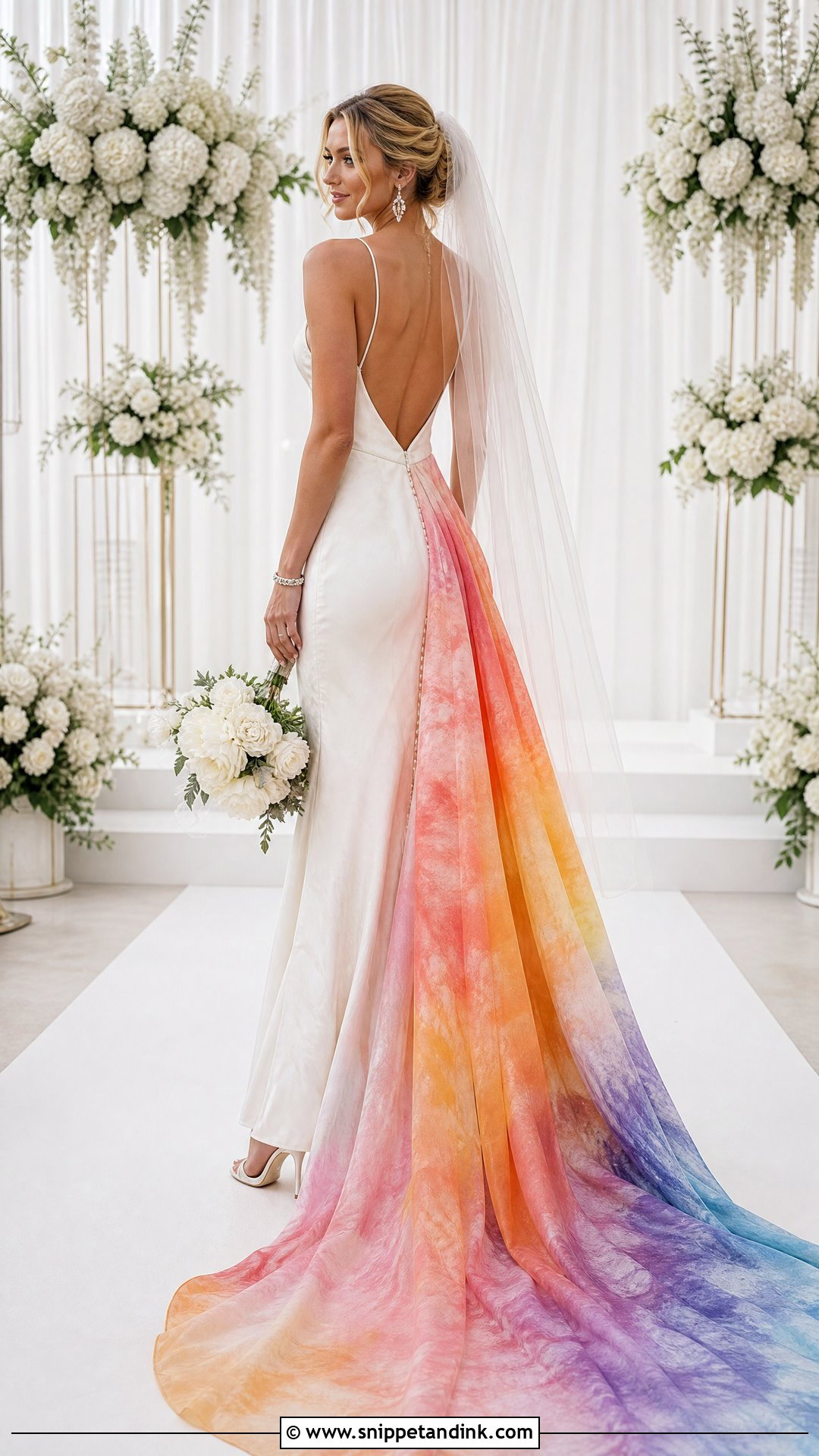
A colorful train keeps the front entirely classic and saves the surprise for when you walk away. An ivory fitted gown with a clean bodice and defined waist carries a detachable overskirt or long train dyed in rainbow, blue, purple or sunset shades. A detachable piece is the safer choice because only that part goes into the dye bath, leaving the main gown untouched. Ivory heels, delicate earrings and a simple bracelet suit it, and a long sheer veil layers over the colour without hiding it. Bustle or remove the train for dancing. White flowers with a few matching accents are plenty.
Testing, Timing and Who Should Do the Dyeing
Hand-dyed colour is never fully predictable, so build in room for a second attempt. I ask the dyer for a test strip from the same fabric, either a scrap from the hem allowance or a matching swatch from the bridal shop, and look at it in daylight and under warm indoor light before anything goes near the gown.
Dye before the final alterations. Natural fibres can shrink a little in hot water, and a hem marked before dyeing may end up short. Leave several weeks between dyeing and the last fitting, and agree in advance what happens if the result is not what you pictured. A professional textile artist with bridal experience costs more than a home attempt, but a ruined gown costs far more.
Rain, Sweat and Rub-Off on the Wedding Day
Well-fixed dye stays put. Poorly rinsed dye can bleed onto skin, ivory shoes or a partner’s shirt the moment it gets damp. Before the day, rub a damp white cloth firmly over the darkest area; any colour on the cloth means the dress needs another rinse. After the wedding, tell the cleaner the colour is hand-applied so they spot-test first, and store the dress folded in acid-free tissue in a dark cupboard, since sunlight fades dyed silk and purples quickest of all.
Keep the Palette Tight and the Bodice Light
Colour on a wedding dress succeeds when the palette is controlled and the silhouette is clear. A pastel wash, a rainbow skirt, an ocean hem, an earthy pattern or a coloured train can all look deliberate if the shades are related and the bodice stays light. Before anyone dyes an existing dress, think about its fabric, construction and sentimental value; a textile artist or experienced dressmaker can protect lace, seams and beading. Then choose the version you feel most like yourself in from the ceremony to the last dance.
You'll Like These Ideas:








Leave a Reply