
A big dress changes the whole day. It sets the pace of the aisle walk, decides which car you travel in and needs a helper every time you sit. These 20 Huge Wedding Dress Ideas run from plain satin ball gowns to tiered tulle, puff sleeves, overskirts and cathedral trains. In fittings, I spend as much time on how a gown like this moves as on how it looks in the mirror: can you sit, hug, climb steps and dance without fighting it? Each look below comes with the construction details that answer that question, plus accessories that support the scale rather than adding to it.
Where the Weight of a Big Gown Actually Lands
Brides are often surprised by how heavy a full gown can be. Heavy satin, mikado and dense beading add up quickly, while tulle and organza stay comparatively light even at a large size. The weight itself matters less than where it sits. A well-built gown hangs from the waist, carried by the corset and a waist stay, so your shoulders and hips barely notice. A poorly built one pulls on the straps or drags at the hip bones.
In the shop, wear the sample for at least half an hour rather than a few minutes in front of the mirror. Walk, sit on an ordinary chair and stand up again without help. If your shoulders ache or the waist digs in by then, it will feel far worse by the reception.
- Ask whether the gown has a waist stay and how the skirt layers are attached.
- Check whether layers of the underskirt can be removed to lighten it.
- Try it with a comfortable, supportive shoe; a heavy skirt makes high, thin heels harder to walk in.
1. Strapless Satin Ball Gown Wedding Dress
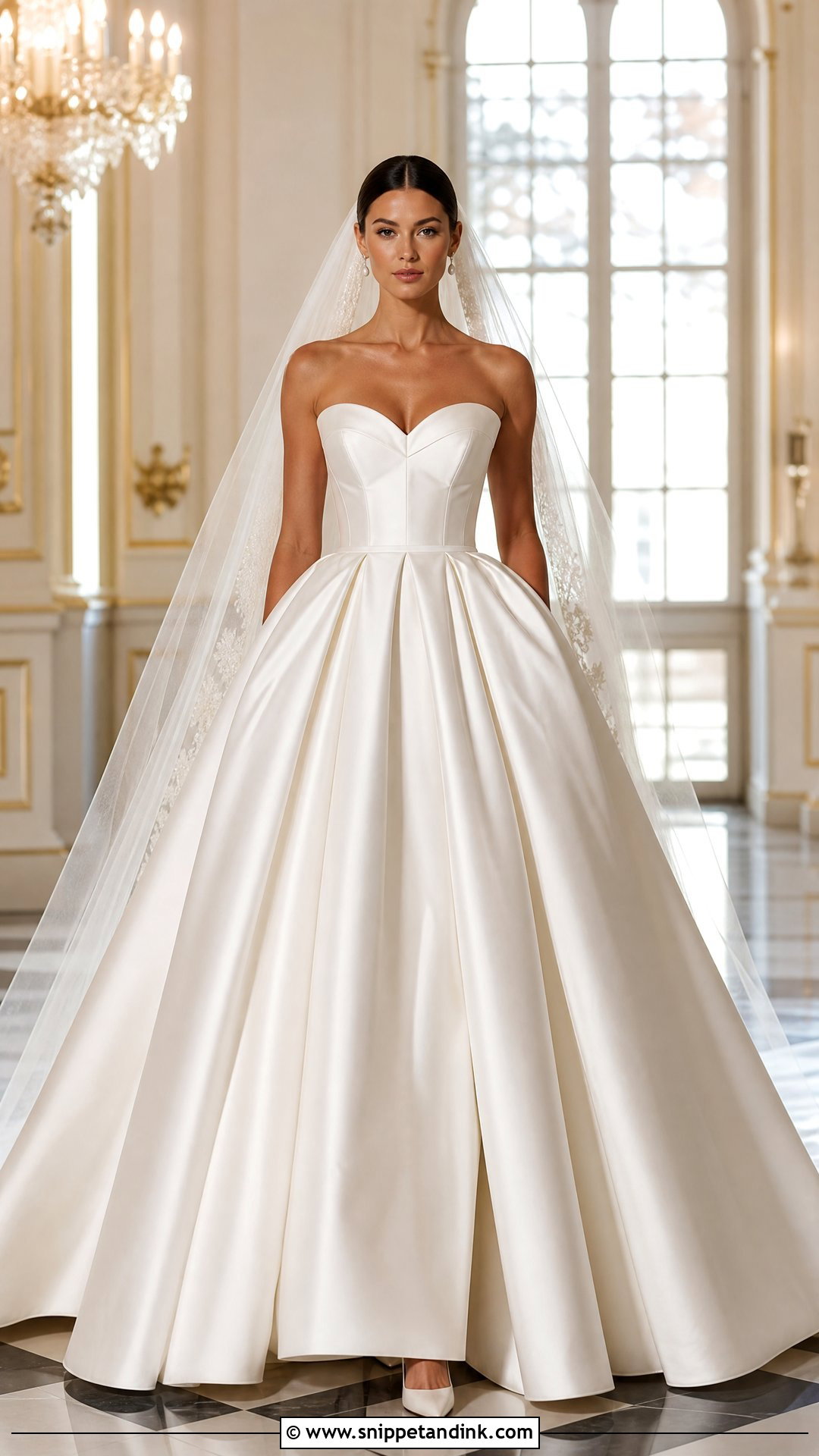
Plain satin is the purest version of a big dress, and it hides nothing. The bodice needs internal boning firm enough to hold a strapless neckline through hours of hugging; I test it by asking the bride to bend forward as if to pick something up. Box pleats at the waist hold their shape better than soft gathers on heavy satin. Pointed ivory pumps, pearl drops and a cathedral veil with a cut edge keep it clean, and a low chignon suits the neckline. Satin glows under bright indoor lighting, so large ballrooms suit it best.
2. Long Sleeve Lace Ball Gown Wedding Dress
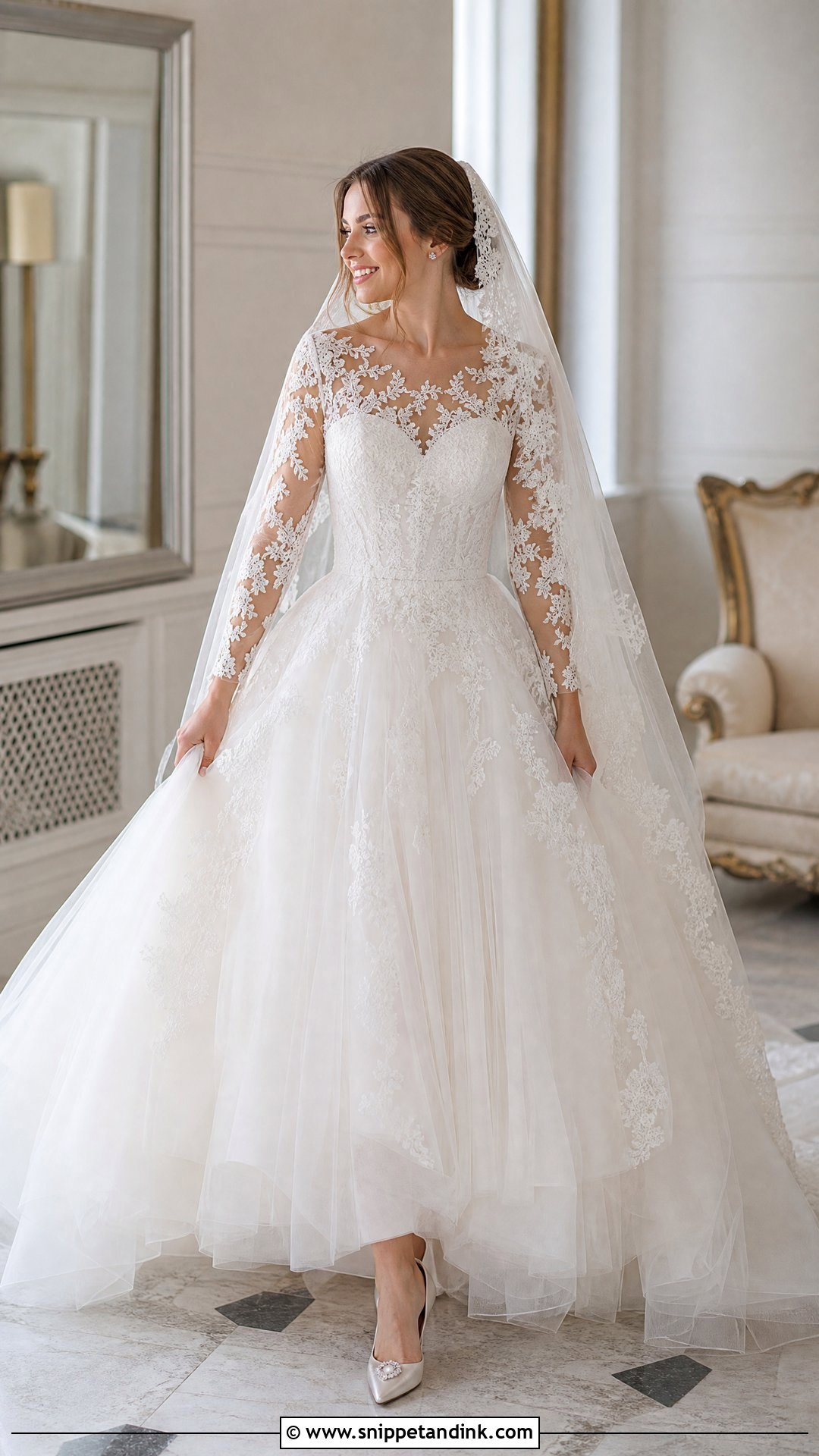
Illusion lace sleeves are lovely until you raise your arms and the whole bodice lifts with them. Ask the fitter to check the armhole height: a higher, closer armhole actually gives you more movement than a loose one. Lace appliqué over the shoulders should be stitched down by hand at the edges so it doesn’t curl. The tulle under the skirt gives volume without stiffness. Closed satin heels, small studs and a veil edged in the same lace tie it together. It suits cool seasons, though a breathable lining makes a mild day manageable.
3. Off Shoulder Tulle Ball Gown Wedding Dress
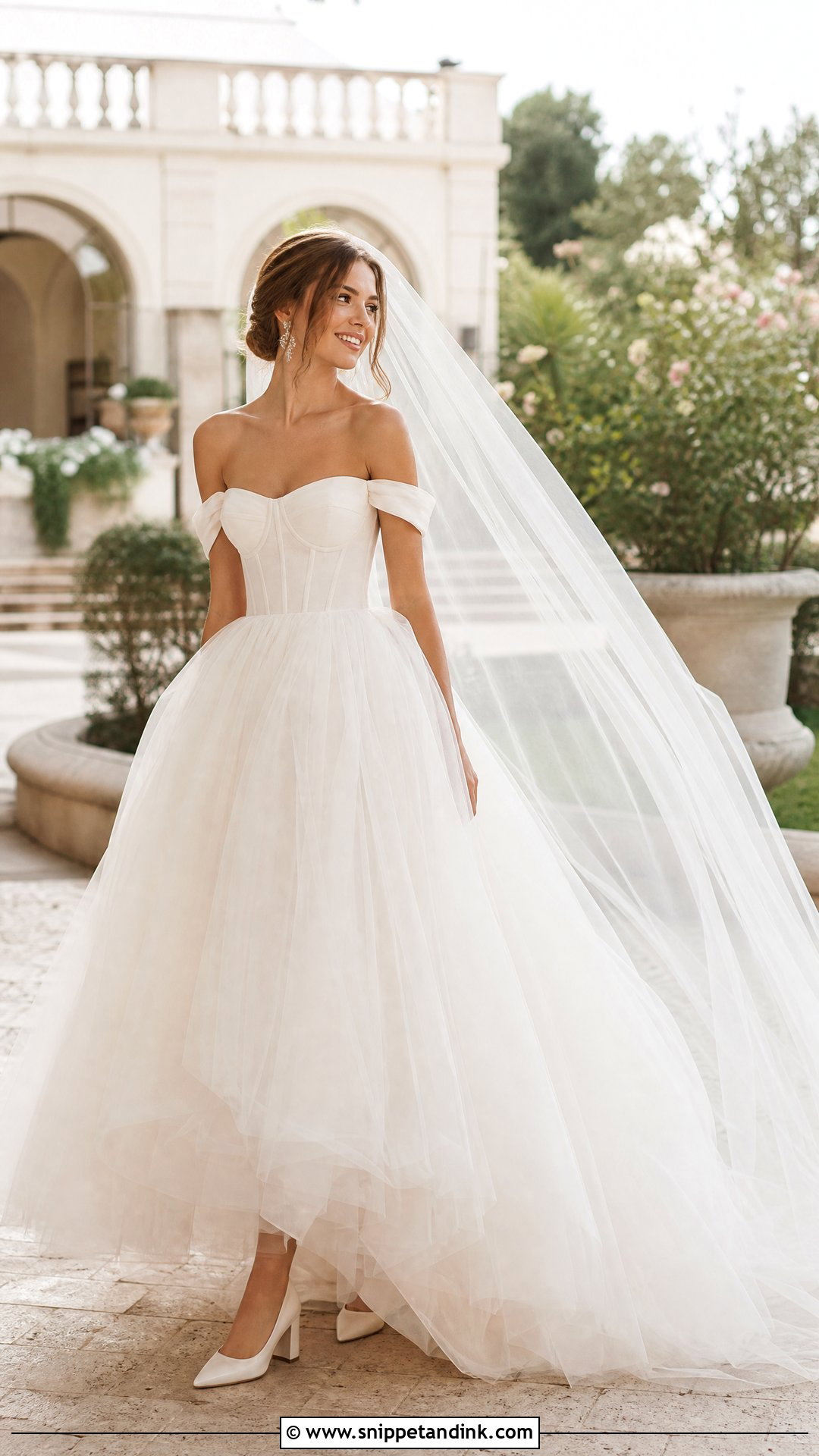
Off-shoulder bands look soft and are surprisingly restrictive. When they sit tight around the upper arm, you can’t lift a glass above shoulder height, so I make every bride hug me at the fitting. If she can’t, the bands get let out or moved. A structured bodice keeps the neckline in place without relying on the bands. Several layers of tulle over a light underskirt give fullness that’s easy to manage. Hide comfortable block heels under the hem, add crystal earrings and a long sheer veil.
4. Corset Bodice Ball Gown Wedding Dress
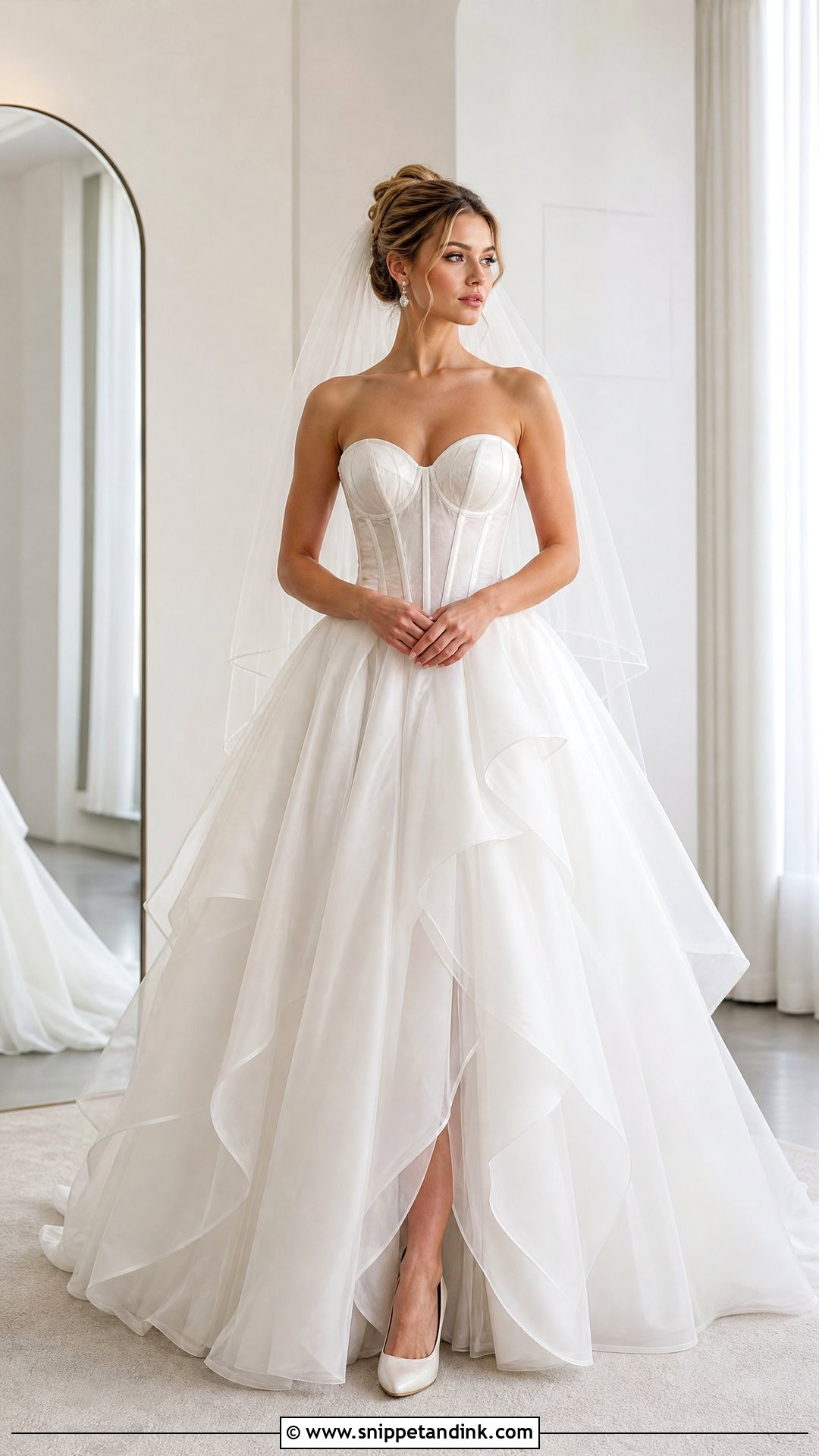
The corset is the engine of a big dress. It carries the weight of the skirt from the waist, so a good one makes a heavy gown feel lighter. Exposed boning reads modern; covered boning looks more traditional. Starting the skirt at the natural waist makes it look even fuller by contrast. At each fitting, sit down and breathe deeply; secure is the goal, not squeezed. Lacing lets you adjust on the day if your body changes a little. A fingertip or chapel veil, crystal earrings and cushioned heels finish it.
5. Basque Waist Ball Gown Wedding Dress
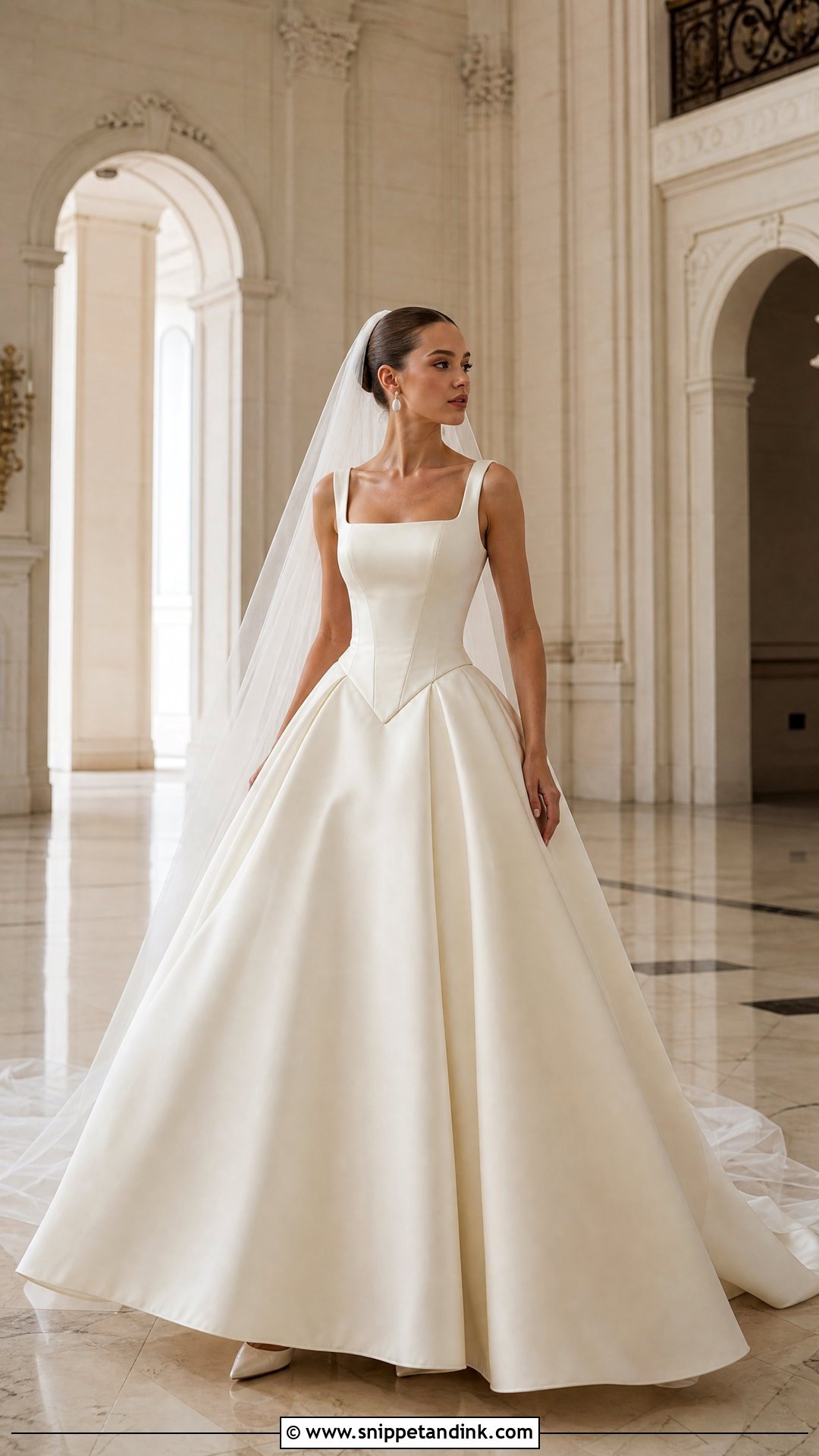
A basque waist dips to a V below the natural waist and lengthens the torso before the skirt opens. The point of that V is everything: too low and it digs into the hips when you sit, too high and it loses the effect. I mark it with the bride seated, not standing. Plain satin, mikado or crisp organza keep the shape modern. A cathedral veil, oval pearl earrings and pointed pumps finish it. Hold the bouquet low or to one side so the V shows.
6. Drop Waist Ball Gown Wedding Dress
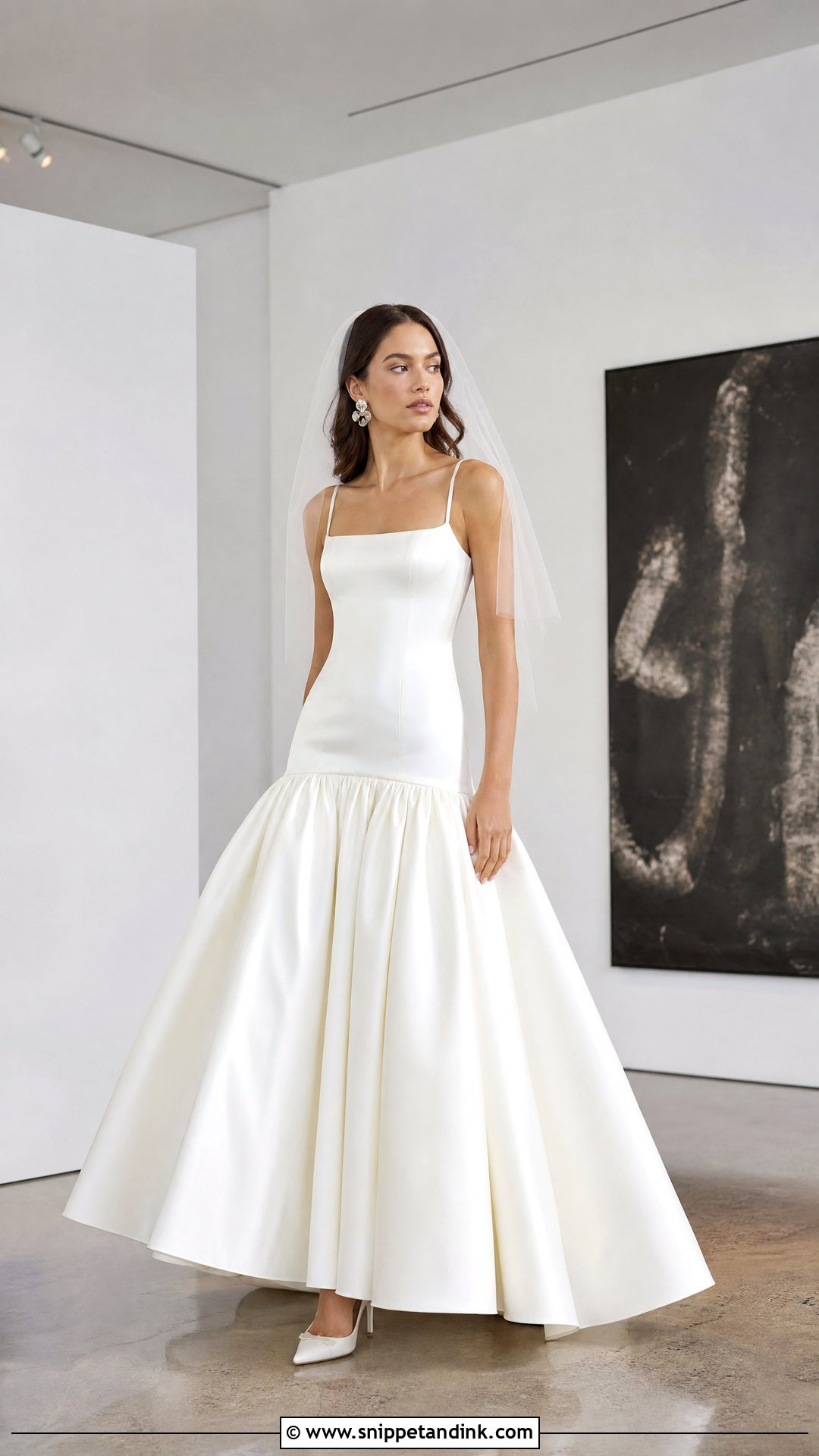
A drop waist moves the skirt’s starting point down to the upper hip, which creates a long, sculpted bodice. It’s the trickiest silhouette here for sitting, because the seam sits right where the body bends. Take full steps and sit at every fitting; if the seam rides up or creases across the hips, the bodice needs more ease. Satin and mikado hold the architecture; tulle softens the join. A shoulder-length veil, sculptural earrings, ivory heels and a smooth bun complete it. Proportion matters more than height for this shape.
7. Ruffled Organza Ball Gown Wedding Dress
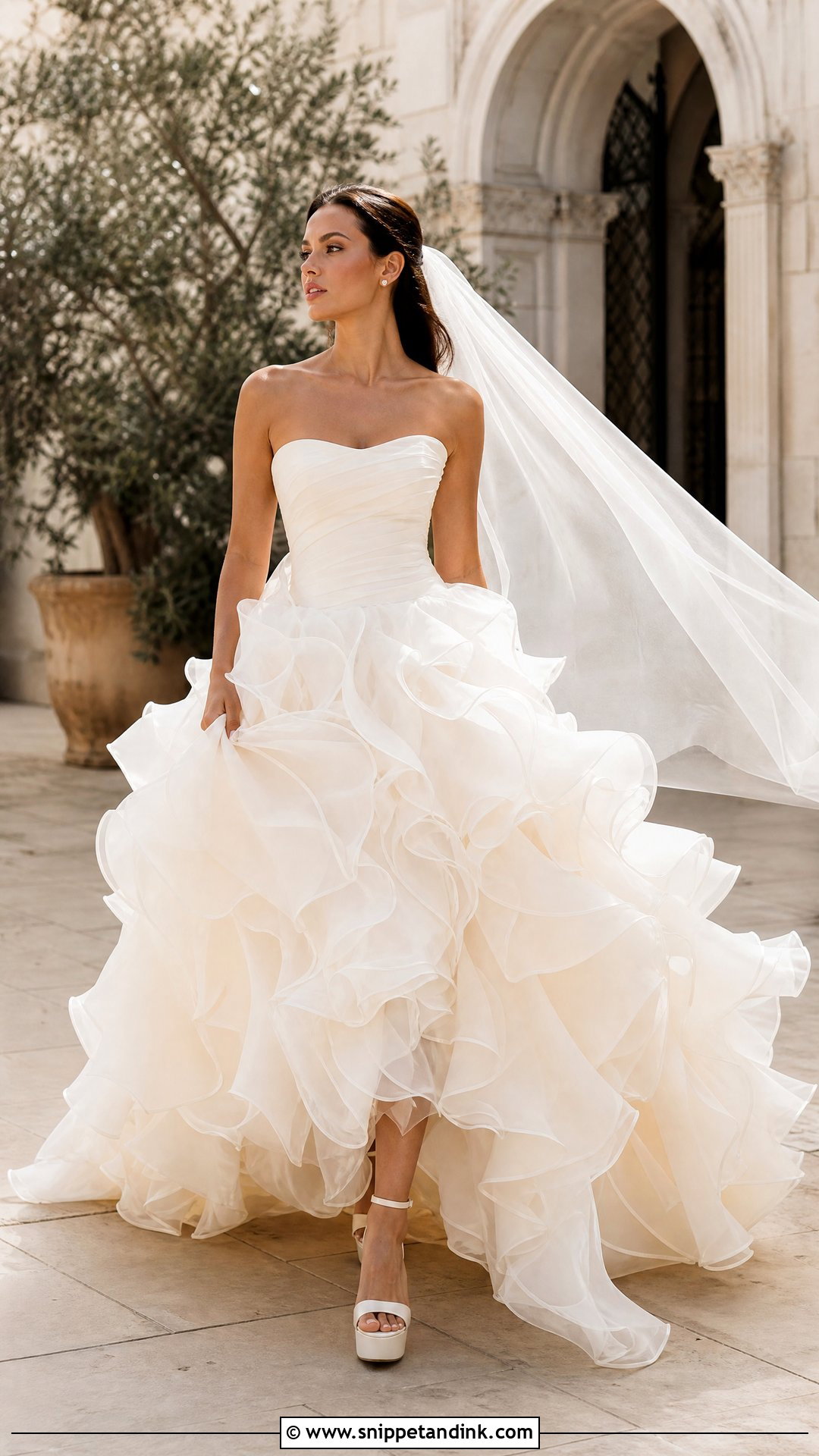
Organza gives big volume with less weight than satin, which makes it a good choice for a summer wedding. Instead of one solid skirt, cascading tiers catch the light as you walk. Organza also creases and can feel scratchy against bare legs, so check for a soft lining. Keep the bodice plain: a strapless, square or softly draped top. Minimal studs, platform sandals and a plain veil ending above or below the fullest ruffles finish it. Watch the front hem; ruffles that touch the floor catch on your toes.
8. Floral Appliqué Ball Gown Wedding Dress
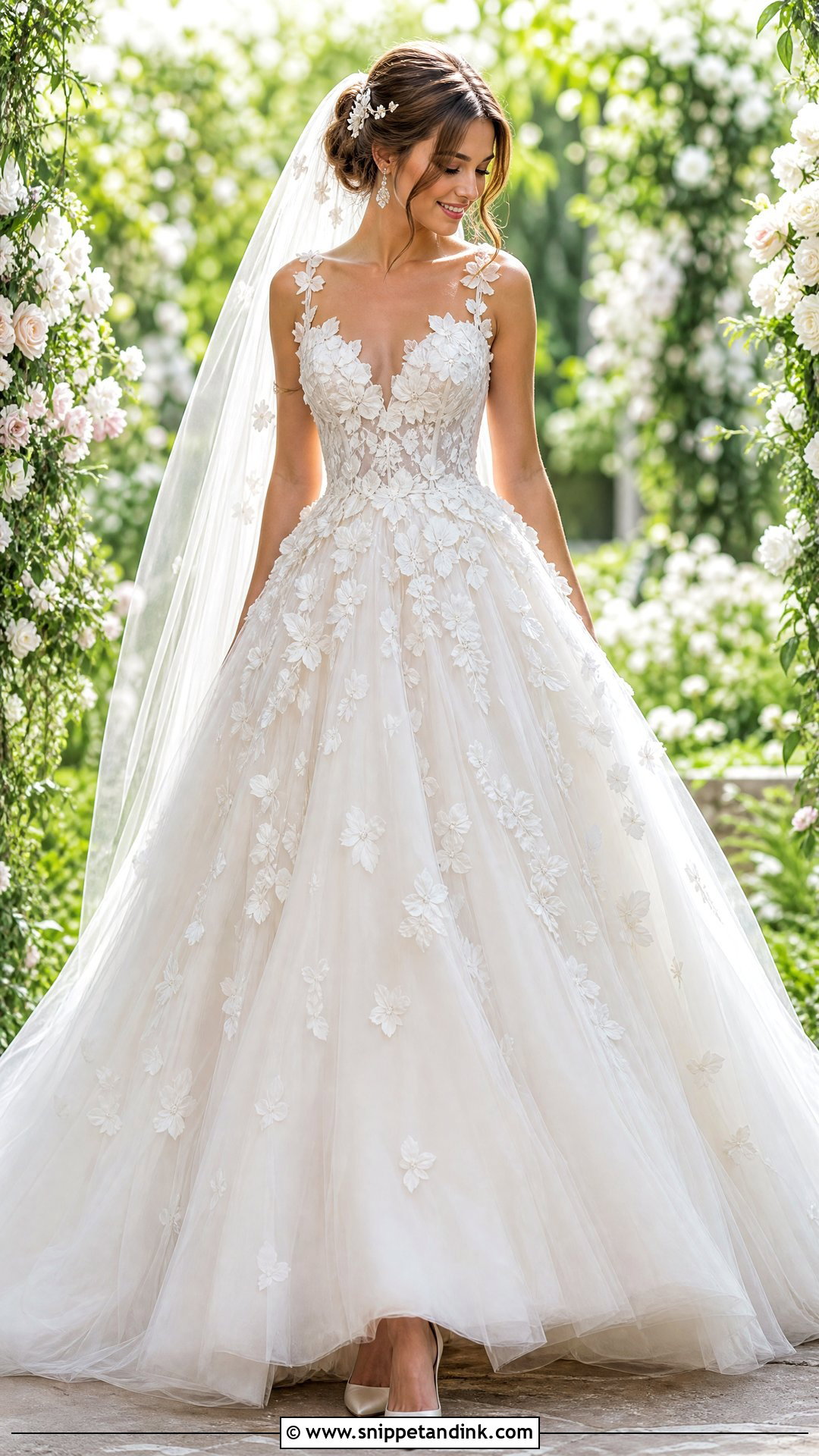
Raised flowers are hand-placed, which means you can usually ask for some to be moved or removed. Look at the underarms, the waist and the seat: flowers there get crushed, scratch and snag. I’d ask for appliqués to trail from the bodice and scatter onto the skirt, so the eye moves down the dress. A sheer or lined bodice depends on how much coverage you want. Floral hairpins, simple drop earrings and a veil with a few matching appliqués at the edge are plenty. Keep the bouquet loose and simple.
9. Beaded Sparkle Ball Gown Wedding Dress
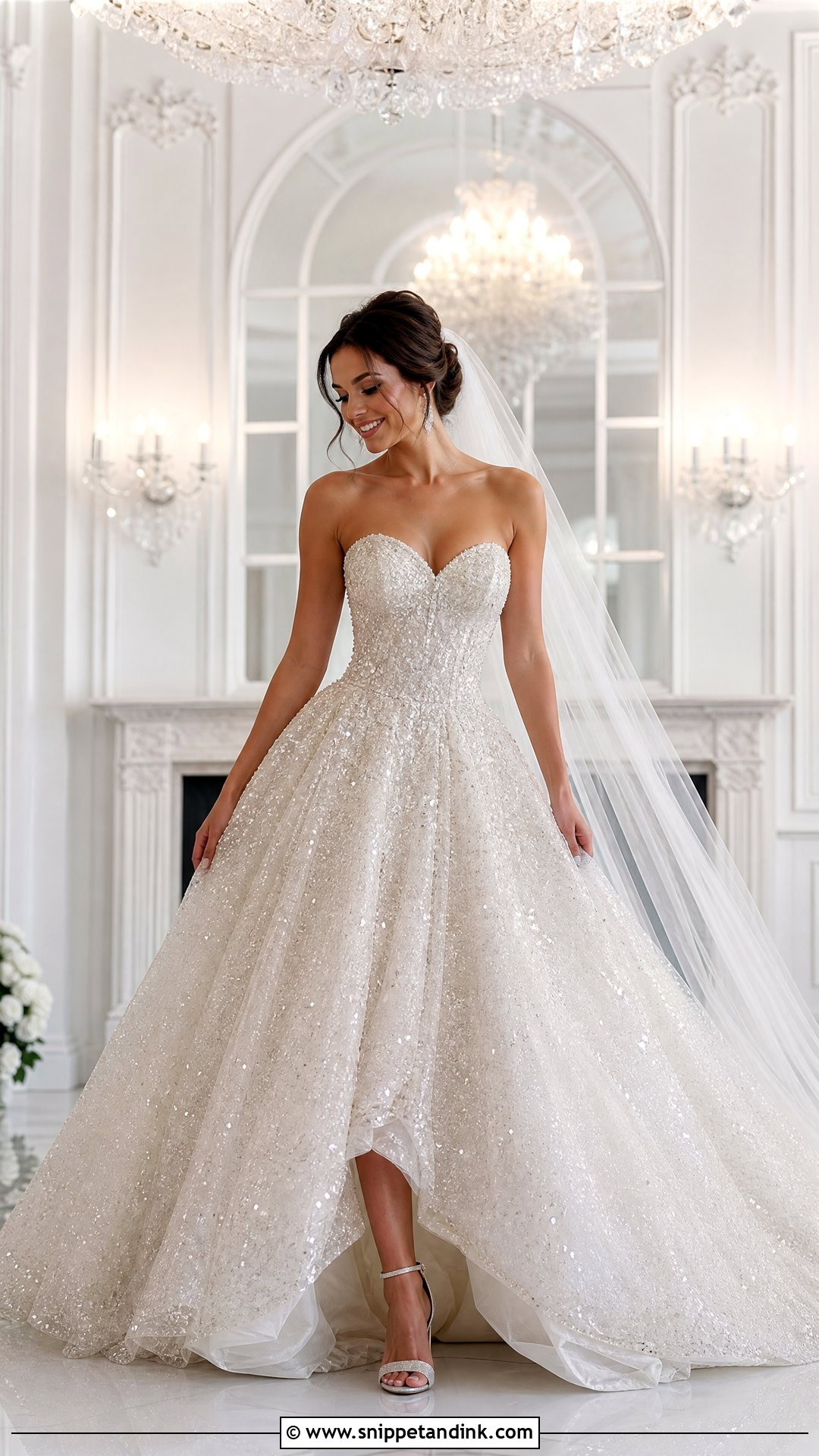
Heavy beading is beautiful, and it adds real weight. Ask the shop to weigh the sample if you can, or at least hold the skirt up yourself. The best-built beaded gowns concentrate crystals on the bodice and scatter them lightly on the skirt. Look for a waist stay, a ribbon band sewn inside the waist that carries weight off your shoulders and hips. Reinforced straps help too. A sweetheart neckline and fitted waist are the classic base. Keep the earrings understated and the veil plain.
10. Square Neck Ball Gown Wedding Dress
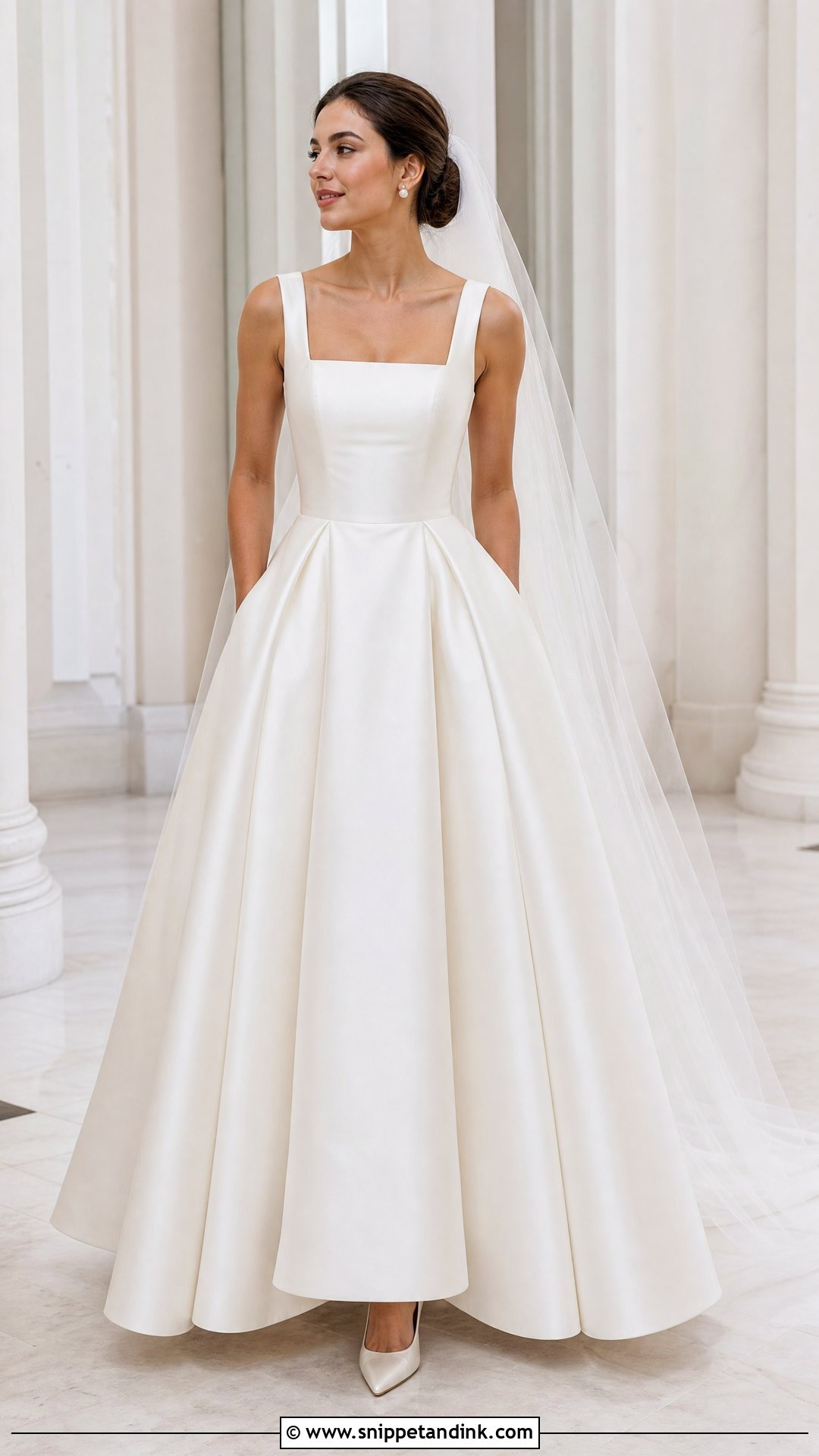
Square necklines frame the collarbones neatly, and they go wrong at the corners. If the corners pucker or stand away from the body, it needs adjusting, and I check them with the arms down and then raised. Wide straps carry more weight than thin ones on a big skirt. Satin keeps it modern; lace softens it. A full pleated skirt gives presence without many layers. Pearl earrings, a low bun, pointed pumps and a long veil set under the hair finish it. The neckline usually looks best left bare.
11. High Neck Lace Ball Gown Wedding Dress
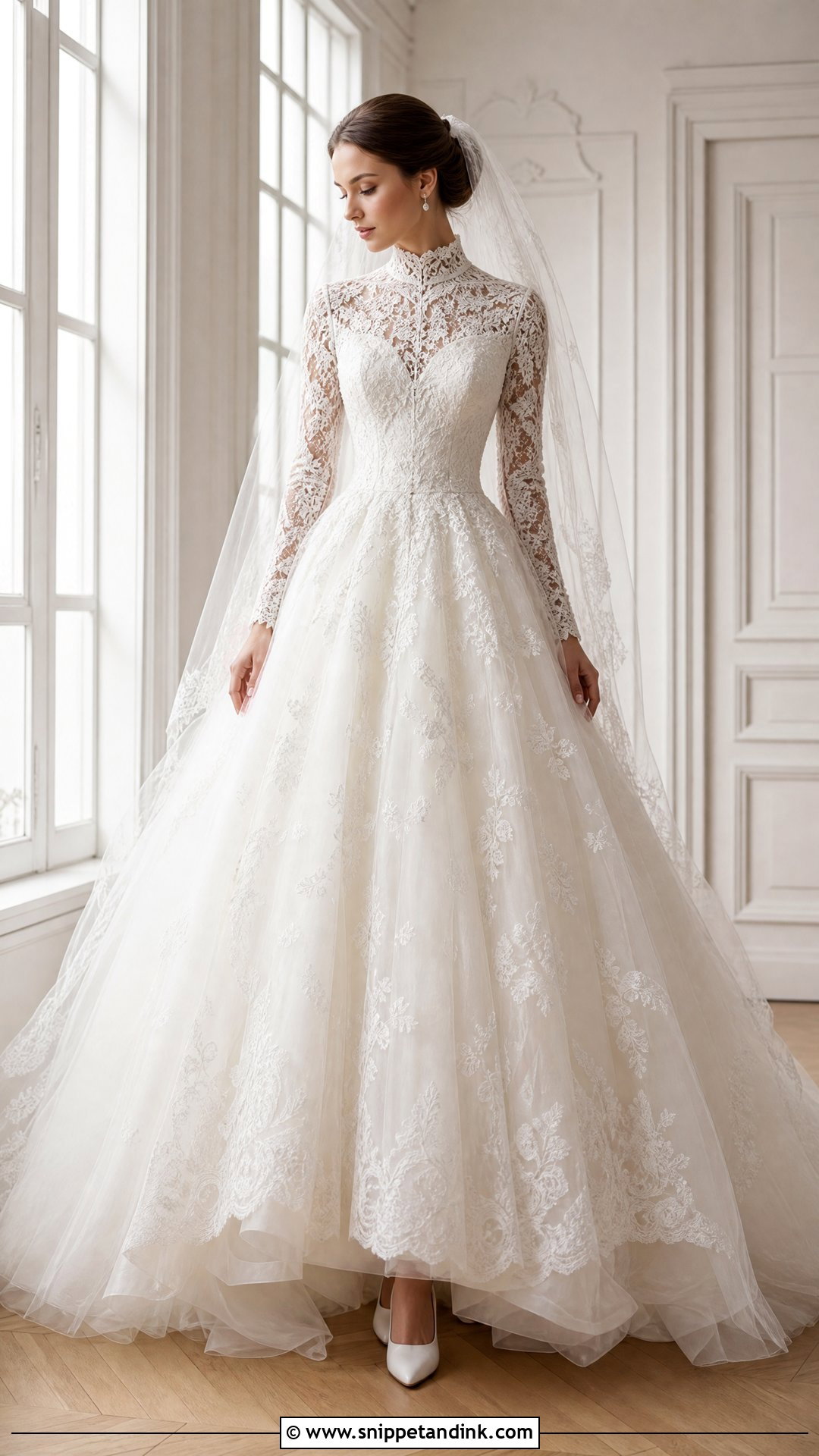
A high lace neckline frames the face the way a portrait collar does, and it sits directly against the skin all day. Some lace has a rough cord edge that scratches the neck by the evening, so wear the gown for a while at a fitting and ask for a softer trim or a fine silk backing if it itches. A fitted bodice and defined waist keep all that coverage from looking top-heavy over a big skirt. Tulle, organza or light satin below give the scale. Skip the necklace; the lace is the jewelry. Pearl studs, closed-toe heels and a veil under a smooth bun finish it.
12. Puff Sleeve Ball Gown Wedding Dress
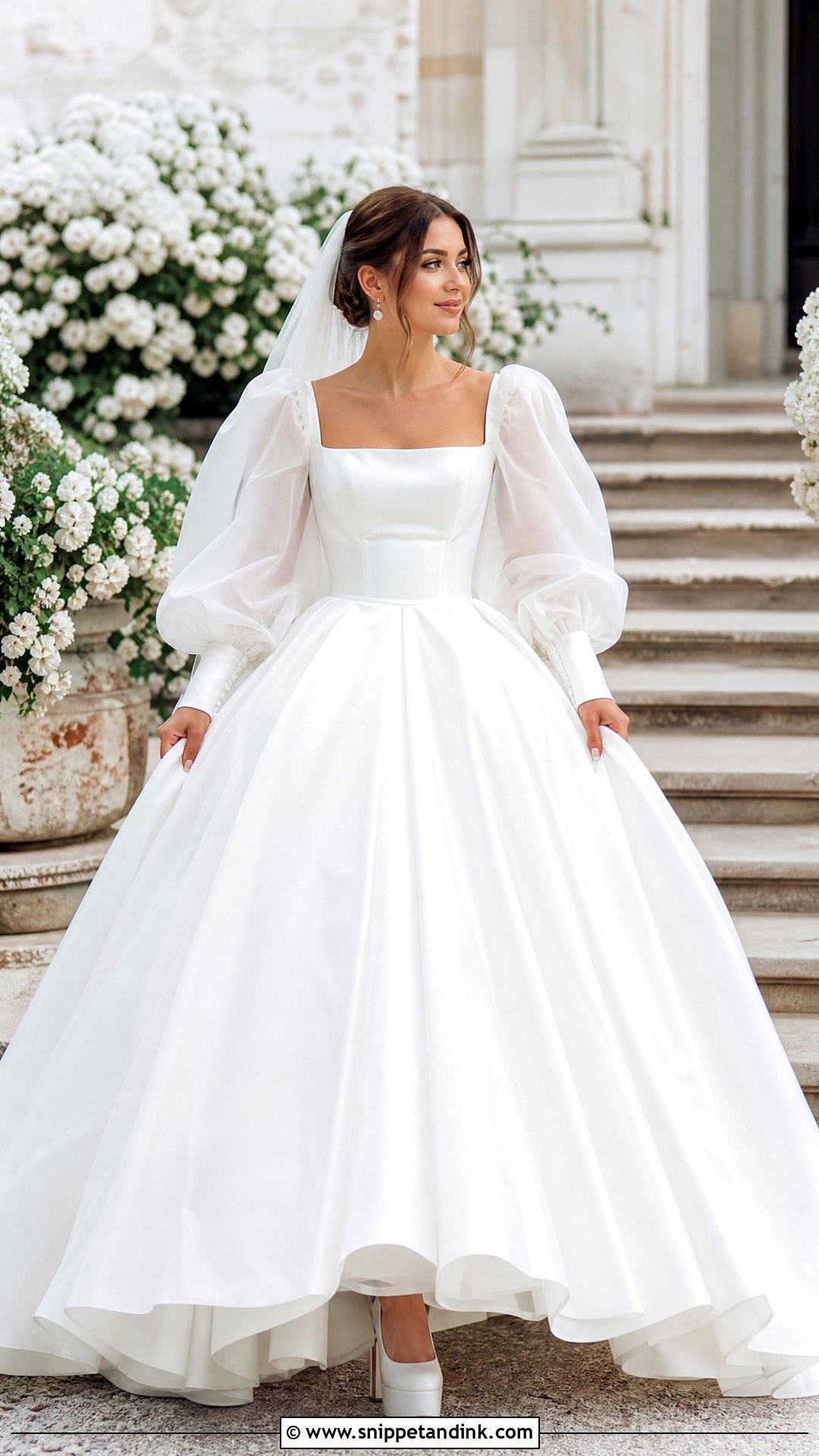
Puff sleeves add volume at the top to balance the volume at the bottom. Sheer organza puffs look airy; satin puffs look sculpted and hold their shape better through a long day. The bodice has to stay fitted and the waist defined, or the proportions start to look accidental. A square or curved neckline sits nicely between the sleeves. At fittings, check the elastic at the cuff and the armhole: you should be able to raise your arms without the sleeve pinching. Detachable sleeves give you a sleeker reception look.
13. Bow Back Ball Gown Wedding Dress
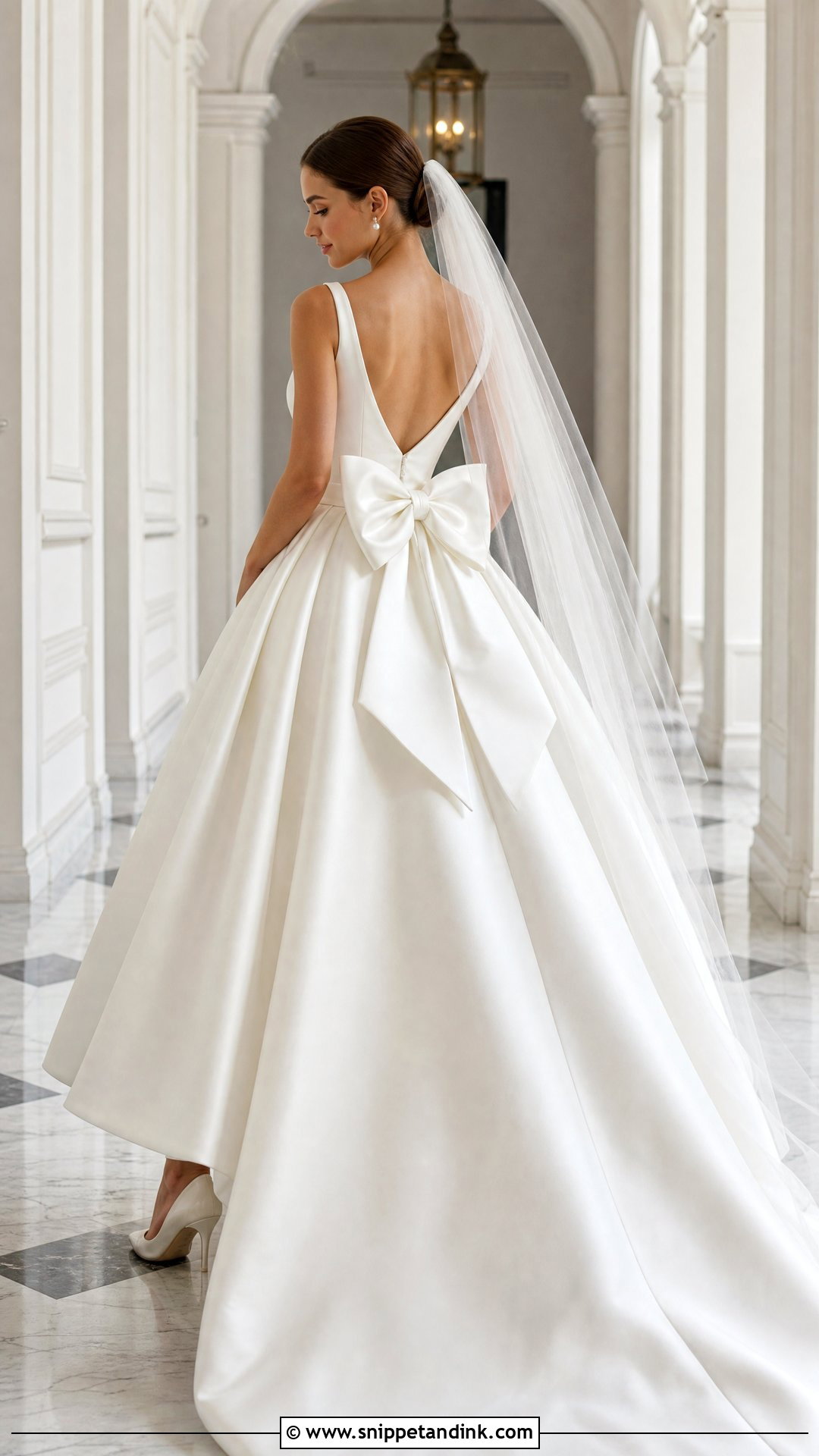
A big bow at the back keeps the front clean and gives the ceremony something to look at as you face your partner. Its size has to match the skirt; a small bow on a huge skirt looks lost, and an oversized bow on a narrow train swamps it. The loops need interfacing or they droop by the reception. Choose structured satin or mikado. A sleek bun and a sheer veil keep the bow visible. A detachable bow comes off after the ceremony, which makes bustling much simpler.
14. Tiered Tulle Ball Gown Wedding Dress
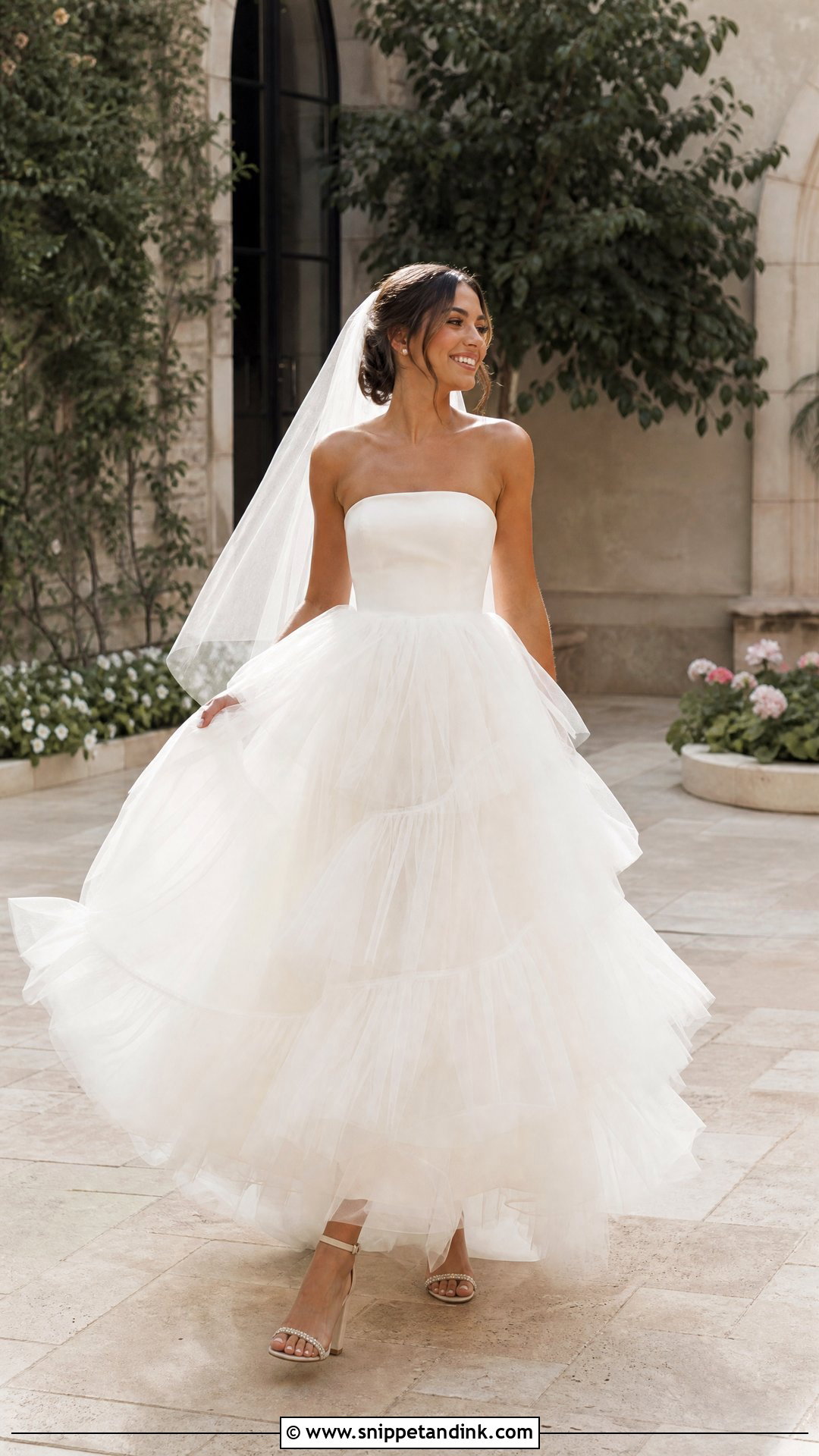
Tiered tulle gives a big skirt bounce and movement without stiffness. Raw-edge tiers look light and modern; bound edges look neater. A smooth bodice balances all that layering, and a strapless or thin-strap neckline keeps the top simple. Tiers complicate the bustle, so ask before you buy how the layers will be lifted and secured. The front hem needs to clear the floor by a little so you don’t step into the tulle. Crystal studs, block heels and a plain veil are all it needs.

15. Pleated Mikado Ball Gown Wedding Dress
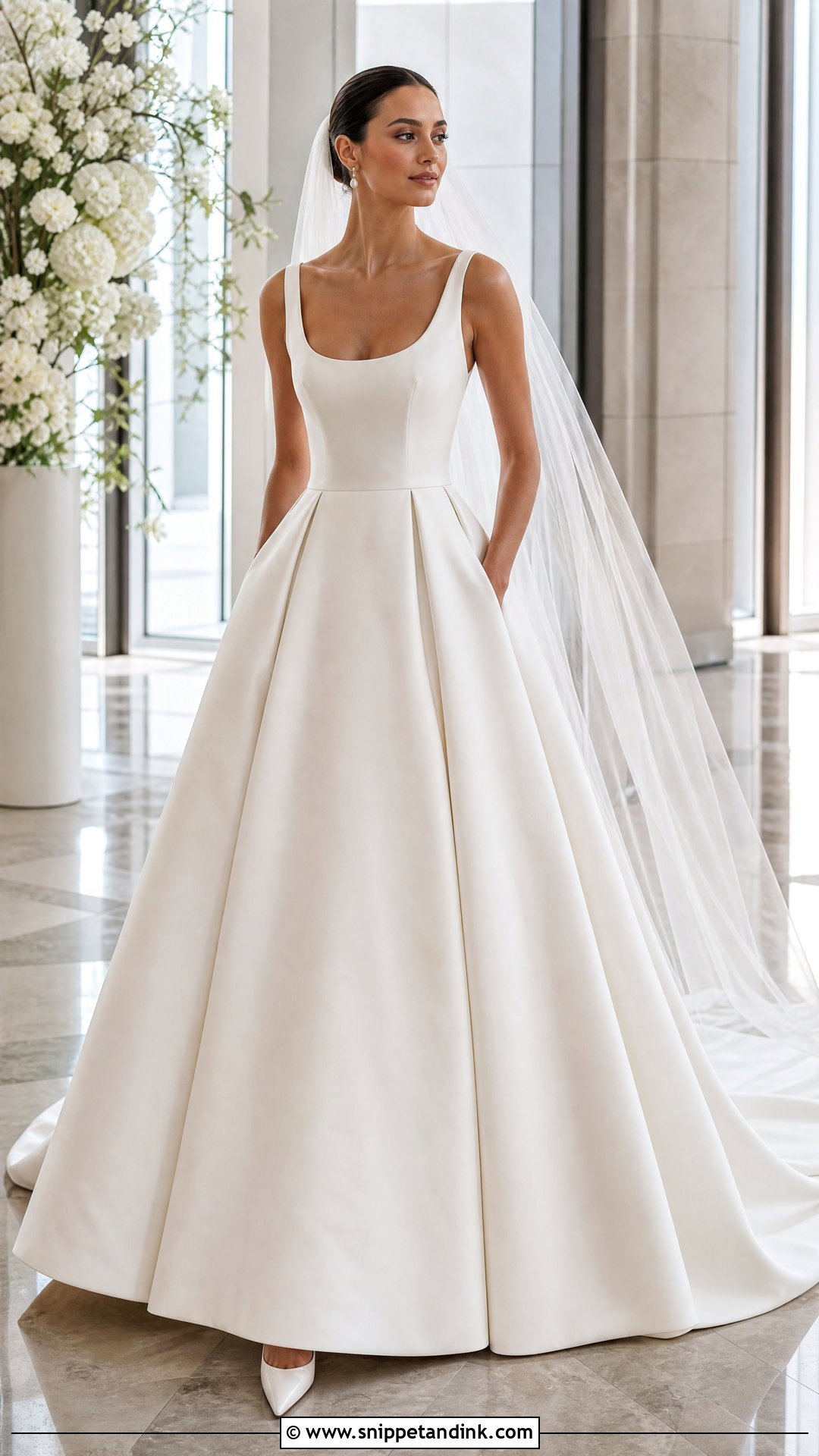
Crisp Mikado fabric holds deep pleats like nothing else, so a wide skirt doesn’t need many layers. That body comes with weight and warmth, which matters for a summer ceremony. Pockets hidden in the side seams are a real pleasure on a dress like this, as long as they lie flat. A straight, scoop or sweetheart neckline keeps it classic. At alterations, view it from the side to check that the pleats fall evenly and the waist seam is level. A cathedral veil and pearl drops suit it.
16. Feather Trim Ball Gown Wedding Dress
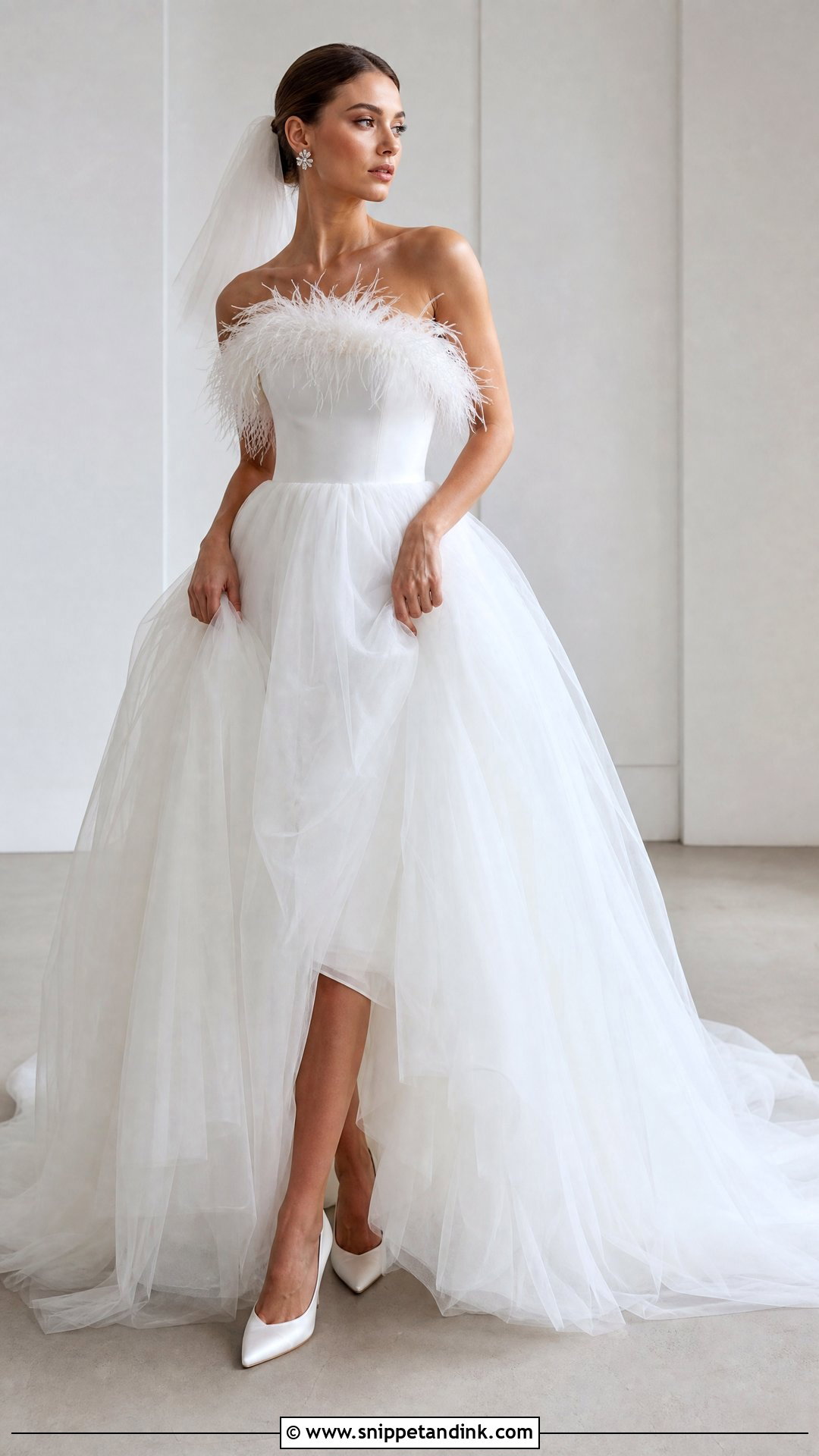
Feather trim adds movement without sparkle. I’d keep it to one area: the neckline, the sleeves or the hem. Feathers flatten in transit and shed, so ask the shop how to store and steam them and keep the dress in a roomy bag until you’re dressed. If you or your partner react to feathers, a fabric fringe gives a similar effect. A satin bodice and tulle skirt give a clean base. Crystal earrings, sleek pumps and a shoulder-length veil keep it modern. Keep the bouquet restrained.
17. Overskirt Wedding Dress With Long Train
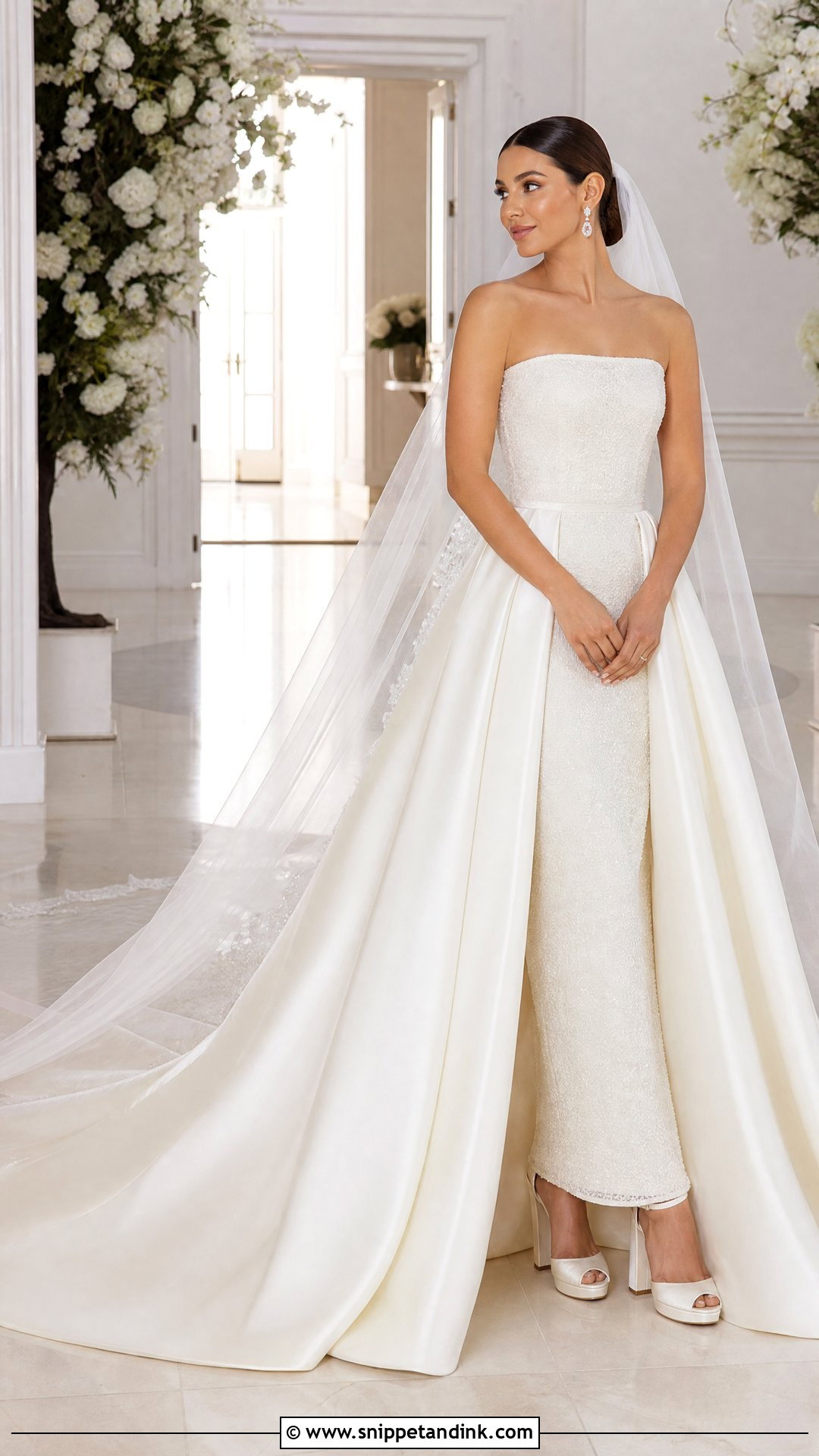
A removable overskirt gives you a ball gown for the ceremony and a slim dress for dancing. The base dress, a column, trumpet or slim A-line, should look finished on its own, because it will be seen for most of the evening. Attachment points matter most: they need to be secure, smooth and easy for someone else to undo. The overskirt should cover the base completely from the front and sides. Practice the change at home with the person who’ll help you.
18. Colored Floral Ball Gown Wedding Dress
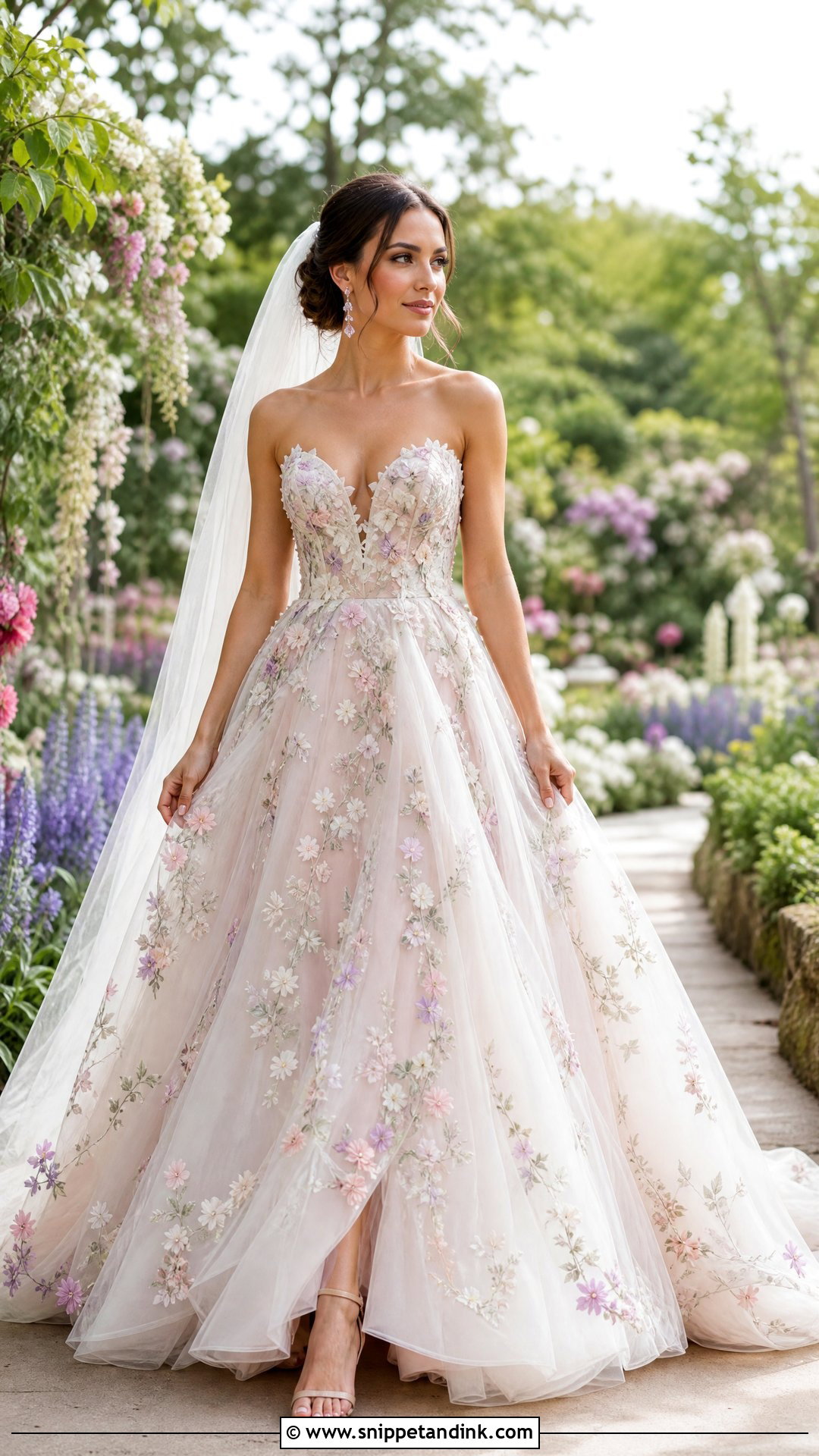
Color in a big dress usually works best under the surface. Blush, pale blue, champagne or a soft floral print layered beneath ivory tulle gives a hint of color rather than a full colored gown. The tulle mutes it, so view the gown with every layer in place. Light changes it too: outdoor shade turns blush cooler, and warm indoor light makes pale blue look grey. Floral appliqués can carry the color from bodice to train. Neutral ivory heels and gemstone earrings keep it soft. Choose a bouquet in related tones, not identical ones.
19. Modest Satin Ball Gown Wedding Dress
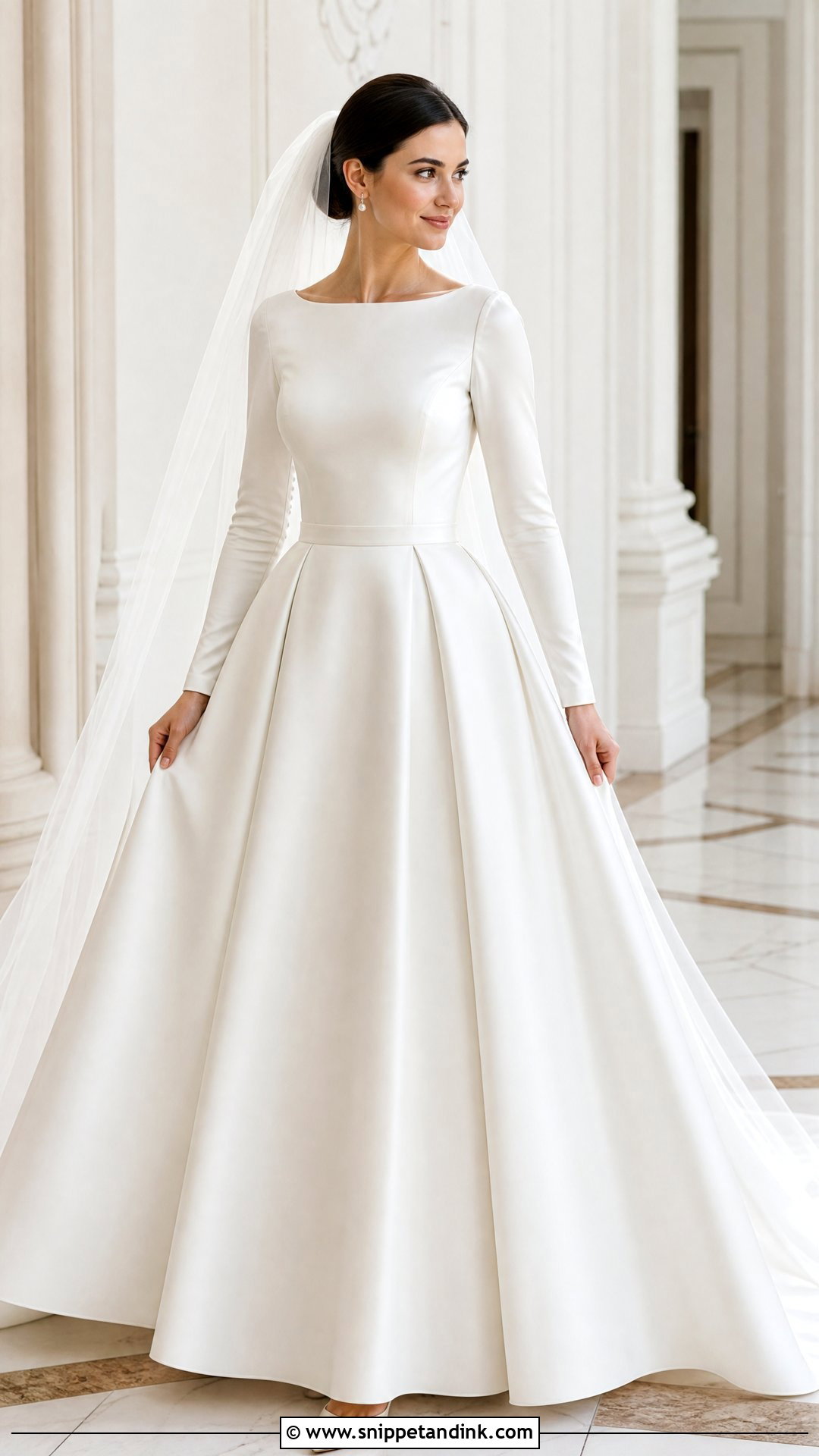
Coverage and a big skirt sit together naturally in satin. A bateau or high scoop neckline, long sleeves and covered buttons along the cuffs and back give it detail without sparkle. The challenge is movement: long satin sleeves on a fitted bodice limit how high you can reach, so ask for room across the upper back and at the elbows. Smooth satin shows any pulling, which makes tailoring critical. A light lining and breathable underlayers help, since sleeves and a full skirt get warm. Pearl earrings and a long veil under a low bun finish it.
20. Cathedral Train Ball Gown Wedding Dress
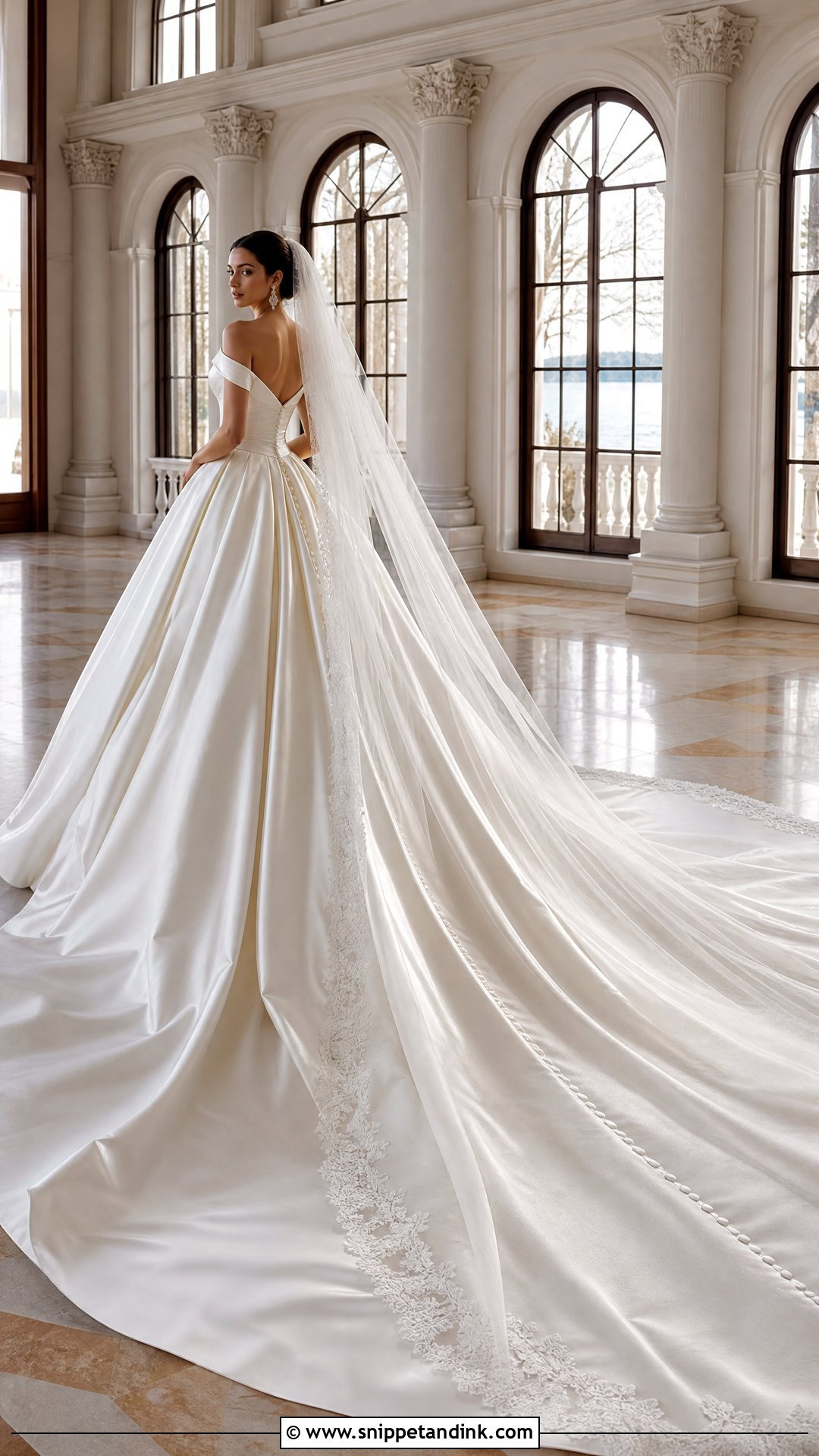
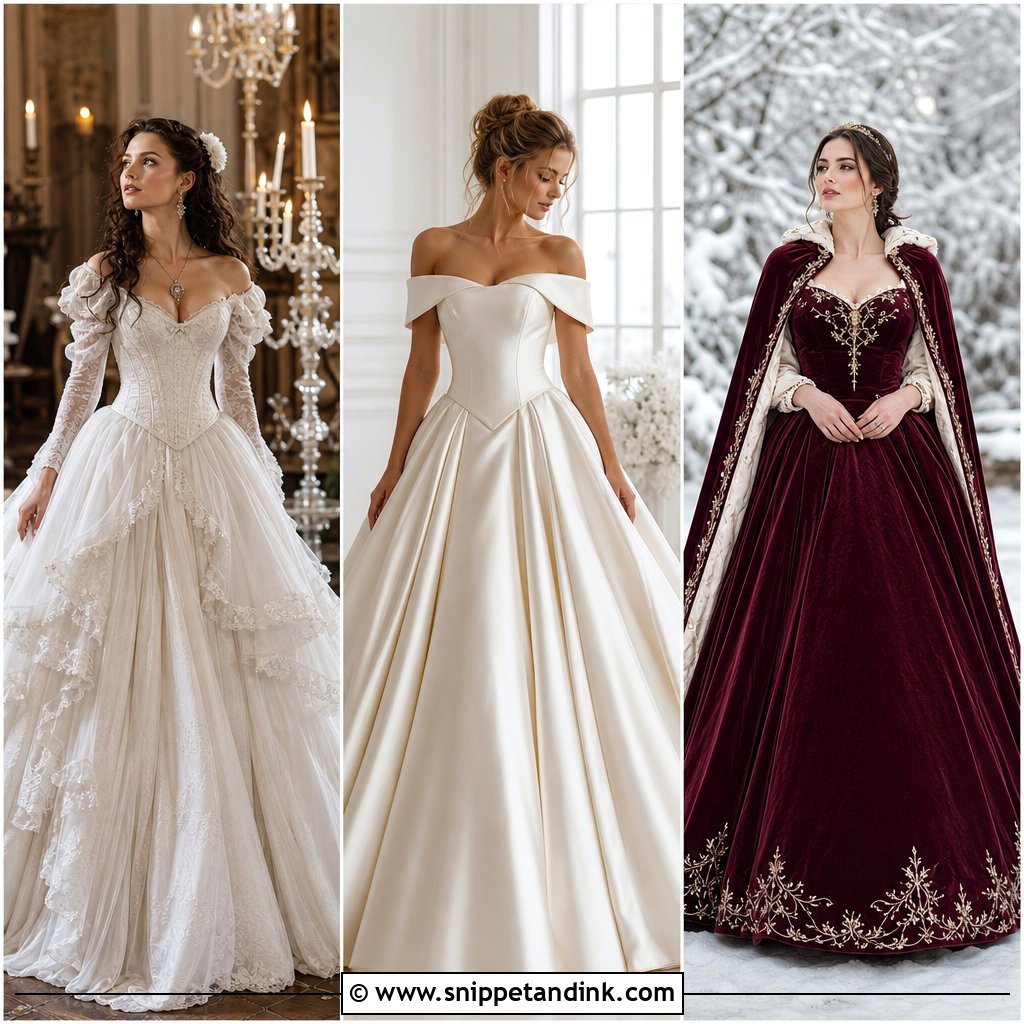
A cathedral train turns the aisle walk into a procession, and it pulls on the dress all day. The bodice must be strong enough to counter that pull, or you’ll feel the gown dragging backward at the shoulders. Satin gives grandeur, lace romance, tulle softness. The veil can match the train or extend a little past it. Secure hair and simple jewelry keep you from fussing. Plan a strong bustle with several points, and confirm that aisles, doors, cars and photo spots have room for the length.
Learn the Bustle Before the Reception, Not During It
Almost every gown in this list needs a bustle, the system of hooks, buttons or ribbon ties that lifts the train off the floor for dancing. There are two main types. An over bustle lifts the train up and hooks it onto the back of the skirt, which suits lace and embellished trains. An under bustle, sometimes called a French bustle, tucks the train under itself with ribbon ties inside the skirt, which suits plain satin. Large trains often need several points to sit evenly.
Bring the person who will bustle you to your final fitting, and have the seamstress show them. Numbered or colored ribbons make it far easier in a dim reception room. Ask them to practice twice while you’re there.
Moving Through a Room With Meters of Fabric Behind You
- Walk with slightly shorter steps and lead with the toe, nudging the hem forward so you never step onto it.
- Don’t walk backward. To turn around, walk in a small circle so the train follows.
- On stairs, lift the front of the skirt with both hands and let someone carry the train behind you.
- Before photos, let your photographer or a bridesmaid arrange the train; it rarely falls neatly by itself.
Test the Dress Sitting Down Before You Fall for It Standing Up
A huge dress is a decision about how you want to spend the whole day, not only about the entrance. Start with the silhouette that makes you feel most confident, then compare fabric weight, necklines, sleeves and what holds the skirt out. At every fitting, sit, walk, turn and raise your arms instead of judging the gown standing still. Good undergarments, solid alterations, comfortable shoes and a reliable bustle let you enjoy the dress for hours. The largest gown is not automatically the best one. The right one is big enough for the entrance you want and comfortable enough to dance in.
You'll Like These Ideas:






Leave a Reply