
Fusion outfits have quietly become the most practical thing a wedding guest can wear. You keep the colour, embroidery and drape that Indian functions call for, but you lose the twelve metres of fabric, the constant pinning and the skirt that won’t fit through a bathroom door. I dress a lot of guests who are attending their first Indian wedding, and their questions are always the same: how dressy, how modest, how comfortable. The answer depends on the event, whether it is a mehendi, haldi, sangeet, reception or ceremony. Here are 25 fusion looks, from pre-draped sarees to embroidered jumpsuits, with notes on when each one works and when it doesn’t.
How Far West a Guest Can Go at Each Ceremony
Fusion wear is welcome at most modern Indian weddings, but not at every moment of them. The pre-wedding parties and the reception are relaxed; the religious ceremony often is not. I always ask guests where the ceremony is held before we choose anything, because a temple, gurdwara or mosque has expectations that a hotel ballroom doesn’t.
- Gurdwara ceremonies: heads are covered for everyone, shoes come off and guests sit on the floor. A dupatta or scarf is needed, and a short or very fitted outfit is uncomfortable on the floor.
- Temple and Hindu ceremonies: shoulders covered is the safe default, and you may sit through a long ritual. Jumpsuits and dhoti sets handle this well; mini lengths and backless tops do not.
- Mehendi, haldi and sangeet: the most relaxed events, where crop tops, co-ords and dhoti pants all fit in.
- Reception: the most Western in mood. Gowns, corset lehengas and saree gowns are standard.
When in doubt, carry a dupatta or light stole. It covers the head or shoulders in seconds and turns a fusion outfit into ceremony wear without a change. Avoid all-white and all-black for the main ceremony unless the hosts say otherwise, and stay out of bridal red.
1. Indo Western Saree Gown
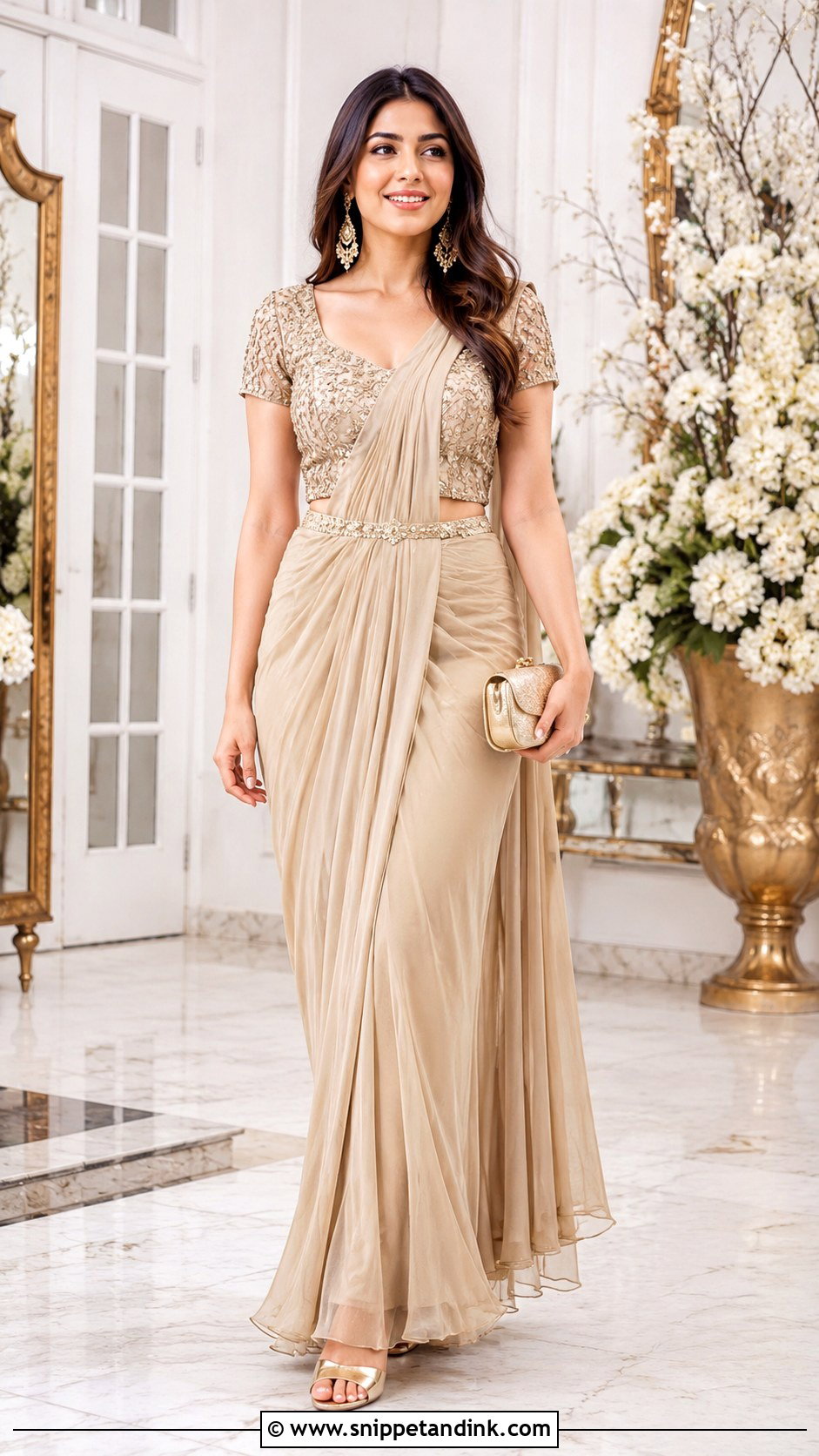
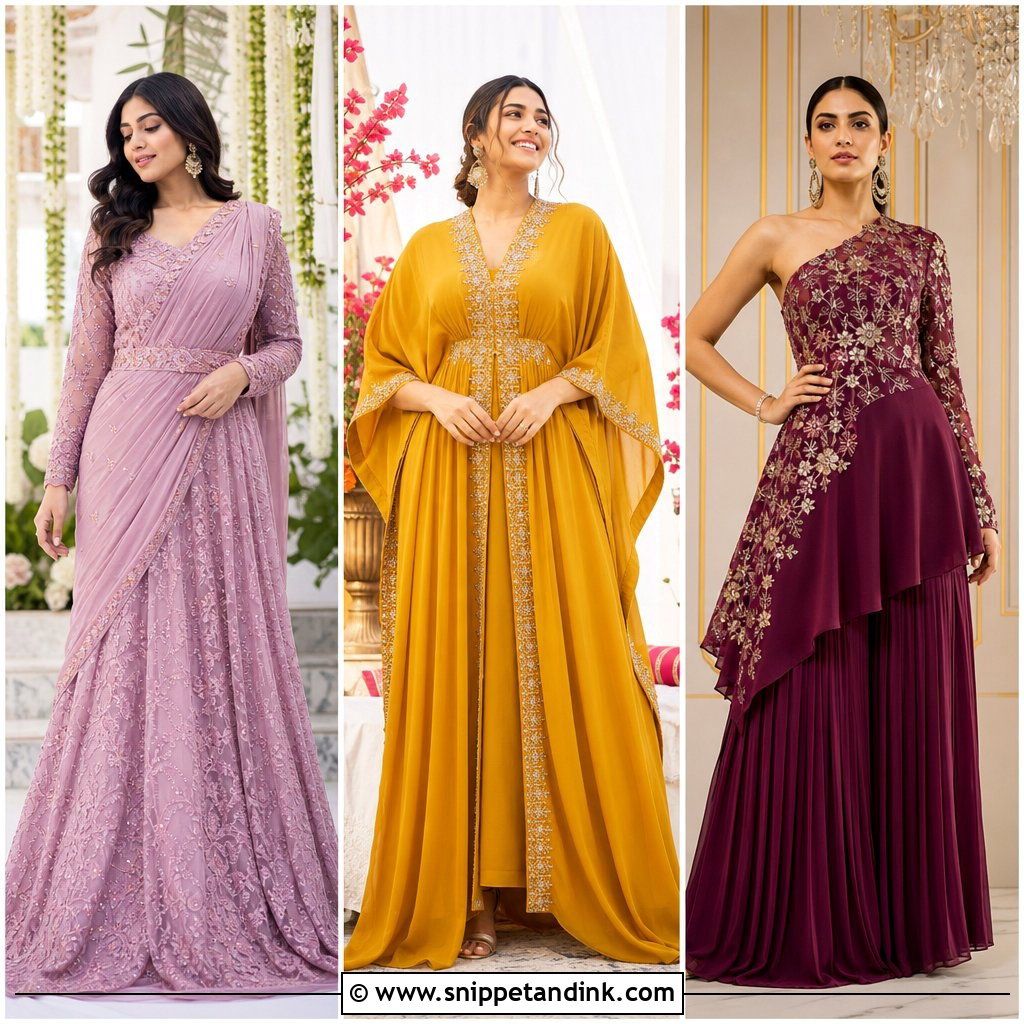
If you’ve never worn a saree, start here. The pleats and pallu are stitched in place, so it zips up like a dress and stays put. Satin, georgette, crepe and chiffon all give a smooth fall, though satin creases at the lap once you’ve sat through dinner. Champagne, emerald, blush or navy with light embroidery suit a reception. I’d keep the jewellery to earrings and add a sleek clutch, metallic heels and soft waves.
2. Indo Western Lehenga With Cape
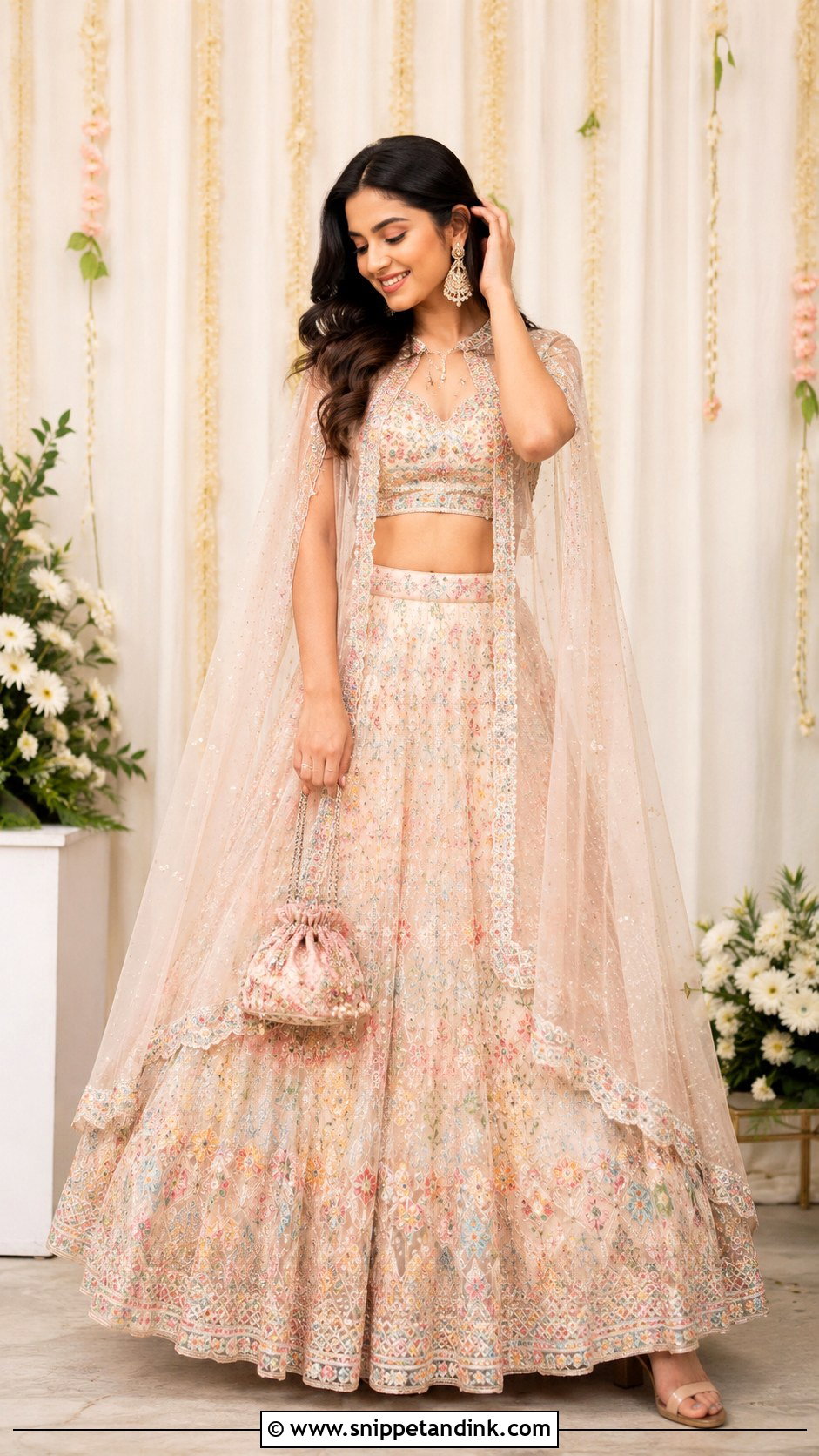
The cape lehenga fixes the one thing guests complain about most: a dupatta that keeps sliding off. A sheer embroidered cape over a cropped blouse and flowy skirt covers the shoulders and moves when you dance, and your hands stay free for greeting people and holding a plate. Pastels read fresh in daylight; jewel tones hold their depth under evening lights. Because the cape already puts detail at the shoulder, skip the necklace and wear chandbalis instead. Check that the cape is hooked to the blouse, not just resting on it.
3. Indo Western Dhoti Pant Set
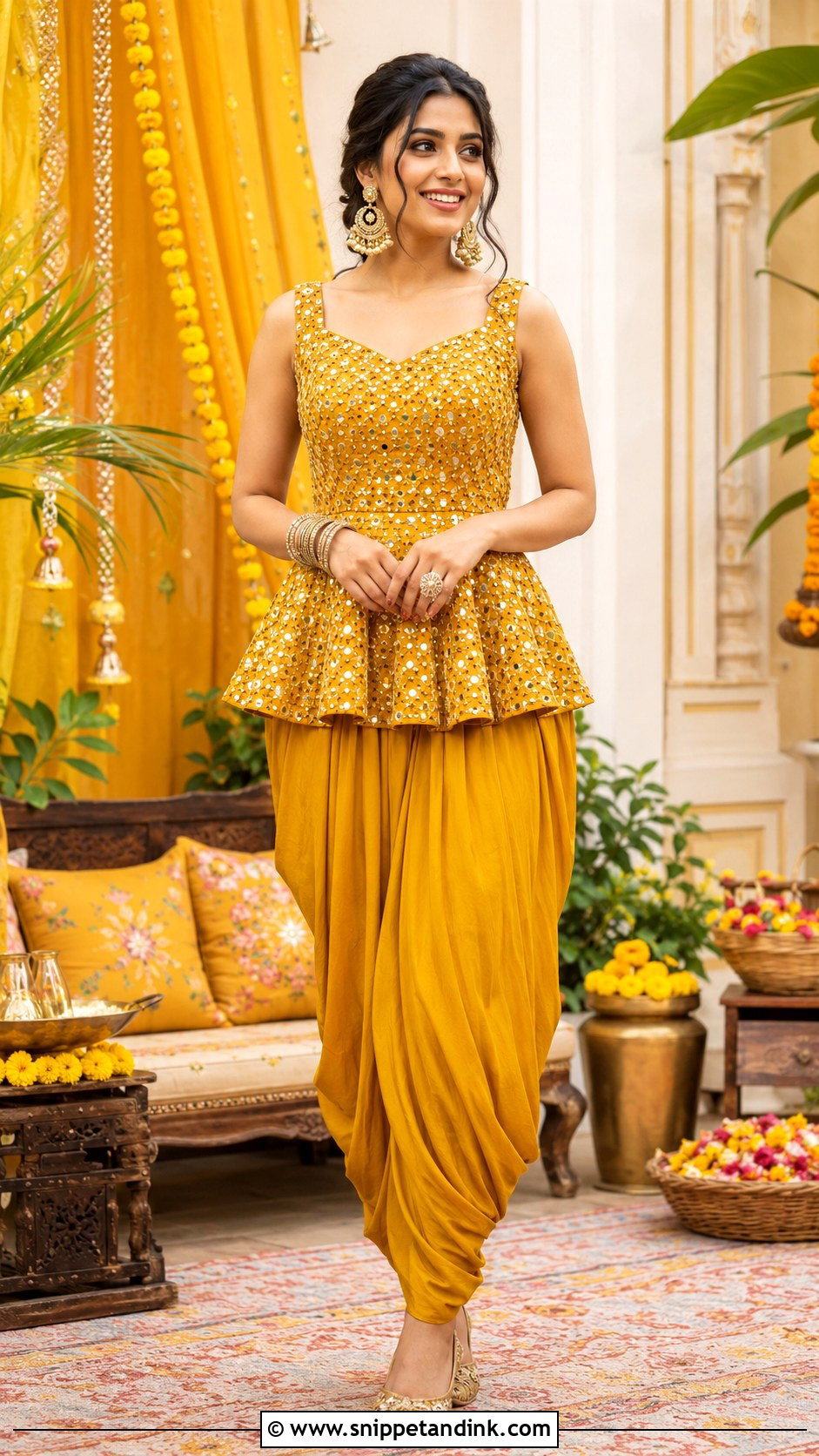
Dhoti pants are my answer for guests who hate skirts. The draped front gives a traditional line while the legs move freely, which matters at mehendi or haldi functions where you’ll sit on cushions and dance on grass. A crop top, peplum or short jacket keeps the top half modern. Bright mustard, coral, fuchsia, teal or lime suit daytime. One caution: the extra fabric at the hip adds volume, so if that’s where you carry weight, a longer peplum top balances it.
4. Indo Western Sharara With Crop Top
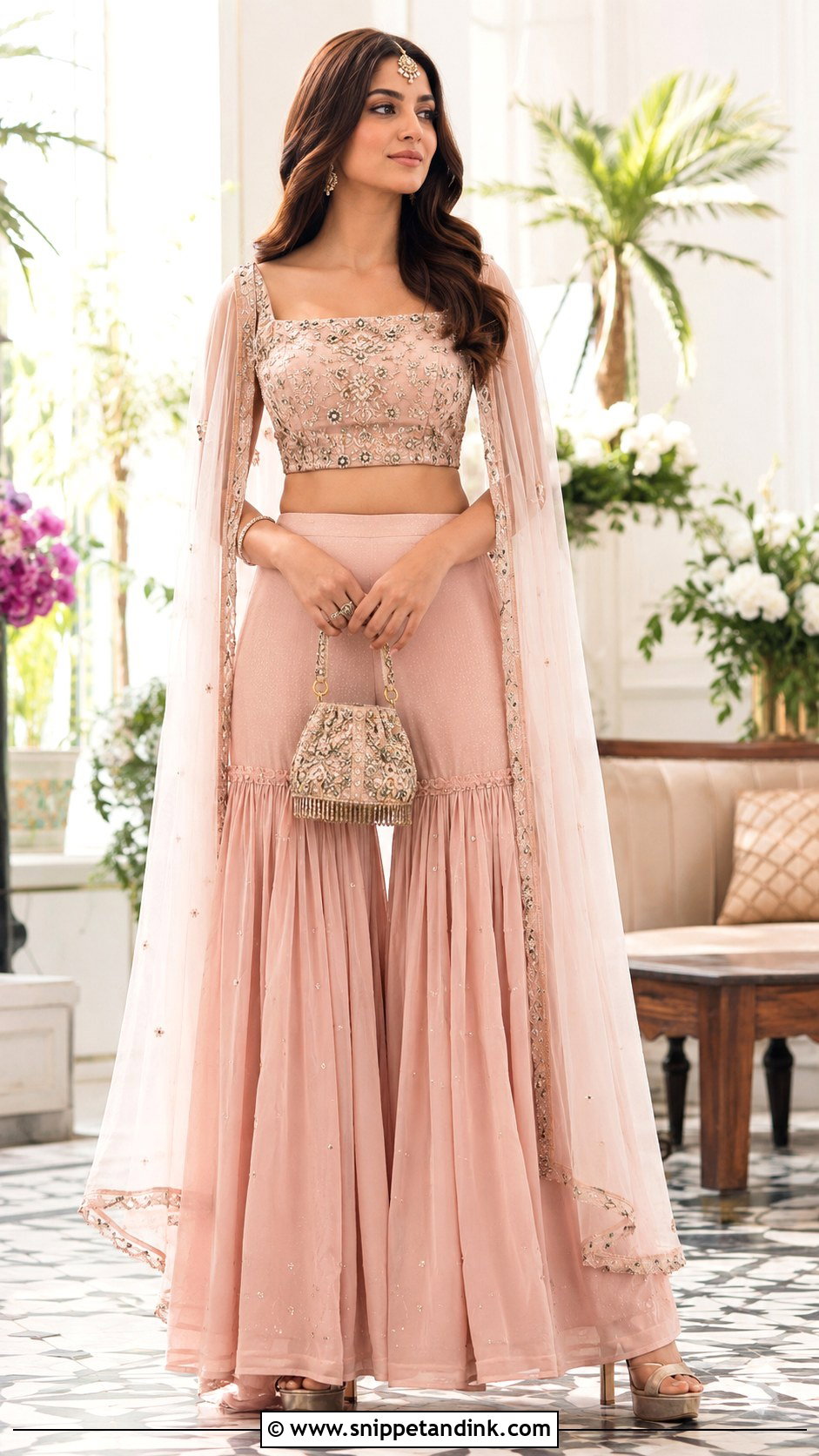
A sharara behaves like a skirt in photos and like trousers when you walk. I like it with a short embroidered crop top, a high-waisted sharara and a light cape or dupatta for mehendi, engagement and family events. The fit point to watch is the waistband: high-rise shararas need to sit at your natural waist or the crop top shows a gap when you raise your arms. Georgette, silk, organza and crepe all move well. Platform heels keep the wide hem off the floor, which matters on outdoor ground.
5. Indo Western Palazzo Suit
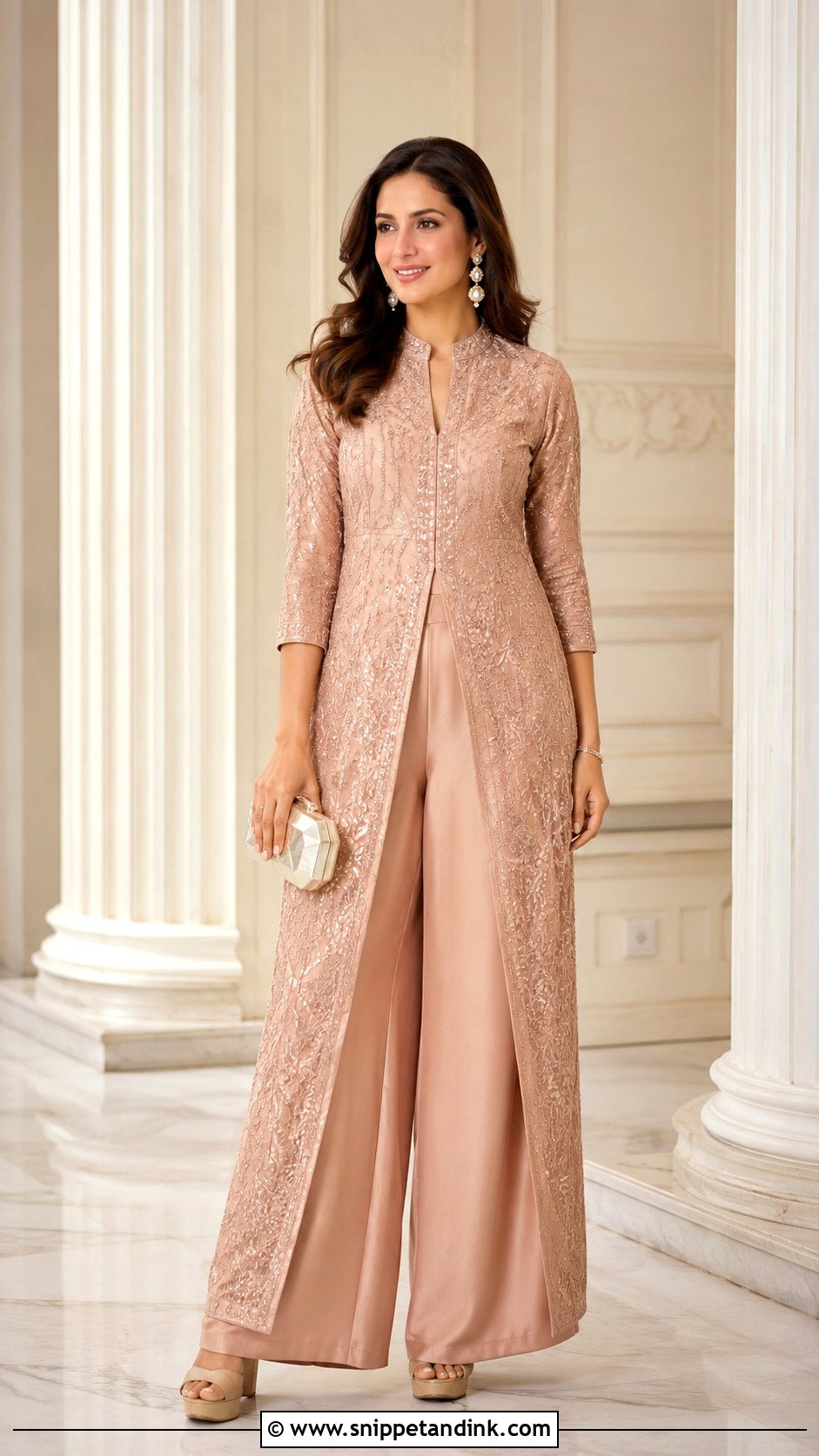
Palazzo suits suit guests who want coverage and calm. The wide legs stay cool in heat, and a structured kurta, asymmetric tunic or embroidered top gives the fusion edge. Silk palazzos with a long slit kurta or a short peplum top look dressier than cotton. Ivory, rose gold, sage and powder blue work for daytime; maroon, deep purple or gold for evening. Wedges are kinder than heels on lawns. A light dupatta is optional, and I’d leave it off if the top already has detailed work.
6. Indo Western Anarkali Dress
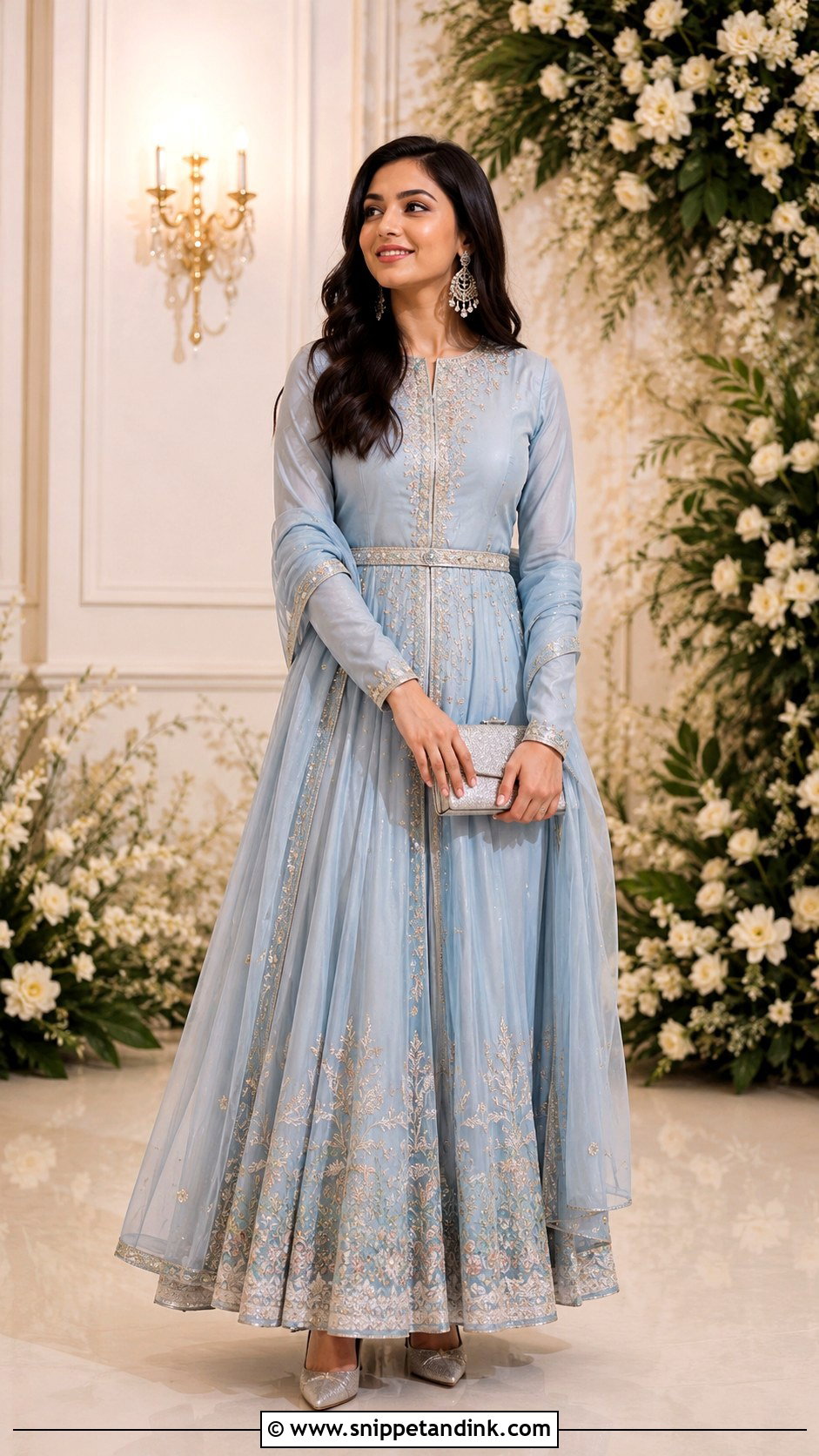
Anarkalis are flattering on almost every figure because the flare starts high and skims everything below. The fusion versions add a belt, a high-low hem, a jacket layer or a modern neckline. Chiffon, silk, muslin or georgette at floor length suit ceremonies and formal family gatherings. Let the neckline decide the jewellery: a deep V takes a pendant, a closed neck takes statement earrings and a sleek bun. Heels help, because a floor-length Anarkali on flats tends to drag.
7. Indo Western Jacket Lehenga
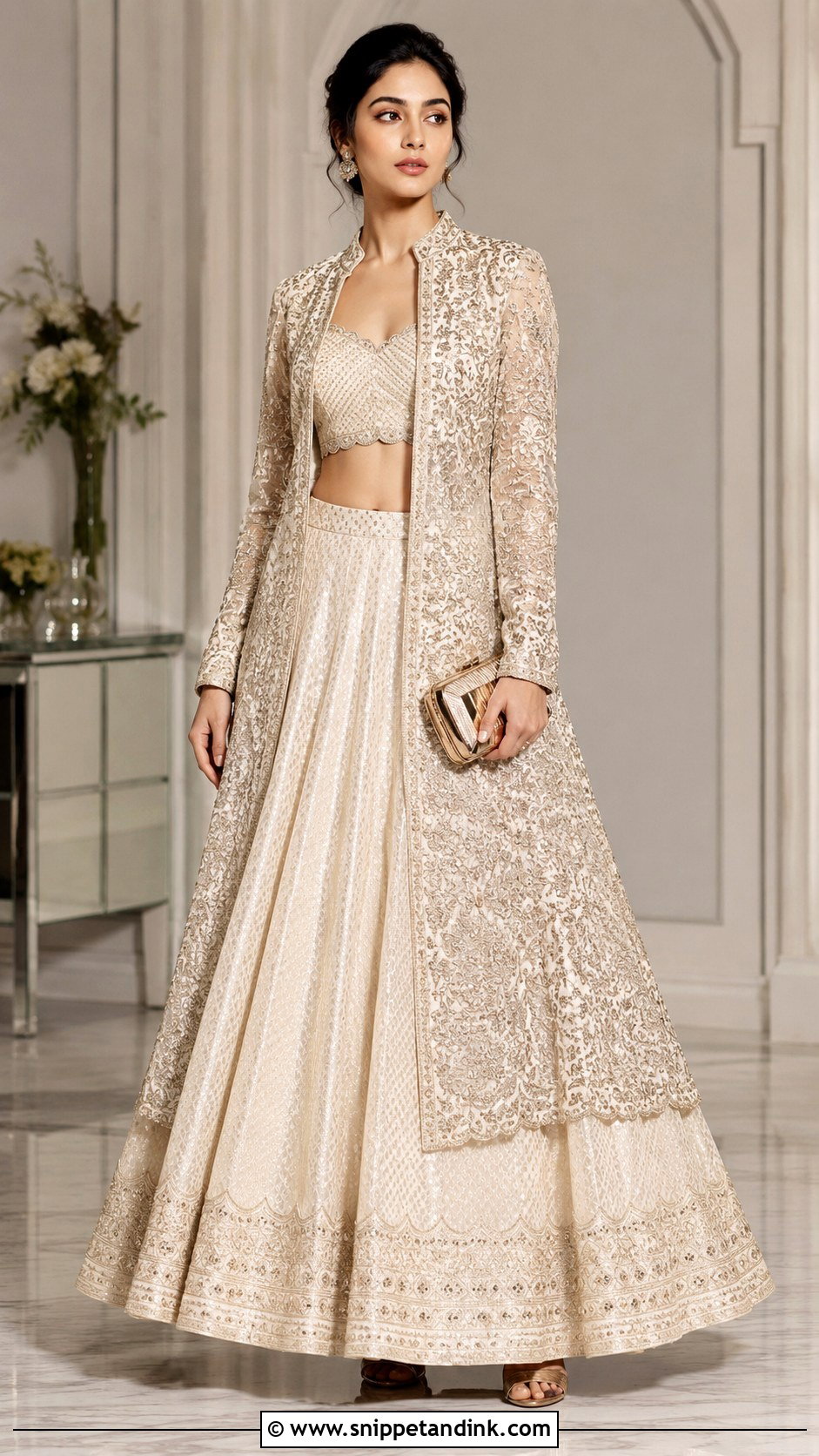
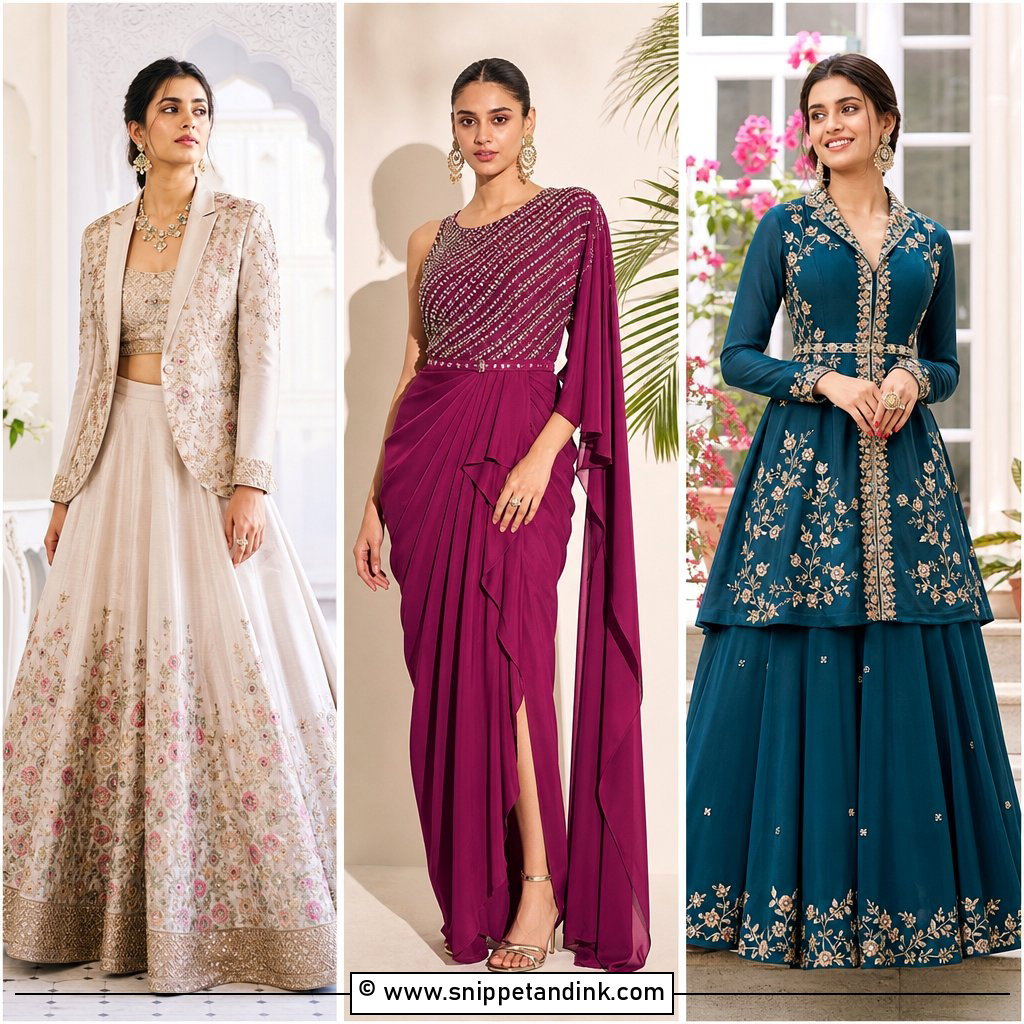
A jacket turns a simple lehenga into a winter outfit. Long, short, sheer or structured, it carries most of the embroidery, so the skirt underneath can stay plain and lighter on your hips. For a polished version, I’d pair a fitted blouse and flared skirt with a long embroidered jacket in a matching or tonal colour. The dupatta is optional here. Keep jewellery minimal if the jacket is heavily worked, and check that you can lift your arms in the sleeves before you buy.
8. Indo Western Jumpsuit With Dupatta
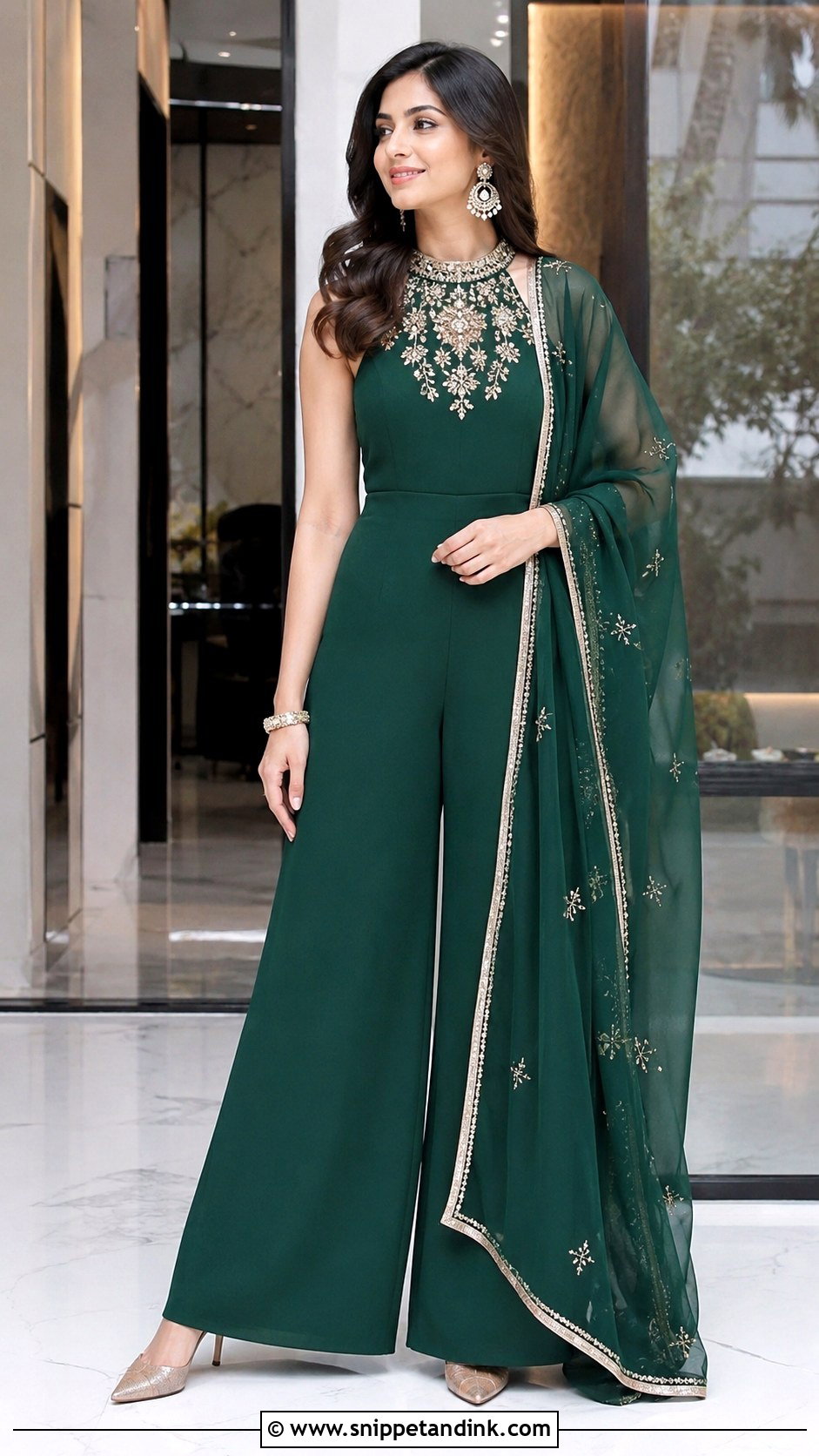
Jumpsuits are the most practical outfit on this list and also the most likely to feel underdressed, so the fabric and embroidery have to carry the occasion. Silk, crepe or georgette with work at the neckline or waist reads as wedding wear; plain crepe reads as office party. Drape a dupatta across one shoulder and the line comes close to a saree. Wear it to receptions, engagements and sangeet nights, with pointed heels and bold earrings. Think about bathroom trips before you commit: a back zip you can’t reach alone is a real problem at a long event.
9. Indo Western Peplum Sharara
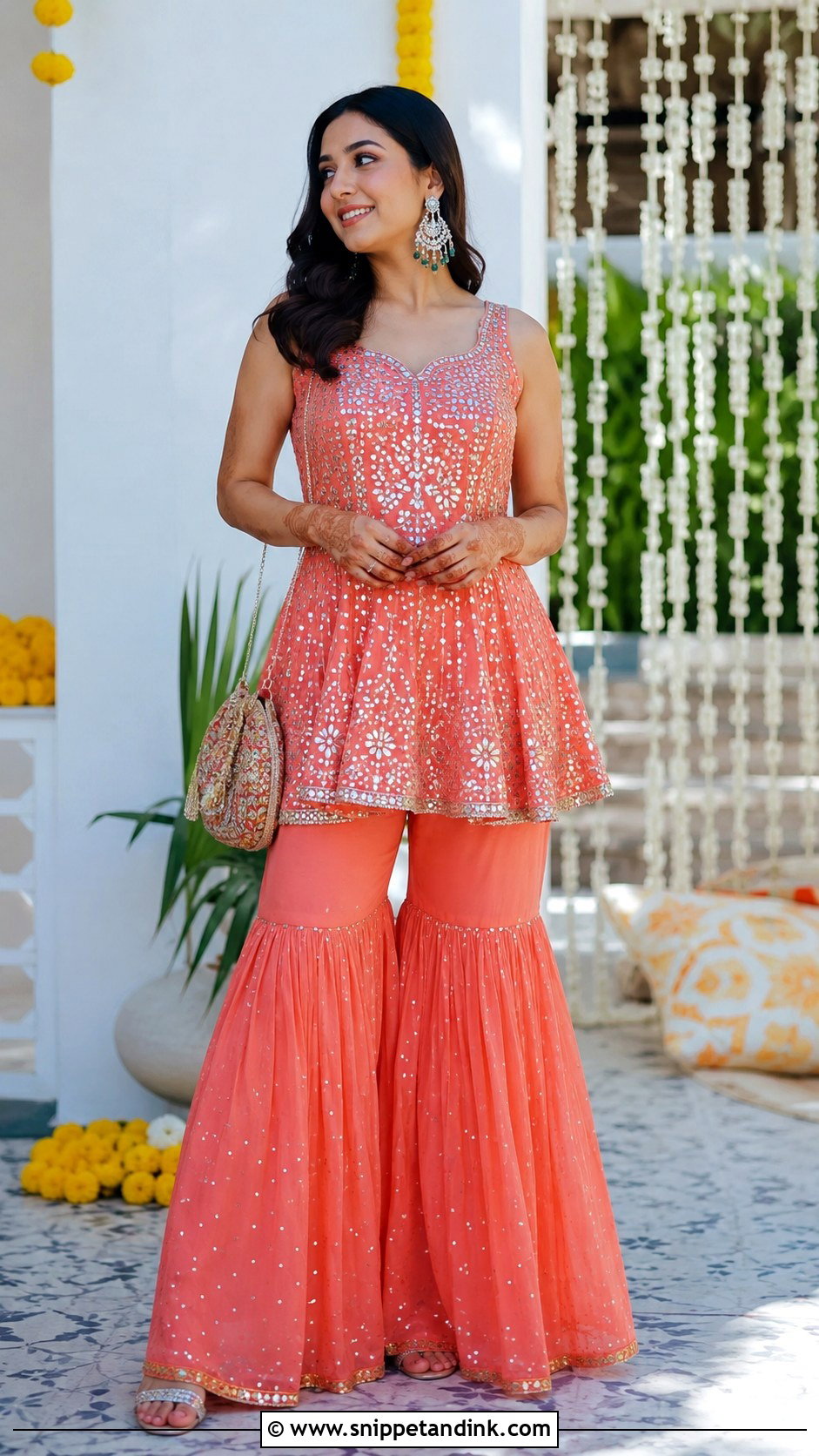
The peplum sharara is the shape I suggest for pear-shaped figures. The flared top sits at the waist and visually balances the volume of the pants below. Short, flared, embroidered or lightly ruffled, it suits mehendi, haldi and daytime events. Mirror work, gota, thread embroidery or small sequins look festive without weight. Pastels read soft, brights read playful. Add statement earrings, comfortable heels and a small sling bag so both hands are free.
10. Indo Western Skirt And Blouse
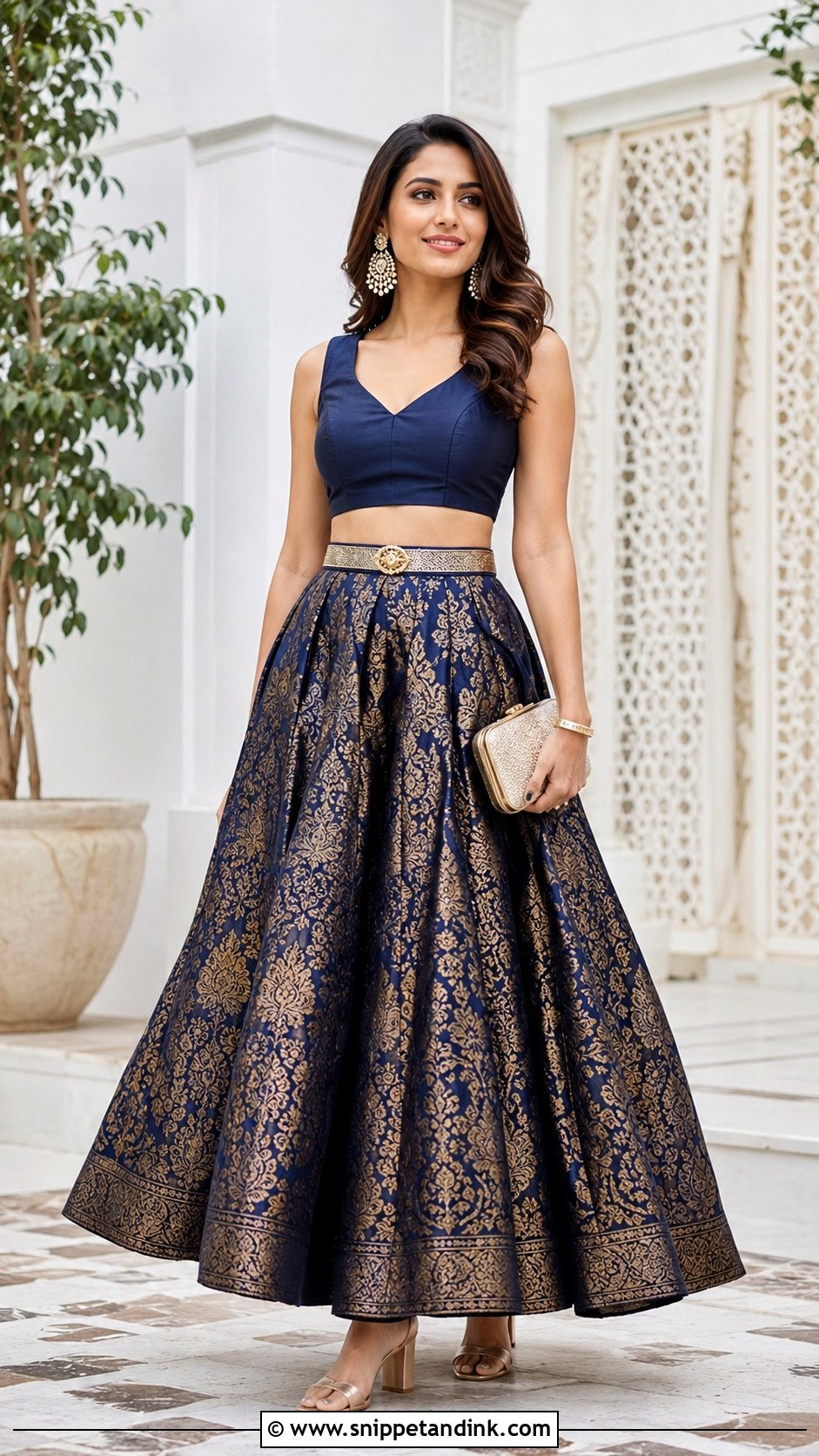
Separates are the smartest buy for anyone attending several weddings a year. A flared ethnic skirt can go with a corset blouse at a reception and a silk shirt at a brunch, and you get two outfits for one budget. For wedding events, choose a skirt with brocade, prints, mirror work or light embellishment. A plain blouse calms a busy skirt; an embroidered blouse lifts a plain one. A belt at the waist adds shape. I cover how to rotate these pieces further down.
11. Indo Western Pant Saree
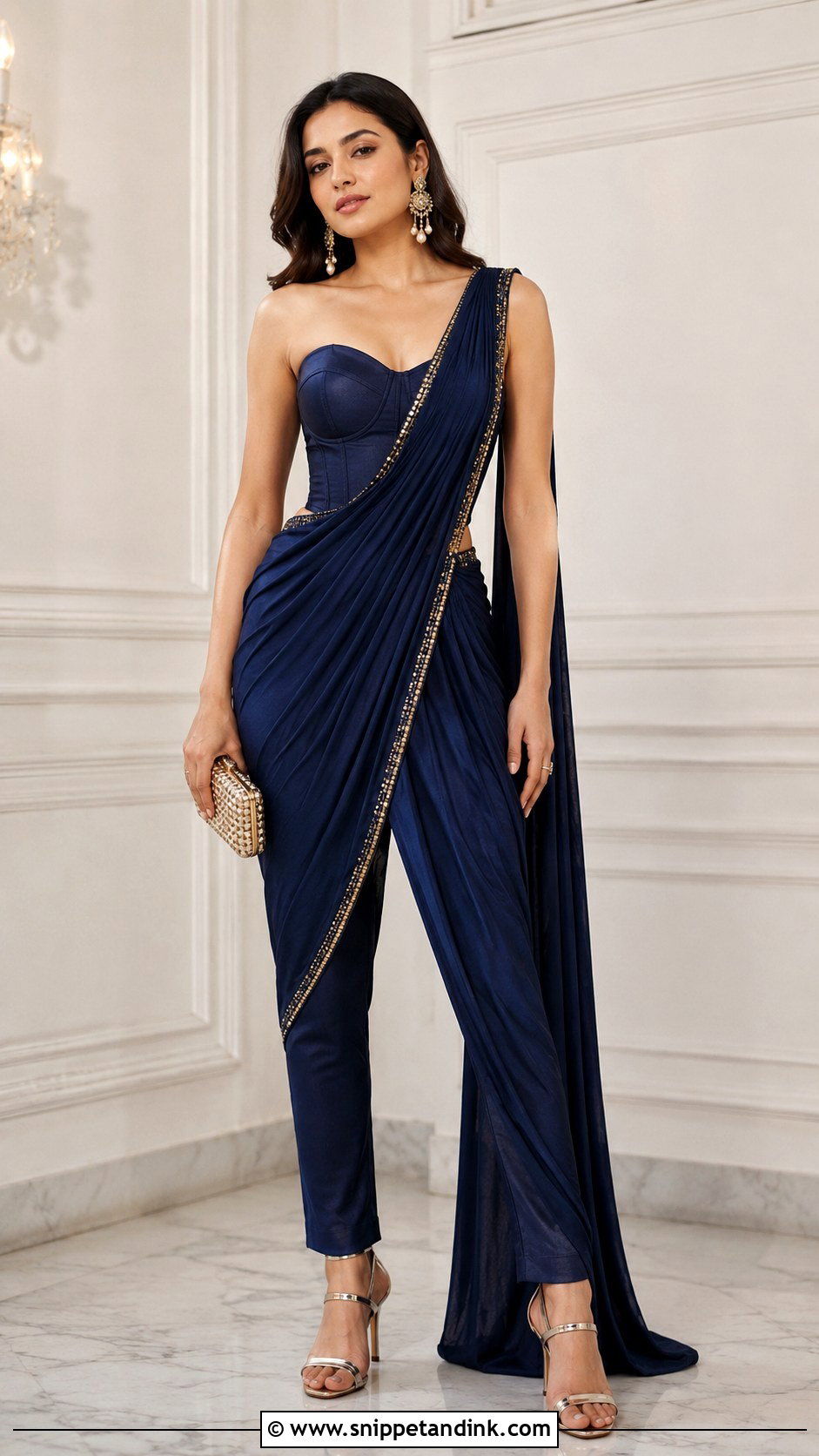
A pant saree swaps the petticoat for slim, cigarette or flared trousers, so the drape falls over legs that can stride. It feels sleek and handles long events without the pleats coming loose underfoot. Satin, georgette and crepe work for receptions and sangeets in metallics, jewel colours or pastels. The trouser hem should just touch the top of your heel; any shorter and the line breaks. One strong jewellery piece, such as shoulder-grazing earrings, is enough.
12. Indo Western Cape Gown
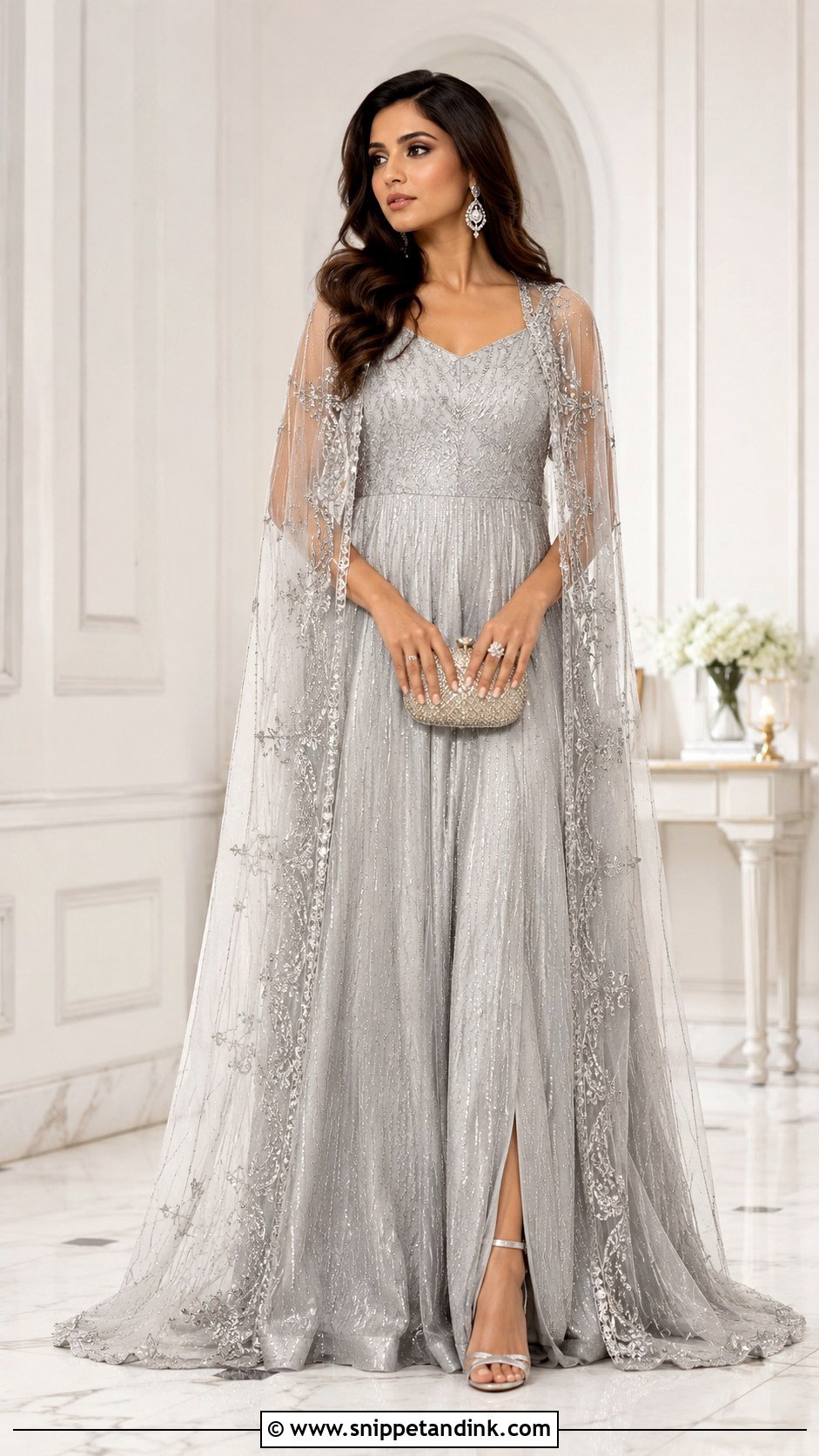
Cape gowns are easier to style than heavily embellished gowns because the detail lives on one layer. A solid gown underneath with an embroidered, beaded or sequinned cape looks finished without fighting your jewellery. Silver, blush, navy, emerald and champagne suit receptions and engagement parties. Keep hair sleek or loosely curled so the cape stays visible at the back, which is the angle most guests will see during speeches. High heels, a compact clutch and delicate rings round it off.
13. Indo Western Kurta With Cigarette Pants
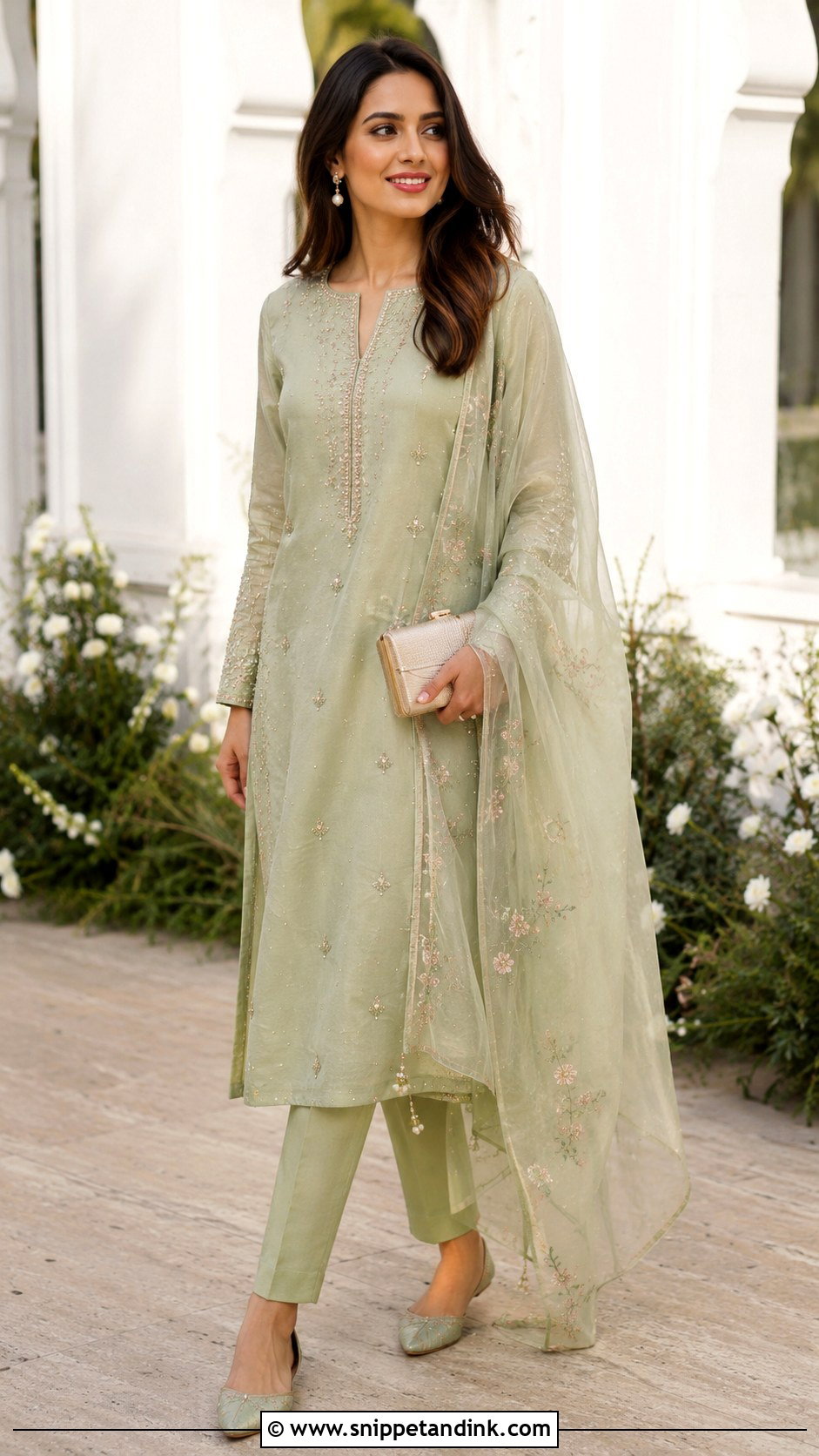
Tailored dressers often feel lost at Indian weddings until they try this. A kurta with cigarette pants is more structured than palazzos and more modern than a churidar. A straight kurta with side slits, an asymmetric hem or light embroidery suits smaller ceremonies, daytime events and pre-wedding gatherings. On its own it can look plain for an evening function, so I’d add a longline jacket or an organza dupatta. Pointed flats or embellished mules, pearl earrings and a box clutch finish it.
14. Indo Western Ruffle Saree
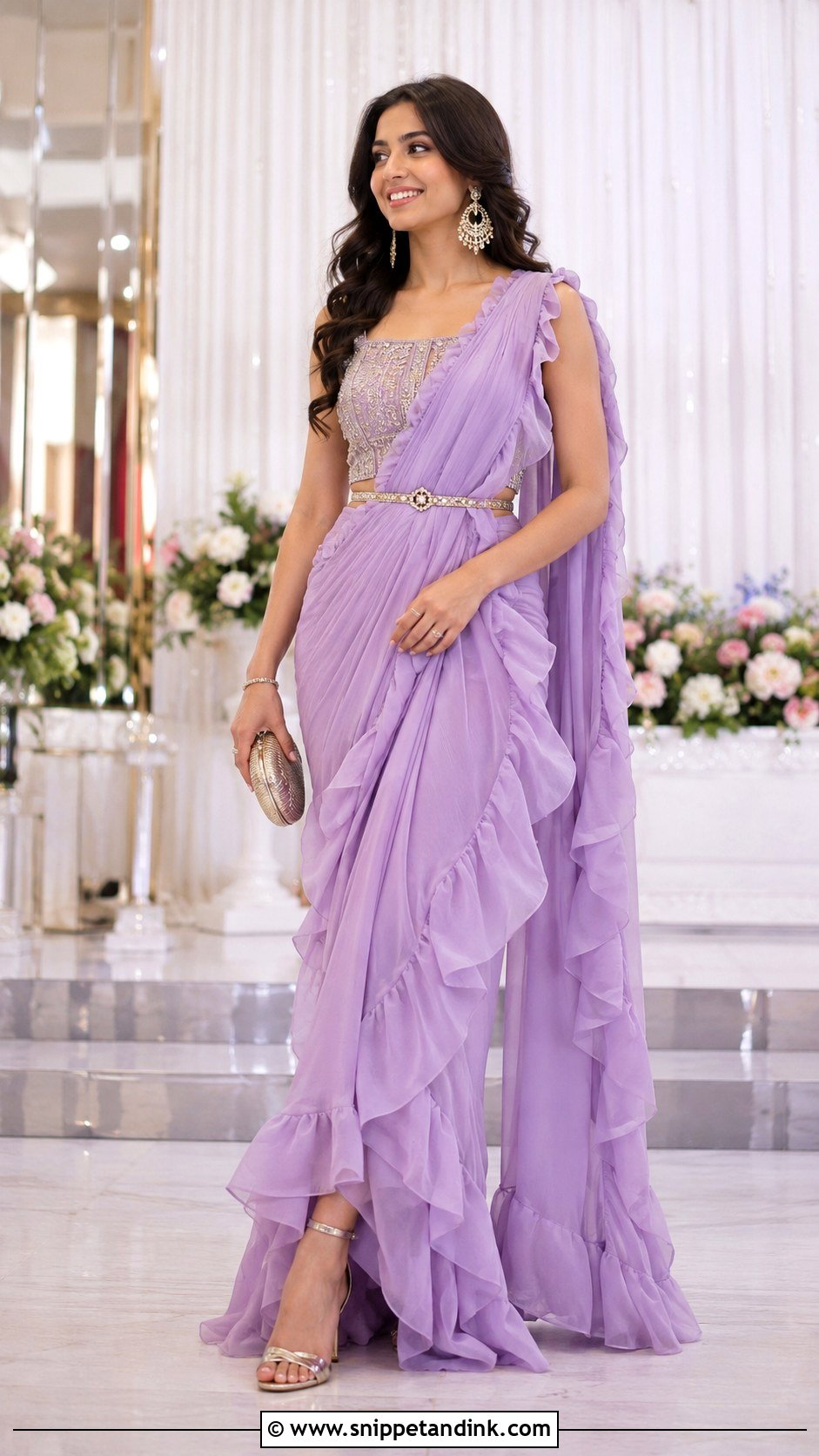
Ruffles add volume at the hem and the pallu, which looks lively on a dance floor and can swamp a petite frame. Keep the fabric light, georgette, chiffon or organza, so the ruffles float rather than stack. A structured or corset blouse balances the softness. A belt helps define the waist and holds the drape in place through a long sangeet. The saree already brings texture, so metallic heels, bold earrings and a compact clutch are plenty.
15. Indo Western High Low Kurta Dress
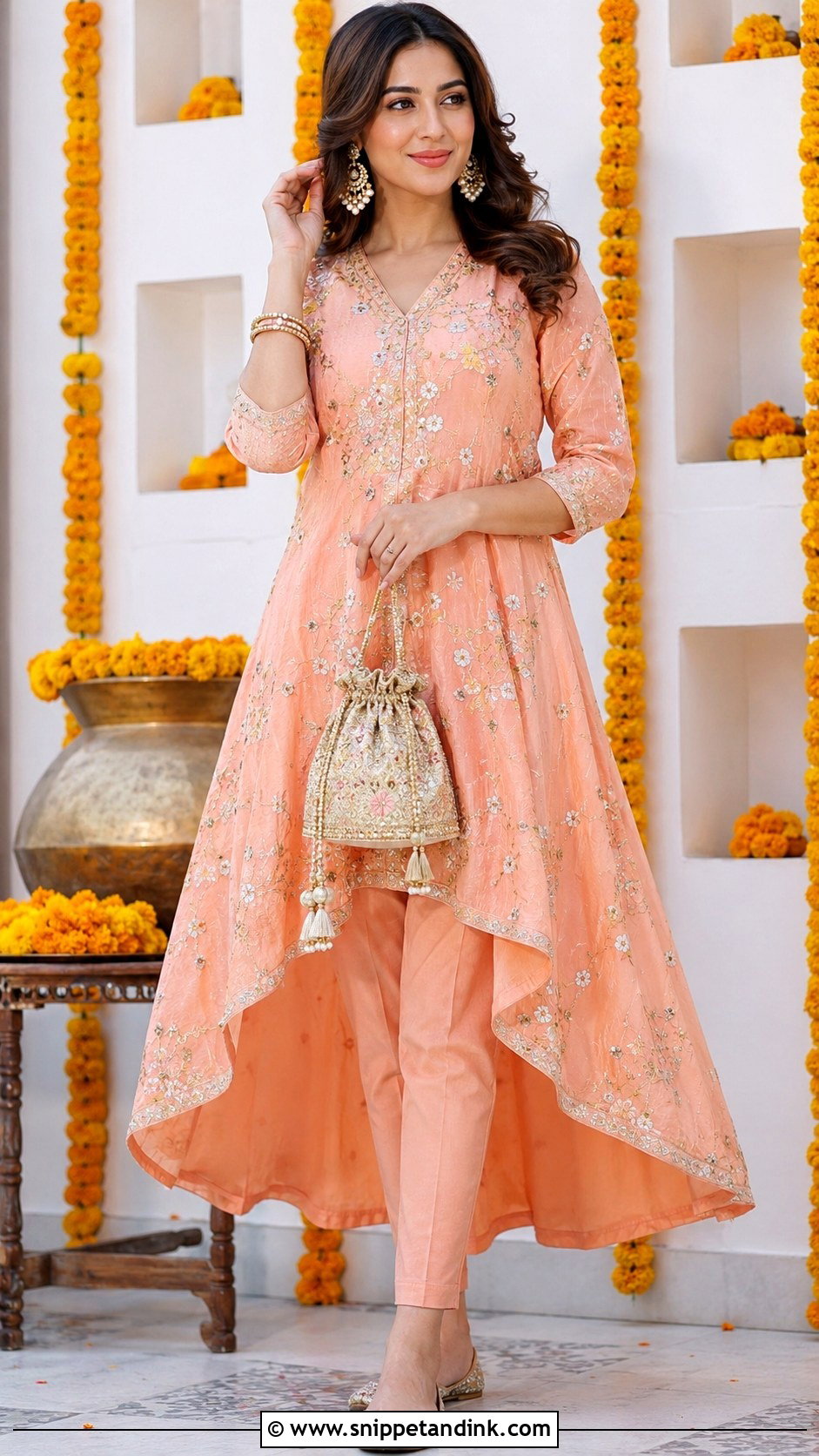
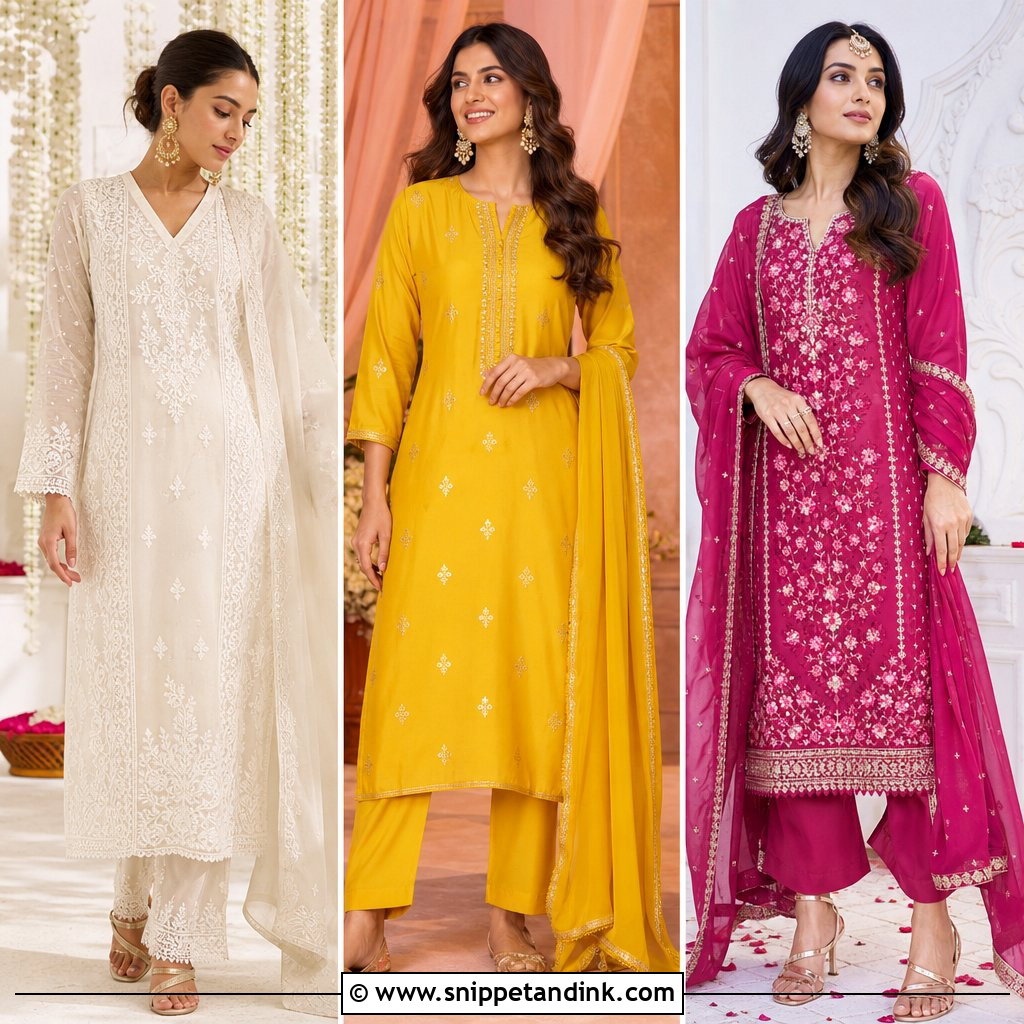
High-low kurtas are among the most comfortable things a guest can wear to a daytime function. The short front keeps the hem clear of your feet on stairs and grass, and the longer back still looks dressed. Printed silk, embroidered cotton silk, chiffon and georgette in yellow, peach, mint or hot pink suit haldi and mehendi. Pair with pants, leggings or palazzos. If the kurta has little shape of its own, a belt helps. I’d keep it for daytime; under evening lights it can look casual next to lehengas.
16. Indo Western Corset Lehenga
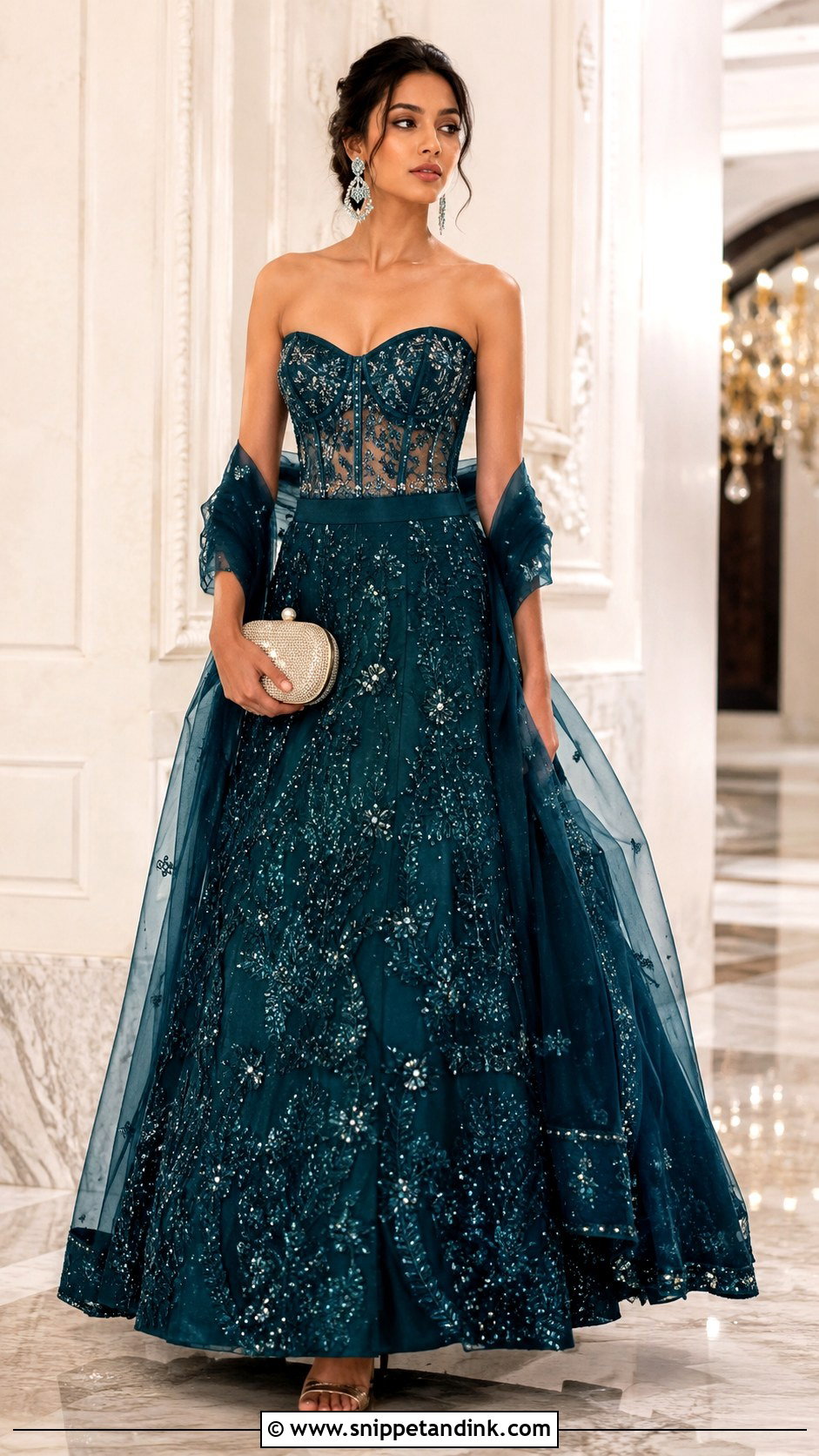
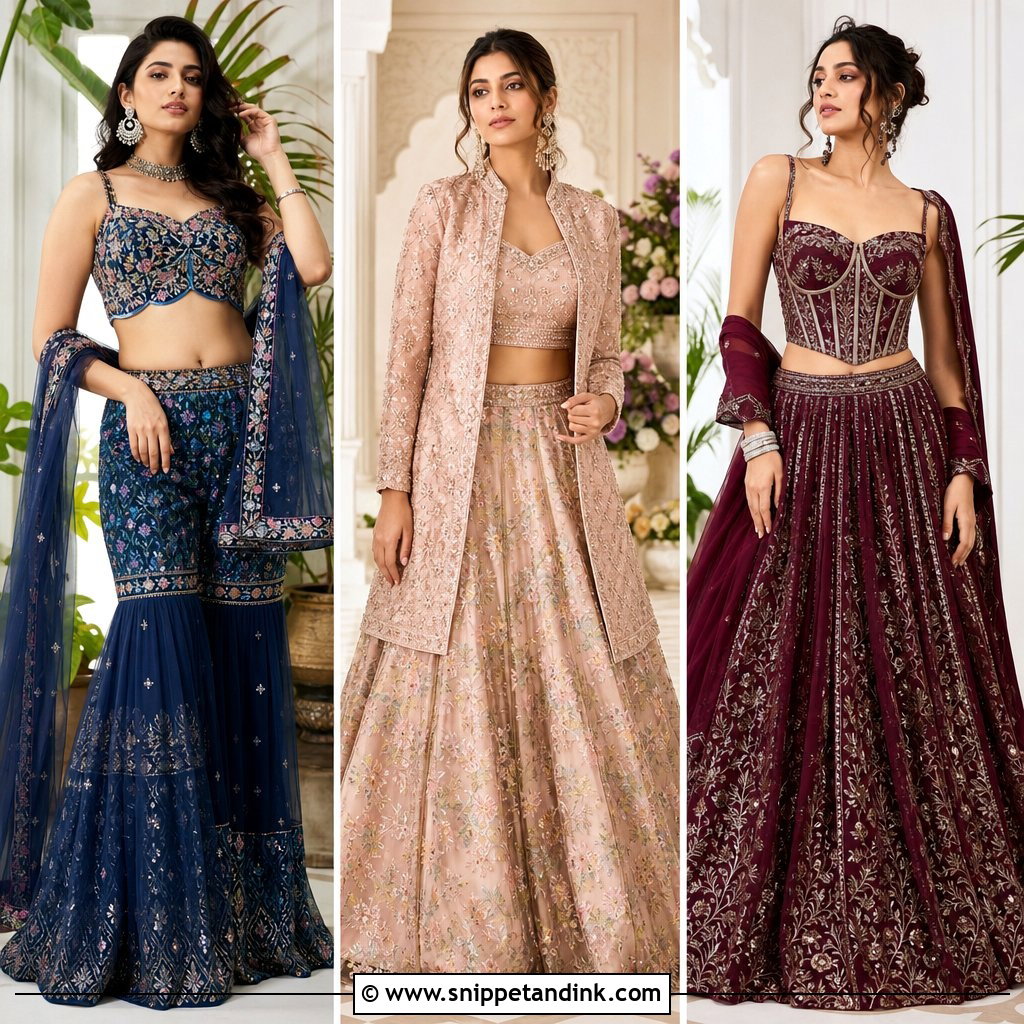
Corset lehengas are everywhere at receptions now, and the structured top does give real support, which helps with a heavy skirt. The thing I check at fittings is the boning: a corset that’s too long in the torso digs into your hips when you sit, and you’ll feel it within the hour. Embroidery, beadwork, brocade or mirror work on the corset; if it’s busy, keep the skirt simpler. A sheer dupatta, a cape or nothing at all can work. A corset lehenga with heels and a choker or statement earrings suits sangeets and engagements too.
17. Indo Western Co Ord Set
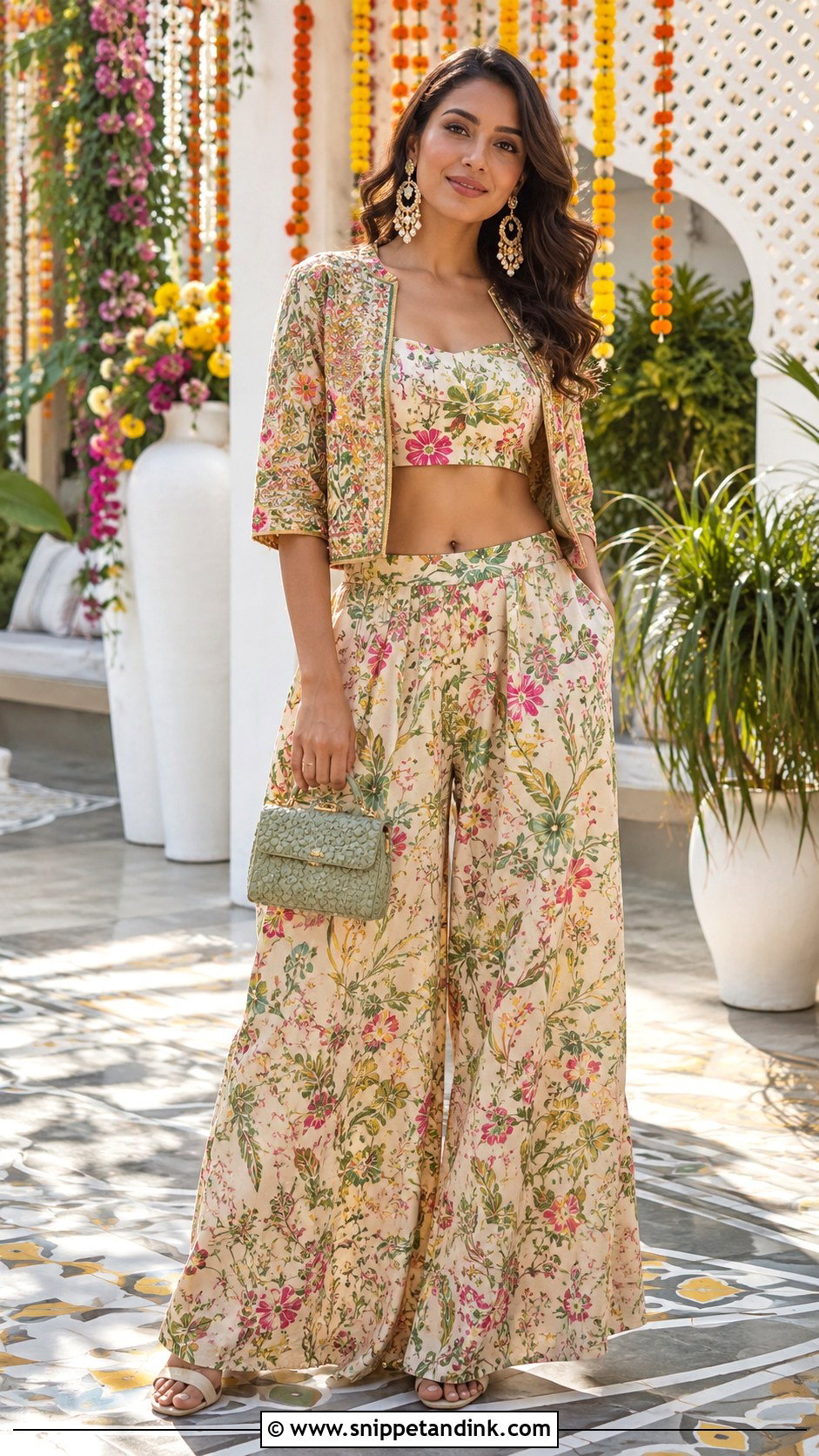
Co-ord sets are the easiest outfit to repeat, which is their real value. Matching top and bottom look polished with almost no styling. For weddings, pick one with ethnic prints, mirror work, zari detail or embroidered edges: a crop top with palazzos, a tunic with flared trousers, or a jacket with matching pants. These suit mehendi, haldi and wedding brunches. Layer a dupatta if the event is more formal than you expected.
18. Indo Western Gown With Indian Embroidery
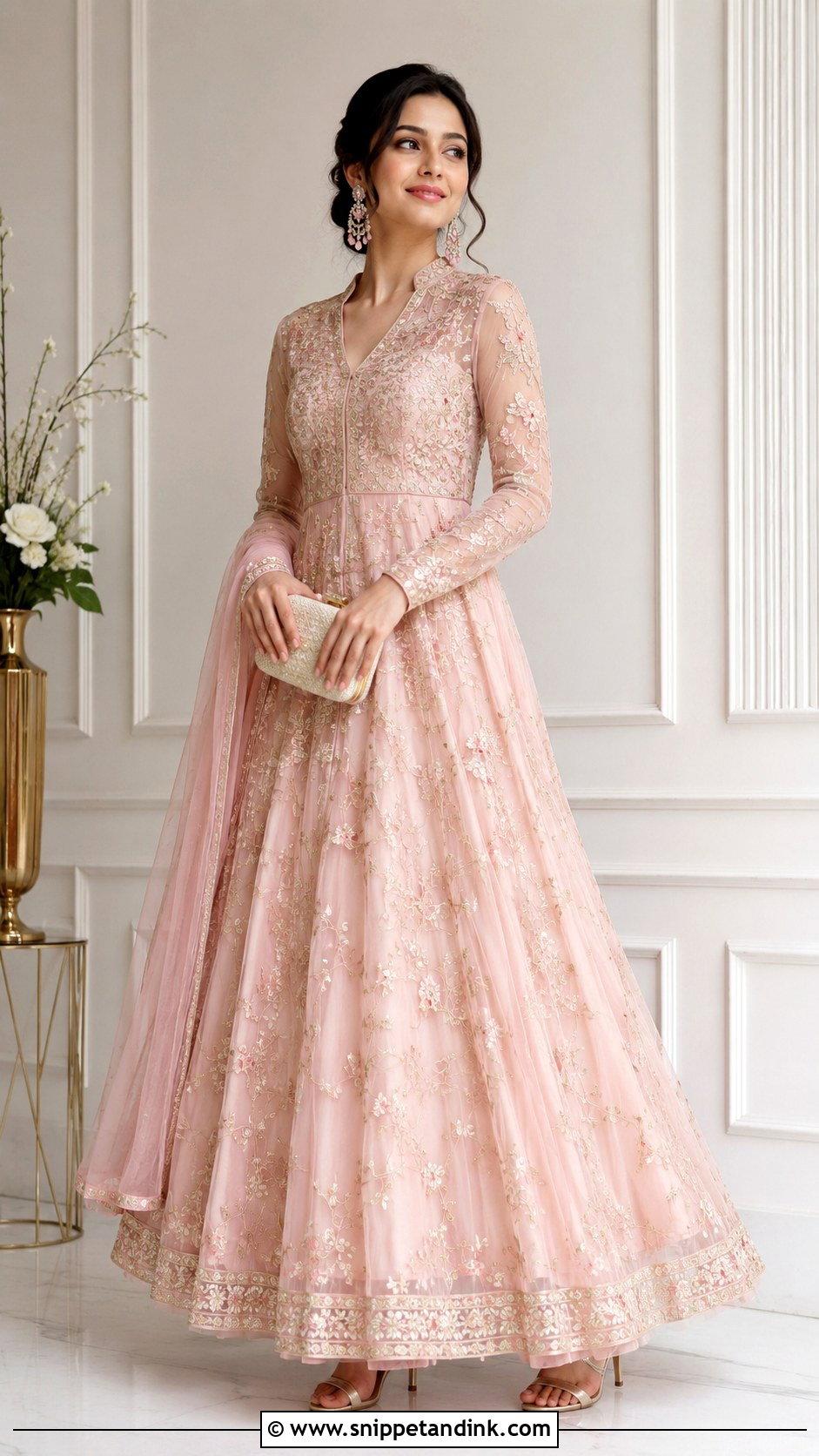
An embroidered gown is the most formal fusion option and the safest choice for a reception where you’re unsure of the dress code. Zari, zardozi, mirror work, thread work or sequins carry the Indian side; the cut stays Western. A fitted bodice with a flared skirt gives a classic shape, and an A-line moves more easily if you’ll be dancing. Deep jewel tones suit evenings; blush, ivory and powder blue suit daytime, though ivory can be close to bridal white, so check with the hosts first.
19. Indo Western Blazer Lehenga
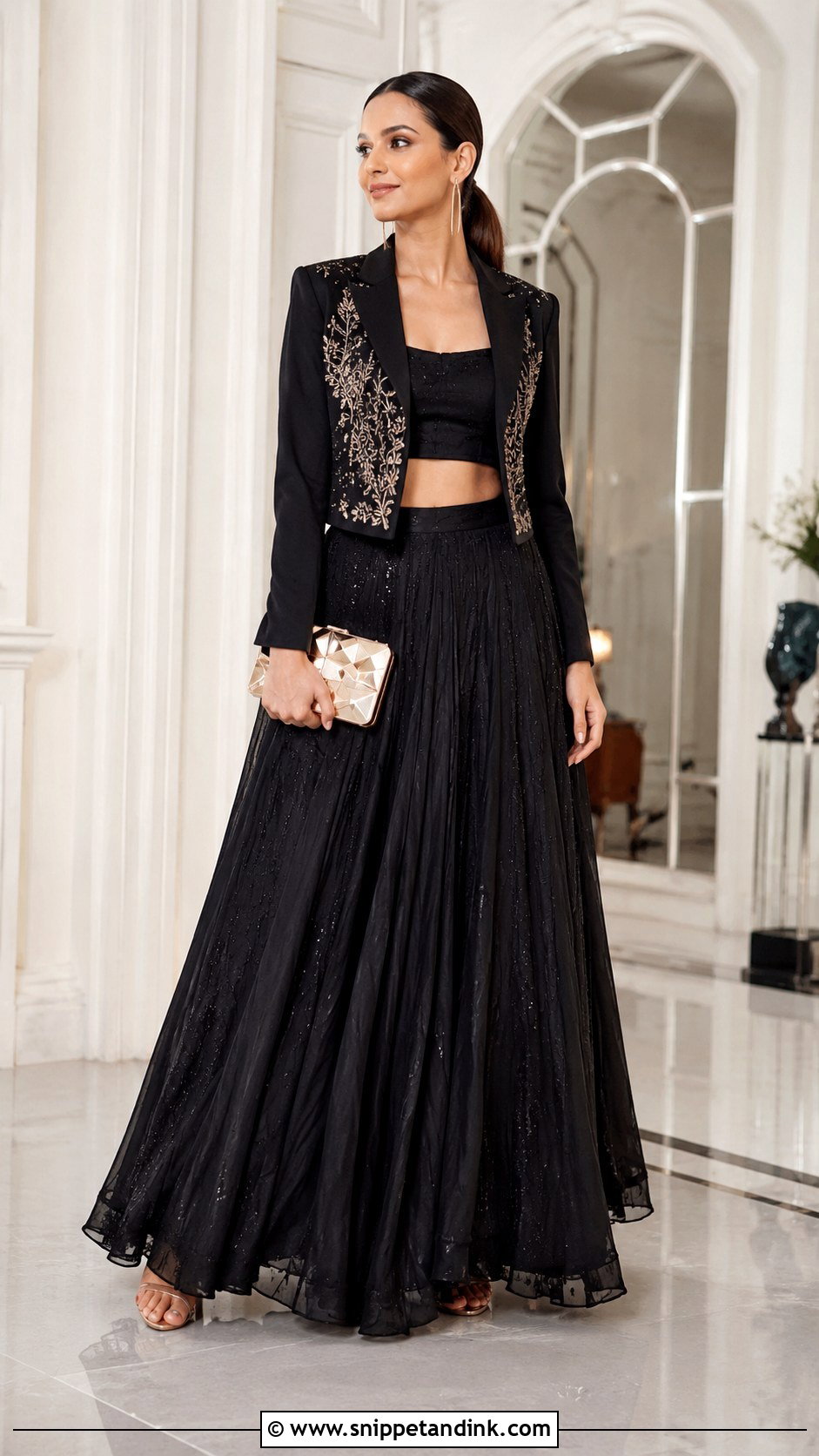
The blazer lehenga is for the guest who wants to look sharp rather than soft. A cropped, embroidered or longline blazer over a bralette or fitted top, with a flared lehenga skirt, reads confident at receptions and modern engagements. The balance rule is simple: if the blazer is worked, the skirt stays plain, and the other way round. Shoulder pads can feel stiff by the end of a long night, so try sitting and reaching across a table in it before you buy. Heels and sleek earrings keep it crisp.
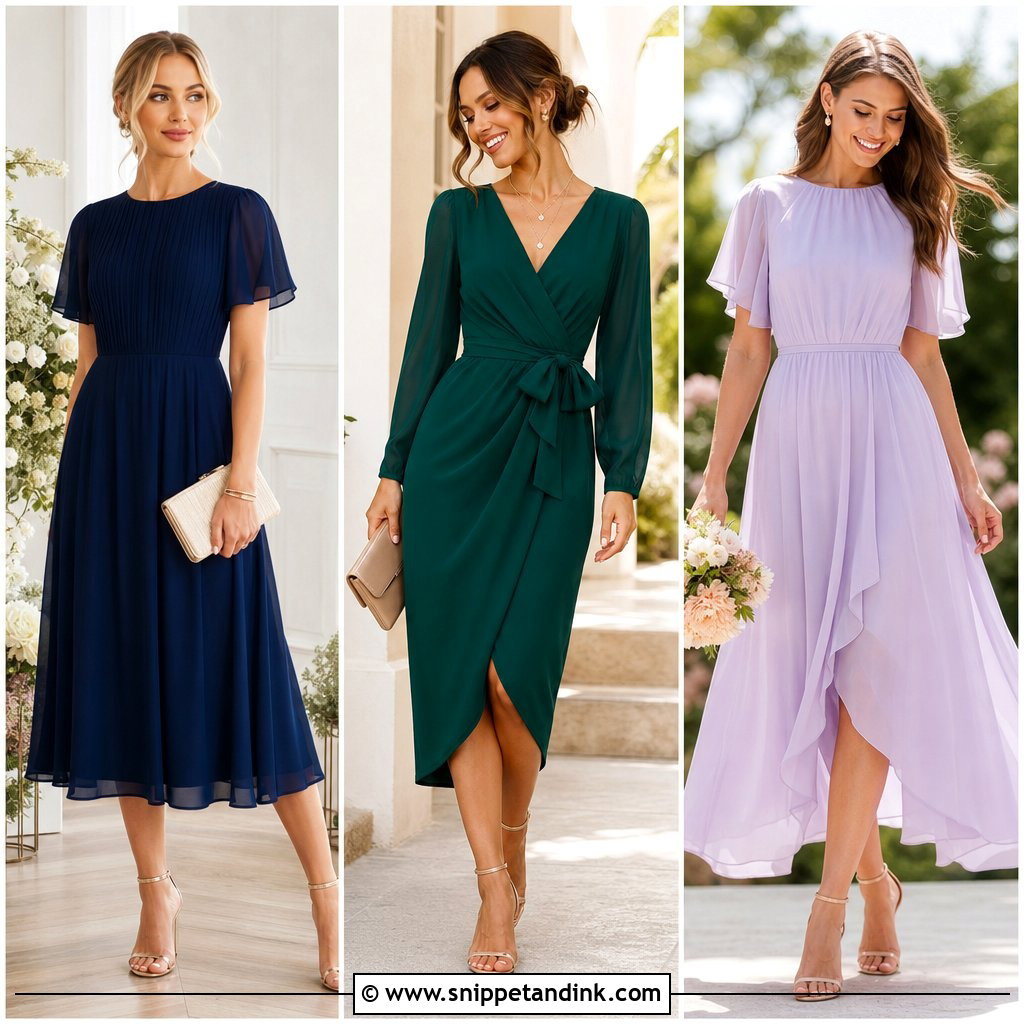
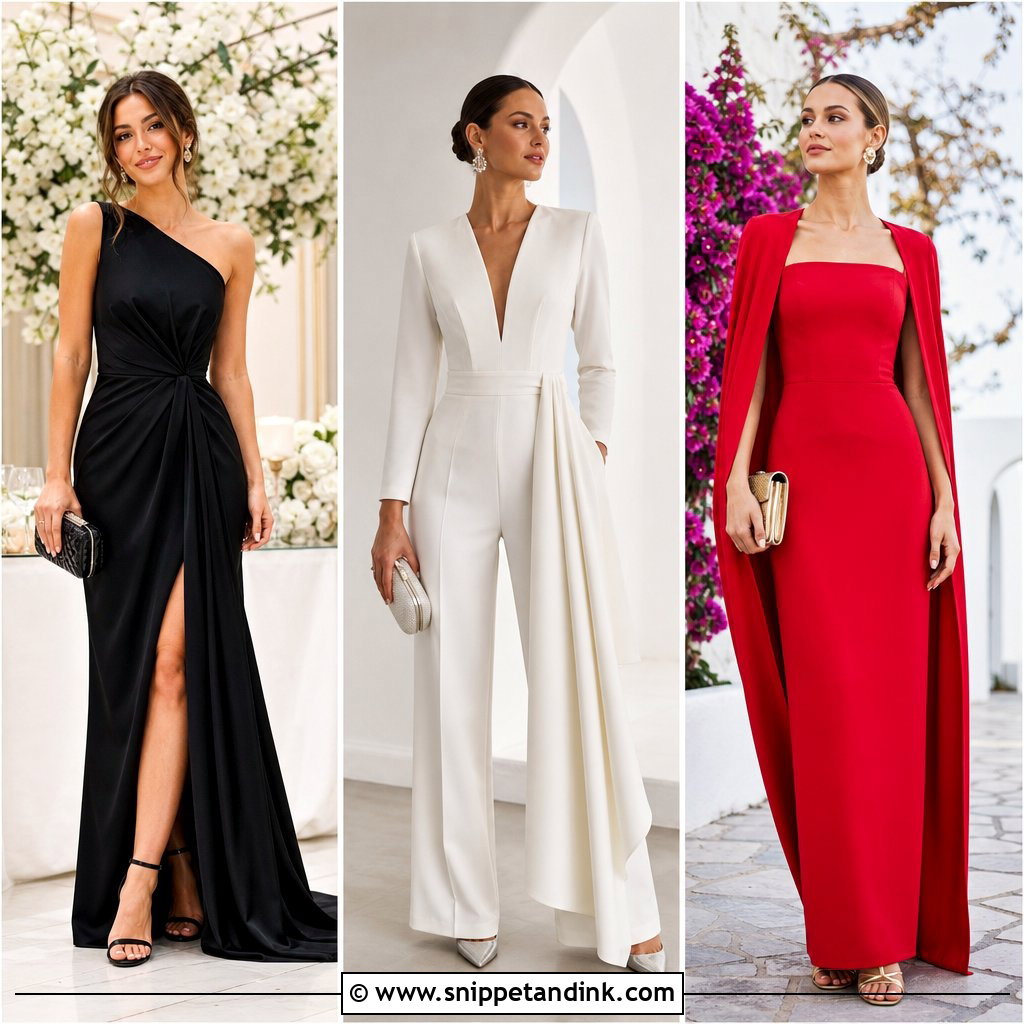
20. Indo Western Asymmetrical Dress
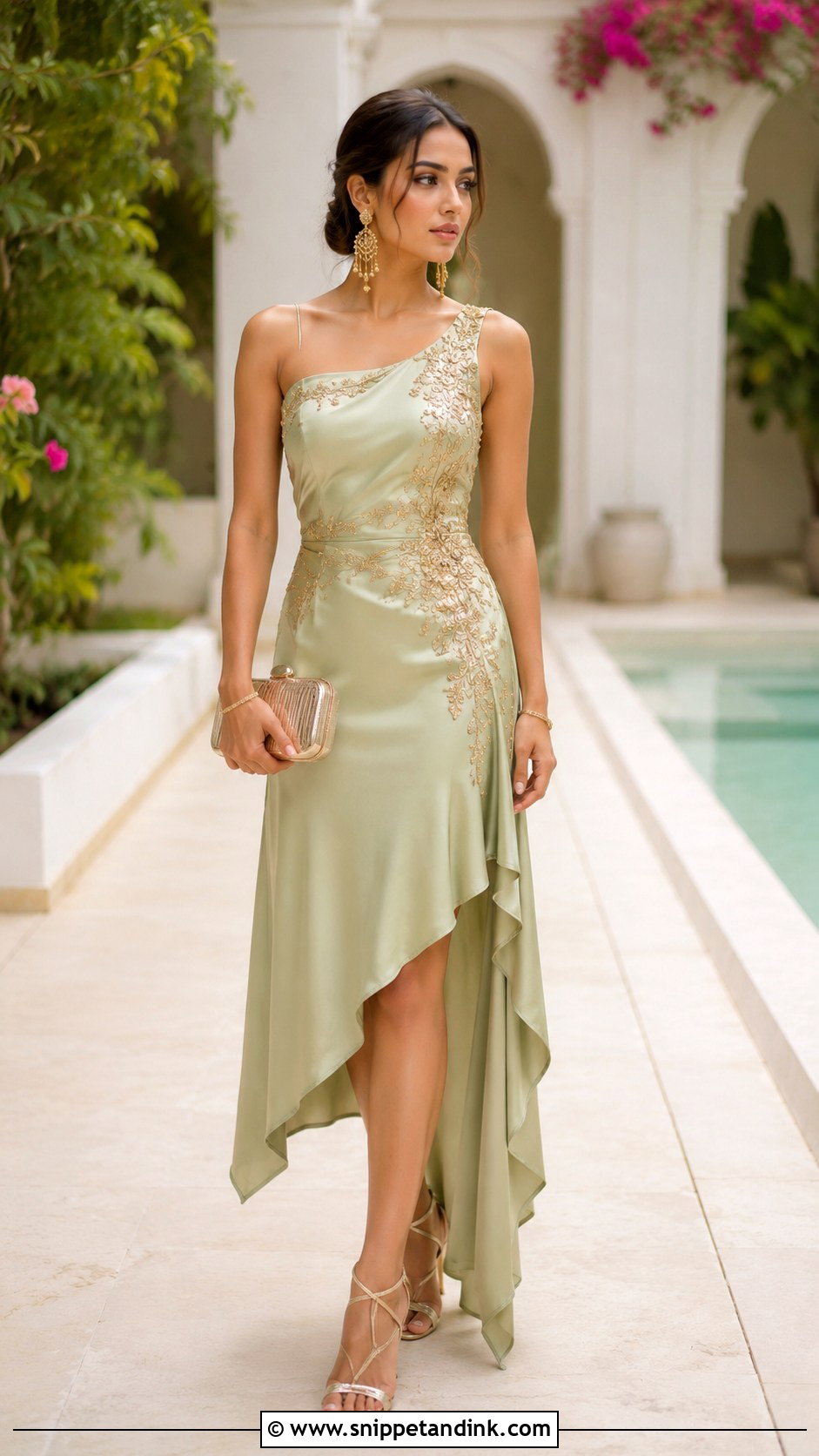
One-shoulder necklines, uneven hems and angled drapes make an asymmetrical dress quietly different from everything else in the room. For a wedding, it needs Indian embroidery, brocade panels or a draped dupatta-style detail to fit the occasion. Crepe, satin, georgette and chiffon move well. A one-shoulder cut is difficult to wear with a bra, so plan the undergarment first. Heels help balance the uneven line, with statement earrings and a structured clutch.
21. Indo Western Tunic With Flared Pants
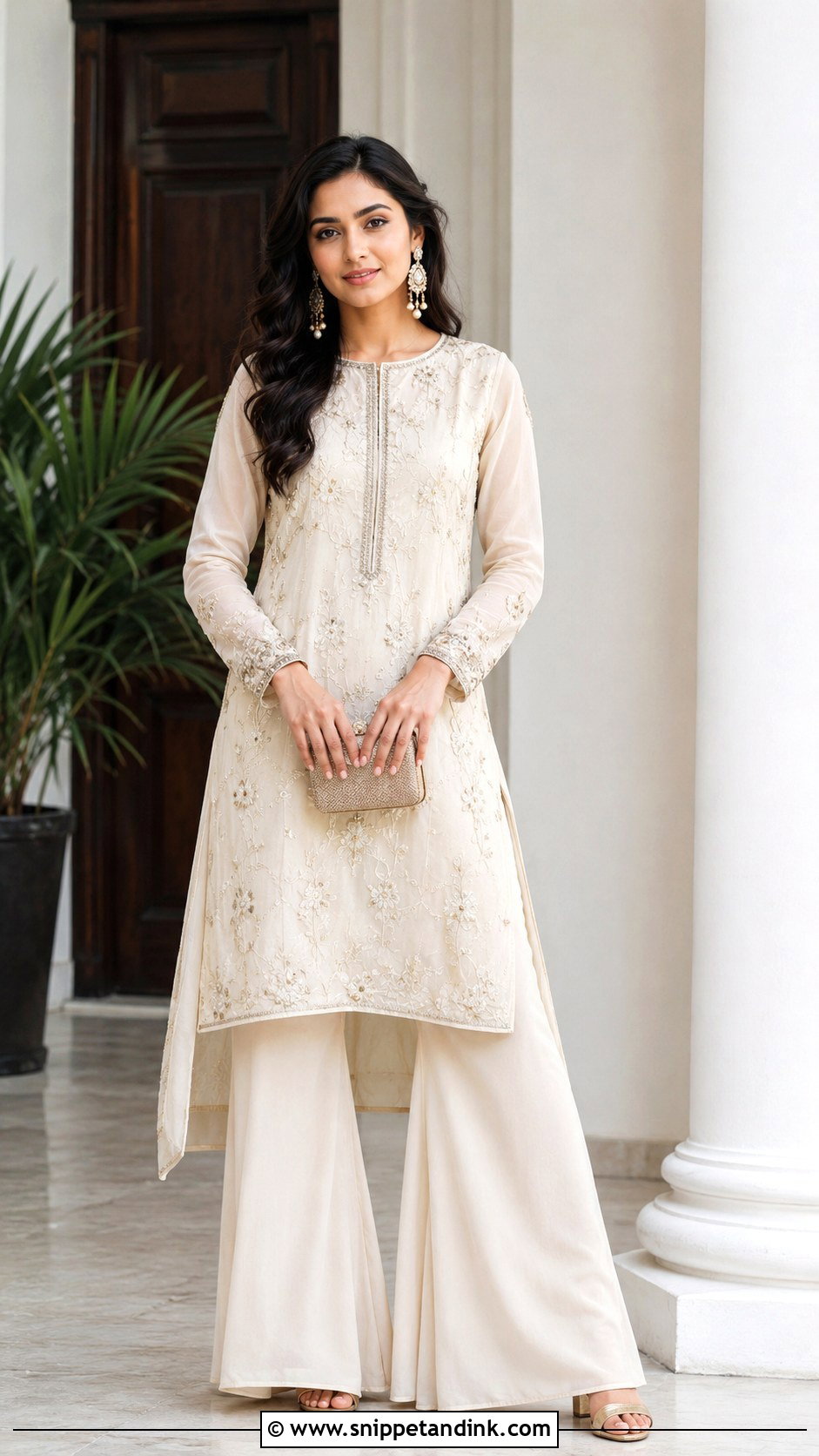
Coverage with movement is what a tunic and flared pants give you. A knee or calf-length tunic, embroidered, printed or belted, with side slits so the flare shows, suits women who want arms and legs covered without looking traditional. Soft silk, crepe and georgette work for dressier functions. Tonal sets read elegant; contrasting colours feel livelier for mehendi or haldi. Long earrings, block heels and a compact clutch are all it needs.
22. Indo Western Trail Lehenga
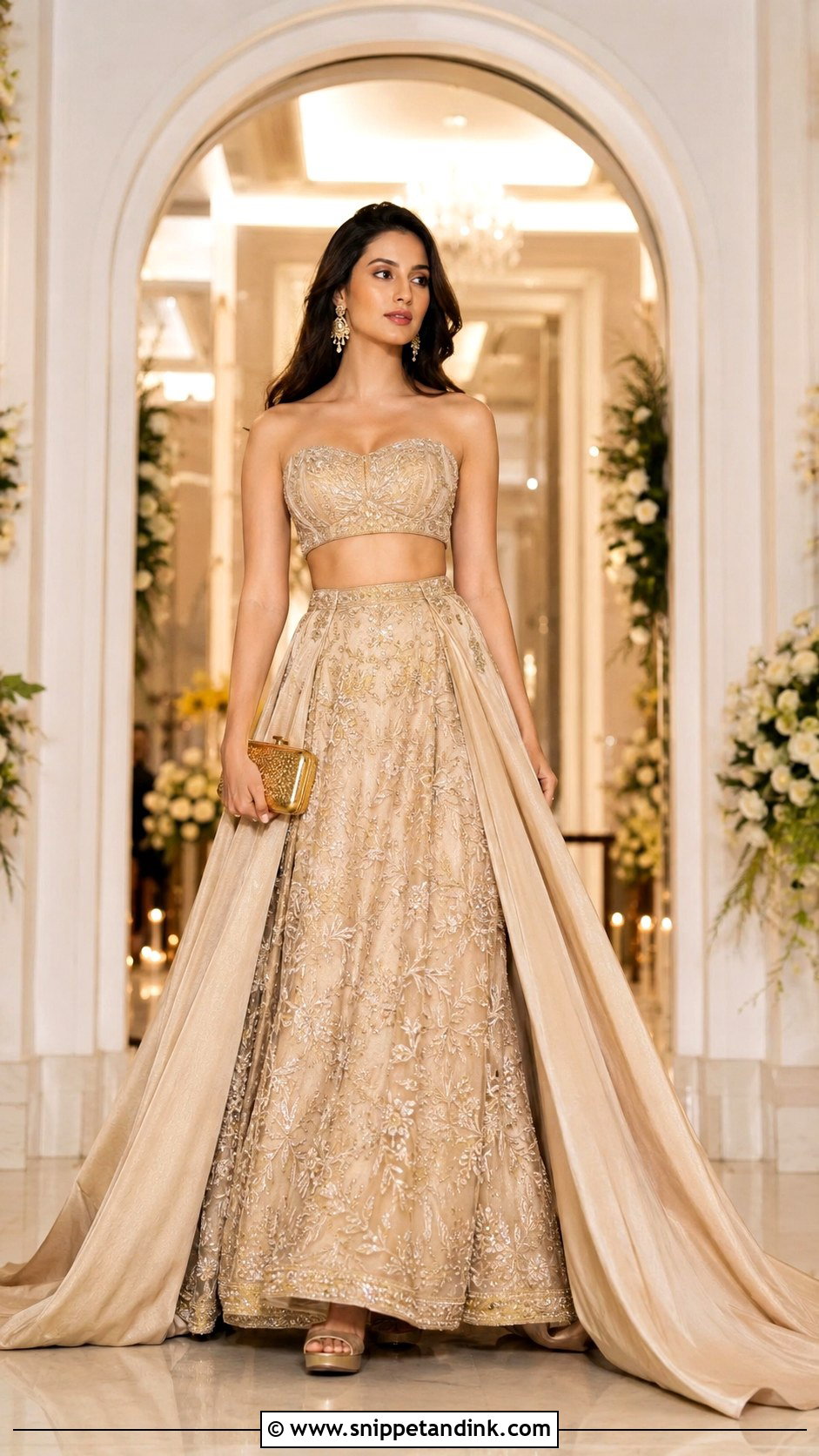
A trail is pure drama, and it comes with logistics. It gets stepped on in buffet lines and drags through whatever is on the floor, so I always push guests toward a detachable trail they can unclip after the entrance and photos. Pair a lightweight skirt with a corset, cape or structured crop blouse. Organza layers, soft shimmer and embroidery make it feel luxurious. Keep jewellery modest and hair polished; the trail is the statement.
23. Indo Western Belted Saree
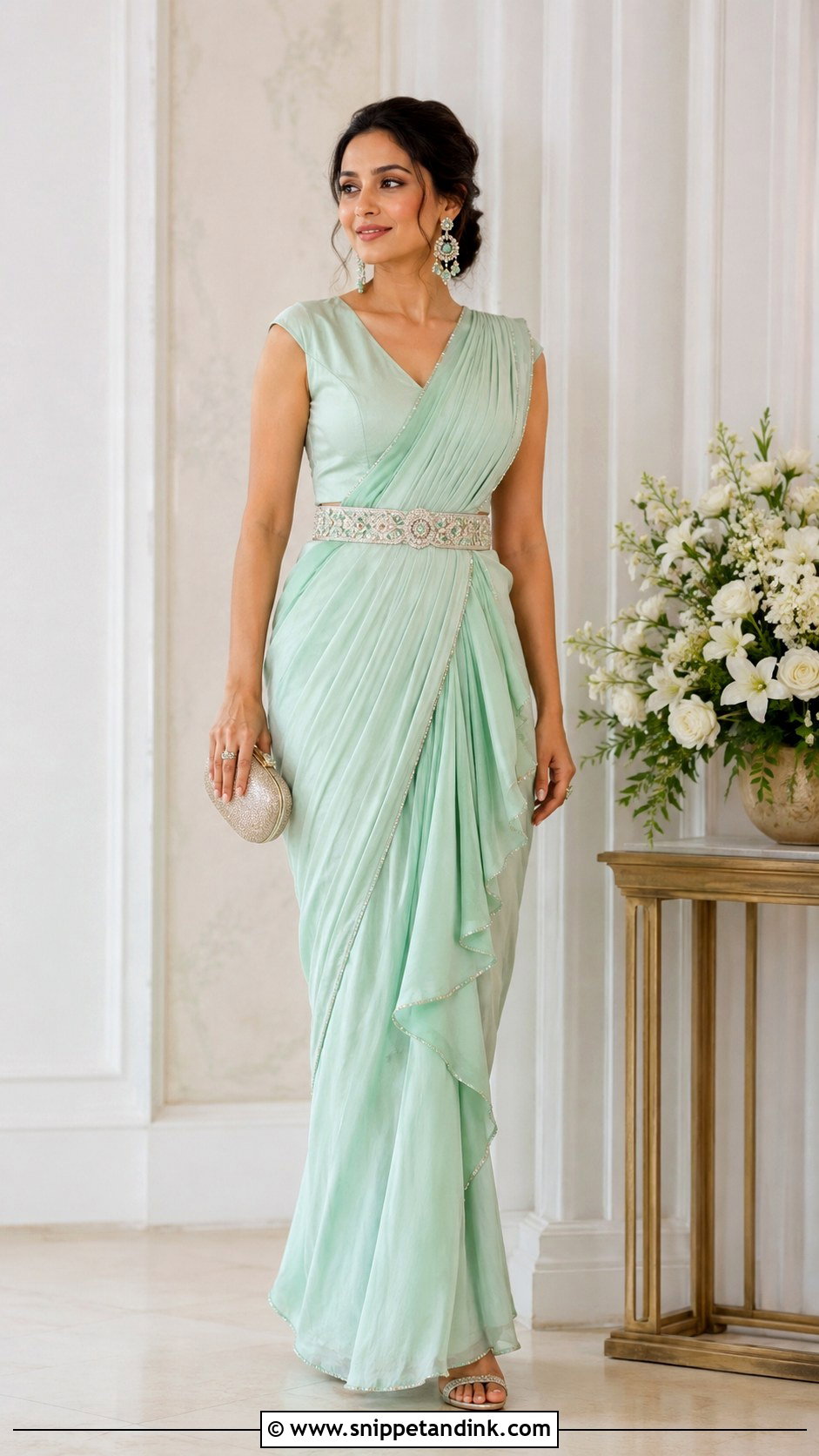
Belts solve a practical problem for saree wearers: the pallu and pleats stay anchored at the waist through hours of standing and hugging. A belted saree can be a traditional drape with a statement belt or a pre-draped style that includes one. Metallic belts suit receptions; embroidered fabric belts suit daytime ceremonies. Place the belt at your natural waist, not over the hip, or the pleats fan out awkwardly. A crop, full-sleeve or corset blouse depends on how formal the event is.
24. Indo Western Organza Skirt Set
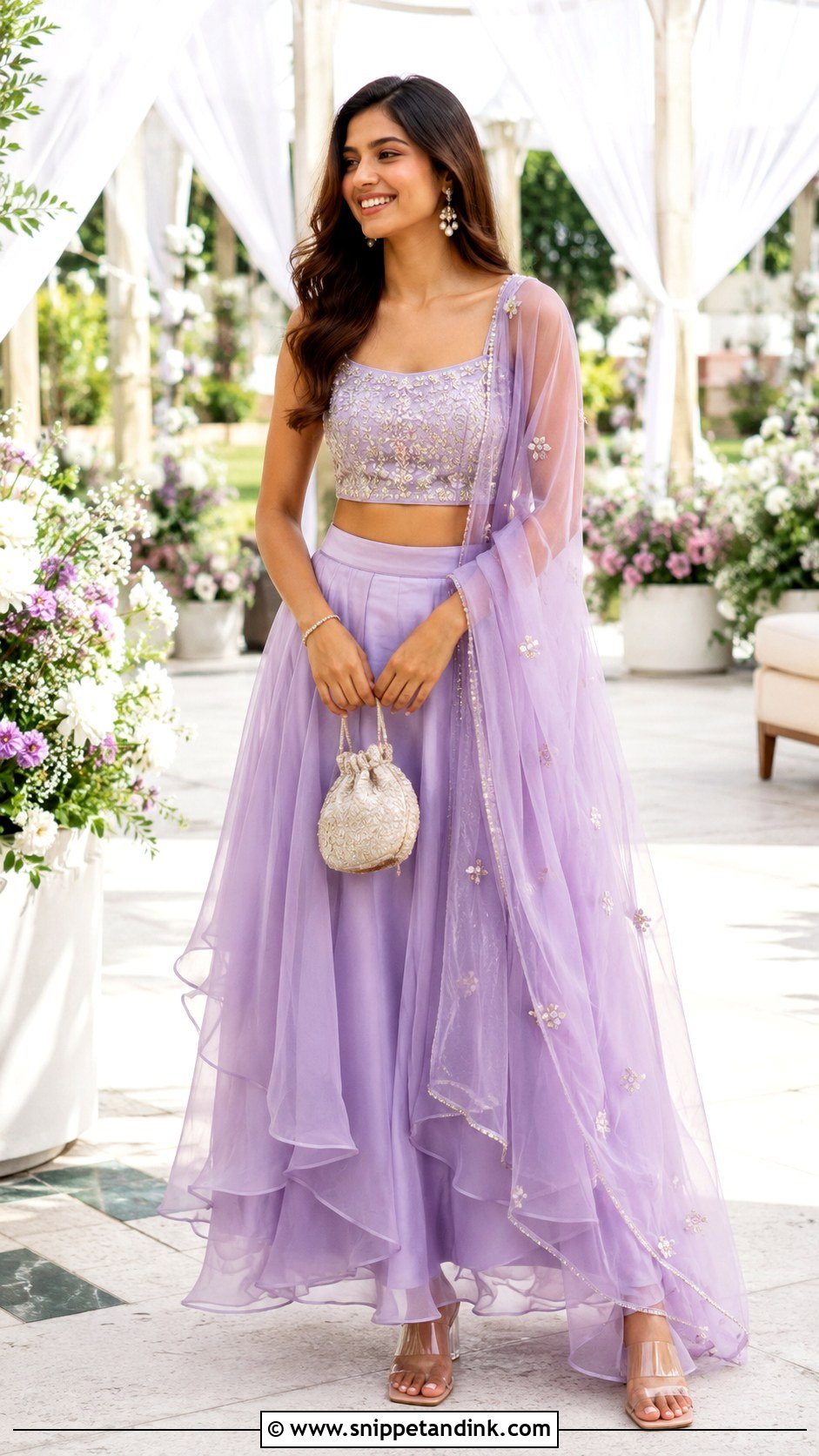
Organza gives volume without weight, so an organza skirt set looks full while staying cool at daytime events. Pair the skirt with an embroidered blouse, cropped kurta or fitted top, and add a matching organza dupatta or cape if you want softness. Lavender, blush, mint, peach and powder blue suit outdoor and destination weddings. Organza snags on rough jewellery and creases sharply, so carry it on a hanger, not folded in a bag. Pearl earrings, clear heels and a small embellished bag keep it light.
25. Indo Western Velvet Jacket Set
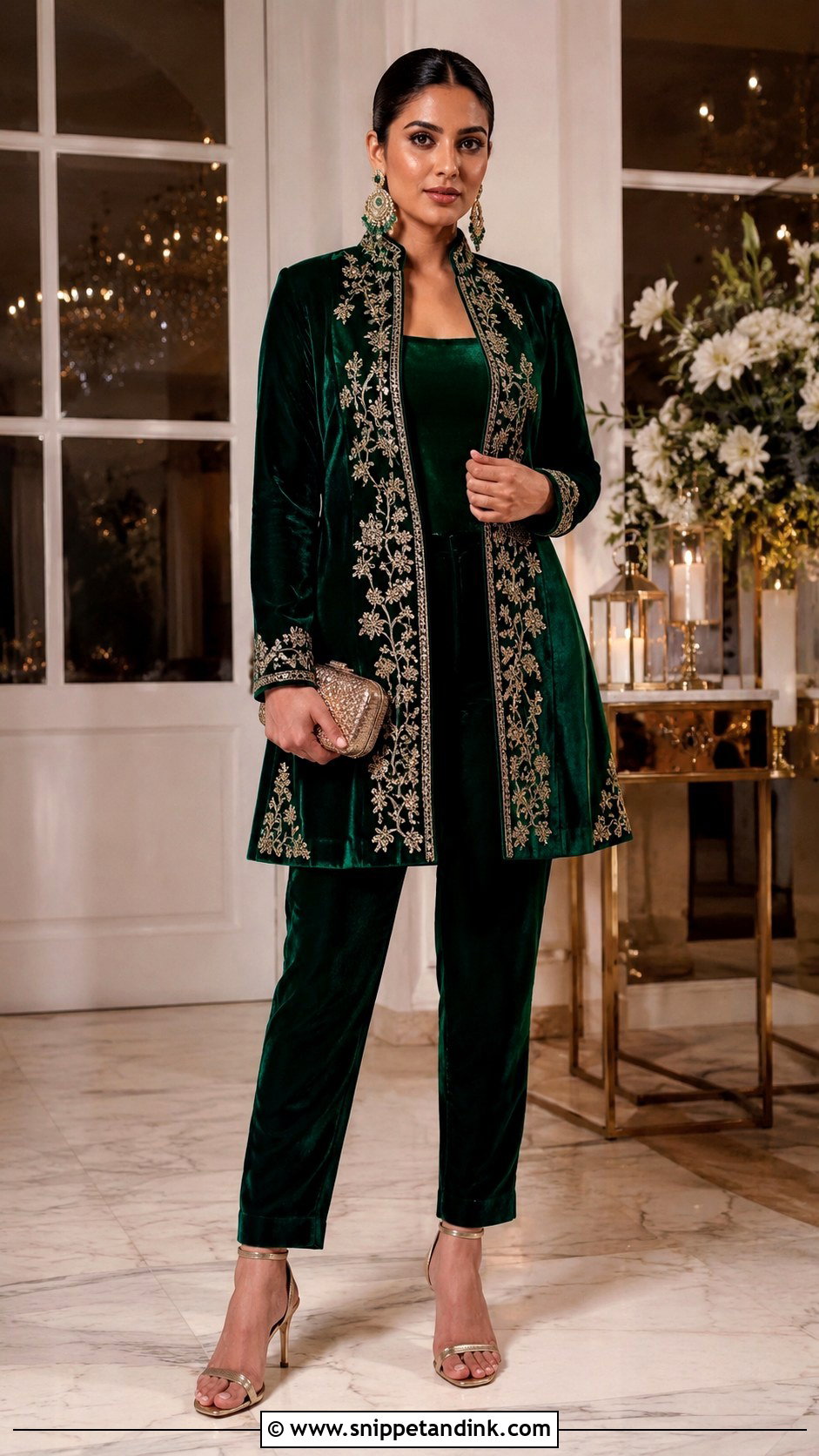
Velvet is for cold months only. In a warm hall it becomes unbearable quickly, but at a winter evening reception it’s both warm and rich-looking. An embroidered velvet jacket in emerald, plum, navy, maroon or black over straight pants, a lehenga skirt or palazzos makes a complete outfit. A fitted inner top keeps the line clean underneath. Velvet already looks luxurious, so I’d limit accessories to statement earrings, a sleek clutch and heels in a complementary shade.
One Suitcase, Three Functions: Rotating Fusion Separates
Guests travelling for a multi-day wedding rarely have room for a lehenga per event. Fusion pieces solve that because they mix. When I pack for a client, I build around two or three bottoms and switch the tops and layers, so the same skirt looks different in photographs from different nights.
A Working Combination
- Mehendi: printed sharara with a short mirror-work kurti and juttis.
- Sangeet: the same sharara with a sequinned crop top and a sheer cape.
- Reception: a pre-draped saree gown, the one piece that stands alone.
Choose bottoms in one colour family so every top works with every bottom. Pack jewellery by event in small labelled pouches, and roll the lighter pieces in tissue while heavy embroidery lies flat on top. A travel steamer is worth the space; most hotel irons are too hot for georgette and organza and leave shiny marks.
Corsets and structured blouses deserve one more word. Try them seated for twenty minutes before the trip, because the fit you feel standing in a shop is not the fit you’ll feel at a dinner table after a long meal.
Which Fusion Look Fits the Function You’re Attending?
The right fusion outfit fits the function, your comfort and your own taste, in that order. If you want to move freely, a dhoti set, jumpsuit, co ord set or palazzo suit will serve you well. For a dressier event, a saree gown, cape lehenga, corset lehenga or embroidered gown reads more formal. For modest dressing, jacket sets, Anarkalis and tunic pants cover well without looking heavy. Whatever you pick, sit, walk and dance in it before the day, and keep the accessories lighter than the outfit.
You'll Like These Ideas:


Leave a Reply