
An Indian wedding rarely means one outfit. Most families run three to five functions across a few days, and each one asks something different of your clothes: floor seating at the mehndi, a turmeric paste fight at the haldi, two hours of dancing at the sangeet, a long stand-and-greet line at the reception. When I build a wedding wardrobe with a client, comfort and weight get decided before colour, because a heavy skirt you can’t sit in will ruin the evening no matter how good it looks on the hanger. Lighter lehengas, pastel palettes, shararas, pre-draped sarees and Indo-Western cuts all earn their place now. Below are 25 outfits sorted by the function they suit, with what I’d watch for in each.
Planning a Wardrobe Across Three to Five Wedding Functions
When I plan outfits for a multi-day Indian wedding, I start with the itinerary, not the shopping list. I write each function down with its time, venue, seating and how much dancing there will be. A morning haldi in a garden and a hotel ballroom reception need completely different fabrics, and seeing them side by side stops you from buying three heavy lehengas for events that only need one.
- Daytime and outdoors: cotton silk, chanderi, organza and georgette. Light colours read well in sun.
- Evening and indoors: velvet, brocade, satin and heavier embroidery. Deeper colours hold up under warm lighting.
- Floor seating: skirts and drapes that spread without crushing, or shararas and palazzos.
- Dancing: lighter skirts, secured dupattas, and blouses you can raise your arms in.
- Rituals with paste, colour or water: fabric you don’t mind staining.
Then I rank the functions by how much they matter to you and the family. Put the budget into the one or two outfits that will appear in the most photographs, usually the wedding ceremony and the reception, and let the others be simpler. A guest or family member can often rewear one good lehenga for two different events by changing the dupatta and jewellery.
Colour Clashes Within the Family
Ask the bride’s family which colours are planned for each function before you buy. Some families pick a theme colour for the haldi or mehndi, and others ask guests to avoid red or white. Sorting this out early saves a last-minute return.
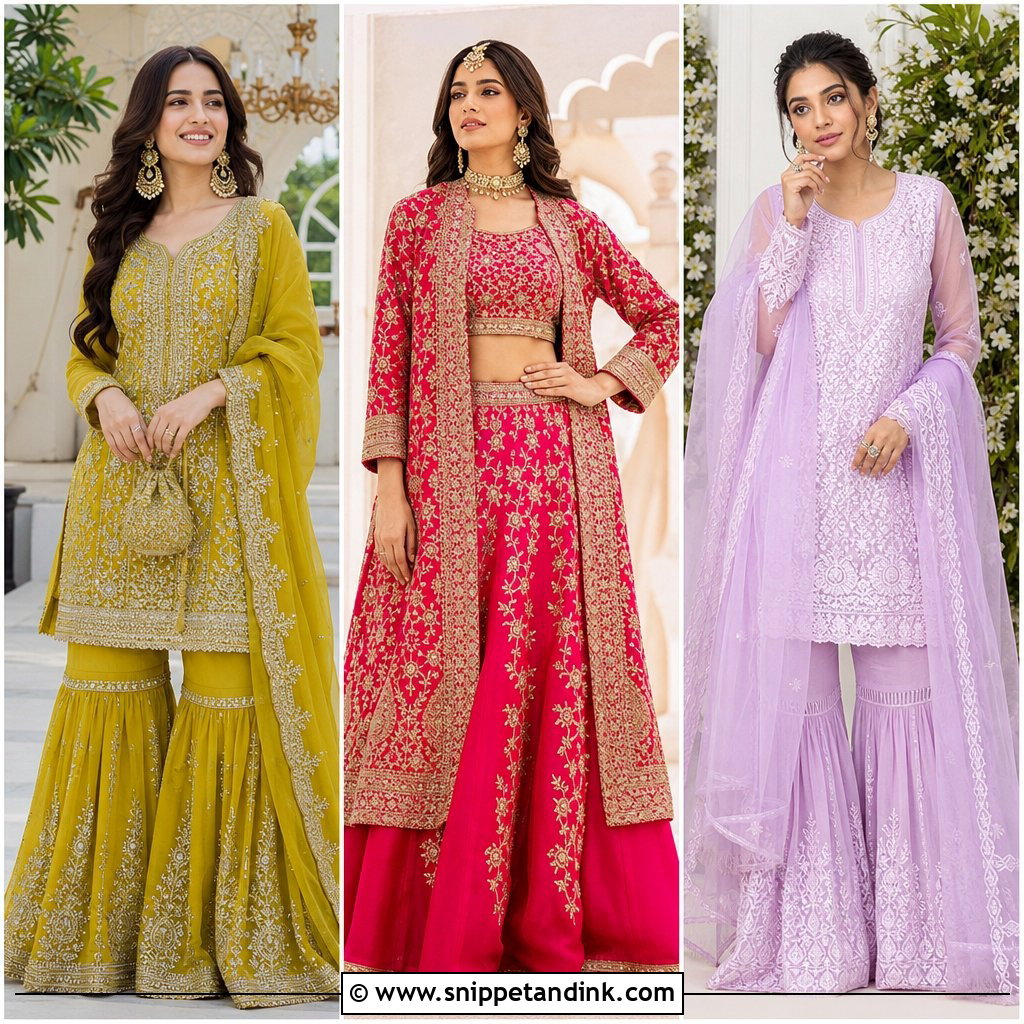
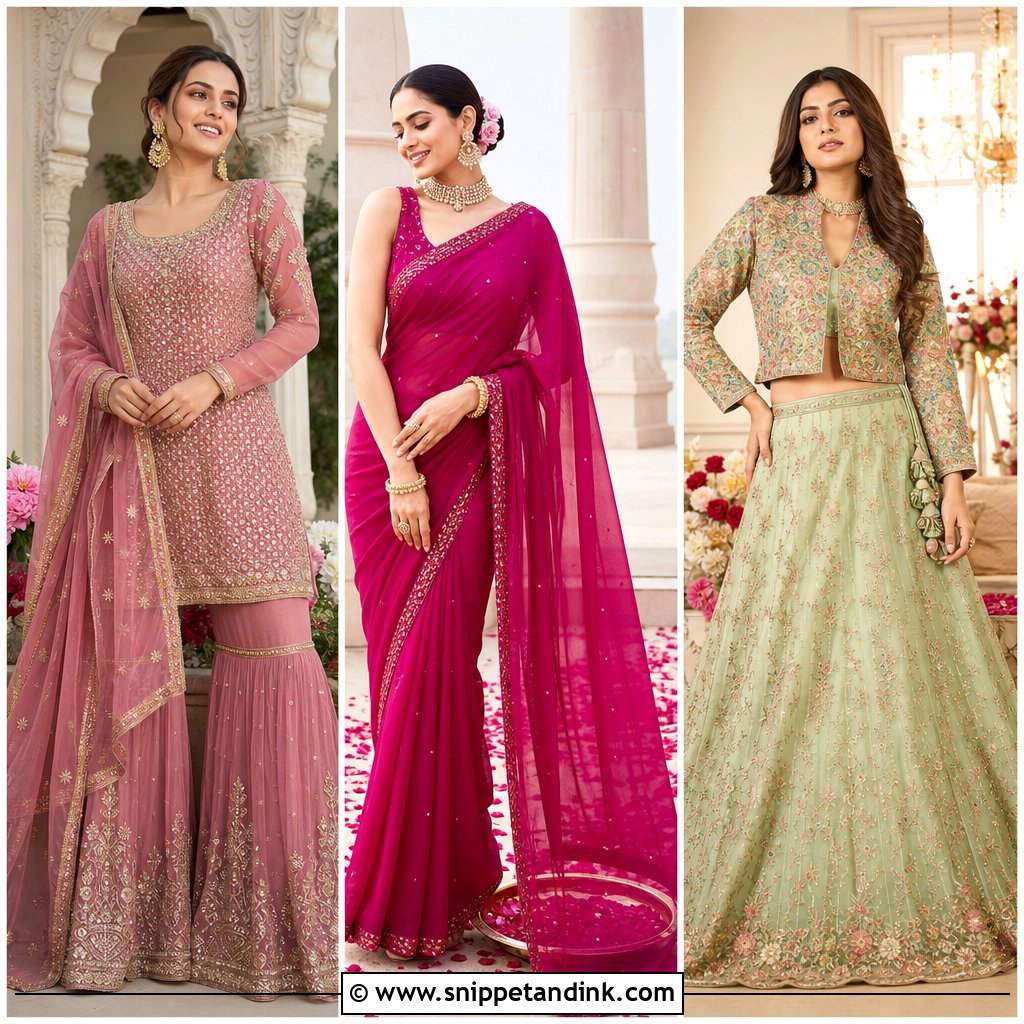
1. Mehndi Lehenga Dress
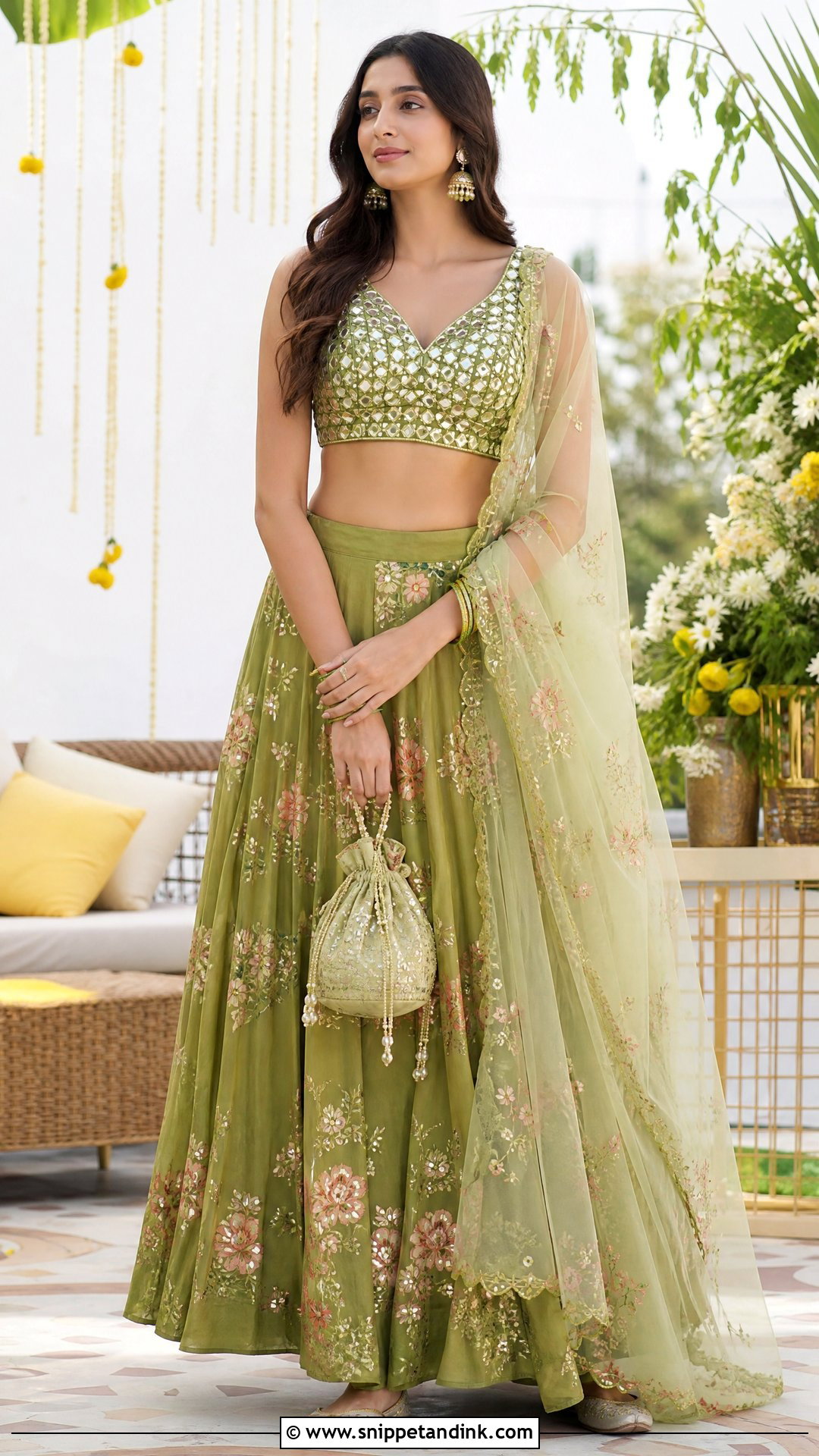
Mehndi is a sitting function. You’ll spend an hour or more cross-legged or on a low stool while the artist works, so I look for a lehenga with a flexible waistband and a skirt that can spread around you without crushing its embroidery. Printed or lightly worked fabric in green, yellow, mint or a floral mix suits the daytime light. A sleeveless or short-sleeved blouse matters more than people expect: wet paste on the forearms will smear any sleeve that reaches the wrist. Pin the dupatta firmly to one shoulder so both hands stay free, and let it go once you’re dry. A mehndi lehenga dress in this style also handles the dancing that usually starts once the hands are done.
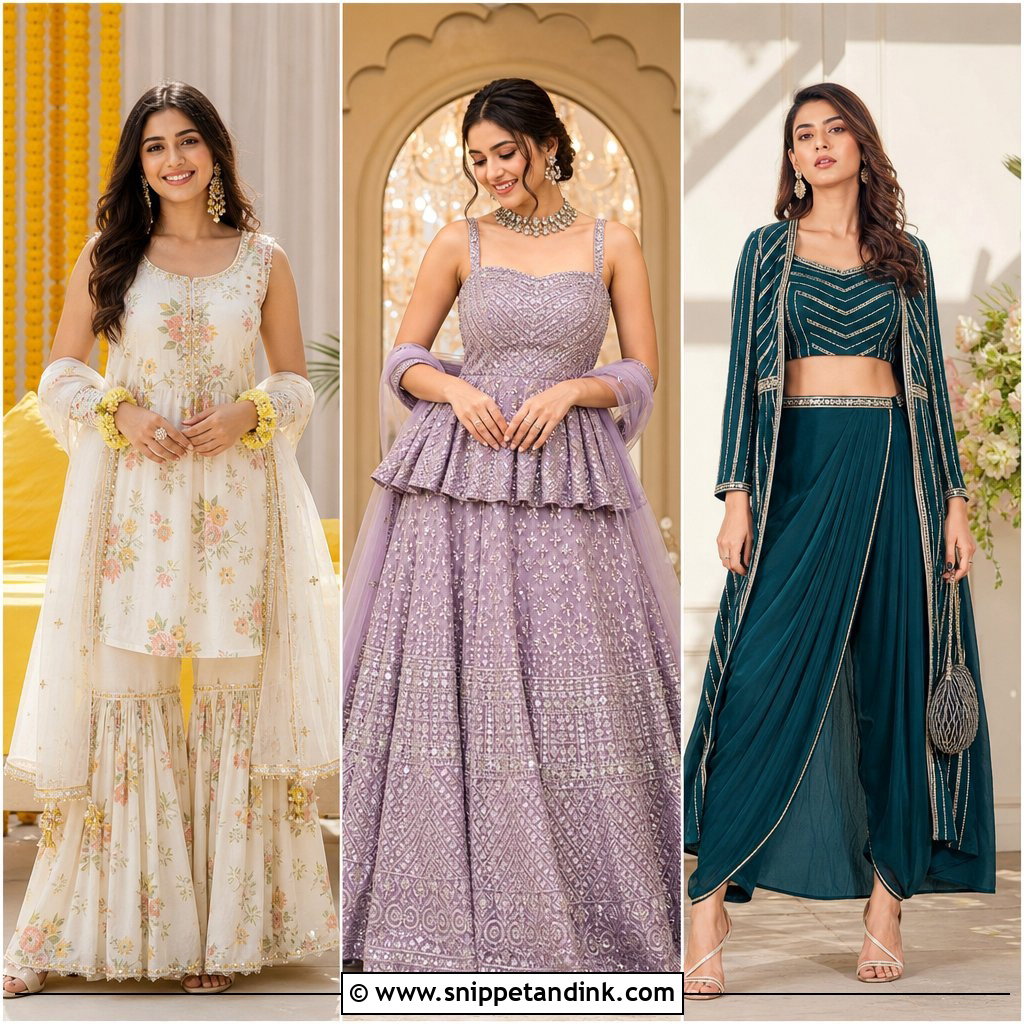
2. Haldi Yellow Anarkali Dress
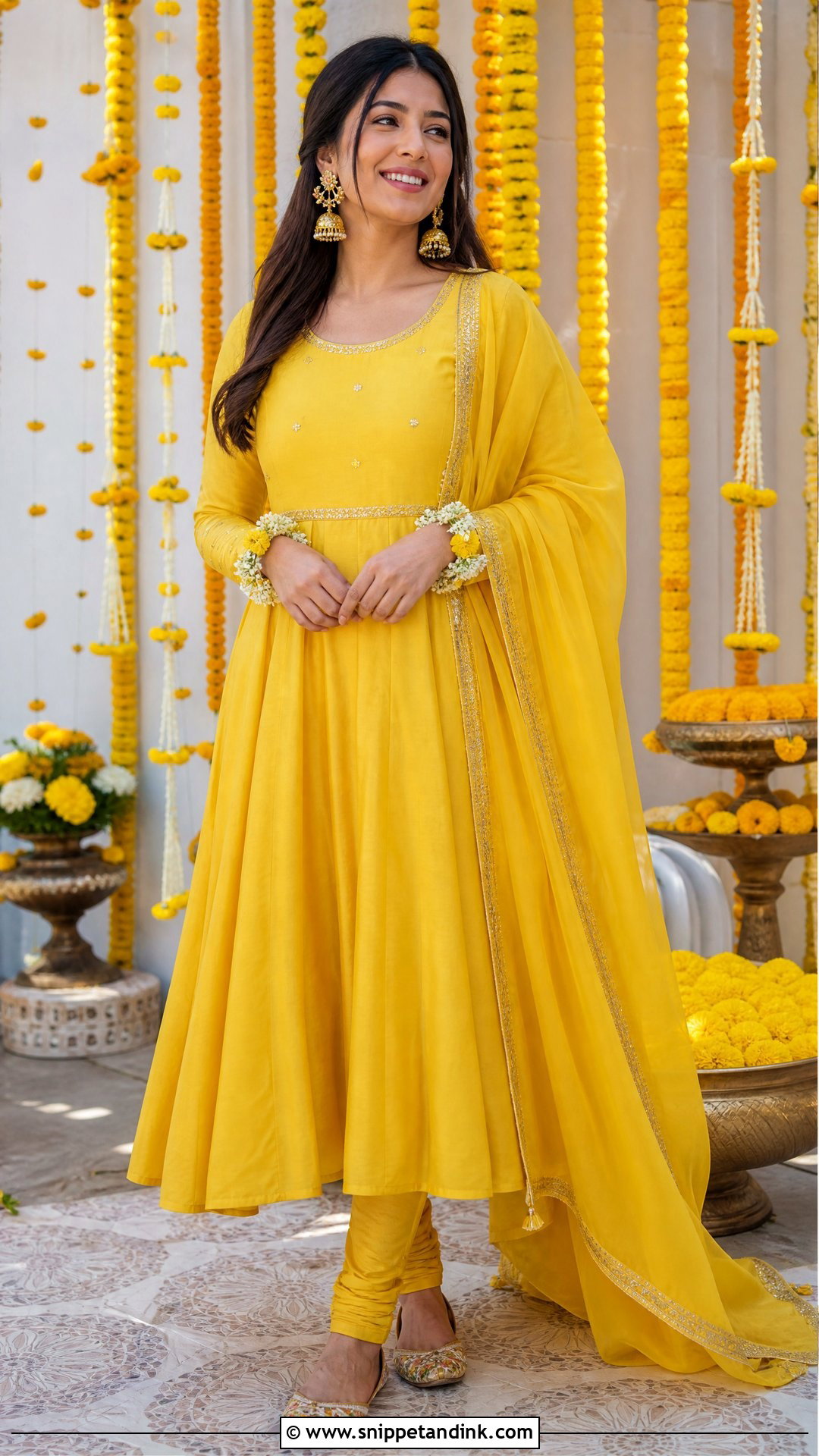
Turmeric stains. That is the first thing I tell anyone dressing for a haldi, because the paste leaves a yellow mark on white and pale fabrics that rarely washes out fully. A yellow Anarkali in cotton silk, georgette or chanderi hides splashes and breathes outdoors. Keep the work subtle, a little gota patti or thread embroidery, since heavy mirror work can scratch other people when the hugging starts. Pair it with churidar or straight pants, a sheer dupatta, gold jhumkas and flats you won’t mind getting messy. Don’t wear anything you plan to wear again for a formal event.
3. Sangeet Sequin Lehenga Dress
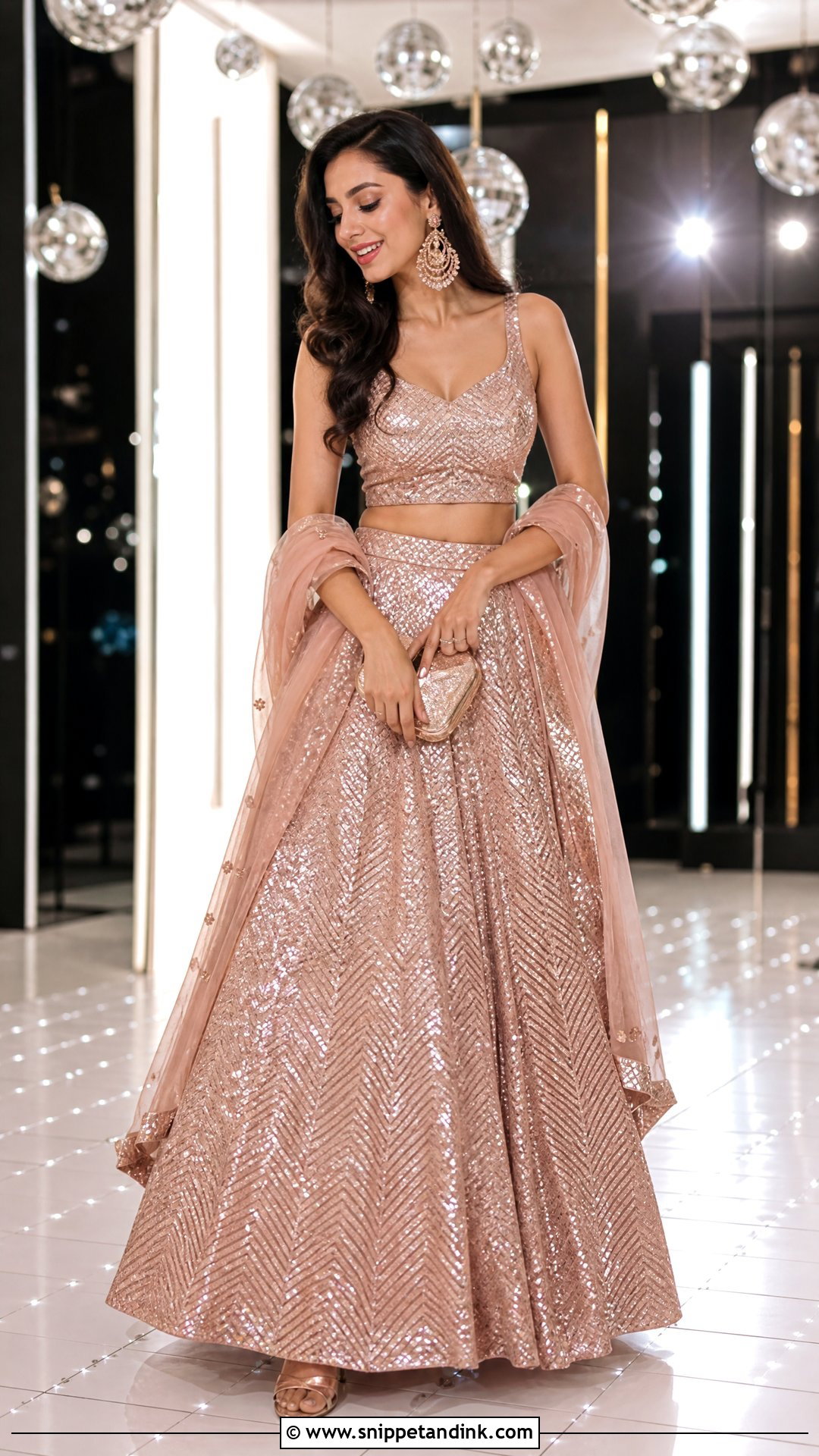
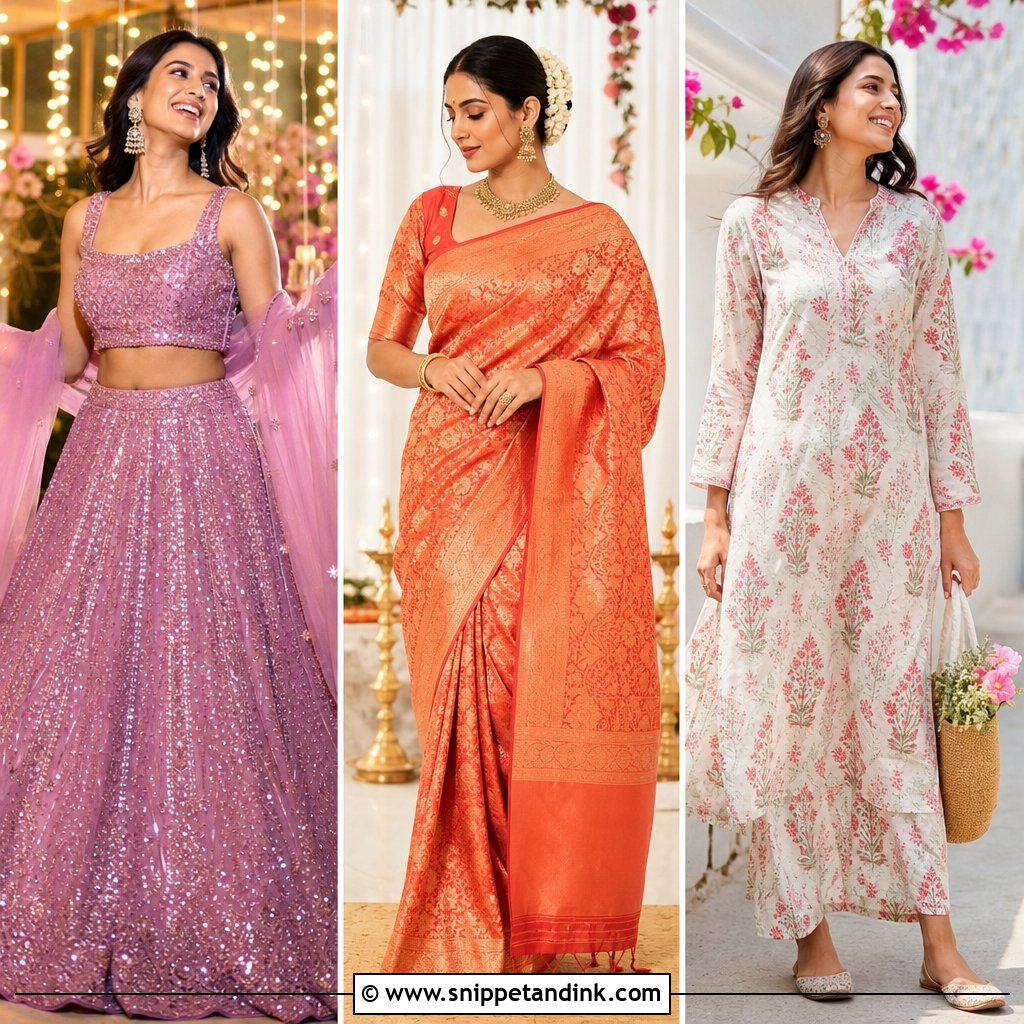
A sangeet outfit needs to survive spins. Stiff, heavily embroidered skirts swing out and drag you off balance, so I’d go for a net, georgette or tulle lehenga with scattered sequins that stay light. Under stage lighting, jewel shades like emerald, navy and berry hold their colour, while champagne, rose gold and silver bounce light back toward the camera. A fitted blouse matters here because you’ll be lifting your arms; check that you can raise both hands above your head in the trial. Drape the dupatta around the arms or skip it on the dance floor. A sequin lehenga dress paired with a sleek ponytail or loose waves keeps hair out of your face mid-routine.
4. Engagement Saree Dress
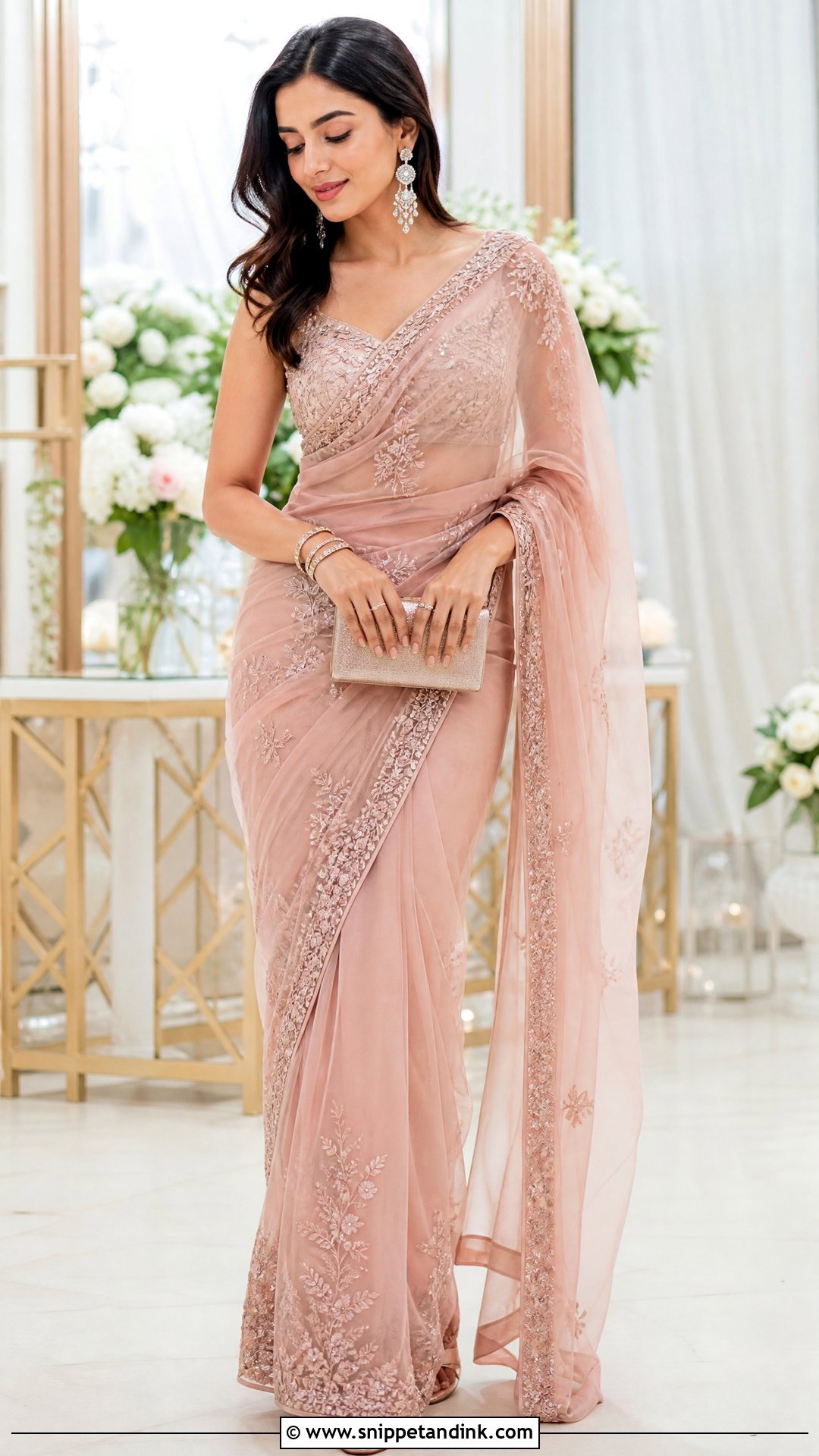
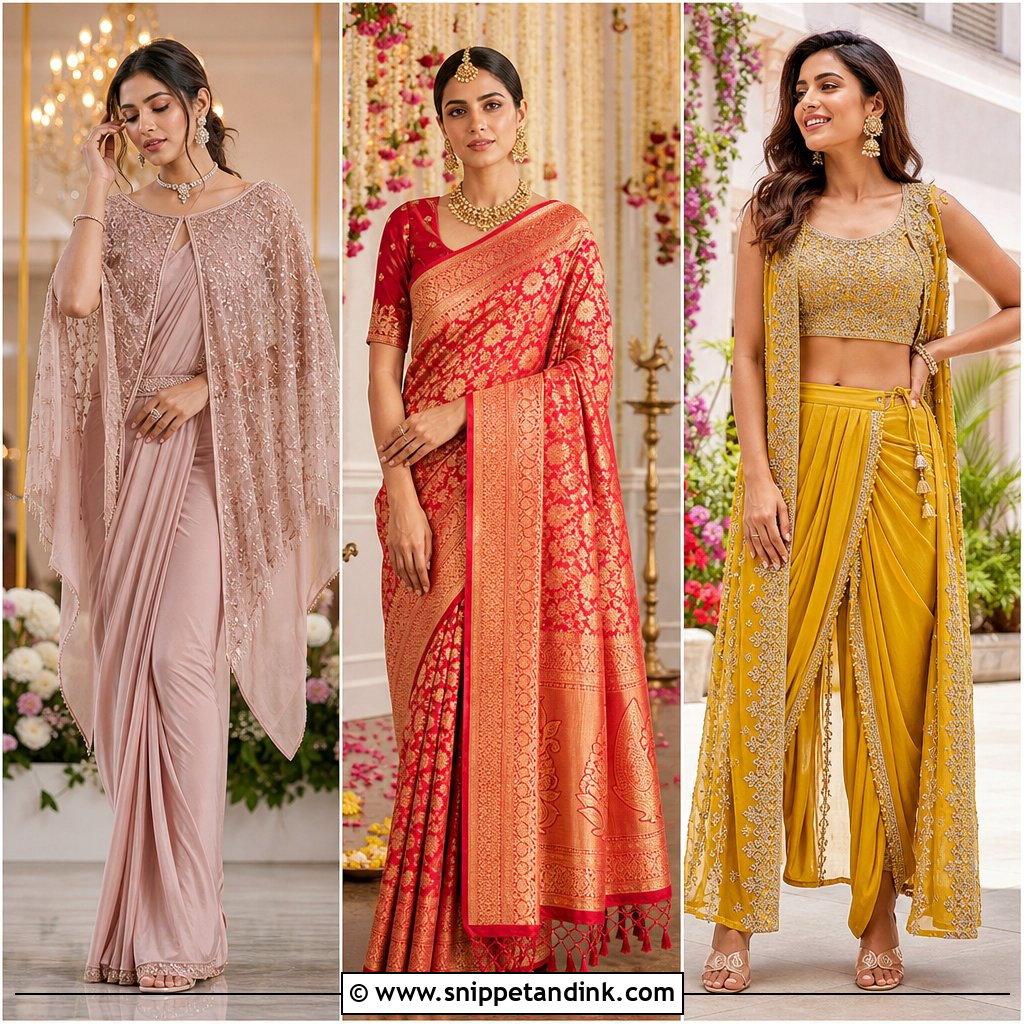
For a ring ceremony, I like a saree because the event is mostly standing, exchanging rings and family photographs, which is where a drape looks its best. Silk or organza in blush, ivory, lavender, teal or gold reads as dressed up without competing with the bridal look still to come. The blouse does a lot of the work: fine embroidery, pearl edging or a structured neckline will show in close-ups of hands and rings. If you’re not used to managing pleats for hours, a pre-stitched version gives the same line. Finish with a neat bun or side-parted waves so the neckline stays visible.
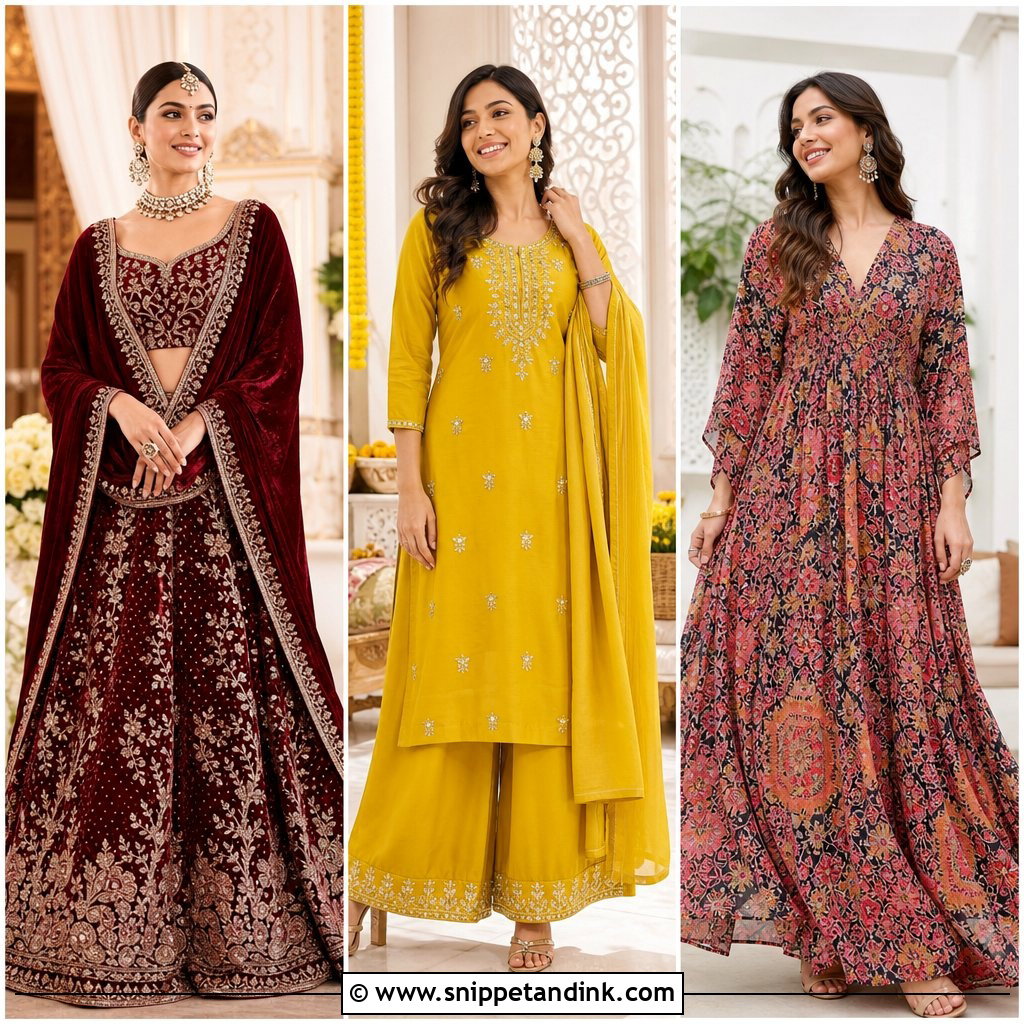
5. Wedding Guest Lehenga Dress
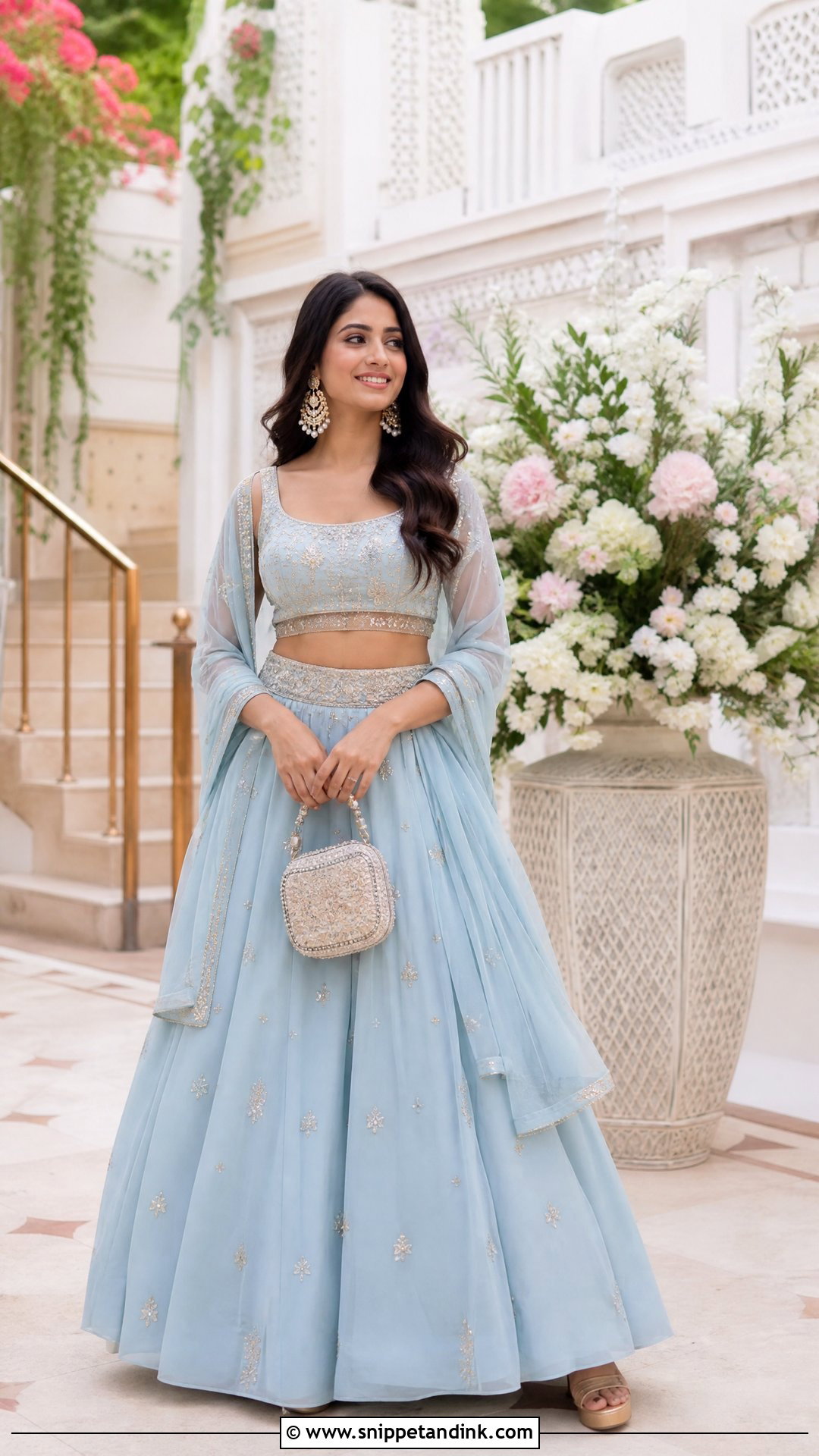
Guests get one quiet rule from me: stay out of bridal red, and check with the family if you’re unsure what colour the bride is wearing. Soft pastels, jewel tones, earthy shades and prints all work. For long ceremonies, a lightweight lehenga with thread embroidery, foil work or small sequins keeps you comfortable through hours of sitting and standing. Make sure the blouse is secure enough to bend and touch elders’ feet without adjusting. At an outdoor wedding, a hem that clears your shoes by an inch saves you from grass stains and tripping on uneven ground.
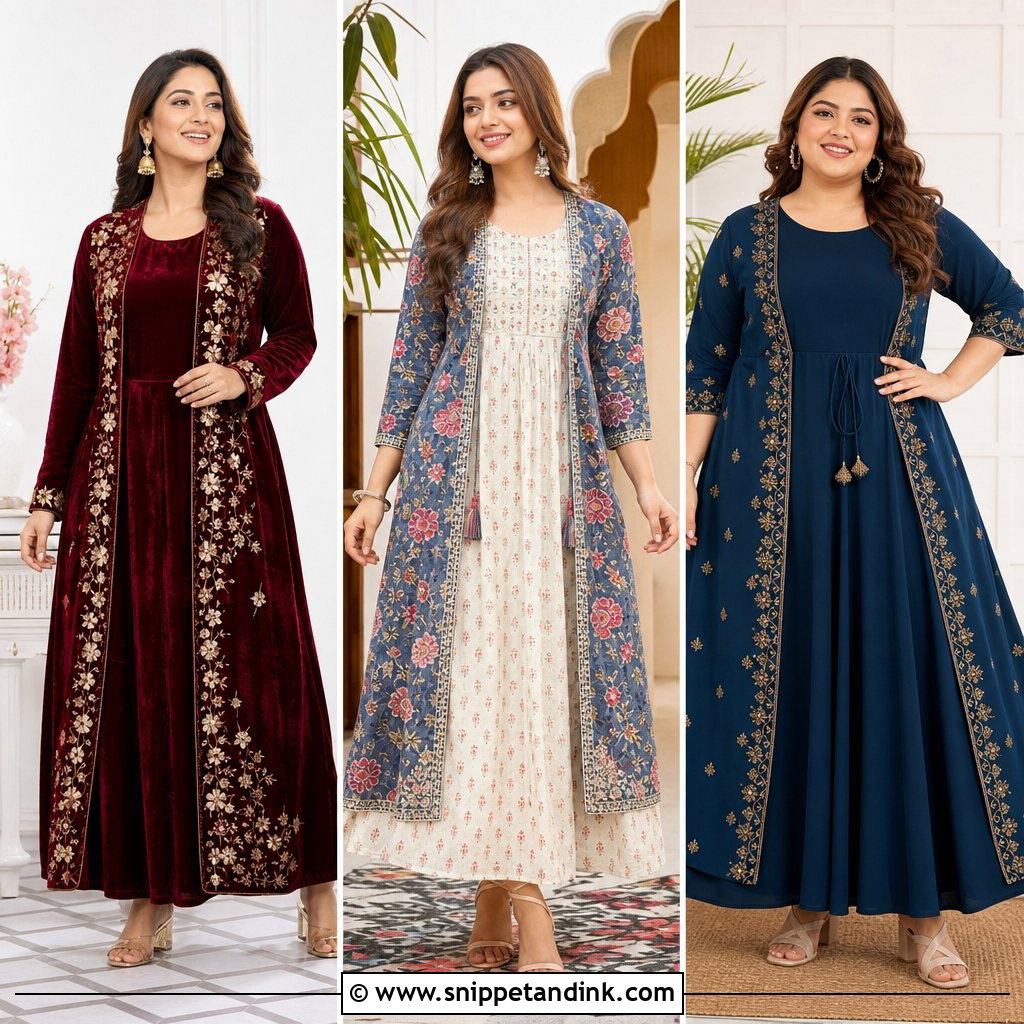
6. Reception Gown Dress
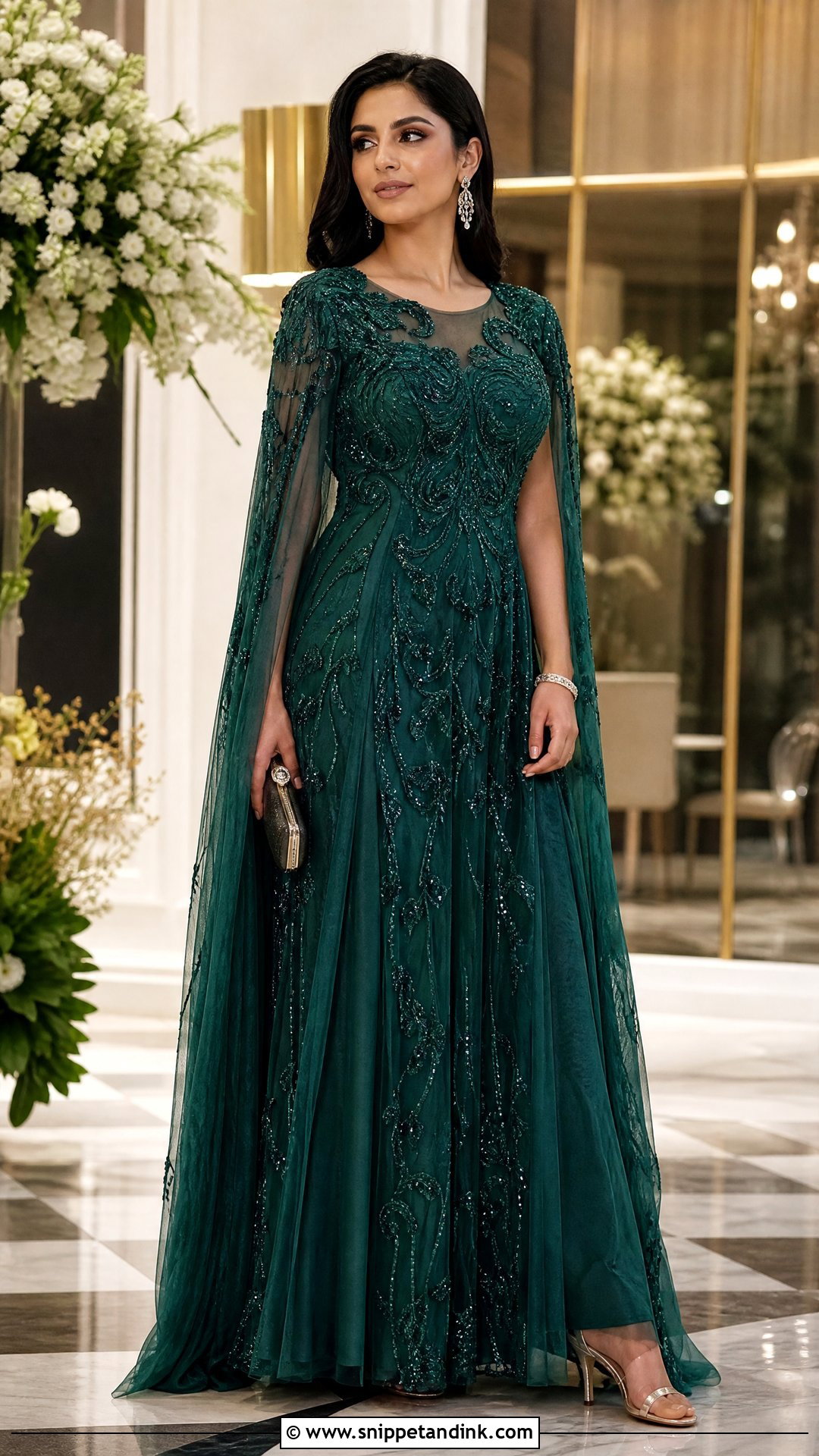
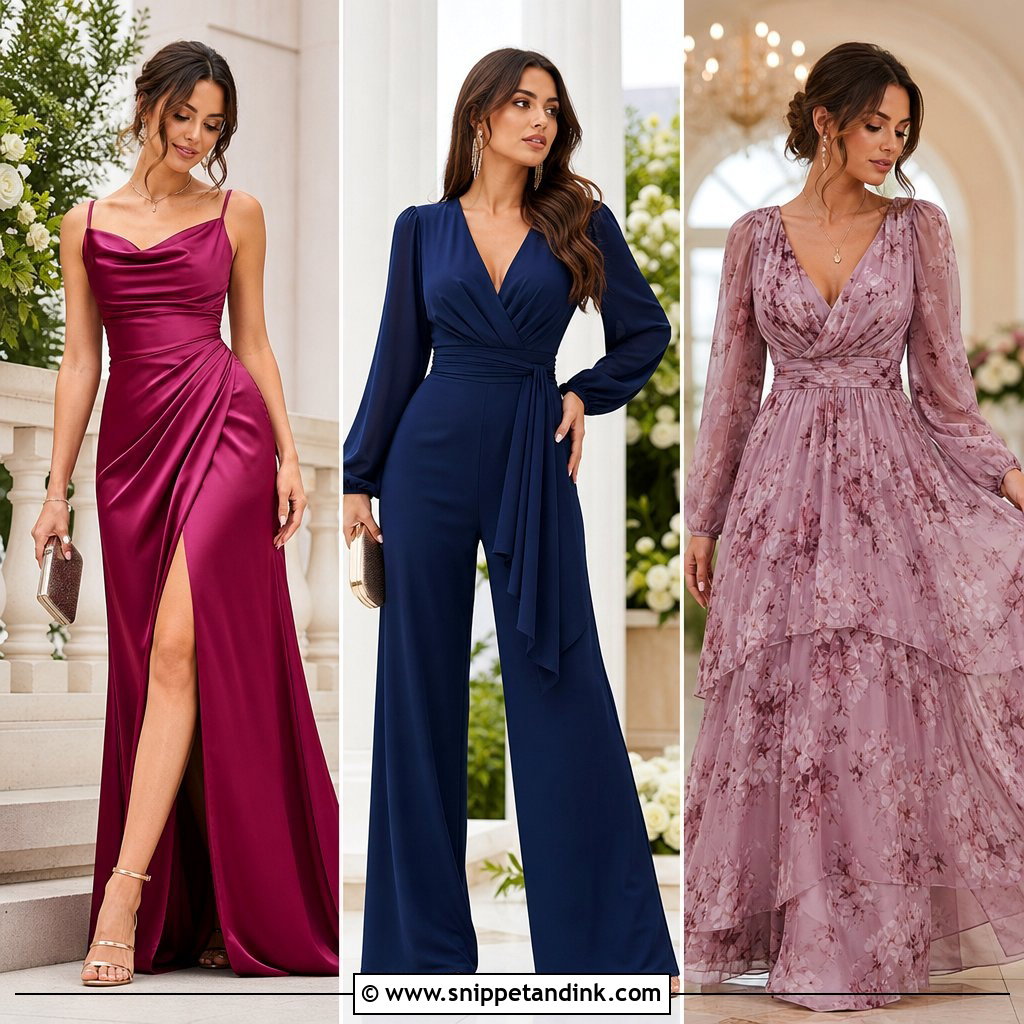
A reception gown is the easiest outfit of the whole wedding to get in and out of, which is why I often suggest it for brides with a tight changeover between ceremony and reception. Look for a floor-length cut with Indian embroidery, beadwork, cape sleeves or a short trail. Midnight blue, emerald, champagne, mauve and silver all hold up under warm evening lighting. If the neckline is worked, leave the necklace off and let drop earrings carry the jewellery. A trail looks wonderful in the entrance photo but gets stepped on in a receiving line, so ask for a bustle loop.
7. Cocktail Saree Gown Dress
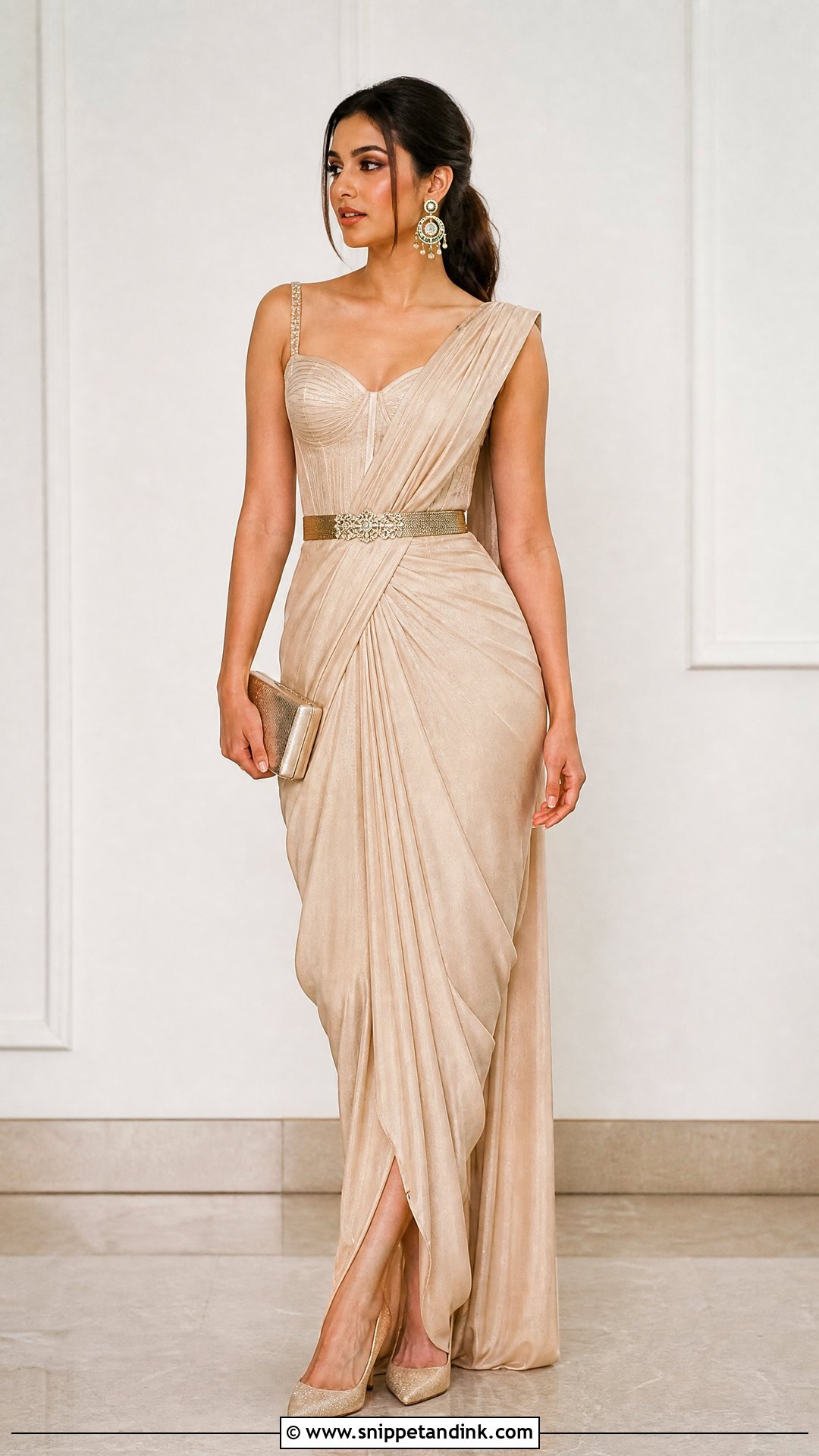
The cocktail saree gown gives you the drape of a saree with the ease of a zip. The pallu is attached and the pleats are stitched, so nothing shifts when you lean across a bar or sit on a high stool. Satin, crepe, jersey and georgette fall cleanly; satin shows every crease after sitting, so crepe is the safer choice if you’ll be seated for dinner. Emerald, ruby, silver, champagne and deep jewel tones suit an evening event. Pointed heels, a box clutch and statement earrings finish it, and a sleek bun keeps the line clean at the shoulder.
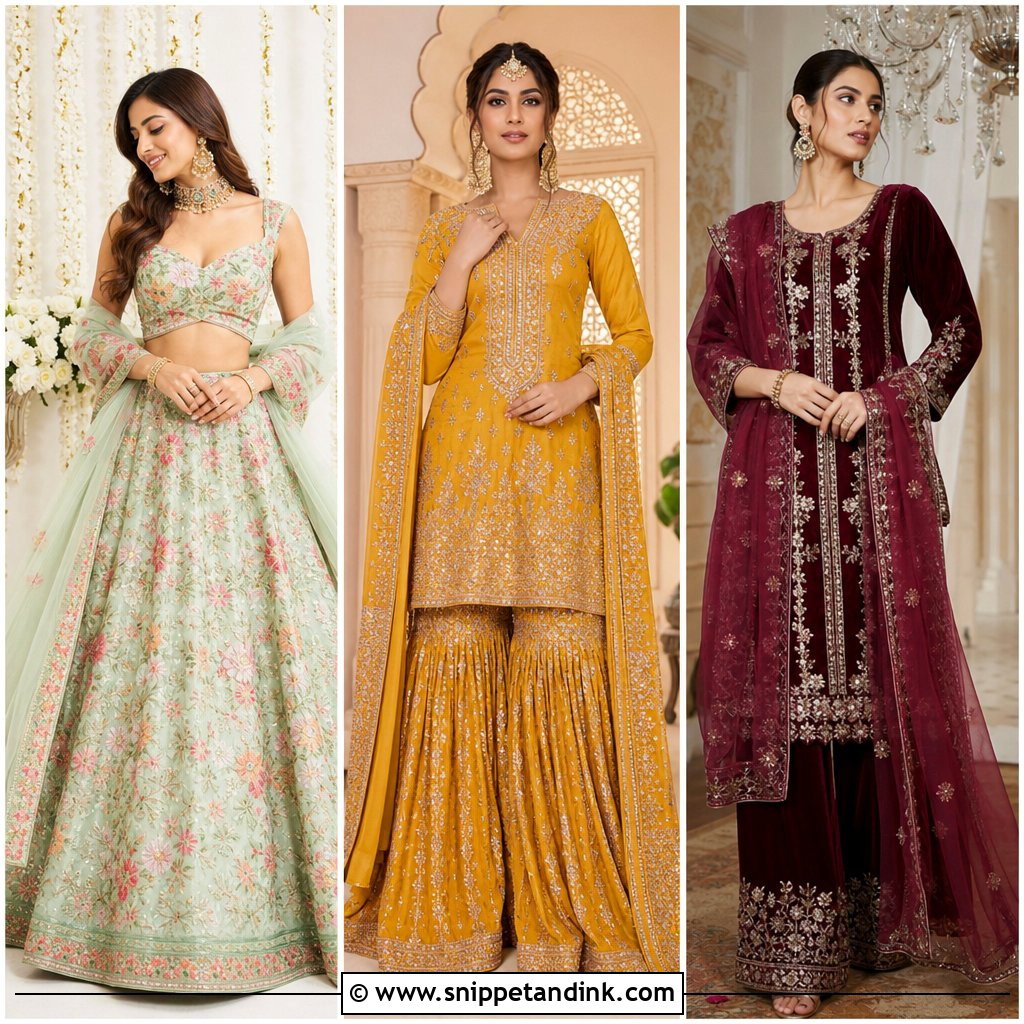
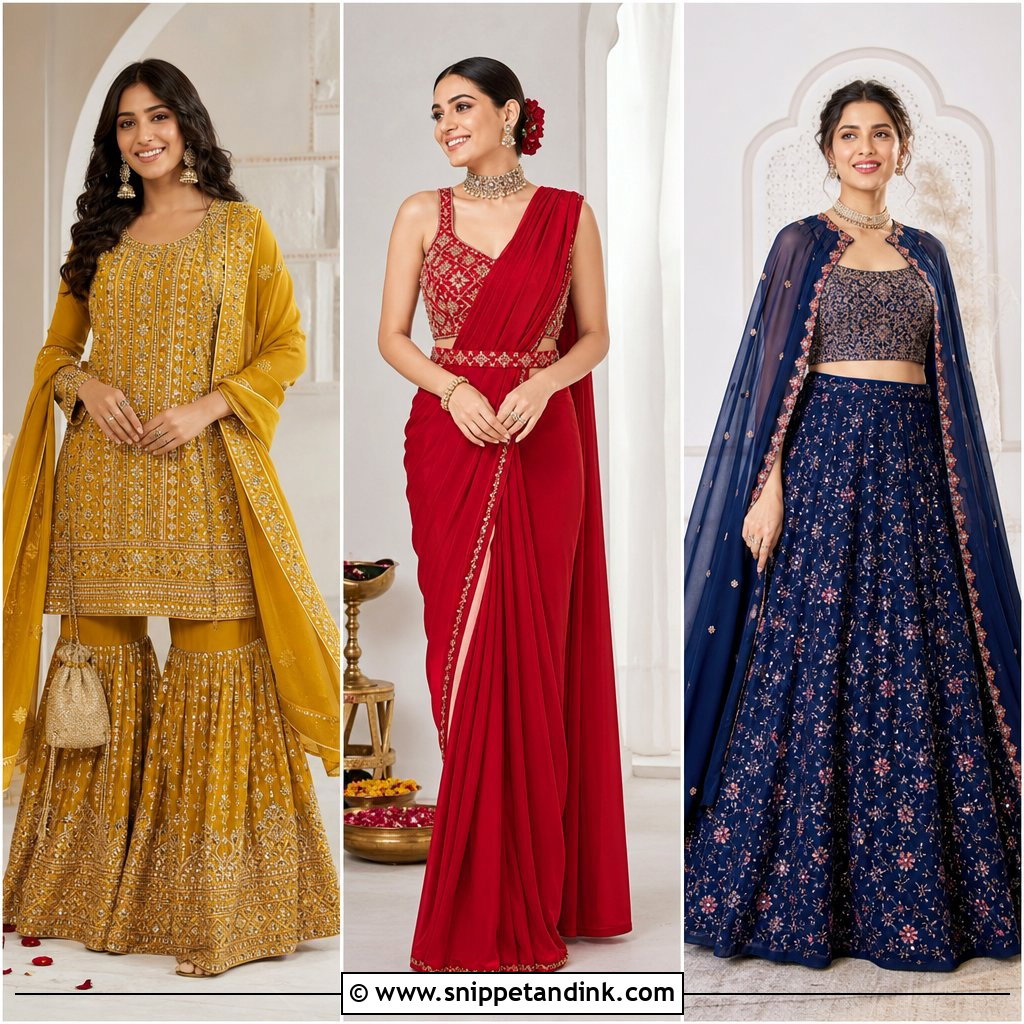
8. Sharara Suit Dress
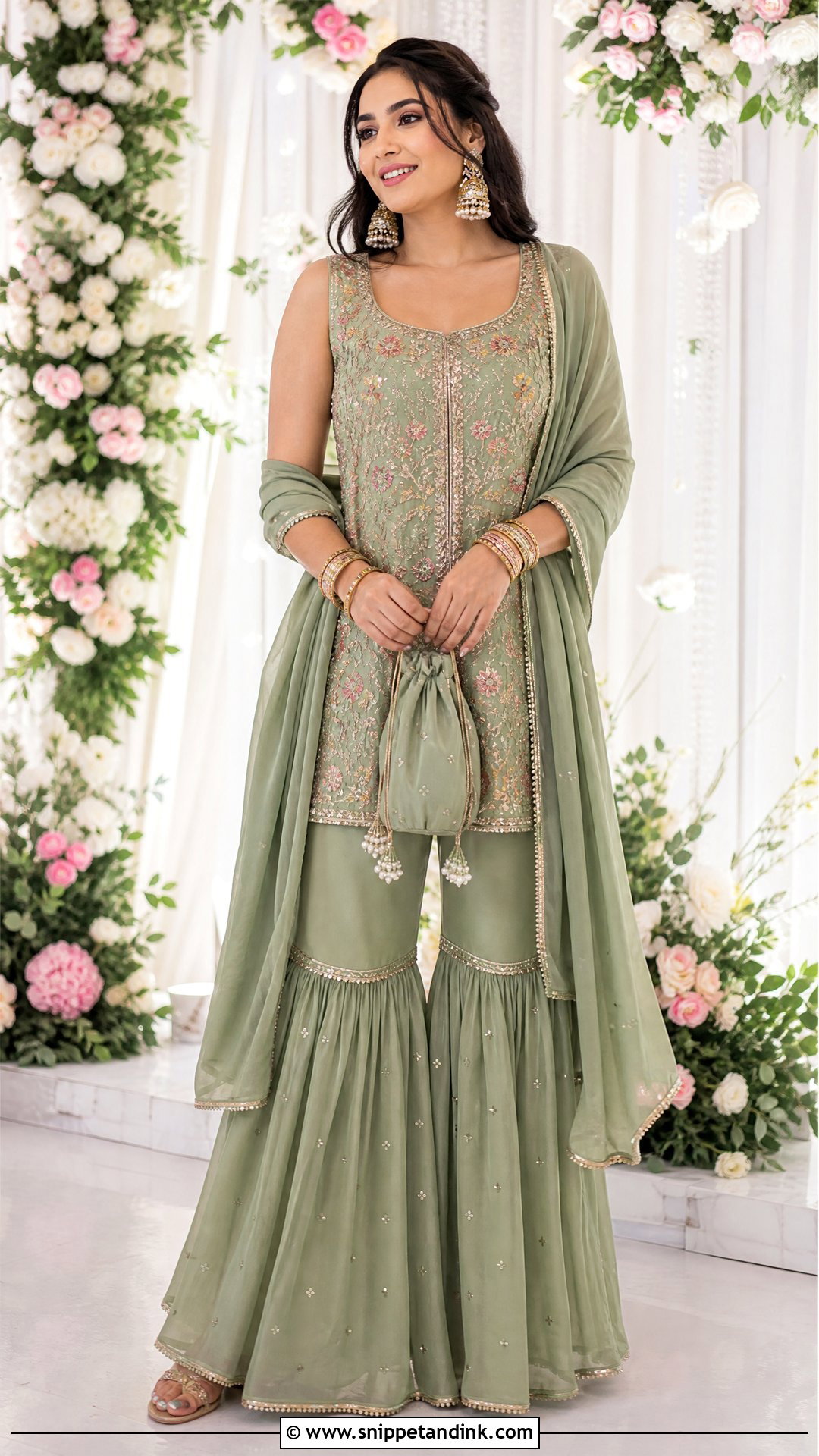
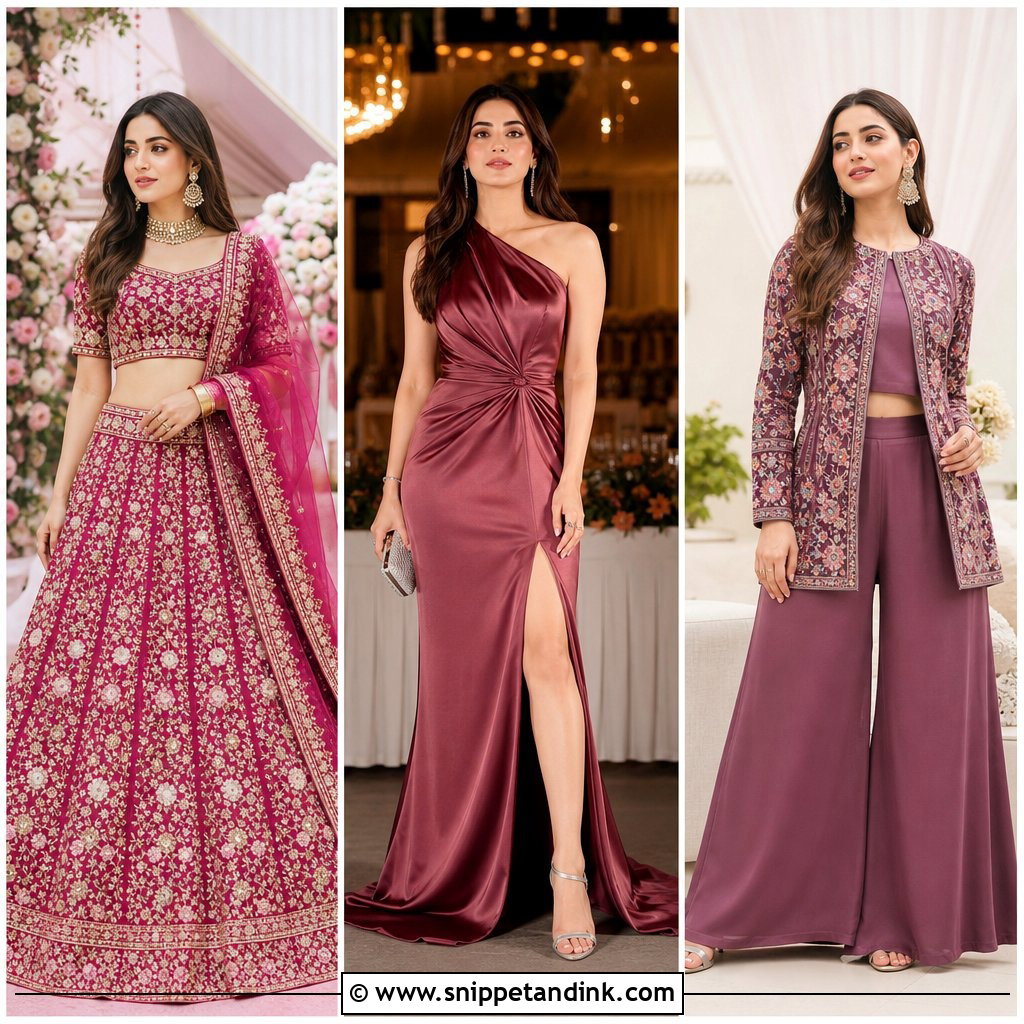
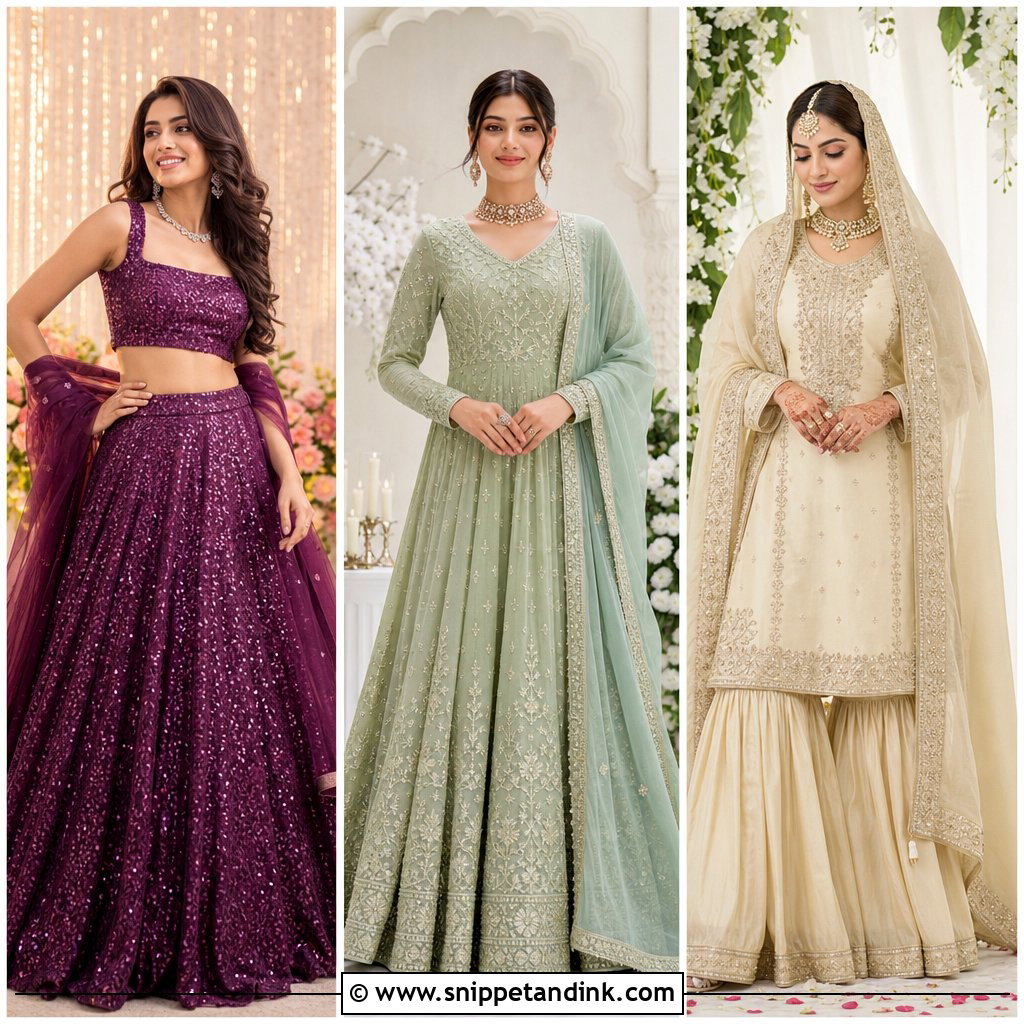
Shararas are my default recommendation for anyone who is anxious about tripping. The flared pants split at the knee, so you walk and climb stairs without lifting a skirt. Pair a short kurti with sharara pants in silk, georgette, chiffon or brocade; pastel pink, sage, ivory, mustard and royal blue suit most pre-wedding events. For a dressier function, zari borders, mirror work or pearl embroidery raise the level. Watch the kurti length in the fitting: if it falls below mid-thigh, the flare disappears and the outfit reads as a plain suit.
9. Gharara Set Dress
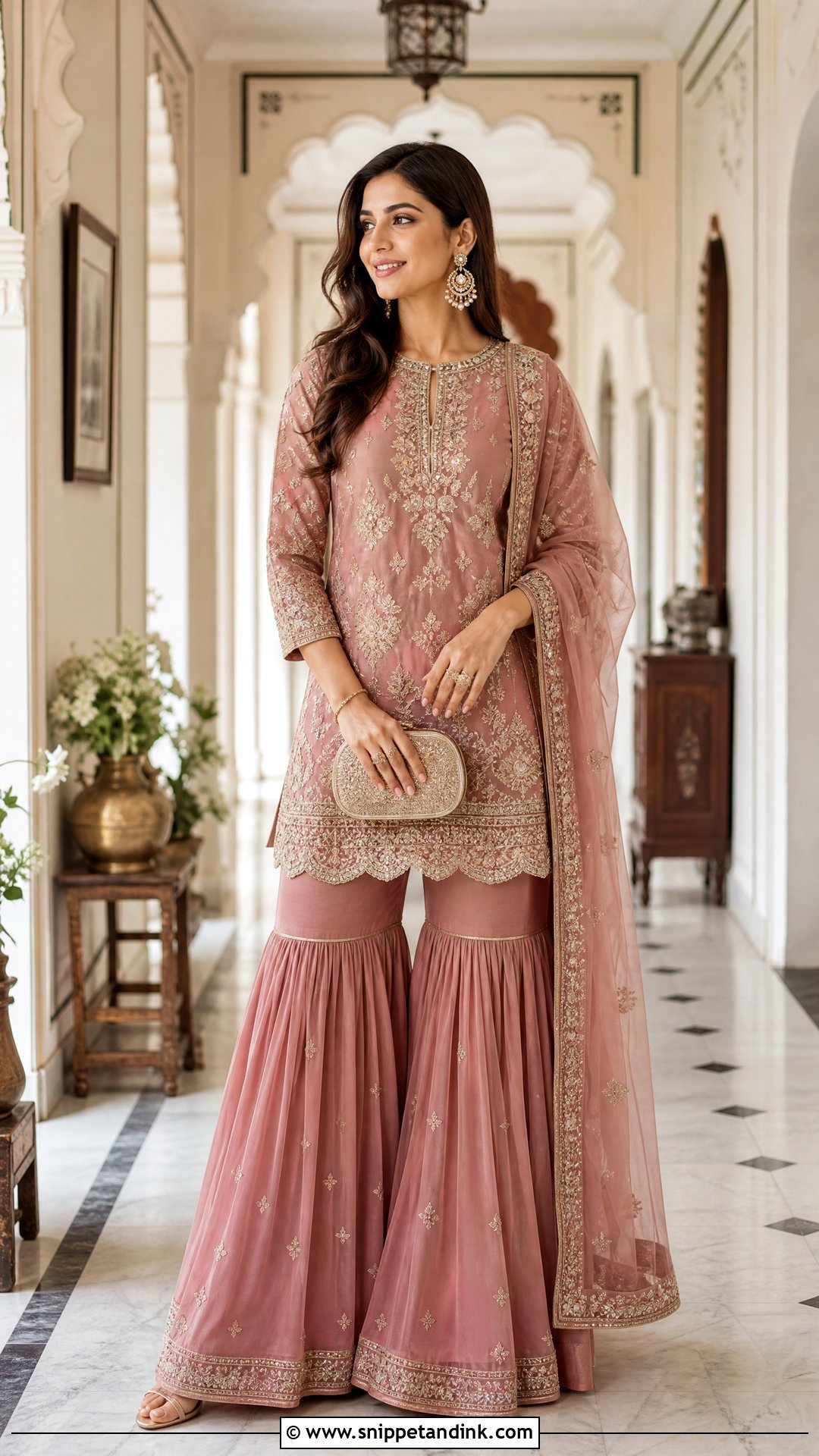
People confuse gharara and sharara constantly. A gharara is fitted through the thigh and joined at the knee by a gathered band, usually trimmed in gota, so the flare starts lower and swings more dramatically. That band is where the fit goes wrong; if it sits too high, the pants bunch when you sit. Silk, organza, brocade and chiffon give it richness without bulk, and soft gold, dusty rose, pistachio, ivory or plum suit its old-world feel. Embroidered juttis or low heels keep the hem at the right height, and a centre-parted bun with a passa accessory leans into the tradition.
10. Indo Western Dhoti Dress
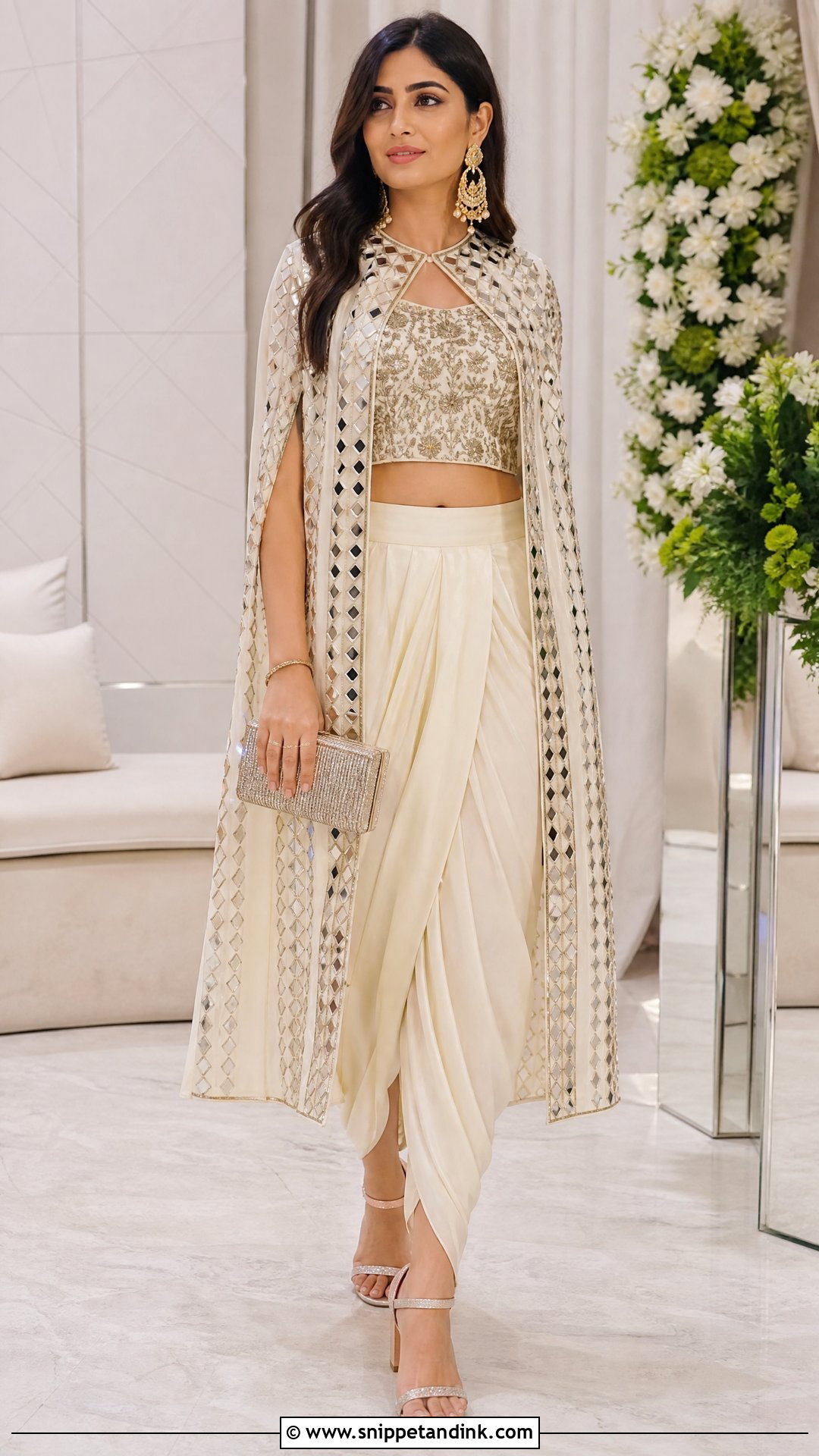
Dhoti drapes suit women who never feel at ease in a skirt. A draped dhoti skirt or dhoti pants with a crop top, peplum or cape jacket gives you full freedom of leg, which matters at a mehndi, a welcome party or an informal sangeet. Bright colour, mirror work, ikat prints and light embroidery dress it up for a wedding. Since the drape already moves, I’d usually drop the dupatta or swap it for a cape. An Indo Western dhoti dress does look casual next to a heavy lehenga, so check the dress code for the evening before you commit.
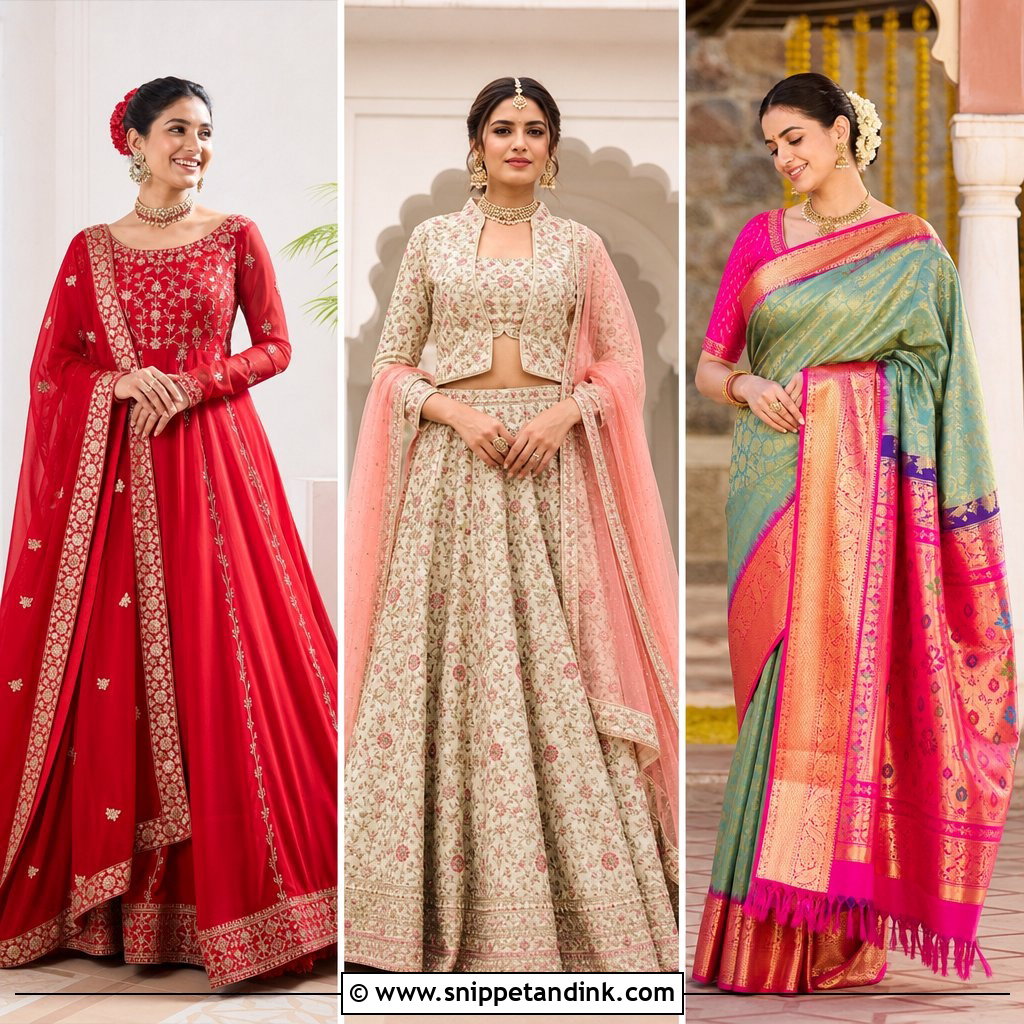
11. Cape Lehenga Dress
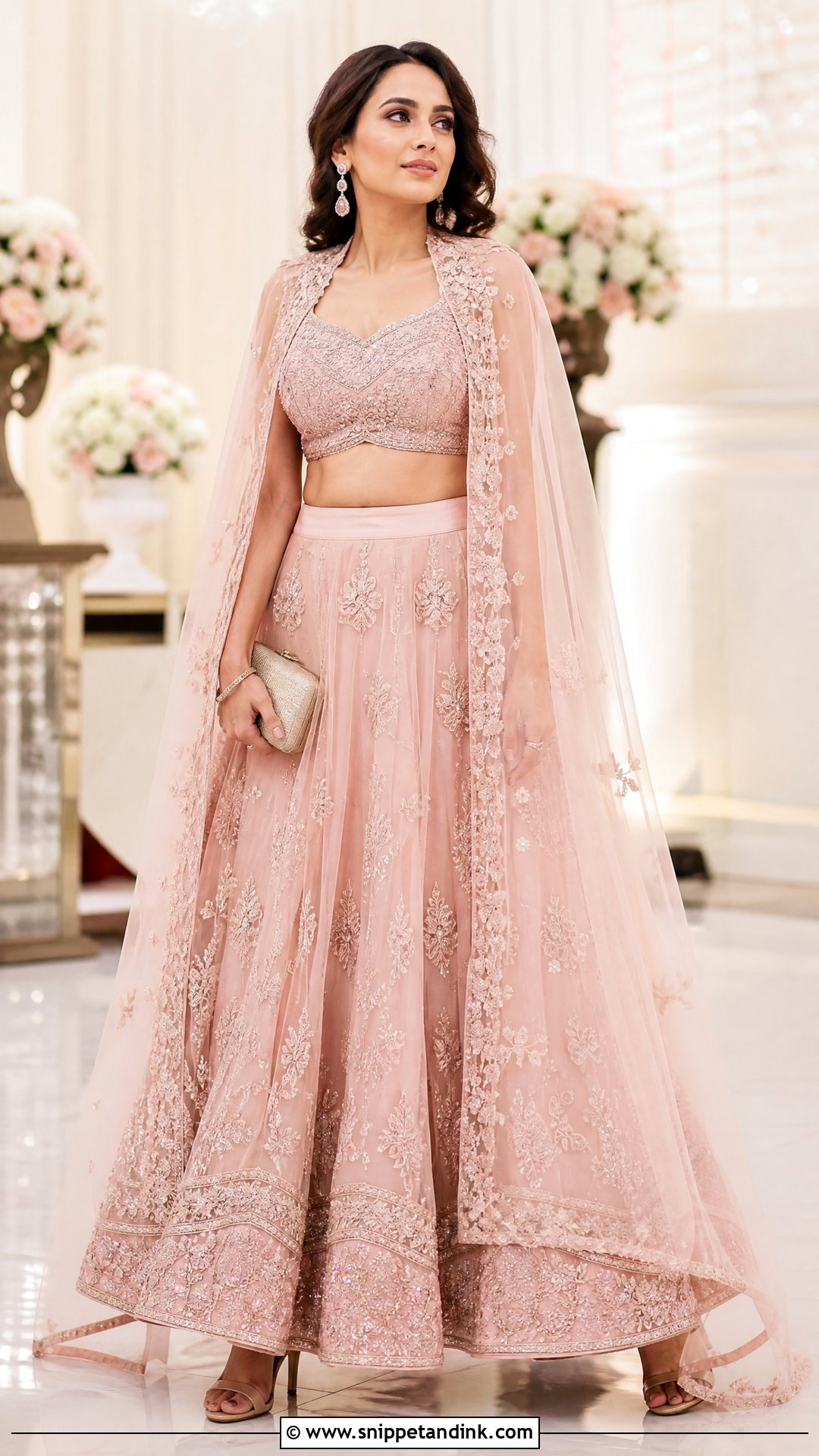
A cape replaces the dupatta, which is the whole point. You get coverage over the arms and back without a length of fabric sliding off your shoulder every time you reach for a plate. Choose a simple skirt, an embroidered blouse and a sheer cape in net, organza or chiffon; pastel blue, blush, silver, champagne and deep green are reliable. The cape should attach at the blouse shoulders with hooks or press studs, not just rest there, or it slides back when you dance. A cape lehenga dress also works well for bridesmaids who need to move fast.
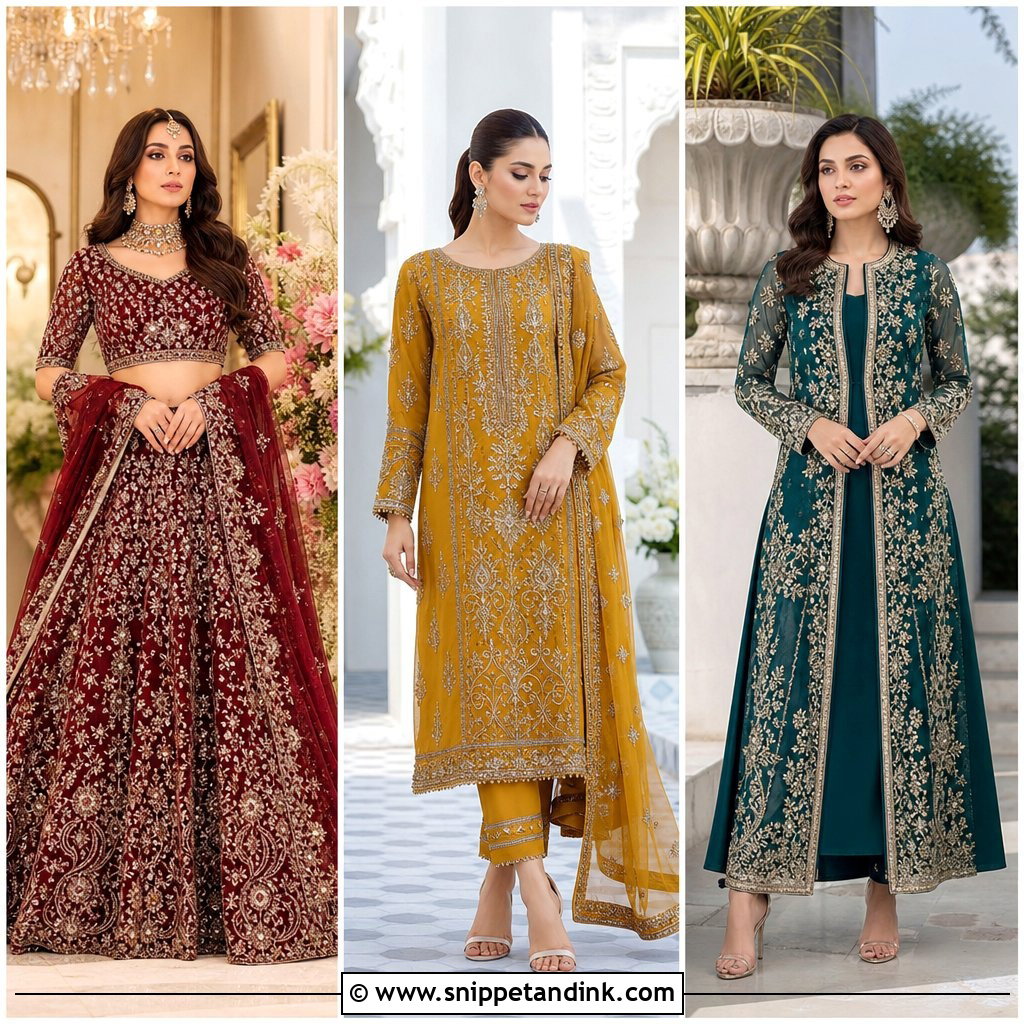
12. Jacket Lehenga Dress
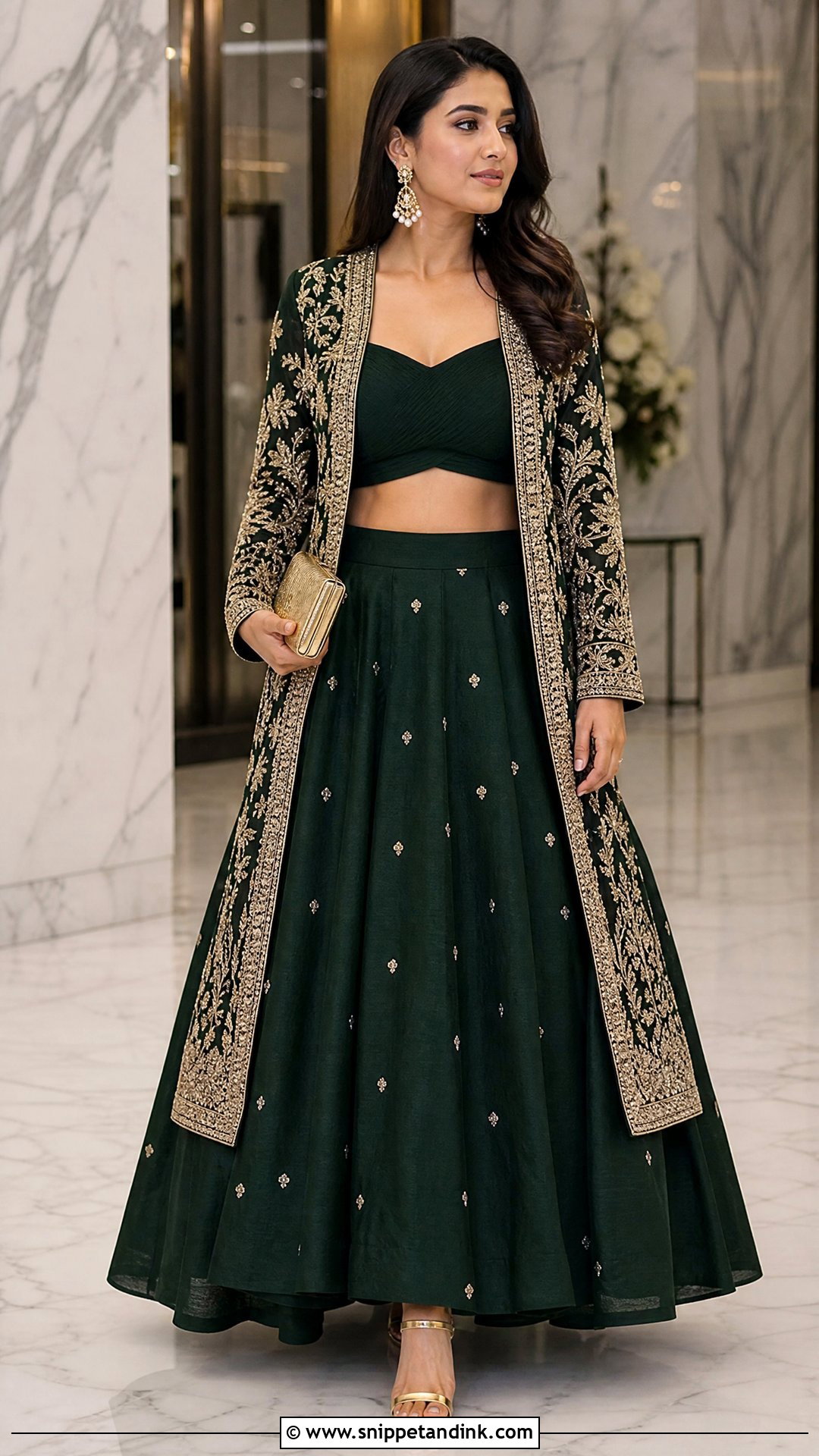
The jacket lehenga is the answer I give for winter weddings and outdoor evenings. A long embroidered jacket over a crop top, or a front-open jacket over a plain blouse, adds warmth and structure without a shawl hiding the outfit. Velvet, brocade, silk and georgette jackets all work; velvet is warmest and heaviest. Check that the jacket sleeves allow you to raise your arms, since many are cut narrow. If the jacket is heavily worked, keep the jewellery small. The long line reads well in full-length portraits.
13. Banarasi Saree Dress
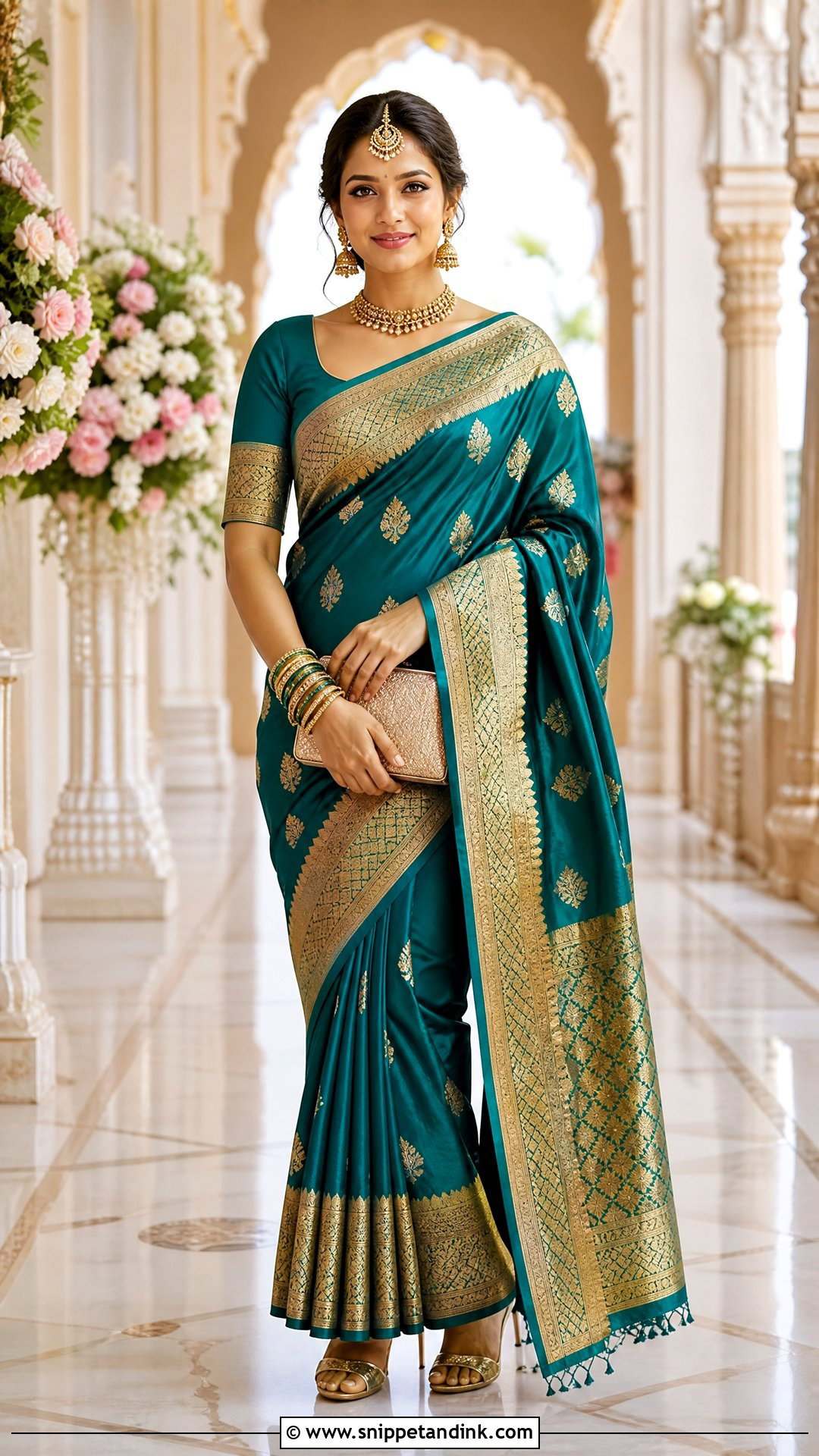
Banarasi silk is woven, not embroidered, which means the pattern runs through the fabric and won’t snag the way surface work can. That makes it tougher than it looks. Choose jewel tones, pastels or a gold border depending on the function, and update it with an elbow-sleeve, boat-neck or deep-back blouse. Because the weave already has texture, I keep accessories to a gold set, a clutch and a small bindi if that suits you. For ceremonies and rituals, a neat bun with flowers is classic, though soft waves are fine too.
14. Kanjeevaram Saree Dress
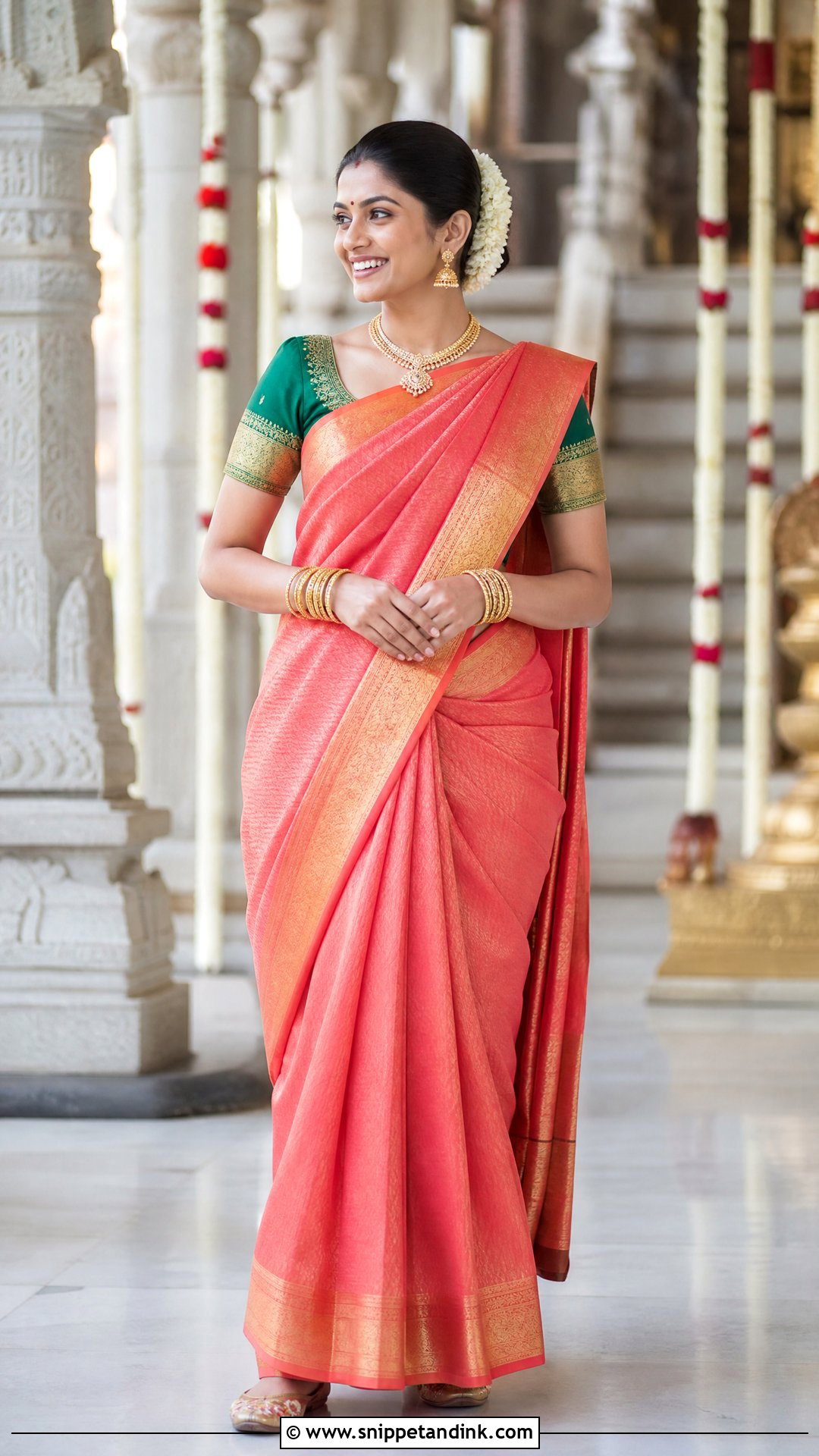
A pure Kanjeevaram is heavy silk, often well over a kilo with its zari border, and it behaves very differently from a georgette saree. It holds pleats firmly but slips at the shoulder if the pallu isn’t pinned to the blouse. I use at least three safety pins on these: pallu at the shoulder, pleats at the waist and a hidden one at the hip. Coral, emerald, mustard, royal blue and soft gold suit the temple motifs. A contrasting blouse, gold jewellery, bangles and a low bun with flowers complete it for a morning ceremony. Wear comfortable flats under it; you’ll be on your feet through the rituals.
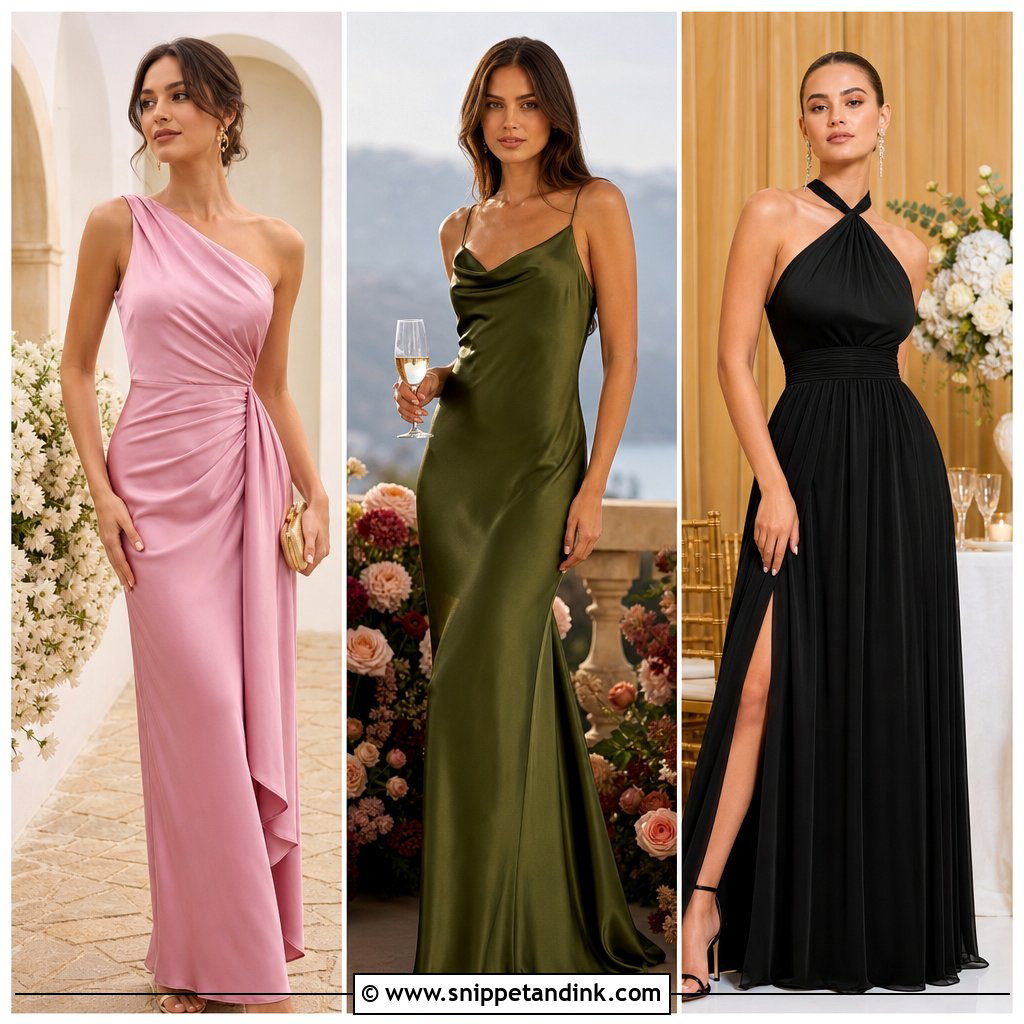
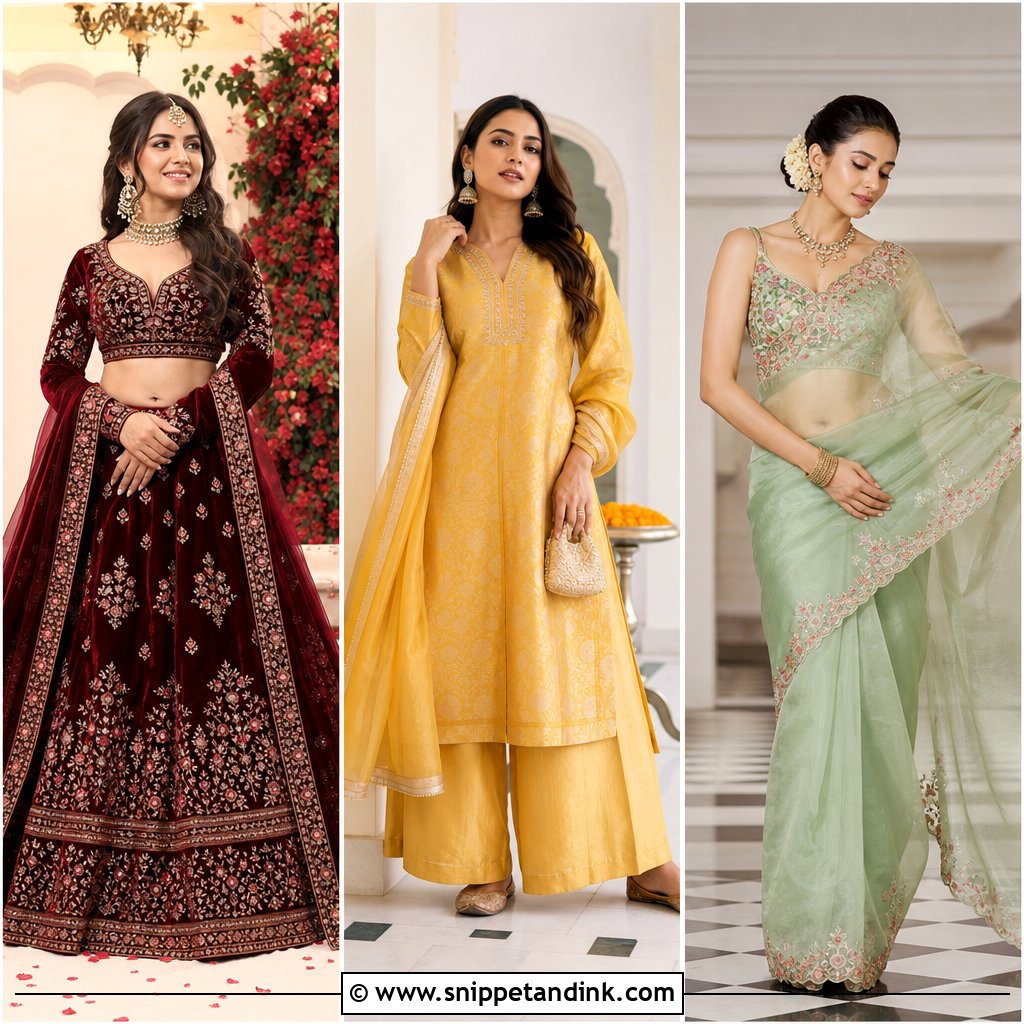
15. Organza Saree Dress
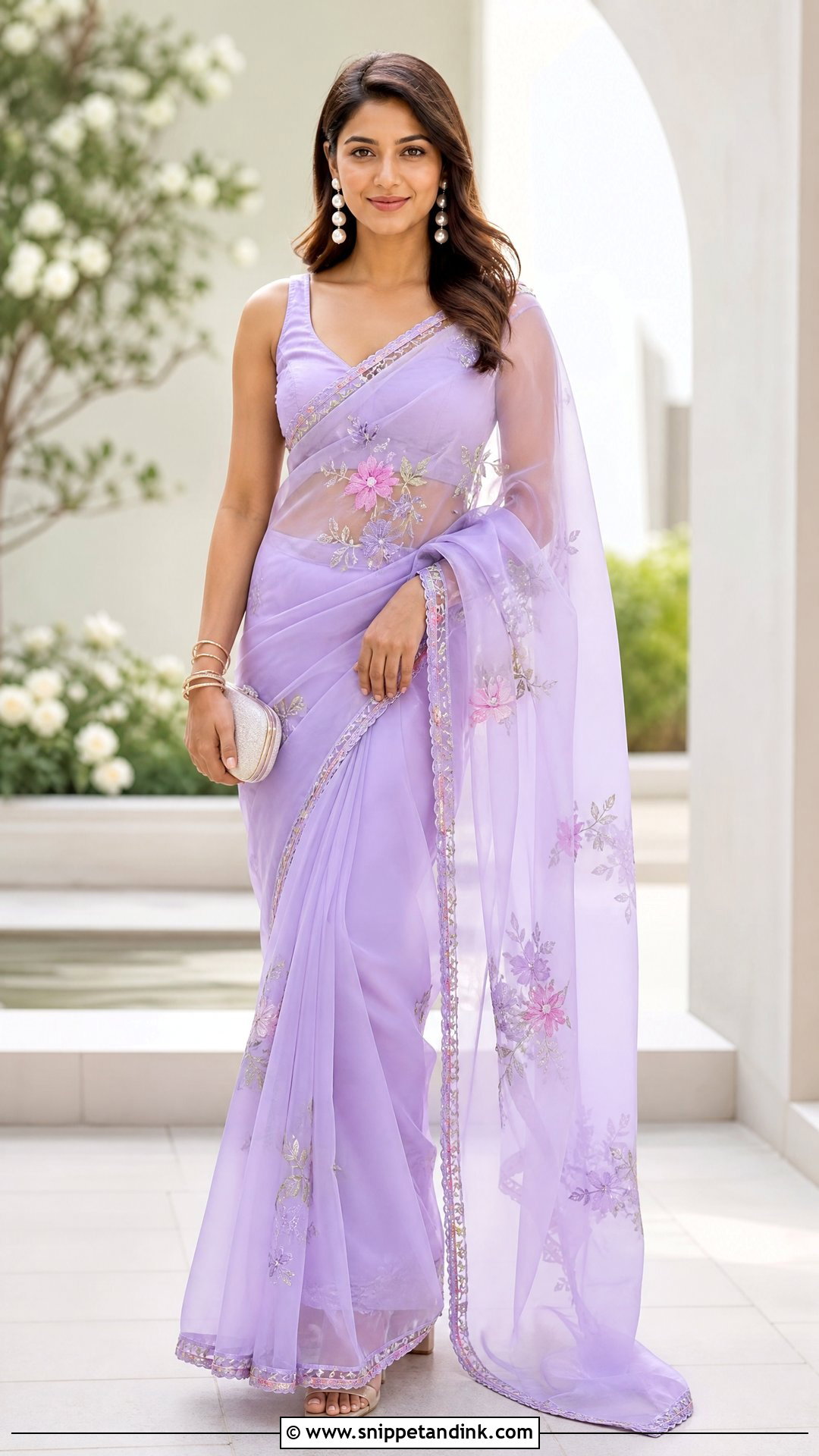
Organza has a crisp body that holds its shape around you instead of clinging, which makes it ideal for daytime functions. It’s also slightly sheer, so the petticoat and blouse lining need to be neat and colour-matched; I always check this against daylight from a window, not a fitting-room bulb. Floral prints, pastel embroidery, pearl borders and light sequins all suit it. It creases sharply if crushed, so don’t sit on the pleats in the car. Wear it to engagements, mehndi brunches and family lunches with fine earrings and thin bangles.
16. Pre Draped Saree Dress
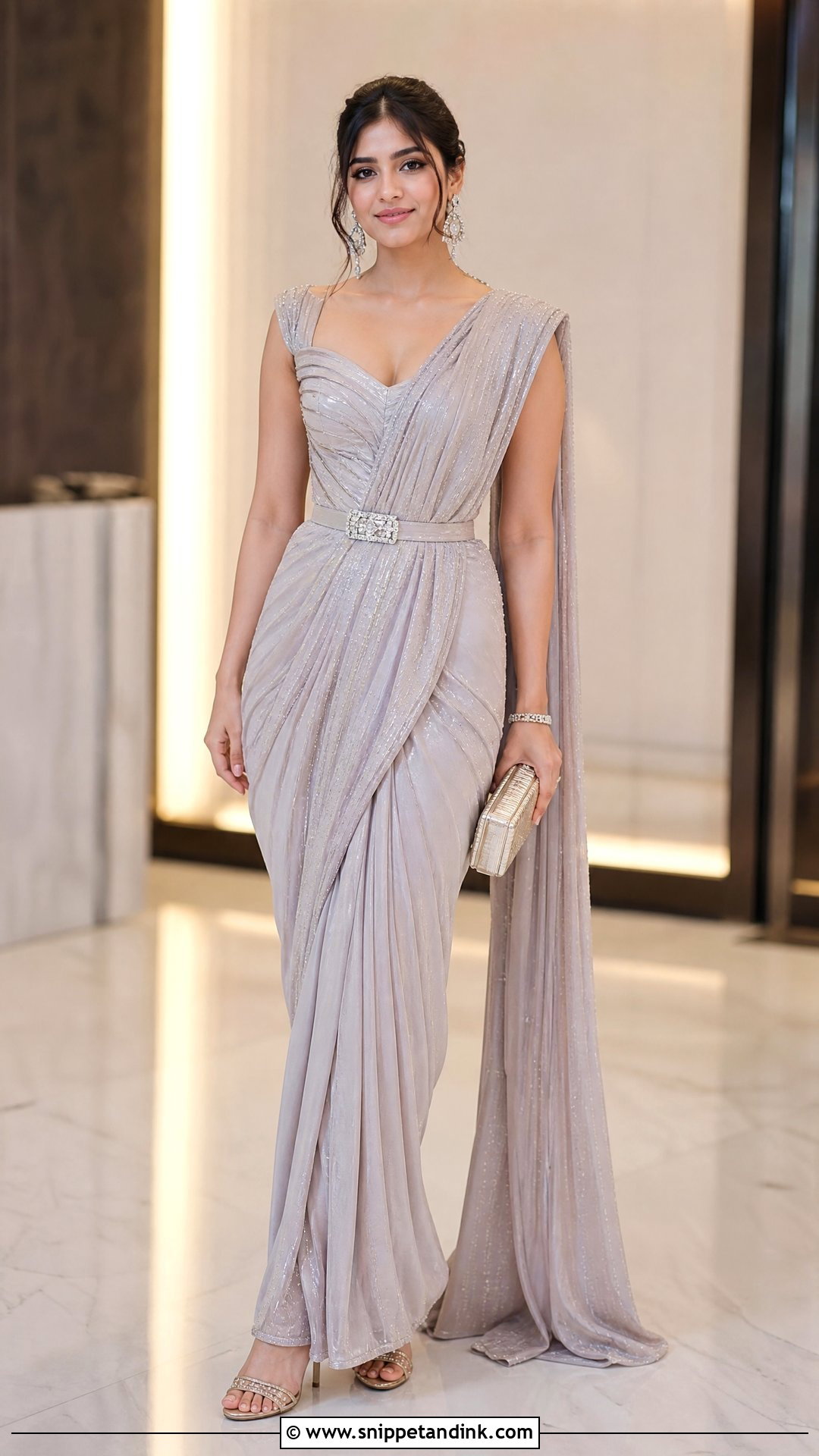
Pre-draped sarees solve the biggest saree problem: pleats that drift apart by the third hour. The garment arrives stitched or semi-stitched, so the pleats and pallu stay where they were set. Georgette, crepe, satin and jersey fall smoothly. Order your usual size, then have the waist taken in at the fitting; a loose waistband makes the pleats twist. A pre draped saree dress is also my first suggestion for destination weddings, since there may be no one on site who drapes sarees well.
17. Floral Lehenga Dress
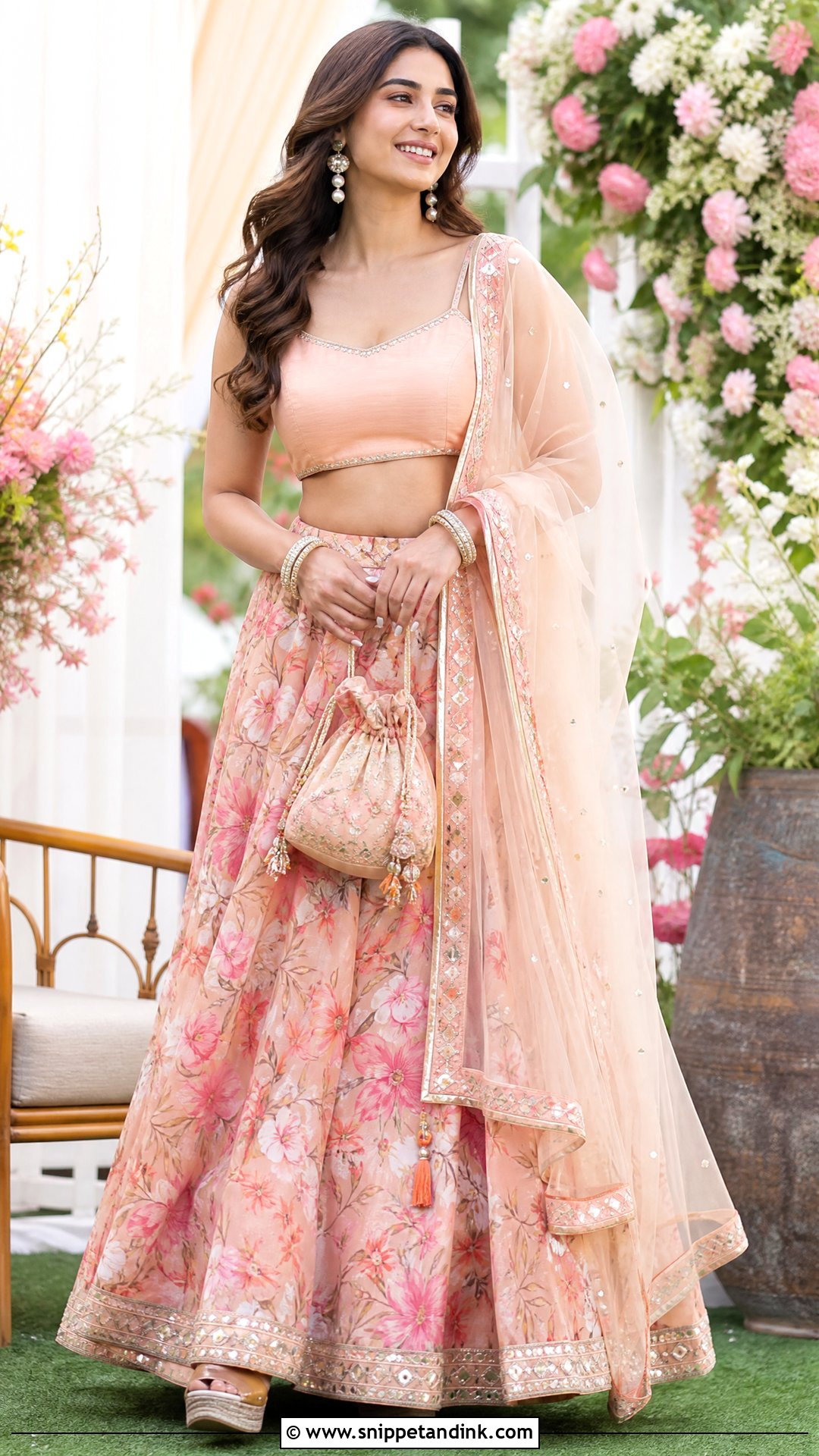
Floral lehengas belong to daylight. Printed silk, organza, georgette or cotton silk in soft pink, mint, ivory, lavender, peach or powder blue look fresh at a garden function or mehndi, but those same shades can look washed out under yellow evening light. Keep the blouse simple so the print carries the outfit, and add pearl earrings, bangles and wedges or juttis. On grass, wedges sink less than heels. Loose waves, a braid or floral pins finish the look.
18. Pastel Bridal Lehenga Dress
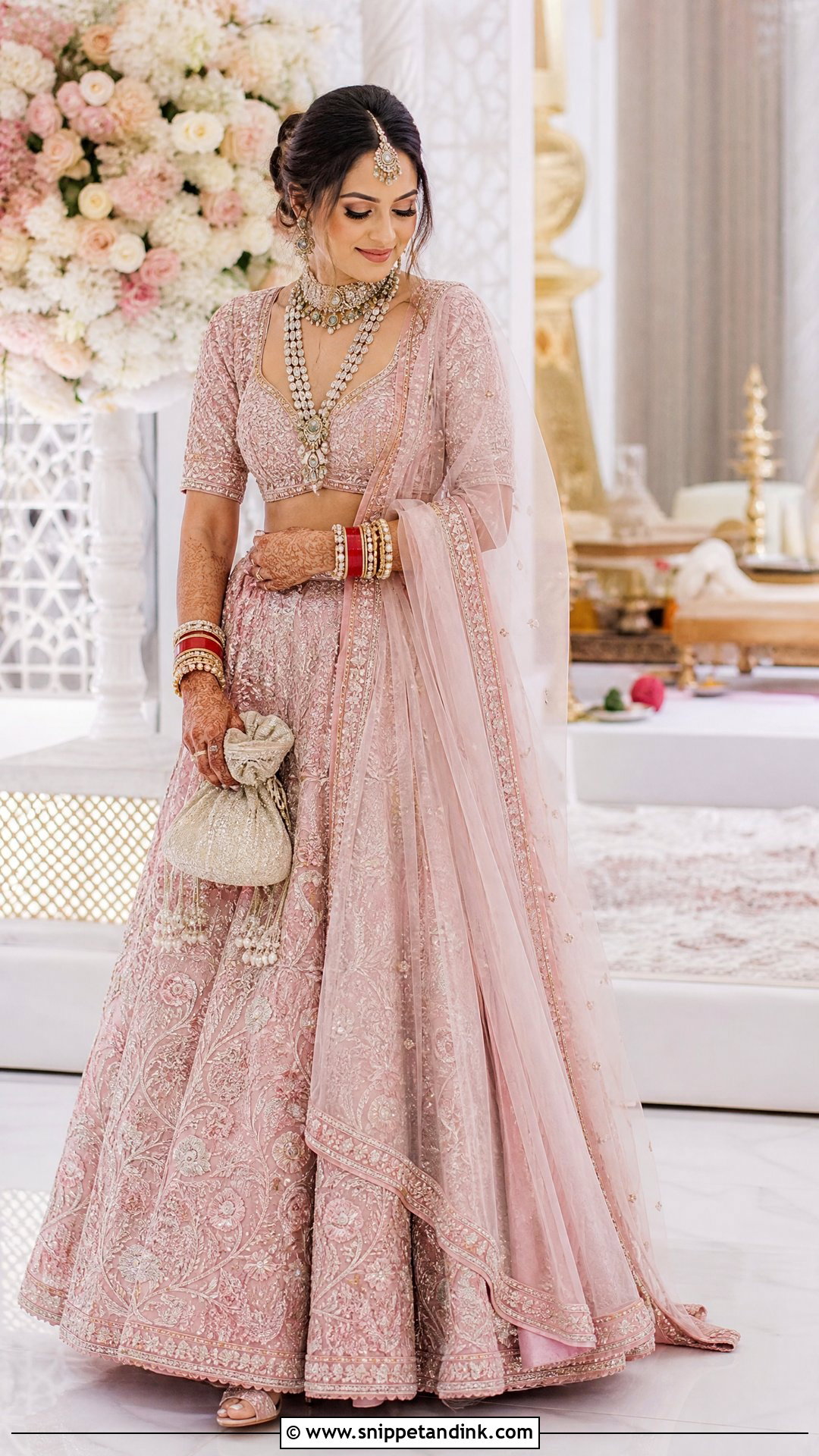
Pastel bridal lehengas are lovely in person and difficult on camera if your makeup is too soft. Blush, ivory, champagne, powder blue, sage, peach and lilac all sit close to skin tone, so a bride can disappear into her outfit in photos. I tell brides to ask their makeup artist for slightly more definition at the eyes and lip than they’d choose for a red lehenga. Fine embroidery, pearls, sequins and tone-on-tone work look refined. For the ceremony itself, a second dupatta over the head adds a traditional layer without changing the outfit.
19. Red Bridal Lehenga Dress
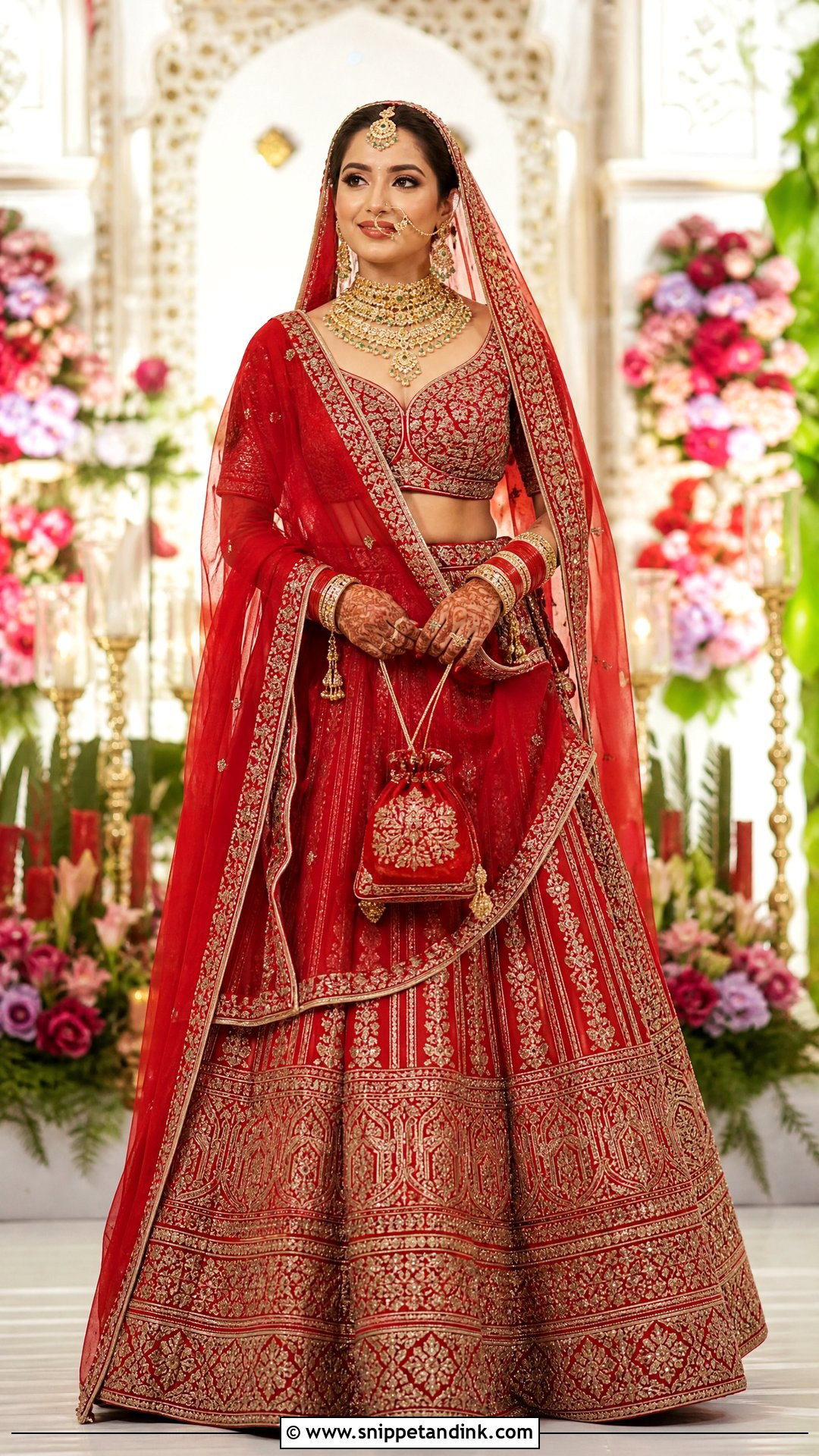
Red stays the most requested bridal colour in many communities, and it carries meaning a pastel can’t. Red, maroon, ruby and crimson lehengas with zari, zardozi, thread work or fine sequins can easily weigh several kilos once the embroidery is dense. That weight sits on the hips, so I ask brides to wear the skirt for a full hour at the final fitting and to walk stairs in it. If it’s very heavy, choose lighter neck jewellery and a softer dupatta fabric to reduce the load. The blouse has to be secure enough for the pheras without constant adjusting.

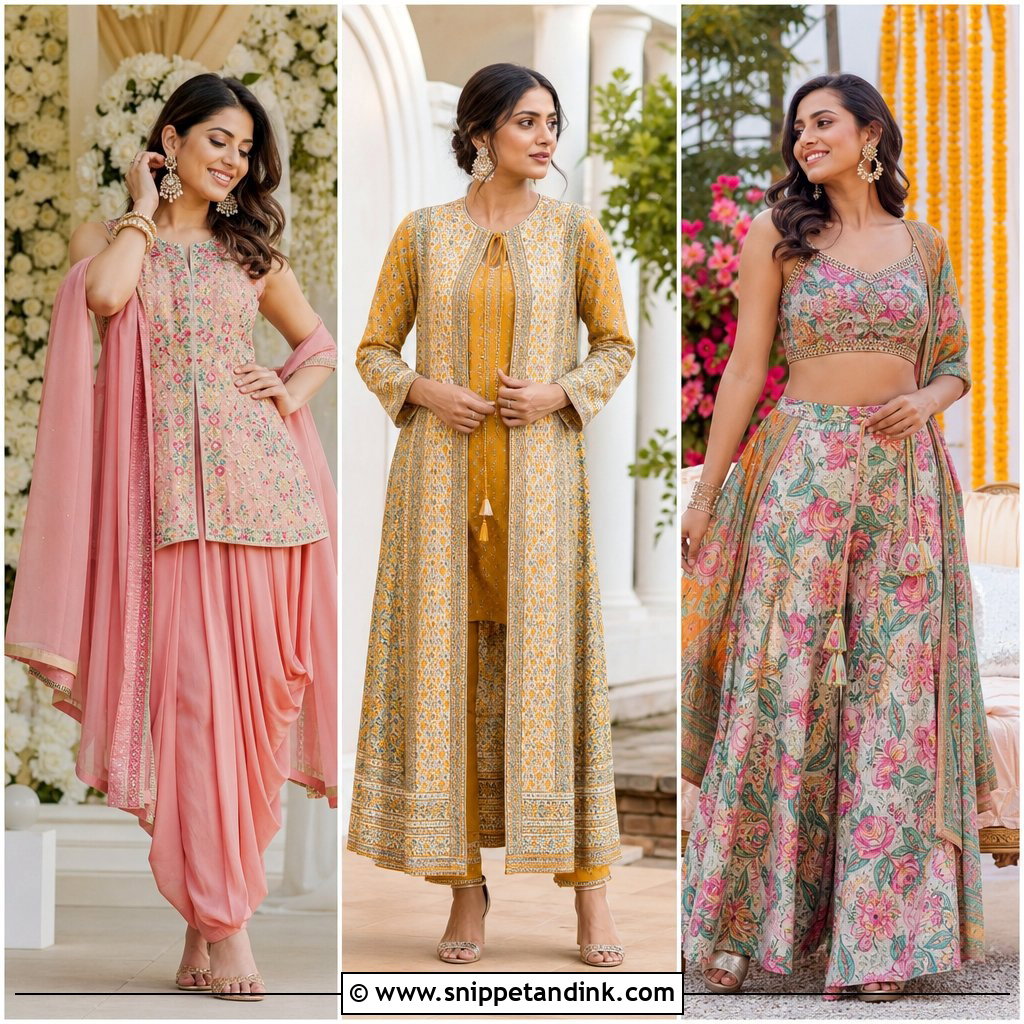
20. Bridesmaid Lehenga Dress
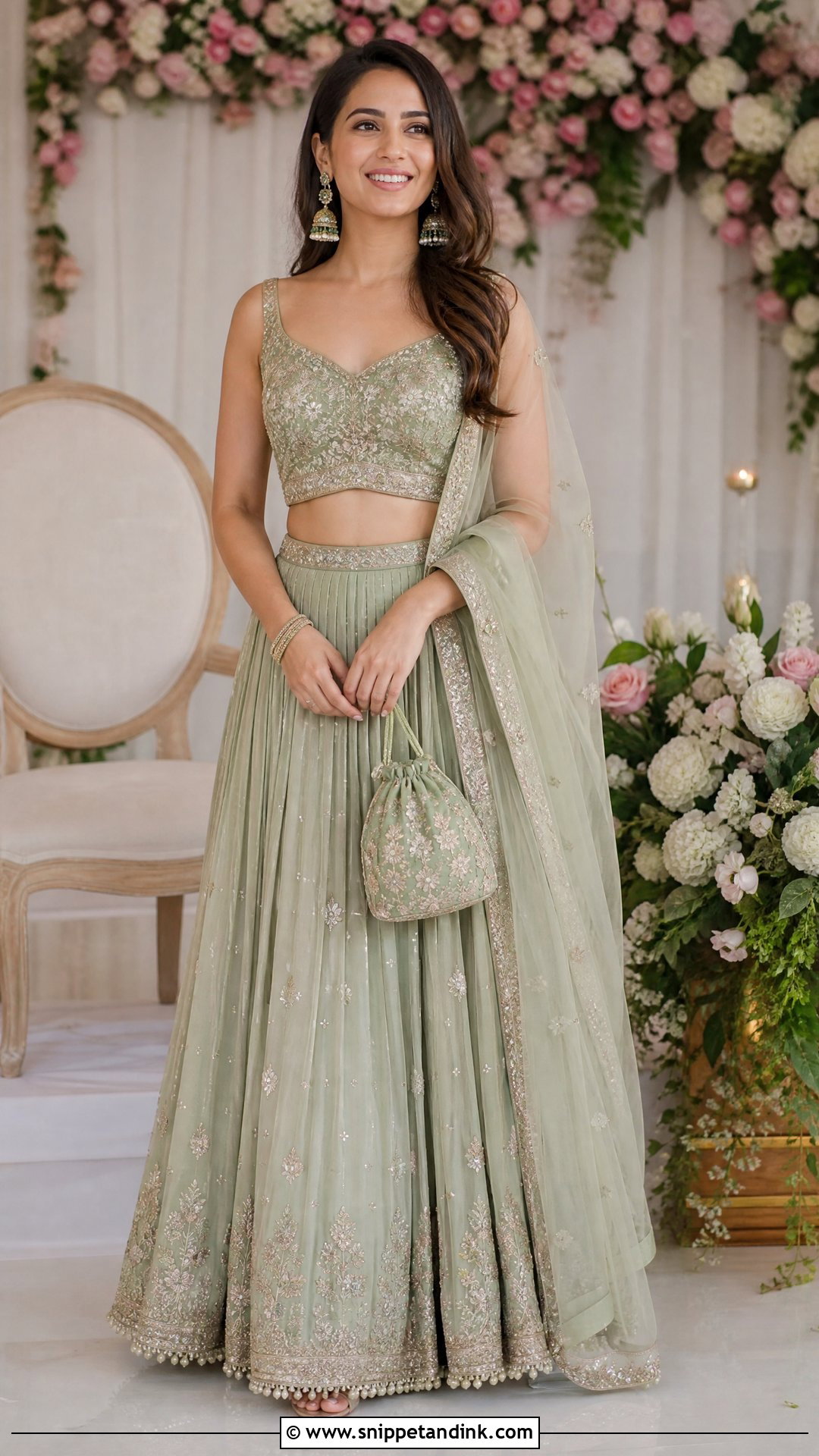
Bridesmaid outfits need coordination, not uniformity. Agree on a palette or a fabric family and let each person pick a cut that suits her body, rather than buying six identical lehengas that fit two people well. Soft pastels, earthy tones, jewel shades and muted metallics all photograph well in a row. Keep embroidery lighter than the bride’s, and choose fabrics everyone can move in since bridesmaids run errands all day. Matching earrings or a shared hairstyle tie the group together in photos without asking everyone to dress the same.
21. Punjabi Suit Dress
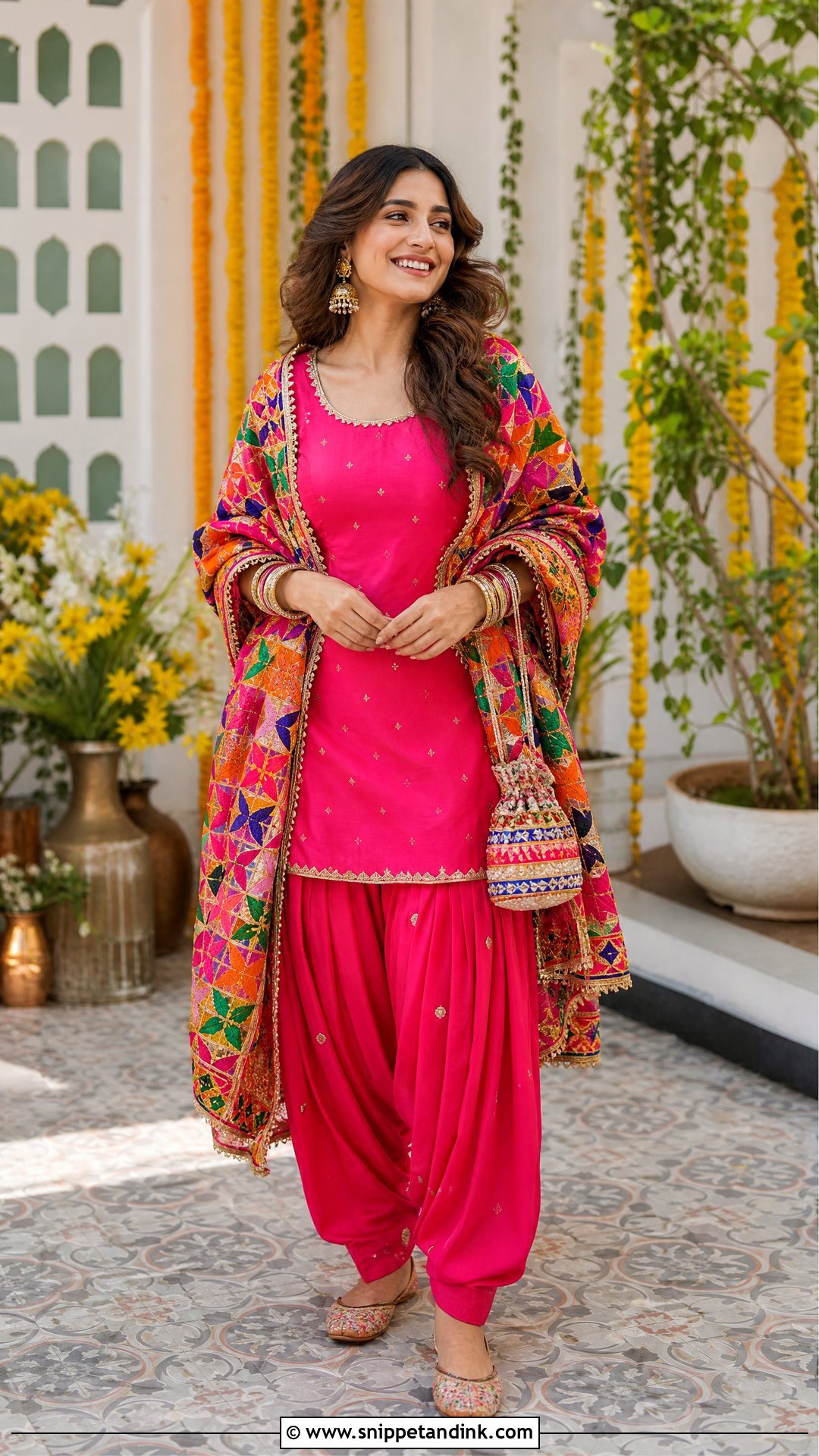
Punjabi suits are built for movement, which is why they turn up at the jaggo and every function where the dancing starts early. A straight kurta or short kurti with salwar, patiala pants or tapered trousers gives you full freedom. Phulkari dupattas, gota borders, mirror work and thread embroidery bring the festivity, and hot pink, mustard, green, orange, blue and cream suit the energy. Patiala pants use a lot of fabric in the pleats, so if you’re petite ask for a slimmer cut. Juttis, jhumkas, bangles and a Punjabi suit dress make an easy guest look for mehndi, haldi and family rituals.
22. Kurta Palazzo Dress
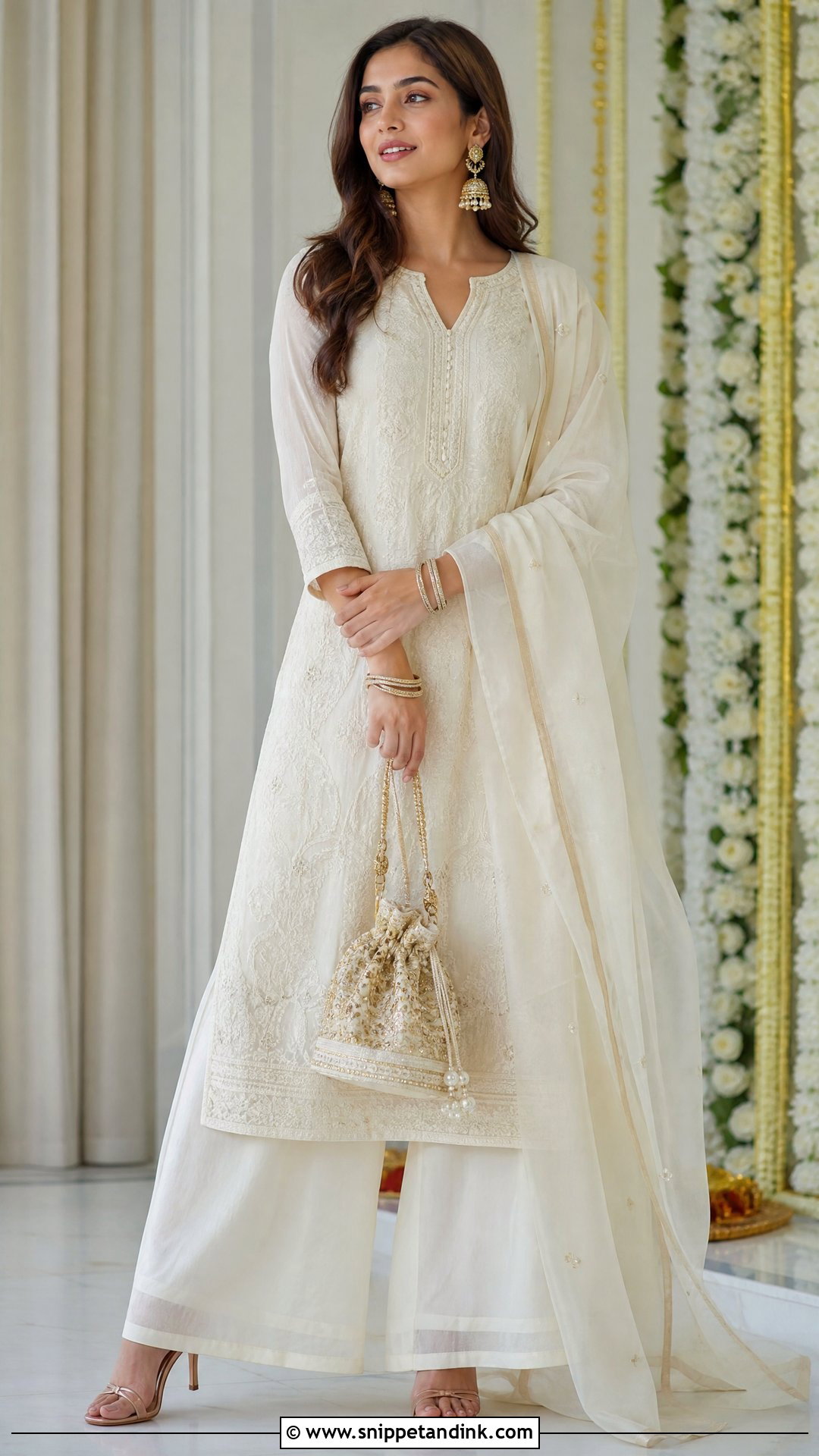
When a wedding involves flights, hotel changes and early starts, I put at least one kurta palazzo set in the suitcase. It packs small, takes wrinkles well in chanderi and silk blends, and works for a morning ritual or an informal family lunch. Choose a long embroidered kurta with wide-leg palazzo pants and a light dupatta; soft colours for daytime and deeper ones for evening. The long kurta and flowing pants suit most body types because they skim rather than cling. A side braid or neat bun keeps it tidy.
23. Velvet Lehenga Dress
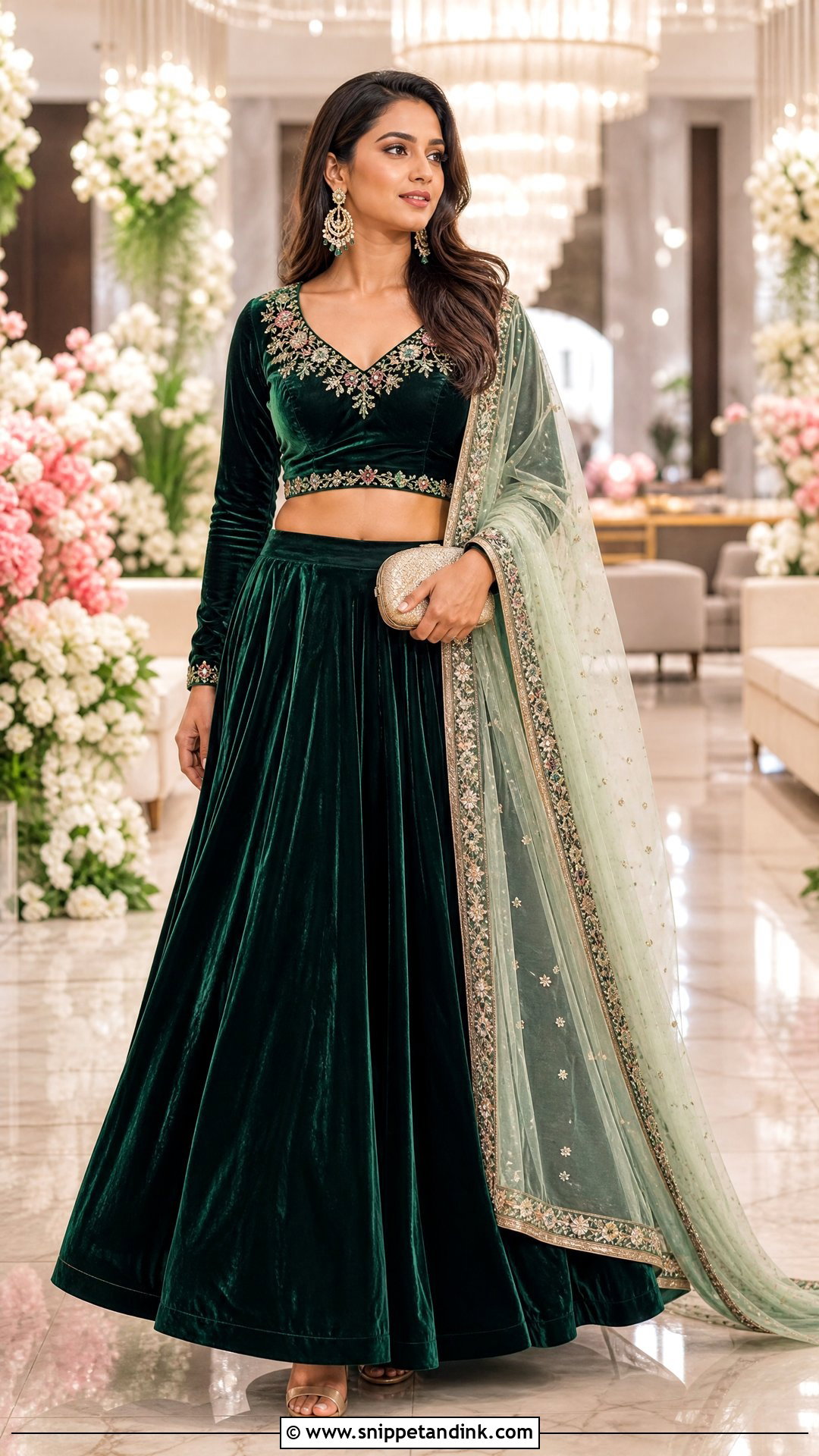
Velvet is a cold-weather fabric. In a heated hall in summer you’ll be miserable within twenty minutes, so I only suggest it for winter weddings or evening events outdoors in cooler months. It deepens jewel tones beautifully: emerald, navy, deep purple, maroon and chocolate brown. Velvet has almost no stretch and shows pressure marks where you sit, so leave a little ease at the waist and blouse. Pair a velvet skirt with an embroidered blouse and a lighter dupatta to avoid head-to-toe heaviness.
24. Chikankari Lehenga Dress
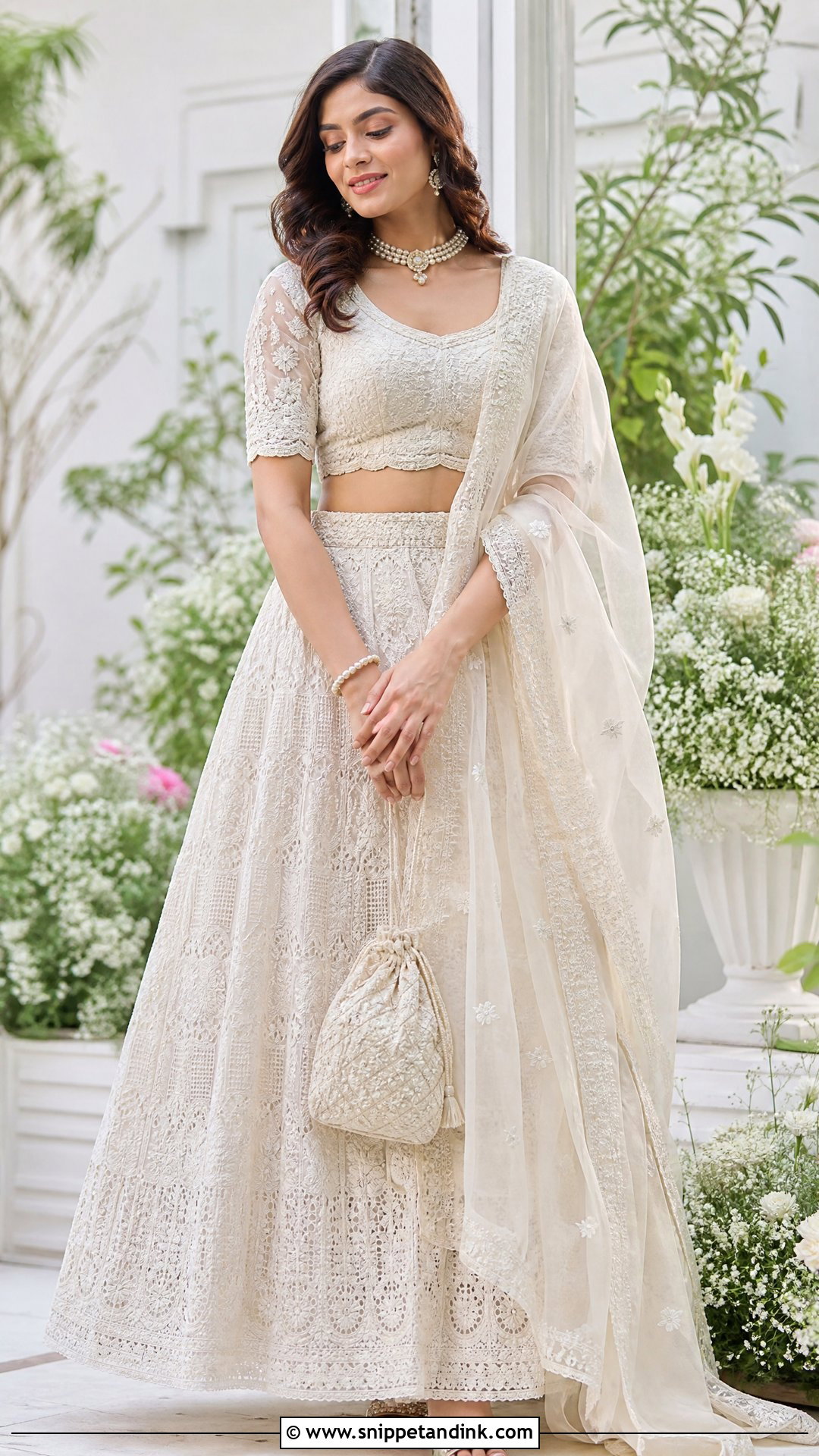
Chikankari is hand embroidery on fine cloth, and its appeal is in texture rather than shine. Ivory, blush, sage, powder blue, lavender and soft yellow show off the stitch shadows best. Georgette, organza and cotton silk all carry it; cotton is cooler for summer daytime events. Because the stitches are delicate, hook earrings and bracelets snag easily, so I’d pair it with pearl studs and smooth bangles. Flats or modest heels, a potli bag and soft makeup keep the outfit quiet in the way it’s meant to be.
25. Ruffle Saree Dress
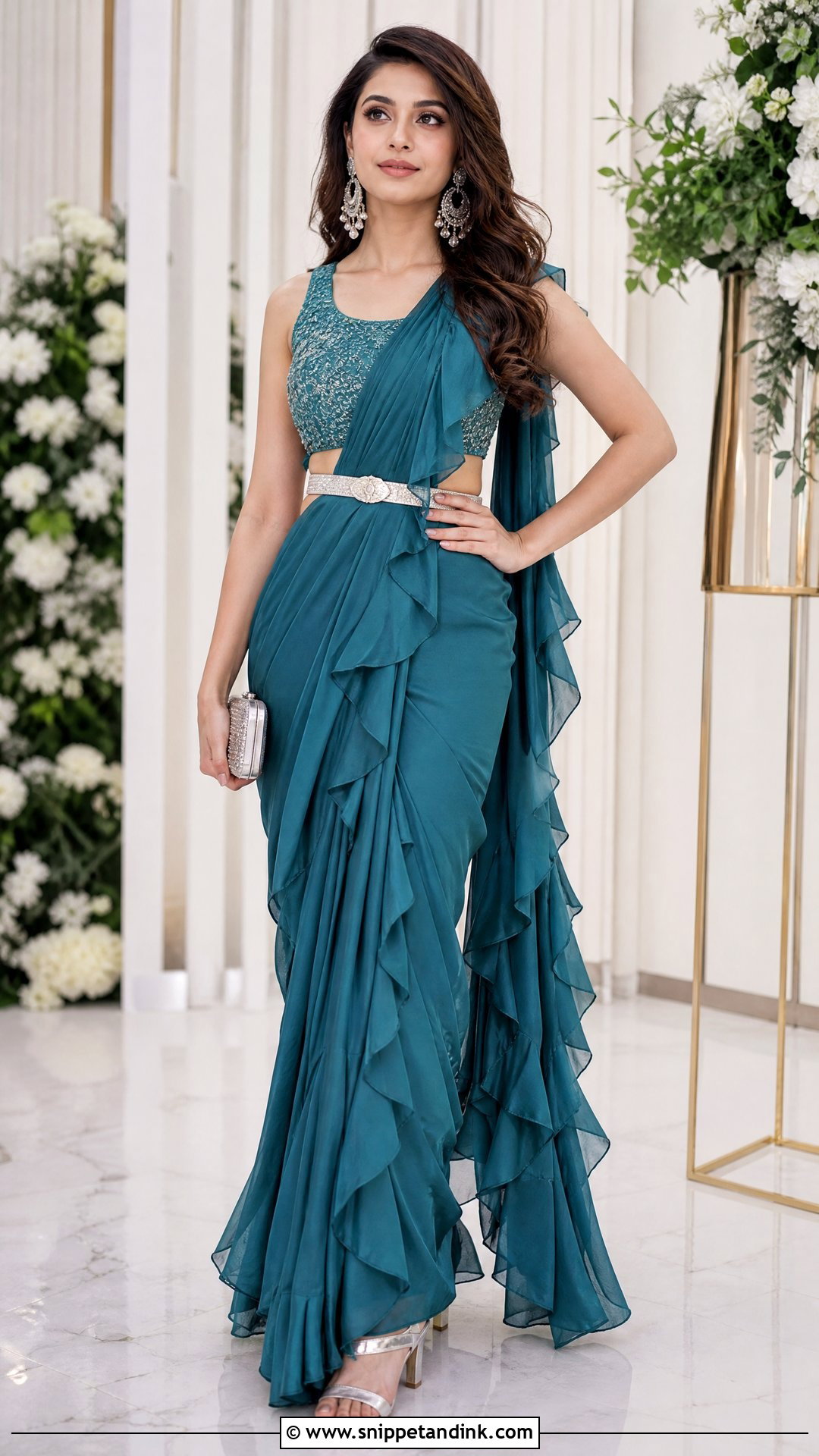
Ruffle sarees move more than any other drape on this list, which makes them fun on the dance floor and tricky in a crowded room. A pre-stitched or regular ruffle saree in chiffon, georgette or crepe, belted or paired with an embellished blouse or structured crop top, defines the waist. Blush, teal, lavender, champagne and coral suit sangeet, engagement and reception events. Keep jewellery to earrings, since the ruffles already add volume near the shoulder, and keep hair sleek or softly waved.
Alterations, Lead Times and Getting Heavy Outfits to the Venue
Most of the trouble I see with Indian wedding outfits starts at the tailor. Ready-made lehengas and blouses almost always need alterations, and bridal pieces can take weeks to adjust because the embroidery has to be unpicked and reworked at the seams. For a bride, I’d buy the main outfits several months ahead and book the final fitting about two to three weeks before the first function, close enough that the fit is accurate but with time to fix mistakes. Lead times vary a lot by designer, so ask before you order.
- First fitting: check the blouse fit with the bra you’ll actually wear.
- Second fitting: wear the shoes for each outfit and set the hem height.
- Final fitting: sit, dance and walk stairs in every look; check the dupatta pins and blouse hooks.
Packing for Travel
Heavy embroidered pieces should travel in breathable cotton or muslin garment bags, folded with tissue between layers so the zari doesn’t rub and tarnish. Plastic traps moisture, and silk can mark if it sits damp. For flights, I’d carry the bridal outfit in the cabin rather than checking it. On arrival, hang everything at once and steam on a low setting from the inside, never directly onto sequins or zardozi.
After the Wedding
Air each outfit before storing it, send stained pieces for dry cleaning with a note about the stain, and refold zari sarees every few months along different lines. Sharp, permanent folds are where the metallic thread cracks first.
Matching Each Outfit to the Hours You’ll Spend in It
Start with the function, the time of day and how long you’ll be sitting, then pick the outfit. A haldi outfit can be bright and disposable, while a reception look can carry more weight and drama. Sarees, lehengas, shararas, gowns and Indo-Western sets all have a place across a multi-day wedding. Before every event, I’d test the outfit seated, walking stairs and dancing, and make sure the drape is pinned, the shoes are broken in and the jewellery is lighter than the clothes. That approach works for every outfit above, from classic silk to a modern cape.
You'll Like These Ideas:


Leave a Reply