
Outfit changes are half the fun of a Desi wedding and most of the planning. The same family might need haldi cotton, mehendi prints, sangeet sparkle, ceremony silk and a reception look, and the bride, her sister and a guest each need a different level of all of it. I style families through that whole week, so the looks below come with the practical notes I’d give in a fitting room: lehengas, sarees, shararas, ghararas, Anarkalis, fusion sets and reception pieces, plus who should wear them and when. Nearly every one can be scaled up or down with jewelry, color and shoes to suit your role.
How Much Embellishment Your Role Can Carry
When a family books styling with me, the first question I ask isn’t about color. It’s who is wearing what, and when. A heavily worked red lehenga on a guest can upstage the bride; an understated suit on the bride’s mother can look as if she didn’t plan. Matching the weight of an outfit to your role solves most of these problems before any shopping starts.
A rough scale I use
- Bride: the heaviest embroidery and the most traditional color at the main ceremony, lighter at every other function.
- Mothers and close aunts: rich silks or embroidered suits, a step below the bride, often in deeper jewel tones.
- Sisters and bridesmaids: coordinated, lighter lehengas or shararas they can work and dance in.
- Guests: festive and well finished, avoiding the bride’s main color unless the family says otherwise.
Customs differ widely between communities, so I always check the family’s expectations about colors like red, white and black before anyone buys.
1. Red Bridal Lehenga
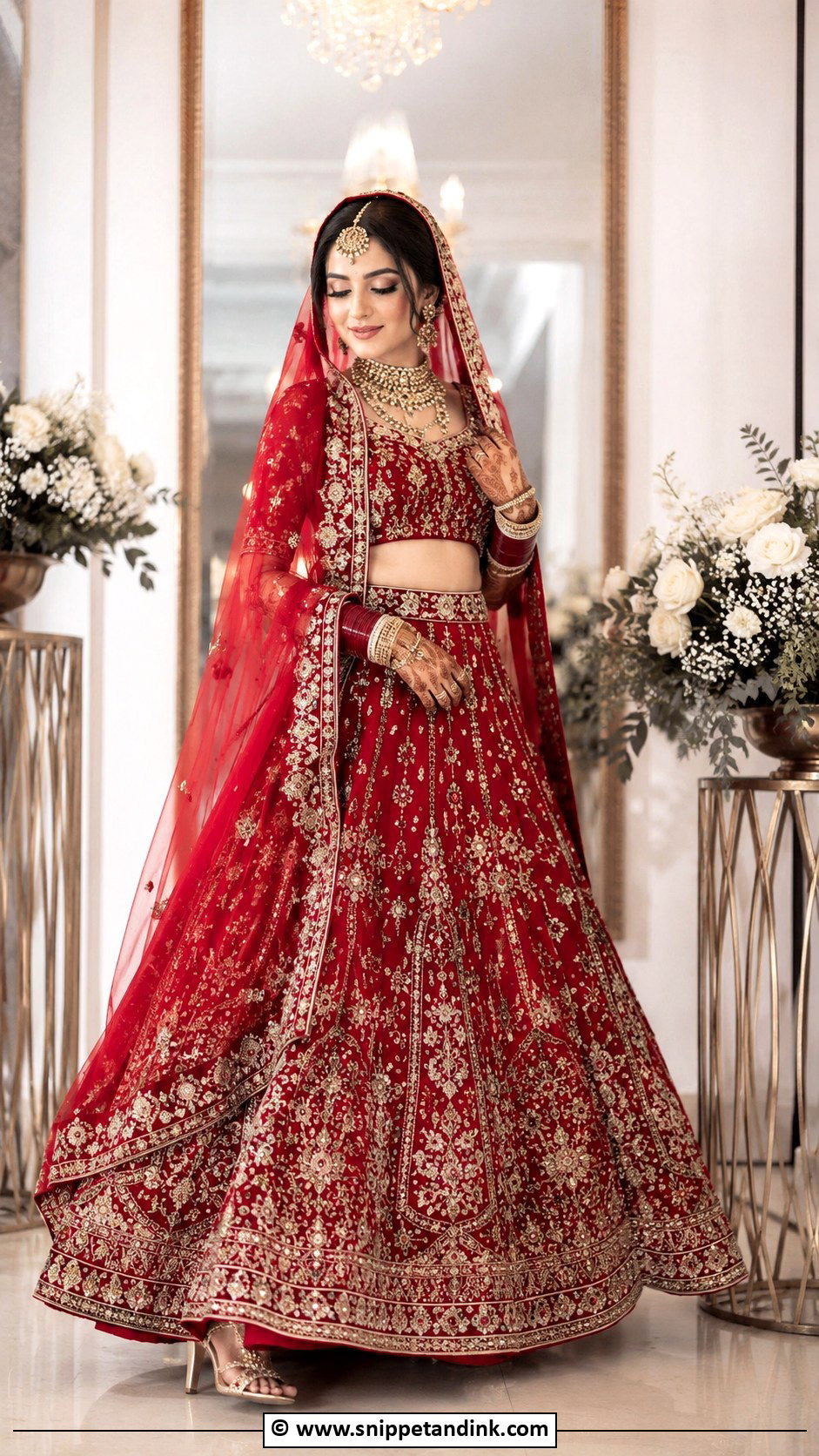
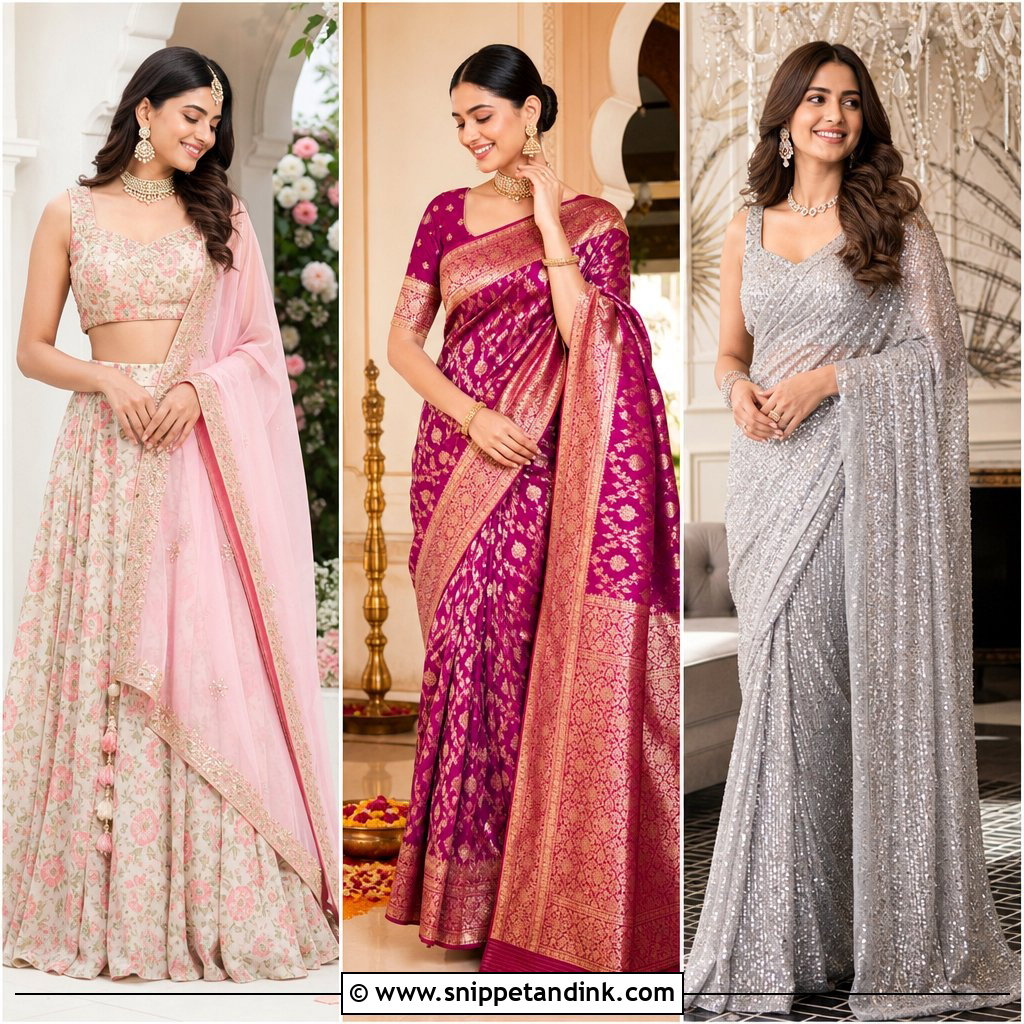
Nothing replaces red at the main ceremony for many families, and it remains one of the classic Desi wedding outfits for good reason. A structured skirt worked in zari, sequins, threadwork or zardozi holds its shape through the rituals. The dupatta is the piece I spend longest on: draped over the head, it needs pinning to the hair at two points so it doesn’t slide during the pheras or nikkah. Gold choker, jhumkas, bangles and a maang tikka; padded block heels or embellished wedges for the standing. Defined eyes and a deep rose or red lip balance the color.
2. Ivory Wedding Lehenga
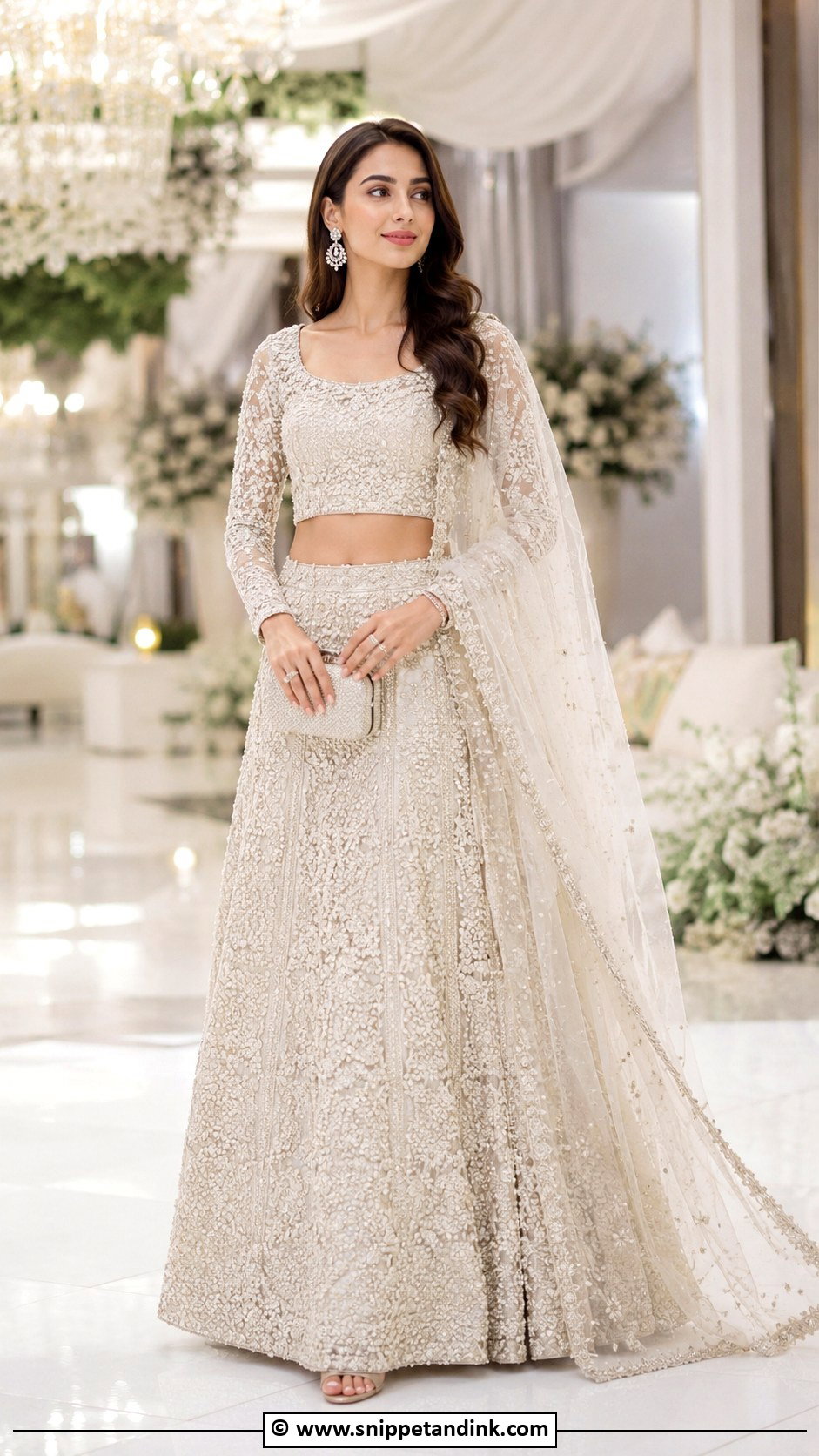
Ivory gives a bride or a reception guest a softer, modern formality. I like it for nikkah ceremonies, receptions and engagements. Pearl work, silver embroidery, tone-on-tone threads or subtle mirrors keep it rich without heaviness, and polki or emerald jewelry adds a welcome bit of contrast. The challenge with ivory is that it shows every mark, so I keep a stain pen and white chalk in the kit and I ask for a deep lipstick to go on only after the dupatta is pinned. A sheer bordered dupatta, nude heels, a sleek bun and glowing makeup finish it, and ivory holds up well in both daylight and warm indoor lighting.
3. Pastel Lehenga
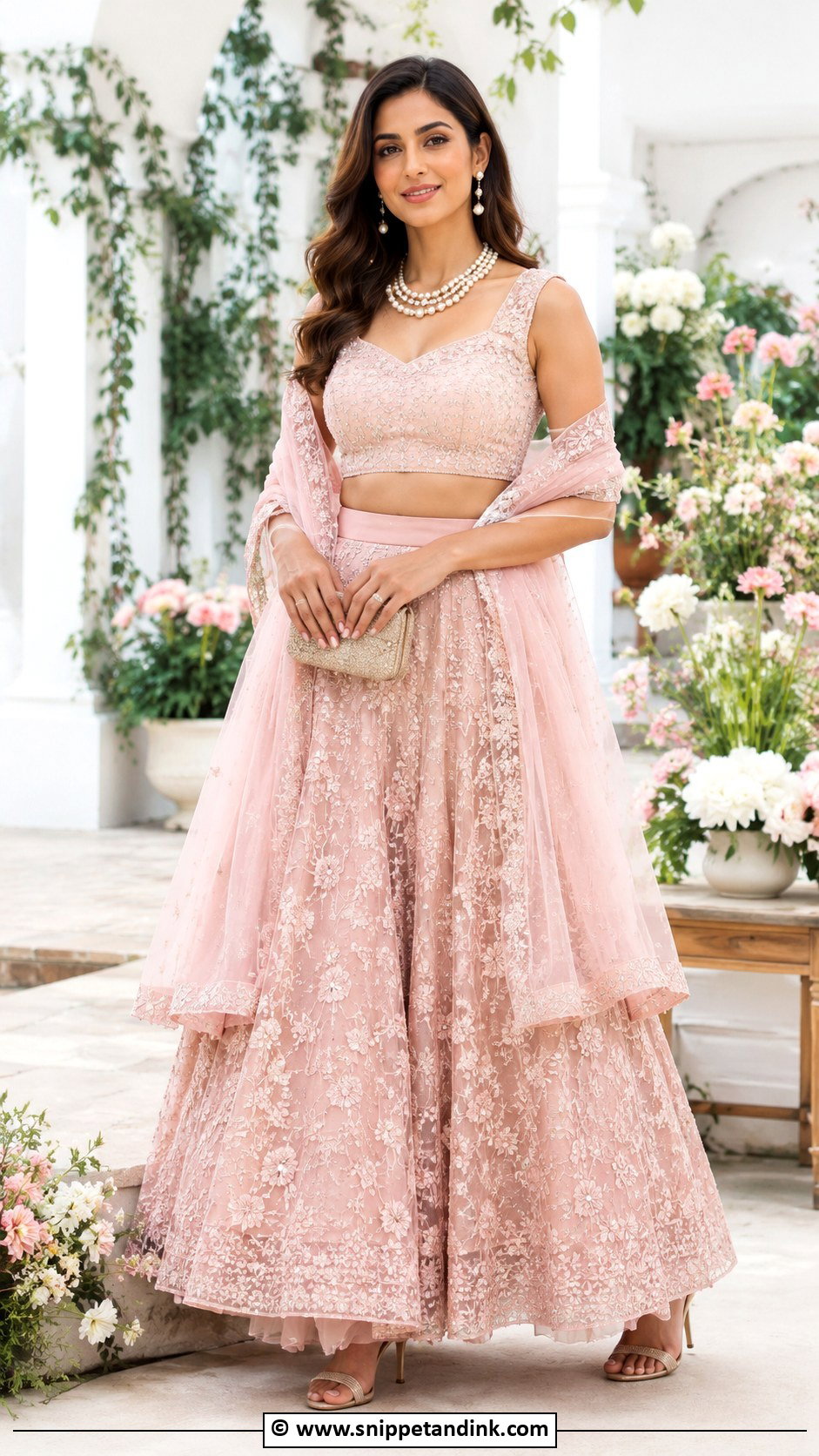
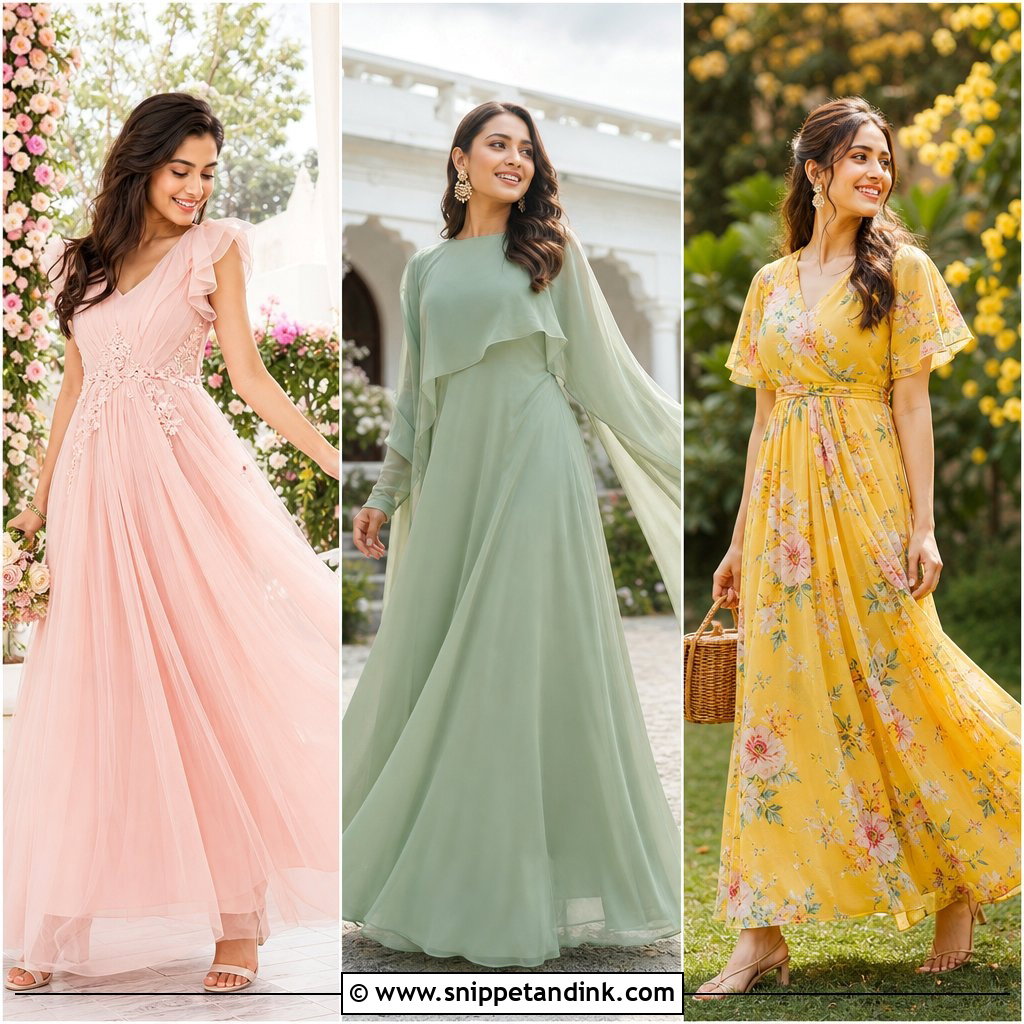
Pastels suit daytime and summer events because they stay light in the heat and on camera. Blush, mint, powder blue, lavender and peach all suit floral embroidery, light sequins or organza layers. Choose a dupatta in the same tone or slightly deeper; a contrasting dupatta can make a pastel set look patchy. Pearl earrings, kundan or a fine choker, and champagne or silver heels go with almost every shade. I’d suggest pastels to anyone who finds heavy bridal embellishment draining over a long day.
4. Banarasi Saree
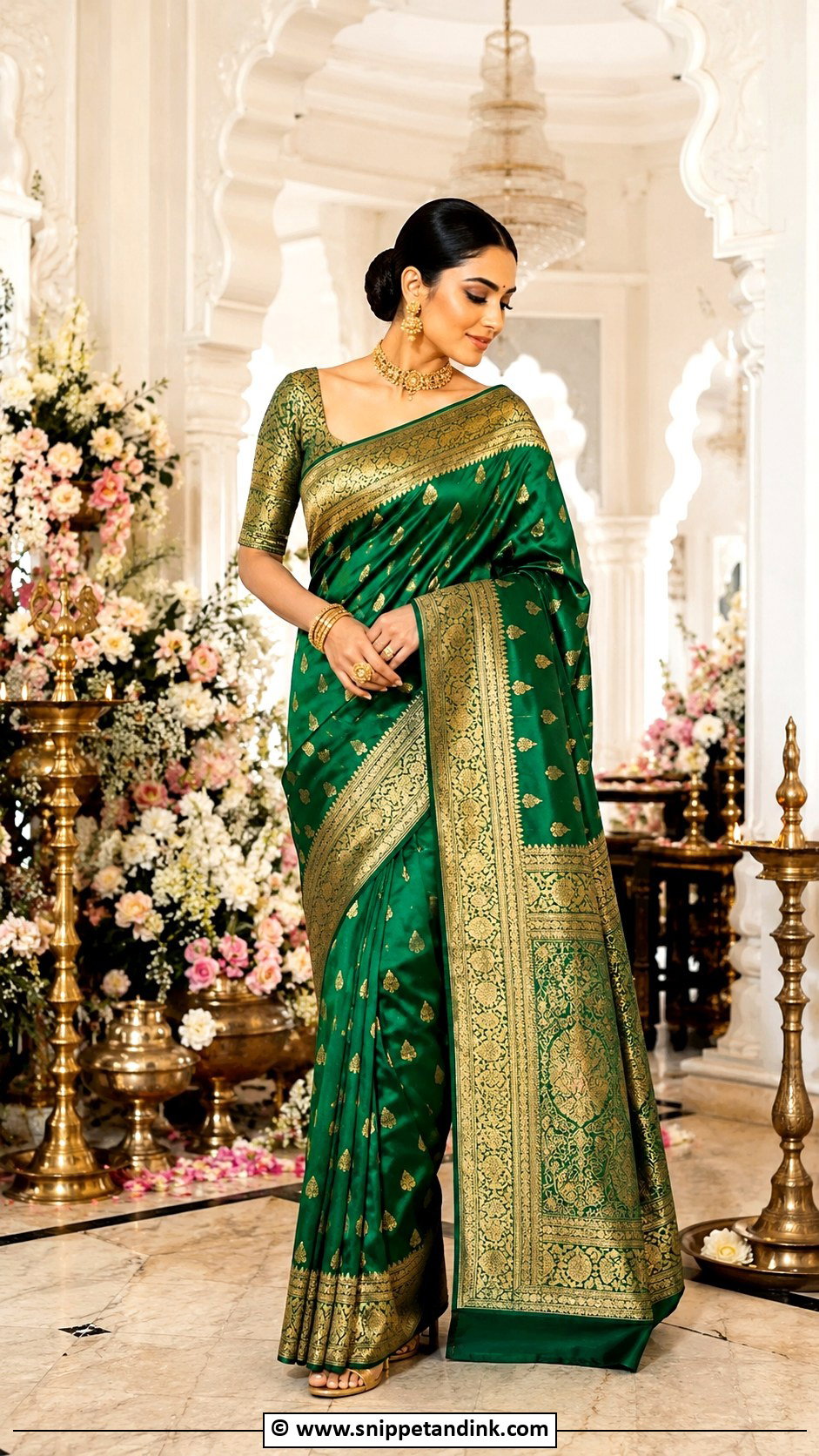
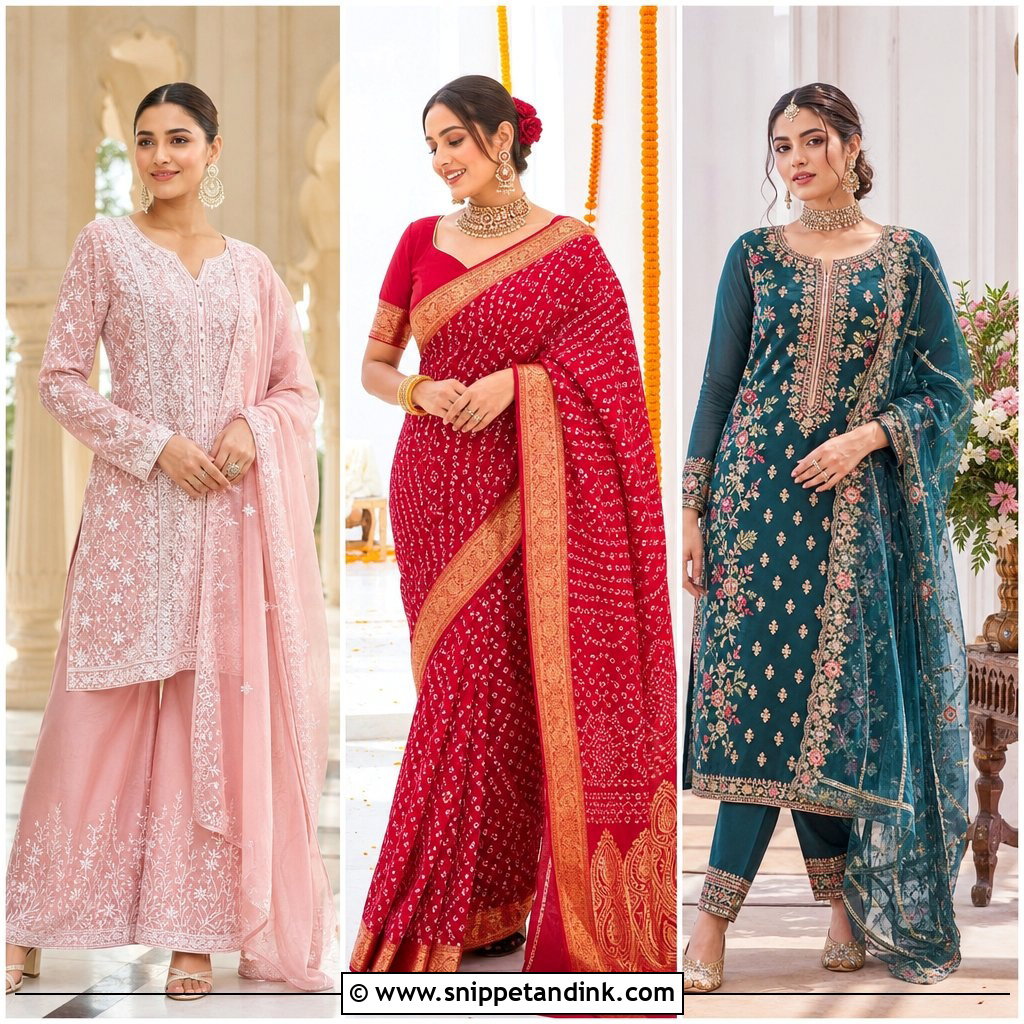
A Banarasi saree is the safest formal choice I know for mothers, sisters and close relatives. Maroon, emerald, royal blue, mustard and rani pink all glow against gold zari borders. A fitted blouse in silk, brocade or velvet holds up against the weight of the weave. The zari border is heavy on the pallu, so I pin it at the shoulder from the inside of the blouse, where the pin won’t show. Traditional gold jewelry, a low bun and a small bindi complete it; wear secure heels or embellished flats if you’ll be moving between venues.
5. Organza Saree
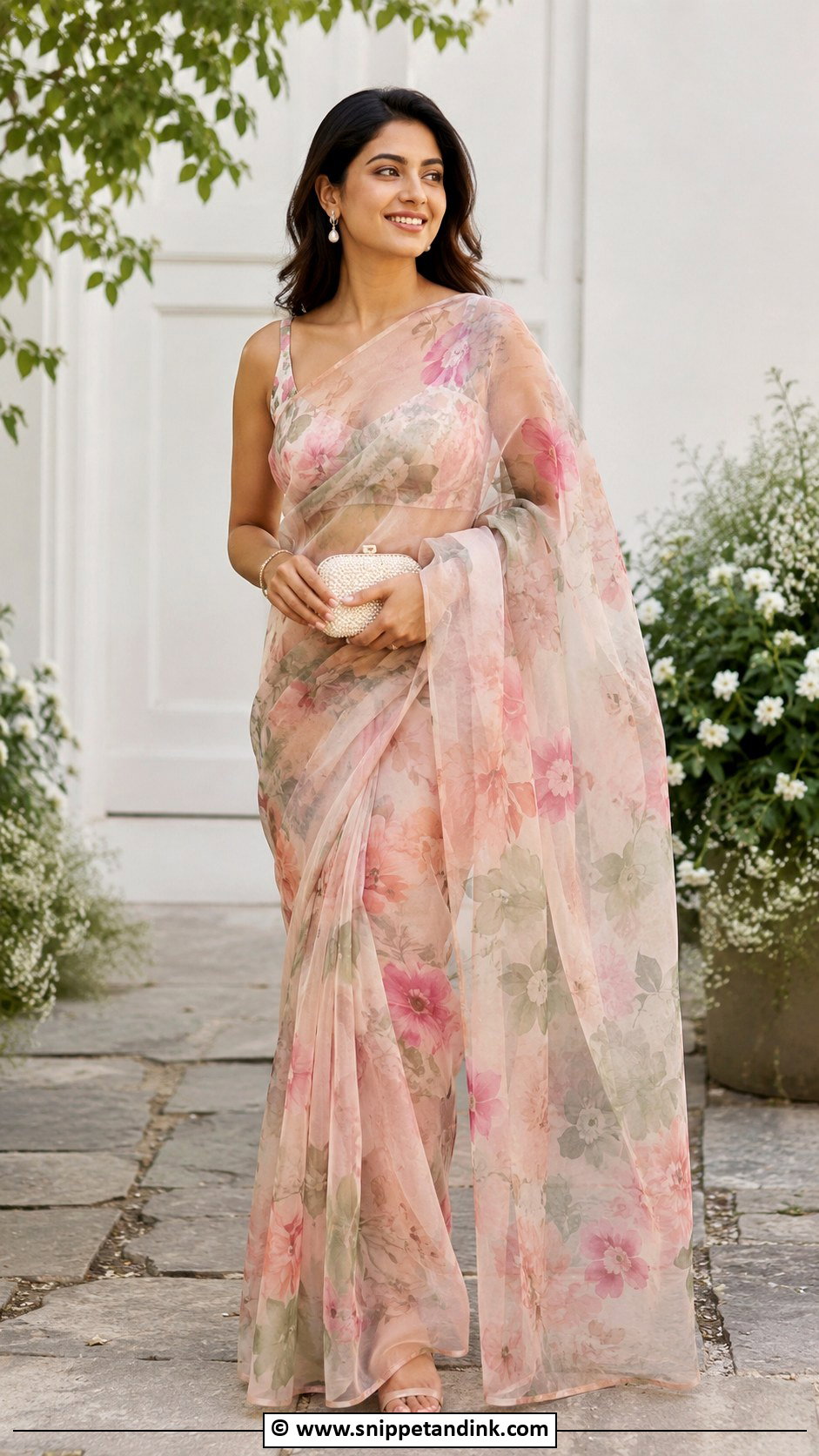
Organza gives a saree shape without weight, which I find suits day events, garden venues and warm seasons. Floral embroidery, scalloped borders, pearls or soft sequins dress it up. The fabric is crisp and slightly transparent, so the petticoat color matters more than people think; match it to the saree, not to your skin. Sleeveless, elbow-sleeve or high-neck blouses all work by comfort. Pearl earrings, a fine necklace, a small clutch and heeled sandals or kitten heels keep the look as light as the fabric.
6. Pre Draped Saree
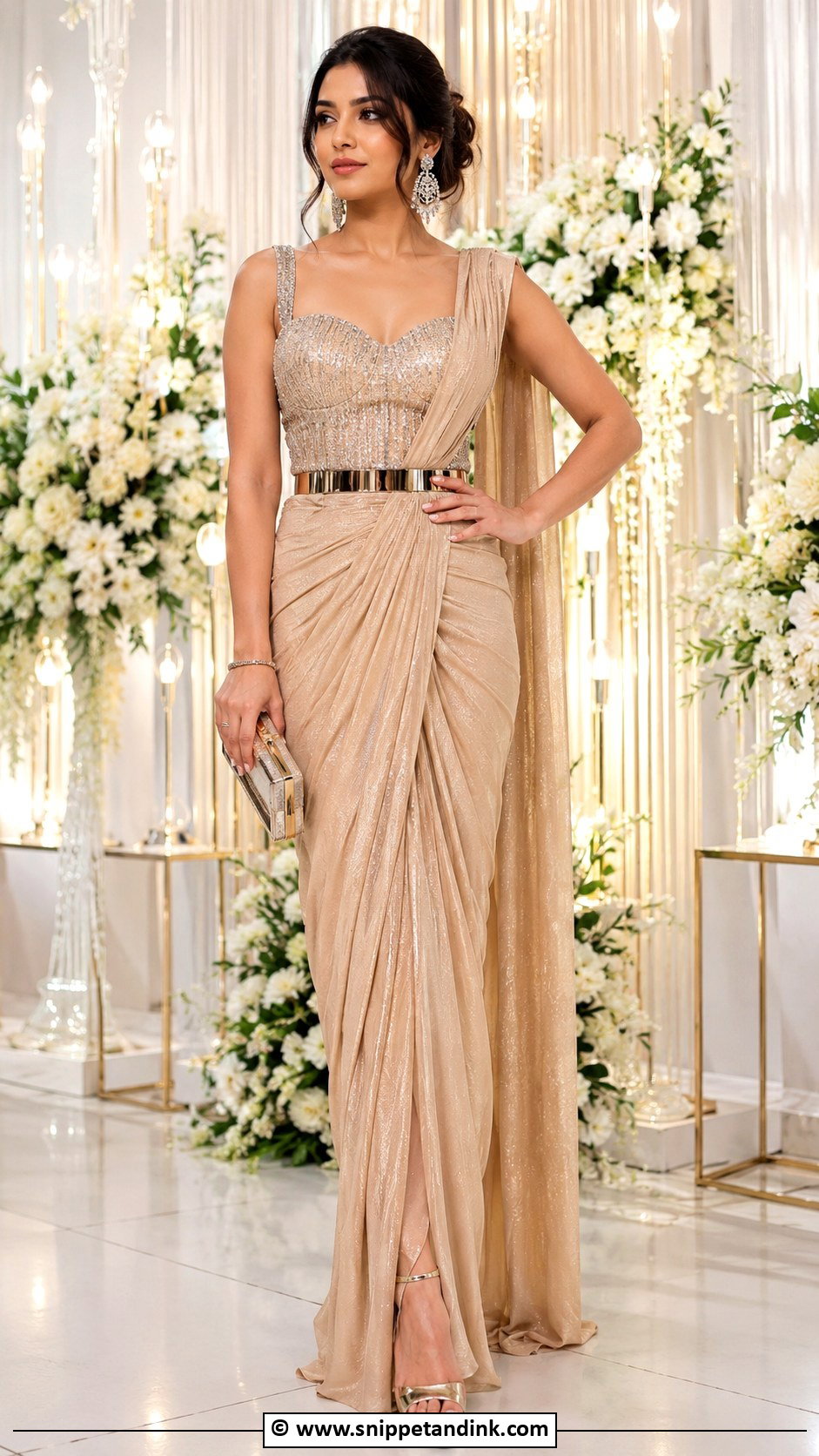
Pre-draped sarees are my answer for guests who love sarees but dread pleating. The drape is stitched in place, so dancing, walking and sitting don’t shift anything. Satin, georgette, chiffon and crepe all work, with a statement blouse for a modern edge. A belt defines the waist and anchors the pallu. Before you order, check the waist measurement carefully, since a pre-stitched drape has less room to adjust than a traditional one. Statement earrings, sleek heels and a box clutch for cocktail nights, receptions and sangeet.
7. Mirror Work Lehenga
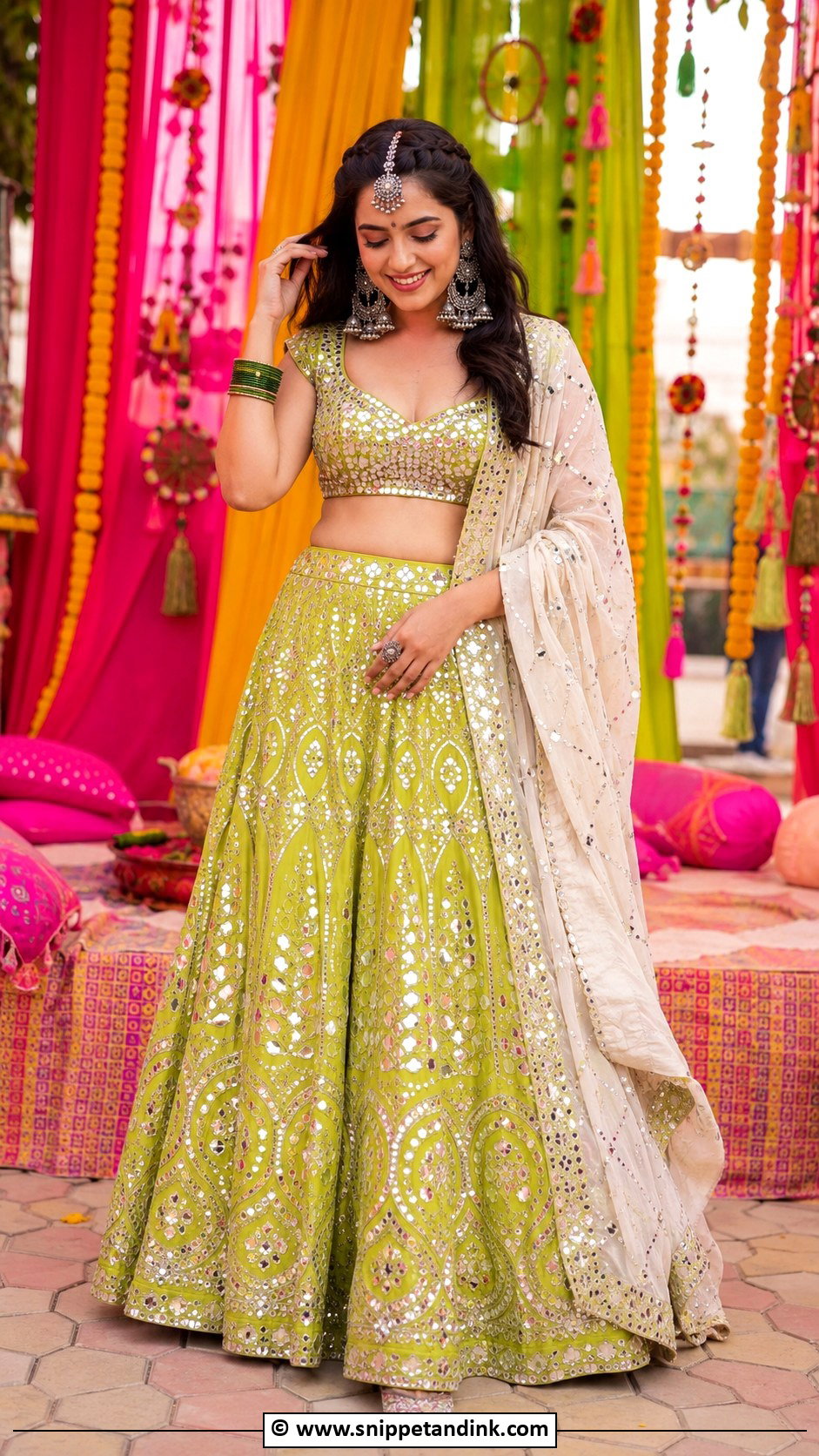
For mehendi and sangeet, a mirror work lehenga brings its own lighting. Lime green, yellow, turquoise, orange and hot pink suit the energy of the night. Mirror panels add weight and stiffness, so I keep the blouse fitted but not tight and choose a light dupatta to balance them. Oxidized jewelry, bangles and embellished juttis feel playful. Keep the hair in soft waves or a half-up style so the mirrors at the shoulders aren’t hidden.
8. Floral Lehenga
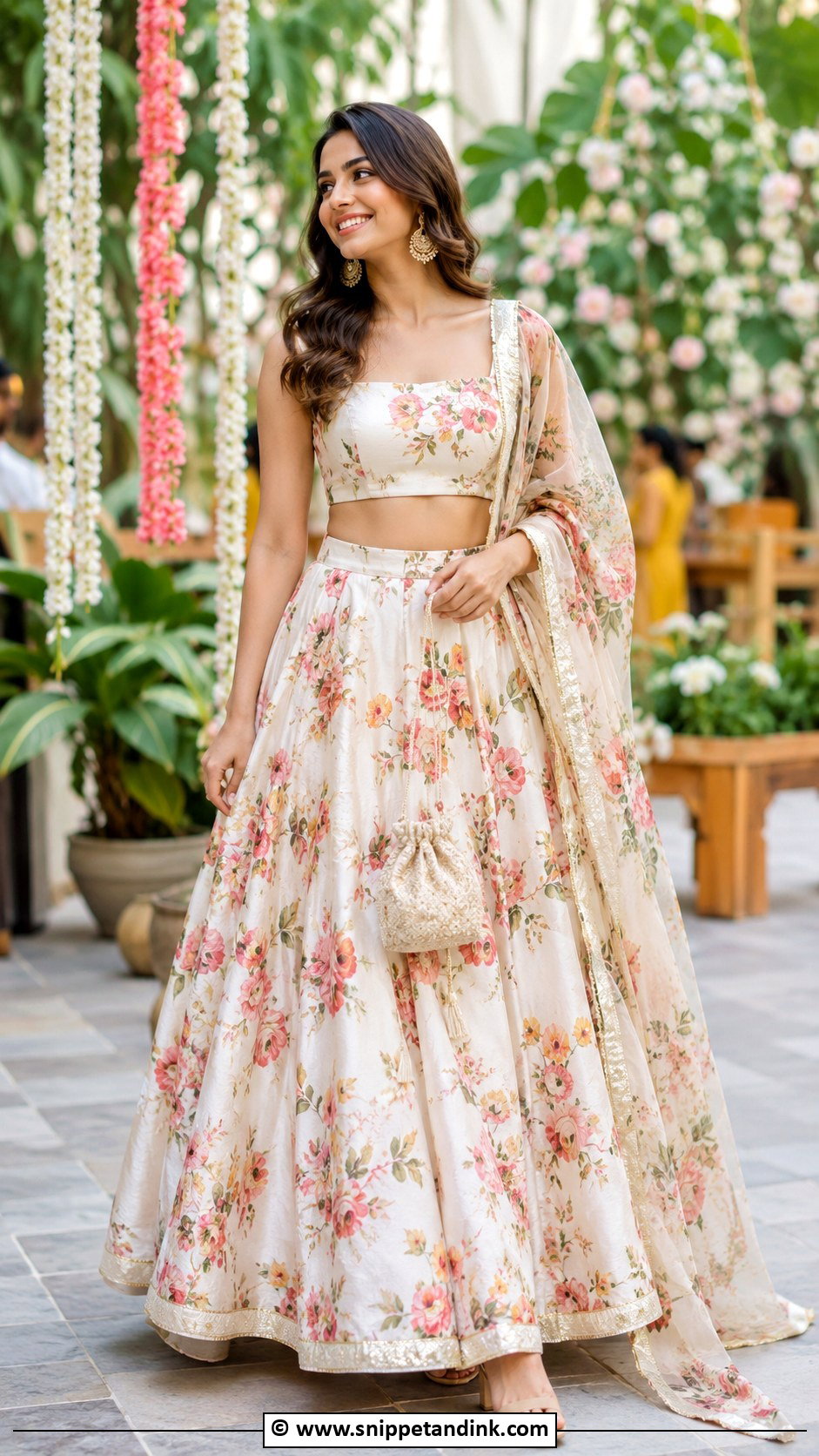
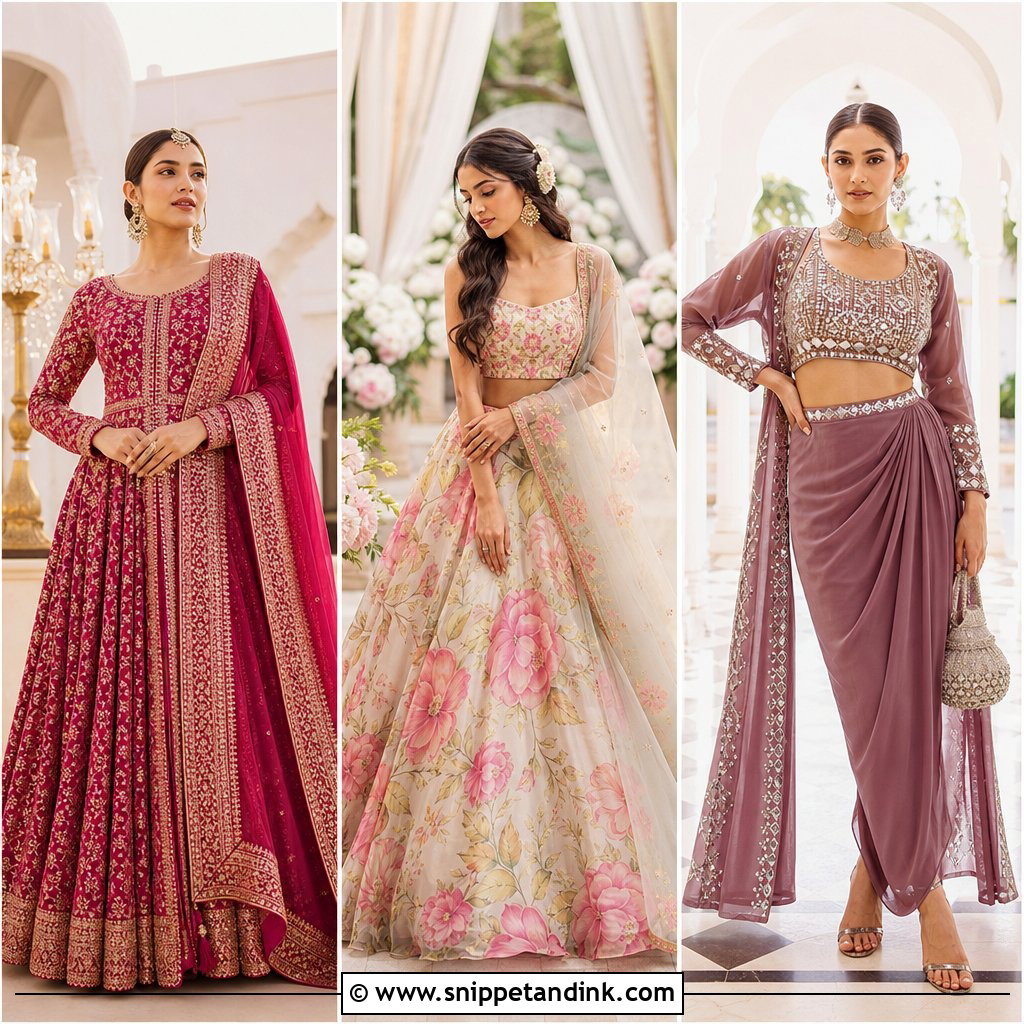
Floral lehengas sit between festive and relaxed, which makes them easy for mehendi, haldi, engagements and daytime events. Printed silk, organza, georgette or lightweight raw silk all carry florals. Big prints are bold; fine embroidery is softer. My rule is to pull the dupatta color from one accent in the print, not the background, so it reads intentional. Fresh-looking jewelry, soft curls and comfortable block heels finish it. Floral hair accessories suit the mehendi, as long as they’re quieter than the print.
9. Sharara Suit
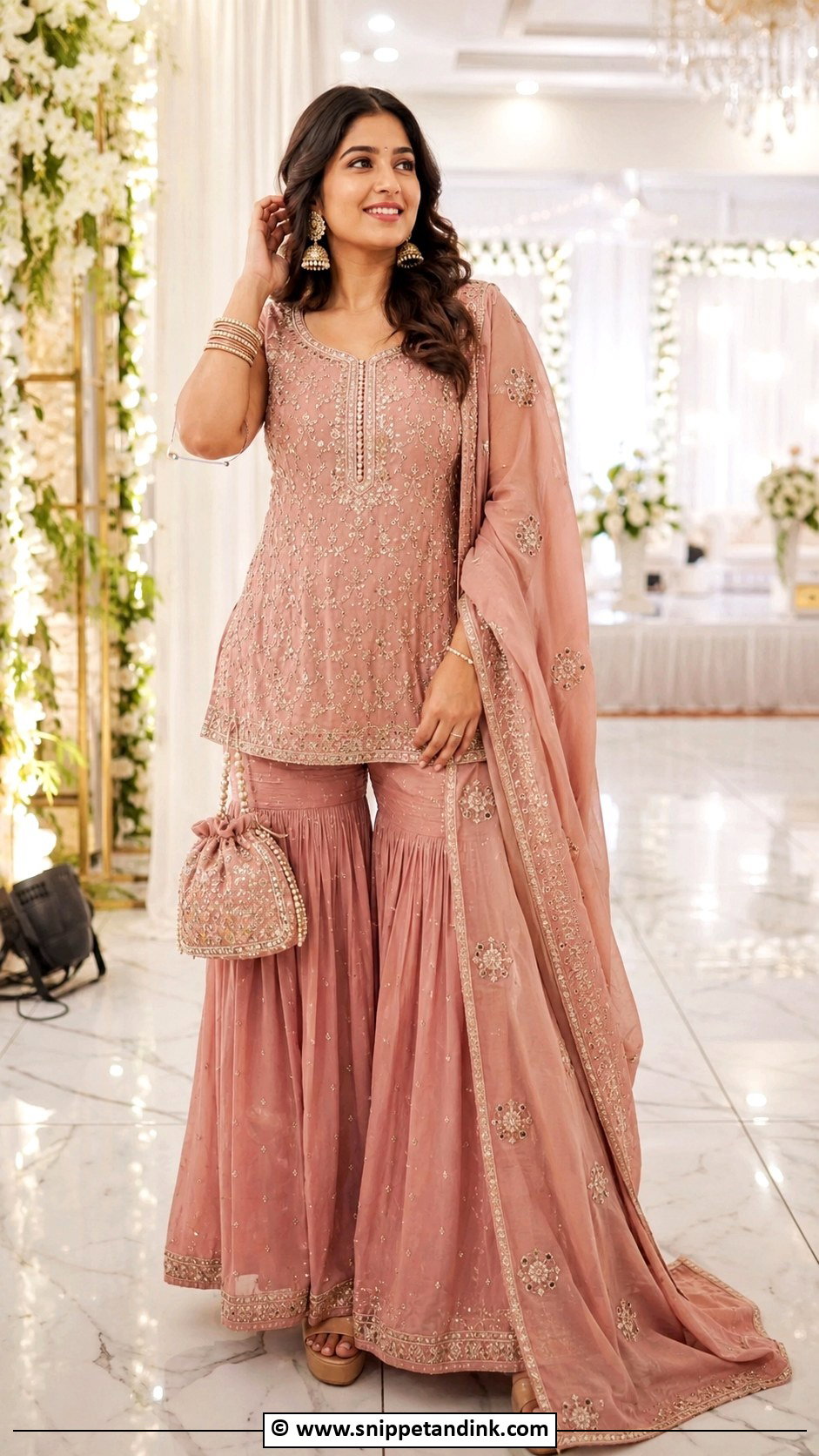
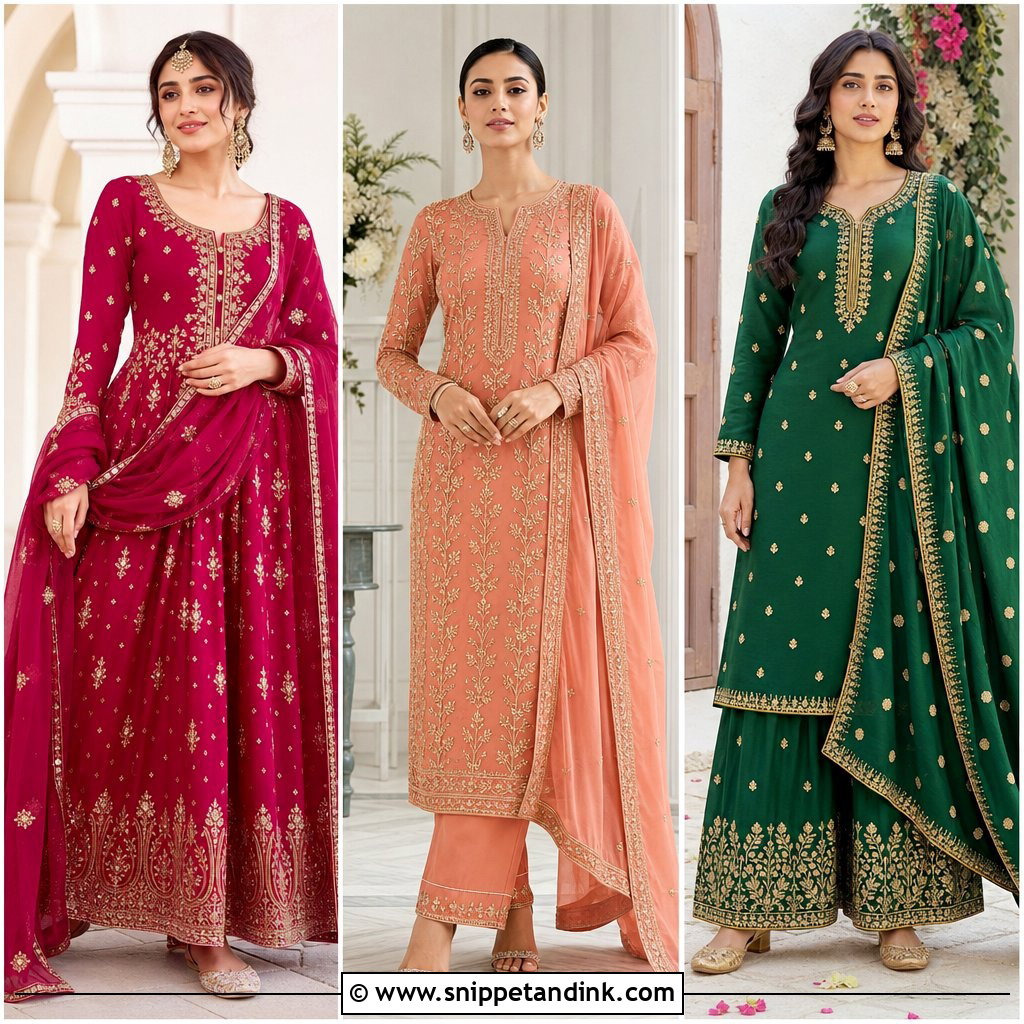
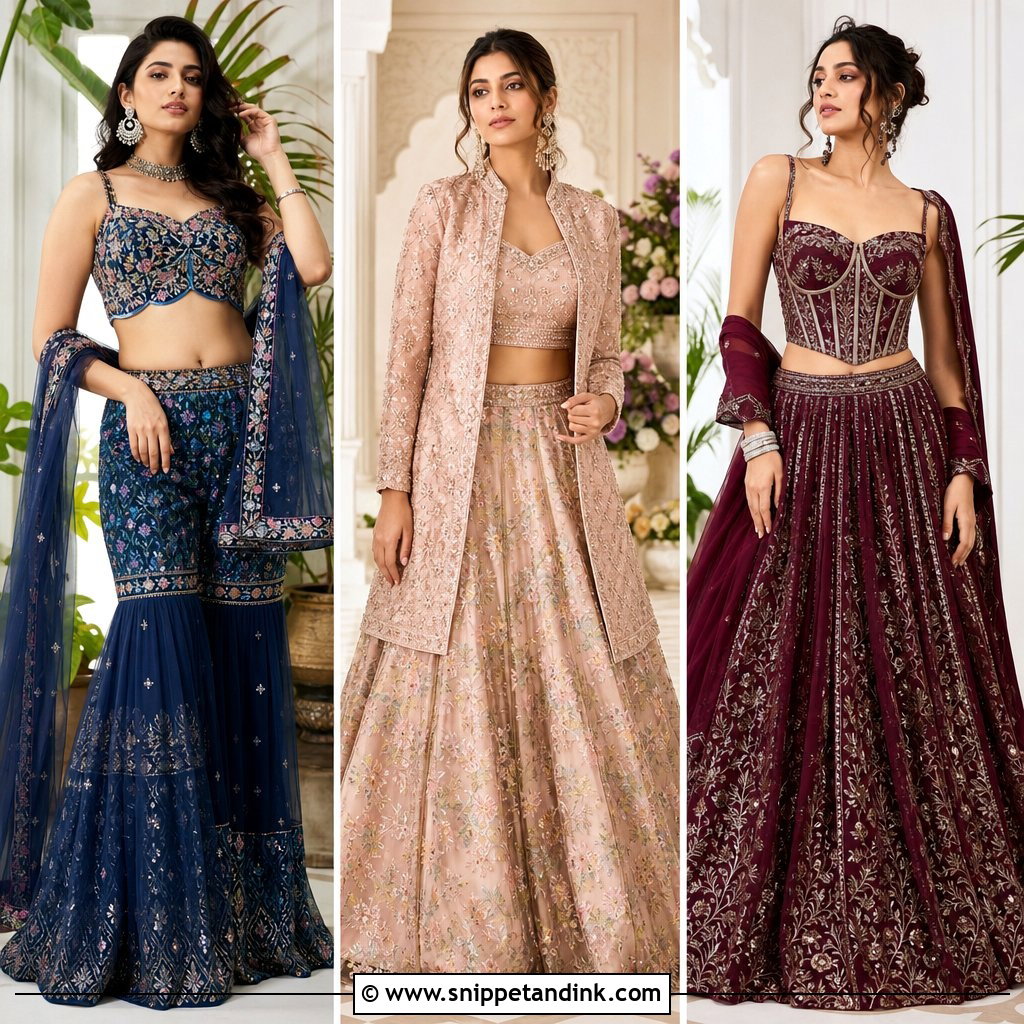
Shararas are the comfort pick that still looks dressed. The flared pants give drama and free movement for mehendi, sangeet and family events. An embroidered short kurti with wide sharara pants and a matching dupatta is the classic set; georgette, silk and chiffon flow best. I check one thing in particular: the flare should start low enough that the pants read as a skirt from a distance, which is what makes a sharara look formal. Juttis, block heels or wedges by venue, plus jhumkas, bangles and a potli bag.
10. Gharara Suit
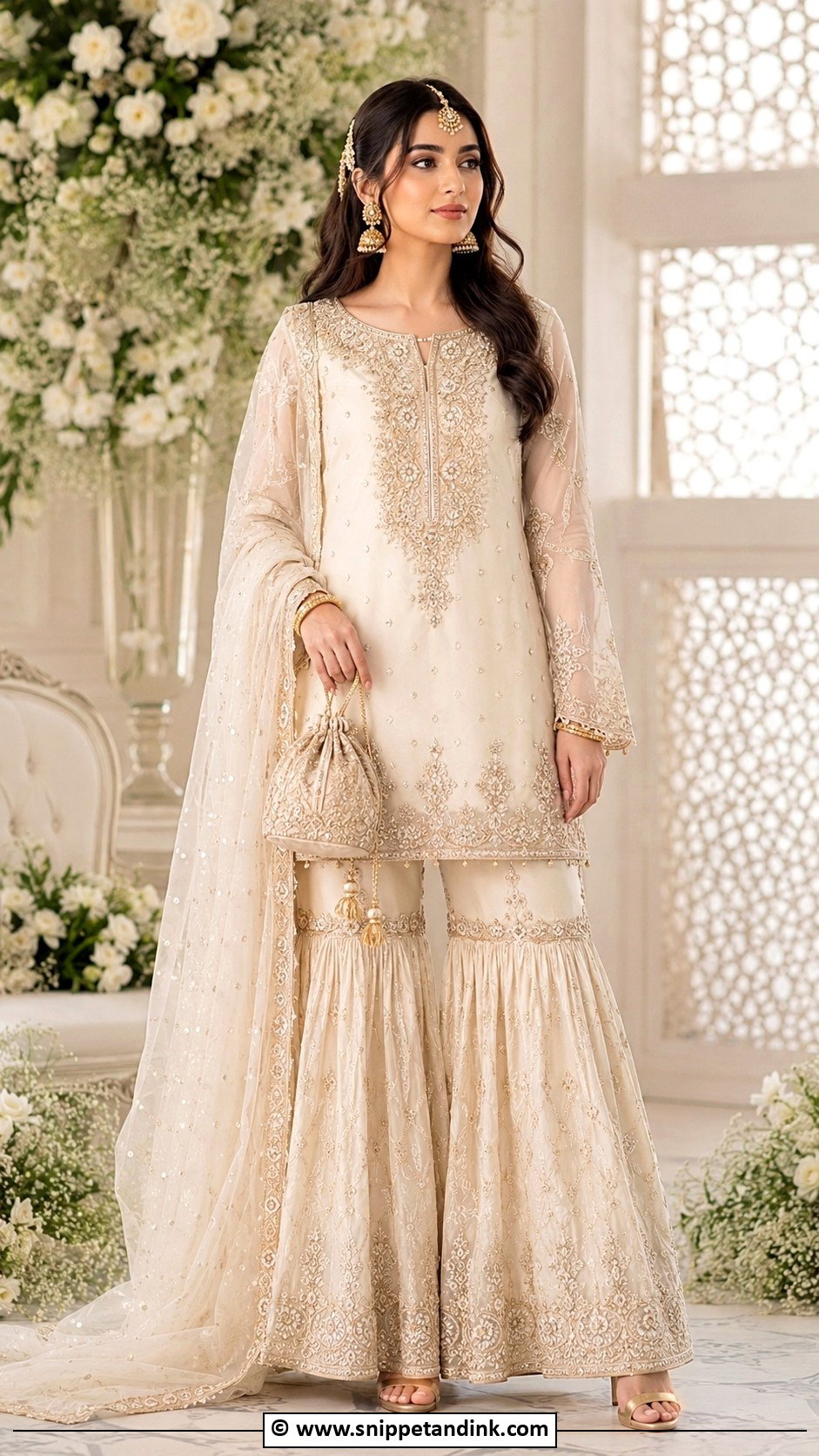
Ghararas carry an old-world grace that suits nikkah, walima, engagements and formal events. The pants fit to the knee and then flare from a gathered band, so the knee joint has to sit exactly at your knee or the shape looks off. Ivory, sage, blush, gold and dusty rose feel soft; jewel tones feel formal. Passa jewelry, jhumkas or a statement ring give a traditional finish. Heels help the gharara fall correctly at the floor, so choose comfortable platforms or block heels.
11. Anarkali Suit
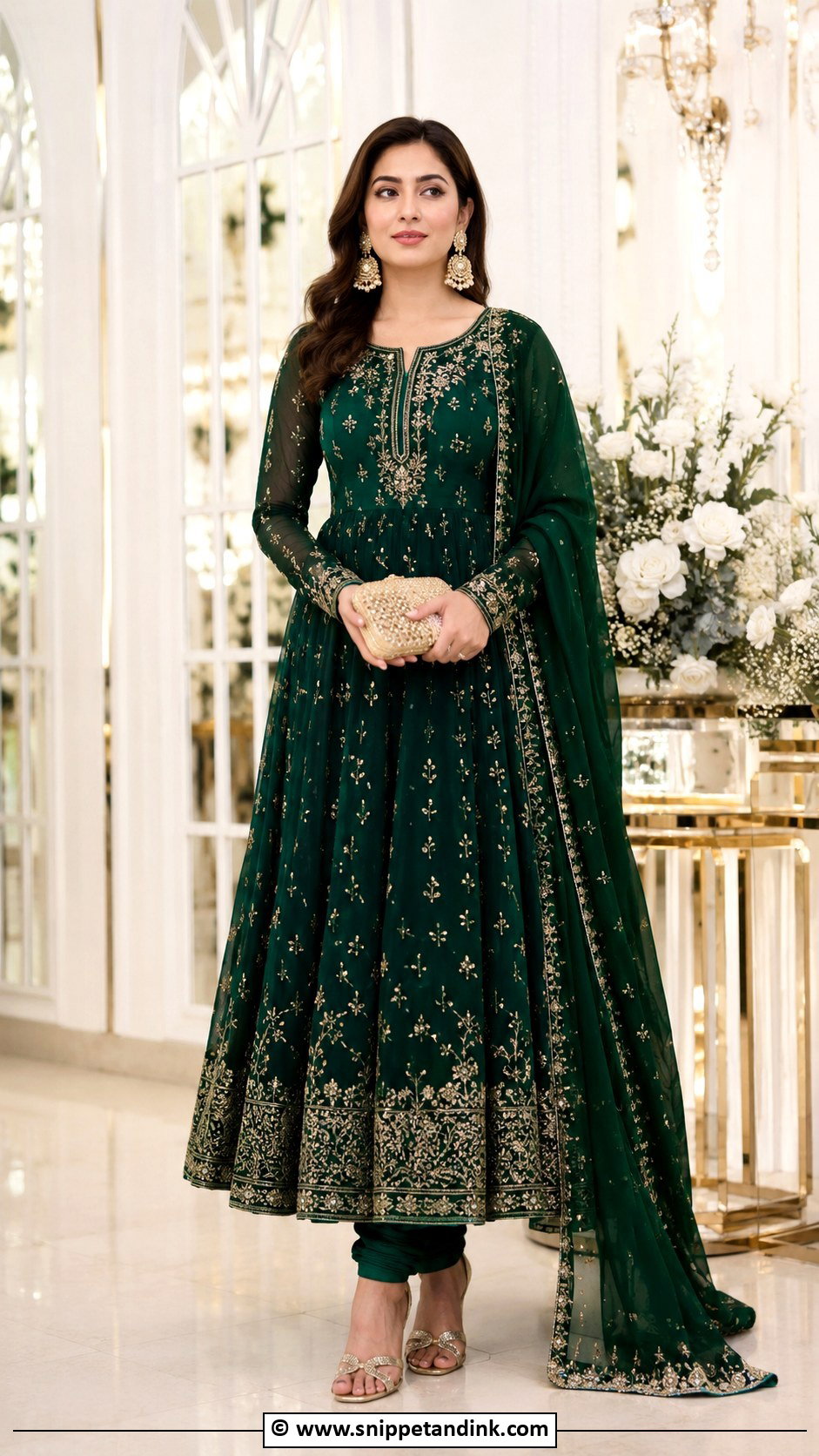
An Anarkali suit is the outfit I suggest when someone has no idea what to wear, because it flatters most bodies and fits most ceremonies. The long flare does the styling for you. Embroidery, sequins, gota patti or fine threadwork make it wedding-ready; velvet, silk or brocade lift it for formal functions, chiffon, georgette or organza keep it light for day. Churidar or slim trousers, a light dupatta, statement earrings, a clutch and embellished heels complete it. Check that the bodice seam sits high enough that the flare starts at your waist.
12. Jacket Lehenga
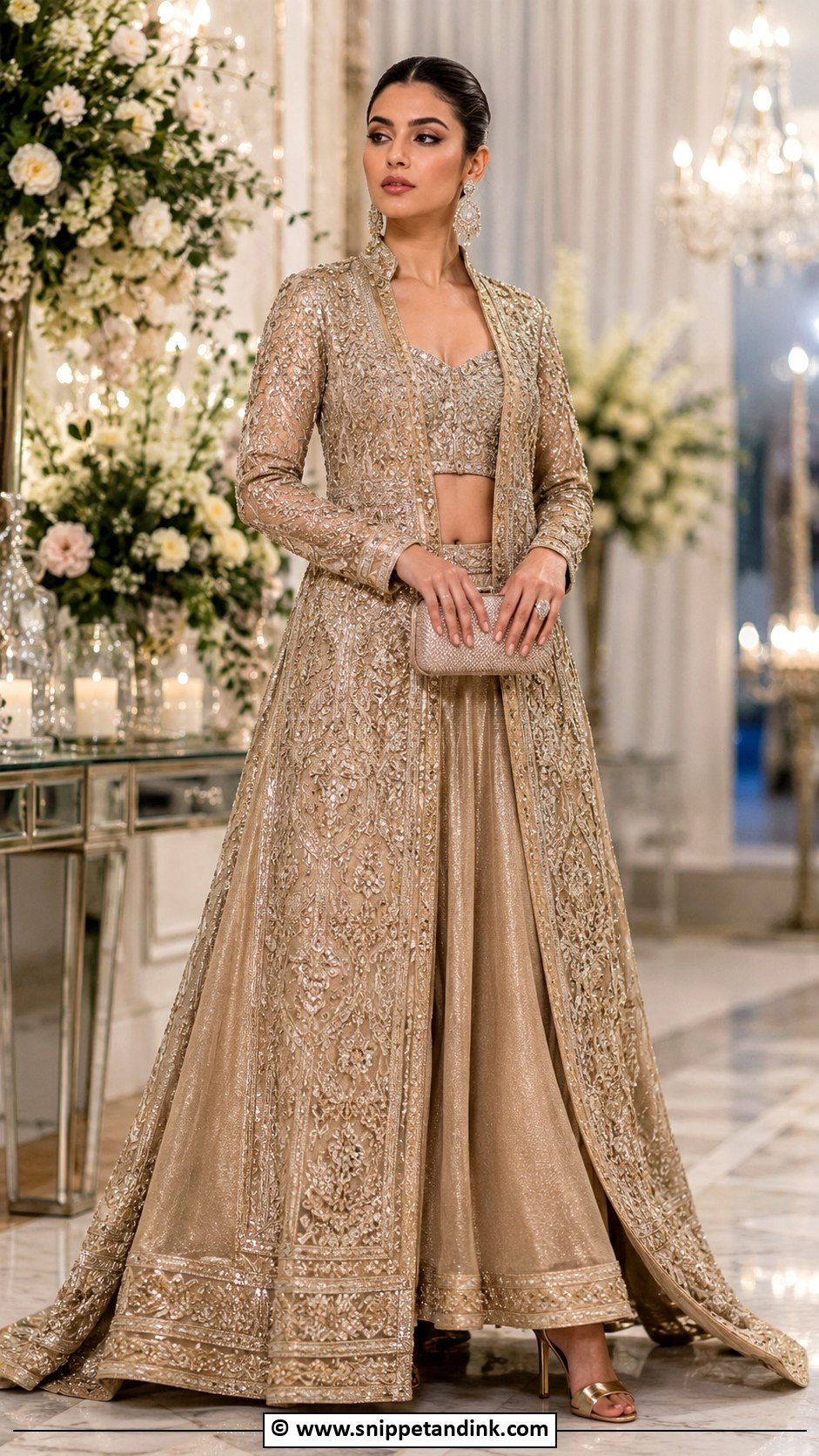
A jacket lehenga replaces the dupatta with a long embroidered jacket, cape jacket or short structured layer, which gives coverage that still looks deliberate. It’s my go-to for winter weddings, receptions and engagements. A tonal jacket looks sleek; a contrasting one adds drama. I fit the jacket last, over the finished blouse, because a heavily worked blouse changes the shoulder width. Keep jewelry simple if the jacket is busy, and add heeled sandals, a sleek clutch and polished hair.
13. Cape Lehenga
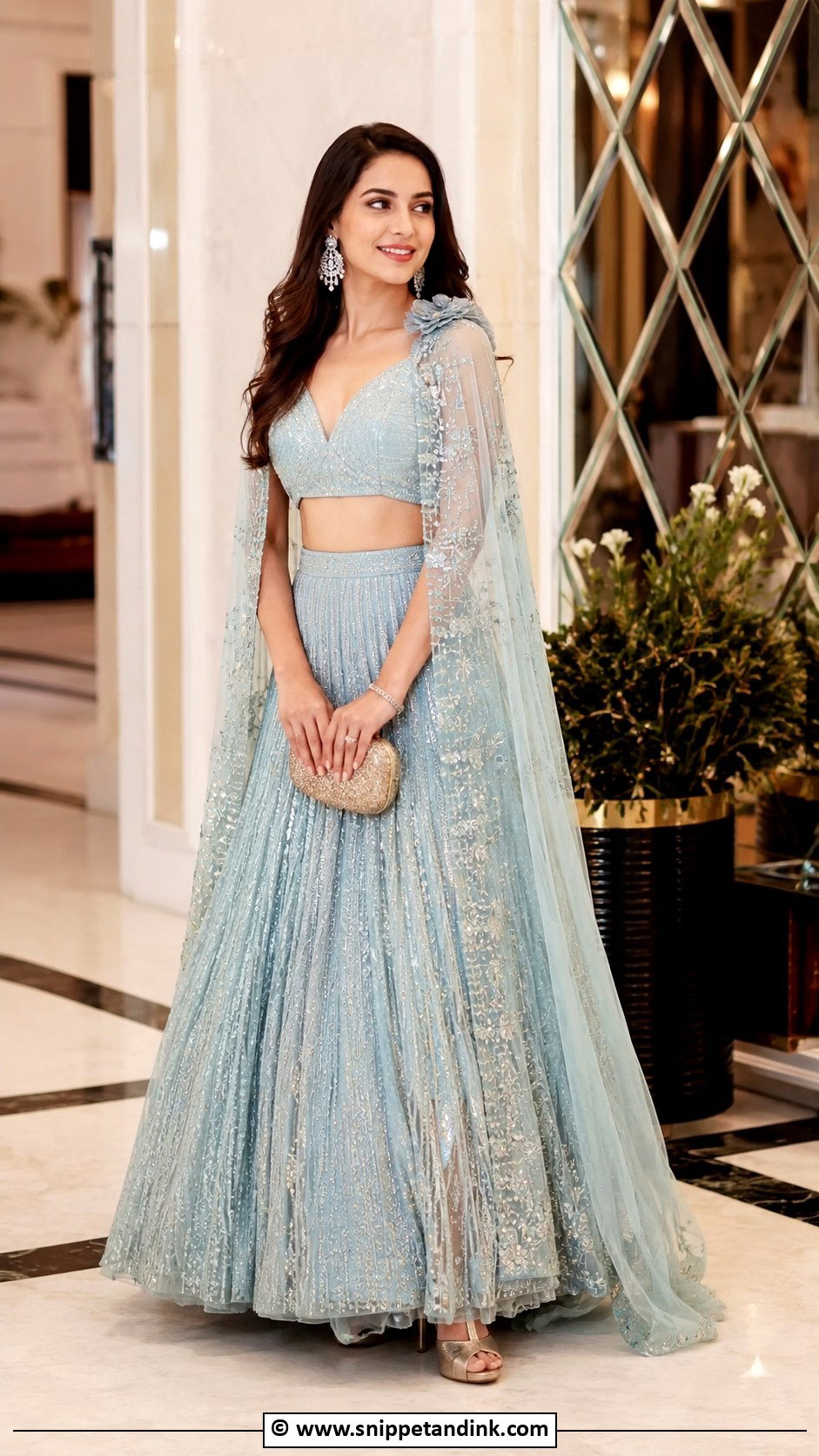
Capes keep the hands free, which is why I put bridesmaids and busy sisters in them. A sheer or embellished cape falls from the shoulders over a matching blouse and skirt, giving movement and coverage with nothing to re-pin. Soft sequins, pearls or threadwork make it dressy for receptions, sangeet and engagements. Heavy necklaces snag on cape edges, so stick to statement earrings and a small clutch. It’s one of the easiest dramatic looks to wear for a full evening.
14. Peplum Lehenga
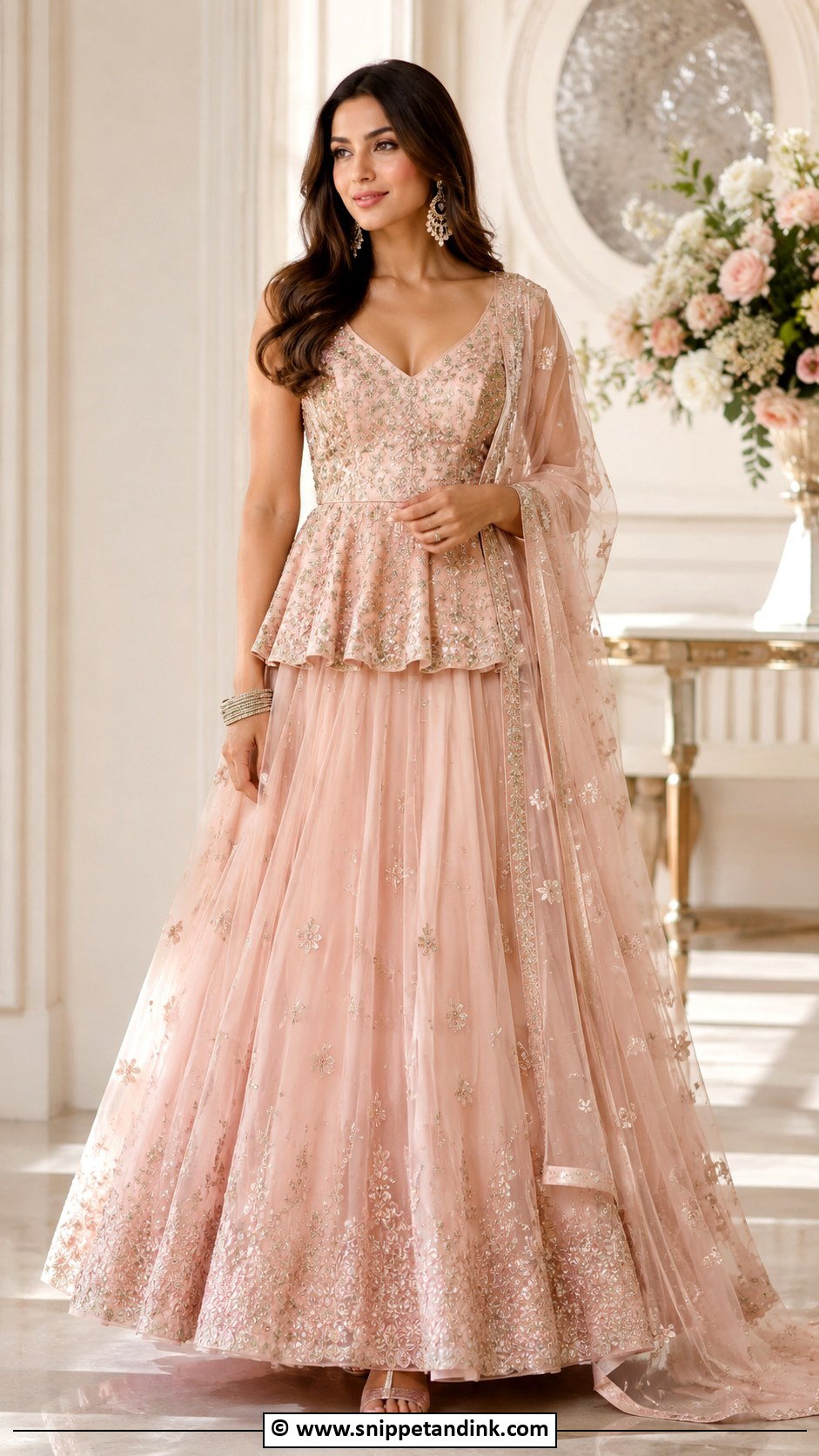
Peplum tops define the waist and cover the midsection, which a lot of women find more comfortable for long events than a cropped blouse. Pair one with a flowing lehenga skirt in silk, georgette or organza, and let embroidery at the waist, neckline and sleeves set the formality. The fit point is the peplum seam: it should sit at your natural waist so the flare flatters rather than widens. Drop earrings, stacked bangles and heels that match the skirt; drape a soft dupatta on one shoulder or skip it.
15. Kurta Palazzo Set
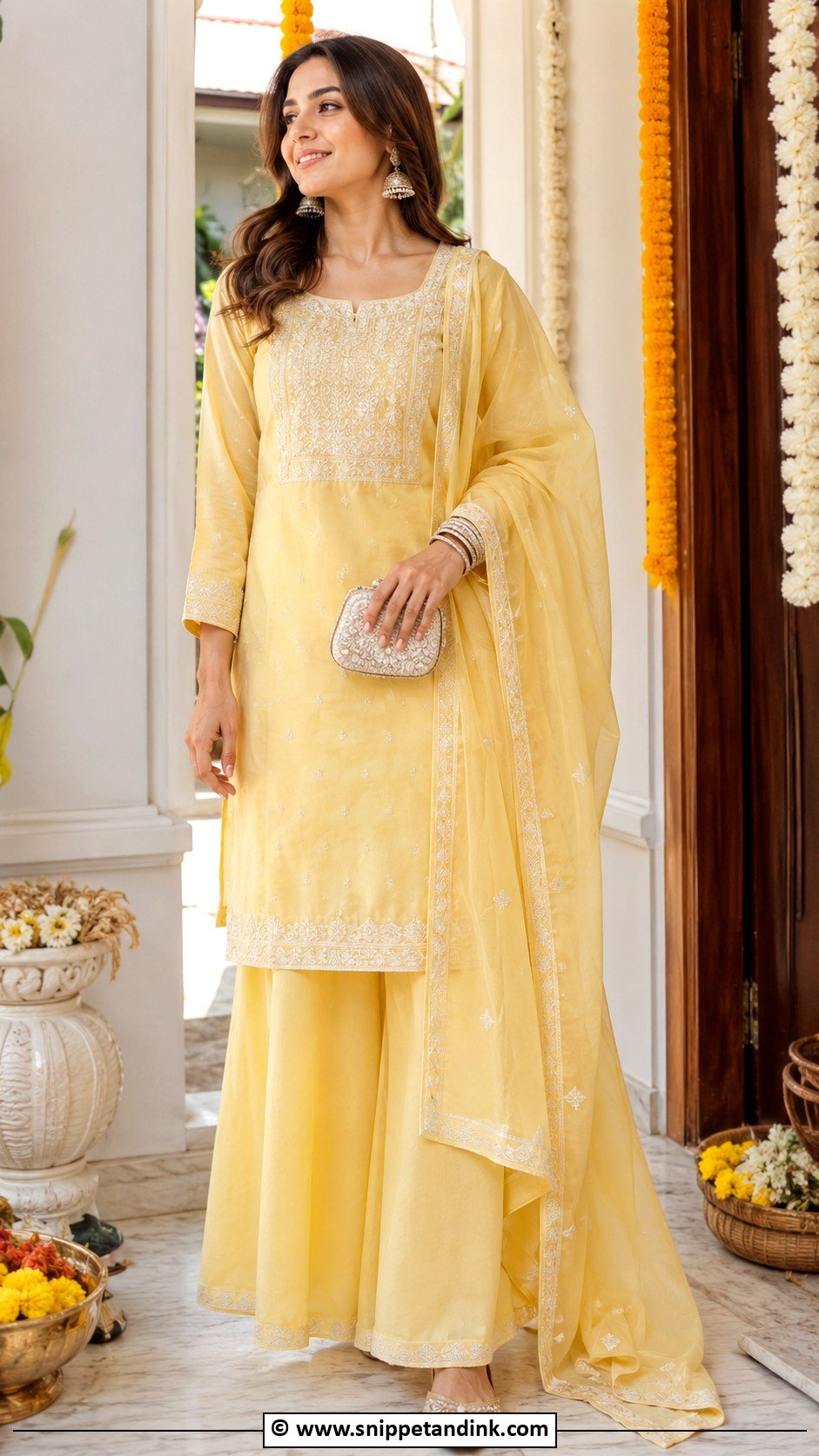
For haldi, mehendi, welcome dinners and smaller family gatherings, a kurta palazzo set is the most comfortable option on this list. An embroidered straight or A-line kurta with wide palazzos and a matching dupatta keeps it festive. Cotton silk, chanderi, georgette and muslin blends breathe in the heat. If the set is plain, I lean on a heavier dupatta or a statement bag to lift it. Jhumkas, bangles and embellished flats finish a modest, easy look that never reads underdressed.
16. Chikankari Sharara
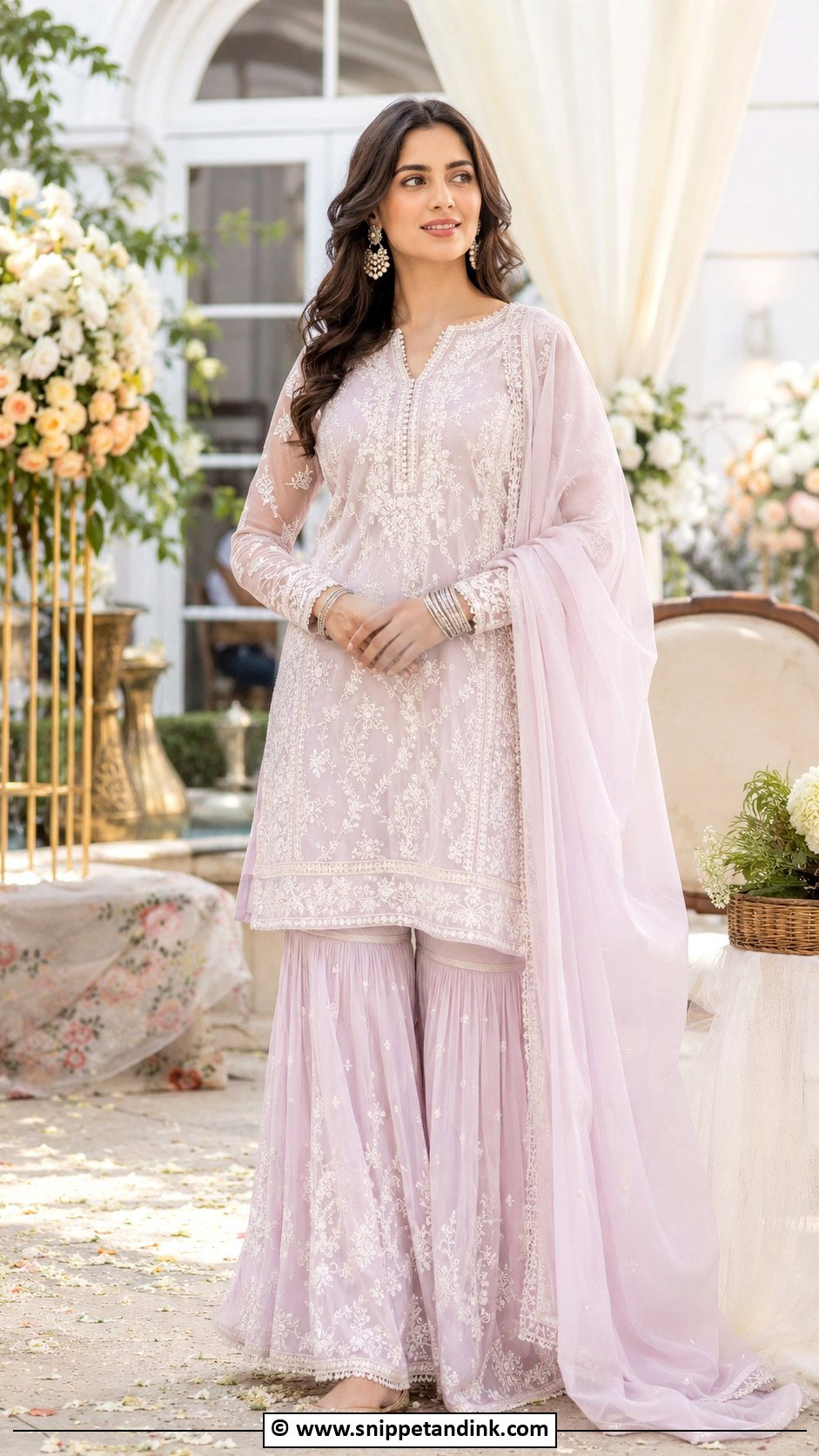
Chikankari is fine hand embroidery from Lucknow, and on a sharara set it reads soft and handmade in ivory, pastel pink, mint, lemon, lavender or powder blue. A chikankari kurti, flared sharara pants and a light dupatta suit haldi, mehendi, brunch functions and intimate ceremonies. For more formality, look for mukaish, sequins or pearl work layered over the stitches. Hand-embroidered chikankari on fine fabric should be gently hand-washed or dry cleaned, never wrung. Pearl jewelry, silver bangles and embellished juttis suit wearers of every age.
17. Velvet Lehenga
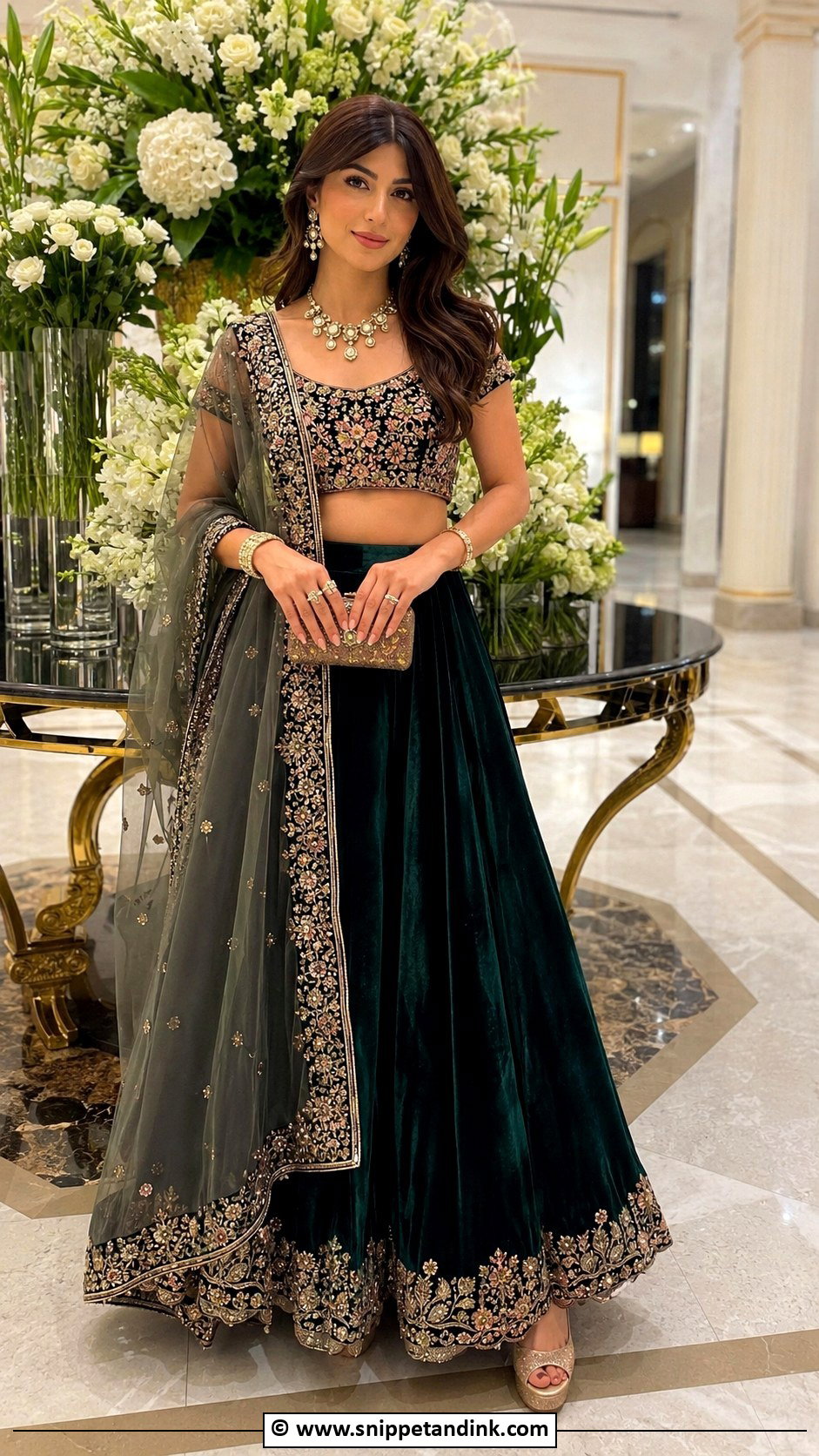
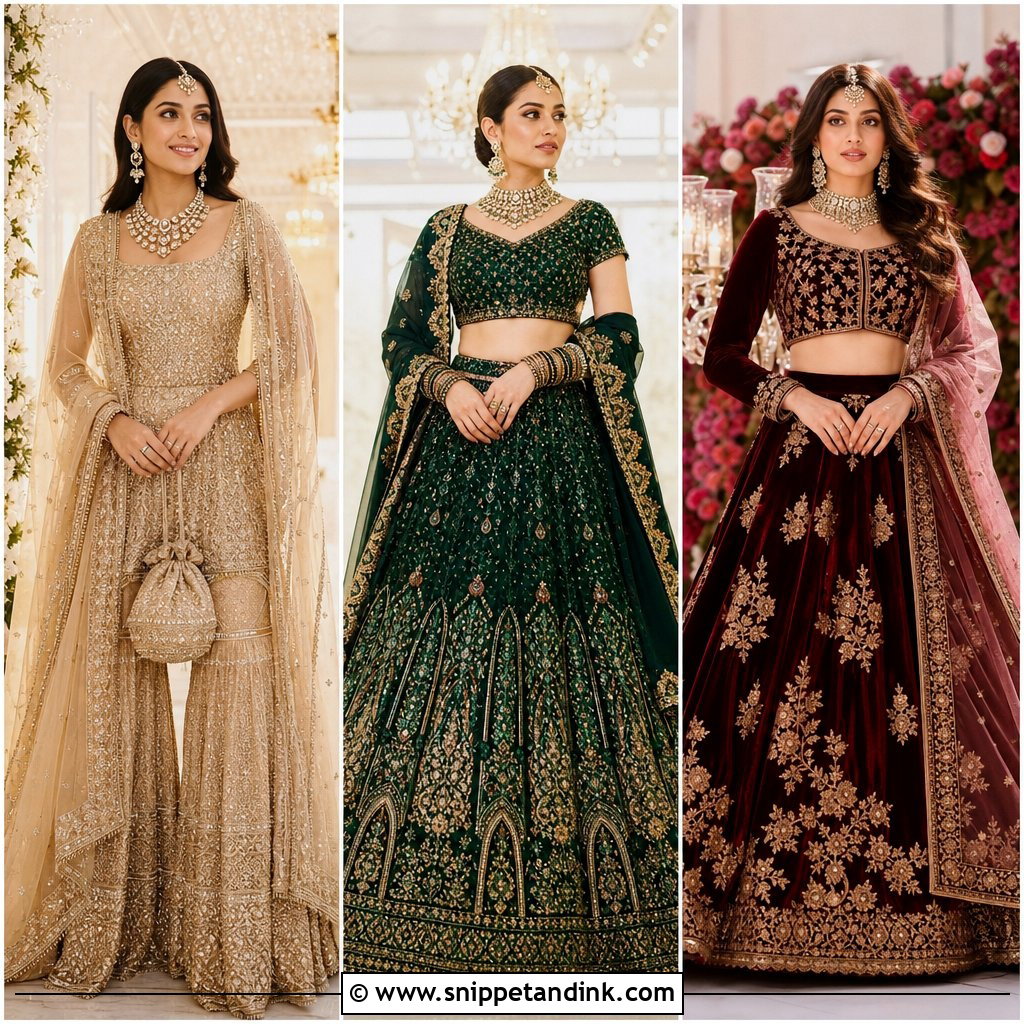
Velvet suits winter weddings, evening receptions and formal ceremonies, holding color richly in deep maroon, emerald, navy, plum and black. Antique gold embroidery, zardozi or sequin borders give it a royal finish. Velvet is heavy and warm, so I keep layers minimal and choose a net dupatta over a velvet one if the venue is heated. A fitted blouse, polki jewelry, a sleek bun and platform heels complete it. It gives richness without relying on bright color.
18. Sequin Saree
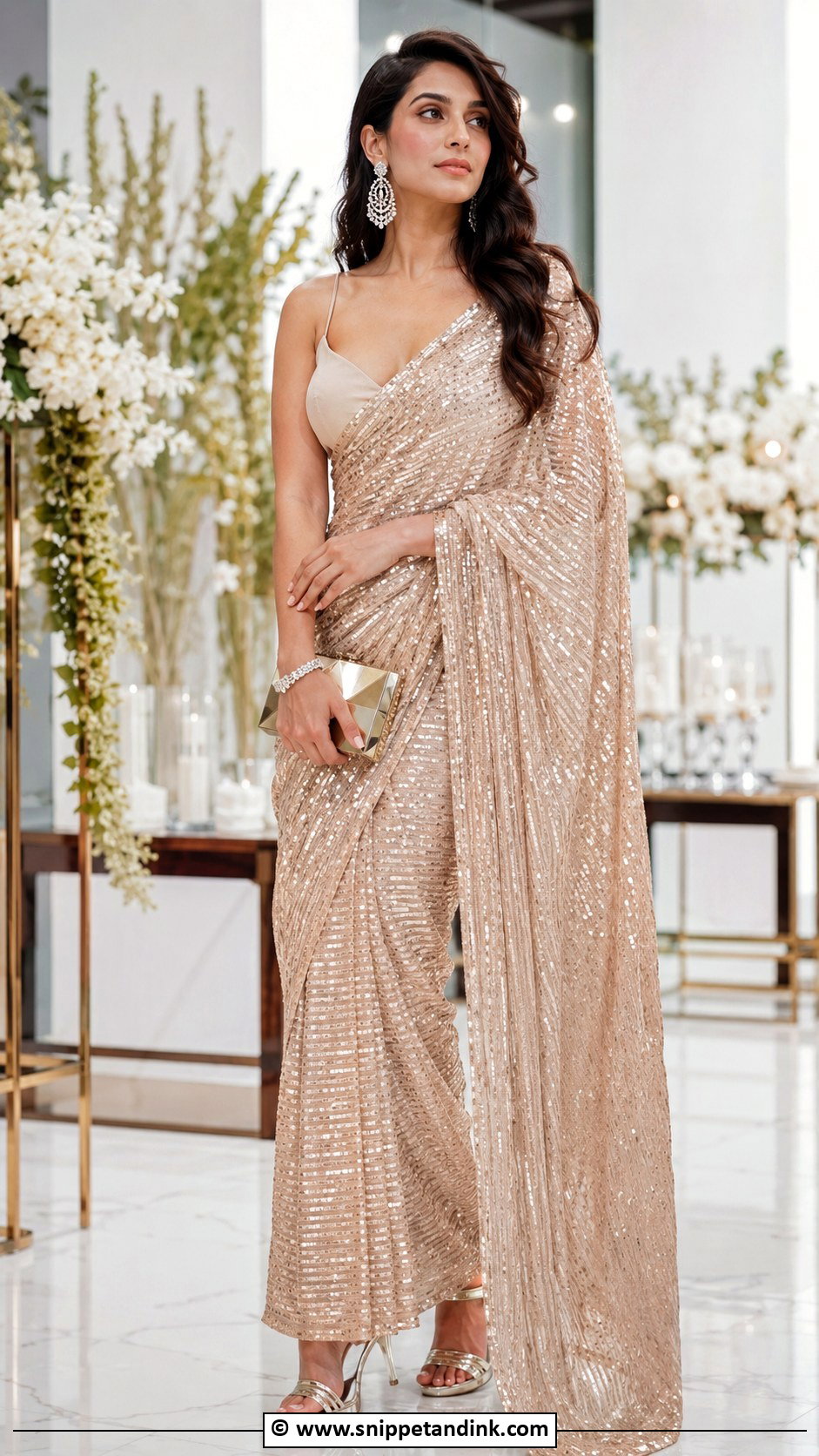
Sequin sarees deliver evening sparkle with almost no styling effort, which suits receptions, sangeet and cocktail events. Champagne, silver, blush, emerald, navy or black all look sleek. If the saree is fully sequined, I keep the blouse plain; if the saree is quieter, a statement blouse can carry the look. Sequins catch on lace and on each other, so limit jewelry to earrings, a bracelet and a clutch. Strappy heels or metallic sandals and a smooth blowout or low bun finish it.
19. Silk Saree
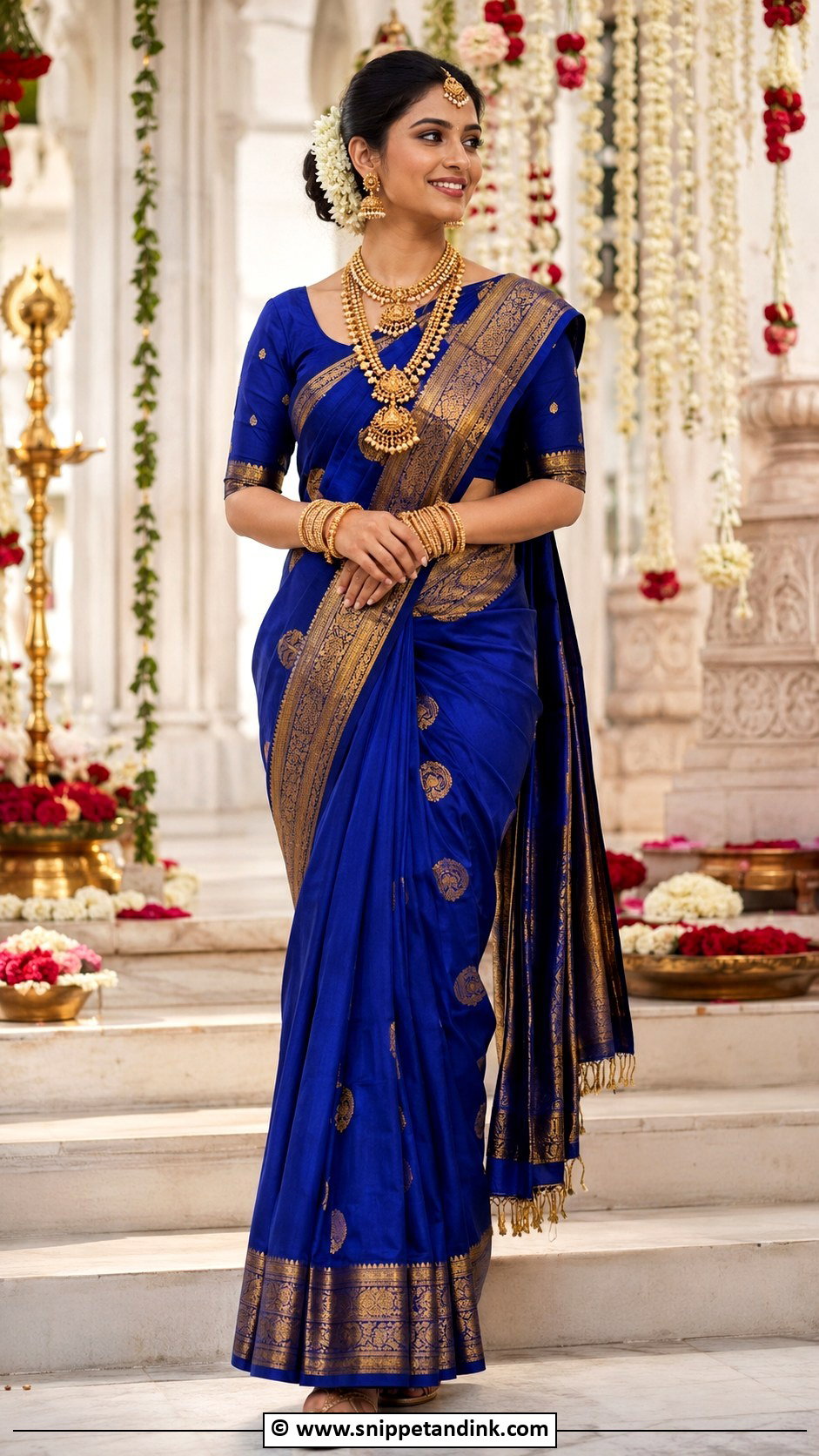
Silk sarees belong at traditional ceremonies, temple weddings, family functions and formal receptions. Kanjivaram, Banarasi, Mysore silk and Paithani each carry their own regional weave and texture. A strong border and a matching or contrasting fitted blouse give the outline. Pleats in heavy silk need to be pressed and pinned before draping; I pin them at the waist from inside and add one more at the hip. Gold jewelry sits naturally with silk: layered necklaces, bangles and classic earrings. Heeled sandals or elegant flats depending on comfort.
20. Ruffle Saree
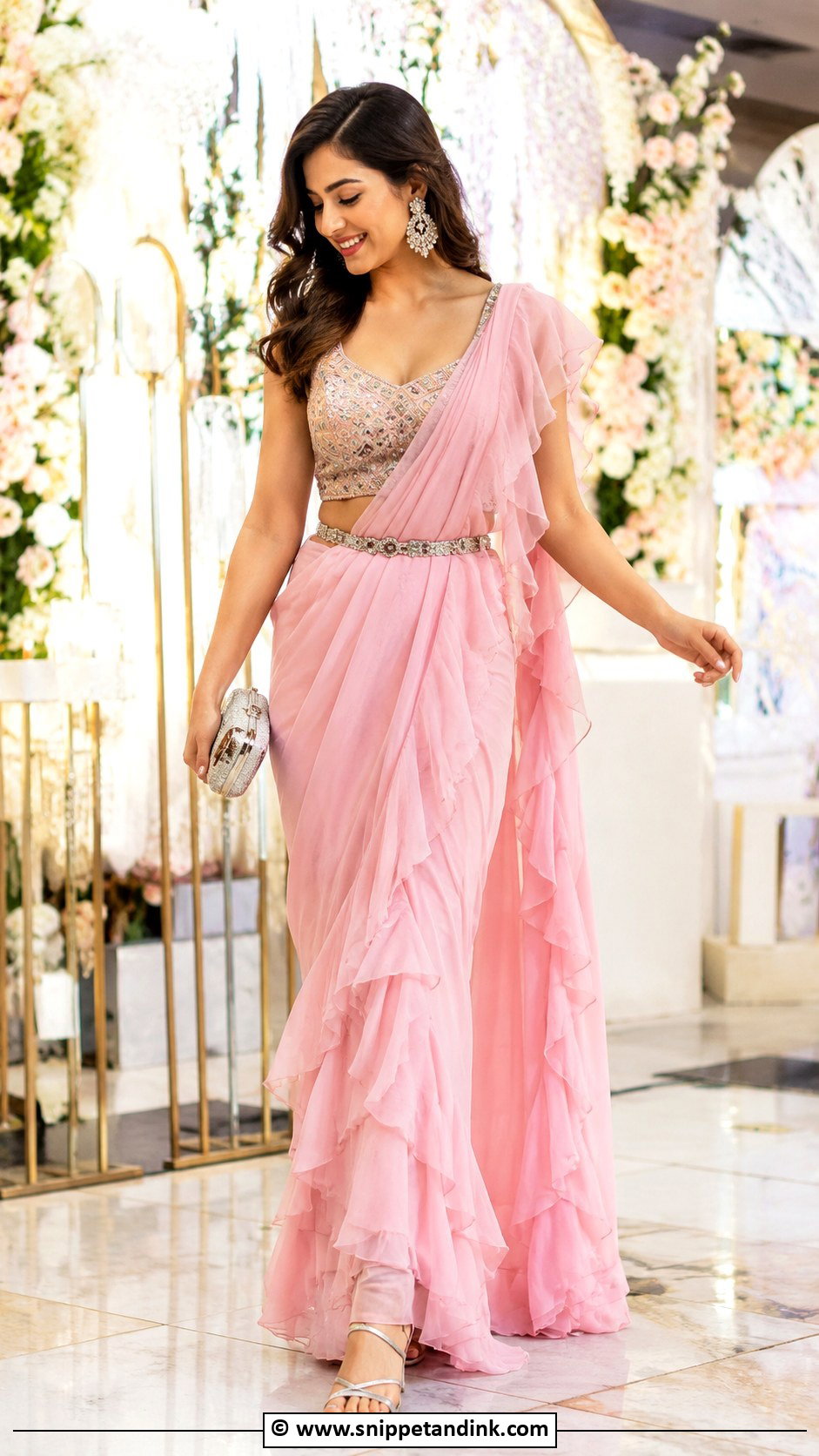
Ruffles give a saree movement without embroidery, which keeps it young and light for sangeet, engagement and reception events. Georgette, chiffon and organza let the ruffled edge fall fluidly. A structured blouse, embellished crop top or sleeveless blouse balances the softness. Ruffles add bulk at the hip where the pleats sit, so I keep the pleats fewer and narrower than usual. A slim belt secures the pallu while dancing. Statement earrings, heels and a small clutch; skip the necklace if the blouse is detailed.
21. Indo Western Gown
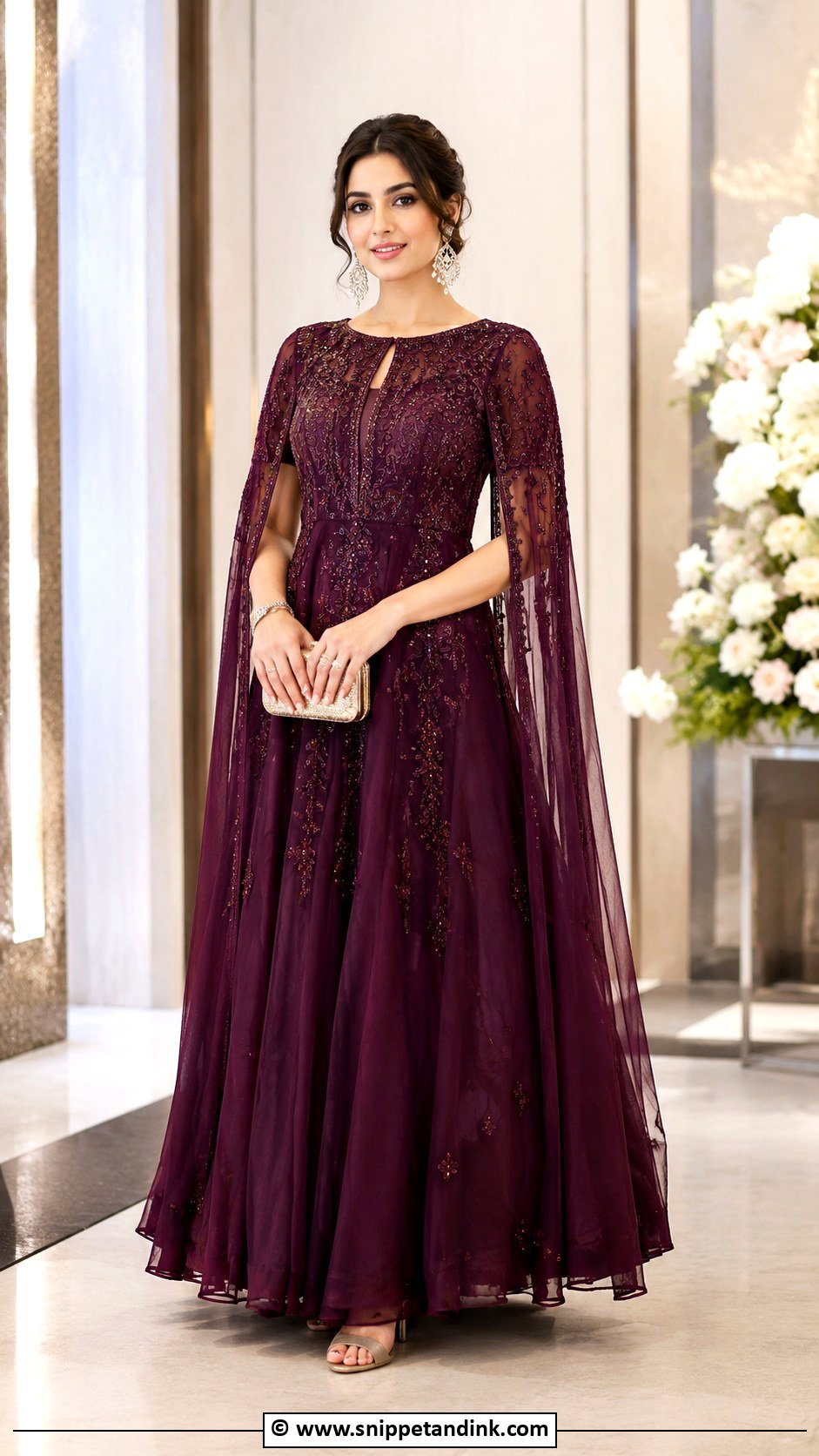
Indo-western gowns suit guests who want one-piece dressing with a South Asian touch. Embroidery, cape sleeves, attached dupattas, mirror work or lehenga-style flare tie the gown to the wedding. Jewel tones, metallics and soft pastels all work by event. I always check the attached dupatta’s weight, since a heavy one can pull the neckline sideways over a few hours. Statement earrings, a bracelet, comfortable heels and sleek hair keep it clean for receptions, engagements and evening parties.
22. Dhoti Kurta Set
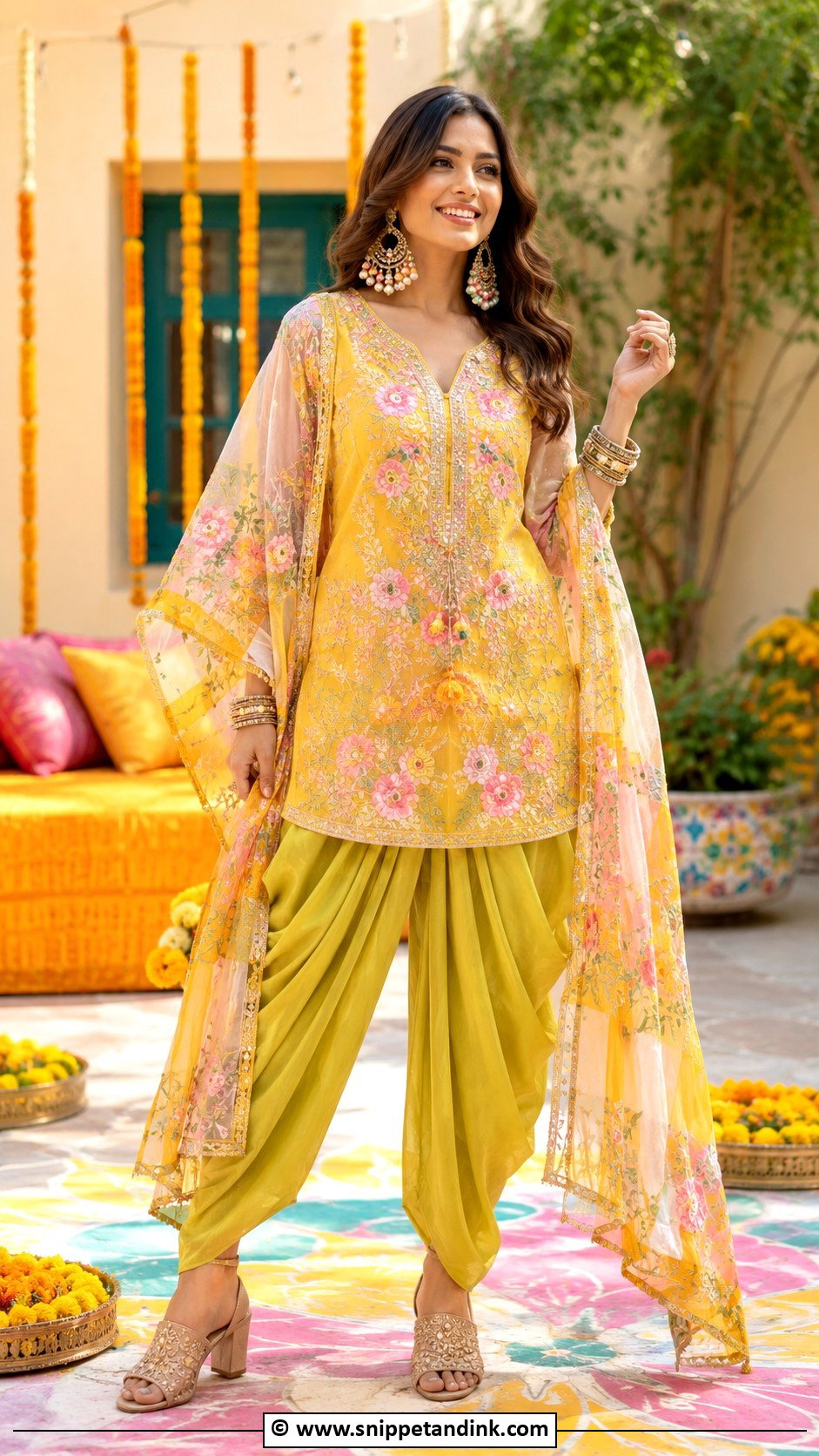
A dhoti kurta set is fusion that actually moves: draped dhoti pants give shape without restricting your stride, so mehendi, haldi and sangeet dancing are easy. A short embroidered kurta and a cape or dupatta complete it. Bright colors and prints suit daytime; silk or satin dress it up for evening. The drape is pre-stitched, so check the crotch depth at fitting, as a shallow drop can make sitting cross-legged on the floor uncomfortable. Statement earrings, stacked bangles and embellished juttis or block heels.
23. Co Ord Lehenga Set
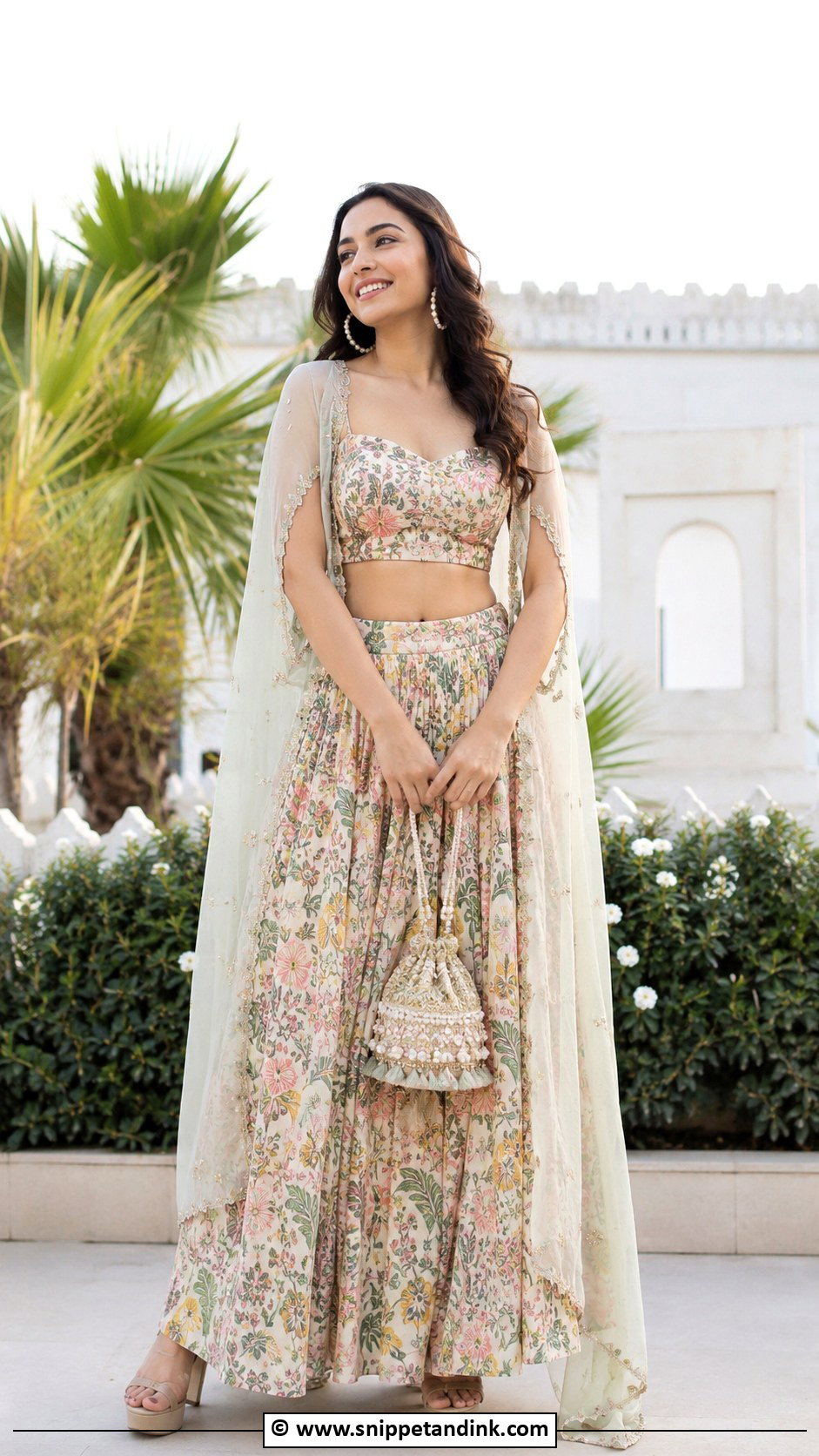
Co-ord lehenga sets give guests, bridesmaids and sisters a coordinated look with almost no styling. A matching skirt and blouse, sometimes with a cape, jacket or light dupatta, does all the work. Printed sets suit mehendi and haldi; embellished ones suit receptions and sangeet. Georgette, silk blends, crepe and organza wear comfortably. If a group of bridesmaids is ordering together, I have everyone order the same size chart early, because dye lots can vary between batches. Hoop earrings, bangles, platform heels and a matching potli bag.
24. Pakistani Long Frock
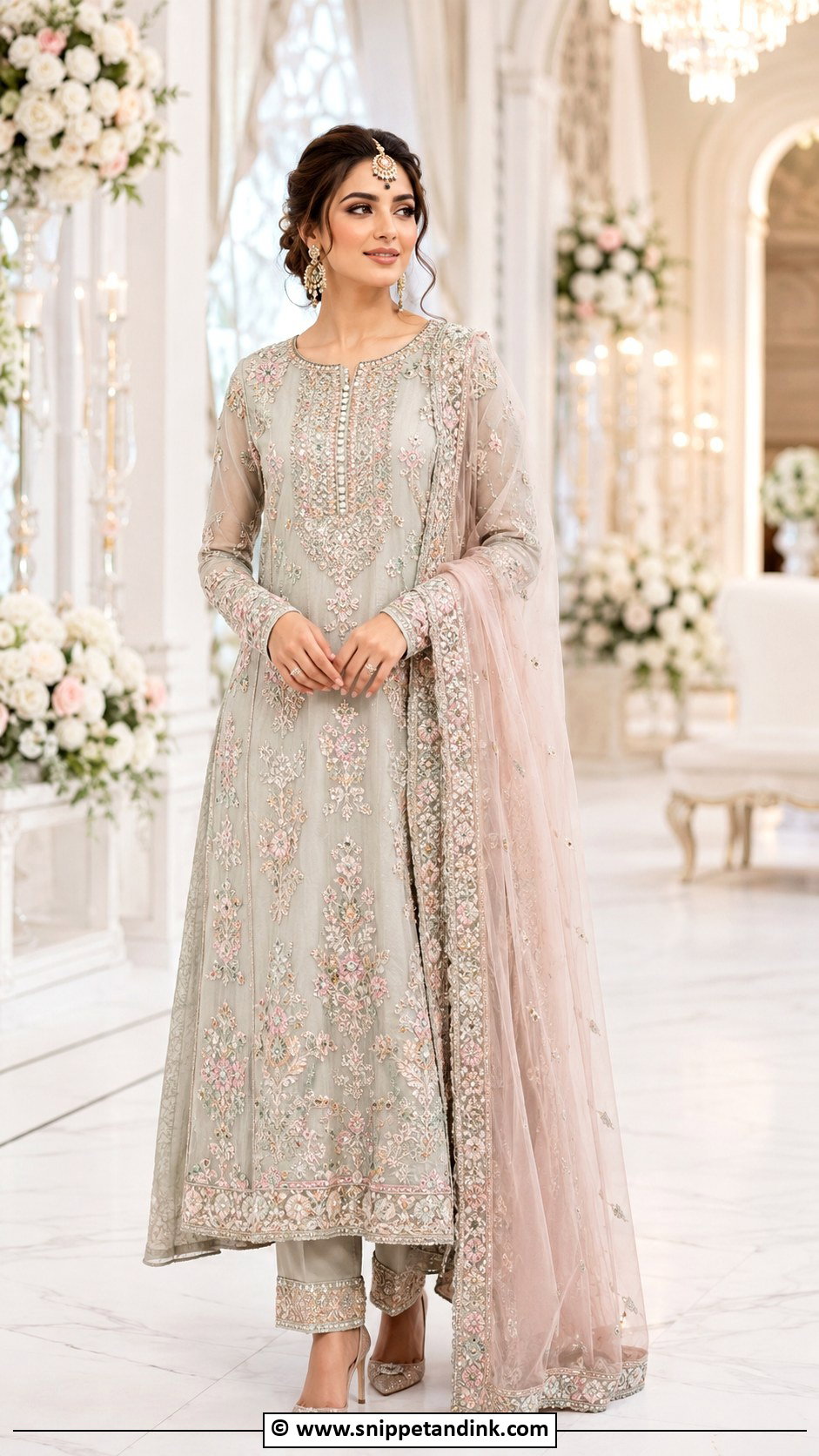
A Pakistani long frock flows from the bust to near the ankle, modest and graceful without clinging, and suits nikkah, walima, engagement and formal events. Fine embroidery, pearls, zari or sequins at the neckline, sleeves and hem give it the detail. Straight pants, churidar or cigarette trousers with a soft dupatta complete it. Pastels, ivory, gold, sage and dusty pink are favorites for refined ceremonies. With a frock this long, I hem it in the exact shoes, since a long hem drags on steps. Passa jewelry, jhumkas or a fine choker and pointed heels or embellished flats.
25. Punjabi Patiala Suit
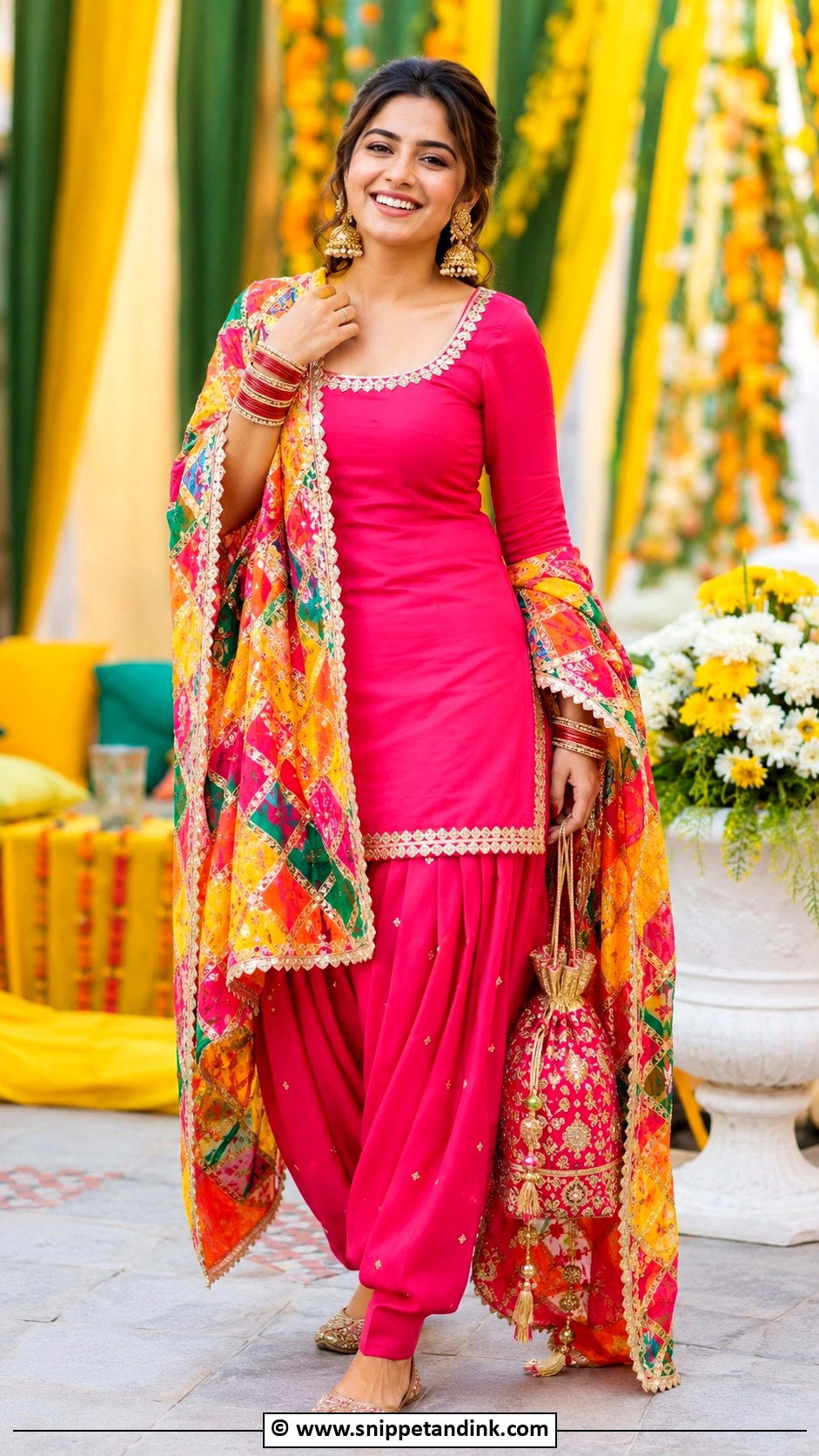
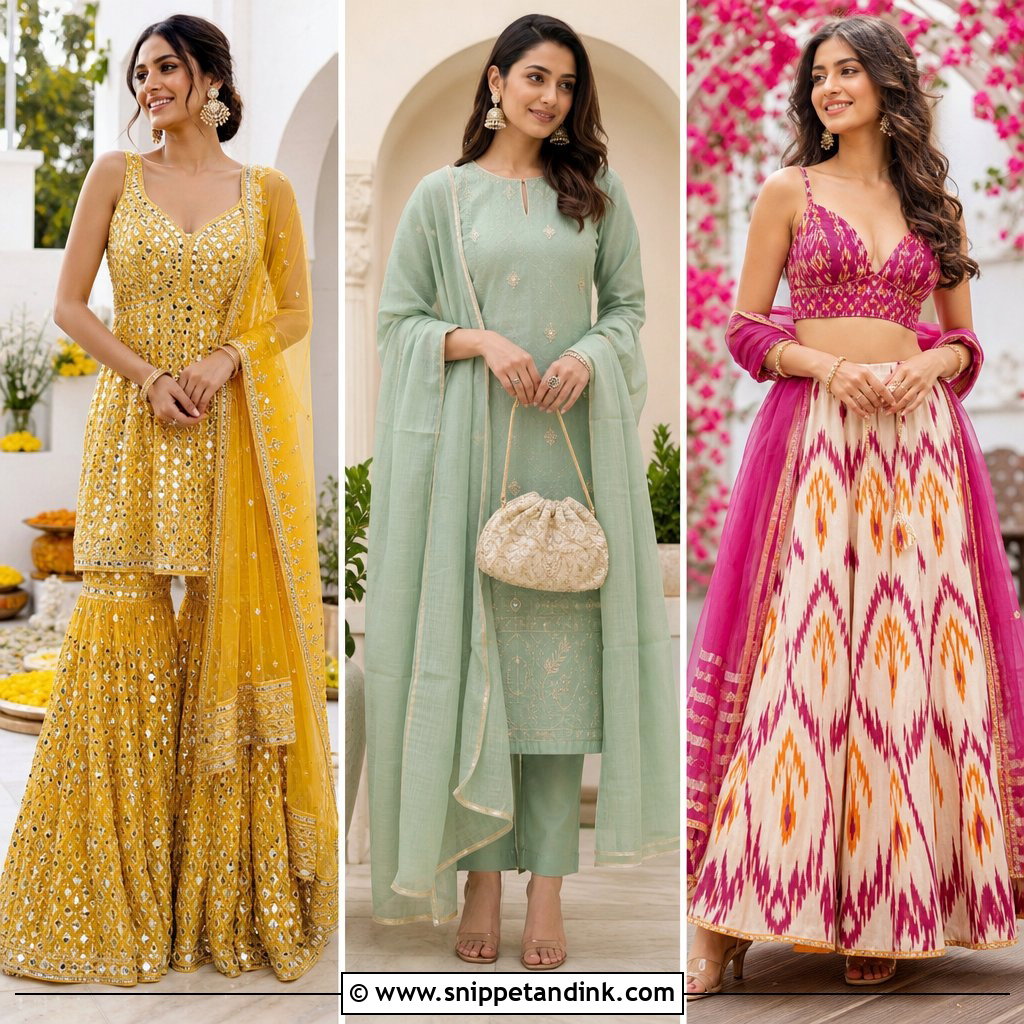
A Punjabi Patiala suit is made for mehendi, jaago and the dancing family events. The deep pleats of Patiala pants give comfort and swing; a short kurti keeps it lively. Yellow, pink, green, coral and royal blue with phulkari, gota or mirror details all feel festive. Patiala pants use a lot of fabric, so I keep the kurti fitted to stop the outfit from looking wide everywhere. A phulkari dupatta, juttis, bangles, jhumkas and a paranda complete the traditional look.
26. Saree With Belt
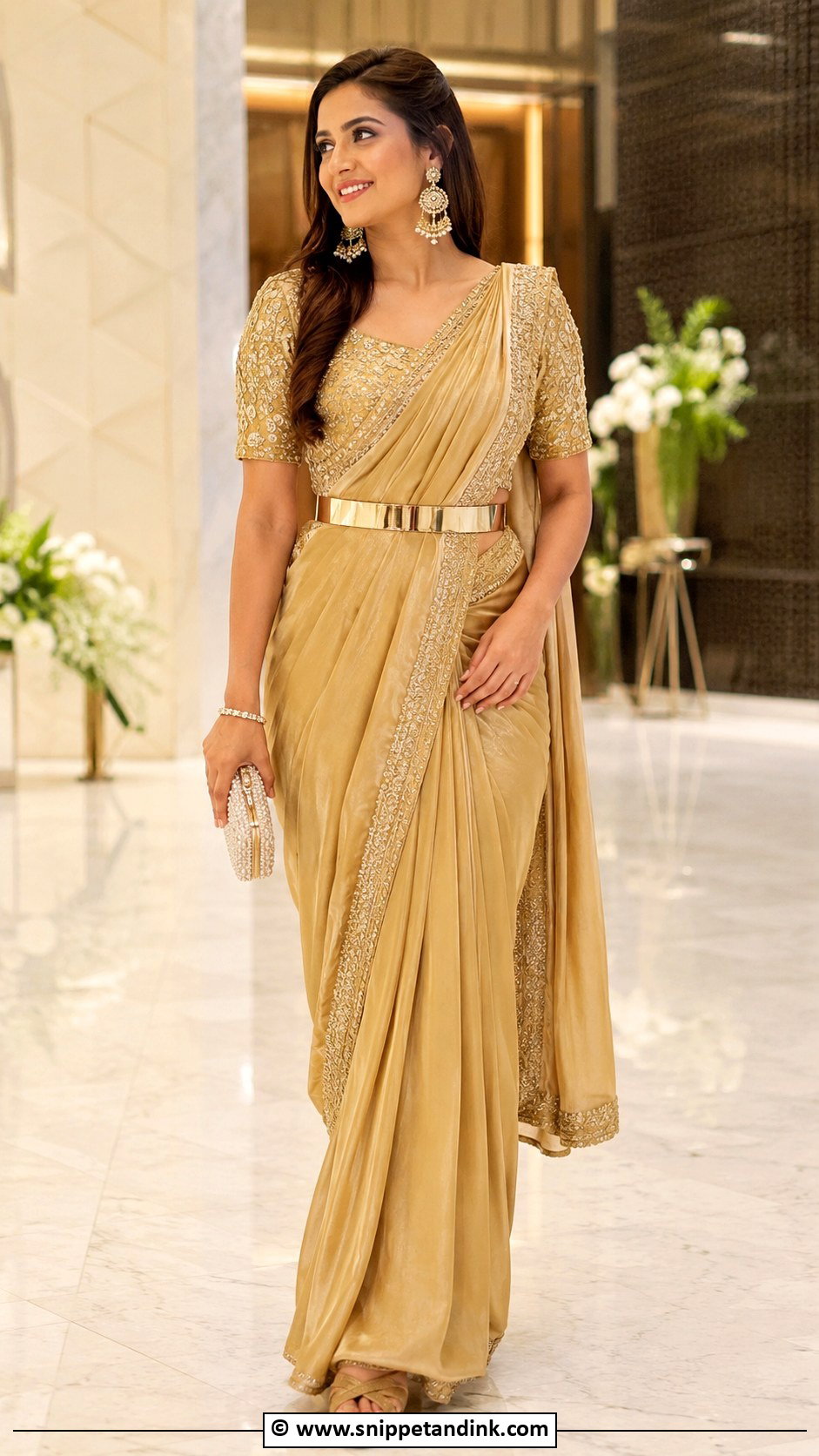
A belt solves the saree’s biggest worry, the pallu slipping. It also defines the waist, which suits receptions, sangeet and formal ceremonies. Silk, organza, chiffon or georgette all take a metallic, embroidered or fabric-covered belt. I place the belt after the drape is pinned, sitting at the narrowest part of the waist, and check it doesn’t dig in when seated. Match the blouse to the belt’s style, keep jewelry to earrings and a bracelet when the belt is ornate, and wear heels so the drape falls cleanly.
27. Lehenga Saree
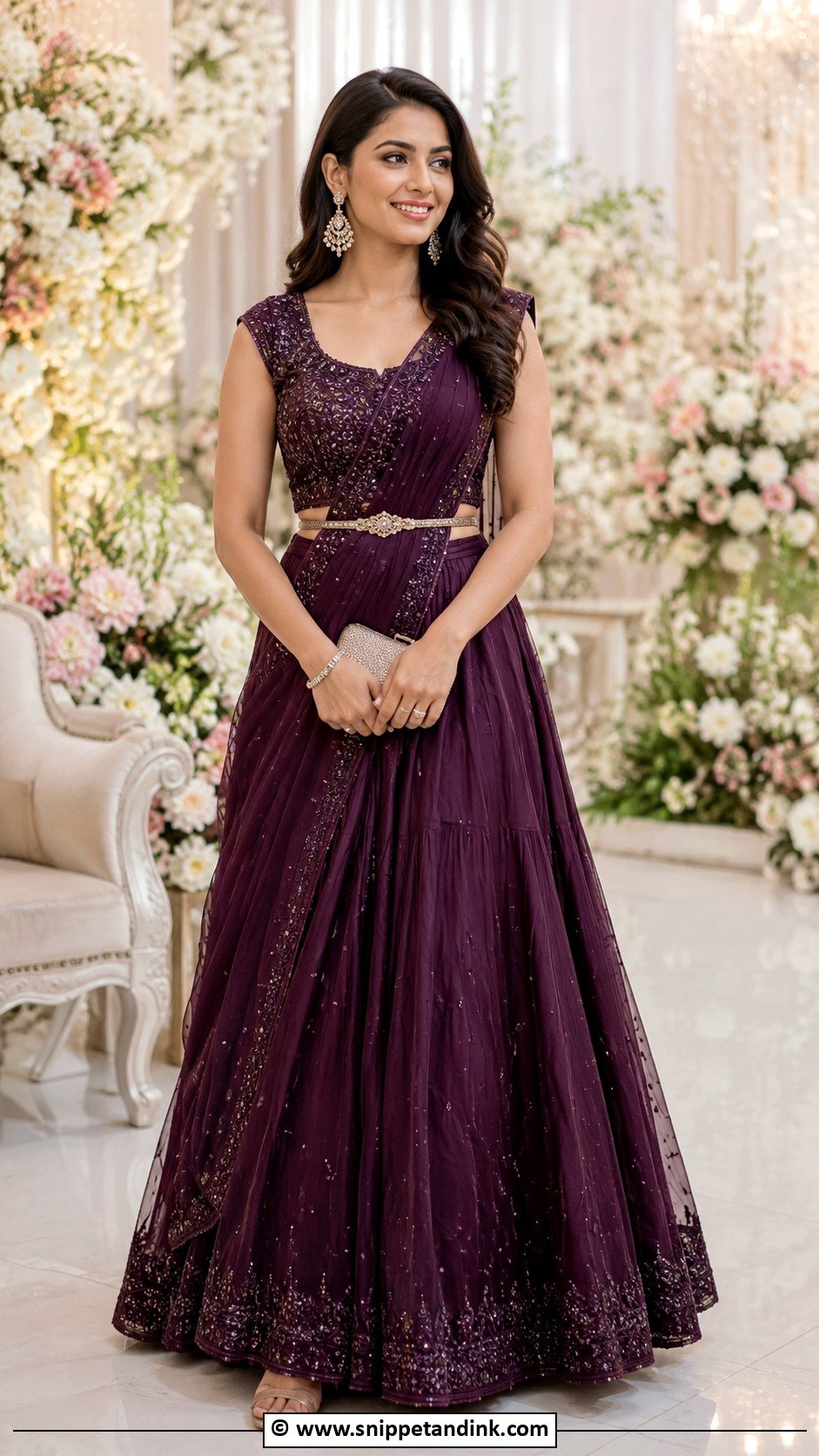
A lehenga saree gives the saree silhouette with a skirt underneath, so there’s no pleating at all. The lehenga-style bottom pairs with a pre-draped or easy-wrap pallu, suiting receptions, engagements and ceremonies. Embroidered borders, sequins or soft zari give it the festive finish. Because the skirt often has volume, I check the hem in heels and make sure you can climb a stair without lifting it by hand. A structured blouse, elegant earrings and a waist belt if the pallu is light.
28. Printed Anarkali
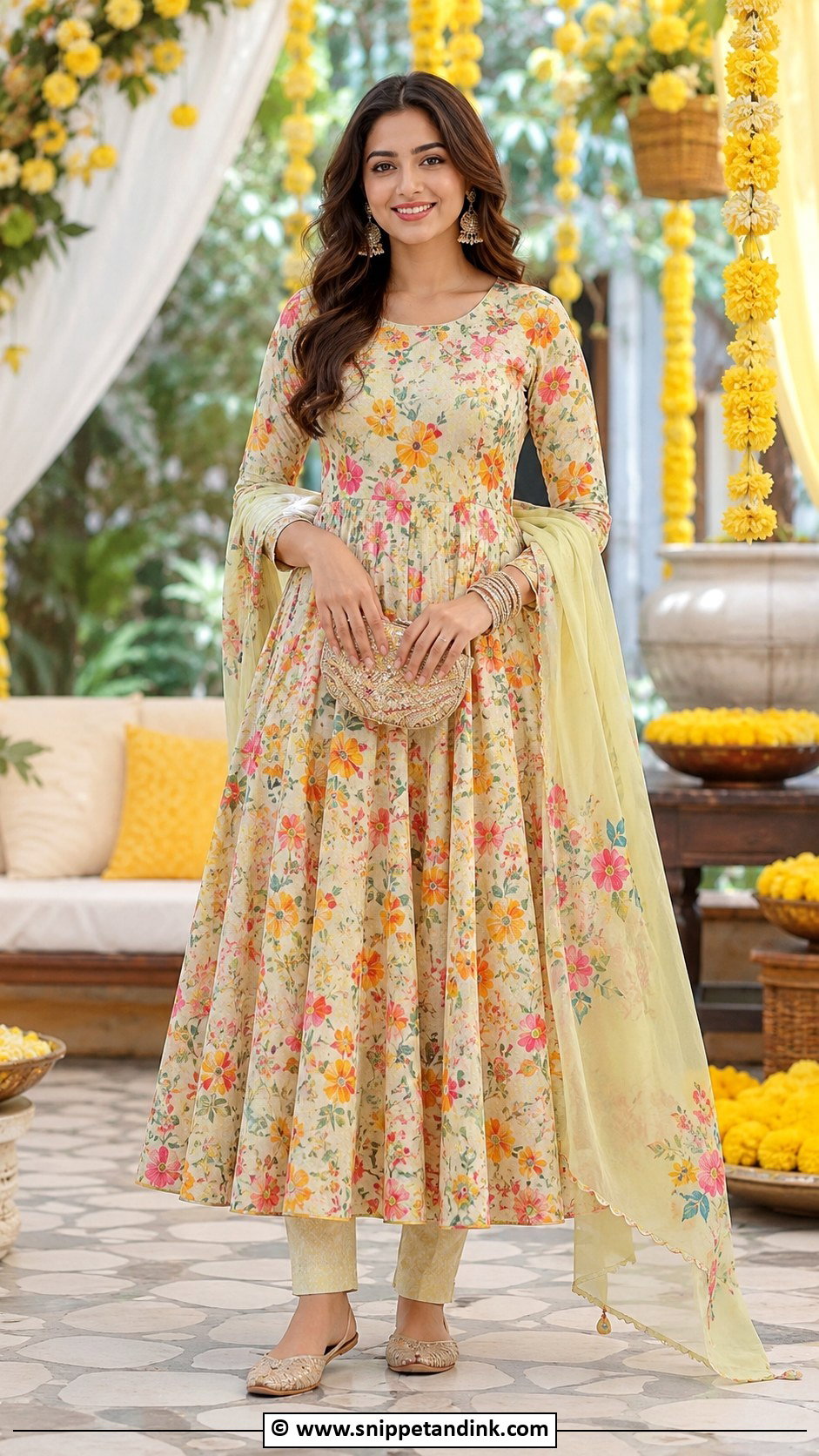
A printed Anarkali is the easiest daytime outfit to wear for mehendi, haldi and welcome events. Florals, paisley, block prints and abstract patterns all suit it if the colors are festive. Block-printed cotton can bleed when it first gets wet, so I’d wash it once before the event or keep it away from pale fabrics. With a bold print, keep jewelry to earrings and bangles; with a subtle one, add a statement necklace or heavier dupatta. Juttis, wedges or block heels keep you comfortable.
29. Black Reception Lehenga
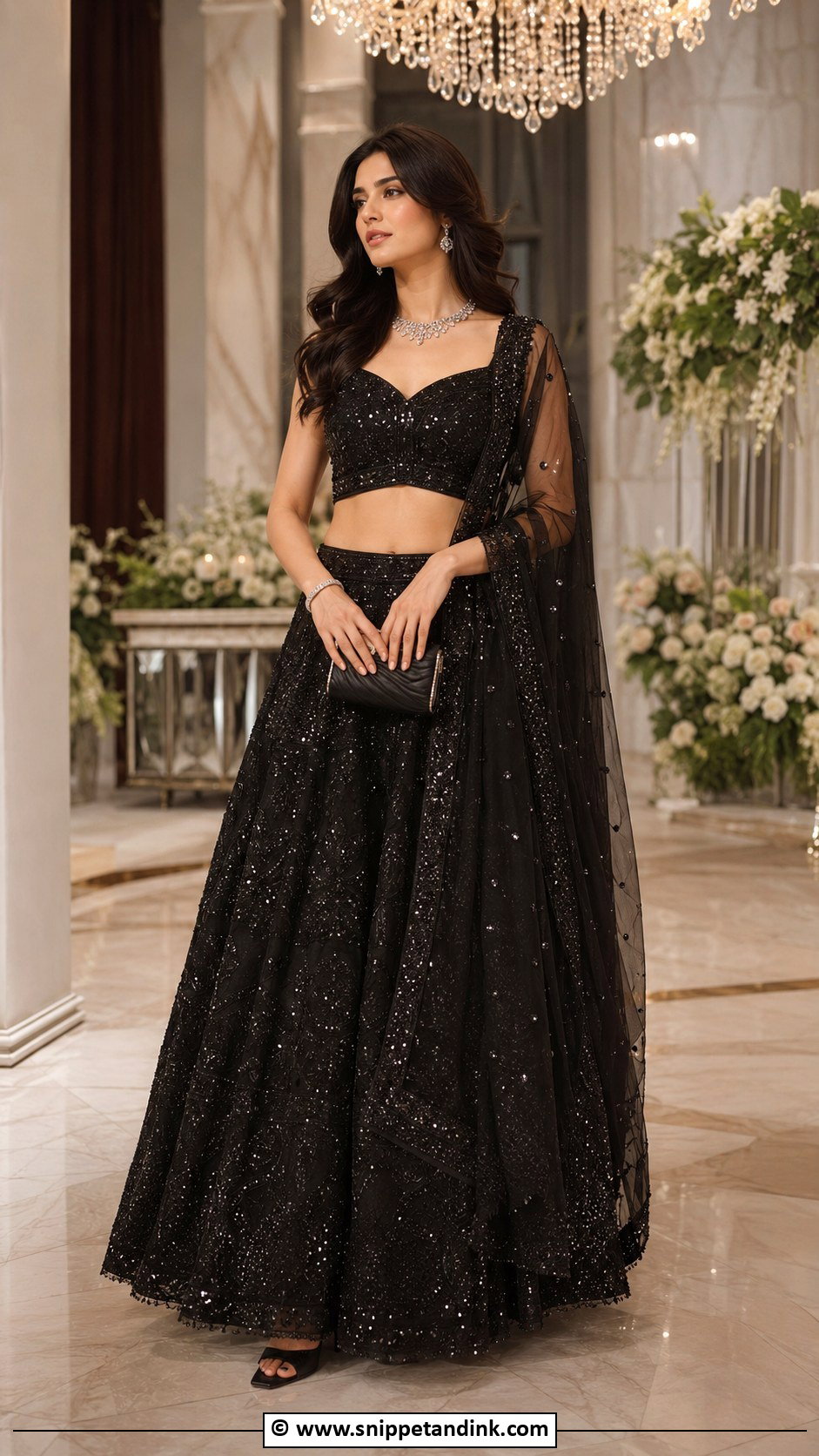
Black works for evening receptions and glamorous sangeet nights, but I always check with the family first, as some households still avoid black at weddings. Sequins, crystals, thread embroidery or metallic borders keep it festive. A structured blouse with a sheer dupatta balances the weight, and silver, diamond-style or emerald jewelry adds contrast. A sleek bun, smoky eye and nude lip suit it. Save it for evening functions rather than morning ceremonies.
30. Bridesmaid Lehenga
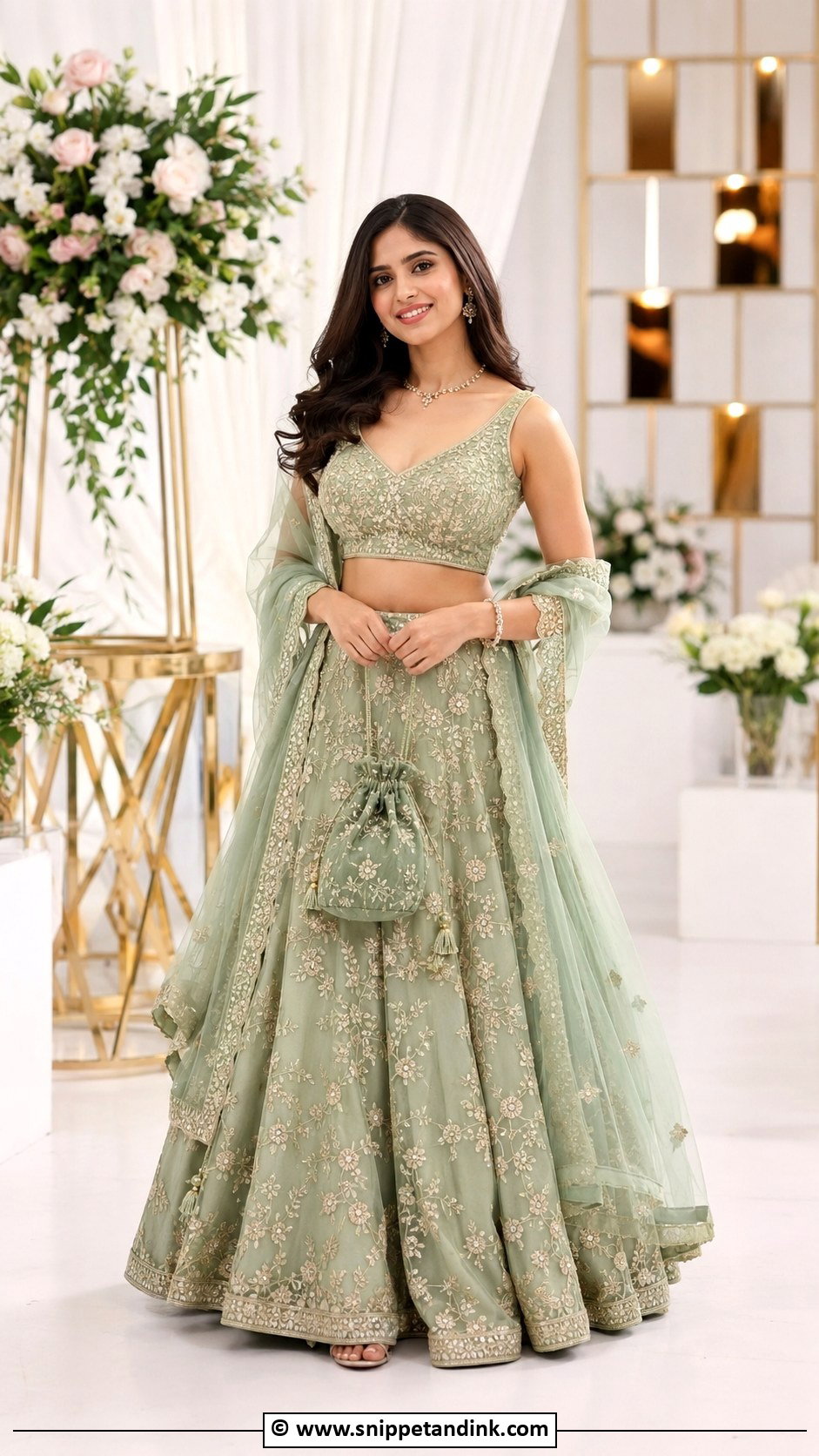
Bridesmaids work hard: entrances, photos, holding the bride’s dupatta and fixing her lehenga. Their lehengas need to look coordinated and still let them move all day. Soft pastels, jewel tones or family colors can tie into the palette. I keep bridesmaid lehengas lighter, with embroidery at the hem, blouse or dupatta rather than all over, and always add pockets where the tailor can. Comfortable heels, a potli bag, jewelry that won’t catch, and a secure dupatta drape let each bridesmaid feel confident and beautiful.
Renting, Borrowing or Re-Wearing a Heavy Lehenga
A heavily embroidered lehenga may be worn for a few hours. For guests, sisters and even some brides, renting or re-styling makes more sense than buying new for every event. Rental services for designer lehengas and sarees are common now, but I’d book early in wedding season, check the cleaning and damage policy in writing, and ask what alterations are allowed. Most rentals can be taken in with temporary stitching but not cut.
If you own the outfit, plan its second life. A lehenga skirt can return with a crop top or a different blouse; a heavy dupatta can dress up a plain suit; a saree blouse can be worn under a new saree. Buying pieces in colors you’ll wear again makes all of this easier.
Safety Pins, Fashion Tape and a Slipping Drape
Most wardrobe problems on a wedding day are small and fixable in a minute, if someone has the kit. I give one to a sister or cousin, not the bride.
- Small and medium safety pins in gold and silver, for pallus, dupattas and pleats.
- Double-sided fashion tape for necklines and blouse edges that gape.
- A mini sewing kit with thread close to your outfit colors, for a loose hook or hem.
- Bobby pins and U-pins for securing a dupatta to the hair.
- Blotting papers, a stain pen and a spare pair of flat shoes for the late hours.
Practice your drape once at home with the same pins. If the pallu still slides, add a pin through the blouse strap from the inside; it holds better than pinning to the fabric alone.
Which Function Gets Your Heaviest Outfit?
Every function from haldi and mehendi to the ceremony, sangeet and reception asks for something different, and so does every role. A lehenga brings drama, a saree brings tradition, a sharara brings movement and an Anarkali brings easy grace. Cape lehengas, pre-draped sarees and Indo-western gowns make the week simpler for anyone who doesn’t want to fight fabric. Decide where you want your most formal look, plan lighter pieces around it, and put real attention into fit, shoes and secure draping. You’ll enjoy the celebrations more, and it will show in the pictures.
You'll Like These Ideas:


Leave a Reply