
Dressing as a guest at a Desi wedding is a different job from dressing the bride. You’ll be photographed constantly, you may sit on the floor for a ceremony, eat with your hands near a silk drape and dance until late, and you’re expected to look festive without competing with the couple. The silhouettes I suggest most often are a light lehenga, a saree (pre-draped if you’re not used to pinning one), a sharara you can dance in, or a long Anarkali. Before any of those, I ask three things: what time the function starts, whether it’s indoors or on a lawn, and whether the family has a colour request. Work through the 20 Desi Fits for Wedding Ideas below with your own list of functions in hand, and pay as much attention to the shoes and dupatta pins as to the embroidery.
Colours a Guest Should Ask About First
Desi weddings span many communities, and the unwritten colour rules differ between them. I always tell guests to ask the family directly rather than guess, but these are the questions worth raising:
- Red: in many North Indian and Pakistani families, red is the bride’s colour for the main ceremony. Guests usually avoid a solid red lehenga or saree that day unless told otherwise.
- White and ivory: in some Hindu communities white is linked to mourning, while at many Muslim and Christian ceremonies it is perfectly normal. Ask.
- Black: plenty of families wear it happily to a reception, while others still avoid it at auspicious events.
- Theme colours: many couples now give each function a colour, yellow for haldi, green for mehndi. It’s a request, so follow it.
Coverage matters too. At a gurdwara ceremony everyone covers their head, removes shoes and sits on the floor, so a dupatta that stays put and an outfit that lets you sit cross-legged are essential. At a mosque nikkah, covered arms and a head scarf or dupatta are expected. A temple ceremony may also mean sitting on the floor for a long time. Check the venue as well as the dress code.
1. Pastel Lehenga Wedding Outfit
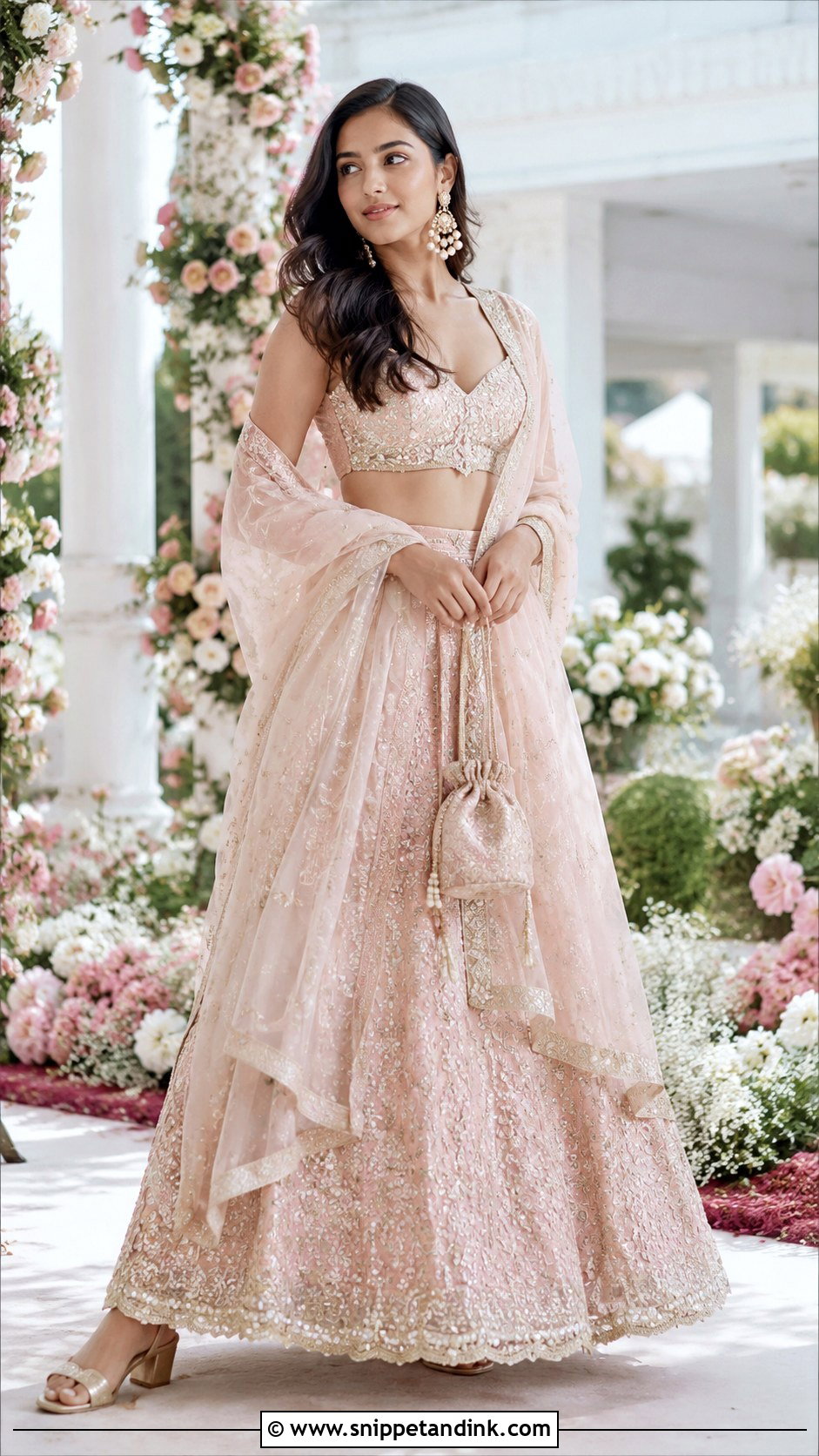
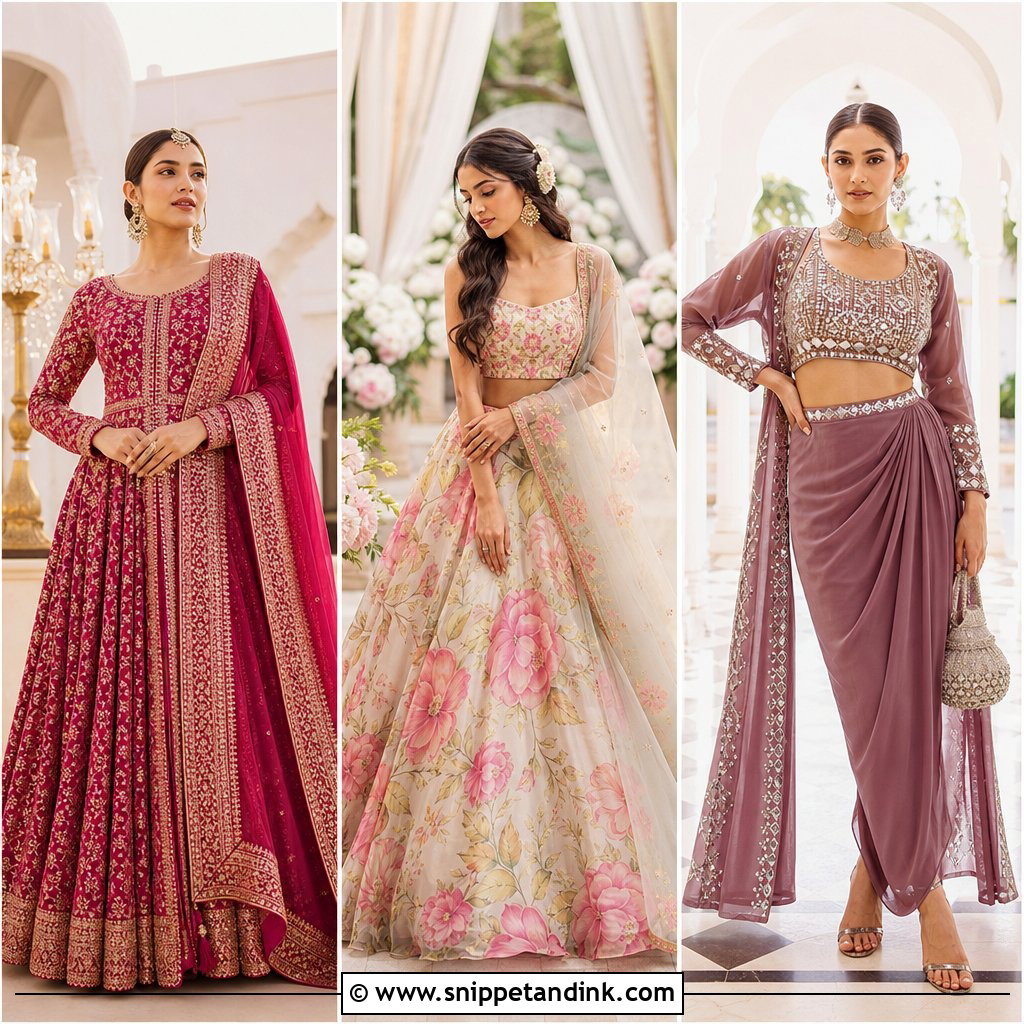
Pastels are the easiest daytime choice for a guest, as long as the lehenga doesn’t drift into bridal territory. Blush, powder blue, lilac, mint or peach with fine threadwork rather than heavy zardozi keeps it light. A fitted blouse and a net or organza dupatta over one shoulder leaves your hands free for the buffet and lets the skirt embroidery show. Pearl earrings, a small potli and metallic block heels finish it, with soft waves or a low bun. The test I use: if a stranger could mistake you for a bride in the group photo, scale it back.
2. Banarasi Silk Saree Wedding Outfit
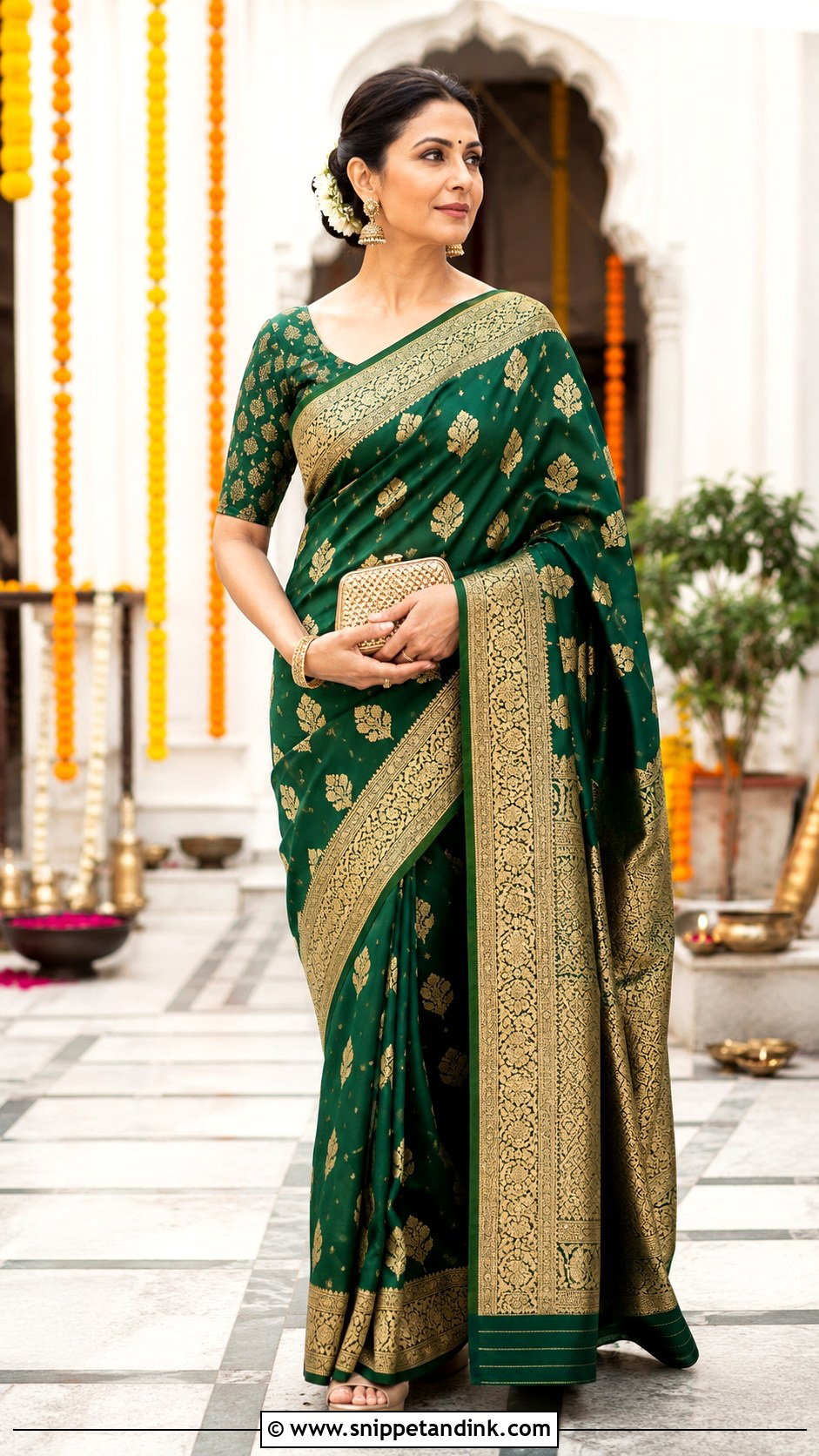
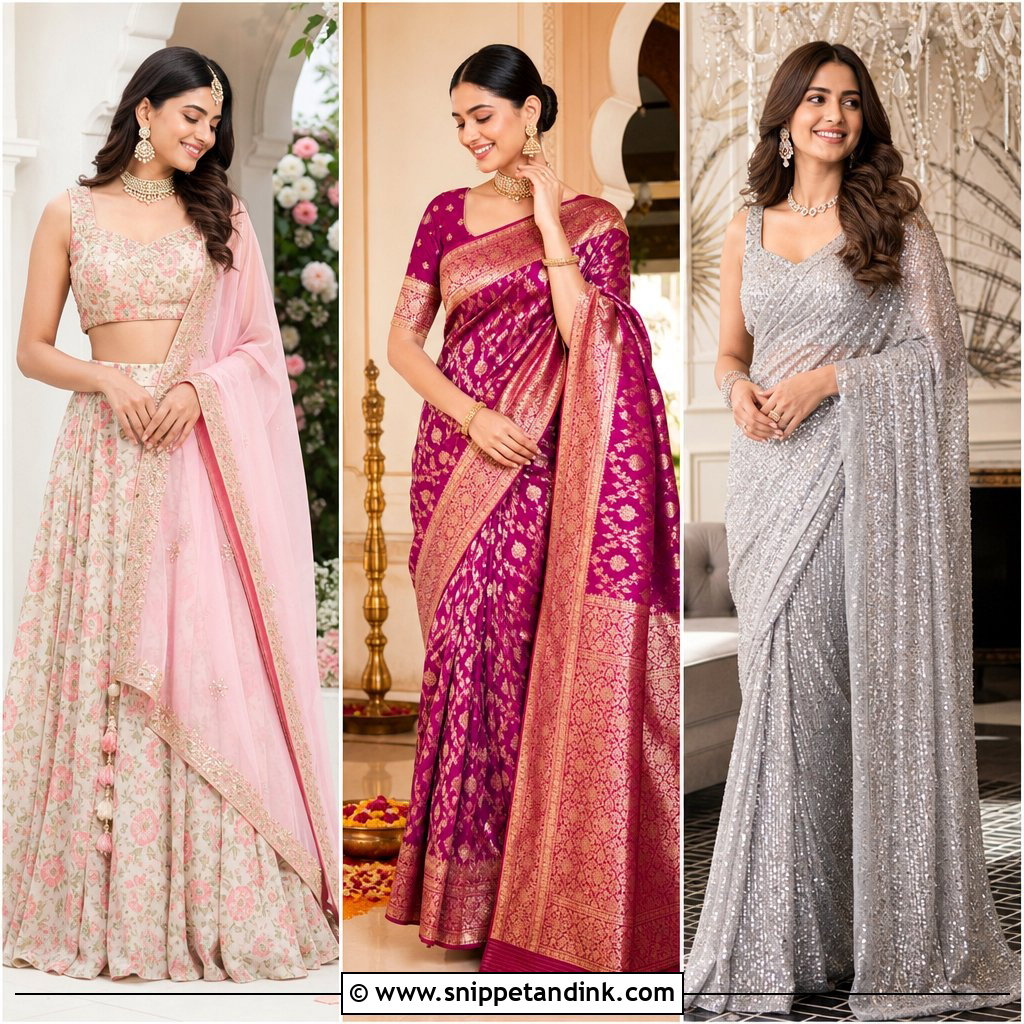
Banarasi silk is woven, not embroidered, so the gold motifs are part of the cloth and the saree carries itself without much help. Emerald, royal blue, deep purple, rust and mustard all hold those motifs well. The silk is quite stiff, which is why I like an elbow-sleeve blouse with a little ease at the armhole; tight sleeves in a heavy saree get uncomfortable during a long ceremony. Temple-style earrings, slim bangles and a structured clutch are enough. Platform sandals hidden under the hem help with the length. A bun with fresh flowers and defined but soft makeup complete it, and skip extra layers of jewelry.
3. Mirror Work Sharara Wedding Outfit
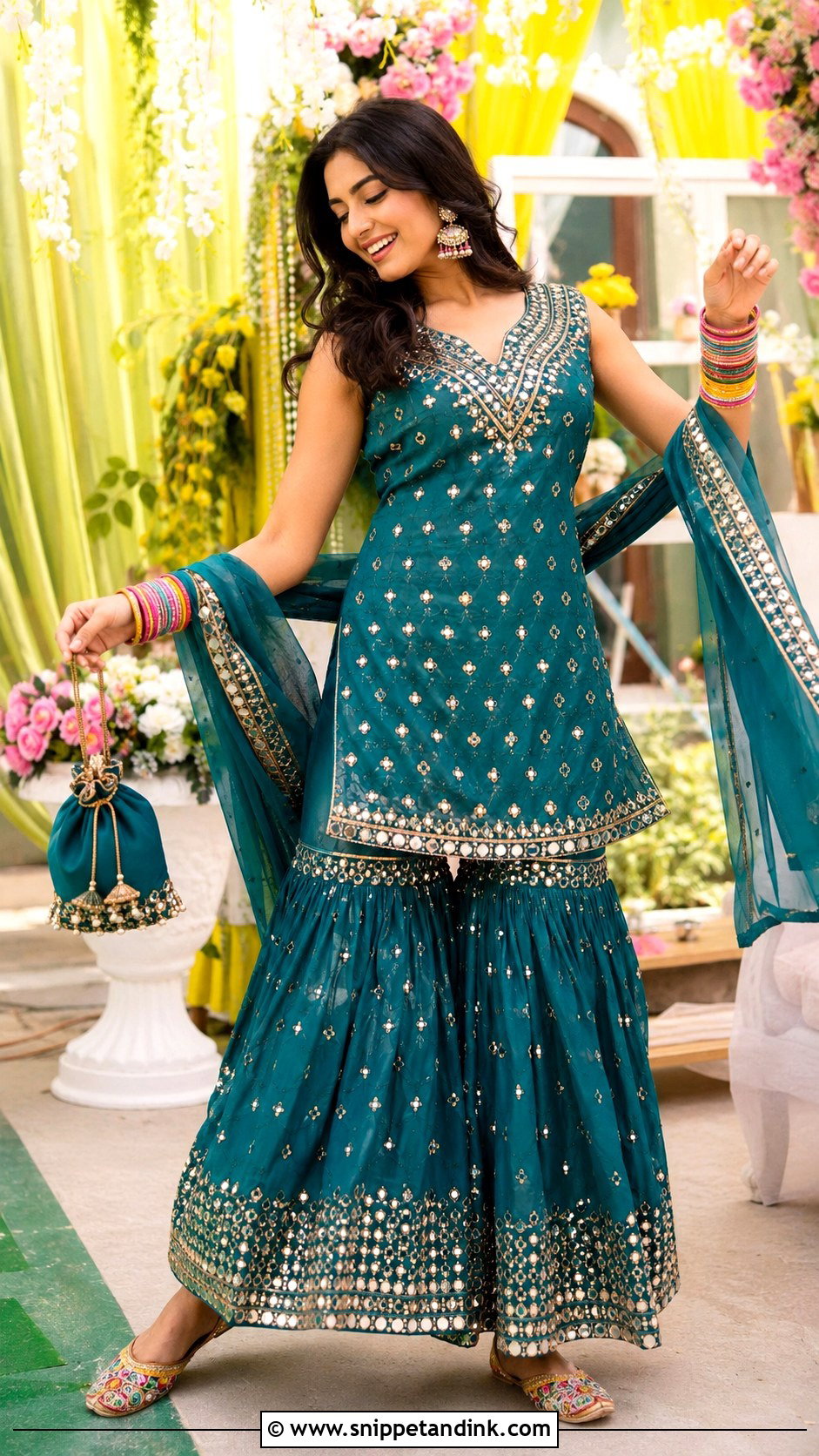
Heading to a lively mehndi or sangeet? A mirror work sharara catches every light in the room and lets you dance properly. Wide flared pants under a short or mid-length kurti in teal, fuchsia, orange or lime green. Choose a light dupatta with just a bordered edge; a heavy one slides off every time you raise your arms. Real mirror work has small hard edges, so check the inside of the kurti is lined where it touches skin. Jhumkas, bangles, an embroidered potli and cushioned juttis or low block heels. A braid or high ponytail shows the neckline, and the necklace can stay at home.
4. Floor Length Anarkali Wedding Outfit
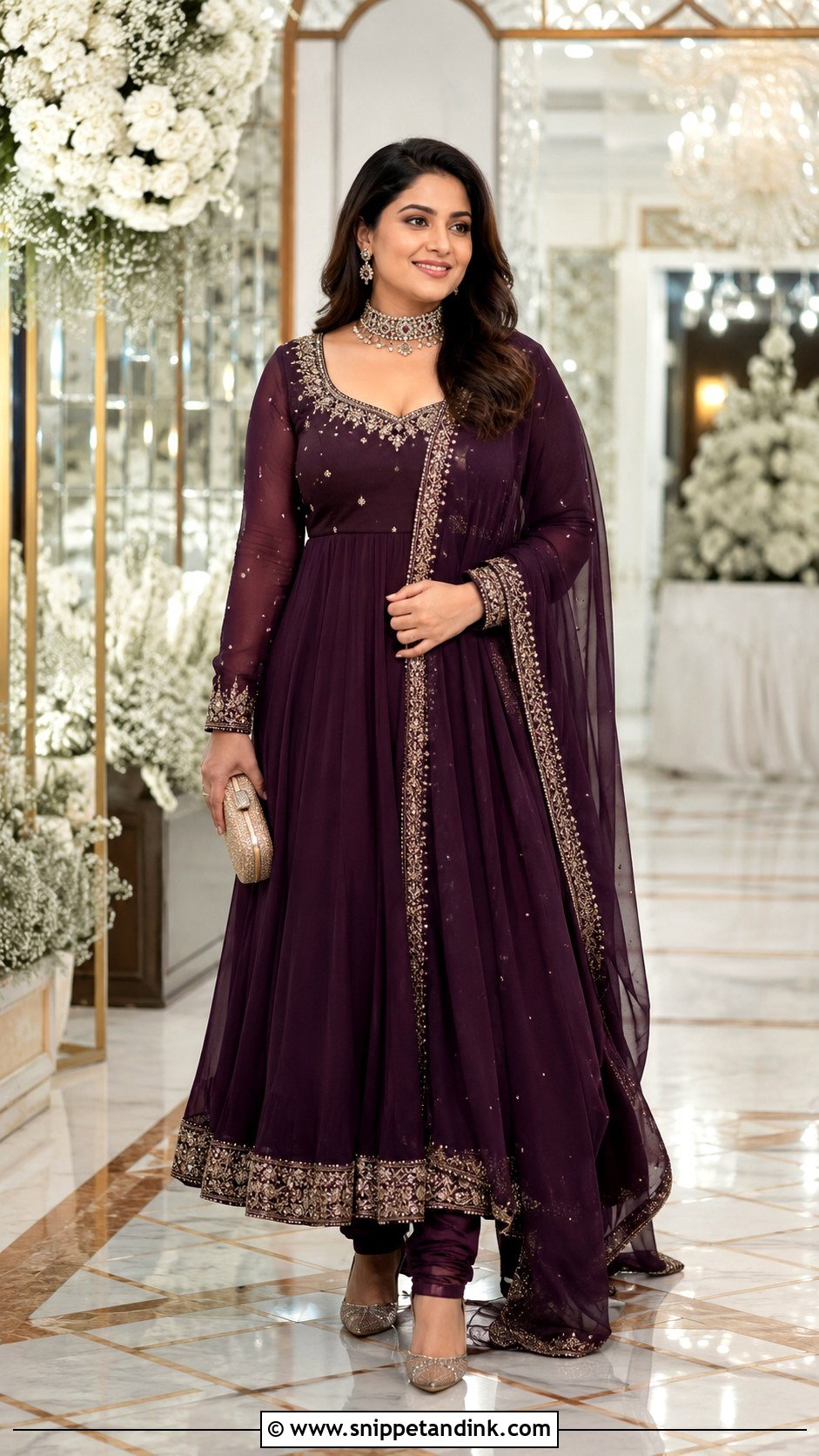
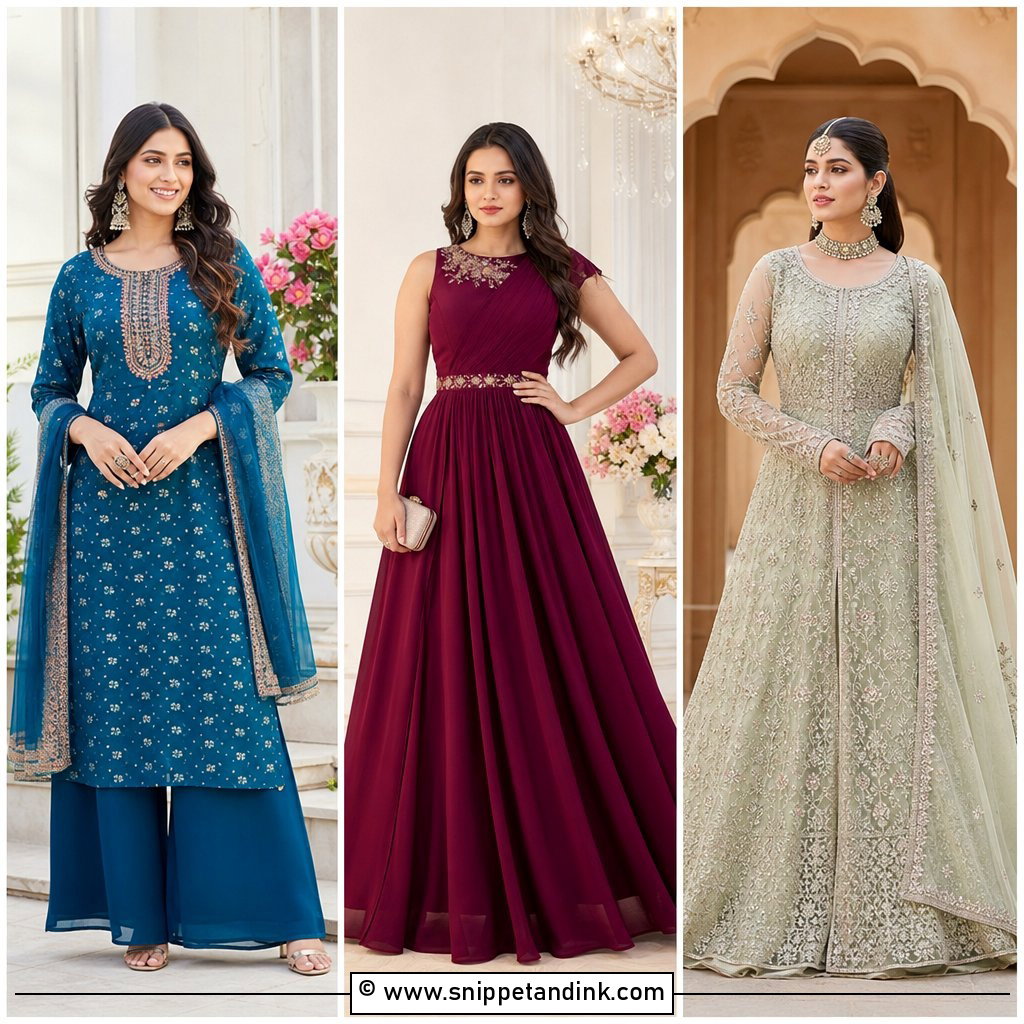
A floor-length Anarkali gives you the presence of a gown with a clearly Desi line, which is why it suits a reception, nikkah or formal evening so well. Look for a fitted bodice, a defined waist and a fluid georgette, silk or chiffon skirt. Jewel tones like sapphire, plum, emerald and deep teal hold up under warm evening lighting. The panel count changes everything: more kalis means more flare and more weight, so try it in the shoes you’ll wear. Churidar, a neatly draped dupatta and pointed embellished flats or heels. Choose a choker or statement earrings, not both at full size, then a polished bun or side-swept waves.
5. Organza Saree Wedding Outfit
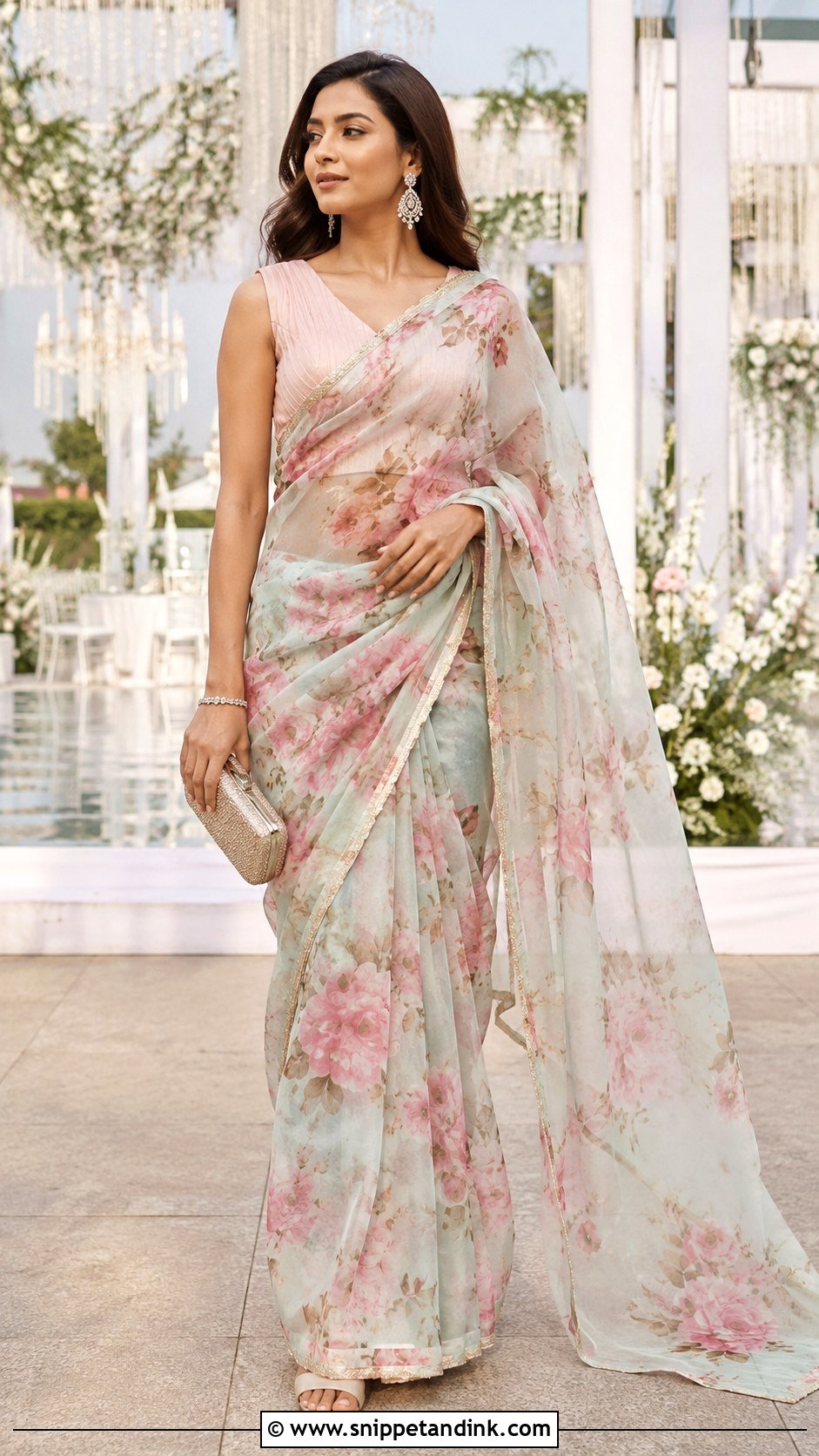
Organza is crisp and airy, which makes it pleasant in heat and slightly tricky to drape, because it holds volume instead of falling flat. I pleat it narrower than silk and pin the pallu in two places so it doesn’t puff out at the shoulder. Floral prints suit daytime; embroidered borders or scattered sequins move it into the evening. A solid structured blouse balances the translucent fabric, sleeveless, square neck or elbow sleeve as you prefer. Crystal earrings, a compact clutch and slim heels keep it clean, with a sleek ponytail or low bun.
6. Velvet Gharara Wedding Outfit
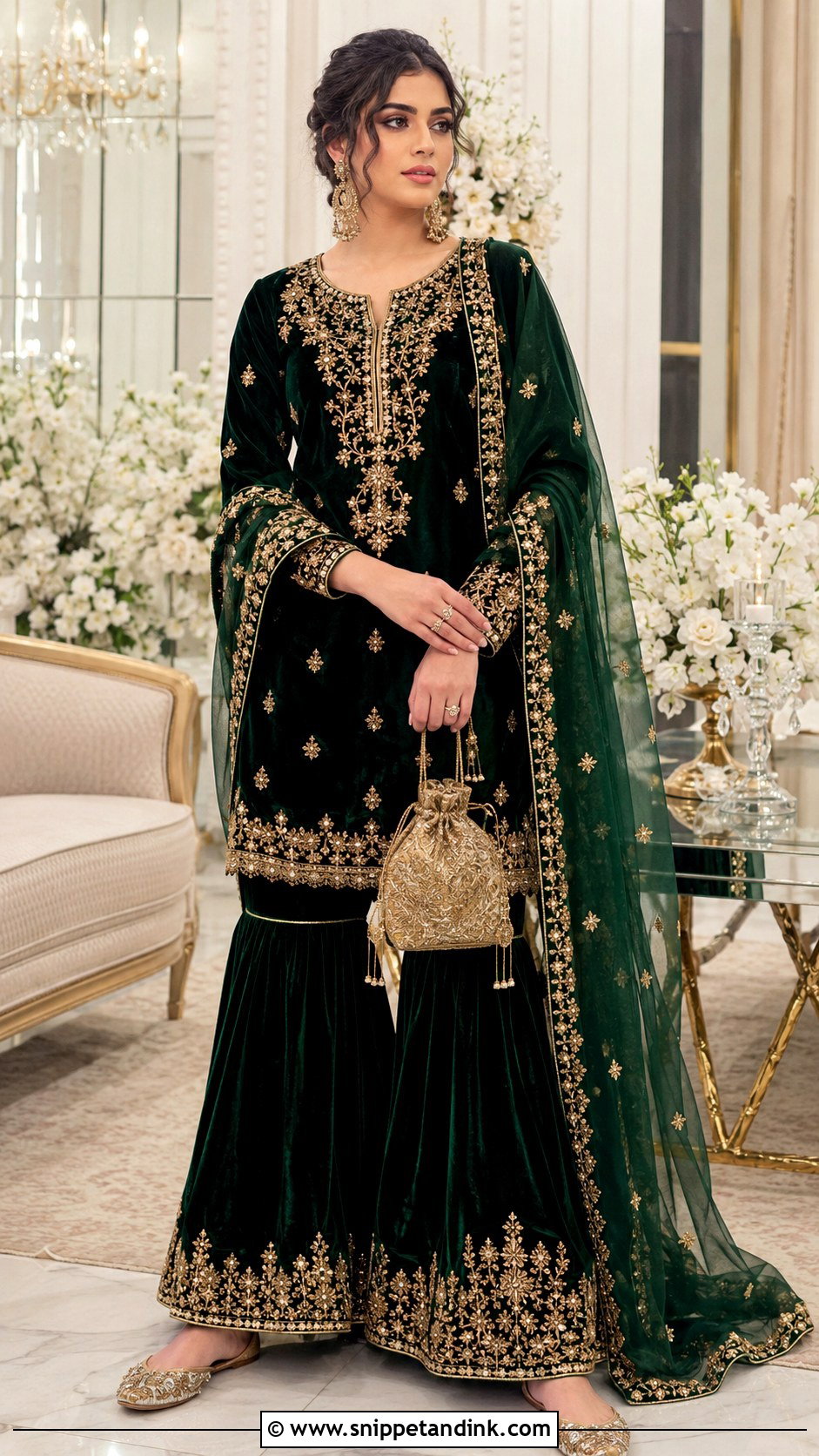
Winter weddings need weight, and velvet gives it. A gharara set in maroon, navy, forest green or aubergine, with a knee-length embroidered kurta, has depth that photographs richly at night. Don’t make every piece velvet. A net dupatta and a breathable lining keep you from overheating once you’re inside a packed hall. Zari, dabka or fine beadwork reads clearly on the pile. Antique-style earrings, a small metallic bag and platform heels or khussas suit it, with a centre-parted bun and softly lined eyes. Velvet crushes when you sit for long, so hang it in a steamy bathroom the night before to lift the pile.
7. Chikankari Palazzo Suit Wedding Outfit
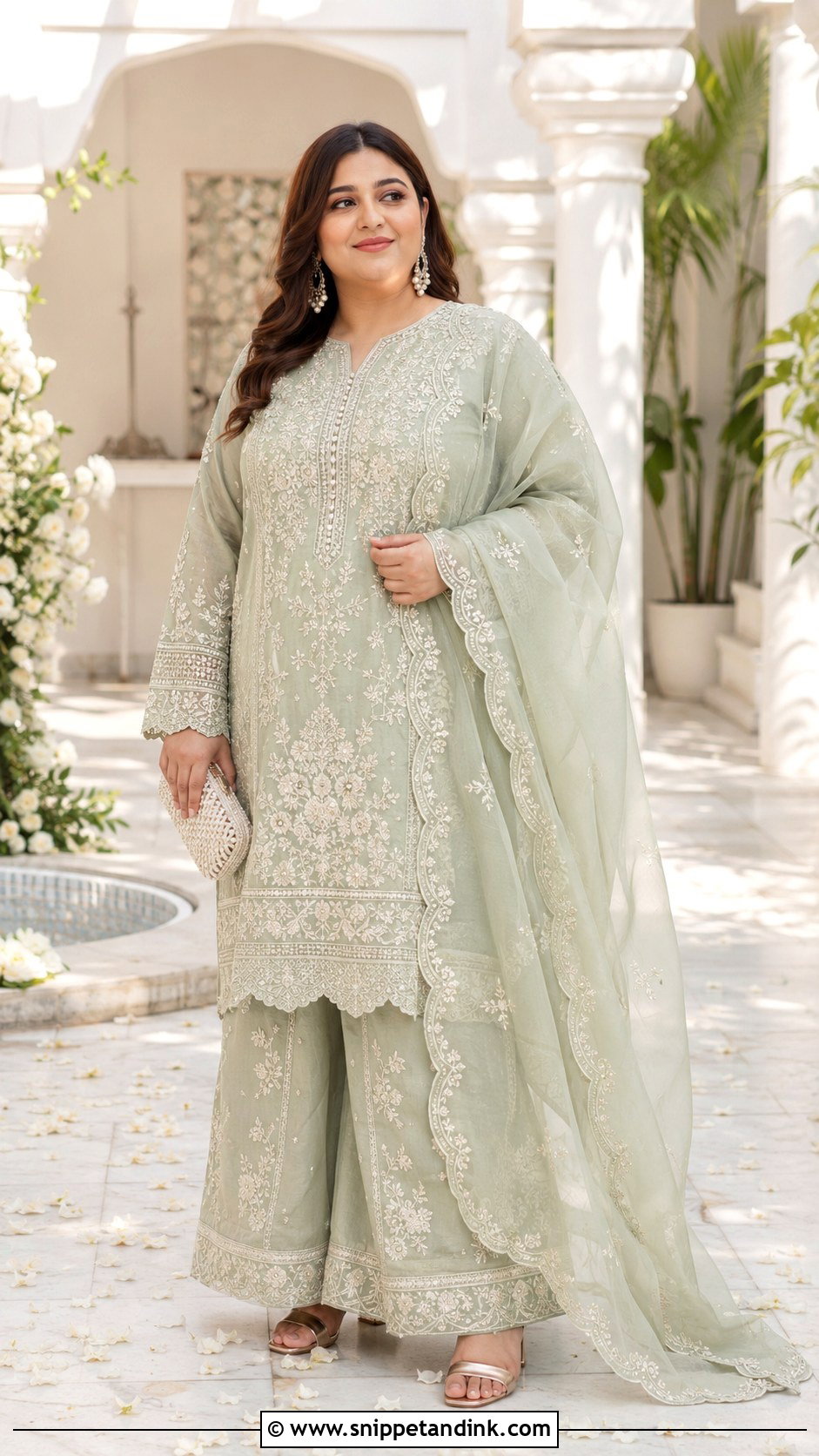
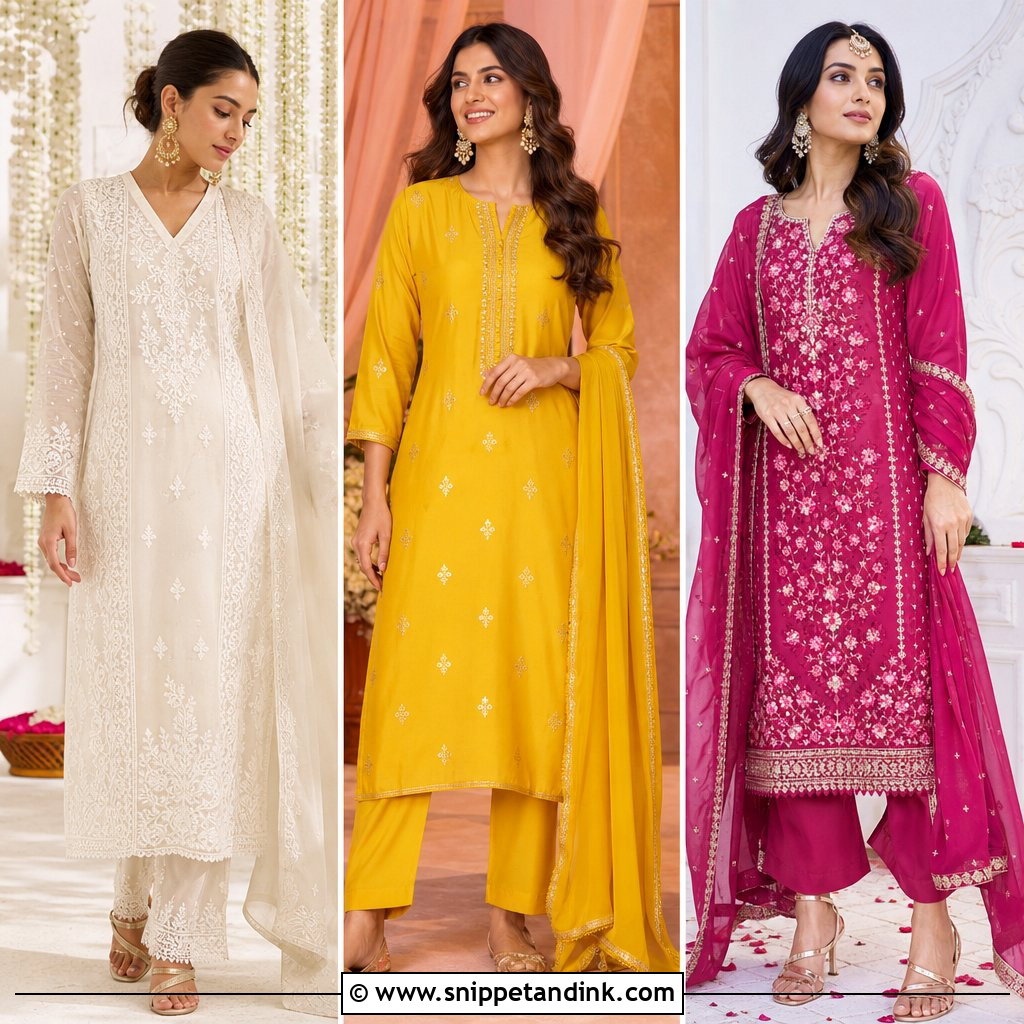
Chikankari is fine hand embroidery on light fabric, and a Chikankari palazzo suit is the most comfortable thing on this list for a daytime nikkah or welcome lunch. A long embroidered kurta with wide palazzos in sage, dusty rose, butter yellow, lavender or sky blue, plus an organza dupatta with a scalloped edge to make it formal enough. Pearl drops, a fine bracelet and a beaded clutch, with metallic flats or low heels so the hem stays off the floor. Wear a slip or ask for lining, because unlined Chikankari becomes see-through in sunlight. Tone-on-tone embroidery lengthens the figure; add colour through earrings if you want contrast.
8. Sequin Lehenga Wedding Outfit
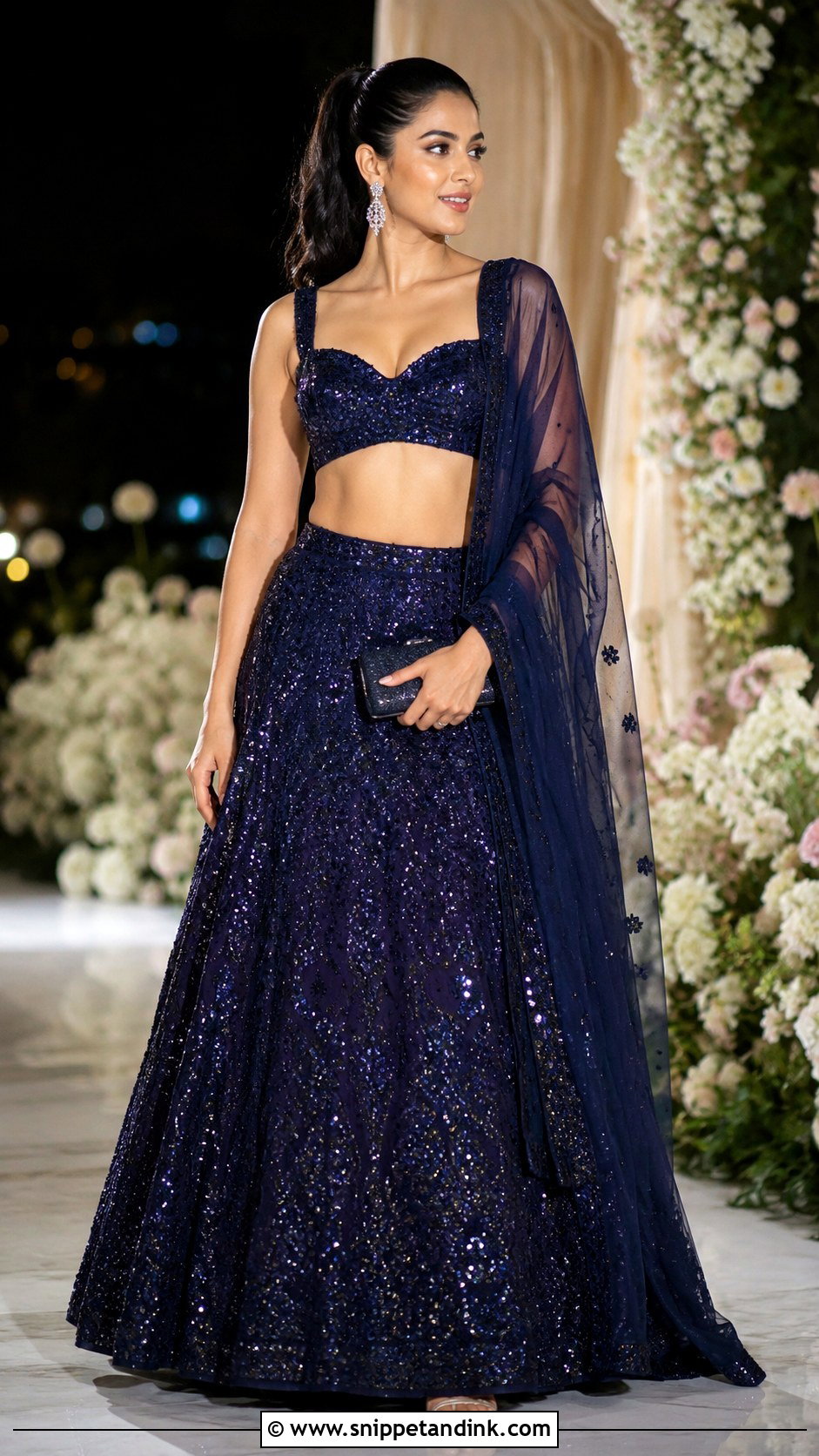
A sequin lehenga is evening wear, full stop. Keep the sequins tonal, in champagne, midnight blue, emerald, mauve or gunmetal, so the shine reads as one surface. A moderate flare is far easier to dance in than a bridal-sized skirt. Pair it with a supportive blouse and a sheer dupatta on one shoulder or around the arms. The first thing I check inside a sequin piece is the lining: rough thread ends at the underarm and waist will scratch all night. Crystal earrings, a sleek clutch and simple heeled sandals, with smooth hair and restrained makeup since the outfit already throws light.
9. Bandhani Saree Wedding Outfit
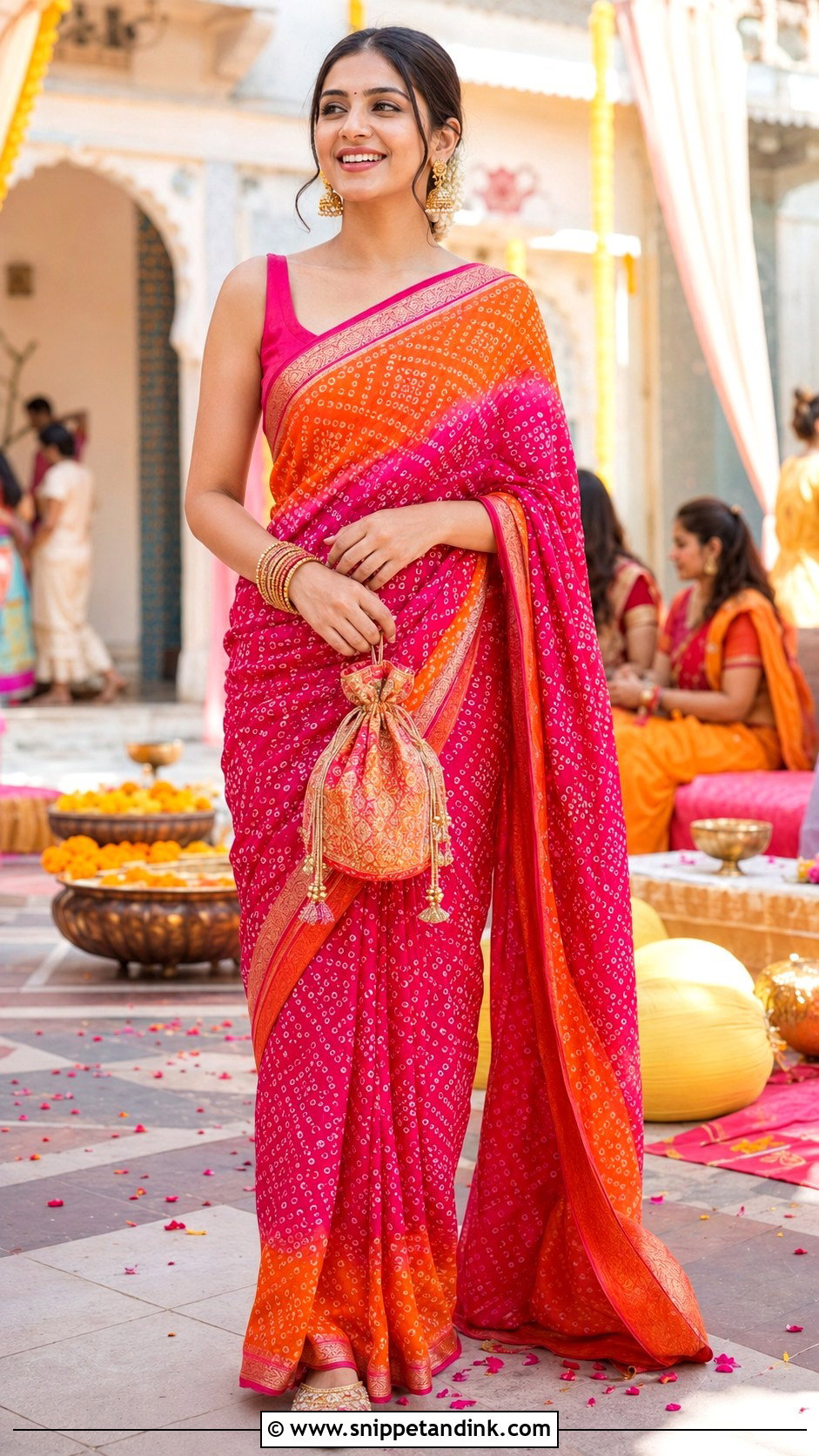
Bandhani’s tiny tied dots feel celebratory straight away, and it is at home at a mehndi, daytime wedding or family puja. Pink with orange, green with red or mustard with magenta, unless the couple has asked for a palette. A plain silk blouse with a clean neck balances the pattern. Oxidised silver for relaxed events, gold-toned pieces for formal ones. Juttis, a drawstring potli and a low braided bun. Bandhani has a slight crinkle that springs back if you steam it flat, so don’t over-press it. It is also a lovely fabric for regional drapes or a family heirloom necklace.
10. Cape Lehenga Wedding Outfit
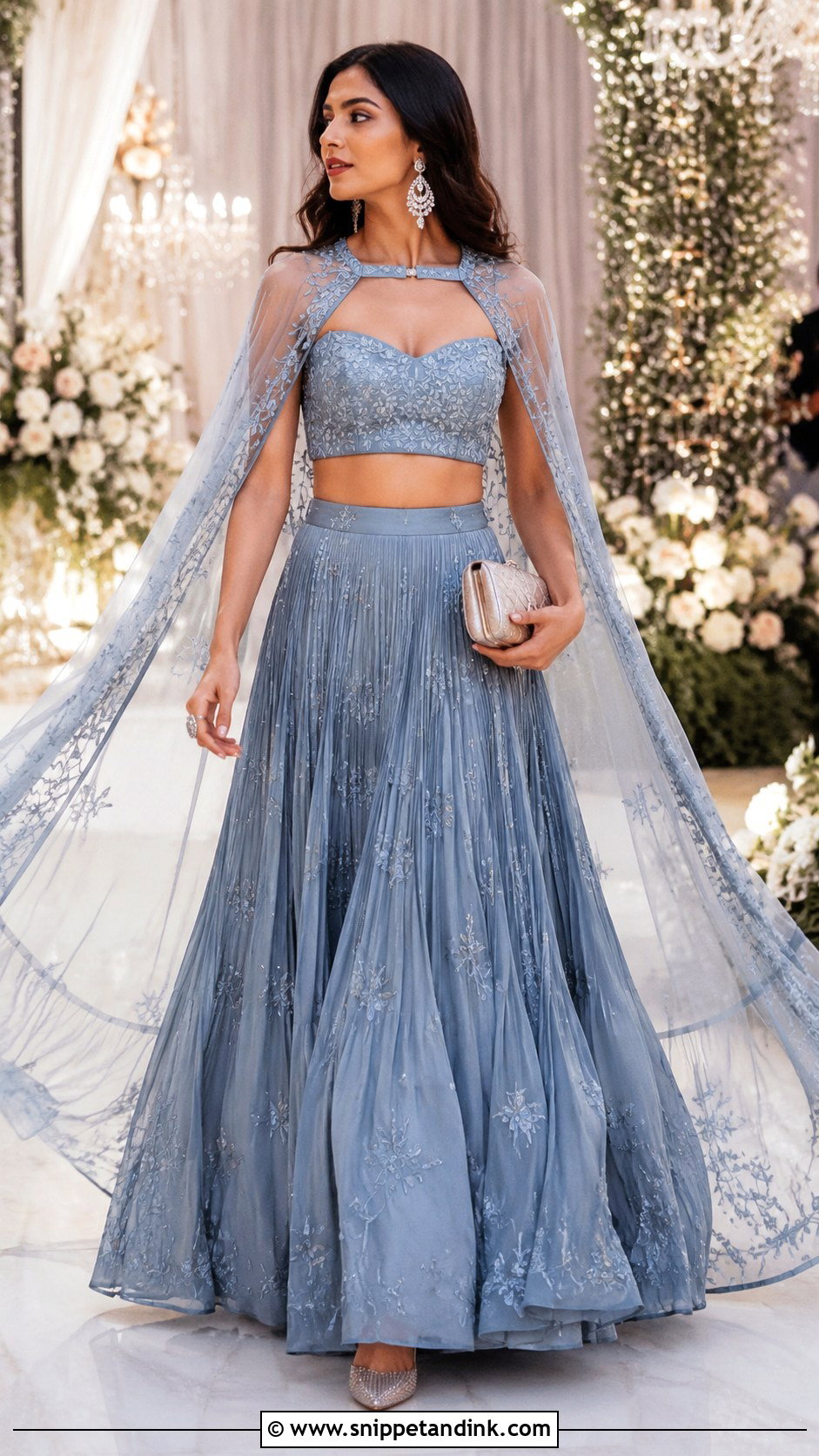
A cape replaces the dupatta, and for anyone who spends the night tugging a dupatta back onto a shoulder, that’s the main appeal. A flowing skirt, fitted blouse and sheer embroidered cape to the waist, knee or floor. Navy, berry, dusty blue and rose gold suit receptions and cocktail-style evenings. On a petite frame I’d go for a waist-length cape with an open front; a floor-length one can swallow you. Statement earrings, a ring, a hard-case clutch and pointed heels. Skip the necklace if the cape neckline is worked, and keep the hair up so the shoulders show.
11. Patiala Suit Haldi Outfit
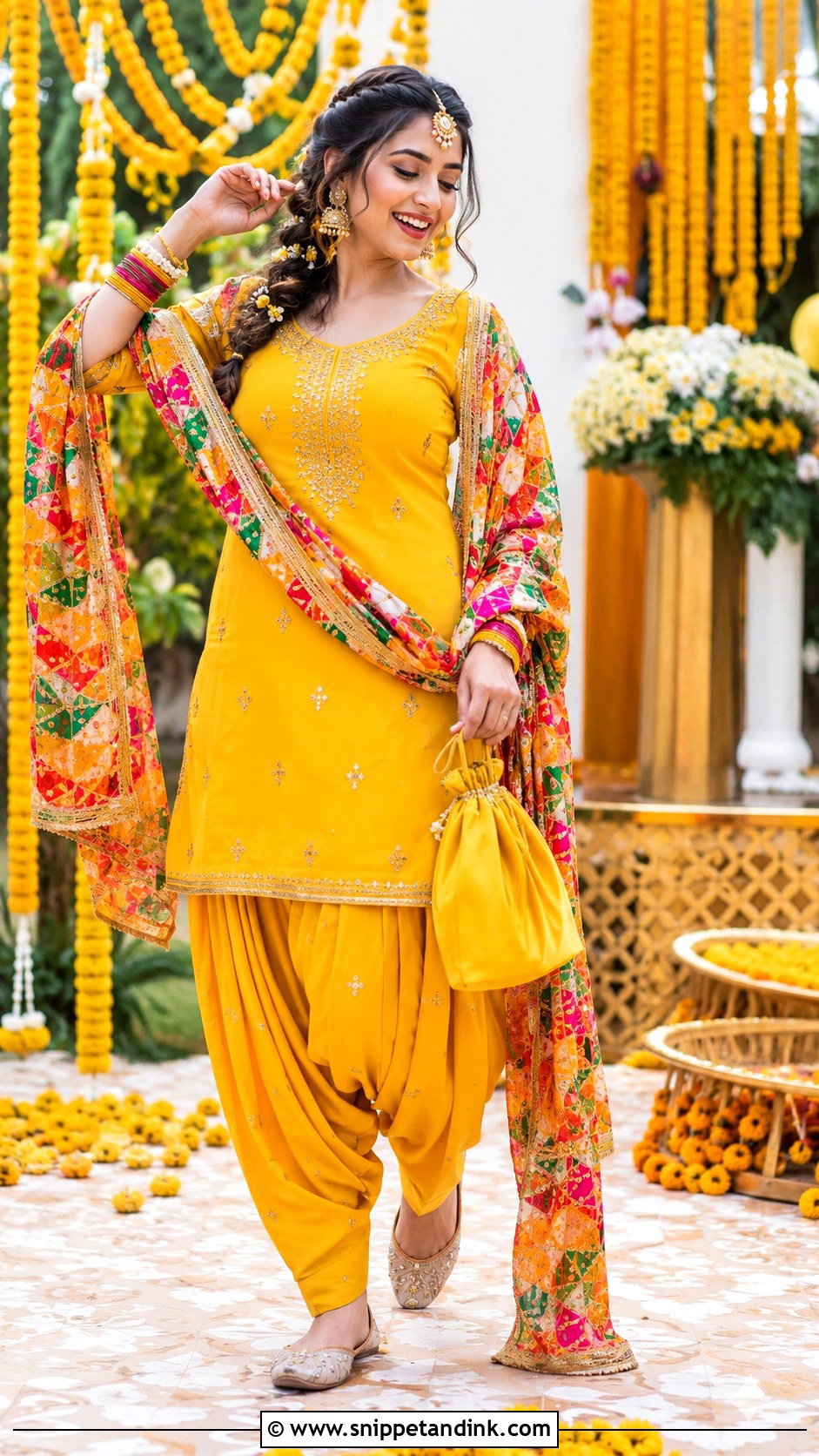
Haldi is the messy one. Turmeric paste gets on everyone, and it stains silk and fine embroidery for good. A Patiala suit in cotton or a cotton-silk blend is the practical answer: a bright yellow, mango, coral or green kurta with roomy pleated Patiala pants and a light phulkari or printed dupatta. Jhumkas, a few bangles and simple juttis you can stand in. A flower-trimmed braid keeps hair out of the paste. Leave the expensive clutch at home and carry a fabric potli you don’t mind washing.
12. Pre Draped Saree Wedding Outfit
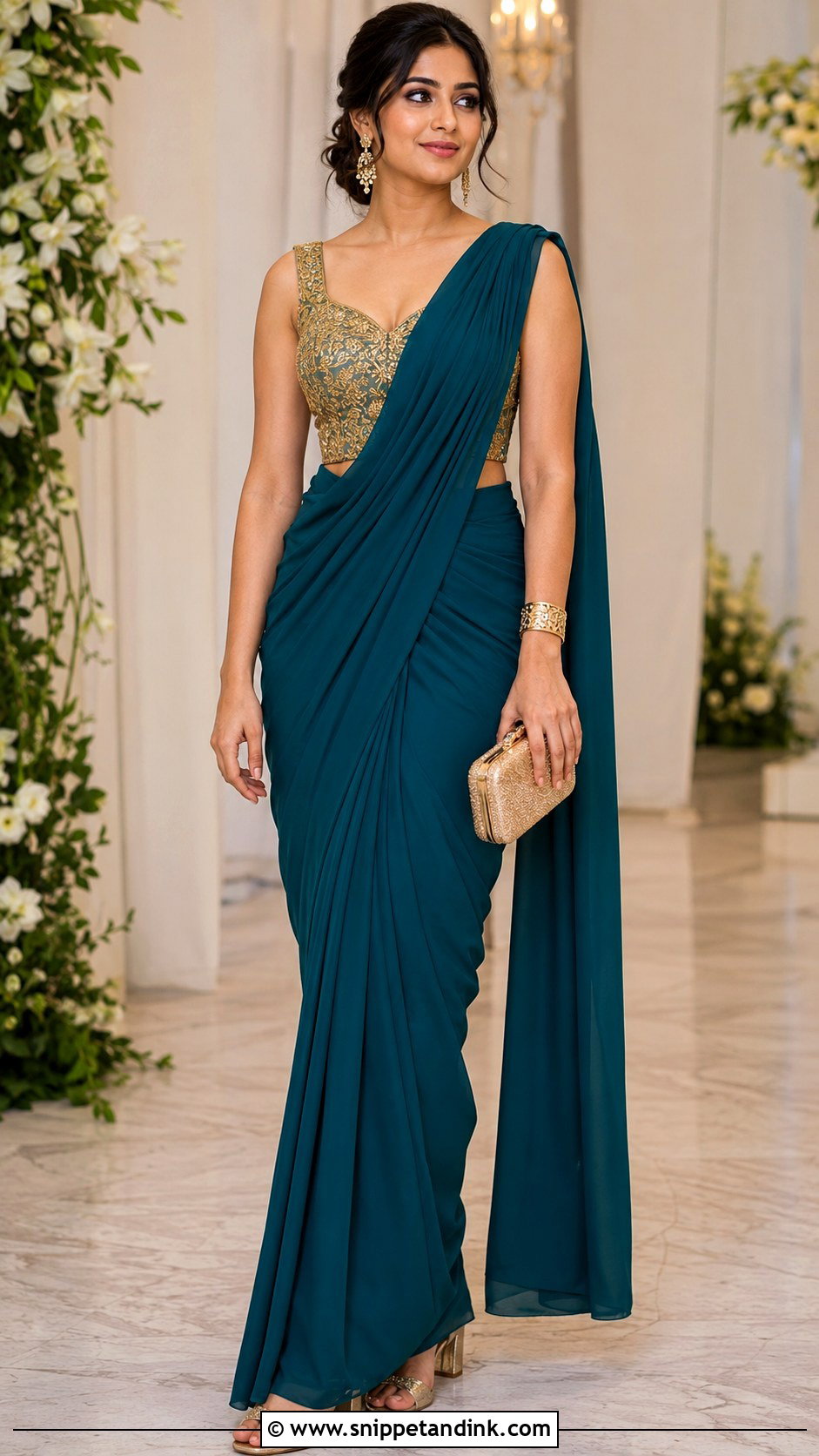
A pre-draped saree has the pleats stitched in and usually closes with a hook or zip, so you get a proper drape in two minutes instead of twenty. It’s the one I recommend to first-time saree wearers and anyone planning to dance. Check that the pleats are clean, the waistband secure and the pallu sits comfortably. A solid jewel tone with an embroidered blouse, or a worked saree with a plain structured blouse. Drop earrings, a cuff and stable block heels, with a low bun or tucked-back hair. Confirm the hem length in your actual shoes, and keep two safety pins in the clutch regardless.
13. Embroidered Salwar Kameez Wedding Outfit
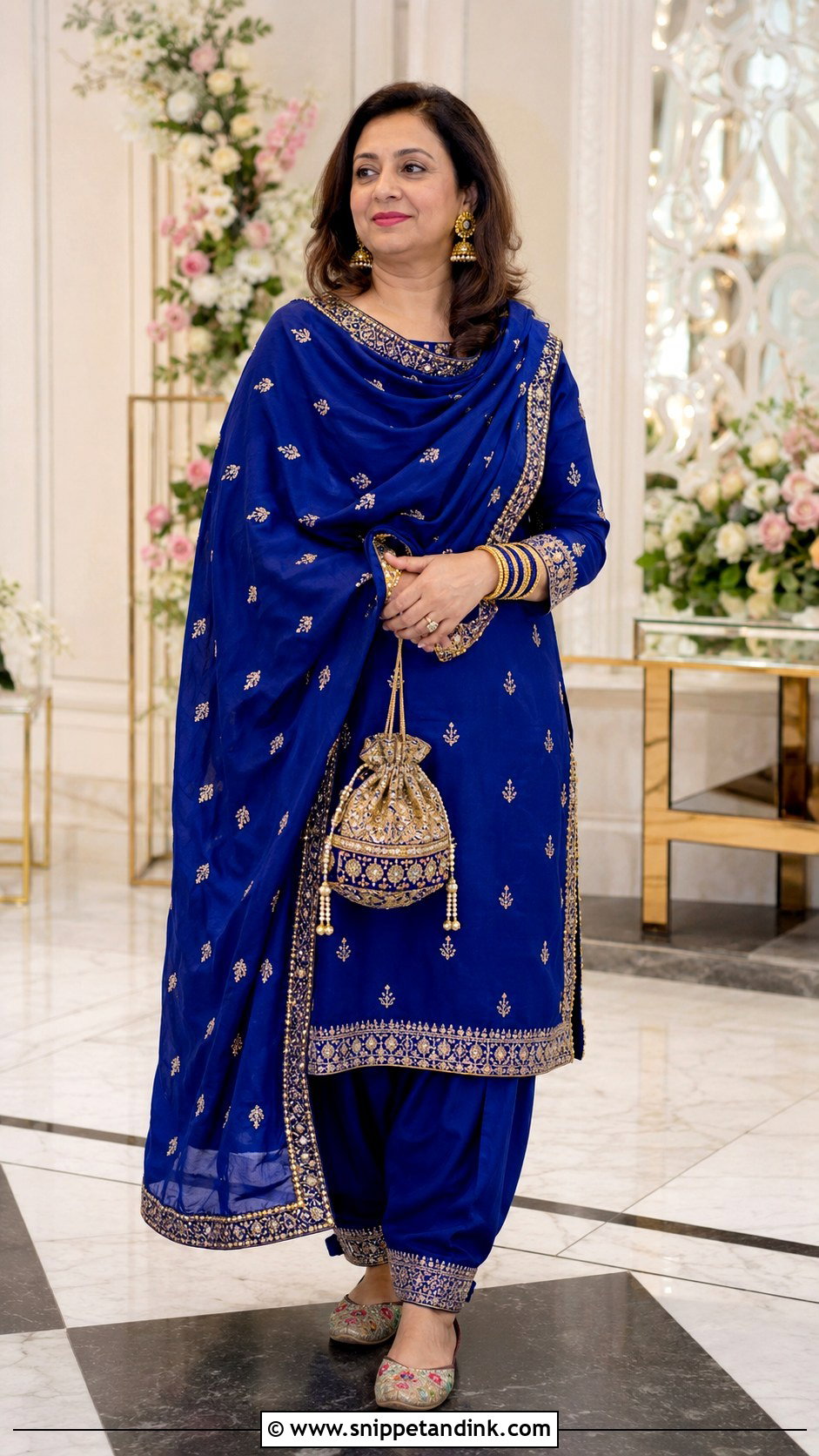
The salwar kameez is the outfit that suits guests of every age and every function. A straight or slightly flared kameez, matching salwar and a bordered dupatta, in turquoise, magenta, cobalt, olive or coral. I like the heavier embroidery placed at the neckline, cuffs and hem, where it frames you, with the body of the fabric left soft. Medium earrings, stacked bangles and an embellished potli, with juttis or low block heels. A blowout or side braid finishes it. For more coverage, choose a longer kameez and pin the dupatta across both shoulders.
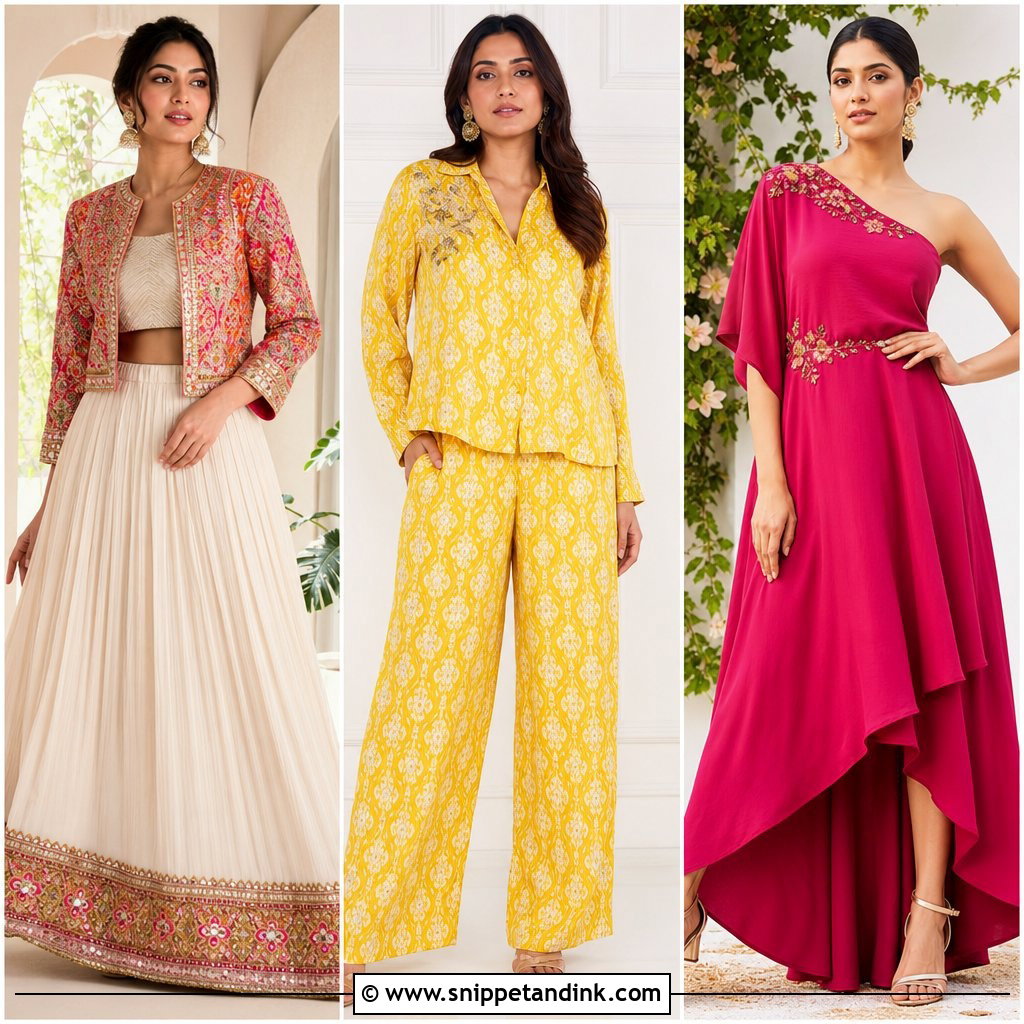
14. Jacket Lehenga Wedding Outfit
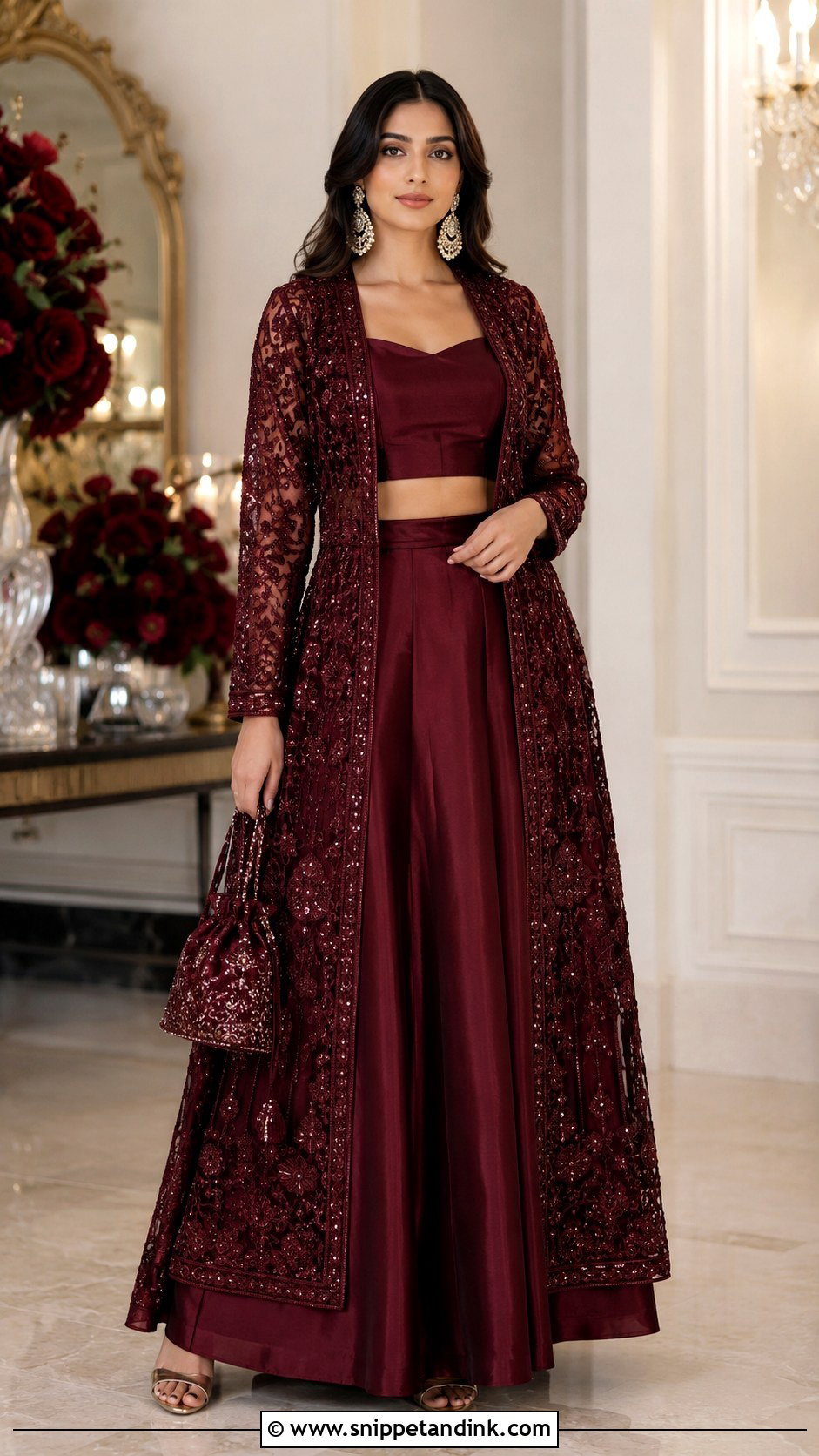
A long open jacket over a lehenga gives arm coverage and a lot of movement when you walk. Keep the skirt and blouse simple and let the jacket, in silk, brocade or light velvet, carry the embroidery; two worked layers under a worked jacket look bulky. Monochrome reads long and streamlined, a contrasting jacket looks more traditional. Heeled sandals help the jacket hang straight. Chandelier earrings, a slim ring and a structured bag or potli, with hair up so the collar shows. It is especially useful in winter, or at a religious function where you want covered arms without a shawl.
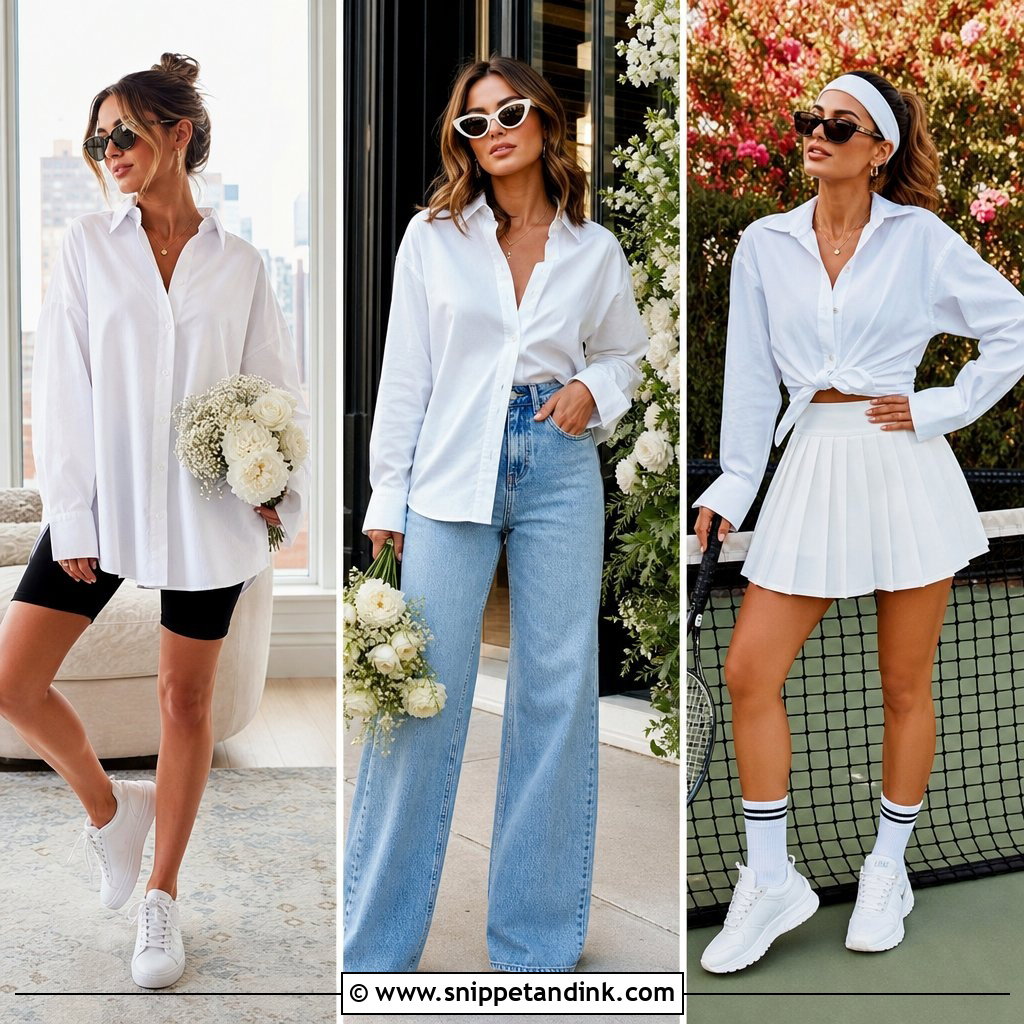
15. Dhoti Pant Kurta Wedding Outfit
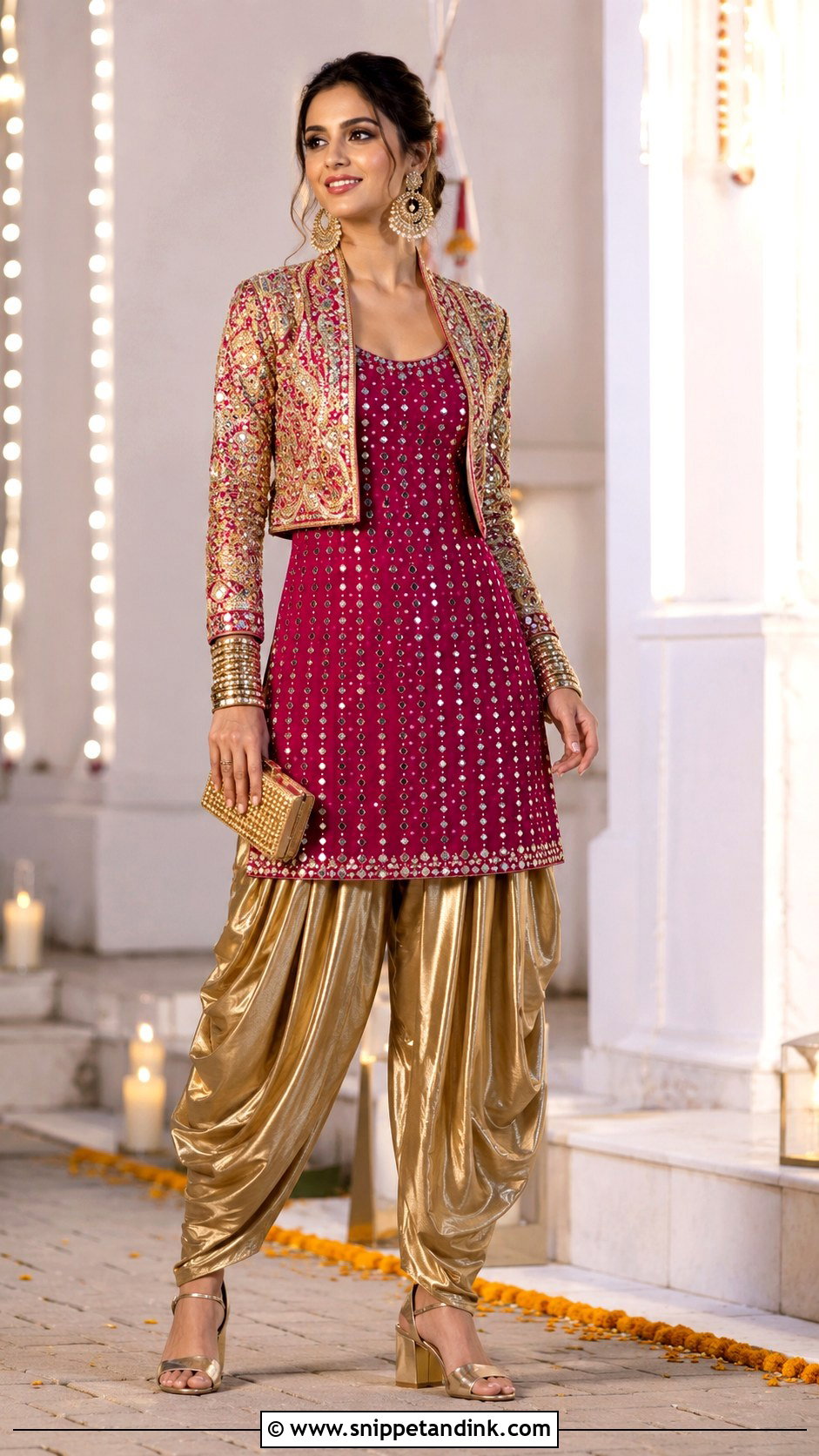
For a modern mehndi or sangeet, draped dhoti pants with a fitted short kurta give an Indo-Western shape that still feels rooted. Satin, crepe or silk-blend pants under a kurta with mirror work or a worked neckline. Add a cropped jacket or light dupatta for coverage. The drape sits low and full at the hip, so it does not suit everyone; on a pear shape I’d keep the kurta slightly longer to soften it. Bold earrings, stacked cuffs, a box clutch and metallic block heels or embroidered flats. Practise sitting cross-legged in it before a long function.
16. Floral Lehenga Wedding Outfit
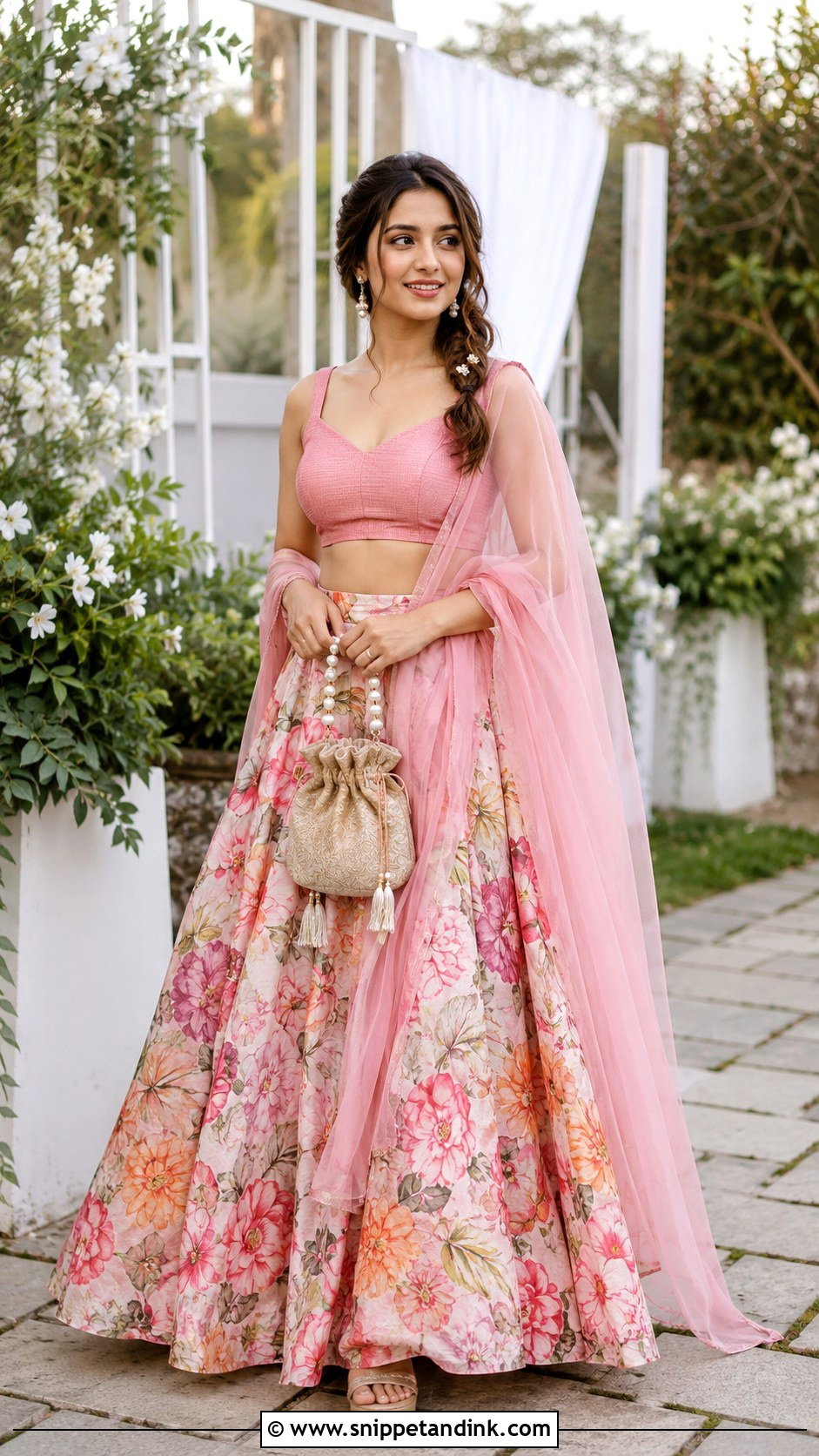
Florals belong outdoors in daylight. Printed organza, georgette or light silk that moves in a breeze, with a solid cropped blouse picking up one colour from the print and a plain sheer dupatta with a narrow border. Floral jewelry for a mehndi, pearls or delicate gold for something more formal. On a lawn, wear wedges or block heels; stilettos sink into grass within minutes. A loose braid, curls or a flower-trimmed ponytail suit the print. Keep the bag small and neutral. If the print is large, the blouse, jewelry and dupatta all need to be quiet.
17. Peplum Sharara Wedding Outfit
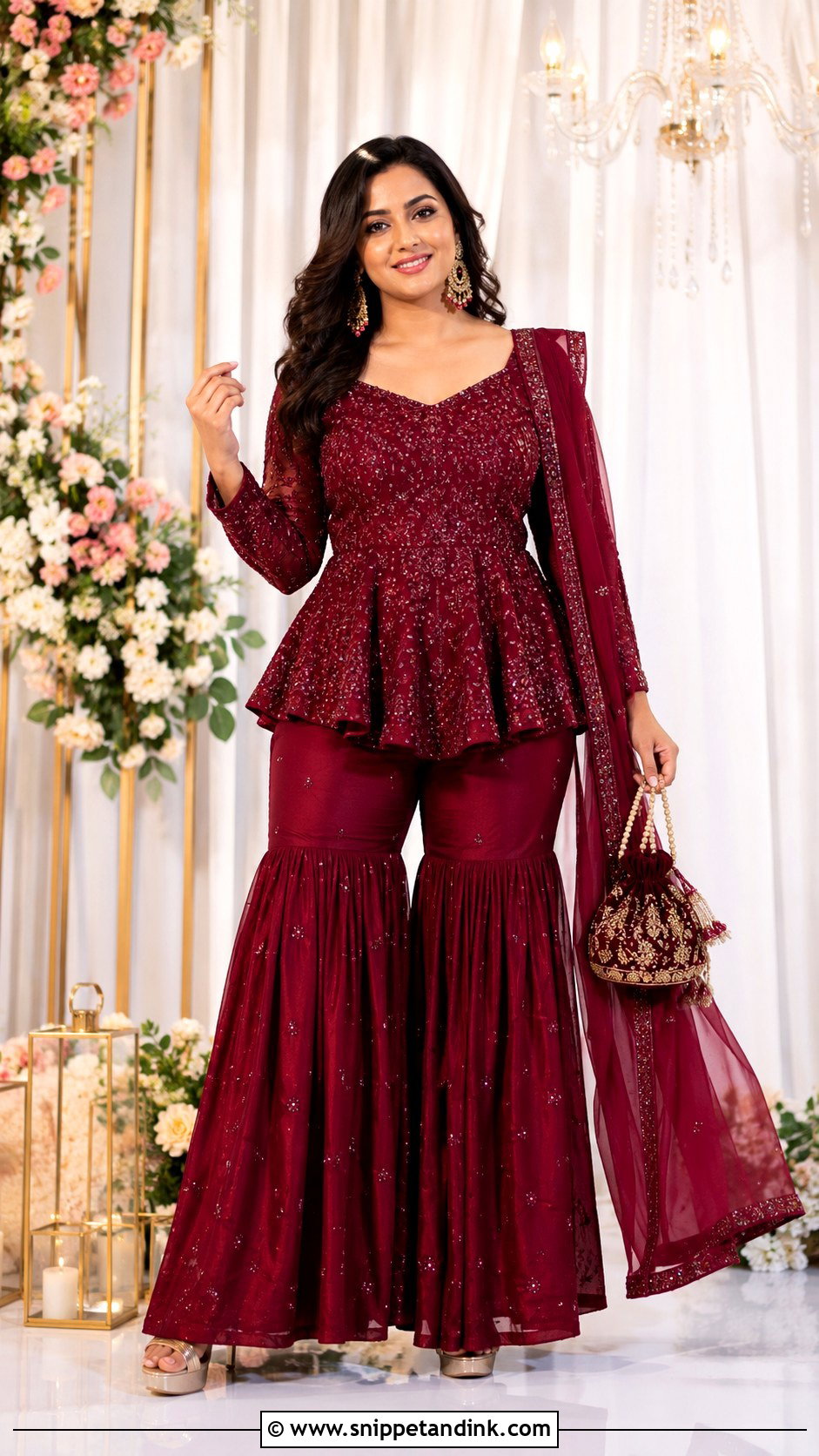
A peplum top ending around the upper hip, over sharara pants in the same fabric, defines the waist and still lets you move freely. Embroidered necklines, scalloped hems or small mirrors add interest without weight. Ruby, turquoise, deep pink or soft gold suit a sangeet or reception. The waist seam is where a ready-made peplum usually goes wrong; if it wrinkles or rides up when you lift your arms, it needs a tailor. Shoulder-grazing earrings, a compact potli and platform heels. Pin a narrow dupatta behind one shoulder so the peplum shape stays visible.
18. Silk Kurta Skirt Wedding Outfit
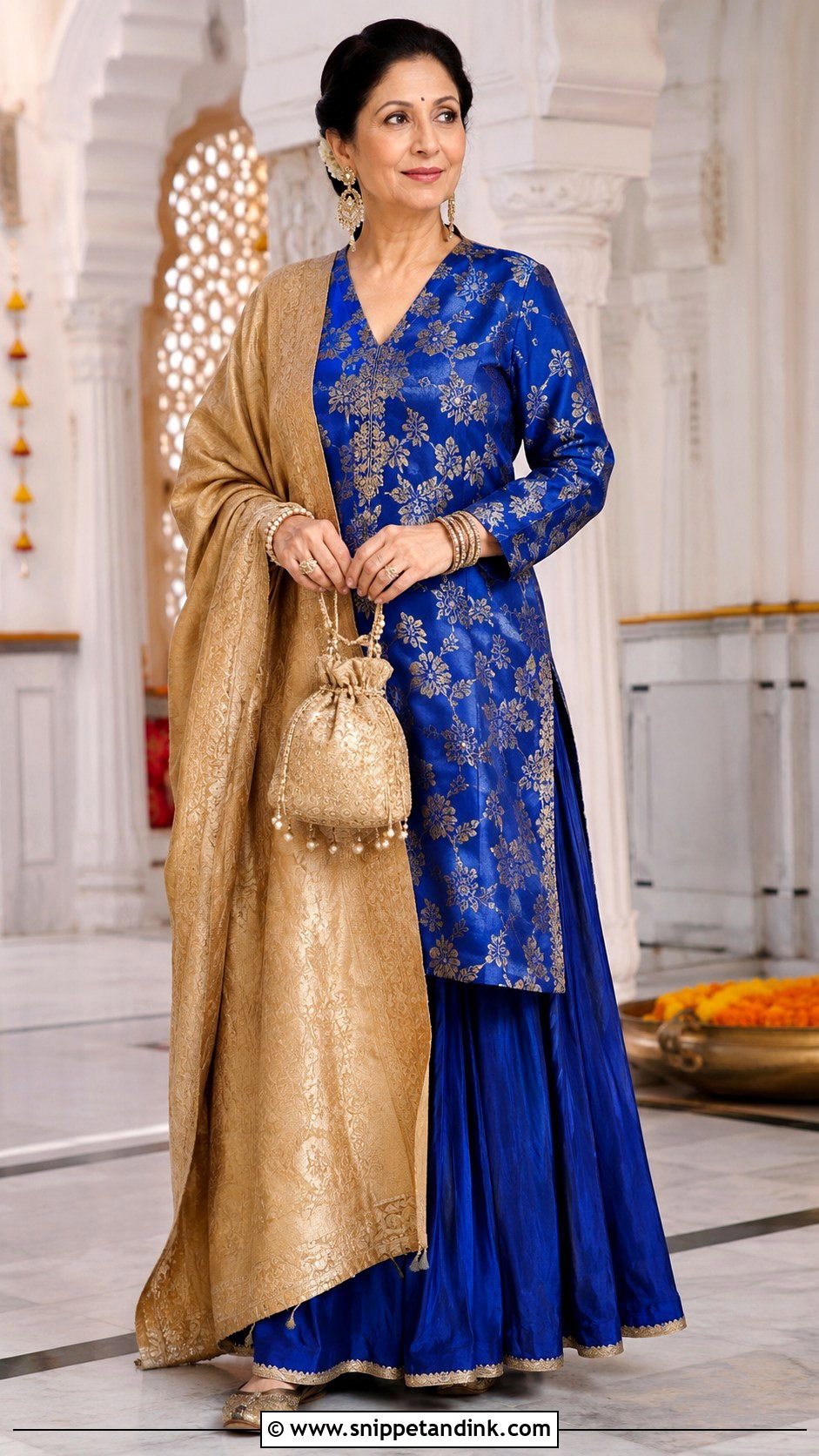
A silk kurta over a full skirt sits between a suit and a lehenga: easier to wear than one, fuller than the other. A straight or lightly flared kurta to the knee with side slits lets the skirt border show as you walk. Brocade, raw silk or cotton silk gives enough structure for a ceremony. Add a light dupatta, gold-toned earrings and bangles and a woven potli, with low heels or juttis and a soft bun or half-up hair. Keep the kurta and skirt close in shade for height, and bring colour in through the dupatta if you want contrast.
19. Saree With Belt Wedding Outfit
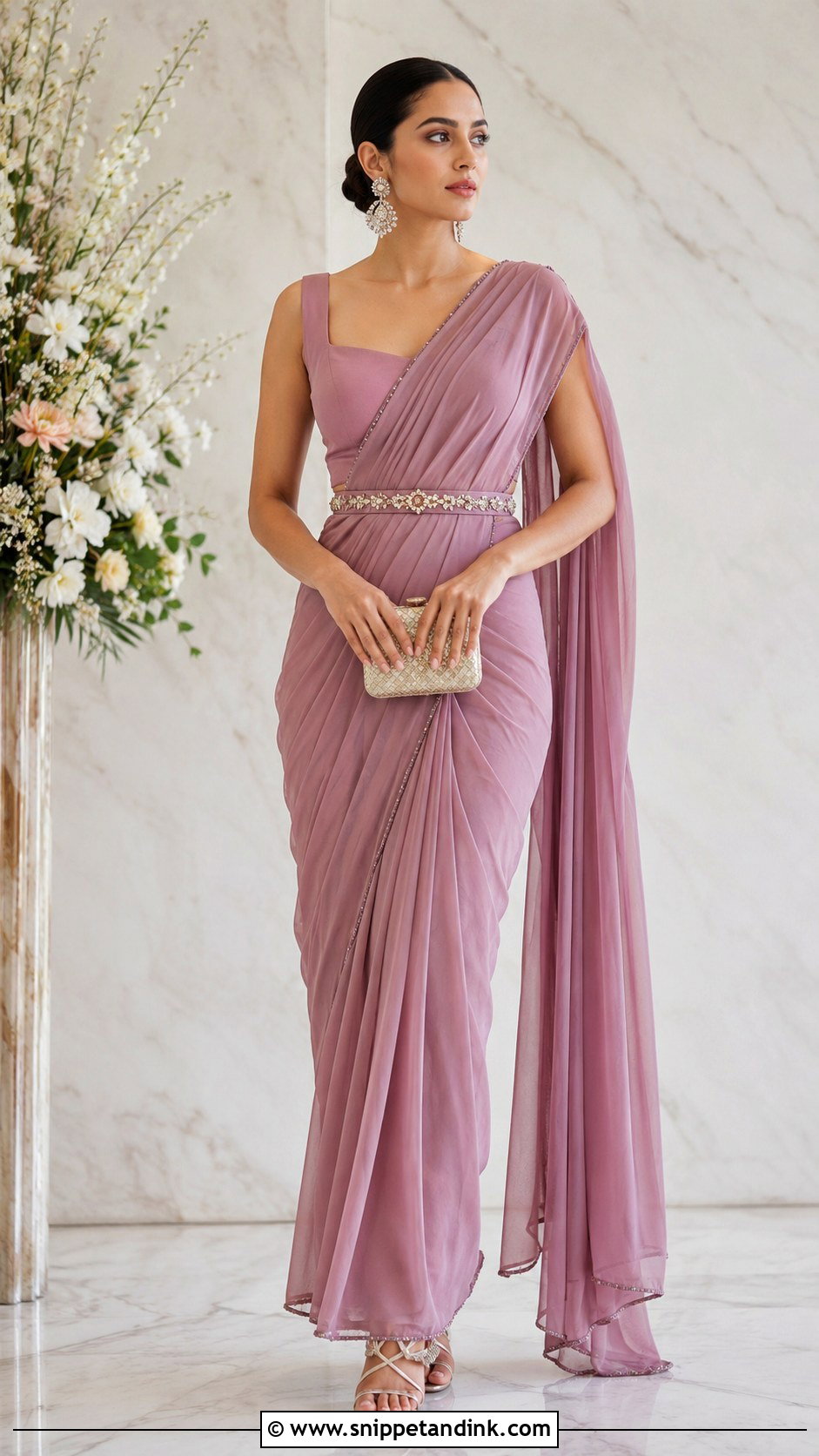
A belt solves the saree’s biggest problem for new wearers: the pallu wandering off the shoulder. Start with chiffon, georgette, silk or a pre-draped saree that pleats without bulk. An embroidered fabric belt or slim metal kamarband at the natural waist holds the pallu in place. Fasten it after you sit down once, not before, so it doesn’t dig in at the table. A structured blouse with a square, boat or high neck, statement earrings, a small clutch and clean heeled sandals. Make the belt or the necklace your focus, not both, and wear the hair sleek.
20. Palazzo Anarkali Wedding Outfit
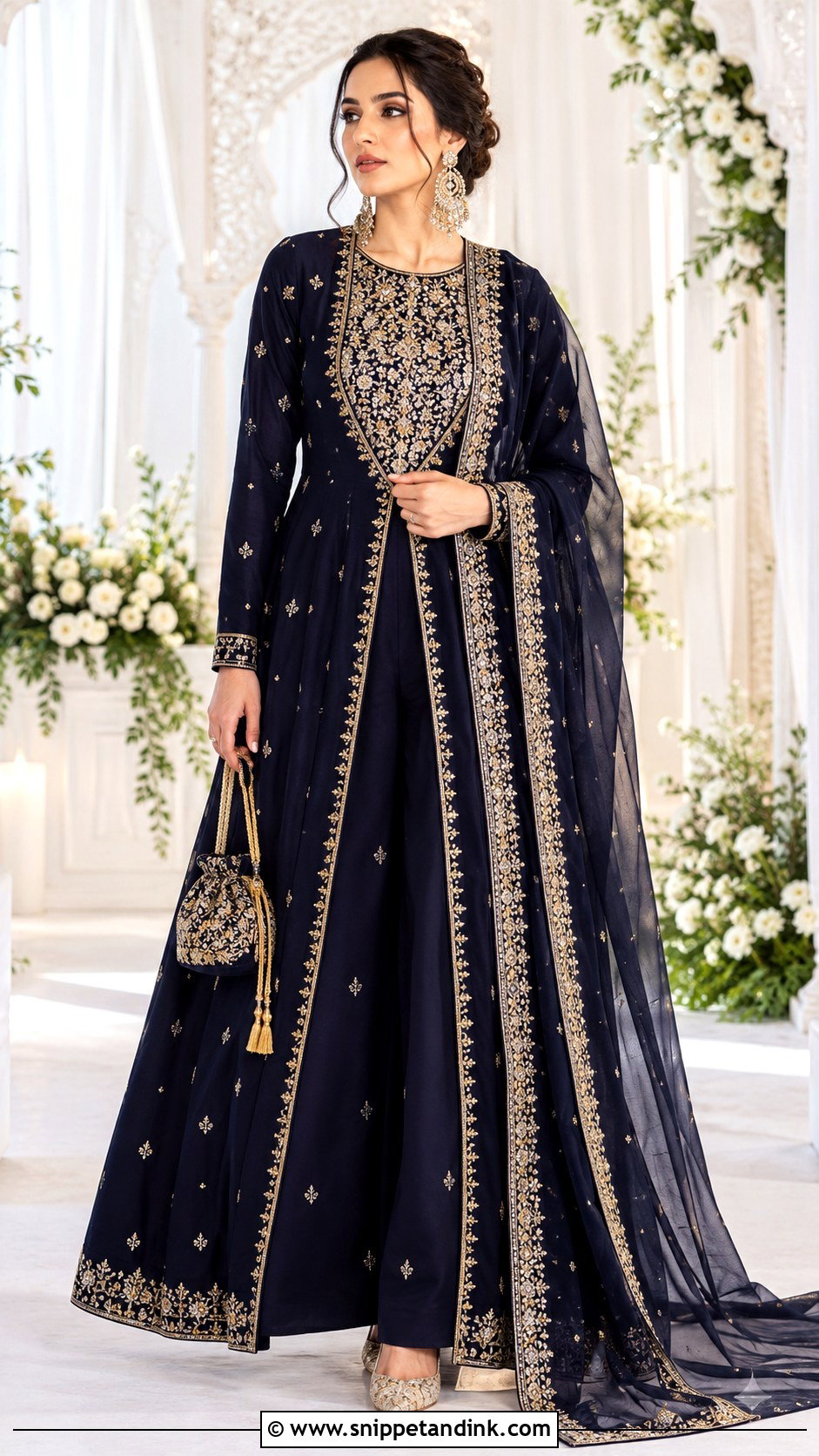
A palazzo Anarkali set gives you the swing of a long dress with the ease of wide trousers underneath. Look for a front opening or high side slits so the palazzos show and the layers don’t stack up at the hip. Georgette, crepe and light silk suit an engagement, nikkah or reception. A tonal palette in sage, mauve, navy or burgundy with a worked border or bodice keeps it refined. Long earrings, a slim bracelet and a structured potli, with pointed flats or block heels. Soft waves or a low ponytail, and the dupatta pinned over one shoulder.
What Goes in Your Bag for a Three-Day Wedding Weekend
Most of the wardrobe emergencies I fix at weddings come down to the same handful of small things. Pack these once and you won’t be hunting through a relative’s room for a pin at the sangeet.
- A strip of safety pins in two sizes, plus a few bobby pins for the dupatta.
- Double-sided fashion tape for a blouse neckline or a slipping pallu.
- A travel steamer. Silk, velvet and organza all crease in a suitcase, and hotel irons scorch zari.
- Blotting papers and a small stain wipe, for oil and turmeric.
- Flat foldable shoes for the dance floor and the walk to the car.
Packing heavy outfits
Fold embroidered pieces with tissue between the layers and keep zari and sequins facing inward so they don’t snag each other. Hang everything the moment you arrive. If you’re repeating a dupatta or jewelry set across two functions, change the blouse and the hair so the photos still look different.
Dress for the Function You’re Actually Attending
The right outfit is rarely the one with the most embroidery. It’s the one that suits the function, fits properly and lets you join in. Light lehengas and printed sarees for daytime, velvet, sequins and formal Anarkalis after dark, and shararas, palazzos and salwar suits whenever there’s serious dancing ahead. Check the dress code and ask the hosts about colour or cultural expectations before you buy. Then finish with shoes you can stand in, jewelry that doesn’t fight the fabric and a dupatta that’s pinned where it should be.
You'll Like These Ideas:


Leave a Reply