
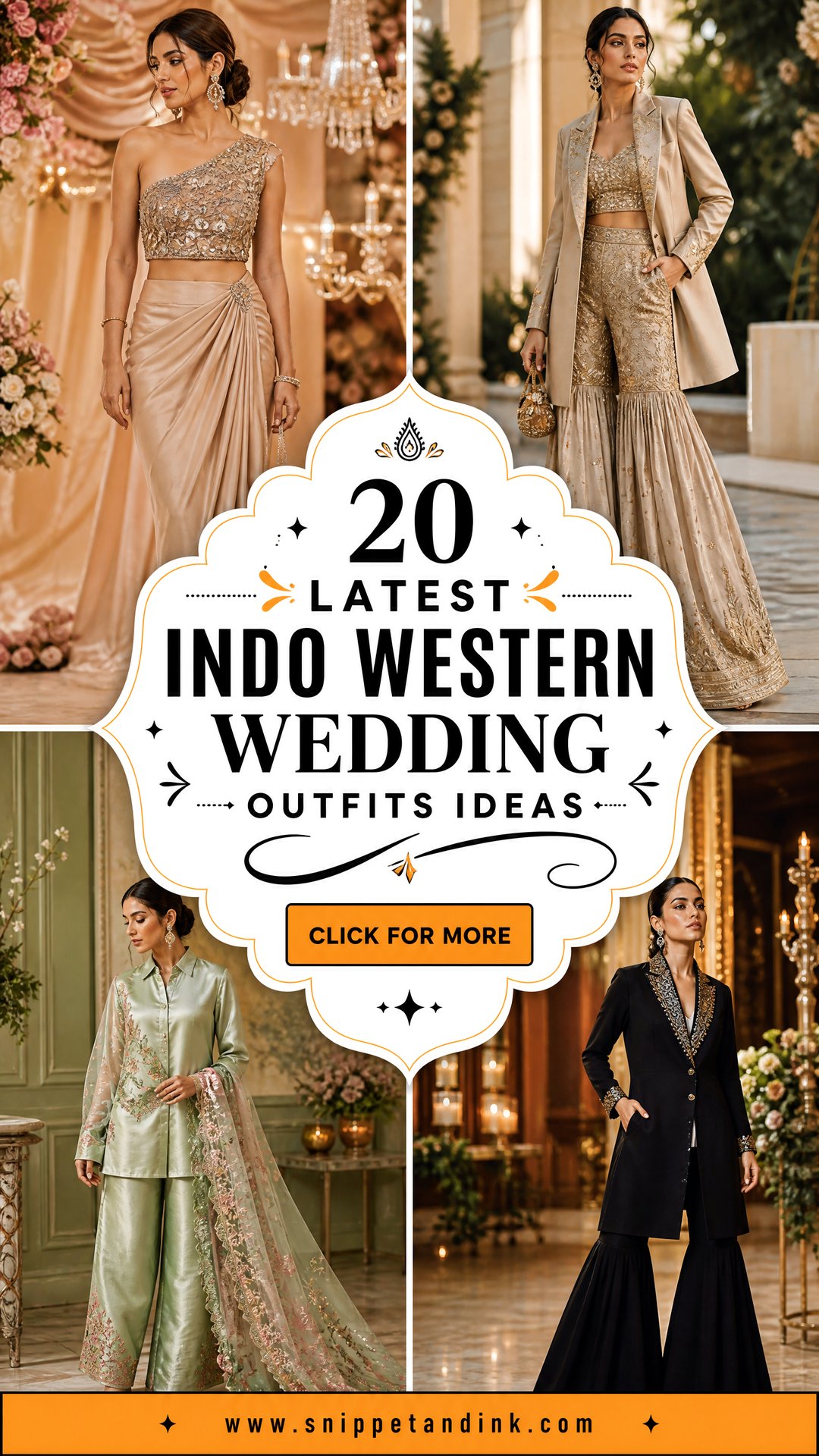
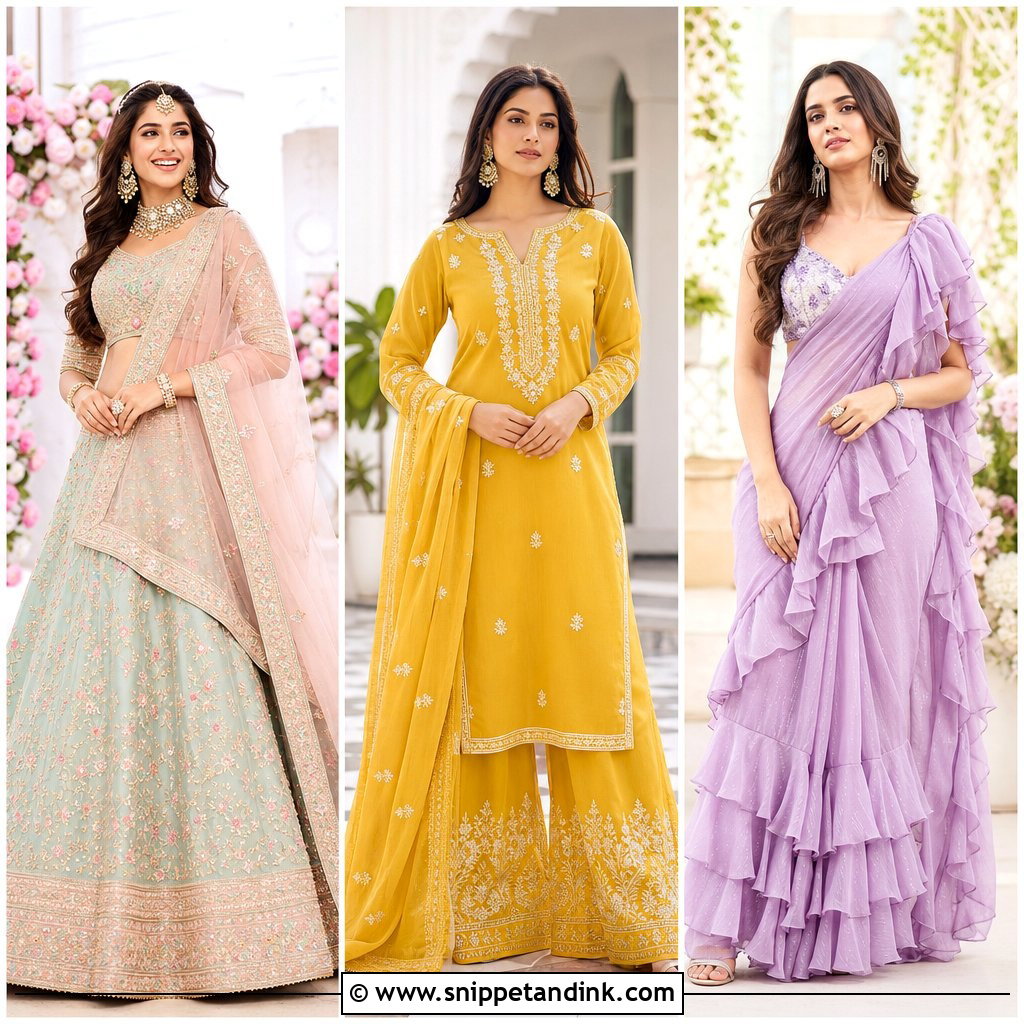
Indo-western dressing takes the embroidery, drape and fabrics of Indian occasion wear and puts them on shapes that are easier to live in for a whole wedding weekend: corsets, jumpsuits, jackets, tailored trousers. For guests, that matters, because one wedding can mean a mehndi, a sangeet, the ceremony and a reception, each with its own mood, across different wedding functions. Pre-draped sarees, cape lehengas, co-ord sets and modern shararas are what I see working hardest right now. Below are twenty complete outfits, with notes on fit, fabric and who each one suits, so you can plan a look for every event without fighting your clothes.
Mehndi Morning to Reception Night: Dressing Each Event
Before I help a guest pick anything, I ask which functions she’s attending and where they’re held. A multi-day Indian wedding asks very different things of your clothes, and the one outfit that suits a sangeet can be awkward at a temple ceremony.
- Mehndi: usually daytime and relaxed, often with floor seating. Bright colours and shorter sleeves are practical, and fabrics that can survive a smudge of henna paste are wise.
- Sangeet: this is the dancing night. Choose something you can move, spin and sit in, such as dhoti pants, a jumpsuit or a draped skirt, and avoid trains or loose dupattas.
- Ceremony: the most traditional event. At a temple or gurdwara, shoulders are typically covered, shoes come off at the door, and a scarf for covering the head may be expected, so keep a dupatta or stole with you.
- Reception: evening glamour. This is where saree gowns, corsets, capes and heavier embroidery belong.
On colour, I steer guests away from bridal red and away from all-white or all-black unless the hosts have said otherwise, since some families associate those with mourning. When in doubt, a quick message to the couple or a close relative settles it, and nobody minds being asked.
1. Pre-Draped Saree With Corset Blouse
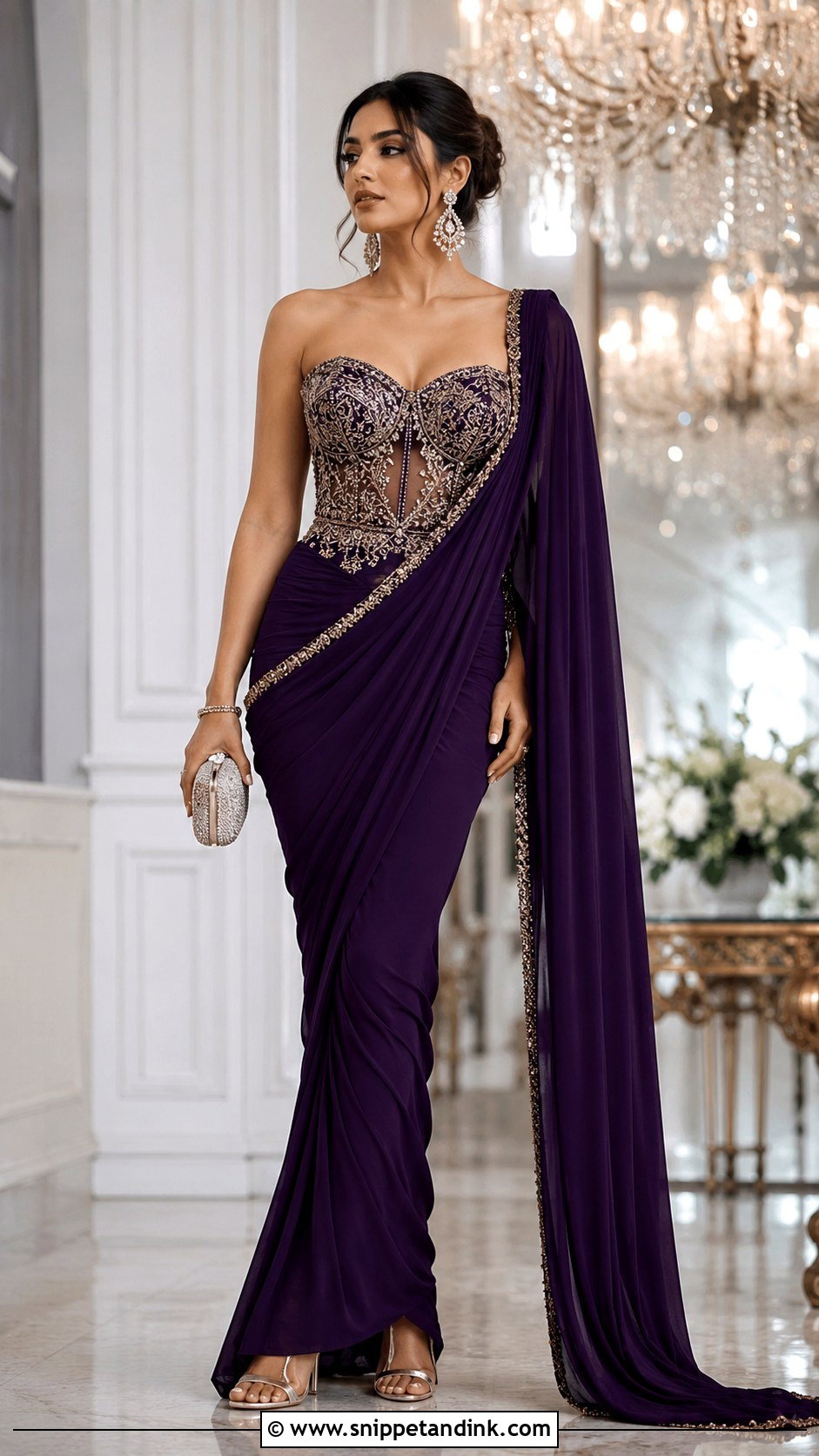
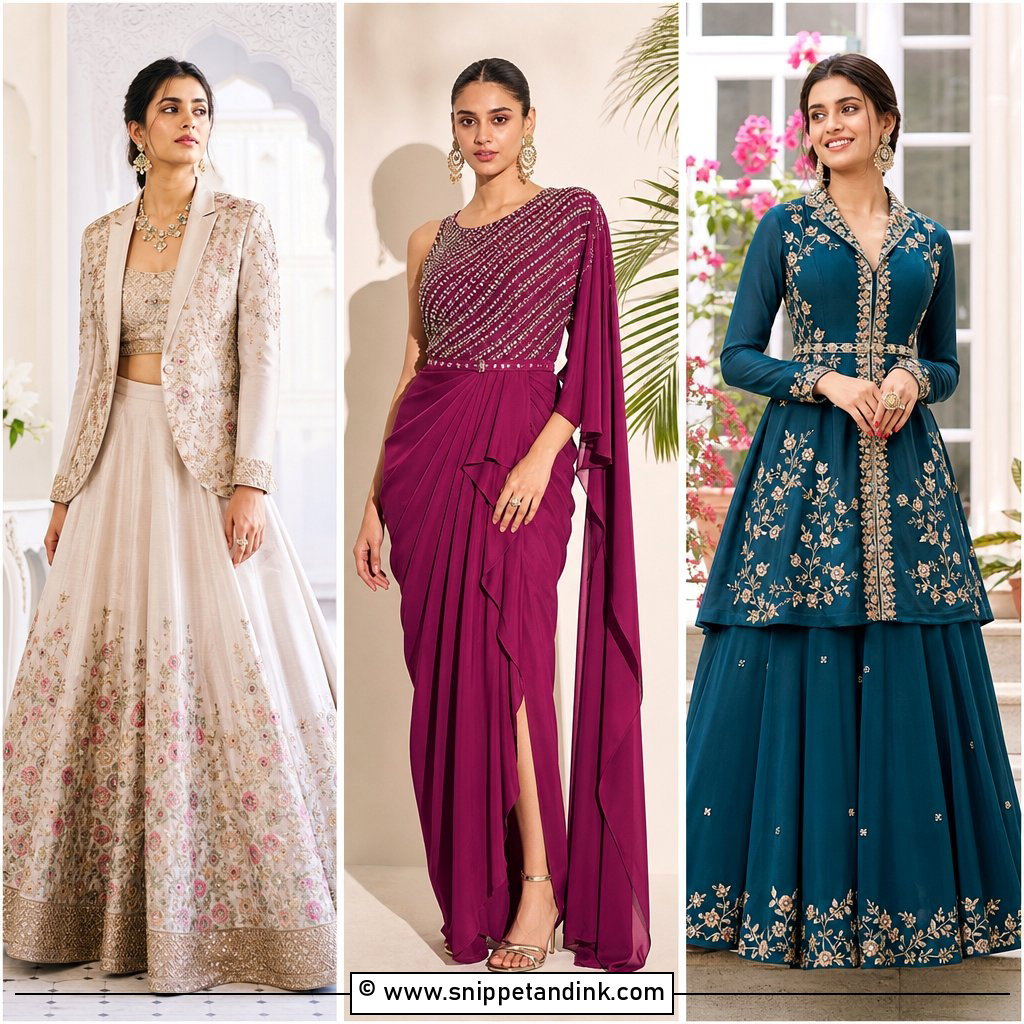
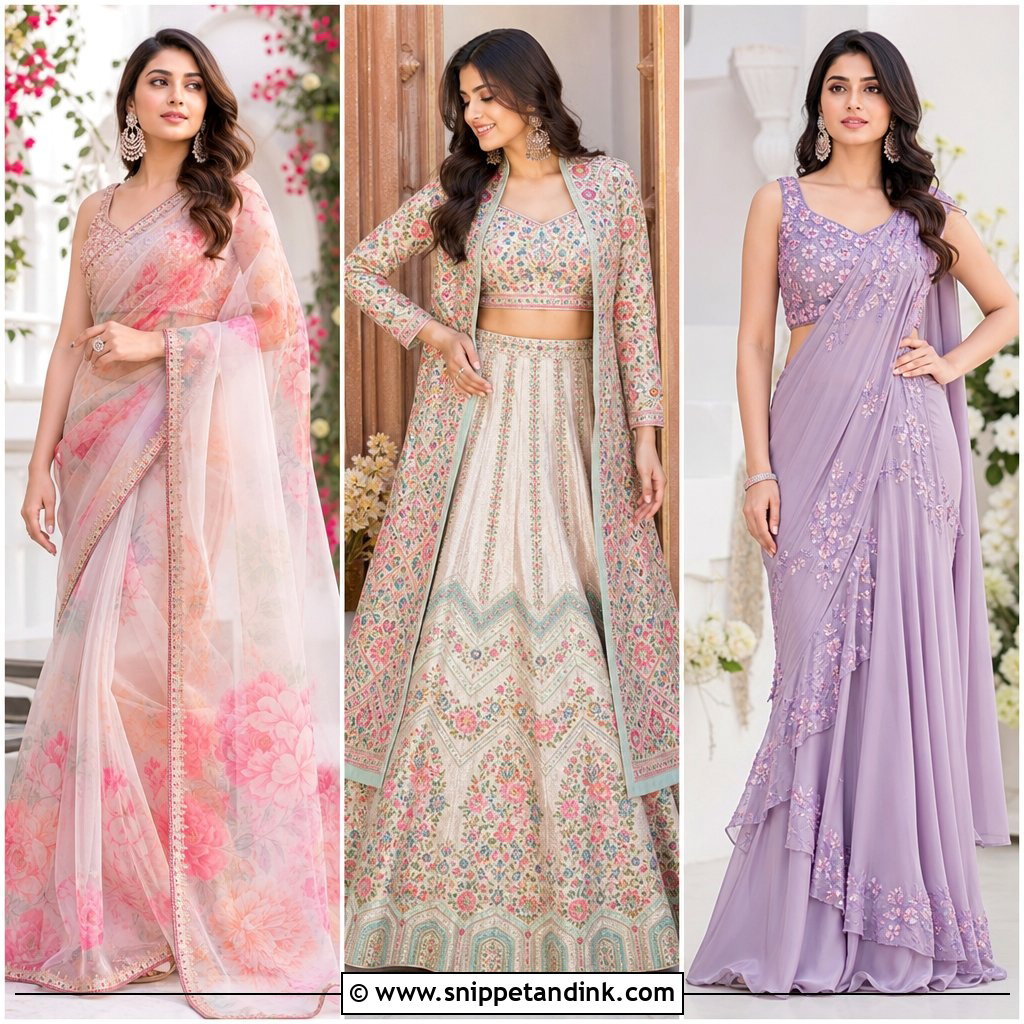
If you’ve ever spent the first hour of a reception re-tucking pleats, a pre-draped saree is the fix. The pleats and pallu are stitched in place, so it goes on like a skirt in a minute or two. I’d choose fluid georgette, satin or crepe, which hang well once stitched, and pair it with a structured corset blouse. Pearl embroidery, metallic thread or fine sequins move it toward a reception or cocktail night. Slim heels, a crystal clutch and statement earrings finish it, with a soft bun or loose waves. On a petite frame, a narrow border in one colour keeps the line long; curvier figures often prefer a corset with wider straps and gentle boning. Keep jewellery light.
2. Cape Lehenga With Embroidered Crop Top
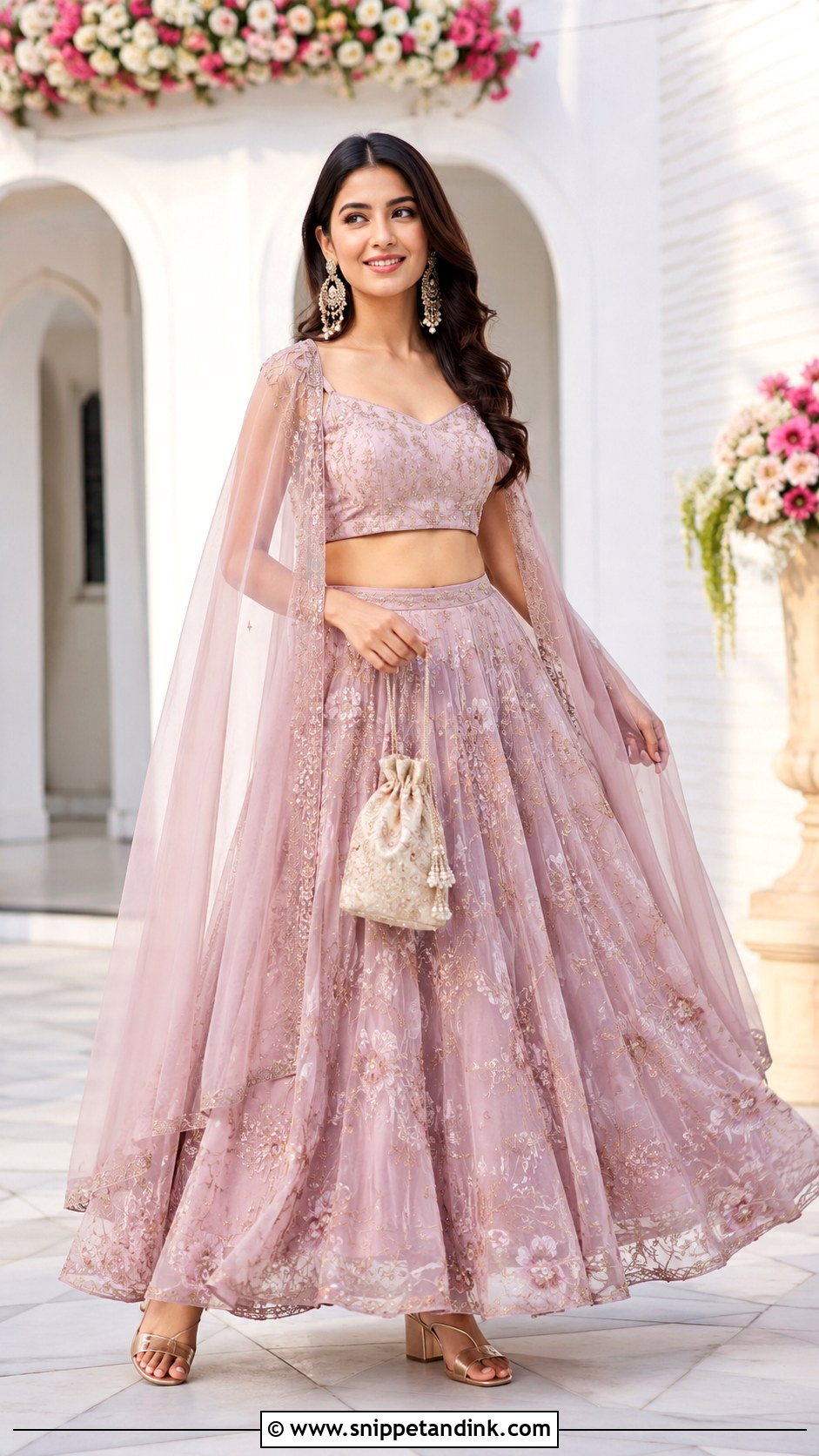
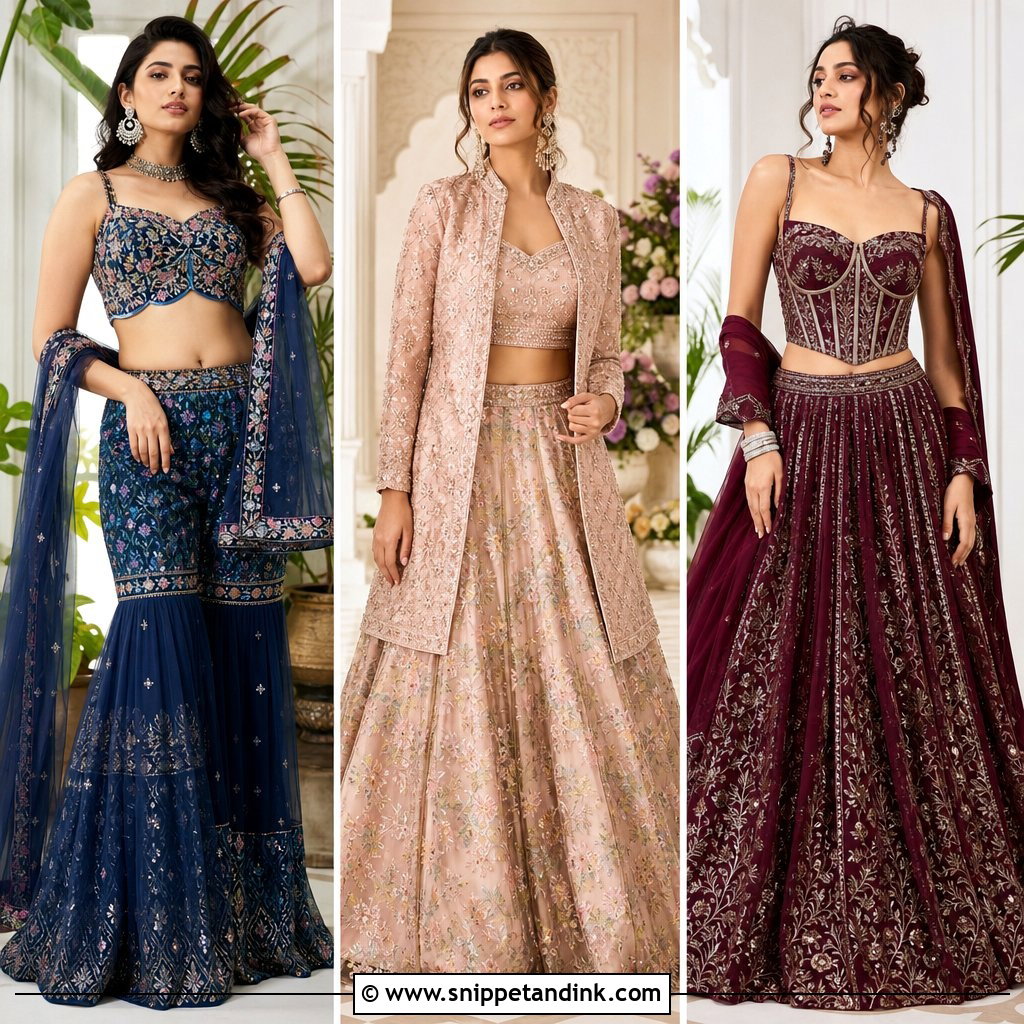
A cape lehenga solves the dupatta problem. Instead of a long scarf that slips, gets sat on and needs a hand all night, a sheer floor-length cape sits on the shoulders and moves on its own. Start with a flowing skirt and fitted embroidered crop top, then add the cape with matching borders; the vertical layer lengthens the whole silhouette. Block heels, a potli bag, chandelier earrings and a fine ring finish it, and a heavy necklace is unnecessary when the cape and blouse are already worked. Organza, chiffon or light net suit warm weather, velvet or silk the cooler months. Have the cape end just above the floor so you don’t tread on it.
3. Draped Skirt With One-Shoulder Blouse
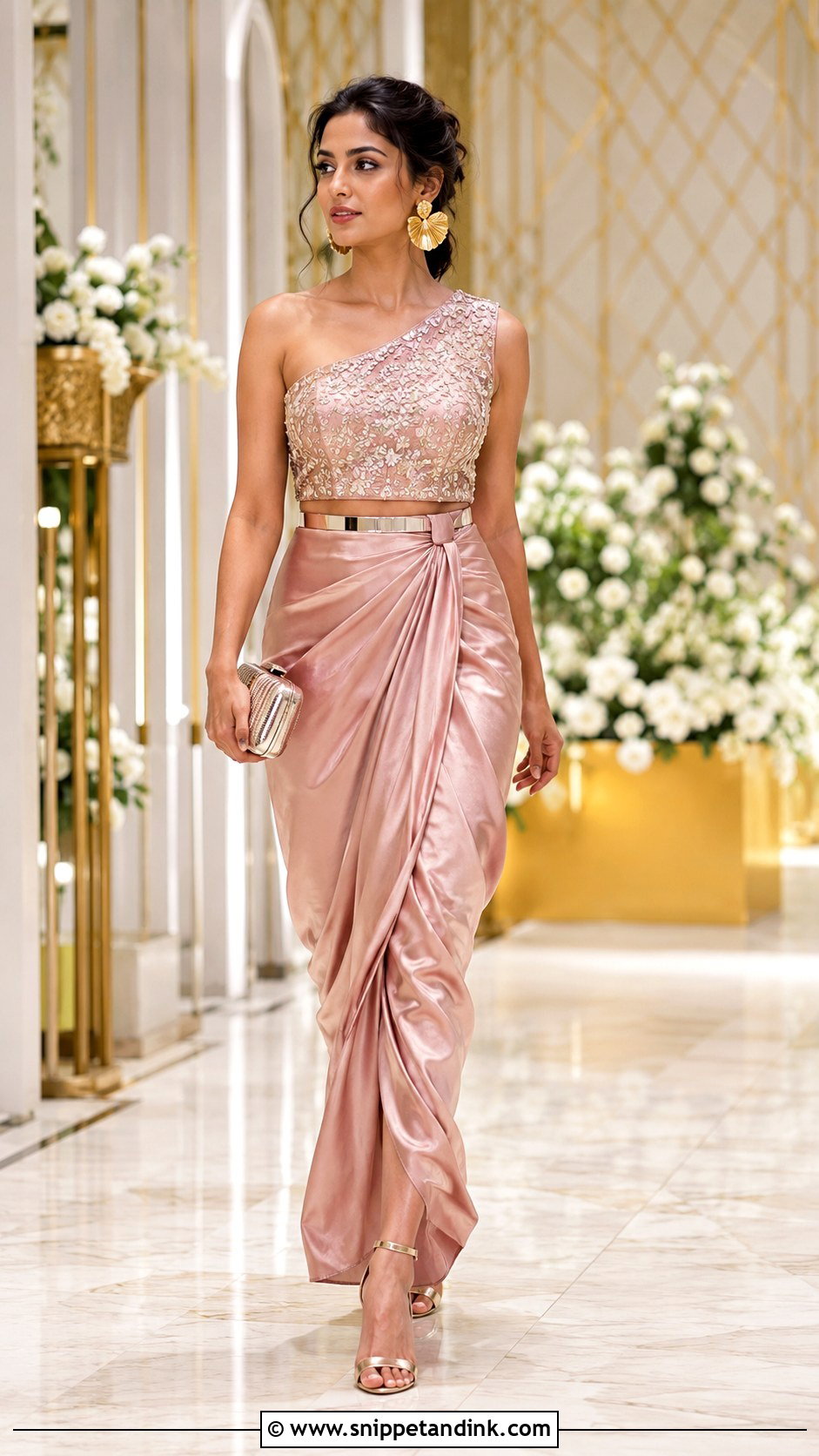
The draped skirt gives you saree movement with the ease of a skirt, which is why I suggest it for anyone dancing at the sangeet. Choose a high-waisted design in crepe, satin or georgette and pair it with a fitted one-shoulder blouse with embroidery along the neckline. Metallic heels, a compact clutch and sculptural earrings keep it sleek, and an embellished belt can hold the drape in place. For more coverage, pick a blouse with one long sleeve or add a light shoulder cape. One-shoulder tops need the right underwear, so try it on with a strapless bra or built-in cups before the day. Hem the skirt to your exact heel height.
4. Dhoti Pants With Peplum Top
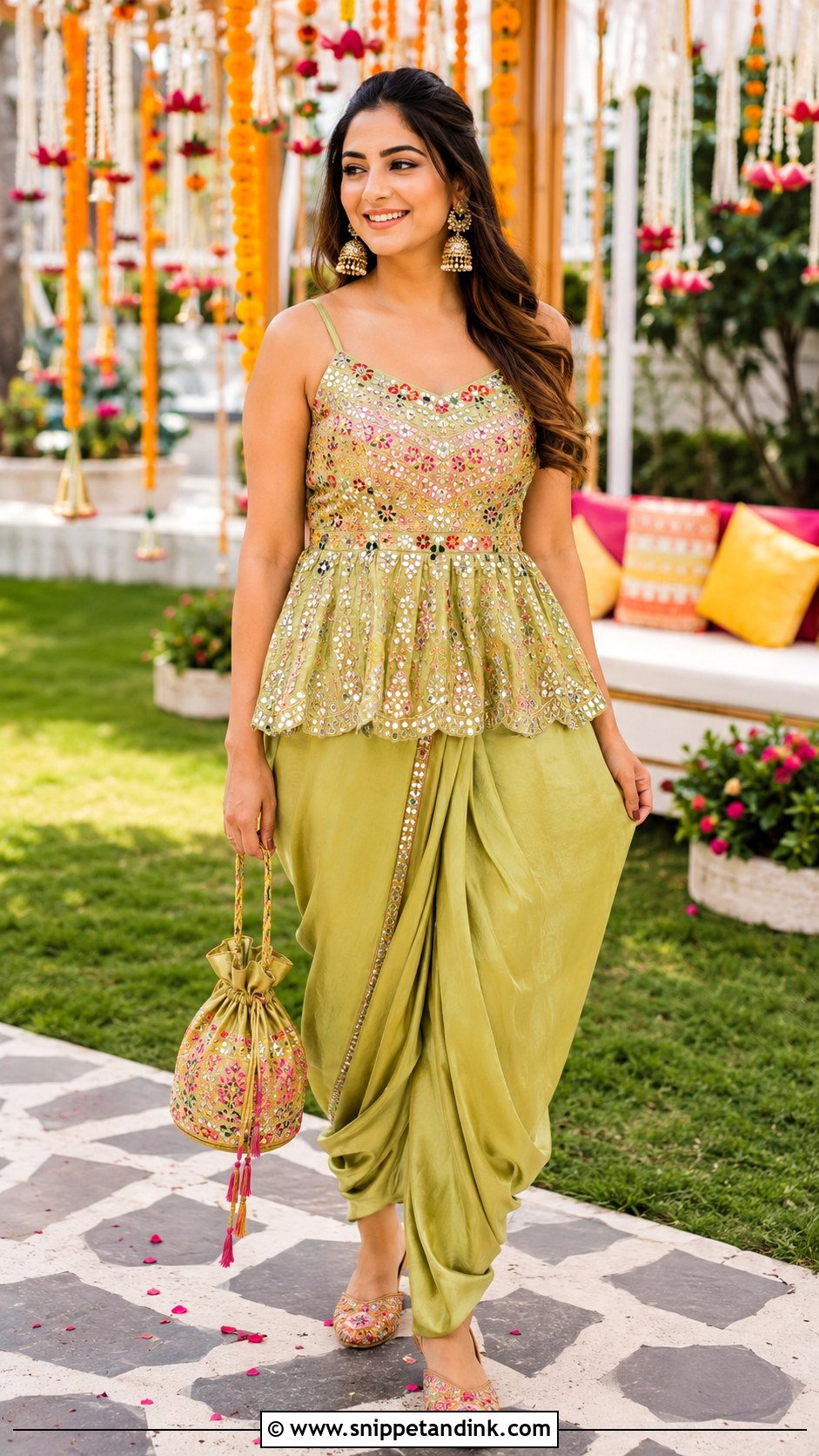
For a day that starts with a mehndi and ends with dancing, comfort comes first. Dhoti pants with a peplum top give room to sit cross-legged on floor cushions while still looking structured and festive. Silk-blend dhotis and a fitted peplum with mirror work, beads or thread embroidery suit it; the flared waist balances the gathered trousers. Embroidered juttis or sturdy block heels, a potli and medium jhumkas complete it, with a sleek ponytail or braided bun. Taller women can try a longer peplum, while a shorter one keeps the waist visible on petite frames. At a mehndi, keep your hands and sleeves away from wet henna, which stains silk permanently.
5. Embroidered Jumpsuit With Sheer Cape
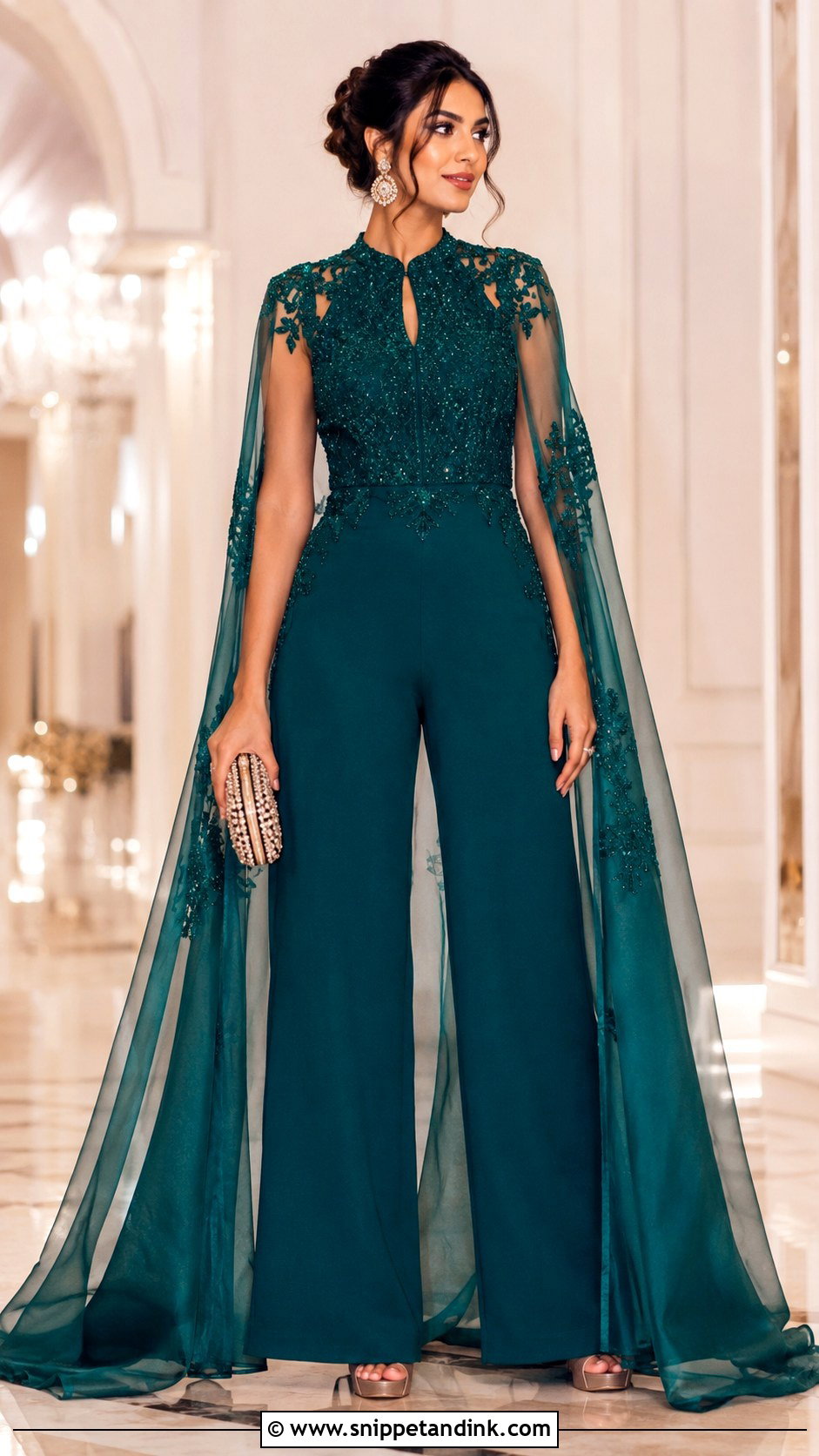
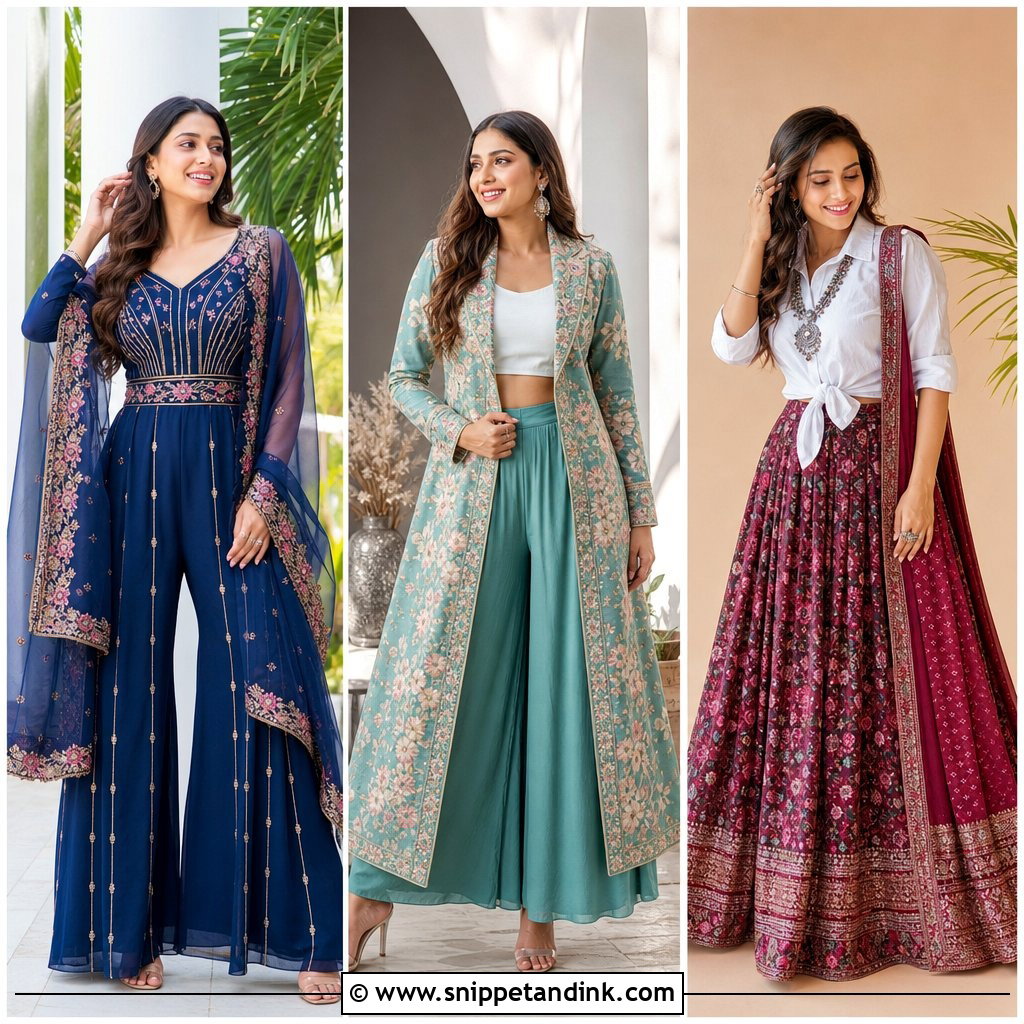
A jumpsuit is one piece, so there’s nothing to arrange or re-pin all evening. Look for a fitted waist, wide legs and embroidery concentrated on the bodice, then add a detachable organza or chiffon cape for ceremony drama without a dupatta. Platform heels, a beaded clutch and bold earrings finish it. Deep jewel tones suit evening events, while blush, mint or powder blue work in daylight. A V-neck lengthens the upper body and a square neck looks more structured. The measurement I check most on jumpsuits is torso length. If it’s too short, it pulls at the crotch when you sit or raise your arms, and no amount of hemming fixes that.
6. Sharara Set With Tailored Blazer
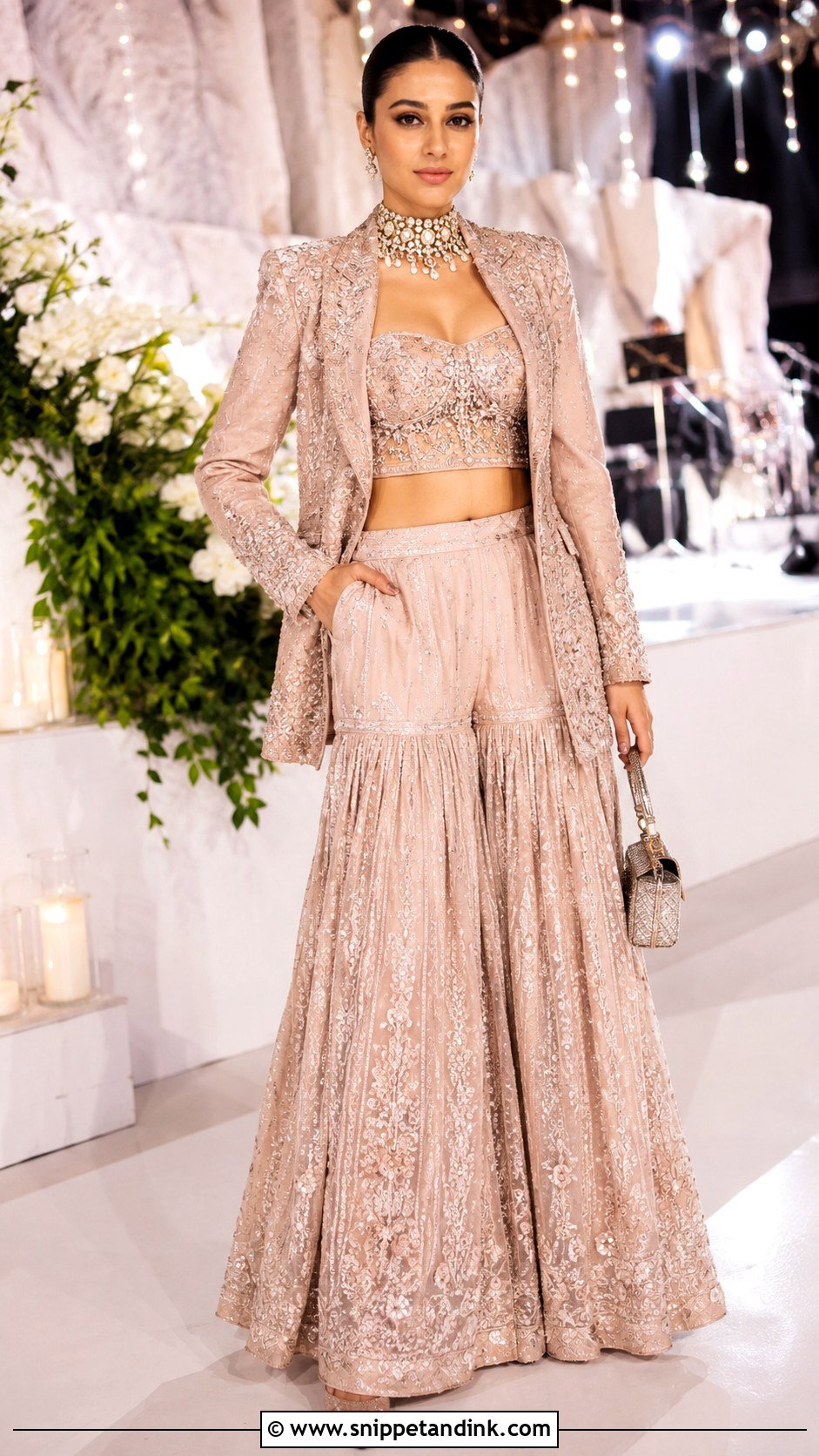
Adding a tailored blazer to a sharara set is a quick way to modernise it. Flowing sharara pants, a fitted bustier or cropped blouse, and a blazer with subtle zari, mirror accents or embellished cuffs suit a reception, sangeet or welcome party. Pointed heels lengthen the leg under such wide pants, and a structured mini bag keeps the tailored mood. Choose a choker or drop earrings, not both, if the blazer is heavily worked. Keeping all three pieces in one colour looks sleek and expensive. If you’d like more coverage, a longer blazer ending at the upper thigh works well; wear it open so the vertical line stays.
7. Palazzo Pants With Long Embroidered Jacket
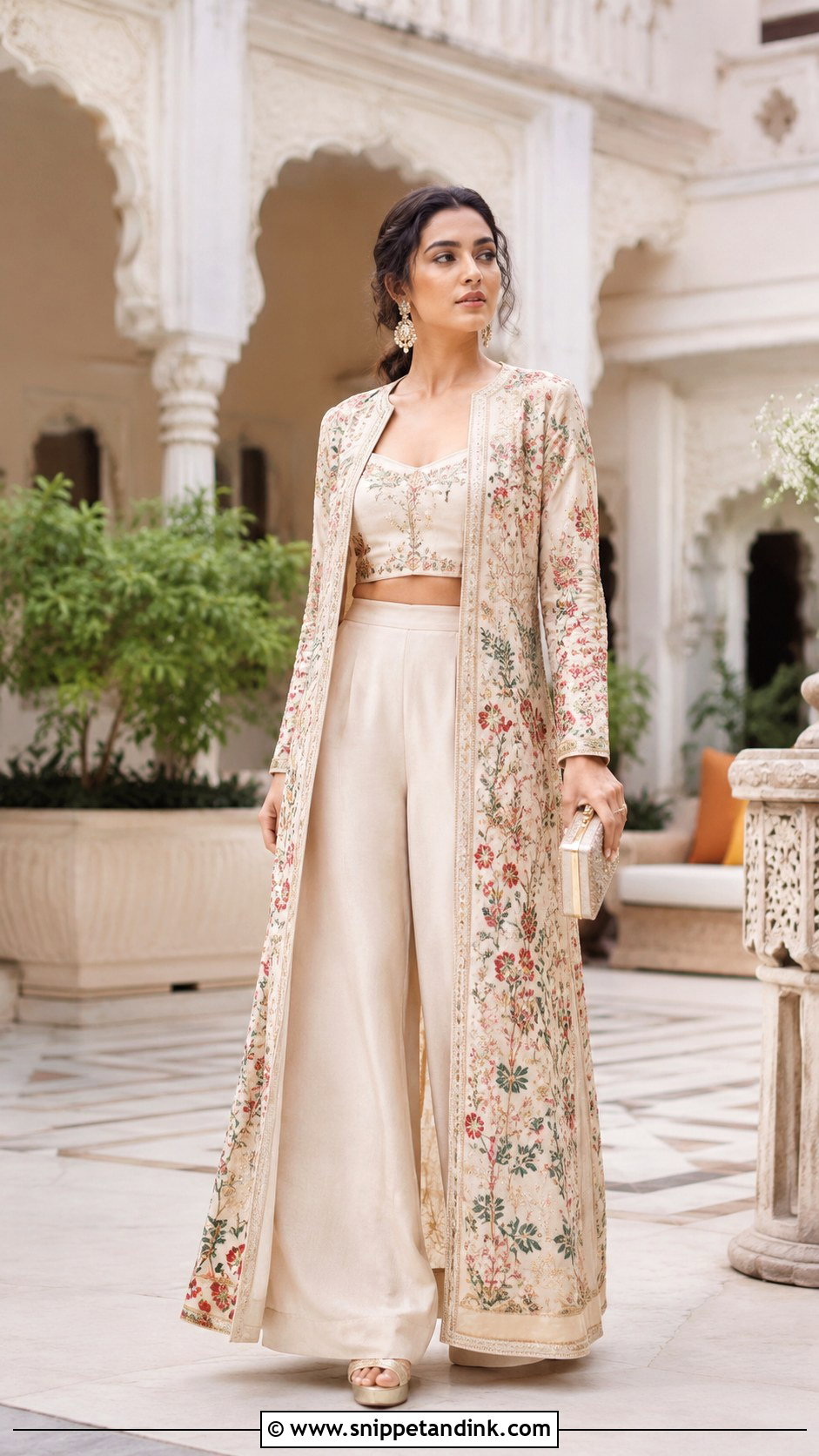
Palazzo pants with a long embroidered jacket are about as easy as wedding dressing gets. Start with high-waisted wide-leg trousers and a simple fitted crop top in the same or a complementary colour, then add a floor-length jacket with botanical embroidery, sequins or traditional motifs. Worn open, it frames the body in one long line. Platform sandals, a box clutch and statement earrings finish it, and a sleek centre part lets the jacket’s work show. I’d keep the jacket hem a little shorter than the trousers so the two layers don’t fight. Swap the earrings and clutch, and the same outfit goes from an afternoon ceremony to evening.
8. Saree Gown With Metallic Belt
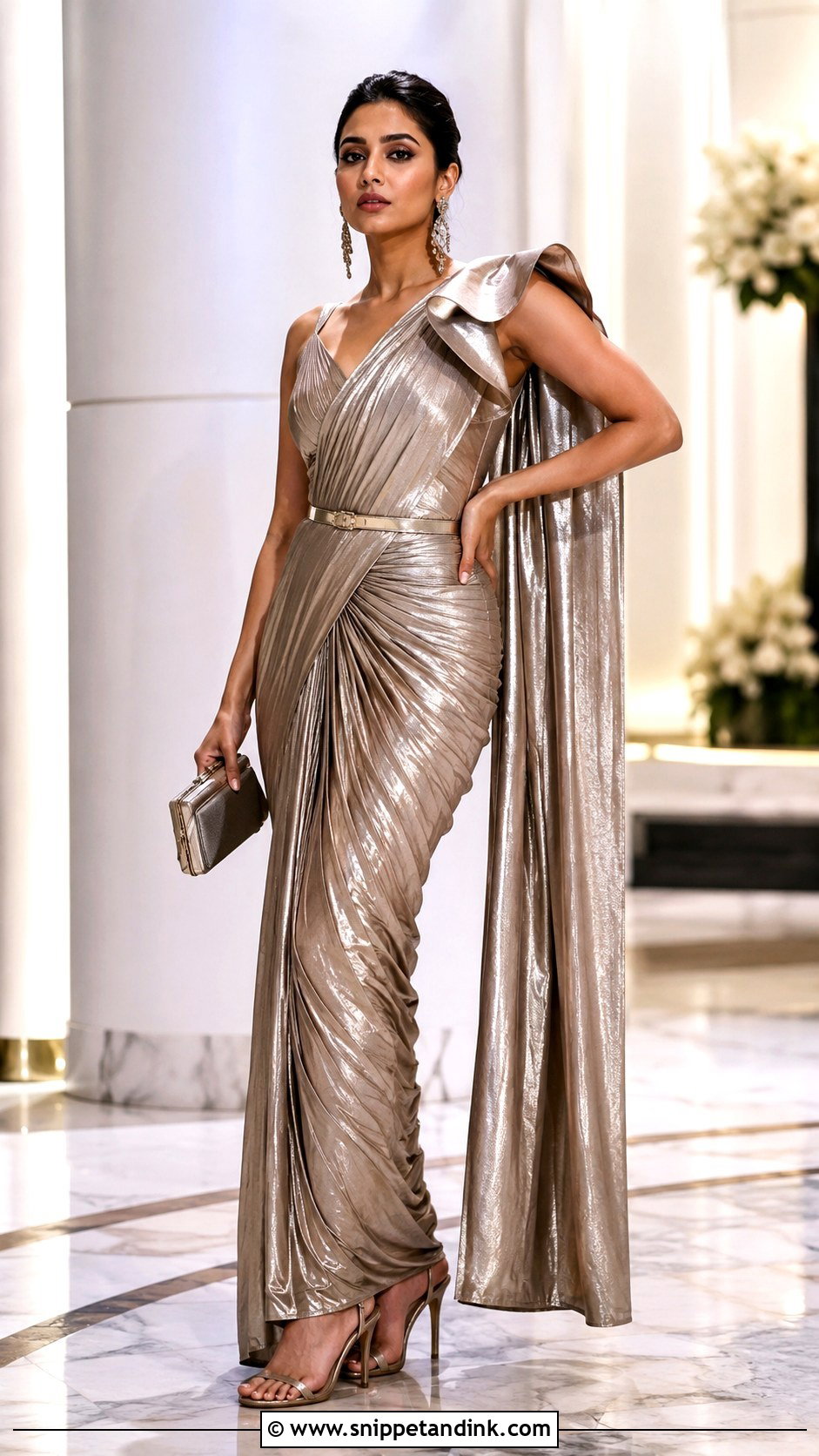
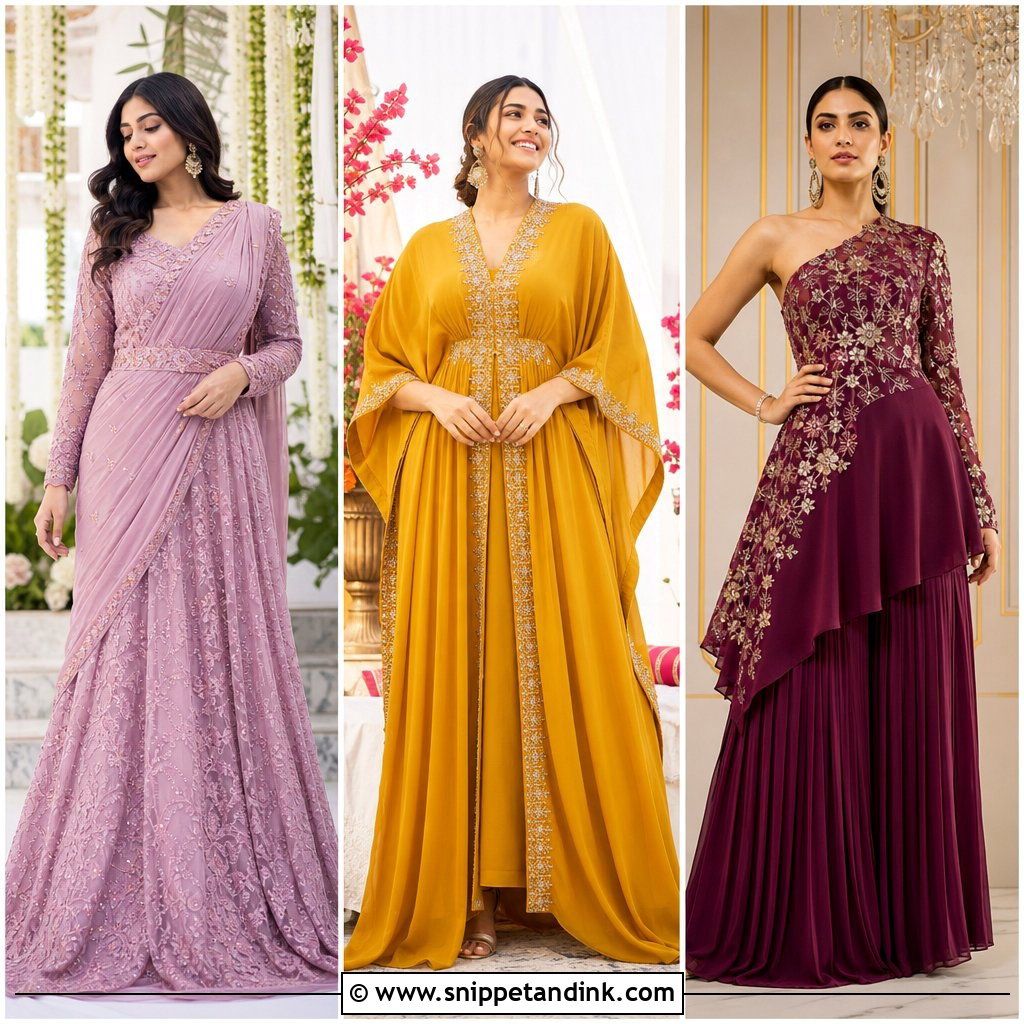
A saree gown is what I suggest to someone who loves the saree look but doesn’t want to drape. It’s one piece, a fitted gown with pleats or a pallu stitched into it, so it stays put through dinner and dancing. A slim metallic or embroidered belt defines the waist and anchors the drape. Strappy heels, a hard-case clutch and long earrings suit it, and a high bun shows off a dramatic shoulder drape. Jewel tones, metallic neutrals and deeper pastels work at evening receptions. Make sure it fits through the hips with room to walk and sit. If the fabric is heavily embellished, leave out the necklace.
9. Lehenga With Embroidered Blazer
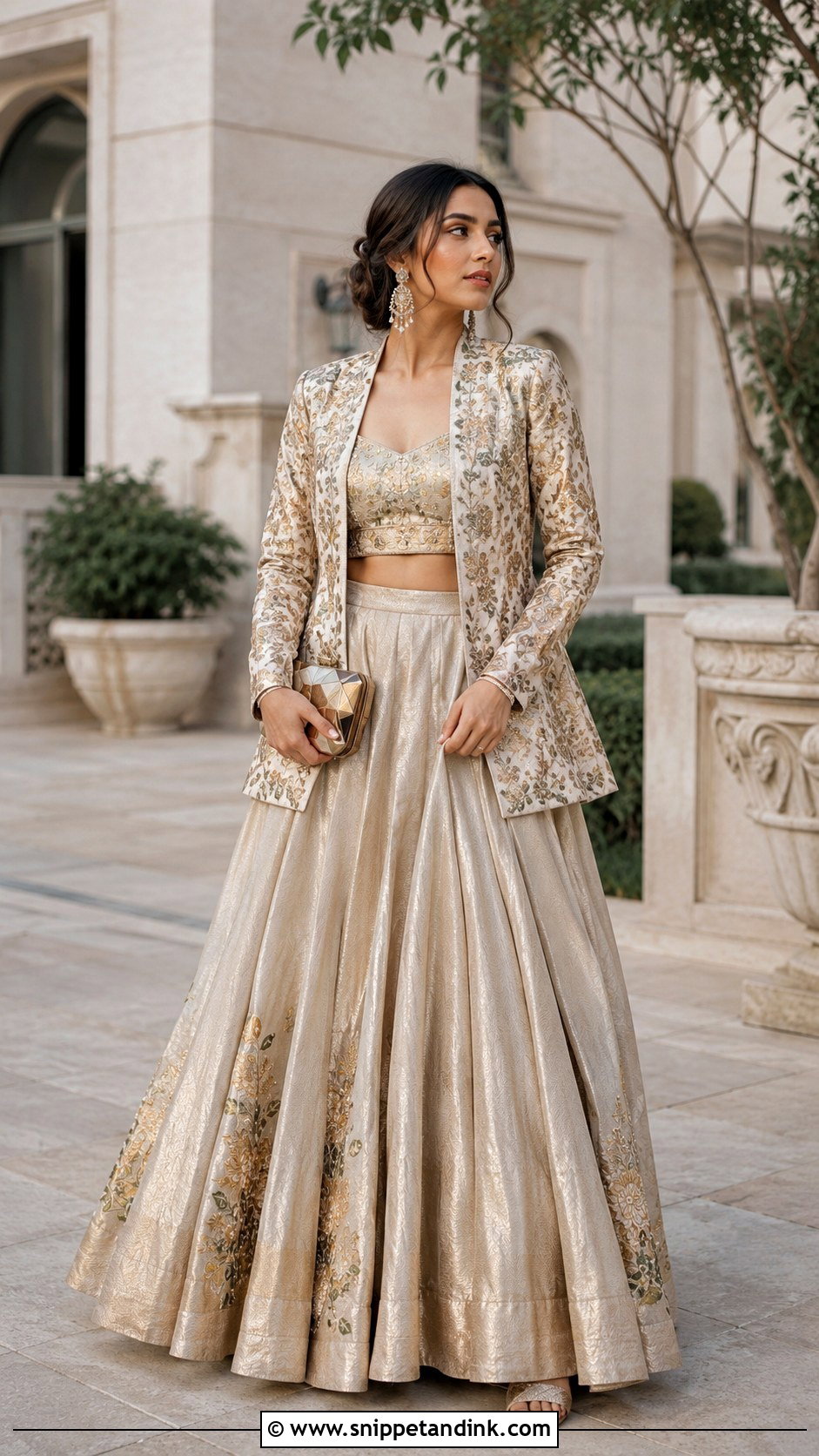
A lehenga with an embroidered blazer gives a classic skirt some tailored edge. Pair the flowing skirt with a fitted bralette, bustier or sleeveless blouse, then add a cropped or hip-length blazer with embroidery that clearly belongs to the same set. Leave it open for a sangeet or button it for a sharper reception look, with block heels, a structured clutch and drop earrings. Bridesmaids can coordinate in matching blazers over different skirt shades. On a shorter frame, a jacket ending at the natural waist keeps the legs looking long. With a very full skirt, the blazer must be fitted through the shoulders, or the whole outfit looks wide.
10. Asymmetric Kurta With Cigarette Pants
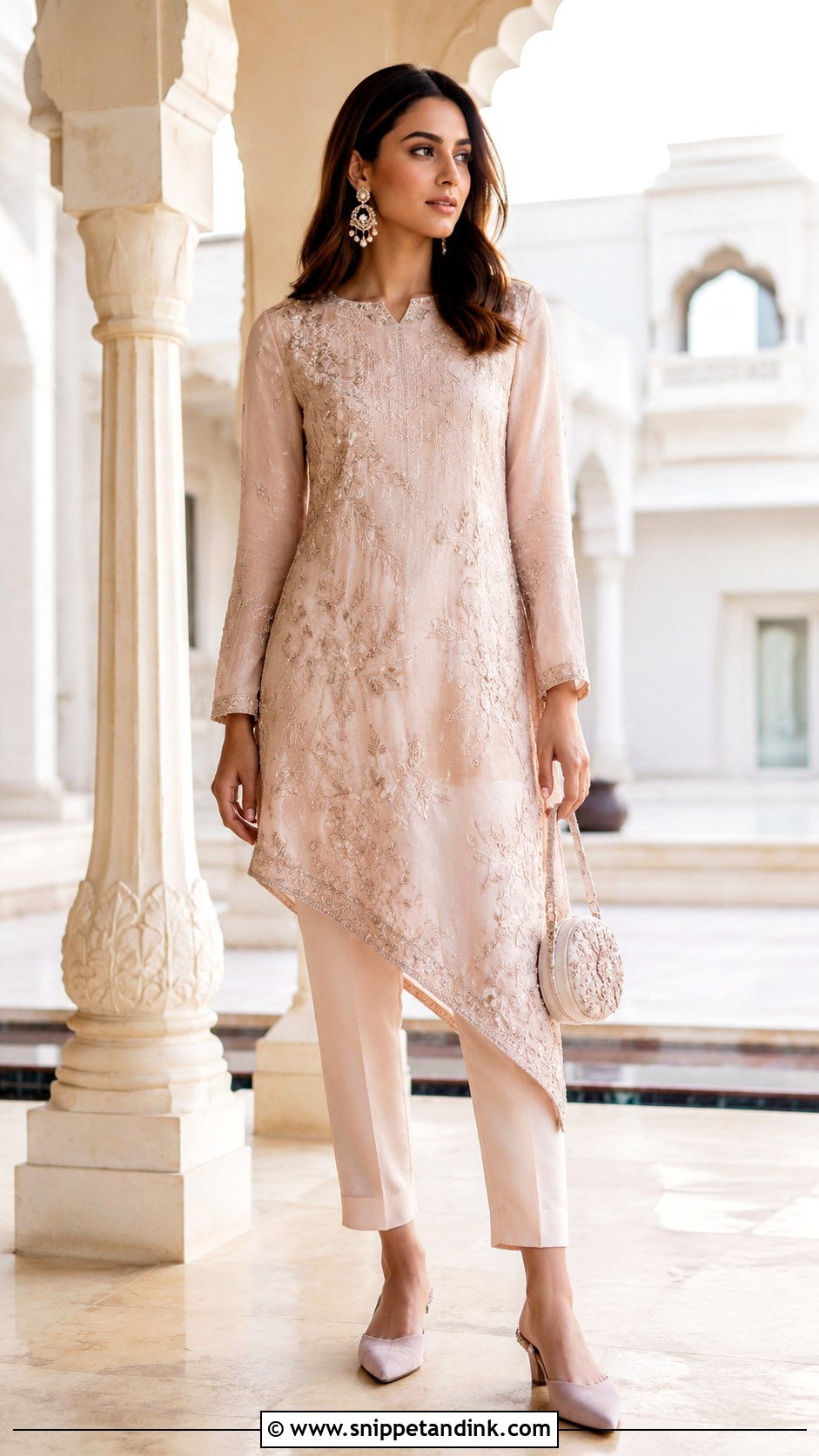
Not everyone wants a full skirt at a wedding. An asymmetric kurta with cigarette pants is the understated option, and it suits lunches, engagements and smaller ceremonies. Choose a diagonal hem, a draped side panel or a high-low cut in silk, crepe or jacquard, which have enough body to hold the shape. Embroidery concentrated at one shoulder or along the hem is festive without being loud. Pointed mules, a small embroidered bag and modern earrings finish it; a sheer stole over one shoulder adds drama. Keep the trousers close-fitting but not tight, and check that the long side of the kurta doesn’t swing into your stride.
11. Crop Top With Wide-Leg Pants And Dupatta
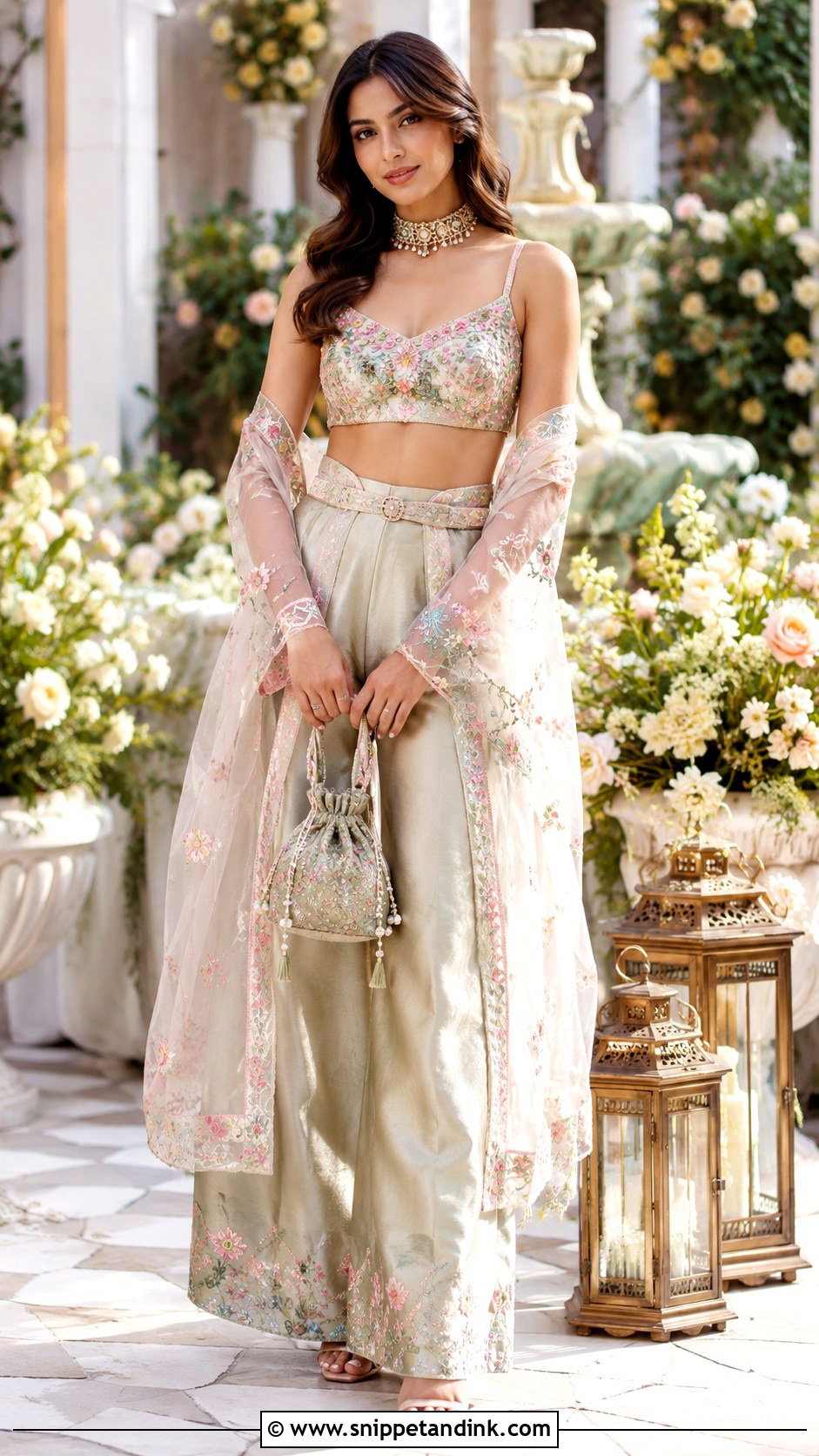
A crop top, wide-leg trousers and a dupatta is the most adaptable fusion outfit I know, because the dupatta changes the formality. Choose a fitted embroidered top and high-waisted trousers in silk, brocade or flowing georgette. Wear a light dupatta with a neat border over one shoulder, or belt it at the waist so it can’t slip, which is my preference for anyone dancing. Heeled sandals, a potli and a choker give the trousers a traditional feel. Floral embroidery and pastels suit daytime; deeper tones and metallic thread after sunset. A longer crop top adds coverage. Let the trousers fall cleanly to just cover the shoes.
12. Ruffled Saree With Structured Blouse
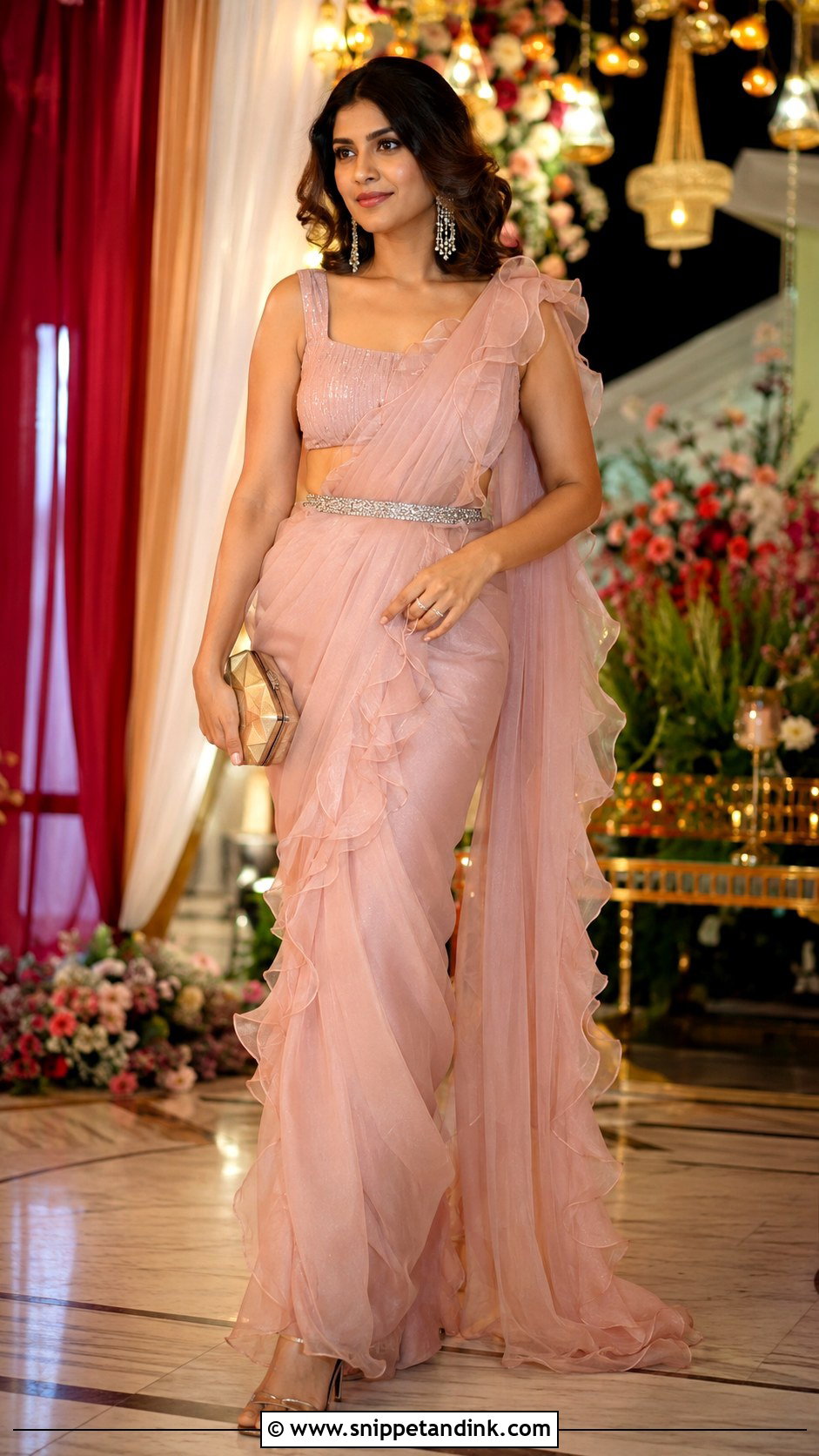
Ruffles add movement to a saree, but only in the right fabric. Organza, chiffon and georgette keep them light; heavier silks turn ruffles bulky fast. Balance the volume with a clean, structured blouse, square-neck, halter or sleeveless, and a decorative belt to hold the pleats. Sleek heels, a small metallic clutch and shoulder-grazing earrings finish it. If you’re petite, I’d keep the ruffles small and mostly along the border; taller frames carry broad cascading tiers. Keep the hair neat and controlled. Between the ruffles and the drape, the saree already has plenty going on.
13. Pant Saree With Embroidered Jacket
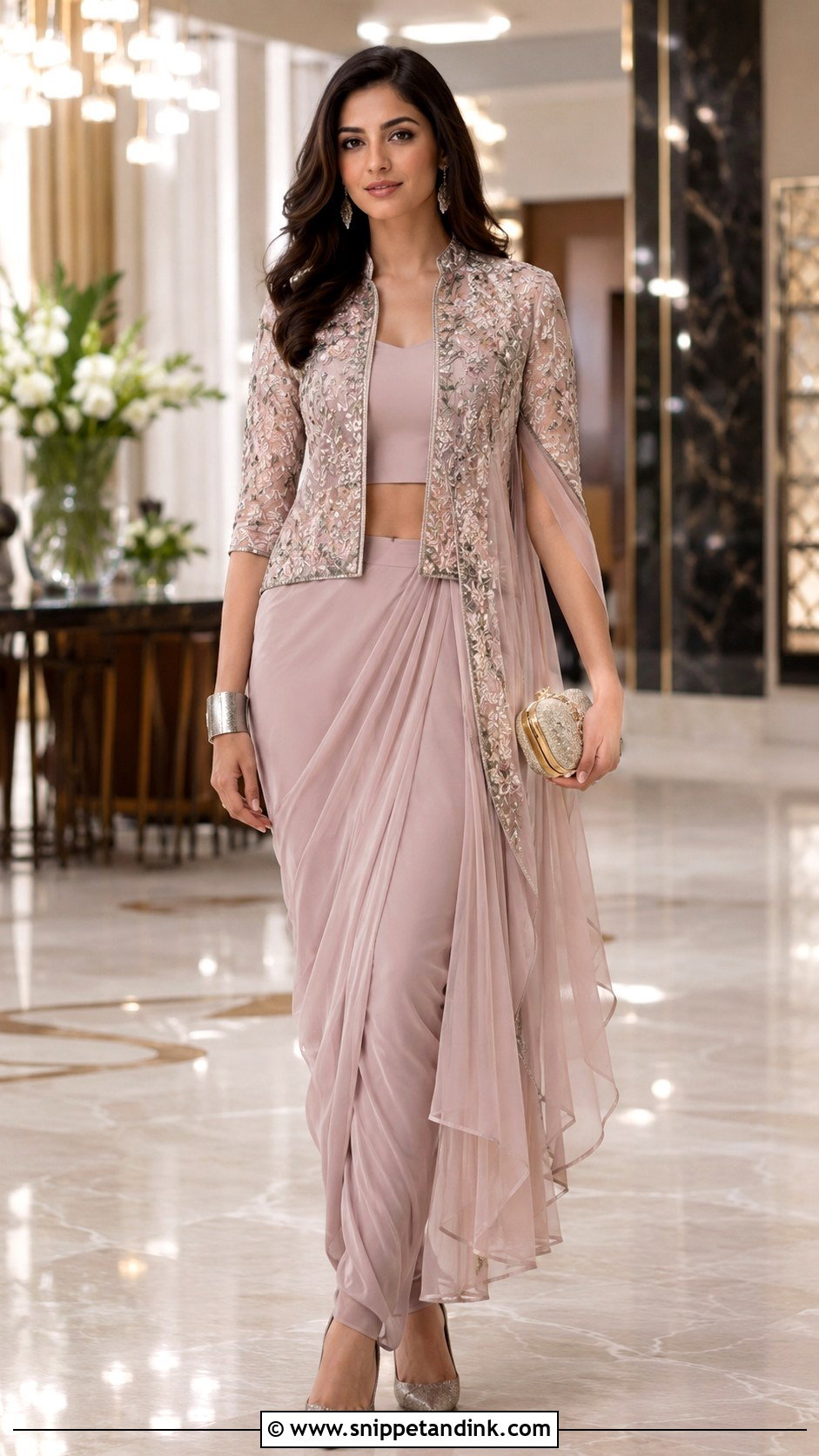
A pant saree joins slim or draped trousers to a pallu-like overlay, so you get the look of a saree and the freedom of trousers. Add a fitted blouse and a cropped embroidered jacket for coverage and structure. Pointed heels or embellished mules, a compact clutch, a cuff and small earrings keep it polished. It suits an engagement, reception or a contemporary ceremony. Keep the three pieces in one colour family, or let the jacket embroidery carry a single accent colour. The jacket should stay short. A long one hides the trouser drape, which is the whole point of the outfit.
14. Peplum Blouse With Draped Dhoti Skirt
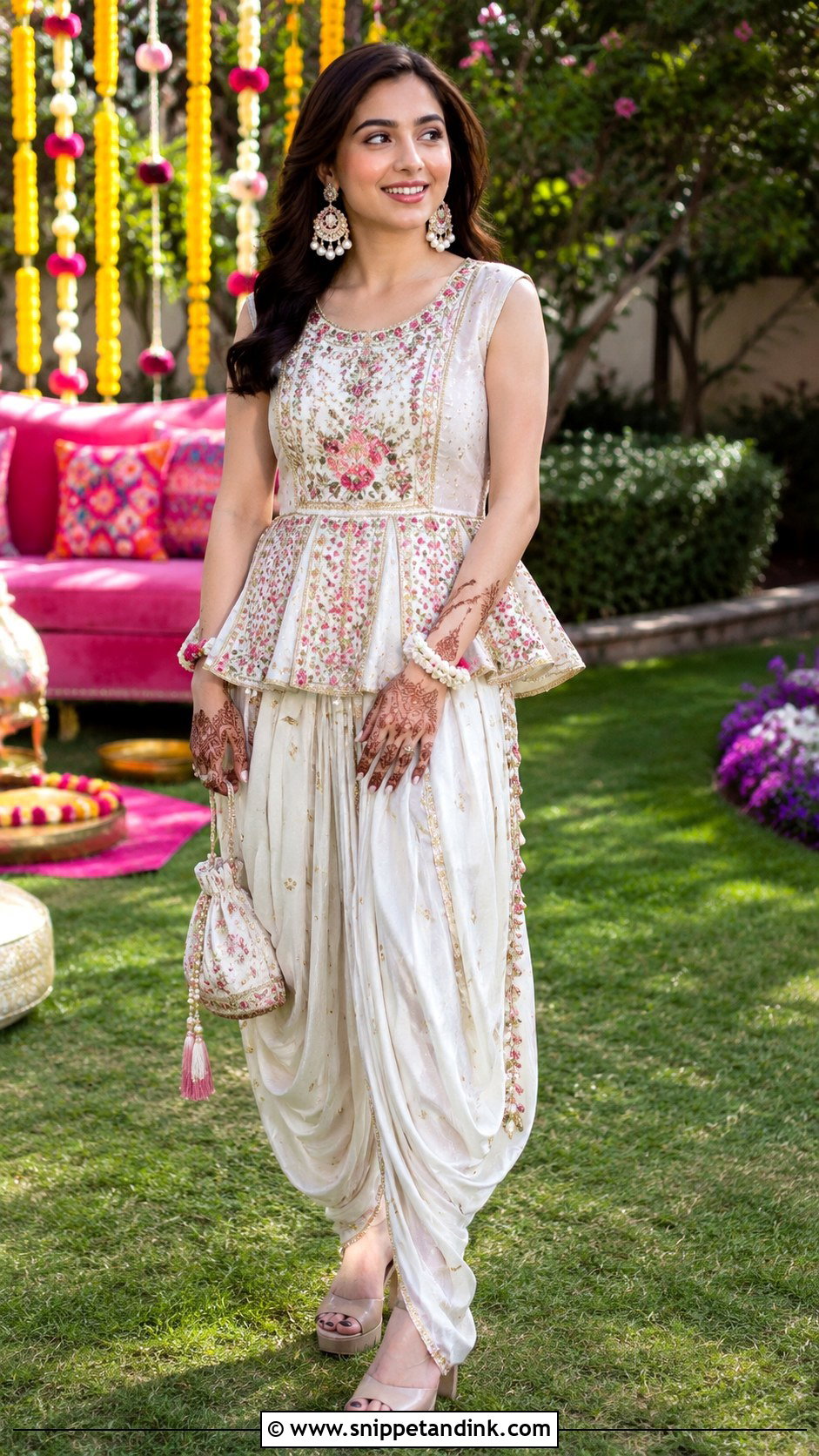
A peplum blouse over a draped dhoti skirt shapes the waist into an hourglass without anything tight. The fitted top and short flare flow into the gathered skirt. Choose a blouse with a clear neckline and embroidery on the bodice, sleeves or hem, and keep the skirt a solid colour so the drape reads. Platform heels, a jewelled potli and statement jhumkas finish it. It’s freer than a pleated saree, which makes it a good choice for mehndi and sangeet dancing. End the peplum at the high hip rather than the widest point, which only adds width. An ankle-length skirt shows off embroidered shoes and stays out from underfoot.

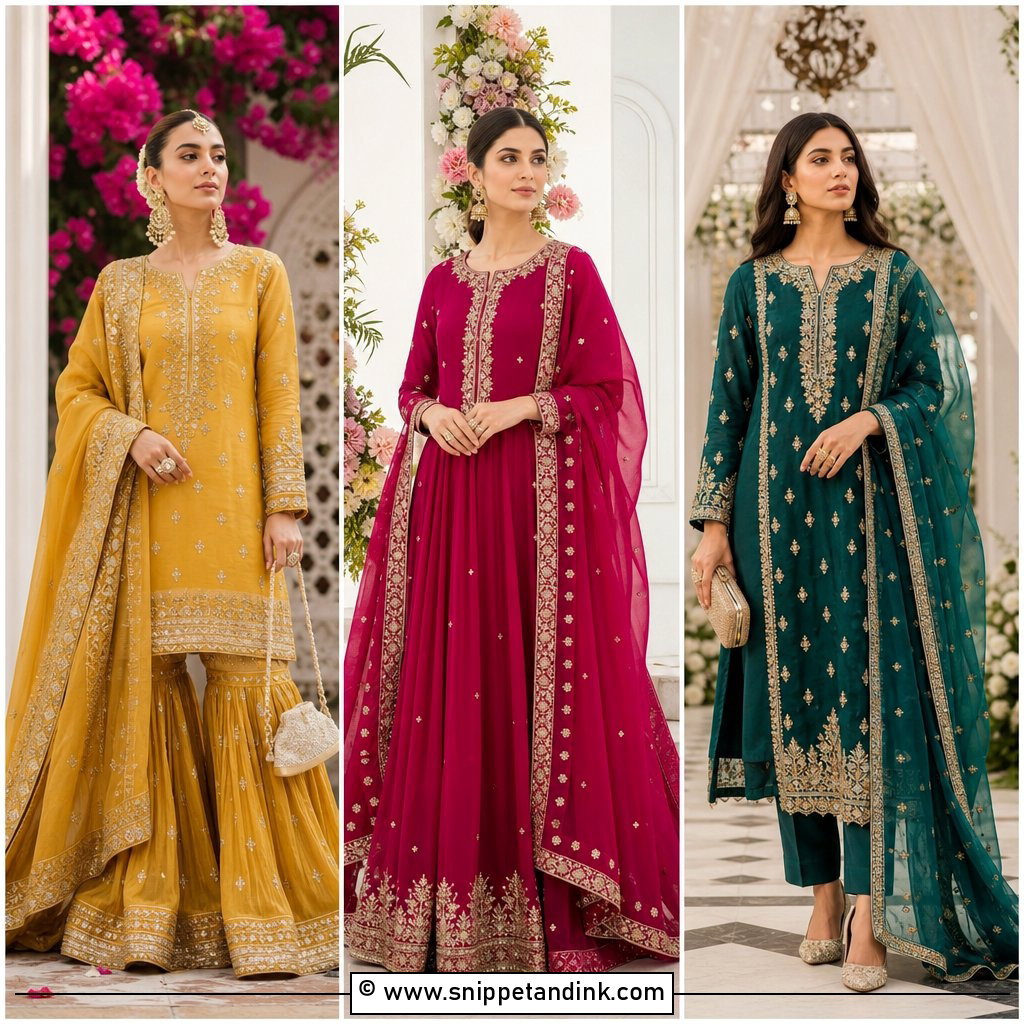
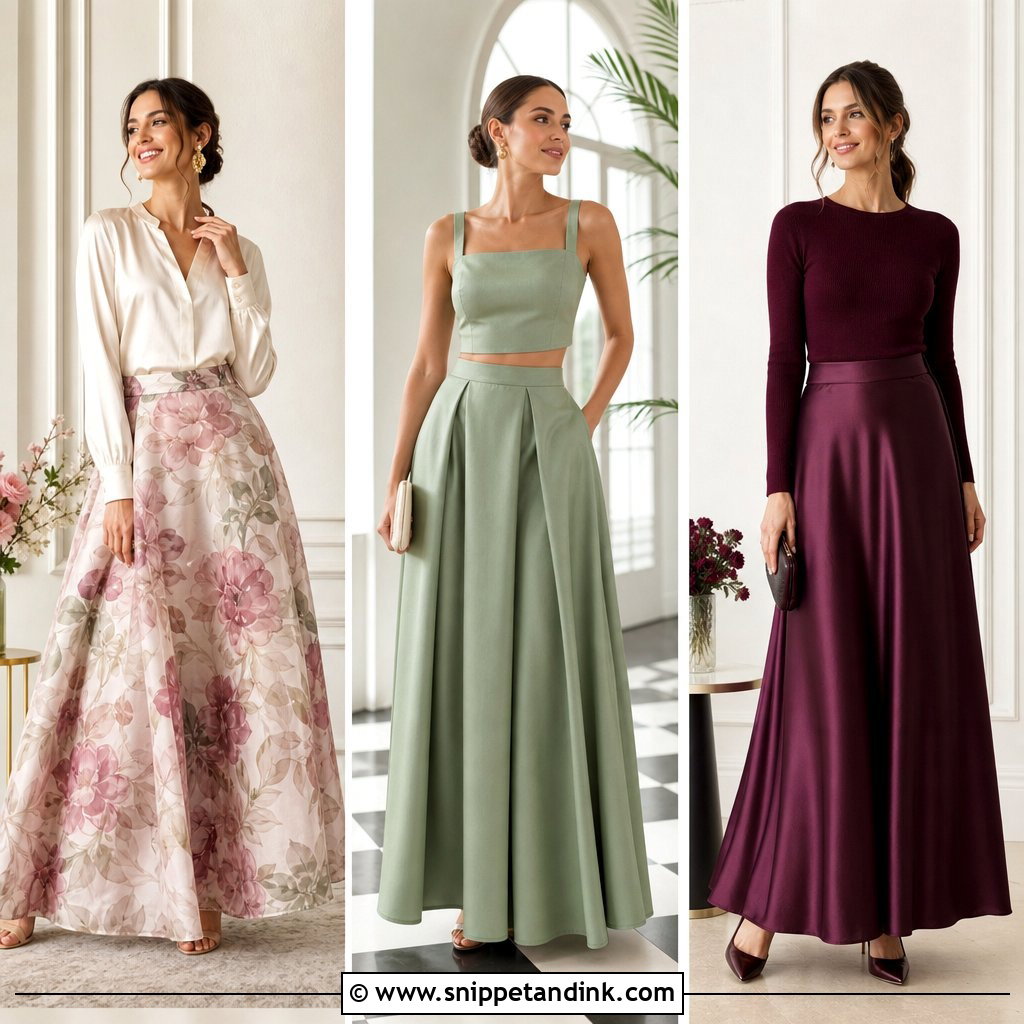
15. Organza Skirt With Corset And Cape
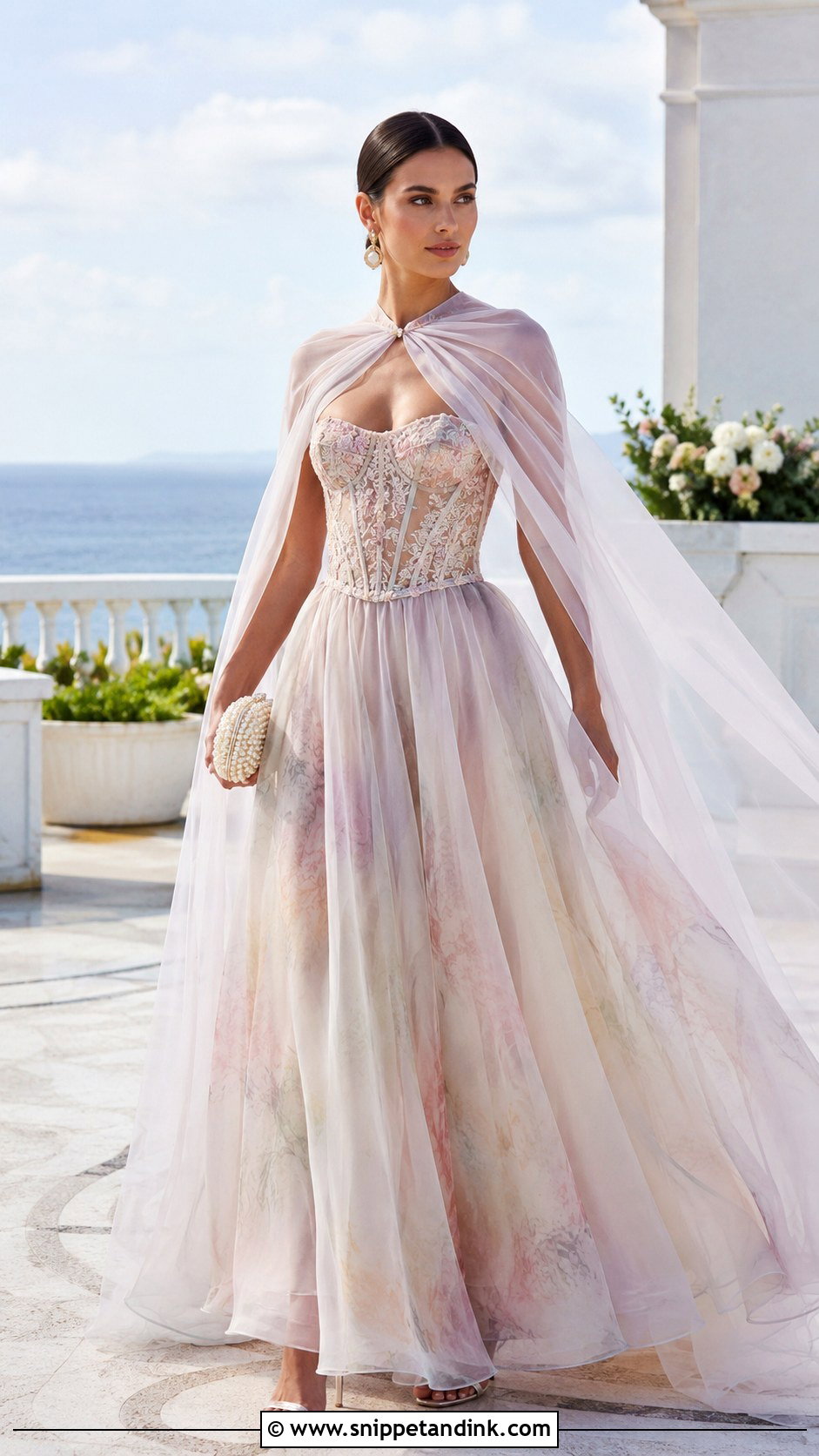
Organza holds its own shape, so a full organza skirt stands out from the body without a petticoat, which keeps it light and airy for a daytime reception or a destination wedding. Pair it with a fitted corset and a matching shoulder cape or detachable drape to bring in traditional layering. Floral thread, tiny sequins or scattered beads add dimension without weighing it down. Slim heels, a pearl clutch and fine drop earrings finish it, with a clean bun and glowing skin. Pick a corset with supportive straps for a long day. Keep the skirt volume in proportion to your height; on a petite frame, too much organza swallows you.
16. Silk Co-Ord Set With Embroidered Dupatta
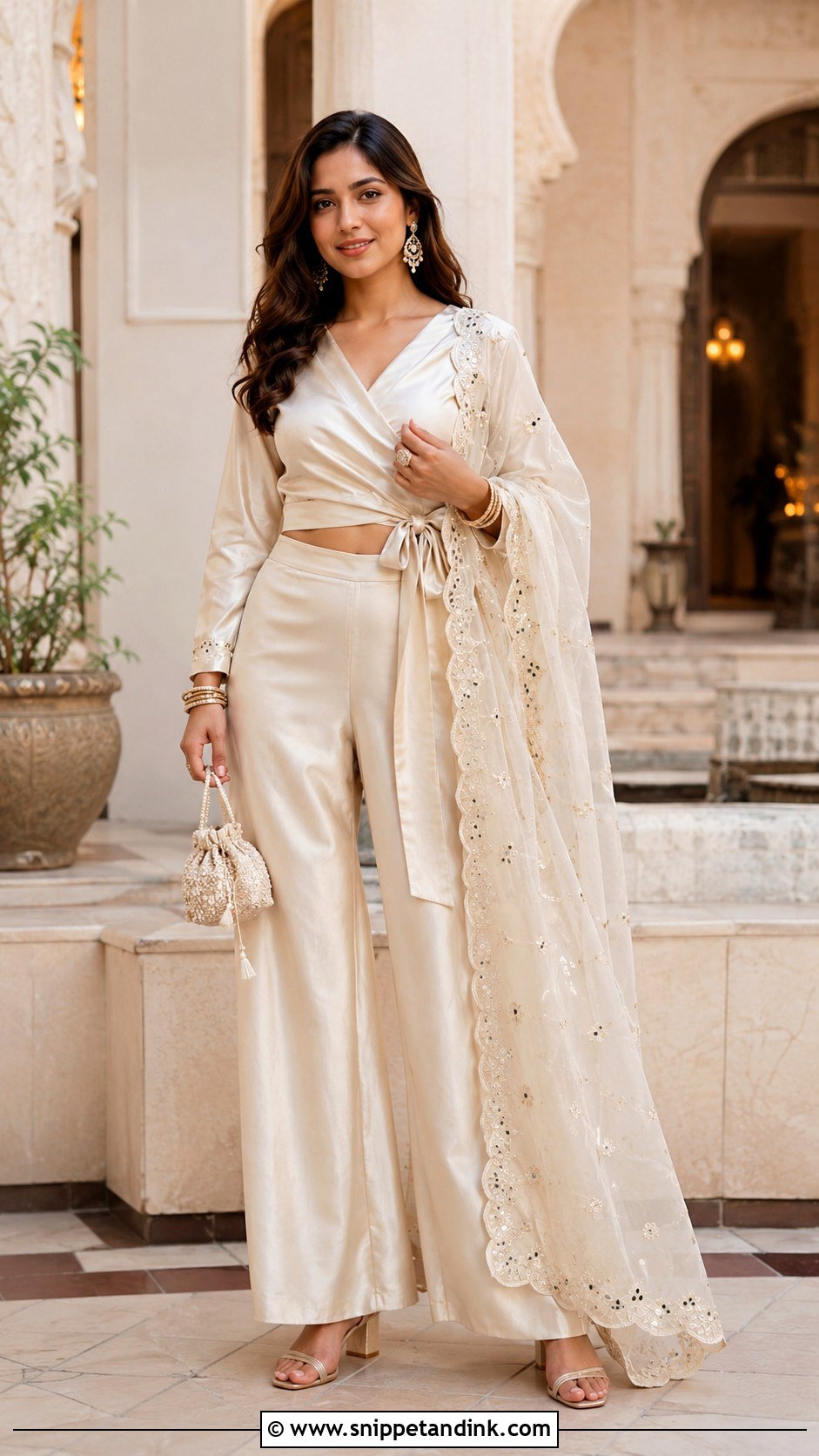
A silk co-ord set is my answer for guests who want to look polished and stay comfortable across a long schedule. Pair a cropped tunic, fitted top or wrap blouse with straight or wide-leg silk trousers, then let an embroidered dupatta with a scalloped border, mirror work or zari bring in the richness. Block heels, a mini potli, bangles and earrings finish it. It works for every age, because a longer tunic gives coverage and a defined crop top looks younger. Keep the silk pieces plain so the dupatta is the feature. Silk shows water marks, so carry a napkin at dinner and avoid dabbing spills with water.
17. Draped Midi Dress With Ethnic Jacket
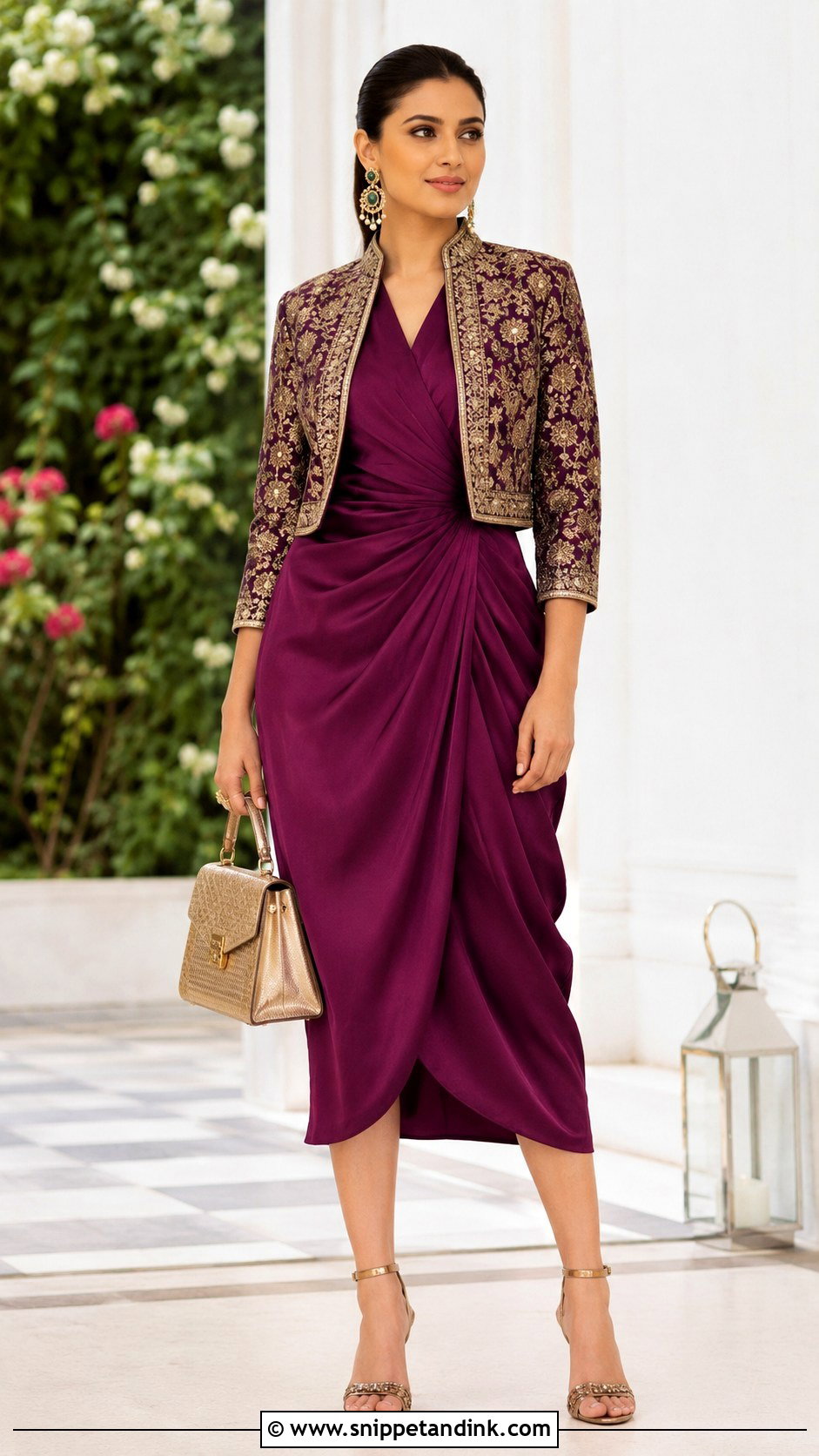
An ethnic jacket turns a plain draped midi dress into wedding clothing. Choose a solid crepe or satin dress with soft pleating at the waist and an asymmetric or calf-length hem, then add a cropped brocade jacket, a mirror-work bolero or a long embroidered layer depending on formality. Embellished heels, a structured bag and bold earrings finish it, and the shorter hem shows off your shoes. It suits a welcome lunch, mehndi or small pre-wedding event. Repeat the dress colour in the jacket embroidery. I’d avoid pairing a heavily draped dress with an oversized jacket; one piece should flow and the other should give structure.
18. White Shirt With Embroidered Lehenga
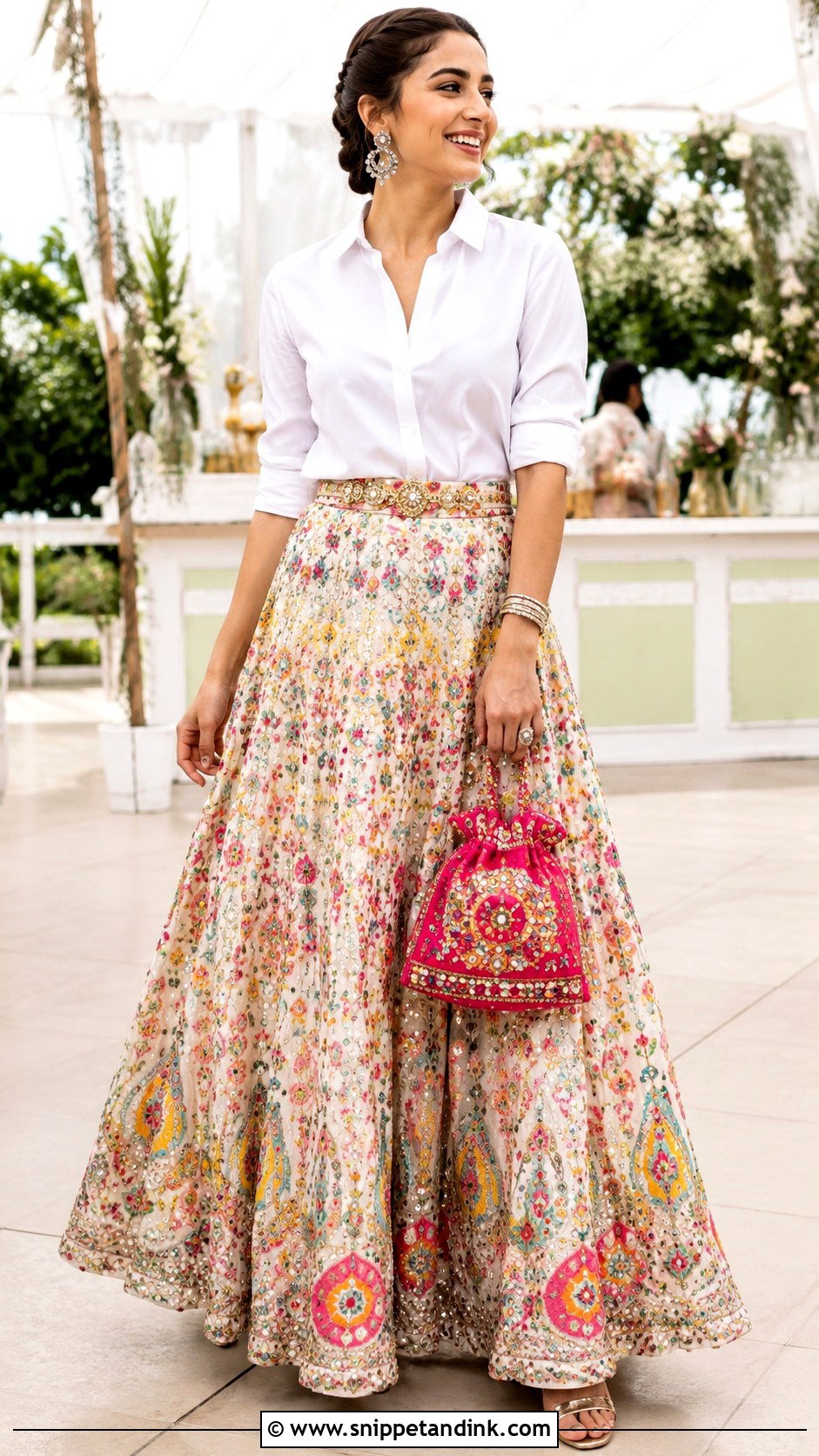
A crisp white shirt over an embroidered lehenga is unexpected, and it looks deliberate only when it’s done precisely. Choose a fitted or softly relaxed button-down and tuck it smoothly into a high-waisted skirt. Roll the sleeves for a mehndi; keep them full length for something more formal. A jewelled belt covers the waistband and links the plain shirt to the elaborate skirt. Statement earrings, metallic heels and a bright potli finish it, and a layered necklace works if the collar sits open. Choose a skirt with bright threadwork, mirror work or bold print for contrast. The shirt must be opaque and freshly pressed; a creased one makes the whole outfit look accidental.
19. Anarkali Gown With Sheer Cape
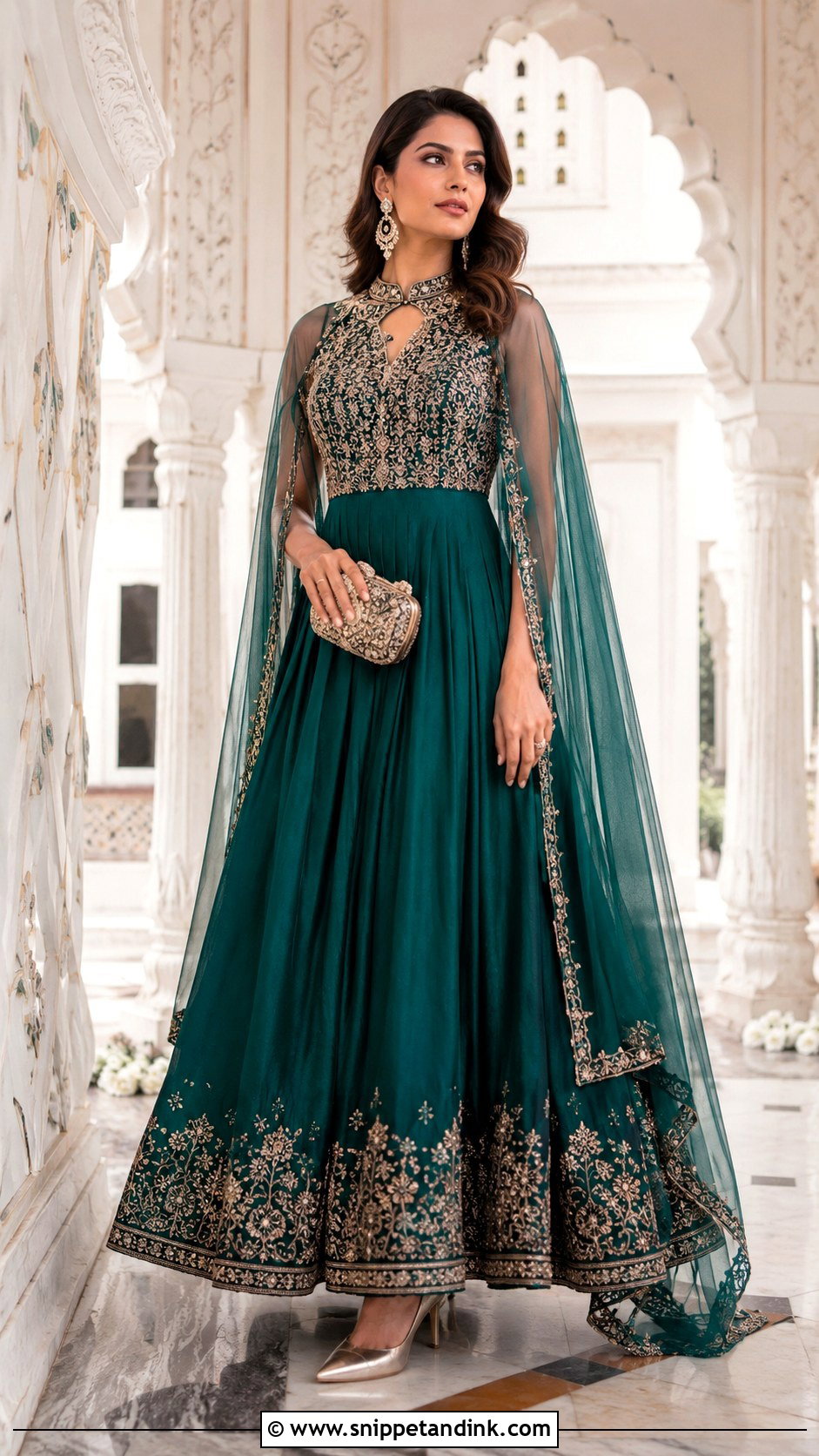
An Anarkali gown with a sheer cape gives the regal flare of the Anarkali without a loose dupatta. Choose a floor-length gown with a fitted bodice and a controlled flare, then add a cape falling from the shoulders or attached at the neckline. Embroidery along the cape border frames the outfit while the gown shows through. Pointed heels, a small embellished clutch and drop earrings complete it for a ceremony, formal engagement or reception. A gown and cape in one colour lengthens the body. If the skirt is heavily worked, I’d keep the cape plain and translucent. Hem it to float just above the floor when you stand in your shoes.
20. Tuxedo Kurta With Flared Pants
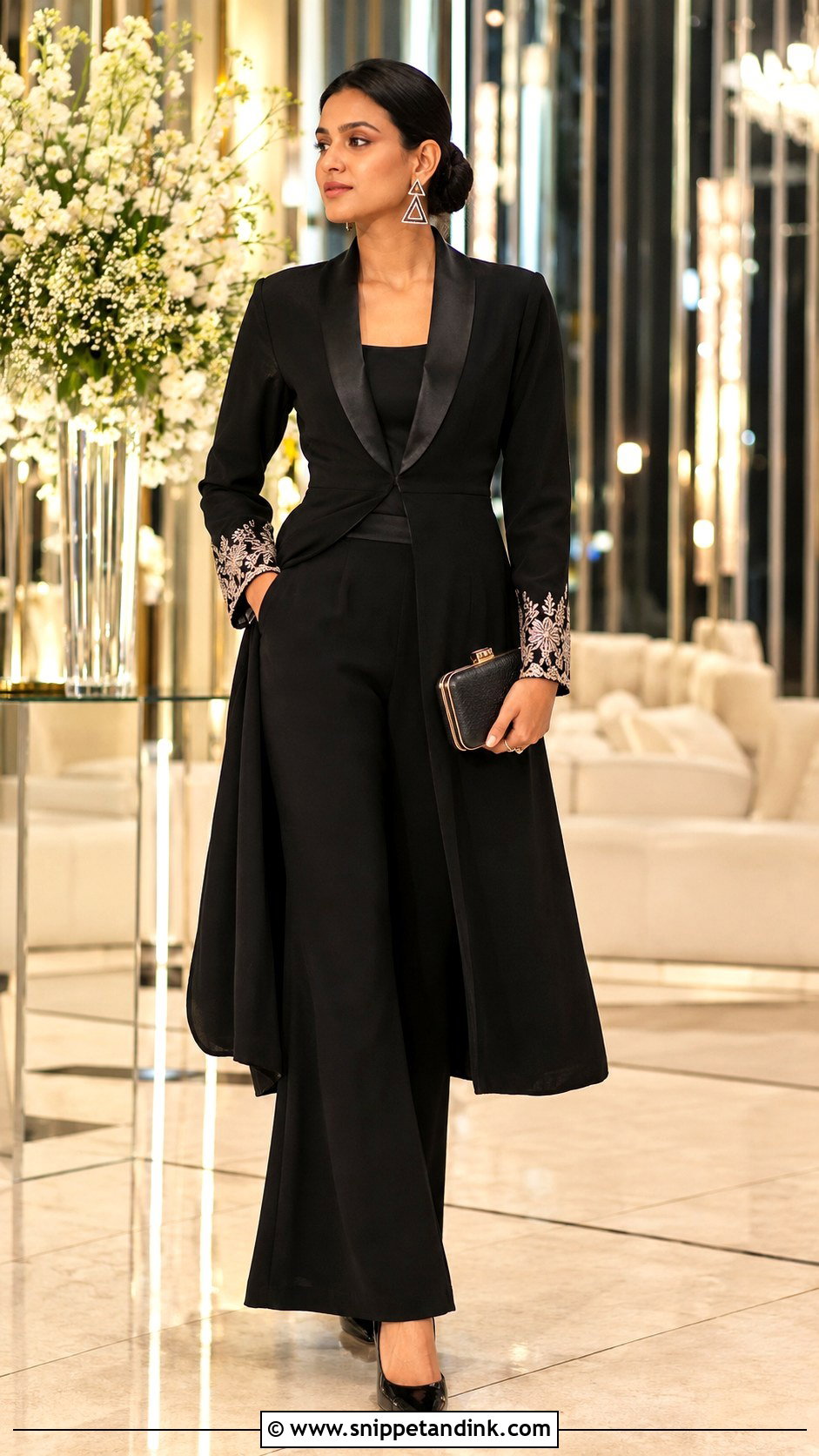
A tuxedo kurta with flared pants closes the list for anyone who loves sharp tailoring. The kurta might have a wrap front, satin lapels, an asymmetric closure or embroidered buttons borrowed from formal suiting, and high-waisted flares balance its length. Pointed pumps, a structured clutch, geometric earrings and a sleek ponytail keep it modern. Black, navy, emerald, ivory and deep burgundy suit evening. To keep the Indo Western character, add handwork at the cuffs, collar or lapel. The shoulders and waist need a neat fit, and the trousers should cover most of the heel without touching the floor.
Tailoring Lead Times and Travelling With Embroidery
Fusion outfits rely on fit more than traditional ones. A corset, a fitted jumpsuit or a stitched saree gown has nowhere to hide a loose waist, so leave time for a tailor. Custom blouses and alterations on embellished pieces often take a few weeks, longer in wedding season, and I’d book a final try-on with your actual shoes at least a week before you travel.
Packing and caring for worked fabrics
- Fold embroidered pieces with tissue between the layers so sequins and zari don’t press into the fabric or snag the next garment.
- Pack them in cotton or muslin bags, not plastic, which traps moisture on a long trip.
- Steam from the inside rather than ironing over embroidery; a hot iron flattens thread work and can melt sequins.
- Hang heavy lehengas by the skirt loops, not the waistband, and keep metallic zari away from perfume, which tarnishes it.
- Pack a small kit: safety pins, saree pins, fashion tape and a spare blouse hook.
After the wedding, air everything before storing it, then have heavily embellished pieces dry-cleaned by someone used to handwork. Refold silk along different lines every few months so the creases don’t wear through.
One Statement Piece per Function
Indo-western clothes work because traditional craft sits comfortably on modern shapes. Pre-draped sarees and cape lehengas bring ceremony polish, while jumpsuits, co-ords and tailored trousers keep you comfortable for dancing and long conversations. Plan each outfit by the function, the venue, the weather and how formal the family is. Get the fit right before you worry about decoration, especially for anything worn for six hours or more. Then pick one feature, an embroidered jacket, a sculpted blouse, a dramatic drape or a cape, and keep everything else quieter. Clothes you feel at ease in will always look better than a trend that isn’t you.
You'll Like These Ideas:


Leave a Reply