
The top half of a wedding dress is what people actually see for most of the day. It’s in every hug, every speech and nearly every photo taken across a table. It also decides how comfortable you’ll be, because the bodice is where a gown holds on to you. Bridal design today runs from scoop and halter necklines to basque waists, exposed corsetry, dimensional flowers and removable sleeves, so one gown can be shaped quite personally. Whatever you choose has to stay put while you sit, walk, hug and dance, and work with your hair, jewelry, veil, venue and season. These are the twenty bodice styles I fit most, with what I check at each fitting.
Matching a Neckline to Your Shoulders and Bust
Before I pull a single dress, I look at three things: shoulder width, bust size and neck length. They don’t rule anything out, but they explain why one neckline makes a bride light up in the mirror and another feels wrong without her knowing why.
- Broad shoulders: V-necks, sweethearts and one-shoulder styles break up the width. Wide boat necks and big puff sleeves add more of it.
- Narrow or sloping shoulders: off-the-shoulder bands, boat necks, halters and puff sleeves add width and structure at the top.
- Fuller bust: V-necks and sweethearts with built-in support are the most comfortable. A high neck can make the chest look like one block.
- Smaller bust: square necks, high necks, halters and illusion panels all sit cleanly without needing much padding.
- Short neck: open necklines, especially V and scoop, give length. A high collar shortens it further.
Treat these as starting points. If a high neck makes you happy on a full bust, a good seamstress can add shaping darts to break up the front.
1. Sweetheart Neckline Wedding Dress
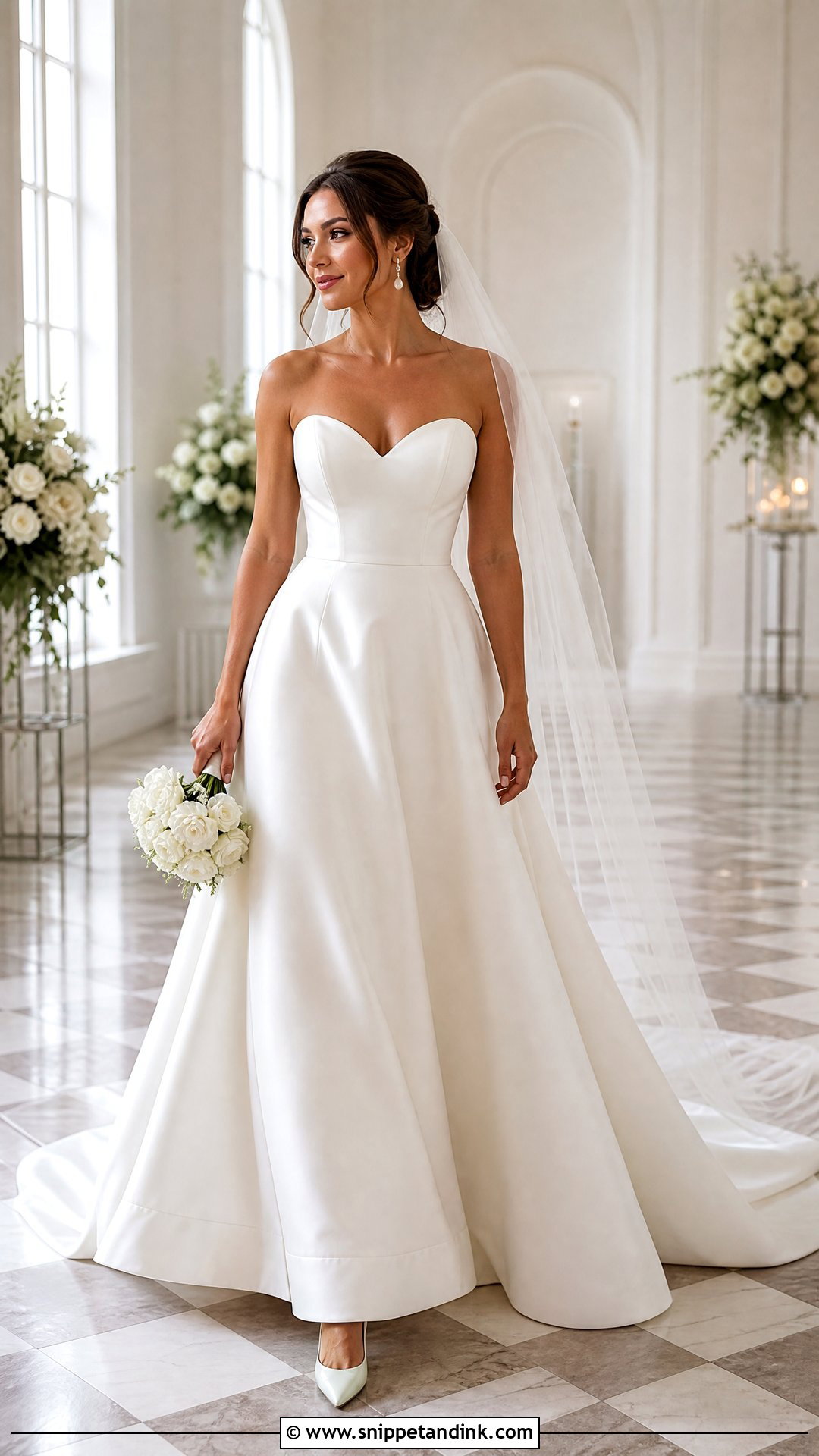
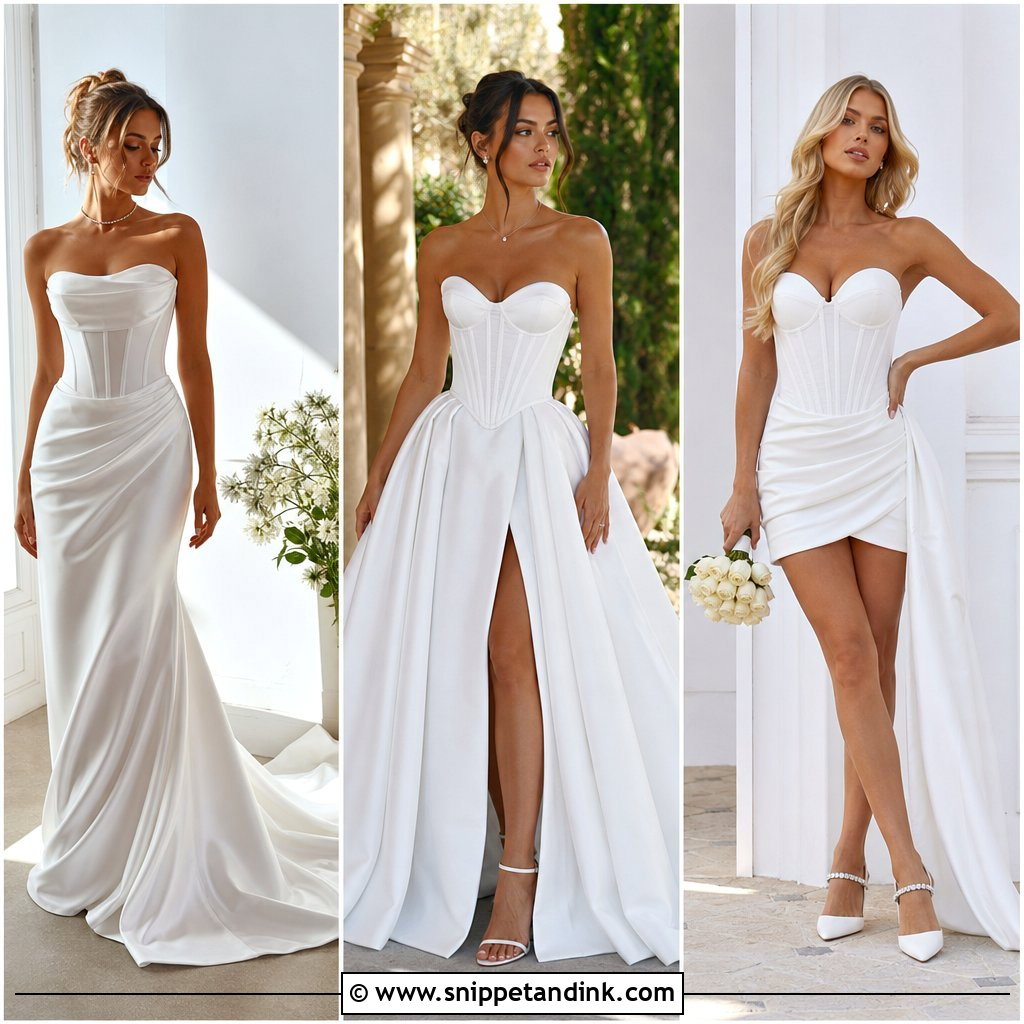
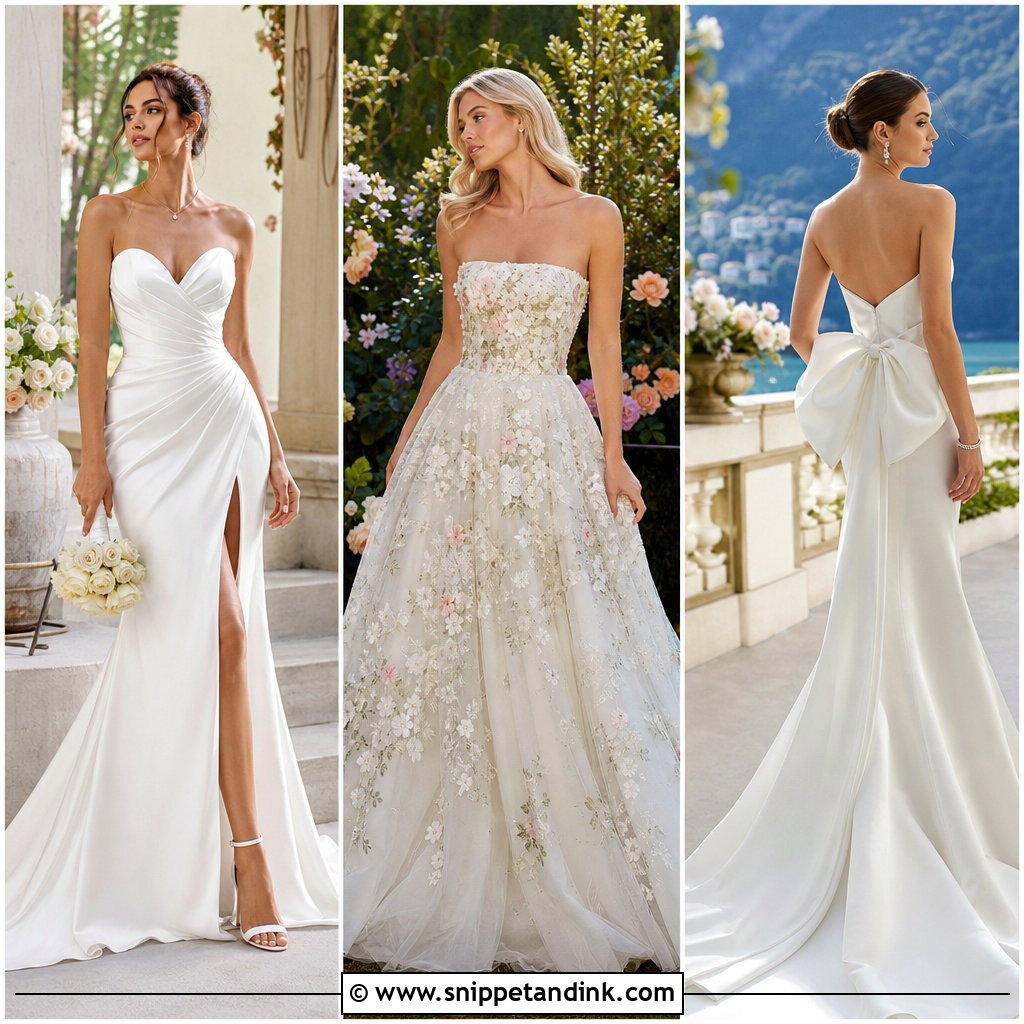
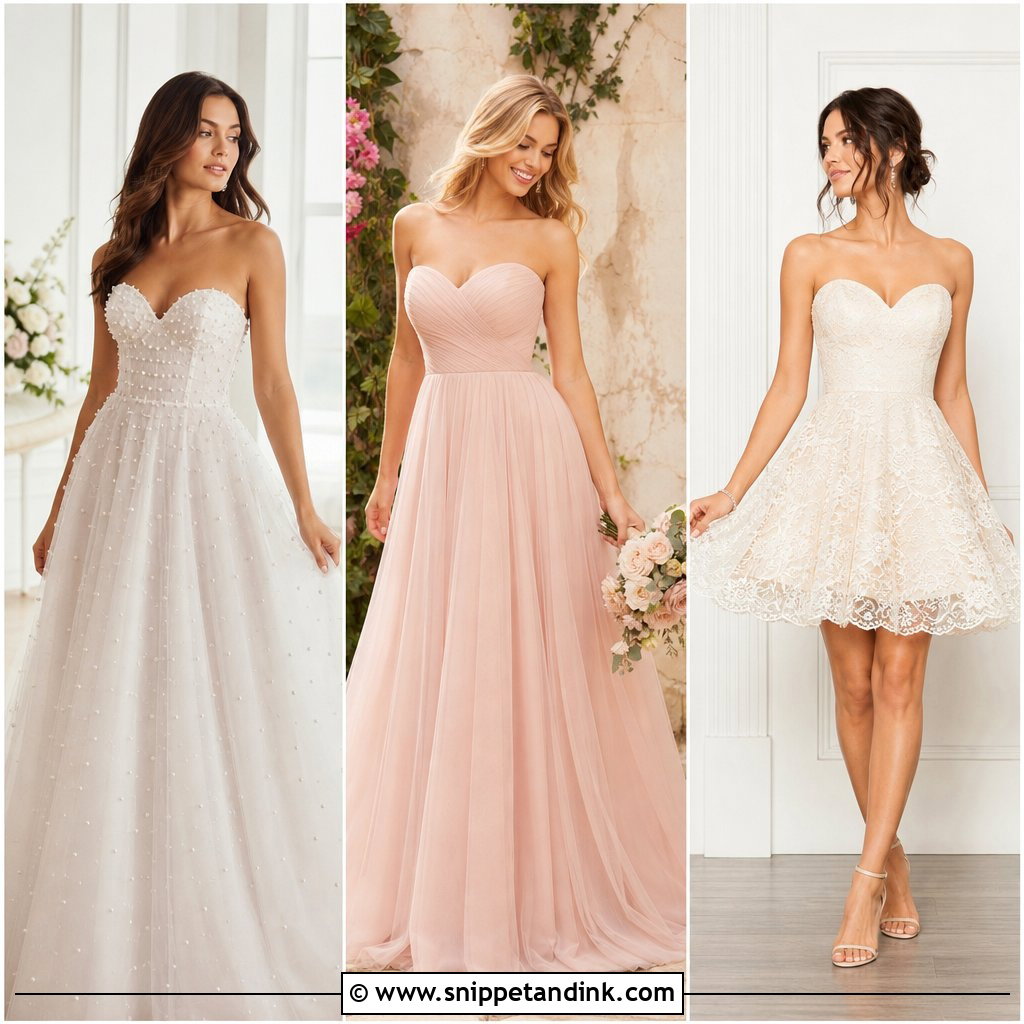
The sweetheart dips at the center and curves over the bust, which softens a strong shoulder line and flatters most bust sizes when it’s built well. The risk is gaping at the top of the curve when you lean forward, so at fittings I have brides bend as if picking up a bouquet and watch the edge. Built-in cups, boning or wide hidden straps keep it close. Satin gives a clean finish; lace or floral appliqué adds texture. A flowing A-line balances it, with a cathedral veil, pearl drops and pointed ivory pumps. Detachable sleeves can cover it for the ceremony and come off for the reception.
2. Strapless Wedding Dress
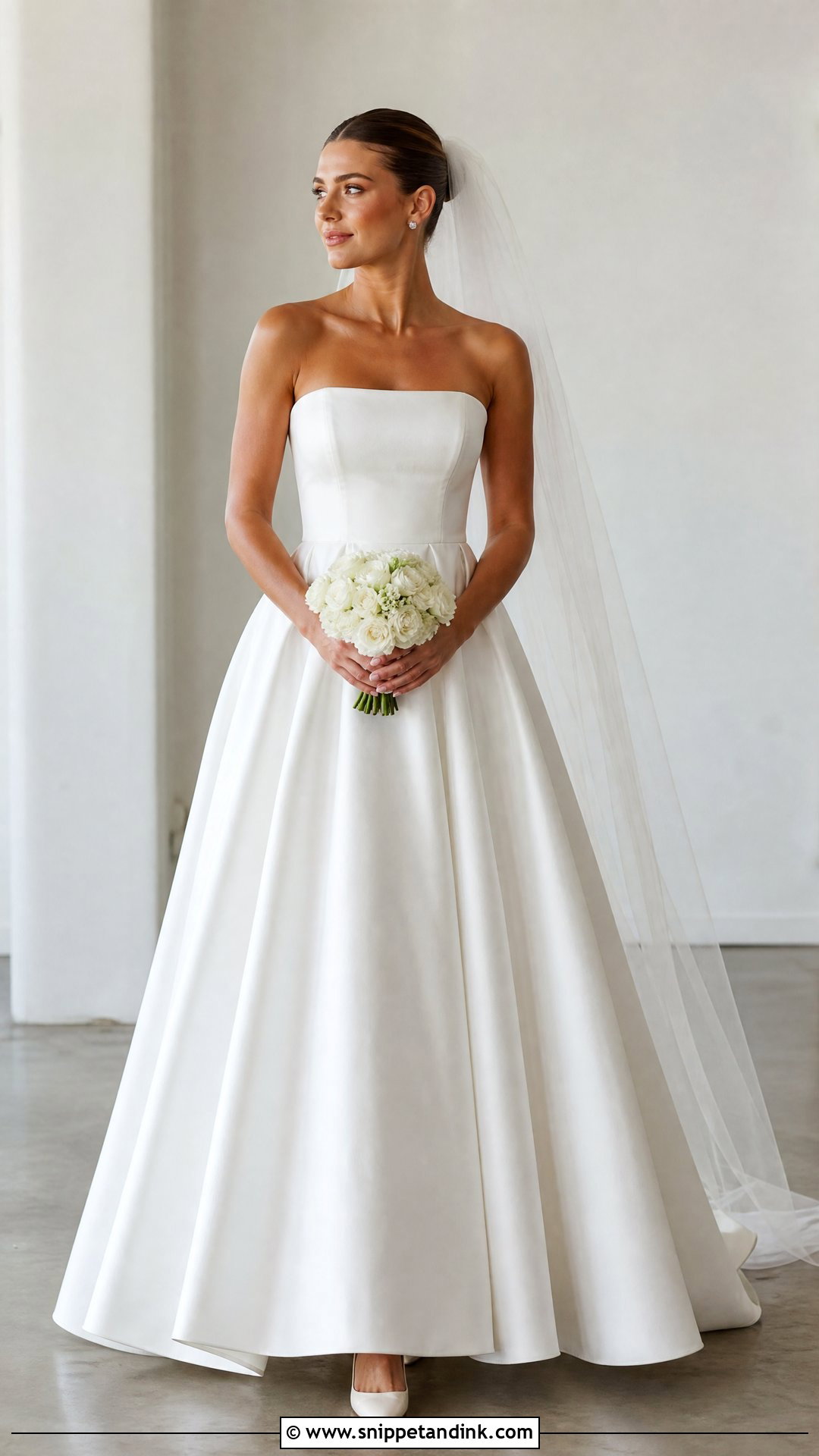
A strapless bodice should be held up by the waist, not squeezed around the bust. That’s the bit most brides don’t realize until they’ve spent an evening tugging the top up. Good internal corsetry anchors the gown at the narrowest point, so the neckline stays still even as you raise your arms. Test that at every fitting. Straight-across or softly curved tops work with a ball gown, mermaid or column. Add a statement veil, crystal studs, satin heels and a bouquet small enough not to cover the bodice. A removable lace bolero or sheer topper adds coverage for the ceremony.
3. Square Neck Wedding Dress
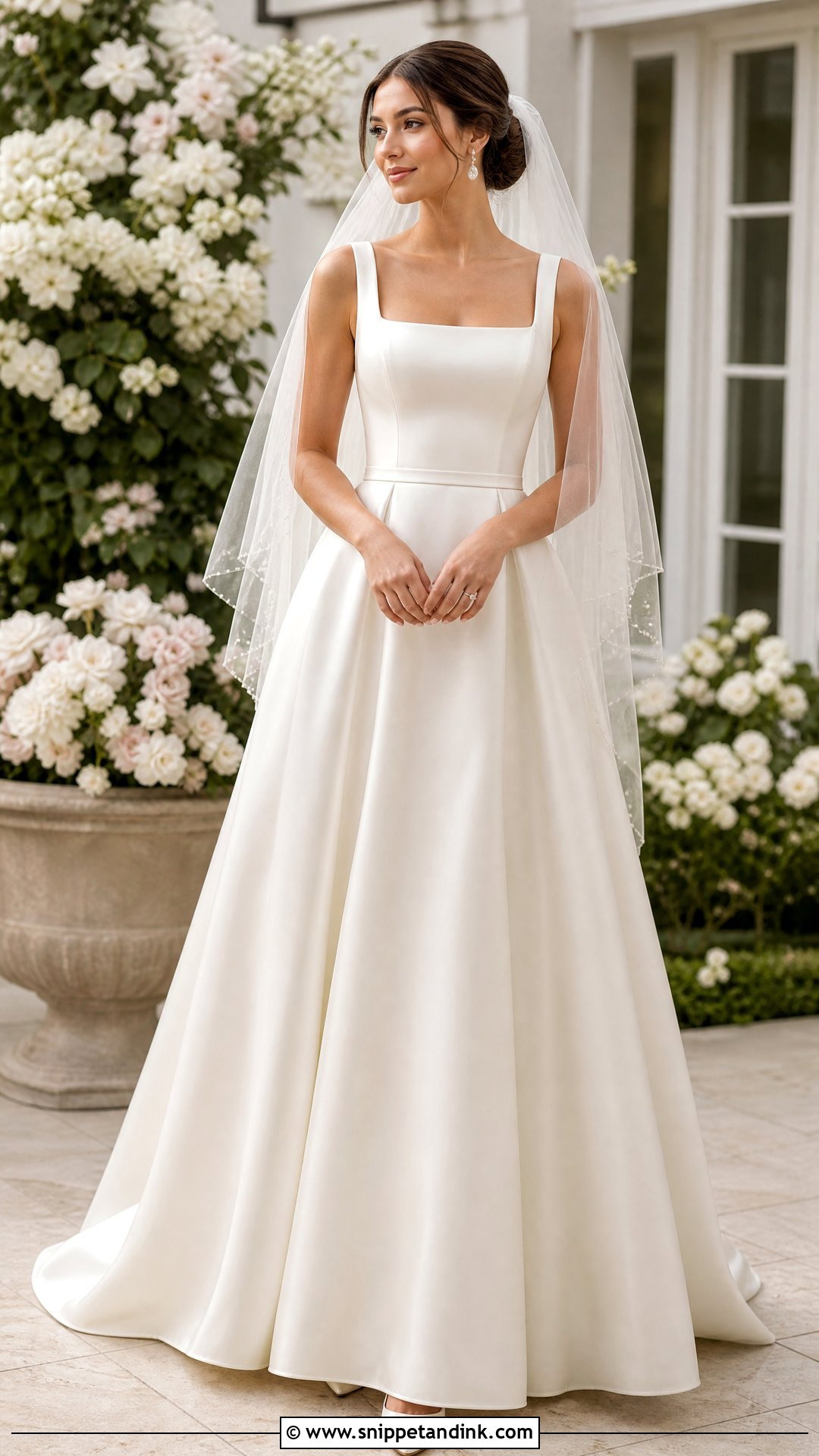
Square necklines frame the collarbones with clean lines and suit smaller busts especially well. The corners are what I watch: on a curved body they can open and stand away when you move, so a seamstress may need to add a little shaping there. Wide straps, short sleeves or fitted long sleeves all pair with it. Satin A-line for a minimal look, lace bodice and full skirt for romance. A square neck often works with a regular supportive bra, depending on the back. Pearl earrings, a low bun, a fingertip veil and closed-toe pumps keep the geometry; a necklace is optional at best.
4. V-Neck Wedding Dress
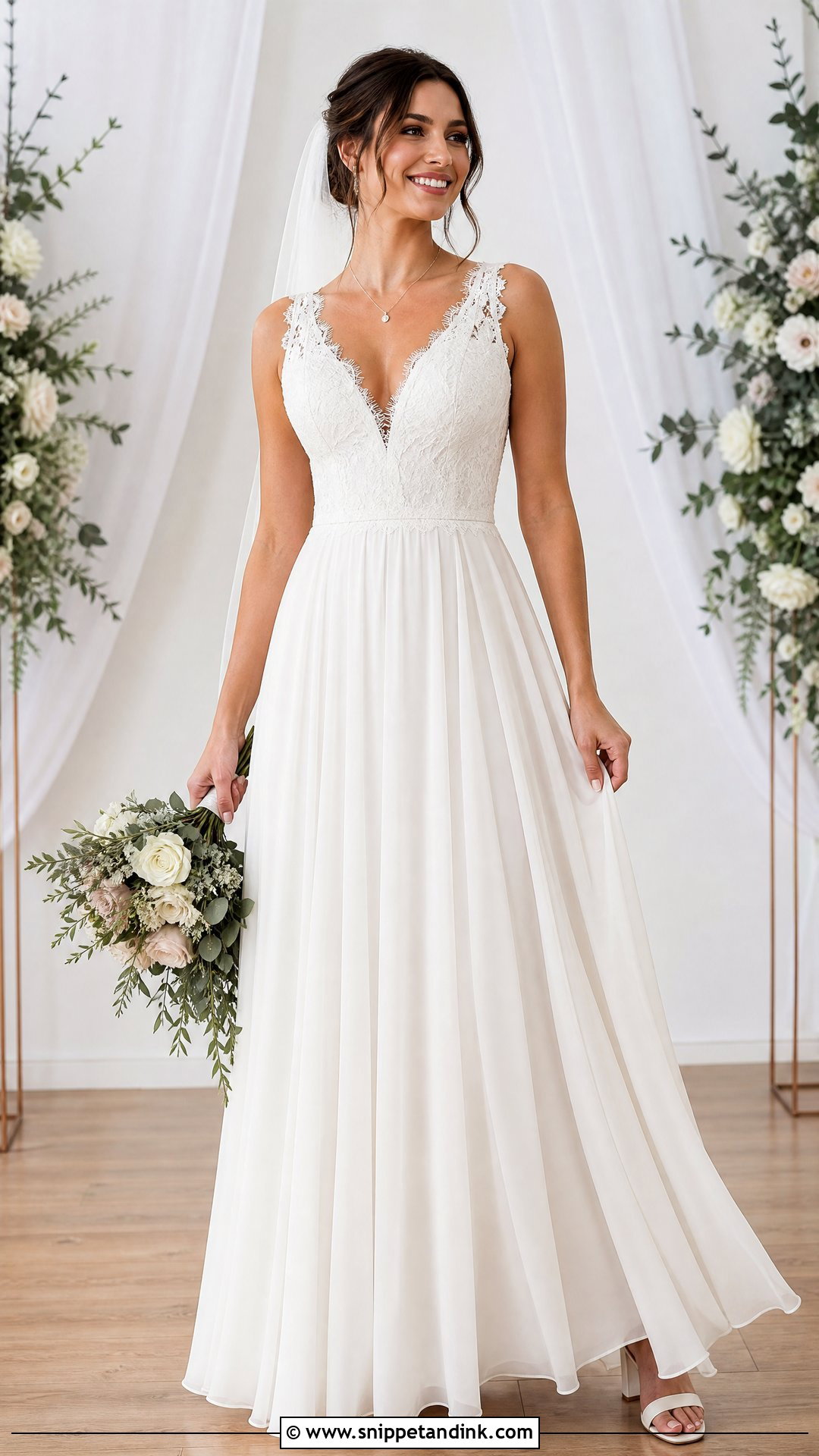
A V-neck draws one long line down the body. It’s my first suggestion for a bride with a short neck or a fuller bust, since it lengthens both. Depth ranges from modest to plunging. A medium V with a fitted waist, chiffon A-line skirt, fine earrings and block heels is a reliable full look. For a deep plunge, a strip of illusion mesh down the center keeps it stable. Lean forward and hug someone at the fitting before you sign off. A small pendant can echo a shallow V, but the open neck usually looks better bare. Lace straps read romantic; crepe reads modern. Keep the hair or veil from covering the line.
5. Scoop Neck Wedding Dress
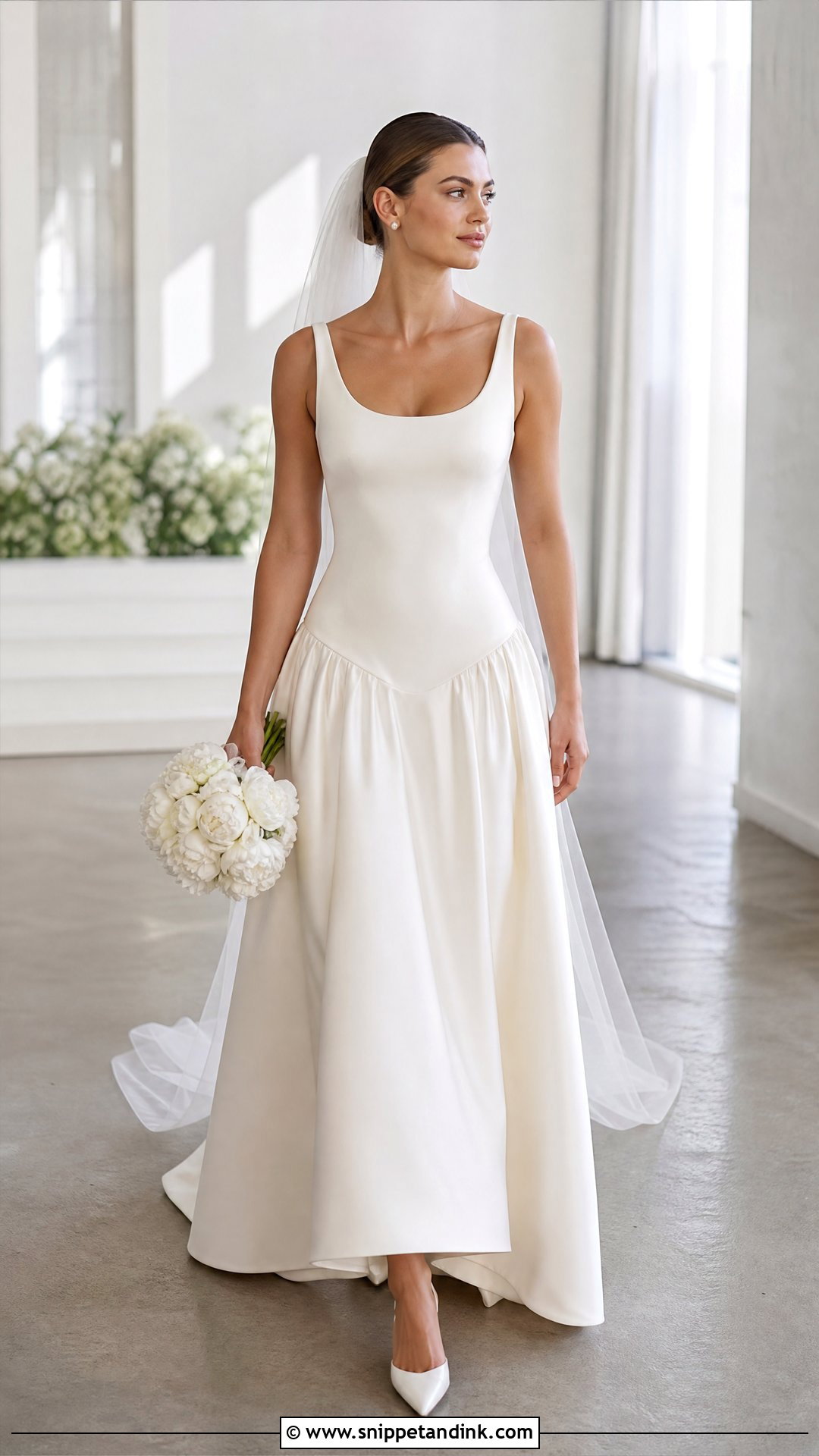
A scoop neck is the most comfortable neckline I fit, and the easiest to wear for ten hours. The curve can sit high for coverage or lower to show the collarbone. It has come back strongly in recent bridal design, often paired with sculpted waists and dimensional details. A drop-waist satin gown makes it fashion-forward; a lace A-line keeps it classic. Make sure the straps lie flat and don’t creep toward the neck as you move, which means the shoulders need taking in. Pearl studs, a smooth chignon, pointed pumps and a sheer veil suit it, and a short pearl strand following the curve is about as much necklace as it needs.
6. Halter Neck Wedding Dress
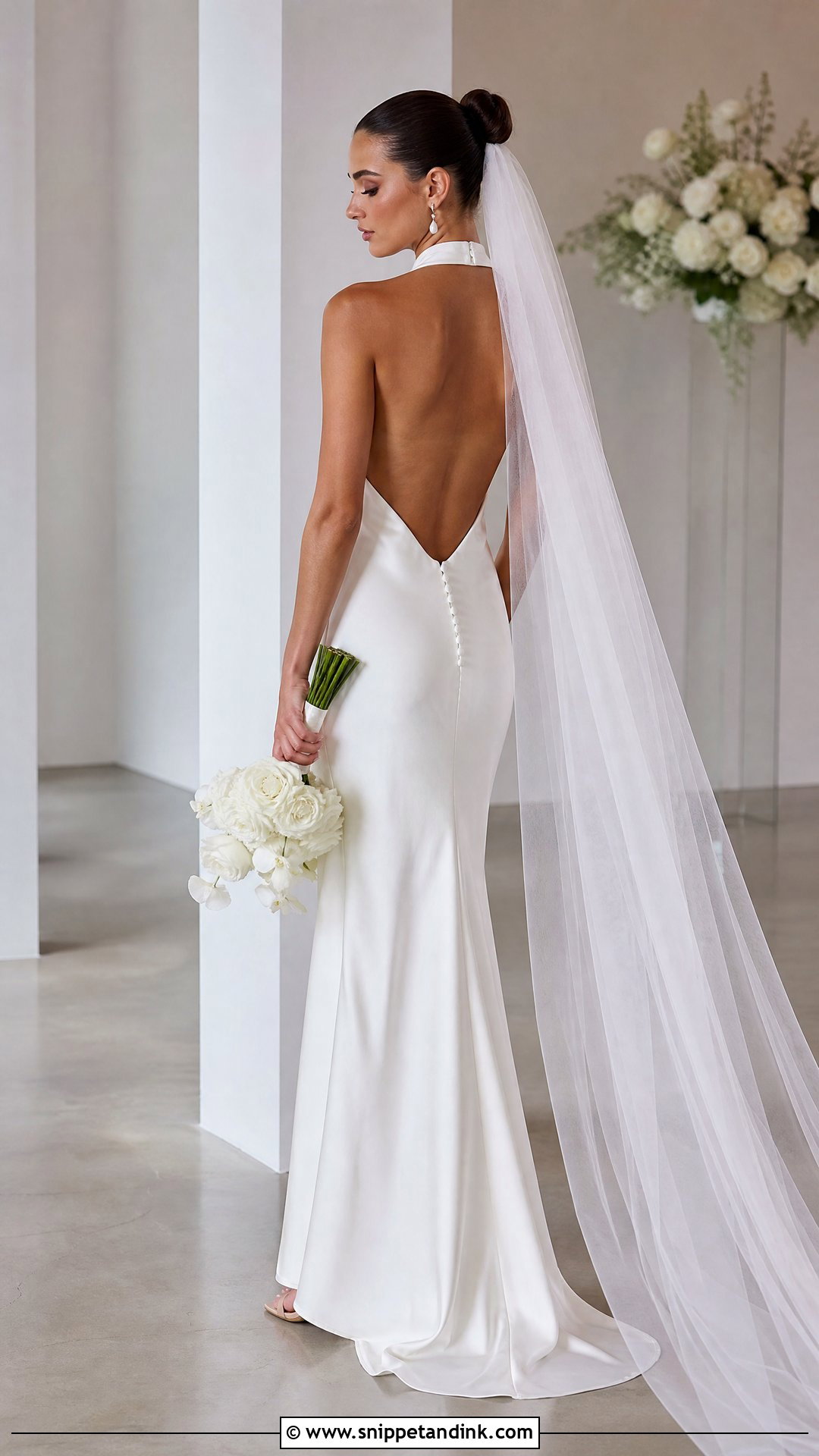
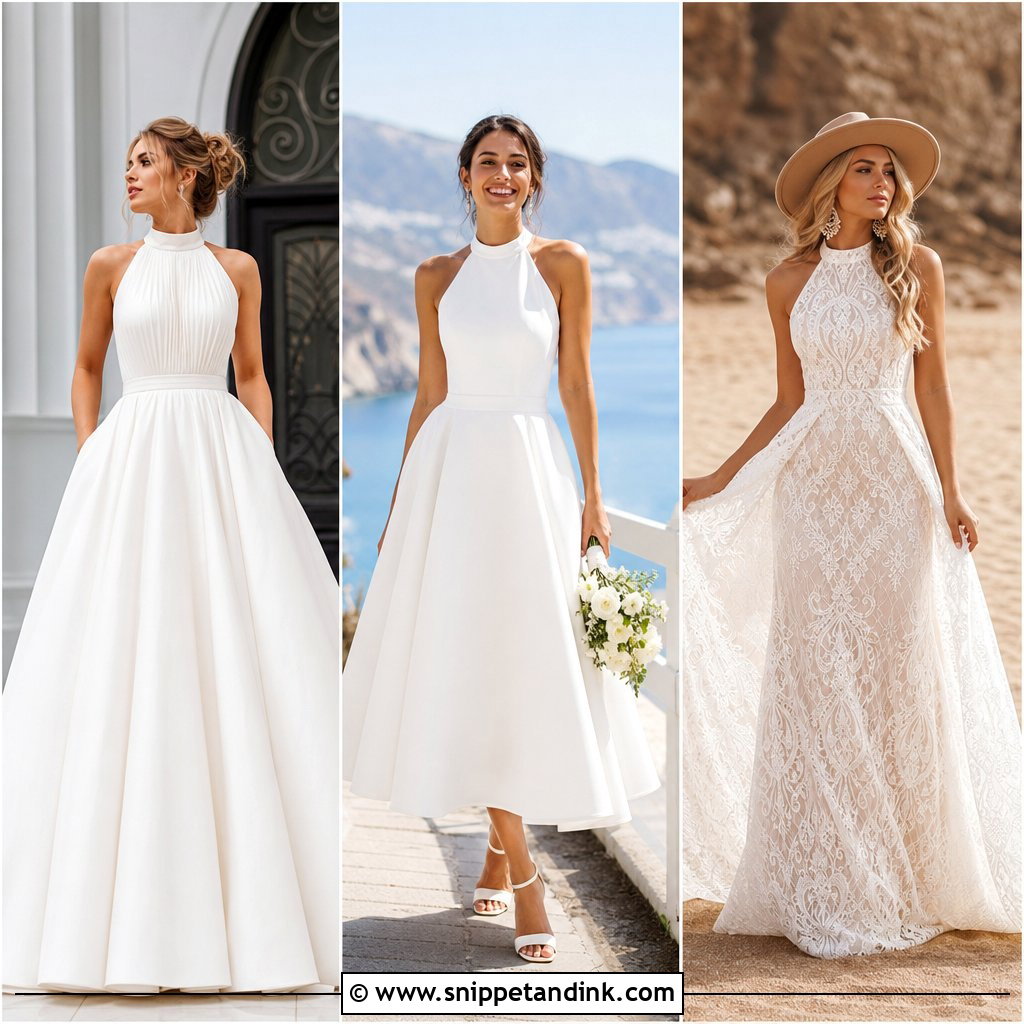
Halters show off the shoulders and frame the face, and they suit narrow or sloping shoulders more than broad ones. The weight of the bodice hangs from the neck, so I check pressure there carefully; if the strap leaves a red line after an hour, the bodice needs better internal support. Cups and well-placed seams take the load off. A satin halter with a column skirt looks modern, while a lace halter over chiffon softens it. Turn your head side to side at the fitting. An updo, drop earrings, a veil pinned low at the back and minimal heels finish it. Skip the necklace.
7. Off-The-Shoulder Wedding Dress
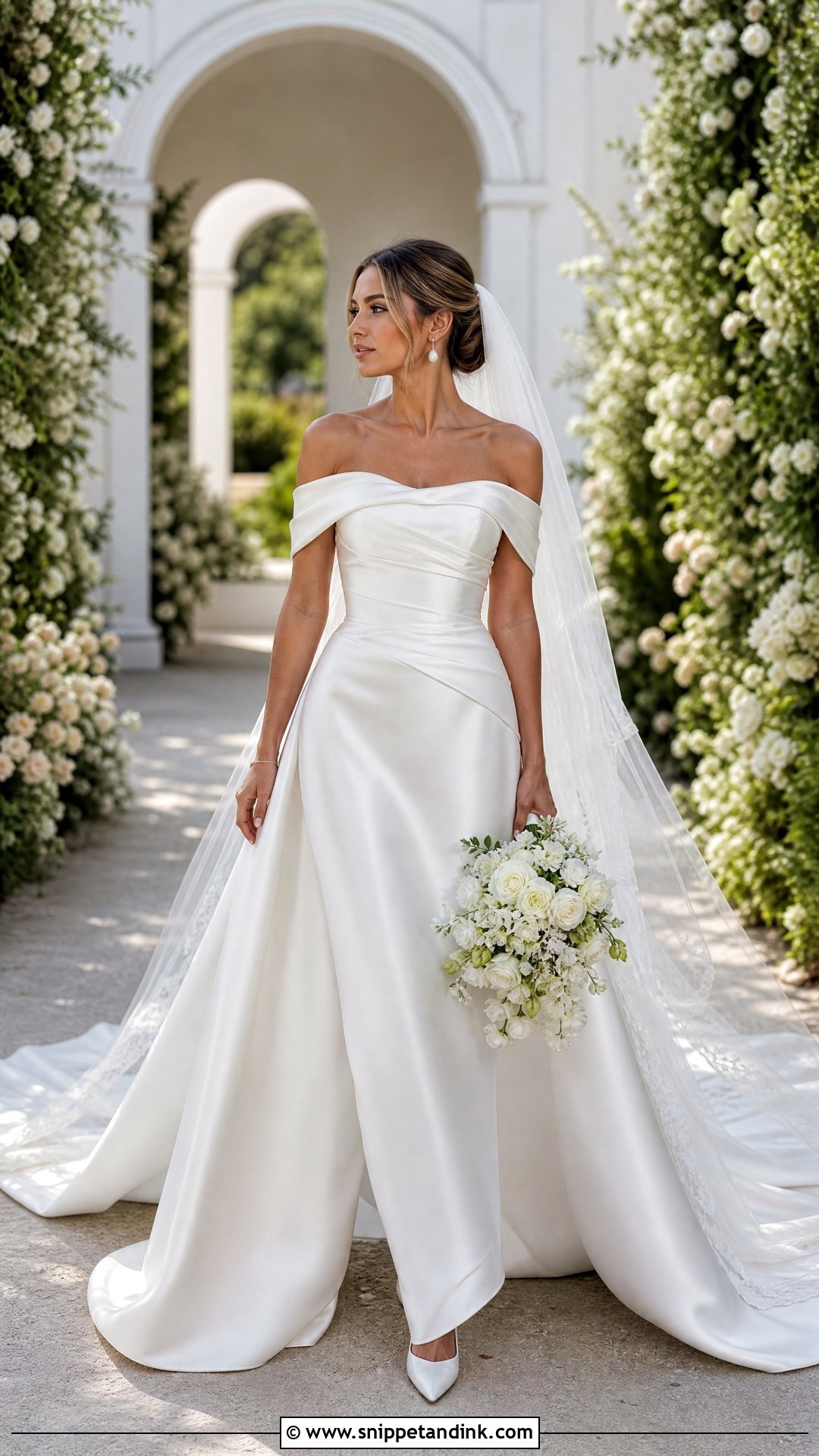
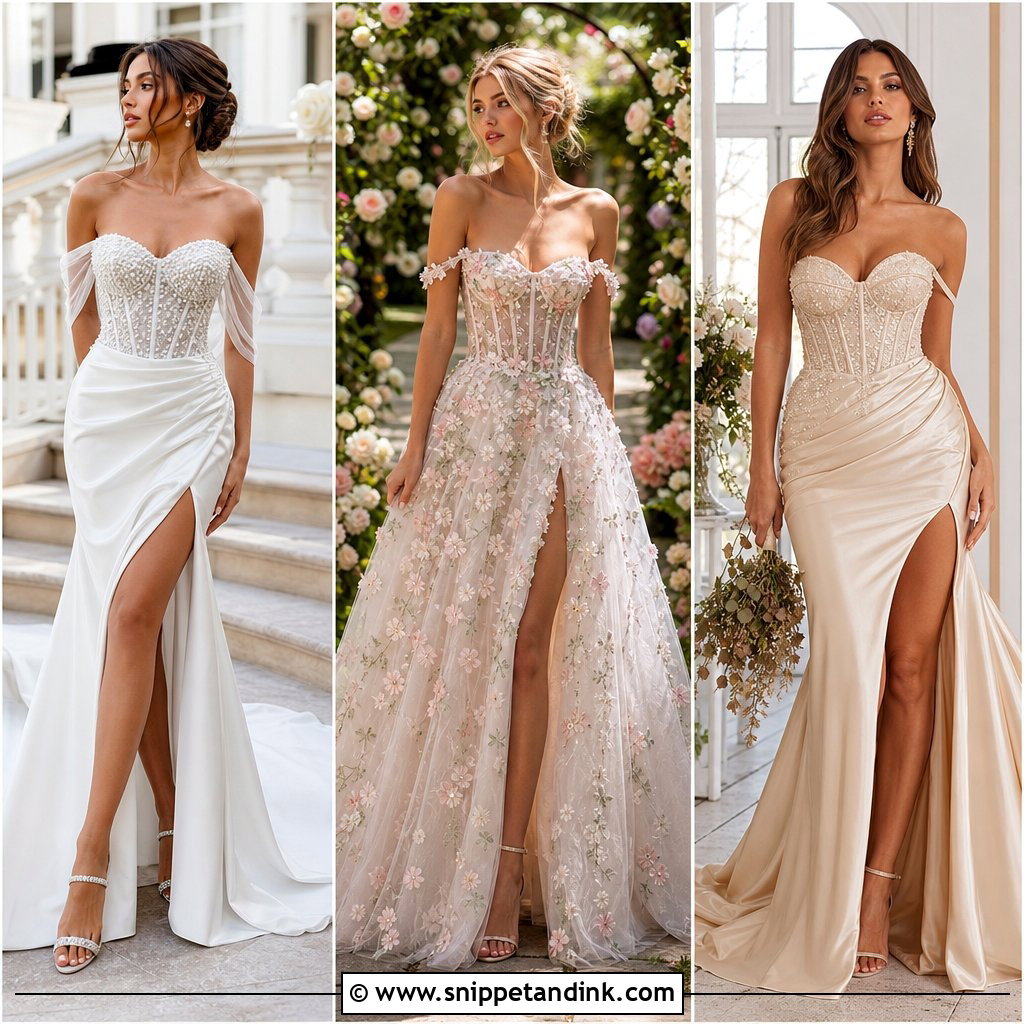
Off-the-shoulder bands frame the collarbone in a long horizontal line and suit sloped shoulders well. The catch is movement: bands sitting on the upper arm limit how high you can lift your arms, which matters for hugging and dancing. Elastic gives more freedom; some designs have detachable bands that come off before the party. Test each kind at a fitting by raising your arms, not just standing still. Draped satin bands look sculptural, lace sleeves softer. An A-line or ball gown skirt, cathedral veil, pearl earrings and pointed satin heels complete it. Wear a low bun, and leave out any heavy necklace that would break the line.
8. One-Shoulder Wedding Dress
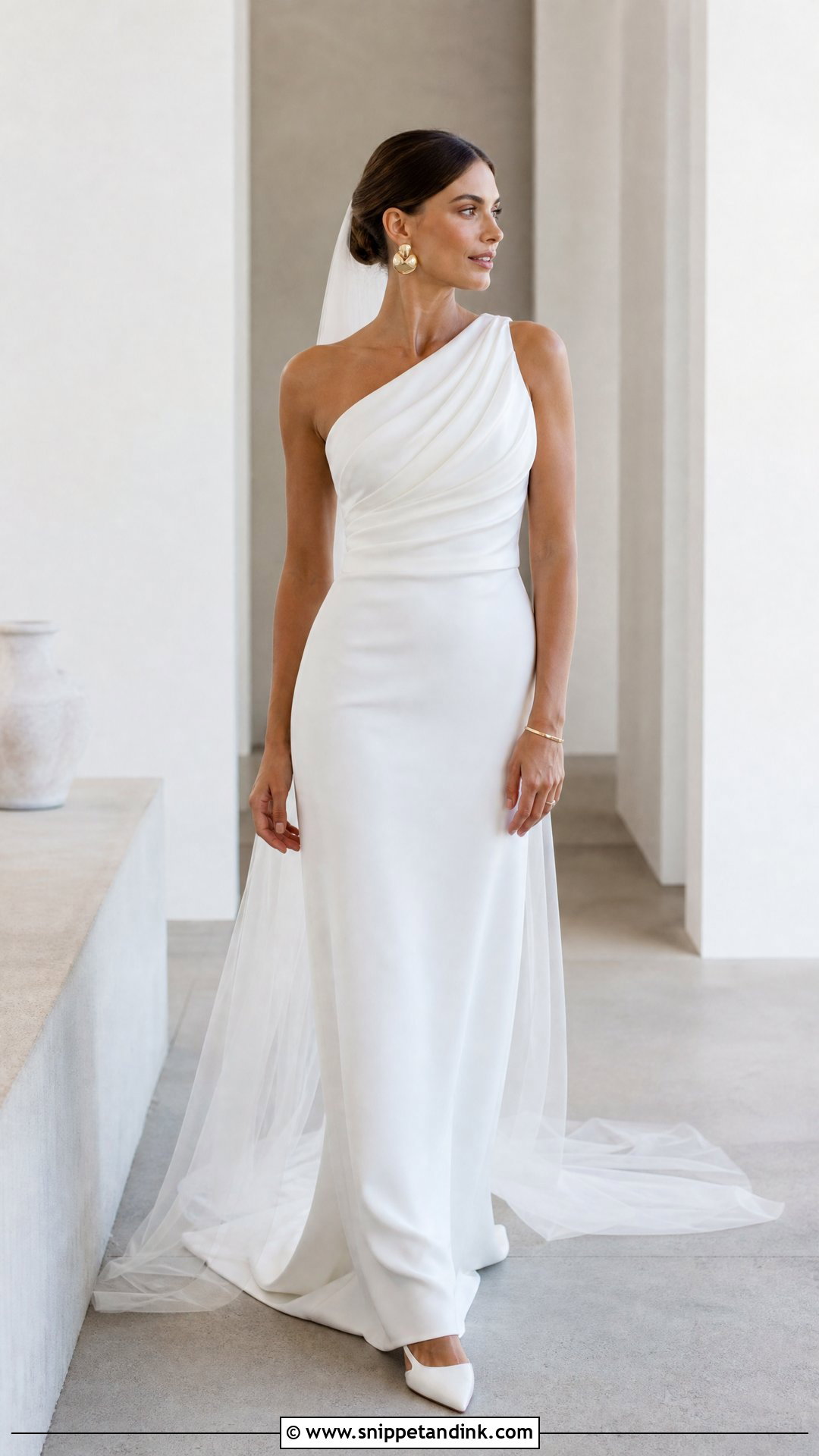
A one-shoulder neckline gives asymmetry, and asymmetry needs a calm fabric: smooth crepe, draped satin or softly pleated chiffon. The single strap carries more weight than two would, so it must feel stable without digging in, and the bare side needs firm internal structure. I test it by having the bride reach across a table. Draping across the bodice can lead the eye down to the waist. A fitted column, sculptural earrings, a fine bracelet and pointed slingbacks make a modern full look. Pin a plain veil below a bun, or skip it for a single comb. Keep the bouquet clean.
9. Illusion Neckline Wedding Dress
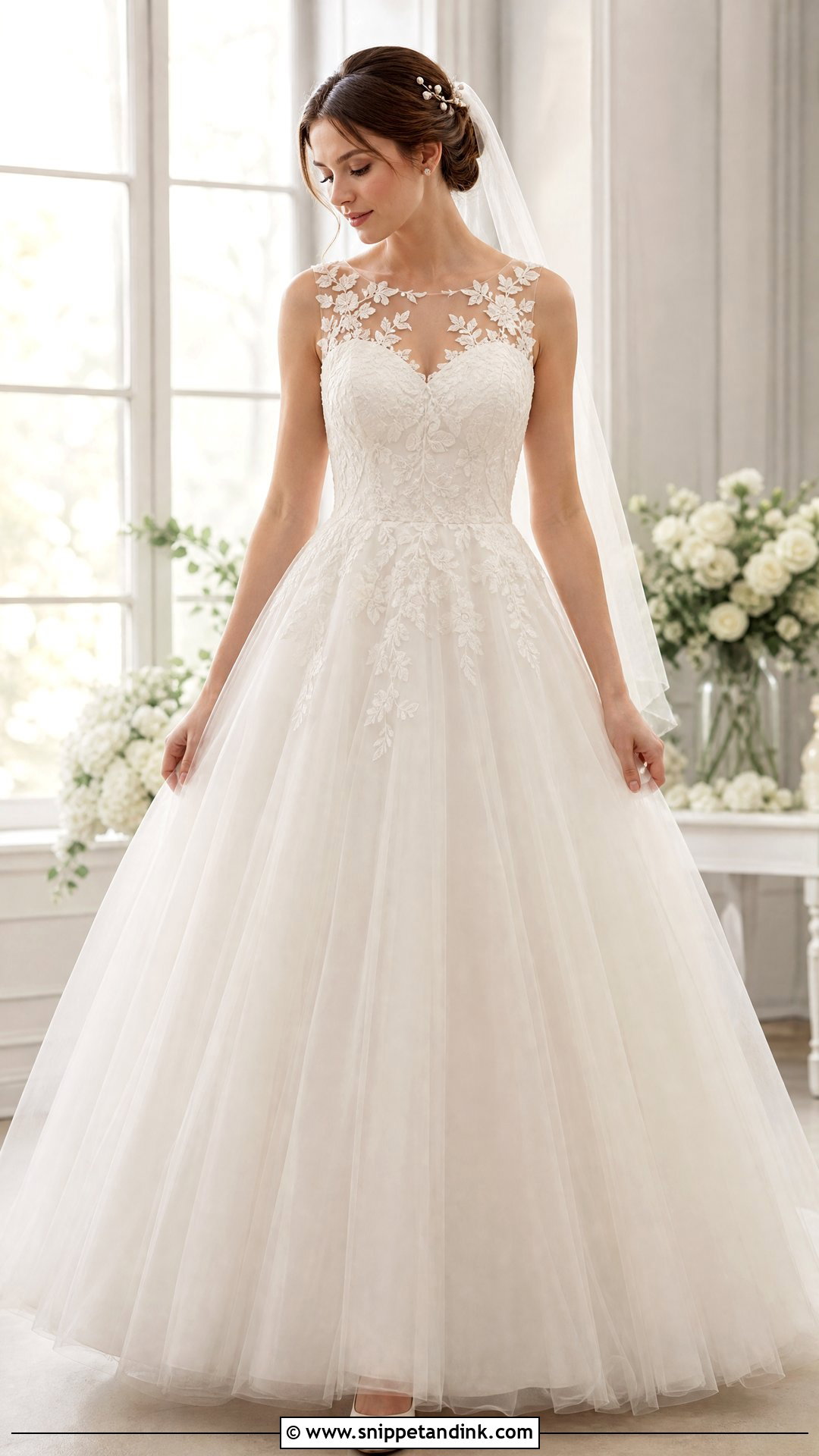
Illusion necklines use sheer tulle to look open while giving real coverage and support. The tulle might reach the collarbone, shoulders or sleeves, with lace appliqué laid across it. The color of that mesh matters most: matched to your skin tone it disappears in photos, while the wrong shade shows up as a pale or grey film under flash. I look at it in daylight, indoor light and with a phone flash before alterations are final. Check the edges don’t scratch the neck or arms. A full tulle skirt, a light veil, pearl pins, closed-toe pumps and small earrings let the appliqué speak.
10. High Neck Wedding Dress
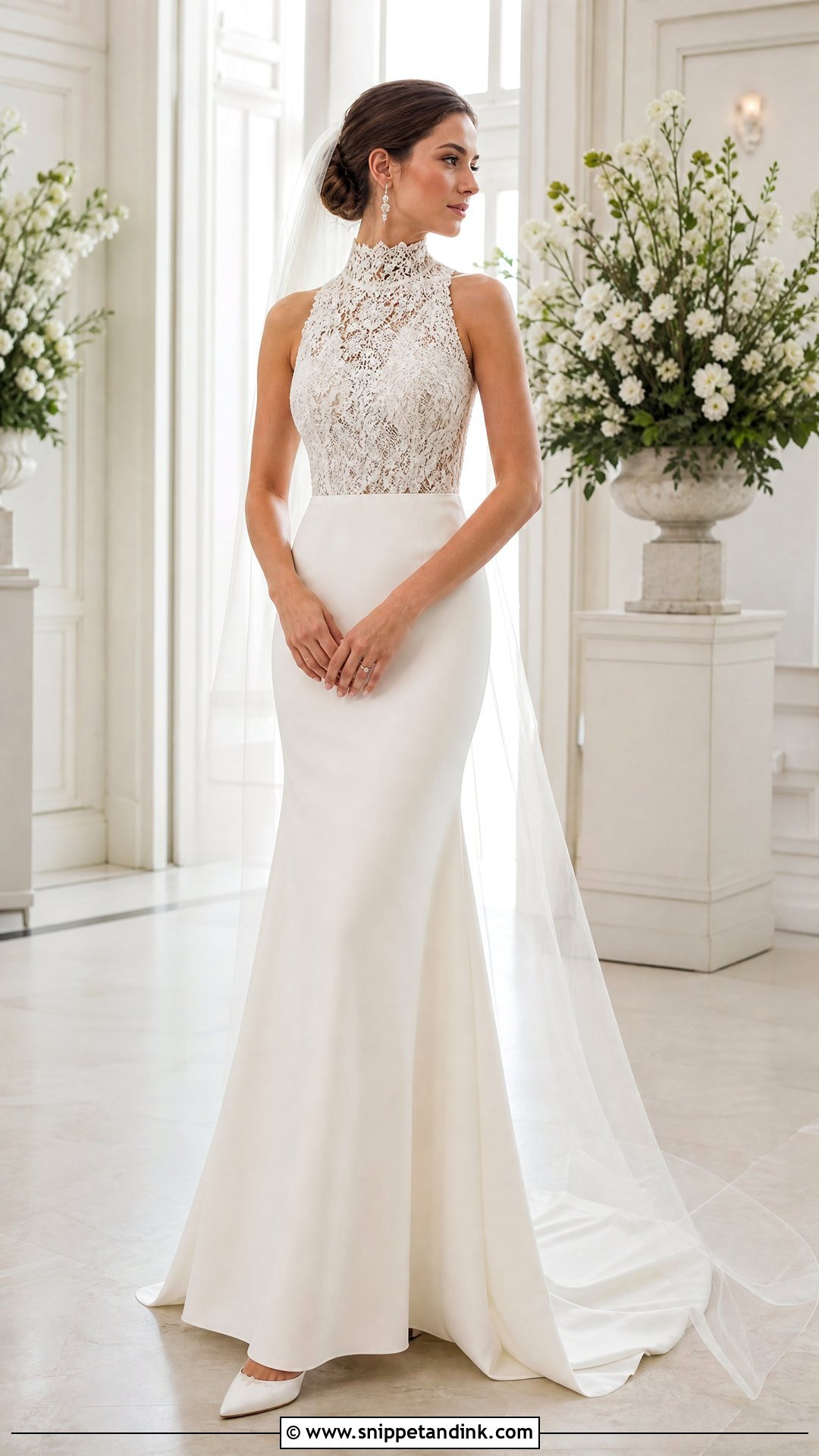
High necks direct attention up to the face and suit brides with longer necks and smaller busts best; on a very full bust they can make the top look heavy. Lace gives a vintage feel, satin or crepe a sharper one. The collar must follow the neck without rubbing or folding when you turn, so check it seated too. For a summer wedding, lightweight lace, no sleeves or an open back help with heat. Wear the hair up in a bun or smooth ponytail so the neckline isn’t crowded. A long veil, button earrings and low pointed heels finish it. No necklace; put sparkle on your ears or wrist instead.
11. Boat Neck Wedding Dress
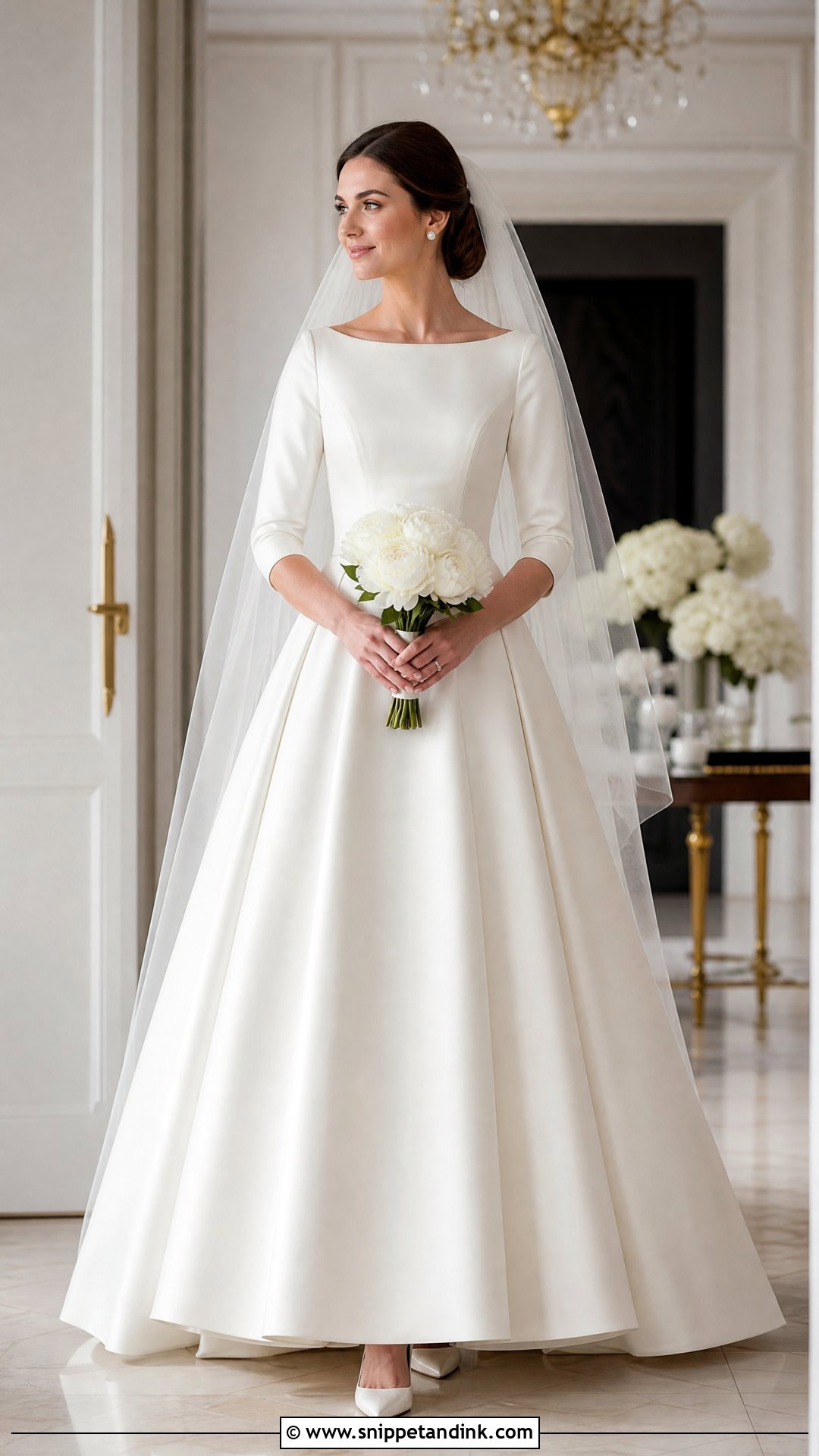
Boat necks run wide and shallow across the collarbone, and they’re a good balance for narrow shoulders or wider hips. They suit minimal satin, fitted crepe and lace designs with three-quarter sleeves. Because the neckline sits near the shoulder points, lifting the arms tends to pull the whole bodice up, so reach forward and up at your fitting and look for bunching. A structured A-line, pearl studs, a low chignon, a fingertip veil and classic pumps complete it. Skip the necklace. A low back or a line of covered buttons adds interest from behind.
12. Cowl Neck Wedding Dress
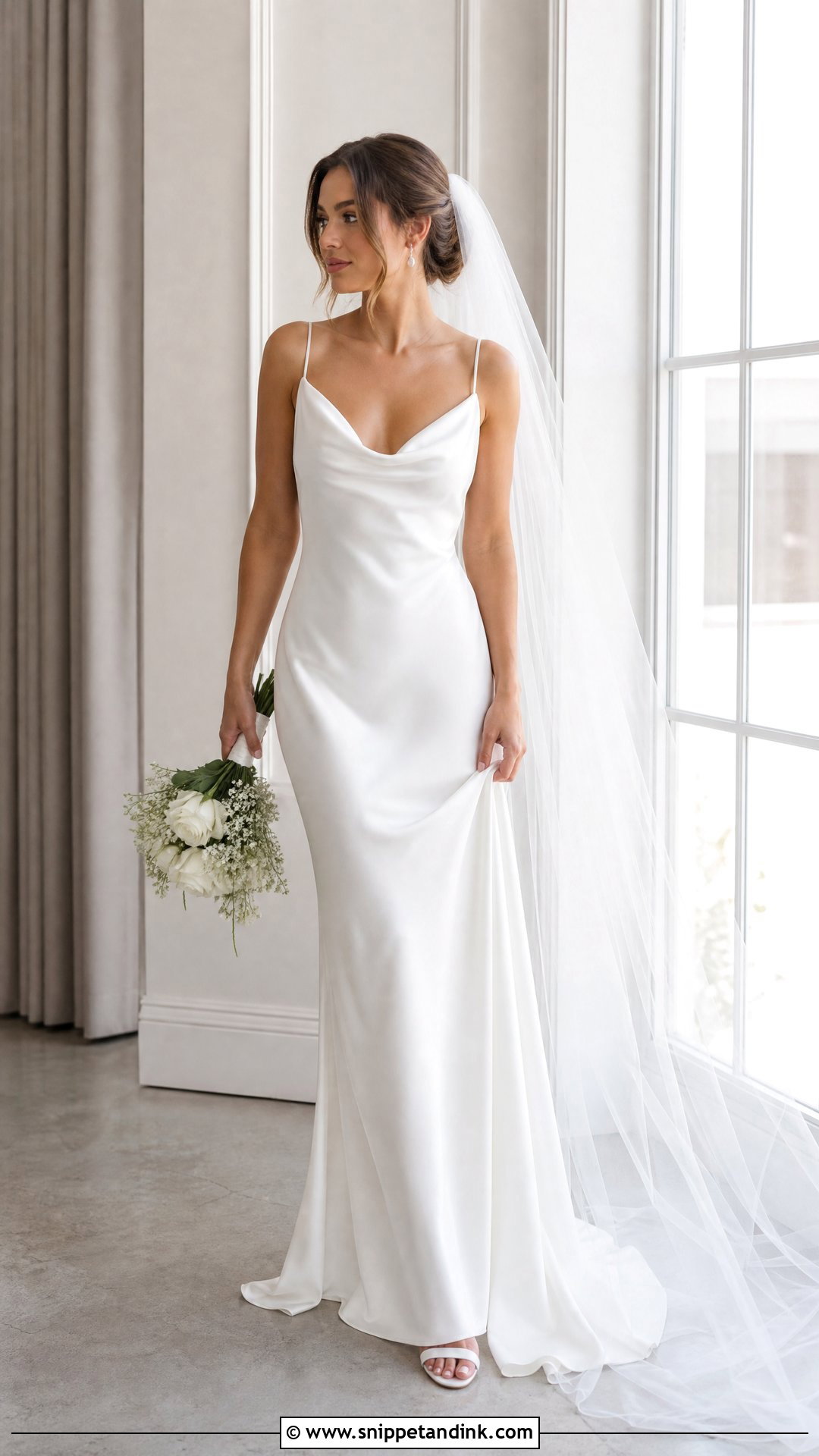
A cowl only works in fabric that falls on its own, like satin or a silk-like crepe; anything stiff looks like a folded napkin. The drape will also shift when you bend, so it needs securing. Dressmakers use small hidden weights, interior snaps or fashion tape, depending on how the cowl is cut. A cowl-neck slip with fine straps, a sweeping veil, small drops and minimal sandals makes a modern full look. Softly pinned hair or glossy waves suit the relaxed drape. Keep everything else plain: a clean skirt and very little jewelry.
13. Corset Wedding Dress
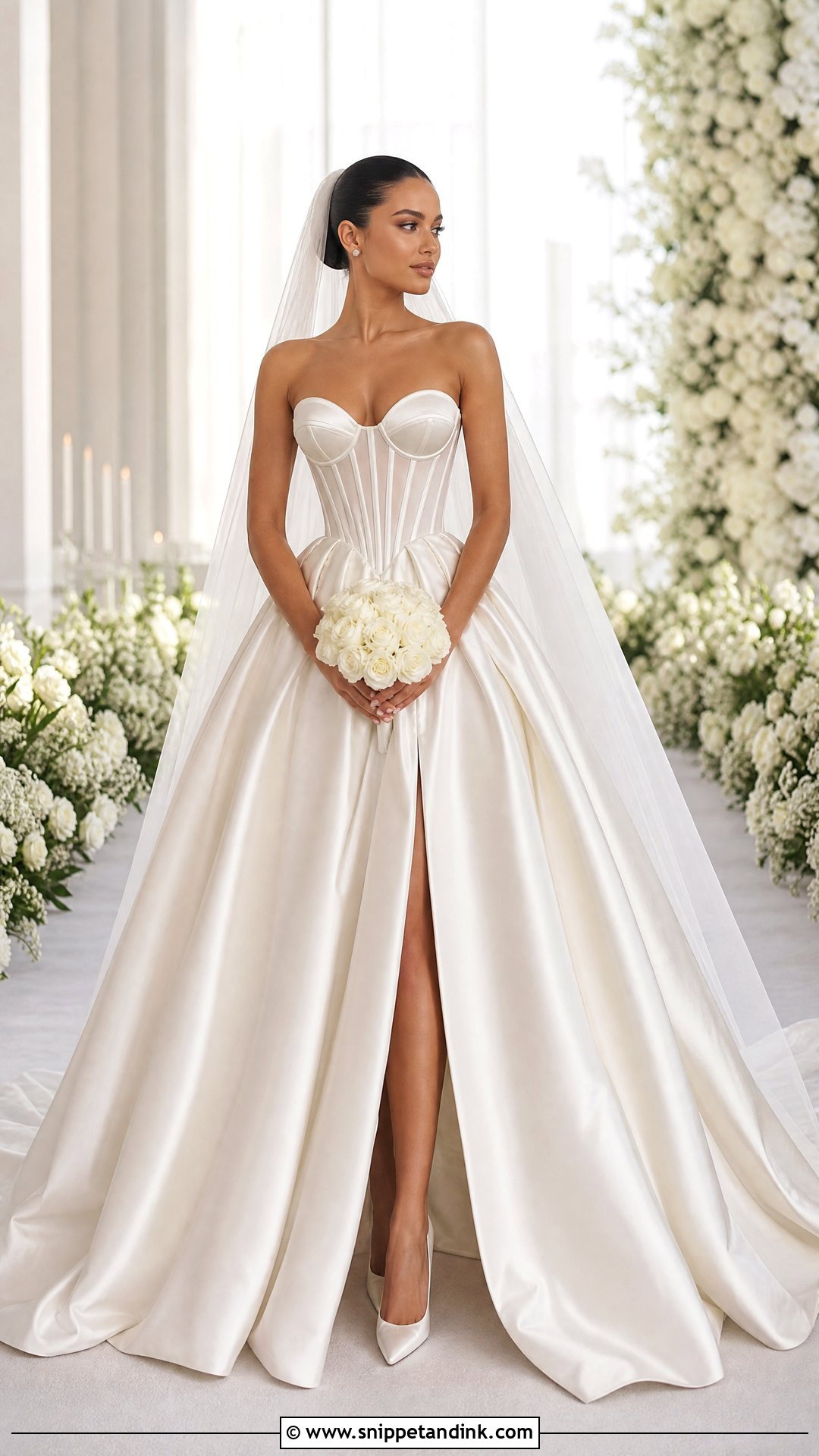
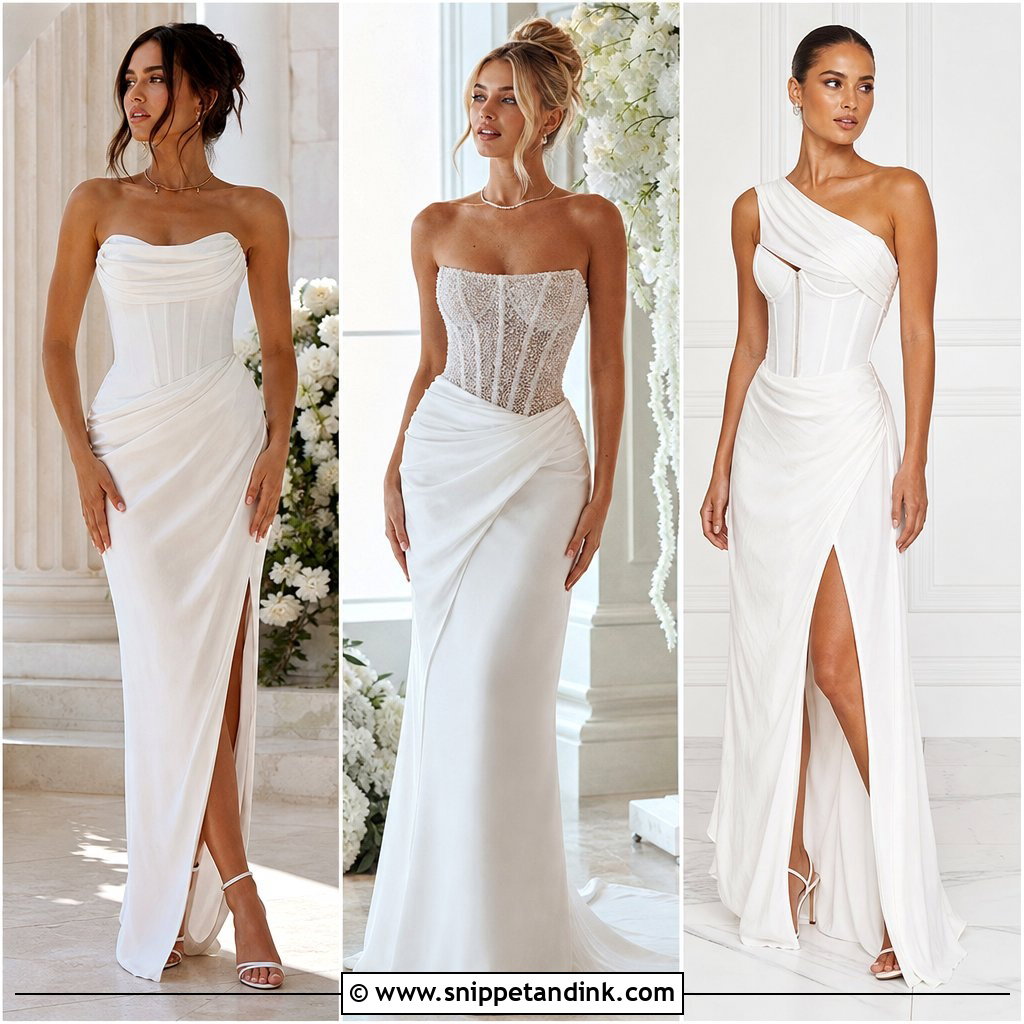
Corsetry is still everywhere in bridal, both on show and hidden inside. A visible corset has boning channels, molded cups, lacing or sheer panels, and it shapes the body rather than just covering it. A well-made one supports you; a poorly fitted one bruises your ribs by dinner. At fittings, sit, take a deep breath and raise your arms. If you can’t, it needs letting out. A full satin skirt gives contrast, a fitted lace skirt continuity. A plain veil, crystal studs, pointed heels and a compact bouquet are enough. With detailed seamwork, let it be the decoration and skip the necklace.
14. Basque Waist Wedding Dress
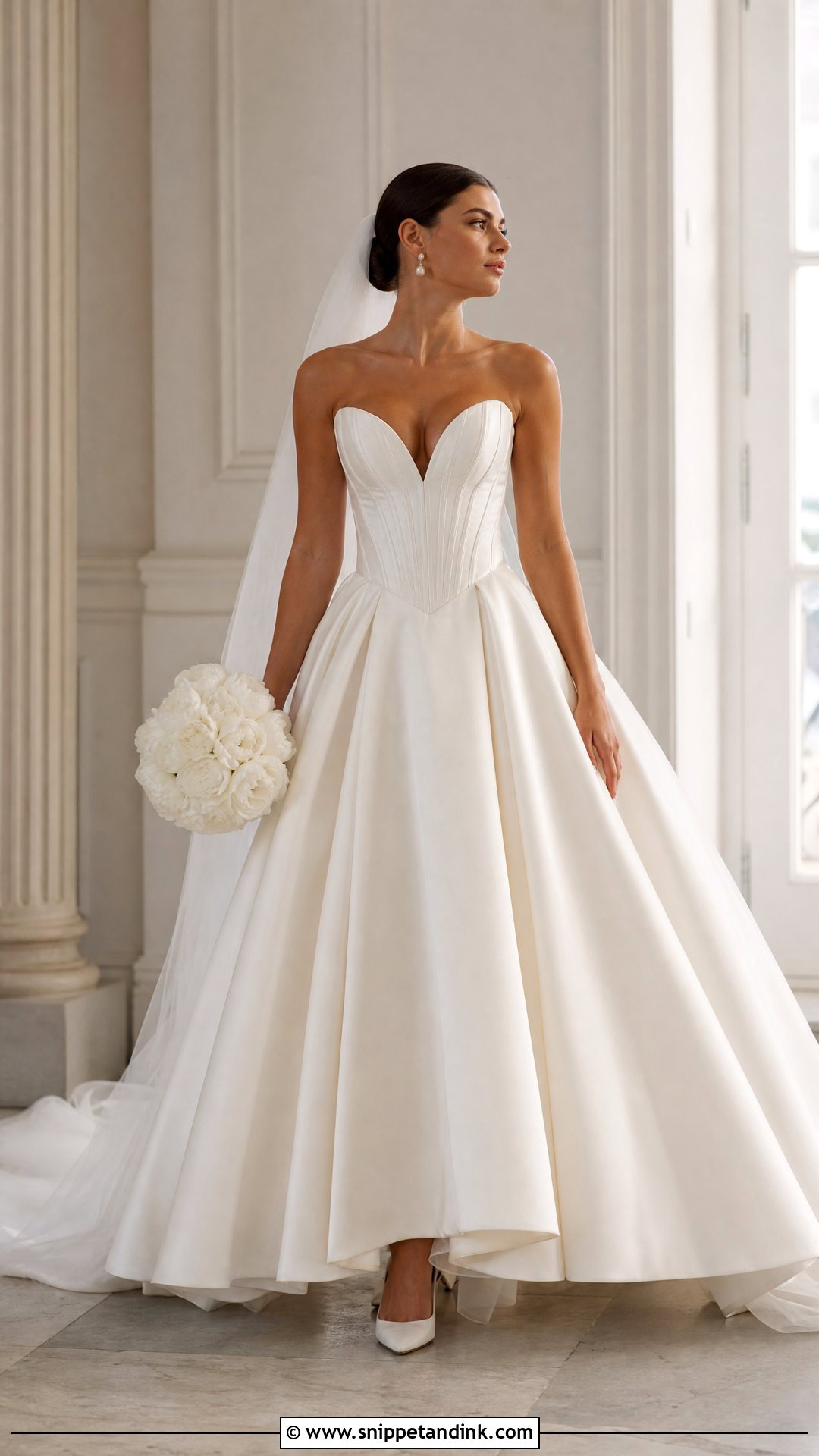
A basque waist wedding dress carries the bodice down into a V below the natural waist, and the shape has returned strongly in recent years. It lengthens the torso, which suits shorter-waisted brides. The point of the V is where I spend fitting time: it should sit flat when you sit, not dig into your stomach. Lacing or internal boning holds it in place. A strapless basque bodice with a full satin skirt, long veil, pearl earrings and pointed pumps is the dramatic version. A softer basque seam on an A-line is gentler. Keep the bouquet and jewelry simple.

15. Lace Long Sleeve Wedding Dress
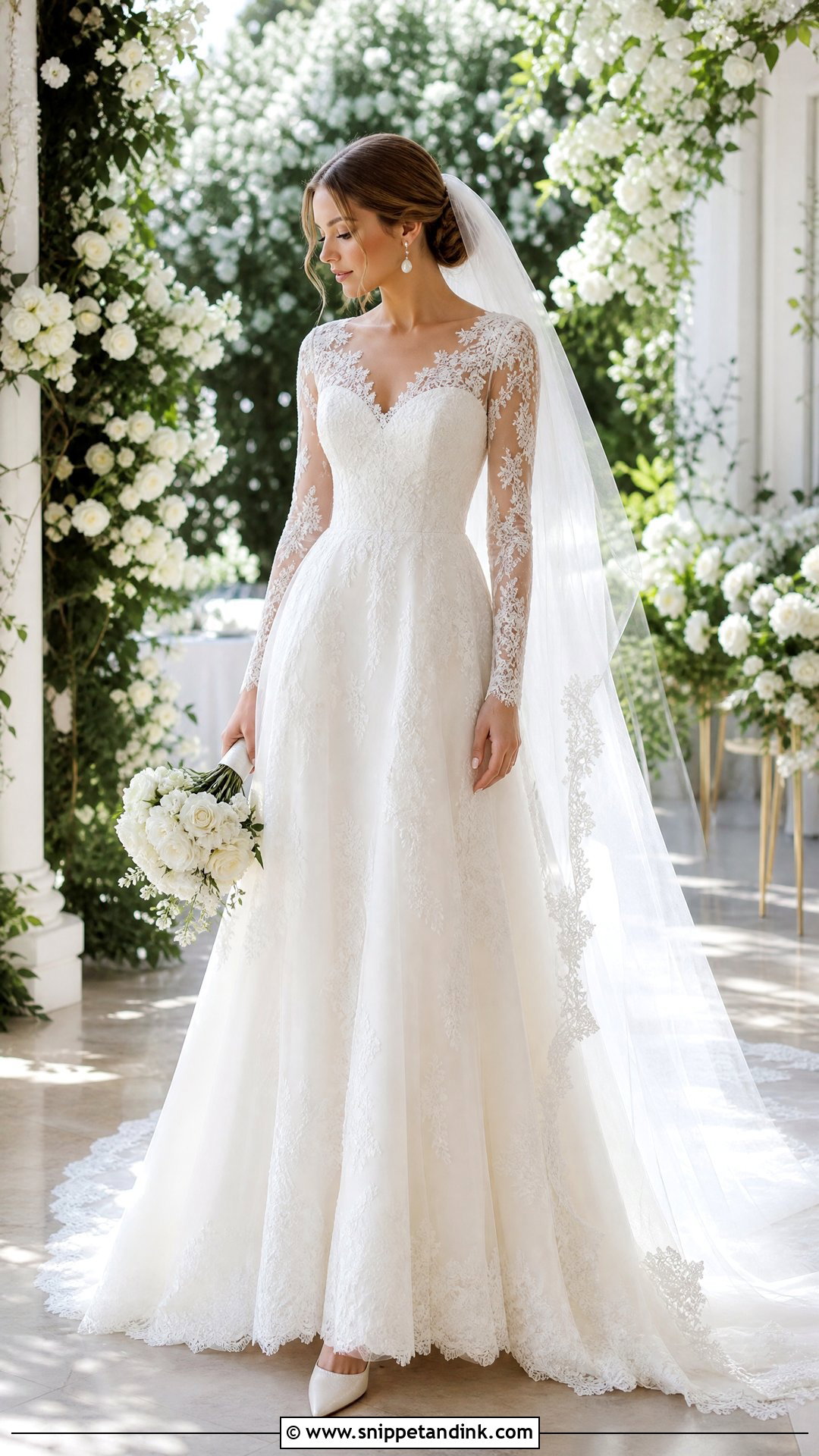
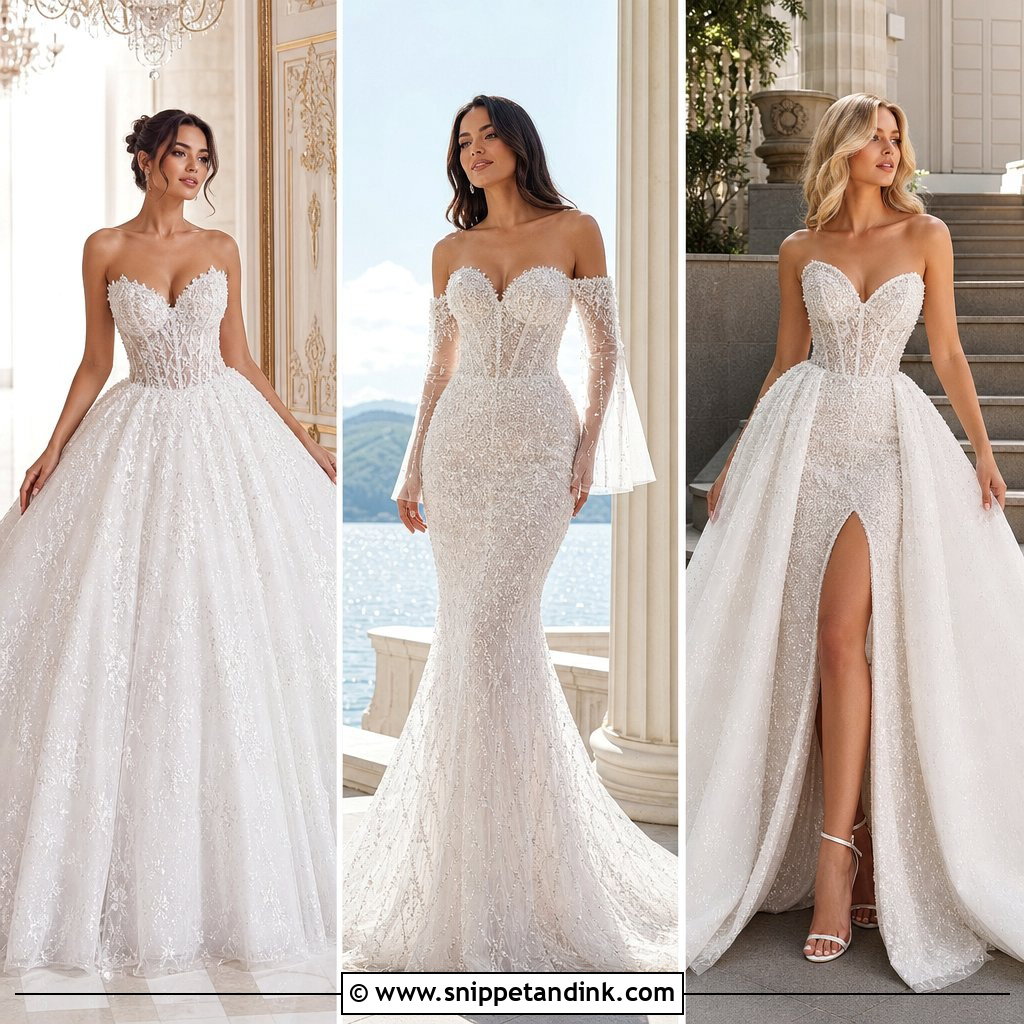
Lace sleeves add coverage without weight, but only if the elbow can bend. I check that the lace either stretches or is shaped at the elbow; a rigid sleeve pulls the whole bodice when you lift a glass. Look at the appliqué edges at the wrist and neckline too, since some scratch. A fitted lace bodice over a sweetheart lining, full-length sleeves and an A-line skirt give the classic romantic outfit. Lined sleeves cover more; sheer ones feel lighter. A cathedral veil, pearl earrings, closed-toe heels and a low bun suit it, and a plain veil and bouquet keep the lace pattern clear in photos.
16. Puff Sleeve Wedding Dress
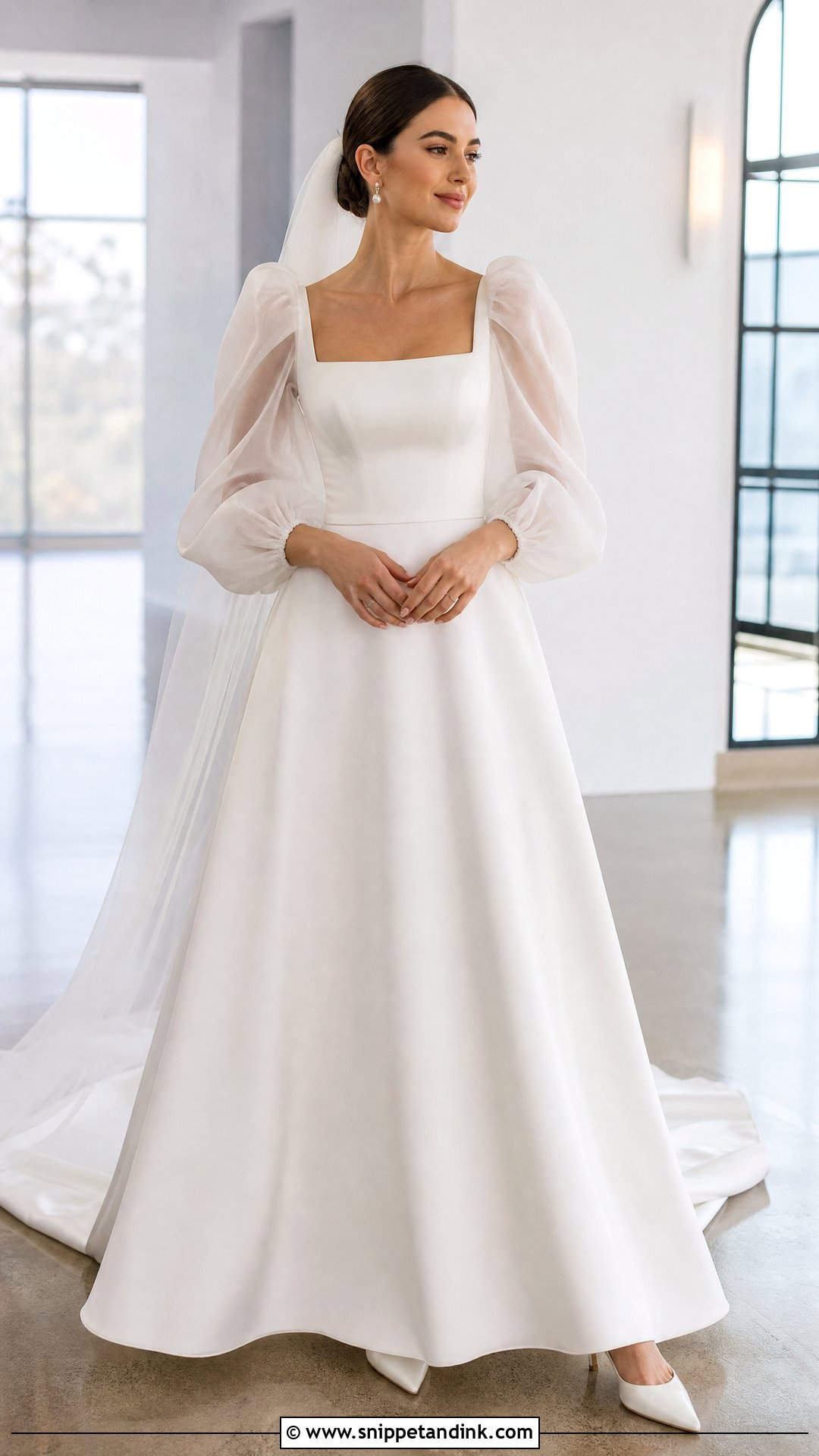
Puff sleeves bring personality and volume to the shoulders, and they suit brides with narrow shoulders or a smaller bust, who gain balance from the extra width. Broad shoulders can look heavy in them. They might be short and structured, long and sheer or gathered at the wrist. Organza and tulle give volume without weight. Check that elastic doesn’t pinch and that the sleeve head stays put when you lift your arms. A clean square-neck bodice and simple A-line skirt keep the outfit together, with pearl drops, a low bun and a plain veil. Detachable puffs turn it sleeveless for dancing.
17. Cap Sleeve Wedding Dress
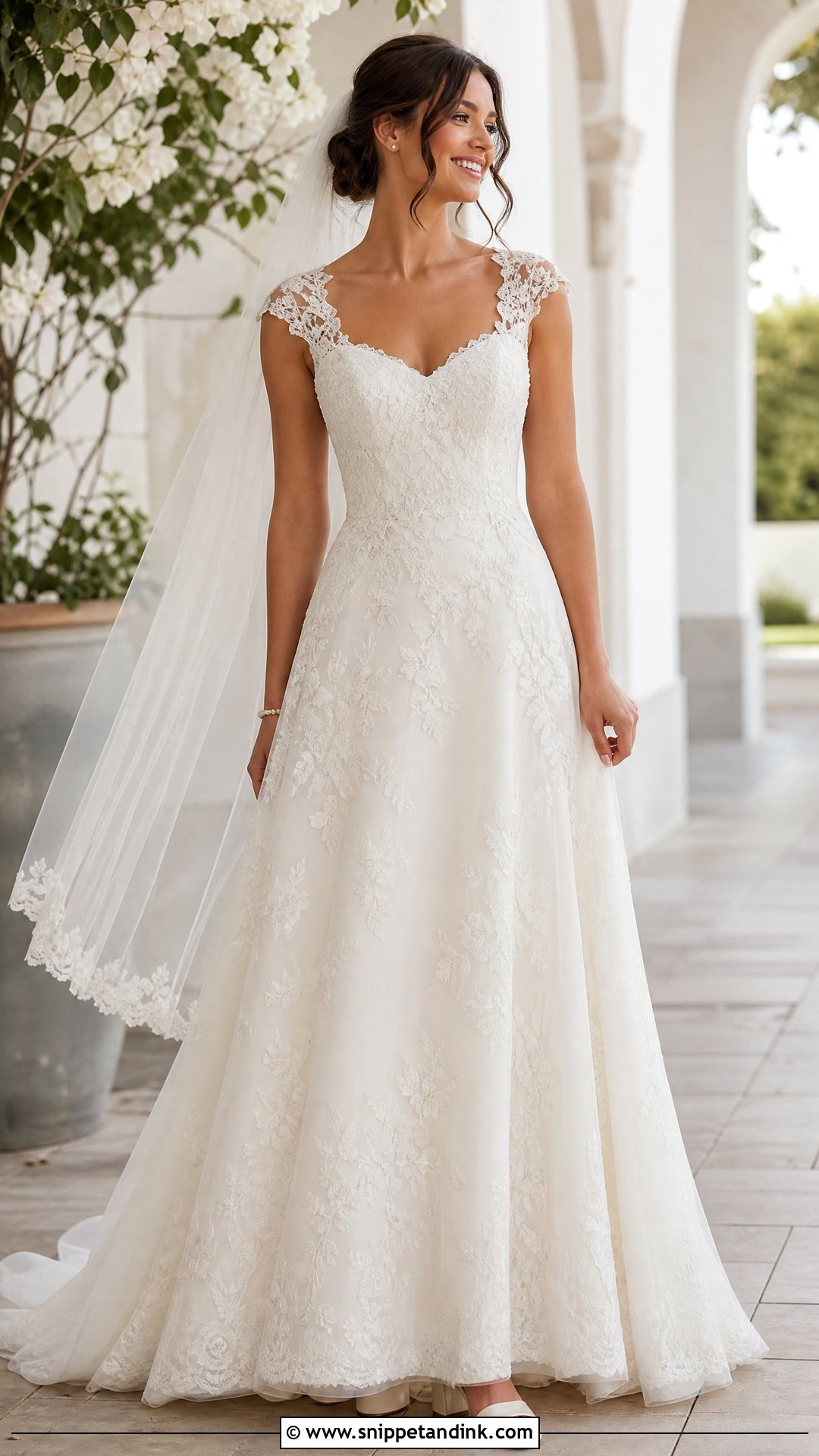
Cap sleeves give a little cover at the top of the shoulder and leave the arms free. Where the cap ends is what matters: if it cuts straight across the widest part of the upper arm, it makes the arm look bigger, so I adjust the length to end just above or below that point. They work on lace A-lines, beaded bodices and simple chiffon. Plain satin caps are subtle; appliquéd lace blends into the bodice. A curved neckline, defined waist, flowing skirt, fingertip veil, pearl studs and block heels make a balanced full look. Put interest in a small comb or bracelet, not a necklace.
18. Detachable Sleeve Wedding Dress
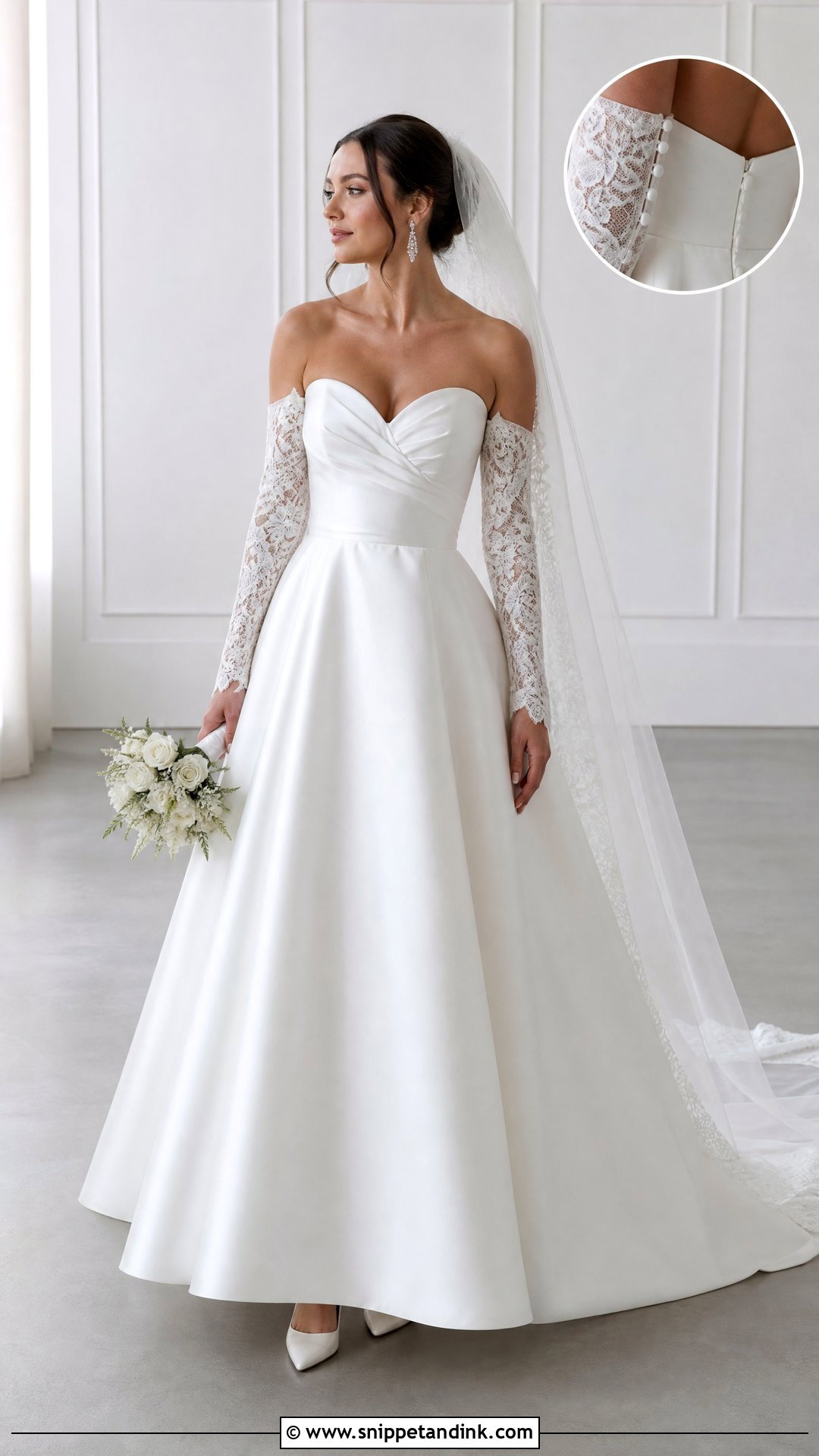
Would you like a covered ceremony look and a more open dress for the reception, without buying two gowns? A detachable sleeve wedding dress does exactly that, which is why they’ve become such a common request. Start with a structured strapless or sweetheart gown, then add fitted lace sleeves, off-shoulder bands or sheer arm pieces. Wear a long veil and classic pumps for the ceremony, then switch to a shorter veil or hair accessory once the sleeves come off. The fastenings should be hidden, secure and easy for a helper. Practice removing them with whoever will be helping you.
19. Draped Bodice Wedding Dress
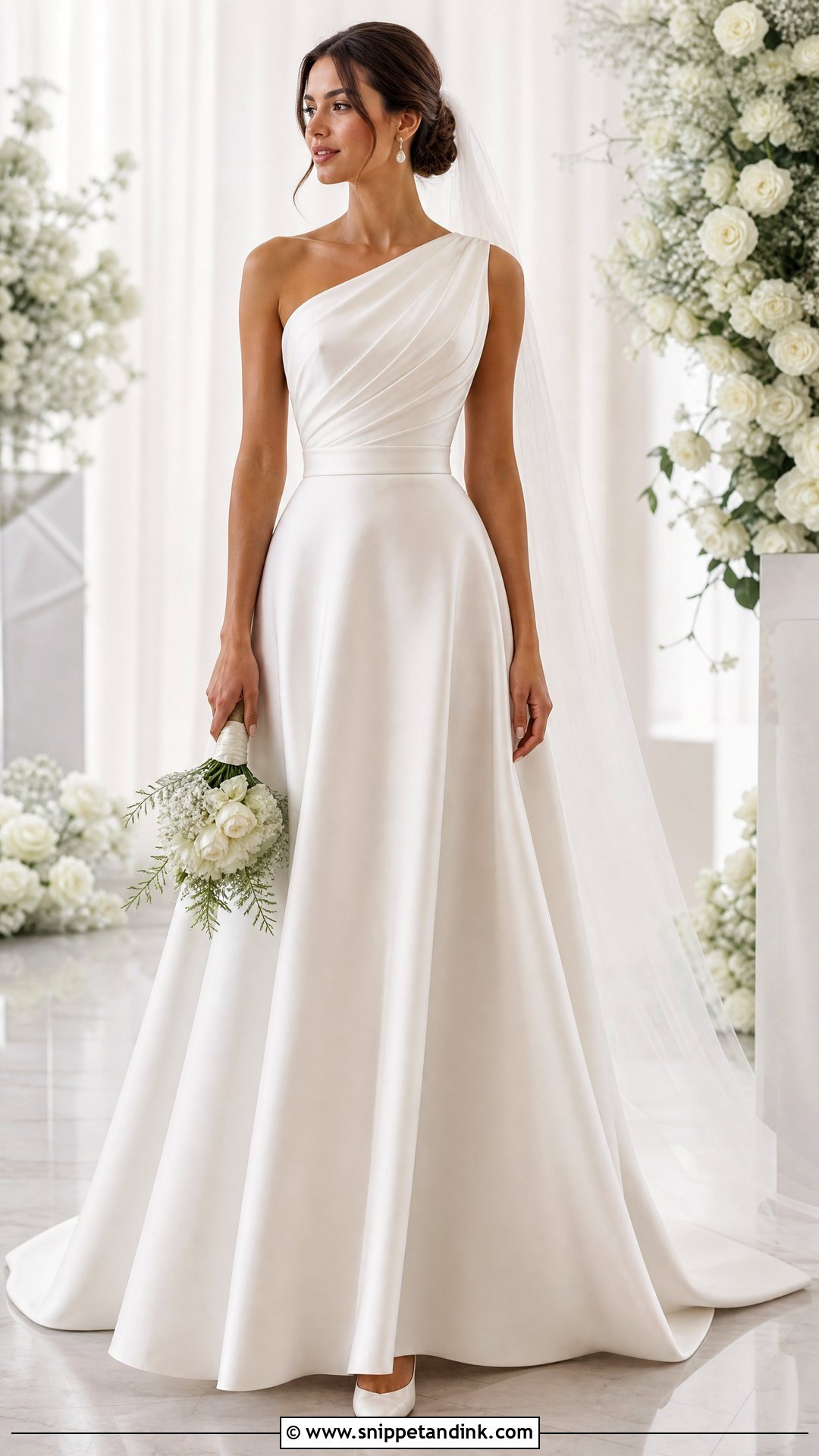
Draping is how a plain gown gets interest without beads or lace. The folds can cross diagonally, gather at the waist or wrap the bust, and each placement changes the balance of the body. Diagonal drapes are good at drawing attention away from a wide shoulder, for example. An asymmetrical pleated top on an A-line skirt, with delicate earrings, a smooth veil and pointed heels, makes a sophisticated full outfit. Try several versions; ruching doesn’t fit every body the same way. Satin, chiffon and stretch crepe drape best. Watch for pulling at the side seams, and keep the hair and bouquet simple.

20. Floral Appliqué Wedding Dress
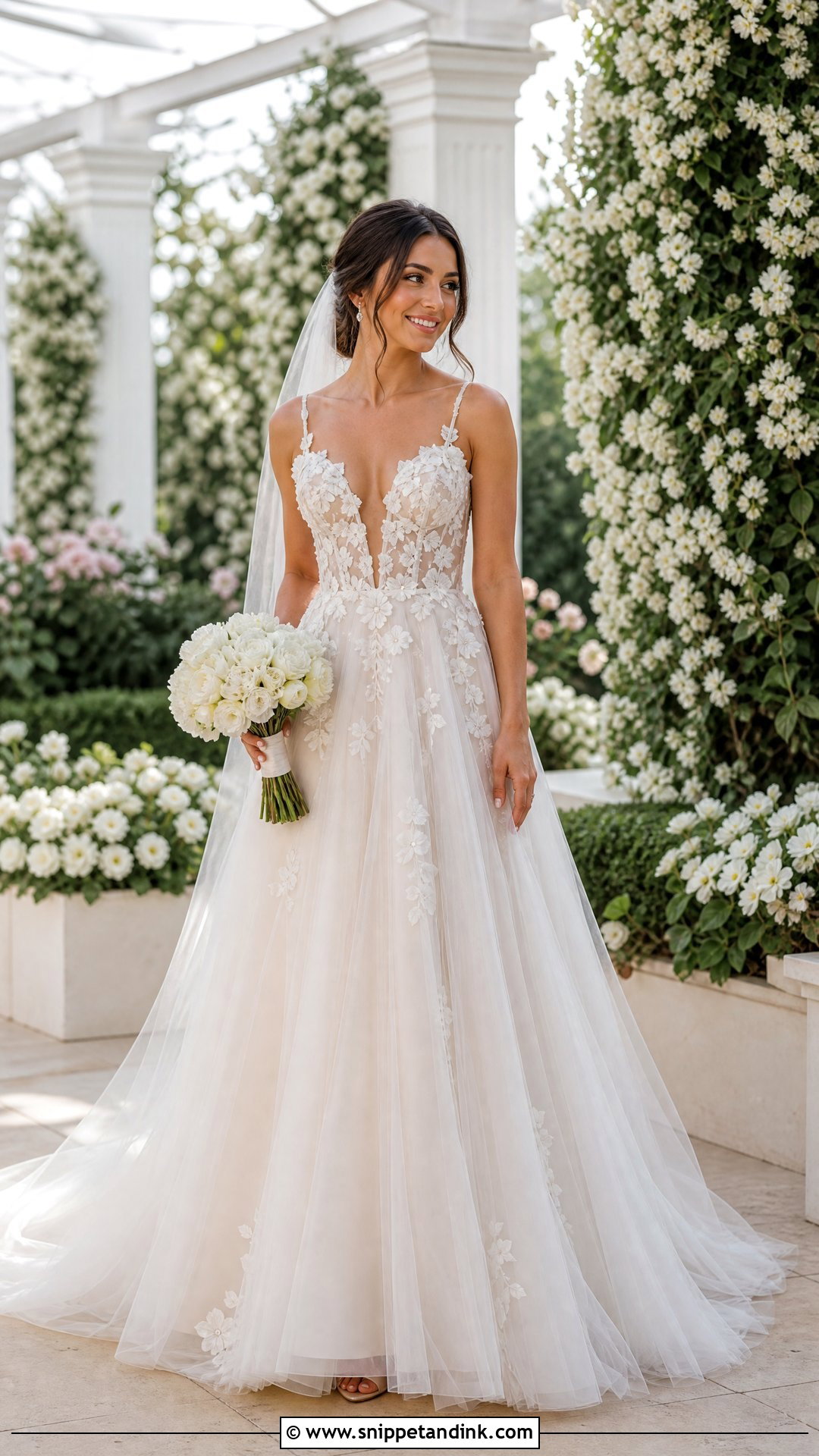
Raised floral appliqués turn the bodice into the focal point, and large flowers are very much in bridal design right now. They can be flat embroidery on lace or lifted from the fabric with petals, pearls and fine beading. Raised petals catch on a veil’s edge and rub the inner arm, so I hold a veil against the bodice at fittings and have the bride swing her arms. Placed well, the flowers can cover parts of illusion fabric while keeping it light. A soft tulle A-line, sheer straps, a plain veil, small earrings and quiet heels finish it, with a simple bouquet.
What Goes Under Each Bodice
Undergarments change how a bodice fits, sometimes by a whole size, so I ask brides to settle them before the first alteration appointment and bring them to every fitting after that.
Cups Sewn Into the Dress
For strapless, sweetheart, off-shoulder and most corset styles, a seamstress can stitch shaped cups into the lining. It’s usually more secure than any bra, and it means nothing can slip or show at the neckline.
Longline and Low-Back Bras
A longline strapless bra anchors at the waist like a mini corset and suits square, scoop and boat necks. For low backs, there are bras with converter straps that wrap around the waist, below the back opening.
Adhesive Options
Stick-on cups and tape are handy for plunging V-necks, halters and open backs, but they can loosen in heat and sweat. Try them for a full afternoon before the wedding, not just in the fitting room, and pack spares in the emergency kit.
One last habit worth keeping: wear the shapewear you plan to use on the day to your fittings too. A smoothing slip or high-waisted brief can take a little off the waist measurement, and a bodice fitted without it may feel loose by the time you walk down the aisle.
The Bodice Test Every Dress Should Pass
The right bodice looks good, stays put and lets you move with confidence all day. The styles here run from clean strapless gowns and square necklines to corsets, sleeves and dimensional flowers. Judge each top as part of the whole outfit: the skirt, fabric, support, veil, jewelry, shoes, season and venue together. Then test the dress honestly while sitting, walking, raising your arms and hugging. Trends are a fine starting point, but fit and comfort are what make a gown feel like your own.
You'll Like These Ideas:






Leave a Reply