
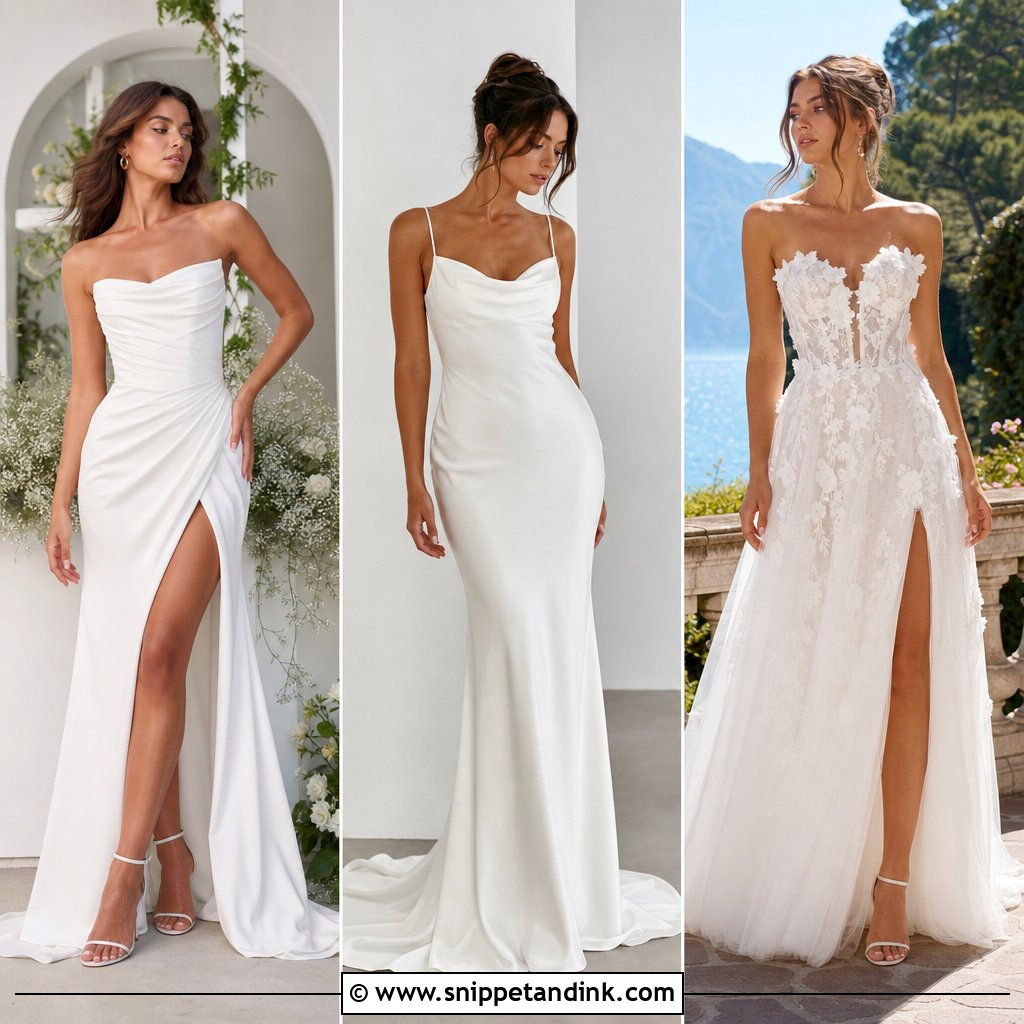
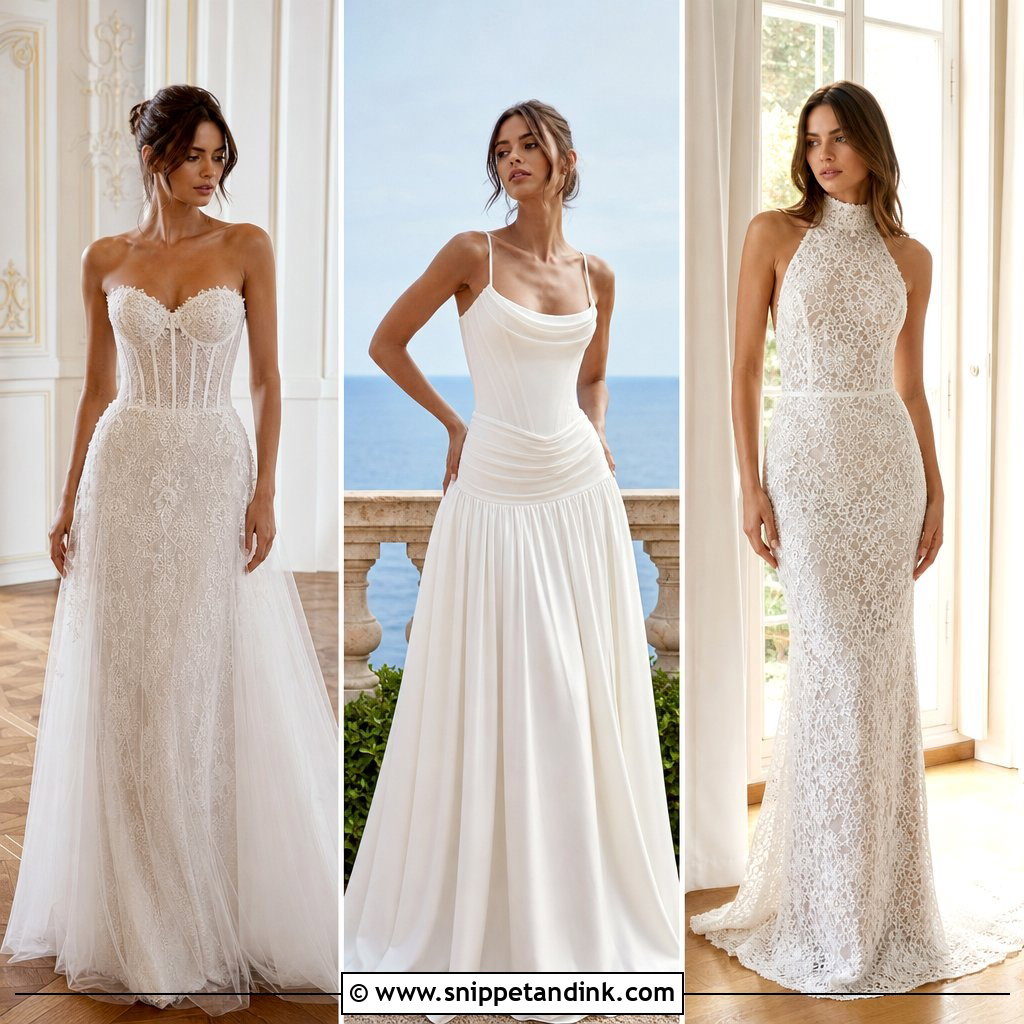
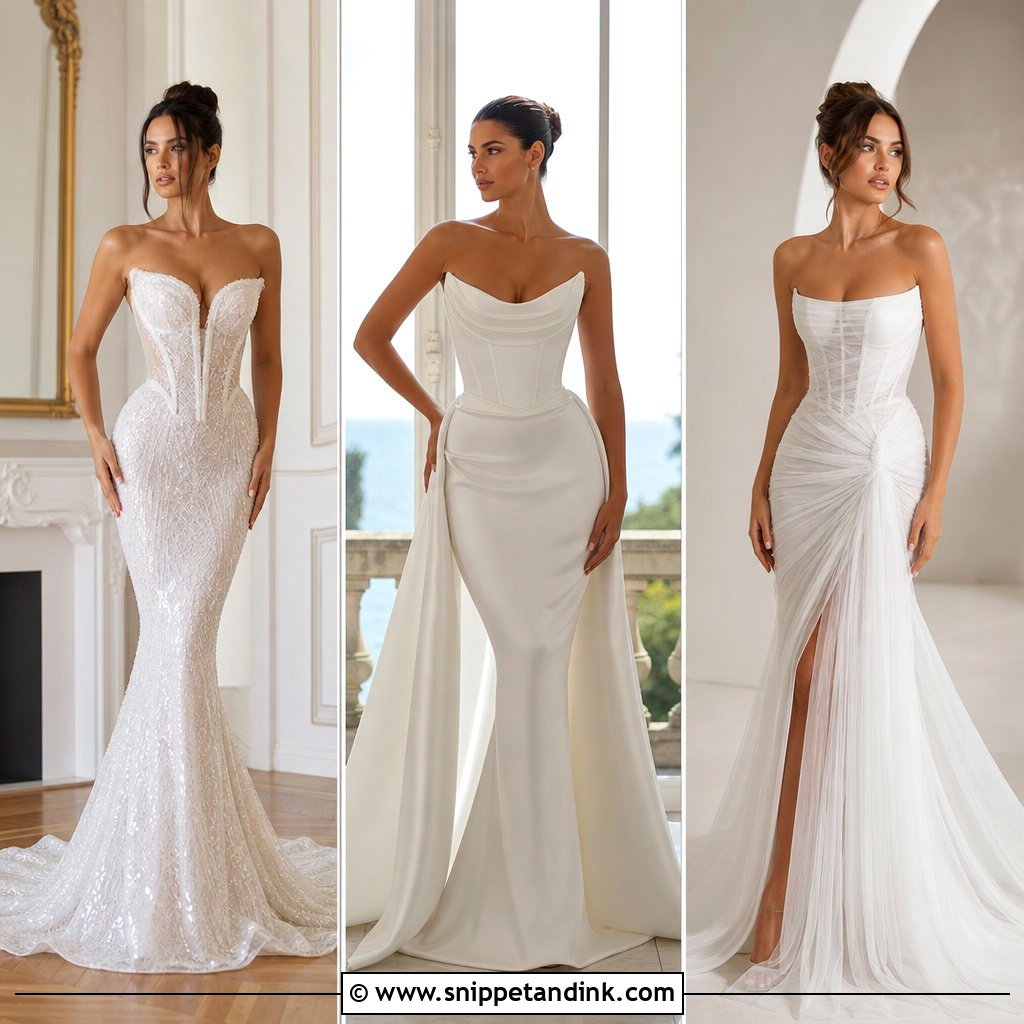
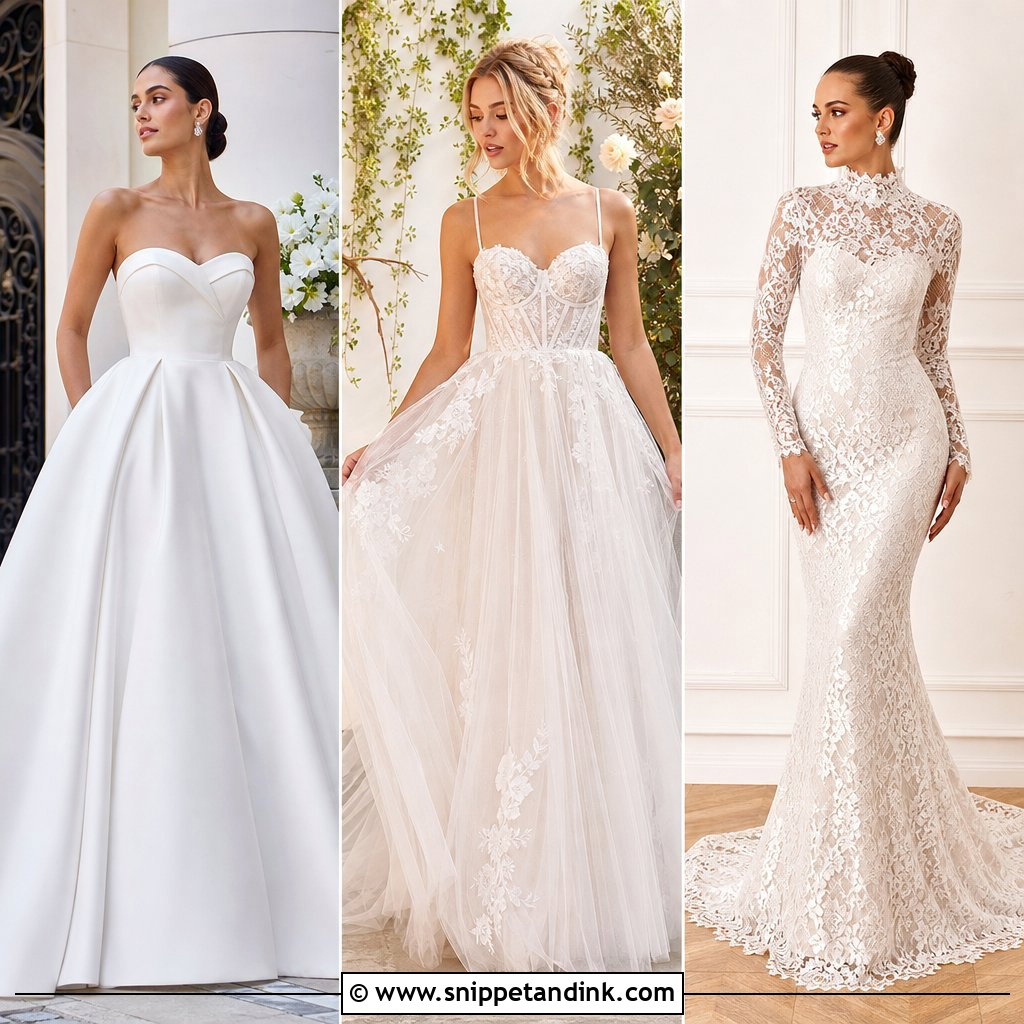
Watters is a label I pull for brides with very different tastes, because the range covers sculptural ball gowns, fitted silhouettes, layered tulle, floral lace, luminous satin and couture-style embellishment. That variety is useful only if you know what you’re filtering for. I start with the venue, the season and your proportions, then think about the whole outfit at once: veil, jewelry, shoes, hair and bouquet. Accessories should point at a gown’s best feature, not compete with it. The twenty looks below run from dramatic Basque waists to light destination chiffon, each with the fitting checks I’d make before saying yes.
What a Salon Appointment Can and Can’t Show You
Designer gowns are usually tried on as samples, not in your size, and that changes how you should read the mirror. A few things I tell every bride before her first appointment:
- Samples come in a limited range of sizes. A consultant will clip a larger sample at the back or leave a smaller one open, so judge the shape and neckline, not the fit.
- Bring a strapless bra or the shapewear you plan to wear, and shoes close to your wedding heel height. Hems and waistlines look completely different at the wrong height.
- Keep your group small. Two or three people whose taste you trust is plenty; a crowd tends to steer you toward the dress that gets the loudest reaction.
- Photograph the back and side, not only the front. Most of the ceremony is seen from behind.
And sit down in every gown you’re seriously considering. A sample that looks right standing can buckle at the bodice or pull across the hips once you’re seated, and you’ll spend hours of the day in a chair.
1. Watters Satin Basque Waist Ball Gown
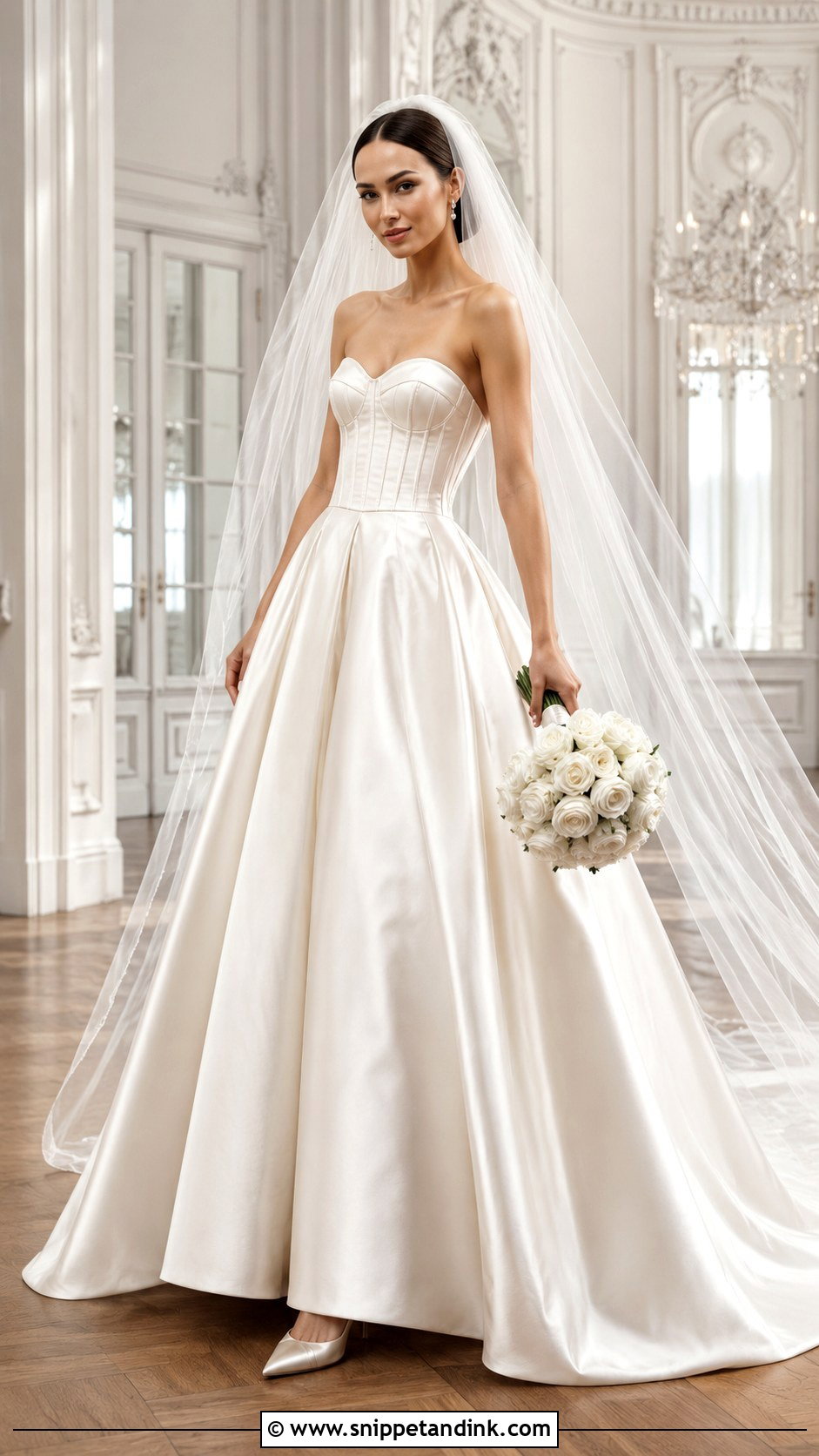
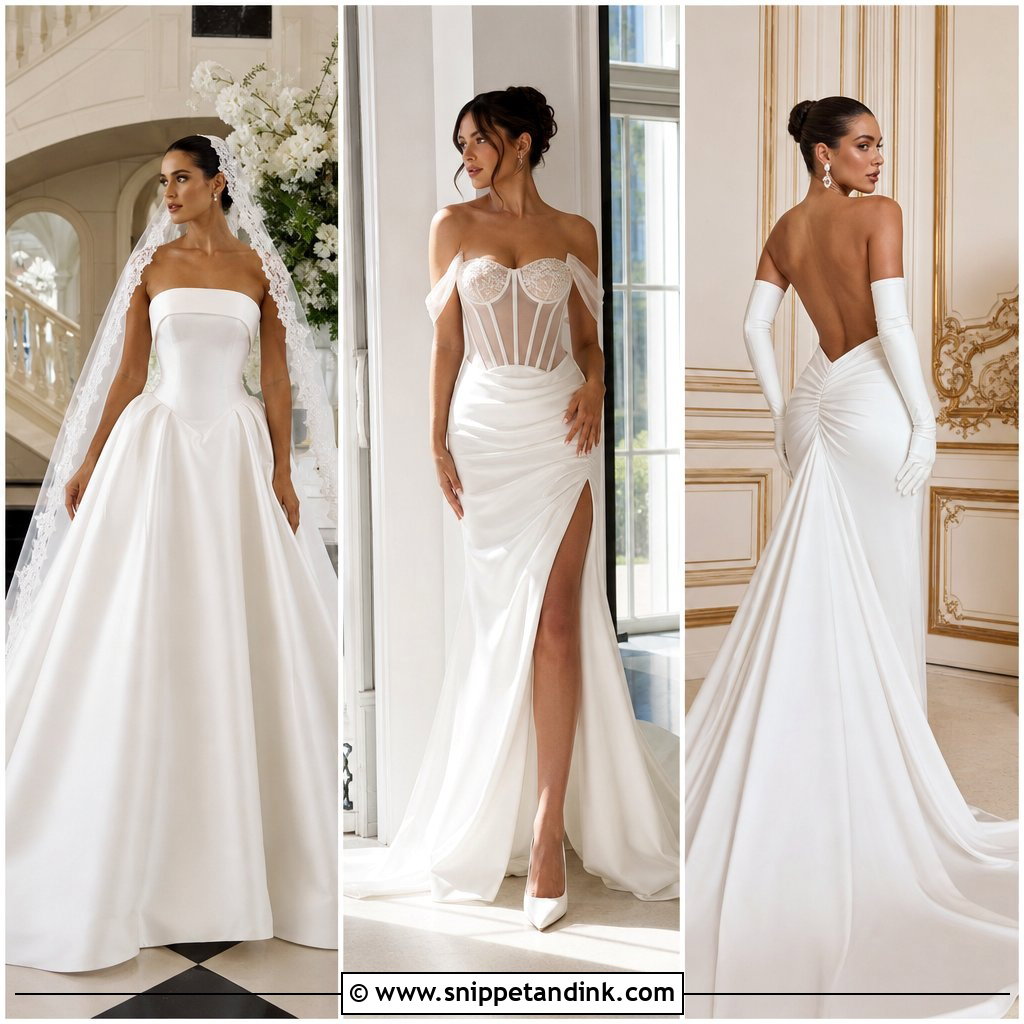
A Basque waist dips into a point below the natural waistline, and that point is what lengthens the torso, so it has to land in exactly the right place on your body. On a satin ball gown with a structured corset bodice and luminous full skirt, I check it seated as well as standing, since a point set too low digs in when you sit. Pearl drop earrings, a cathedral veil and ivory pointed pumps are enough. A smooth low bun keeps the bodice visible, and a compact bouquet of white roses or callas holds the clean outline. Grand ballrooms, historic hotels and formal estates suit it. Keep everything else minimal; the architectural silhouette is already the statement.
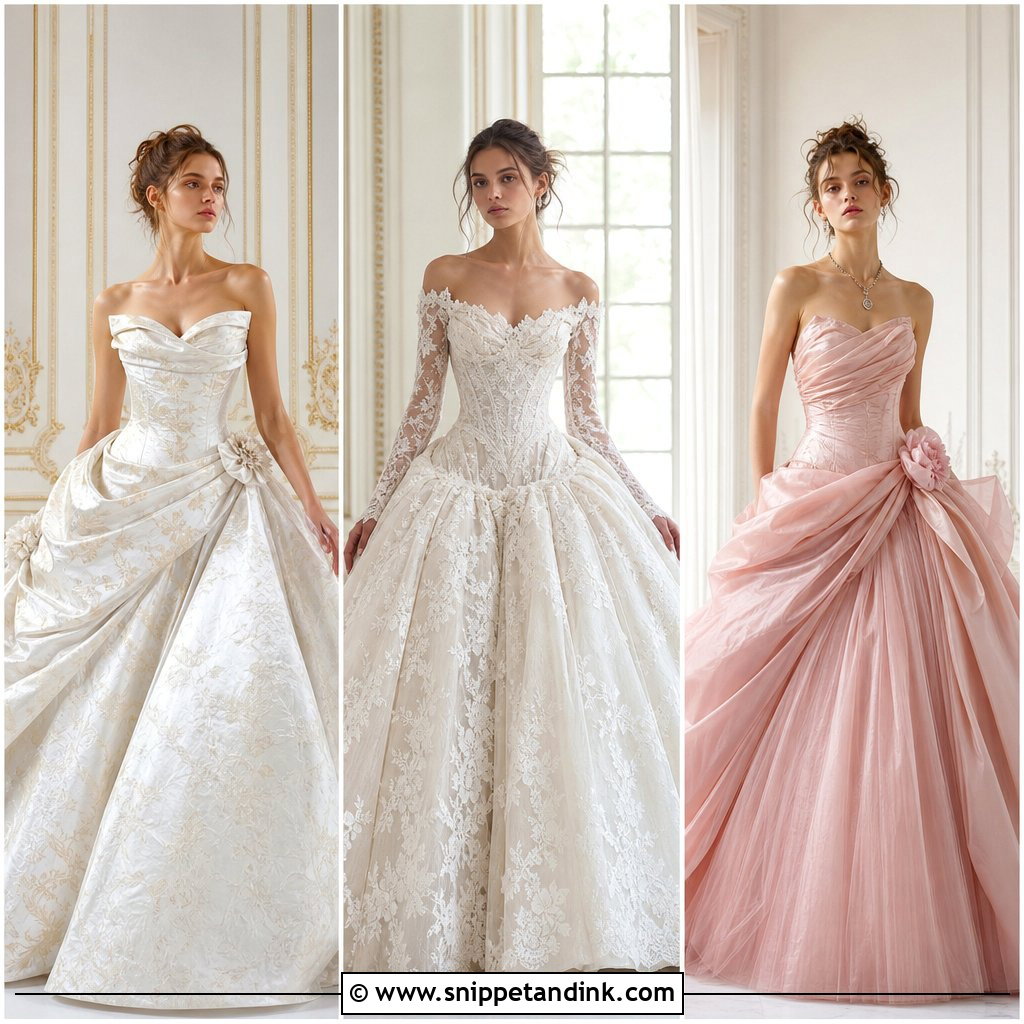
2. Watters Floral Organza Ball Gown
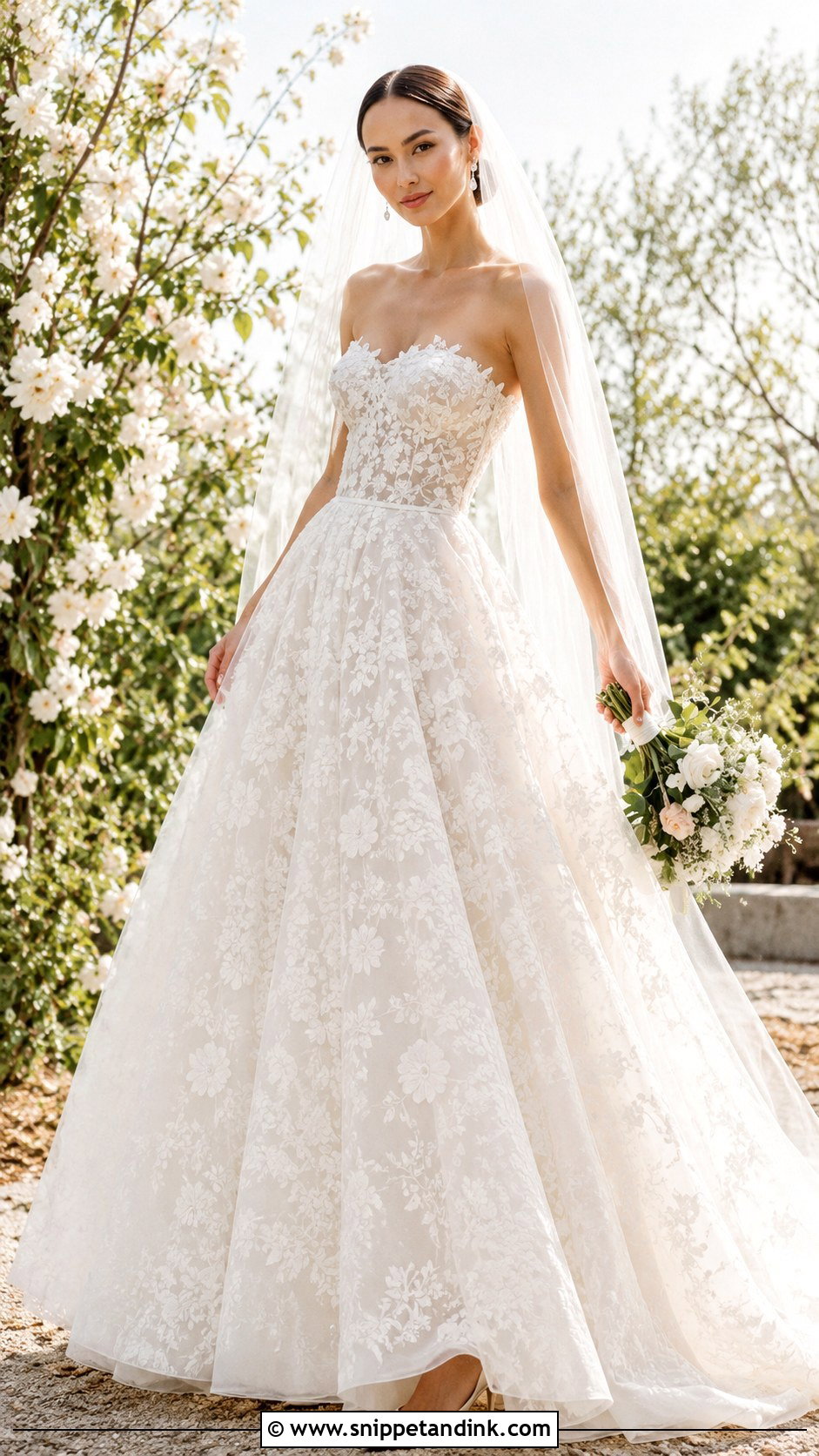
Floral organza is romantic without looking old-fashioned, and its volume weighs far less than it looks. Choose a strapless fitted bodice with dimensional flower texture and a full organza skirt that catches light. The one thing I warn brides about is snagging: three-dimensional petals catch on bracelets, bouquet wire and lace sleeves on hugging guests, so keep jewelry smooth. Delicate crystal earrings, ivory slingbacks and a plain fingertip veil that doesn’t cover the texture are plenty. Loose waves or a soft pinned updo suit the garden feel, with white peonies, sweet peas and light greenery. Spring gardens, greenhouses and flower-filled estates are its natural setting.
3. Watters Long Sleeve Lace Wedding Dress
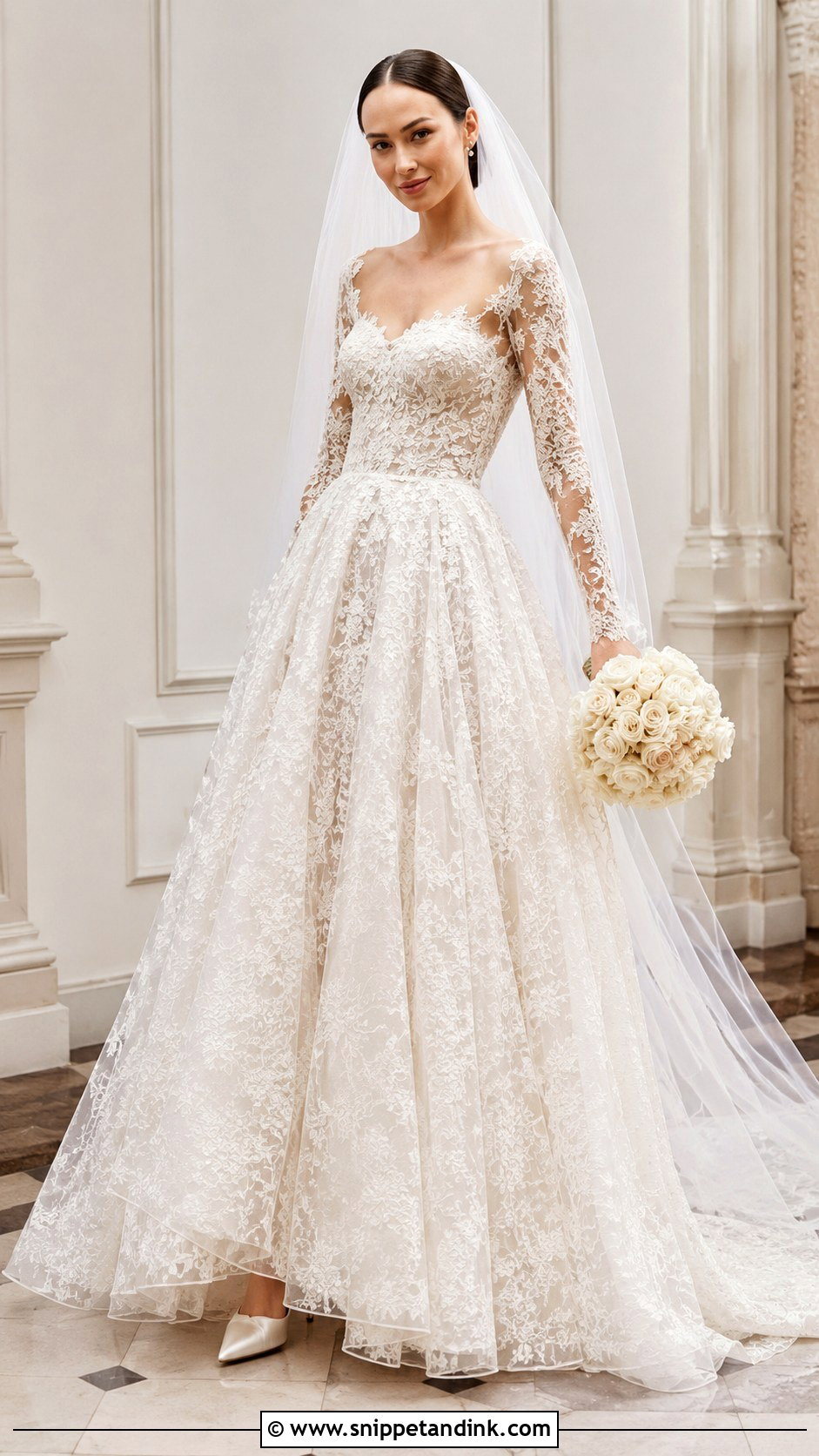
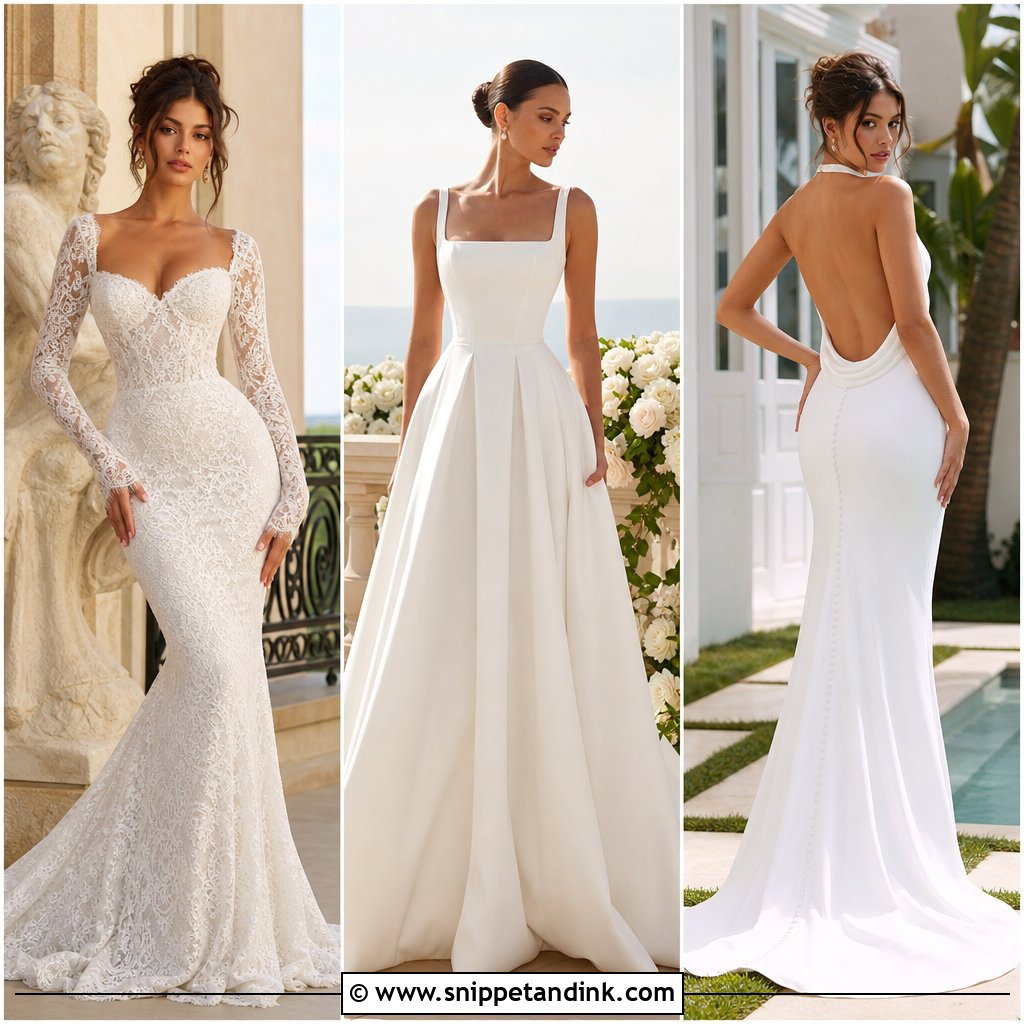
Long lace sleeves have to fit closely without trapping the elbow, so I always ask brides to reach forward and hug at the appointment. If the sleeve pulls at the shoulder seam, it needs more ease. The gown here has fitted lace sleeves, a structured bodice and a softly layered ball gown or A-line skirt. Satin pumps, small pearl studs and a light chapel veil under a low chignon complete it. Skip a heavy necklace when the neckline and lace already carry detail. Ivory roses with trailing greenery soften the edges. Fall, winter and formal indoor weddings suit the coverage, and the lace gives texture to every angle of the photographs.
4. Watters Beaded Corset Wedding Dress
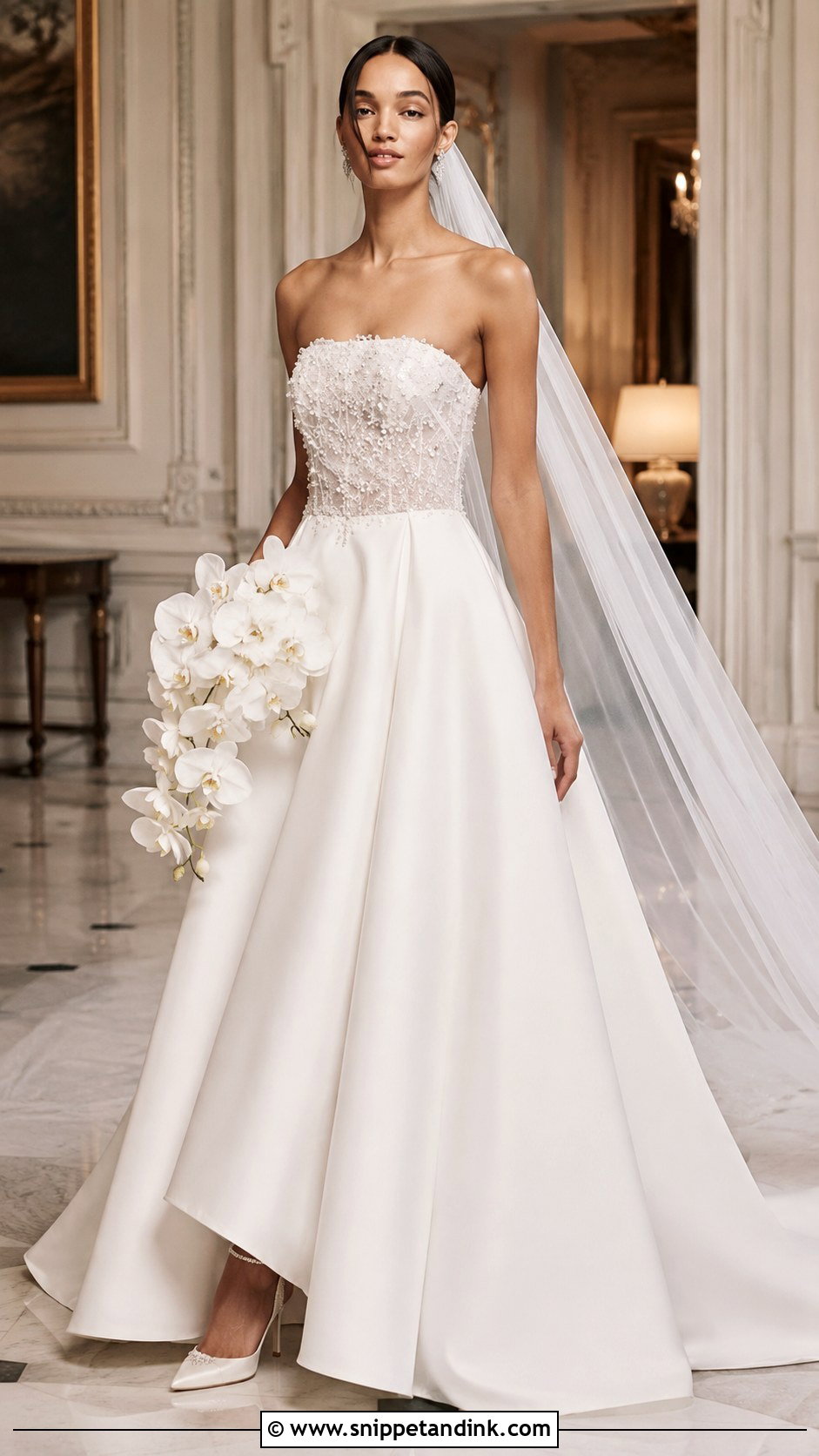
Beaded corsets are where I spend the most fitting time. Visible bodice structure with carefully placed crystals, pearls or sequins gives real couture character, especially over a full satin skirt, but hand-applied beading also adds weight and stiffness. Sit, dance and lift your arms in the sample; if beads press into the underarm or waist, ask whether the tailor can remove a few along the seam lines. Balance the detailed top with a cleaner skirt, understated earrings and sleek ivory heels. A plain cathedral veil lets the beading lead. A polished updo or side-parted bun and a monochrome bouquet suit an evening wedding, luxury hotel or modern ballroom.
5. Watters Mikado Fit And Flare Wedding Dress
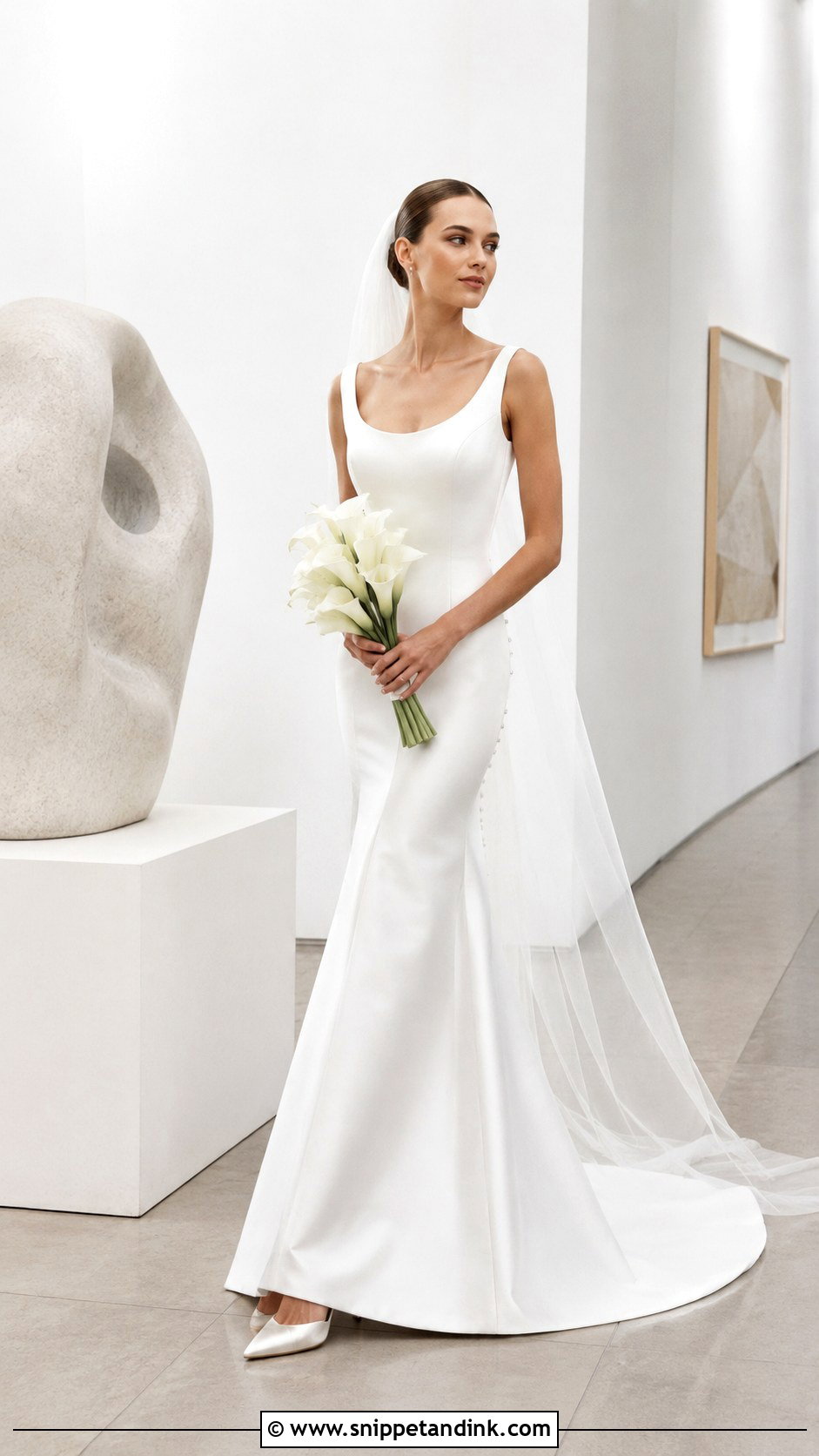
Mikado is a heavy, crisp silk-blend weave that holds a shape without much internal help, which is why fit-and-flare cuts in it look sculpted. It also creases at the hip when you sit, a trade-off worth knowing. The gown follows torso and hips before widening at the lower thigh or knee, with a square, scoop or strapless neckline keeping it modern. A long plain veil, crystal studs and pointed satin pumps finish it, plus a sleek bun or glossy waves. White orchids or callas suit it better than loose wildflowers. City hotels and galleries are a natural match. At alterations, check that you can walk and sit easily, and get a secure bustle to protect the train.
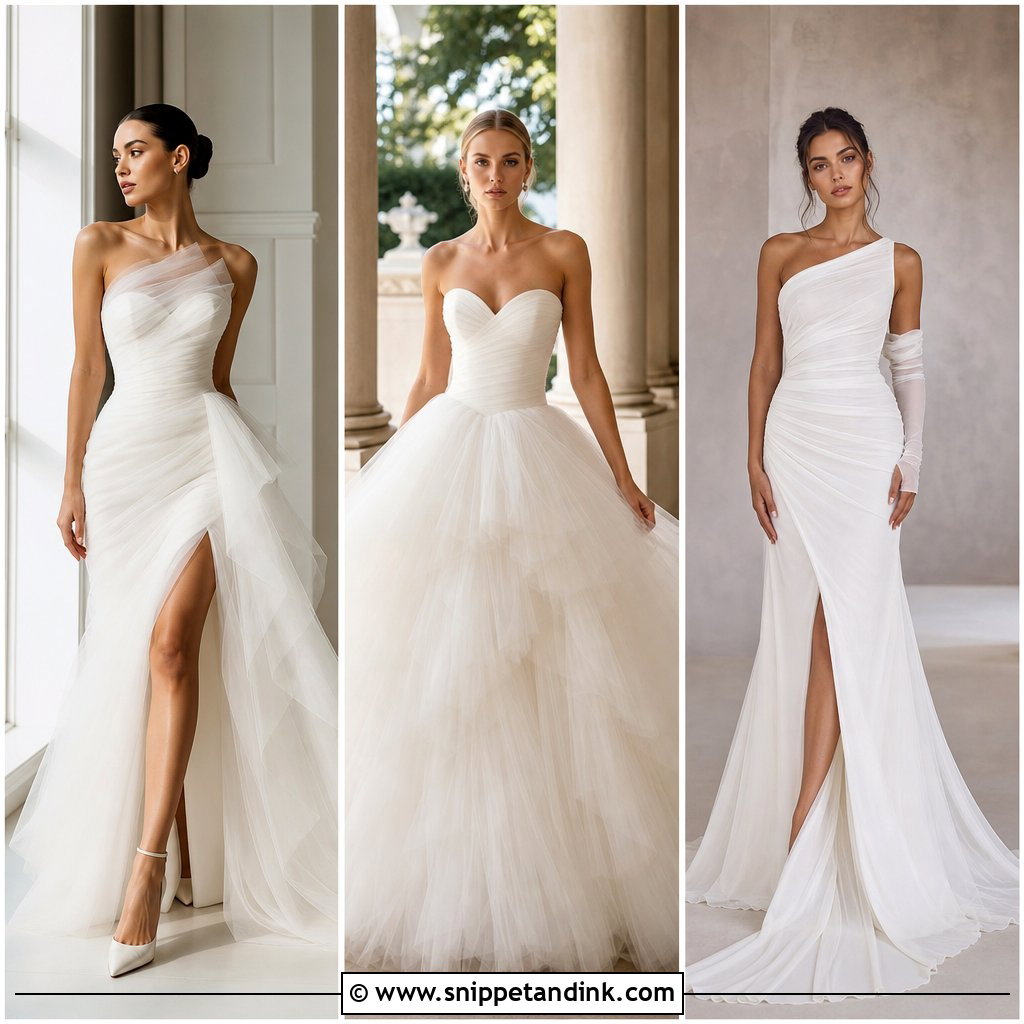
6. Watters Draped Tulle Scarf Wedding Dress
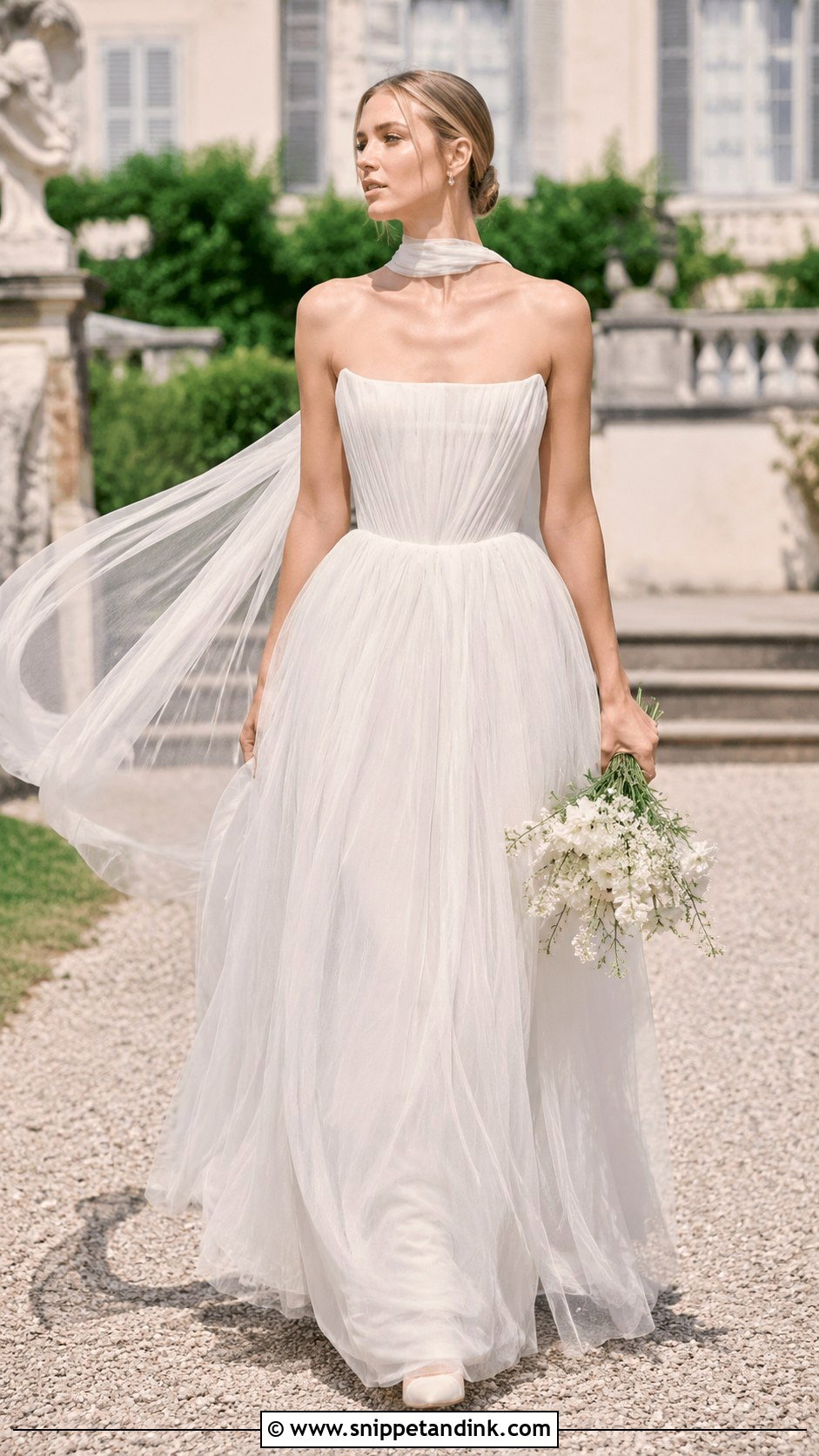
A draped tulle scarf brings movement to a strapless gown without adding a sleeve or strap. Start with a fitted bodice, defined waist and layered tulle skirt, then wrap a matching soft netting scarf loosely around the neck or shoulders. Tulle slips on bare skin, so I anchor it with a couple of discreet stitches or a small pin at the back bodice before the ceremony. Small diamond studs and a thin bracelet keep jewelry quiet. Ivory closed-toe heels and a simple bun let the scarf fall naturally. You probably don’t need a veil, though a short plain one works for the ceremony. Art museums, garden estates and airy indoor venues suit it.
7. Watters Strapless A-Line Wedding Dress
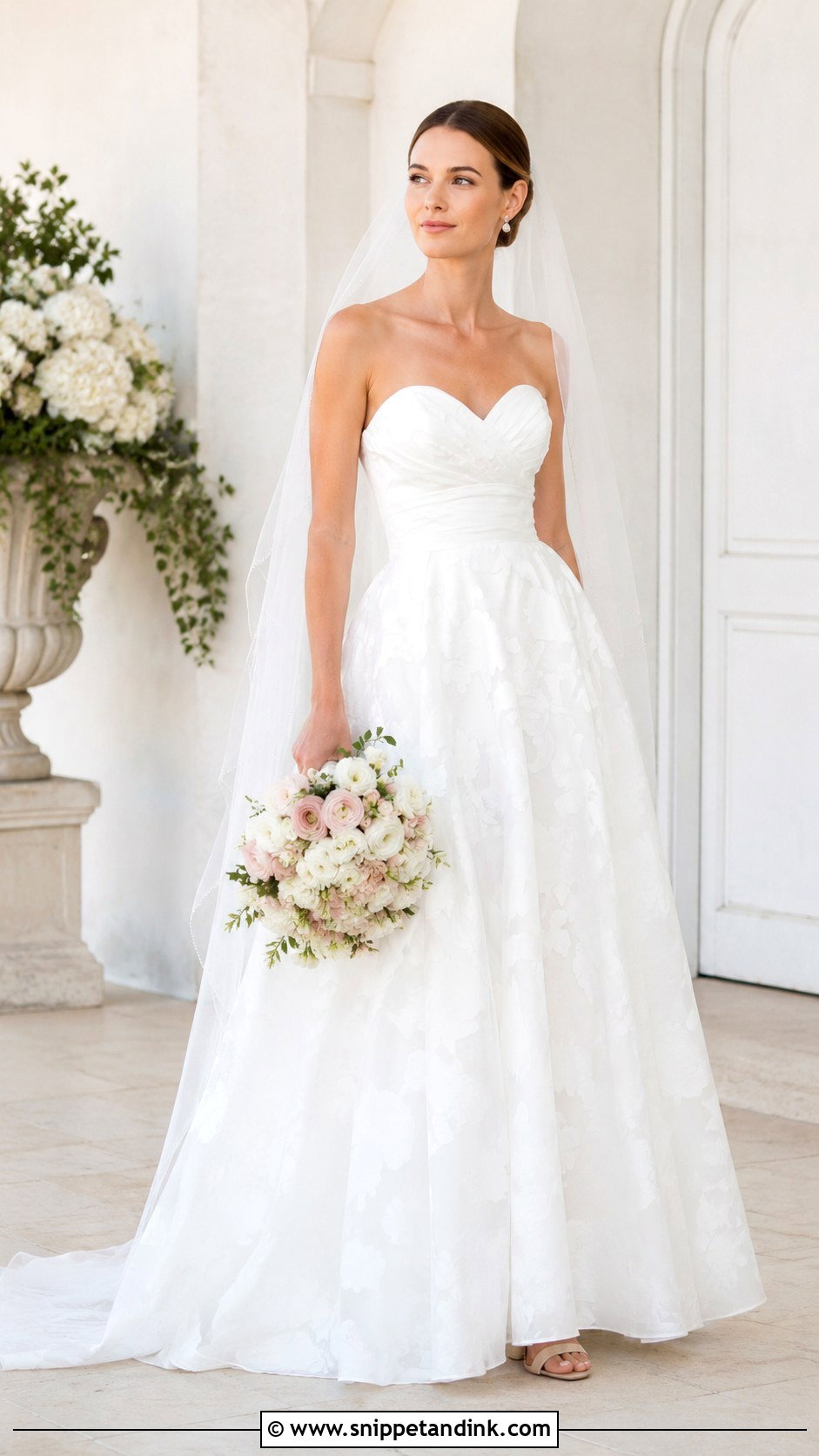
Strapless A-lines are the most versatile shape I fit, and the most dependent on a secure bodice. During fittings, move your arms, sit down and take several steps before final alterations; if you find yourself hitching it up even once, it needs more support. Look for a defined natural waist and a skirt widening gradually to the floor. Satin is classic; lace or soft tulle is more romantic. A fingertip veil, pearl earrings and block-heel sandals hidden under the hem keep it comfortable. A half-up style keeps hair off the neckline. Carry a round bouquet in ivory, blush or pale blue. It moves easily from a traditional ceremony to a relaxed reception.
8. Watters Off The Shoulder Ball Gown
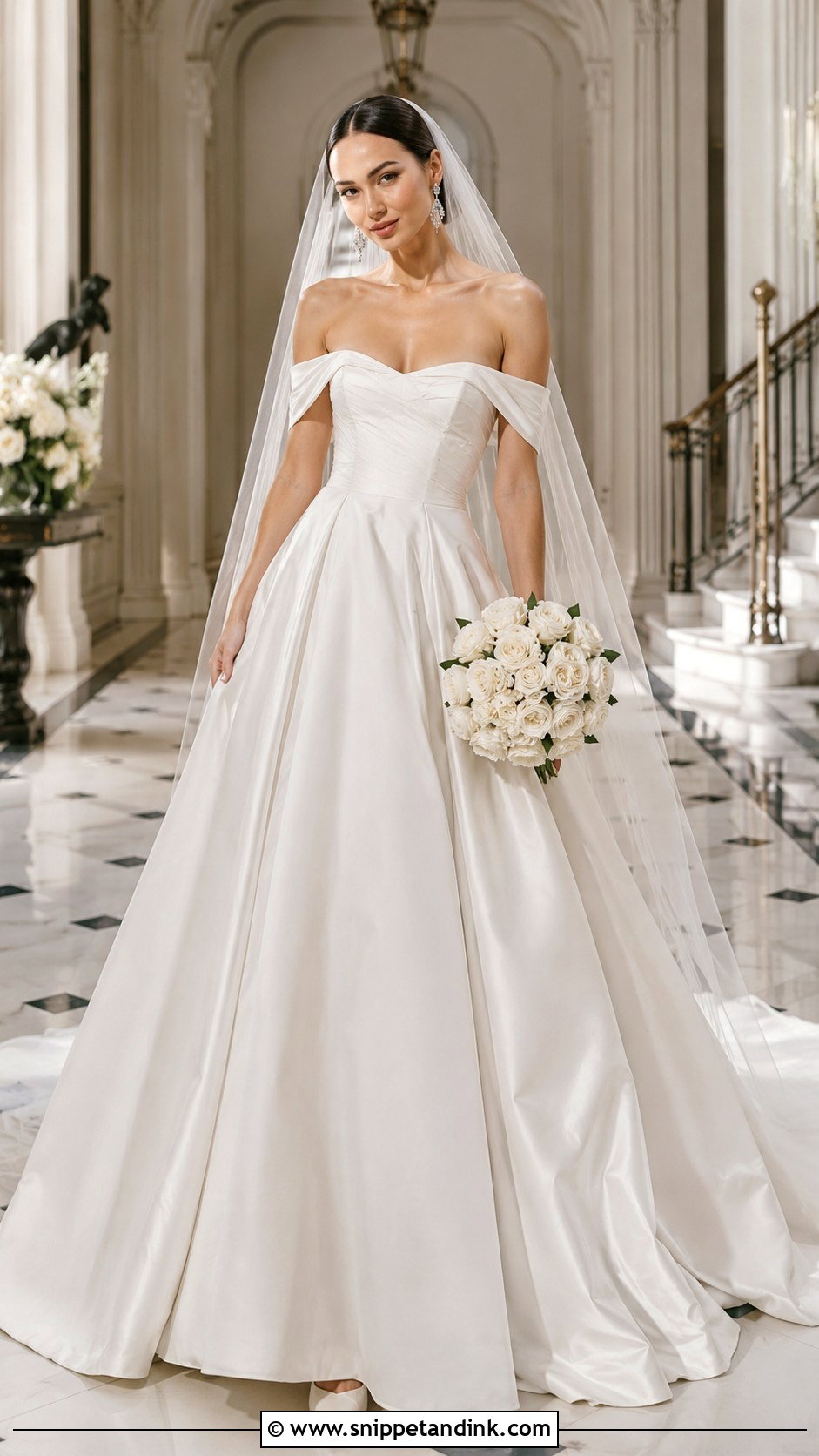
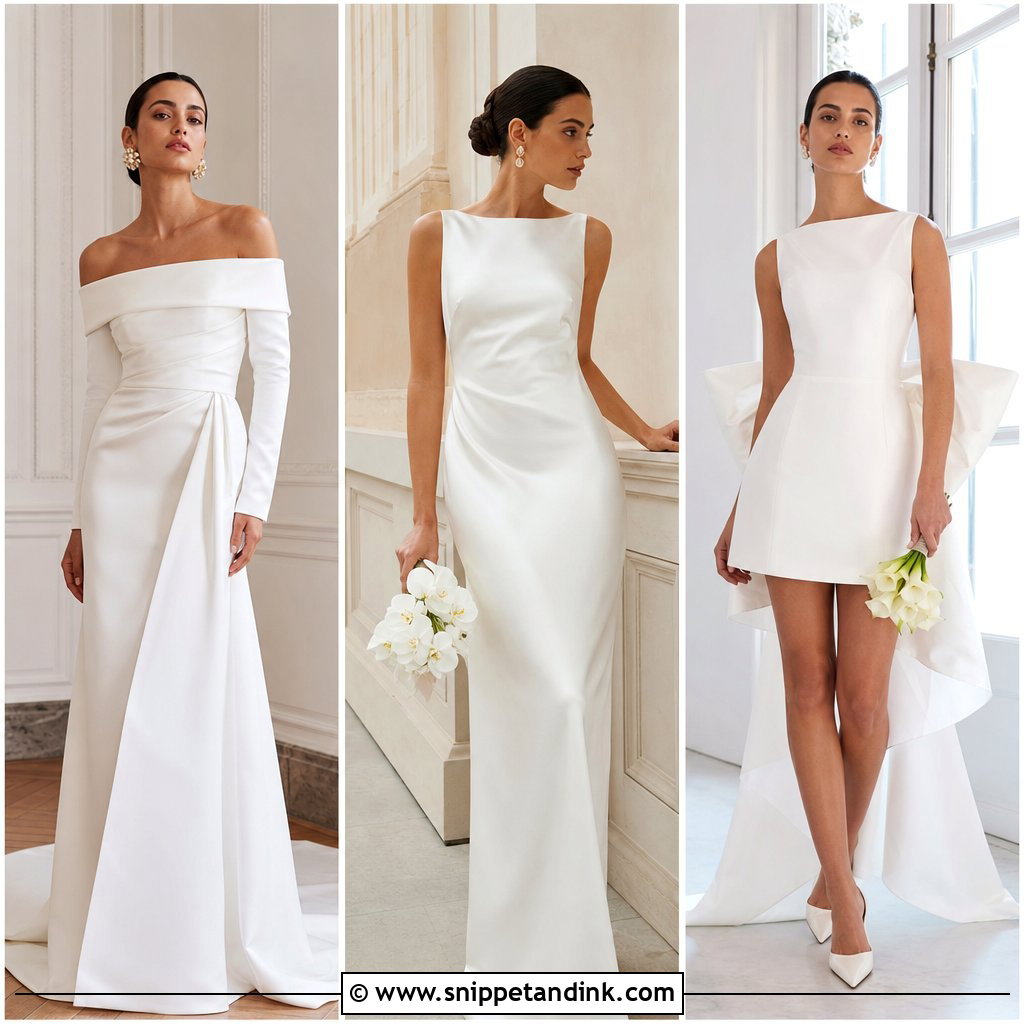
Off-the-shoulder sleeves sit on the upper arm, which means they restrict how high you can lift your arms. Practice raising them and embracing someone in the sample before you choose it; sleeve placement is everything here. A gown with supportive internal construction, soft draped sleeves and a full satin or tulle skirt frames the collarbones well. Wear a short pendant, or skip the necklace for statement earrings. A cathedral veil under a textured low bun keeps the shoulder line clear. Pointed ivory heels and white garden roses finish it. It suits a formal garden, historic mansion, resort or candlelit ballroom.
9. Watters Square Neck Wedding Dress
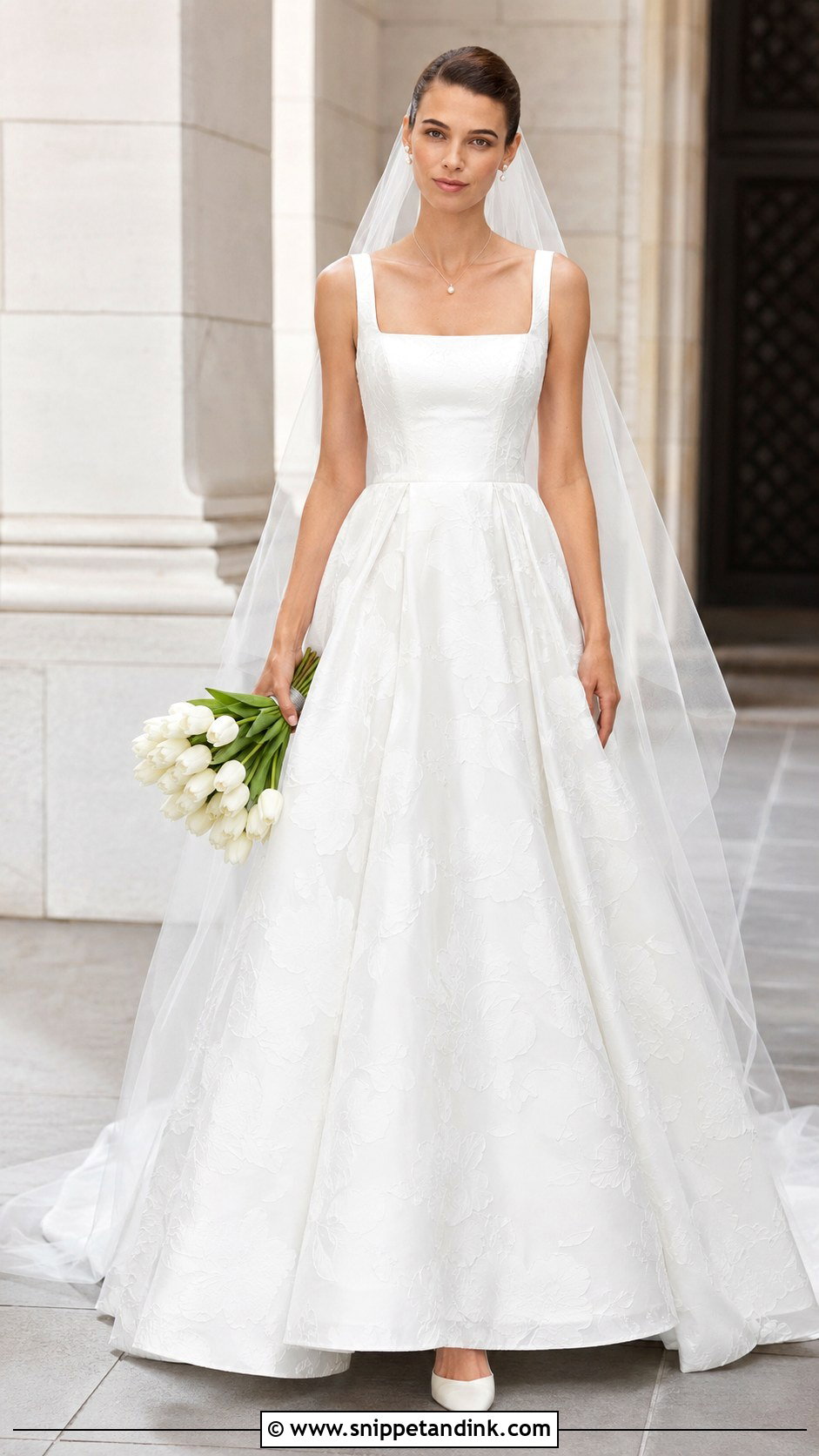
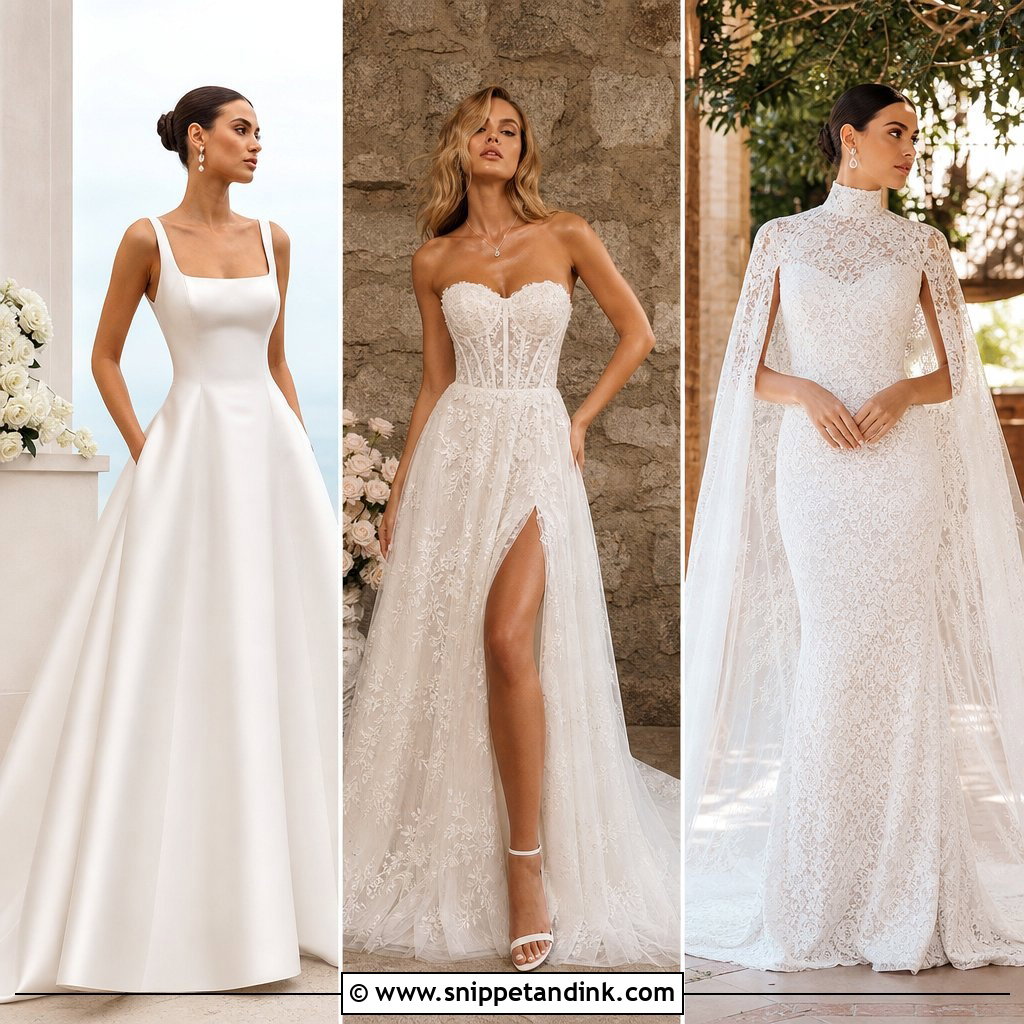
Square necklines are cleaner than a sweetheart and frame the face with straight lines. The detail I check is strap width: wide straps give support and sit flat, while narrow ones on a square neck can splay outward. Look for a supportive bodice with either a flowing A-line or fitted skirt. A fine pendant, small pearl earrings and a simple chapel veil complement the neckline without crowding it. Ivory pumps with a stable heel keep it comfortable. A low twist or soft brushed waves suit the lines, and white tulips, roses or anemones match the crisp shape. It’s easy to personalize for a courthouse, city venue, estate or small hotel celebration.
10. Watters Sweetheart Drop Waist Wedding Dress
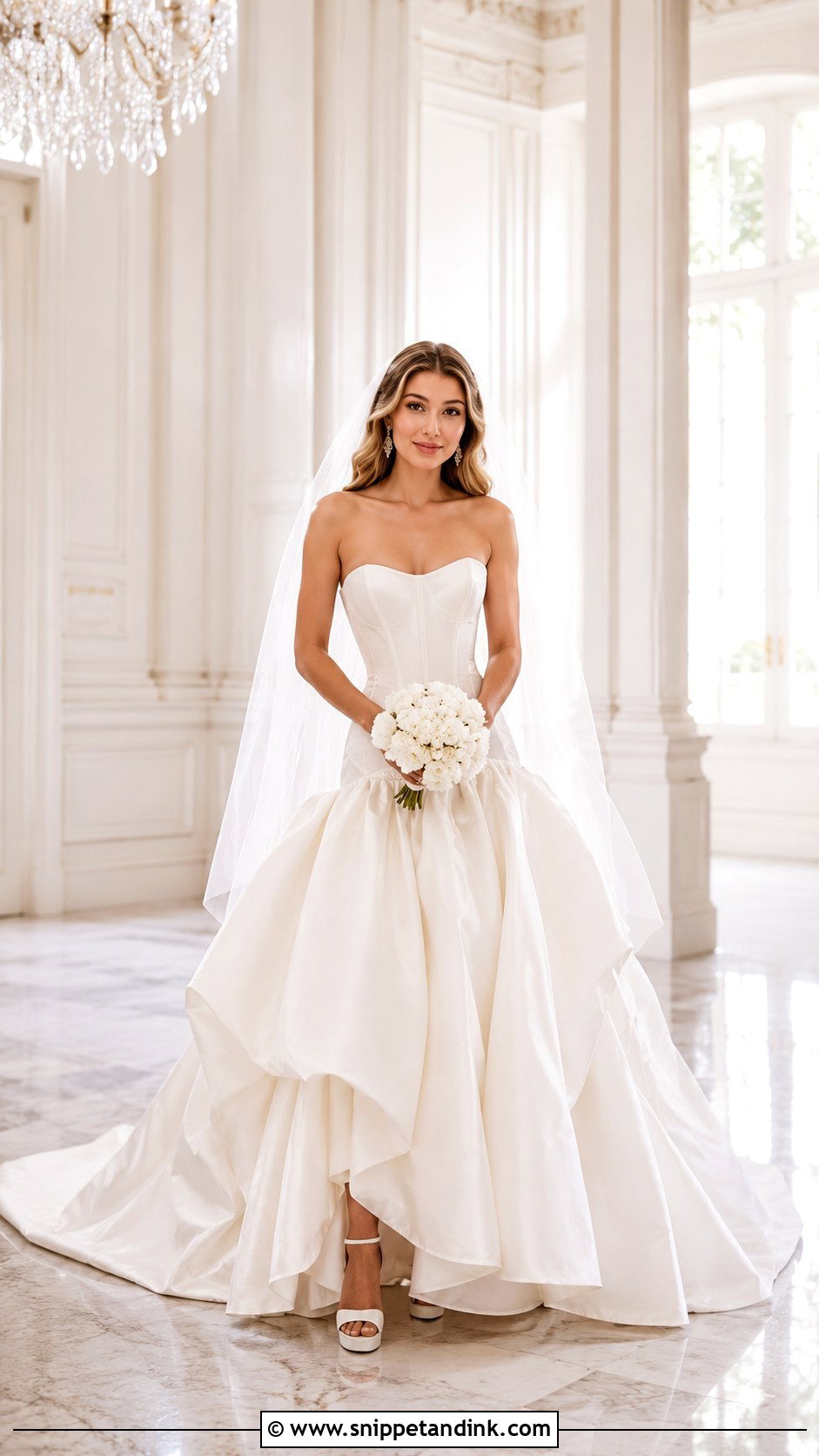
Drop waists and Basque waists both extend the bodice below the natural waist, usually with a strapless neckline and layered volume beneath. Paired with a sweetheart neckline, the effect is curved on top and long through the middle. The extended bodice must lie flat; any rippling below the waist means it’s too long for your torso, and that’s a significant alteration, so I’d look at sample length carefully before ordering. Crystal drop earrings, a plain chapel veil and ivory platform sandals suit it. A smooth updo shows the construction, and a small bouquet won’t hide the bodice. Ballrooms, château-style properties and formal evening ceremonies fit its drama.
11. Watters Sheer Lace A-Line Wedding Dress
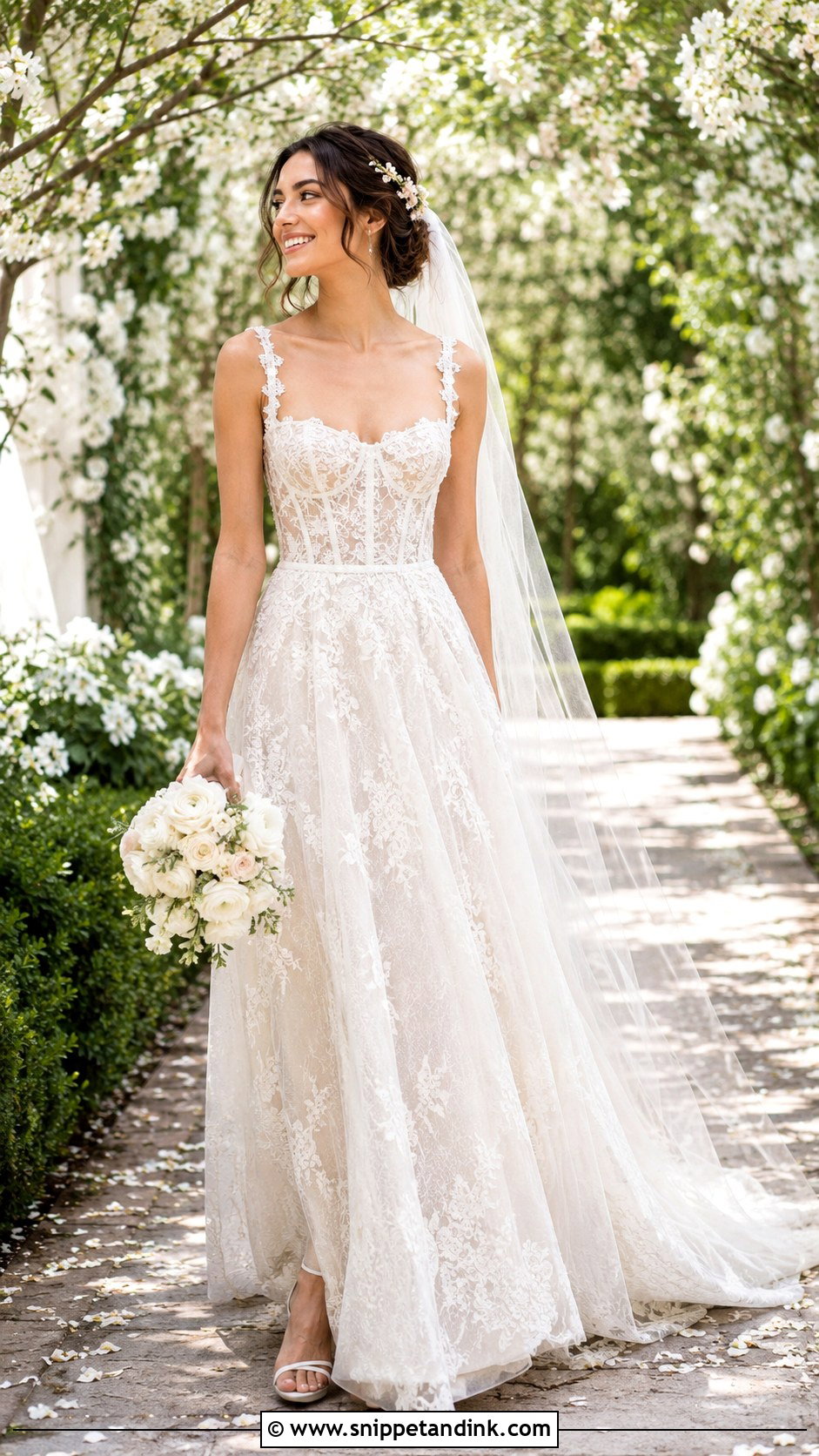
With sheer lace panels, the lining shade matters more than the lace. I hold the gown up in natural light and take a flash photo at the appointment, because a lining that matches your skin in the mirror can turn bright under a flash. The gown has a lined bodice, sheer lace panels and a softly flowing skirt. Floral hairpins, small diamond earrings and slender ivory heels complete it. A lace-trimmed veil works only if its pattern coordinates; a plain veil is cleaner. Choose a loose low bun and white ranunculus with greenery. Spring ceremonies, gardens and destination estates suit it. Keep undergarments smooth and close to the lining color so they disappear.
12. Watters Pearl Embellished Wedding Dress
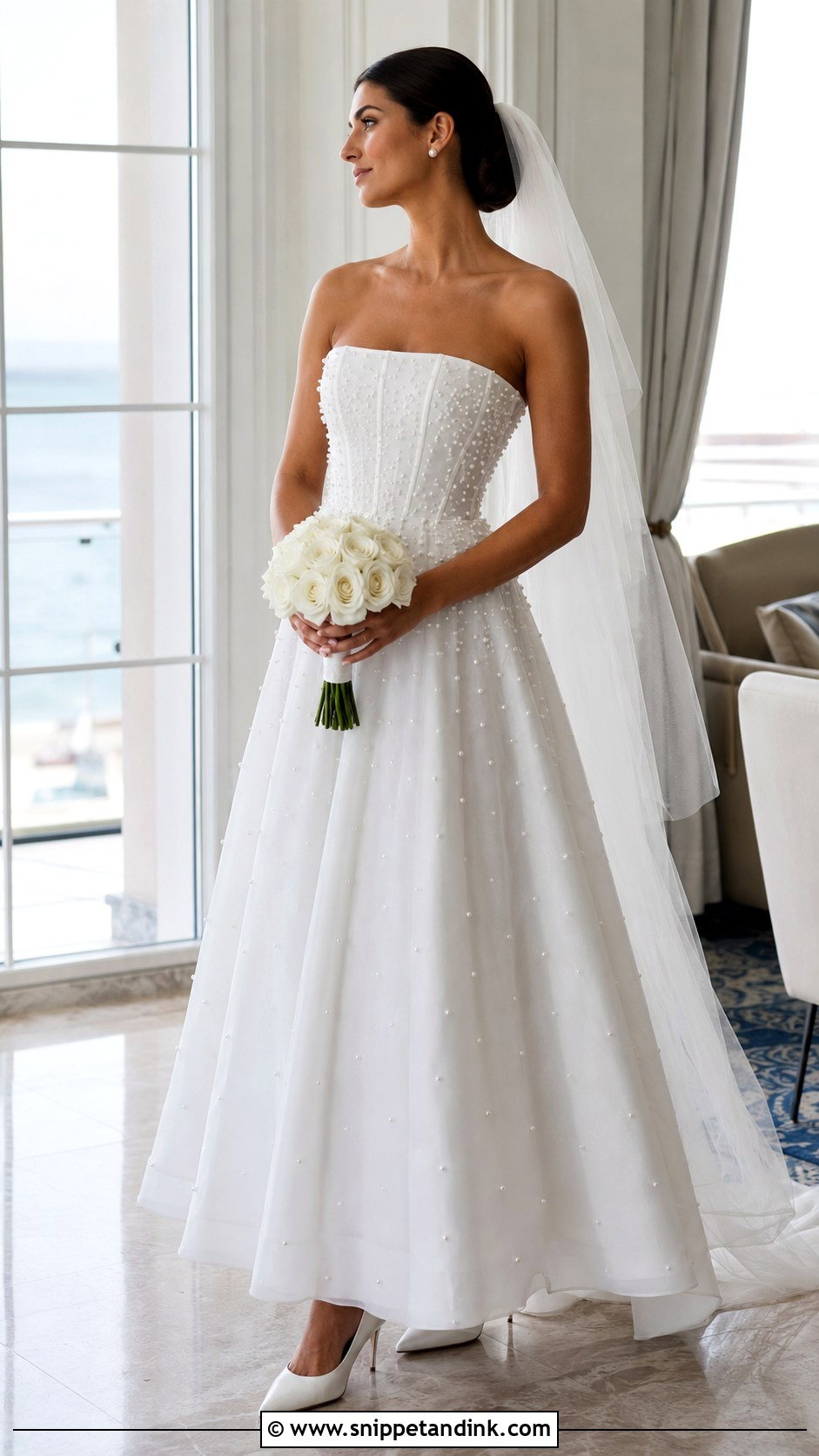
Pearls glow rather than sparkle, so a pearl-embellished gown reads softer than crystal in photos. Scattered pearls across a corset bodice, lace overlay or sheer sleeves give gentle dimension. Then go easy on matching accessories: simple pearl studs, satin pumps and a clean veil without beading. Too many pearls and the whole outfit looks coordinated by a catalog. A polished low ponytail or smooth bun contrasts well with the texture, and a compact bouquet of white roses suits it. Hotels, elegant indoor venues and coastal parties all work. I always check the underarm area, where pearls can rub, and whether any catch on the veil as you move.
13. Watters Floral Jacquard Wedding Dress
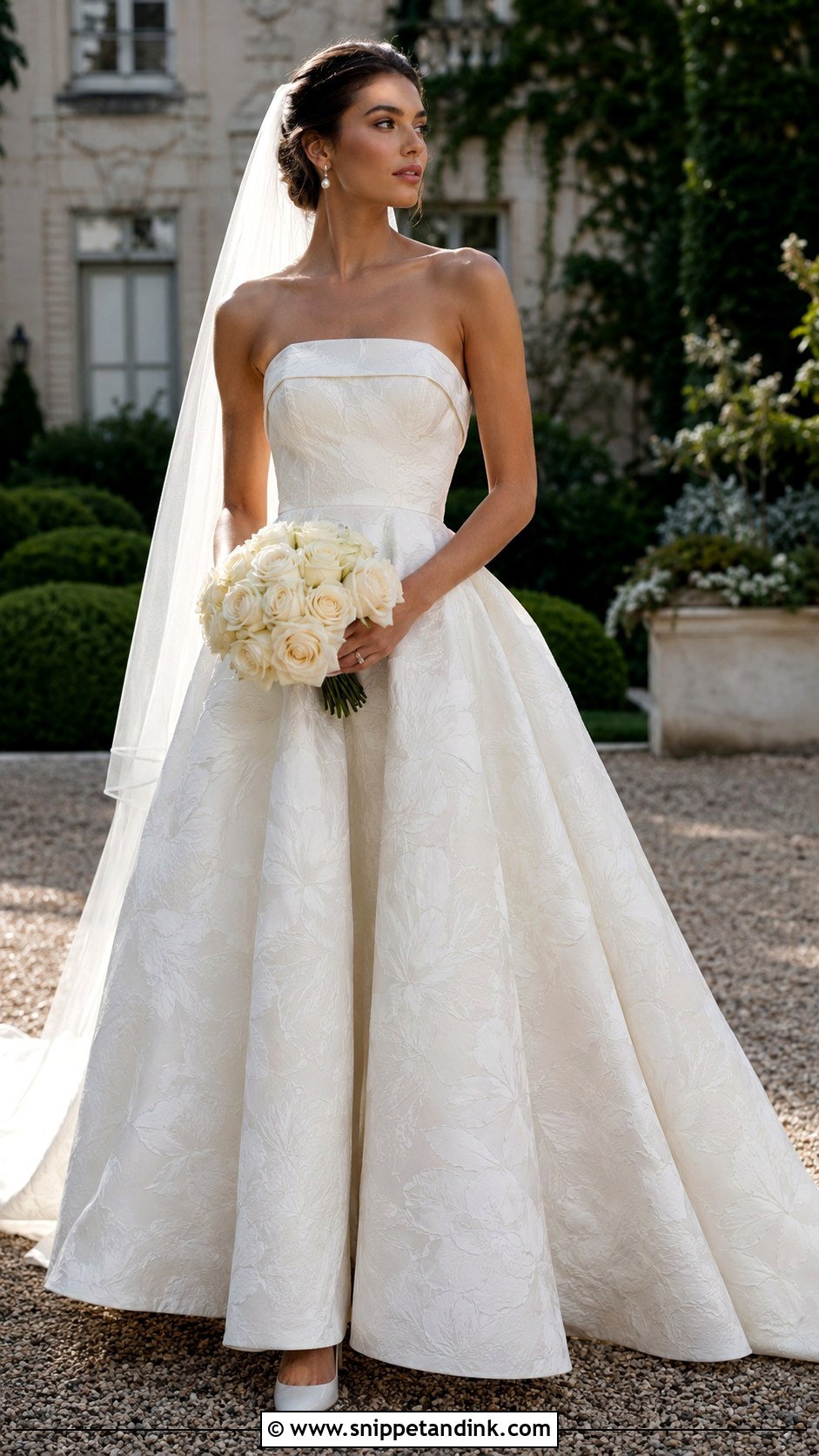
Jacquard has its pattern woven into the cloth, so the flowers appear and disappear as light hits them. That makes it look traditional from a distance and surprisingly modern in close-ups. Look for a ball gown or fit-and-flare in structured ivory fabric with a woven floral motif; daylight shows the texture best, so an estate or garden ceremony is ideal. Pearl drop earrings, pointed ivory pumps and a plain tulle veil keep it refined, with a sculpted bun and cream roses with pale greenery. Avoid heavy embellished accessories; the fabric is already the detail. Jacquard is stiffer than lace, so check the bodice edge doesn’t stand away from your body when you bend.
14. Watters Sheath Wedding Dress With Cape
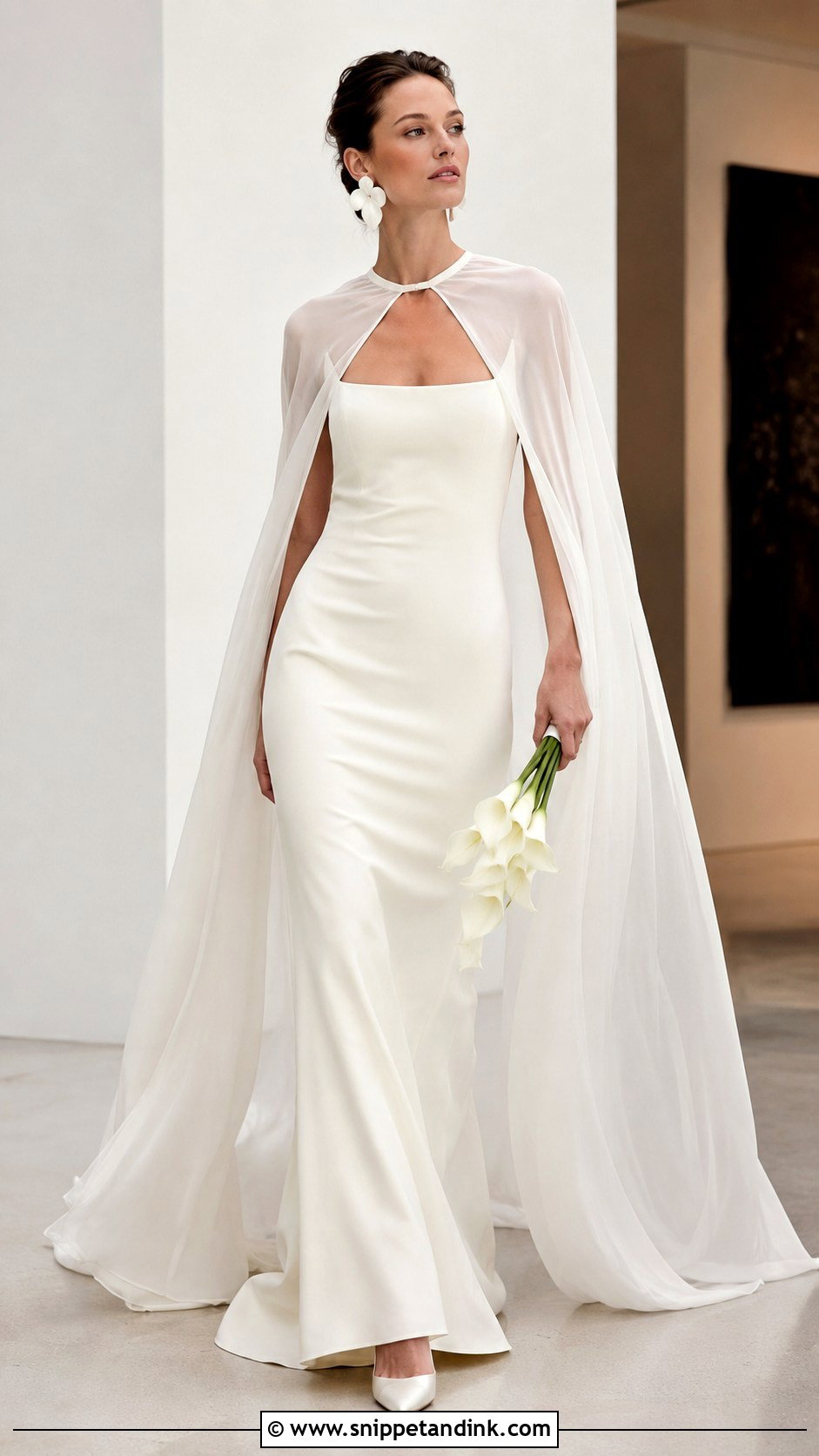
A sheath with a cape gives understated drama for brides who find a long veil fussy. Choose a fitted bodice, narrow skirt and almost no embellishment, then add a sheer tulle or chiffon cape from the shoulders that moves during the ceremony and replaces the veil. Make sure the cape attaches securely but discreetly, with snaps or hooks you can undo quickly before dinner and dancing. Sculptural earrings, pointed pumps and a low center-parted bun suit the clean line. A narrow bouquet of calla lilies or long-stemmed white roses repeats the vertical shape. City venues, galleries, rooftops and minimalist ceremonies are a good match.
15. Watters Wedding Dress With Detachable Overskirt
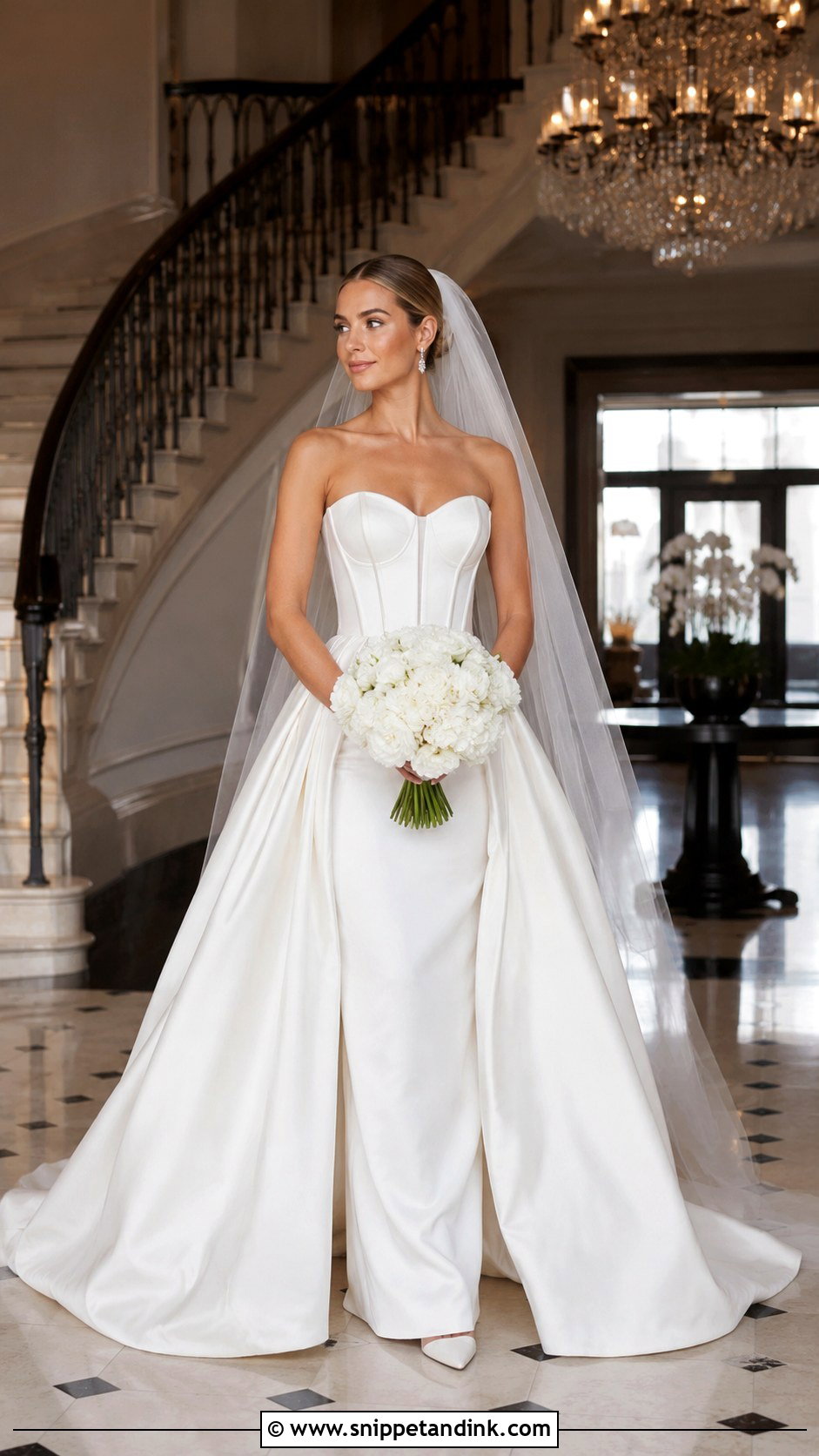
Overskirts give you two looks without a full change, and the attachment system decides whether that works. Start with a fitted Watters wedding dress in satin, Mikado or lace, and add a full overskirt for a ball gown effect at the ceremony, then remove it for a slimmer reception silhouette. Ask your consultant to demonstrate how it attaches and check that hooks stay hidden from every angle. Crystal earrings, ivory pumps and a long plain veil suit the ceremony version; swap the veil for a pearl comb afterward. Clean white flowers keep both versions cohesive, which suits a formal ceremony followed by a lively reception.
16. Watters Wedding Dress With Bow Back
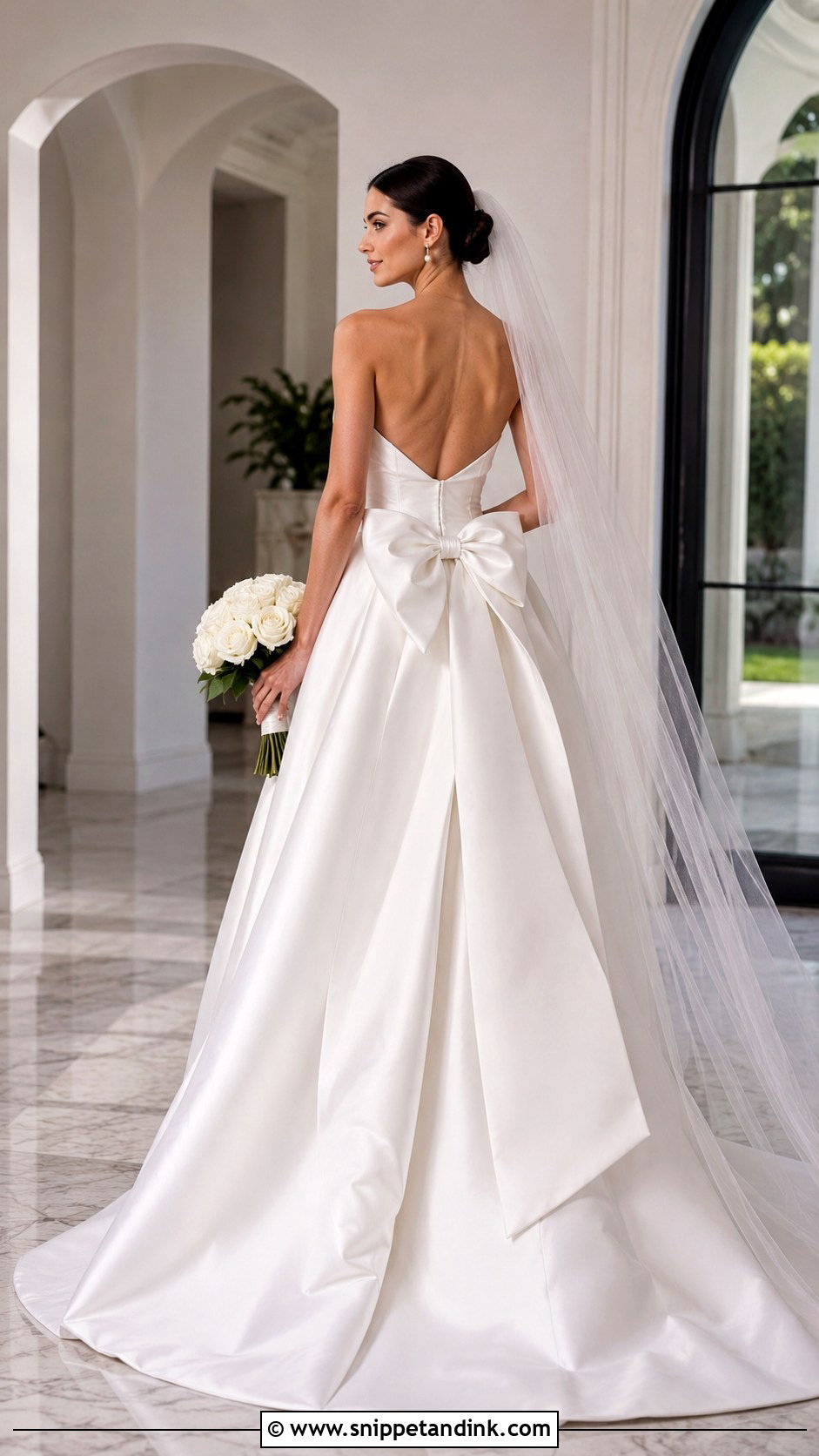
Guests see your back for the whole ceremony, which is why a bow-back gown makes sense: clean front, memorable exit. A fitted strapless bodice and structured satin skirt carry a detachable or built-in bow at the waist or upper train. Check in fittings that the bow lies flat, stays secure while you walk and doesn’t block the bustle points, since a bow and a bustle often compete for the same space. Small earrings, a smooth bun and a veil that comes off after the ceremony let the back show. Pointed ivory pumps and a simple rose bouquet finish it. Skip oversized accessories; the bow already has volume. Elegant hotels, modern estates and formal indoor parties suit it.
17. Watters Chiffon Destination Wedding Dress
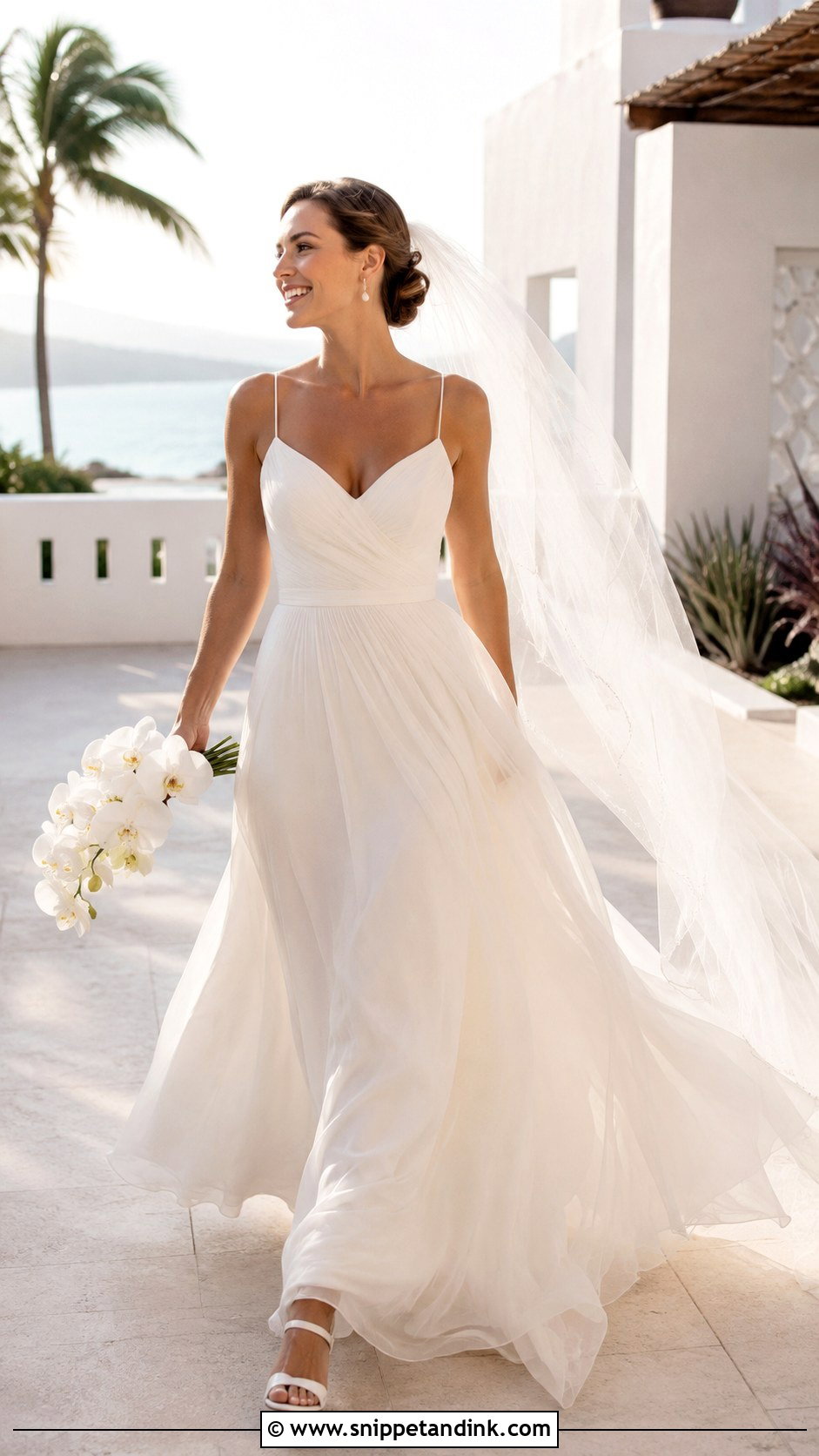
Chiffon is the destination fabric because it moves in a breeze and packs lighter than satin or tulle. A Watters-inspired A-line with a supportive lightweight bodice, flowing skirt and manageable train is easy to travel with. Pearl drops, ivory block-heel sandals and a fingertip veil secured firmly with combs and pins suit it; on sand, flat embellished sandals are steadier. A textured low bun tangles less in wind. Carry white orchids with restrained greenery. Chiffon creases in a suitcase, so pack it in a good garment bag, carry it on if you can, and book professional steaming once you arrive.
18. Watters Plus Size Corset A-Line Wedding Dress
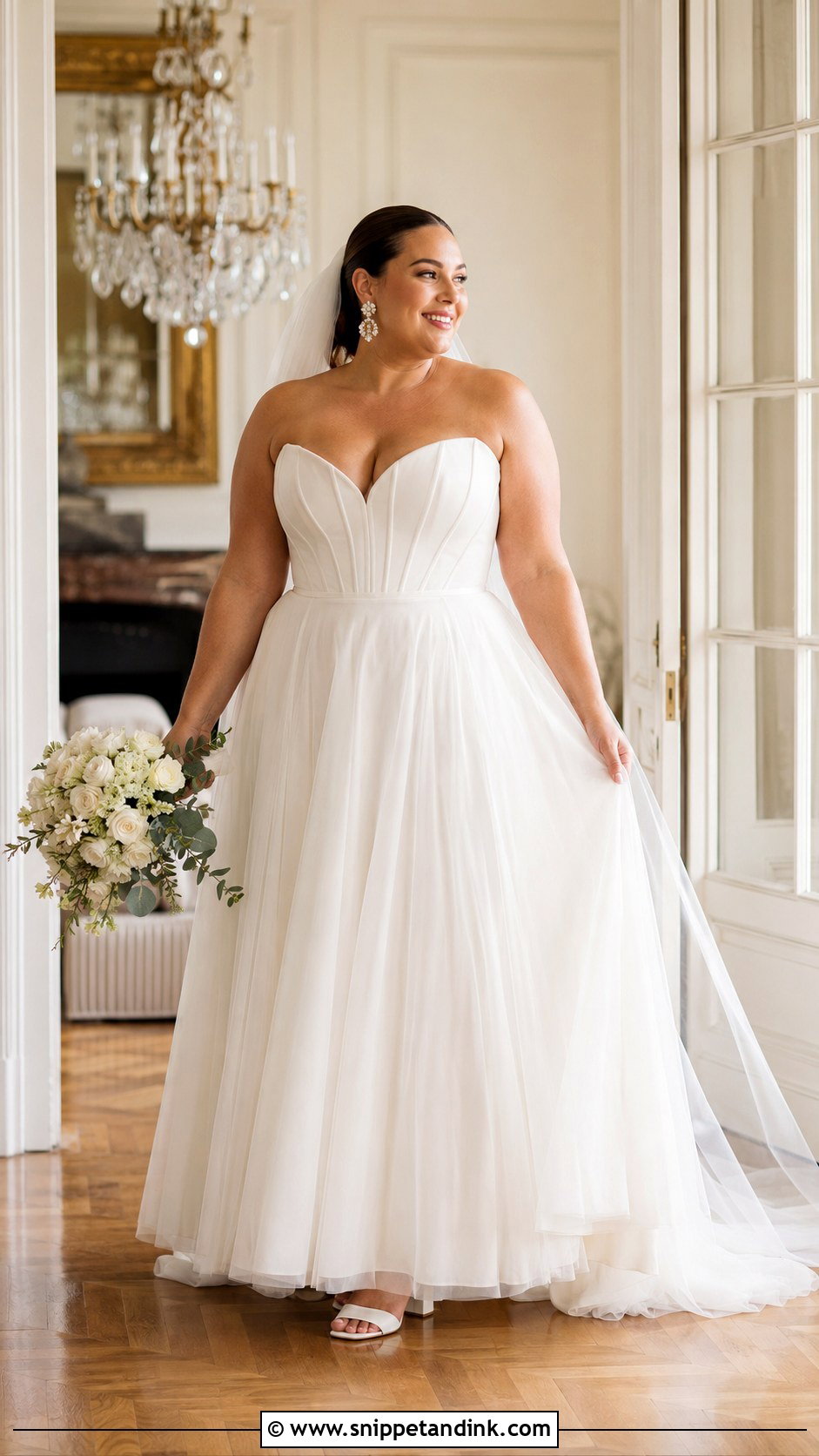
Corset A-lines provide real support and definition across a wide size range, provided the structure inside is substantial. Request a boutique sample close to your usual size; it is genuinely hard to judge support and proportion when a sample is clipped or unzipped at the back. Look for a carefully placed waist seam and a skirt that flows without extra bulk at the hip. A chapel veil, statement earrings and comfortable ivory block heels balance it, with a soft updo and a medium bouquet. Judge it by walking, sitting and breathing rather than the label number. Good alterations refine the fit and keep the silhouette intact.
19. Watters High Neck Lace Wedding Dress
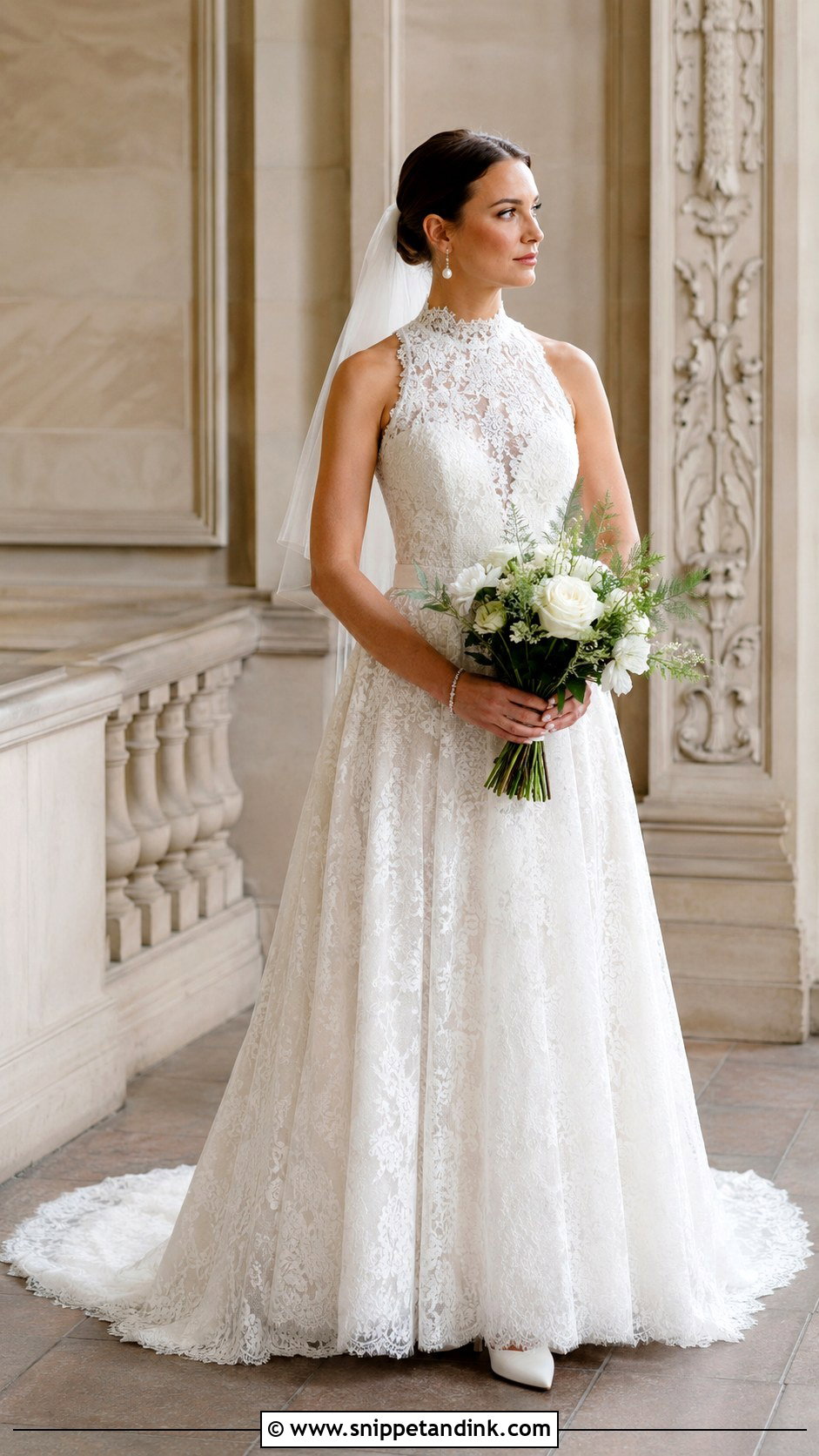
High lace necklines give coverage and a vintage note, and the first thing I test is turning your head and sitting down. If the lace scratches or rides up under the chin, it’ll bother you all day. A fitted lace bodice with a defined waist and fluid sheath or A-line skirt keeps the rest simple. No necklace. Small pearl or diamond earrings and a delicate bracelet are enough. Place the veil under a low bun so the lace stays visible. Closed-toe satin pumps and white roses, sweet peas and greenery finish it. It suits fall ceremonies, formal indoor venues and historic properties.
20. Watters Cathedral Train Wedding Dress
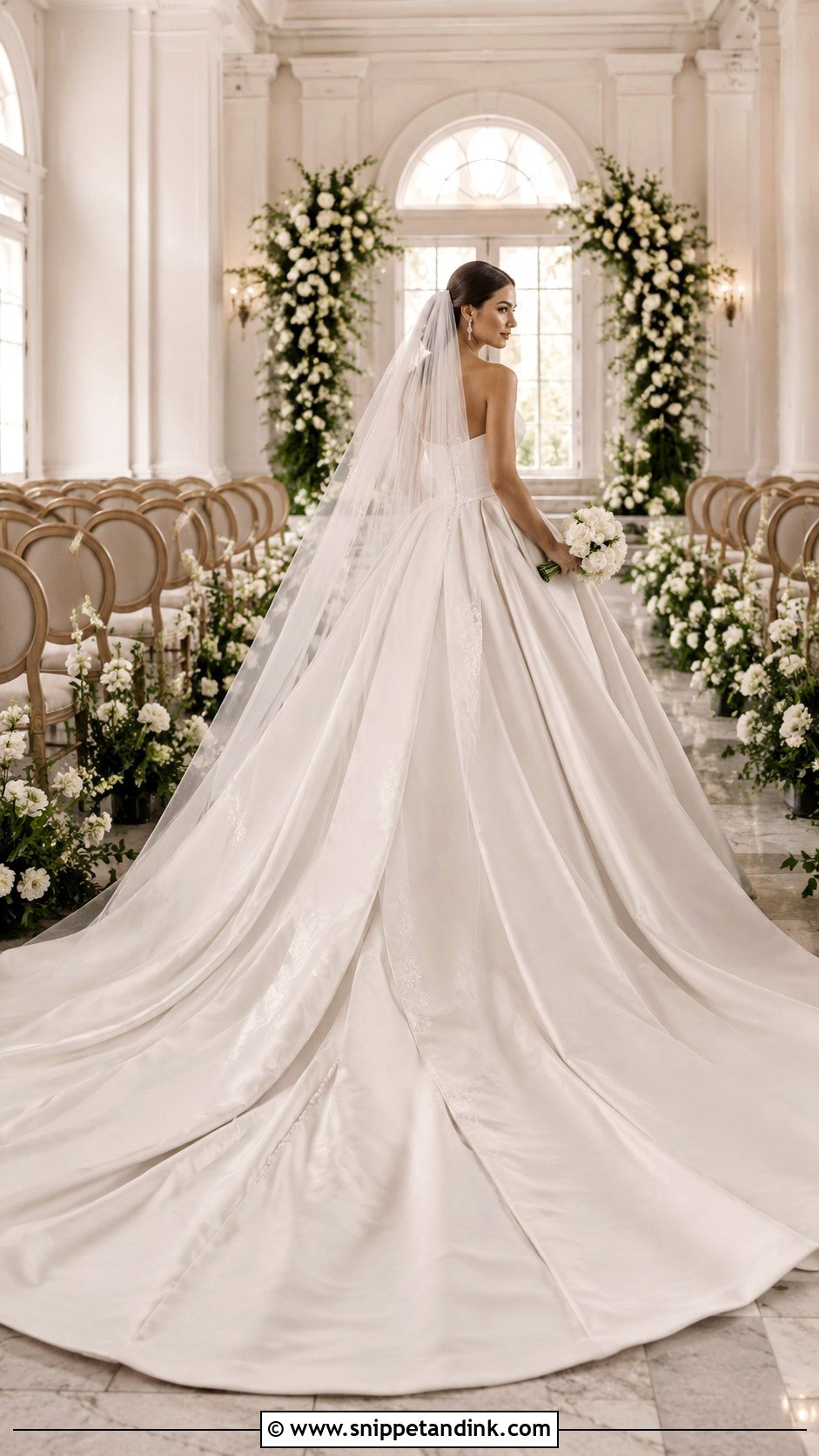
A cathedral train makes the entrance, and it only works if the gown has enough structure to display it, whether that’s a fitted lace gown, a dramatic satin ball gown or a sculptural Mikado silhouette. Add a cathedral veil only if it complements the train instead of hiding it. Keep jewelry to elegant earrings and a slim bracelet, with ivory pumps, a formal updo and a classic white bouquet. Before committing, ask about the aisle width and whether the venue has sufficient dressing space to lay a train out flat. Someone should arrange it for portraits, and a reliable bustle, tested at the final fitting, is essential for the reception.
Ordering by Your Largest Measurement
Most designer gowns are made to order from a size chart, and bridal sizing doesn’t follow street sizing, so the number may be one or two sizes above what you usually buy. Ignore it. The consultant will measure bust, waist and hips and order to the largest of the three, because a gown can be taken in far more easily than it can be let out.
Production times vary by designer and season, so ask for the expected delivery window in writing before you sign. As a rough plan, I’d order around eight to ten months ahead, which leaves room for delivery and two or three fittings. Rush production is sometimes possible for an extra fee, though it narrows your choice of styles.
What alterations usually cover
Hemming to your shoes, taking in the bodice, adjusting straps and adding a bustle are the routine ones. Moving a waist seam, reshaping a Basque point or shortening a beaded hem are bigger jobs that cost more and take longer, so mention any of them before you order, not at the first fitting.
Sit, Walk and Hug Before You Say Yes
Start with the silhouette that gives you confidence, then compare fabrics, necklines, waist placement and train length. Try every contender walking, sitting, raising your arms and wearing shoes close to your wedding heel height. Once the dress is chosen, accessories should support its strongest detail: a plain veil beside intricate lace, finer jewelry beside a minimal satin gown. Above all, leave enough time for ordering and alterations. Comfort and a setting-appropriate shape are what make a Watters gown feel like your own on the day.
You'll Like These Ideas:


Leave a Reply