
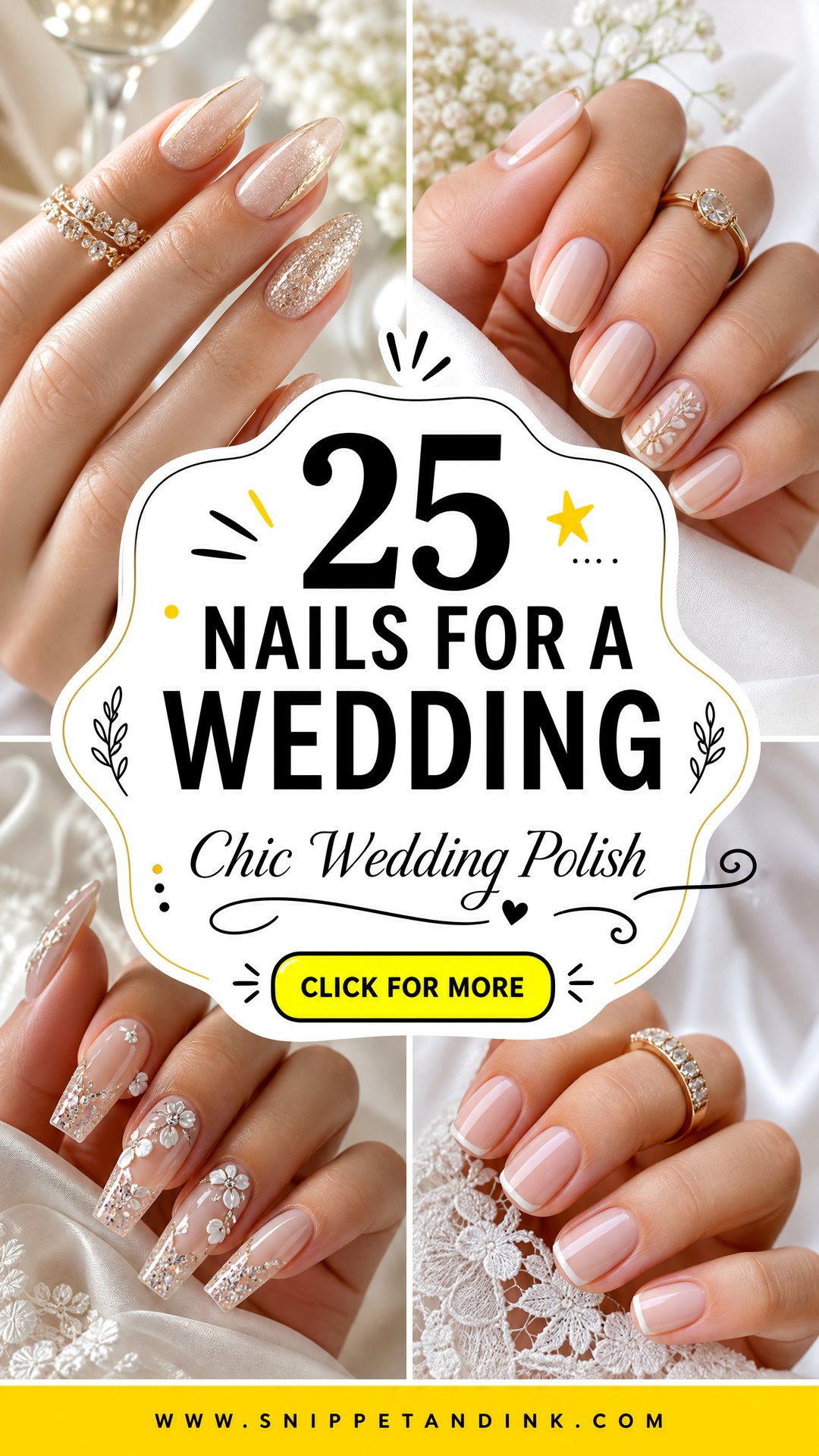
Wedding weeks fill my book with the whole party: the bride, the bridesmaids, a mother or two and guests who want their hands to look finished in the photos. Each of them needs something slightly different. A bride’s set is built around the ring; a guest’s should suit her outfit without borrowing the bride’s look. Below are the sets I find myself doing most, from sheer pinks and soft French tips to pearl glazes, fine shimmer and small hand-painted art, with notes on who each one suits and what to watch for on short, medium and long nails.
Is White Polish Off-Limits for Guests?
Guests ask me this more than anything else. Nails aren’t a dress, and nobody will mistake a guest for the bride because of a manicure, so a milky white or a classic French is perfectly fine at most weddings. Where I’d hold back is a full bridal-looking set: opaque white with pearls, lace art or crystals on every finger. That reads as borrowing the bride’s look, especially in group photos where hands sit side by side on bouquets and glasses.
If you’re unsure, lean the colour one step away from white. A pink milky, a sheer nude or a soft mauve gives the same clean finish without any question of upstaging.
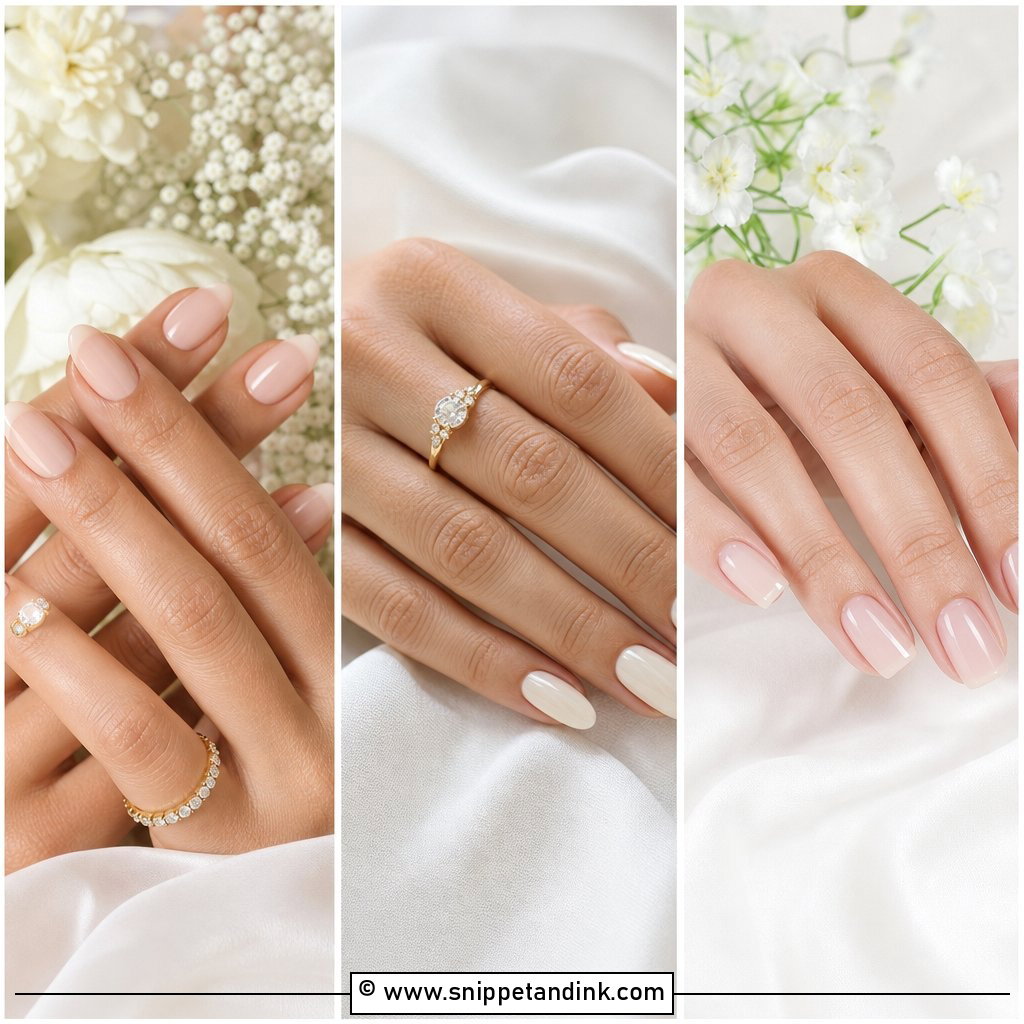
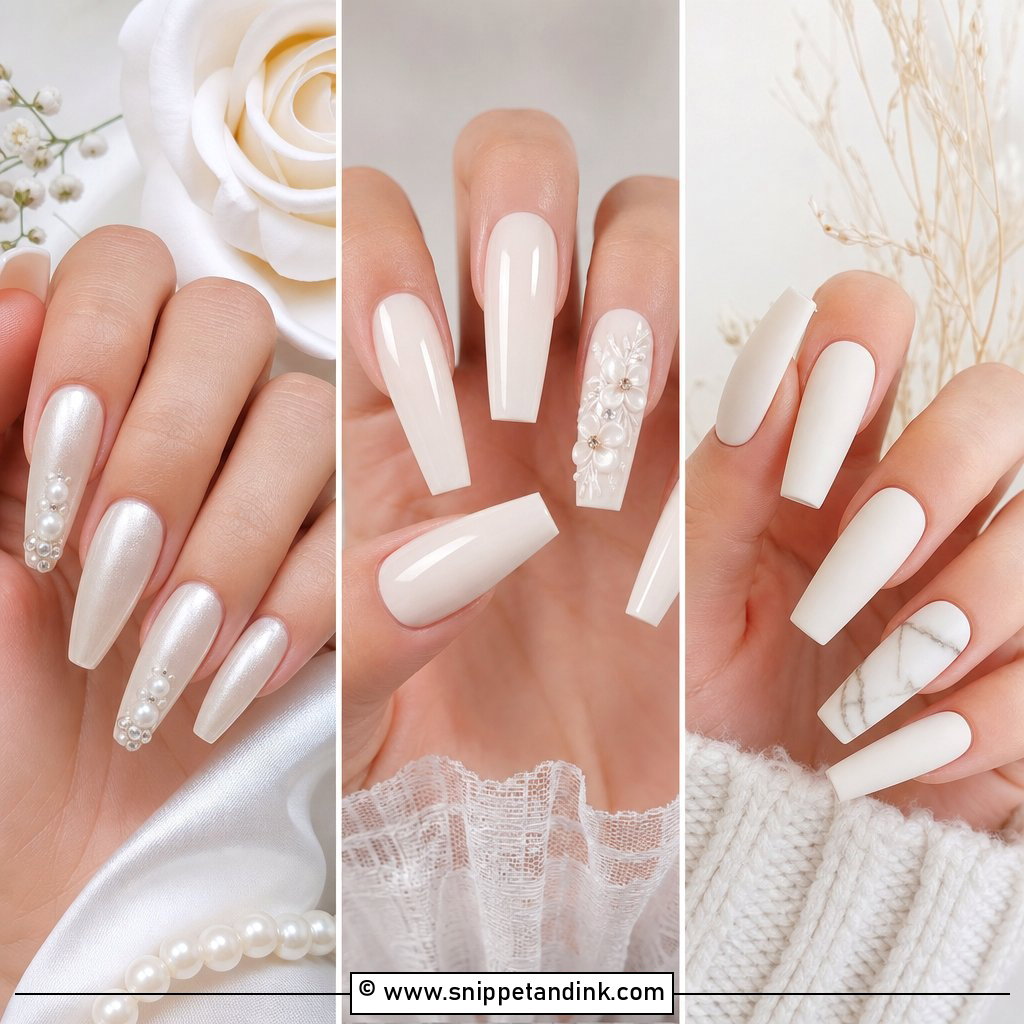
1. Milky White Wedding Nails
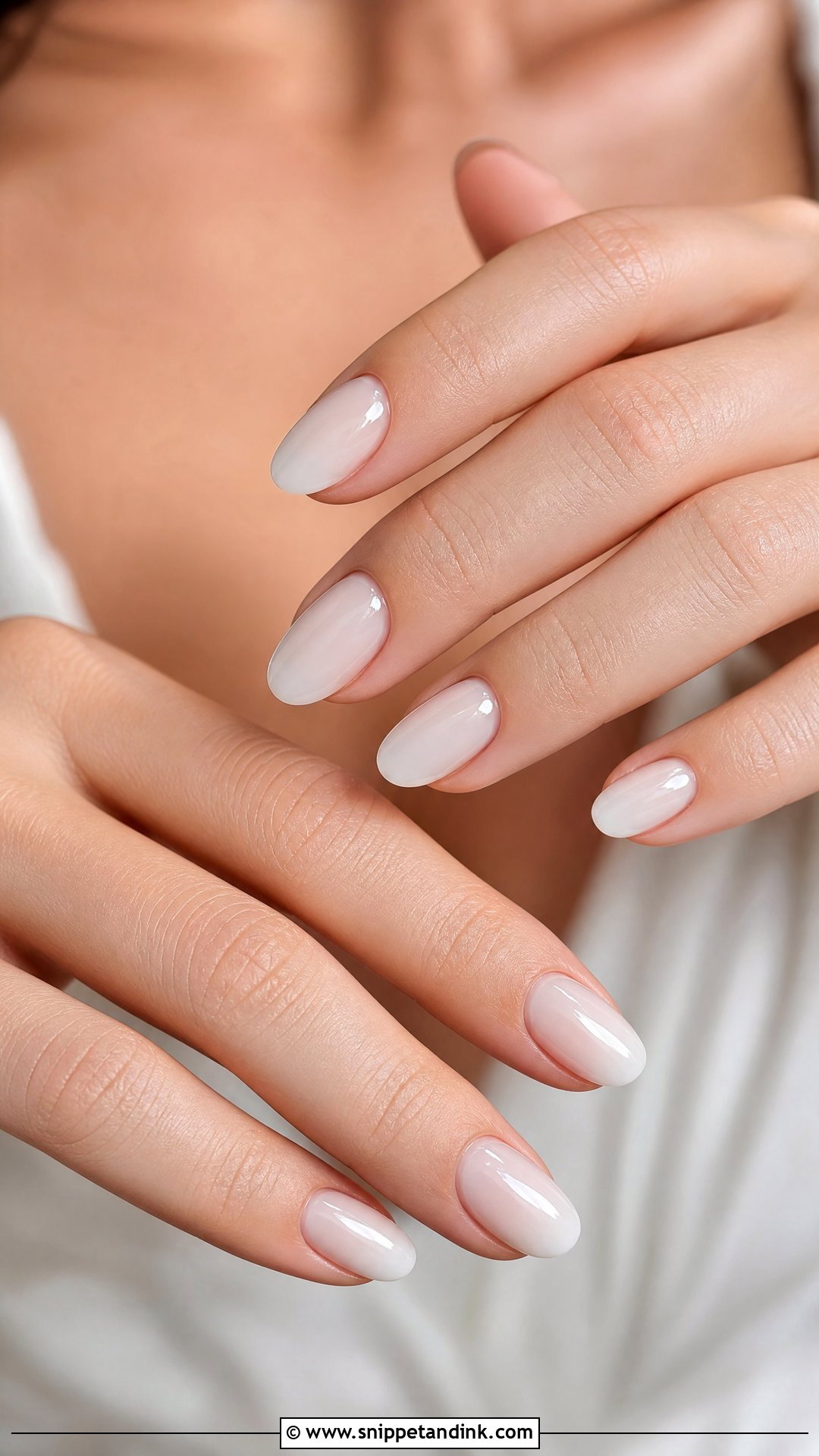
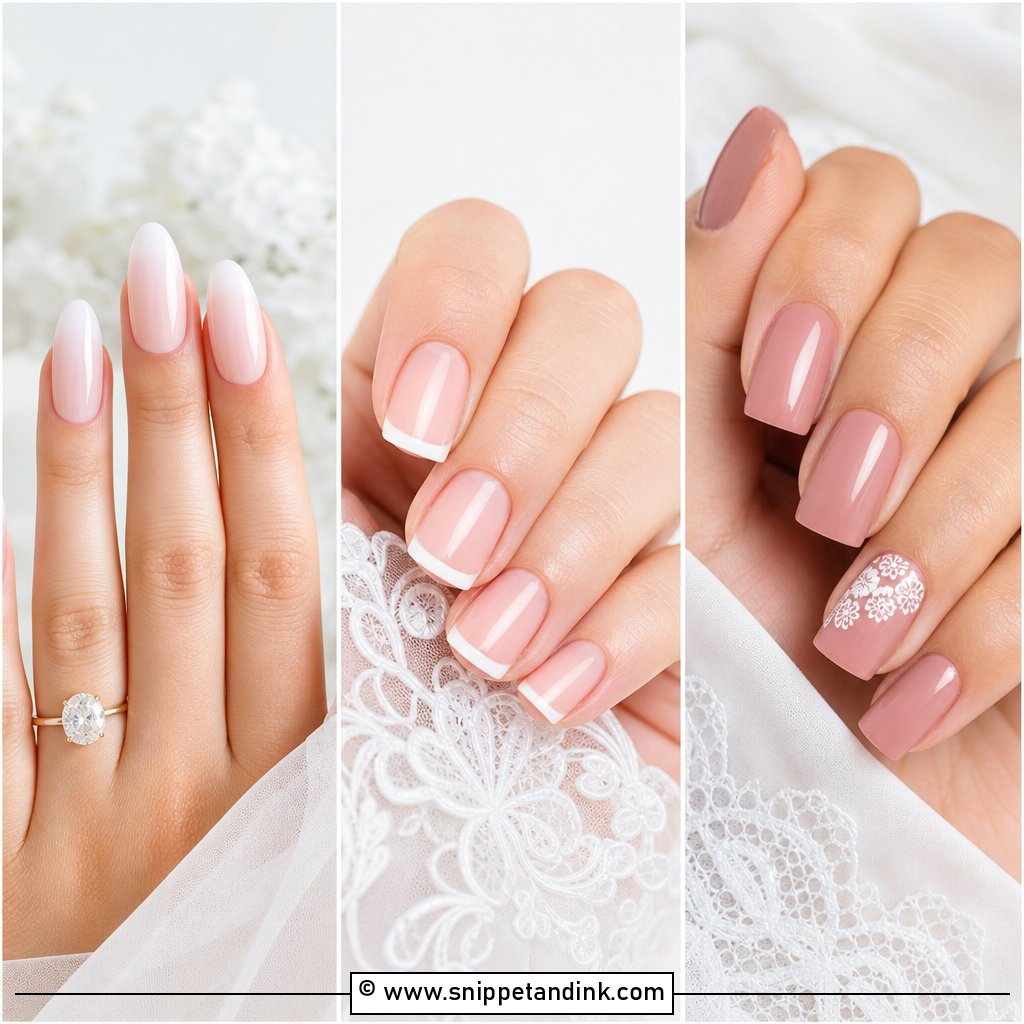
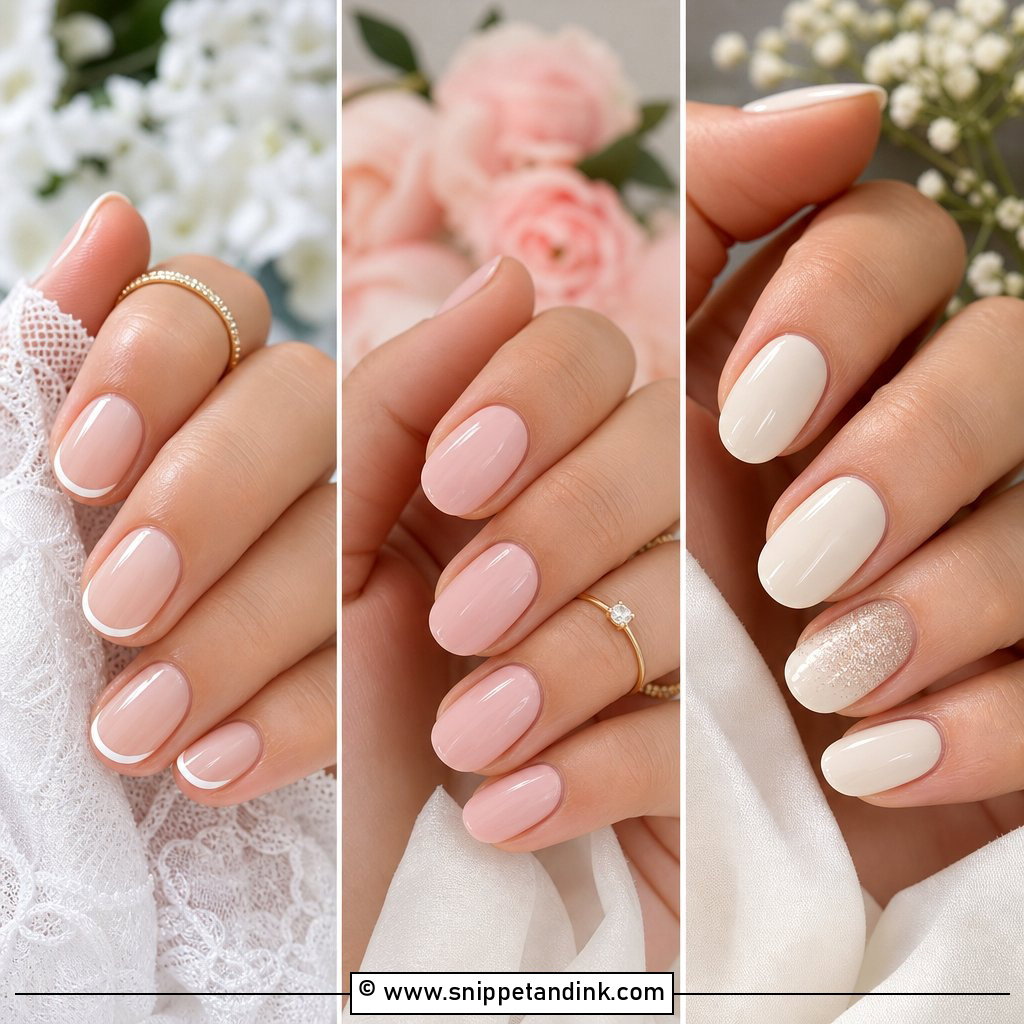
Milky white is translucent, so it looks like clean, bright nails instead of a coat of paint. I ask for two thin coats of milky white gel rather than one thick one; a heavy coat pools at the cuticle and looks streaky in flash photos. It sits comfortably beside lace, satin and either metal. Guests can wear it too, though at a very traditional wedding some prefer a pink-leaning milky so nothing reads bridal.
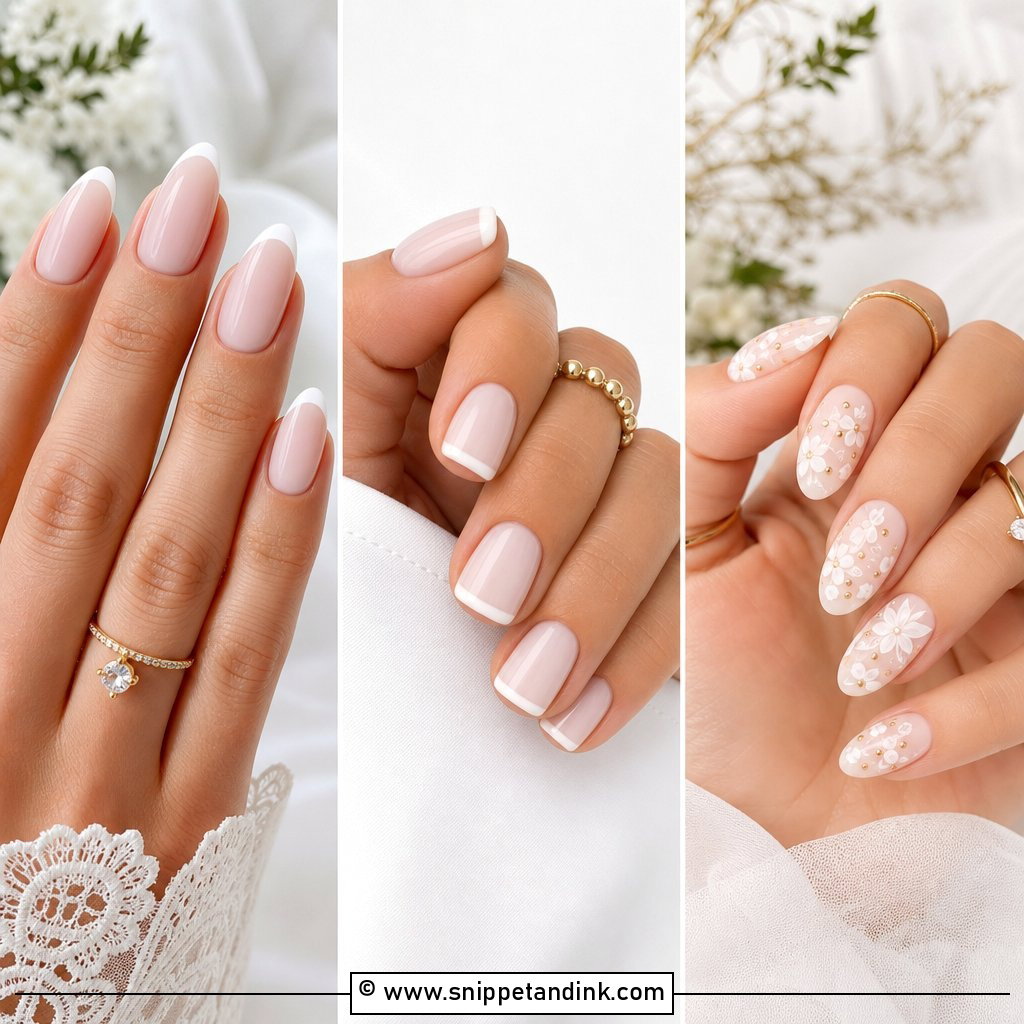
2. Classic French Tip Wedding Nails
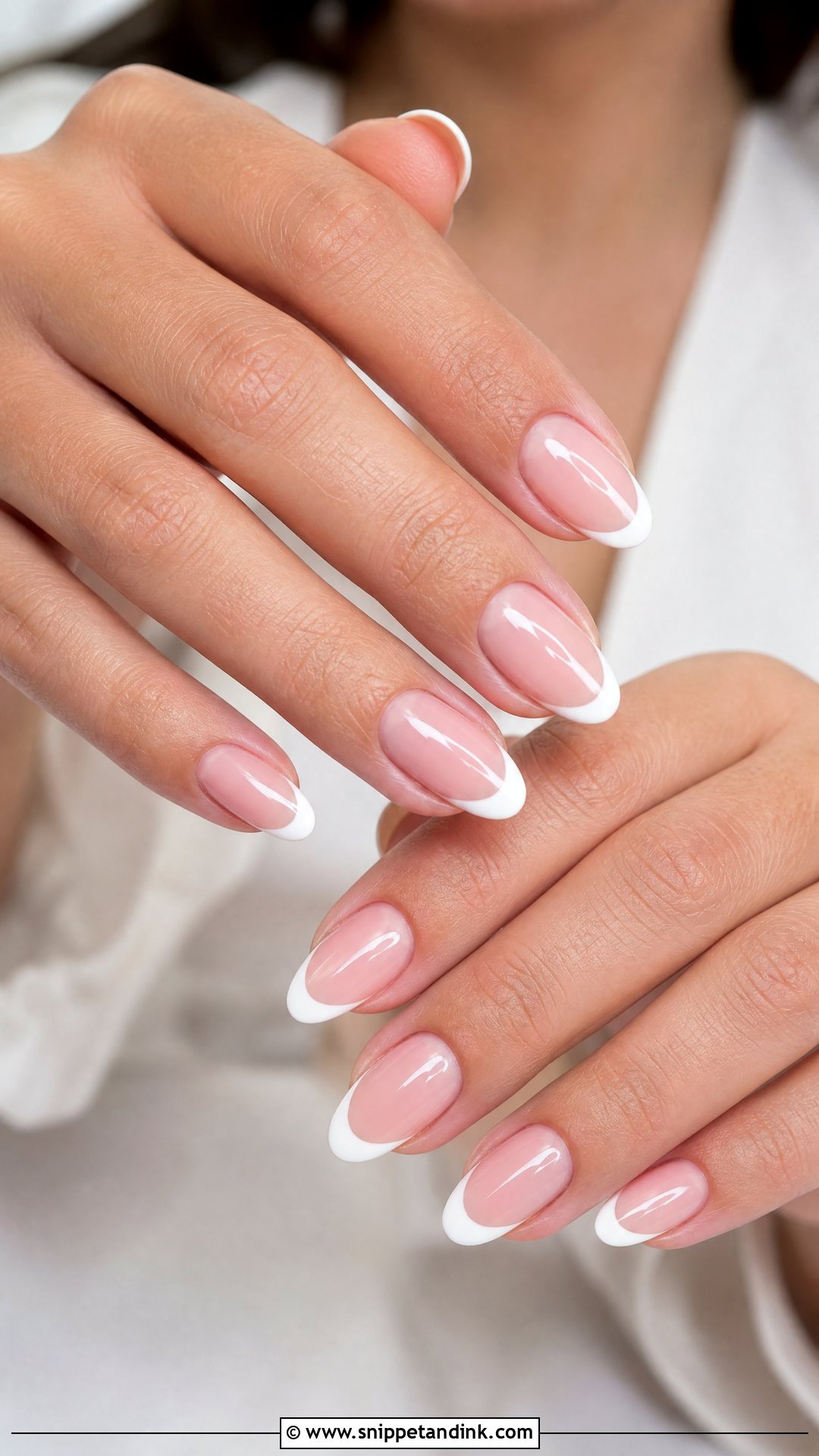
Nothing in a French manicure clashes with anything, which is why I recommend it to the bride and her mother alike. A thinner smile line looks more current than a thick white tip, particularly on short or medium nails. The sheer base is what makes it grow out gently: by the end of the week you barely notice the gap at the cuticle. Almond softens it, a square edge makes it more traditional.
3. Nude Pink Wedding Nails
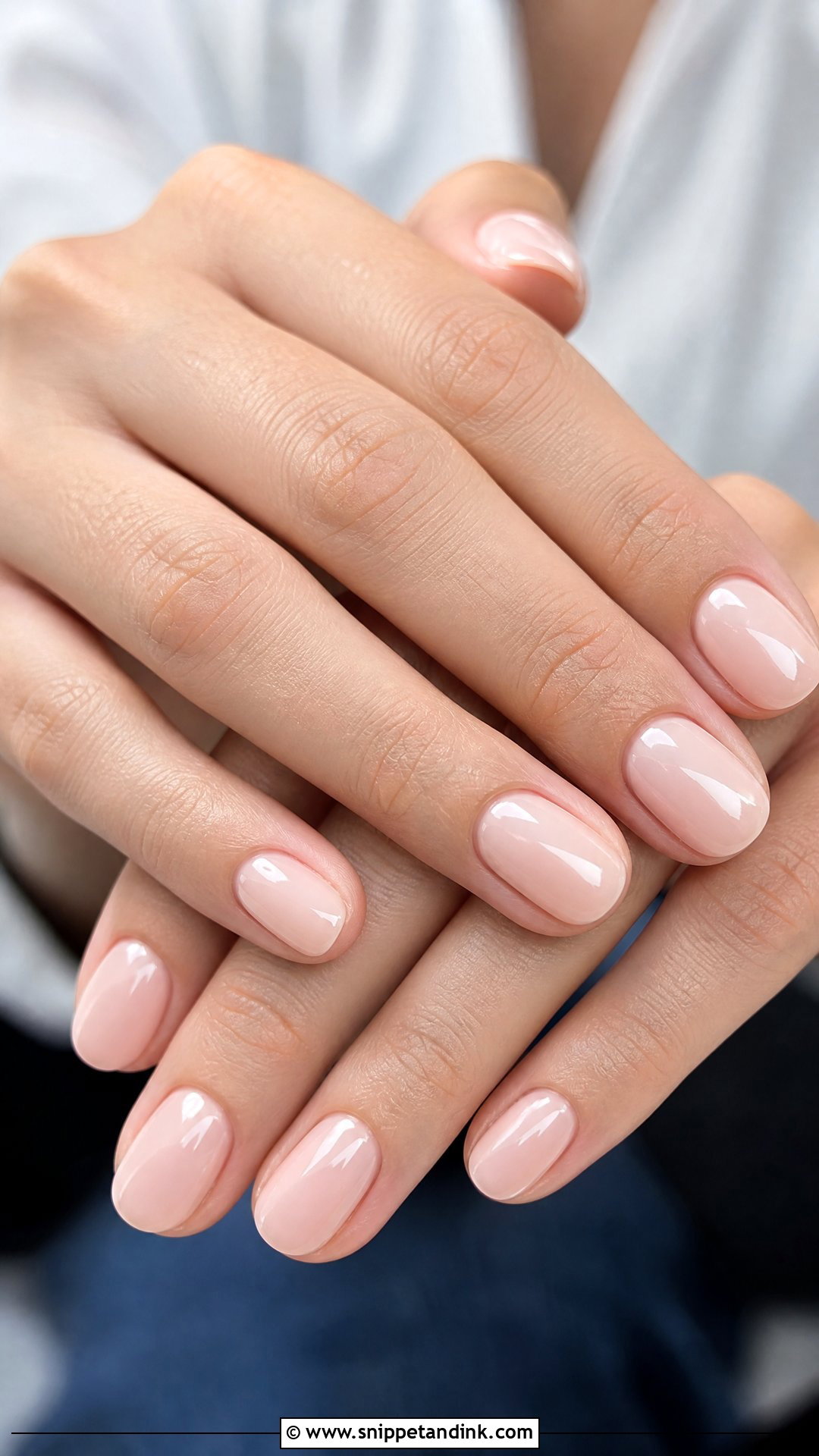
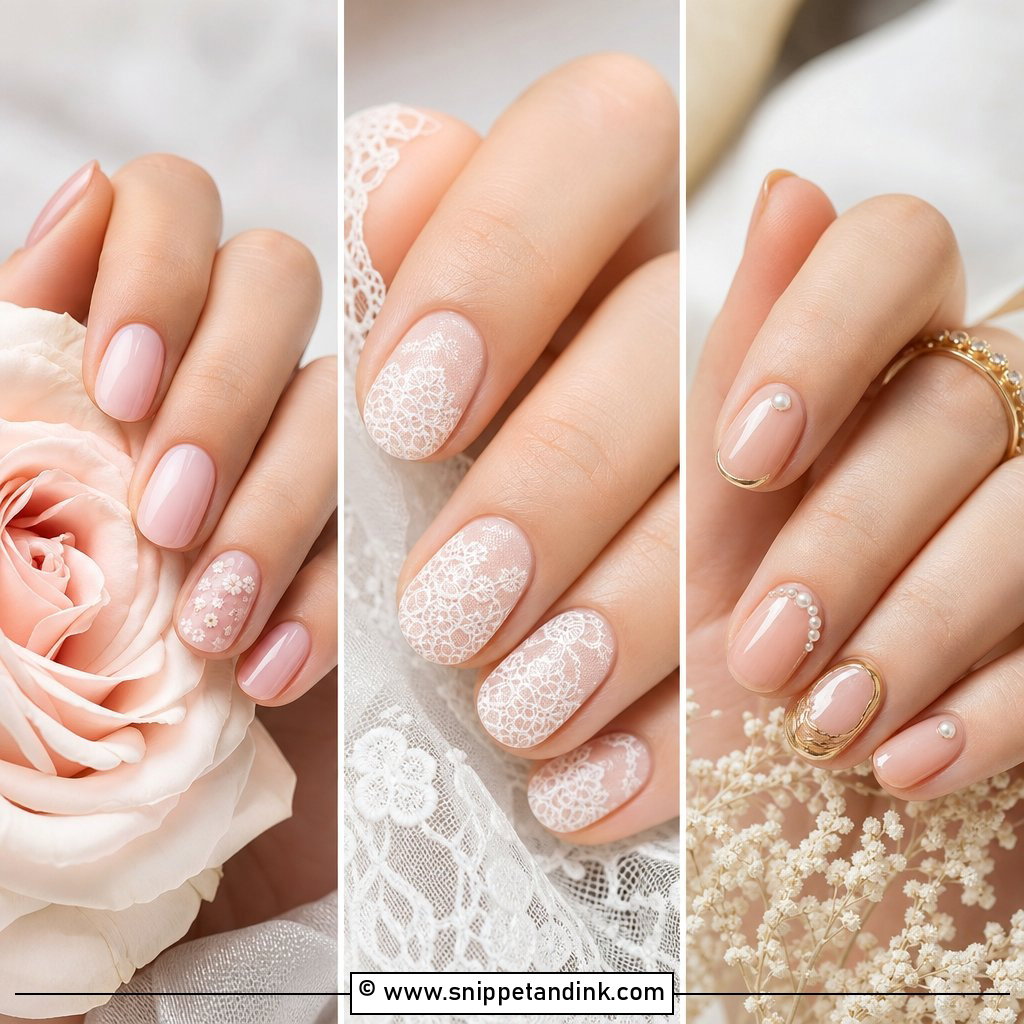
A good nude pink is a shade just warmer or rosier than your own nail bed. Too pale and the hand looks washed out; too beige and it reads grey under indoor light. I test two or three shades on the client’s actual nails before choosing, because a bottle colour lies. It’s the quiet option when the dress is heavily embroidered or the jewellery is doing the talking. Glossy is classic; a satin top coat makes it more modern.
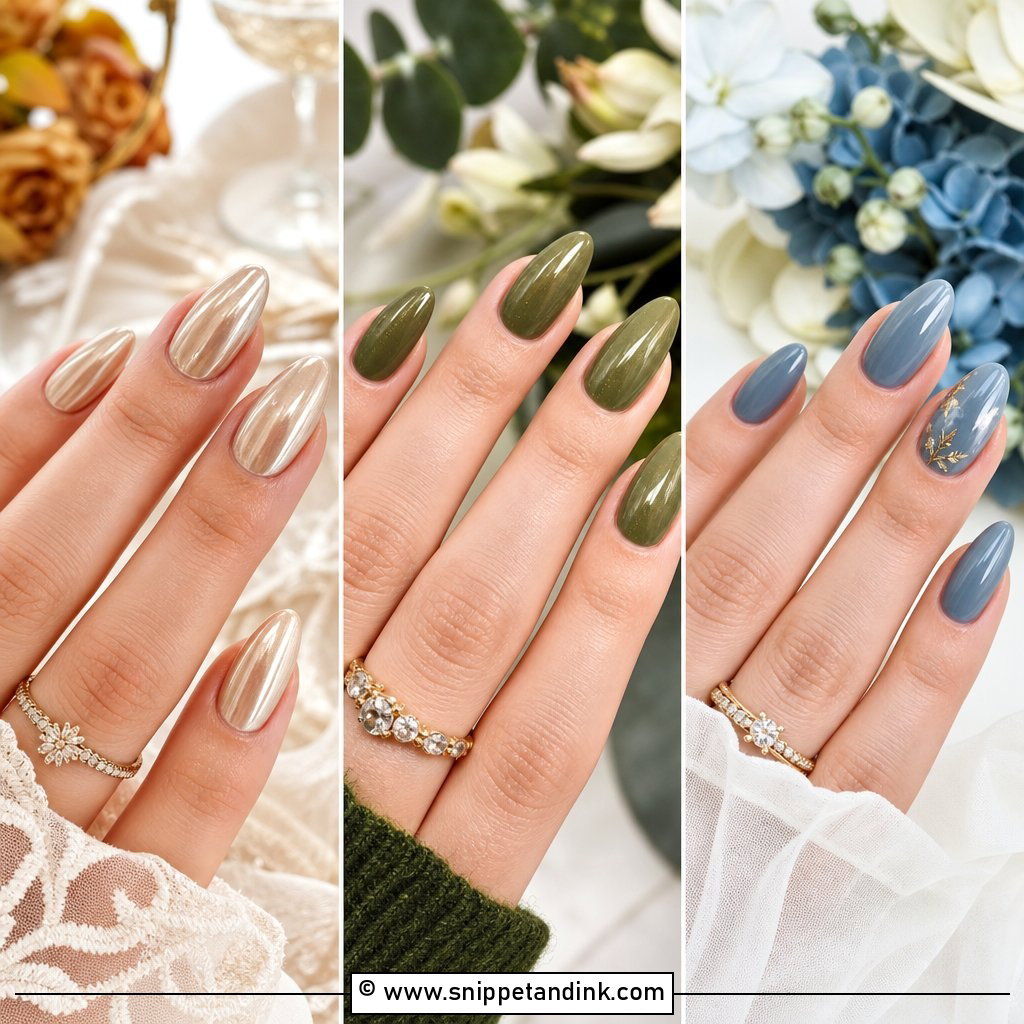
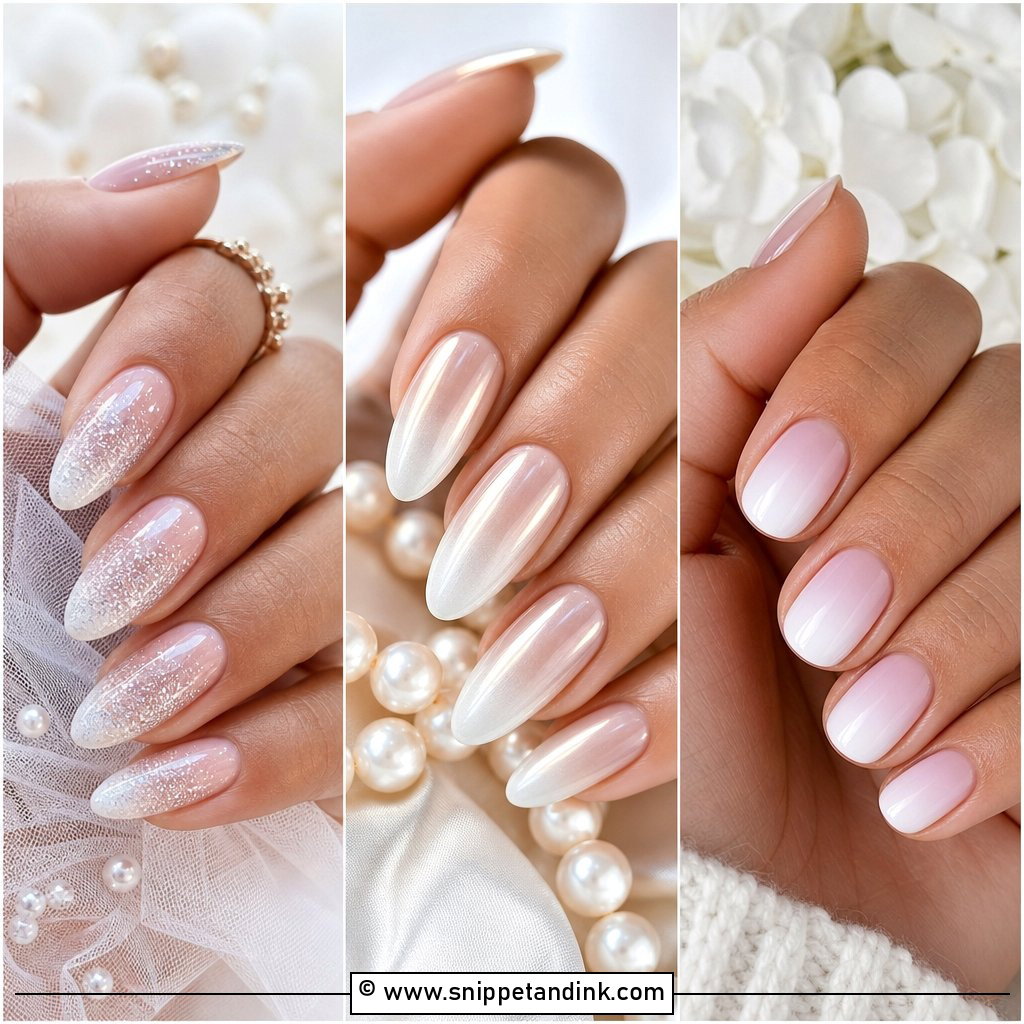
4. Pearl Chrome Wedding Nails
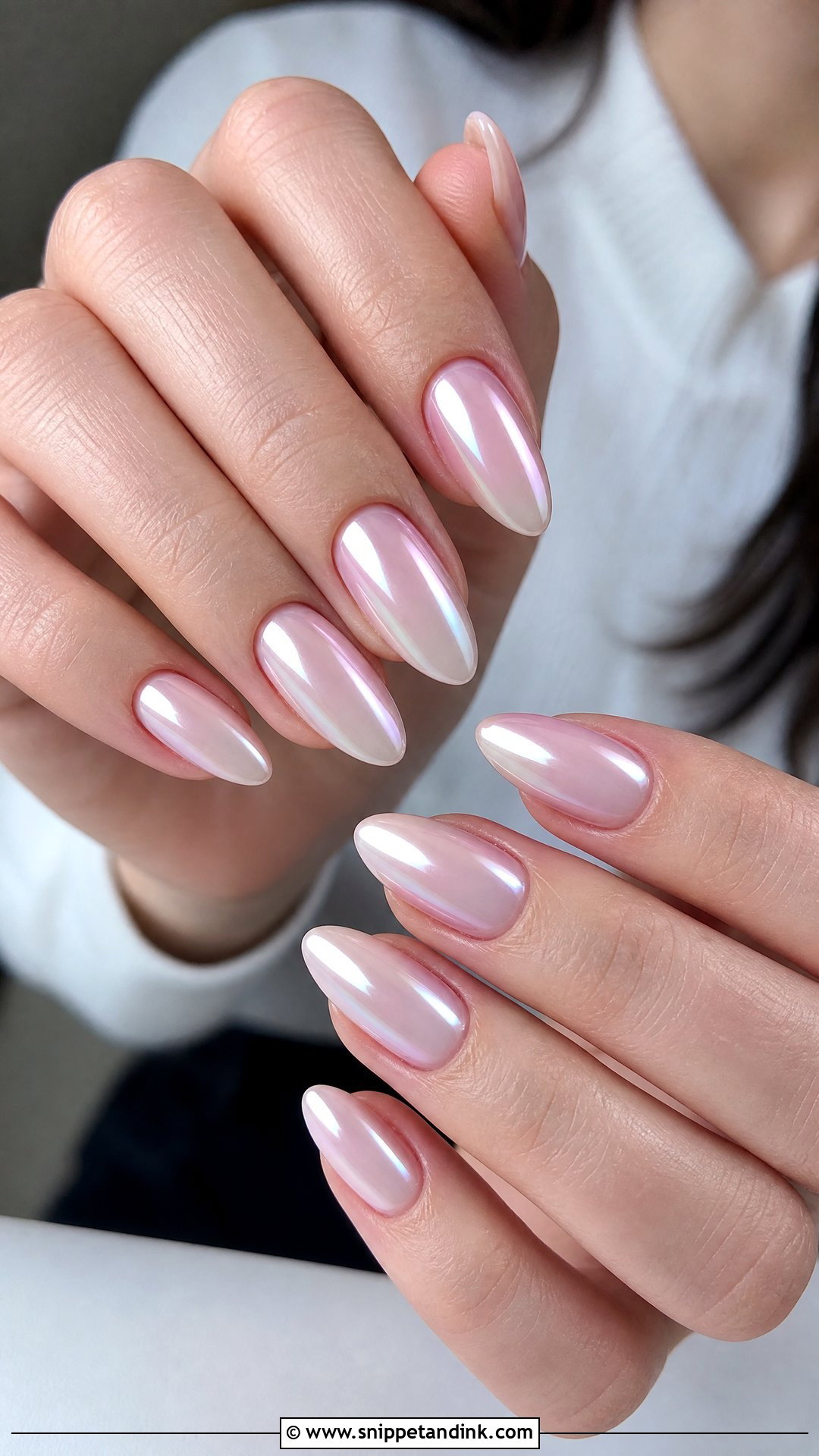
Pearl chrome is a fine powder rubbed over a cured no-wipe top coat, giving a glow that shifts as the hand moves. It’s at its best in close-up ring photos. The thing that ruins it is texture: chrome sits on top of every ridge and file mark, so I smooth the nail with a thin builder layer first. Leave out glitter or big embellishments; the veil of shine is the whole idea.
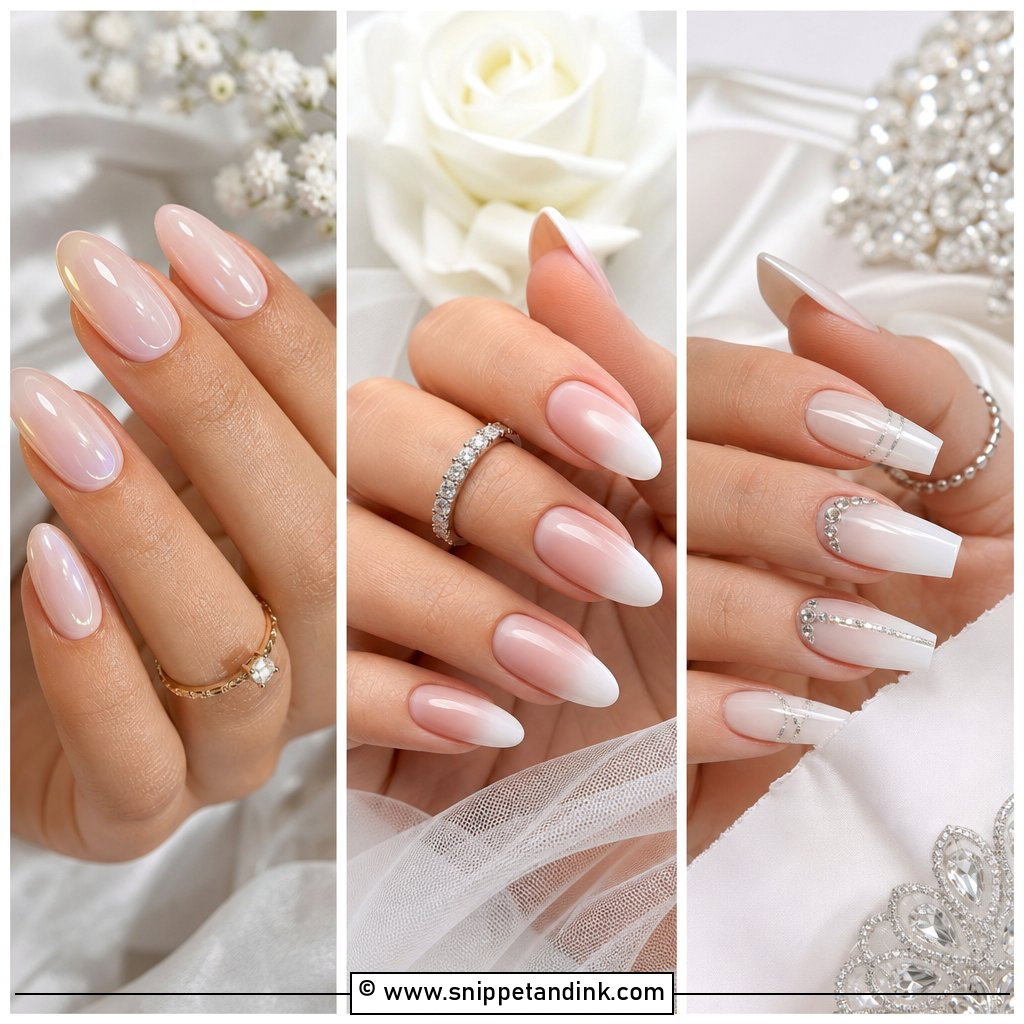
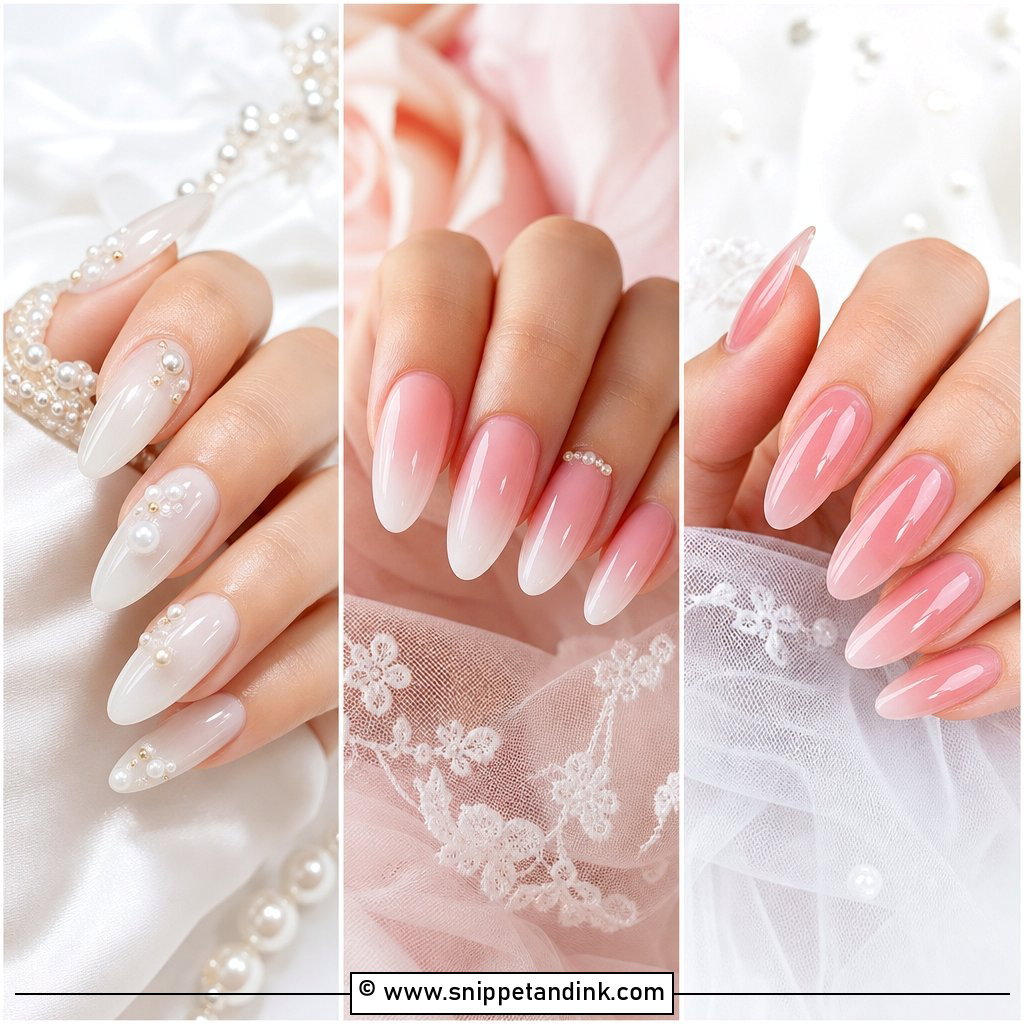
5. Baby Boomer Wedding Nails
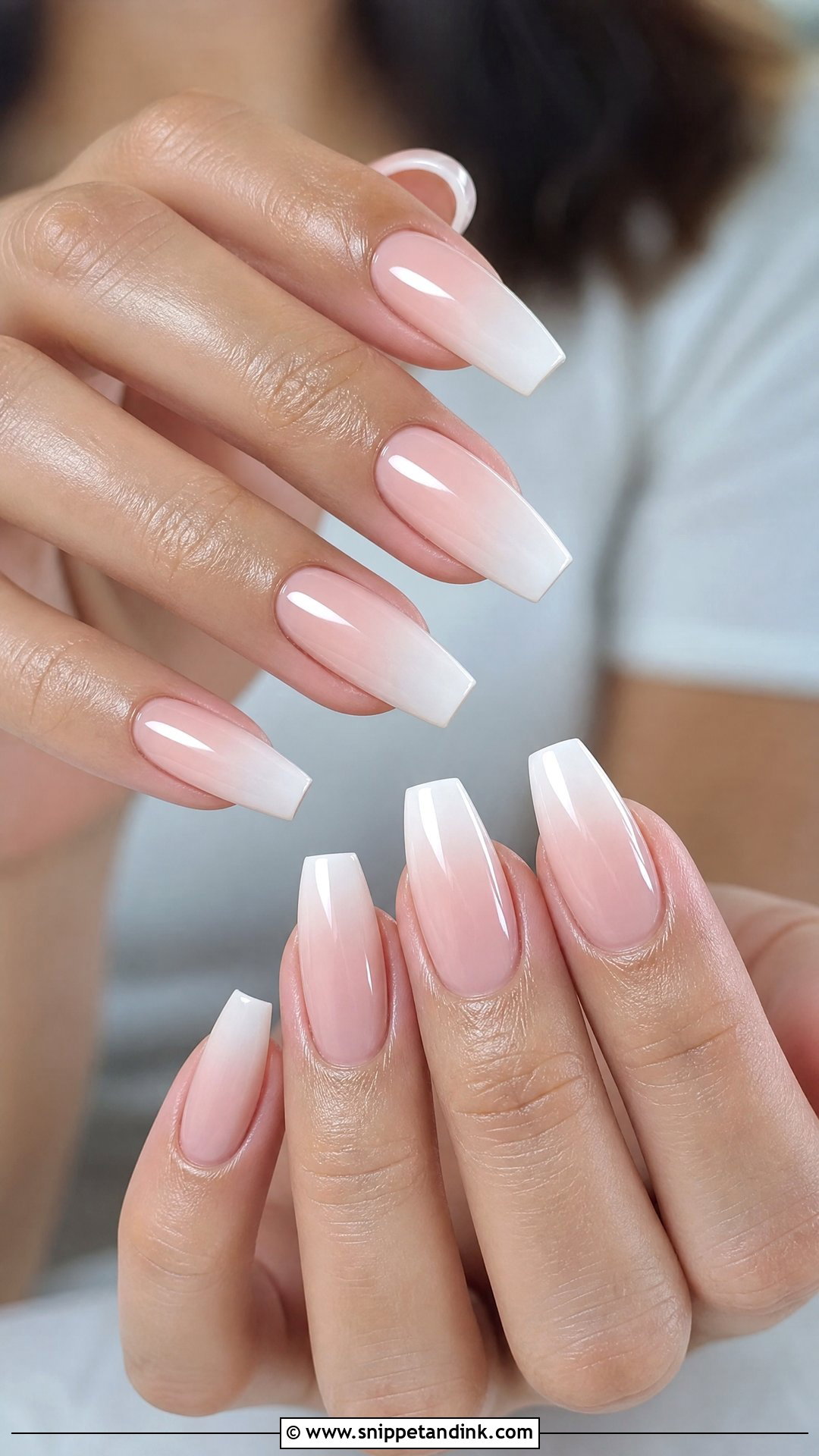
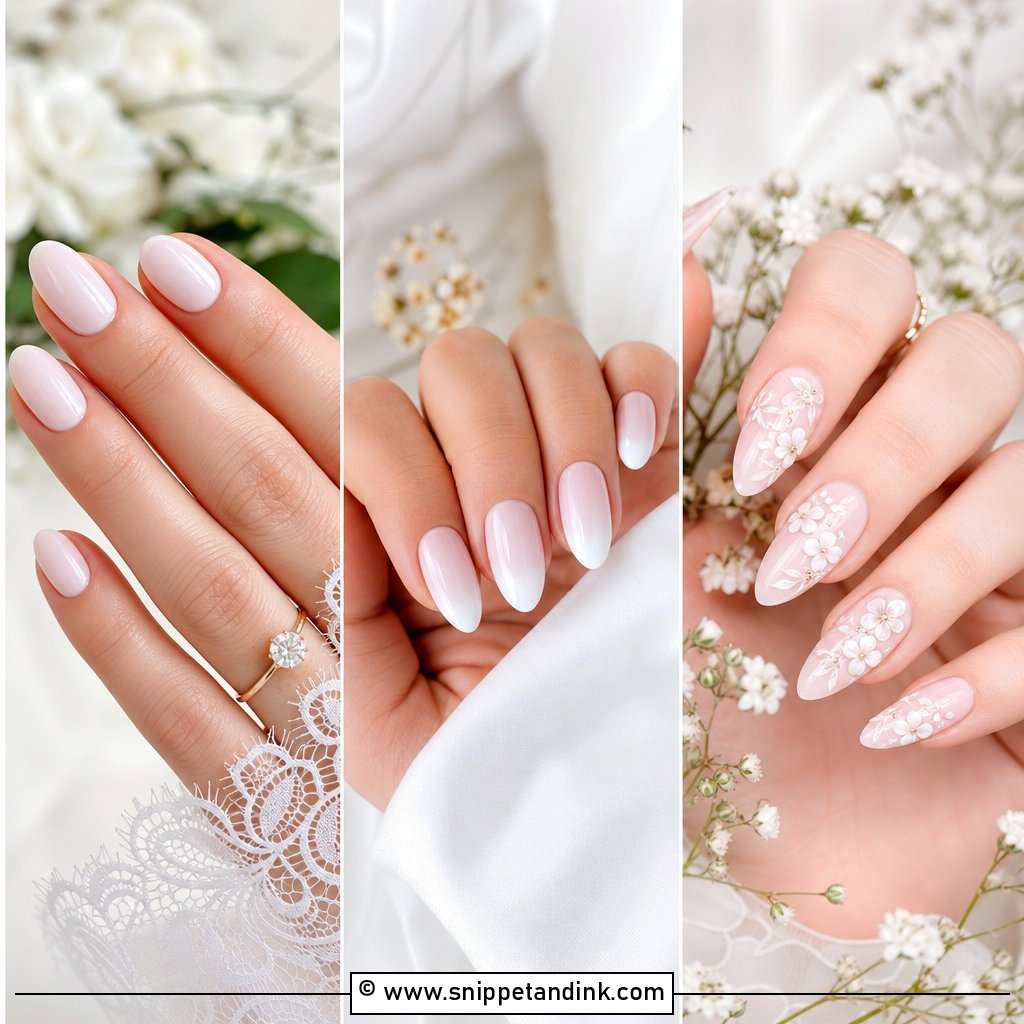
Baby boomer wedding nails fade a nude or pink base into a milky tip, with no hard line where the colours meet. That stretch of gradient makes short nails look longer, and it hides a chipped edge far better than a crisp French. The blend is a skill, so ask to see a tech’s healed work, not just fresh photos. It sits equally well with plain and heavily detailed gowns.
6. Sheer Pink Wedding Nails
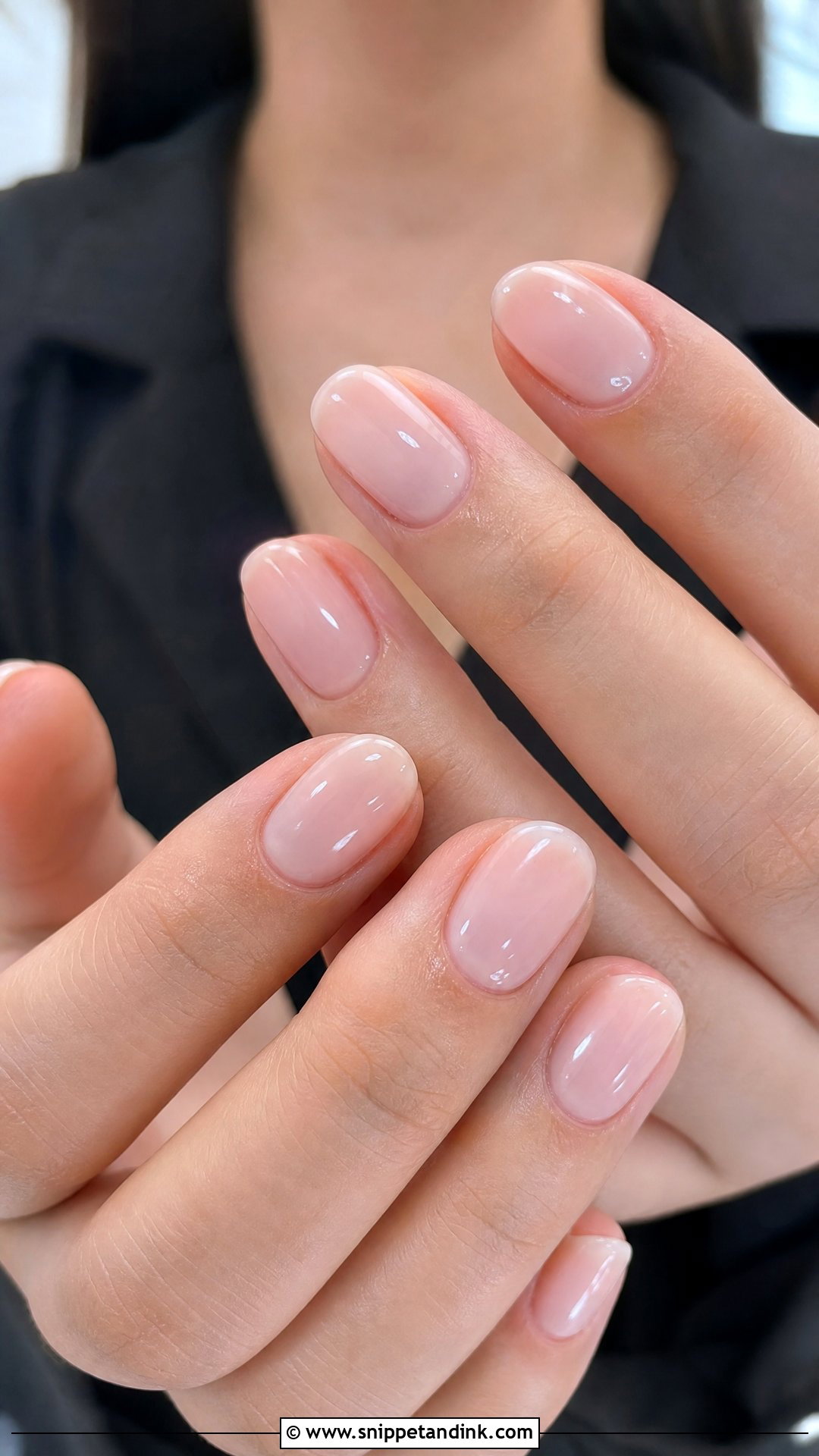
This is the set people call “your nails but better”. A translucent pink evens out the nail bed rather than covering it, in pale ballet pink, cool rose or warm blush depending on your skin. Because it’s sheer, it shows any old staining, so a gentle buff beforehand makes a real difference. I like it on short oval nails for anyone who rarely wears colour and doesn’t want to feel dressed up in her own hands.
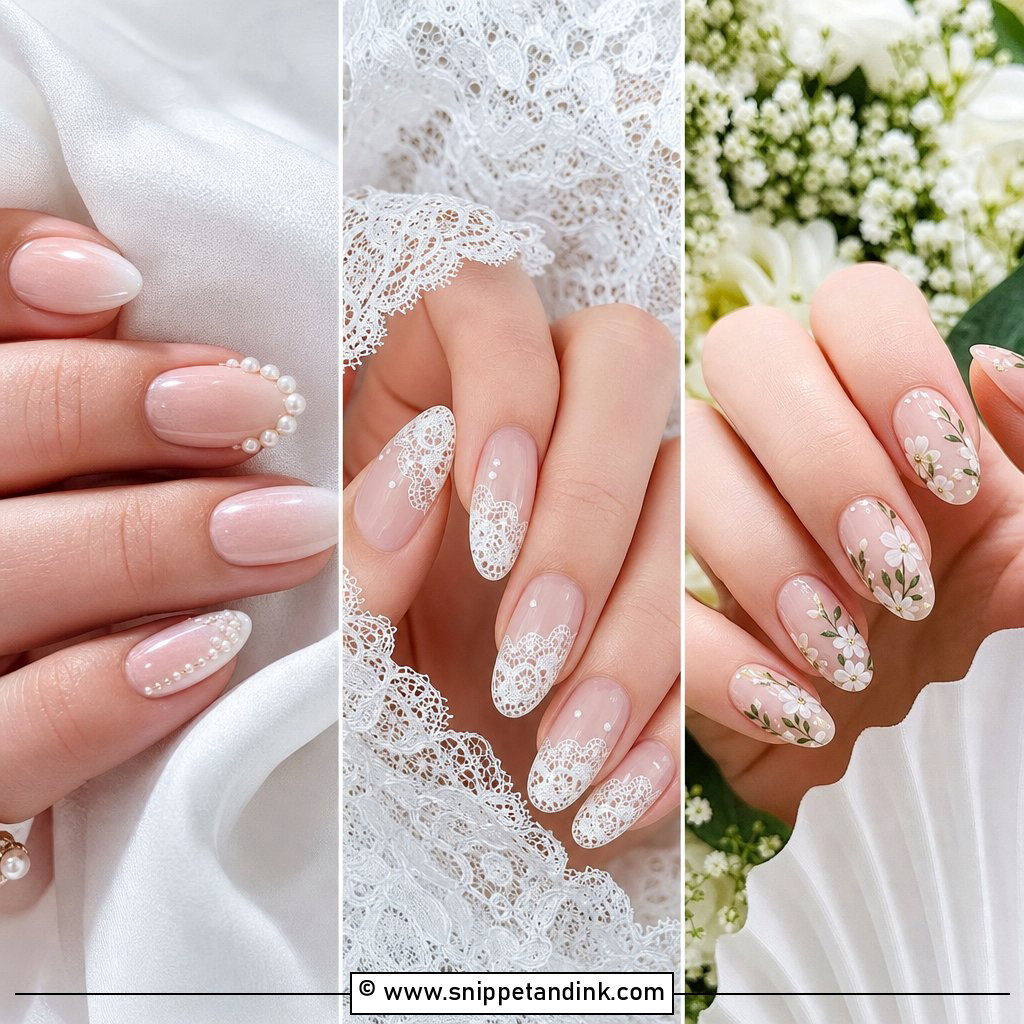
7. White Floral Wedding Nails
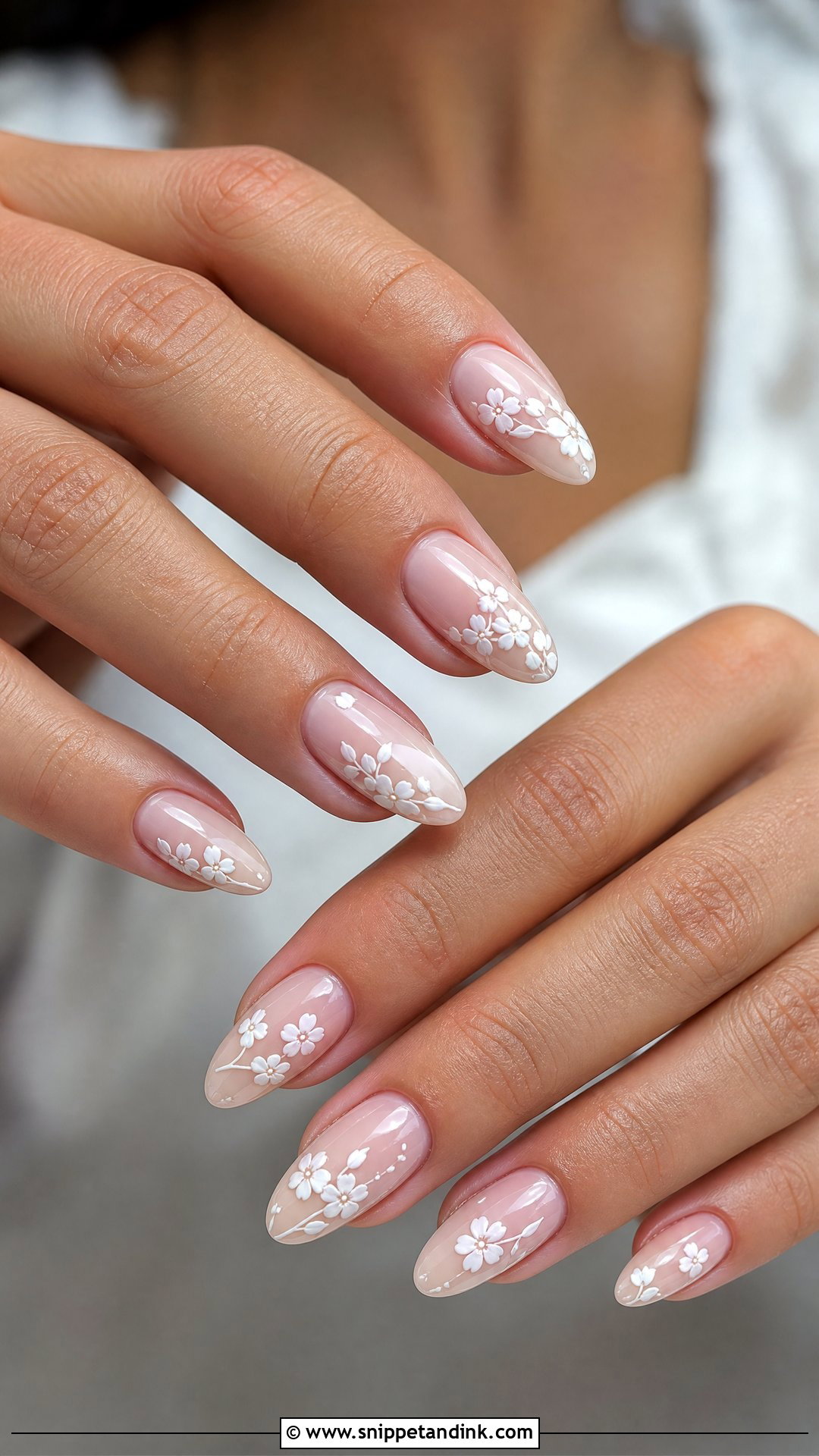
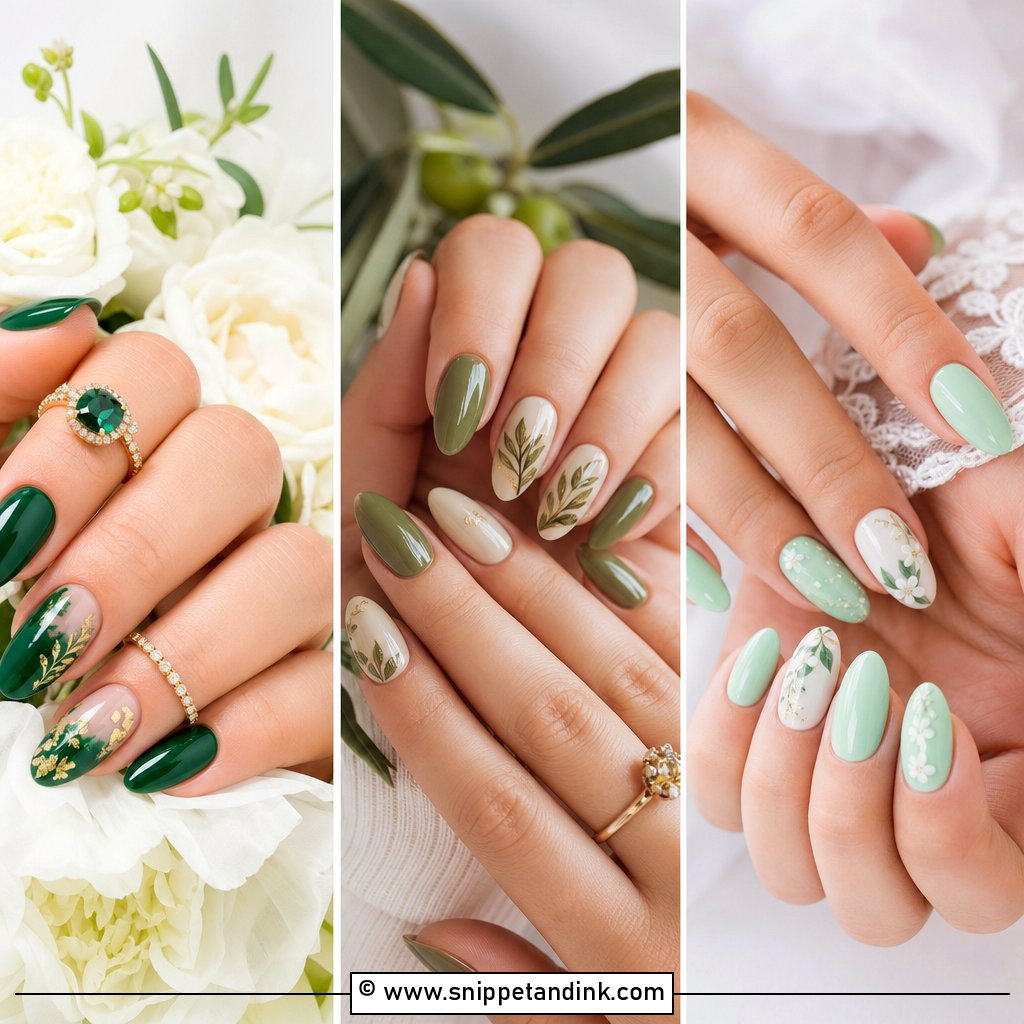
White flowers stay romantic only while they’re small. I paint each petal with a dotting tool dragged slightly, which gives a soft, natural shape, over a sheer nude or pale pink base. Scattered accents across the set look lighter than a flower on every nail. Garden ceremonies and floral lace gowns are the natural match, and short square nails carry tiny blooms better than people expect.
8. Blush Ombre Wedding Nails
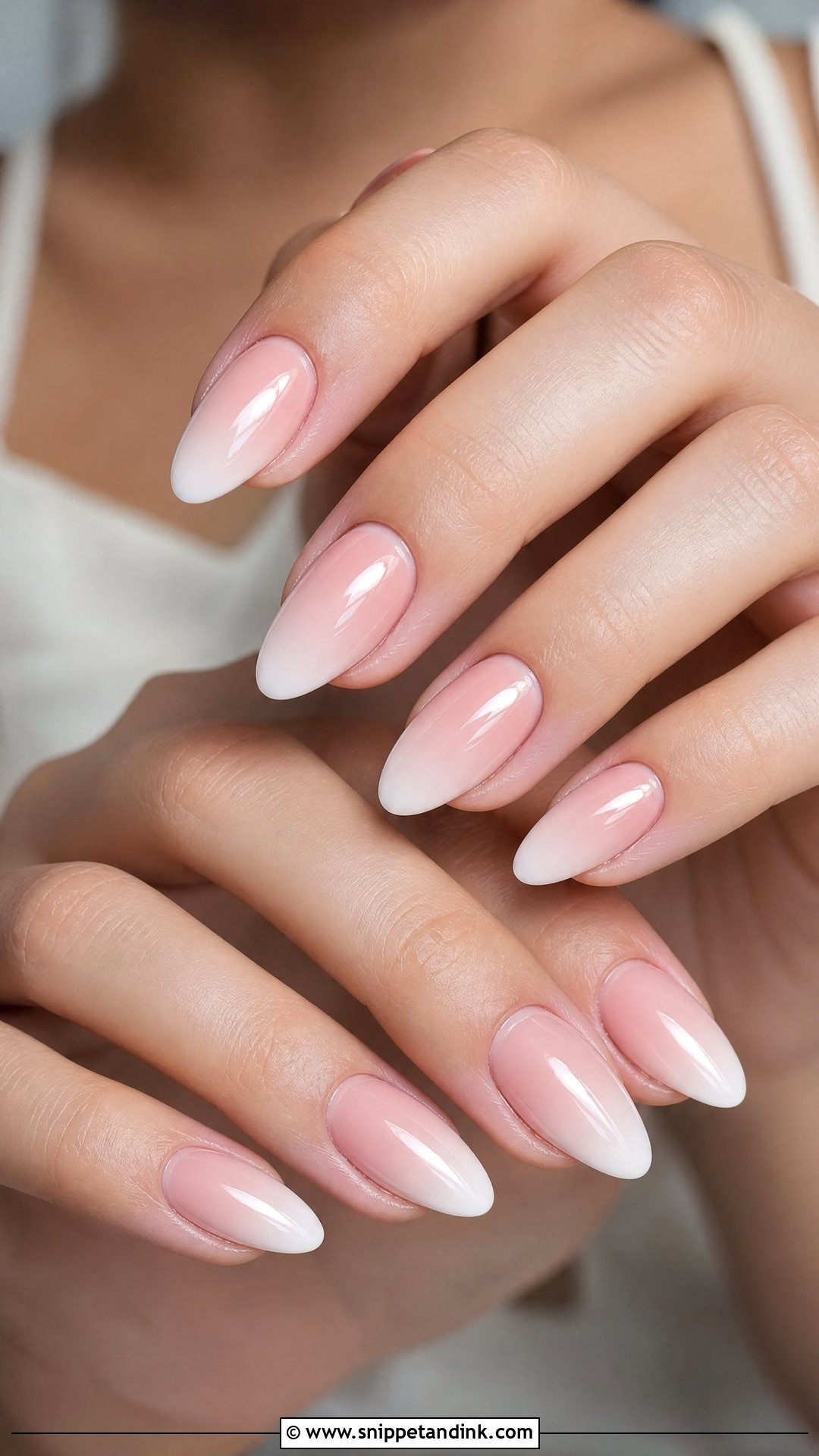
Blush ombre runs a rosy pink into a pale nude or creamy white. It adds colour without fighting a bridesmaid dress, which is why I often suggest it for the party rather than the bride. The gradient needs some length to show properly, so almond and coffin shapes suit it best. A fine shimmer top coat dresses it up for an evening reception.
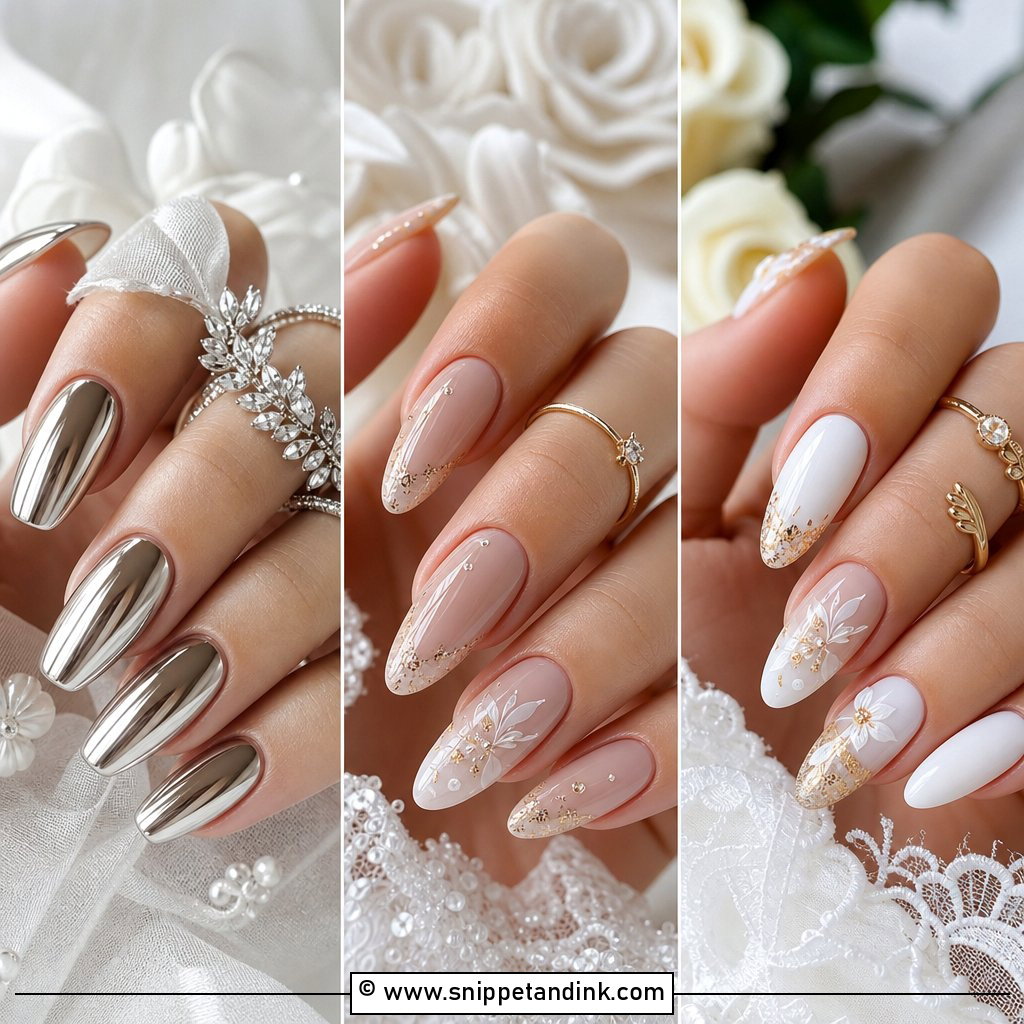
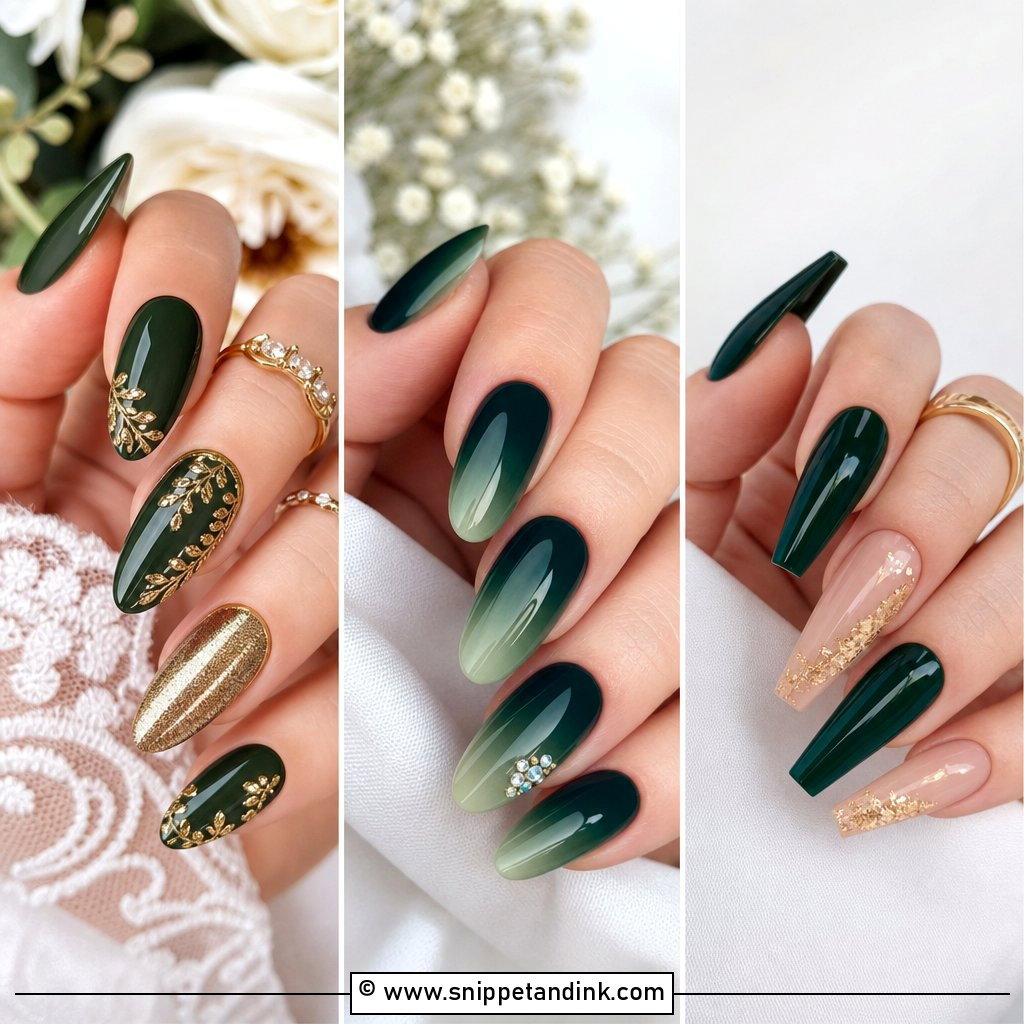
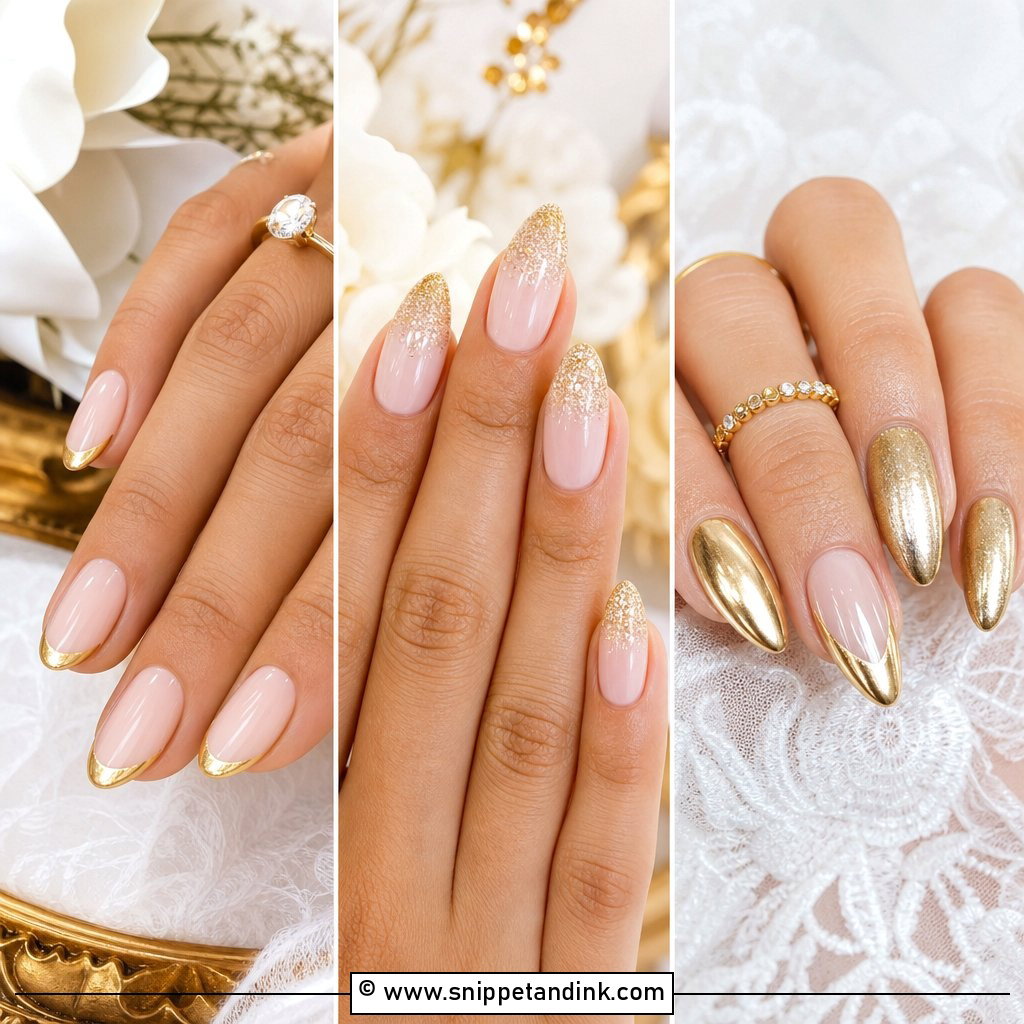
9. Soft Gold Wedding Nails
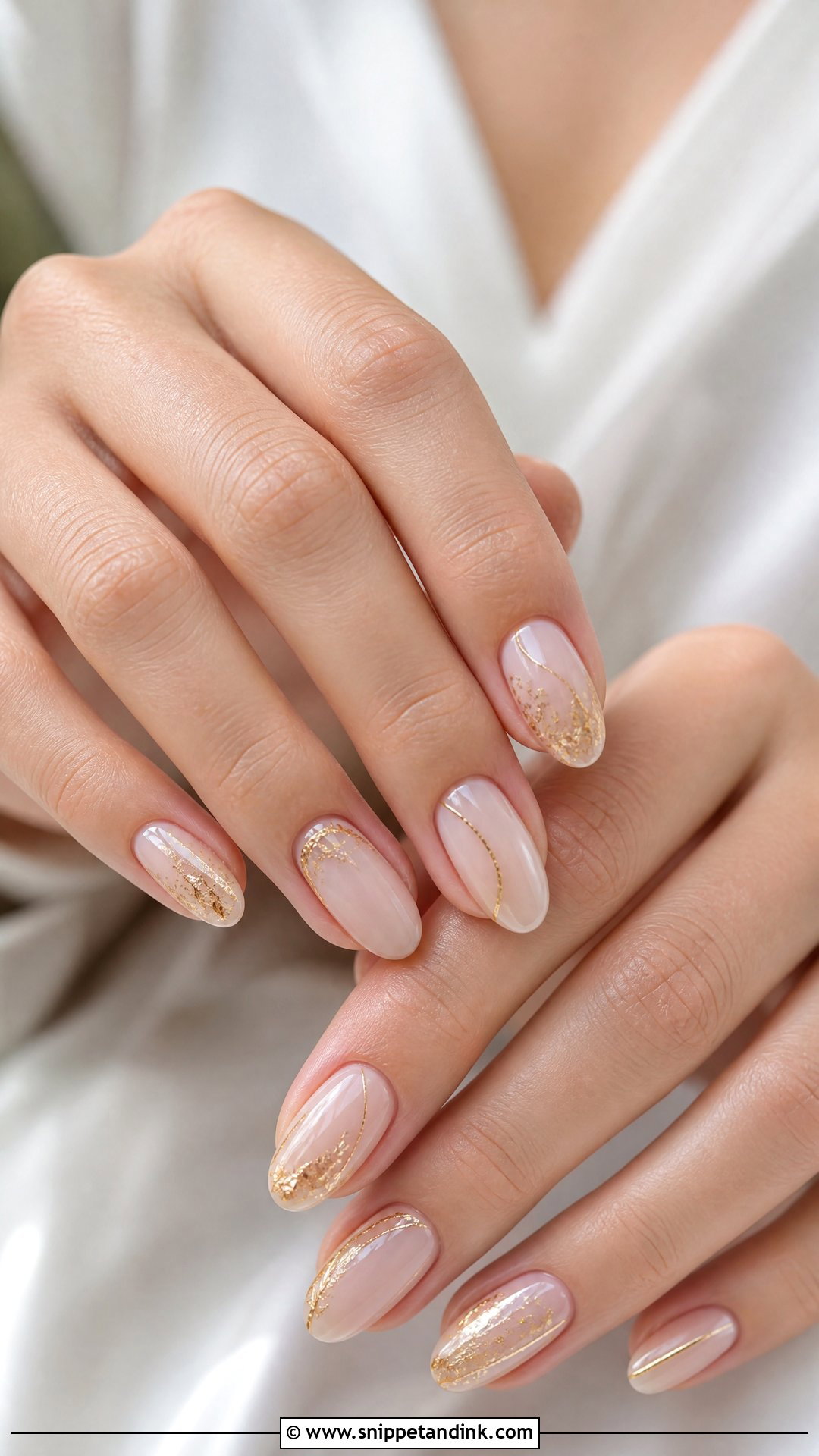
Gold works at a wedding when it’s a detail, not a coat. Fine foil, a thin gold French or a few metallic lines over nude, blush or milky white keep it delicate. It suits gold jewellery, champagne and ivory fabrics and autumn weddings, where it feels warm without going dark. Foil needs pressing completely flat before it’s sealed, or you’ll see crinkled edges under the top coat.
10. Silver Glitter Wedding Nails
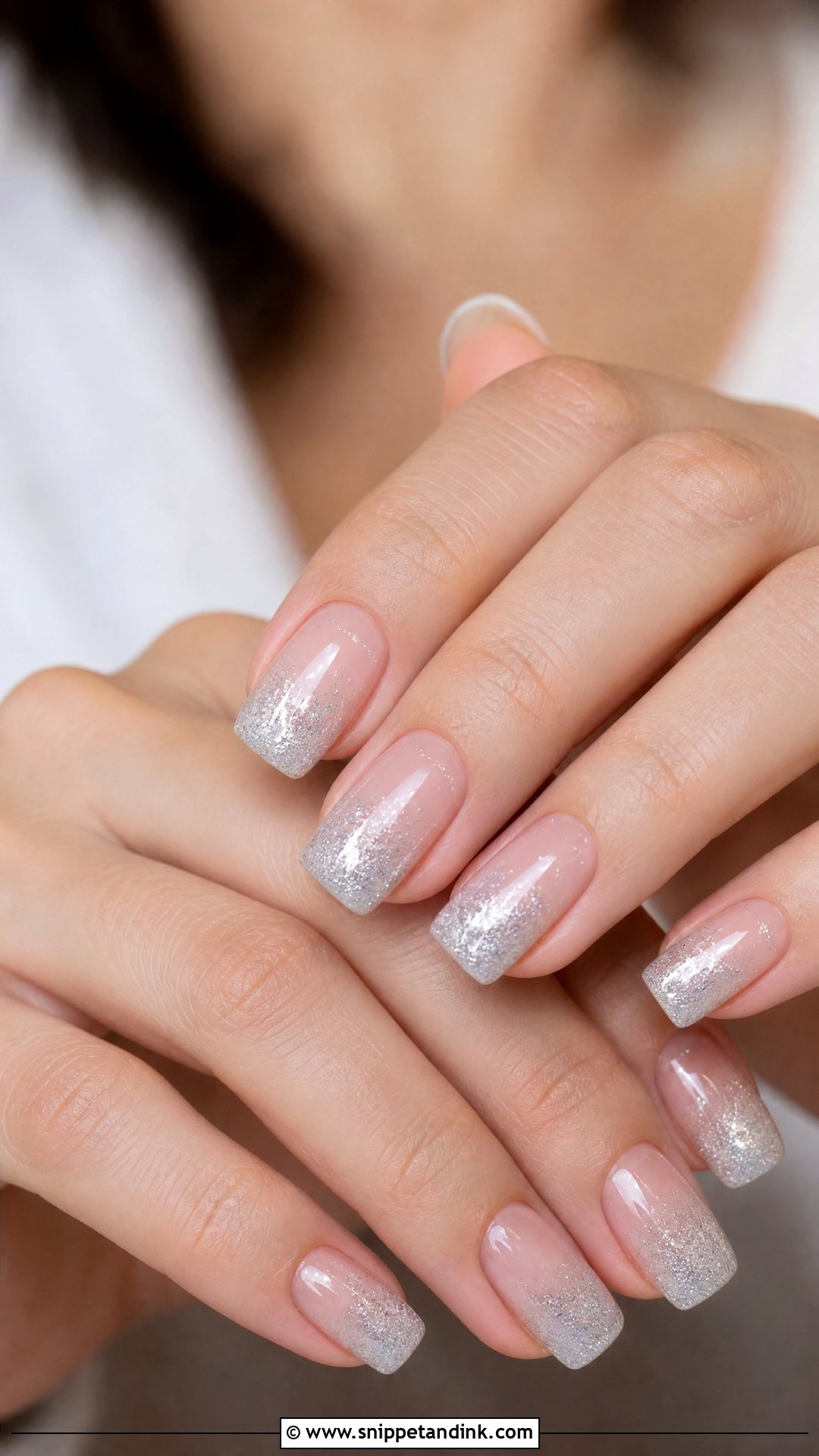
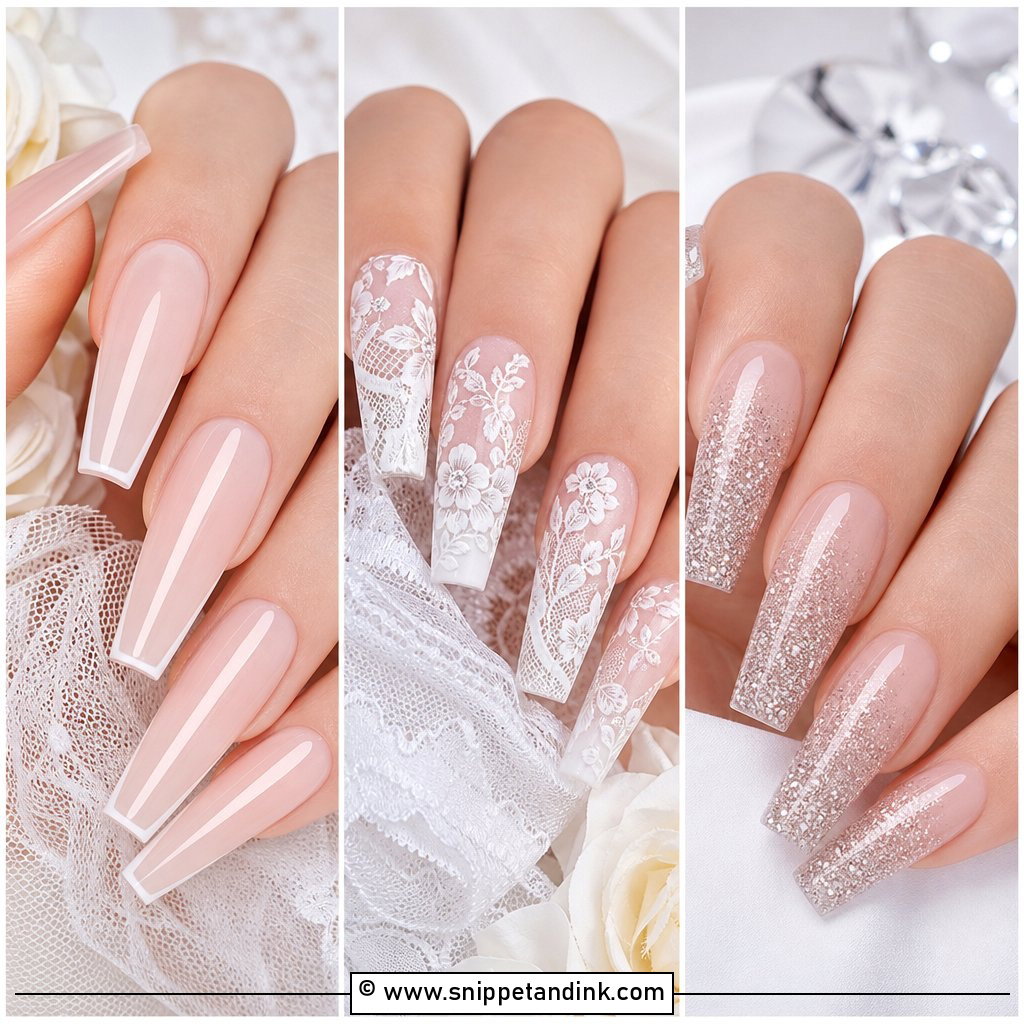
Silver glitter goes from elegant to party nails in one heavy coat. Keep it to a soft glitter fade, fine shimmer tips or one balanced accent, over a sheer pink or milky white. Silver sits well with cool jewellery, crystal accessories and grey or blue bridesmaid dresses, and it catches the light at night receptions. Ask for micro-glitter; large flakes look lumpy close up and take ages to remove.
11. Champagne Wedding Nails
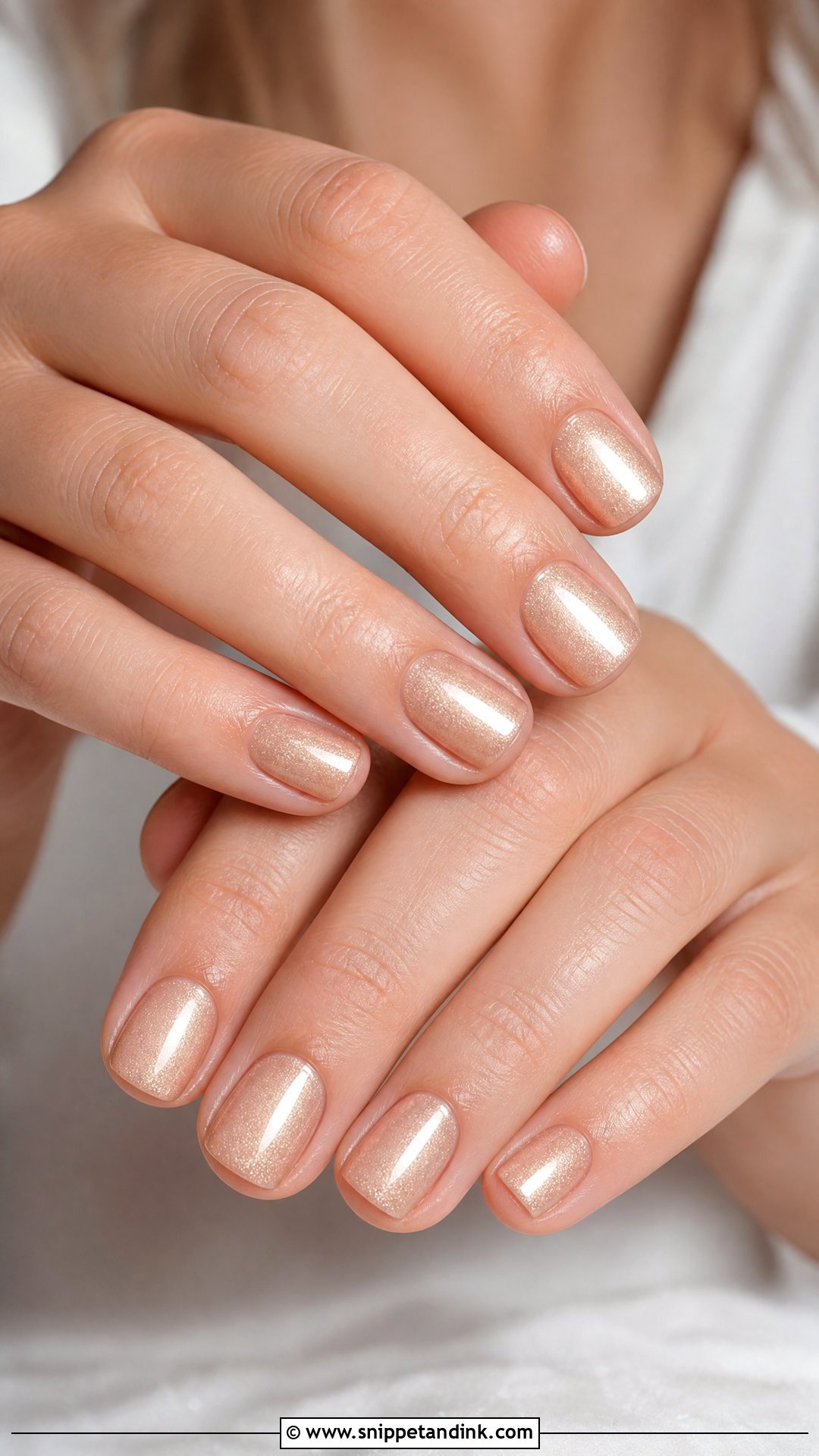
Champagne sits between nude and gold, so it gives more glow than a nude without the flash of glitter. That middle ground makes it a safe dressed-up choice for guests. A champagne chrome looks modern; a champagne shimmer polish is more classic. On a short square it’s chic, on almond it softens. Very fair skin can look sallow next to warmer champagnes, so lean rosier if that’s you.
12. Lace Wedding Nails
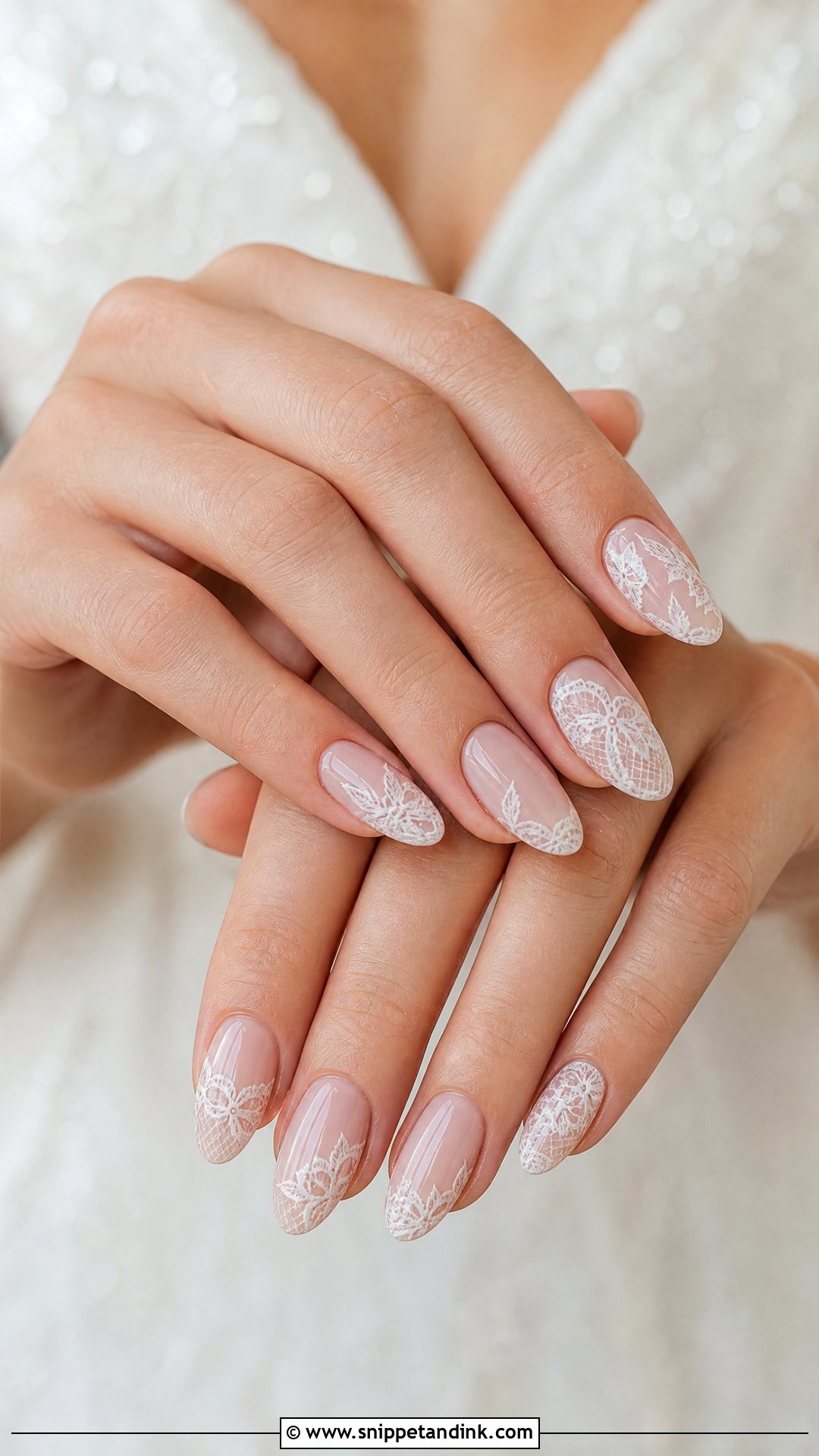
Lace art should borrow from the gown rather than reproduce it. I hand-paint tiny curves, a little mesh and fine floral lines with a long liner brush, spaced so the nail reads clean from across a room and detailed up close. Matching one motif from the sleeves, veil or bodice is more convincing than a generic pattern. Keep the palette quiet so the lace stays the focus.
13. Short Nude Wedding Nails
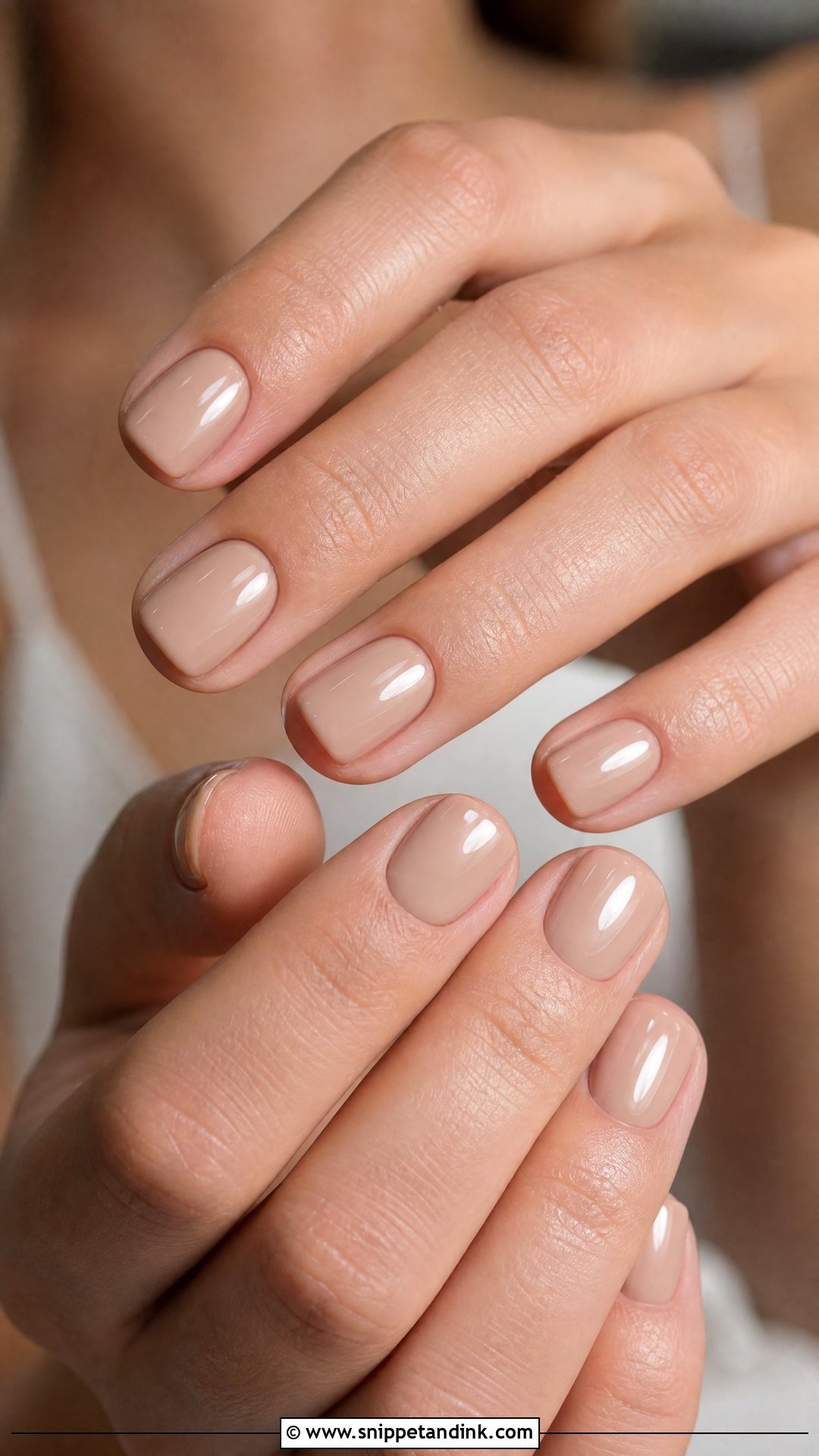
A short nude set looks expensive for one reason: the cuticle work. With no length or art to look at, the eye goes straight to the sidewalls and cuticle line, so that’s where I spend the appointment. Choose a nude that suits your skin rather than one that’s grey or chalky; warm beige, pink nude, caramel and rose beige cover most skin tones. Brides who work with their hands and guests who prefer natural nails both do well with it.
14. Almond Wedding Nails
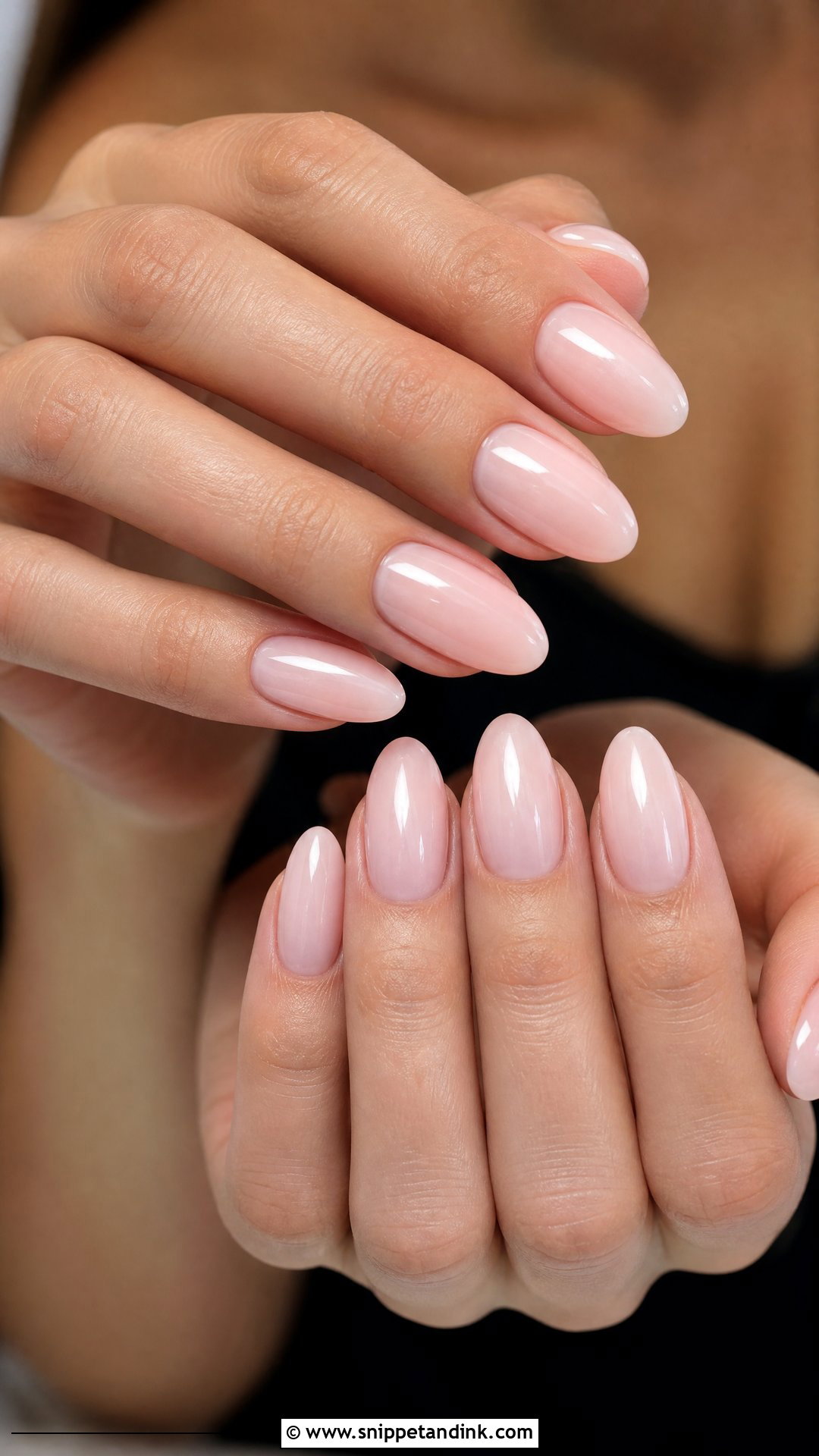
Almond wedding nails taper the fingers without the sharpness of stiletto, and they take most designs here, from French to milky white to pearl chrome. Medium length is the practical sweet spot. If you’ve never worn length, almond still catches less than square, but give yourself a week with the set before the wedding to get used to fastening jewellery.
15. Square French Wedding Nails
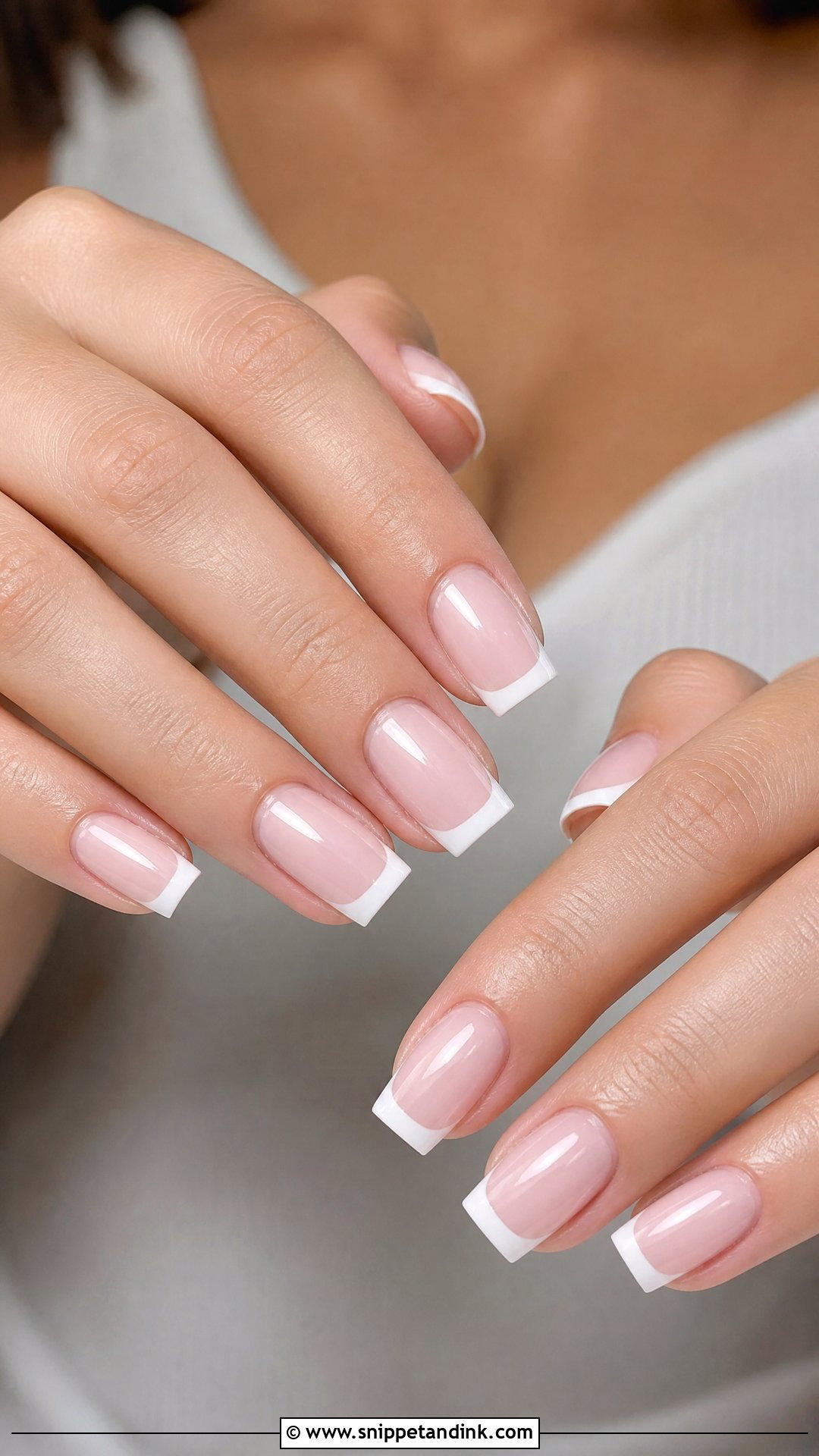
A square French gives a crisp straight edge that suits structured gowns and sharp tailoring. I keep it short to medium with a soft pink base and slim white tips, and I take the corners off slightly, since sharp corners are the first to chip and they snag tights and tulle. It suits almost every role at a wedding. A fine pearl top coat over the finished set is a nice small twist.
16. Coffin Wedding Nails
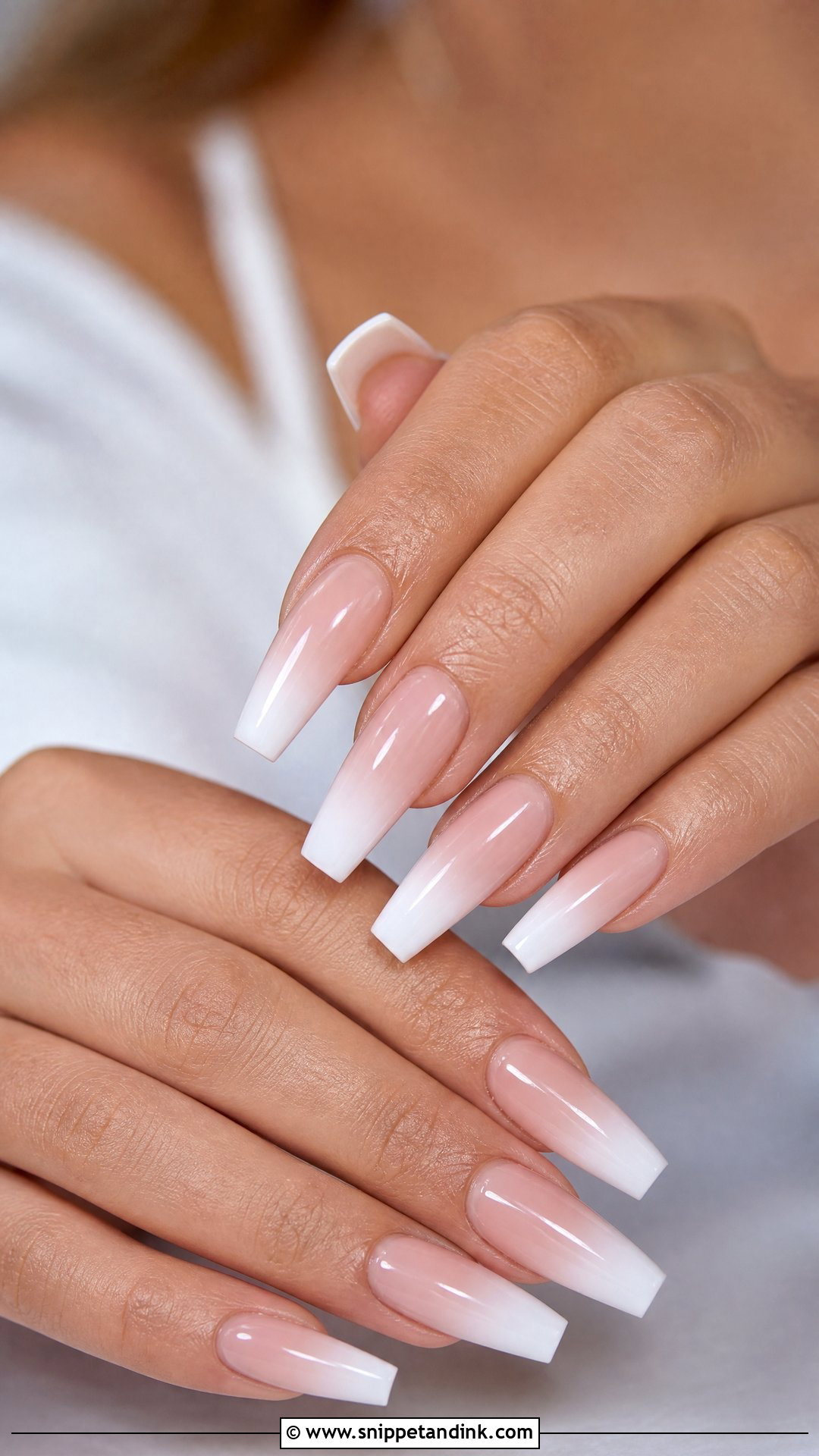
Coffin nails give a sleek canvas for ombre, French, chrome and shimmer, but the shape is strong, so soft colours balance it: blush, nude, ivory, champagne. A baby boomer fade shows best here because the length gives it room. Watch the flat tip; it takes knocks when you’re opening doors and car seatbelts. If you add stones, a few near the cuticle are safer than at the edge.
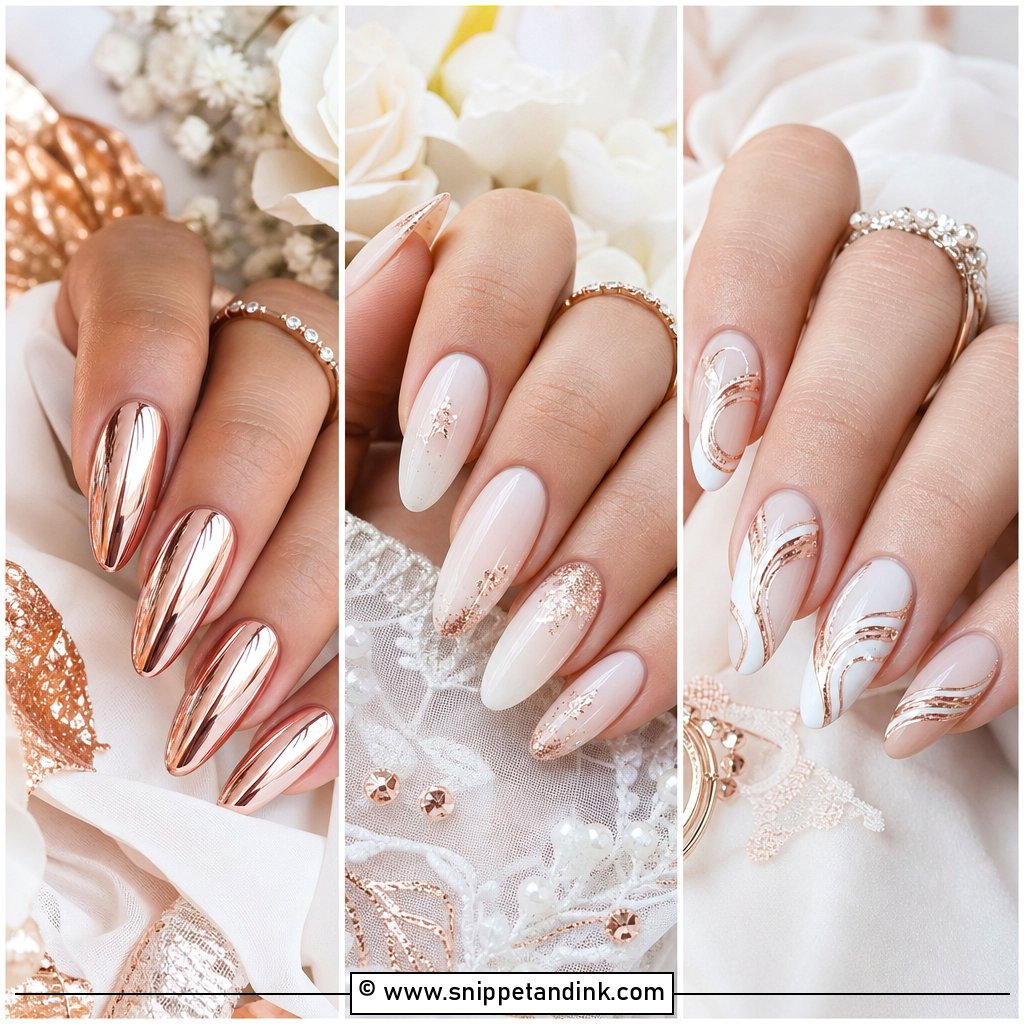
17. Rose Gold Wedding Nails
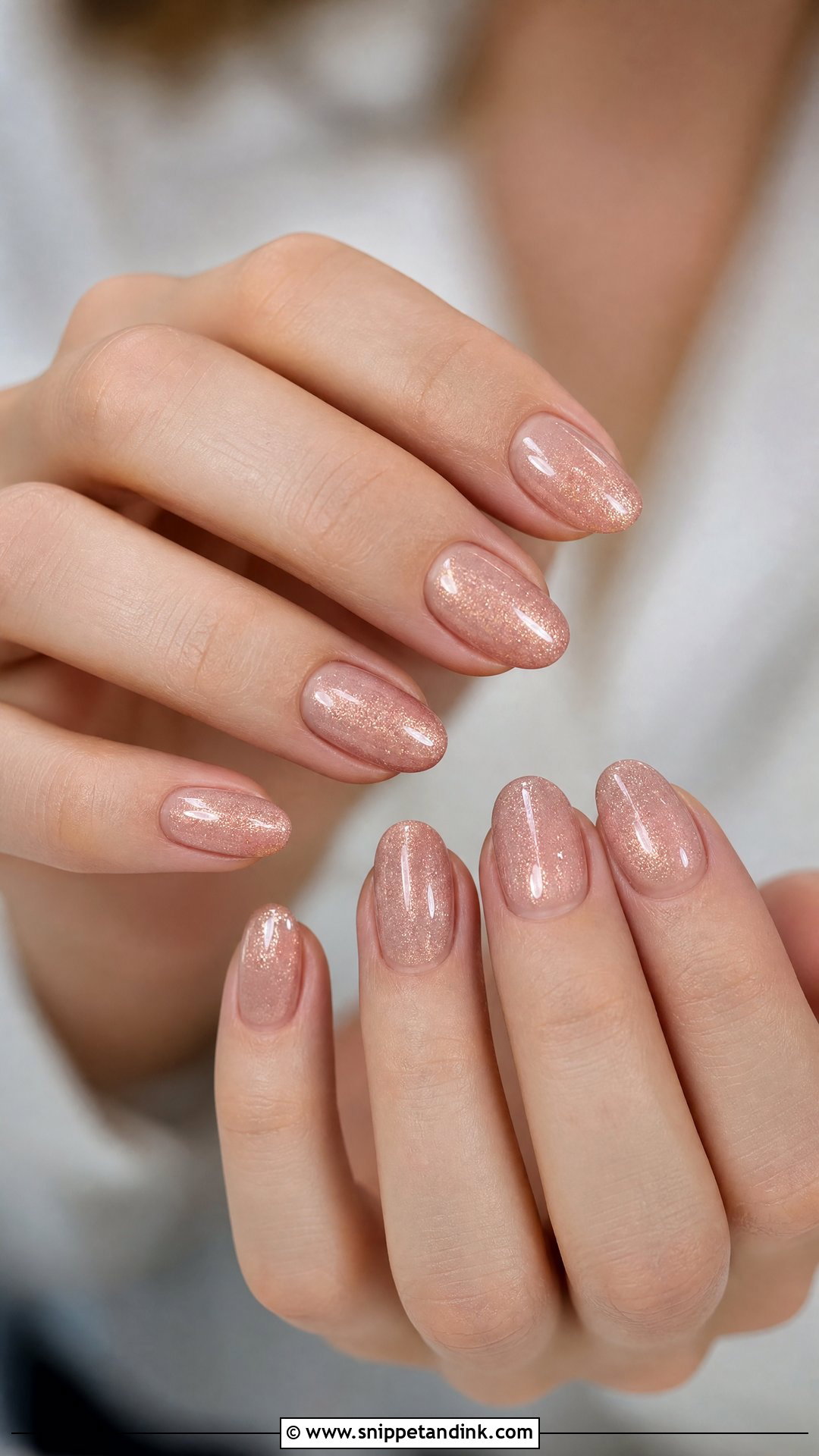
Rose gold blends pink and gold, so it warms the hand without looking brassy on most skin. Brides usually wear it as an accent, one foil nail or a thin French; guests can wear a full rose shimmer set. It pairs with blush dresses, rose gold jewellery and soft florals. Medium oval and almond keep it delicate. Check it in daylight, because rose metallics shift colour under warm indoor bulbs.
18. White Chrome Wedding Nails
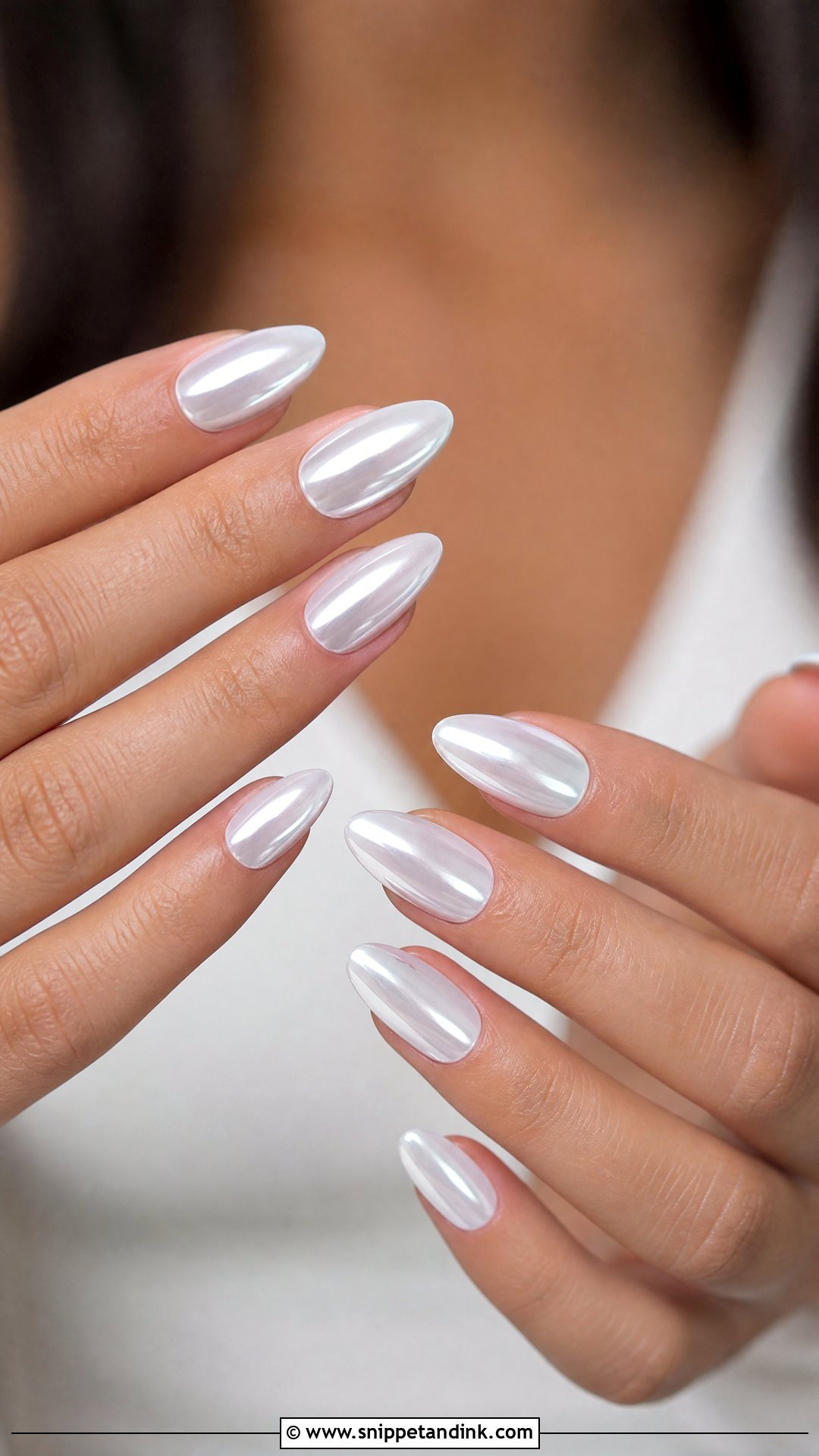
White chrome wedding nails put a chrome powder over white or milky gel for a bright glaze, more reflective than pearl but softer than silver. Shine magnifies shape, so this is the set where symmetric sidewalls and identical lengths matter most; one slightly crooked nail shows in every photo. Keep the chrome layer thin and pair it with clean, minimal dresses and satin.
19. Minimal Crystal Wedding Nails
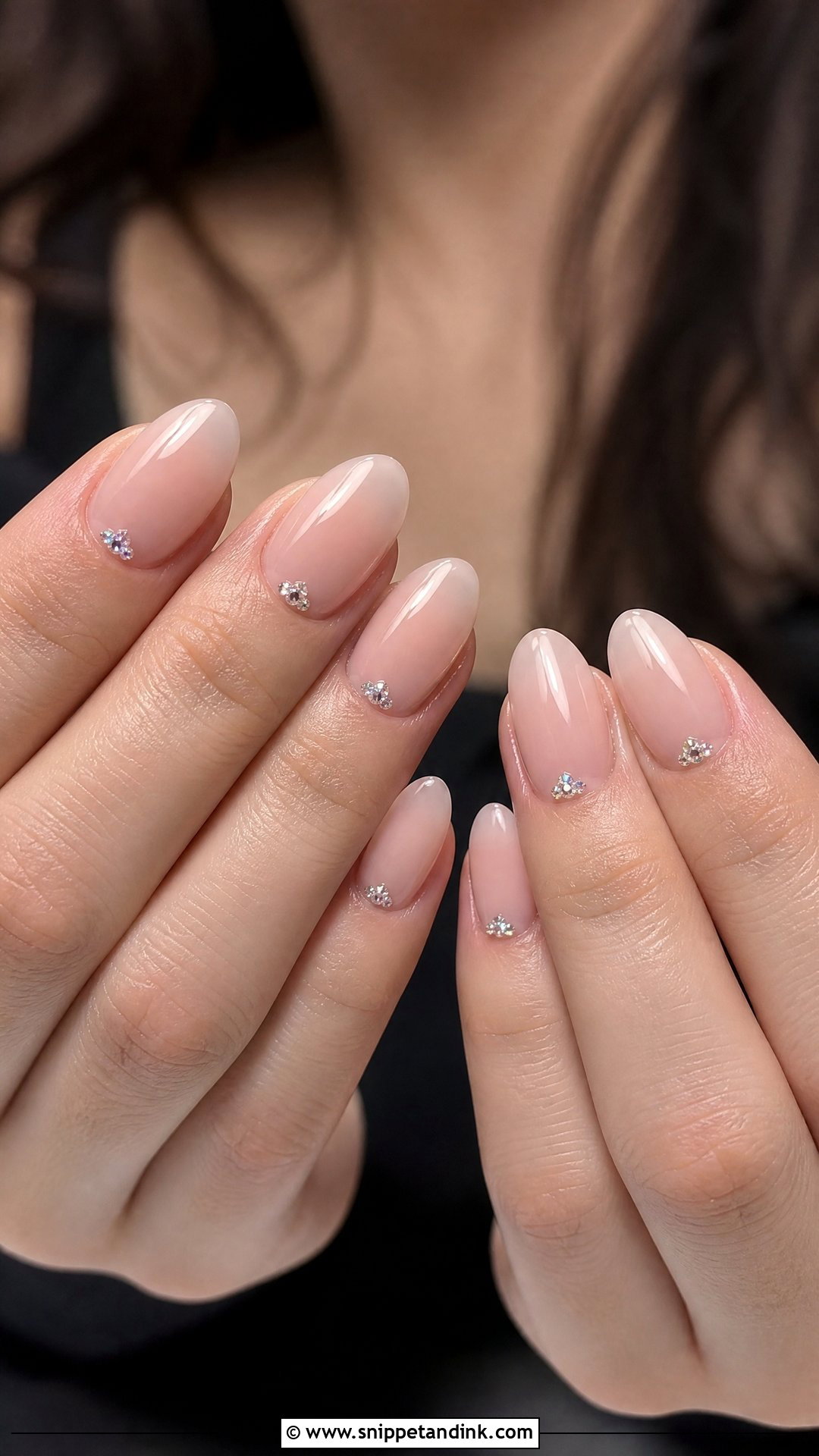
Minimal crystal wedding nails place a few tiny stones near the cuticle or along one side of the nail over a sheer base. That keeps sparkle jewellery-like instead of costume-like. I set them in gem gel and seal around the base only, never over the top, so they keep their sparkle and don’t catch hair. Guests can wear this too if the stones stay small.
20. Something Blue Wedding Nails
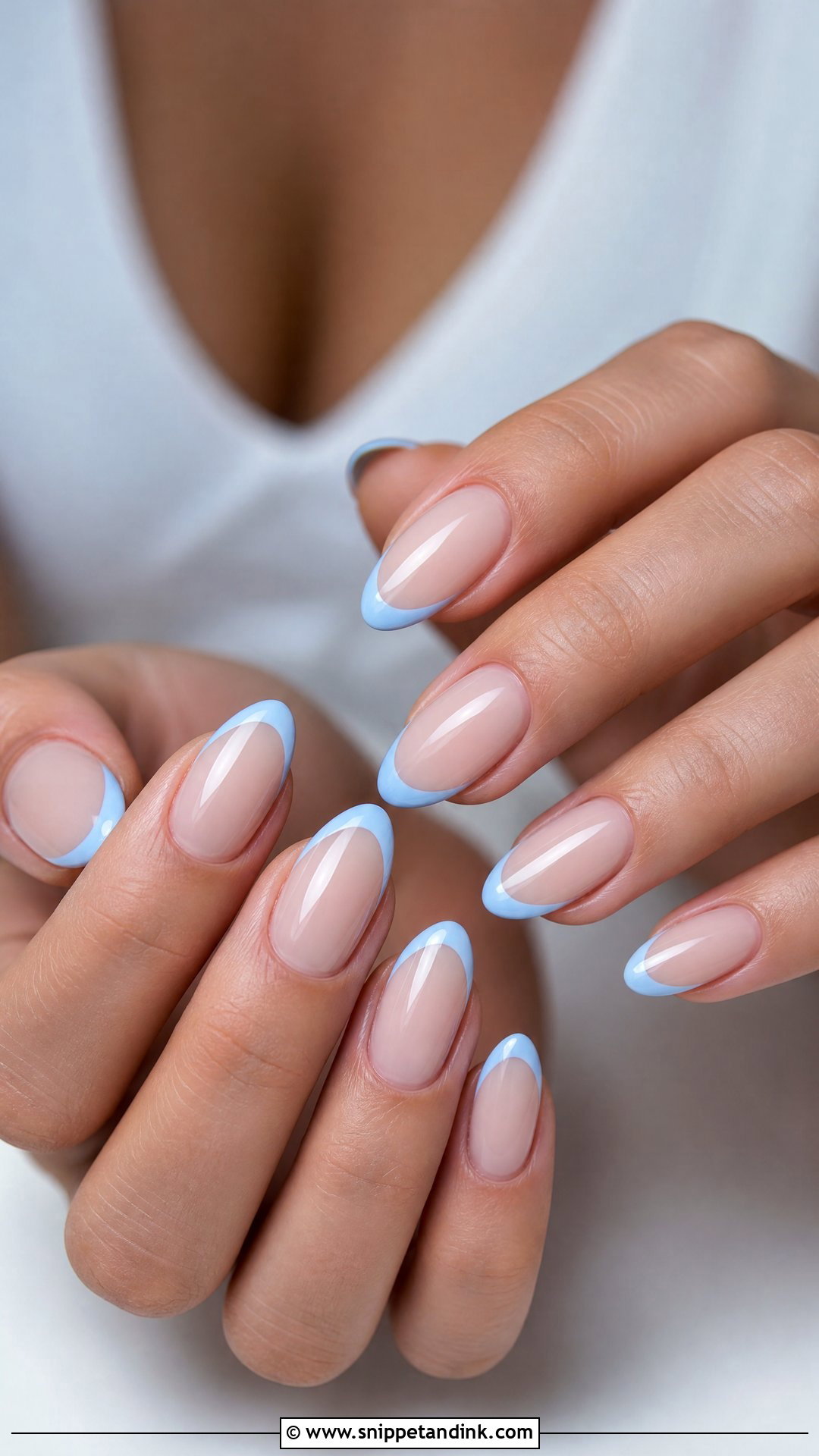
Something blue on the nails works best as a small private detail. Powder blue, pale sky or icy blue in a micro French, a little flower over nude or a sheer blue glaze on short nails all keep it gentle. Guests in blue dresses can borrow the idea in a stronger dose. Keep the rest of the set simple so the blue reads as deliberate.
21. Matte Nude Wedding Nails
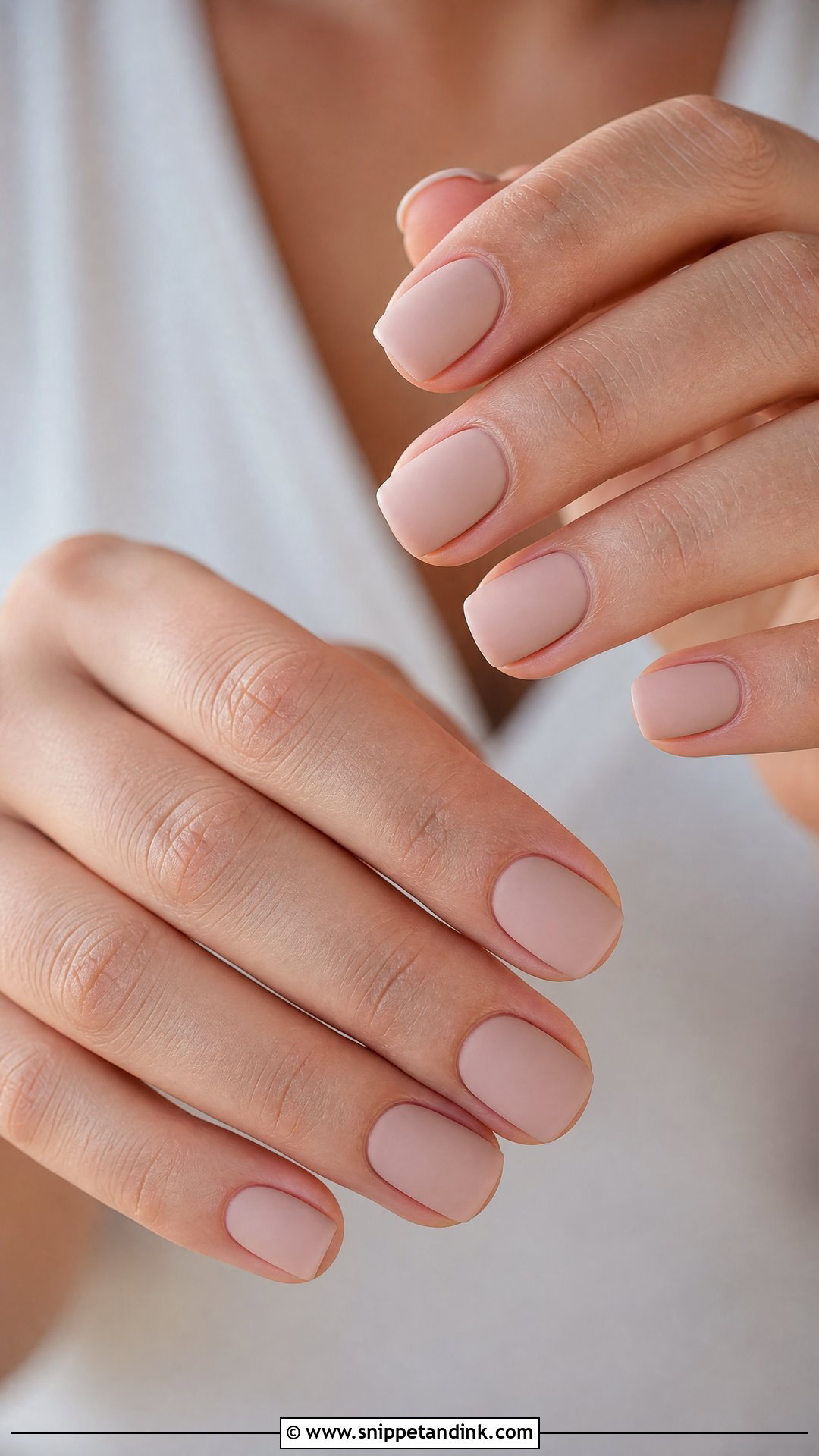
Matte nude looks soft and modern, but matte top coat is unforgiving. It shows every ridge, holds onto hand cream and makeup, and can look faintly scuffed by evening. A smooth builder base underneath is non-negotiable for me if your nails have ridges. For contrast, I like a glossy French tip over the matte base. It suits minimal gowns and neutral bridesmaid dresses.
22. Micro French Wedding Nails
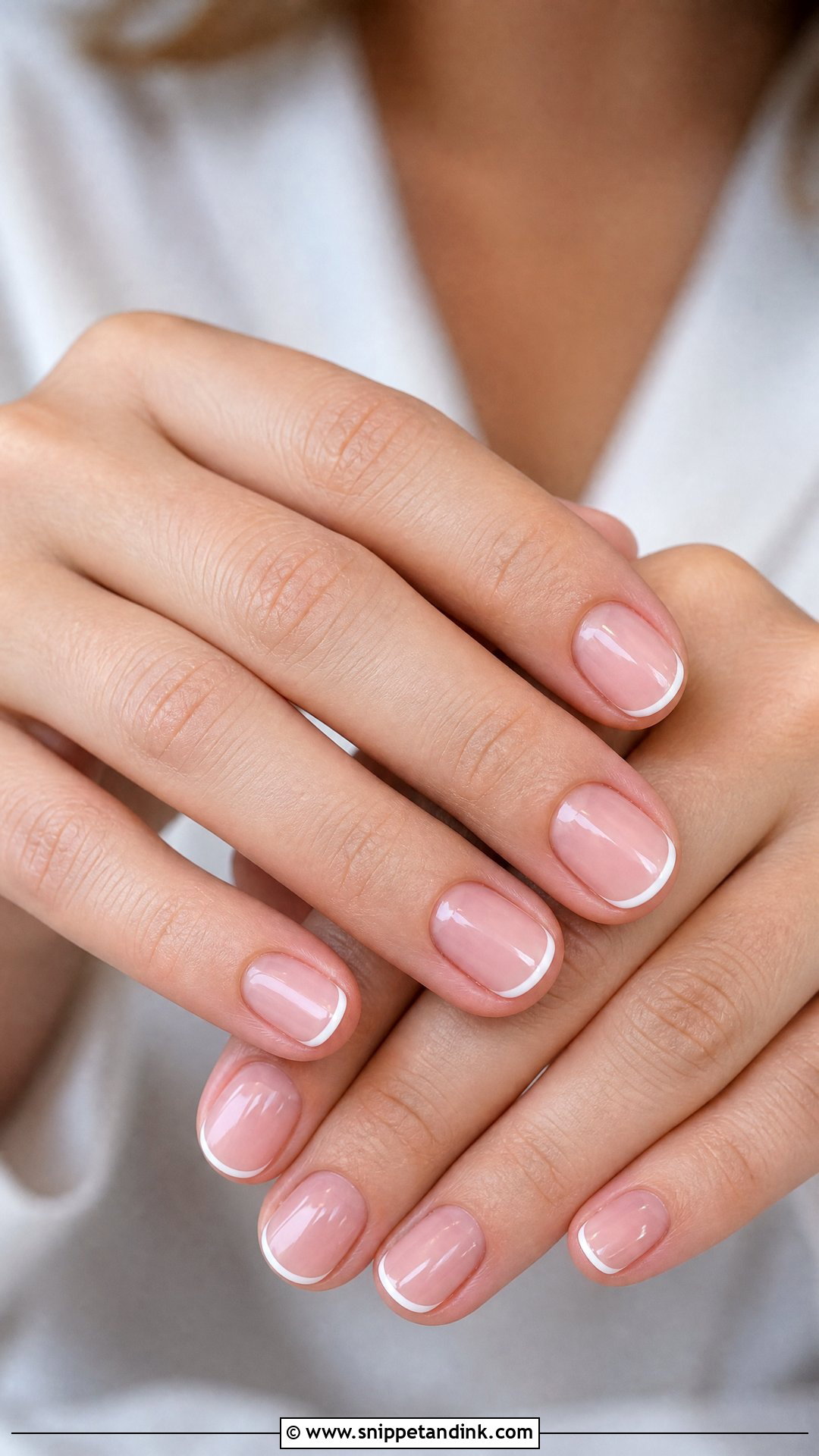
A micro French uses a thin line at the free edge, so it balances on short nails where a classic tip would look heavy. The tip can be white, ivory, pearl, silver or soft gold, which makes it easy to coordinate across bridesmaids and guests with different outfits. The skill is an even line on every finger. Look closely at the thumbs in a tech’s portfolio; that’s where wobbles show.
23. Mauve Wedding Nails
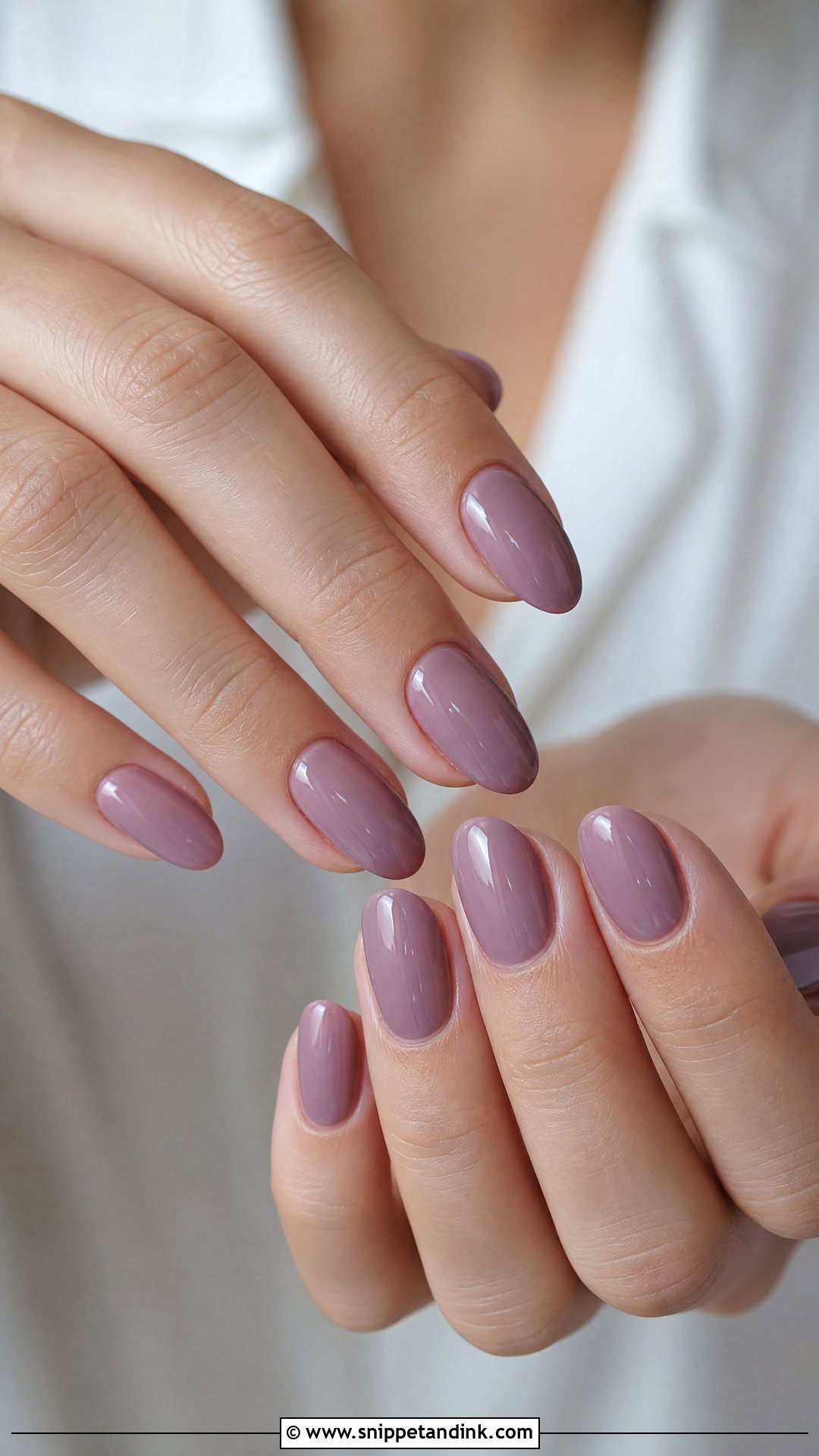
Mauve wedding nails give more colour than a nude while staying muted: pink, purple and taupe mixed together. It’s a natural fit for autumn weddings, dusty rose palettes and mothers of the couple who want something softer than red. Go lighter for daytime and deeper for evening. A mauve chrome is modern; a glossy cream is classic. Mauve can pull grey on cool, pale skin, so test it first.
24. Pearl Accent Wedding Nails
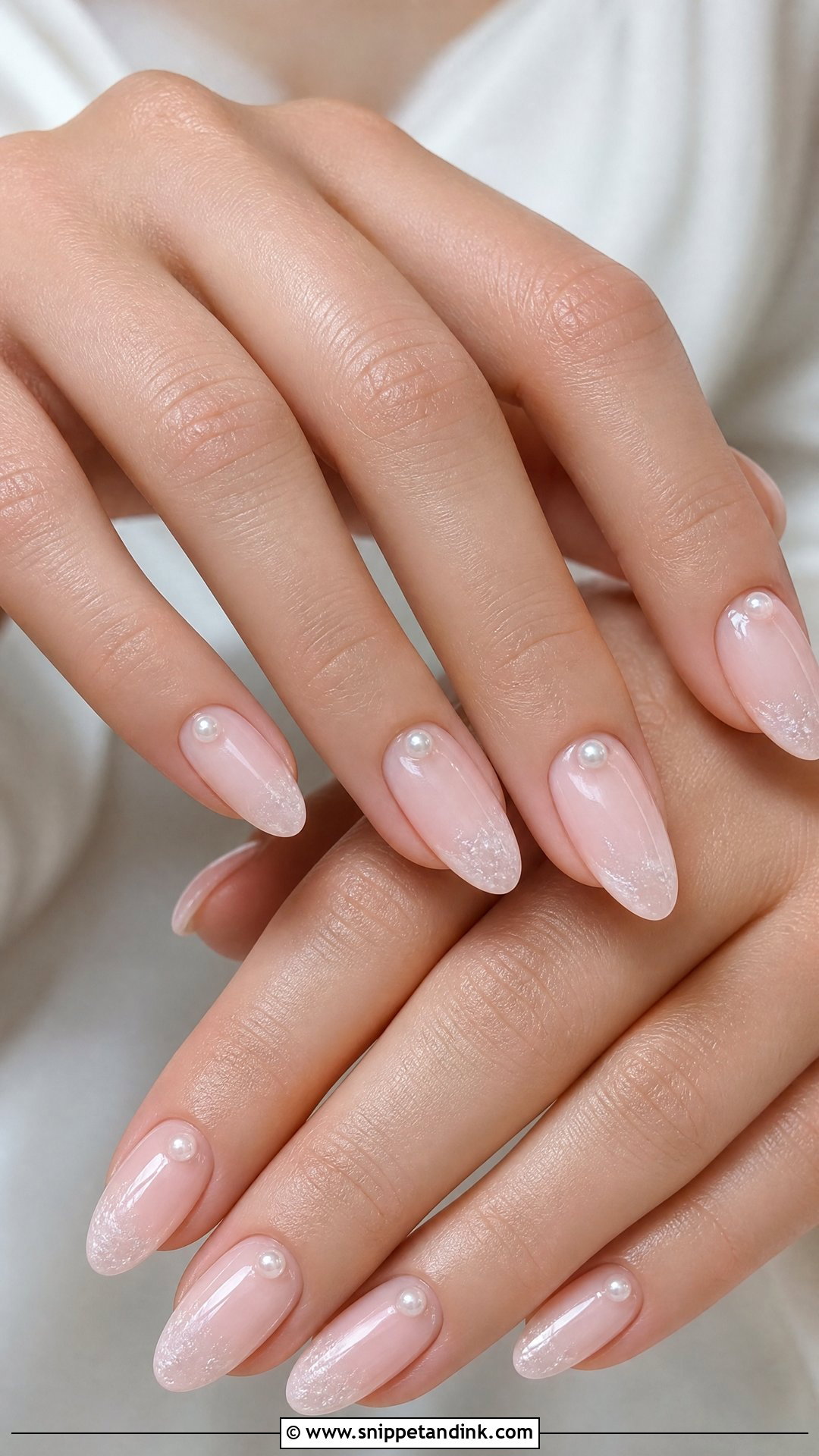
Small pearls look bridal in close-ups as long as they’re sized for the nail. Oversized pearls look like stickers and get knocked off. I place them near the cuticle, in a curved line or as a few scattered accents, each set in a bead of thick gel with the edges sealed. Medium almond or oval gives them the best frame, and they sit naturally with pearl earrings and beaded dresses.
25. Floral French Wedding Nails
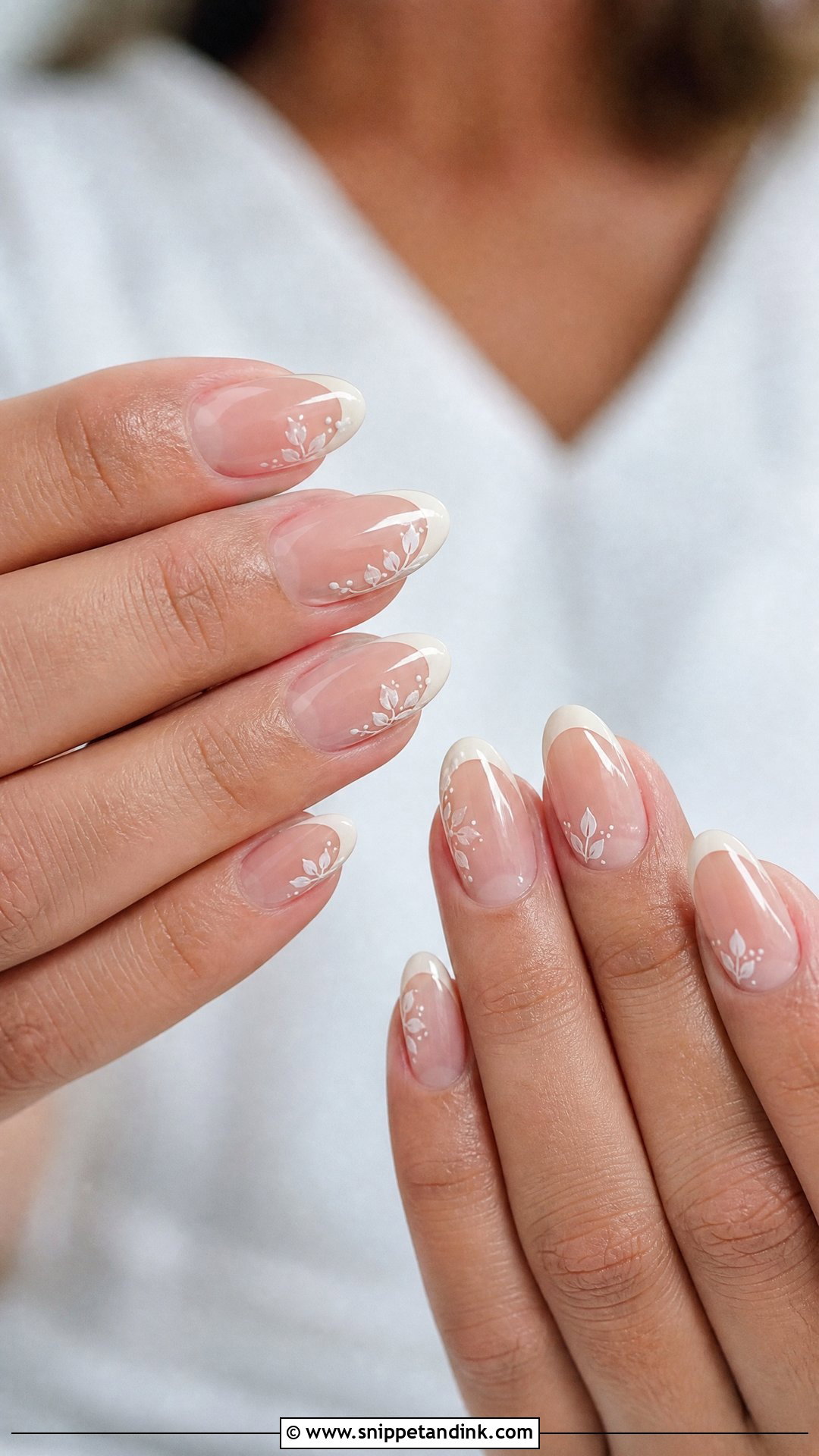
Floral French combines two familiar wedding looks: a sheer clean base, tips in white, ivory or a soft pastel, and tiny flowers painted near the tip or along one side. The French line keeps the art structured so it doesn’t look busy. Garden weddings, spring ceremonies and bridal showers suit it, and it’s a pretty choice for bridesmaids. Keep the flowers smaller than you think; almond softens them, square sharpens the French line.
Reading the Invitation Before You Pick a Shade
The invitation tells you more about your nails than any trend list. Here’s how I translate it when a guest or bridesmaid books in:
- Black tie or evening reception: a richer finish carries well under low light. Champagne chrome, fine silver shimmer, deep mauve or a glossy nude.
- Daytime garden or barn: soft florals, sheer pinks and blush ombre; nothing too metallic in strong sun.
- Beach or destination: short shapes and gel rather than regular polish, since sand, sunscreen and salt water wreck a fresh manicure fast.
- Religious or very traditional ceremony: short, neat and quiet. A sheer pink or nude never looks out of place.
Painting Your Own Nails for a Long Wedding Day
Not every guest wants a salon booking, and a home manicure can last the day if you prep it like a professional would. Push back cuticles and wipe each nail with alcohol or remover so no oil is left on the plate; oil is the main reason polish peels. Use a base coat, two thin colour coats and a top coat, and run the brush along the free edge each time to seal the tip.
Paint the night before rather than the morning, because regular polish stays soft for hours and picks up sheet marks or dress fibres. Choose a sheer shade if your hands aren’t steady; mistakes vanish in a translucent colour. Pack the bottle in your bag for a dab of repair between the ceremony and dinner.
The Set That Suits Your Role Is the One to Book
The right wedding manicure is rarely the boldest. It’s the one that sits with your dress, jewellery, skin tone, nail length and the part you’re playing on the day. Milky white, sheer pink, a classic French, pearl chrome and soft nudes are always safe. For more detail, florals, small crystals, gold accents, lace or a touch of blue add interest. Bring two or three photos to your appointment, pick a shape you can live with, and book close enough to the wedding that the cuticles still look fresh.
You'll Like These Ideas:


Leave a Reply