
Ivory is the shade I reach for when bright white would look too stark next to a gown. It has a little warmth in it, so it sits comfortably beside ivory, champagne, cream and blush fabrics, and it flatters more skin tones than pure white does in close-up ring shots. The same shade can be worn sheer, milky, chromed, tipped as a French or dressed with lace, florals or a few pearls. The sets below cover all of those, and for each one I’ve added what I watch for at the desk, because pale colours are less forgiving than they look.
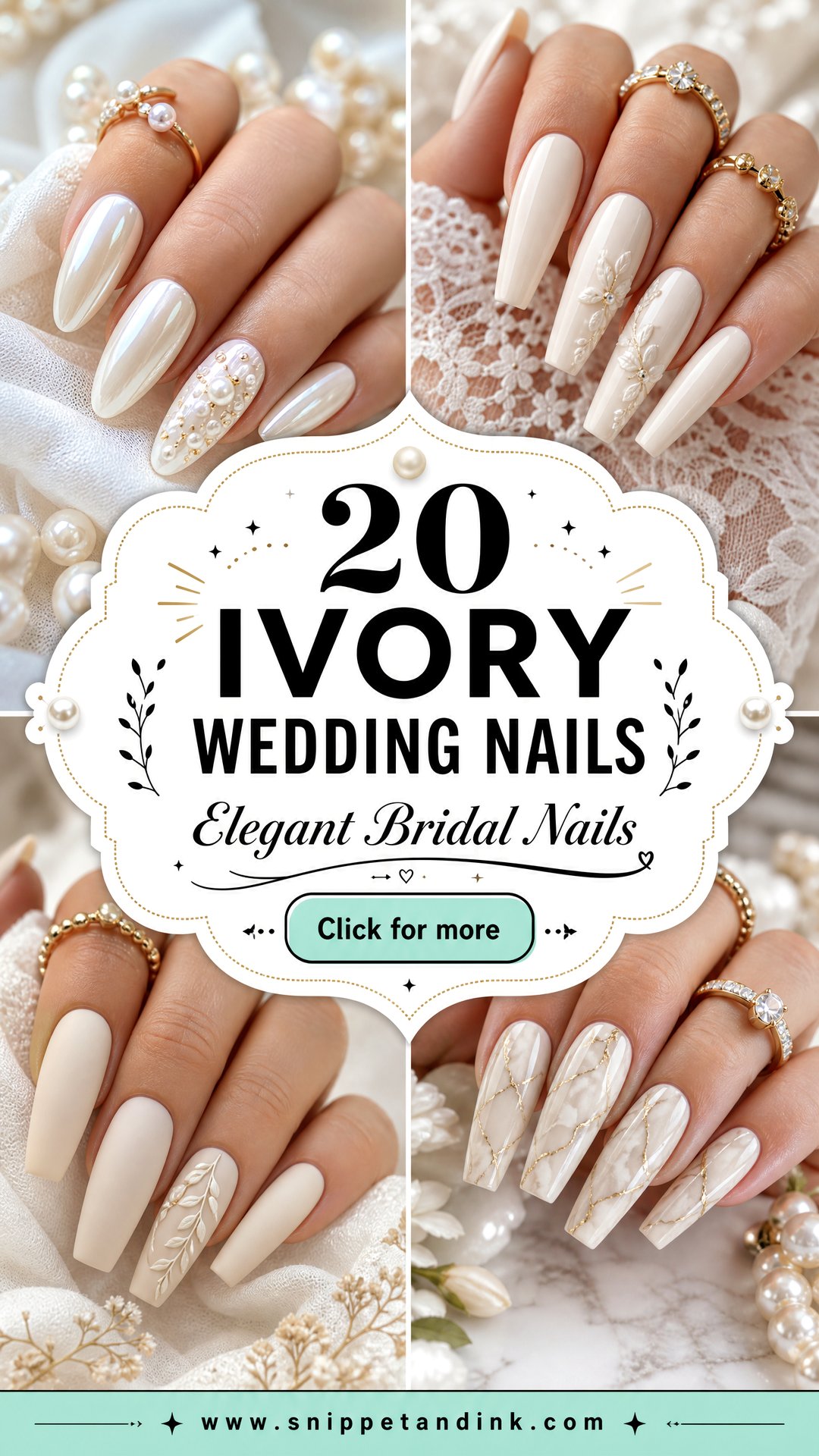
Swatching Ivory Against the Dress Fabric, Not a Photo
No two ivories match. One brand’s ivory is nearly cream, another’s is pinkish, and a dress labelled ivory can look anywhere from soft white to light gold. Screens make it worse. So I ask brides to bring a fabric swatch, or at least wear something in the dress colour, and I paint a few swatch sticks to hold against it by a window.
- Fair or cool-toned skin can look sallow next to a yellow-leaning ivory. A pinker, softer ivory usually fixes it.
- Deeper and warm skin tones carry a richer, creamier ivory well, and it reads as warm instead of chalky.
- Opaque pale gels streak on the first coat. Two or three thin coats, each cured, look smoother than one thick coat, which can wrinkle under the lamp.
- Look at the cured colour, not the bottle. Ivory often shifts slightly warmer once the top coat goes on.
1. Ivory French Tip Wedding Nails
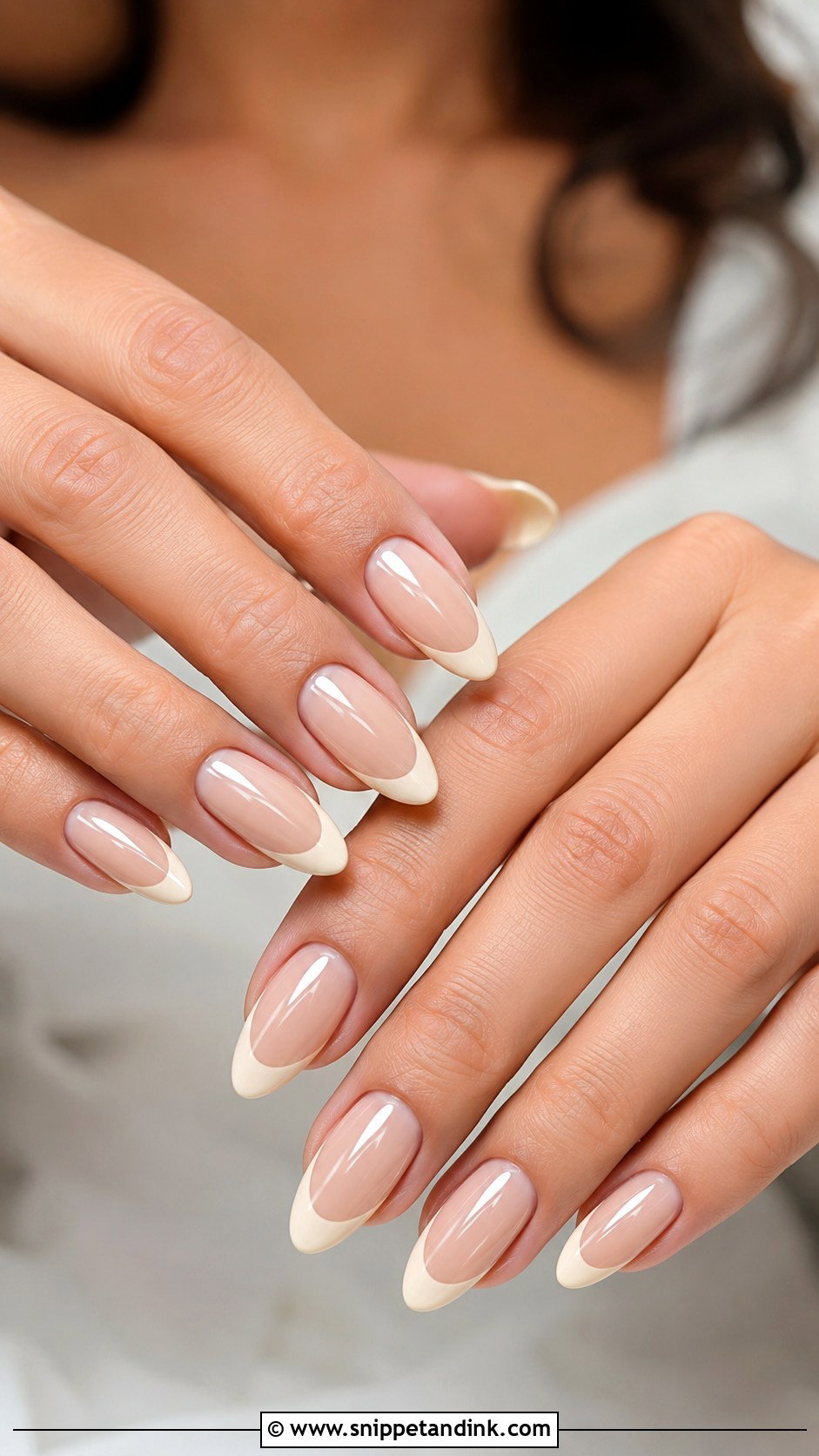
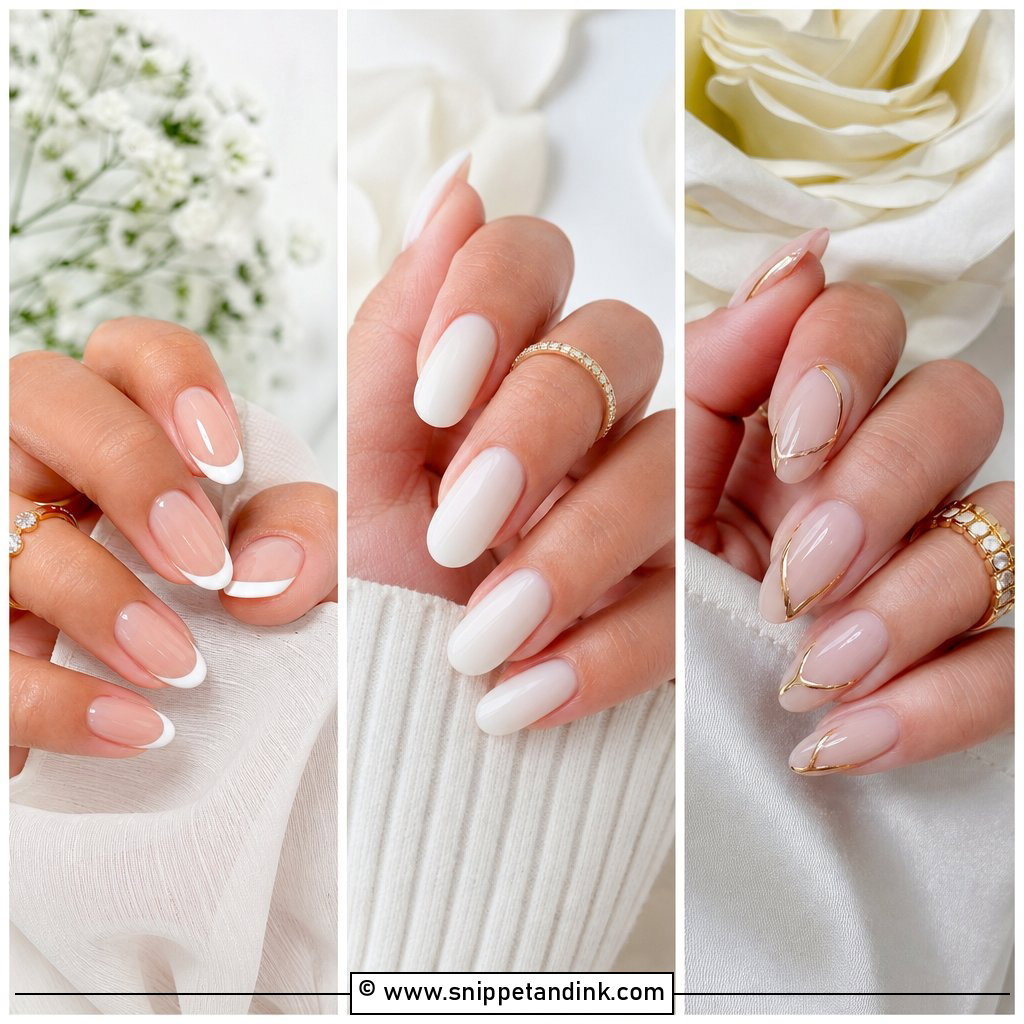
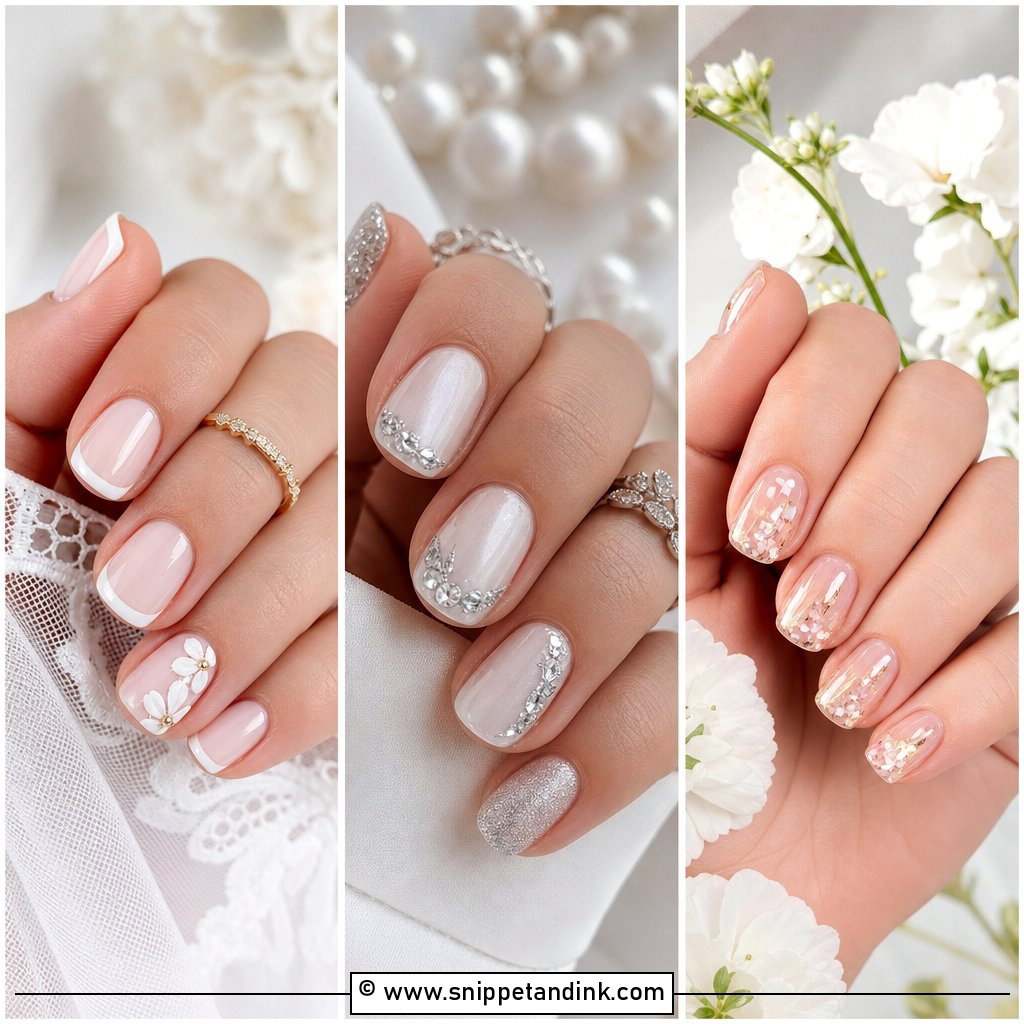
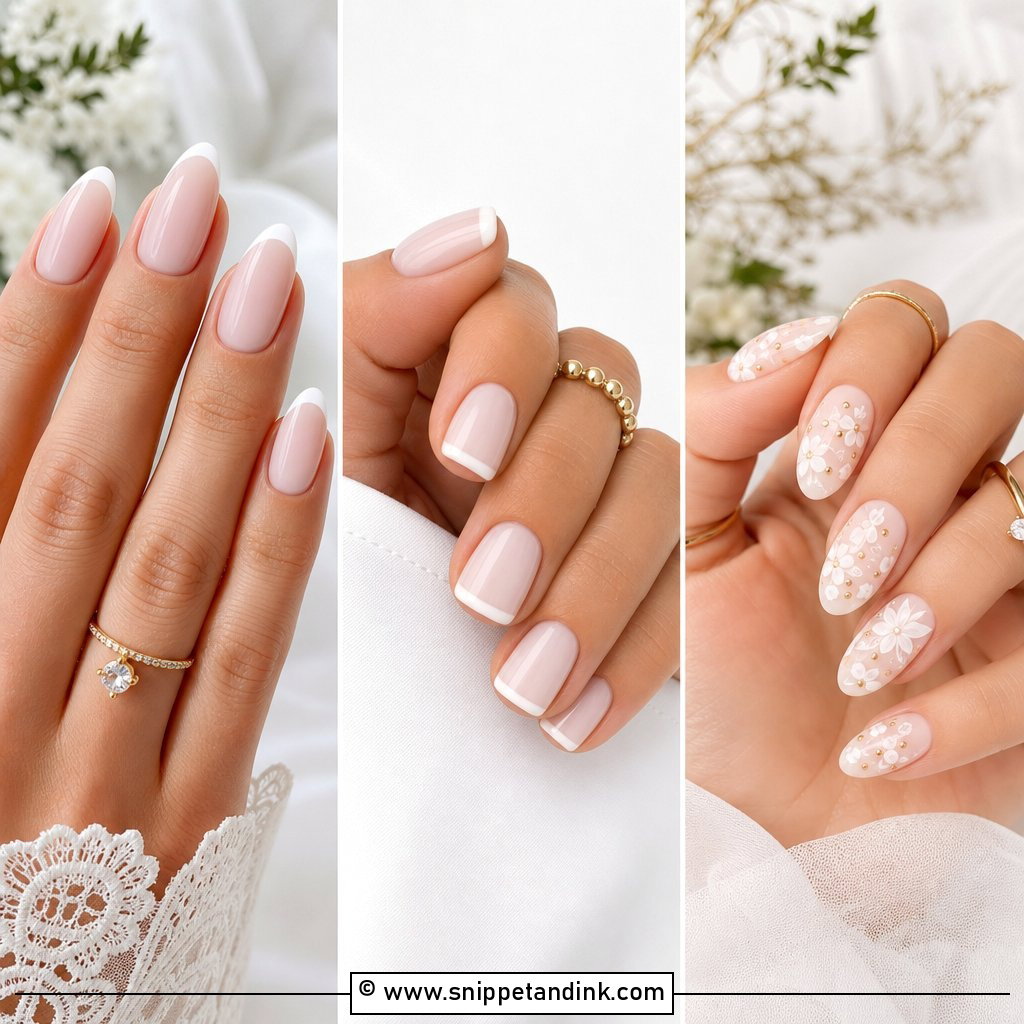
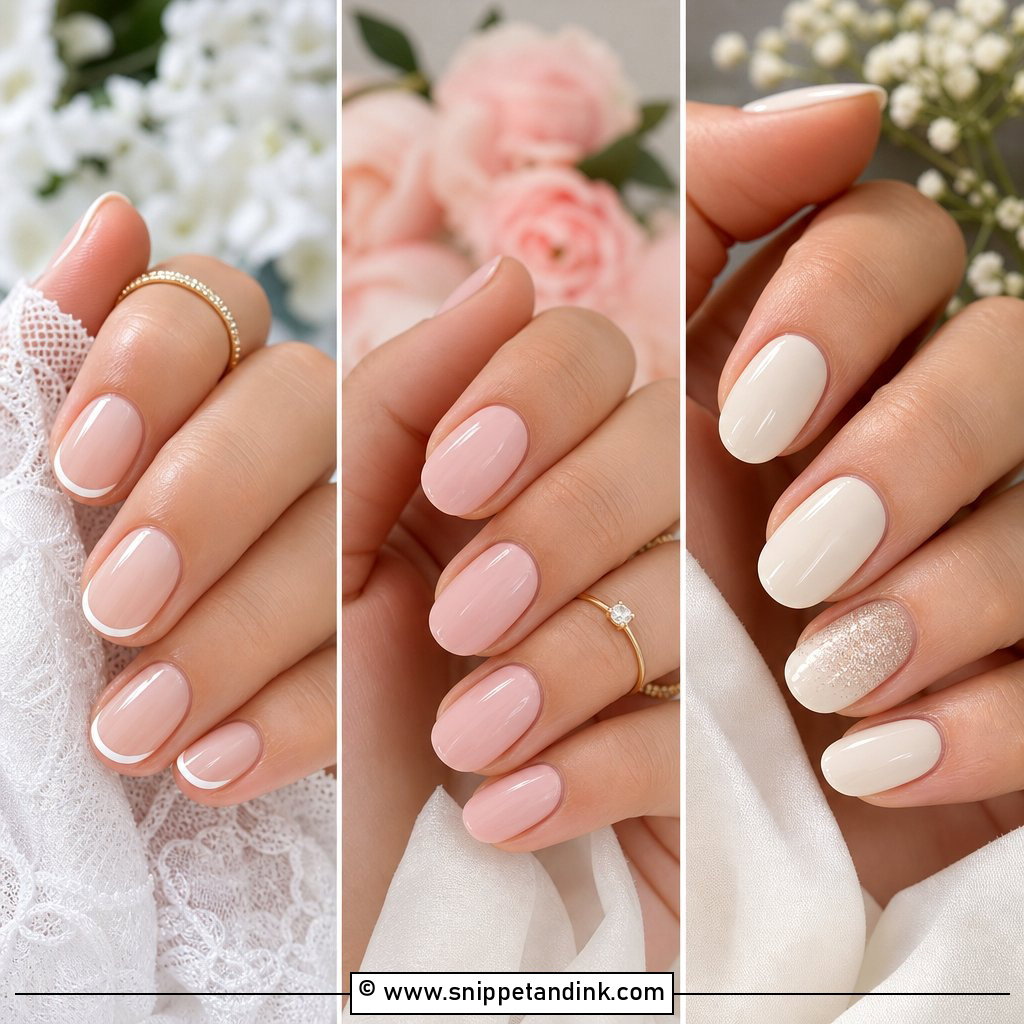
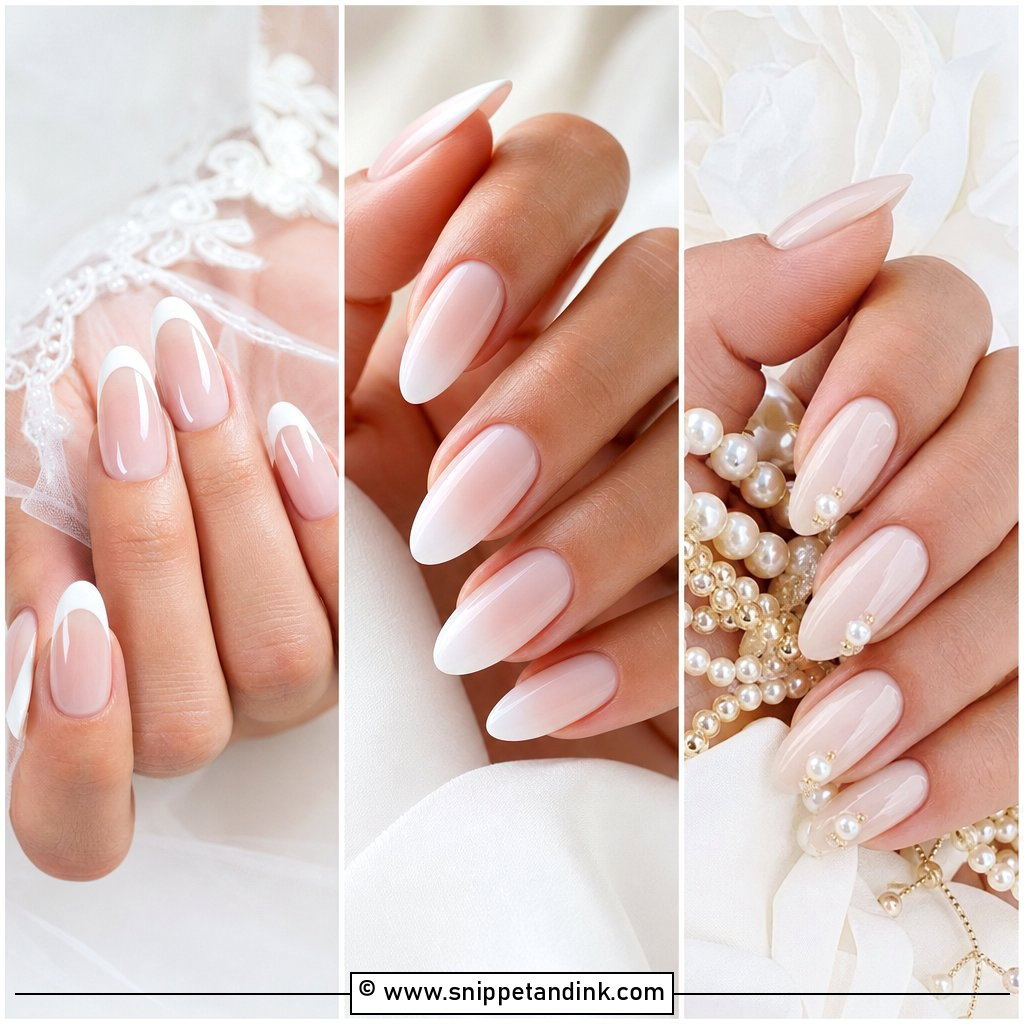
A French in ivory instead of white is softer on the hand and blends into a warm-toned dress rather than jumping off it. I usually pair it with a sheer nude, pale pink or milky beige base and keep the smile line thinner than a classic French, which makes the nail bed look longer, especially on an almond or oval shape. Short nail beds are where a thick tip goes wrong; it eats up half the nail. Finish with a glossy top coat, or a faint pearl sheen if you want the tips to glow.
2. Milky Ivory Wedding Nails
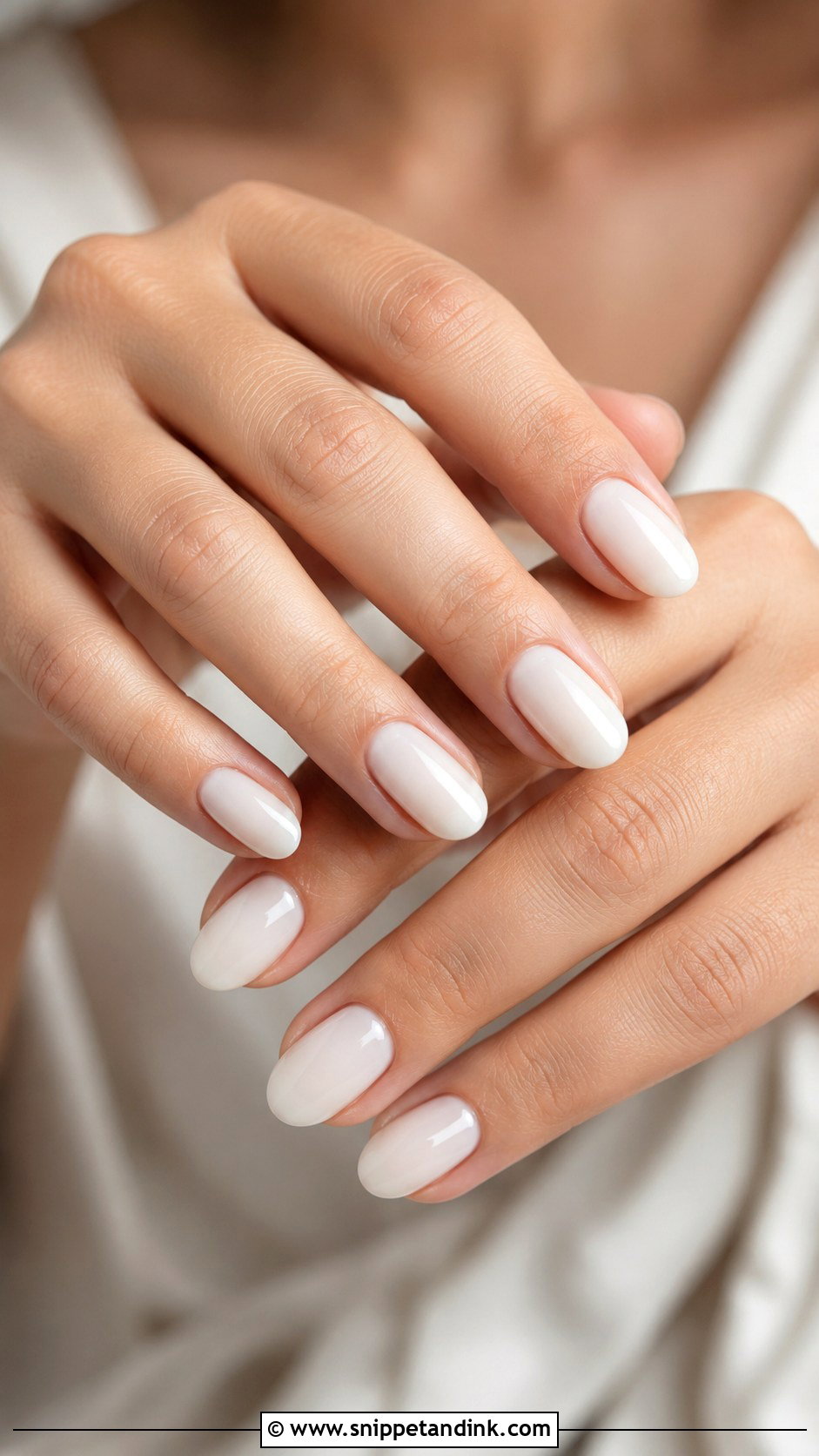
Milky ivory is usually a sheer builder or base gel with a creamy tint, which lets a hint of the natural nail show through, like a veil over it. Because the colour does the work, length hardly matters. The catch is that any ridges or uneven growth show under a translucent finish, so I build a thin structured layer first to smooth the plate. It goes with silver and gold jewelry alike and grows out gracefully after the honeymoon. Rounded square and oval shapes look the neatest.
3. Ivory Chrome Wedding Nails
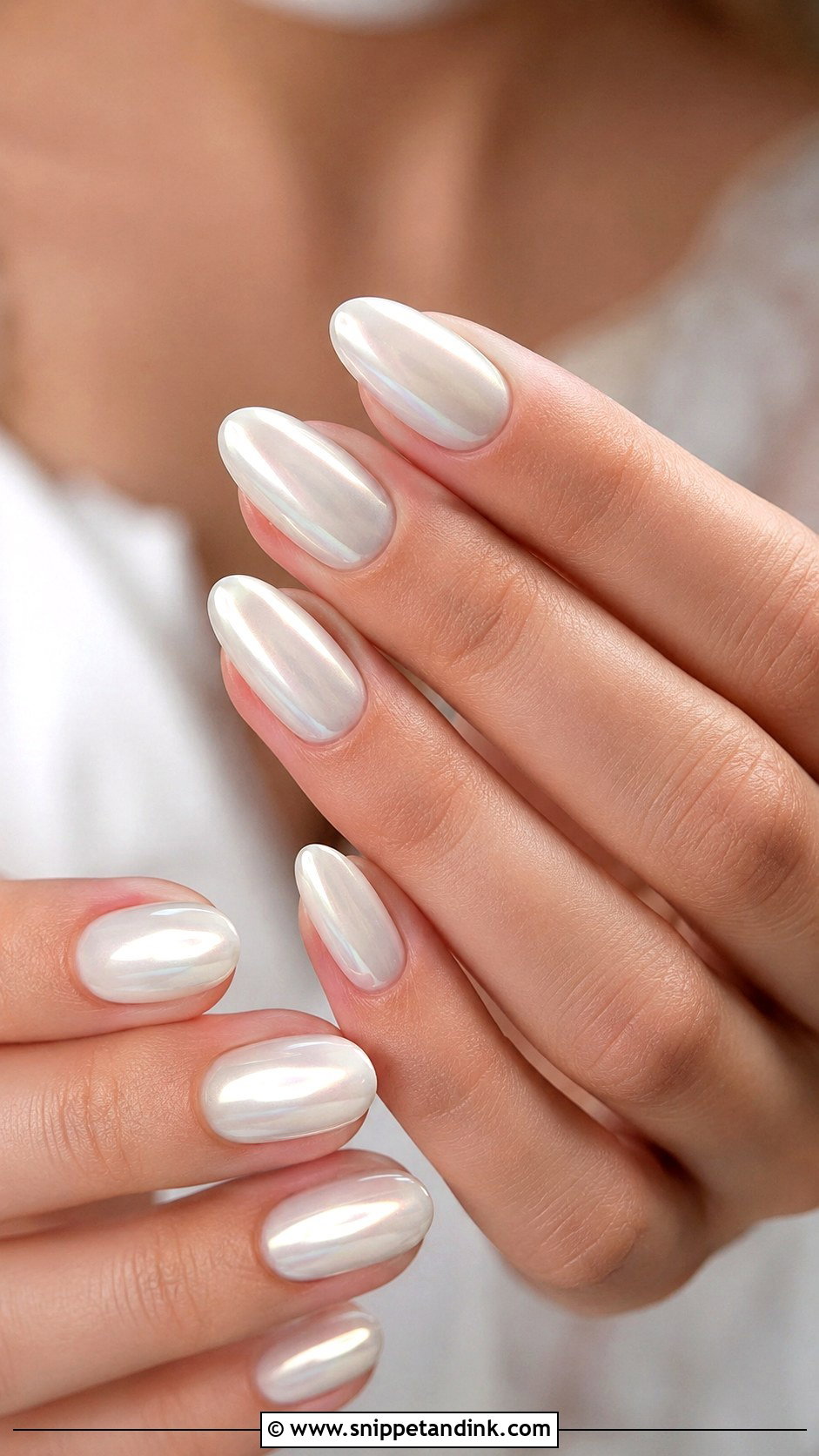
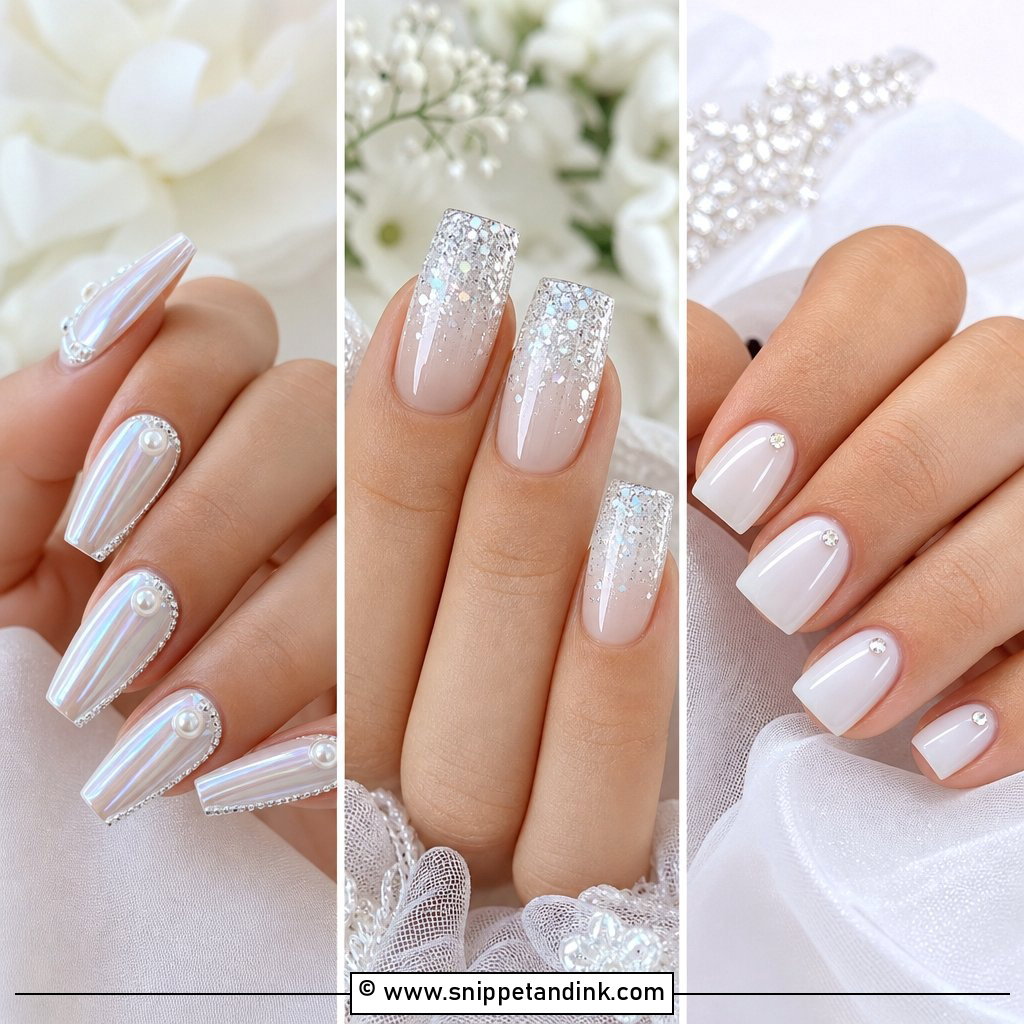
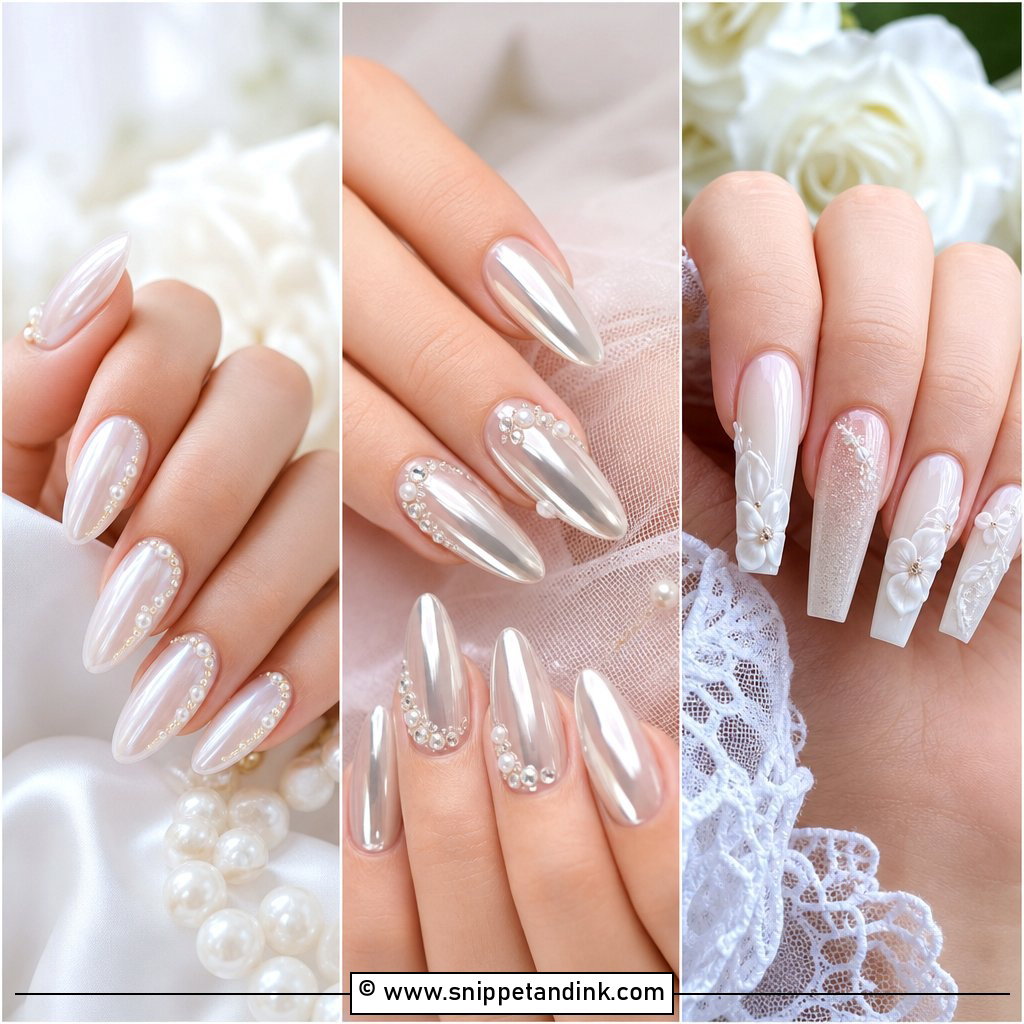
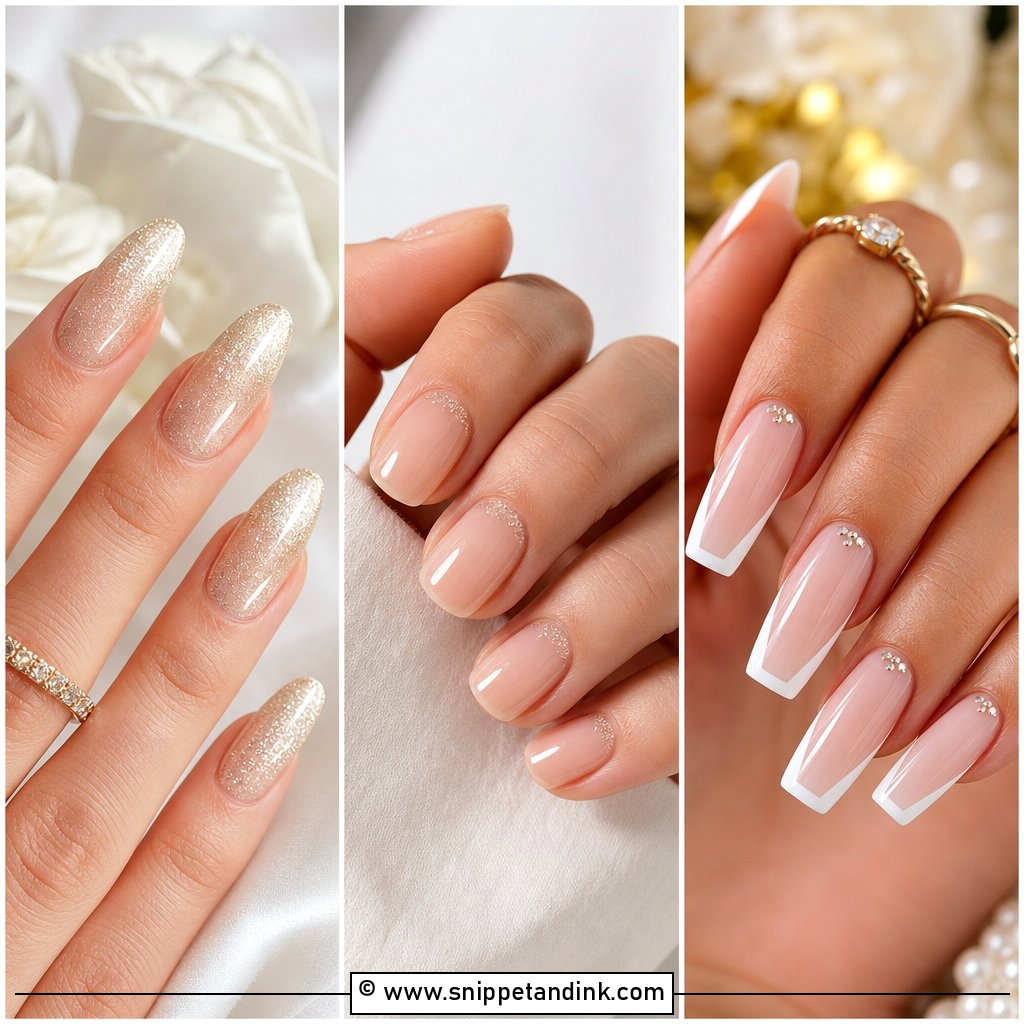
Chrome powder is buffed onto a cured no-wipe top coat, and on ivory I use a pearl or champagne powder rather than a mirror finish, so the nail glows instead of reflecting like foil. A sheer base under the powder gives a softer result; a fully opaque ivory gel underneath reads stronger. Almond nails let the sheen travel along the curve, while short squares make it look clean and current. Chrome shows every bump in the surface, so the prep under it has to be smooth.
4. Ivory Pearl Wedding Nails
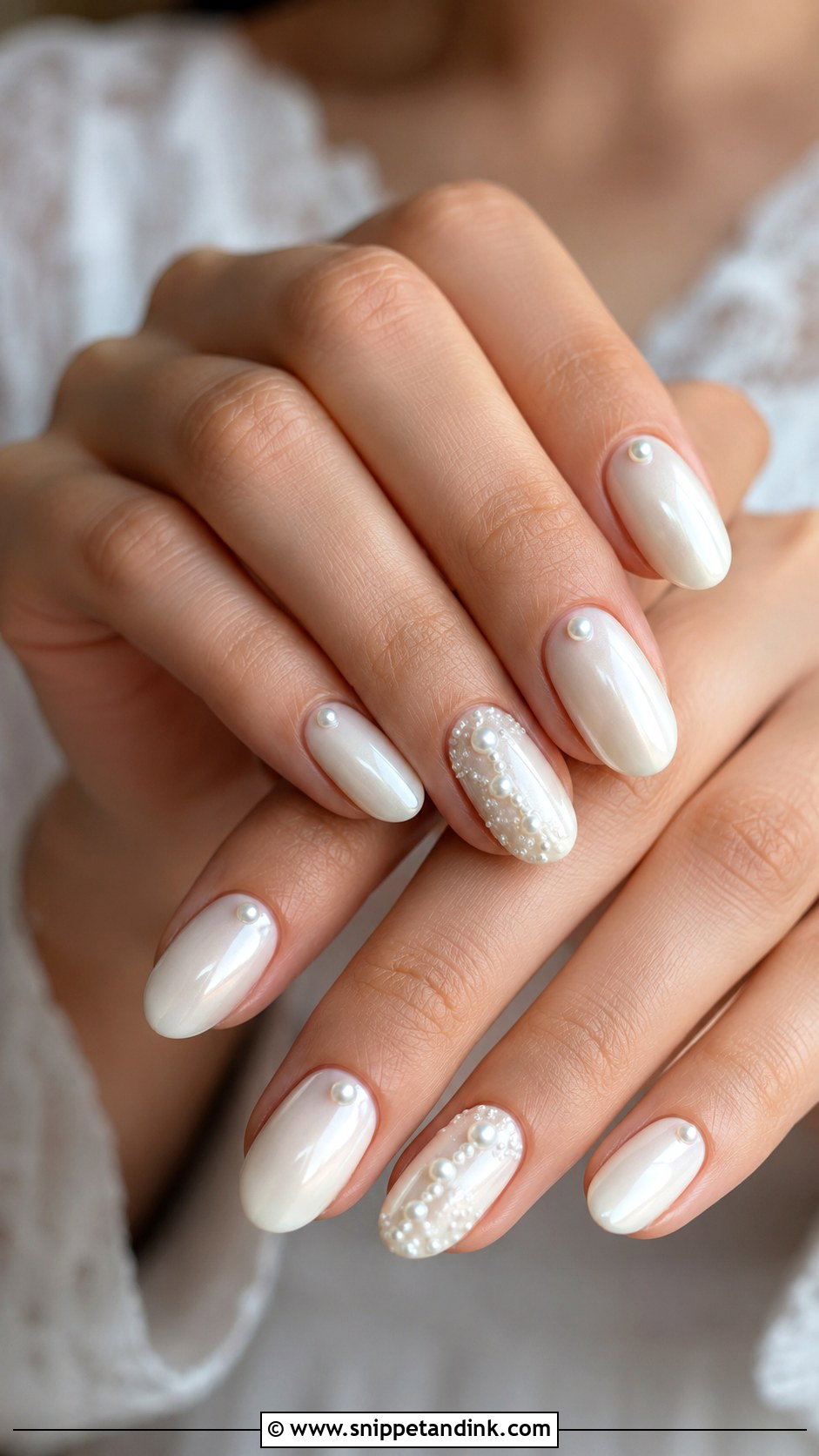
Tiny pearls make a set read as bridal immediately, and they’re also the first thing to catch on tulle. I set flat-back pearls in a gel well near the cuticle or along one side, on one or two accent nails, and cap around them so no edge sticks up. Oval, almond and coffin shapes give them room. If your veil is fine tulle, keep pearls off the fingers you’ll use to lift and adjust it, or they’ll pull threads.
5. Ivory Lace Wedding Nails
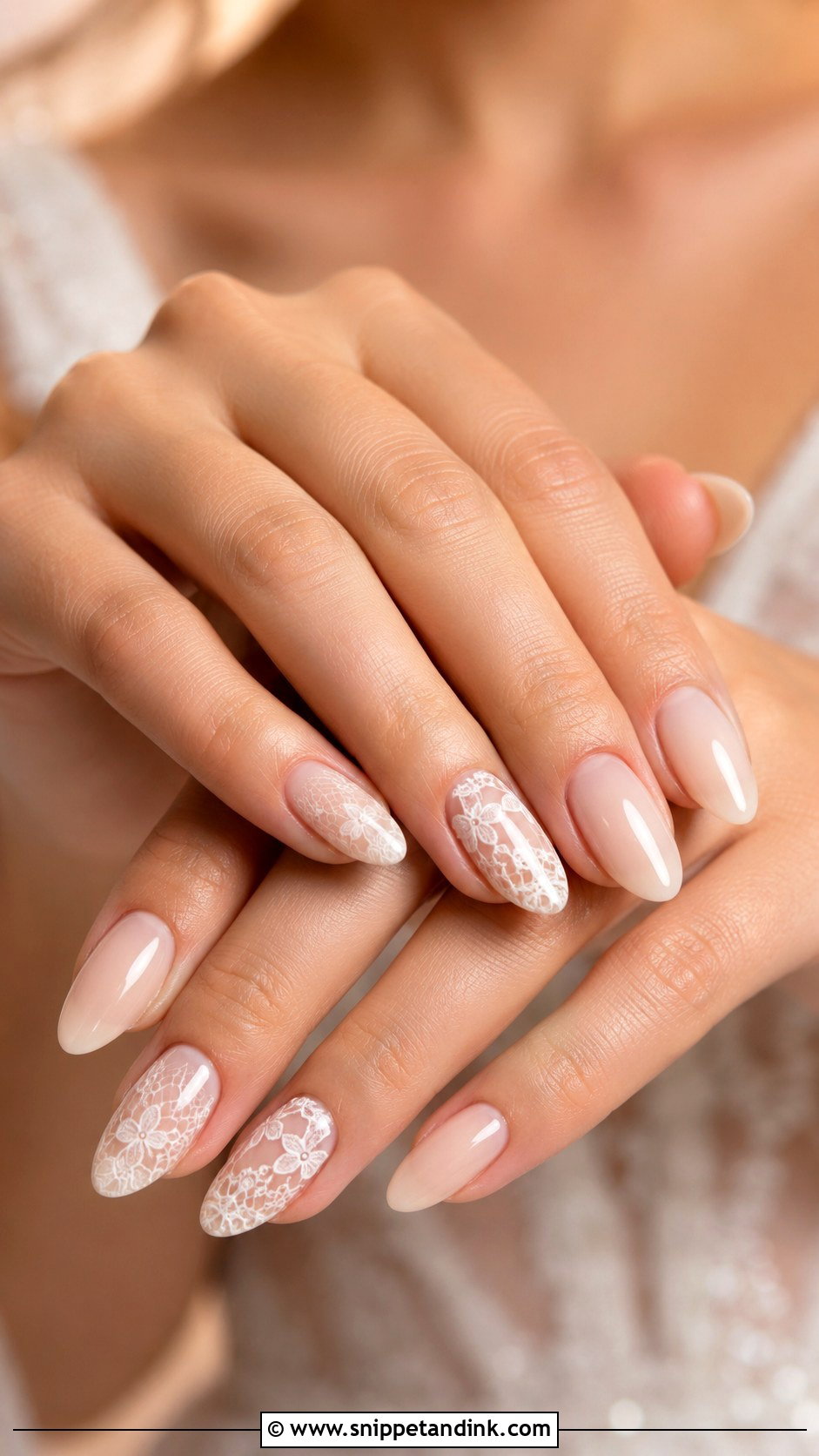
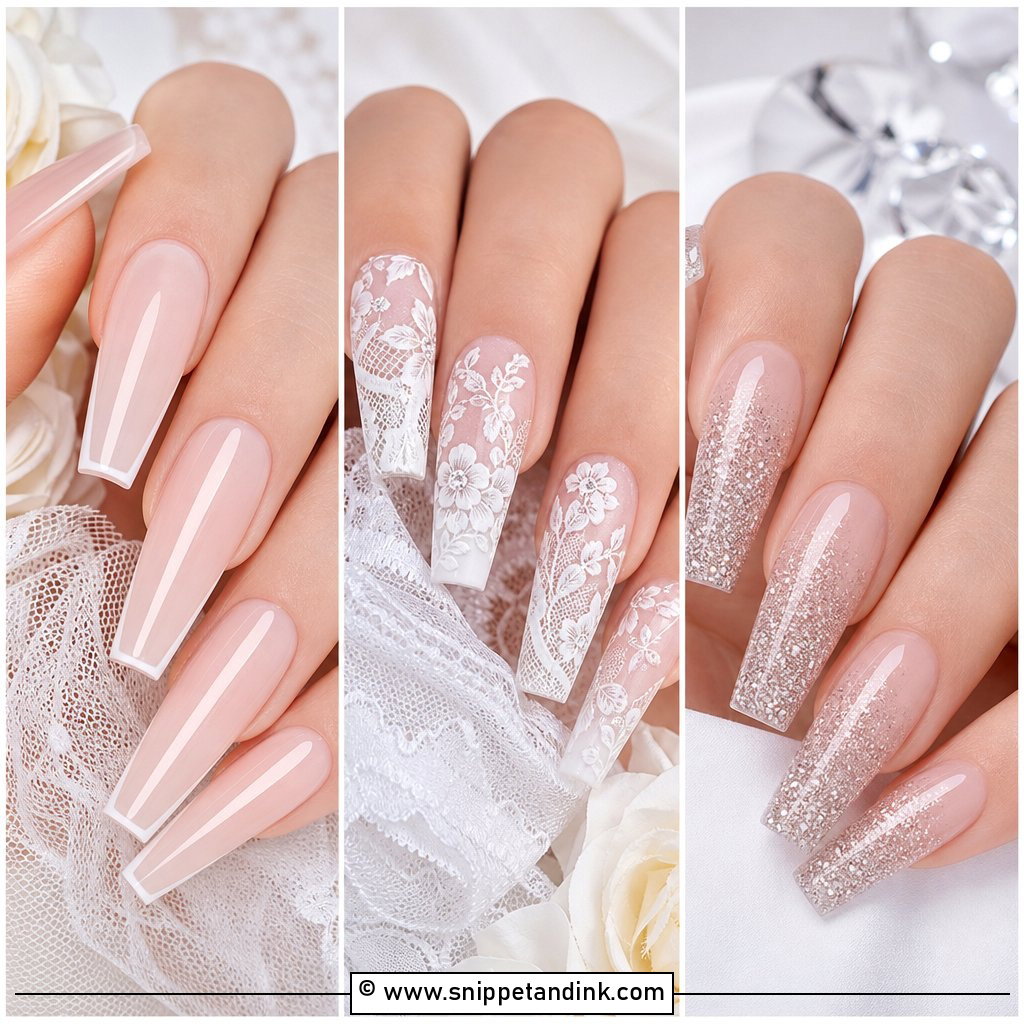
Lace on a nail is either hand-painted with a liner brush, stamped from a plate, or drawn in fine gel, and the method changes the look. Stamping gives crisp repeats quickly; hand-painting can copy the actual motif on your sleeve. Bring a close photo of your lace and I’ll pull one element from it rather than a generic pattern. Keep it to a couple of nails over a sheer nude or ivory base. A matte top coat over lace gives a fabric-like finish that looks especially right with long-sleeved gowns.
6. Ivory Ombre Wedding Nails
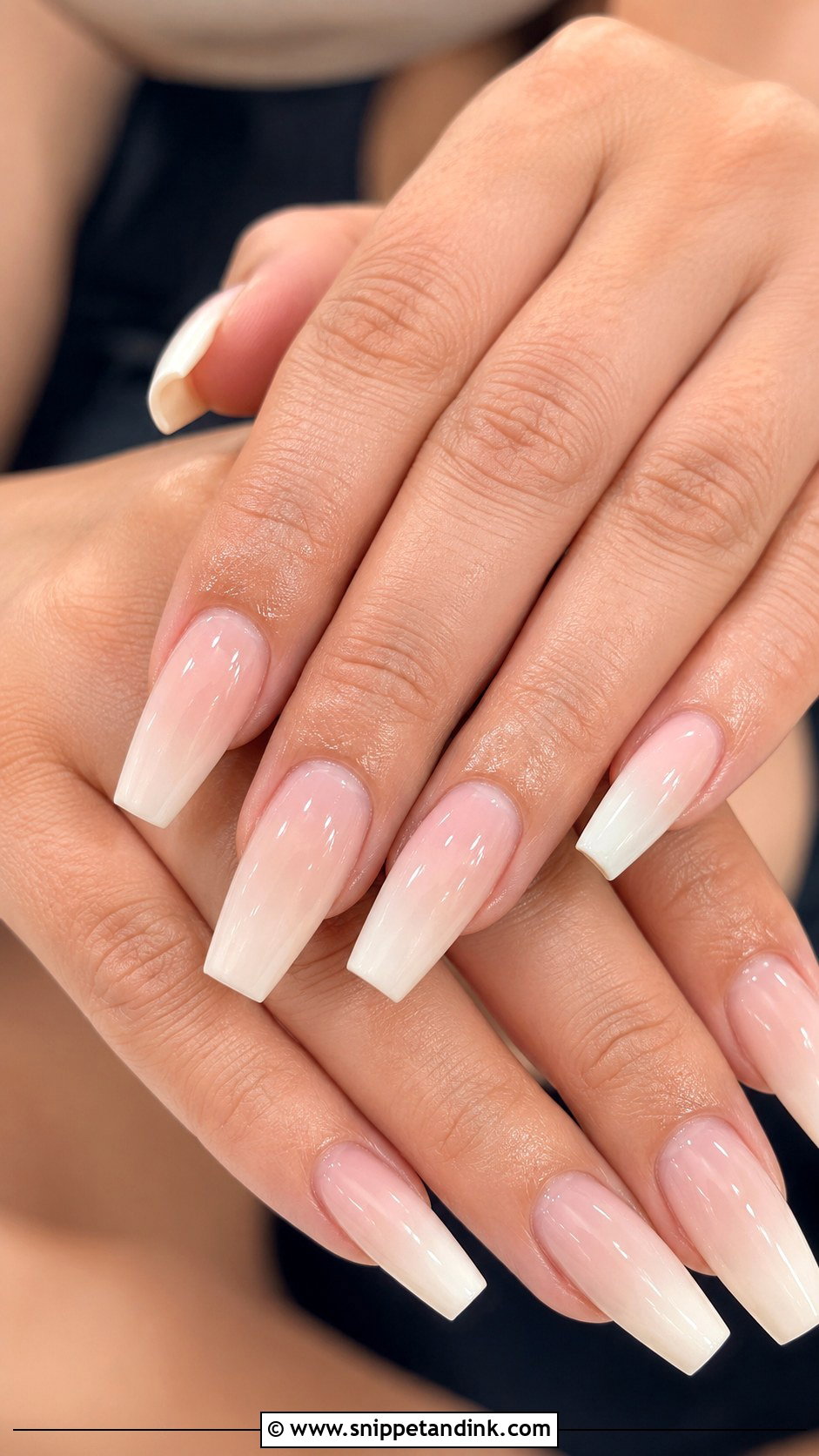
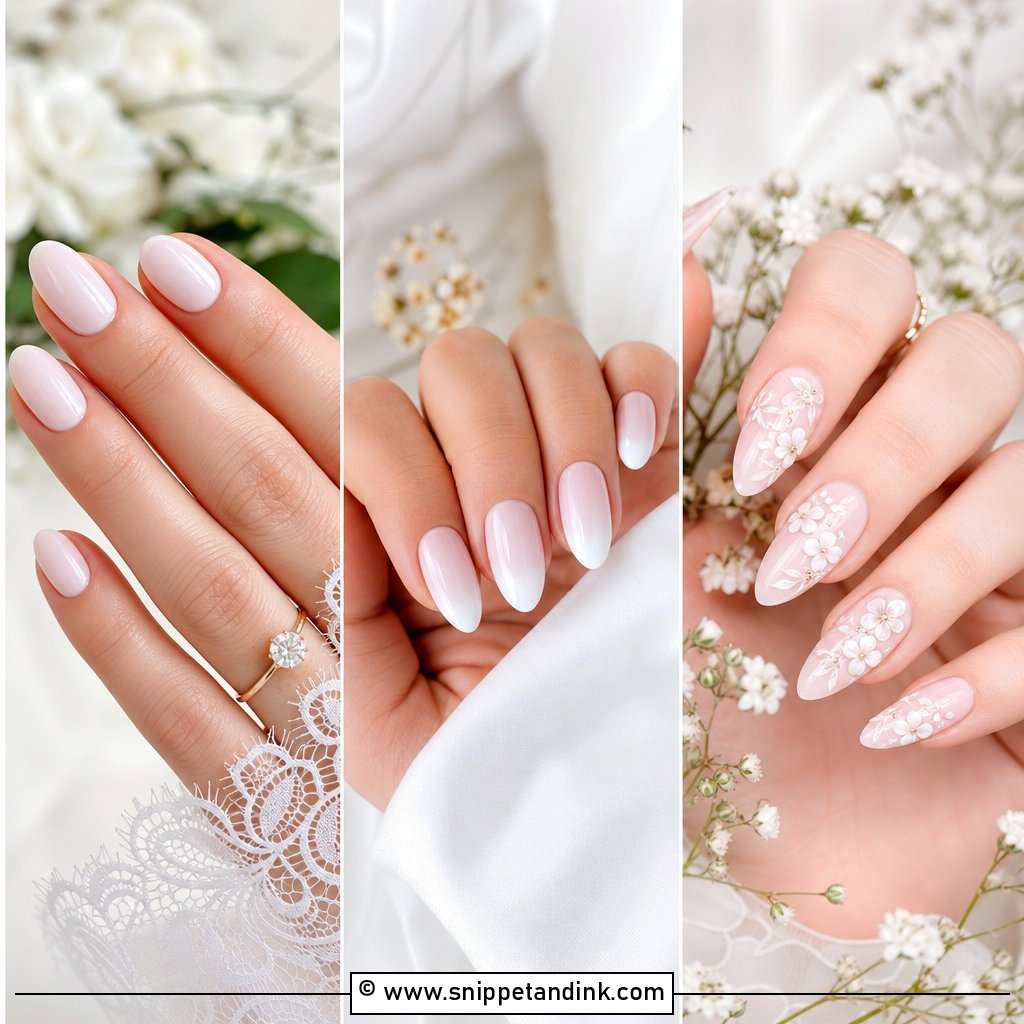
Ivory ombre wedding nails are the baby boomer manicure in a warmer key, fading from a natural pink or nude base into creamy ivory tips. The blend is done with a sponge or a dry brush, and a visible band halfway up the nail is the usual giveaway of a rushed fade. I build it in thin passes. It suits brides who like a French but find the hard line too defined, and it works on square, coffin, almond and oval shapes. Keep the contrast gentle and seal it with a high-shine coat.
7. Ivory Almond Wedding Nails
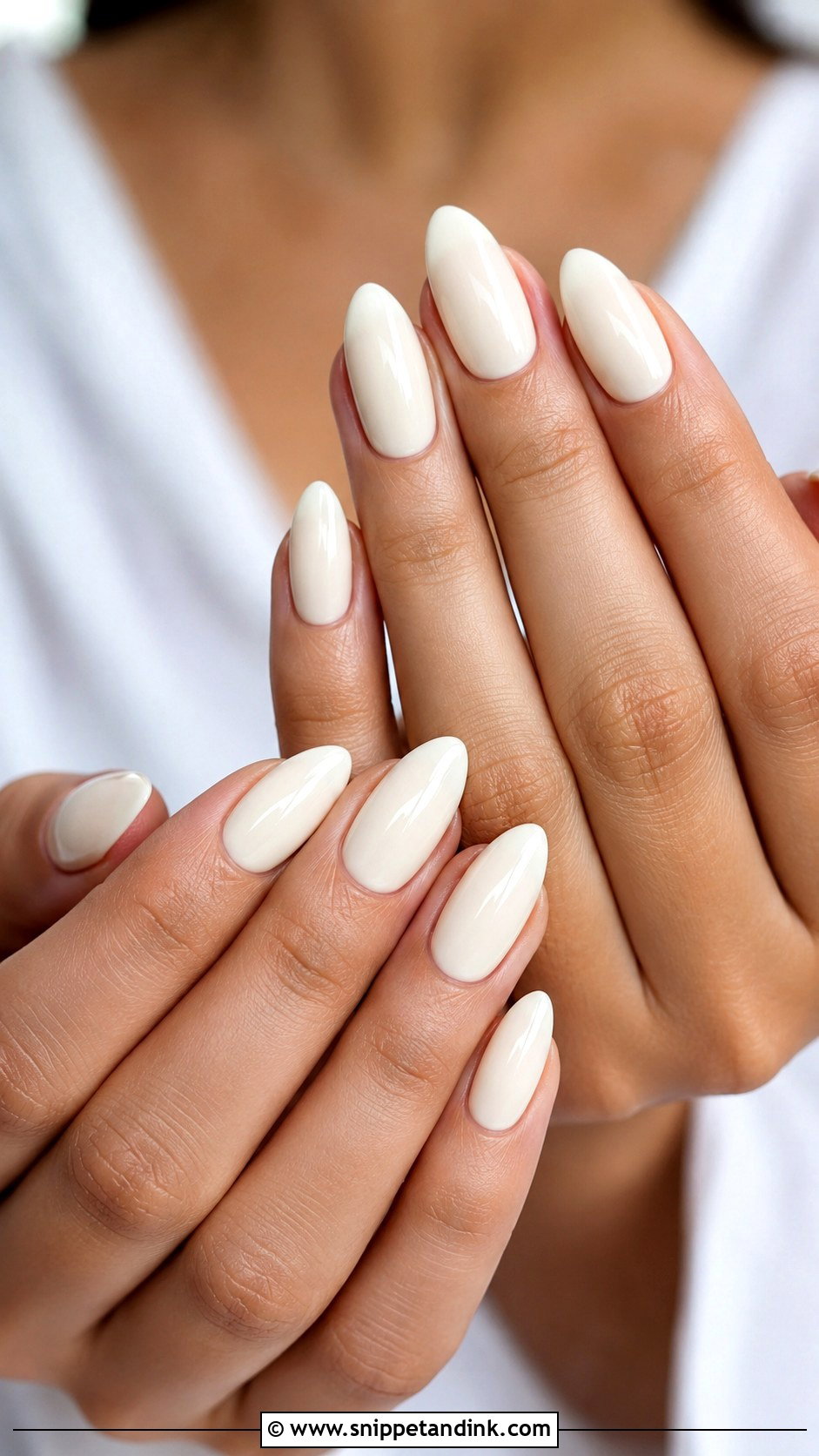
Almond lengthens the fingers without the sharpness of a stiletto, which is why it’s the shape I’m asked for most for ring shots. Solid glossy ivory, a sheer wash or a faint shimmer all suit it. Medium length gives the curve enough room; very short almonds start to look like ovals anyway. With a simply cut dress, this keeps the hands graceful without pulling attention. Start using cuticle oil daily a couple of weeks out, since dry, lifted cuticles show more against a pale colour than against a dark one.
8. Ivory Short Wedding Nails
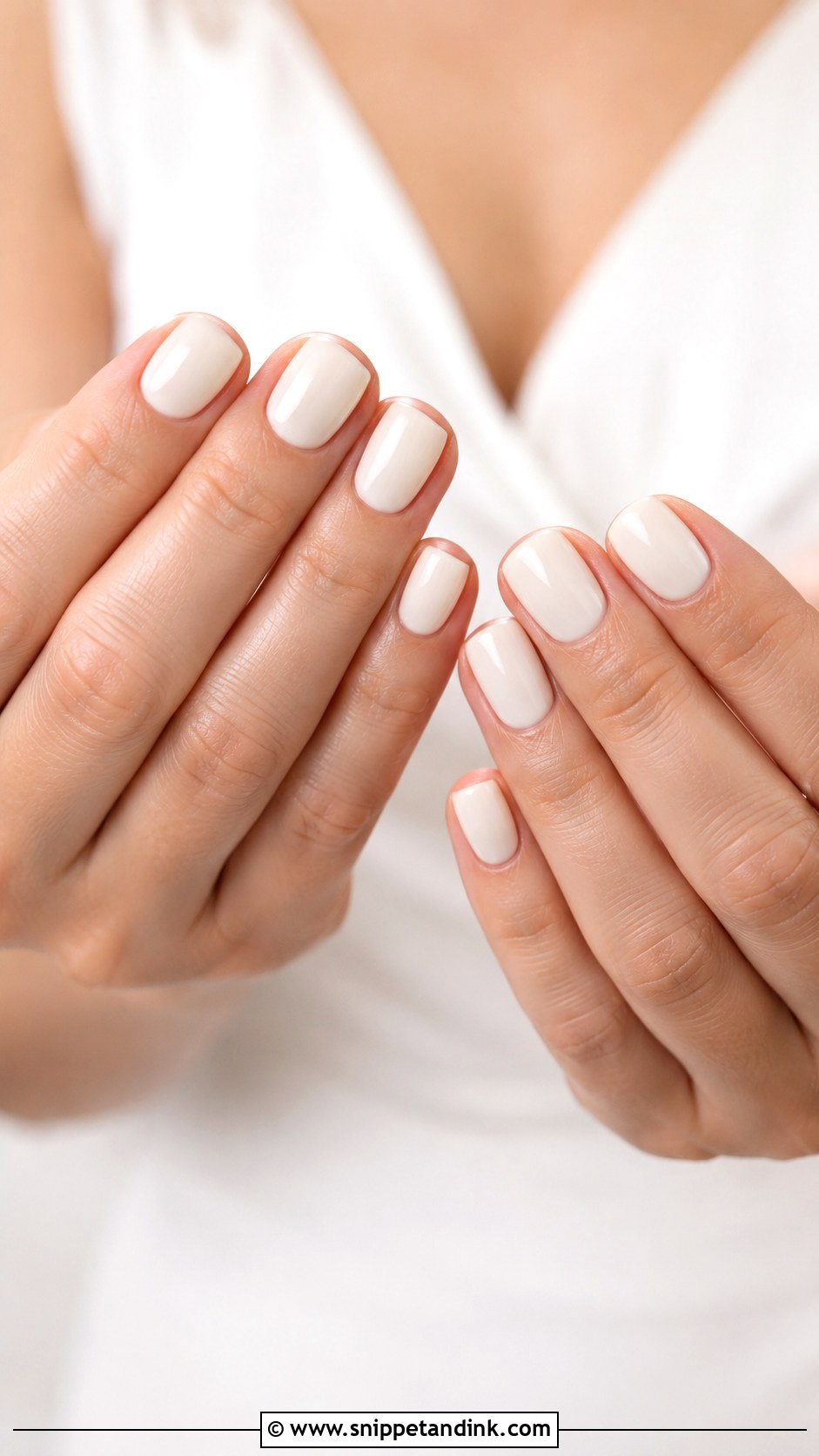
Short nails can look just as finished, and I’d honestly recommend them if you work with your hands or have never worn extensions, since the first week in long nails is clumsy. Rounded square and soft oval shapes keep short nails tidy. Opaque ivory, milky ivory or a pearl finish all work. One small detail, a band of micro glitter at the cuticle or a single fine line, is plenty. They’re comfortable on the day and easy to maintain afterwards.
9. Ivory Coffin Wedding Nails
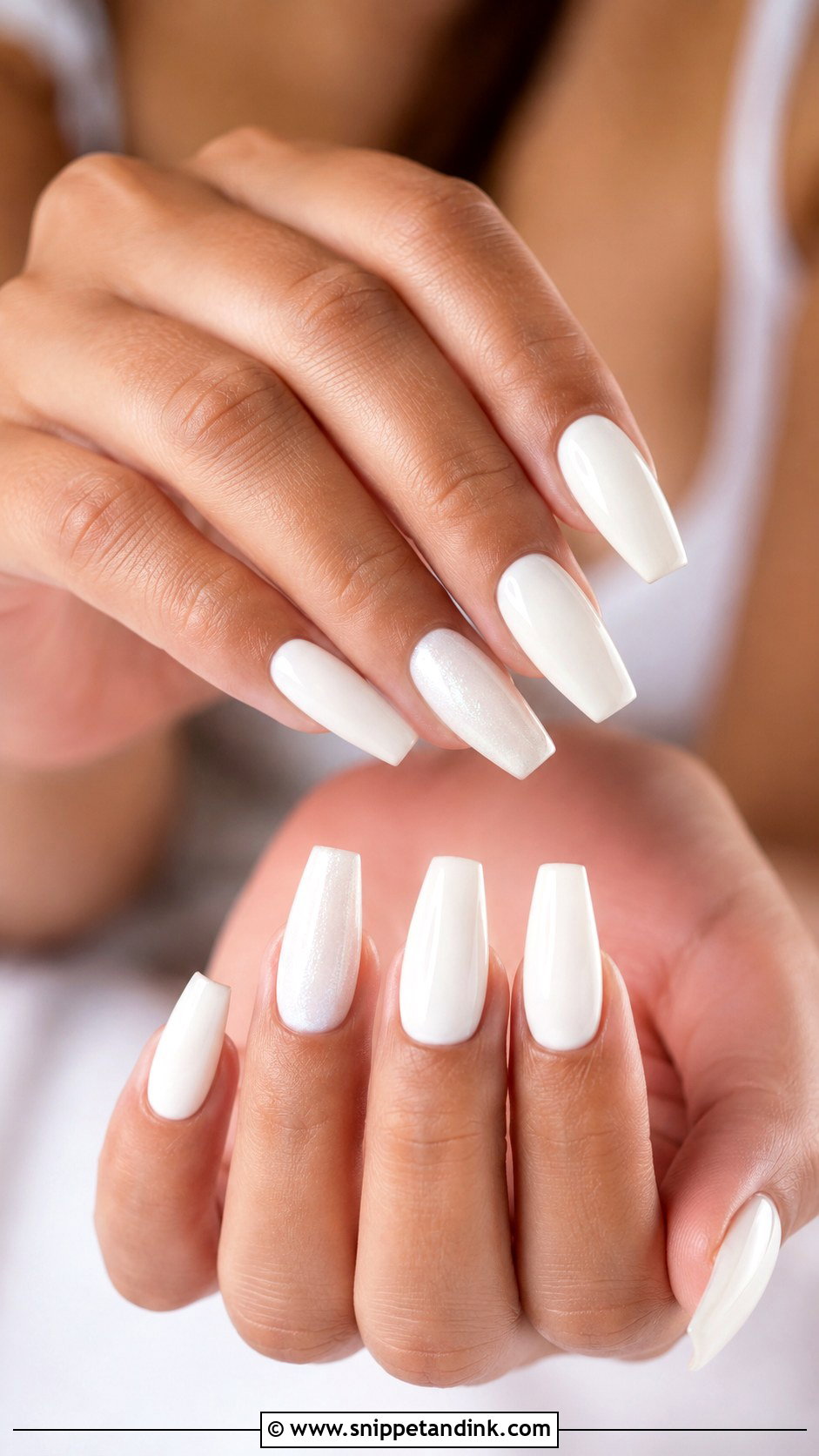
Coffin nails have tapered sides and a flat tip, and in ivory the shape looks sculpted rather than aggressive. A glossy solid set is the sleekest; ombre or chrome adds depth. The flat tip gives space for fine gold lines, pearls or tiny florals. I keep coffins at medium length for weddings, because long ones are hard to manage when you’re fastening jewelry or tucking hair, and the corners are the first part to chip if you knock them.
10. Ivory Square Wedding Nails
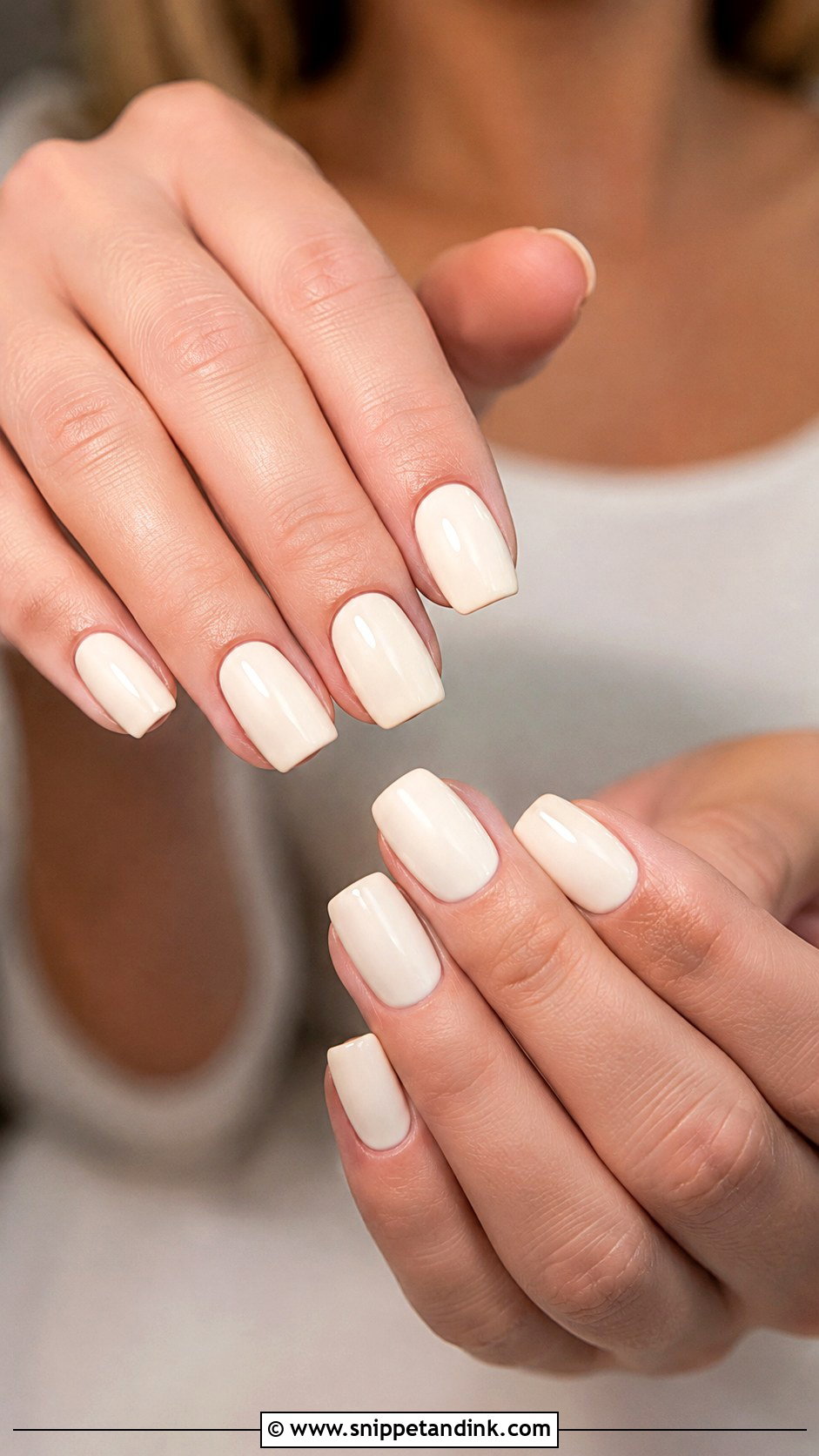
Square nails give ivory structure and a slightly modern feel, and they suit short to medium lengths best. A creamy gloss is the classic version; a micro French or a pearly top coat adds interest. I usually soften the corners a little, because sharp square corners catch on fabric and snag lace overlays. They sit well with simple gowns, sleek rings and minimal accessories.
11. Ivory Glitter Wedding Nails
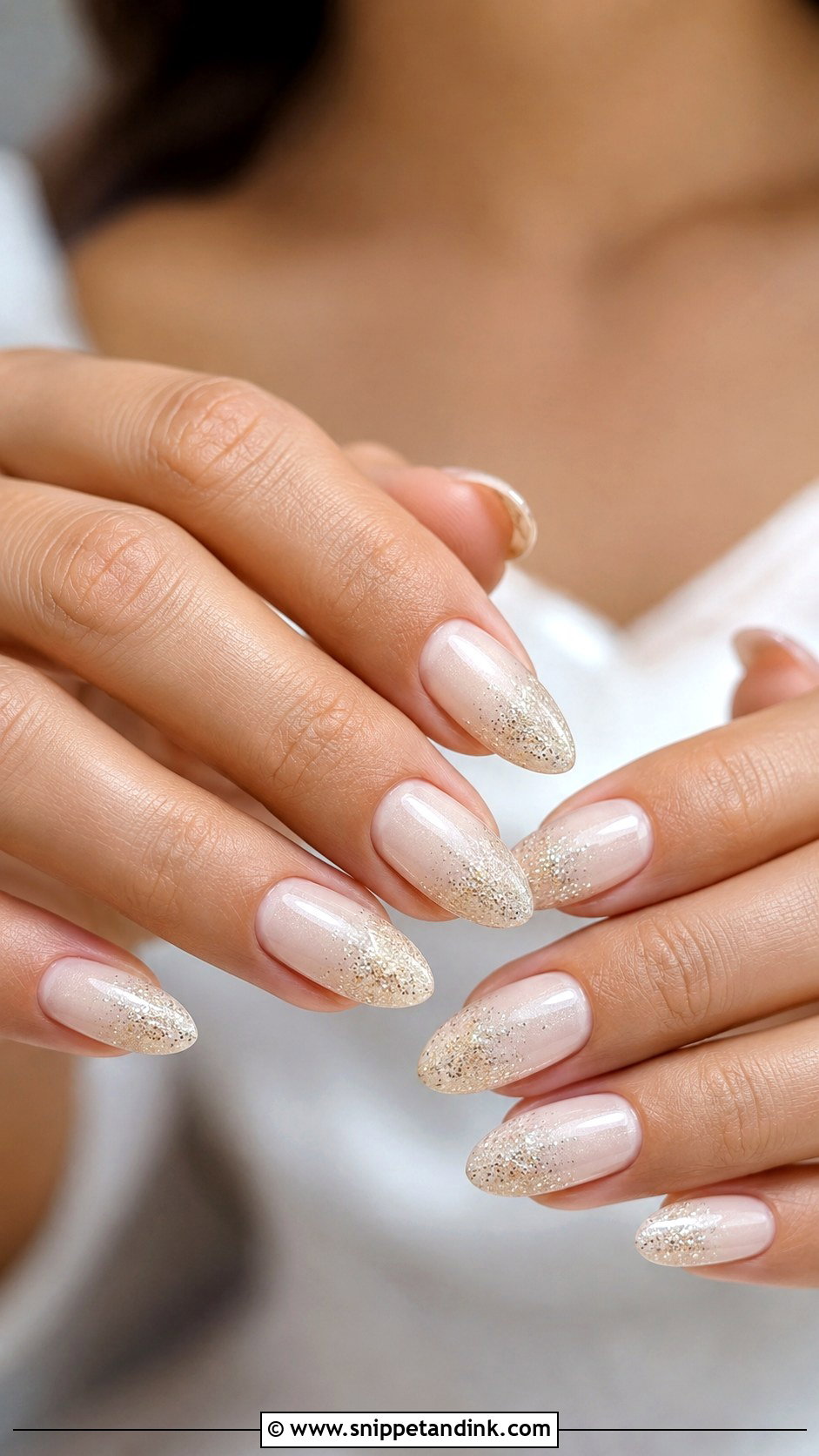
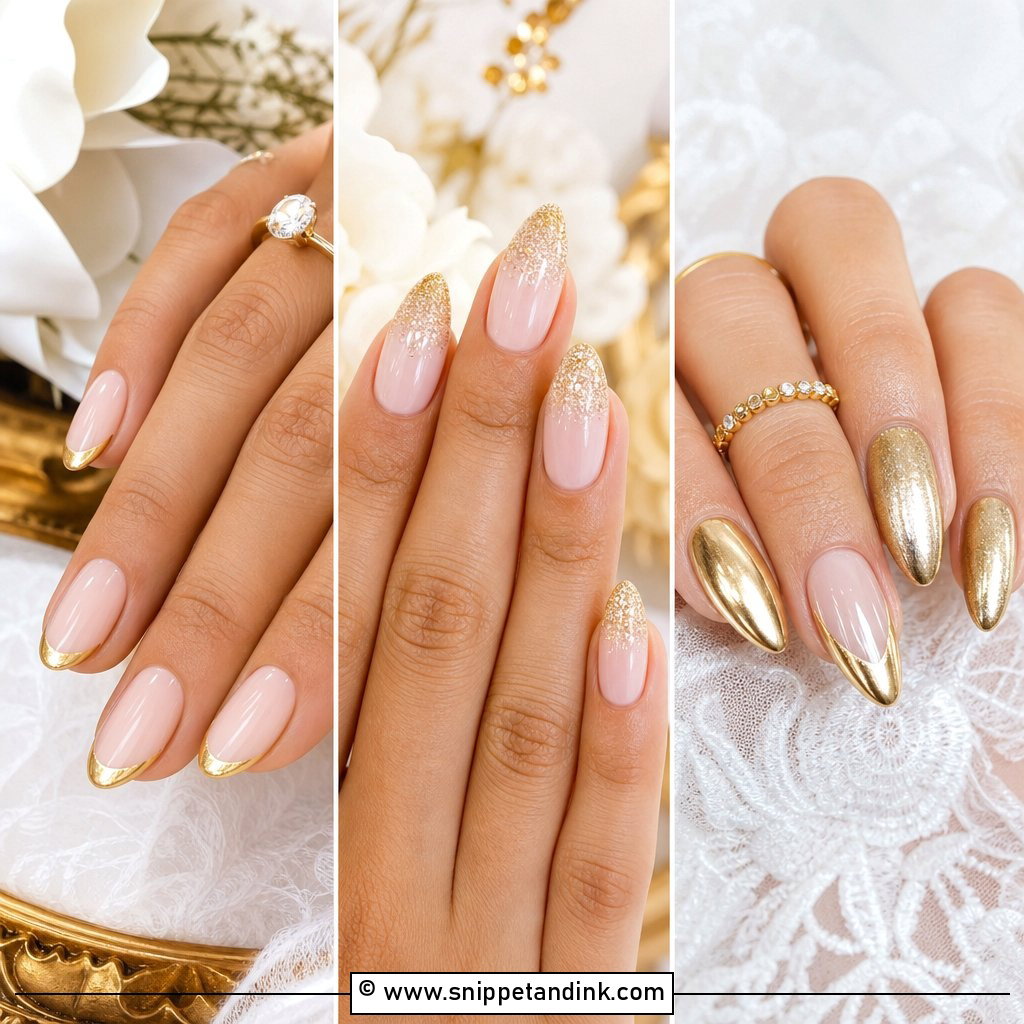
Fine glitter in champagne, silver or pearl looks expensive; chunky glitter looks like a party set and is a pain to soak off afterwards. I place it as a fade from the tips, a light shimmer across every nail, or an accent on two fingers. Under evening reception lighting, the glitter catches as your hands move while the ivory keeps it soft. All four main shapes work.
12. Ivory Floral Wedding Nails
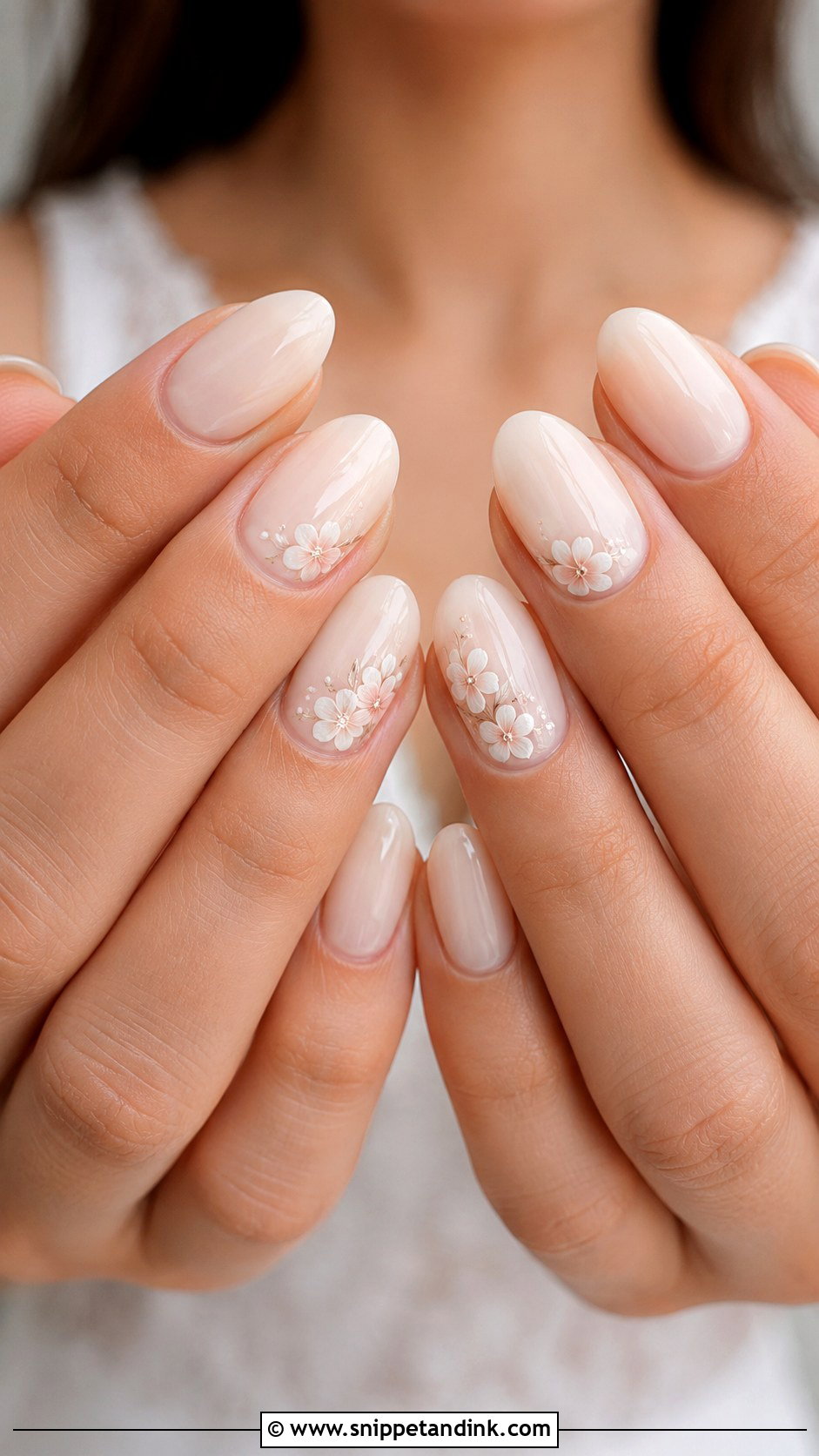
Florals on ivory need restraint. Over a sheer ivory or nude-ivory base, I paint small white, cream or blush flowers on accent nails and leave space around them, because crowded petals blur into a smudge from more than arm’s length. Hand-painted, pressed or fine gel flowers all work. If your dress has floral embroidery, bring a photo so the petal shape echoes it. Almond and oval shapes make the flowers look delicate; short squares give a fresher take, and a soft matte top makes the petals read finer.
13. Ivory Gold Wedding Nails
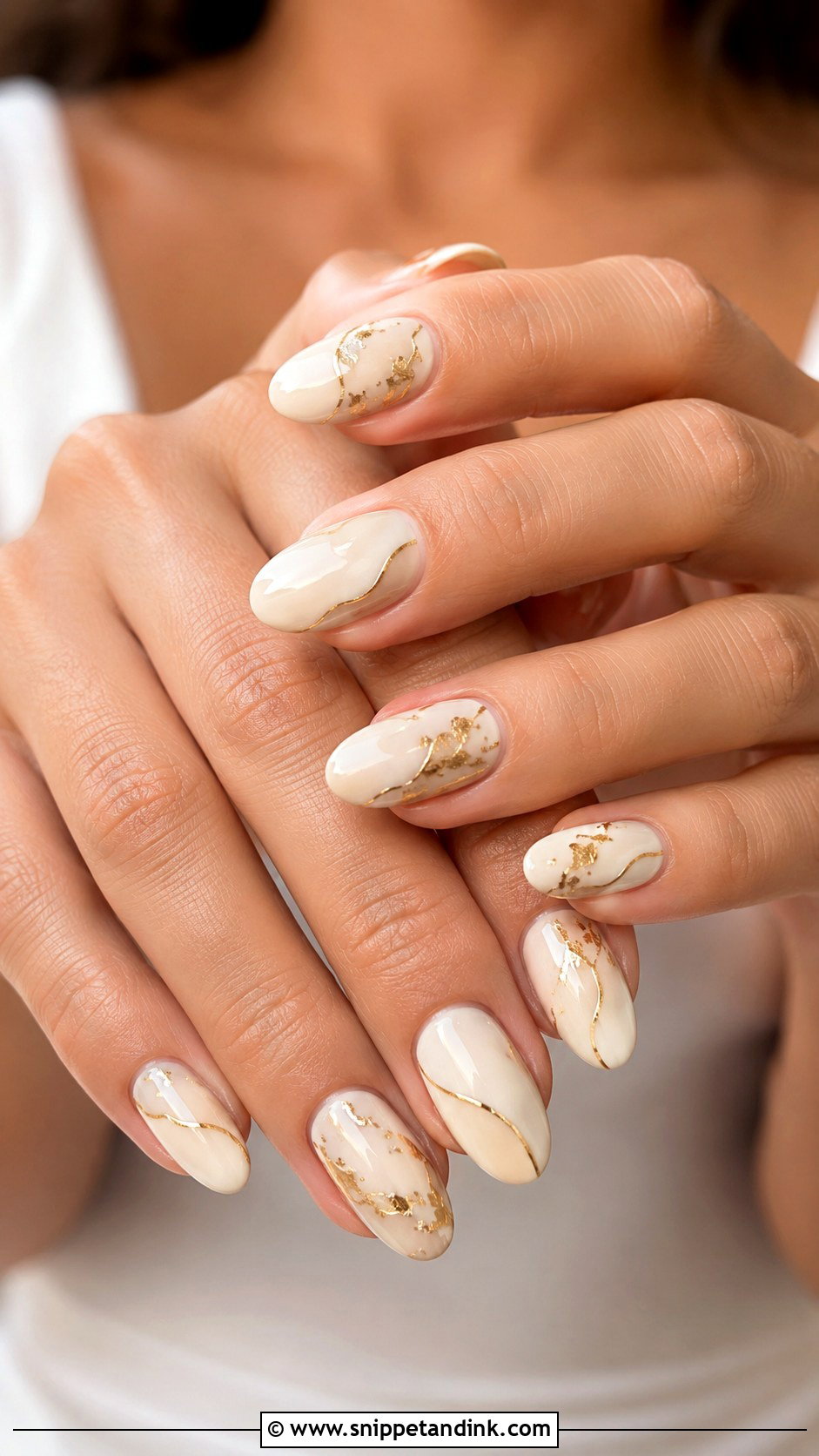
Gold makes sense when your rings, hair pins or gown details are warm metal. Over a creamy base I use a thin gold line, a few foil flakes near the cuticle or a very fine gold French edge, as an accent rather than full coverage. Foil needs to be fully capped under top coat or the edges lift within days. It flatters warm skin tones especially, and with a softer ivory base it also suits cooler tones.
14. Ivory Matte Wedding Nails
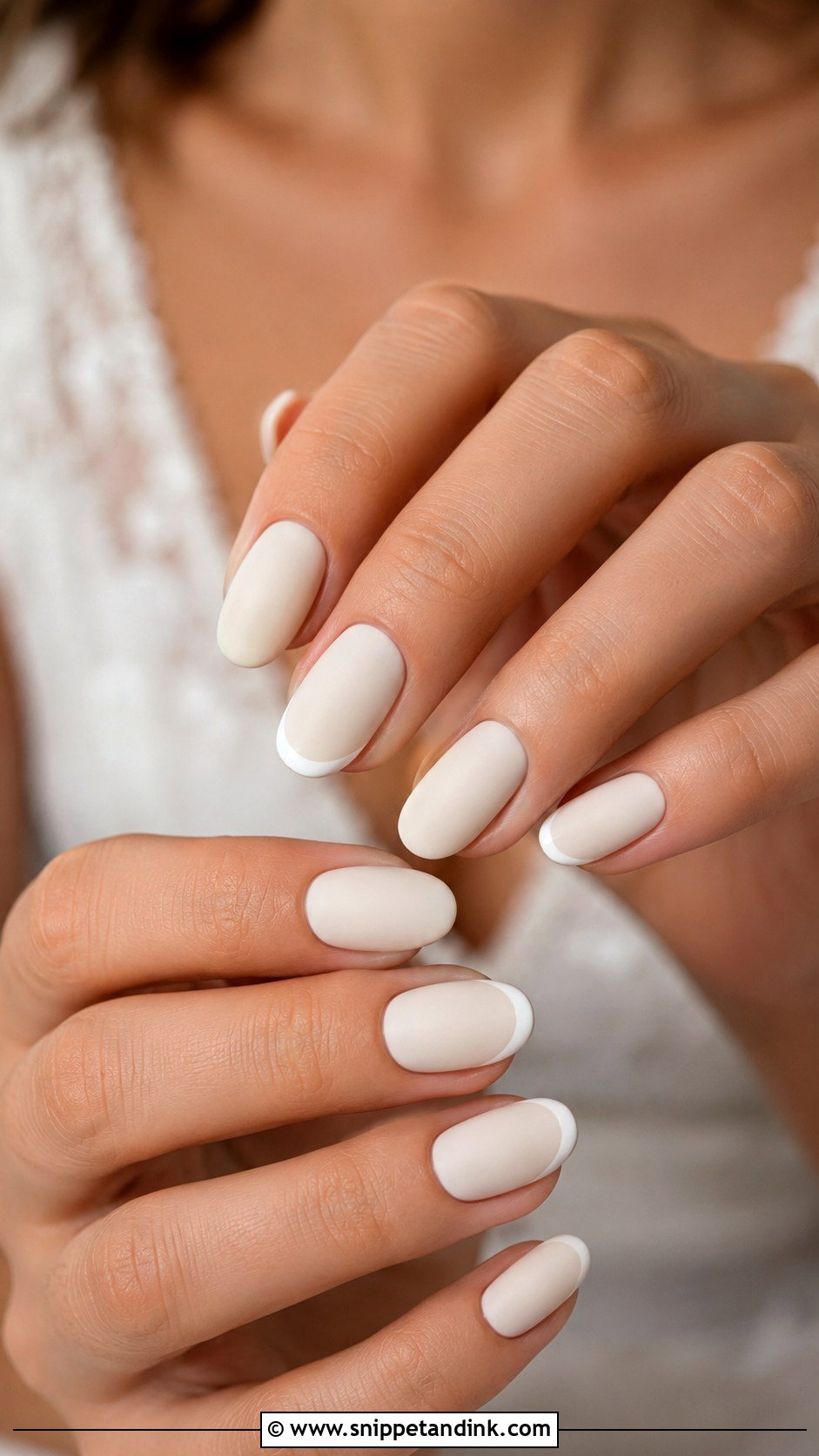
A matte top coat turns ivory velvety, which looks right with lace, crepe and minimalist gowns. It also shows every ridge, so the surface has to be perfectly smooth beneath it. The other downside is that matte finishes grab foundation, self-tanner and lint, and a pale matte nail shows that quickly. Pack a soft nail brush and a gentle wipe for before photos. Glossy French tips or one pearl on a matte base add a little contrast.
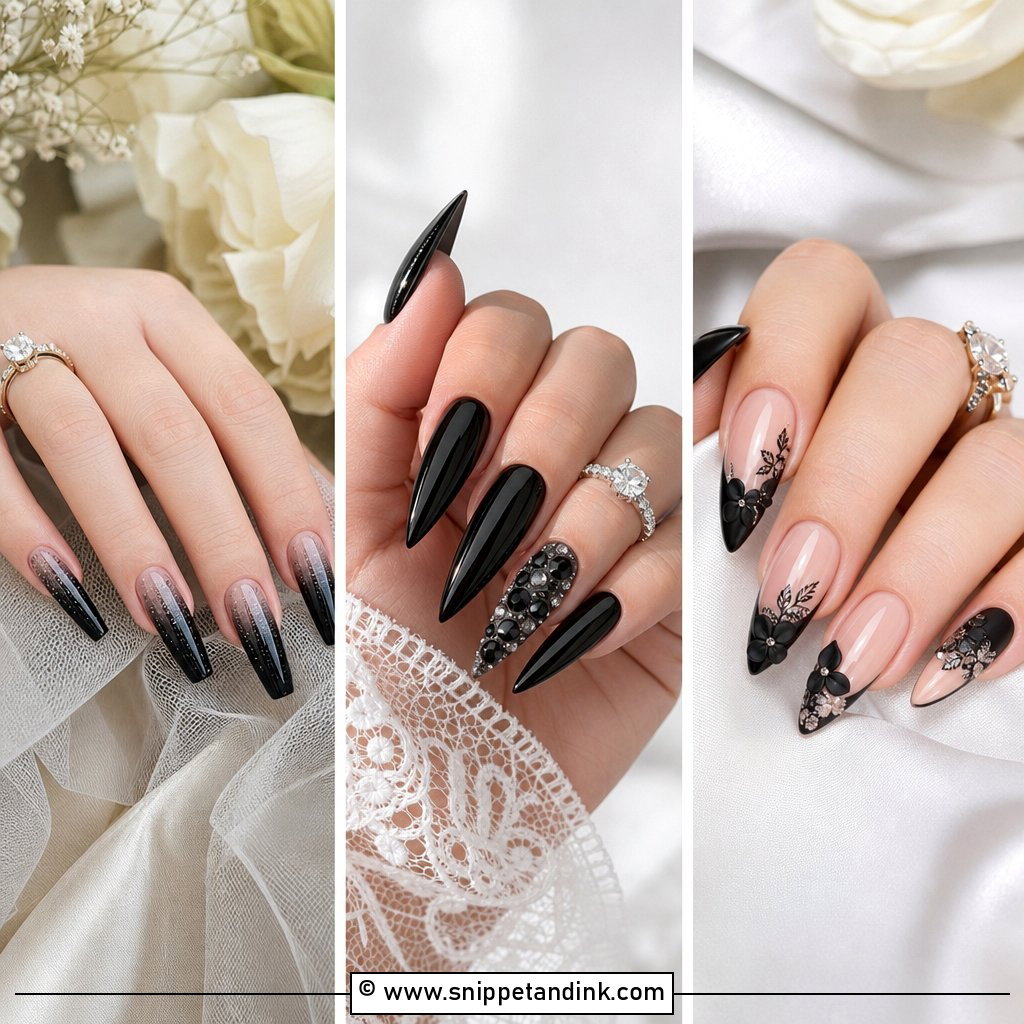
15. Ivory Marble Wedding Nails
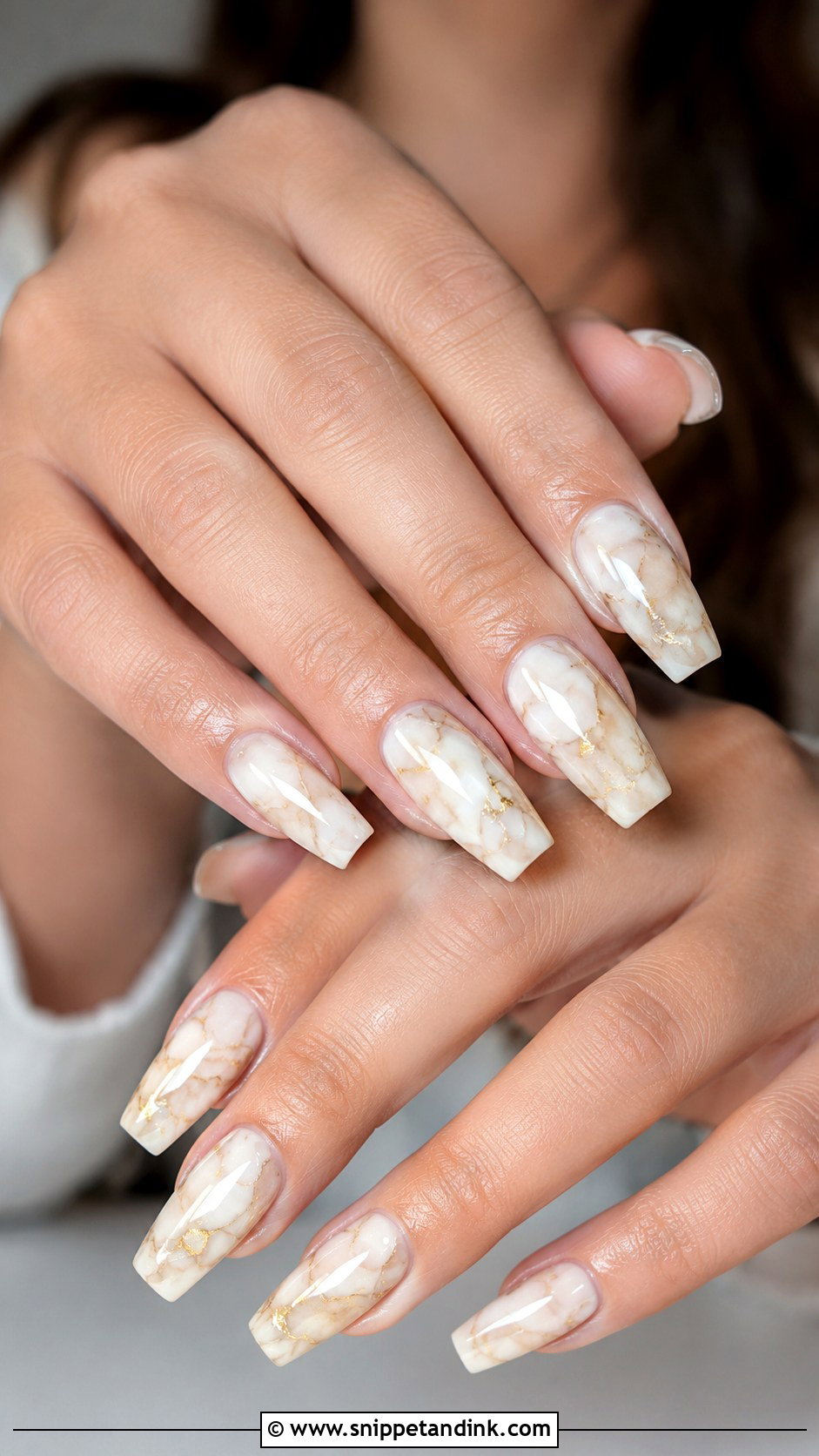
I make marble by dropping thinned colour or alcohol ink into wet gel and letting it bloom, then pulling faint veins with a fine brush. On ivory, the veins should be pale beige, white or champagne, never grey, which can look like dirt in photos. Medium almond, oval or coffin nails give the pattern room to flow. Marble every nail or two accents with solid ivory on the rest. A glossy top gives it depth, and a few tiny gold foil touches within the marble warm it up.
16. Ivory Rhinestone Wedding Nails
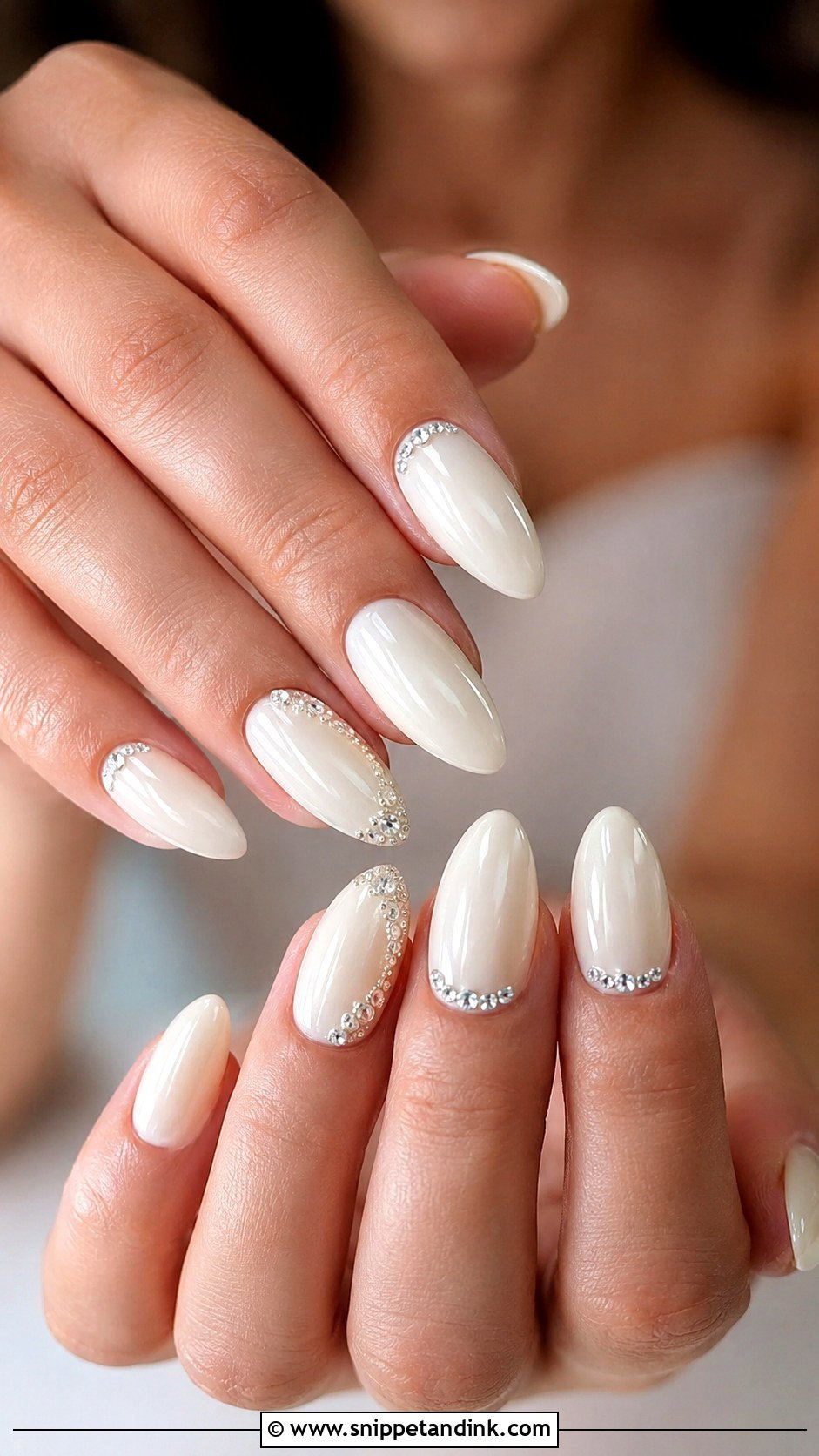
Crystals near the cuticle, along a French tip or on one accent nail add light in ring photos; a fully jewelled nail is heavy and snags on everything. I set each stone in gel and cap around the edges, and I still tell brides to check them the morning of the wedding. Almond and coffin shapes have room for a small cluster. On short nails, one or two tiny stones look better than a crowded line.
17. Ivory Sheer Wedding Nails
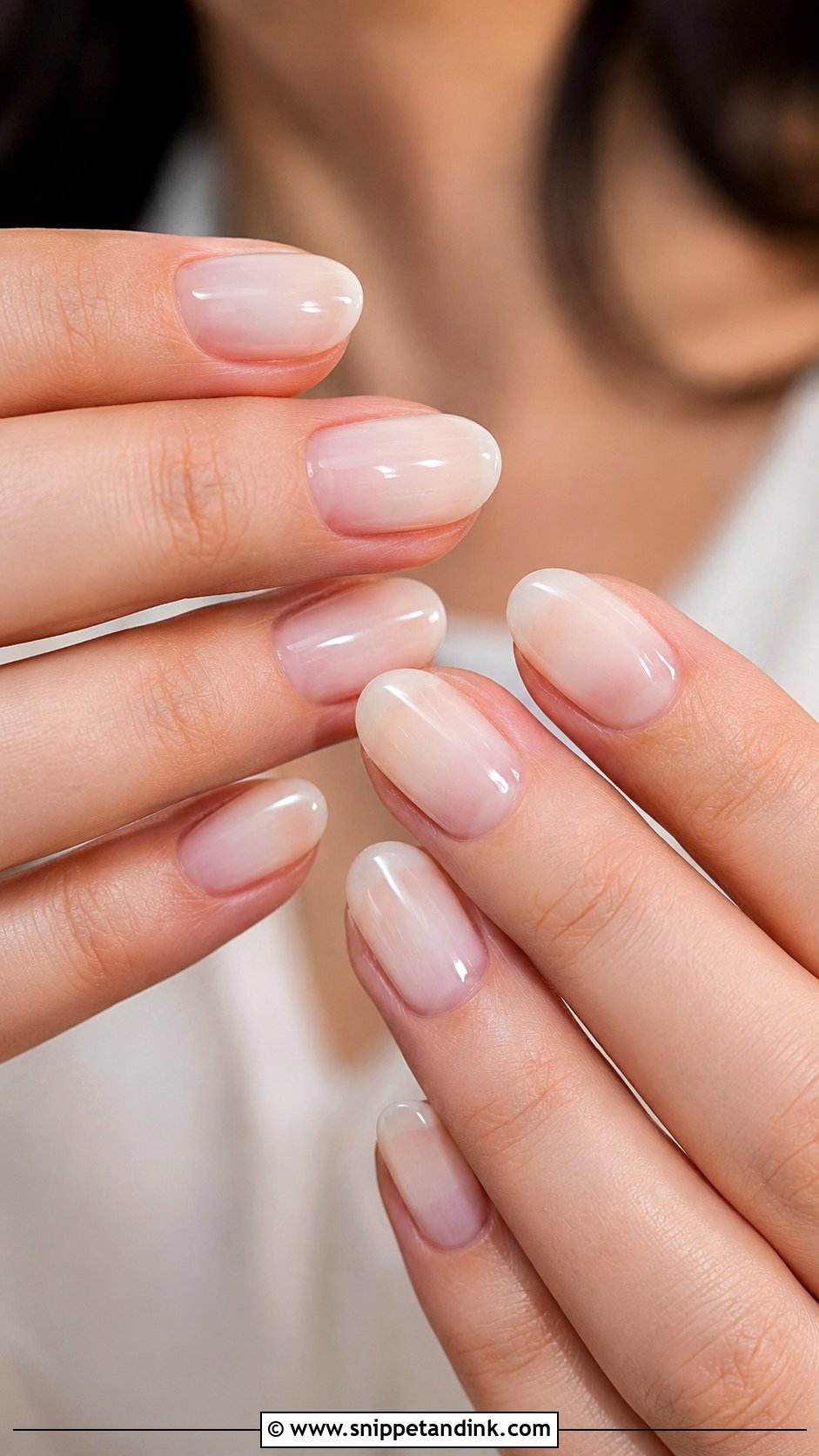
Sheer ivory is a translucent warm wash that lets the natural nail show softly, the “your nails but better” look. Because so little colour sits on top, the cuticle work and shaping are everything; any flaw shows straight through. It suits short or medium ovals, and it’s the safest choice when your dress is heavily beaded or laced, since the nails won’t compete. Ask for a glassy top coat and careful cuticle prep.
18. Ivory Cat Eye Wedding Nails
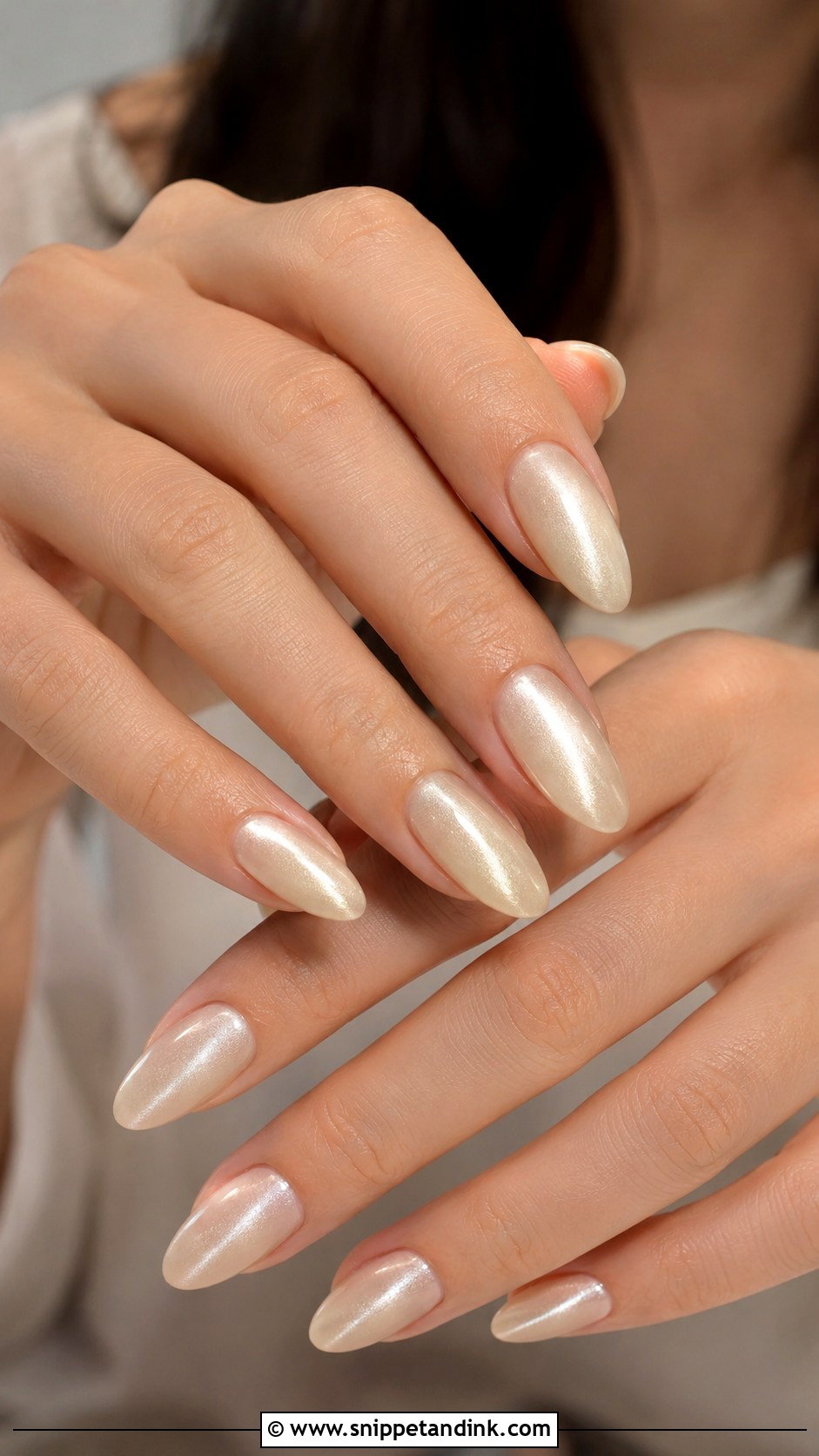
Ivory cat eye wedding nails use magnetic gel with metal particles that I pull into a line with a magnet before curing, so the reflective band moves as your hand turns. In ivory, champagne or pearl tones, the effect is a soft glow rather than the sharp stripe of darker cat eye sets. Almond and oval shapes make it look fluid; coffin is more dramatic. I hold the magnet a little further away for weddings so the line stays diffused.
19. Ivory 3D Flower Wedding Nails
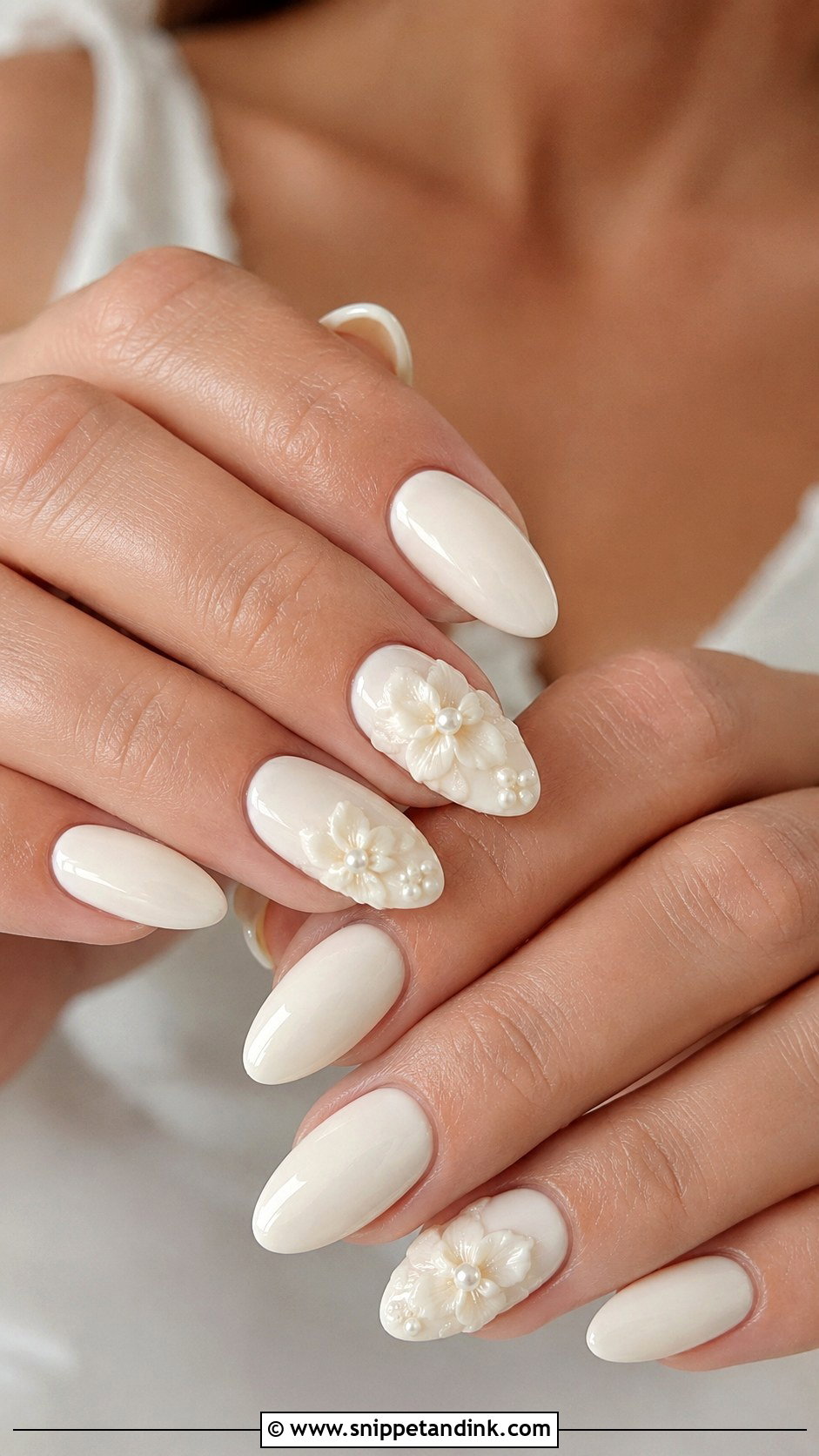
Raised flowers are sculpted from thick gel, and height is the thing to agree on beforehand. Tall 3D flowers catch on hair, veils and knitwear, so I keep them low-profile and on one or two accent nails, with the rest of the set glossy and plain. A tiny pearl in the centre finishes them. They sit well with floral appliqué gowns, and almond or oval shapes carry them most gracefully.
20. Ivory Micro French Wedding Nails
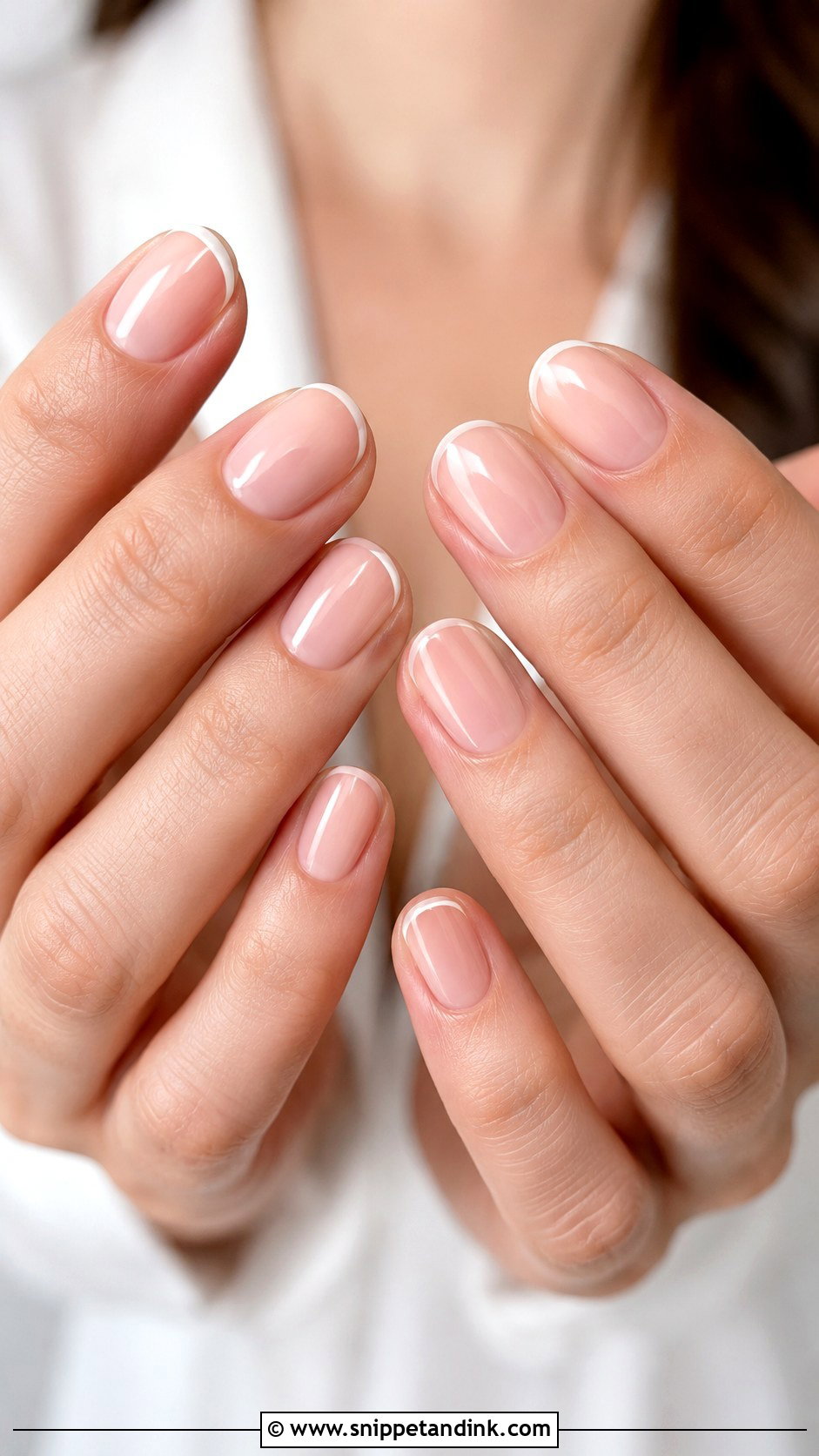
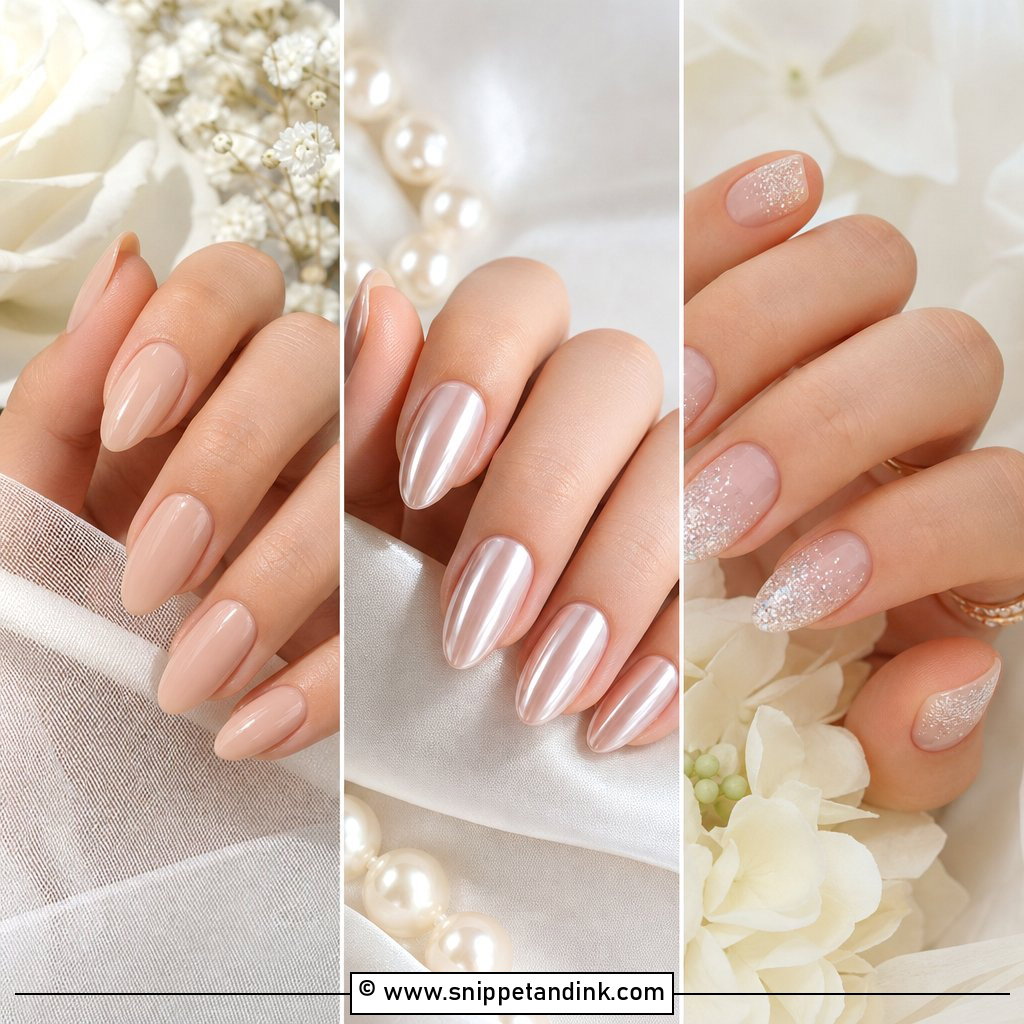
Ivory micro French wedding nails swap the thick French tip for a hairline of ivory along the free edge, over a sheer pink, nude or clear beige base. It’s the cleanest design here and grows out most gracefully, since the base blends with the natural nail. A very fine liner brush and a steady hand matter more than product. It looks right on short square, oval and almond nails. Finish with a high-shine top coat.
Fake Tan, Hair Dye and Other Things That Stain Pale Gel
Light colours show everything they touch. The most common problem I see is a bride who gets her nails done, then applies self-tanner two days later and finds her ivory tips have turned orange at the edges. Hair dye, turmeric and some dark fabric dyes do the same.
My order of appointments is simple: tanning, hair colour and any waxing first, nails last, ideally a day or two before the wedding. If you’re tanning after your manicure, wear gloves or wipe the nails straight away. Keep the top coat sealed over the free edge, because stains creep in where it’s thin.
Can Guests Wear Ivory Nails Too?
Yes. Nails don’t carry the same weight as an ivory dress, and a sheer or milky ivory manicure is a polished, low-key option for guests and bridesmaids. I’d only hold back on the most bridal-looking sets, pearls, lace and 3D flowers, unless the bride has asked the party to match. A micro French or a plain glossy ivory sits comfortably at any wedding without crossing a line.
For a bridal party, I like giving everyone the same ivory base and letting the bride alone wear the accent nail. The hands look related in the bouquet shots, and the bride still has the one detail nobody else has. If bridesmaids are doing their own nails at home, a regular polish in a sheer ivory is far easier to apply evenly than an opaque cream, which tends to streak with a home brush.
Ivory Sits Between White and Nude, So Test It in Daylight
Ivory works because it sits between classic white and soft nude, so it adapts to the dress, the jewelry and the venue. If you want quiet, go French, sheer or milky. For glow, try pearl chrome, fine glitter, cat eye or a few crystals. For romance, the lace, floral, pearl and 3D designs carry it. Whatever you choose, book a trial, look at the shade next to your fabric in natural light, and wear it for a few days to see how it lives on your hands.
You'll Like These Ideas:


Leave a Reply