
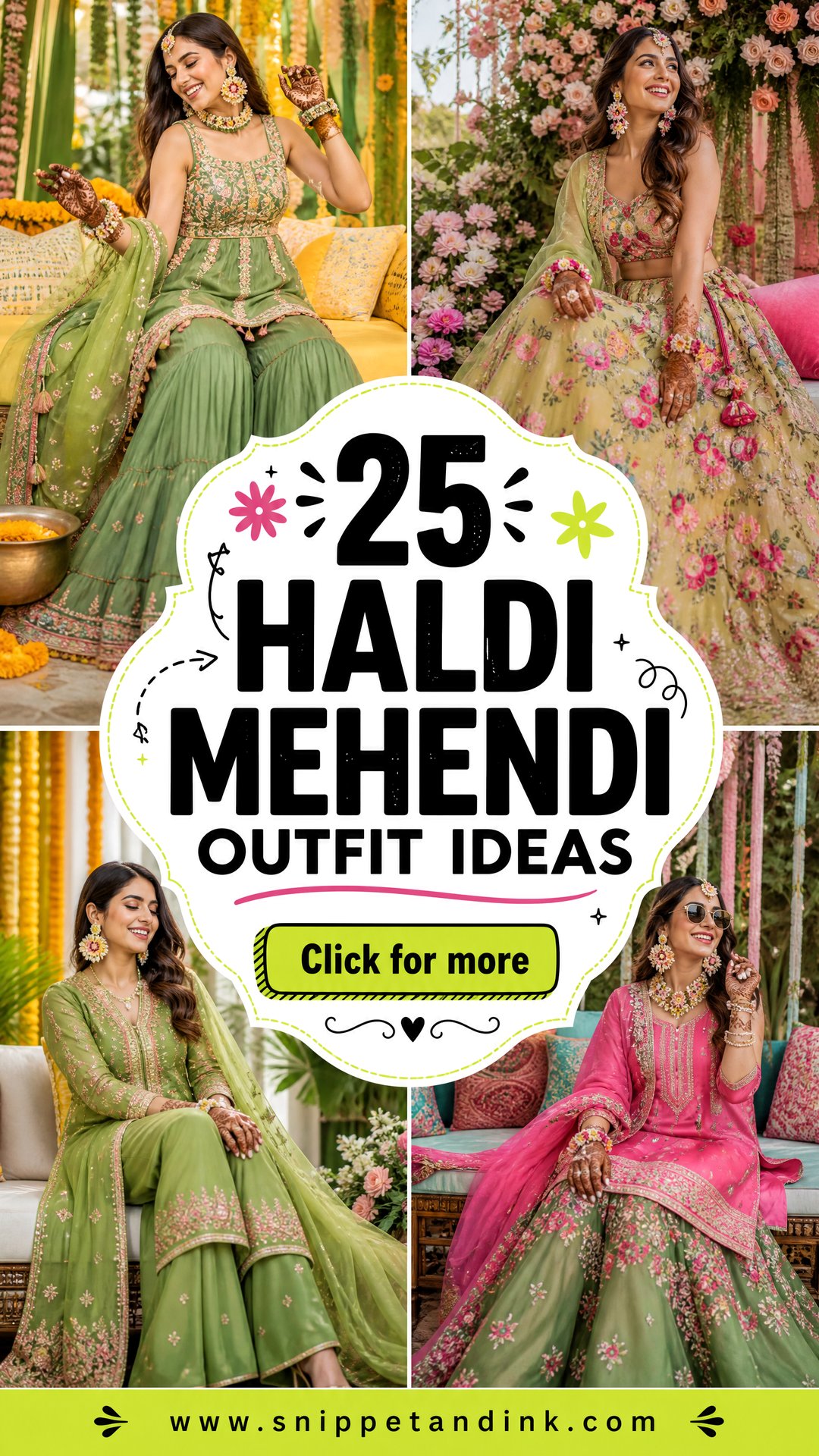
Haldi and mehendi are the two functions where your outfit works harder than it looks. At one, turmeric paste gets smeared around the room; at the other, you may sit with wet henna on both hands for hours, unable to fix a slipping dupatta yourself. So the ideas below lean toward breathable fabric, sensible sleeves and shapes you can sit, move and dance in. Yellow still leads for haldi, while green, pink, orange, lavender and florals feel right for mehendi, and I’ve mixed traditional pieces with Indo-Western ones. Whatever your role in the family, check the venue, the weather and how formal the hosts are before you buy anything.
Dressing for Hours With Wet Henna on Your Hands
Bridal mehendi is a long sit. The artist works on palms, backs of the hands and often the forearms and feet, then the paste is left on for hours to deepen the stain, usually dabbed with a sticky lemon and sugar mix to keep it on. For all that time the bride can’t hold a glass, adjust her clothes or tuck back her hair. That changes what I put her in.
For the bride
- Sleeveless, short sleeves or sleeves loose enough to push above the elbow. Fitted three-quarter sleeves are the most common mistake I see.
- Pin the dupatta in two places before the artist starts, or leave it off until the paste dries.
- Tie your hair back completely. A single loose strand stuck in wet paste can smear a fingertip design.
- Think about the bathroom before you dress. Skip jumpsuits and very tight churidars, and choose a waistband someone else can manage quickly.
- Lay an old dupatta or towel across your lap. Henna paste stains fabric, and the sugar sealant makes it worse.
For guests getting a quick design
Guest designs are usually smaller and finished in minutes, but the paste still needs time to dry before you hug anyone or pick up a plate. I tell guests to wear something in a deeper color or a busy print, so a stray brown smudge on the hem won’t show, and to avoid pale silk entirely.
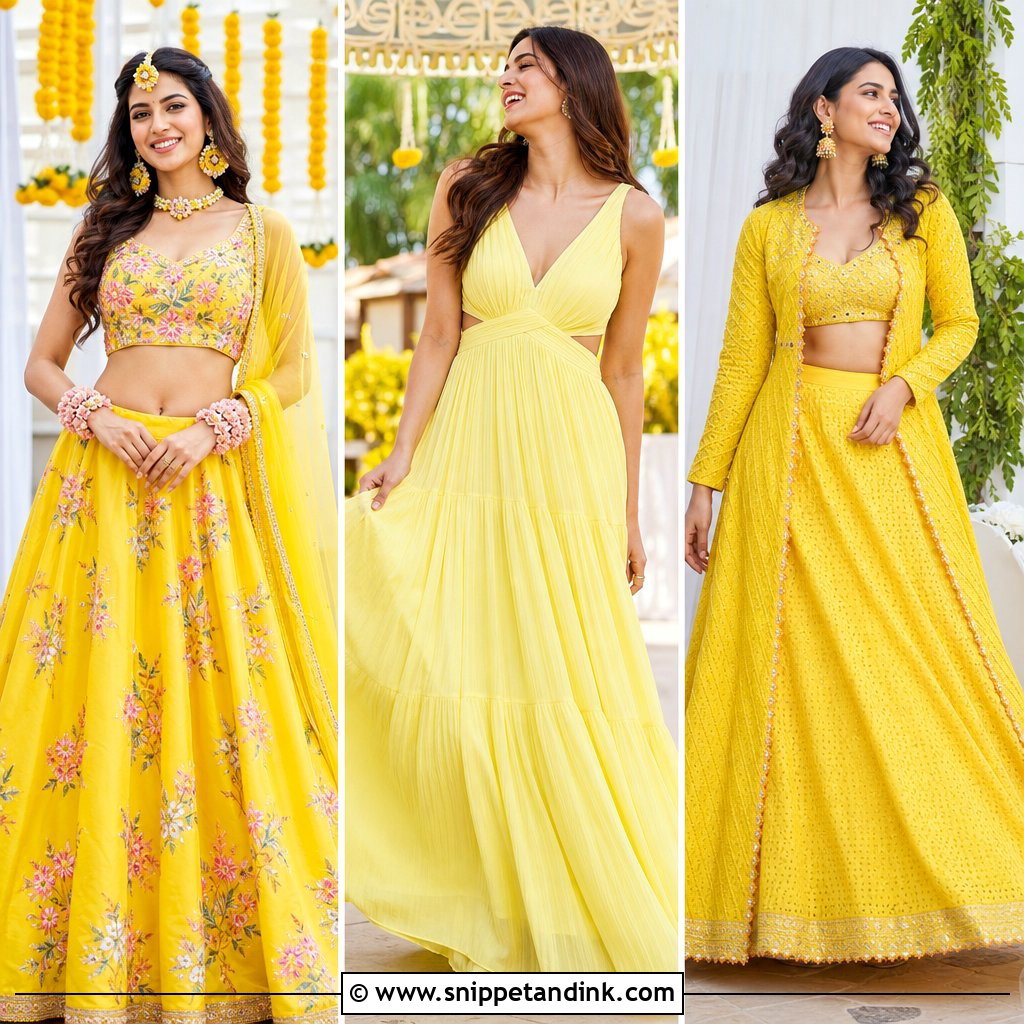
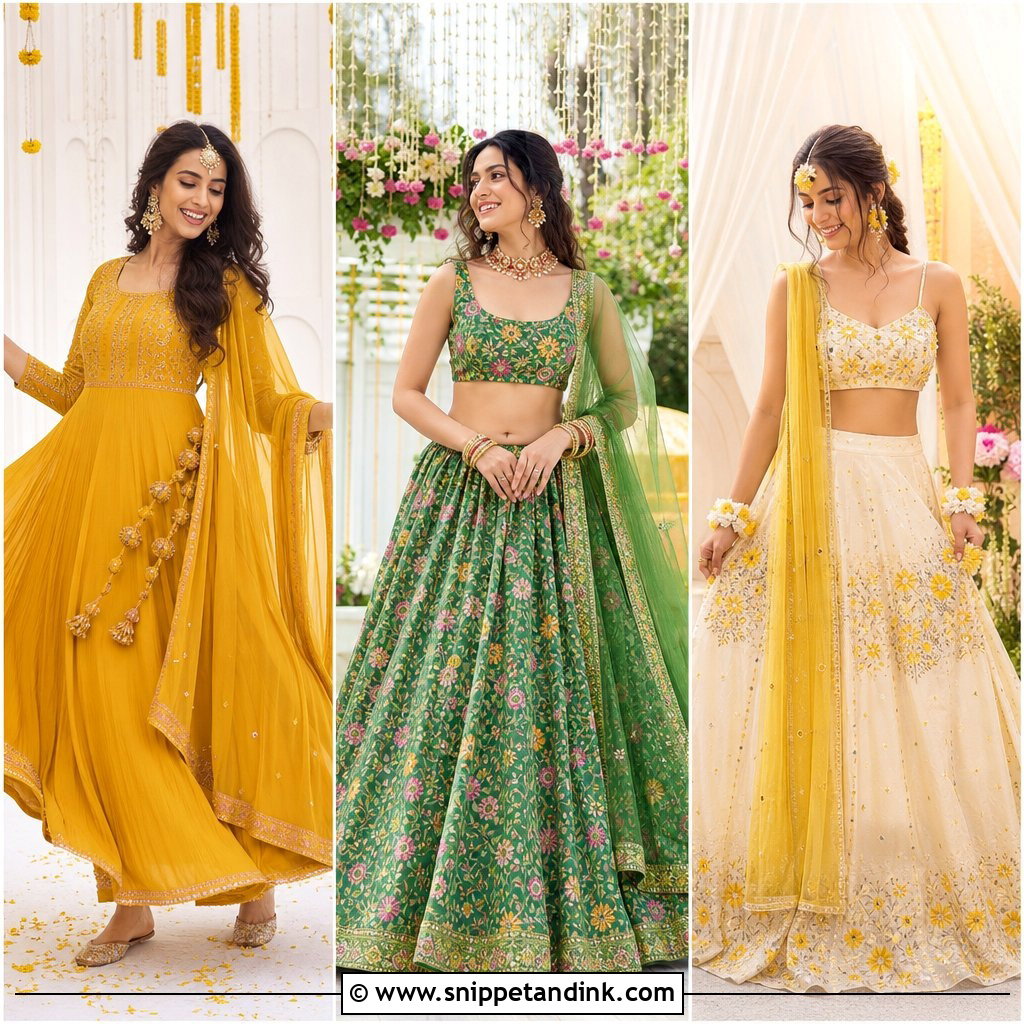
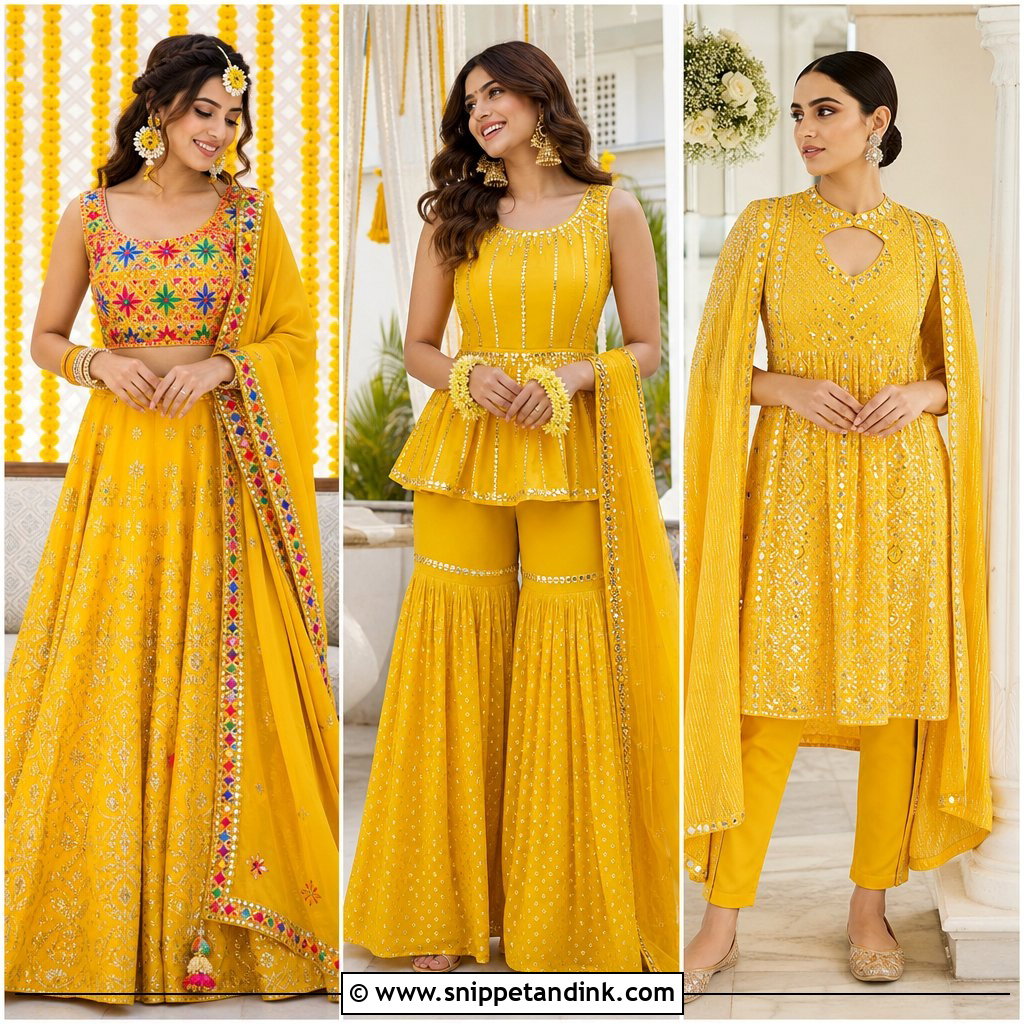
1. Yellow Lehenga Haldi Outfit
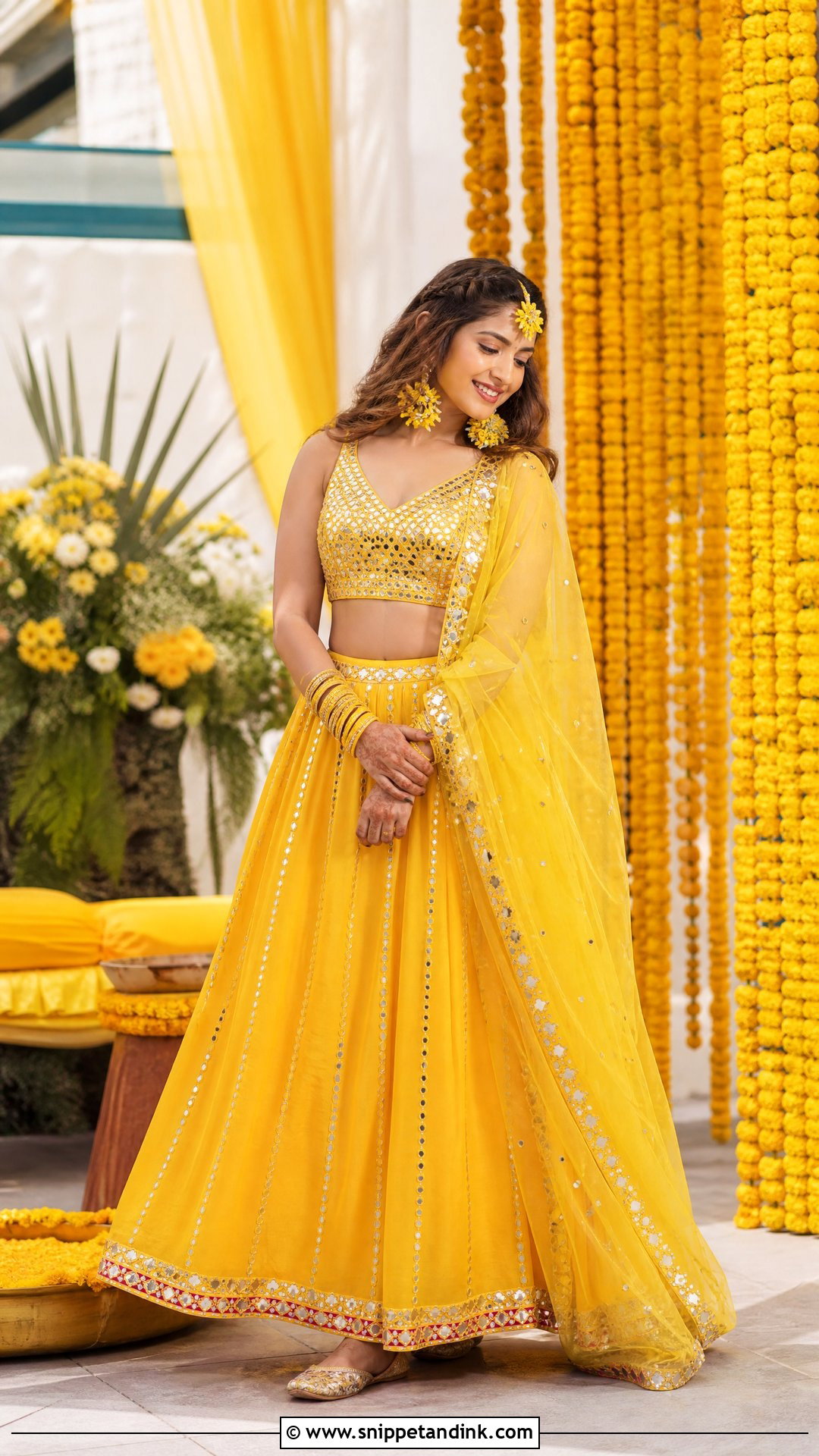
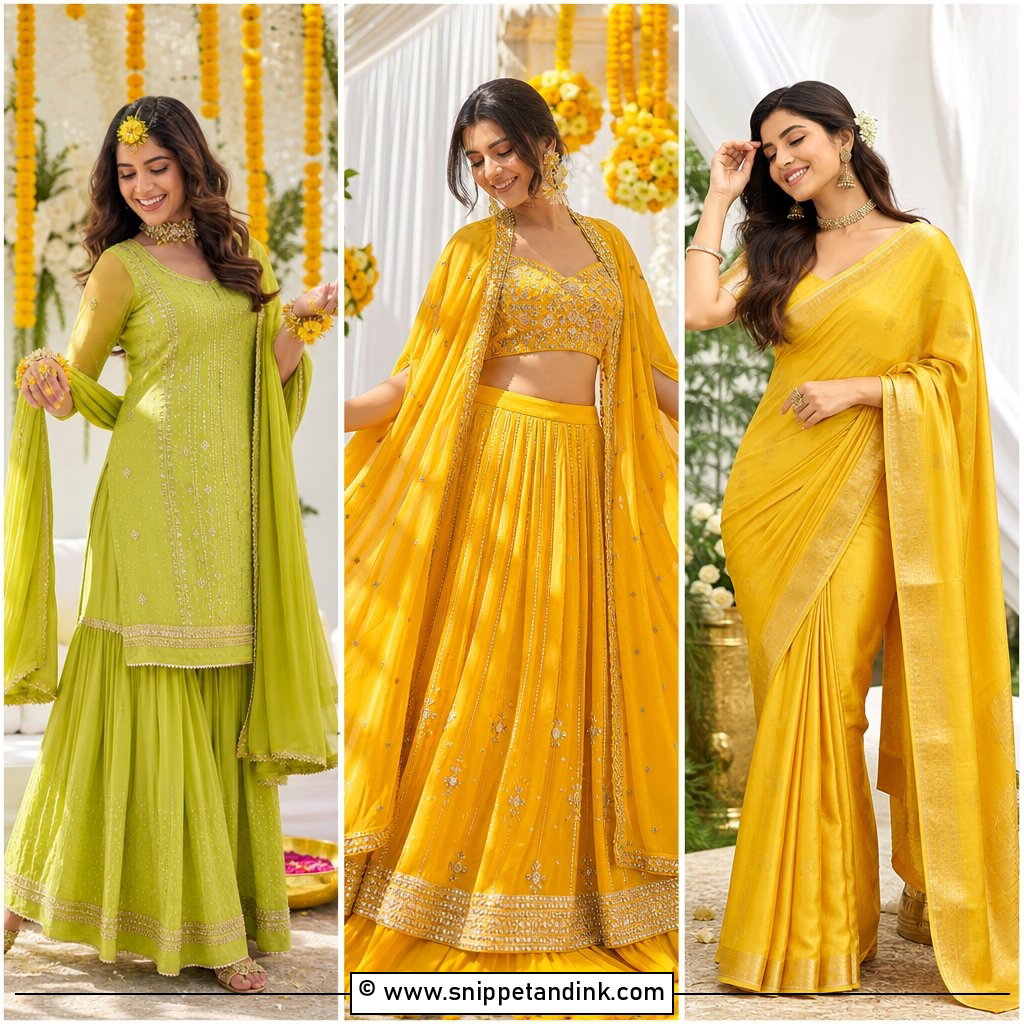
A yellow lehenga is the classic haldi answer. I keep the skirt light, in cotton silk, georgette or organza, because you’ll be sitting low while relatives apply the paste. A short-sleeve blouse with mirror work or a scalloped neck stays out of the turmeric’s way far better than full sleeves do. Wear the dupatta over one shoulder only. A loose braid with small white flowers suits a bride, and guests can simply scale down the skirt volume and most of the embellishment.
2. Green Sharara Mehendi Outfit
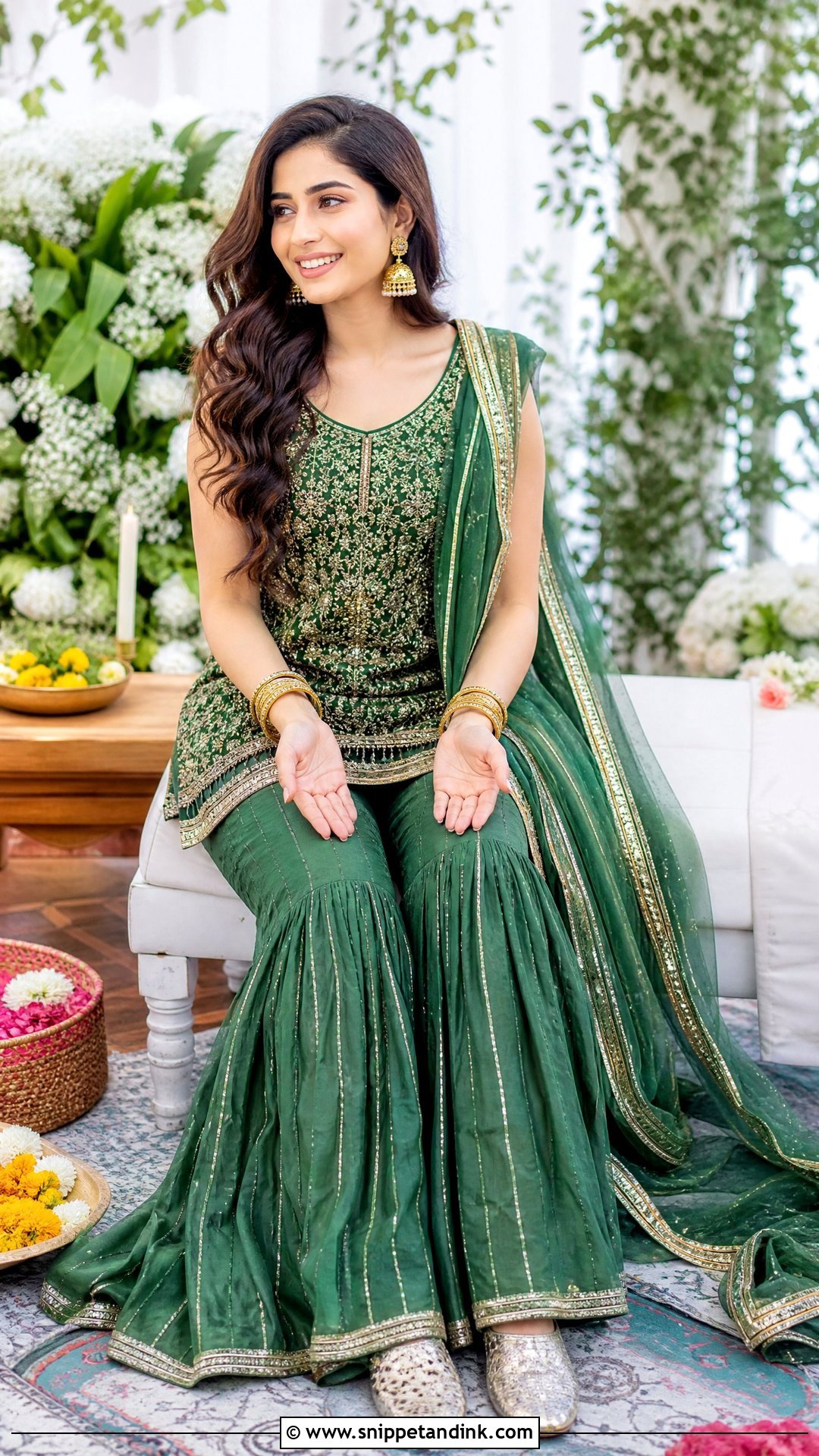
Shararas are my favourite thing to put a bride in for her own mehendi. The flare lets you sit with your feet tucked or stretched out while the artist works on them, and nothing needs holding up. Pick a short kurta or peplum top in emerald, bottle green or leaf green, and keep the dupatta light with a thin gota edge. Hair goes in a side braid or low ponytail, never loose, because strands stick to wet paste and drag the design. Pista or sage are gentler if bright green isn’t you, and a slightly shorter kurta keeps the proportions right on a petite frame.
3. Floral Lehenga Mehendi Outfit
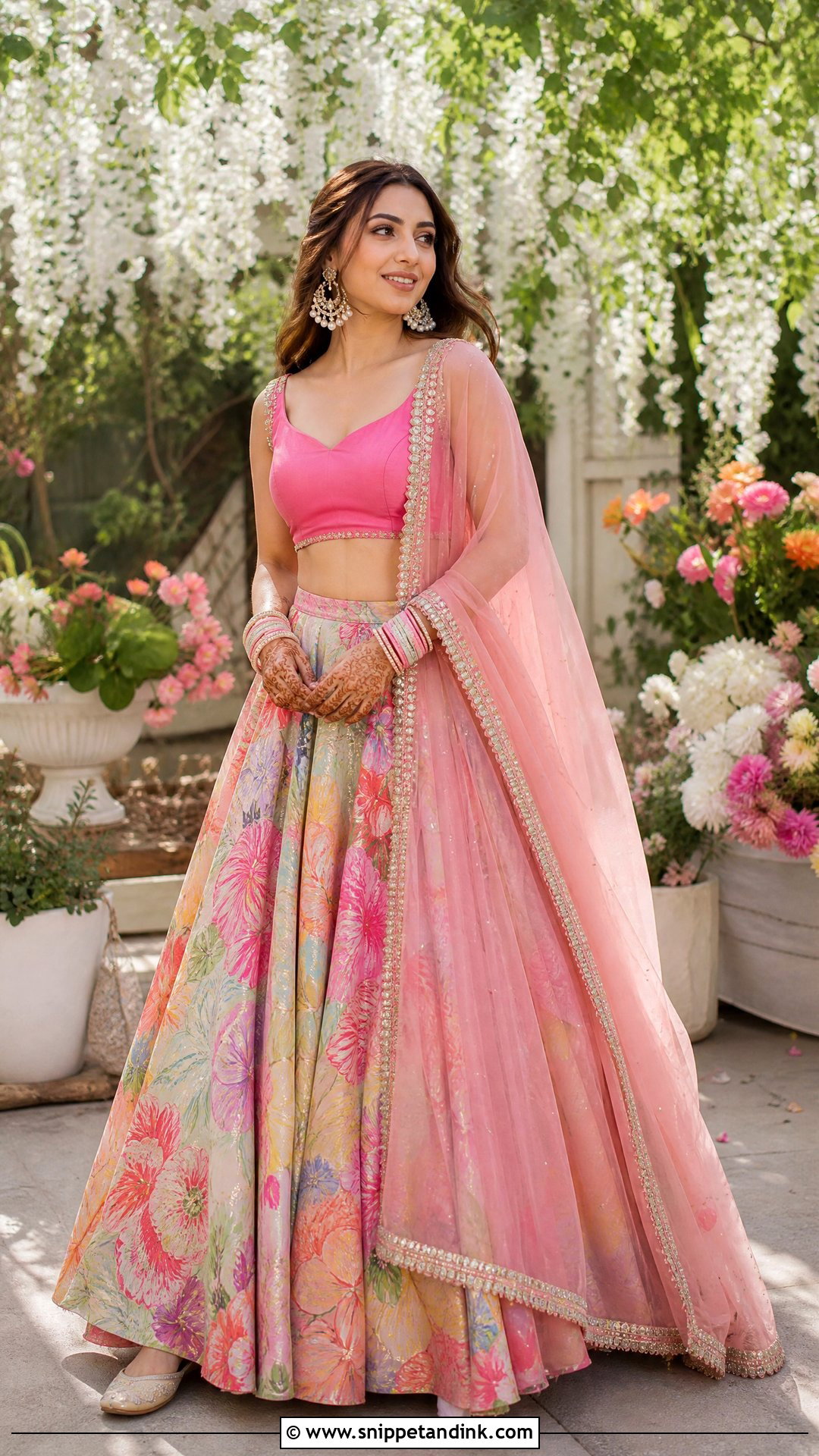
Floral prints suit a daytime mehendi in a garden. I look for medium-scale flowers: tiny ditsy prints blur into texture from across a lawn, and huge blooms can swamp a small frame. Pull one color from the print for a solid crop blouse, then choose a sheer dupatta with a narrow border so the skirt stays visible. Pearl chandbalis, pastel bangles and low block heels are plenty. Want more coverage? A longer blouse with elbow sleeves works, as long as the sleeves push up easily if you’re getting henna.
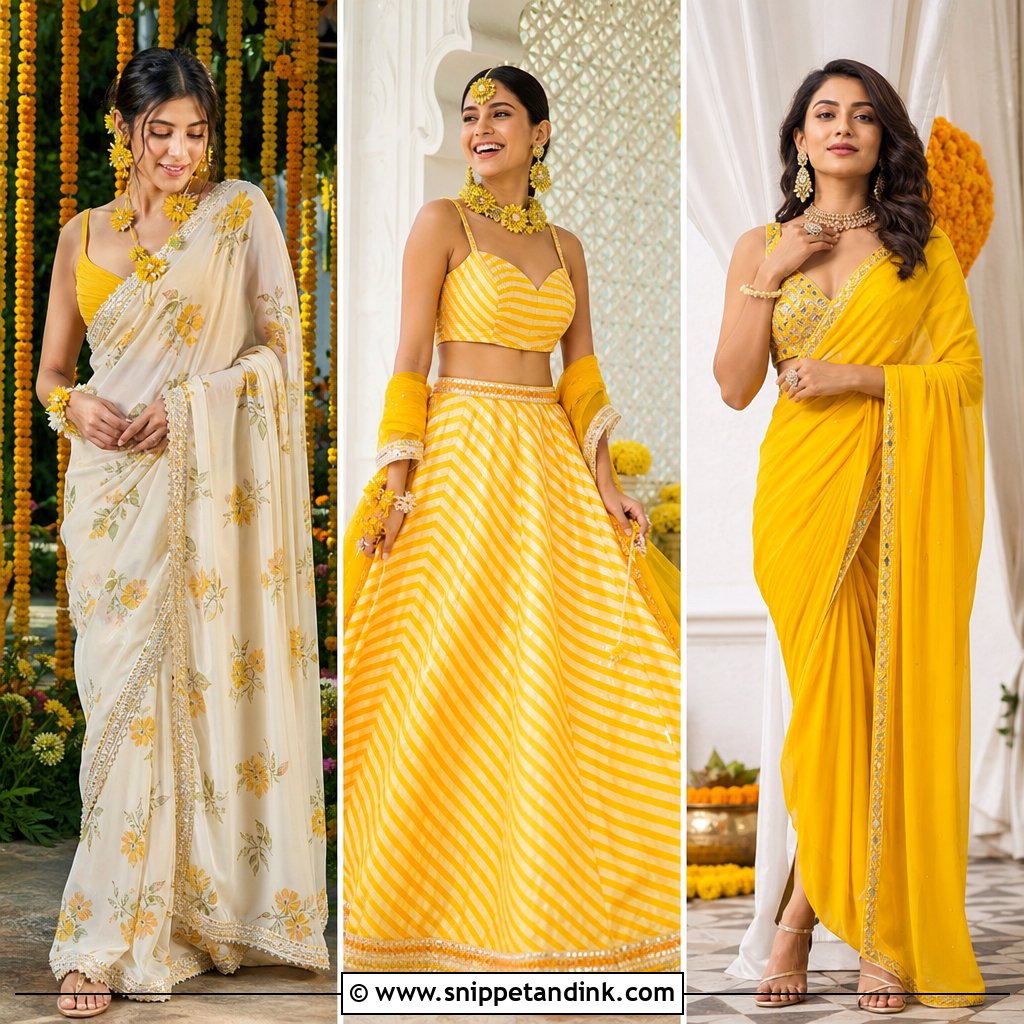
4. White And Yellow Haldi Saree Outfit
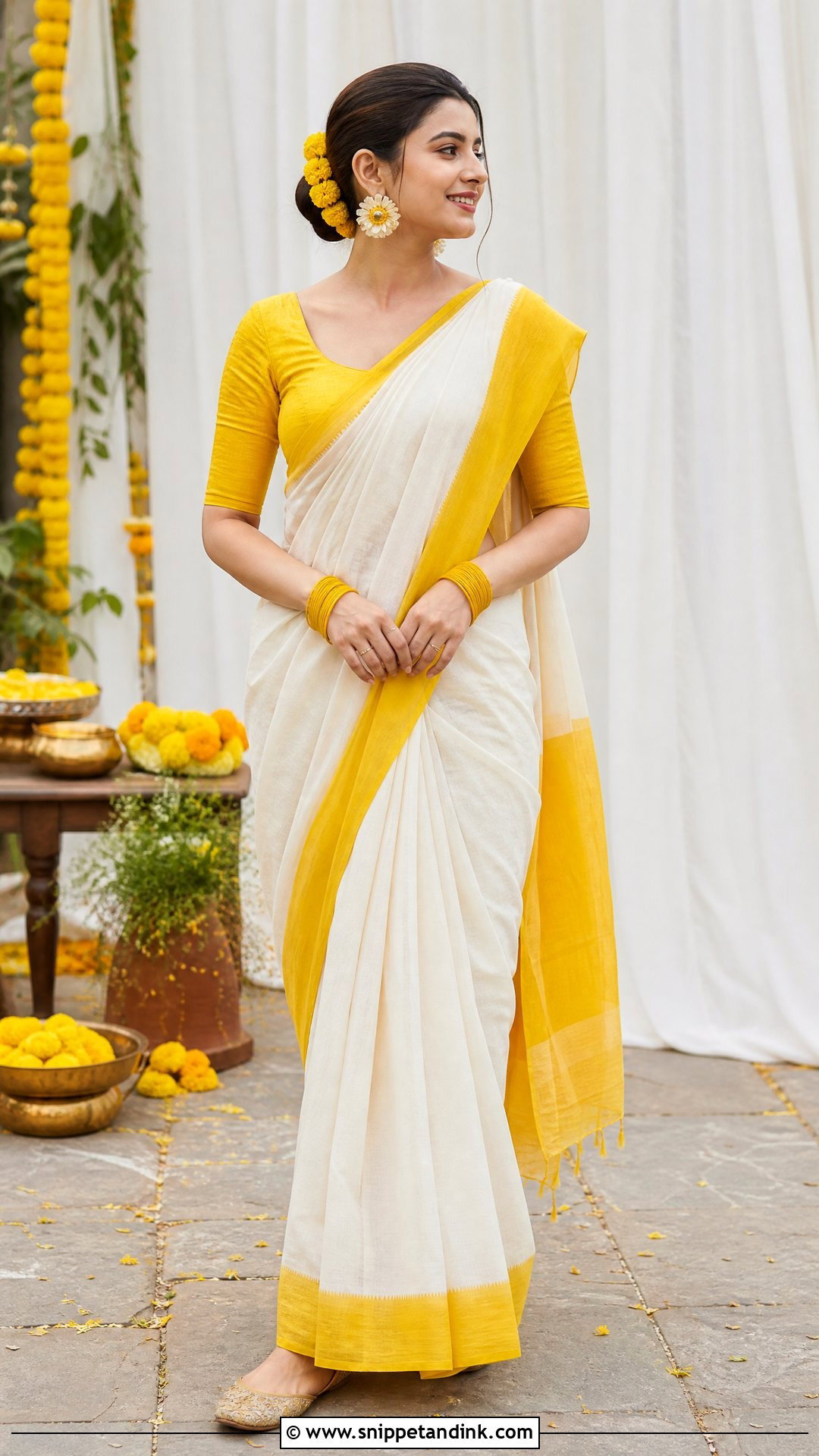
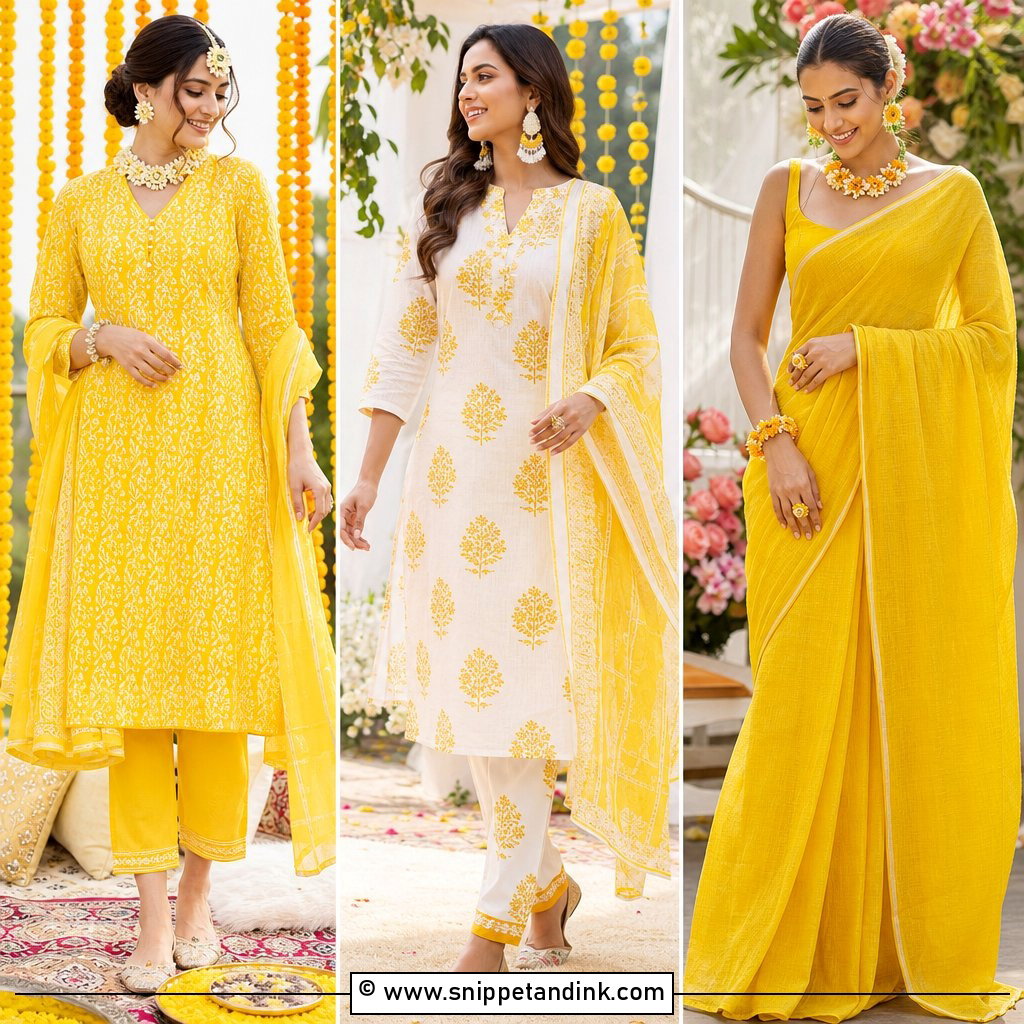
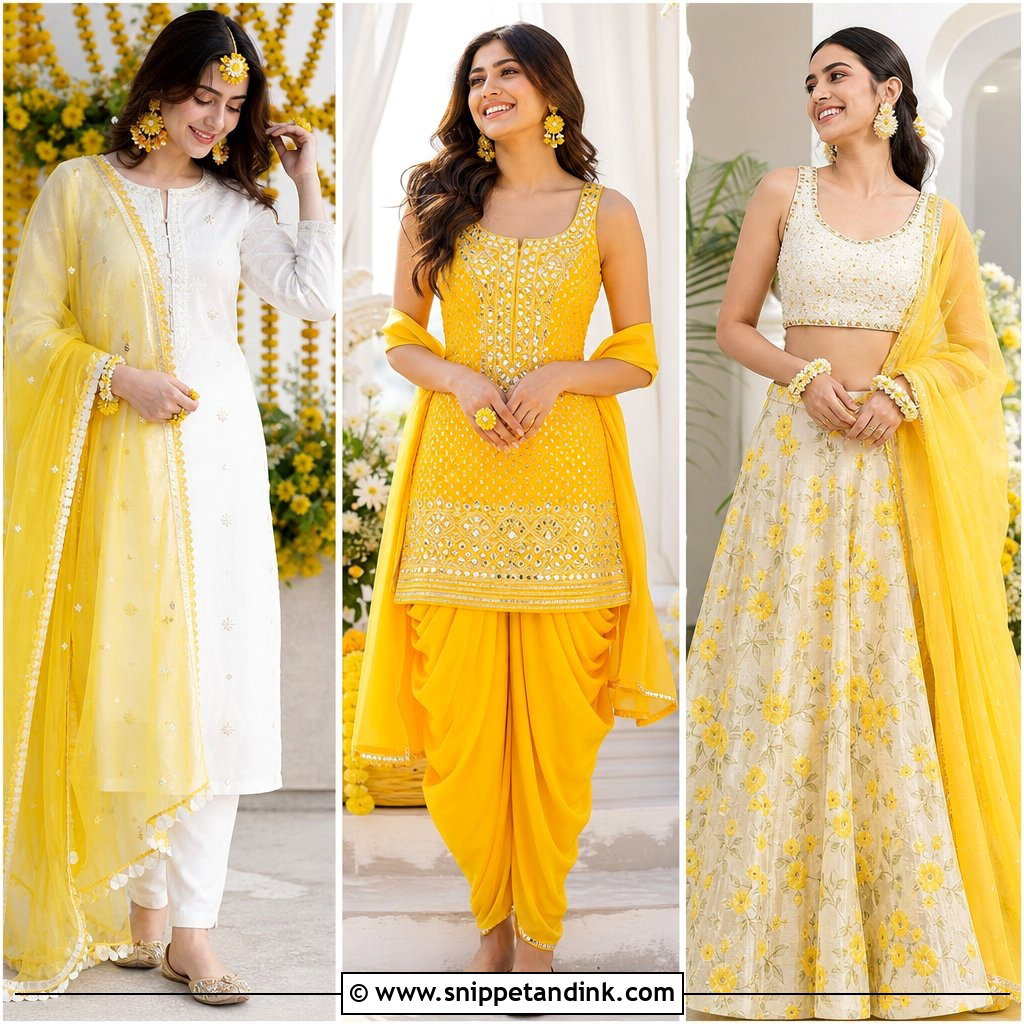
Ivory with a yellow border looks crisp against haldi decor, but I’d only put it on a guest, or on a bride who plans to change after the paste ritual. White cotton and linen absorb turmeric almost instantly. Choose cotton, linen or light organza, pair it with a yellow blouse, and pin the pleats and pallu firmly so nothing trails near the bowl. Marigolds in a low bun and yellow glass bangles finish it. A pre-draped version saves precious minutes on a morning with a tight schedule.
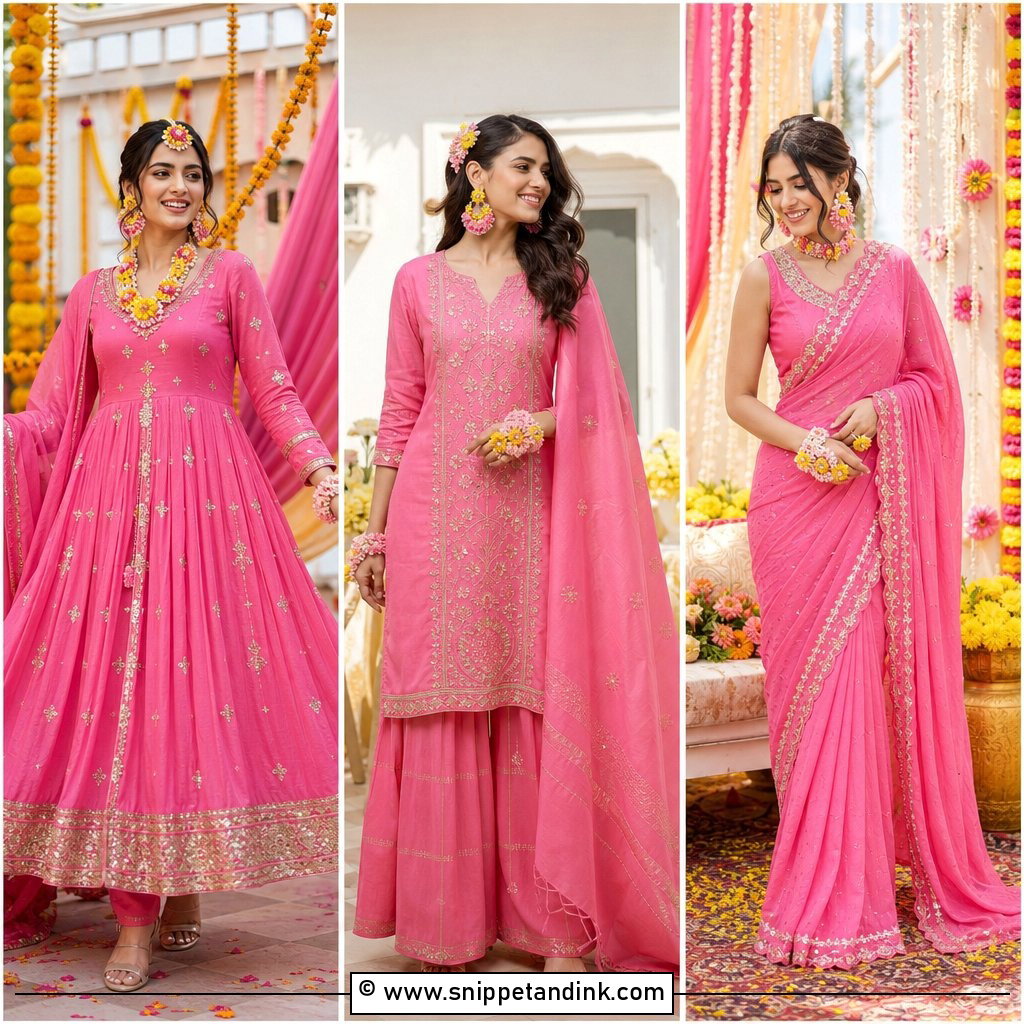
5. Pink Lehenga Mehendi Outfit
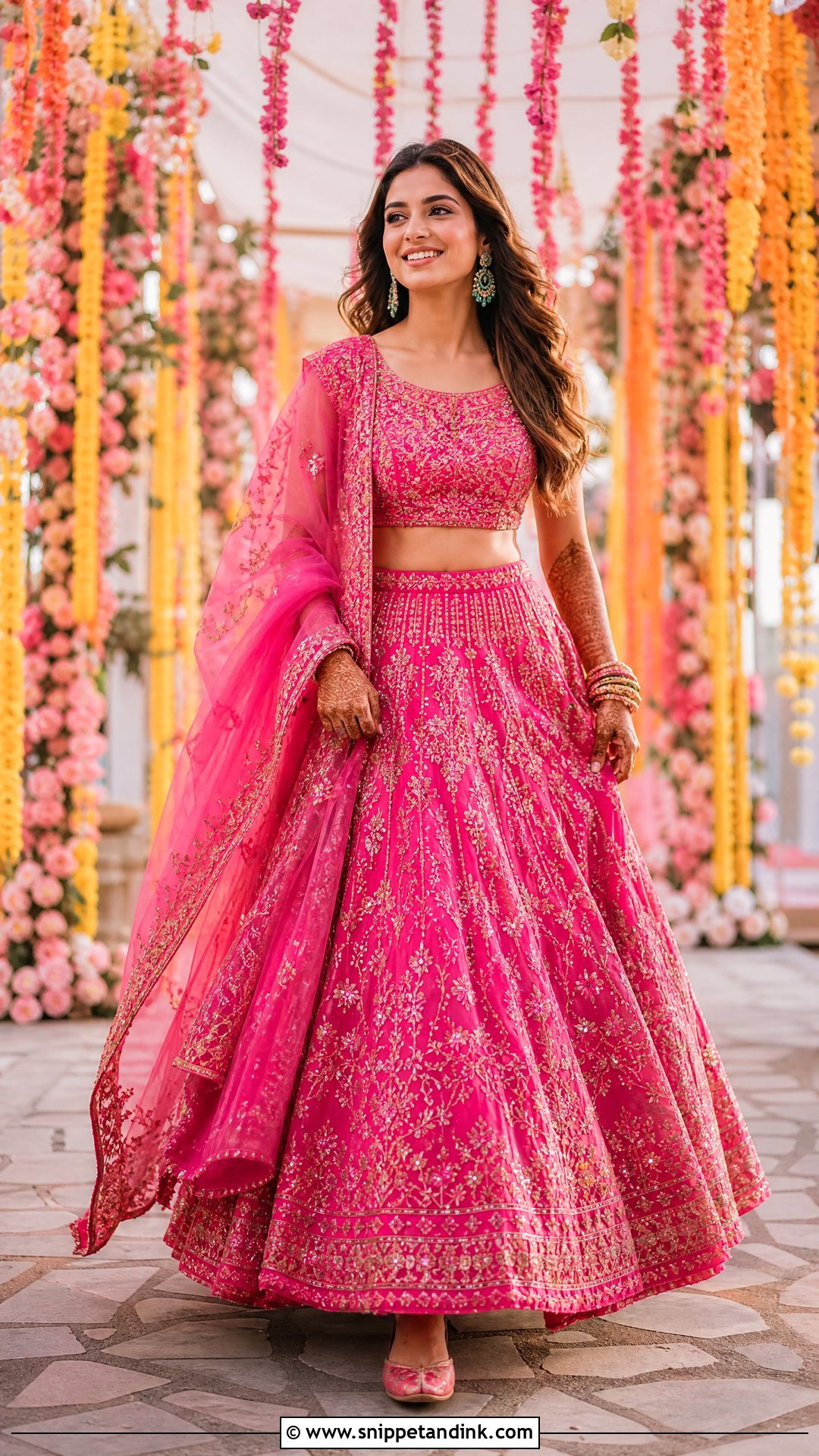
Green isn’t the only mehendi color. Rani pink, fuchsia or rose work just as well, and pink sits nicely beside the dark green-brown of wet henna paste in close-up hand shots. Choose a light skirt with subtle mirror work, then go monochrome with a matching blouse or add orange for contrast. Drape a sheer dupatta from one shoulder and pin it, because once your hands are wet you can’t adjust anything. Green stone earrings bring the traditional color back in, and a sleek ponytail keeps hair from falling forward while you sit.
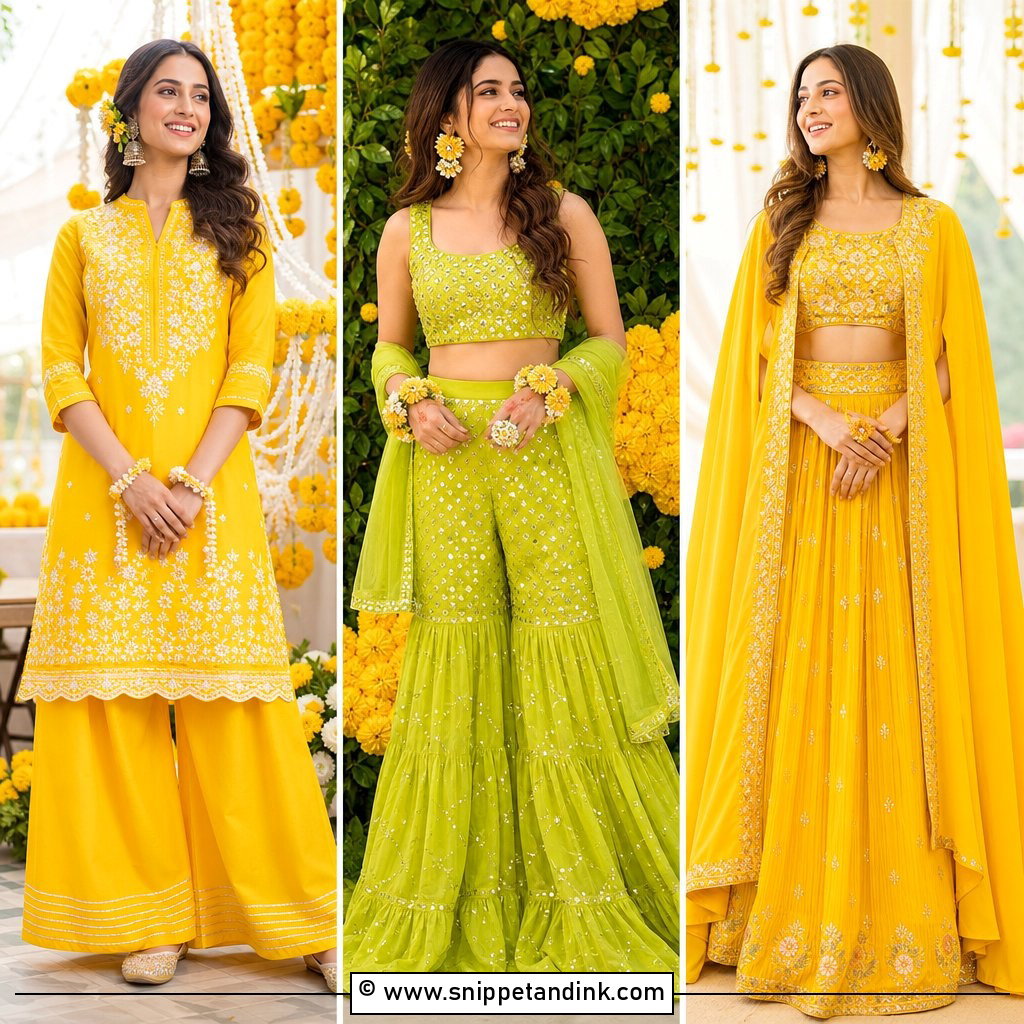
6. Yellow Anarkali Haldi Outfit
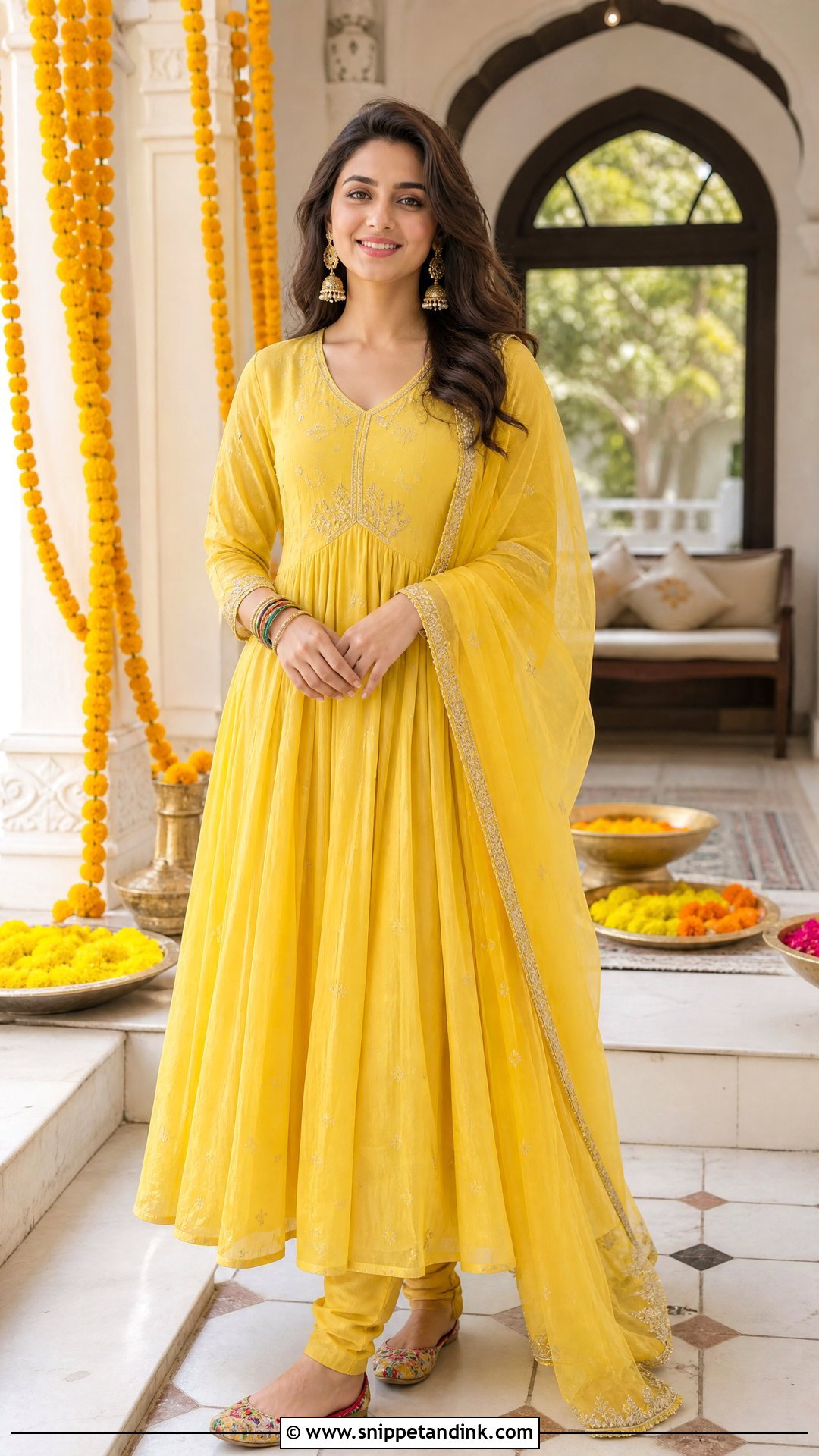
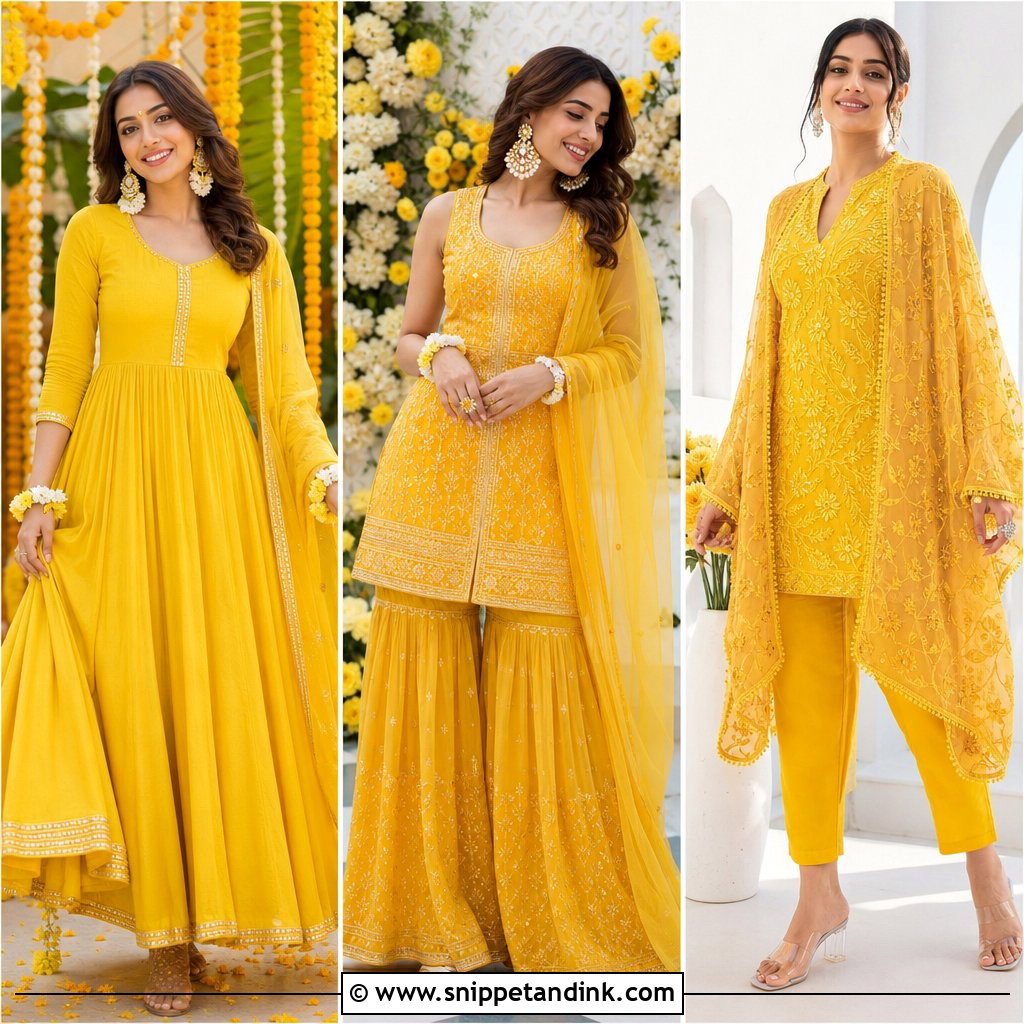
An Anarkali gives coverage without restricting movement, which is why aunts and older cousins tend to ask me for one. For haldi I’d keep it calf or ankle length in cotton silk, chiffon or georgette. Floor-length hems collect turmeric and wet grass at an outdoor ceremony. Elbow sleeves, narrow pants and a light organza dupatta pinned at one shoulder keep it practical. Brides can choose floral or mirror detail at the neckline; guests do fine with a quieter design and a long braid.
7. Green Palazzo Suit Mehendi Outfit
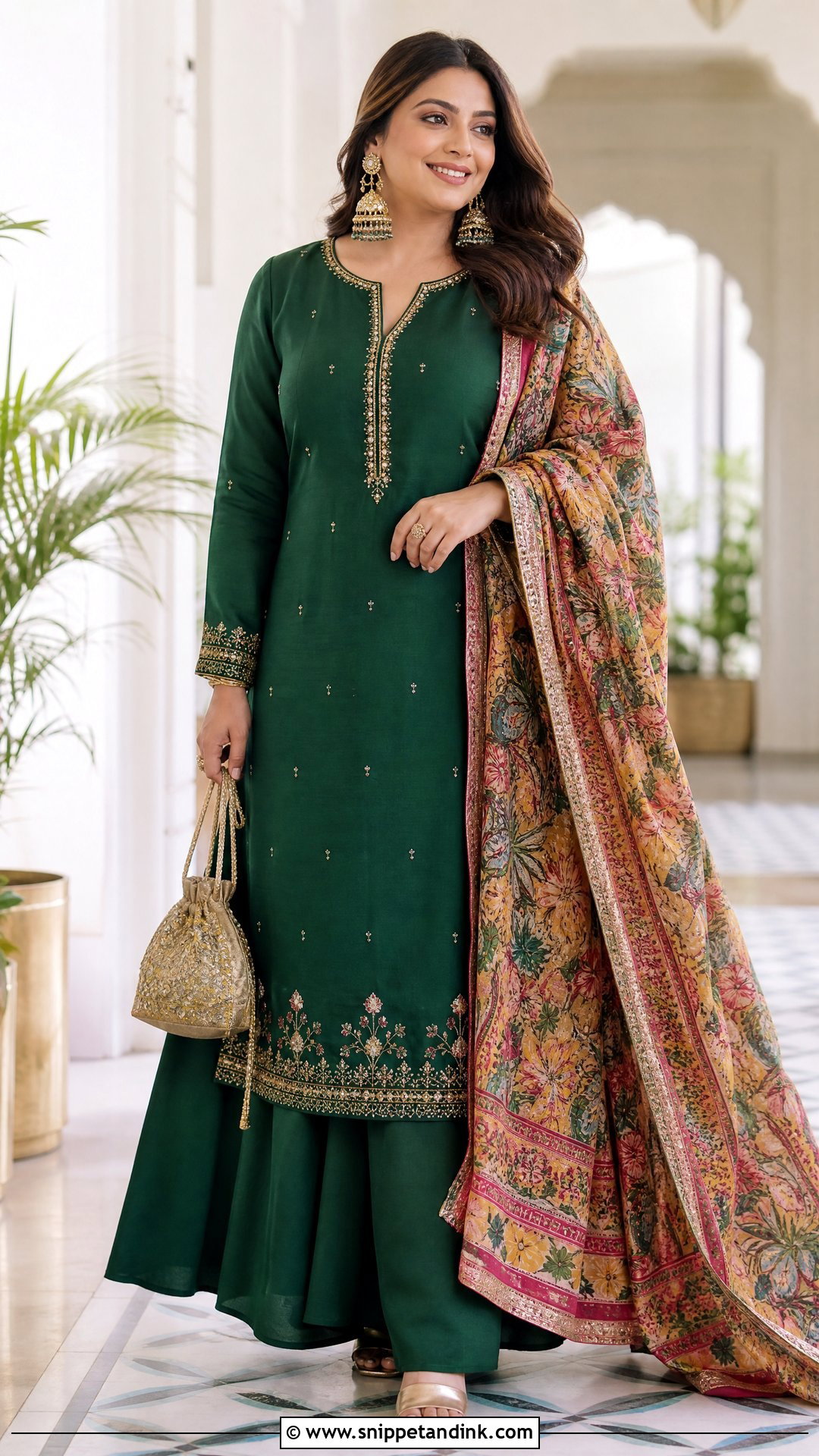
Guests often sit through a long mehendi waiting for their turn with the artist, and a green palazzo suit is the comfortable way to do it. Combine a straight or slightly flared kurta, ideally with side slits, with wide palazzos in mint, olive, emerald or teal. A printed dupatta can bring in pink or orange. One thing I always check is the sleeve: three-quarter sleeves that are snug at the forearm won’t push past the wrist, and guests are often offered henna up to mid-forearm. Go loose or go short. A longer kurta in fluid fabric drapes well on curvier figures.
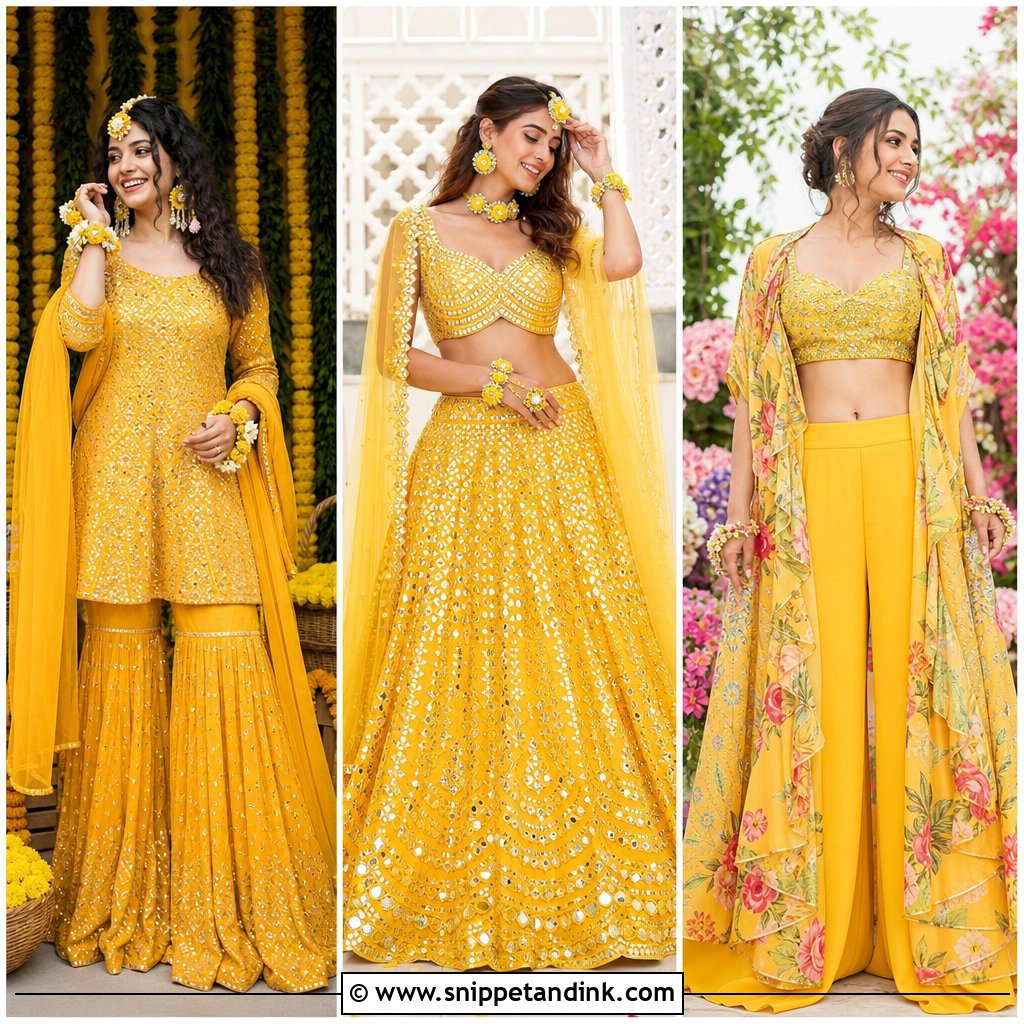
8. Orange Gharara Haldi Outfit
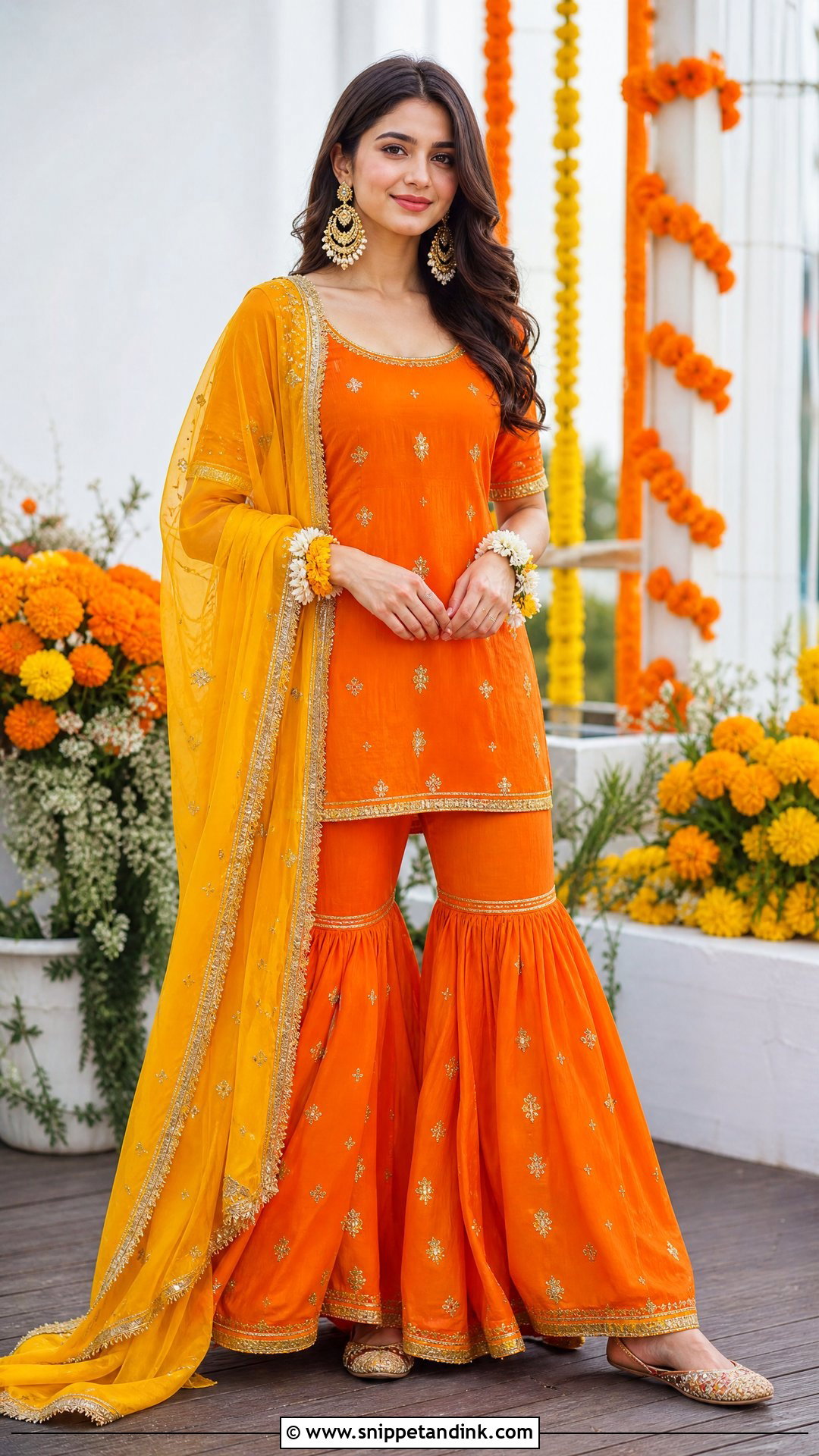
Orange gives a haldi real energy while stepping away from solid yellow. The look is built on a short kurti and traditional gharara pants, fitted through the thigh and flaring below the knee, in marigold, tangerine or mango with a gold gota border. Because the gharara already carries so much volume, keep the kurti streamlined and the dupatta light; a heavy dupatta on top of all that flare looks bunched as soon as you sit. A yellow or pink dupatta gives a color-blocked effect. Gold chandbalis and a braided bun hold up through the dancing.
9. Mirror Work Lehenga Mehendi Outfit
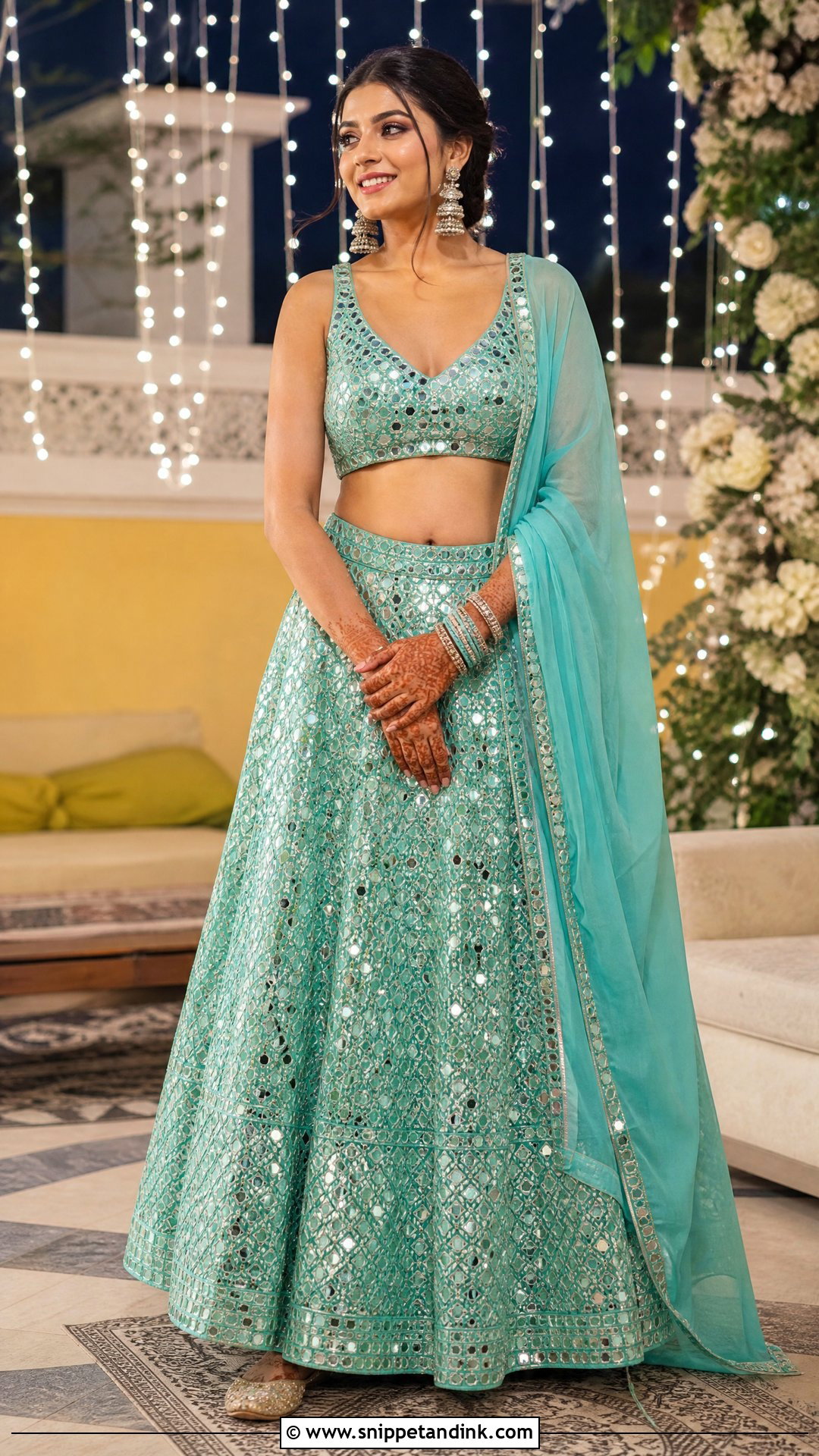
Mirror work is at its best in the evening, under fairy lights, where every small disc throws light back. For mehendi I prefer small, evenly spaced mirrors to heavy panels. When you rest henna-covered hands on your lap for hours, raised mirror panels press uncomfortably and can smudge the paste. Green, turquoise or pink all suit the technique. Pair it with a plain chiffon dupatta, silver jhumkas and mojaris, and keep the hair simple. Guests should keep their embellishment lighter than the bride’s.
10. Yellow Dhoti Set Haldi Outfit
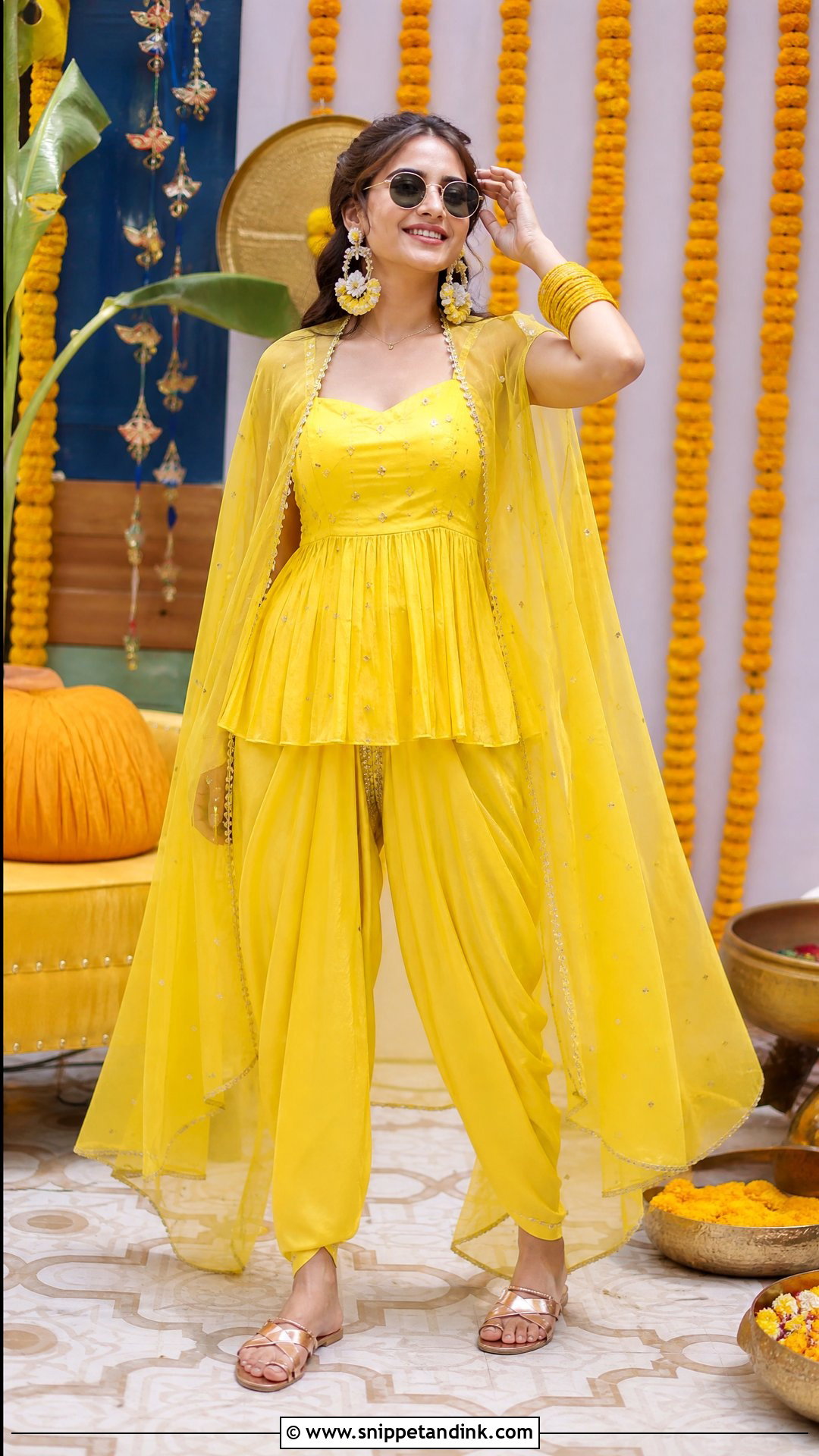
A yellow dhoti set is the Indo-Western piece I suggest to a bride who expects her haldi to get rowdy. Pre-draped dhoti pants with a fitted crop top, peplum blouse or short kurti need no draping skill, and a light cape adds movement. Mustard, lemon and marigold all suit the cut. My only fit rule is secure at the waist and roomy at the knee, so you can squat on a low stool and stand again without strain. Oversized floral earrings and a sleek ponytail finish it.
11. Bandhani Lehenga Mehendi Outfit
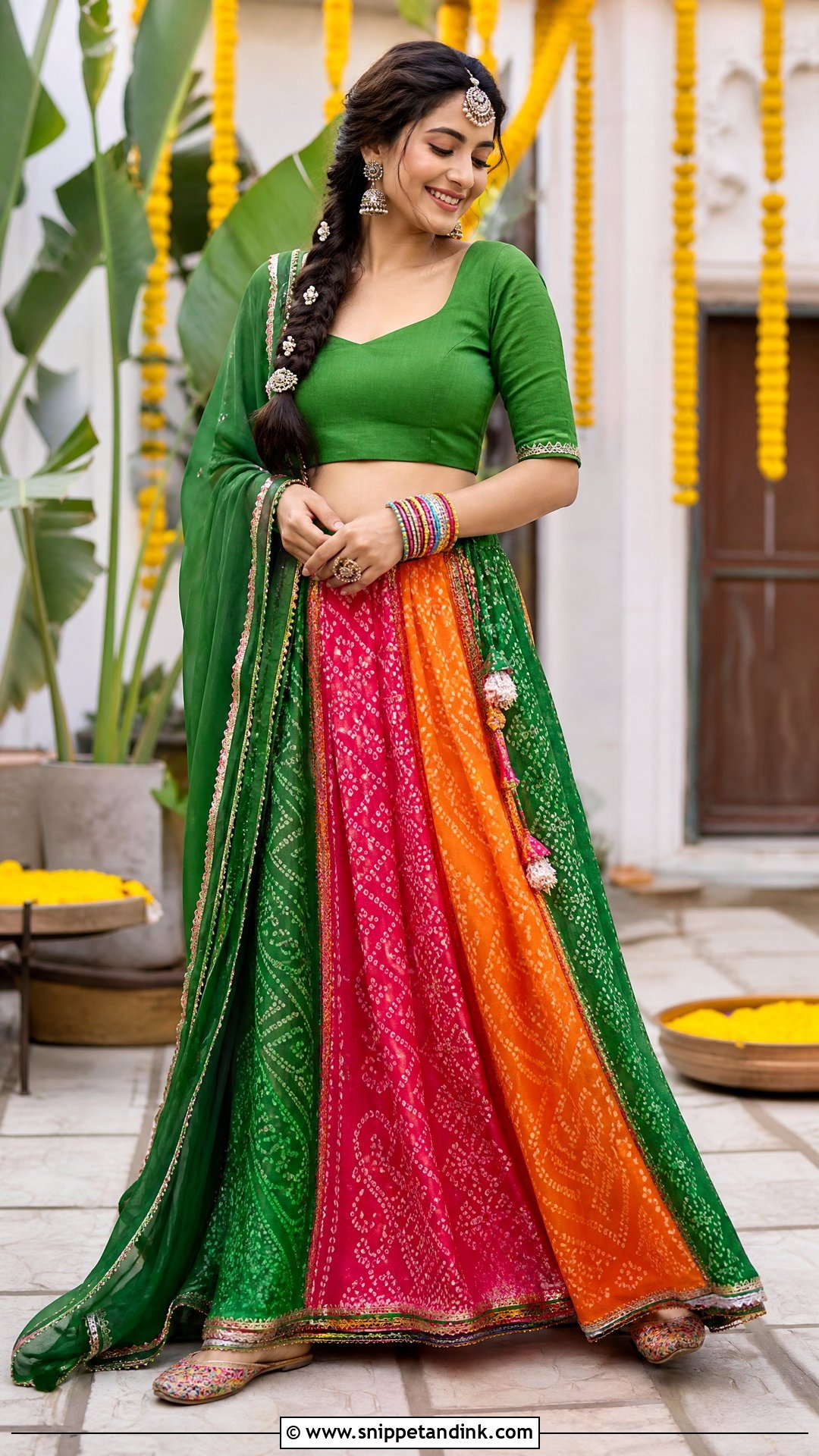
Bandhani carries a lot of color on its own, so I keep everything around it calm. A solid blouse lets the tie-dye dots lead. A contrasting bandhani dupatta suits a bold bridal look, and a plain organza dupatta is calmer for guests. The base fabric is usually light, which makes it comfortable at warm outdoor events. Look at the border before you buy: a broad one adds definition and some weight at the hem, a narrow one reads quieter. Oxidized silver and a long braid with thread tassels suit the craft.
12. Lavender Lehenga Haldi Outfit
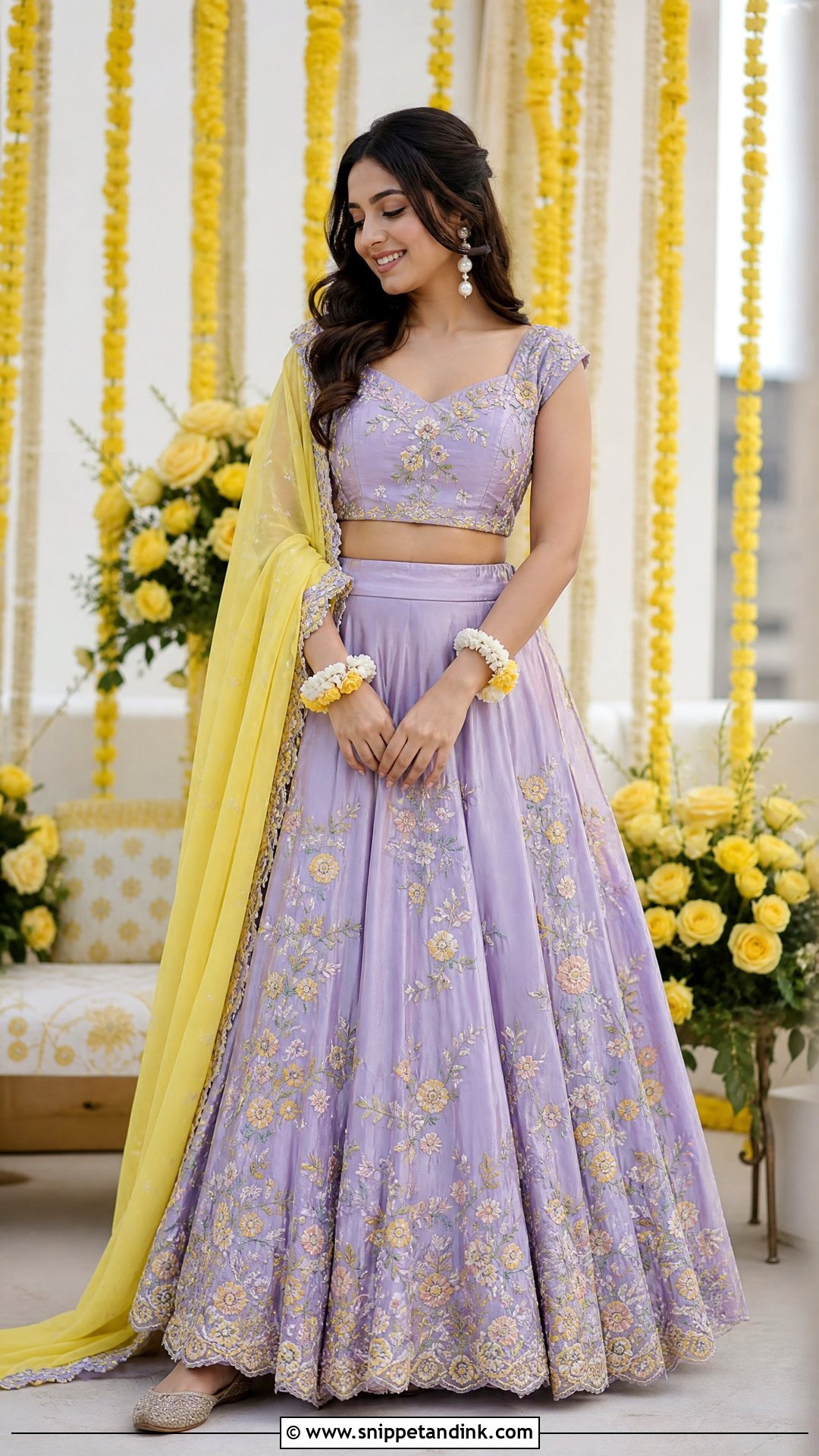
Lavender is my suggestion for someone who knows bright yellow and orange do nothing for her complexion; cool-toned skin often looks fresher in it. To keep it tied to the haldi, bring yellow in through embroidery, gota, the dupatta or flower jewelry. Pearl earrings and neutral juttis keep it soft. One caution: yellow and purple sit opposite each other on the color wheel, so turmeric on pale lavender dries to a muddy brownish mark. That makes it a better pick for guests and bridesmaids than for the bride sitting in the middle of the paste.
13. Yellow Kurta And Skirt Haldi Outfit
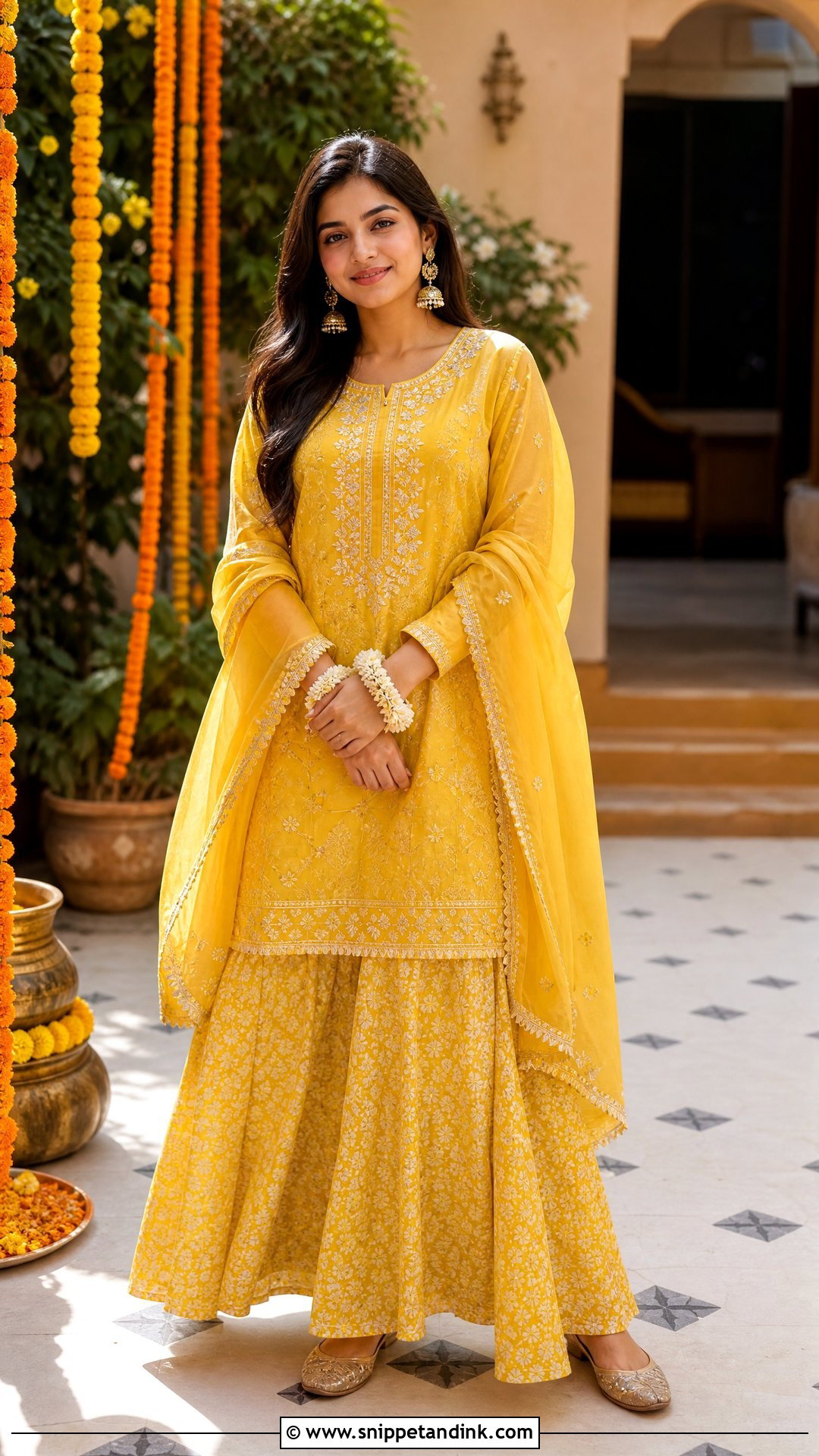
A knee-length kurta over a flared skirt moves like a lehenga with far more coverage, which mothers and modest dressers usually prefer. Side slits are essential, otherwise the kurta pulls tight across the hips when you sit. A solid kurta over a printed skirt gives interest without heavy embellishment. Outdoors, have the skirt hemmed a few inches off the ground. Use cotton silk for a daytime haldi and soft georgette if the function runs into the evening.
14. Teal Cape Set Mehendi Outfit
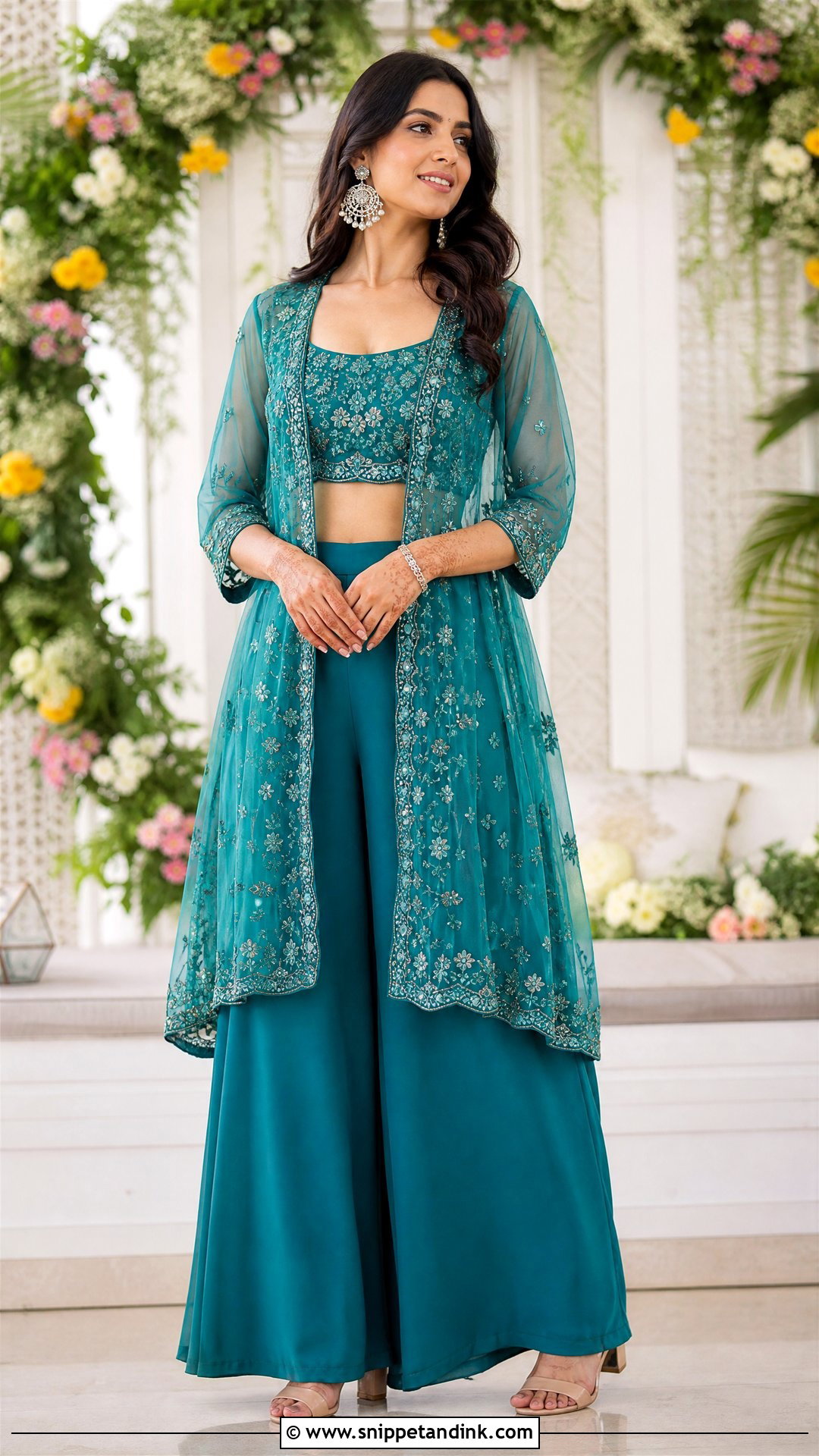
Teal and peacock blue suit a mehendi that leans modern or happens after dark. Over a crop top with wide-leg pants or a flared skirt, a sheer embroidered cape gives coverage without the constant adjusting a dupatta needs. For a bride, I check the cape’s front edge. If it falls forward over the arms, it sits exactly where the wet henna is; a cape that ties or hooks at the shoulders stays back. Silver chandbalis and a sleek low ponytail suit it, and a knee or calf length won’t overwhelm a petite frame.

15. Yellow Floral Saree Haldi Outfit
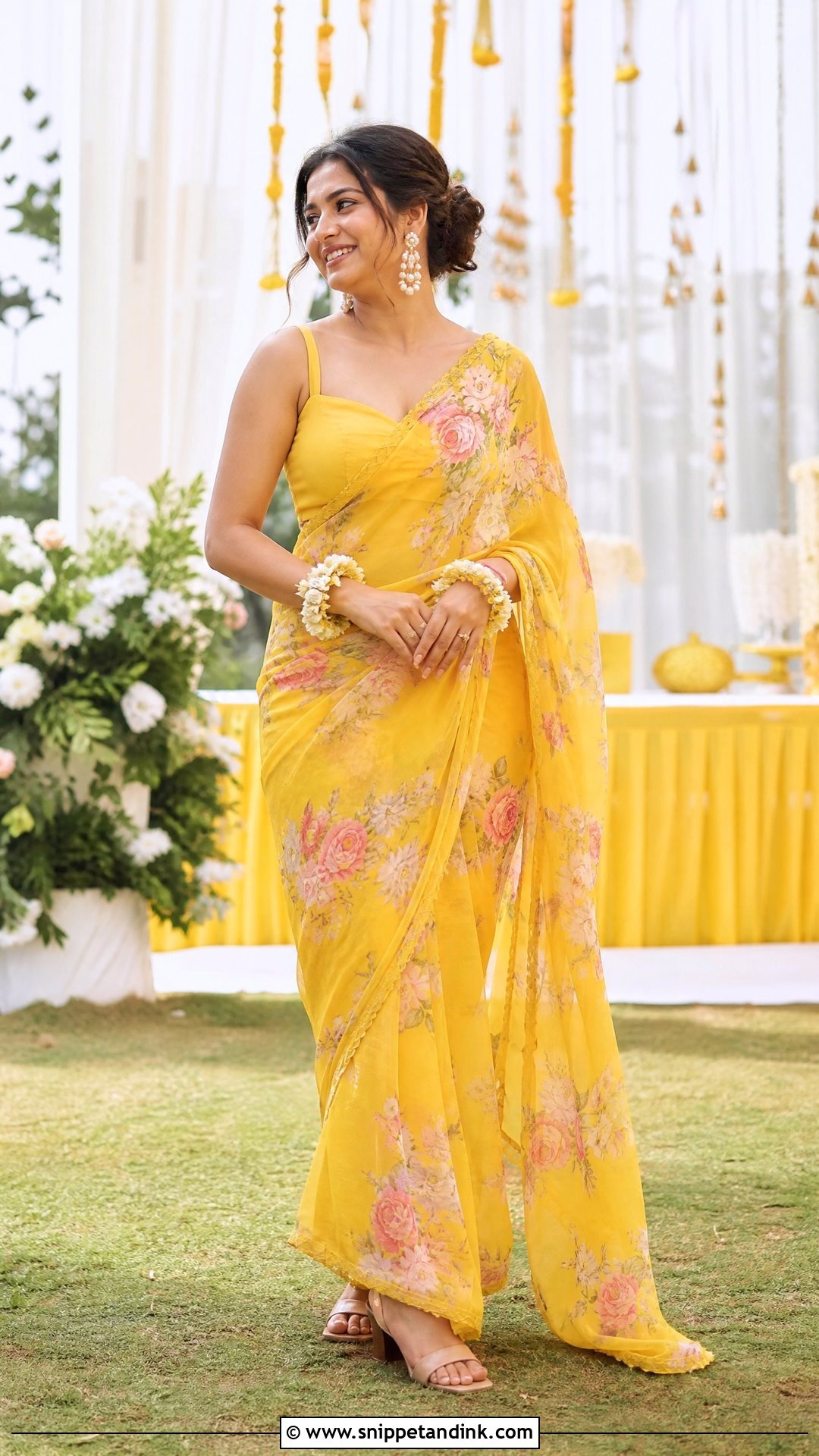
A yellow floral saree is a softer way to wear haldi yellow. Chiffon, georgette or light organza printed with white, pink or orange flowers drapes well, anchored by a solid yellow, ivory or pink blouse. If you’re unsure about keeping pleats in place while sitting low and getting up again, a pre-stitched or ruffle saree takes the worry away. I always pin the pallu firmly at the shoulder, since a loose pallu ends up in the turmeric or the food. Pearl drops and low block heels complete it.
16. Green Peplum Sharara Mehendi Outfit
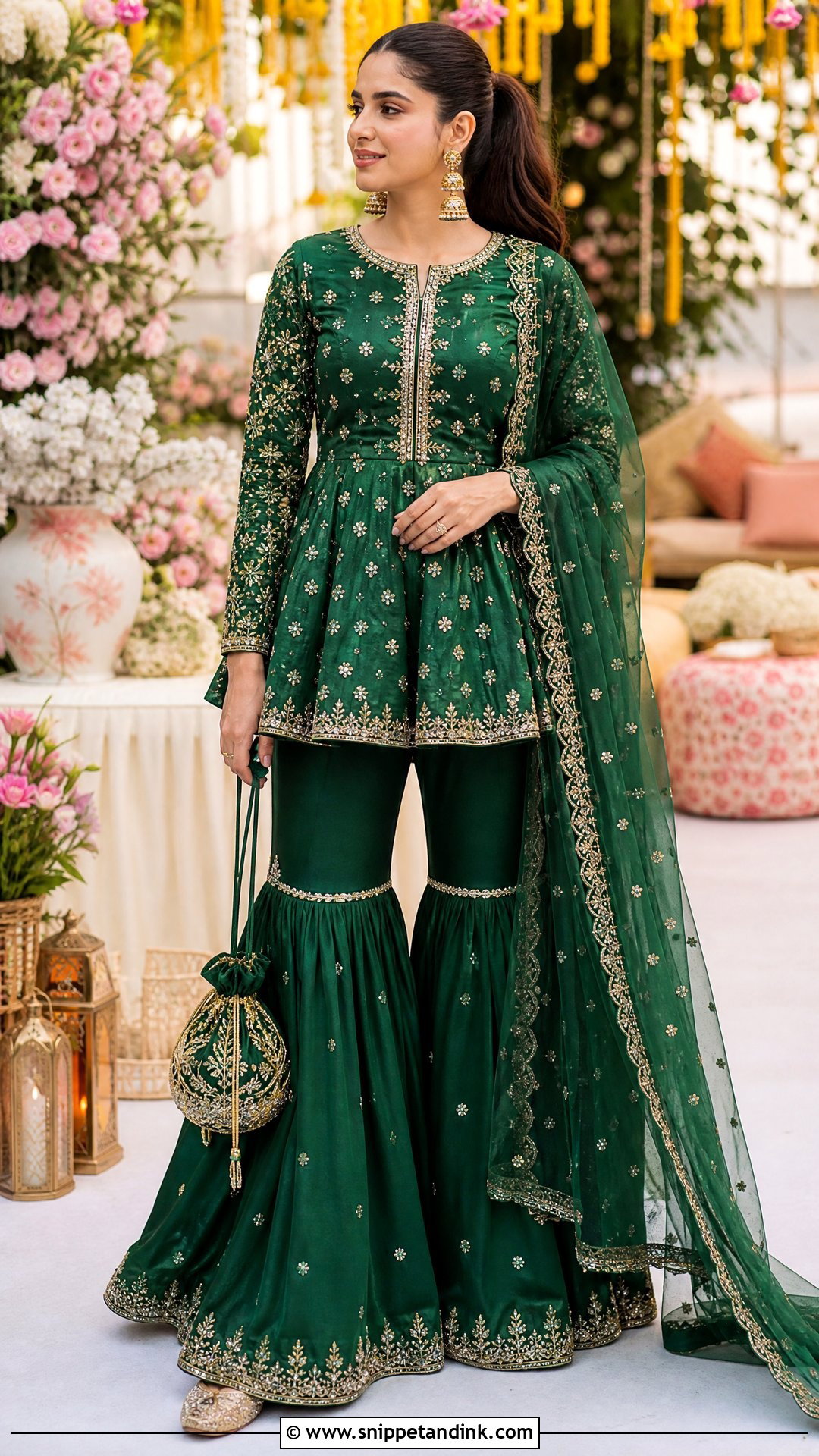
A peplum top shapes the waist in a way a straight kurti can’t, and the sharara keeps things comfortable below. Sage, emerald or parrot green with embroidery at the neckline or cuffs is festive enough without a heavy dupatta, so skip it if the sleeves are detailed. The fit point is where the flare starts: at the natural waist, never below it. A high ponytail shows off the neckline and keeps hair clear of drying henna, which matters more than people expect once they lean forward to admire their hands.
17. Multicolor Lehenga Mehendi Outfit
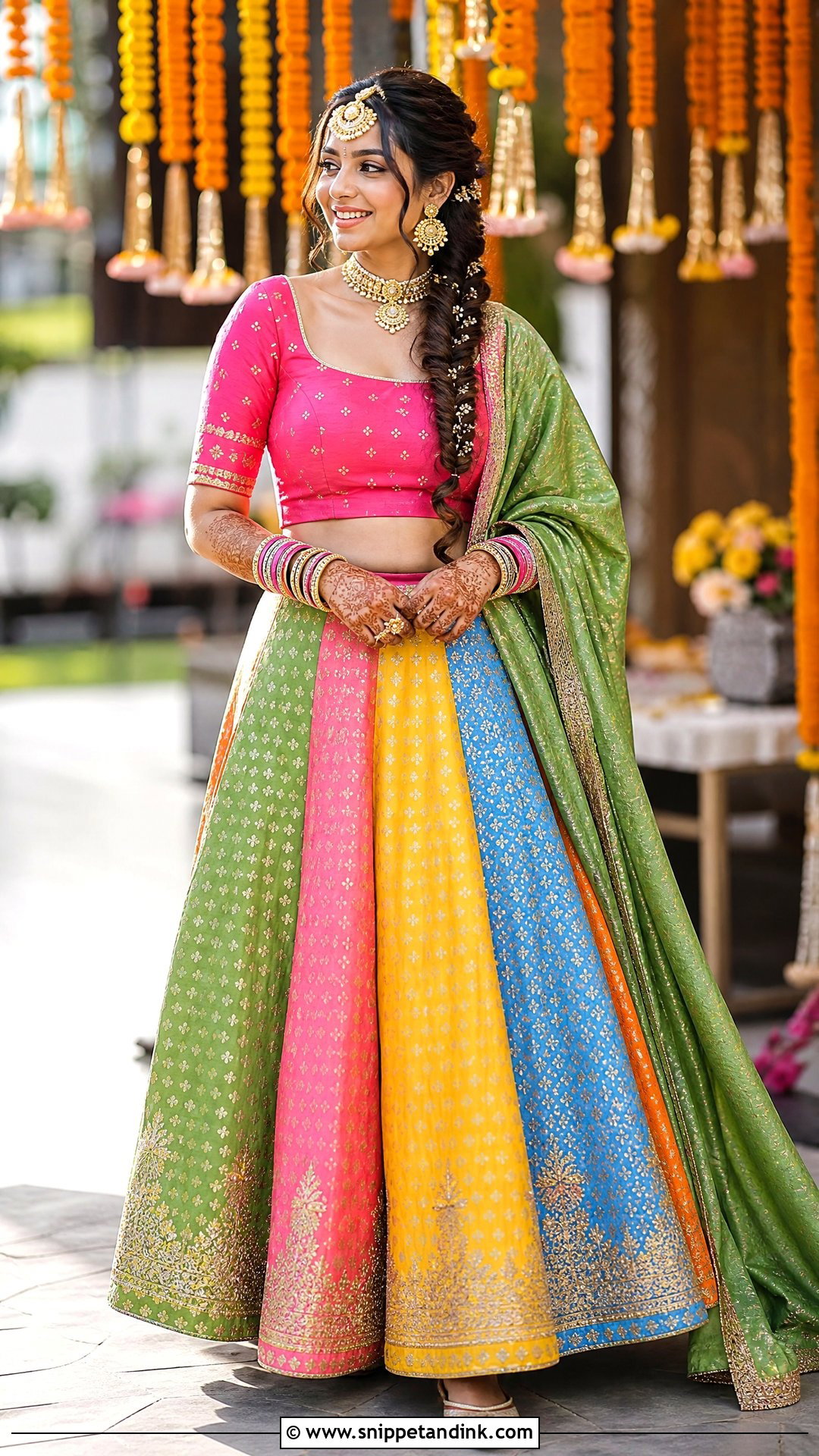
A multicolor lehenga with panels or florals in green, pink, yellow, blue and orange does the work of an entire color scheme on its own. Everything else should be plain: a solid blouse in one dominant shade, a plain dupatta with a colored border, neutral gold jewelry. Brides can add a statement maang tikka. Keep the makeup understated, because a bright lip fights five skirt colors and loses. This is the outfit I reach for at combined haldi-mehendi events, where one look has to bridge both palettes.
18. Mustard Palazzo Co-Ord Haldi Outfit
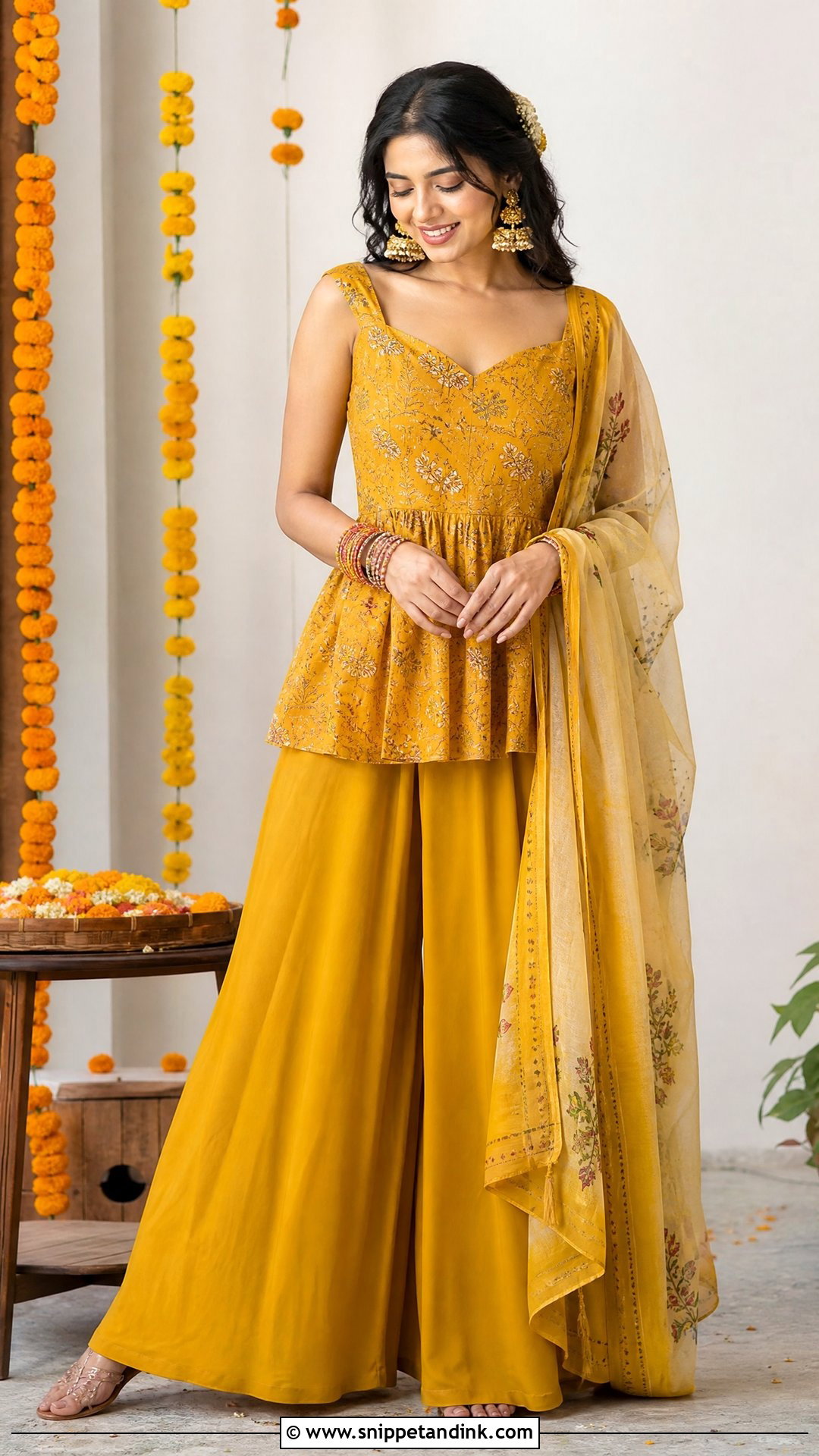
A mustard palazzo co-ord fits a small haldi at home, where a lehenga would feel overdressed. Wide-leg pants with a crop top, tunic or short peplum blouse, finished with block prints, scalloped edges or a little mirror work, is enough. Add a printed dupatta for a formal family or wear the two pieces alone. I like co-ords for sisters because each piece goes back into the wardrobe afterward. A high-rise palazzo with a longer top covers the waist if you prefer.
19. Green Anarkali Mehendi Outfit
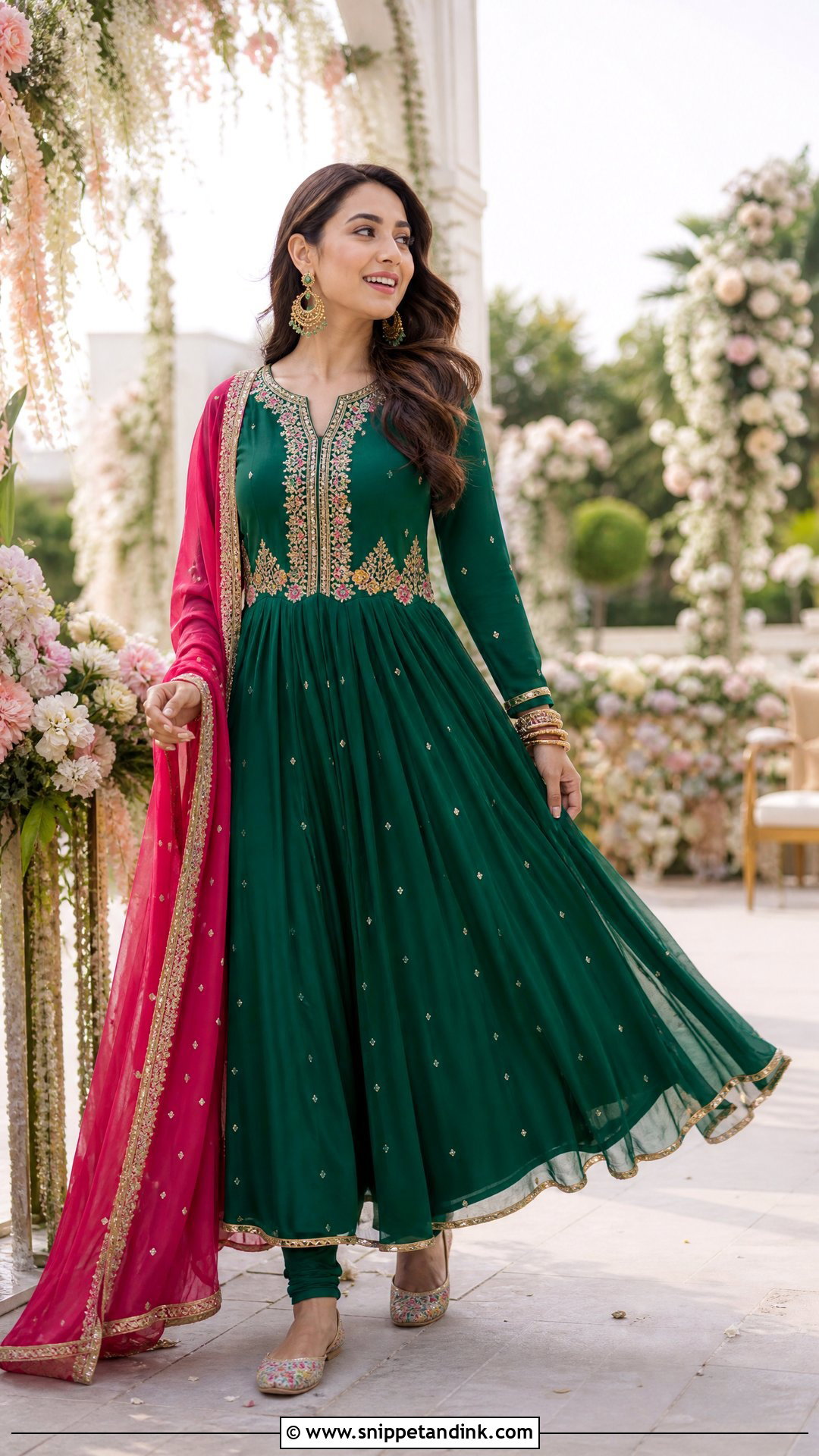
Emerald or sage Anarkalis suit mothers and aunts at a mehendi. I look for embroidery concentrated on the bodice with lighter fabric through the flare, which puts detail near the face and keeps weight off the hem. Fit at the shoulder and bust decides whether it looks tailored or tent-like, so that is what I adjust first. A slightly shorter hem is easier for dancing outdoors. Pair it with fitted pants and a pink, yellow or floral dupatta. Bridesmaids can each wear a different green and still look like a group.

20. Yellow Jumpsuit Haldi Outfit
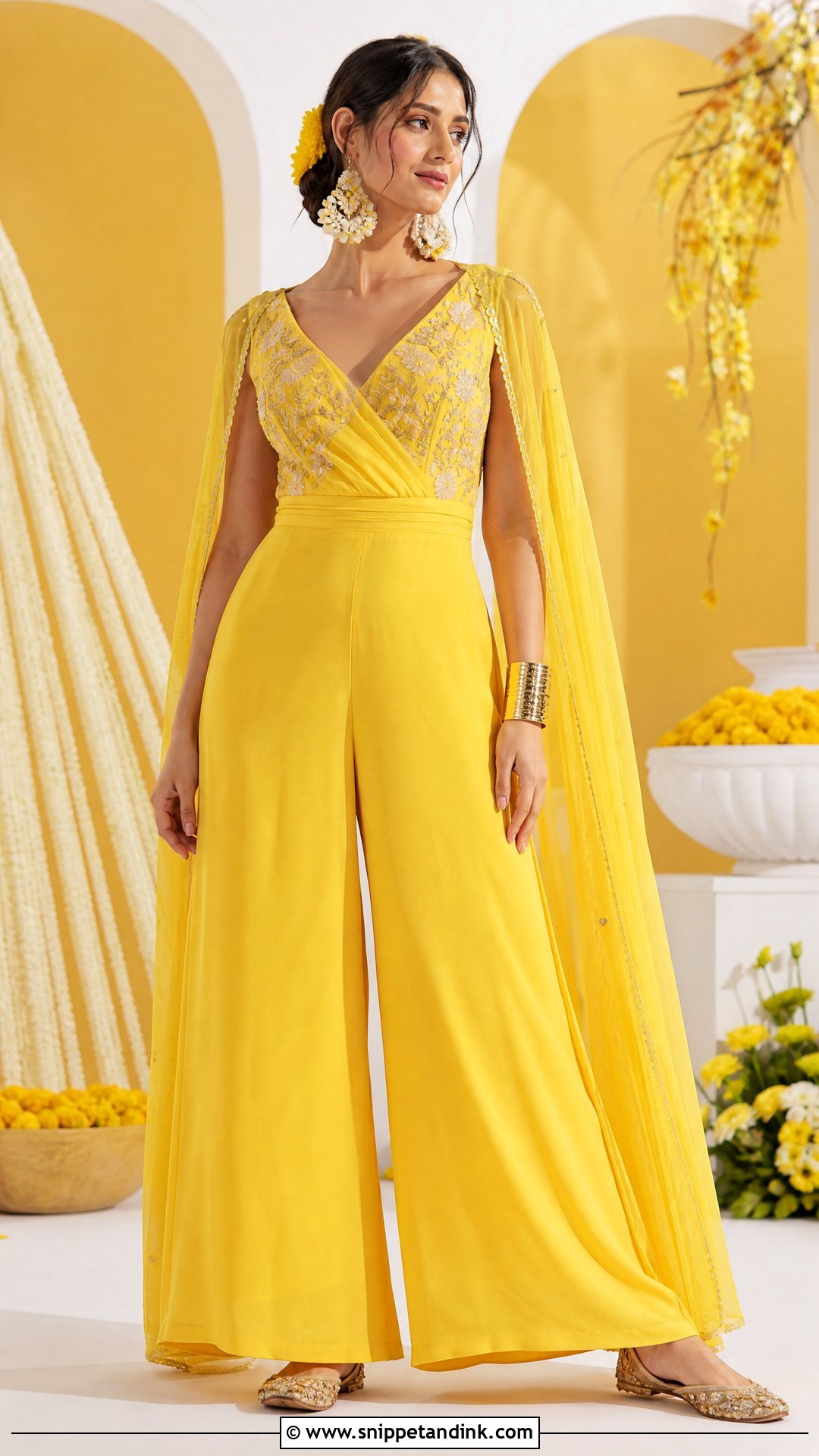
A jumpsuit is for the guest who wants no skirt, no saree and no dupatta to manage. I look for wide legs, a defined waist and a neckline you’ll never need to adjust, and a detachable cape or embroidered straps add an Indian touch. The honest downside is the bathroom. A one-piece is awkward at any event, and with wet henna on your hands it’s nearly impossible without help, so I’d skip it if you’re getting mehendi done. For a haldi, it works well with a high ponytail and block heels.
21. Pink And Green Mehendi Outfit
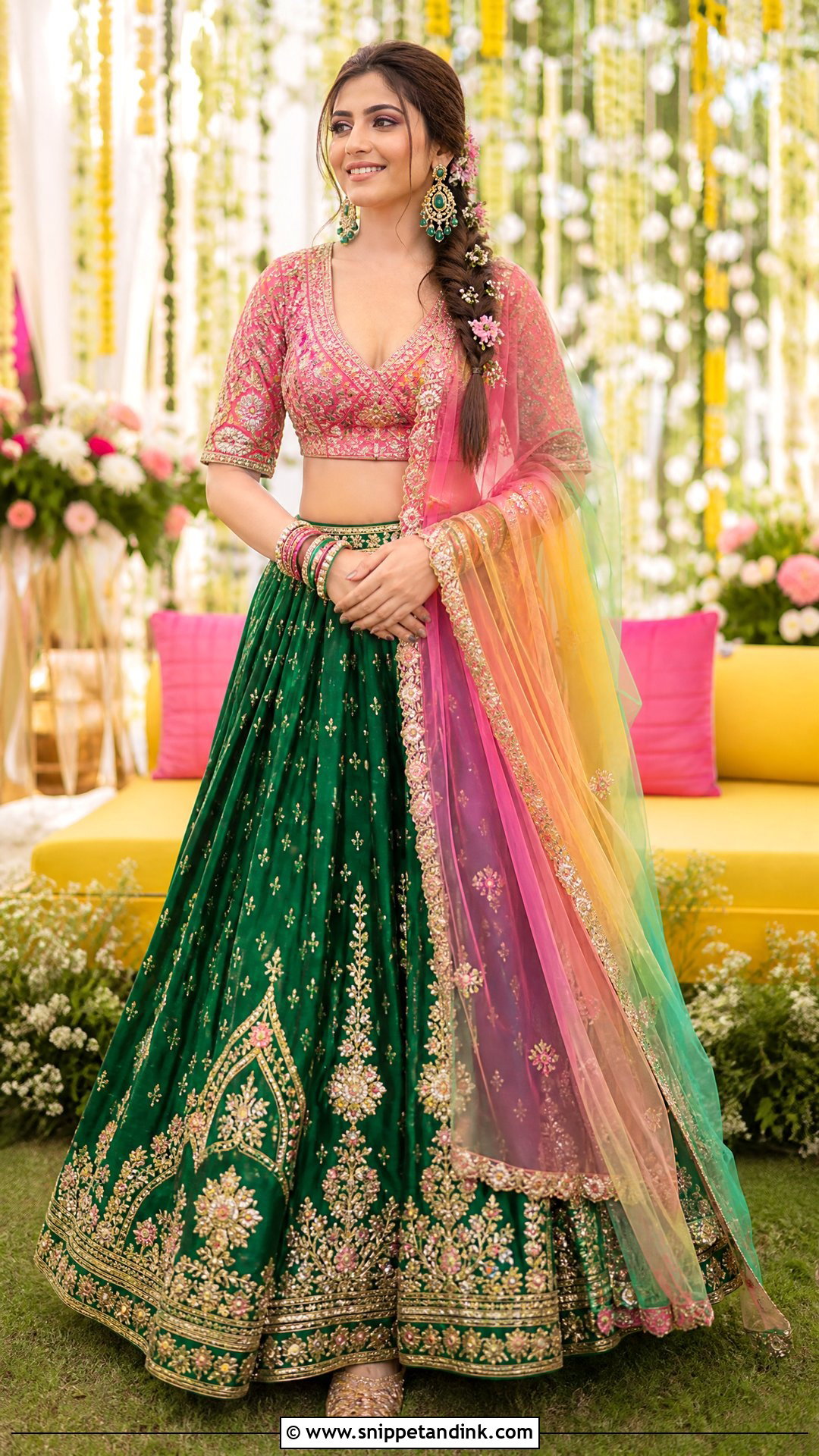
Pink and green is the pairing most people picture at a mehendi, and it works best with a clear lead color. Try a green lehenga or sharara with a vivid pink blouse, or a pink skirt under a bottle-green peplum top, then tie them together with a multicolored dupatta or border. Gold earrings with green stones and mixed bangles finish it. Split the two shades evenly and the outfit reads as two separate garments rather than one look.
22. Yellow Jacket Lehenga Haldi Outfit
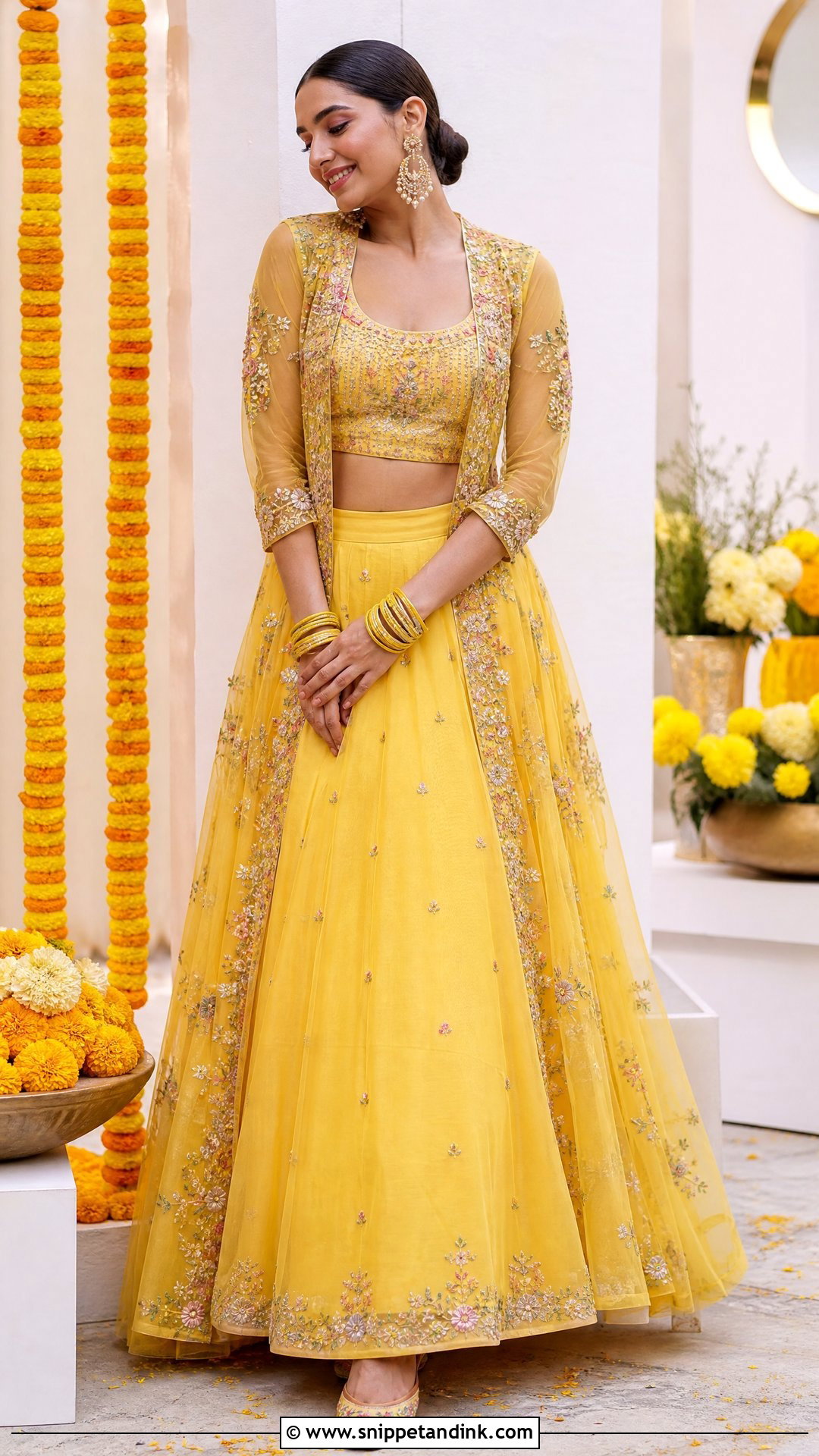
A long jacket over a yellow lehenga replaces the dupatta and covers the arms, and a below-the-knee length swings nicely as you walk. Tonal yellow looks polished; an ivory floral jacket over yellow feels lighter. At a mehendi, the sleeves are the catch. Embroidered fitted sleeves rarely roll past the wrist, so if henna is going on your forearms, choose a sleeveless jacket or ask the tailor for a slightly wider sleeve. Wear your hair up so the neckline and embroidery stay visible.
23. Ivory And Green Mehendi Saree Outfit
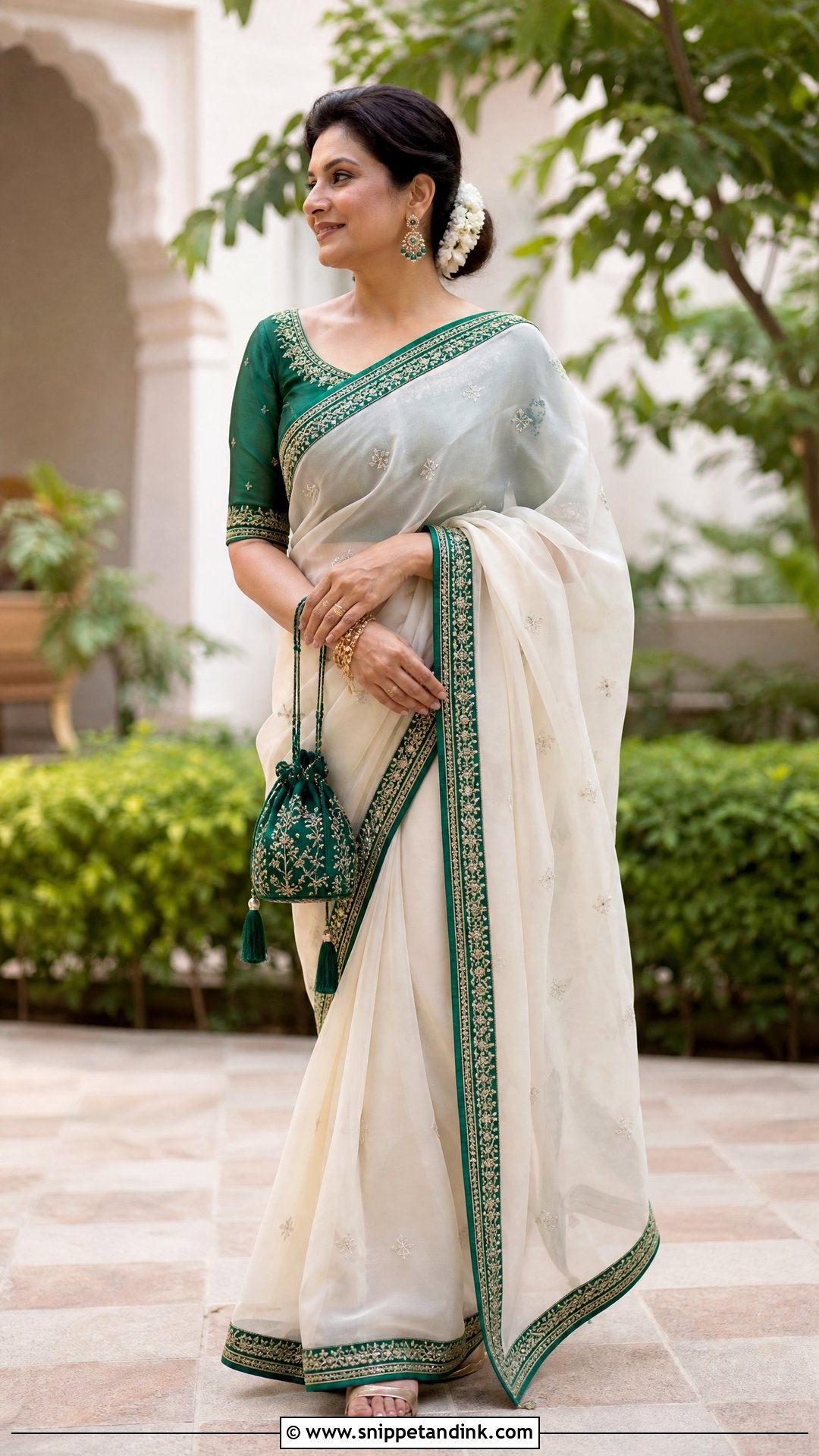
Ivory with a green border is quiet but still unmistakably mehendi. Organza, cotton silk or chiffon with an emerald, sage or bottle-green blouse works, and the blouse should have sleeves and a neckline you won’t need to fiddle with. Mothers and sisters often feel most at ease in this one. Green stone earrings and a small green potli coordinate without effort. Pin the pallu firmly, because greeting guests and having henna applied both need two free hands. Brides can lift the whole saree with a heavily embroidered blouse.
24. Orange And Pink Haldi Lehenga Outfit
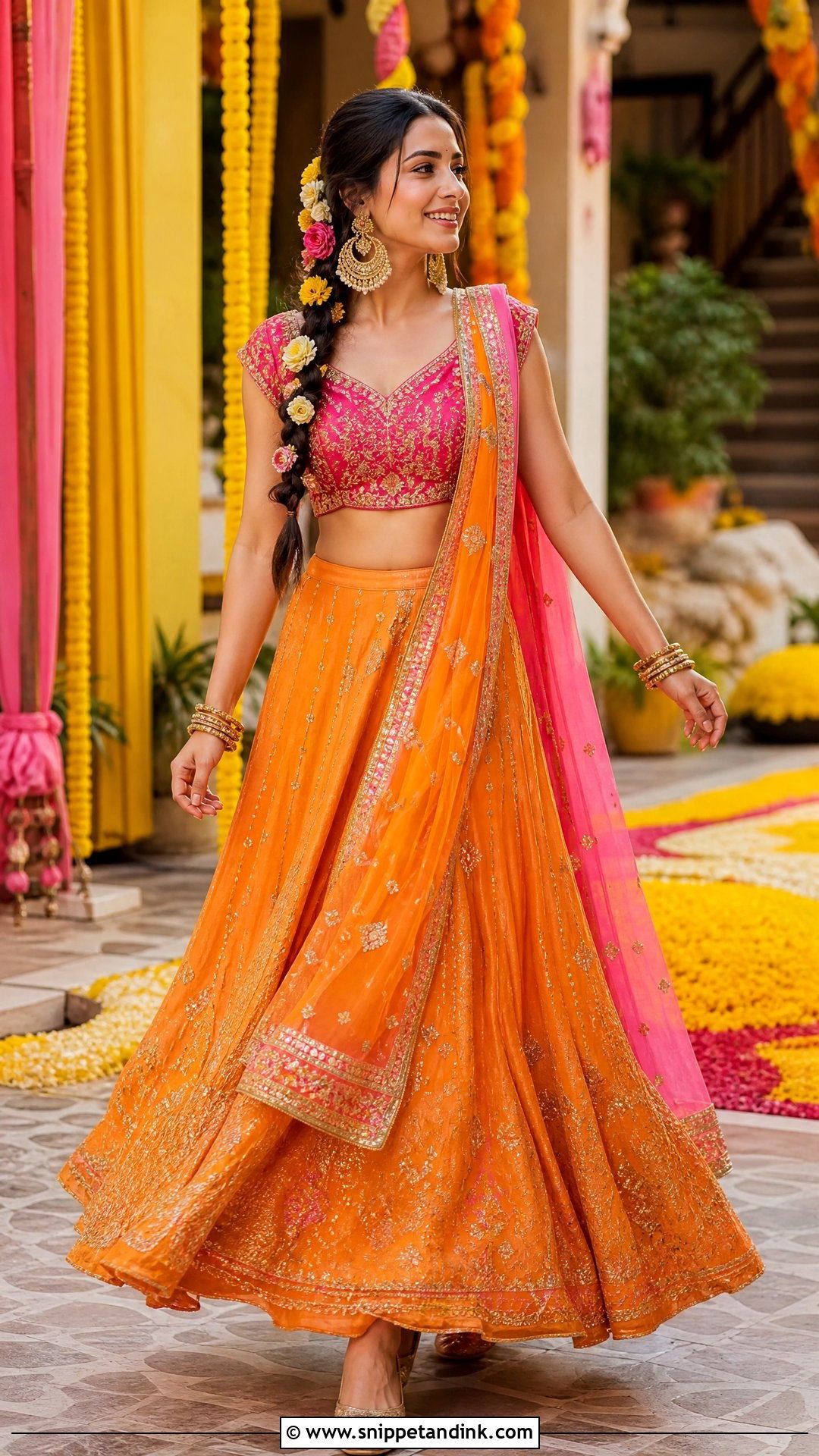
Orange and pink look loud on a hanger and cheerful on the day, especially against yellow decor. Wear an orange skirt with a pink blouse, or reverse it if pink is kinder to your skin tone, and use a dupatta containing both shades to link them. I match the intensity of the two pieces: a neon pink blouse over a muted orange skirt looks like a mistake rather than a choice. Small mirror work or gota trim and a braided ponytail with tiny flowers keep it youthful.

25. Pastel Floral Co-Ord Mehendi Outfit
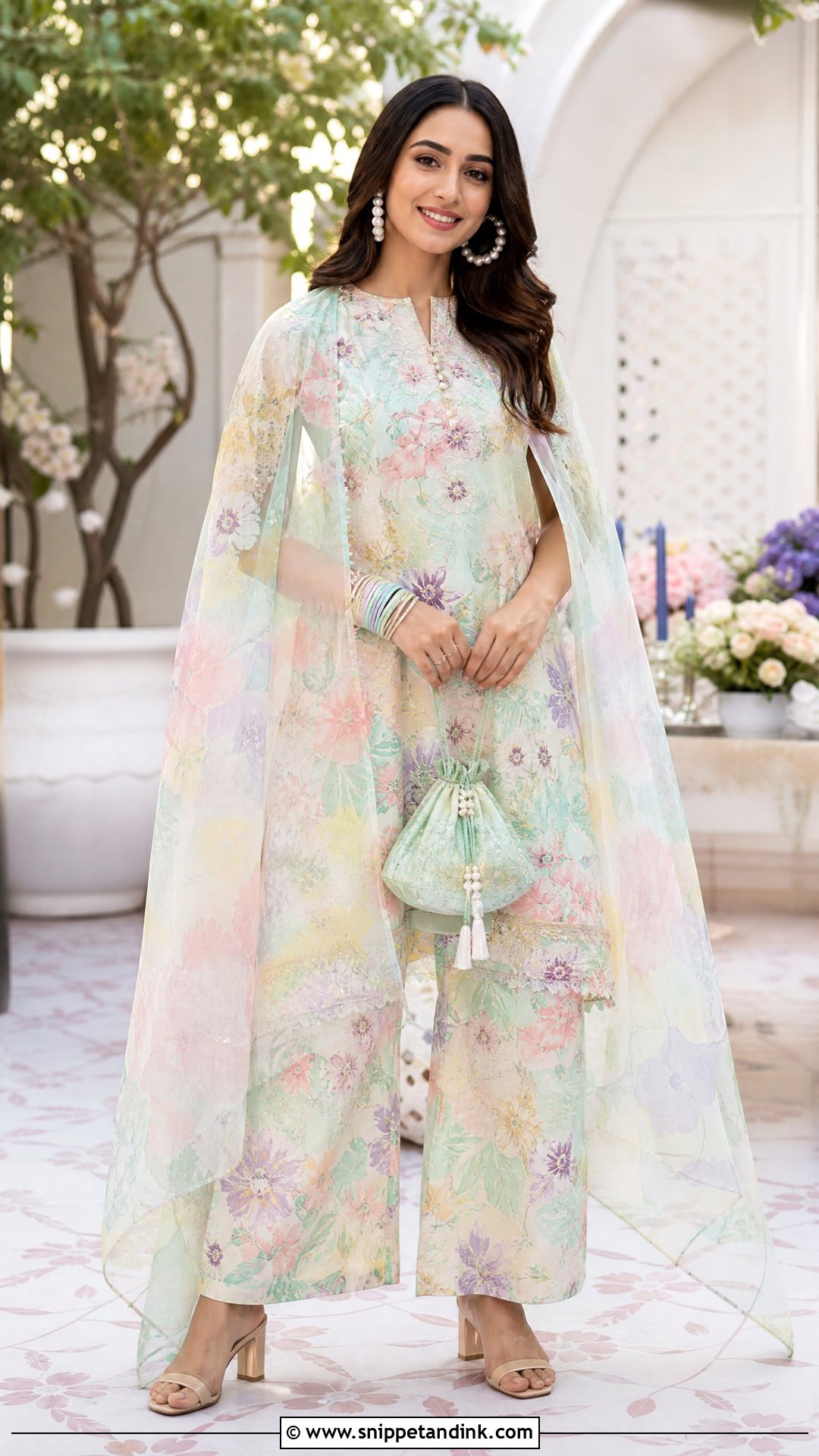
A pastel floral co-ord in mint, blush, lavender, lemon or powder blue suits a daytime mehendi with a garden-party feel. Pair a printed crop top or modest tunic with wide-leg pants or a flowing skirt, and add a plain organza cape for coverage. With so many colors in the print, keep the jewelry to pearls and the footwear neutral. Brides can choose beading or 3D flowers. Pastels show henna drips far more than deep colors, so if you’re having your hands done, rest them on a napkin rather than on your lap.
If Haldi and Mehendi Happen on the Same Day
Plenty of families now combine the two functions into one long day, often haldi in the morning and mehendi from the afternoon. It works, but only if the outfits are planned around a wash in between. Turmeric paste has to come off before the henna goes on, and henna takes best on skin that’s clean and free of oil or lotion, so the bride needs time for a proper shower.
- Treat the haldi outfit as sacrificial. Pick something washable that you won’t mind marking, and save the better piece for mehendi.
- Build in a gap between the two functions for showering and drying hair. Squeezing it shortens the time the henna paste can stay on later.
- Pack the mehendi outfit, jewelry and a hair tie in one bag the night before, with the dupatta pins already attached.
- If you must wear one outfit for both, choose colors that bridge them, such as a multicolor lehenga, orange or a pink and yellow mix, in a print that hides turmeric marks.
Guests have it easier, though the same idea applies: arrive at the haldi in something you don’t mind getting yellow, and change if you’re staying through to the henna.
Sleeves, Hems and a Dupatta That Stays Put
Almost every outfit above comes down to a handful of decisions: fabric that breathes, sleeves that push up, a hem that clears the floor and a drape that stays pinned. Brides can take the fuller skirts, heavier embroidery and statement jewelry, while bridesmaids and guests wear lighter versions of the same shapes. Yellow lehengas, green shararas, floral sarees, jumpsuits and co-ords all have a place. And if a tradition doesn’t suit your family or your body, dress for the people you’ll be celebrating with rather than for a rulebook.
You'll Like These Ideas:









Leave a Reply