
Dressing a bride’s or groom’s brother is a different job from dressing a guest. He stands in nearly every family portrait, greets people at the door, helps with rituals and is often pulled into the wedding party at the last minute, so his clothes have to work hard without pulling focus from the couple. The ideas below run from traditional Indian clothing through Western tailoring to fusion pieces: embroidered sherwanis, pastel kurtas, dinner jackets and plain suits. When a brother comes to me for help, I ask about the dress code, the venue, the weather and the family palette first, and only then about colors. And I always say the same two things: pay for the tailoring, and break the shoes in.
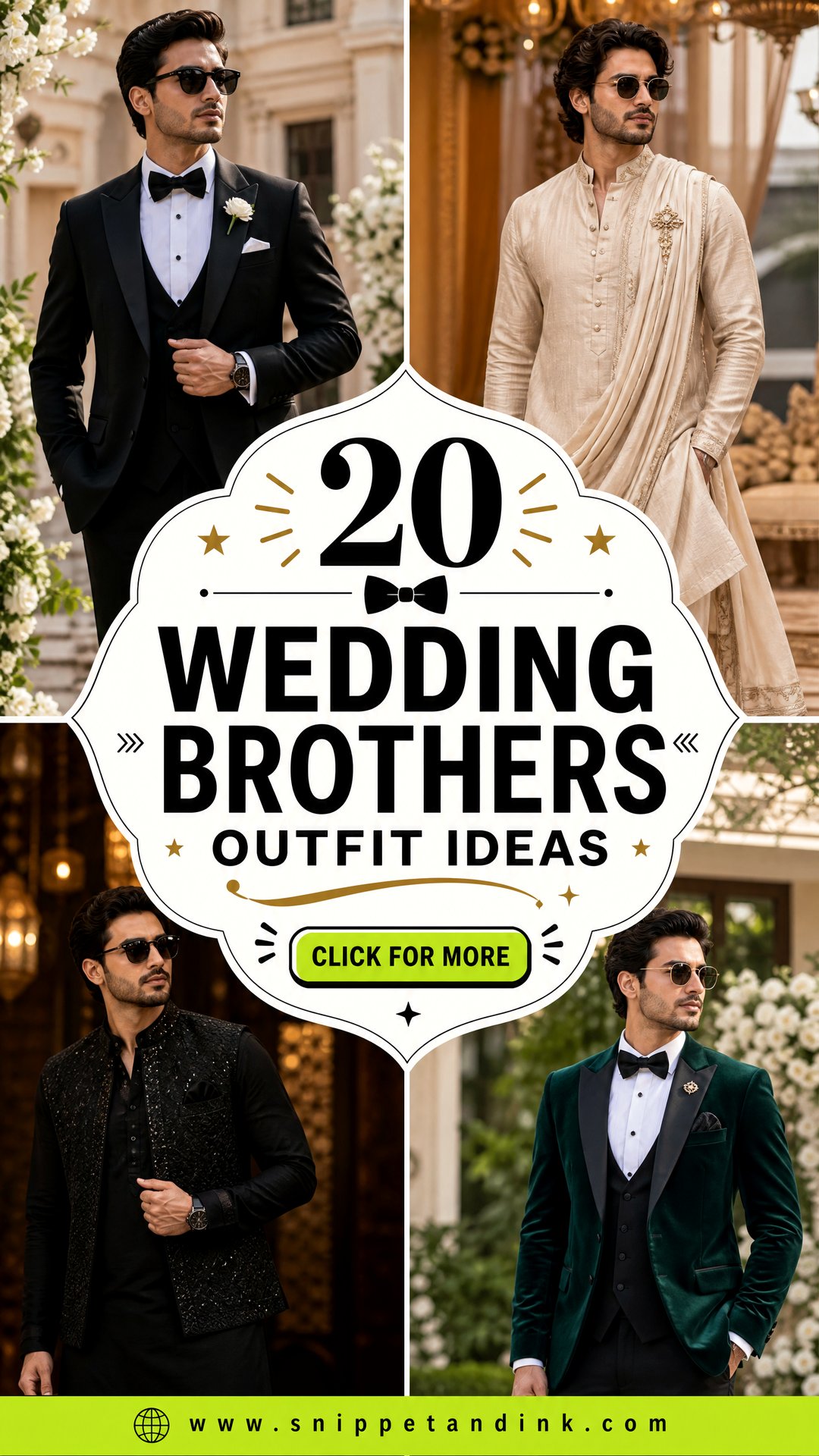
His Jobs on the Day Decide the Cut Before the Color
Before I look at fabrics with a brother, I ask what he’ll be doing. A brother who ushers, carries the rings and gives a speech needs different clothes from one who sits on the floor through pheras, dances through a baraat and then helps load the car at midnight.
- Floor seating and long rituals: choose kurtas, achkans and churidar with ease at the hip and knee, and avoid stiff, heavily embroidered trousers that dig in when cross-legged.
- Dancing: raise your arms and turn in the fitting room. If the jacket or kurta rides up past the waistband, it needs more length or a looser armhole.
- Standing in a receiving line: shoes matter more than anything. Wear new mojaris or Oxfords around the house for a week first.
- Speeches and readings: inside pockets for notes and a phone help, which favors suits and bandhgalas over pocketless kurtas.
Once the jobs are clear, the choice between a sherwani, a suit or a kurta set usually makes itself. Then I ask the couple for their palette and an idea of the groom’s outfit, so the brother can sit one step quieter than him.
1. Wedding Brother Ivory Sherwani Outfit
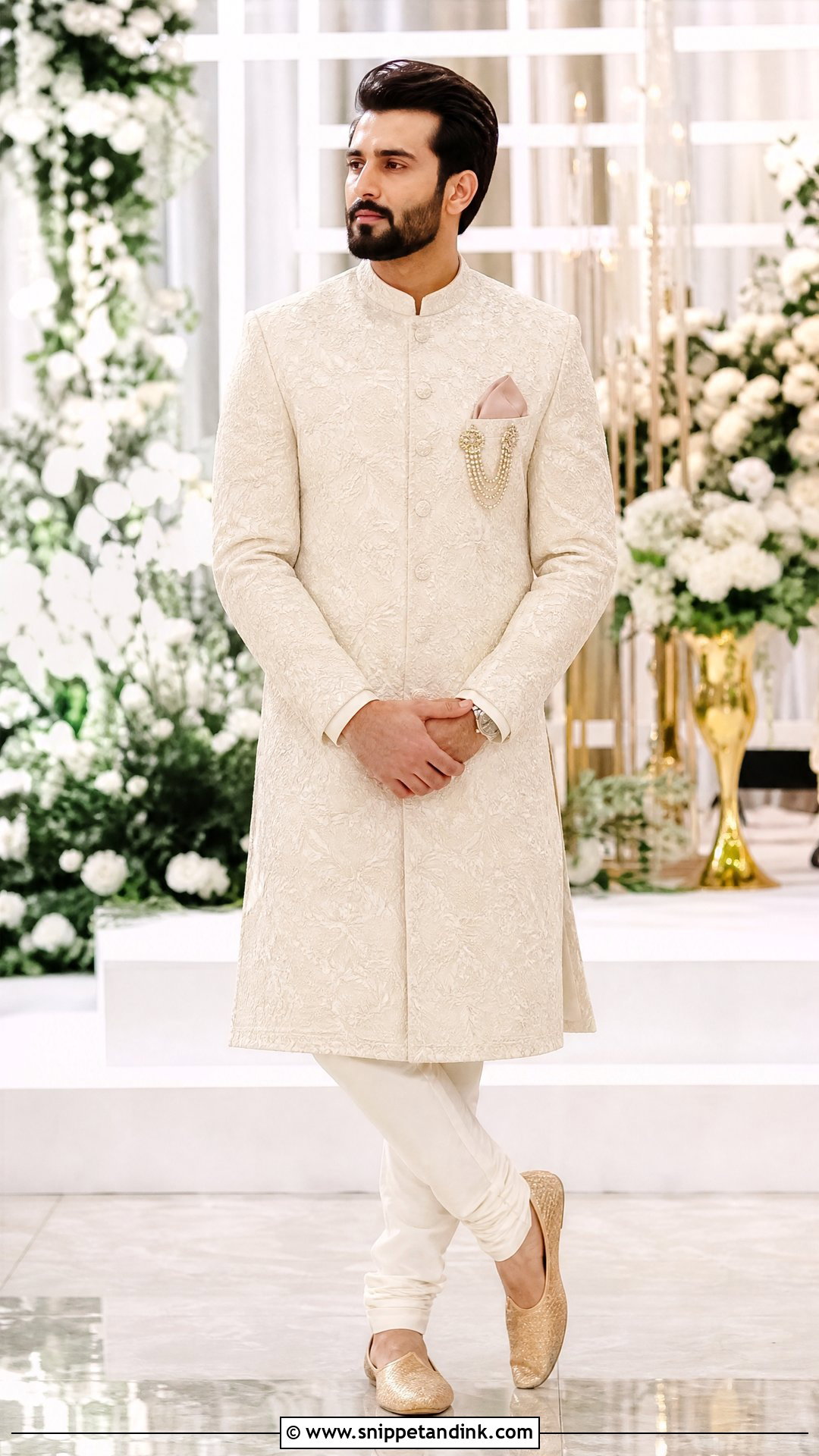
An ivory sherwani suits the main ceremony, especially one with tonal embroidery, covered buttons and a clean band collar. Under it I’d put tapered ivory churidar or straight trousers, and gold or tan embroidered mojaris. The detail people forget: ivory shows every mark, and a brother handles flowers, sweets and turmeric all day, so I pack a stain pen and keep the stole in a darker shade like sage or powder blue. If the groom is also in ivory, change the embroidery or the buttons so you read as family, not as his double. Leave real room across the shoulders, because you’ll be bending to touch elders’ feet and lifting things in it.
2. Wedding Brother Navy Bandhgala Outfit
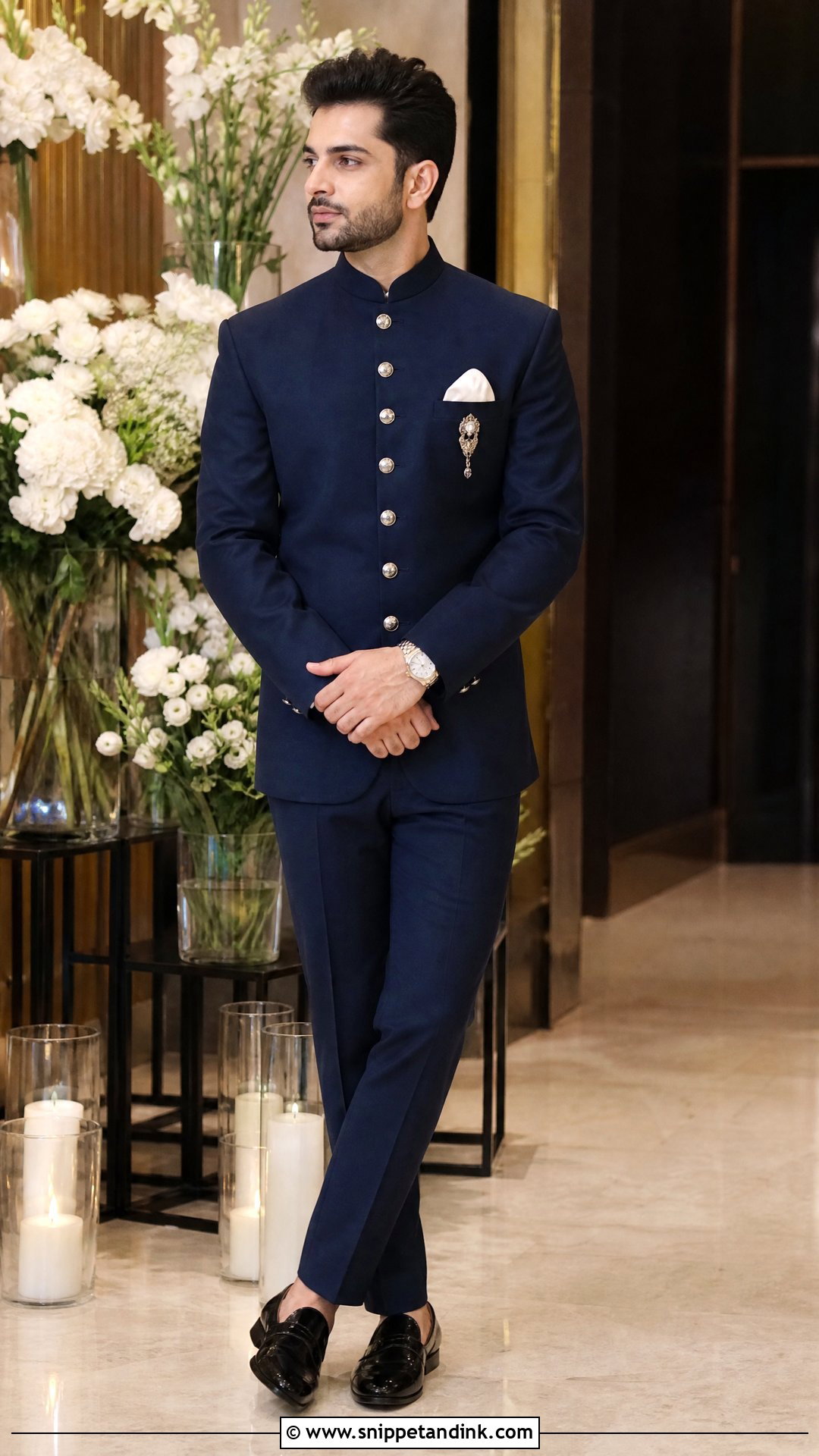
A navy bandhgala is the outfit I suggest to brothers who are happier in a blazer than in a long kurta. The thing I check at the fitting is the closed collar with the jacket fully buttoned: if it pulls across the chest when he reaches forward, the cut is too tight for a wedding, however sharp it looks in the mirror. Slim black or navy trousers, black loafers and a crisp pocket square are enough. Jacquard catches evening light gently, and a watch plus one brooch is the whole accessory story. Let the pocket square nod to the family palette, but don’t match every detail; a little contrast makes it look chosen rather than issued.
3. Wedding Brother Pastel Kurta And Nehru Jacket Outfit
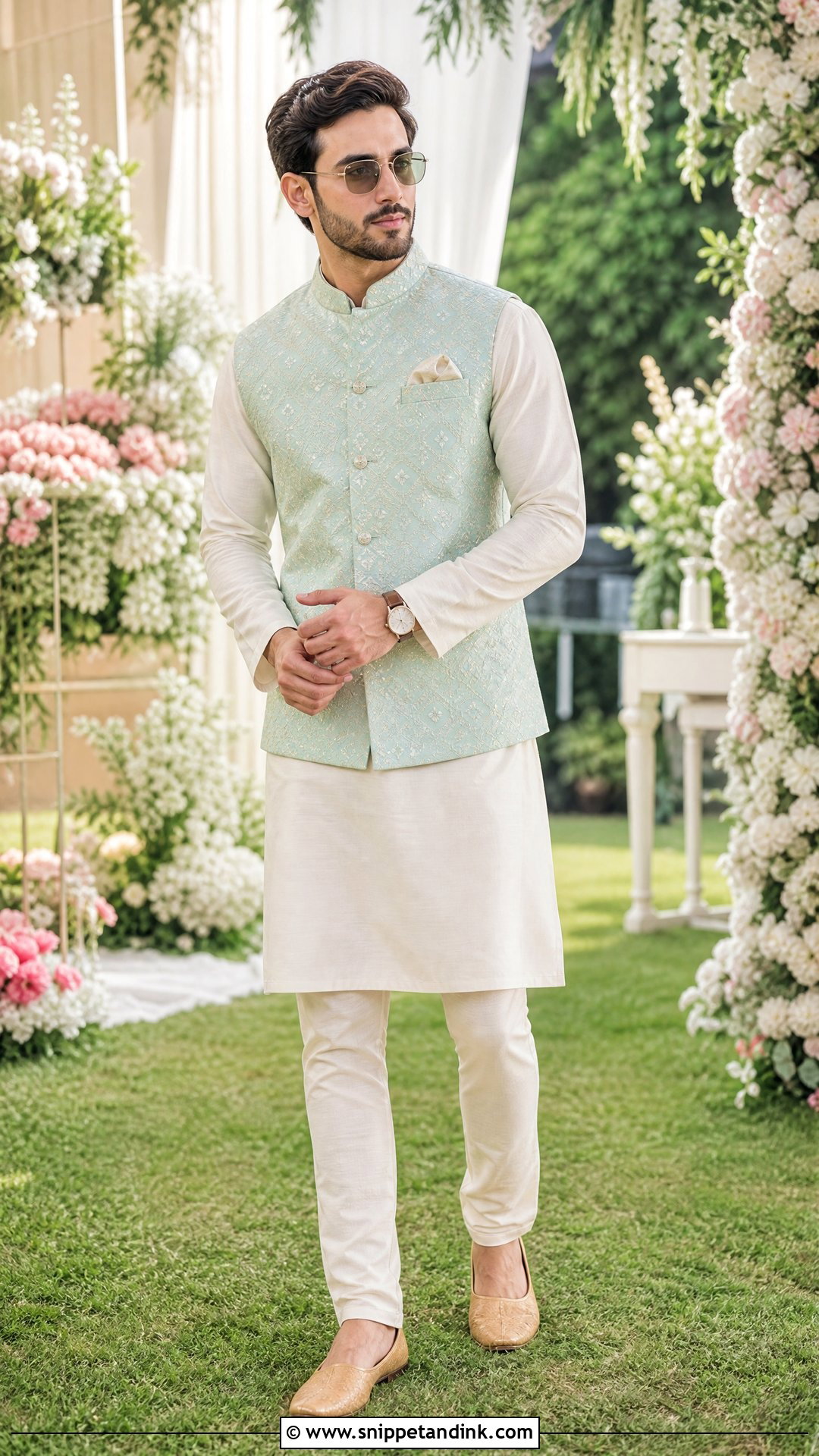
For a daytime function, a straight-cut ivory or blush kurta with fitted pajama pants and a mint, powder blue or lavender Nehru jacket is cool to wear and easy to photograph. I keep the jacket length around the upper thigh. Shorter, and the kurta hem hangs out unevenly below it; longer, and the proportions go heavy when he sits. Tan mojaris and a plain watch finish it. If you want a sibling link, pull the jacket color from the bride’s or groom’s outfit and leave the kurta neutral.
4. Wedding Brother Floral Kurta Outfit
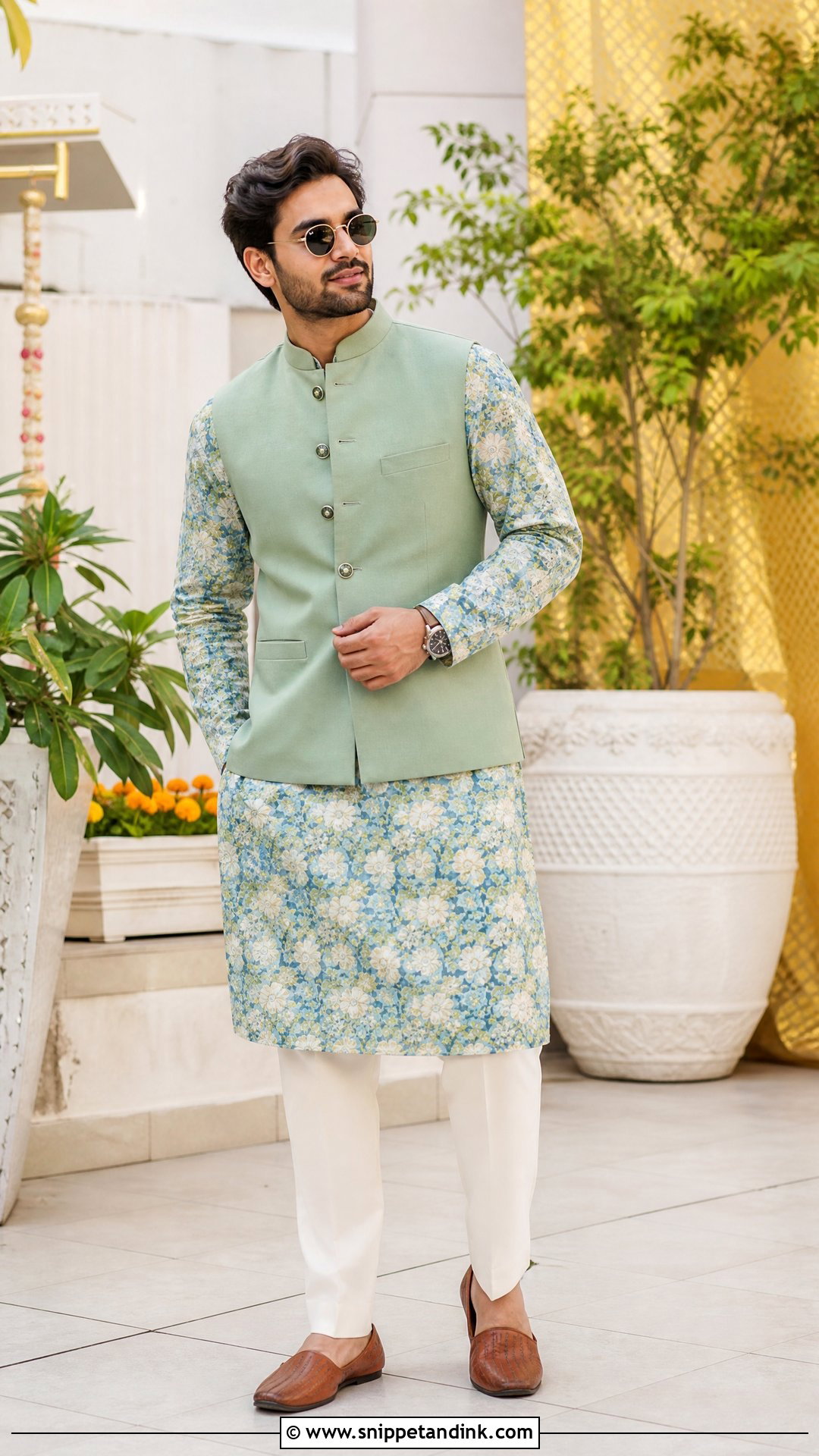
Floral kurtas earn their place at a mehndi or garden ceremony, but print scale matters more than color. A medium print in green, blue, coral or yellow reads clearly from across a lawn; a tiny dense print turns to mush in group photos, and an oversized one swamps a slim frame. Keep the trousers plain ivory and the shoes simple, brown leather sandals or neutral mojaris. If he wants more structure, I pick a solid Nehru jacket in one of the quietest colors from the print, never the loudest. Cotton-silk or a light blend breathes far better outdoors than polyester, which goes clammy within an hour in the sun.
5. Wedding Brother Black Tuxedo Outfit
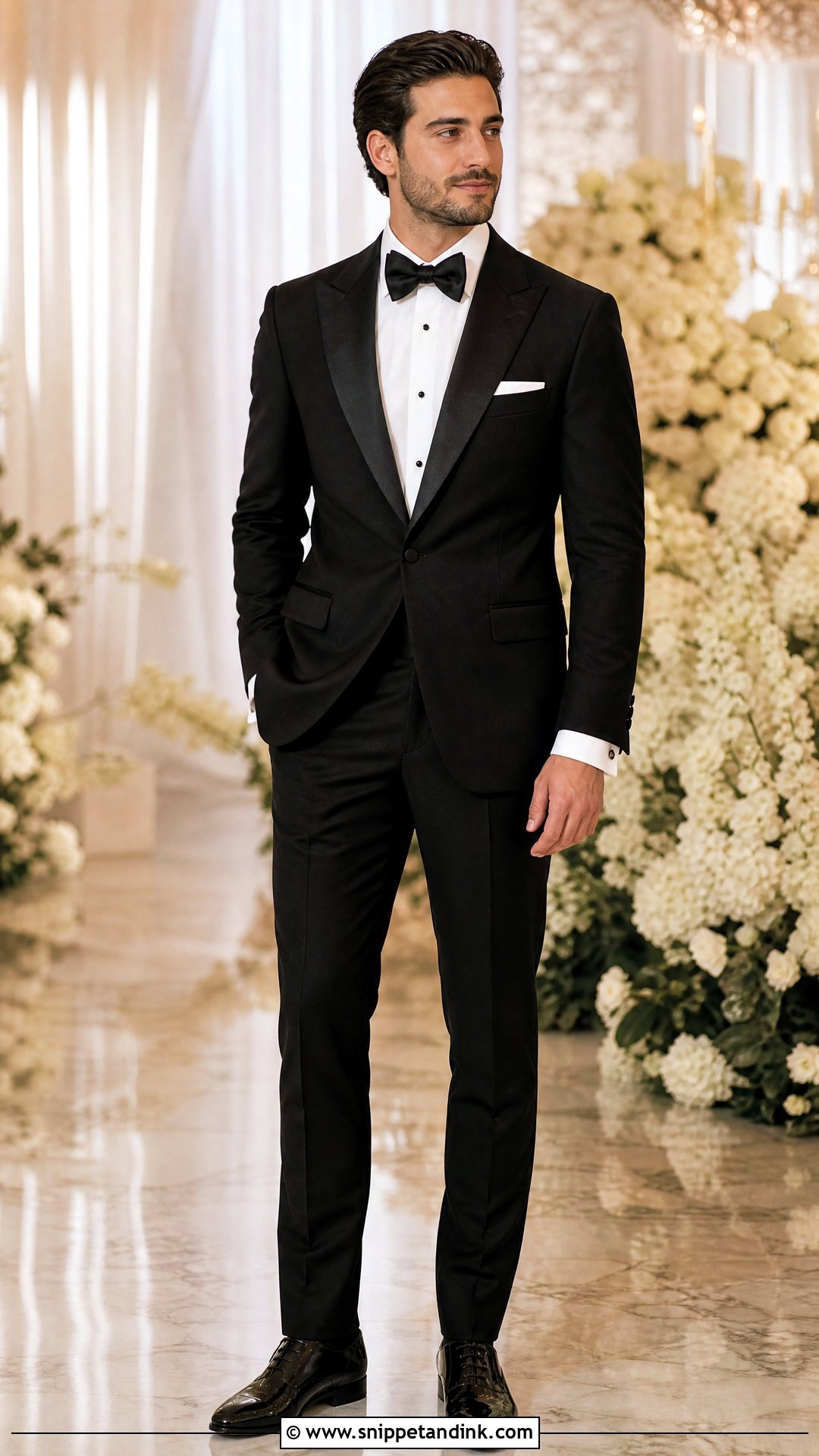
At a black-tie evening, nothing replaces a properly fitted black tuxedo: single-breasted jacket with satin peak or shawl lapels, matching trousers, white dress shirt, black bow tie and polished Oxfords. Accessories stay quiet: a white pocket square and plain cuff links. In a rental or off-the-rack tux, two things give it away instantly: sleeves covering the shirt cuff and trousers pooling over the shoe. I want about a quarter to half an inch of cuff showing and a hem that just touches the shoe. If the groom is also in black, a different lapel shape or pocket-square fold keeps the brother distinct.
6. Wedding Brother Navy Three-Piece Suit Outfit
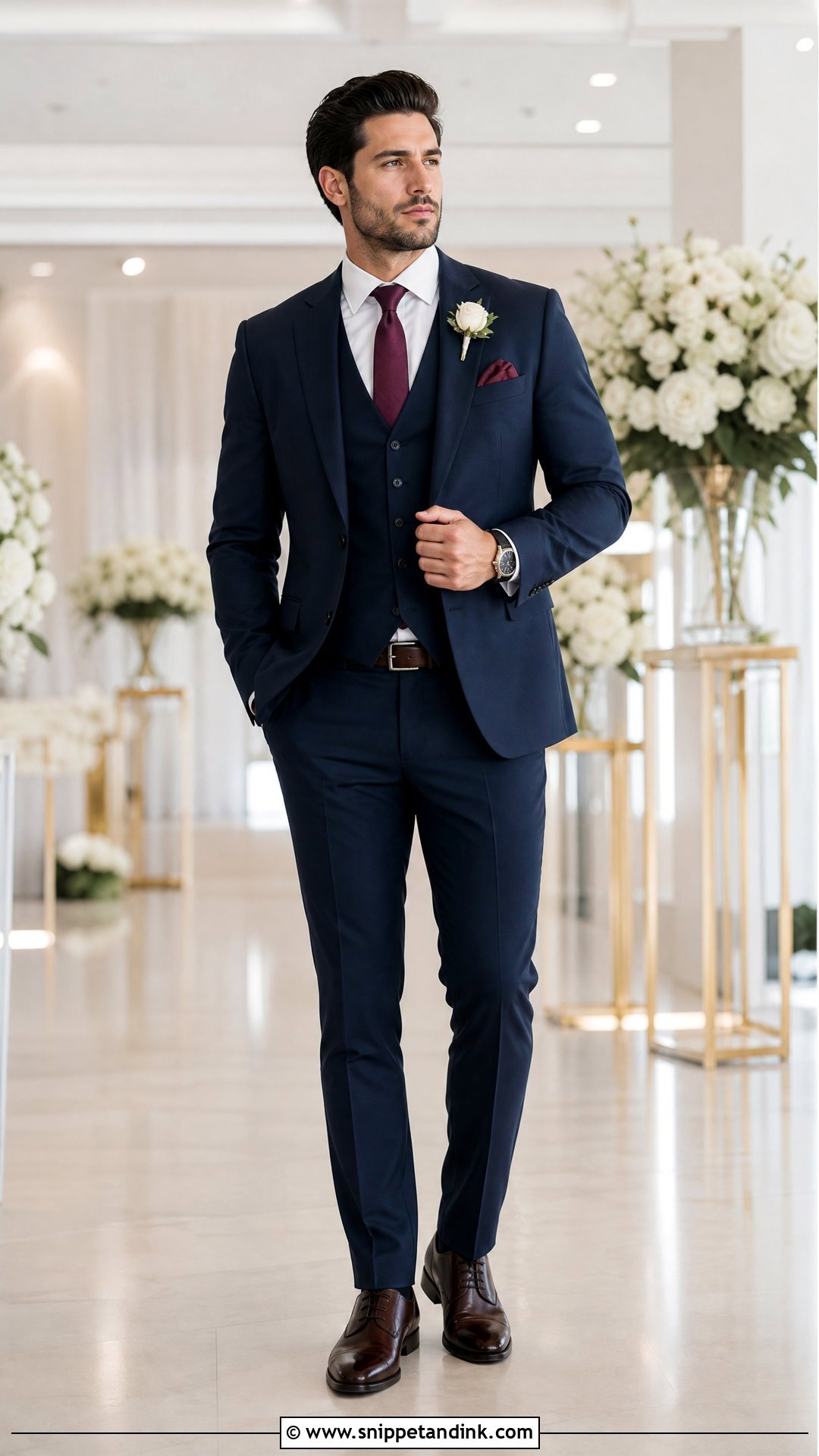
Navy three-piece suits are formal without the severity of black, and the vest is the clever part. Once the jacket comes off at the reception, he still looks dressed. That only works if the vest covers the waistband when he stands, so I always check it with his arms raised, which is how he’ll be dancing. A white or pale blue shirt, a burgundy or muted floral tie and dark brown Oxfords with a matching belt connect it to most palettes. Lightweight wool is the safest cloth; anything with a sheen bounces flash and reads oily in photos. This is my default for a brother acting as usher or reader.
7. Wedding Brother Beige Linen Suit Outfit
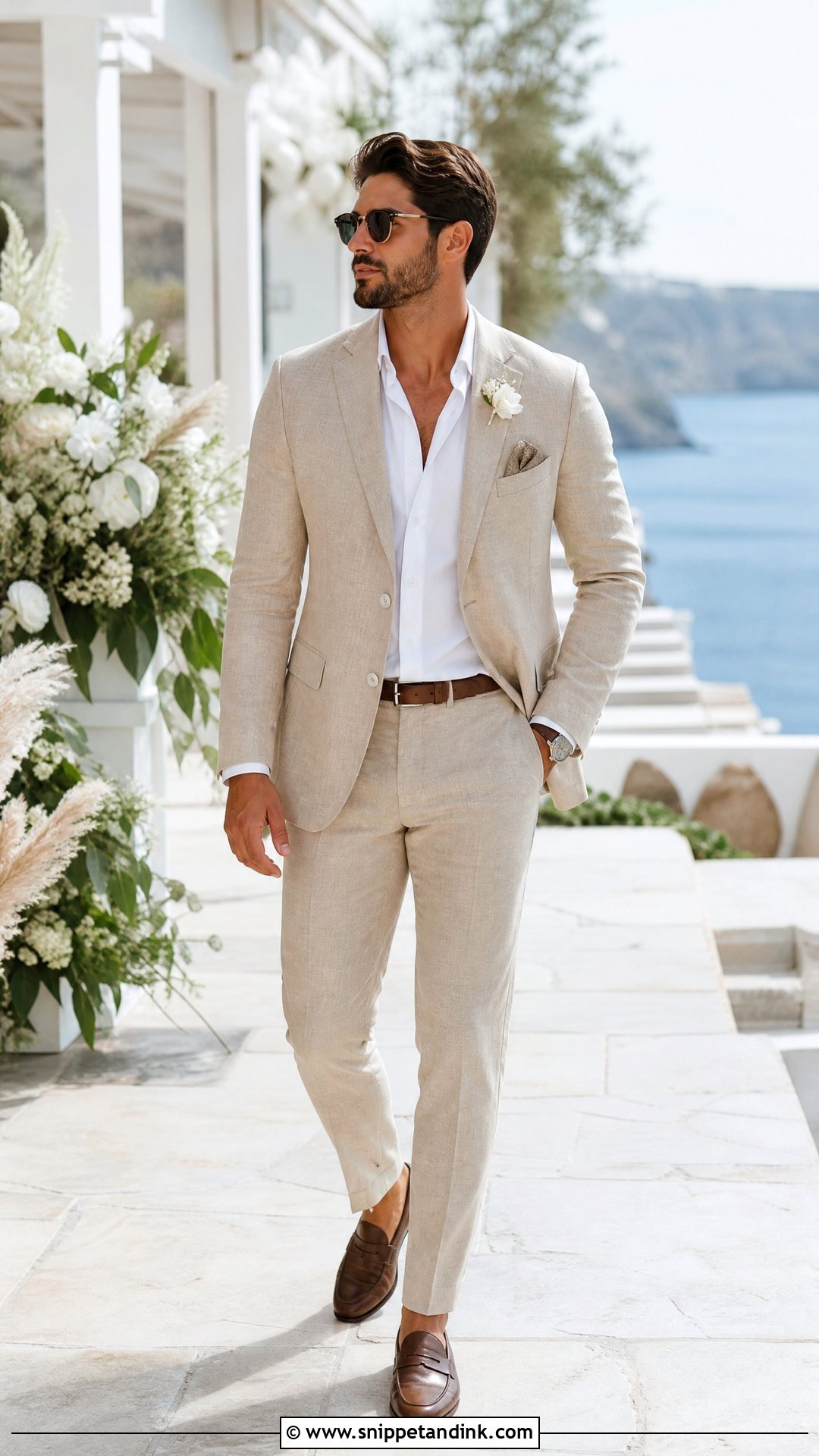
Beige linen is right for a beach, garden or destination wedding, but pure linen creases into a crumpled map within an hour of sitting. I steer brothers to a linen-wool or linen-cotton blend, ideally half-lined, which keeps the texture and wrinkles far less. Wear it with a white cotton shirt open at the collar for a relaxed dress code, or add a sage or terracotta tie when it’s more formal. Brown loafers and a matching belt finish it. Keep the trousers tapered; a wide, loose leg in linen tips straight into holiday wear.
8. Wedding Brother Velvet Dinner Jacket Outfit
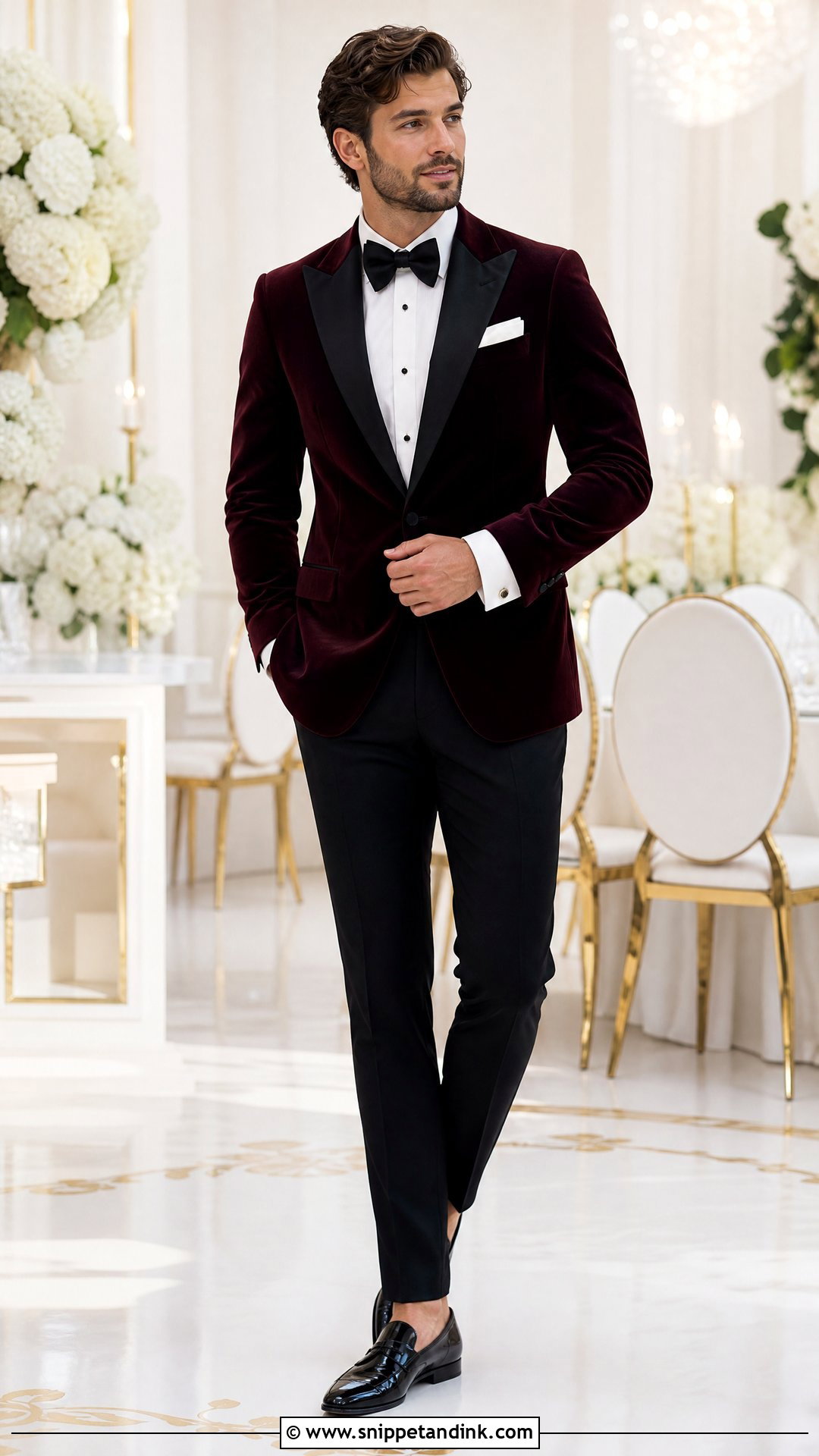
A velvet dinner jacket gives a brother his own evening identity without competing with the couple. Deep burgundy, midnight blue, forest green or black velvet, with black trousers, a white dress shirt, a bow tie and patent loafers or black Oxfords. Velvet adds visual bulk, so the cut has to be lean: I’d rather go slightly slimmer through the waist than size up. It is warm cloth, too, and I wouldn’t put it on anyone at a summer outdoor reception. Brothers dressing as a group can share trousers and shirts while each wears a different jacket color.
9. Wedding Brother Indo-Western Draped Kurta Outfit
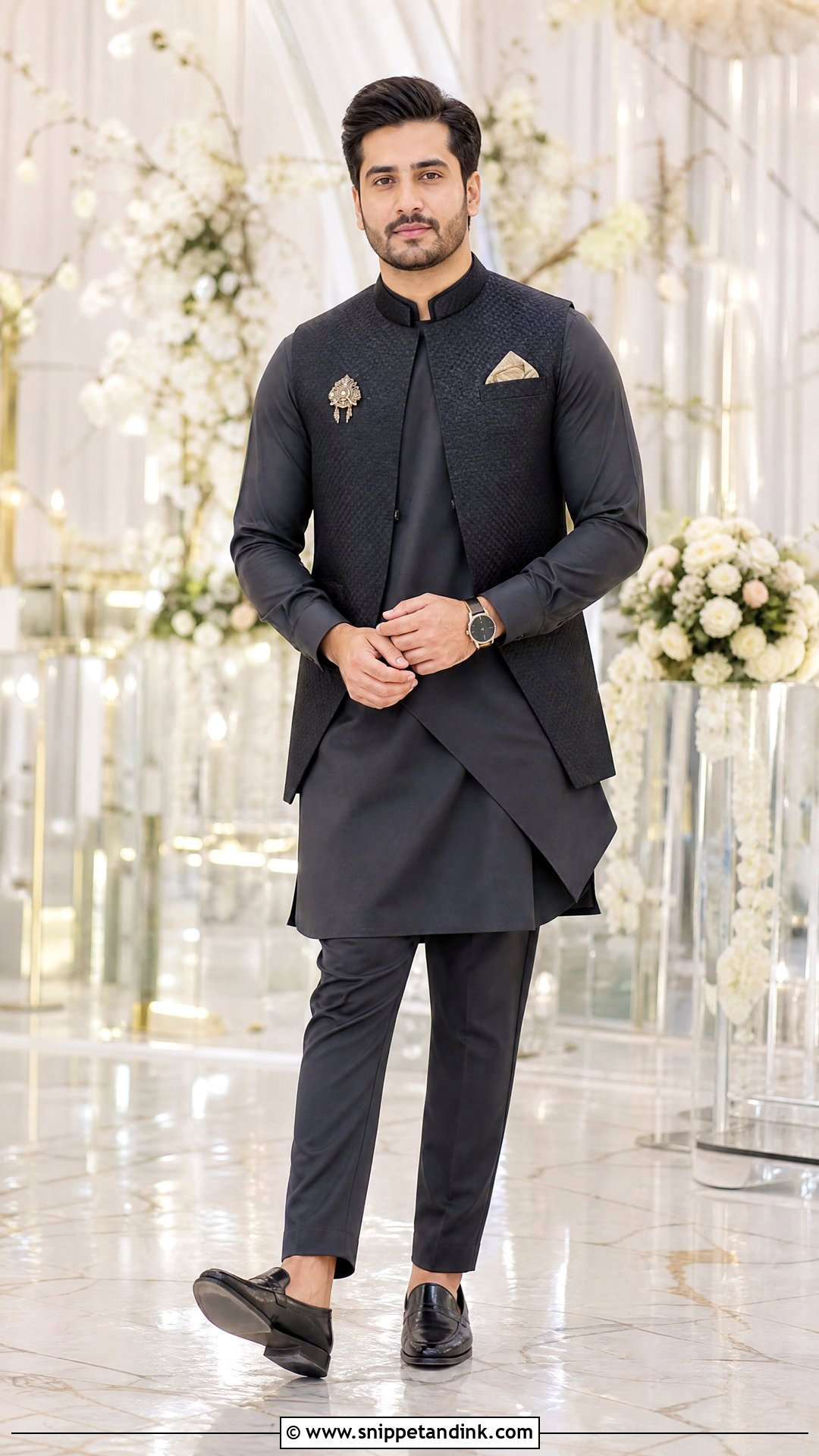
An Indo-Western draped kurta suits a sangeet, engagement or reception where creative clothing is welcome. Charcoal, navy, olive or ivory, with slim trousers and a structured sleeveless jacket if the event is more formal. Before he buys, I ask him to do two things in the changing room: sit down and do a few dance steps. Asymmetric drapes either fall cleanly from the shoulder or bunch at the hip, and movement reveals which. Sleek loafers or mojaris sit better under the longer hem than chunky shoes. Simple colors keep the unusual shape from looking theatrical.
10. Wedding Brother Jodhpuri Suit Outfit
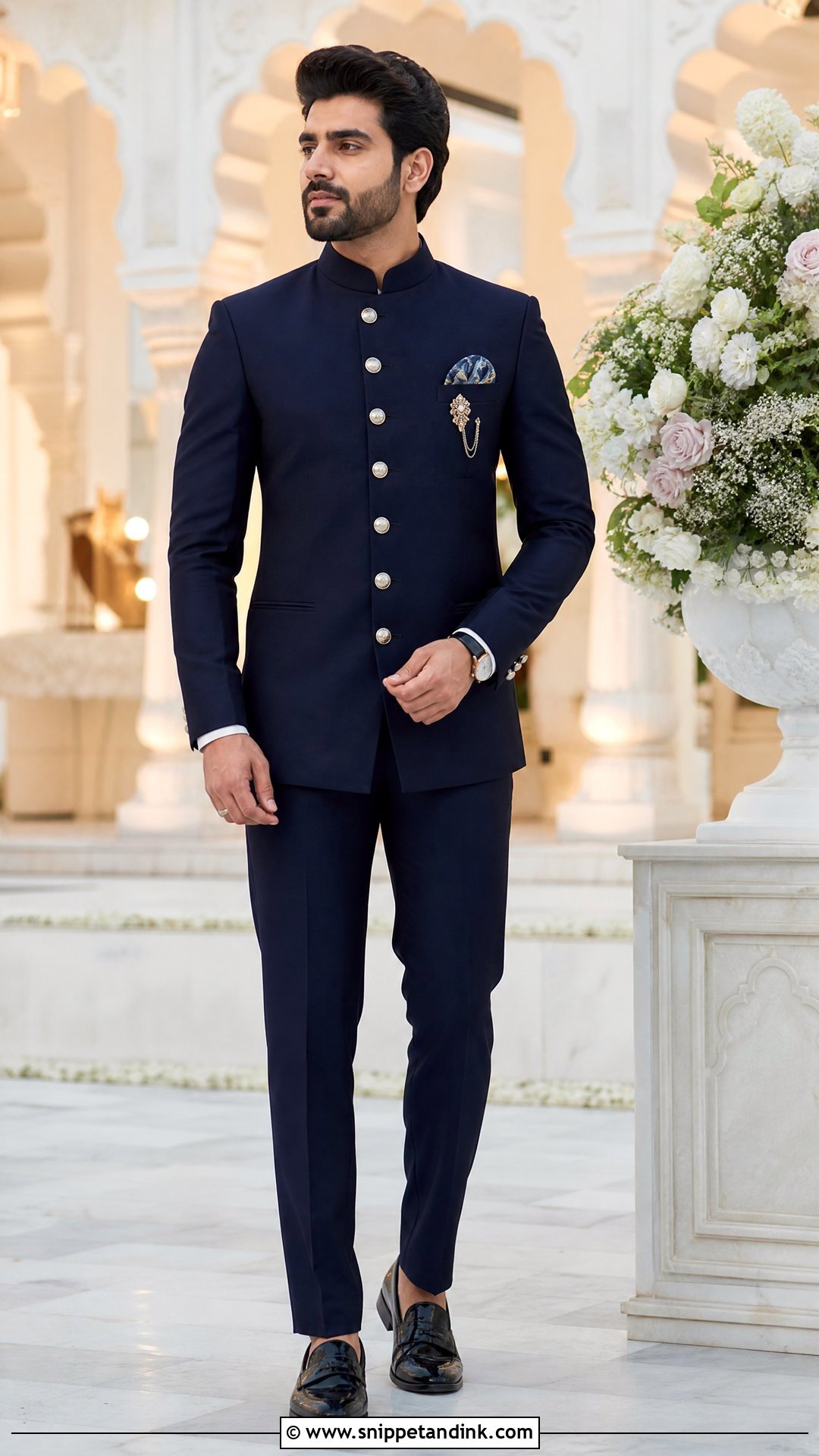
The Jodhpuri suit is Western tailoring with an Indian collar: a hip-length, high-necked jacket with matching trousers in black, navy, charcoal or deep green. Metallic buttons or restrained embroidery give it occasion; underneath goes a concealed inner shirt or a band-collar layer, depending on how the jacket is built. That high collar is where I spend fitting time. It should allow one finger to slide in comfortably, or he’ll be tugging at it through a three-hour ceremony. Polished loafers, a brooch and a pocket square finish it for receptions and evening functions. Share one accent with the groom; keep the jacket color, buttons or shoes his own.
11. Wedding Brother Kurta And Embroidered Waistcoat Outfit
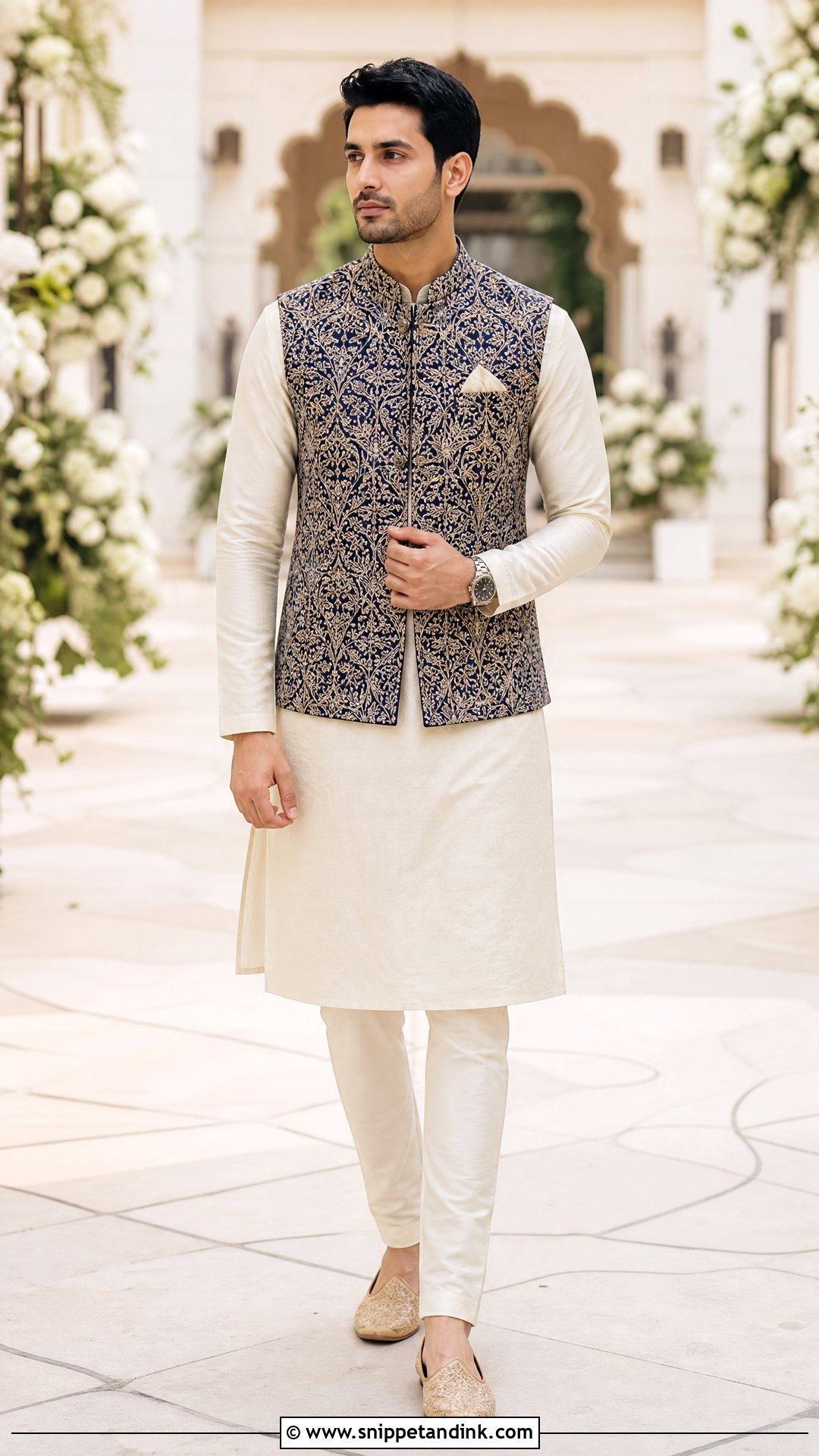
A plain kurta becomes wedding clothing the moment a good embroidered waistcoat goes over it. Start with a cream, white or pastel knee-length kurta and slim trousers, then add a waistcoat with threadwork, a little mirror work or a woven pattern. My fitting rule is simple: the waistcoat should close without the buttons gaping and end near the natural hip, sitting just above where the kurta flares. Neutral mojaris and a watch are enough. It’s an easy outfit for a brother running errands all day at welcome events and daytime ceremonies, and one embroidery thread in the family palette ties it to everyone else.
12. Wedding Brother Achkan And Churidar Outfit
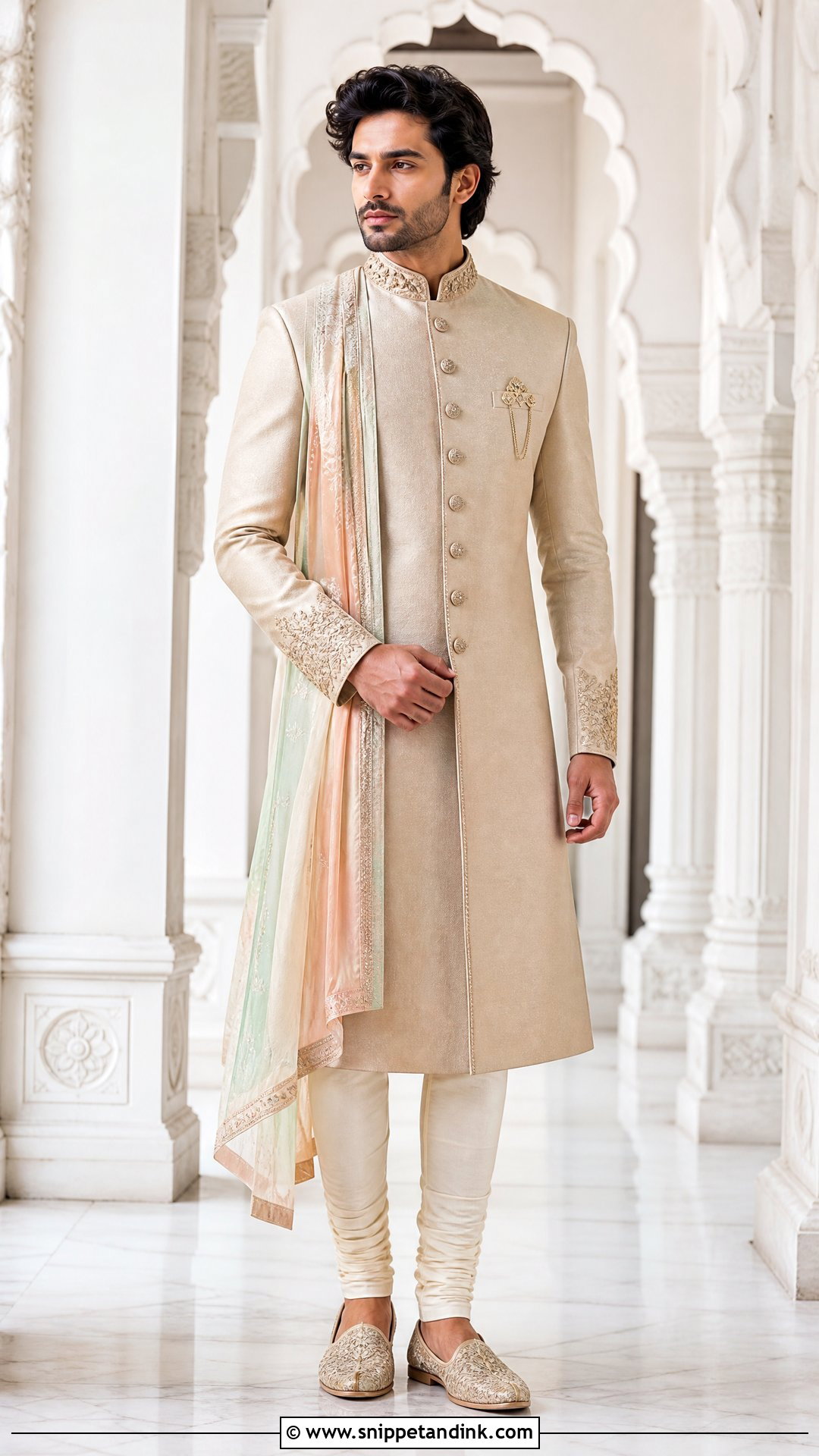
The achkan’s long, clean line belongs at a formal ceremony. Champagne, navy, beige or muted gold, with embroidery kept to the collar, cuffs and placket, and fitted churidar in a matching neutral. I fit it close through the torso but with enough ease at the hips to sit cross-legged, because a too-snug achkan splits its side vents on the floor. Hem length depends on height: knee or below on taller brothers, a touch shorter on a smaller frame so he doesn’t look swallowed. Pick one feature to lead. Heavy embroidery plus an elaborate stole plus big jewelry is too much and drifts toward the groom’s look.
13. Wedding Brother Dhoti Kurta Outfit
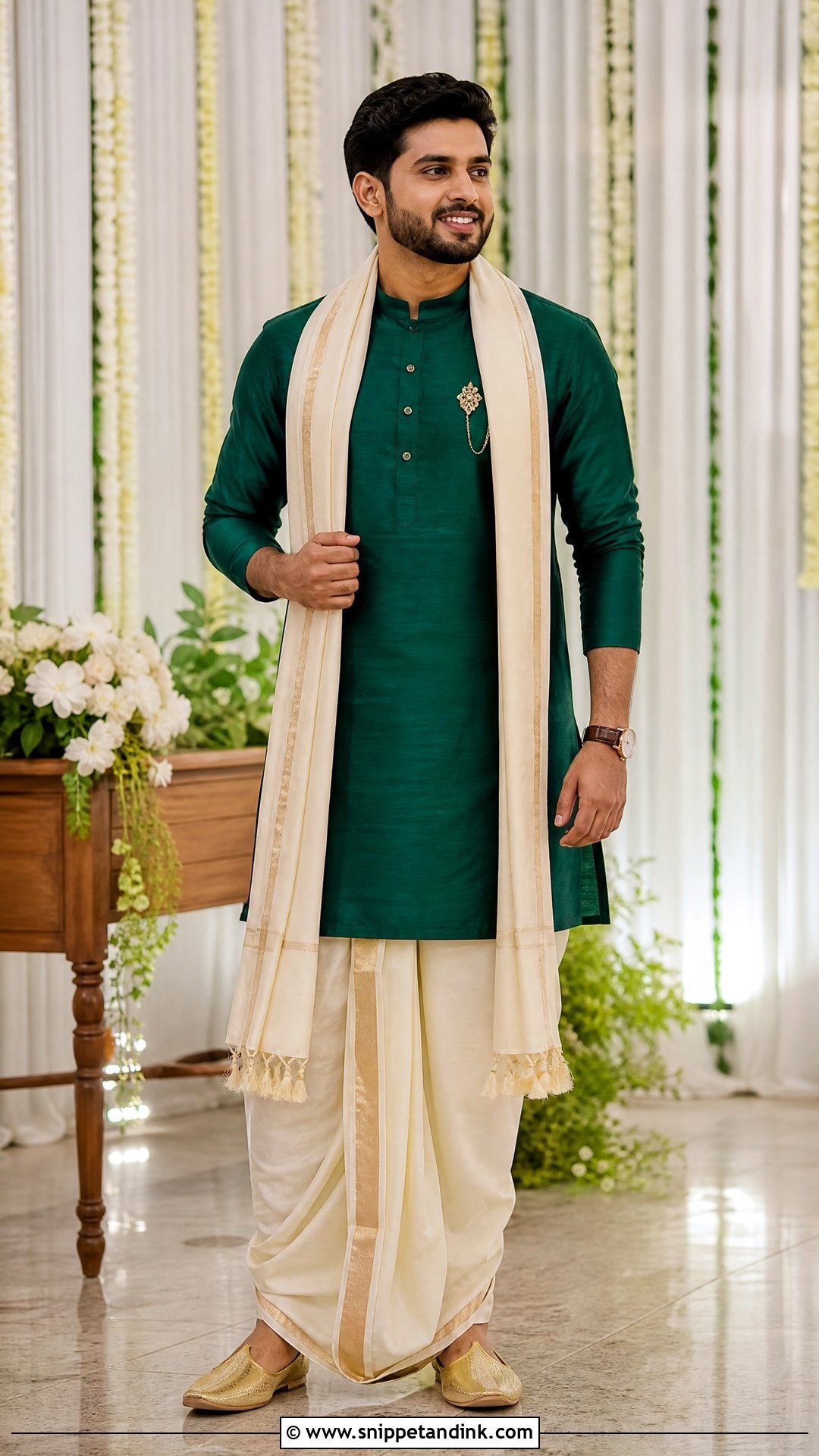
A dhoti kurta is rooted in tradition and still leaves room for color. Cream, gold or white dhoti, with a fitted silk or cotton-silk kurta in maroon, teal, mustard or emerald, traditional sandals or mojaris and a light stole over one shoulder. If he isn’t used to tying a dhoti, I recommend a pre-stitched one, especially when he has ceremonial duties; a hand-tied drape can loosen after hours of standing, sitting and walking around a fire. Walk him across a room in it and check that the hem doesn’t catch the shoe. A modest chain or brooch is plenty for a regional ceremony where authenticity matters.
14. Wedding Brother Pathani Suit Outfit
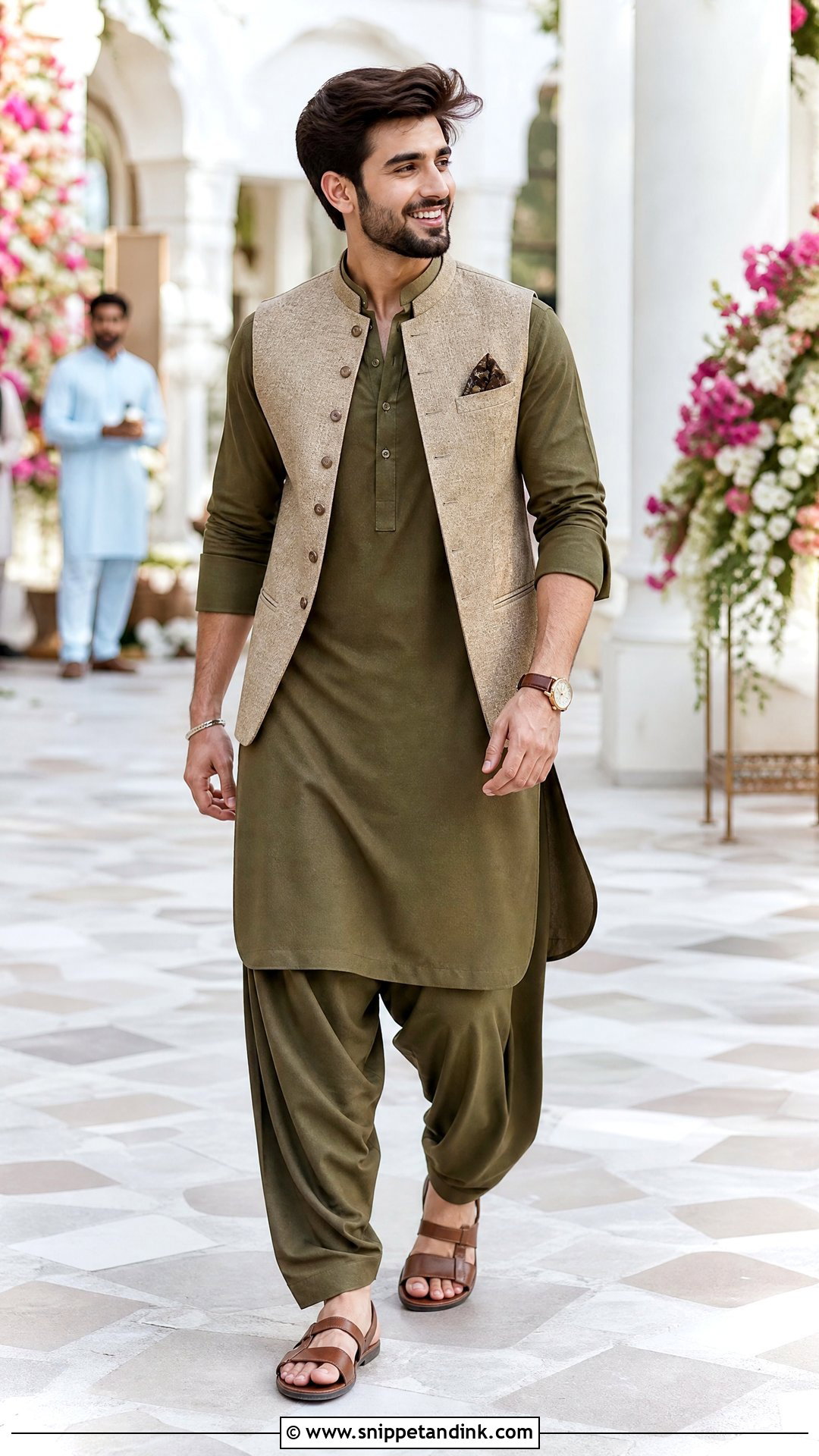
A Pathani suit is the brother’s workhorse for informal functions: a knee-length kurta with a structured collar and chest pockets, over loose or tapered salwar, in navy, olive, charcoal, rust or black. Because the shape is relaxed, it falls apart if it isn’t pressed, so I tell brothers to have it steamed the morning of the event and keep sleeves down rather than rolled. A patterned waistcoat makes it more ceremonial. Leave room through the shoulders and thighs, without letting it go oversized. Leather sandals or loafers, a watch, and he’s ready to carry chairs, dance and run between rooms.
15. Wedding Brother Sage Green Suit Outfit
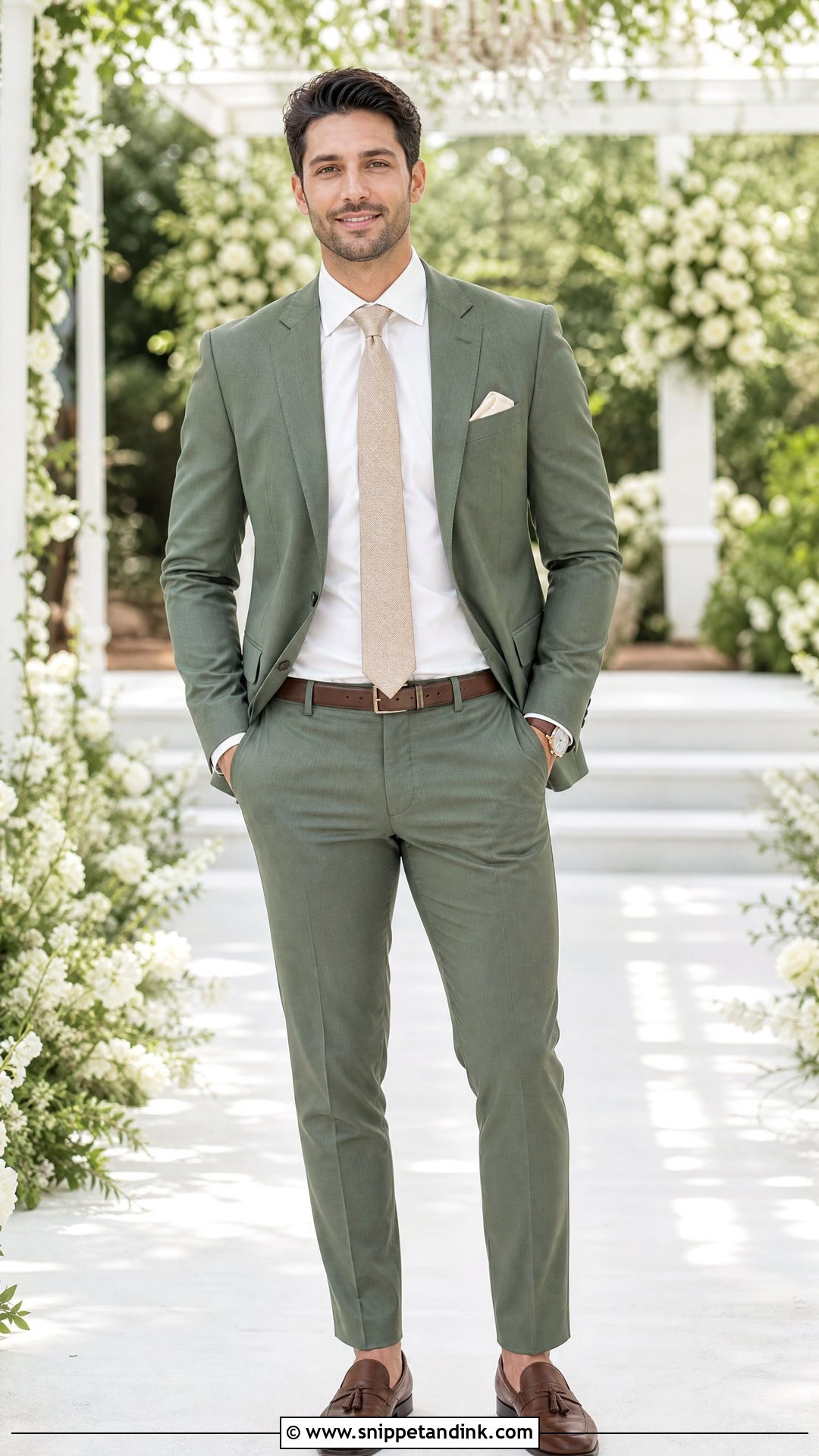
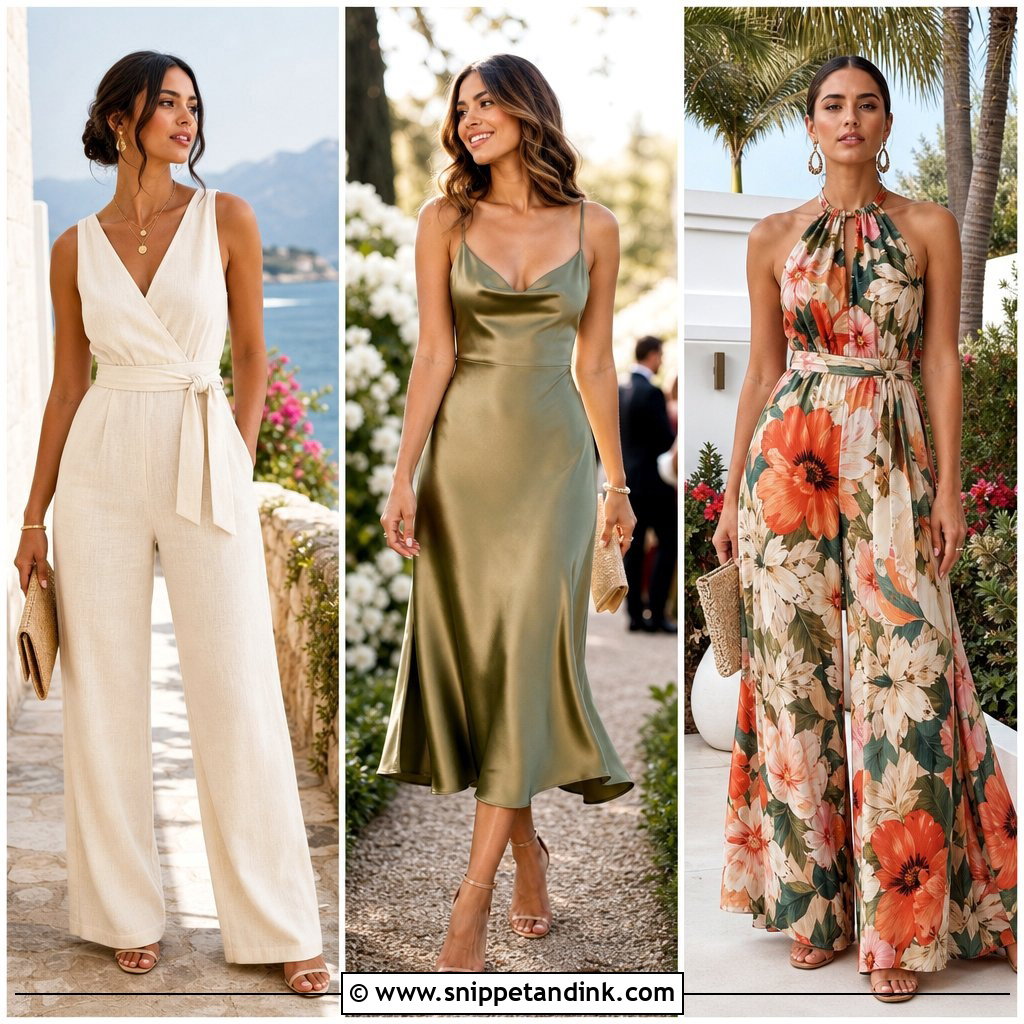
Sage green is a soft alternative to navy and gray for spring, summer and garden weddings. A single-breasted jacket and tapered trousers, white or ivory shirt, and a champagne or lightly patterned tie. In my experience the cloth matters more than the color. A matte wool or wool-linen holds sage as a calm green, while anything with sheen goes gray-silver in daylight photos. If the wedding party is wearing green, get a fabric swatch from the couple before shopping, then go a shade deeper or lighter so he isn’t mistaken for a groomsman. Brown loafers, a cream pocket square, and keep everything else minimal.
16. Wedding Brother Double-Breasted Suit Outfit
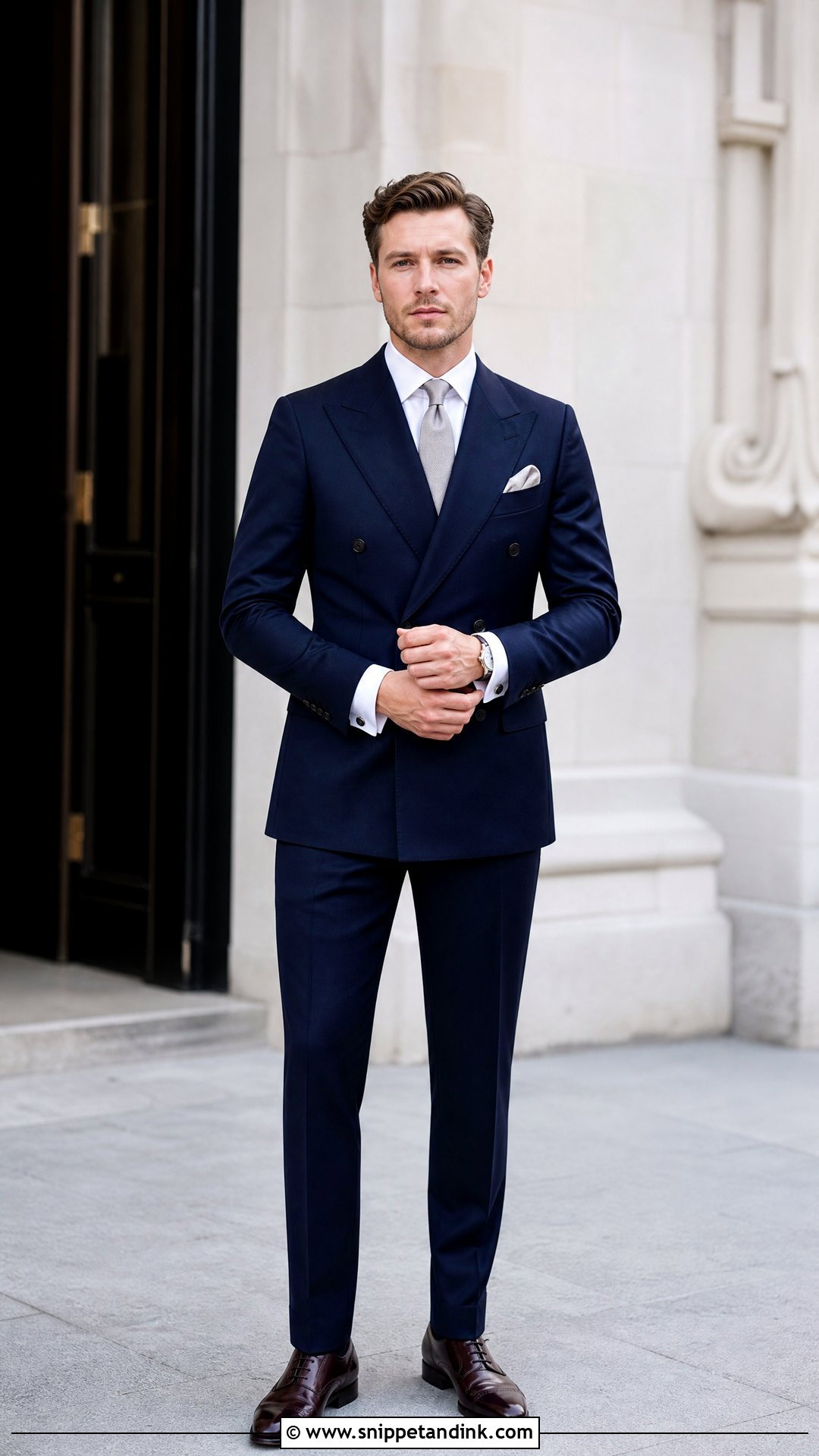
A double-breasted suit has a strong, defined shape, in navy, charcoal, mid gray or a subtle pinstripe. White shirt, silk tie, folded pocket square; black shoes for darker grays, dark brown Oxfords for navy. The catch with double-breasted is that it only looks right buttoned, and it pulls badly at the button stance if the waist is too tight. I fit it so he can button it comfortably while seated at a dinner table. Lapels should lie flat. Skip a loud tie pattern; the jacket’s construction is already the detail.
17. Wedding Brother Black Kurta And Jacket Outfit
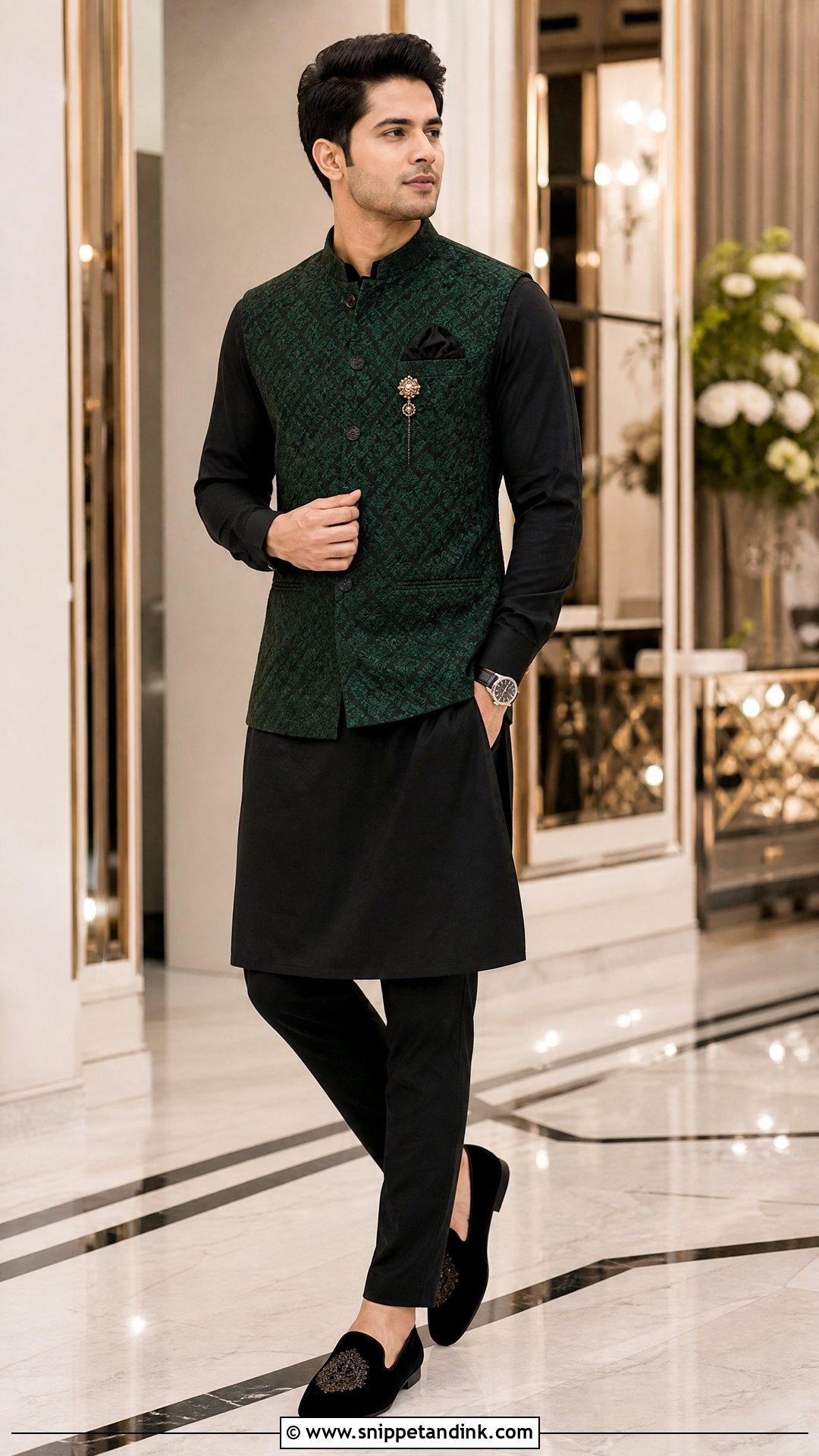
A fitted black kurta with tapered trousers suits a cocktail reception, sangeet or family dinner, layered under a sleeveless jacket in charcoal jacquard, muted gold, burgundy or deep green. Black eats detail in photographs, so the texture has to come from somewhere: the jacket weave, buttons or embroidered mojaris. I also hold the kurta fabric up to a light before buying. Thin black cotton turns faded and slightly see-through under flash. Finish with a metallic brooch and a dark pocket square. If the groom is in black, the jacket fabric and accessory color need to be clearly different.
18. Matching Wedding Brothers Pastel Kurta Outfits
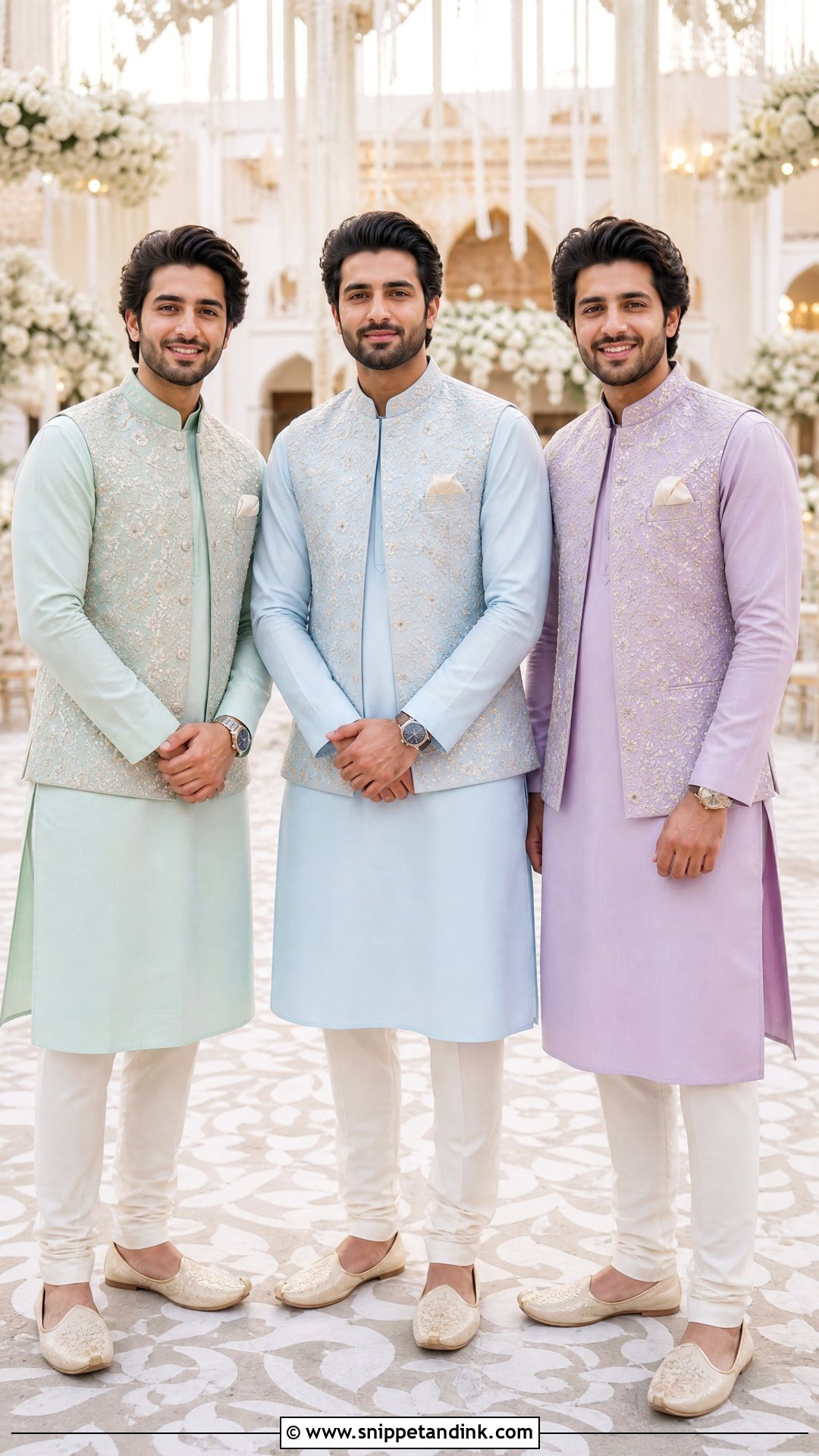
Two or three brothers in matching pastel kurtas look organized in photos without wearing a uniform. My approach is to fix one shared element (the same ivory trousers, the same kurta cut or a common embroidery) and let each brother take his own color, mint for one, powder blue or blush for another. Fabric weight is where coordinated groups usually go wrong: one brother in heavy silk next to another in thin cotton looks like two different weddings. Agree on fabric and formality together, and if one wants a jacket, give everyone a light waistcoat. Neutral mojaris tie the line together for family entrances.
19. Wedding Brother Cotton Silk Kurta Outfit
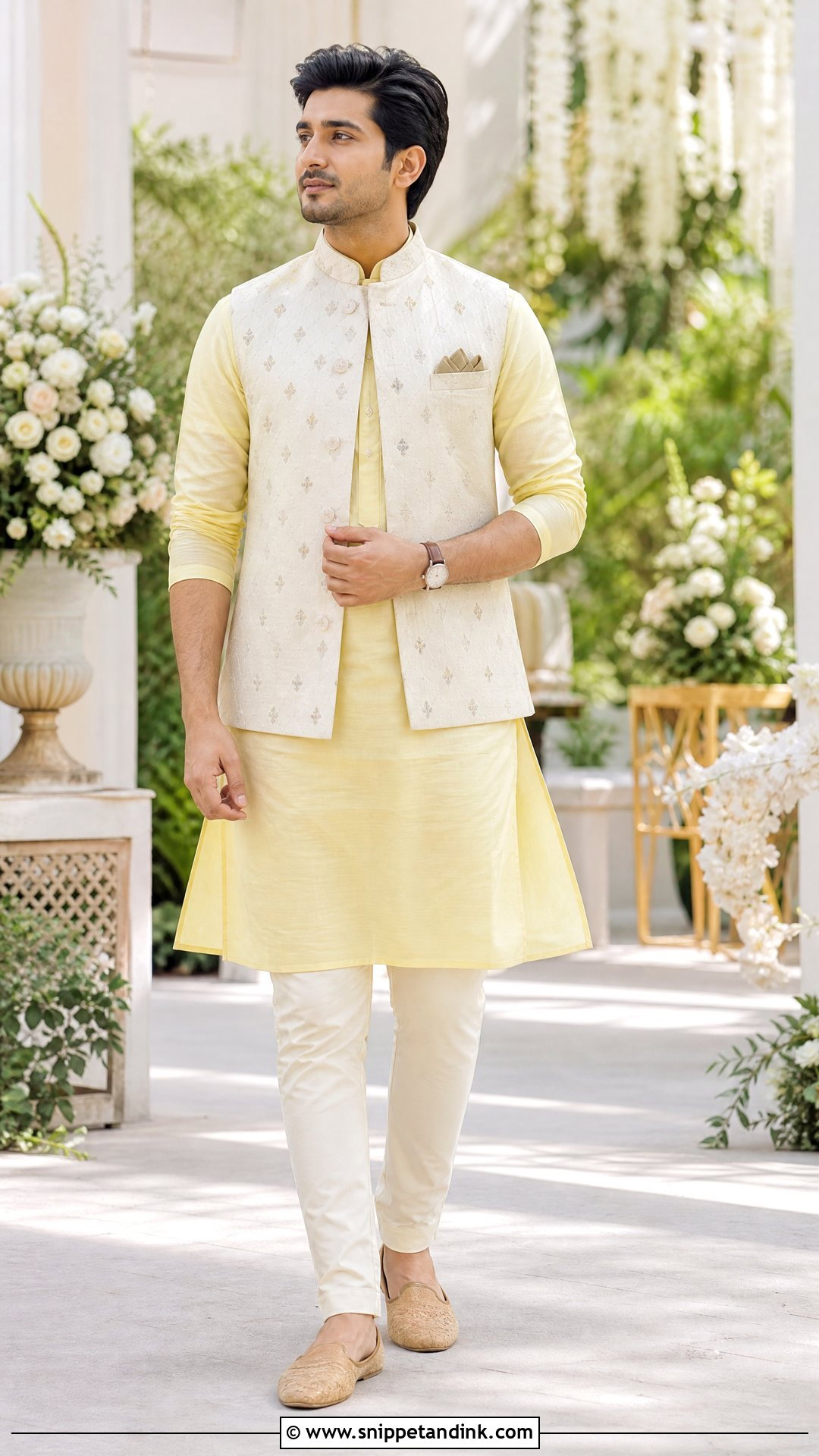
When comfort matters as much as looks, I reach for cotton-silk. A straight-cut kurta in pale yellow, sky blue, peach, mint or ivory, fitted white or cream trousers, and a lightly embroidered Nehru jacket for structure. It has a soft sheen without the heat of brocade. Lighter shades can turn transparent under strong venue lighting, so check it in daylight and wear a fine inner vest if needed. Tan mojaris or leather sandals keep it practical. For a multi-day wedding, this is the outfit I’d plan twice: same kurta, a different jacket on another day.
20. Wedding Brother Emerald Tuxedo Outfit
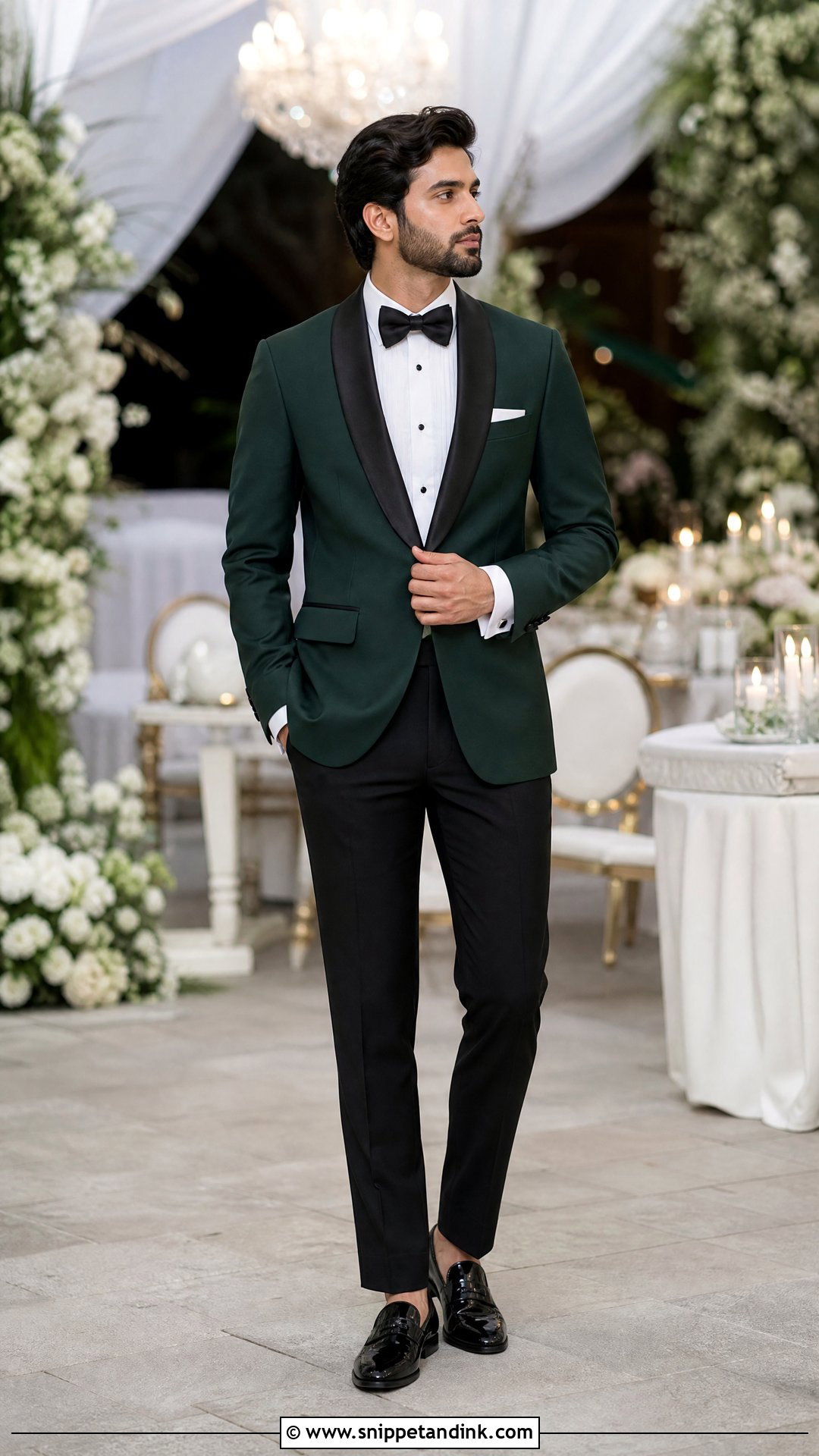
An emerald tuxedo belongs at a formal evening reception: deep green dinner jacket with black satin lapels, black tuxedo trousers, white shirt, black bow tie, black loafers, white pocket square. The jacket should be the only bold piece. Green shoes or a green tie on top tips it into costume. Velvet is for cool venues; a light wool blend works most of the year. Emerald changes a lot between daylight and warm tungsten light, so I always ask a brother to see the cloth under both before he commits.
How Far Ahead to Order, Alter and Rent
Most brothers leave it too late, and the alterations shop is where that shows. Lead times vary by tailor and season, but these are the windows I plan around.
- Made-to-measure sherwani, achkan or suit: start roughly two to three months out, since embroidery and fabric sourcing take longer than the stitching.
- Ready-made outfits that need altering: buy six to eight weeks ahead, which leaves time for a second fitting if the first round of changes misses.
- Rented tuxedos and suits: reserve a month or more ahead in wedding season and book the in-store fitting, rather than trusting a size chart.
- Final try-on: about a week before, wearing the actual shoes, inner layer and belt.
A Small Bag for a Multi-Event Weekend
When a wedding runs over several days, I give brothers a short packing list: safety pins, a lint roller, spare collar stays, a stain pen, plasters for heels and a travel steamer. Hang every outfit in its own bag with the shoes and accessories labeled by event, so nobody grabs the wrong jacket at 7am.
Dressing the Brother So He Stands Out Without Upstaging
A good brother’s outfit makes him look like family: polished, comfortable and clearly part of the day, without taking eyes off the couple. Start from the dress code, the family colors, the venue and what he’ll actually be doing, then pick one complete look and get it tailored. A modest outfit that fits will always beat an expensive one that doesn’t. Coordinate with the groom without copying him, and keep accessories to one or two pieces.
You'll Like These Ideas:


Leave a Reply