
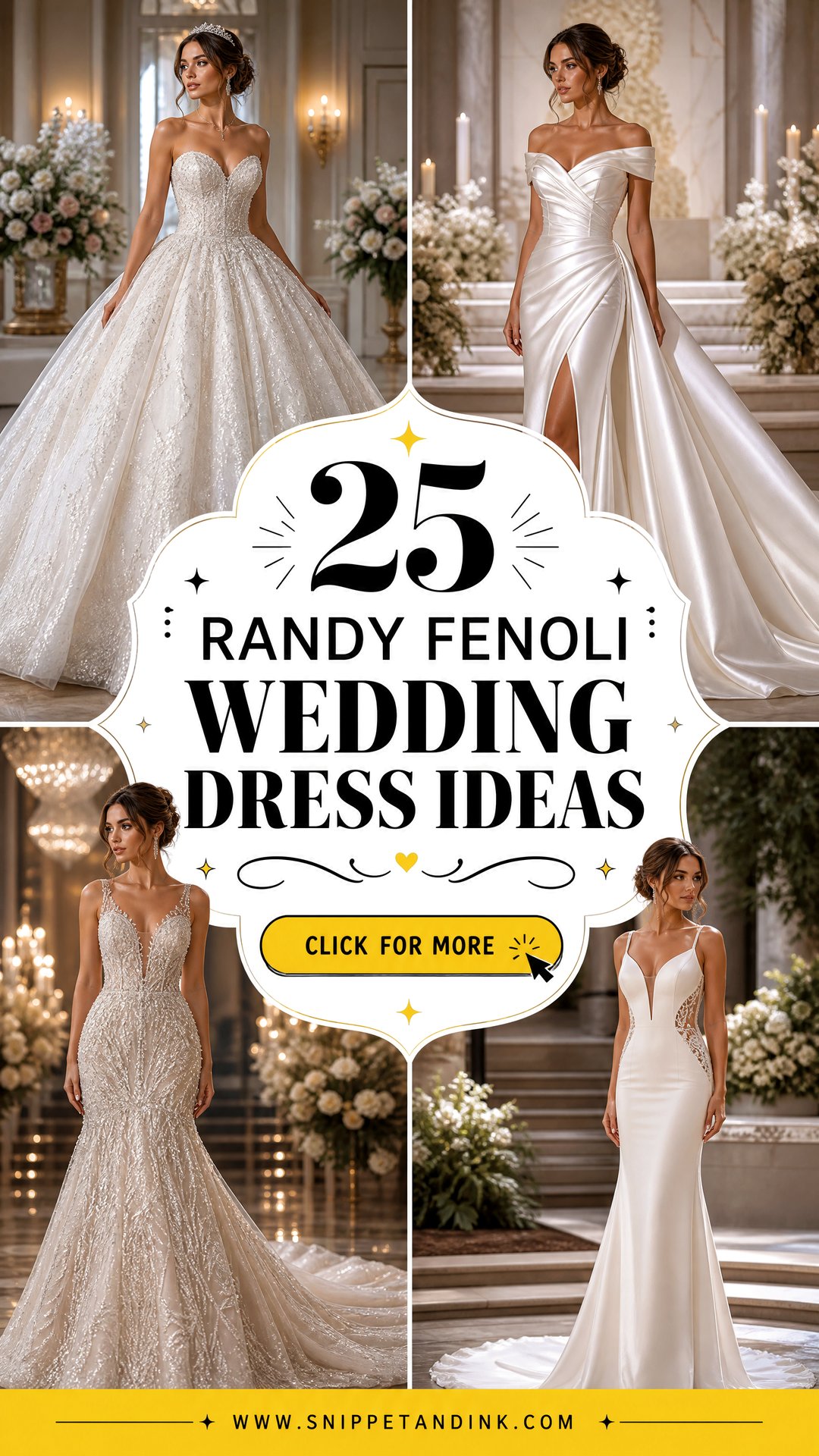
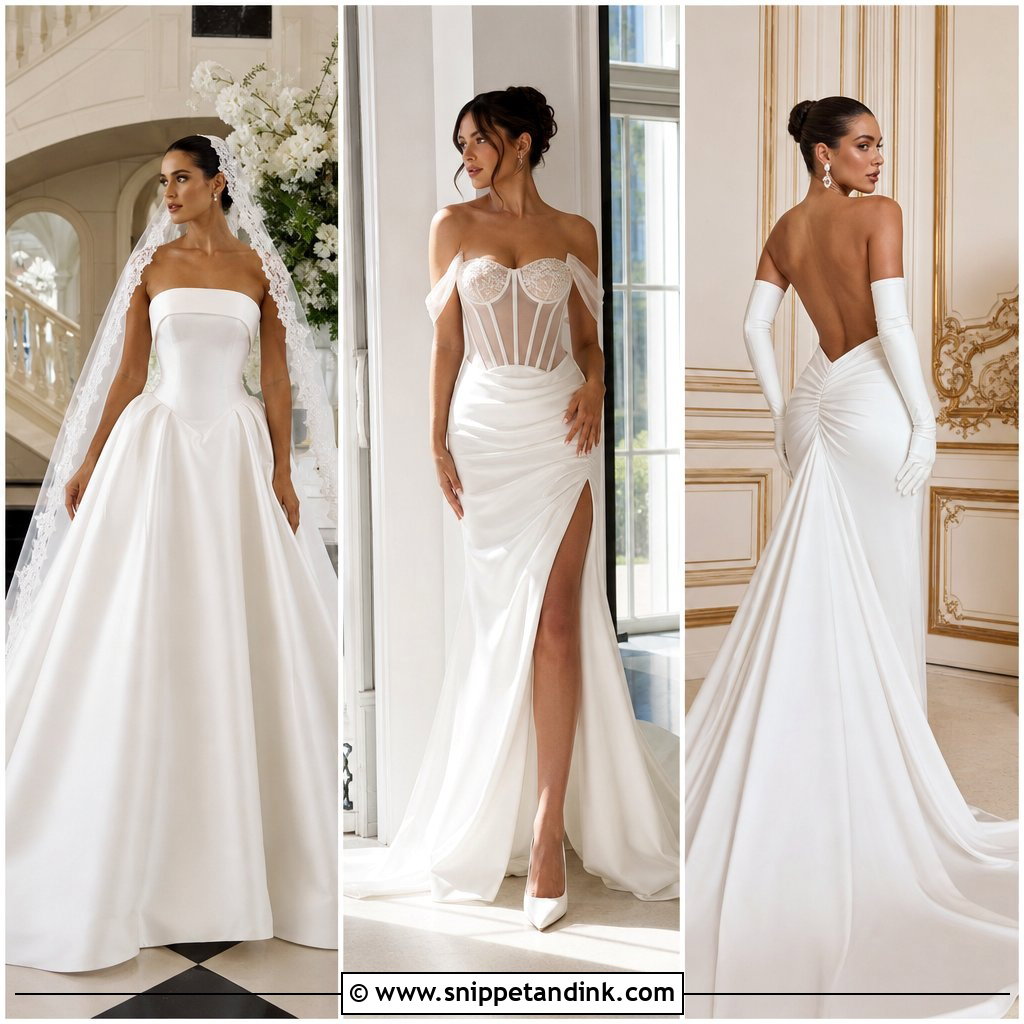
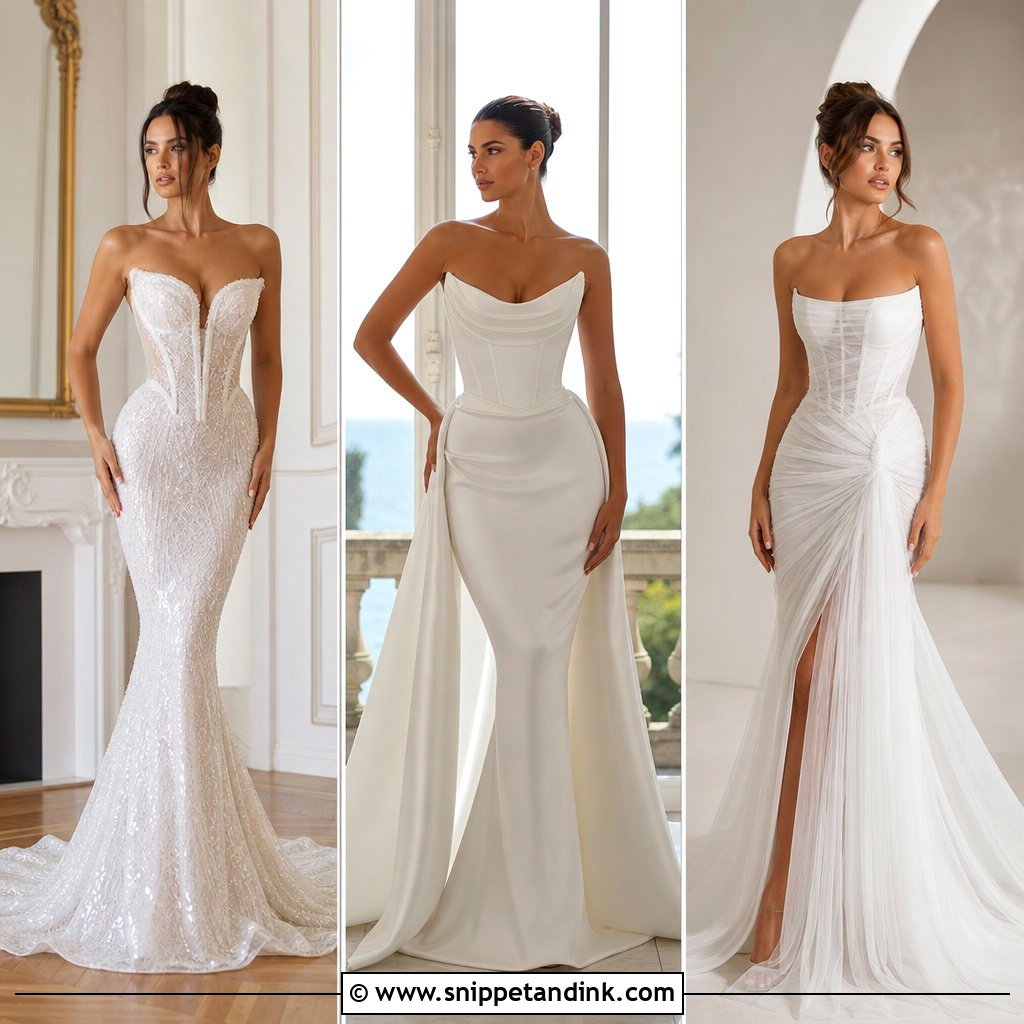
These Randy Fenoli wedding dress ideas come from a designer who builds for glamour first: structured bodices, dimensional florals, long trains, clean crepe, bows, slits and sleeves you can unhook later. When I pull his gowns for a bride, I’m looking at how the construction will treat her for a whole day, not only how the dress hangs on the rack. Below are 25 shapes and details from his collections, with what I check before each one goes into the fitting room.
Ordering a Randy Fenoli Gown on a Bridal Salon Calendar
Designer gowns are almost never bought off the rack. You try on a sample in the salon, then the dress is made to order in your size, which commonly takes several months to arrive. On top of that, alterations usually need two or three fittings spread over six to ten weeks. That’s why I tell brides to start shopping roughly nine to twelve months out, and to ask the salon for the exact delivery window in writing.
Sample sizes can be confusing. Bridal sizing runs smaller than high-street sizing, so don’t panic if you’re ordering a number above what you normally wear. The salon should measure your bust, waist and hips and order to your largest measurement, because a seamstress can take a dress in far more easily than she can let it out.
- Ask whether rush ordering exists and what it costs before you fall for a gown.
- Check whether the sample you tried had any custom changes, like added sleeves or a different lining.
- Book your first alteration fitting as soon as the gown lands, not in the final month.
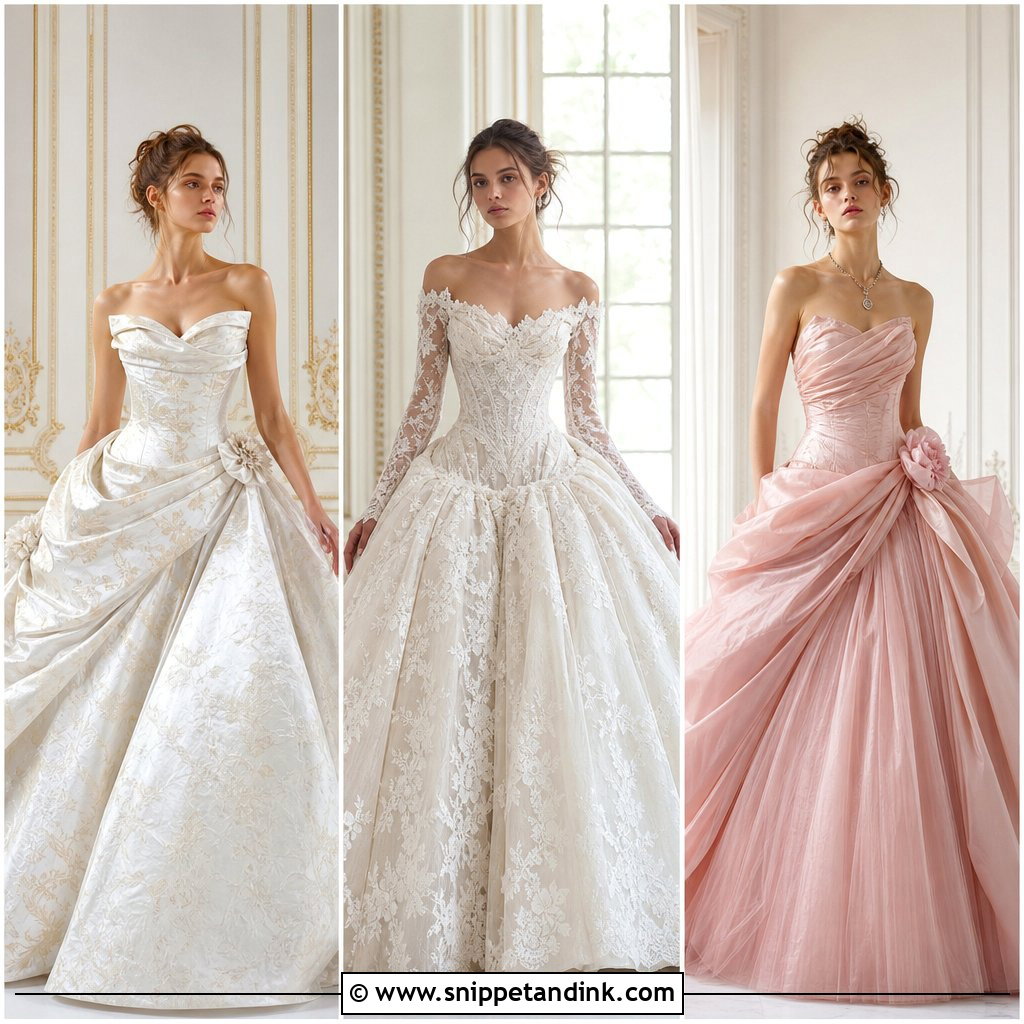
1. Randy Fenoli Ball Gown Wedding Dress
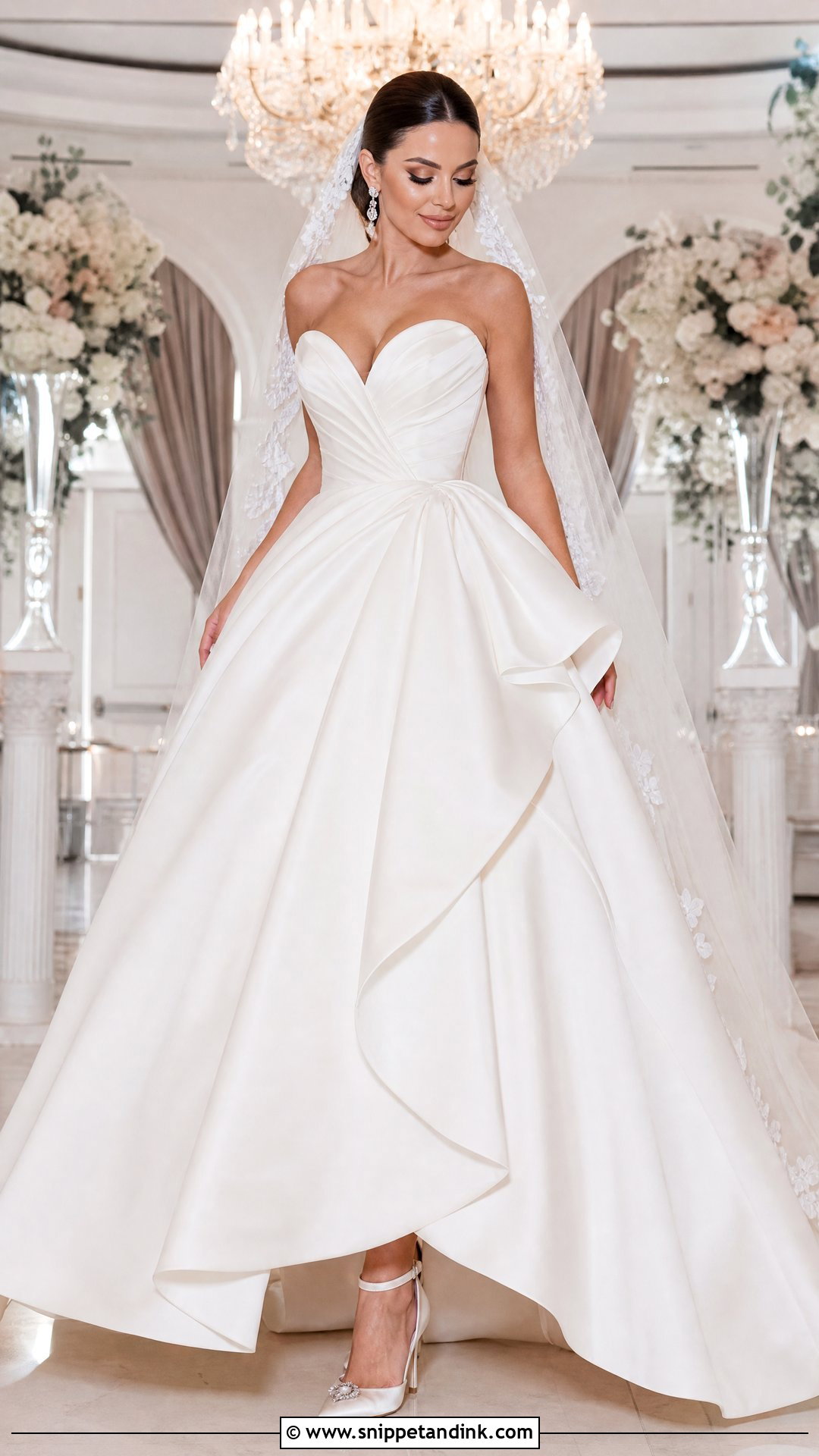
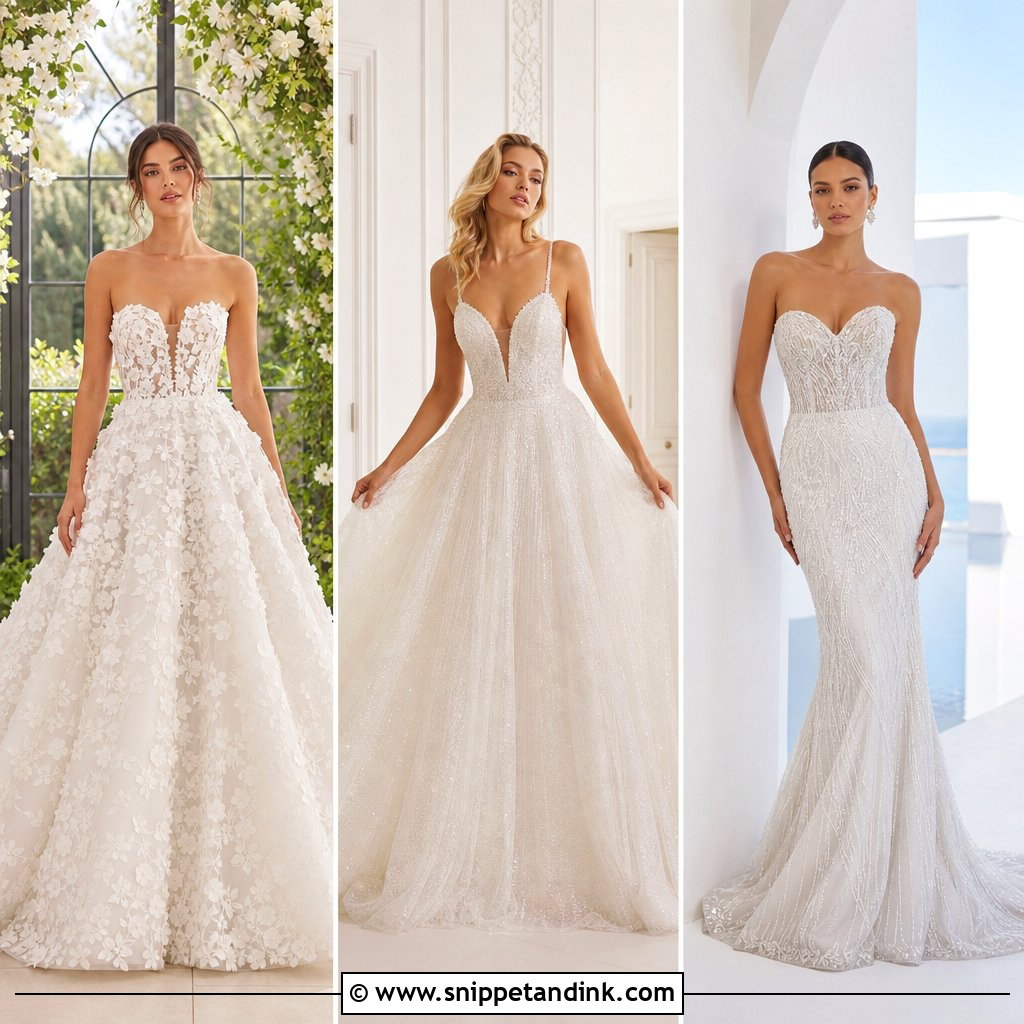
The full skirt on a ball gown is held out by layers of tulle and often a hoop or crinoline, so the bodice has to be anchored tightly or the weight drags it down by evening. I always have brides walk a few steps backwards and turn in it, because that’s where a big skirt catches heels. A cathedral veil and simple drop earrings are enough. With heavy beading or lace, plain satin heels and a clean bouquet stop the picture from getting crowded. Save this one for a ballroom or an estate with wide aisles; a narrow chapel fights it.
2. Randy Fenoli A Line Wedding Dress
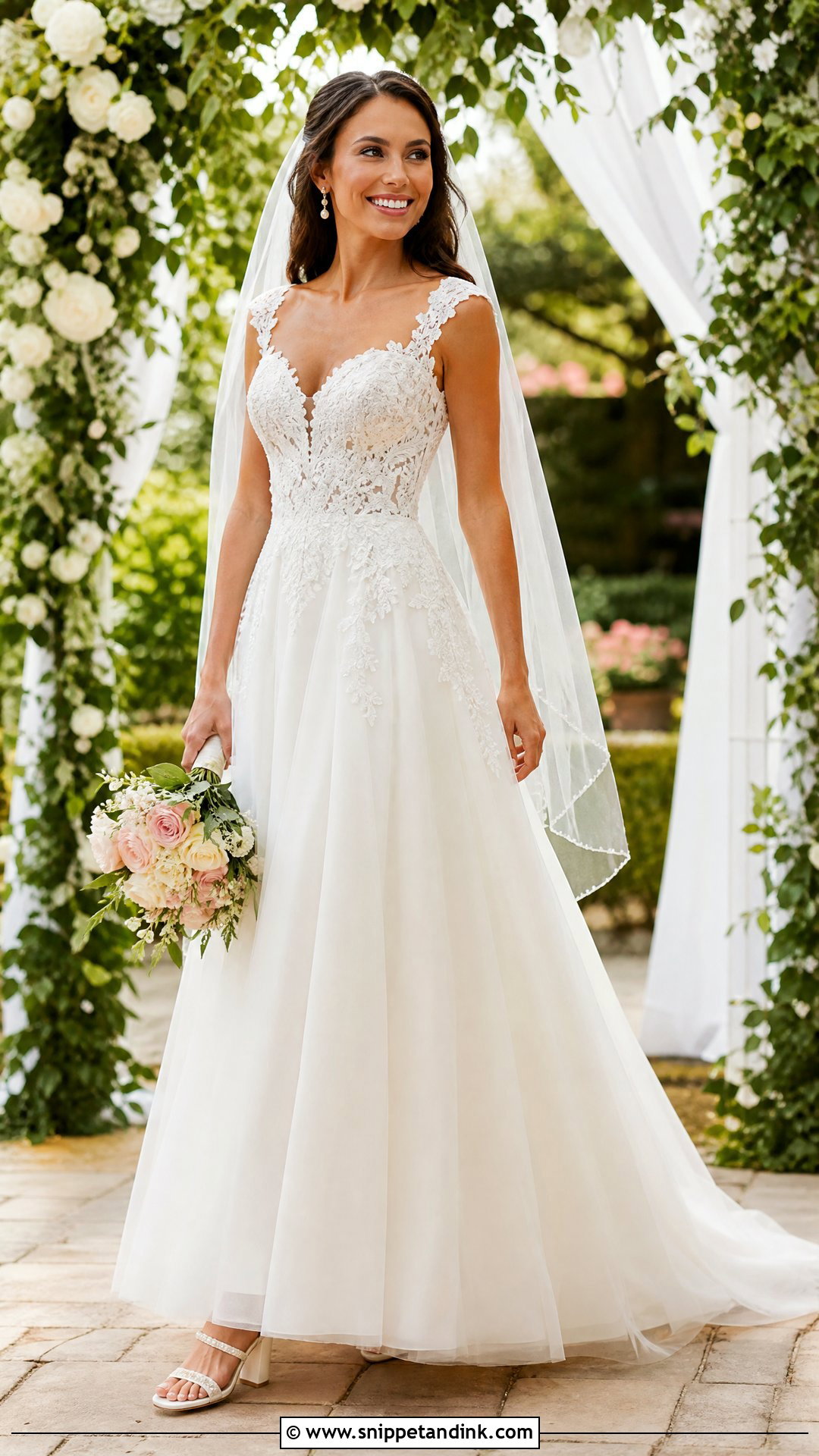
If I had to put one silhouette on the widest range of bodies, it would be the A-line. It sits at the natural waist and skims away from the hips, so you can sit through dinner and dance without the seams straining. A fingertip veil, pearl earrings and low block heels keep it easy. Lace or floral appliqué softens it; clean satin reads more modern but shows every pucker, so the fit at the waist has to be right.
3. Randy Fenoli Mermaid Wedding Dress
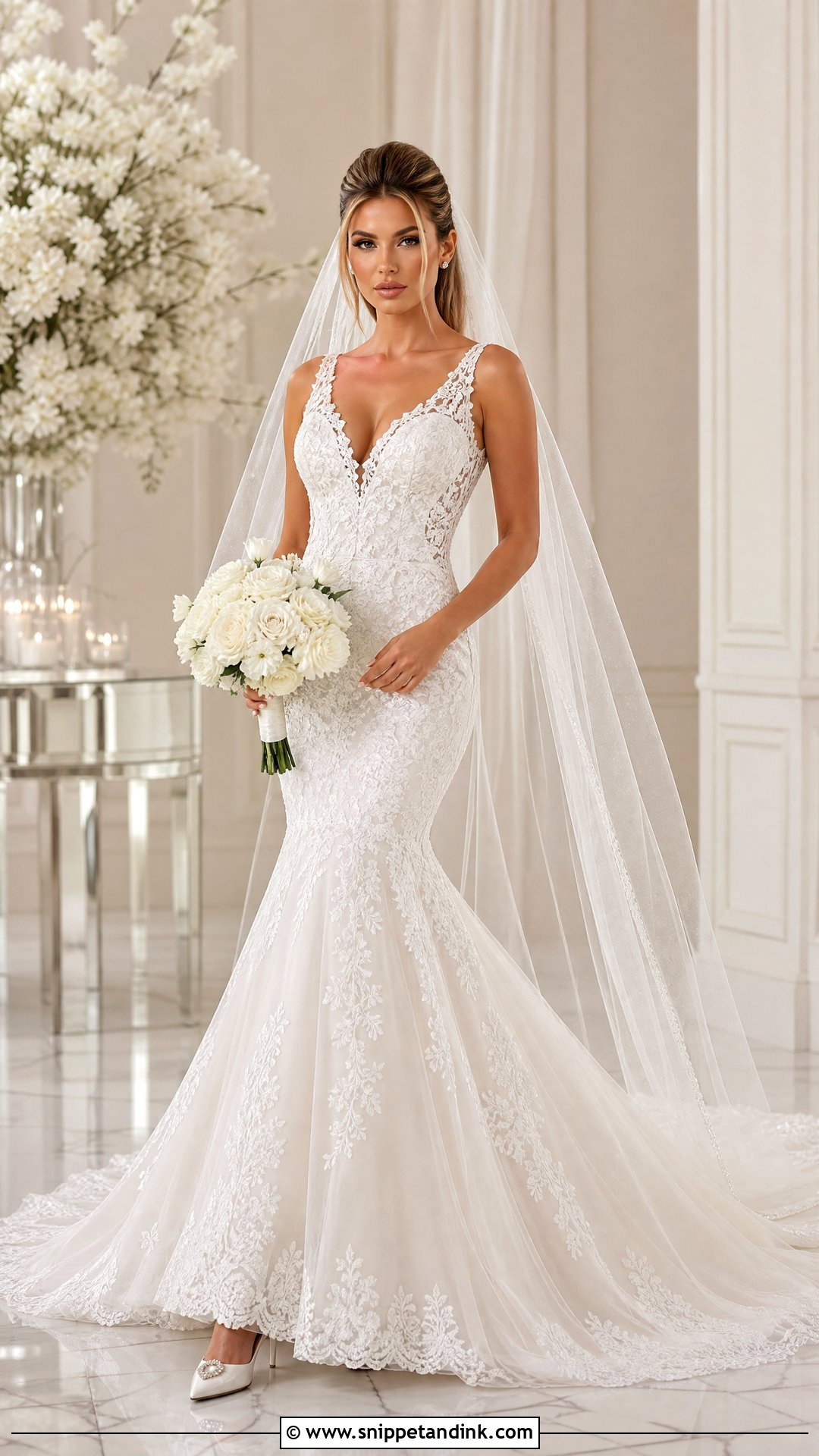
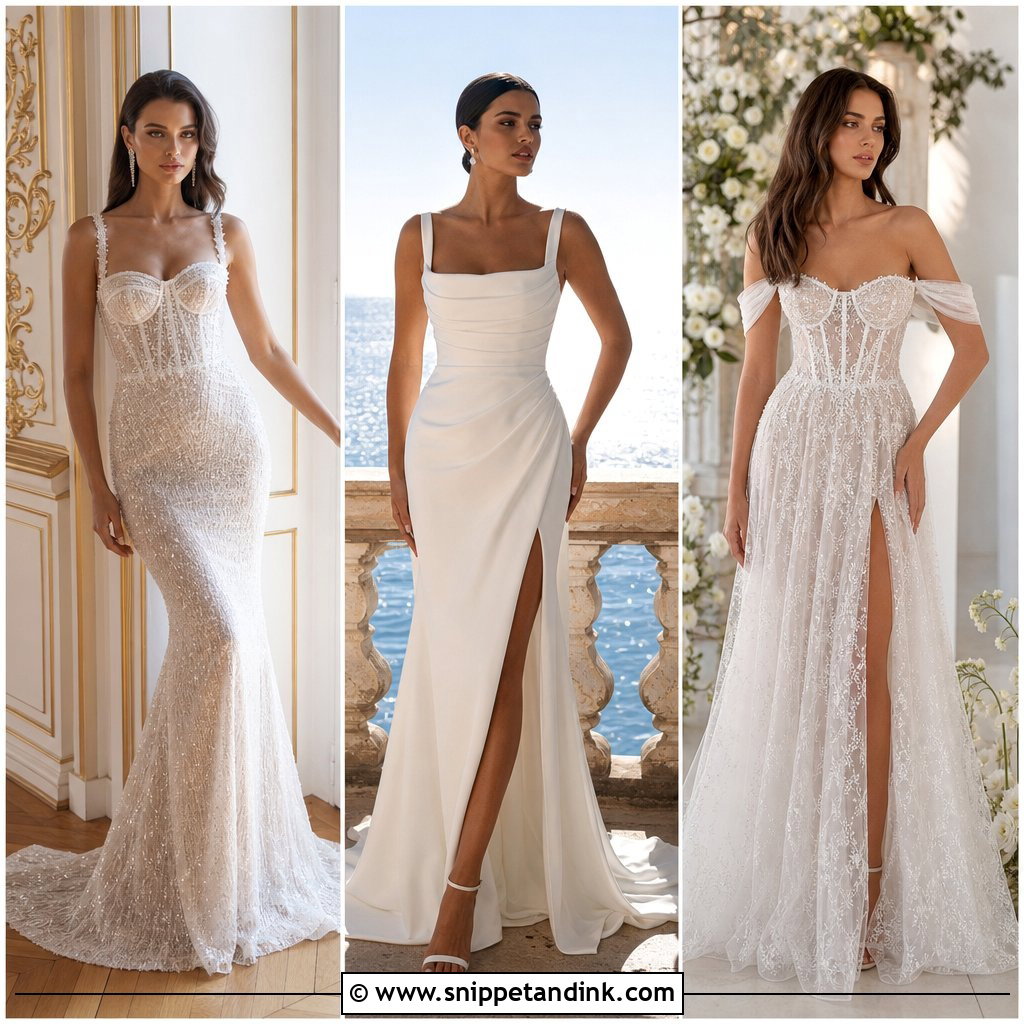
Mermaid gowns are fitted all the way to the knee, which means the flare point decides everything. Set too high and you look short-waisted; too low and you shuffle. At the fitting I ask brides to climb a step and sit on a chair, because a mermaid that only works standing will be miserable by the speeches. Keep accessories sleek: crystal studs, a smooth veil, pointed heels. If the gown already carries lace or sparkle, a small bouquet is plenty.
4. Randy Fenoli Off Shoulder Wedding Dress
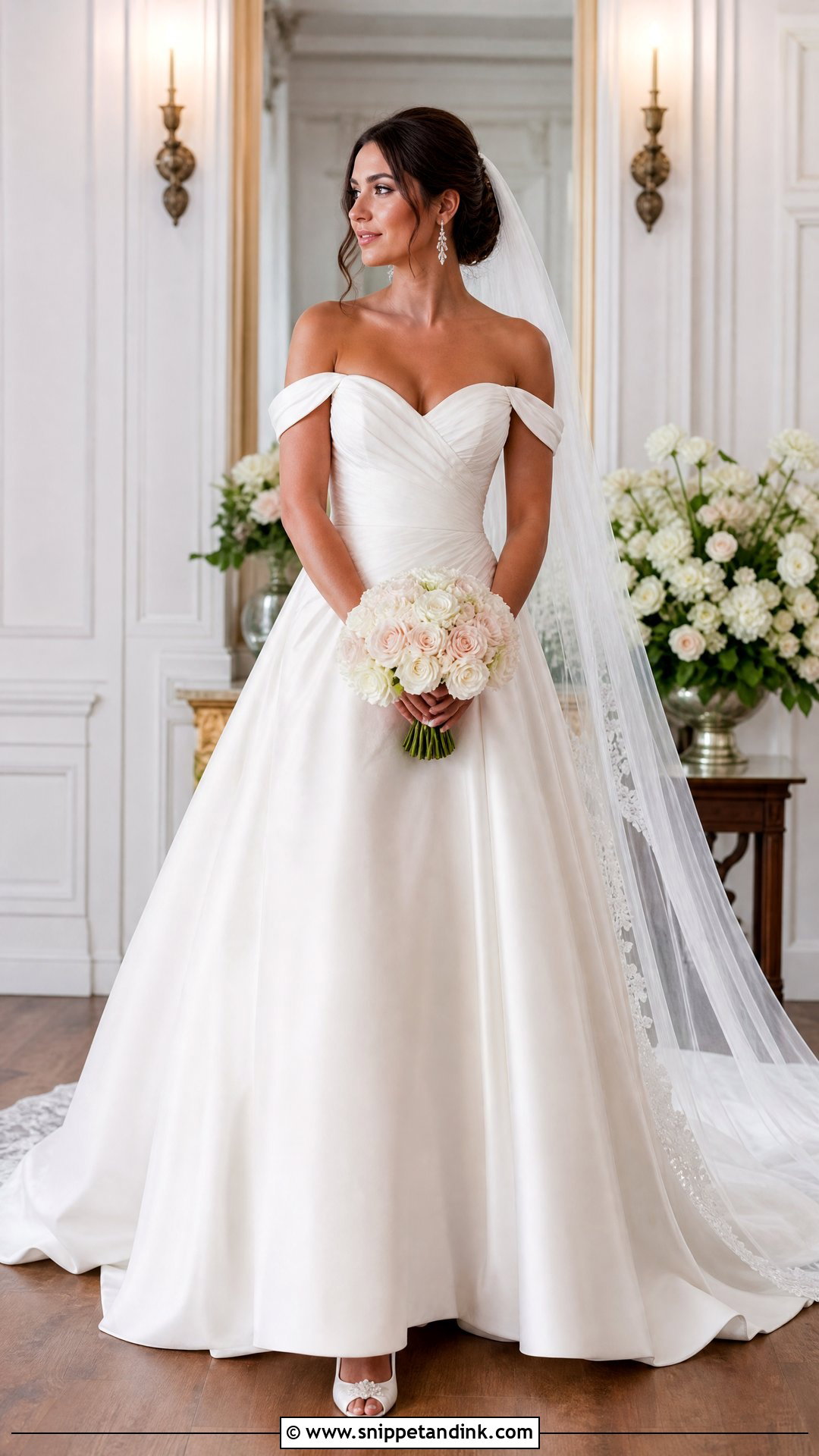
An off-shoulder neckline frames the collarbones, but it’s held up by elastic or boning at the upper arm, so it limits how high you can lift your arms. I always test a full hug and a wave before I sign off on the fit. Wear your hair in loose waves, a low bun or half-up so the neckline stays visible, and choose small pearl drops over a necklace. A long veil makes it more formal; a floral pin keeps it softer.
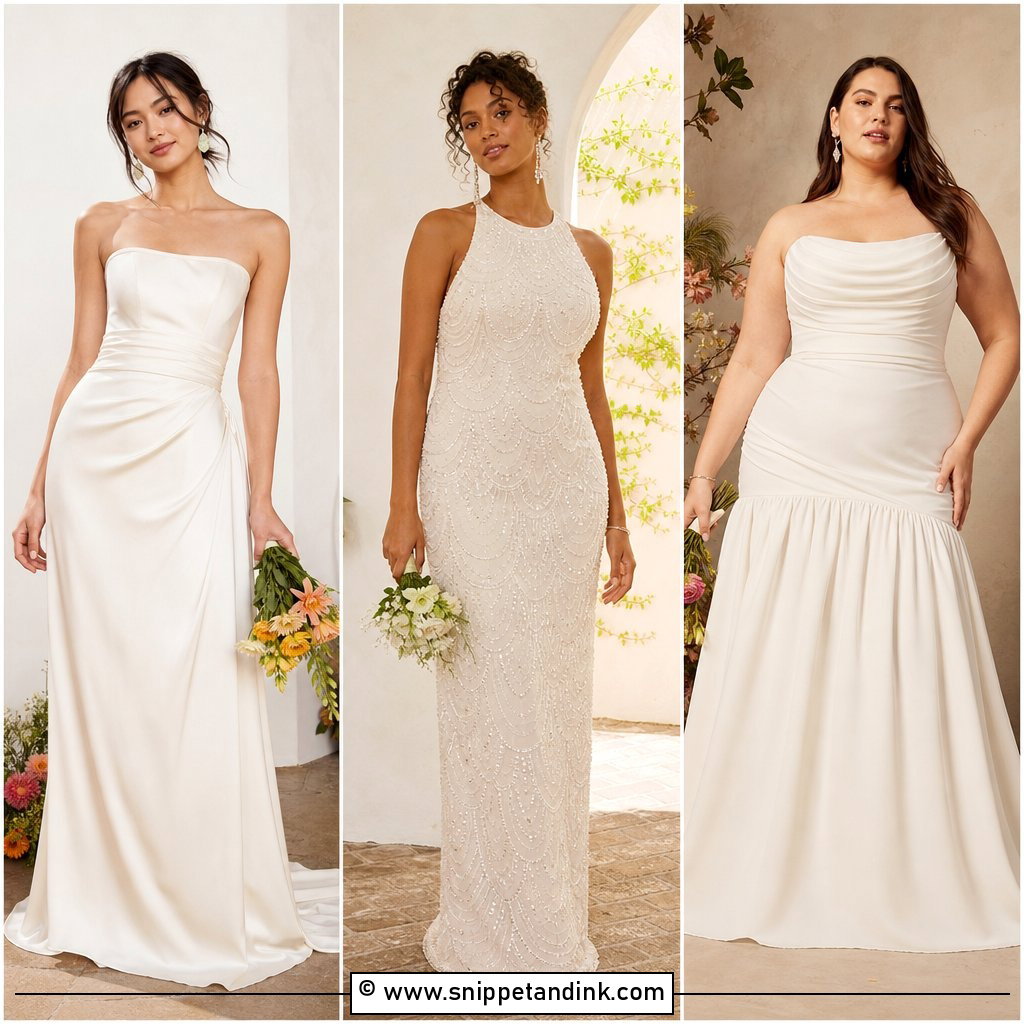
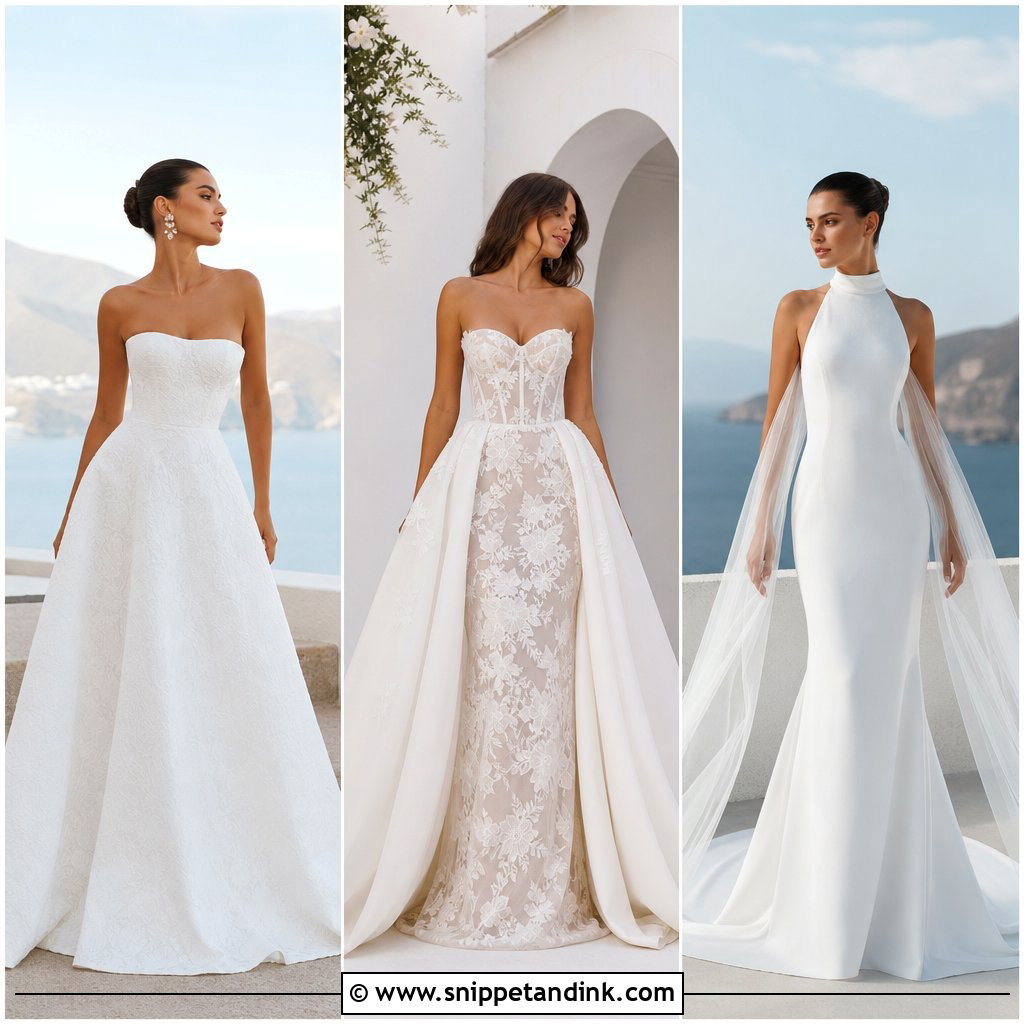
5. Randy Fenoli Strapless Wedding Dress
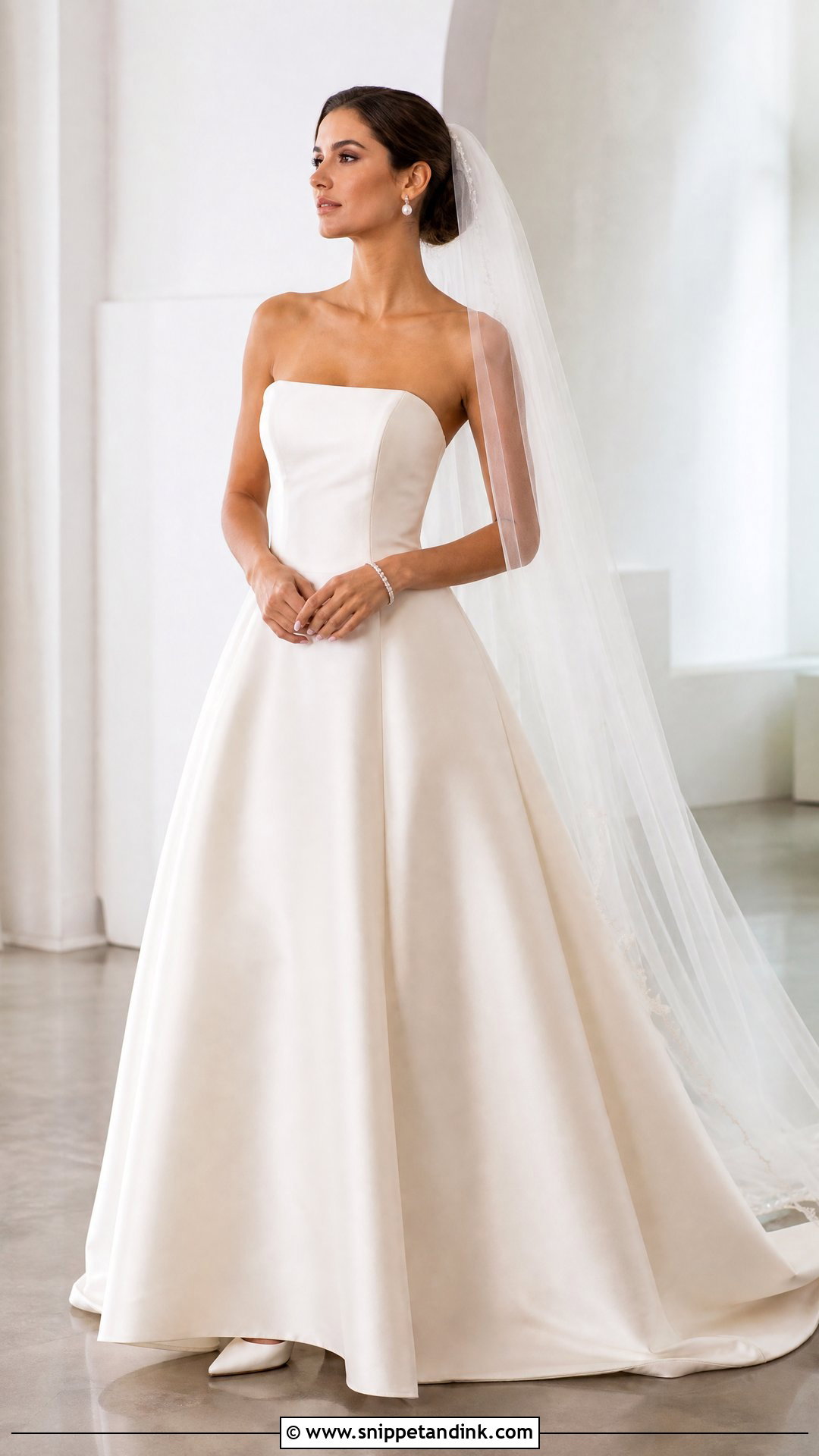
Nothing on a strapless gown holds it up except the bodice, so the internal boning and a waist stay do all the work. When a bride tells me she keeps tugging the top up, the fix is almost always taking in the waist, not the bust. Lace makes it romantic, crepe makes it minimal, a full tulle skirt adds drama. A tennis bracelet and earrings that echo the dress detail are enough; skip the statement necklace if the bodice is already embellished.
6. Randy Fenoli Lace Wedding Dress
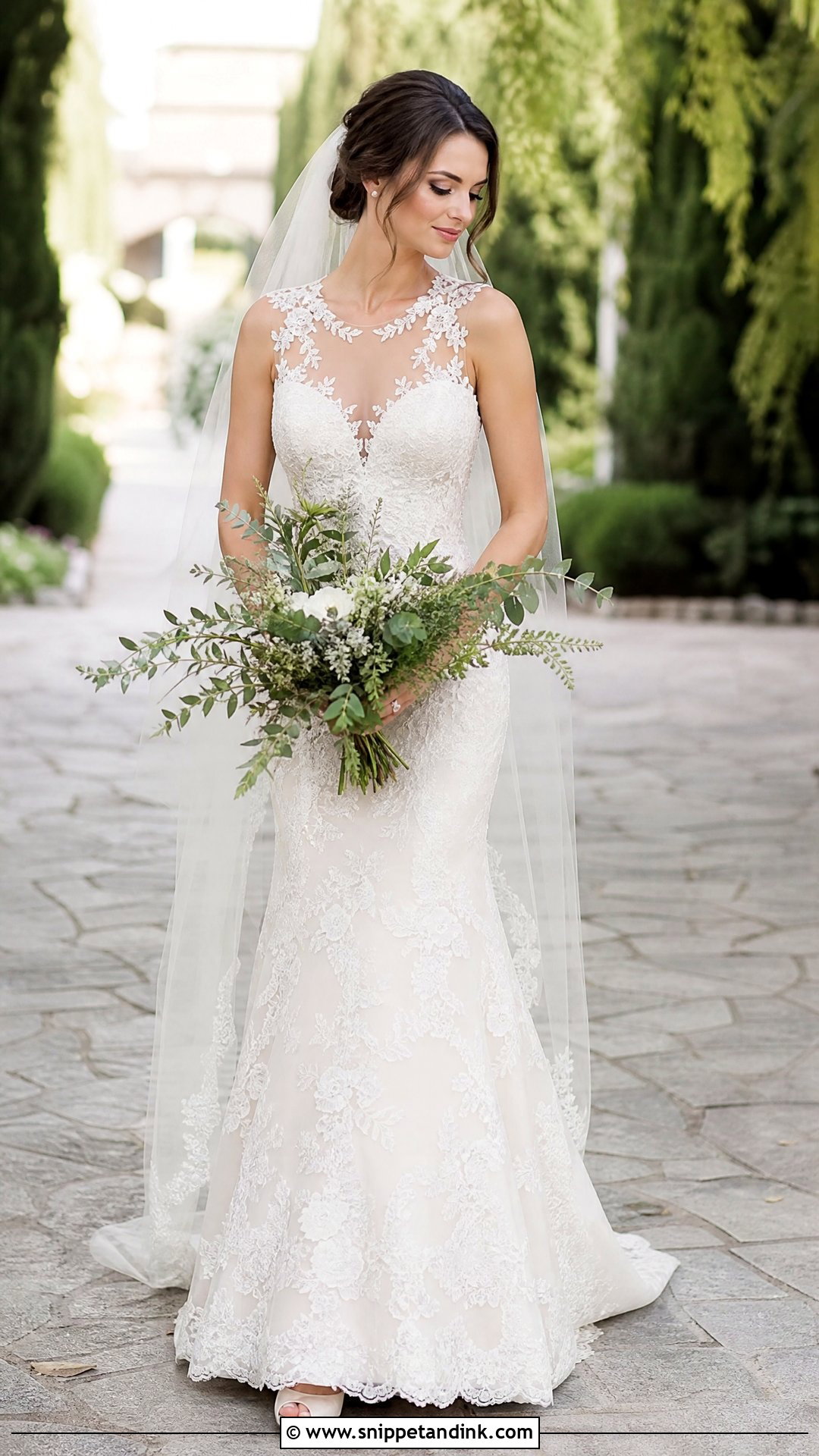
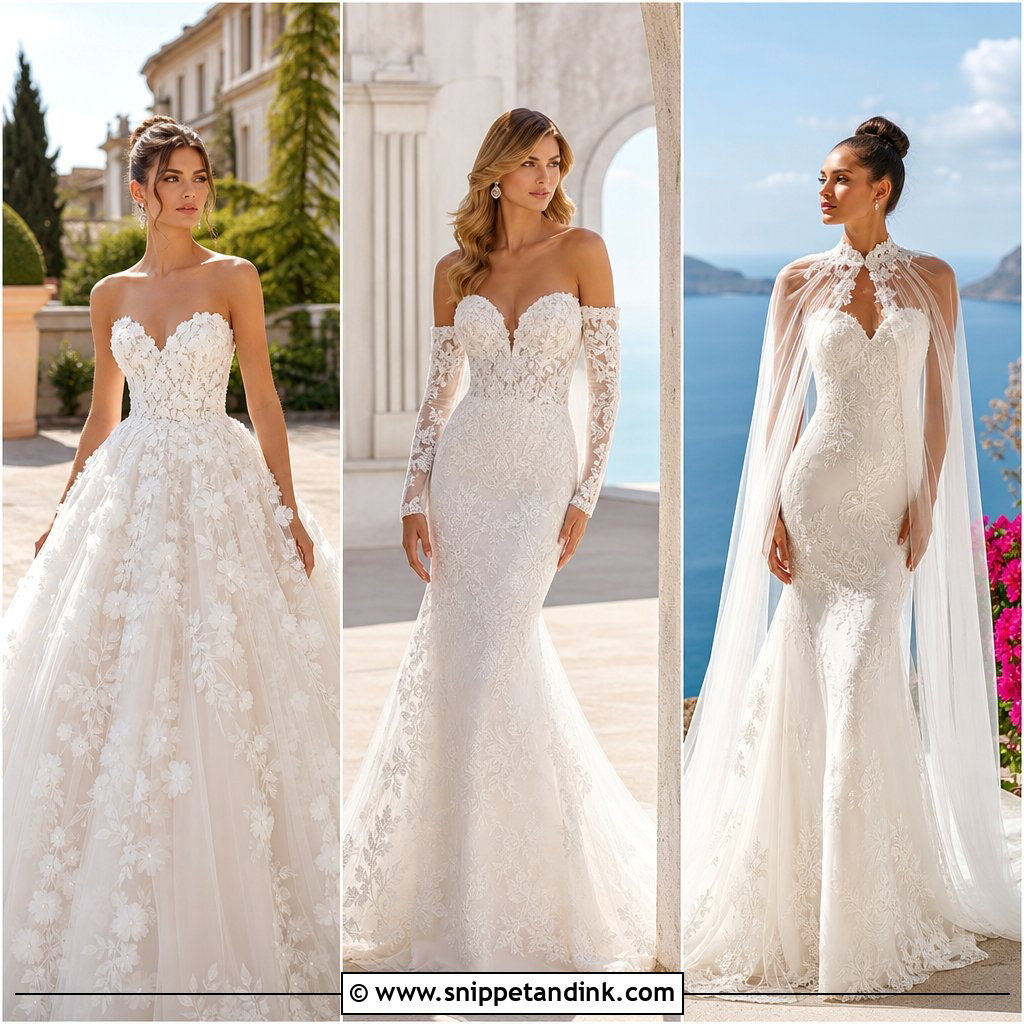
Lace changes character with its pattern. An open floral lace feels garden and vintage; a dense, corded lace over a fitted shape looks far more evening. Hold a swatch up in daylight and in warm indoor light, because some ivory laces turn yellow under tungsten. A sheer veil, delicate earrings and nude or ivory heels keep things quiet. If the lace is beaded, don’t add sparkly jewellery to compete with it.
7. Randy Fenoli Crepe Wedding Dress
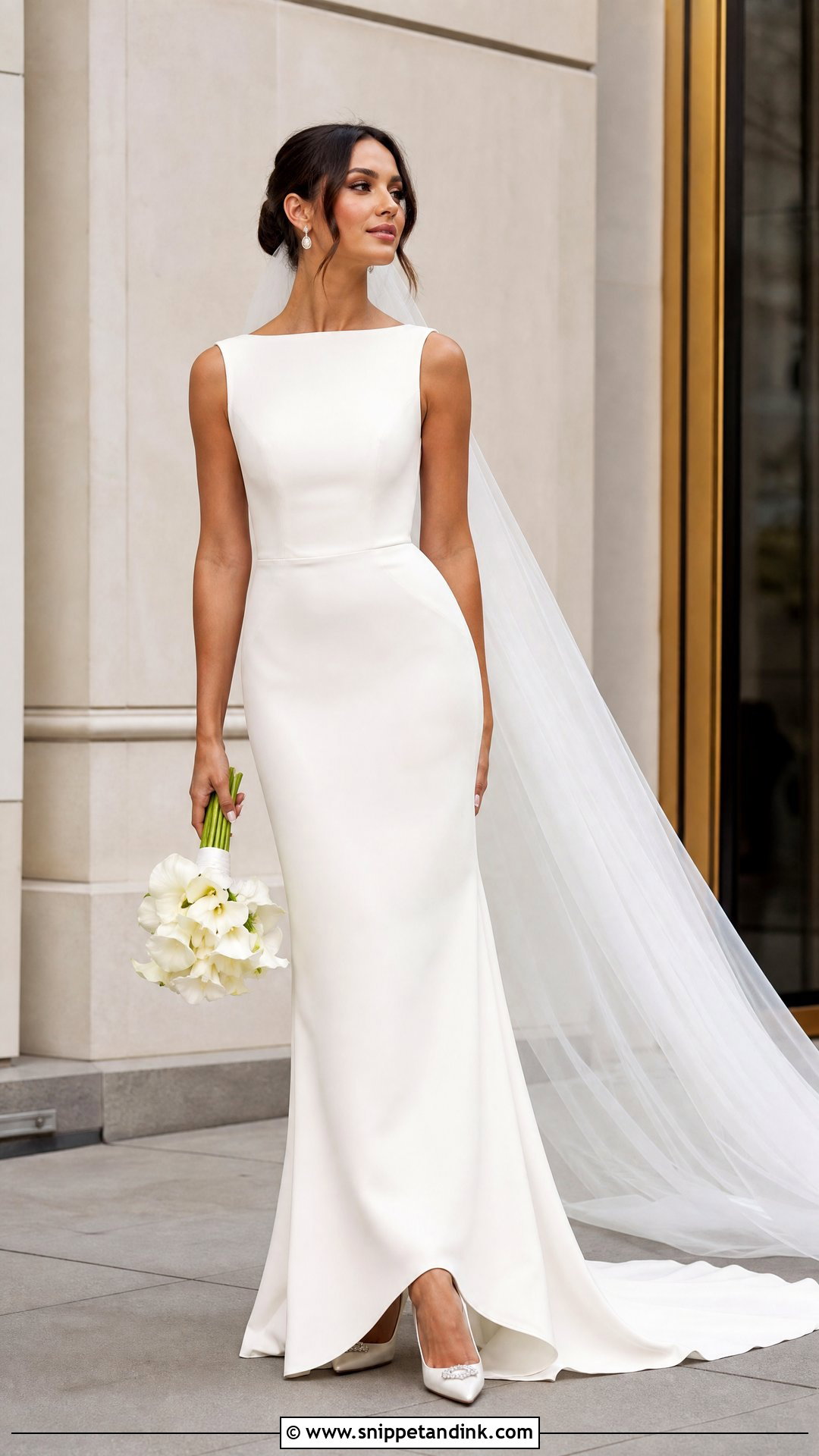
Crepe is honest fabric. It drapes close and doesn’t hide much, so a crepe gown needs smooth shapewear and precise tailoring at the hip. I tell brides it’s one of the best fabrics for a warm city wedding because it breathes and doesn’t crease badly in a car. Pair it with sleek heels, a structured bouquet and one refined piece of jewellery. A long veil softens a very plain dress, and a detachable overskirt or sleeves give you ceremony drama that comes off for the party.
8. Randy Fenoli Floral Wedding Dress
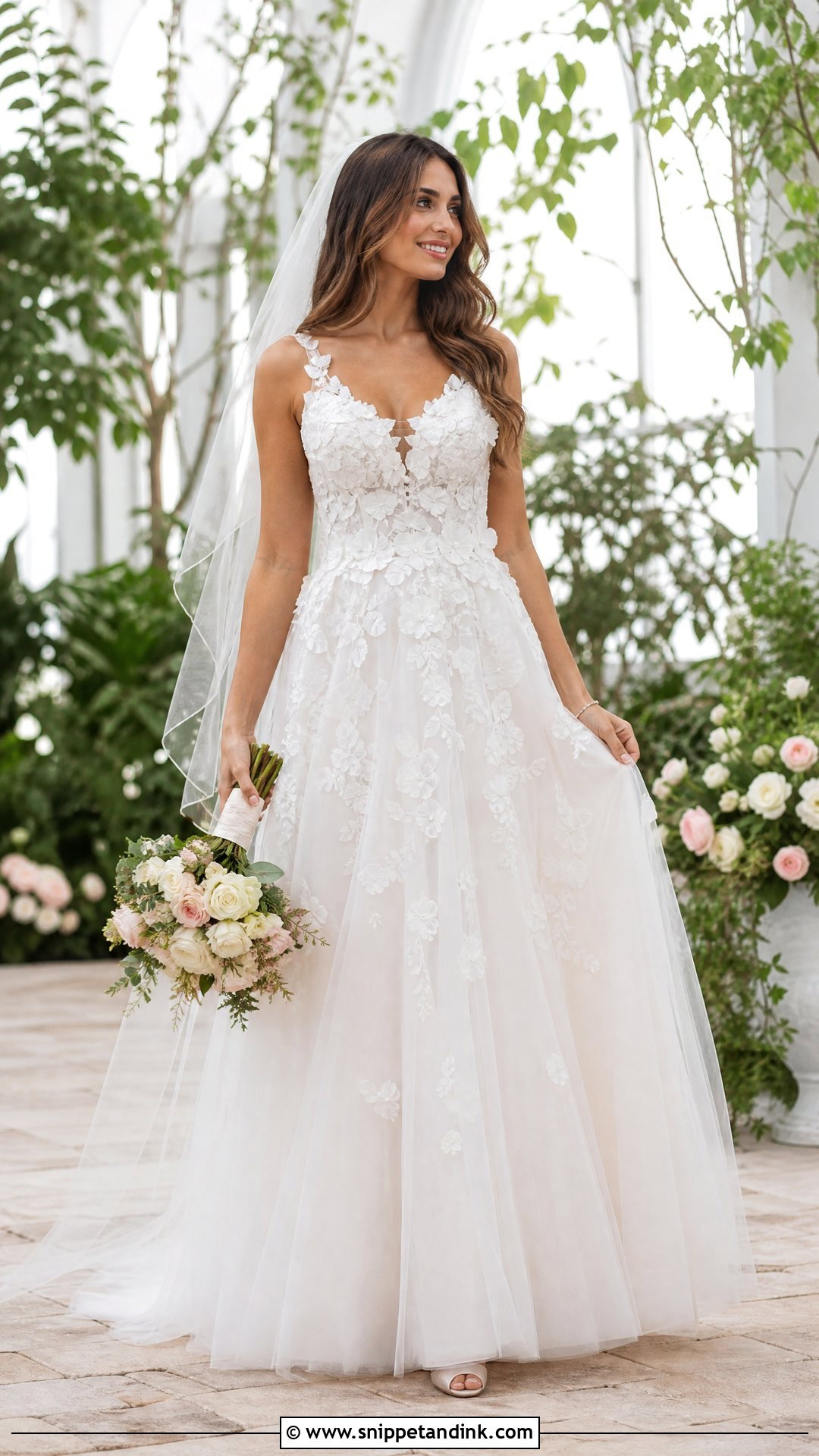
Dimensional flowers on a skirt catch on everything: bouquet stems, chair backs, your partner’s cufflinks. Before you commit, ask how the appliqués are attached and whether the salon can secure loose petals during alterations. Styling should stay natural, with loose waves and fresh skin. If the gown has colored floral details, I’d pull one shade into the bouquet and stop there. Spring and summer outdoor weddings suit it best.
9. Randy Fenoli Sparkle Wedding Dress
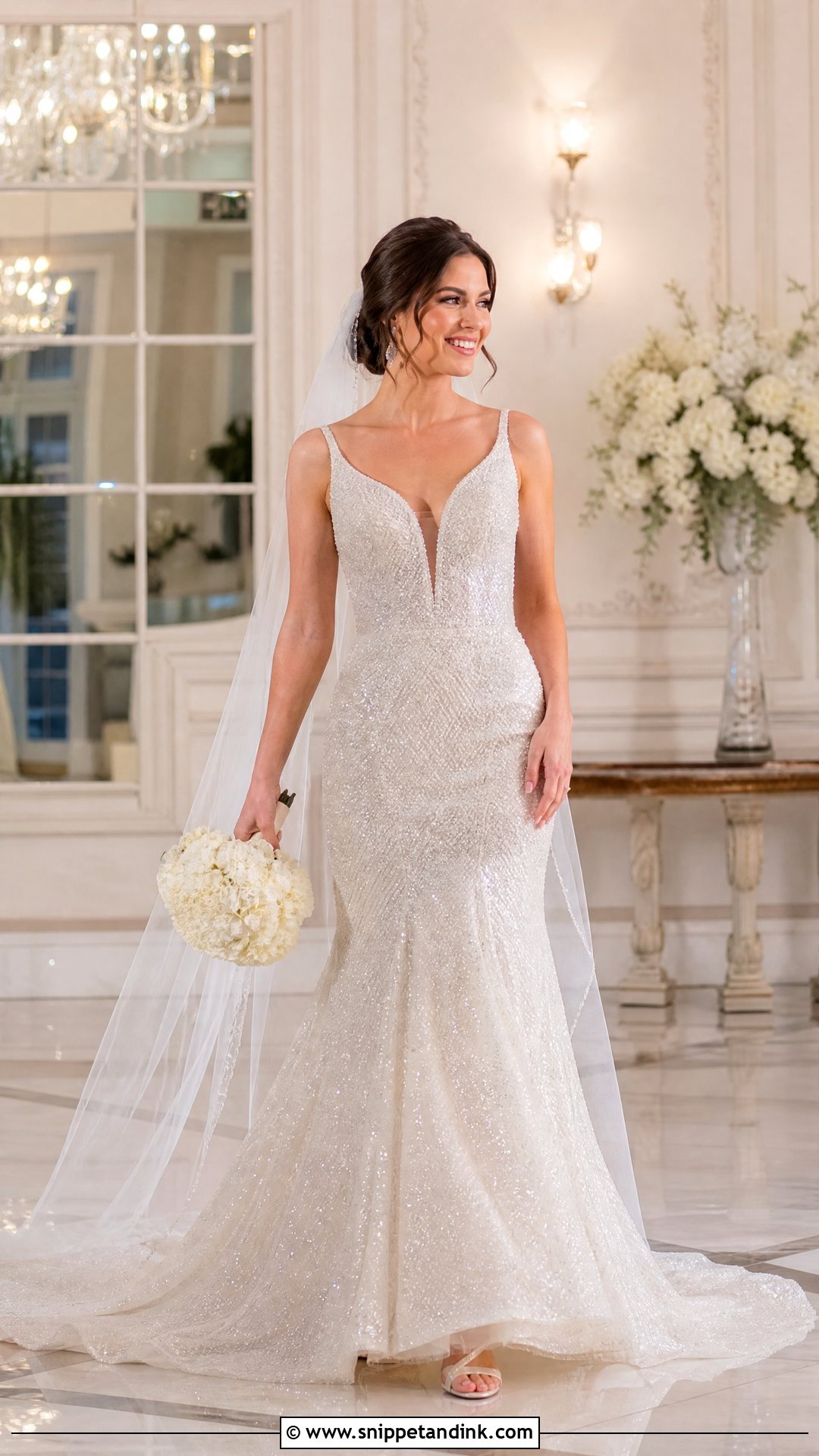
Sequins and crystal only come alive when light moves across them, so a sparkle gown is made for candlelight and evening receptions. In flat midday sun it can look busy. The one practical thing I warn about is scratching: heavy beading on the bodice can rub the inside of your arms, and a soft lining strip sewn behind the worst spots helps. Keep hair sleek and earrings simple. A full glitter skirt wants understated shoes; sparkle on the bodice only can take a soft tulle veil.
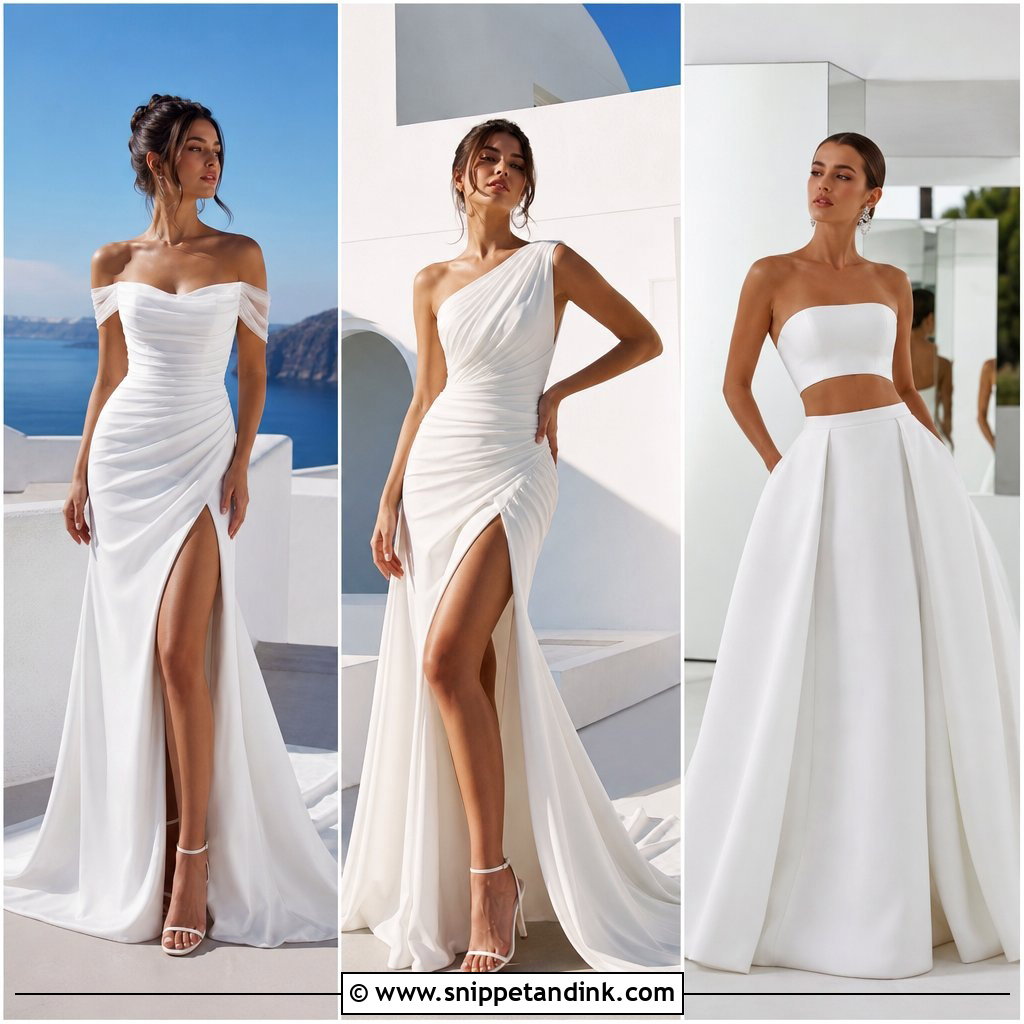
10. Randy Fenoli High Slit Wedding Dress
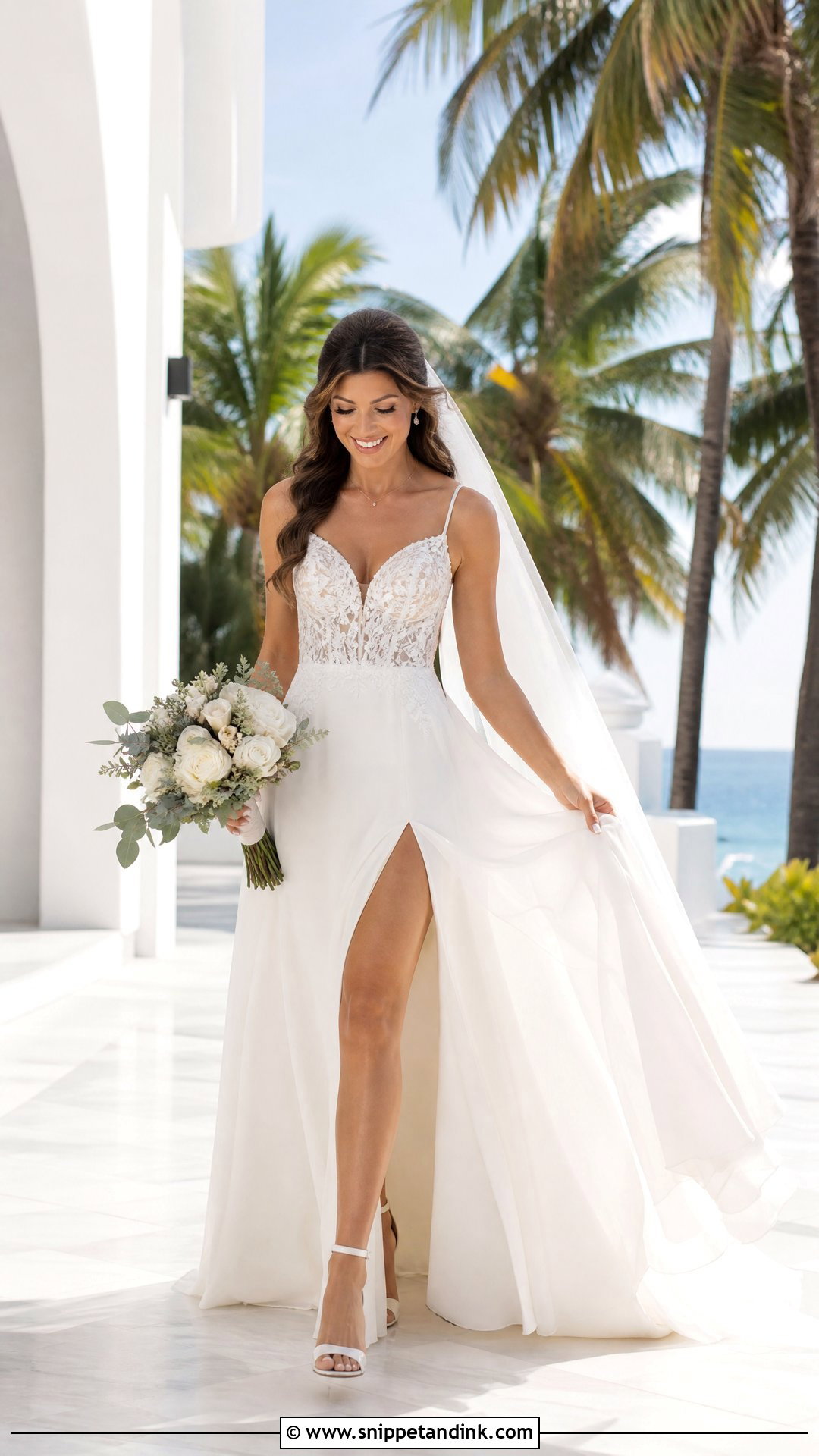
A high slit gives you a leg to walk with, which is why I like it for brides who hate feeling trapped in a skirt. Where the slit starts matters more than how high it goes: sit down in the fitting room and check what shows. Your shoes will be seen all night, so strappy sandals, pointed pumps or an embellished heel become part of the outfit. Keep the rest calm with soft waves and minimal jewellery. Destination weddings and receptions suit it well.
11. Randy Fenoli Long Sleeve Wedding Dress
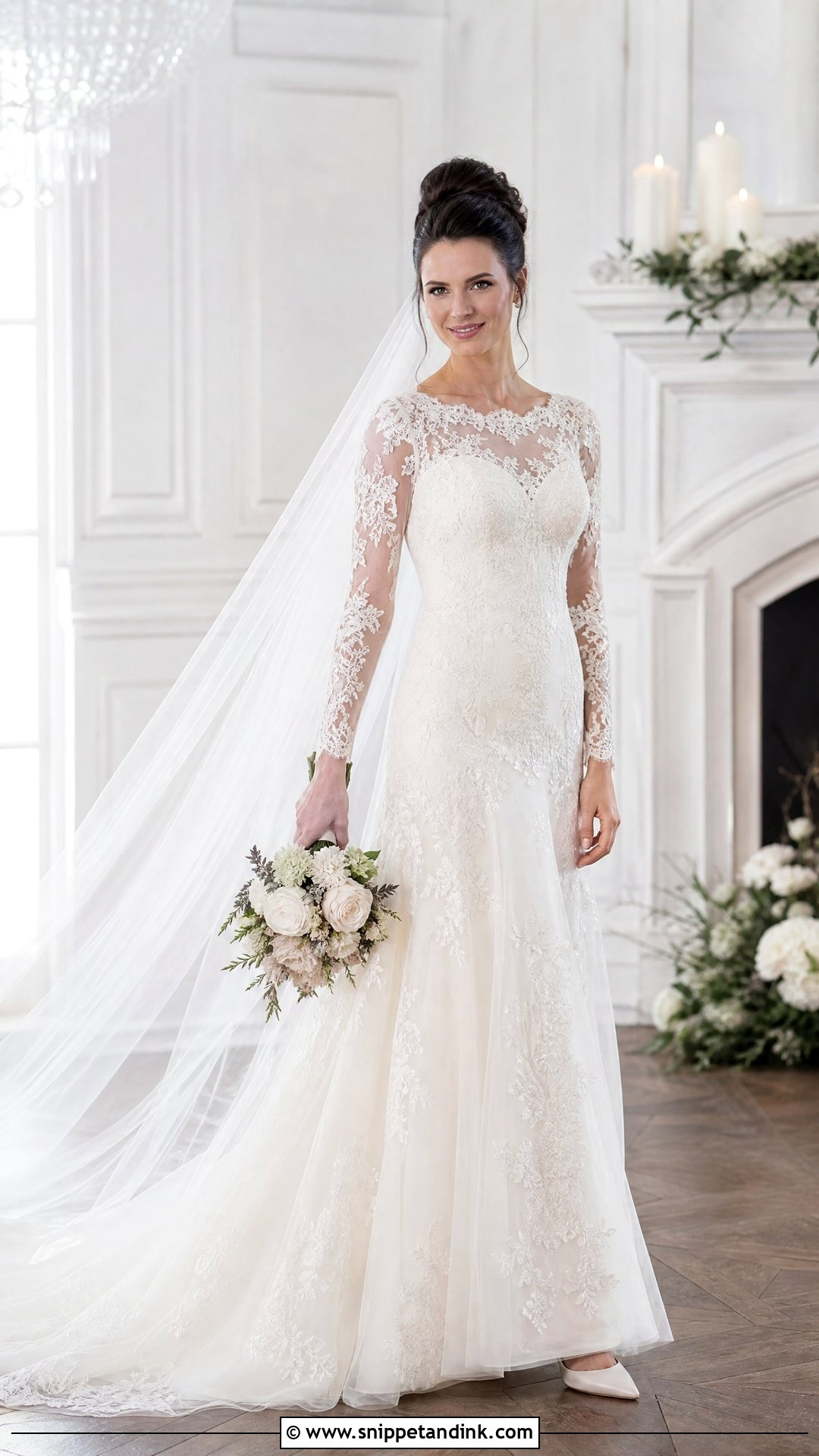
Long sleeves are the detail most brides underestimate. A sleeve cut too narrow at the upper arm means you can’t lift a champagne glass comfortably, so I always ask for a reach test at the fitting. Sheer sleeves, lace sleeves and fitted sleeves all suit autumn and winter. The gown already looks complete, so small earrings, a smooth veil and a soft, not oversized, bouquet are enough. Hair up shows the neckline; down feels more romantic.
12. Randy Fenoli Detachable Sleeve Wedding Dress
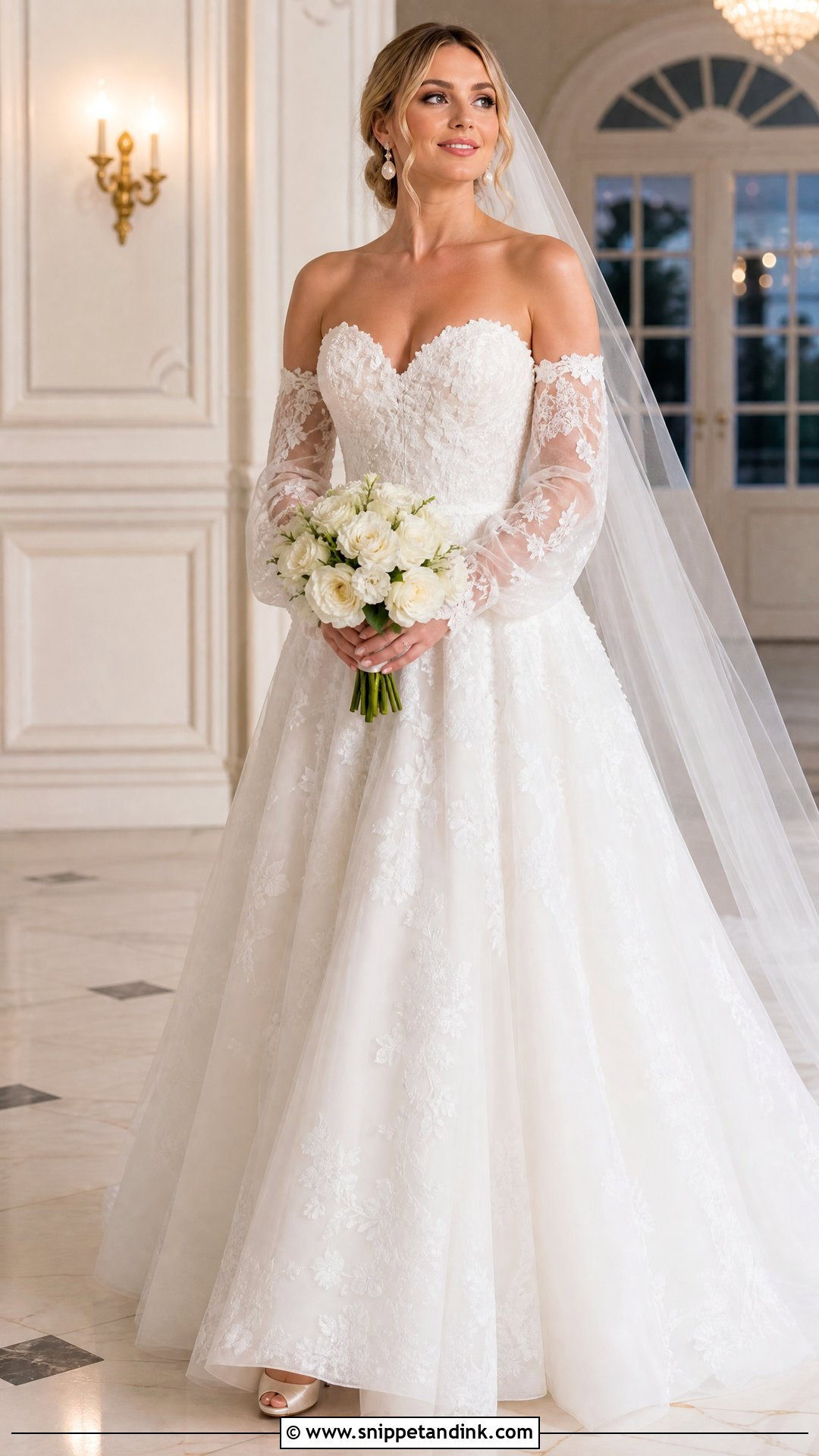
Two looks, one dress. Detachable sleeves usually fasten with hooks, snaps or tiny buttons, and taking them off takes a minute and a helper, so plan who in the bridal party knows how. Wear them for the ceremony and portraits, then remove them and switch to bolder earrings or a hair piece for dancing. It’s a sensible way to get a change of look without paying for a second gown.
13. Randy Fenoli Corset Wedding Dress
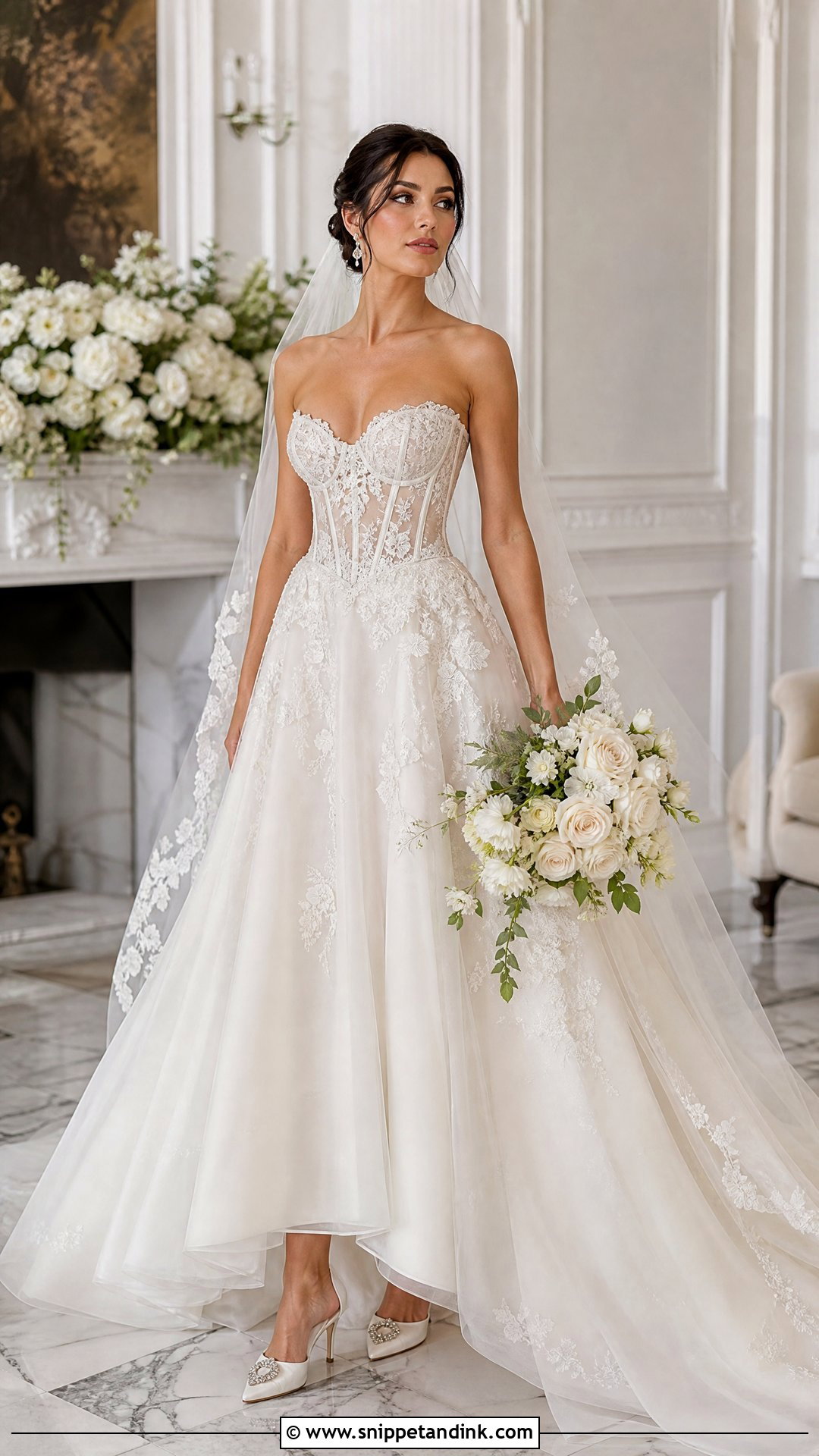
Corset bodices are shaped by boning, either exposed for a modern look or hidden under lace, tulle and appliqué. Real lacing at the back gives you some give if your size shifts before the wedding, which zip backs don’t. I’d keep the neckline clean and the jewellery to pearl studs. With a sheer corset, sort out smooth undergarments and lining options with the seamstress early, not at the final fitting.
14. Randy Fenoli Basque Waist Wedding Dress
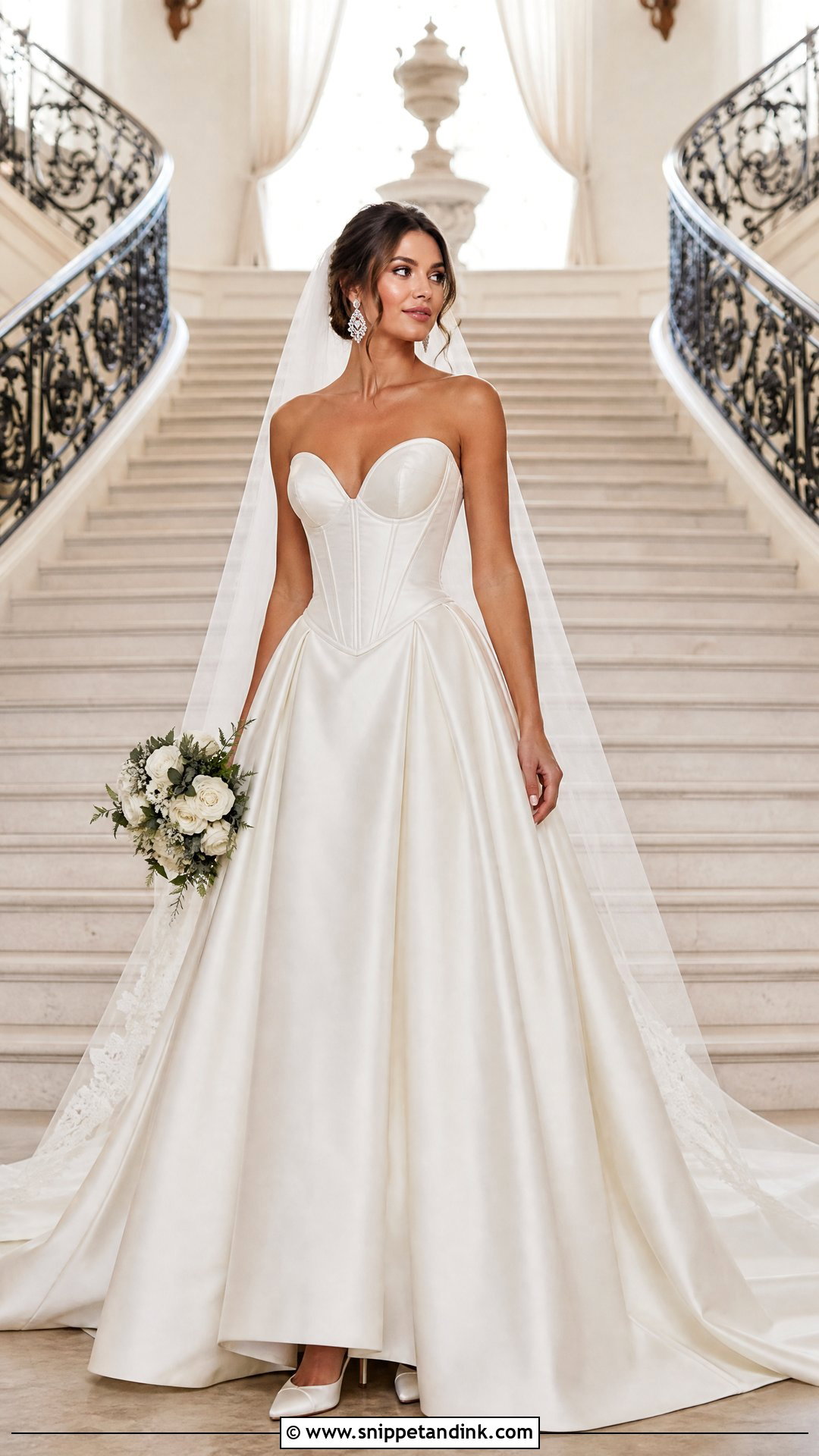
The basque waist drops into a V or U below the natural waistline, which lengthens the torso before the skirt opens. It’s a regal line on ball gowns and full A-lines, and it flatters shorter waists especially well. Never add a belt to it unless one is built into the design, because a belt fights the point. A long veil, elegant earrings and a polished updo keep attention on the bodice.
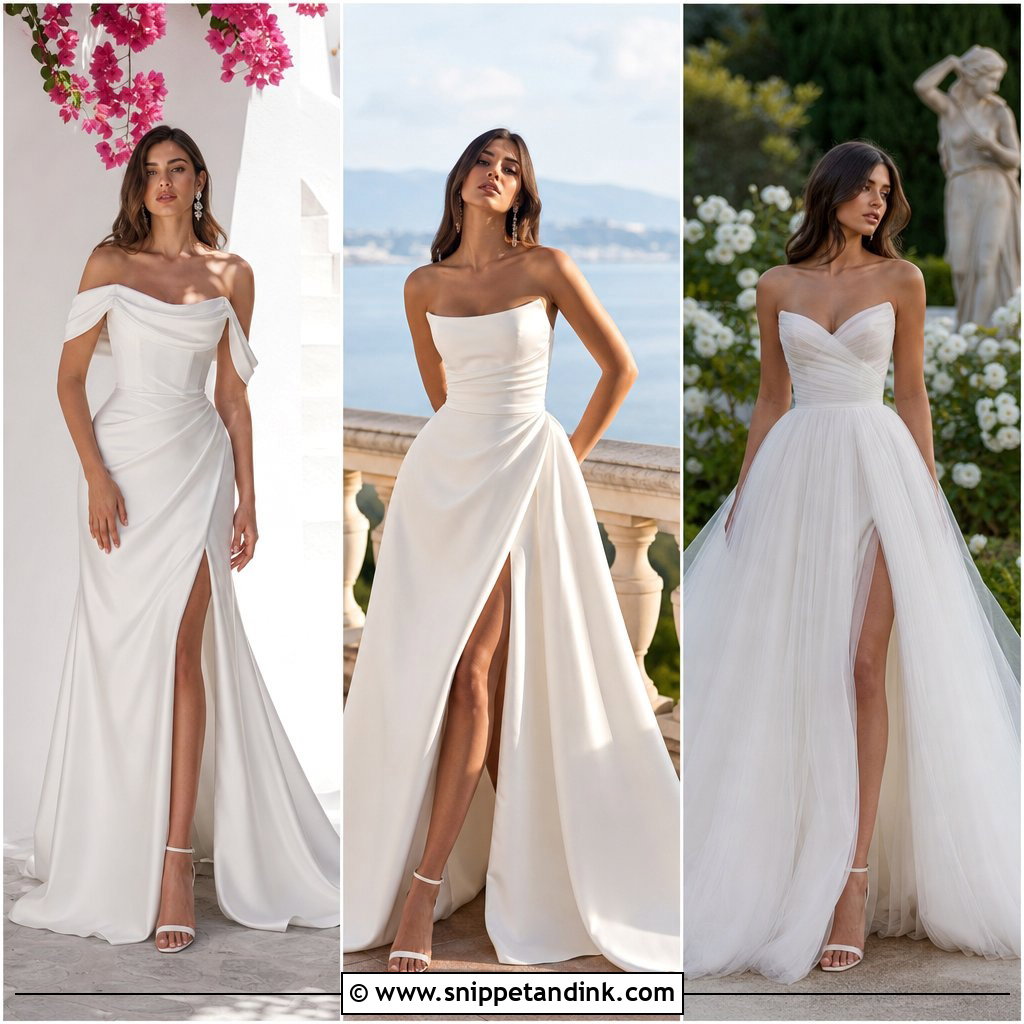
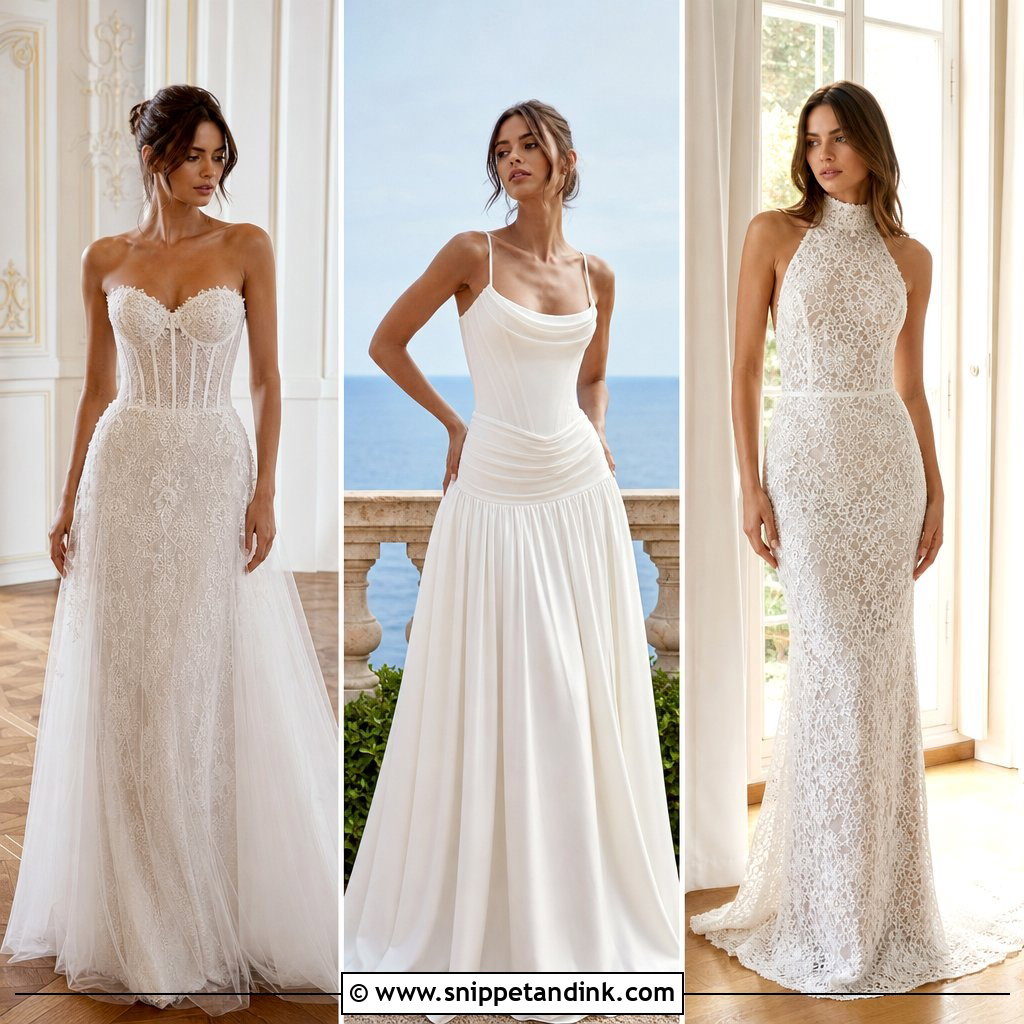
15. Randy Fenoli Sweetheart Wedding Dress
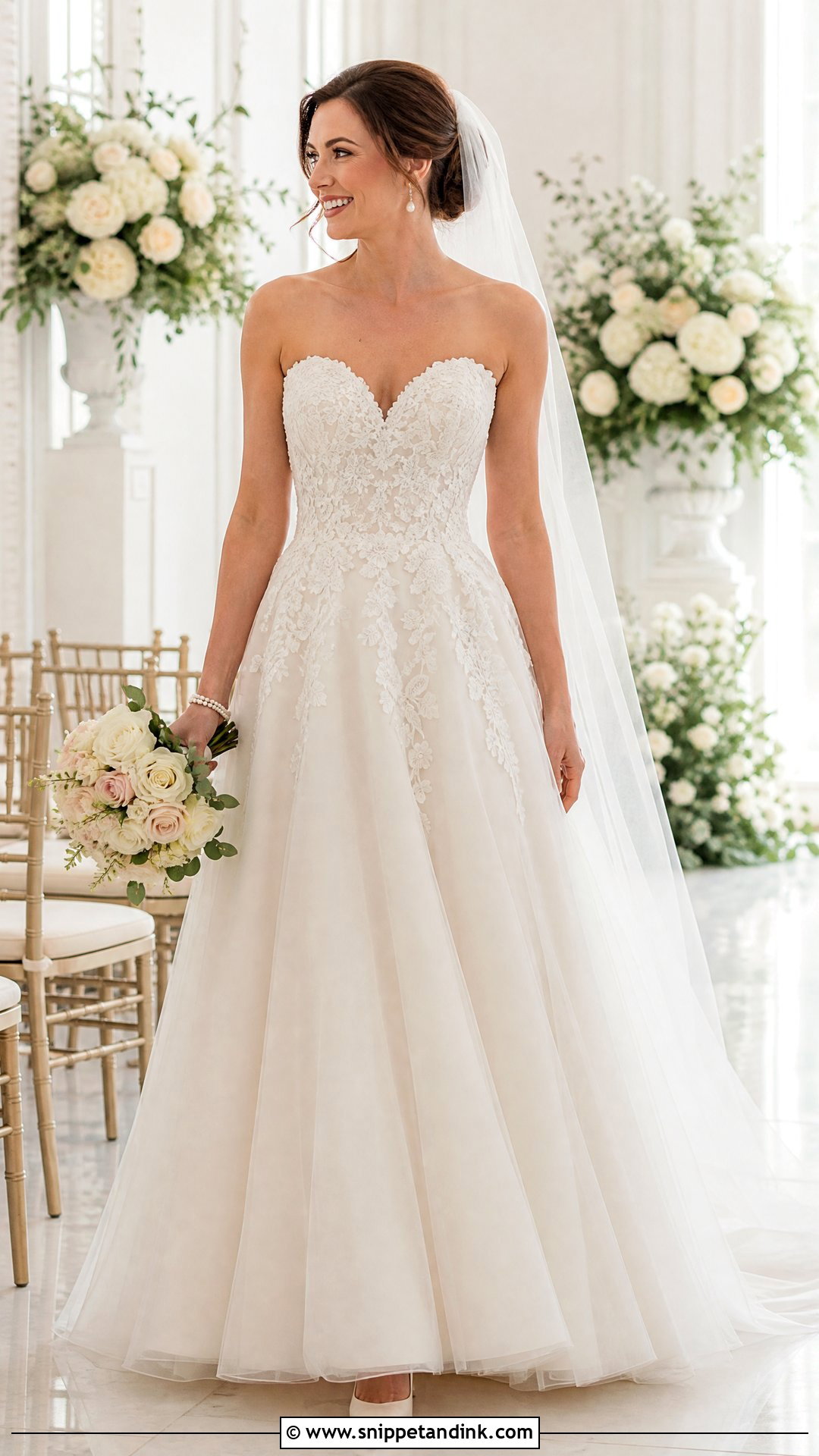
Sweetheart necklines rely on the bust seam sitting exactly where it should, so this is one alteration I never skip. The heart-shaped neckline works on everything from mermaid to ball gown. A pendant only belongs on a plain bodice; lace or beading needs nothing more than earrings and a bracelet. Loose curls, half-up hair, or a veil tucked low at the back all suit it.
16. Randy Fenoli V Neck Wedding Dress
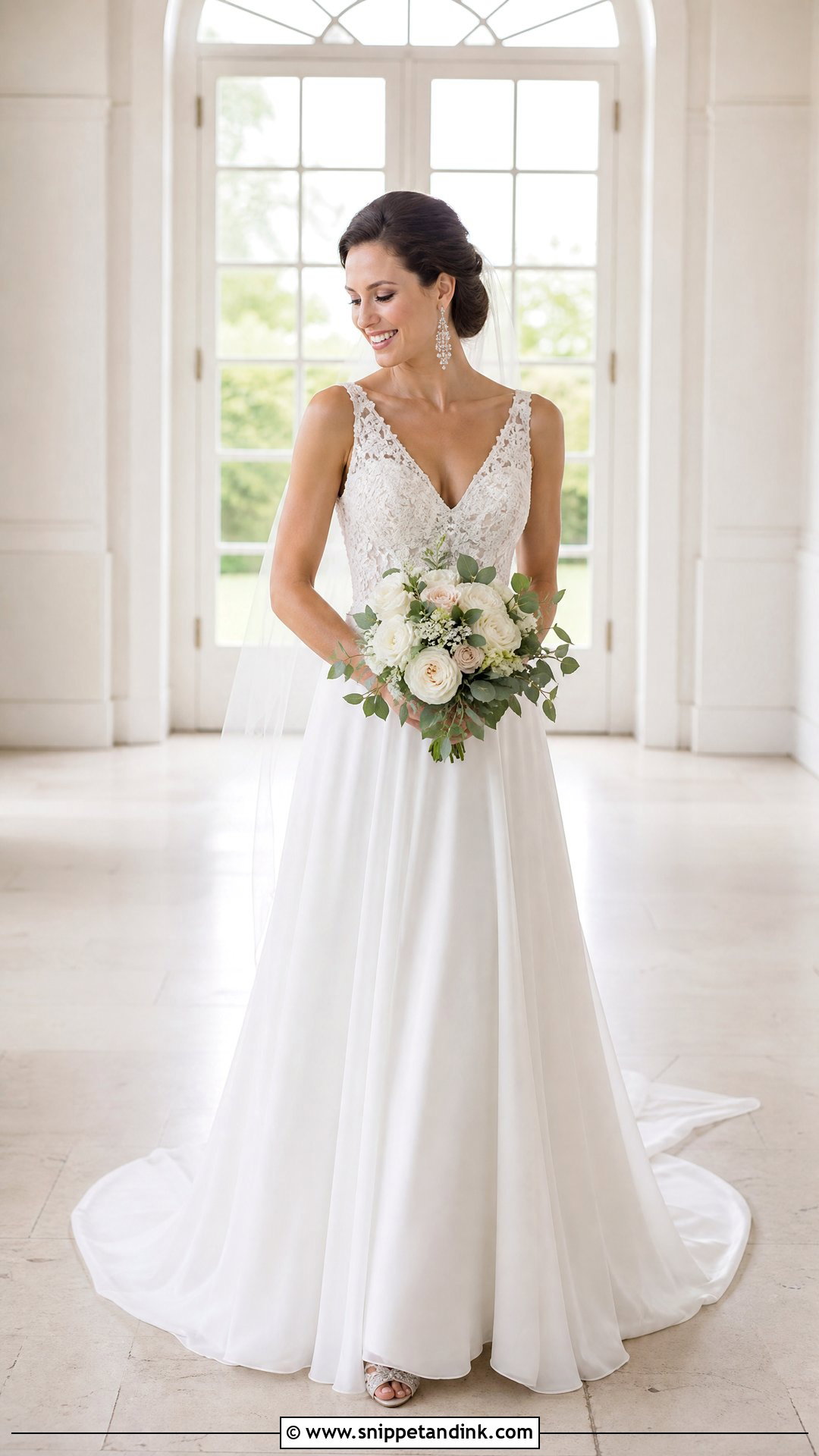
A V-neck draws the eye down and makes the upper body look longer. Depth is personal, and many deep V gowns use an illusion mesh panel that a seamstress can raise if you want more coverage. Long earrings echo the line without crowding it. With a lighter A-line or sheath skirt, you’ll actually be able to wear comfortable shoes, so take advantage of that.
17. Randy Fenoli Square Neck Wedding Dress
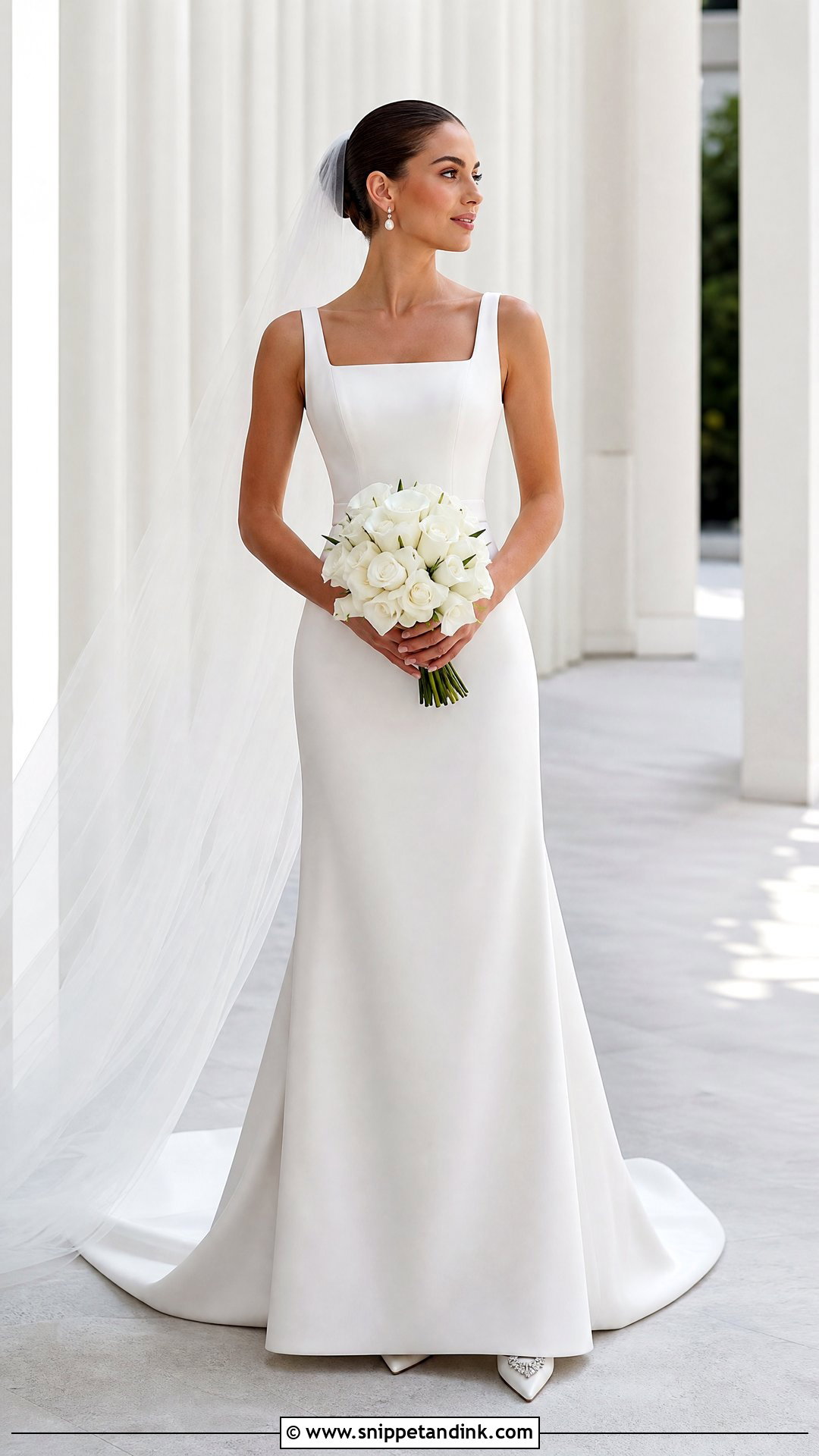
Square necklines are quieter than they look on a hanger. The straight line frames the collarbones and suits crepe, satin, lace or a mikado-style fabric. The fit at the corners matters: if they gape when you lean forward, ask for the neckline to be tightened. A smooth bun, pearl earrings and a long veil give a classic finish; a minimal gown can take a structured bouquet or statement shoes.
18. Randy Fenoli Illusion Back Wedding Dress
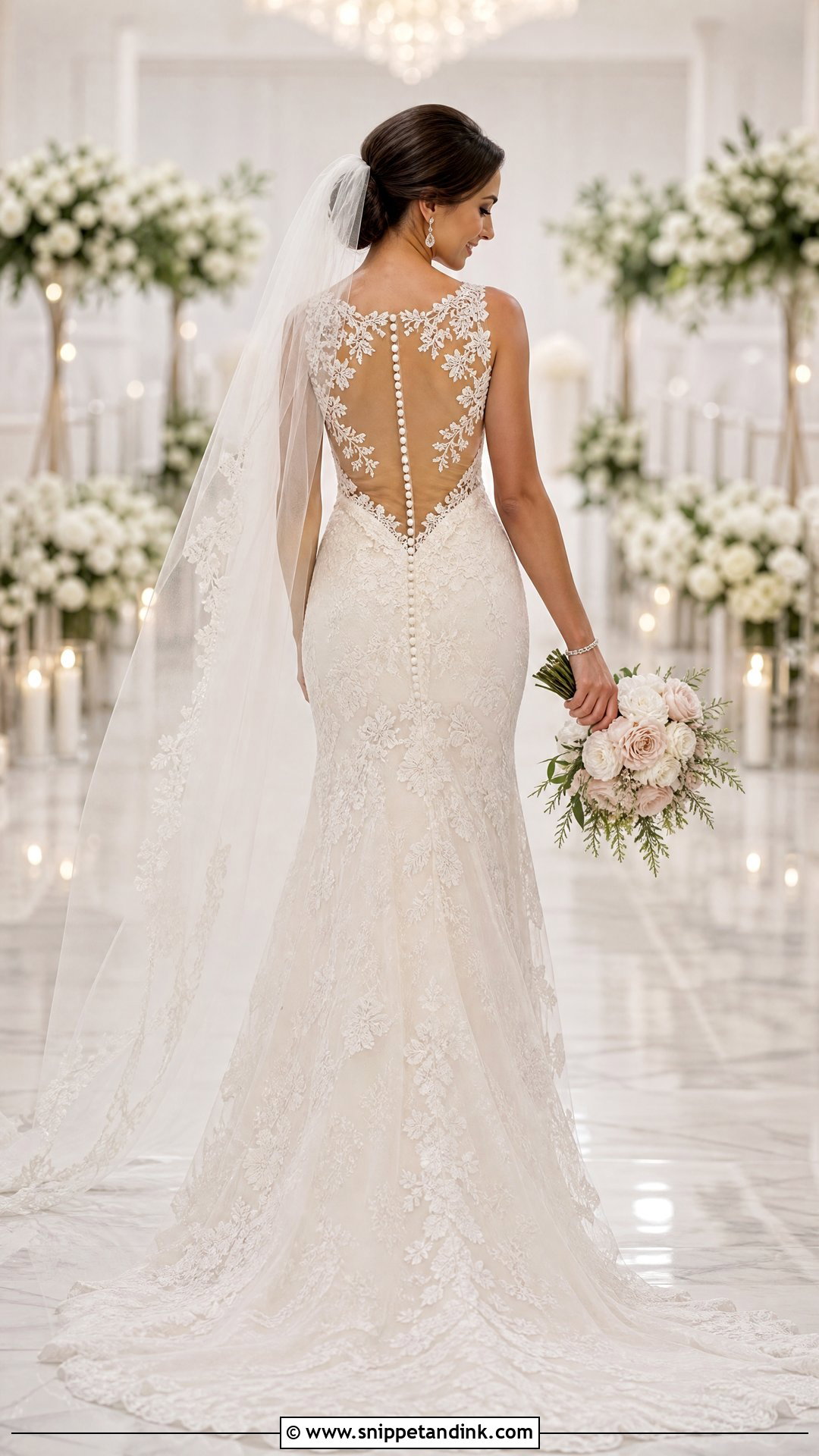
An illusion back is a sheer mesh panel decorated with lace, buttons or beading, and your guests see it for the whole ceremony. Mesh can be dyed to suit your skin tone, which I always ask about, because a mismatched panel looks grey in photos. Wear your hair up or swept to one side so the back stays visible. A sheer veil lets the detail show through, or take the veil off after the vows.
19. Randy Fenoli Bow Wedding Dress
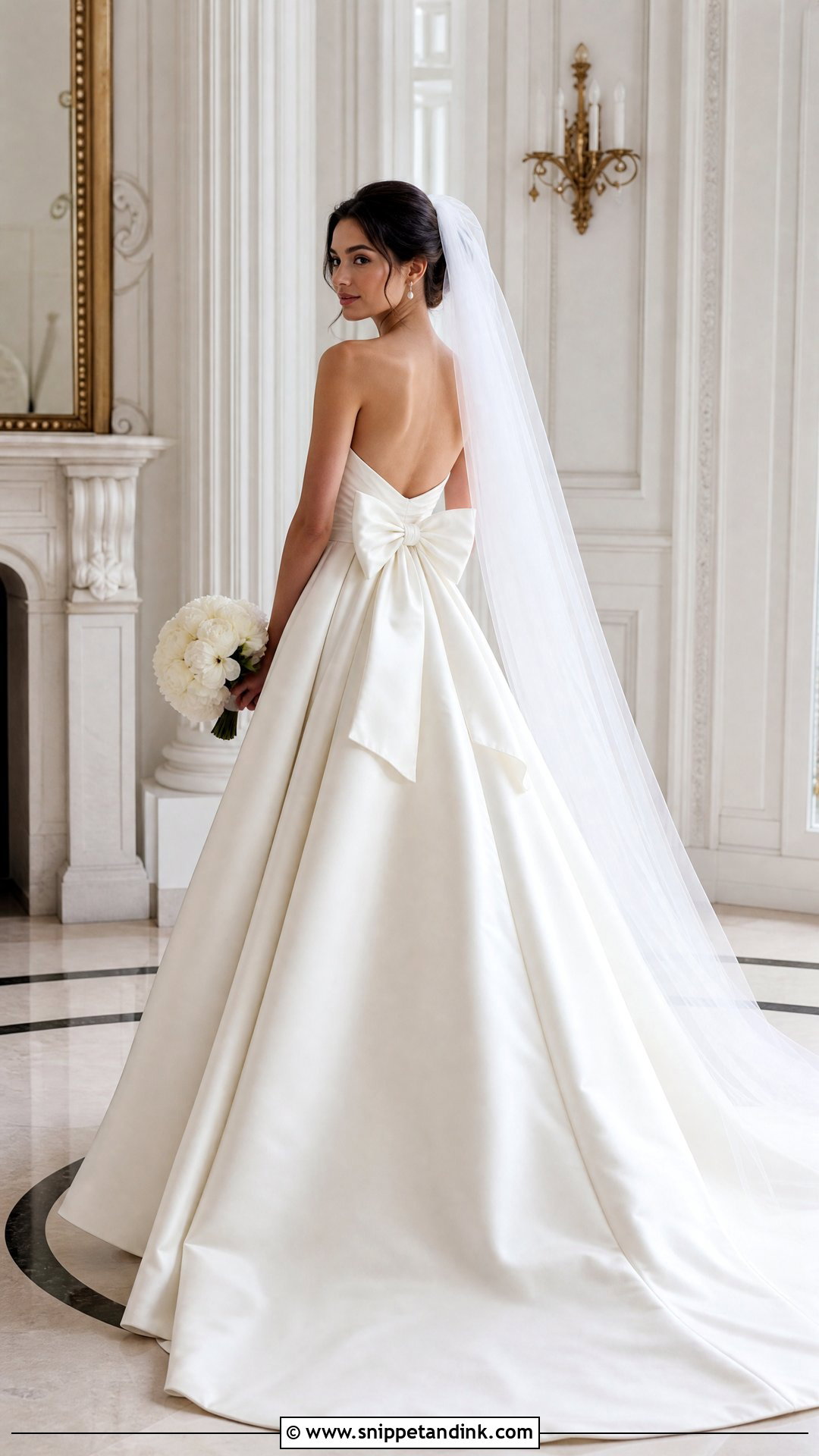
Bows sit on the back waist, a shoulder, the neckline or the train, and they carry the whole personality of the dress. An oversized bow needs a plain veil and almost no jewellery. A small one can take pearl earrings or a delicate bracelet. One thing I check: a large back bow crushes against a chair, so ask the seamstress whether it can be stiffened or removed for the reception.
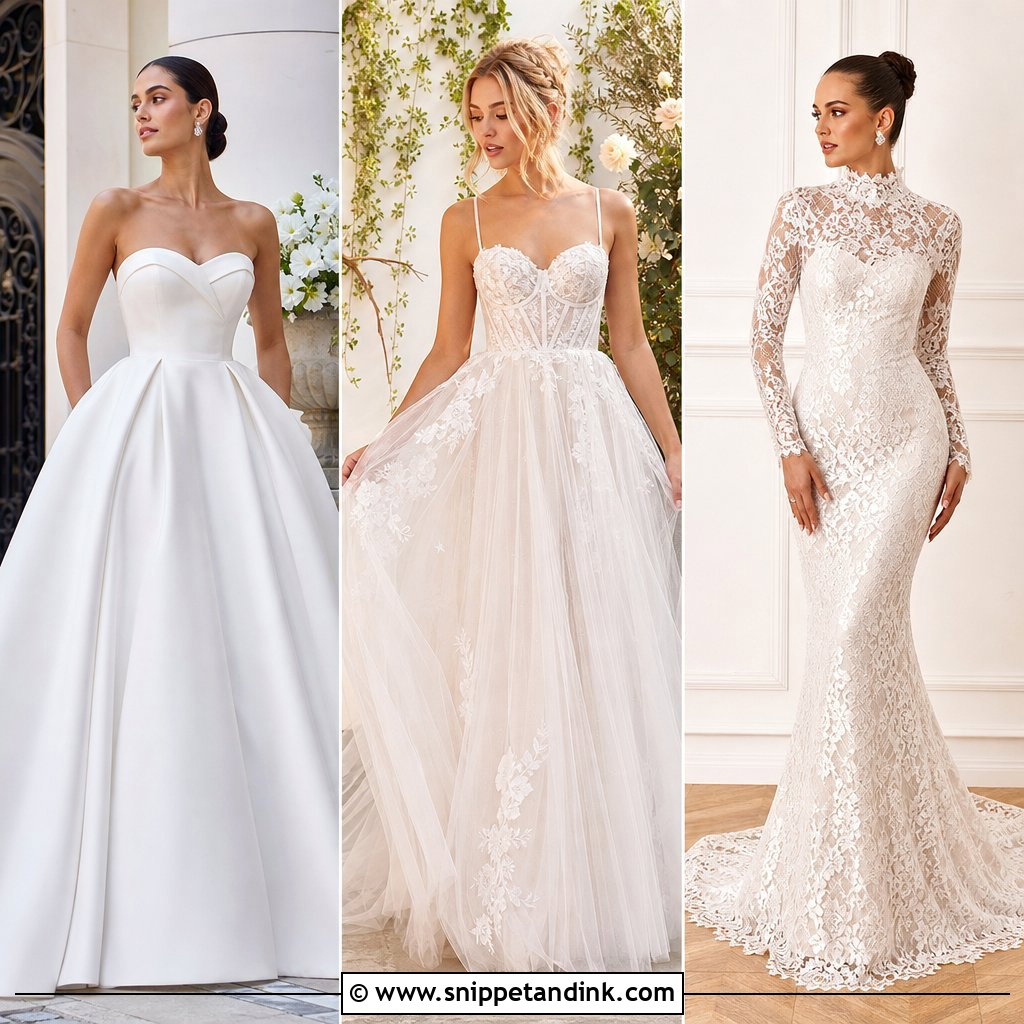
20. Randy Fenoli Tulle Wedding Dress
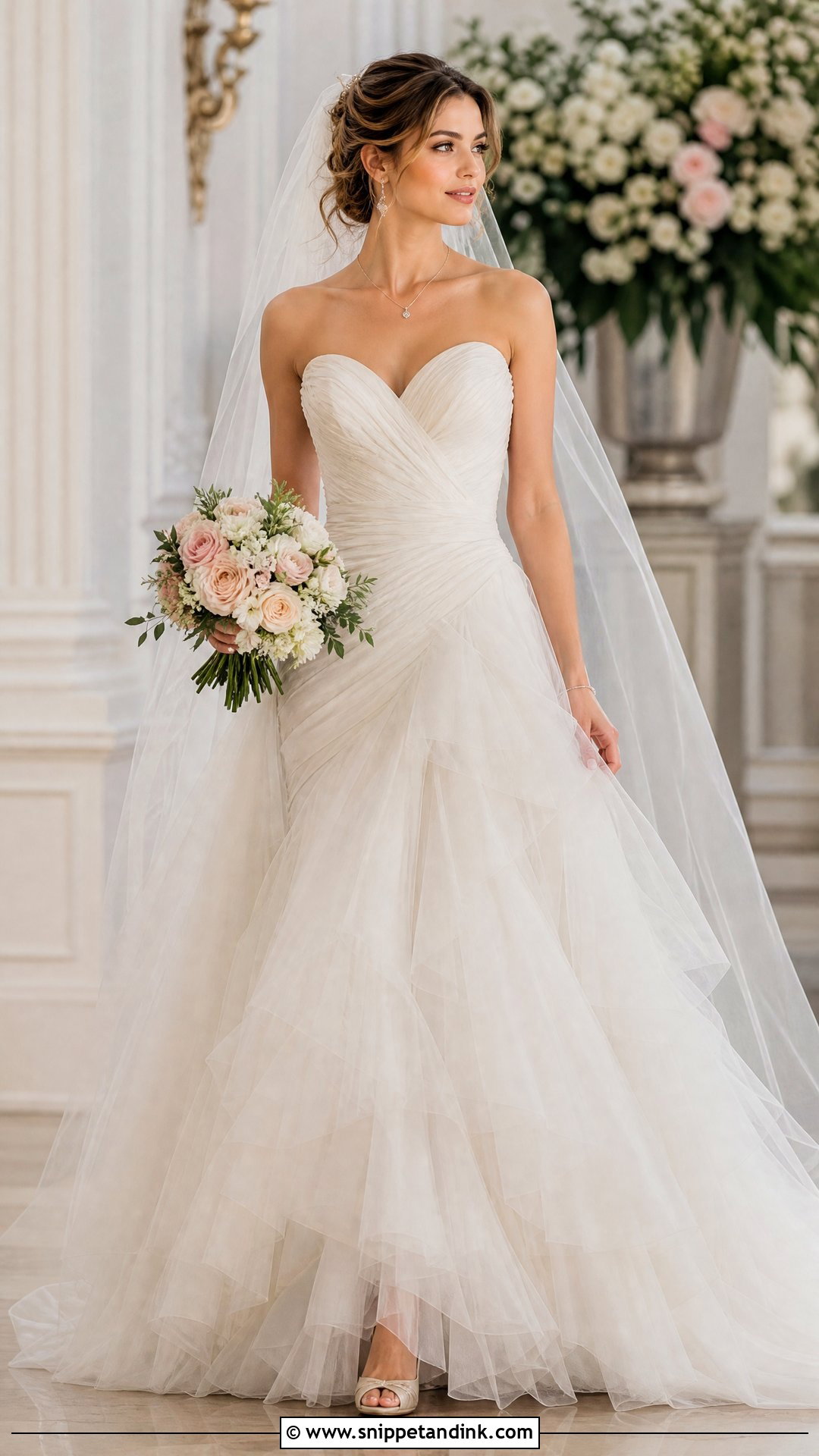
Tulle is light, so it moves when you walk, but it also snags on rough wood, lace edges and bracelet clasps. Brides having a garden ceremony should know the hem will collect grass and petals. Soft curls, a fine veil and pearl-toned jewellery suit it. If the skirt is very full, keep the bouquet medium-sized so you can still see your feet on stairs.
21. Randy Fenoli Satin Wedding Dress
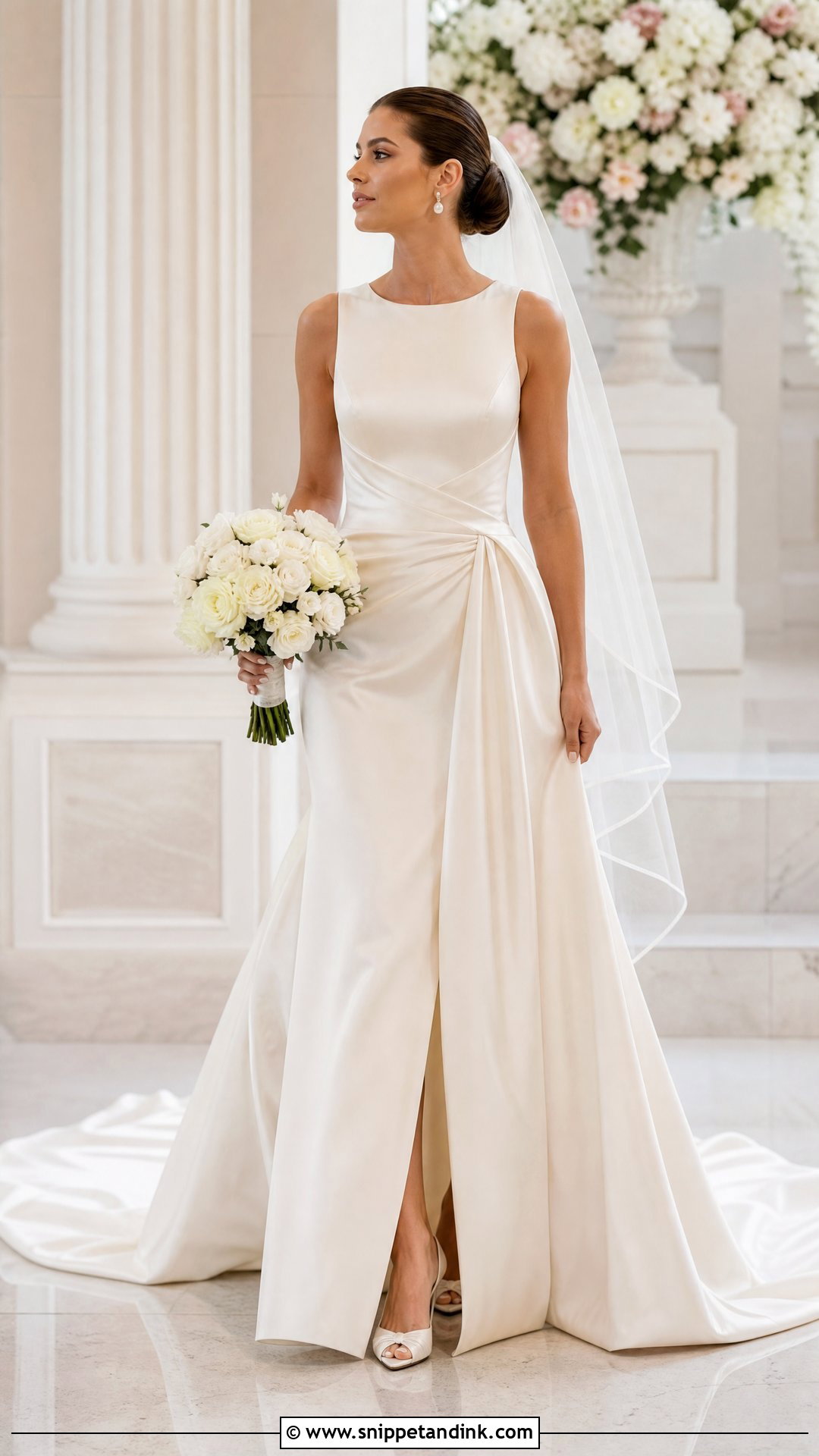
Satin reflects light cleanly and shows its shape strongly, which is the beauty and the risk. It creases when you sit, especially lighter weights, and shows every bump in the fit. I tell brides to sit in it for five minutes at the fitting and look at the lap afterwards. Heavier duchess satin holds up far better. Pearl earrings, a structured bouquet and a polished bun suit it; a slit or square neck modernises it.
22. Randy Fenoli Beaded Wedding Dress
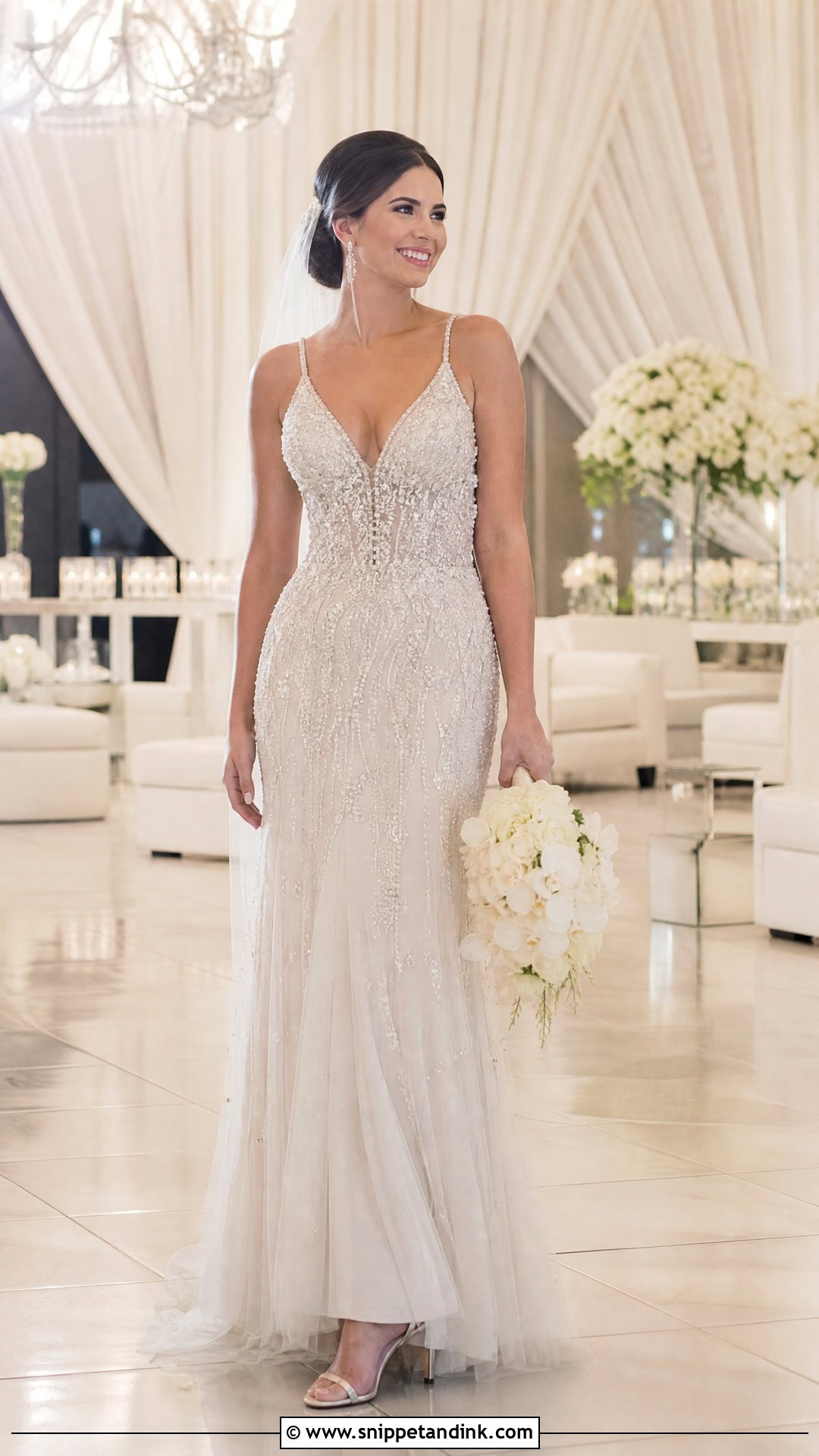
Beading adds weight, and a heavily beaded skirt can be surprisingly tiring by hour eight. It also makes alterations slower and dearer, because a seamstress has to remove and resew beads along every seam she changes. Small crystal earrings and a simple veil are plenty. Evening light does the rest. If the gown is very heavy, a smaller bouquet helps more than you’d think.
23. Randy Fenoli Sheath Wedding Dress
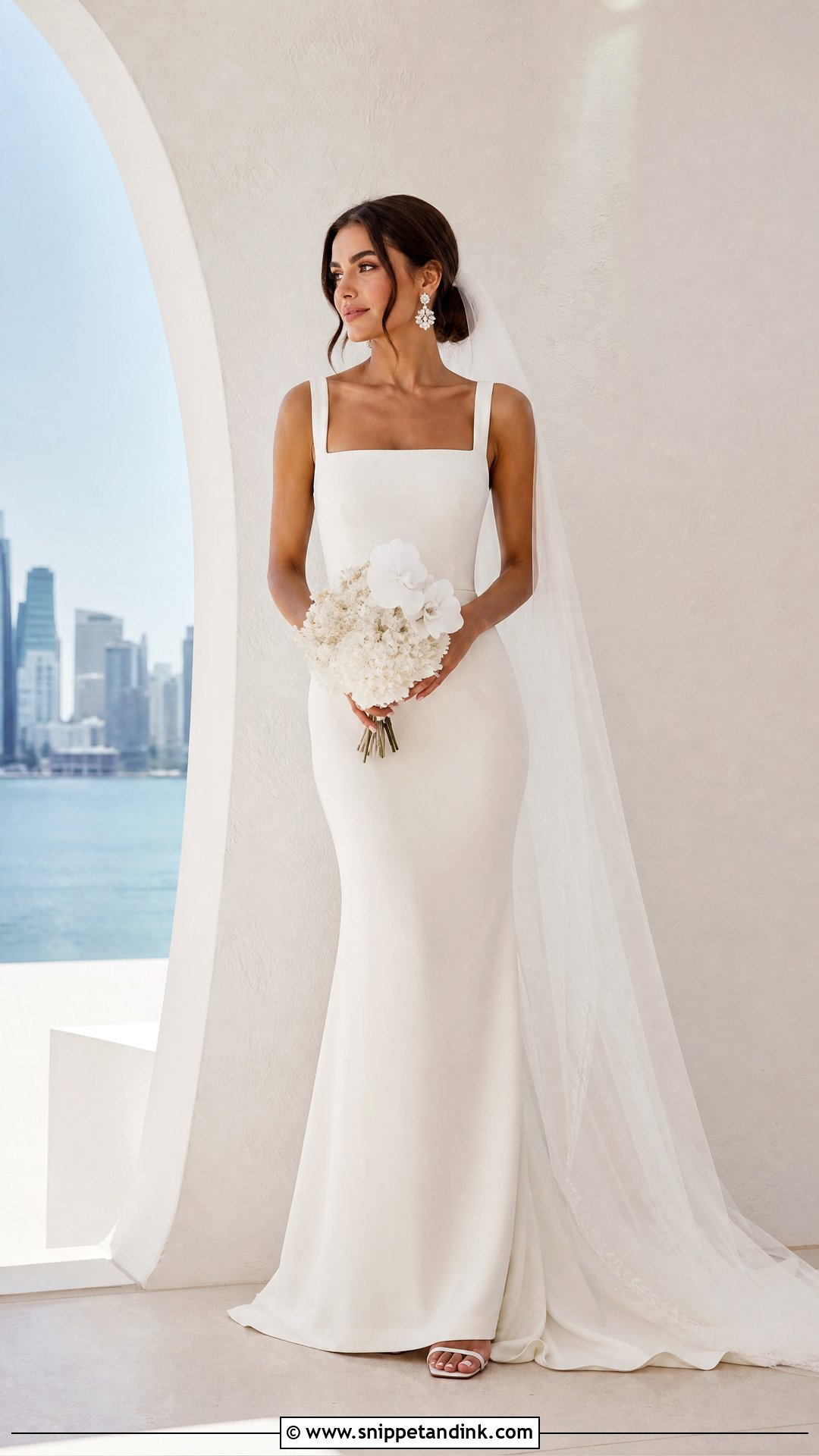
A sheath follows the body without flaring, so it’s light to wear and easy to travel with in a garment bag. It shows the hip line, though, and some brides feel exposed in thin fabric. Strappy heels, a narrow veil and clean jewellery keep it modern. Plain crepe can carry a statement earring; lace or beading wants restraint. Beaches, city ceremonies and smaller rooms suit it.
24. Randy Fenoli Color Wedding Dress
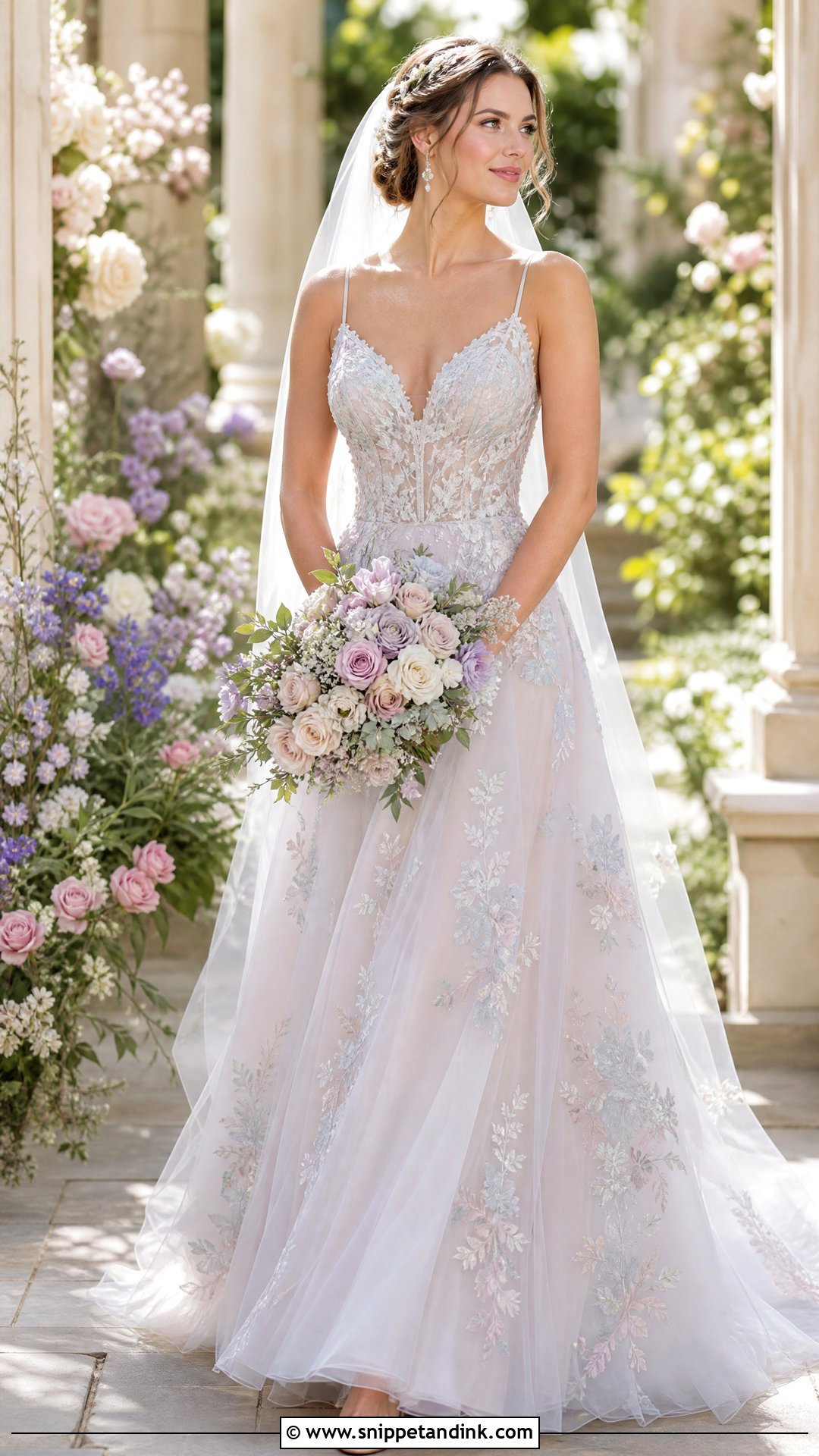
Colour on a wedding dress needs testing against your skin and your flowers. Blush can wash out fair skin; champagne flatters many tones. Pale blue looks different in shade than in sun. I’d ask for a fabric swatch to hold next to bouquet samples before ordering. Neutral heels and delicate jewellery let the colour lead, and a bouquet with similar tones ties it together for brides who never felt connected to bright white.
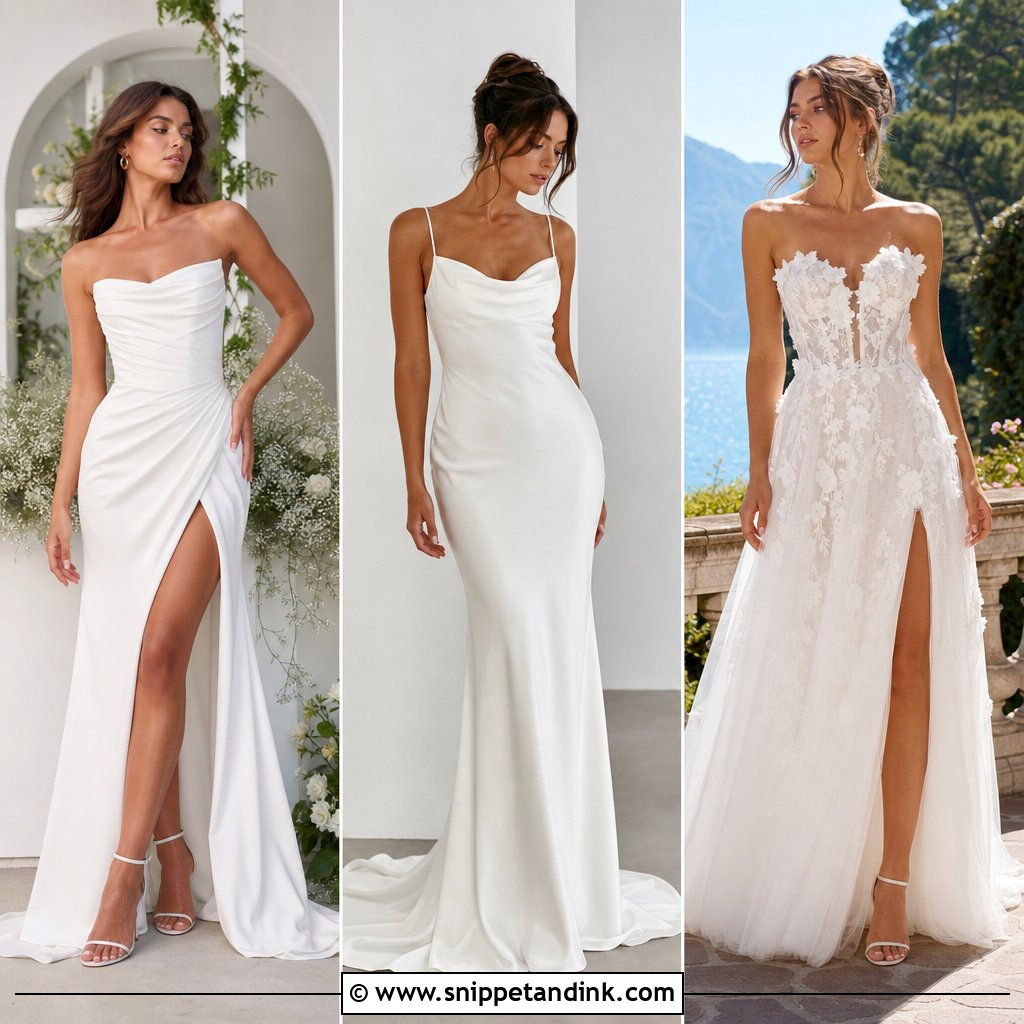
25. Randy Fenoli Reception Wedding Dress
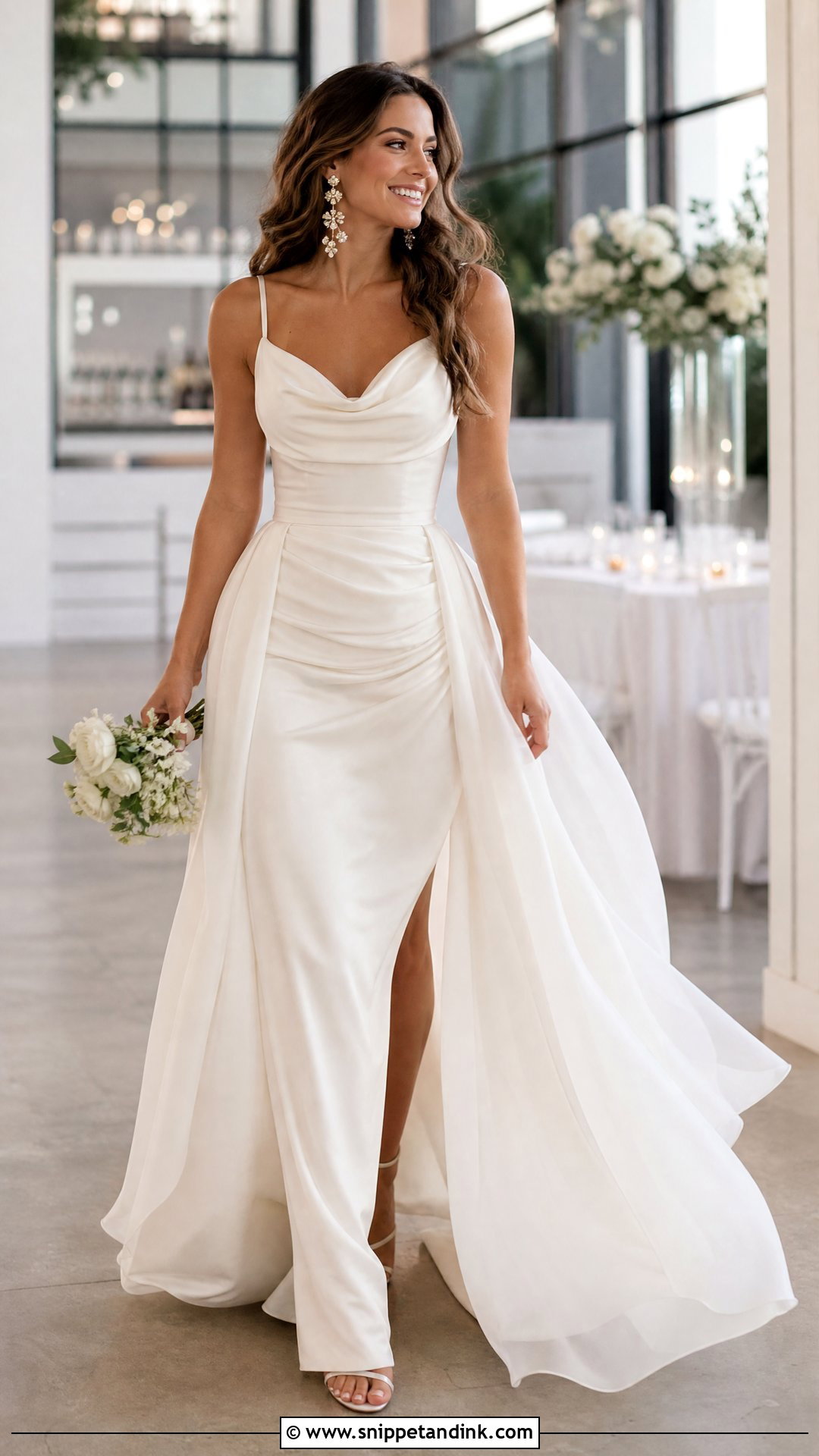
A reception dress is about getting your body back for the party: a lighter sheath, a slit, a removable overskirt, or sleeves that come off. Plan the change for a quiet moment, ideally right after the photographs, and have someone ready to help with the fastenings. Comfortable heels or bridal flats, statement earrings and a hairstyle pinned to last will carry you through the dancing. A big ceremony gown can hand over to something cleaner without losing the polished designer feel.
Where Each Silhouette Usually Needs Altering
Almost every gown on this list will need a hem and a bustle, but the bigger jobs depend on the shape. Knowing them before you buy helps you budget, since alteration prices vary a lot by region and by how much beading or lace sits on the seams.
Fitted Shapes
Mermaid, sheath and fit-and-flare gowns usually need the hips and the flare point adjusted. Plan on a seat test at every fitting. Lace hems on these shapes are often reshaped by hand along the motif, which takes time.
Ball Gowns and A-Lines
These mostly need the bodice and waist taken in so the skirt hangs properly, plus a hem fitted with your actual shoes. Bring the shoes to every fitting, even if they’re still in the box.
Long Trains
A cathedral or chapel train needs a bustle so you can dance. French bustles tuck the train under with ribbon ties; over bustles hook it up with buttons and look fuller. Ask the seamstress to teach one bridesmaid how to do it, and take a phone video of the steps. After the wedding, have the gown professionally cleaned within a few weeks, because sugar from cake or champagne dries invisible and turns brown later, then store it flat in an acid-free box away from light.
Sit, Walk and Hug in It at the Fitting
His collections range from dramatic ball gowns to sleek crepe, lace, floral, coloured and convertible looks, and almost all of them can be adapted by a good seamstress. What I’d ask you to do is test each candidate the way you’ll actually use it: stand, walk, climb a step, sit, hug, dance. Then bring the veil, shoes and jewellery to the final fitting so you see the whole outfit at once. The gown that passes all of that is the one.
You'll Like These Ideas:


Leave a Reply