
You can usually spot Kashees bridal wear from across a hall: dramatic silhouettes, dense handwork, strong color pairings and a fully styled head-to-toe presentation. The label’s wedding range runs from traditional bridal pieces to event-focused collections for barat, mehndi, mayon and valima. When I dress a bride in work this heavy, the first conversation is rarely about color. It’s about weight, because a fully embellished skirt pulls at the waist for hours, and then about where both dupattas will sit once the jewelry is on. The twenty looks below move through barat, mehndi and valima palettes, with notes on what I’d check on each one before you commit.
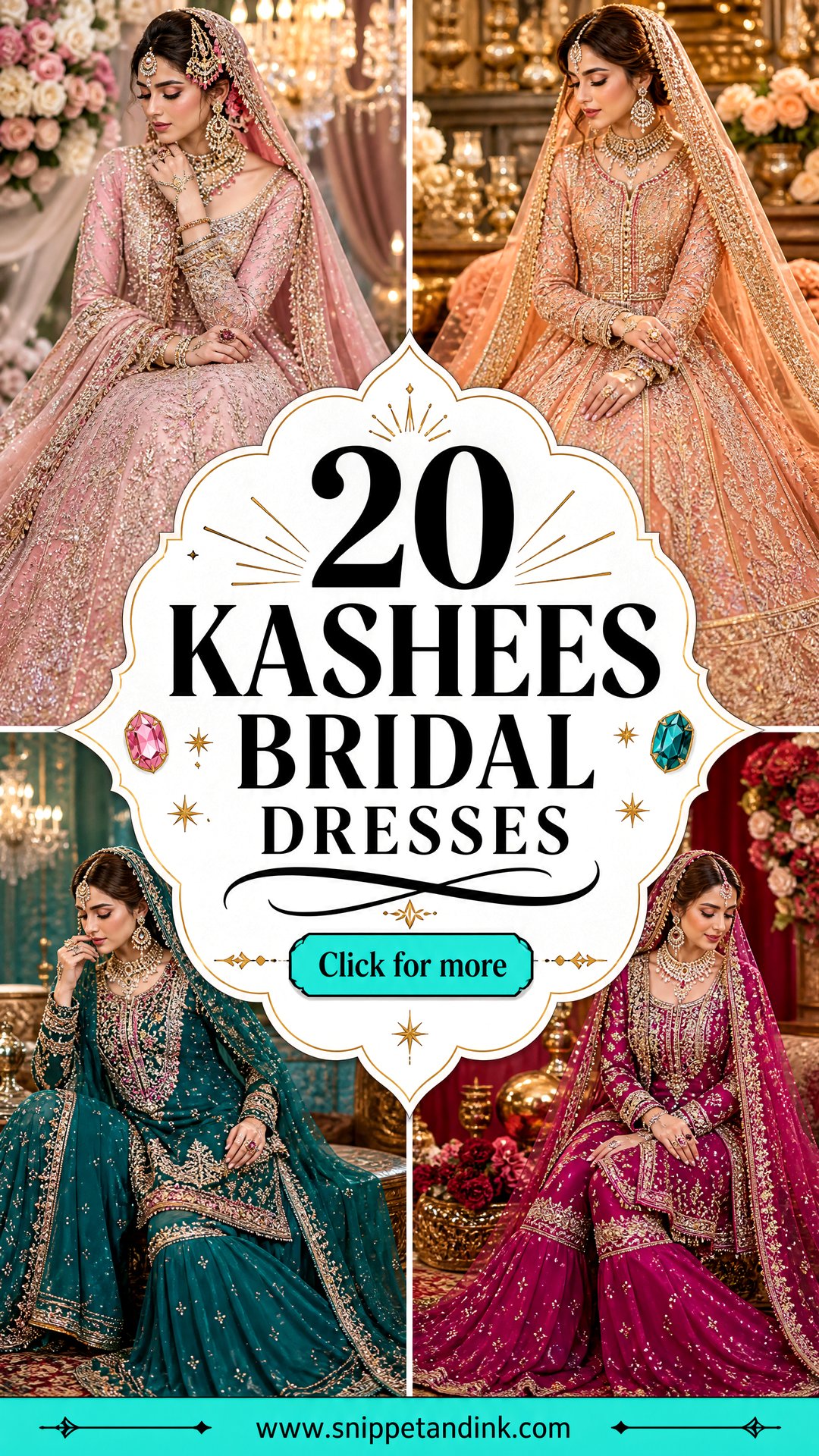
How Heavy Is Too Heavy for a Barat Lehenga?
These outfits are built for impact, and impact has weight. A barat lehenga covered in zardozi, dabka and stones can be genuinely heavy, and almost all of that weight hangs from your waist. At a fitting I care less about how it looks in the mirror and more about where it presses, because you’ll be wearing it through the nikah, the stage, dinner and the rukhsati.
What I check at the first fitting
- The waistband sits on your natural waist, not on your hip bones. A skirt that slides down drags the hem and leaves you hitching it all night.
- There’s a hook or drawstring backup behind the zip. Heavy skirts strain zips, and a split zip on the stage is very hard to fix.
- The can-can or lining is stitched in rather than loose. A separate petticoat bunches when you sit for the nikah.
- The blouse lets you lift your arms to shoulder height. You’ll be hugging relatives and adjusting your dupatta all evening.
- The hem is measured in the shoes you will actually wear, khussa or heels.
If you’re ordering from abroad, have a tailor take your measurements rather than doing them at home, and ask for extra seam allowance at the blouse sides. Taking a blouse in is simple. Letting one out after the embroidery is finished often isn’t possible at all.
1. Red Kashees Bridal Lehenga
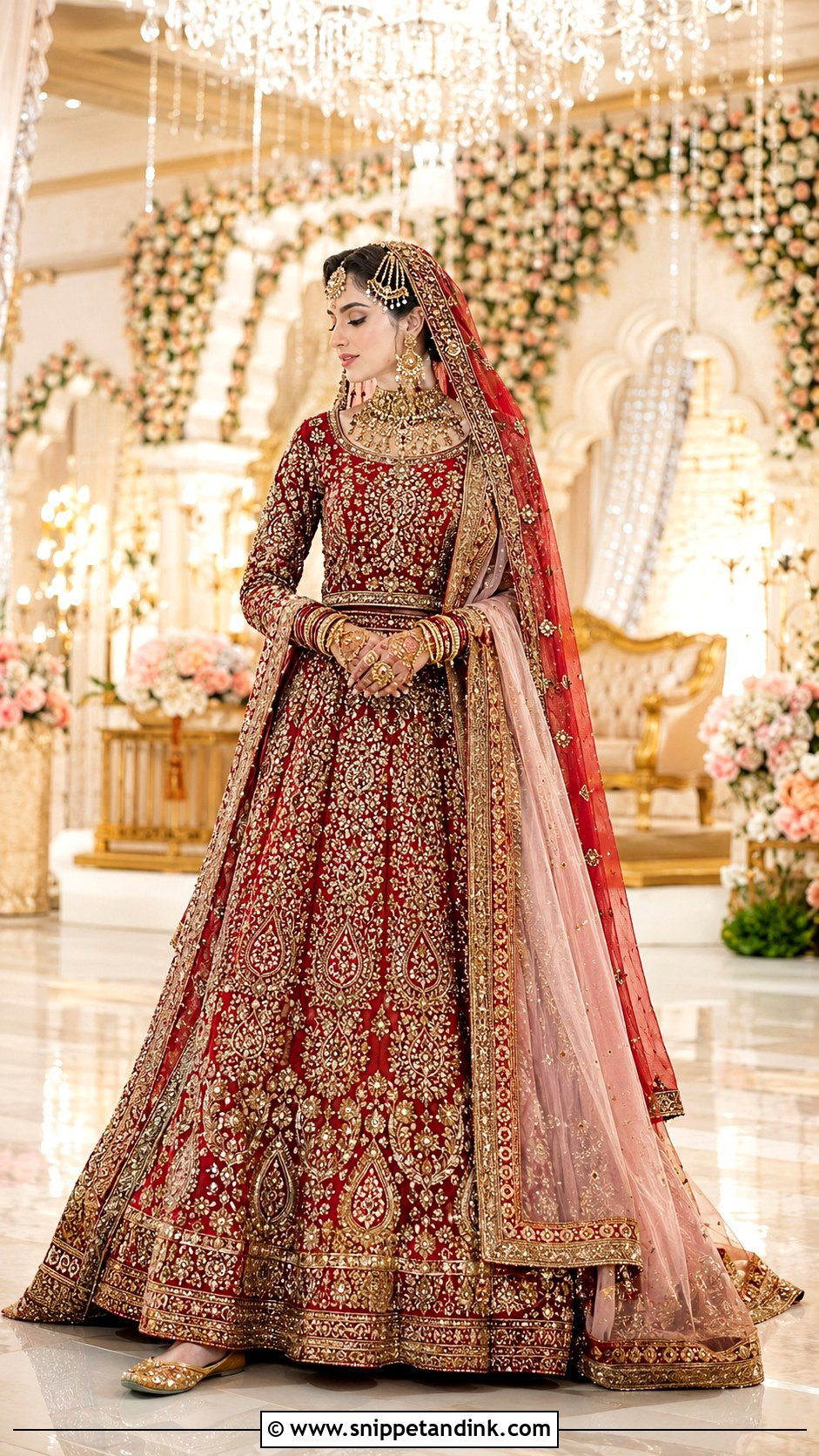
Deep red is still the barat default, and under warm hall lighting nothing reads as bridal faster. Zari, dabka and sequins on a red base can tip into busy, so I look for floral motifs with a little breathing room between them, and a fitted long-sleeve blouse to balance the skirt’s volume. Put the scalloped dupatta over the head and the lighter one across the shoulder; if you reverse them, the head gets heavy and the pins work loose long before the rukhsati. A gold choker, layered necklace, jhumkas, matha patti and red bangles complete the set. I’d choose gold khussa over narrow heels here, since you’ll be climbing stage steps in a skirt you can’t see past. Finish with a sleek center-parted bun, defined eyes and a rich red lip.
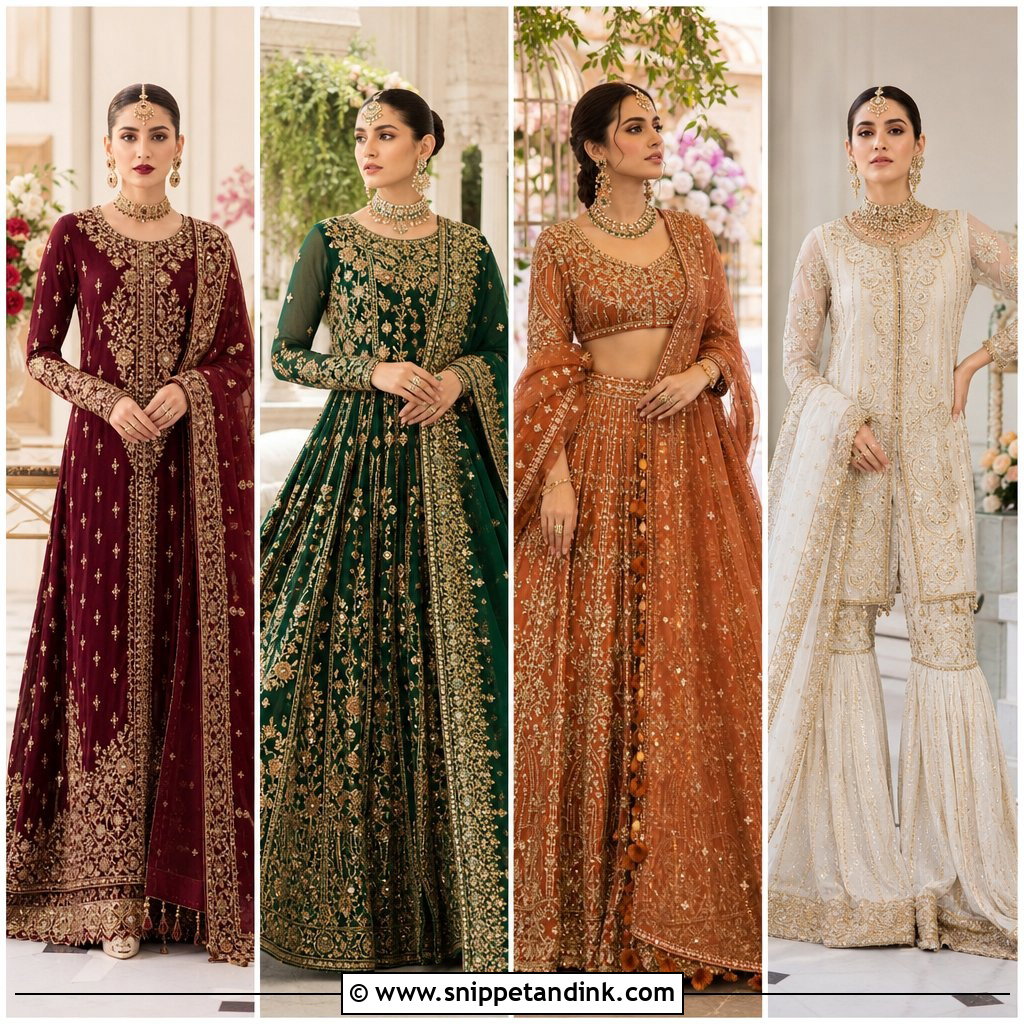
2. Maroon Kashees Bridal Farshi Lehenga
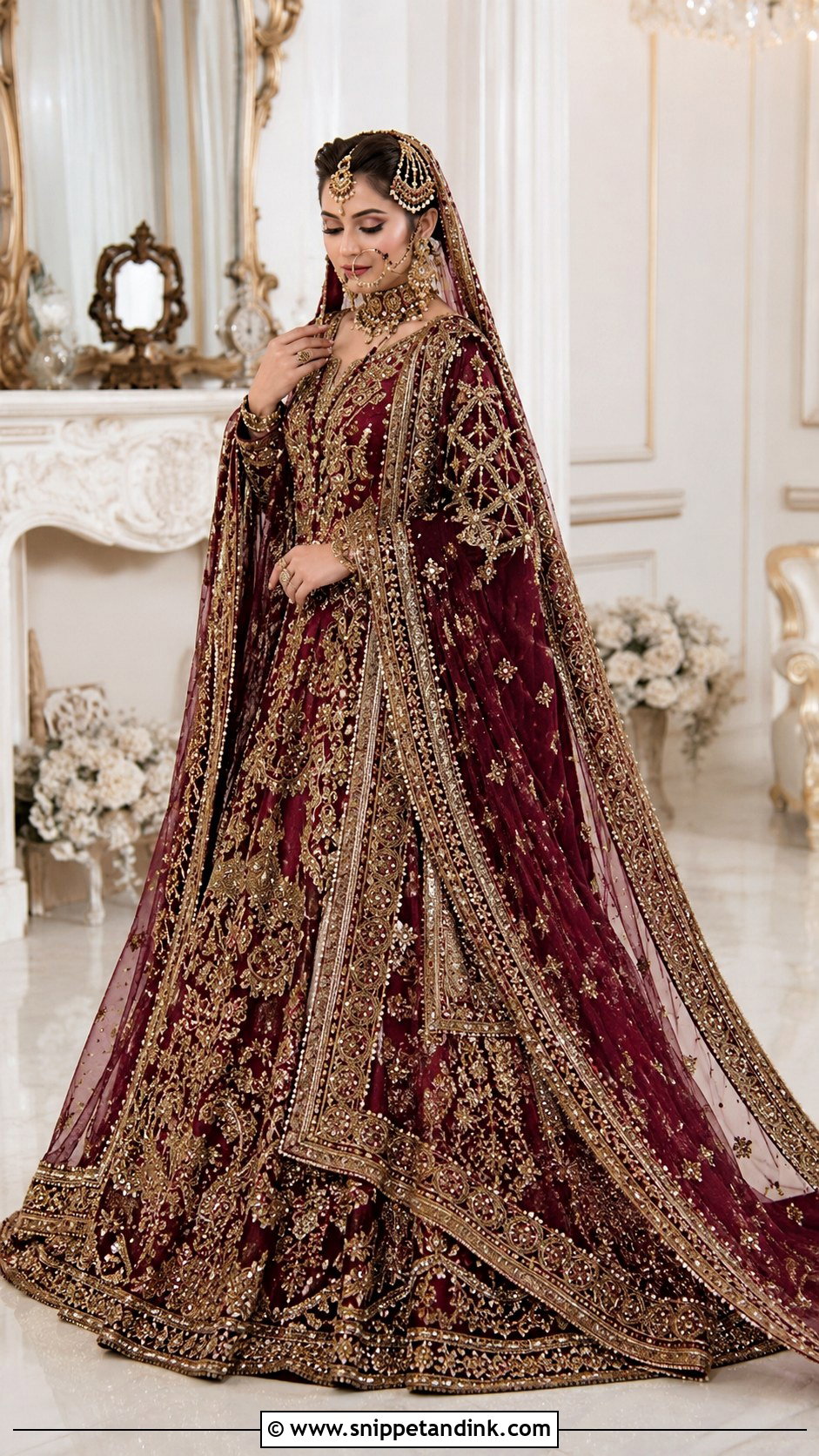
A maroon farshi lehenga gets its drama from the trailing hem, which spreads across the floor in formal portraits and grand indoor venues. That trail is also the catch. Someone has to lift and arrange it every time you stand, walk or turn, so name a sister or cousin for the job before the day. Keep the gold on the long shirt restrained, because the farshi’s architectural borders and vines are already doing the heavy lifting. One sheer dupatta goes over the head and a more structured one around the arms. Maroon sits better with antique gold than with bright yellow gold, which can look brassy against it. Add a choker, pearl strands, a jhoomar and khussa, plus a low bun that gives the head dupatta something firm to pin into.
3. Gold Kashees Bridal Peshwas
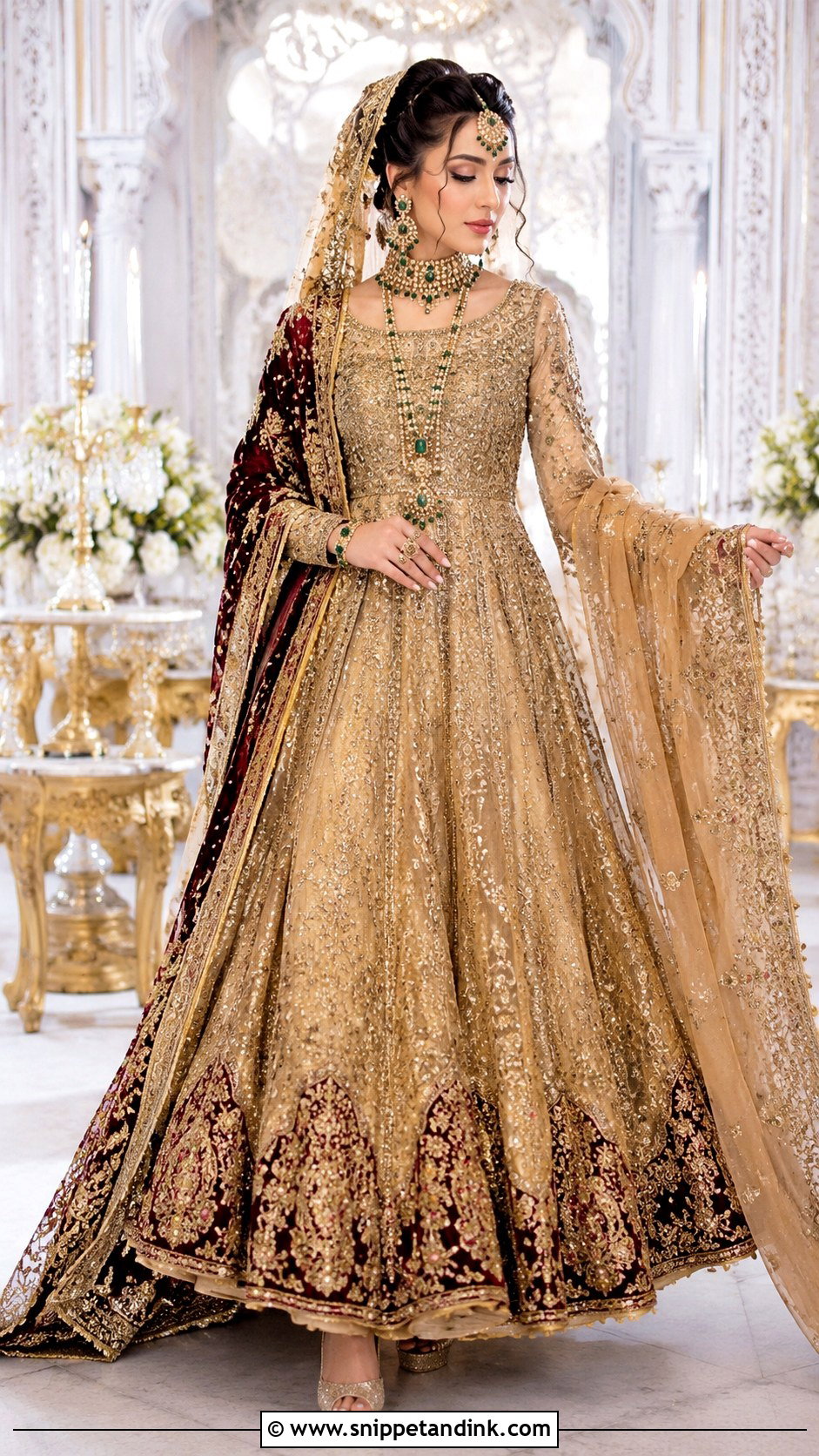
A gold peshwas gives you traditional coverage with the movement of a gown. The risk with an all-metallic base is camera flash: gold thread bounces light and can flatten the detail into a shiny blur, so I ask brides to photograph the fabric with flash at the fitting. Look for a fitted bodice, a defined waist and flared panels worked in threadwork, crystals, pearls and muted bronze. A deep red or maroon border gives the eye an edge to rest on. Wear a sheer gold dupatta on the head and a richer contrasting one over a shoulder. Emeralds bring in color, champagne heels add a little height, and a neat bun with bronze eyes and a rose lip suits an elaborate barat.
4. Ivory Kashees Bridal Gown
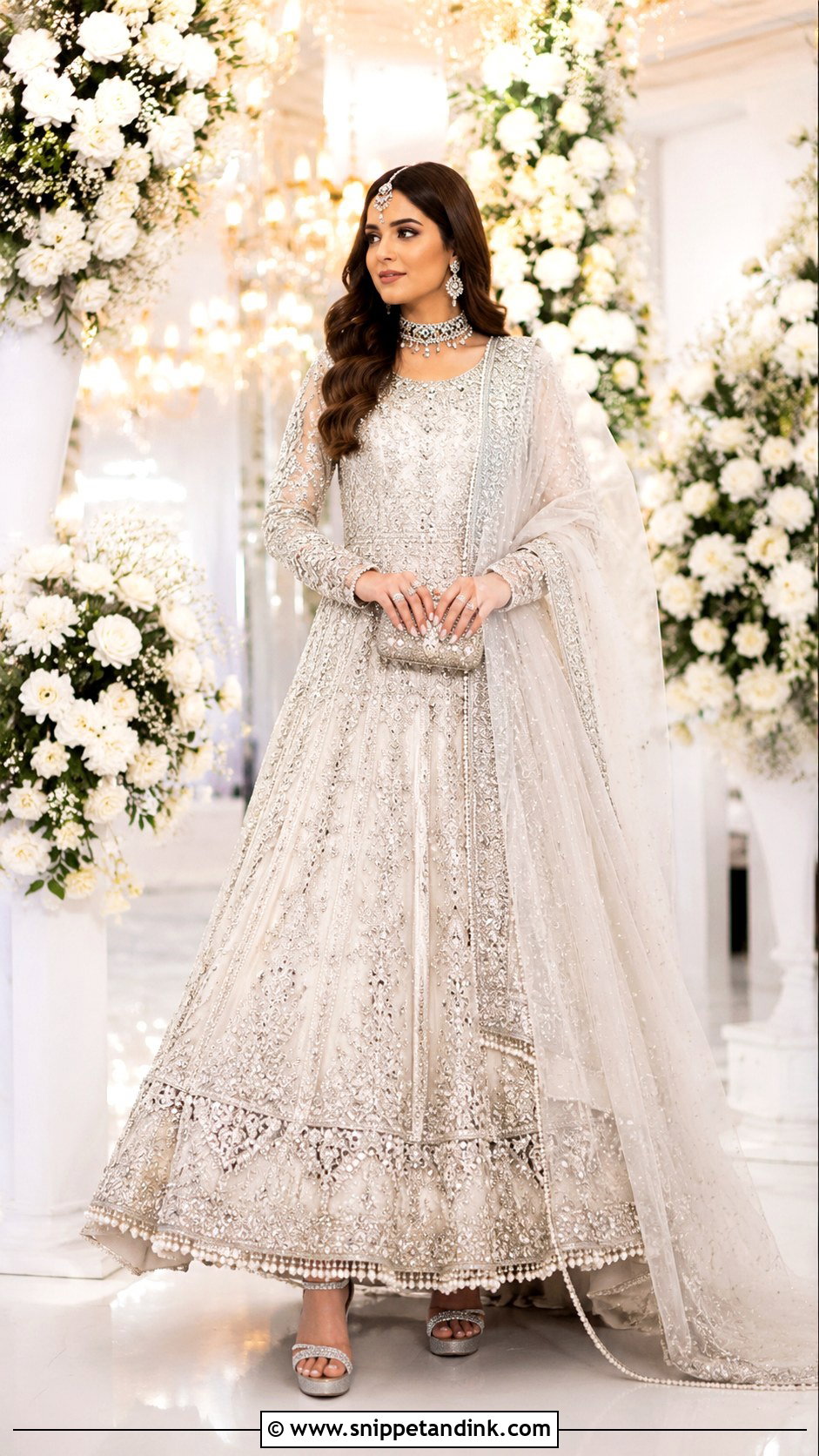
Ivory is the valima color I’m most careful with, because it shows every mark from the car seat, the stage carpet and the buffet line. The gown itself should be floor-length, with a structured bodice, full sleeves and a skirt that moves easily; silver embroidery, crystals, pearls and floral appliqué give the neutral base enough texture to register in photos. A modest neckline leaves room for a diamond-style necklace or crystal choker. Secure the sheer bordered dupatta lightly over the head or shoulders. Silver pointed heels, a small embellished clutch, cool-toned eyes, a soft pink lip and a smooth low bun with pearl pins finish it. Have the hem taken up so it just clears your heels; an ivory hem that drags is grey by the end of the night.
5. Blush Pink Kashees Bridal Lehenga
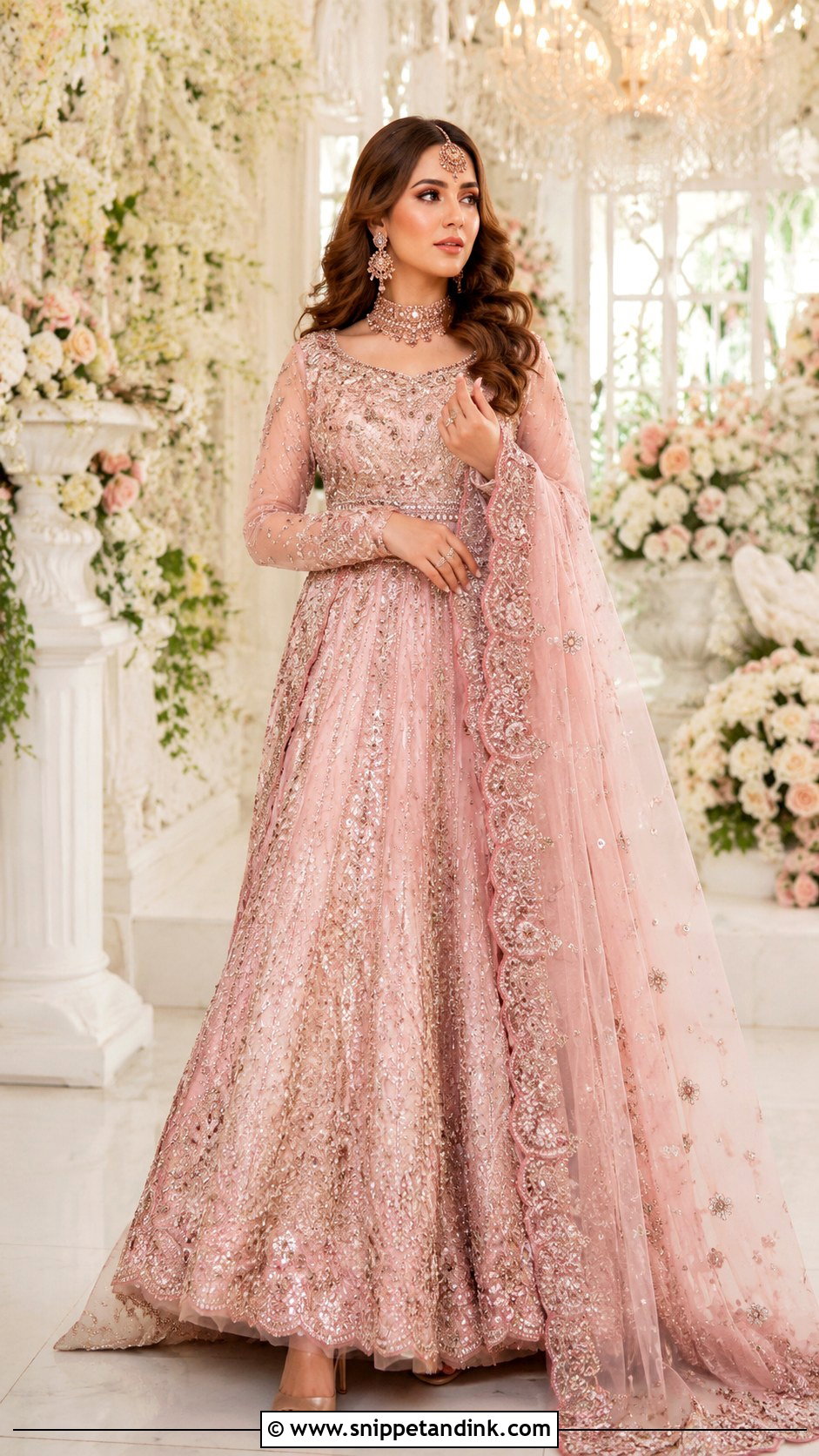
Pale pink can disappear in photographs, which is why the slightly deeper pink border on this lehenga matters more than any of the embroidery. Blush suits daytime ceremonies and softly lit valima venues. Under strong yellow hall lights it can drift toward peach, so look at the fabric in both kinds of light before ordering. Silver, pearl and champagne embroidery on a flowing skirt pairs with a fitted blouse in full or three-quarter sleeves. One lightweight dupatta goes over the head and the second falls from a shoulder. Rose-gold jewelry, crystal earrings, a delicate tikka and nude embellished heels keep the palette soft, with waves or a low textured bun, rosy cheeks and a neutral pink lip.
6. Emerald Green Kashees Bridal Lehenga
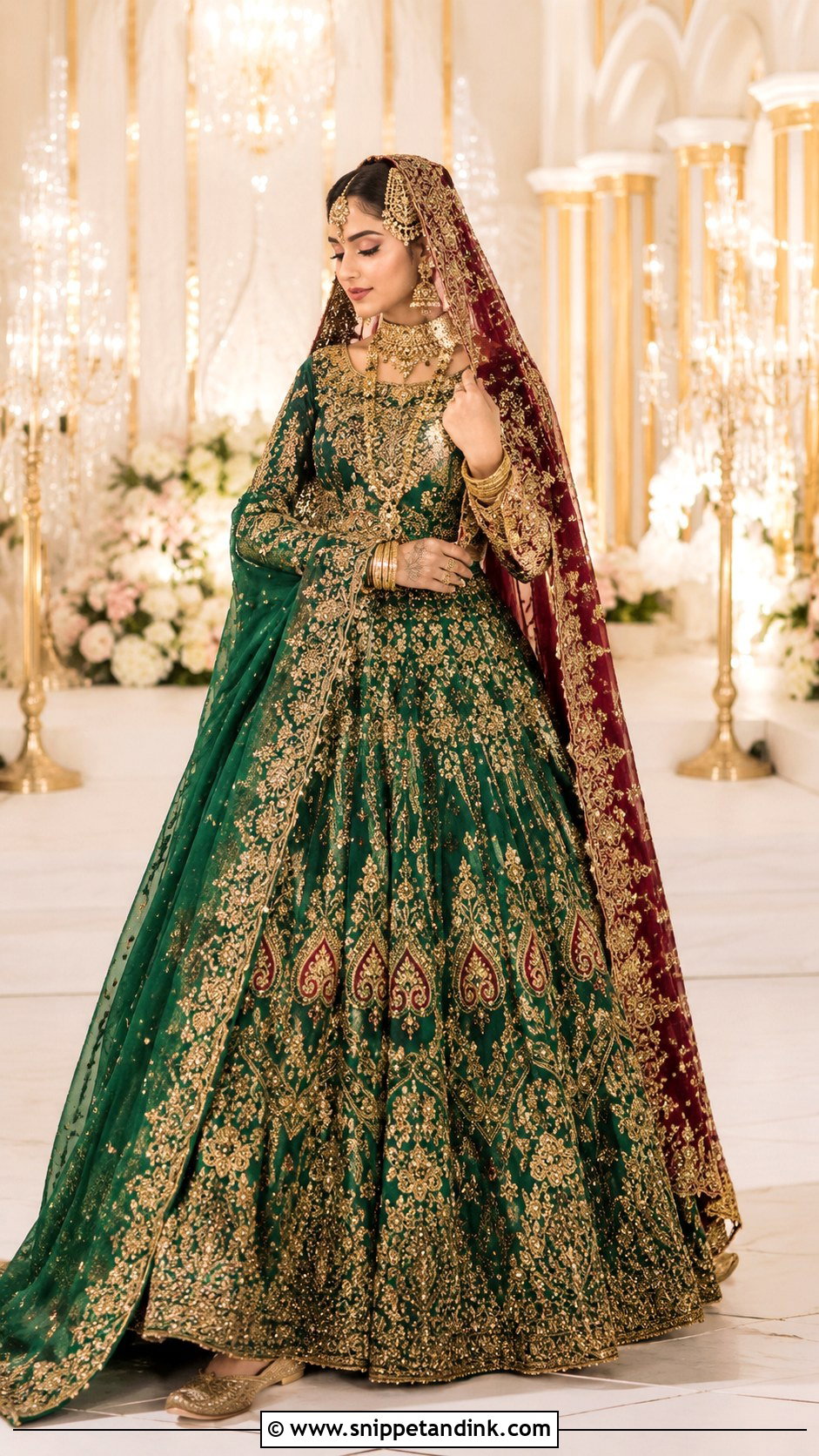
I suggest emerald to brides who want a barat look that isn’t red but carries the same weight. Build it around a full lehenga with antique gold motifs and small touches of ruby or maroon. The blouse needs a structured neckline, since a soft one buckles under a heavy choker and long necklace worn together. A maroon dupatta over the head and a green or gold one along the arms connect the two tones, and traditional gold jewelry with a tikka and jhoomar suits the palette. Ask for khussa with a cushioned sole; a flat leather sole feels hard by the second hour of photos. A sleek bun, warm bronze eyes and a muted berry lip work best in evening venues, where green deepens nicely under artificial light.
7. Champagne Kashees Bridal Maxi
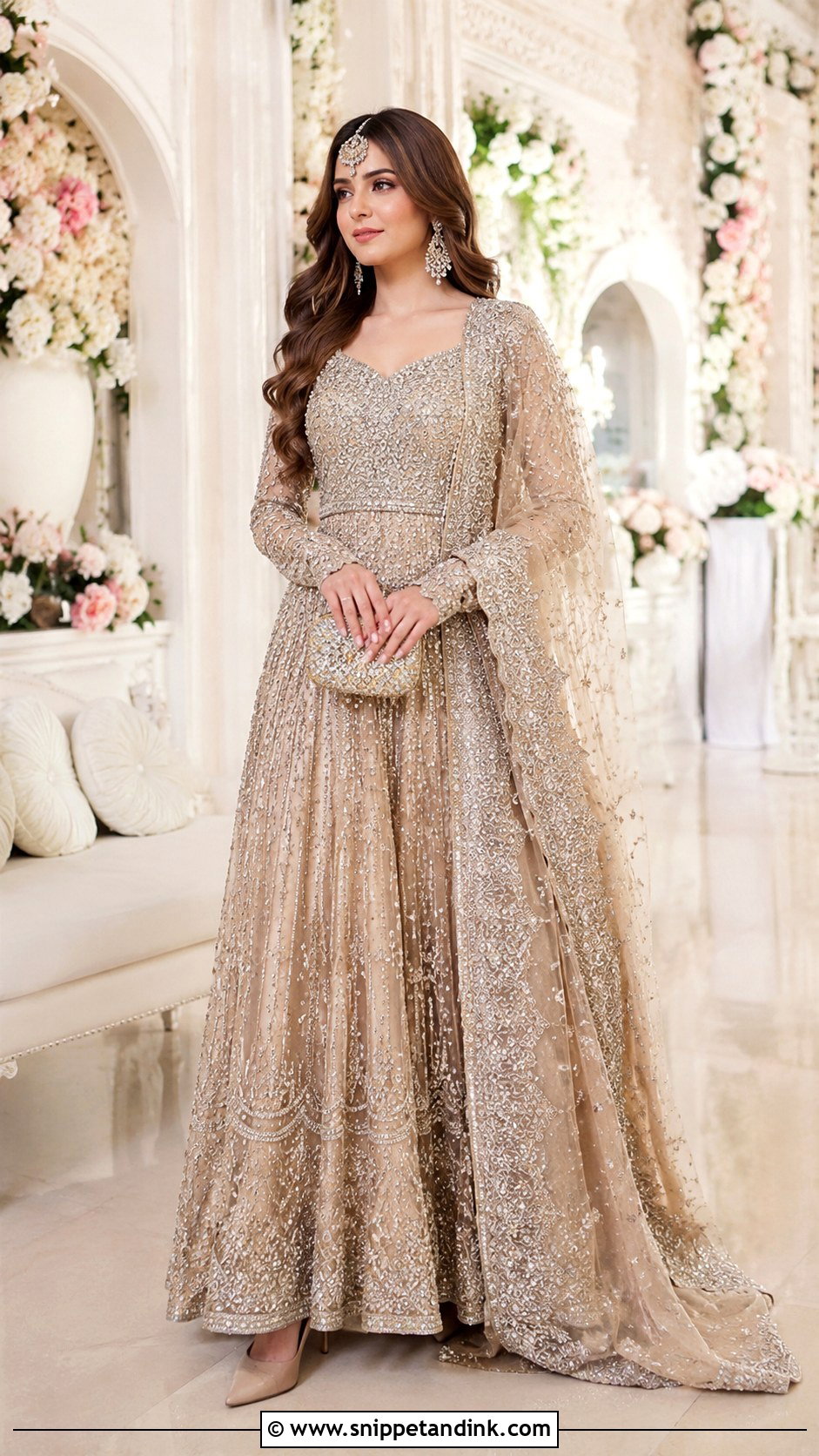
Champagne gives sparkle without contrast, which makes it easy to wear and easy to under-style. I’d go for a fitted embroidered bodice with a softly flared skirt. An extremely wide skirt in a pale metallic just reads as volume with no shape. Tone-on-tone beadwork, crystals, sequins and pearls give the surface depth while keeping it clean, and a sheer champagne dupatta with a scalloped border sits loosely over the head. Diamond-style jewelry, drop earrings and a delicate headpiece match the cool metallic tone, alongside pointed champagne heels and a structured crystal clutch. Taupe eyeshadow and a rose-nude lip are enough. A smooth low bun keeps the neckline and embroidery in view.
8. Rust Kashees Bridal Gharara
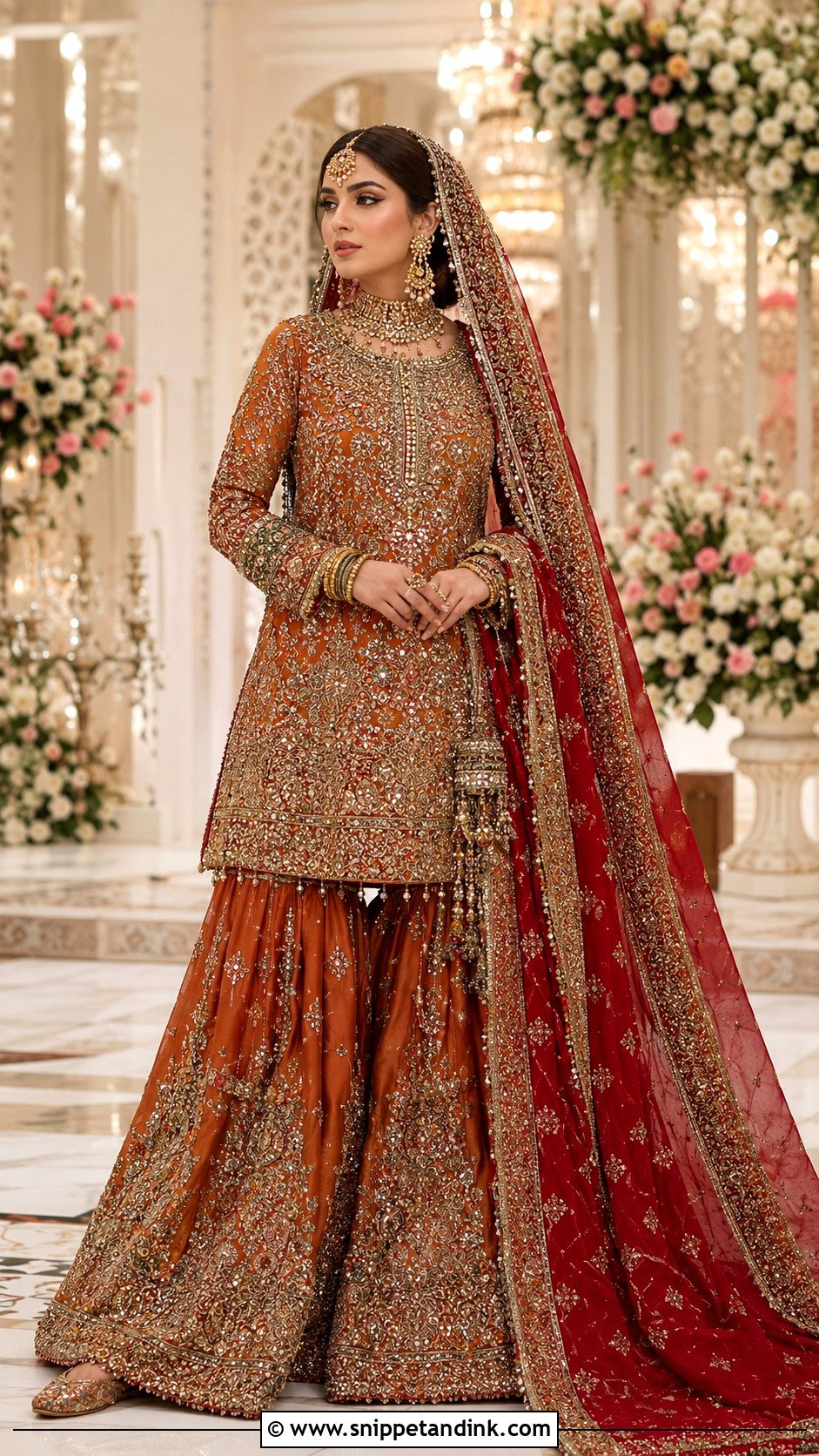
Rust has a vintage depth that glows on warm and deeper skin tones; on some fair, cool-toned complexions it can drain color, so hold the fabric against your face before deciding. The shirt can be short or mid-length and heavily worked, over a wide gharara with embroidery at the knee gather and a sweeping hem. Antique gold, copper and muted red blend into the earthy base. A rust dupatta over the head with a deep red one across the shoulder adds richness, and gold jhumkas, a layered necklace, a passa and stacked bangles carry the traditional styling. Pointed embellished khussa sit neatly under a gharara’s volume. With a center-parted bun, kohl eyes, warm blush and a brick-red lip, it holds its own at a barat or formal wedding celebration.
9. Navy Blue Kashees Bridal Gown
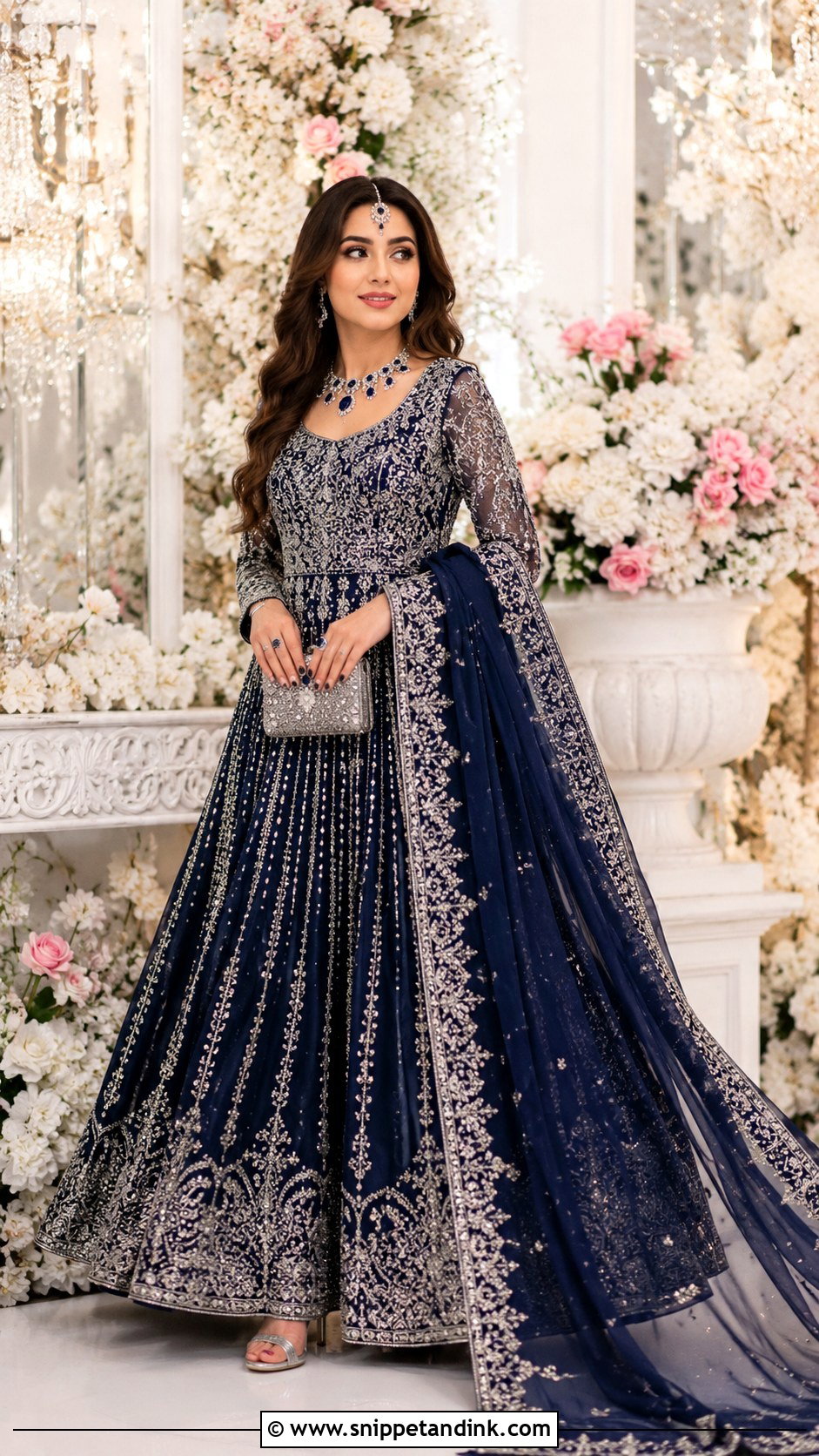
Navy belongs to the evening. In daylight it can read almost black. Choose a full-length gown with a defined waist, fitted sleeves and a wide skirt finished in silver and crystal. Vertical embroidery through the bodice draws the eye upward and lengthens the line, while a worked hem gives the skirt enough weight to swing rather than float. A sheer navy dupatta edged in silver can go over the head or sit neatly around the shoulders. Diamond-style jewelry with sapphire accents and silver heels keep everything cool-toned; carry a small metallic clutch rather than a bag. Sleek hair, softly smoked eyes, highlighter and a muted mauve lip, and the dark gown stands out clearly against bright, neutral reception décor.
10. Peach Kashees Bridal Peshwas
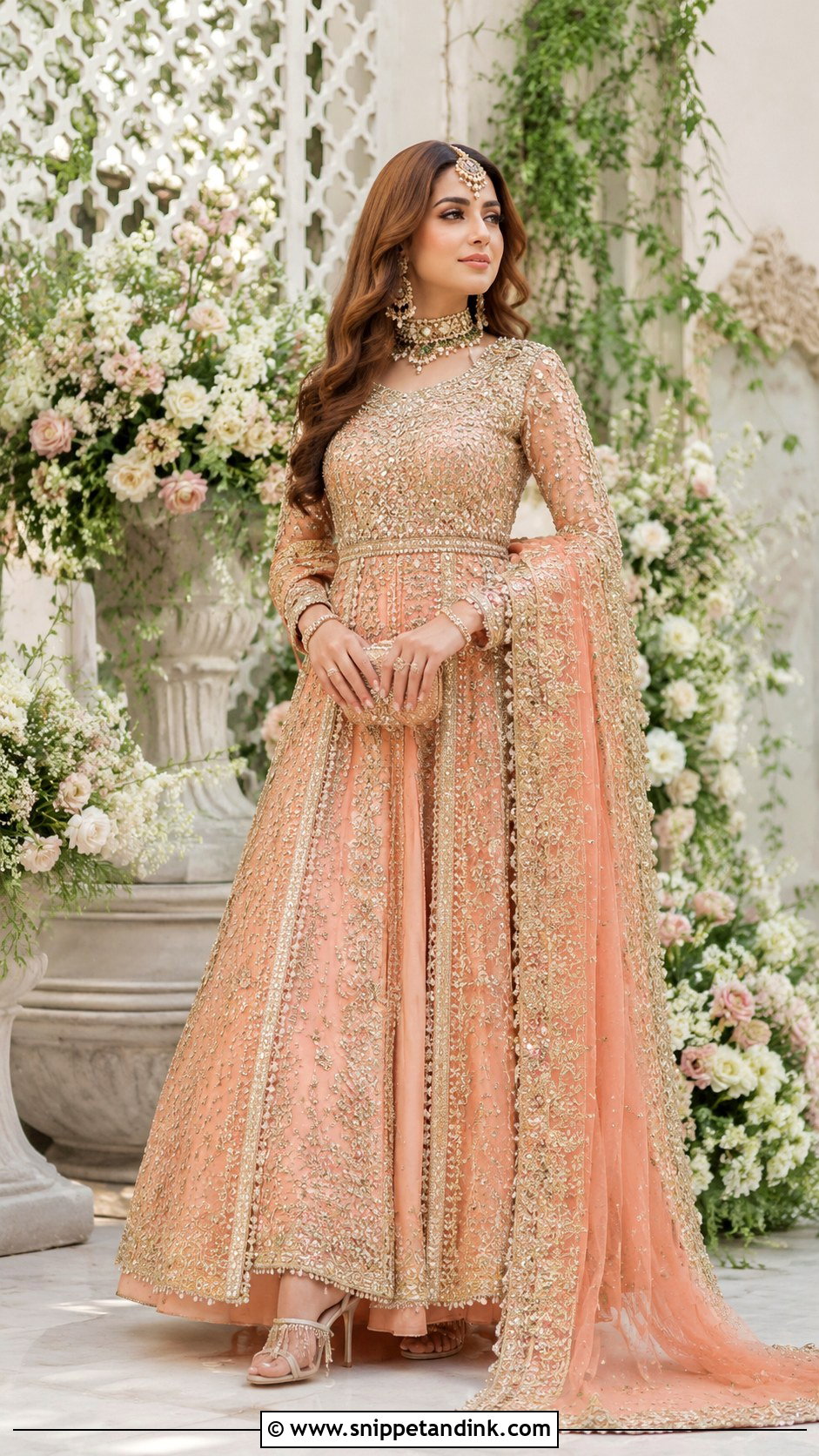
Peach peshwas is a daytime outfit. Late-evening tungsten light pulls the warmth out of such a delicate shade. A long paneled silhouette with a fitted bodice and soft flare from the waist shows the color at its best, and gold, ivory and pale pink embroidery gives it definition. What goes underneath depends on how the skirt moves: straight trousers if the panels hang heavy, a churidar if they swing open when you walk. One sheer peach dupatta with a gold border sits over the head and another rests on the forearms. Pearl-and-kundan jewelry, embroidered nude heels, a compact clutch, soft curls or a floral low bun, peach blush and a warm nude lip complete it.
11. Black And Gold Kashees Bridal Lehenga
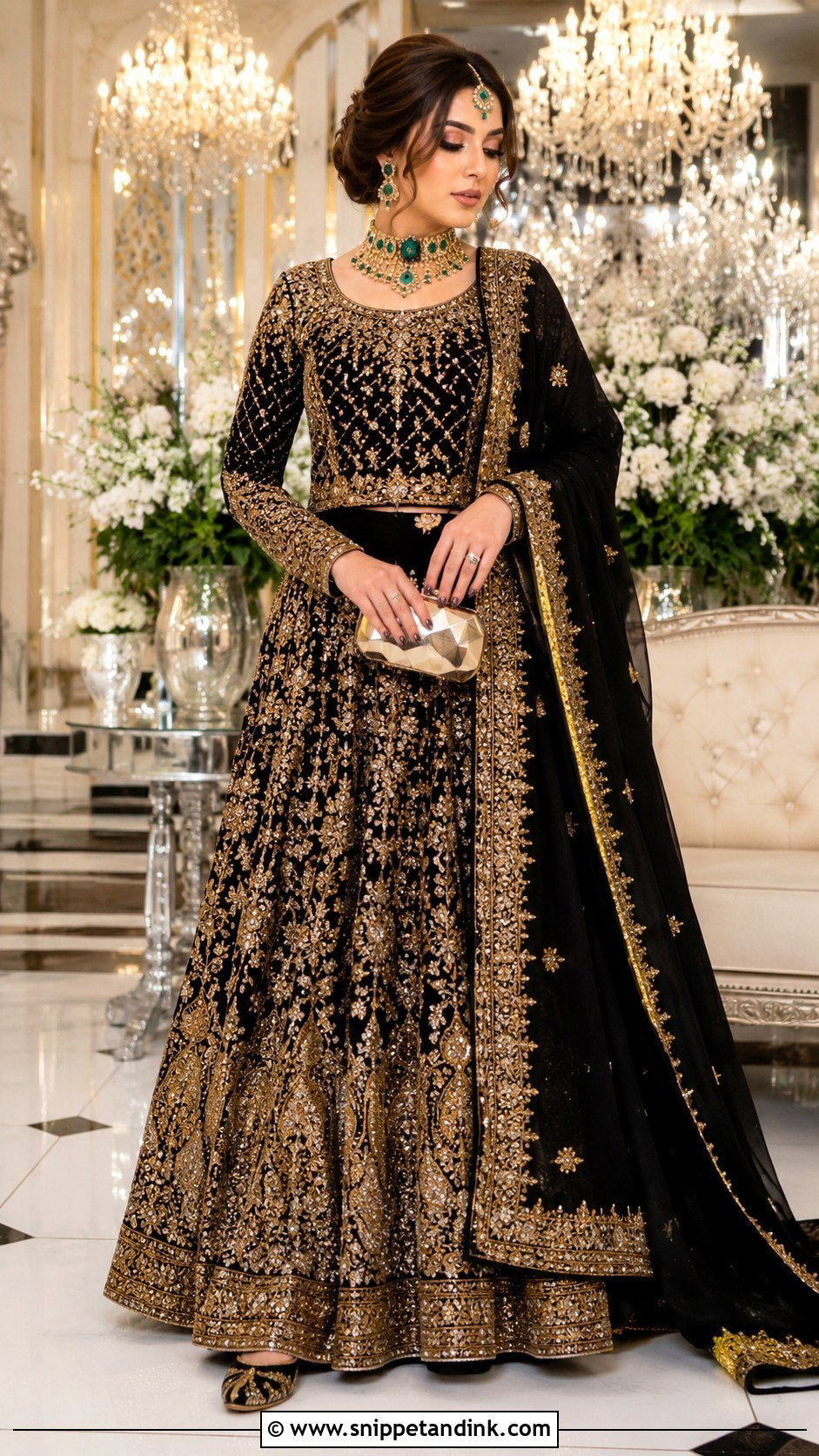
Black at a wedding still makes some older relatives uneasy, so check the room before you commit. For a reception, though, black velvet with heavy gold work has real presence. Velvet adds noticeable weight and warmth, which matters in a crowded summer hall. Ornate gold embroidery belongs around the border with scattered motifs above, paired with a fitted full-sleeve blouse. A black dupatta with a gold scalloped edge frames the head, while a lighter gold one moves across the arms. Traditional gold jewelry suits the palette, with emerald accents if you want one controlled note of color. Black-and-gold khussa, a structured metallic clutch, a sleek bun, sharp eyeliner and a deep rose lip finish it without fighting the contrast.
12. Powder Blue Kashees Bridal Gown
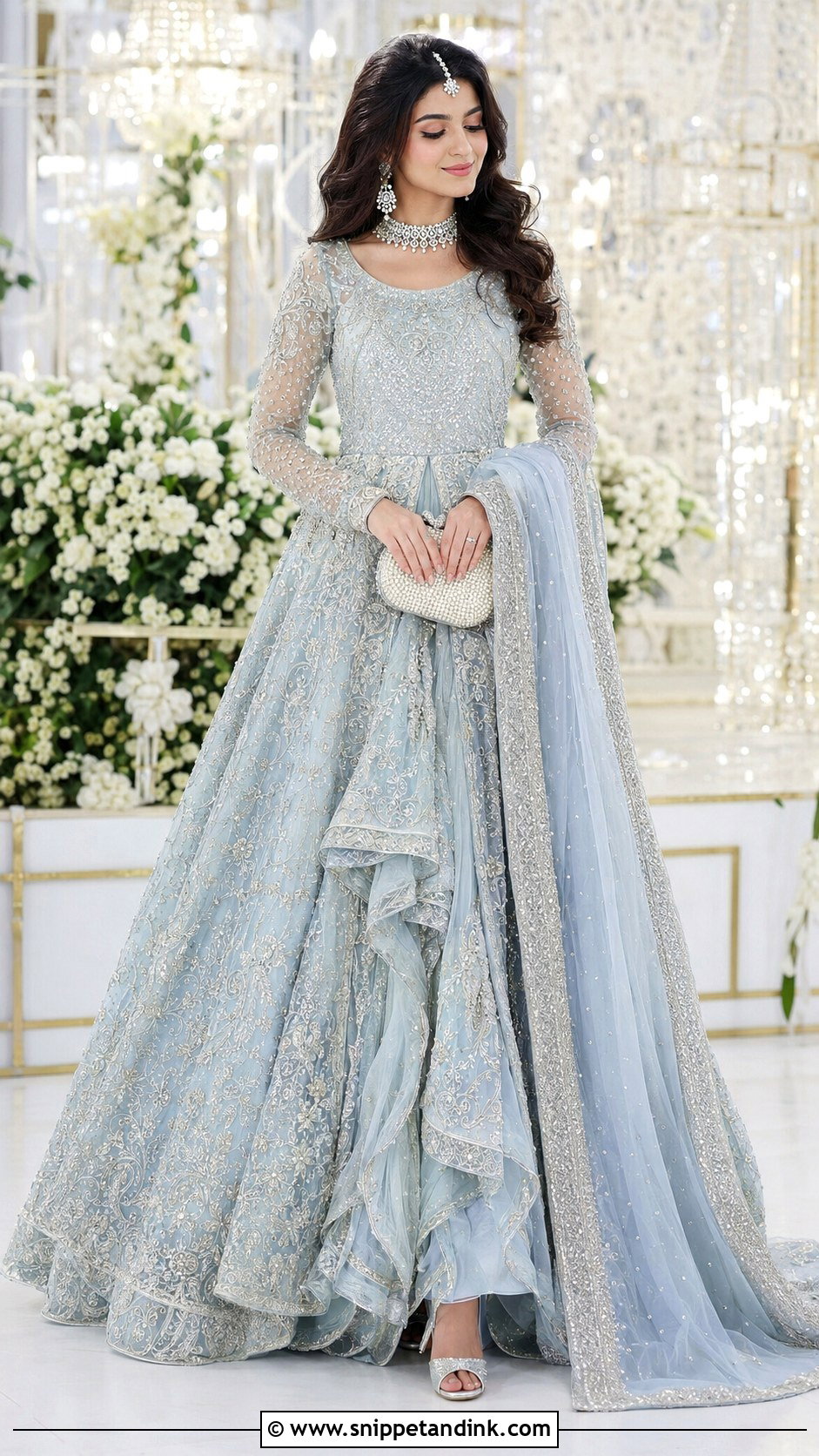
Powder blue makes an airy valima look that stays delicate in daylight and turns luminous under bright indoor lighting. The skirt should be layered but fall smoothly, without extra petticoat bulk, because pale blue net shows every lump underneath. Silver thread, pearls, crystals and pale blue sequins give a tonal sparkle on a fitted bodice with a modest neckline. Let the matching sheer dupatta’s border frame your face. With the neckline left visible, a crystal choker, drop earrings and a small tikka are plenty. Silver heels, a pearl clutch, a polished low bun or soft side-parted waves, cool pink blush and a rosy nude lip keep it fresh.
13. Deep Purple Kashees Bridal Lehenga
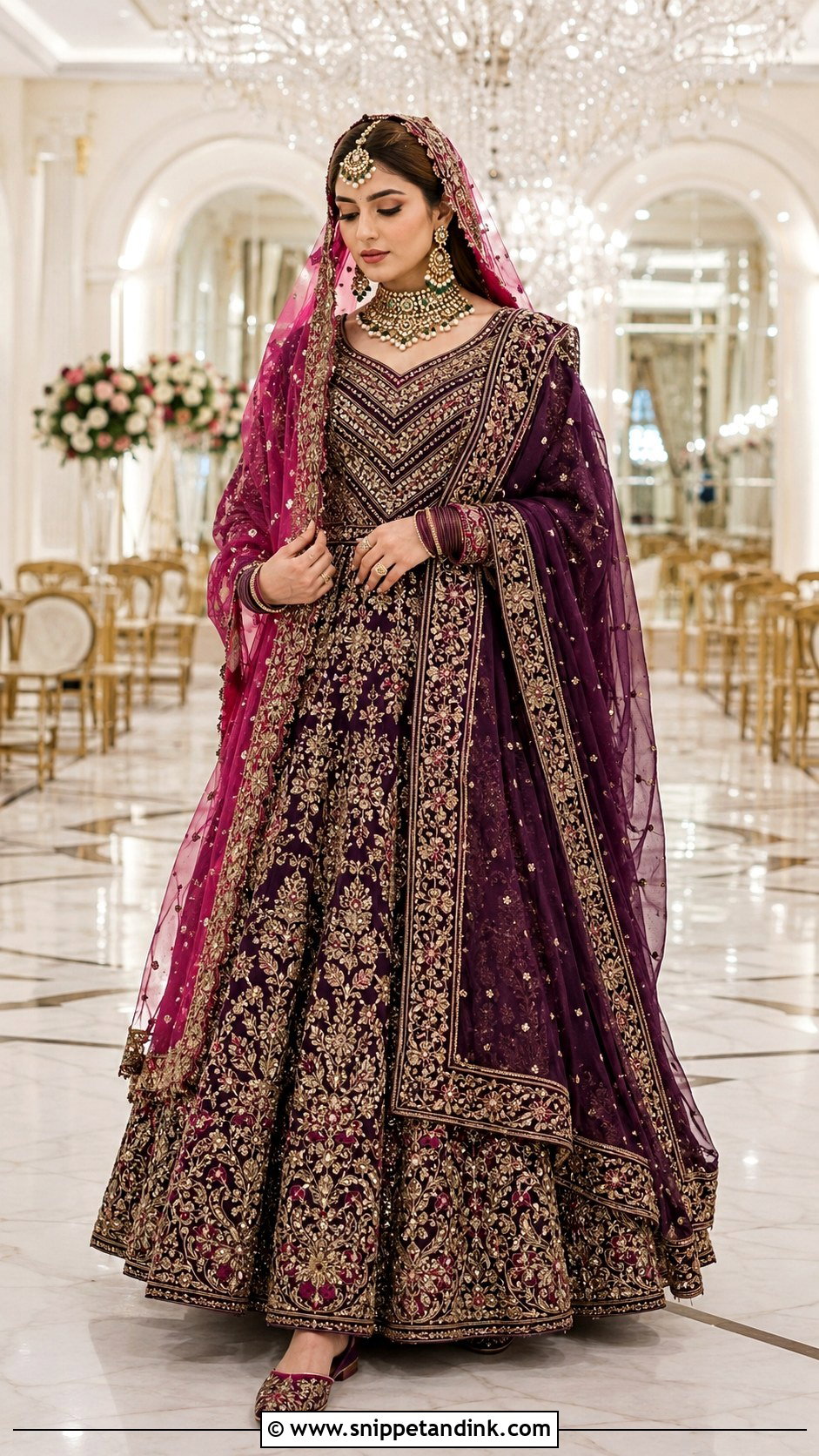
Purple is hard to match. The same dye can look plum in one light and blue-violet in another, so I always view the swatch beside the jewelry and the magenta dupatta before anything is ordered. When it works, it’s opulent: a wide skirt in antique gold florals with controlled touches of magenta or emerald, and a fitted full-sleeve blouse in the same shade with a clean neckline. Magenta over the head warms the face, and purple across the shoulder keeps continuity. Wear a layered choker, jhumkas, tikka and coordinated bangles in antique gold, plus embroidered purple khussa. Keep the hair smooth and structured under the dupatta, with warm eyes, sculpted cheeks and a berry lip.
14. White And Silver Kashees Bridal Maxi
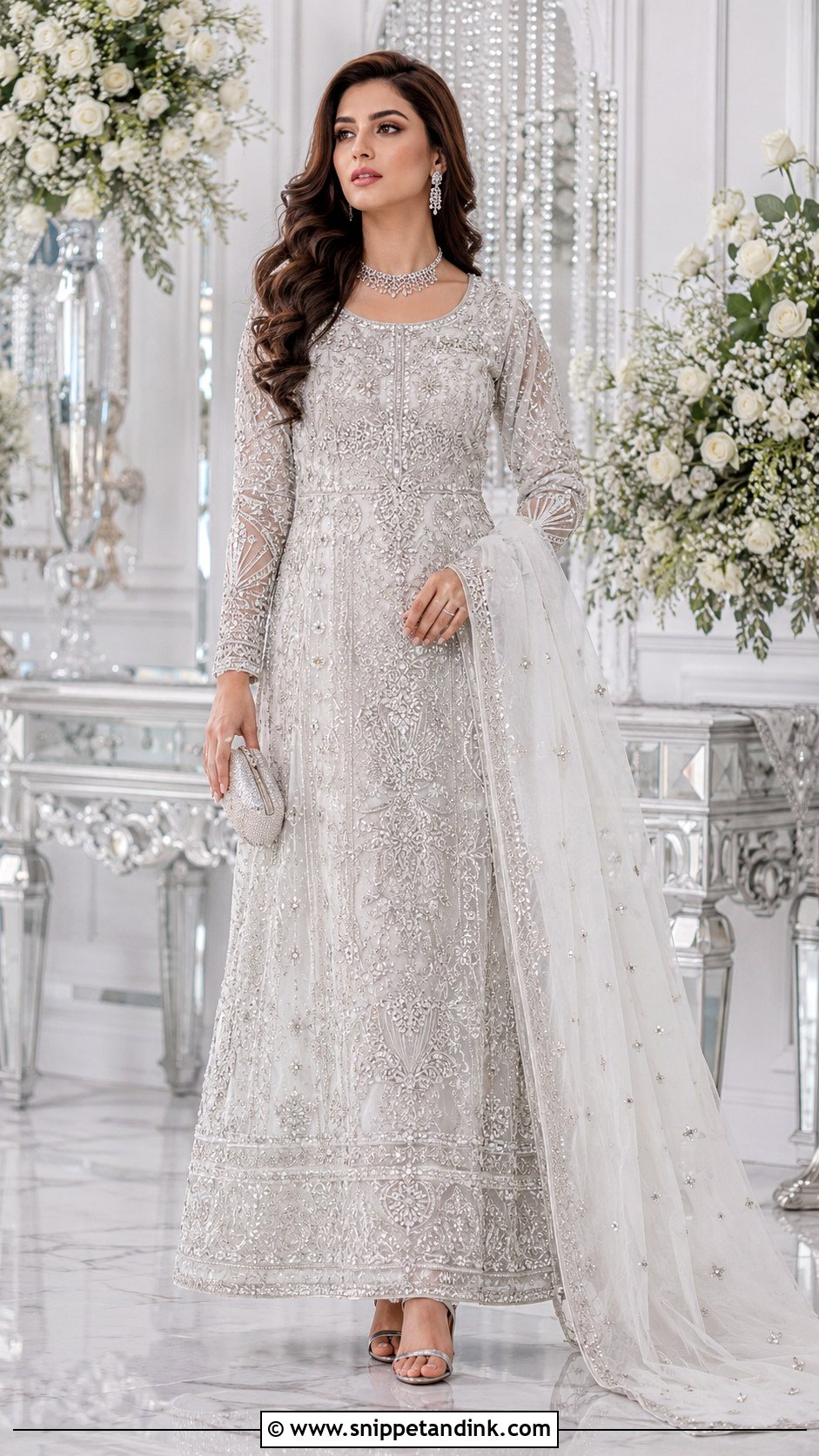
White and silver is the cleanest look here, and the least forgiving. Symmetrical crystal embroidery and pearl accents need a fitted waist to give the silhouette structure; without one, a white maxi can look shapeless in photos. Full sleeves with a high or softly curved neckline give coverage and keep the embellishment as the focus. Arrange a white net dupatta edged in silver loosely over the head or shoulders. A diamond-style necklace, matching earrings and a delicate crystal hairpiece go with metallic silver heels and a compact beaded clutch. A sleek center-parted bun and cool-toned makeup with a soft pink lip stop the pale palette from going flat.
15. Mustard Kashees Mehndi Lehenga
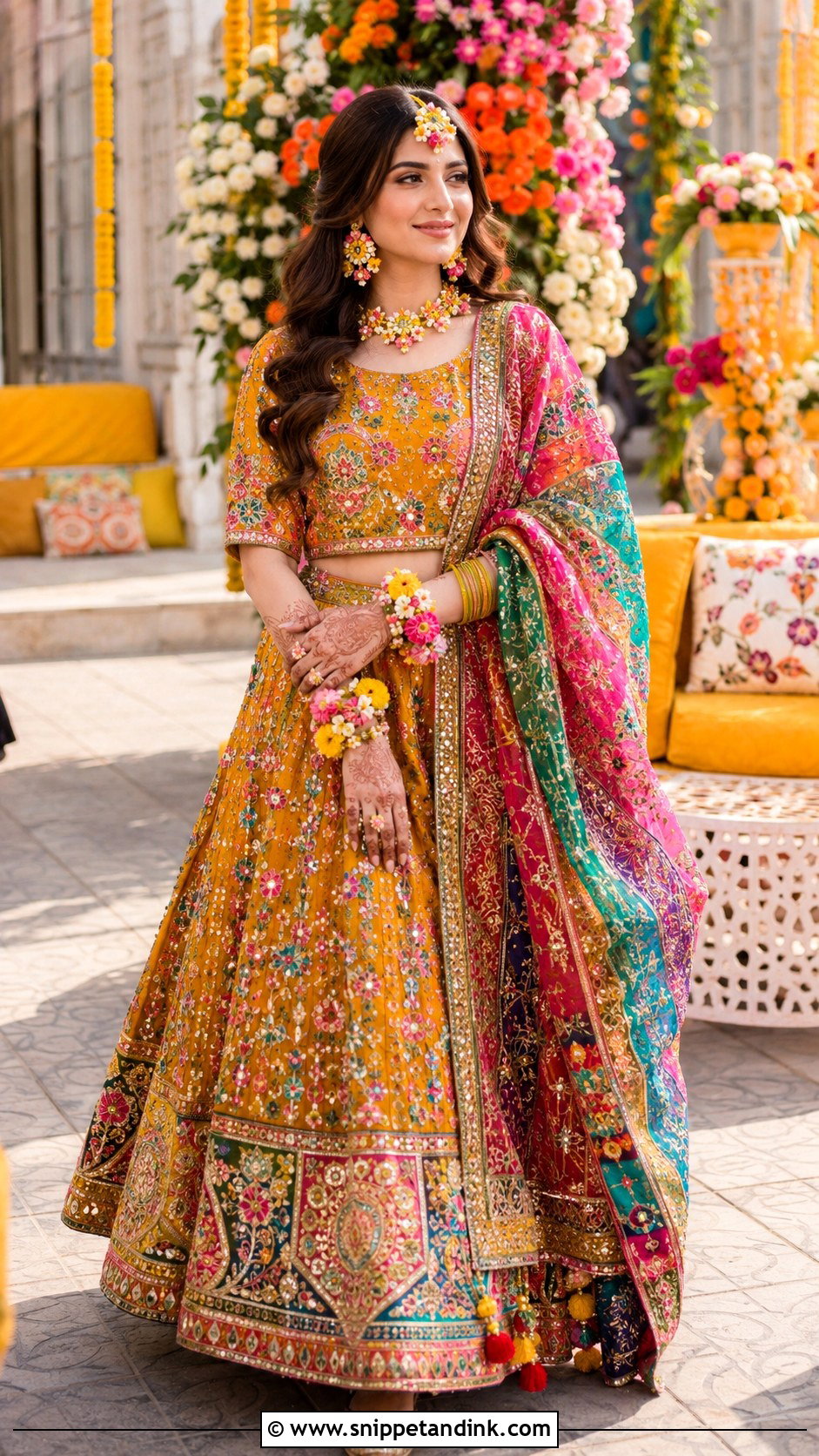
Mustard brings brightness to a mehndi outfit without relying on neon. Mehndi is a dancing event, so pick a skirt flared enough to spin in but short enough that you won’t step on the hem. Look for colorful thread embroidery, mirror work and borders in pink, green and orange, paired with a fitted mustard blouse or a contrasting green top. Keep the dupatta light and pin it at the shoulder so it stays put through the dances. Floral-inspired jewelry, colorful bangles, statement earrings, a small tikka and embroidered khussa keep it comfortable. A braid or soft half-up style with small flowers works well. One practical warning: keep fresh henna paste well away from the mirror work, because it stains thread embroidery.
16. Teal Kashees Bridal Sharara
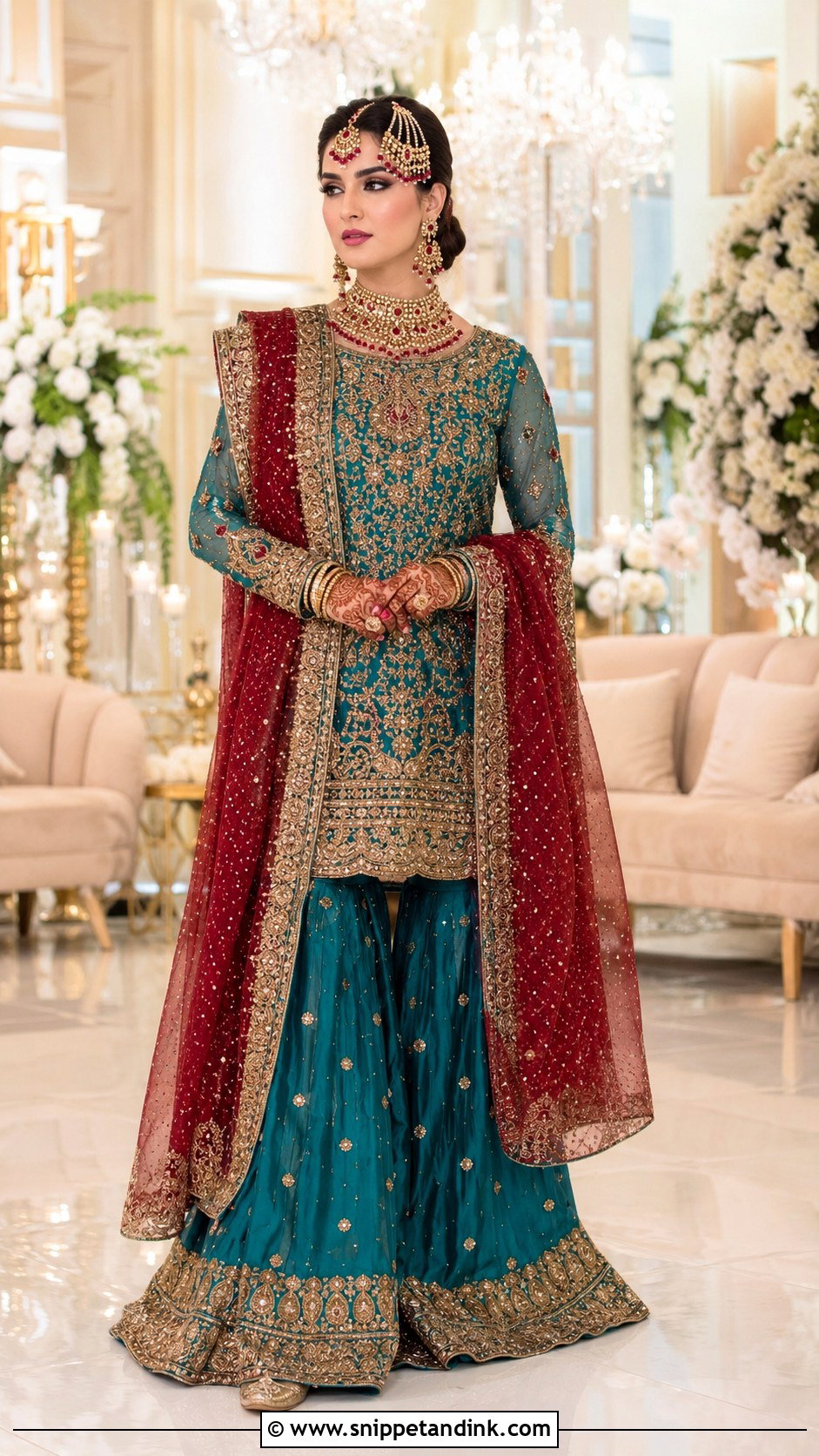
Teal gives a bridal sharara outfit a jewel tone that’s distinctive but easy to coordinate. Sharara pants flare widely, so the shirt length sets the proportions; around the knee is where I usually land. Ornate gold borders run along the pants and heavy embroidery covers the shirt. For contrast, add a maroon or deep pink dupatta, or keep it monochrome with matching teal. Antique gold with small ruby accents ties the colors together across the choker, jhoomar, earrings and stacked bangles. Gold embroidered heels or comfortable khussa both work. A low bun anchors the head covering, and bronze eyes with a muted berry lip suit a barat or a formal evening reception.
17. Rose Gold Kashees Bridal Gown
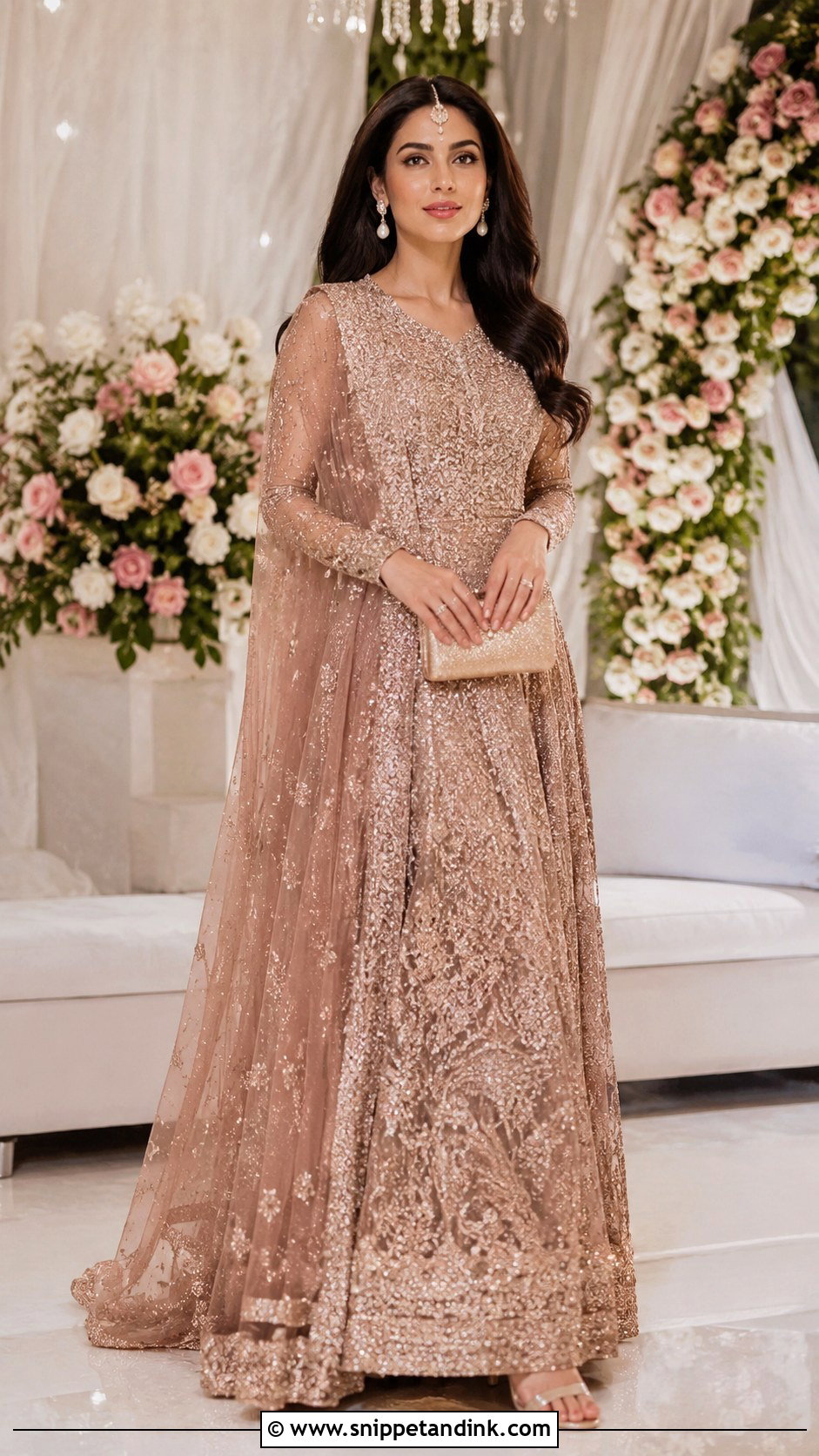
When ivory feels too plain for a valima, I often steer brides toward rose gold, which sits between soft pink and metallic glamour. Look for a fitted bodice and fluid skirt with crystals, sequins and floral patterns that vary in scale. When every motif is the same size, the gown starts to look printed rather than handworked. A sheer rose-gold dupatta with a fine embellished border drapes gently over the head. Crystal jewelry, pearl drops and a slender tikka suit the finish, with nude or rose-gold heels and a small structured clutch. A textured low bun or polished waves, glowing skin, soft brown eyes and a satin pink-nude lip finish it.
18. Sage Green Kashees Bridal Peshwas
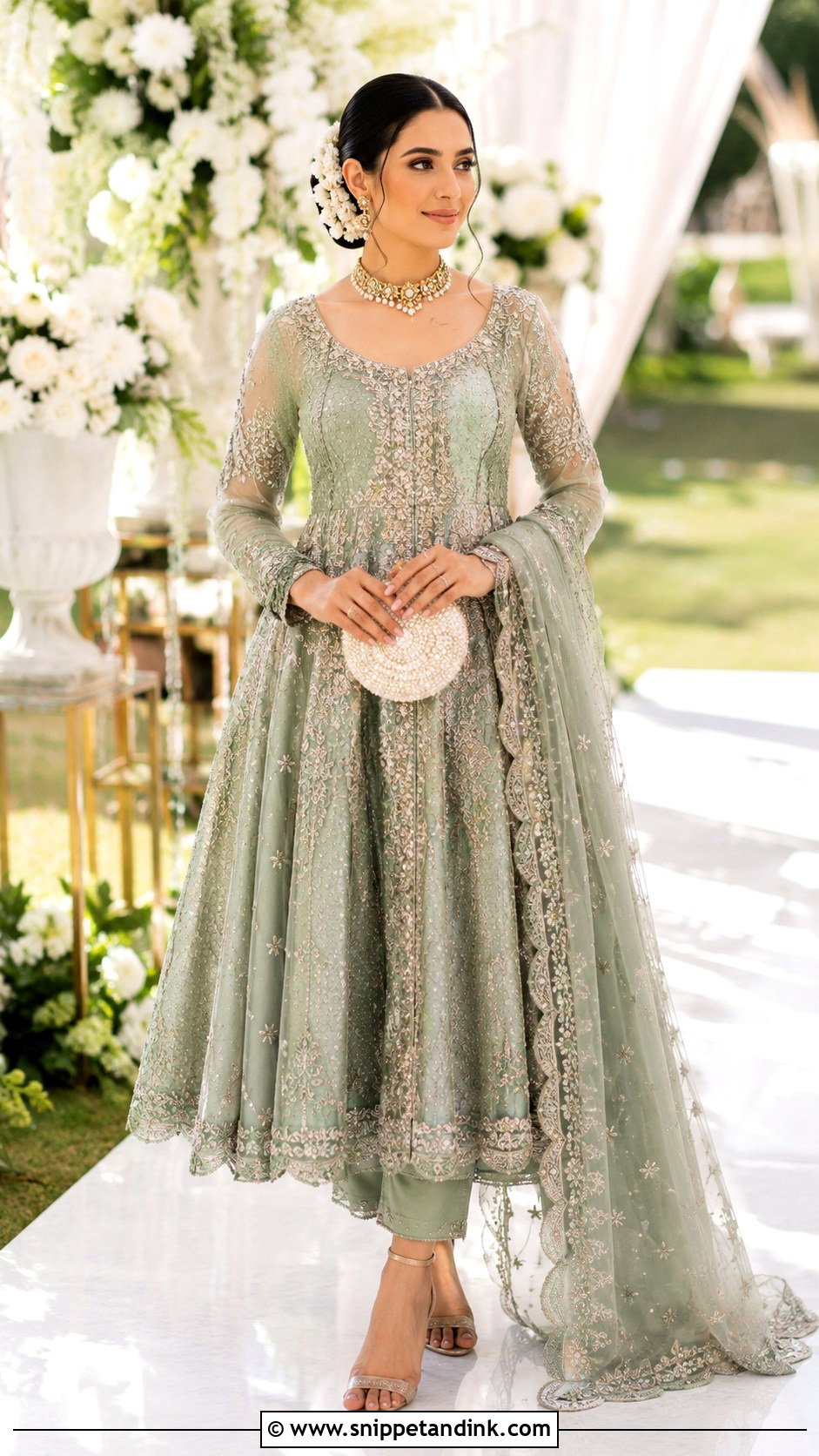
Sage is a quiet color for daytime ceremonies and garden venues. Against heavy foliage it can blend into the background, so ask your photographer to find a lighter wall or open sky for portraits. A kalidar peshwas, cut from many flared panels, gives the movement, and champagne, ivory and pale gold embroidery keeps the muted green soft but formal. Pair it with straight trousers or a churidar and a sheer sage dupatta with a scalloped border. Pearls, a delicate kundan choker, small earrings, a light tikka, champagne heels and a pearl clutch suit it. Small white flowers in a loose low bun look fresh, though real jasmine wilts within hours in the sun; silk blooms are safer outdoors.
19. Magenta Kashees Bridal Gharara
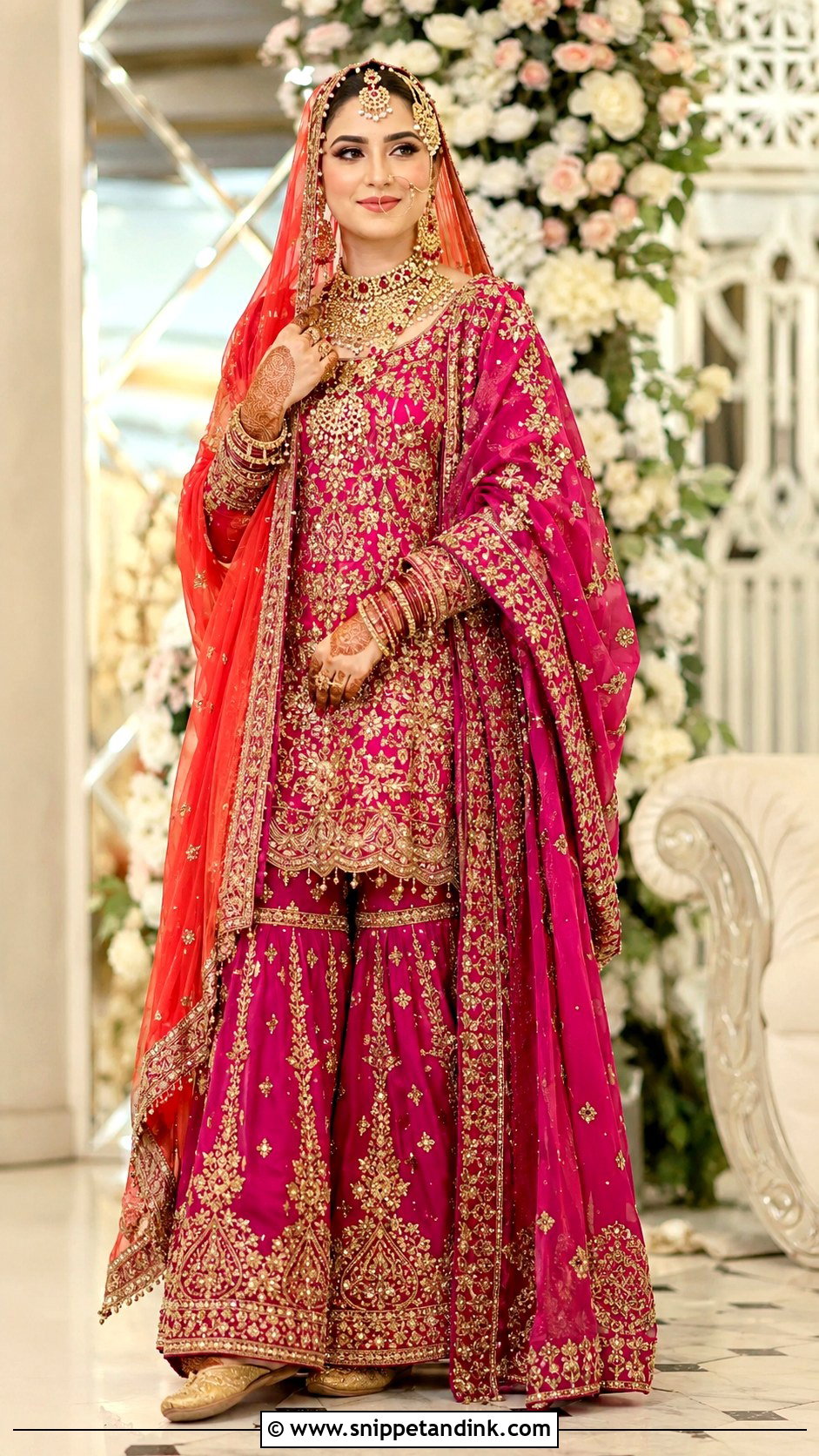
Magenta is loud in the best way, and it stays vivid even in poor light. Heavy embroidery on the shirt, gold work around the gharara’s knee and a broad hem form the base, with touches of orange, green or deep red in the borders. An orange-red dupatta over the head warms the face while the magenta one goes across the arms. Wear traditional gold jewelry with jhumkas, a matha patti, bangles and a nath if you want one. If you add a nose ring, practice wearing it under the head dupatta at your trial, because its chain catches on net fabric. Gold khussa, a secure bun beneath the dupatta, kohl eyes and a rich pink lip finish this confident combination.
20. Red And Gold Kashees Bridal Maxi
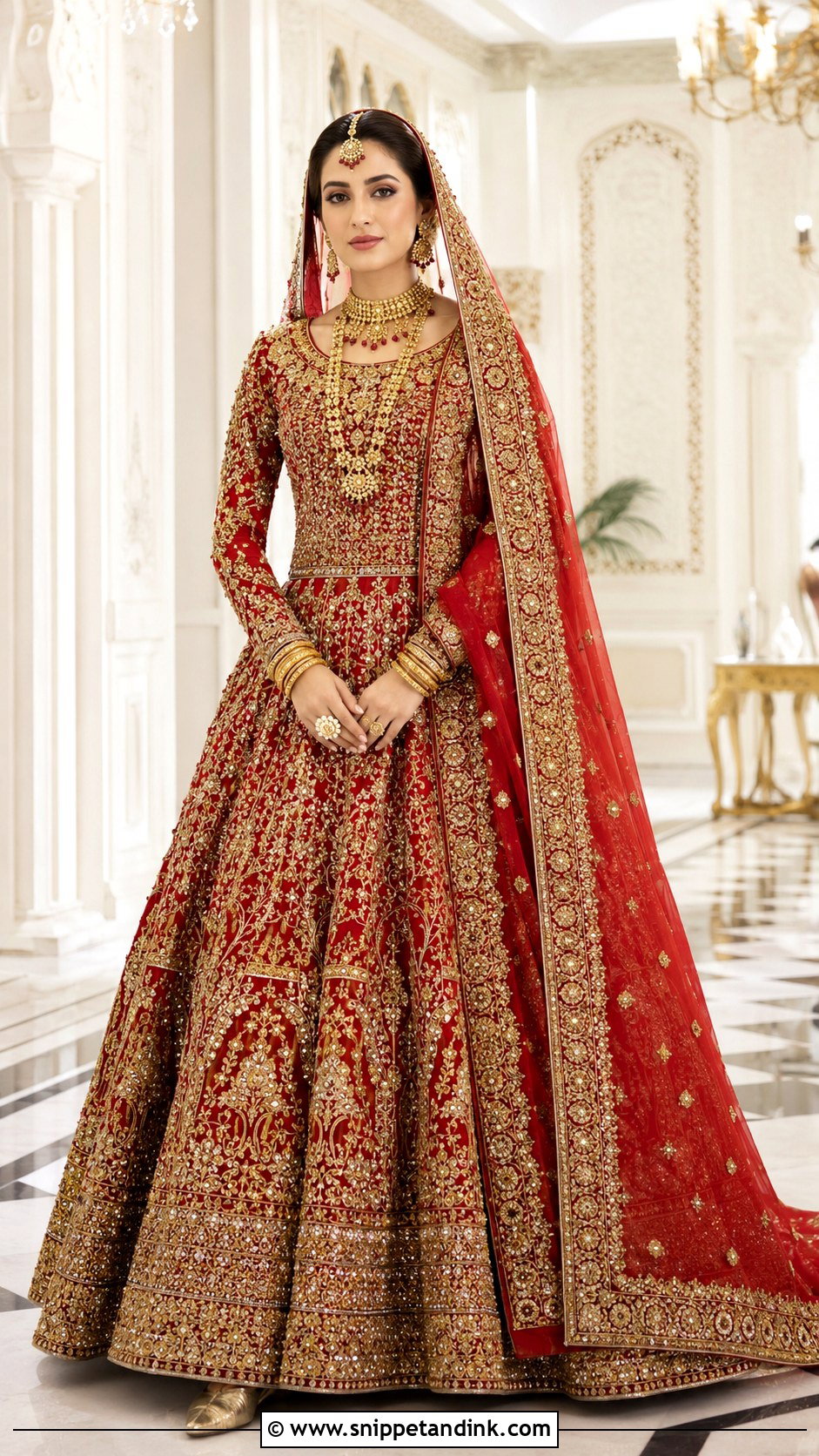
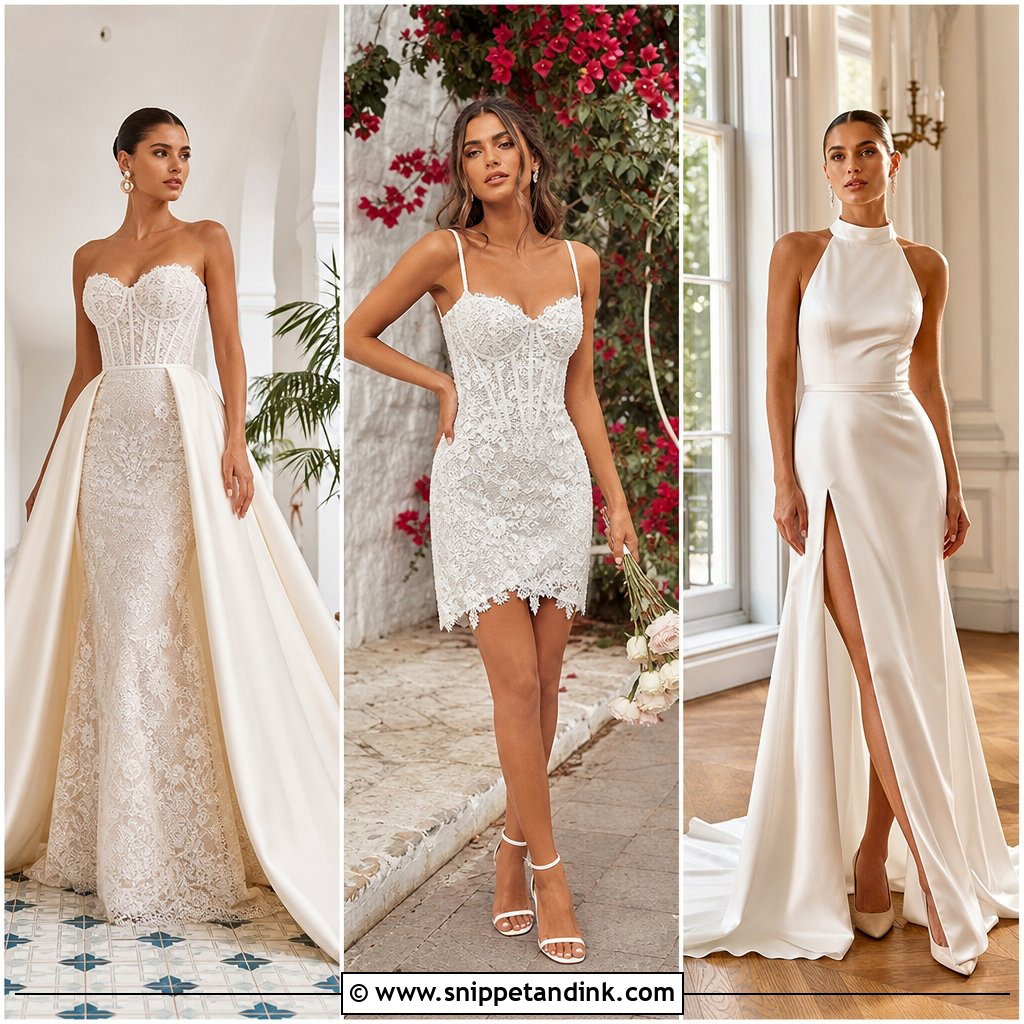
A red and gold maxi keeps the barat palette but swaps the lehenga for a gown’s flowing shape, which is easier to manage on stairs and getting into a car. Look for a structured bodice, fitted sleeves and a wide skirt in gold floral and architectural embroidery. The defined waist does most of the work, controlling the volume and flattering most figures. Secure the red net dupatta with its broad gold border over the head, then pin it behind the shoulders so the neckline stays visible. A classic gold choker, long necklace, earrings, tikka and red-and-gold bangles complete the jewelry. Gold heels give height; padded khussa give comfort. A neat bun, softly smoked eyes and a balanced red lip finish the look.
Setting Two Dupattas So They Stay Put on Stage
Most of these looks use two dupattas, and the head one is always the one that slips. I set it after the hair and jewelry are finished, anchored into the bun with U-pins and fixed at the back of the head rather than the sides, so the tikka and jhoomar chains don’t snag. The shoulder dupatta gets one small safety pin under the blouse seam and is otherwise left free to drape over the forearms. Pack a spare card of pins and send someone with you who watched how the set was done, because the hugs at the rukhsati pull everything out of place.
Storing Zardozi and Dabka After the Valima
Metal-thread embroidery tarnishes and stones loosen when a bridal outfit goes straight into a plastic garment bag. The first week after the wedding matters most.
- Air the outfit flat for a day or two so perspiration and perfume can evaporate. Never spray perfume directly onto zari; it dulls the metal.
- Check for loose stones and stitch them back before storage, while you can still see where they came from.
- Fold heavy skirts with soft muslin or acid-free tissue between the layers, and refold along new lines every few months so the creases don’t weaken the fabric.
- Store everything in a breathable cotton or muslin bag, never sealed plastic, away from damp walls.
- For cleaning, use a dry cleaner who handles embellished bridal wear and ask them to test a hidden spot first.
One habit to avoid: hanging a heavily worked lehenga skirt by its waistband for months. The weight stretches the fabric and the embroidery starts to pull away from the base.
Red for the Barat, Paler Shades for the Valima, and Order Early
Across these twenty looks, color, silhouette, embroidery, jewelry, footwear and dupatta placement all have to agree with each other. Red and maroon remain the dependable barat colors. Ivory, blush, powder blue and rose gold suit a valima, mustard belongs at the mehndi, and the jewel tones give you evening alternatives. Before ordering, get the fabric, customization, measurements, included pieces, embroidery weight and delivery date confirmed in writing. The label suggests allowing roughly two to three months for a bridal gown, and you’ll want alteration time on top of that. At your final fitting, sit down, climb a step and raise your arms. If the outfit fights you, ask for changes then, not on the morning of the wedding.
You'll Like These Ideas:


Leave a Reply