
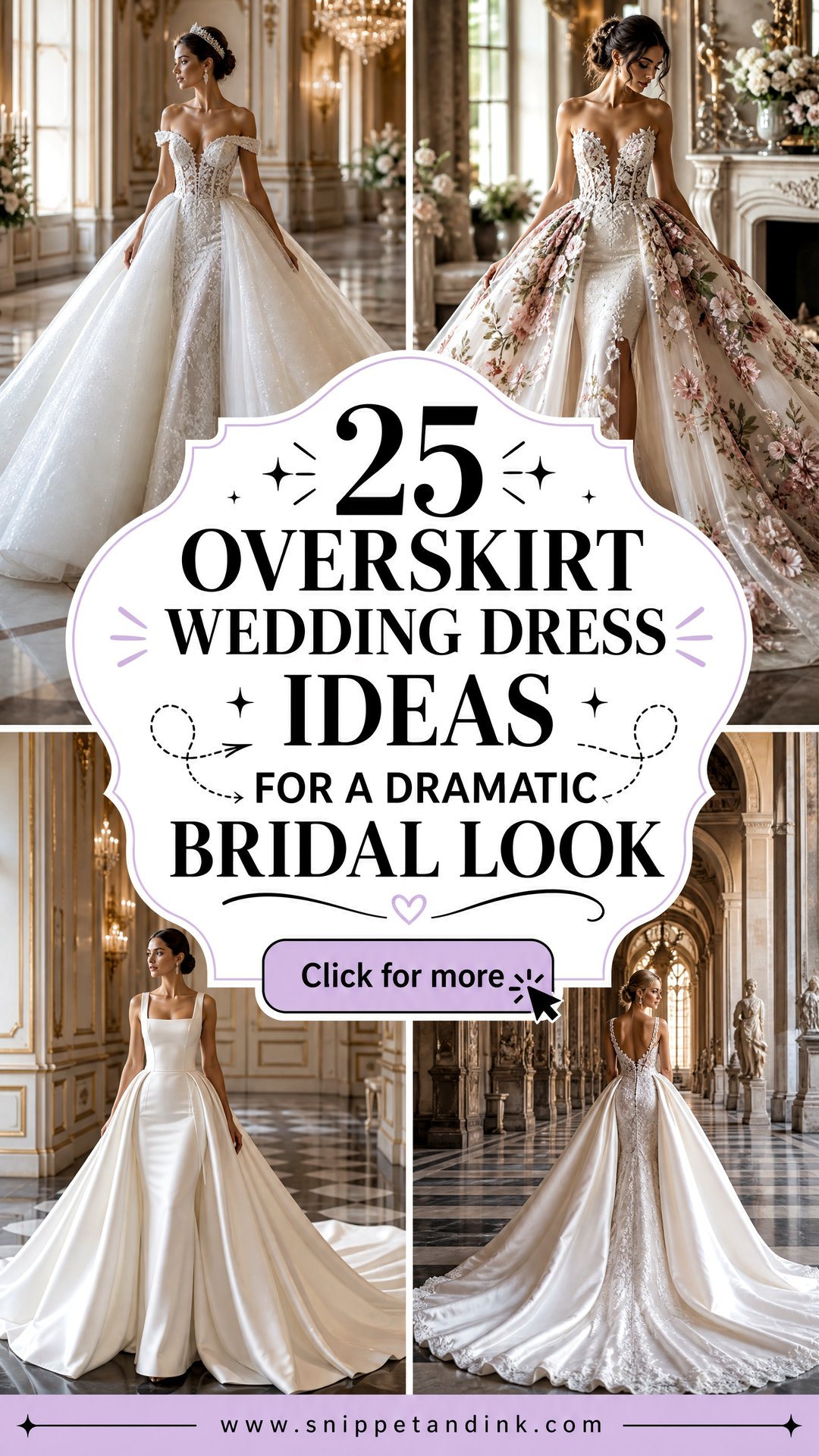
An overskirt gives you two silhouettes from one dress: volume and movement for the aisle, then something sleeker once the dancing starts. Brides keep asking me for transformable gowns, and an overskirt is the simplest way to get there without buying a second outfit. Tulle, satin, lace, organza and sculpted shapes all appear below, from romantic to strict and modern. What decides whether one of these works isn’t the fabric, though. It’s how the skirt is attached and how fast it comes off, so I’ll point that out as we go.
How an Overskirt Actually Attaches
Before I fall for any overskirt, I turn it inside out. The attachment decides how flat the waist looks, how secure the skirt feels and how quickly it can come off.
- Hidden hooks and eyes along a waistband: very flat and secure, but slower to undo. Good for satin, where any bump shows.
- Snaps or poppers sewn to the base gown: quicker to remove, and they spread the weight across several points.
- Button or hook closure at the back with a separate waistband: the skirt wraps round like a garment of its own, often hidden under a belt or sash.
- Ribbon ties or a wrap style: the most forgiving for fit, though bulkier at the join.
Weight matters as much as the closure. A heavy satin or lace overskirt needs a bodice with a firm waist stay to hang from. If the base gown is soft and unstructured, the skirt drags it down by the evening. Ask to wear both together for at least ten minutes at the salon and watch whether the waistline creeps.
1. Detachable Tulle Overskirt Wedding Dress
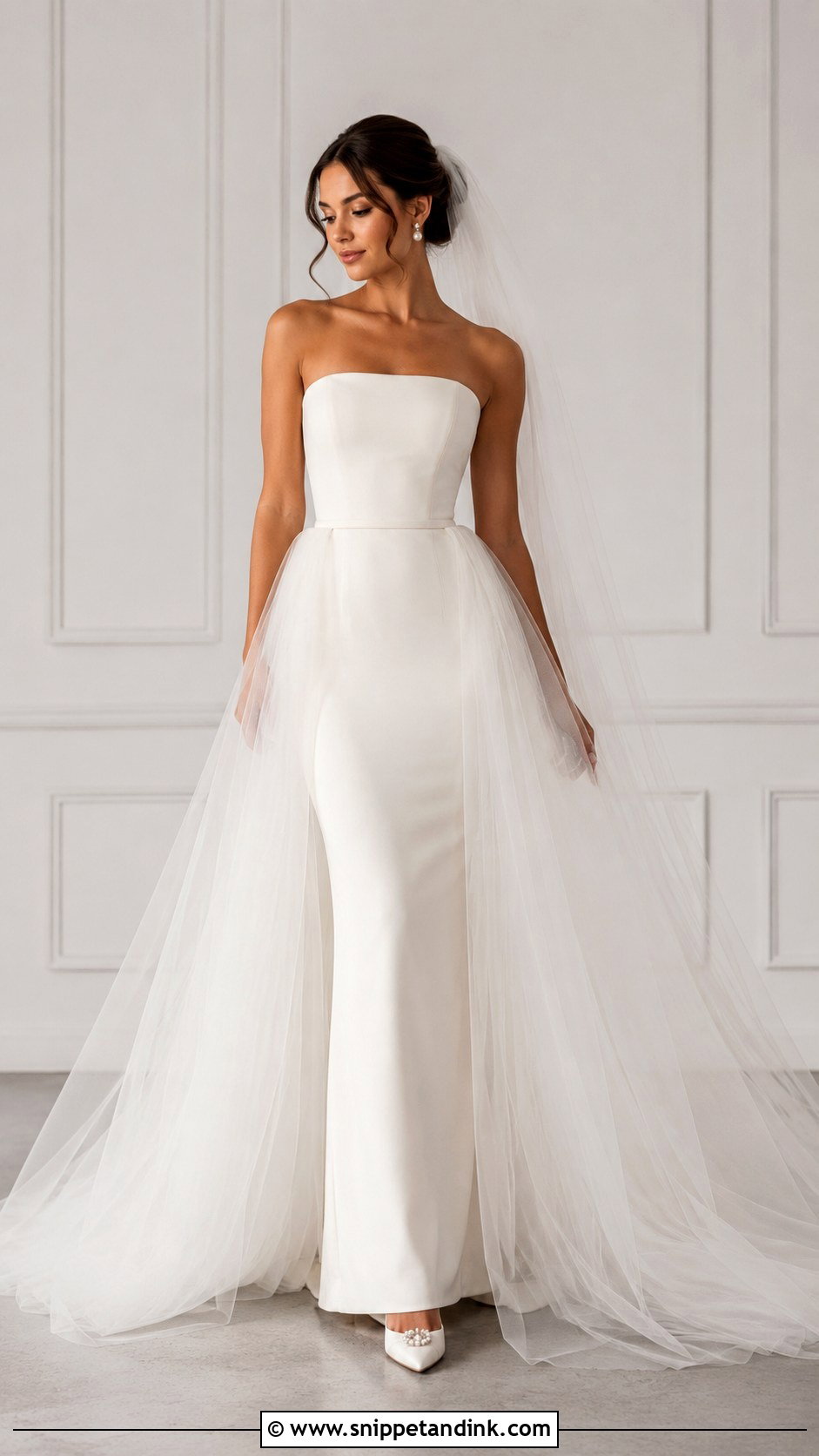
Fine tulle is the lightest overskirt fabric, which is why I suggest it first to brides worried about weight. It floats over a fitted crepe gown, lace sheath or strapless column and adds air rather than bulk. Soft tulle drifts as you walk; stiffer tulle builds a fuller ball gown shape. One caution: tulle catches on beaded bodices and rough lace, so I check the waist edge isn’t rubbing against embellishment. A simple veil, pearl earrings and pointed heels keep the skirt as the focus.
2. Satin Overskirt Wedding Dress
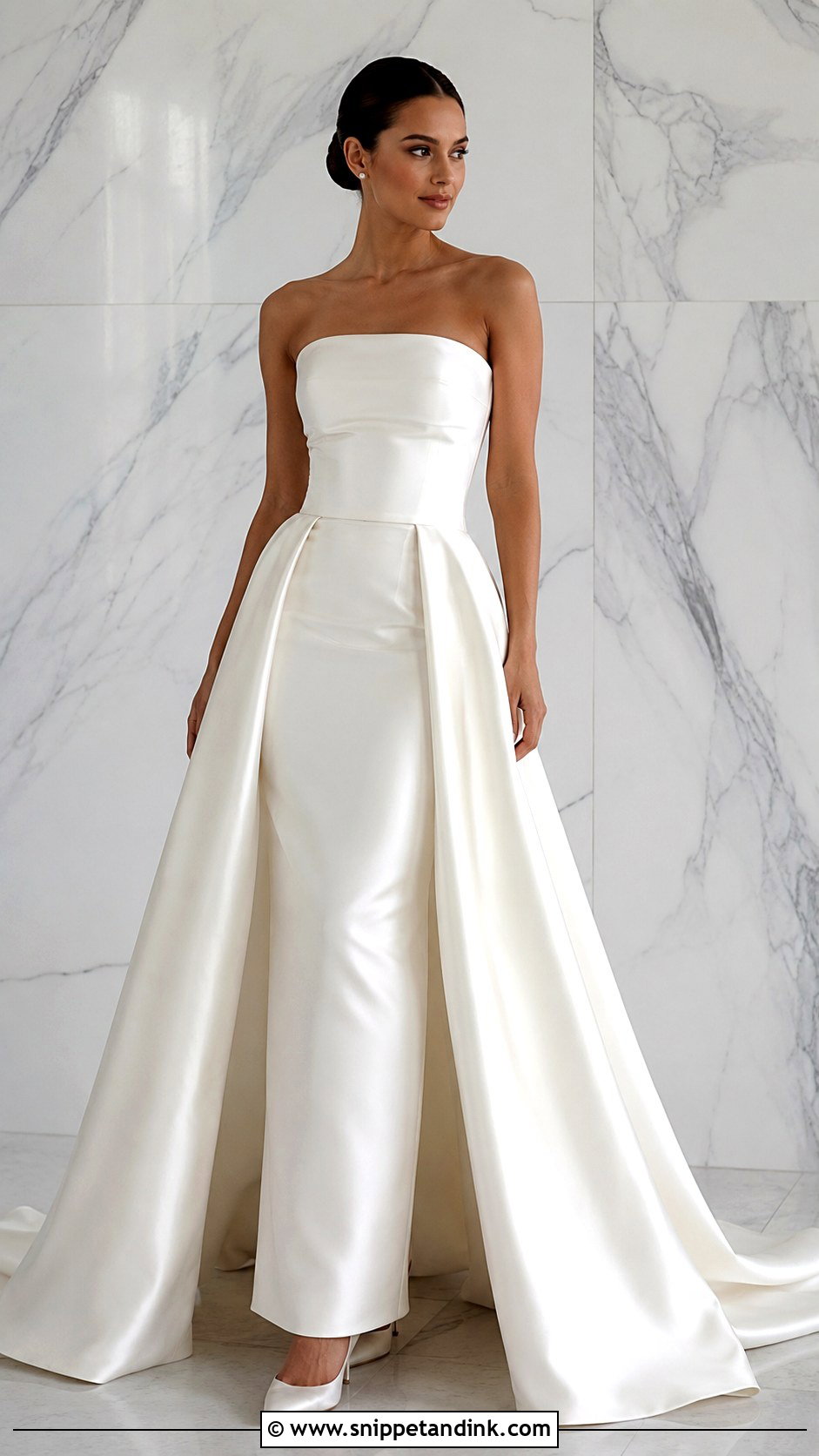
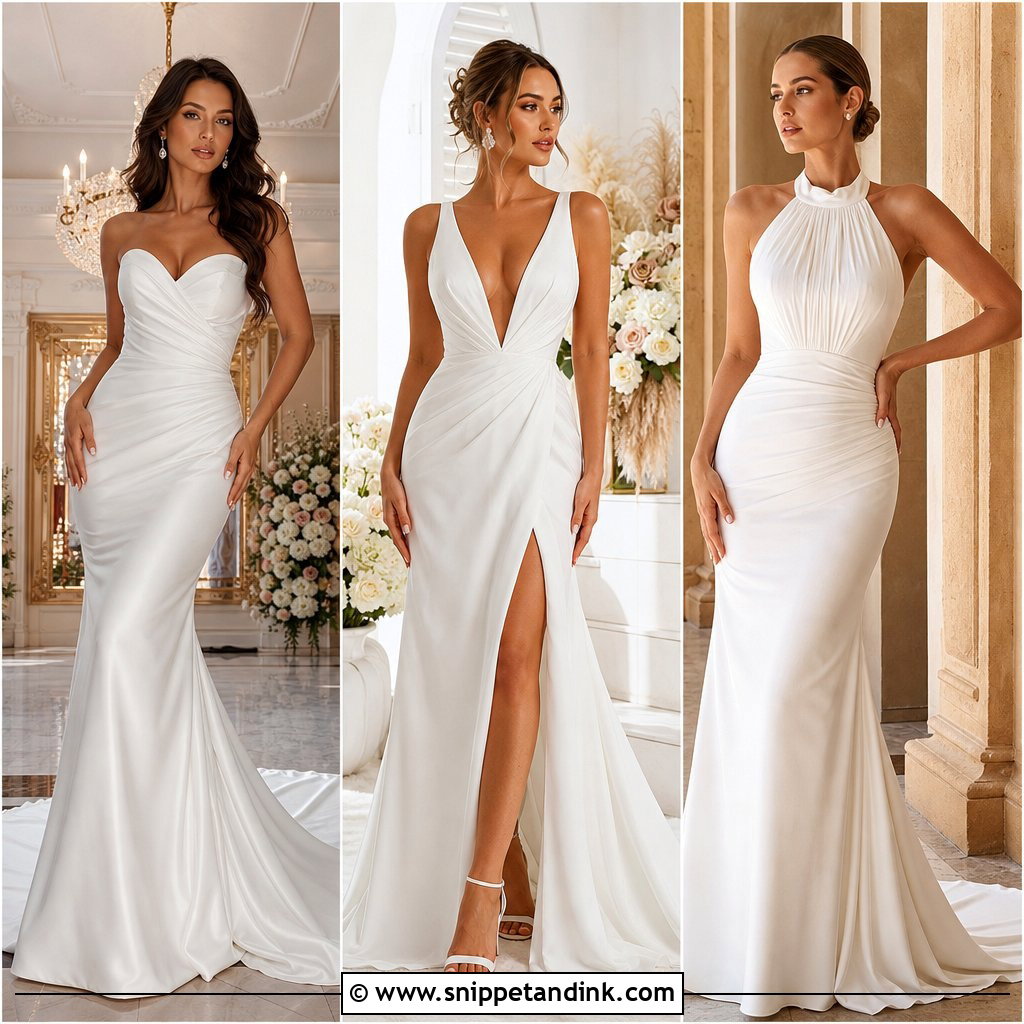
Satin has the weight to hold a clean shape, so a satin overskirt gives drama without busy texture. Put it over a fitted satin or crepe base and the two read as one continuous gown from neckline to hem. Strapless, square and off-shoulder bodices all pair well. The thing with satin is that it shows the join: if the waistband isn’t cut perfectly flat, you’ll see a ridge in every side profile, so ask your seamstress to fit it on you, not on a mannequin. A sleek bun, crystal studs, a structured bouquet and satin slingbacks finish it.
3. Lace Overskirt Wedding Dress
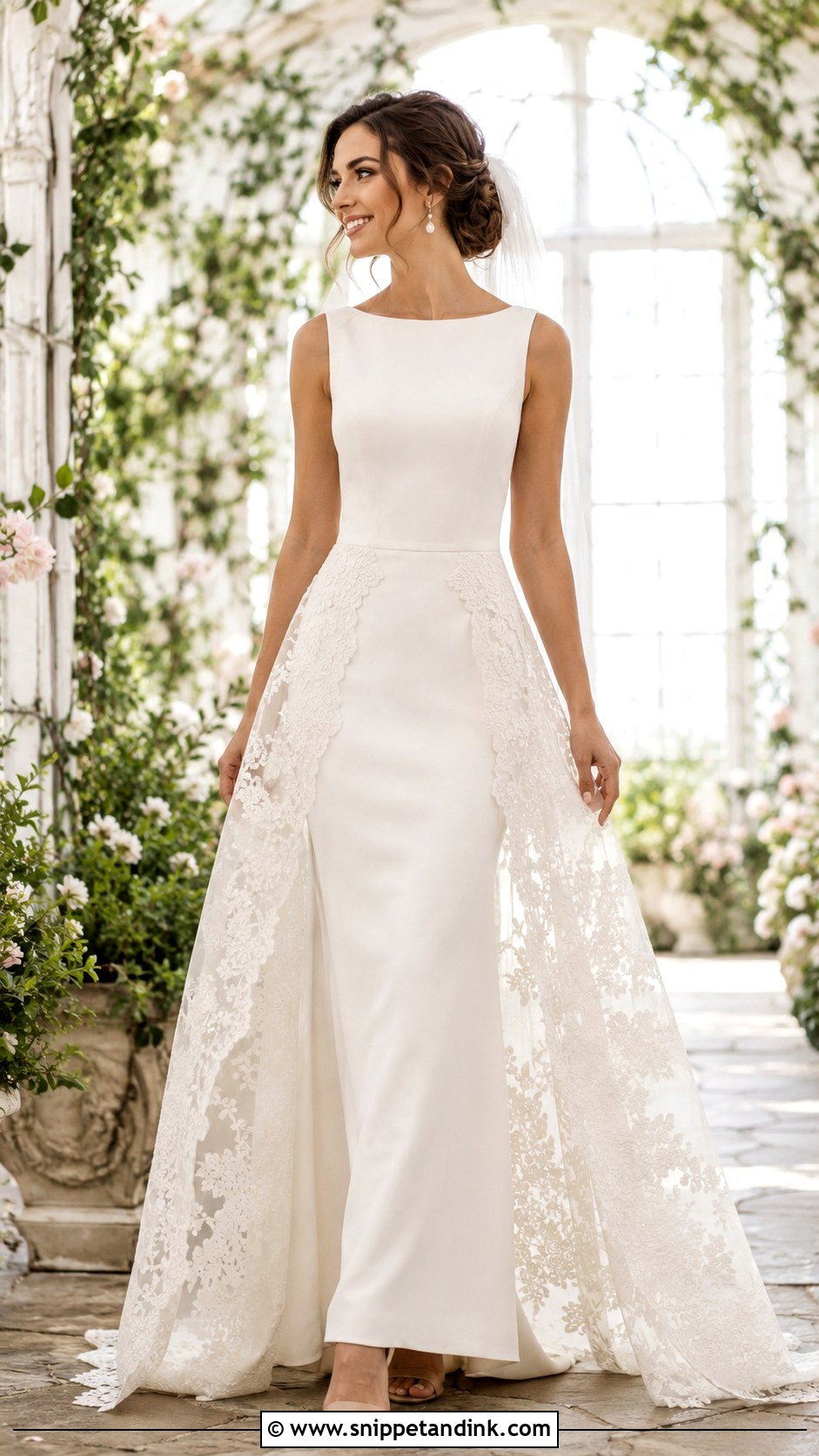
Lace overskirts add texture and romance, either matching the bodice or laying pattern over a plain base. My favourite version has lace motifs clustered at the waist and thinning toward the train, so the effect fades out rather than stopping. Floral lace, scalloped edges and appliqués on sheer tulle all suit a vintage taste. Lace overskirts are heavier than they look, so ask the salon to weigh it against the tulle alternative. Ivory or nude heels and dainty jewelry let the pattern lead.
4. Mermaid Wedding Dress With Overskirt
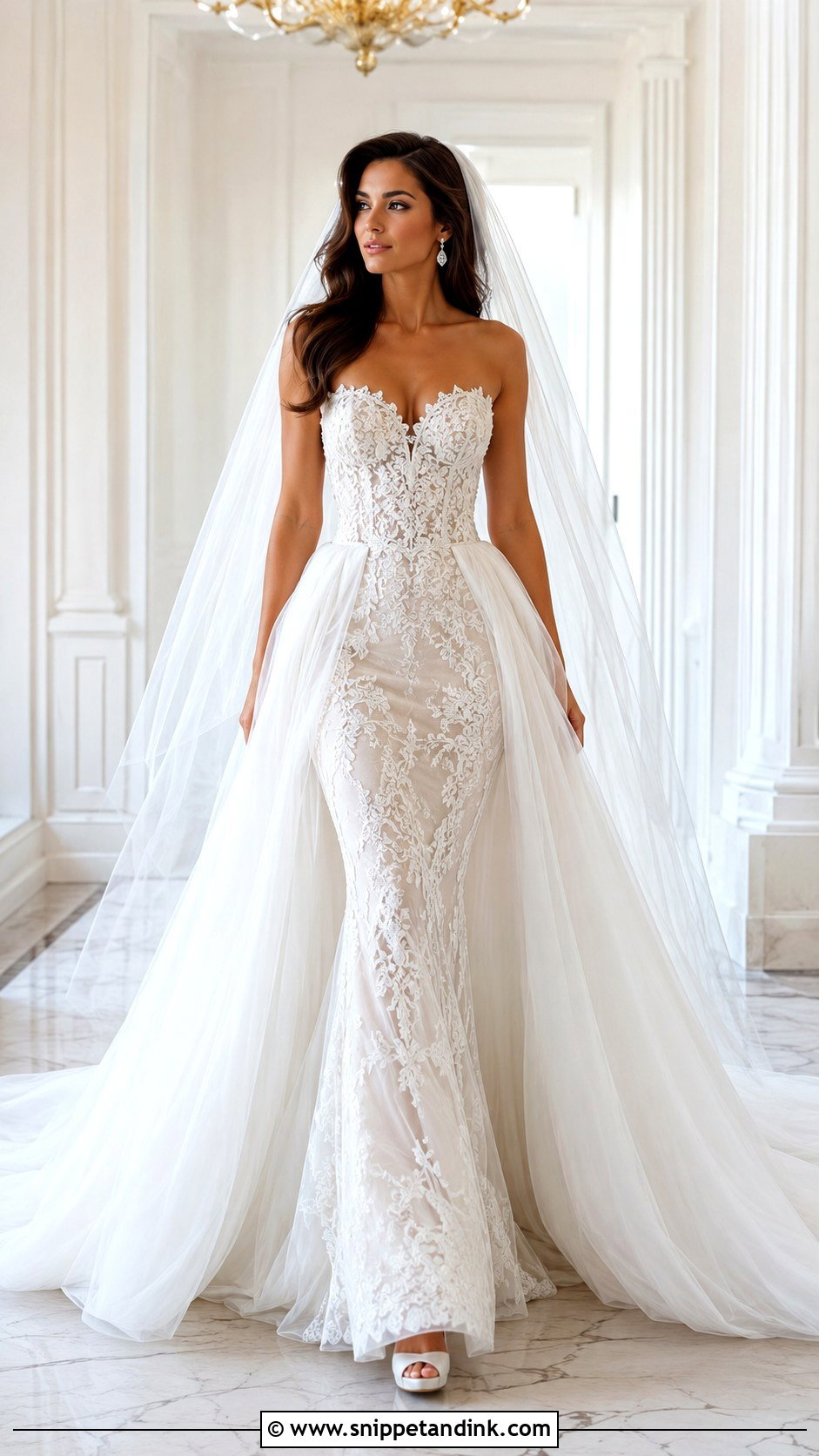
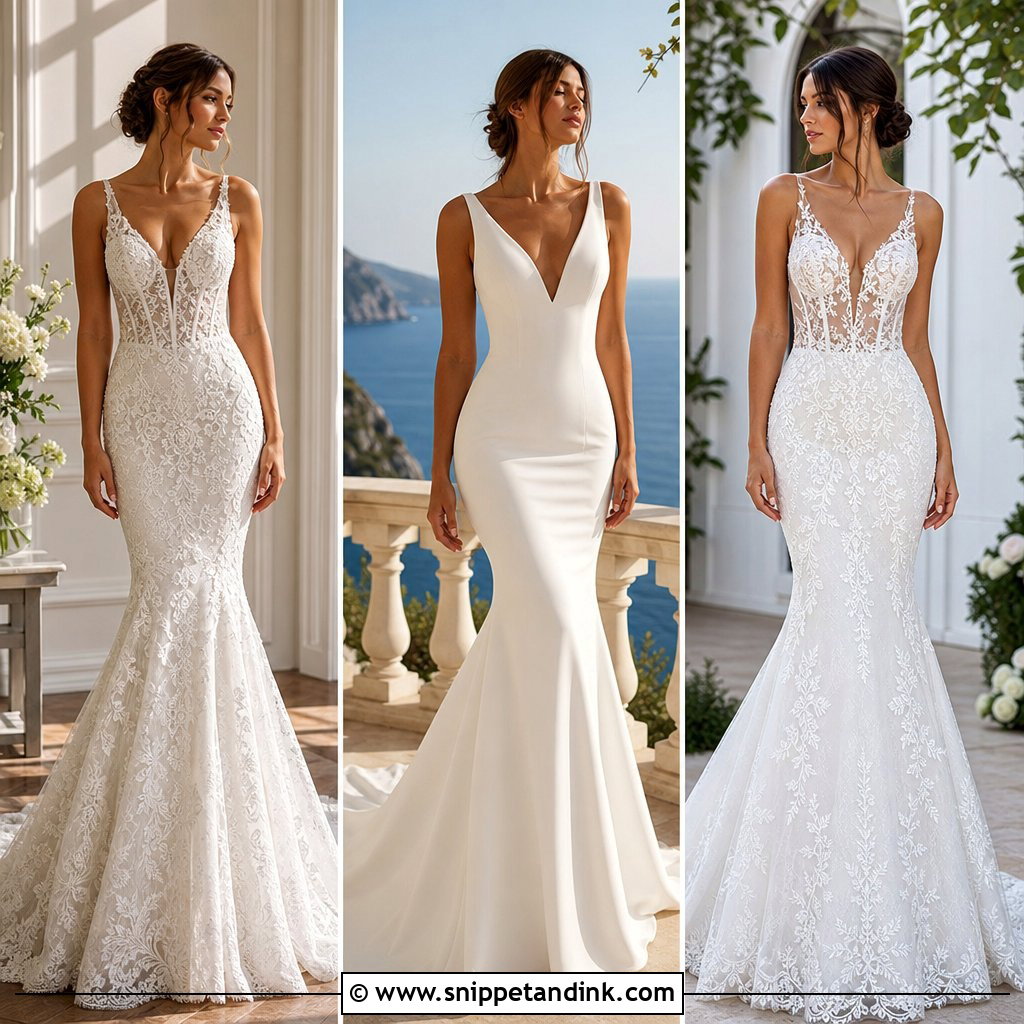
With a mermaid underneath, the overskirt does the big entrance and the gown underneath does the dancing. You get a full skirt on the aisle and a fitted shape for the party. The join needs special attention here, because a mermaid is fitted through the hip and any bulk at the waist breaks the line. I’d look for a narrow, flat waistband that hooks invisibly. A long veil, drop earrings and elegant heels complete it without competing.
5. Strapless Wedding Dress With Overskirt
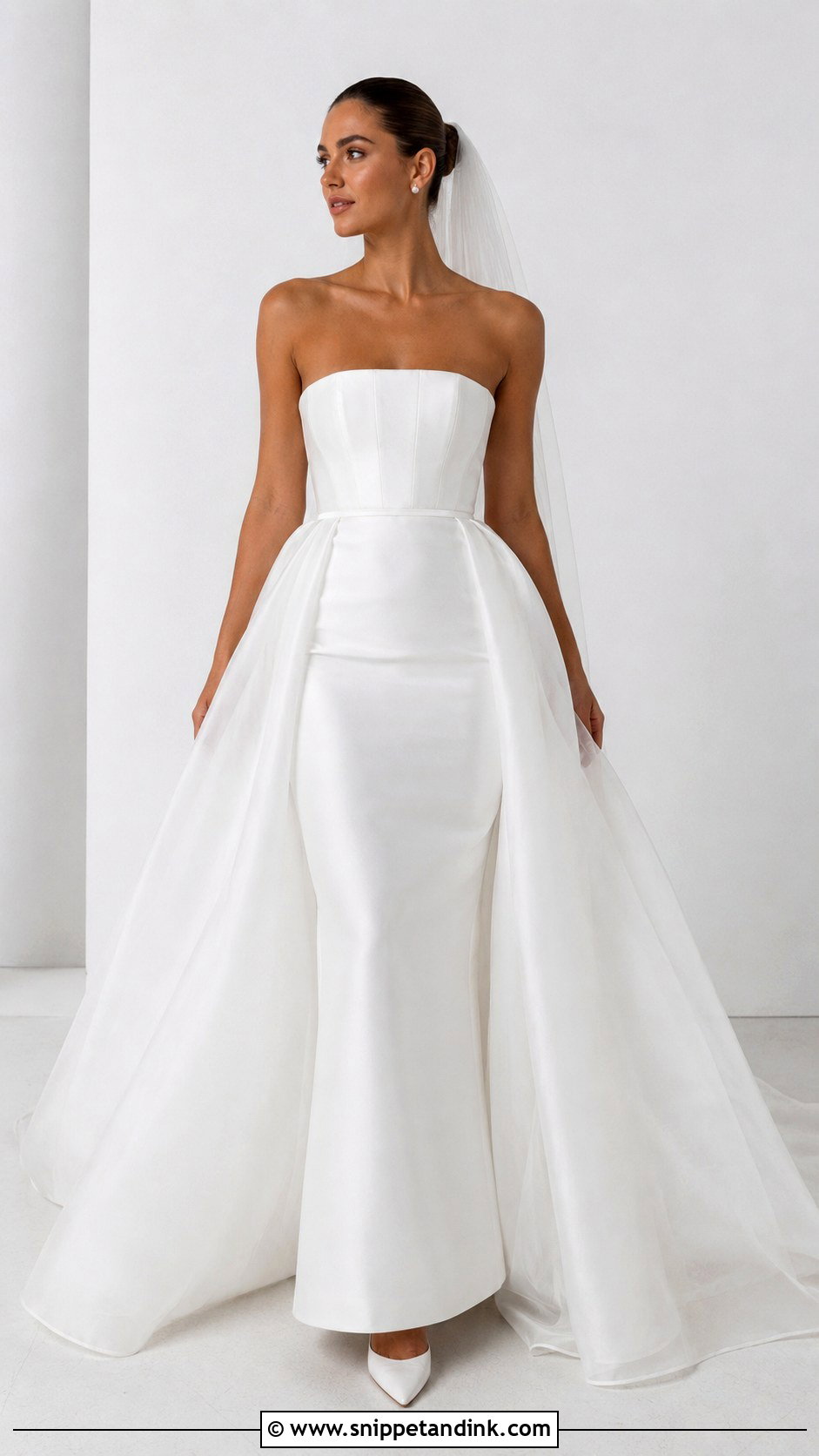
Strapless bodices balance volume well, because the open neckline offsets a full satin, organza or tulle skirt below. They also take the weight of an overskirt better than you might expect, provided the bodice is properly boned and grips at the waist. Without that grip, a heavy overskirt drags the whole dress down through the evening. A delicate necklace, pearl studs or a soft veil suit it, with pointed heels and a compact bouquet so the waistline stays visible.
6. Long Sleeve Wedding Dress With Overskirt
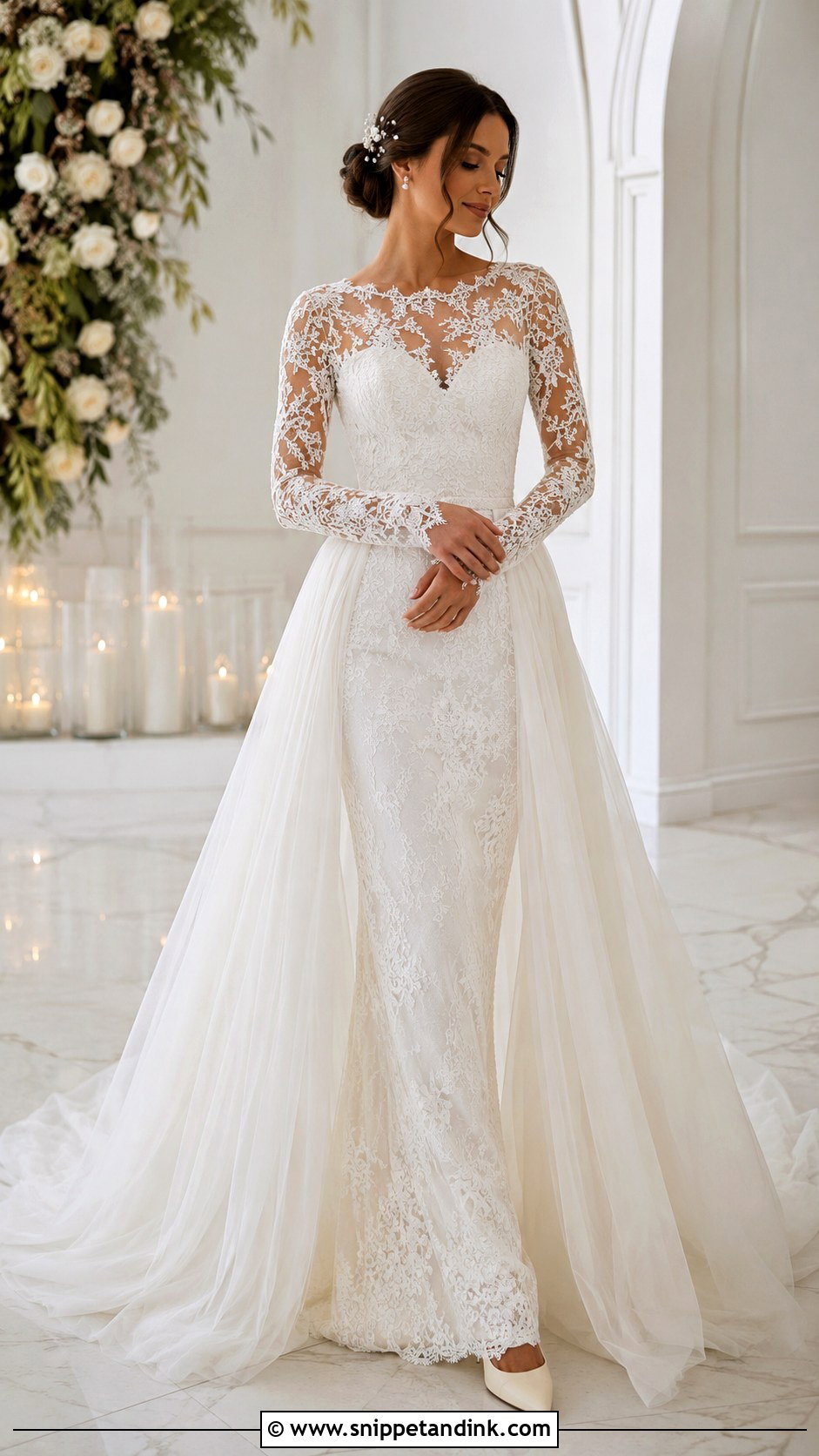
Long sleeves and a full overskirt balance each other nicely: slim at the arm, wide at the hem. Lace, illusion mesh, satin or crepe sleeves suit fall, winter and formal indoor weddings. A soft tulle overskirt reads romantic; satin reads regal. The fitting check I’d add is reach: lift your arms as if hugging someone tall, because a fitted sleeve pulls the bodice up and the overskirt waistband with it. A low bun, pearl pins and simple earrings finish it.
7. Off Shoulder Wedding Dress With Overskirt
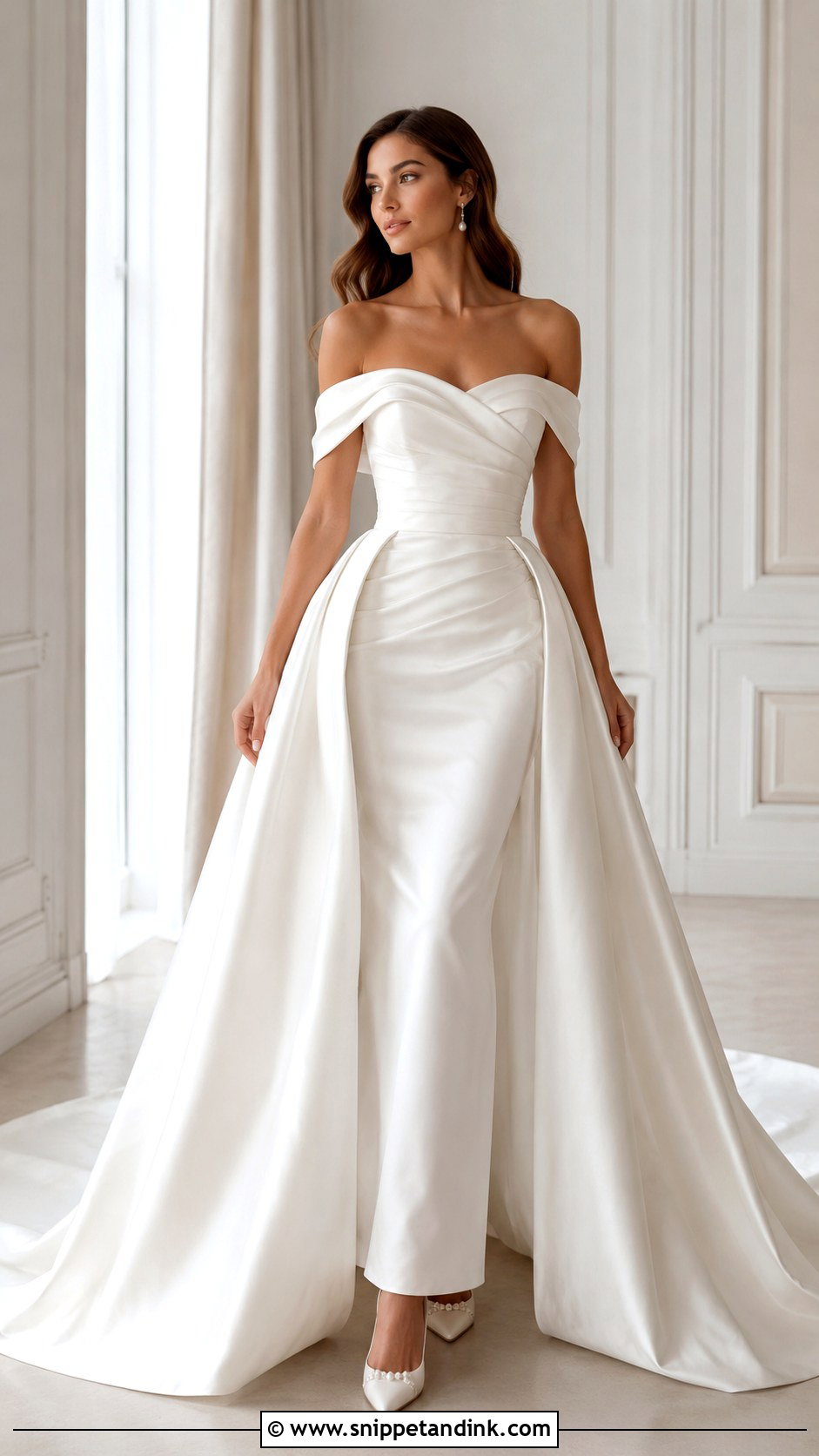
Off-the-shoulder necklines draw the eye up while the overskirt adds weight below, so the overall shape feels grounded. Satin, mikado, lace and smooth crepe all hold the neckline well. A detachable overskirt turns a fitted off-shoulder gown into a fuller ceremony dress, then hands back the slimmer line later. Make sure the shoulder bands sit firmly on the upper arm, since the extra skirt weight tugs downward. Soft waves, pearl earrings and classic heels complete it.
8. Corset Wedding Dress With Overskirt
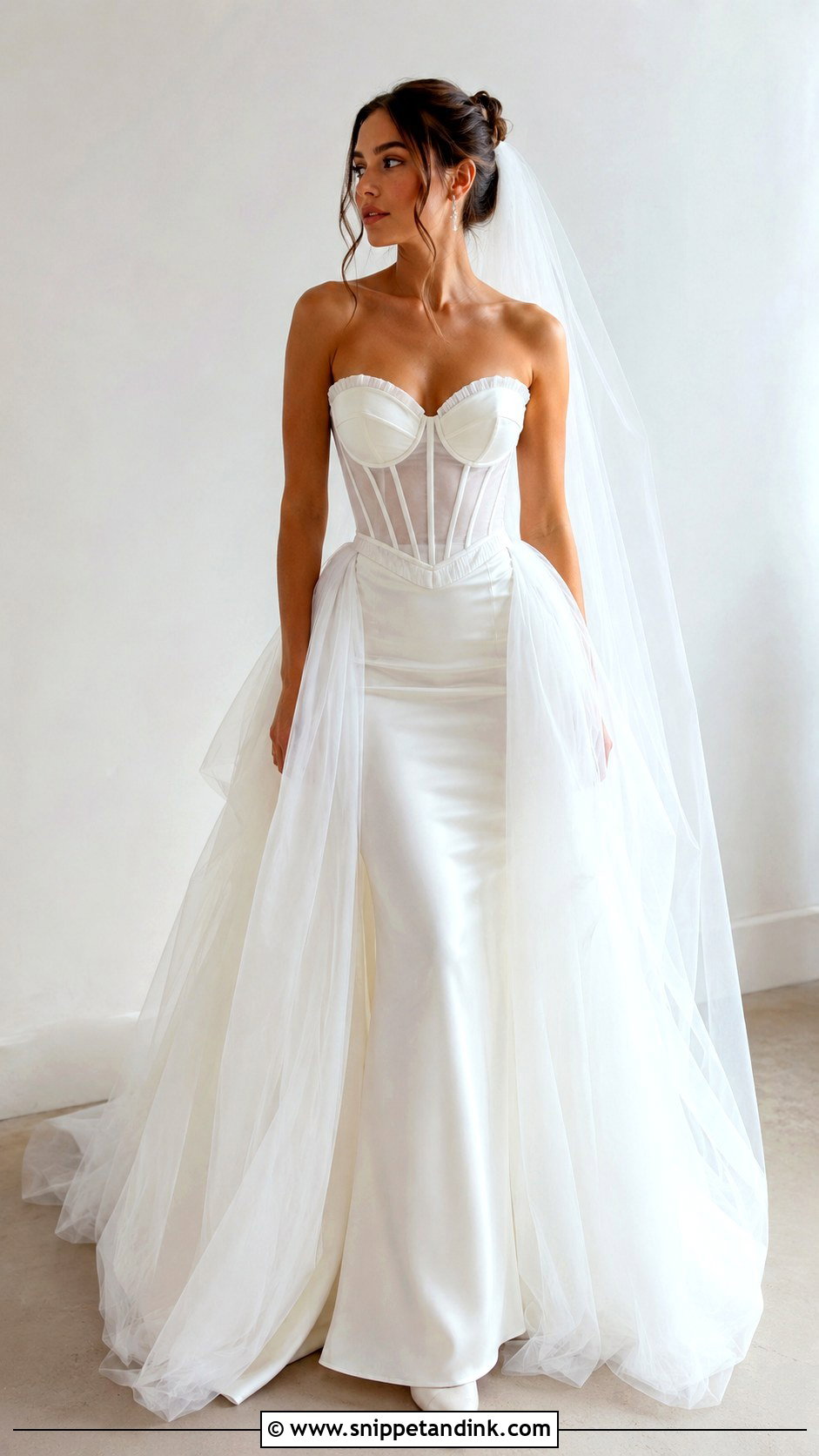
A corset bodice is the natural partner for an overskirt, because it creates a firm waist for the skirt to hang from. The result is a sharp hourglass. Exposed boning looks modern; covered boning reads softer. Tulle or organza keeps things light; satin adds formality. The key is the line where corset meets skirt, which should sit dead level all the way round. Simple earrings, a sleek veil and elegant heels keep the styling clean.
9. Minimalist Wedding Dress With Overskirt
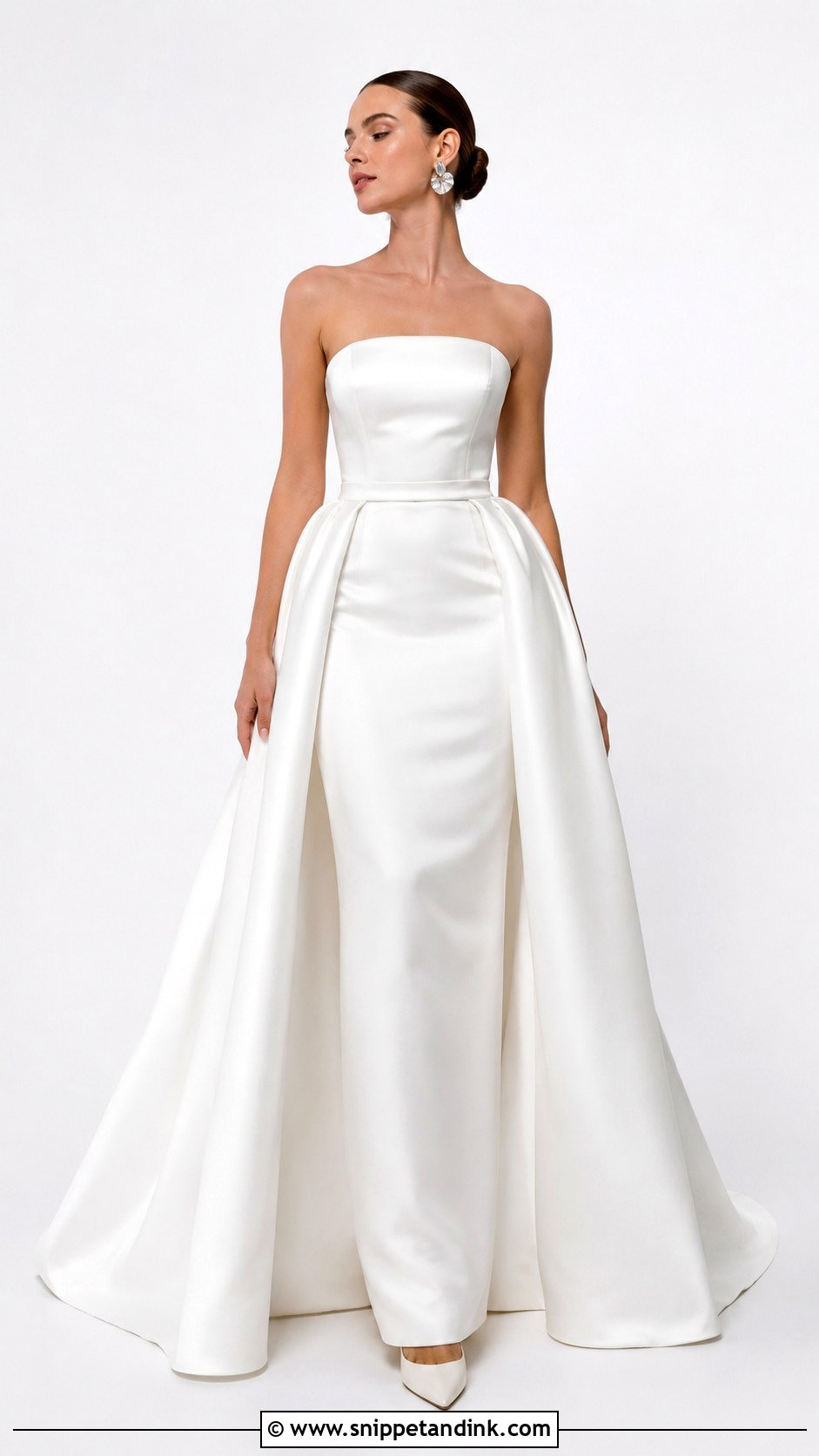
A minimalist wedding dress with overskirt suits a bride who wants clean lines and a memorable entrance. The base can be a plain column, sheath or strapless dress with no beading or lace, and the overskirt adds shape while staying unfussy. Smooth satin, mikado or crepe look most refined. Sculptural earrings, a sleek bun and a plain cathedral veil are all it needs. Here, fit and fabric carry everything, so any flaw in the waist join will show.
10. Ball Gown Overskirt Wedding Dress
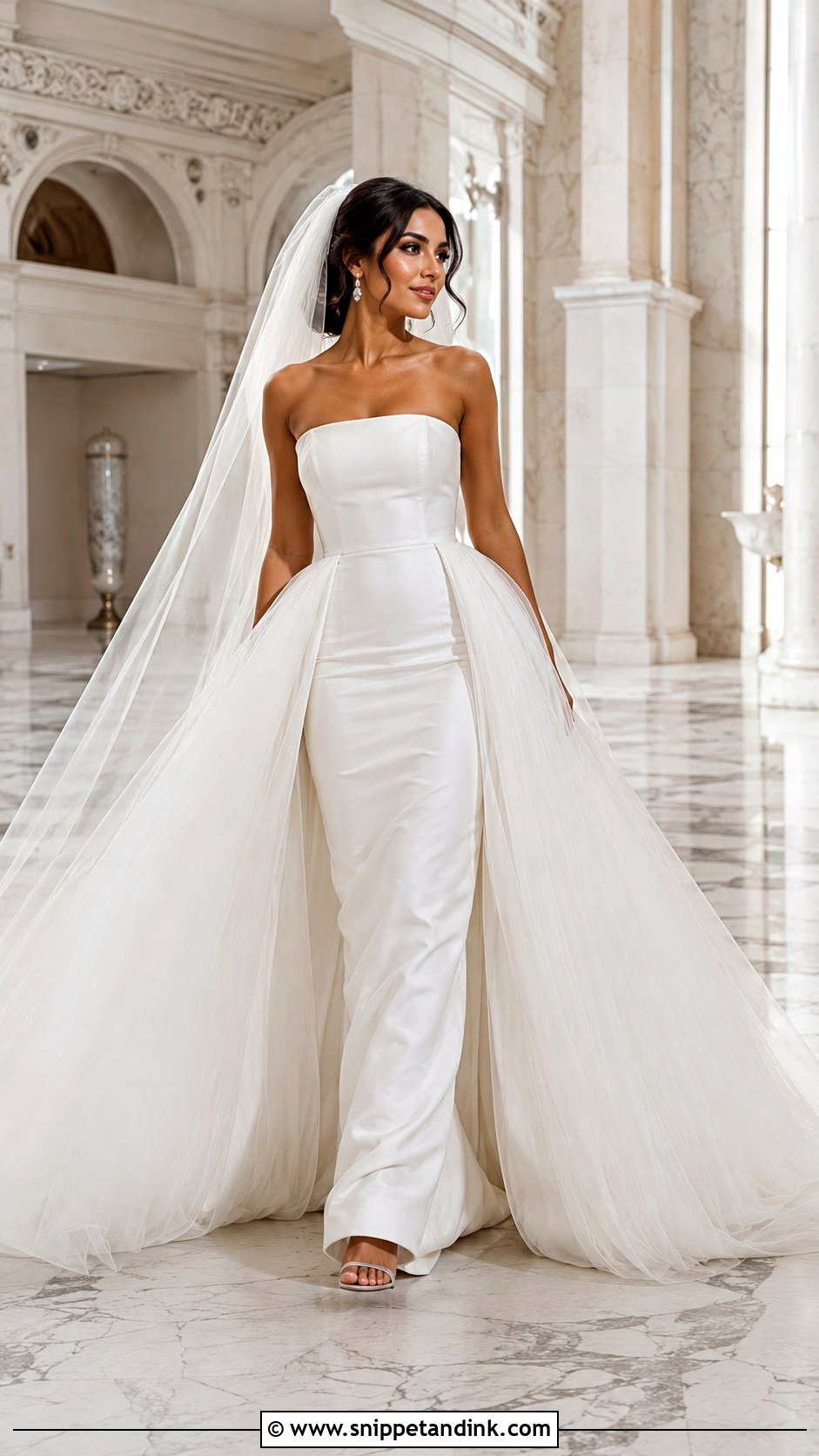
You can have the ball gown entrance without wearing a ball gown all night. A full tulle, organza or mikado overskirt over a slimmer base gives you the volume for photos and the freedom to move afterwards. I always remind brides that full overskirts need space: plan where it will be removed and who will carry it, because it won’t fit on a dining chair. A fitted bodice and defined waist keep the shape intentional, with a long veil, simple jewelry and comfortable heels hidden underneath.
11. A Line Overskirt Wedding Dress
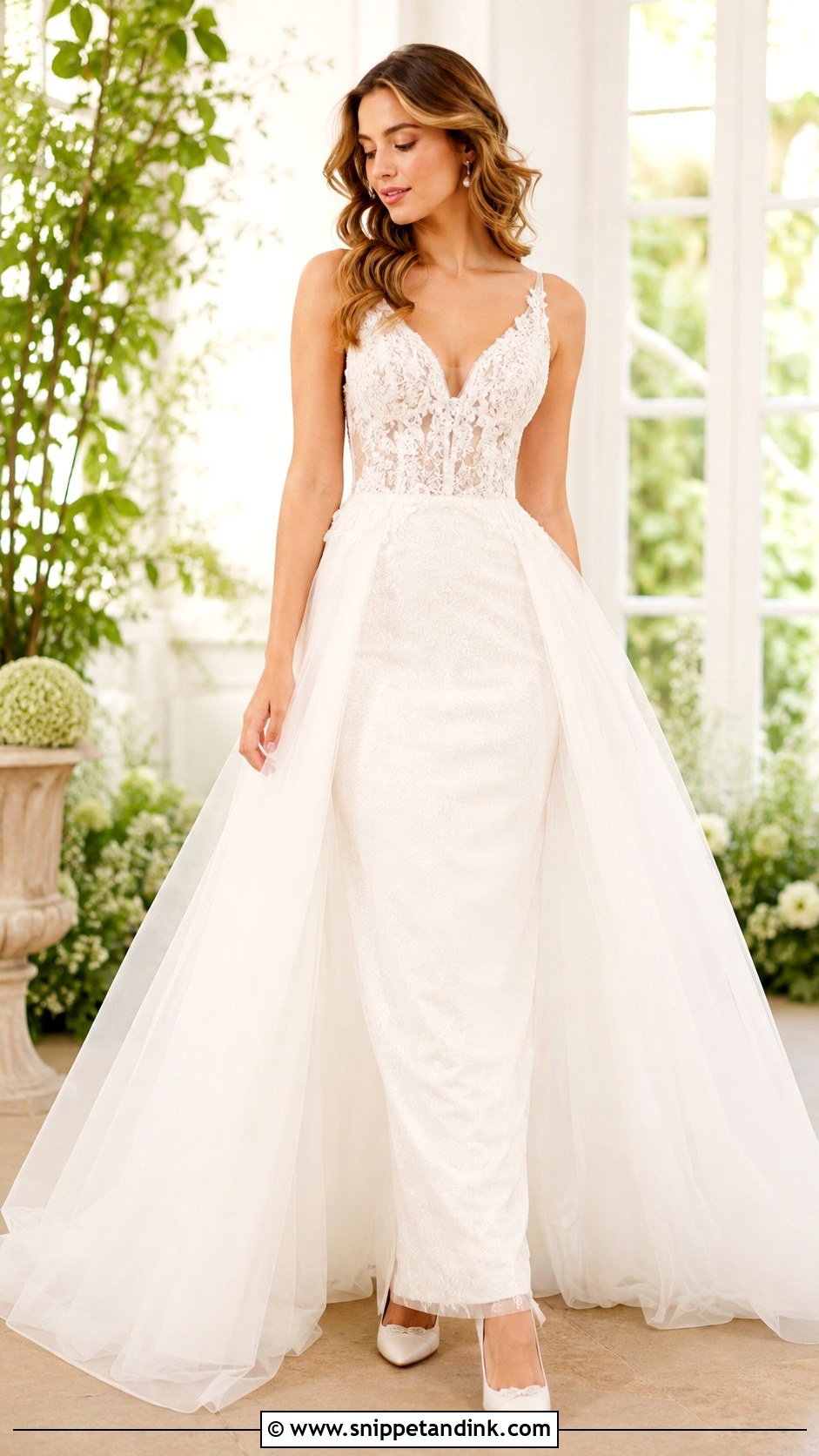
An A-line overskirt flares gently from the waist, adding shape without ball gown weight. It sits well over fitted sheaths, plain crepe gowns or soft lace bases and feels natural rather than theatrical. Lighter fabrics move more; structured ones hold the A cleanly. I’d suggest this shape to brides who are nervous about the big reveal, since the before and after differ, but not wildly. Soft curls, simple earrings and classic bridal shoes suit it.
12. Sheath Wedding Dress With Overskirt
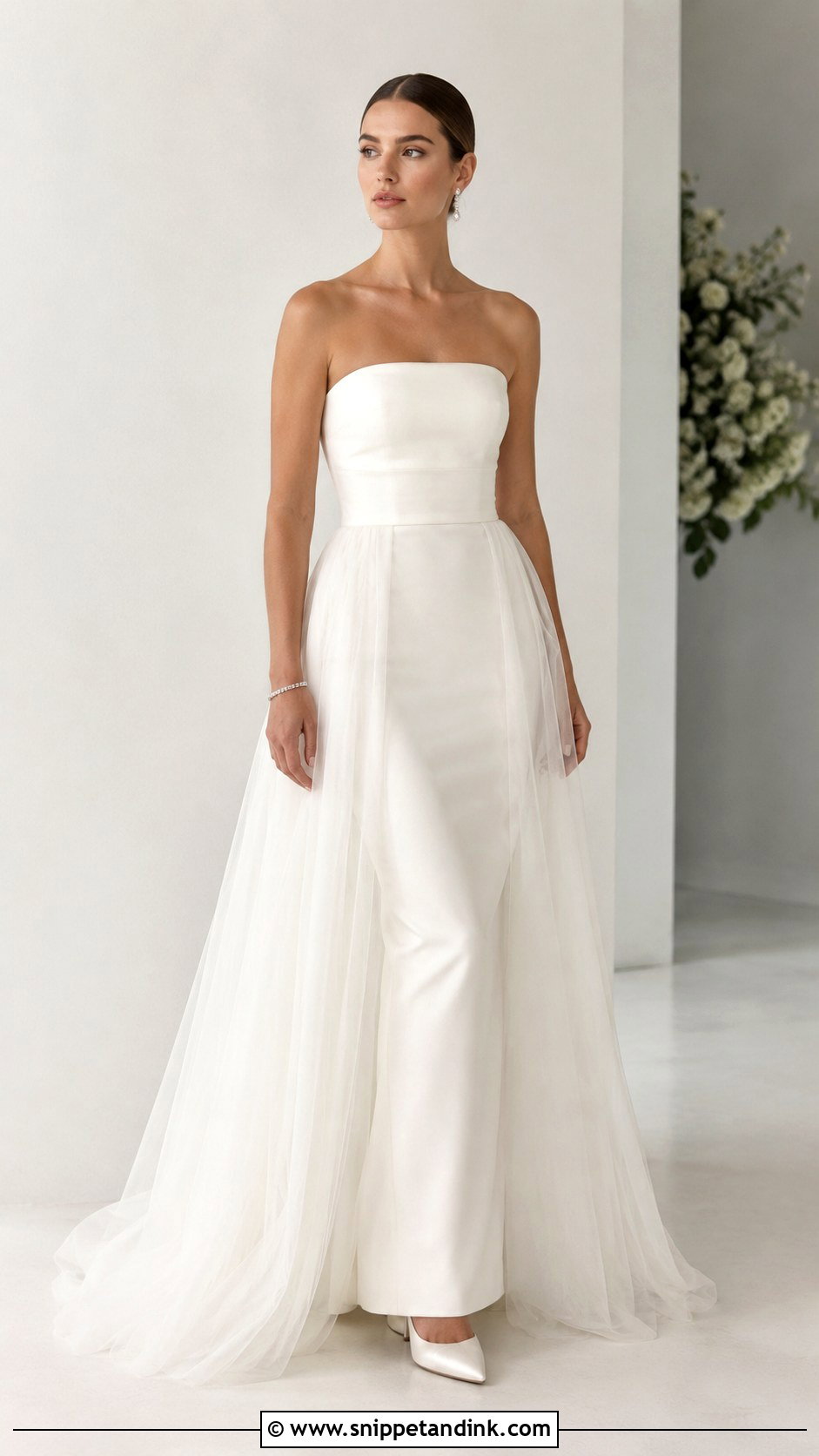
A sheath underneath keeps the body line simple, and the overskirt adds volume only when you want it. Many brides remove it after formal portraits. Sheer tulle feels light and romantic; satin makes the change more dramatic. Because a sheath has no waist seam of its own in some designs, ask how the overskirt will anchor: hidden belt loops or an internal waist stay stop it sliding down your hips. A slim bracelet, drop earrings and a smooth hairstyle keep it polished.
13. Floral Overskirt Wedding Dress
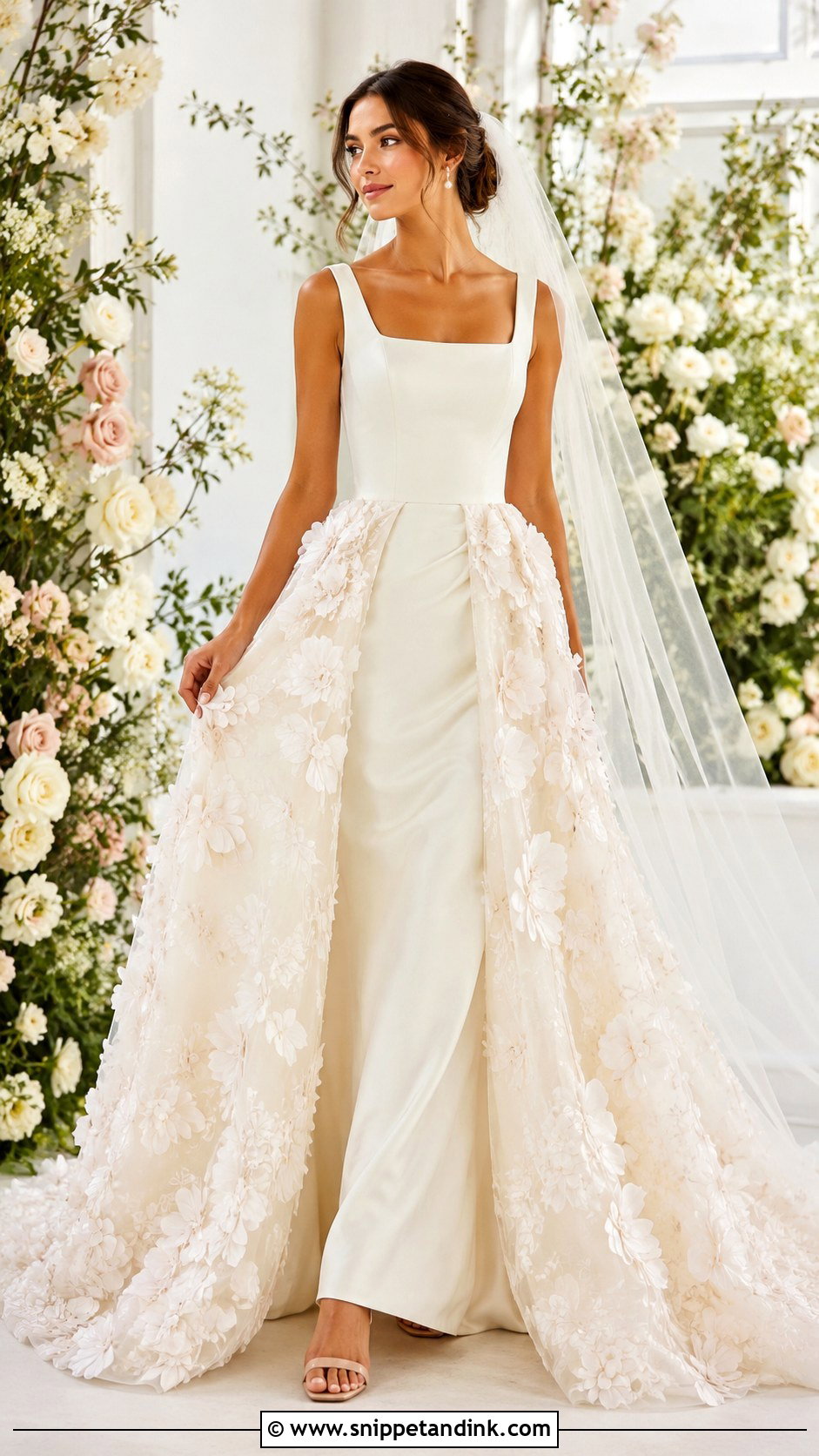
Flowers on the overskirt can come as lace appliqués, embroidery, 3D petals or a subtle print. Over a simple base gown, the floral layer becomes the main event. Raised 3D petals are the delicate part; they crush when you sit and catch on chair legs, so I’d keep them off the back of the hip. Pearl earrings, a sheer veil and soft ivory shoes complement it. If the flowers carry colour, pick one shade for the bouquet so everything connects.
14. Organza Overskirt Wedding Dress
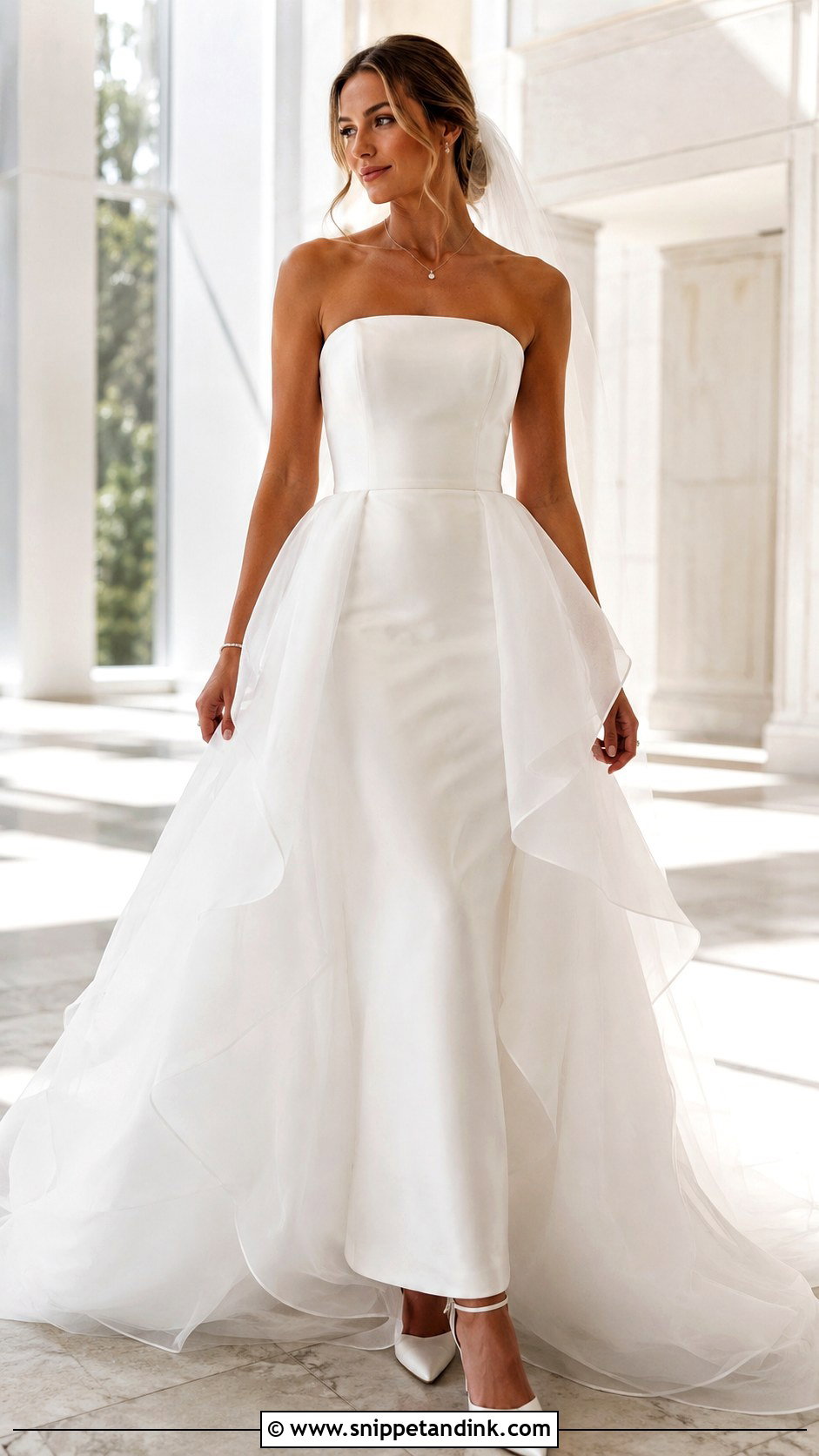
Organza is crisper than tulle and still airy, so it holds volume without much weight. It can make a clean A-line, a ball gown or a sculptural layered skirt, and looks especially sharp over a fitted satin or crepe gown. Organza catches light, which reads well in bright rooms and outdoors. It also creases if crushed in a car, so I’d transport it hanging and steam it at the venue. Sleek heels, a simple veil and understated jewelry suit it.
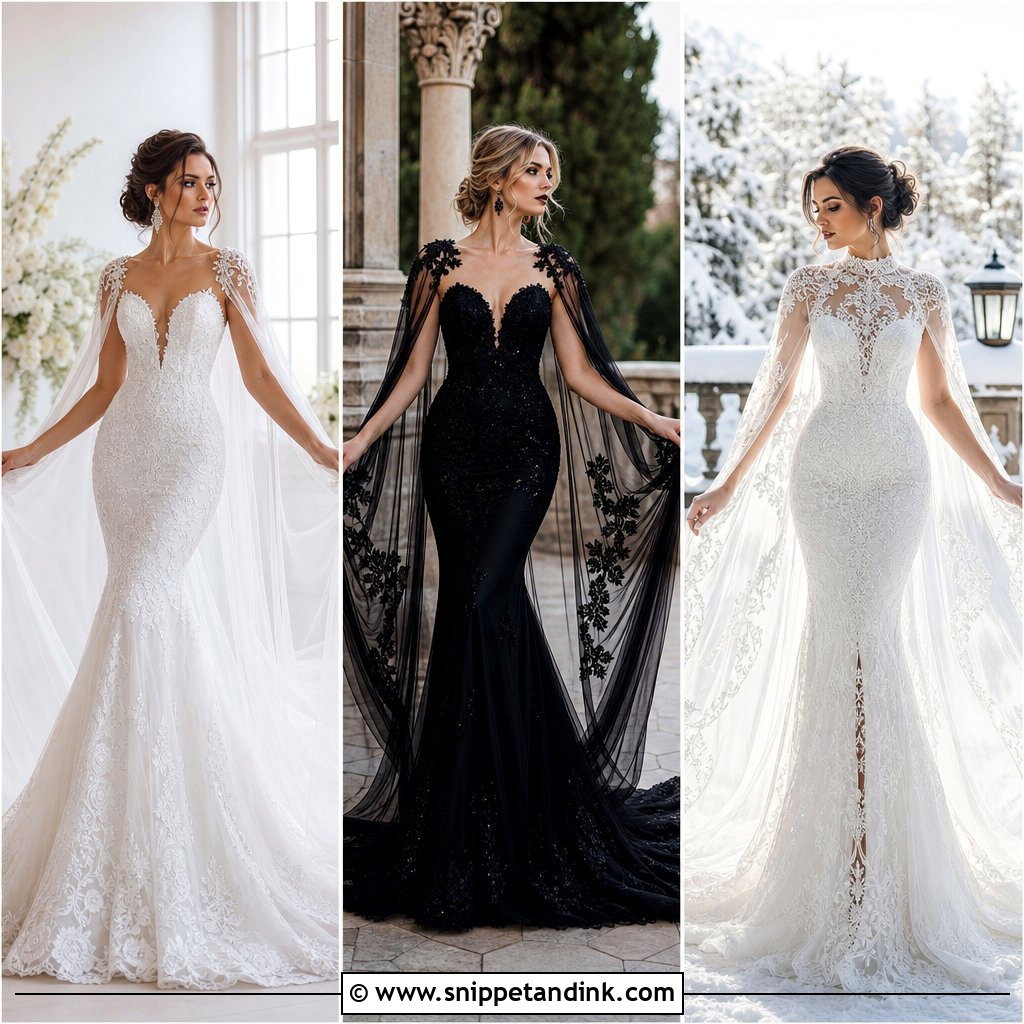
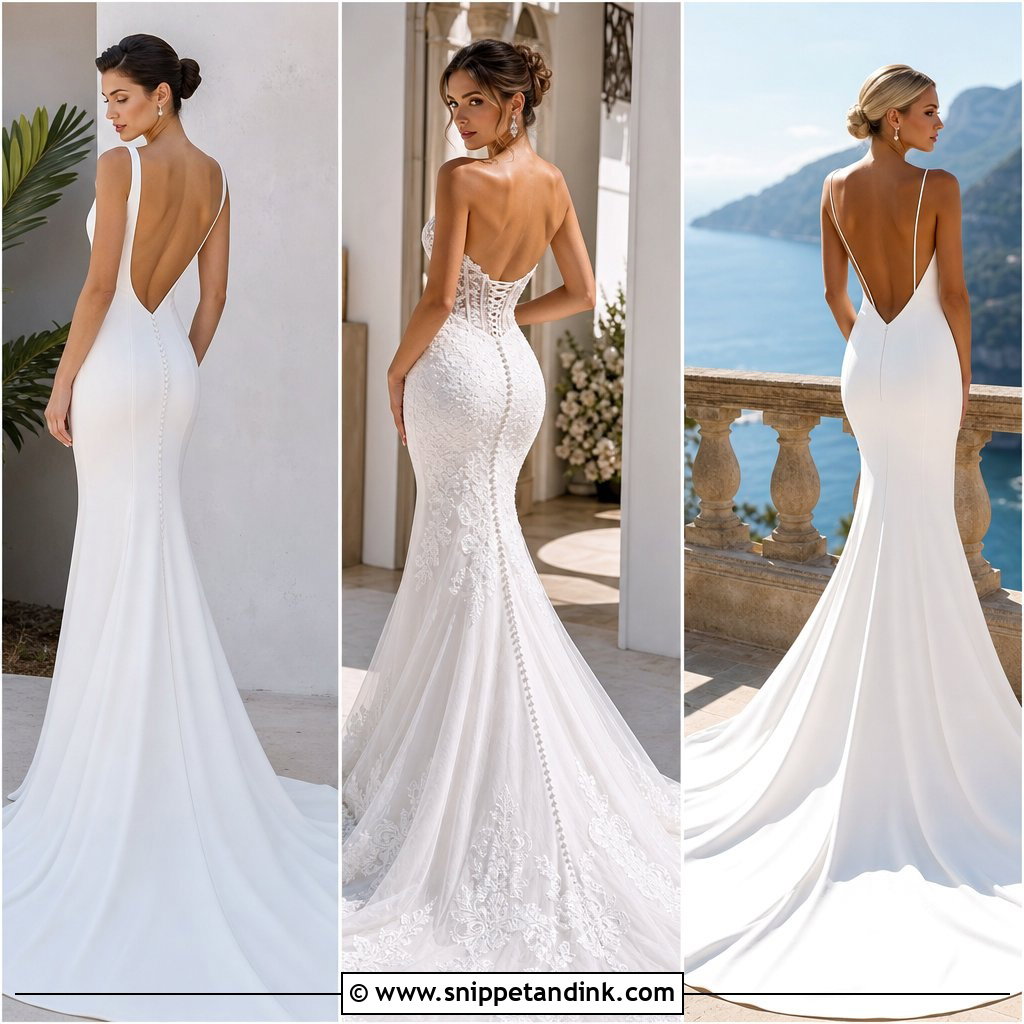
15. Crepe Wedding Dress With Overskirt
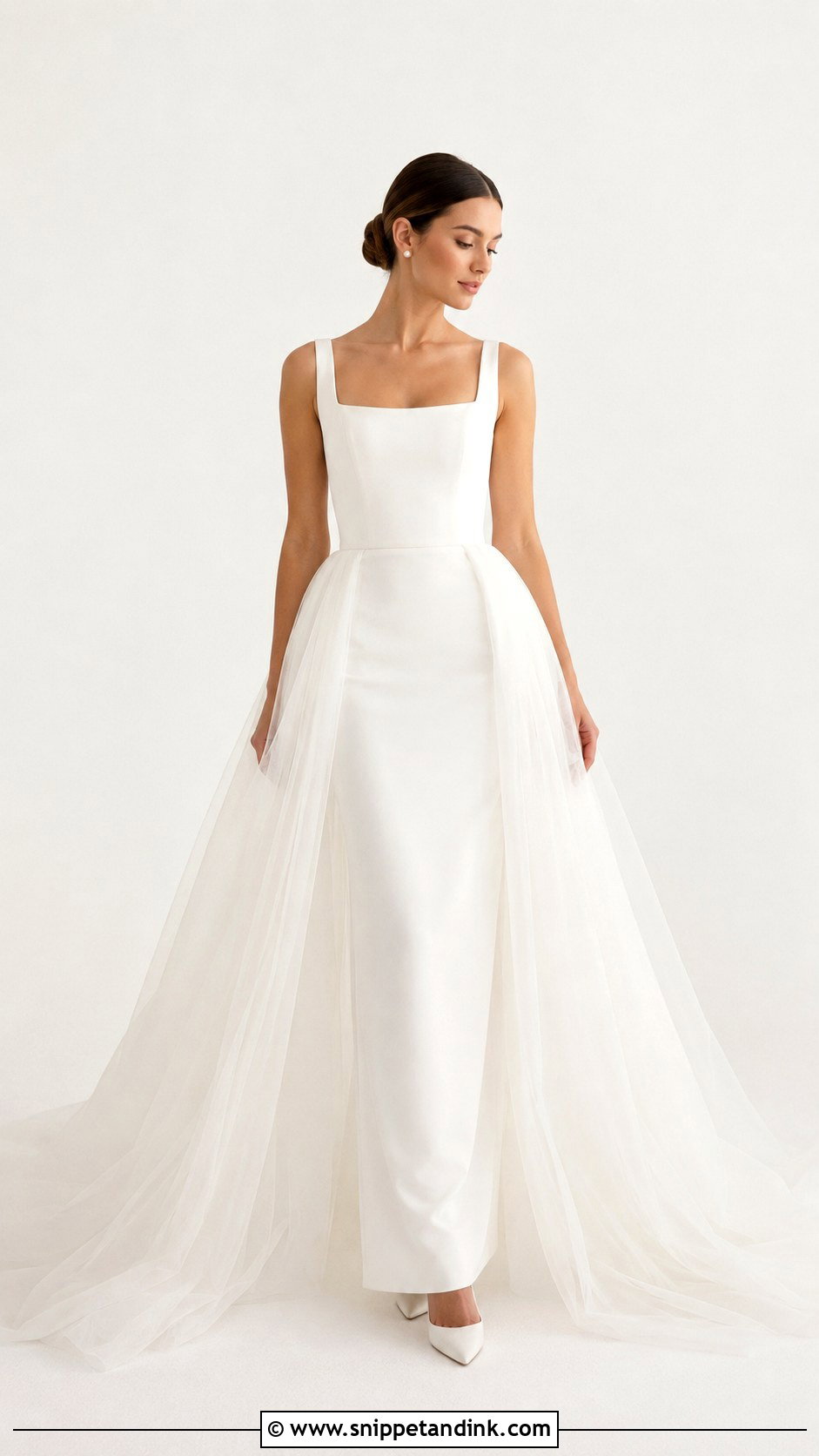
Crepe makes a smooth, body-skimming base that’s comfortable to dance in, which is exactly what you want under a removable skirt. Add a tulle, satin or crepe overskirt for the ceremony, then take it off to reveal a fitted dress for the reception. Square necks, bateau necks and long sleeves all pair well. Crepe shows pressure marks less than satin, so the waistband of the overskirt won’t leave an obvious line when it comes off. Pearl studs, a low bun and pointed pumps finish it.
16. Beaded Wedding Dress With Overskirt
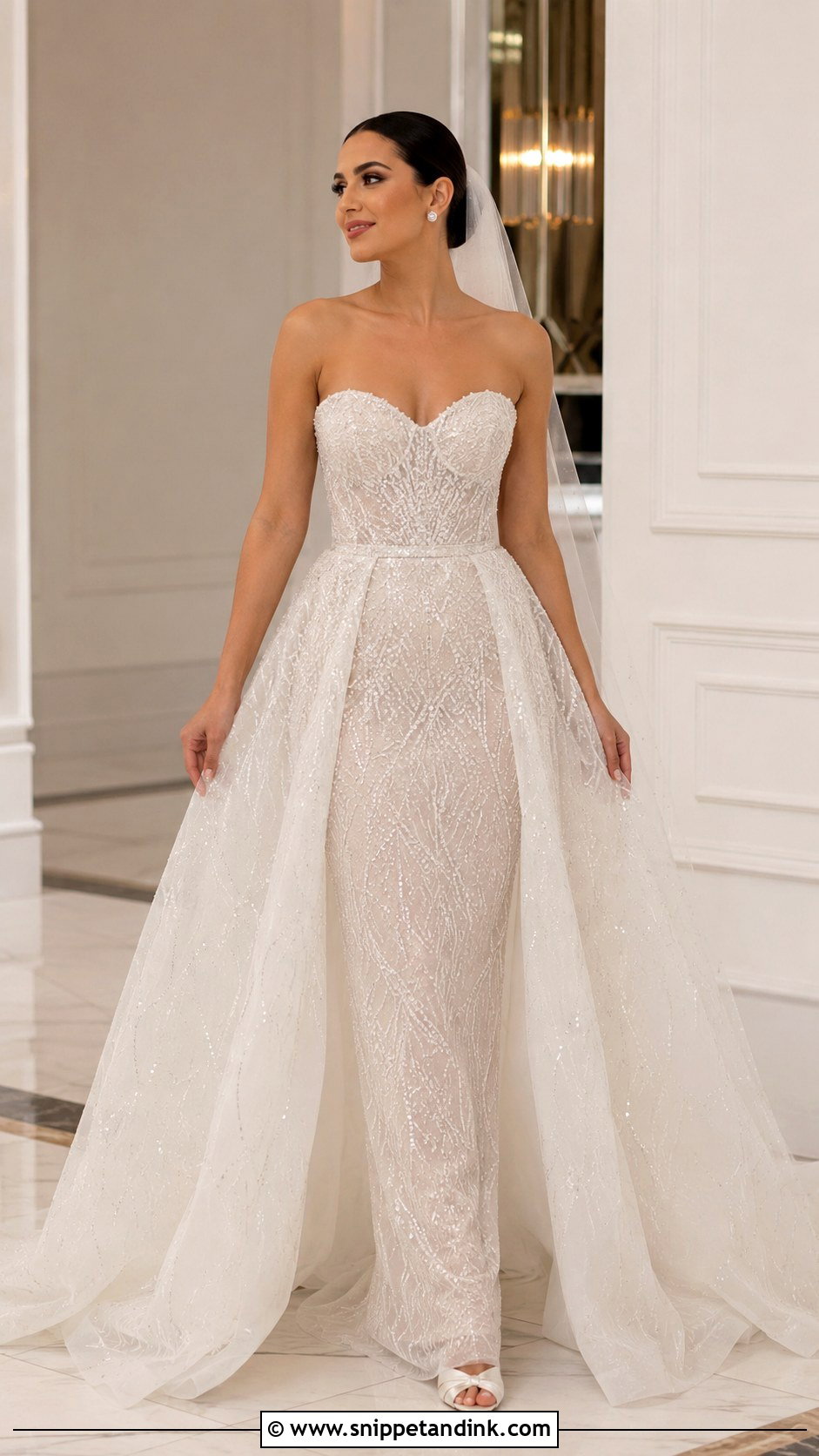
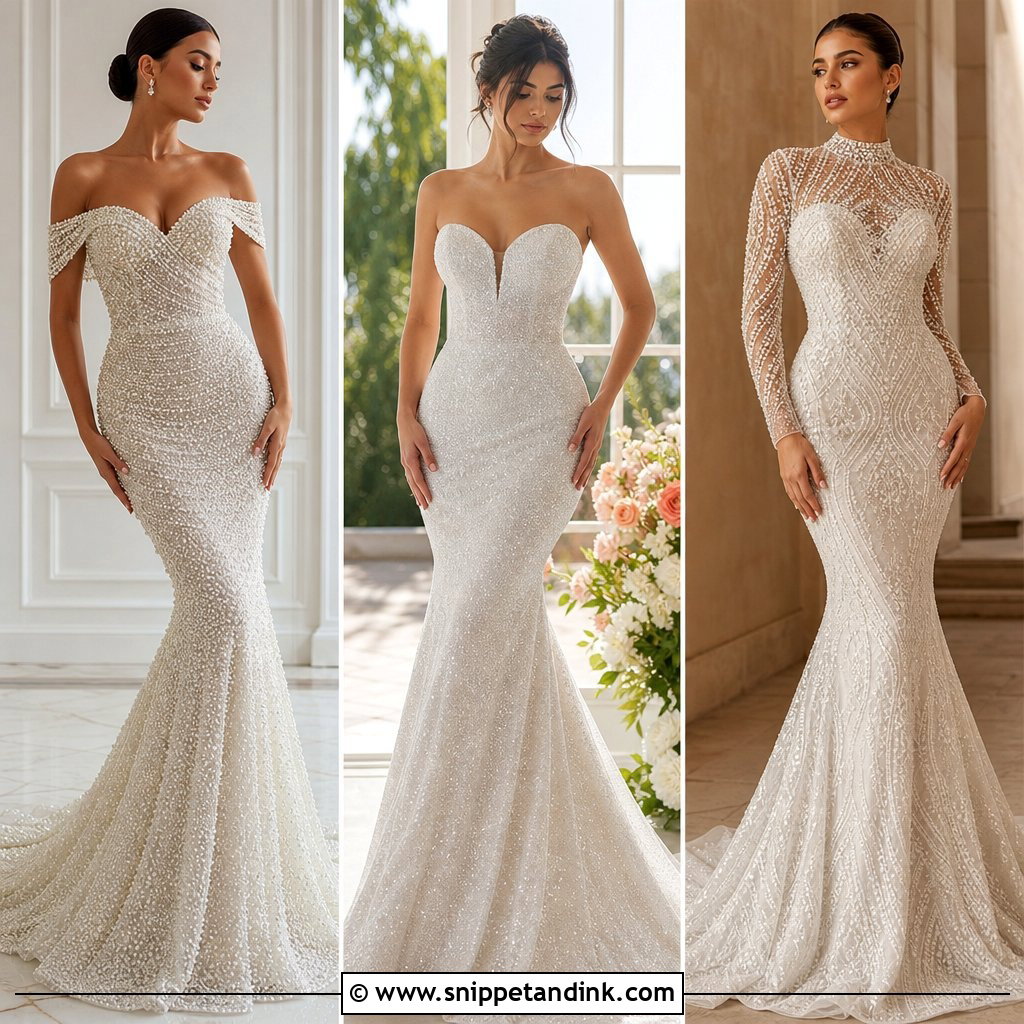
Sparkle on the base and a sheer overskirt on top is the combination I like most here, because the beading glints through as you move. A heavy, fully embellished overskirt over a beaded gown just adds weight and hides the work. Choose a light or barely embellished overskirt instead. Under bright lights, the base gown will shimmer with every step. Keep jewelry minimal since the dress already shines, and finish with bridal heels, a clean veil and a smooth hairstyle.
17. High Low Overskirt Wedding Dress
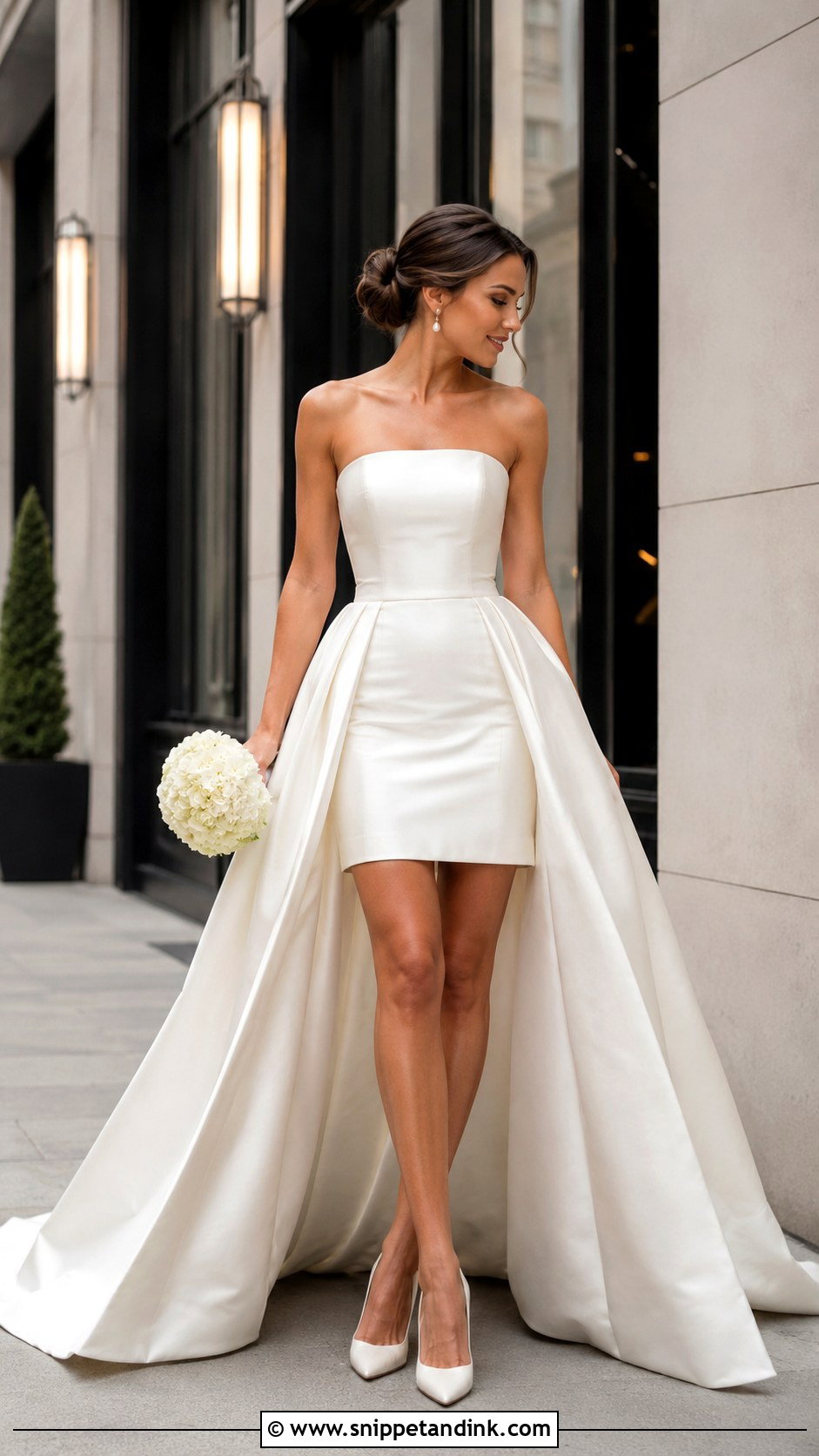
High-low overskirts show off the base gown or your shoes at the front and sweep into a train behind. They pair well with mini, tea-length or slim column dresses. It’s the lightest way to get a train, which suits brides who don’t want a full-length layer. Your shoes will be on show from the first step, so satin pumps or embellished sandals are worth the spend. A simple veil and clean earrings keep it from looking busy.
18. Side Slit Wedding Dress With Overskirt
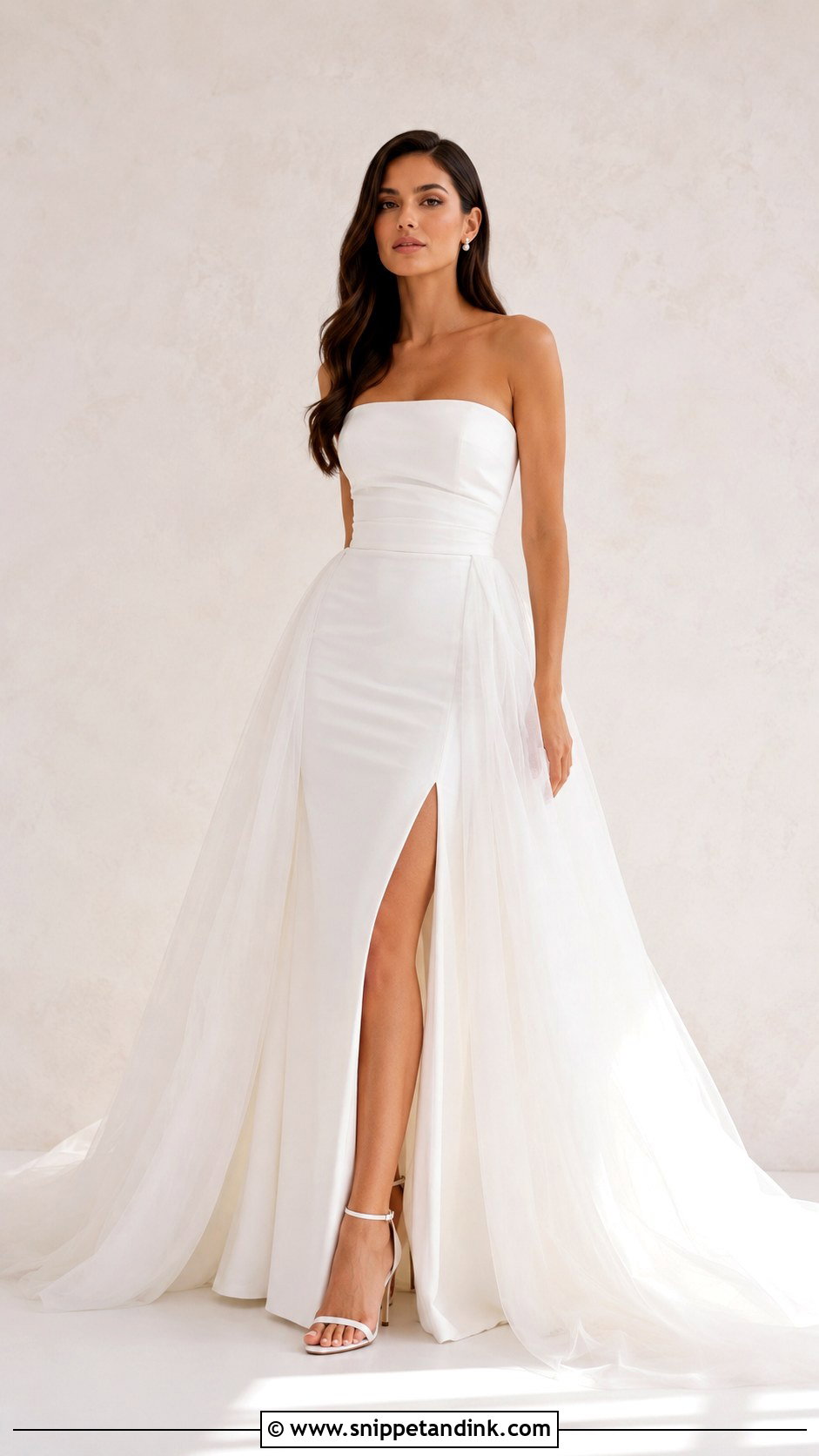
A side slit stays hidden during the ceremony, then appears when the overskirt comes off. You get coverage for the vows and a lighter, freer dress for the reception without a second outfit. A satin or crepe base looks sleek, topped with soft tulle or organza. I’d check the slit height while sitting and climbing a step, because a slit that looks modest standing can rise a long way once you’re seated. Elegant heels, minimal jewelry and a polished hairstyle complete it.
19. Square Neck Wedding Dress With Overskirt
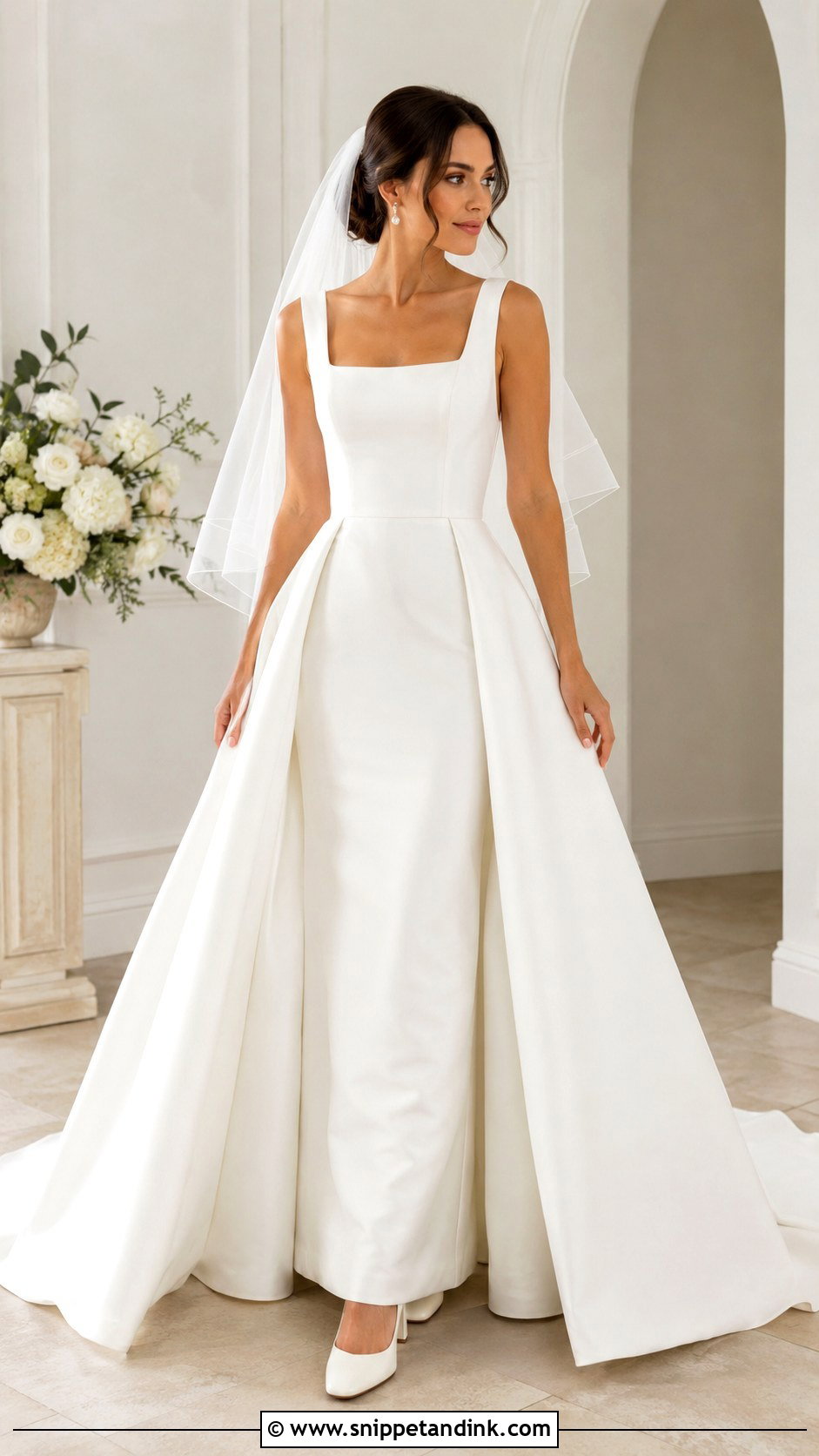
Square necklines give a structured, modern classic line, and under an overskirt they keep the whole look formal without fuss. Satin, mikado, crepe and lace all work. If you need more support, I’d ask for wider straps or a corset under the square neckline rather than relying on the neckline alone. Pearl earrings, a smooth bun and a medium-length veil suit it, with plain ivory pumps or block heels.

20. V Neck Wedding Dress With Overskirt
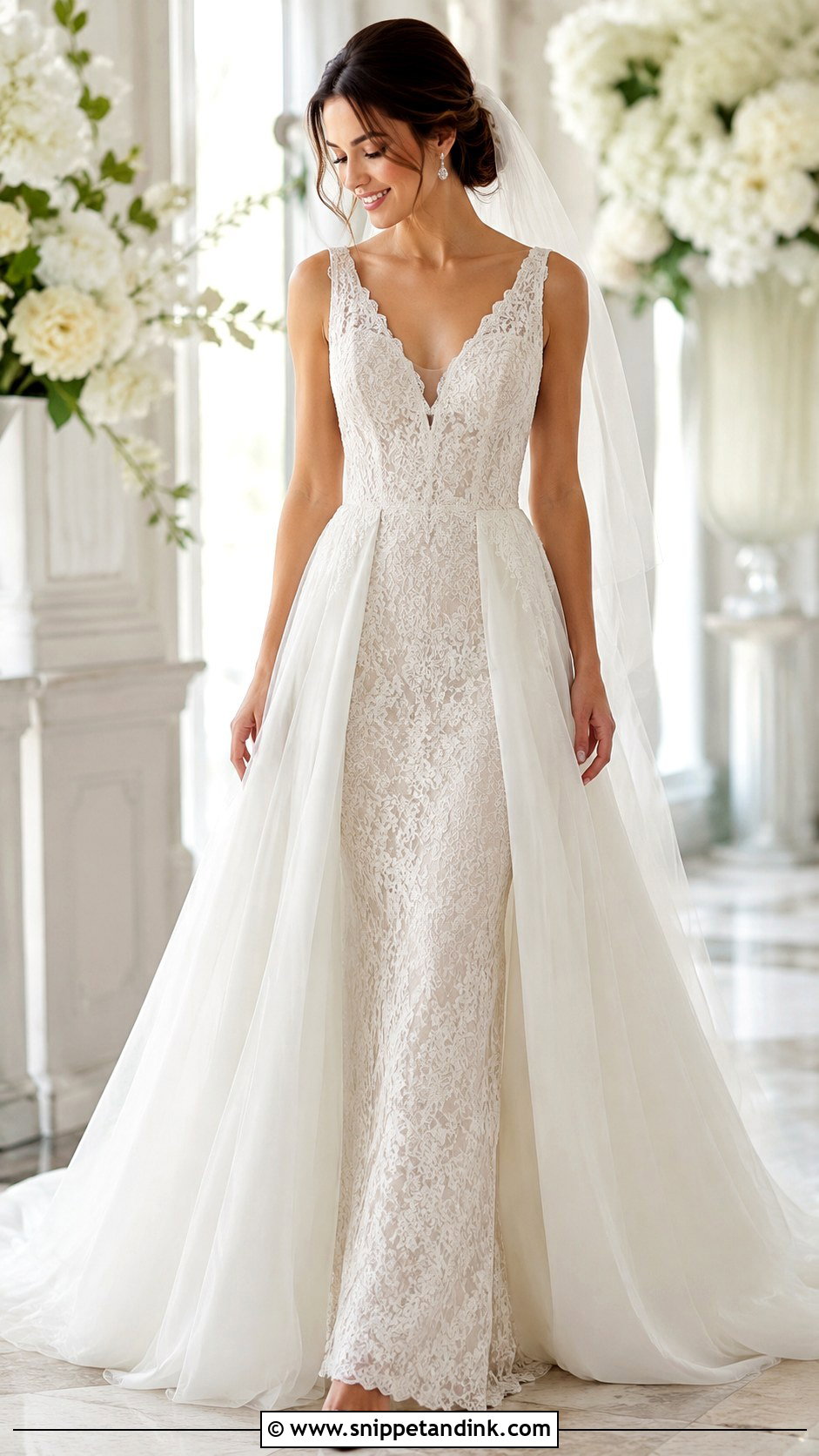
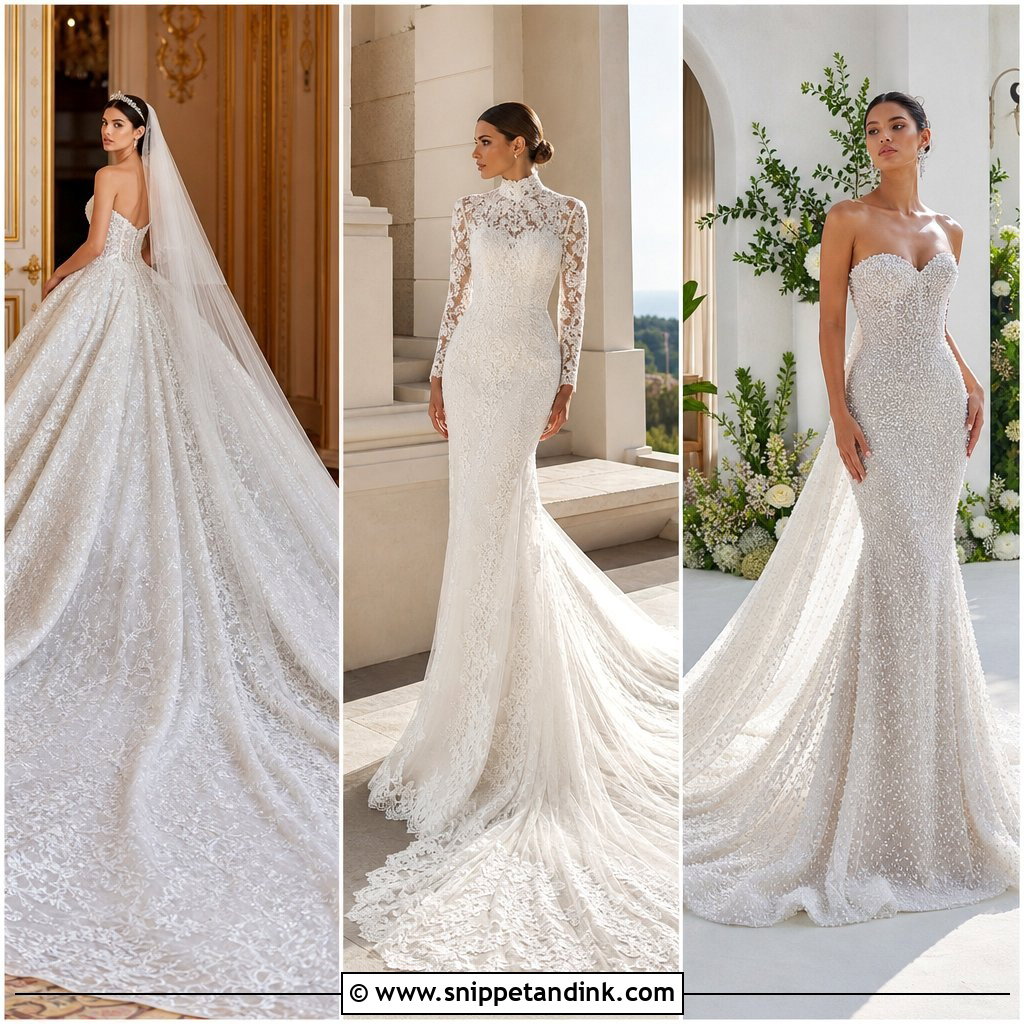
A V neck wedding dress with overskirt lengthens the upper body while the skirt adds fullness below, which makes for a balanced, elongated shape. The V can be modest or deeper with illusion mesh for support. A light overskirt in lace, chiffon, tulle or crepe keeps it graceful. Wear a pendant only if the neckline is plain; otherwise, earrings, a veil and elegant heels are enough.
21. Halter Wedding Dress With Overskirt
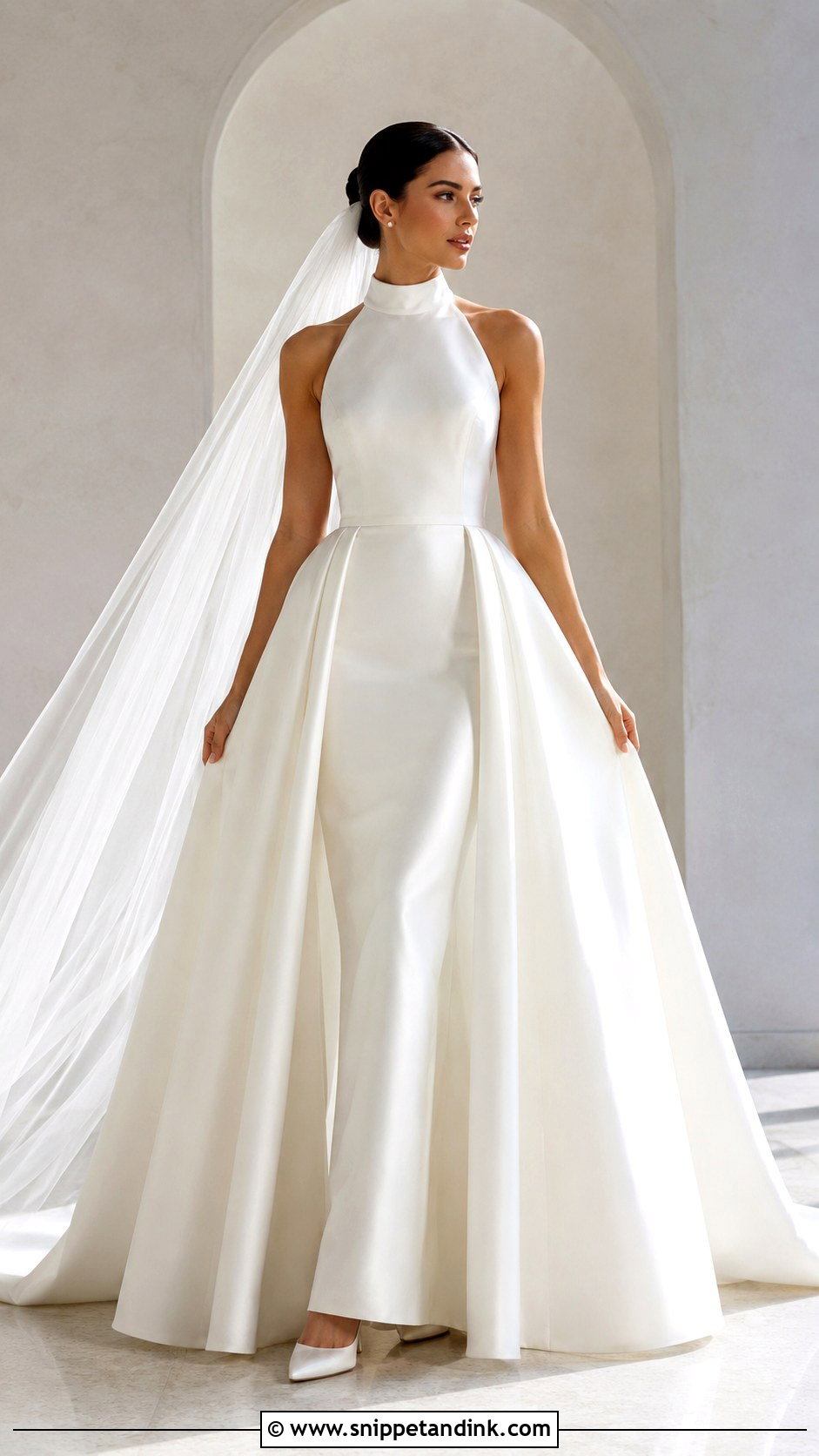
A halter wedding dress with overskirt feels sleek and a little unexpected. The halter pulls focus to the shoulders, and the overskirt adds volume below. A fitted crepe or satin halter under a detachable skirt gives a sharp contrast. Because a halter hangs weight from the neck, a heavy overskirt can make it ache by evening; I’d keep the overskirt light. Wear your hair up to show the neckline, with small earrings, a smooth veil and simple heels.
22. Short Wedding Dress With Overskirt
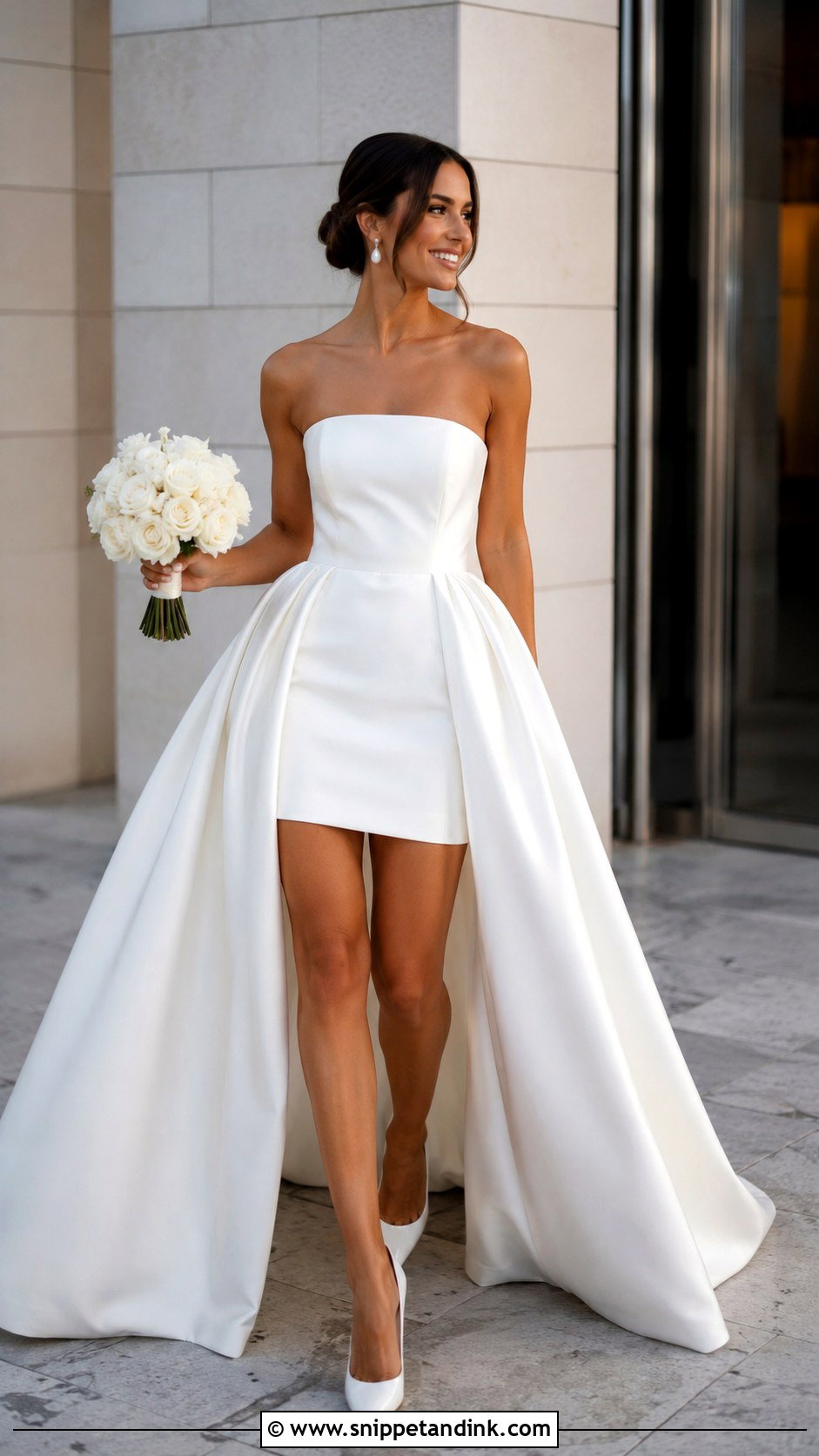
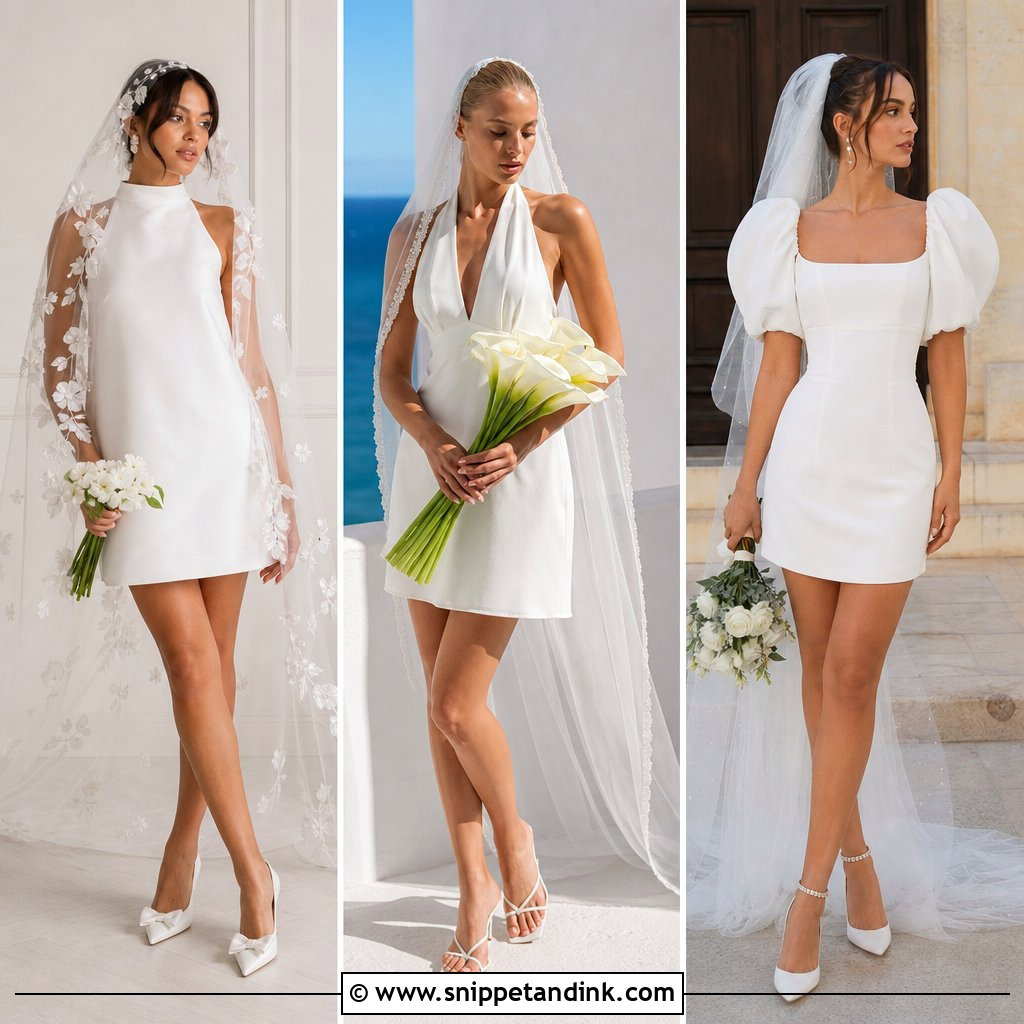
This is the biggest reveal of the lot: a full-length look for the ceremony, then a short dress for dancing. It suits city weddings, courthouse celebrations and modern receptions. The base must be structured, in satin, crepe or mikado, so it holds its shape under the overskirt and doesn’t come out crumpled. Ask to see the short dress after it’s been worn under the overskirt for a while at a fitting. Chic pumps, pearl earrings and a neat hairstyle finish it.
23. Blush Overskirt Wedding Dress
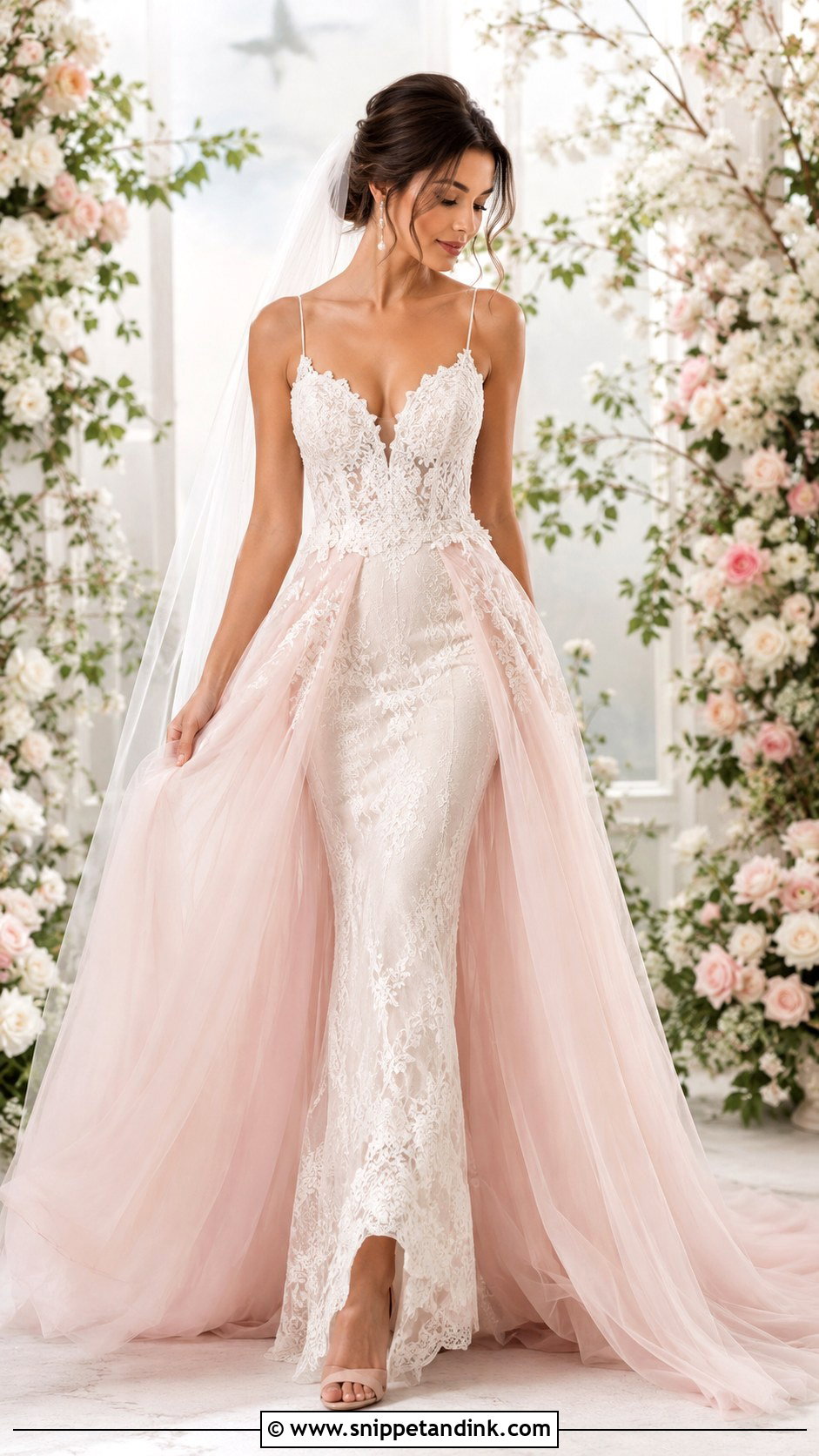
Blush can be faint, glowing through ivory tulle, or obvious in the overskirt itself. Either way, it softens all-white styling. I like an ivory or champagne base with the blush in the overskirt, so the colour leaves with the skirt and the reception look reads more classic. Floral appliqués, lace bodices and delicate veils suit it. Pearl earrings, nude heels and a bouquet in pale pink and cream keep everything soft.
24. Bow Overskirt Wedding Dress
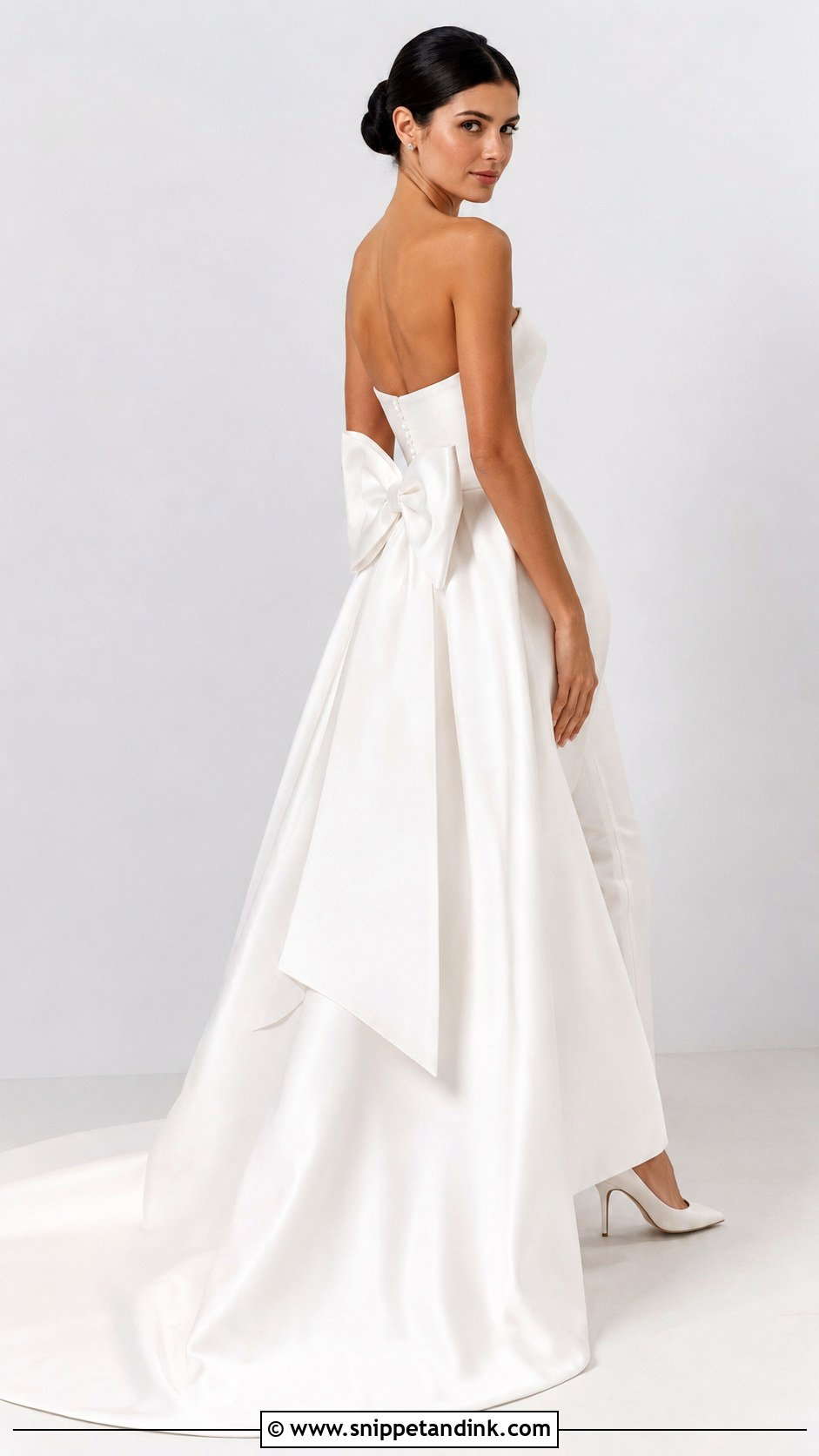
A bow can sit at the back waist, the side or along the train. It works best on a simple base gown, where it becomes the focal point. Satin or mikado bows stand up crisply; organza bows look softer. The practical issue is sitting: a large back bow gets squashed against a chair, so I’d plan to remove or re-fluff it before the reception. Keep jewelry minimal and the hair smooth so the back detail stays visible, with simple heels and a clean veil.

25. Cathedral Train Overskirt Wedding Dress
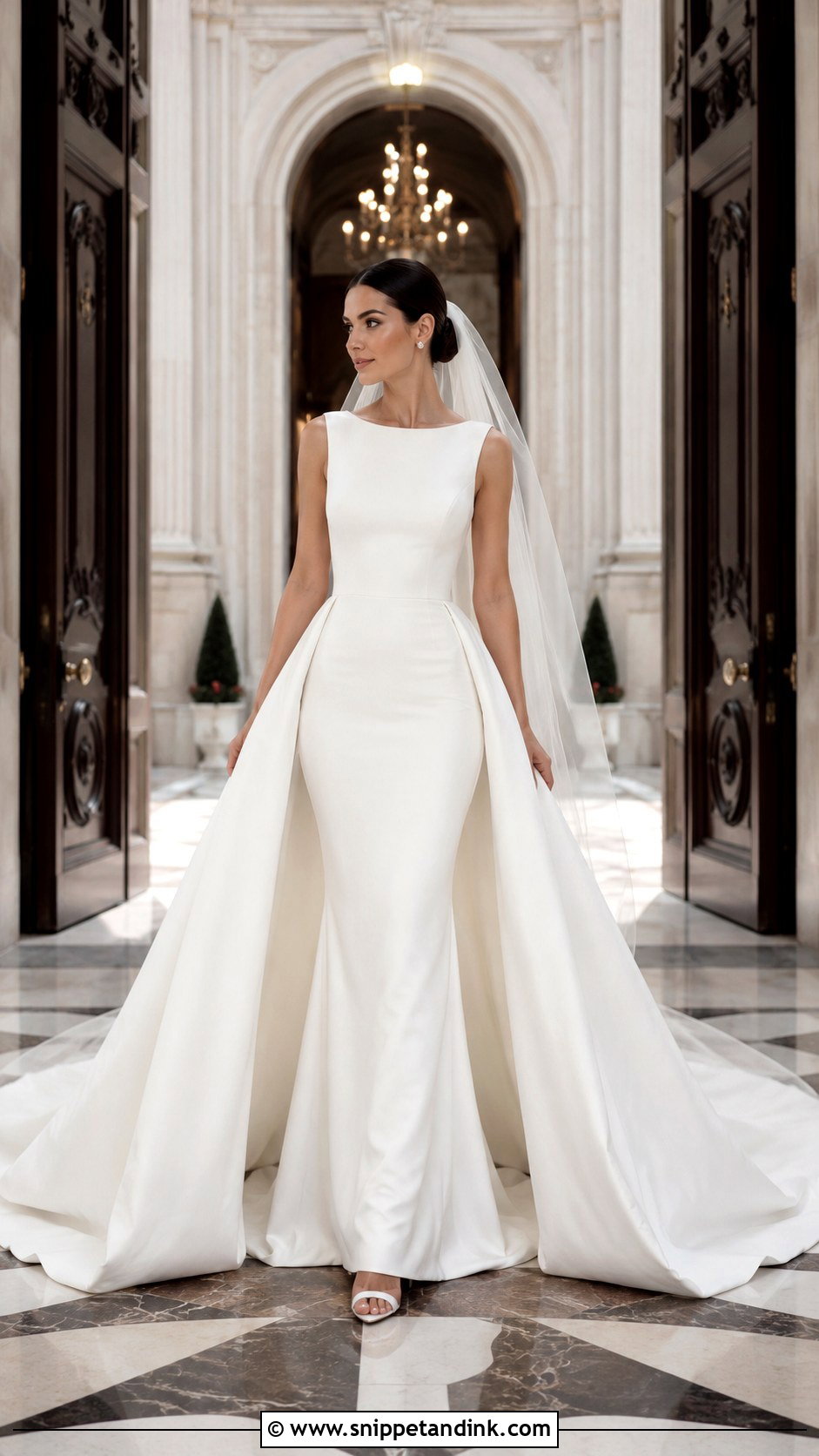
A cathedral-length overskirt is built for a grand entrance. You get the long train for the ceremony and formal portraits, then remove it so you aren’t hauling yards of fabric all night. The base can be fitted, minimalist, lace or beaded. Check that the train attaches securely enough to survive people stepping on it, and that it can be bustled or removed with one helper. Add a cathedral veil only for maximum drama; otherwise, simple earrings, polished heels and a low bun.
Rehearse the Reveal Before the Wedding Day
The change from ceremony look to party look should take a couple of minutes, not twenty. Most of the delays I’ve watched come from the helper never having seen the fastenings before.
- Choose one helper, usually a bridesmaid or your planner, and have them unfasten and refasten the overskirt at your final fitting.
- Decide the exact moment: after portraits, before the first dance or when the reception doors open. Put it in the timeline so the photographer is ready for the before and after.
- Pick a private spot near the room with a mirror. A bridal suite works; a corridor doesn’t.
- Bring a padded hanger and a garment bag sized for the skirt, plus someone assigned to take it home.
- Check the base gown once the skirt is off: smooth any pressure line at the waist and swap the veil for a comb if you’re changing your hair.
After the wedding, the overskirt goes to the cleaner along with the gown. Hems of long overskirts collect floor dirt quickly, and tulle snags easily if it’s stuffed into a bag still damp.
Two Silhouettes, One Dress and a Plan for the Switch
An overskirt lets you walk in with volume and texture, then take it off for comfort and movement. Your choice comes down to the base dress, the venue, the season and how big a transformation you want. Tulle is soft, satin classic, lace romantic and organza crisp. Before you commit, test how the overskirt attaches, sits, moves and comes off, and rehearse that removal with the person who’ll actually do it. Get those details right and the ideas above give you two looks you’ll enjoy.
You'll Like These Ideas:





Leave a Reply