
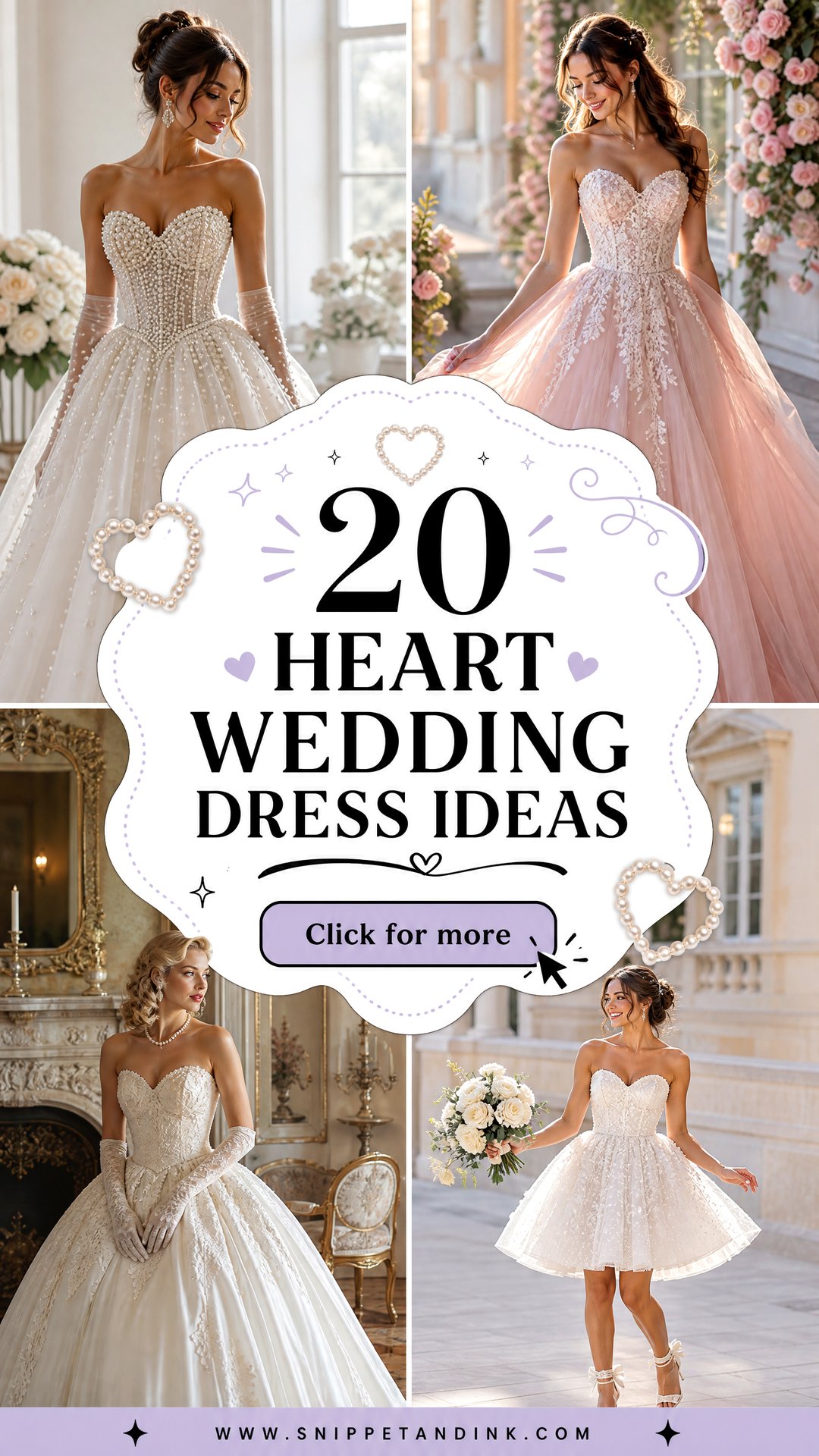
A heart-shaped neckline does one job very well: it pulls the eye to the collarbone and face and gives the bodice a soft curve instead of a straight line. In fittings, though, I see it go wrong more often than any other neckline, because a sweetheart only looks romantic when it is built to hold its shape. Below are twenty complete looks, from strapless ball gowns to short reception dresses, plus heart appliqués and heart-shaped backs that move the motif away from the bust. For each one I’ve noted how the construction behaves, who it suits and what I would pair with it, so you can walk into a salon knowing what to ask for.
Three Fit Checks I Run on Every Sweetheart Bodice
Most sweetheart problems are visible within five minutes of putting the dress on, if you know where to look. These are the checks I do at the first fitting, before anyone talks about veils.
The top edge should lie flat, not stand away
Look in a side mirror. If the curved edge of the cups lifts away from your skin, even slightly, the bodice is too big through the bust or the cups are the wrong shape for you. A seamstress can take in side seams, but she cannot easily reshape a cup that is too deep. A gap that small in the mirror becomes a shadow in photos taken from above.
The dress should stay up without a squeeze
A well-built strapless bodice is held by its waist stay and boning, so it grips at the waist and ribcage rather than crushing the bust. Raise both arms over your head. If the bodice slides down, or you feel pressure across the top of the chest, the internal structure isn’t doing its job.
Sitting changes everything
Sit on an ordinary chair and look down. Boning that ends too low will push into your hips, and a centre dip can bow forward when you lean. These are fixable early, but they are much harder to fix in the last fitting, so raise them at the start.
1. Strapless Sweetheart Wedding Dress
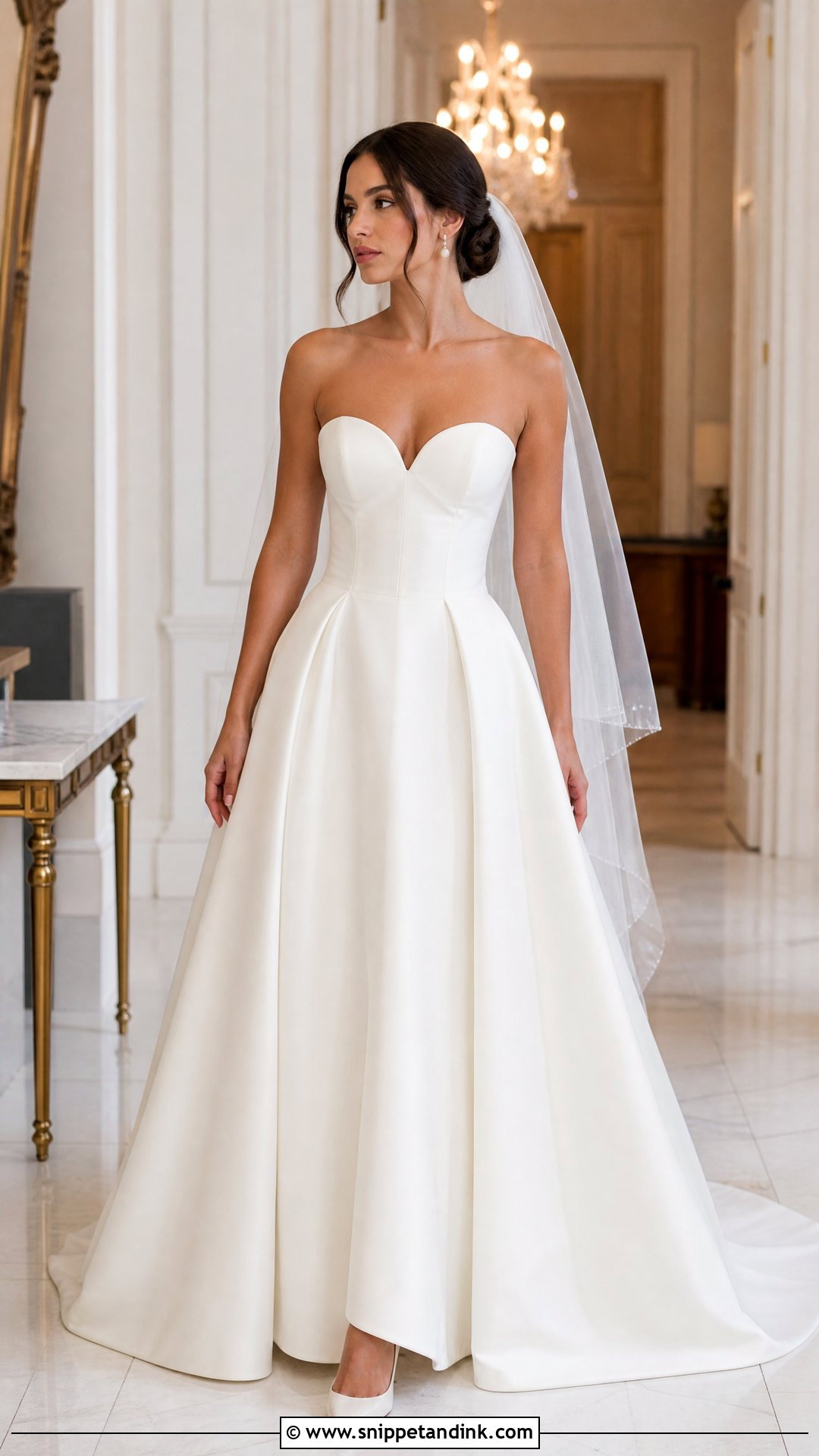
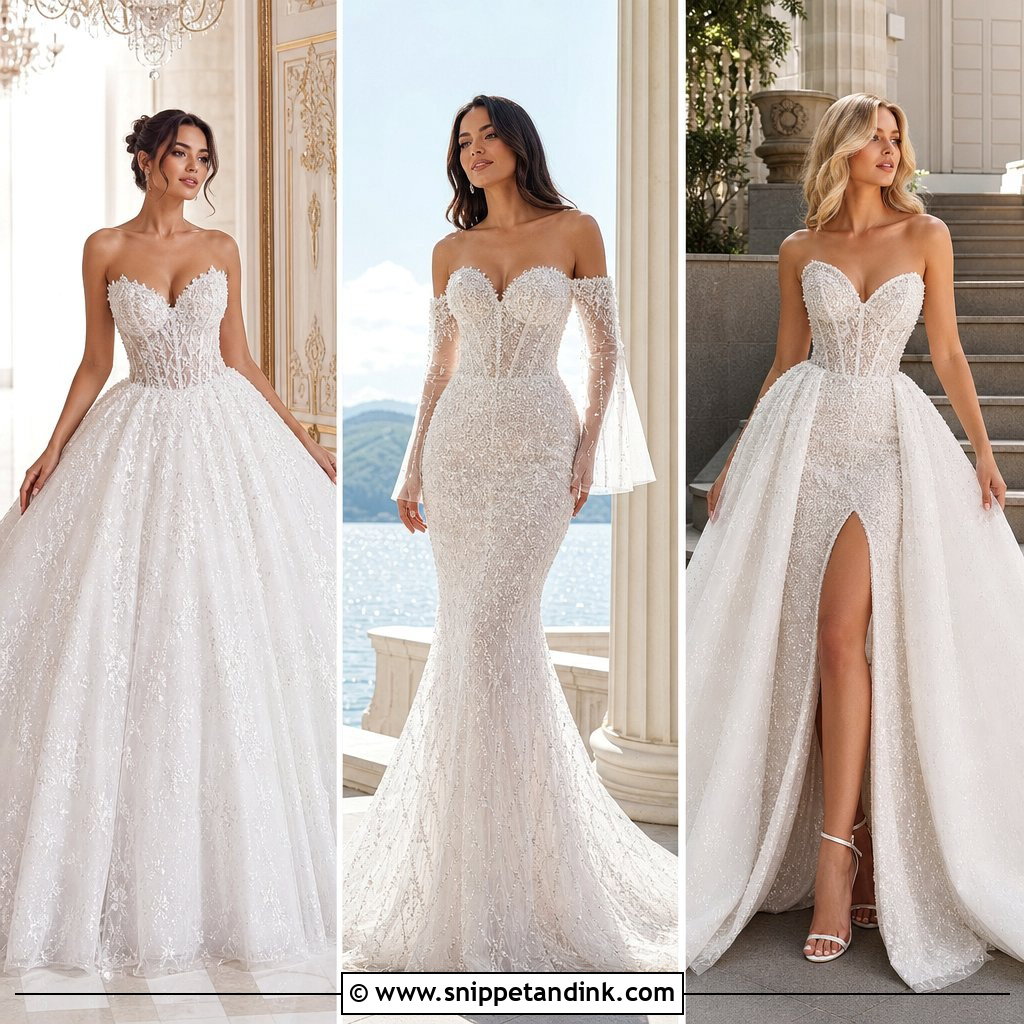
This is the purest version of the shape, and also the least forgiving. A strapless sweetheart stays up because of internal boning, a firm waist stay and cups sewn into the lining, not because it is tight across the bust, so I always ask to see inside the bodice before a bride falls for it. A gentle curve reads classic; a deeper centre dip is bolder and needs a more precise fit. I like it with a smooth A-line skirt, pointed pumps, pearl drops and a fingertip veil, with a low chignon so the shoulders stay clear. A narrow satin waistband is worth adding if your waist gets lost in the skirt. Ballrooms and hotel venues suit it best, where nothing about the setting is fighting for attention.
2. Lace Sweetheart Wedding Dress
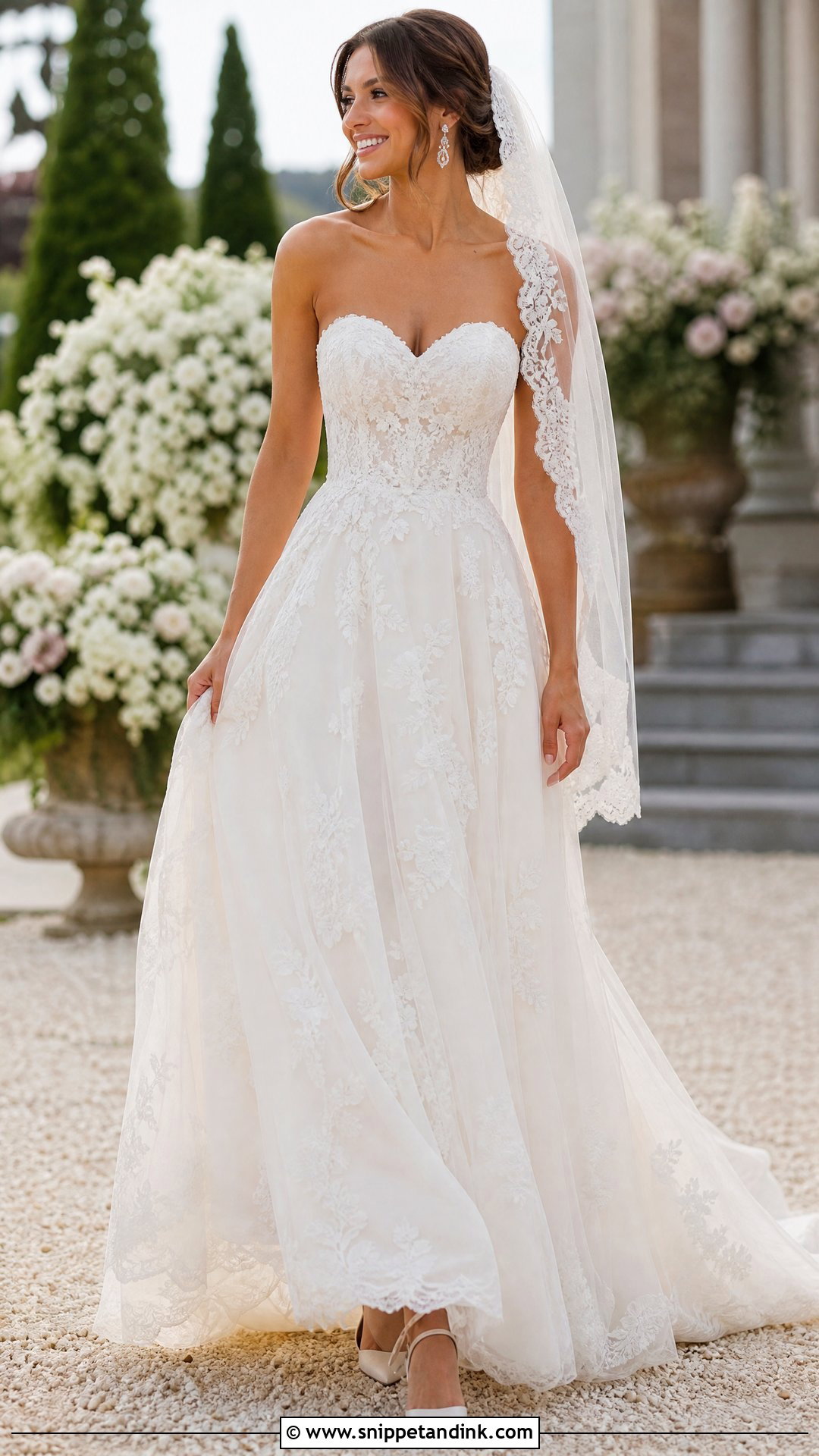
Floral lace softens the curve of the bodice and hides small fit flaws better than any plain fabric. What I look at first is how the lace is placed over the cups: a good maker cuts the motifs so a flower sits on the neckline edge rather than a chopped stem. A lined bodice gives more coverage, while sheer corsetry makes the pattern float. Ivory slingbacks, small crystal studs and a lace-edged veil that echoes the dress (rather than copying it) keep things relaxed, and a loose updo suits the mood. Choose lace with clear, raised motifs if you’re marrying outdoors; very fine flat lace turns to a pale blur in bright sun.
3. Satin Sweetheart Wedding Dress
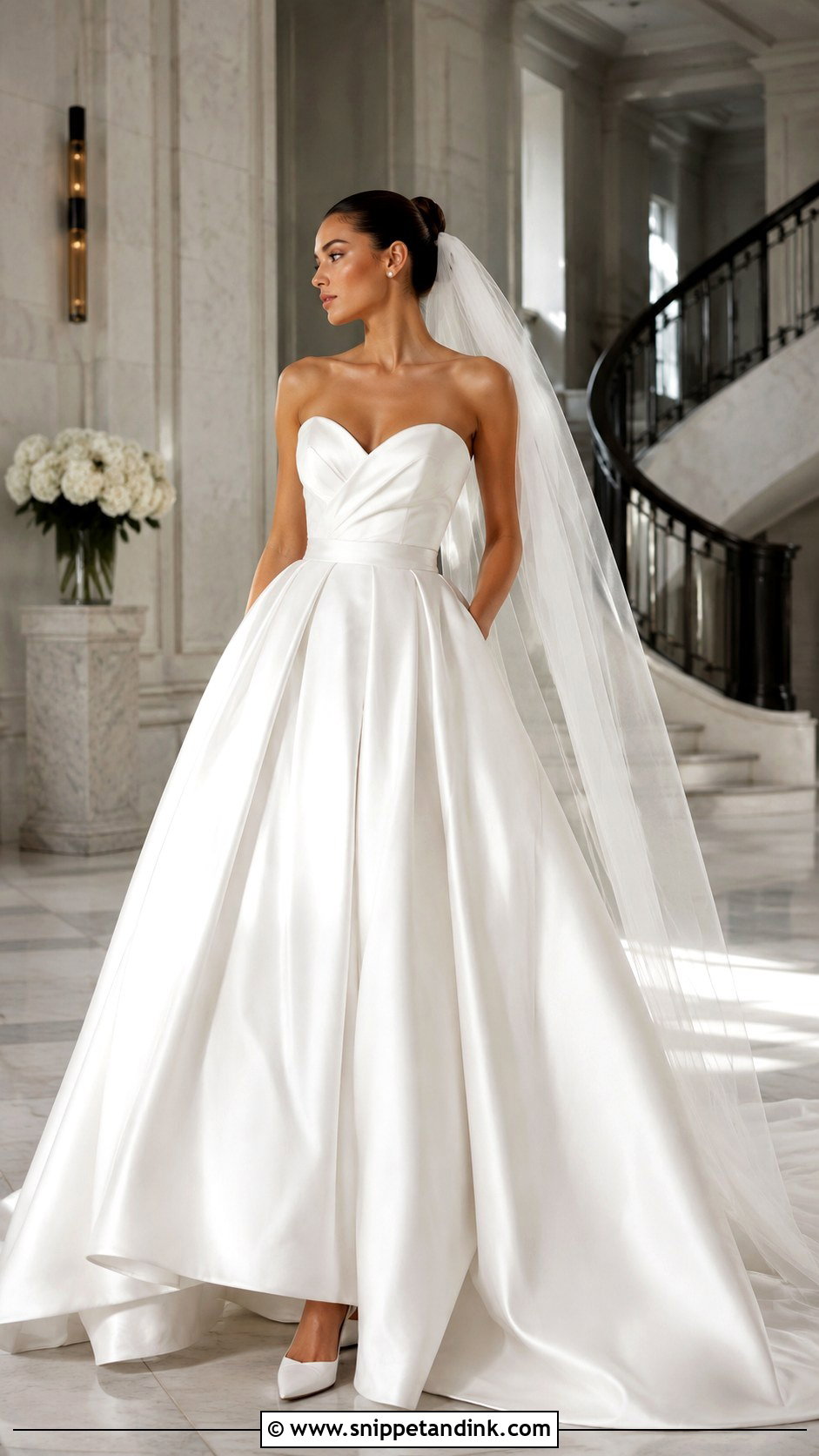
Satin shows everything, which is exactly why it makes the sweetheart curve look sculpted. I check the fabric weight before anything else: a heavier duchess or mikado satin holds pleats and keeps the neckline crisp, while a thin polyester satin wrinkles across the stomach the moment you sit. Pair it with satin pumps, pearl studs and a long plain veil, and keep jewellery minimal because the sheen is already doing the work. Sleek waves or a polished bun match the clean lines. White roses or callas are my usual bouquet suggestion here. Historic staircases and pared-back modern rooms both flatter it.
4. Sweetheart Ball Gown Wedding Dress
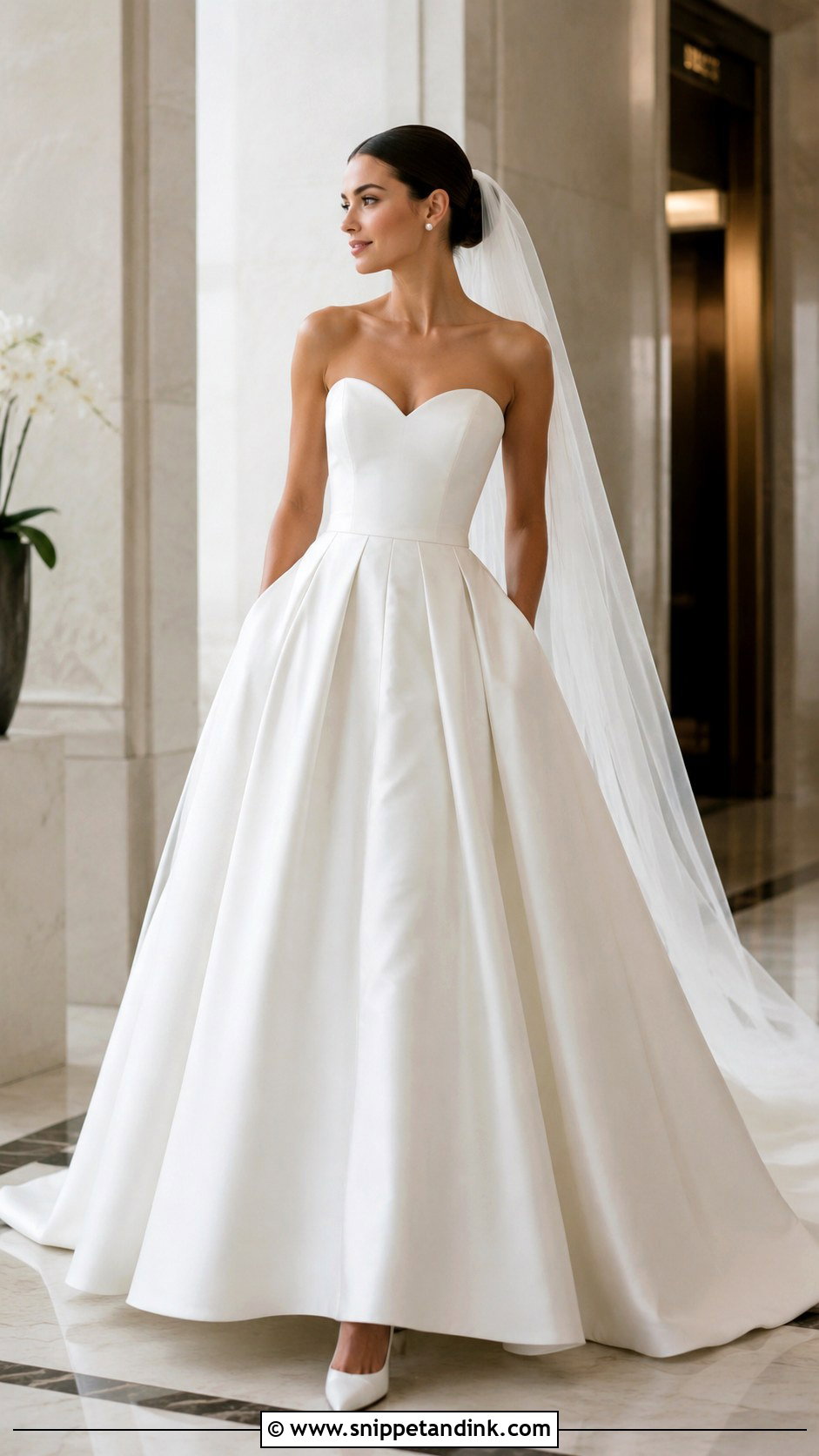
The appeal of a ball gown here is contrast: a fitted upper body against a huge skirt, with the curved neckline keeping the whole thing from looking severe. I usually suggest a basque or softly pointed waist, because it lengthens the torso and stops a full skirt from swallowing a shorter bride. Wear block heels you can actually stand in for hours, since nobody will see them anyway. A cathedral veil, delicate drops and an elegant updo finish it. If the bodice is beaded, skip the necklace. Plan for the weight, too: layered tulle and a lining can feel heavy by the evening, so ask your seamstress how the skirt is supported at the waist.
5. Sweetheart Mermaid Wedding Dress
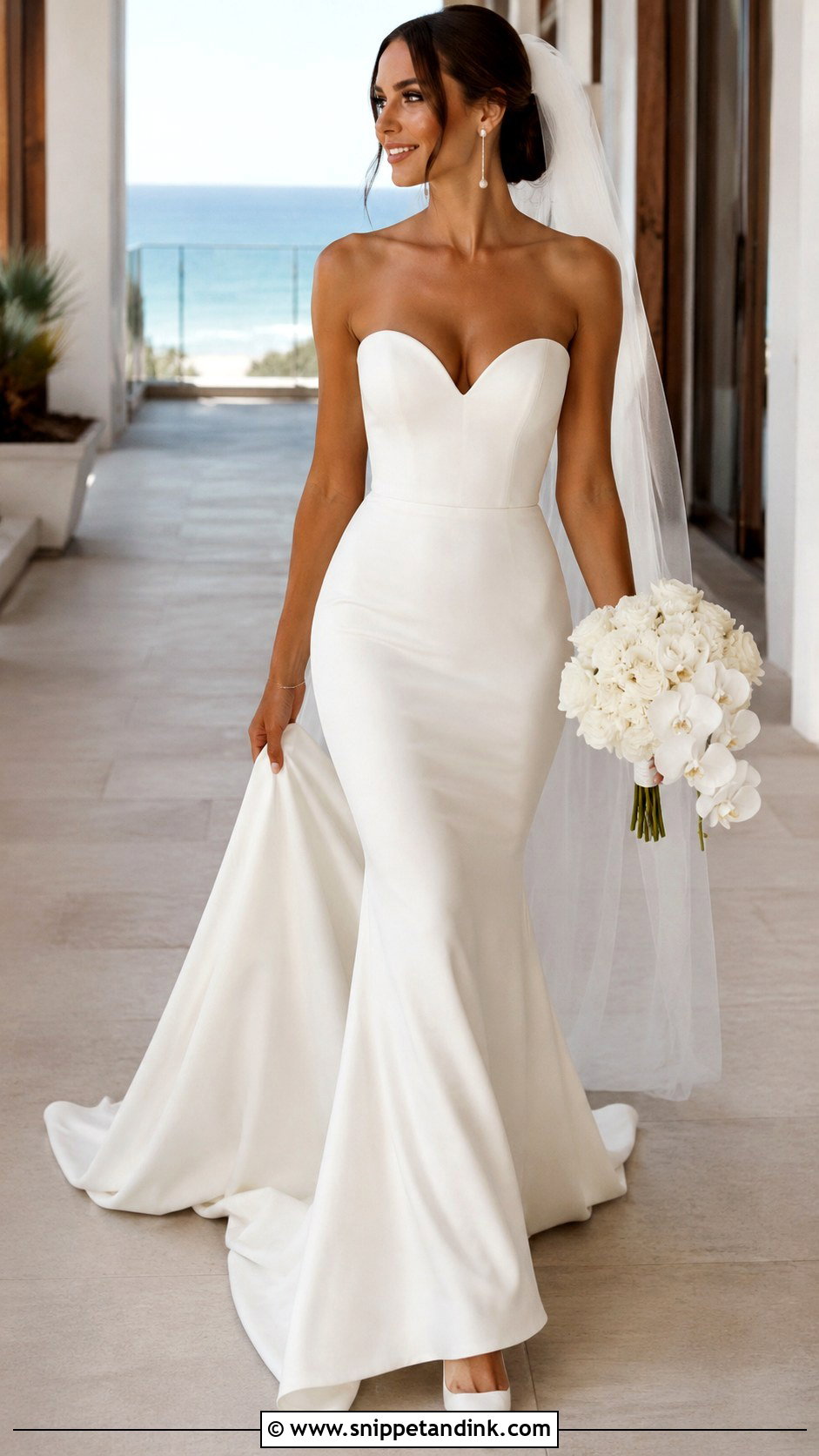
A sweetheart mermaid wedding dress follows the body to the hips, so the single most important decision is where the flare starts. Set it too low and you will shuffle down the aisle and struggle to sit; I have brides walk, climb a step and sit on a chair before we commit. Crepe gives a smooth, modern line, lace gives a softer one. Pointed heels, long earrings and a narrow veil keep the silhouette sleek, and side-swept waves balance the open neckline. A detachable overskirt is a smart compromise if you want ceremony drama and a dance floor dress in one.
6. Sweetheart A-Line Wedding Dress
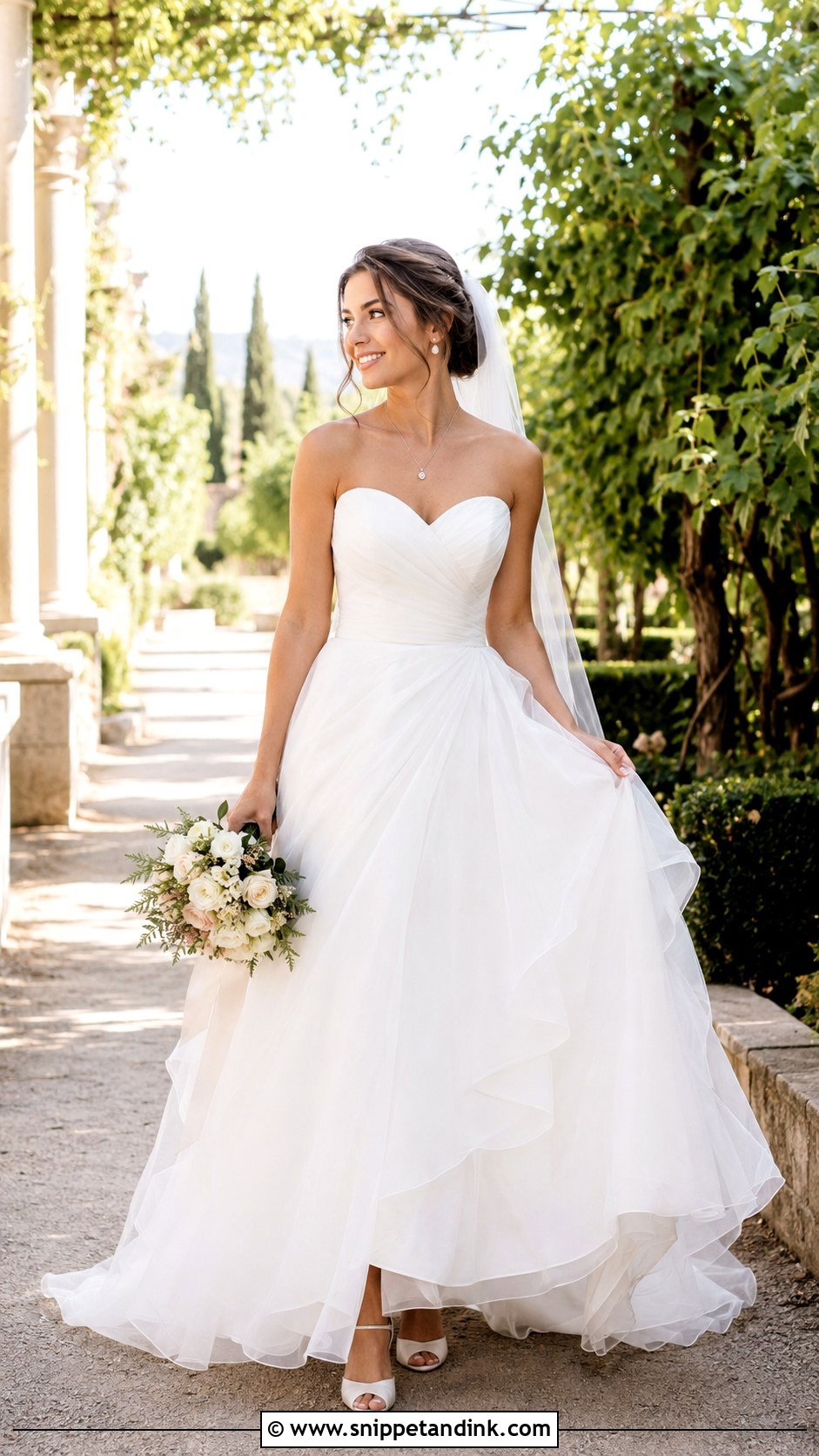
Of all the shapes here, this is the one I recommend most often to brides who are unsure. The bodice is fitted, the skirt widens gradually from the waist, and that gentle line flatters almost every figure while leaving room to breathe. It works in satin, chiffon, organza, lace or layered tulle, so the fabric sets how formal it feels. Mid-height heels, a small pendant and a soft tulle veil keep it easy, and a half-up style shows off the neckline. For outdoor ceremonies, keep the train short enough to manage on grass and have a proper bustle sewn in, not just a hook.
7. Long Sleeve Sweetheart Wedding Dress
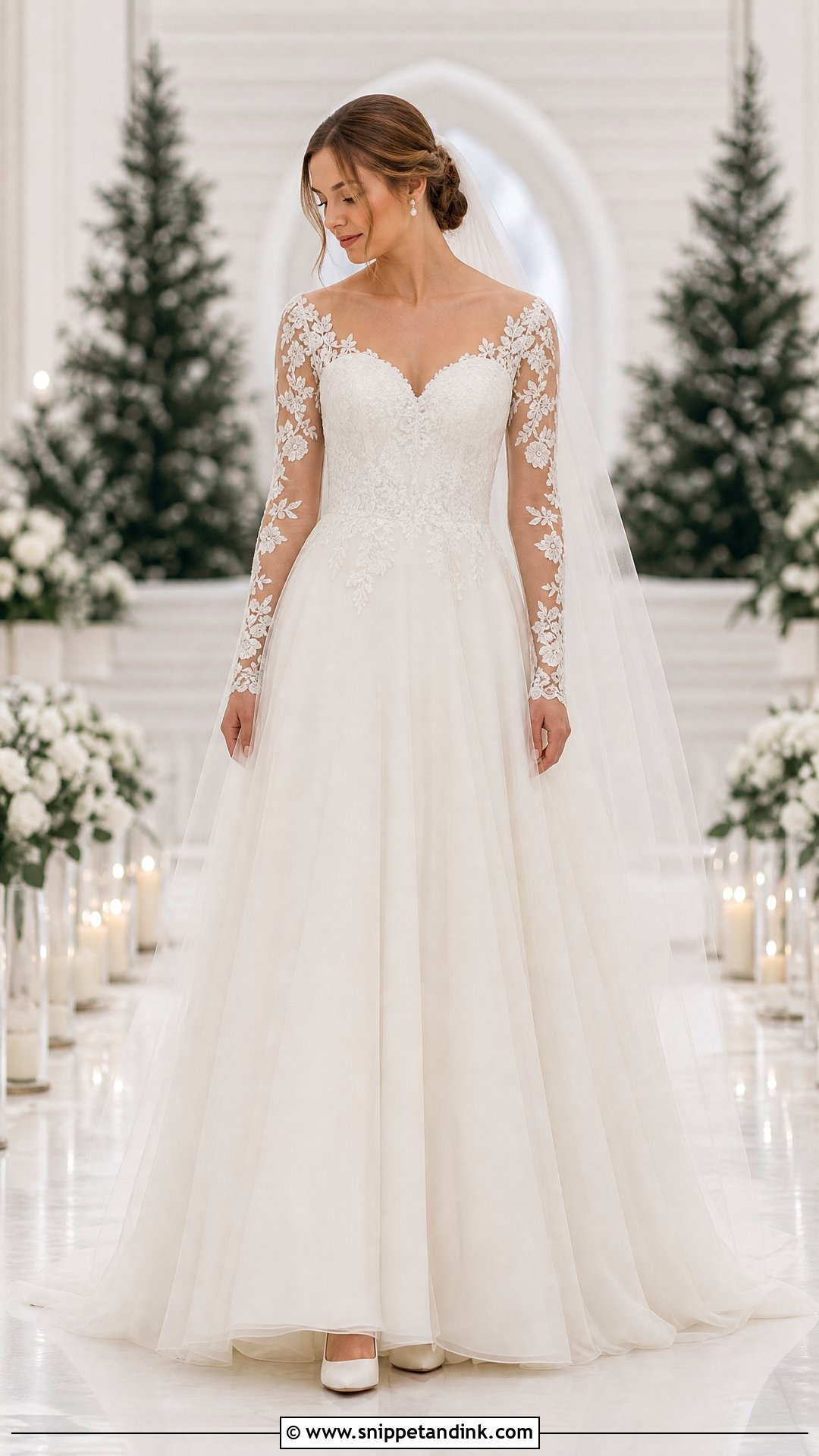
Long sleeves change how a sweetheart reads. Most of these gowns have a sweetheart lining under a sheer lace or tulle overlay, so the curve shows through while the arms and shoulders are covered. The thing I test at fittings is arm lift: a sleeve set too close to the body pulls the whole bodice up when you hug someone. Closed-toe heels, understated earrings and a chapel veil keep the look calm, and a low bun or braided updo stops the upper body looking busy. Lined crepe sleeves are warmer for autumn and winter; illusion sleeves with appliqués are lighter. Add a bridal coat if you’re travelling between venues in the cold.
8. Off The Shoulder Sweetheart Wedding Dress
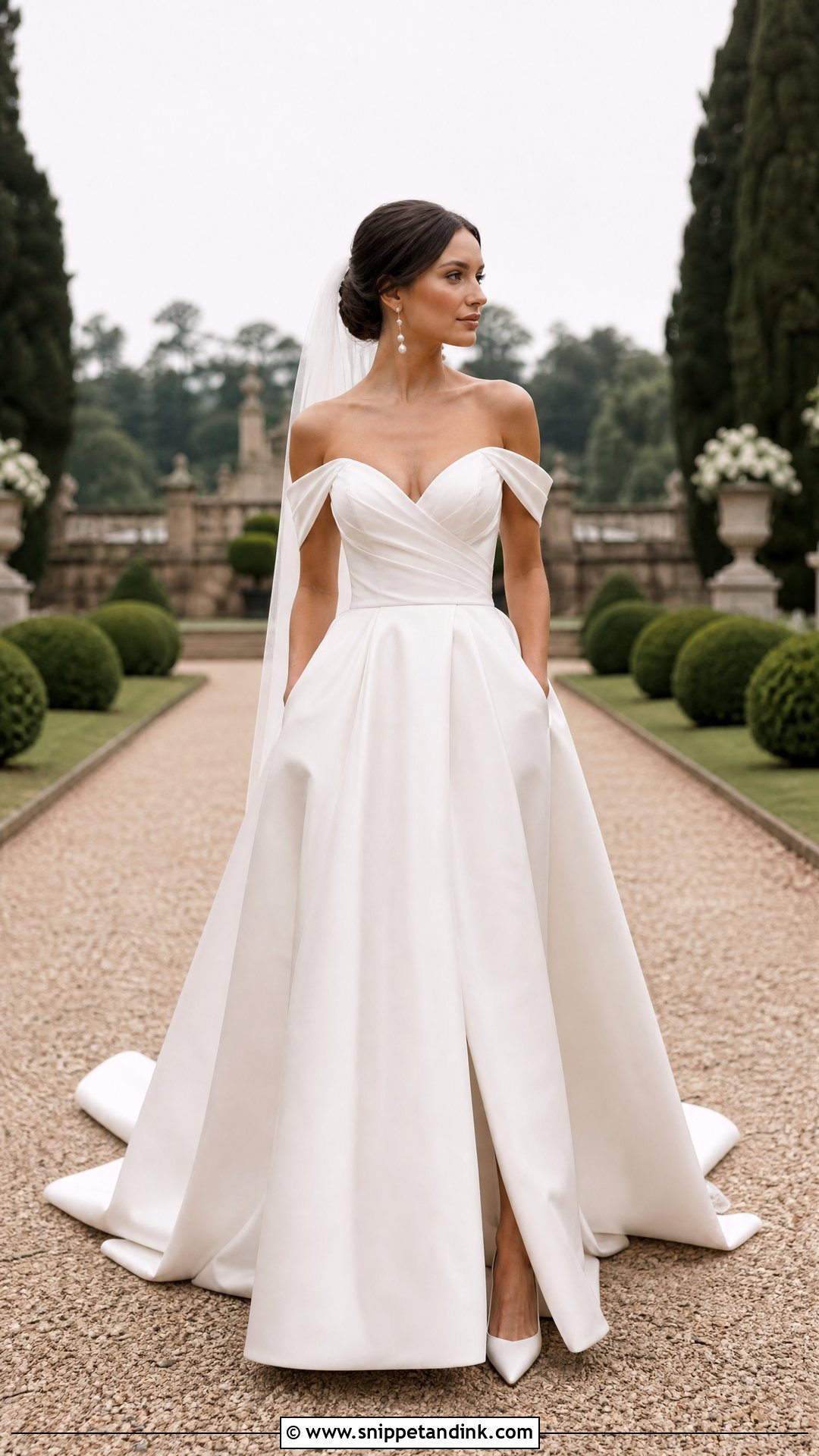
Off-the-shoulder bands draw a horizontal line across the upper body and let the heart curve sit just below it. Fitted bands feel formal; draped sleeves look softer. Here is the catch: bands that sit on the upper arm limit how high you can raise them, so I ask brides to wave, hug and pretend to throw a bouquet before any alteration is cut. Drop earrings, a low bun, pointed heels and a veil anchored under the hair keep the shoulders clear. A necklace is optional since the neckline already frames the collarbone. A medium bouquet that sits below the bust is easier than a large cascade here.
9. Sweetheart Corset Wedding Dress
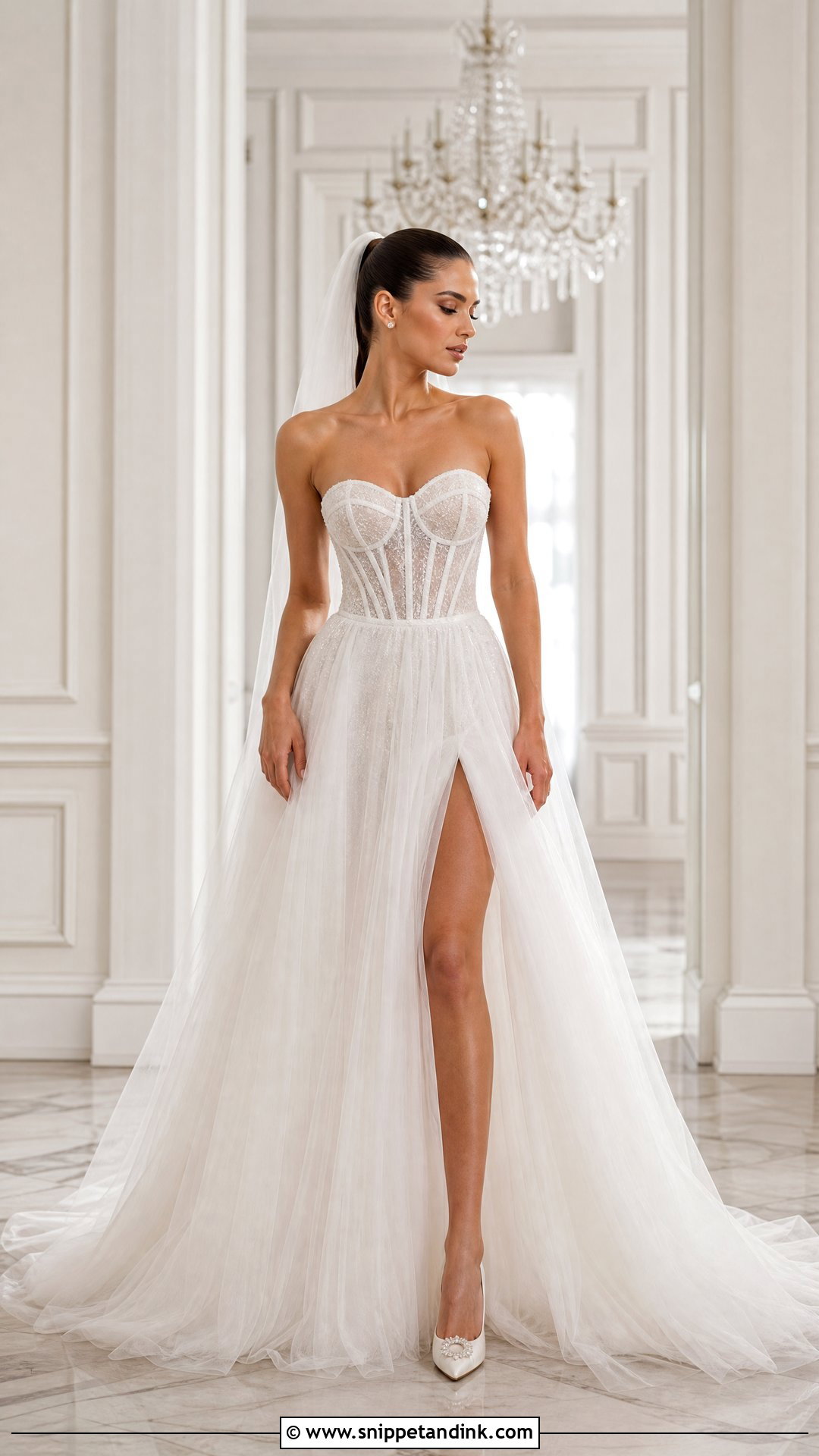
Visible corsetry turns the sweetheart shape into a design feature rather than a quiet frame. The boning should follow the body and stop just above the hip bone; if a bone digs in when you sit, it will bruise by the reception. I pair a sheer or lined corset bodice with a flowing tulle skirt so the structure has something soft to play against. Metallic or ivory heels, crystal studs and a plain veil let the seaming show. A sleek ponytail adds polish without severity. Keep other embellishment in check if the corset already has exposed lace. Lofts, city venues and evening receptions suit this one.
10. Sweetheart Wedding Dress With Straps
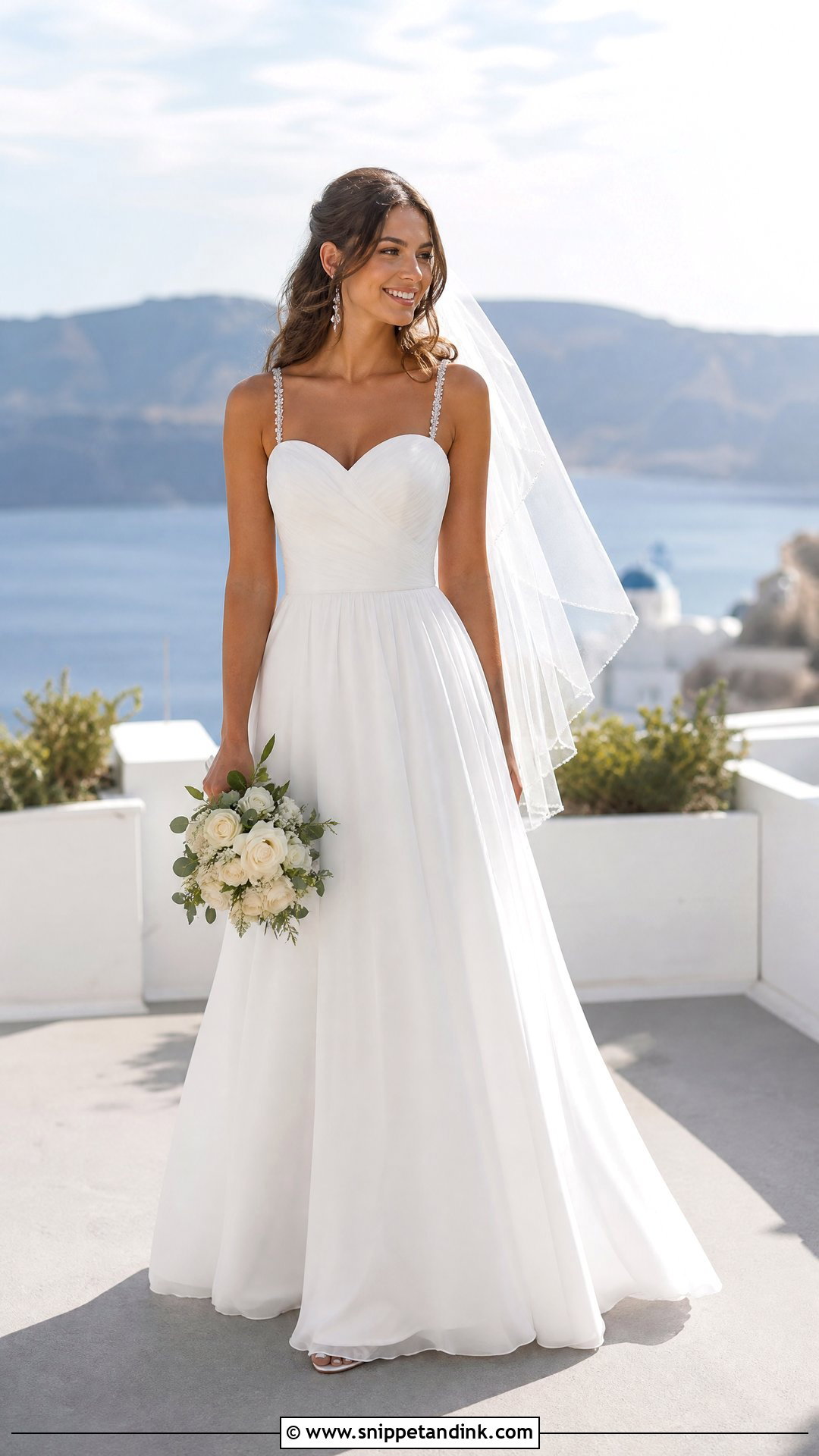
Straps are the answer I give brides who love the sweetheart shape but don’t trust a strapless bodice. Thin spaghetti straps look delicate, wider satin straps look tailored, and beaded straps catch a little light. Choose the width around your bra plan: a wider strap hides a convertible bra strap, a thin one usually means cups built into the dress. An A-line or fitted skirt, low heels, a fingertip veil and simple earrings are all it needs. If the straps are detailed, leave the neck bare. On a long destination day, the extra security is worth more than any styling detail.
11. Sweetheart Wedding Dress With Detachable Sleeves
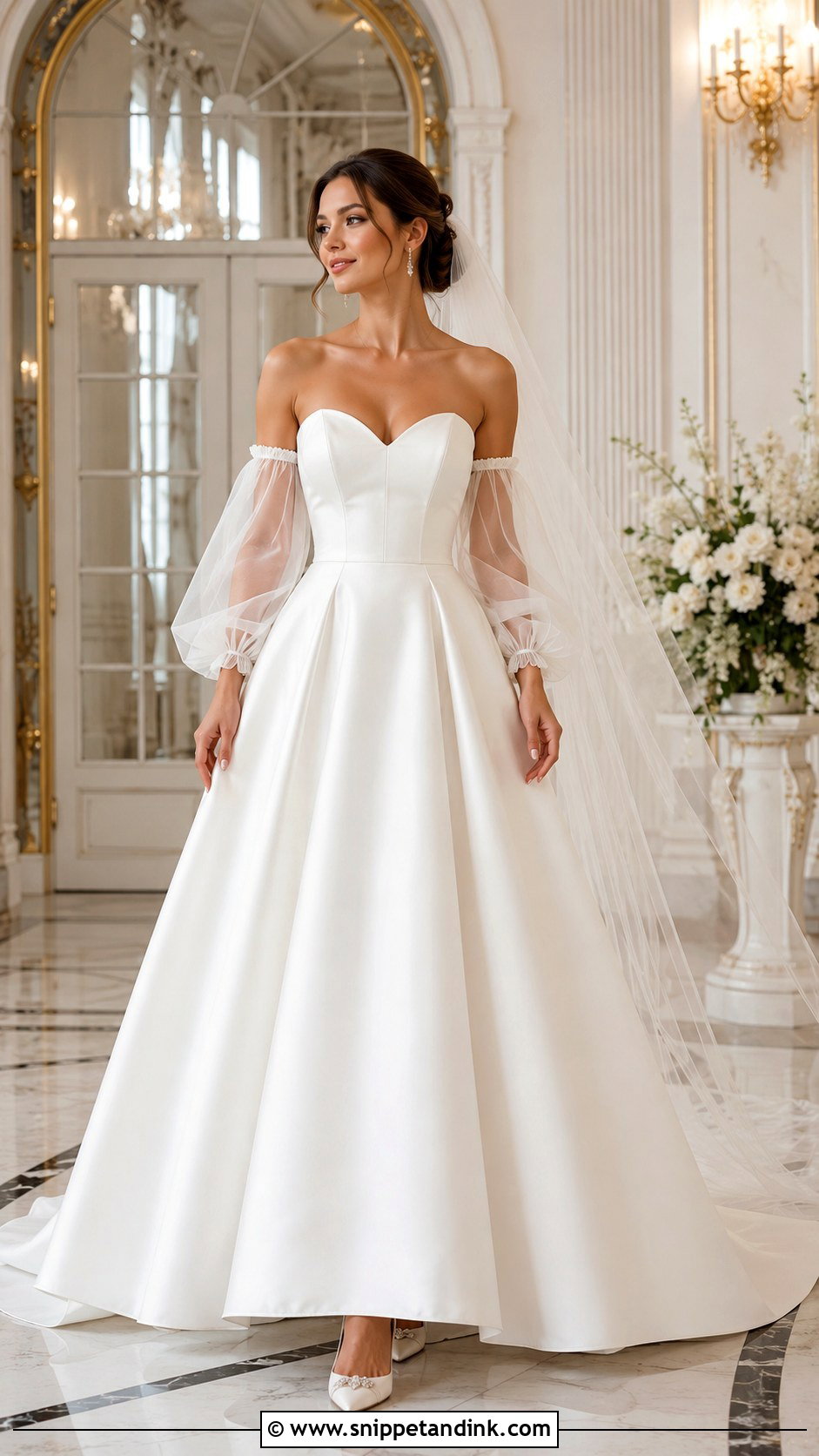
Two looks from one dress is the obvious draw, but the attachment is what I look at first. Sleeves usually fasten with hidden hooks, snaps or small buttons along the bodice edge, and those points must lie flat once the sleeves come off, or they show in every reception photo. Fitted lace, puff or draped off-shoulder sleeves can all detach. Choose pumps, mid-length earrings and a veil that relates to the sleeve fabric, and keep the hair up so the change is visible. Assign one person to remove the sleeves and keep them safe; they go missing surprisingly easily. Venues with coverage rules and changeable weather make this a sensible choice.
12. Sweetheart Wedding Dress With Floral Appliqués
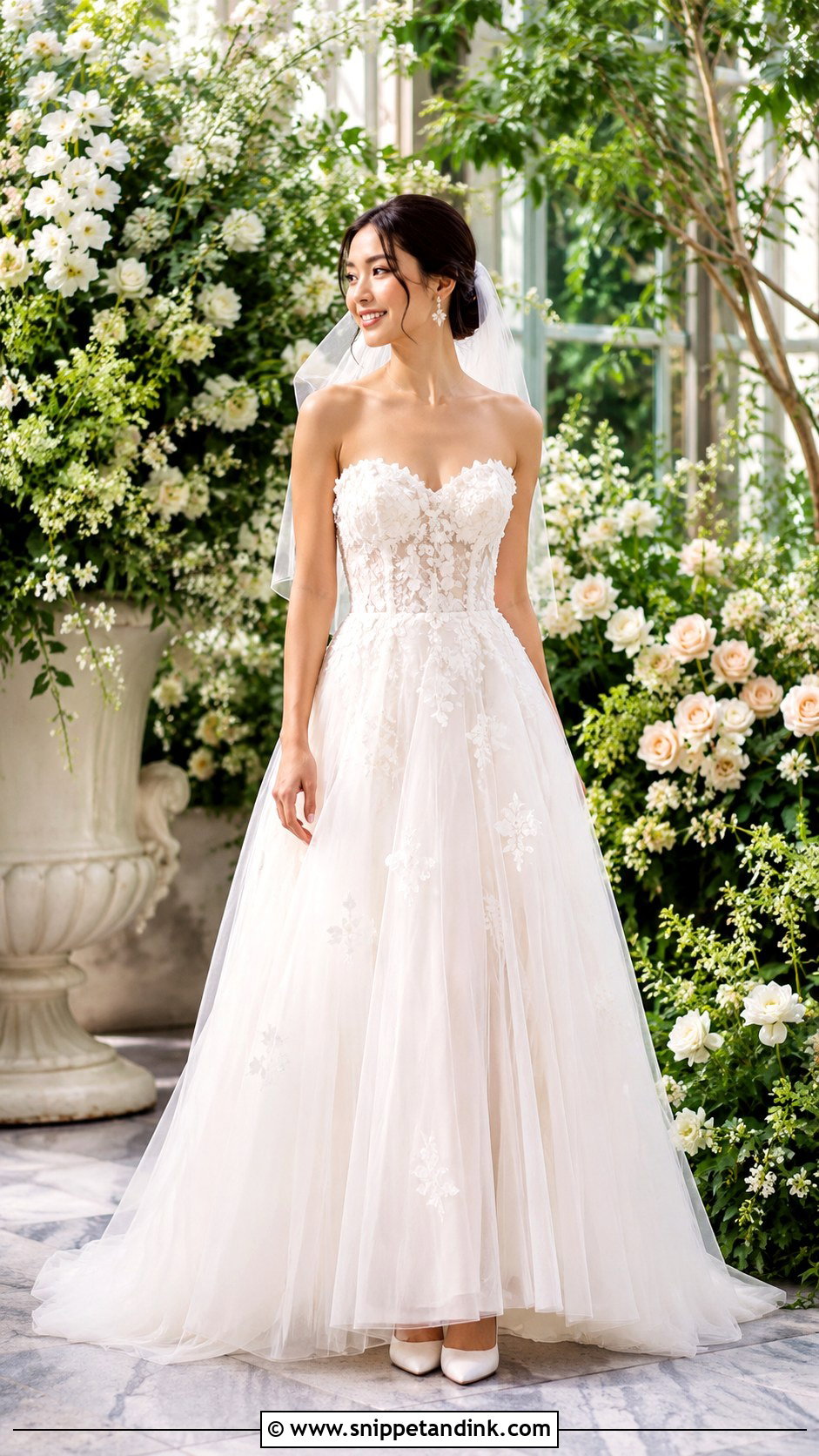
Three-dimensional flowers give a heart-shaped bodice texture without leaning on sparkle. I prefer them to thin out gradually from the neckline into the skirt, which looks deliberate, rather than stopping abruptly at the waist seam. Soft tulle keeps the effect light; a fitted gown makes the blooms stand out more. Plain ivory heels, floral earrings and a veil with minimal edging won’t compete. One warning from fittings: raised appliqués catch on lace veils and beaded bags, so test the veil against the bodice before the day. Small white blooms and greenery are enough in the bouquet. Gardens and greenhouse venues suit it naturally.
13. Sweetheart Wedding Dress With Pearl Details
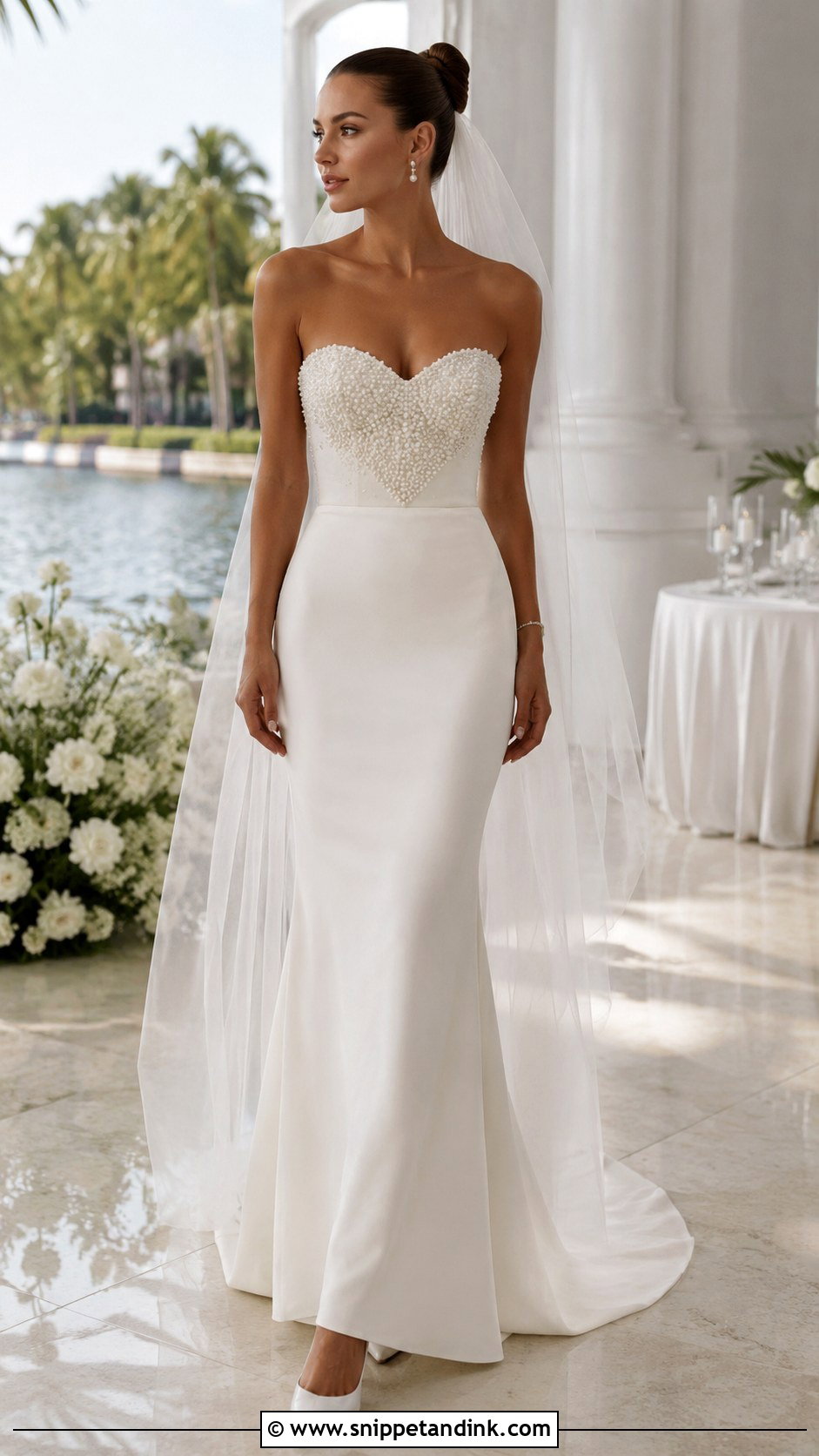
Pearls add quiet dimension to the bodice, scattered across it, traced along the neckline or drifting onto the skirt. I tell brides to stick to one main pearl size; when several sizes are mixed, the beading can look random from a few feet away. Pearl earrings, satin heels and a plain tulle veil are enough, so resist stacking a pearl necklace and bracelet on top. A polished bun and luminous makeup suit the texture. For something more modern, put the pearled bodice over a fitted crepe skirt. Ask how the pearls are attached, too: hand-sewn pearls survive hugging and dancing far better than glued ones.
14. Sweetheart Wedding Dress With Heart Appliqués
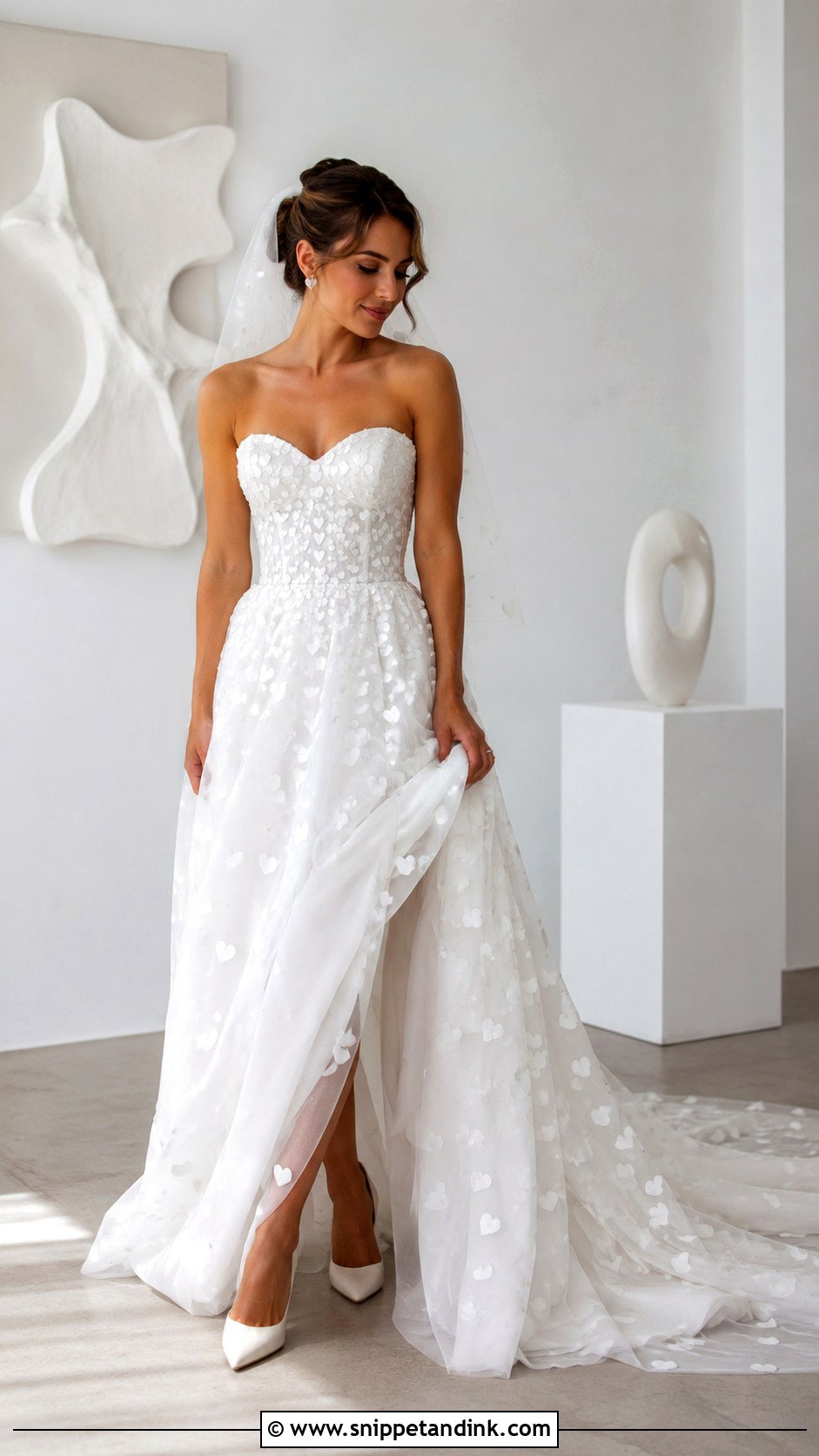
Small heart appliqués are the literal option, and they work best when you have to look twice to spot them. Embroidered hearts can sit across the bodice, along the train or inside a sheer back panel. Keep them tonal, ivory on ivory, otherwise the gown tips toward costume. Clean pumps, heart-shaped studs and a simple veil leave the motifs visible. I’d repeat the heart only once more, on a hairpin or clutch, and stop there. Custom and made-to-order gowns are where this detail is most realistic, because you can decide the scale and placement with the designer.

15. Heart Back Wedding Dress
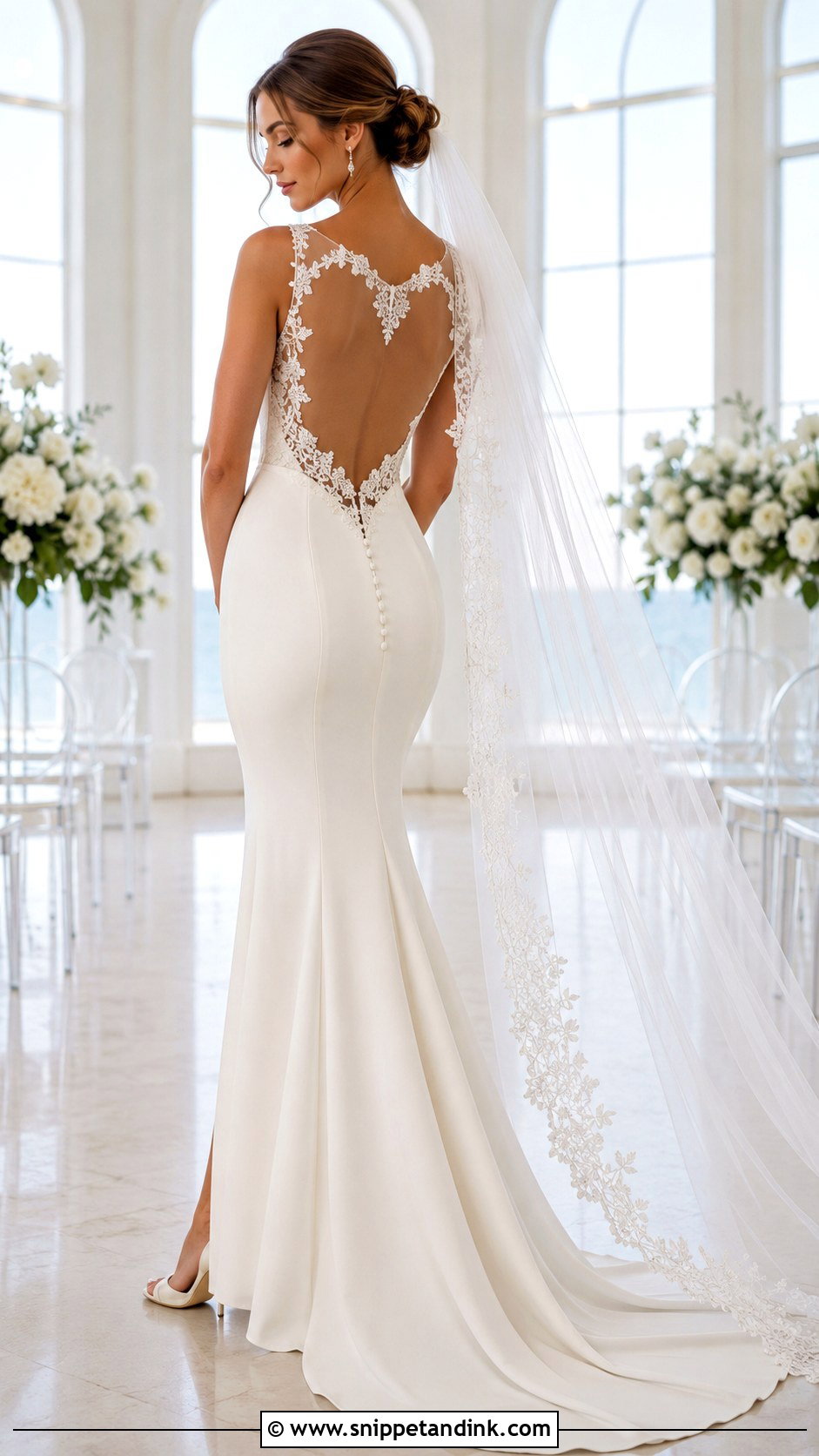
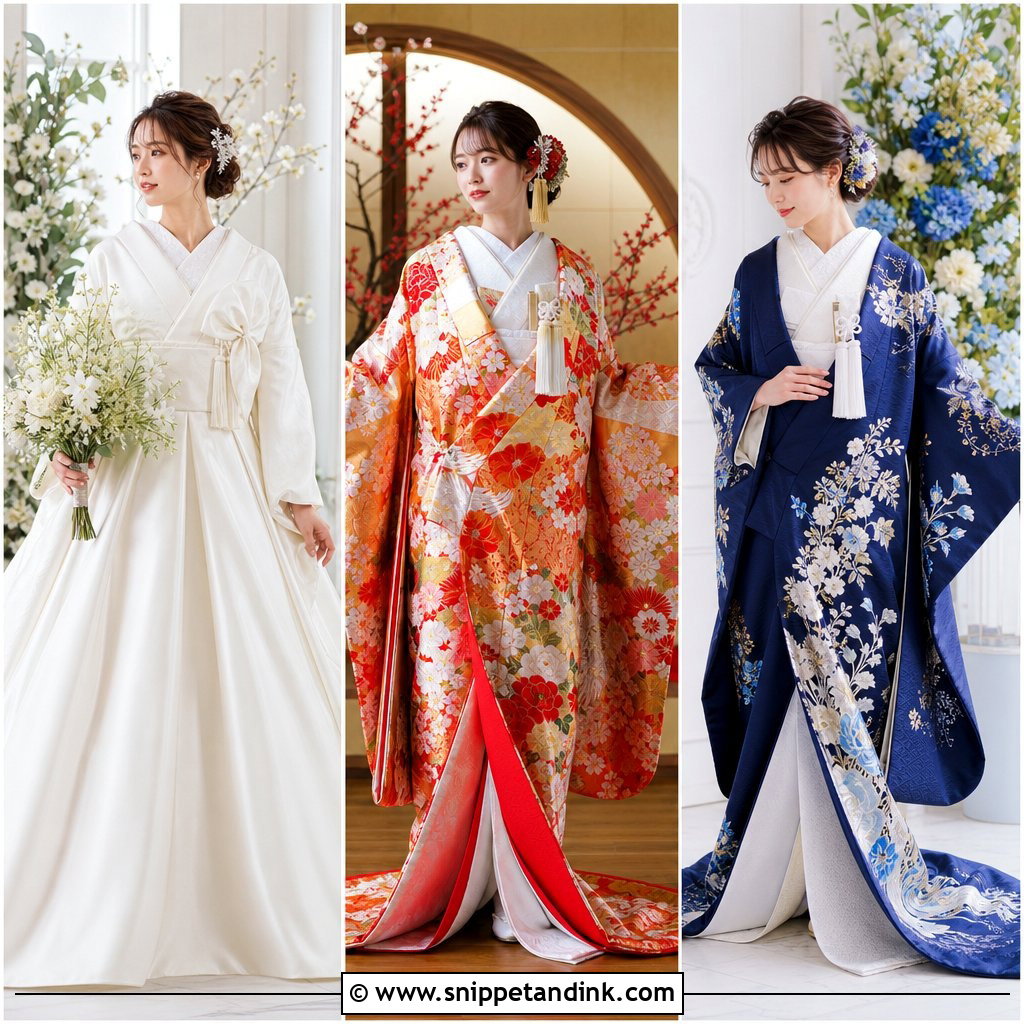
A heart-shaped back keeps the front of the dress quiet and saves the romance for the moment you turn around. The heart might be cut from satin, outlined in illusion tulle, or formed by lace and appliqués. Wear a low bun or side-swept style so your hair doesn’t cover it, and plan a veil that can come off after the formal portraits. Fit matters more here than anywhere: a heart cutout gapes if the back is even slightly loose, so I ask the seamstress to check it again after every other alteration is done. Aisle-focused ceremonies show it off best, since guests see the back for most of the service.
16. Blush Sweetheart Wedding Dress
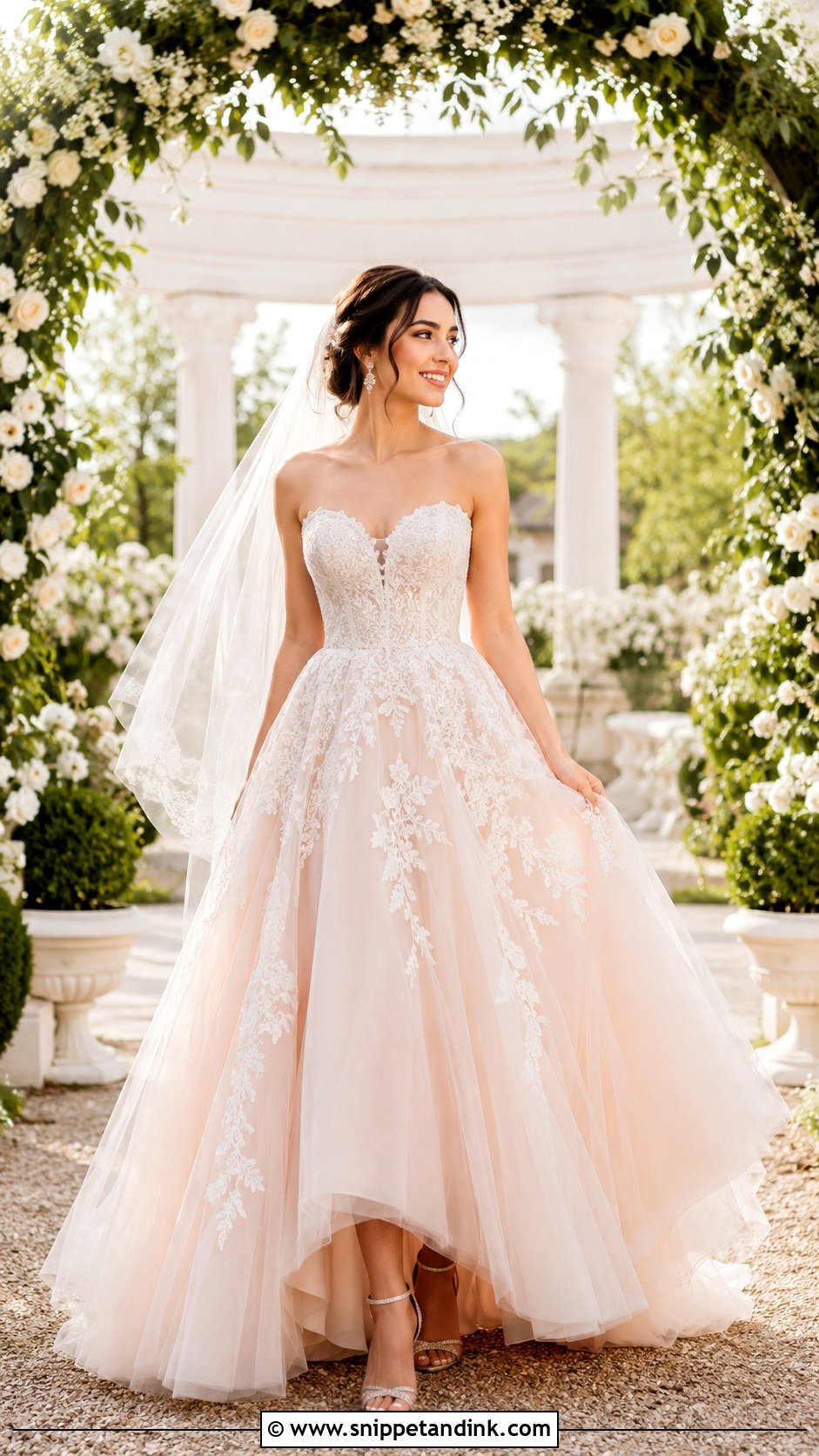
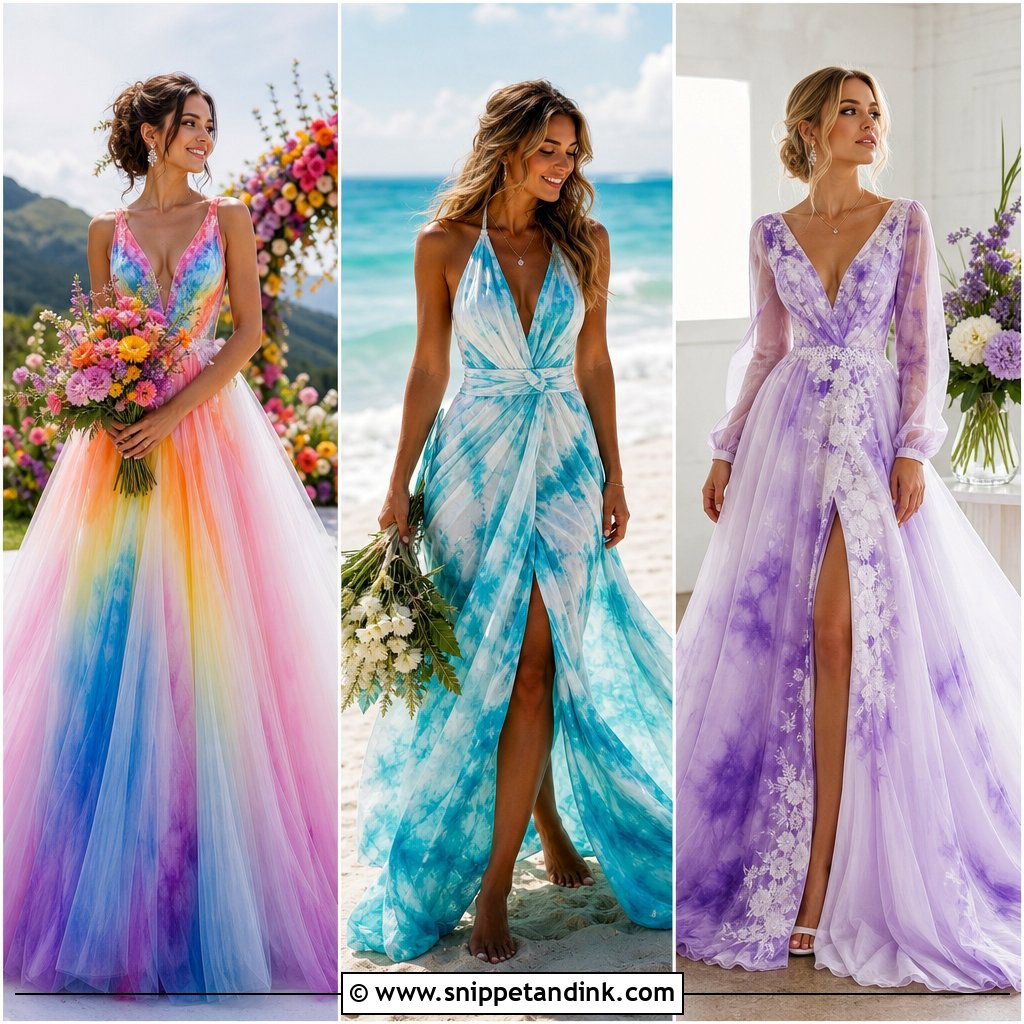
Blush gives colour while still reading clearly as bridal. A pale pink lining under ivory lace adds warmth; solid blush tulle is a bolder choice. Look at the shade in daylight before you order, because some blush tones turn beige in warm indoor lighting. Nude or champagne heels, rose-gold earrings and an ivory veil keep it balanced, and soft pink makeup with a neutral manicure avoids an over-matched effect. White, blush and muted greenery suit the bouquet. A ball gown in blush feels fairytale; an A-line feels lighter. Garden settings help the colour read as intentional rather than off-white.
17. Minimalist Sweetheart Wedding Dress
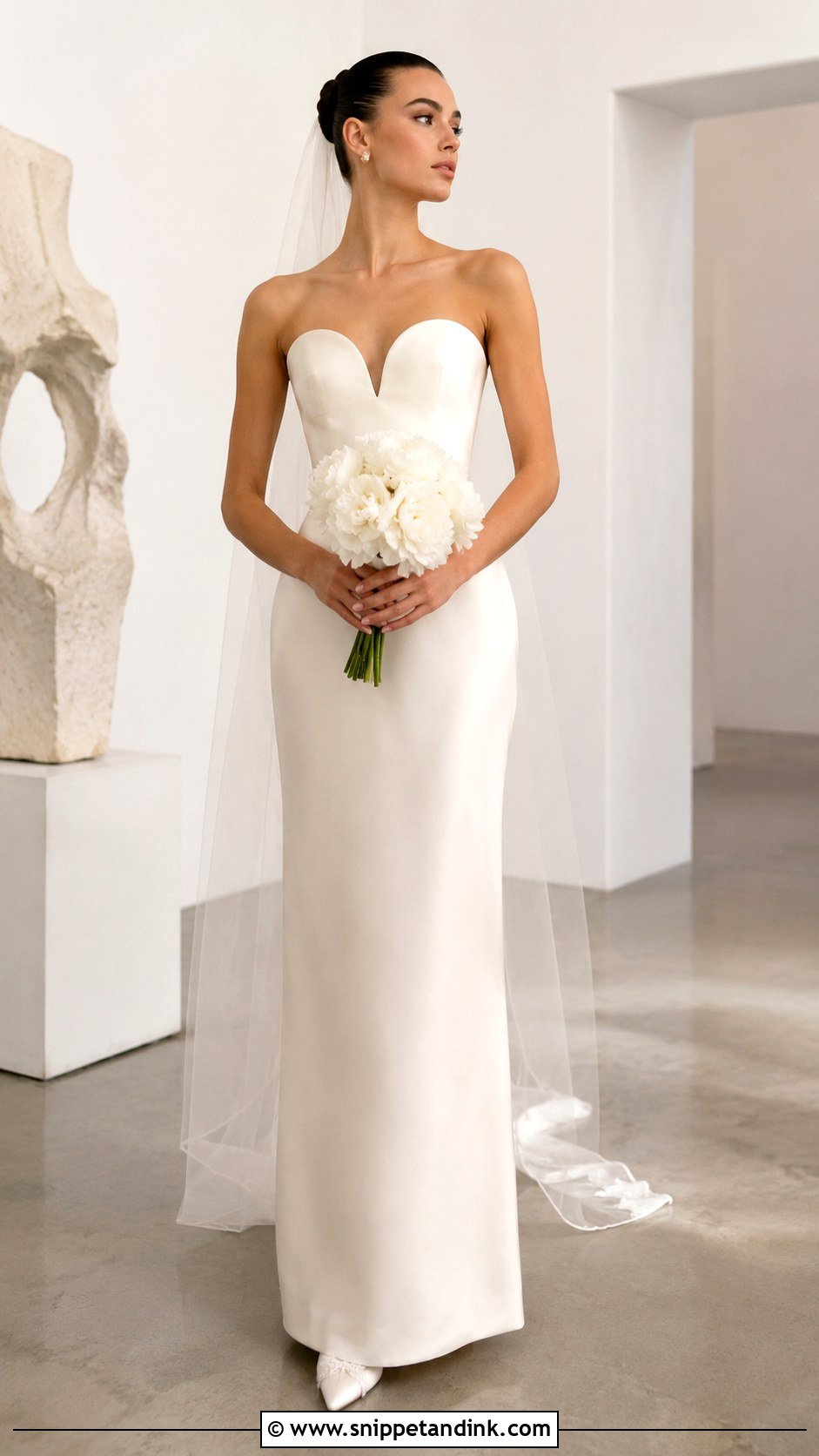
With no lace or beading, a sweetheart neckline has nowhere to hide. Matte crepe, silk or structured satin in a sheath, column or restrained A-line all work, but the tailoring has to be precise, because every ripple shows. I spend more fitting time on minimalist gowns than on heavily beaded ones for exactly that reason. Pointed heels, sculptural earrings, a smooth veil and a sleek bun keep it modern, and a single-flower bouquet suits the restraint. A removable overskirt adds ceremony impact. This is also the best canvas for one heirloom piece of jewellery.
18. Vintage Sweetheart Wedding Dress
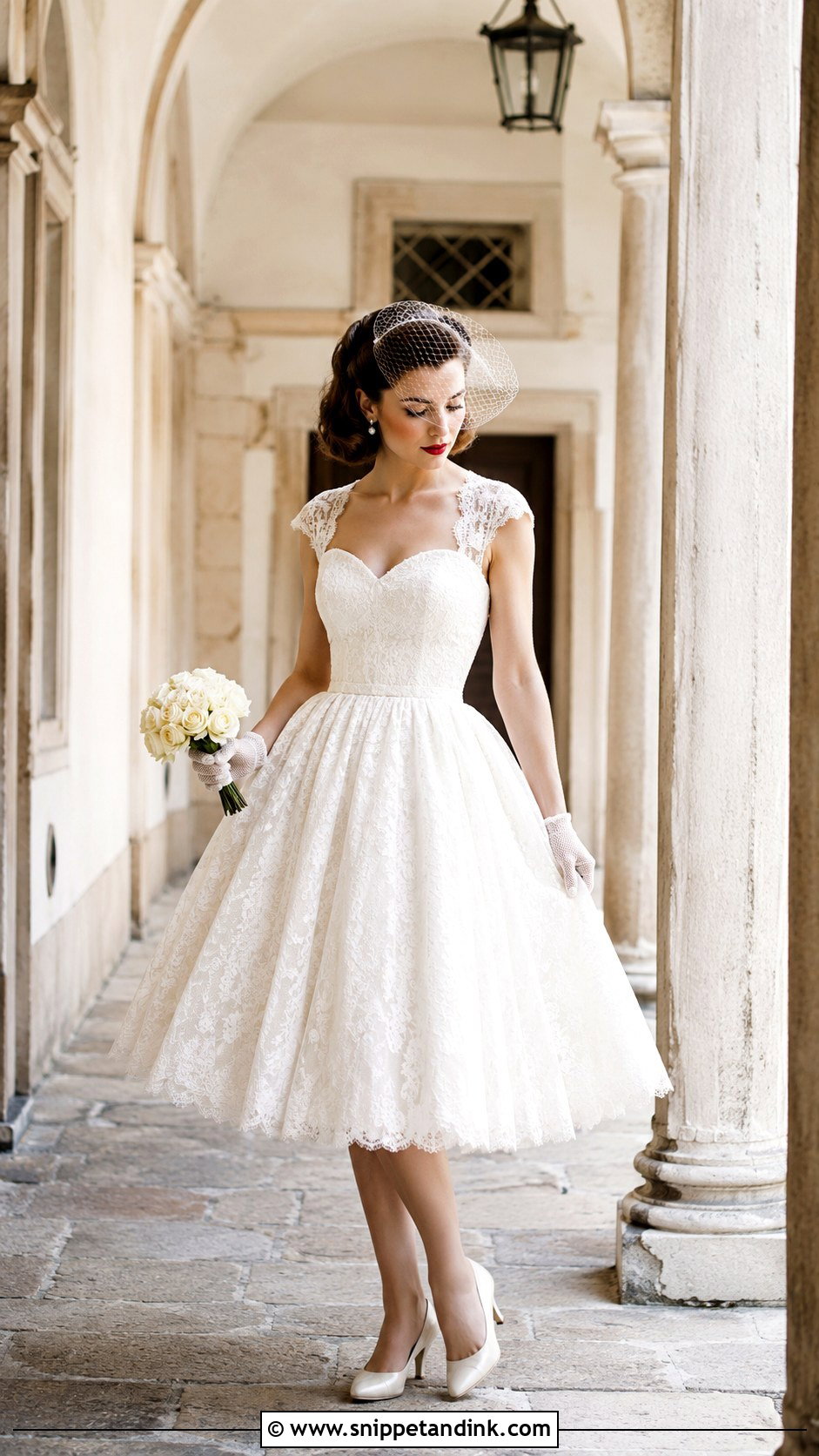
Vintage styling goes wrong when it tries to reference every decade at once. Tea-length skirts, covered buttons, lace sleeves, satin gloves and softly structured bodices all fit the theme, but I’d pick two or three of them and leave the rest. A tea-length gown with low pumps and a birdcage veil is one direction; a full-length lace dress with pearls and a fingertip veil is another. Soft waves or a rolled updo finish either. Ivory usually reads more vintage than bright white. Historic houses, courtyards and daytime restaurant weddings suit the scale of this look better than a vast ballroom.
19. Plus Size Sweetheart Wedding Dress
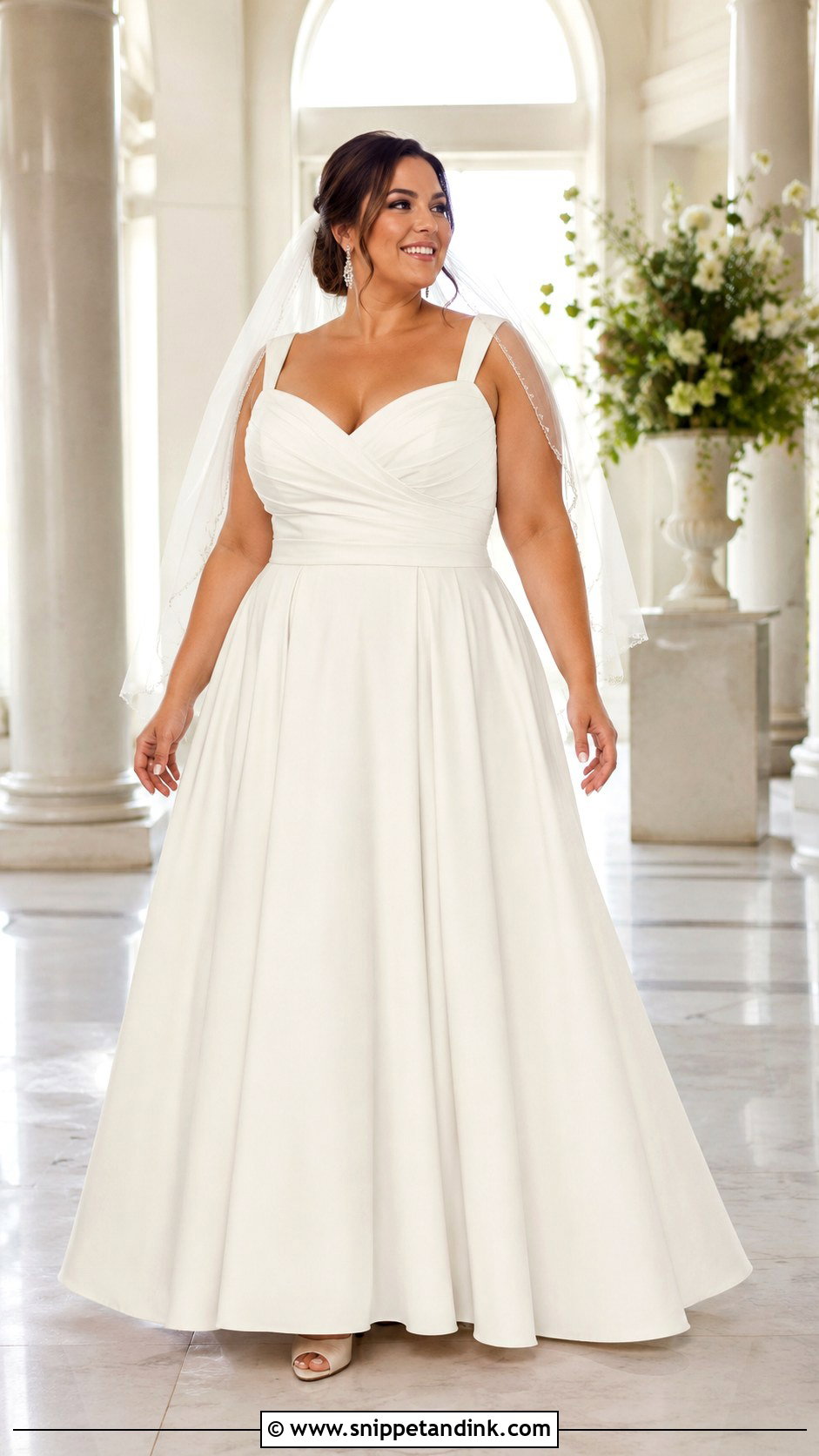
A plus-size sweetheart wedding dress needs its support built in properly, not added as an afterthought. I look for wider-set straps, reinforced corsetry, lined cups or an illusion panel, depending on how much security the bride wants. A softer curve gives more coverage; a deeper dip gives definition. A-line, ball gown, mermaid and fit-and-flare can all work with good tailoring, so let comfort and confidence decide the shape rather than rules about body type. At every fitting, sit down and check that the bodice stays smooth across the top. Supportive heels or polished flats, statement earrings and a veil scaled to the skirt complete it.

20. Short Sweetheart Wedding Dress
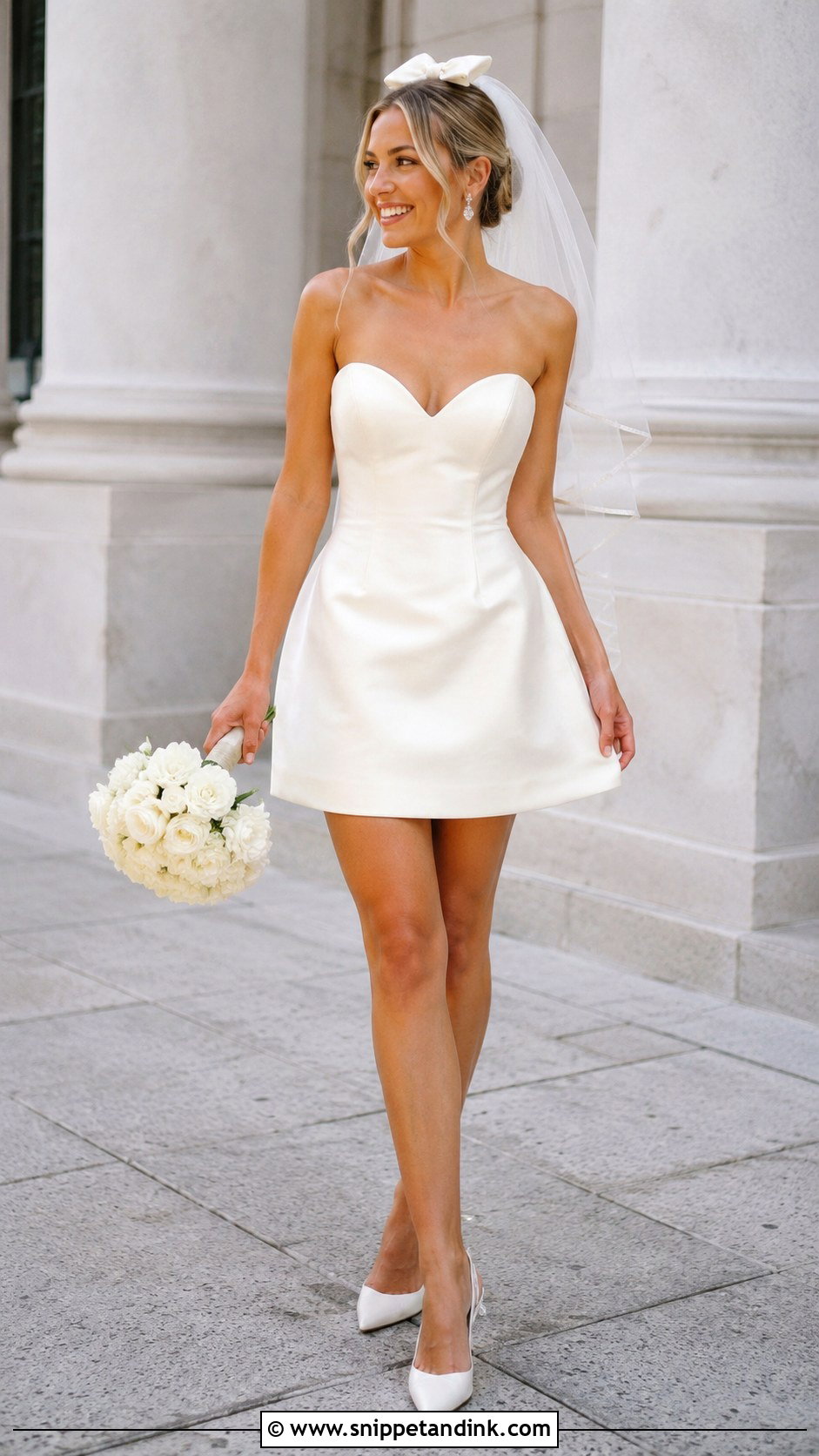
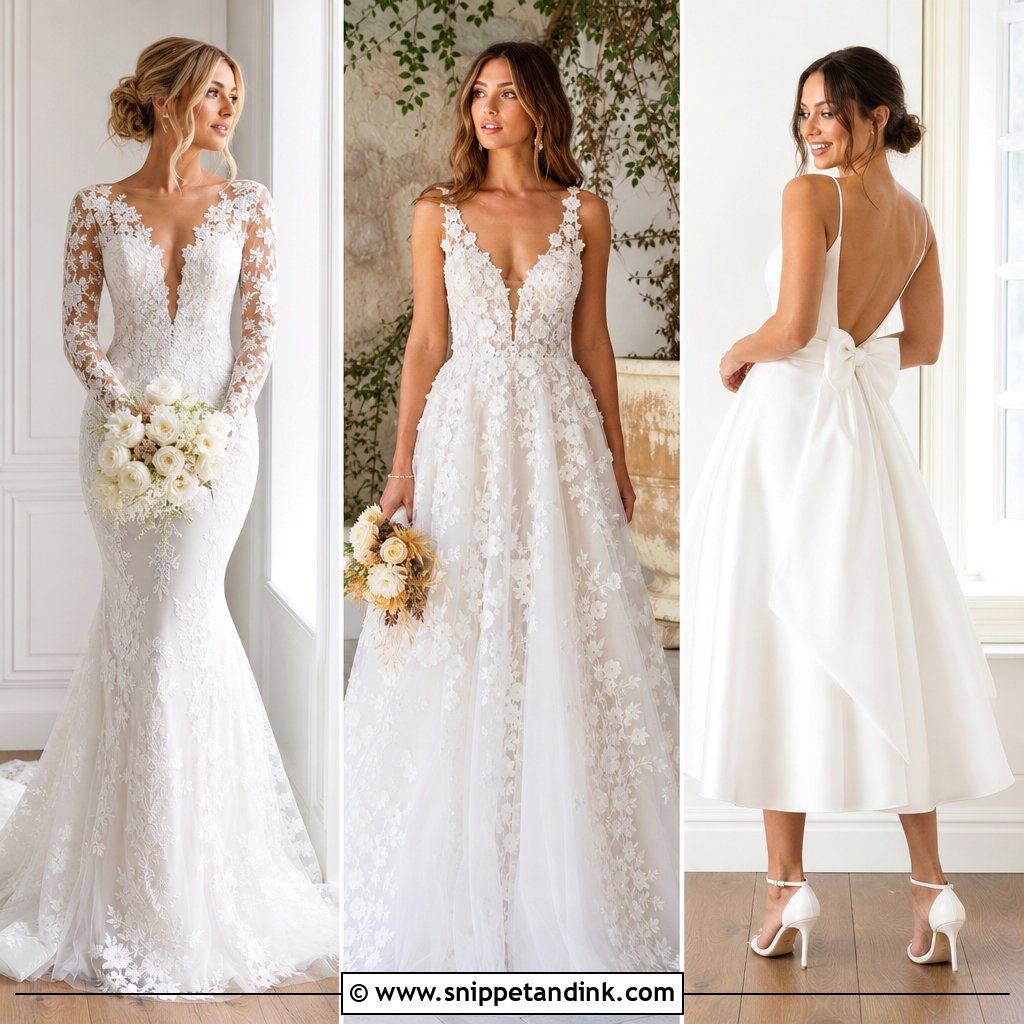
A short sweetheart dress is the most fun on this list, and I suggest it often for courthouse ceremonies or as a reception change. A fitted mini feels modern; a tea-length skirt adds movement and a vintage feel. The bodice still needs structure, or the curve flattens. Your shoes are on show, so pick slingbacks you can dance in. Pearl or crystal earrings, a short veil or a hair bow and a small bouquet keep the proportions right. In cooler weather, a cropped jacket that ends at the natural waist won’t hide the neckline. Welcome parties and civil ceremonies are good homes for it too.
What Goes Underneath a Sweetheart Neckline
Bring the exact underwear you plan to wear to every fitting, from the first one. Alterations are made around whatever is under the dress, and switching bras after the final fitting can undo weeks of work.
- Built-in cups are usually the cleanest option for strapless and low-dipped styles. A seamstress can sew in a pair matched to your shape if the dress doesn’t have them.
- A longline strapless bra suits brides who want extra lift, but its top edge must sit below the dip of the neckline at the centre, which rules out many deep sweethearts.
- Adhesive cups work under backless and heart-back gowns, though they can loosen in heat and on very long days. Do a full-day test at home before trusting them.
- Shapewear should end below the bodice seams. A ridge at the waist shows through satin and crepe far more than through lace.
If the Bodice Slips at the Reception
Even a perfect fit relaxes a little after hours of warmth, eating and dancing. I put a few things in the bridal emergency bag for exactly this: double-sided fashion tape for an edge that starts to lift, a few safety pins, and a needle threaded in the dress colour. If a strapless bodice keeps sliding, the quickest fix is tightening the waist stay or corset back by a notch, which someone can do in the bathroom in two minutes. Ask your seamstress to show the person helping you how the closure works before the day, not on it.
A Heart Neckline Has to Pass the Hug Test
Heart shapes turn up in more places than the bust line: on a corset, across a back, in tiny appliqués or a single pearl motif. Start with how much support and coverage you need, then compare skirts, sleeves and detailing. In the fitting room, walk, sit, lift your arms, hug someone and look at the gown by a window, not only under salon spotlights. Then choose accessories that agree with the dress rather than argue with it. If the bodice still sits smoothly after all of that, you’ve found the right one.
You'll Like These Ideas:







Leave a Reply