
Designer wedding gowns set the tone for everything that follows: the ceremony, the portraits, how you feel standing at the top of the aisle and how you feel at midnight. The range right now is wide, from clean satin columns and basque-waist ball gowns to lace sleeves, sculptural bows, pearl work and slim reception dresses. In my experience the most dramatic gown on the rail is rarely the one a bride ends up in. The right one matches the venue, her build and how much she wants to move. Fabric, neckline, train and accessories work as one outfit, so that’s how I’ve described each gown below.
A Salon Appointment Works Better With Two People Than Six
Shopping for a designer gown is usually by appointment, often ninety minutes or so, and how you use that time matters more than how many shops you visit. What I tell brides beforehand:
- Bring one or two people whose opinion you trust. A big group means a chorus of conflicting reactions and very little time in front of the mirror.
- Wear smooth nude underwear and bring heels of roughly the height you plan to wear.
- Save five or six photos of gowns you love and point out what you love in each: the neckline, the skirt, the back.
- Ask whether photos are allowed. Some salons restrict them on designer samples.
- Try at least one shape you’d never pick. I’m often surprised which one wins.
When a gown keeps pulling you back across appointments, and you stop comparing it to the others, that’s usually the answer.
1. Designer Ball Gown Wedding Dress
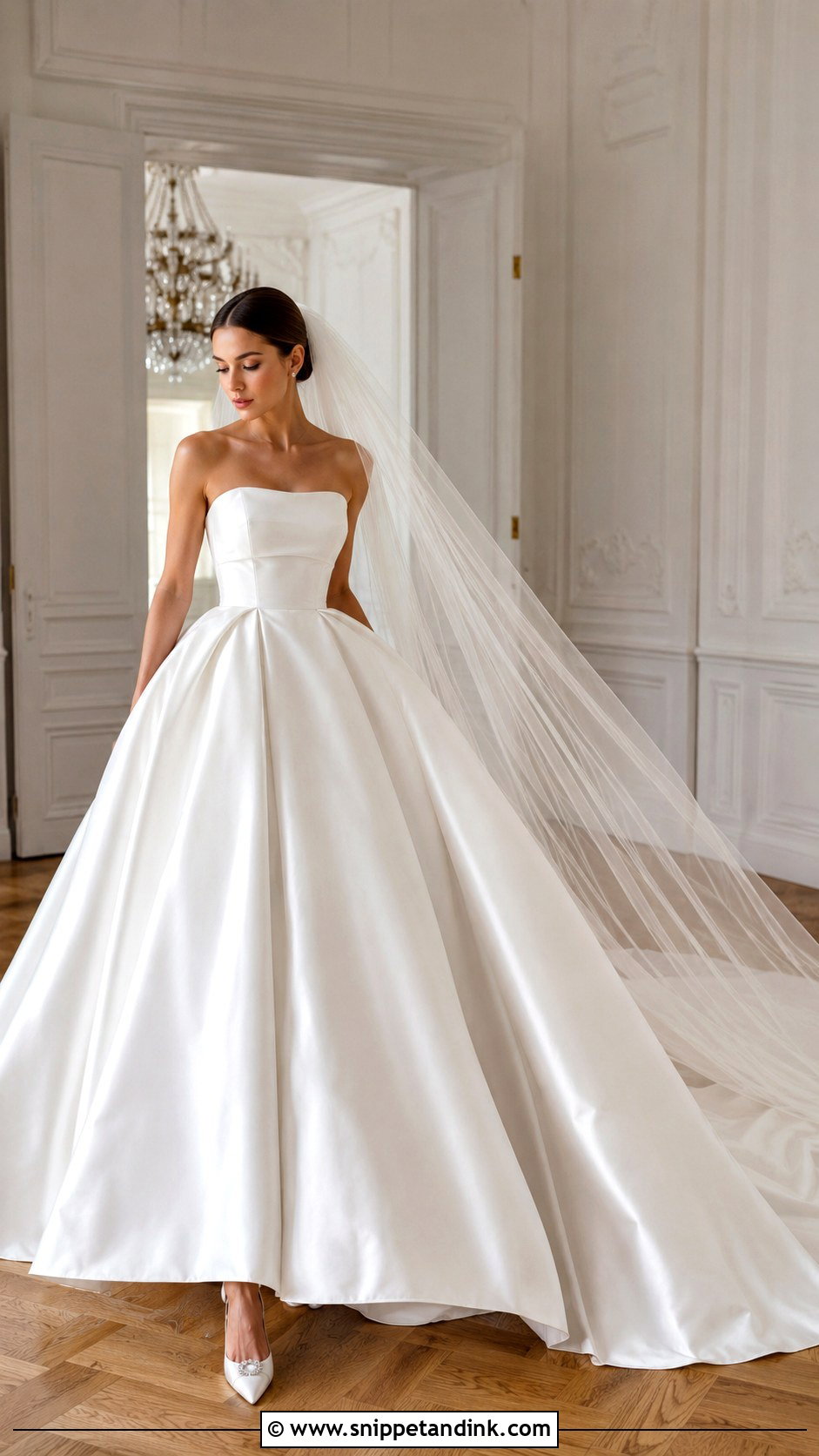
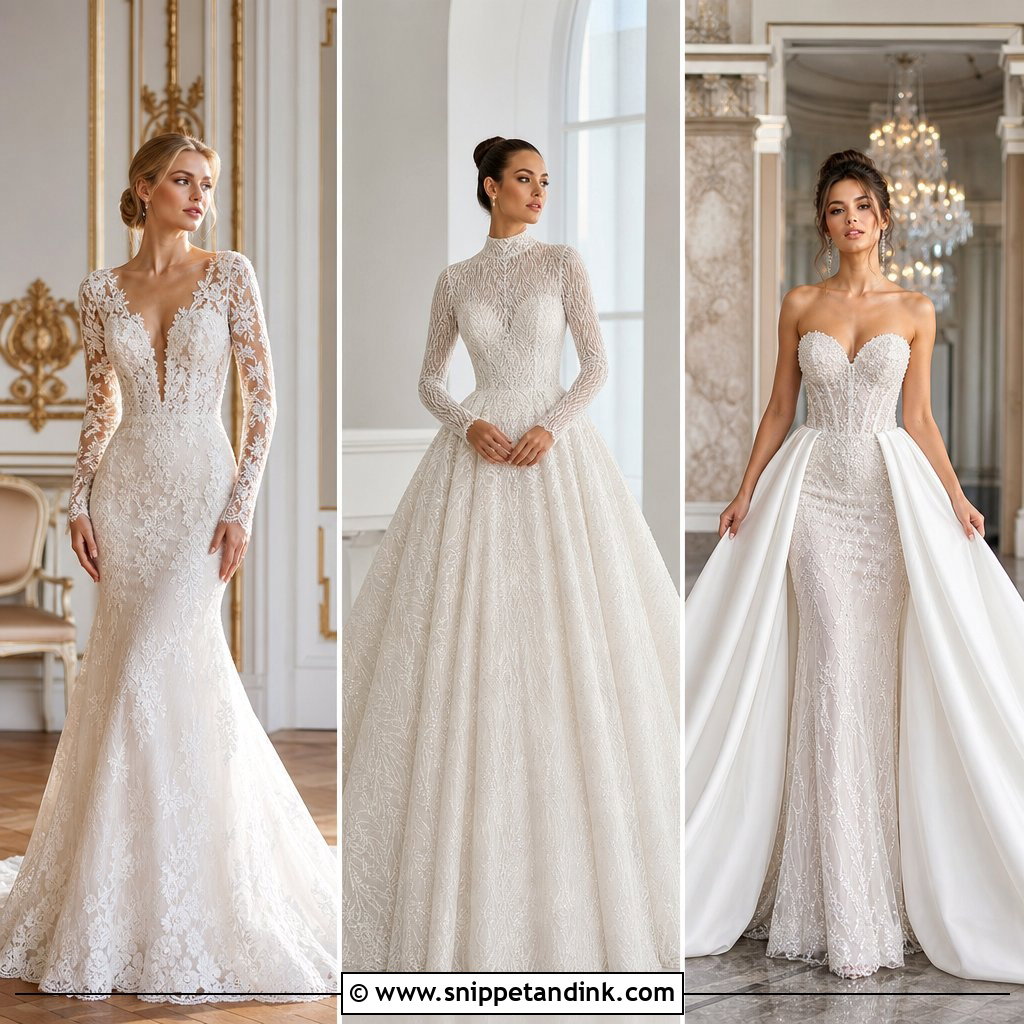
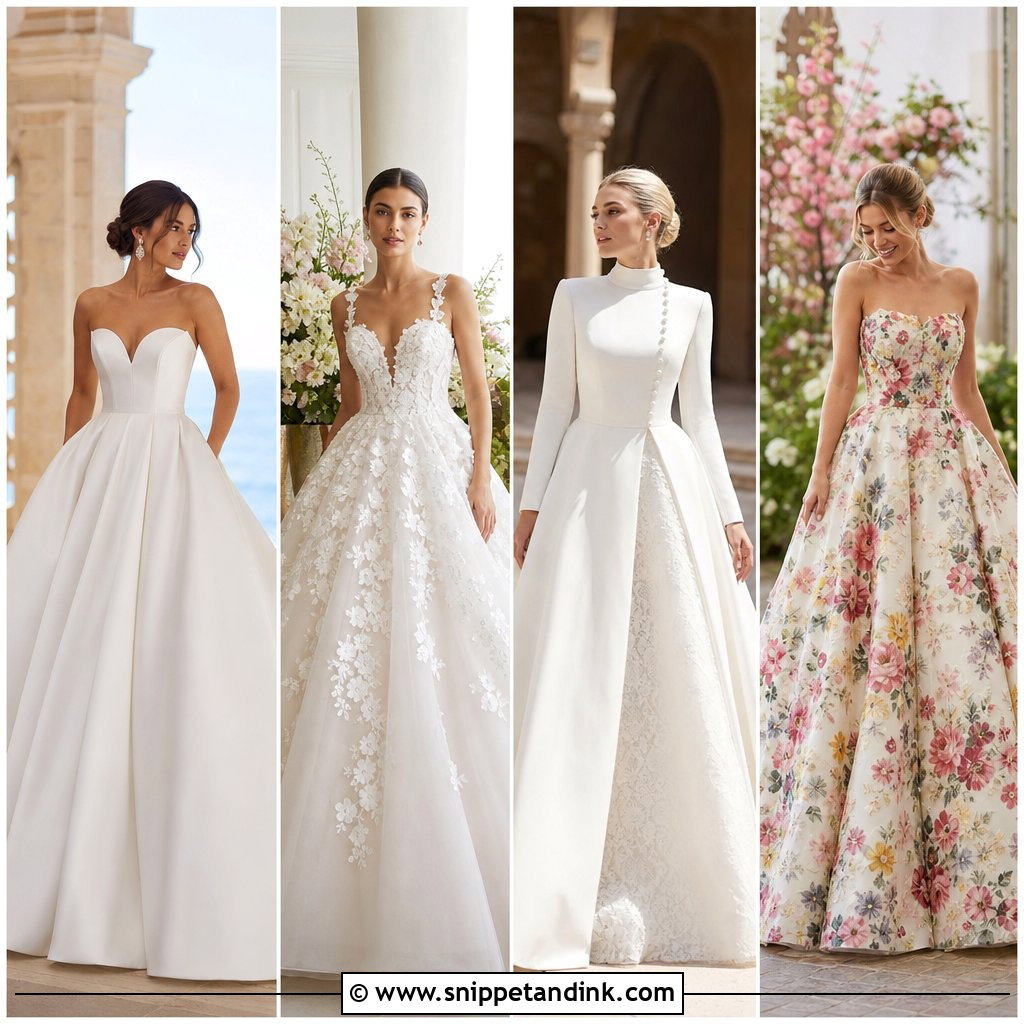
Ball gowns are back to being sculptural rather than frothy. A fitted bodice, a full skirt and a waist that shapes without squeezing are the base, in mikado, satin, organza or layered tulle. Mikado is my favourite here because its slight stiffness holds the skirt’s outline without needing heavy petticoats. A cathedral veil, pearl studs and pointed satin pumps keep it classic; with a dramatic skirt, skip the necklace. Ballrooms, estates, grand hotels and evening ceremonies give it the space it needs. Check the aisle width before you commit.
2. Designer Basque Waist Wedding Dress
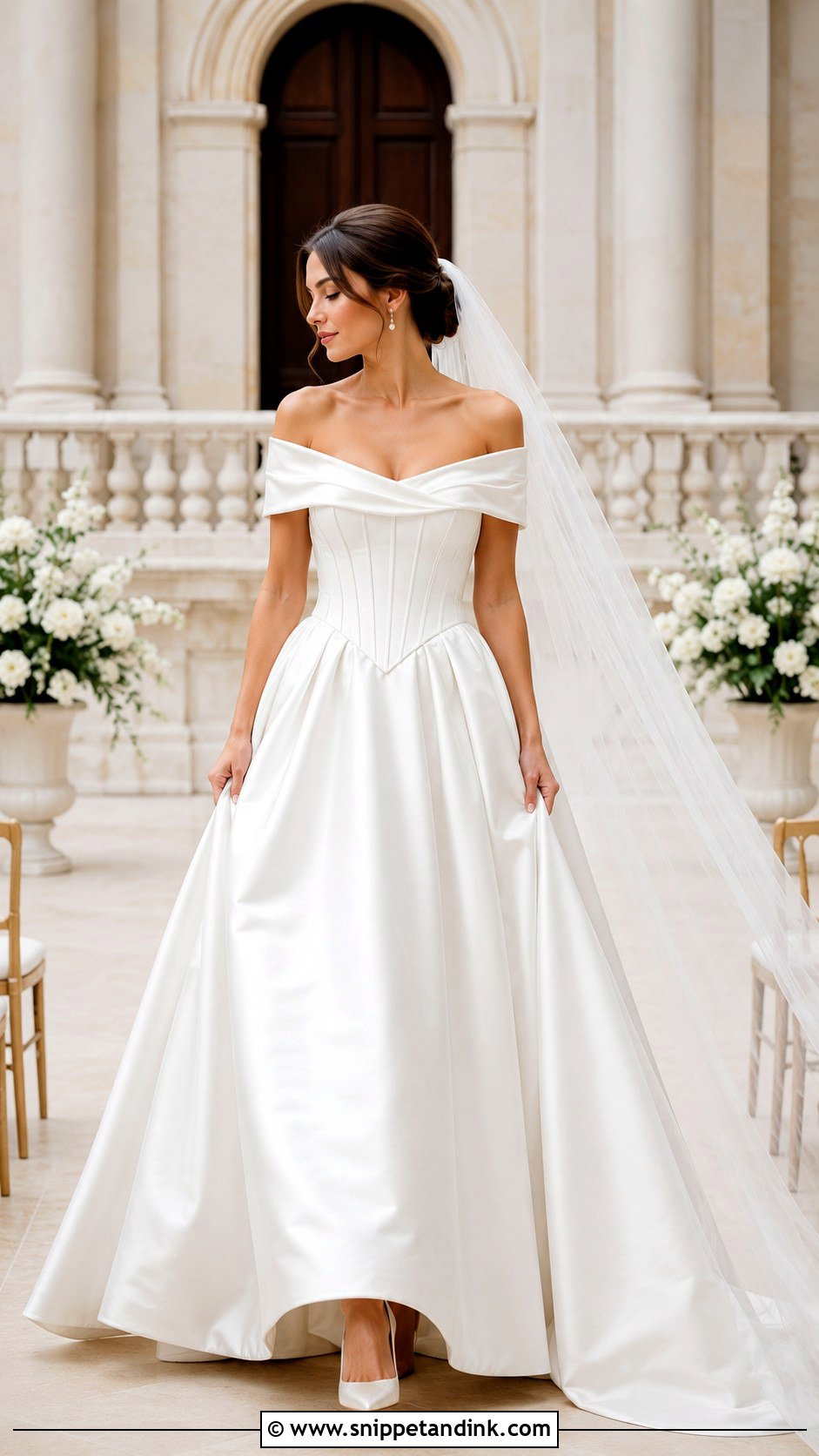
The dropped V of a basque waist pulls the eye down, lengthens the torso and makes the skirt look fuller. Satin, lace or structured taffeta all carry it. Strapless or off-the-shoulder keeps it modern rather than historical. Where I’m careful is with short-waisted brides: a deep point can make the legs look shorter, and a gentler curve does the same job. A long veil, pearl drops and slim heels hidden by the hem finish it. Traditional venues and garden estates suit it.
3. Designer Satin Column Wedding Dress
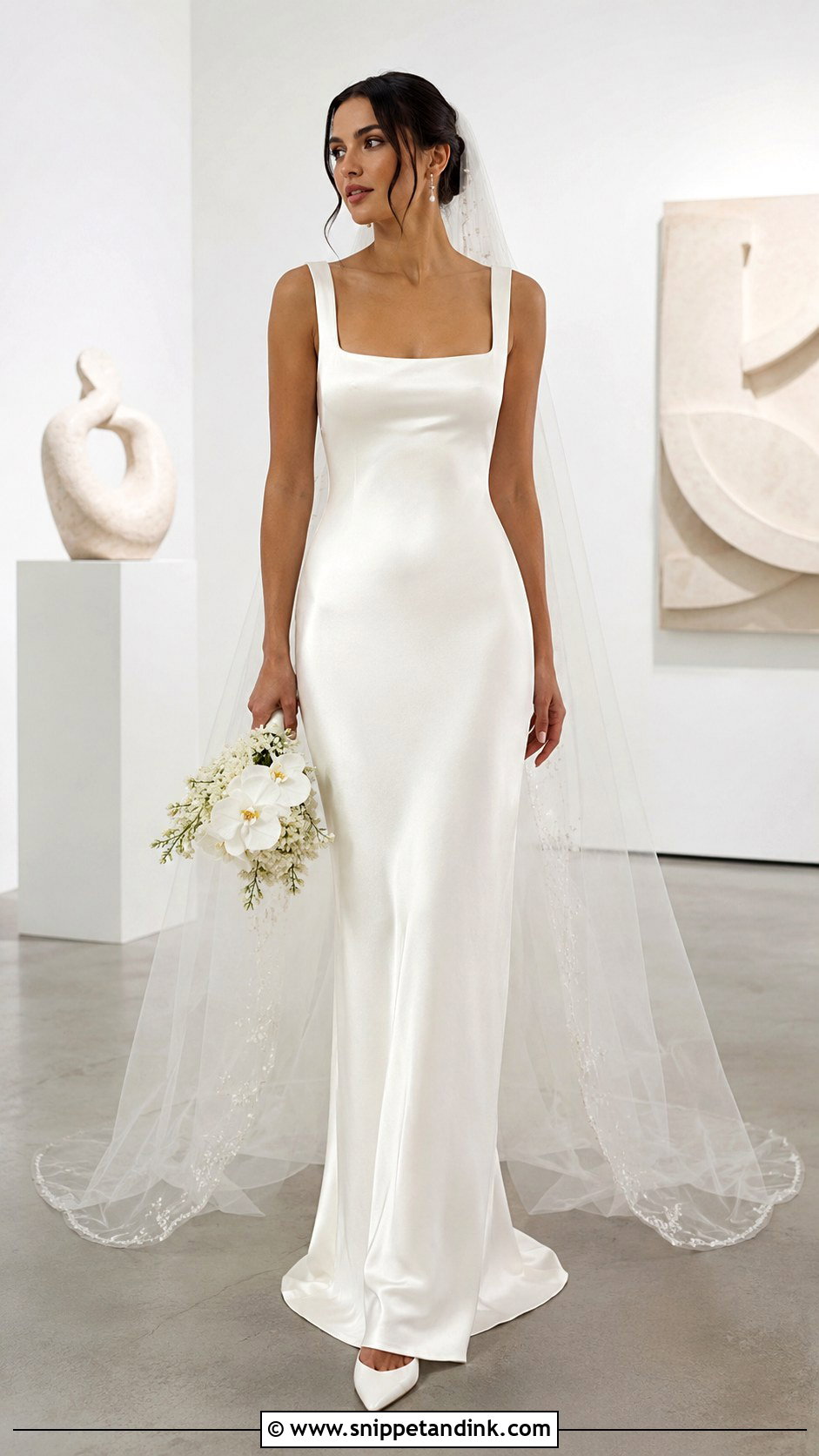
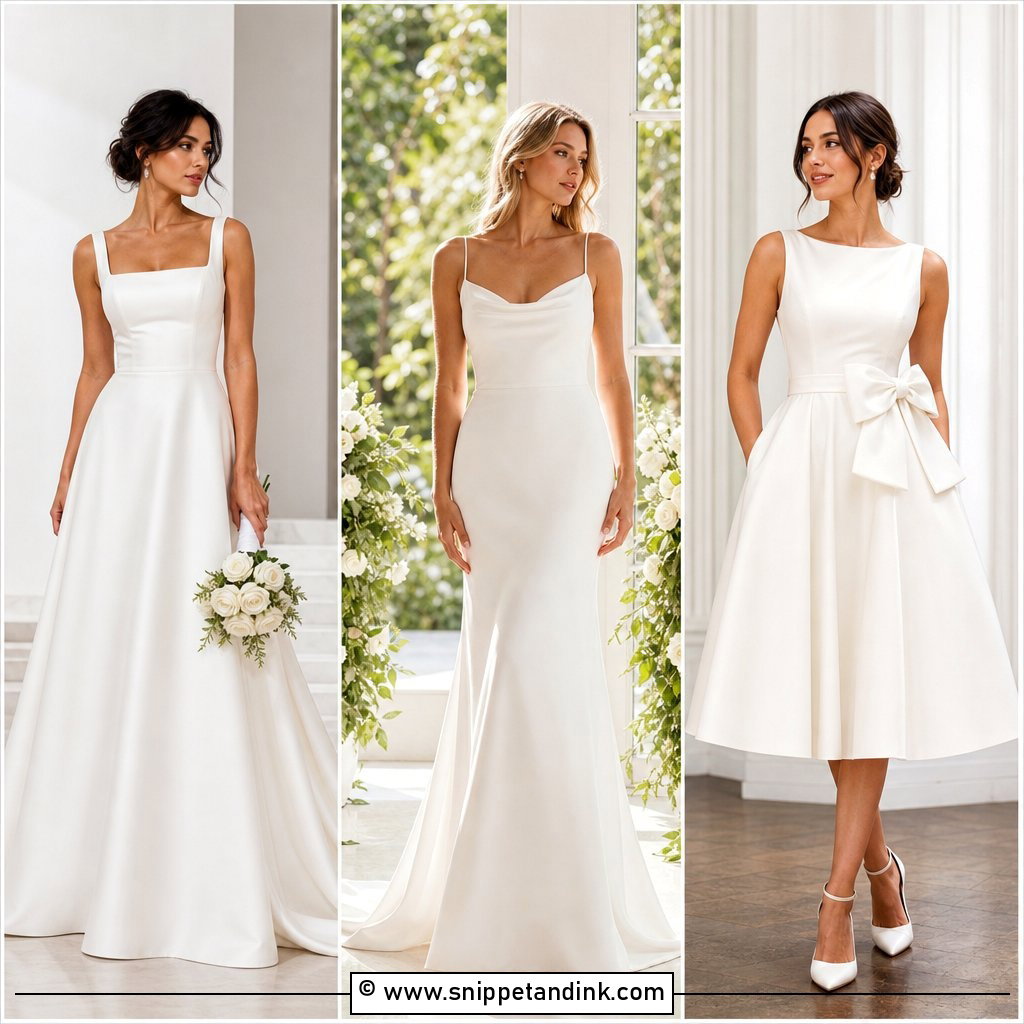
A satin column is confident without trying. One clean vertical line, little decoration. Fluid satin or silk crepe looks soft; structured satin, sharper. Square, bateau or strapless necklines all suit it. The catch is that a column shows everything underneath and every slightly-off seam, so the fitting has to be exact and the shapewear chosen early. A sleek bun, fine earrings, pointed heels and a chapel veil are plenty for city weddings, galleries and rooftops.
4. Designer Lace Long Sleeve Wedding Dress
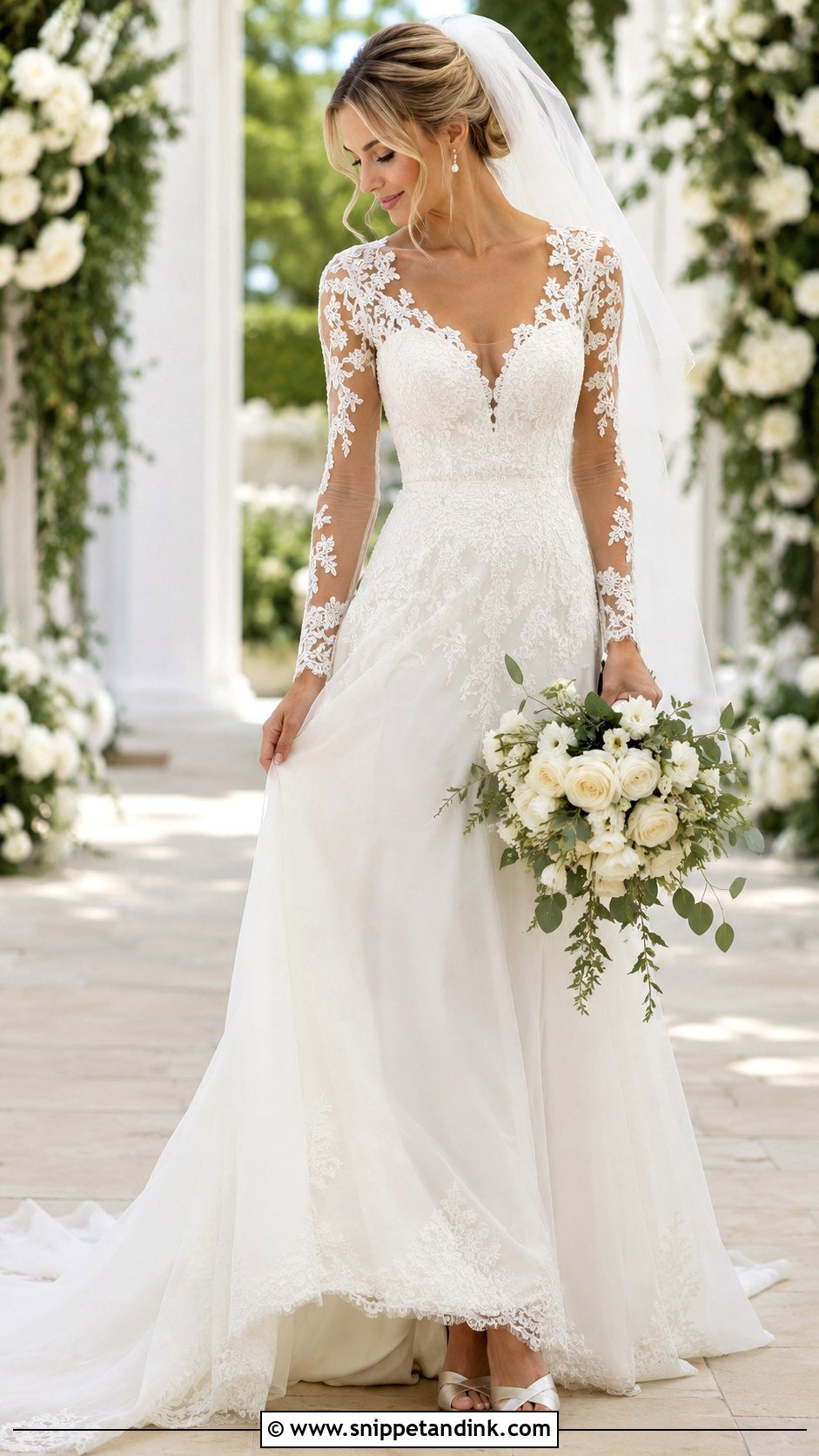
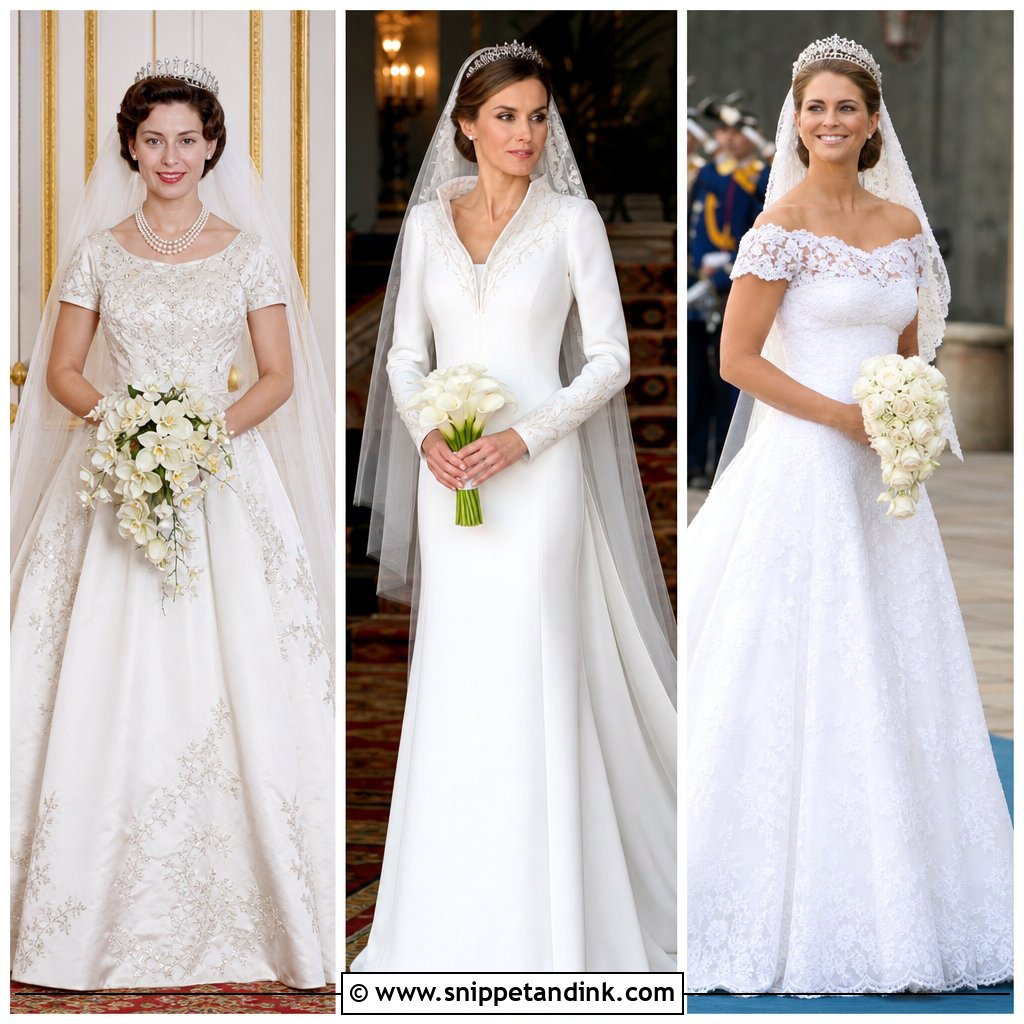
Delicate lace is the whole game with long sleeves. Floral Chantilly or embroidered lace drapes; stiff corded lace on the arm feels like a cast by the third hour. A fitted bodice over a flowing skirt balances the coverage, and sheer sleeves keep it light. Lift your arms and hug someone at the fitting; sleeves set too tight at the armhole pull the whole bodice up. Pearl earrings, a soft veil and satin or lace-trimmed heels suit cooler months, historic venues and formal gardens.
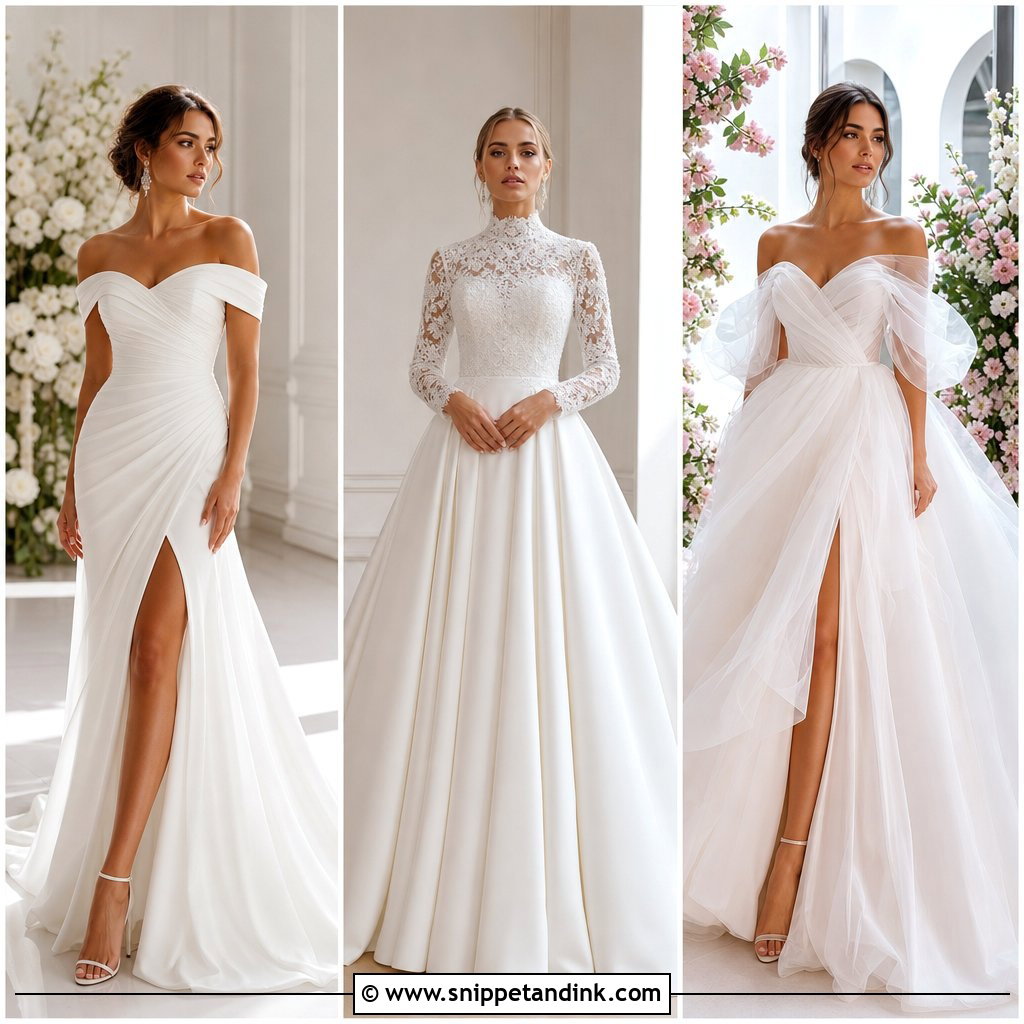
5. Designer Off Shoulder Wedding Dress
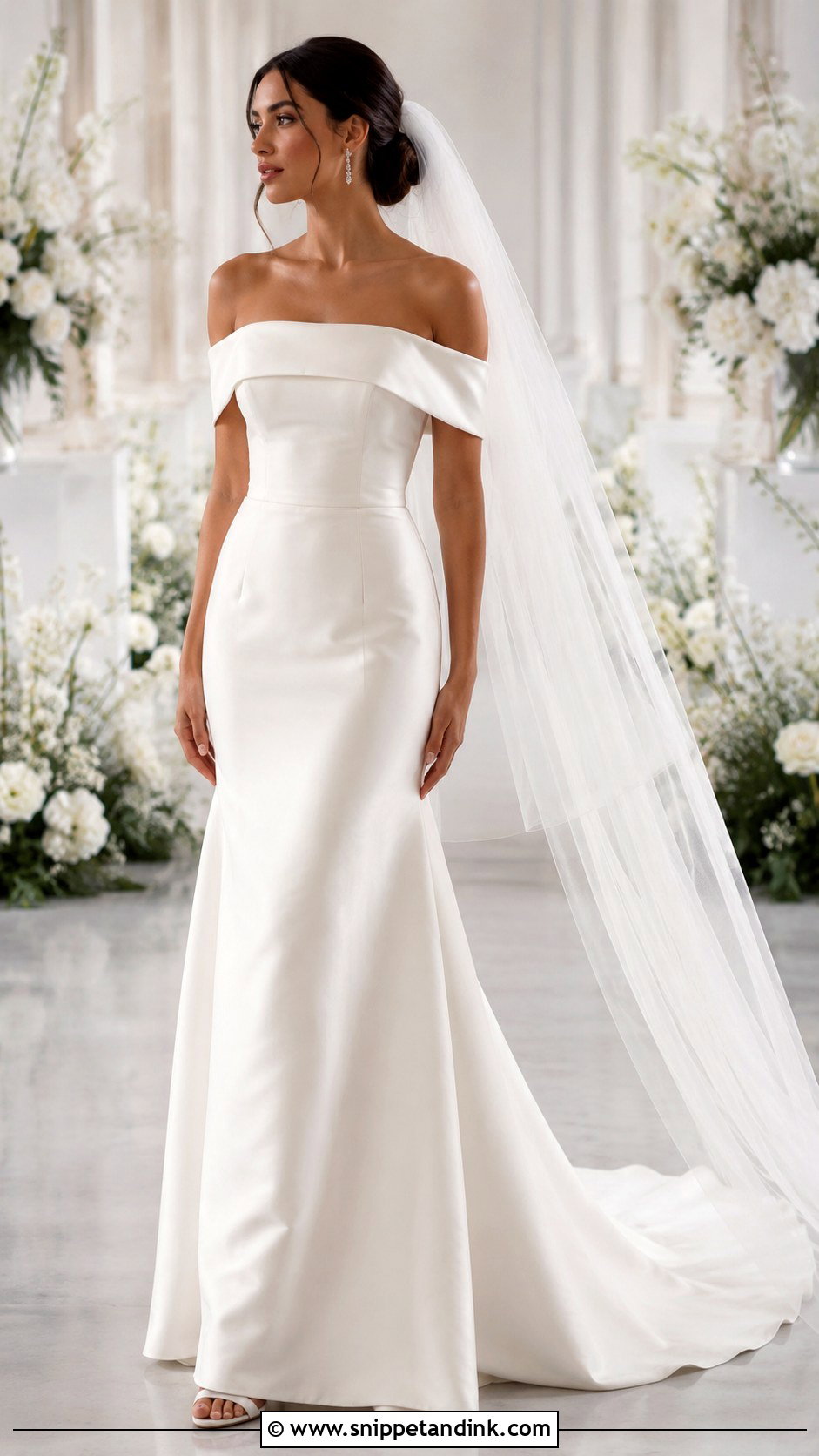
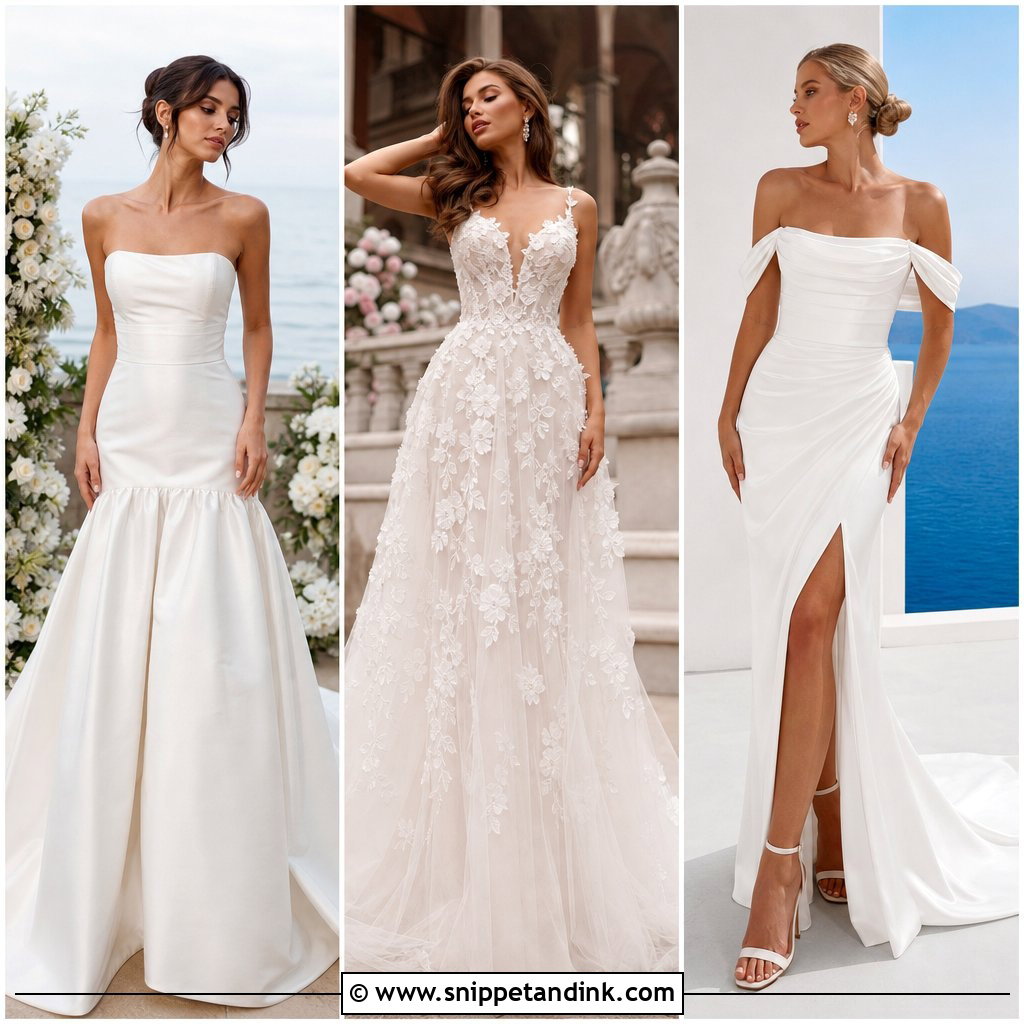
Off the shoulder frames the collarbone and shows a little skin without feeling exposed. It suits mermaid, ball gown and A-line shapes, in smooth satin, draped crepe or lightly structured lace. The bands should grip when you raise your arms; if you catch yourself pulling them up in the mirror, they need tightening. Drop earrings, a low chignon and a veil set below the hair keep the neckline visible from behind, and a fine bracelet is enough jewellery.
6. Designer Strapless Wedding Gown
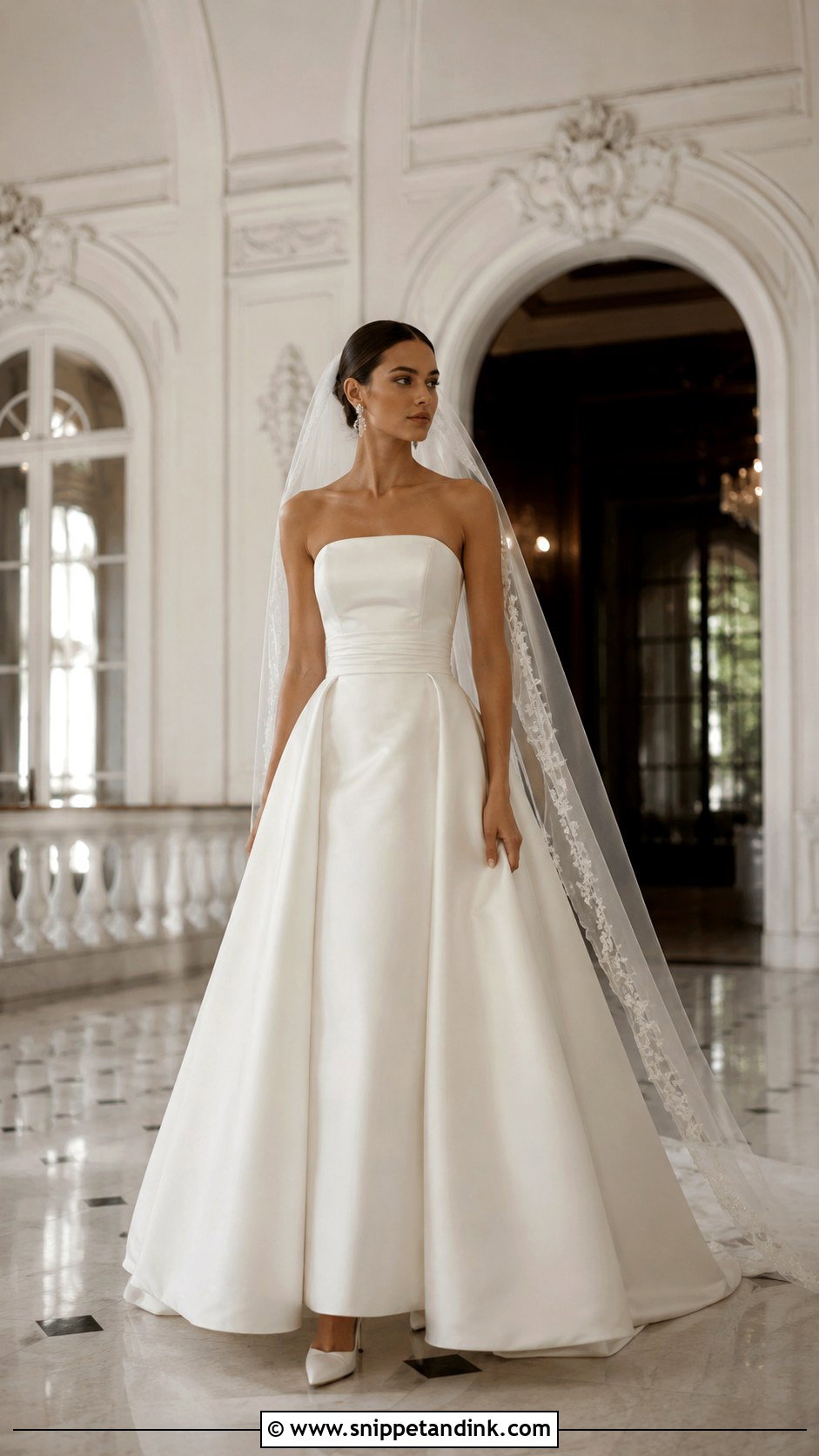
Strapless works with nearly every silhouette, which is why it’s still the most common neckline I see. Everything depends on the inner structure: a properly built corset or bodice keeps it up, smooth and comfortable without you ever touching it. Satin ball gown, sleek fit and flare or a softly draped A-line are all safe bets. Wear a long veil for the ceremony, then remove it for a cleaner reception look. Statement earrings replace a necklace on a straight or gently curved neckline.
7. Designer Mermaid Wedding Dress
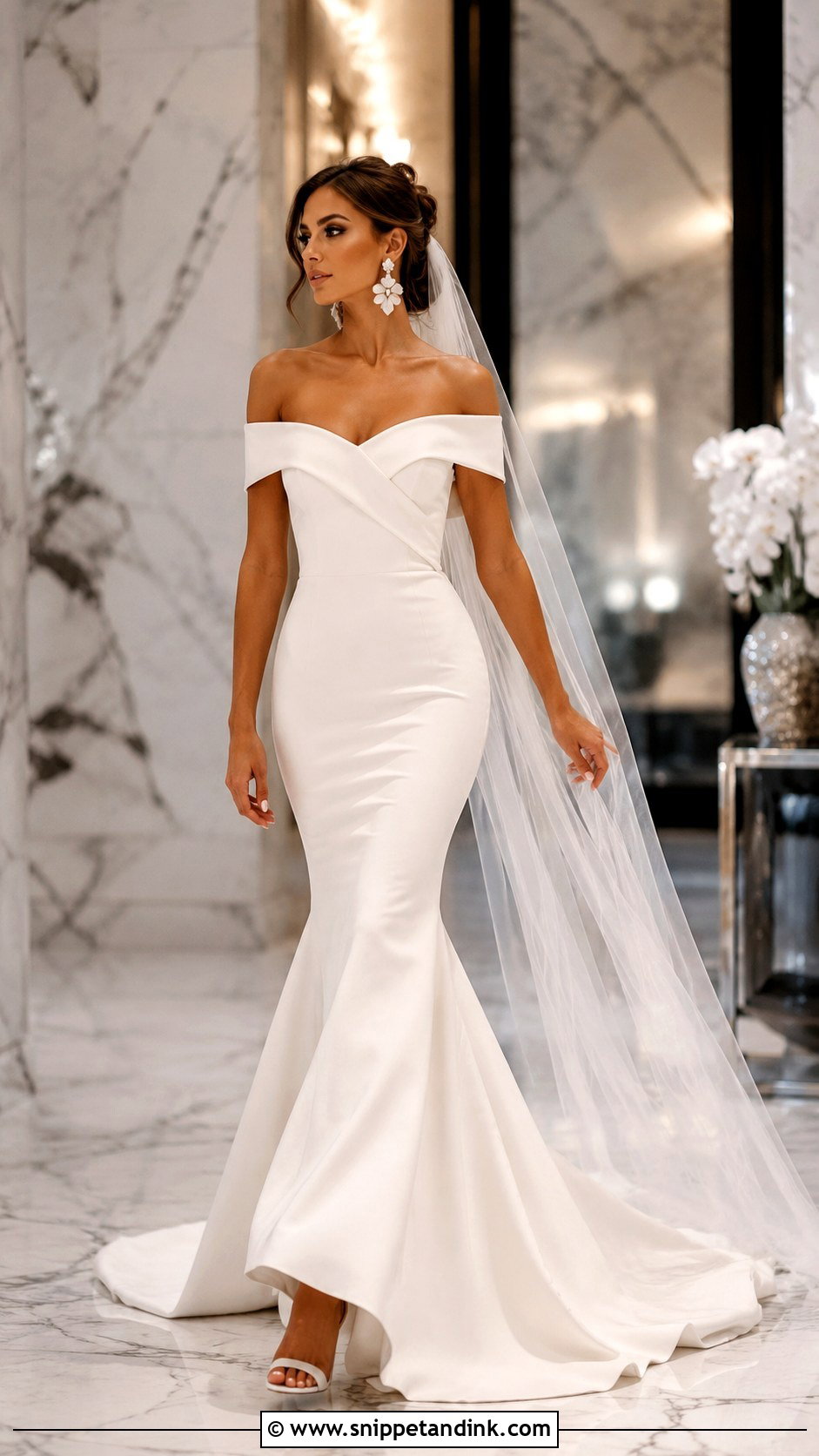
Mermaids hug bodice, waist and hips before flaring near the knee or lower thigh. A fabric with body, such as crepe, satin, lace or mikado, keeps the line smooth; thin fabric wrinkles across the hips. Strapless looks bold; sleeves or an off-shoulder neckline soften it. Book alterations with enough time for two adjustments, because the knee flare point decides how well you walk and sit. A dramatic veil, sculptural earrings and heels that support your posture finish it for formal evening venues.
8. Designer A Line Wedding Dress
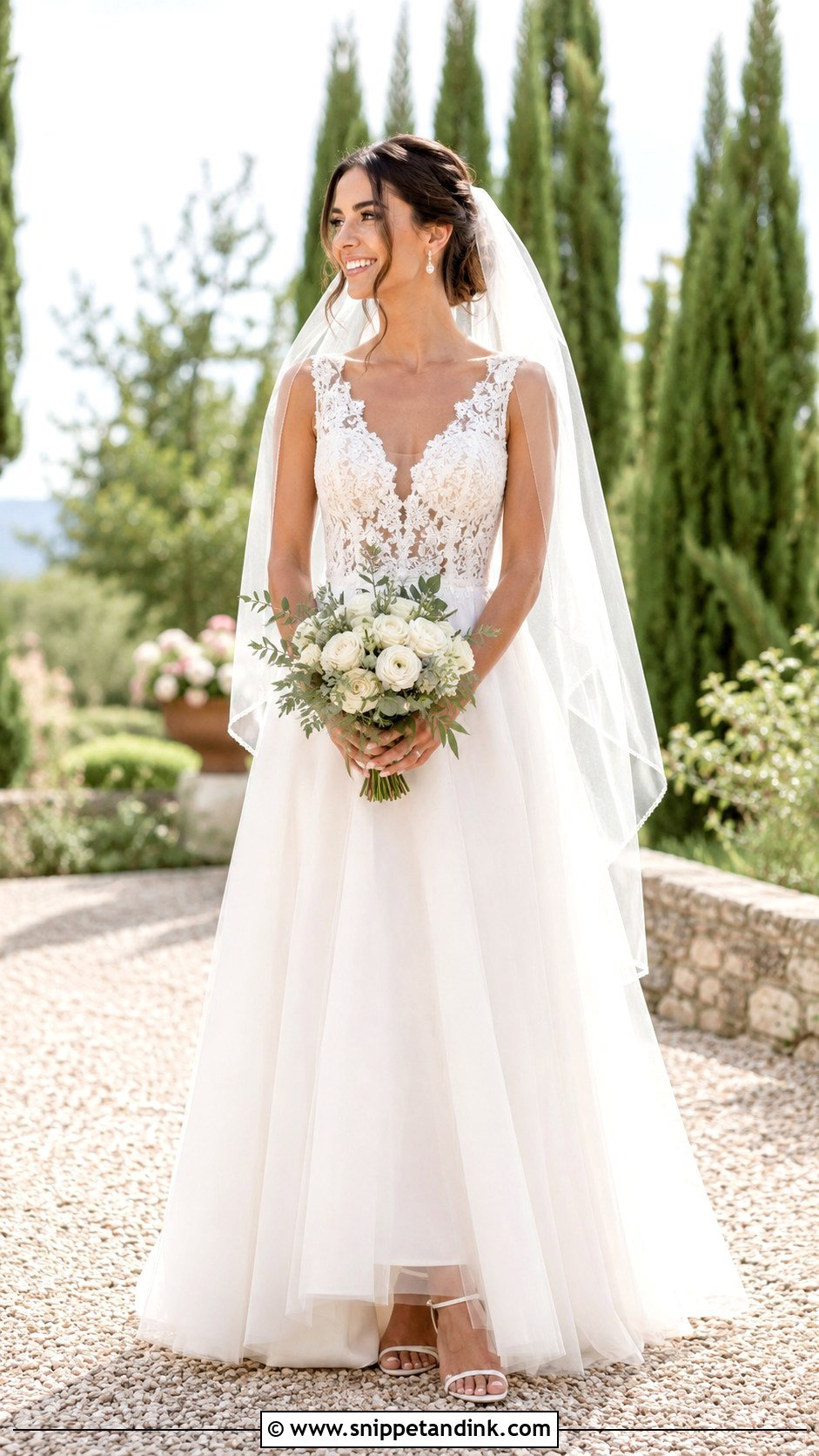
A-lines are my default suggestion when a bride walks in unsure. Fitted through the bodice and widening gently from the waist, they move without ball-gown weight. Lace, satin, tulle, organza and crepe all suit the shape, so the fabric decides whether it reads classic, romantic or modern. A fingertip veil, pearl earrings and elegant heels balance it. If the fabric is busy, keep the bouquet simple. Most brides find it easy to wear from ceremony to the last dance.
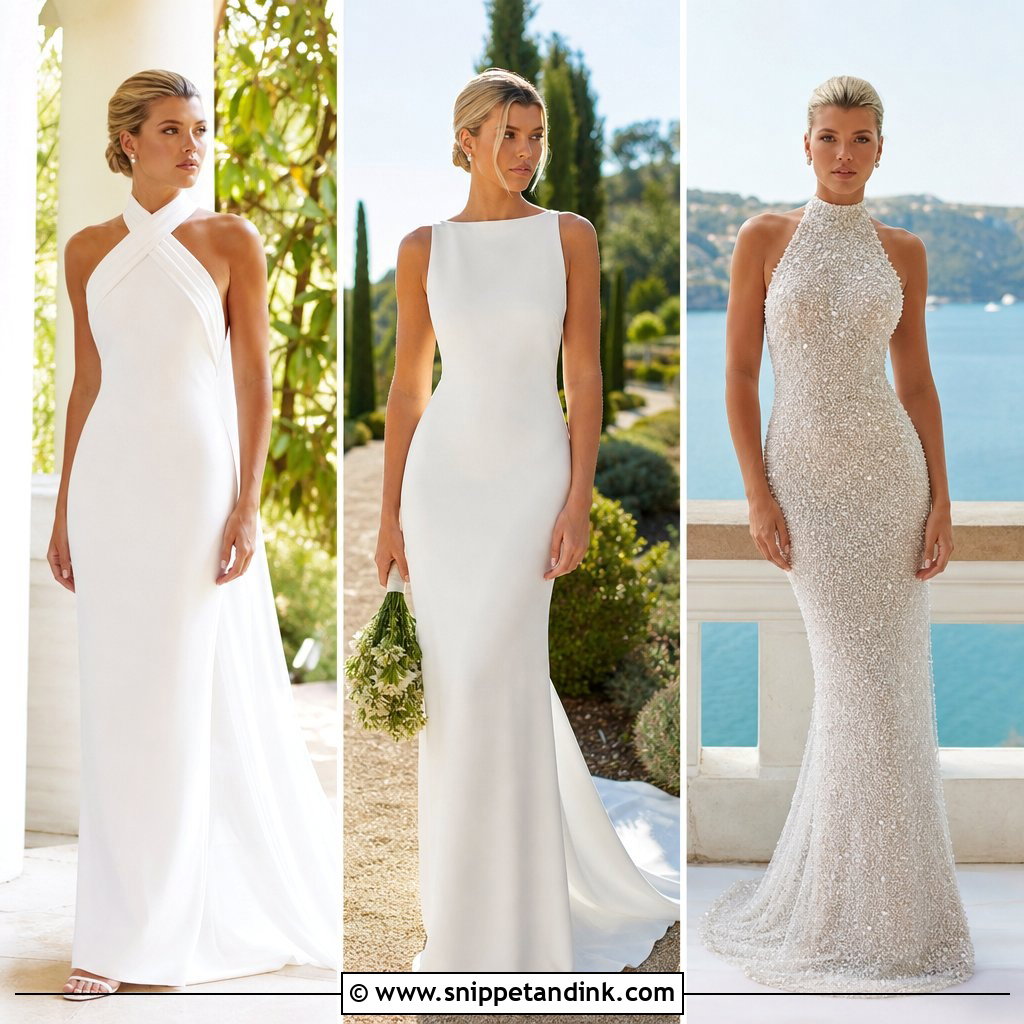
9. Designer Minimalist Wedding Gown
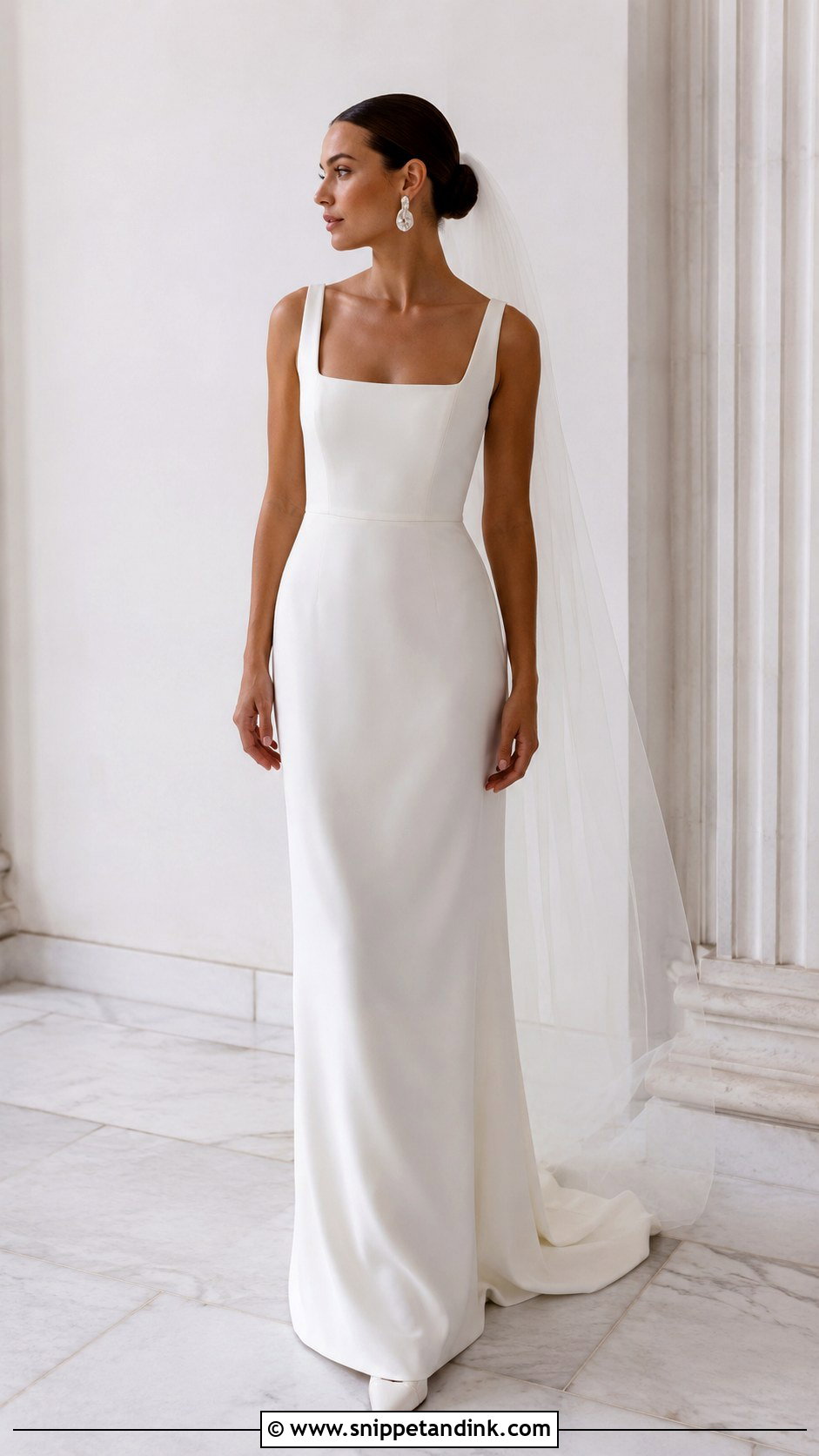
Minimalist gowns depend on three things: cut, fabric and fit. Clean seams in smooth crepe, silk satin or matte mikado, with a square, high or strapless neckline. Because there’s nothing to hide behind, I look hard at the seam lines and the hem; a slightly wavy hem on plain crepe is obvious in photos. Sculptural earrings, a sleek veil, clean ivory heels and a low bun or soft waves. Courthouses, modern chapels and museum receptions suit it, and the crisp lines photograph well.
10. Designer Floral Applique Wedding Dress
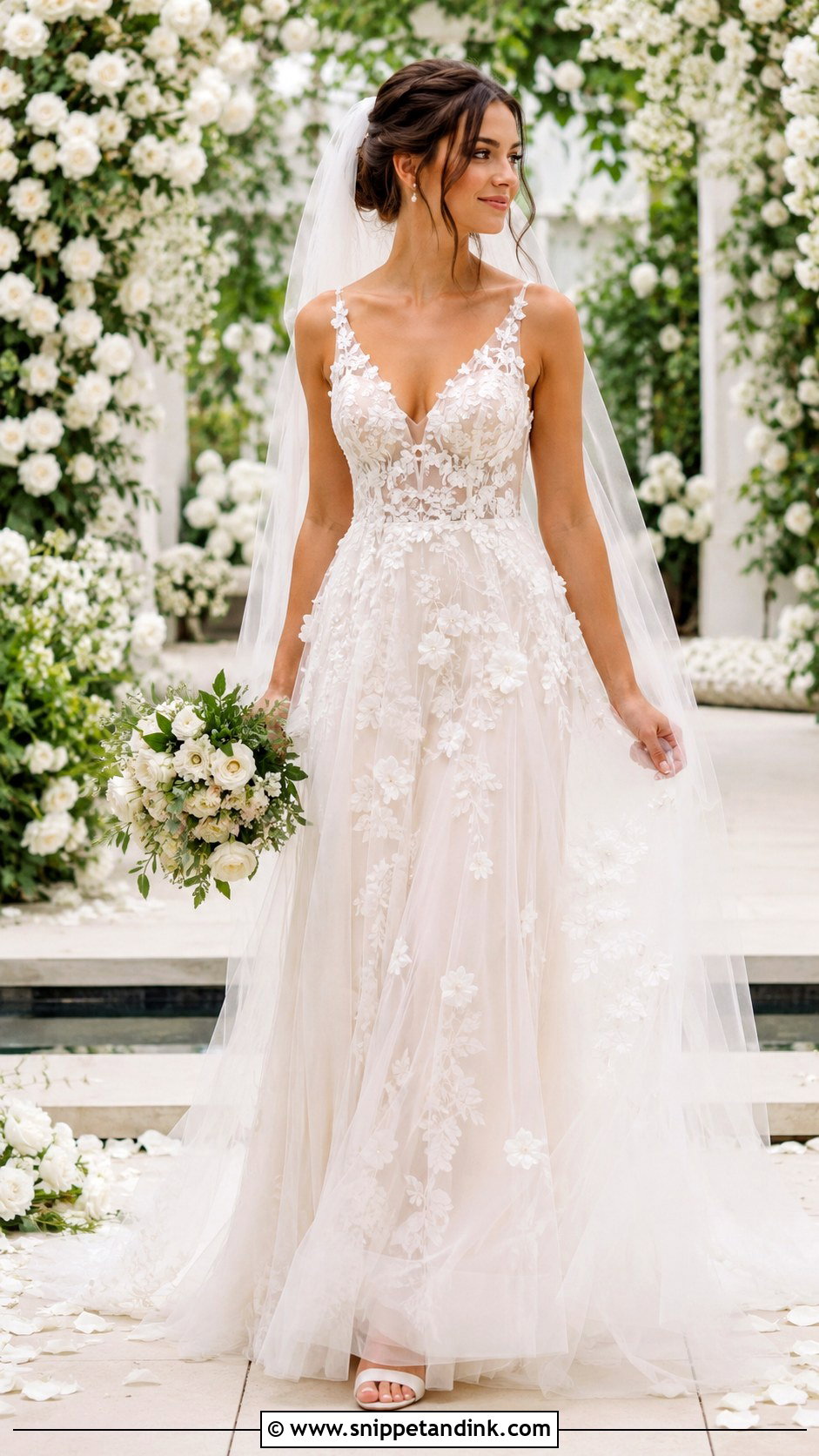
A designer floral applique wedding dress gives texture you notice in movement and in close-up photos. Scattered small flowers look delicate; larger blooms carry the whole gown. Tulle, organza and sheer overlays let them float. Sitting on 3D flowers flattens them over a long day, so I prefer them concentrated on the bodice and upper skirt rather than at the back of the hips. Simple earrings, soft makeup, a plain veil and satin heels or barely-there sandals suit gardens and spring ceremonies.
11. Designer Pearl Wedding Gown
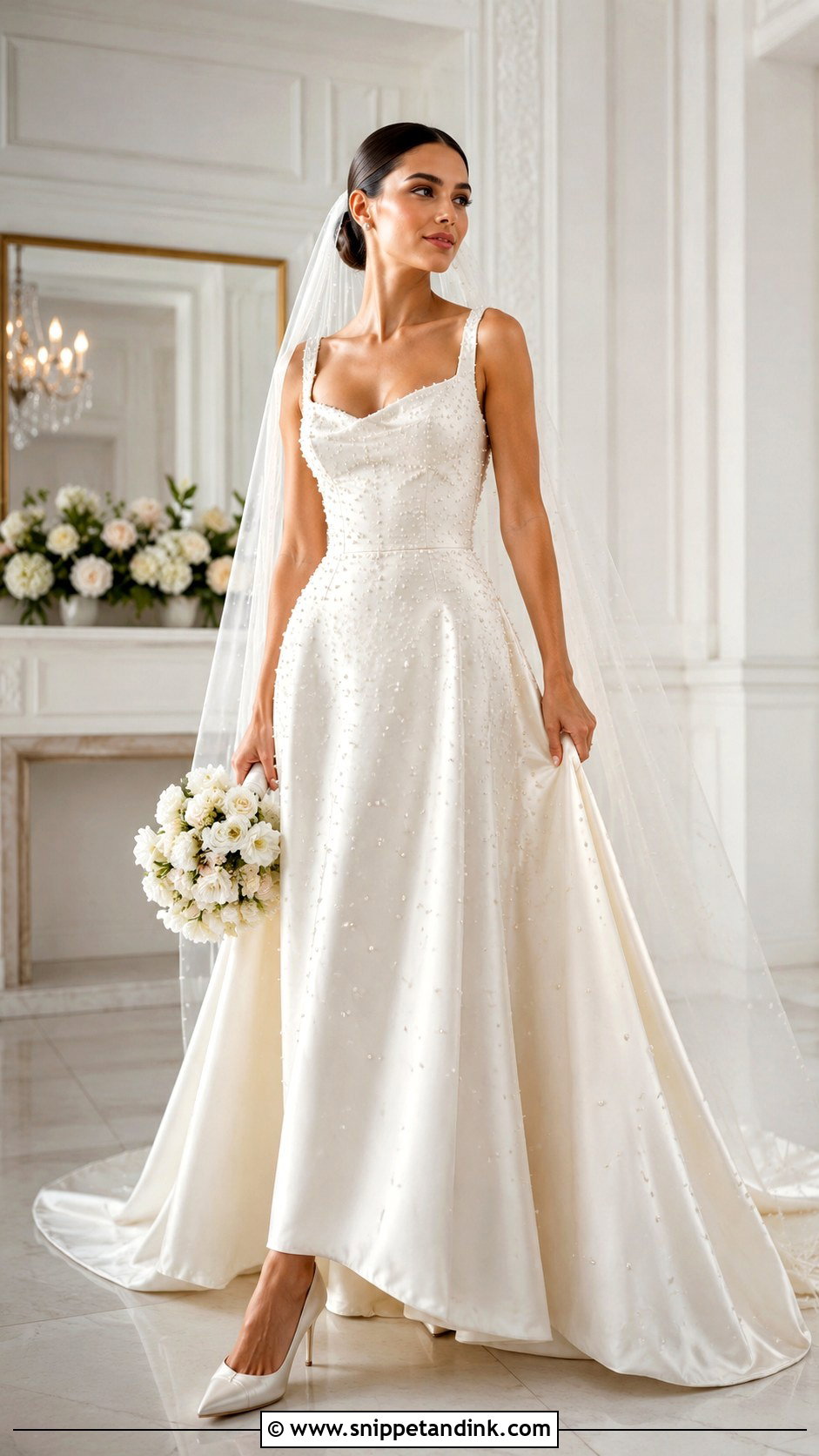
Pearls look expensive in a soft way. They can be tiny scattered details, pearl straps, embroidered bodice accents or all-over beading. Too many, and the gown tips into costume. If the dress already has pearl work, keep jewellery to small pearl or diamond studs. A pearl-edged veil works only when it doesn’t compete with the bodice, and pearls on veil and gown can catch on each other, so test them together. Satin pumps or pointed heels finish it.
12. Designer Beaded Wedding Dress
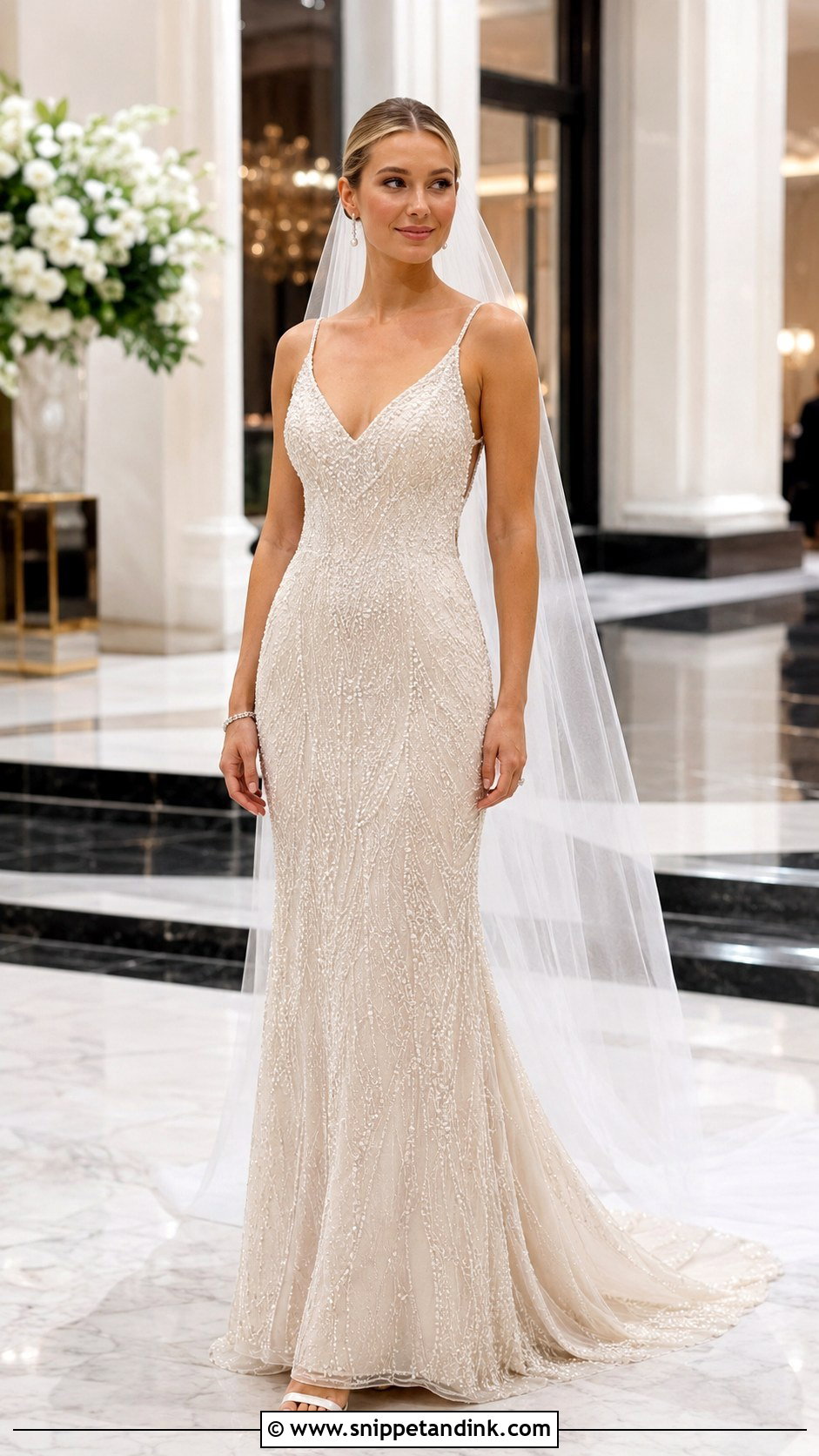
Beading changes with light, which makes it a natural choice for evening ceremonies. Linear beading lengthens the body, floral beading softens, scattered crystals add a little sparkle. Weight is the honest drawback. A heavily beaded gown feels noticeably heavier after five hours, so I ask brides to wear it for a full twenty minutes at the fitting before deciding. Clean hair, simple heels, understated jewellery and a plain veil keep it from looking overdone at formal hotel receptions.
13. Designer Tulle Wedding Gown
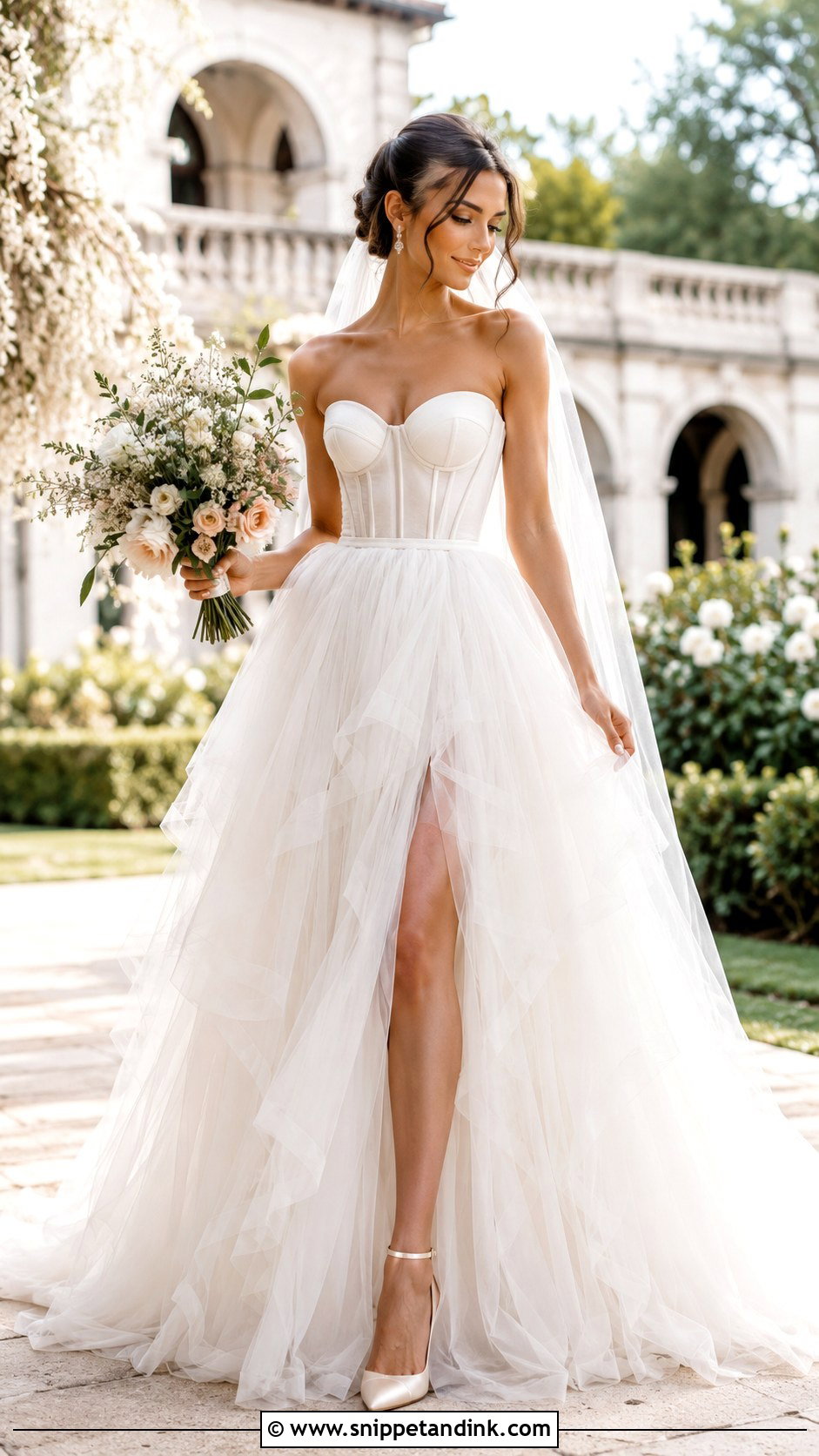
Tulle feels light and bridal without stiffness, as a full skirt, an overlay or airy sleeves. The modern version uses clean layers rather than sheer bulk. A structured bodice anchors all that softness. For more drama, I’d add length to the train rather than more skirt volume, which keeps it walkable. Tulle catches on rough surfaces, so watch stone steps and wooden benches. A simple veil, fine earrings and elegant heels suit gardens and romantic ballrooms.
14. Designer Corset Wedding Dress
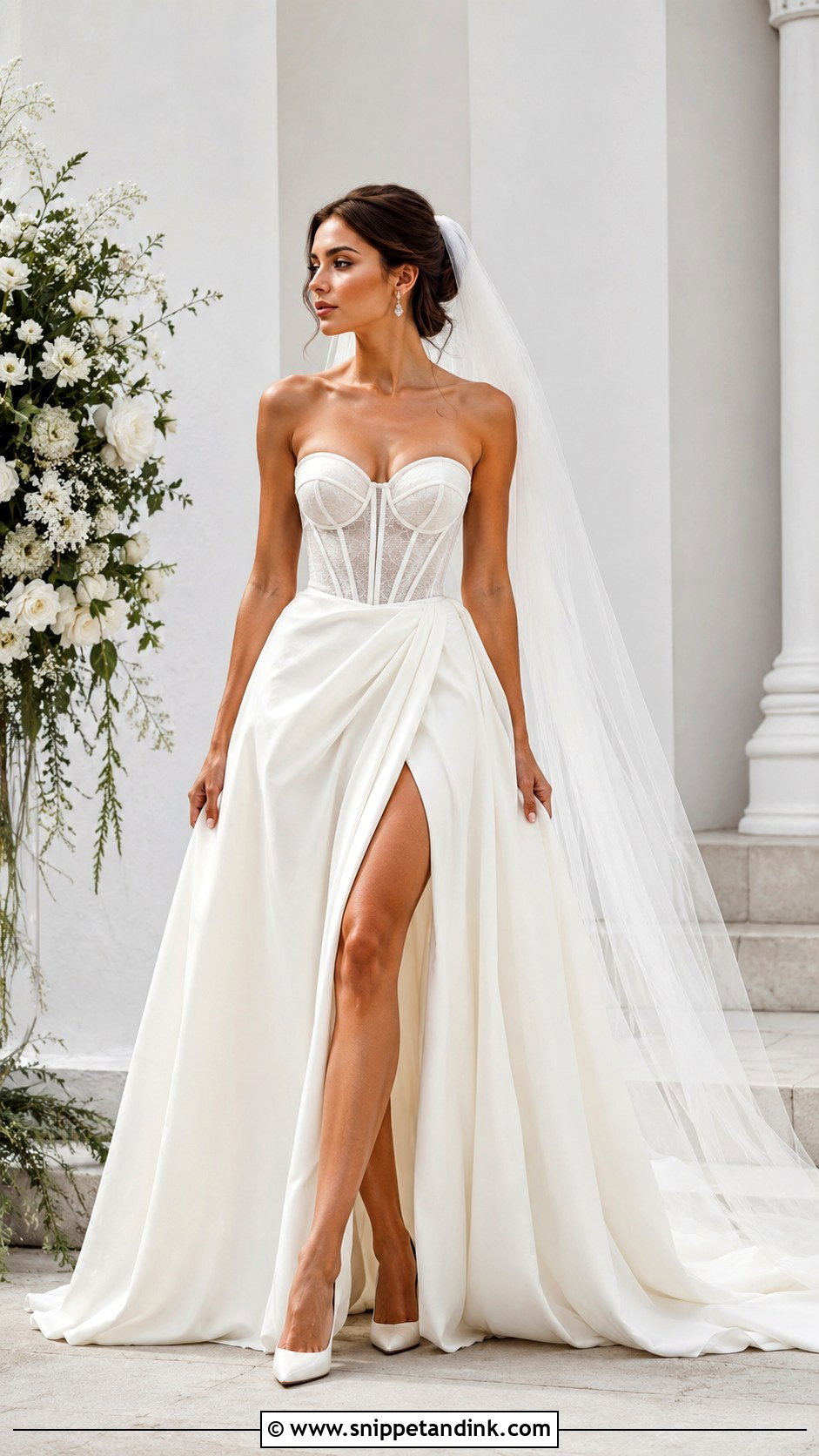
Corsets give structure, shape and a couture-inspired finish. The boning can show as a design detail or sit hidden inside for support. Paired with soft skirts, clean satin, lace overlays or draped fabric, it looks elegant rather than theatrical. Because it can be laced or taken in closely, it adapts to many body types. I lace for breathing and dinner, not for the tightest possible waist. A long veil, refined earrings and classic heels; few accessories if the seaming is strong.
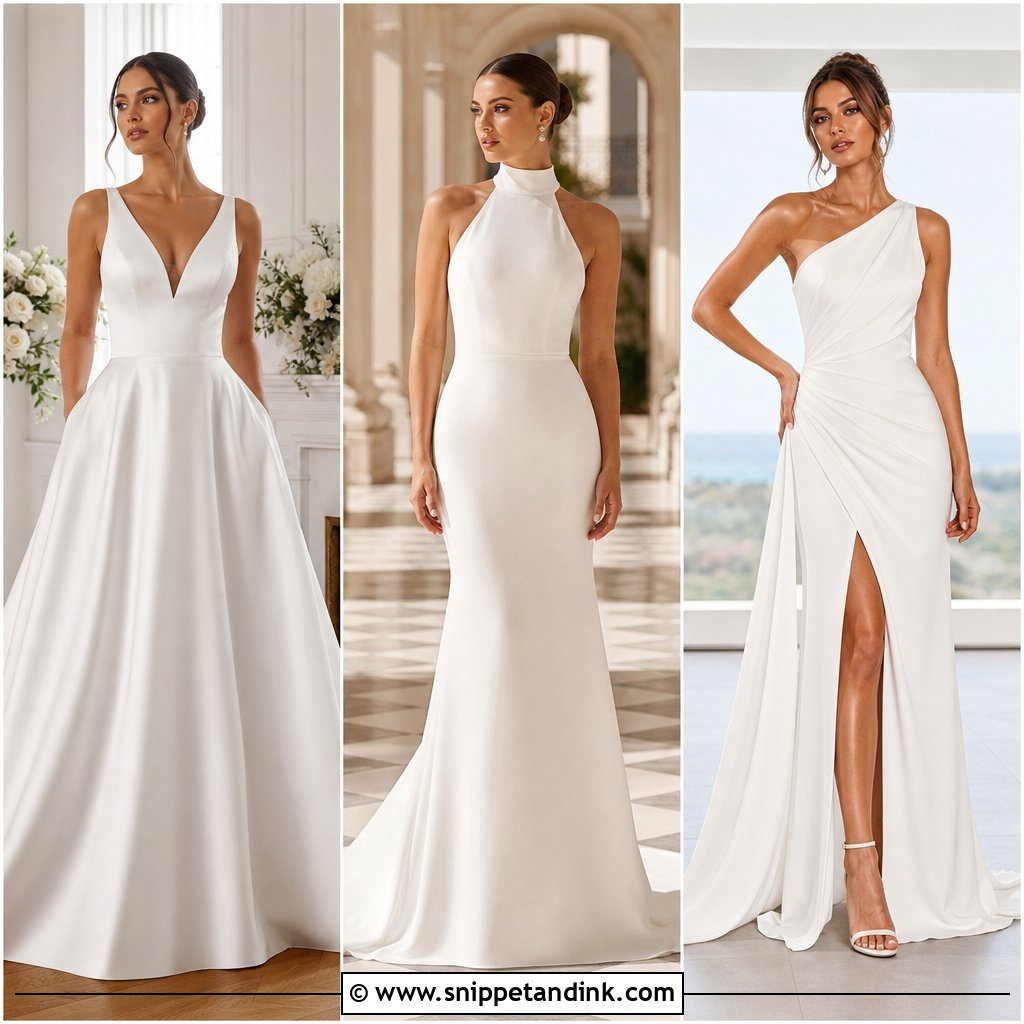
15. Designer Square Neck Wedding Dress
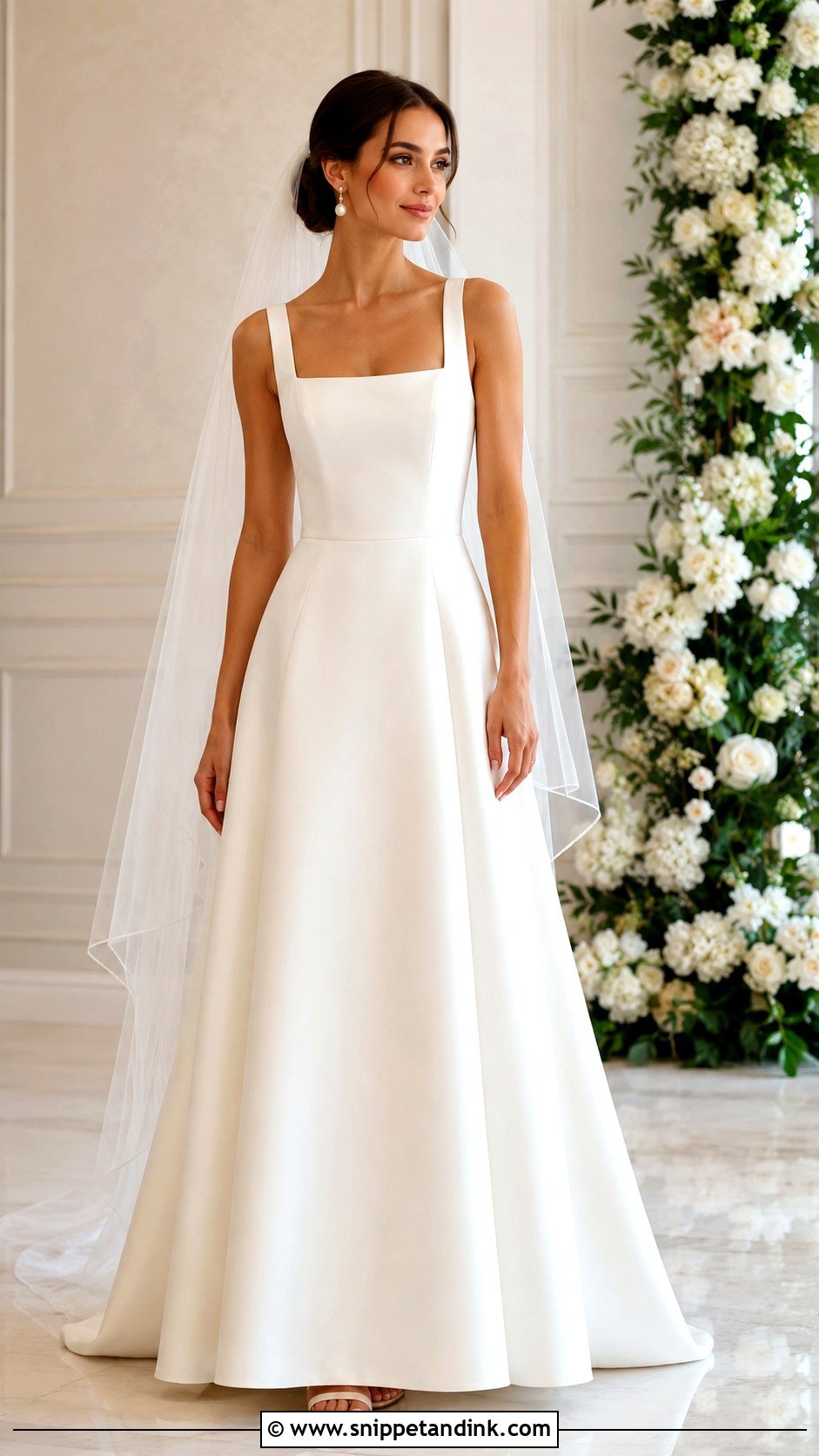
Square necks open the chest without going low and give a slightly architectural line. They work with straps, long sleeves or a structured bodice. Satin A-line feels classic; crepe column looks modern. The corners should stay flat when you lean forward, which is the first thing I check in the mirror. Pearl earrings, a smooth veil and simple heels; a sleek hairstyle matches a sharp neckline. City venues, gardens and formal ceremonies all suit it.
16. Designer High Neck Wedding Gown
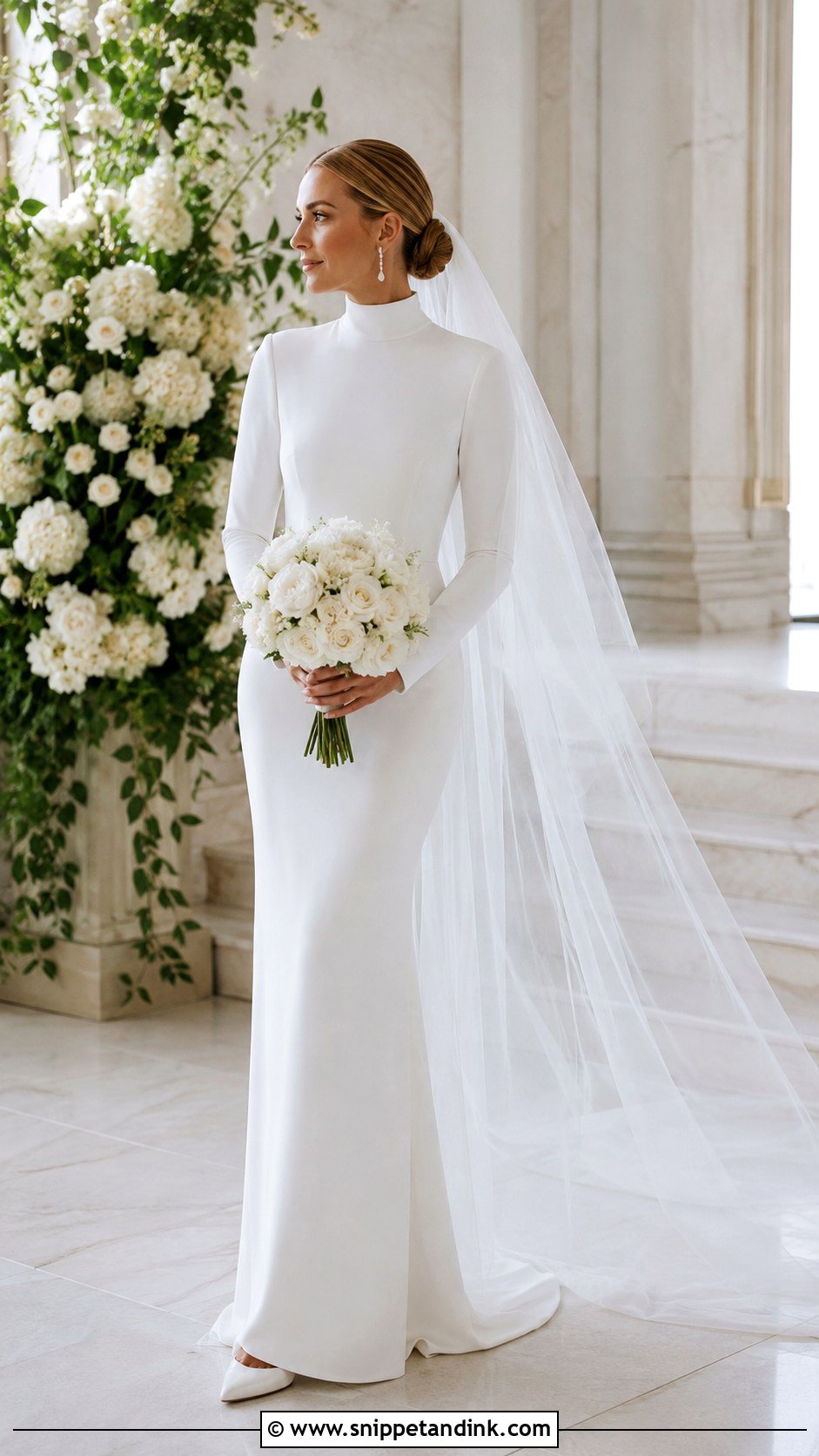
High necklines bring attention up to the face, so hair becomes part of the dress design. A bun, sleek ponytail or tucked waves keep the collar clear. Lace looks regal, crepe modern, chiffon soft. No necklace; earrings do the work. A long veil adds drama on a slim shape. Comfort is the risk: I check the collar while the bride turns her head and looks down, because a high neck cut tight rubs by the speeches. Cooler seasons and modern venues suit it.
17. Designer One Shoulder Wedding Dress
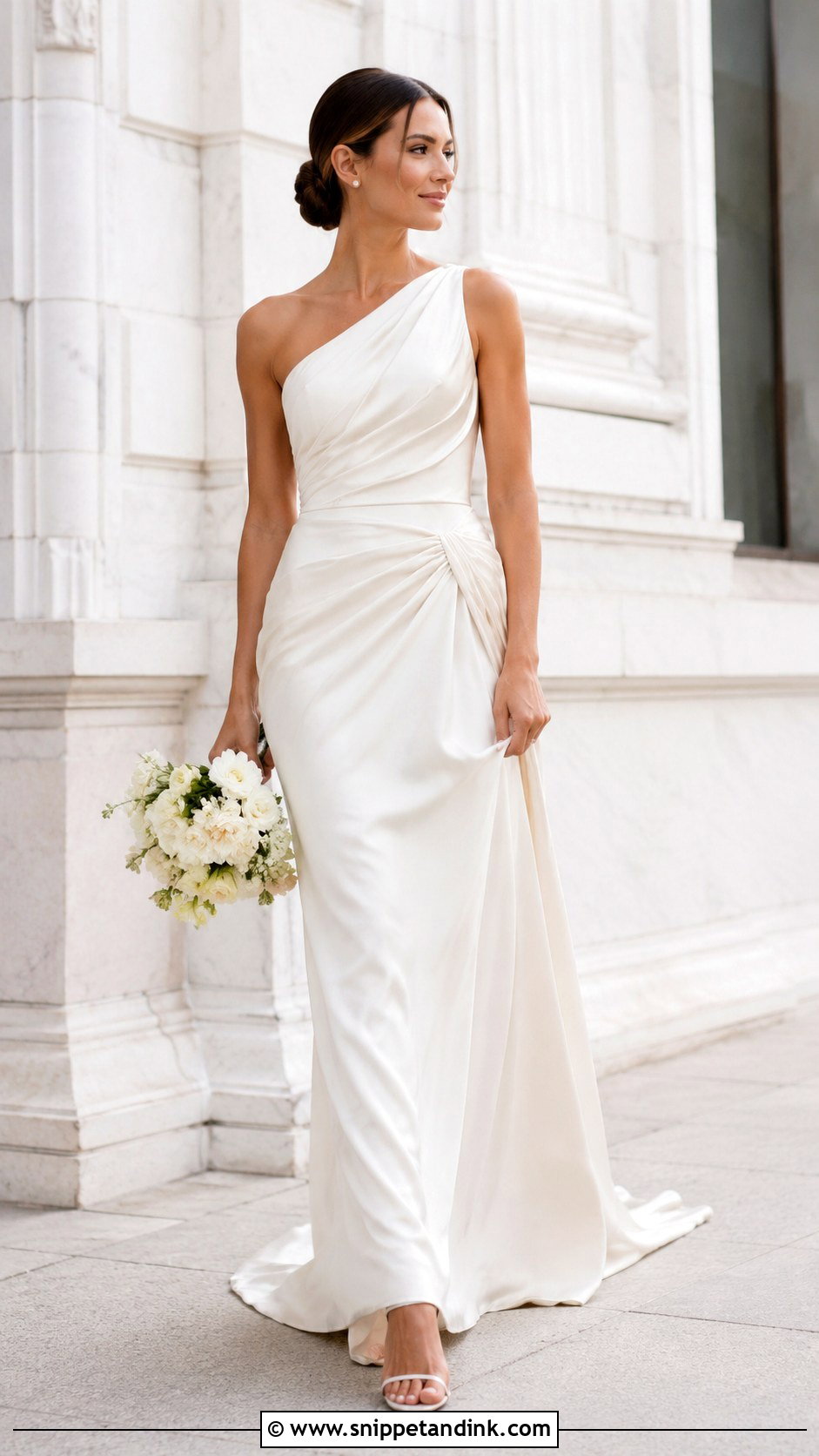
One-shoulder gowns are modern and slightly unexpected. The asymmetrical neckline holds interest even in plain crepe, satin or draped silk, so keep the fabric simple. Either one bold earring or two small studs, depending on the shape. Sleek hair shows the shoulder line. The single strap carries the bodice weight, so it needs internal support or it pulls toward the bare side through the day. Slim heels and a simple bouquet suit city and destination weddings.
18. Designer Bow Wedding Gown
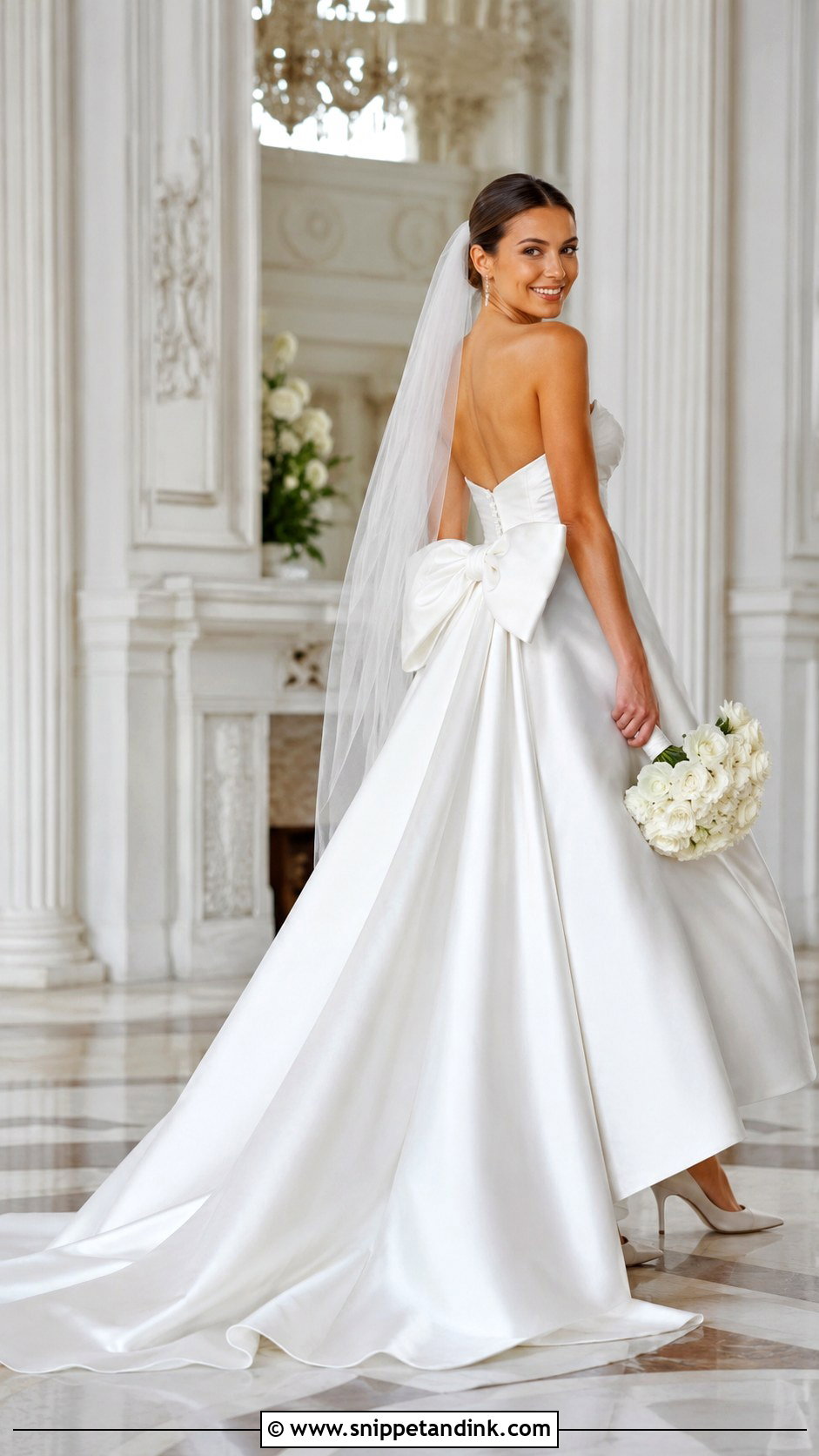
Bows give a statement without sparkle. One strong bow at the back waist, shoulder, neckline or train looks deliberate; several look fussy. Satin or mikado with a back bow photographs well from behind, which matters, since guests watch your back through the ceremony. Keep jewellery minimal. A simple veil for the ceremony, and the bow carries the reception without one. Check how the bow behaves when you sit; large back bows crush against a chair, so many designers make them detachable.
19. Designer Drop Waist Wedding Dress
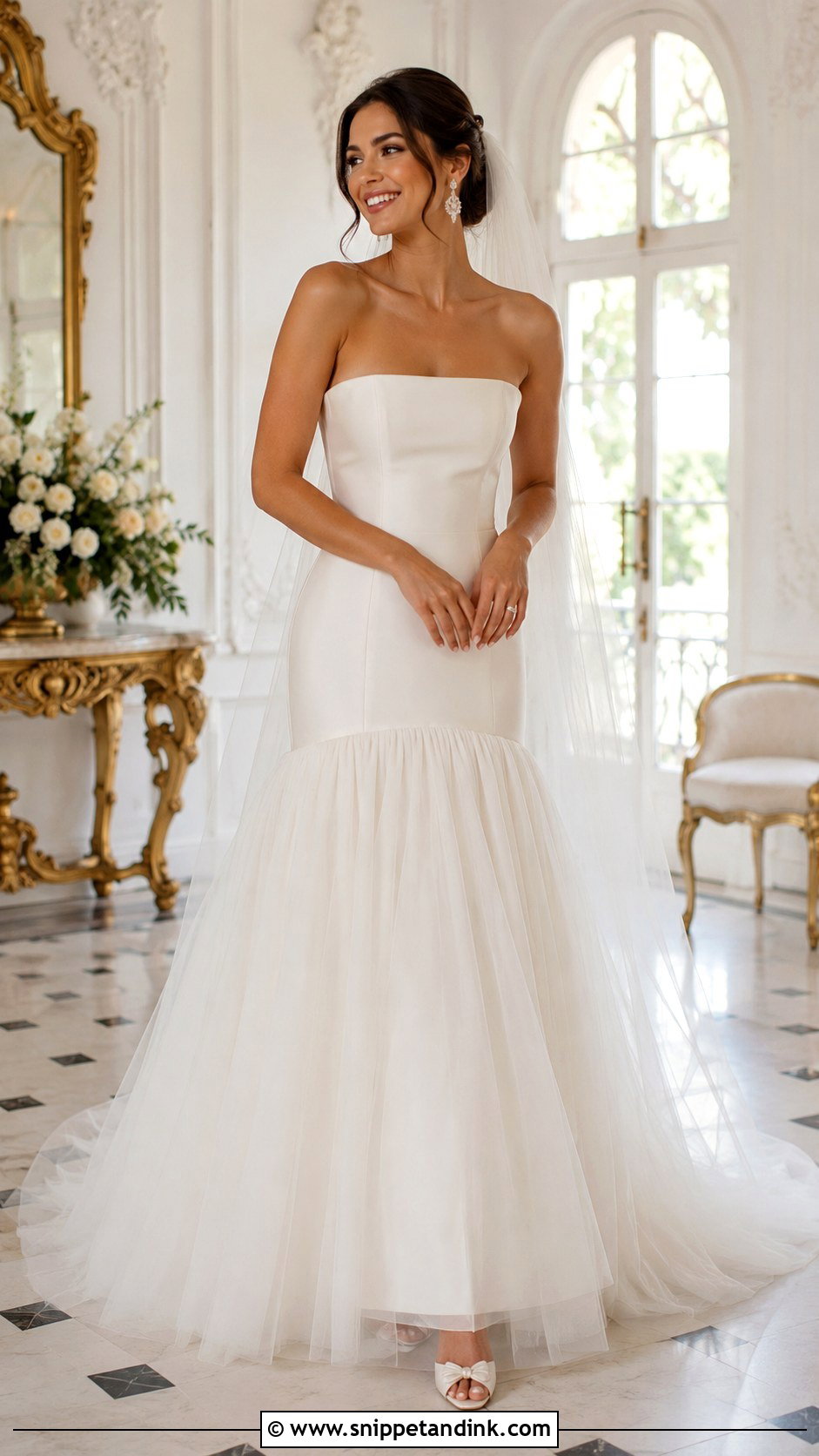
Drop waists sit below the natural waist, giving a smooth, long bodice before the skirt opens. Satin looks sleek; tulle and lace look romantic. The torso is on show, so tailoring is everything here, and I’d adjust the waist placement for petite brides rather than accept the standard height. A clean veil, delicate earrings and supportive heels finish the long line. Vintage influence with modern polish suits formal venues and editorial-style wedding photography.





20. Designer Sheath Wedding Dress
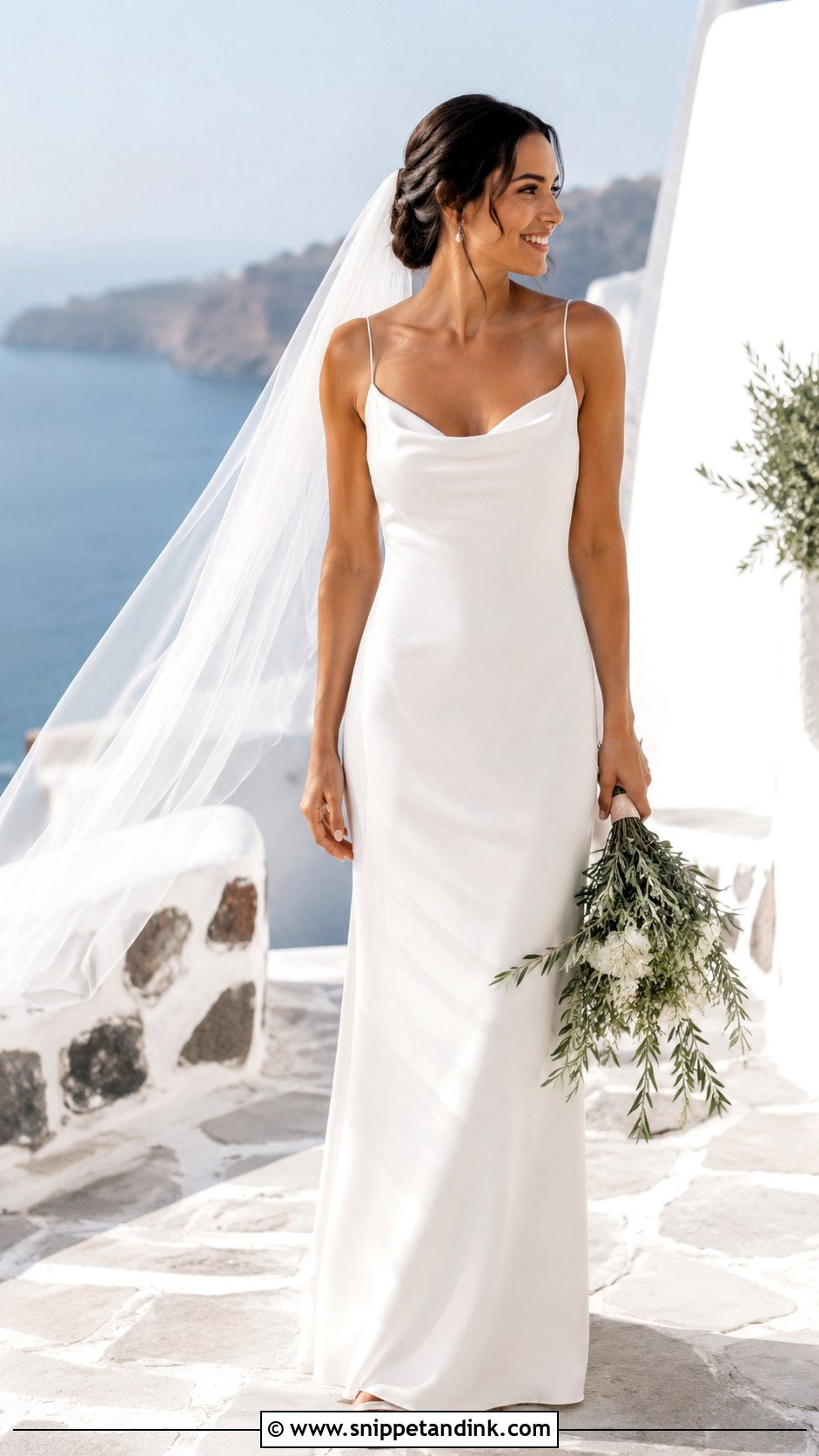
Sheath gowns follow the body naturally without a mermaid flare, so you walk normally and sit comfortably. Crepe, satin and silk charmeuse glide rather than add bulk. Neckline and accessories decide whether it looks minimal, beachy or formal. Charmeuse marks easily with water and creases when you sit, so I’d steam it at the venue. Delicate earrings, slim sandals or pointed heels and a light veil suit destination weddings, small ceremonies and courthouses.
21. Designer Cape Wedding Gown
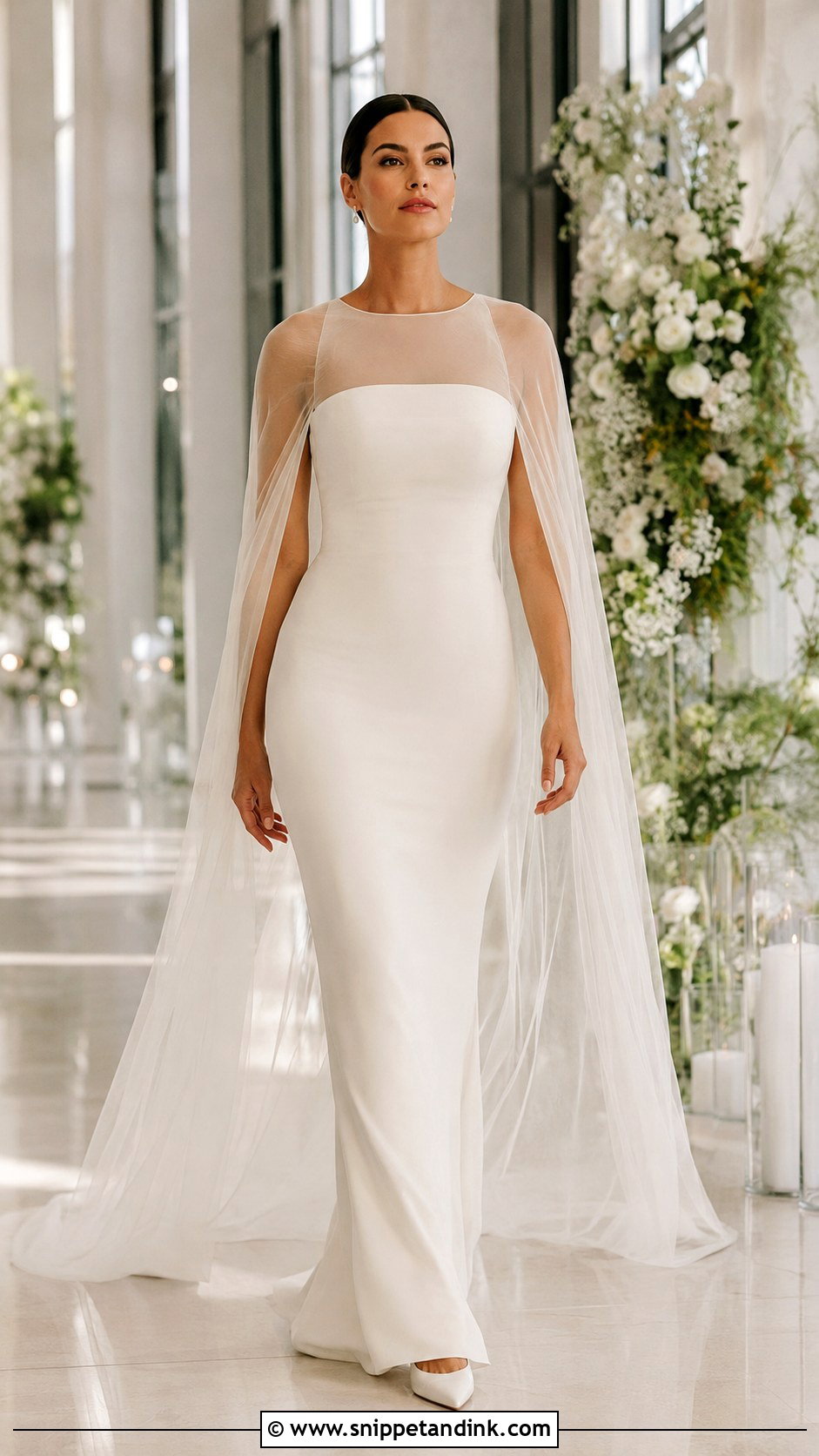
A cape replaces the traditional veil and gives a dramatic aisle moment. Sheer, lace, satin or lightly embellished capes can attach at the shoulders, neckline or back. Simple columns, clean ball gowns and fitted crepe let it fall freely. Minimal jewellery keeps it the focus, and a smooth hairstyle shouldn’t fight the neckline. I always recommend a removable cape: wear it down the aisle, take it off for dinner, when it would otherwise drag through every chair leg.
22. Designer Overskirt Wedding Dress
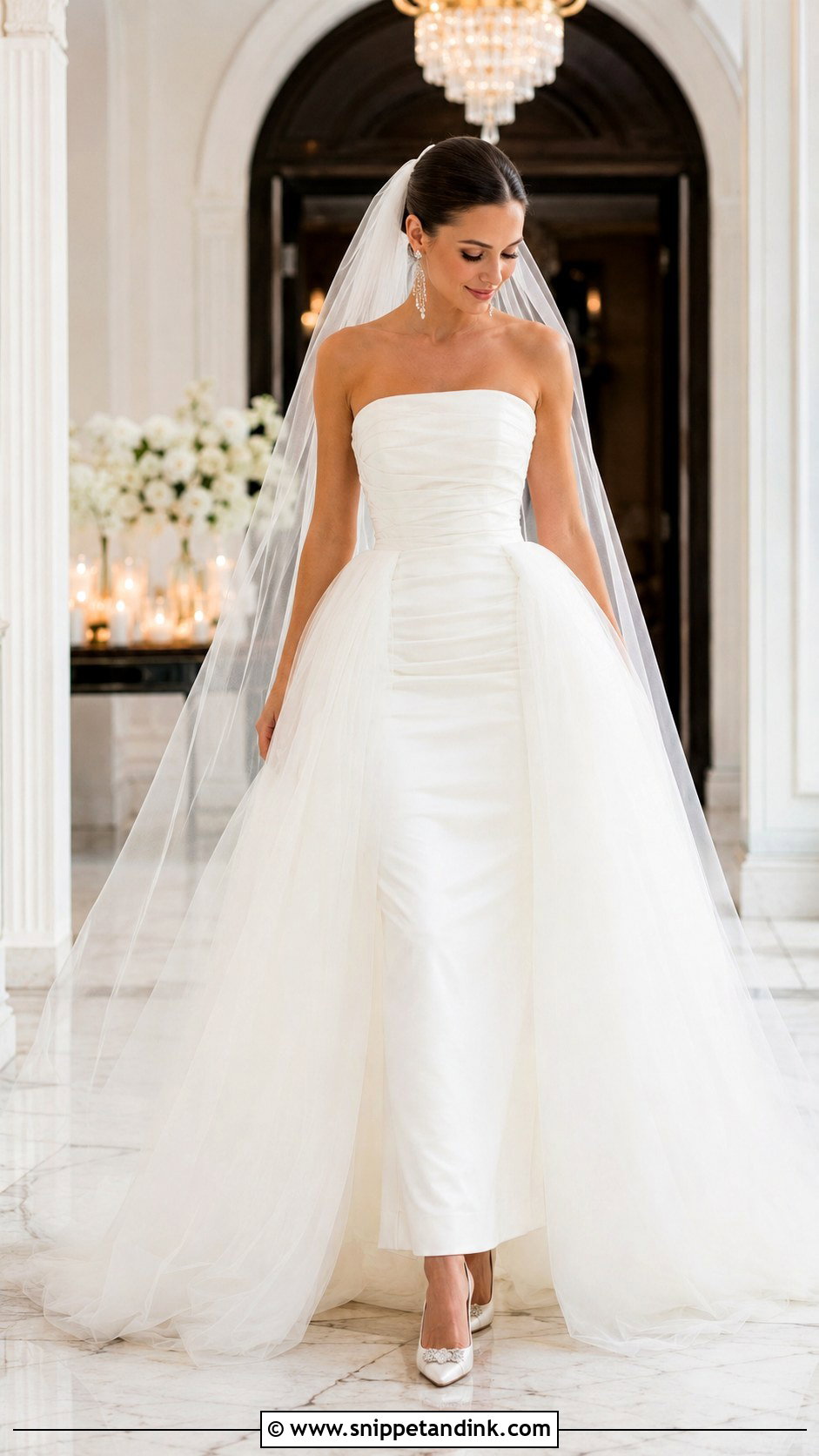
A designer overskirt wedding dress gives you ceremony drama and reception ease. A fitted or column base gown takes a removable overskirt that adds ball-gown volume for the aisle. Matching fabric looks like one dress; sheer tulle moves more softly. Wear a veil for the ceremony, then switch to statement earrings once the overskirt comes off. Rehearse the removal with your maid of honour before the day. Two looks, one dress.
23. Designer Tea Length Wedding Dress
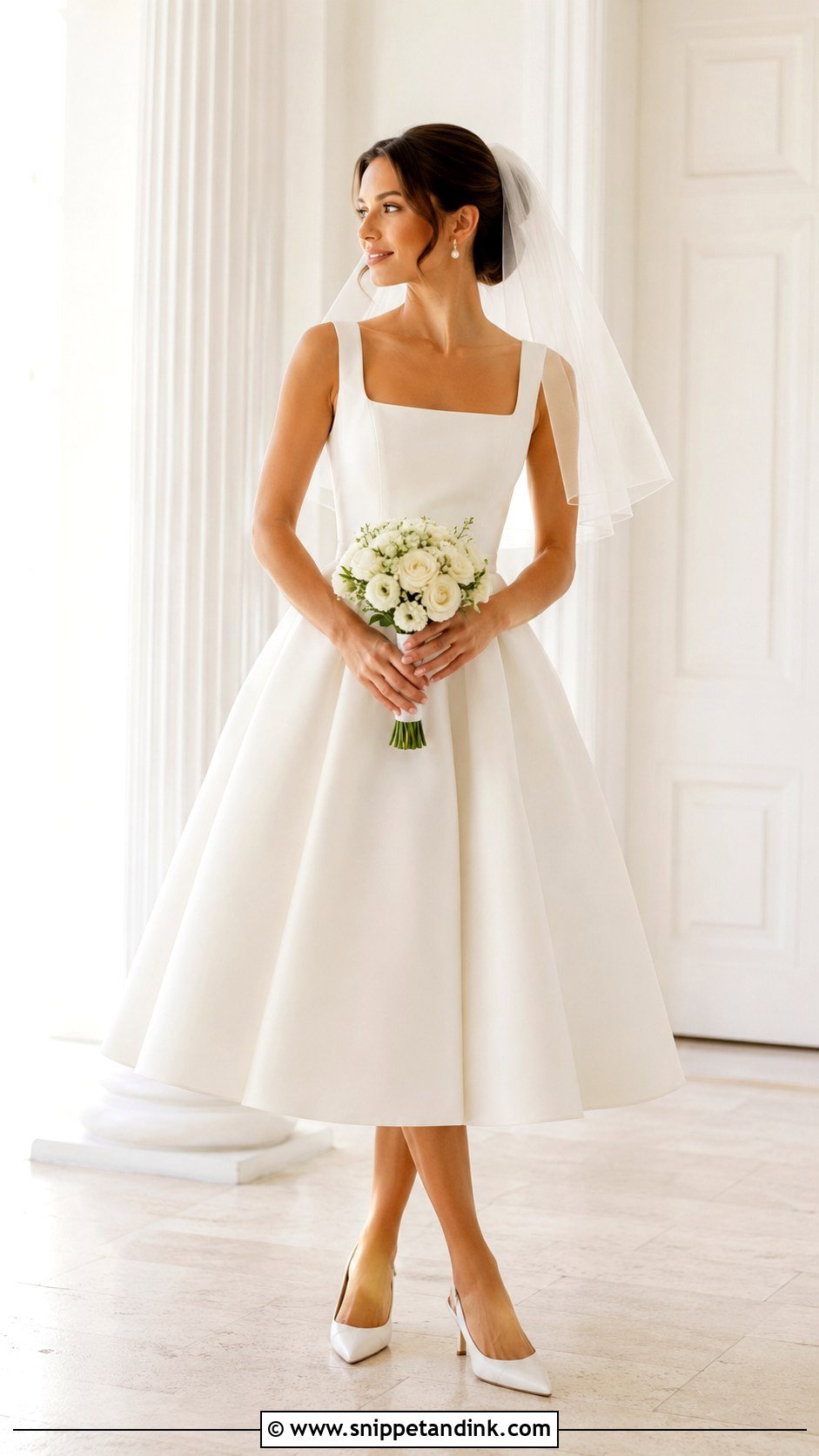
Tea length falls between knee and ankle, which makes your shoes a real part of the outfit. Pointed pumps, satin slingbacks or embellished heels that look special in photos. A fitted bodice with a fuller skirt is classic; a slim cut feels modern. A short veil, pearl earrings and a structured bouquet keep the proportions right. I set the hem with the shoes on, at a slim point of the leg. Courthouses, civil weddings and garden receptions suit it.
24. Designer Reception Wedding Dress
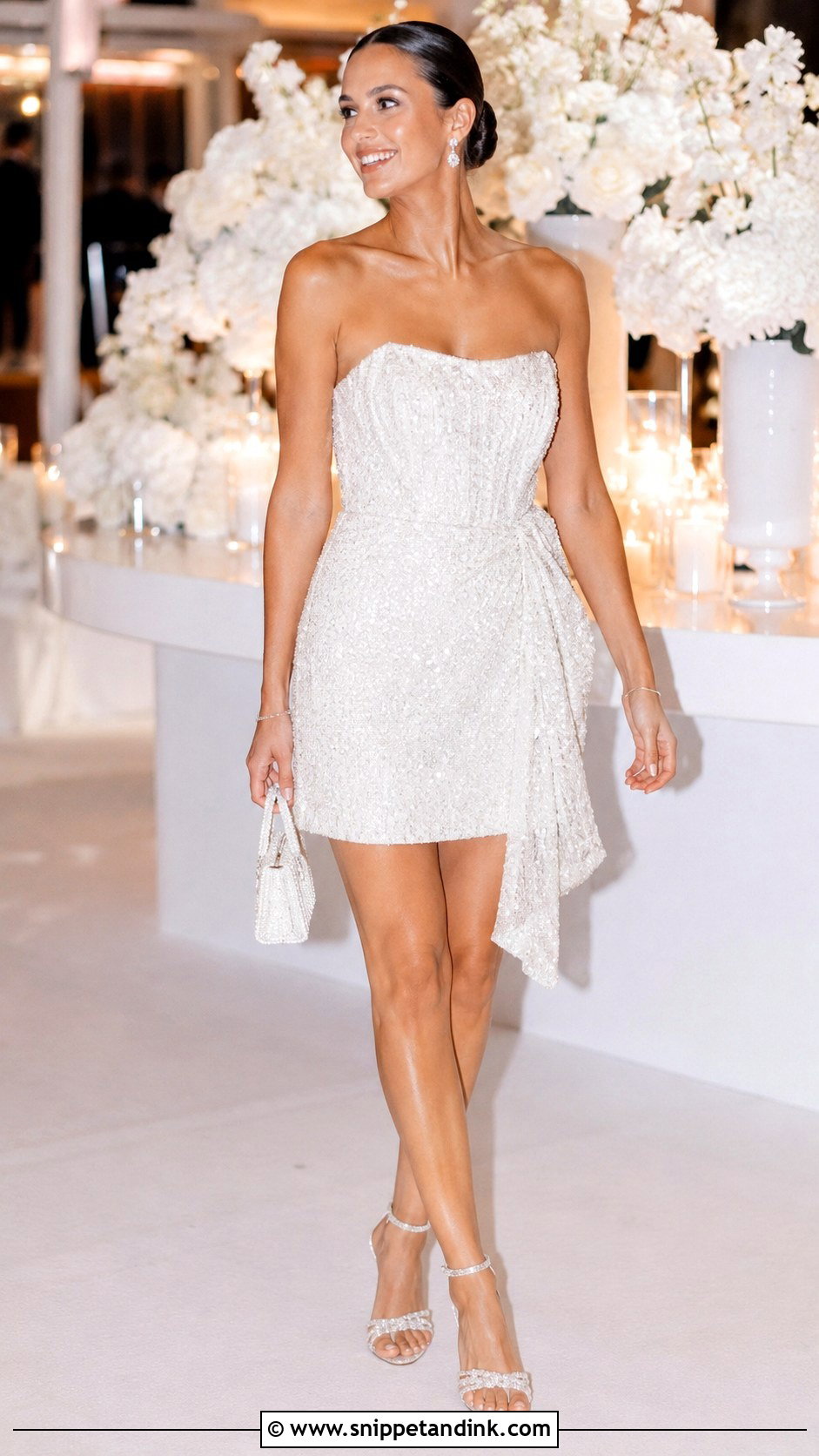
The reception dress should be lighter and clearly bridal. Minis, slip dresses, feather-trimmed dresses or short embellished gowns are the usual choices. My trick is to repeat one detail from the ceremony gown, such as pearls, satin, lace or the neckline shape, so the two look related in the album. Comfortable heels, statement earrings and a small bridal bag. Change before the first dance rather than after, so the photos of it show the outfit you’ll dance in all night.
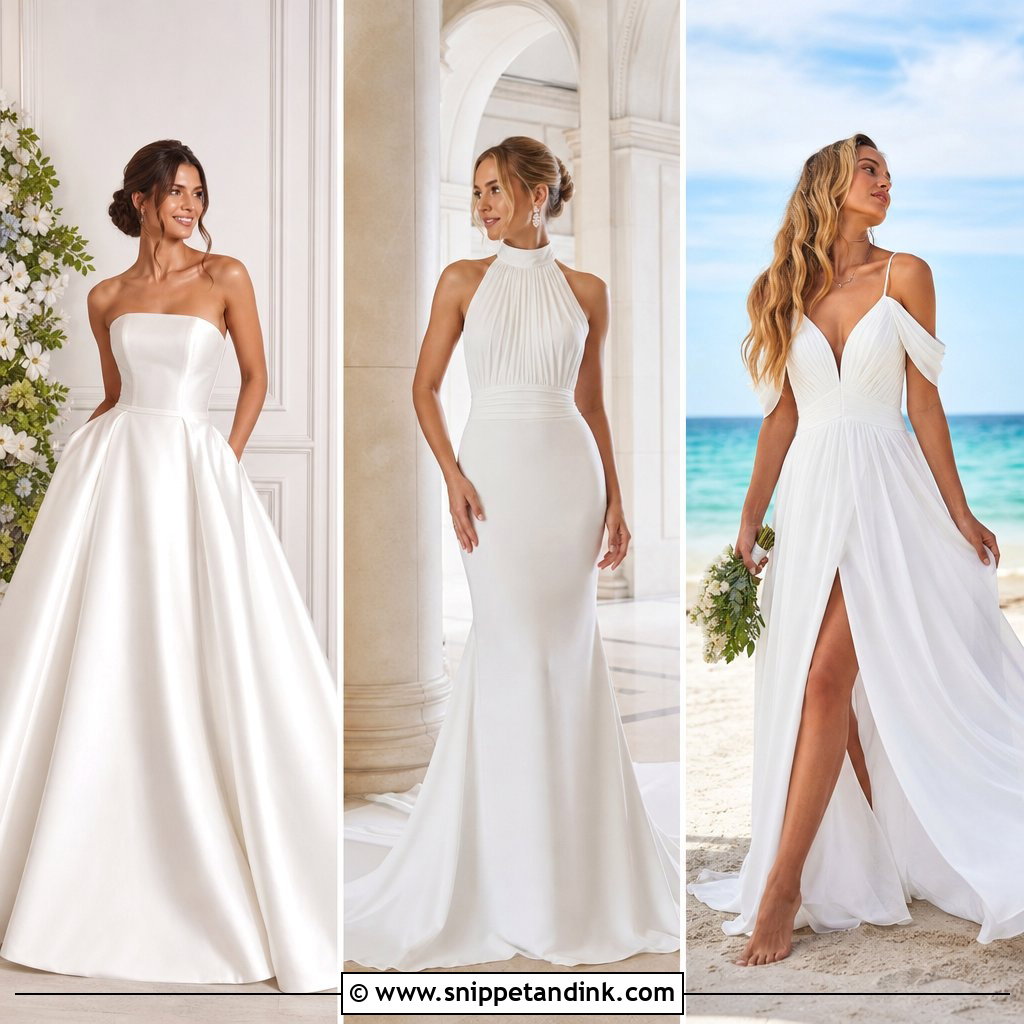
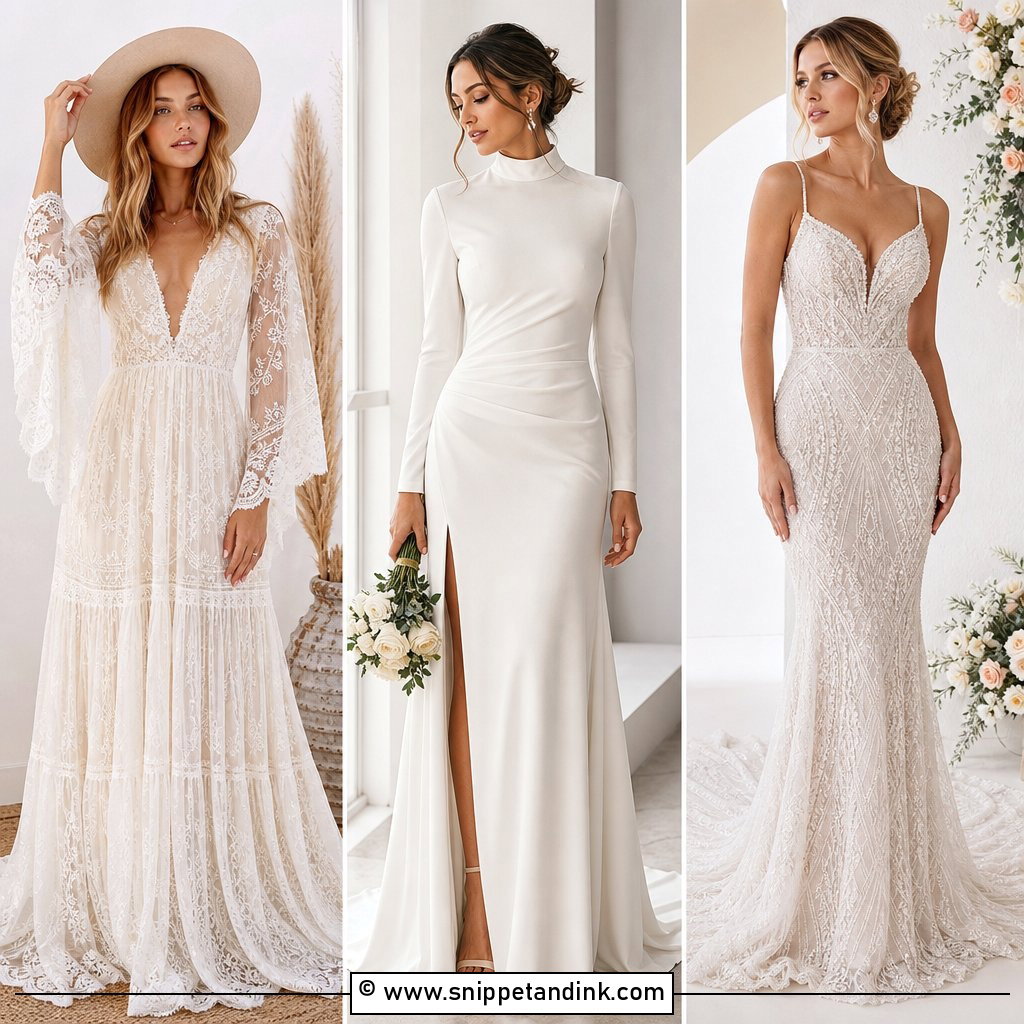

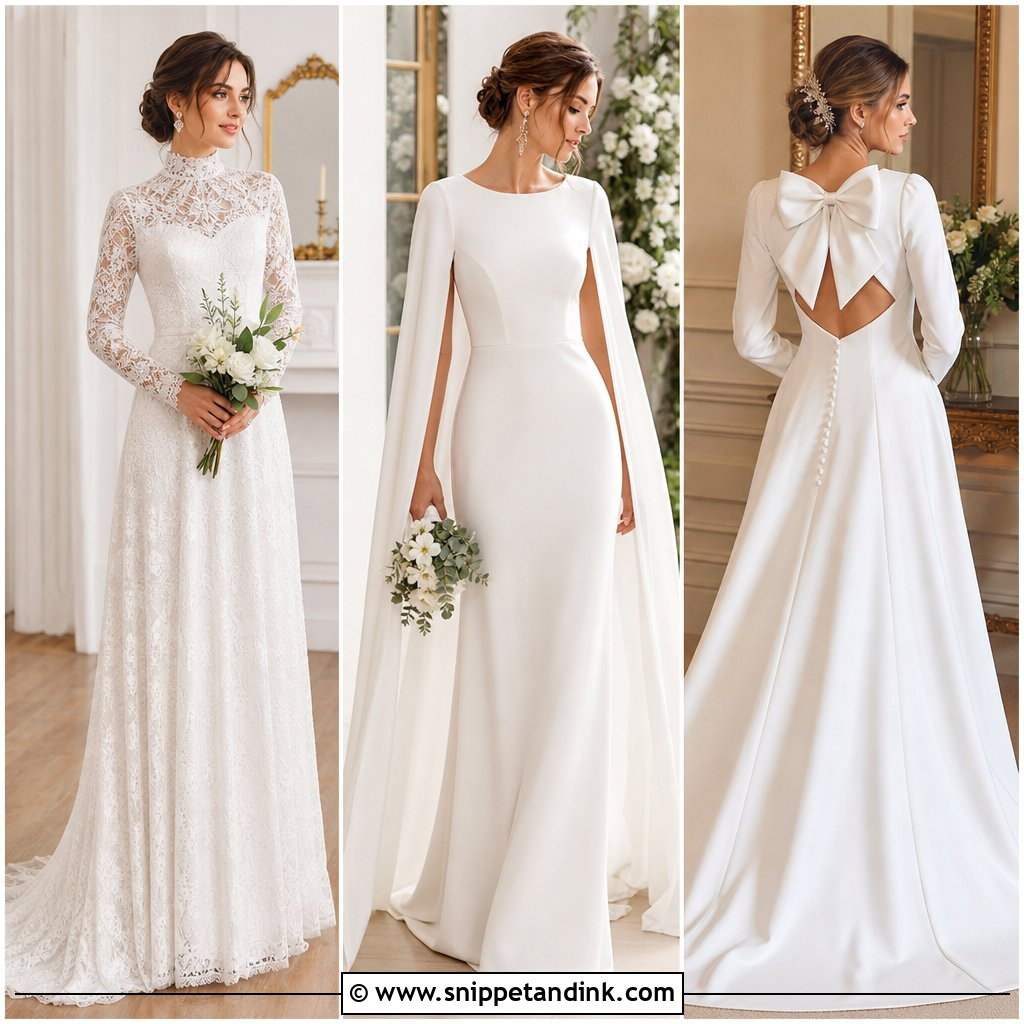
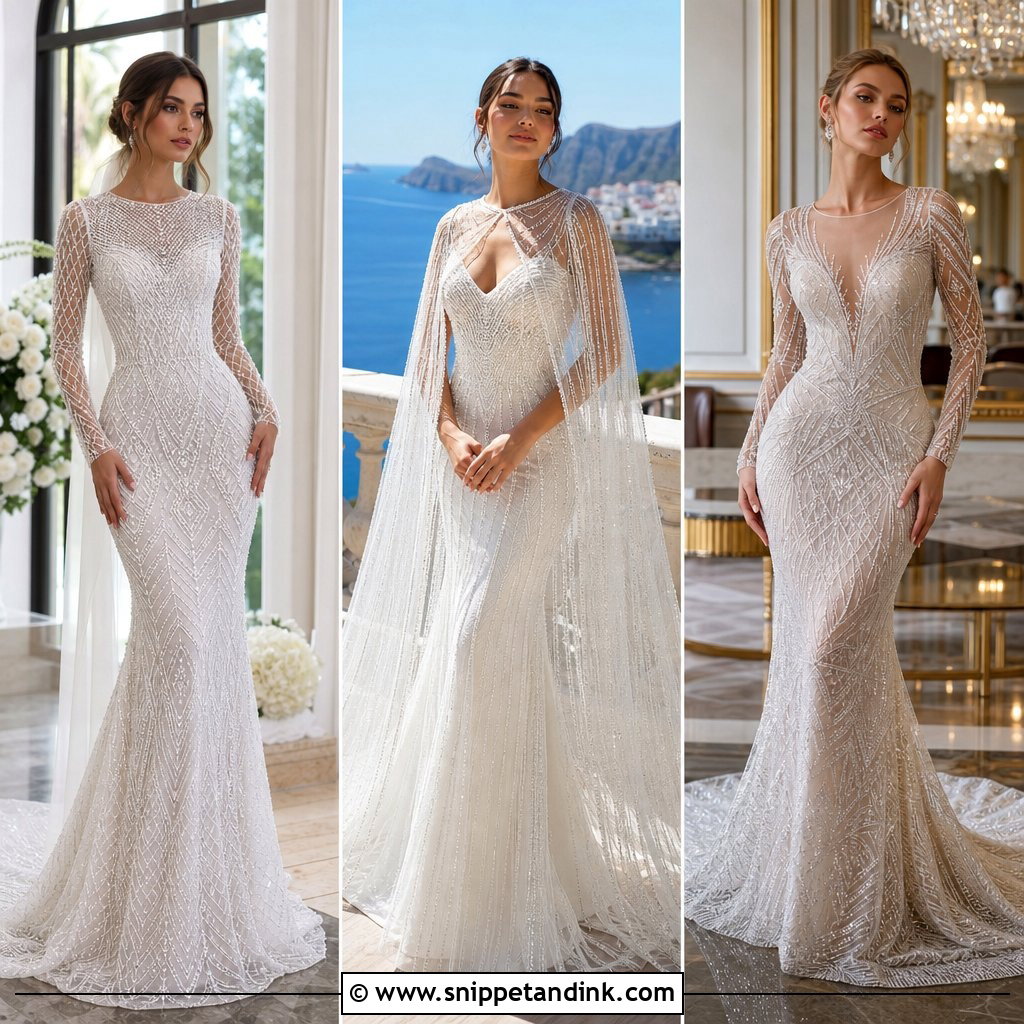
25. Designer Beach Wedding Gown
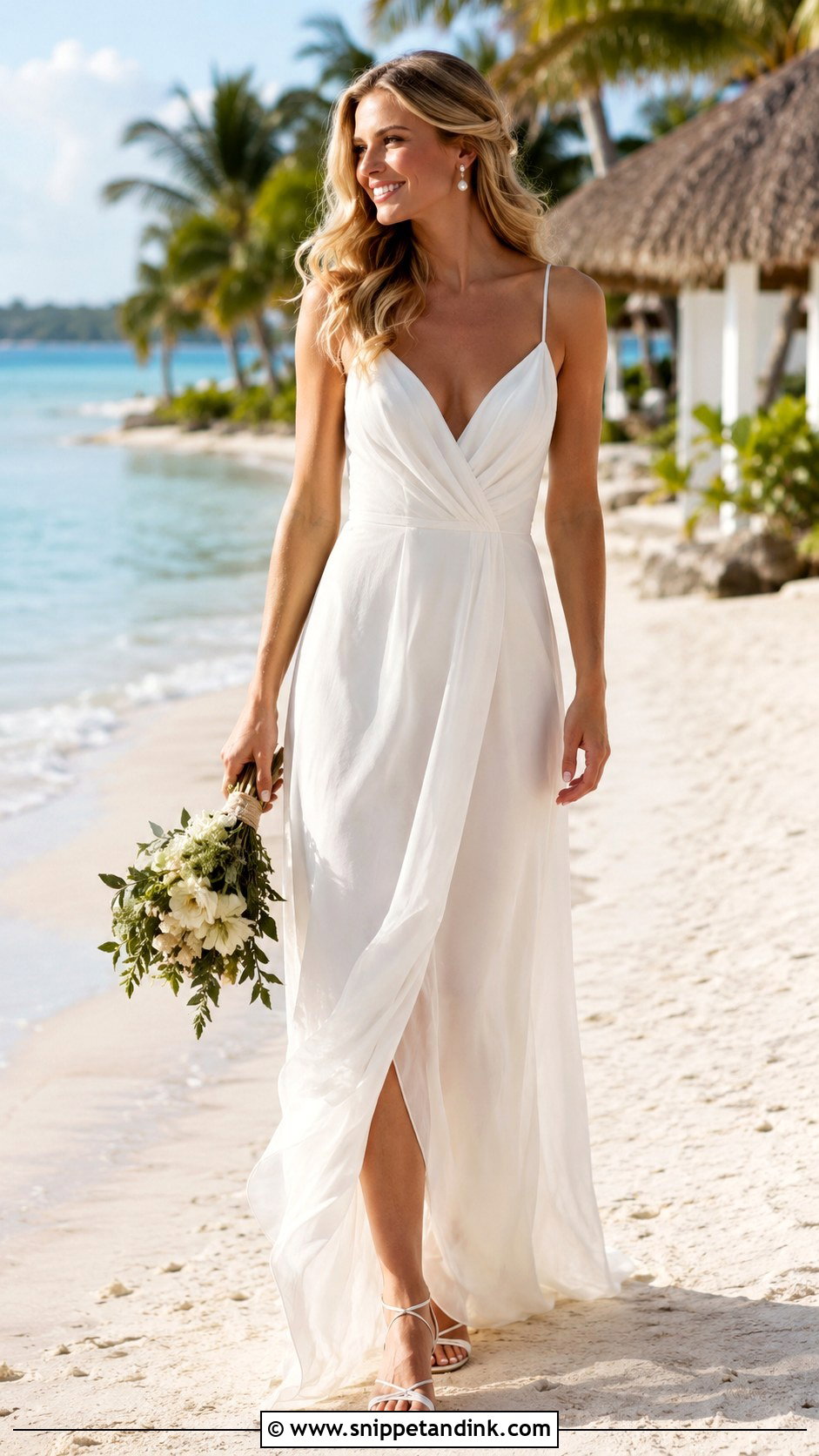
Sand and wind rule a beach wedding. Heavy ball gowns sink and drag, so chiffon, silk, crepe, organza or light lace in a sheath, A-line, slip or simple off-shoulder shape works far better. Long trains collect sand and get wet at the hem. Keep the veil short or anchored firmly; a cathedral veil in sea wind turns into a sail. Secure sandals, low block heels or barefoot-style accessories, pearl earrings, soft waves and a relaxed bouquet suit coastal resorts.
Trains, Bustles and What Happens When the Dancing Starts
Think about the floor, too. A long train glides over carpet and polished stone, picks up grass stains and petals on a lawn, and frays quickly on gravel or rough boards. For an outdoor ceremony I often suggest a chapel length or shorter, saving the cathedral drama for a veil that can come off after the portraits.
Train length is a big part of a designer gown’s drama and an easy thing to underestimate. A sweep train brushes the floor; court and chapel lengths trail behind you; cathedral trains are long enough to need a helper on the steps. The longer it is, the more you’ll want a bustle for the reception.
Bustle styles
- Over bustle: the train hooks up onto the back of the skirt in one or more points. Quick and sturdy.
- Under bustle: the train is tucked and tied under the skirt with ribbons, so the back looks gathered and full.
- Ballroom bustle: many hidden points lift the train so the hem looks almost floor-length all round. Neat, slower to do.
Your seamstress adds the bustle at the last fittings. Ask her to teach it to the person who’ll do it on the day, ideally with a phone video, and keep a few safety pins in your bag in case a loop breaks mid-evening.
Start With the Venue, Then the Silhouette
Start with the setting, then narrow by silhouette, fabric, neckline and detail. A satin column suits a modern city ceremony; a basque-waist ball gown suits a grand estate. Lace, pearls, bows, capes and overskirts add personality when one of them leads. A gown should support how you want to look and move, not only how it photographs. Pick the one you still feel good in after the speeches.
You'll Like These Ideas:







Leave a Reply