
I build more buns than braids for South Indian weddings these days, and it’s usually for practical reasons: the bride wants her neck cool, her earrings visible, and a style that won’t drag behind her through a long ceremony. South Indian bridal buns can still carry plenty of tradition. Jasmine, roses, temple jewellery and gold pins all sit well on a neat bun shape. The real decisions are where it sits, how full it needs to be, and how much weight you’ll put on it. Below are fifteen versions I’d suggest, from a plain jasmine bun for the muhurtham to a fuller floral one for the reception.
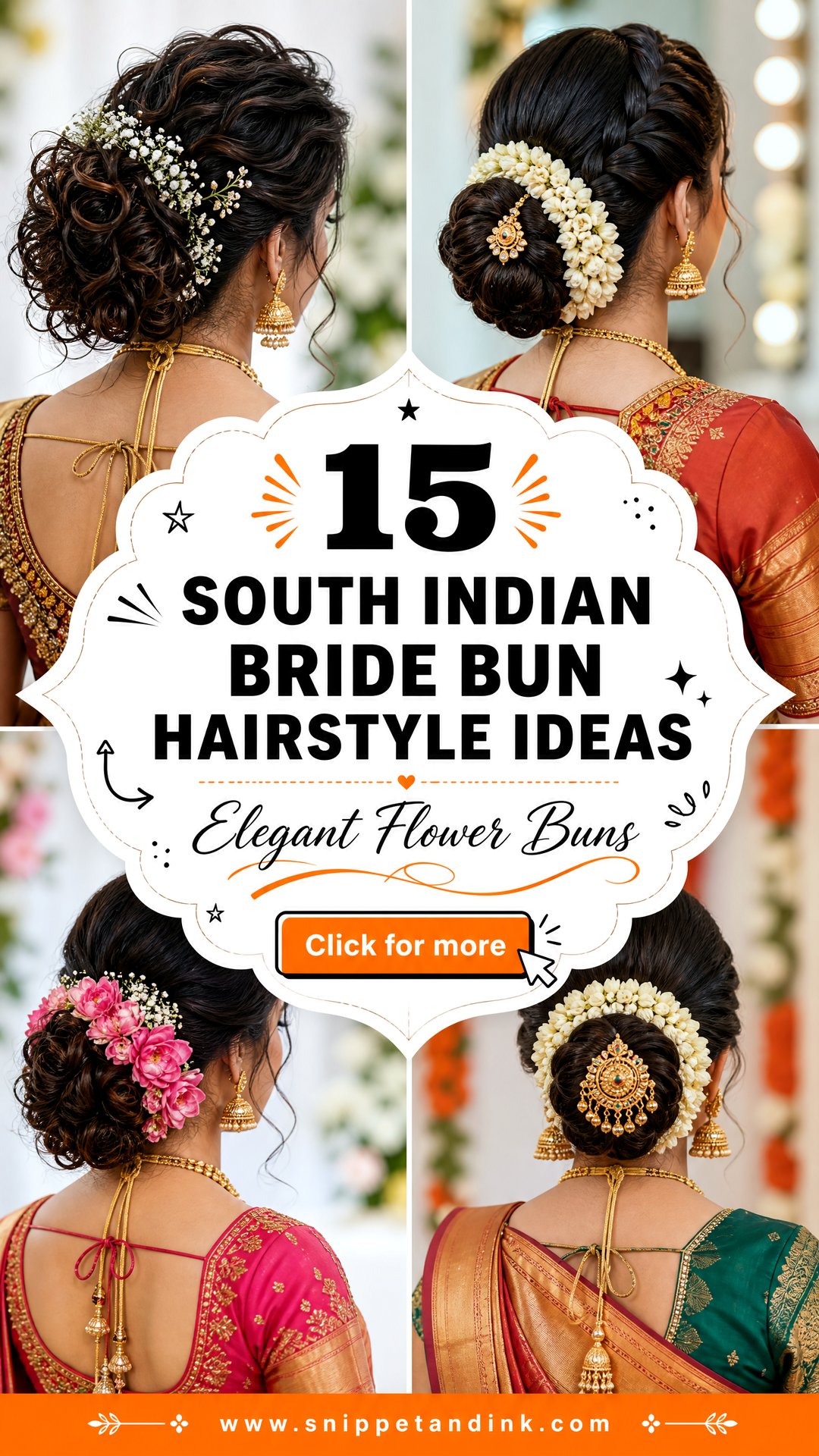
How High Should a Bridal Bun Sit With a Silk Saree?
Placement is the first thing I decide, before flowers or jewellery. A few centimetres up or down changes how the bun looks from the front, how it photographs in profile, and how comfortable you are by the afternoon.
Low at the nape
The most secure spot and the easiest under a dupatta or garland. It suits heavy earrings and a long neck. The risk is the blouse collar: with a high-necked blouse, a low bun gets pushed up every time you sit back.
Mid-back of the head
My usual choice for the main ceremony. It sits clear of the collar, shows from the front as a soft outline, and carries flowers well. Most temple jewellery is designed to sit here.
Higher, near the crown
It lifts a rounder face and works for a modern reception look, but I’d avoid it under a heavy pallu draped over the head. The weight also sits further from your neck, so you feel it sooner.
At the trial, sit down in a chair with a back, wear the blouse if it’s ready, and have someone photograph you from the side. That one picture tells us more about bun height than any mirror check standing up.
1. South Indian Bridal Bun With Jasmine Flowers
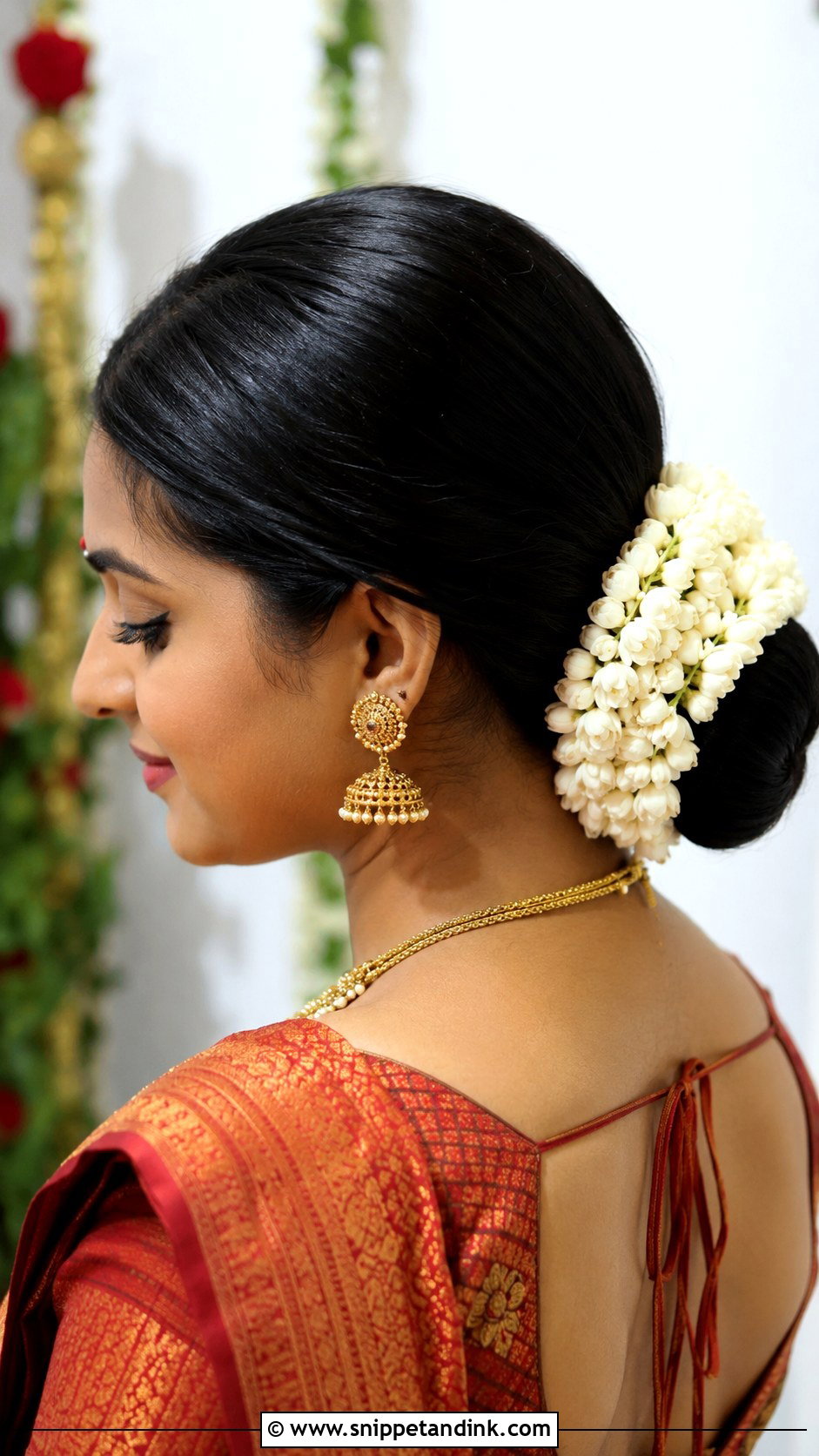
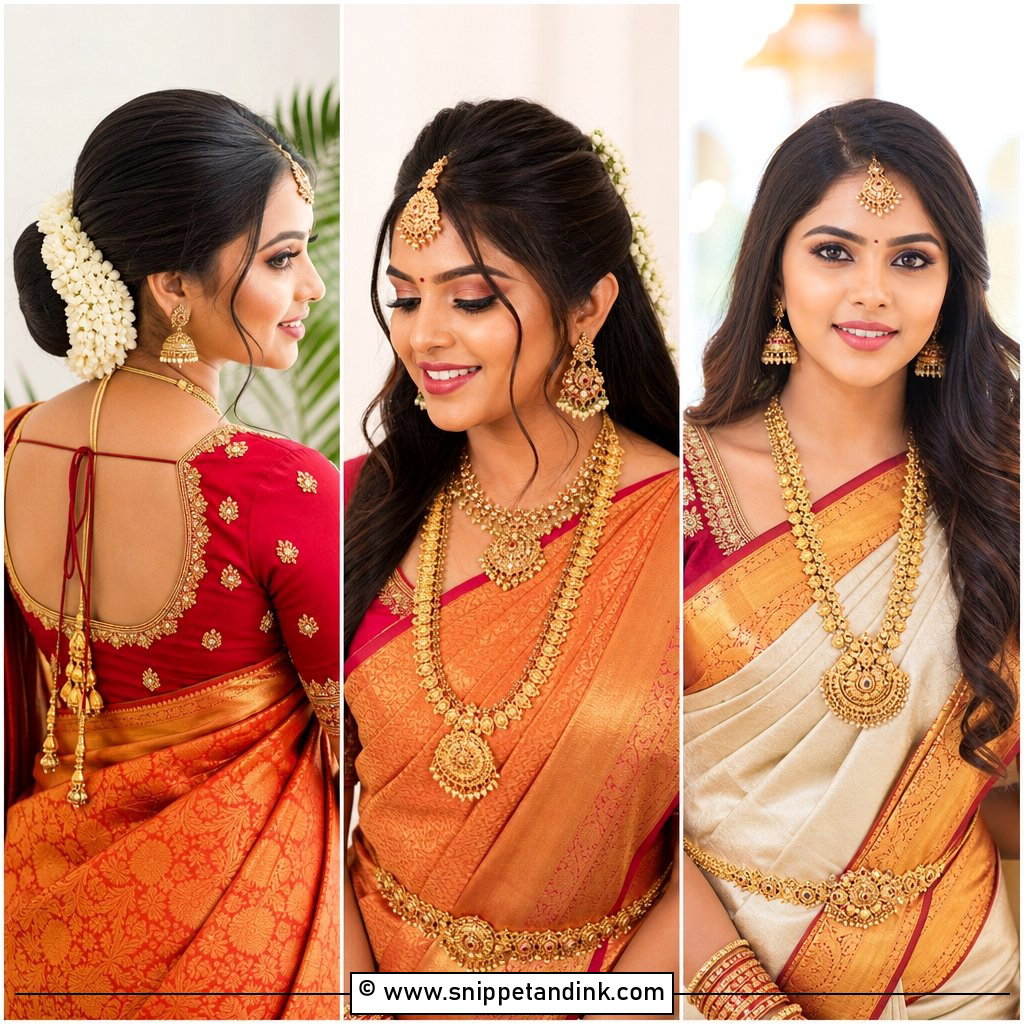
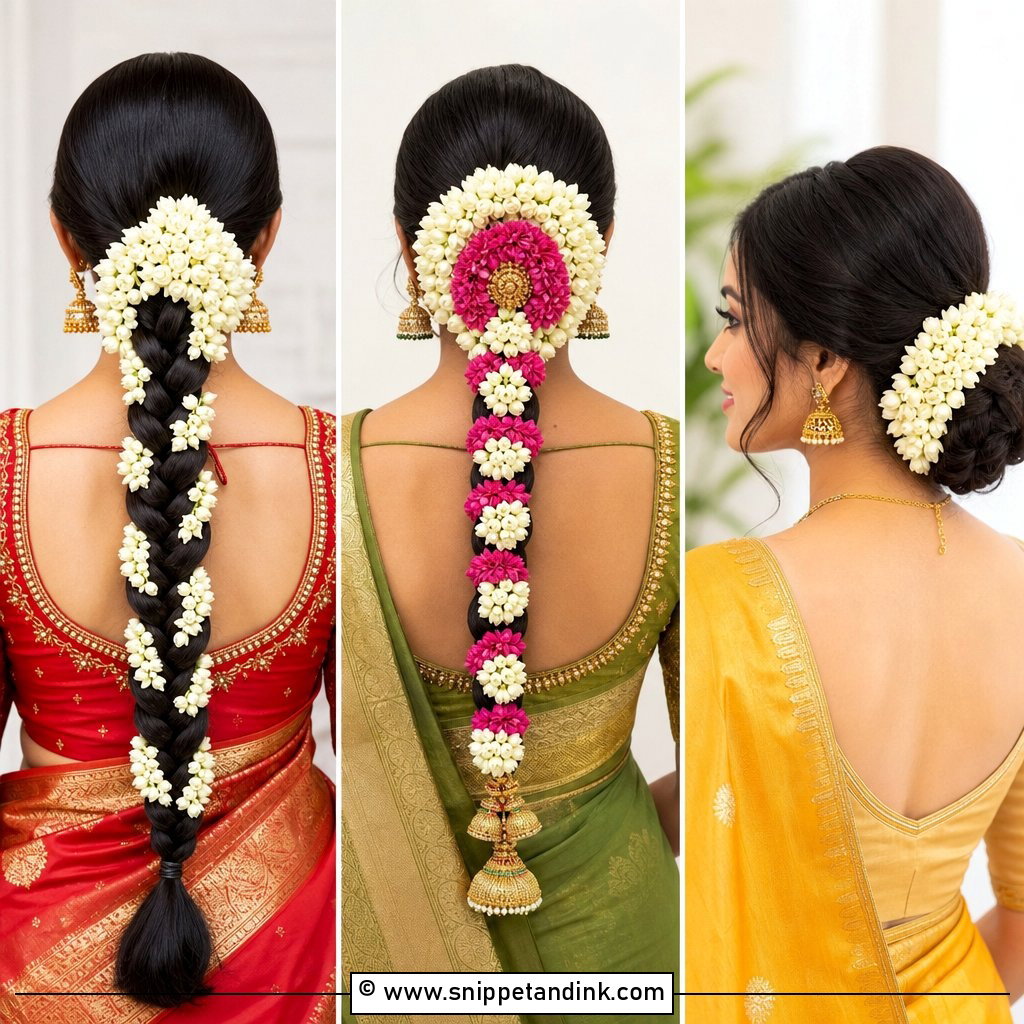
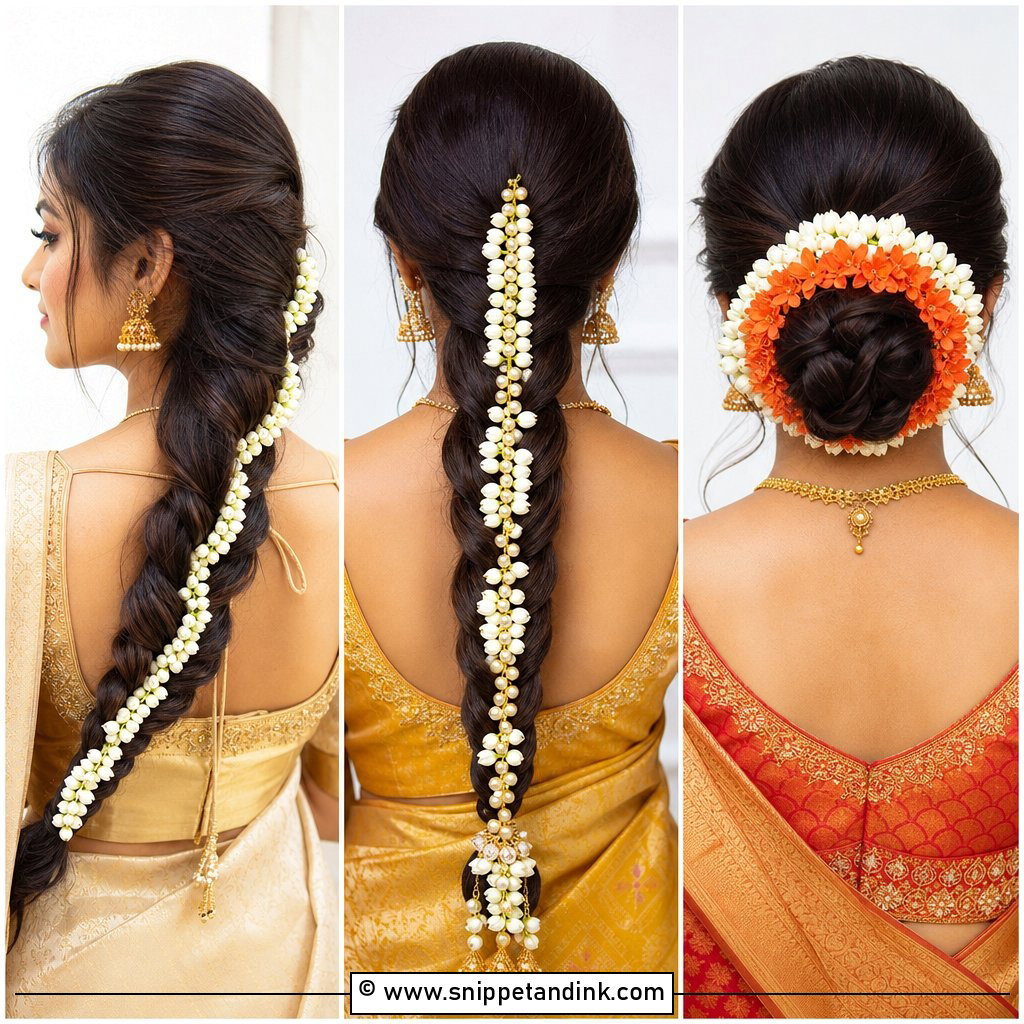
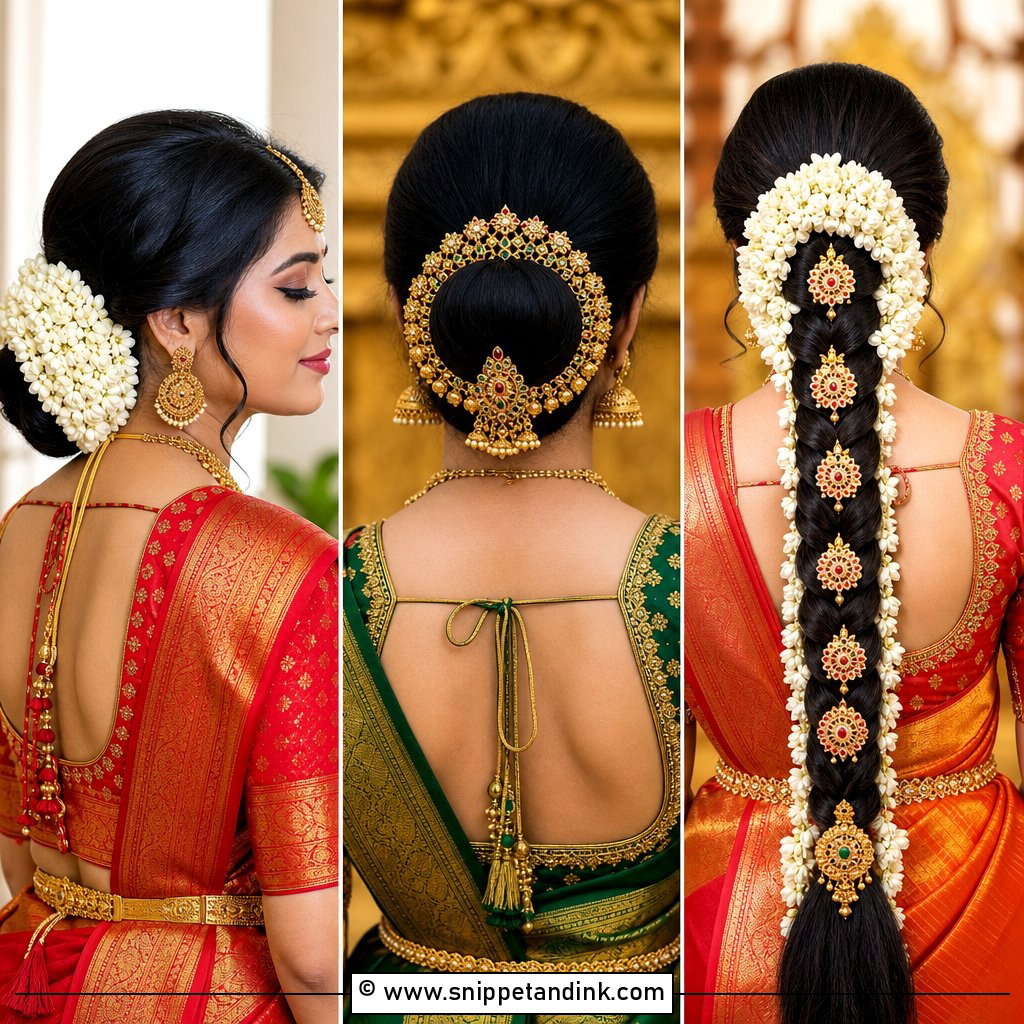
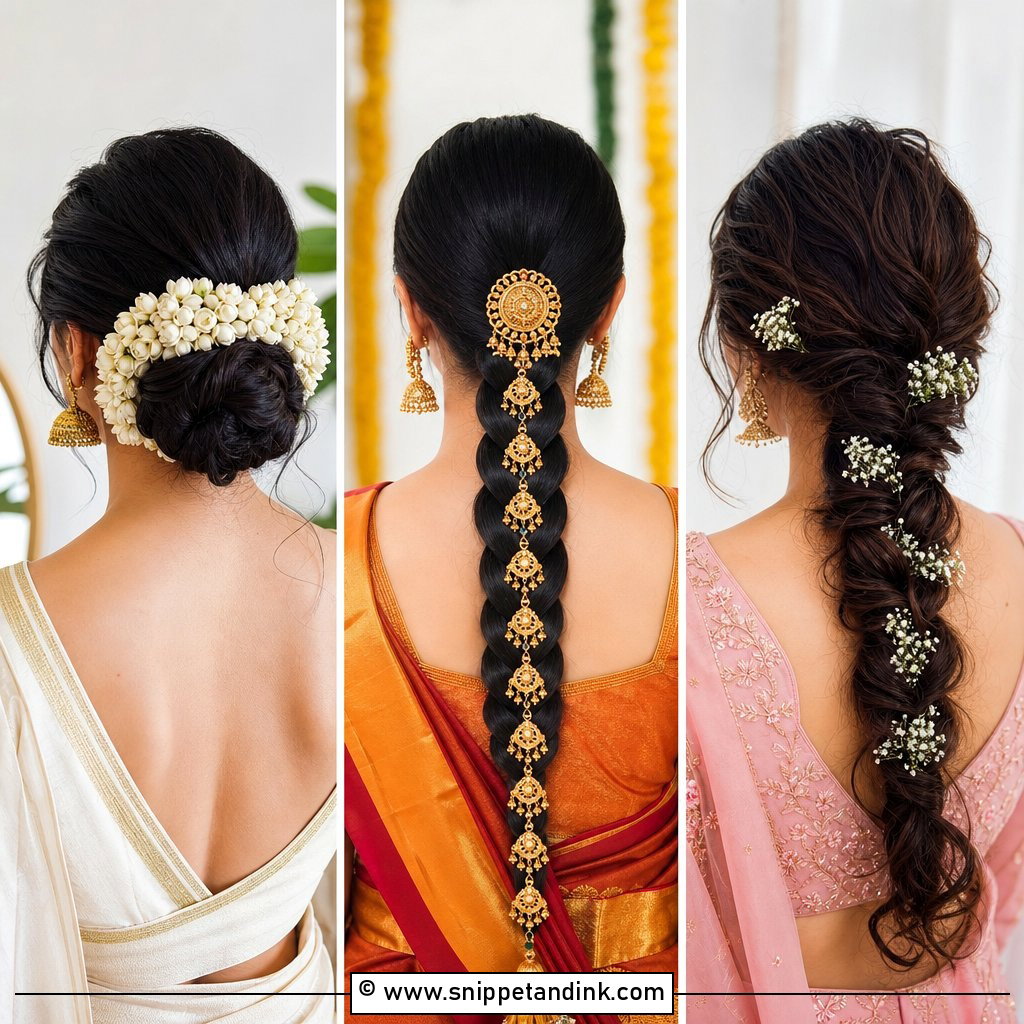
There’s a reason this is the one most mothers ask for. I place the bun low or at mid-back, then wrap it in thick strands of fresh jasmine so the scent travels with the bride all morning. It sits naturally with a Kanjeevaram saree, temple jewellery, a maang tikka and strong makeup. I keep the crown smooth but lift it slightly with a little back-combing underneath, because a flat crown makes even a full bun look small in photos. On thin hair, a padding ring inside the bun gives volume and the jasmine hides it completely.
2. South Indian Bridal Bun With Roses
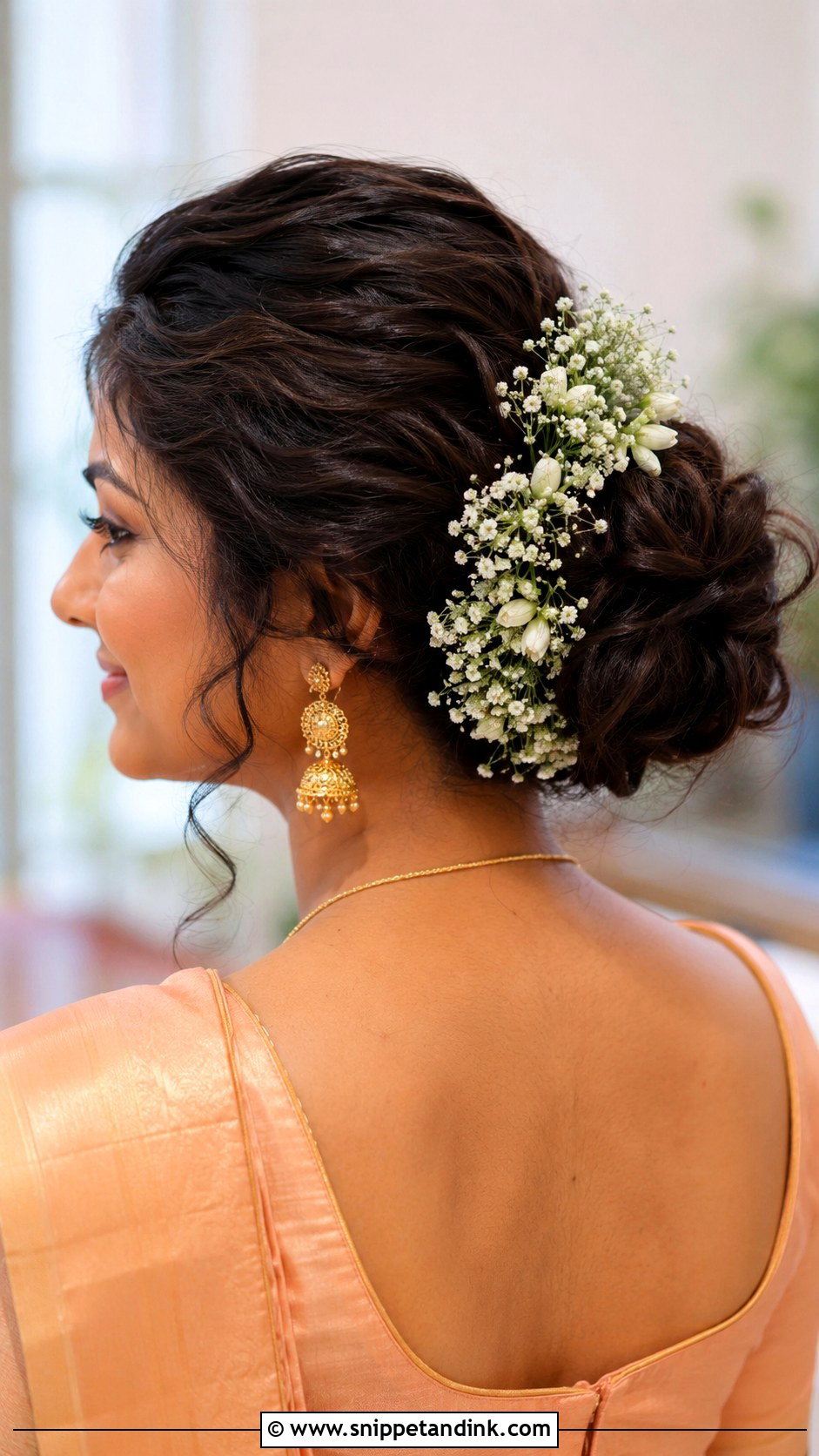
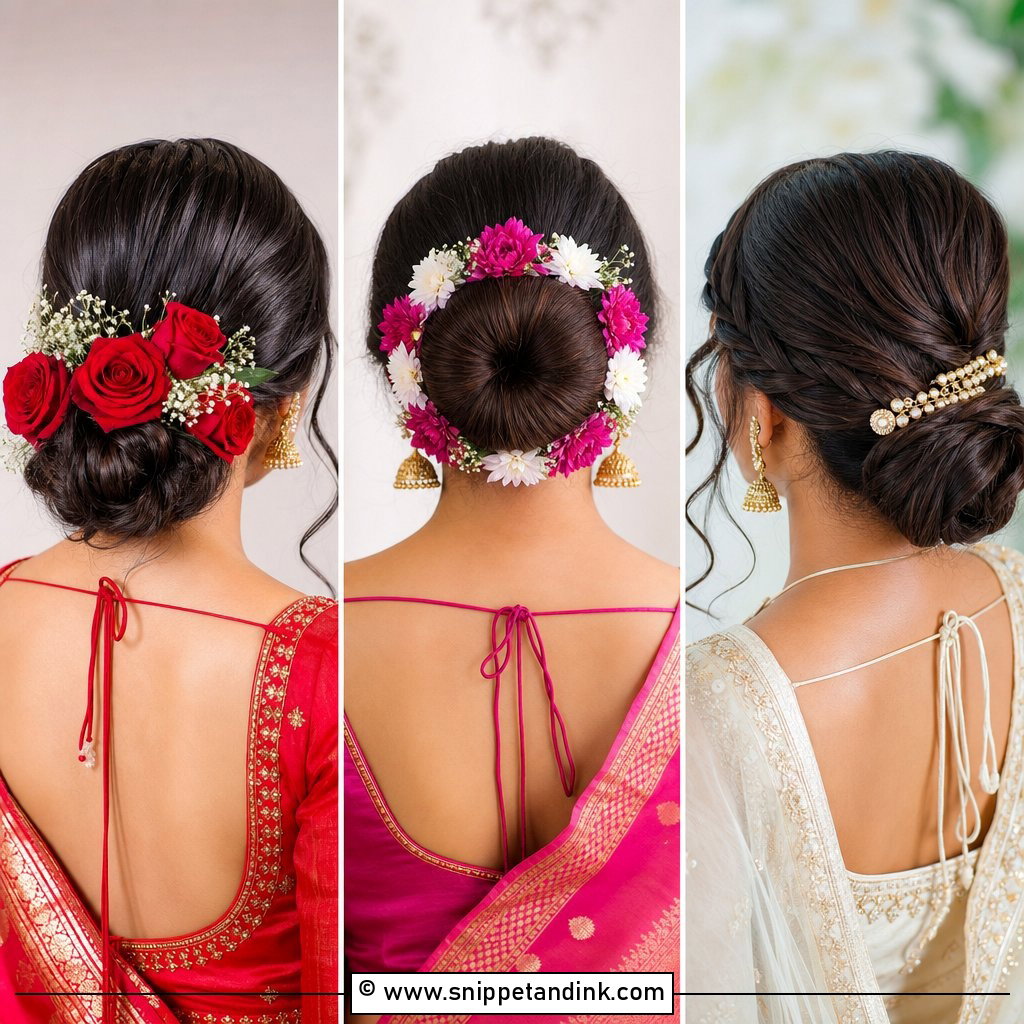
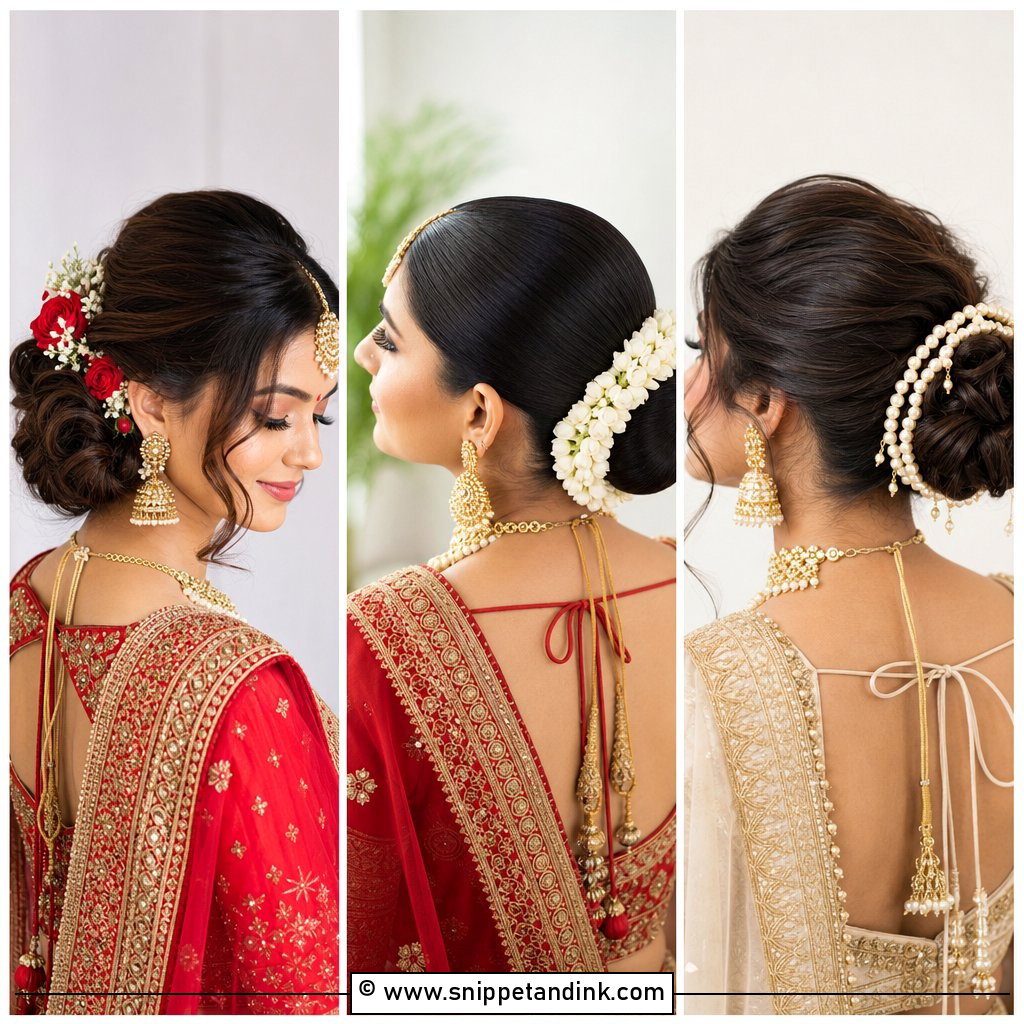
Roses bring colour without anyone touching hair dye, and red, pink or deep maroon blooms look rich next to gold, green, red and orange silk. I either ring them around the bun or bank them on one side for more fullness. Roses are heavier than jasmine, so the bun underneath has to be firm or they slowly tip it sideways. A centre parting keeps the temple-bride feel. If the face needs softening, I leave a couple of very fine pieces near the ears rather than full tendrils.
3. South Indian Bridal Bun With Temple Jewelry
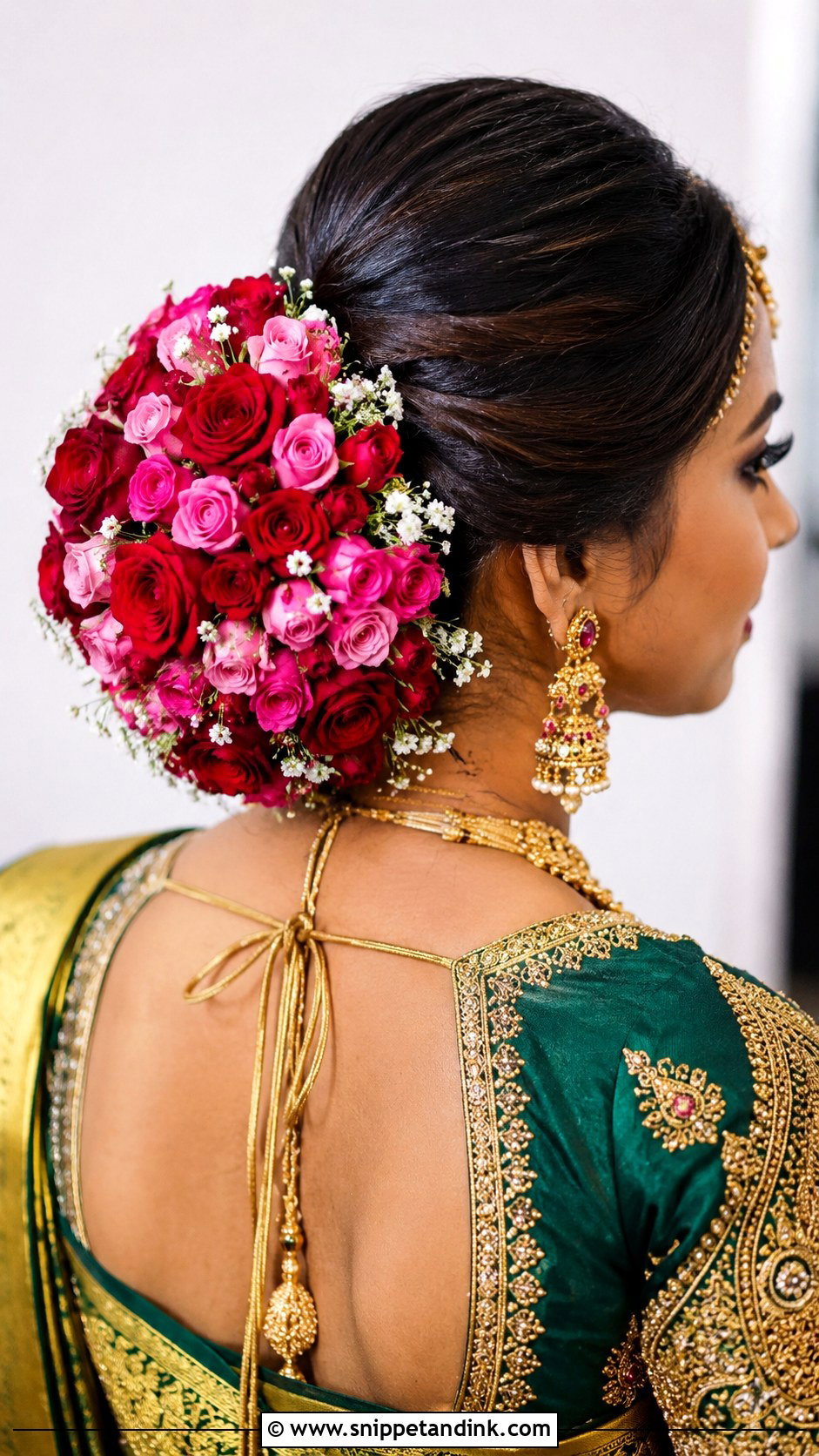
Gold pins, crescent pieces and sun and moon clips on a sleek bun give a polished, royal look. Heavy gold jewellery elsewhere makes this one feel especially pulled together, since the hair repeats the same metal. I leave part of the bun bare so the ornaments show, with a little jasmine around the base. Every piece gets its own pin into the bun, not just into the hair beside it. Guests see the back of your head through most rituals, garland moments and seated mandap pictures, so this is where that detail pays off.
4. South Indian Bridal Low Bun
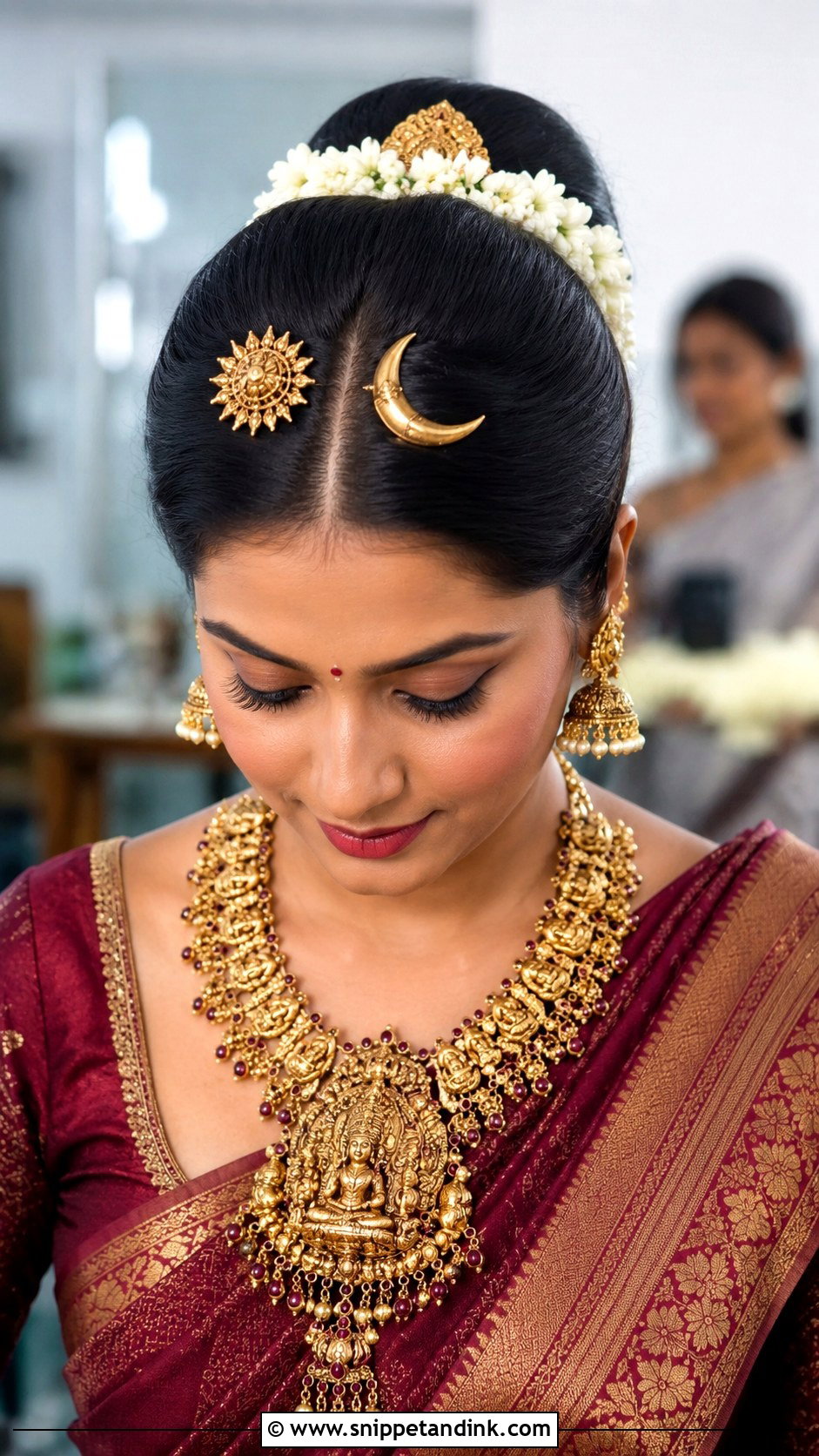
When a bride tells me she just wants something that won’t move, I build a low bun close to the nape. It sits comfortably under a dupatta, a veil or a long flower garland, and it keeps hair clear of heavy earrings. The front can take a middle part, a soft side part or a small puff at the crown. Jasmine, roses, baby’s breath or gold pins finish it depending on the outfit. Watch one thing: a bun set too low hits the blouse collar and gets pushed out of shape whenever you lean back in a chair.
5. South Indian Bridal Bun With Gajra
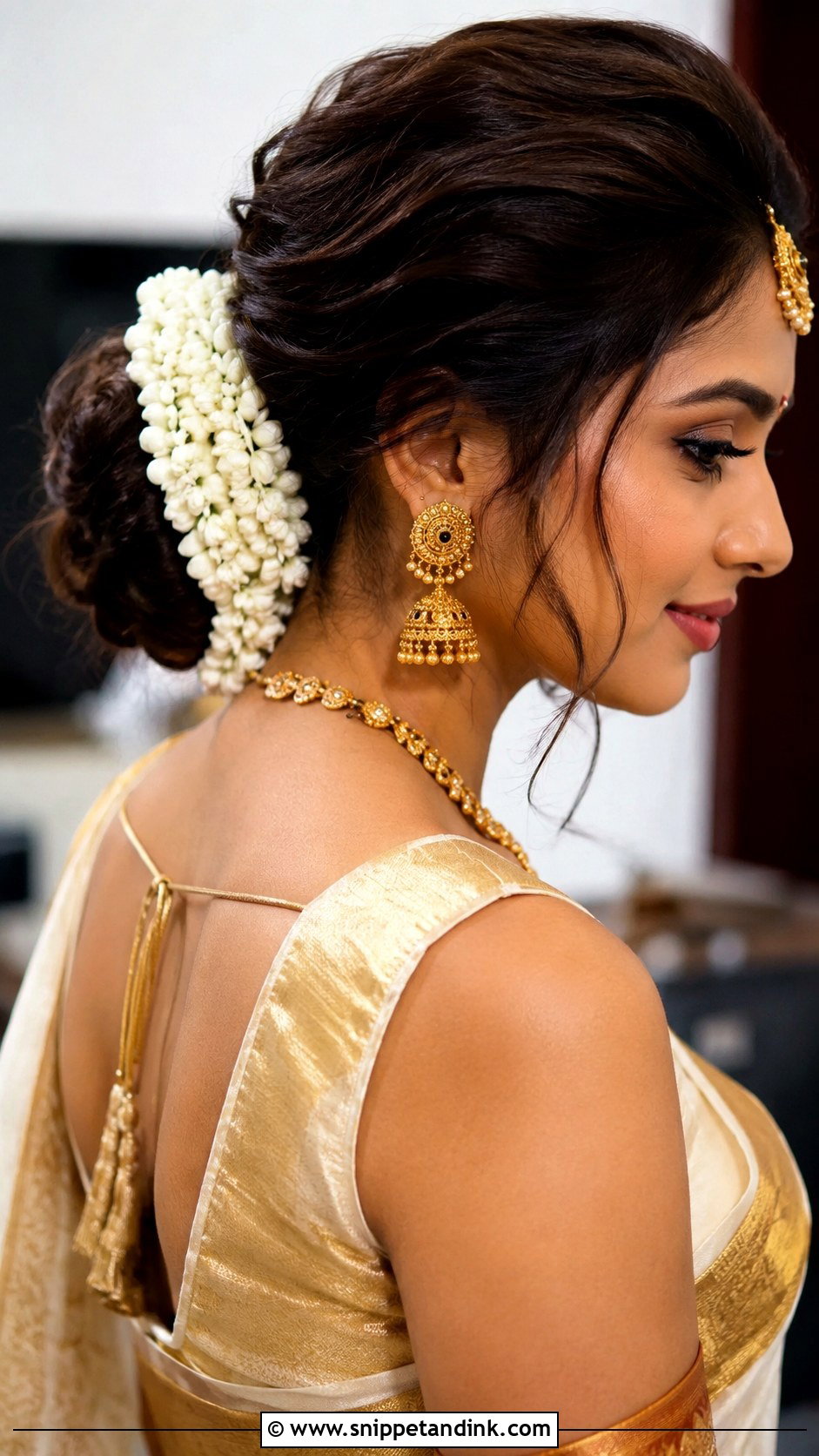
Wrapped in one gajra circle, the bun looks neat; wrapped in two or three, it becomes the centrepiece. Jasmine is the usual choice, and roses, kanakambaram, and mixed flowers can be worked in for colour. The bun underneath must be round and firm, because gajra follows whatever shape it’s wrapped around, including dents. Long hair, medium hair and extensions all work. With a silk saree and gold jewellery it’s as traditional as South Indian bridal hair gets.
6. South Indian Bridal Messy Bun
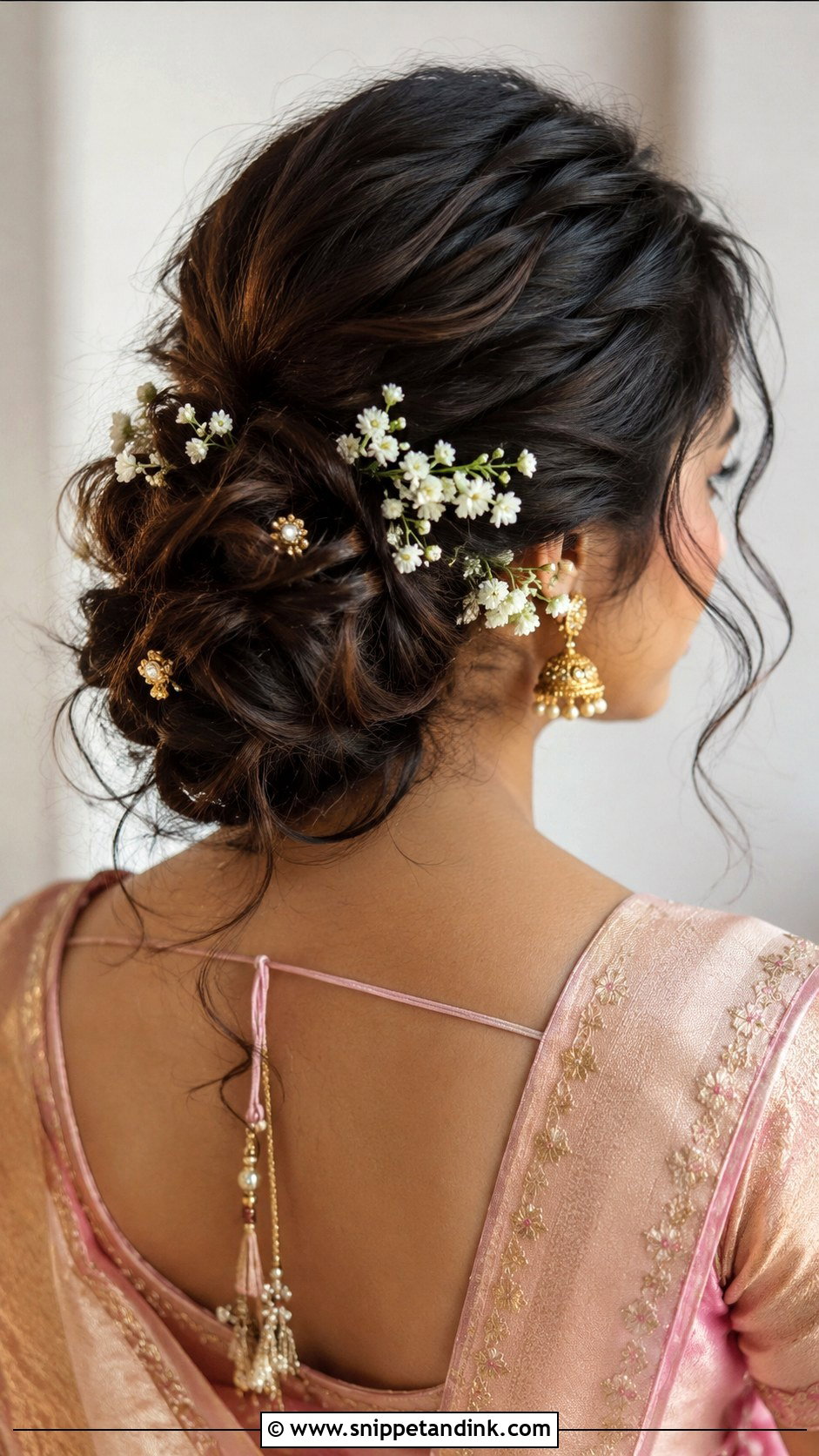
A messy bun can carry tradition too, with gentle texture, a bit of volume and loose pieces near the face. Jasmine, roses or fine gold pins keep it bridal. I use it most for receptions and engagements. The texture has to be built deliberately: I curl the lengths, set them, then pin each loop. A bun that is simply pulled loosely together falls apart as soon as the bride hugs her first few relatives.
7. South Indian Bridal Bun With Maang Tikka
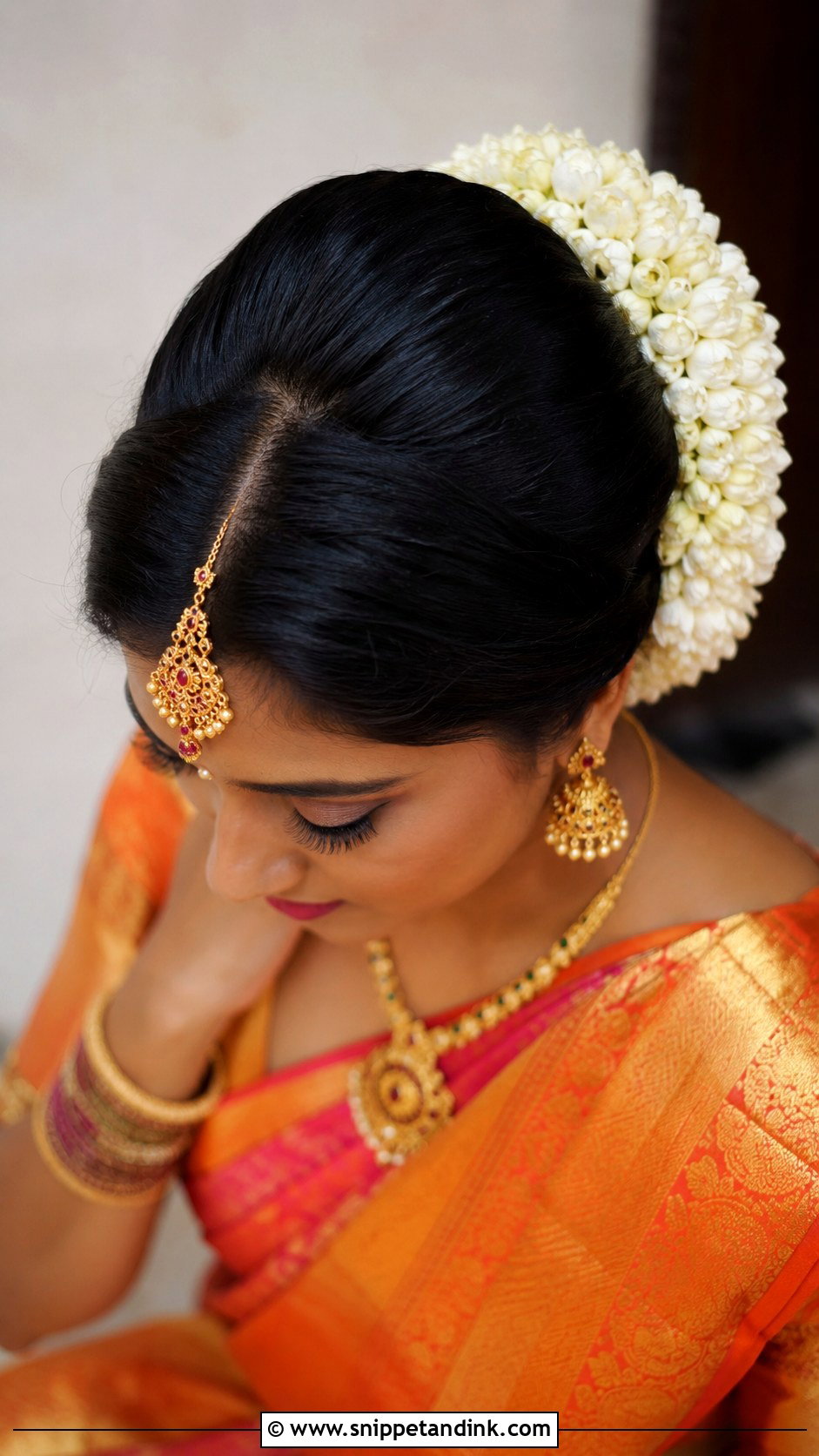
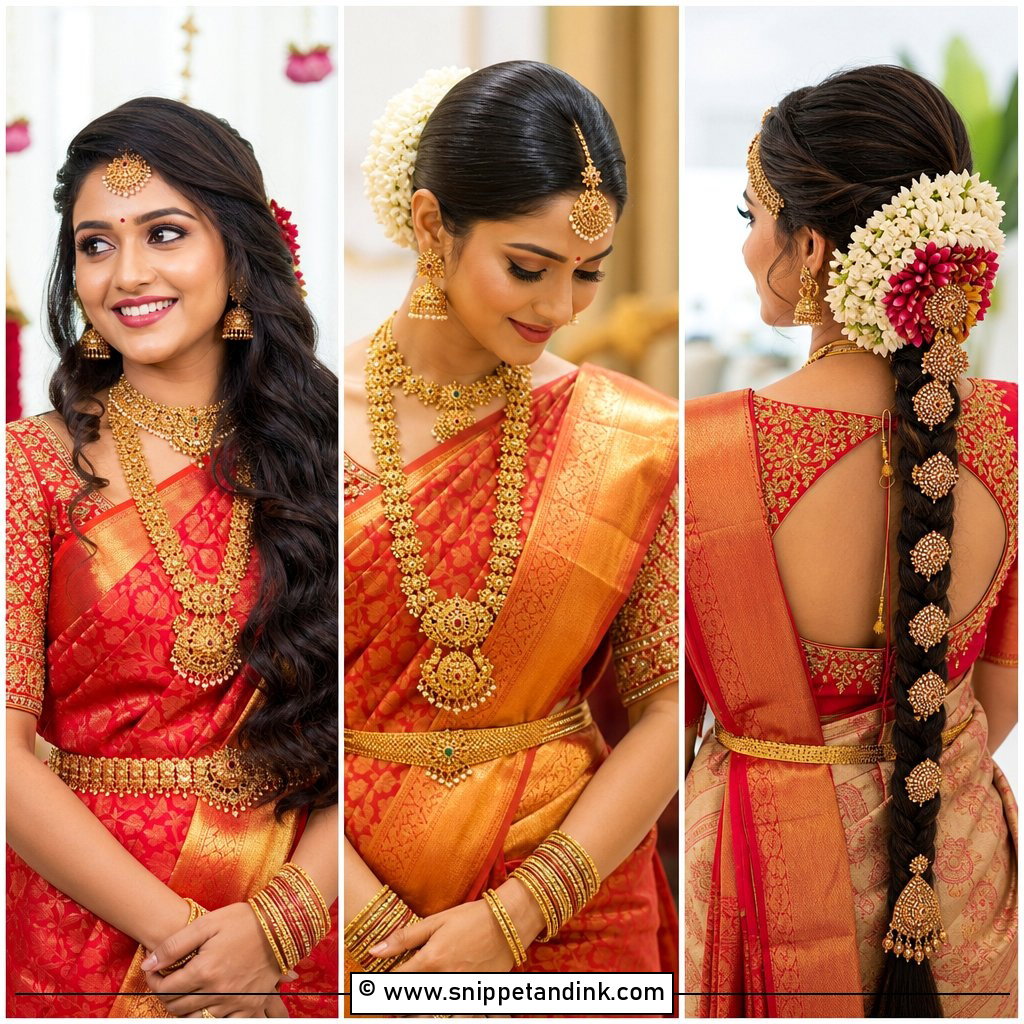
If the forehead jewellery is the main event, the bun’s job is to stay quiet and steady. I centre-part the hair so the maang tikka sits straight along the parting, then keep the crown sleek and pinned flat. A matha patti or layered temple pieces pull forward on the hairline, and a firm bun at the back counterbalances that weight. Simple, floral or jewelled all work behind it. I hook the tikka chain to a pin hidden under the crown so it never slides when the bride looks down.
8. South Indian Bridal Bun With Fresh Flowers
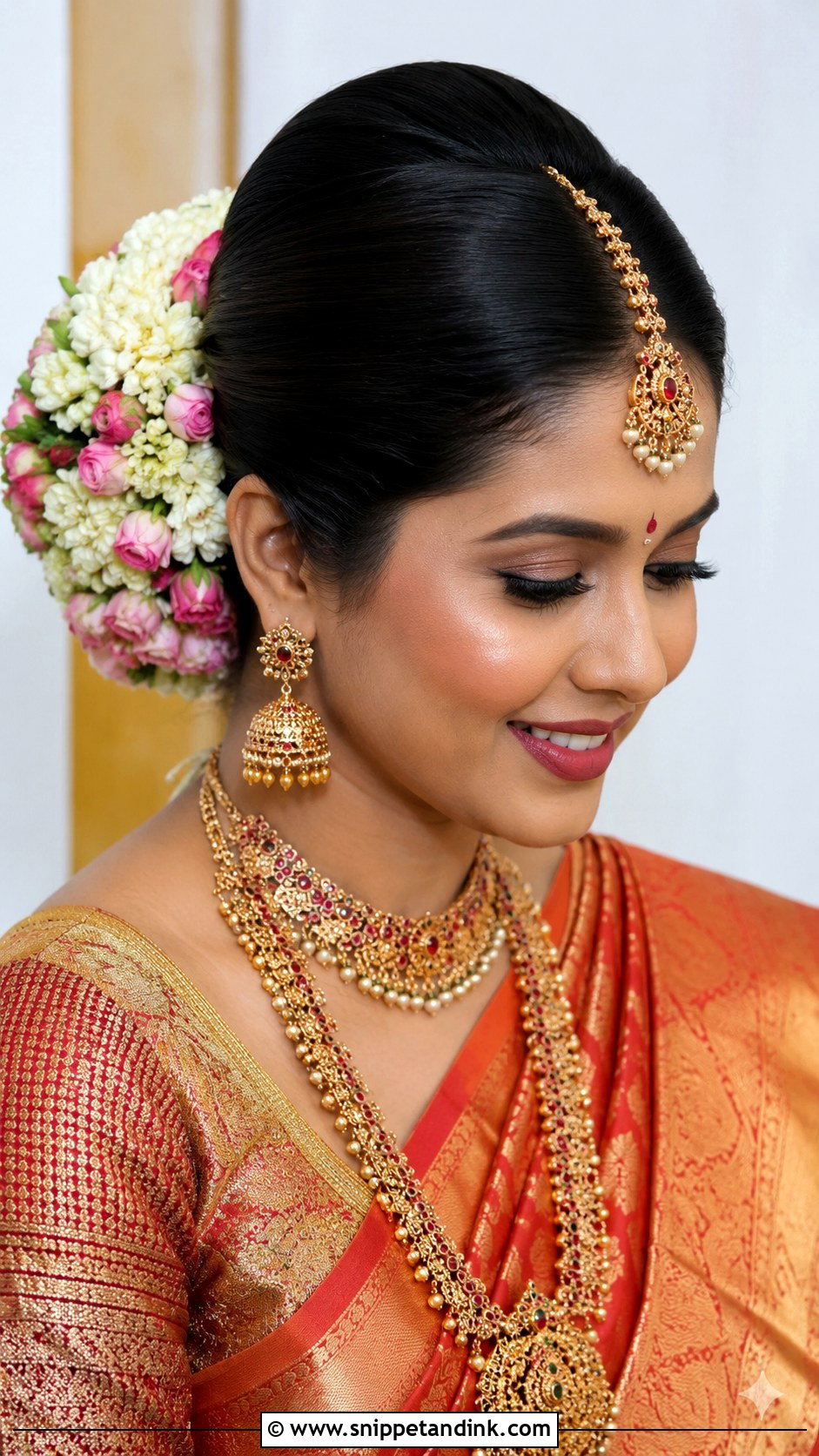
Fresh flowers give you the most room to match the bun to your colours. Jasmine softens, roses add depth, marigolds brighten and baby’s breath keeps things light. When the florist and I plan together, we can echo the saree border, the blouse, the bouquet or the mandap. The flowers can cover the bun or sit as a crescent on one side. Ask for blooms that are only just opening on the day; full-blown ones drop petals by the second ritual. Daylight shows natural flower colours at their best.
9. South Indian Bridal Bun With Gold Accessories
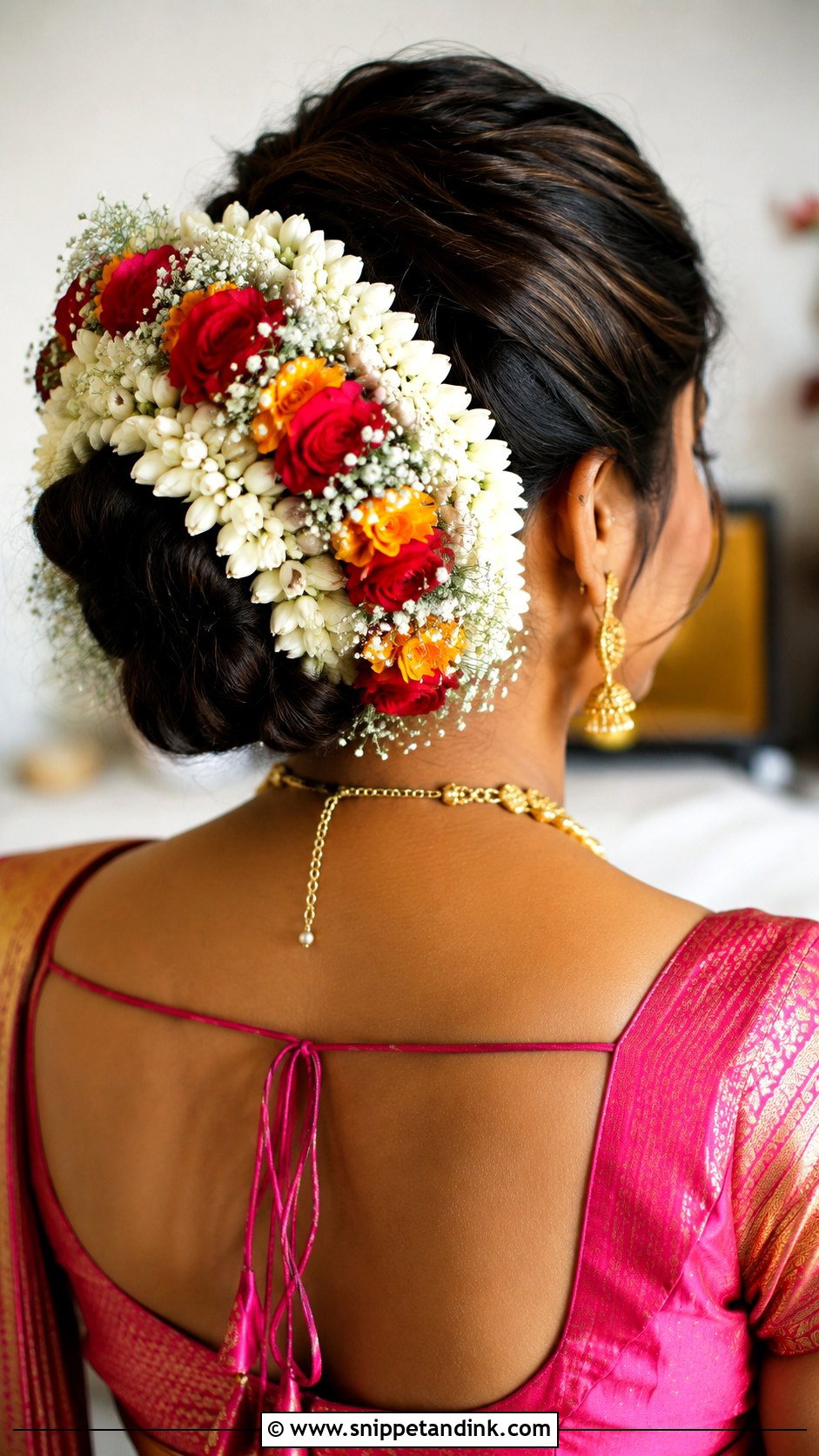
Some brides prefer gold to flowers, and this bun is built for that: pins, chains, brooches, jada pieces or decorative clips on a smooth, rounded base. It looks polished and traditional at once. It sits well with heavy temple necklaces, a vaddanam and zari-bordered silk. The rounder and smoother the bun, the more evenly the pieces lie, so I spend more time on the base here than anywhere else. A few jasmine strands around it add softness if you want them.
10. South Indian Bridal Braided Bun
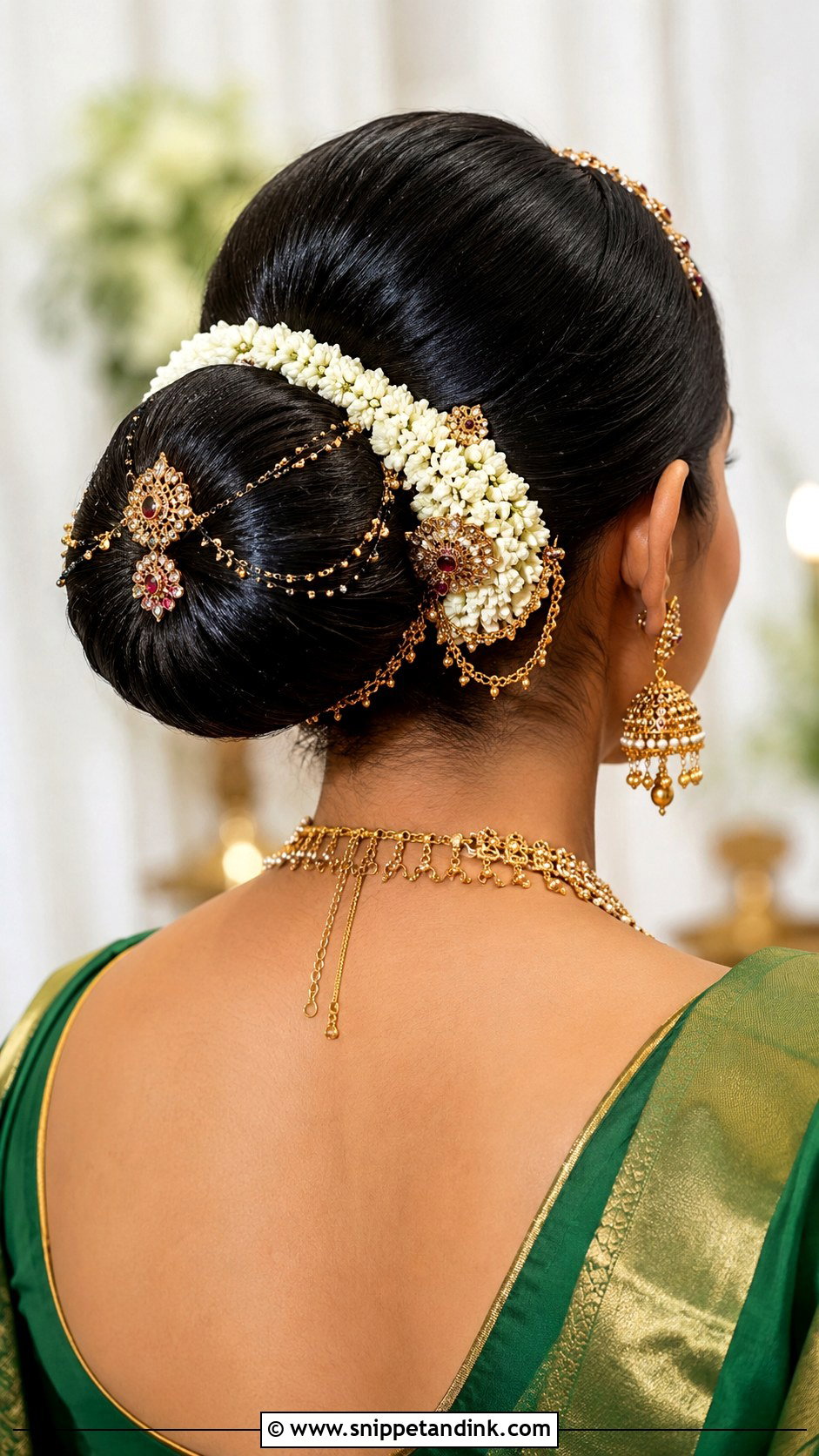
Braiding at the crown, along the sides or through the bun itself gives the finished shape more texture than a plain coil. It reads well in close-ups and stays lighter than a fully floral style. I find it easiest on thick hair, because the braids create structure on their own and need fewer pins. Fine hair can do it too, though the braids should be pancaked a little to look fuller. Jasmine around the base or gold pins between the braided sections finishes it.
11. South Indian Bridal Bun With Side Flowers
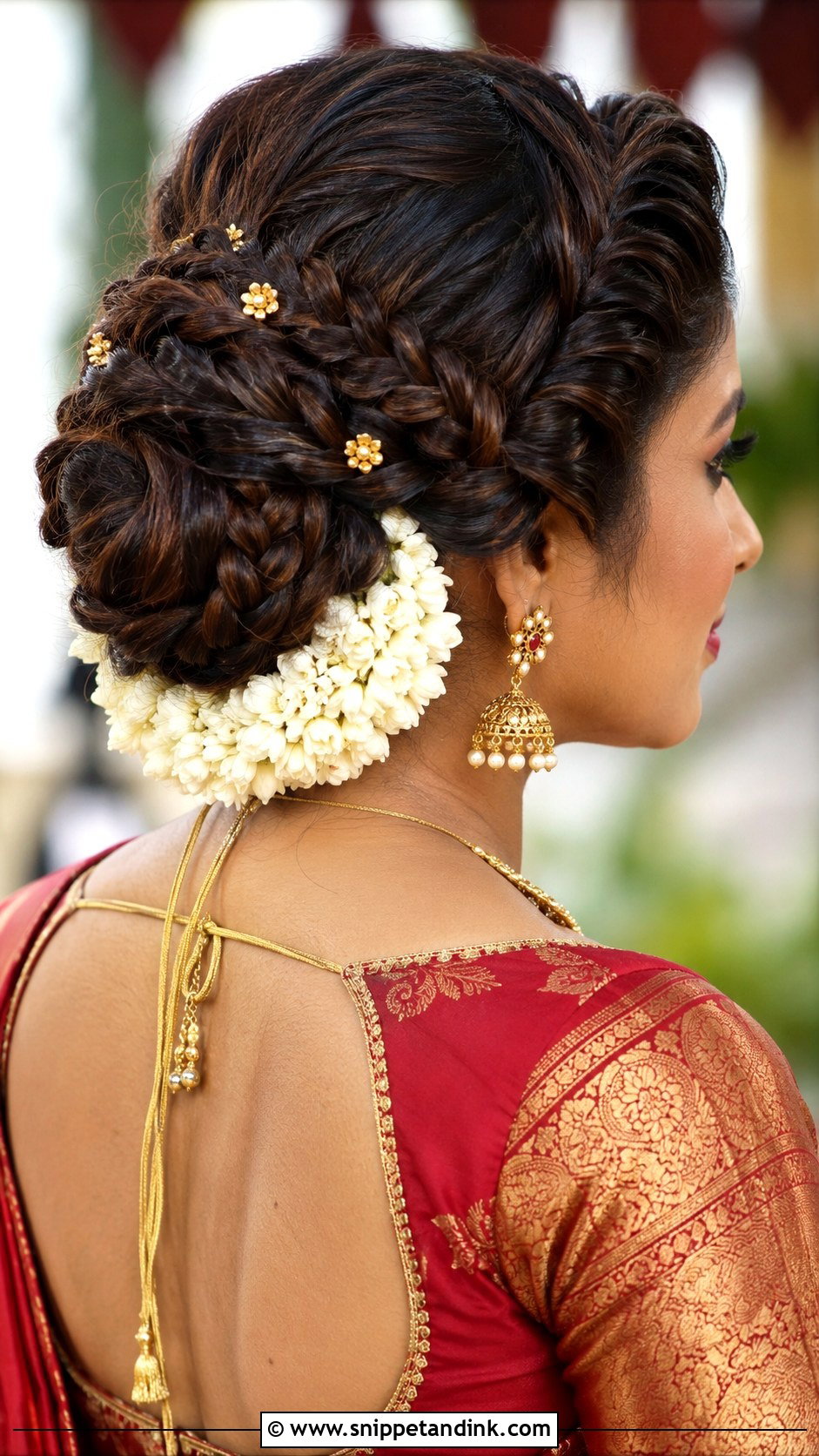
Putting the flowers on one side, rather than all around, gives an asymmetric shape that feels softer and a little more modern. It’s useful if you want flowers but not extra volume at the back. Roses, jasmine, orchids or baby’s breath all work, chosen to suit the saree. The front can be sleek or lightly textured. Decide at the trial which side faces the camera most during the ceremony, since the flowers should sit on that side and frame the neck and earrings.
12. South Indian Bridal Bun For Silk Saree
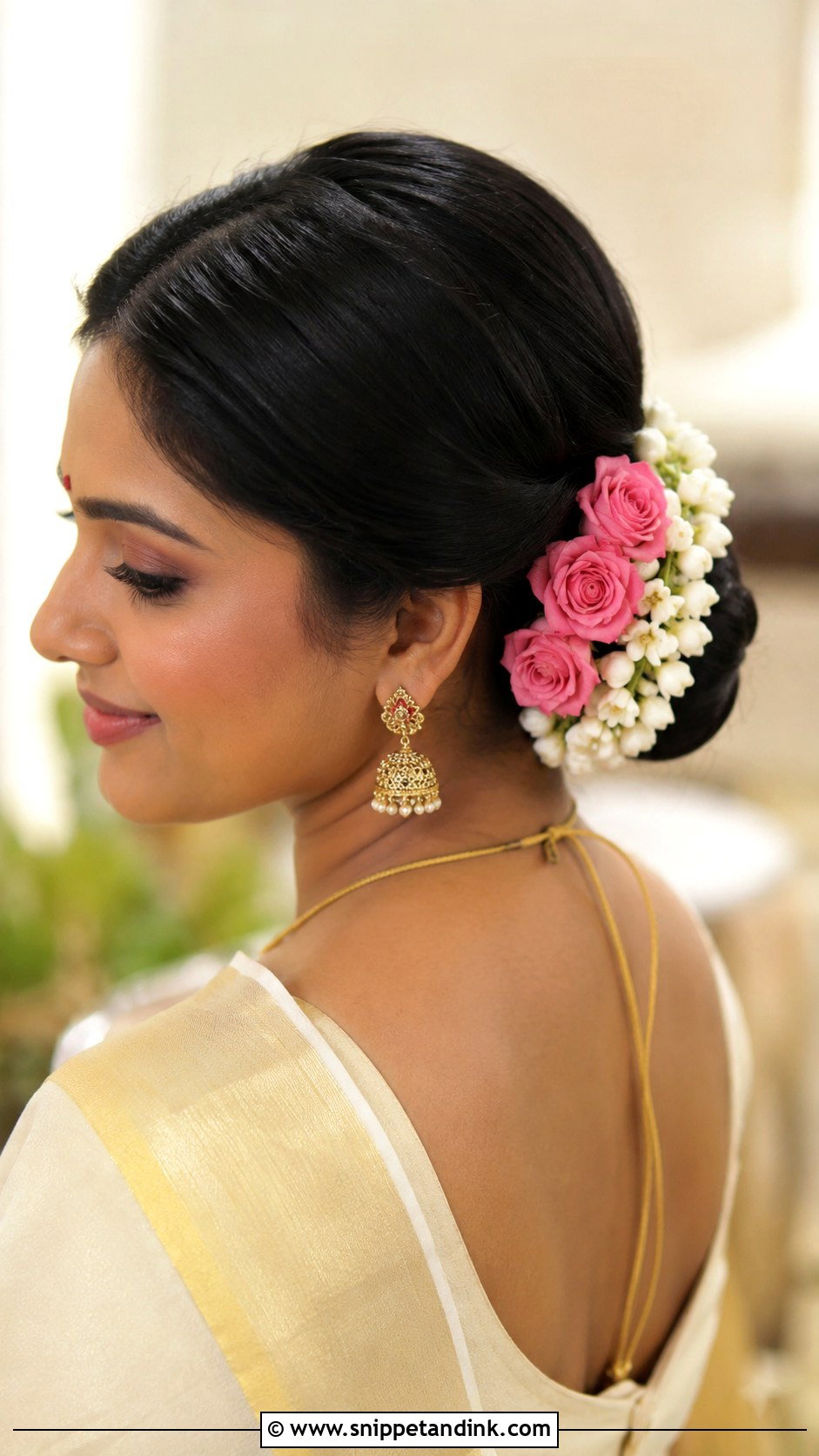
Silk sarees with heavy zari borders need a bun with enough detail to hold its own. A smooth bun with jasmine, roses and temple jewellery does that. I often pick the flower colour from the saree border so the two read as one design. Placement matters with silk: a bun at mid-back or the low nape clears the draped pallu, while a very high bun leaves an odd gap above the shoulders in profile photos.
13. South Indian Bridal Bun For Reception
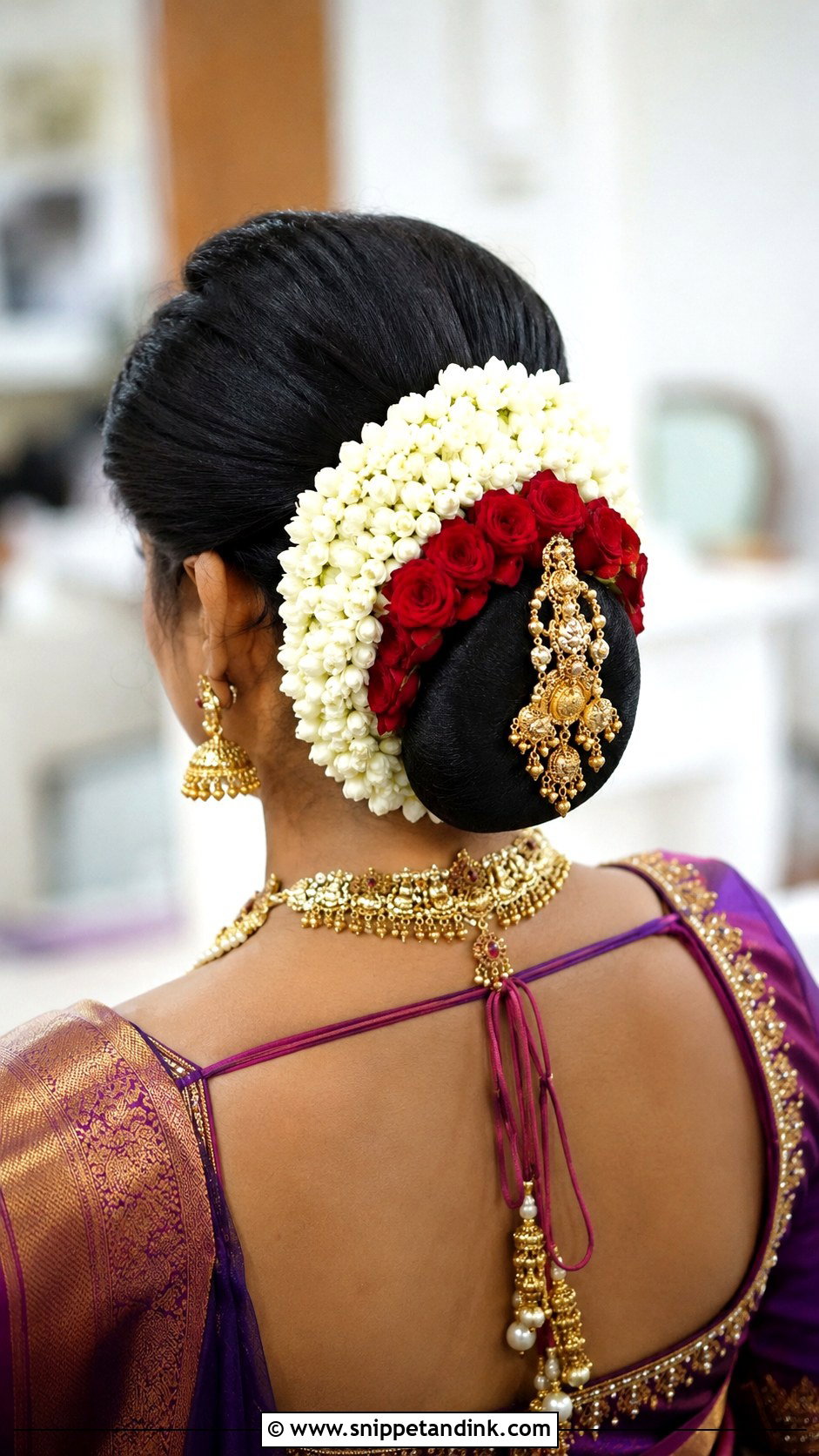
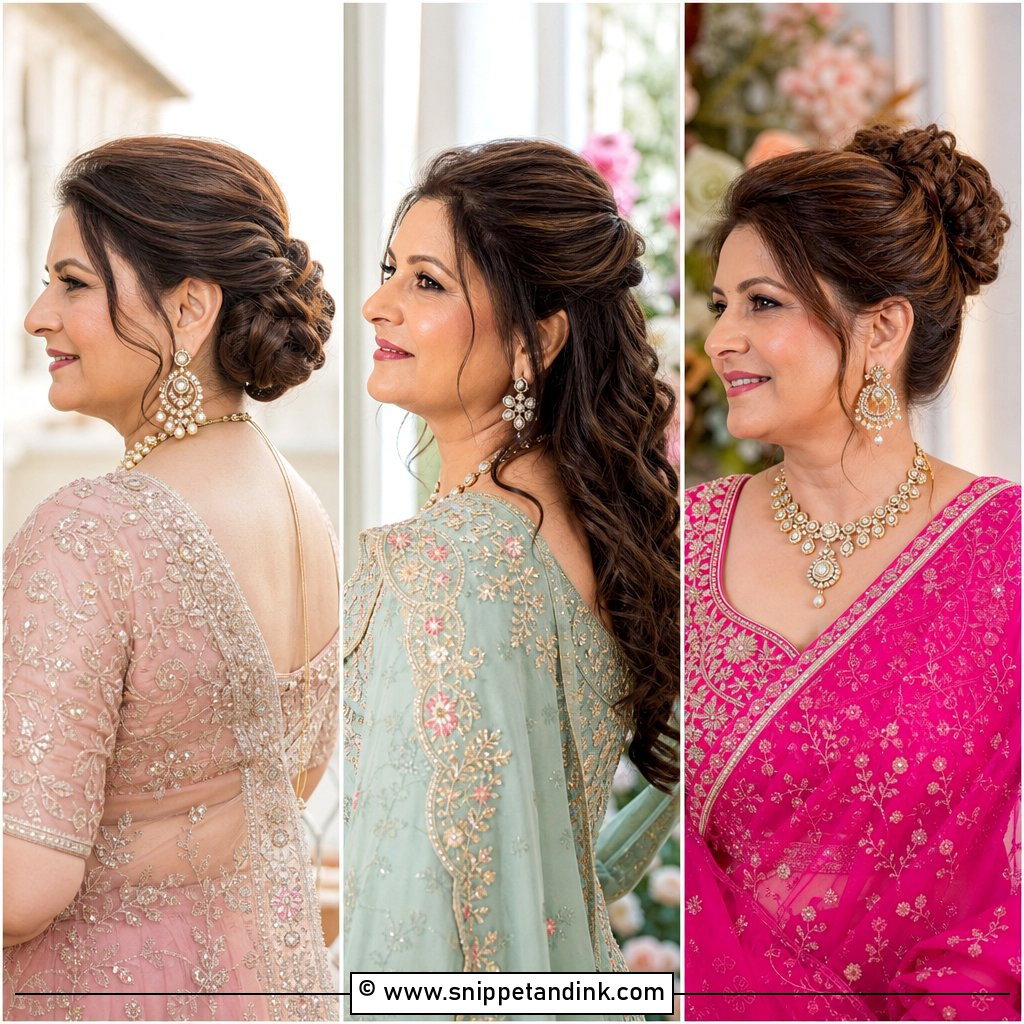
For the reception, I usually soften the bun: a textured low bun, a twisted one, or a floral bun with lighter accessories. It gives the bride a new look after the rituals while still reading as bridal. Baby’s breath, pearls, small roses or gold pins keep it refined. With a gown, a lehenga or a light silk, a heavy ceremony bun looks out of place, so scale it down. By evening the bride has been pinned for hours, and comfort counts as much as looks.
14. South Indian Bridal Bun With Baby’s Breath
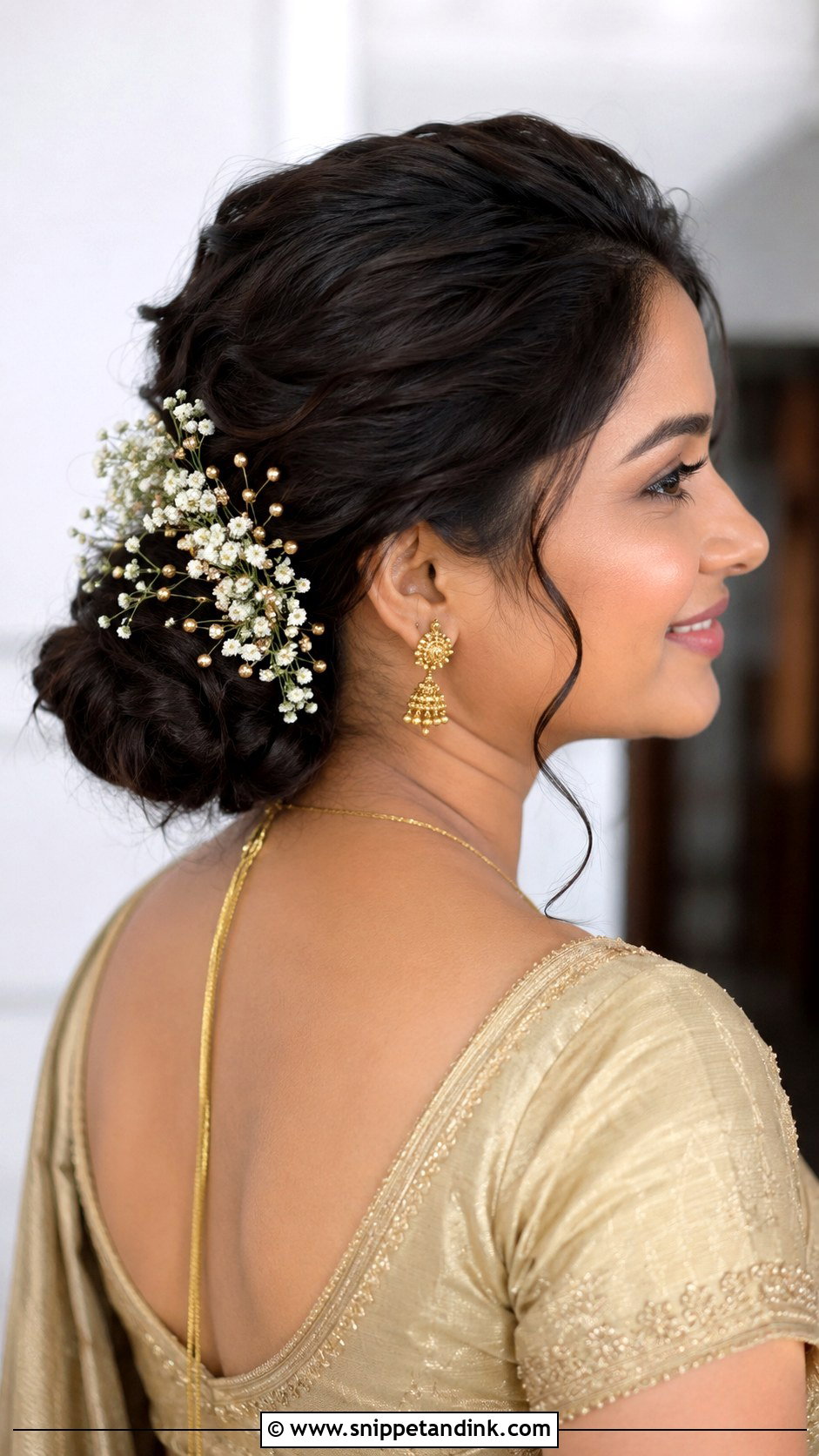
Baby’s breath gives a cloud-like edge to a bun without the weight of a full jasmine gajra. It also dries well instead of browning, which helps through a long day. I mix it with roses, jasmine or gold pins for a more traditional feel, on a smooth, twisted or textured bun. Engagements, receptions and morning weddings suit it. Brides with a pollen or scent sensitivity often prefer it, since it carries very little fragrance.
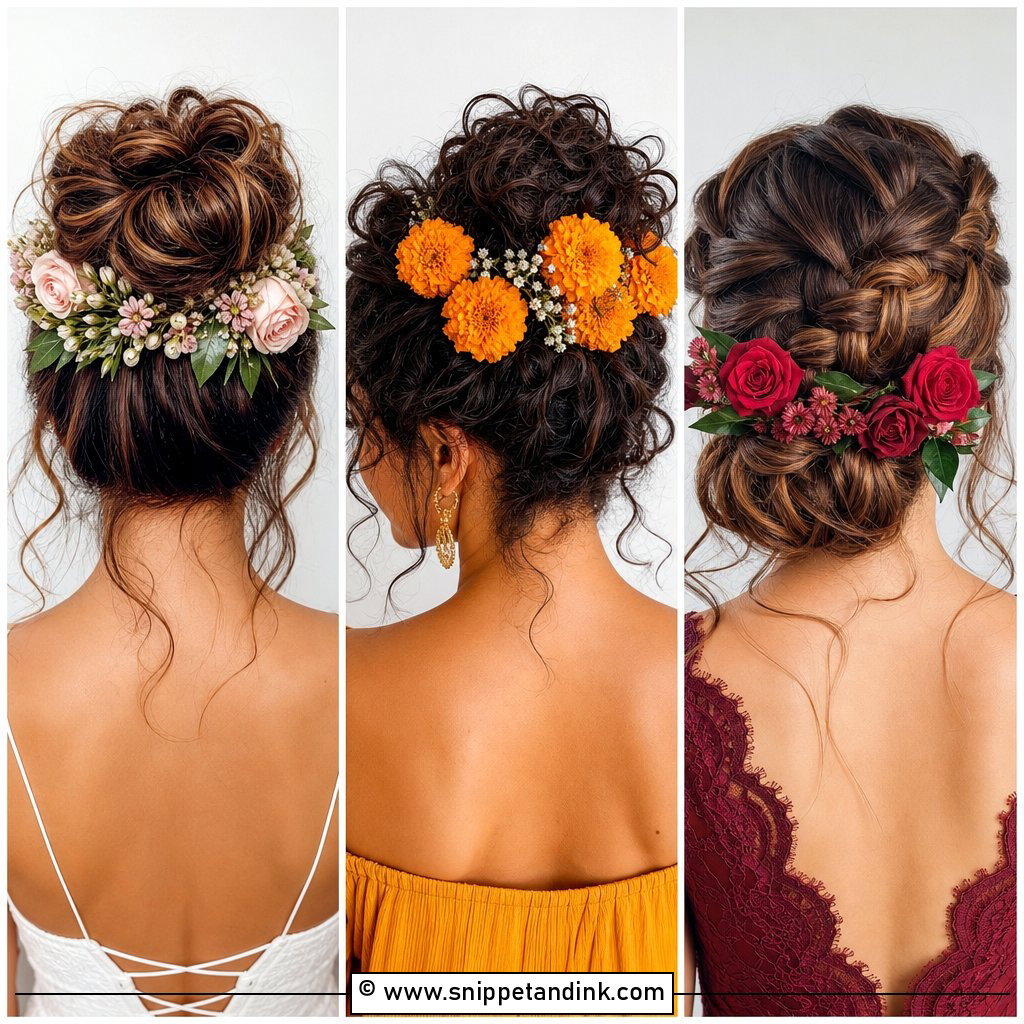
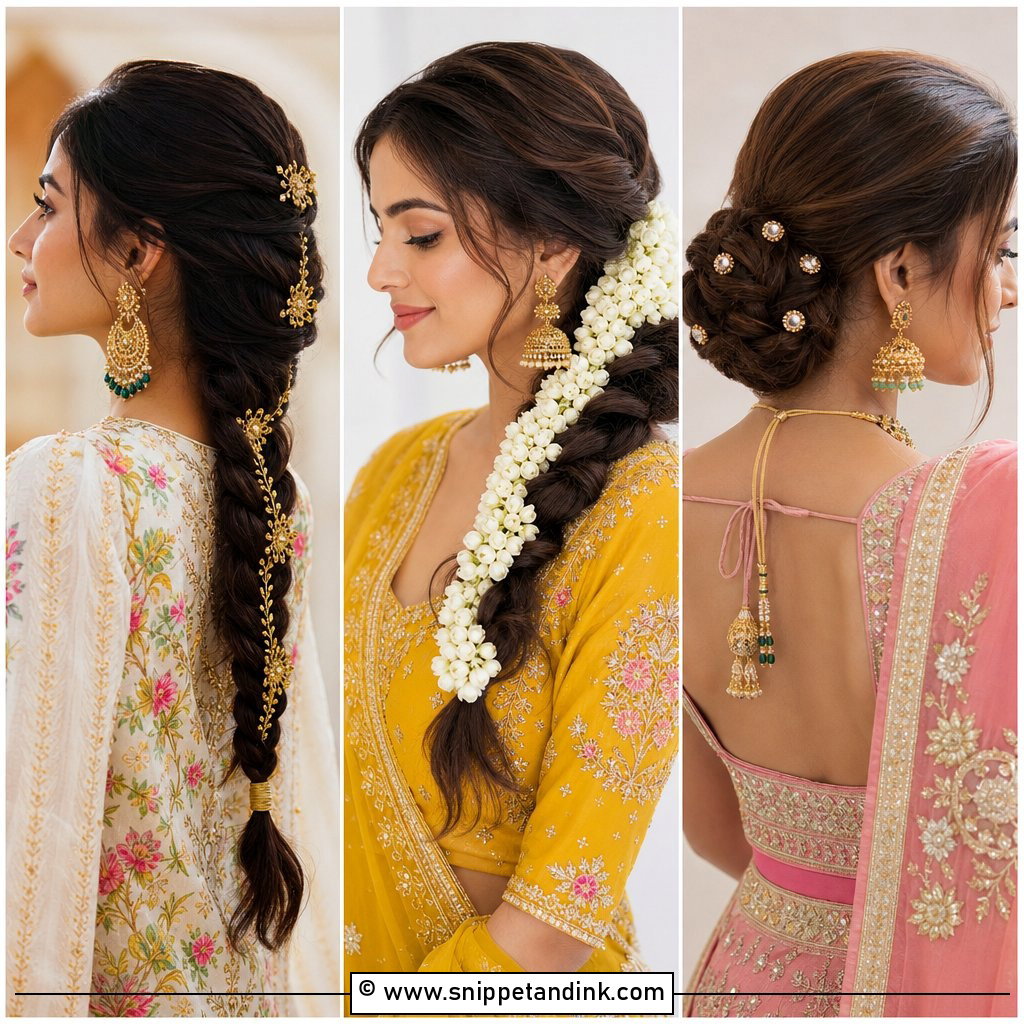
15. South Indian Bridal Bun With Poola Jada
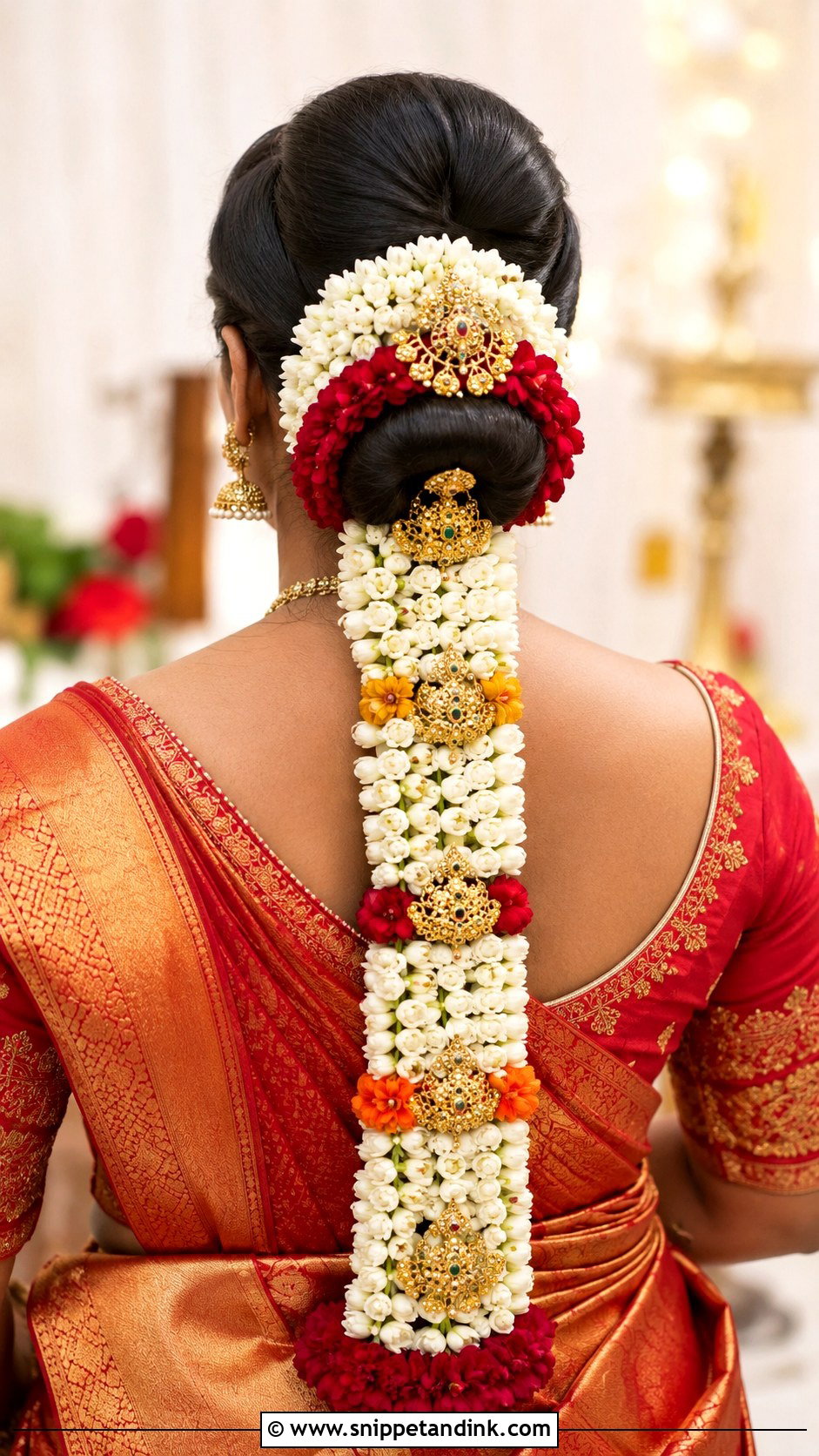
This combination gives you a neat bun at the top with a decorated braid or floral extension falling below it, so you keep the fullness of a bun and the shape of the classic flower braid. Jasmine, roses, marigolds and gold ornaments make it properly ceremonial. It’s heavy, so I anchor the bun on a tight base and attach the hanging section to the bun itself rather than to loose hair. I keep it for the main rituals with a silk saree and full temple set.
Padding a Bun When Your Hair Is Fine or Layered
Most of the full, round buns in bridal photos have something inside them. If your hair is fine, layered or shoulder-length, a padding ring or a small clip-in ponytail is what gives the shape, and there is nothing to be shy about. I choose the padding colour close to your hair so no gap shows between the flowers.
Layers are the bigger challenge. Short layers pop out of a bun as the day goes on, so I set them with a little gel or wax and tuck them under the coil instead of wrapping them over it. Tell me about any recent haircut before the trial, because a fresh layered cut can change the whole plan.
At night, take the bun down slowly. Remove the flowers and jewellery first, then pull pins one at a time and count them as you go. Work out the back-combing from the ends upward with a wide-tooth comb and some conditioner, rather than brushing it out dry.
One Bun, Three Ceremonies, and the Pins in Between
There’s a bun here for almost every bride, from a plain jasmine coil to a fully jewelled temple bun or a softer textured one for the evening. What matters most is that it works with your outfit, jewellery, face shape, ceremony length and comfort. Flowers bring scent and tradition, gold brings formality. A low bun is the most secure, a braided bun adds detail, and a Poola Jada bun is the grandest. Bring your saved looks to a proper trial, and wear the jewellery while we test it.
You'll Like These Ideas:






Leave a Reply