
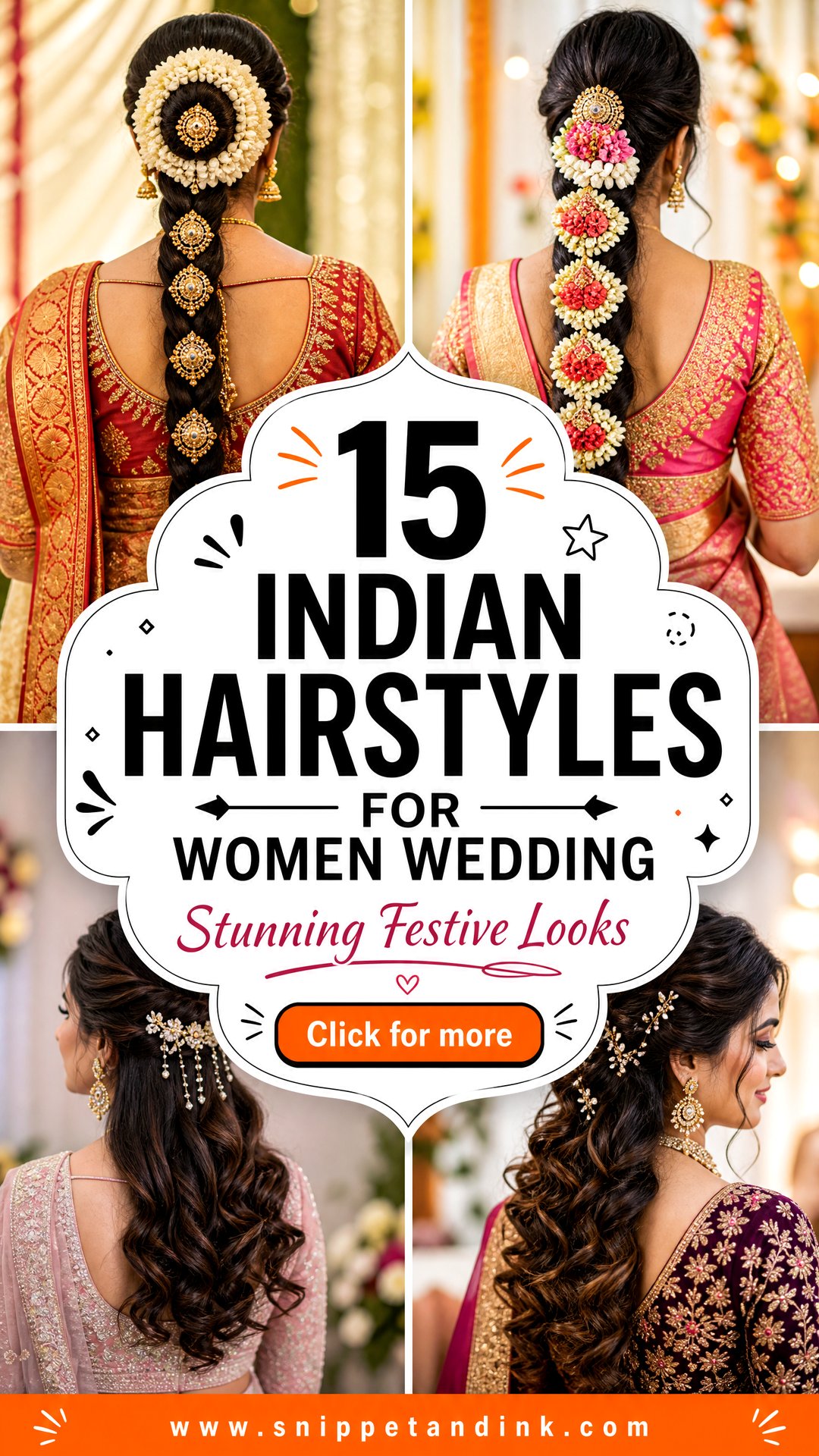
Indian wedding hair is a balancing act. It has to hold jewelry and sometimes a dupatta, survive long ceremonies, and still look right in photos taken at midnight. I style brides, sisters, bridesmaids and guests in the same week, and the same rule holds for all of them: the outfit and the event decide, then we find a style that suits your hair. That might mean a sleek bun wrapped in jasmine, a long braid covered in flowers, soft curls with a maang tikka or waves for the reception. Below are fifteen I return to, with the details that make each one hold.
Dressing Your Hair as a Sister or Guest Without Echoing the Bride
Many of the styles below cross over between bride and family, and that is fine. What gives a guest away as copying the bride is the combination: a full gajra, a center maang tikka and a matha patti together read as bridal in most families.
If you are a sister or bridesmaid, ask the bride what she is wearing for each function and go one step simpler. She wears a poola jada, you wear a plain braid with a single jasmine string. She has a sleek bun with a tikka, you have soft waves with a hair chain. In South Indian weddings, jasmine in the hair is worn by many women, so check with the family; it is usually the full flower braid that stays with the bride.
Guests should also think about where they will sit. Big curls and tall buns block the view of whoever is behind you during the ceremony.
1. Indian Bridal Bun With Gajra
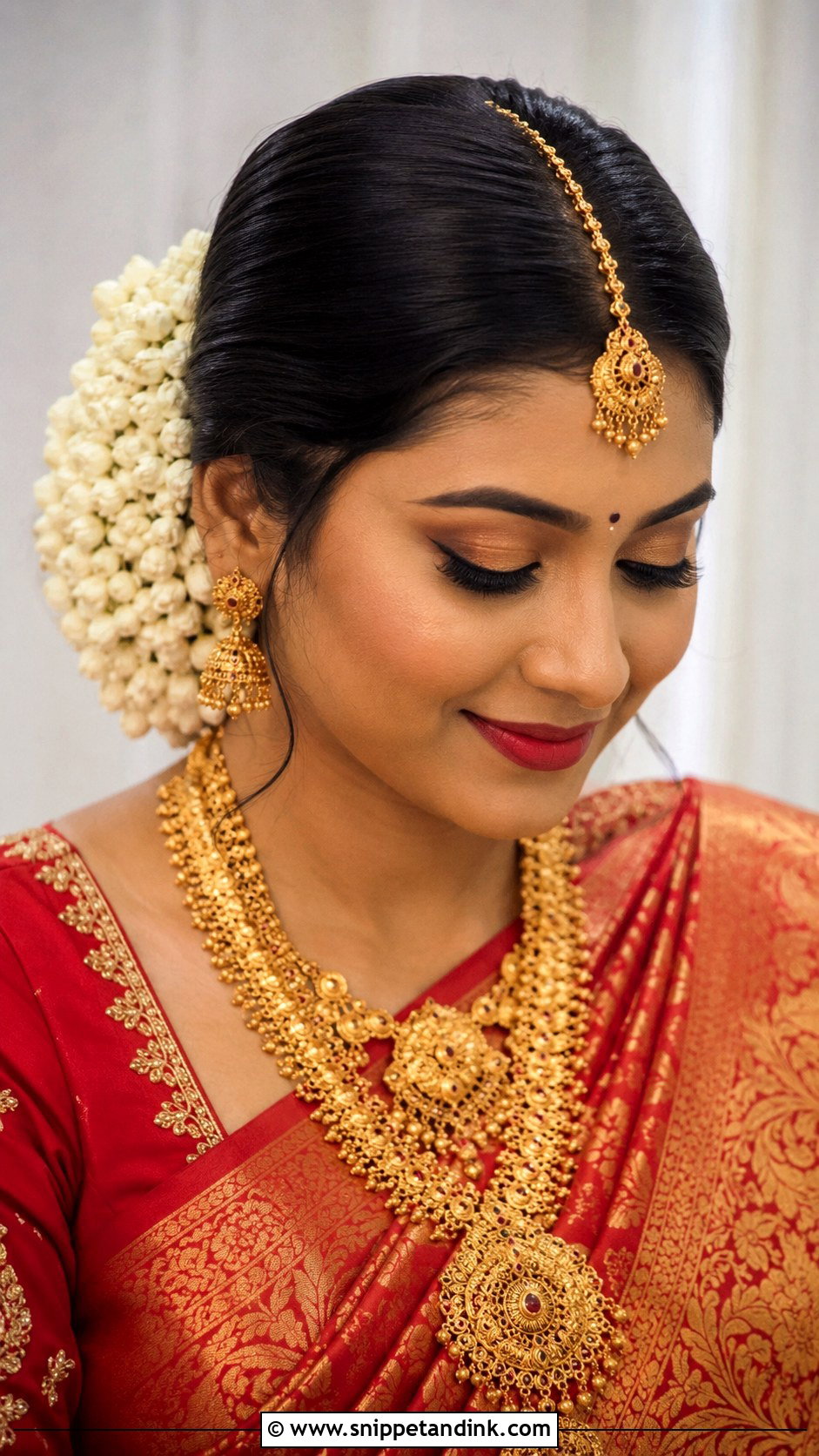
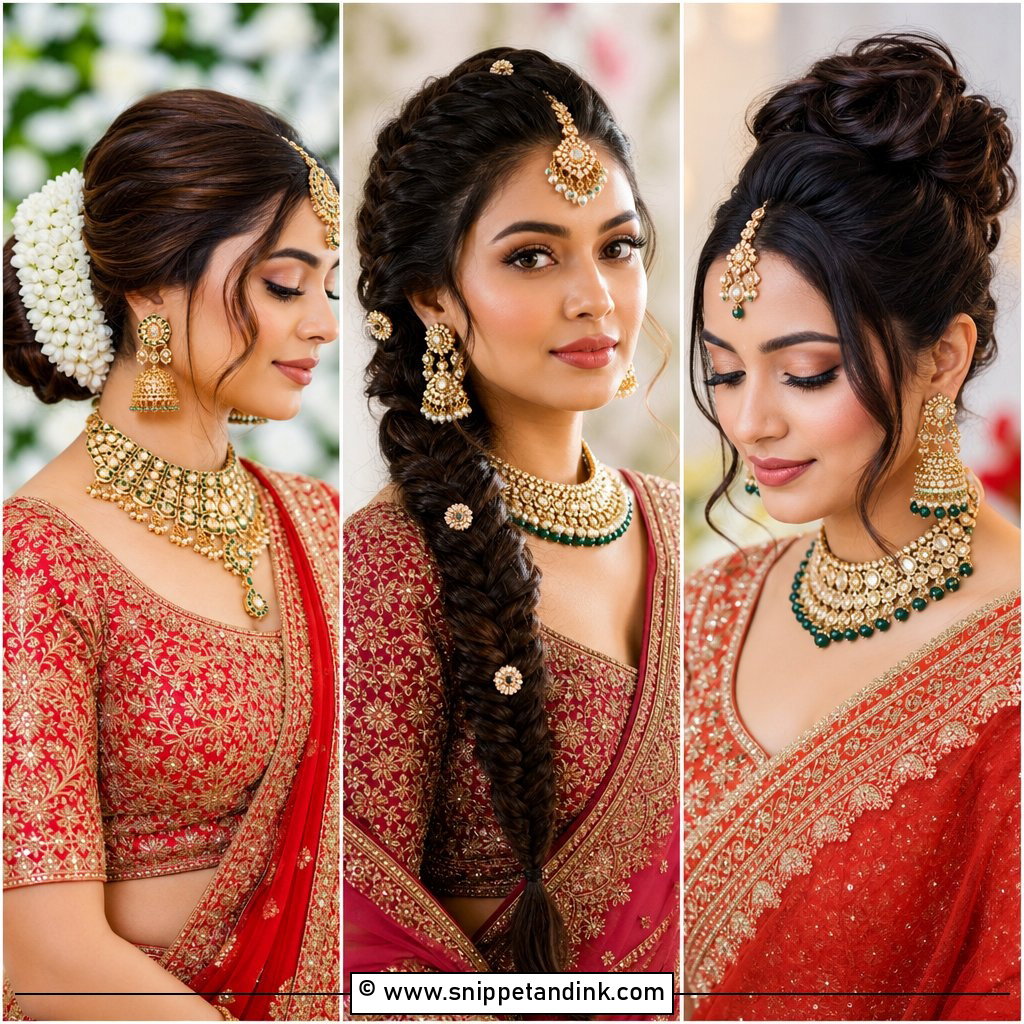
The gajra bun is the one I trust most for the main ceremony. I part it in the center, smooth the sides and pin the bun low or mid-height, then wrap fresh jasmine gajra around it. Against Banarasi, Kanjivaram or other silk sarees, or a red or gold lehenga, it looks right without trying. It carries a heavy dupatta well because the bun gives the pins something solid to grip. Add a maang tikka or matha patti if you like, but pick one; both together with a full gajra gets crowded.
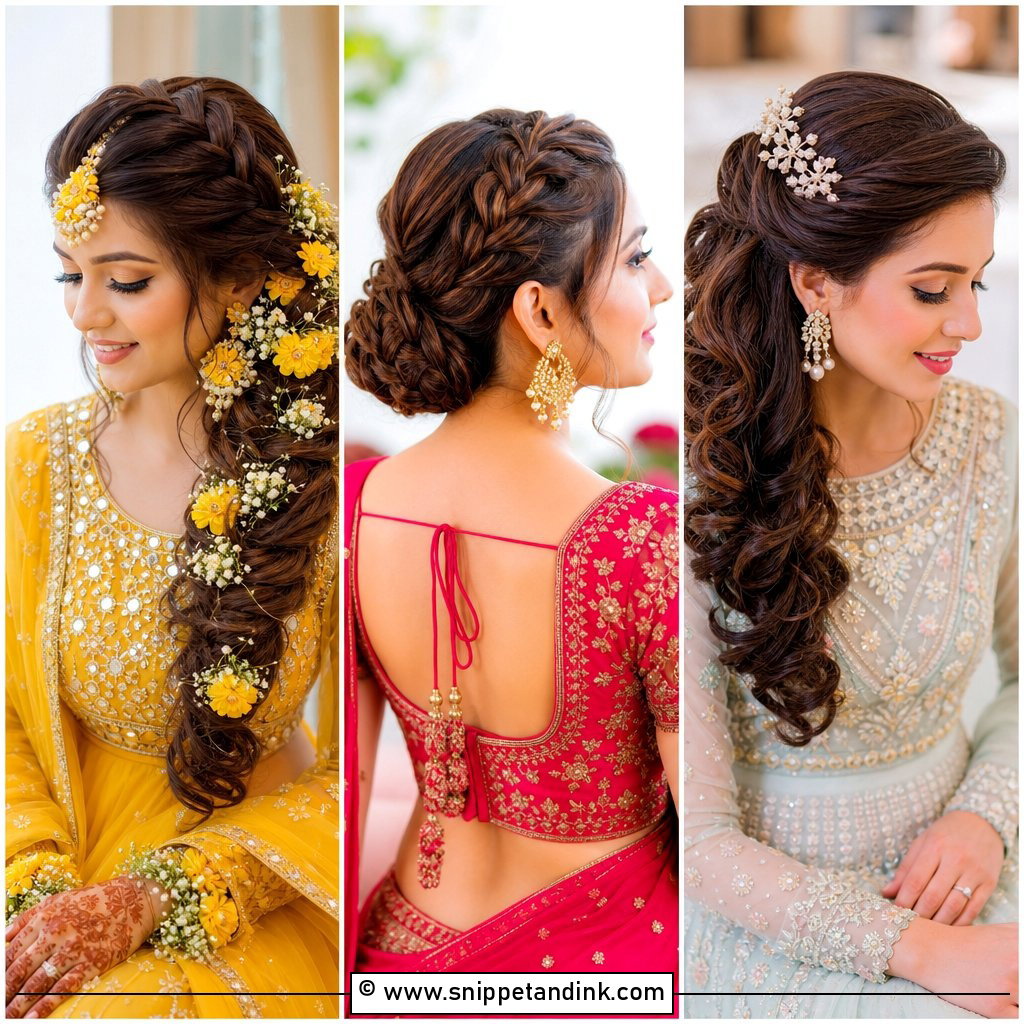
2. Indian Wedding Low Bun With Flowers
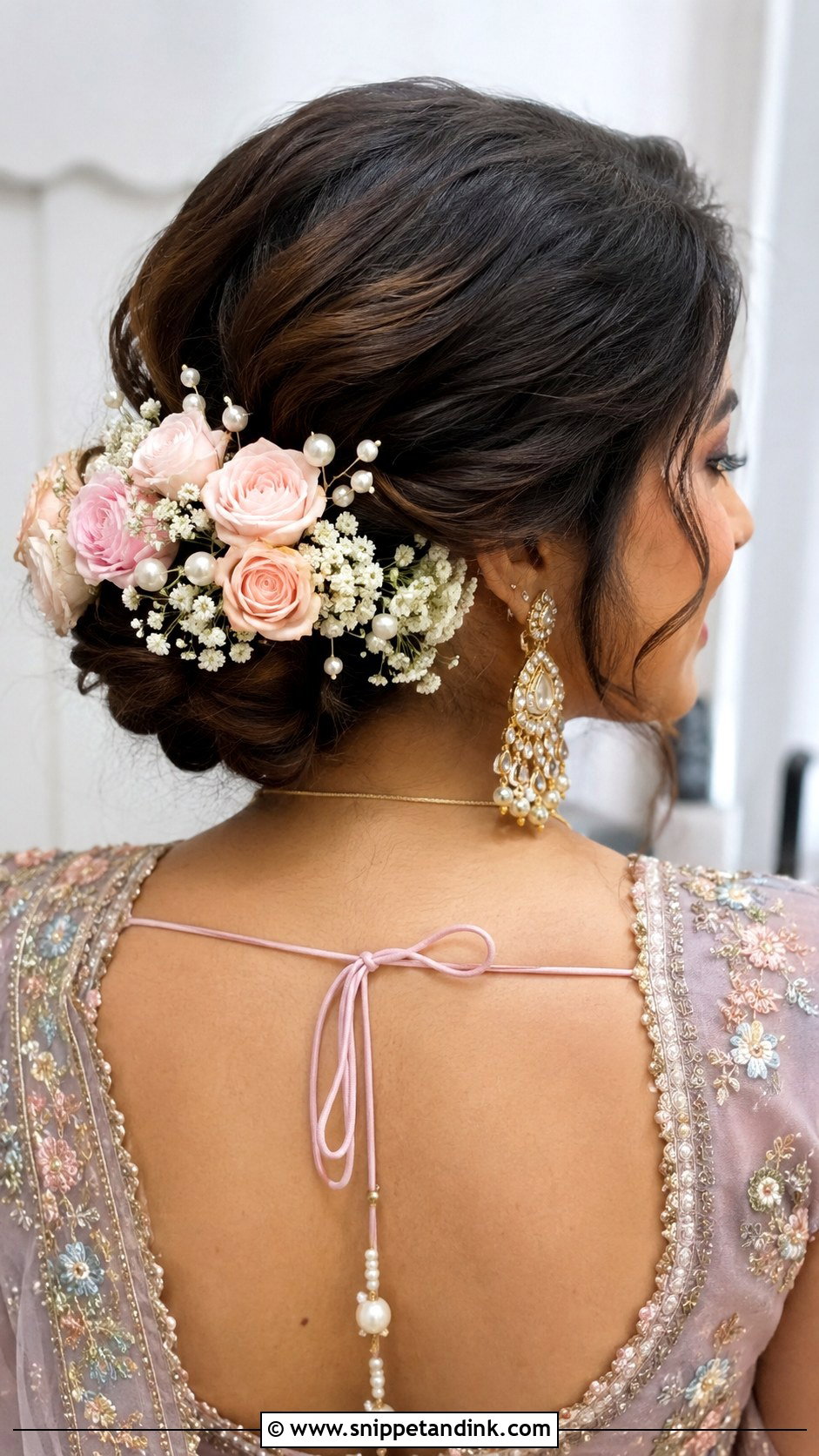
Deep blouse backs need a low bun, and the floral version softens it for daytime pheras, engagements or a guest look. I set it close to the nape so the neckline stays clear. Match the flowers to the outfit: jasmine or mogra for white and gold, roses for red, orchids where the lehenga is pastel. Orchids and roses are heavier than jasmine, so they get wired picks rather than plain pins. If your hair is fine, a bun padding fills it out.
3. Indian Wedding Braided Bun
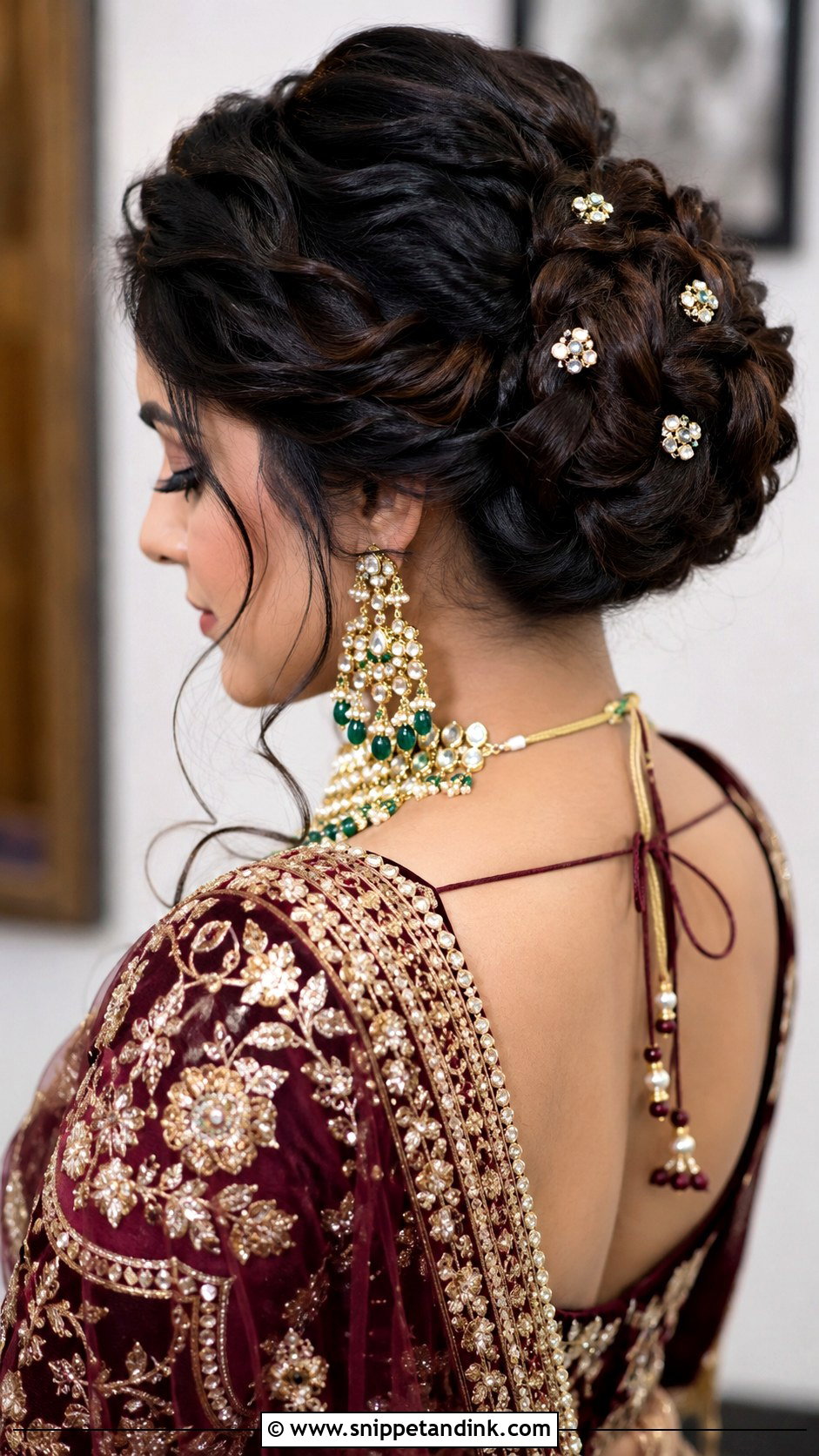
Under a dupatta, a braided bun is the style I’d bet on to stay put. The hair is braided first, then coiled, which locks the shape and makes the bun look fuller than the same hair twisted. A rope or fishtail plait gives more texture; a loose three-strand gives softer edges. Kundan pins or pearls in the outer loops tie it to your jewelry. With sarees and lehengas alike, it keeps its shape from every angle.
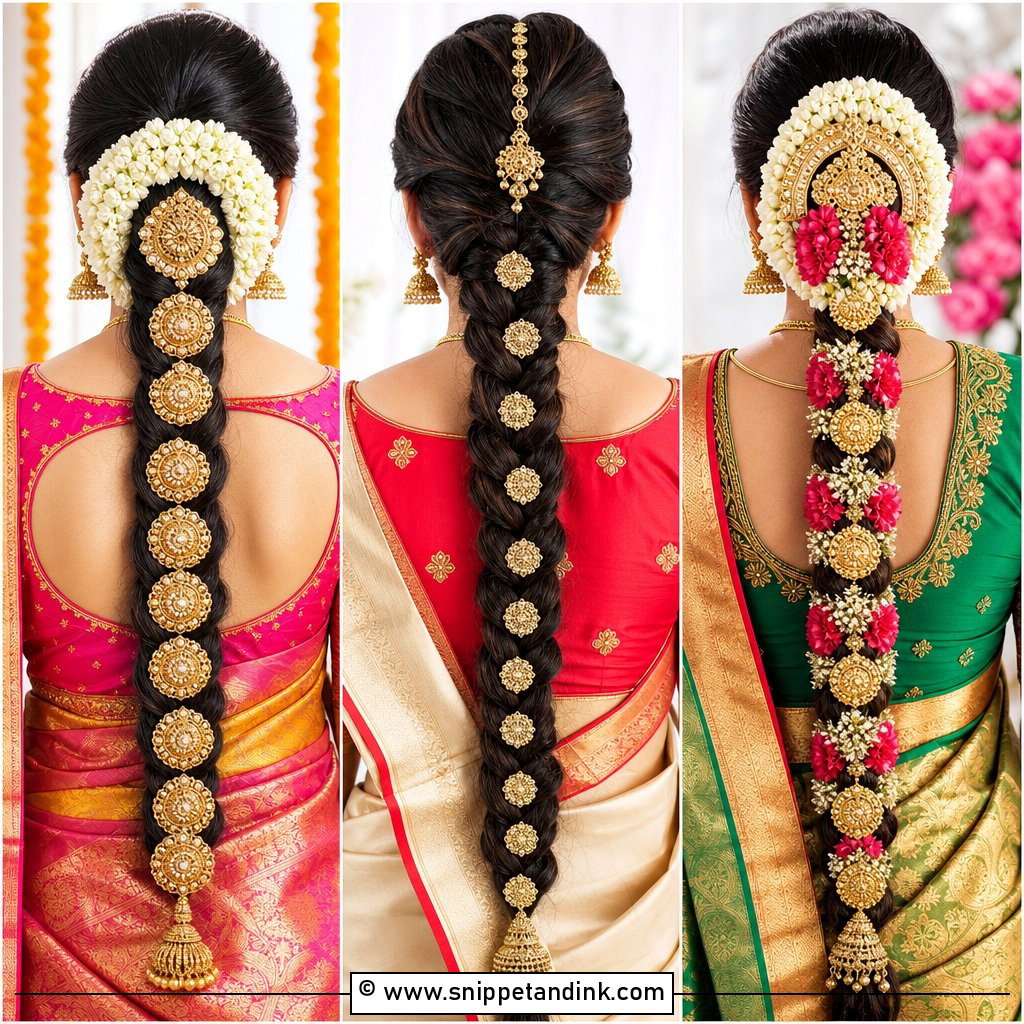
4. South Indian Bridal Braid
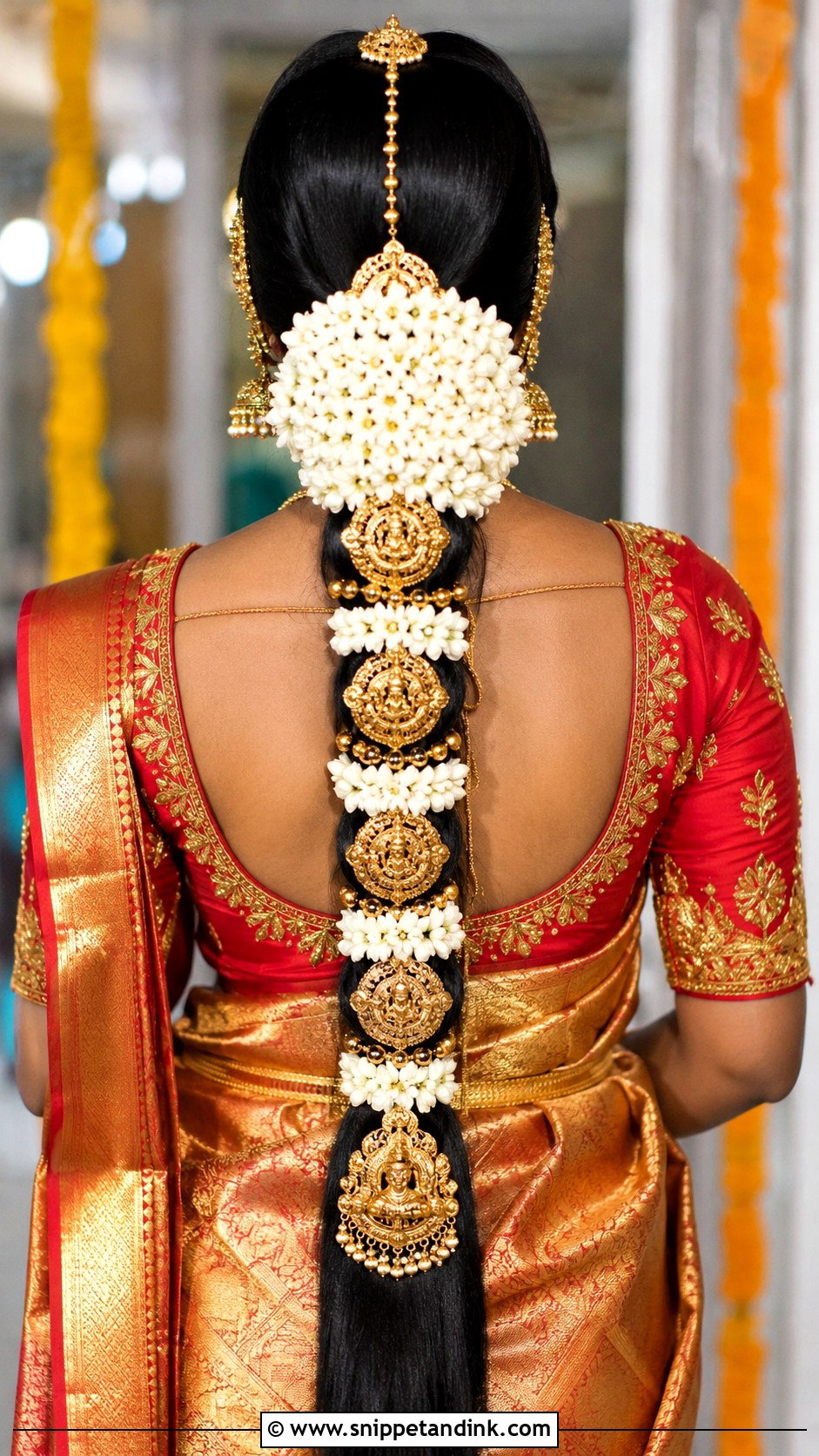
A South Indian bridal braid is meant to be looked at. It starts with a center part and a smooth crown, then becomes a long, thick plait dressed with gold accessories, temple jewelry, fresh flowers or a full poola jada. With a Kanjivaram saree and temple jewelry, it is hard to beat. Few brides have the length it needs, so I braid in an extension from the nape. The weight is what to plan for: ornaments and flowers together can feel heavy by evening, so the top must be pinned firmly and evenly.
5. Indian Wedding Poola Jada
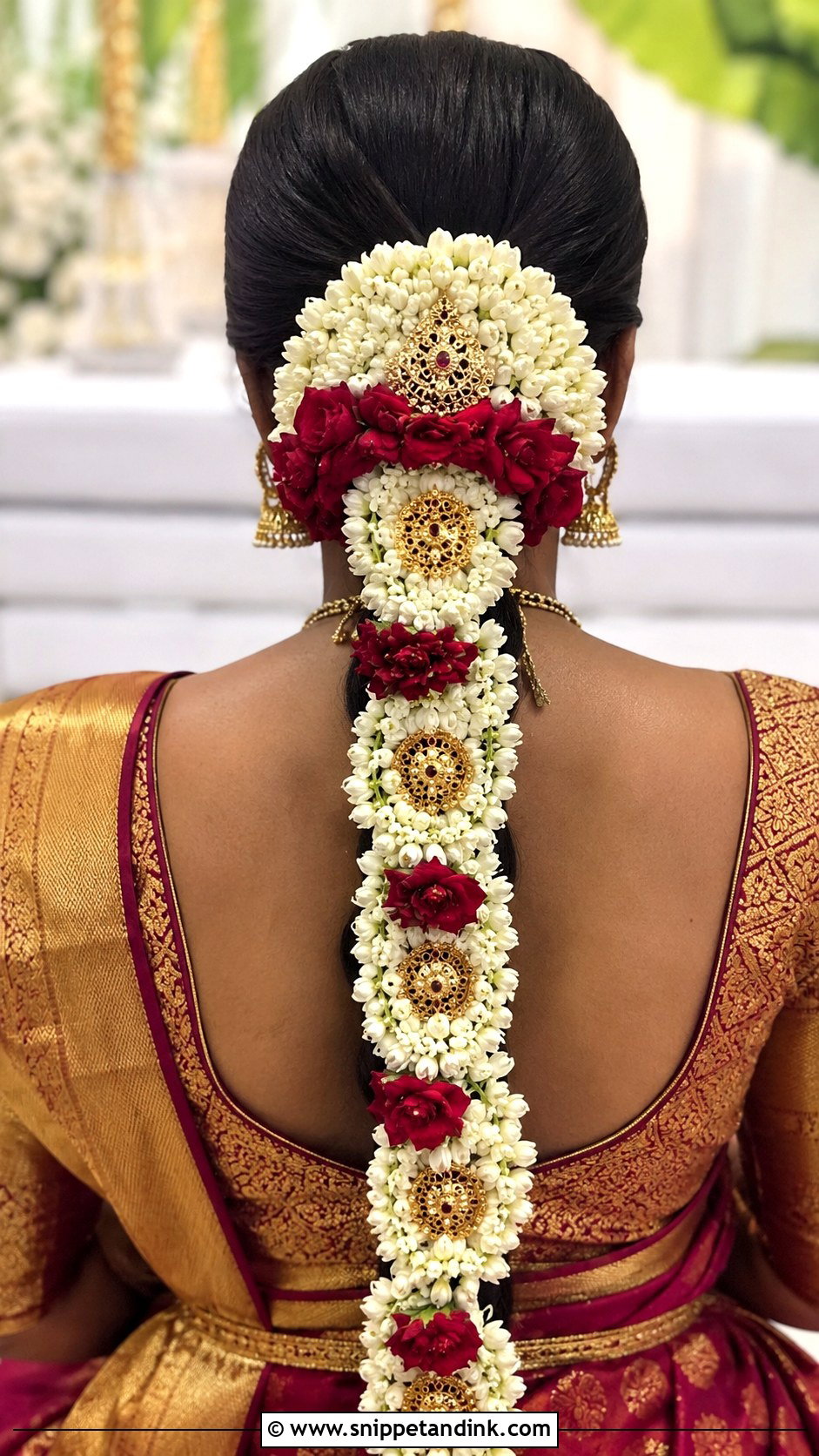
Poola jada turns a long braid into a column of jasmine, roses, gold ornaments and floral discs. It is built for the back view, which is where the ritual photos tend to be taken. Silk sarees, heavy gold and a traditional blouse are its natural partners. Fresh flowers smell wonderful but wilt in heat and add real weight, so for a long, hot day I often suggest artificial flowers, or fresh on top with a lighter fabric base below. Keep the crown smooth or add a small puff for height.
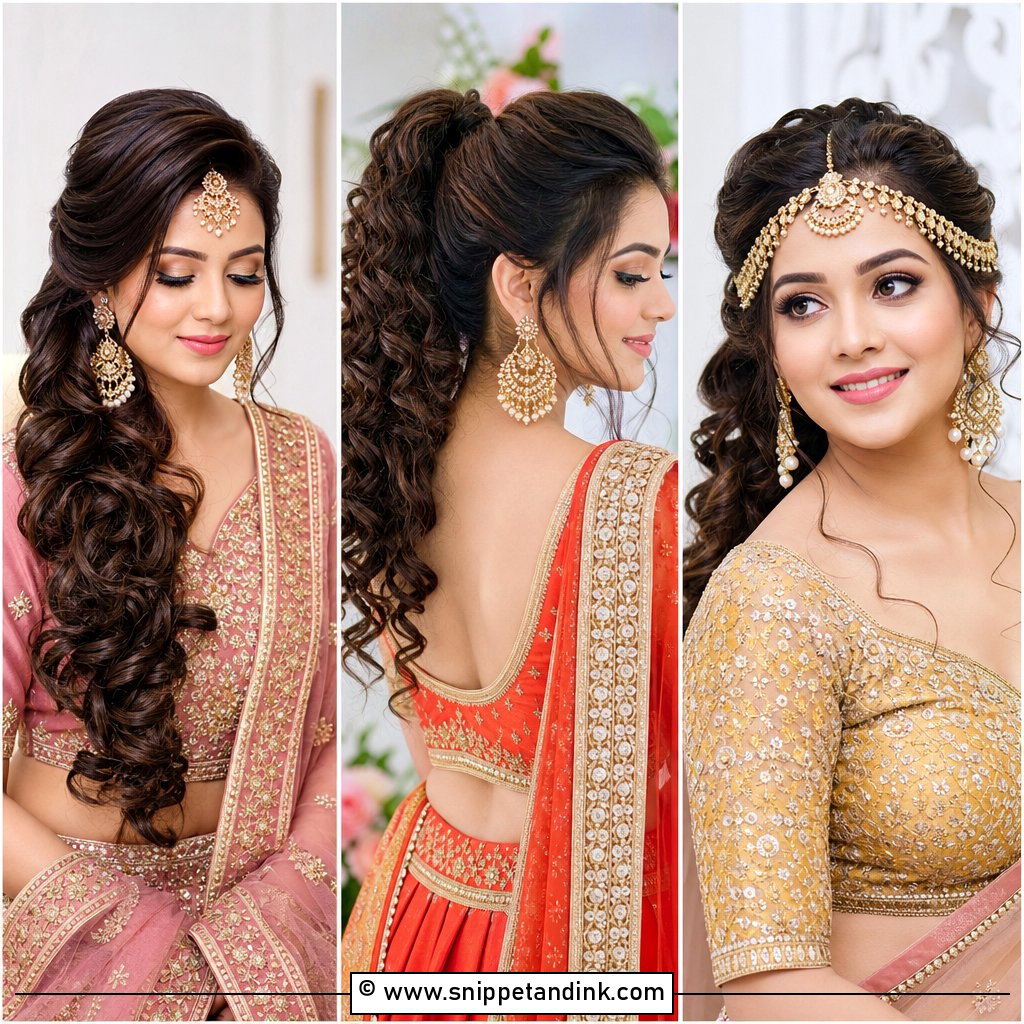
6. Indian Wedding Open Curls With Maang Tikka
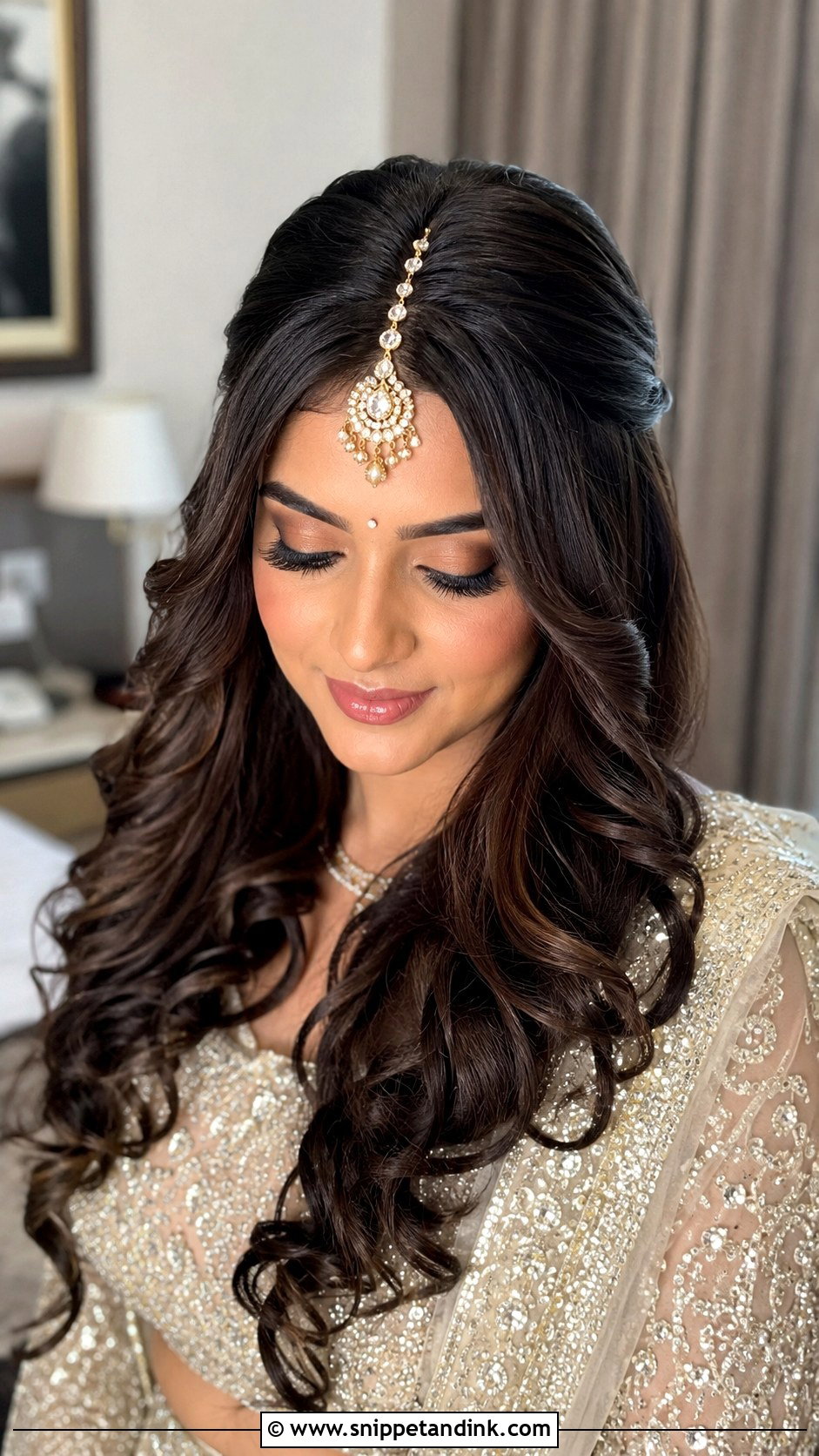
Open curls with a maang tikka suit sisters, bridesmaids and brides who don’t want a tight bun. I curl in loose waves, then part dead center so the tikka hangs straight down the line. The secret is a small backcombed section at the crown that the tikka hook can grip; loose hair alone lets it slide. A strong setting spray, misted from a distance, keeps the curls through dancing. They sit well with lehengas, shararas and reception outfits.
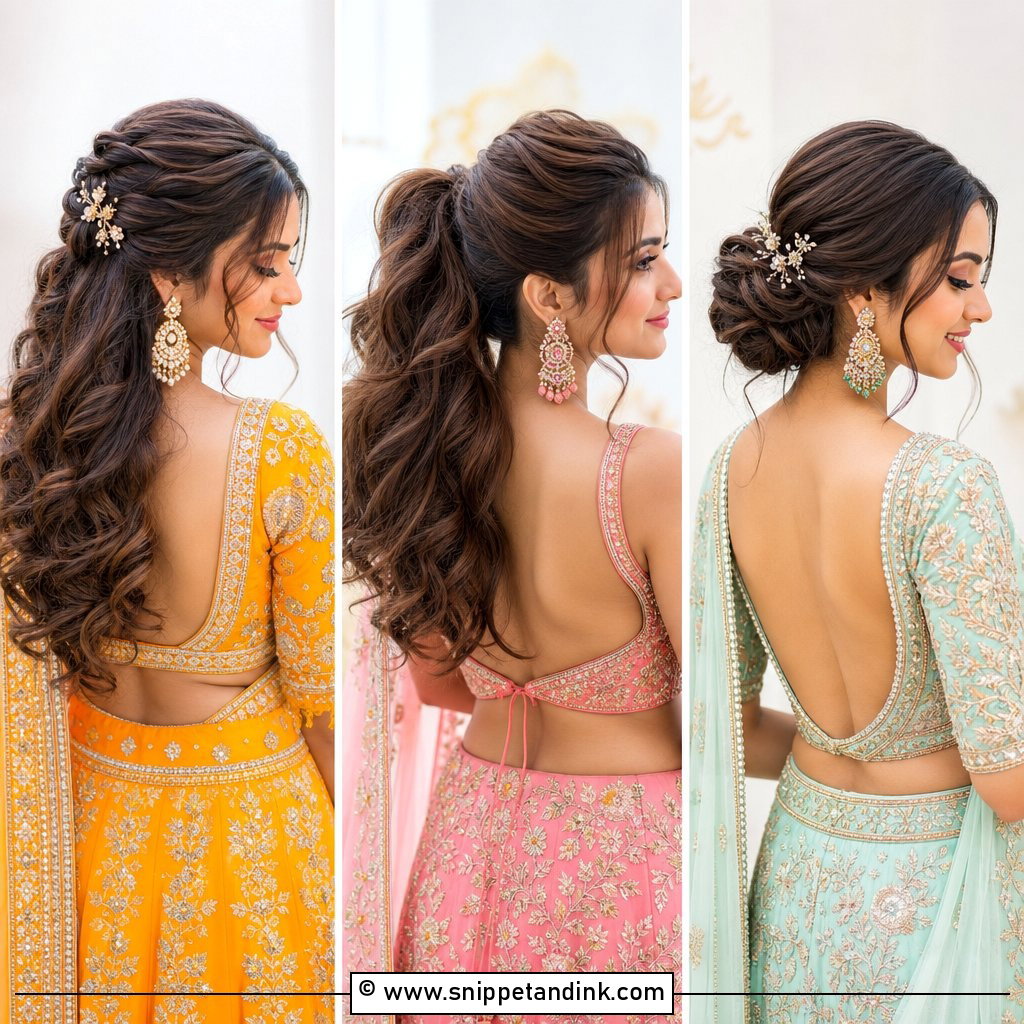
7. Indian Wedding Half Up Half Down Hair
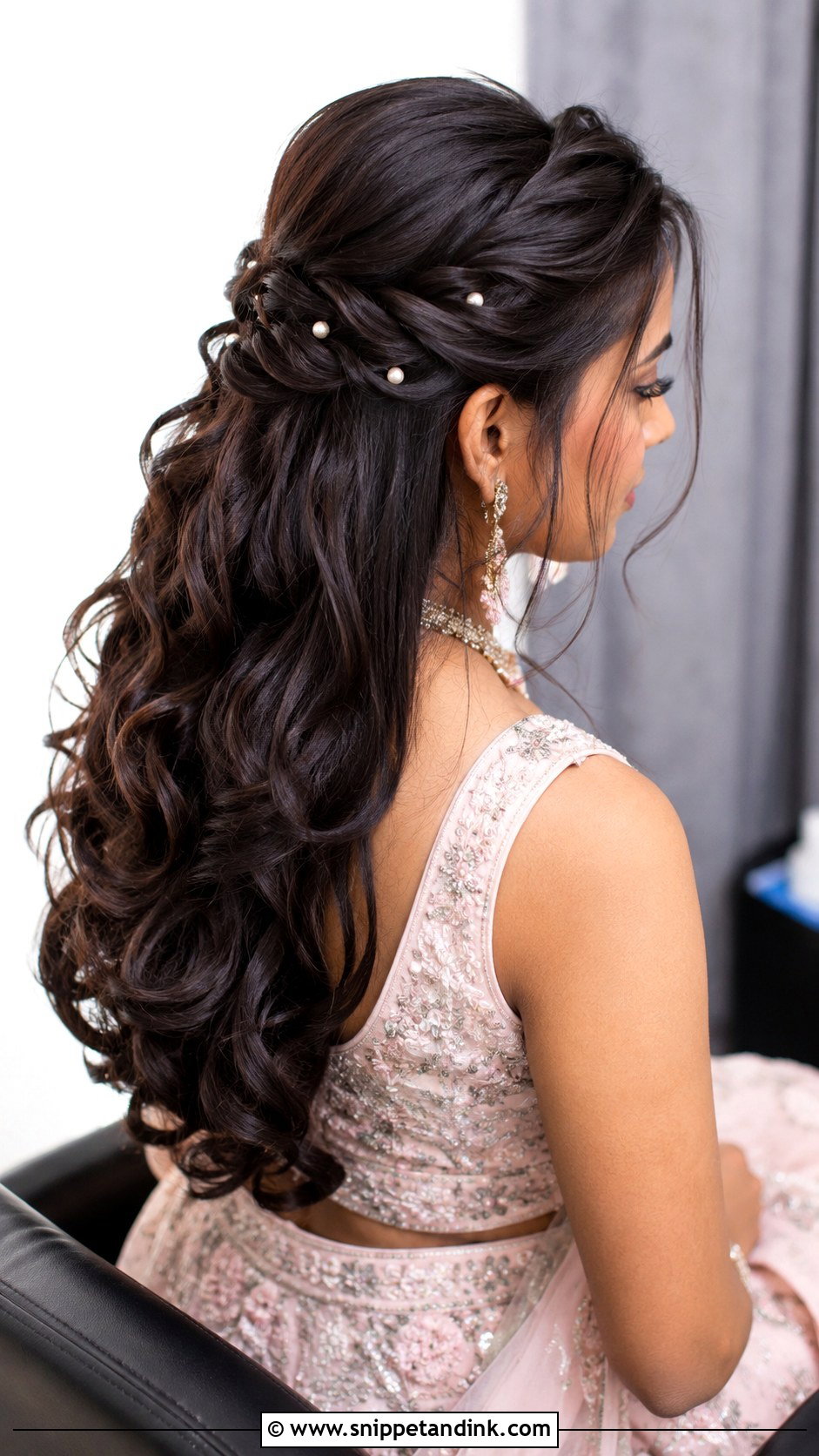
Half up, half down gives open-hair softness with enough pinned structure to hold an accessory. I twist, braid or puff the top section and leave the rest in curls or waves. It suits sangeet, engagement, haldi and the reception, and medium to long hair. Detailed necklines show nicely around the open lengths. A small flower cluster, pearl pins or a fine hair chain finishes it. It is one of the easiest styles to wear for hours, but very fine straight hair tends to slip from the pinned section, so I texturize the roots first.
8. Indian Wedding Side Braid
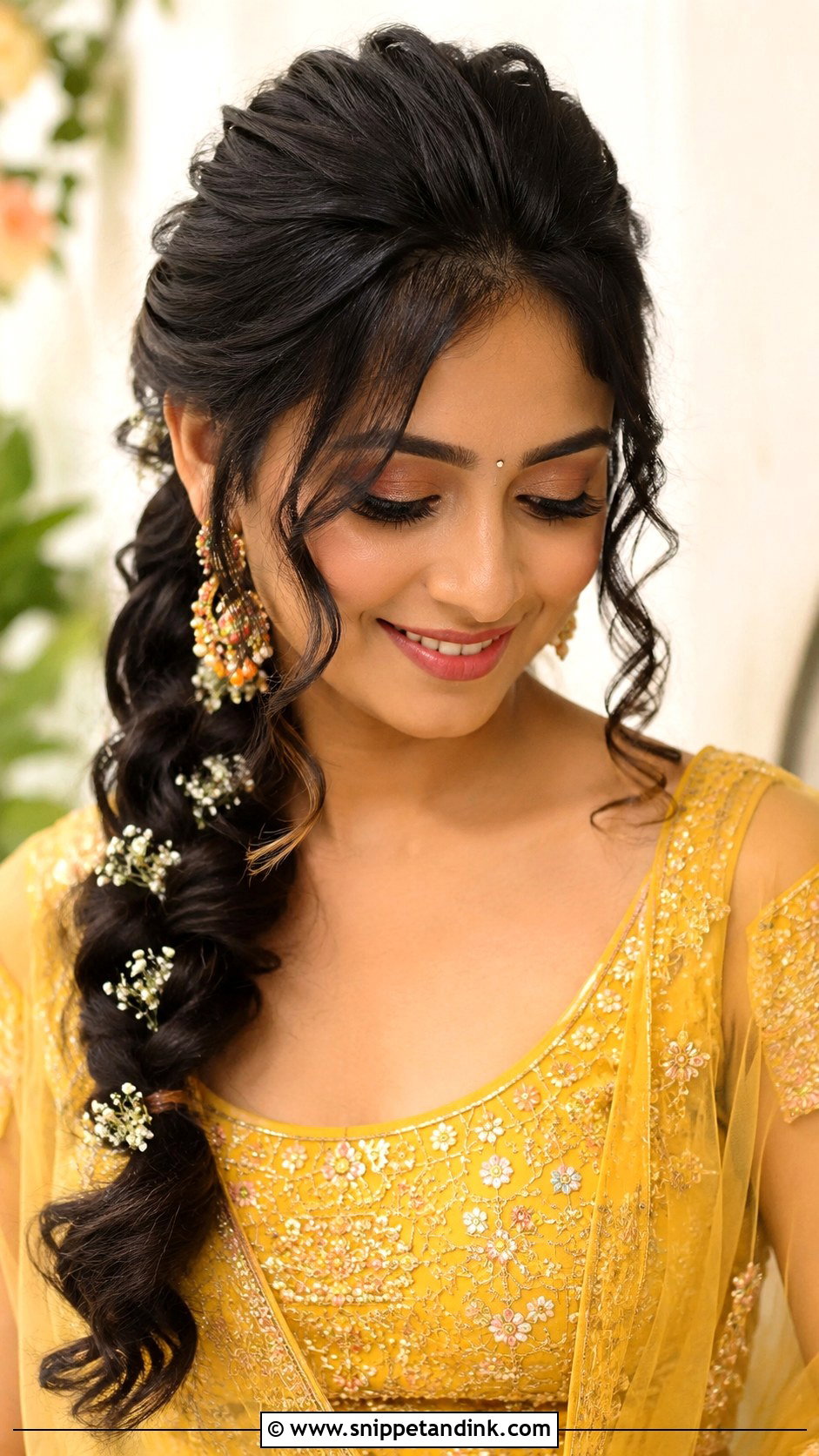
A side braid shows off earrings, the blouse and any hair accessories at once. I make it as a loose three-strand, fishtail, rope or Dutch braid, depending on how much texture the outfit wants, and leave a few curls near the face. It is comfortable enough for mehndi and haldi and still dressy for a guest. Flowers along the braid or a jeweled clip at the end finish it. For haldi, plan for turmeric to land on it.
9. Indian Wedding Fishtail Braid
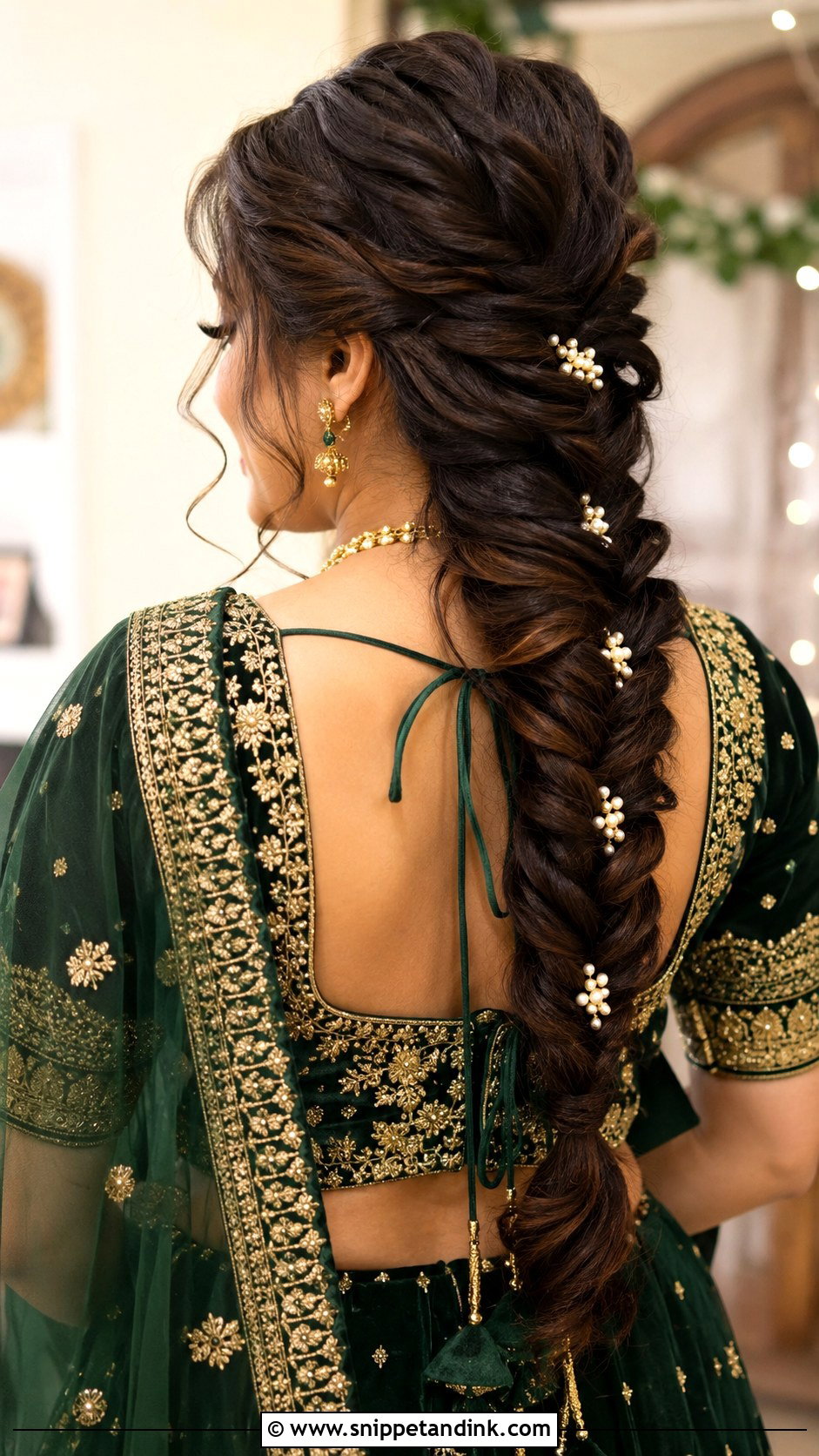
Long hair that isn’t very thick looks fuller in a fishtail than in any other braid, once I pull the edges out a little. The woven pattern holds up in photos from front or back. Wear it down the center, to one side or below a crown puff, with lehengas, sarees, gowns or Indo-western outfits. A decorative paranda at the end adds length and colour. Avoid over-pulling it on fine hair, which leaves gaps you can see the neck through.
10. Indian Wedding Sleek Ponytail
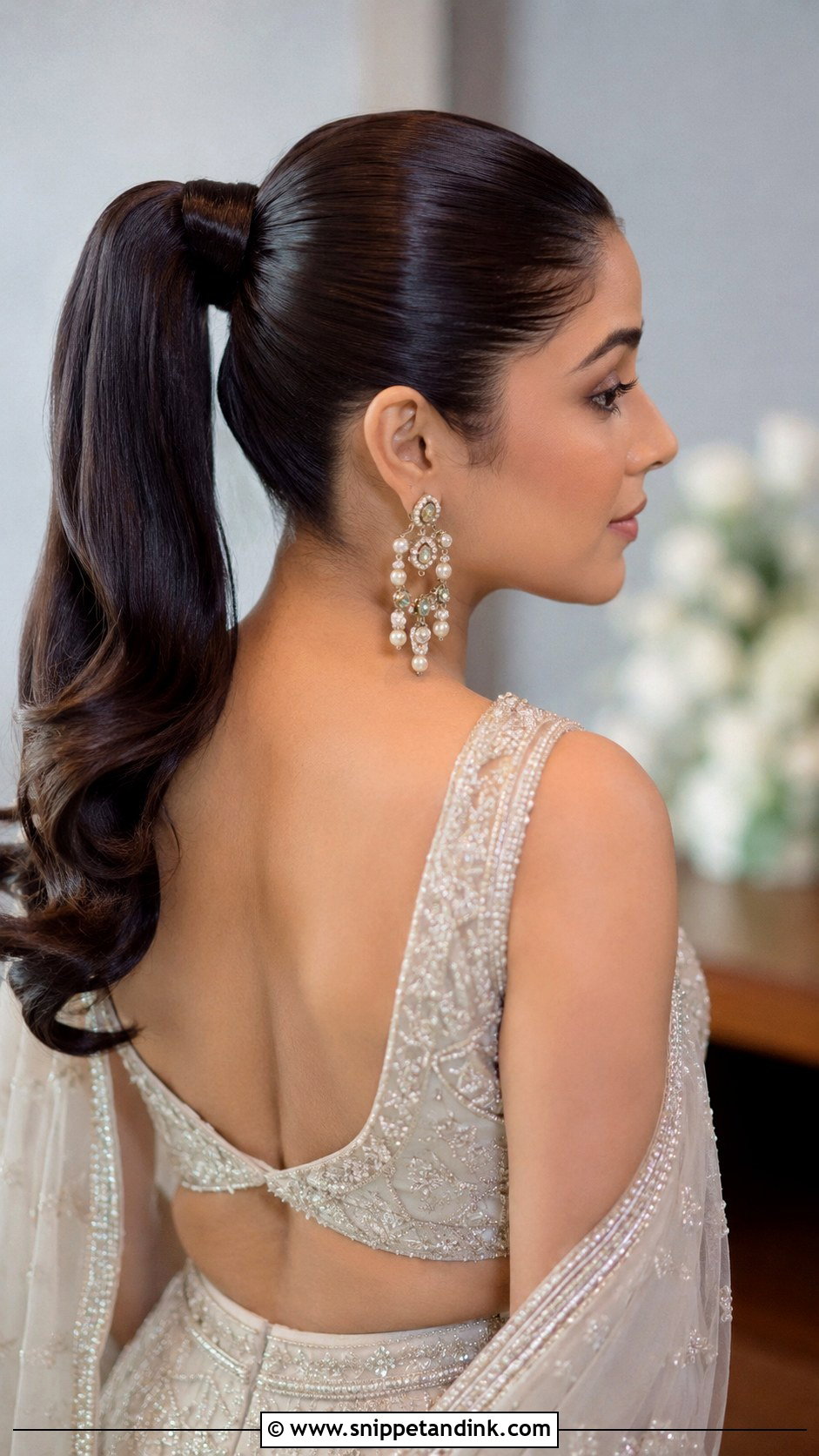
A sleek ponytail lifts the face and shows off statement earrings, and it is my first suggestion for cocktails, receptions and sangeet nights. Part it in the center or sweep it straight back with shine serum, then decide whether the tail is straight, waved or curled at the ends. I wrap a section around the base to hide the elastic and pin it from underneath. Dancing is where it shines, as long as the base is double-banded; one elastic loosens after an hour of movement.
11. Indian Wedding Messy Bun
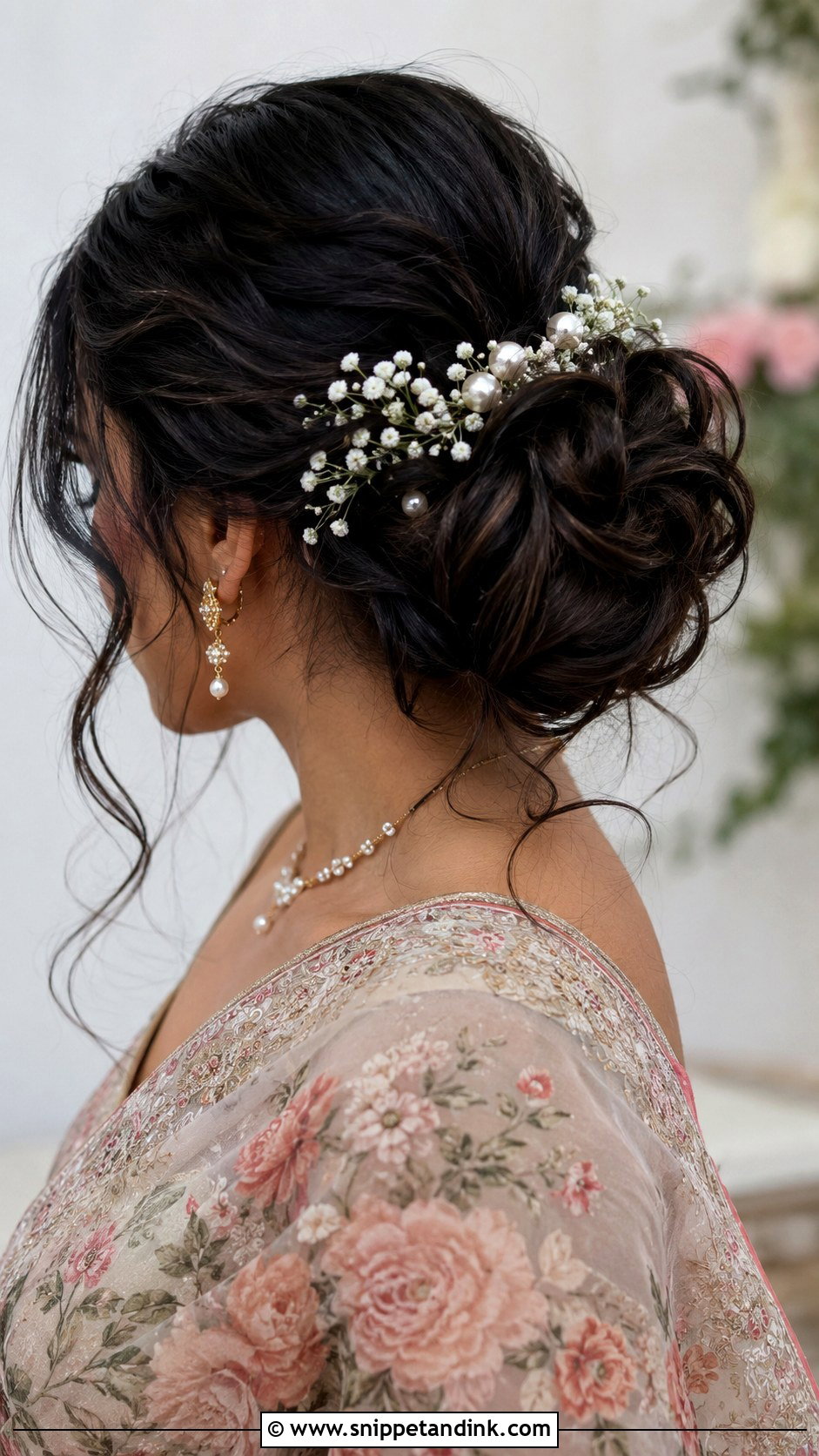
A messy bun is controlled volume with a few loose pieces, and it takes more pins than a neat one. I place it low or slightly higher depending on face shape and jewelry. It goes with pastel lehengas, floral sarees and reception gowns, and bridesmaids or guests can wear it without looking overdressed. Baby’s breath, small roses or pearl pins finish it. Keep the face-framing strands few and smooth, or it reads as hair coming down.
12. Indian Wedding Top Knot Bun
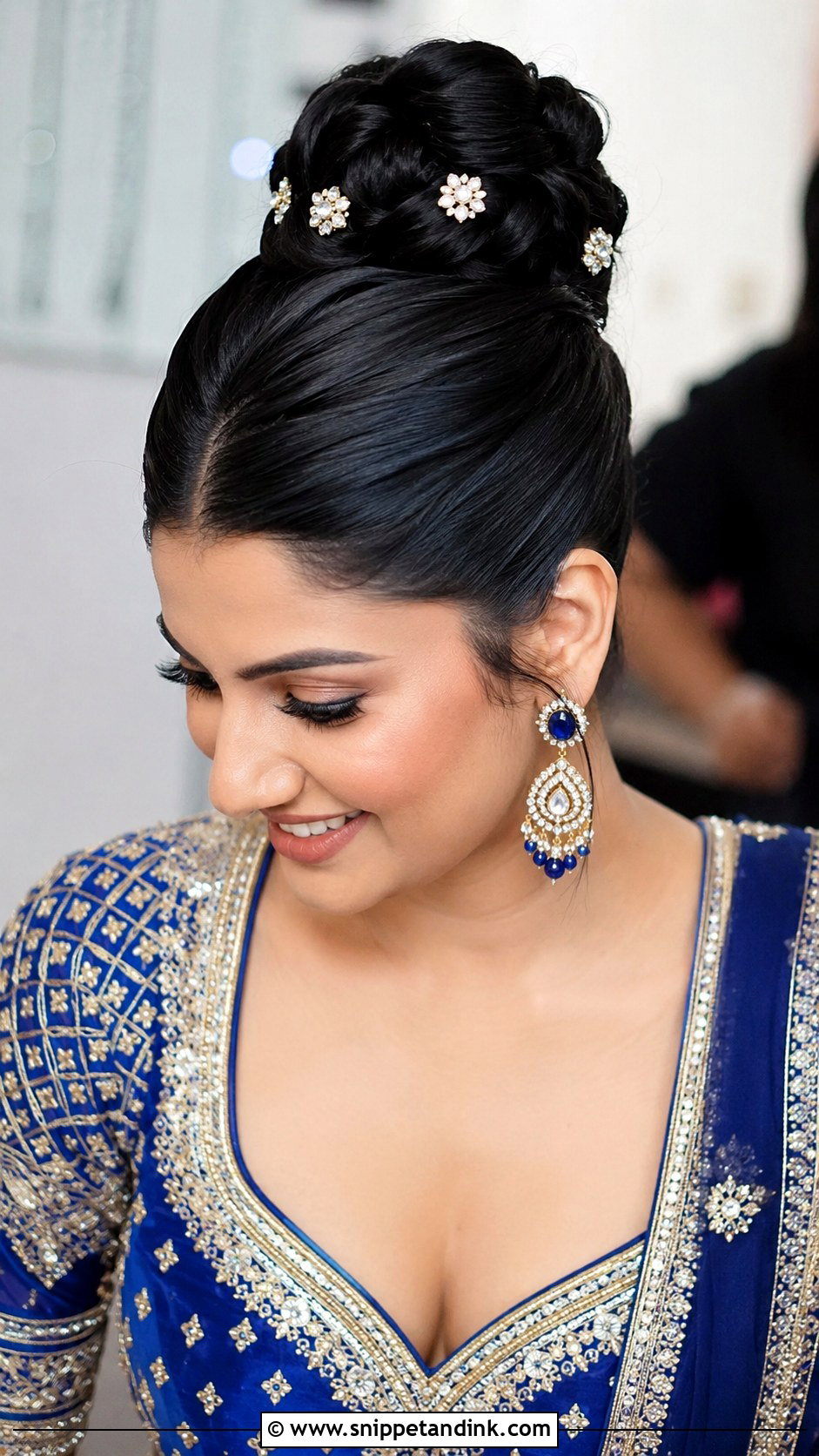
High-neck blouses, cape dupattas and contemporary lehengas look cleaner with a top knot, because nothing gets crushed at the collar. Sitting higher on the head, it lengthens the face and shows the neck and earrings. Sleek reads modern; slightly textured is softer. A matha patti or kundan pins make it ceremonial. Heavy hair can pull at the scalp in a top knot, so I build it around padding and spread the pins rather than stacking them in one spot. In a warm venue it is the coolest option here.
13. Indian Wedding Side Swept Curls
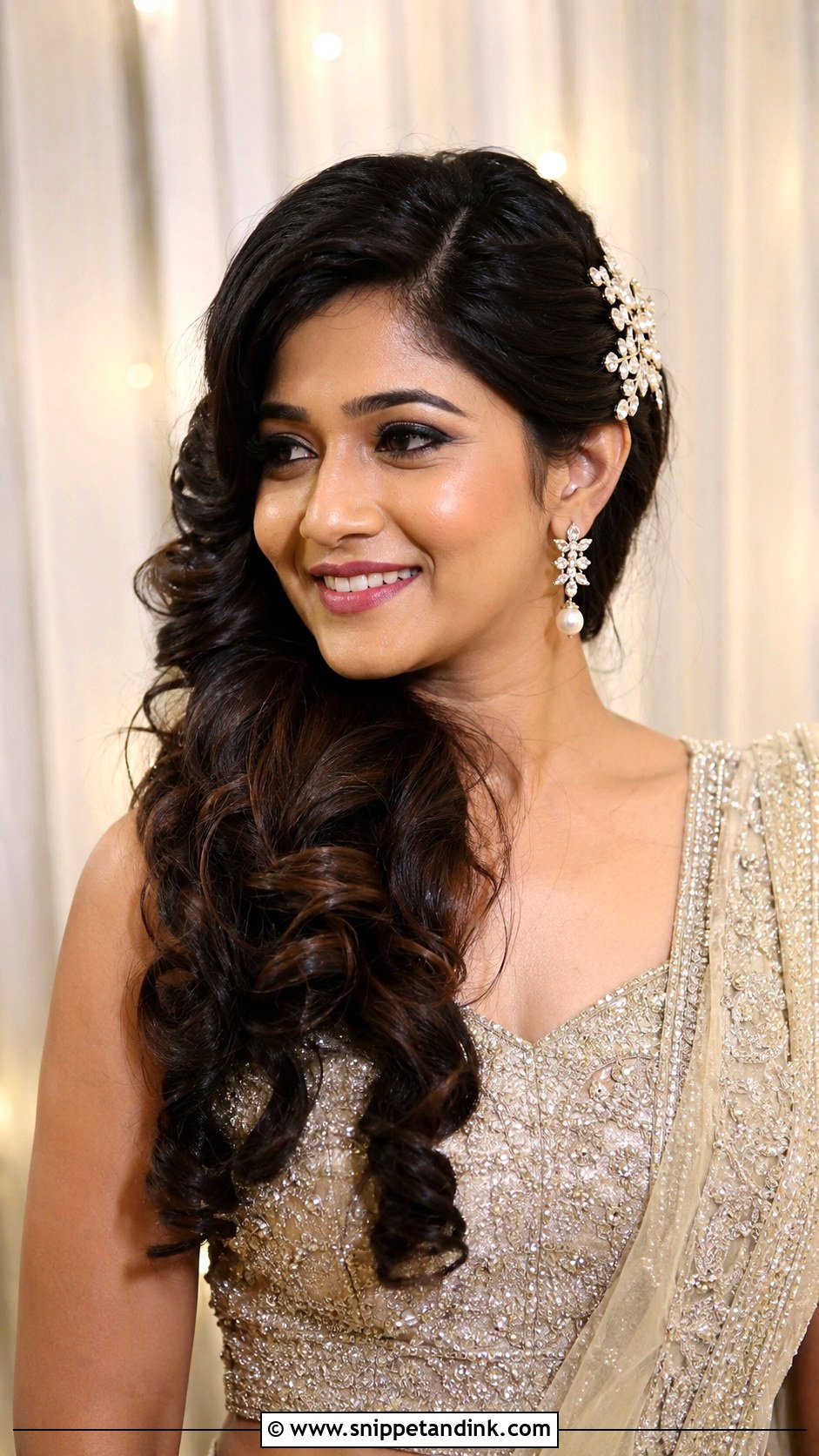
Side swept curls give a red-carpet feel to reception and engagement looks. The hair is curled and gathered over one shoulder, with the far side pinned flat behind the ear using jeweled clips, flowers or pearl accessories. Those pins carry the whole style, so I cross them in an X under the visible accessory. Lehengas, saree gowns and embroidered sarees all suit it. Use a firm spray for definition, since curls on one side get more handling than you expect.
14. Indian Wedding Crown Braid Bun
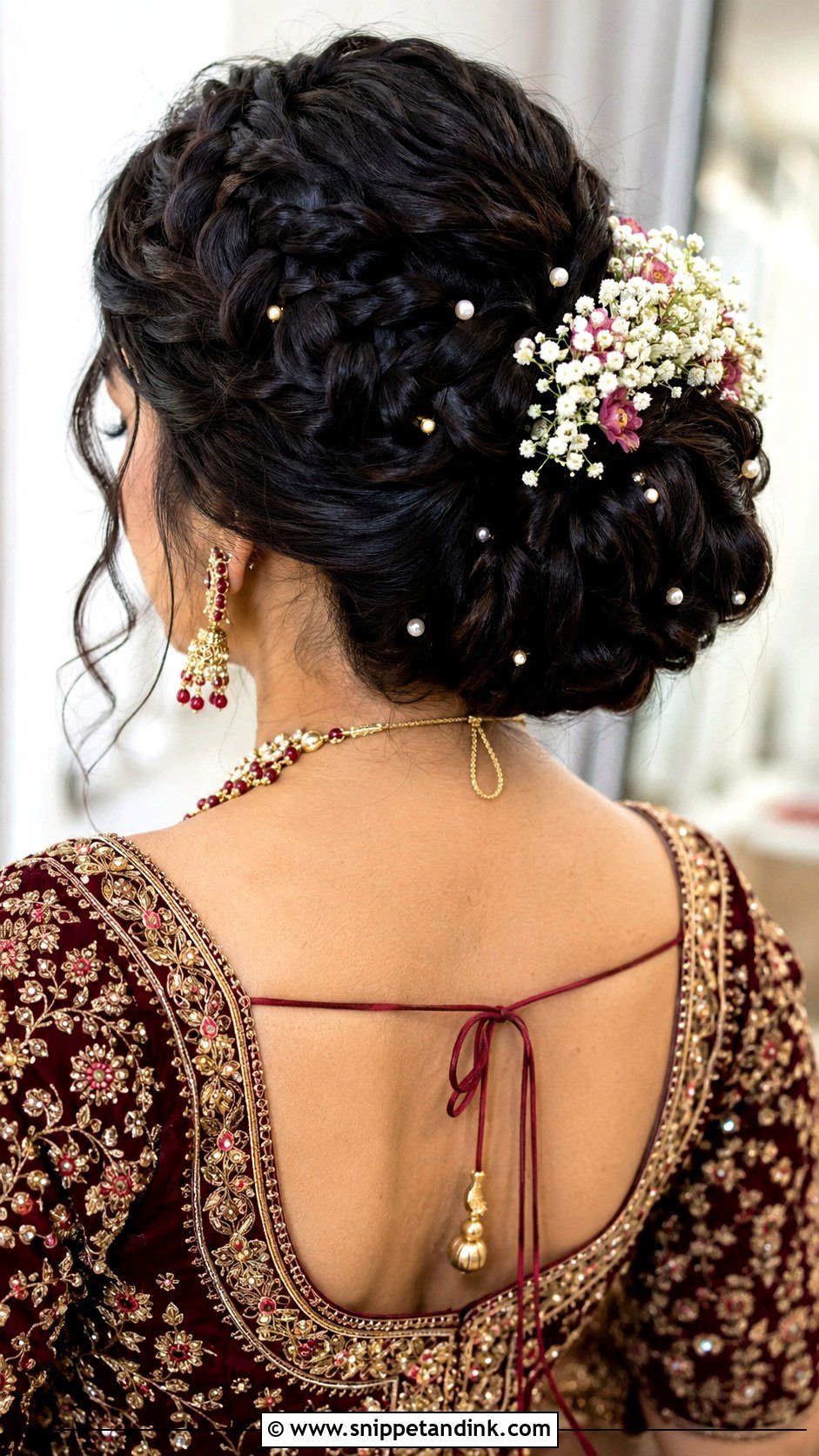
A crown braid bun gives more detail than a plain bun while staying fully secure. The braid wraps around the crown or front hairline, then leads into a low bun at the back, so the shape holds interest from all sides. I braid the crown slightly loose and pin it from underneath, because a tight crown braid presses on the scalp under a dupatta. Flowers on the bun or small pearl pins along the braid finish it. Keep the front smooth and even.
15. Indian Wedding Long Waves
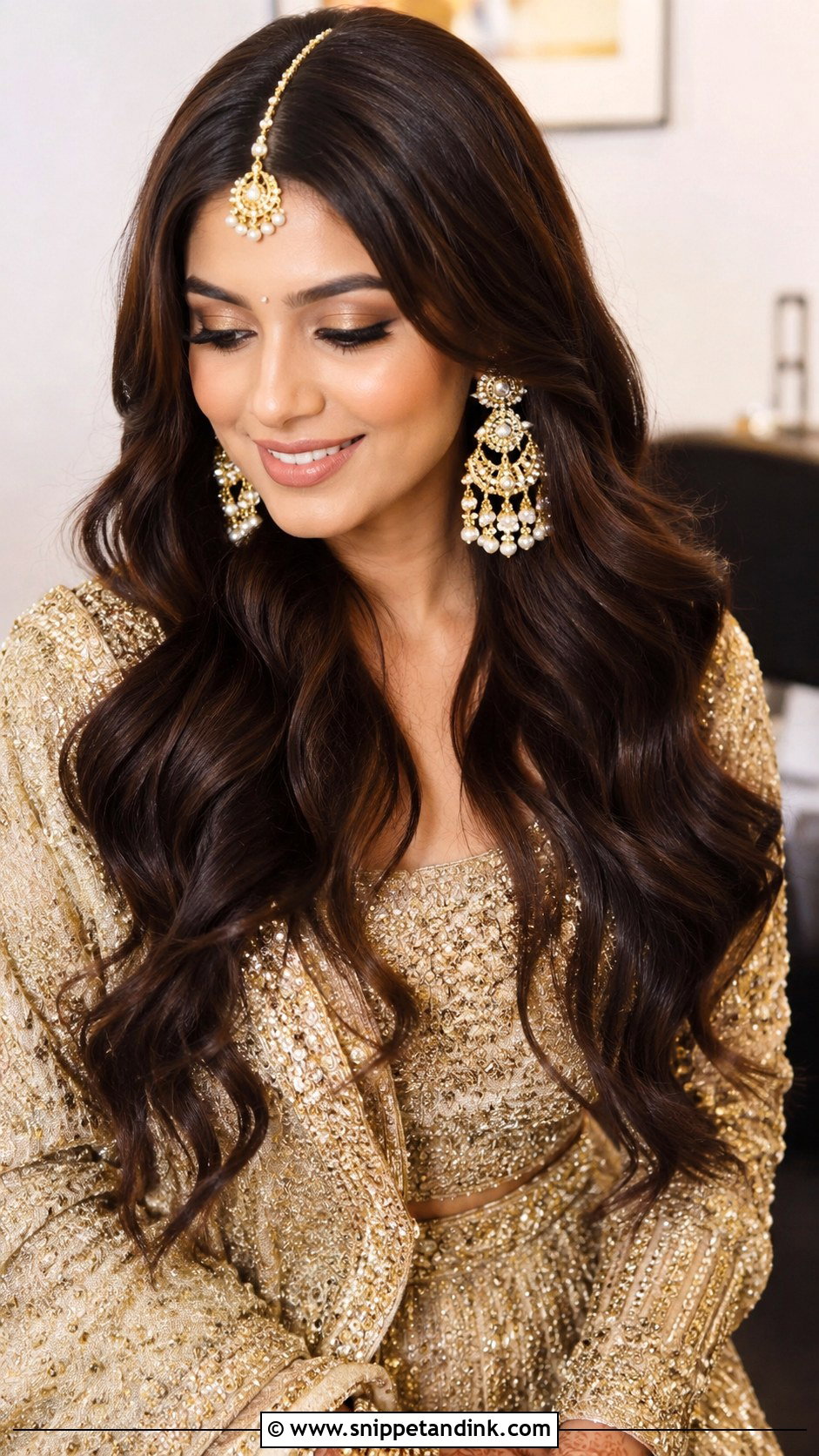
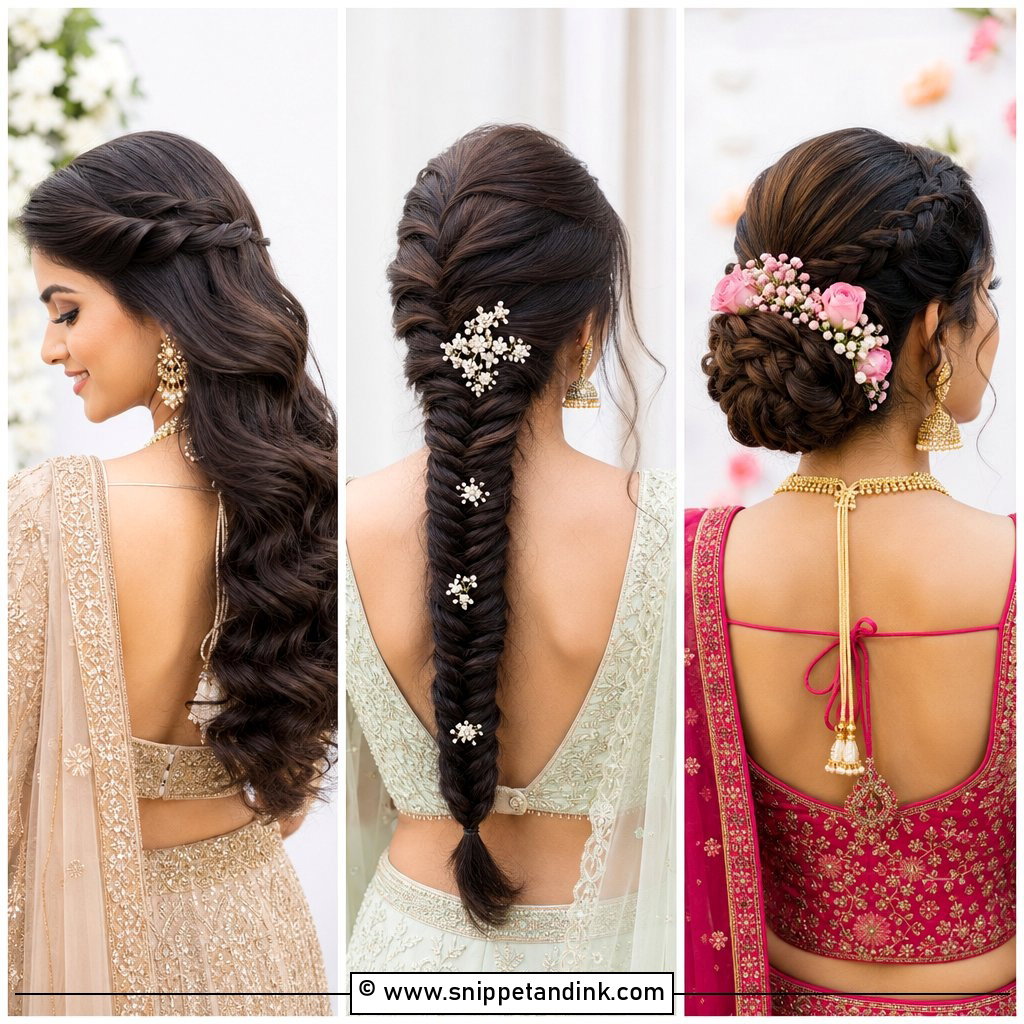
Long waves are a simple choice for receptions, roka ceremonies and sangeet nights. They add shine and movement without hiding the outfit, with lehengas, saree gowns, shararas or lighter guest outfits. A center part feels traditional; a side part feels glamorous. A maang tikka, hair chain or crystal pins add sparkle if you want it. For hold, I prep with mousse, curl in small sections, pin each to cool, then brush the waves out once they are completely cold.
Hair Recovery Between Four Days of Functions
Indian weddings often run for several days, and hair styled every day with heat, spray and pins suffers by the last function. A little care each night keeps it workable.
- Take pins out slowly, one by one, before brushing anything. Pulling a bun apart while pins are in snaps hair.
- Brush out spray starting at the ends and working up, with a wide-tooth comb.
- Wash out heavy spray and product build-up before the next set of curls; curling over old spray gives frizz and a dull finish.
- Sleep in a loose braid on a silk or satin pillowcase.
- Alternate: a braid or bun on the day after a curled look gives your hair a break from heat.
If your scalp is sore from pins, choose a soft half-up or open style for the next function. Pins pushed into an already tender scalp make the headache worse by evening.
Tell your stylist which day carries the most important photos. I keep the strongest heat and the heaviest hold for that function, and go gentler on the days around it, so the hair still has shine left when it matters.
Main Ceremony Secure, Evening Functions Loose
Traditional or modern, simple or dramatic, your hairstyle should support the outfit, the jewelry, your comfort and the schedule. For the main ceremony, a gajra bun or South Indian braid holds best; curls, ponytails and half-up styles belong to sangeet, reception and engagement evenings. Heavy jewelry or a dupatta calls for a secure bun or braid; a lighter outfit can take open waves or side curls. Test the style before the wedding with the real accessories, and keep the one that still feels like you at the end of the trial.
You'll Like These Ideas:





Leave a Reply