
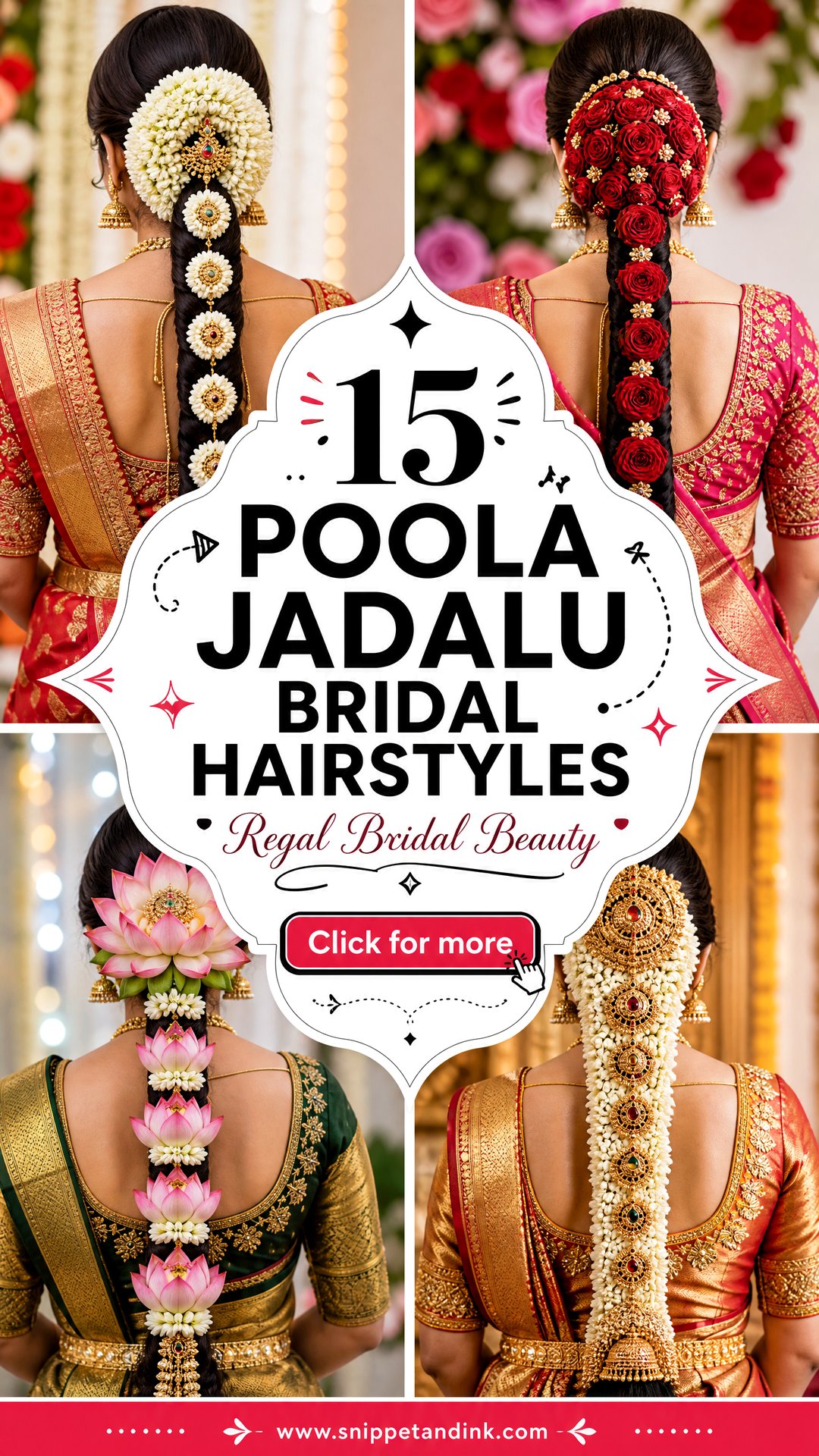
A poola jada turns one plait into the centrepiece of a South Indian bride’s back view, and it’s the part of the look I spend the most time engineering. The braid ties the saree, the temple jewellery and the flowers into a single line that the camera follows from crown to hem. Brides now ask for everything from classic jasmine poola jada to gold jada billalu, rose patterns, pearls and pastel blooms. Which one is right depends on your saree colour, your real hair length, what time the muhurtham falls and how much weight you can comfortably carry for hours.
Stringing Day: Timing the Flowers So They Open on Cue
The jada is only as fresh as the flowers on it, and timing is where most problems start. I talk to the flower maker as early as I talk to the bride.
- Ask for jasmine strung as tight buds, not open flowers. Buds open over several hours, so tight strings made for a morning muhurtham will be at their best through the ceremony.
- If the jada is made the night before, it should be wrapped in a damp cotton cloth and kept somewhere cool. Sealed plastic traps moisture, and jasmine browns where it sweats.
- Have the backing made to your measured length from crown to where you want the tip to fall. I measure with the bride seated as well as standing, because the saree drape changes where the braid lands.
- Plan a second, lighter string for the reception. Flowers that have been on your head since dawn will look tired by evening.
Do a weight trial
At the hair trial I ask for a sample section of flowers on the actual backing, not a photo. Wearing even a short piece for an hour tells you whether a full gold and rose jada is realistic, or whether pearls and jasmine will be kinder to your neck.
1. Traditional Poola Jada Bridal Hairstyle
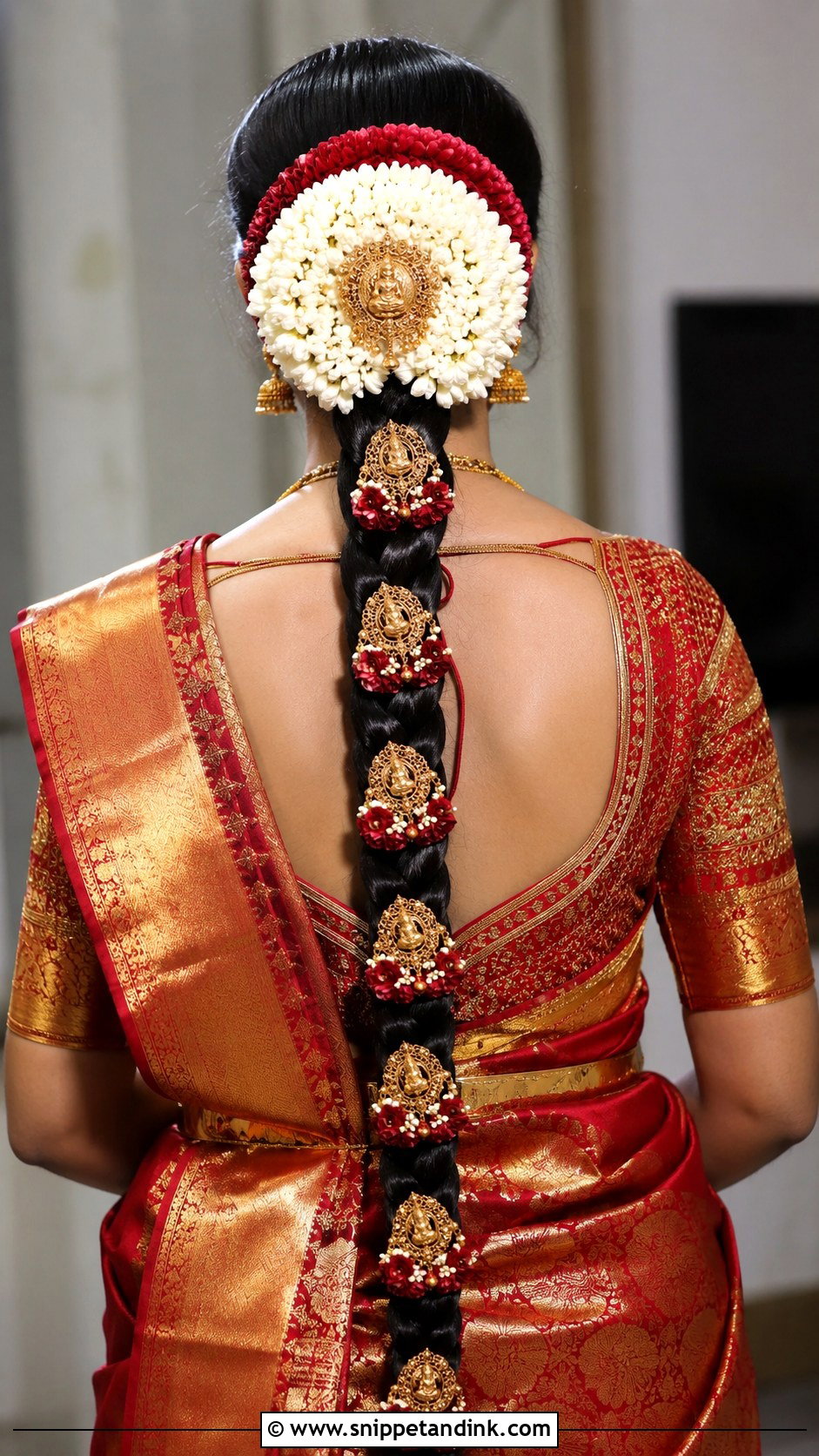
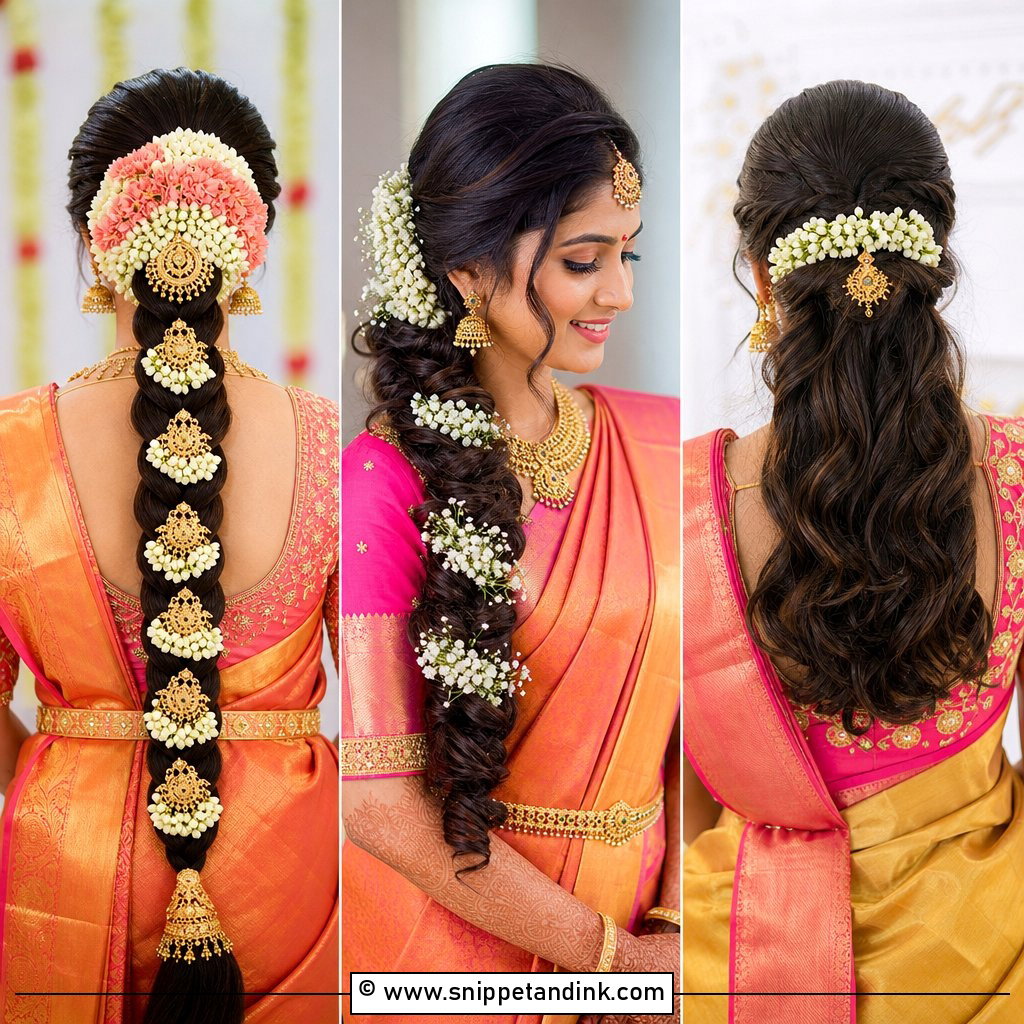
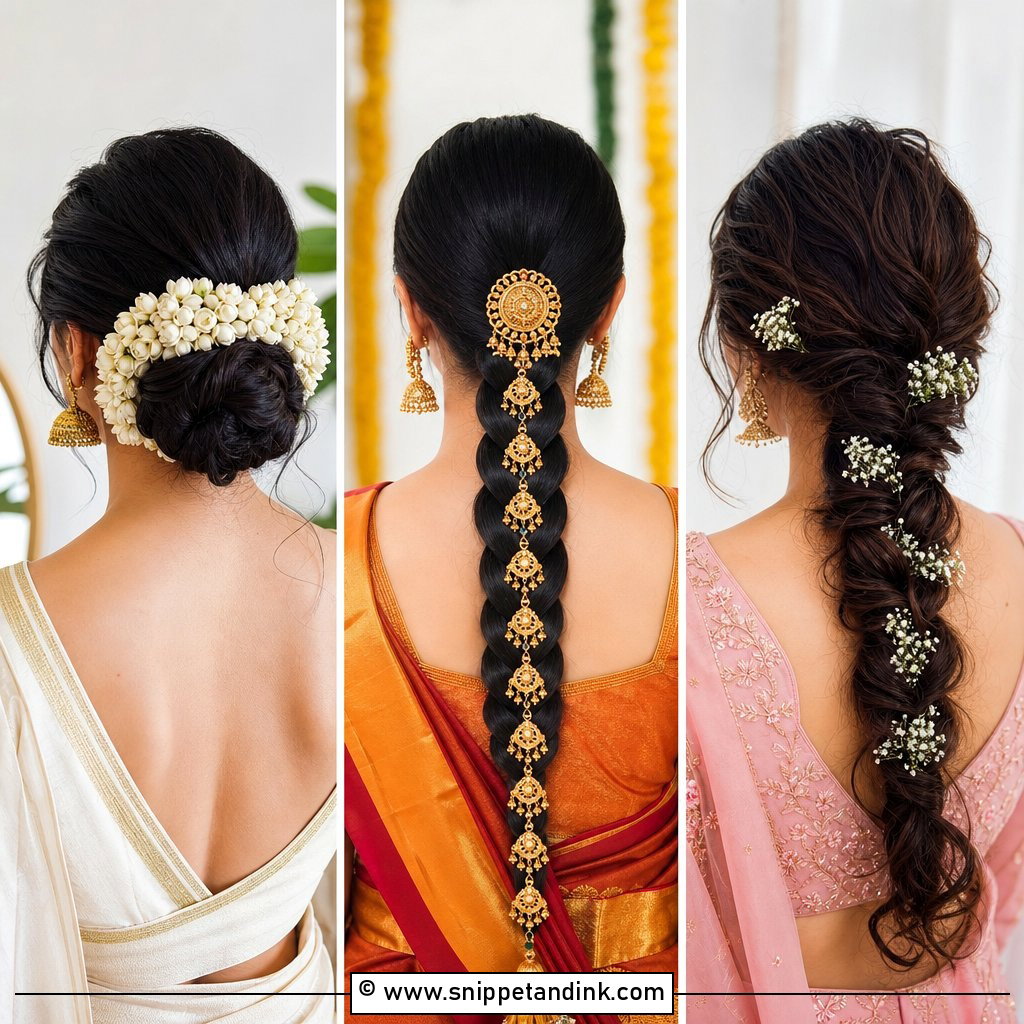
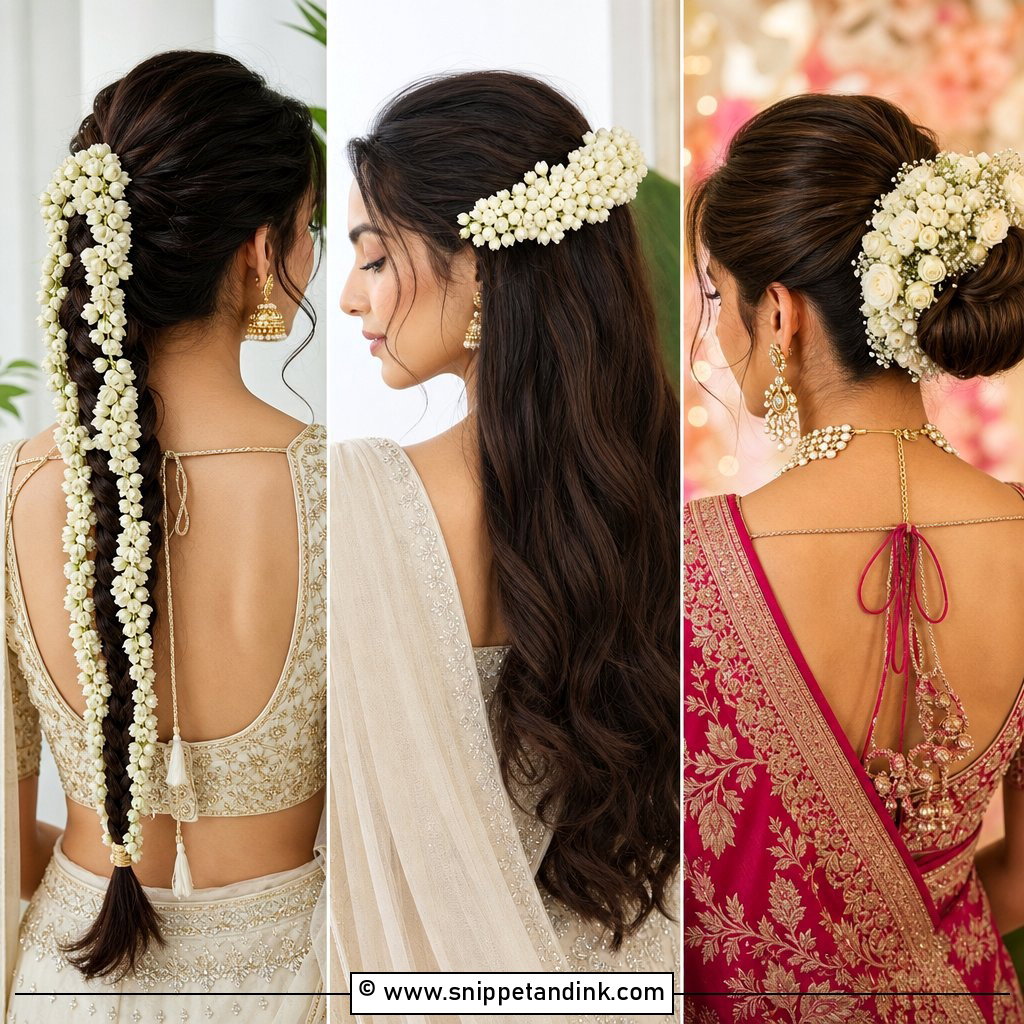
This is the version I’m asked for most. I part the hair cleanly, smooth the crown, and braid one long, firm plait, usually over a small base bun so the flowers have something solid to anchor to. Jasmine, roses and gold pieces then run down the length. It sits naturally with Kanjeevaram silk, temple jewelry, matha patti and layered necklaces. Medium-length hair needs an extension braided in from about the nape so the jada reaches the waist. I keep the crown secure but not scraped back, because the forehead jewellery already presses there.
2. Jasmine Poola Jada Bridal Hairstyle
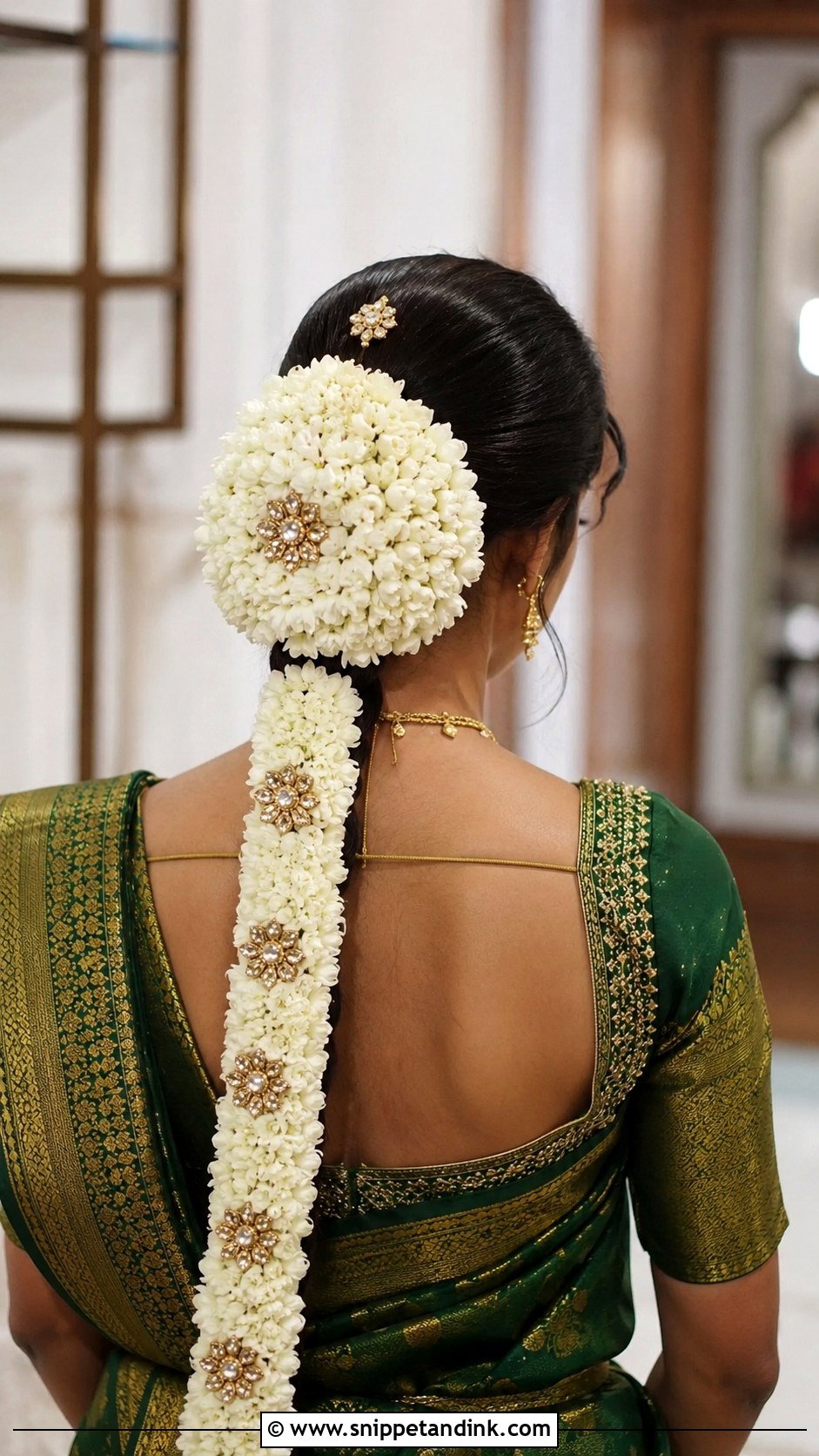
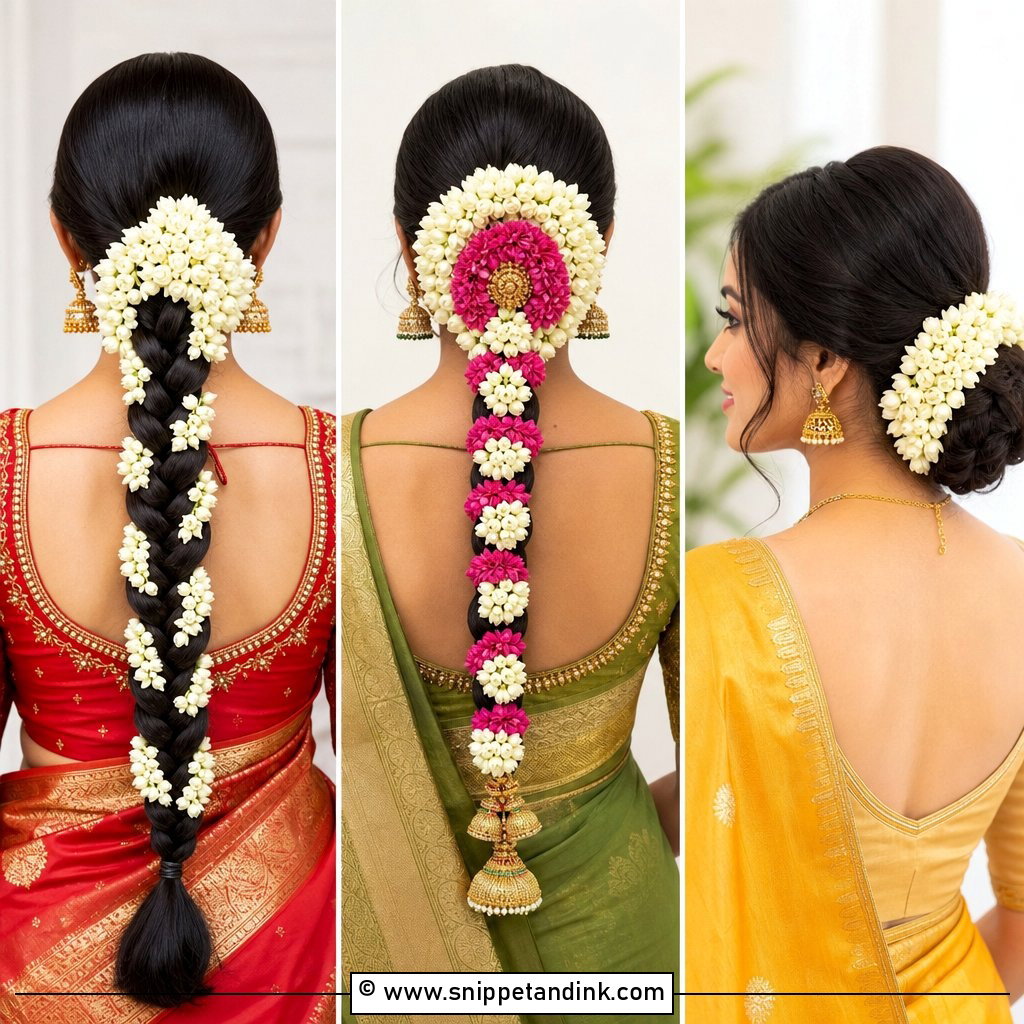
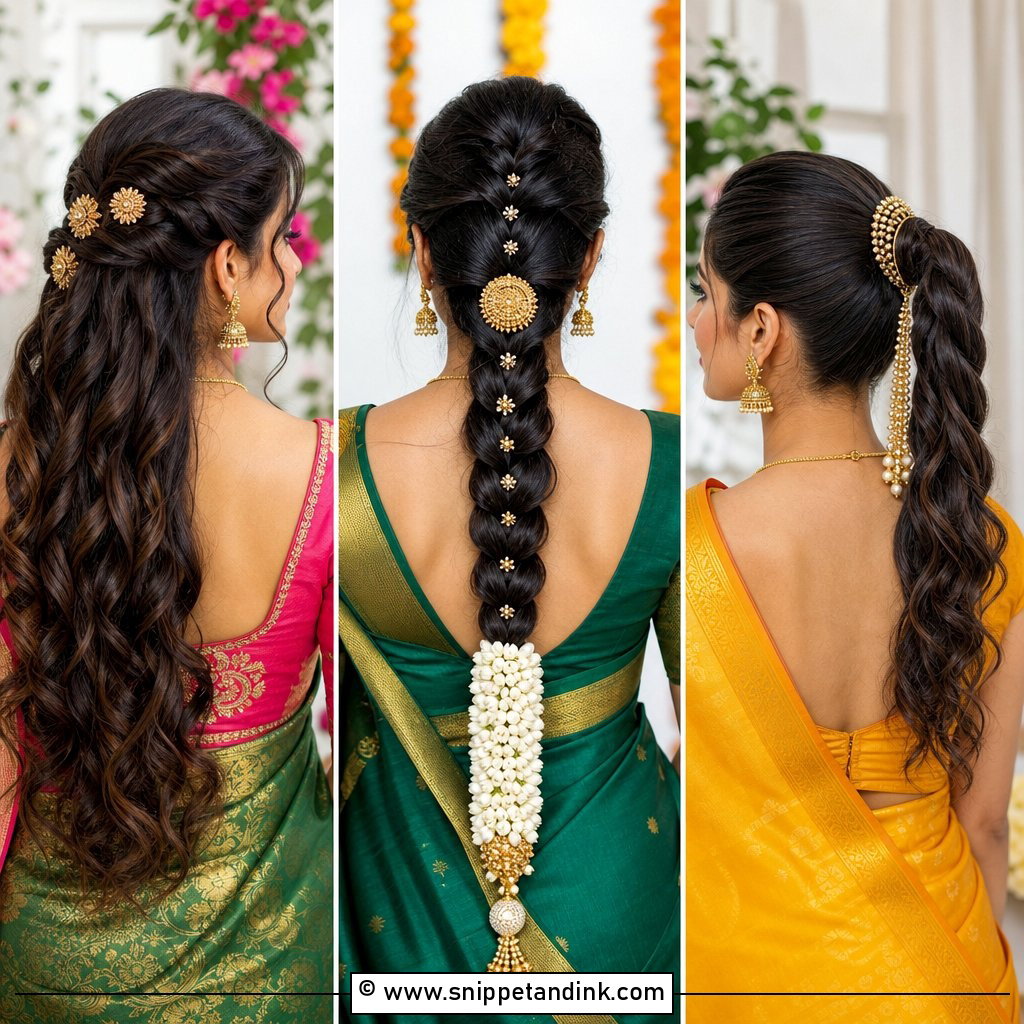
Jasmine is the scent most brides remember from their wedding, and white against black hair is about the cleanest contrast you can get. The usual build is a rounded jasmine bun at the top with a dense trail down the braid. It works with red, green, gold, pink or ivory silk. My one warning: strung buds open and soften over a few hours, so for a morning muhurtham I ask for the string to be made with tight buds, which will be fully open by the time photos start. Pin it close to the plait every few inches, or the heavy trail swings and tugs at the crown.
3. Rose Poola Jada Bridal Hairstyle
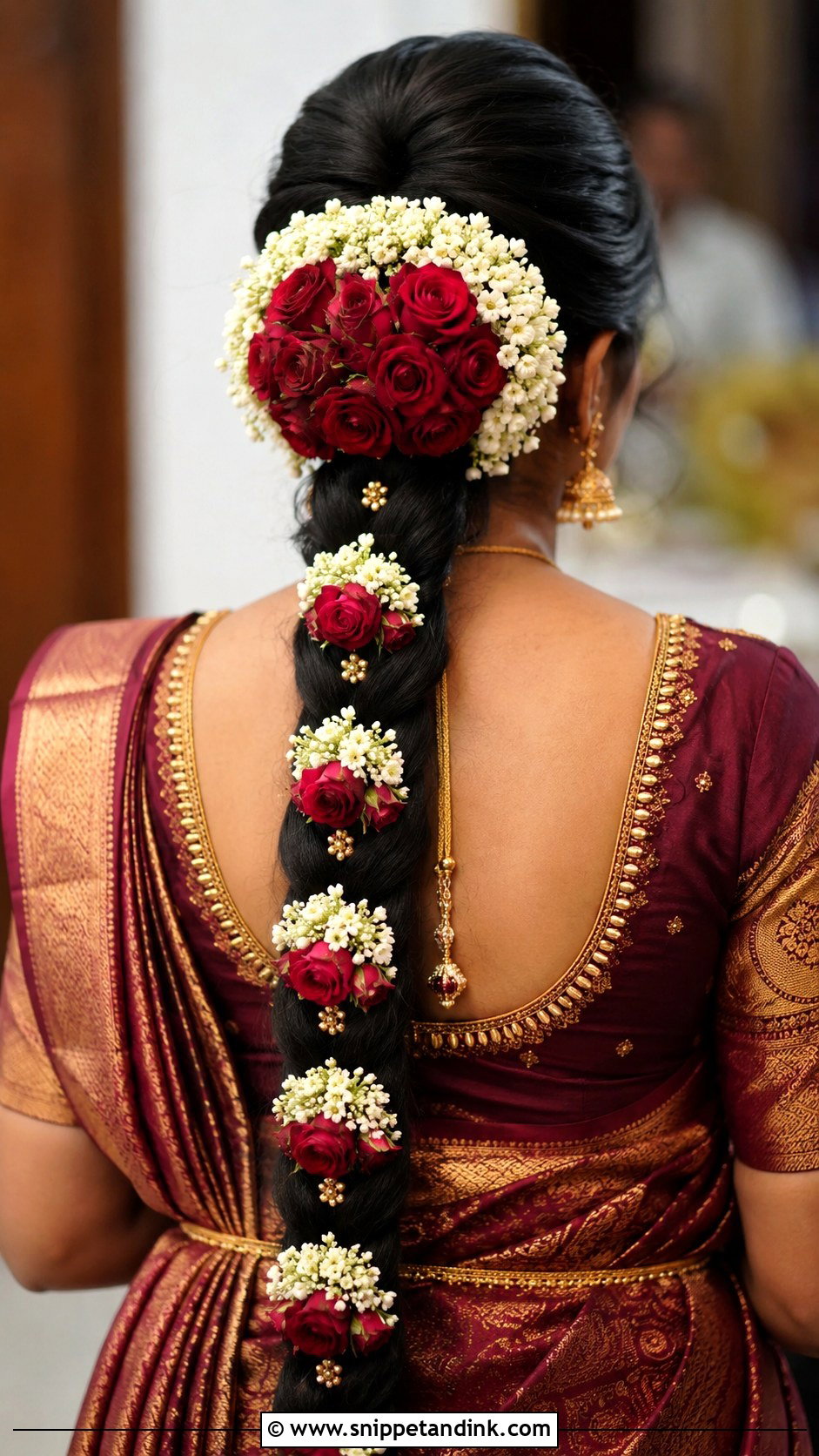
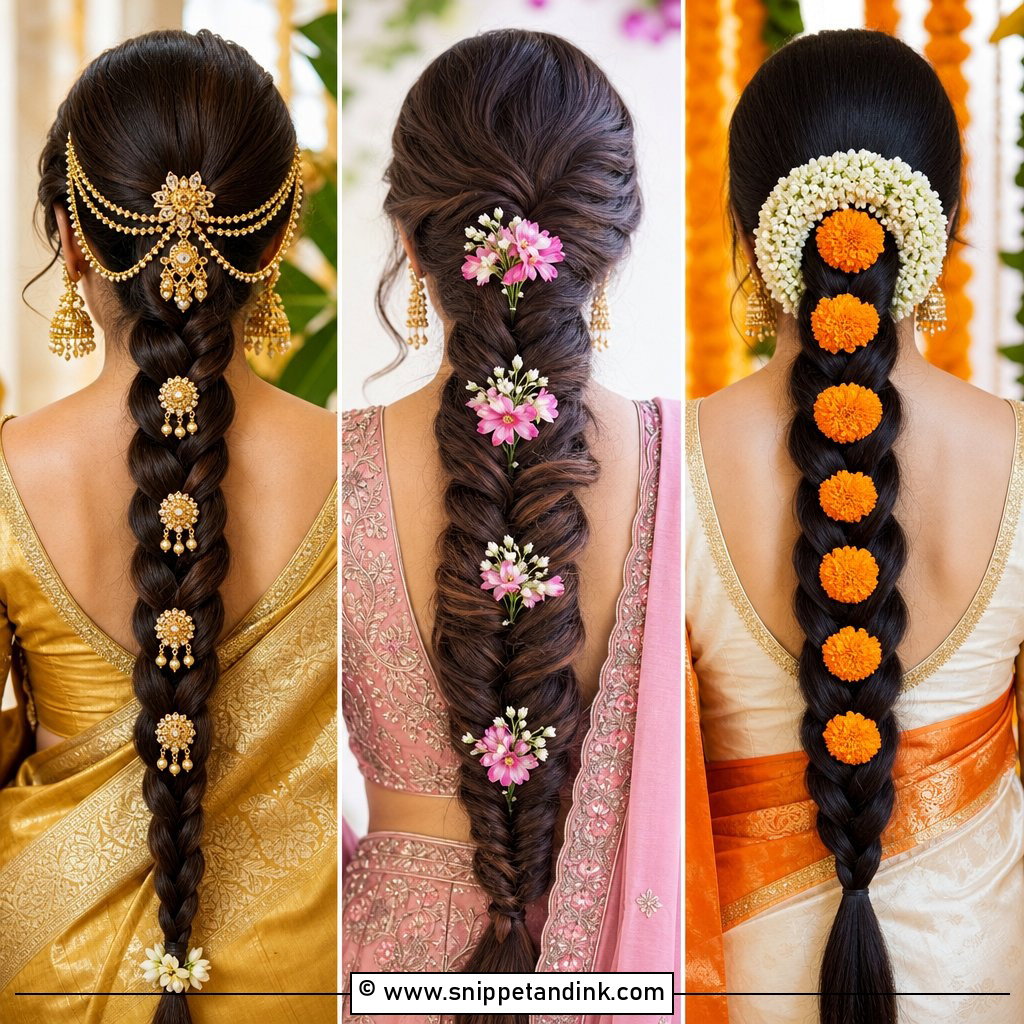
Roses give the braid colour and weight in equal measure. Red suits maroon, gold or green silk; soft pink sits better on a pastel saree. They can be arranged as small clusters, flat circular discs or one continuous trail. Rose heads are much heavier than jasmine, so I’d keep them to the upper two thirds of a braid on fine hair and let jasmine take over lower down. Matching the roses to the varmala garland is a quiet detail guests notice, and gold jewellery keeps flowers and ornaments feeling like one look.
4. Gold Jada Billalu Poola Jada Bridal Hairstyle
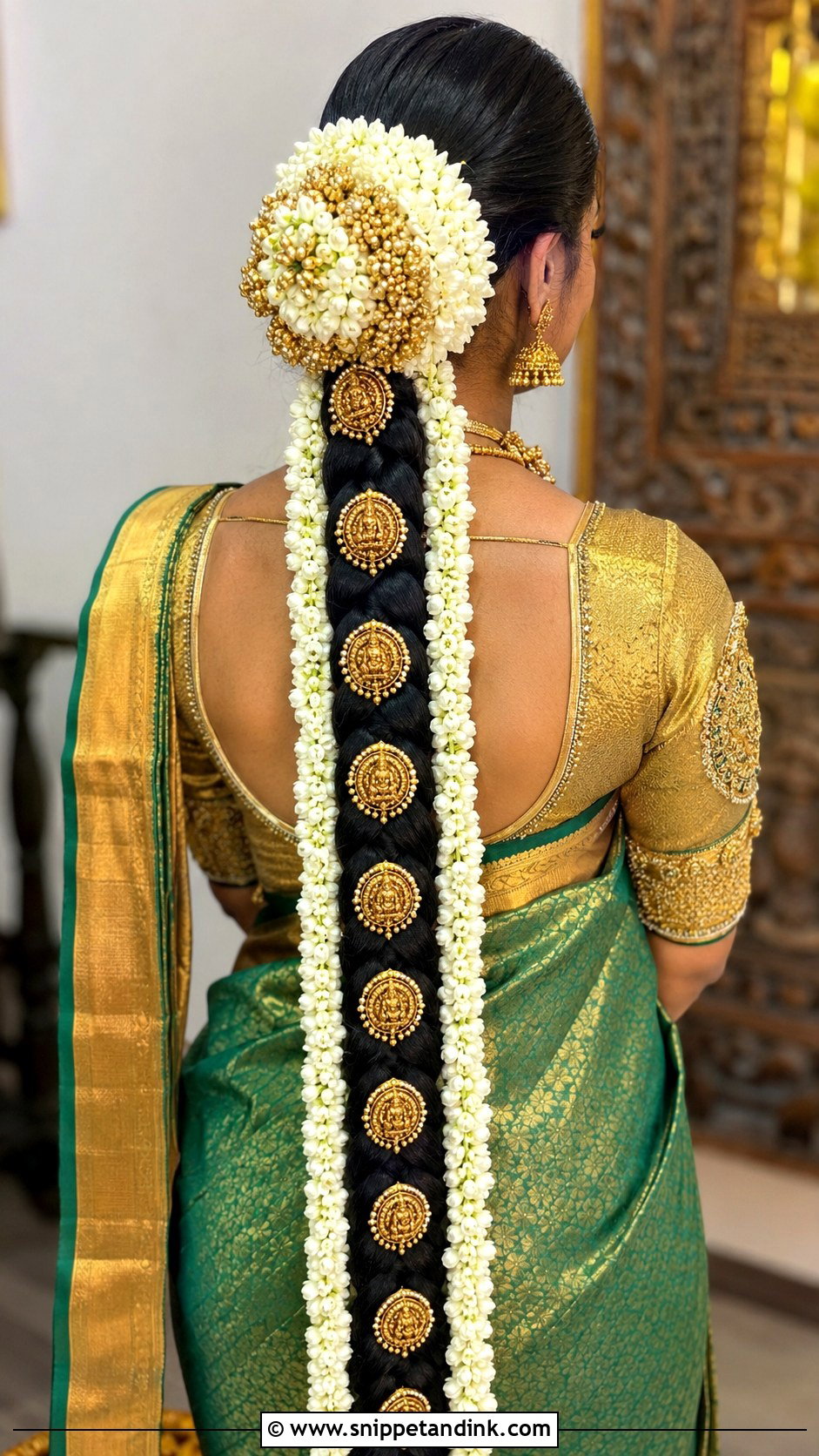
A gold jada billalu poola jada gives the full temple finish: round gold discs spaced evenly from crown to tip, softened with jasmine or roses in between. It belongs with heavy silk, antique gold, a vaddanam and traditional makeup. The discs also give the braid a rigid spine, so it looks longer and straighter in photos. If your saree already carries heavy zari, this is the jada that ties it together. I keep the flowers slim between the billalu so the gold stays in charge and the braid doesn’t widen into a rope.
5. Pearl Poola Jada Bridal Hairstyle
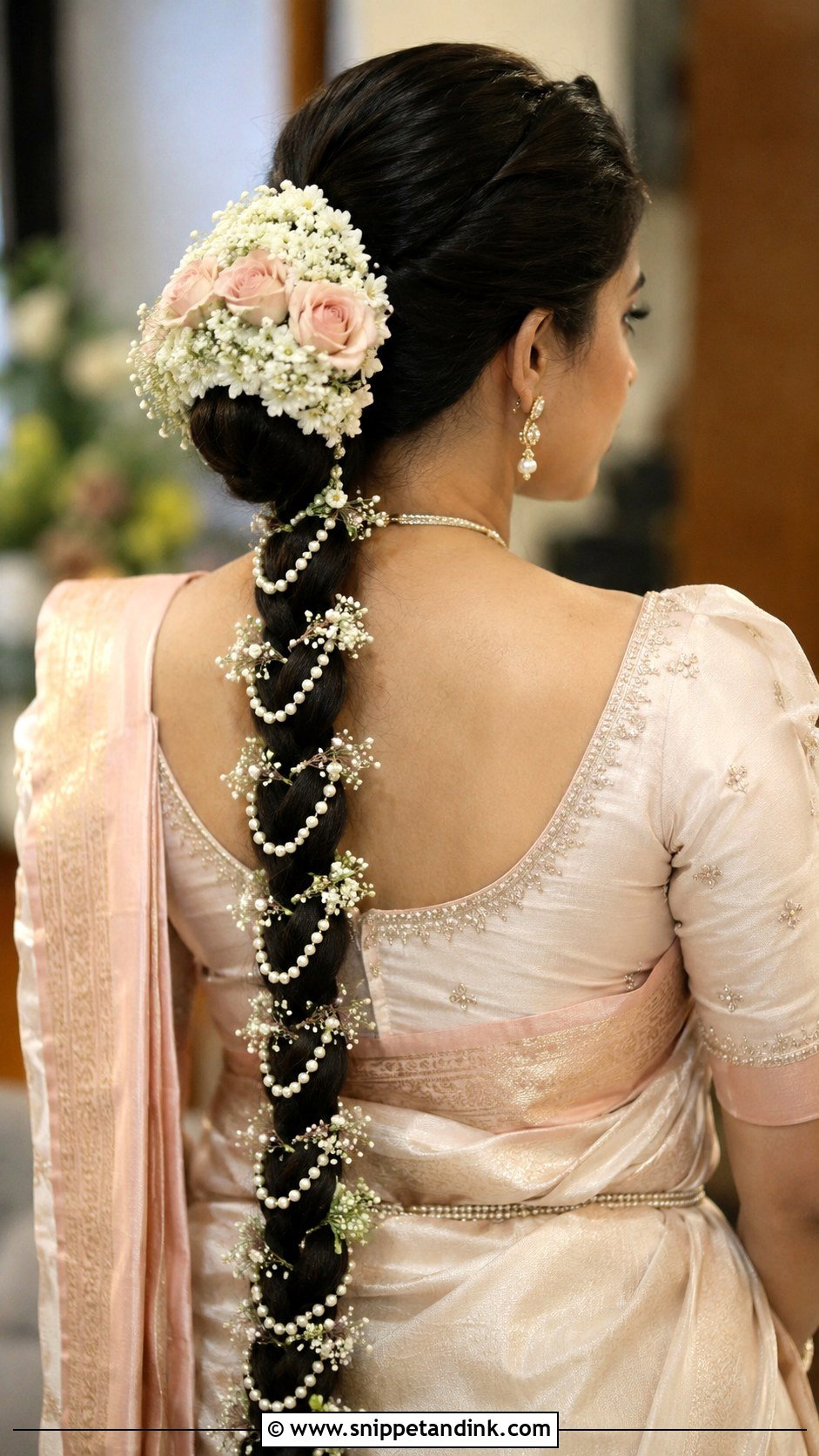
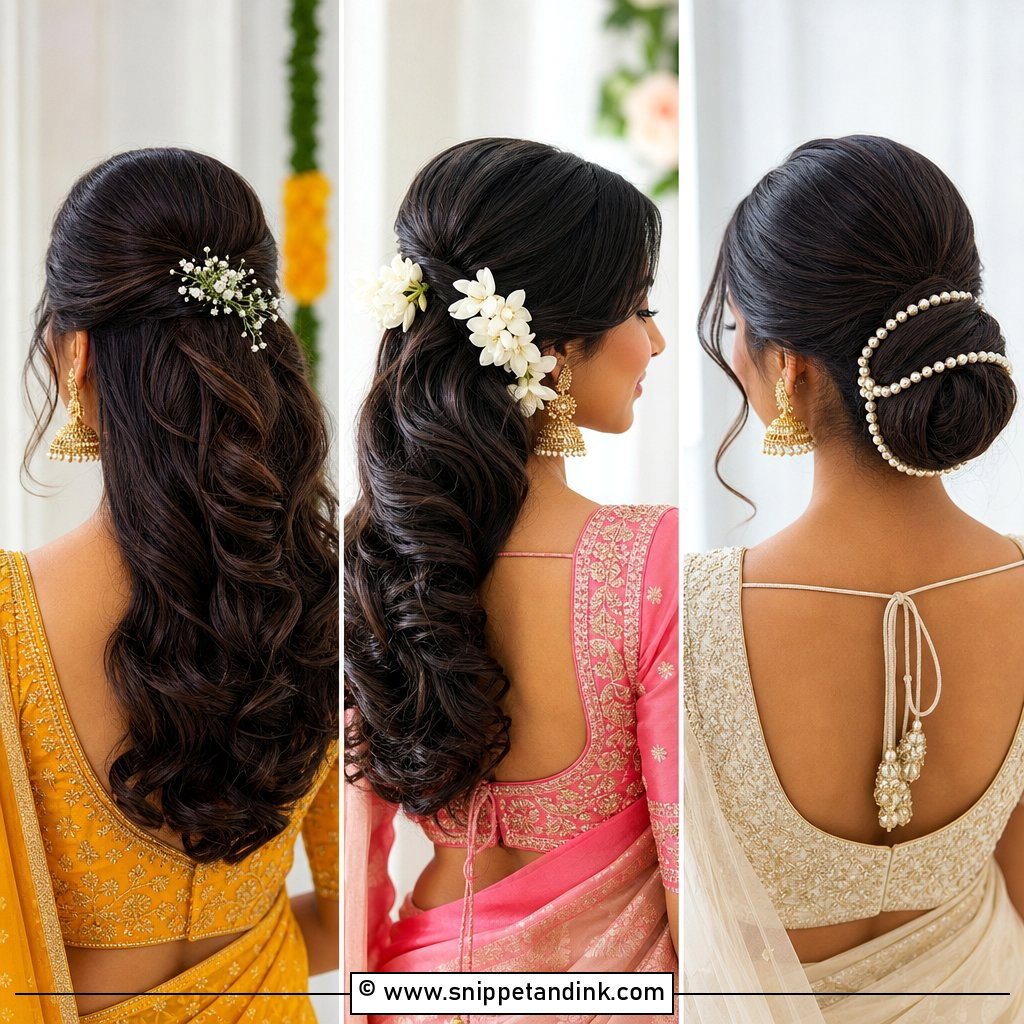
Pearls give a soft shine without much weight, which makes them my first suggestion for brides who get headaches from heavy braids. They can be woven through the plait, set between flower sections or left hanging in short strings near the tip. Ivory, champagne, blush and peach silk suit them best. For an engagement or reception, a pearl jada on a traditional base feels dressed without being ceremonial. Small pearls look refined; long strings look dramatic but swing, so I stitch them down at two or three points.
6. Floral Bun Poola Jada Bridal Hairstyle
Here you get a fully decorated bun and the long braid in one. I build the bun at the back of the head, wrap it in jasmine, roses or mixed flowers, and start the plait directly below it. That fuller shape at the crown balances a large maang tikka, temple sets or a heavy pallu sitting on the shoulder. Finish the length with gold jada pieces or more flowers. Because the bun carries part of the load, this is one of the most secure builds for a ceremony that runs for hours.
7. Lotus Poola Jada Bridal Hairstyle
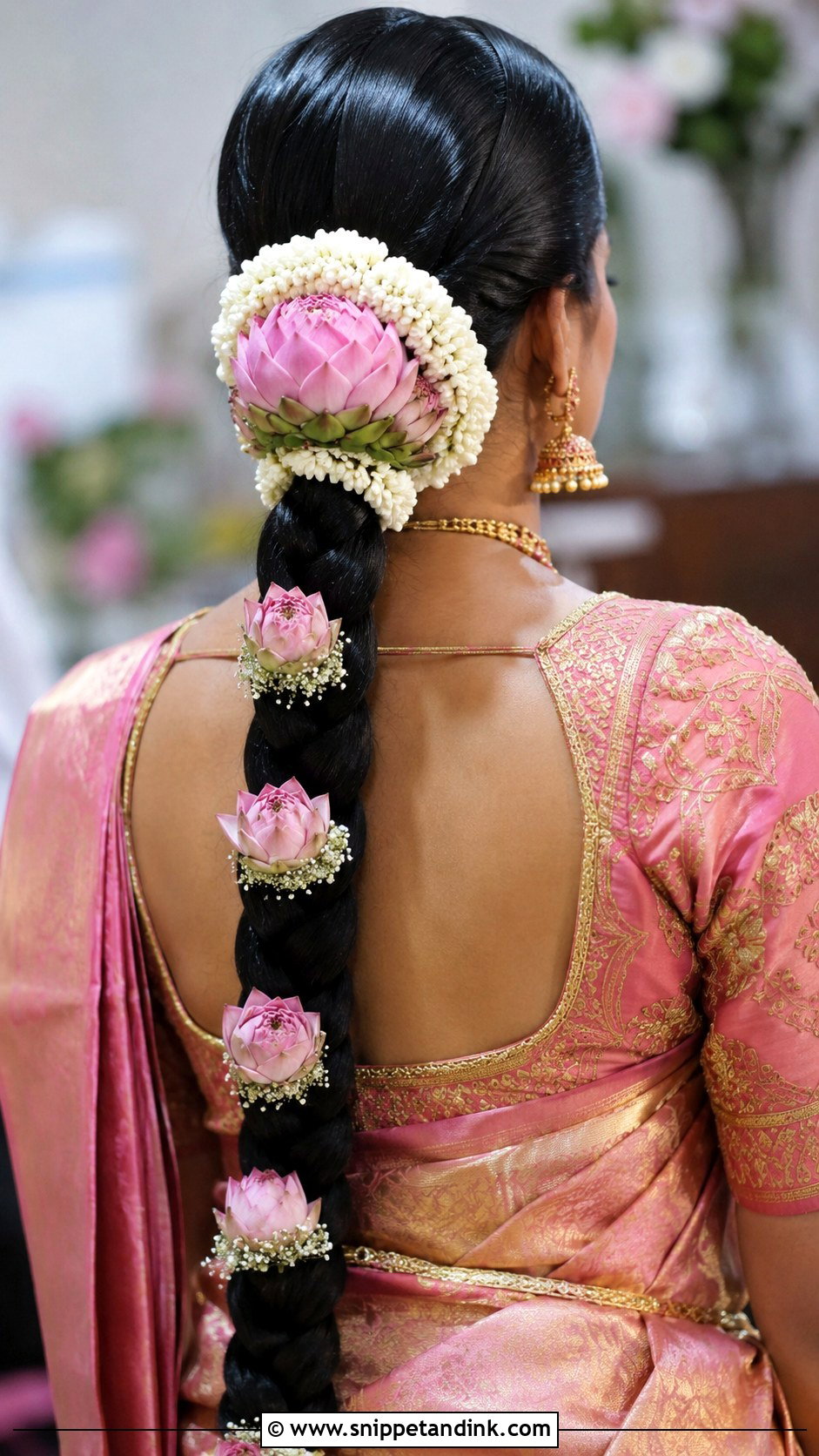
Lotus details are less common, which is exactly why some brides want them. They can sit at the top of the braid, beside the bun or repeat down the jada. Pink, ivory or deep red lotus accents suit silk and temple jewellery. Real lotus blooms are big and heavy, so most jadas use crafted lotus pieces or a single fresh flower at the crown. I balance them with jasmine or small rose fillers and pin them through the base braid rather than through the flower string, otherwise they tip sideways by the end of the rituals.
8. Marigold Poola Jada Bridal Hairstyle
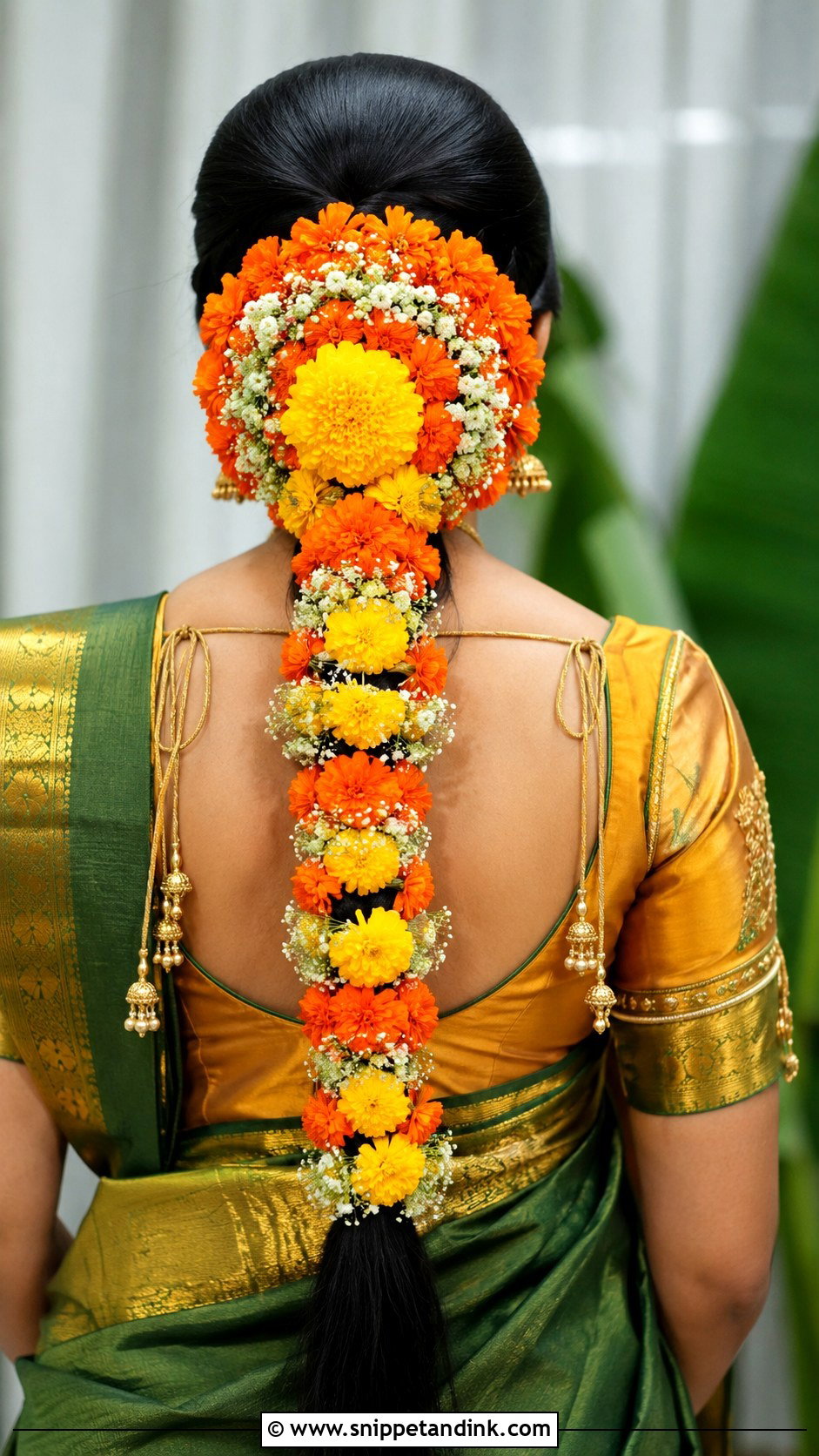
Marigold is joyful and loud. Orange and yellow heads look rich against green, red, mustard and magenta, and they come into their own at haldi, pellikuthuru, mehendi or a daytime event. They can cover the braid completely or alternate with jasmine for contrast. Marigolds hold up to heat better than jasmine, but their petals drop when crushed, so this isn’t the jada to lean back against a chair in. Keep the jewellery neat and let the colour do the work against dark hair.
9. Red And White Poola Jada Bridal Hairstyle
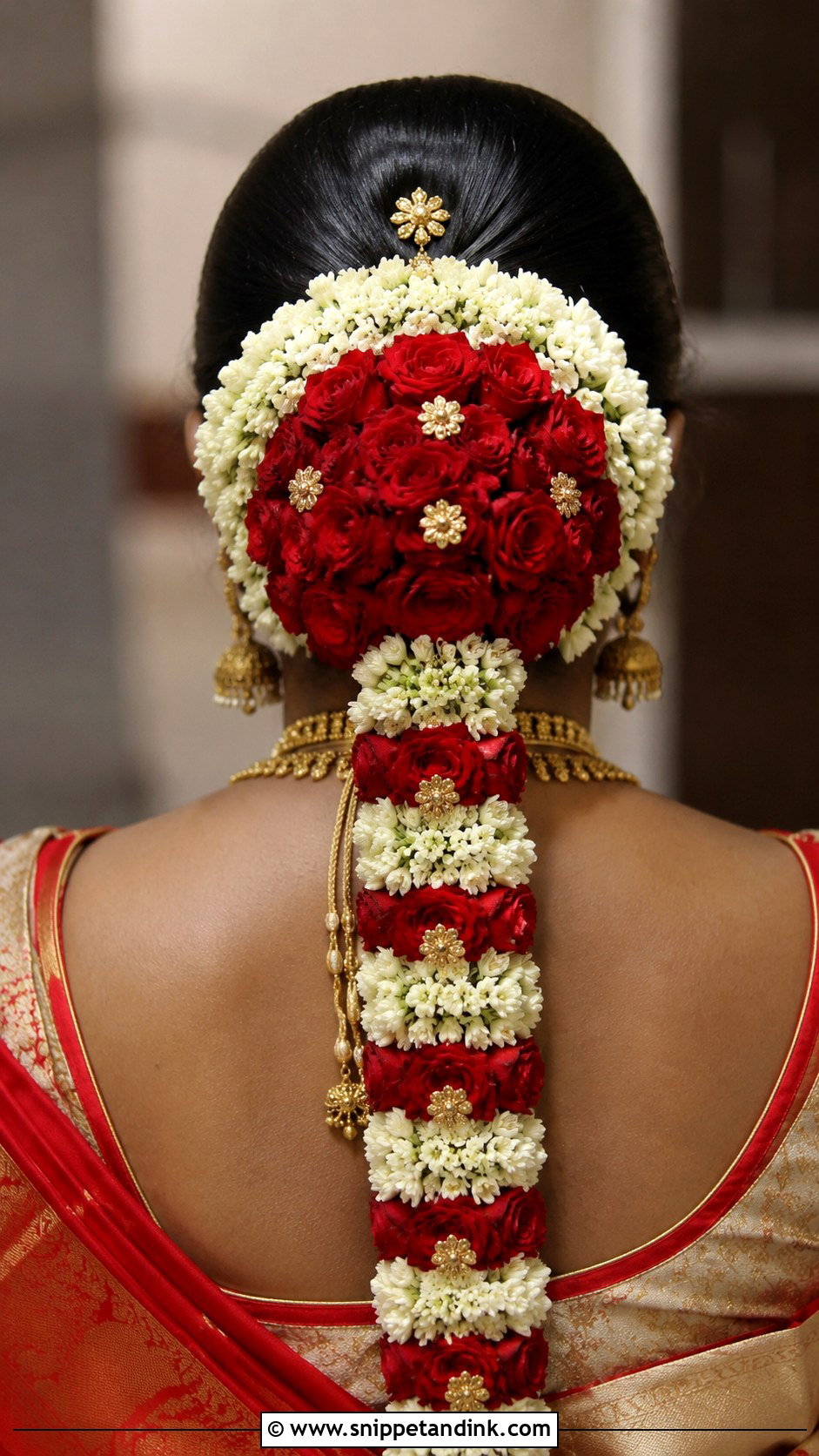
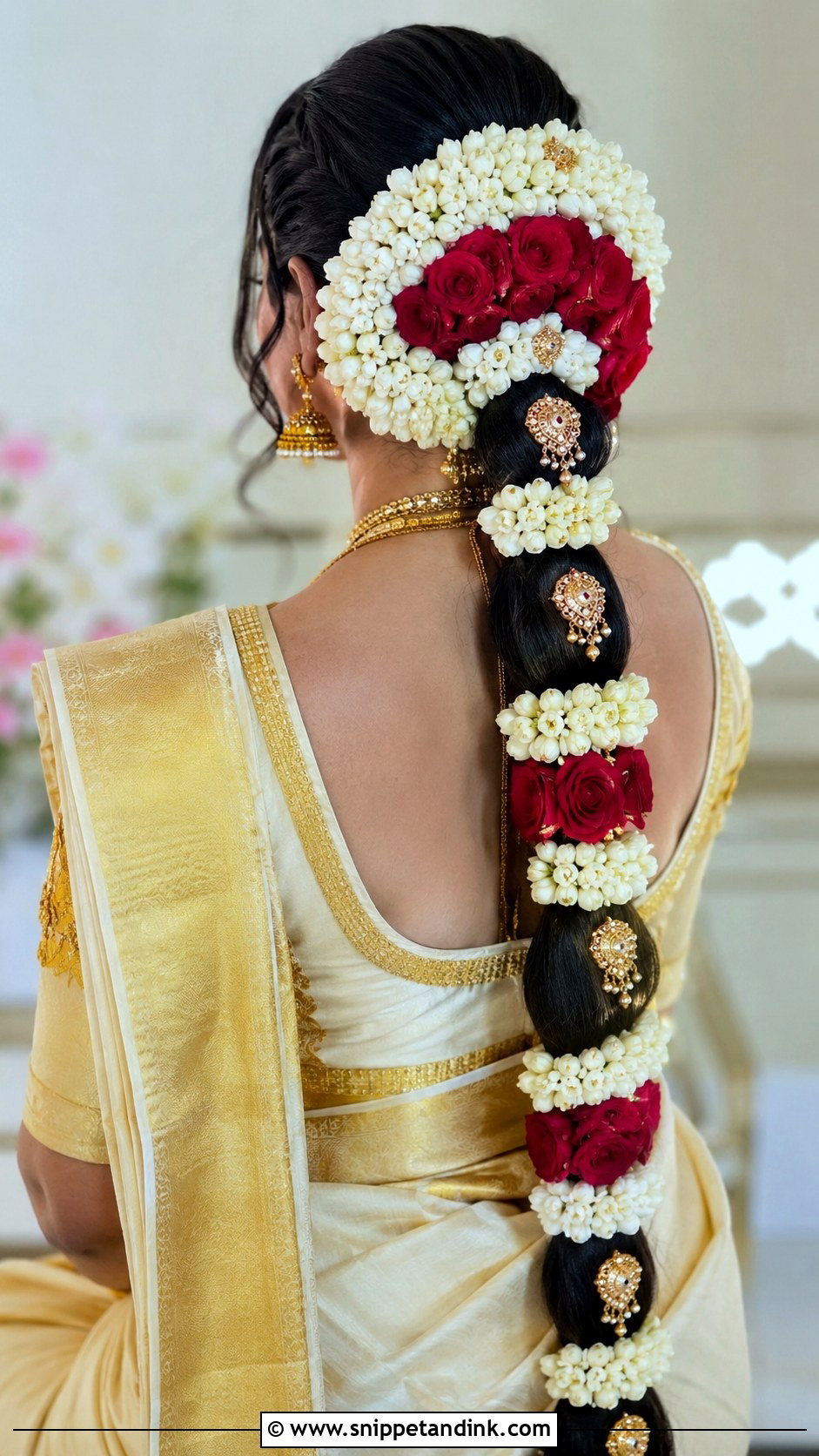
Red and white never dates. Jasmine softens, red roses add depth, and the pairing sits comfortably with red, green, gold or cream silk, bangles and garlands. The flowers can alternate in sections or follow a set pattern down the braid. I plan the pattern on the backing before anything goes near the hair, because spacing that looks even in the hand often looks bunched once the plait curves over the shoulder blades. Small gold pins between sections add a ceremonial touch.
10. Pastel Poola Jada Bridal Hairstyle
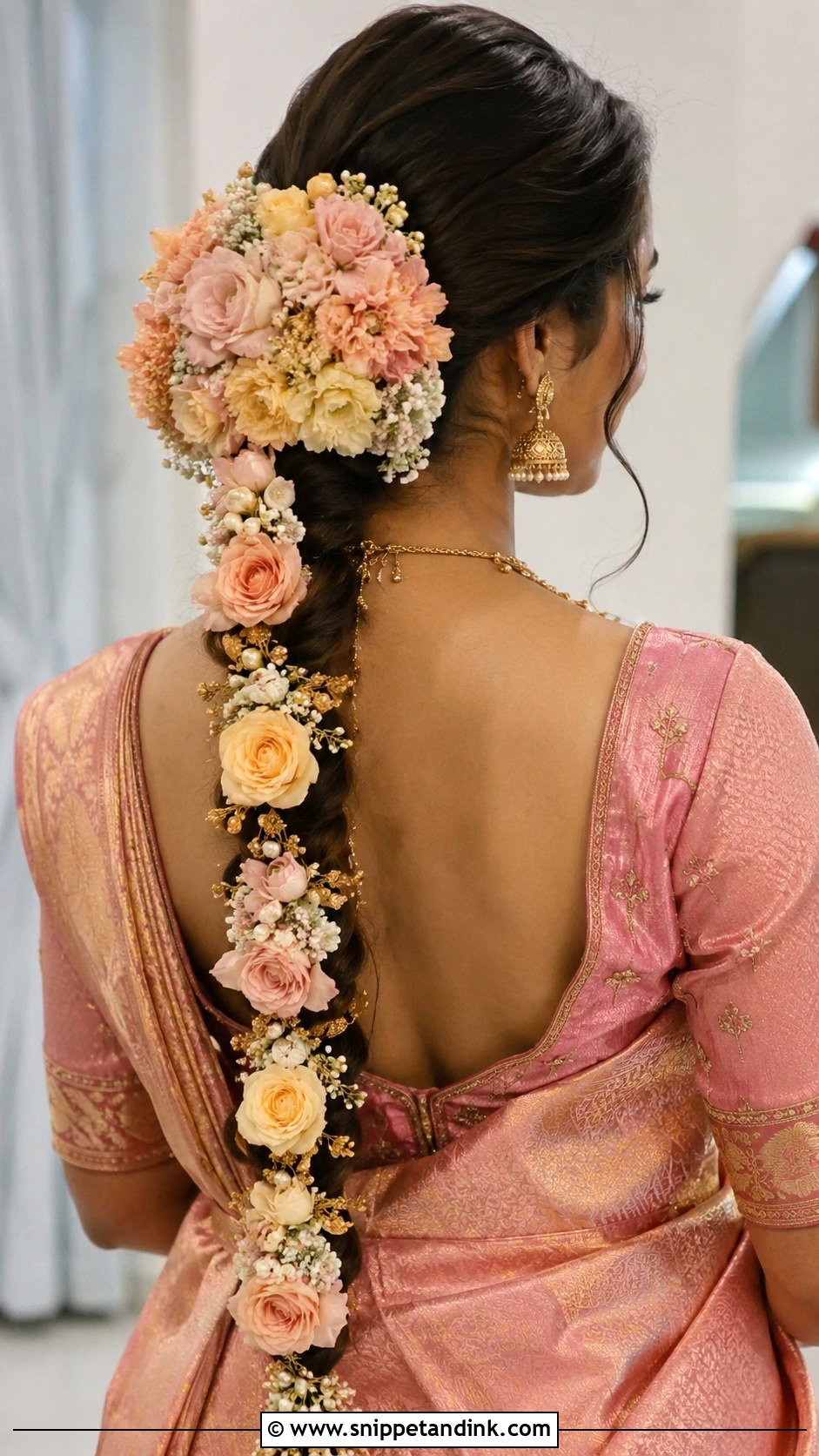
Pastel jadas suit brides who want the traditional braid with a lighter mood. Pale pink, peach, lavender and soft yellow blooms work with pastel Kanjeevarams and lighter reception sarees. Outdoors, they glow in daylight. On their own, pale flowers can look flat against black hair, so I add a strand of pearls, a few gold pins or a fuller floral bun to give the eye something to land on.
11. Full Flower Poola Jada Bridal Hairstyle
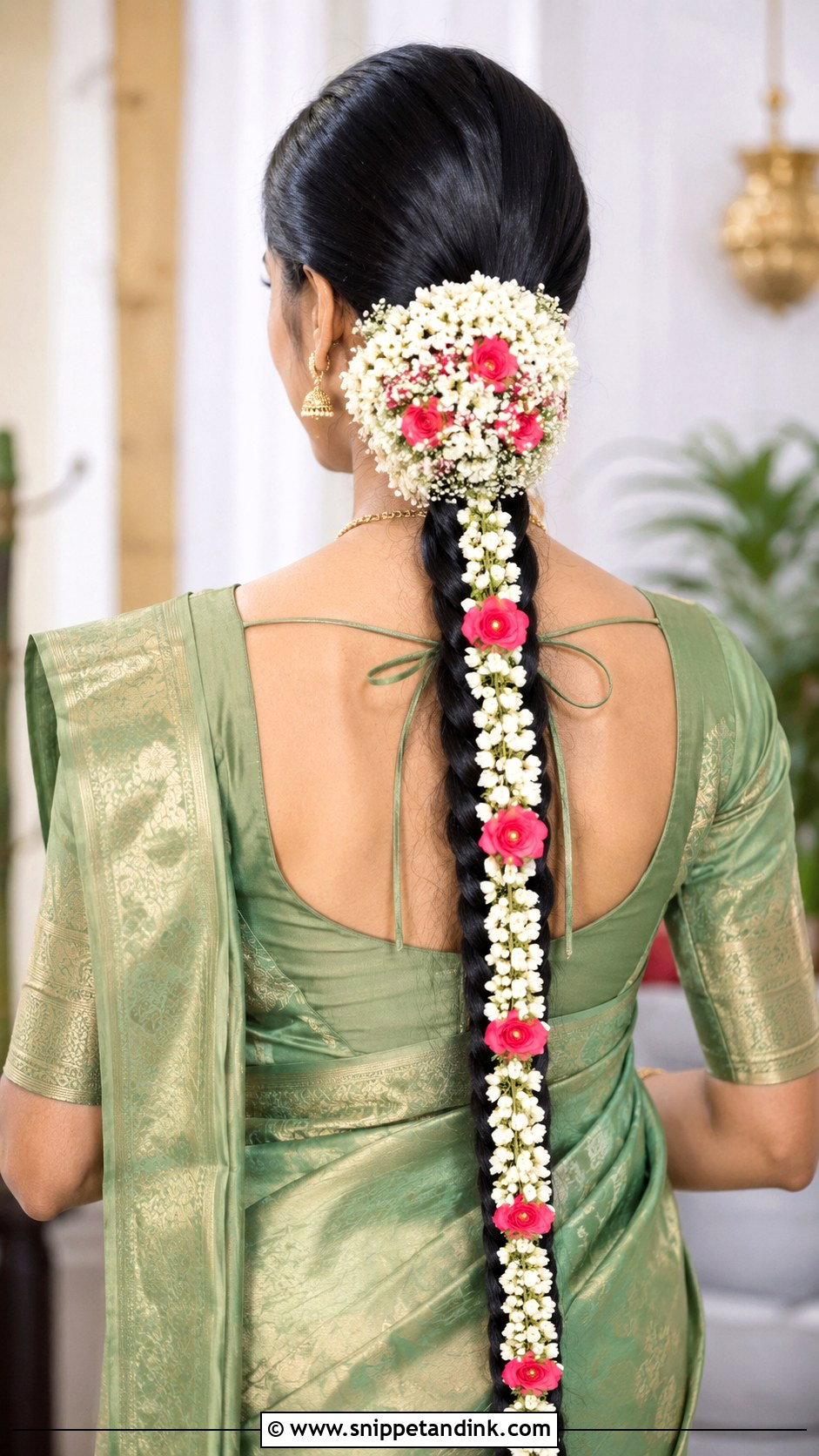
When the braid is meant to be the whole show, flowers cover it from bun to tip. Jasmine, roses, chrysanthemums and seasonal blooms can be laid in rows, patterns or circular sections. Long hair carries it naturally; shorter hair can reach the same effect with extensions. This is the heaviest jada after the full gold version, so the base plait has to be tight and pinned in a zigzag down its length. I’d have the flowers stitched onto a backing rather than pinned stem by stem, which spreads the weight and saves your scalp.
12. Simple Poola Jada Bridal Hairstyle
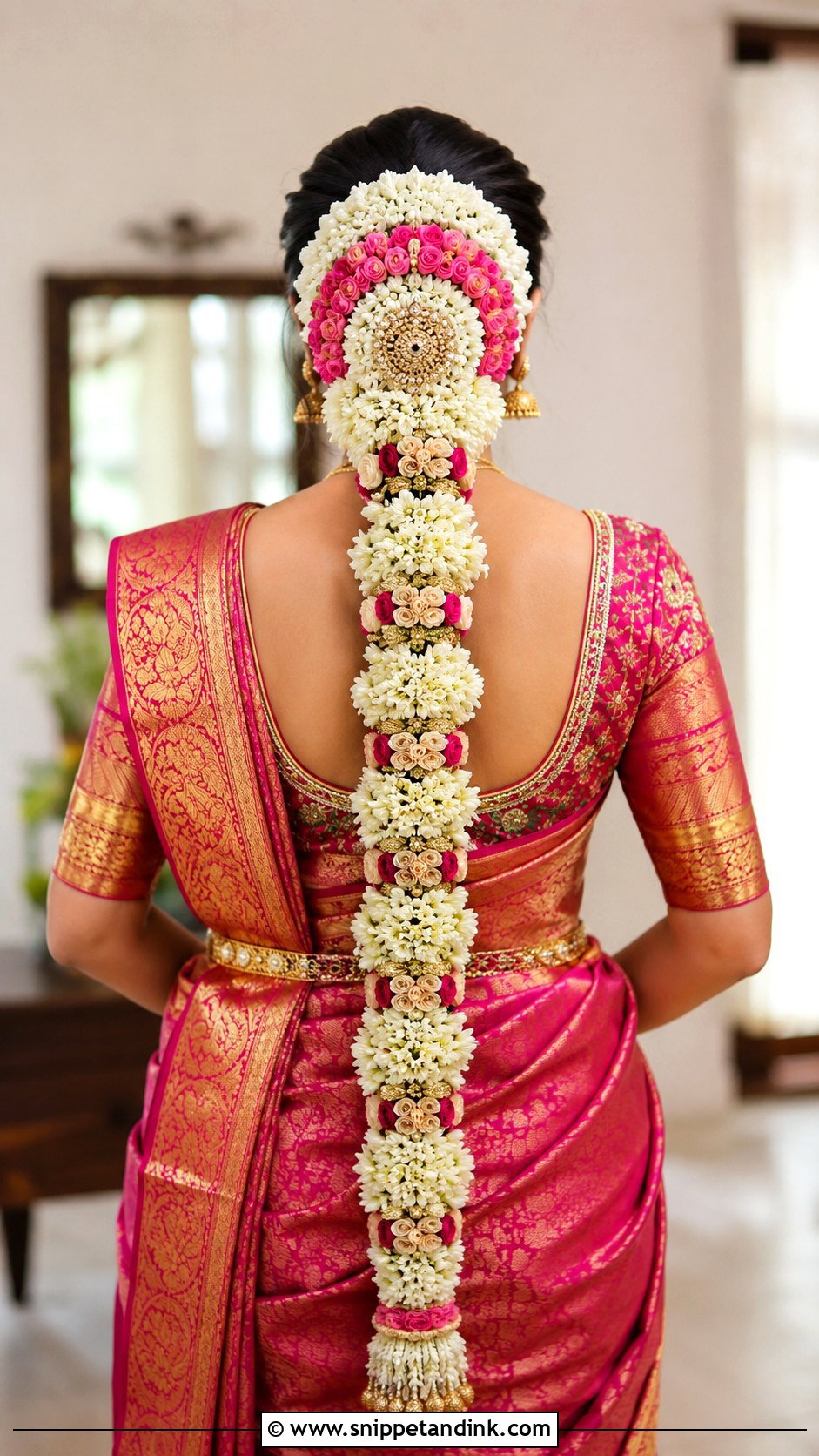
Not every bride wants a full garden down her back. A sleek braid with flowers in one clean line, or in small sections, still reads traditional, especially with a modest jasmine bun at the crown. It suits lighter jewellery, minimal makeup and intimate temple ceremonies. Simple is not easier, though. With so little decoration, an uneven plait or a browning flower shows straight away, so I braid this one more carefully than any other.
13. Heavy Poola Jada Bridal Hairstyle
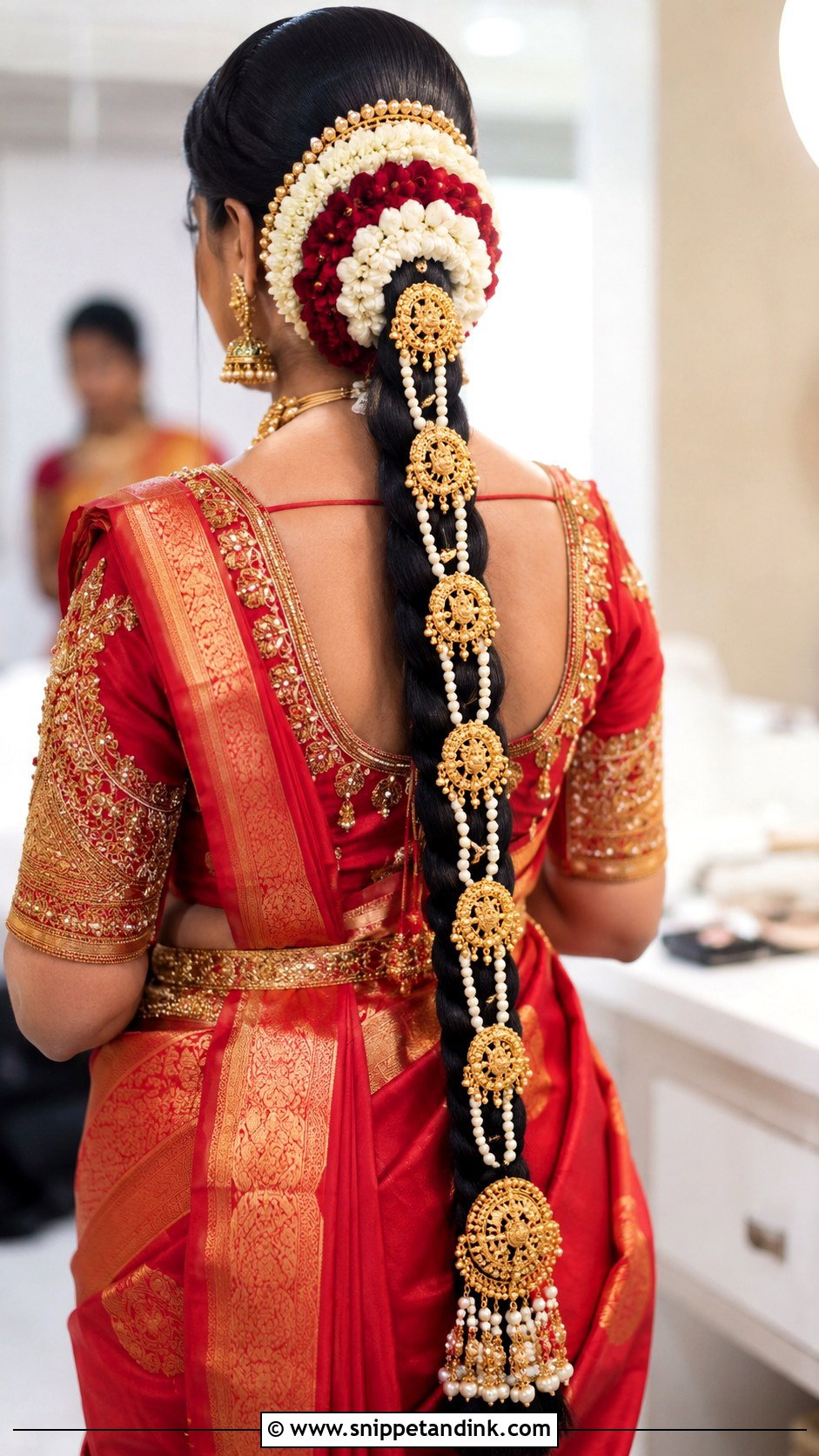
For a grand, fully traditional look, the braid becomes a construction: extensions, layered flowers, gold billalu, pearl strings and often a tasselled end ornament. It belongs with heavy Kanjeevaram silk, layered temple jewellery and bold makeup, and it gives the back view real presence in ceremony portraits. The weight is the problem to solve. I anchor the top of the jada into a firm base close to the scalp, then pin along the length so no single point carries everything. Built well, it looks regal and you can still turn your head.
14. Modern Poola Jada Bridal Hairstyle
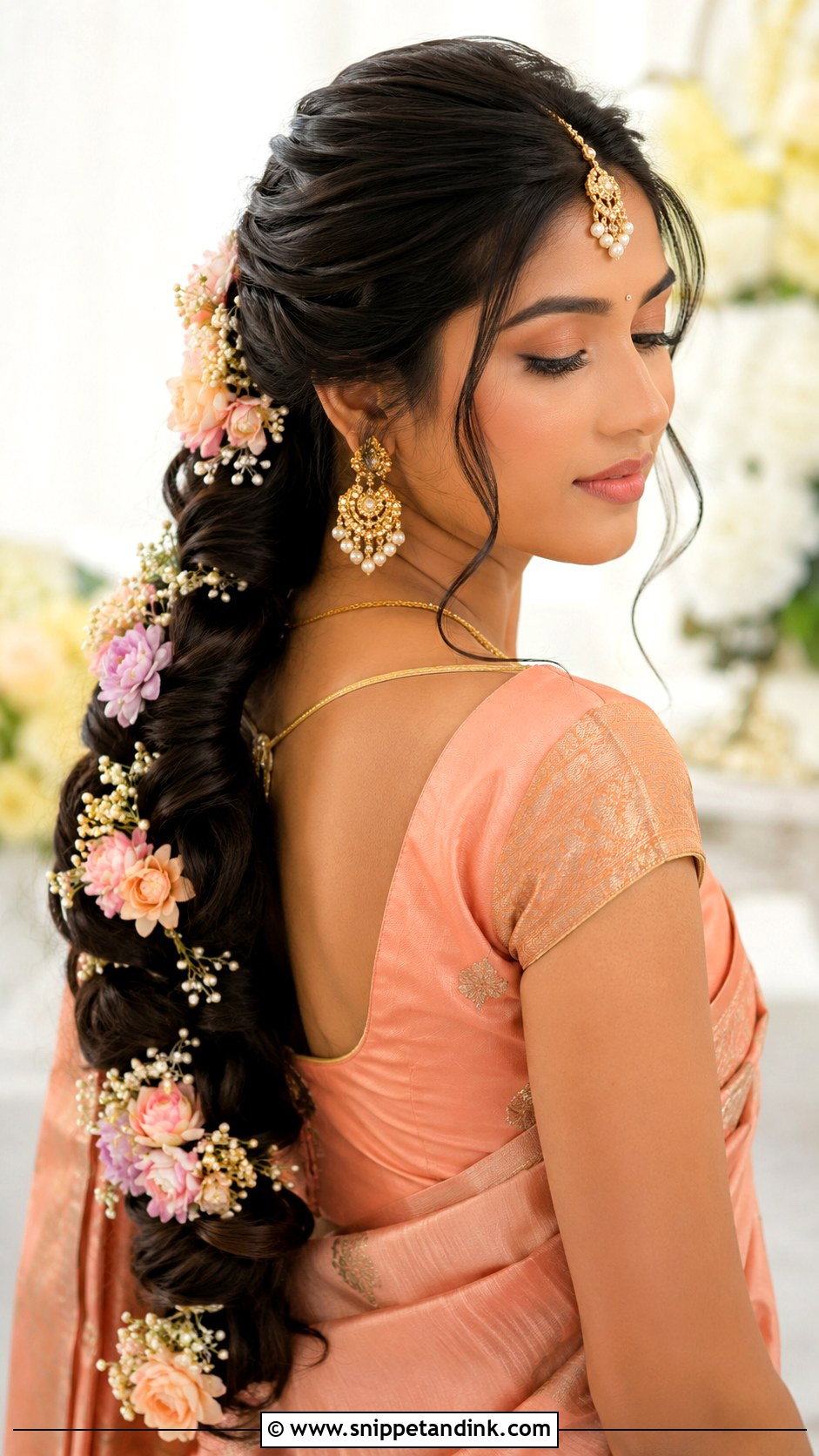
A modern jada keeps the traditional braid but changes the details: pastel flowers, a few loose curls at the face, pearl accents, a sleek crown or simply fewer flowers. It suits engagement ceremonies, receptions and designer silk. I often loosen the plait slightly by pulling at its edges so it looks fuller and softer than a tight traditional braid. Coordinate flower colours with the saree border rather than the body, since the border is what sits closest to the jada.
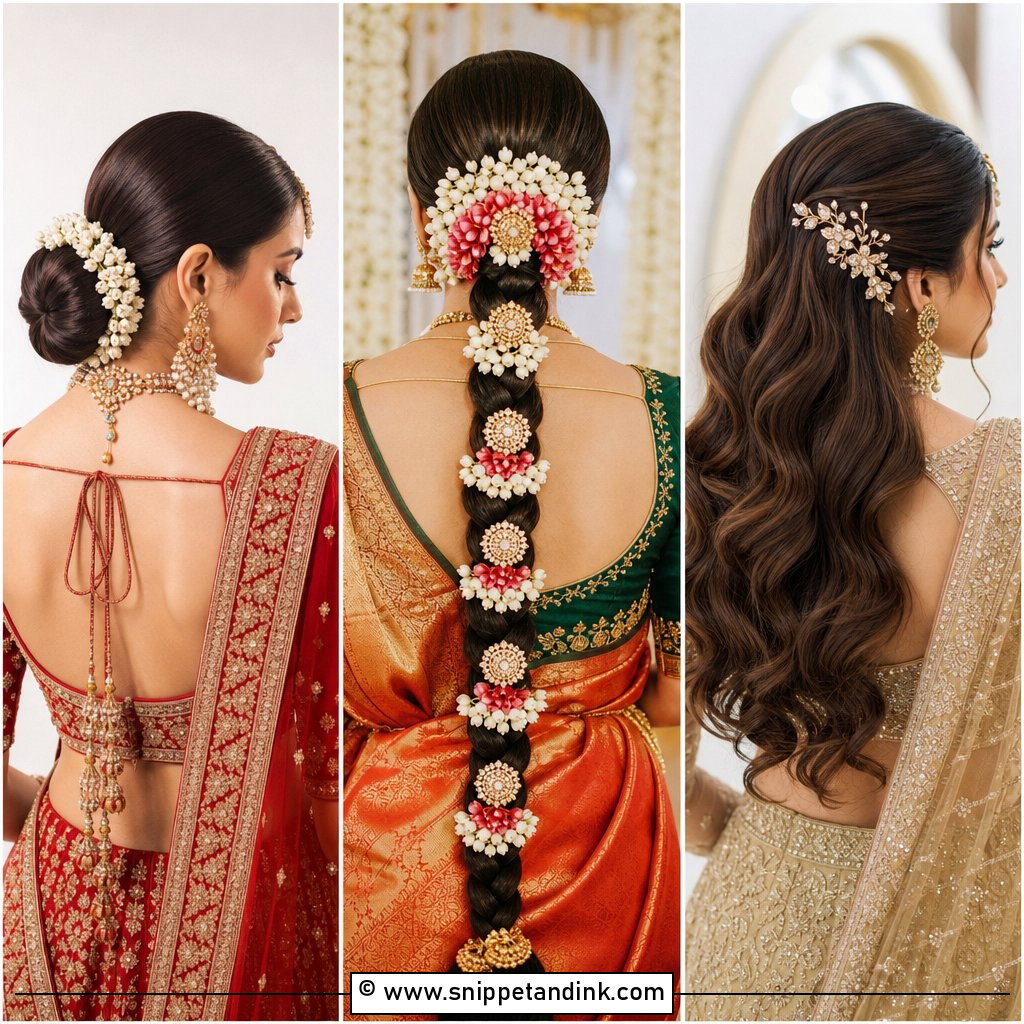

15. Short Hair Poola Jada Bridal Hairstyle
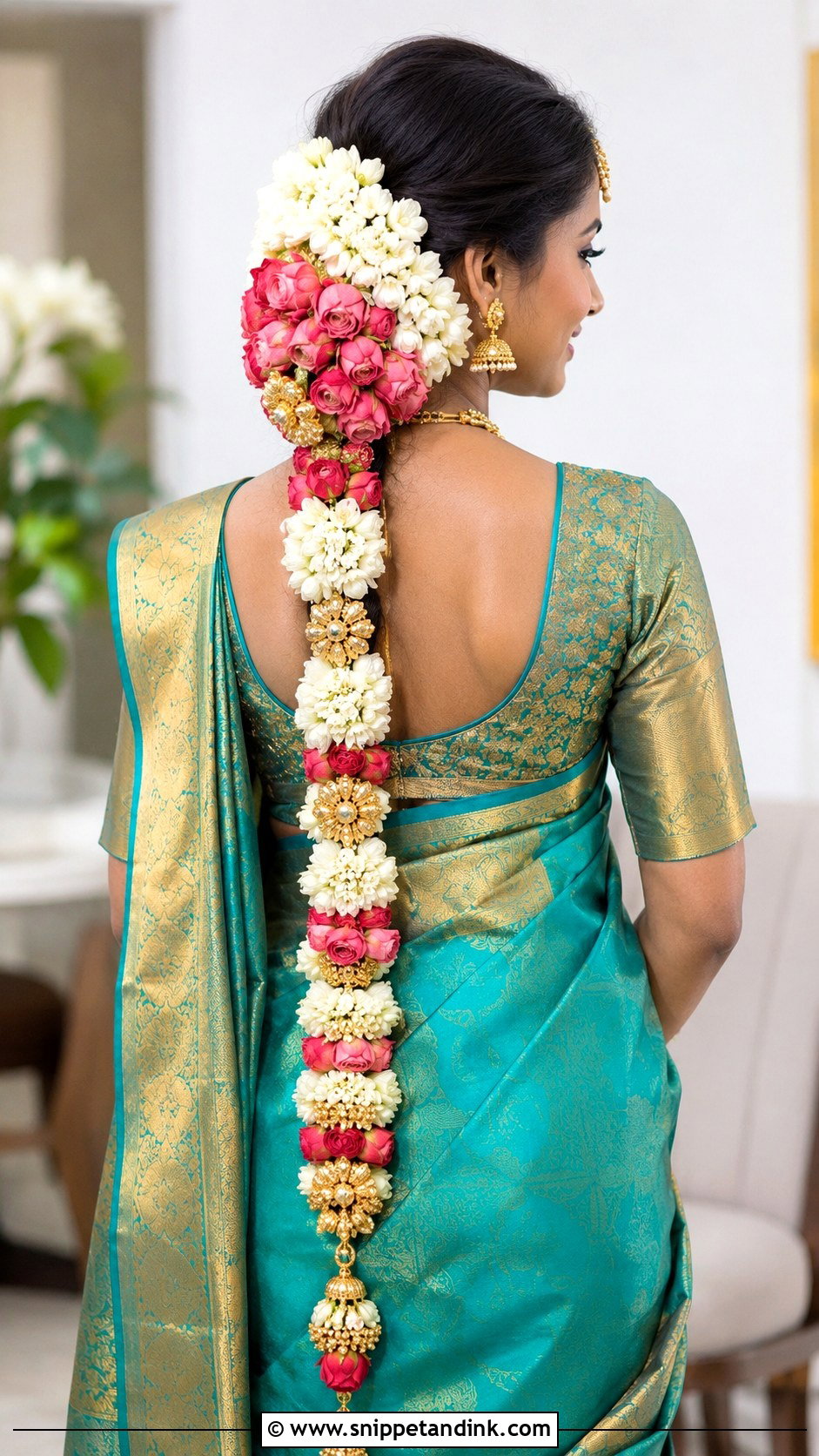
Short hair can absolutely carry a jada. I smooth your own hair into a small bun or short braid at the nape and attach a long braid extension to it, then use flowers, pearls or gold pieces to cover the join. Shoulder-length, layered and thin hair all work this way. If your scalp is sensitive or your hair is fine, choose lighter flowers and pearls over gold billalu, because all the weight hangs from that one small base. Done properly, nobody looking at the back view will know where your hair ends.
Sitting Cross-Legged at the Mandap With a Full Jada
Photos are taken standing, but most of a Telugu or Tamil ceremony happens seated on the floor or a low platform. A long jada pools behind you, gets sat on, and is bumped every time someone leans in for the rituals. I plan for that from the start.
- Ask a sister or cousin to lift and lay the braid over your shoulder or to one side each time you sit, so it isn’t crushed under you.
- During the rituals where something is placed on your head or showered over it, loose flowers near the crown can be knocked out of place. I pin the top section more densely for this reason.
- Keep a small kit nearby: bobby pins, a few spare jasmine strings, safety pins for the backing and a hand mirror.
- If the jada starts pulling during a long ceremony, a second set of pins higher up the braid moves the weight back onto the base bun. A few seconds of adjusting saves hours of headache.
Taking it off without losing hair
At the end of the night, remove the flowers and ornaments from the bottom up, then the pins, before you undo the plait. Pulling the whole jada off in one go drags pins through the braid and snaps hair. Gold billalu and pearls can be wiped and stored flat in a soft cloth for future family weddings.
A Jada That Matches the Saree Border and Your Neck
Jasmine, roses, pearls, gold billalu, pastel blooms or a fully covered braid can all be right, as long as the jada is secure, balanced and connected to what you’re wearing. Before deciding, think about your saree colour, how heavy your jewellery is, how long the rituals run and how much weight your neck will happily carry. A firm base braid and well-kept flowers matter more than the design itself. Get those two right and the jada will look as good at the reception as it did at the muhurtham.
You'll Like These Ideas:







Leave a Reply