
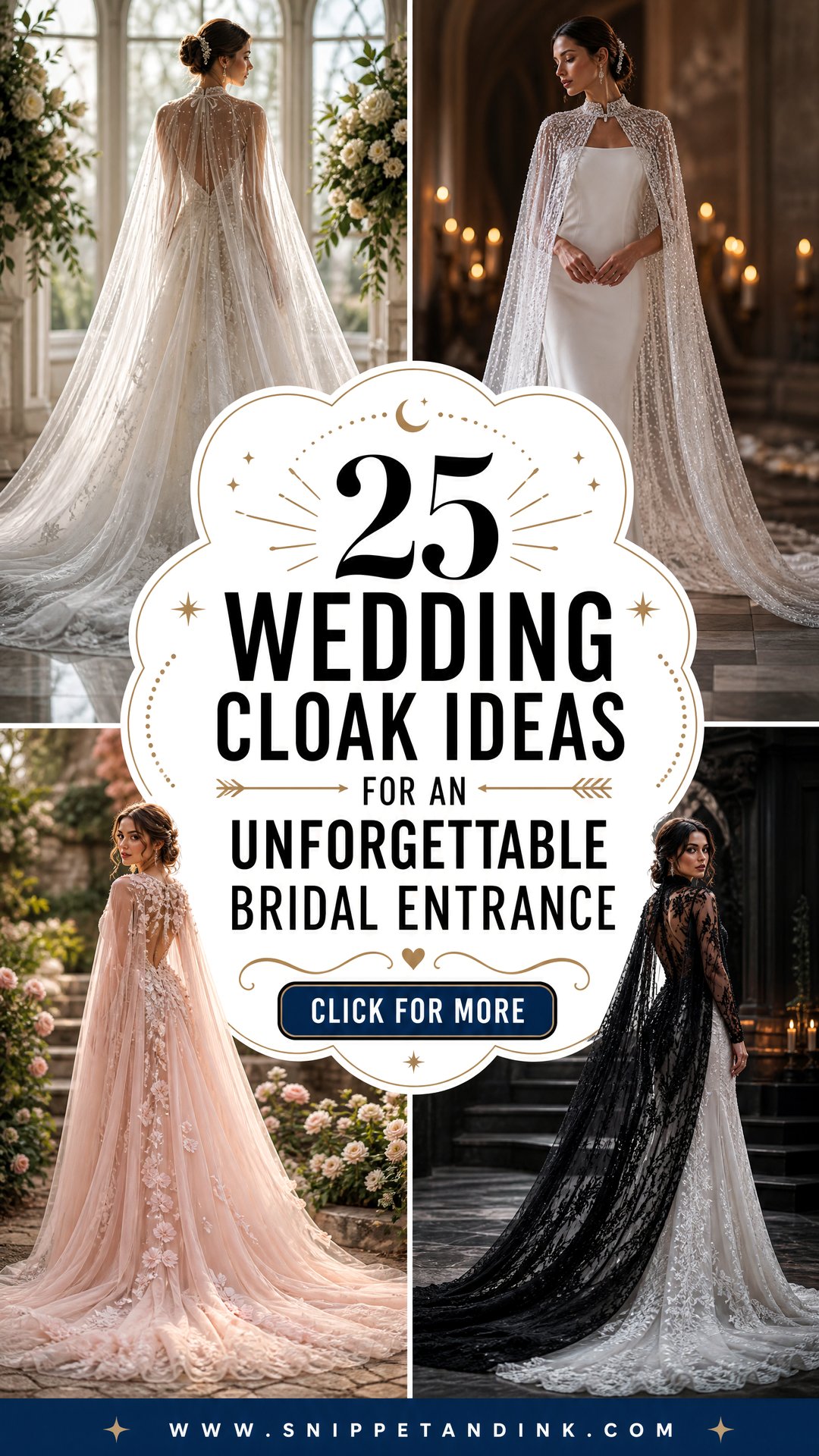
A cloak changes how a bride moves through a room. It adds coverage, warmth and a trailing line behind you without hiding the gown, and more brides now ask me for one in place of a veil, especially for outdoor ceremonies, cold months and old stone venues. The right one depends on four things I look at first: the gown’s silhouette, its fabric, its neckline and how much weight you can comfortably carry on your shoulders for several hours. A sheer cape reads soft; a hooded velvet cloak reads regal. A pearl capelet can finish a plain dress, and a cathedral cloak turns the walk down the aisle into the moment everyone remembers. Below are the pairings I reach for, with what I check before each one goes on a bride.
Weight, Closures and Your Hairstyle Decide the Cloak
Brides tend to choose a cloak from a photo of the back. I start with the shoulders, because that is where the whole thing hangs. A full-length velvet cloak can weigh more than some dresses, and all of it sits on two small points for most of the day.
- Closure: a hook and eye at the neck is secure but tugs at your throat when you look down. Shoulder snaps or clasps spread the load better. A ribbon tie is pretty but loosens as the hours pass.
- Attachment: some cloaks fasten to the dress with small loops or buttons stitched into the shoulder seams. This stops the cloak sliding backward and is worth asking your seamstress about.
- Hair: hoods and high collars flatten volume. If you want the hood up, plan a low bun or sleek style; curls set at the crown will collapse under it.
- Length: anything past the floor needs a helper on stairs and at every doorway, so decide who that is.
Bring your actual shoes to fittings. A cloak hemmed with you in flats will drag and catch once you’re in heels, and an extra inch of fabric on a stone floor picks up dirt fast.
1. Hooded Wedding Cloak With Satin Ball Gown
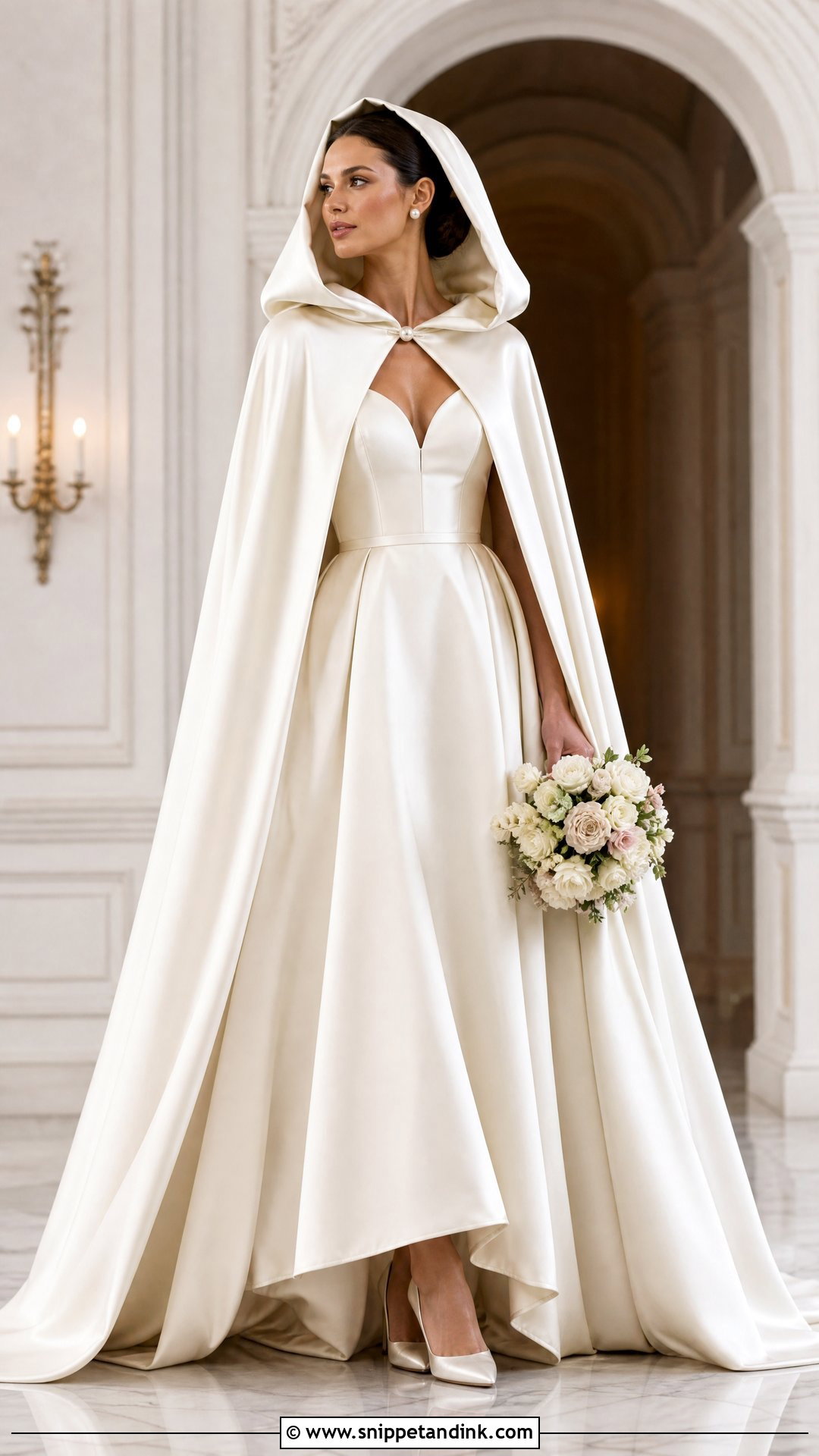
Satin is unforgiving with colour, so the first thing I do with this pairing is hold the cloak fabric against the skirt in daylight. Two ivories that look identical in a showroom can split into pink and yellow outside, and a full-length hood makes that gap obvious in every photo. Get the undertone right and a long hooded cloak balances a ball gown’s volume from the back as well as the front. I keep the rest quiet: pearl studs, one bracelet, a low bun the hood can settle over, and closed satin pumps.
2. Sheer Tulle Wedding Cloak With A-Line Dress
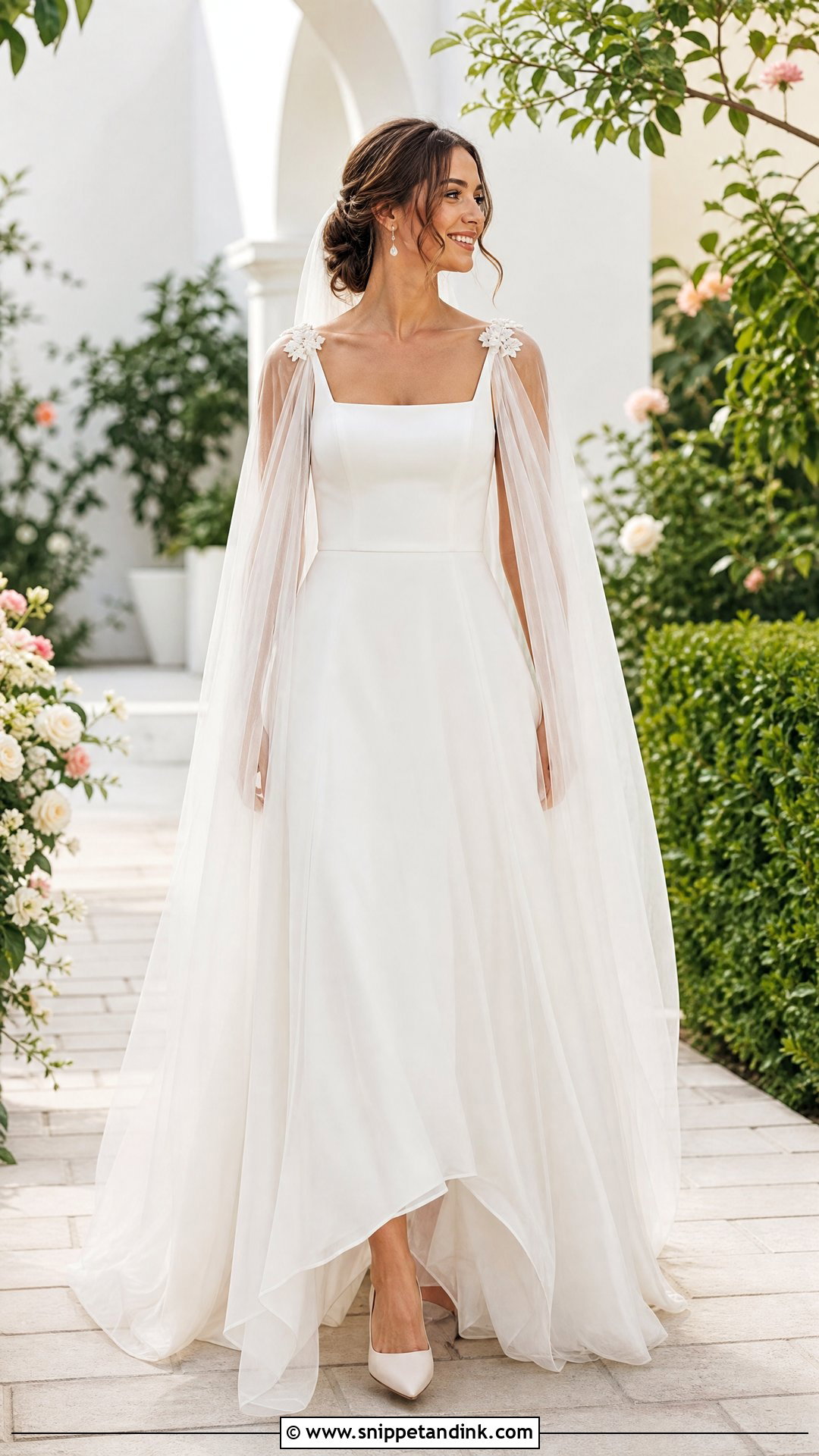
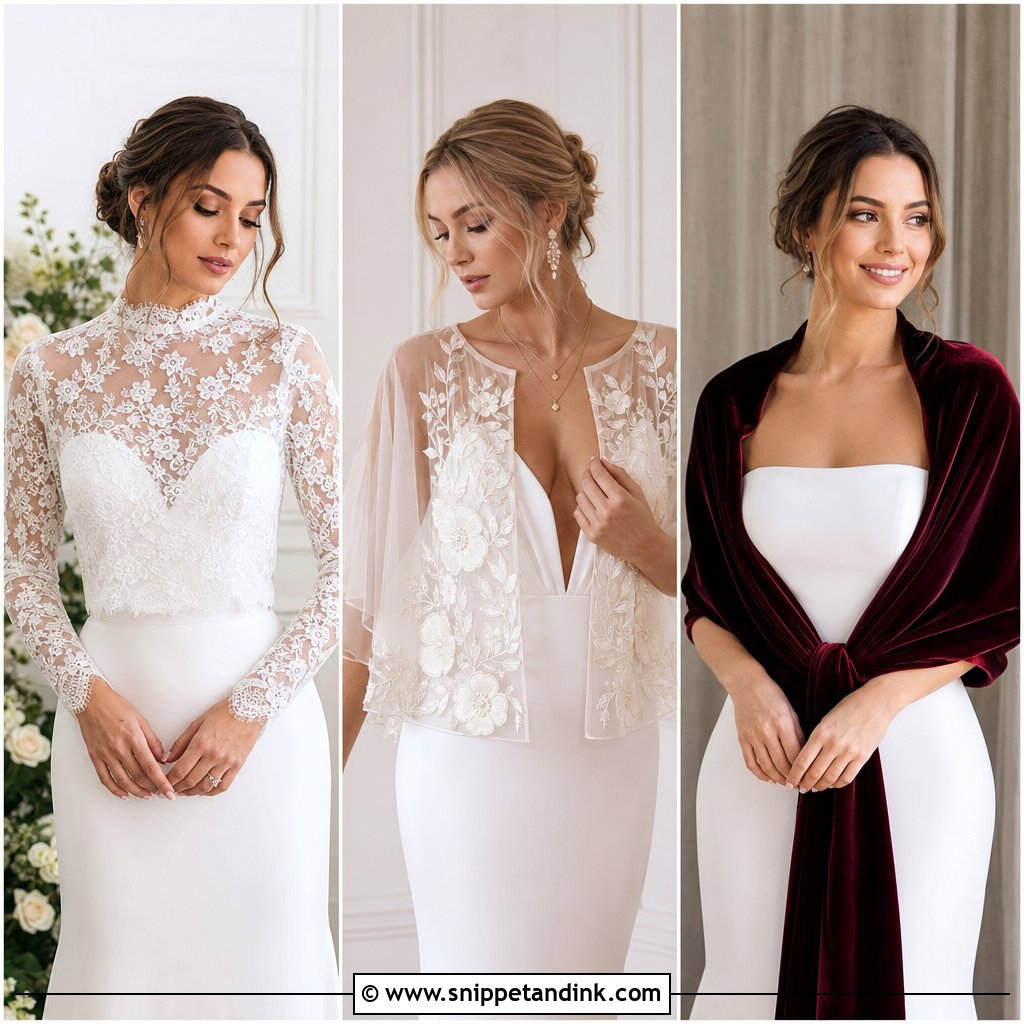
Tulle is the closest a cloak gets to a veil, but it attaches at the shoulders, so nothing tugs at your hair all day. It’s sheer enough that lace, beading or clean crepe on an A-line dress shows straight through. Chapel length suits gardens and bright indoor rooms. One caution from fittings: soft tulle snags on beaded bodices and bracelet clasps, so I check every hook on the dress before we commit. If your gown is plain, a scatter of pearls or tiny appliqués on the cloak gives the eye somewhere to land; keep the neckline open with a soft updo and drop earrings.
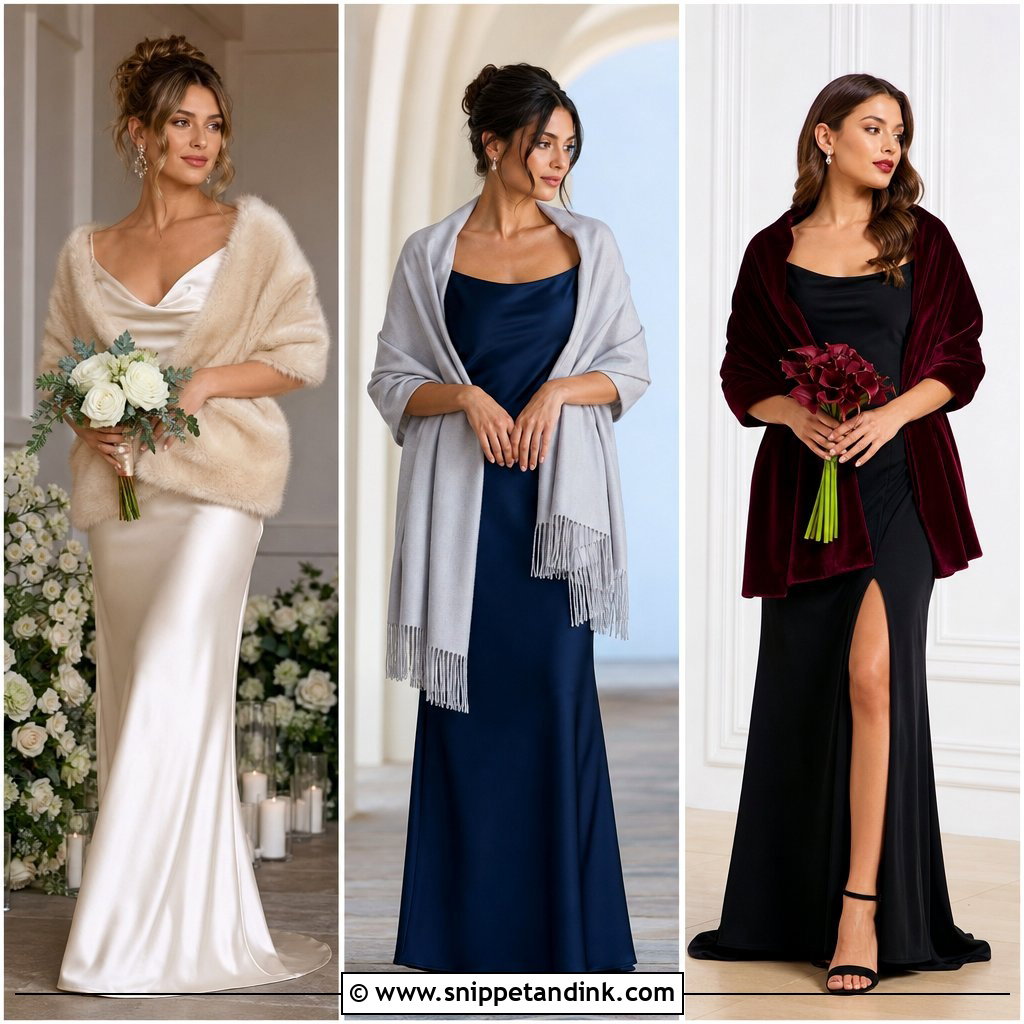
3. Velvet Wedding Cloak With Long Sleeve Dress
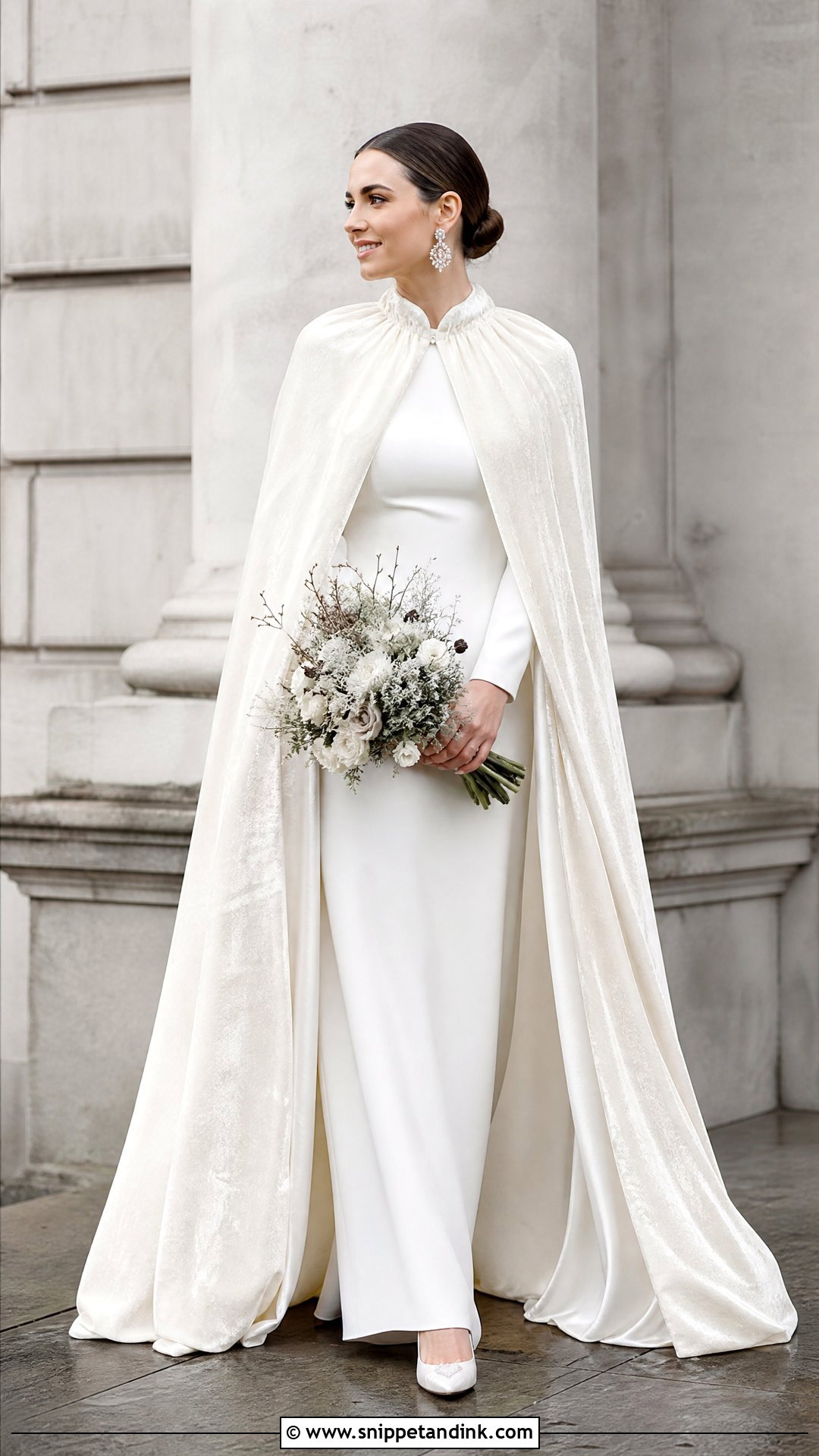
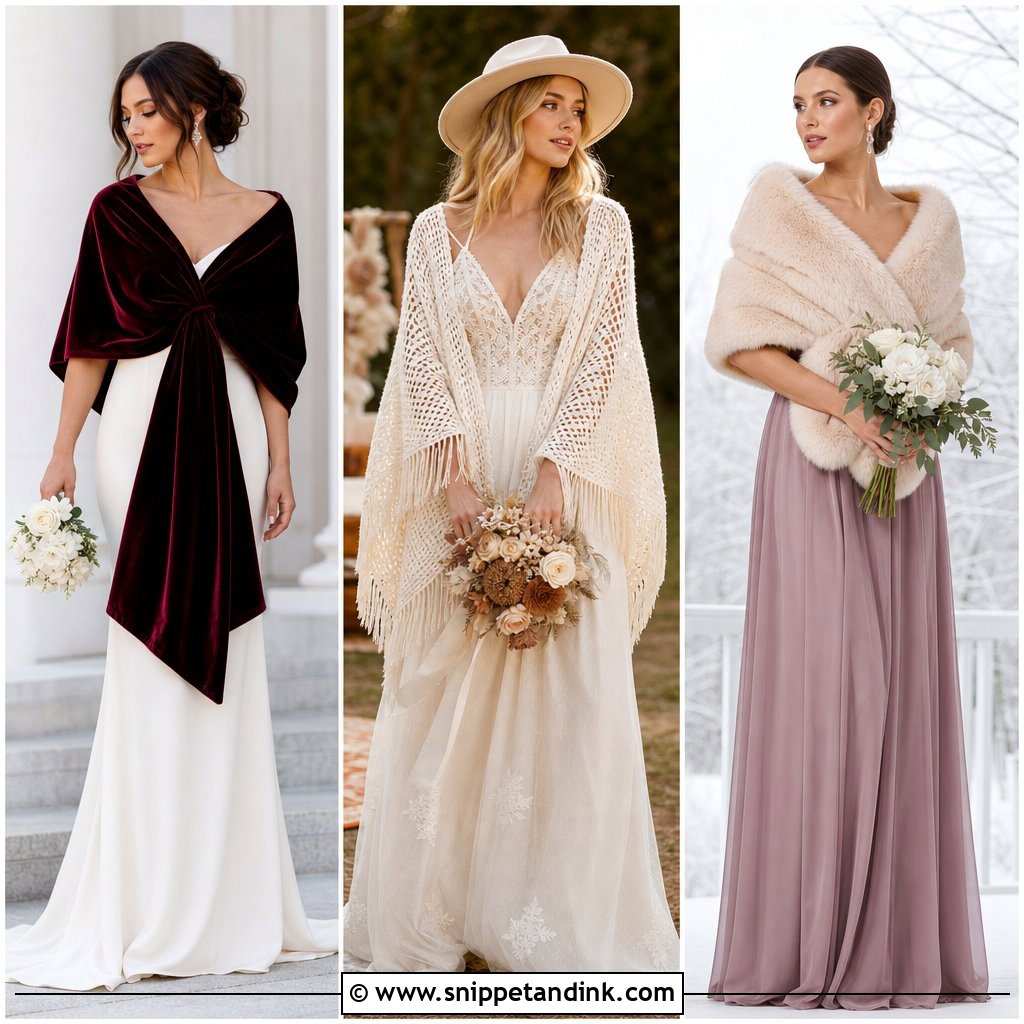
Velvet is heavy, and that weight is the point in winter. It pulls a long-sleeve gown into a clean column and keeps you warm through outdoor portraits. It sits best over sleek crepe, satin or lace, where the matte pile contrasts with the dress. Ivory is the classic shade; champagne flatters a gown with warm undertones. What I always add is a hidden hook or a waist tie, because velvet slides off the shoulders the moment you lift your bouquet. Block heels help too, since you’re carrying extra fabric up any steps.
4. Lace Wedding Cloak With Mermaid Dress
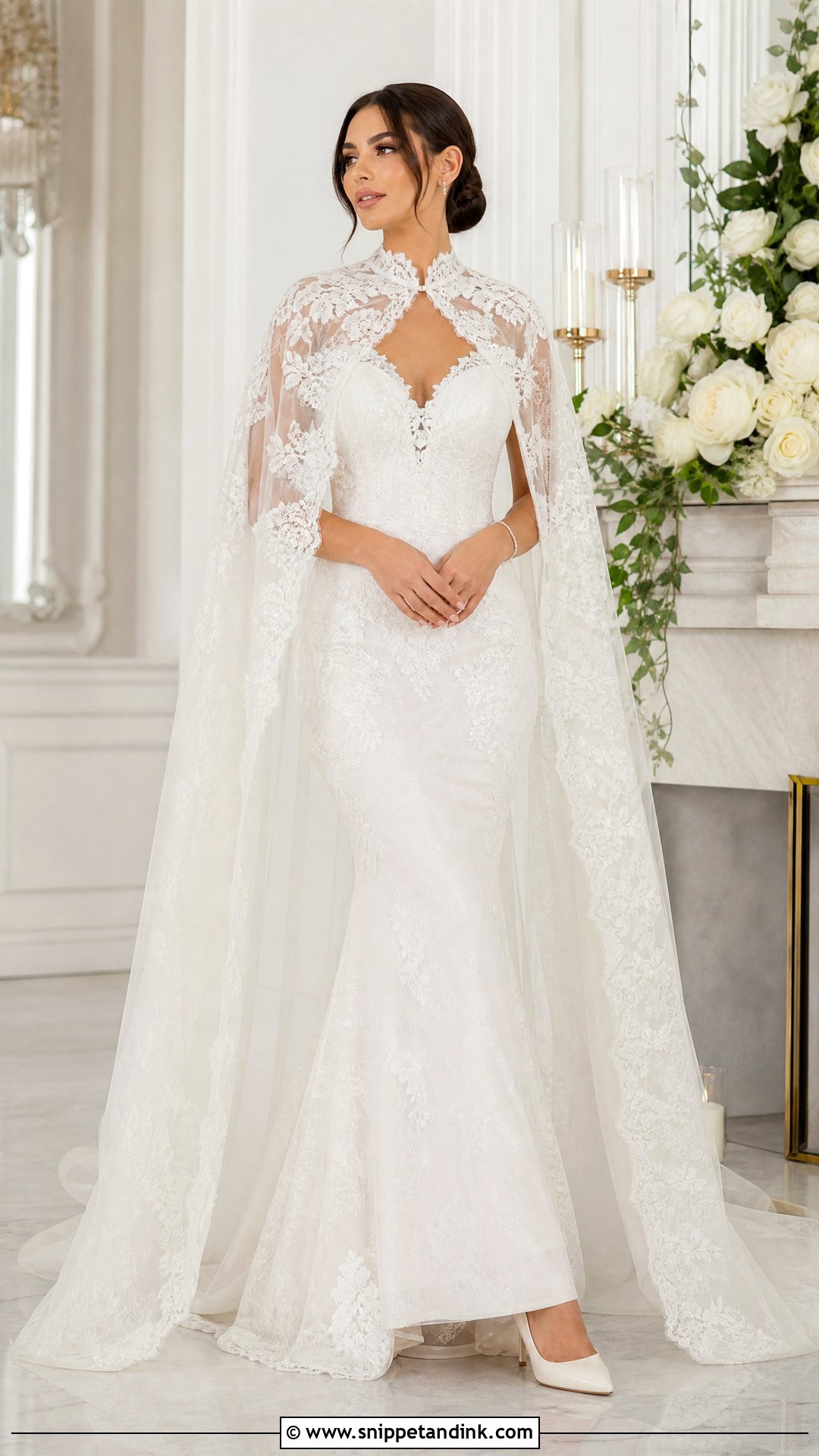
A mermaid gown is fitted to the knee, so the cloak is where all the movement comes from. The trap is two competing laces. If the gown is heavily corded, I pick a lighter lace for the cloak with only a scalloped edge; if the dress is plain crepe, the cloak can carry the detailed lace instead. I also watch the hem: a mermaid flare already sits wide on the floor, and a cloak that ends at exactly the same point makes the back look crowded. A slightly longer cloak, sleek heels and close-to-the-head hair keep the shape clear.
5. Pearl Wedding Cloak With Simple Crepe Dress
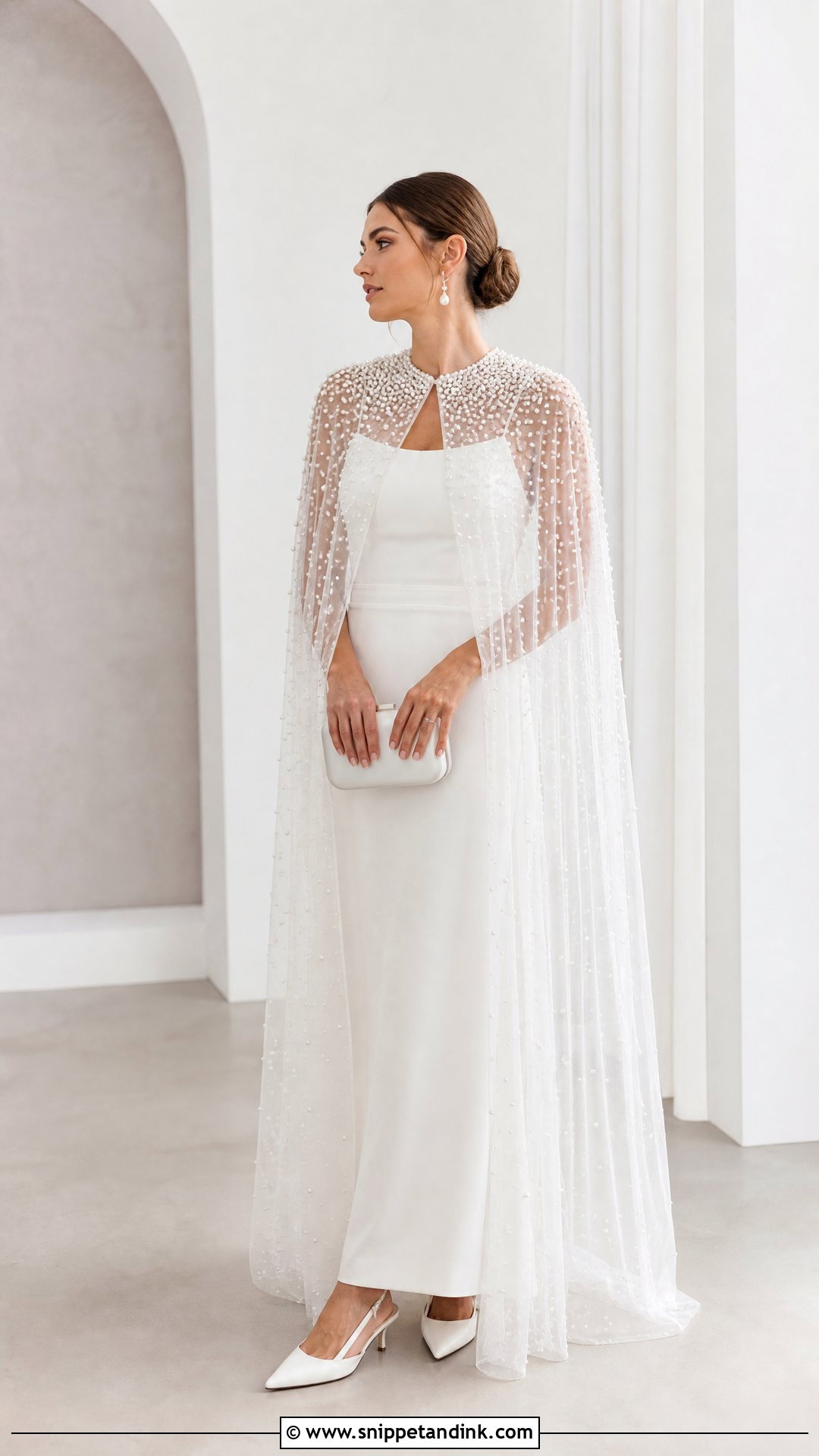
Pearls do the most work on the plainest dress. A clean crepe gown gives each one room, and the weight stays manageable as long as the pearls are spaced rather than packed. I ask brides to sit down in the cloak at the fitting, because pearls stitched low on the back press uncomfortably into a chair. Go for a sheer pearl cape or capelet depending on how much arm you want covered. Pearl earrings, a smooth low bun and white slingbacks keep the theme; a small structured clutch can join for reception photos.
6. Cathedral Wedding Cloak With Strapless Gown
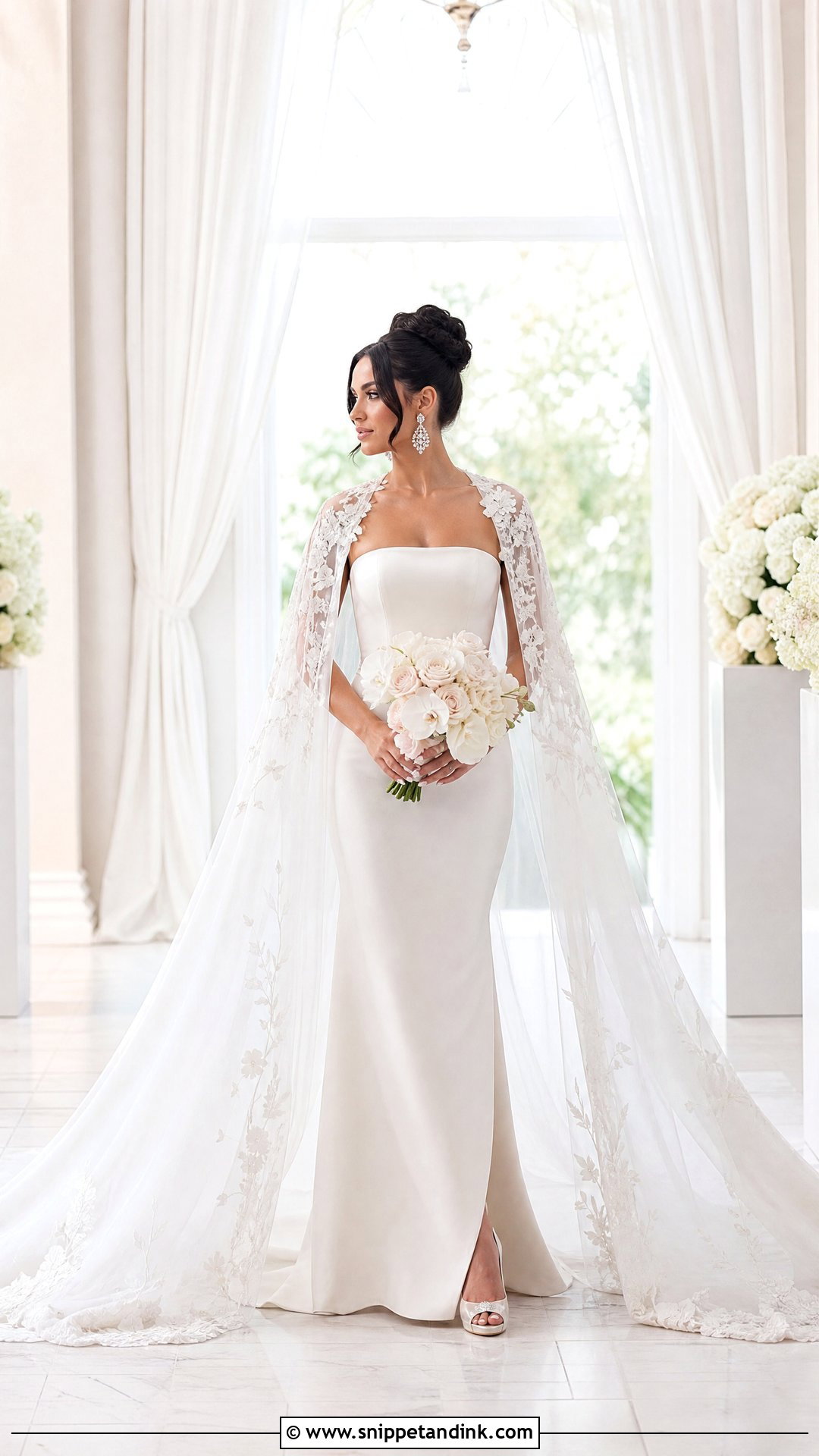
A cathedral-length cloak gives the sweep of a cathedral veil with none of the combs pulling at your crown. Over a strapless gown it softens the open shoulders without hiding the bodice. Fabric choice matters more at this length than anywhere else: tulle, chiffon and silk organza float, while anything heavier drags and bunches on a long aisle. Someone needs to straighten it before you walk, so I always brief a bridesmaid on that job. Keep the gown fitted through the waist so the volume stays behind you, and let statement earrings and a classic updo frame the face.
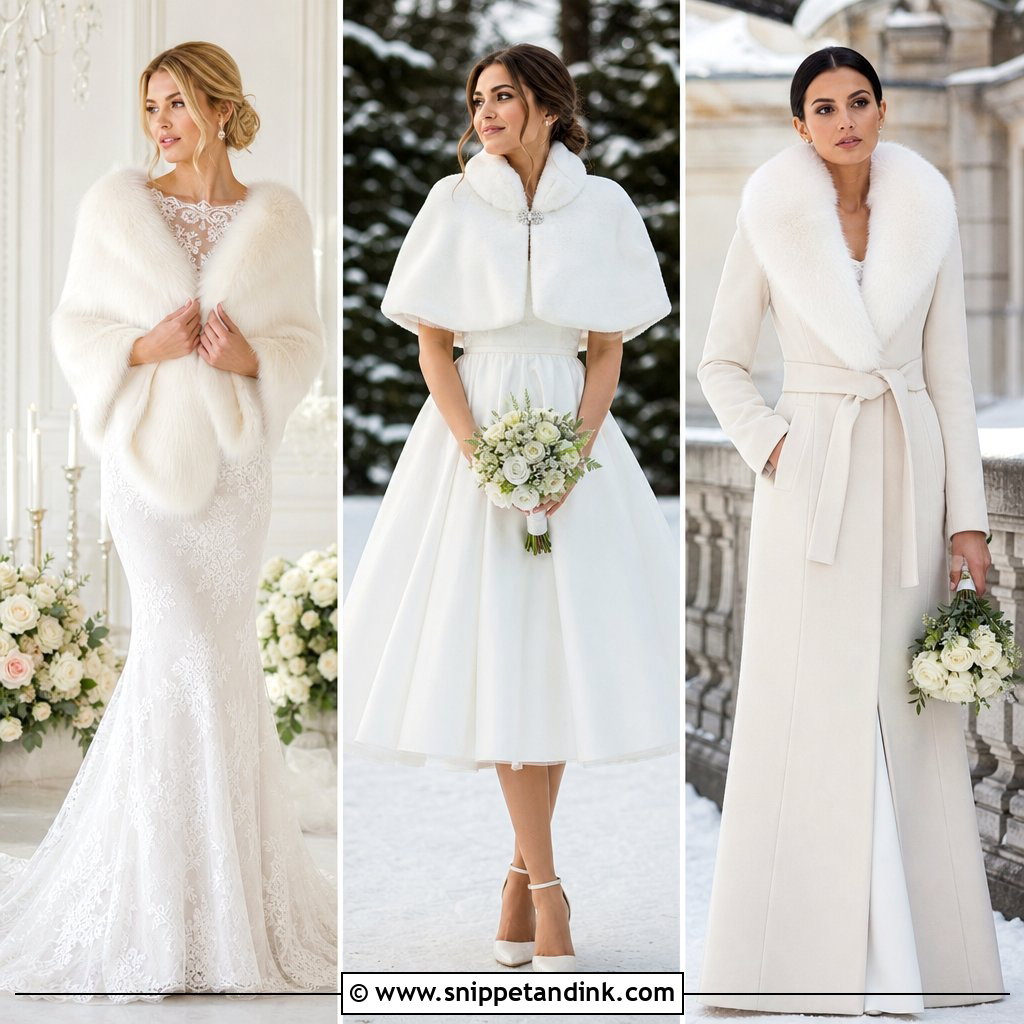
7. Fur Trim Wedding Cloak With Winter Wedding Dress
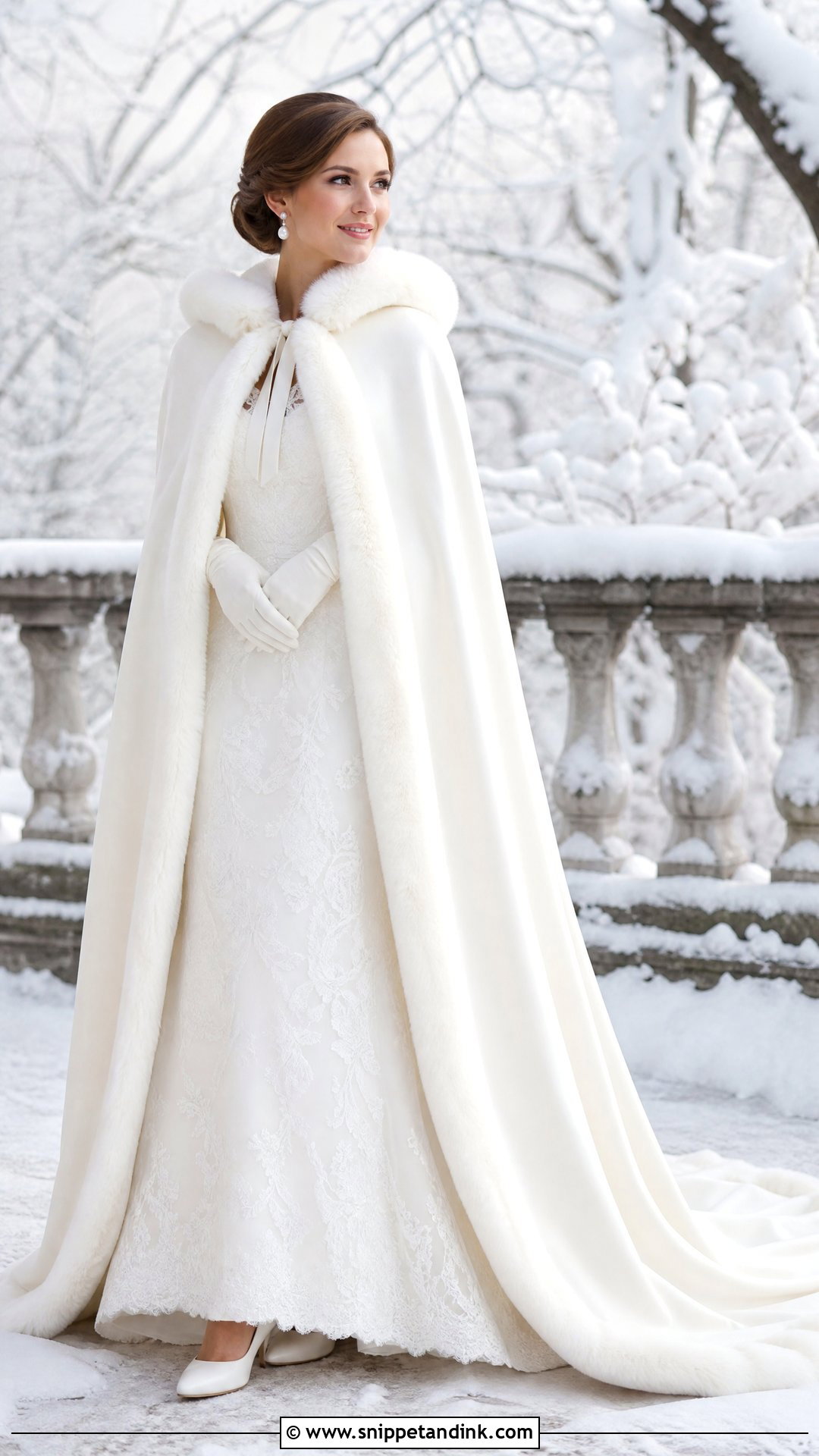
Trim is where these cloaks go right or wrong. Faux fur edging around the hood, neckline or hem suits satin, mikado and crepe winter gowns, but a deep pile at the collar pushes up against your jaw and catches foundation. I prefer a short, soft trim that frames the dress rather than swallowing it. Brush the fur in one direction before photos; it flattens wherever you’ve been sitting. Whether the gown underneath has sleeves depends on how cold the venue really is, so ask about heating before you decide.
8. Capelet Wedding Cloak With Tea Length Dress
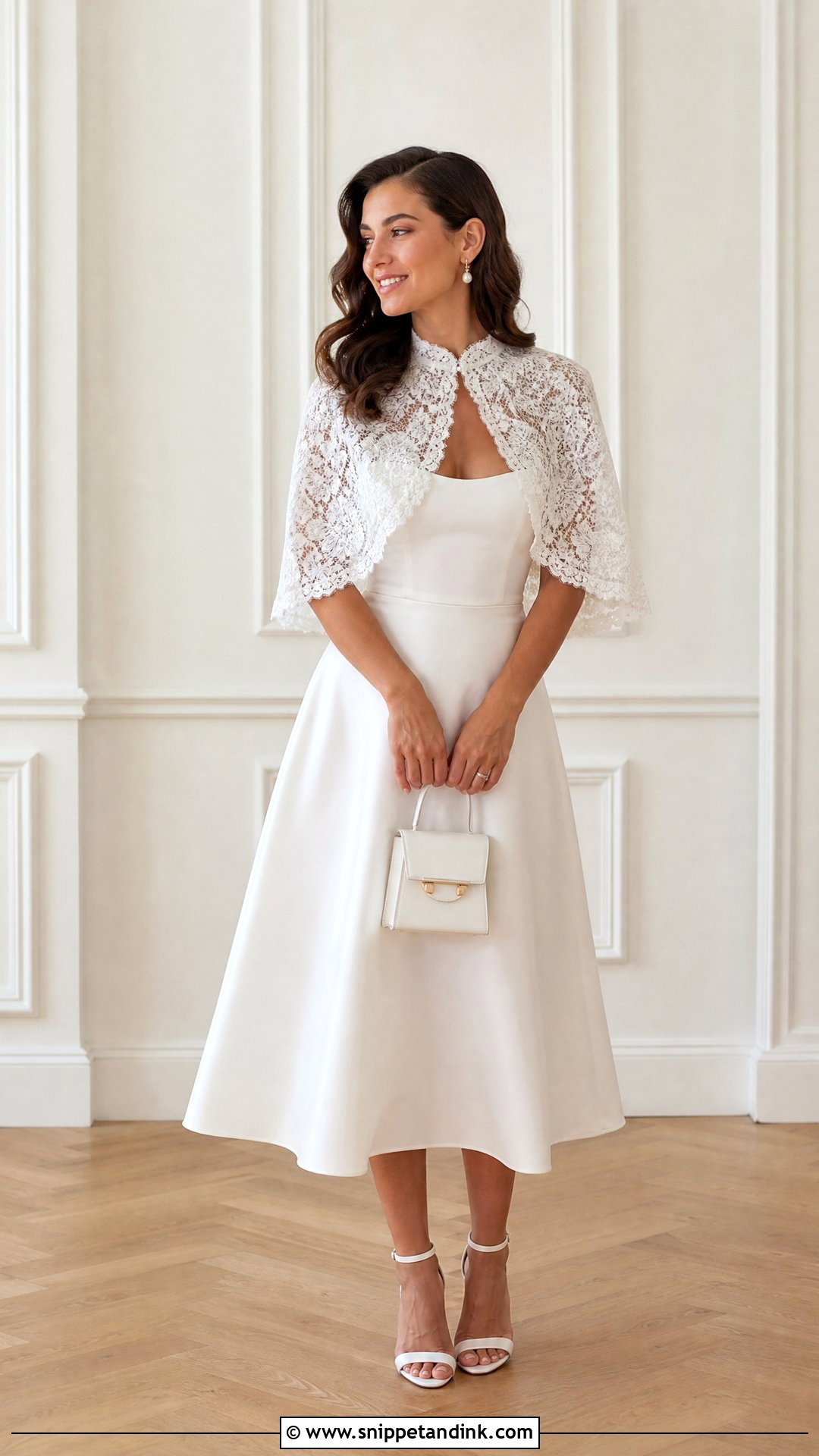
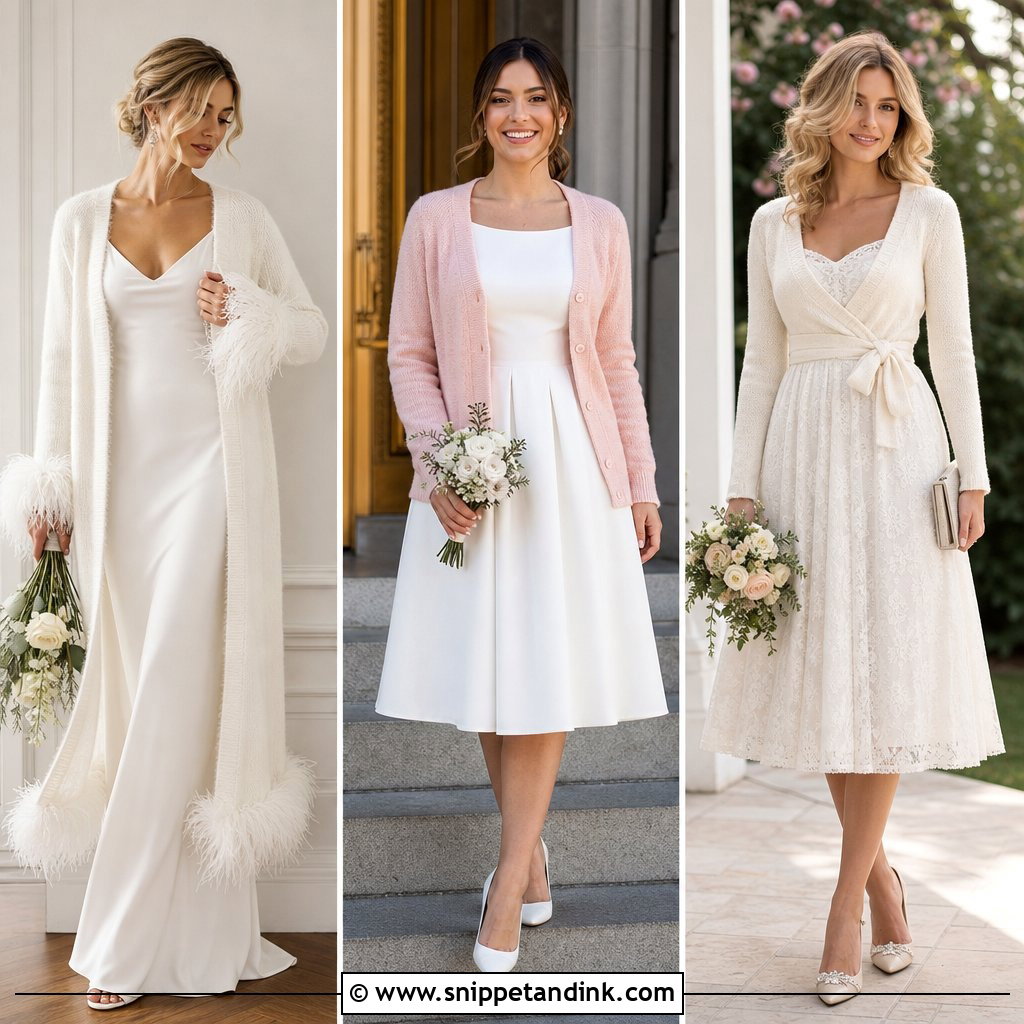
A short capelet usually ends around the waist or upper hip, which keeps a tea-length skirt fully in view. That makes it a natural fit for civil ceremonies and small receptions where you want a layer, not a production. Lace and tulle work in spring; satin or faux fur suits colder months. Tea length also shows off your shoes, so this is the one pairing where I let the footwear be the main detail: ankle straps, pearl earrings and a small structured bag.
9. Floral Embroidered Wedding Cloak With Garden Dress
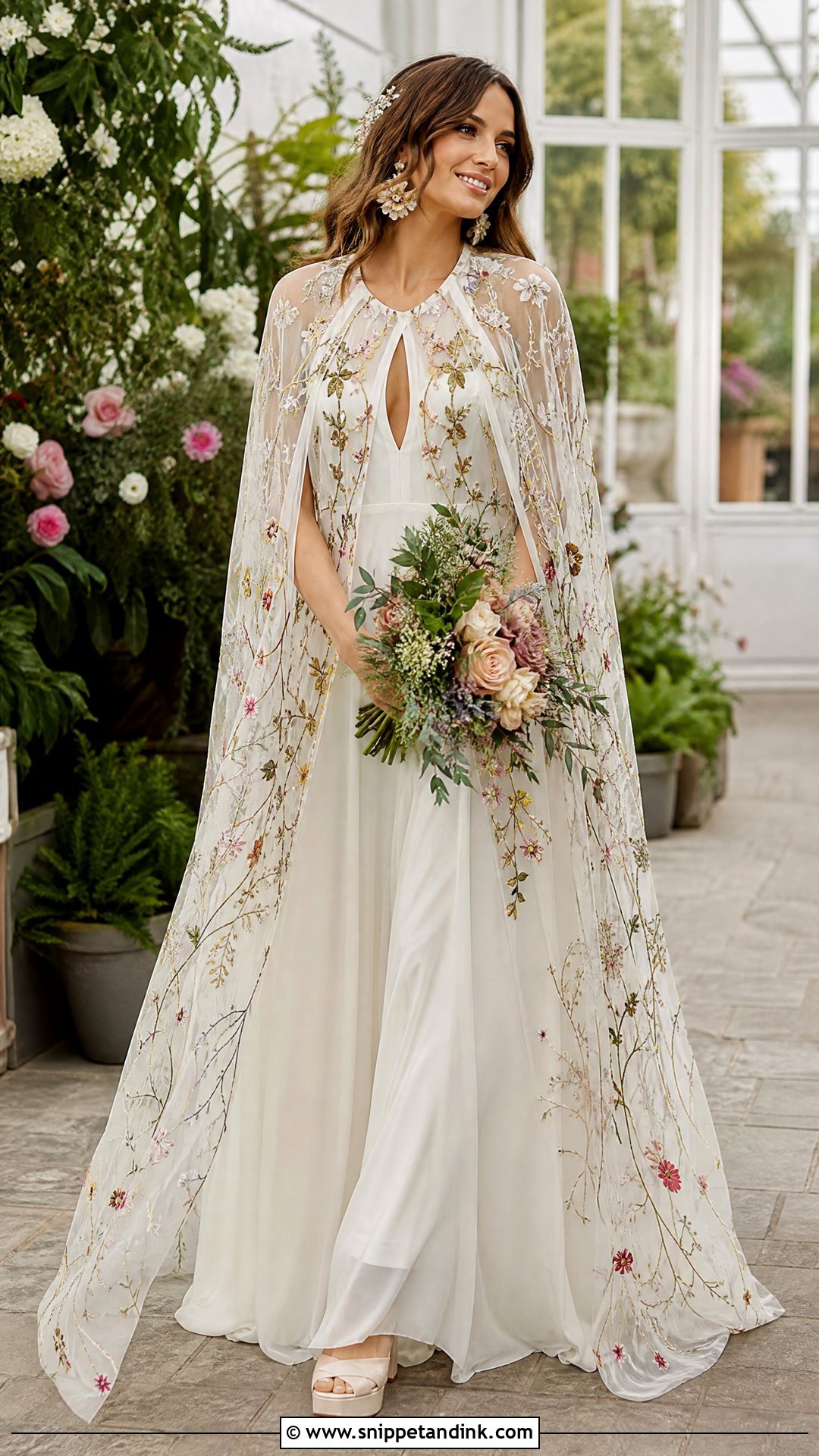
Embroidered cloaks look best when the dress underneath stays out of the way, so I pair them with a plain A-line, sheath or chiffon gown. Placement matters: florals concentrated at the shoulders and hem leave the back of the gown readable, whereas all-over embroidery turns the whole outline into pattern. Soft green or blush threadwork brings in colour quietly. One fitting note: heavy appliqué on a fine base fabric can pucker, so check the cloak hanging, not just laid flat. Loose waves, floral earrings and block heels suit the outdoor setting, since stilettos sink into lawns.
10. Beaded Wedding Cloak With Minimal Wedding Dress
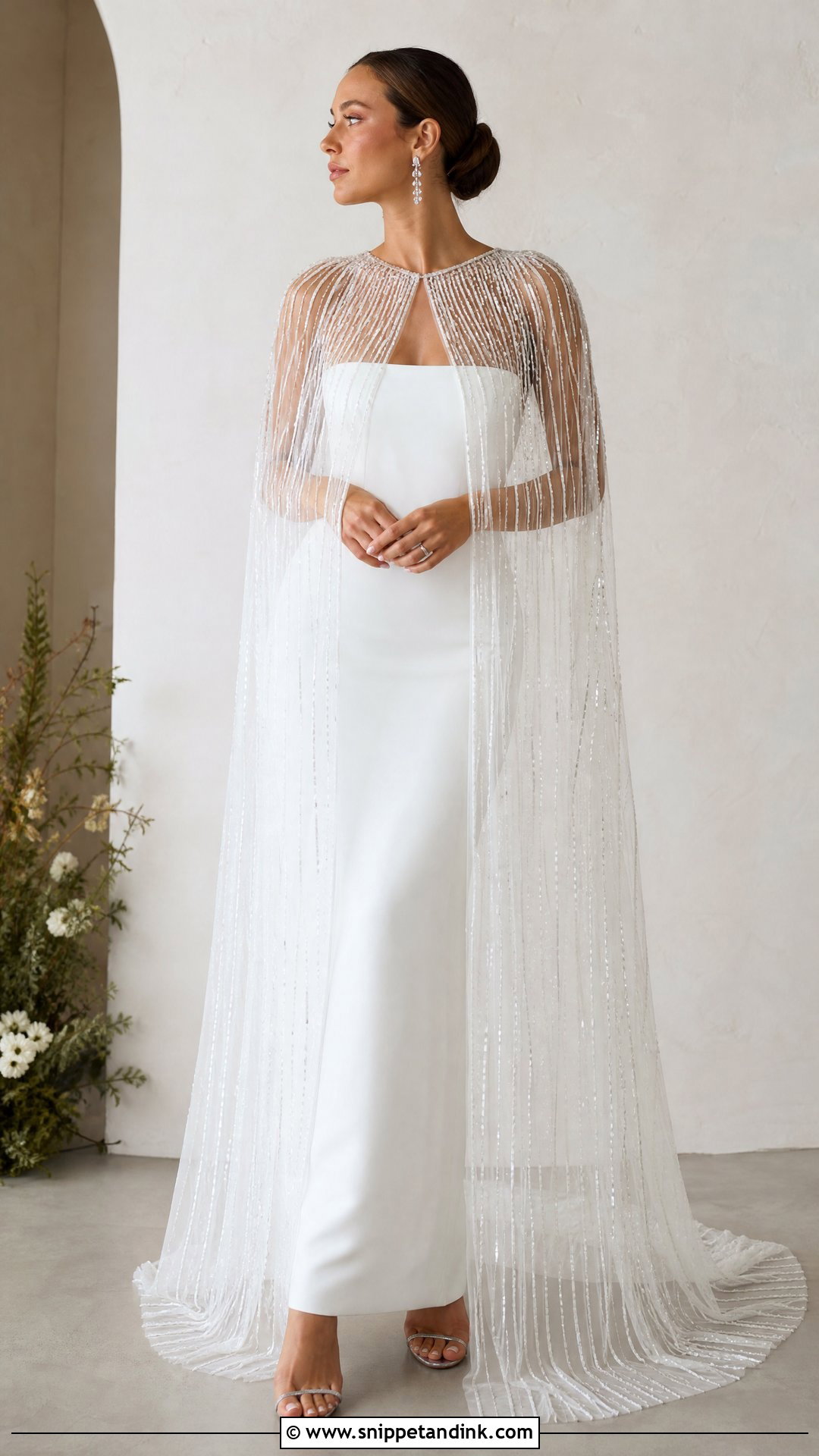
Beading on a cloak lets you keep a minimal dress and still have sparkle at the ceremony. The practical issue is weight. Beads concentrated across the shoulders or down the centre back pull the fabric downward, so the closure and the tailoring have to carry that load or the neckline gapes by the end of the night. I keep the beading light and evenly spread. A straight crepe dress, small crystal earrings and a low chignon leave the beadwork as the one point of shine, and it catches light well both indoors and outside.
11. Chiffon Wedding Cloak With Beach Wedding Dress
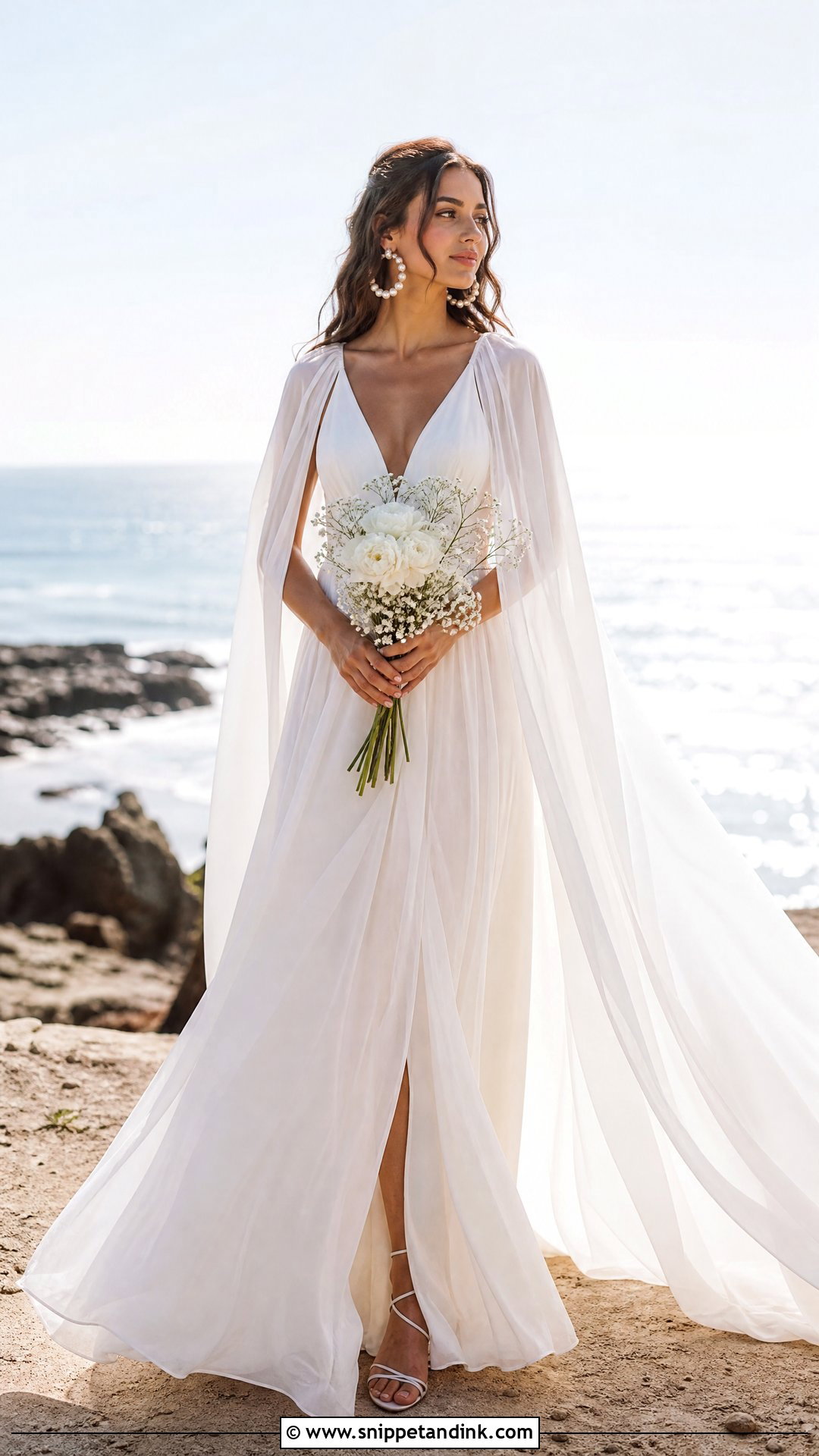
Chiffon moves in the slightest breeze, which is exactly why I use it by the water. It suits a lightweight sheath, slip dress or simple A-line in ivory. Skip heavy embellishment here: sand works into beading and wind turns a weighted hem into a sail. Flat sandals or low block heels keep you steady on uneven ground. A small pearl hoop and loose waves finish the look, and the cloak gives you veil-like softness at a seaside celebration without anything pinned into your hair.
12. Satin Wedding Cloak With Princess Wedding Dress
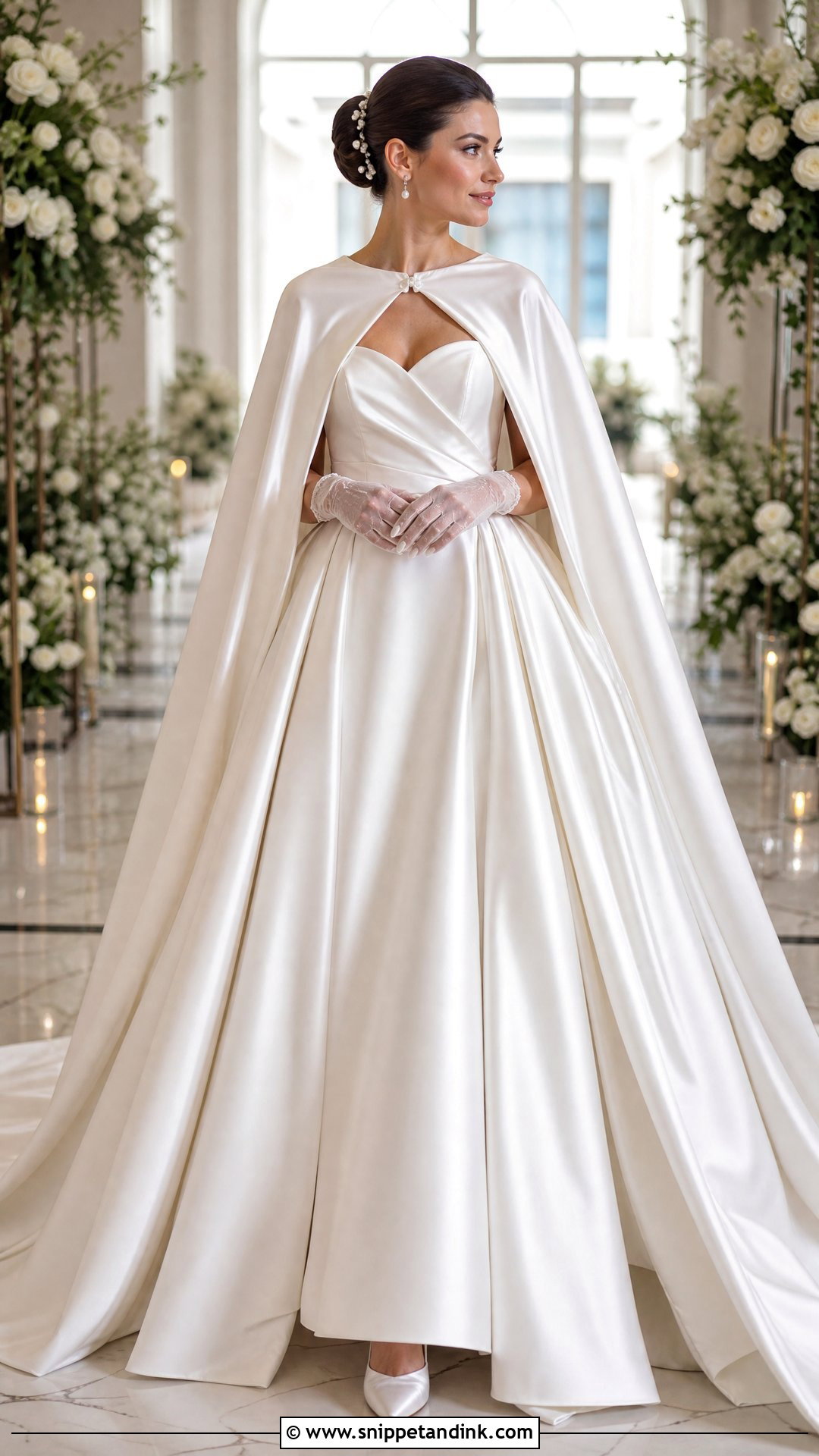
With satin on satin, matching sheen matters more than matching colour. A duchess satin gown next to a shiny polyester cloak looks cheap on camera, so I compare the two under the same light before ordering. A fitted bodice, full skirt and long satin cloak give a regal outline from both directions. Fastenings should disappear: a covered button or hidden hook keeps the neckline clean. A tiara-style headpiece pushes it formal; pearl pins keep it softer. Satin wrinkles where you sit, so plan a quick steam before portraits.
13. Off Shoulder Wedding Cloak With Fitted Gown
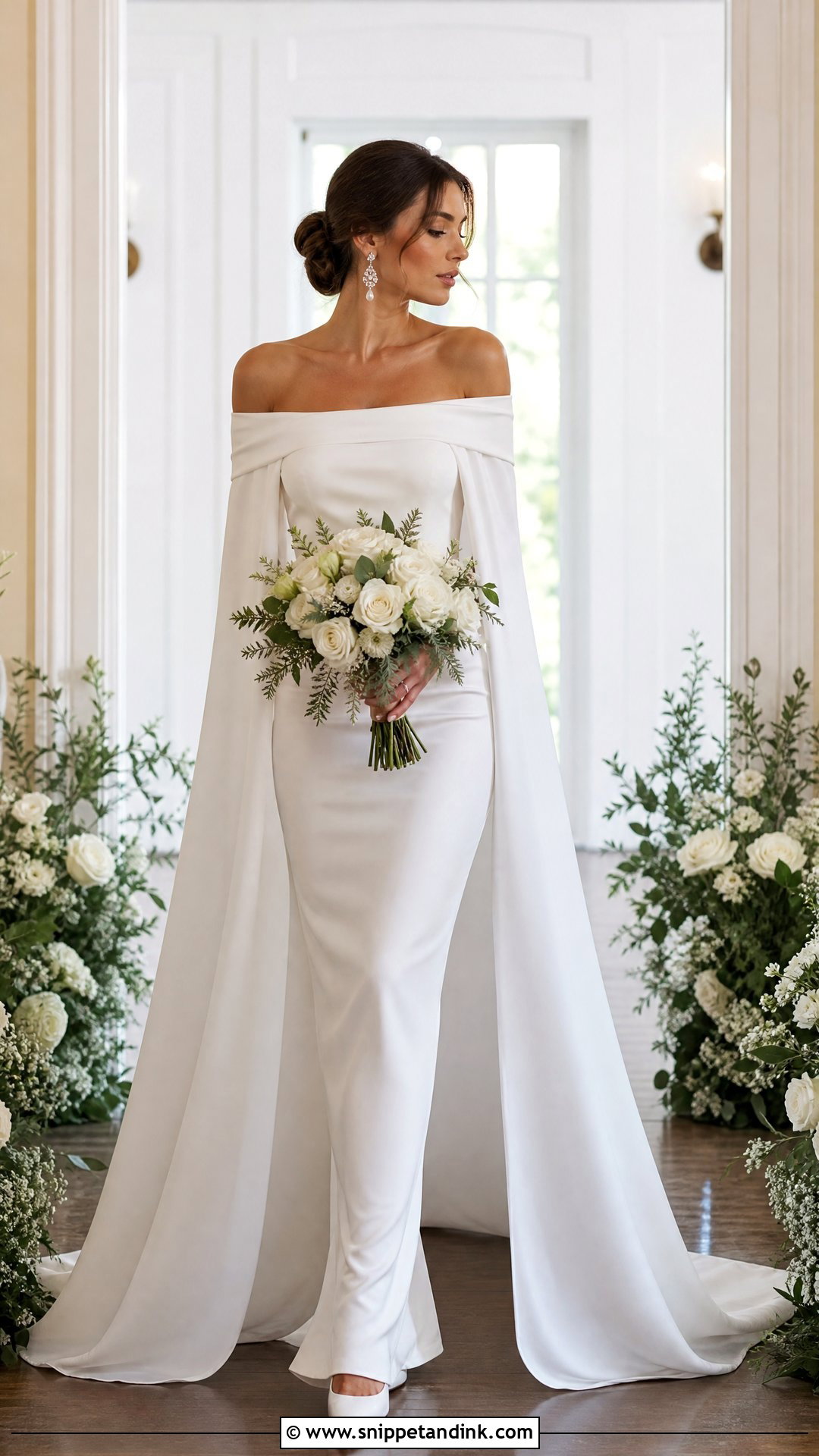
An off-shoulder cloak sits around the upper arms and drops into a train, so it covers the arms without the stiffness of a bolero. The catch is movement. Fabric resting on the arms limits how high you can lift them, which matters for hugs and for the first dance, and it creeps upward if the cut is loose. I check the band at the fitting by having the bride reach forward. Pair it with fitted crepe, lace or satin, skip the necklace so the shoulder line stays clean, and finish with drop earrings and a low bun.
14. Detachable Wedding Cloak With Reception Dress
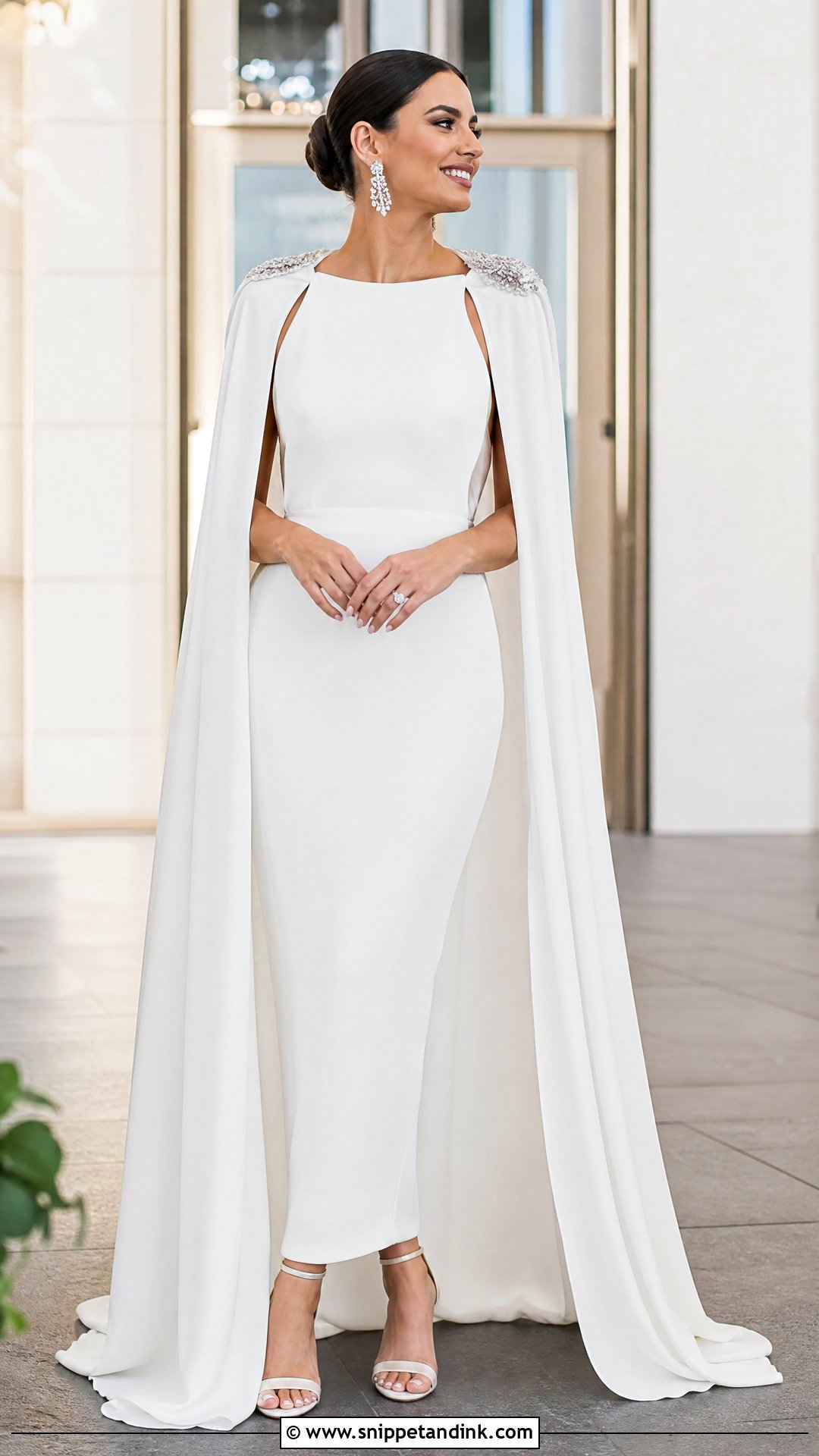
This is the practical choice: wear the cloak for the ceremony, the portraits and the entrance, then take it off for dancing. It gives you two looks without a second dress. Fastenings make or break it. Invisible snaps and shoulder clasps should be tested by your stylist or seamstress for how easily they release, because someone else will be undoing them in a hurry. Sheath, column and fit-and-flare dresses work best underneath, with comfortable heels and a sleek hairstyle that doesn’t catch on the clasps as the cloak comes off.
15. Hooded Lace Wedding Cloak With Boho Dress
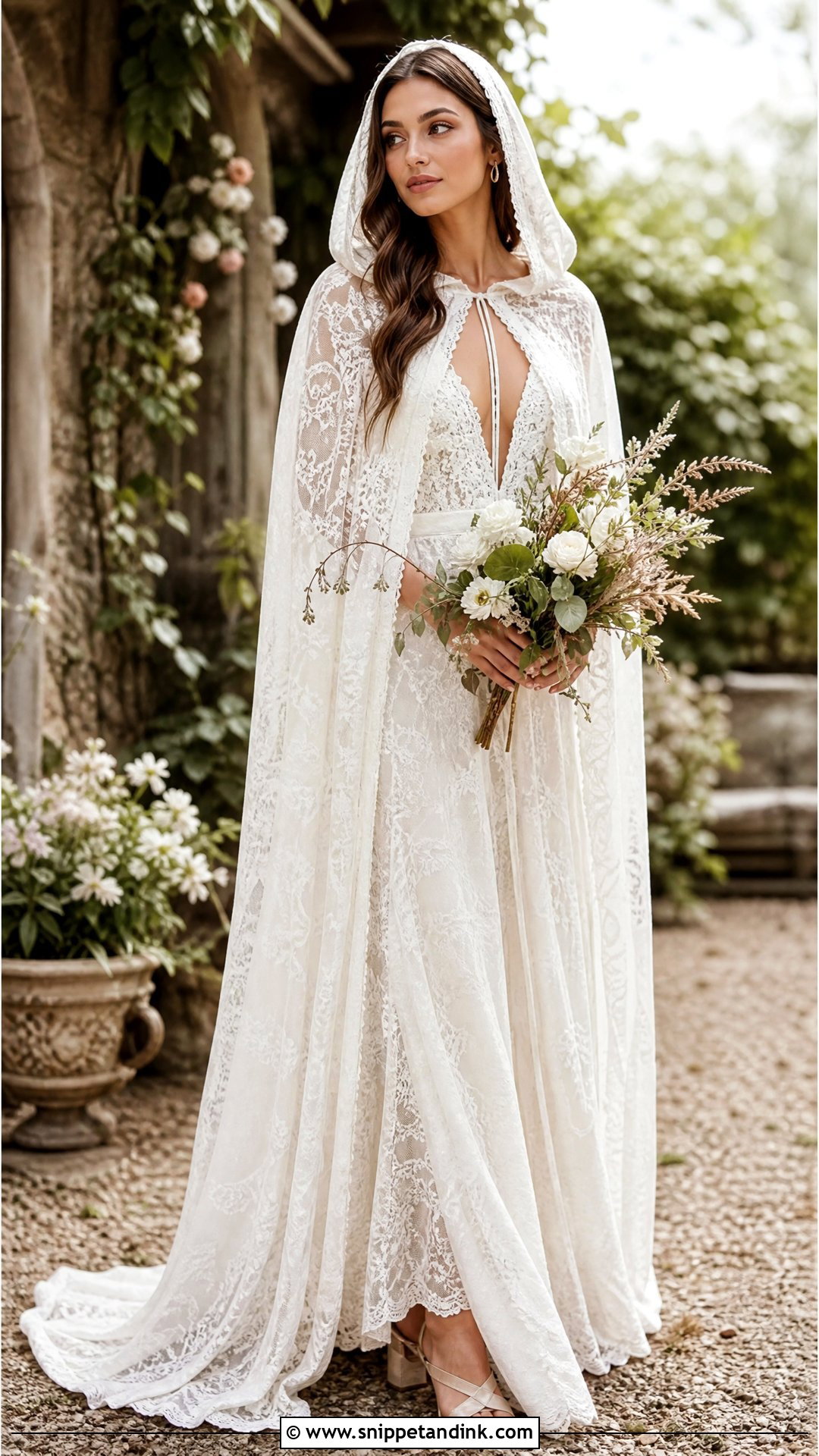
A hooded lace wedding cloak suits a boho dress when the lace is soft enough to drape; stiff corded lace stands away from the body and fights flowing sleeves. The hood is the part I test hardest. It needs to be roomy, because a tight hood flattens loose waves within minutes and drags at any pins. Crochet lace details and lightweight A-line gowns sit happily underneath. Natural makeup, small hoops and low block heels or lace-up sandals keep it suited to forest and rustic garden venues.
16. Sheer Wedding Cloak With Backless Dress
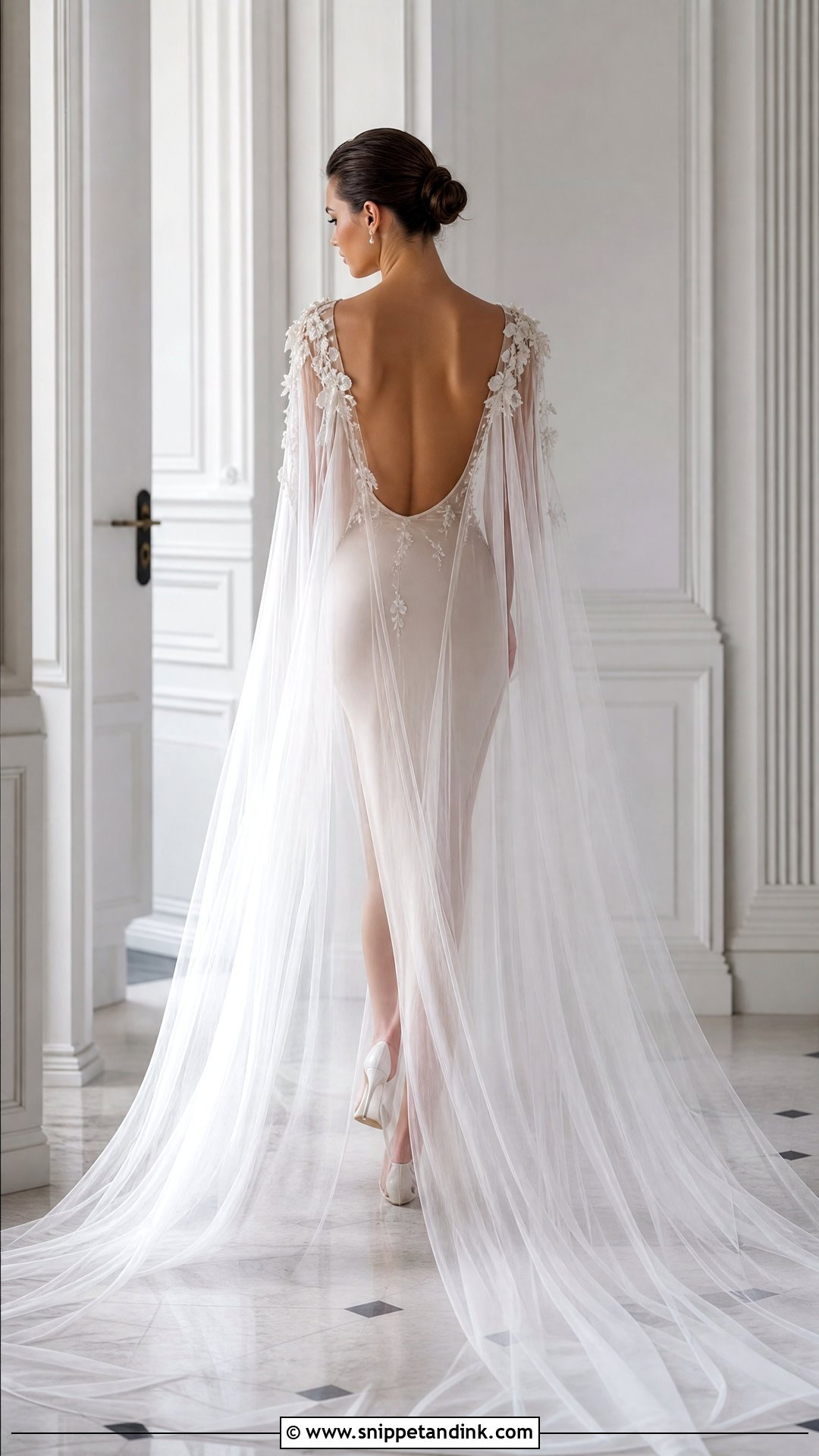
If the open back is the reason you bought the dress, the cloak has to protect it. I use transparent tulle or organza fastened at the shoulders or neckline, light enough that the back design reads through it. Bulky clasps are the common mistake; they sit right where the eye goes. A sleek updo keeps hair from covering the back as well. During the ceremony guests mostly see your back, so this pairing gives them the detail while you stay covered.
17. Sequin Wedding Cloak With Evening Wedding Dress
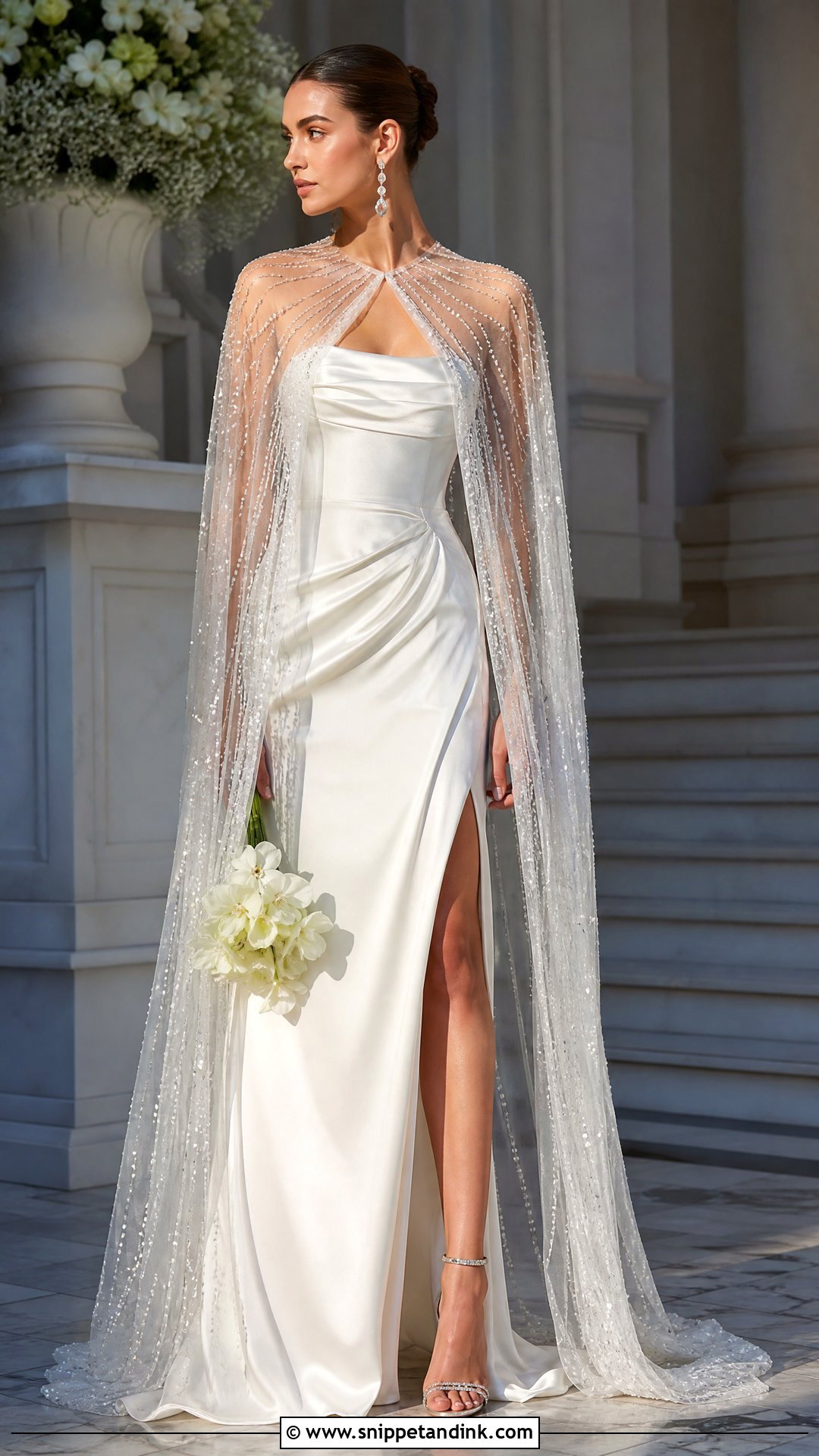
Sequins photograph brightest under evening light, which is why I save this pairing for later ceremonies and city venues. Scattered sequins or a soft shimmer look far richer than dense coverage, particularly over a dress that already has detail. A plain slip, crepe sheath or satin column underneath keeps things balanced. Two things I warn brides about: sequins scratch bare arms after a few hours, and they shed onto everything they rub against. Keep the bouquet understated so the cloak stays the focal point, with metallic earrings and a sleek bun.
18. Organza Wedding Cloak With Structured Gown
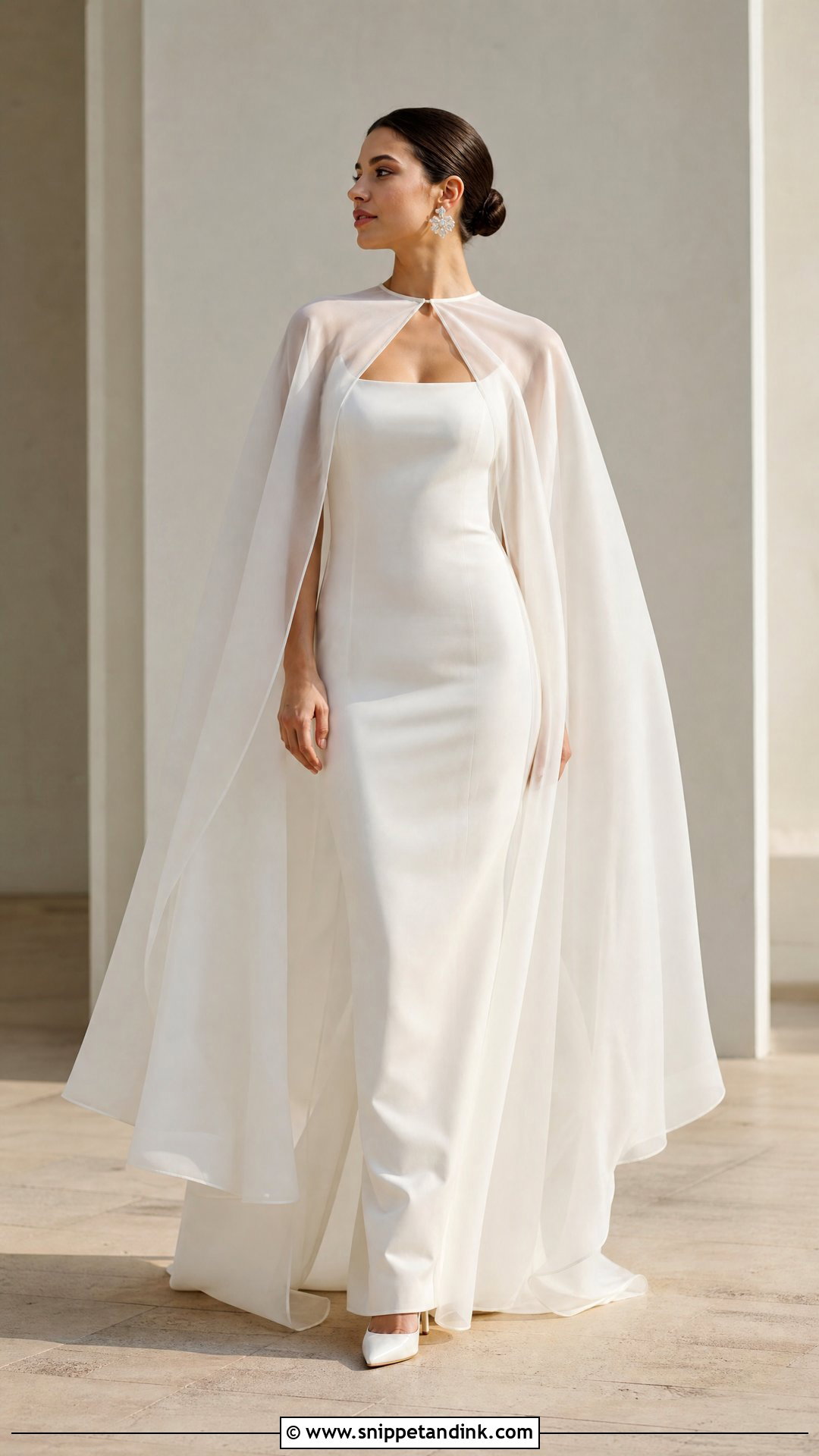
Organza holds its shape where tulle and chiffon collapse, so it’s my pick for architectural dresses, square necklines and clean bodices. A slightly flared organza cloak echoes the structure of mikado or satin while adding air rather than weight. The trade-off is creasing: organza marks sharply when folded, so it should travel hanging, never packed. Plain edging keeps it modern; floral appliqué softens it. Sculptural earrings, a neat updo and pointed pumps match the crisp lines.
19. Short Wedding Cloak With Mini Wedding Dress
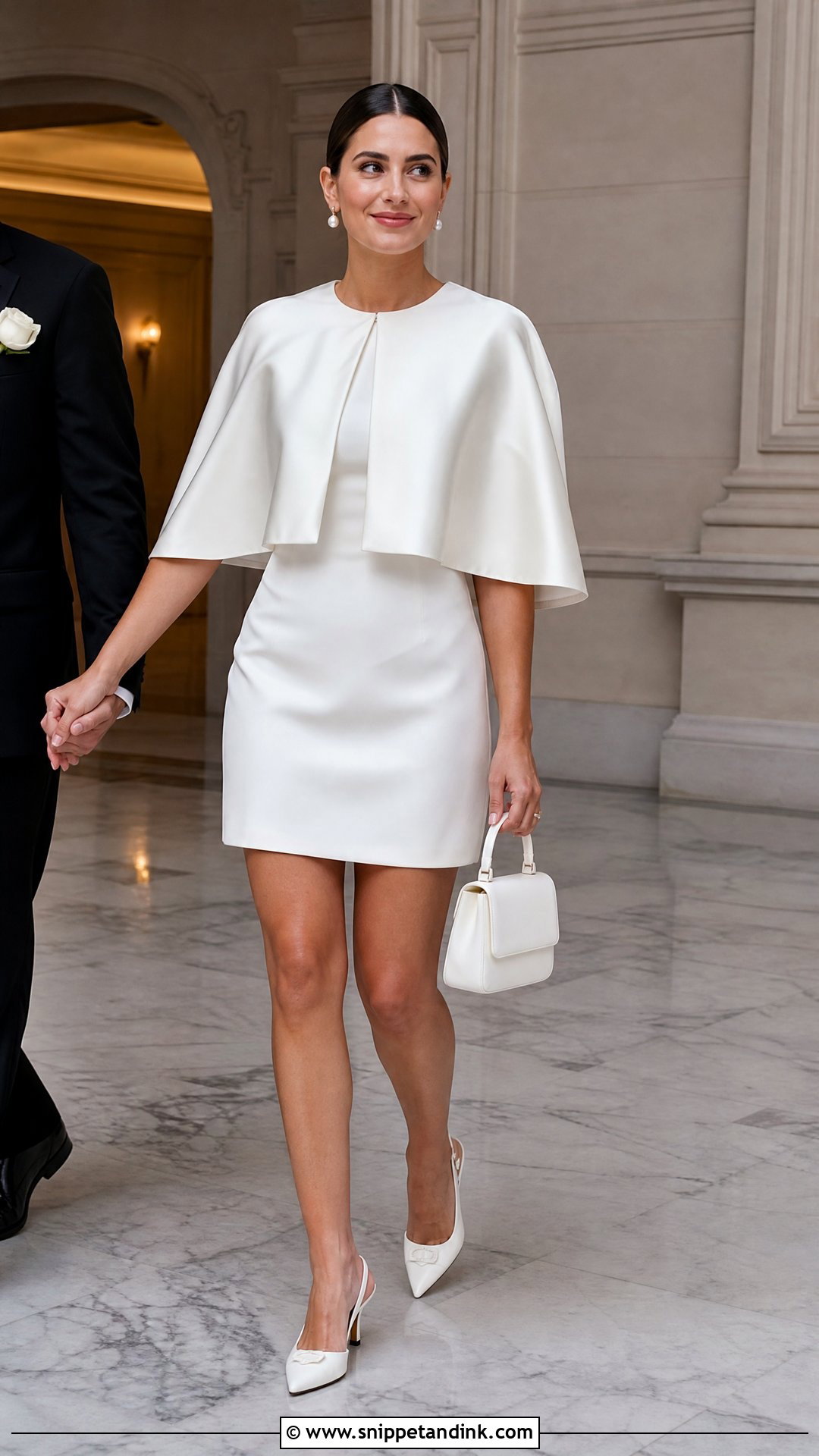
A short cloak over a mini dress is the easiest outfit to move in, which suits courthouse ceremonies, after-parties, bridal exits and second looks. Cropped satin, feather trim, lace or faux fur all work depending on the season. What separates a styled look from a costume is the dress underneath: clean lines let the cloak look intentional. Slingback heels, pearl earrings and a small top-handle bag finish it, and sheer tights or sleek gloves add polish in colder weather.
20. Long Sleeve Wedding Cloak With Modest Dress
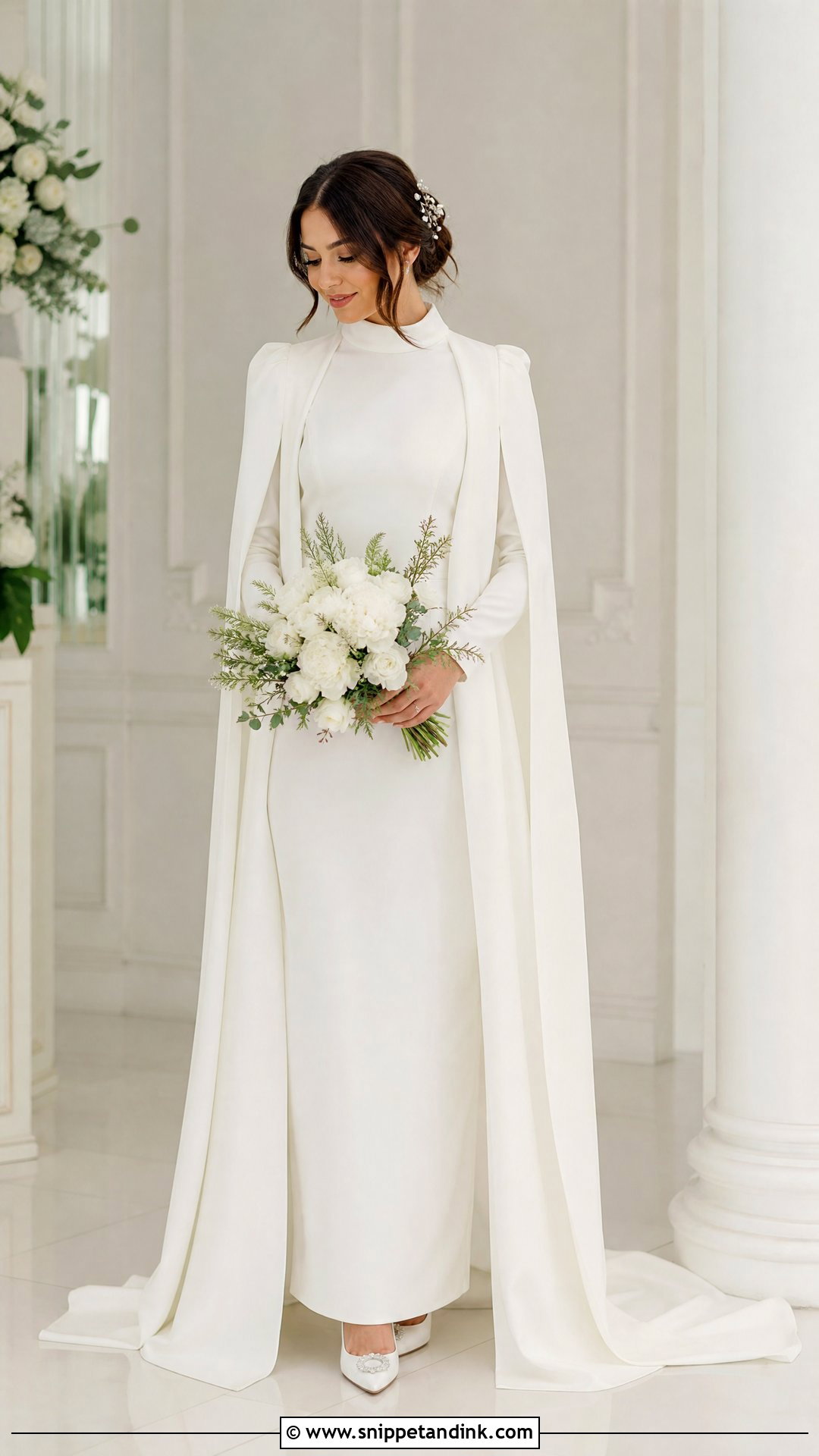
For a modest dress with a higher neckline and covered arms, the cloak should add movement, not more fabric to manage. Loose sleeves or cape sleeves let you raise your arms freely. If the gown already has sleeves, I keep the cloak lightweight; a double layer of satin or lace gets warm quickly indoors, especially during a long ceremony. Satin, crepe or lace gowns with clean proportions work best underneath. Finish with a low bun, pearl pins and closed-toe heels.
21. Blue Wedding Cloak With Ivory Dress
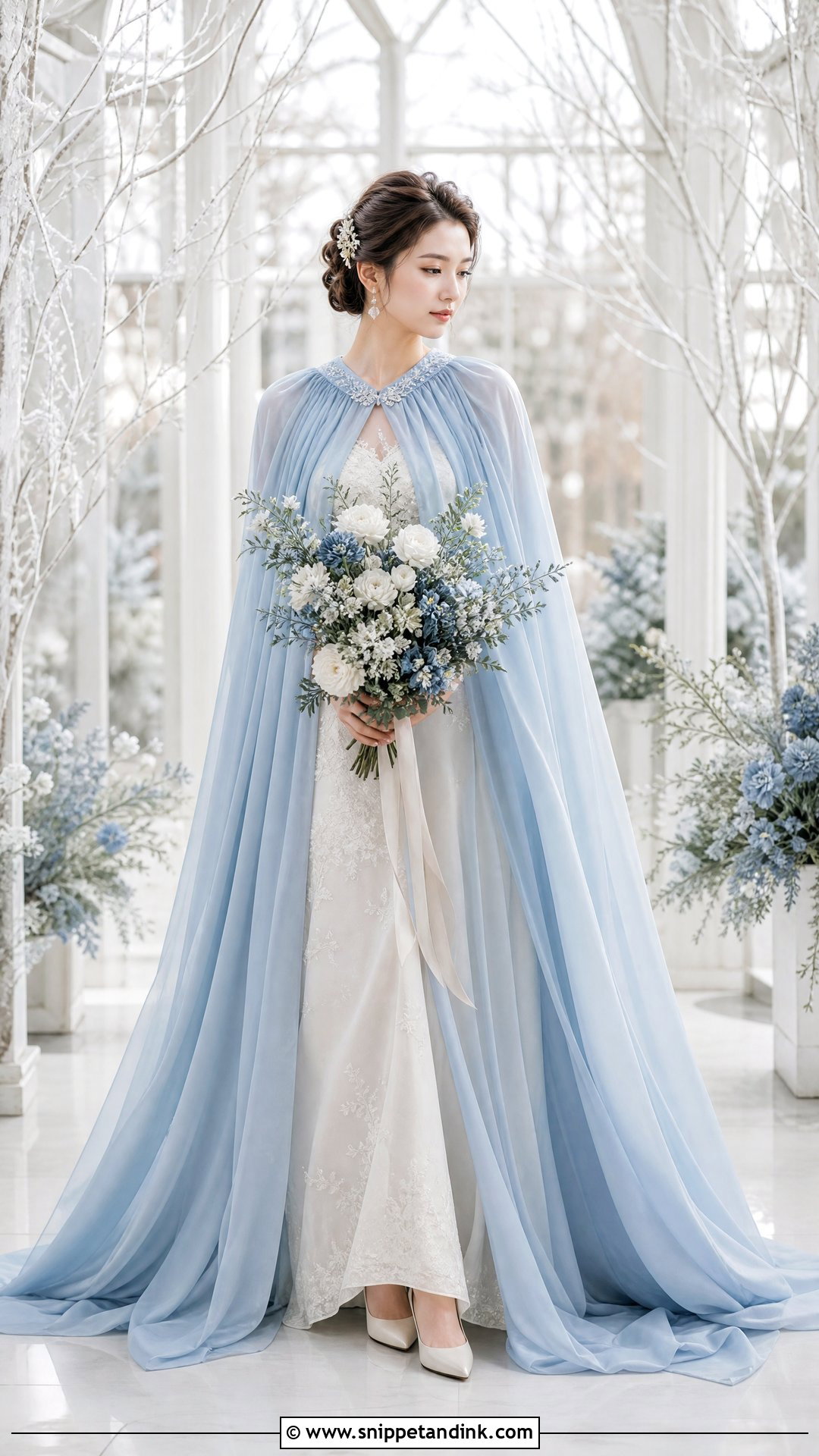
Pale, dusty or ice blue on the cloak counts as your something blue without touching the dress. It works best over a simple ivory gown so the colour has room. Choose the fabric by season: chiffon in warm months, velvet in winter, tulle in between. Ask to see the blue in daylight before ordering, because cool blues can look grey next to warm ivory. Keep shoes ivory or metallic so the outfit stays bridal, and echo the blue with cool-toned accents in the bouquet.
22. Blush Wedding Cloak With Romantic Wedding Dress
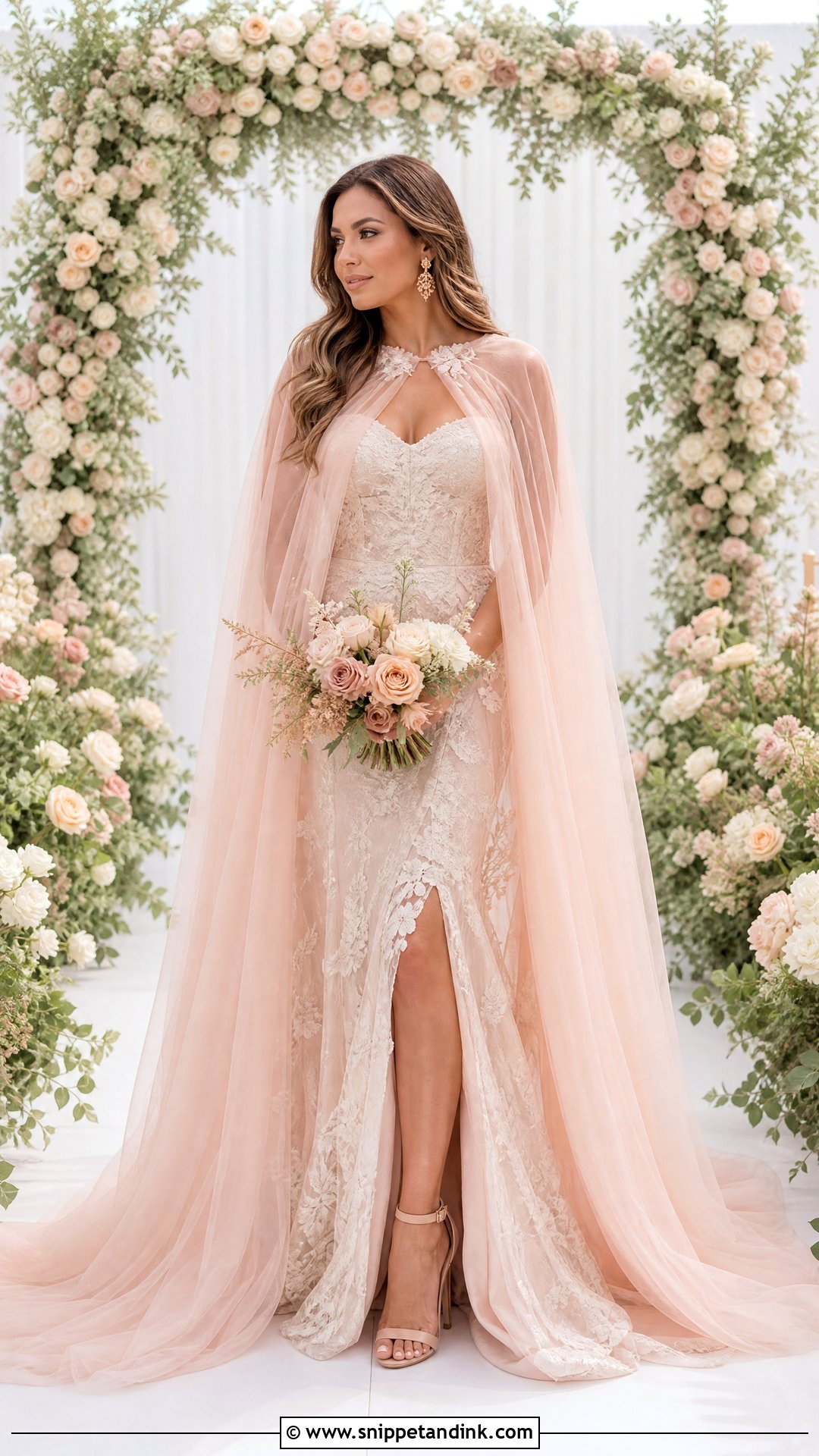
Blush is the colour I test most carefully against skin, because the wrong pink makes a bride look flushed in photos. Hold the fabric under your chin in natural light before you buy. It sits well with ivory gowns, floral lace, corset bodices and flowing skirts. Sheer blush tulle softens everything; blush satin feels more formal and shows colour more strongly. Rose gold earrings, nude or ivory heels and rosy makeup tie it together.
23. Black Wedding Cloak With White Wedding Dress
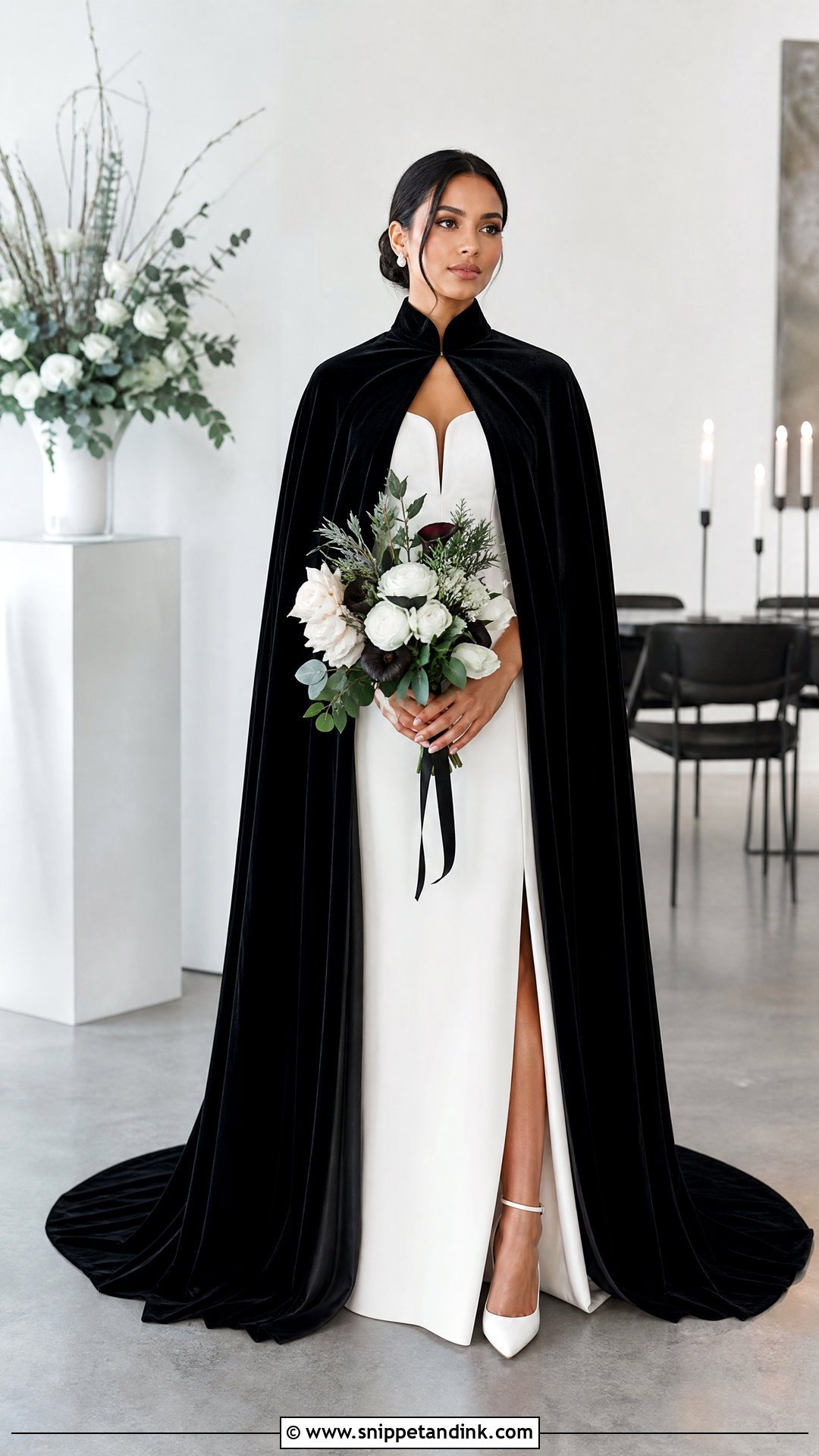
Black over white is pure contrast, so the gown has to be clean and structured: a satin column, a crepe sheath or a minimalist ball gown. Black velvet or satin gives the drama while the white dress keeps it bridal. Sharp tailoring is non-negotiable; any pulling at the shoulders shows up instantly against white. Keep jewellery simple and the hair polished for modern venues, evening ceremonies and high-fashion portraits. It can feel severe at a daytime country wedding, so think about the setting first.
24. Gold Wedding Cloak With Champagne Dress
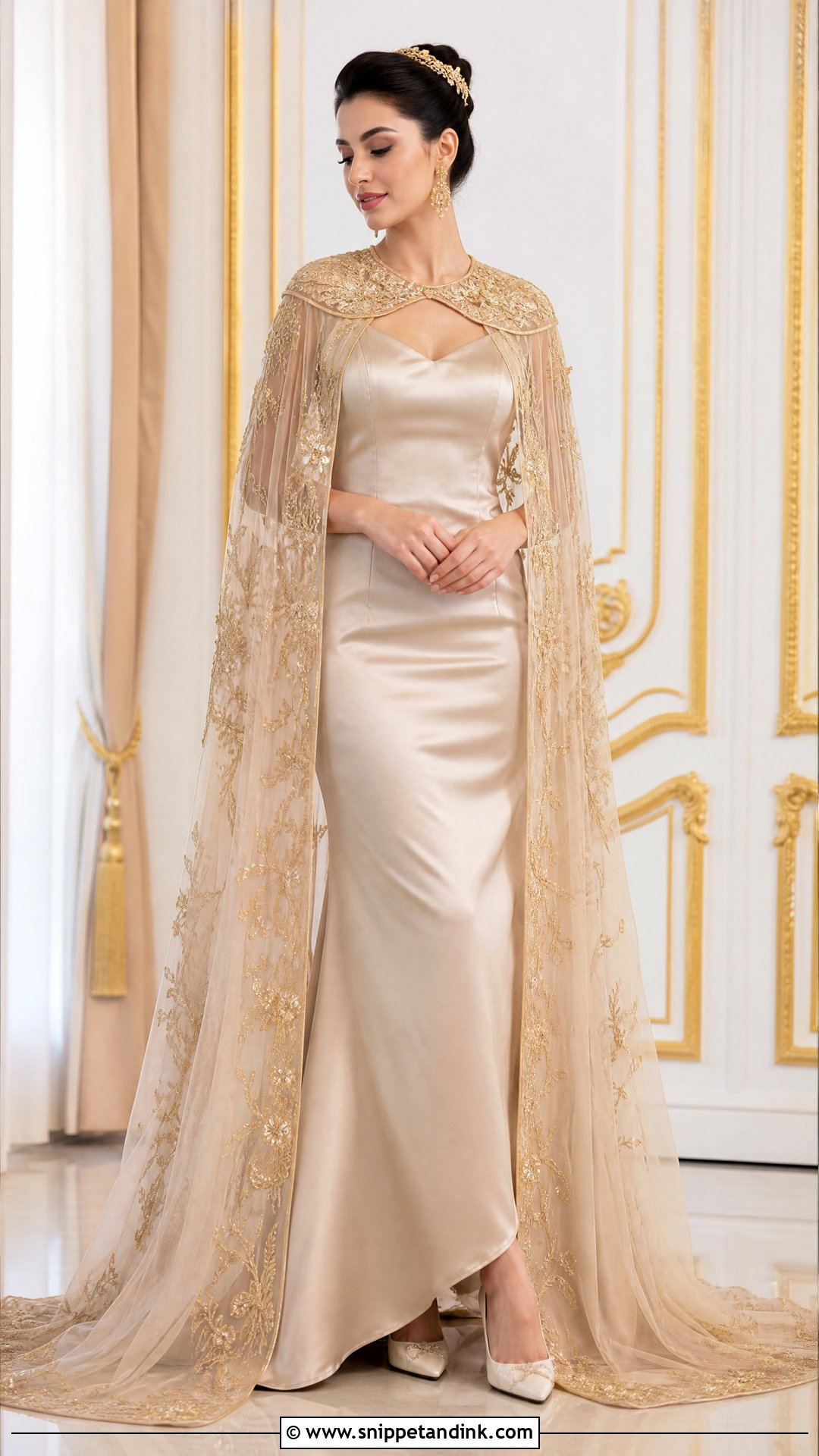
Gold and champagne sit in the same warm family, which suits brides who look washed out in bright white. Sheer gold-thread cloaks, a champagne satin cape or light embroidery give a soft glow rather than glitter. I warn against heavy metallic thread here: it can look brassy under warm reception lights and stiffens the drape. A slip gown, fitted lace or flowing A-line all work underneath. Gold earrings, ivory heels and a delicate comb finish it.
25. High Neck Wedding Cloak With Modern Dress
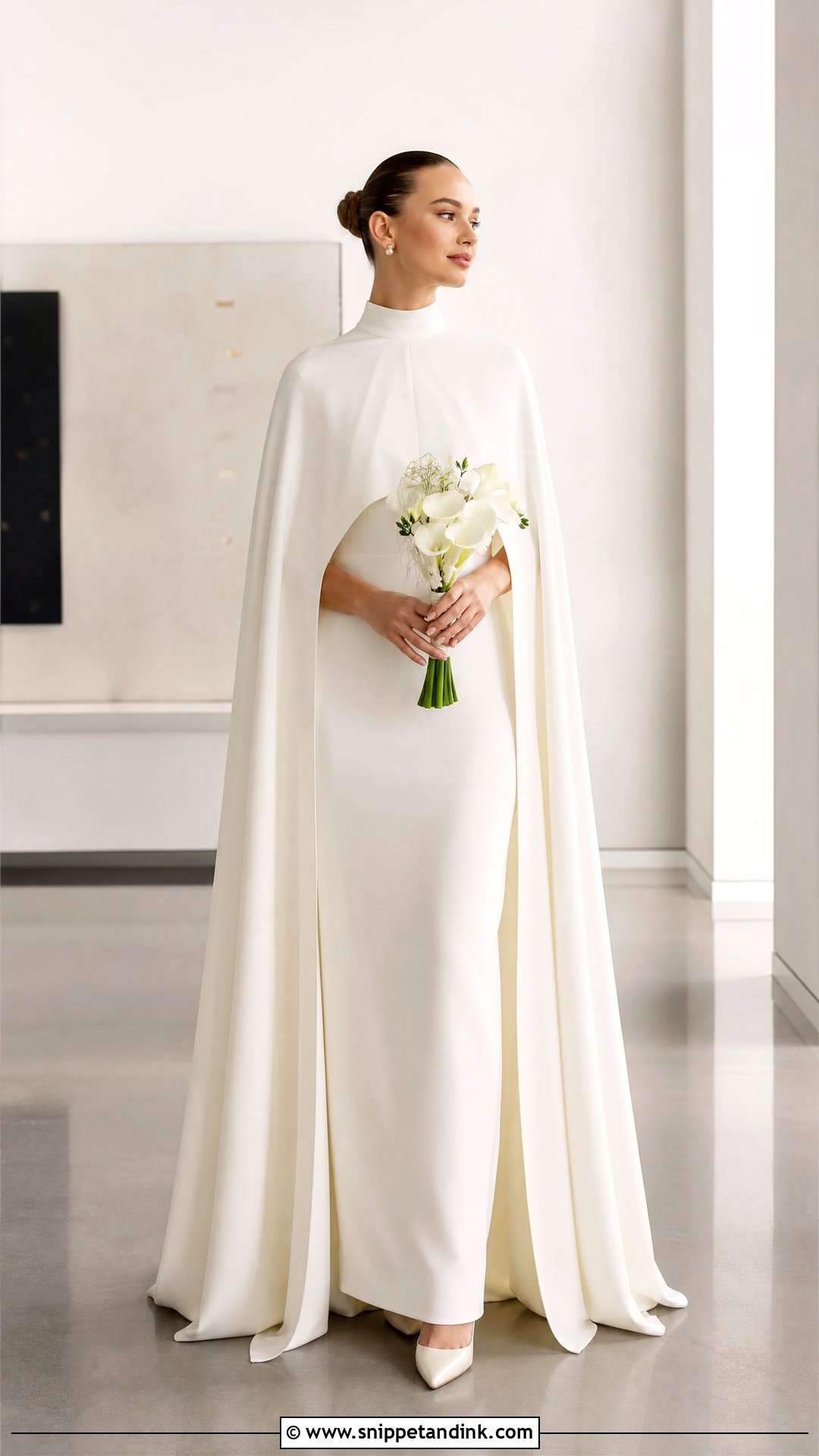
A high neck frames the face and gives a sleek, minimal outline over a column dress or tailored crepe gown. The comfort test matters more here than anywhere: sit, turn your head and look down at a pretend bouquet. A collar that’s fine standing can press into your throat when seated. Smooth fabric and a precise closure keep the line sharp. Small earrings, a tight bun and pointed heels suit city weddings, galleries and modern portraits.
Stairs, Car Doors and a Cloak That Has to Come Off
Most cloak problems happen between the photos rather than in them. Getting in and out of a car is the worst moment: gather the cloak into your lap before you sit, or it ends up crushed under you and creased all down the back.
On the day
- Have someone practise unfastening it at the final fitting, so it comes off in seconds rather than with three people tugging.
- Carry a lint roller for dark velvet or black satin; they show every speck of confetti and petal.
- Steam it hanging the morning of the wedding, not with an iron. Velvet pile crushes permanently under direct heat.
- Outdoors in wind, a longer cloak can billow over your face. A couple of discreet hem weights or a hidden wrist loop gives you control.
Afterward
Hang the cloak on a padded hanger in a breathable cotton bag, never plastic, which traps moisture and can yellow ivory fabric. Spot-check the hem for mud and makeup before it goes away, then take it to a cleaner who handles bridal fabrics. Point out any pearls or sequins first, since some glues don’t survive dry cleaning.
Wear It Sitting Down Before You Say Yes
A cloak can make a simple dress feel grand, keep you warm through outdoor photos or take the place of a veil entirely. Start with the gown’s shape, the venue and season, your hairstyle and how much weight you’re happy to carry. Tulle, lace, chiffon, satin, velvet, pearls and embroidery each behave differently, so pick the one that supports your dress rather than hides it. Then wear it for a full fitting, sitting and walking, before you decide.
You'll Like These Ideas:


Leave a Reply