
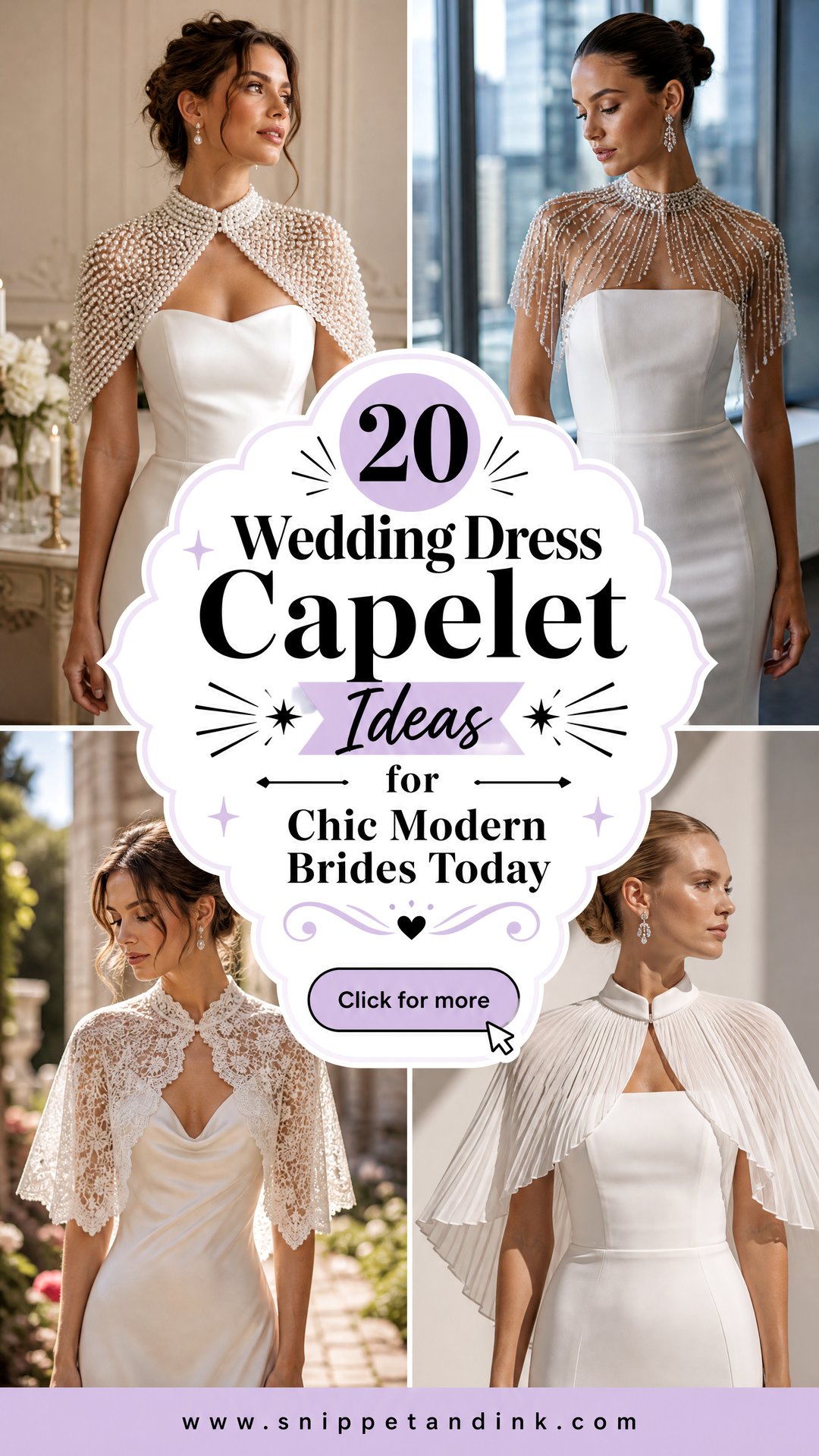
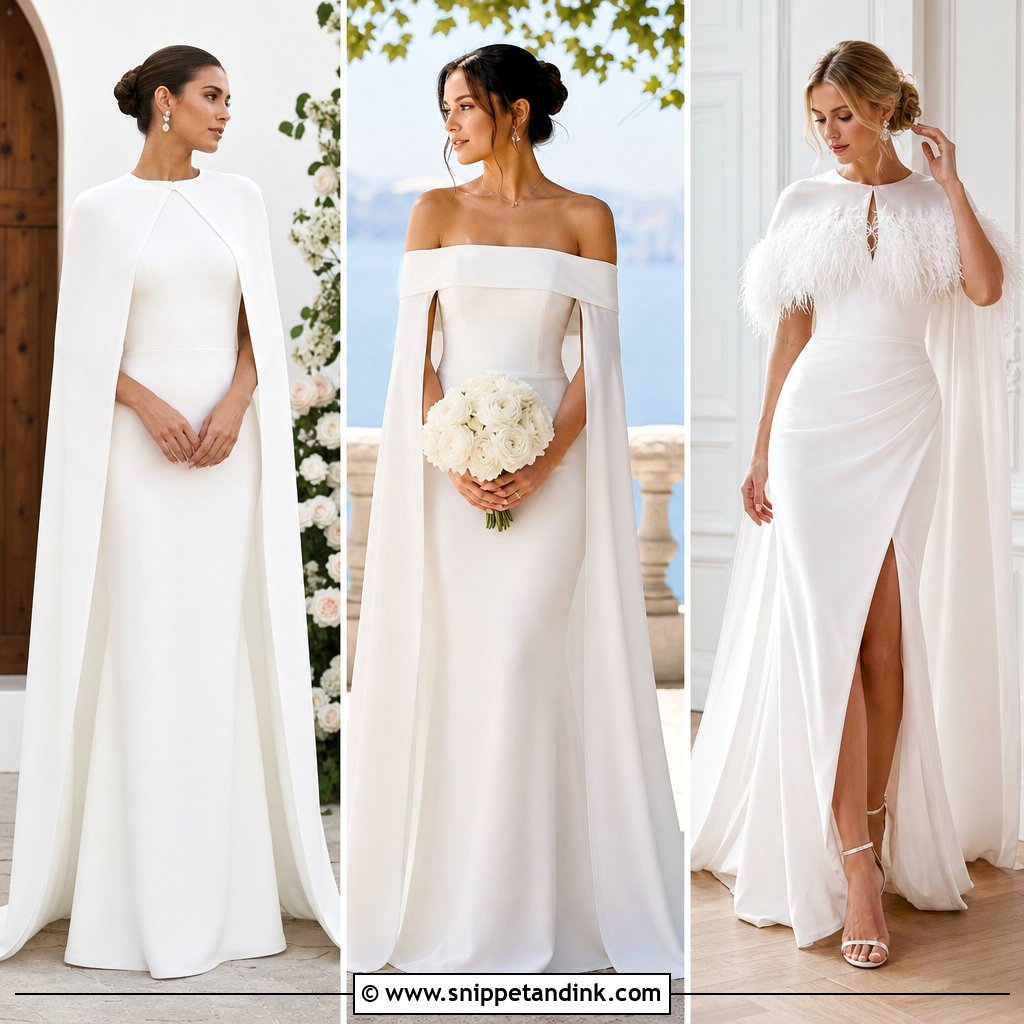
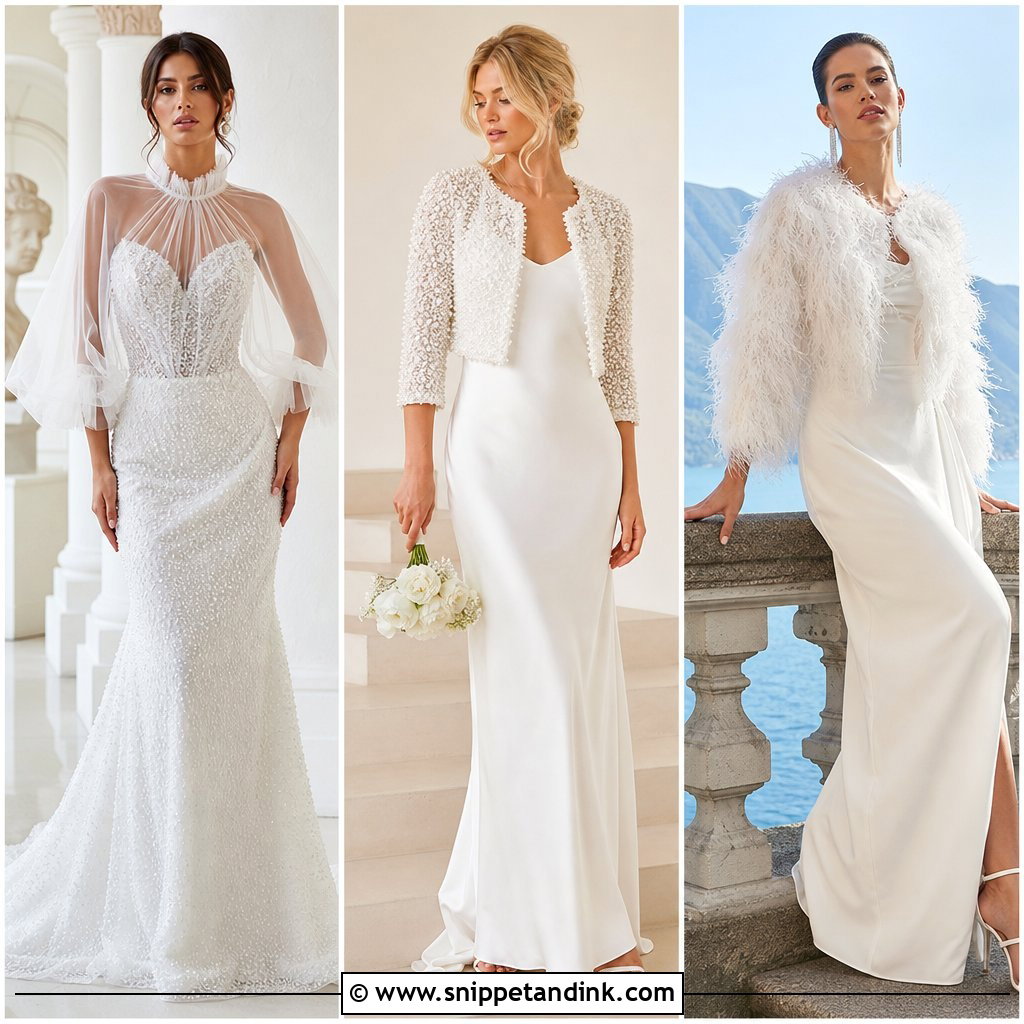
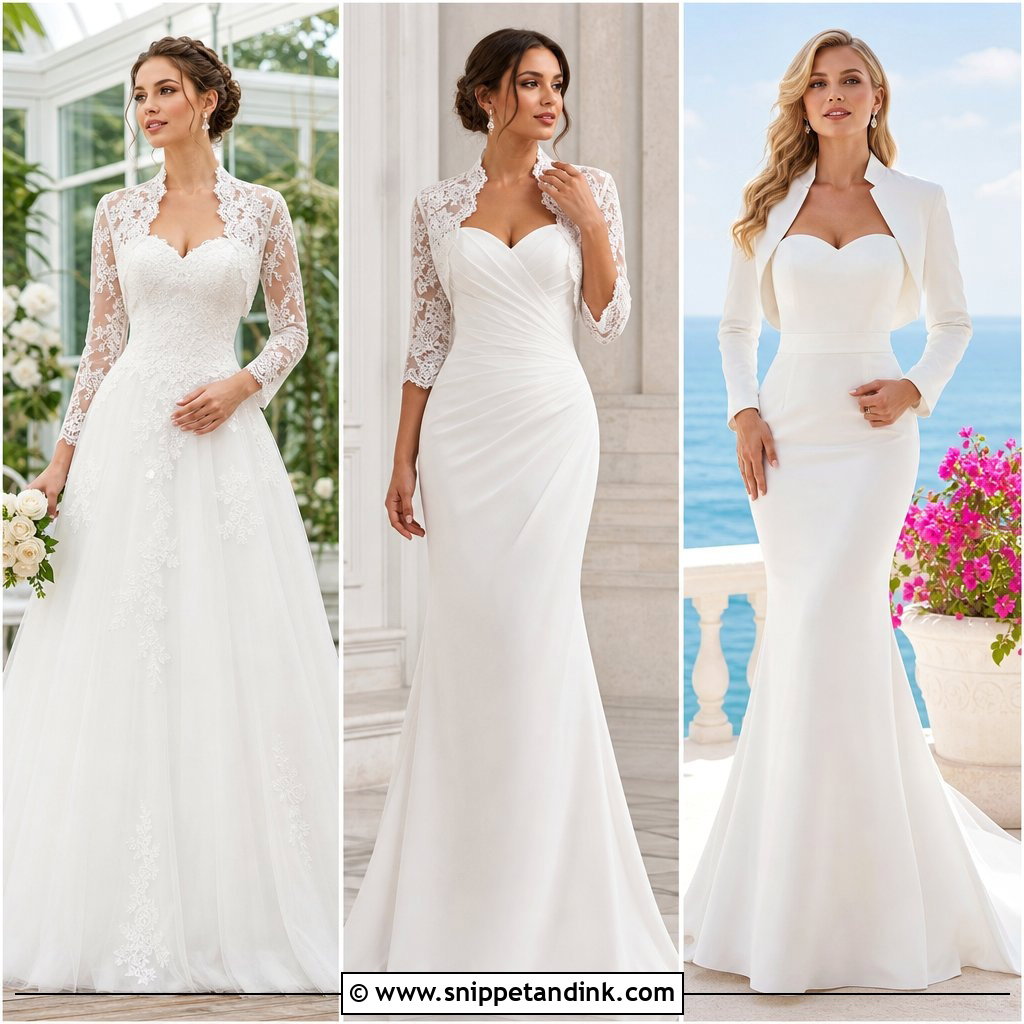
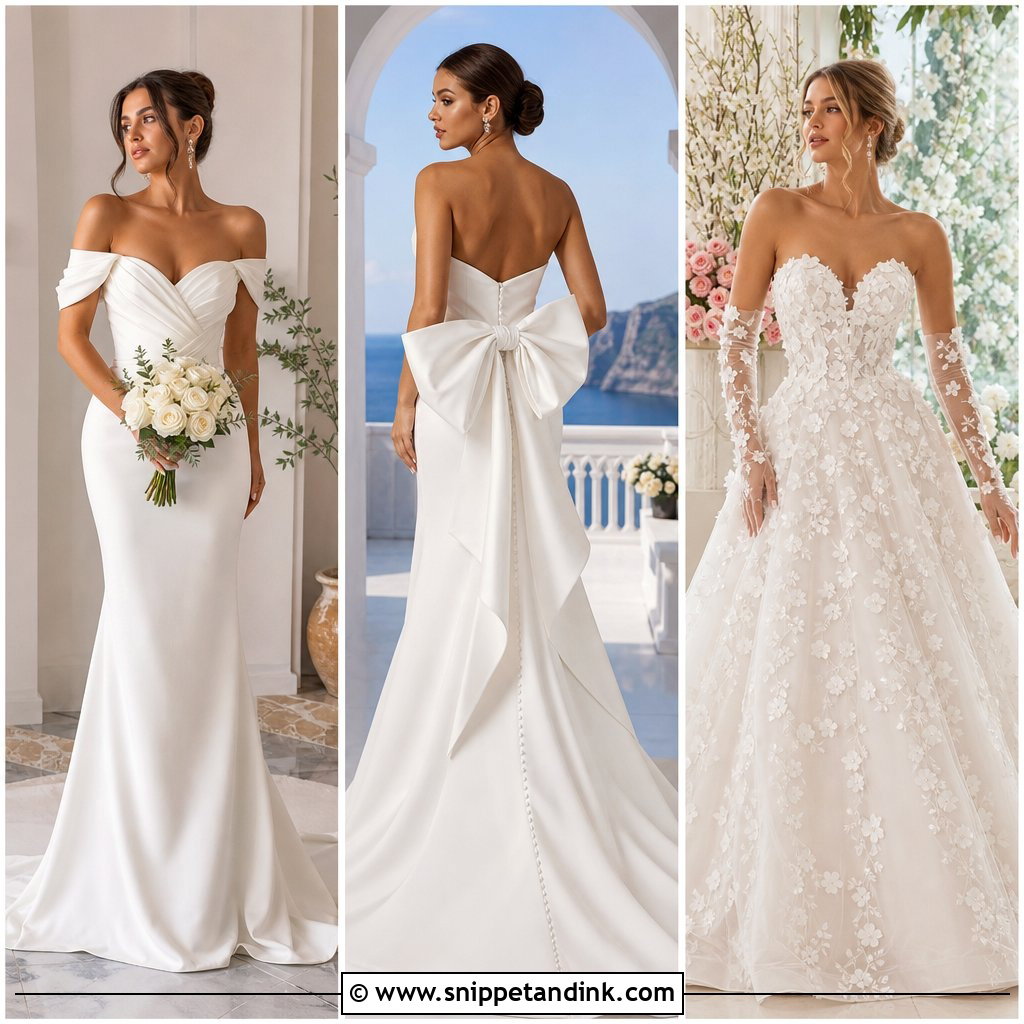
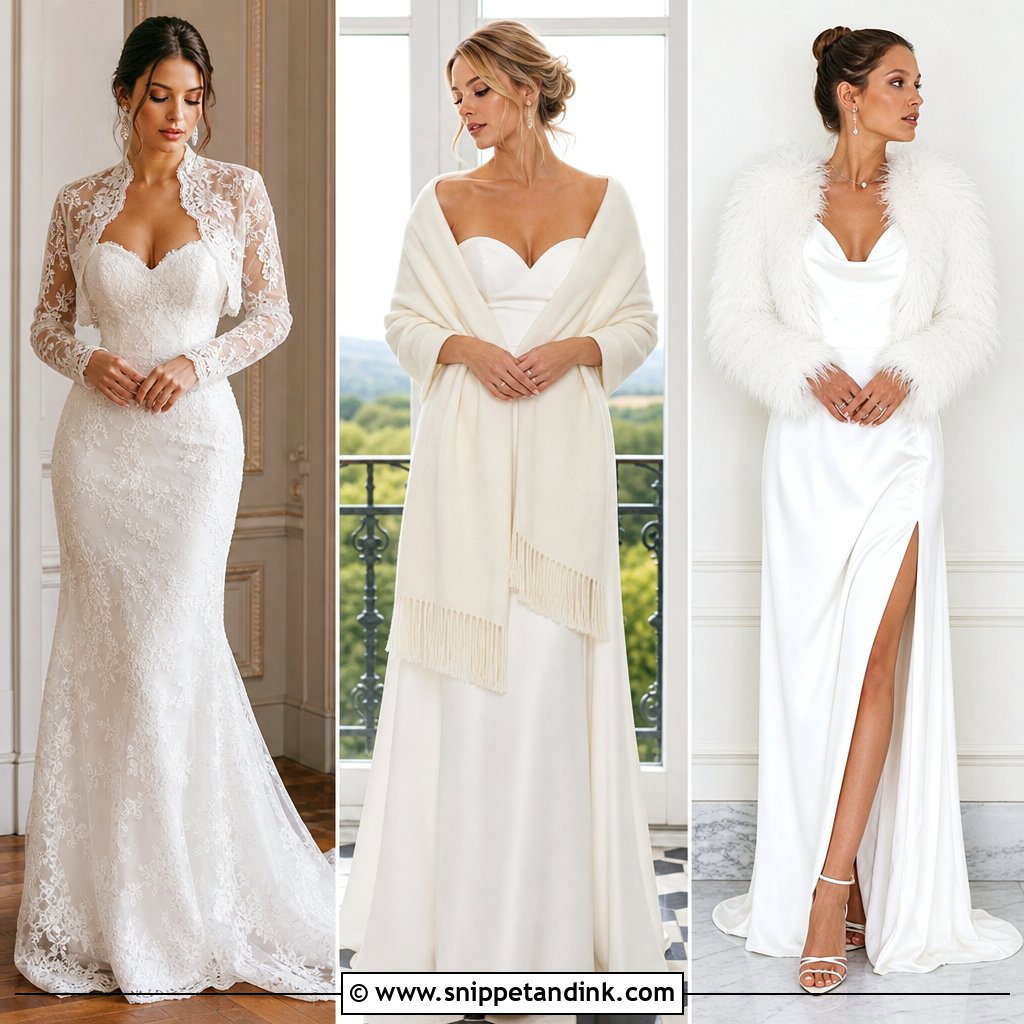
A capelet covers the shoulders and nothing else, which is exactly why it works: you get coverage and movement while the gown underneath stays in view. The options run from sheer pearl tulle and floral lace to structured satin, chiffon, feathers and crystal beading. Some brides wear one instead of a veil; others take it off after the ceremony for a cleaner second look. My rule at every fitting is that the capelet answers to the dress, so its neckline, fabric and level of decoration have to agree with the gown before we think about shoes or flowers. Below are twenty pairings, each built as a full outfit.
Where Should a Capelet End on Your Arm?
Length decides more than fabric does. I pin a muslin or a spare length of tulle at different points on a bride in the mirror before we ever look at finished pieces, because the right stopping point depends on her gown and her build.
- Collarbone to upper arm: barely more than a collar. It suits petite brides and busy gowns, since it adds almost nothing visually.
- Elbow: the most forgiving length. It covers the upper arm without hiding the waist, and works on most silhouettes.
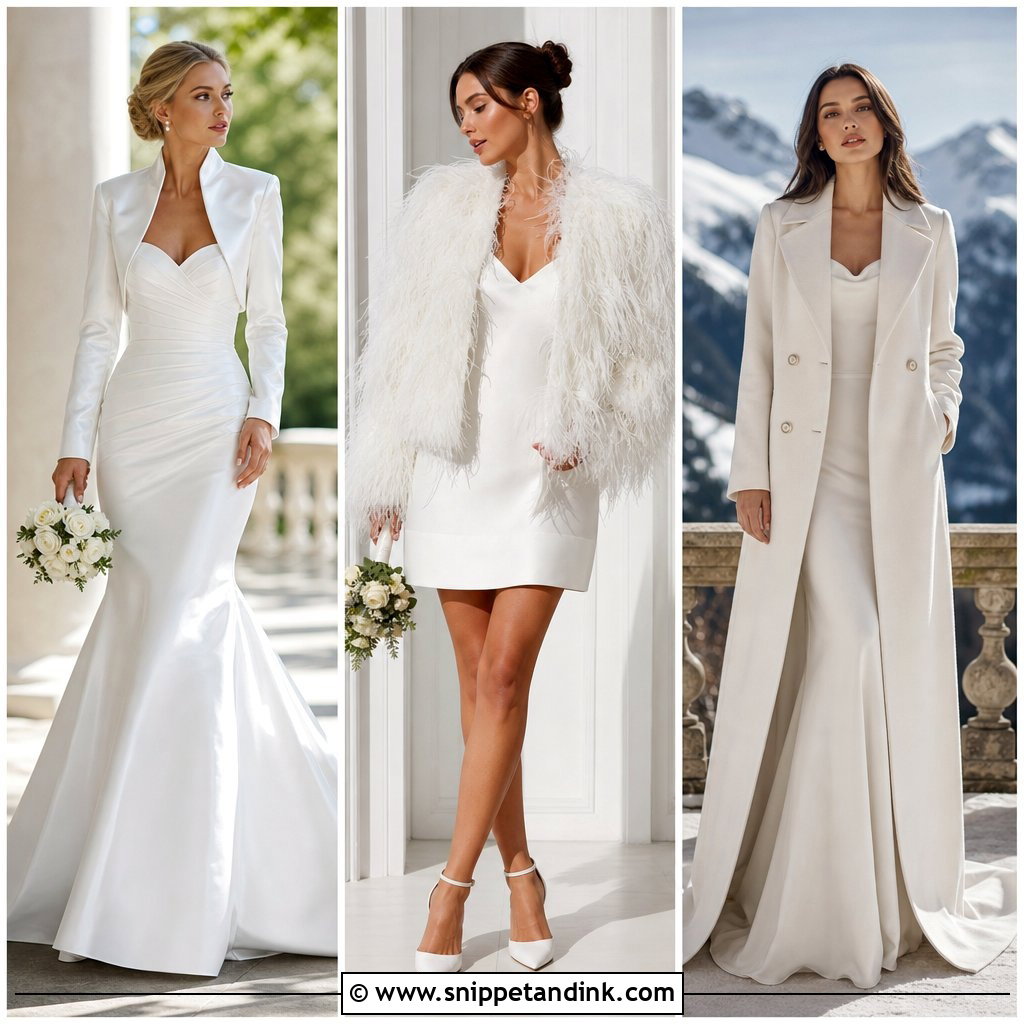
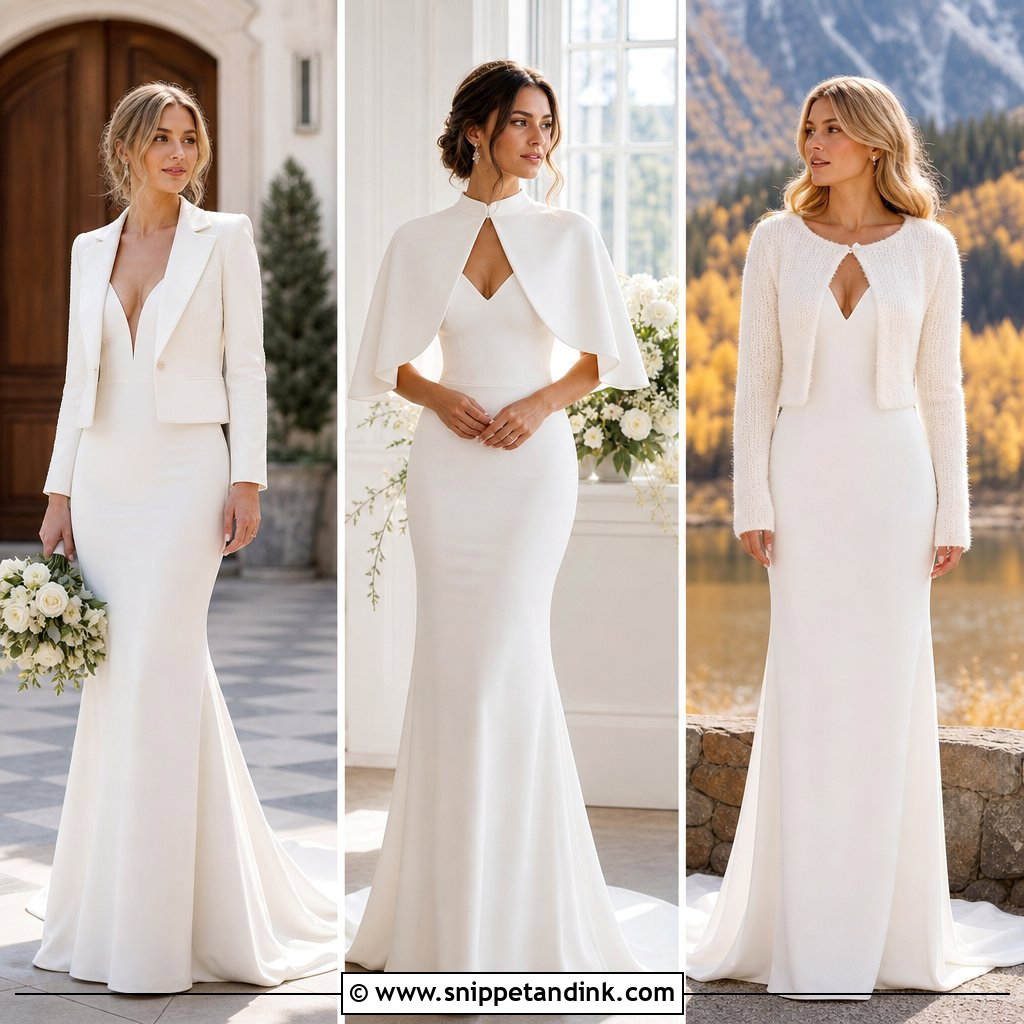
- Waist or below: dramatic and veil-like. Save it for a column, sheath or slip dress, because over a defined bodice it hides the very shape you chose the dress for.
The capelet’s hem also lands wherever it draws the eye. If it ends at the widest part of your hips or bust, it will make that line look wider in photos. Moving the edge up or down a few centimeters is a simple alteration and changes the whole proportion.
1. Pearl Capelet With Satin Wedding Dress
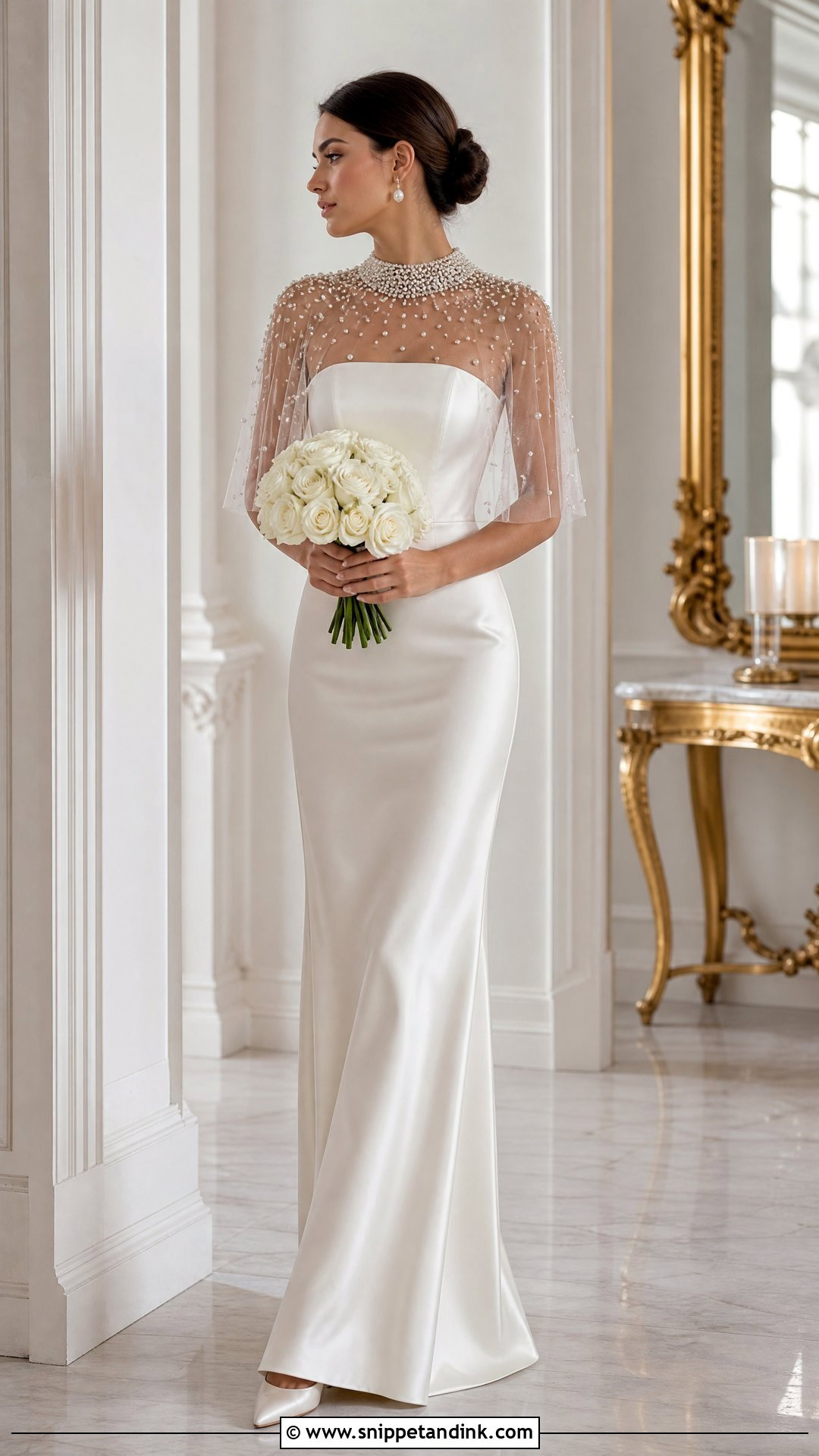
Pearls on tulle catch light in tiny points, and against plain satin that texture reads clearly from the back of a room. A pearl-covered tulle capelet needs a strapless, square-neck or simple scoop gown so the pearls have space. Stop it near the elbow and the proportions stay balanced. Pointed satin pumps, pearl drops, a small structured bag and a compact bouquet of white roses or callas finish it. Hair goes up in a smooth low bun, because loose curls tangle in pearl clusters within the first hour. No statement necklace, and a plain veil or none.
2. Lace Capelet With A-Line Wedding Dress
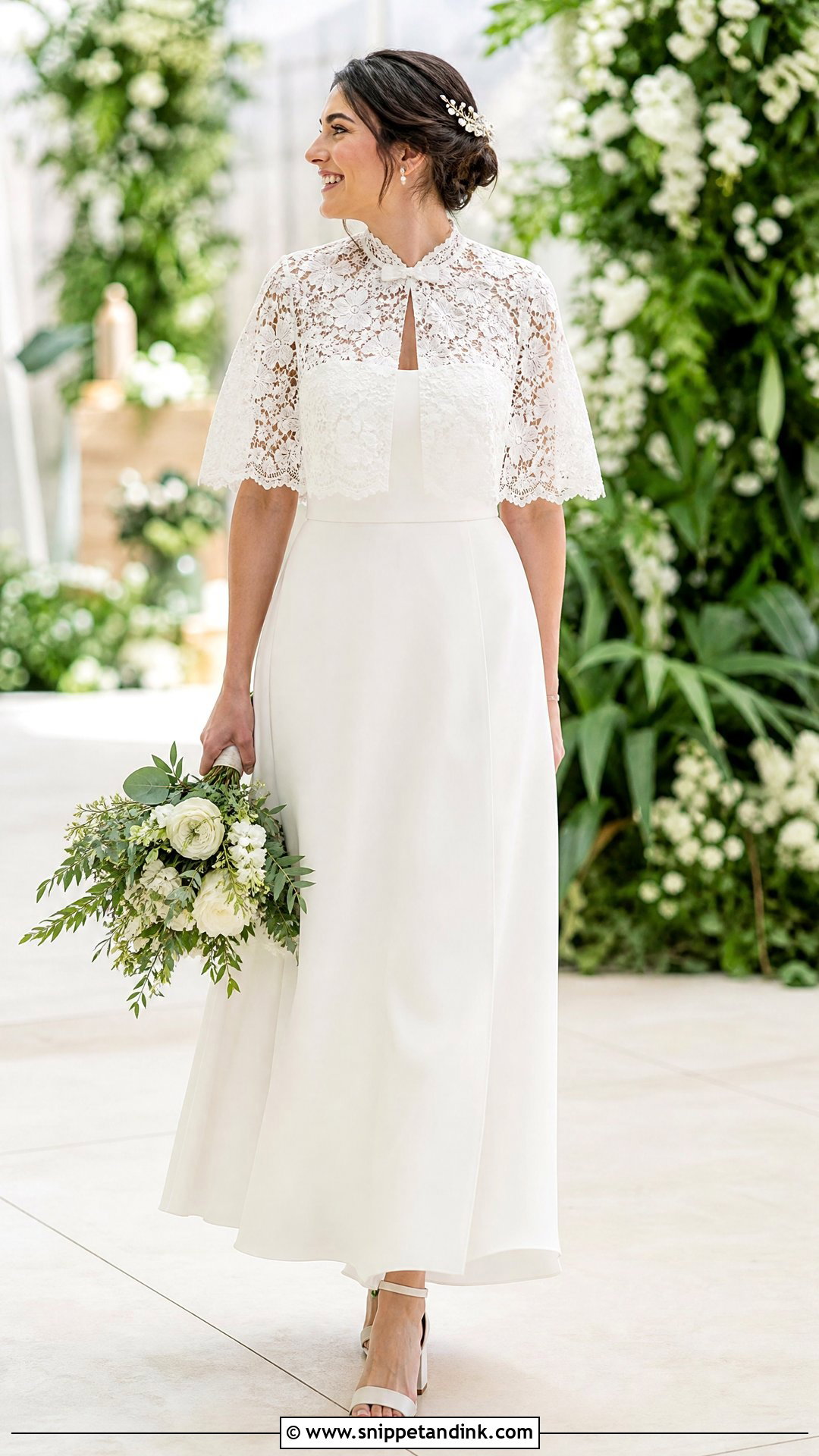
Lace over an A-line is the pairing I’d call the safest in this list. Look for a bateau neckline, scalloped edges and appliqués that echo the gown’s own lace; if the bodice is plain, the capelet can carry all the decoration while the skirt stays light. Ivory block heels, small crystal studs and a floral comb above a low chignon suit it. A fingertip veil works if it’s plain. Hold the two laces together in daylight before you commit, since a capelet bought separately is often a shade warmer or cooler than the dress.
3. Tulle Capelet With Strapless Wedding Dress
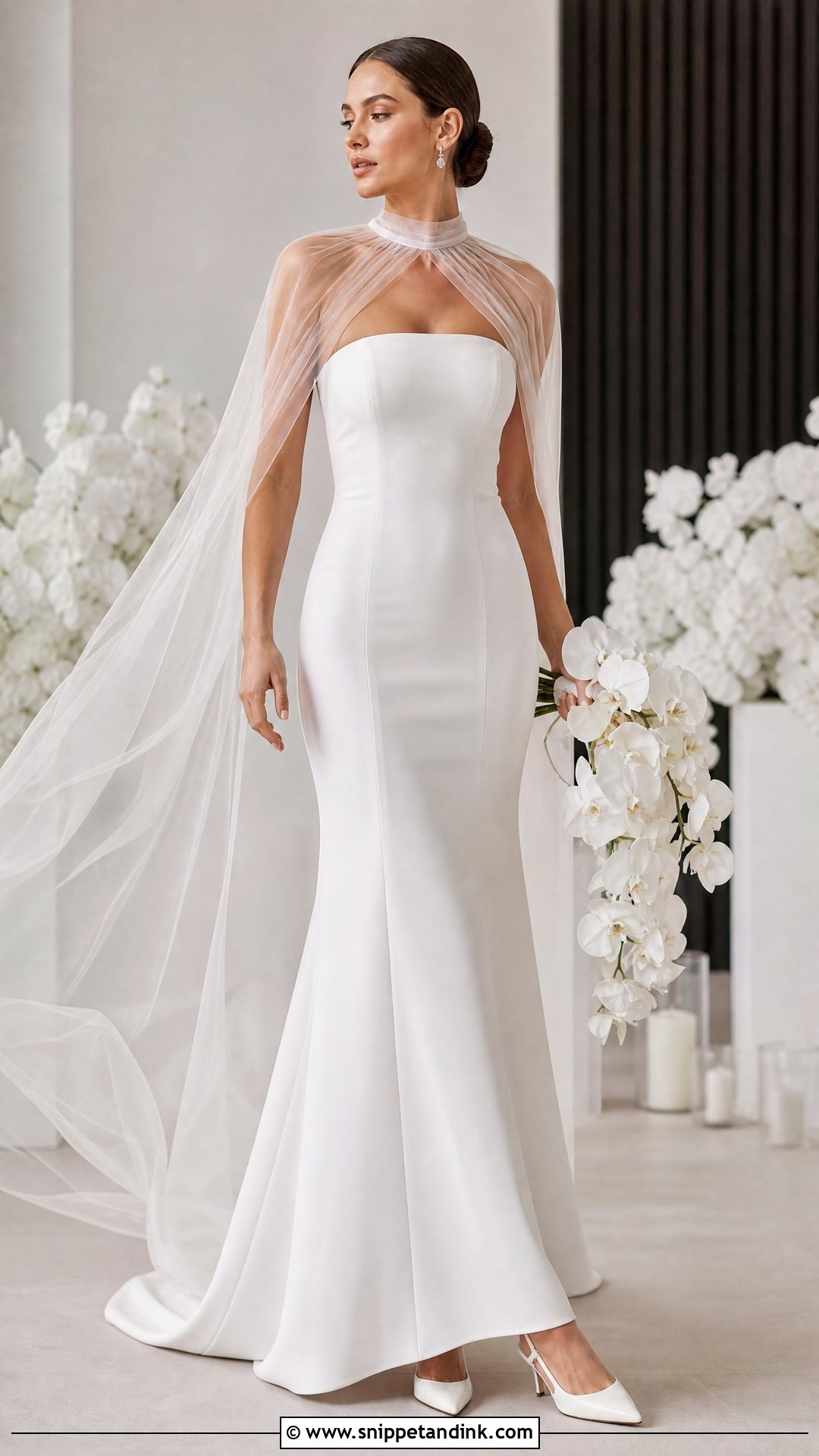
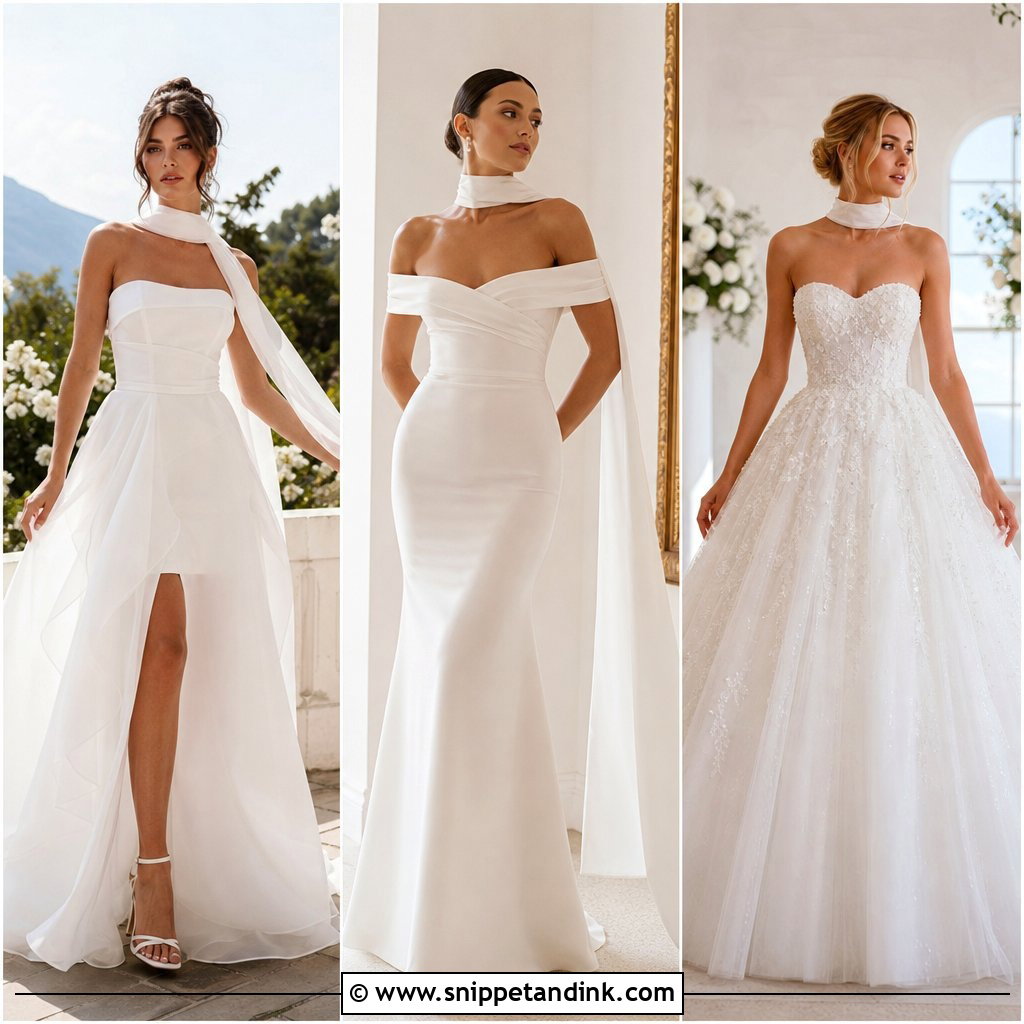
The biggest risk with a tulle capelet over a strapless gown is that it slides. Satin is slippery, tulle has almost no grip, and by the first dance it has crept toward one shoulder. Choose a design with a soft high neck, covered buttons or narrow ties at the back, over a fitted crepe or satin gown. Slingbacks, small diamond or crystal earrings and a sleek bun or ponytail keep it light; an extended back panel can replace the veil. A white orchid bouquet suits the modern shape. In alterations, check that it doesn’t drag the strapless neckline down or bunch at the shoulder.
4. Beaded Capelet With Column Wedding Dress
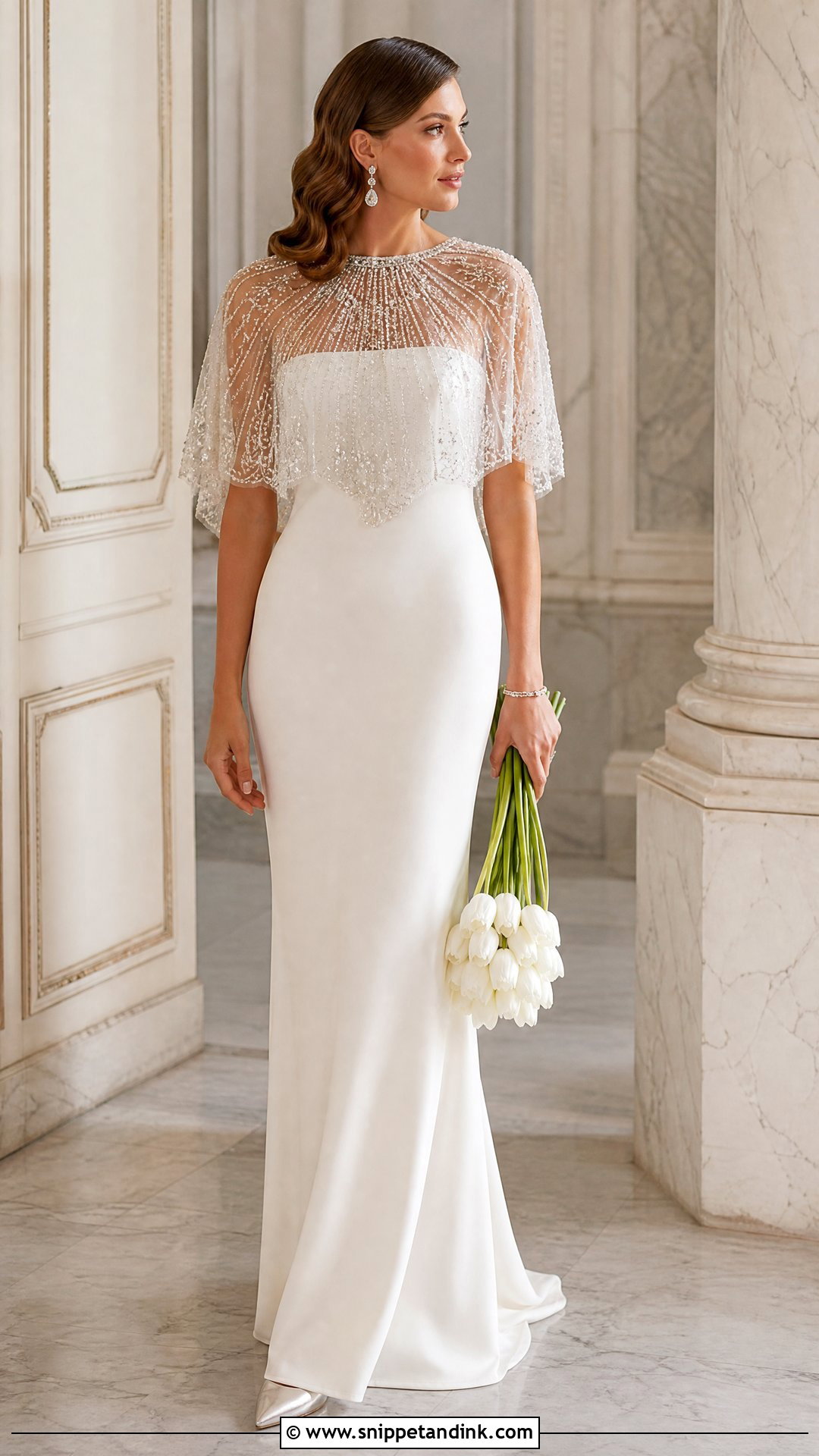
Beads turn a plain column into an evening look, and placement is what keeps it elegant. Put the heaviest work around the neckline and shoulders and let it thin toward the hem, so the face is framed and the slim line underneath isn’t bulked out. Silver or ivory pointed heels, crystal drops and a compact satin clutch match it; a side-parted bun or sculpted waves suit the vintage feel of beadwork. Keep the bouquet narrow. Beading flares under flash and spotlights far more than it does in a fitting room, so ask to see it under the kind of light your venue will have.
5. Chiffon Capelet With Minimal Wedding Dress
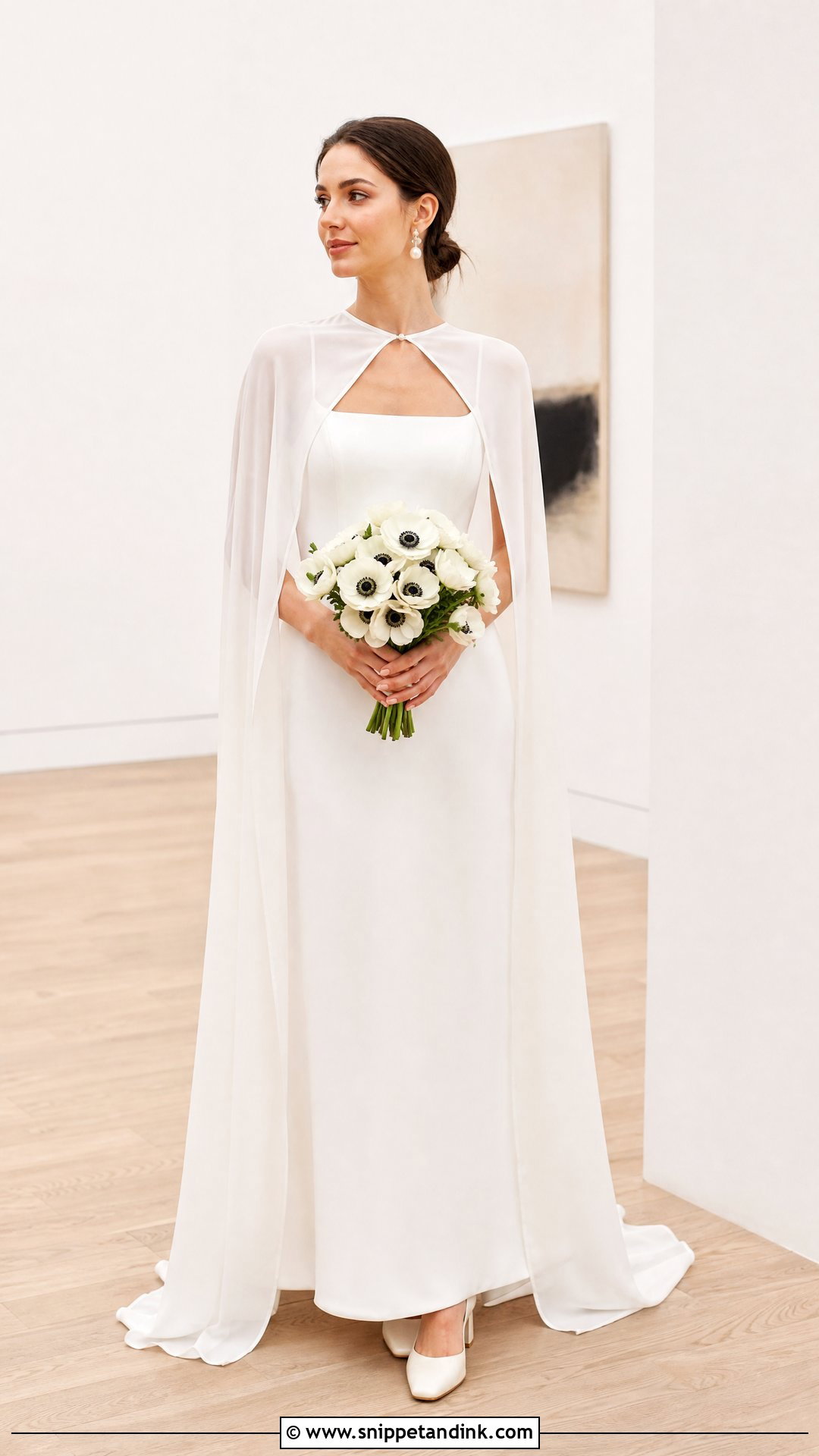
Chiffon is the softest capelet fabric there is, which suits a minimal sheath, slip or square-neck crepe gown. Draped over the shoulders and falling to the waist, it moves when you move and leaves the dress’s lines alone. Low pointed pumps, sculptural pearl earrings and a comb in a polished low knot are enough. A long chiffon capelet can stand in for the veil; a short one sits well under a plain cathedral veil. White anemones or tulips in a neat shape suit it. Because chiffon weighs almost nothing, the closure wanders. Have it anchored so it stays centered when you raise your arms.
6. Satin Capelet With Ball Gown Wedding Dress
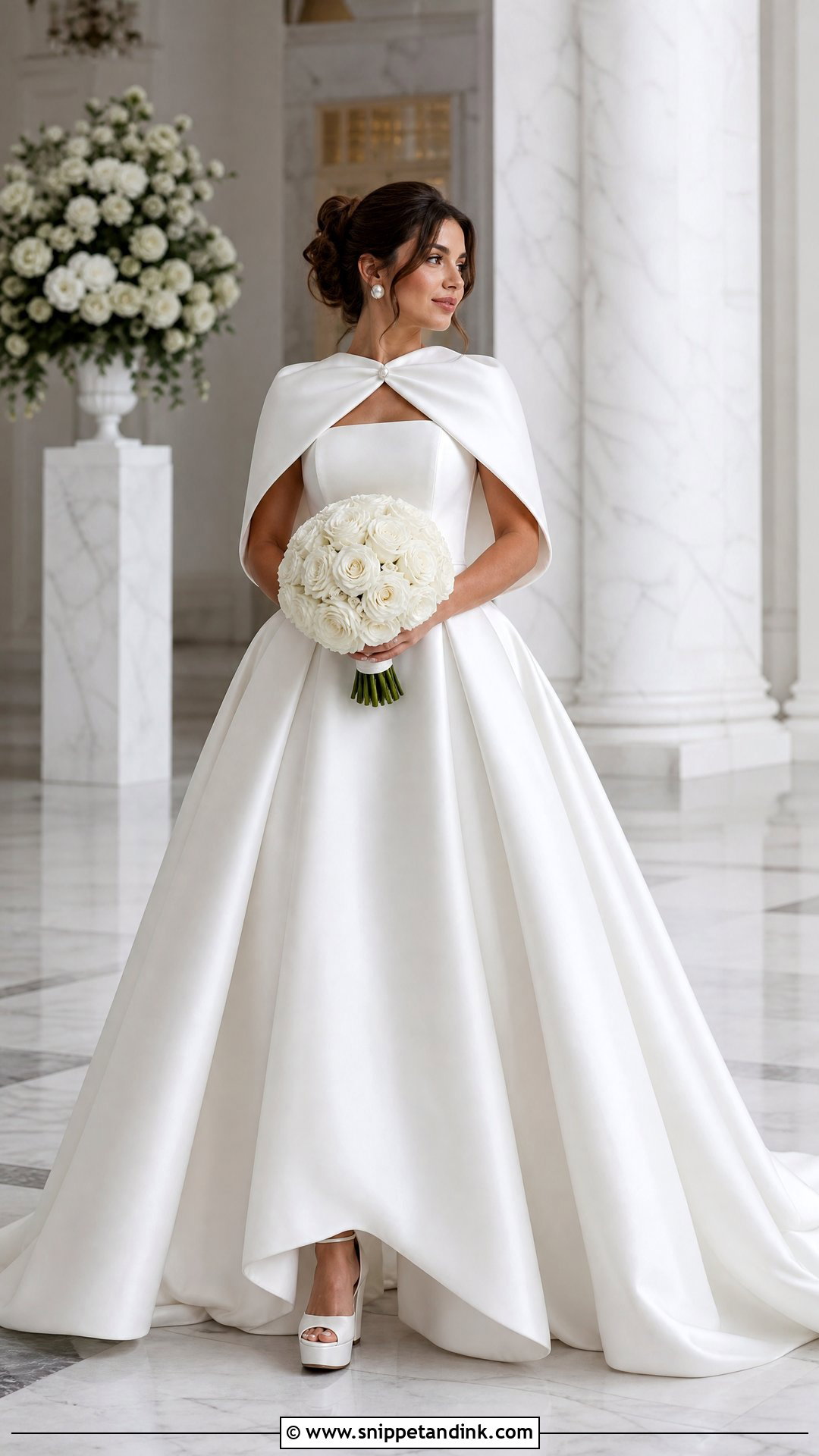
Satin over a ball gown is the most formal capelet look here, and the hardest to match. Ivories vary, and two satins that seem identical indoors can split into cream and white in sunlight, so compare them outside. A structured shoulder line and small covered buttons balance the volume of the skirt. Satin platforms, pearl button earrings, a formal updo that keeps the collar clear and a rounded bouquet of white roses suit the symmetry. Skip a beaded veil; plain tulle or no veil at all. Give it a big room where the shoulders and skirt can be seen from a distance.
7. Floral Appliqué Capelet With Crepe Wedding Dress
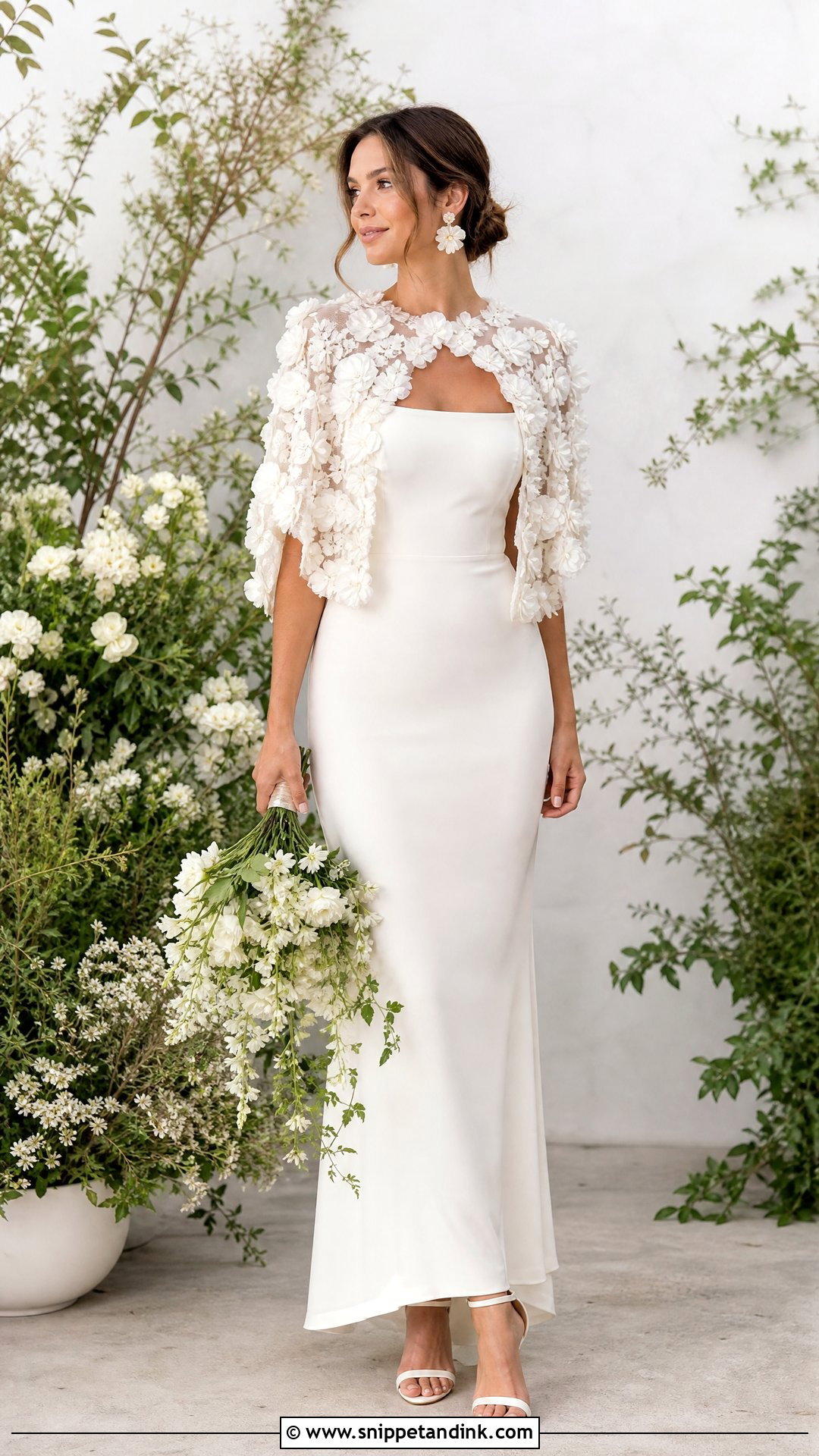
Raised flowers sitting on a capelet need a quiet dress underneath, and crepe is about as quiet as bridal fabric gets. Cluster the appliqués at the neckline and shoulders and let them scatter toward the edge, so the upper body never looks crowded. A crepe gown with a square neck or low back gives the modern contrast. Ivory ankle-strap heels, small floral studs and a soft low bun with a few loose pieces finish it, with a loose bouquet that repeats one or two flower shapes from the appliqués. Then stop: no floral hair pieces, no patterned veil. Dimensional flowers crush under a bouquet arm, so I check where she’ll actually hold it.
8. Feather Capelet With Slip Wedding Dress
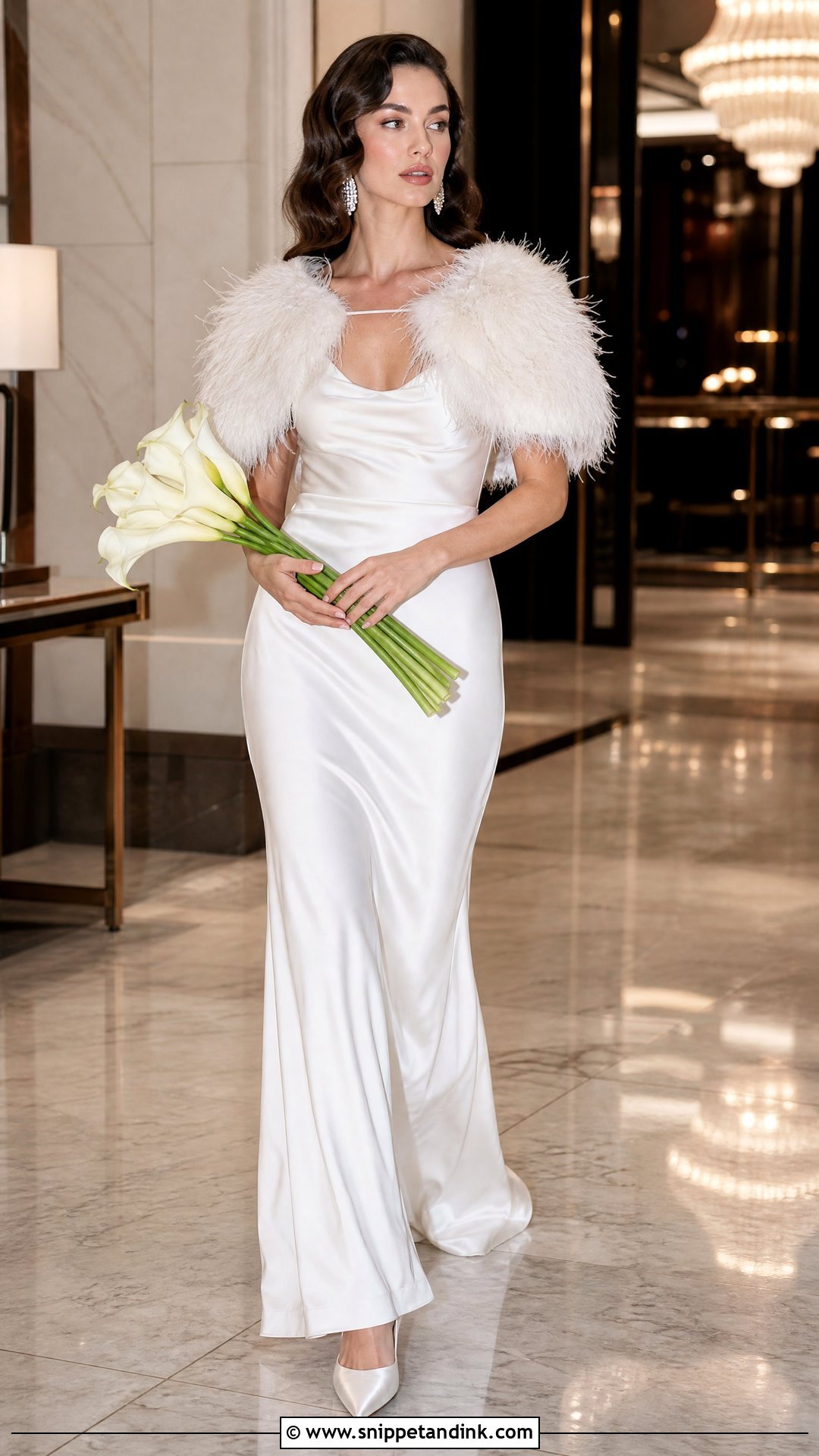
Feathers move with every breath of air, and that motion is the reason to choose them. Keep them at the shoulders or the hem so they frame the body. A bias-cut satin gown with a low back and narrow straps is the right base. Pointed satin heels, crystal earrings, a small vintage clutch and smooth waves, a neat bun or a short polished cut keep the face clear. Calla lilies follow the fluid line. Feathers shed and flatten, and they go limp in damp air, so store the capelet flat in a box, keep it away from moisture and put it on just before the ceremony.
9. High-Neck Capelet With Mermaid Wedding Dress
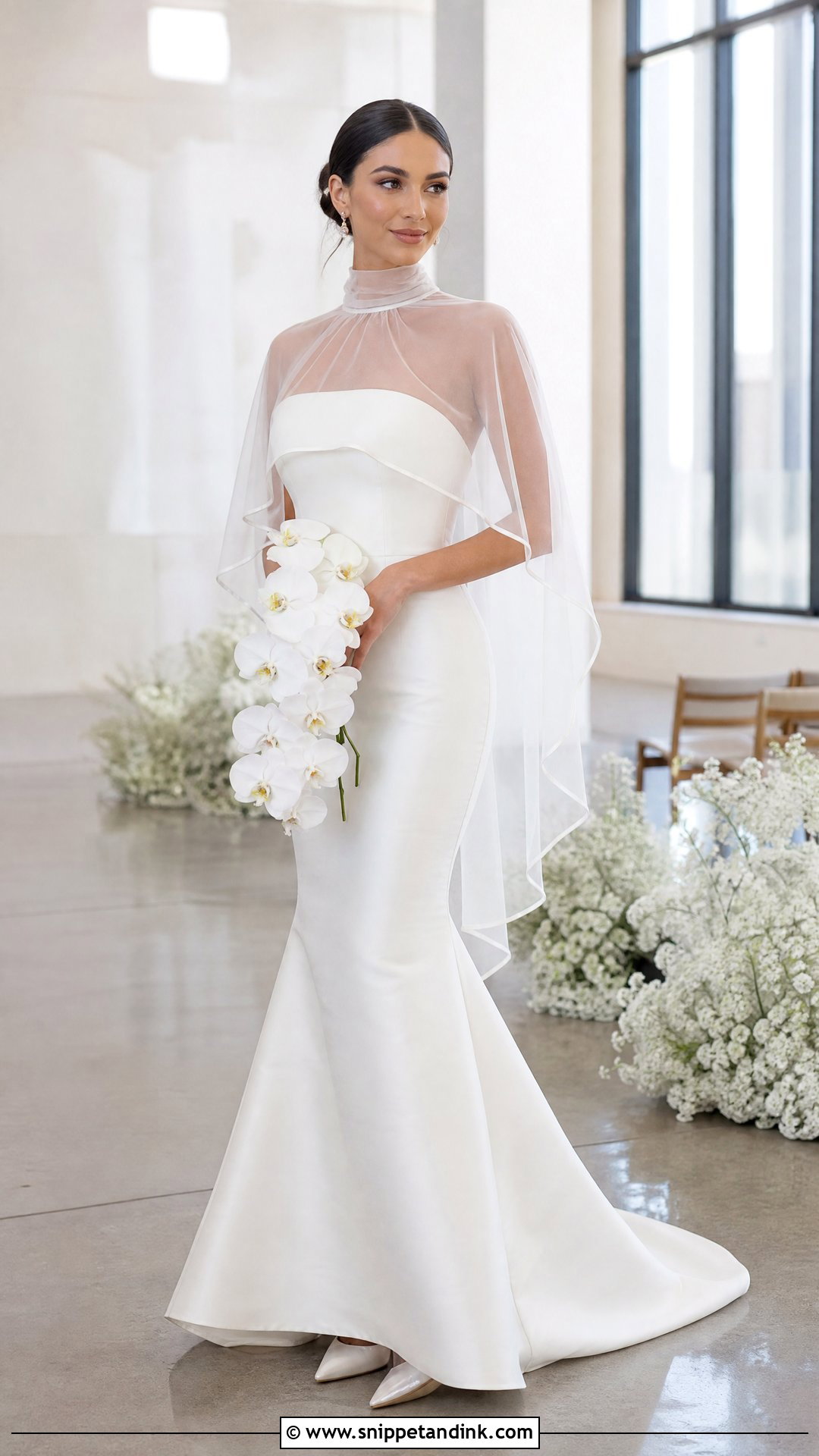
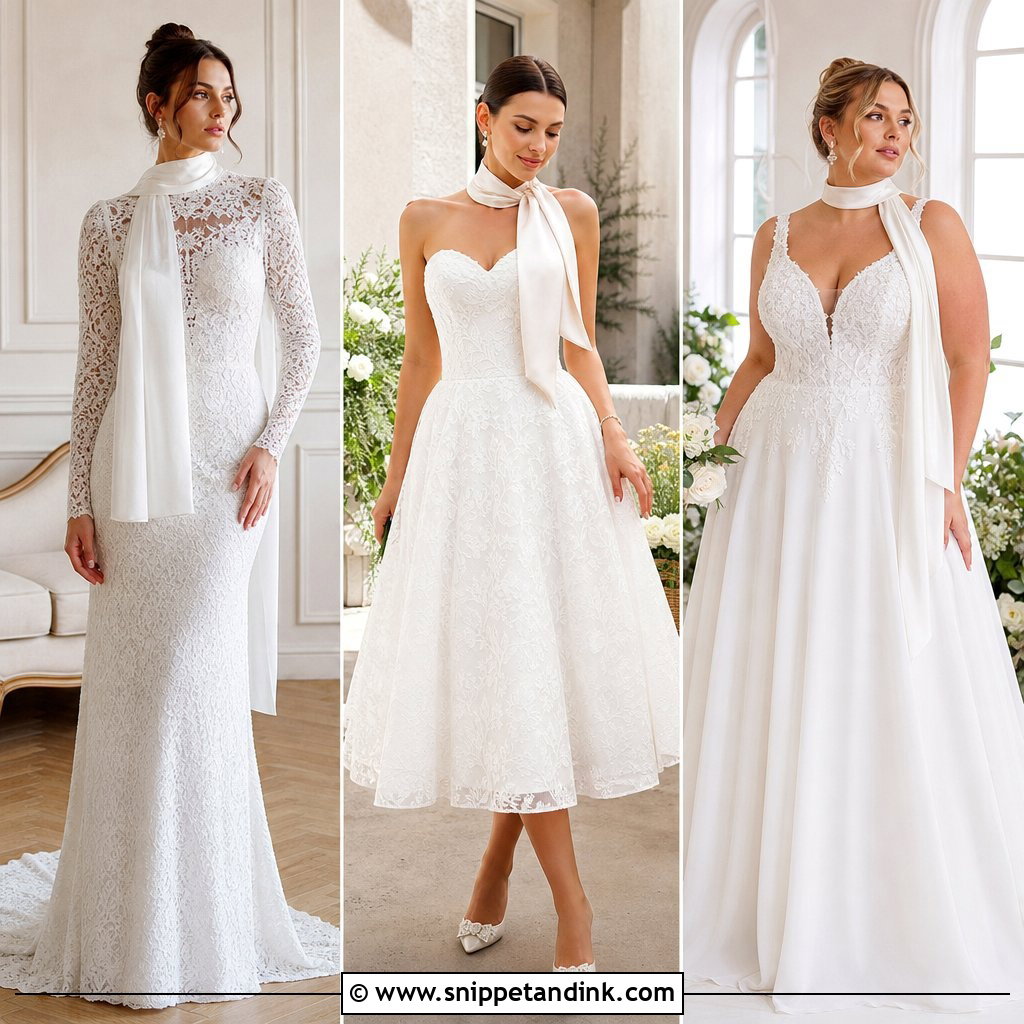
A high neck and a mermaid curve pull in opposite directions, and that tension is the appeal. Use sheer tulle, lace or finely beaded mesh so the raised neckline doesn’t feel heavy, and end the capelet above the waist or in a narrow back panel. The fitted bodice must stay readable. Pointed pumps, slim drop earrings and a sleek center-parted bun suit it, with no necklace at all. A long, narrow orchid or rose bouquet repeats the vertical line. At the fitting, sit, turn your head and lift both arms. A high collar on a fitted gown can pull at the throat when you sit, and you’ll feel it for hours.
10. Hooded Capelet With Long-Sleeve Wedding Dress
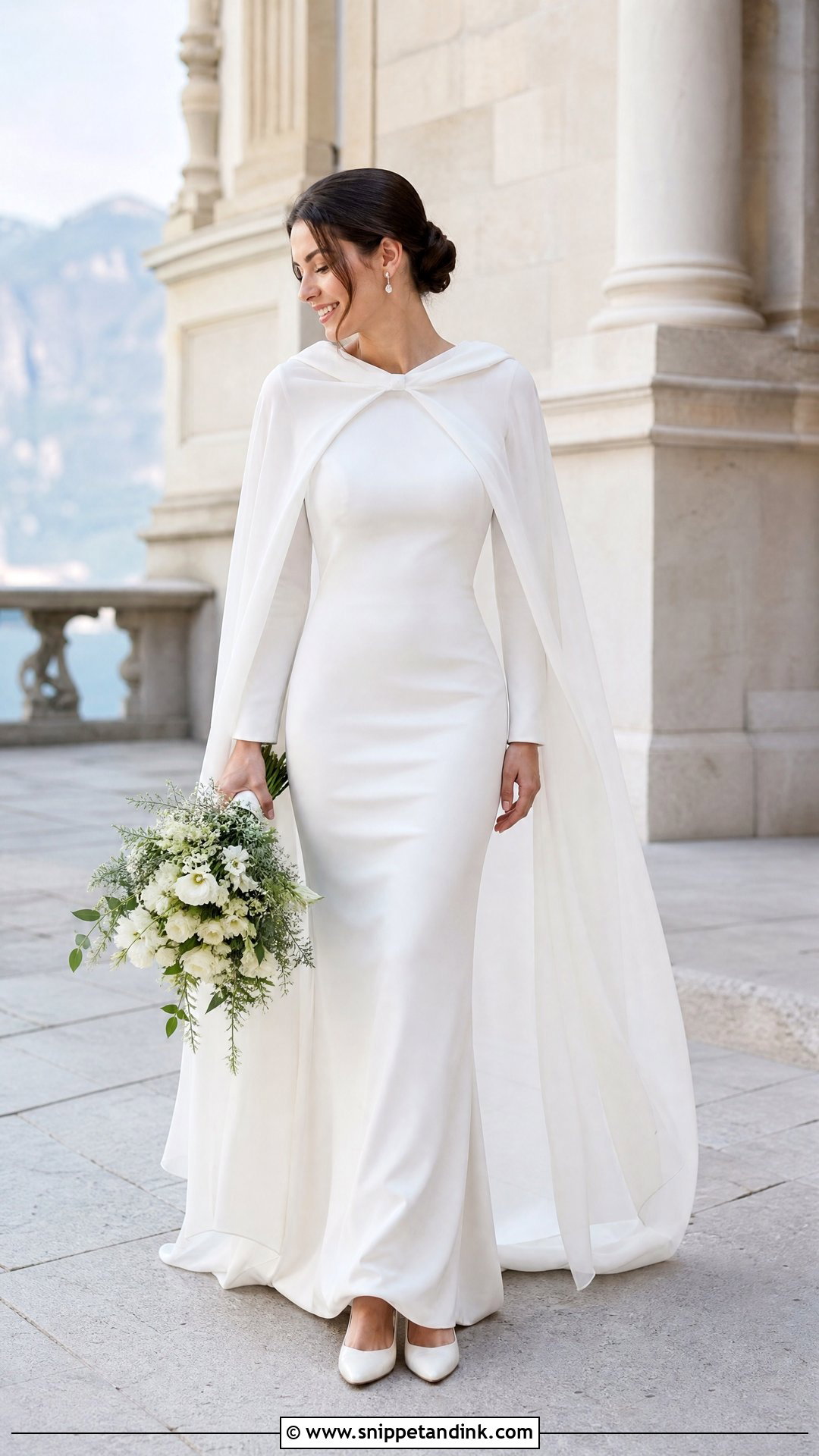
Should a hood be up or down? Mostly down. A hooded capelet over a long-sleeve gown works as a practical outer layer in lightweight chiffon or tulle, or in lined satin for a cold-season wedding. The hood should drape loosely, never cling to the face. Pair it with a fitted lace or crepe gown, closed pumps, small earrings and a low style that fits under the fabric without being crushed. Raise the hood for a handful of outdoor portraits only. Watch that the capelet doesn’t cling to the sleeves through static, and match the color under both indoor and outdoor light.
11. Short Capelet With Tea-Length Wedding Dress
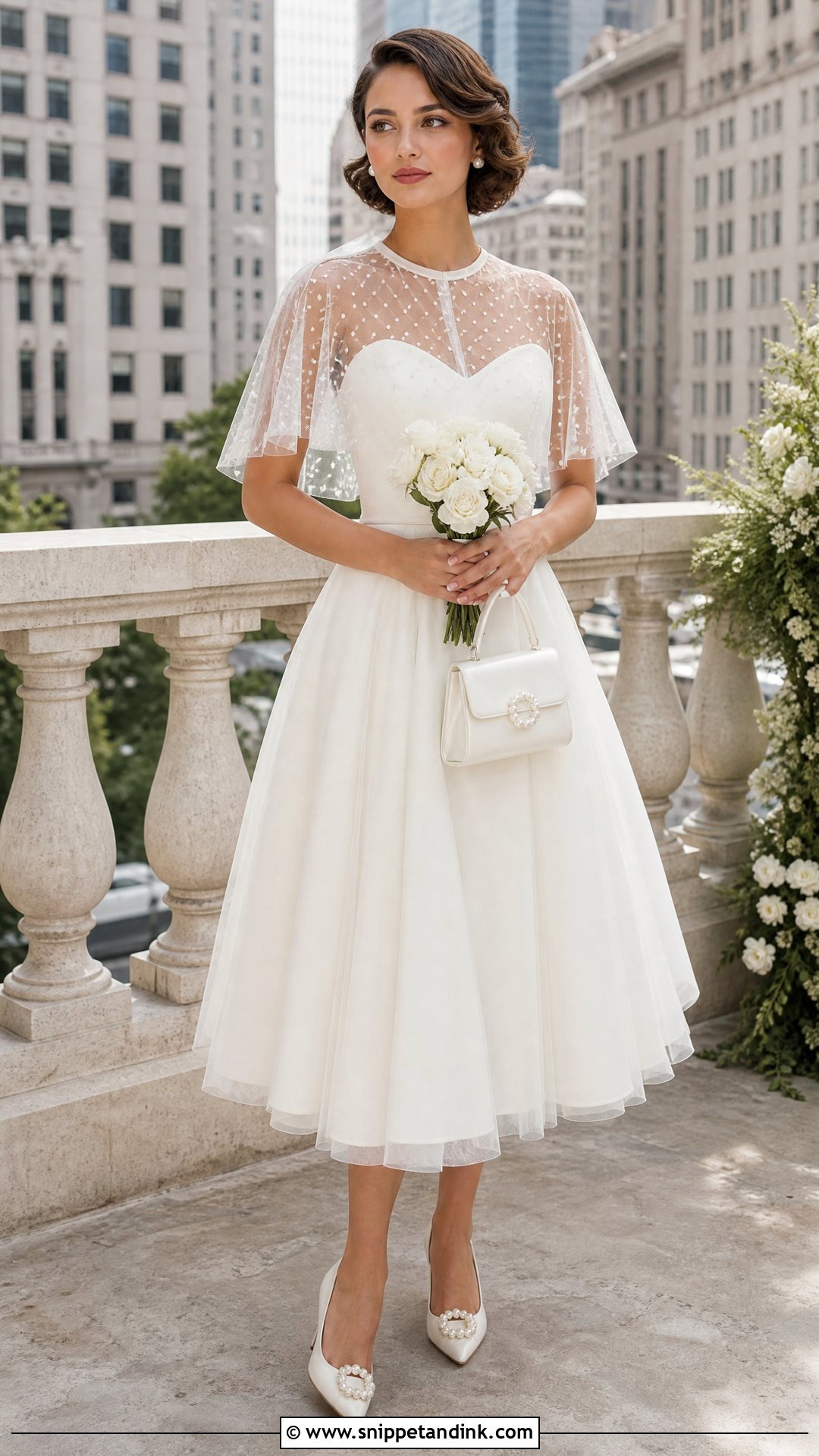
On a tea-length dress, a capelet has to stop well above the natural waist. Any lower and the short skirt and the capelet split the body into two blocks. A shoulder-grazing design in lace, organza or dotted tulle keeps the fitted bodice visible. Pointed pumps or polished flats, pearl studs and a small top-handle bag suit the vintage mood, with a neat bun, short waves or a half-up style. The hem shows the shoes, so pick a pair with a bow, a pearl buckle or a little crystal. Carry a compact bouquet. It’s a comfortable outfit for a smaller ceremony.
12. Ruffled Capelet With Fit-and-Flare Wedding Dress
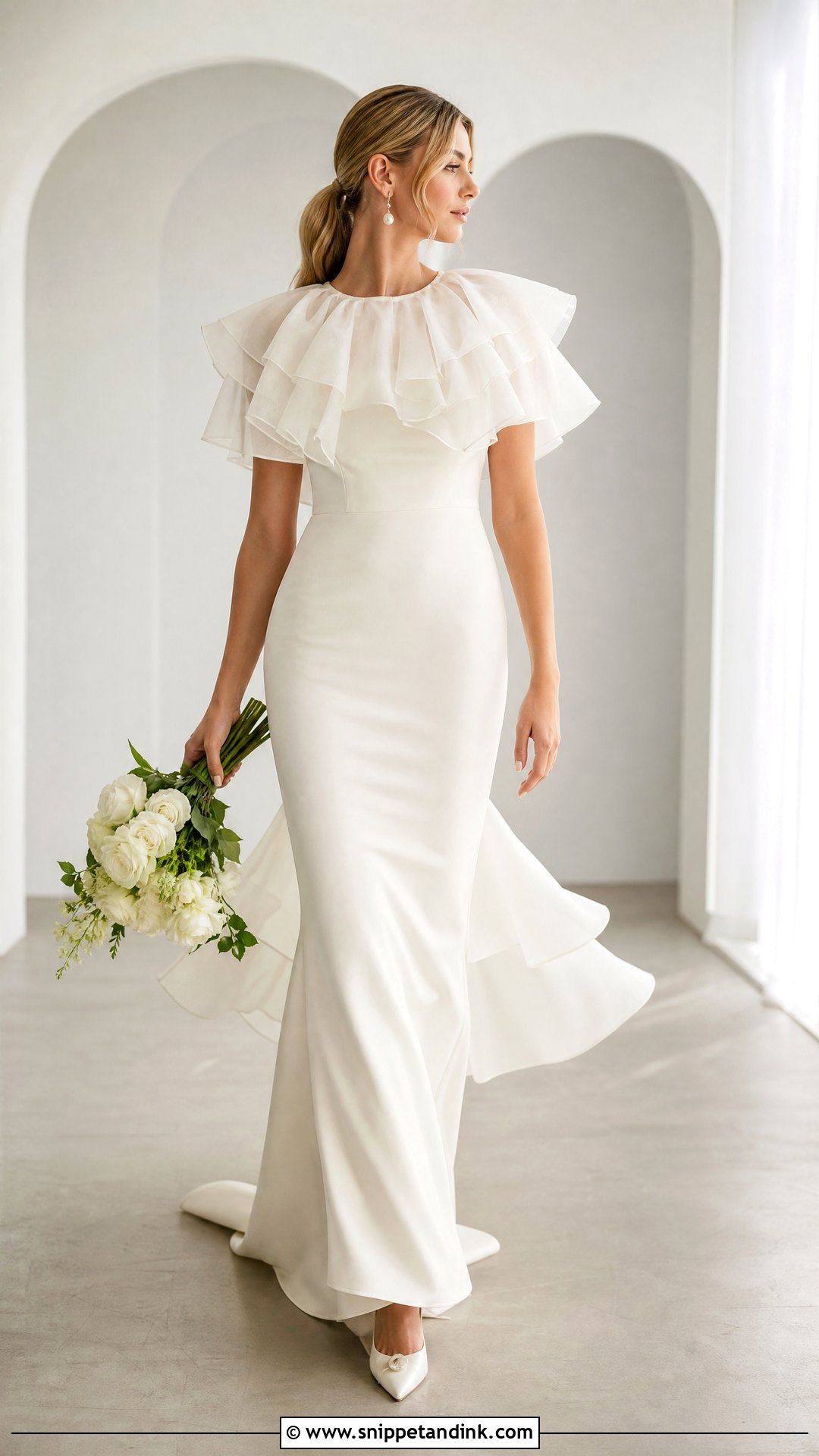
Ruffles add volume, so the fit-and-flare underneath has to stay calm. Narrow ruffles at the neckline or a wider fluttering edge near the elbows both work over a gown with almost no embellishment. Sleek pointed heels, small pearl earrings and a low ponytail or bun keep it tidy. Sweet peas, roses or tulips echo the softness. Skip a ruffled veil. The back is where ruffles misbehave: they flip and fold when you sit against a chair, so I have brides lean back at the fitting and stand up again. They should spring back without crushing the waistline.
13. Embroidered Capelet With Lace Wedding Dress
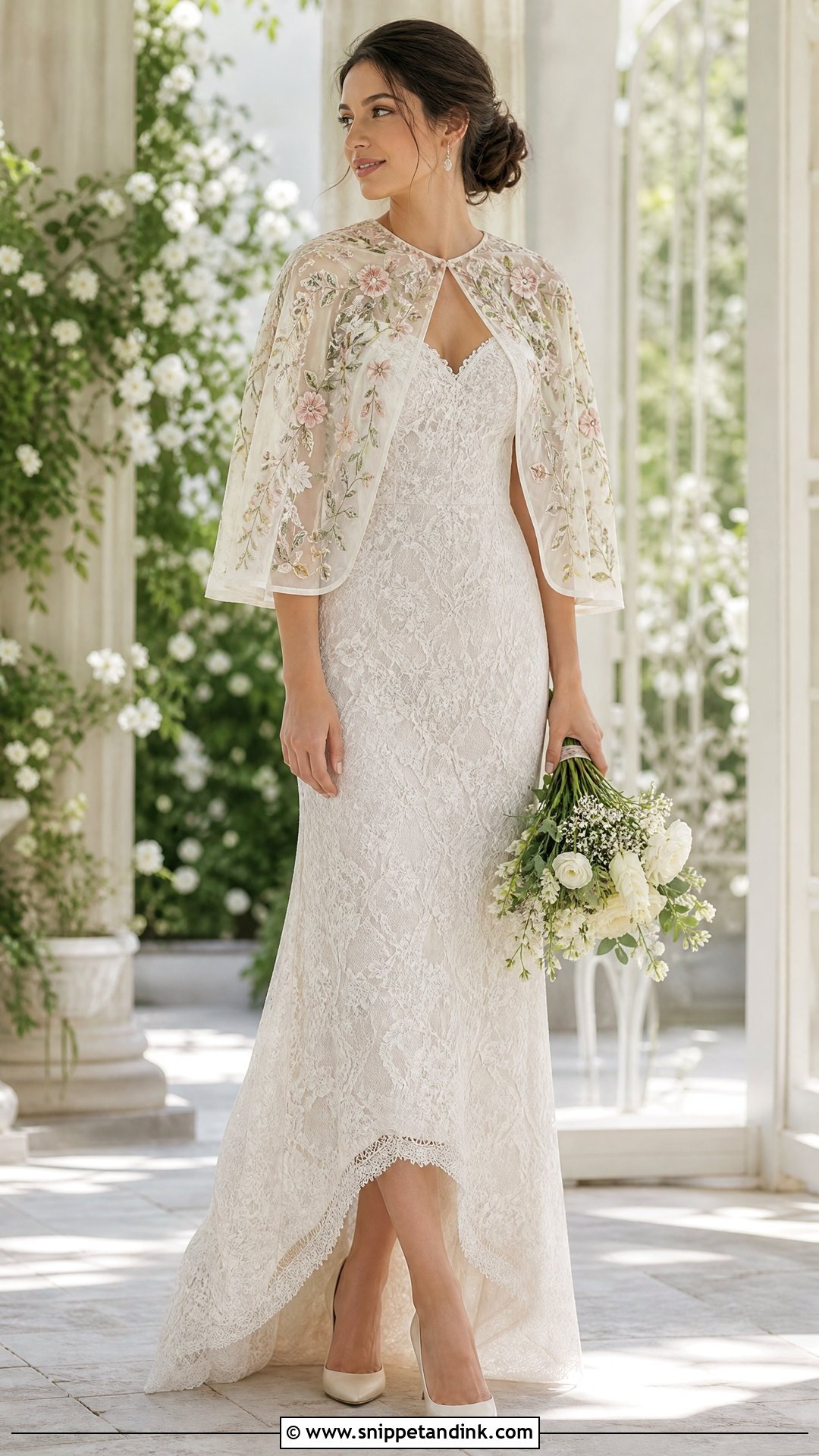
Embroidery and lace together work when the patterns share a scale. Fine floral embroidery goes with delicate lace; large botanical motifs go with a gown that has broad, widely spaced appliqués. Mixing a tiny motif with a large one is where it starts to look busy. An elbow-length capelet gives coverage and keeps the waist visible. Ivory pumps, understated earrings, a textured low bun and a plain comb keep it simple. Choose a bouquet with a few flowers that resemble the embroidered motifs. Then step back several meters from a mirror and look again, because pattern clashes show from across a room, not up close.
14. Bow Capelet With Strapless Ball Gown
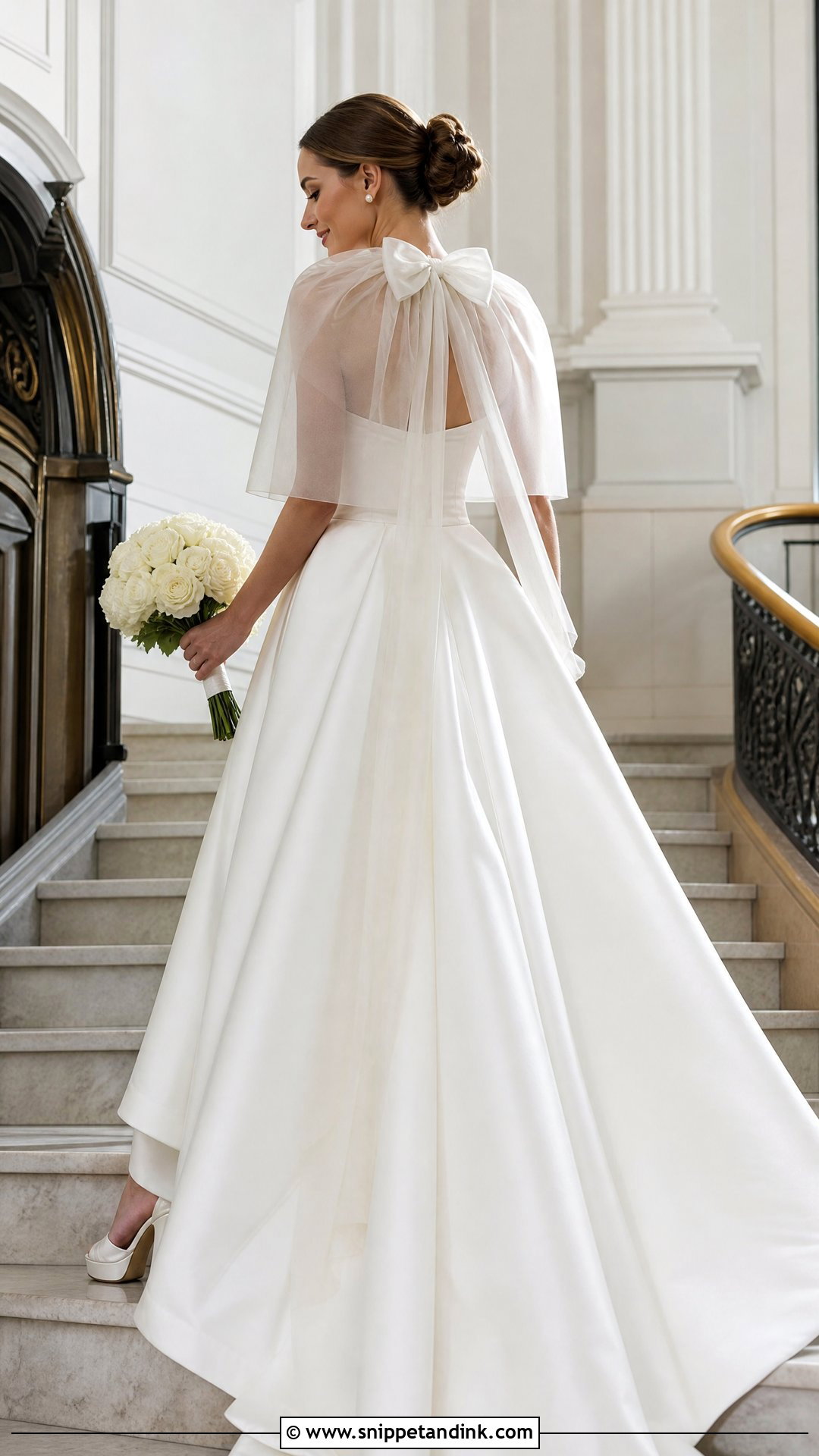
A bow capelet is charming once. The bow may sit at the neckline, across the back or above an extended tulle panel, but pick one spot and don’t repeat bows anywhere else in the outfit. A clean satin or mikado ball gown has the structure to balance the light capelet. Platform pumps under the full skirt, small pearl earrings, a polished bun that leaves the bow clear and a rounded bouquet keep it formal. With a long back panel, skip the cathedral veil. Soft bows collapse after a few hours, so I tack the knot from inside and leave the loops free.
15. Crystal Capelet With Sheath Wedding Dress
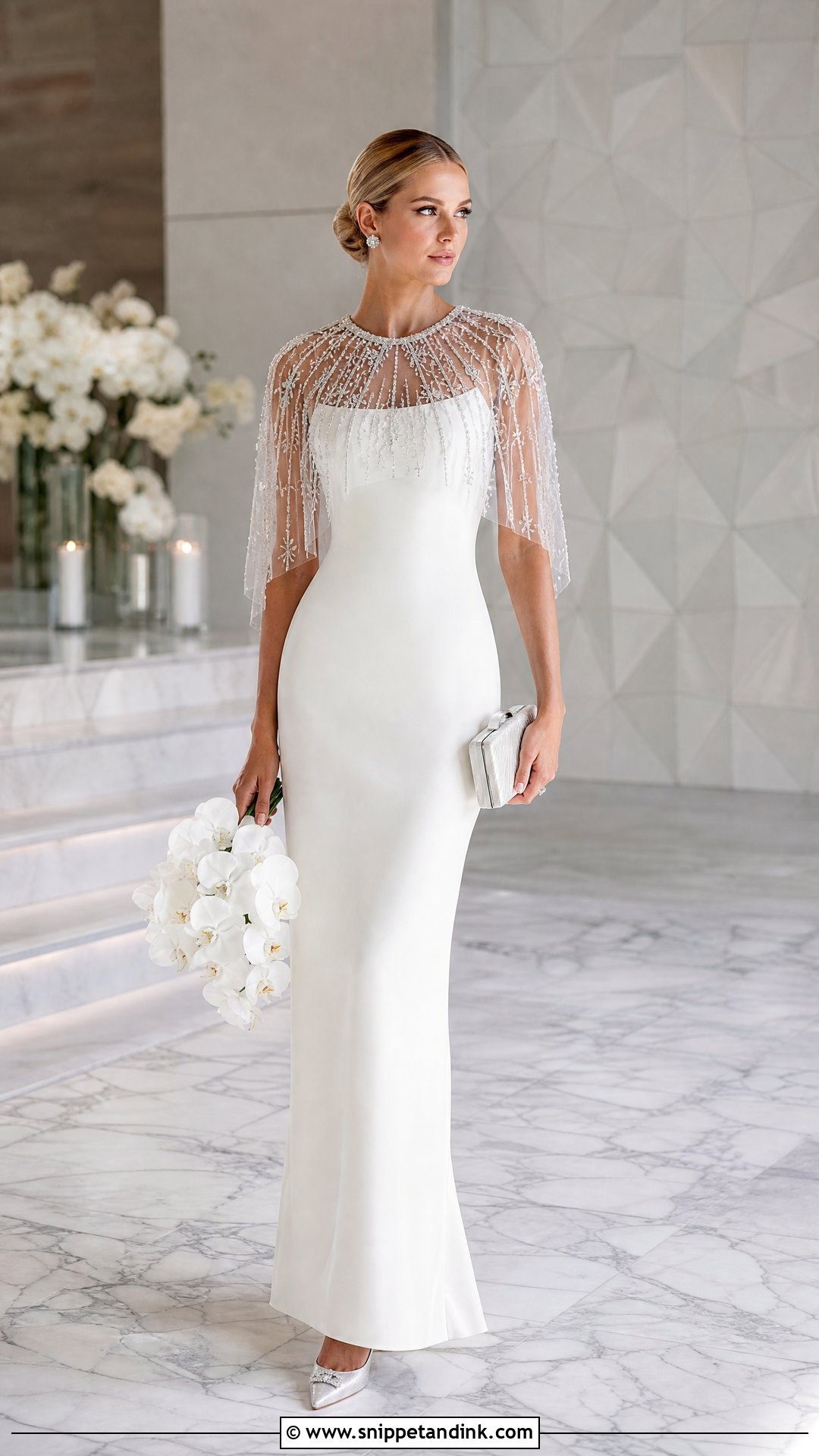
Crystals on soft mesh give a slim sheath light without adding width. Look for clear or silver-toned stones concentrated at the shoulders and scattered toward the edge, over plain crepe or satin. Pointed metallic heels, small crystal studs, a structured clutch and a sleek bun or glossy side-swept waves suit it, with a compact bouquet of white orchids. Turn the capelet inside out before you buy. Rough settings and loose threads on the underside scratch the skin and pull threads in delicate gown fabric, and you’ll be wearing it for hours.
16. Vintage Lace Capelet With Bias-Cut Wedding Dress
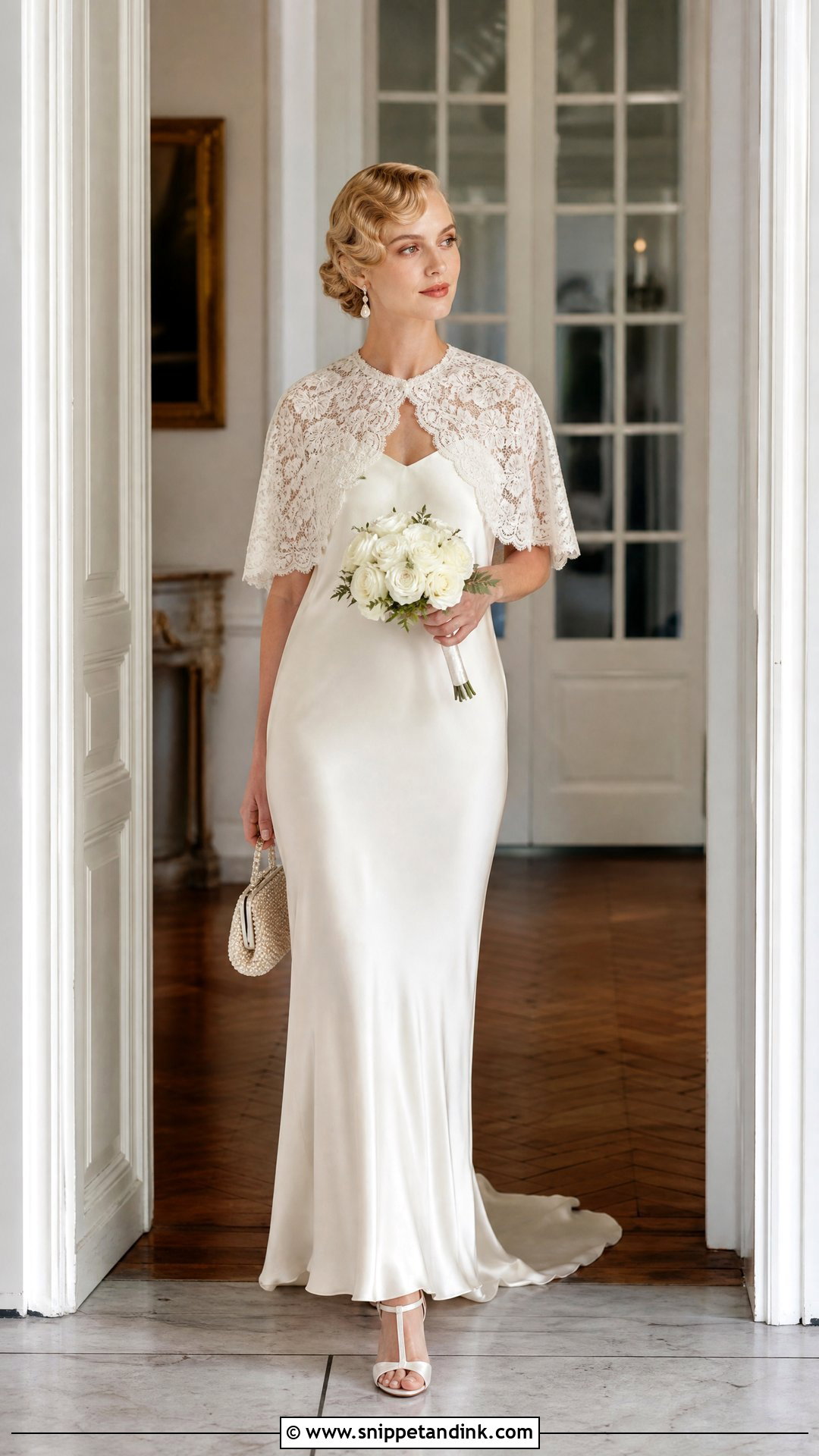
A bias-cut dress skims the body, and a vintage lace capelet gives that bare simplicity some character. Look for scalloped edges, a soft stand collar, covered buttons or geometric lace that recalls early twentieth-century bridal fashion, over satin or silk with no heavy embellishment. Low T-strap heels, pearl drops, finger waves or a neat low bun and a small beaded bag carry the period feel. Tie a modest bouquet of roses or sweet peas with ribbon. Genuinely old lace is often weaker than it looks, so check the seams and any yellowing; a restorer can reinforce it or copy the shape in sturdier modern lace.
17. Organza Capelet With Princess Wedding Dress
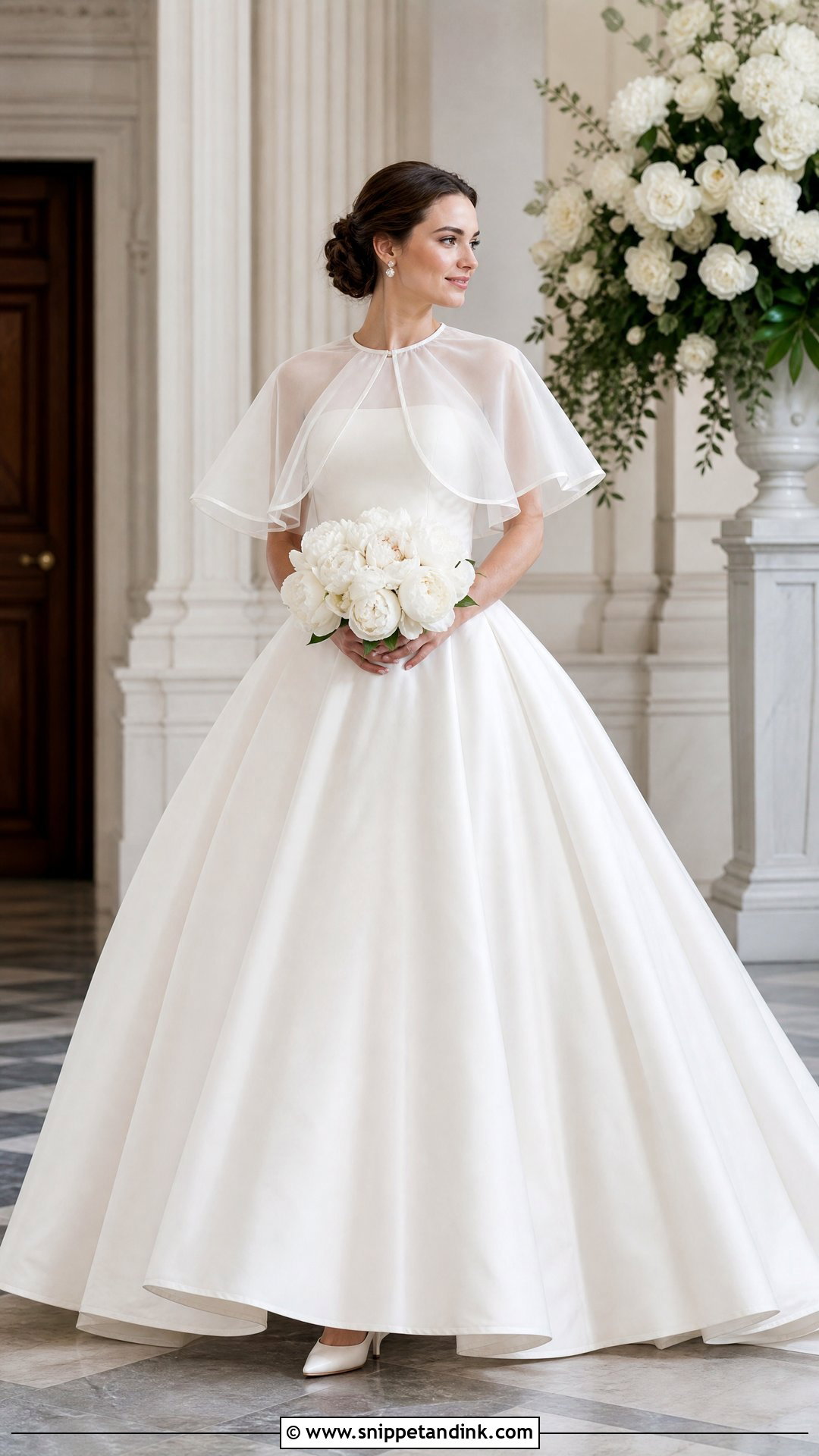
Organza is crisp enough to hold a shape on its own, which makes it the right capelet for a full princess skirt. Choose a capelet with a softly flared shape that mirrors the skirt without adding bulk at the waist, over a clean square, sweetheart or off-the-shoulder bodice. Satin heels, pearl cluster earrings, a smooth high bun or chignon and a medium bouquet of peonies or roses suit the scale. Organza edges like to curl outward, especially in humidity, so make sure a rolled or bound hem lies flat across the shoulders. Keep any veil plain and light, or leave it off.
18. Pleated Capelet With Modern Wedding Dress
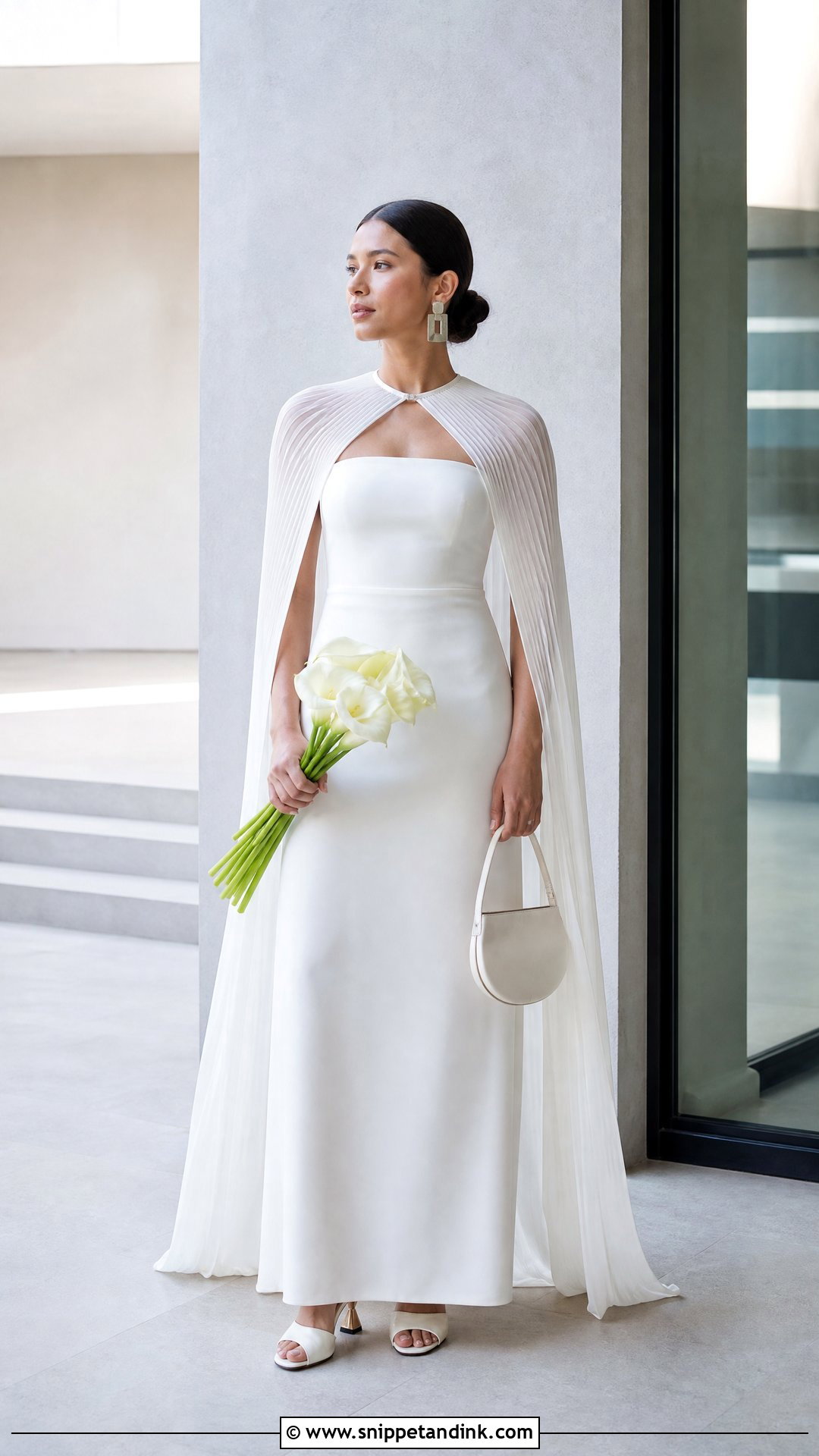
Pleats are architectural, so this is the capelet for a bride who likes clean lines. Pleated chiffon, tulle or light organza over a straight-neck column, tailored crepe or sleek fit-and-flare keeps the outfit modern. Sculptural heels, geometric earrings, a minimal bag and a center-parted low bun repeat the precision; tulips or calla lilies suit it better than a loose arrangement. The pleats should fall evenly without widening the shoulders. Pleats are pressed in, and crushing undoes them. Transport it on a wide hanger, never folded in a bag, and steam gently from a distance.
19. Pearl Fringe Capelet With Simple Wedding Dress
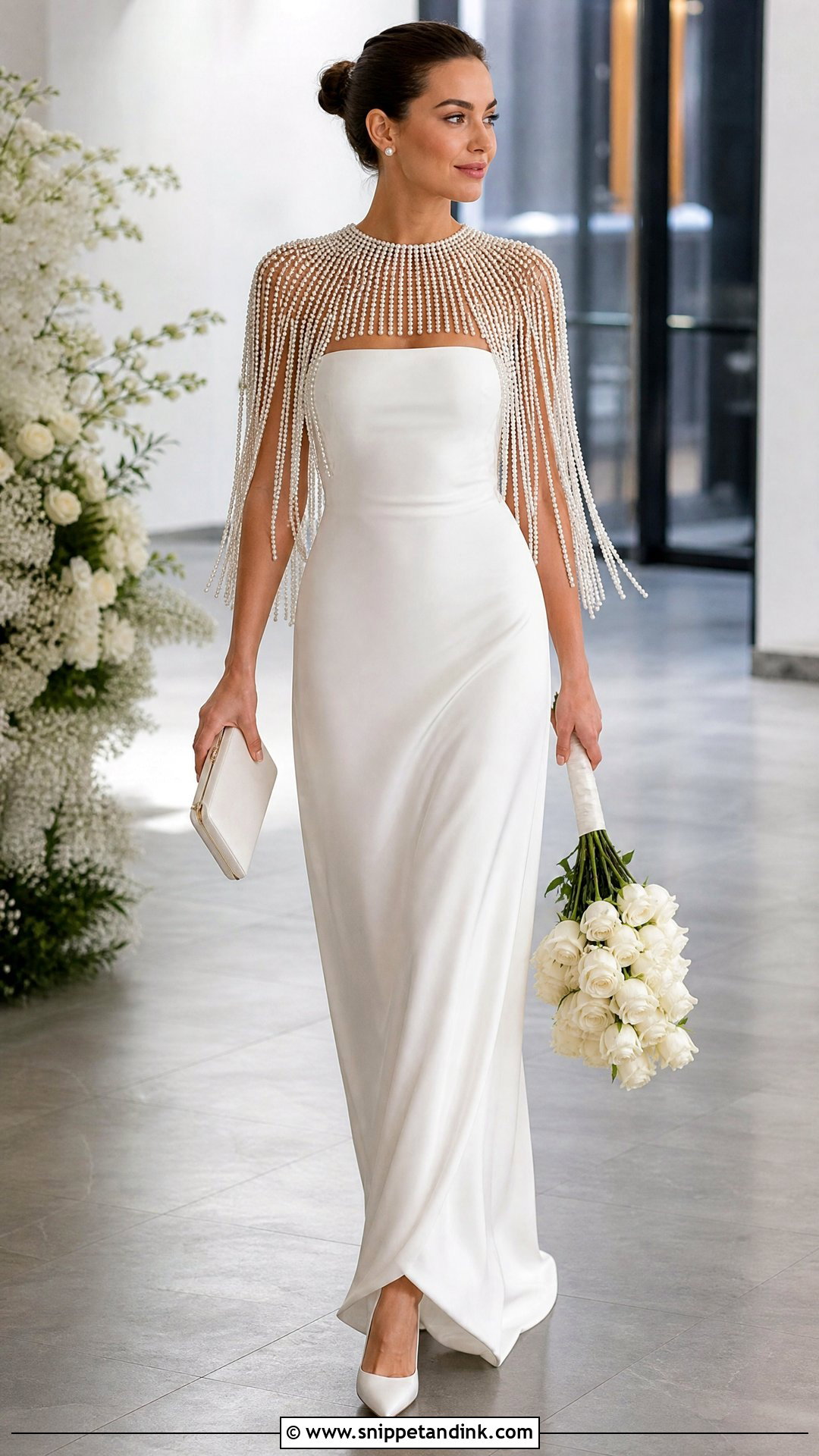
Pearl fringe swings, so it brings motion to an otherwise still gown. Let the strands fall from the shoulders or the capelet hem over a strapless column, satin slip or fitted crepe dress. With moving pearls as the focus, keep everything else plain: smooth shoes, small pearl studs, a simple clutch, a narrow bouquet with little greenery. A sleek bun keeps hair from knotting into the fringe. Walk, sit and dance in it at a fitting. Strands that hang too long catch on bouquet stems and tangle with each other when you hug, so I’d keep them short of your hands.
20. Detachable Capelet With Two-Look Wedding Dress
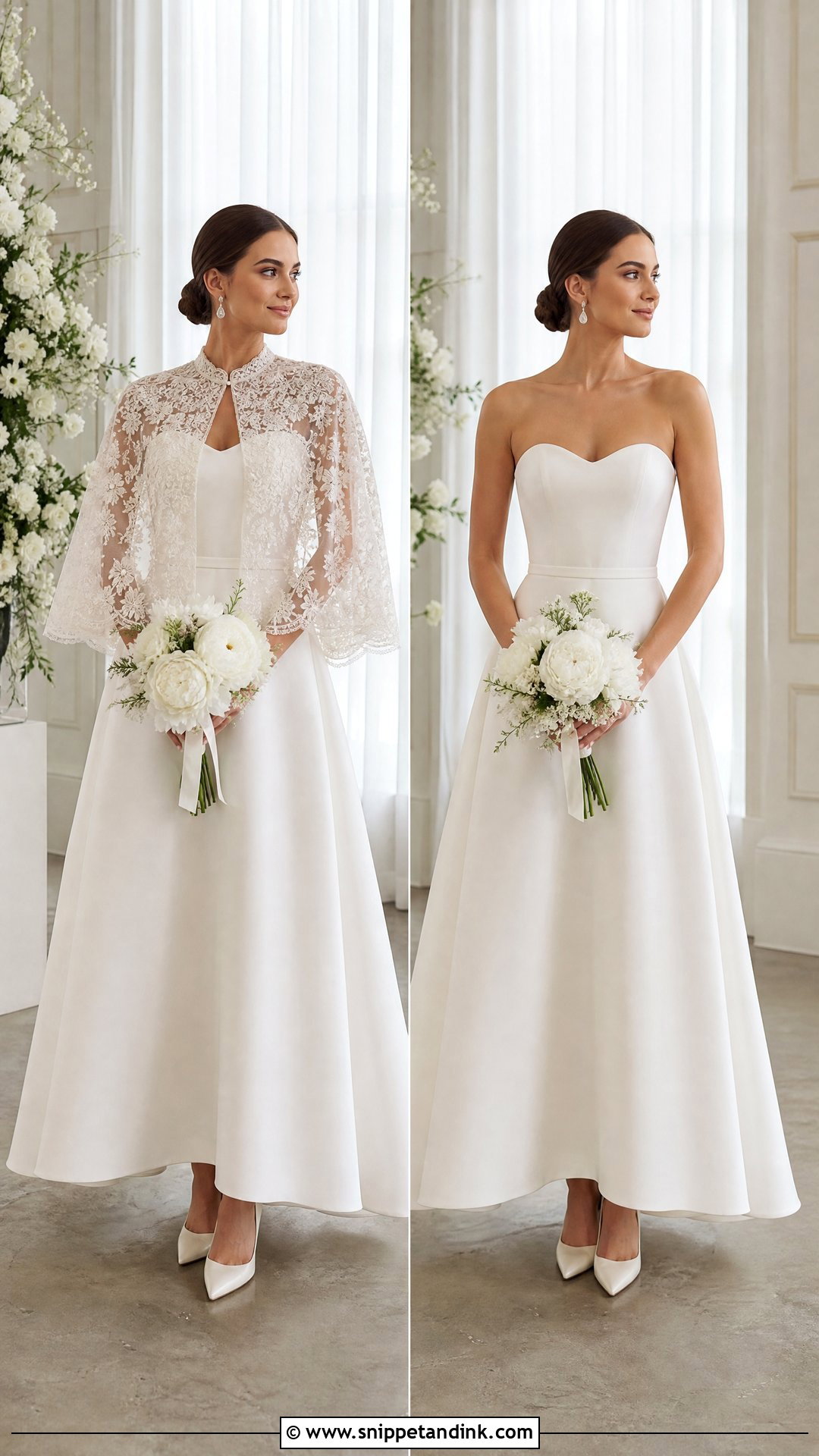
Two looks from one dress is the main reason brides ask me about capelets. A detachable capelet in lace, pearl or embroidery covers up for the ceremony, then comes off to show a clean neckline at the reception. A fitted satin gown, minimal A-line or strapless ball gown all make a good base. Keep shoes, earrings and hair the same for both versions so the change feels natural; add a bracelet or bolder earrings afterward if you want a visible switch. Practice taking it off and on at a fitting, and name one person to put it in a breathable garment bag straight away.
How I Stop a Capelet Sliding Off a Strapless Gown
Most capelets are sold as a separate piece with a single hook or ribbon at the throat. That’s fine for the photos in the shop and hopeless for ten hours of hugging. A seamstress can fix it in one appointment.
- Small snaps or thread loops sewn to the inside of the gown’s bodice at the back, with matching halves on the capelet, so it can’t creep sideways.
- A short length of clear elastic or a lingerie-strap snap on each side, hidden under the shoulder edge.
- Hook-and-eye or covered buttons at the front instead of a ribbon tie, which loosens as it’s handled.
Bring your real veil to that fitting. A veil comb set high in a bun often clashes with a high capelet collar, and a long veil worn over a capelet can drag it backward at every step. Usually the answer is lowering the comb to the nape, or letting a longer capelet take the veil’s place altogether.
A quick check before you walk
Ask whoever dresses you to look at the back once the capelet is on. Tulle can fold under at the shoulder seam without you feeling it, and it’s the sort of thing nobody notices until the ceremony photos come back.
Does Your Capelet Pass the Hug Test?
One layer over the shoulders can move a bridal outfit from simple to personal. Pearl tulle, lace, chiffon, satin, feathers, crystals and appliqués each behave differently, so start with the dress fabric and silhouette and let them narrow the choice. Hold back on anything that competes: jewelry, shoes, hair pieces and flowers should support the capelet rather than echo every detail. Then test it properly at alterations. Walk, sit, turn, raise your arms and hug someone. If it stays put and you forget you’re wearing it, you’ve got the right one.
You'll Like These Ideas:


Leave a Reply