
Put a layer over your gown and the whole outfit changes. It can add warmth, cover shoulders for a religious ceremony, or give you a second look at the reception without stepping out of the dress. Sheer capes over satin, cropped blazers over slip dresses, faux fur wraps for winter and pearl cardigans for garden portraits all have a place. In my fittings, the brides who end up happiest pick the layer for the hour they’ll wear it most, not for the one photo they saw online. Each idea below is paired with a dress shape, so you can see what goes with what.
Matching the Layer to the Season, Not Just the Dress
When I plan a bride’s layers, I ask what the temperature will be at portrait time, which is often an hour or two after the ceremony and can be much cooler. That one question narrows the list faster than any mood board.
Spring
Mornings are chilly and afternoons warm up, so I want something that comes off easily. Organza toppers, cardigans and light capes all work. Avoid anything you can’t carry over your arm once the sun is out.
Summer
Coverage, not warmth, is usually the goal. Chiffon, tulle and organza let air through. Satin and lace in summer heat cling to damp skin, so I keep those for evening receptions in air-conditioned rooms.
Fall
This is cashmere, velvet and knit season. Evenings drop fast once the light goes, so if your portraits run to sunset, plan a warmer layer than you think you’ll need.
Winter
Faux fur, wool and heavy velvet. Expect to wear the layer longer than in any other season, so test that you can move, sit and hold a bouquet in it. A layer you take off after thirty seconds outside is a styling prop, not a coverup.
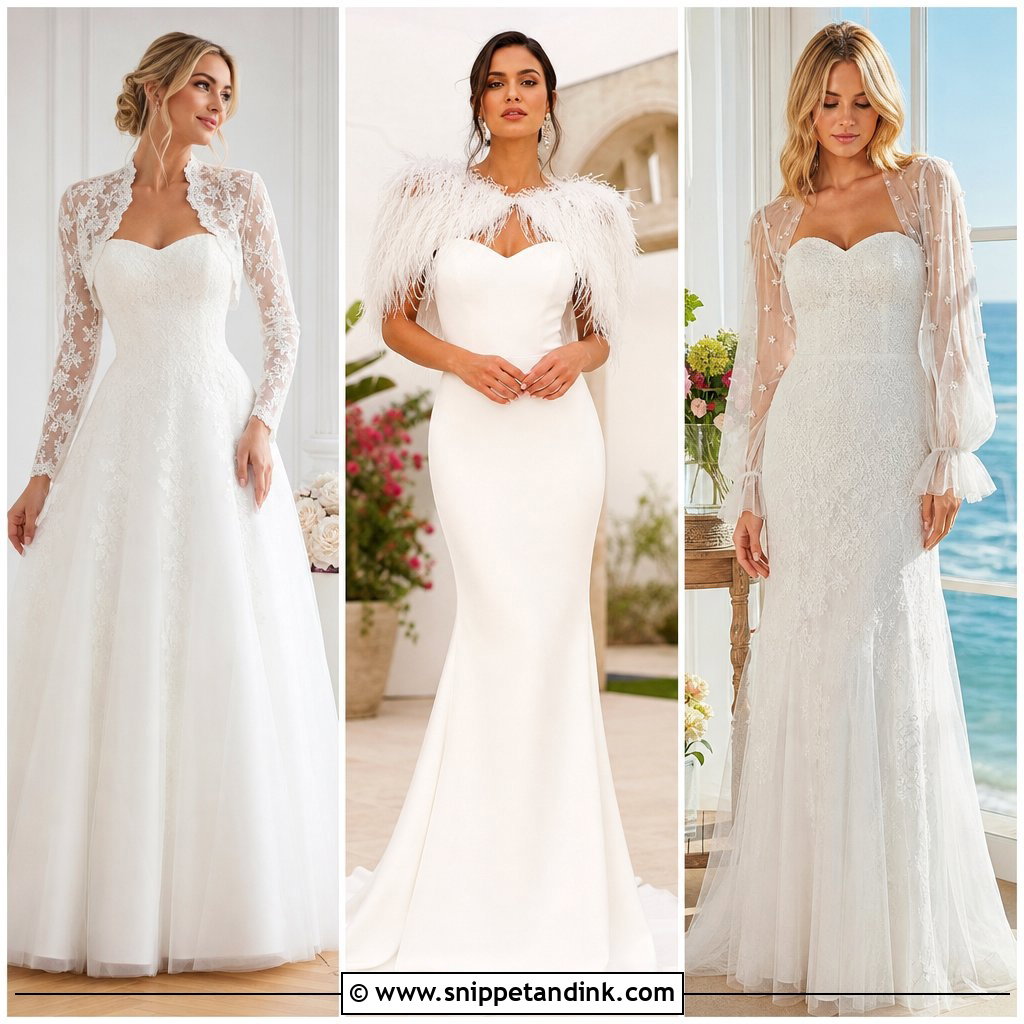
1. Sheer Bridal Cape With Satin Wedding Dress
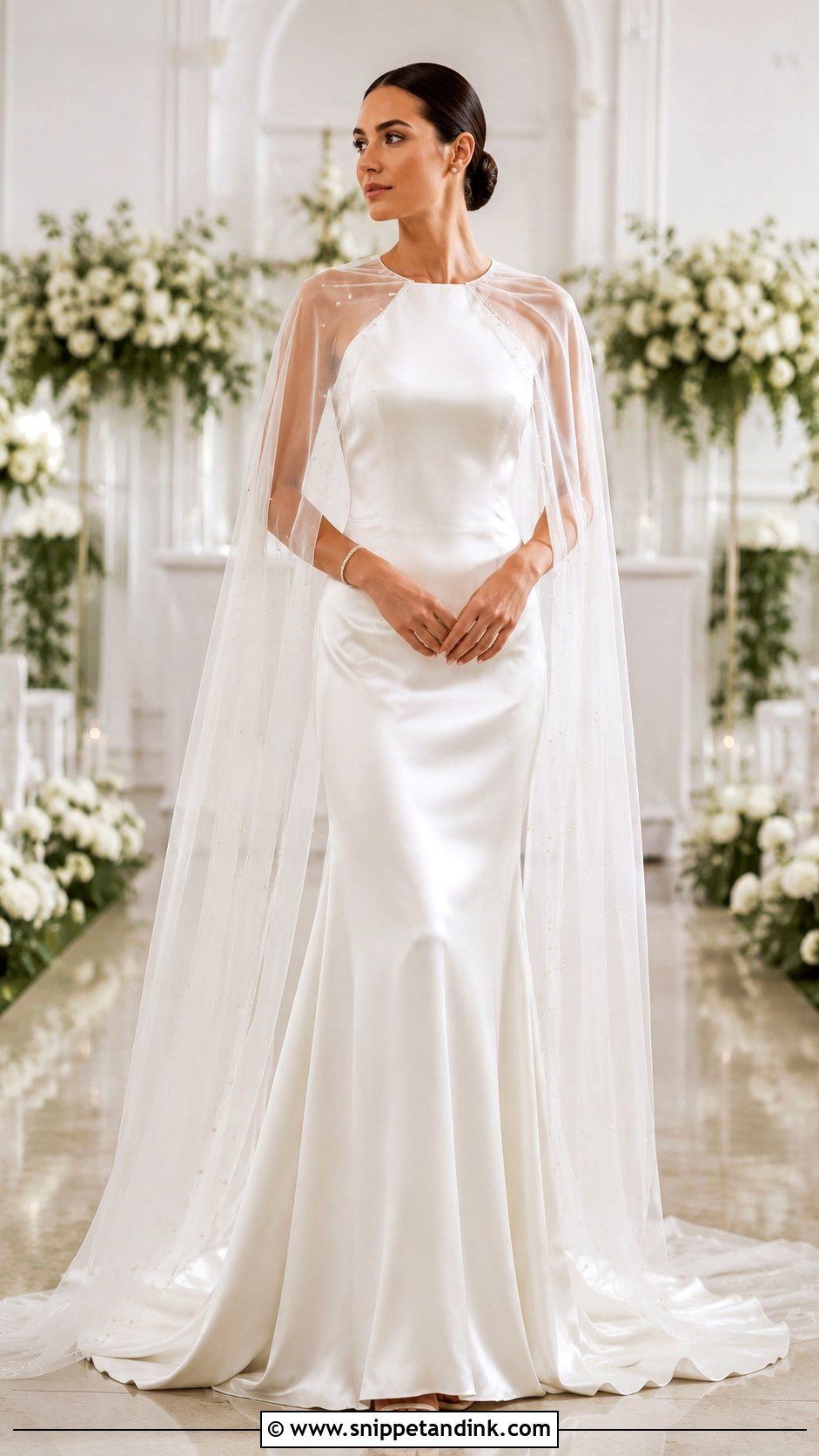
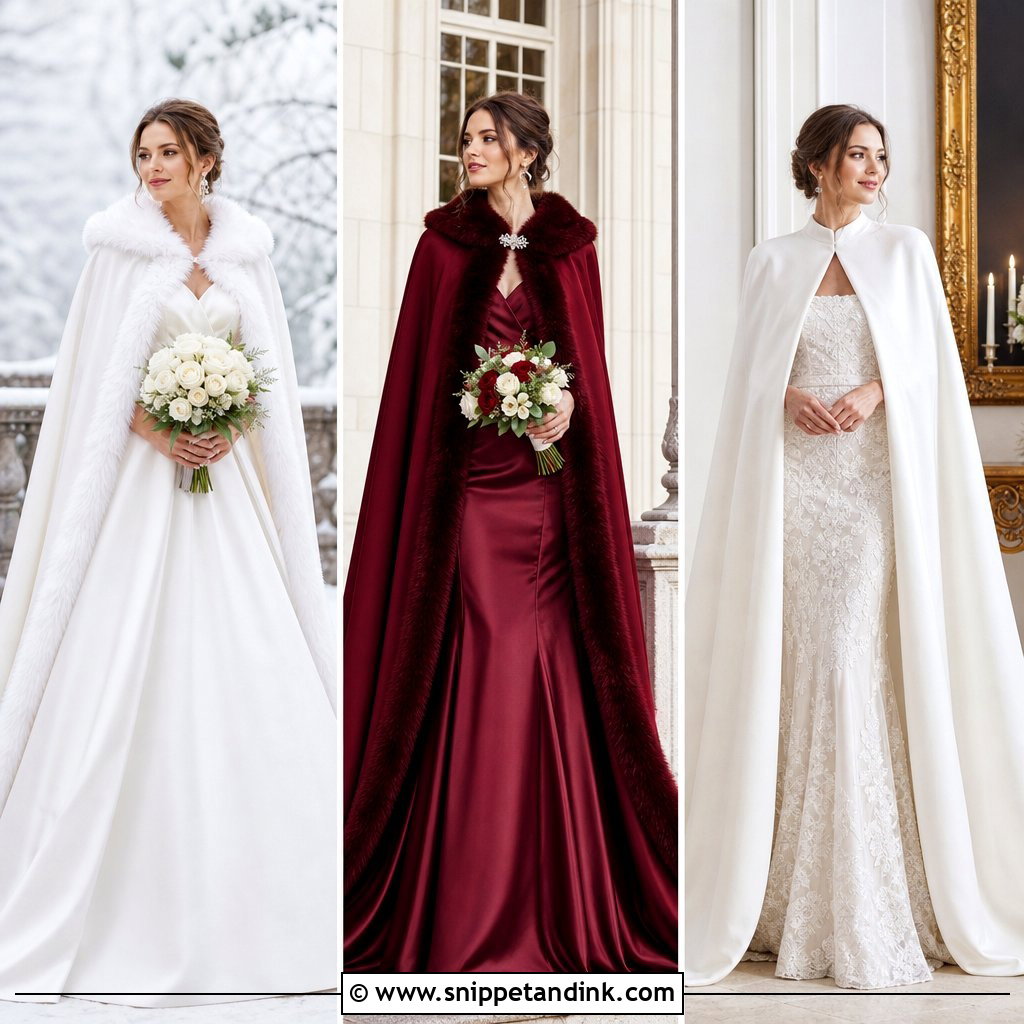
Satin and sheer tulle are an easy pair: the dress gives a smooth surface, the cape gives movement. Floor length suits a formal ceremony; a short capelet is enough if you only need the shoulders covered. A few pearls or tiny appliqués at the shoulder seam make it read bridal. I suggest this to brides skipping a veil, since the cape trails behind like one. One warning I give at every fitting: satin shows every pull, so the cape’s attachment points need to be sewn on the dress’s seams, not mid-panel, or you’ll see puckers in close-ups.
2. Lace Bolero With Strapless Wedding Dress
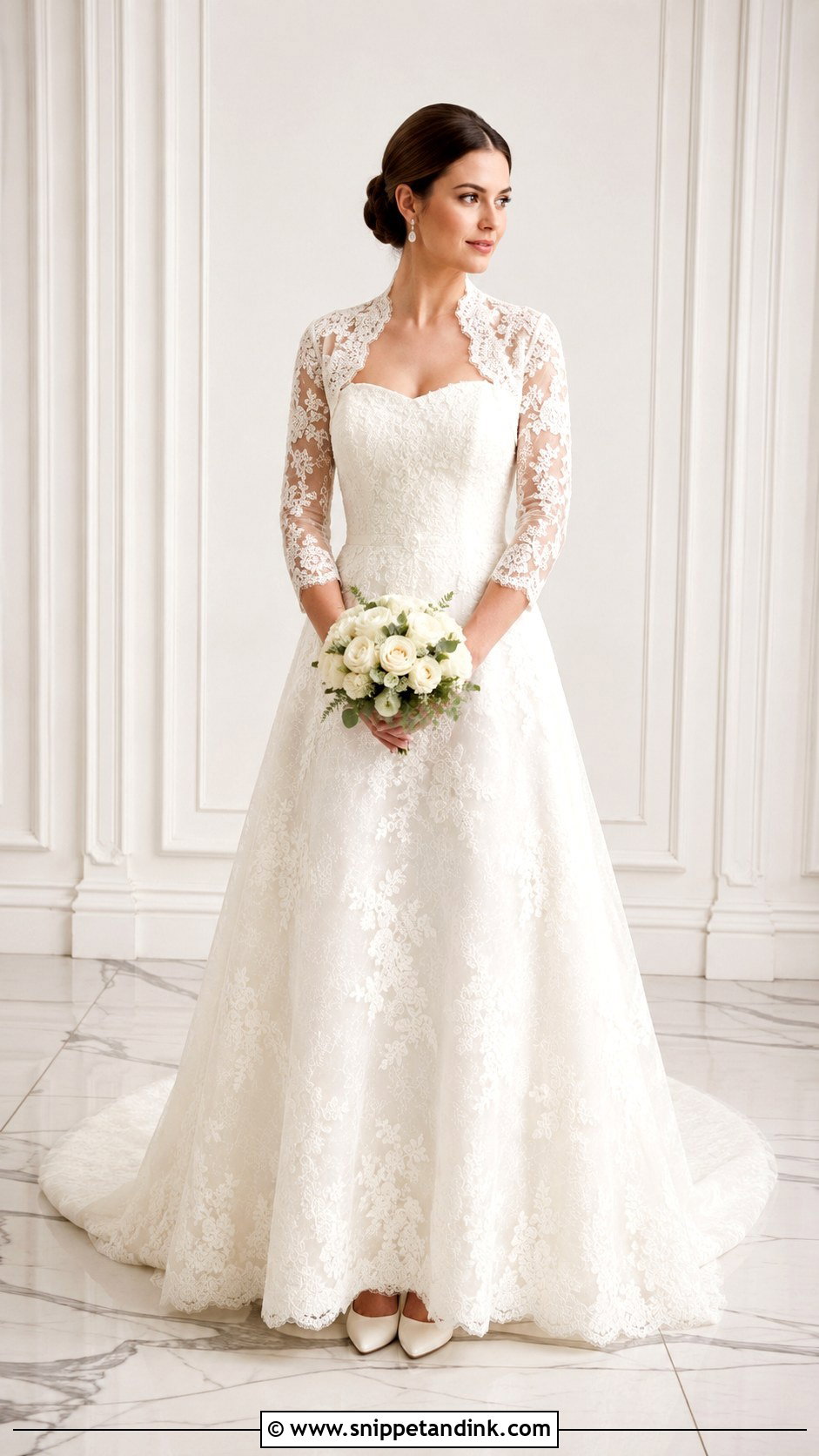
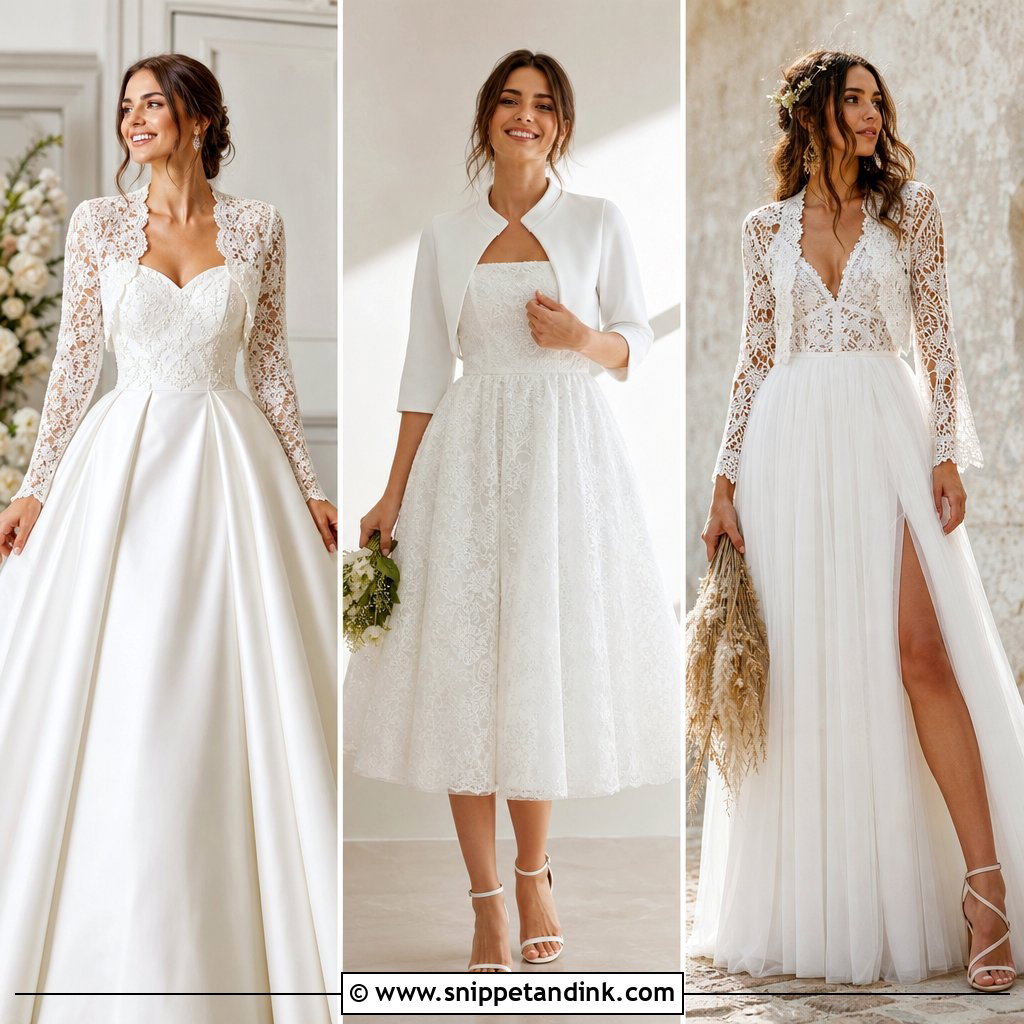
Plenty of brides love a strapless dress and then learn their ceremony venue expects covered shoulders. A lace bolero solves it without touching the gown. Matching tone matters more than matching pattern: an ivory dress with a stark white bolero looks like two separate purchases, so I take a swatch of the gown when shopping. Over a plain dress, choose textured lace. Over an already-detailed one, a fine, light lace. The bolero should end at or just above the bust line on a ball gown or mermaid, so the bodice shape still shows.
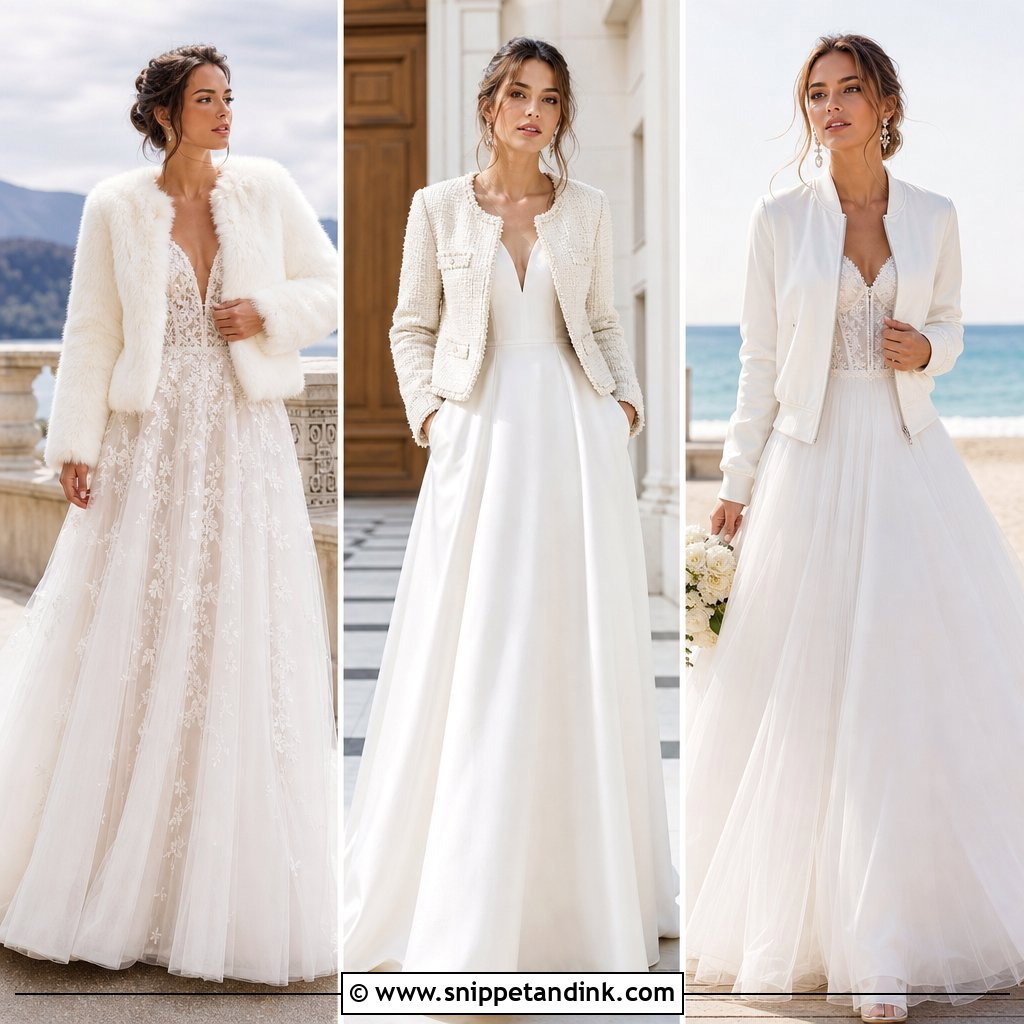
3. Faux Fur Wrap With Winter Wedding Dress
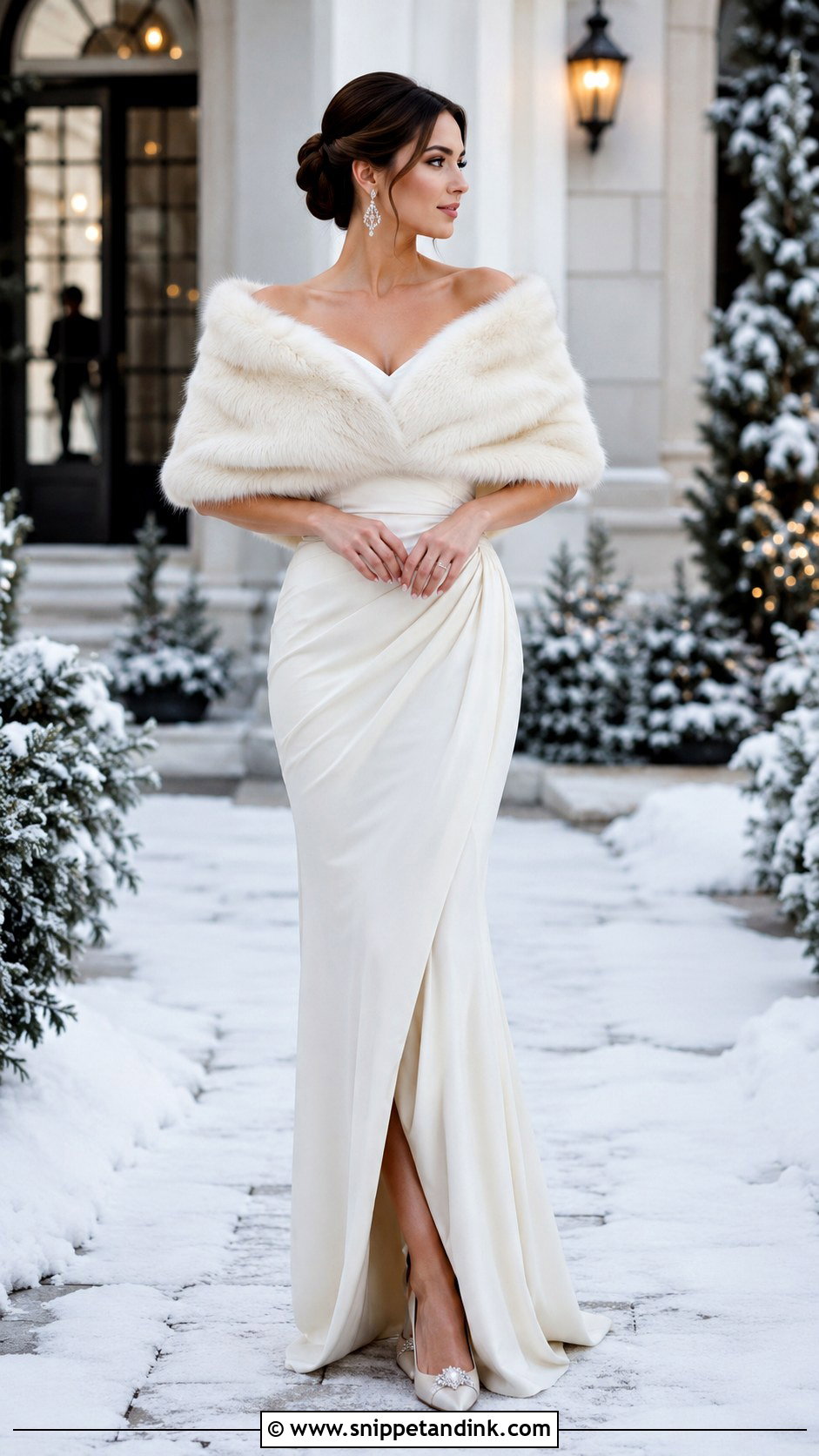
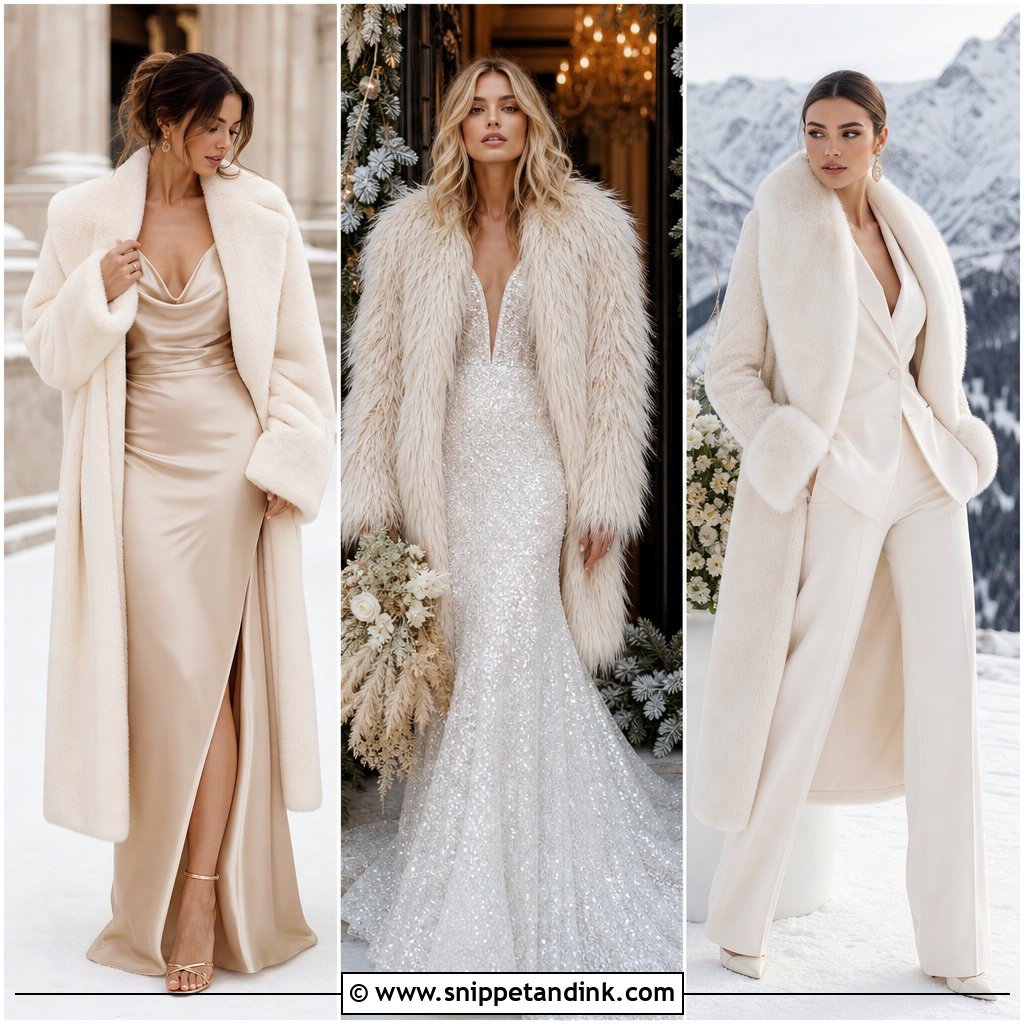
Faux fur next to satin, mikado or a beaded gown gives the strongest texture contrast you can get in winter. Ivory and cream are safe; blush, soft grey or champagne suit a gown with warm undertones. For portraits outside in real cold, I go one size up to a fuller stole and fasten it with a hidden hook, because a shawl that’s constantly sliding means a bride holding it closed in every frame. Bridal boots are completely fine underneath; nobody sees your feet under a full skirt.
4. Bridal Blazer With Slip Wedding Dress
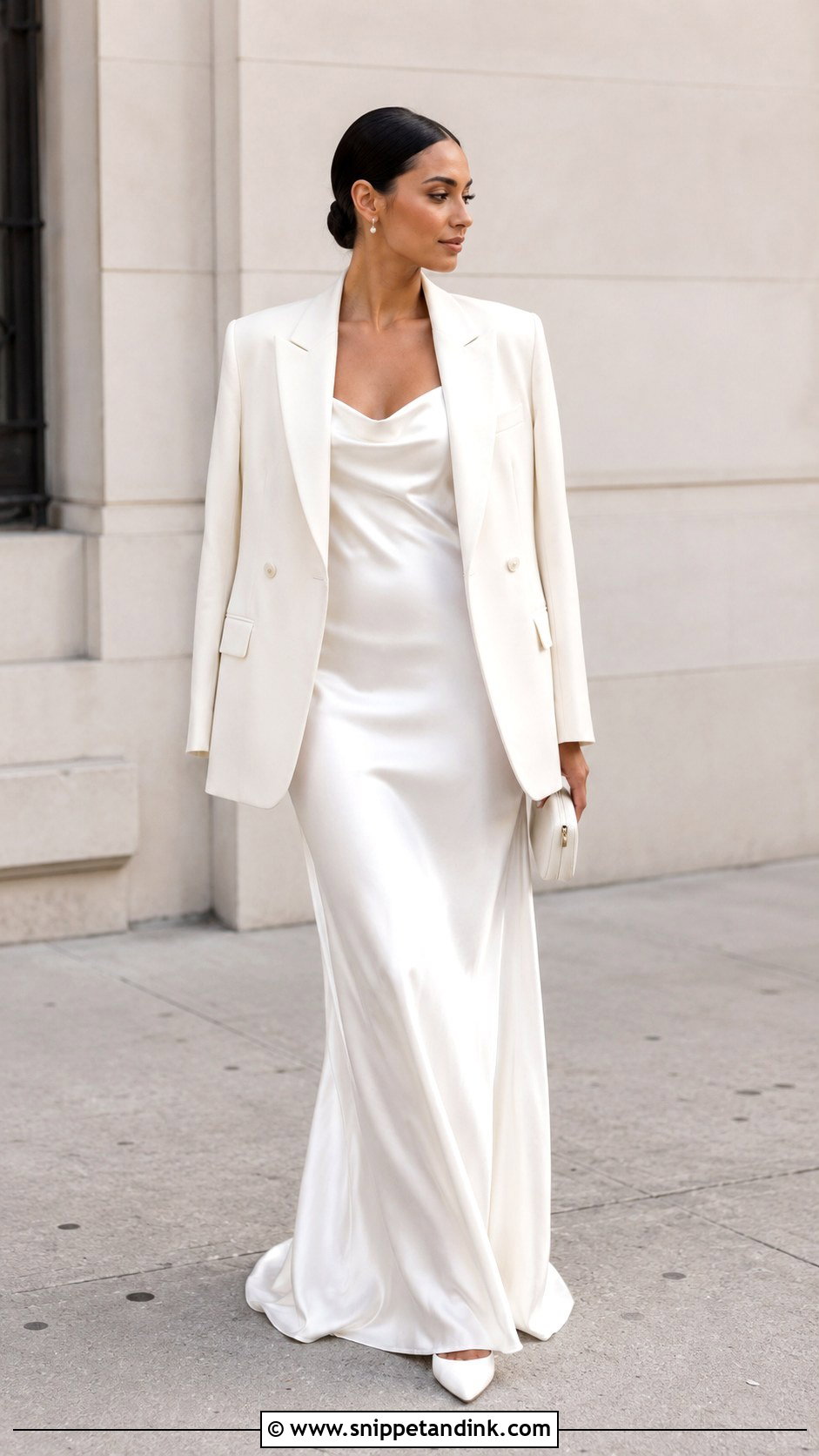
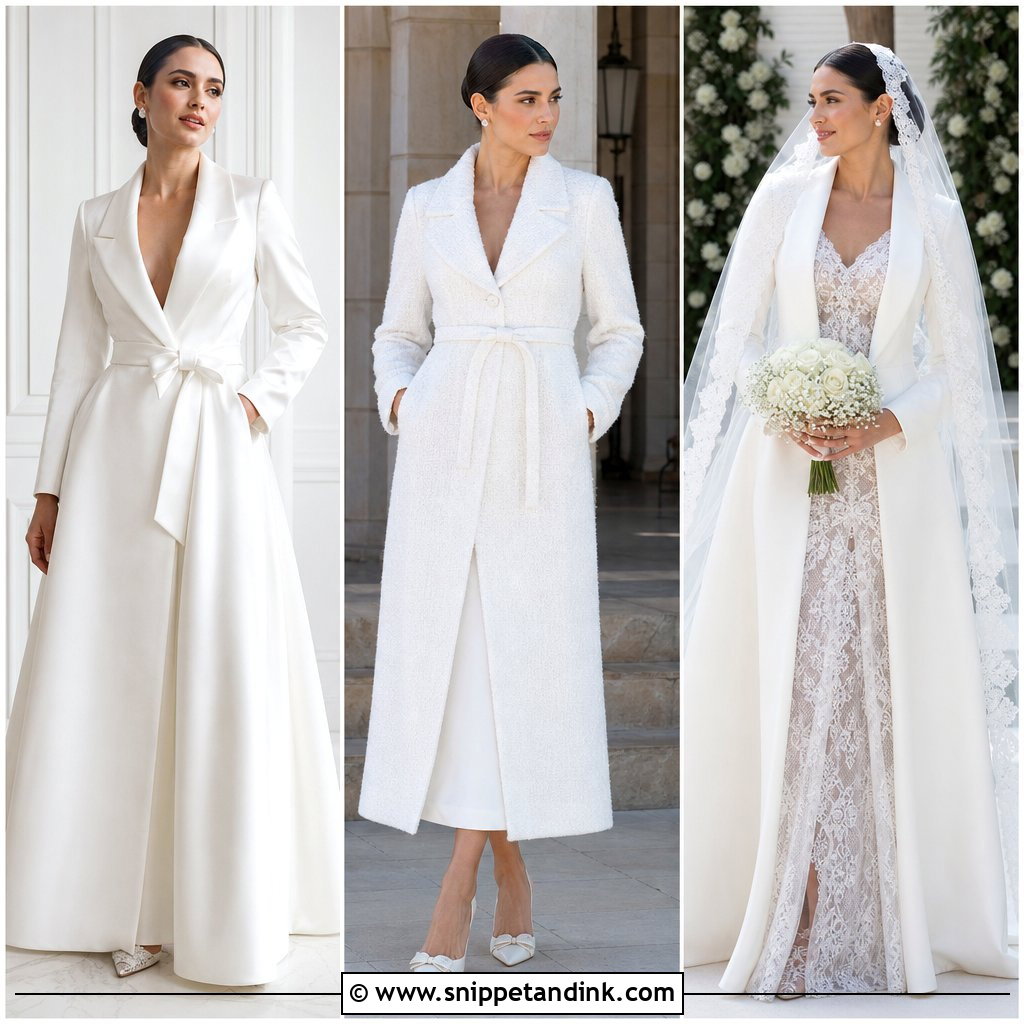
Over a silk or satin slip, an ivory blazer looks right at a courthouse, on a rooftop or at a small dinner reception. Oversized feels relaxed; fitted feels formal. Satin lapels nod to a tuxedo. The proportion rule I use is simple: the slimmer the dress, the more structure the blazer can take. Silk slips also mark easily, so I have brides check the blazer’s lining isn’t a rough polyester that will pill the dress at the hips after a few hours of wear.
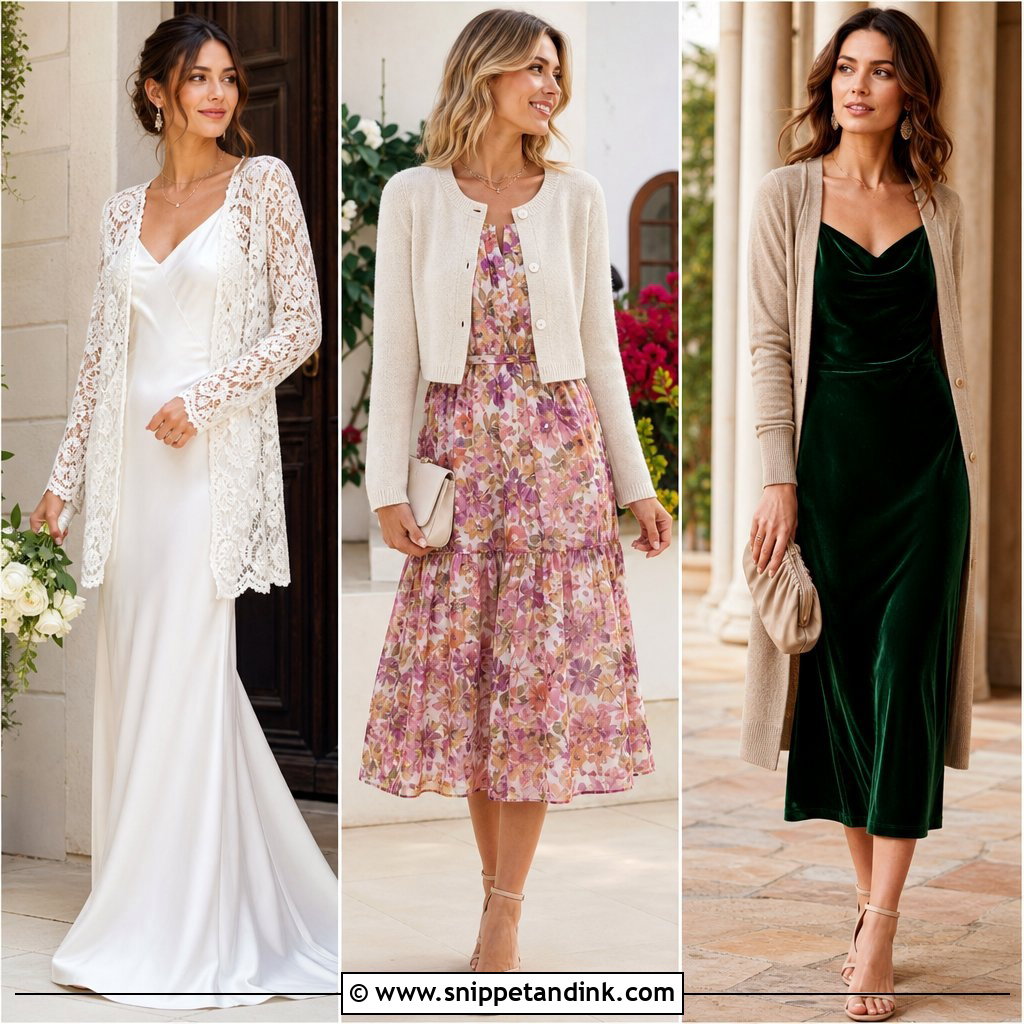
5. Pearl Cardigan With A-Line Wedding Dress
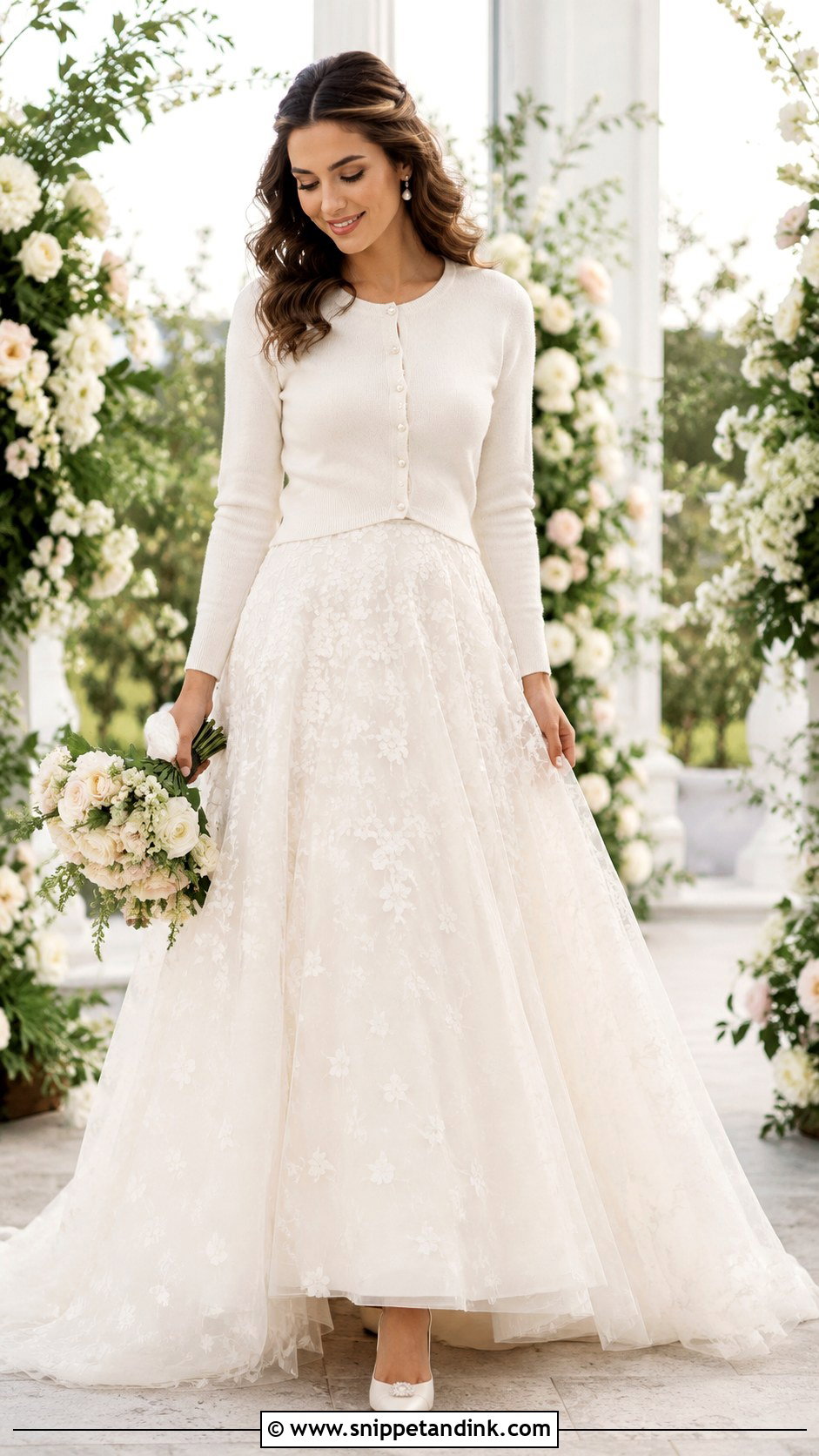
Fine knit with pearl buttons is about as gentle as bridal layering gets, and a pearl cardigan over an A-line dress keeps the waist defined while the buttons bring texture near the face. Close it for a modest ceremony; leave it open for portraits. Avoid chunky wool. The buttons are the weak point: glued pearl buttons pop off, so I check each one is sewn through. It has a vintage feel that suits a garden or a cool reception room.
6. Tulle Capelet With Ball Gown Wedding Dress
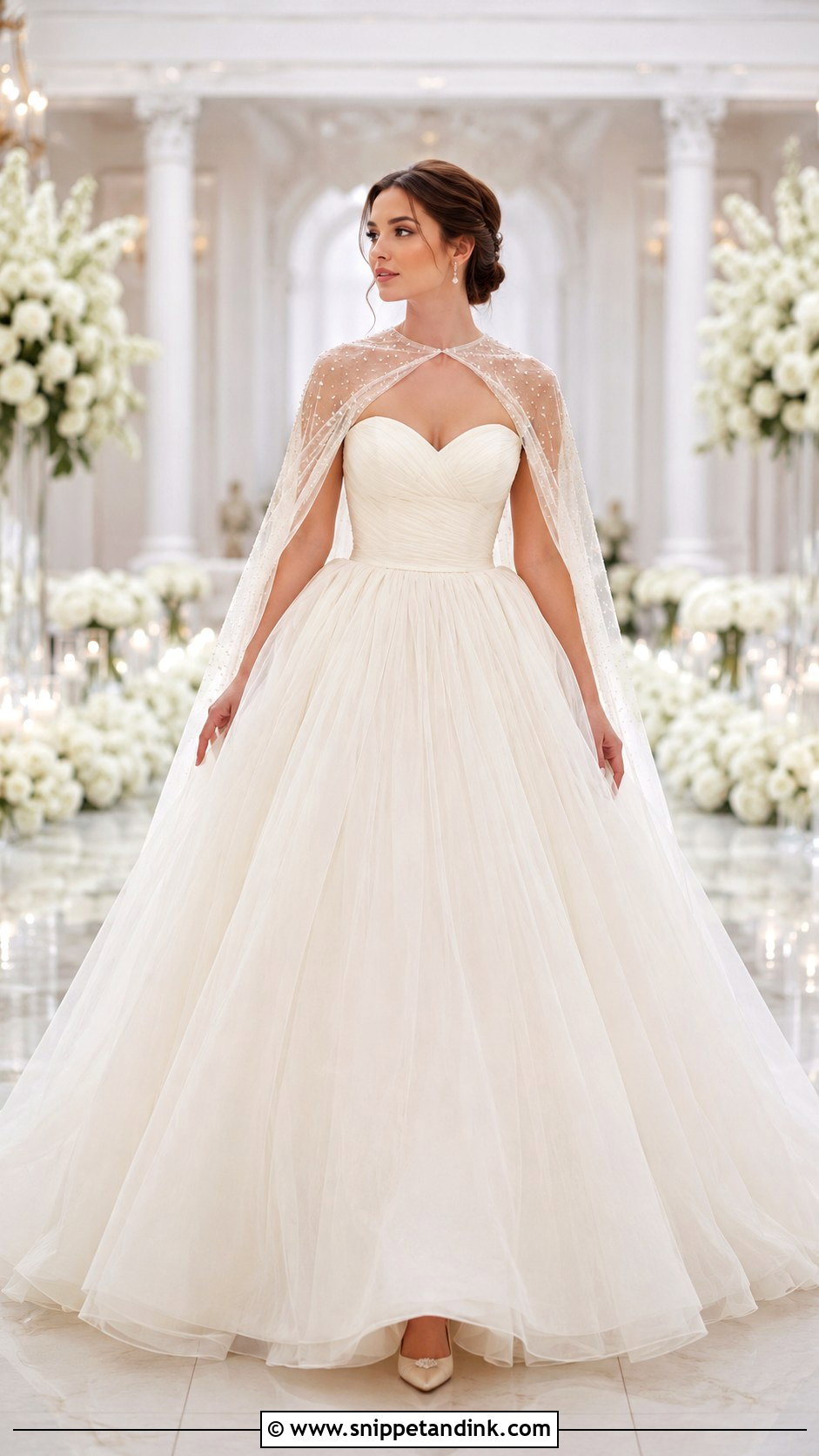
Ball gowns already carry their weight in the skirt, so anything heavy on top tips the balance. A tulle capelet ending just above the waist, or just over the upper arms, gives coverage and keeps the outline clear. Pearls or scattered crystals on the tulle catch light in ceremony photos. I keep hair lifted with this one, in a bun or half-up, because long loose curls tangle in the capelet’s edge every time you turn your head.
7. Satin Shawl With Mermaid Wedding Dress
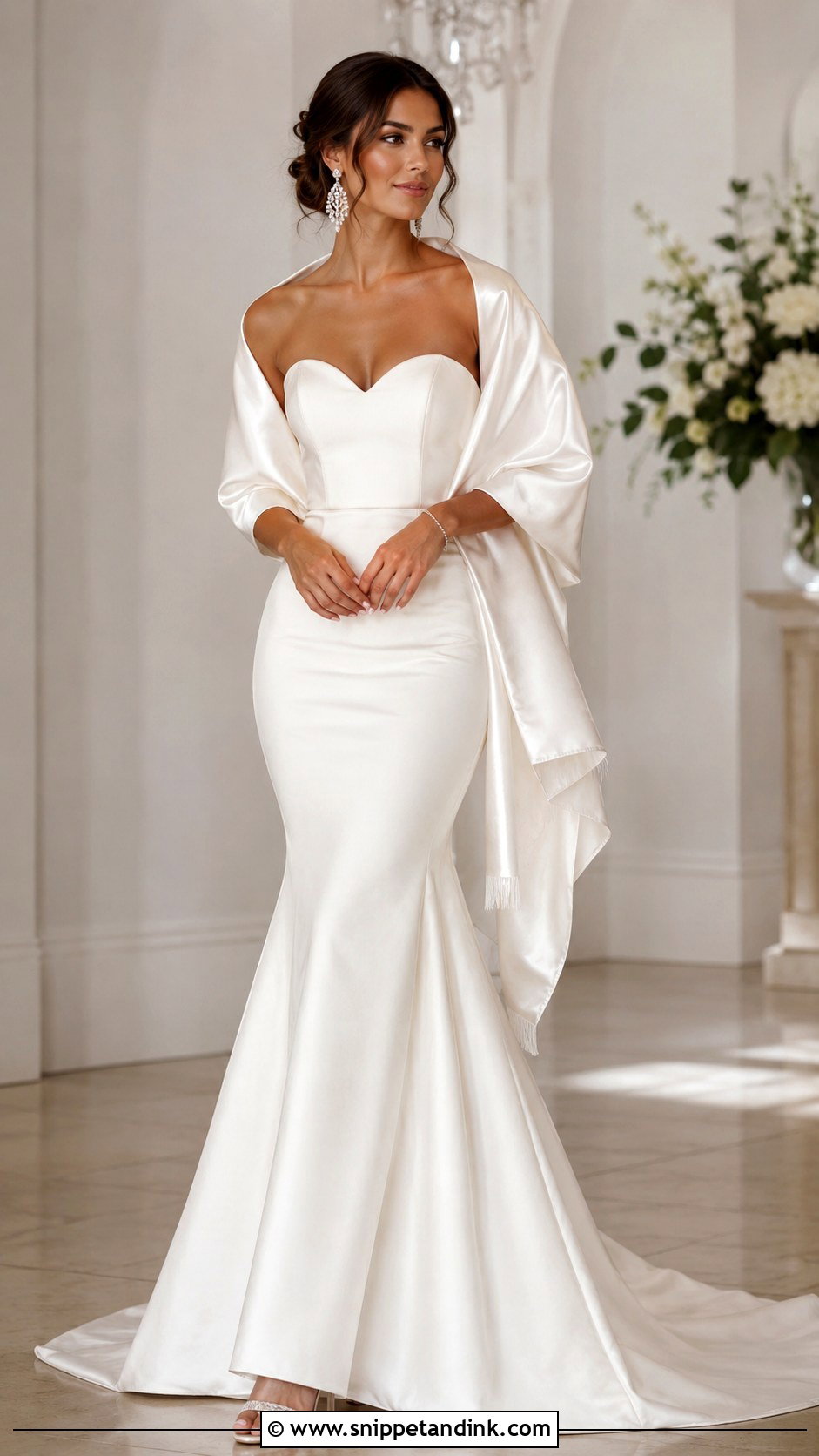
Mermaid gowns get one thing right that most layers ruin: the line from hip to knee. A satin shawl leaves that untouched. Drape it over the shoulders for the vows and let it fall to the elbows for portraits. Wide shawls feel formal; a narrow satin scarf is lighter. Satin on satin slides, so I have brides practice the drape once at the fitting and add a discreet pin at the back of the bodice if it won’t stay. Match the color closely so it looks planned.
8. Feather Trim Jacket With Reception Wedding Dress
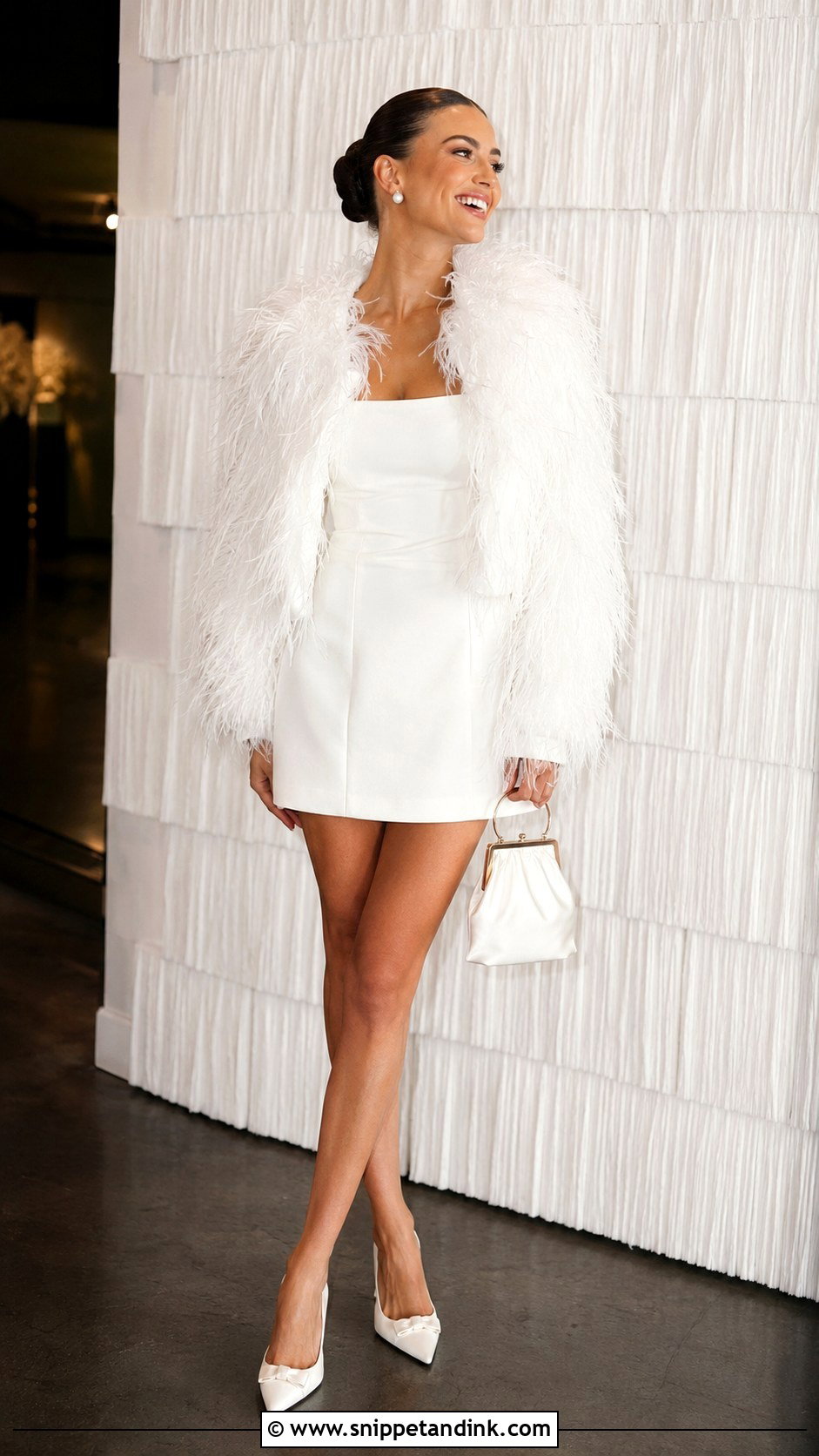
Reception entrances, cake cutting and the first hour of dancing are where a feather trim jacket shows off best. It works over a mini, a fitted crepe gown, a slip dress or a plain strapless. Cropped is the right length; anything longer swamps the dress. Soft white or ivory feathers feel bridal, champagne adds warmth. Feathers shed, especially on a dance floor, so I keep a lint roller in my kit for the partner’s dark jacket. Keep accessories smooth: pearl studs and satin heels are plenty.
9. Long Wool Coat With Winter Wedding Dress
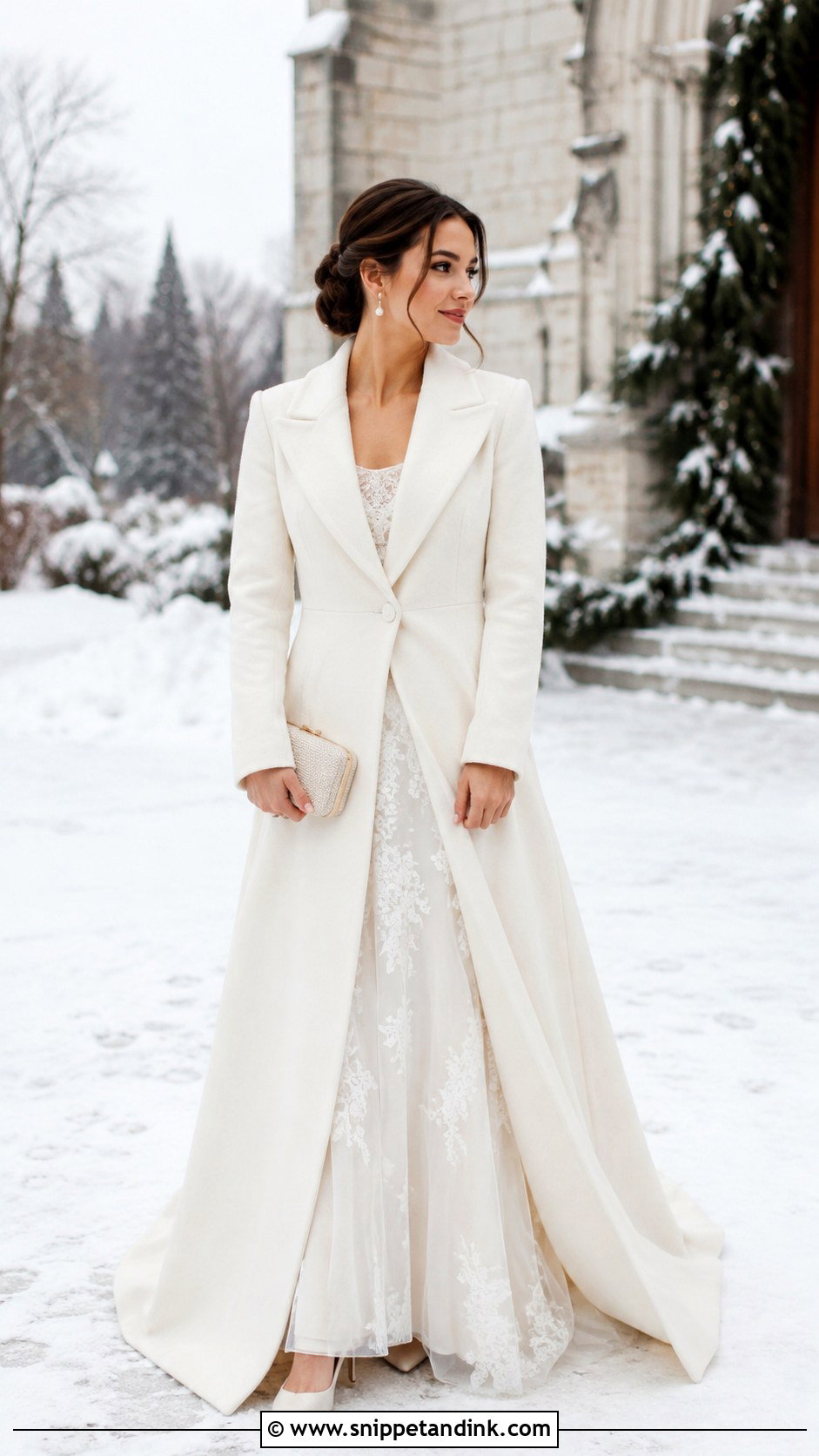
Real warmth in outdoor winter portraits comes from wool, and a long coat is the honest answer when the forecast is below freezing. Ivory, cream or soft beige with clean lines and few buttons keeps attention on the gown. Wrap coats suit slim dresses; tailored coats suit structured ones. If your skirt is full, the coat must be cut wide enough to sit over it, or it will crush the tulle and leave creases you’ll see in every later photo. I have brides try the coat on over the actual dress, never over jeans.
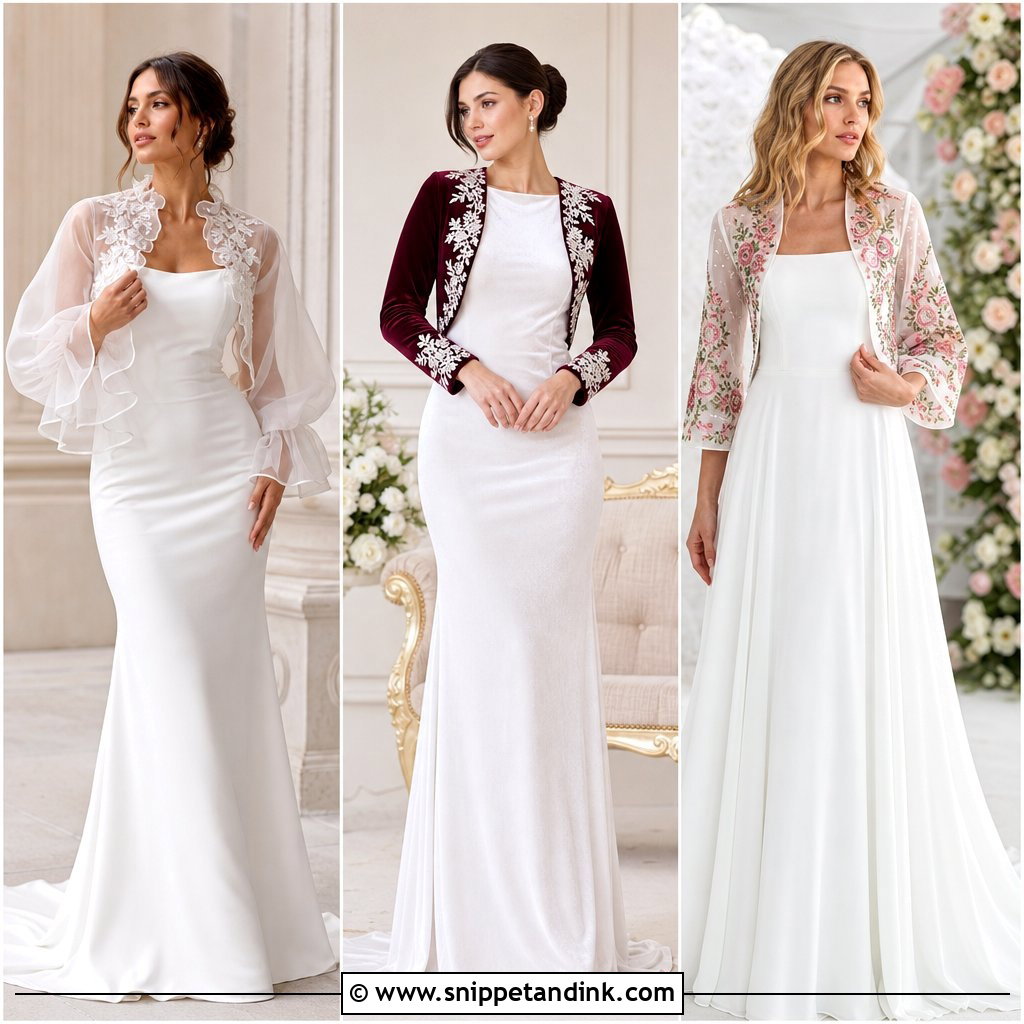
10. Embroidered Bridal Jacket With Simple Wedding Dress
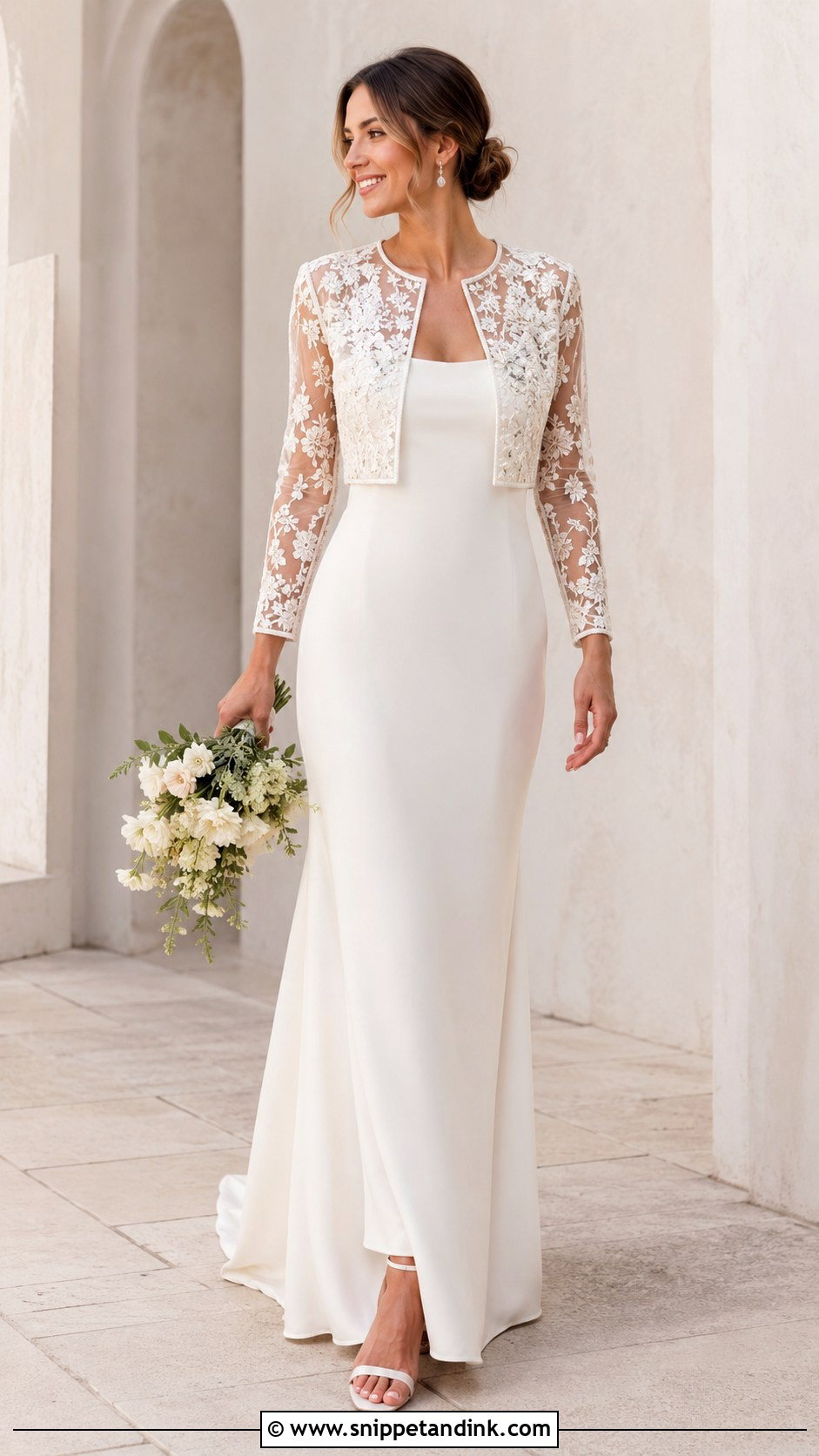
Plain satin, crepe or chiffon gowns can look almost custom with an embroidered jacket over them. Floral work reads romantic; beaded or pearl embroidery reads glamorous. Cropped jackets show the waist and suit A-line, sheath and slip gowns. Sheer organza or tulle gives a soft base for the embroidery; satin or crepe gives structure. The dress underneath should stay plain, and I check the jacket’s inner seams: heavy embroidery often has stiff backing that scratches bare arms after a long dinner.
11. Cashmere Wrap With Fall Wedding Dress
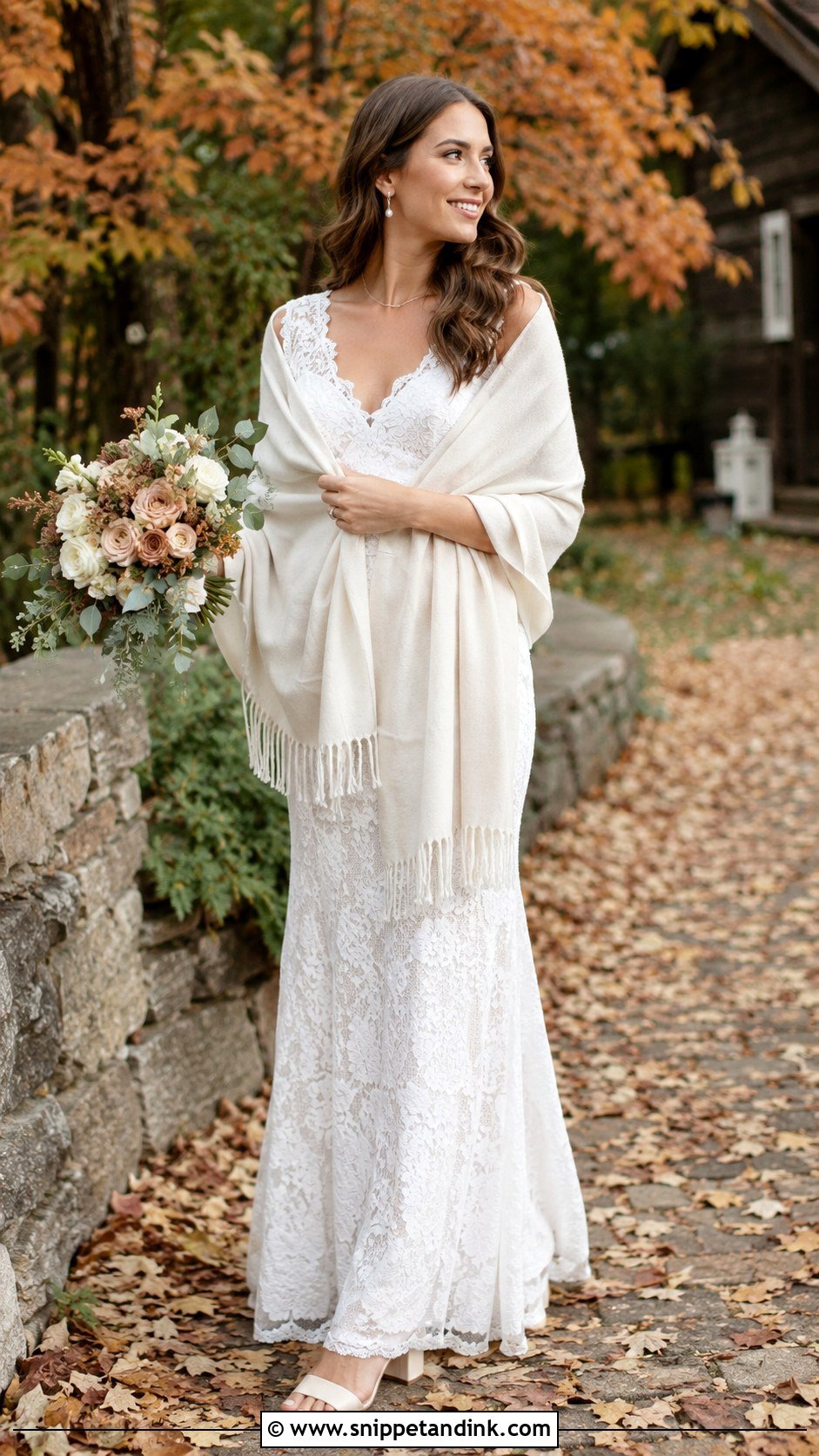
I’d rank cashmere as the most comfortable layer on this list. It’s warm without bulk and soft enough to forget you’re wearing it, which suits vineyards, mountain venues and breezy evening portraits. Ivory looks classic; oatmeal, taupe or pale grey feel seasonal. Drape it loosely or fix it with a small pin. Cashmere pills where it rubs, so over a beaded or sequined bodice it will roughen within hours; it’s better on lace, crepe, satin or chiffon. Block heels help on grass.
12. Beaded Cape With Plain Wedding Dress
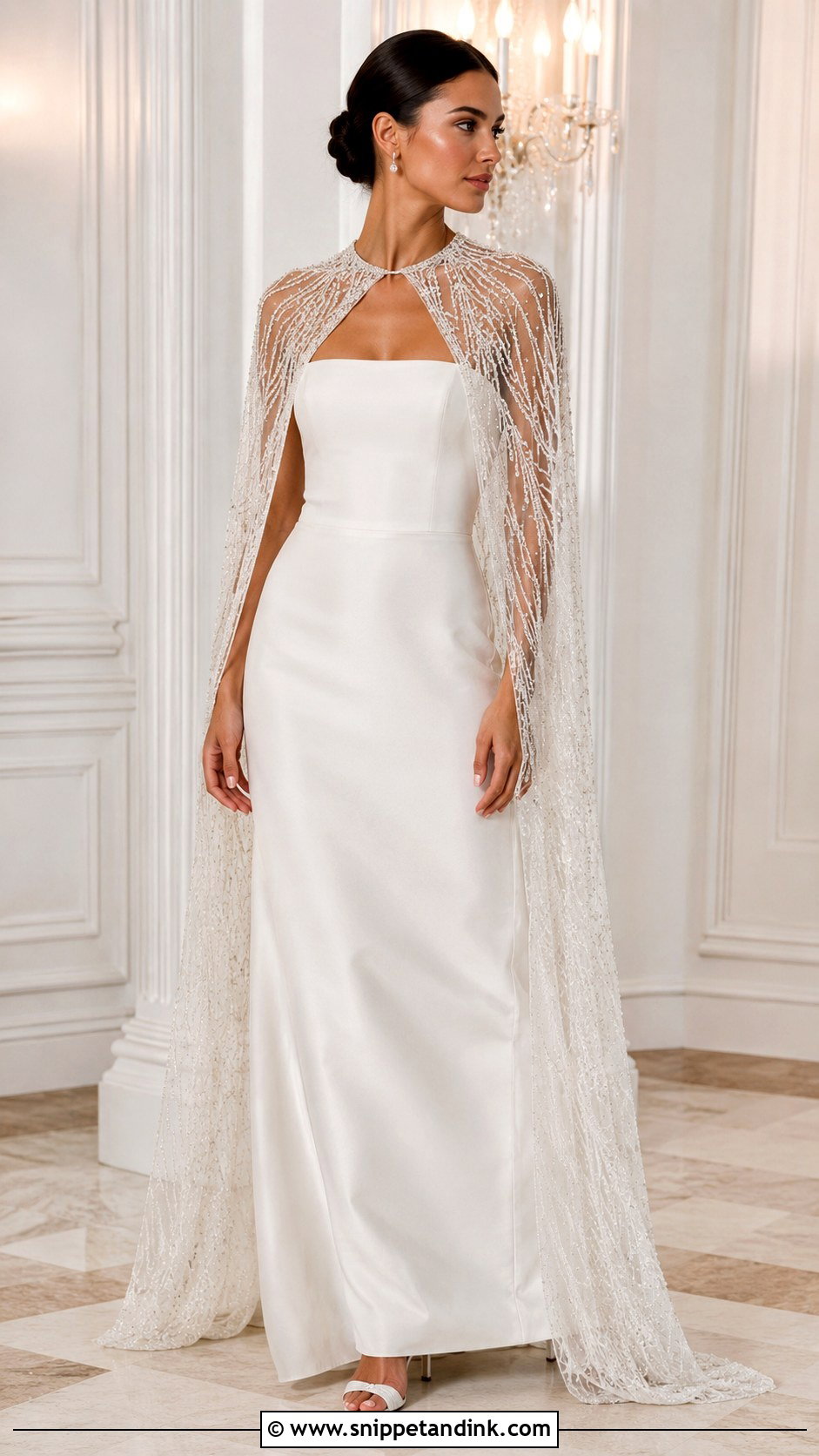
Plain crepe, satin and column gowns are exactly where a beaded cape earns its weight. Light shimmer suits daytime; denser beading suits an evening ceremony. Shoulder length is easy to manage; floor length gives you the aisle. Weight is the thing brides underestimate: a fully beaded floor-length cape can pull backward on the neck, so I want to see it attached by both neckline and shoulder points. A high-neck cape suits a simple gown, and an open-front cape lets a detailed bodice show.
13. Cropped Tuxedo Jacket With Modern Wedding Dress
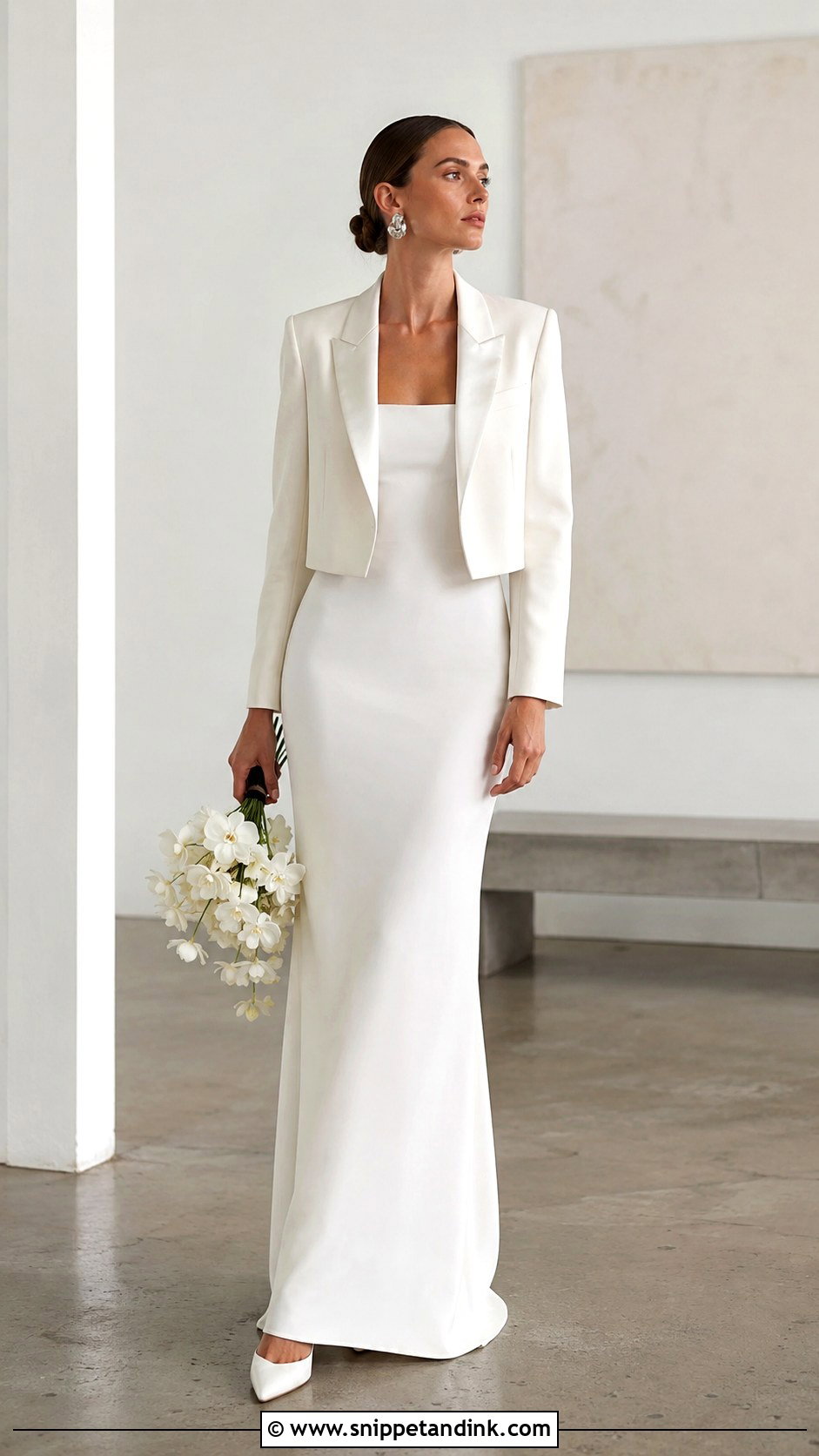
Sharp tailoring is the whole appeal here. A cropped tuxedo jacket over a straight-neck gown, slip dress, jumpsuit or sheath defines the waist without swallowing the dress, and it suits gallery venues and evening receptions. Satin lapels look formal; matte crepe looks sleek. Wear it over the shoulders for portraits and on properly when the room cools. I check the shoulder pads at the fitting, because thick pads on a narrow-shouldered bride make the jacket look borrowed.
14. Organza Wrap Top With Column Wedding Dress
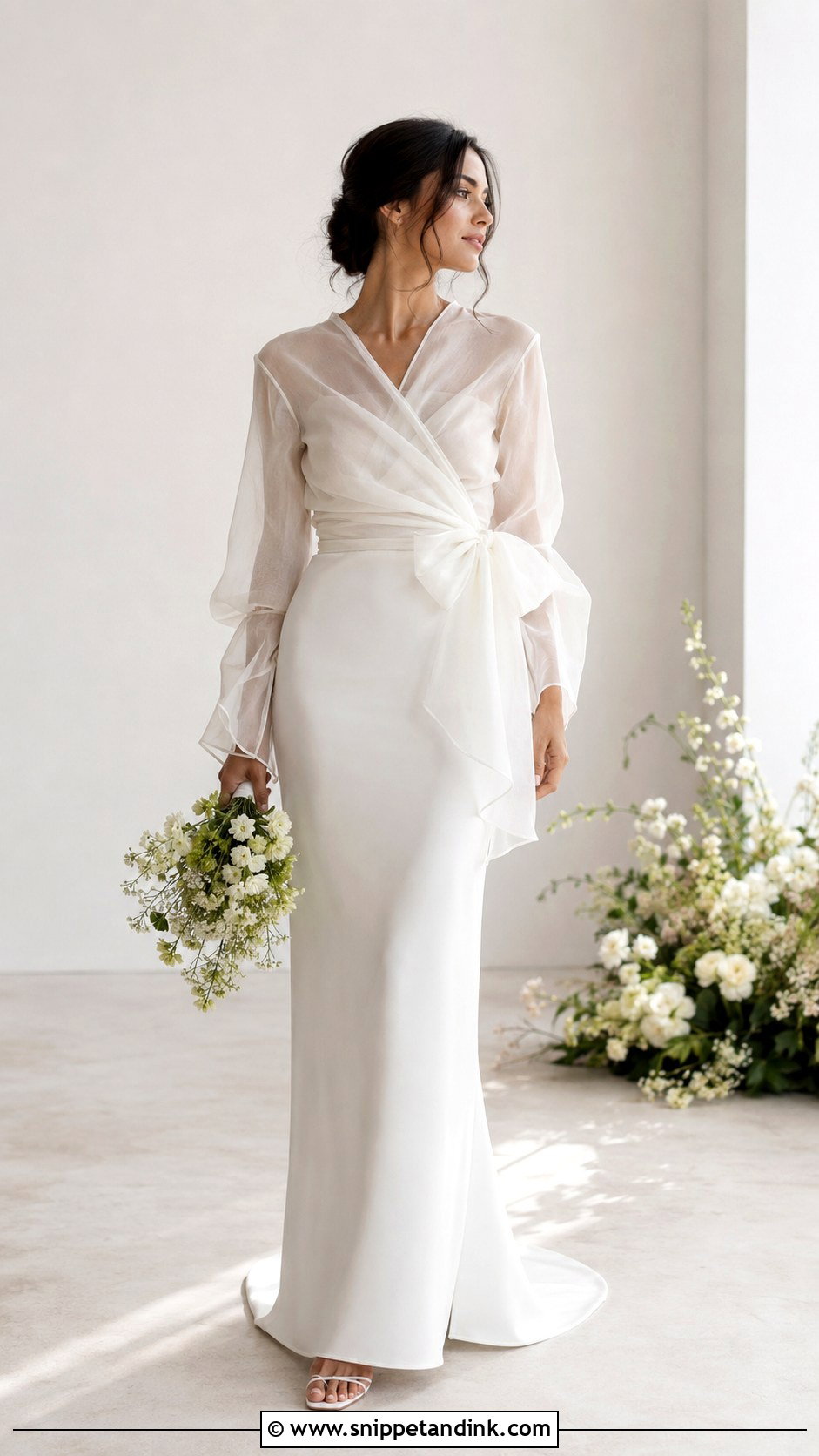
Wrap tops are adjustable, which is why I like one over a column dress: you can decide on the day how much neckline and waist to show. Organza is sheer and crisp, so it gives coverage without hiding the clean line underneath. It sits well over strapless, square-neck and spaghetti-strap gowns. Embroidered organza adds interest to a very plain dress. Organza creases sharply when folded, so it travels on a hanger and gets a light steam on the morning.
15. Velvet Cape With Evening Wedding Dress
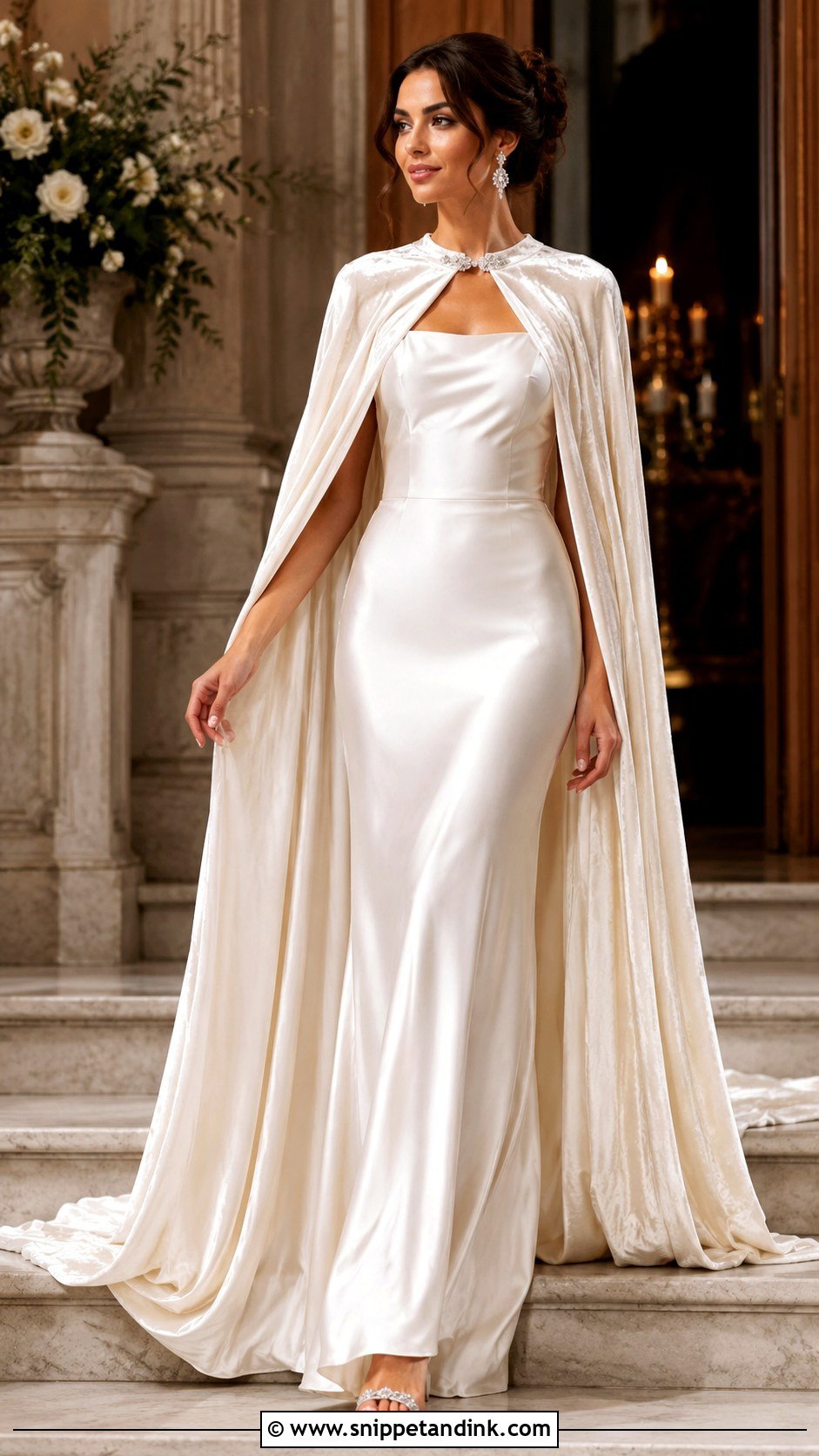
Velvet looks formal without any sparkle at all, which makes a velvet cape right for autumn and winter evening ceremonies. Ivory is classic; soft champagne or pale silver adds depth. A short capelet covers the shoulders, while a long cape makes the entrance. Over a fitted dress, a flowing cape adds movement; over a full skirt, keep it clean and narrow. Velvet marks where hands rest on it, so I brush it in one direction just before the processional.
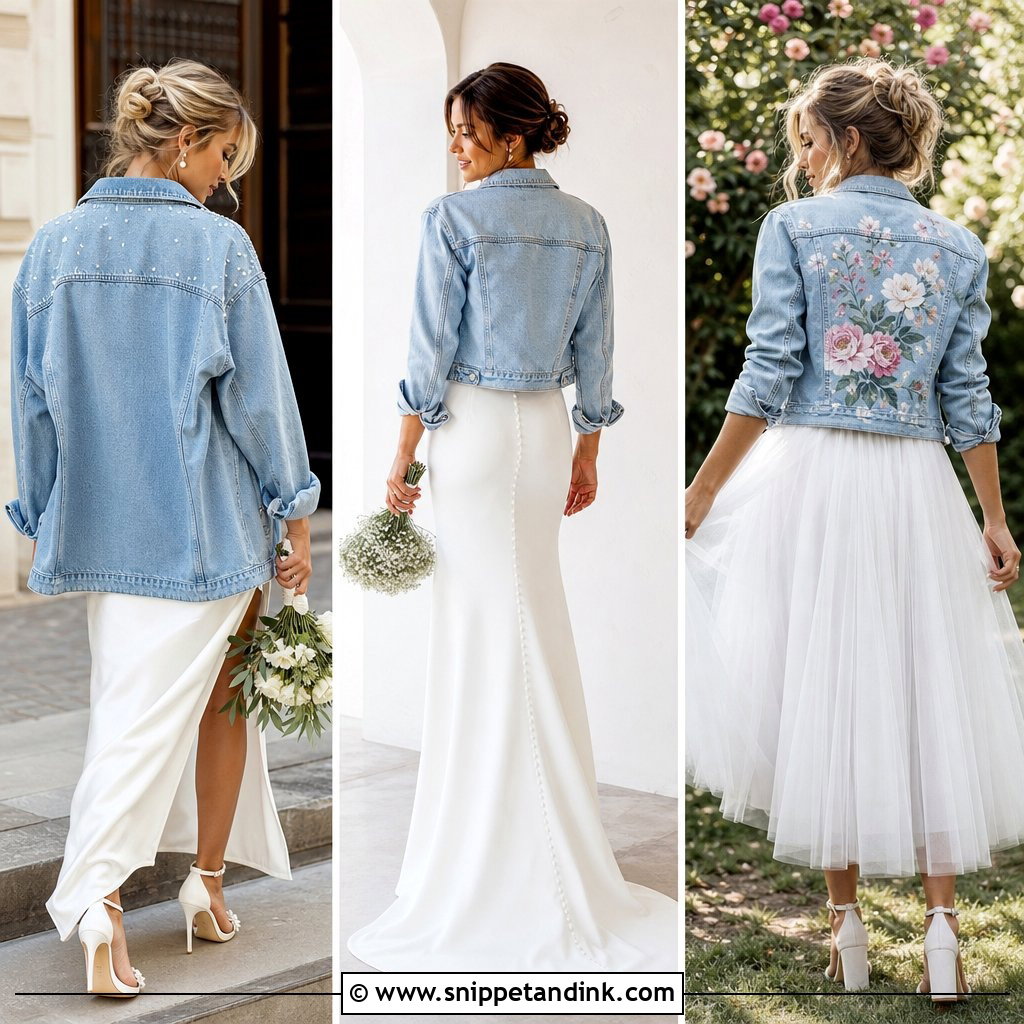
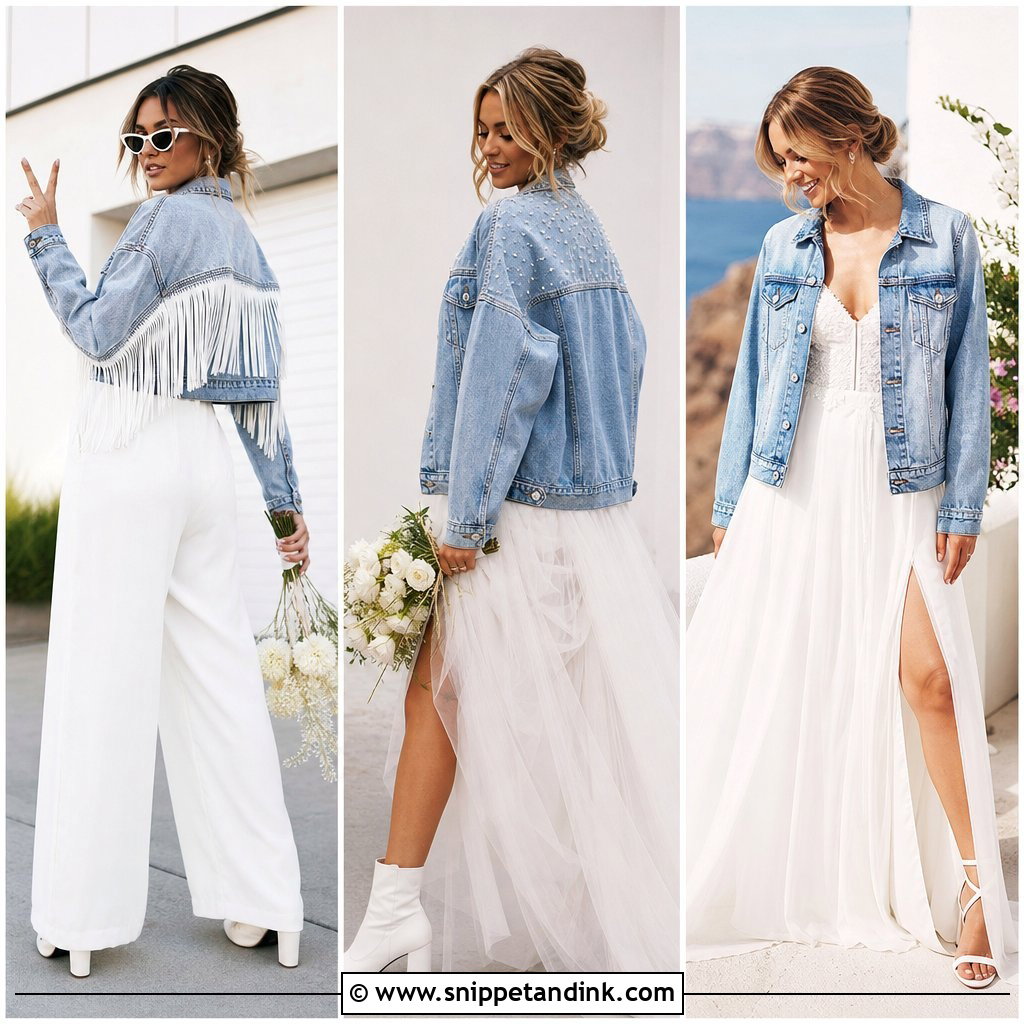
16. Bridal Denim Jacket With Casual Wedding Dress
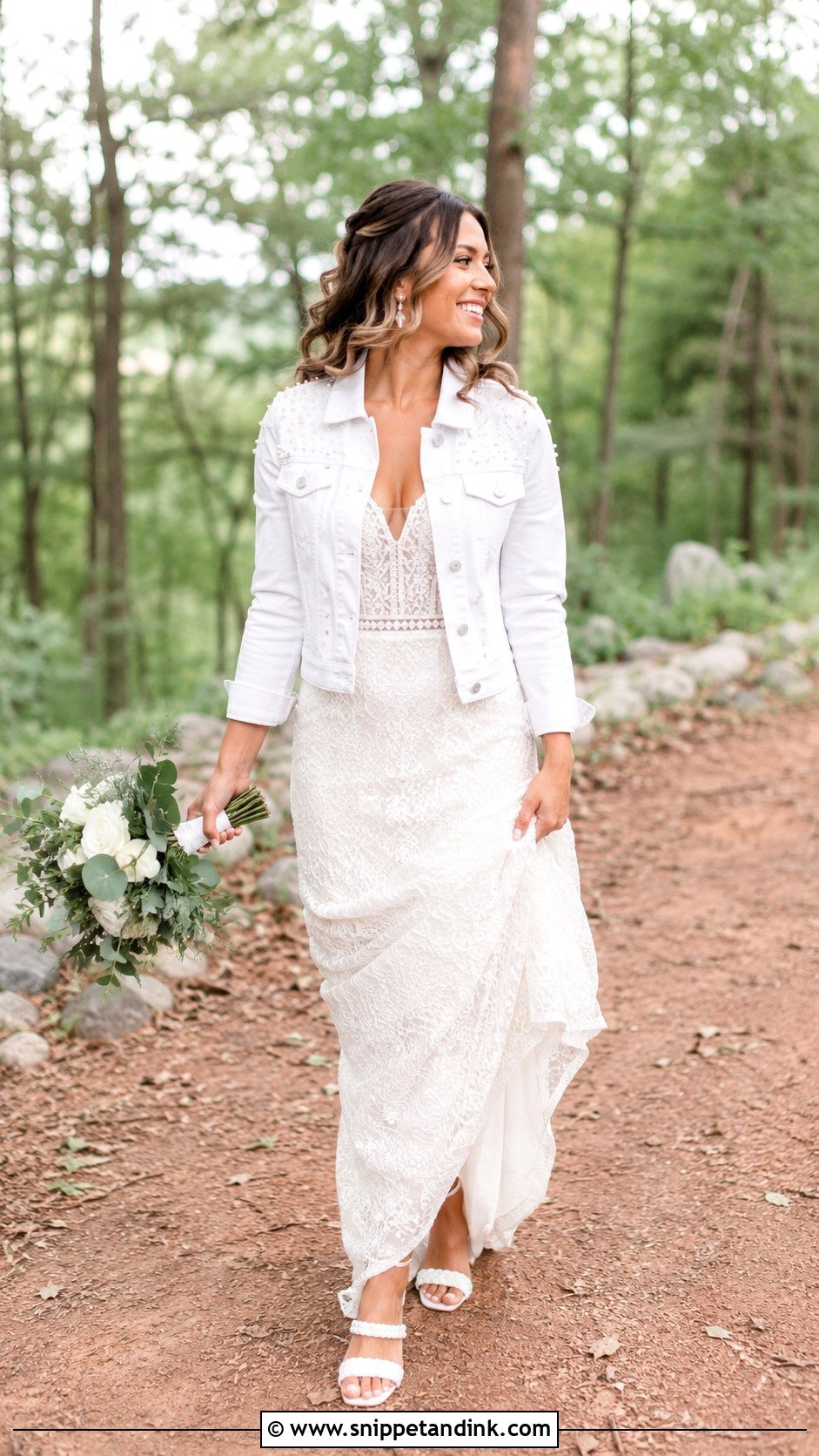
Backyard, beach, barn and elopement settings are where a bridal denim jacket looks at home. White, ivory or light blue all work. Your new name, the date or a few pearls on the back make it a keepsake rather than a costume. Pair it with simple lace dresses, boho gowns, short reception dresses or airy chiffon, cropped so the waist stays visible. Wash new denim before the day; fresh indigo can rub onto an ivory skirt.
17. Chiffon Cape With Beach Wedding Dress
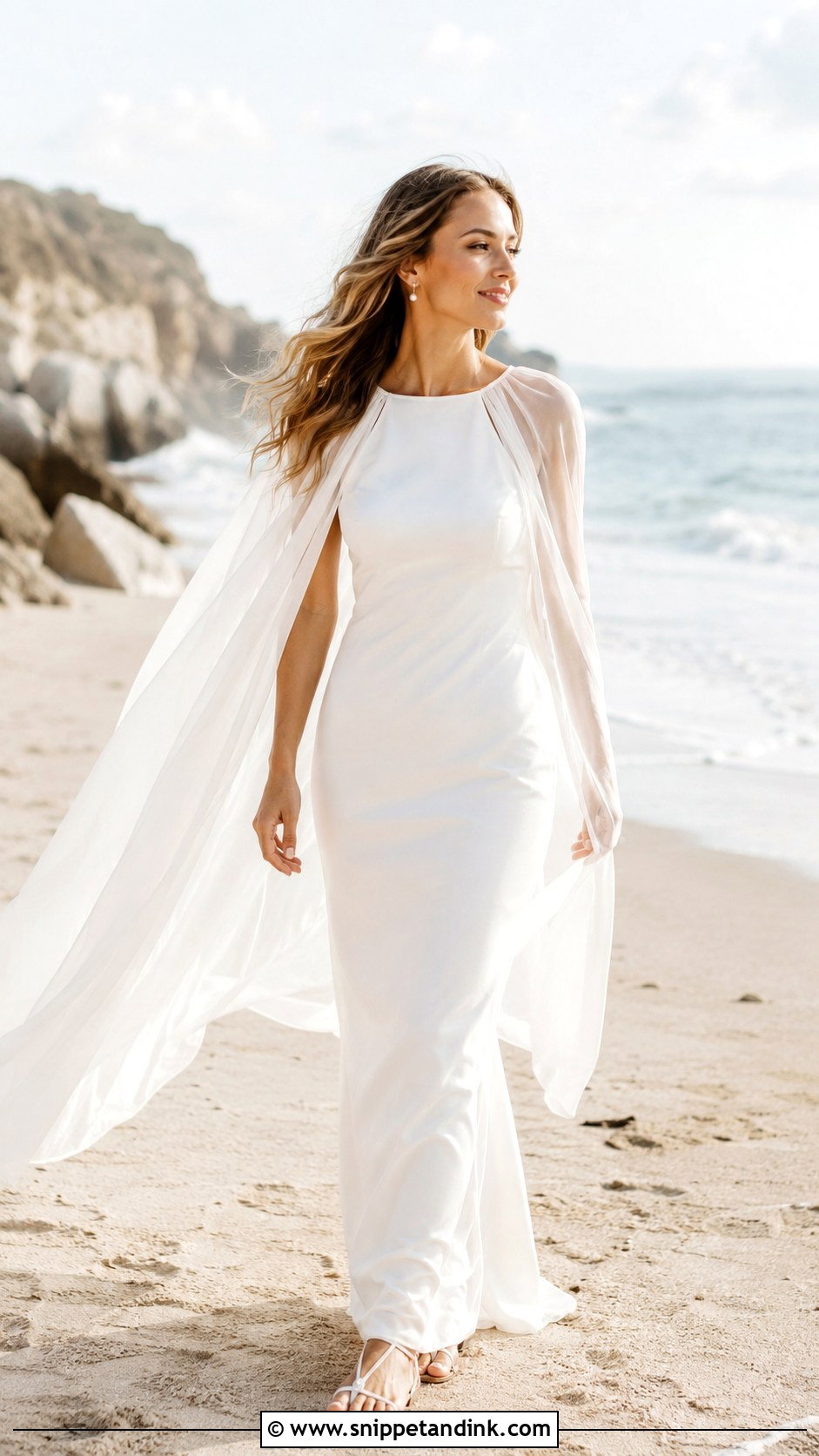
Heat is the problem on a beach, and chiffon is the answer. A chiffon cape weighs almost nothing and catches the breeze, giving shoulder coverage without making you warmer. Attach it at the shoulders or neckline so your hands stay free for the bouquet. It suits sheath dresses, soft A-lines and boho silhouettes. On the sand I keep embellishment minimal, since sea air and wind already add movement. A cape longer than ankle length drags wet sand into the hem, so I’d keep it short.
18. Sequin Bridal Jacket With Party Wedding Dress
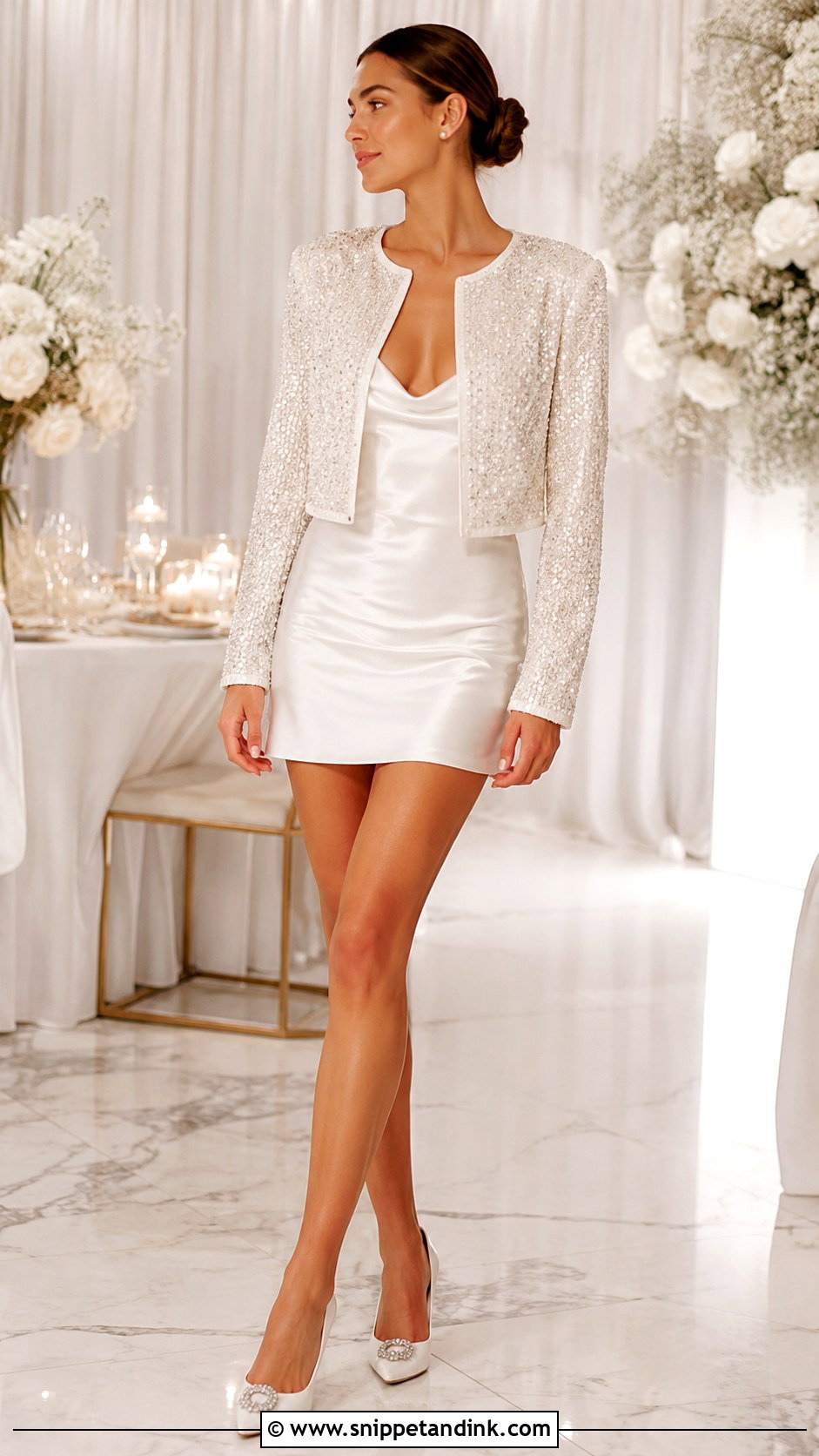
Save sequins for after the ceremony. A sequin jacket over a mini, a satin slip or a sleek fitted gown makes the reception feel like a party. White, ivory, silver or champagne keep it bridal. A cropped bomber feels playful; a tailored sequin blazer looks polished. Sequin edges can snag fine tulle and lace, so if your gown is either, swap into the jacket only once you’re seated and wear it with care. Keep the rest of the look plain.
19. Knit Bridal Shrug With Boho Wedding Dress
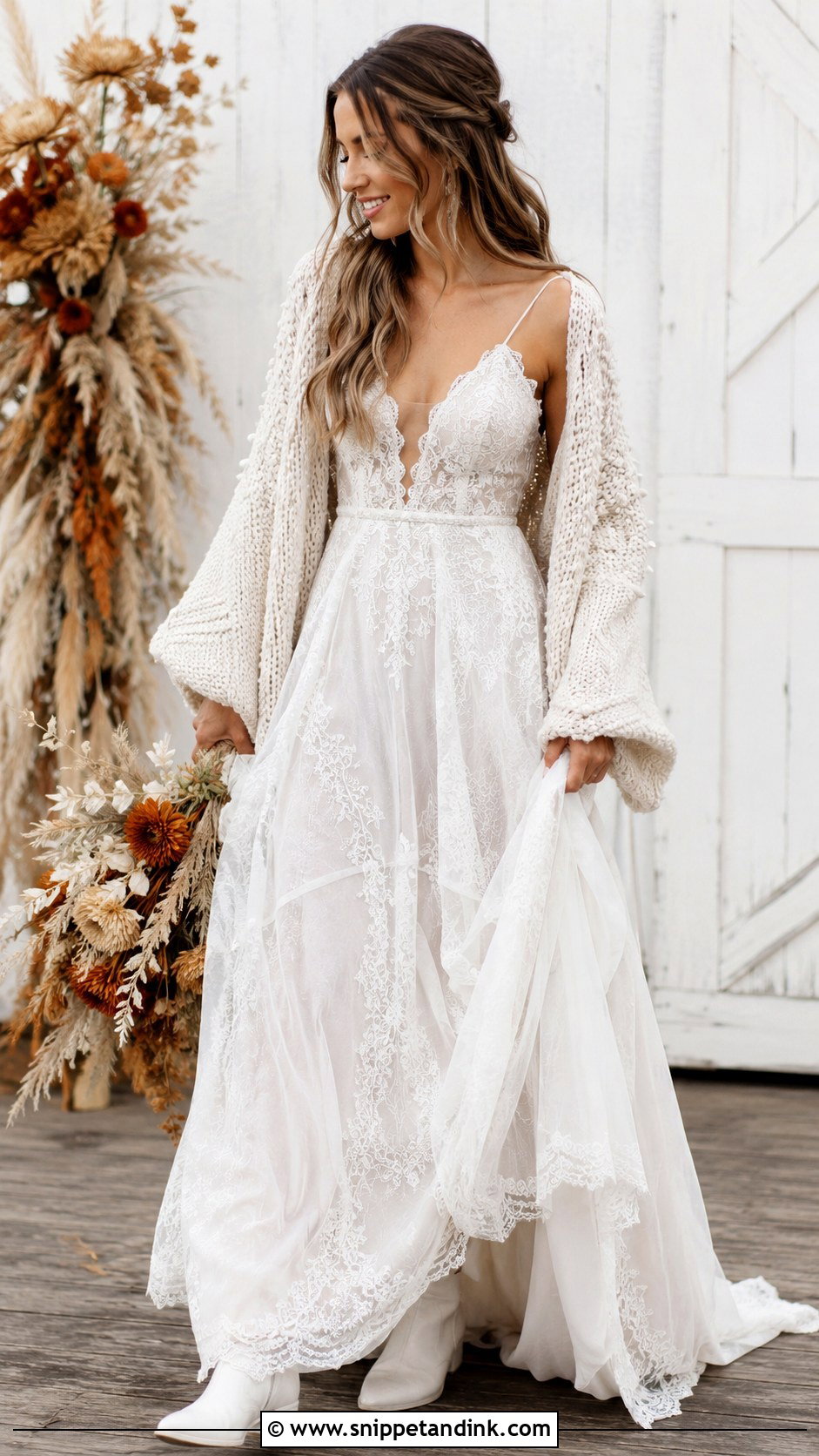
Boho dresses tend to be lace or flowing chiffon, and a knit bridal shrug softens them further for a cool spring morning or a fall elopement. Fine mohair, soft cotton or lightweight wool keep it from looking bulky. A cropped shape leaves the waist and skirt visible. Off-shoulder and open-front versions sit well over lace bodices. Mohair can catch on lace, so I’d pick cotton over a heavily textured dress. Bridal boots suit rustic ground.
20. High Neck Lace Topper With Sleeveless Wedding Dress
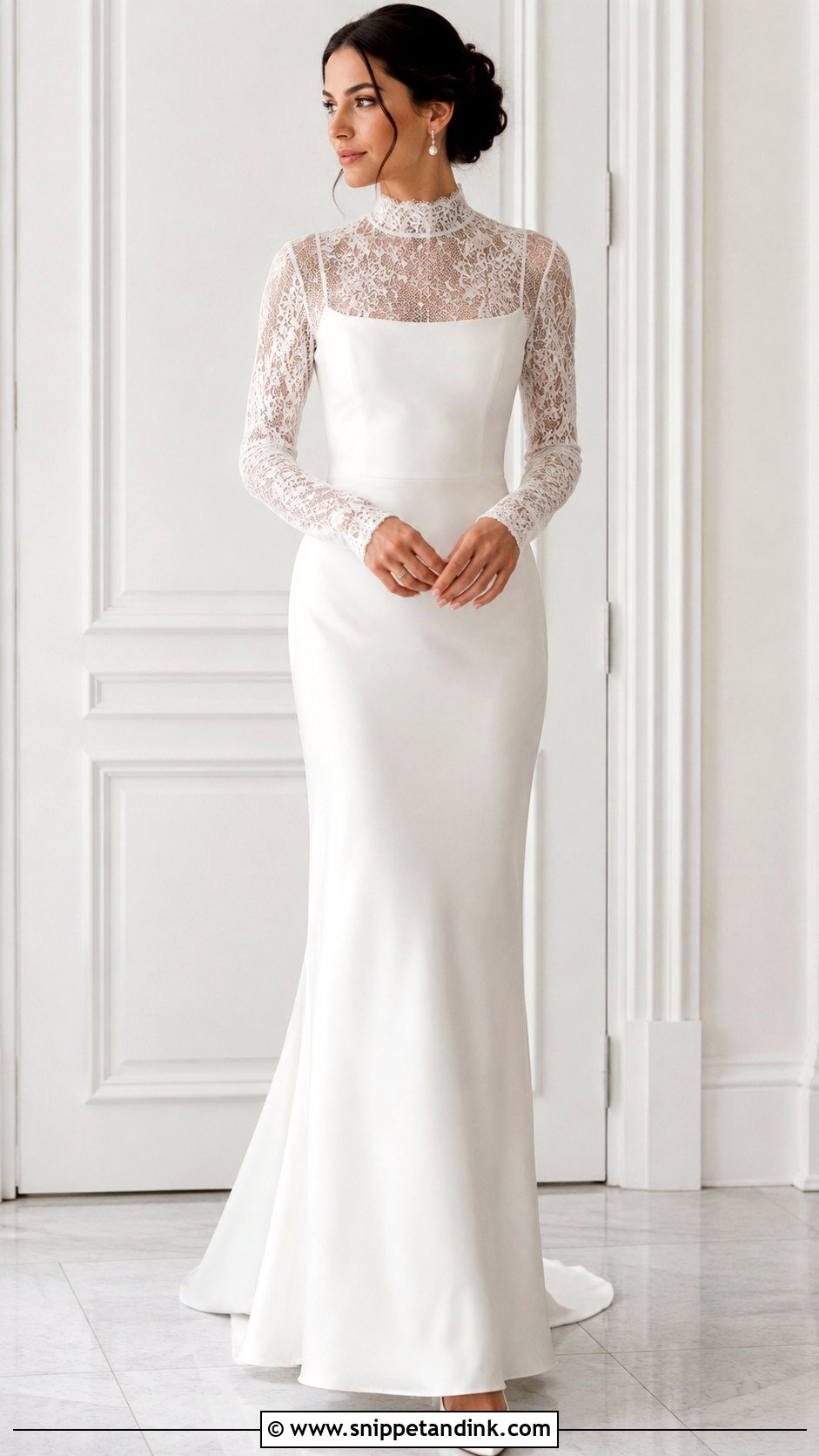
One gown, two outfits: that’s what a high neck lace topper buys you. Wear it for a modest ceremony, take it off for the reception. Thin, well-fitted lace layers flat over the bodice; thicker lace shows the dress’s seams through it. Long sleeves give a classic shape; cap sleeves feel lighter. I match the lace color to the dress in natural light, since white lace over ivory shows clearly in photos. It brings detail up near the face on a plain satin, crepe or chiffon gown.
21. Cape Sleeve Coverup With Fitted Wedding Dress
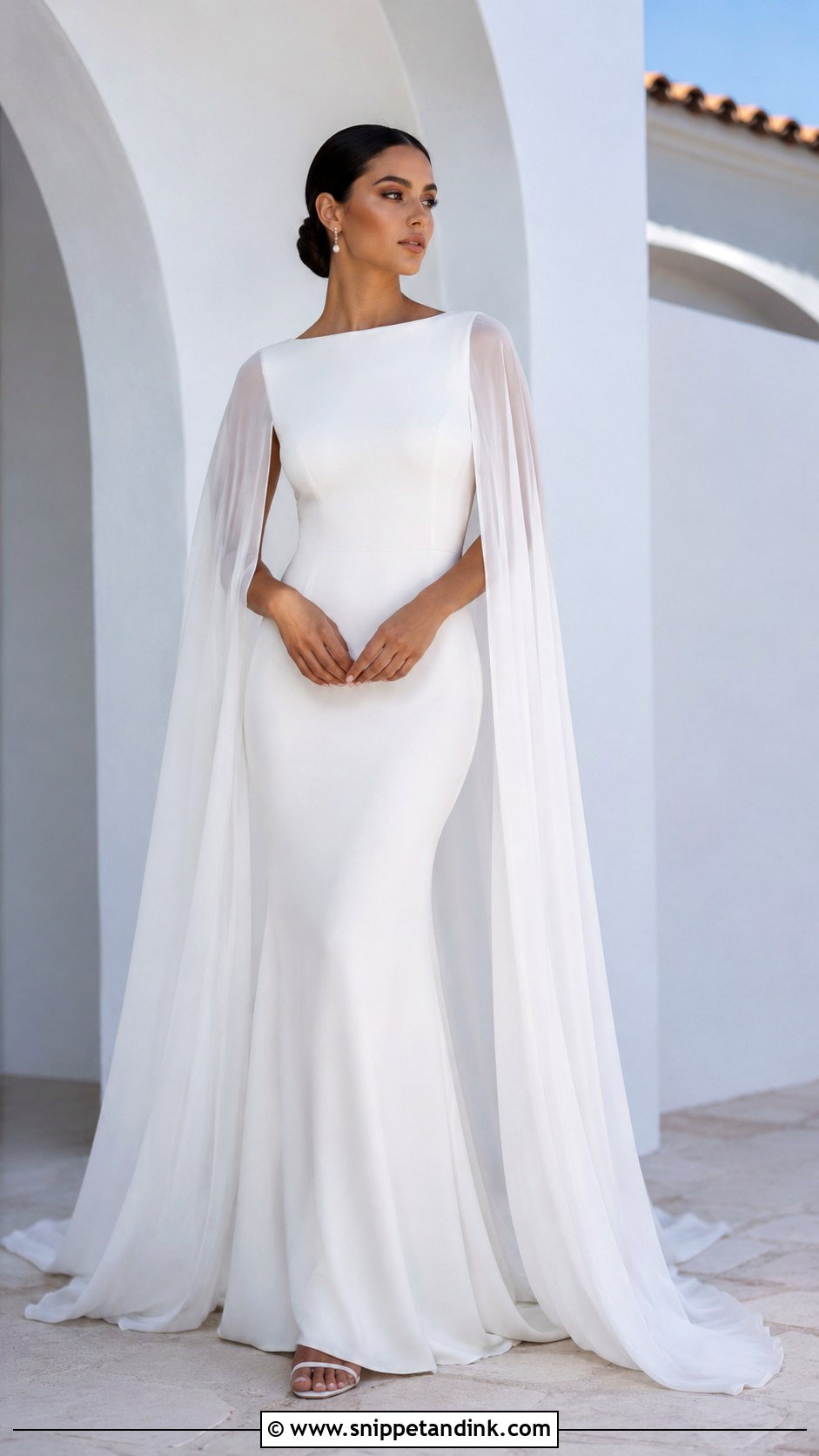
Cape sleeves fall from the shoulders or upper arms and leave the back of the gown clear, which a full cape can’t do. Over a fitted dress they give arm coverage and still keep the shape light. Sheer tulle, chiffon or crepe soften a structured gown; lace feels romantic. Length can run elbow, wrist or floor. Floor-length sleeves get caught under your own feet when you sit, so I usually recommend wrist length for a bride who’ll be seated for dinner.
22. Bridal Trench Coat With Courthouse Wedding Dress
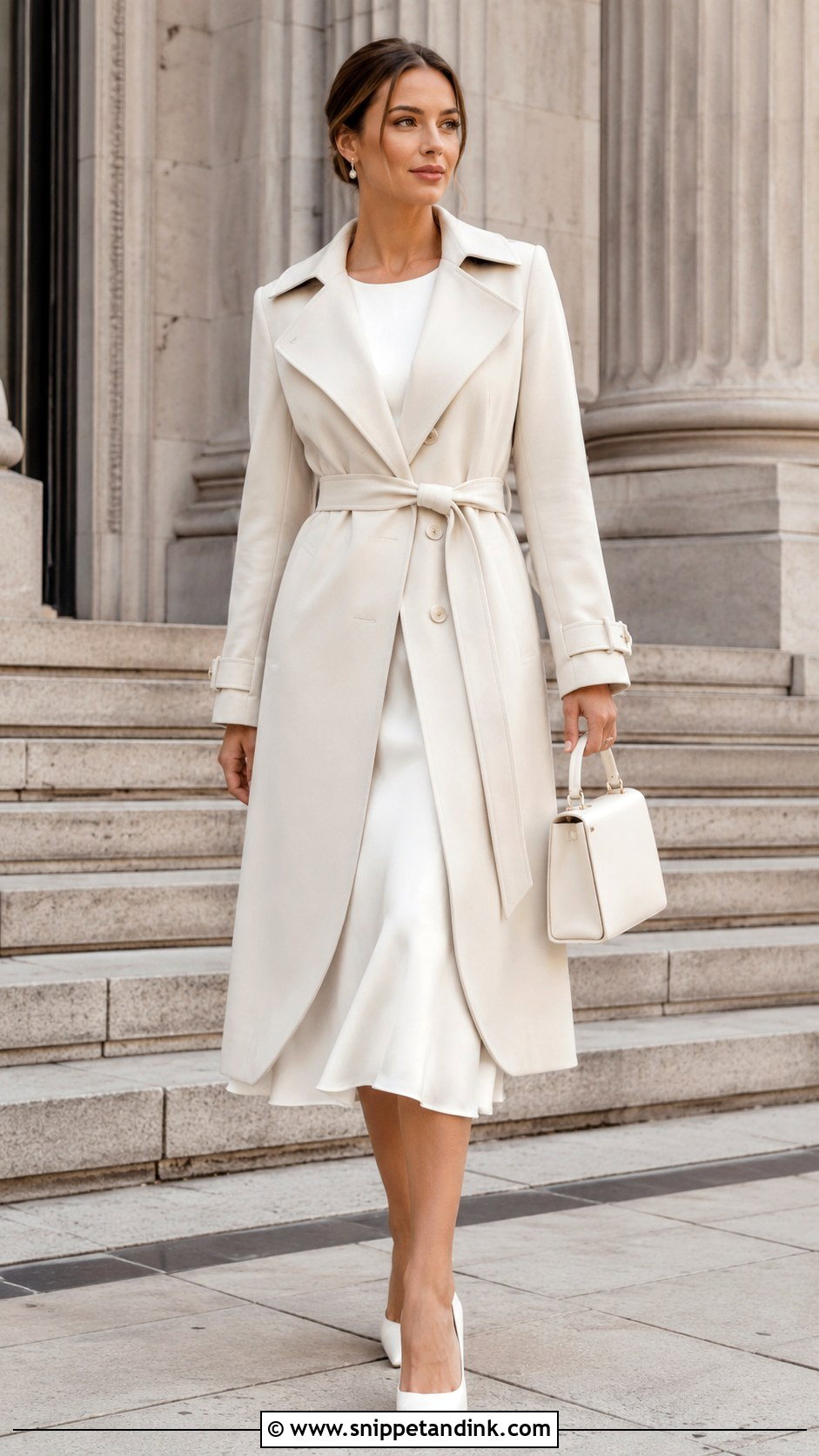
A trench reads instantly urban, so for a courthouse ceremony or a city elopement outfit it’s the layer I’d hand a bride first. It goes over a midi, slip dress, jumpsuit or tailored set. Ivory, cream or soft beige keep it bridal and wearable afterwards. A belted trench gives a defined waist in photos. Unlined cotton suits spring and fall; choose a lined version for colder days. It handles a light rain far better than any cape, which matters when your portraits are on a city street.
23. Ruffled Shoulder Wrap With Romantic Wedding Dress
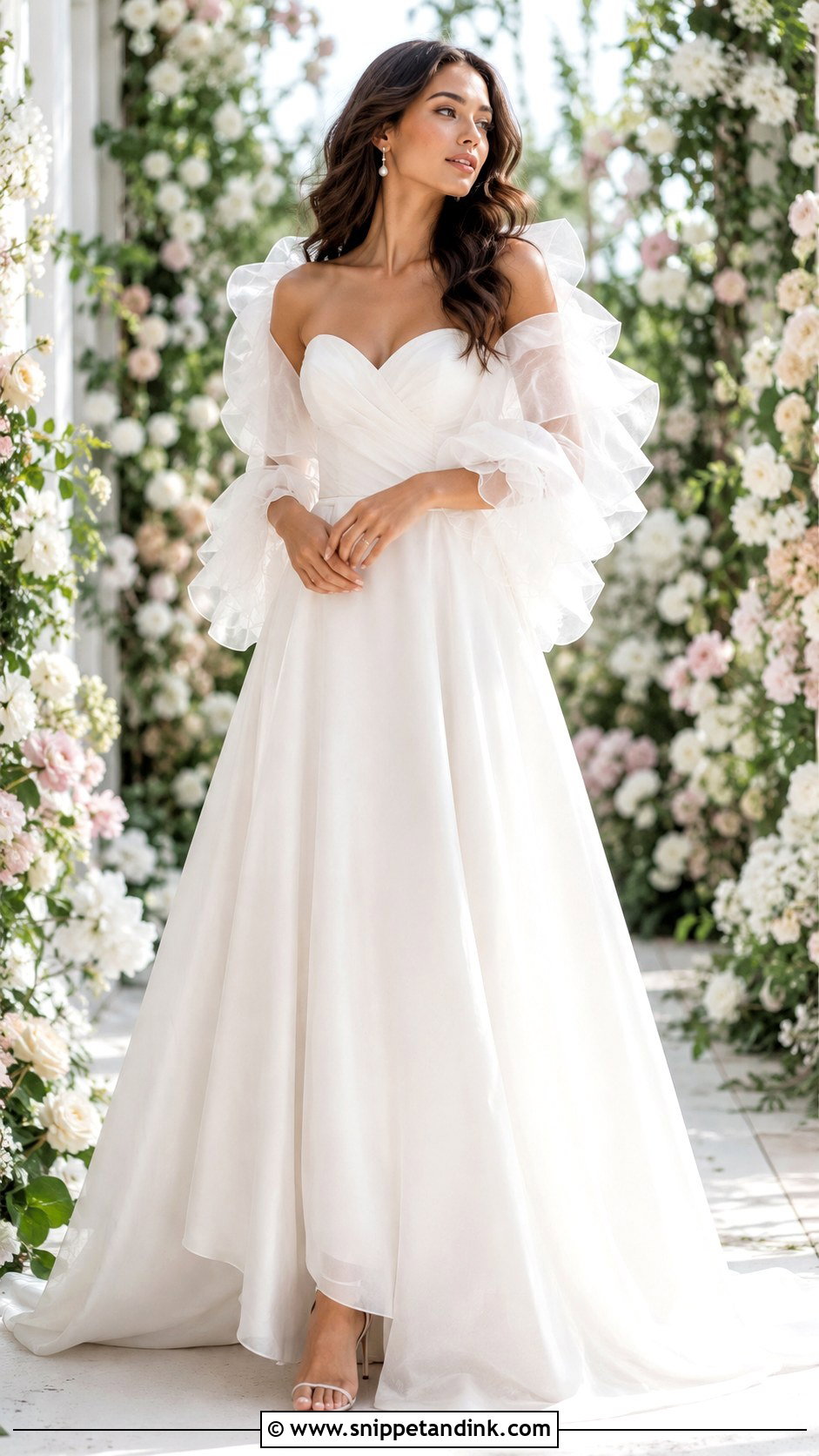
Ruffles add soft volume around the shoulders, so a simple strapless, sweetheart or A-line gown looks styled without heavy jewelry. Organza, tulle or chiffon keep it light. If your skirt is already dramatic, avoid stiff ruffles; the top and bottom will fight. A wrap sitting slightly off the shoulder gives coverage and still looks graceful in portraits. Ruffles flatten under a bouquet arm, so I fluff them by hand before photos. It suits garden and estate venues in spring.
24. Floral Applique Cape With Garden Wedding Dress
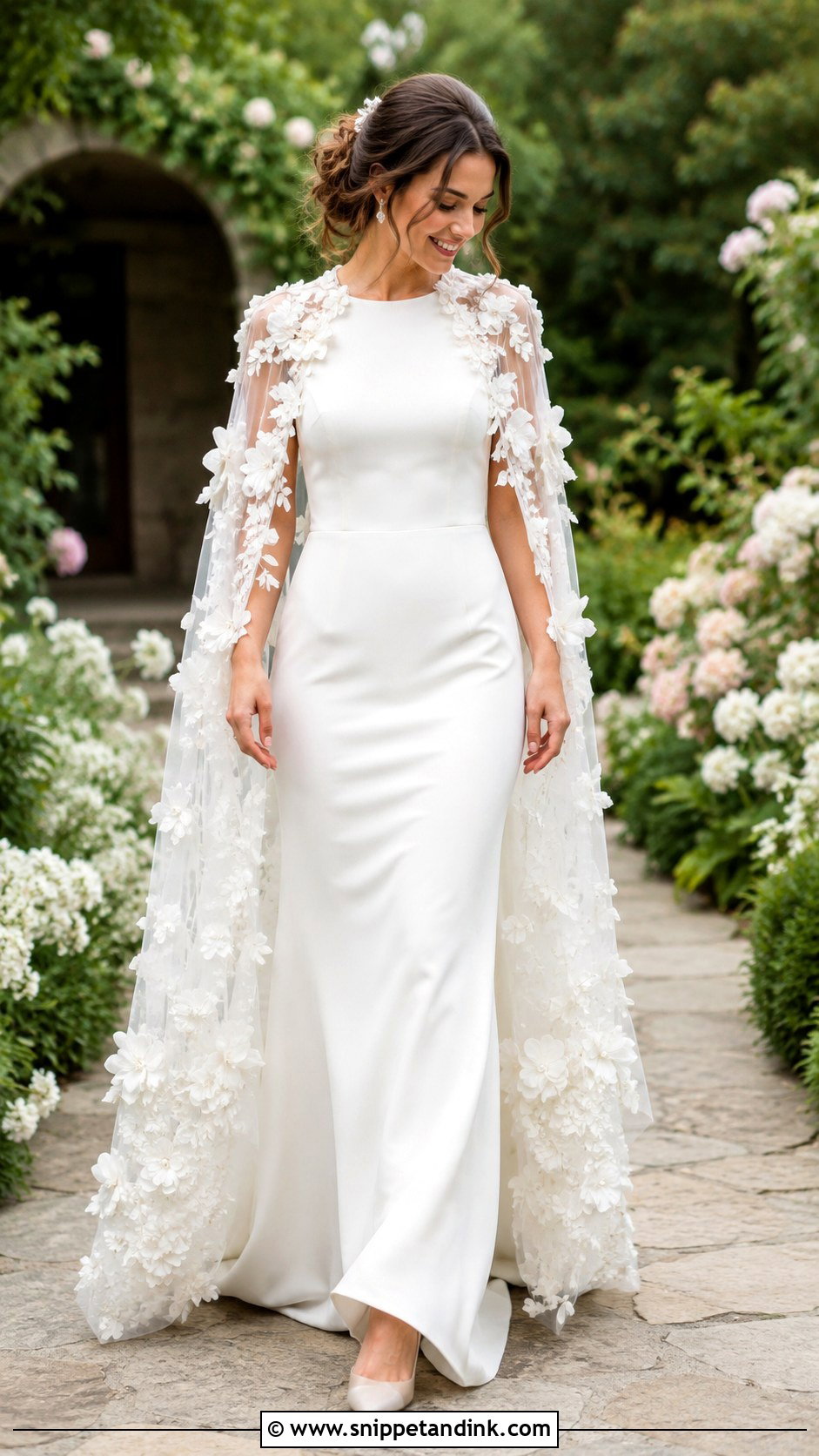
Garden ceremonies and floral appliqué go together naturally: the cape echoes what’s growing around you. Sheer tulle with 3D flowers, vine embroidery or scattered petals lifts a plain satin, crepe or chiffon dress, because the flowers need clear space around them to show. Short capelets feel sweet; floor length gives the aisle more drama. I keep the flowers in the gown’s color family, since bright colored blooms on a cape compete with the bouquet. A loose updo and classic heels finish it.
25. Detachable Overskirt Cape With Wedding Dress
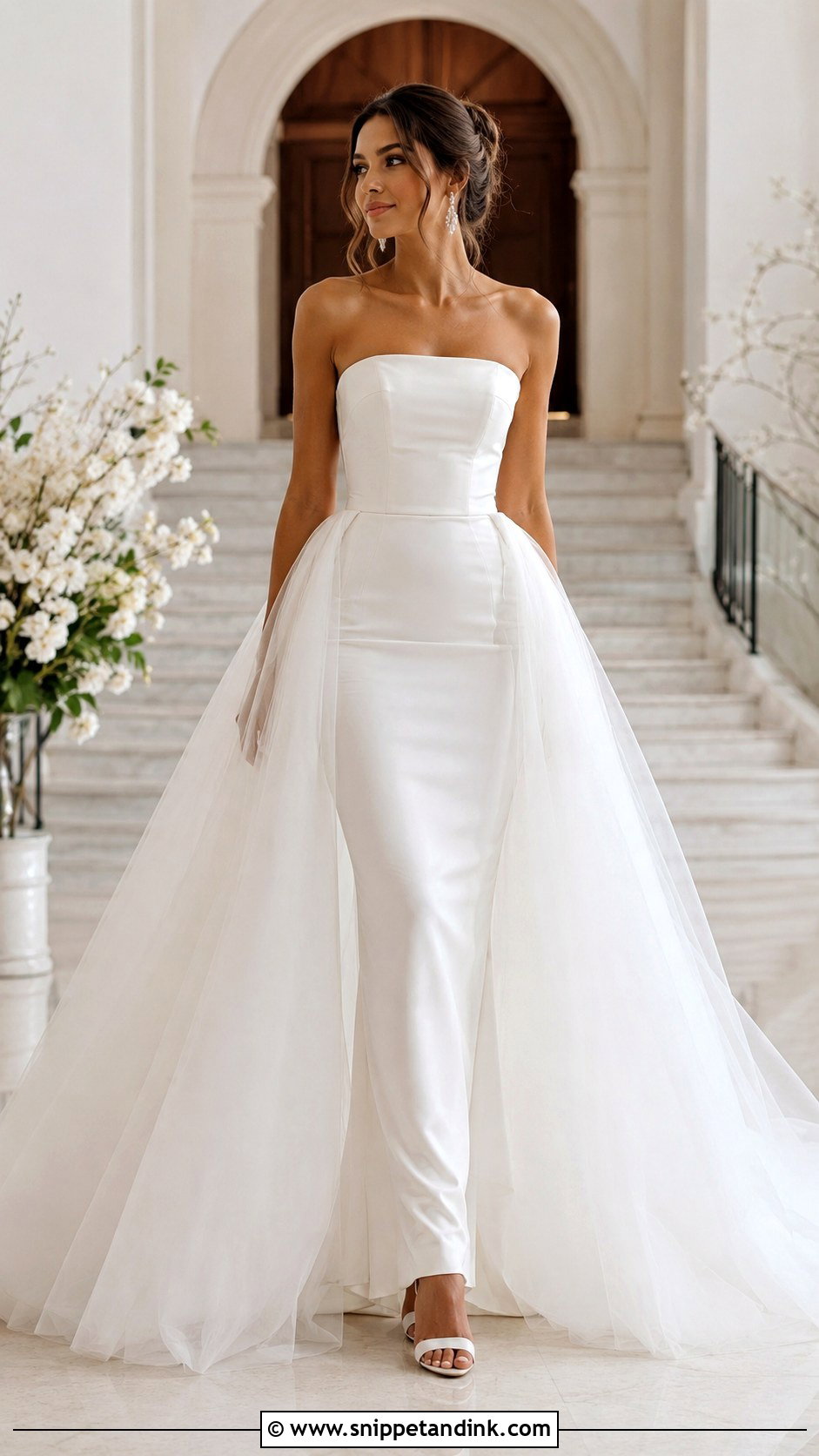
Part cape, part overskirt, this detachable layer is the biggest transformation on the list. It adds volume for the ceremony, then comes off to reveal a sleek dress for the reception. It works over fitted gowns, columns and slim strapless shapes. Tulle is soft, organza structured, satin formal. Removal is where it can go wrong: the waist attachment needs hidden hooks or buttons that a bridesmaid can undo in under a minute, so I rehearse it at the final fitting. Keep accessories minimal.
Ordering a Custom Cape or Topper Without a Last-Minute Scramble
Ready-made layers can arrive in days, but anything made to order or matched to your gown runs on bridal time. Lead times vary a lot by maker, so I treat these as rough guides and confirm with each seller before paying.
- Around four to six months out: decide whether you need a layer at all. Check your ceremony venue’s dress rules and look at the expected weather for the date.
- Three to four months out: order anything made to measure or dyed to match. Made-to-order capes and toppers commonly take several weeks to a few months.
- At your second fitting: bring the layer. Your seamstress can adjust the shoulders, add attachment loops to the gown and mark the hem with your shoes on.
- At the final fitting: rehearse taking it off with the person who will help you on the day.
- One week before: steam it, hang it in a breathable bag next to the gown, and pack a small kit with pins, fashion tape and a lint roller.
Ask the maker for a fabric swatch before you commit. White, ivory and champagne vary widely between suppliers, and a swatch held against your gown in daylight tells you more than any product photo.
Ceremony On, Reception Off: Planning the Reveal
If your layer is meant to come off, decide when. I’d put it on the timeline the same way you list the first dance. Some brides remove it before the grand entrance so the room sees the second look; others wait until after dinner and the toasts. Tell your photographer which moment you choose so they can capture both versions in portraits, ideally before the light changes. And give the layer to one named person with a hanger, because a cape left on a chair at a busy reception is a cape that gets sat on.
Does Your Layer Work for the Hour You Wear It Most?
The right coverup suits the gown, the venue and the weather at the time you’ll be outside. A sheer cape adds drama, a blazer looks modern, and a faux fur wrap keeps winter photos warm. On a simple dress, texture or beading adds detail. On an ornate gown, choose a cleaner layer that supports it. Comfort counts as much as looks, especially for outdoor portraits and cool evenings. Try your favorite with the dress, shoes and hair together before the final fitting, and you’ll know quickly whether it belongs.
You'll Like These Ideas:


Leave a Reply