
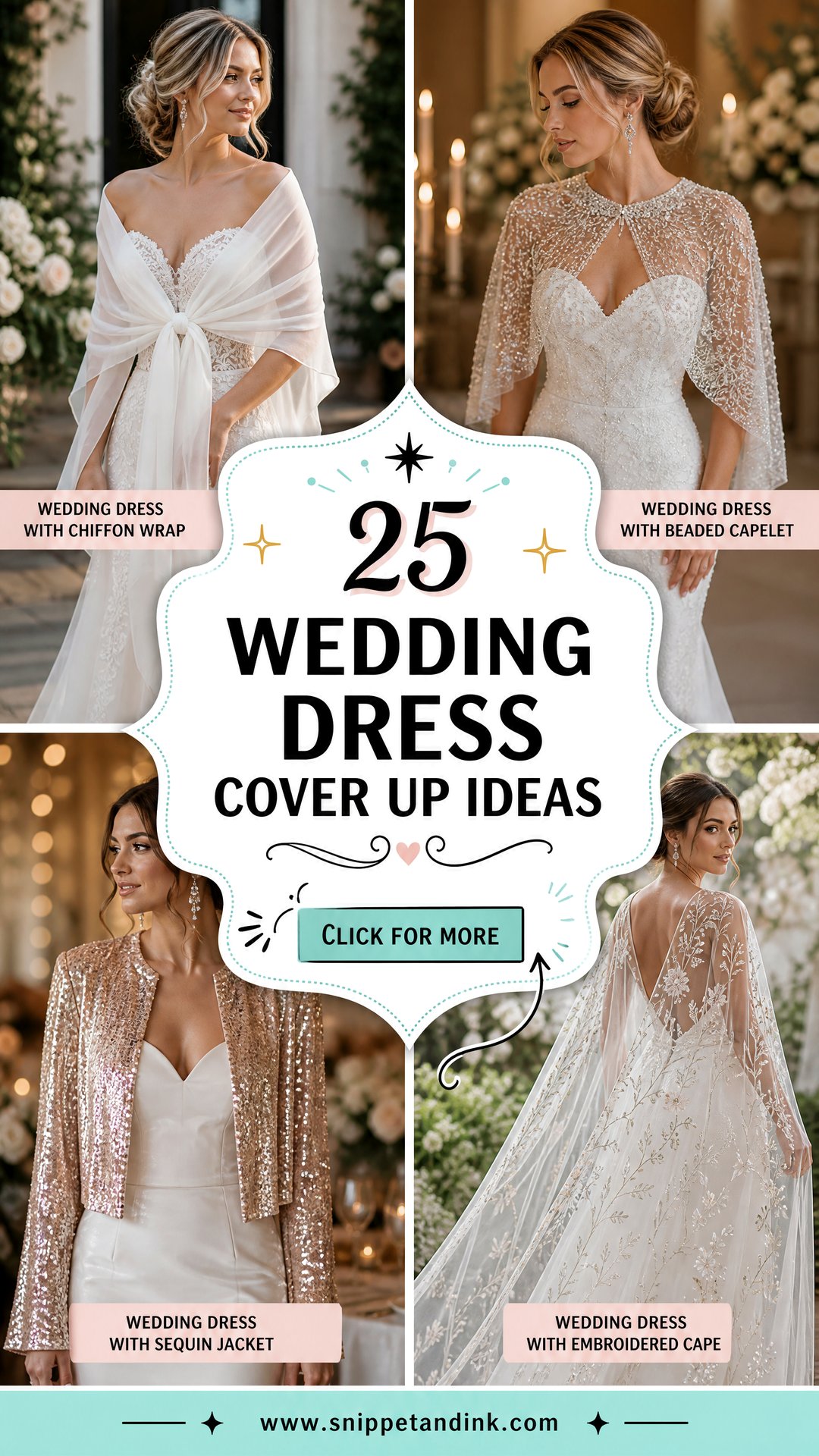
A cover up does more work than most brides expect. It can keep you warm between the ceremony and the car, soften a strapless neckline for a religious service, or give the same dress a second look for the reception without a full change. The options now run from sheer capes and lace boleros to satin blazers, feather capelets and even pearl-trimmed denim. When I style a bride, the layer is never chosen on its own: I hold it against the gown, check where it ends on her body, and think about the venue temperature at the hour she will actually be outside. Below are 25 layers I reach for, with notes on what each one needs to work.
Matching a Layer to Your Neckline and Gown Fabric
When a bride brings me her gown and a pile of saved cover up photos, I sort them by two things before style ever comes up: where the dress’s neckline sits and what the fabric does. A layer that fights either one will look borrowed no matter how pretty it is on its own.
Necklines
- Strapless and sweetheart: almost everything works, but cropped boleros, capelets and off-shoulder wraps keep the neckline’s curve visible.
- High necks and halters: skip anything that closes at the throat. Open-front jackets and capes attached at the shoulder seam sit better.
- V-necks: a collarless blazer or an open cardigan continues the V; a round bolero cuts across it.
- Off-the-shoulder: a shawl or fur stole that sits at the same height reads as one line instead of two.
Fabric and weight
I always match weight before color. Heavy velvet or wool over a floaty chiffon gown drags the skirt’s movement down, and a whisper of tulle over stiff mikado looks like it fell there by accident. Satin and crepe gowns take structure well. Lace and tulle gowns usually want something sheer or plain. Then hold the layer against the dress in daylight: whites and ivories rarely match exactly, and a cover up a shade brighter than the gown makes the gown look dingy.
Last, think about when you’ll wear it. A ceremony-only layer can be heavier and more formal. One you’ll keep on through dinner needs to let you lift a fork and hug a hundred people without riding up.
1. Wedding Dress With Lace Bolero
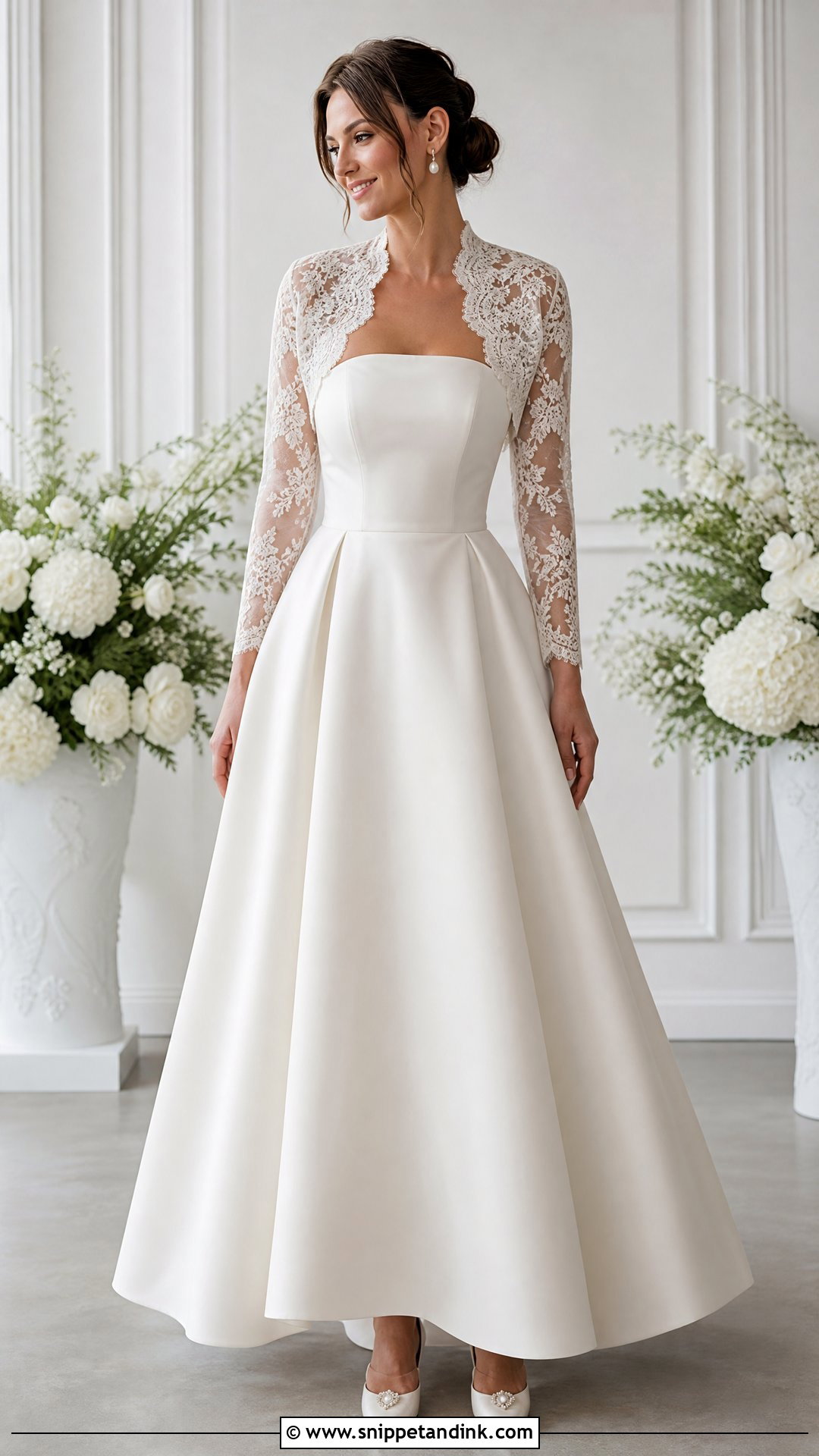
I still start most modest-ceremony fittings with a lace bolero, because it covers the arms and leaves the bodice readable. On a strapless or plain crepe gown, a floral lace adds the detail the dress is missing. If the gown already has lace, I either match the motif closely or go plain tulle; two different lace patterns side by side look like a mistake in photos. Keep the hem cropped above the natural waist so a fit-and-flare or mermaid shape isn’t cut in half. Pearl studs and a low bun let the lace edge stay the focus.
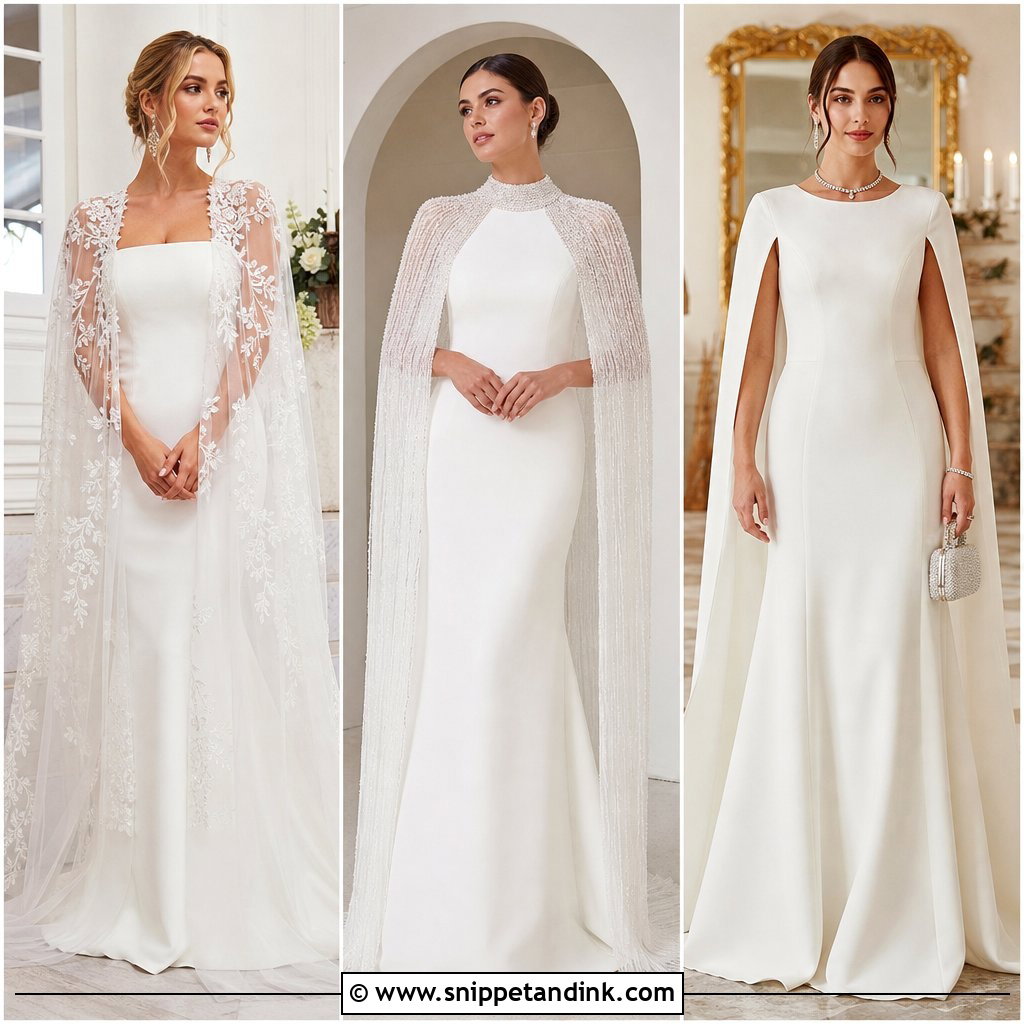
2. Wedding Dress With Sheer Tulle Cape
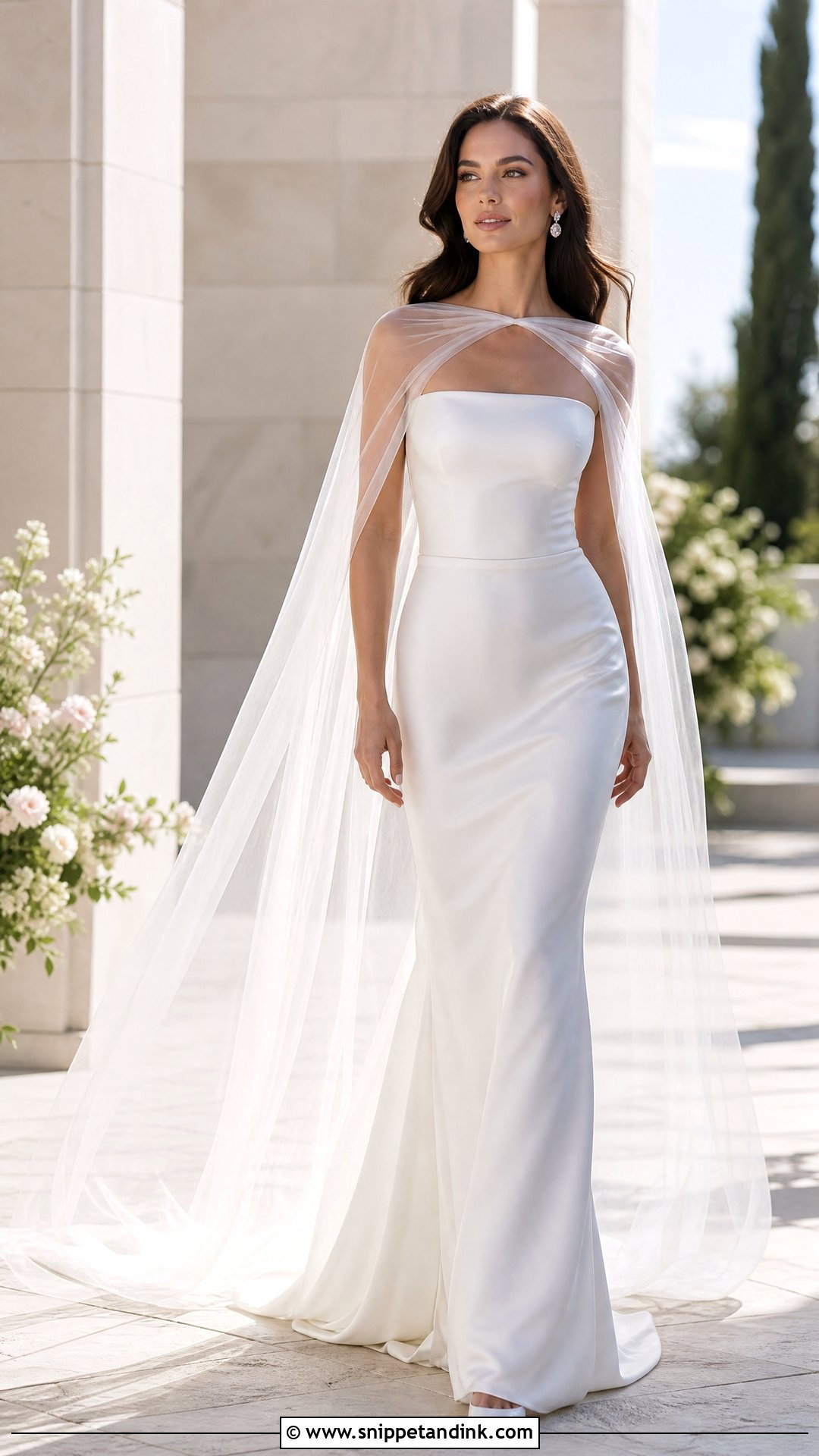
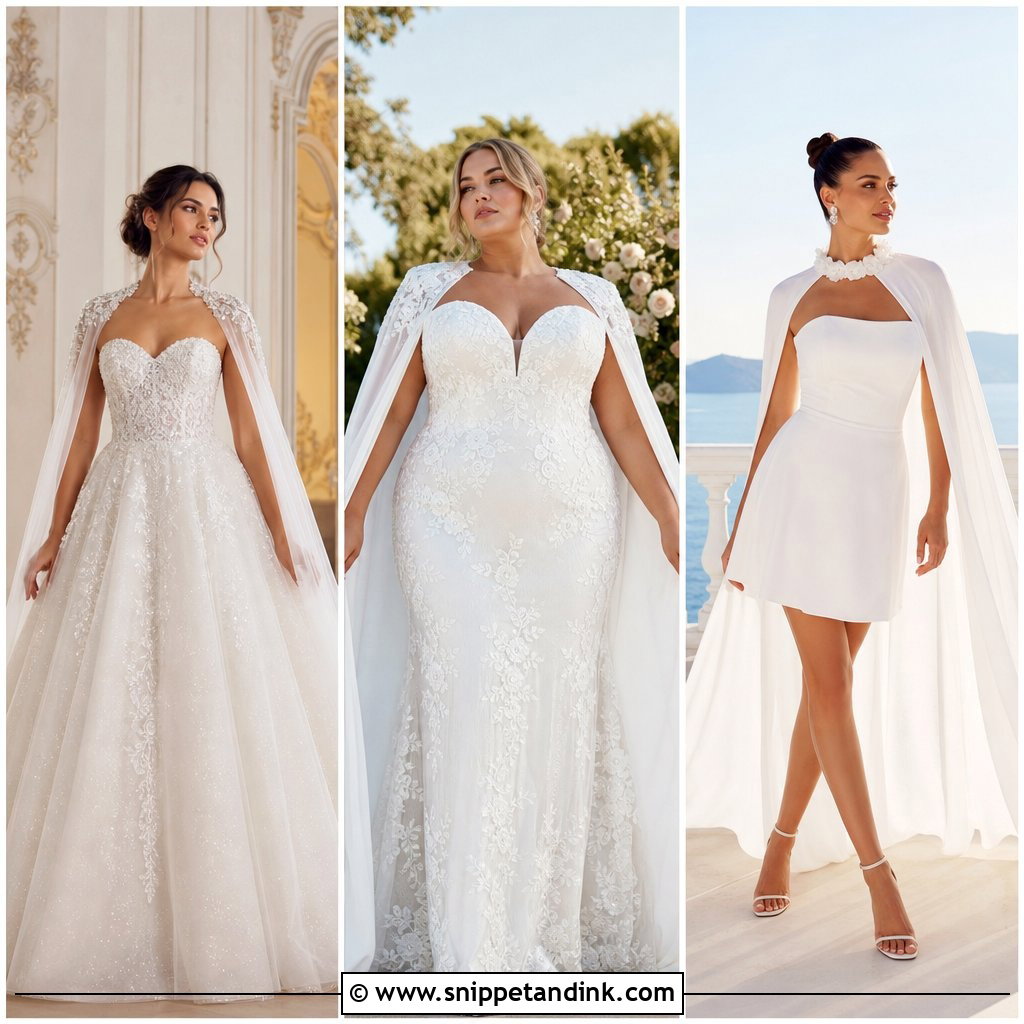
Brides who want veil drama without anything on their head usually end up here. A sheer tulle cape attached at the shoulder seams or neckline falls behind you and moves when you walk, which is why it pairs so well with sleek satin columns and minimalist ball gowns. Outdoors, even a light breeze lifts it. The catch: tulle snags on rough stone walls, rose bushes and Velcro on a groom’s jacket, so I tell brides to gather the cape over one arm for walking shots. It also unhooks cleanly at the reception if the attachment points are snaps rather than stitching.
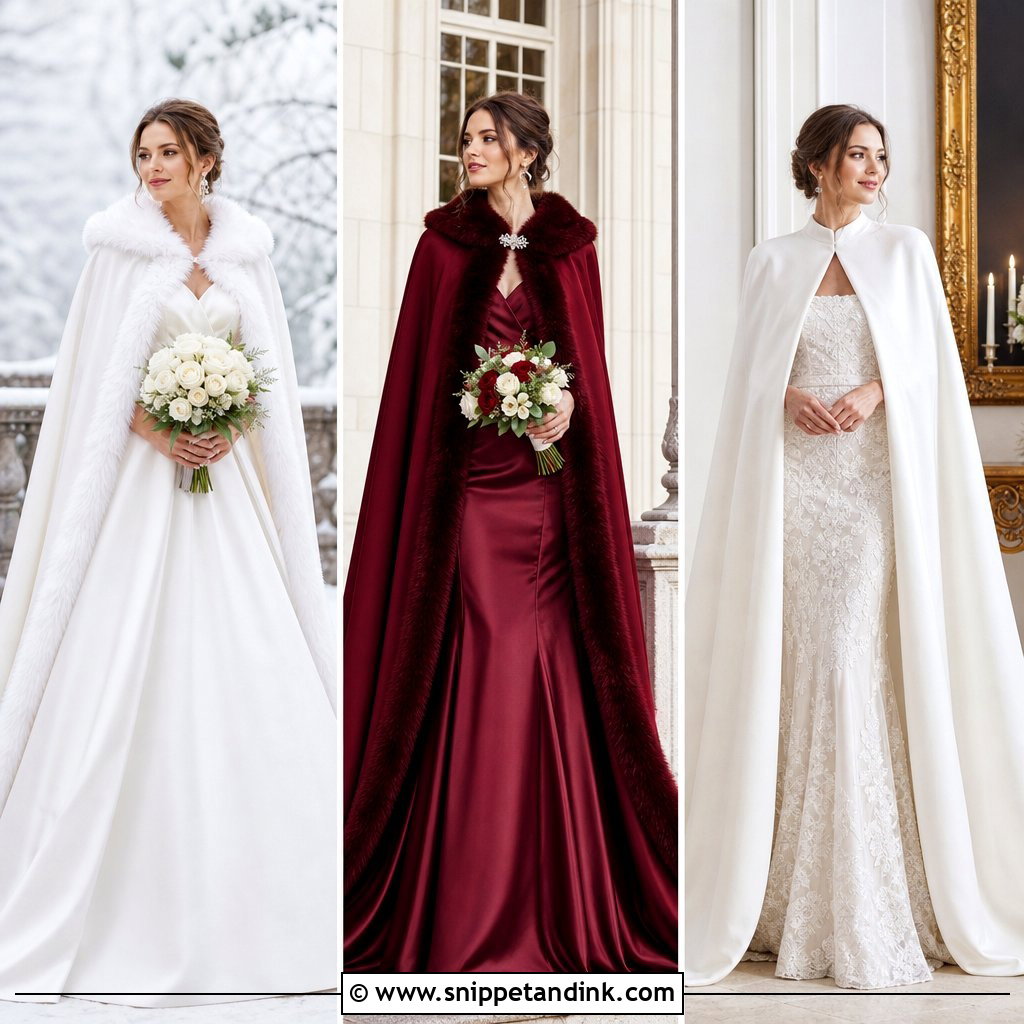
3. Wedding Dress With Faux Fur Shawl
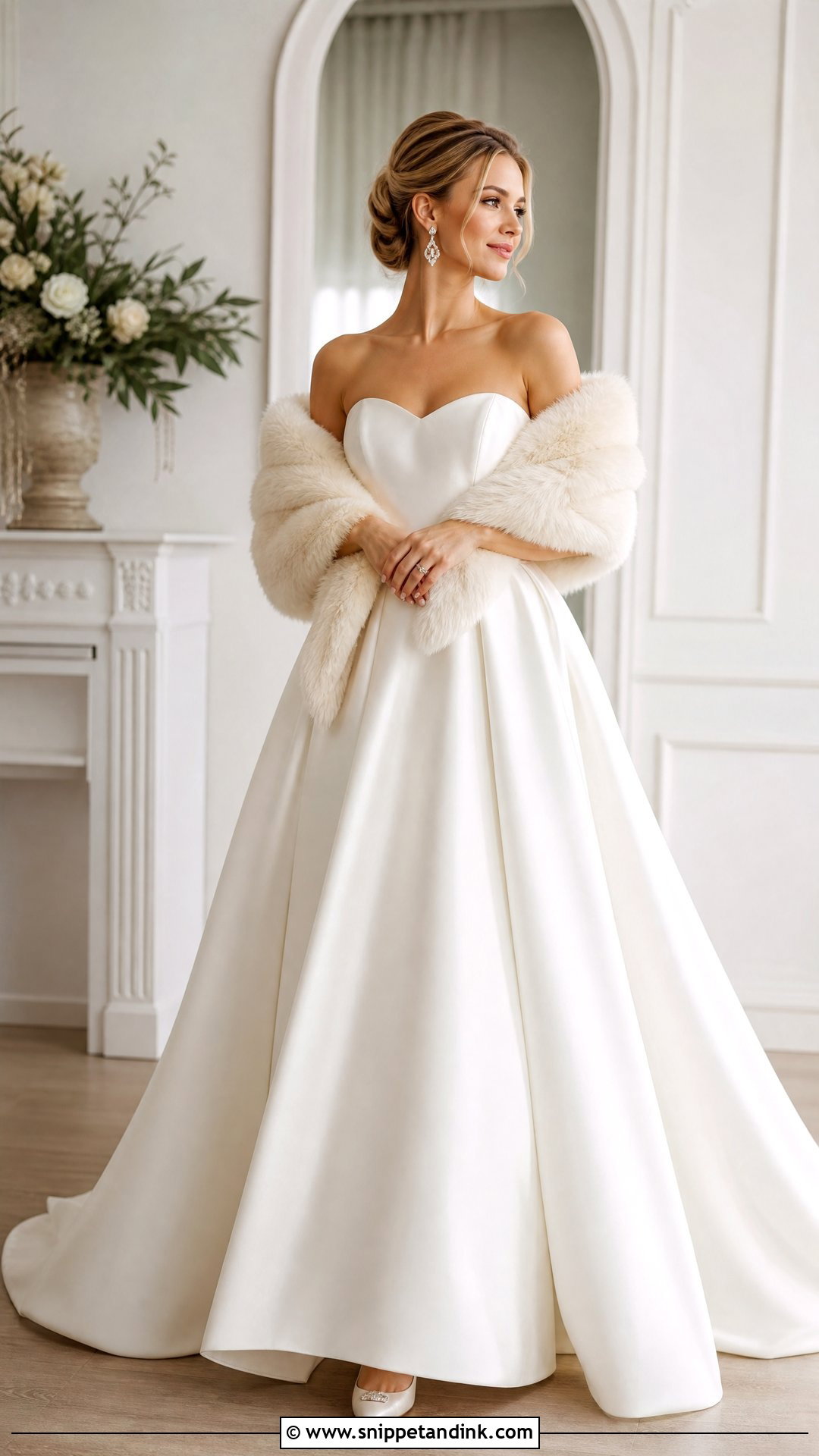
For a winter or mountain wedding, a faux fur shawl is the layer brides actually keep on for portraits instead of shrugging off after one frame. Ivory and cream sit well against satin, mikado and crepe; pure white faux fur next to an ivory gown can make the dress look yellowed, so I always hold the two together in daylight. Over a strapless or off-the-shoulder neckline it frames the collarbone. Fur slides on satin, so a hidden hook or a small brooch at the front is not optional. Look for a short, dense pile rather than shaggy volume, which adds width to the shoulders on camera.
4. Wedding Dress With Satin Blazer
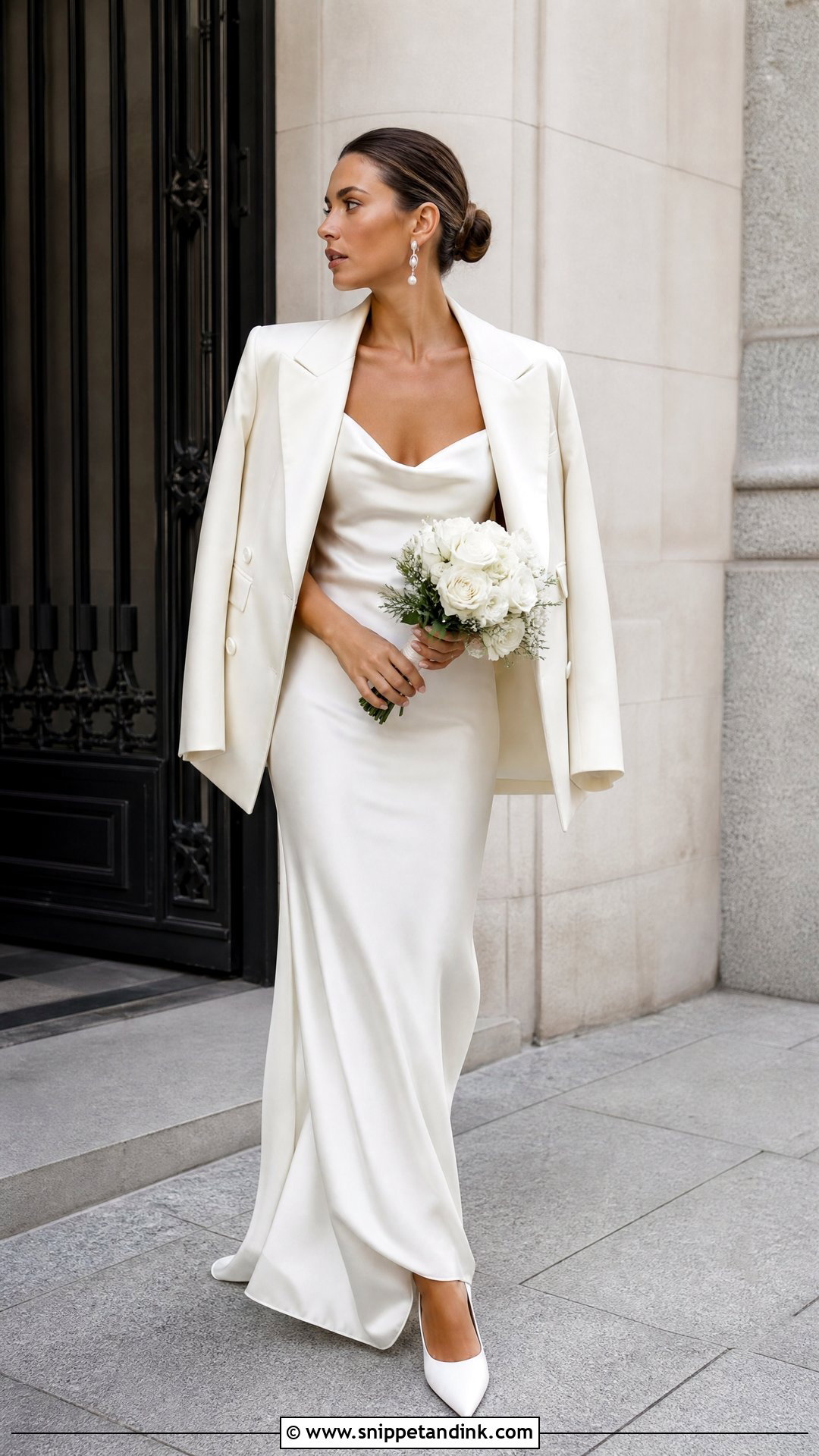
Clean tailoring over a slip dress or sheath reads modern in a way a bolero never will. I prefer ivory satin with a soft sheen, worn over the shoulders for portraits and buttoned for the walk in. A slightly oversized cut looks current; a cropped one shows the waist. One thing to test: satin blazers wrinkle across the elbow crease after an hour of sitting, so hang it up during dinner. Pearl drops and a smooth bun keep the lines sharp, and it suits courthouse ceremonies and city venues better than a barn.
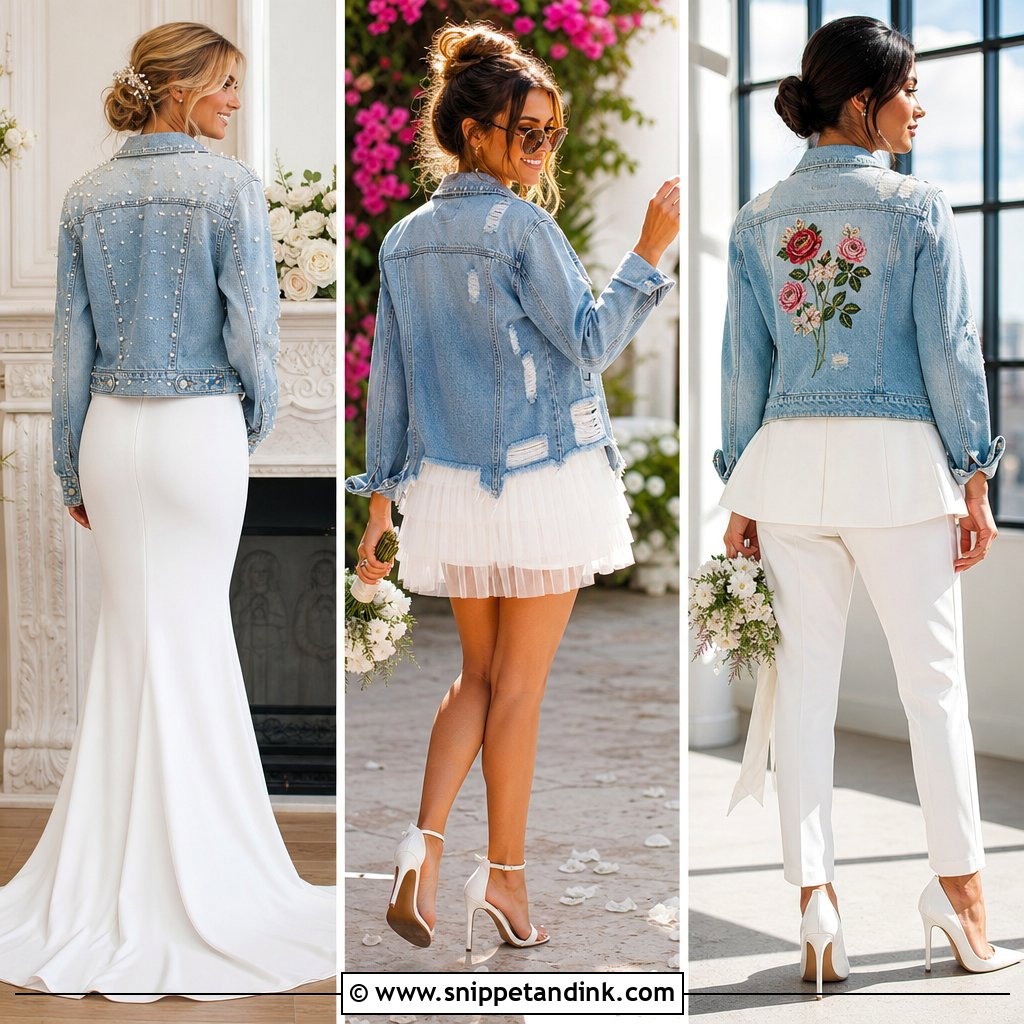
5. Wedding Dress With Bridal Denim Jacket
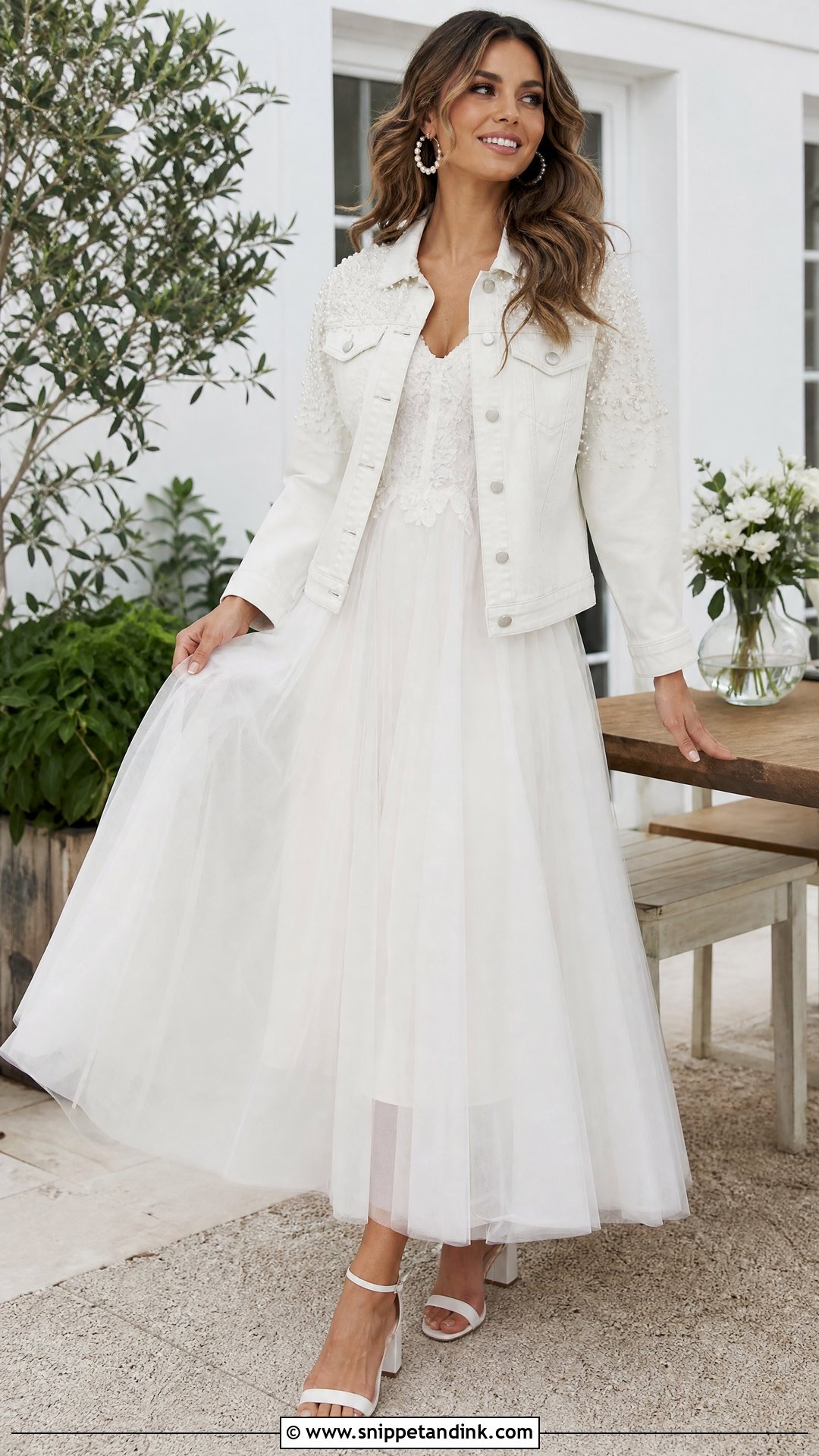
Denim is a reception layer, not a ceremony one. A white or light-wash jacket with pearl trim or embroidered lettering looks deliberate over a tulle skirt, slip gown or tea-length dress, and it gives you somewhere to put your hands in candid shots. The thing I check first is the dye: new denim, even pale washes, can rub blue onto ivory silk where the cuffs touch the skirt, so wash it twice before the day. Sneakers or block heels suit it, and it’s one of the few pieces on this list you’ll wear again the following weekend.
6. Wedding Dress With Feather Capelet
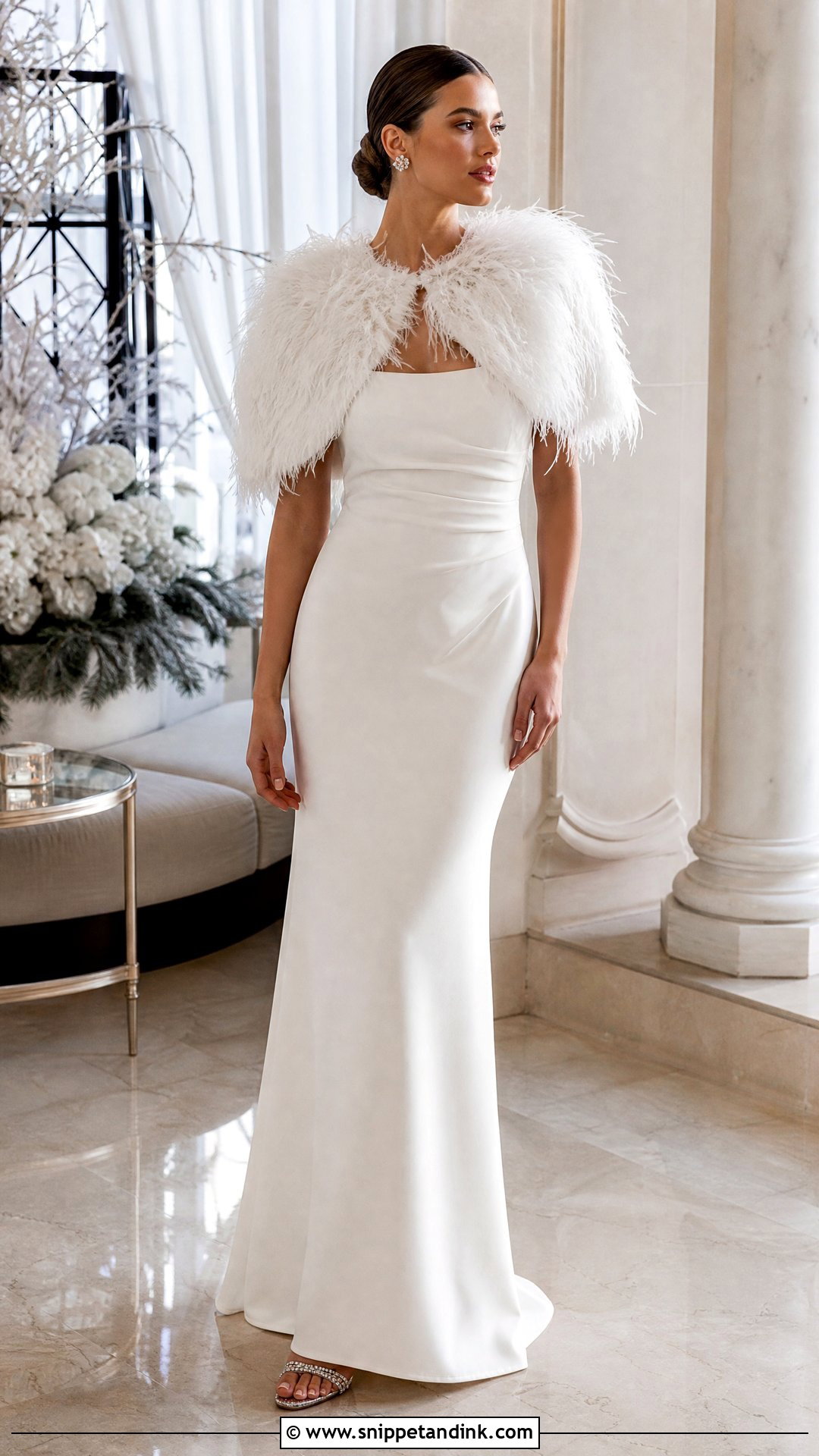
Feathers move in a way no fabric does, which is the whole point of a capelet like this. It sits around the shoulders and suits strapless, square-neck and plain fitted gowns. Because it already carries a lot of texture, I keep hair sleek and jewelry minimal so the frame isn’t crowded. Two practical notes from fittings: ostrich feathers shed a little all day, so keep a lint roller in the bridal kit, and they go limp in steam or rain. Save it for indoor winter receptions and evening portraits rather than a humid garden.
7. Wedding Dress With Pearl Organza Topper
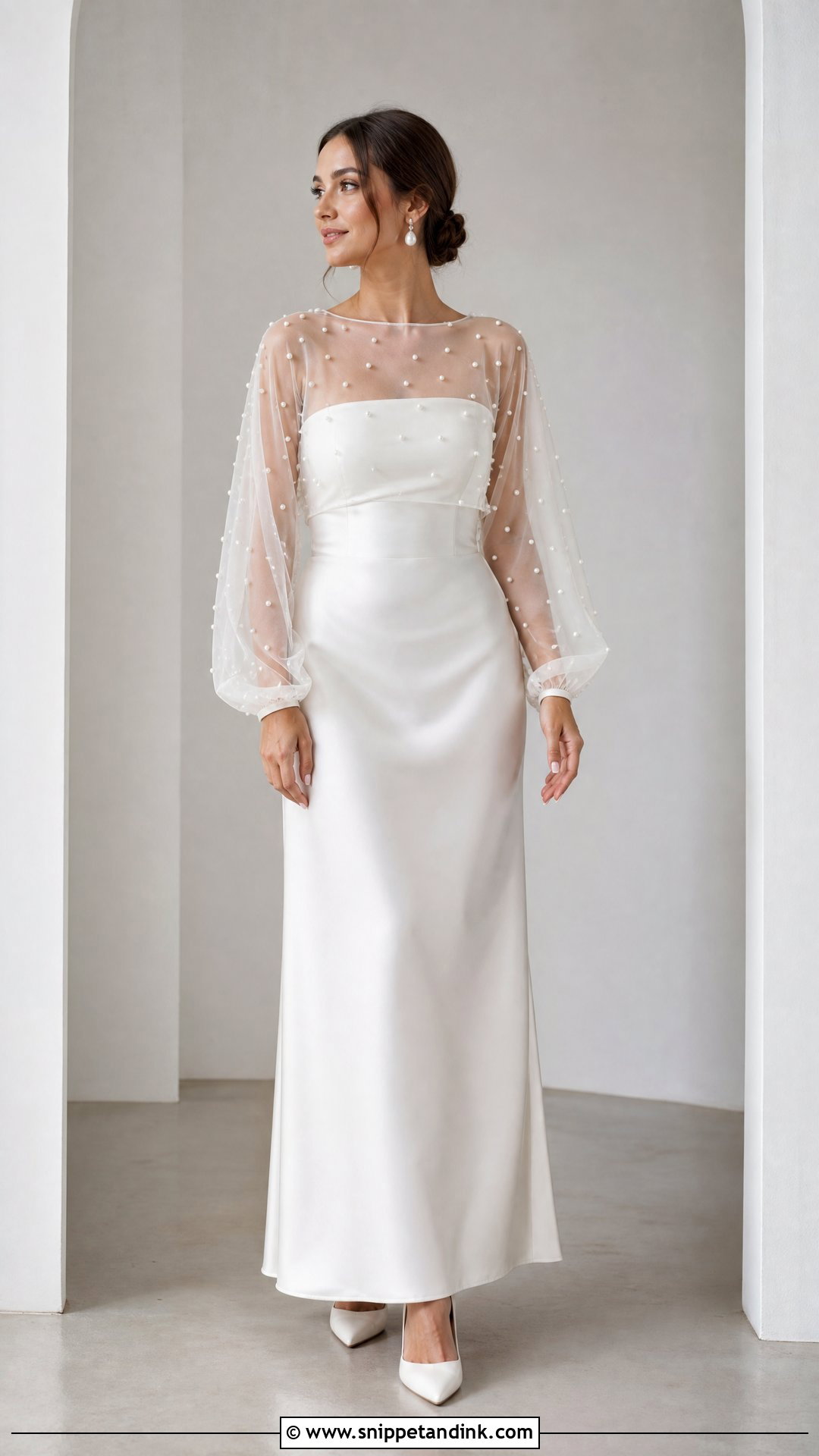
Organza is crisp where tulle is soft, so a pearl organza topper holds its shape off the arm instead of clinging. You still see the dress through it, which suits a plain satin or crepe gown that needs a little texture. Cropped keeps the waist defined; a longer hip-length cut floats more. Hand-sewn pearls are heavy on sheer fabric and can pull the shoulder seam forward, so I check that the topper sits square on the shoulders while the bride is standing still. It slips off easily before dancing, which brides with a modest ceremony appreciate.
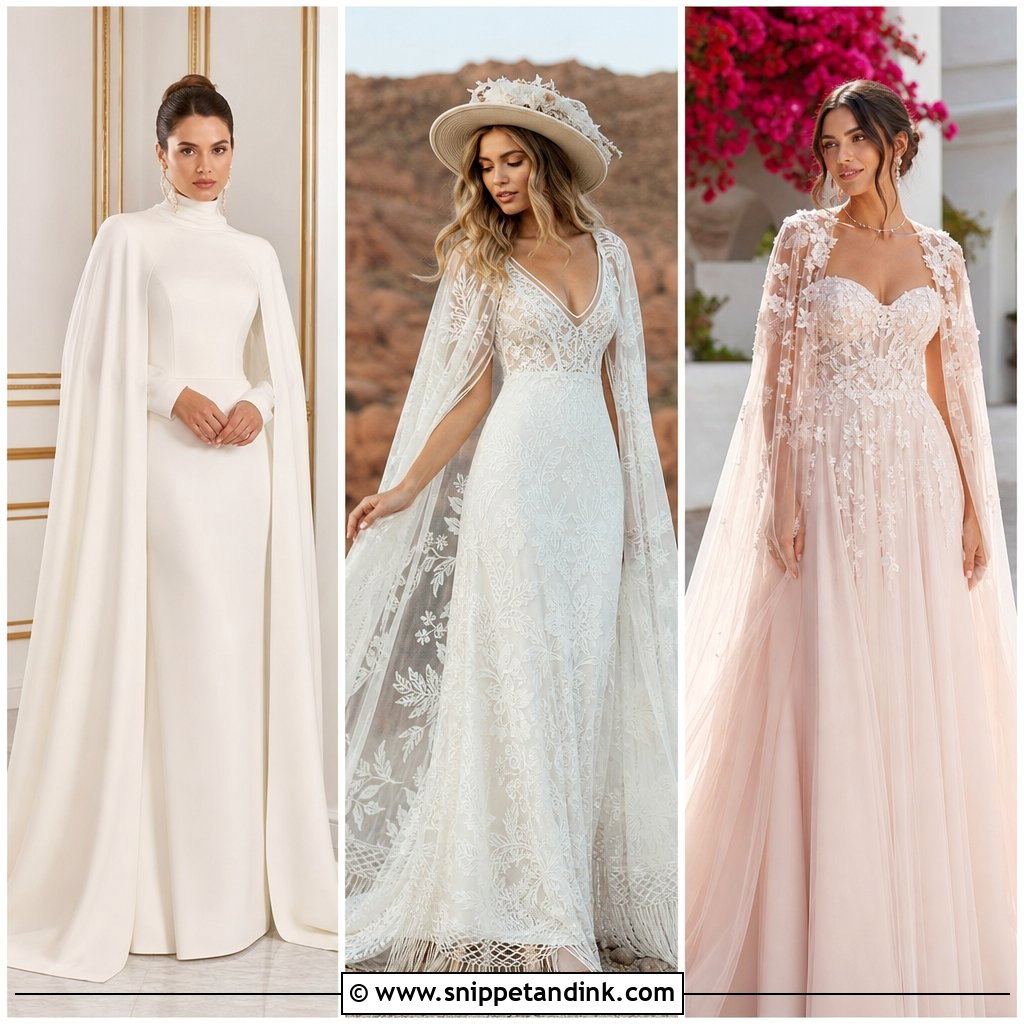
8. Wedding Dress With Long Bridal Cape
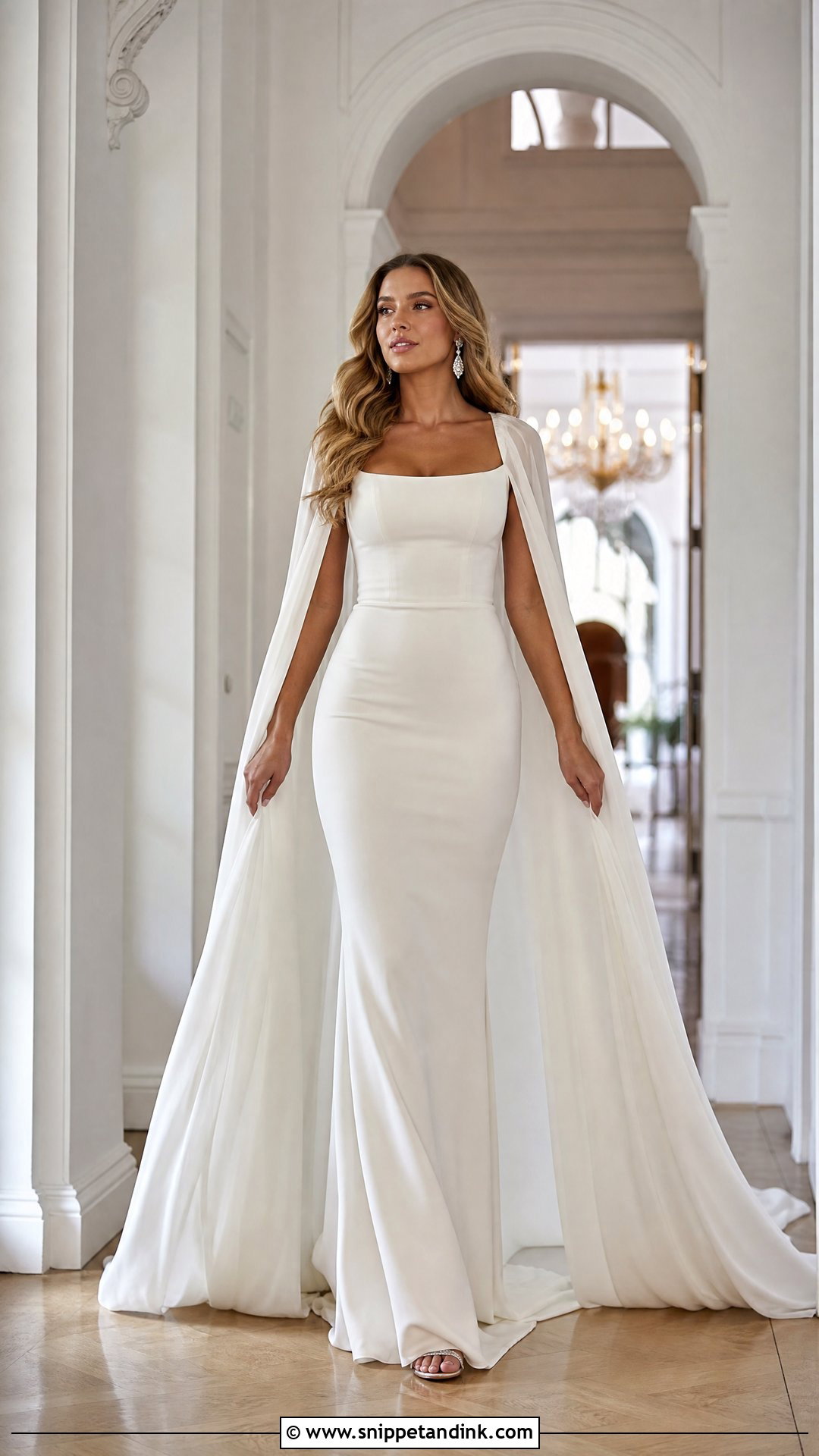
A floor-length cape is the alternative I suggest to brides who love a cathedral veil but hate the idea of pins in their hair all day. Chiffon falls soft, tulle adds volume and crepe gives a sleek line. Shoulder attachments frame the upper body; fastening it at the neckline reads more formal. My caution is length: if the cape is longer than the gown’s train, it gets stepped on during the recessional, so I have it hemmed to stop at or just short of the train. Remove it at the reception and you have a second look with no change of dress.
9. Wedding Dress With Cropped Cardigan
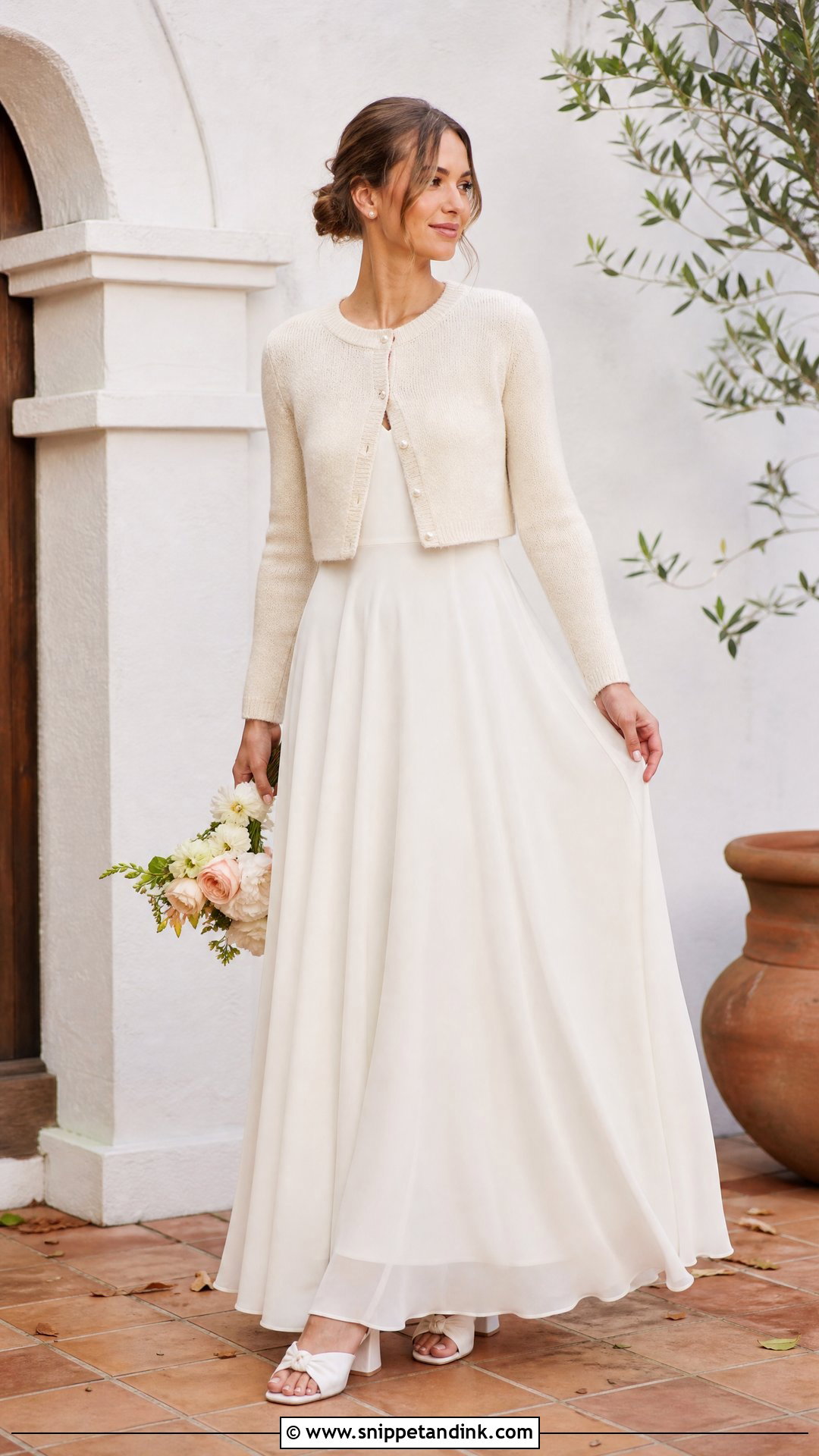
Knits feel the most relaxed of all the layers here, which is exactly why brides choose a cropped cardigan for fall farm venues and outdoor photos. Pick a fine-gauge knit in ivory or cream so it reads as part of the outfit. A chunky knit next to silk looks like you borrowed it from a guest. The cropped length keeps the waist visible over a flowy A-line. I swap plain buttons for pearl or crystal ones when the cardigan came from a regular store; it costs little and makes the piece look bridal.
10. Wedding Dress With Velvet Bolero
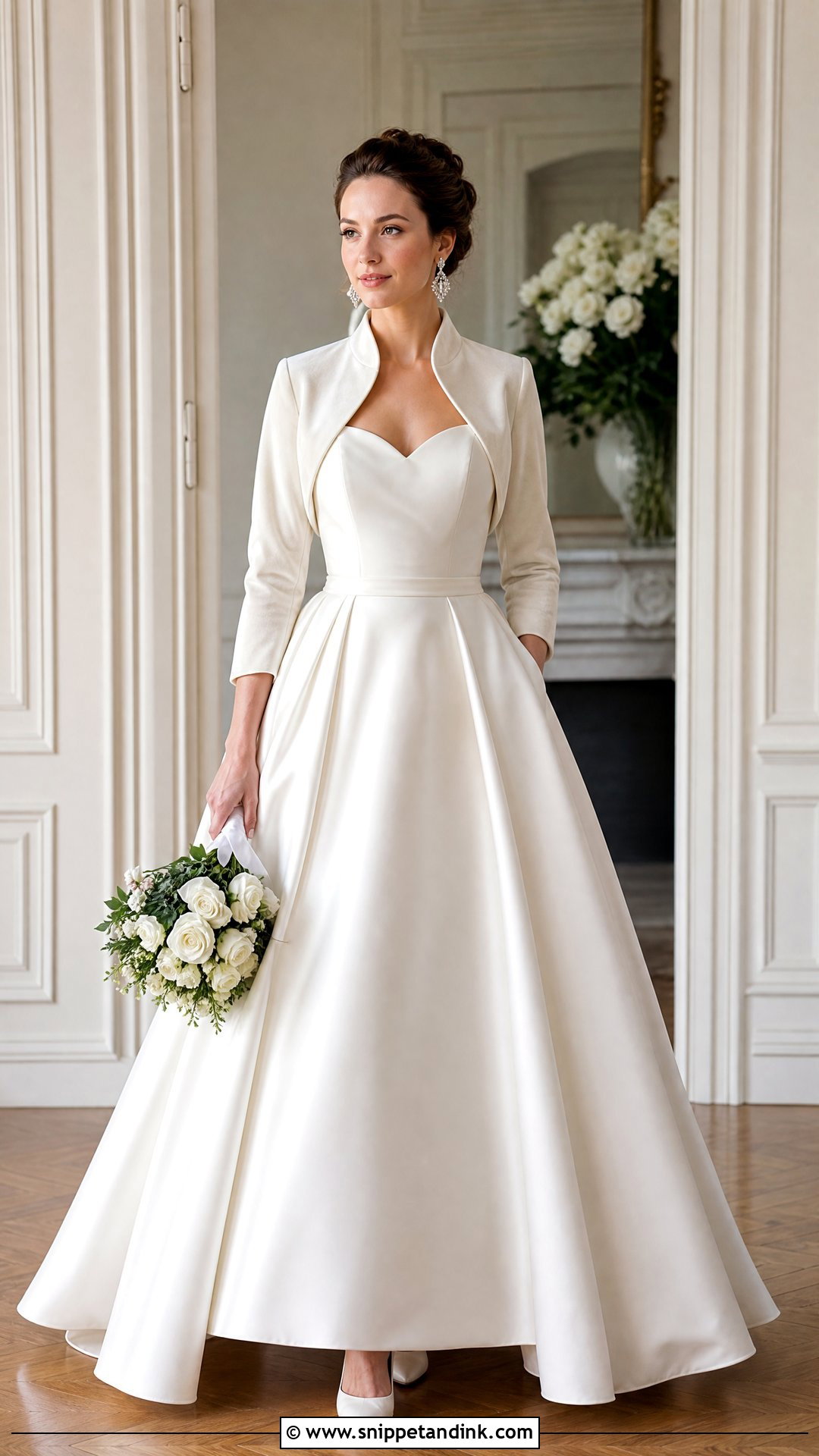
Velvet has a pile that drinks in light, so on camera an ivory velvet bolero looks richer and slightly warmer than the satin next to it. That contrast is lovely in winter, but hold the two fabrics together in the room’s real lighting before committing, because some ivories turn grey beside velvet. A fitted bolero suits ball gowns and A-lines; a softer shape works over a sheath. Velvet also crushes where you lean against a chair back, so it goes on a hanger at dinner. Champagne or soft silver are the shades I use when a bride wants contrast.
11. Wedding Dress With Chiffon Wrap
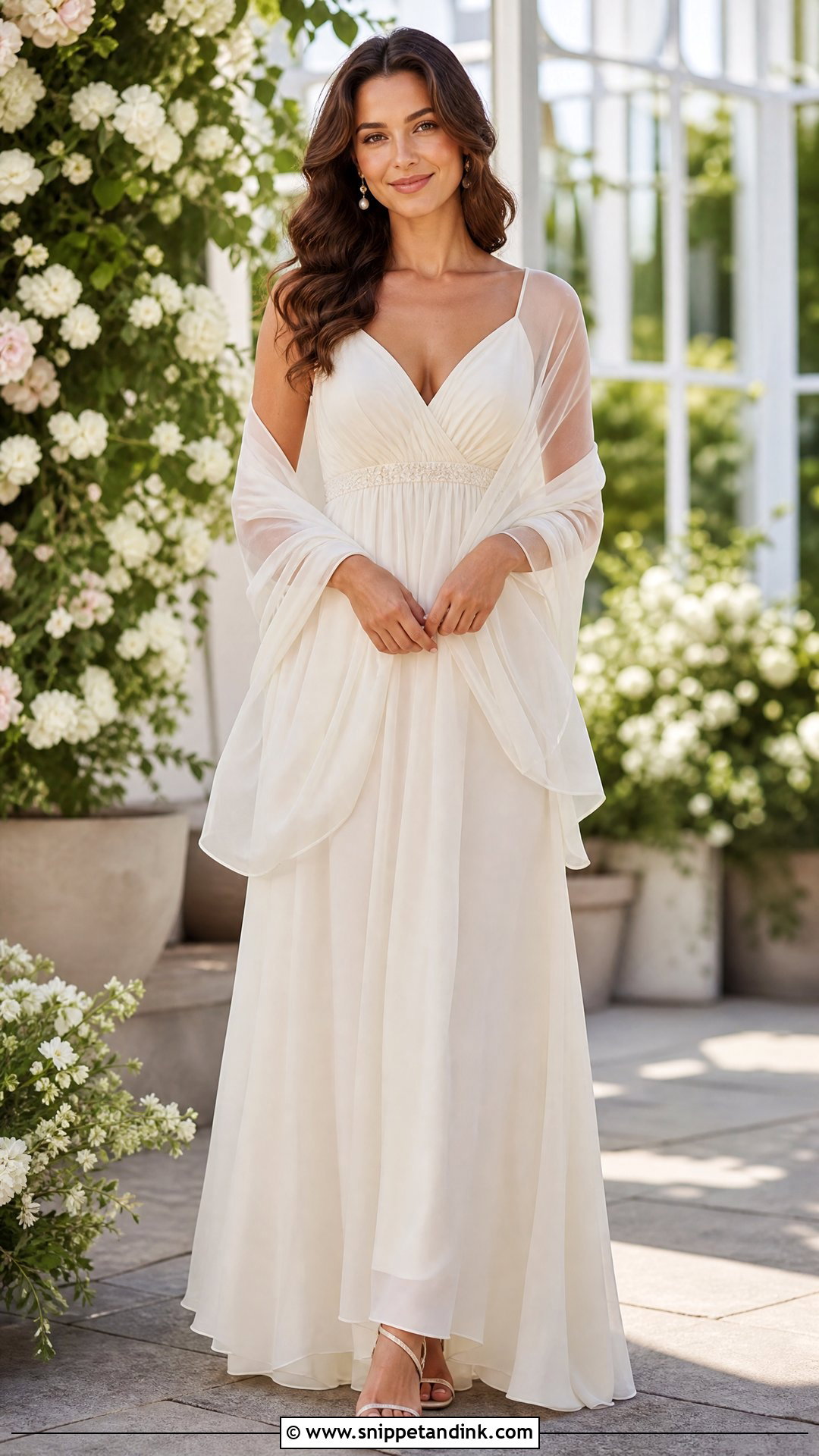
Summer ceremonies are where a chiffon wrap earns its place. It adds shoulder coverage without trapping heat, and it can be draped, tied loosely at the front or let fall over the arms. It suits beach gowns, garden dresses and empire waists. Chiffon frays at raw edges, so I check the hem is rolled before the day, and on a windy beach I add a small hidden pin at the back so it doesn’t sail off mid-vow. It’s also one of the cheapest layers here.
12. Wedding Dress With Beaded Capelet
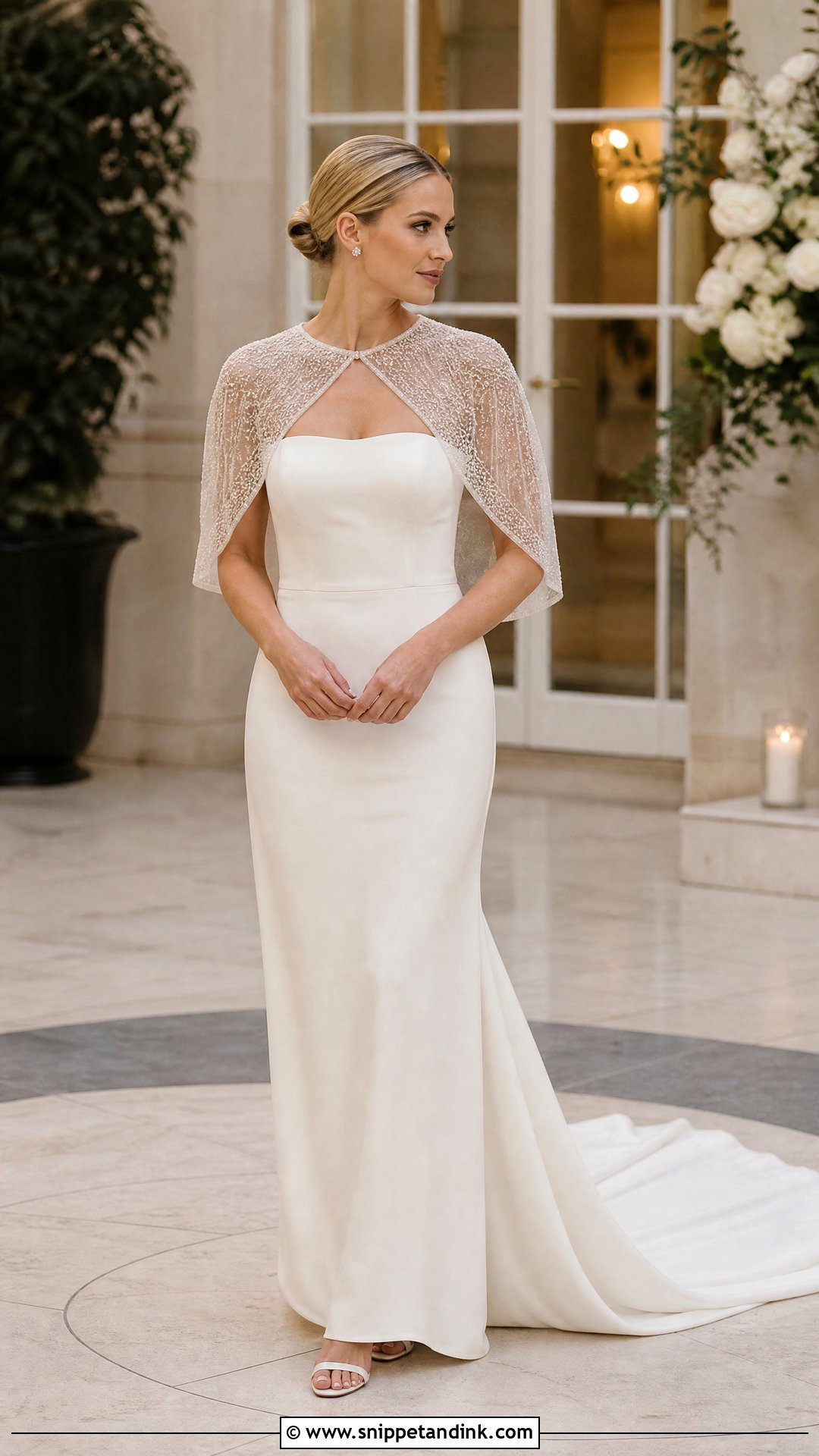
Beadwork concentrated at the shoulders gives the impression of an embellished bodice on a plain gown, without the weight or the cost. I look for clear beads, pearls or ivory shimmer rather than colored stones so the effect stays bridal, and I keep earrings small so the two don’t compete. Check the inside of a beaded capelet against your skin: cheap pieces have scratchy thread knots on the lining that rub raw by the end of the night. It suits a strapless, sleeveless or plain crepe dress, and it reads best by candlelight at an evening reception.
13. Wedding Dress With Wool Coat
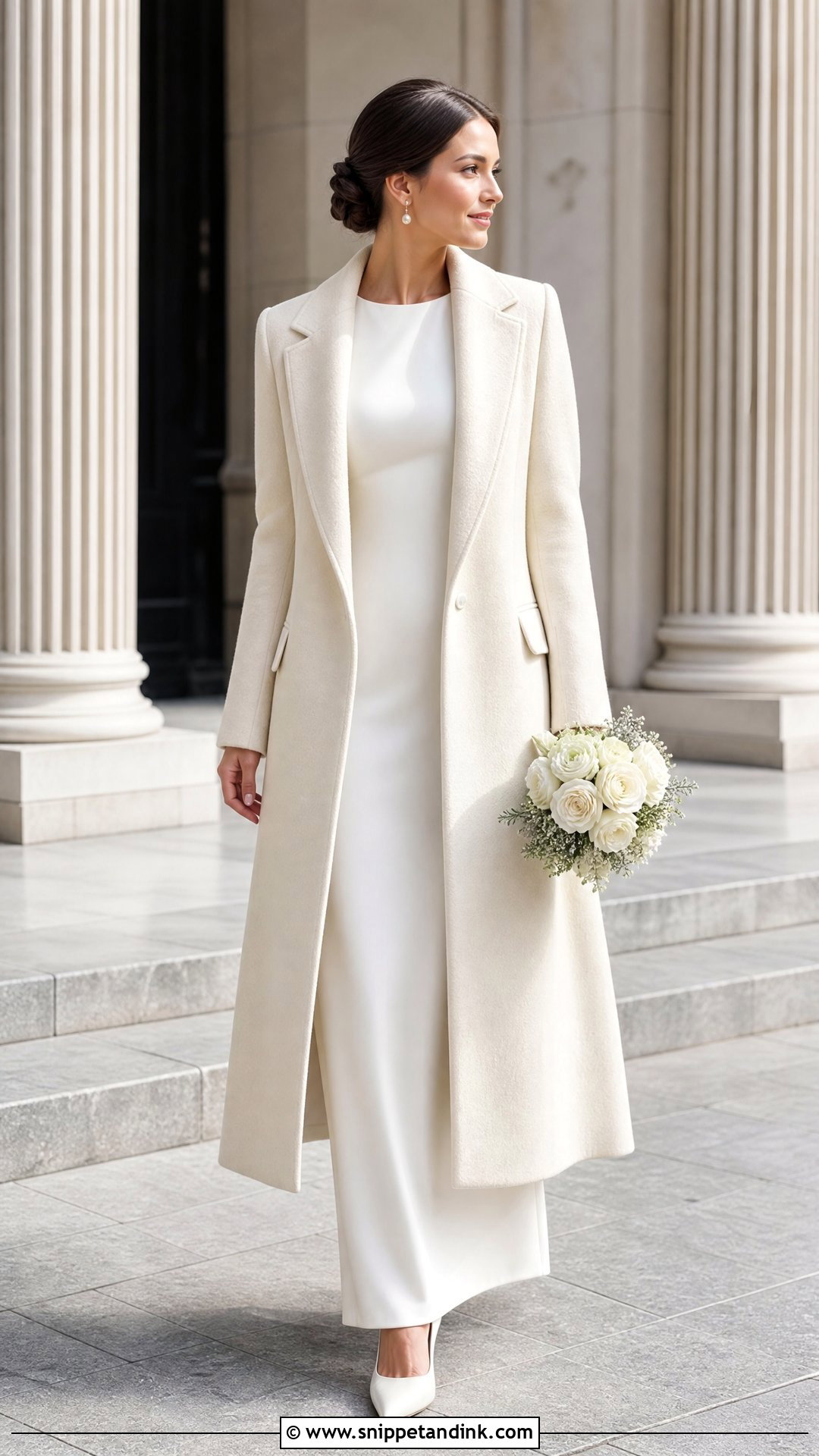
In real cold, nothing on this list beats a proper wool coat, and it doesn’t have to look like you grabbed it at the door. A tailored ivory, cream or pale grey coat that ends below the knee covers the gown without chopping the body in half. A belted wrap coat defines the waist; a straight longline cut looks sleek over a minimal gown. Full skirts are the problem: a ball gown won’t fit under a fitted coat, so I steer those brides toward a cape-style coat instead. Gloves and bridal boots finish it for city portraits.
14. Wedding Dress With Sequin Jacket
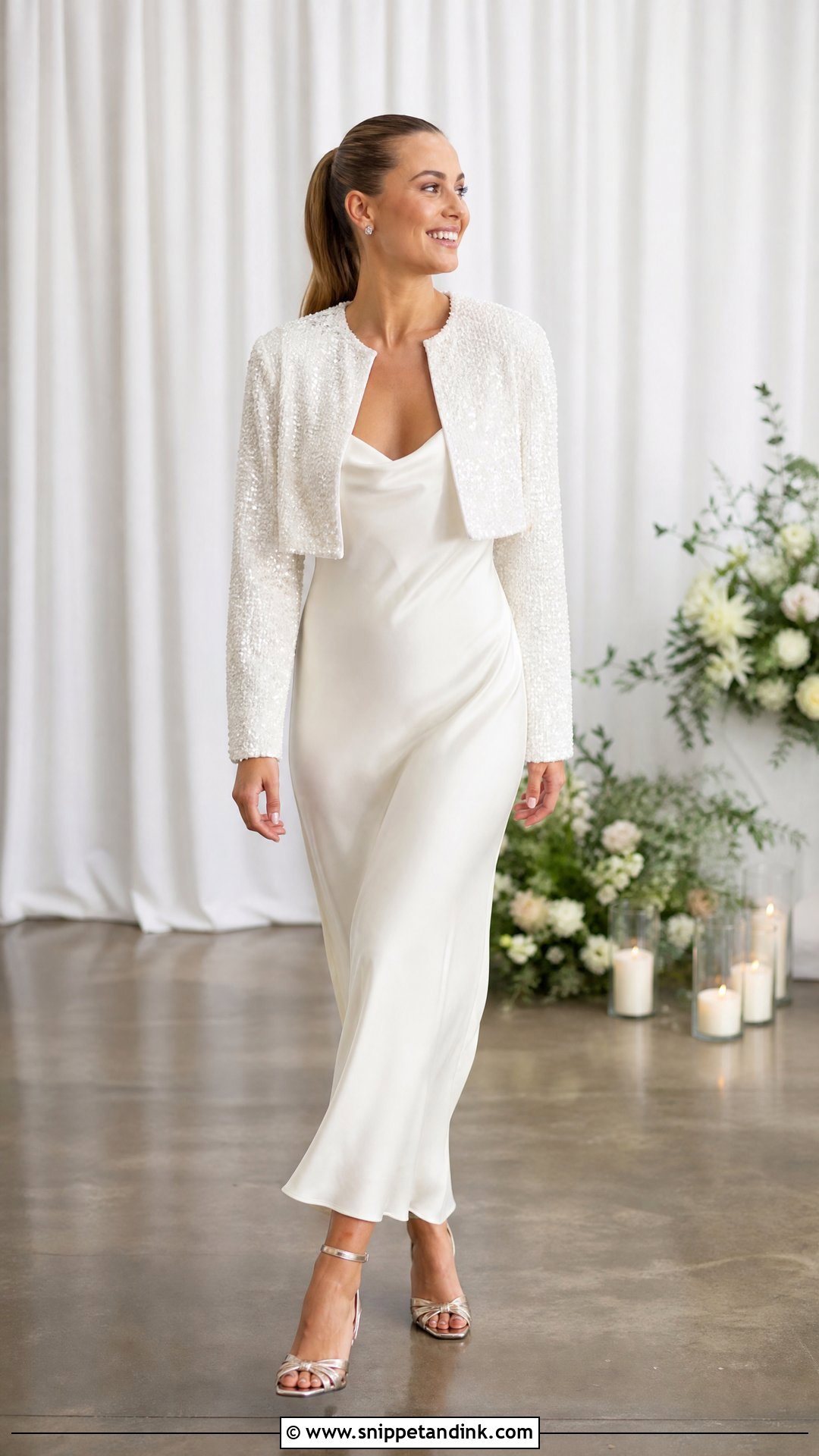
Sequins photograph as hundreds of small highlights, so a jacket like this turns the reception into a party without a second dress. Ivory, silver or champagne sequins keep it bridal. Cropped versions suit fitted gowns and slip dresses. I warn brides about one thing at fittings: sequins catch on tulle and fine lace, pulling threads where your arms rest against the skirt, so it’s safest over satin or crepe. Keep the rest of the look plain, with a sleek ponytail and crystal studs.
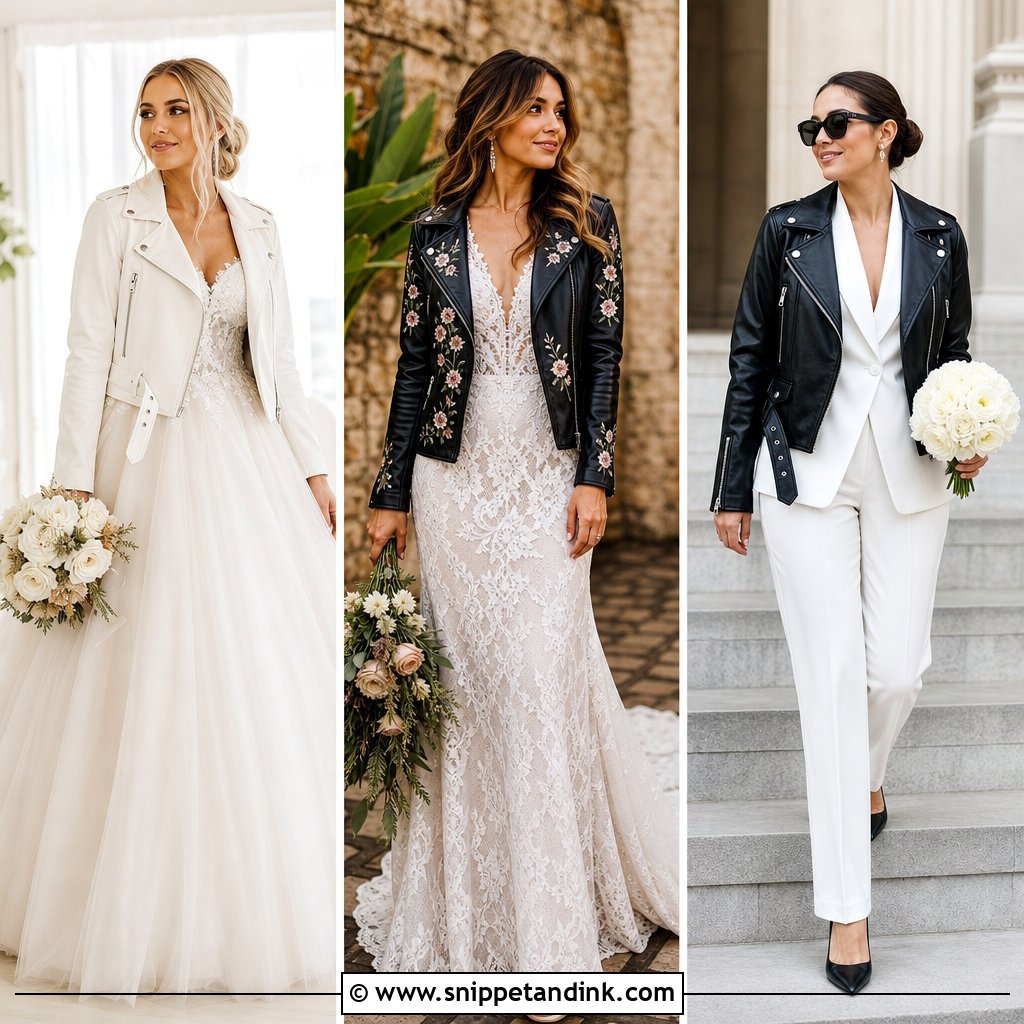
15. Wedding Dress With Leather Jacket
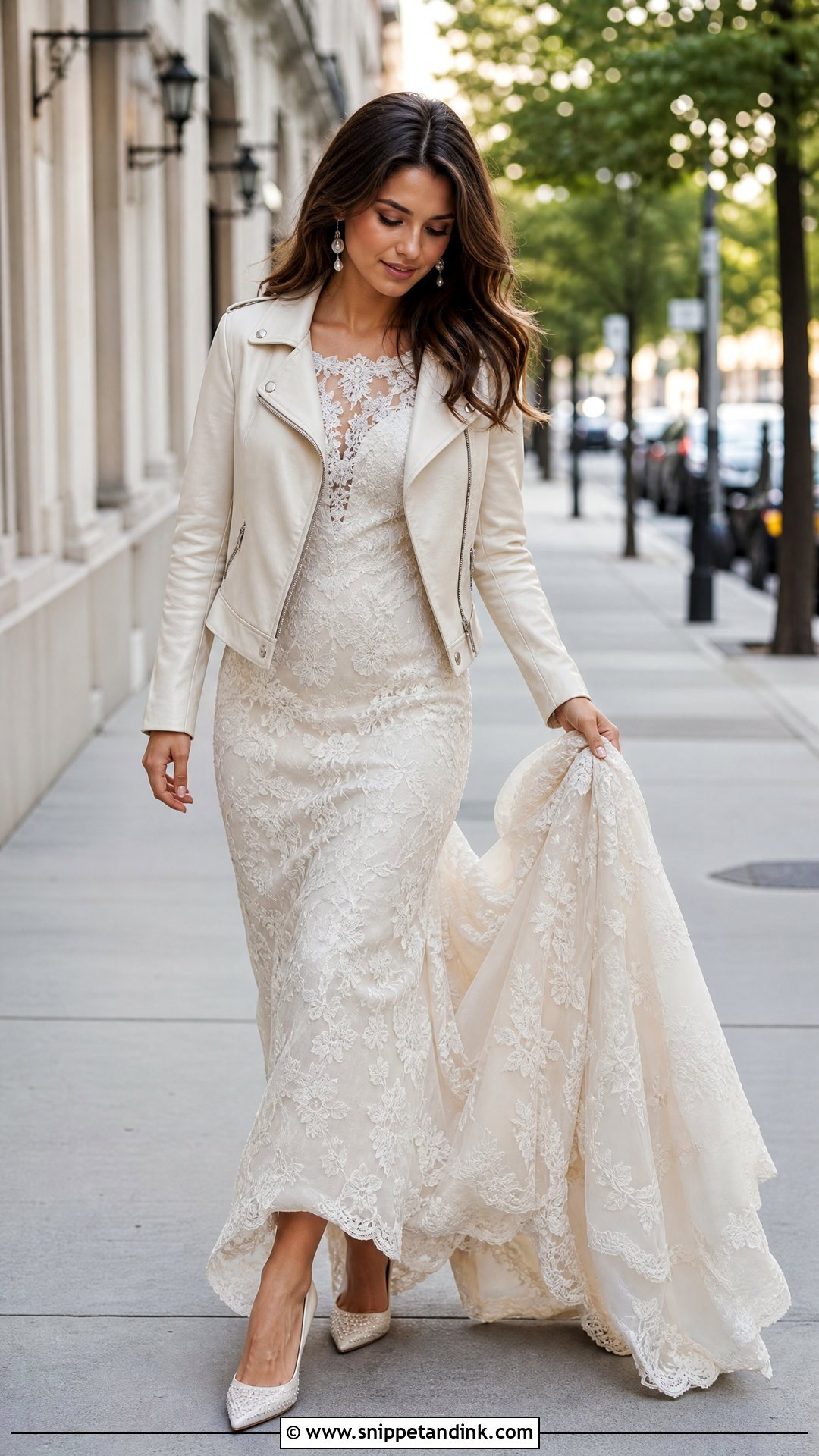
White or ivory leather softens what a black leather jacket would make harsh, and that’s the version I recommend for a bride. It sits well over a slip dress, a lace gown or a tulle skirt, where the contrast between hard and soft is the point. Keep it cropped so the outfit doesn’t feel heavy. Real leather won’t breathe in a warm room, so it suits cool-weather photos more than a full night of dancing. Embroidered initials on the back make it a keepsake.
16. Wedding Dress With Embroidered Cape
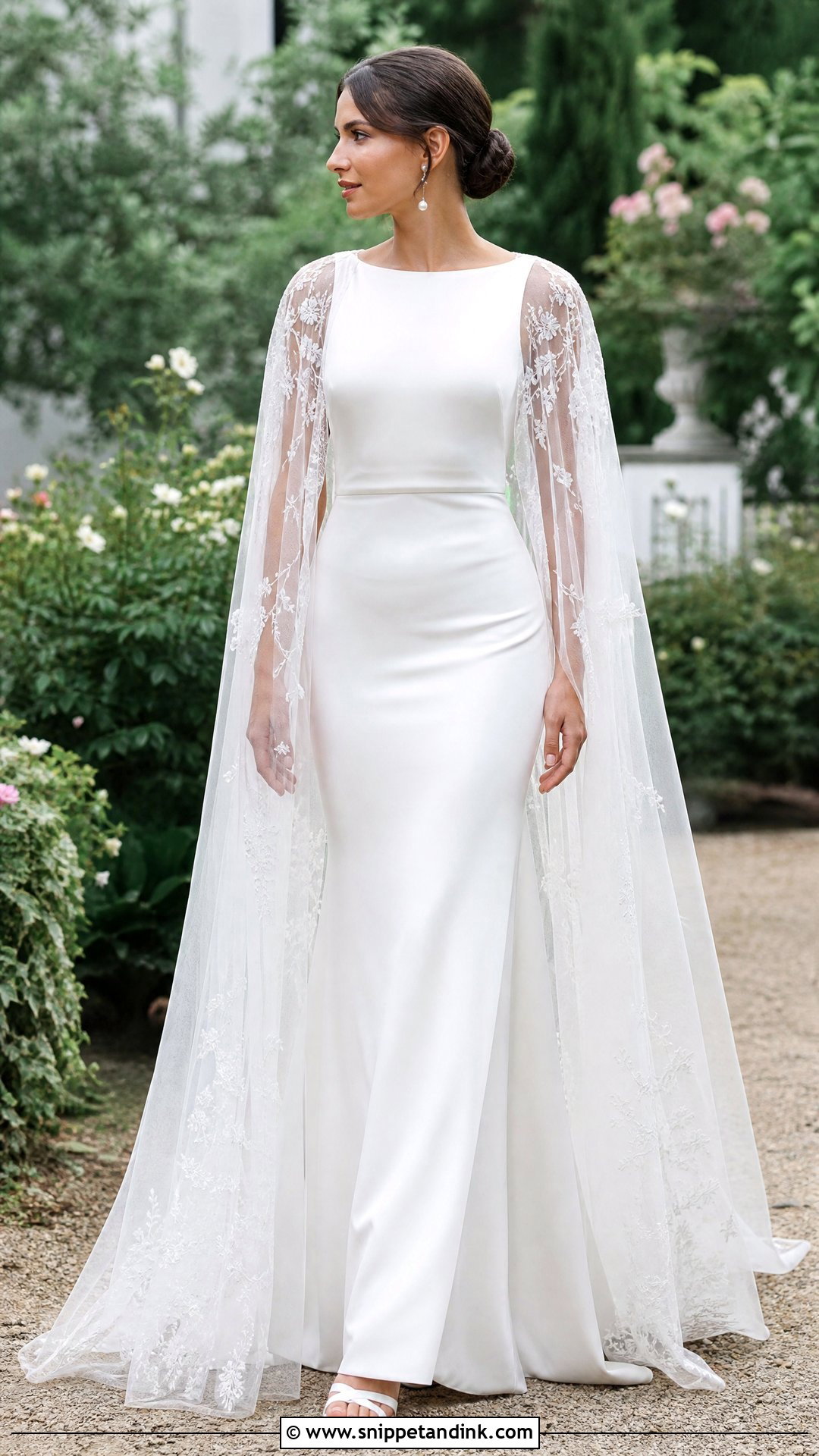
Embroidery on a sheer cape lets you add pattern to a plain gown without touching the dress itself. Floral vines or pearl stitching show up most clearly over satin, crepe or mikado, where nothing competes. A short cape gives shoulder coverage; full length gives the aisle moment. Heavy embroidery on sheer mesh can drag the fabric so it puckers at the shoulders, so I always see one on a moving bride before recommending it. Soft waves or a low bun keep the neckline detail on show.
17. Wedding Dress With Knit Shrug
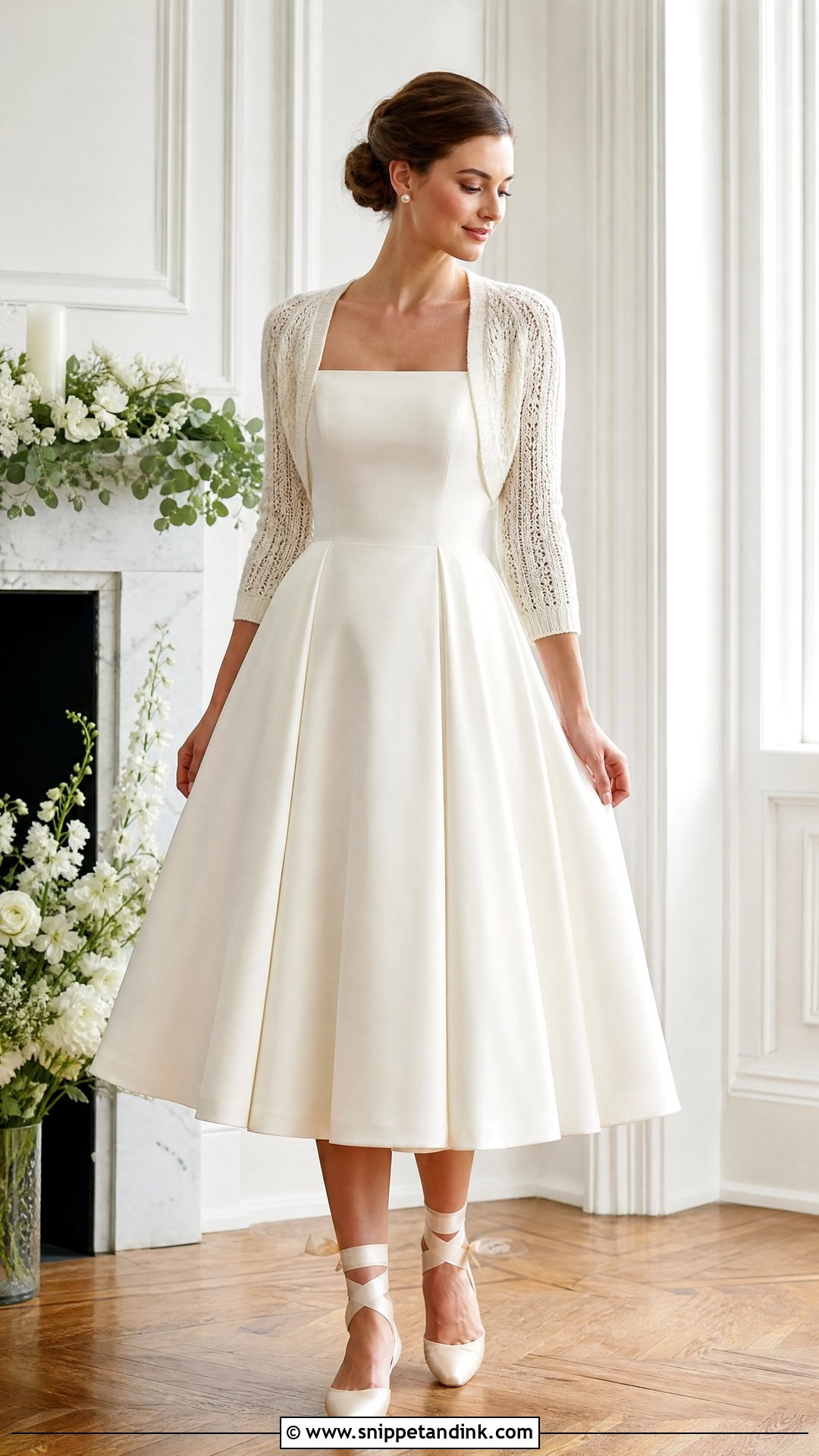
A shrug covers only the arms and upper back, leaving the bodice fully on show, which makes it the least intrusive warm layer here. Fine mohair, cashmere or a lightweight knit in ivory work best. Mohair sheds onto dark suits during hugs, so if your partner is in navy or black, choose cashmere. It suits A-lines, tea-length dresses and plain satin. Skip anything chunky; it adds bulk across the shoulders that the camera exaggerates.
18. Wedding Dress With Sheer Long Sleeve Topper
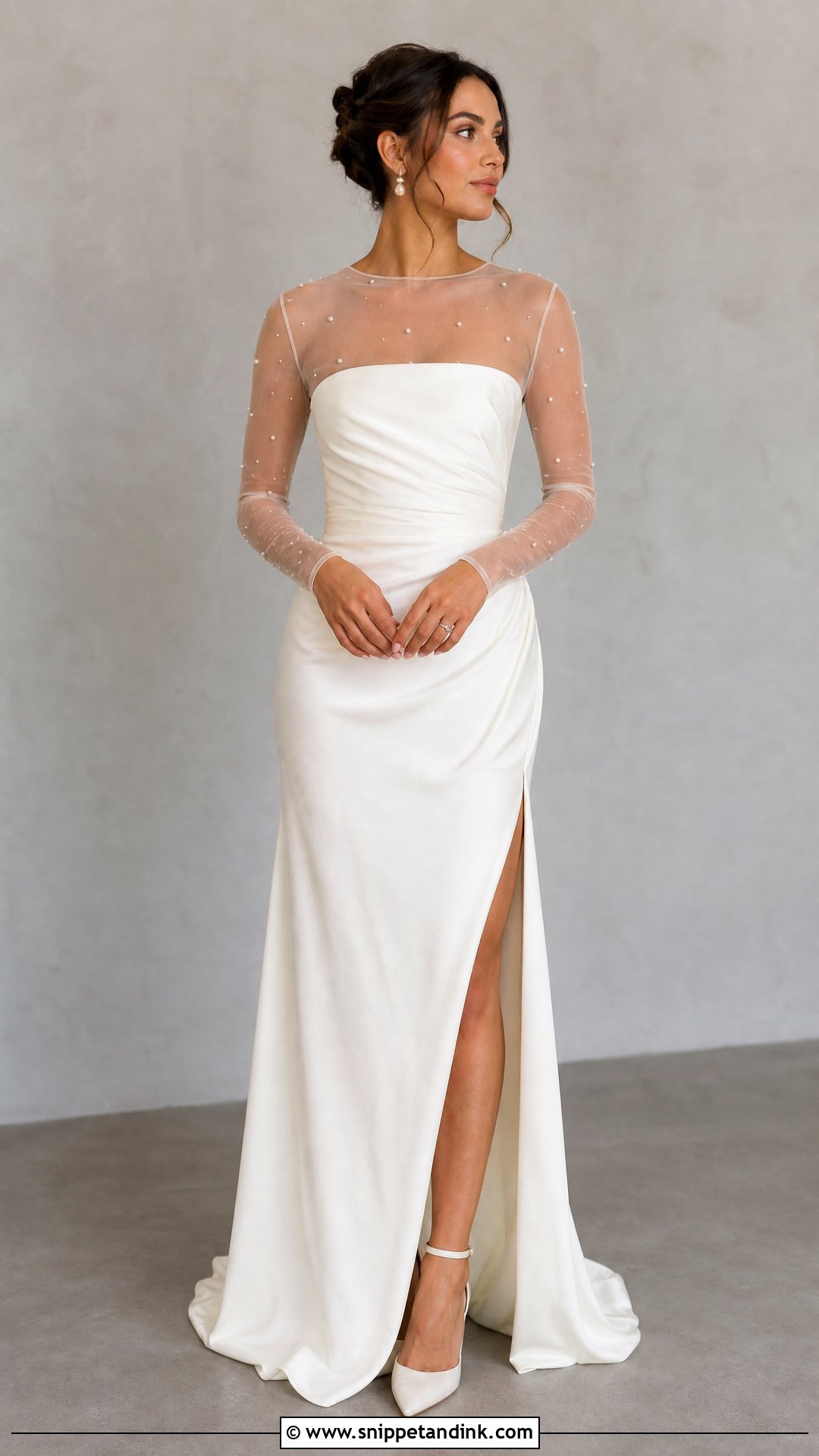
When a bride wants long sleeves for the ceremony but a sleeveless look on the dance floor, this sheer topper gives her both. Tulle, mesh or organza with clean, narrow seams sits closest to a built-in sleeve. Plain versions look modern; lace or pearls look romantic. The fit at the shoulder and wrist decides whether it looks like part of the dress, so I have these taken in at the same fitting as the gown. Over strapless, spaghetti-strap or scoop necklines it’s nearly invisible from a distance.
19. Wedding Dress With Bridal Bomber Jacket
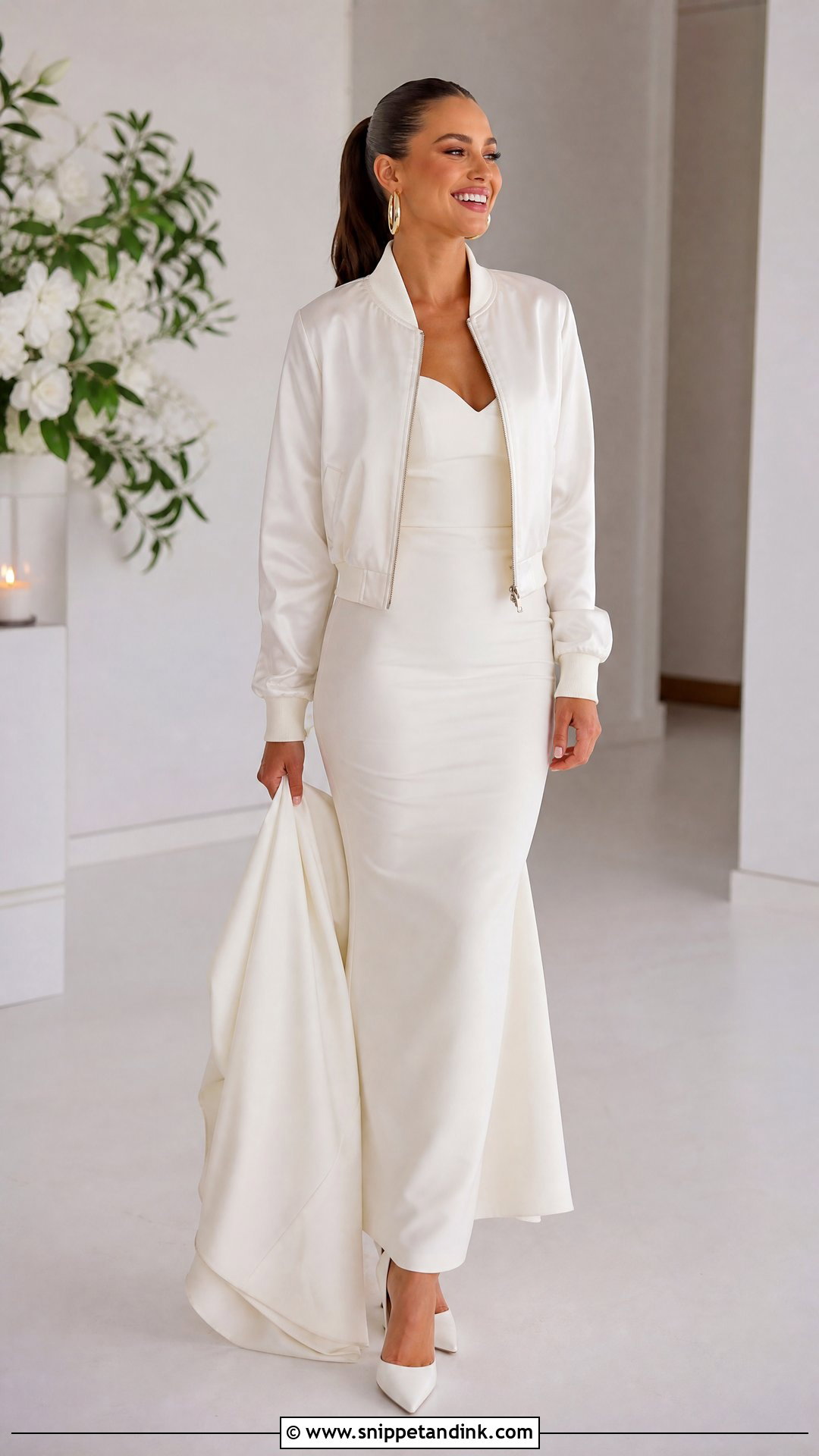
Bombers belong to the reception and after-party. In satin, lace or sequins, the shape goes sporty and still reads bridal, and a cropped length keeps the gown’s waist visible. It works best with a slip dress, fitted gown or short second dress. Wide ribbed cuffs and hems can look bulky over a full skirt, so I wouldn’t put one over a ball gown. Sneakers make it casual; pointed heels pull it back toward formal.
20. Wedding Dress With Pashmina Shawl
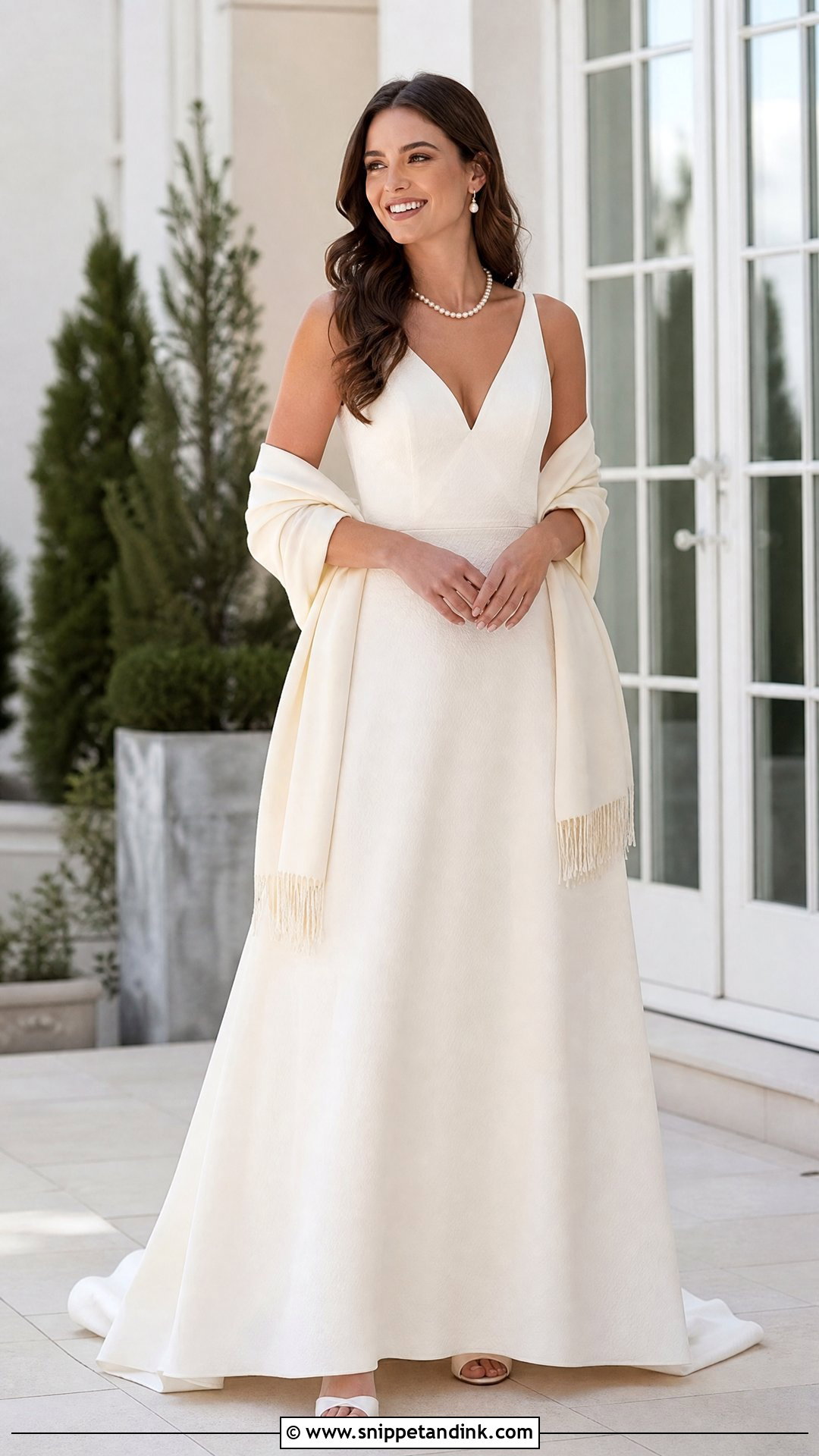
Every destination bride I dress gets told to pack a pashmina shawl, even for a warm-weather trip, because evenings near water cool quickly. It folds into a carry-on and weighs almost nothing. Ivory, champagne or pale grey suit most gowns. Drape it over the shoulders for portraits or wrap it over the arms while walking. Real pashmina pills where it rubs on beading, so on an embellished bodice I’d choose silk-blend instead. It’s a budget piece that looks considered.
21. Wedding Dress With Off Shoulder Wrap
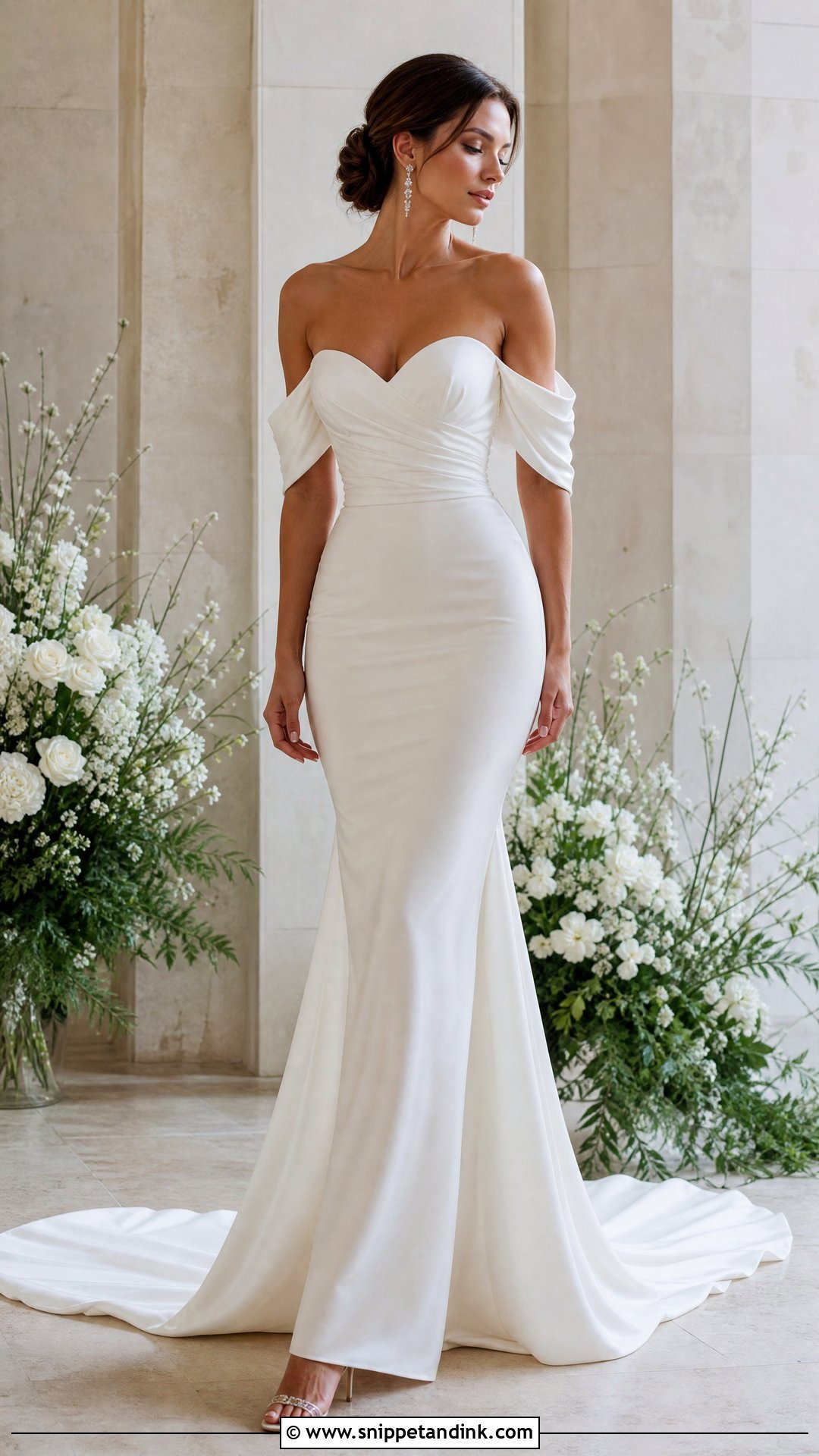
Off-shoulder wraps sit lower than a shrug, across the upper arms, so the collarbone stays open. That makes them a natural partner for a strapless or sweetheart gown. Satin looks formal, chiffon softer, lace more detailed. The difficulty is staying power: a wrap that relies on the arms alone slides up every time you raise a glass, so I add small snaps or a strip of fashion tape at the back. Drop earrings and a low bun keep the shoulder line clean.
22. Wedding Dress With Cape Sleeves
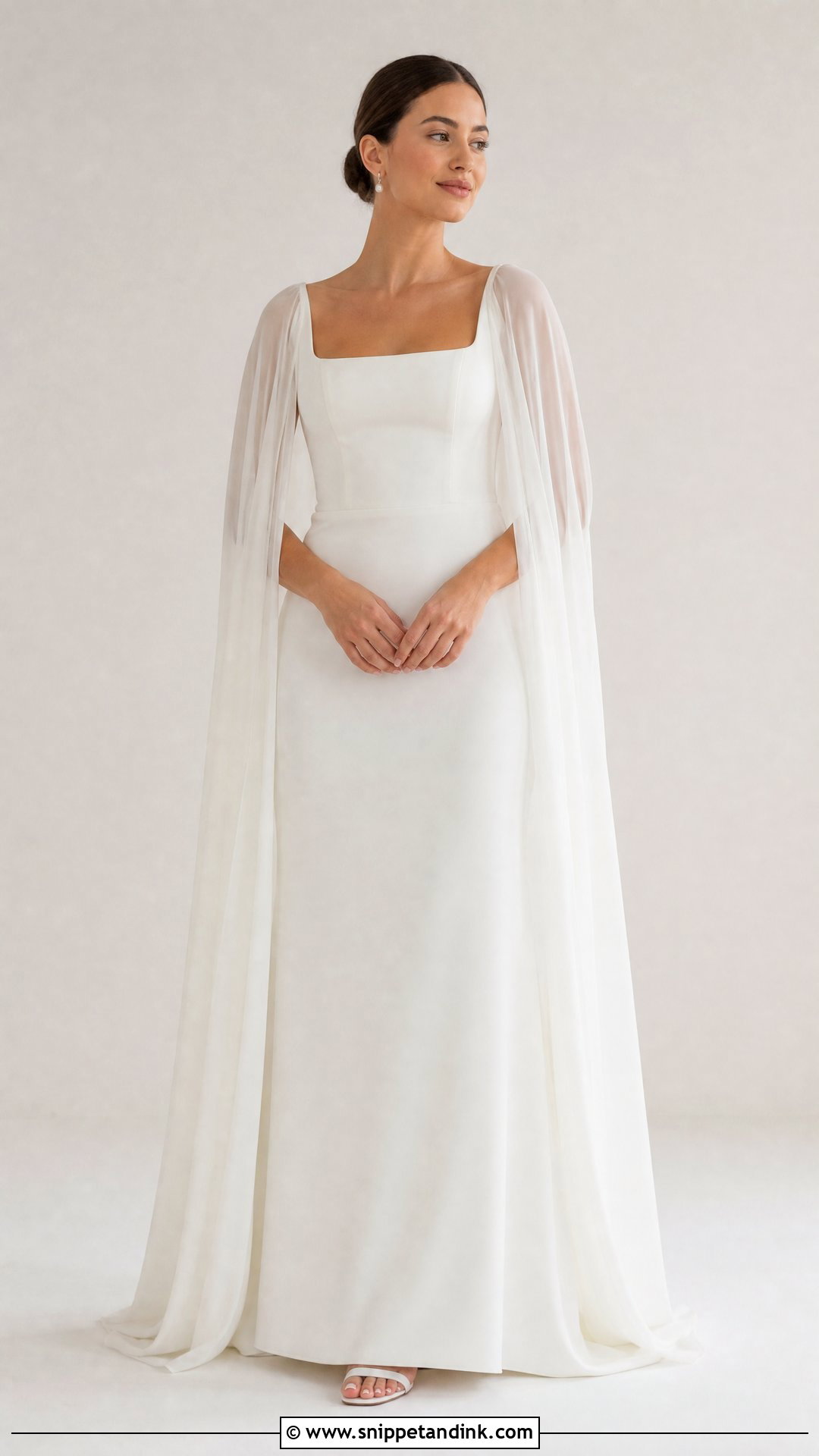
Sitting between a sleeve and a cape, these panels attach near the shoulder and fall loosely over the arms, so nothing grips your upper arm. That’s why brides who dislike tight sleeves love them. They suit plain gowns, square necklines and fitted crepe. Sheer versions look modern; lace looks romantic. Cape sleeves do flap when you hug guests and reach across a table, so they need a light fabric. Keep hair sleek so the sleeve shape is visible from behind.
23. Wedding Dress With Bridal Blazer Cape
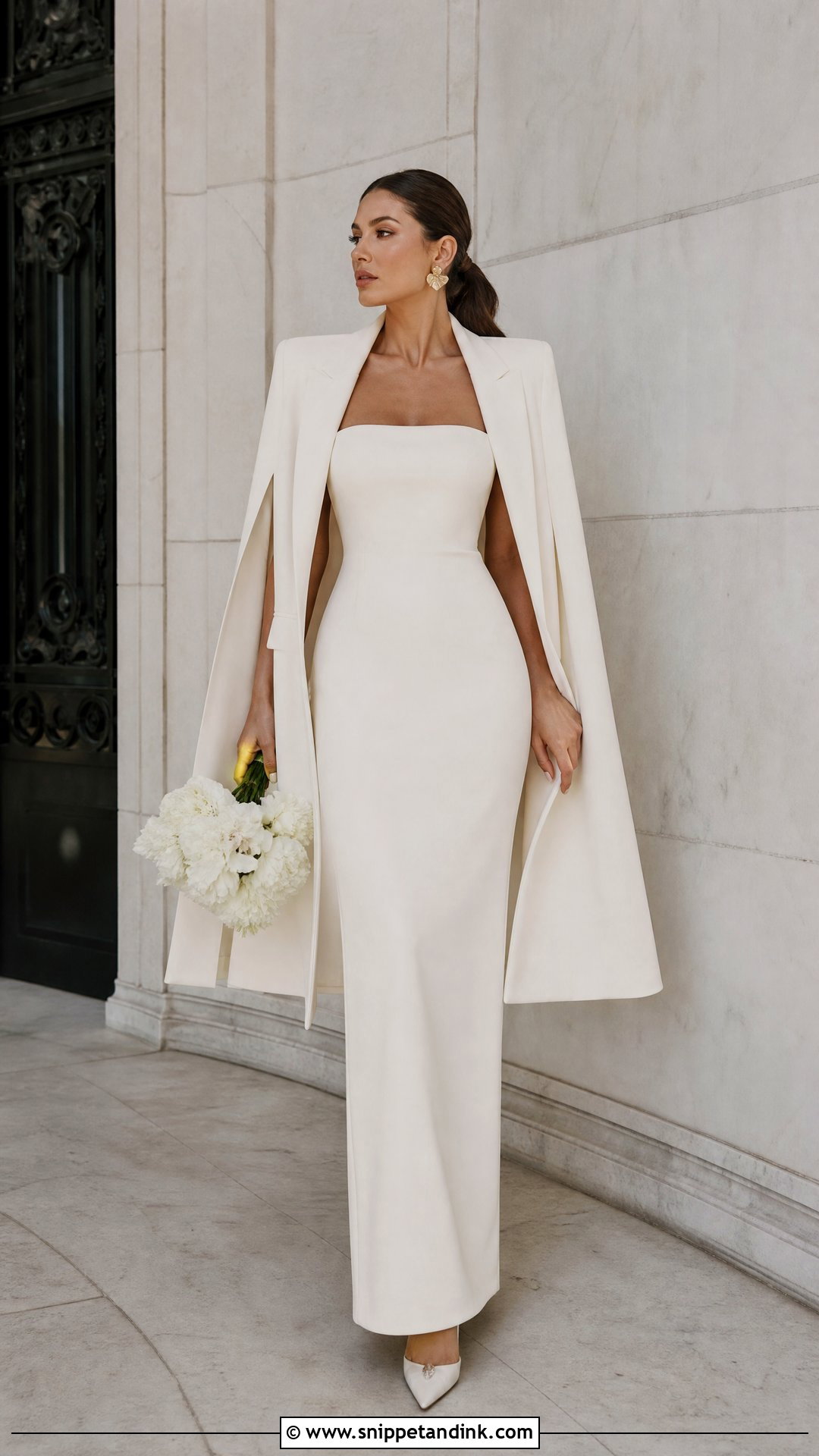
Structure from a blazer, drama from a cape: this hybrid drapes over the shoulders and leaves the arms free, so greeting guests is easy. It looks sharp over a slip dress, bridal jumpsuit, mini or sleek column. Ivory crepe or lightweight suiting holds the shoulder line better than satin. Without sleeves to anchor it, the cape can slip backward, so I look for an internal shoulder strap or hook. A low ponytail and sculptural earrings suit its clean lines.
24. Wedding Dress With Floral Applique Jacket
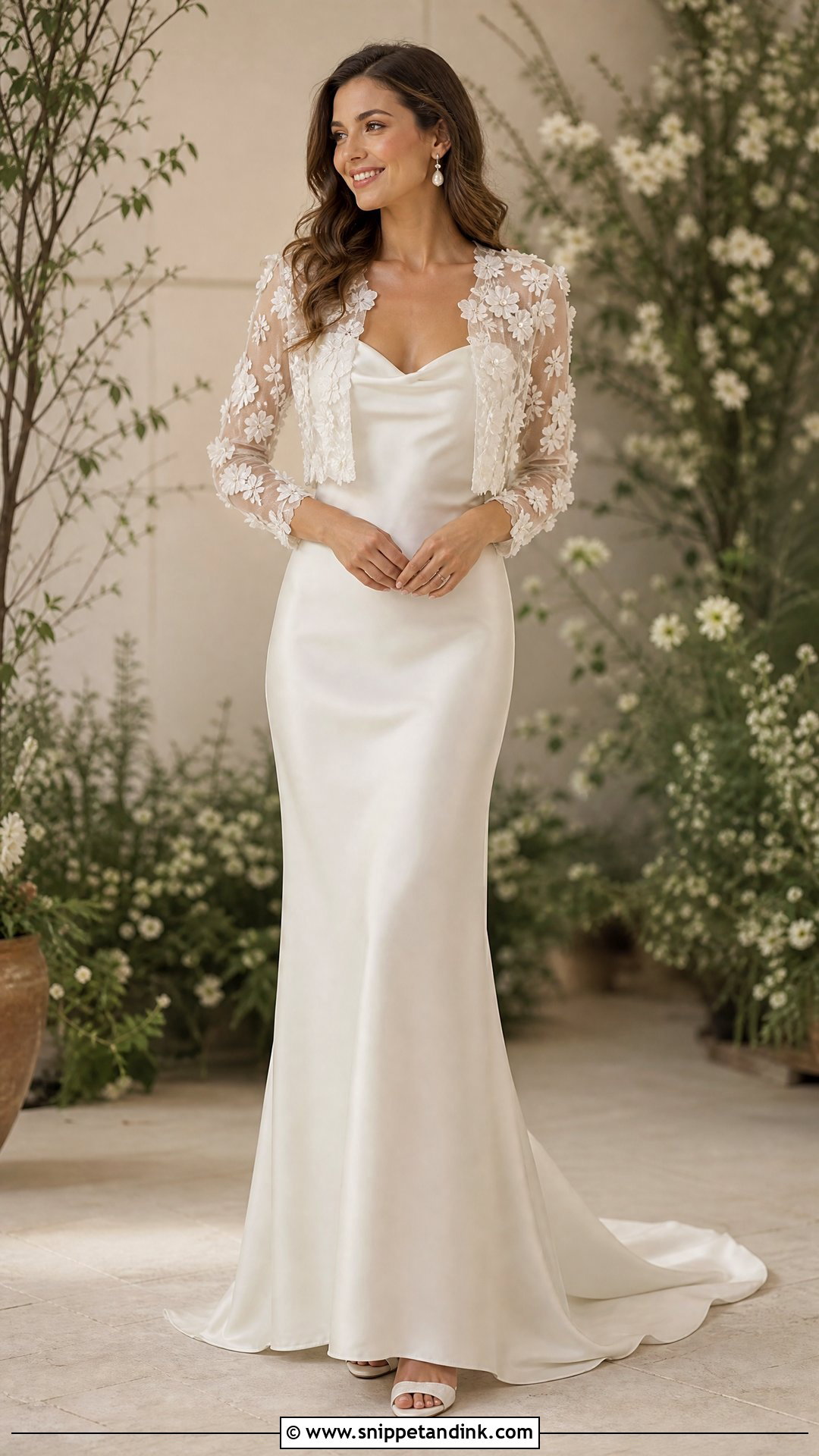
Three-dimensional flowers bring depth to a plain satin, crepe or organza gown that might otherwise look flat in photos. If you want something quieter, flat embroidery reads more subtle. A cropped jacket suits ball gowns and A-lines; a sheer longer jacket looks graceful over a sheath. Raised appliques get crushed under a bouquet arm or a seatbelt on the drive over, so I check them and fluff them by hand just before the ceremony. Pearl earrings and a neat bun let the flowers lead.
25. Wedding Dress With Hooded Cape
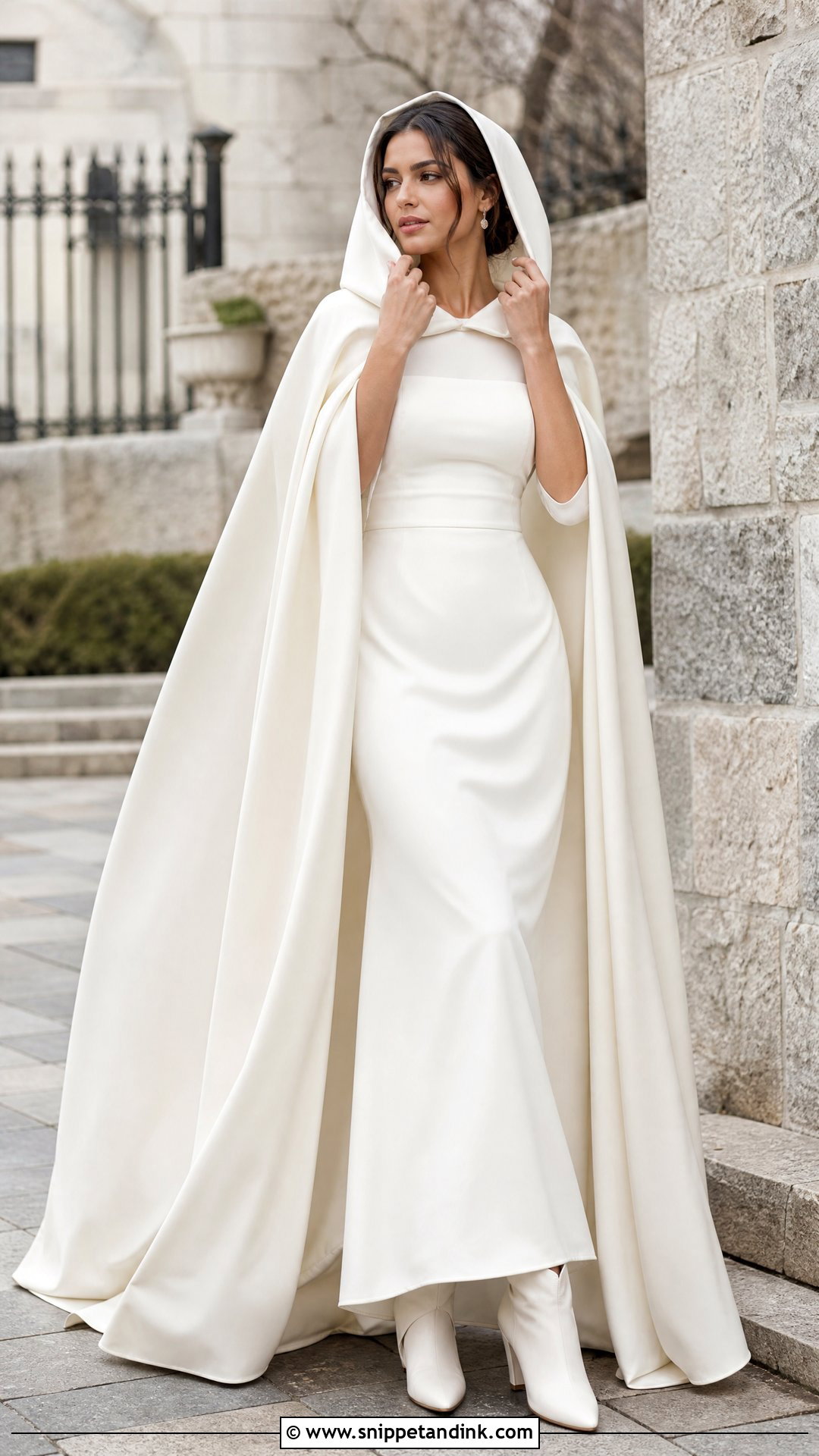
Nothing else here feels quite as storybook as a hood, and it still earns its keep in cold weather. It works best over a simple gown, because the hood and long fall of fabric already create a strong outline. Velvet suits winter, crepe or chiffon the shoulder seasons. My rule is to try it with the finished hairstyle at the trial: a heavy hood flattens volume at the crown and can catch on hairpins and veil combs. For outdoor portraits and a winter exit, it’s hard to beat. Bridal boots are fine underneath.
How a Cover Up Stays Put Through Hugs and Dancing
Most cover up problems I fix on the day are mechanical, not stylistic. A cape that slides off one shoulder, a wrap that creeps up to the ears, a jacket that pulls the bodice forward when the bride raises her arms. Almost all of it is avoidable at fittings.
- Ask your seamstress to sew small thread loops or snaps inside the gown where a cape or topper attaches. It takes minutes and means no safety pins through silk.
- Bring the layer to at least your final fitting so the shoulders, sleeve length and hem are adjusted with the gown on, not separately.
- Do a movement test: raise both arms, hug someone, sit down and stand up. If anything shifts more than an inch, it needs a hook or tape.
- Keep double-sided fashion tape, a lint roller and two spare safety pins in the emergency kit. Fur, feathers and mohair all shed on dark suits.
- Decide in advance who takes the layer when you remove it, and where it goes. Velvet, satin and sequins should go straight onto a hanger, not over a chair.
Caring for Fur, Feathers and Sequins After the Wedding
Brides spend far more thought on preserving the gown than the layer, yet a good cape or jacket is the piece most likely to be worn again or handed down. I’d treat each fabric a little differently.
Faux fur should be shaken out, hung on a wide padded hanger and kept away from heat, which can melt the fibers into a matted patch. Feather pieces go flat in a box, wrapped in acid-free tissue, never in plastic. Sequin and beaded items need to be folded with tissue between layers so the sequins don’t scratch each other, and stored flat because hanging weight stretches the base fabric. Satin and velvet get a garment bag in cotton or breathable fabric. If anything has a makeup or wine mark, take it to a cleaner who handles bridal pieces within a few weeks; old stains set and are much harder to lift.
Try the Layer With the Gown Before the Last Fitting
A cover up should look like it was planned with the dress, not added the morning of. Start with your neckline and sleeve shape, then the fabric of the gown, the season and how much coverage the ceremony really needs. Lace boleros read classic, satin blazers modern, faux fur cozy, sheer capes romantic, and a denim or bomber jacket gives the reception its own mood. Whatever you pick, bring it to a fitting and wear it with the gown, shoes and hairstyle together. Proportions that look right on a hanger often look wrong on a body, and that’s the cheapest moment to find out.
You'll Like These Ideas:


Leave a Reply