
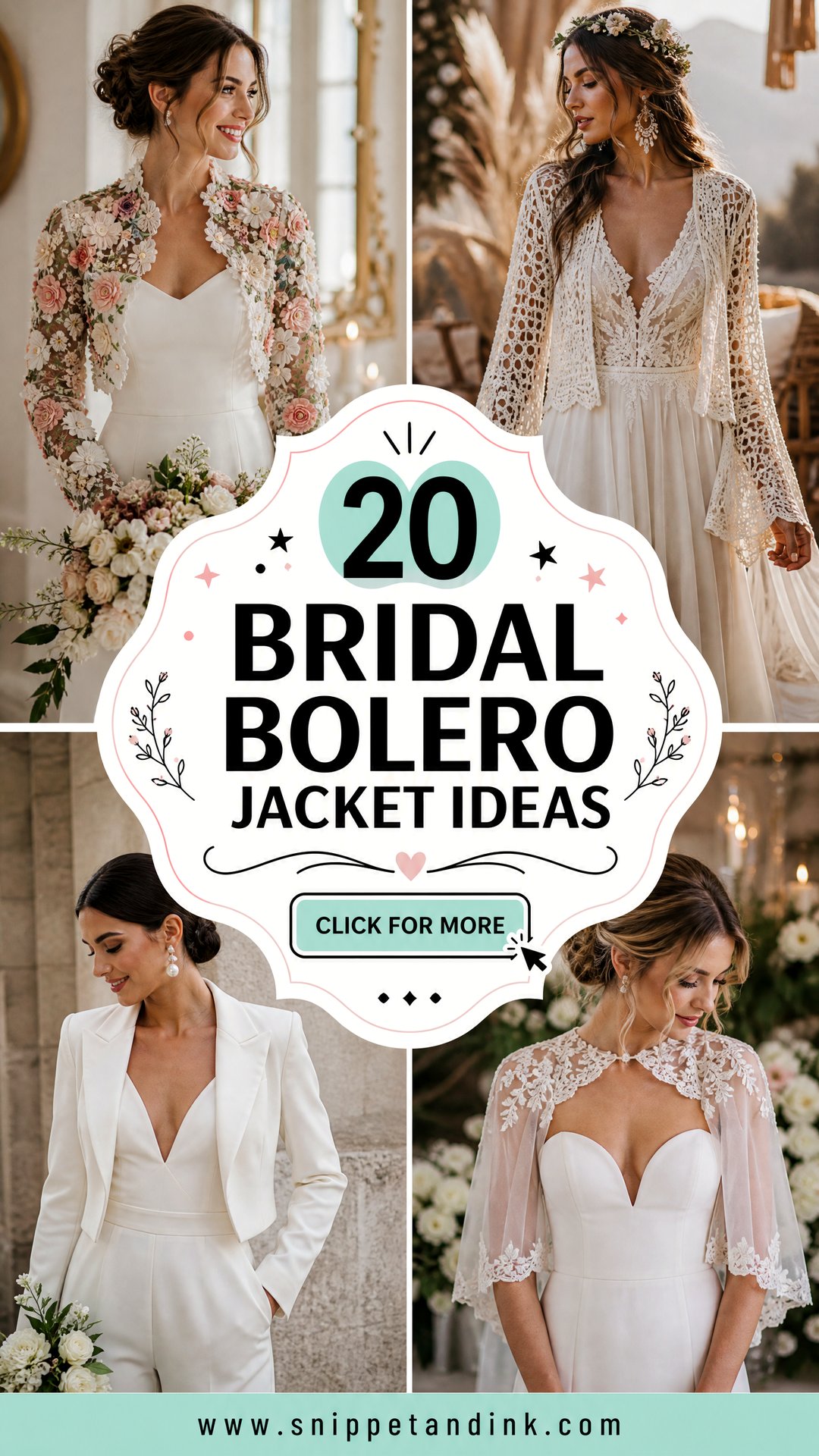
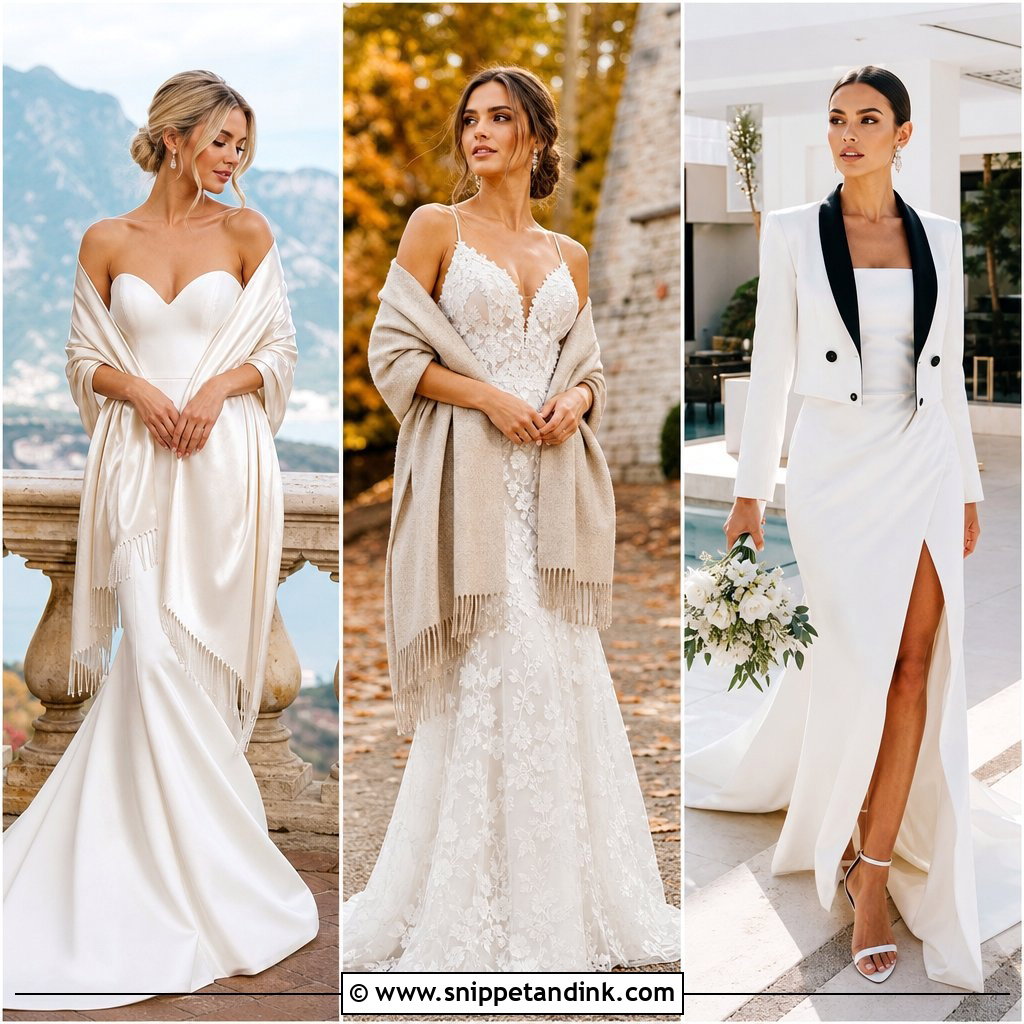
A bridal bolero gives you shoulder coverage and a little warmth without hiding the dress you spent months choosing. It differs from a shawl in one practical way: it has armholes, so it stays put when you hug people, and it usually stops near or just below the bust. That short shape is why I reach for one most often with strapless, sweetheart and off-the-shoulder gowns. Below are twenty jackets I’d consider, from lace and satin to faux fur, knits, feathers, pearls and sharp tailoring. Whichever you pick has to answer to your gown’s shade of white, its neckline and the weight of its fabric. Cut well, it also hands you a second look for the reception without a second dress.
Where a Bolero Should Start and Stop on Your Body
When I fit a bolero, I look at four points before I think about fabric or embellishment. Get these right and almost any of the jackets below will look made for your dress. Get them wrong and even an expensive one looks borrowed.
- Shoulder seam: it should sit on the edge of the shoulder bone. Further out and the jacket slides; further in and it pulls across your back when you hold the bouquet.
- Hem: at the gown’s waist seam or just above it. A hem stopping halfway between bust and waist draws a line across the widest part of the ribcage.
- Armhole: cut high enough to move. Low armholes look relaxed on a hanger but lift the whole jacket every time you raise your arms.
- Sleeve: long sleeves end at the wrist bone. If you plan to wear a bracelet or a watch, go for three-quarter instead.
Matching the white is harder than matching the shape. Bridal fabrics run from bright white through diamond white to ivory and champagne, and a jacket bought separately is rarely the same shade as the gown. Bring a swatch, or the dress itself, and compare them in daylight. When the whites can’t agree, a deliberate contrast in color or texture looks far better than a near miss.
When I’d talk you out of one
If all the interest of your gown sits on the bodice, such as a beaded corset or an unusual neckline, a bolero hides the part you paid for. I’d also hesitate for a midsummer outdoor ceremony, where even sheer tulle traps heat against the arms. A bolero also needs time: order it early enough to bring it to your final fitting, so the seamstress can adjust the jacket and the dress together.
1. Lace Bridal Bolero With Strapless Ball Gown
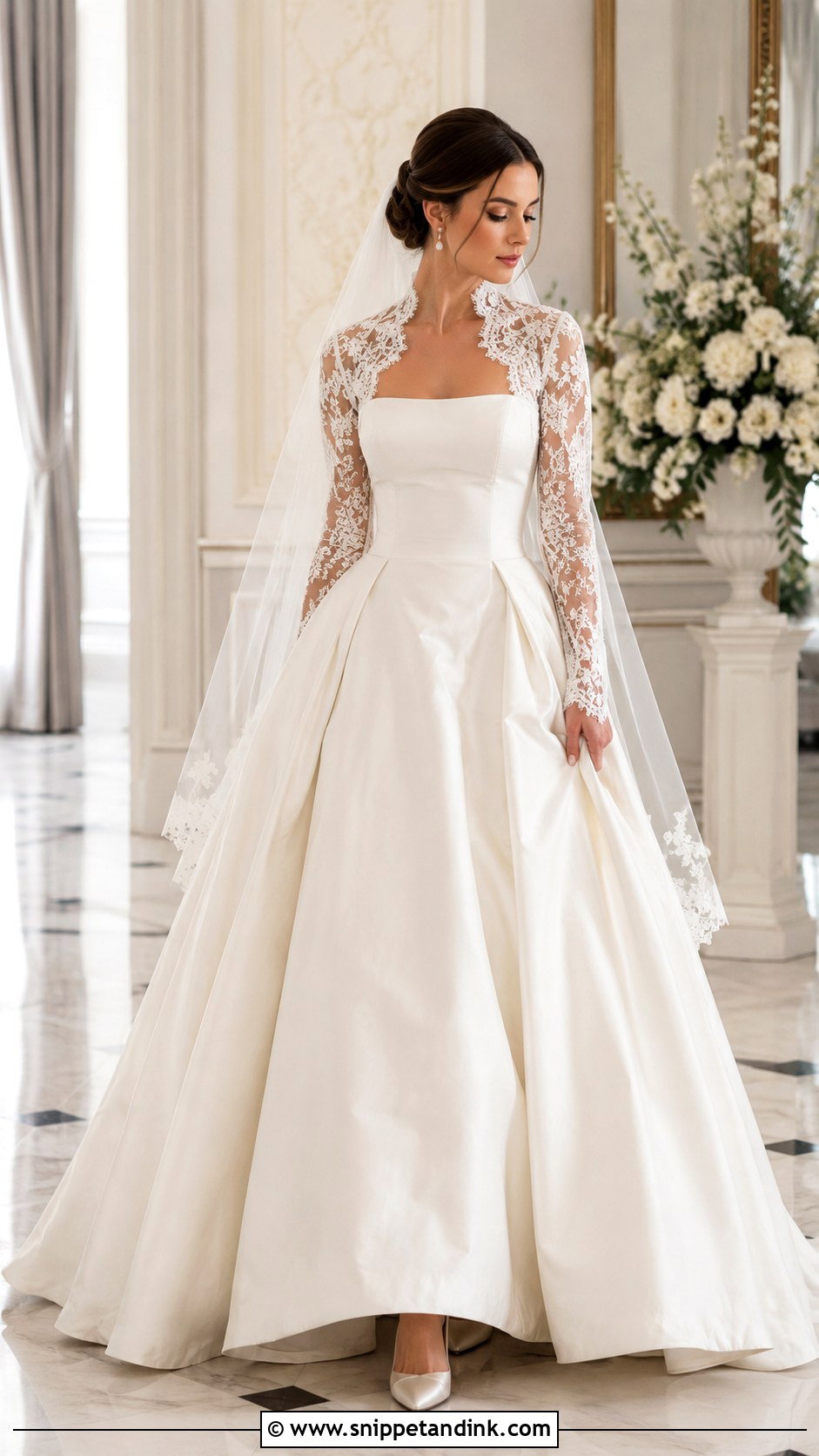
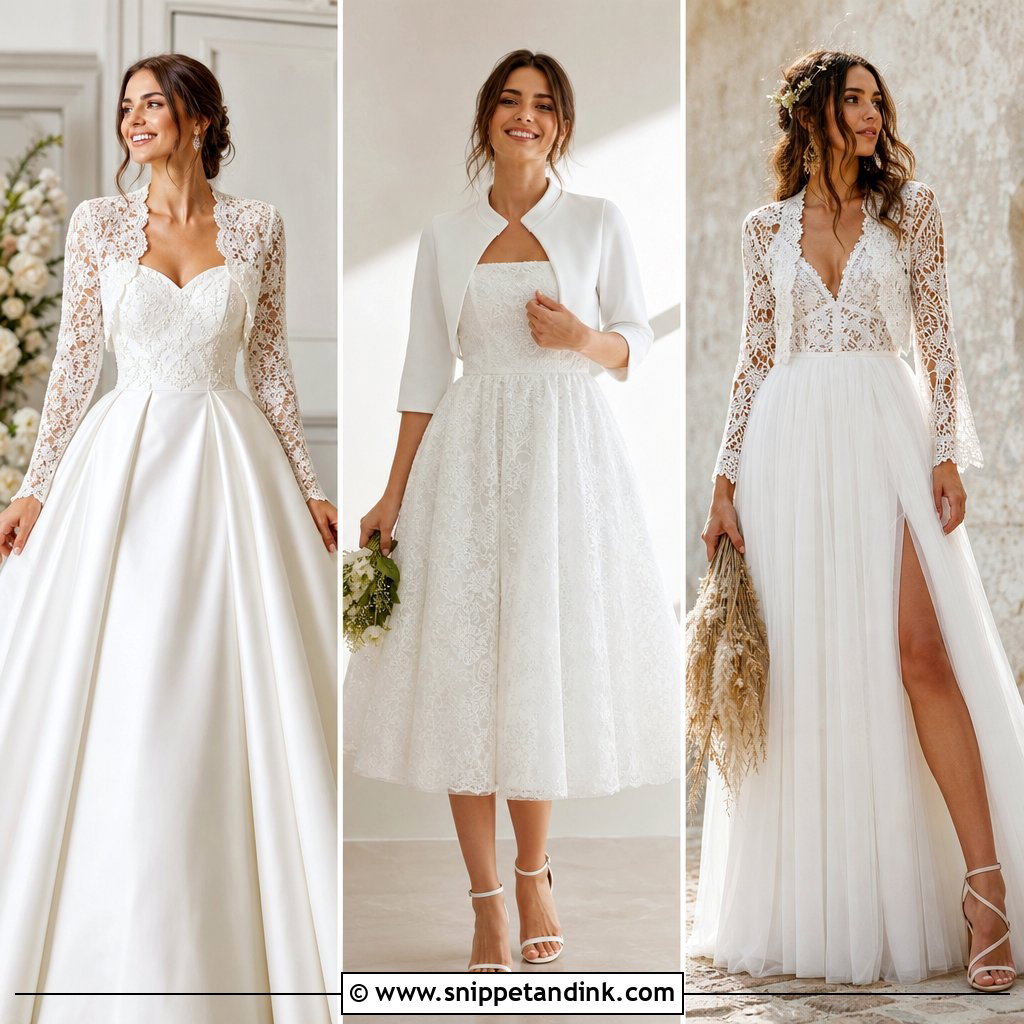
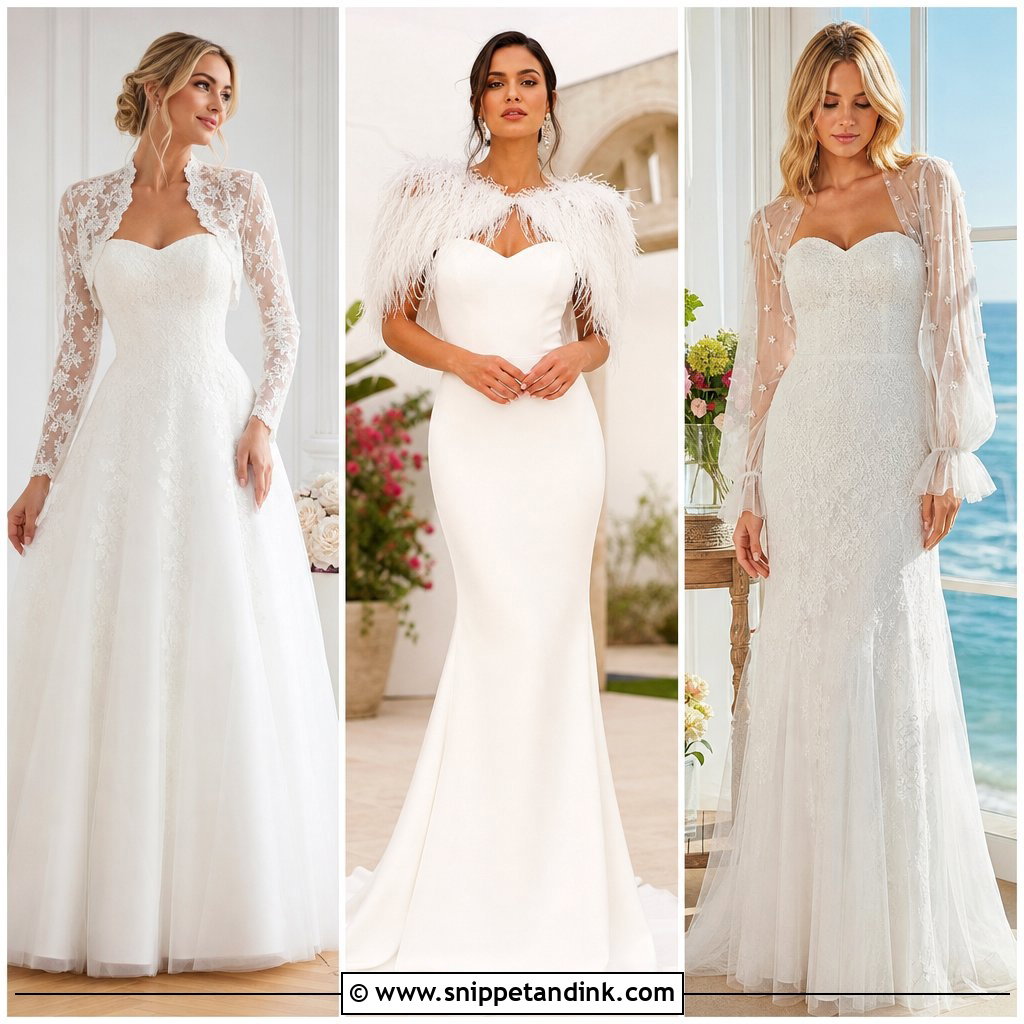
Long lace sleeves over a strapless ball gown give the traditional finish many brides want for a church ceremony. The first thing I do is hold the lace against the skirt and look for a motif the two can share: a floral, a vine, an eyelash edge. If the bolero’s lace is a different scale from the gown’s, it reads as borrowed. Cut it to finish at the natural waist so the skirt’s volume still starts where it should, then take it off after the ceremony to get the strapless line back. Pearl drops, a low bun and a fingertip veil are plenty. I’d leave the necklace off, since the lace collar already frames your face.
2. Satin Bridal Bolero With Minimalist Column Gown
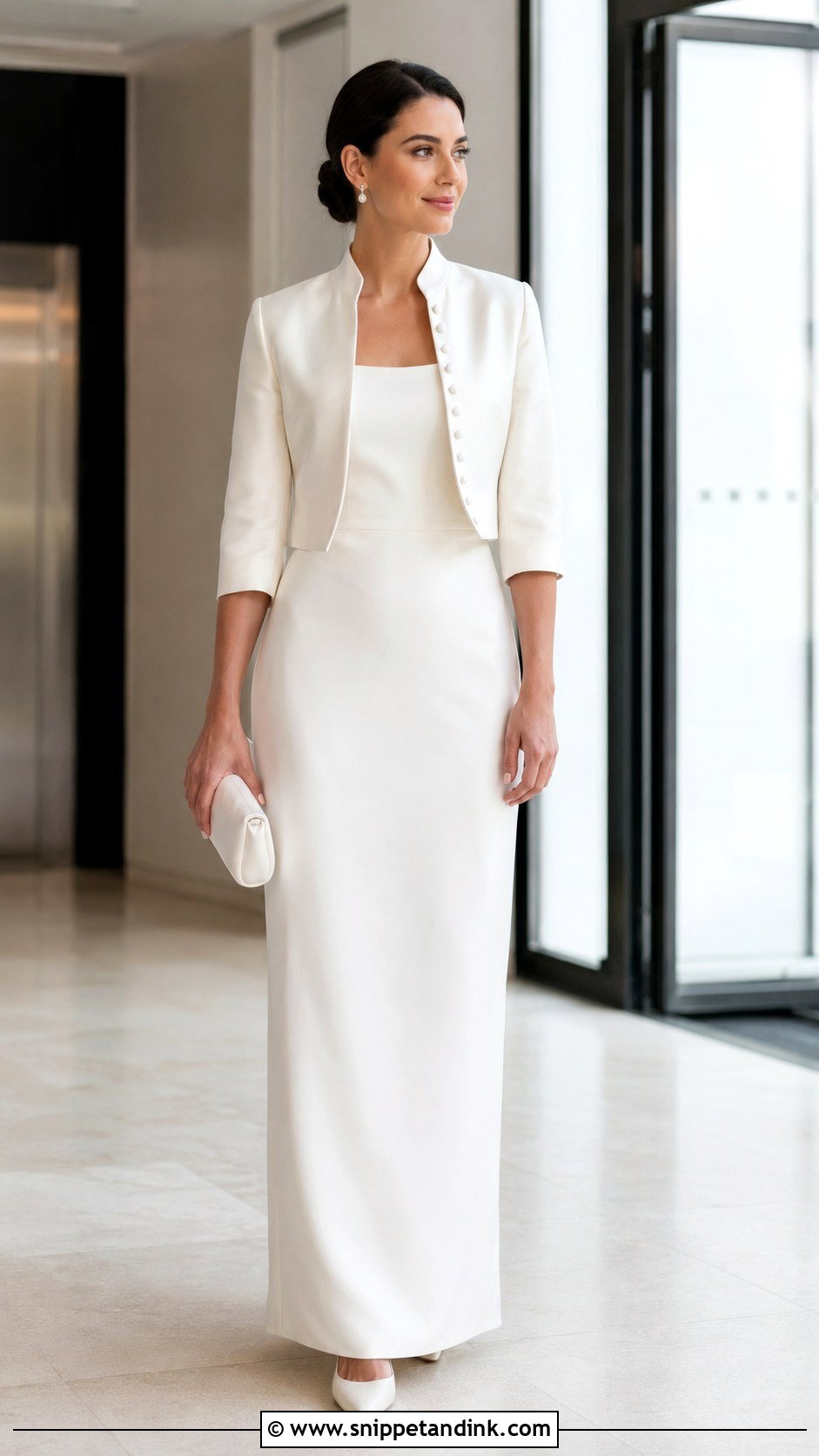
Satin over a column gown is the cleanest pairing here, and the hardest to get right, because two satins that didn’t come off the same bolt rarely match. Mismatched sheen shows instantly under flash. If your gown left spare fabric after alterations, ask whether a jacket can be made from it. Three-quarter sleeves and covered buttons keep it architectural. I’d keep jewelry to silver studs, the hair in a sleek chignon and the shoes to low slingbacks you can stand in for an hour. No lace, no statement pieces; the satin’s shine carries it.
3. Faux Fur Bridal Bolero With Winter Ball Gown
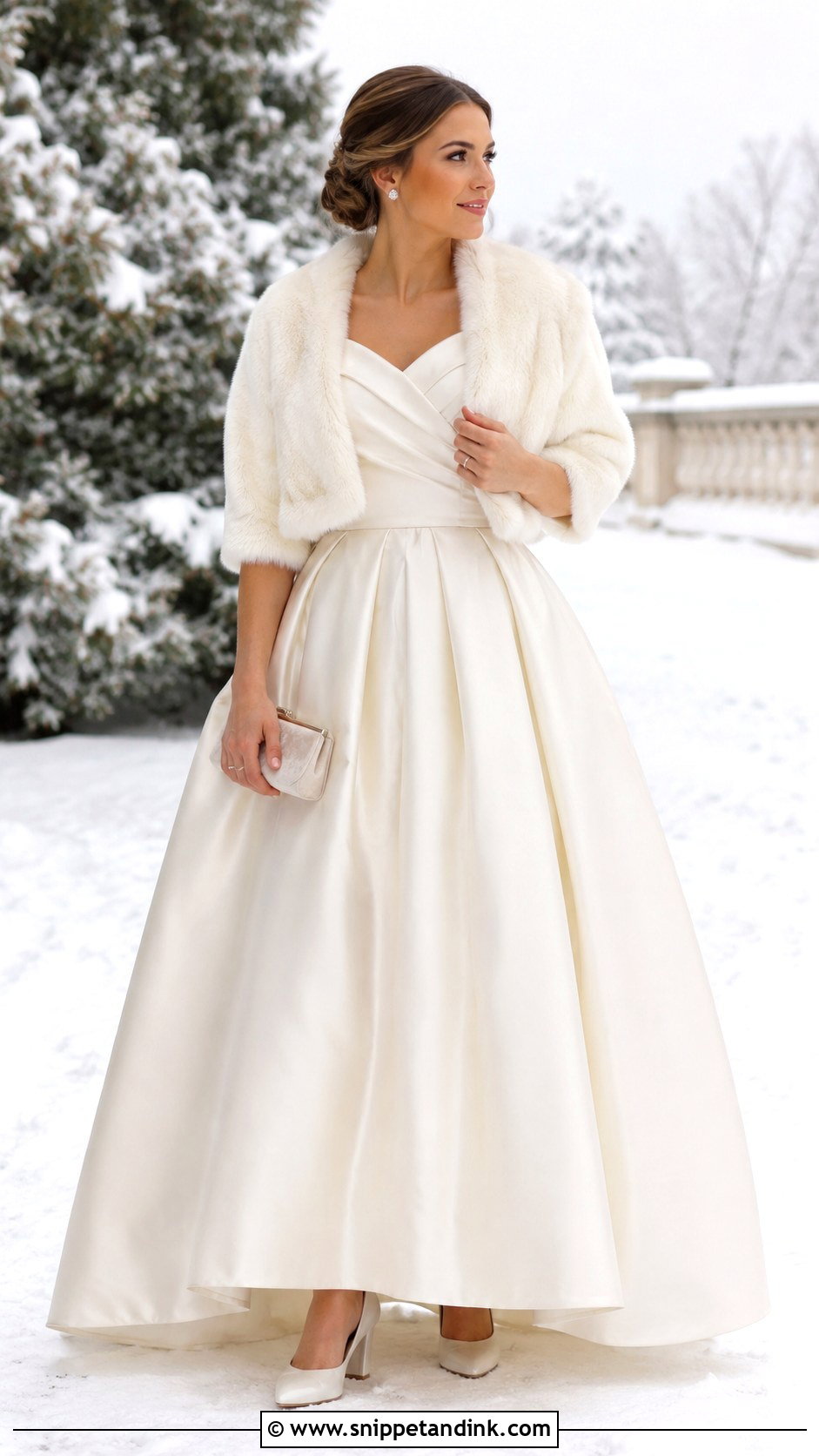
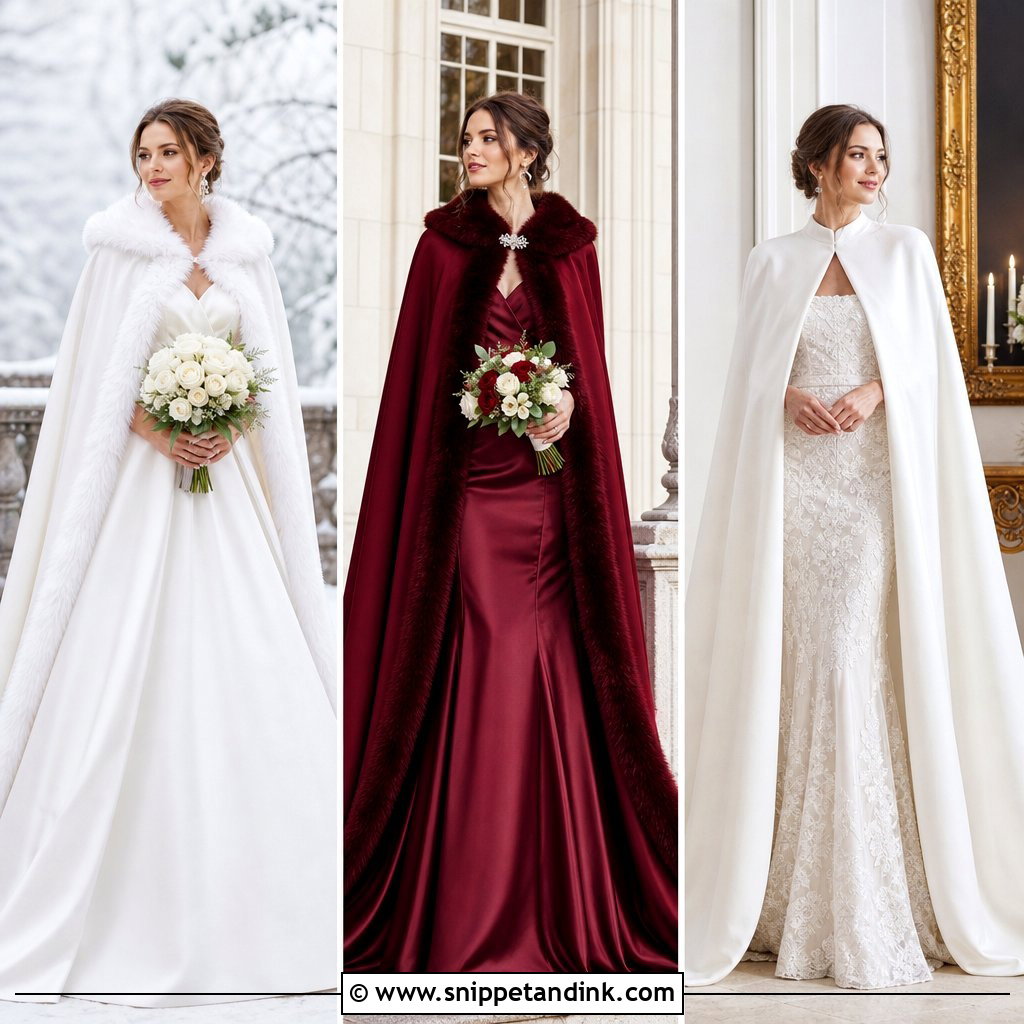
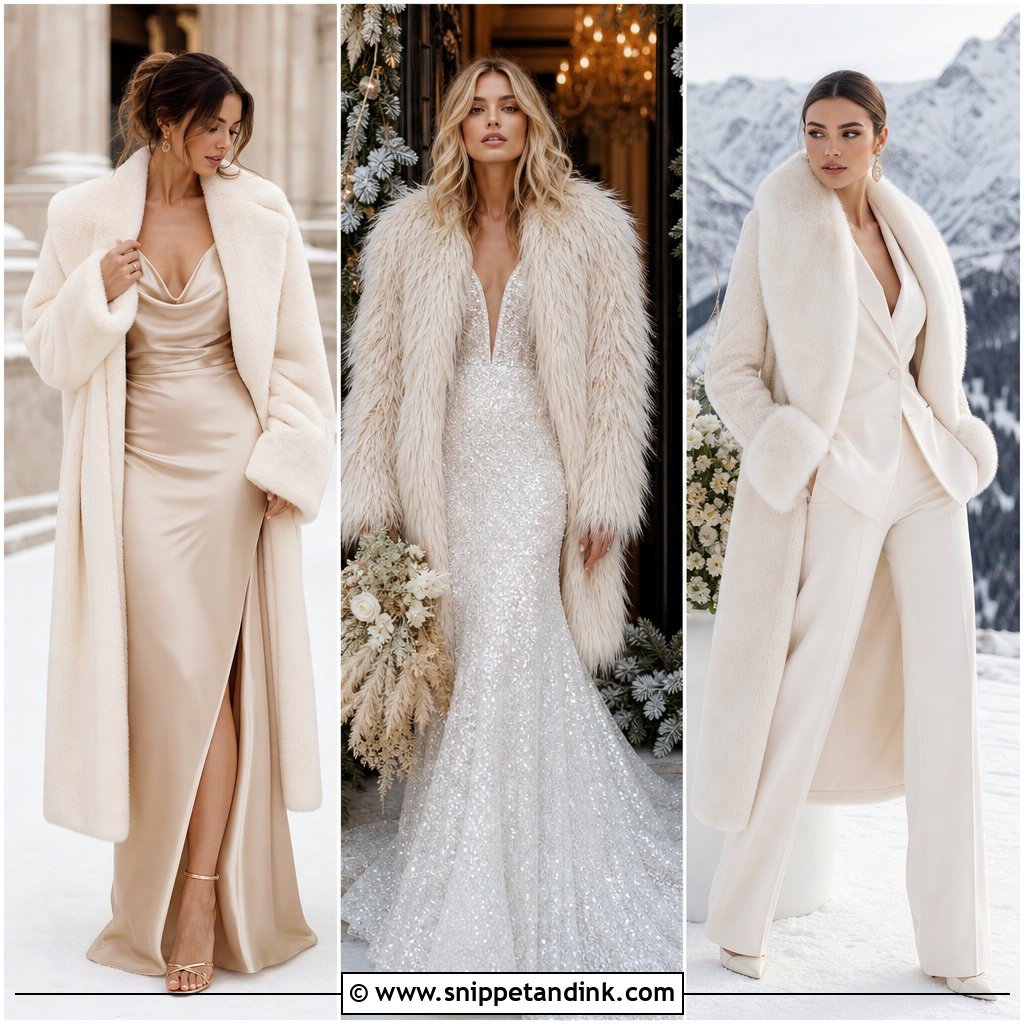
Snow portraits are where a cropped ivory faux fur bolero earns its place. Over satin, mikado or brocade, the pile gives a contrast smooth fabric can’t, and it genuinely keeps your arms warm for the stretch outside that cold-weather photos take. Check the quality before you buy by running a hand against the pile: cheaper fur sheds onto dark suits and lipstick. A single hook closure and a cropped hem keep the waist visible. Crystal studs, a low twisted bun and closed block heels finish it, with a velvet clutch if you want one more winter texture.
4. Pearl Bridal Bolero With Crepe Wedding Dress
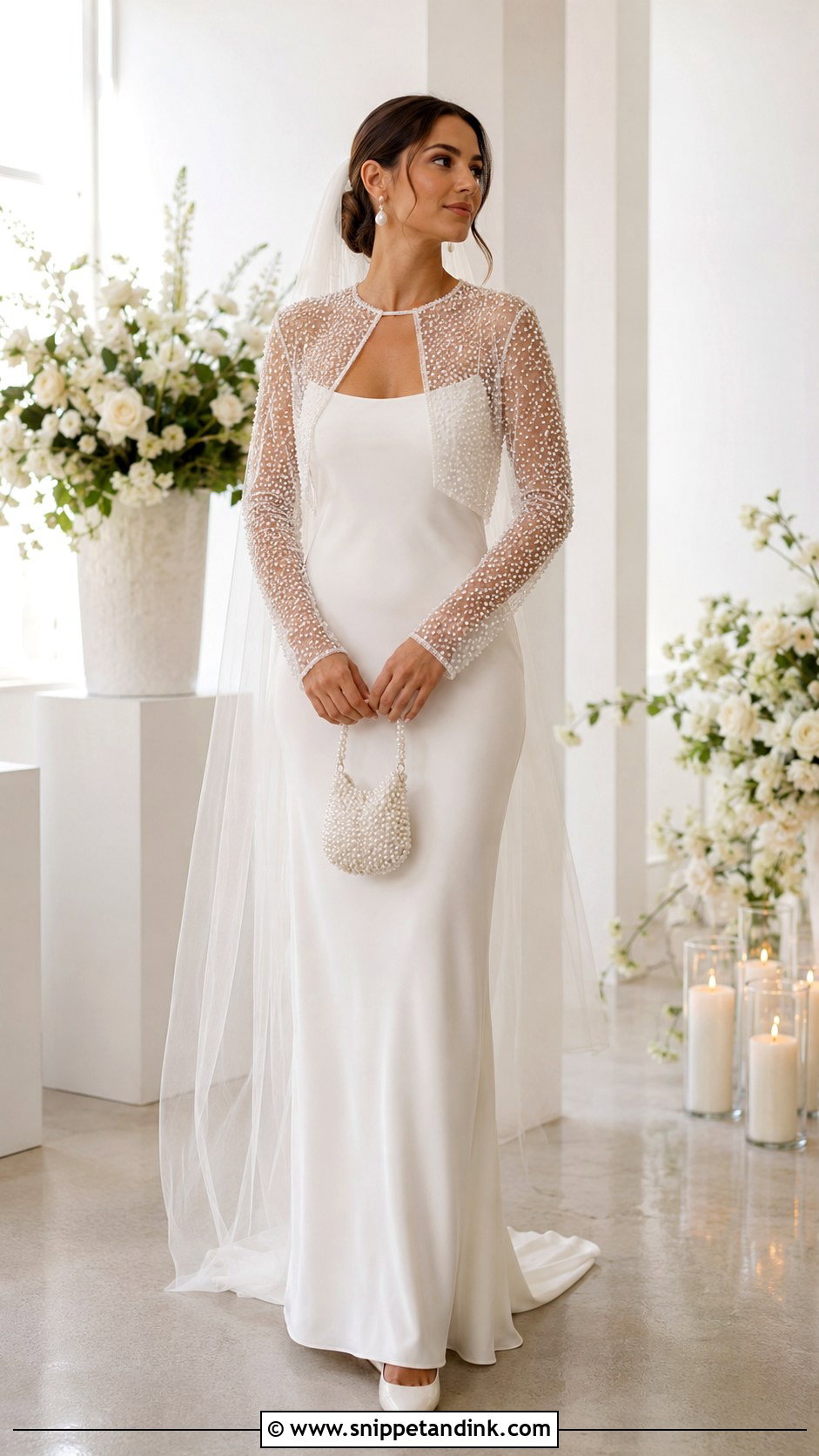
A plain crepe gown can carry a lot of decoration on top precisely because crepe has none of its own. I’d look at sheer tulle with pearls scattered over the shoulders and sleeves, so the neckline still shows through. Removable pearl toppers are easy to find now, but quality varies, so tug gently on a few pearls before buying. Glued ones pop off the first time someone hugs you; sewn ones stay. Run your hand along the lining as well, because thread knots on the inside scratch all day. Since the jacket carries the decoration, wear pearl earrings and skip the necklace, with a low bun and the veil comb set below it.
5. Feather Bridal Bolero With Satin Slip Dress
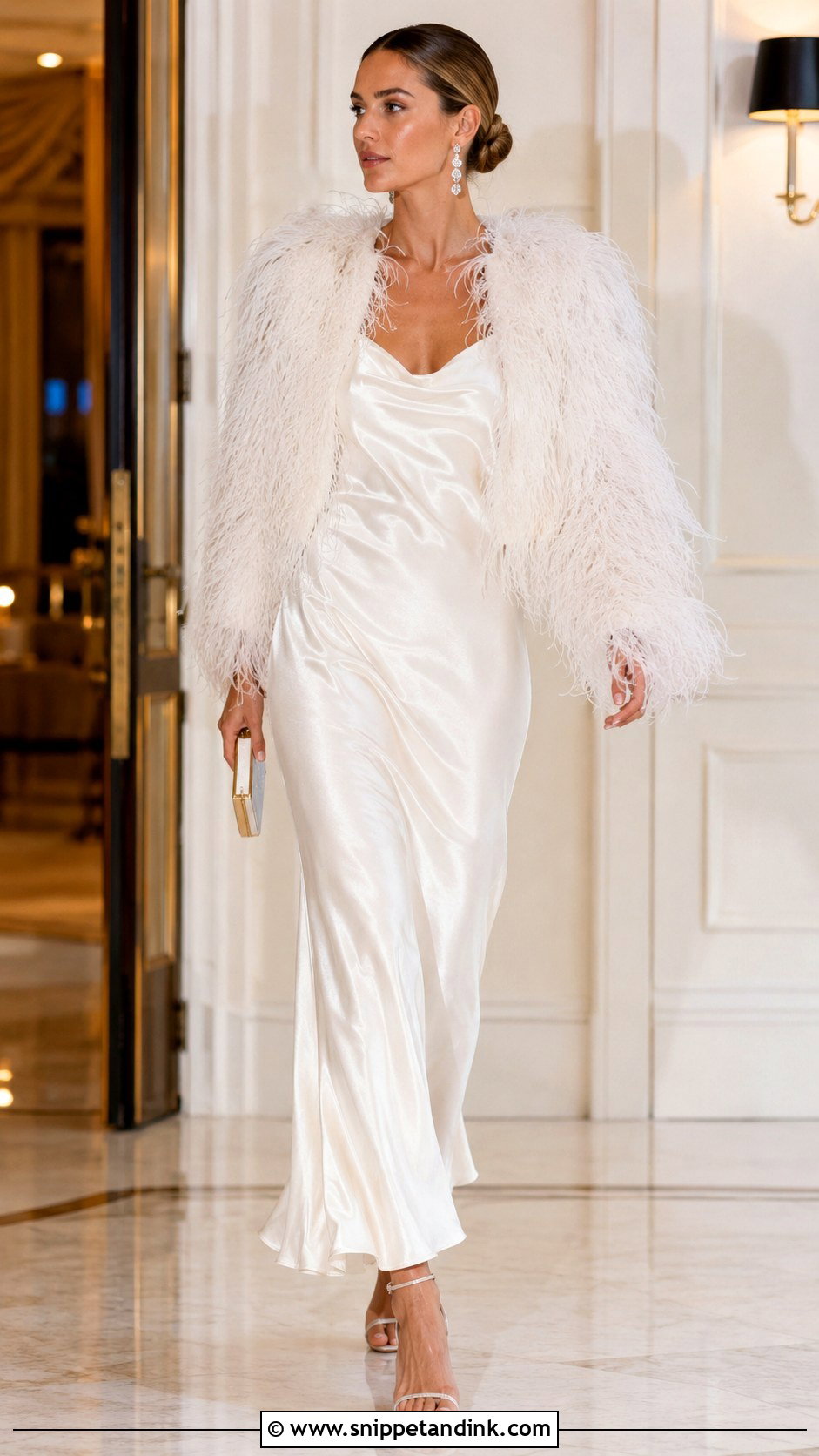
Feathers move every time you do, which is the point over a still satin slip dress. I treat this as a reception piece more than a ceremony one, partly because feathers tickle the chin in close portraits. Keep it cropped high so the slip’s long line isn’t broken, and match the feather to the dress undertone: bright white feathers against an ivory slip make the dress look dingy. Feathers also go limp in rain and heavy humidity, so plan around any outdoor walk. Crystal drops, a smooth updo and metallic strappy heels suit it.
6. Tulle Bridal Bolero With A-Line Wedding Gown
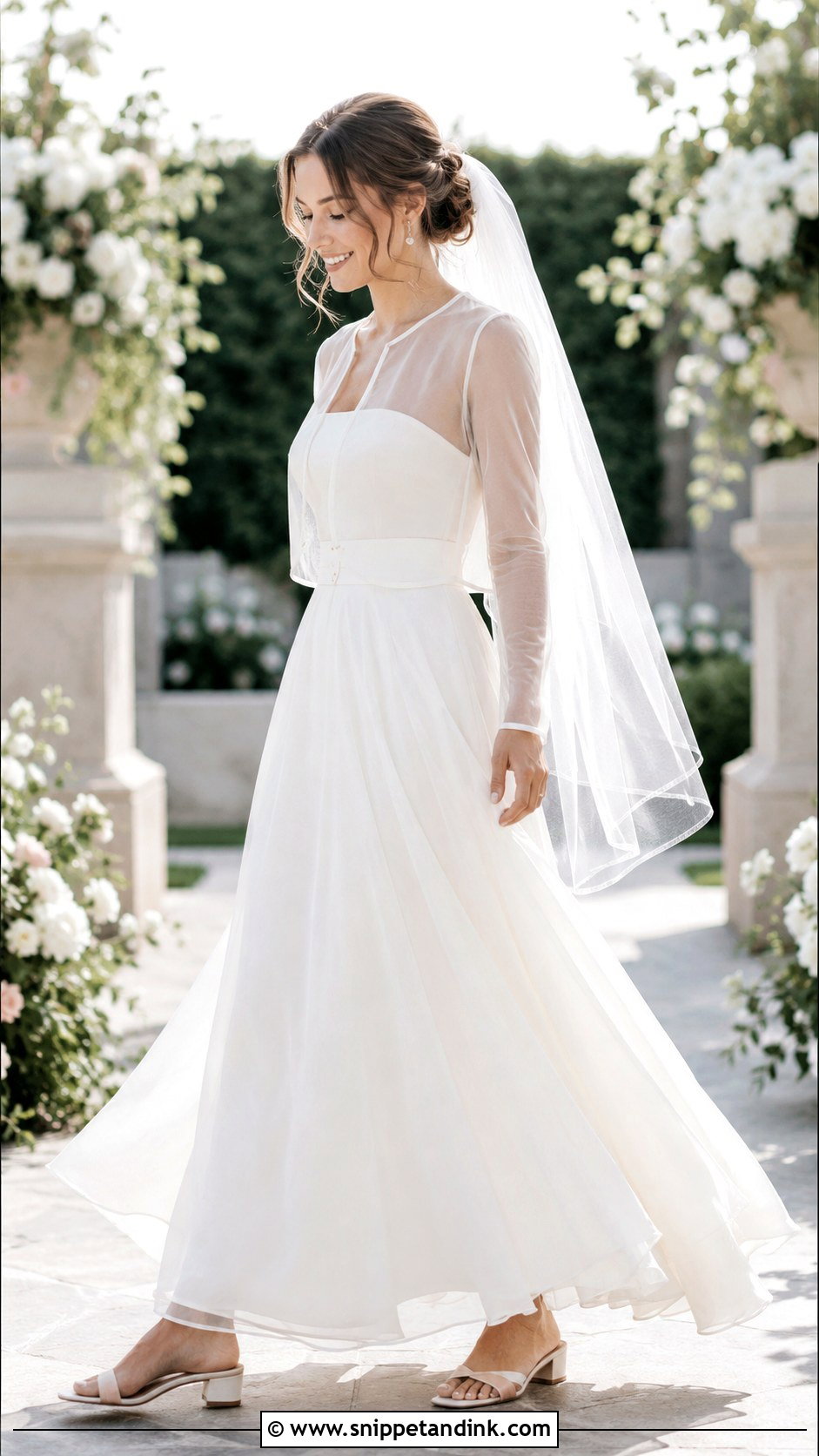
Tulle is my default suggestion for a bride who wants coverage but worries about bulk, since an A-line skirt already has volume to spare. Plain tulle sits best over an embellished bodice; embroidered tulle gives a simple gown the detail it lacks. Press it against the inside of your wrist before you commit. Some bridal tulle is stiff, and the underarm seam is what you’ll feel by the first dance, so look for bound or softly lined seams. With a V-neck gown, an open-front cut that follows the same angle looks intended. A low bun, small crystal earrings and a light fingertip veil keep it airy.
7. High-Neck Bridal Bolero With Sweetheart Gown
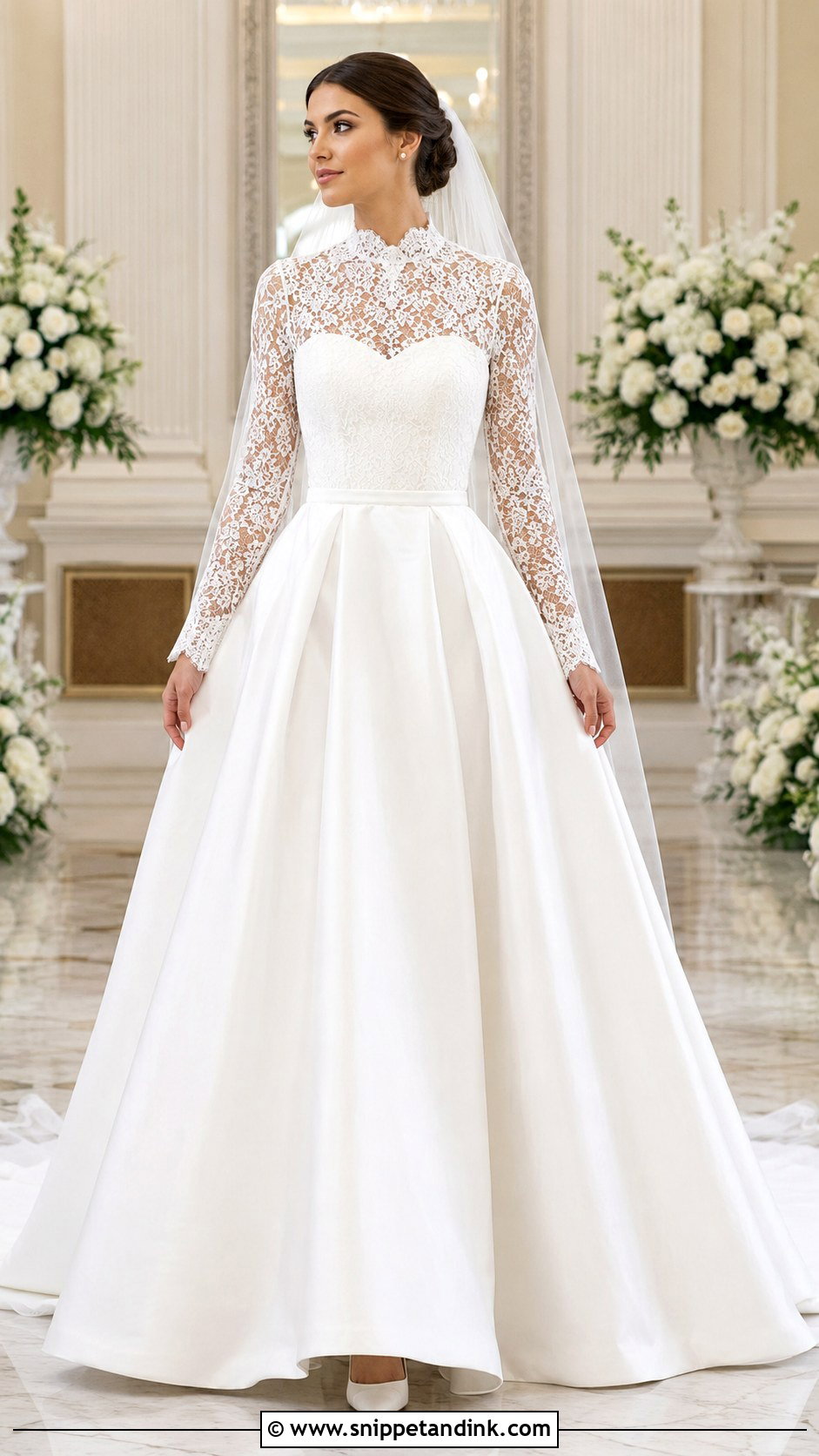
This is the biggest change you can make to a sweetheart dress without altering it. A high-neck lace bridal bolero lets the curve of the bodice show through, so you get a modest neckline for the vows and the original shape underneath. The problem I see most is the jacket creeping backward when you raise your arms. Small buttons down the back help, and a seamstress can add a thread loop or snap at the shoulder to anchor it to the gown. With that much happening at the neck, I’d wear pearl studs only, a smooth chignon and a chapel or cathedral veil pinned under the bun.
8. Three-Quarter-Sleeve Bridal Bolero With Tea-Length Dress
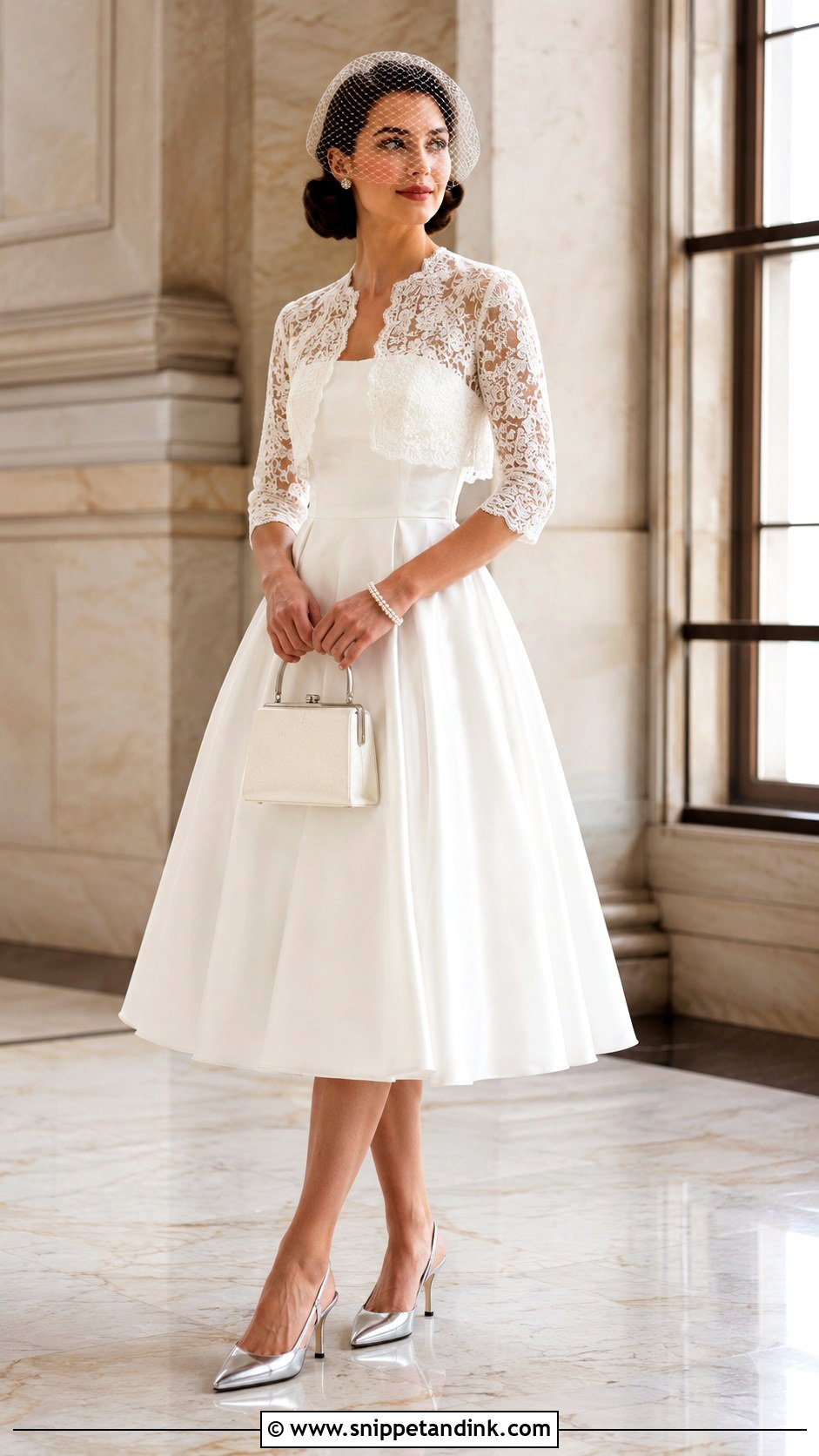
Tea length has a playful, mid-century shape, and a three-quarter sleeve keeps the mood while leaving the wrists free for a slim pearl bracelet. End the jacket at the natural waist so the flared skirt does its job. Watch for one specific clash: a bolero hem landing on a wide belt makes a bulky double line, so either finish above the belt or drop the belt. Your shoes are on show at this length, which makes them a good place for soft blue or silver. A birdcage veil and classic studs suit courthouse and daytime weddings.
9. Organza Bridal Bolero With Corset Wedding Gown
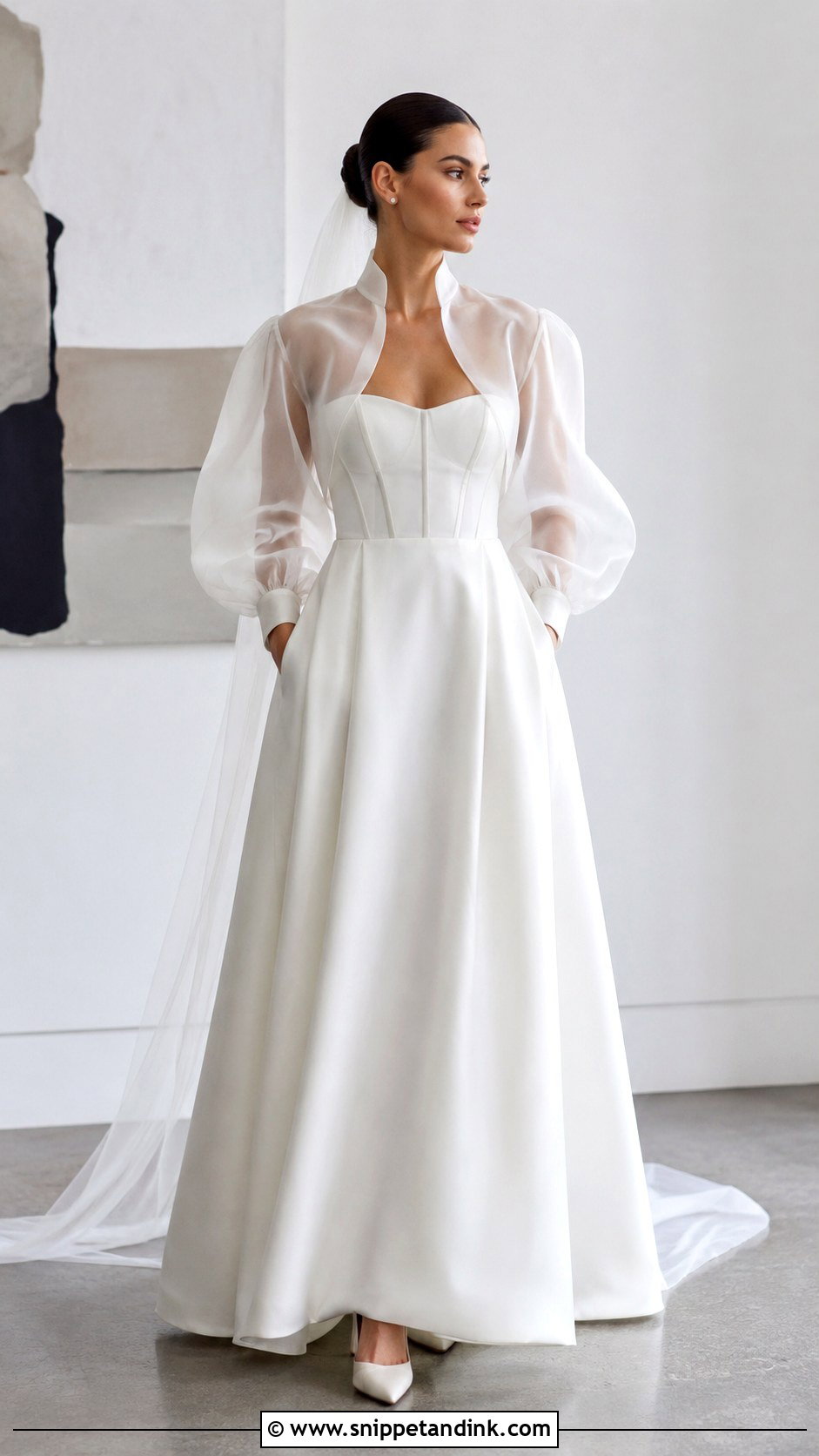
Puffed organza sleeves over a corset gown give big shoulders and a sharply narrow waist. I’d only pair it with a slim A-line or fitted skirt; add a huge ball skirt as well and the bride disappears between two volumes. Organza is crisp and has no stretch, so the test I insist on in the fitting room is lifting both arms as if hugging someone taller than you. If the sleeve pulls at the armhole there, it will pull all day. Keep the rest quiet: sleek bun, small studs, a plain cathedral veil.
10. Floral Bridal Bolero With Simple Wedding Dress
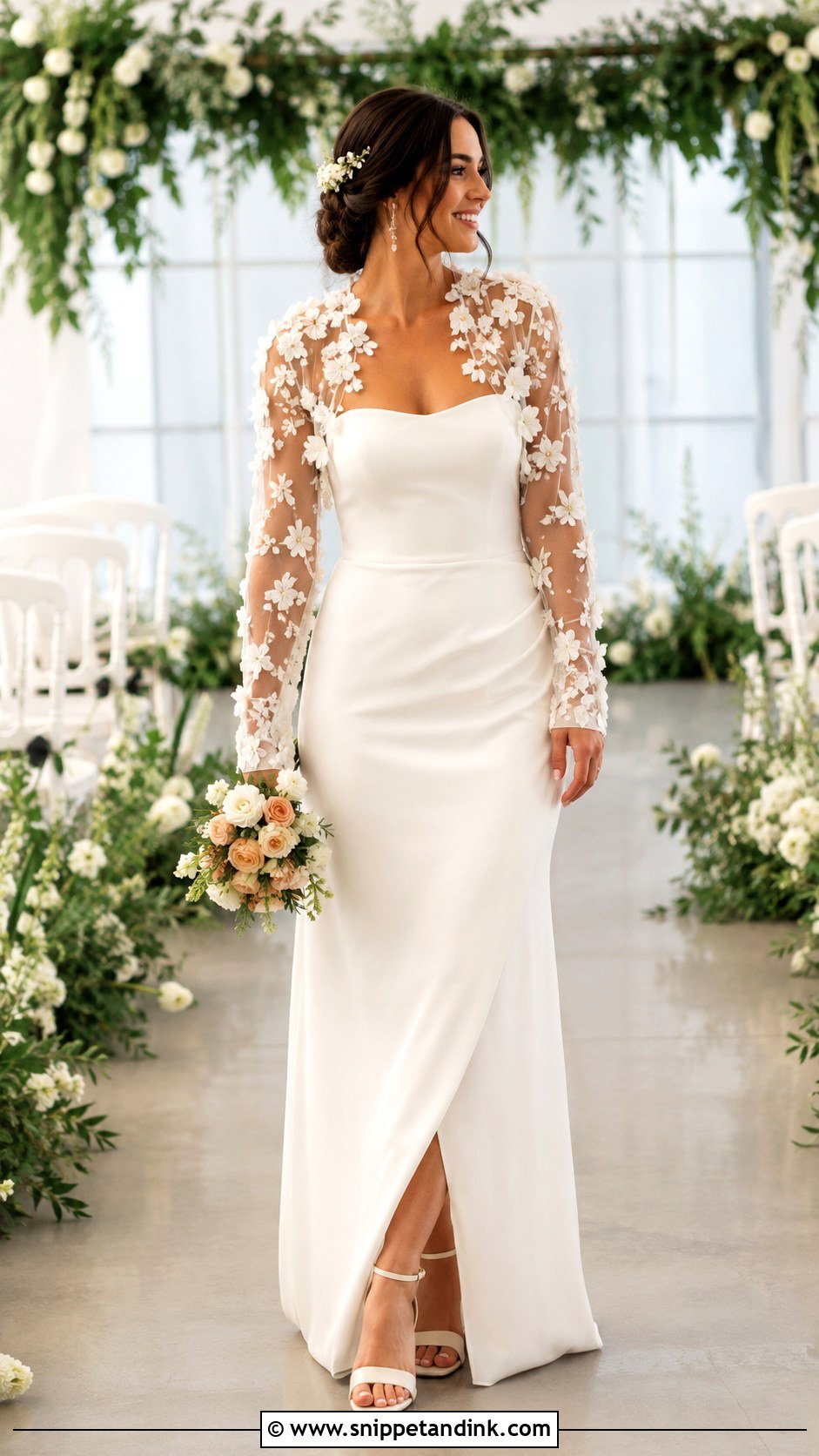
Fabric blossoms on a sheer bolero add texture to a plain crepe, satin or chiffon strapless dress. Scale matters more than anything. Small flowers that thin out toward the waist melt into the skirt, while big ones cluster at the shoulders and look stuck on. Check the back in a three-way mirror, since appliqués are often packed more densely on the front. If the jacket is busy, carry a smaller bouquet with restrained greenery so the two don’t compete, and limit the hair to a couple of floral pins.
11. Crochet Bridal Bolero With Boho Wedding Gown
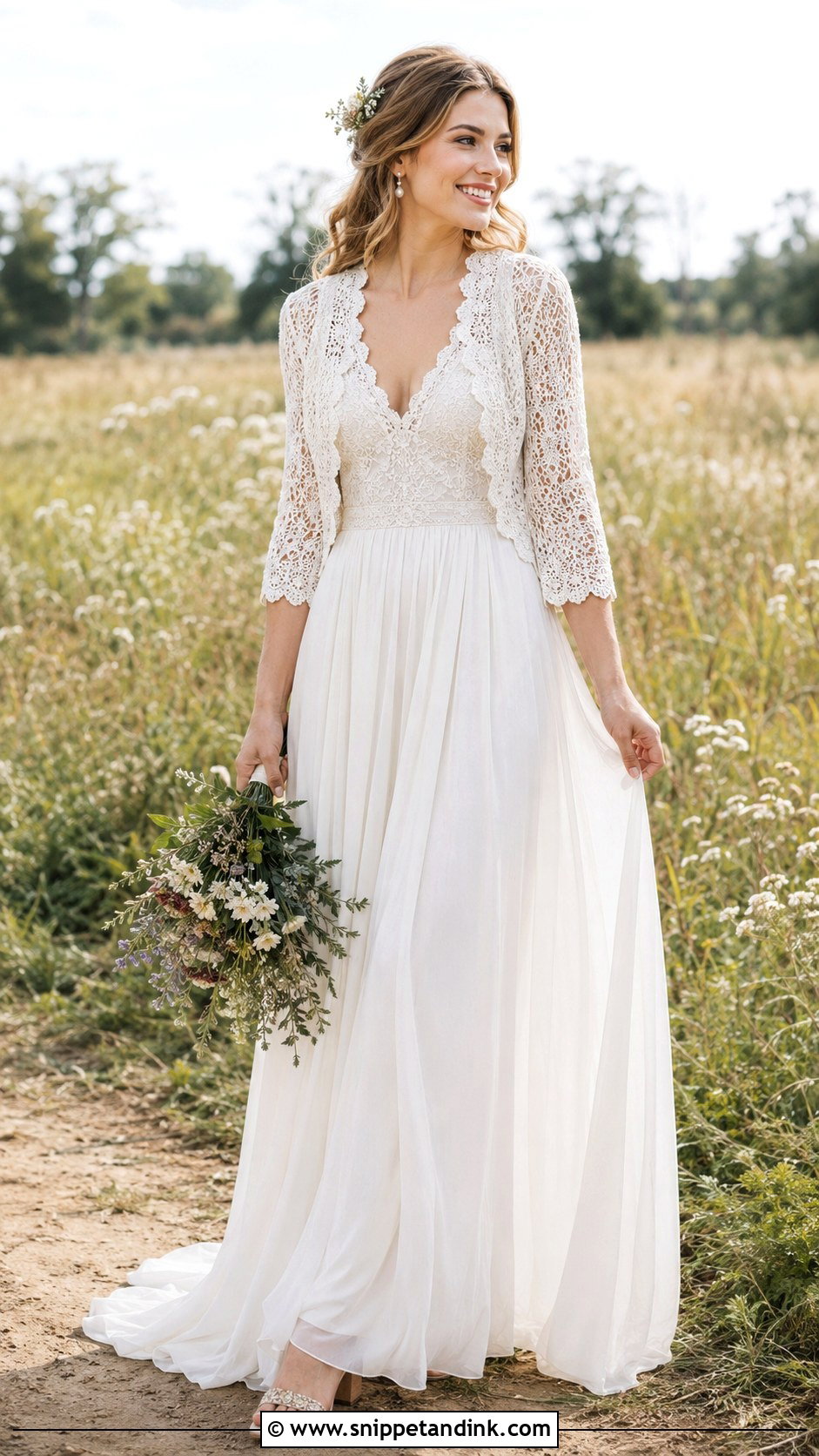
Crochet suits an outdoor boho dress, but the gauge makes or breaks it. Fine, tight crochet drapes like lace; a chunky open weave looks like a beach cover-up and adds bulk over chiffon. The practical risk is snagging. Prong-set earrings, a bracelet clasp or beading on the gown will catch in the loops, so I always have brides try everything on together. Bell sleeves and a tie front keep it relaxed, with loose waves, a small floral comb and low block sandals for the grass.
12. Knit Bridal Bolero With Winter Sheath Dress
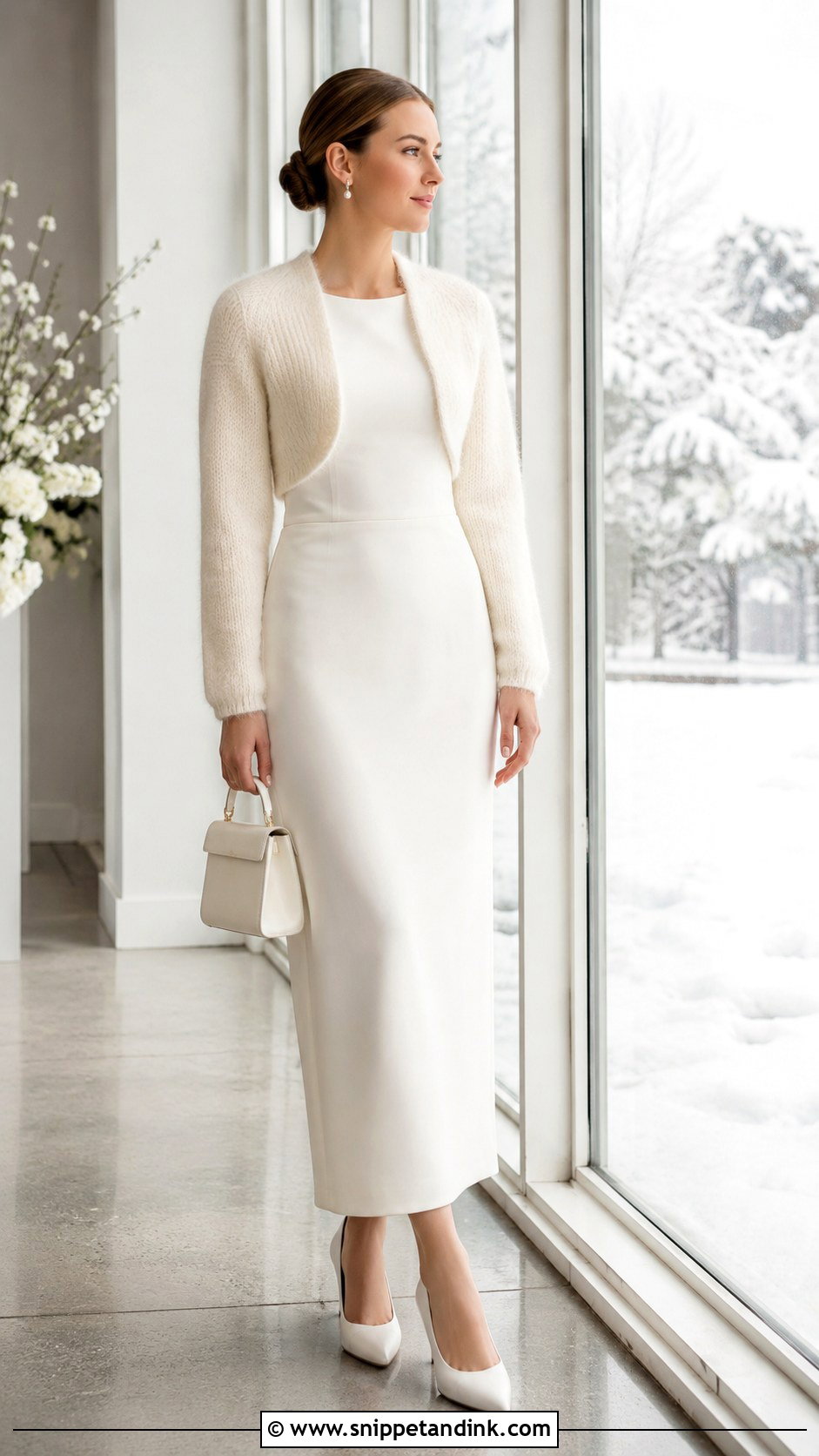
A fine knit is the most comfortable bolero you can wear, and over a fitted winter sheath it reads cozy rather than casual as long as the yarn is fine. Cashmere or merino in a tight gauge holds its shape. Looser knits bag at the elbows by evening, and it shows in reception photos. The sleeve should end cleanly at the wrist and the hem should meet the dress waist. Throw a wool coat over it for travel, then keep the bolero on indoors through dinner. Lightweight knit boleros give you sleeves and warmth without the visual weight of fur.
13. Velvet Bridal Bolero With Satin Wedding Gown
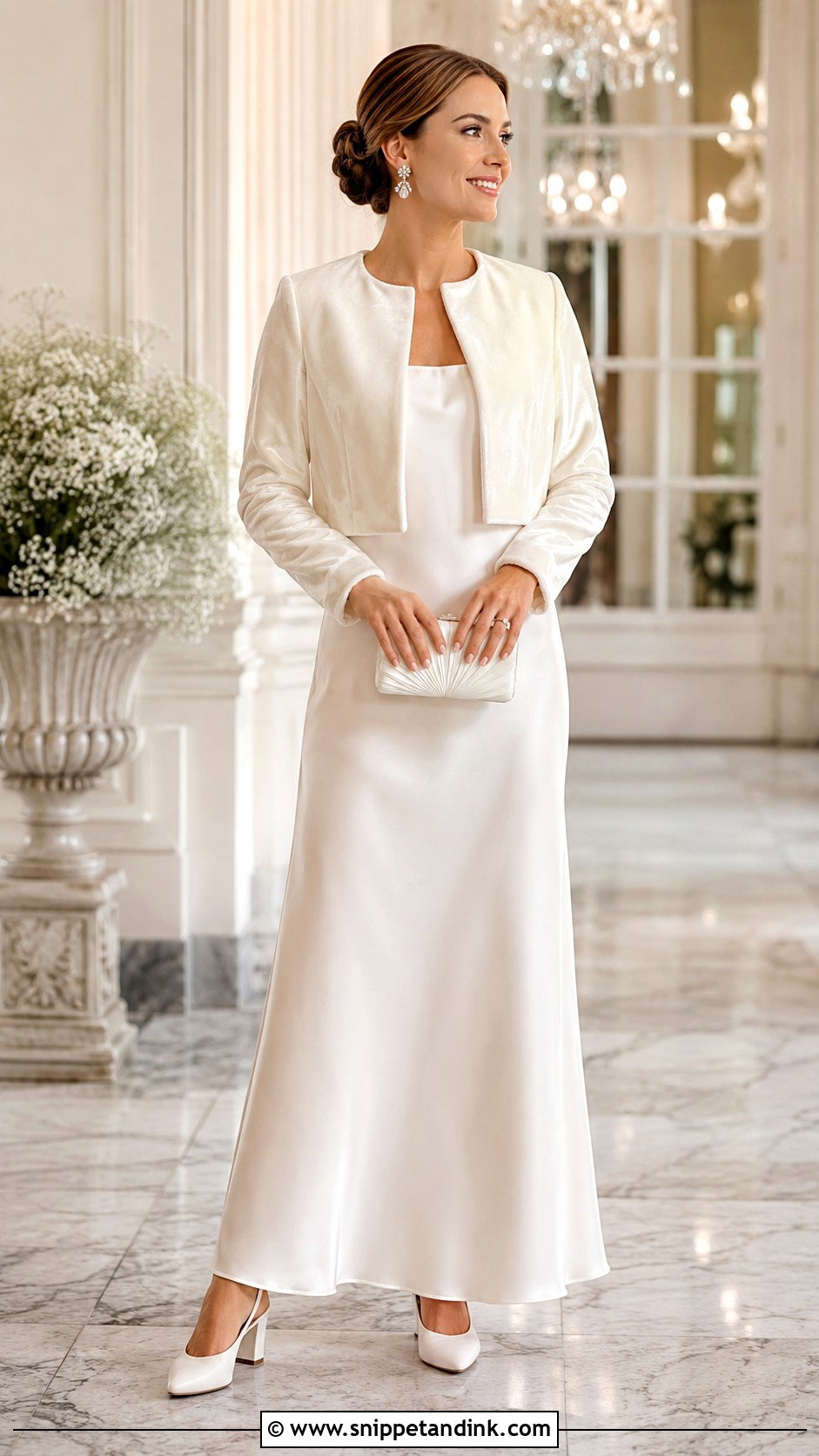
Velvet and satin handle light in opposite ways: satin bounces it, velvet absorbs it. That is why an ivory velvet bolero over an ivory satin gown can look faintly yellow or grey beside it, even when both labels agree. Compare the two by a window, not only under shop lighting. If the tones fight, pale blue velvet sidesteps the problem by being openly different. A scoop or open front keeps the heavy fabric off most of the bodice, and a light lining stops it clinging to the satin. Crystal earrings, a chignon and closed block heels suit fall and winter.
14. Blazer Bridal Bolero With Wedding Jumpsuit
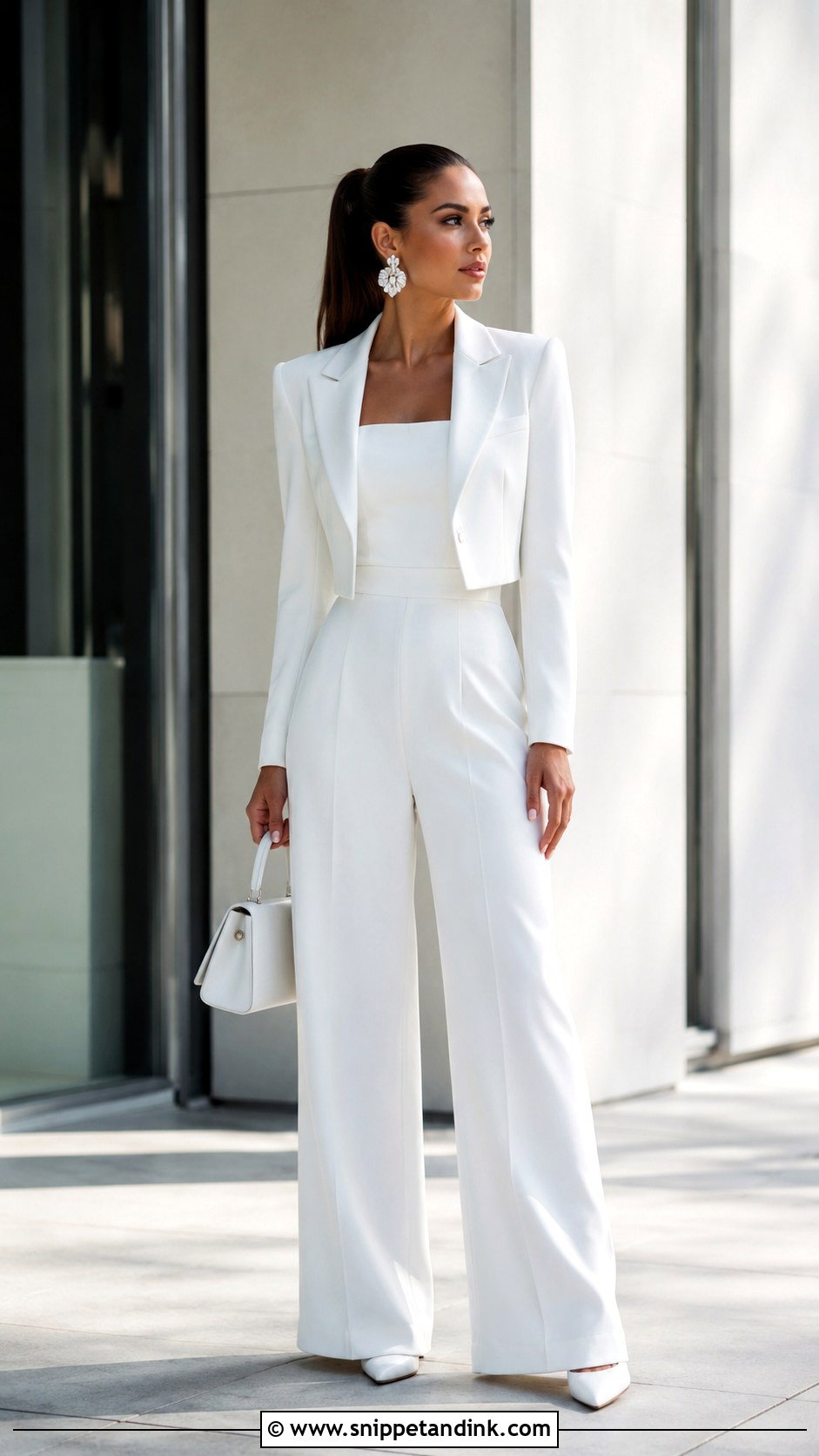
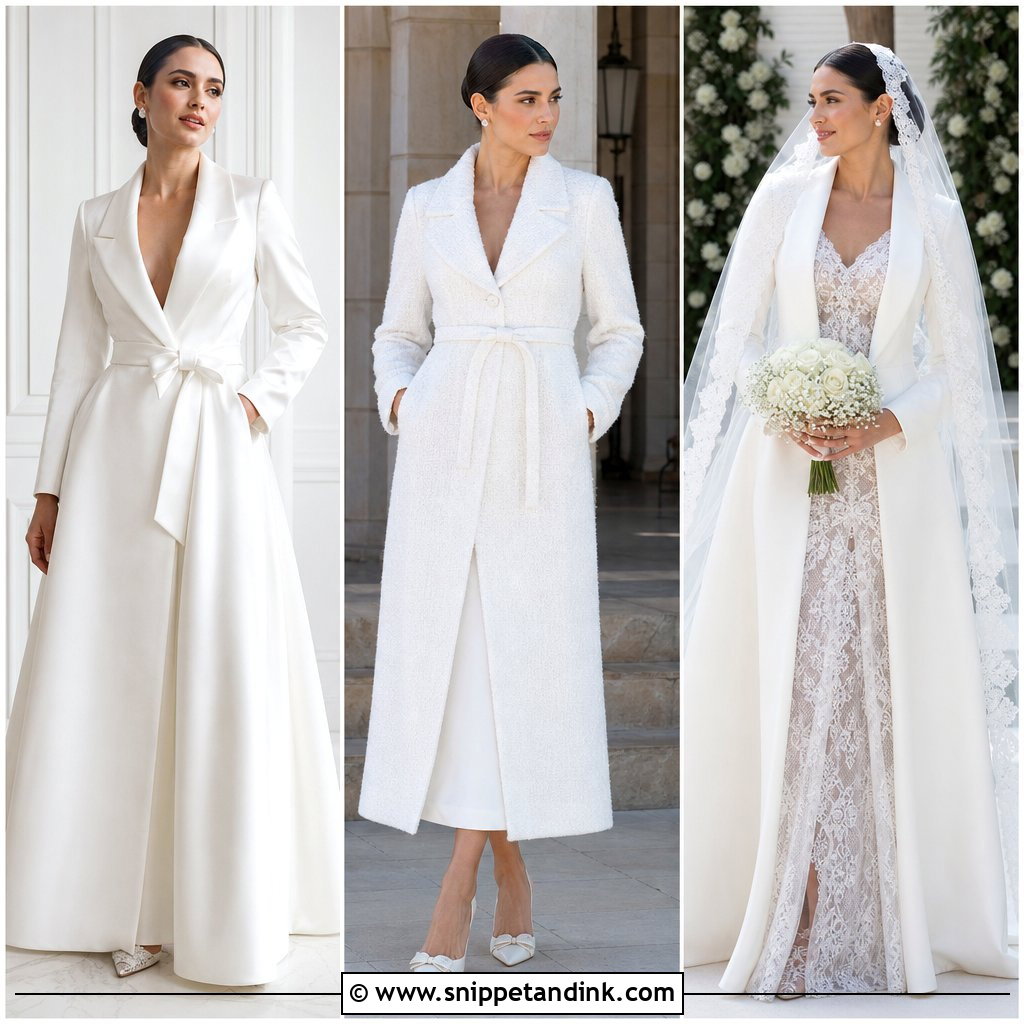
A cropped blazer makes a jumpsuit look like a deliberate bridal outfit rather than something off the evening rack. Narrow lapels, defined shoulders and a hem that meets the waistband are the three details I check first. Wear it buttoned for the ceremony, then open it or take it off for the party. Matching fabric looks the most unified, though satin over matte crepe makes a good contrast if the whites agree. Hem the trousers to the exact heel you’ll wear; a jumpsuit pooling on the floor undoes all the tailoring. Pointed pumps, sculptural earrings and a sleek ponytail keep the lines clean.
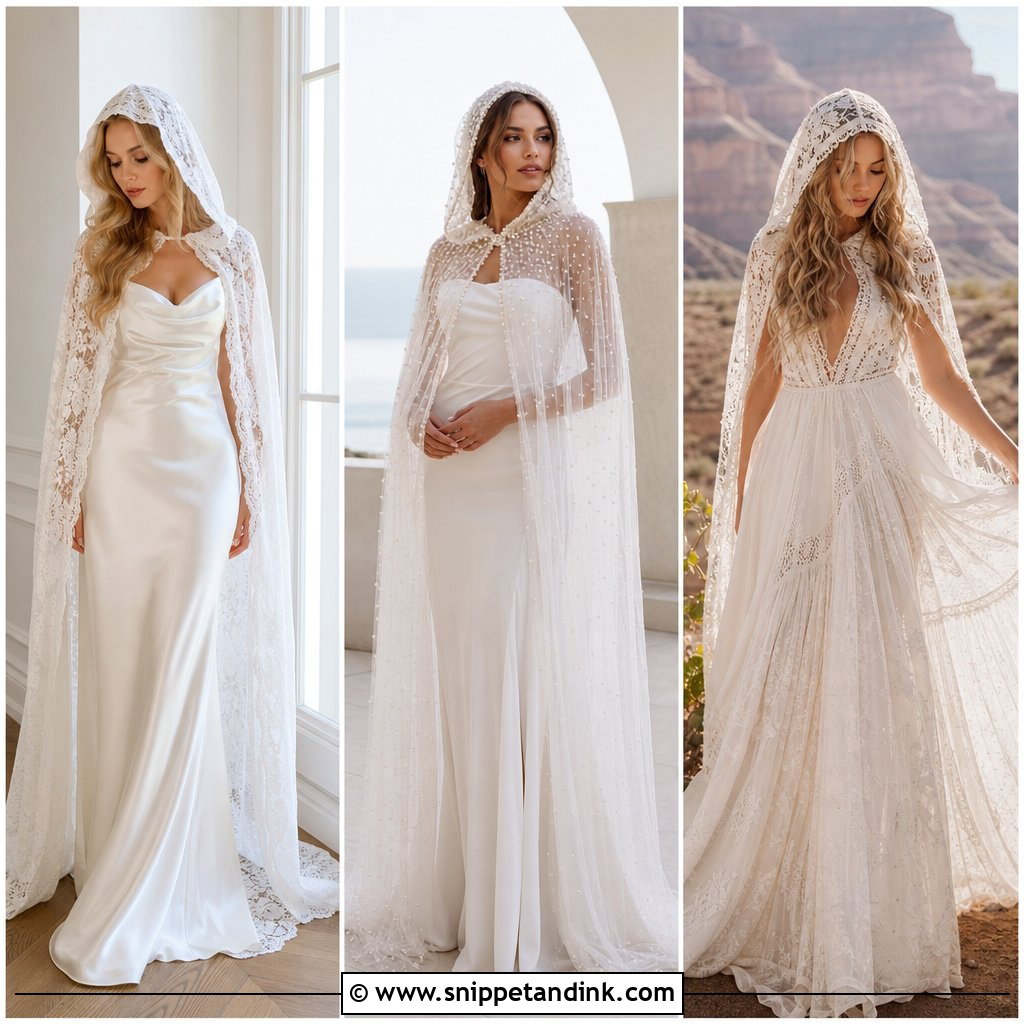
15. Bow-Back Bridal Bolero With Fitted Wedding Dress
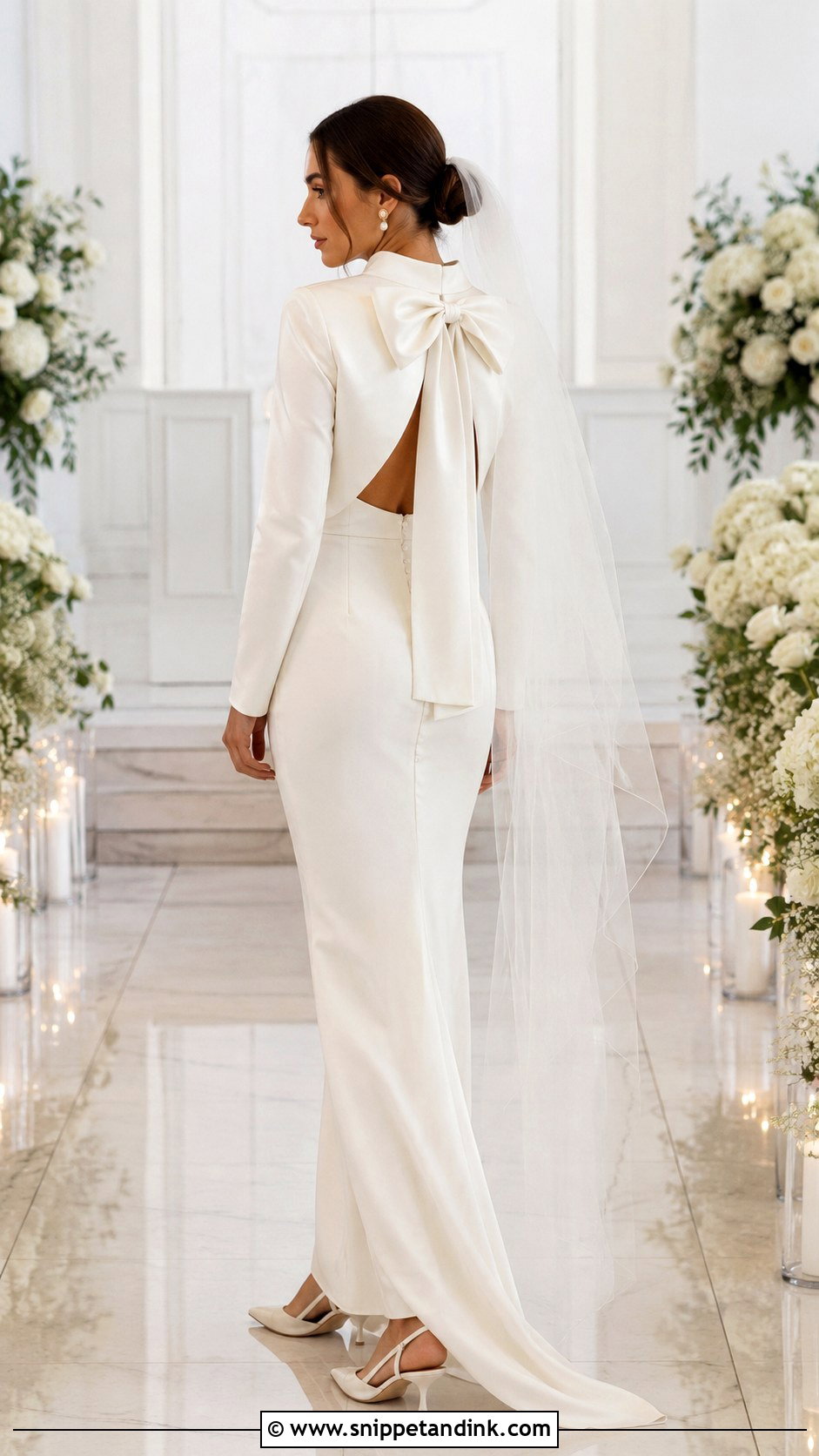
Guests spend most of the ceremony looking at your back, so a bow at the back neckline or between the shoulder blades gets more attention than you’d expect. Place it above the dress closure so the two don’t overlap. Then think about hair: a low bun should sit beneath the bow, and a long veil will hide it until the veil comes off after the ceremony. I’d skip this one if your gown already has a dramatic back. Fasten it and move around for a few minutes before the day, because a bow on a loose closure drifts sideways.
16. Cape-Sleeve Bridal Bolero With Mermaid Gown
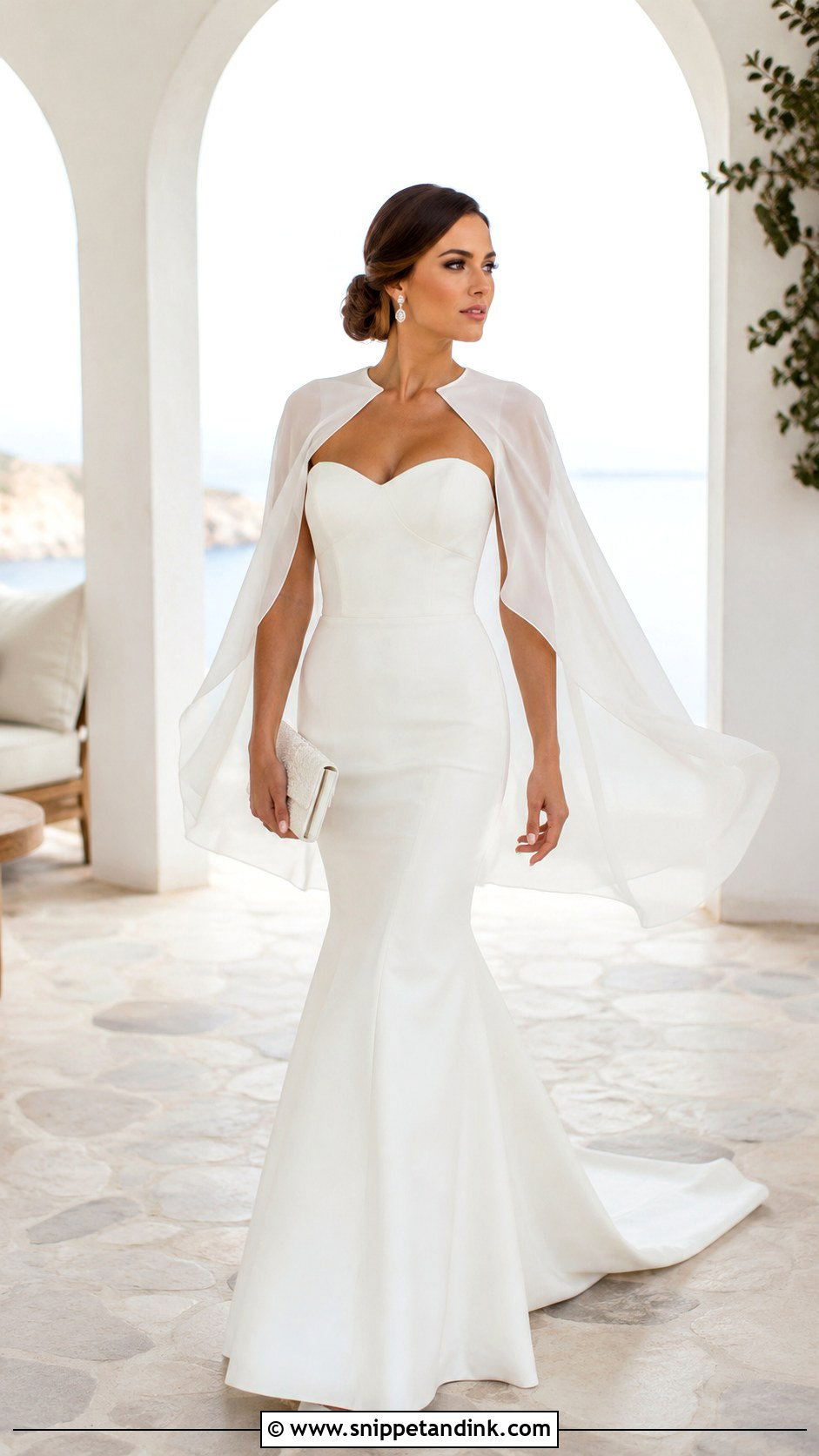
Open cape sleeves bring movement to the top of a mermaid gown, which softens how close it fits everywhere else. Chiffon or tulle moves best. The body of the bolero must fit snugly, though: loose fabric resting on a fitted bodice slides when you walk, and floaty sleeves exaggerate every shift. Keep the veil narrow so it doesn’t fight the sleeves, and keep any embellishment light. Drop earrings and a side-parted low bun balance the movement at the shoulders.
17. Crystal Bridal Bolero With Reception Mini Dress
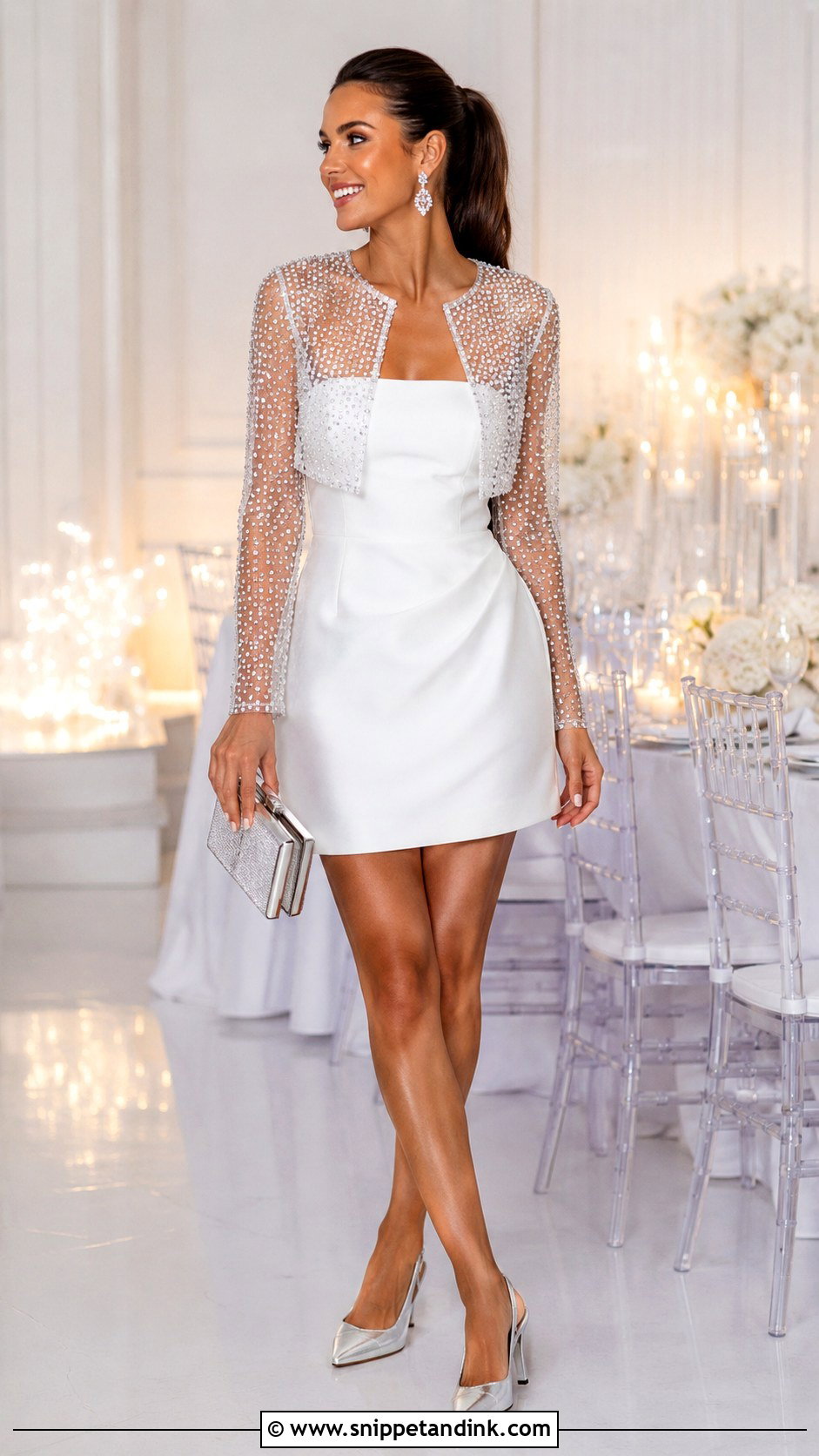
Crystals turn a plain satin or crepe mini into a reception change with very little effort. What I check is the inside. Rhinestones and sequins are stitched through sheer tulle, and if the lining doesn’t cover that stitching, the underarms and neckline rub raw after a couple of hours of dancing. End the jacket at the dress waist rather than mid-torso. Silver slingbacks, small crystal earrings and a sleek ponytail let the jacket do the sparkling.
18. Scalloped Lace Bridal Bolero With Mermaid Dress
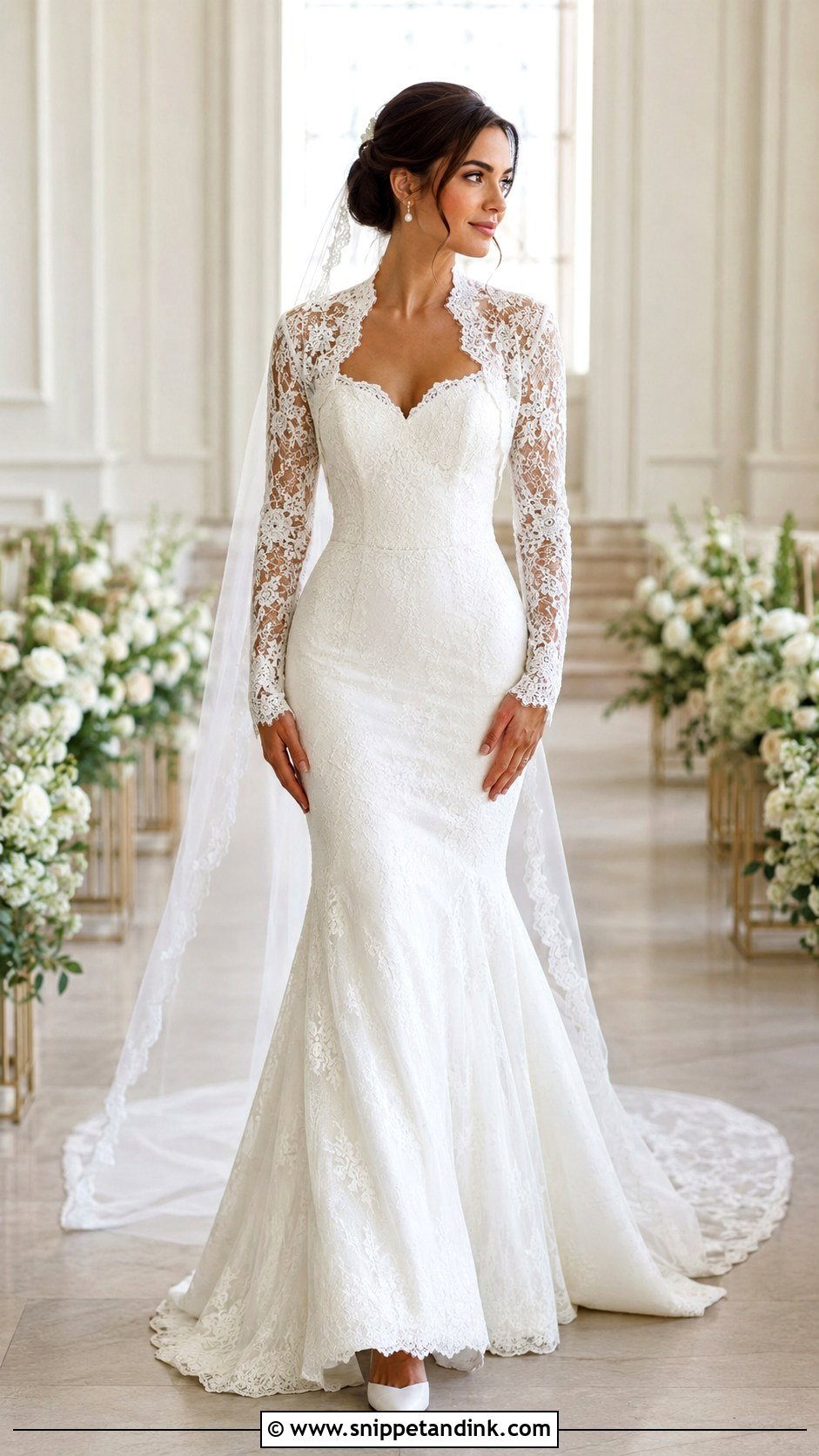
Scalloped edges at the neckline, cuffs and hem give a long-sleeve lace bolero a finished look and take the edge off a mermaid shape’s drama. If the gown has lace panels of its own, compare pattern size and undertone side by side. Close matches look planned; mismatched motifs look like an accident. A sweetheart or strapless bodice stays visible under the sheer lace, and small hidden hooks keep the jacket aligned when you move. I’d pick a narrow veil that follows the dress rather than one that widens the shoulders.
19. Blue Bridal Bolero With White Wedding Gown
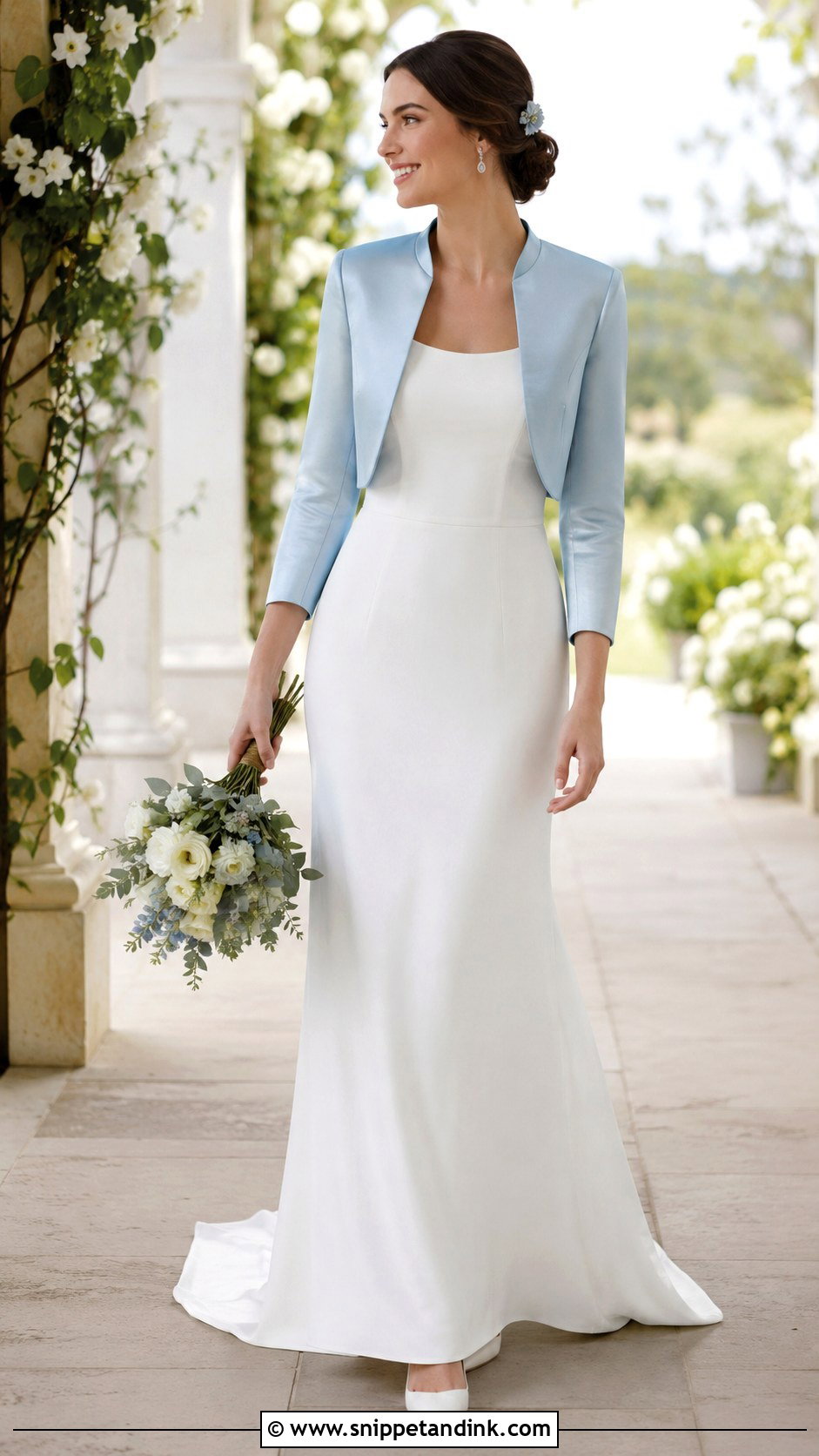
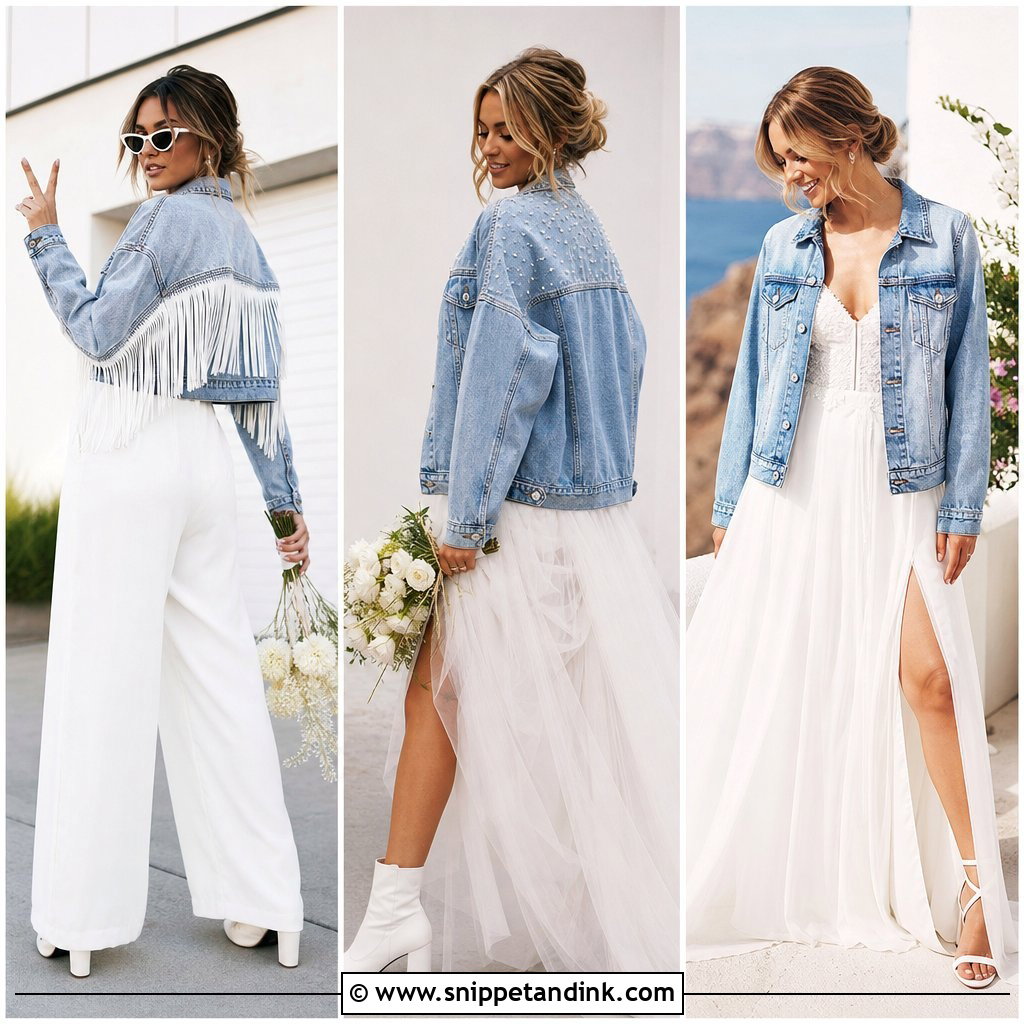
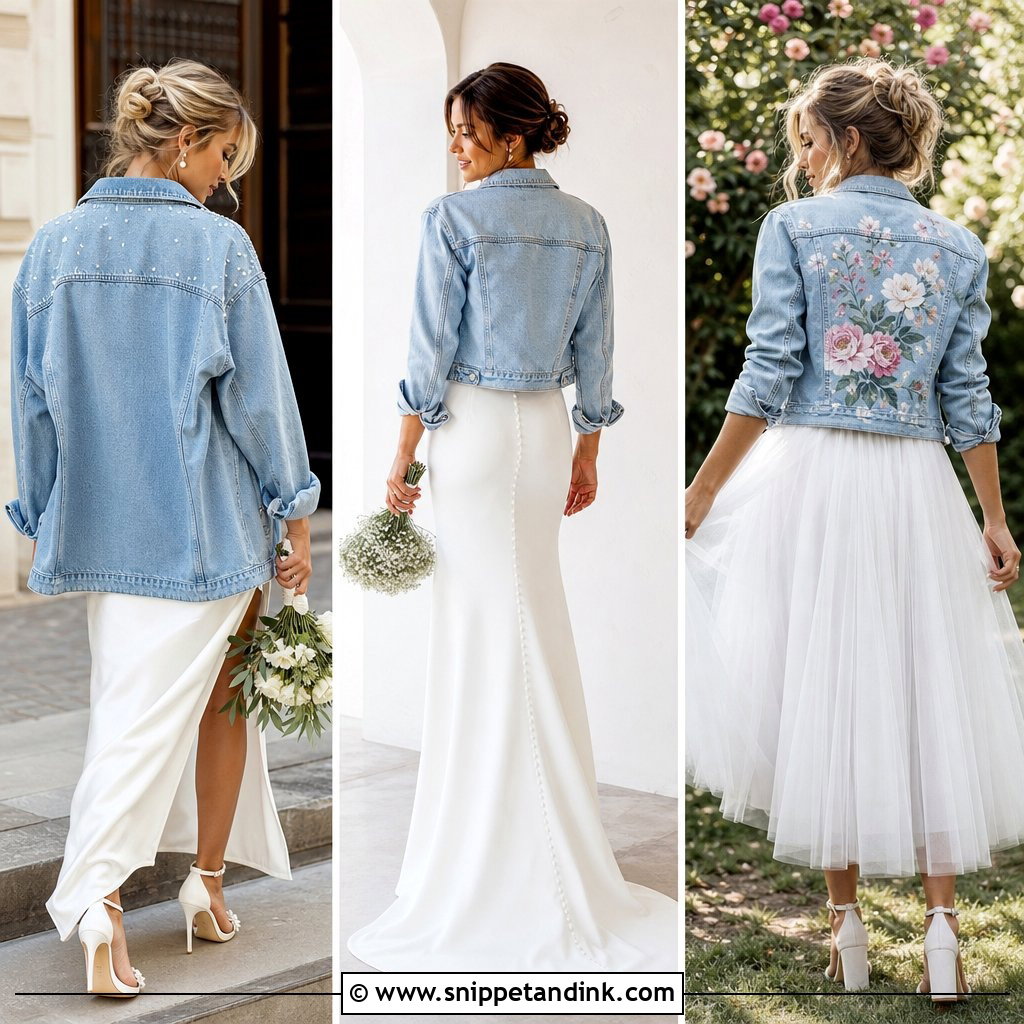
Pale blue is an easy color layer because so many brides already carry a blue detail somewhere. Powder blue satin or velvet suits cooler months; embroidered tulle or a fine knit is lighter for spring. It reads clearest against a white gown with little embellishment. Look at the jacket and dress together under indoor bulbs and outdoors, because blue shifts greener or greyer with the light. Stop at one more blue accent, a hairpin or a ribbon, and keep the bouquet neutral so the jacket stays the only color statement.
20. Detachable Bridal Bolero With Off-the-Shoulder Gown
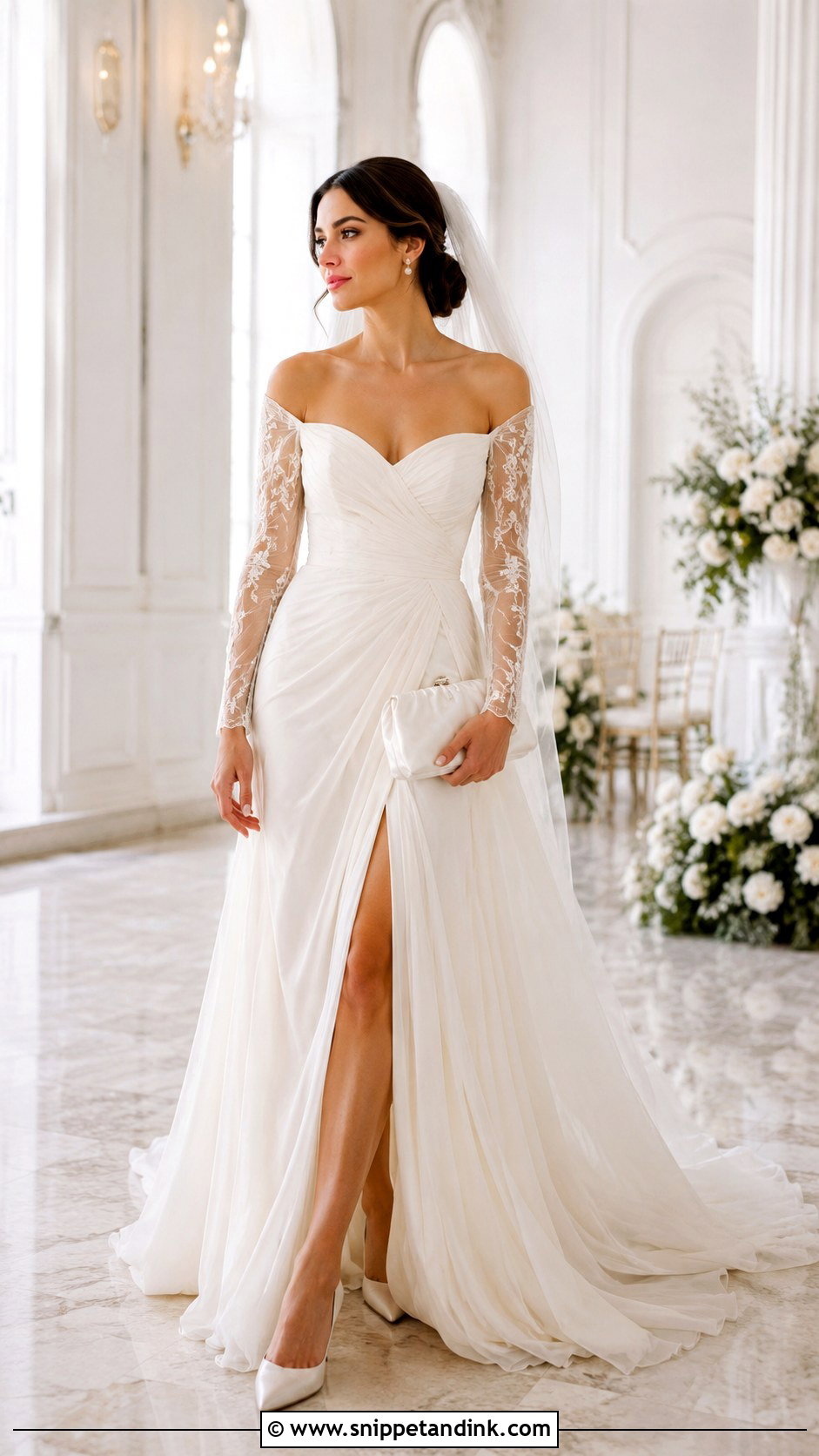
A detachable bolero gives an off-the-shoulder gown two necklines: a covered one for the ceremony and the gown’s own shoulder line for the reception. Choose sheer lace, tulle or organza that matches the dress undertone and repeats its embroidery if it has any. The usual problem is the jacket riding up when you lift your arms, since there is no strap for it to rest on. I have the seamstress add hidden snaps or loops at the bodice, placed where they vanish once the jacket comes off. Pearl earrings, a low bun and a simple veil are enough for the ceremony half.
What Happens to the Jacket Once It Comes Off
Most brides who wear a bolero take it off at some point, and almost nobody plans where it goes. It ends up over a chair back, under someone’s coat, or with a smear of foundation on the collar. Ten minutes of planning saves it.
Tell your photographer about both looks
If you want portraits with and without the jacket, say so at the planning call. I suggest doing the covered portraits first, straight after the ceremony, then removing it before cocktail hour. Otherwise the reception look ends up in every photo and the ceremony look only appears in the aisle shots.
Give it a hanger and a person
Pack a padded hanger and a breathable garment bag, and hand the jacket to one named person rather than leaving it at your seat. High lace collars pick up foundation from the jaw, so set the neck with powder before you dress. Keep fur and feathers away from the food tables.
Afterwards, each fabric wants different care. Satin and organza can be steamed from a distance; velvet only from the inside, never pressed flat; faux fur gets no heat at all, just a gentle brush. Fold a knit flat in acid-free tissue rather than hanging it, or the shoulders stretch. None of these should go into a plastic bag for long-term storage, the same rule that applies to the gown.
Wear It Over Your Altered Gown Before You Decide
A bolero should look like part of the dress, not an extra added the week before. Match its white, texture and proportions to the gown, then judge it with the veil, hair, jewelry, shoes and bouquet all on together. As a rough map, lace gives traditional coverage, satin clean structure, fur and knits cold-weather warmth, and feathers or crystals a party mood. My one firm rule is to try the jacket over your altered dress rather than the shop sample, because half an inch of change at the waist moves where the hem lands. Go with the jacket that solves your real problem, whether that’s warmth, modesty or a quick change for the evening.
You'll Like These Ideas:


Leave a Reply