
A bridal shrug is the smallest piece in a bridal outfit and the one most often bought in a hurry, usually the week a bride realises the church needs covered shoulders or the forecast turns cold. Bought well, it changes the whole dress: it softens a structured gown, adds texture to a plain one or makes a light dress warm enough for October. Shrugs and boleros are cropped, cover the shoulders and have armholes, though lengths and constructions vary a lot now. Lace, tulle, satin, knit, feathers, pearls and faux fur all appear below. The rule I give everyone is the same: match it to the gown’s color, fabric and neckline as carefully as you chose the gown.
Measurements a Shrug Has to Get Right
A shrug sits over a dress that’s already fitted, so the usual dress size tells you very little. Three measurements decide whether it looks made for you or borrowed.
- Across the back, shoulder point to shoulder point. Too narrow and the fronts gape; too wide and the shoulders droop.
- Upper arm at its widest, over any sleeve the gown already has, plus room to bend the elbow.
- Length from the shoulder to where the shrug should end, usually just above the gown’s waist seam.
I never fit a shrug without the gown, or at least its bodice, on the bride. A boned bodice adds structure at the bust and back that changes how the shrug falls. If you’re buying online, choose a seller who accepts returns and order early enough to try two sizes.
1. Lace Bridal Shrug With Strapless Wedding Dress
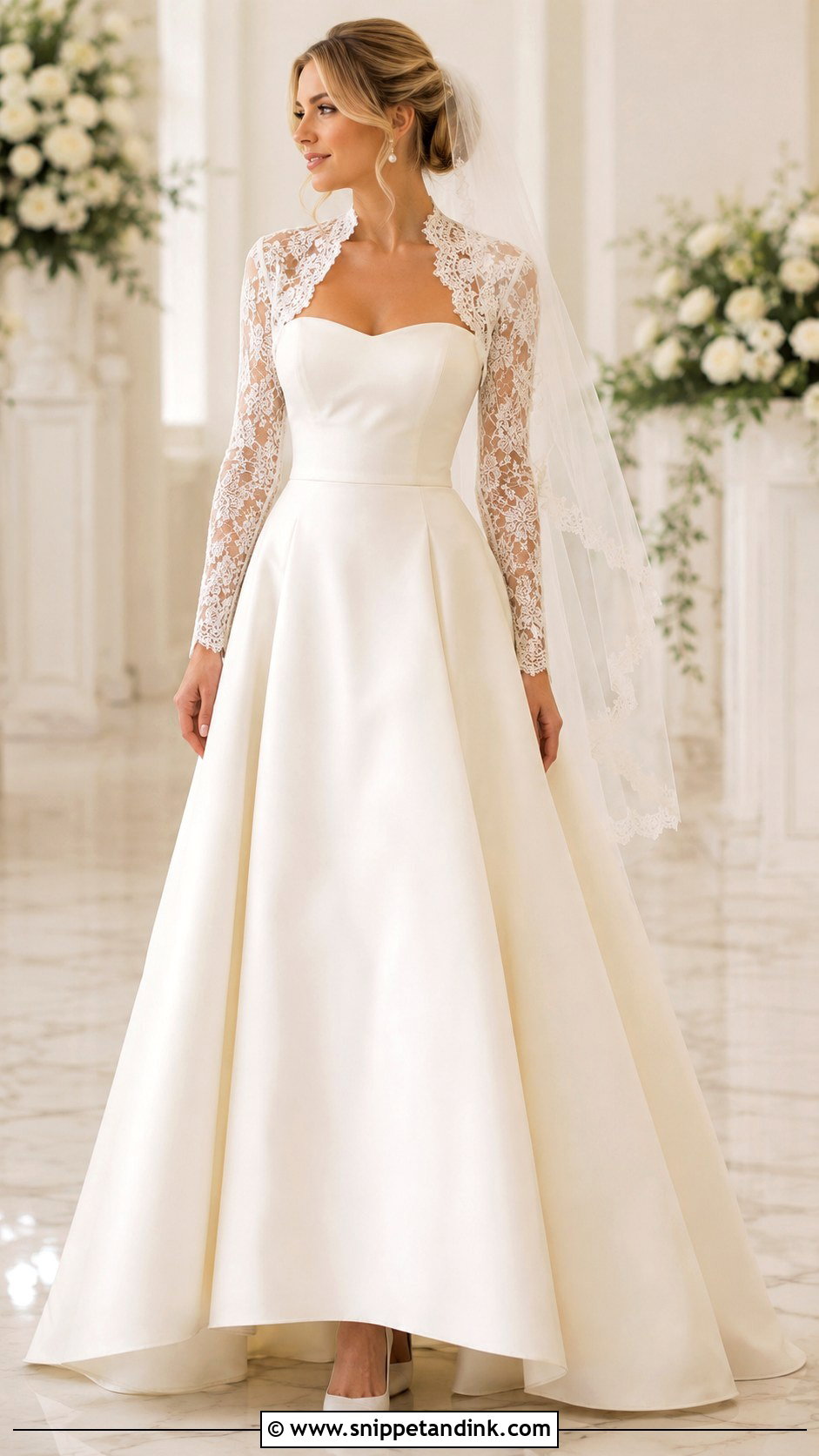
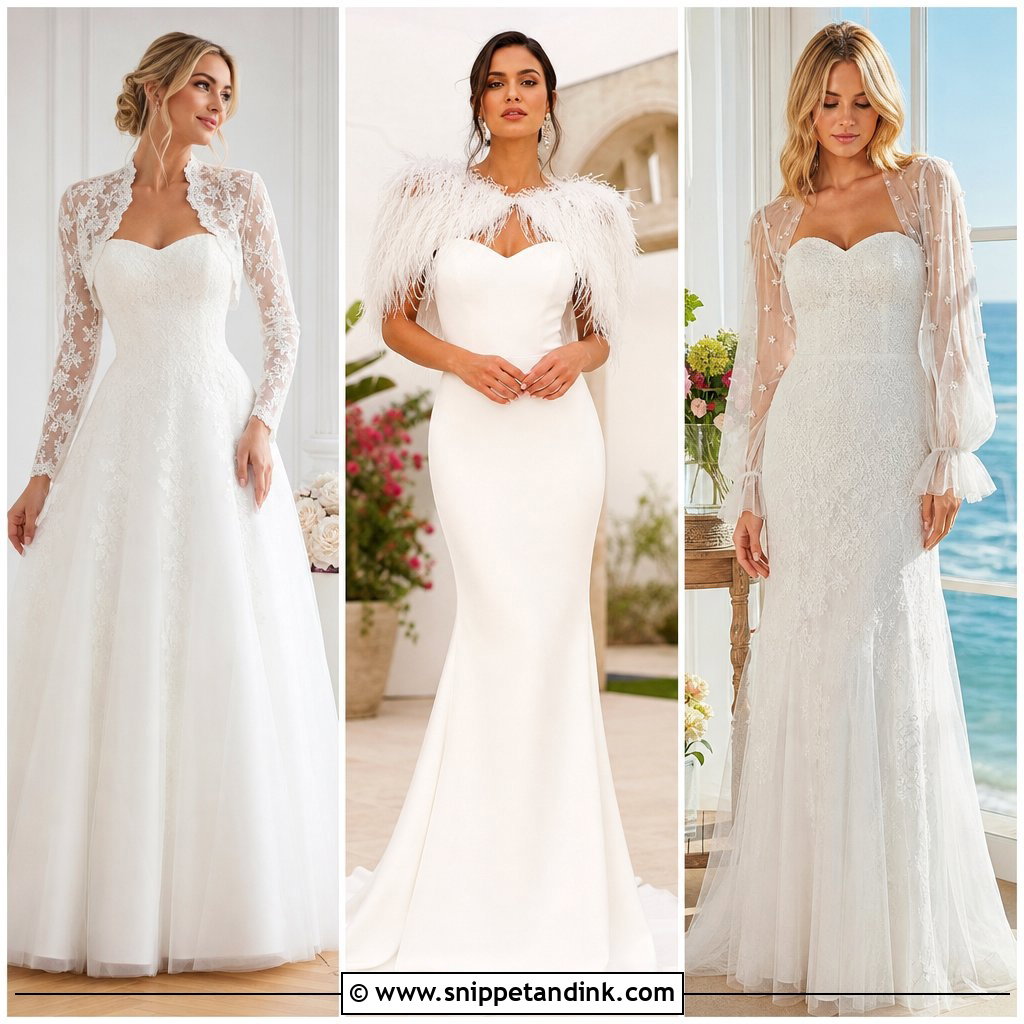
Lace over a strapless gown is the classic pairing, and the lace is where it goes right or wrong. If your gown has appliqué, bring a photo of it, or better a fabric swatch, to the shop so you can match motif size; mismatched lace scales look like two separate garments. A clean crepe dress is more forgiving and suits fine Chantilly-style lace. A fitted long-sleeve shrug works best over A-line or fit-and-flare shapes. Pearl drops, a fingertip veil, pointed ivory pumps and a low chignon keep the neckline visible, and you can take the shrug off for the reception.
2. Faux Fur Bridal Shrug With Winter Ball Gown
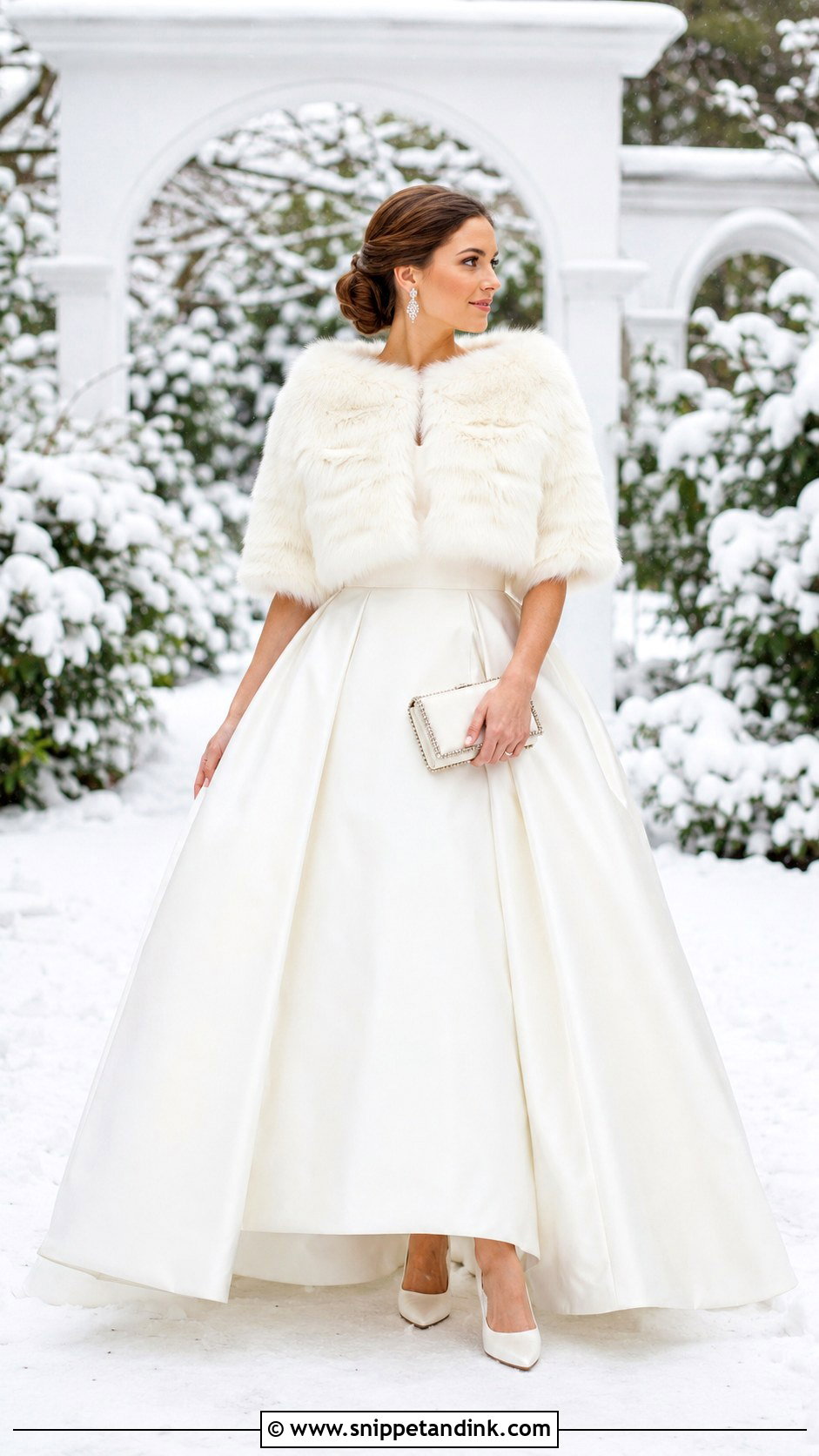
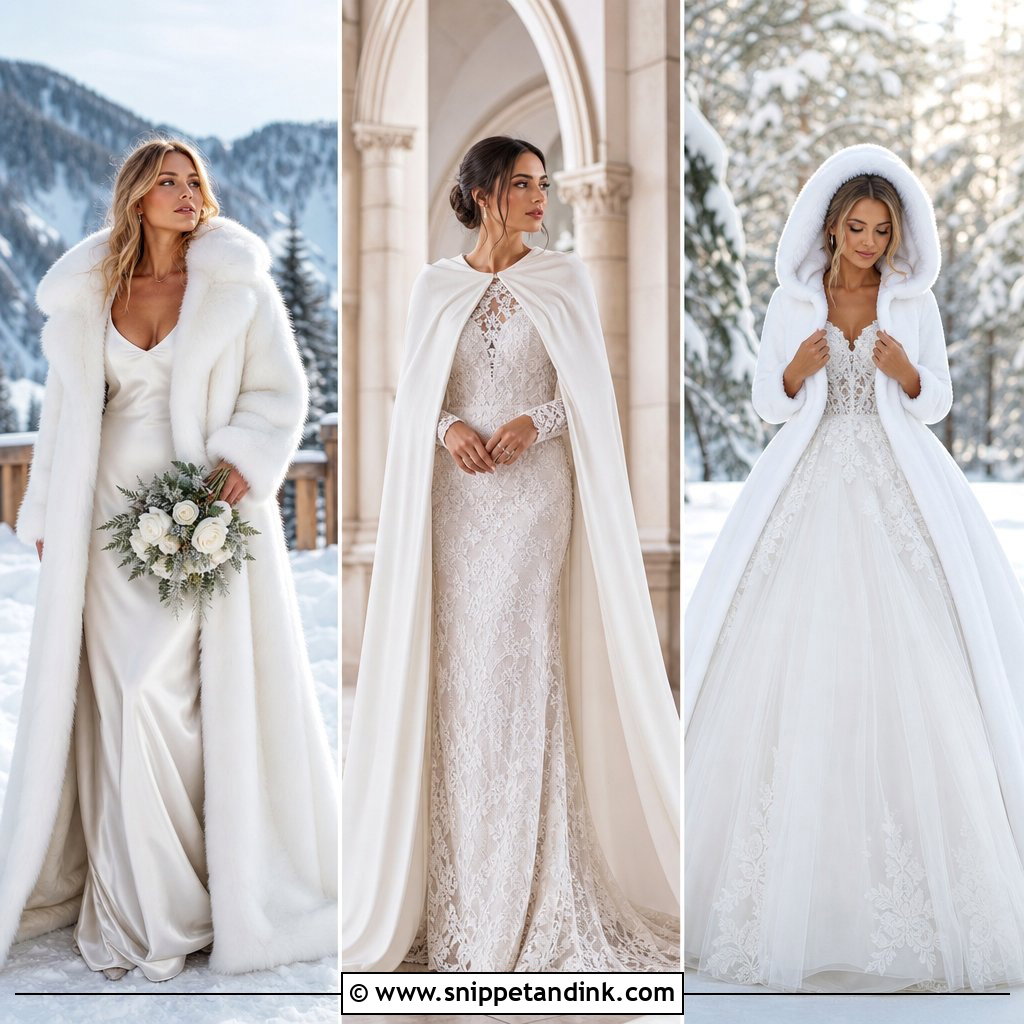
Faux fur is warm, and it sheds. Before you wear a faux fur bridal shrug, give it a good shake outdoors and a lint roll, or you’ll find fibers stuck in your lipstick in every close-up. It should be cropped and end near the natural waist so it doesn’t fight a ball gown’s skirt. Ivory fur suits warm gowns, bright white suits cool satin. Petite brides should look for short-pile fur; long pile swamps the shoulders. Crystal earrings, a sleek updo, closed-toe satin heels and a small clutch finish a winter portrait look.
3. Tulle Bridal Shrug With Beaded Wedding Dress
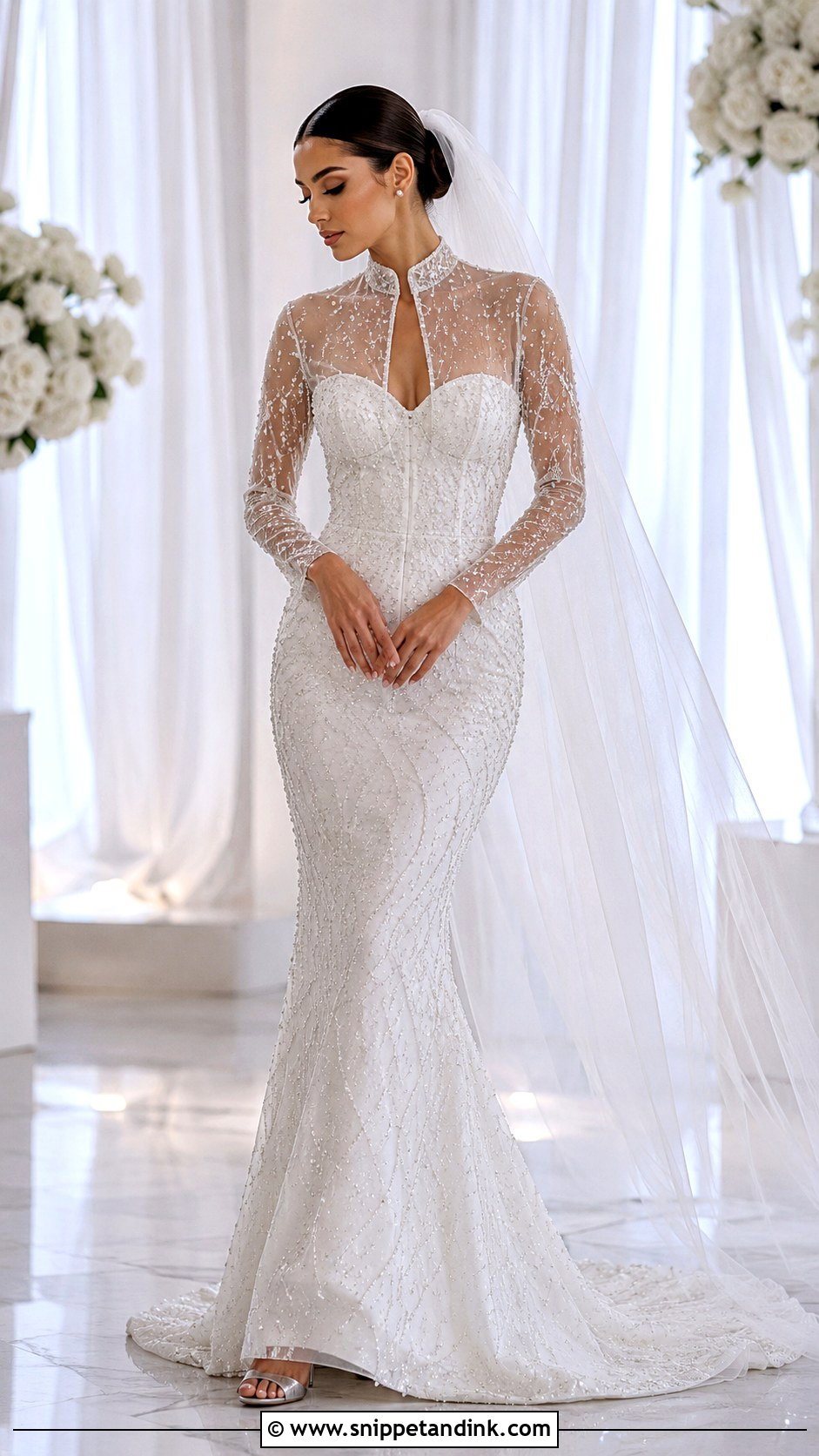
Beaded gowns need the plainest possible cover, and fine tulle is it. A transparent shrug with clean edges, fitted sleeves and a discreet back closure lets the beadwork show through. Tulle is easy to snag on beading, though, so I always slide the shrug on while someone holds the sleeves open rather than letting the bride wriggle into it. Loose tulle bunches at the elbow, which is why tailoring matters here. Crystal studs, a smooth bun, a plain tulle veil and silver or ivory heels keep the layers calm.
4. Satin Bridal Shrug With Mermaid Wedding Dress
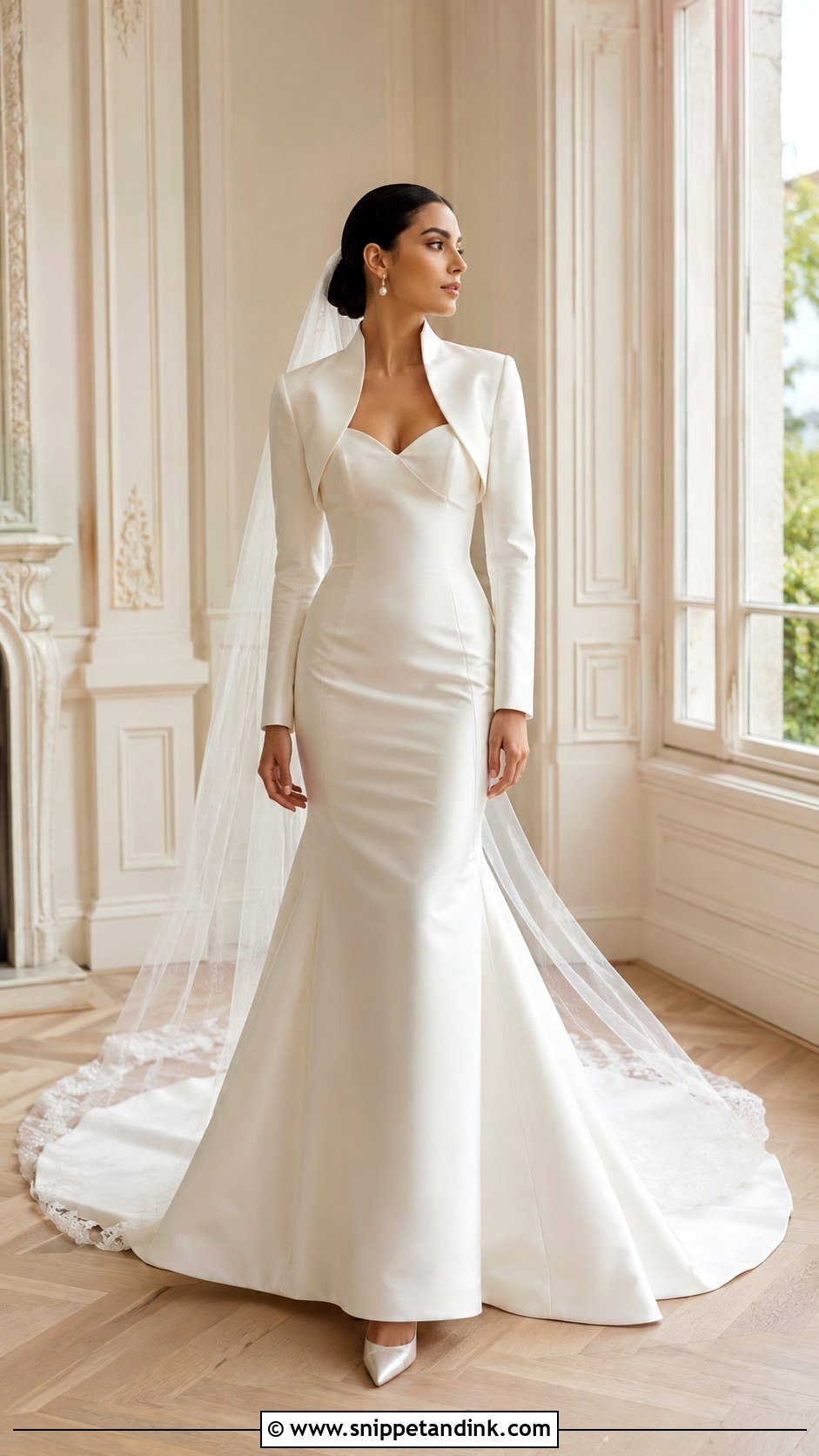
Satin on satin is the hardest match in bridal. Two ivory satins from different mills can differ in sheen and shade, and the camera notices before you do. When I can, I have the shrug made by the gown’s designer or have it made from leftover fabric when the dress is altered. A cropped open-front shrug with clean seams and bracelet or full sleeves frames a sweetheart or square neck over a mermaid gown. A cathedral veil, pearl earrings, pointed satin heels and a low bun or glossy waves suit a plain, sculpted dress with a long train.
5. Pearl Bridal Shrug With Simple Crepe Gown
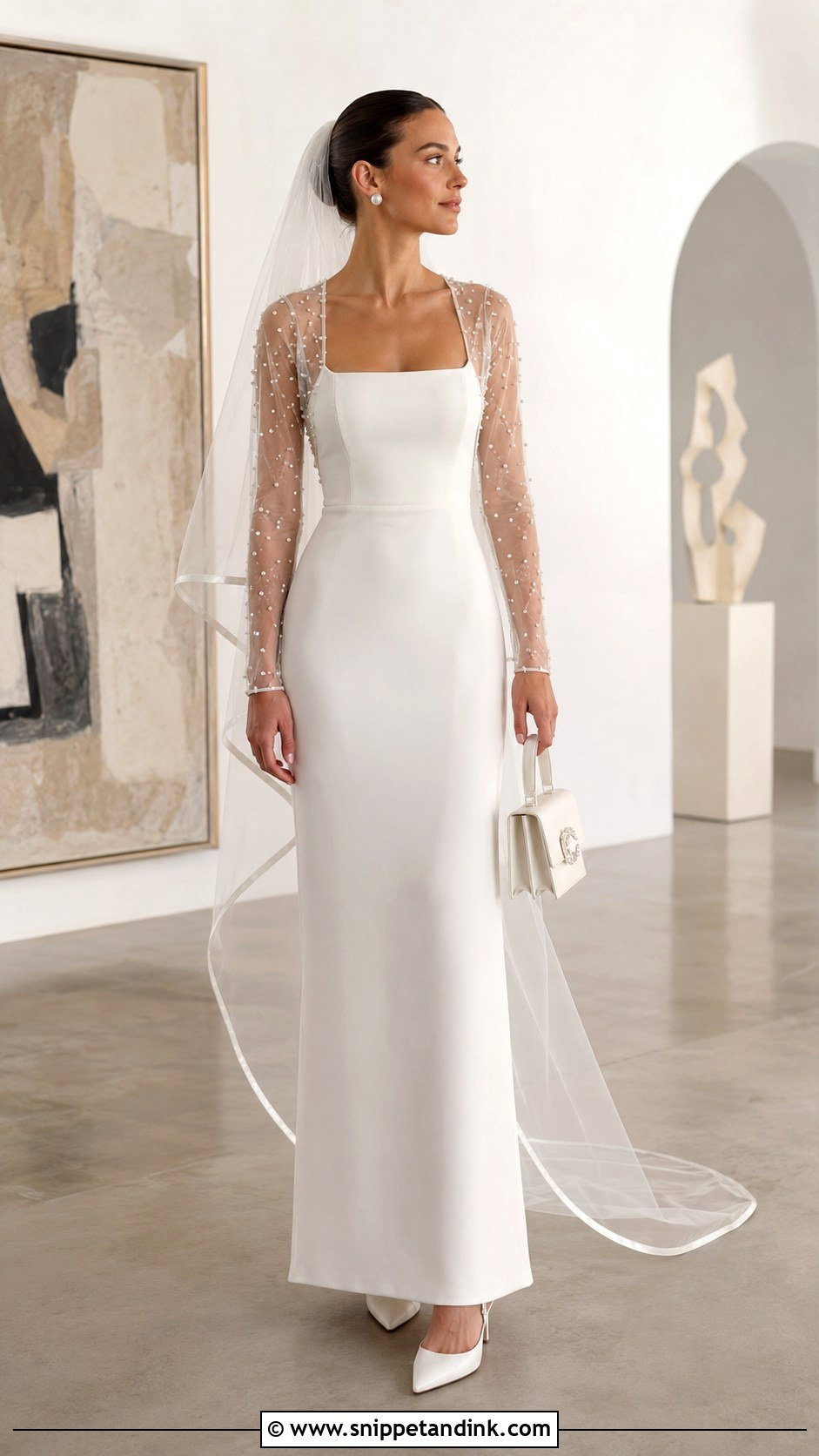
Scattered pearls on sheer tulle add detail to a plain crepe gown without bulk; a shrug solidly covered in pearls weighs on the shoulders and stiffens the sleeves. Long fitted sleeves with a round neck work over square, strapless or slip necklines. Pearls also click against each other and against a pearl veil edge, so if your veil is pearl-trimmed, keep the shrug’s pearls small. Pearl studs, a satin-edged veil, ivory slingbacks and a structured mini bag for portraits finish it, with other jewelry kept to a minimum.
6. Feather Bridal Shrug With Bridal Jumpsuit
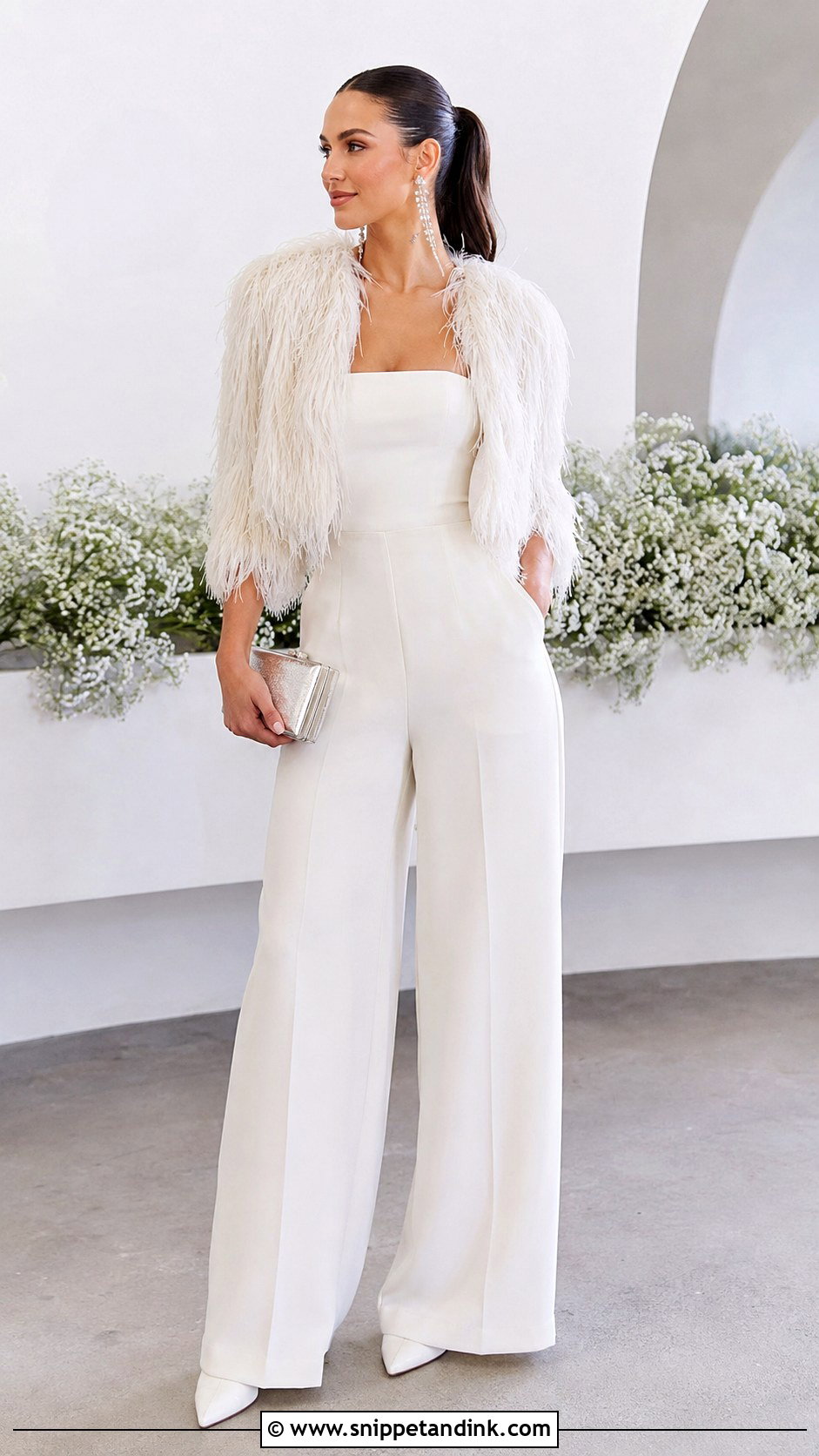
Feathers and a tailored bridal jumpsuit make a lively pairing for a civil ceremony or a reception change. Keep the feathers light and placed on the shoulders or cuffs, so the shape looks defined rather than inflated. Feather trim catches on lipstick and a partner’s boutonniere, so I’d take it off for long hugs and the first dance. A wide-leg jumpsuit with a fitted bodice contrasts nicely with the soft trim. Crystal drops, a sleek ponytail, pointed pumps and a small metallic clutch finish it, with no necklace.
7. Cashmere Bridal Shrug With Slip Wedding Dress
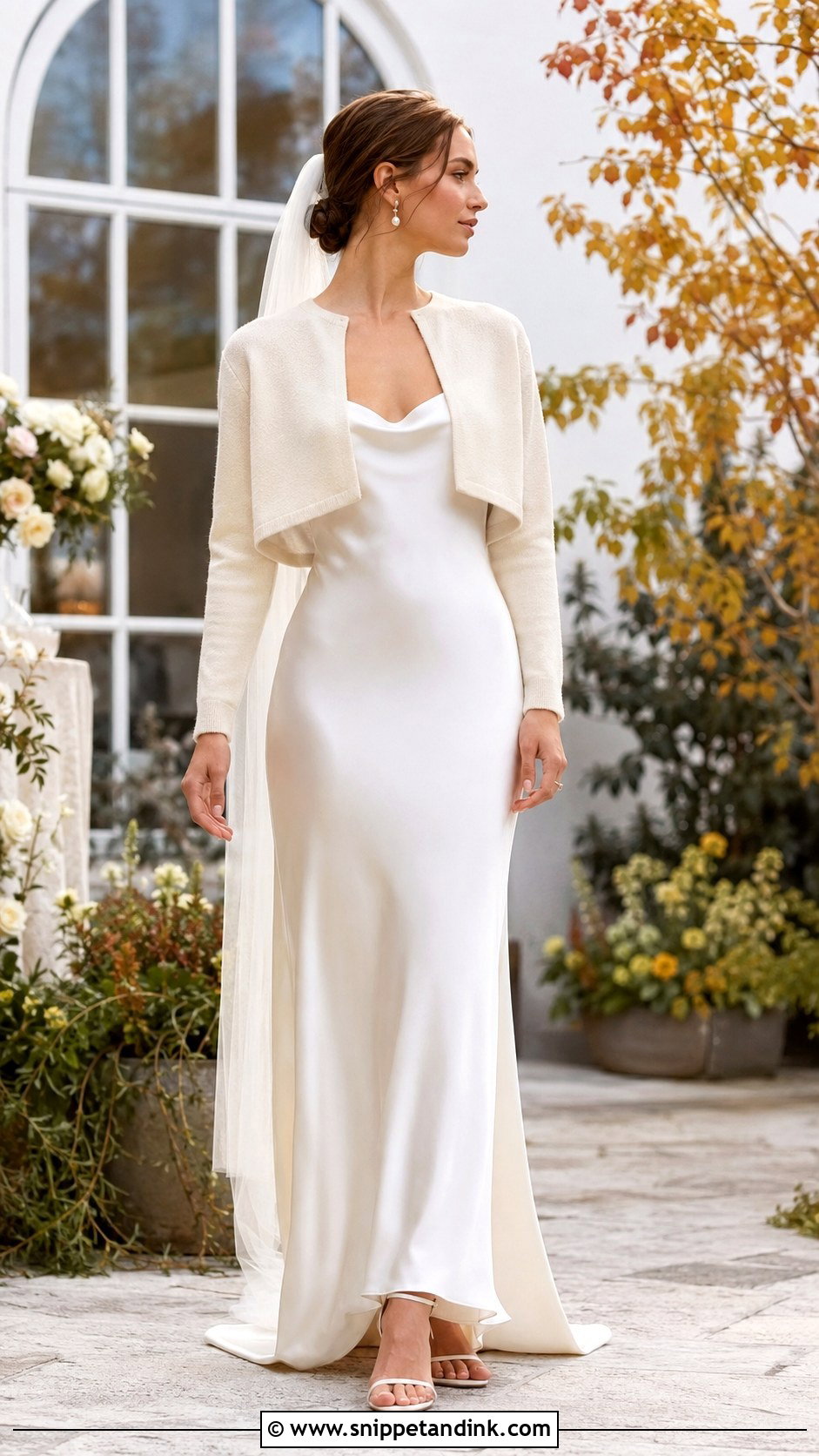
Fine cashmere over a silk slip dress is the most comfortable cover on this list for a cool spring or autumn day. Choose a fine-gauge knit in ivory or cream, cropped at the waist; chunky ribbing and loose sleeves fight the slip’s drape. Cashmere pills where the inner arm rubs, so look for a tight knit. Silk dresses can also show a ring of foundation where a knit touches the neckline, so set your makeup well. Pearl earrings, a low twisted bun, ankle-strap heels and a narrow veil complete it, and you can slip the shrug off once the room warms up.
8. Crochet Bridal Shrug With Boho Wedding Dress
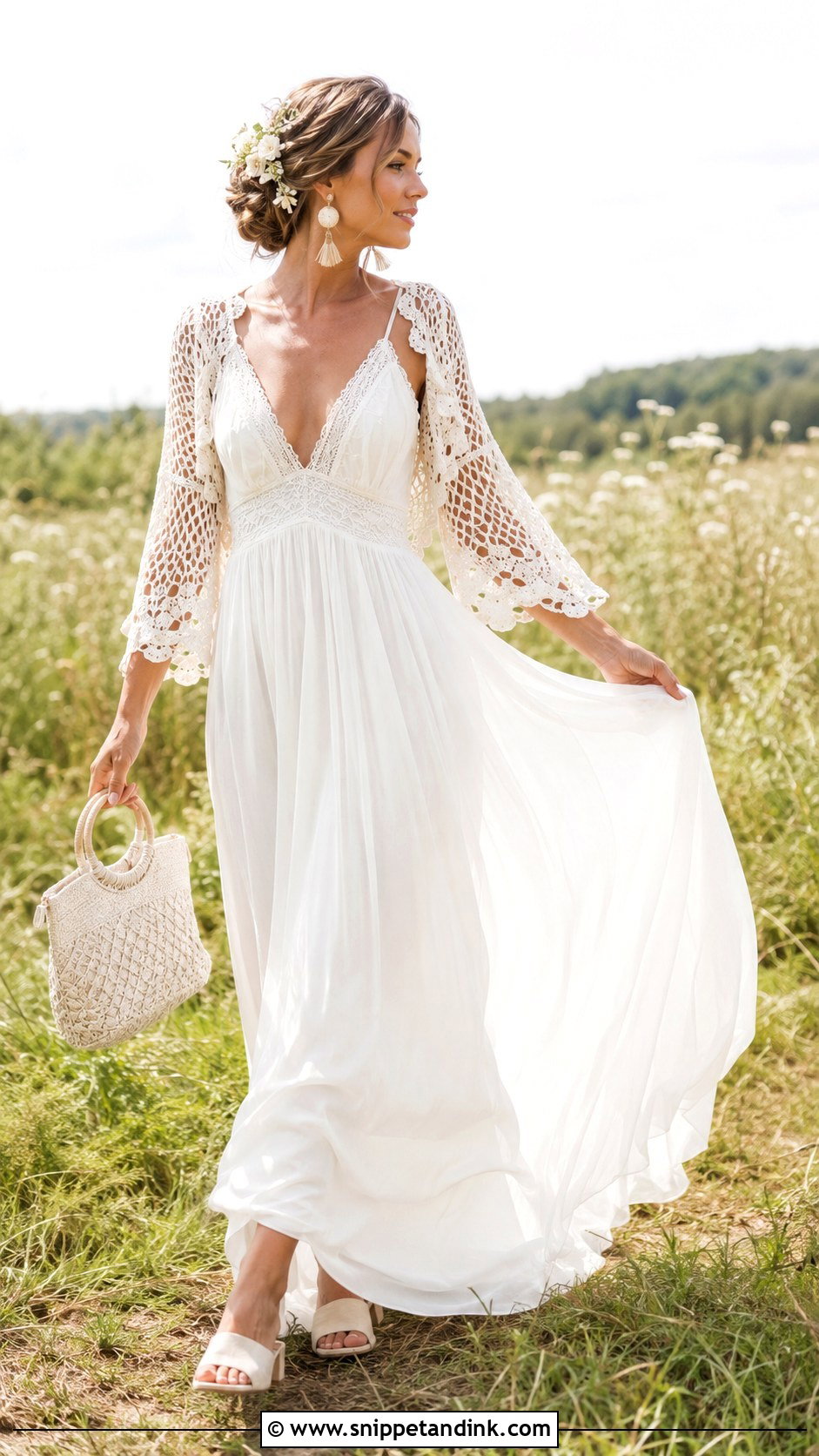
Crochet suits a relaxed boho gown in chiffon, cotton lace or soft tulle. Choose an open pattern with scalloped edges and three-quarter or full sleeves. Crochet stretches as you wear it, especially in cotton, so I’d buy it snug rather than roomy. Match the stitch scale to the dress: large motifs over a plain gown, fine stitching over detailed lace. Textured drops, loose waves, a floral comb and low block-heel sandals for grass or uneven ground keep it natural, with a small woven ivory bag if you want one.
9. Organza Bridal Shrug With Column Wedding Dress
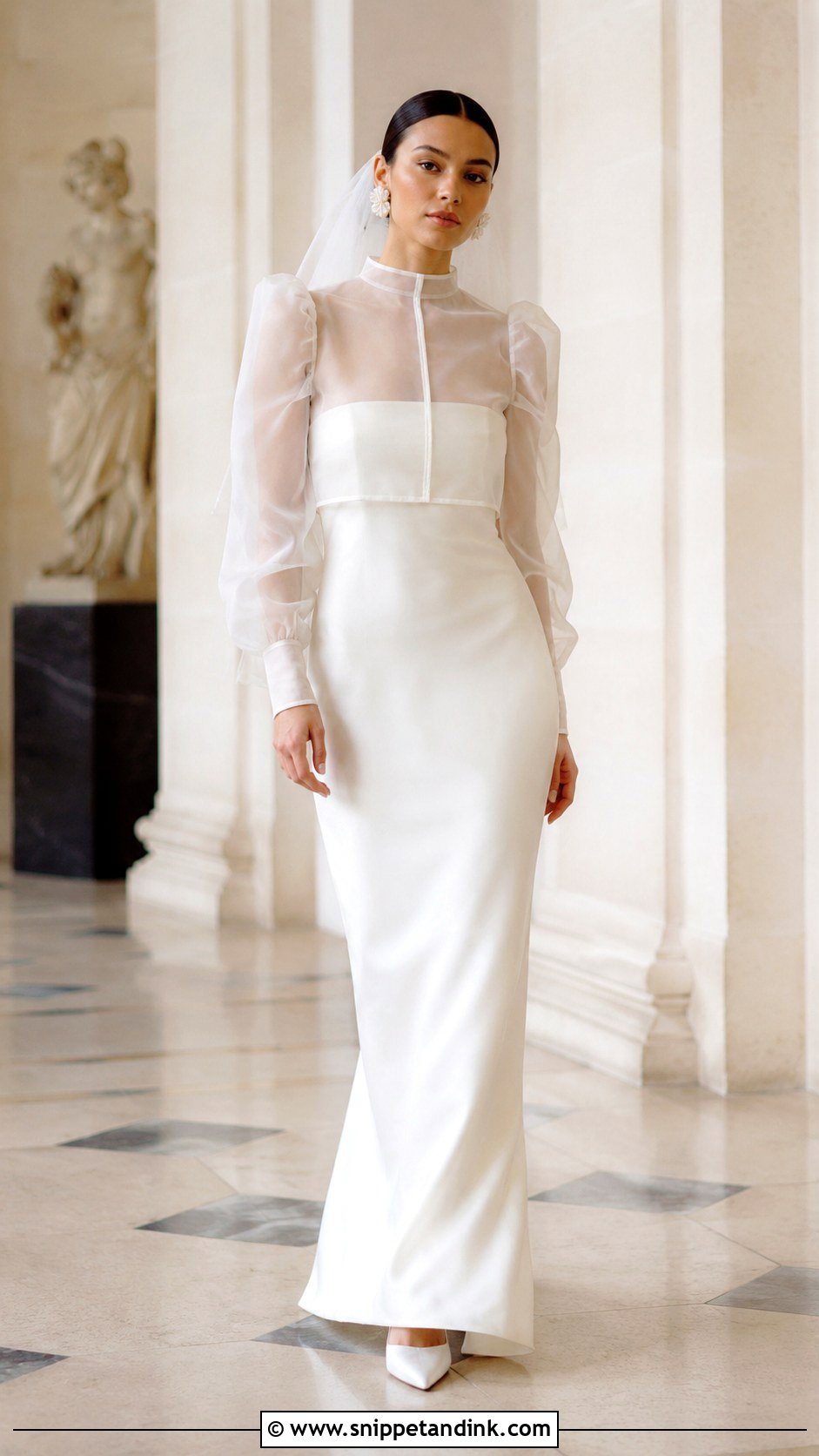
Organza holds puffed sleeves crisply, which gives a sleek column dress some shoulder structure. Look for a cropped shrug with an open or lightly fastened front. Organza creases sharply when folded, so hang it, don’t pack it, on the way to the venue, and steam it on the day. Choose a soft ivory organza rather than one brighter than your gown. With sleeves this strong, keep the bouquet and jewelry simple and the veil short or absent. Sculptural earrings, a center-parted bun and plain pointed heels finish a modern look.
10. Sequin Bridal Shrug With Minimal Wedding Dress
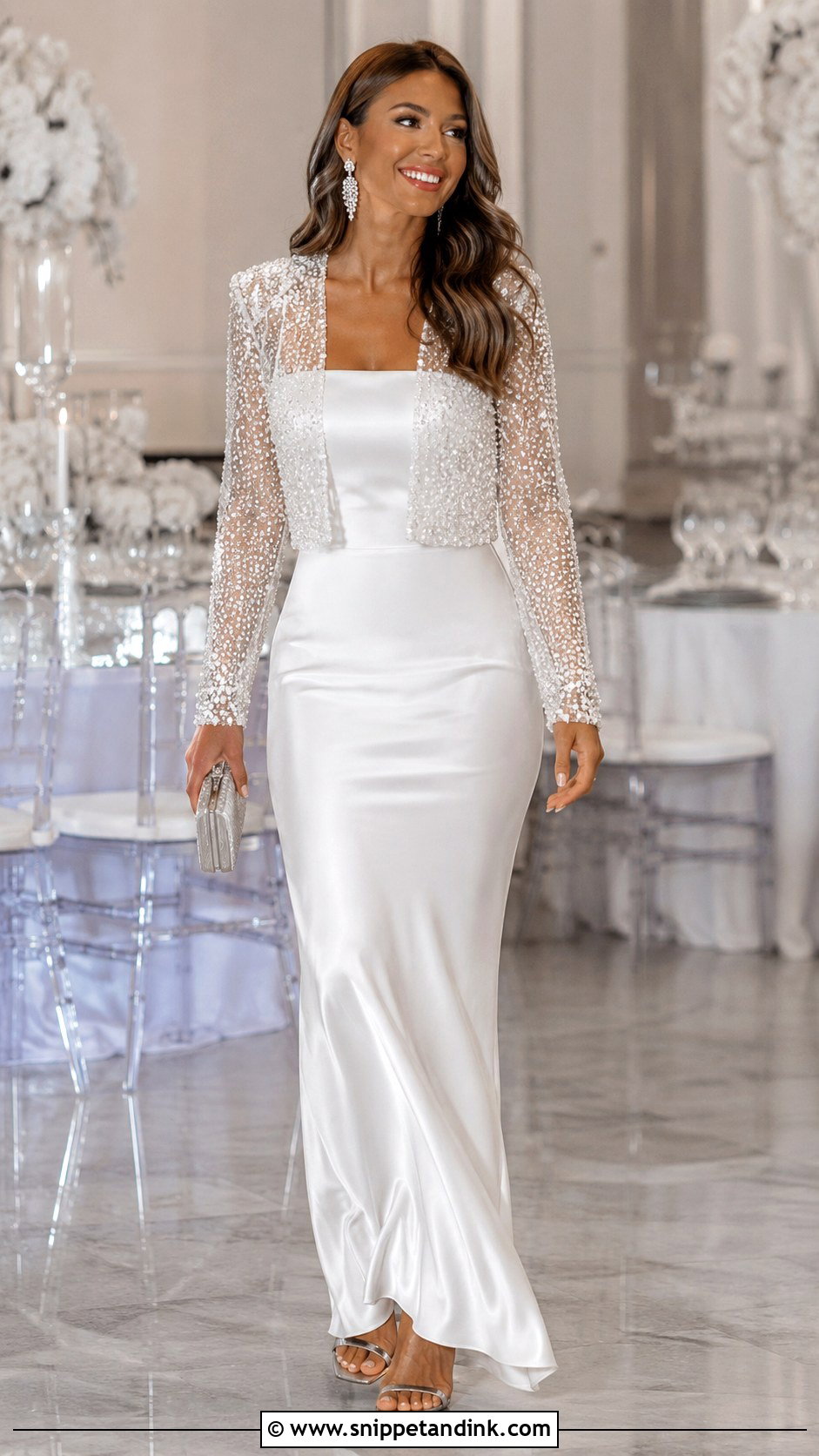
A sequin shrug turns a plain sheath, column dress or bridal pantsuit into an evening outfit in seconds. Small tonal sequins on a sheer base give shimmer without looking like costume. Large sequins catch flash and can blow out in photos, so I always test the outfit under a camera flash before the wedding. Sequins also scratch inner arms, so check the underside of the sleeves. Crystal earrings, metallic heels, an ivory clutch and soft waves or a sleek bun complete it, without a necklace or veil embellishment if the shrug is dense.
11. Velvet Bridal Shrug With Long-Sleeve Gown
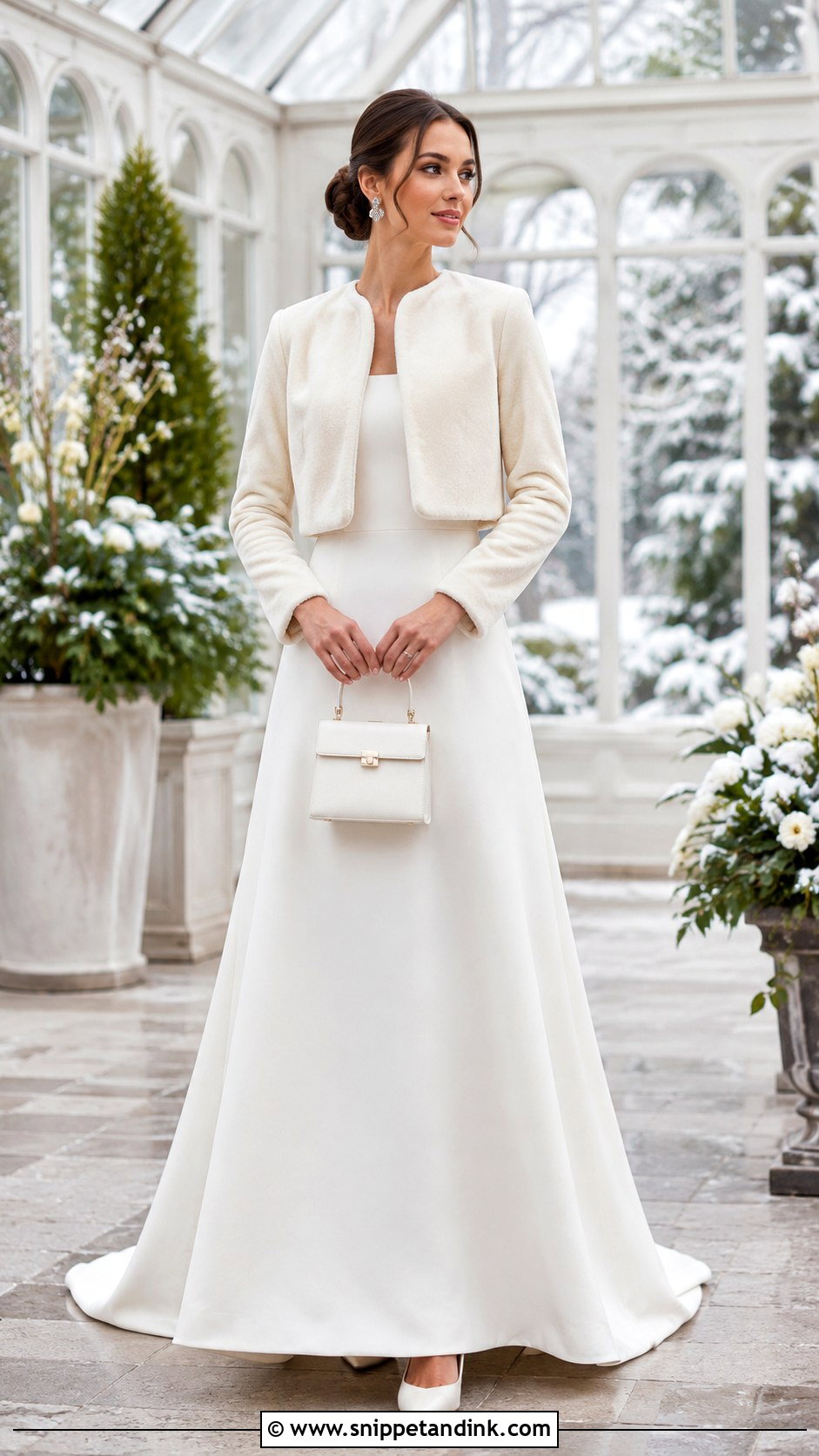
Velvet over long sleeves is double layering, so the gown underneath needs to be plain and smooth: crepe, satin or jersey, never beaded sleeves. A cropped velvet shrug with an open front and neat shoulders keeps the shape defined. Velvet has a nap that looks lighter or darker depending on direction, so the pieces of a well-made shrug are all cut the same way. Ivory gives a tonal look; pale blue or champagne adds a little color. Gemstone earrings, closed-toe heels, a top-handle bag and a polished updo suit a straight or A-line skirt.
12. Floral Bridal Shrug With Plain A-Line Dress
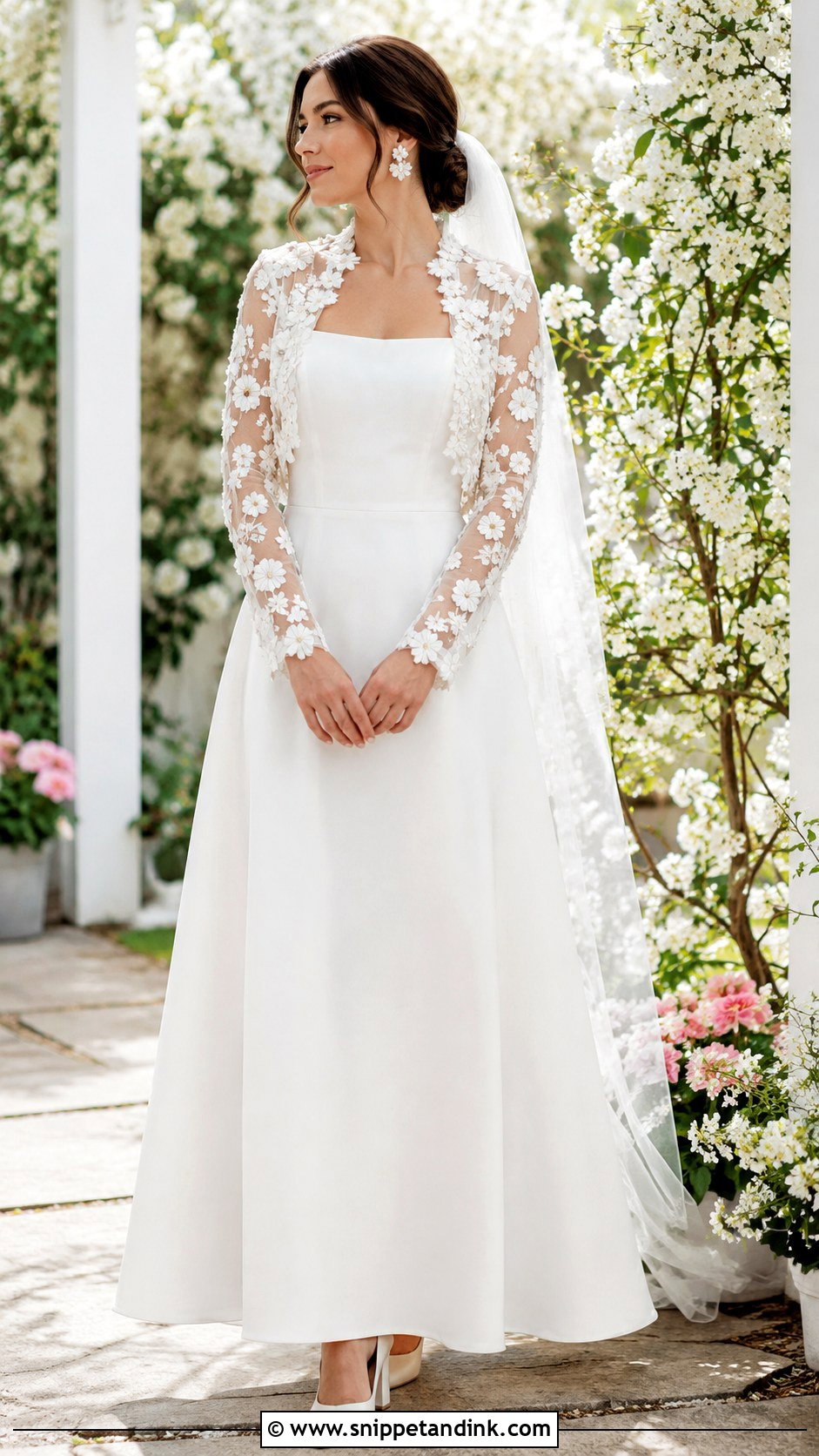
Floral appliqué on a sheer shrug can give a plain A-line gown real texture. Keep the flowers at the shoulders, cuffs or neckline and leave some clear tulle showing, or it looks crowded. The bodice underneath should be simple. Raised petals snag on bouquet wire and bracelets, so check that your florist wraps the stems smoothly. Floral earrings, a low bun, ivory pumps or block-heel sandals and a plain veil finish it. If the flowers have a touch of blush, pale blue or green thread, repeat just one of those shades in the bouquet.
13. High-Neck Bridal Shrug With Sweetheart Gown
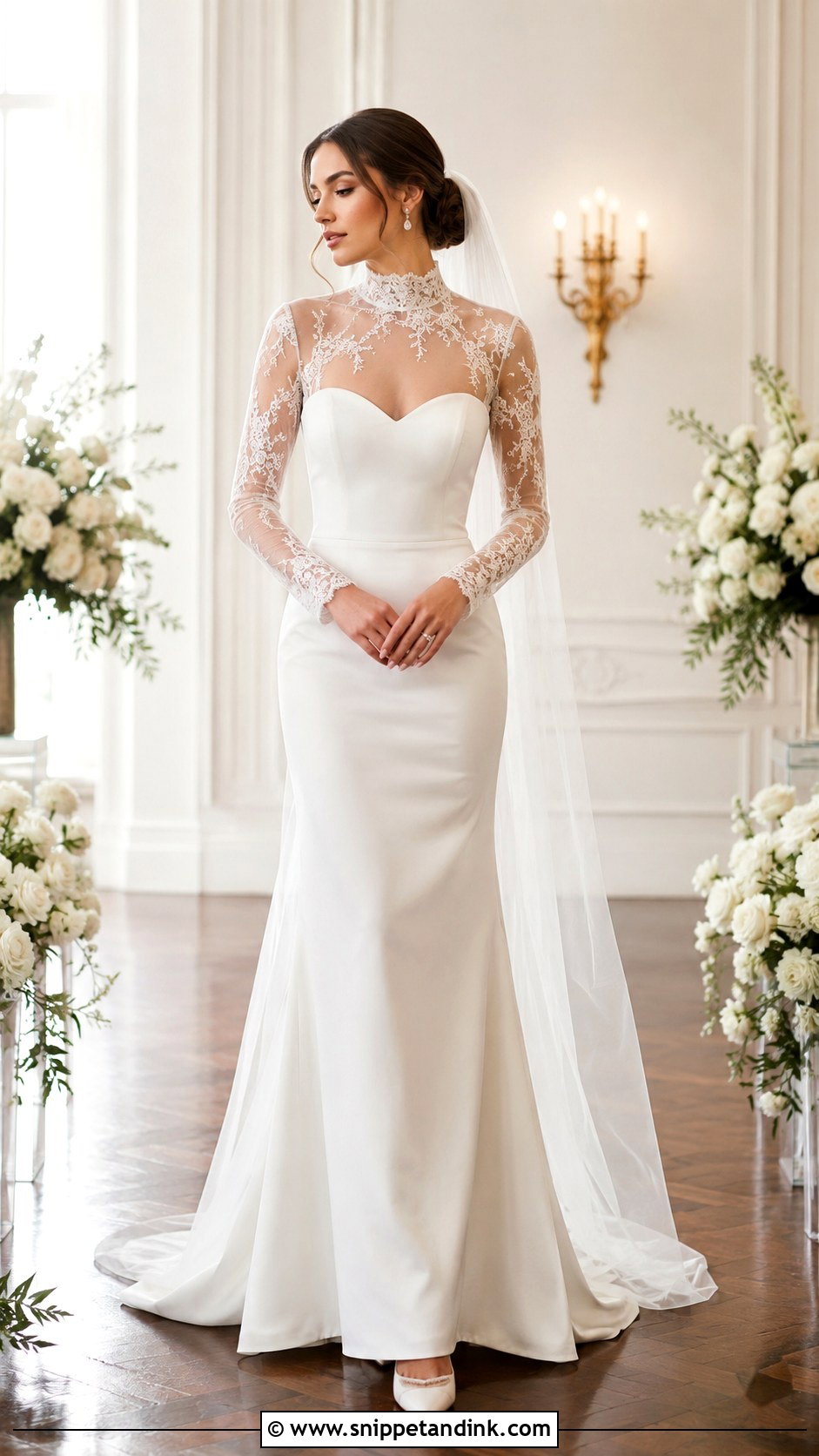
A high-neck shrug is the quickest way to make a sweetheart gown suitable for a conservative ceremony, then show the neckline at the reception. Choose sheer tulle or lace that follows the shoulders closely and closes at the back with small buttons or a hook. Watch the bodice at the fitting: a shrug cut too tight presses on boned cups and wrinkles across the bust. A low bun, drop earrings, pointed heels and a long plain veil complete it, without a necklace. You get two necklines from one dress without altering it.
14. Bell-Sleeve Bridal Shrug With Fitted Wedding Dress
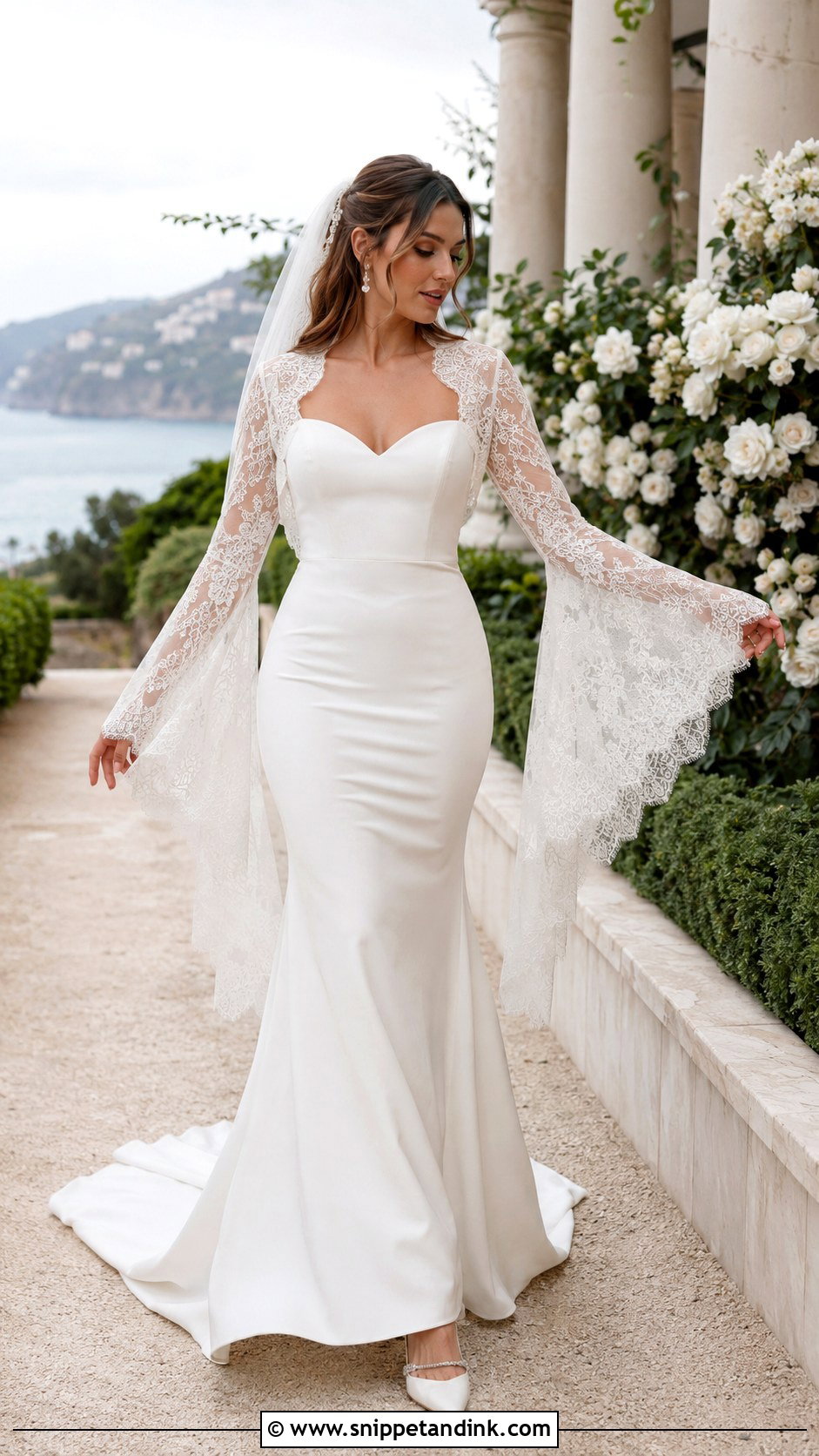
Bell sleeves move as you walk, which softens a fitted gown. I like them to widen below the elbow and stop at the wrist; longer sleeves dangle into your bouquet, your food and the cake knife. Lace or chiffon both work. A plain fit-and-flare gown handles the volume best. Avoid chunky bracelets, which catch the fabric. Delicate earrings, a narrow veil, comfortable pointed block heels and loose waves or a half-up style suit an outdoor, coastal or countryside wedding.
15. Short-Sleeve Bridal Shrug With Tea-Length Dress
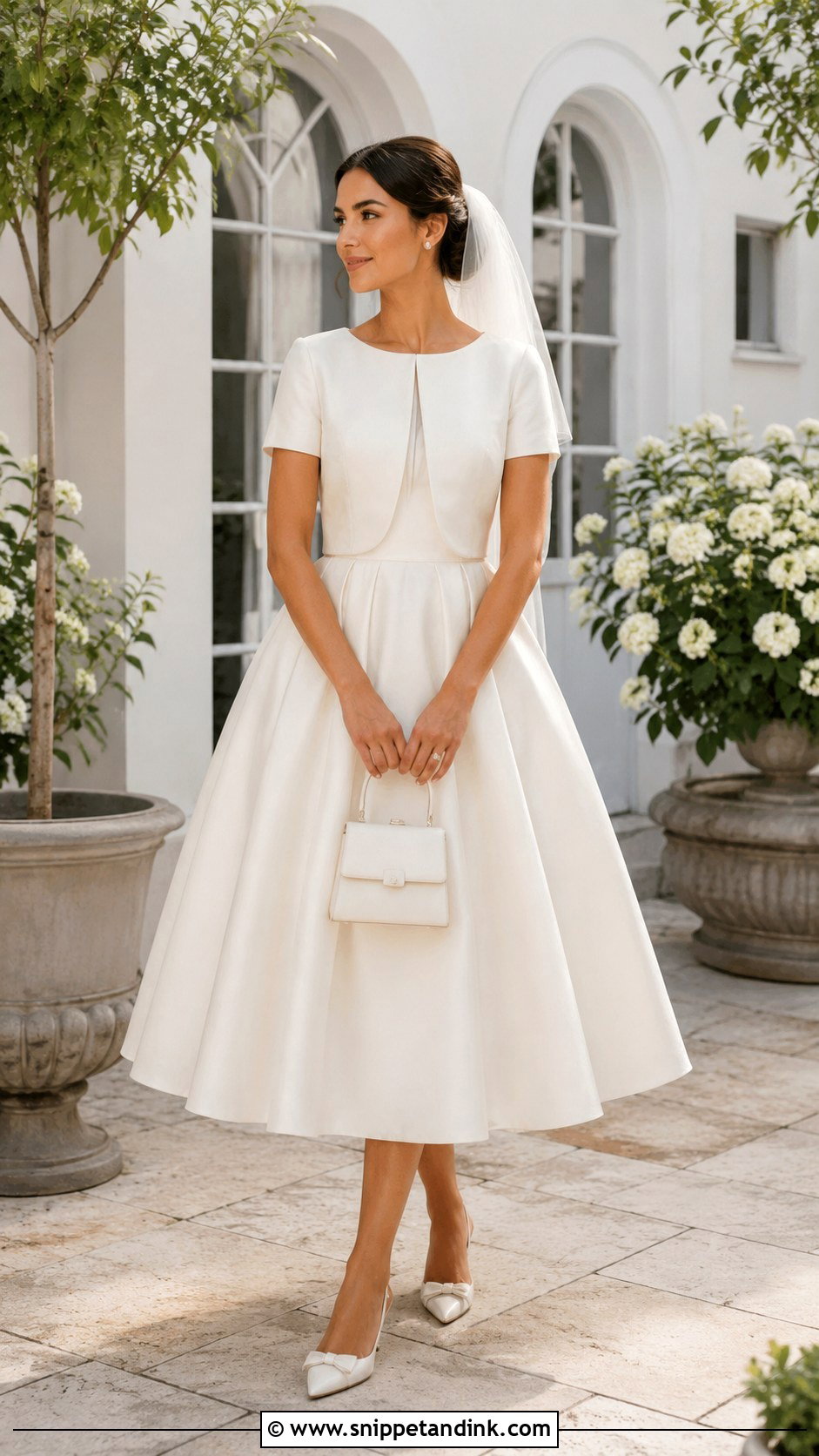
Tea-length dresses have a cheerful, slightly vintage proportion, and a short-sleeve shrug that ends at the waist keeps the skirt in charge. Fitted lace, satin or a fine knit all work; a bateau or round neckline nods to the vintage mood without becoming fancy dress. Your shoes show below the hem, so a bow, small crystal buckle or pointed toe is worth the spend. Short sleeves should end where your arm is narrowest, just above the elbow or mid-upper arm. Pearl studs, a birdcage or shoulder-length veil and a small structured bag suit a daytime ceremony.
16. Rhinestone Bridal Shrug With Satin Ball Gown
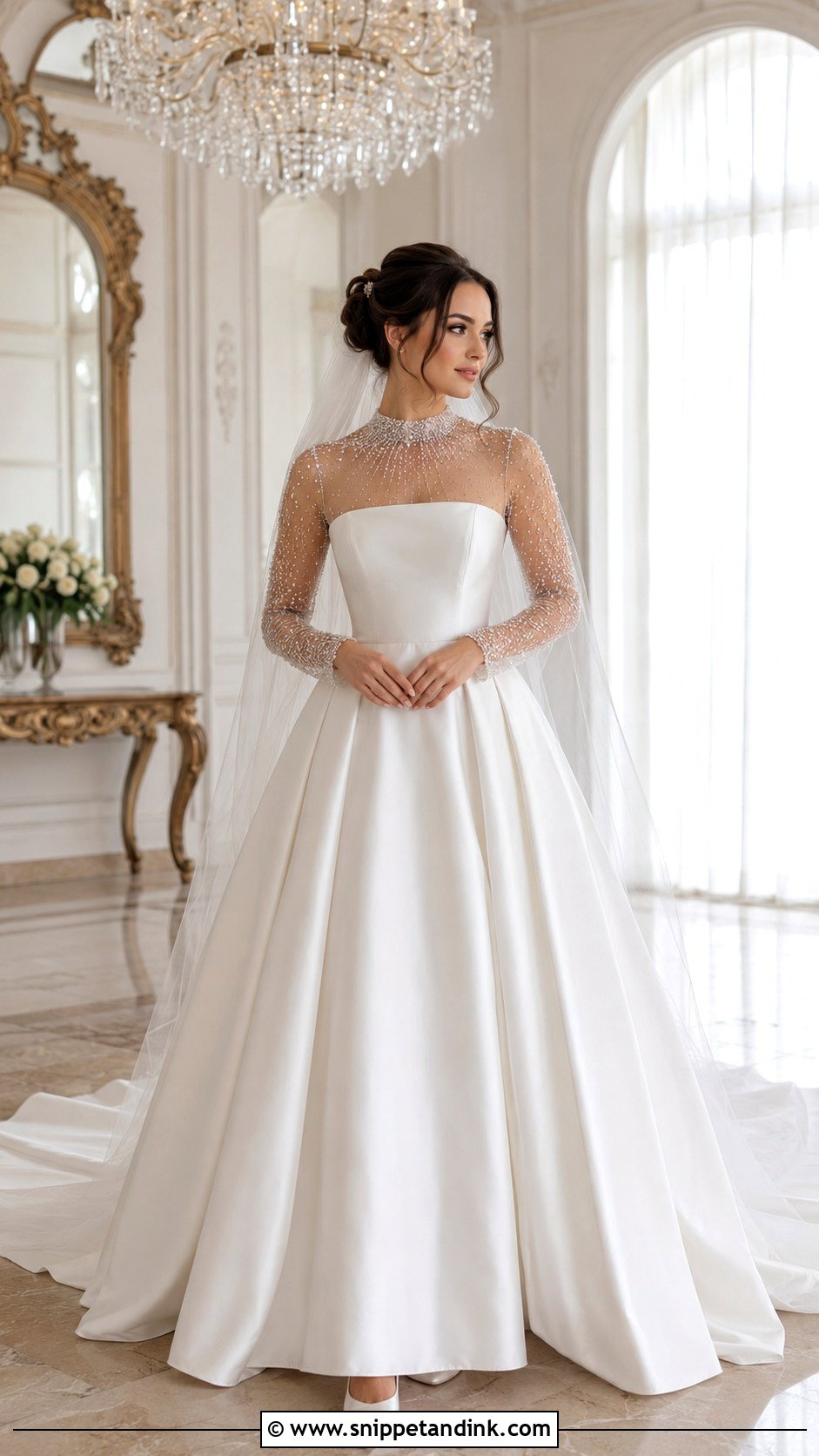
Rhinestones look sharp against plain satin, but their metal settings can scratch a satin bodice and pull threads. Choose a sheer cropped design with spaced stones, and I check whether the backs are smooth-set or claw-set, because claws catch. Long sleeves feel formal, elbow-length lighter. The shrug should end above the natural waist so it doesn’t add bulk to the skirt. Wear your hair up to keep strands out of the stones, and pair it with crystal studs, a plain veil and satin pumps.
17. Off-Shoulder Bridal Shrug With Strapless Gown
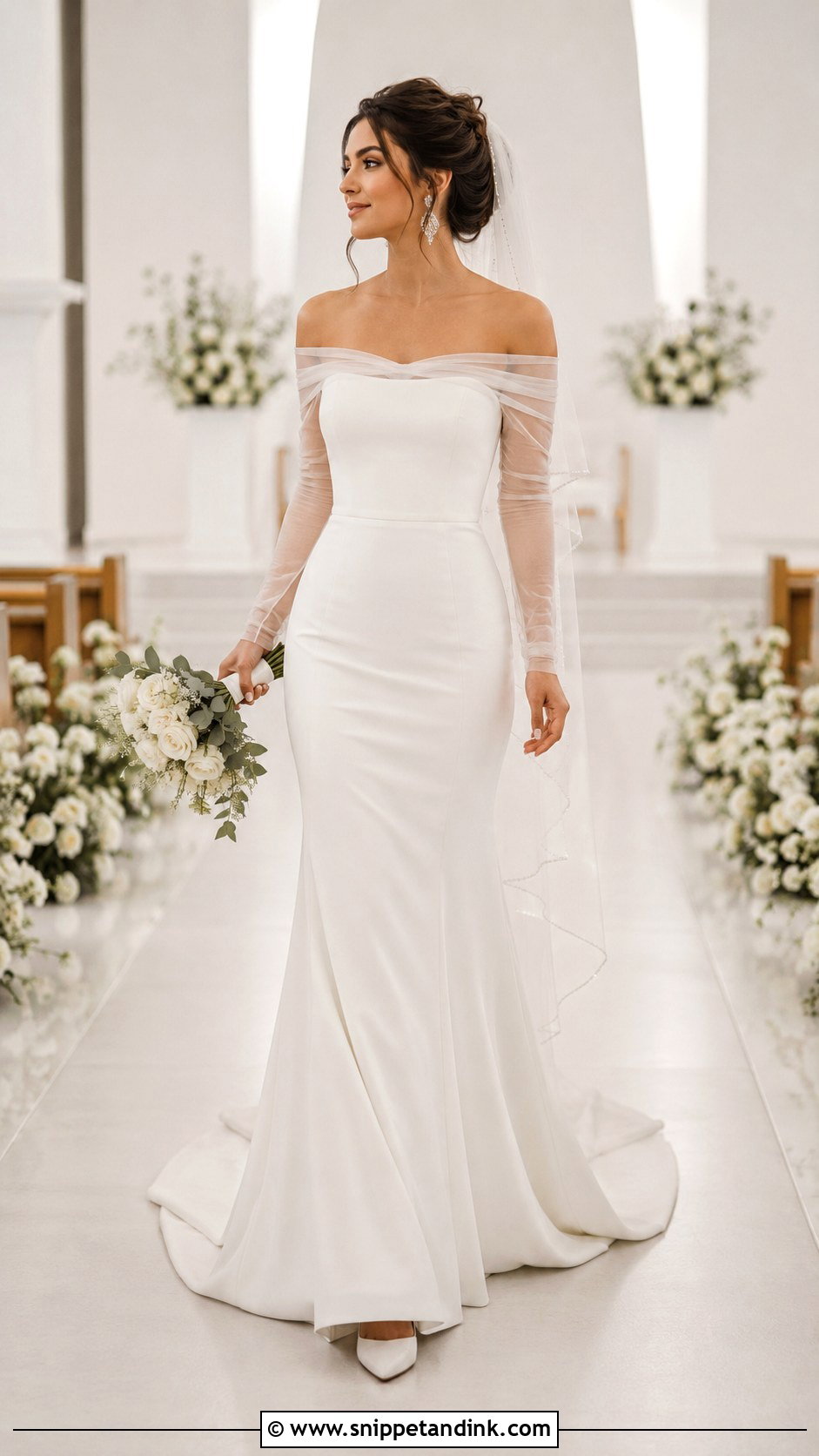
Off-shoulder shrugs give a strapless gown a portrait neckline, but they slide. Stretch tulle, lace or a fine knit holds the upper arms best, and a fitted cut makes the shrug look like part of the dress. Practise lifting your arms, hugging and sitting; if it creeps up onto the shoulders, ask for a light elastic or silicone grip inside the neckline. Statement earrings, an updo, slim pointed heels and a fingertip veil set below the bun keep the shoulders visible over a sheath, A-line or fit-and-flare dress.
18. Cap-Sleeve Bridal Shrug With Lace Wedding Dress
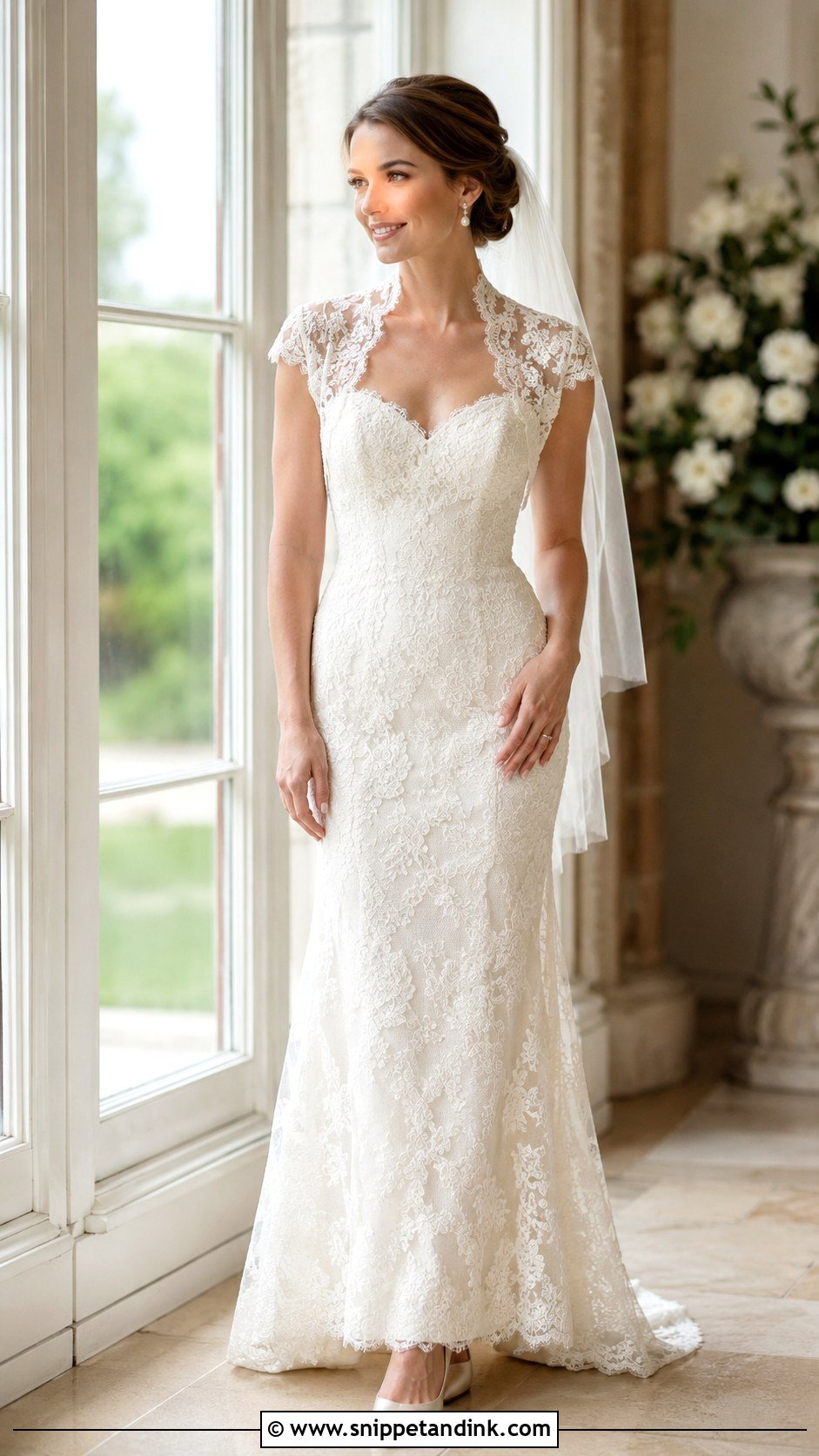
Cap sleeves give the lightest possible coverage, just over the top of the shoulder. Pair a sheer tulle or fine lace version with a lace dress, matching the pattern scale and floral style. A scalloped edge frames the neckline nicely, but heavy trim over an ornate bodice looks crowded. Cap sleeves sit at the widest point of the upper arm, so check the fit in a mirror with arms relaxed. Pearl earrings, a soft updo, an understated veil and ivory heels finish it, with minimal bracelets and necklaces.
19. Cropped Blazer Shrug With Bridal Pantsuit
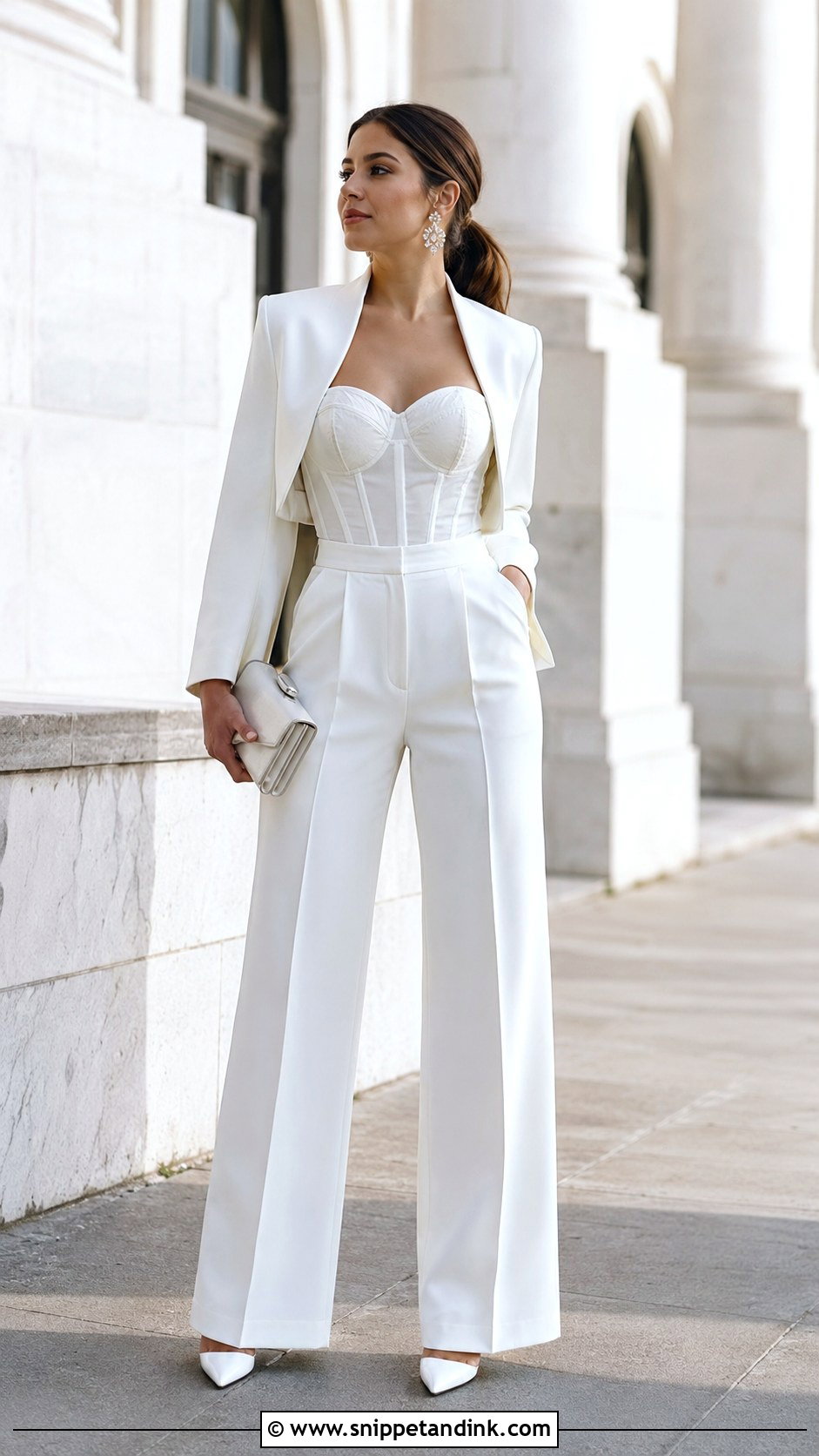
A cropped blazer is the tailored answer to a shrug and the natural partner for a bridal pantsuit. It should end at the natural waist and show the trousers’ high rise. Underneath, a fitted camisole, corset top or bodysuit gives you a finished look once the jacket comes off. White jackets and trousers bought separately often don’t match, so compare them in daylight. Pointed pumps, sculptural earrings, a sleek clutch and a low ponytail or short veil keep it modern for a ceremony, civil wedding or reception.
20. Blush Bridal Shrug With Ivory Wedding Dress
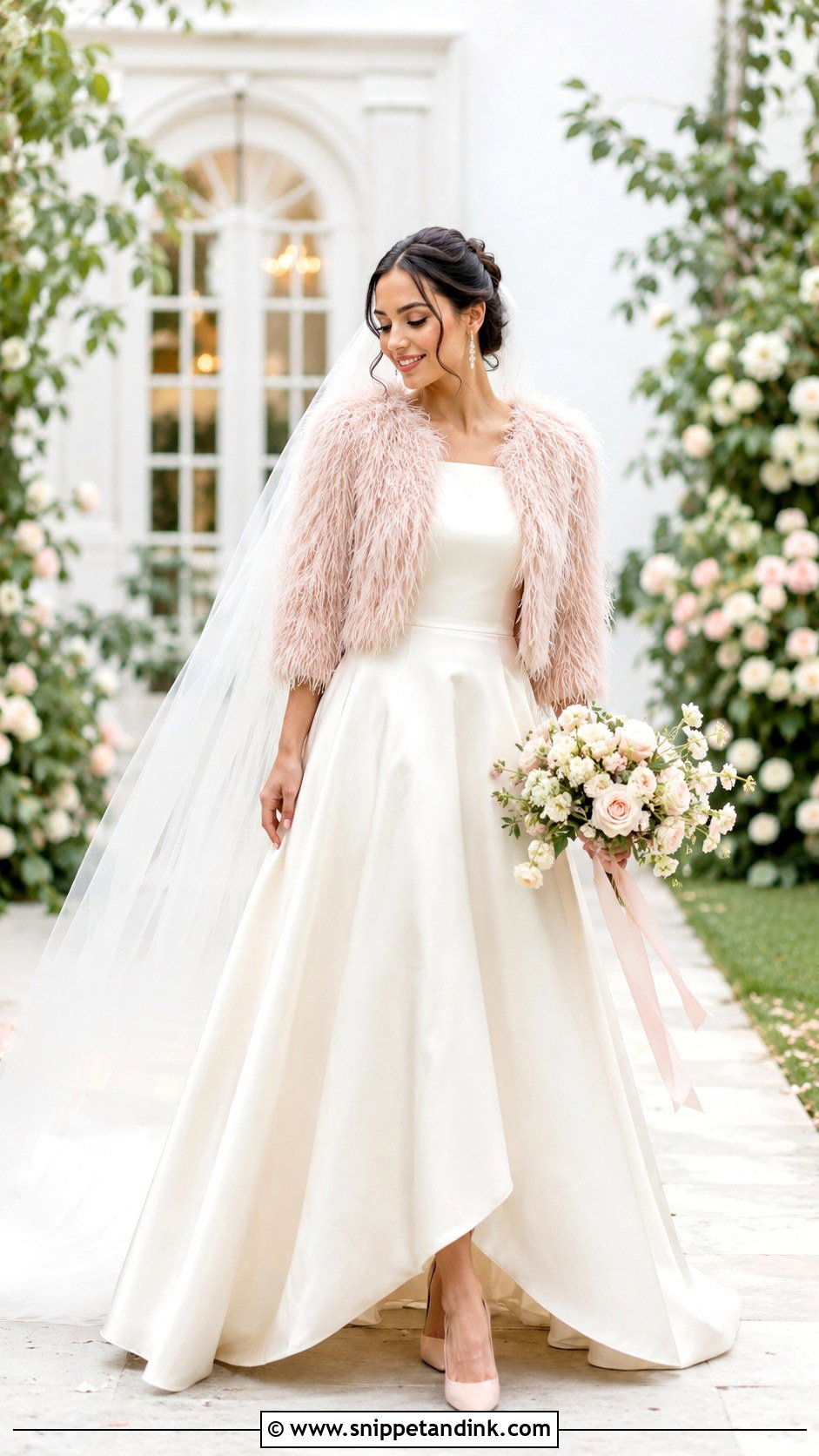
Blush is a gentle way to bring color into an otherwise ivory outfit. Choose a pale, muted shade in tulle, lace, cashmere or feathers rather than a strong pink, and I always hold it next to the bride’s face first; some blushes turn sallow on olive skin. An ivory slip dress, A-line or simple satin ball gown makes a clean base. Repeat the shade once, in earrings, shoes or a bouquet ribbon, rather than everywhere. A plain ivory veil connects the shrug to the dress, and the venue lighting is worth checking before you commit.
Covered Shoulders for the Ceremony, Bare for the Party
Many brides buy a shrug because the ceremony venue asks for covered shoulders. Some churches, mosques, gurdwaras and temples expect it, and expectations vary even within one faith, so ask the officiant directly rather than guessing. Sleeves to the elbow and an opaque or lined fabric meet most requests; very sheer tulle may not.
Taking it off between ceremony and reception
- Decide in advance who holds it, and give them a garment bag so it isn’t left on a chair.
- Have your hairstylist check that the collar won’t catch pins or veil combs as it comes off.
- Look at your shoulders once it’s removed; body makeup and fake tan sometimes need a touch-up.
- Faux fur and feathers drop fibers on the gown, so a quick lint roll is worth it.
When a Wrap or Cape Beats a Shrug
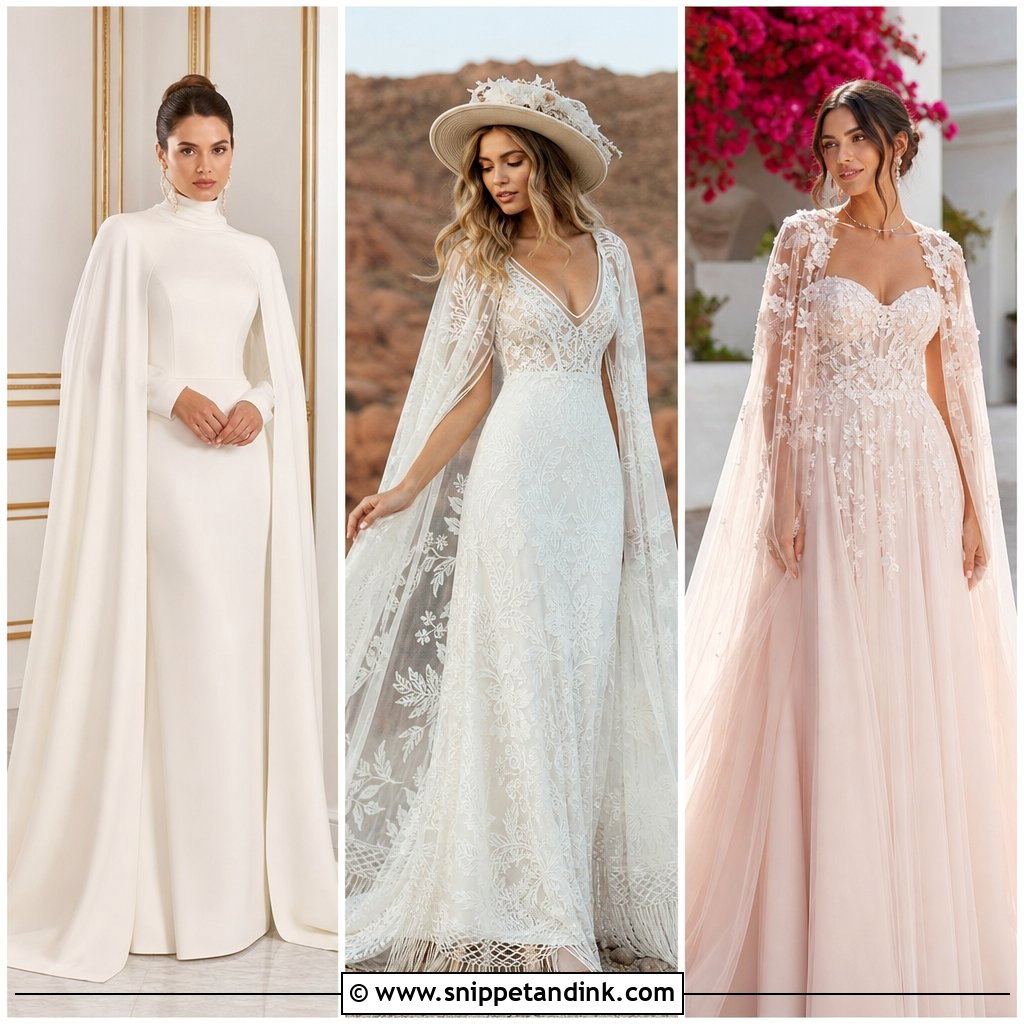
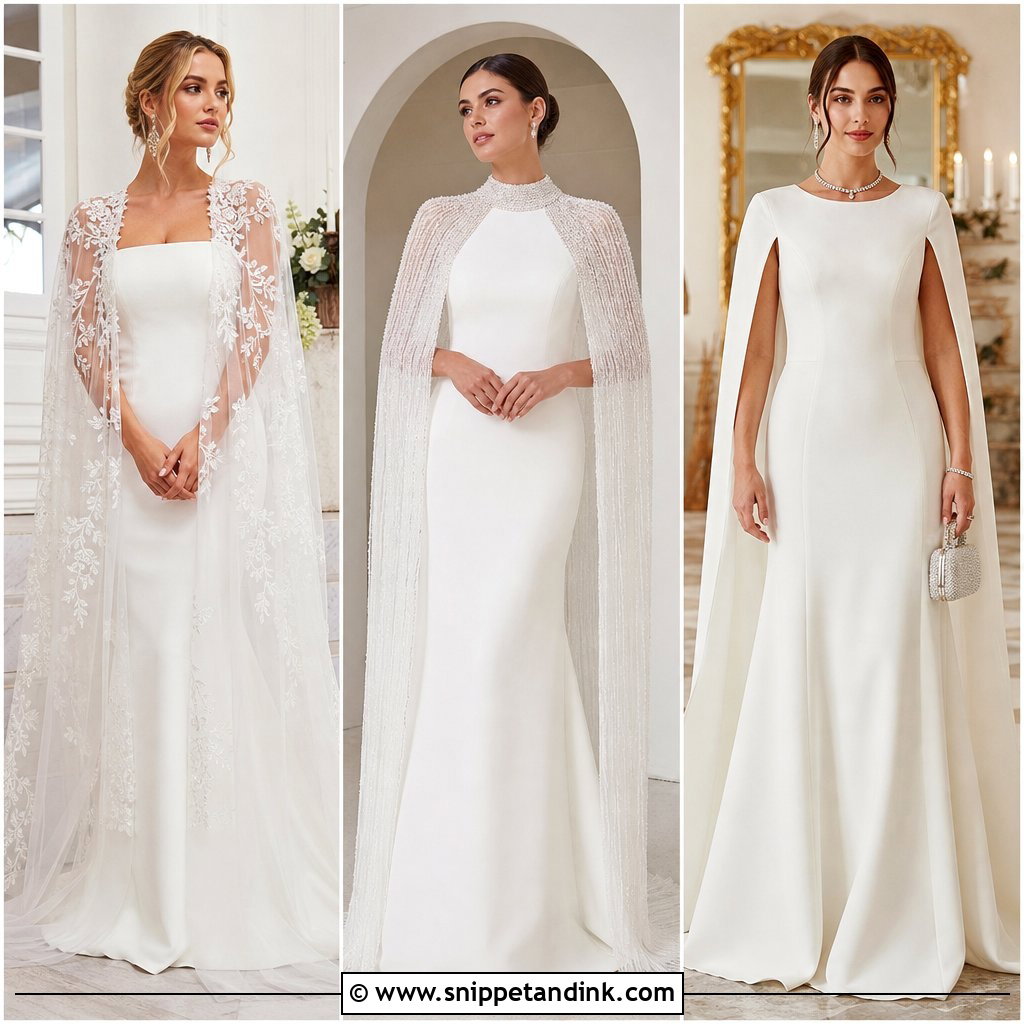
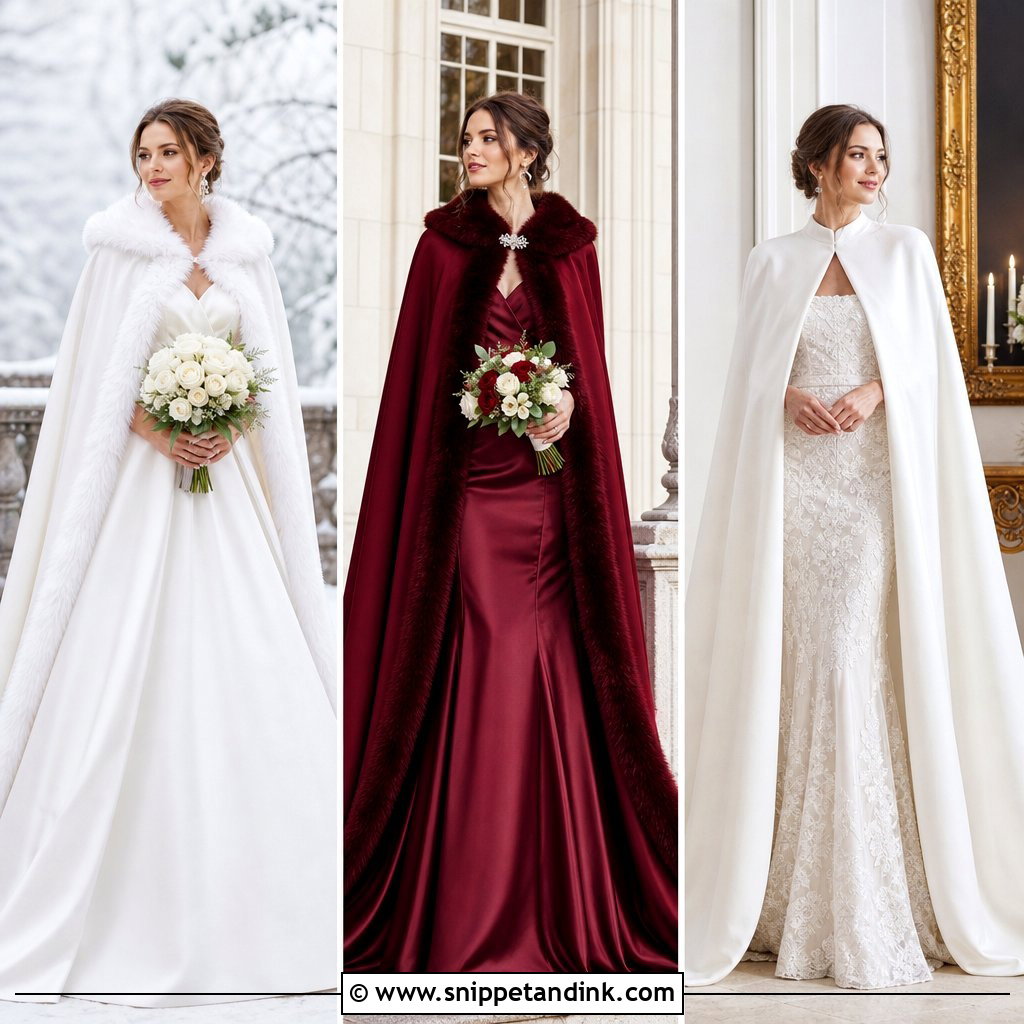
A shrug isn’t always the right answer. Armholes add a seam across the shoulder and upper arm, which can interrupt a gown with an intricate lace back or illusion sleeves. In that case I’d look at a sheer cape or a long stole that drapes over the shoulders without sleeves, so the back detail still shows through.
Wraps are also easier for a bride whose arms are a different size from the rest of her measurements, since nothing needs to fit closely. The trade-off is that a wrap slips and has to be held or pinned, so it suits a short outdoor ceremony far better than an evening of dancing. For real warmth on a long winter day, a fitted sleeved shrug still wins.
Will Anyone Guess the Shrug Was Bought Separately?
A shrug should look like it belongs to the gown rather than covering it up. Start from the dress’s color, fabric, neckline and silhouette, then choose either a quiet match or a clear contrast. Lace and tulle give light coverage, satin and organza structure, and cashmere, velvet or faux fur warmth. A sparkly shrug can change a plain gown for the reception. Try everything together, veil, jewelry, shoes and hair, before alterations finish, and move in it as much as you look at it.
You'll Like These Ideas:


Leave a Reply