
More brides are asking me about boleros, and I understand why: one small layer adds coverage, warmth and a polished ceremony look without hiding the dress. The difference between a good bolero and an afterthought is fit and proportion, so I look at the neckline, sleeve length, fabric weight, gown shape and setting before suggesting anything. Lace makes a strapless gown feel classic. Satin sharpens a minimal dress. Sheer tulle, pearls, feathers, knits and cropped jackets let you build a two-in-one wedding look, covered for the vows and open for the party. These are the pairings I return to, with what to check for each one.
Where the Hem and Sleeves of a Bolero Should Land
Most bolero problems are proportion problems. A beautiful piece that ends in the wrong place can shorten your torso or widen your shoulders, so I fit the length before I think about fabric.
- On a natural-waist or ball gown, the bolero should end just above the waist seam, so the seam still shows.
- On a dropped-waist or mermaid gown, a slightly longer bolero ending at the lower ribs keeps the line long.
- On an empire waist, keep it very short, ending at or just under the bust.
- Sleeves ending at the elbow draw the eye to the waist, so I avoid them on brides who’d rather not emphasise it. Bracelet length or full length is more forgiving.
The shoulder seam should sit right on your shoulder bone. Too far out and the bolero looks borrowed; too far in and it pulls when you lift the bouquet. Fit it over the actual gown, never over a T-shirt, because a structured bodice changes how everything sits.
1. Lace Bridal Bolero With Strapless Wedding Dress
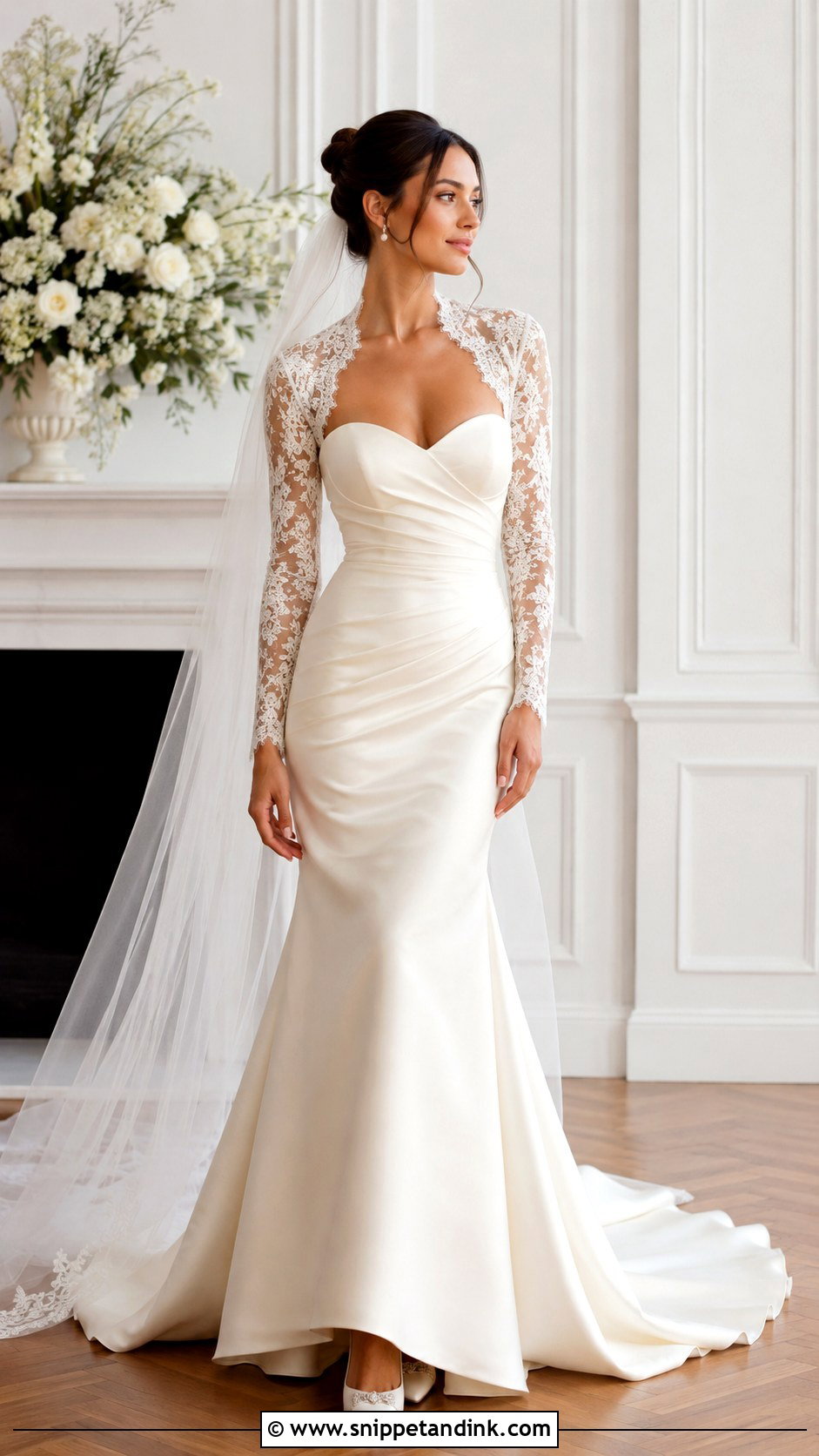
Over a strapless gown, a lace bolero covers the shoulders and arms while the shape of the dress stays visible. Sweetheart, straight-across and corset necklines all sit well under it. Match the lace to the mood of the gown: delicate florals feel romantic, heavier corded lace leans vintage. The detail I watch is the front edge. If it falls exactly on the bodice seam, the two lines fight; I’d rather it sit just outside or just inside. Pearl studs or small drops, pointed pumps, a soft veil and a neat bouquet complete it.
2. Satin Bridal Bolero With Minimal Wedding Dress
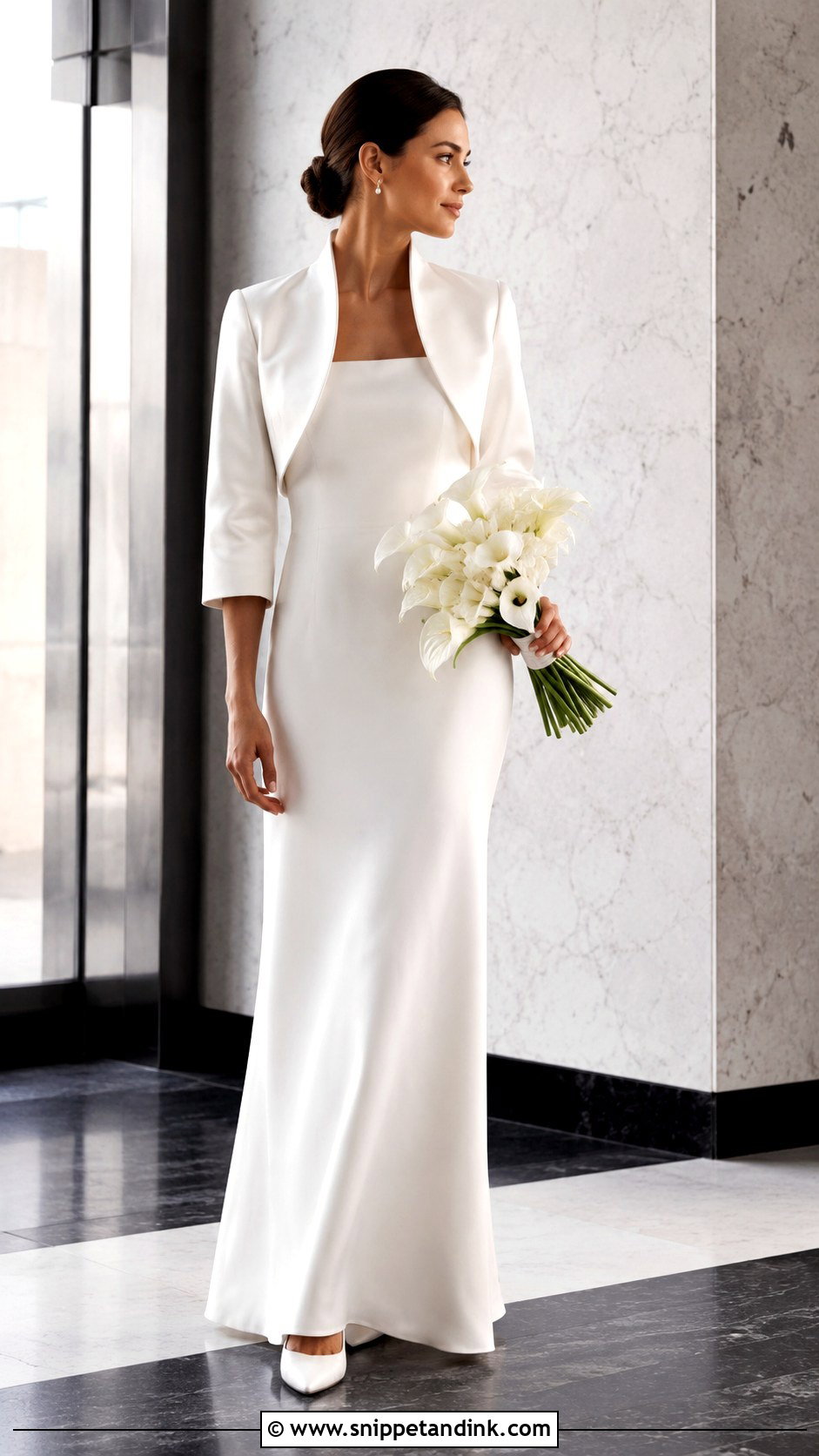
Clean lines call for satin. Over a column, a simple A-line or any gown without lace, a satin bolero adds polish without sparkle. Shade matching is where it fails most often, because satin shows undertone more than any other fabric, so compare it to the dress in daylight, especially with ivory, pearl or champagne gowns. A cropped style with bracelet-length sleeves defines the waist and makes the skirt look longer. Satin heels, a low bun and a structured bouquet keep everything crisp.
3. Long Sleeve Bridal Bolero With Ball Gown
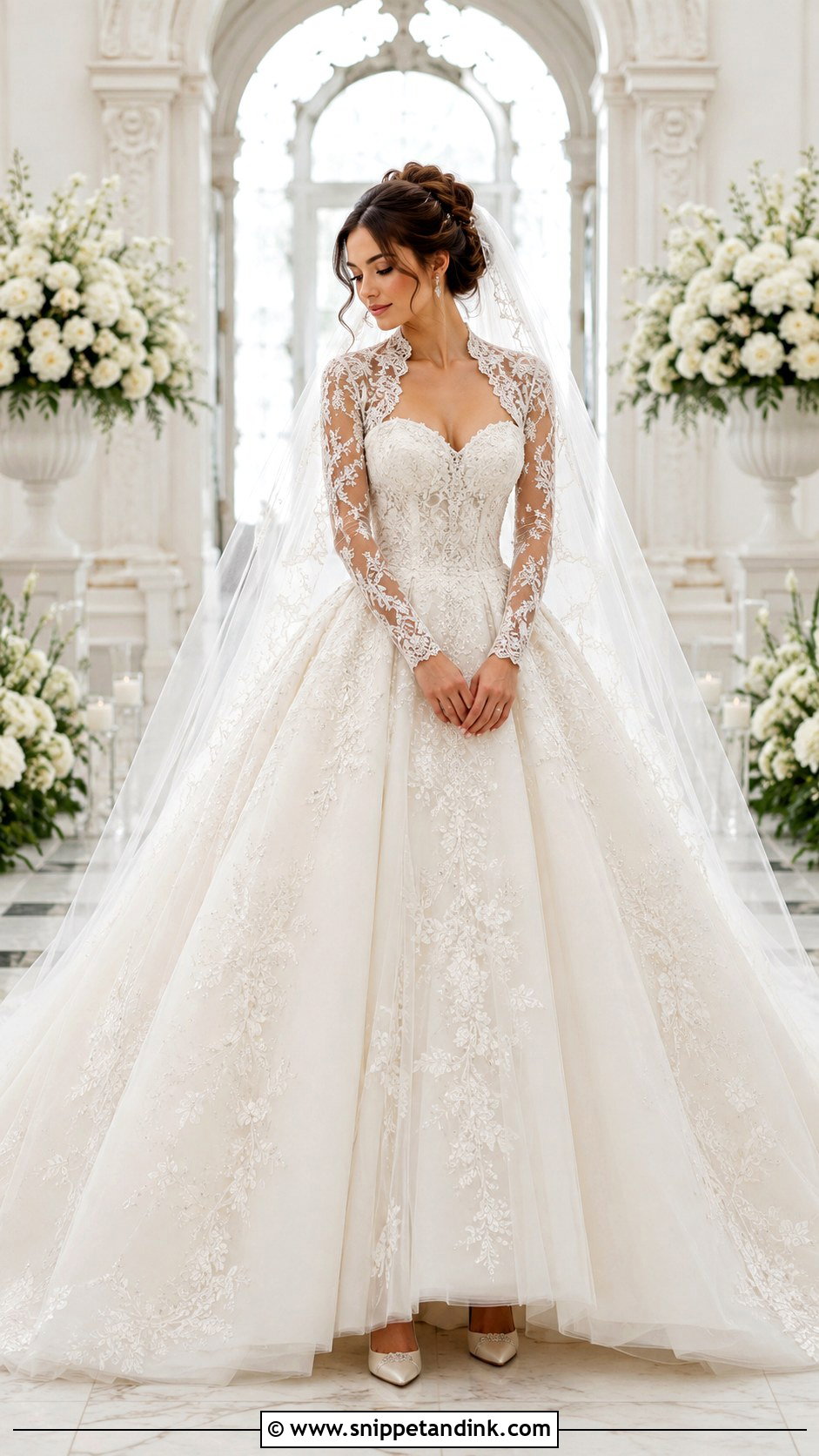
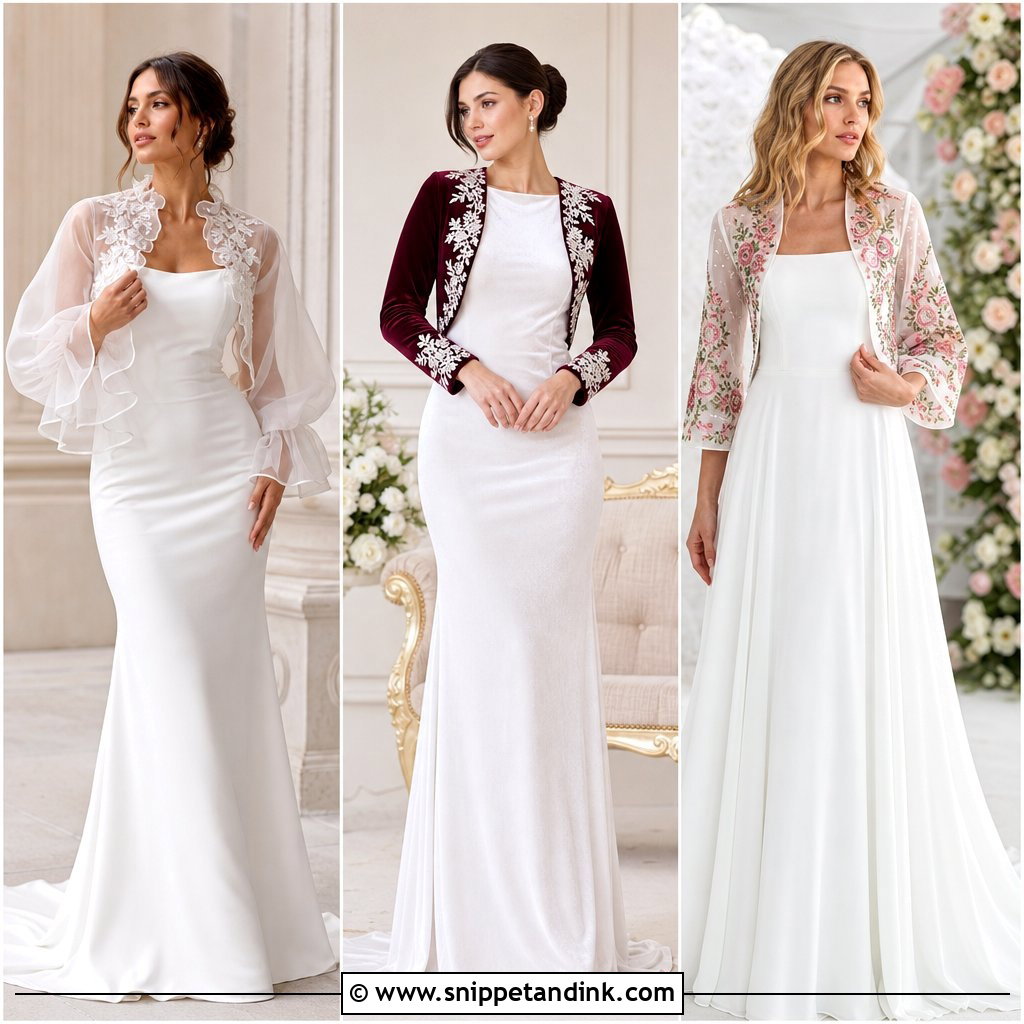
Ball gowns are so full below that bare arms can make the top half look small. A long-sleeve bolero in lace, tulle or sheer embroidery restores balance without bulk. My rule is simple: a beaded bodice gets a plain bolero, a plain bodice can take a textured one. Check that the sleeve head isn’t puffed or gathered, which widens the shoulders on top of a wide skirt. A cathedral veil, classic heels and a soft updo suit the scale of grand venues.
4. Sheer Tulle Bridal Bolero With A-Line Dress
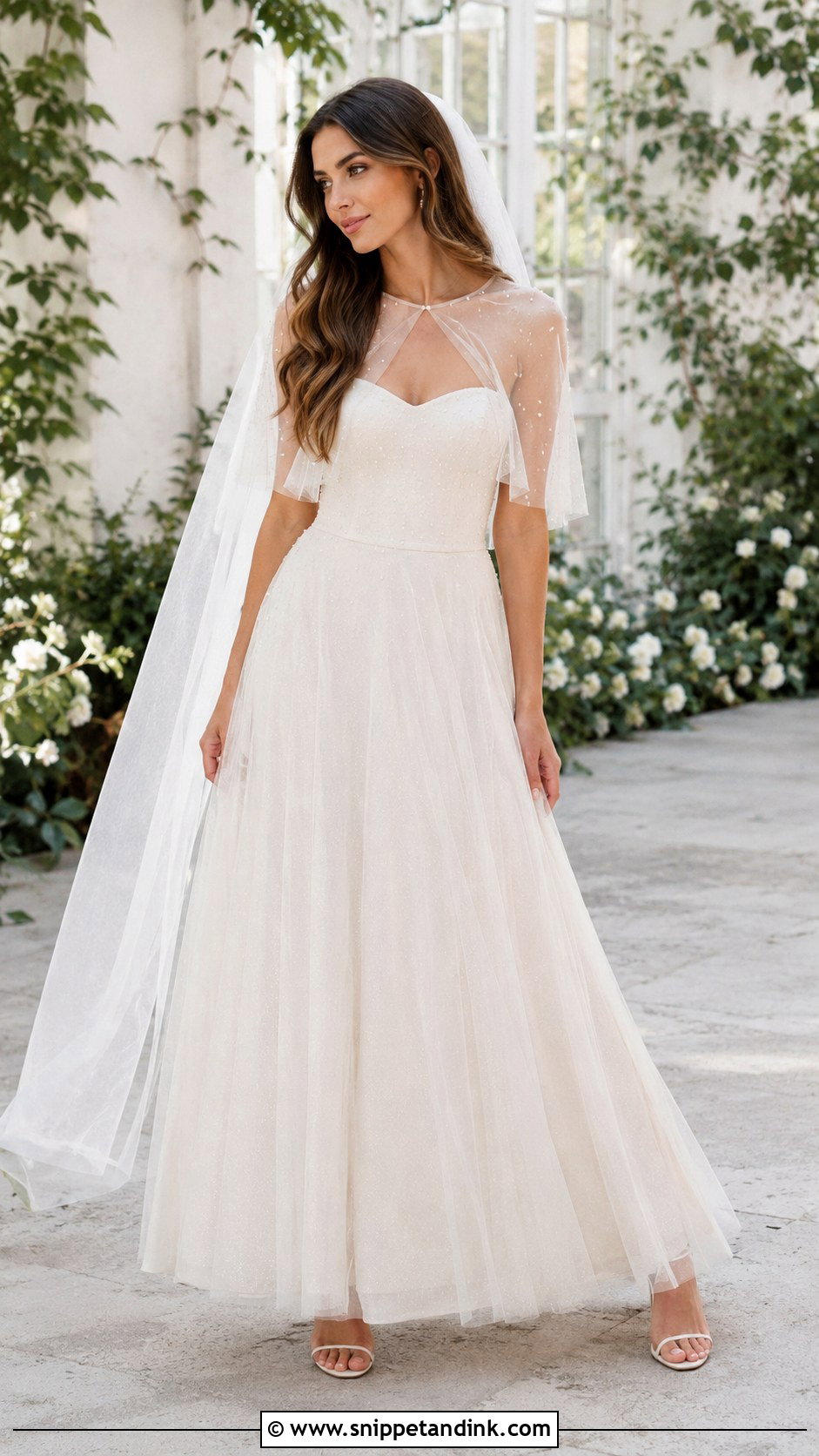
Sheer tulle gives coverage that barely registers, and it follows the movement of an A-line skirt. Barely-there tulle with tiny buttons, scattered pearls or light embroidery adds detail if you want it. I suggest it to brides who need a modest ceremony look but want the original neckline to show through. Tulle can scratch inside the elbow, so ask for soft bridal illusion rather than crisp net. Soft waves, neutral makeup, slim heels and a fine veil keep the whole effect light and breathable.
5. Pearl Bridal Bolero With Simple Wedding Gown
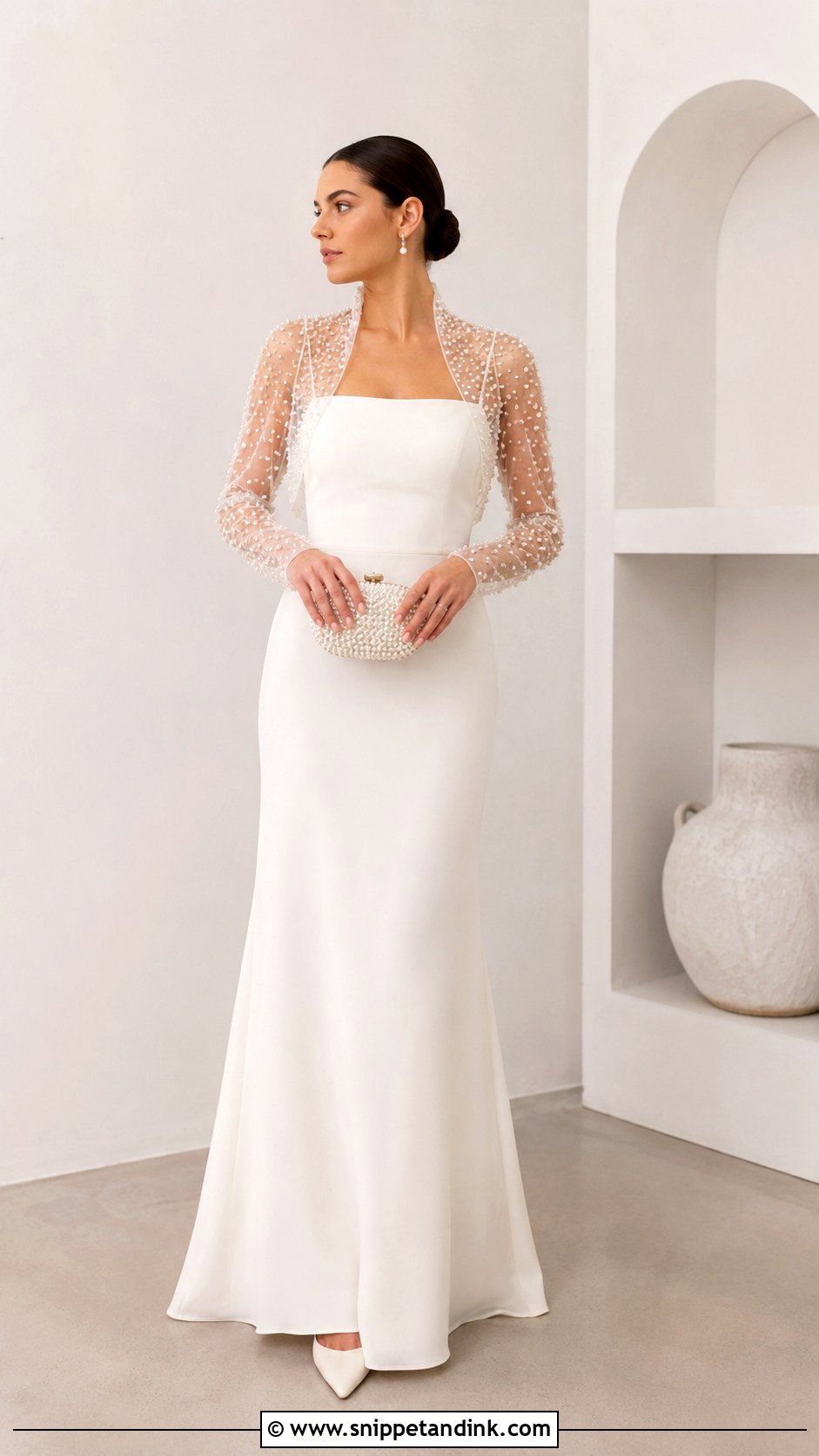
Pearls scattered over sheer fabric can turn a simple crepe, satin or mikado gown into something layered and special, without heavy beading. The contrast between smooth dress and textured bolero is what makes it. I’d skip the necklace and wear small pearl earrings so the upper body doesn’t get crowded. Ask how the pearls are sewn: individually knotted pearls don’t unravel if one thread breaks, while a running thread can lose a whole row. A sleek bun, ivory heels and a small pearl clutch tie it together.
6. Beaded Bridal Bolero With Mermaid Dress
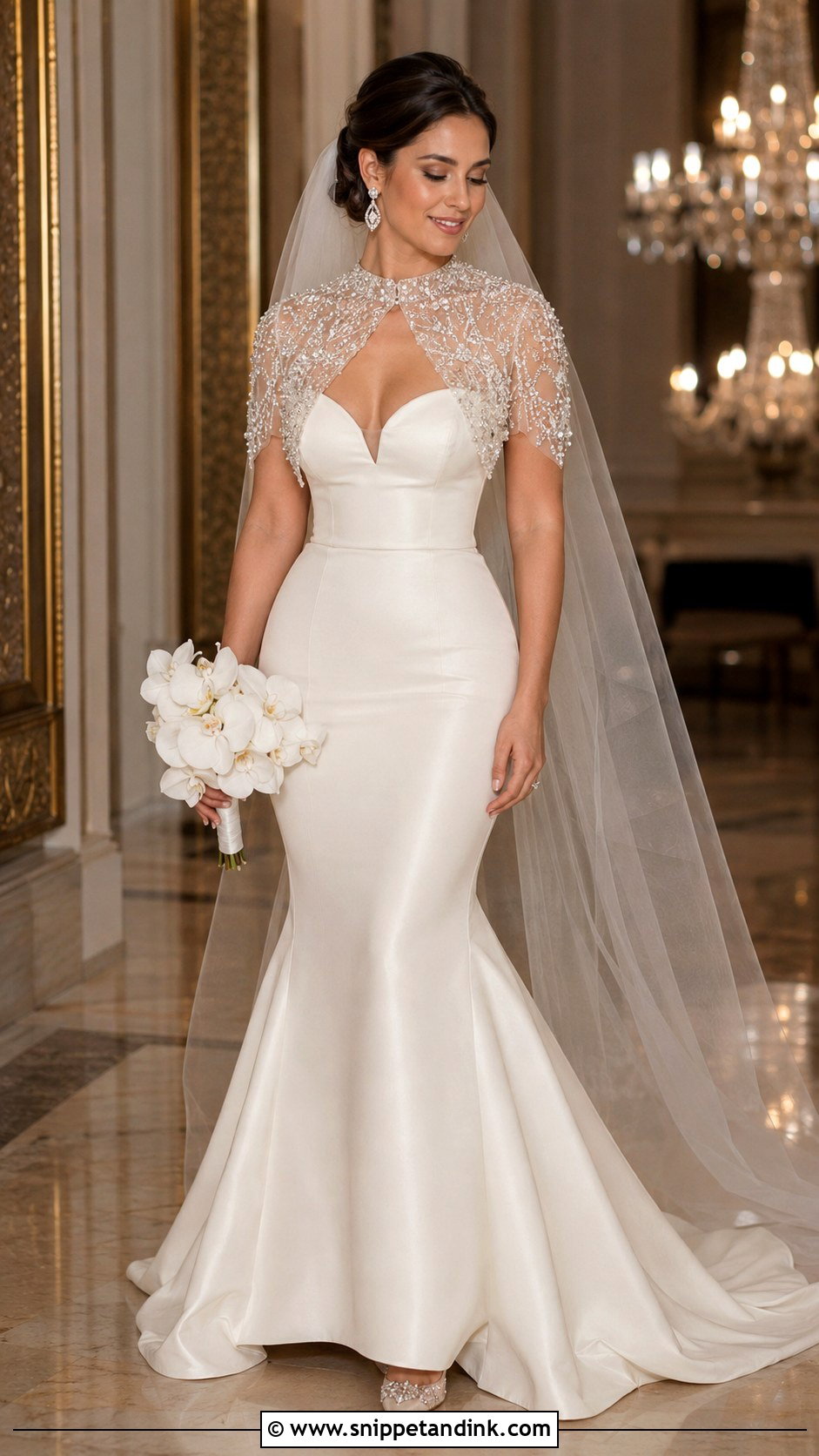
Evening mermaid gowns can take beading, but the bolero must keep the silhouette visible. A cropped design ending at or just above the natural waist keeps the line clean. Echo something already on the gown, like crystals, pearls or silver thread, and go lighter if the dress is heavily embellished. Beaded fabric is heavier than it looks; on a bolero that weight drags the shoulders back, so try it on for a while before buying. Slim heels, drop earrings and a smooth veil complete a confident, formal look.
7. Faux Fur Bridal Bolero With Winter Wedding Dress
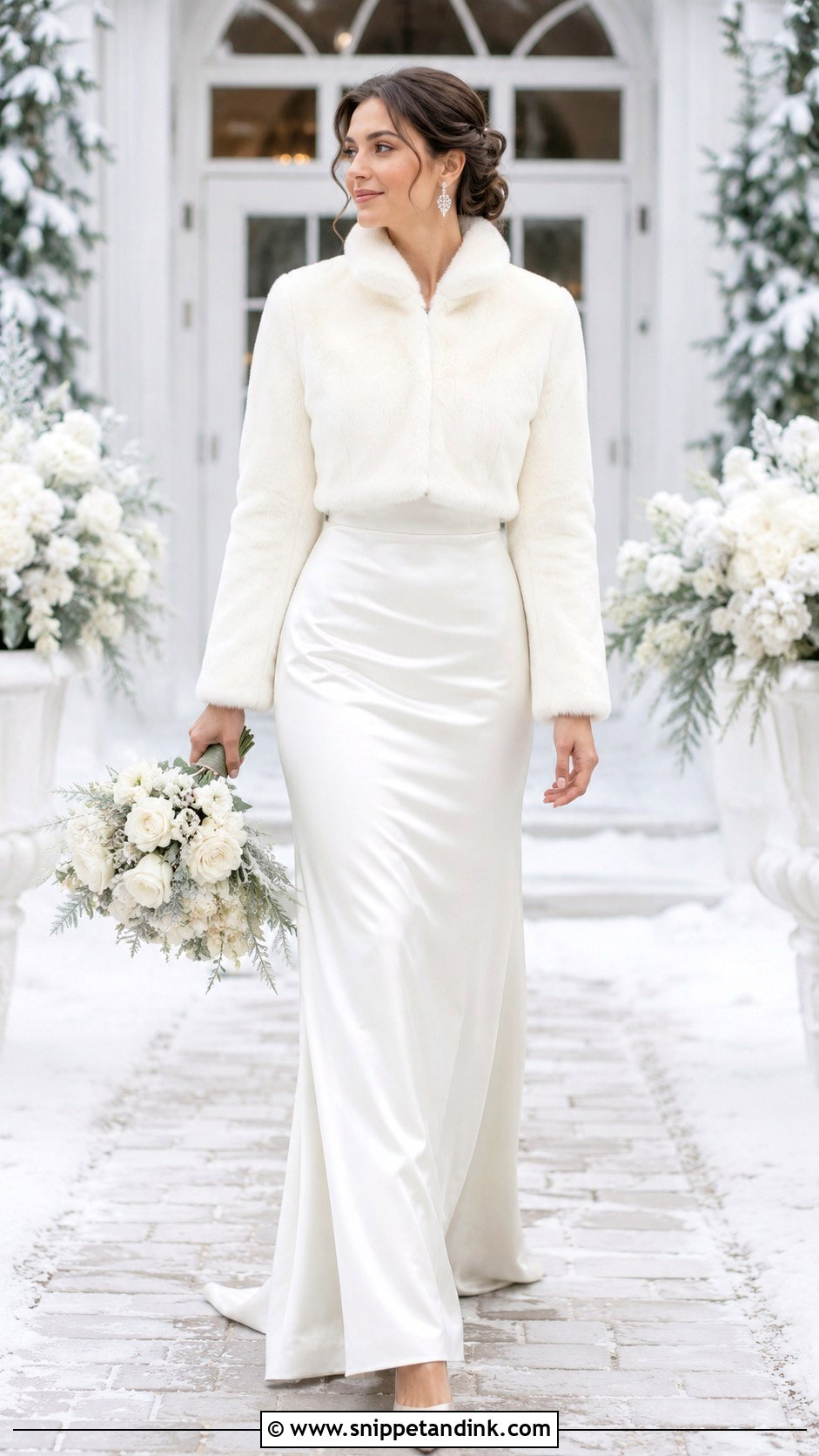
A faux fur bridal bolero earns its place at cold venues, outdoor winter portraits and frosty entrances. Short styles suit fitted gowns, satin dresses and full skirts because they keep the waist in view. Ivory and soft white are classic; champagne suits warmer gown tones. Faux fur sheds a little at first, so give it a gentle shake outdoors and a lint roll before it goes near a dark-suited groom. Crystal earrings, closed-toe heels and a sleek hairstyle let the texture lead without making photos look heavy.
8. Feather Bridal Bolero With Reception Dress
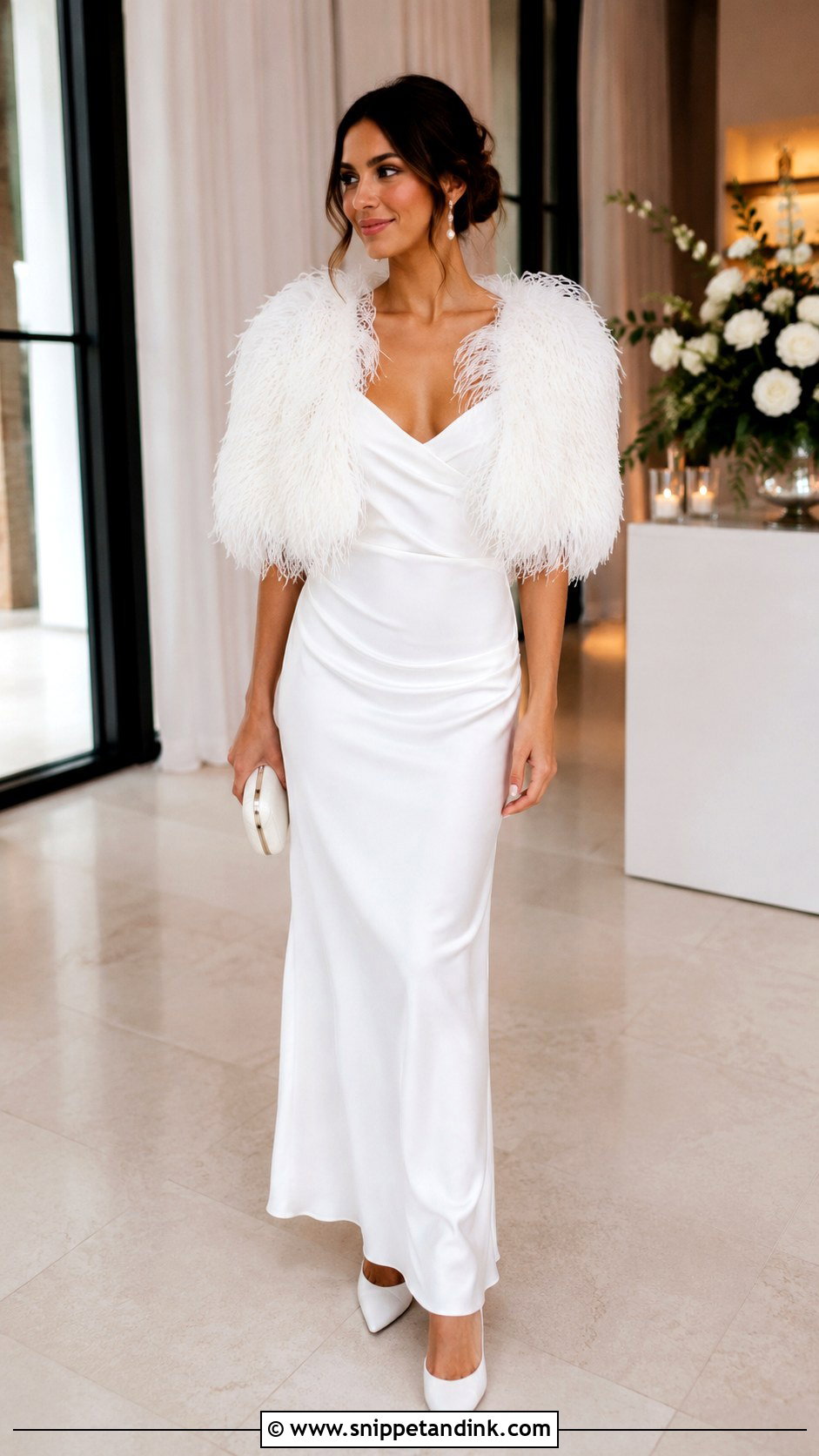
Feathers make a reception look playful and fashion-forward. They work over simple shapes like a slip, a mini dress or a sleek column, where the feathers are the only statement. White heels, a small clutch and minimal jewellery keep it from getting busy. It comes off easily when the dancing starts, which gives you a fun second look without a full change. One caution: feathers stick to lipstick and lip gloss, so hug carefully.
9. Cropped Bridal Bolero With Tea Length Dress
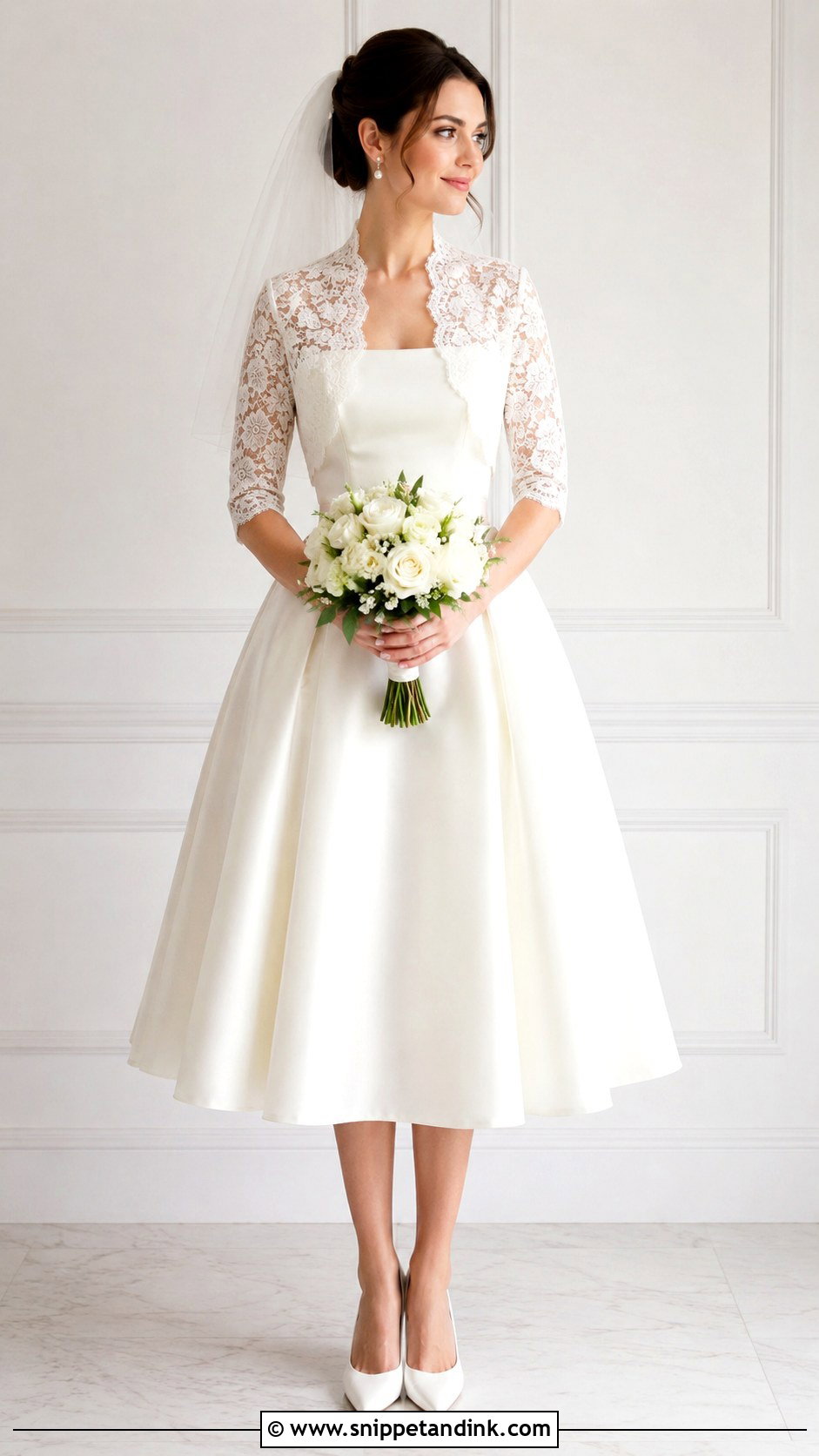
Tea length dresses and cropped boleros share a sense of proportion, with the short jacket marking the waist and the skirt showing off your shoes. Lace, satin or organza can all work. For a retro-inspired outfit, I’d choose a fitted bolero with small buttons and wear pointed heels or bridal flats; for something softer, a sheer bolero with fluttery sleeves. Add a short veil, pearl earrings and a structured bouquet. Because the hem is shorter, your shoes are part of the outfit, so choose them before the bolero.
10. High Neck Bridal Bolero With Sleeveless Gown
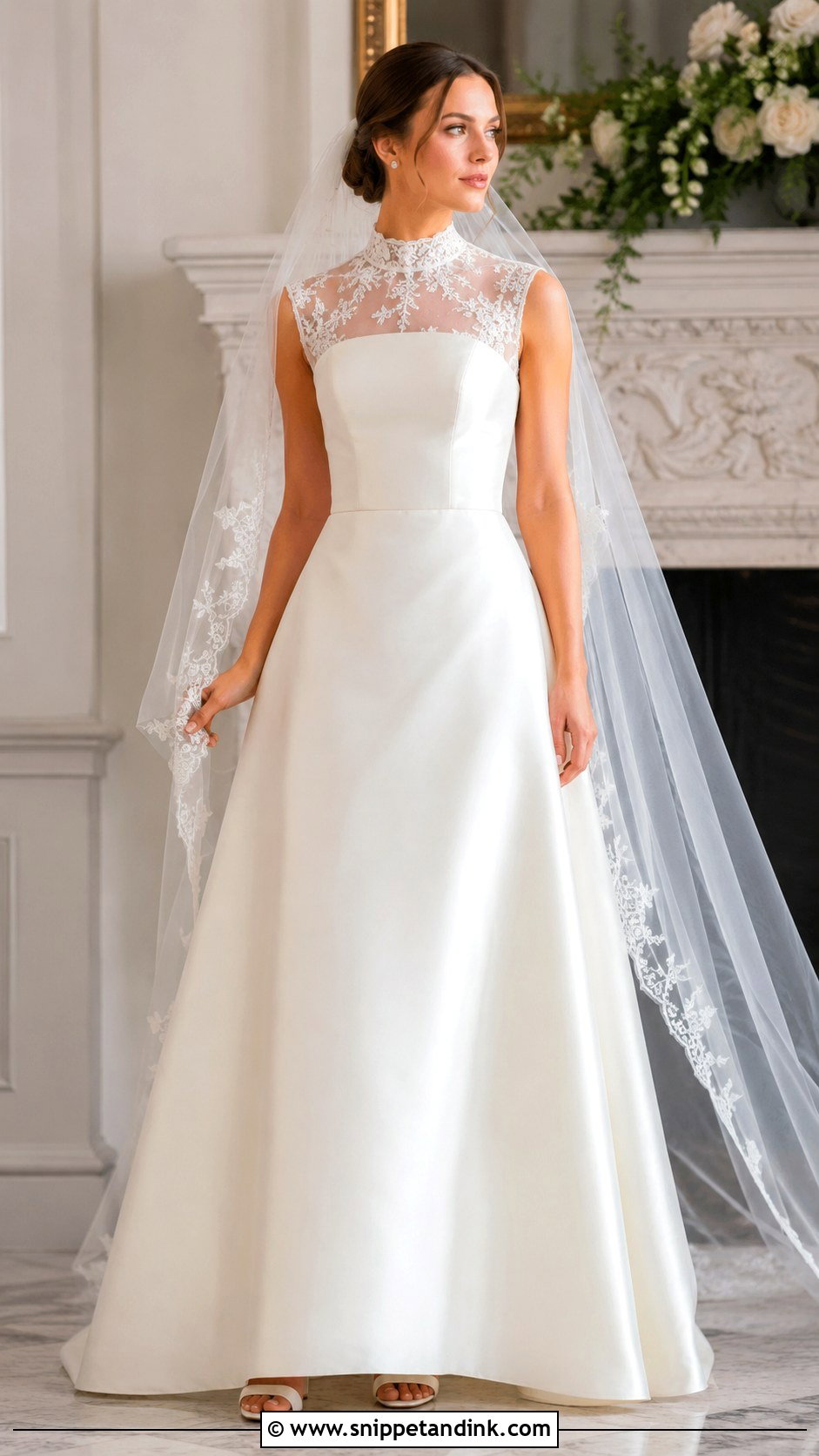
Need a high-neck look for the ceremony but love your sleeveless gown? A high-neck bolero in sheer lace or tulle creates the illusion without altering the dress, and it comes off for the reception. No necklace here, since the bolero frames the neck already; pearl studs, a low chignon and elegant heels are enough. The collar must close flat at the back, usually with a tiny button and loop, or it will gap whenever you turn your head.
11. Off Shoulder Bridal Bolero With Fitted Dress
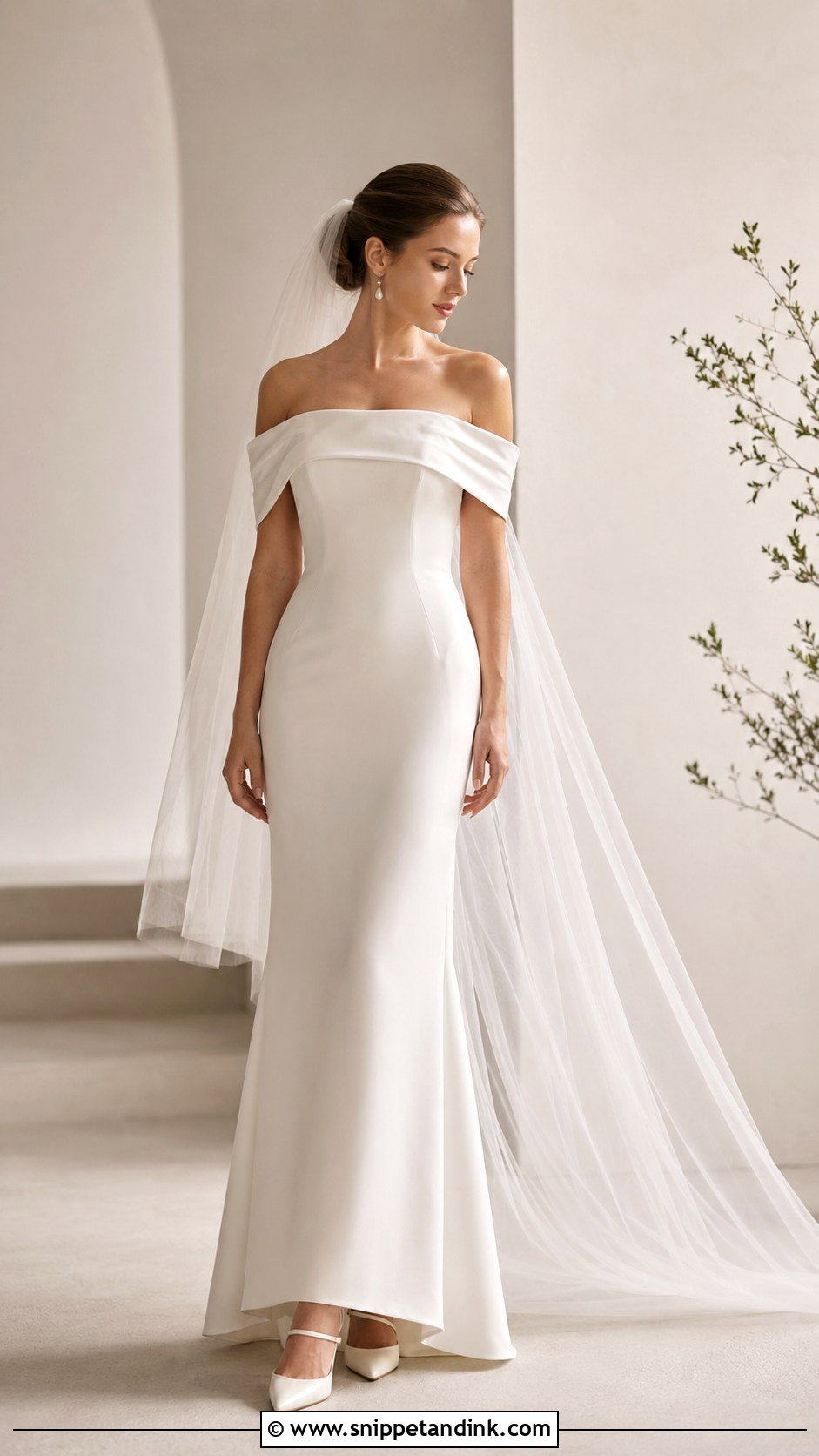
Sitting across the arms and collarbone, an off-shoulder bolero softens a fitted dress and adds a horizontal line that balances a narrow sheath, mermaid or fit-and-flare shape. Satin looks clean, lace romantic, tulle softer. The trade-off is movement: an off-shoulder band limits how high you can raise your arms, so practise hugging and holding the bouquet. Wear your hair up or swept to one side, with delicate earrings, slim heels and a smooth veil.
12. Button Back Bridal Bolero With Classic Gown
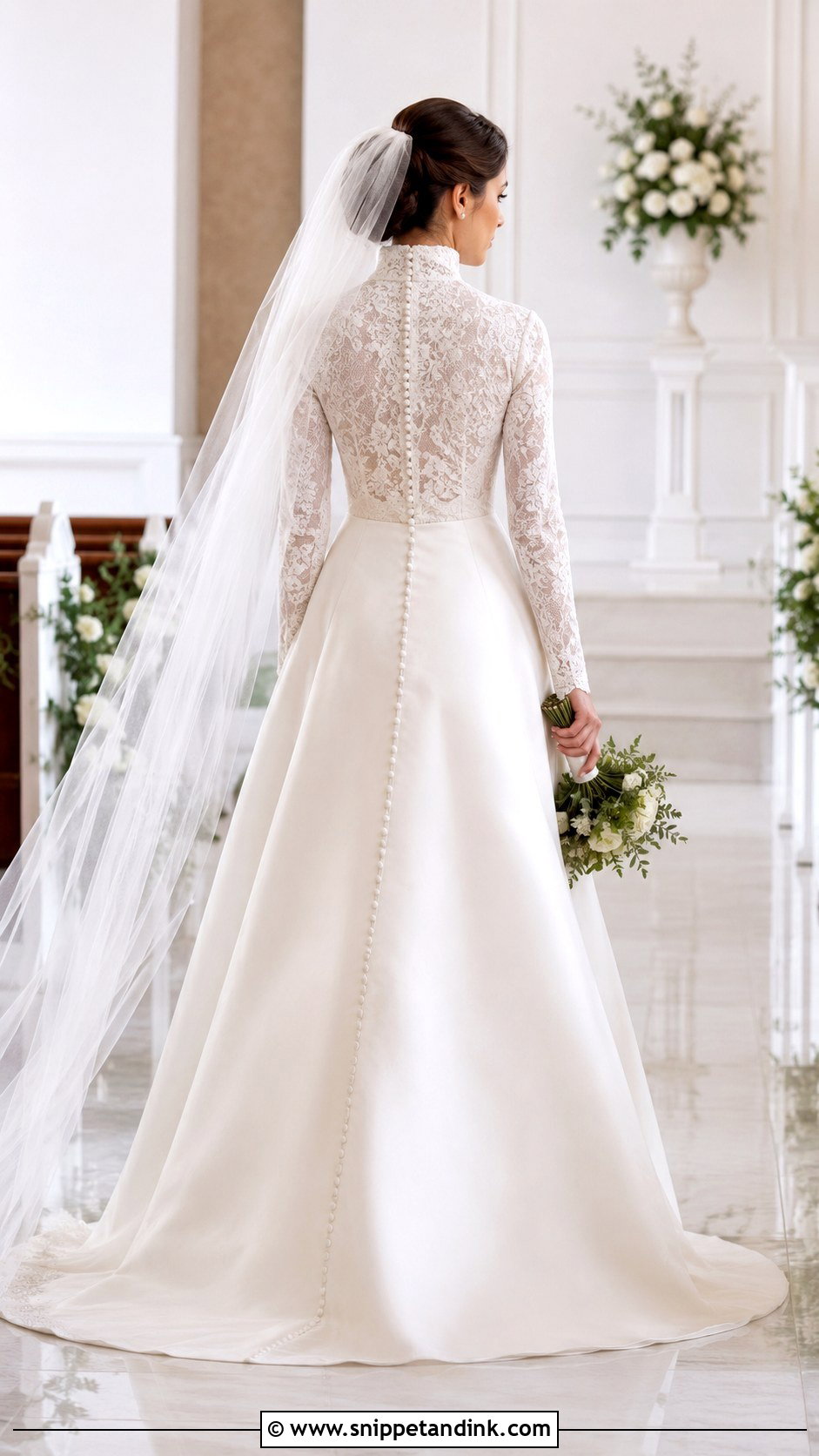
When the back of your gown is plain, a button-back bolero gives guests something to look at during the ceremony. Covered buttons on lace, satin or crepe feel traditional. Fit is everything here: a fitted shape looks polished, a loose one wrinkles across the shoulder blades. Make sure the hem lands near the gown’s waistline so the back view looks continuous. A long veil lets the buttons peek through, with simple heels and small earrings.
13. Organza Bridal Bolero With Tulle Skirt
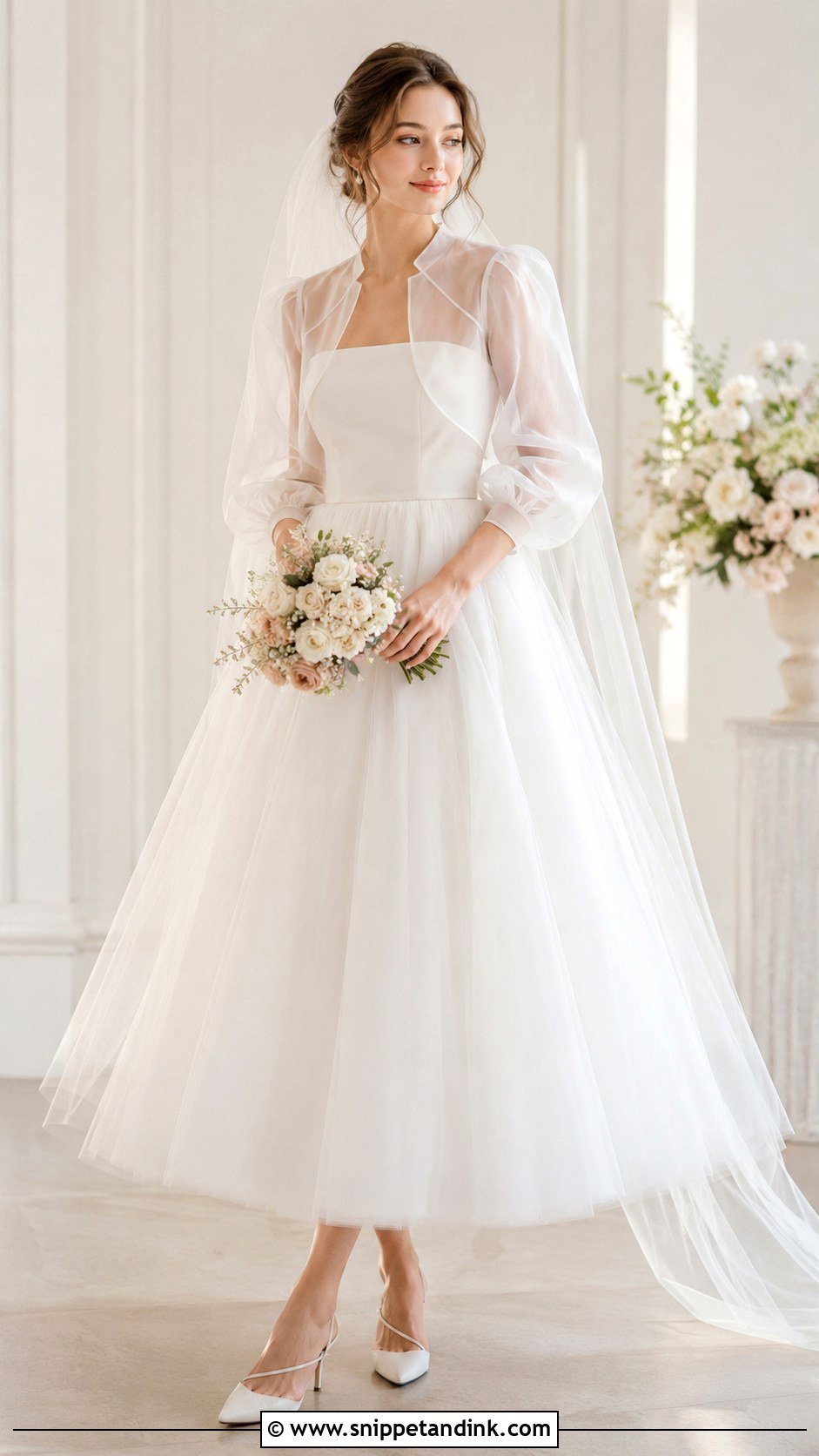
Organza is crisp and light, so it gives a tulle skirt a structured top without adding weight. Puffed, gathered or plain organza sleeves set the drama level. With a very full skirt, a cropped bolero keeps the waist defined. Organza creases sharply and those creases stay, so I’d have it steamed on the morning rather than packed folded in a suitcase. Keep the bodice beneath smooth so layers don’t bunch, and finish with fine heels, a delicate veil and soft makeup.
14. Embroidered Bridal Bolero With Plain Dress
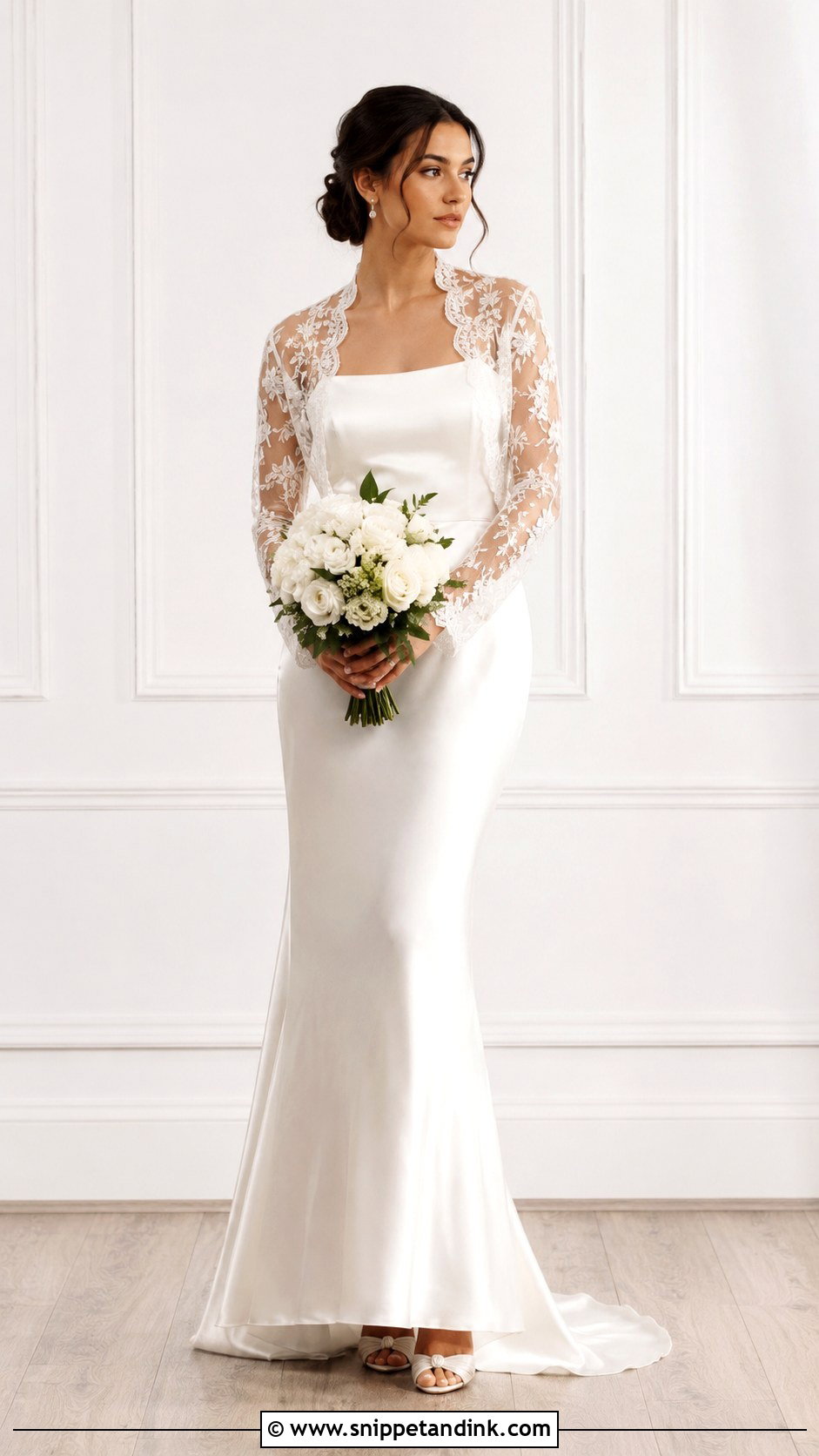
An embroidered bolero brings florals, vines, leaves or a little shimmer to a plain satin, crepe or chiffon dress. Floral embroidery reads romantic; linear patterns look modern. If there’s colour in the thread, keep it soft, ivory, blush or pale gold, and hold it next to your face in daylight first, because coloured thread near the neckline affects how your skin looks in photos. Understated earrings and simple shoes let the embroidery carry the outfit.
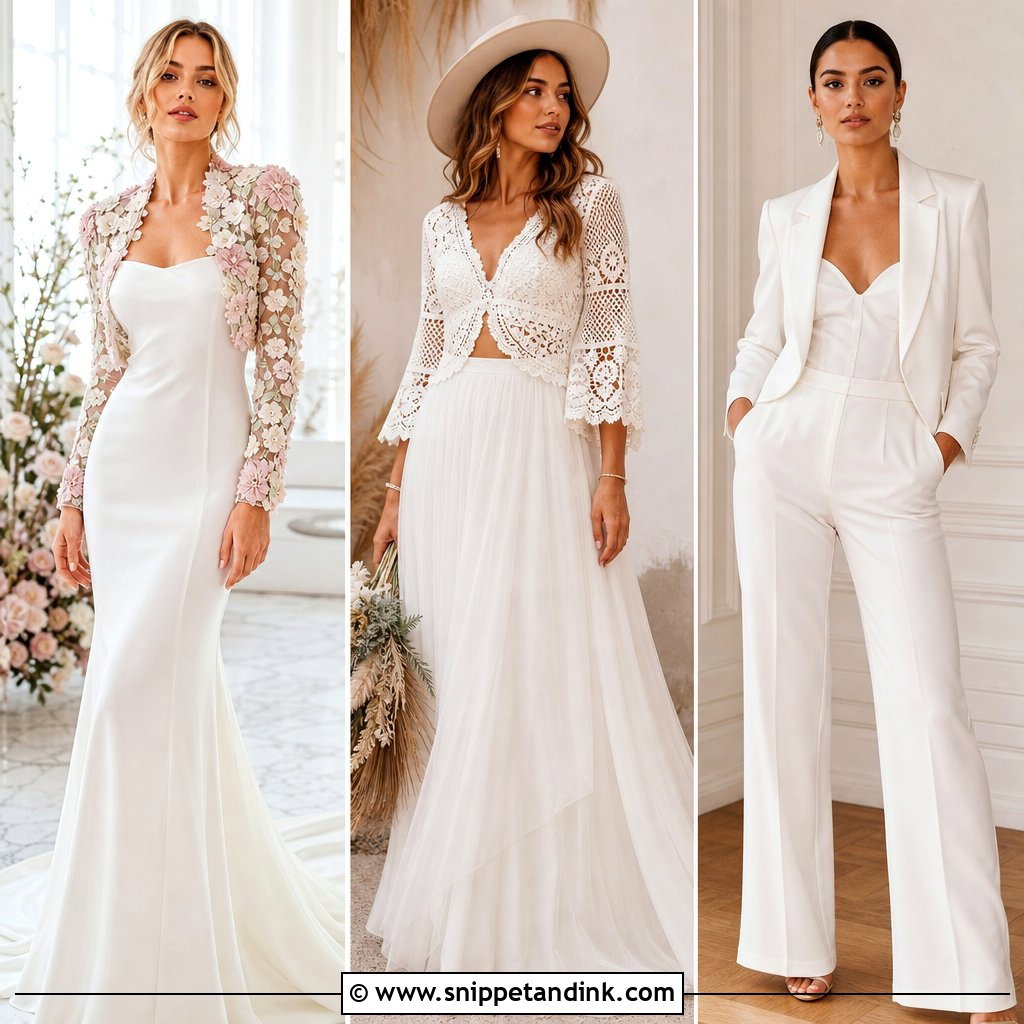
15. Crochet Bridal Bolero With Boho Wedding Dress
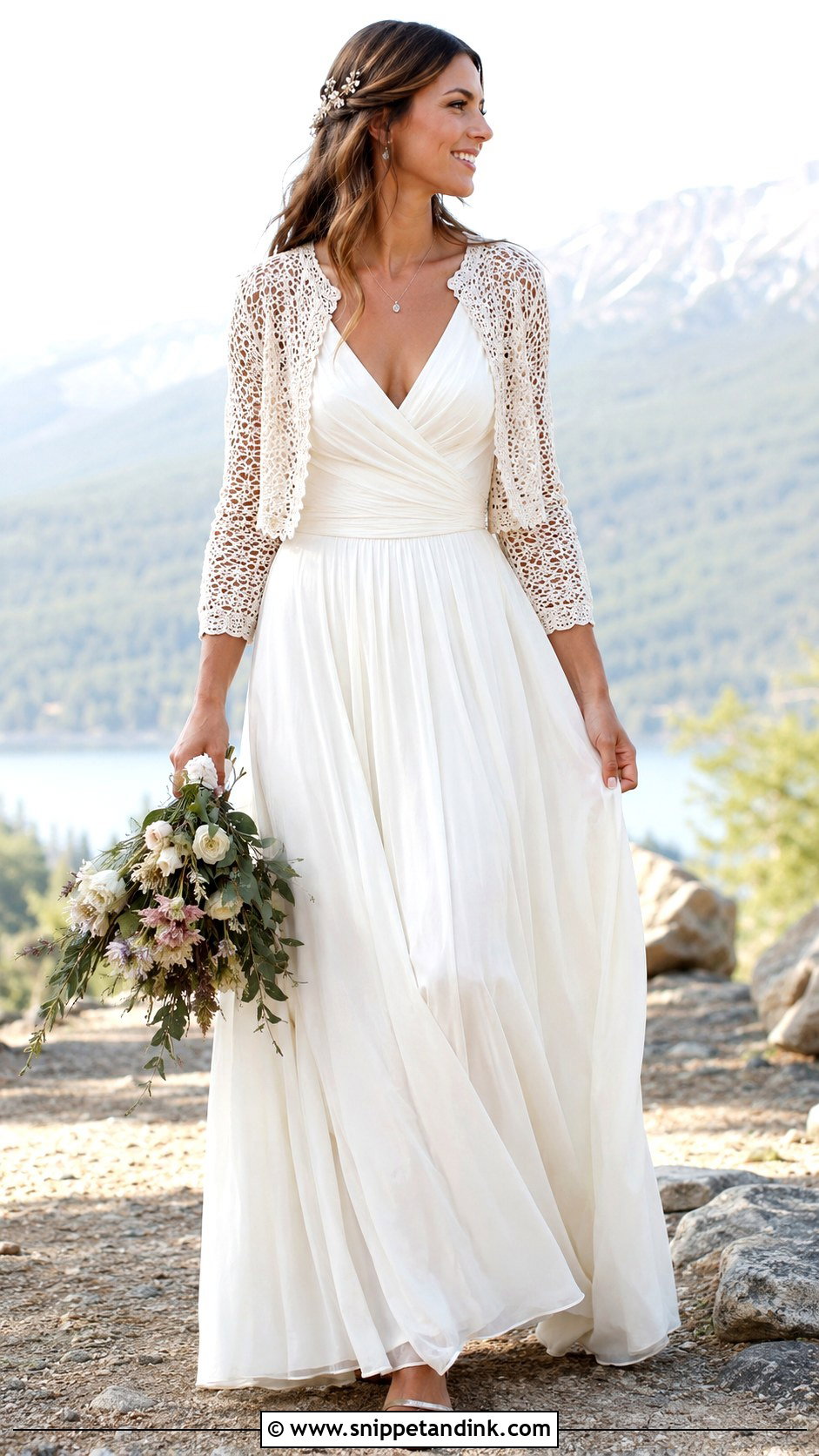
A crochet bridal bolero belongs with a boho dress, whether flowing chiffon, lace or a simple slip. Choose an open, breathable pattern over a dense one, and a cropped shape so it stays bridal rather than casual. Crochet stretches when hung, so store it folded flat and only put it on the hanger on the day. Soft waves, delicate hair pins, neutral sandals and a wildflower bouquet make it right for garden, beach, desert and outdoor weddings.
16. Knit Bridal Bolero With Simple Slip Dress
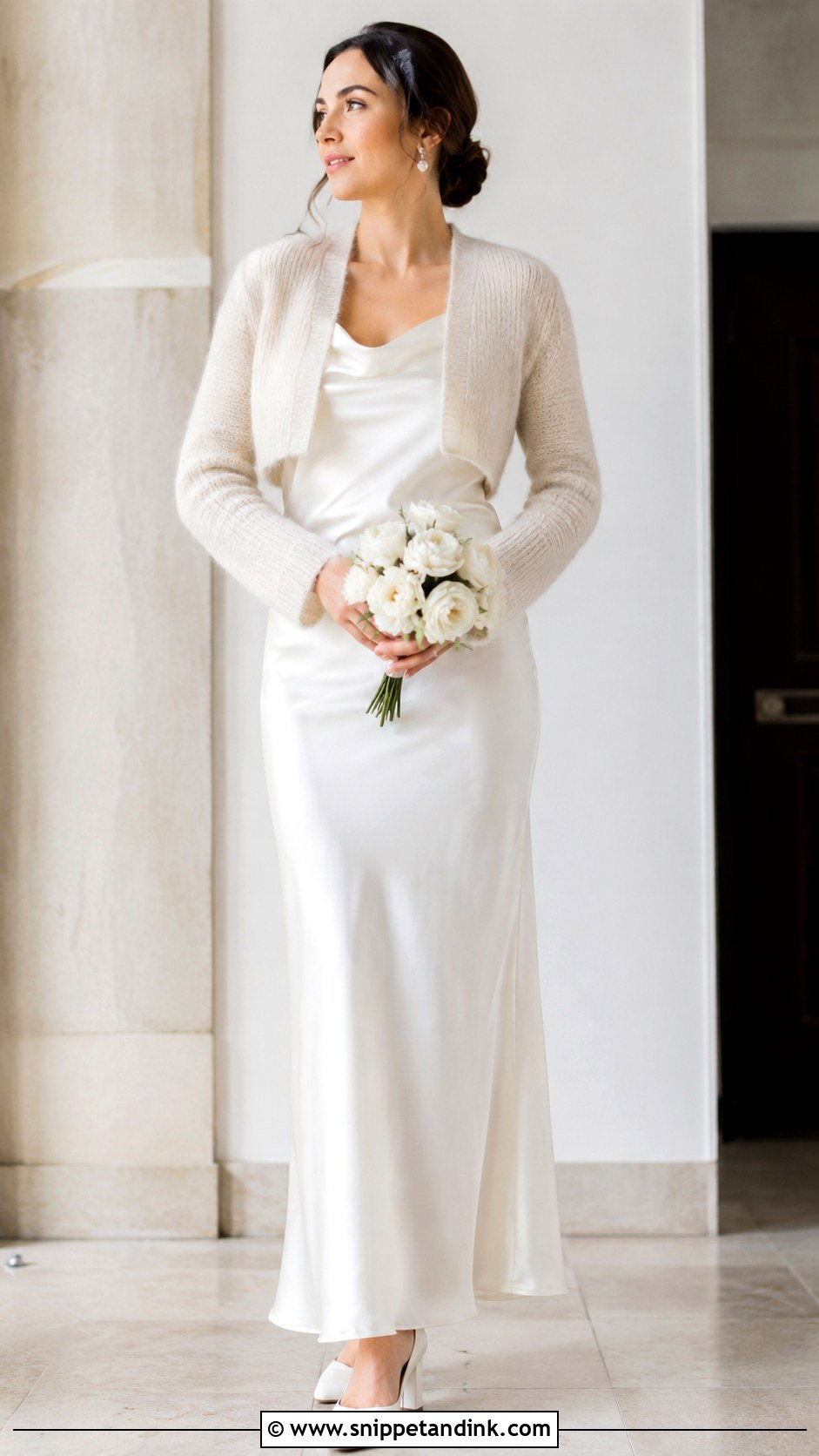
A fine knit over a satin or silk slip is my favourite cold-weather elopement pairing, and it suits courthouse weddings and relaxed weekends too. Choose a fine gauge rather than chunky sweater knit, in ivory, cream or soft oatmeal. A cropped long-sleeve knit makes a delicate dress cosier without covering its line. Wool can leave fluff on silk, so a cotton or silk-blend knit is safer over a slip. Block heels, pearl earrings and a soft low bun keep it calm and modern.
17. Sequin Bridal Bolero With Evening Wedding Dress
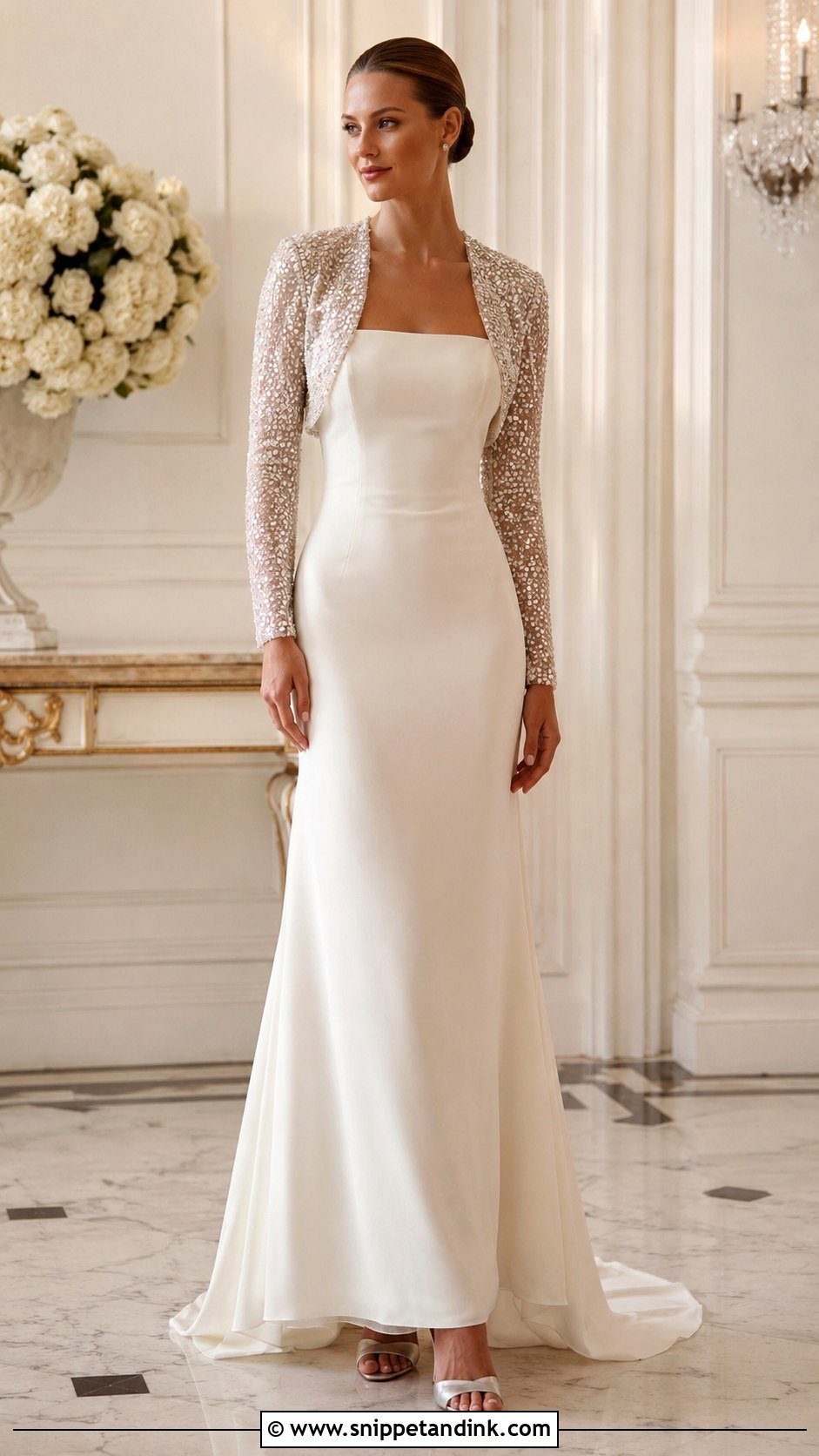
Sequins give an evening dress sparkle without changing the gown. They suit simple dresses best: a fitted sequin bolero over a satin sheath, crepe column or minimal A-line is glamorous and sharp. Clear, ivory or silver sequins catch candlelight softly. Check the inside seams. Sequin edges can be scratchy at the armholes, and a soft lining there makes hours of wear bearable. Small studs, sleek heels and a smooth hairstyle are enough for candlelit venues, hotel weddings and formal receptions.
18. Floral Lace Bridal Bolero With Vintage Dress
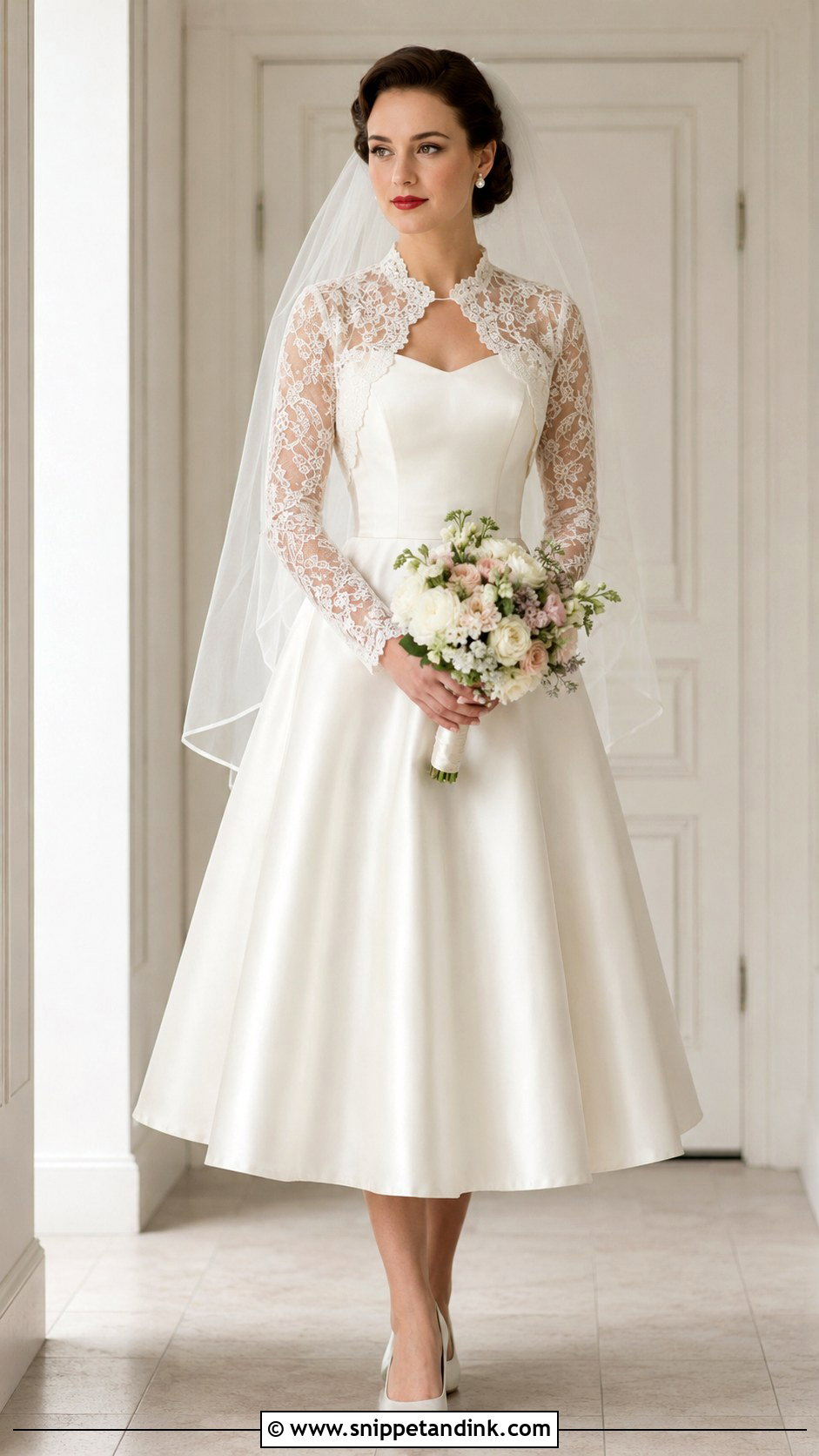
For a vintage feel, floral lace over a soft A-line, tea length or simple satin bodice is hard to beat. Pick lace that matches the era or mood of your gown: small florals read delicate and old-fashioned, larger flowers bolder. Covered buttons, scalloped edges and long sleeves strengthen the effect. If you’re pairing a new bolero with a real vintage dress, take the dress to the shop, because old ivory has usually yellowed and modern lace will look stark next to it. Pearl earrings, a soft veil and classic pumps complete it.
19. Cap Sleeve Bridal Bolero With Sweetheart Dress
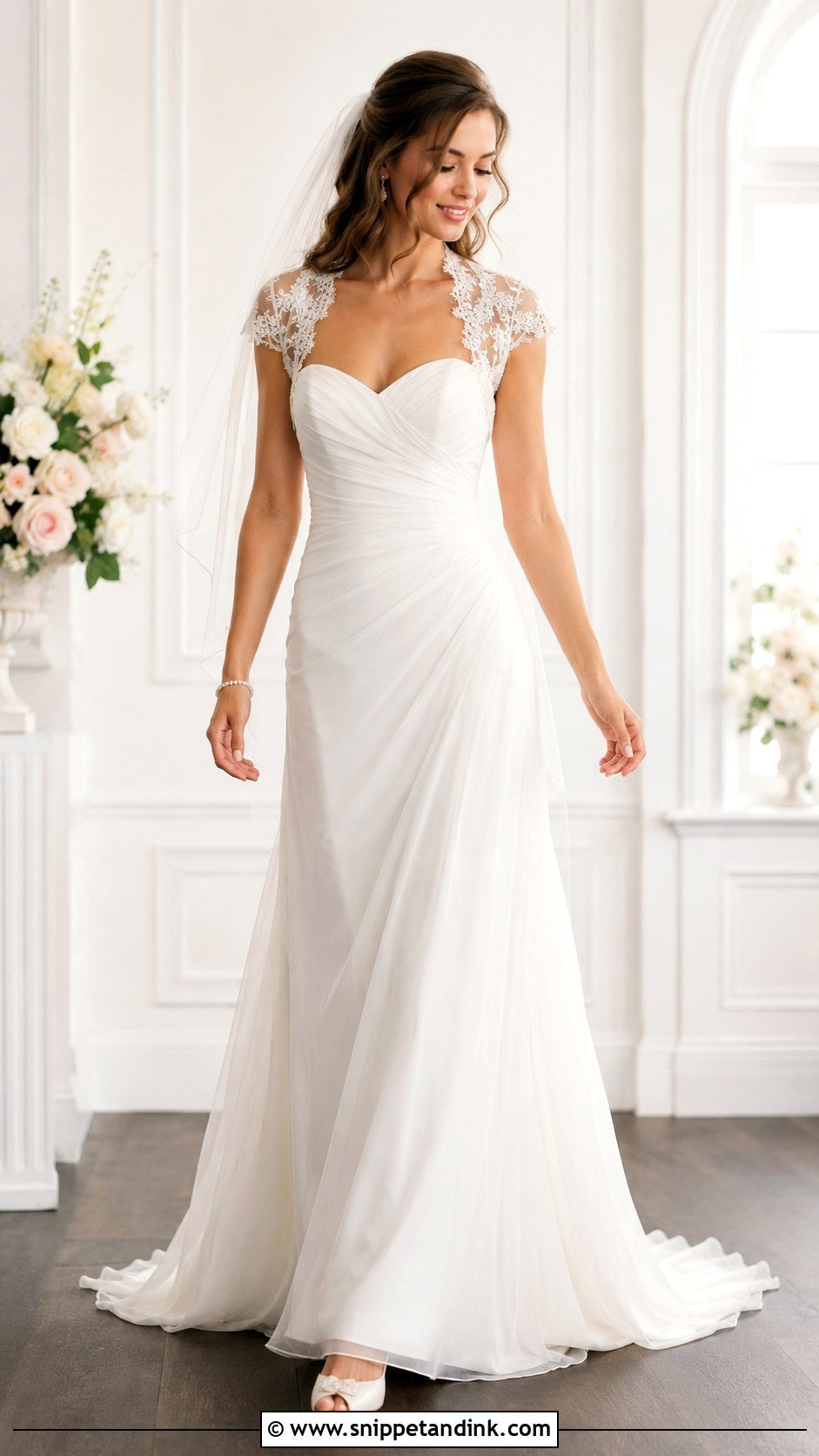
A cap sleeve bridal bolero gives a sweetheart dress a little shoulder coverage without committing to full sleeves. Lace and tulle are the easiest fabrics, light enough to blend with most gowns. It must sit smoothly over the bodice. If it pulls at the bust, the bolero is too small across the front even if the shoulders fit, and that’s worth going up a size for. Delicate earrings, a simple bracelet and comfortable heels keep it easy for a full day.
20. Illusion Bridal Bolero With Backless Dress
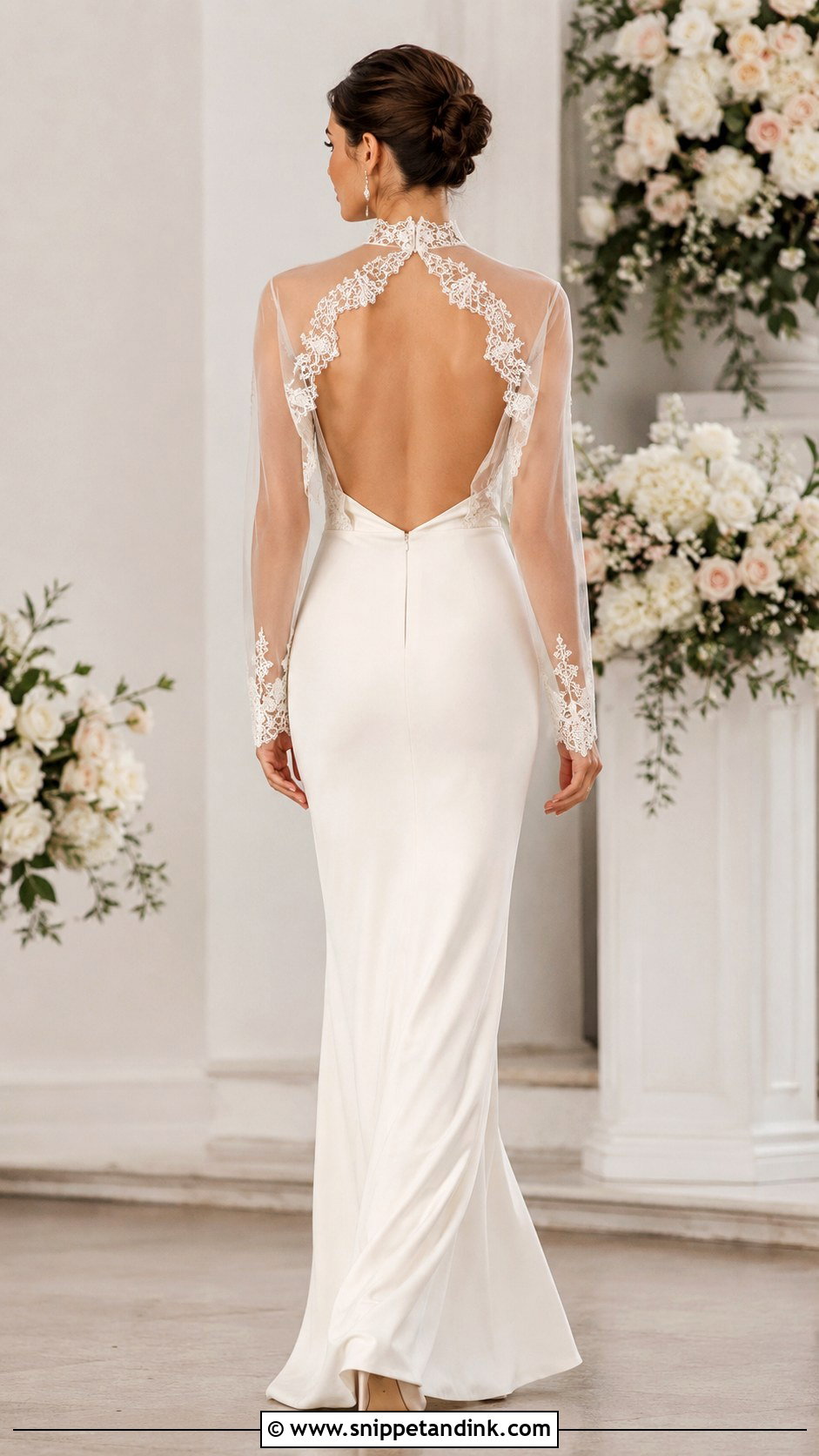
Softening a backless dress for the ceremony doesn’t mean losing the open-back effect. Sheer mesh or tulle gives coverage that looks delicate rather than solid, with fine lace edges, tiny buttons or light appliqué placed around the shoulders. Fit has to be precise so the sheer fabric lies flat against the skin. A sheer back panel also lets you hide a clear bra strap if you need support. Wear an updo so the back stays visible, with clean heels and simple earrings.
21. Ruffle Bridal Bolero With Minimal Gown
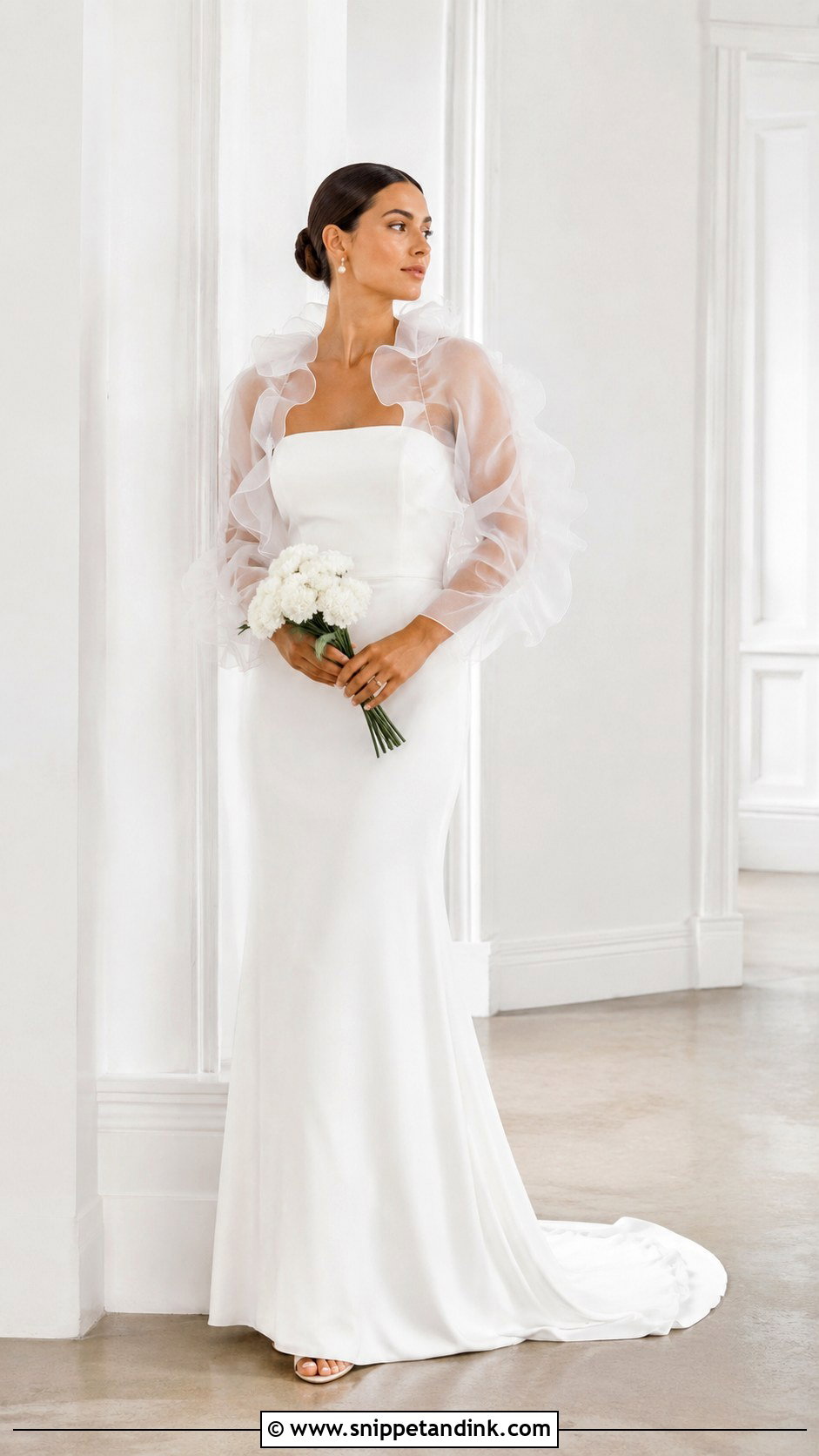
Ruffles give a minimal gown softness and dimension when placed with restraint: along the neckline, the sleeve edge or the front opening. Sheer organza or tulle ruffles stay light; satin ones are more structured. More than one ruffle zone and it starts to look fussy. Keep the rest of the styling clean with a smooth bun, understated earrings and slim heels, so the ruffles read as a choice.
22. Bow Bridal Bolero With Modern Wedding Dress
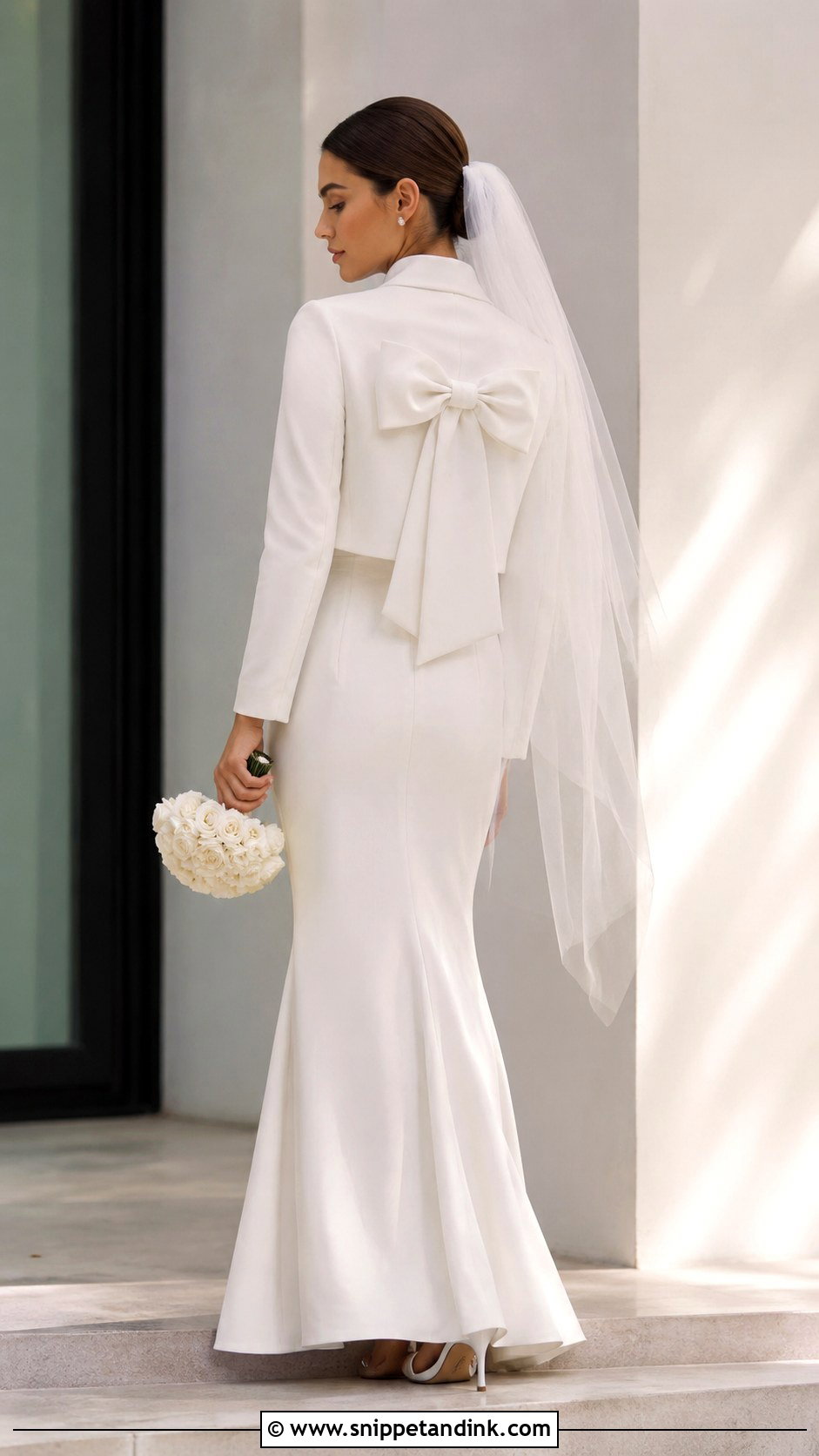
Bows are a sweet detail that can still feel modern if you use one strong one instead of several small ones. It can sit at the front, back or neckline depending on the gown, and it suits plain satin, crepe or mikado where the bow is the clear focus. A cropped bolero with a back bow shows up in every aisle photo. Ask for the bow to be stitched to a stiff backing, otherwise it flattens after you lean back in a chair. Pearl studs, sleek heels and a neat veil keep it polished.
23. Velvet Bridal Bolero With Fall Wedding Dress
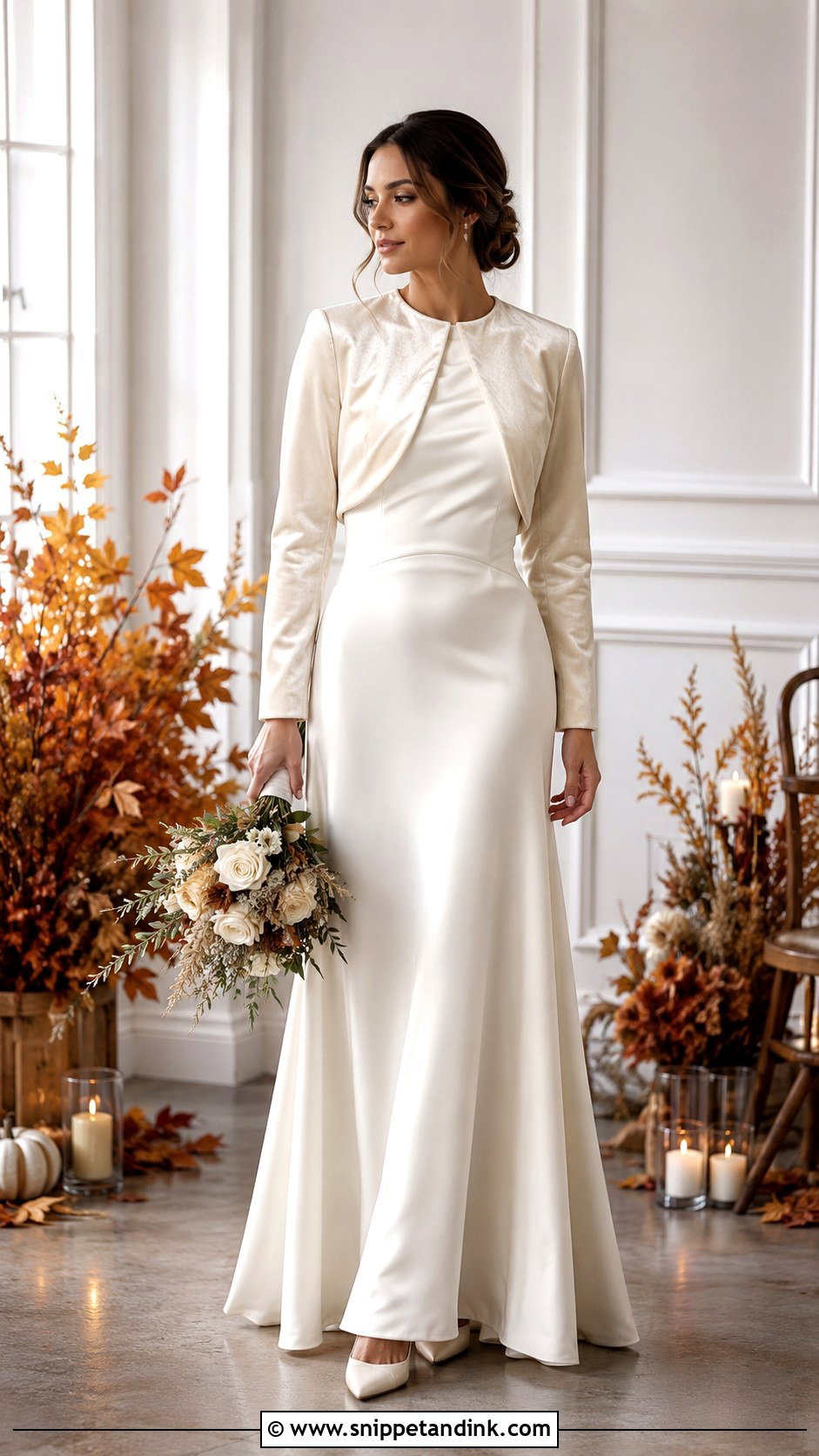
Velvet adds warmth and depth to a fall gown in ivory, cream, champagne or pale blush, over satin, crepe or simple lace. It’s thicker than most bridal fabrics, so a cropped or fitted shape keeps you from looking bulky. Long sleeves suit outdoor portraits and cool evening ceremonies. Velvet pile crushes and marks where it’s pressed, so it should travel on a hanger, never folded in a bag. Closed-toe heels, a low bun and understated jewellery keep it classic.
24. Chiffon Bridal Bolero With Beach Wedding Dress
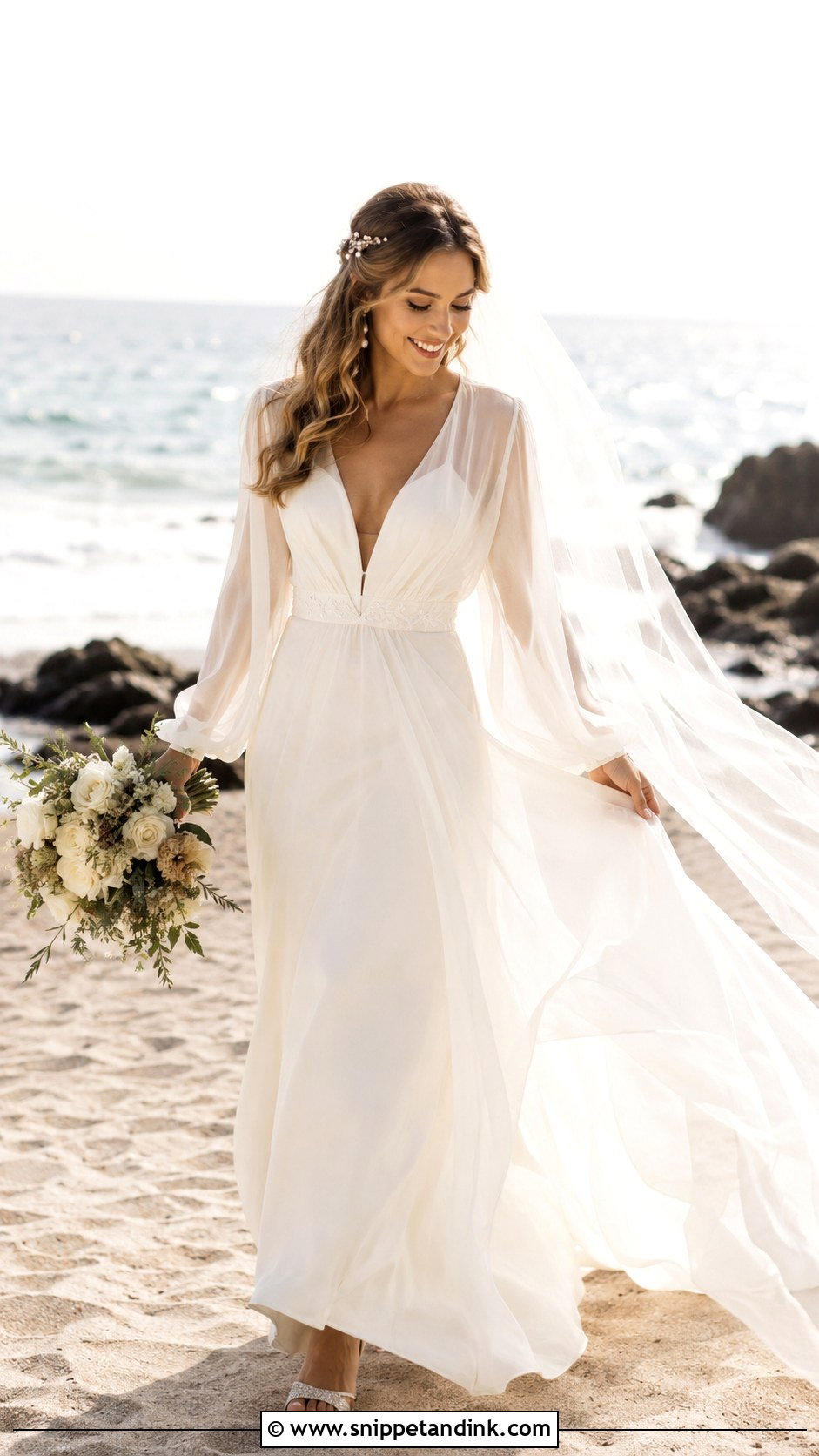
Chiffon is the bolero I’d pack for a beach. It gives gentle coverage without trapping heat, and it suits flowing gowns, empire waists, slips and relaxed A-lines. A loose but neat fit lets it move in the breeze. Sheer ivory chiffon looks soft over simple fabrics. Wind can blow an unfastened chiffon bolero right off the shoulders, so a single hidden hook at the neck is worth adding. Low sandals, soft waves, pearl hair pins and a light veil, if the location allows one, complete it.
25. Detachable Bridal Bolero With Two Look Wedding Dress
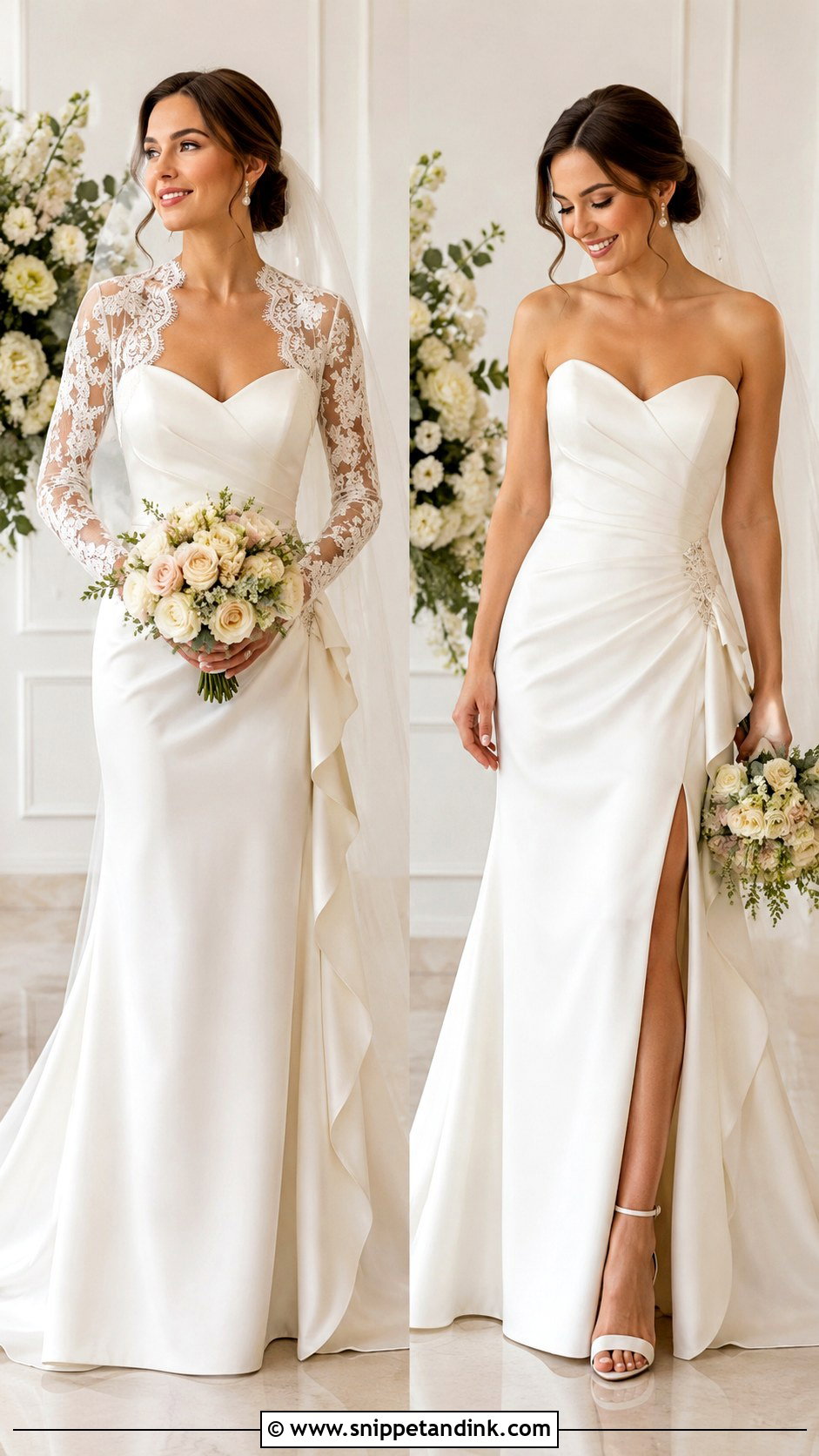
A detachable bolero gives you two looks without buying a second gown: wear it for the ceremony, portraits or entrance, then take it off for the reception. Lace, satin, tulle, pearl or beaded designs all work. The key is making it look like part of the dress, with matched undertone, neckline and level of detail, and a seamstress adjusting the fit so it sits smoothly. Ceremony styling can be veil and classic heels; afterwards, swap in statement earrings or a fun clutch to mark the change.
Matching Ivory to Ivory When the Pieces Come From Different Places
Bridal whites vary more than people realise. One designer’s ivory can look almost cream next to another’s, and satin, lace and tulle in the same named shade each reflect light differently. If the bolero isn’t made by your gown’s designer, ask for a fabric swatch and take it to the bolero fitting, or bring the dress itself.
Compare them in daylight by a window, not under shop spotlights. When the colours don’t match exactly, a bolero one shade lighter usually looks intentional, while one that’s darker makes the dress look aged beside it.
Coverage Rules for Religious Ceremonies
Many brides first look for a bolero because a church, mosque, temple or synagogue asks for covered shoulders. Requirements differ between faiths and even between individual places of worship, and some consider sheer tulle or lace as not covering at all. Ask your officiant what’s expected before you buy, then choose fabric accordingly. A lined lace bolero satisfies most requests while still looking delicate, and it can come off as soon as you leave for the reception.
A Bolero Should Finish the Dress, Not Hide It
A bolero should make your dress feel more complete, never covered up or changed in the wrong way. Start from your gown’s shape, fabric and neckline, then choose a bolero in the same mood: lace for romance, satin for clean lines, faux fur for winter, pearls or beads for soft shine. Think about comfort, movement and how it looks from the back as well as the front. Chosen well, it covers you for the ceremony and gives you a fresh reveal for the reception.
You'll Like These Ideas:


Leave a Reply