
A winter bride spends more time in her coat than most people expect: the walk from the car, the outdoor portraits, the gap between ceremony and reception, the late exit. So the coat isn’t an accessory you add at the end; it’s part of the outfit, and it has to work with the gown’s shape, the shoes, the veil and the bouquet. Faux fur, tailored wool layers, velvet capes, cropped jackets and trench coats all have a place. Which one is right depends on your skirt volume, the venue and how cold it will really be. Here are the coats I style most often for cold-weather weddings, and how I’d wear each one.
Fitting a Coat Over a Gown You Can’t Take Home Yet
Most brides buy the coat while the dress is still at the bridal shop, which is how coats end up too tight in the shoulder or too short at the hem. A few checks prevent that.
- Measure over the bodice, not over your bra. Boning, corsetry and lace sleeves add width, so take a bust and upper-arm measurement at a fitting in the gown and buy with that in mind.
- Check the armholes against your sleeves. Structured or puffed sleeves won’t fit into a narrow coat sleeve. If your gown has them, look at capes or open-front styles.
- Decide where the coat ends. Waist length for full skirts, below the knee for slim gowns. A hem that ends at mid-thigh over a ball gown is the least flattering spot.
- Feel the lining. A slippery lining glides over tulle and lace; an unlined wool coat grips and drags the skirt up as you walk.
If you can, bring the coat to your final dress fitting. Ten minutes in front of the mirror with both on tells you more than any measurement.
1. Faux Fur Bridal Coat
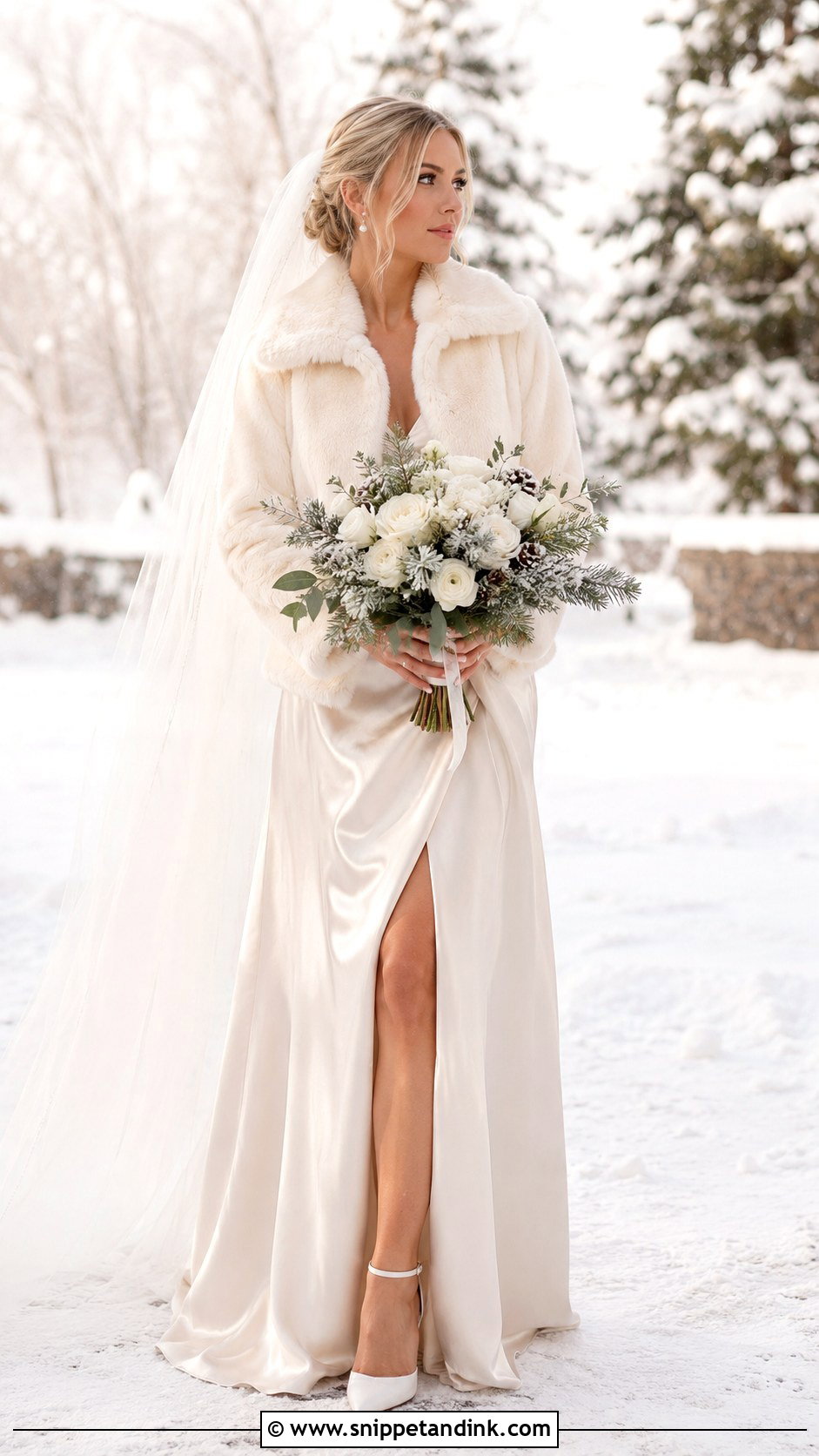
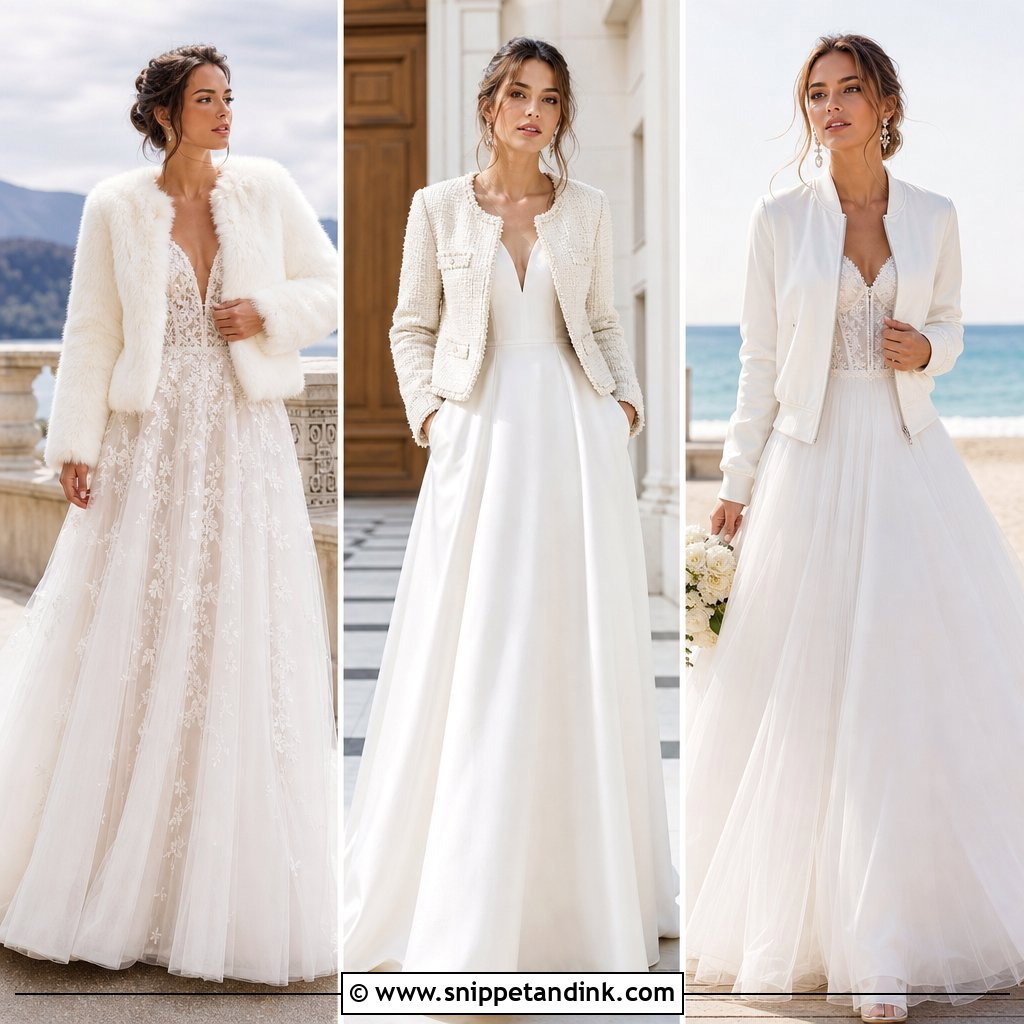
Faux fur is the coat most brides picture first, and the length is where it goes right or wrong. With a full skirt, I keep a faux fur bridal coat cropped at the waist so the volume below has room. Over a slim satin or crepe gown, a longer fur reads dramatic in outdoor shots. Stick to ivory, cream or champagne; a pure white fur next to an ivory gown makes the dress look yellow. Long piles also shed onto dark suits during hugs, so give the coat a good shake outdoors the day before.
2. Long Wool Bridal Coat
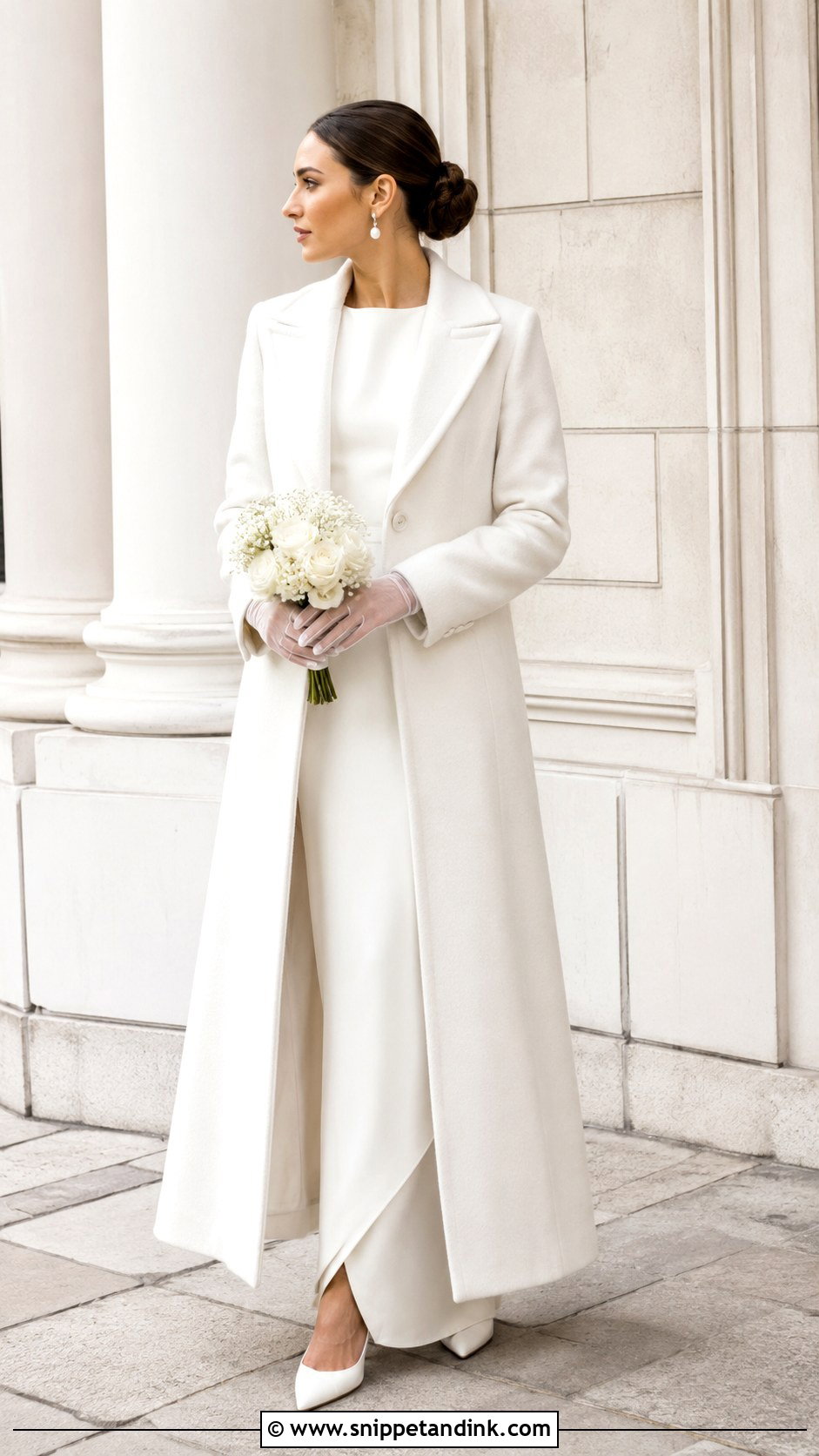
A long wool coat is the most adaptable option on this list. It suits minimalist gowns, column dresses, bridal suits and courthouse outfits equally. Look for a structured shoulder, a smooth lapel and a hem below the knee or near the ankle. Winter white wool reads bridal without looking like a costume. If the gown underneath has lace or beading, keep the coat plain; that way the reveal when you take it off still means something. Sheer gloves and a low chignon suit it.
3. White Bridal Cape Coat
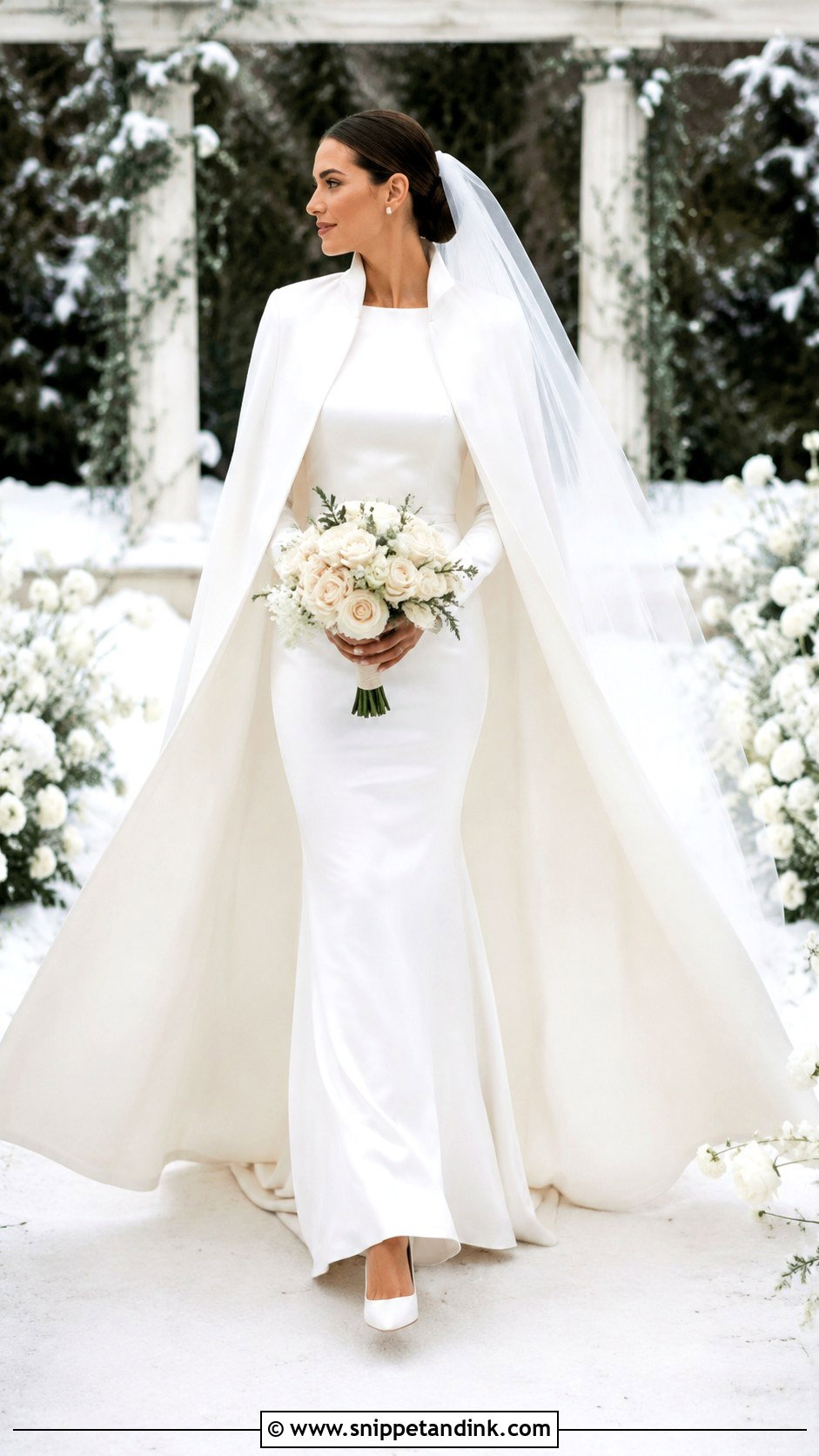
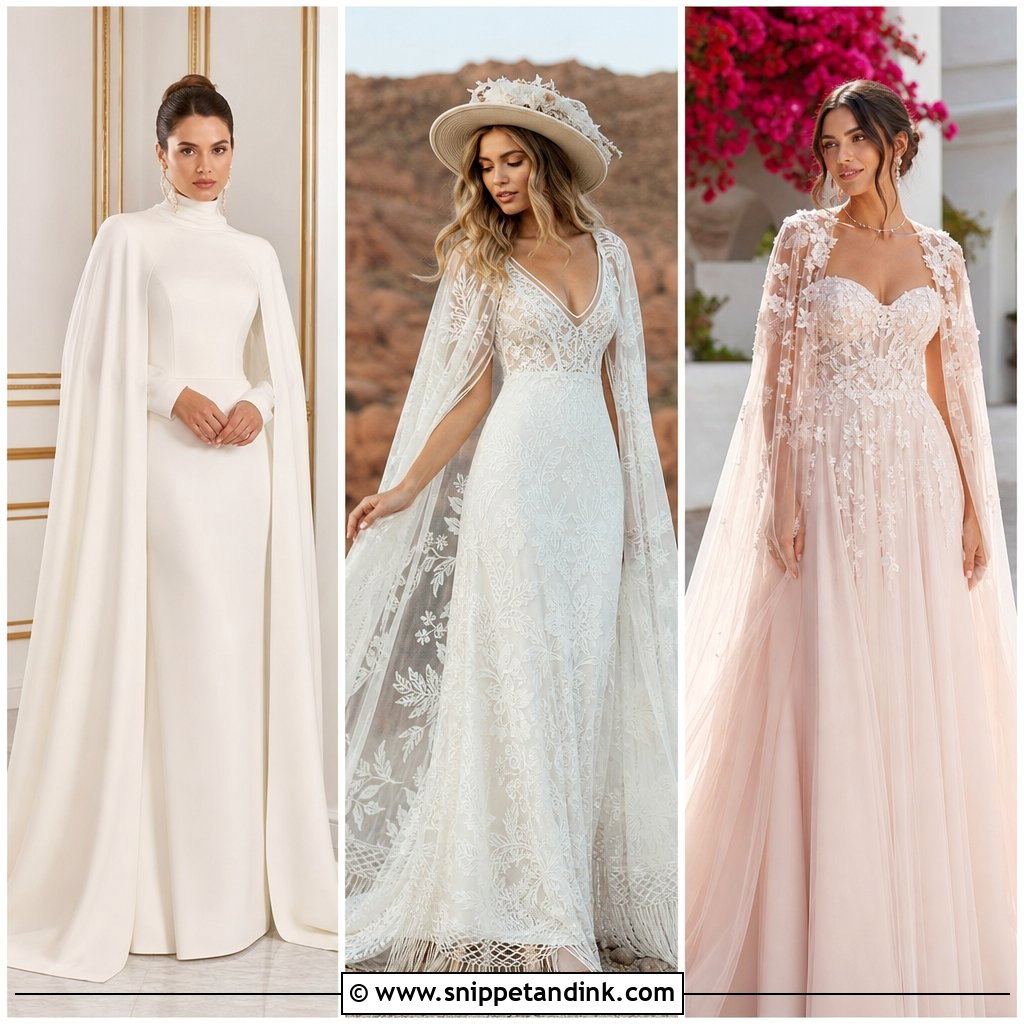
Capes solve the sleeve problem. A gown with structured or lace sleeves often won’t fit into a fitted coat at all, while a cape just sits over the shoulders. It suits fitted gowns, A-lines, jumpsuits and plain satin shapes. Insist on arm slits; without them you’ll be holding your bouquet through the fabric, and the whole front bunches up in every photo. Pearl studs, a neat veil and block heels finish it, and in a breeze the cape does half the photographer’s work for you.
4. Cropped Bridal Jacket
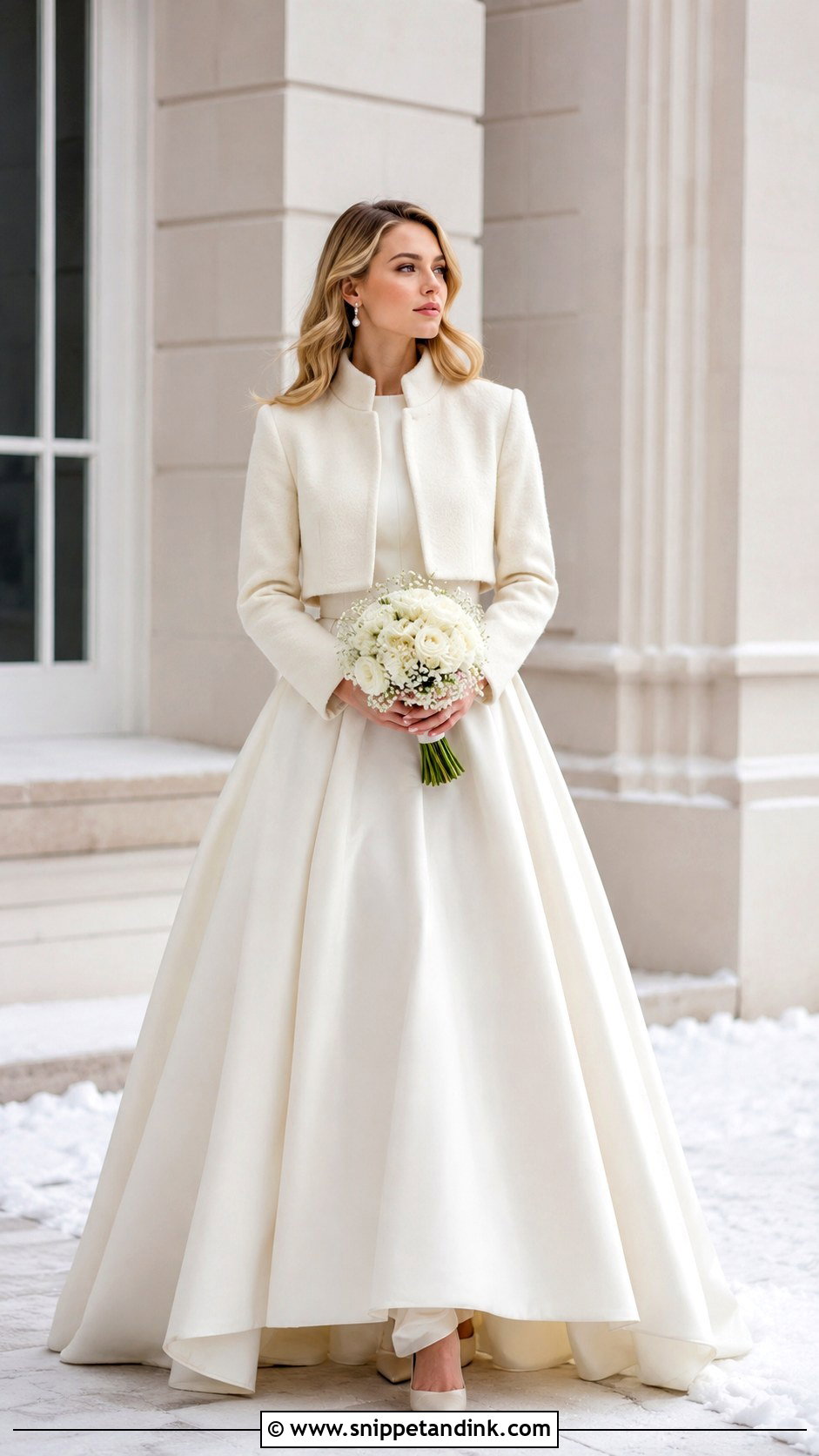
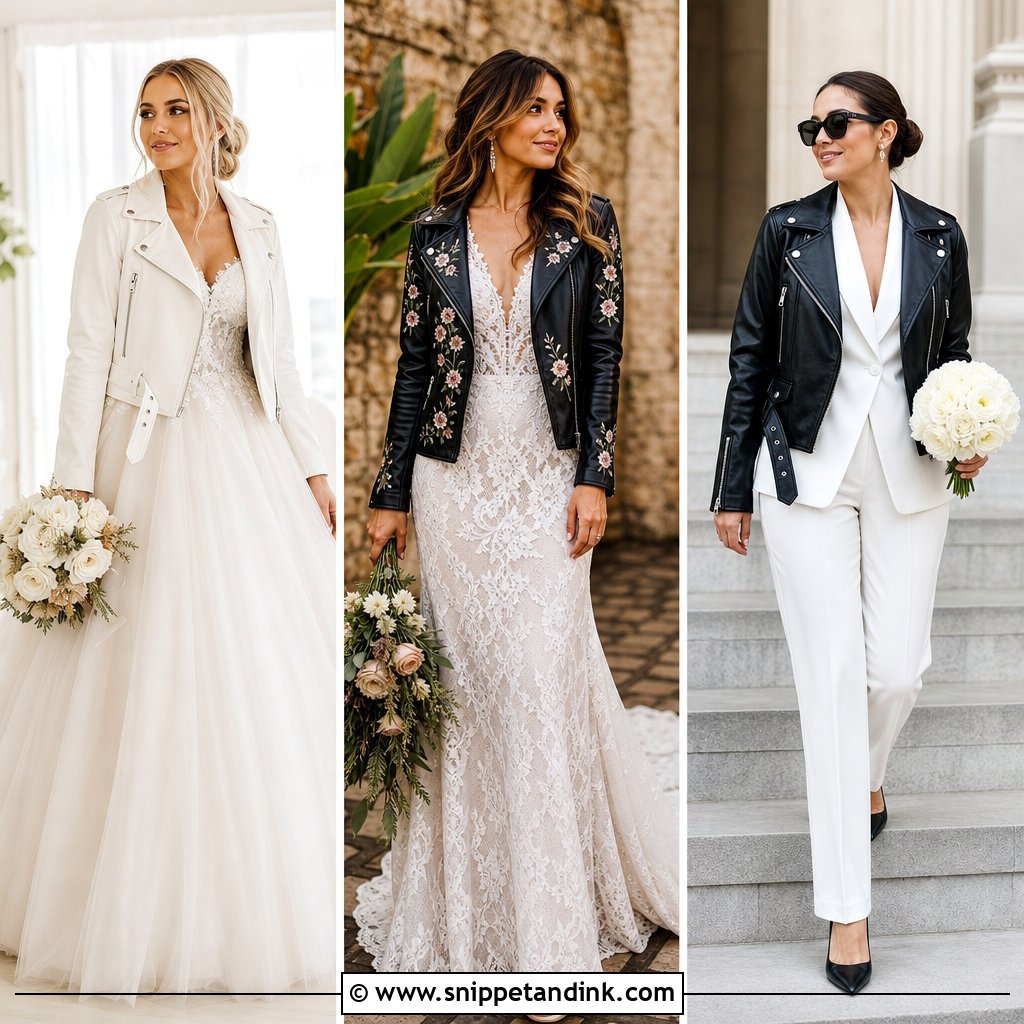
Cropped jackets are the easiest coat to wear over a wedding dress because they stop at the waist and leave the skirt alone. That’s why they’re my default for ball gowns, fit-and-flare and tea-length dresses. Faux fur, wool, satin or boucle all work. The rule I follow is contrast in texture: a lace gown wants a plain jacket, a plain gown can take boucle or fur. The one thing to check is the hem: it should land at the narrowest point of your waist, not an inch below, or it cuts across the bodice seam.
5. Velvet Bridal Coat
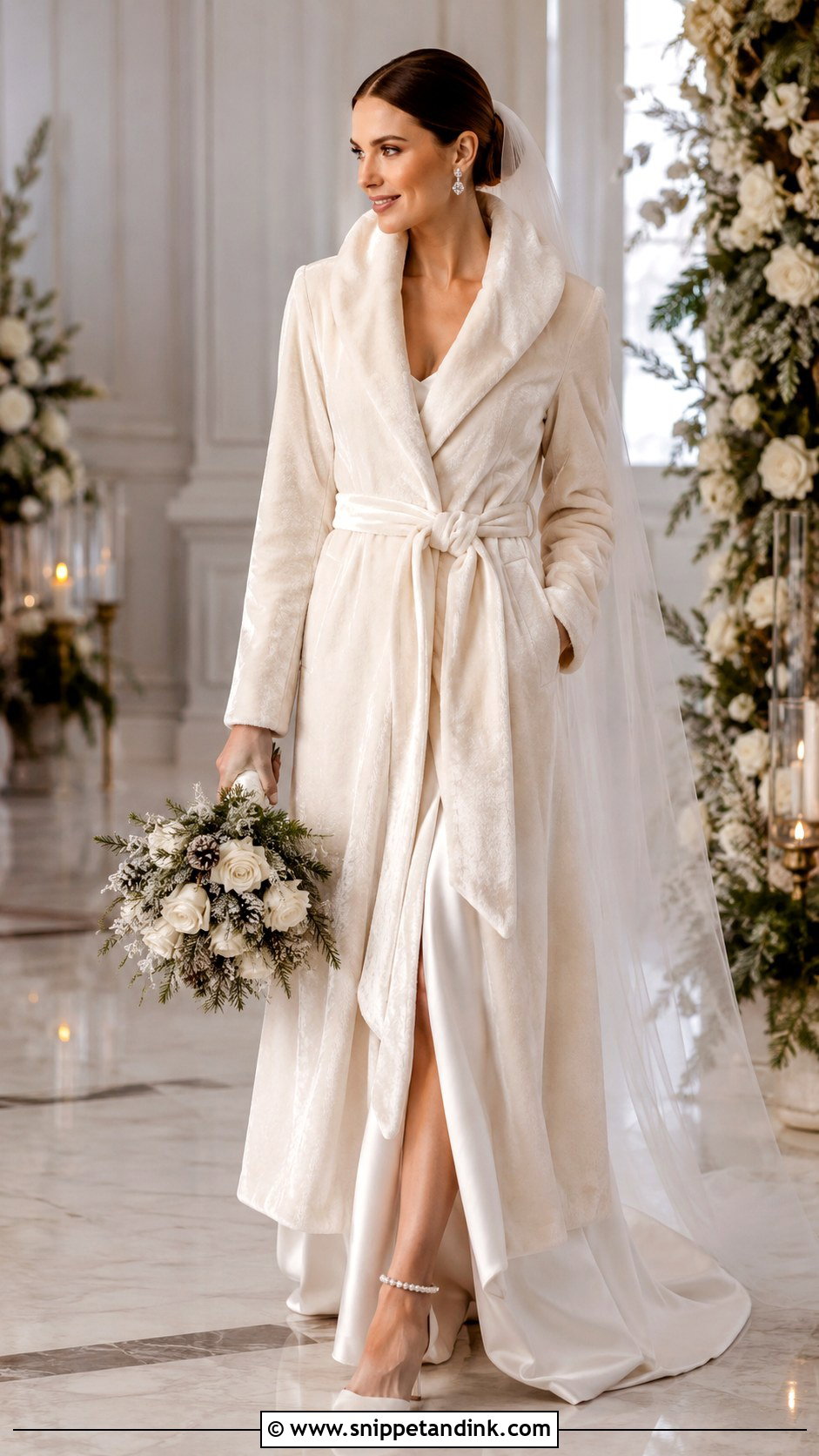
Velvet looks warm even before you touch it. Ivory velvet is classic; champagne, blush or pale blue gives a quieter fashion edge. It goes well with satin gowns, lace and long-sleeve dresses, either belted for shape or worn open and long. Velvet crushes where it’s pressed, so don’t sit in the car with the coat folded under you on the way to the venue. Hang it or lay it flat on the back seat. Under low winter light the pile picks up a soft sheen that suits evening portraits.
6. Bridal Trench Coat
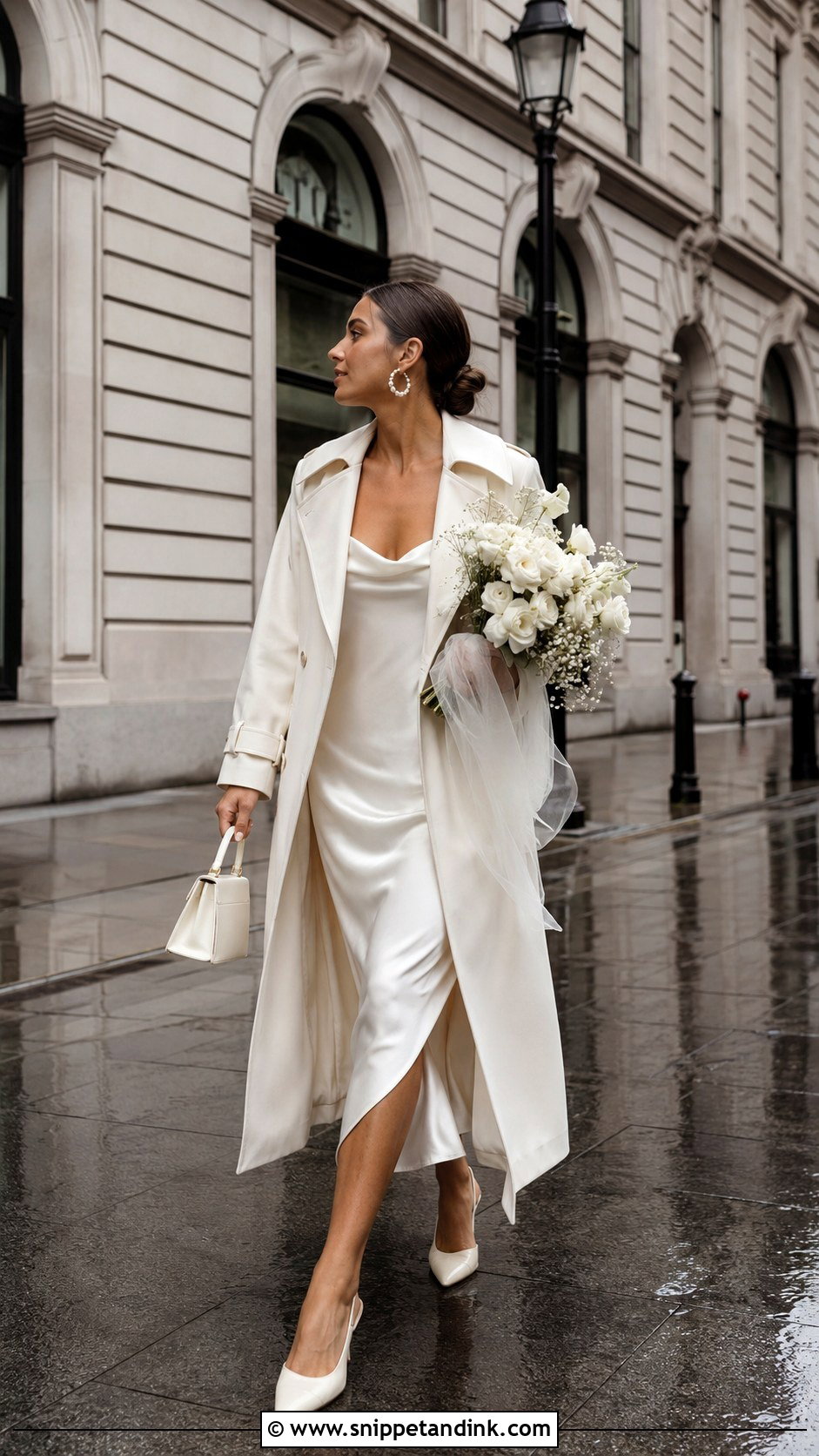
Trench coats feel casual until you see one in crisp ivory over a slip dress, and then they look like a fashion editorial. They’re my practical answer for rain: a cotton gabardine sheds a shower far better than wool. Choose clean lines, a soft belt and a fabric that resists creasing, and wear it over a midi, a sheath or a tailored suit. Slingbacks, pearl hoops and a low bun suit it. Leave it loosely tied or open; a cinched trench hides the dress completely in photos.
7. Shearling Bridal Coat
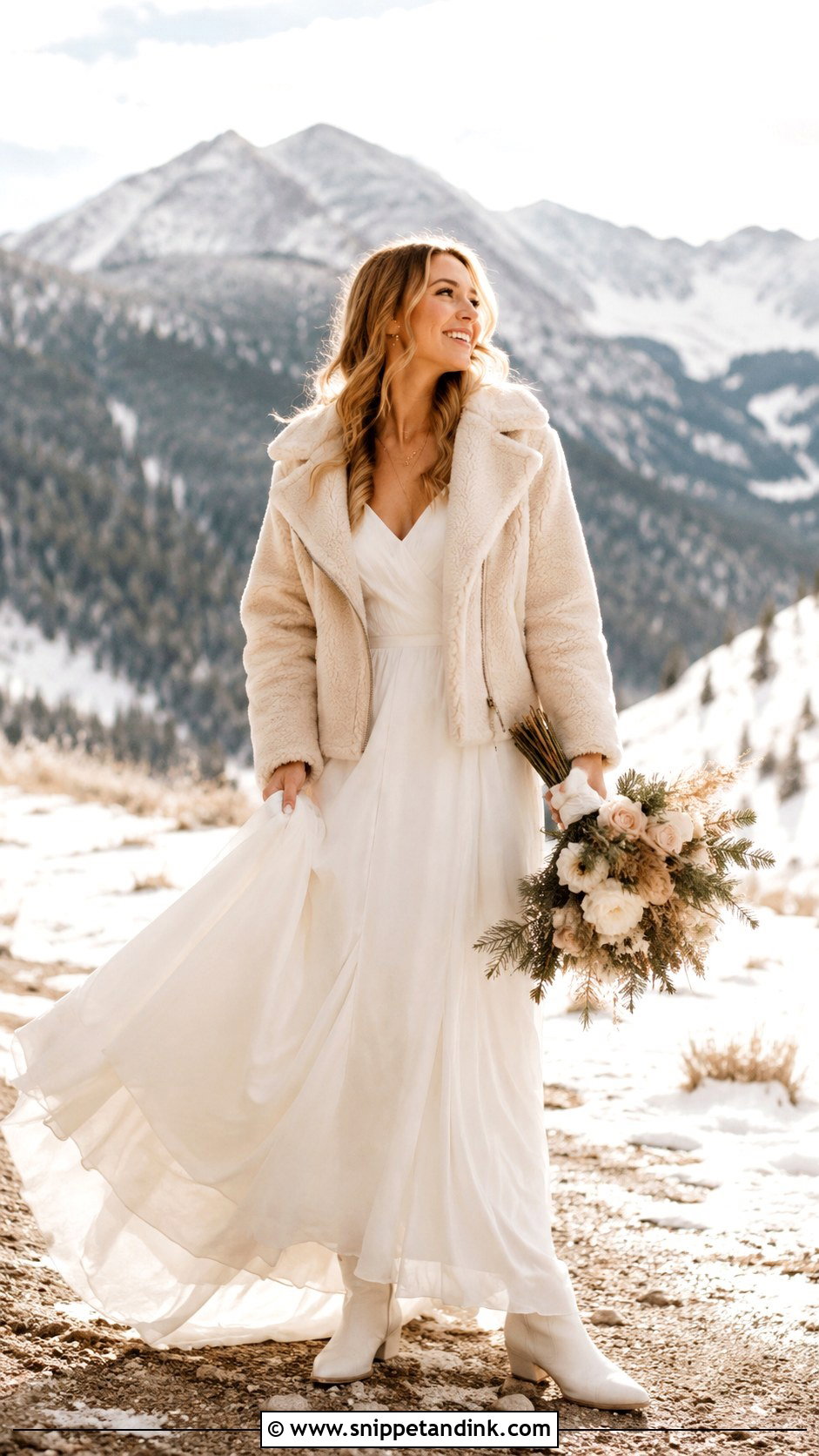
Shearling is what I’d put a bride in for a mountain or cabin wedding where it’s properly cold, not just chilly. Soft ivory, cream or light beige with minimal hardware keeps it bridal. Cropped shearling goes with flowing chiffon; a longer cut sits sleek over satin. It is warm enough that you’ll overheat indoors within minutes, so plan for someone to take it the moment you step inside. Ankle boots or closed heels and simple gold or pearl jewellery keep the look relaxed.
8. Fur Trim Bridal Coat
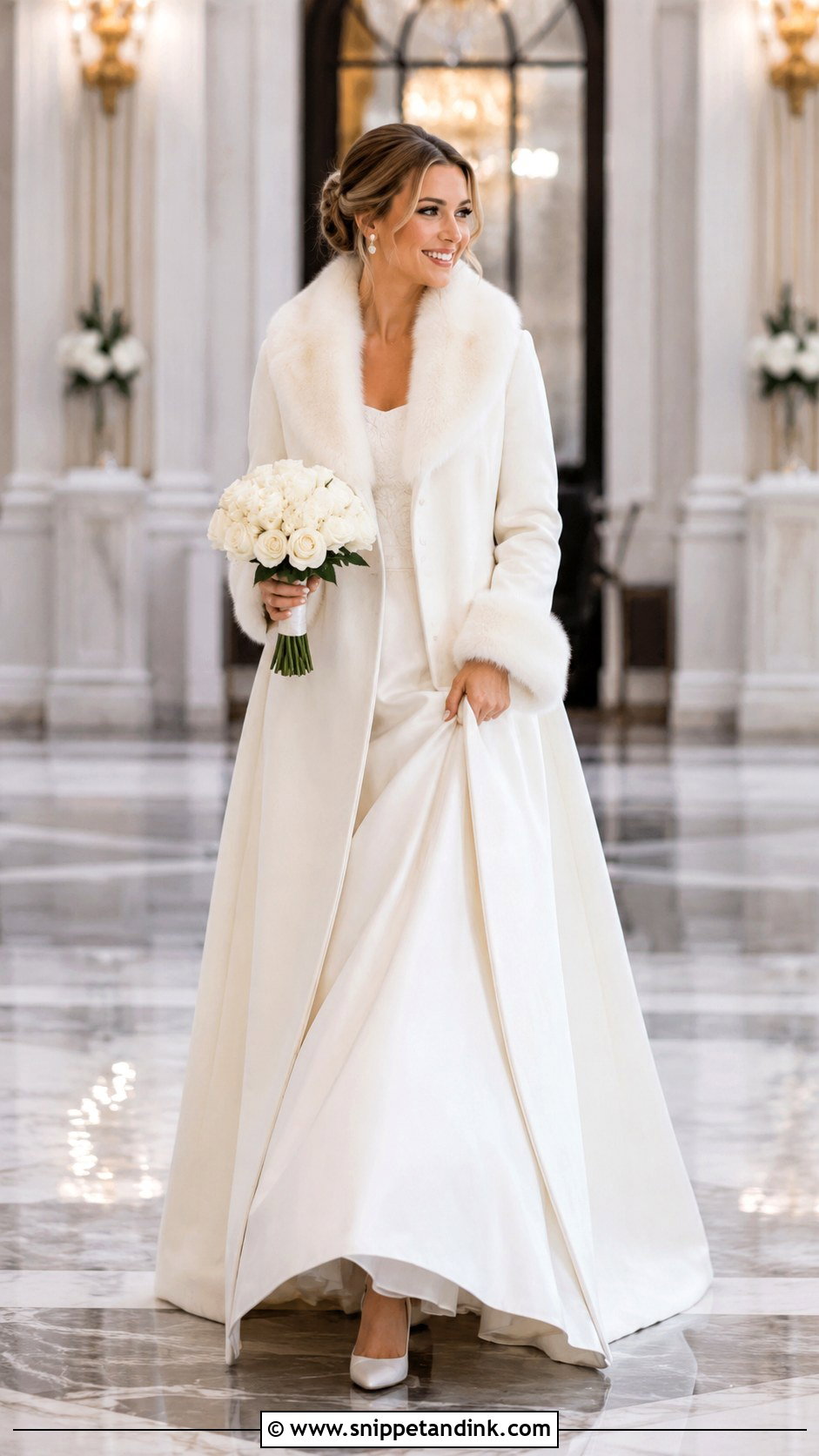
A fur-trimmed coat gives you softness at the collar, cuffs or hem without the volume of a full fur. Underneath, it’s still a tailored coat, which keeps the line neat over classic gowns, square necklines and vintage styles. Ivory wool with faux fur trim is the version I keep coming back to. Watch the collar if you’re wearing a veil: a deep fur collar catches tulle and pulls it sideways. A longer coat suits a formal venue, a shorter trim jacket something more relaxed.
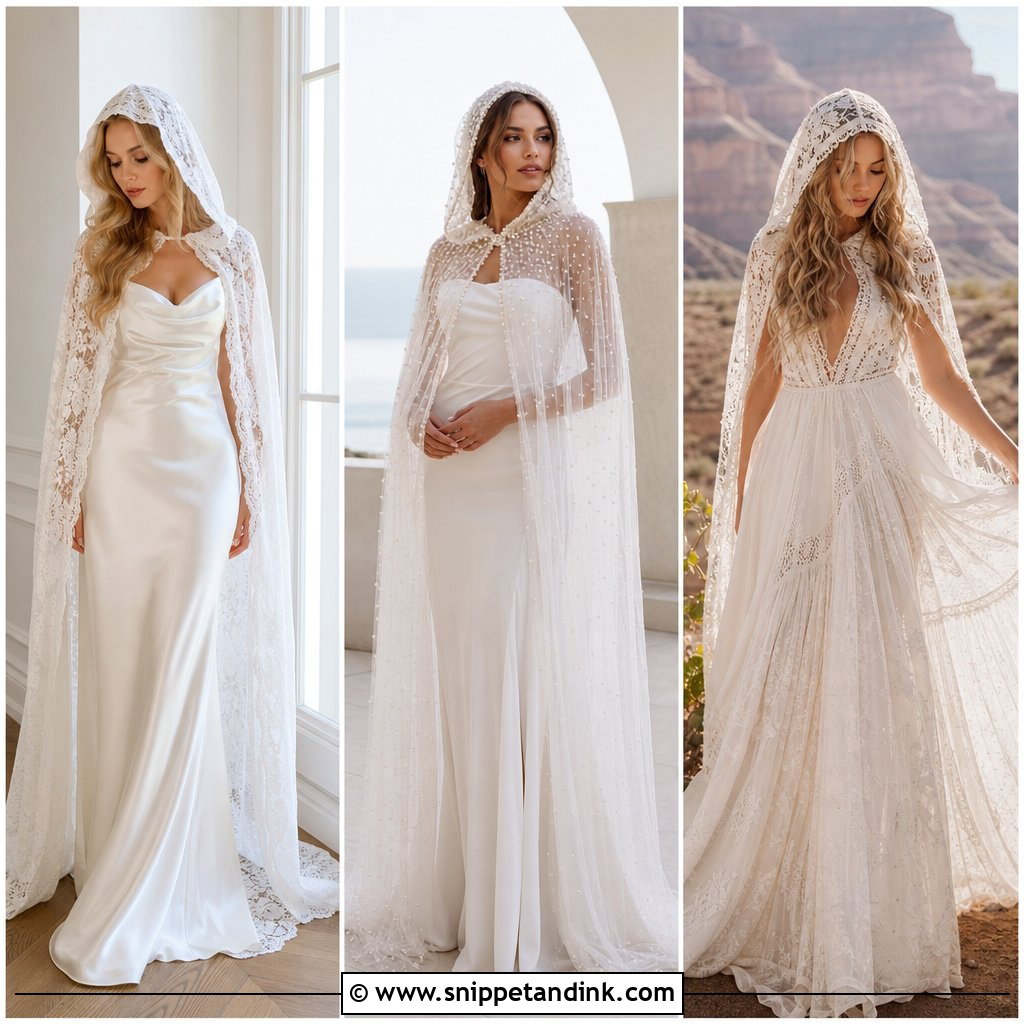
9. Hooded Bridal Cloak Coat
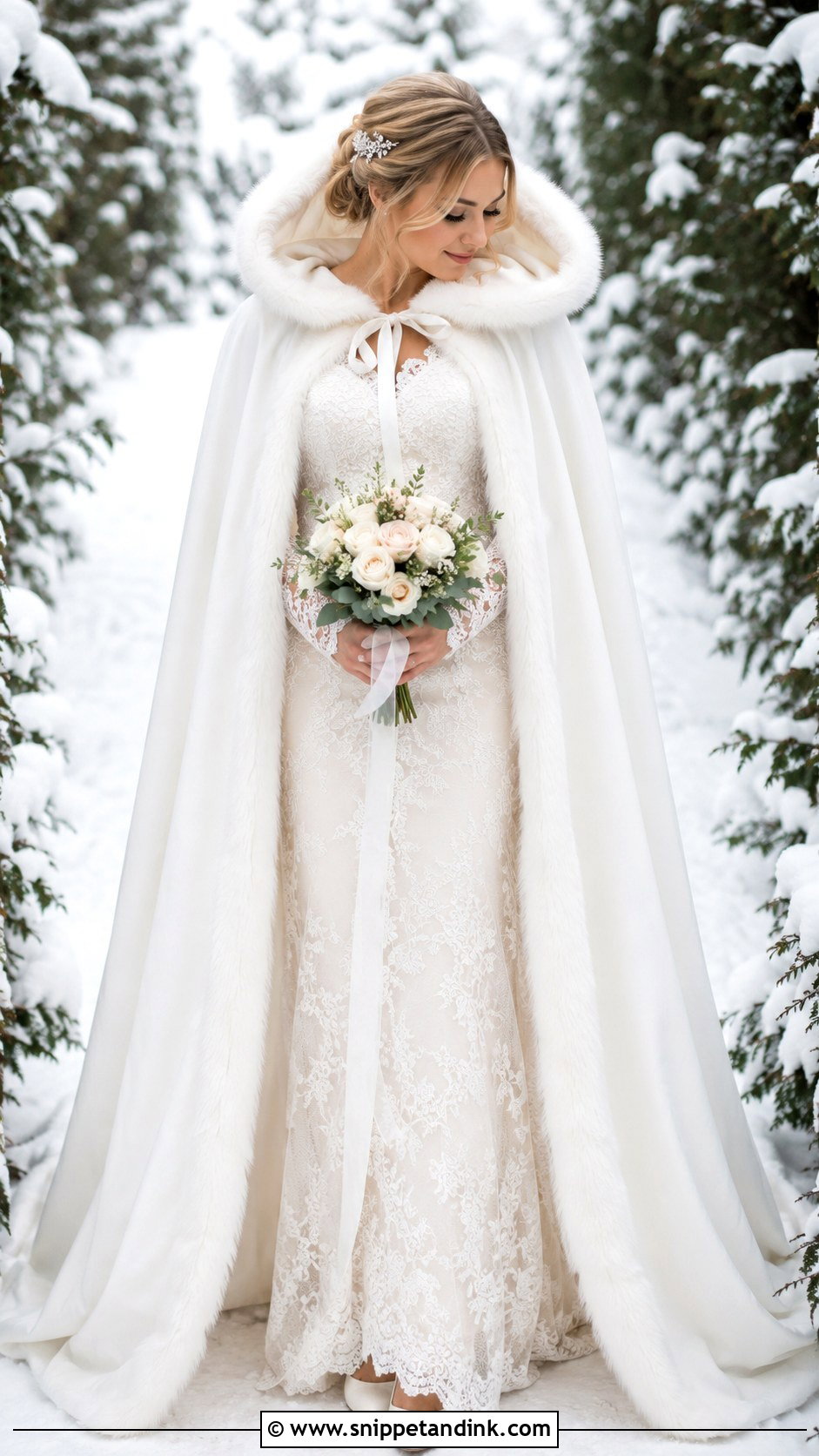
A hood covers your head and shoulders on an outdoor walk without a hat flattening your hair. A hooded bridal cloak coat in white or ivory with a smooth lining slides easily over the gown. Fur trim around the hood softens it; a plain hood is more minimal. Here’s the catch: putting a hood up over an updo or veil will disturb both, so I treat the hood as a photo moment and the cloak as the warmth. It looks right on snowy paths and in forest settings.
10. Satin Bridal Coat
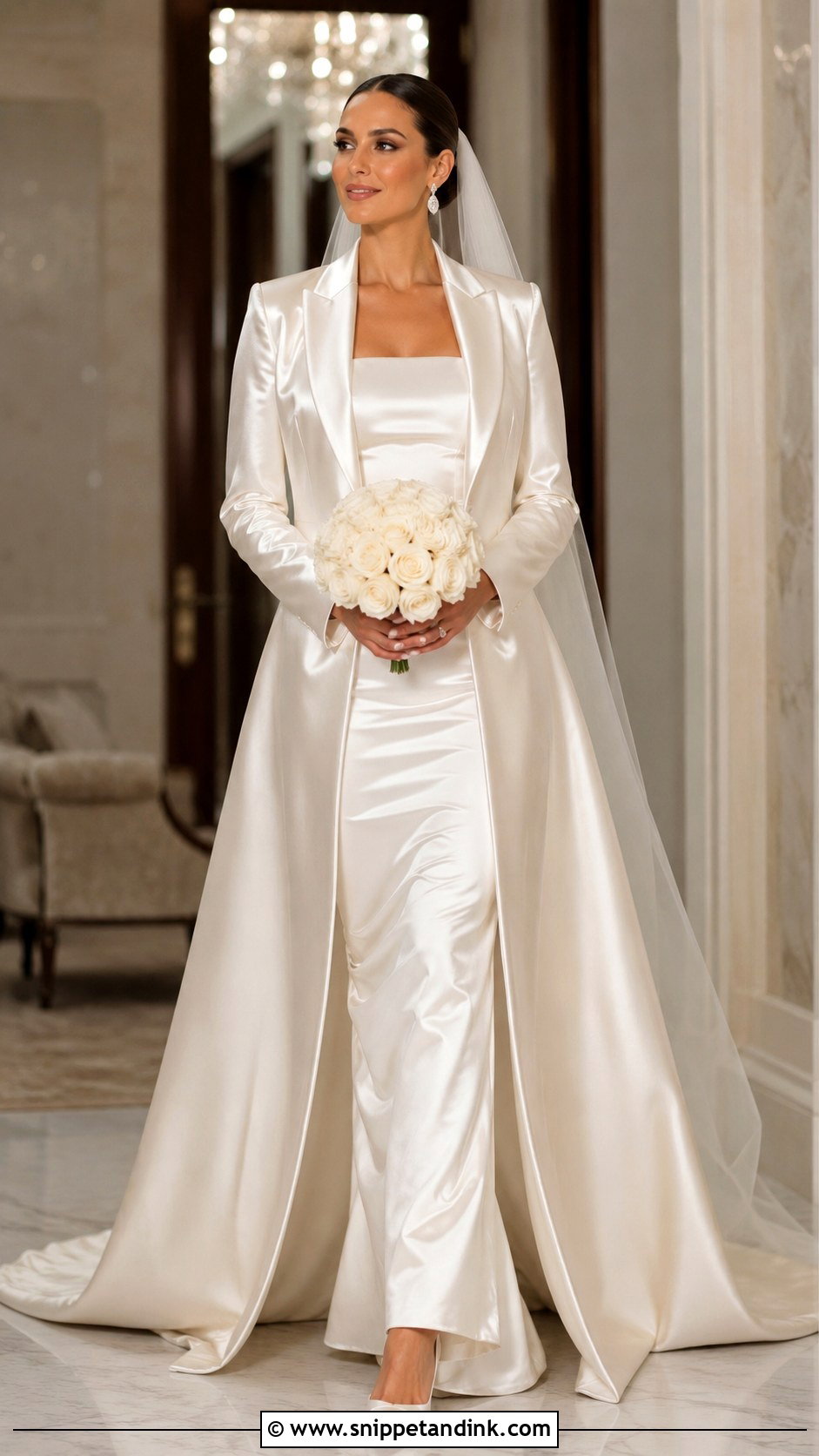
Satin coats give coverage without bulk, which makes them good for travelling between venues or for a formal entrance. Match the shade closely to your gown, ivory to ivory, pearl to pearl; satins in slightly different whites look mismatched side by side. Long over a fitted dress, cropped over a full skirt. Satin creases at the inner elbow and across the back when you sit, so it’s a coat for standing moments. Indoors and in the evening, the shine works in its favour.
11. Lace Bridal Coat
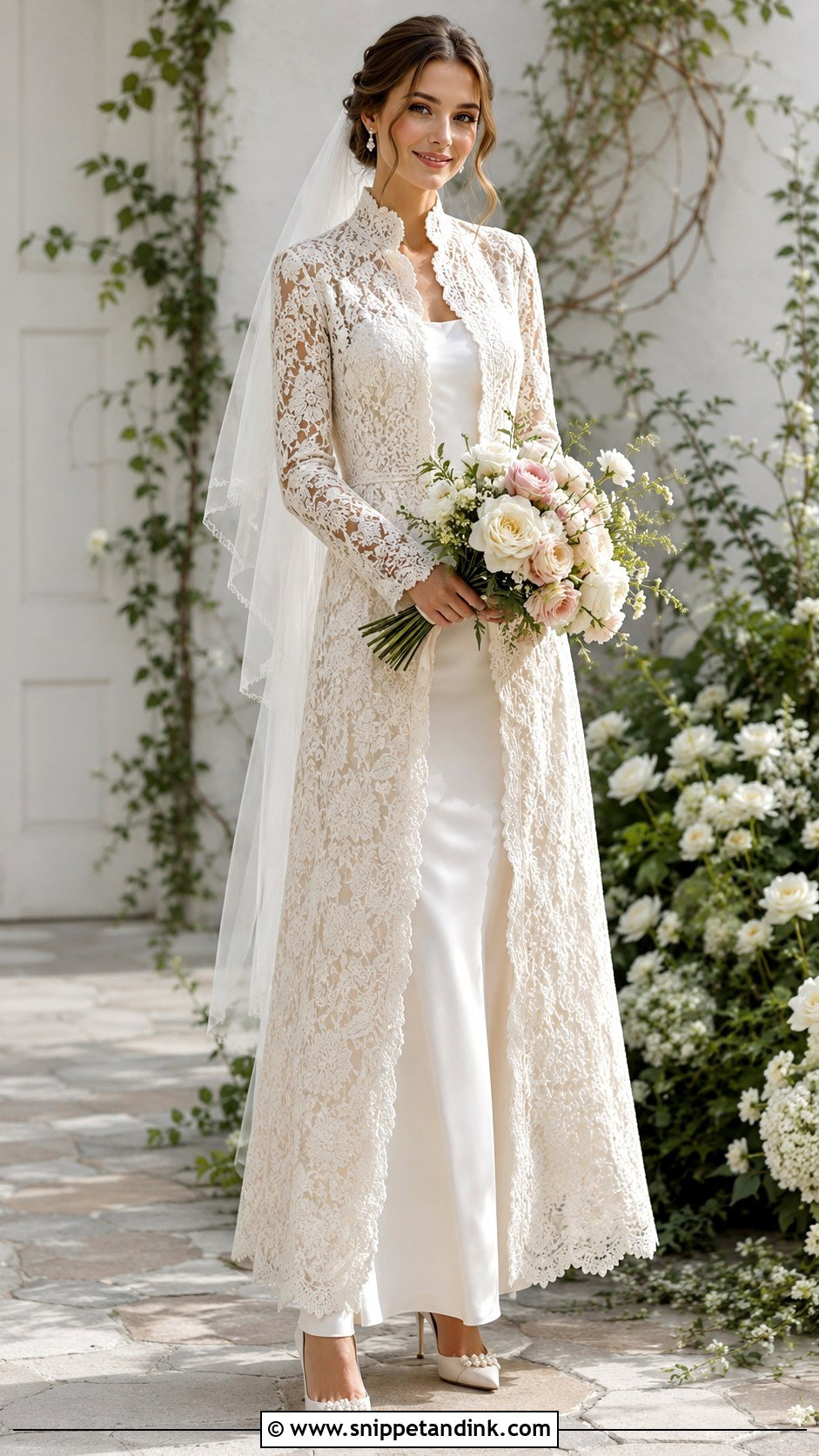
A lace coat is about coverage, not warmth. I’d only suggest it for mild winter weather, cool spring evenings or an indoor ceremony. Pick a lace that sits alongside your gown rather than competing: plain satin or crepe can take a detailed lace coat, while a heavily laced gown needs a simpler, more open pattern on top. Two different laces layered rarely work. Keep the veil light so the coat isn’t buried, and wear soft makeup to match the delicate mood.
12. Boucle Bridal Coat
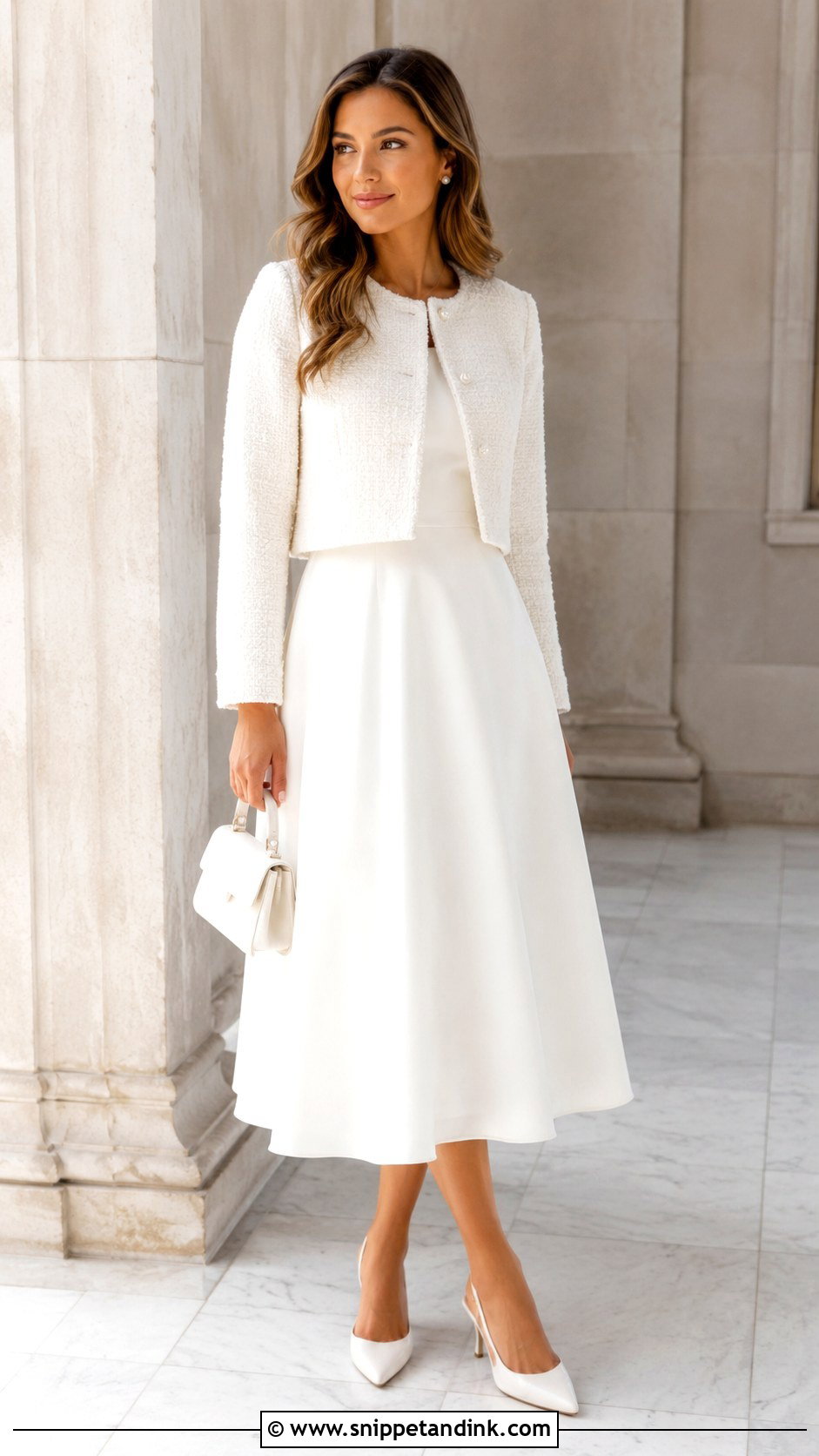
Boucle has that nubbly, tweedy texture that reads polished at close range, which is why I like it for civil ceremonies, courthouse weddings and city rehearsal looks. Choose cream or ivory with clean buttons, cropped or slightly boxy. It sits naturally over a mini, a midi or a bridal suit. Boucle loops snag on beading and rough jewellery, so check your bracelet clasps before you wear one. Slingbacks and a structured bag suit it. It’s texture without the drama of fur.
13. Bridal Peacoat
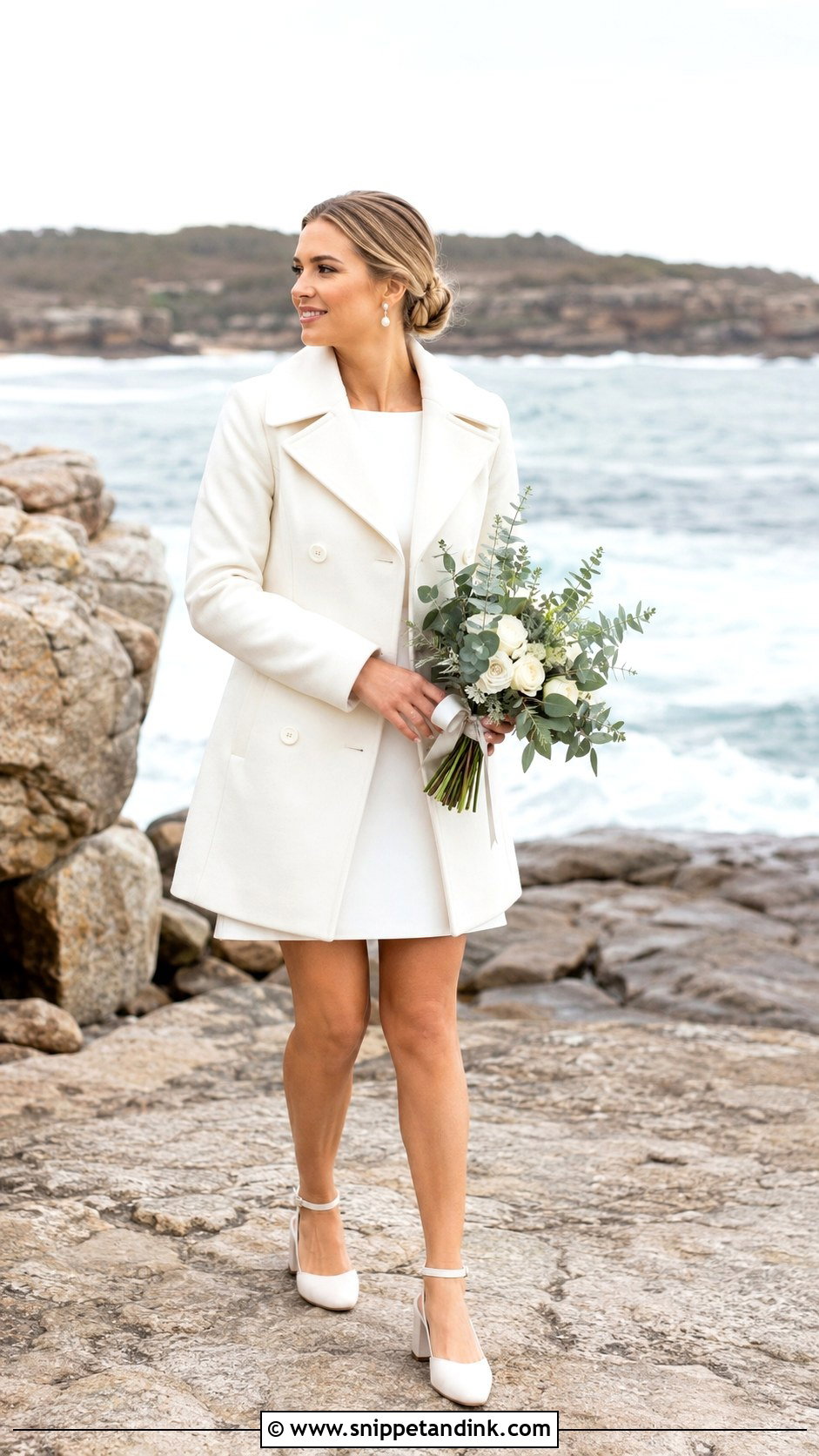
A peacoat is a sensible, slightly nautical choice. The double-breasted front works over short dresses, bridal separates and tailored gowns. In ivory, soft white or pale beige it stays bridal. A shorter peacoat should end at the waist or upper hip so it doesn’t fight the dress shape. It’s not a good match for a full skirt; the double row of buttons adds bulk right where you want a clean line. Coastal winter weddings and city hall ceremonies suit it best.
14. Bridal Coat With Pearl Buttons
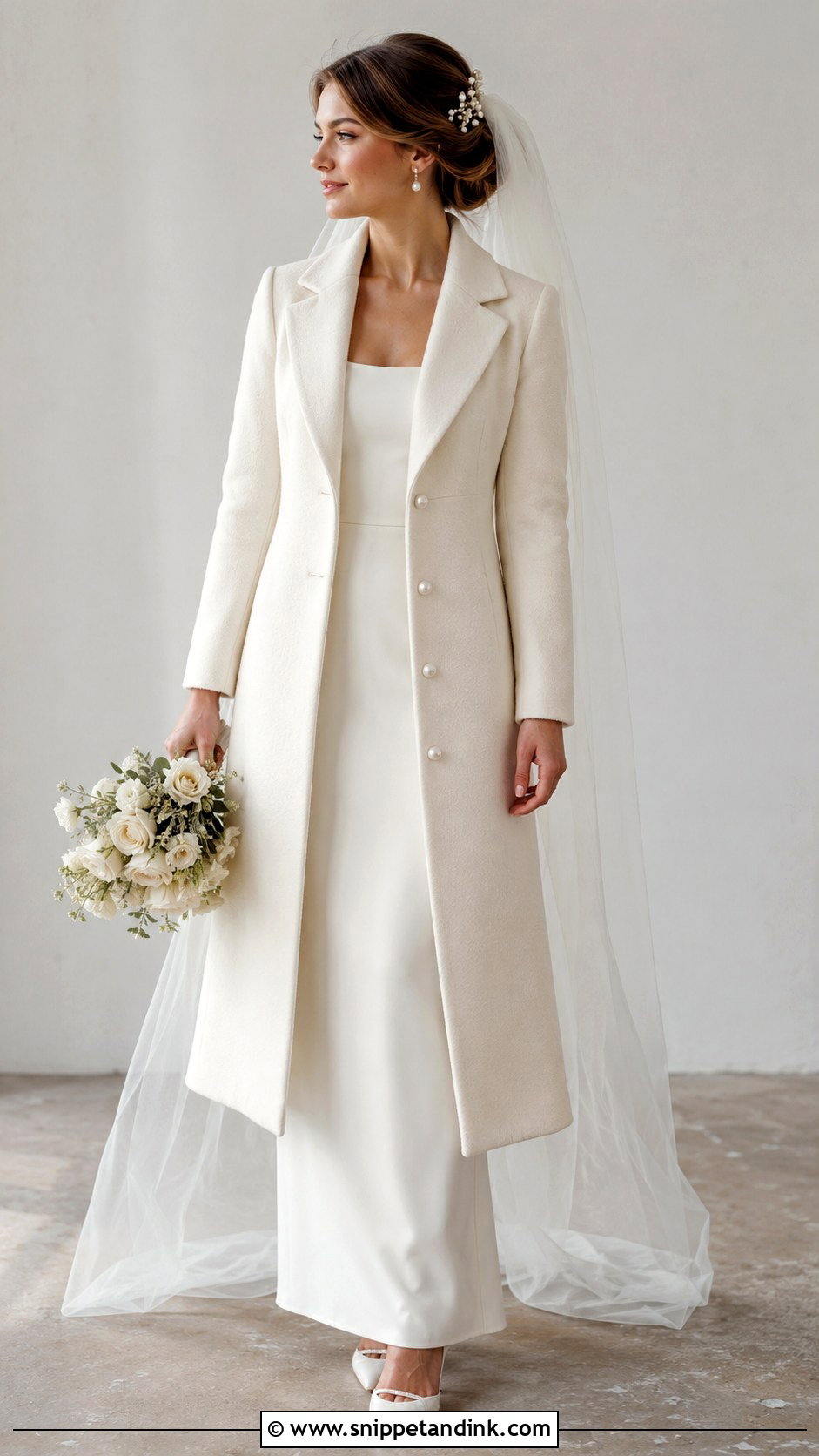
Pearl buttons are a small swap that makes an ordinary wool, satin or crepe coat look made for the wedding. They’re my suggestion for brides wearing a minimal gown who want detail without sparkle. A fitted or gently tailored cut keeps the silhouette neat. Ask whether the buttons are sewn with a shank; flat-sewn pearl buttons pull the buttonholes and crack faster. Echo them with pearl earrings and pins in the hair, and keep everything else plain.
15. Bridal Coat With Bow
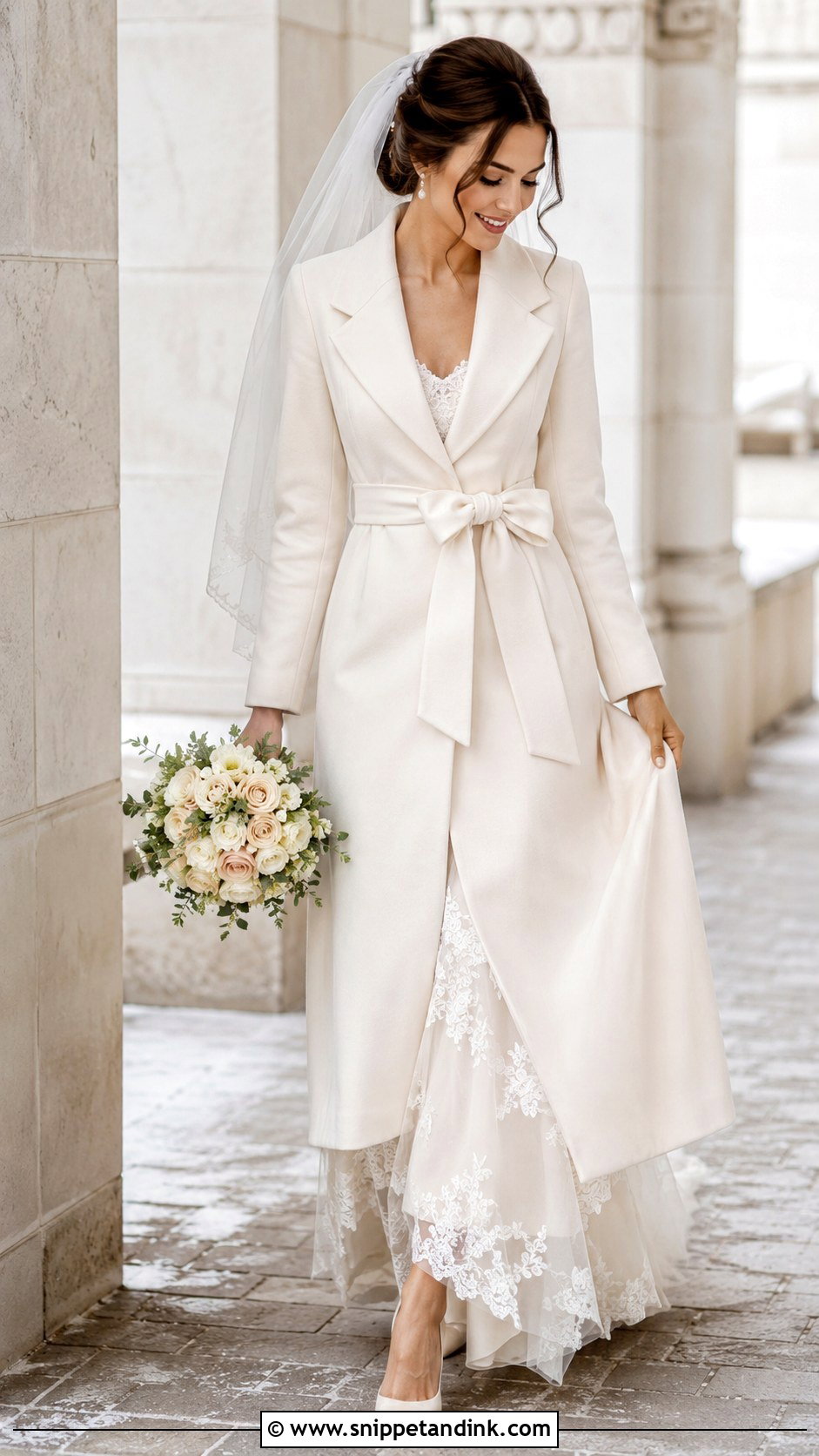
A bow can sit at the waist, neckline, back or cuffs, and where you put it decides how playful the coat feels. A belted bow defines the waist over fuller gowns. A single oversized bow at the back is the more modern version and photographs well during the walk away. I’d skip a back bow if you’re wearing a long veil; the two pile on top of each other. Pointed heels and pearl drops suit it, and a soft bouquet keeps things from tipping into busy.
16. Bridal Coat With Gloves
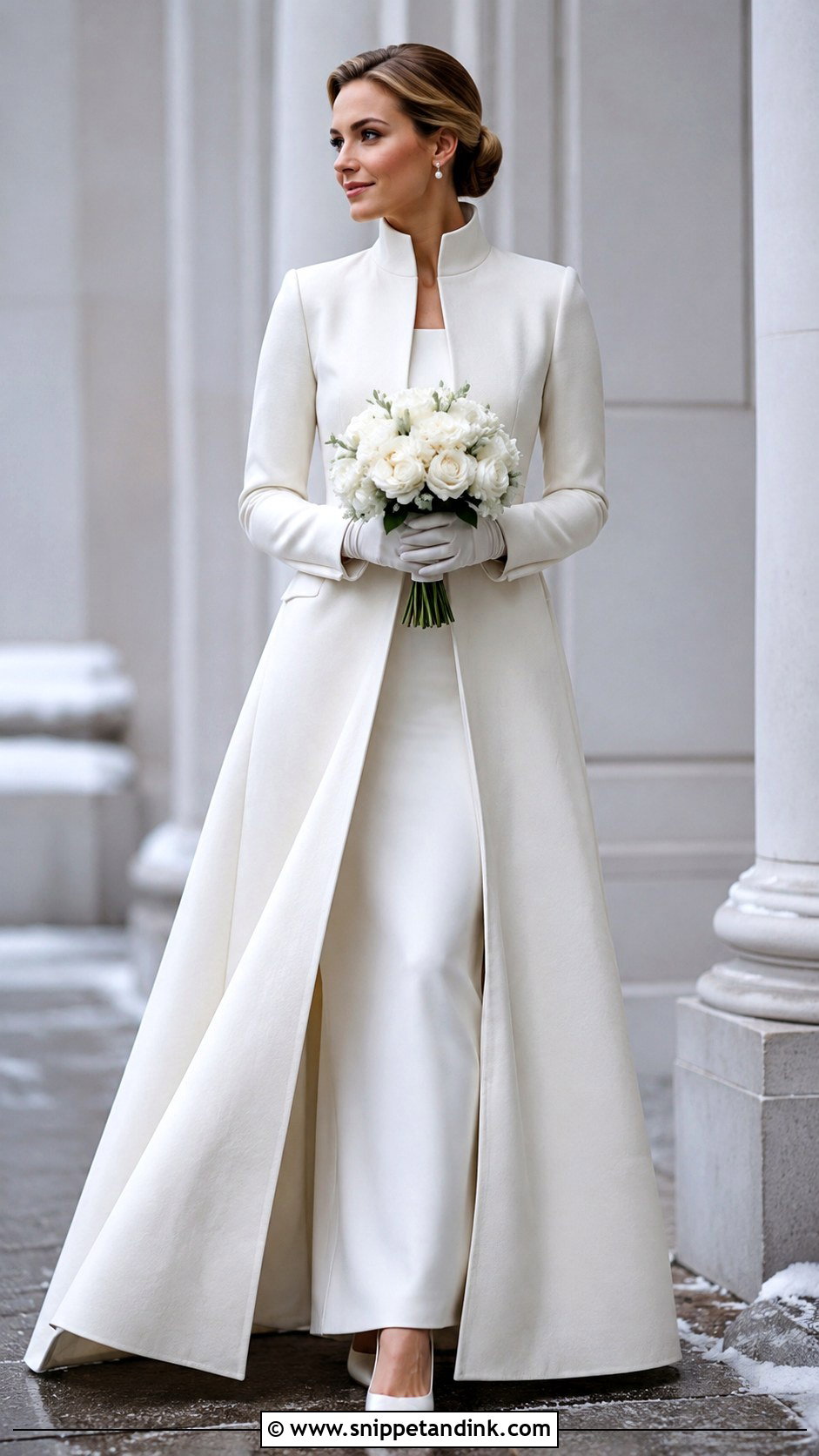
Gloves finish a cold-weather outfit and do practical work too, since cold hands go red and blotchy in close-up ring shots. Start with a structured ivory coat and add satin, velvet or sheer gloves. Opera-length gloves suit a cape or a sleeveless gown; wrist length suits a tailored wool coat. Pick gloves you can slip off with one tug, because you’ll need a bare hand for the ring. Match the shade to the coat.
17. Bridal Coat With Boots
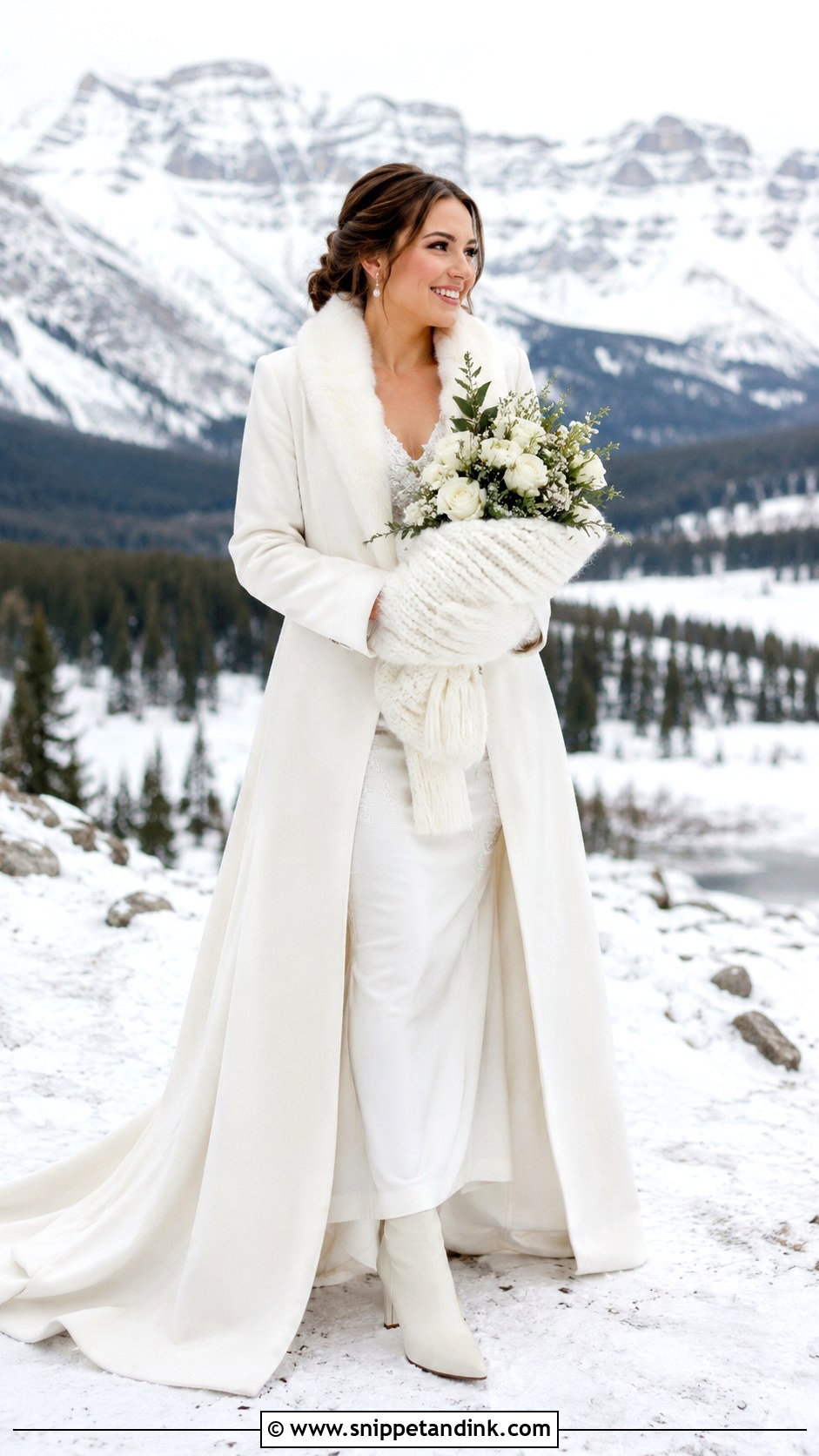
Boots are what keep you upright on snow, gravel or a frosty lawn, and nobody sees them under a floor-length gown anyway. Pair a long ivory coat with white ankle boots, or knee-highs under a midi. If your dress is floor length, take the boots to your hem fitting; a block heel changes the length, and the hem has to be set for the shoes you’ll actually wear. A faux fur collar and a wrapped bouquet stem complete it for real winter weather.
18. Bridal Coat With Mini Dress
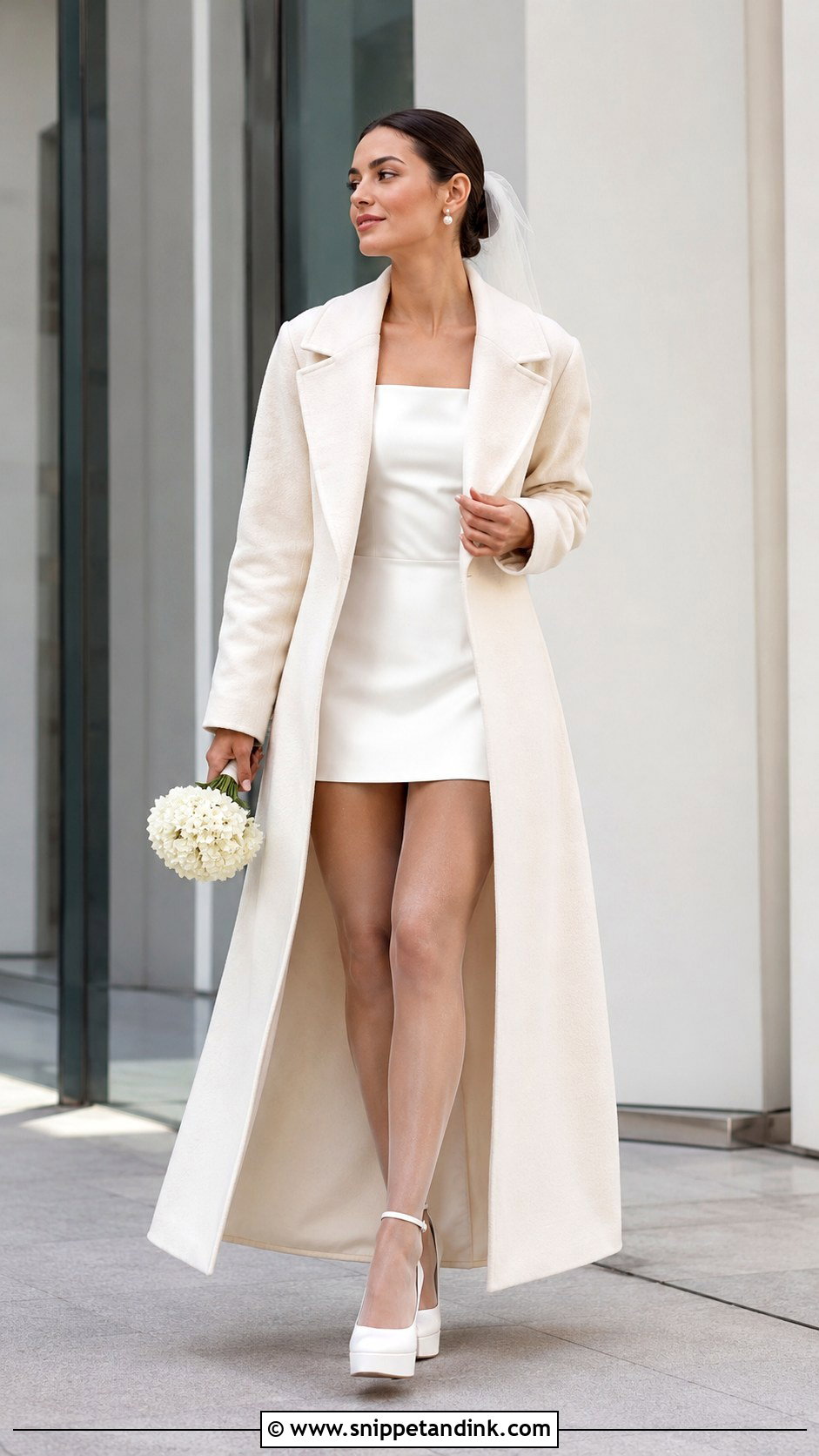
A mini dress under a long coat is one of my favourite second looks for an exit or after-party. The short hem against long structured outerwear gives a strong silhouette; a cropped fur or boucle also works. Add sheer tights in the cold, then slingbacks, platform pumps or white ankle boots. A short veil or a bow clip keeps it bridal. Match the coat and dress to the same ivory, since the contrast in length already gives plenty of interest.
19. Bridal Coat With Jumpsuit
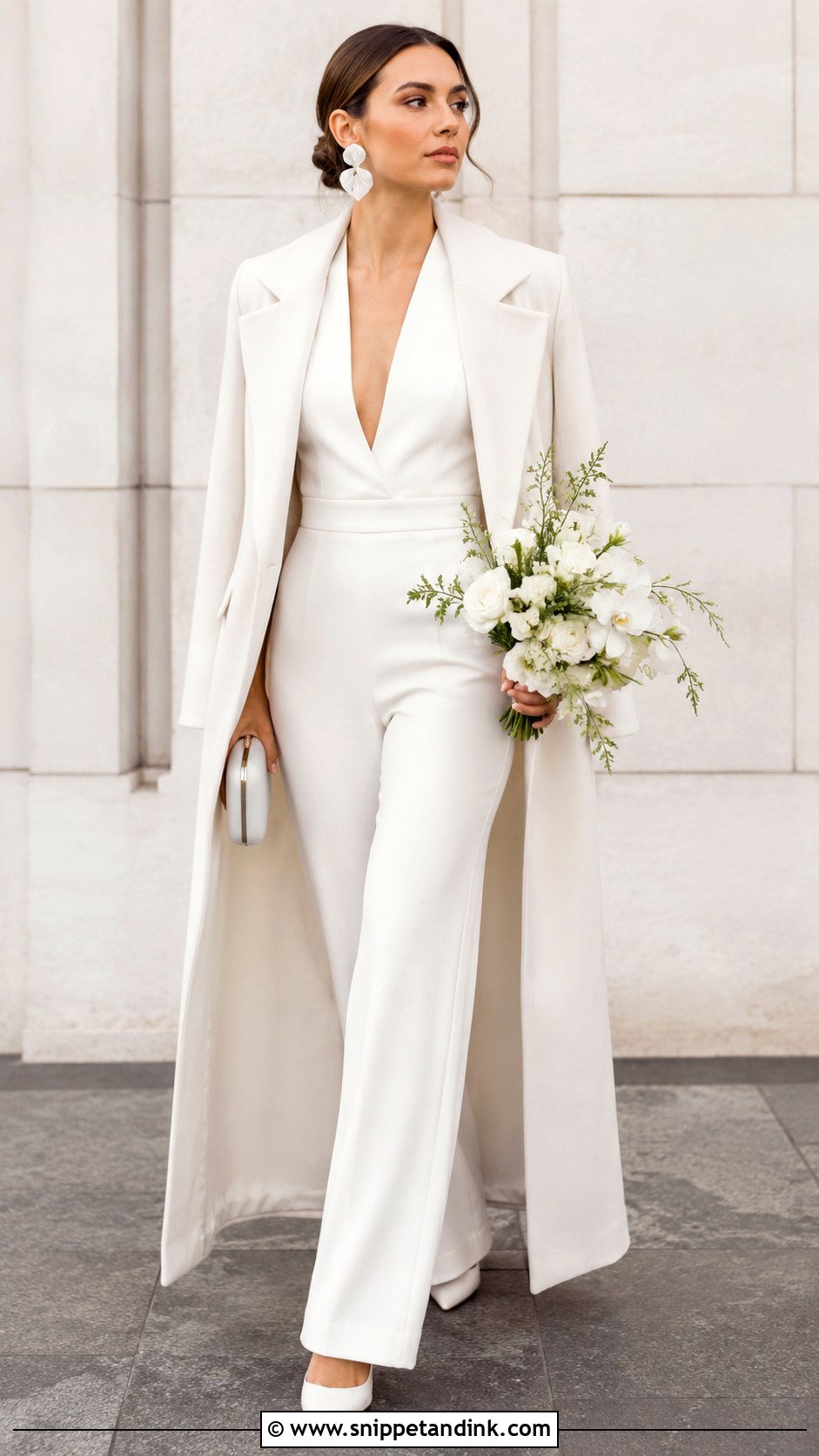
A jumpsuit under a coat suits brides who want to move freely all day. A tailored white jumpsuit sits well under a long wool coat, a satin coat or a structured cape. Wide legs read more formal; a slim leg looks sharper for a city ceremony. Sharp shoulders on the coat balance the jumpsuit’s simplicity. Sculptural earrings and a sleek clutch are enough jewellery. Check that the coat is long enough to cover the jumpsuit’s crotch line when open; a mid-thigh coat on wide trousers can look unfinished.
20. Bridal Coat With Ball Gown
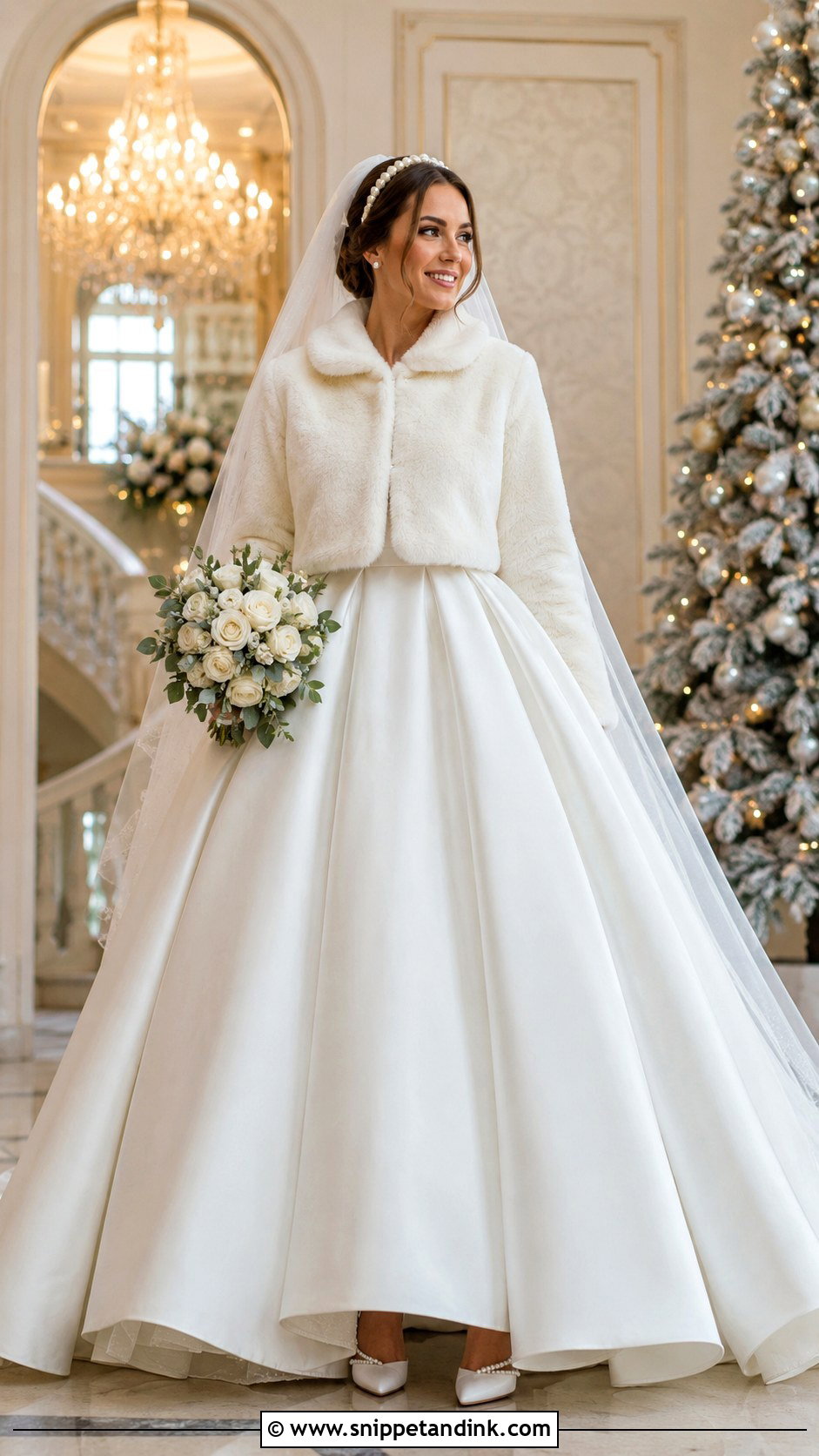
Ball gowns are the hardest dress to put a coat over. Long, narrow coats crush the skirt and bunch at the hip, so I stick to cropped faux fur, short wool coats, capelets or anything that opens fully at the front. A cropped ivory coat keeps the waist visible and lets the skirt move. A tiara or pearl headband and a long veil suit formal venues. Try the coat over the actual gown, petticoat included; a coat that fits over your street clothes may not close over a boned bodice.
21. Bridal Coat With Slip Dress
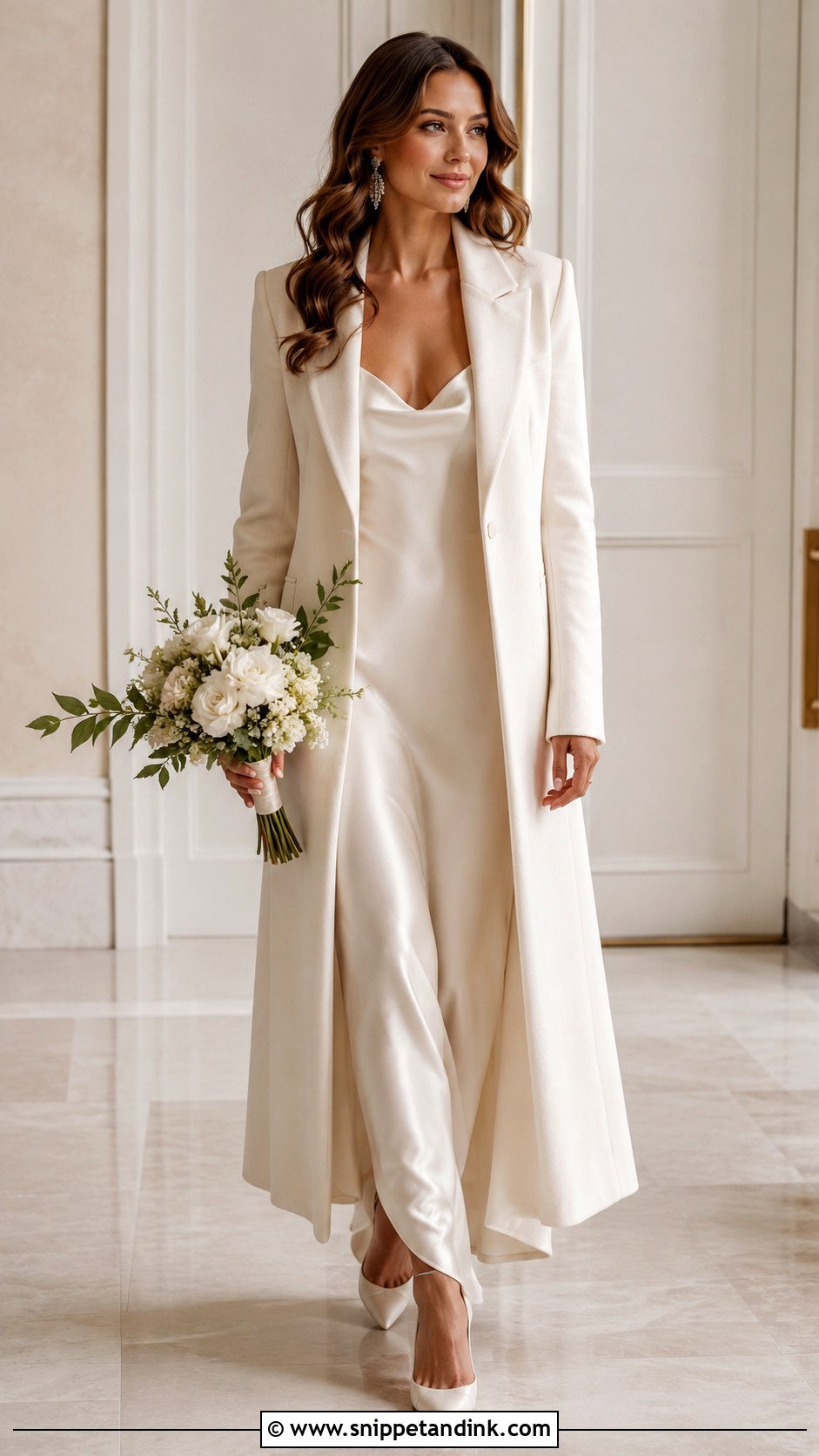
A slip dress is the simplest base for a coat, and the contrast between soft bias-cut silk and a structured coat is the whole point. A long wool, satin or faux fur coat all work, depending on the mood. For a minimal look, ivory slip, cream tailored coat and pointed heels; for more drama, a plush fur and sparkly earrings. Bias-cut silk clings to static, so a lined coat helps it hang properly. Keep your hair sleek so the neckline stays clear.
22. Bridal Coat With Lace Dress
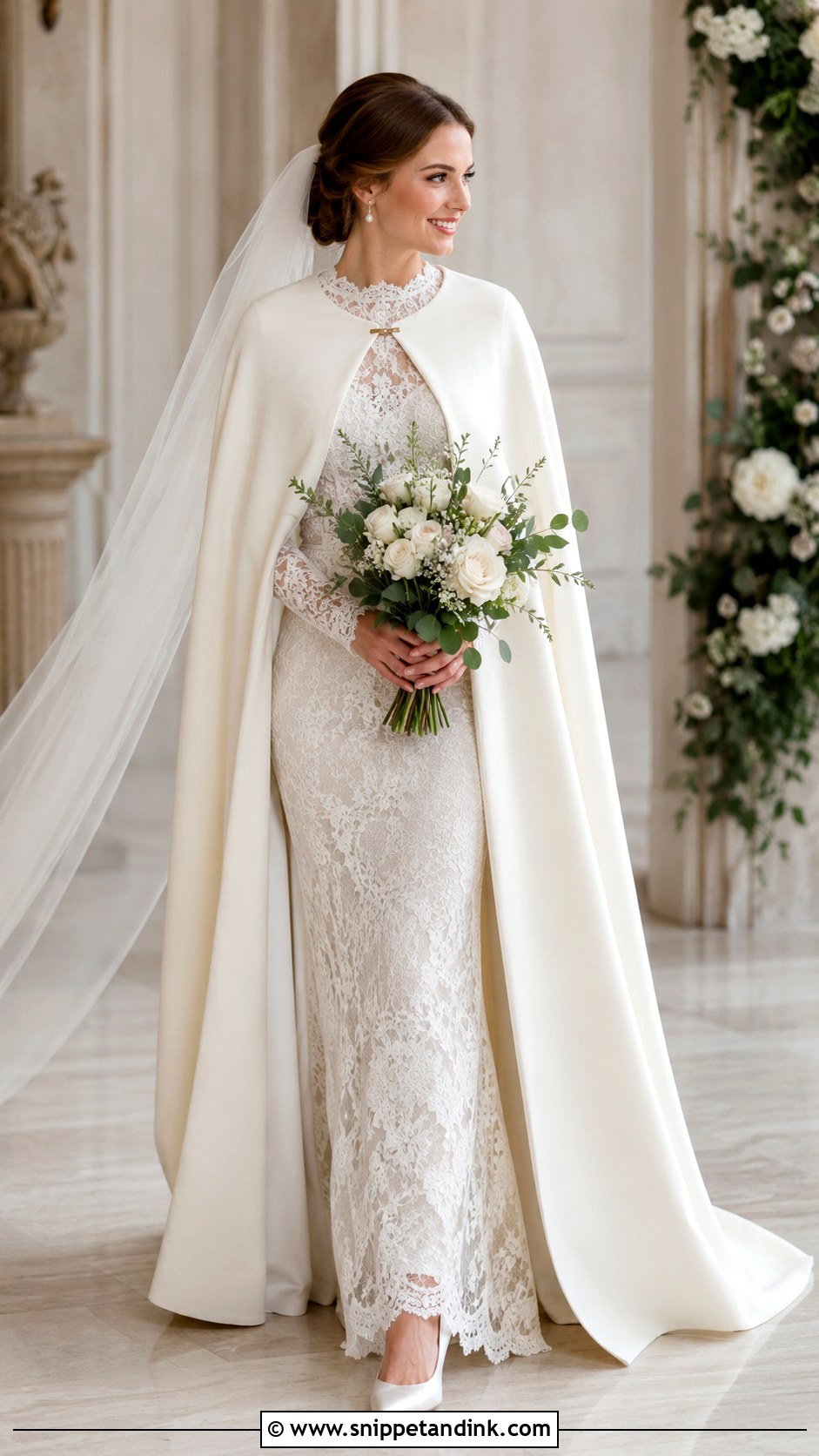
With lace, the coat’s job is to keep you warm while letting the lace show. Choose something that opens easily at the front: a cape, a cropped jacket or a tailored coat. With long lace sleeves, a sleeveless cape or open coat shows more of the sleeve work. A high-neck lace dress needs a collarless coat; a bulky collar competes with the neckline. Ivory faux fur in a cropped shape works with lace too. Check the coat’s lining for rough seams that could catch the lace edges.
23. Bridal Coat With Pantsuit
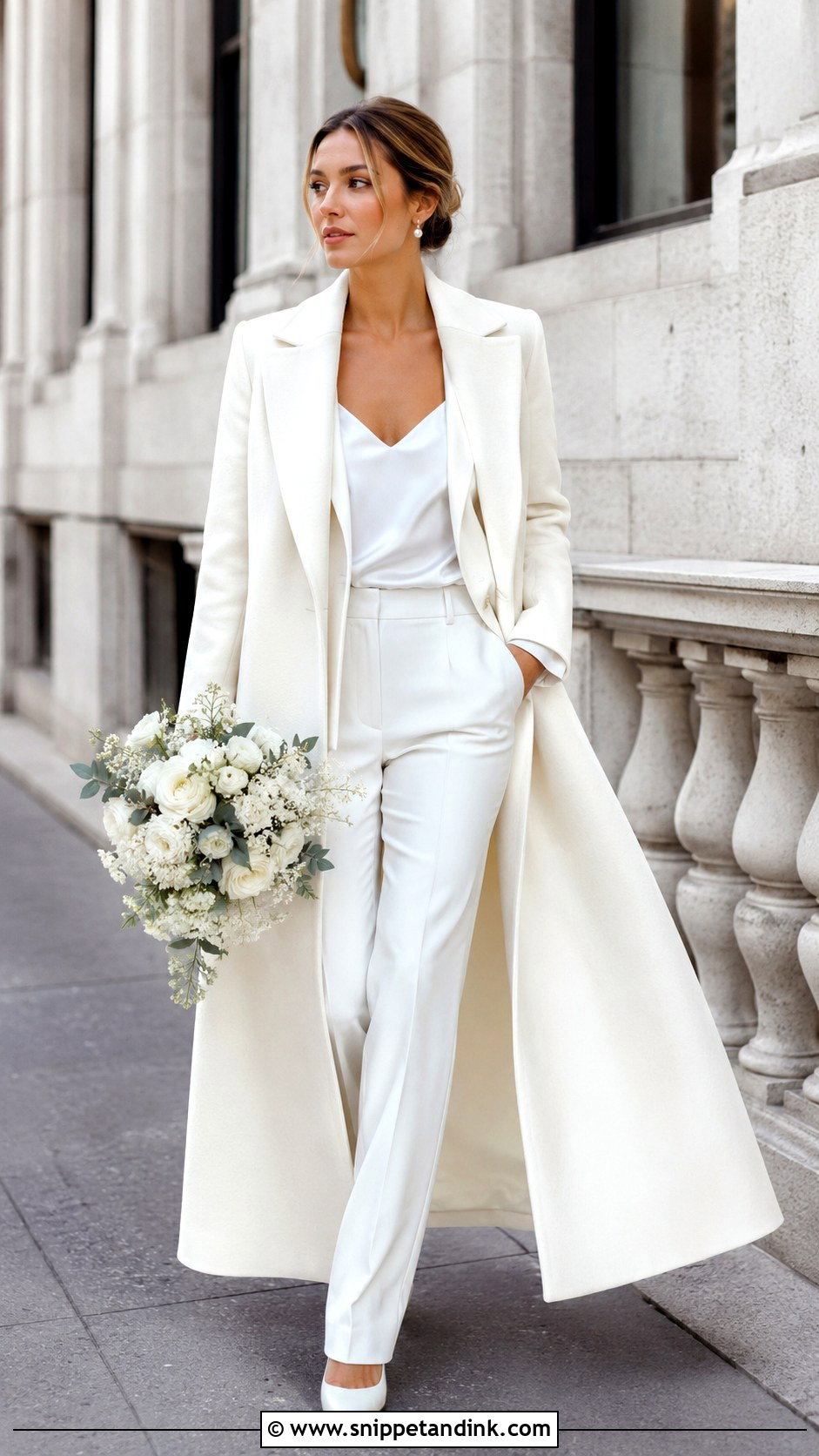
Coats over trousers look strong and modern. A bridal coat with a pantsuit works best when the coat is long and tailored, giving you a clean line from shoulder to shoe. Sharp wool lapels make the suit formal; satin softens it. Pointed heels, loafers or heeled boots, depending on the ground. A silk camisole and a structured bouquet keep it bridal. Keep the coat simple so the suit’s tailoring stays the focus.
24. Bridal Coat With Detachable Train
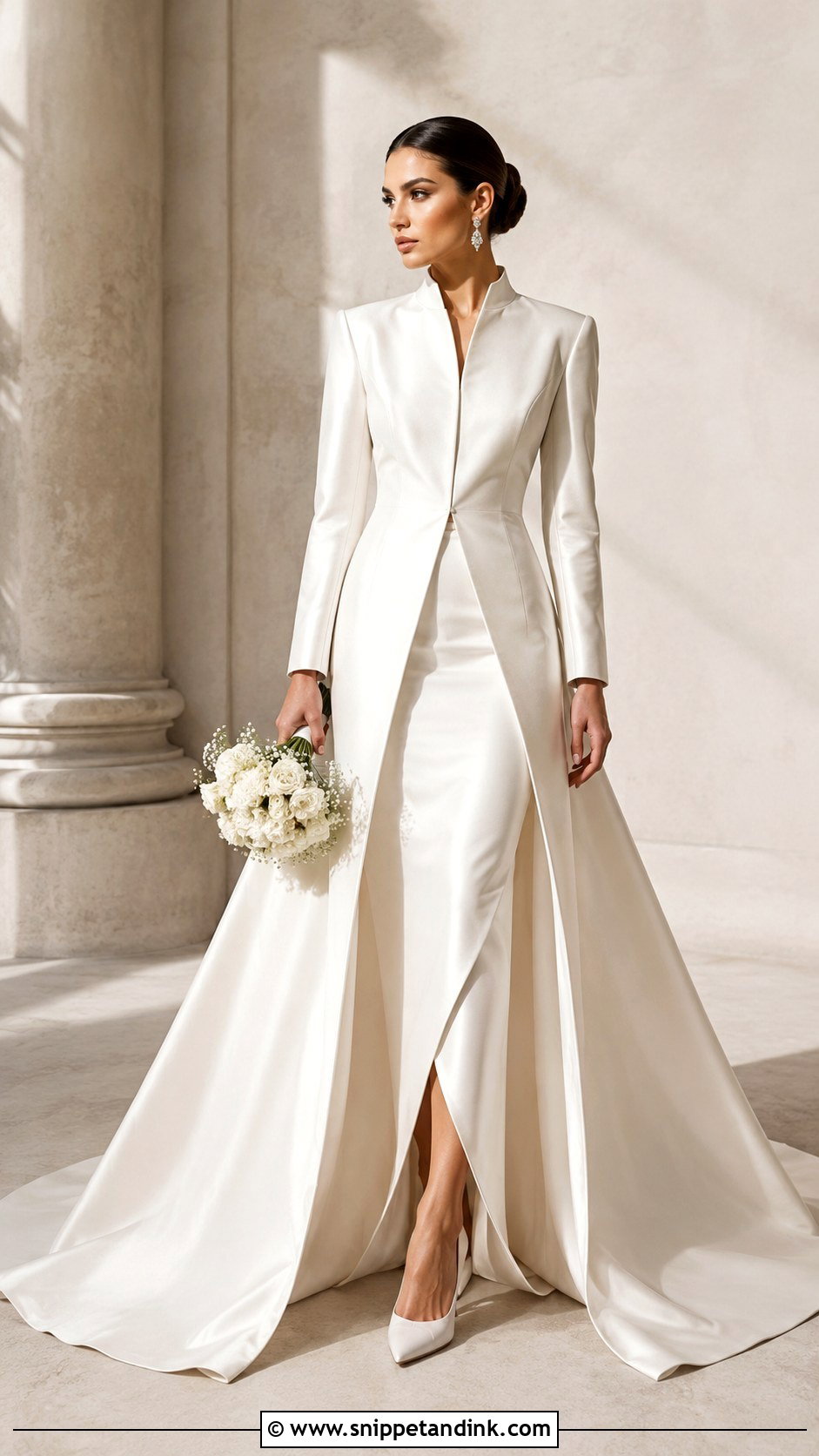
A detachable train gives you drama for the ceremony and freedom for the reception. Either the coat itself carries a removable train, or a coat with a long back panel does the job over a simple dress. It works over fitted gowns, jumpsuits and minimal dresses. Ask how the train fastens. Hidden snaps or hooks along a waist seam are sturdier than buttons, and someone needs to know how to remove it quickly. Sleek heels and a smooth bun keep the focus on the train.
25. Bridal Coat With Cathedral Veil
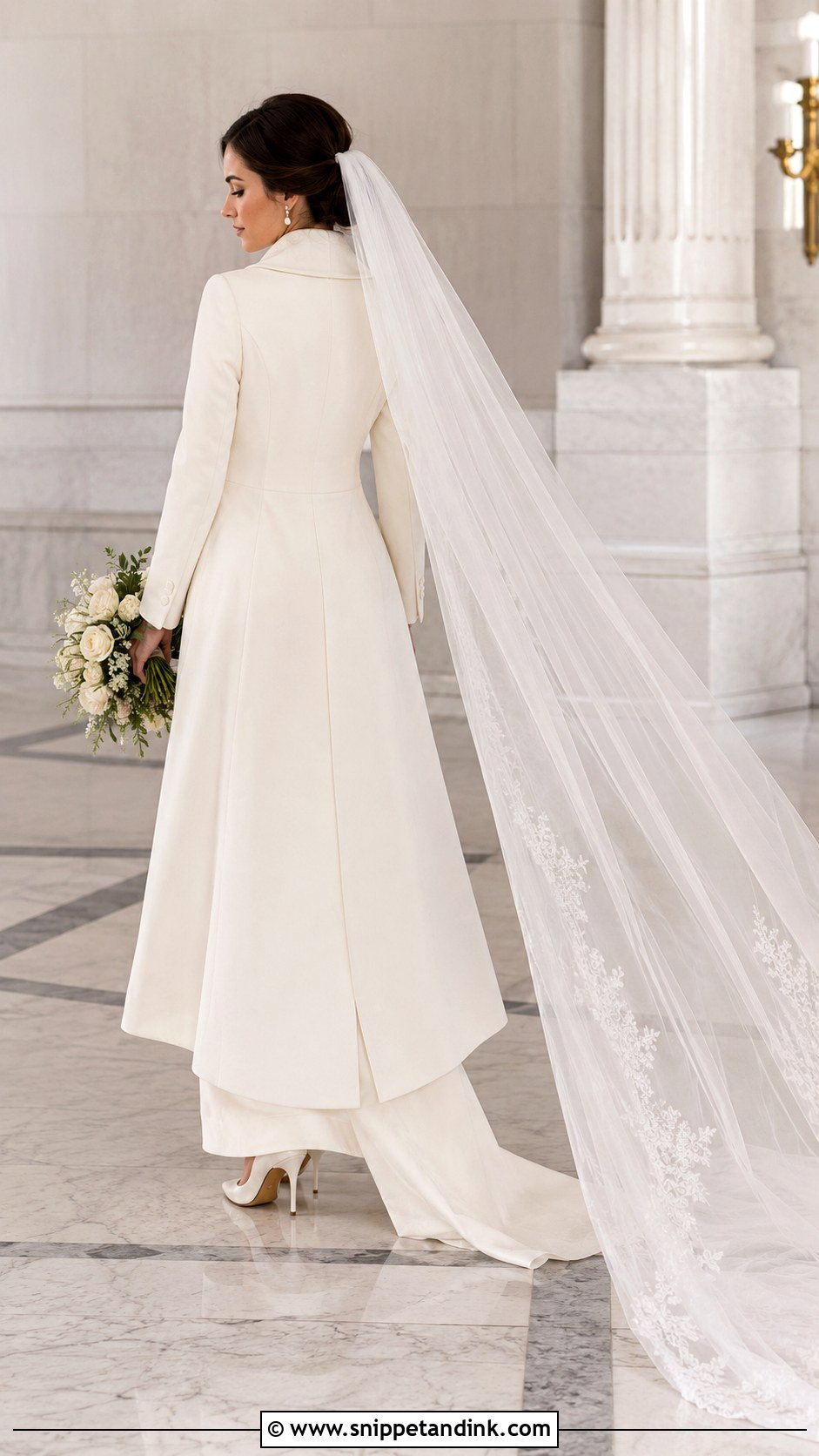
A cathedral veil over a coat makes for an impressive back view, but only if the two don’t fight. The coat should have a soft or low collar so the veil falls straight, and a smooth surface. Long wool, a cape or sleek faux fur all give a clean shape underneath. Textured boucle and deep fur collars snag tulle. Plan these portraits for a still moment; a long veil over a coat in wind wraps around you quickly. Classic heels and a simple bouquet keep it uncluttered.
What Happens When the Coat Comes Off
A coat spends half the wedding day being carried, so plan for that part too.
Give it a keeper
Name one person, a bridesmaid or the planner, who holds the coat during the ceremony and brings it back for outdoor portraits. An ivory coat dropped on a chair in a busy venue picks up marks fast.
Watch the collar and cuffs
Foundation transfers onto light collars every time you turn your head, and fake tan rubs onto cuffs. Setting spray and a few minutes for makeup to settle before the coat goes on help. Keep a small pack of wipes with your keeper.
Rain and snow
Wet wool smells and sags, and drips from a fur collar mark silk. Have a large umbrella ready, shake snow off outside, and hang a damp coat on a wide hanger away from heaters, which can scorch faux fur.
After the wedding, let the coat air for a day before it goes to a dry cleaner, and point out any makeup on the collar when you drop it off. Store it on a shaped hanger in a breathable cotton bag, not the plastic it came back in.
Cold Hands, Warm Shoulders and the Dress Still on Show
A winter coat earns its place twice: once in the photos, and again in every cold minute between them. The right one keeps you comfortable without hiding the gown or fighting its shape. Faux fur is the glamorous route, wool the classic one, satin the polished one and a cape the most forgiving with structured sleeves. Cropped styles stay out of a full skirt’s way, while long tailored coats suit slip dresses, suits and fitted gowns. Decide with the forecast, the venue and the gown in mind, and try it on over the real dress before the wedding week.
You'll Like These Ideas:


Leave a Reply