
A cape is the one winter layer that adds to a wedding gown instead of hiding it. It covers the shoulders for arrivals, outdoor portraits and a cold ceremony, then comes off for the reception. What makes it work is proportion. A fitted gown can carry a sweeping cape, while a full ball gown usually looks better with a short capelet that stops before the skirt begins. Velvet, faux fur, wool, satin, lace and beaded tulle each change the mood. When I fit a cape, I check where it fastens, how it sits when her arms move and whether it drags the gown’s neckline backward. The twenty looks below each come with the detail I’d look at first.
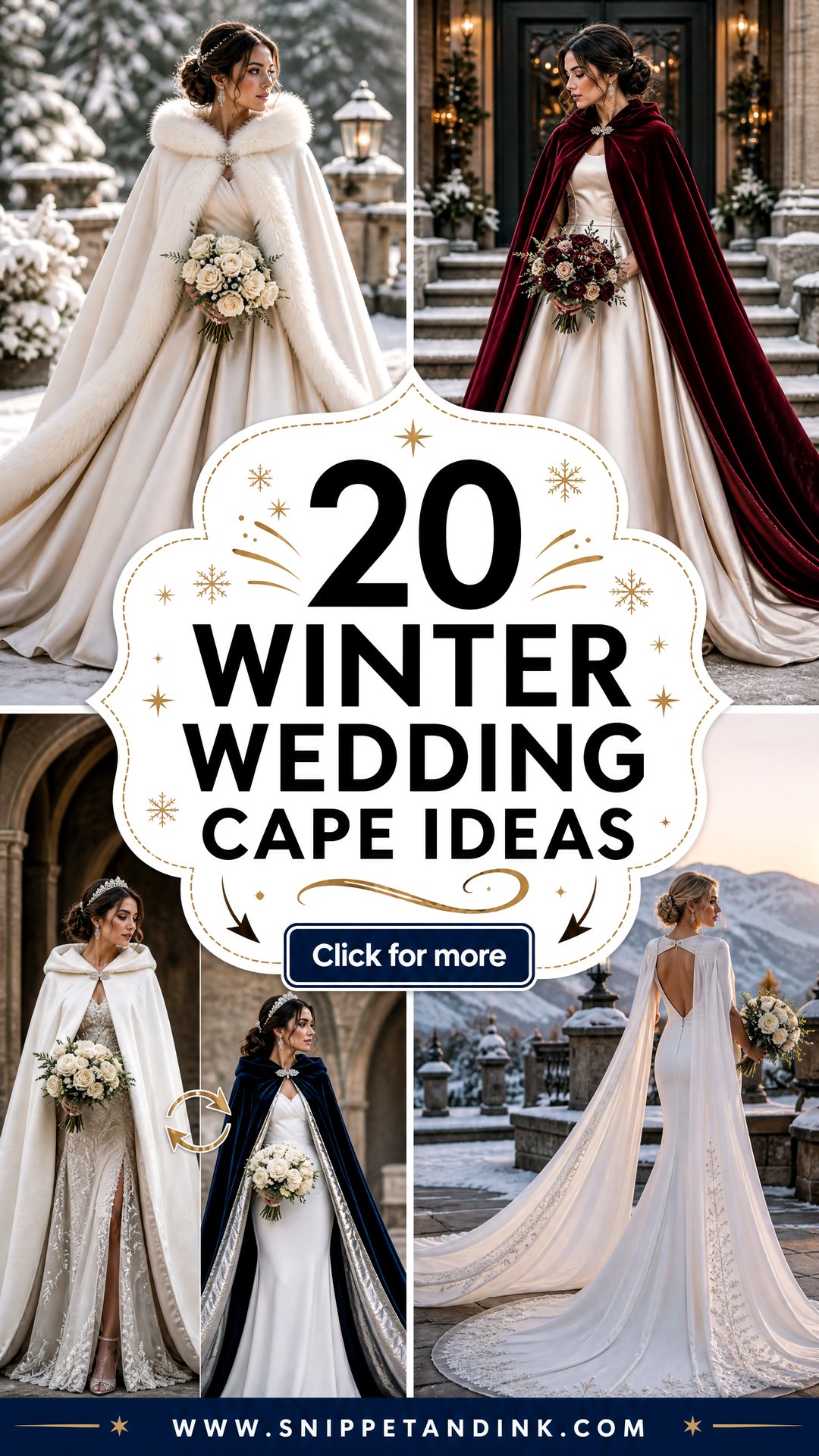
Cape or Veil, or Both? Sorting Out the Neckline Traffic
A cape changes what can happen around the head and shoulders, so I plan it with the veil, the hairstyle and the bouquet together.
- A long veil and a long cape fight each other. The veil slides off fur and velvet, and tulle catches on beading. Most brides pick one long layer and keep the other short, or skip the veil completely.
- A high collar or hood needs hair worn up. Loose hair gets trapped under the collar and pushed forward.
- A low bun should sit below or clear of the cape’s collar, not on top of it, or the cape keeps nudging it.
- Cascading bouquets cover the front opening of a cape. A compact, round bouquet keeps the cape’s shape visible.
- Earrings that brush the shoulder can tangle in fur or lace trims. Studs or short drops are safer.
Bring the cape to the hair trial. It’s the only way to see how the hairstyle, collar and any headpiece behave together.
1. Faux Fur Winter Wedding Cape With Satin Ball Gown
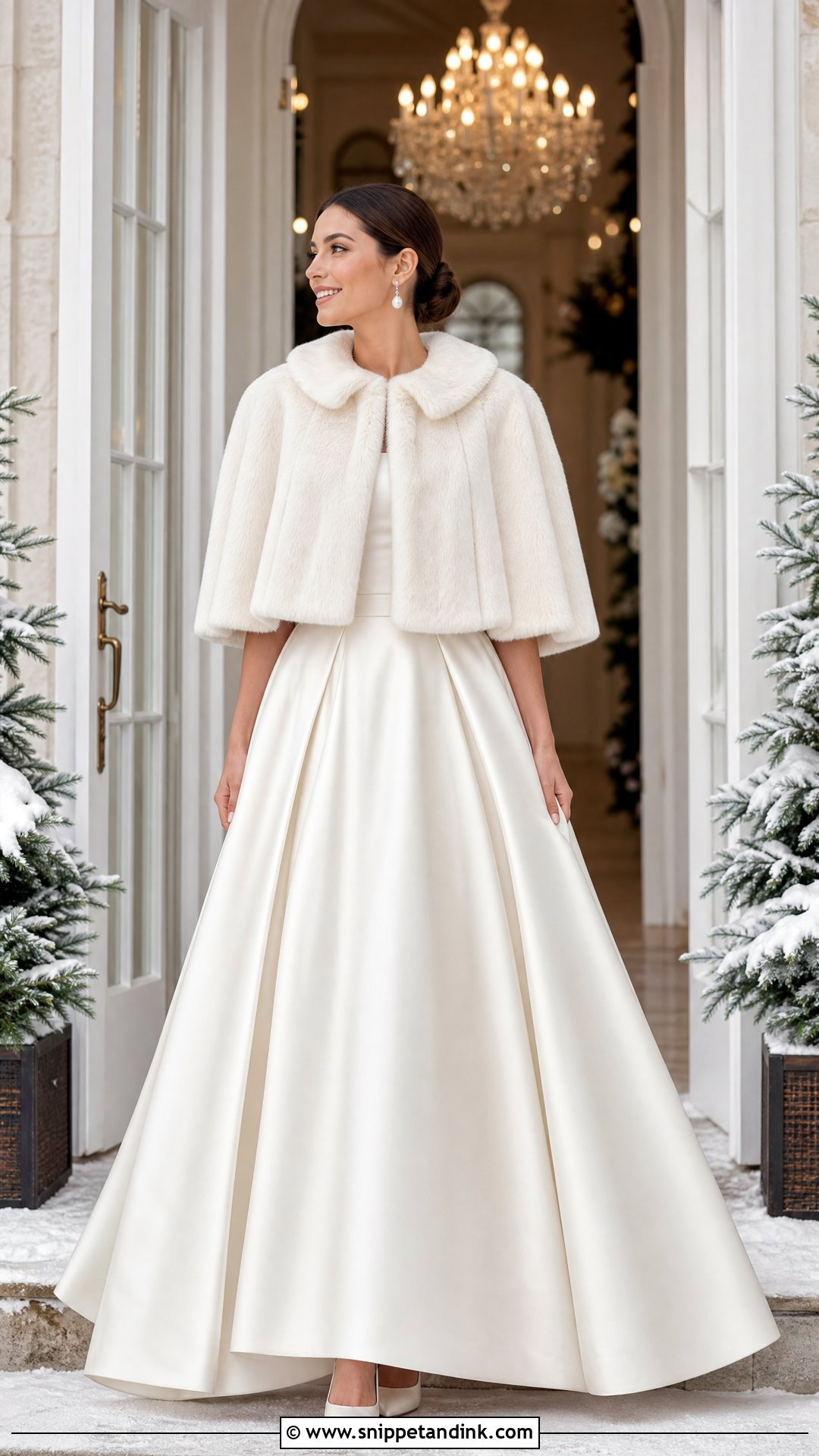
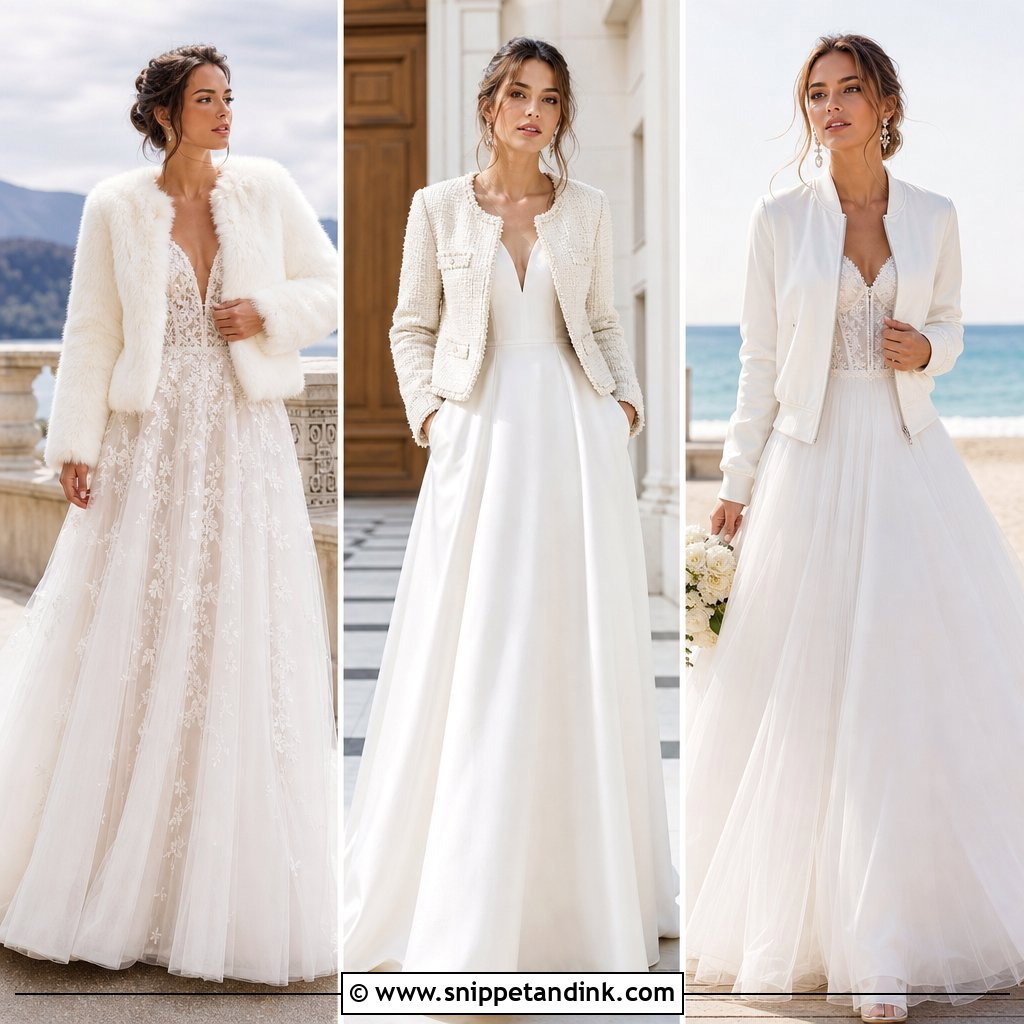
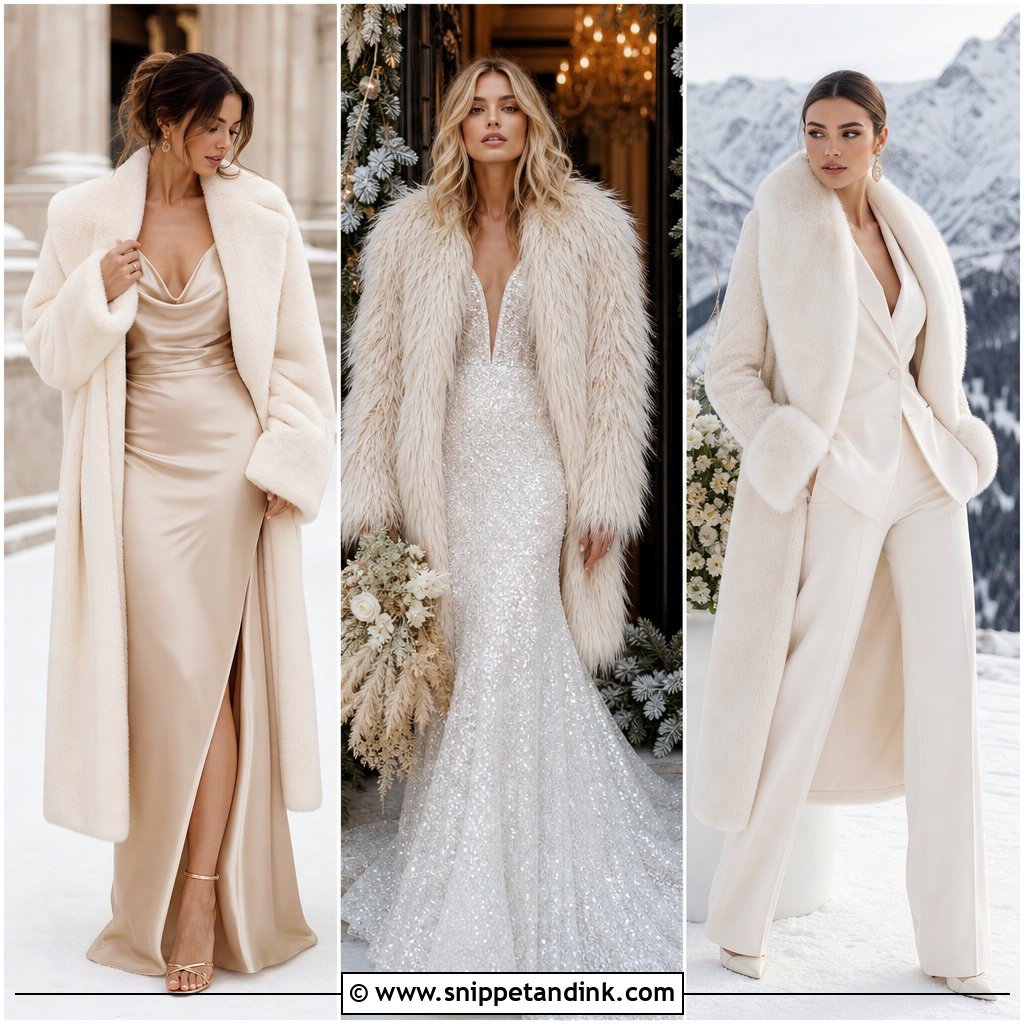
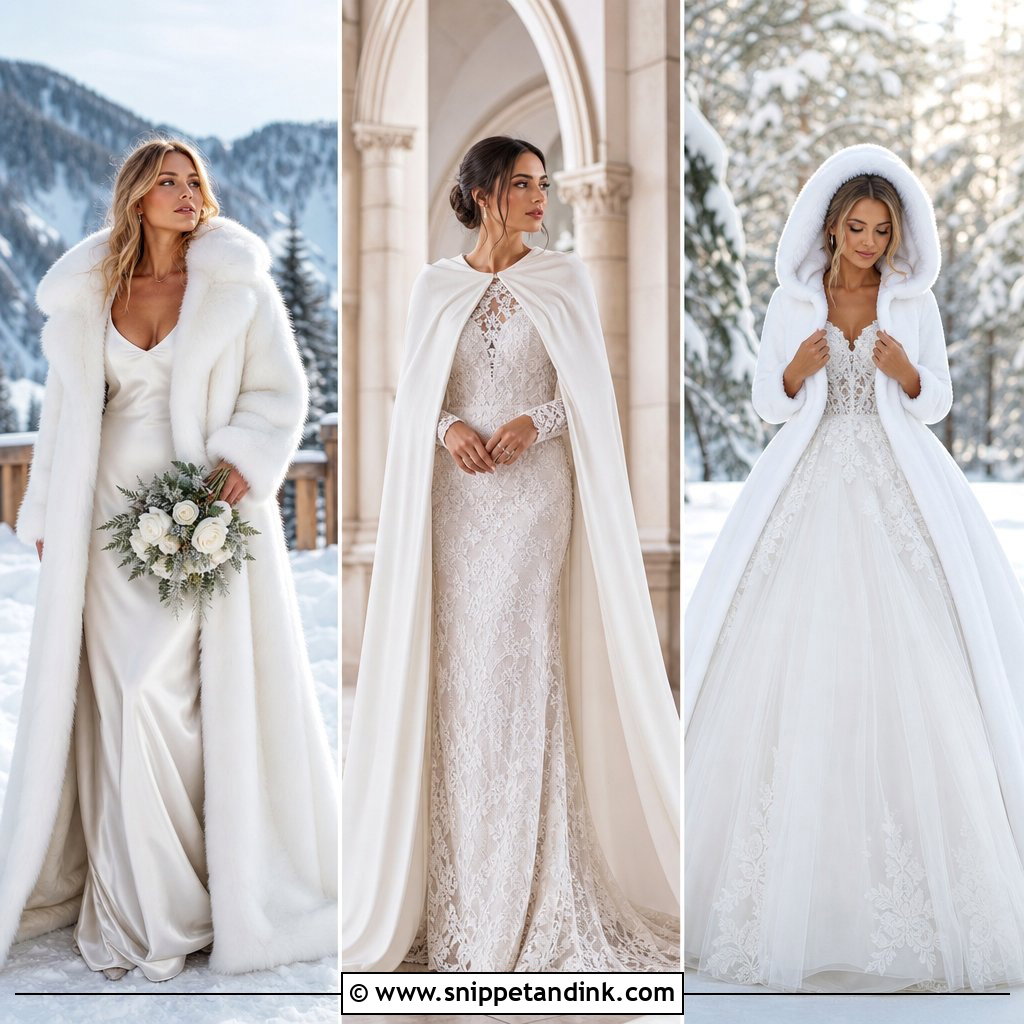
Faux fur over a satin ball gown is the classic winter pairing, and length is the whole trick. A waist-length ivory cape leaves the full skirt visible; anything longer starts to swallow it. Strapless and off-shoulder necklines suit it best because the fur covers exactly the skin that gets cold. Faux fur sheds a little at first, so I give it a good shake and a soft brush outdoors a day before. A crystal clasp, pearl drops, a sleek low bun and pointed satin pumps finish it, with white flowers and winter greenery in the bouquet.
2. Hooded Velvet Winter Wedding Cape With Long Sleeve Dress
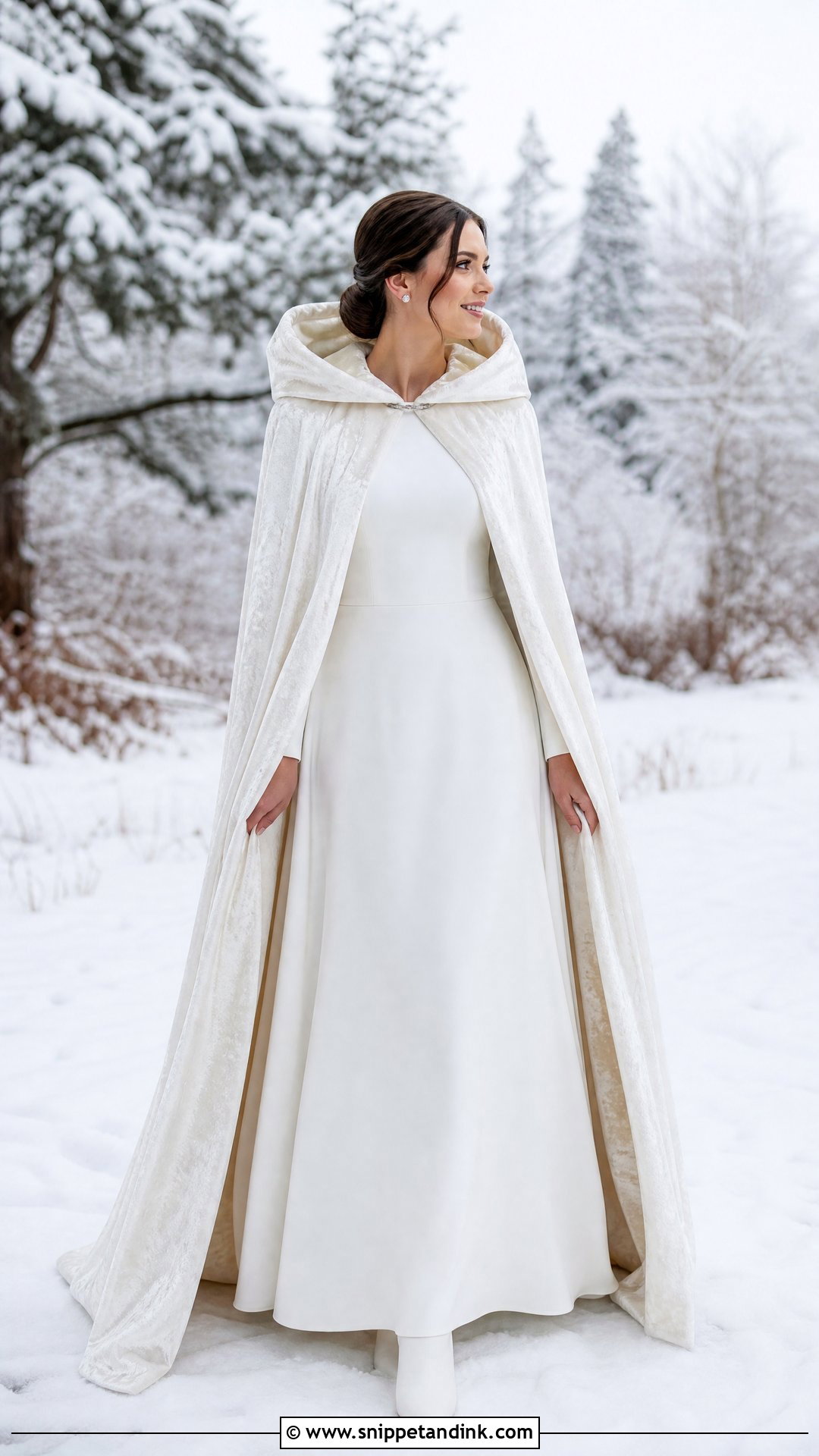
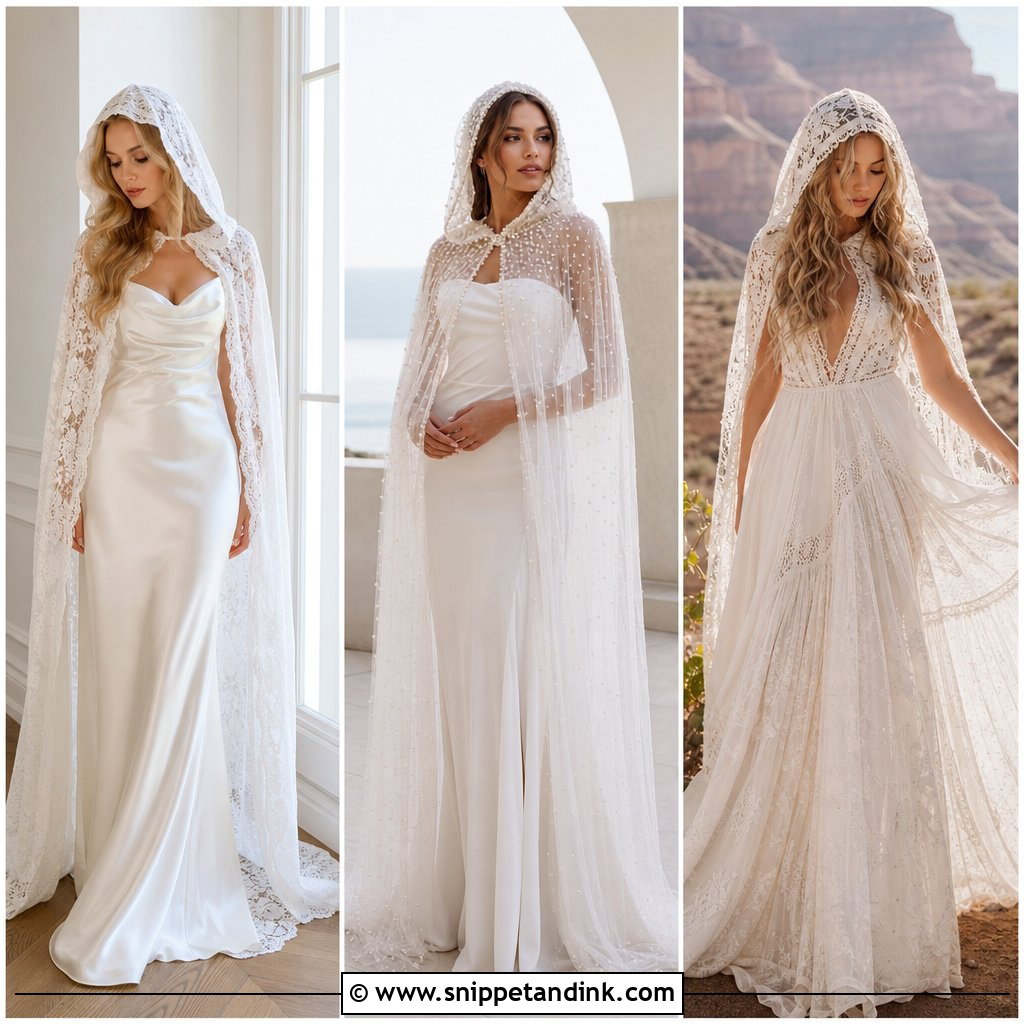
A floor-length velvet cape with a soft hood is made for snowy portraits. Over a long-sleeve A-line in crepe, satin or Mikado, ivory velvet stays traditional, while soft grey gives quiet contrast. Hoods are the part I test at the hair trial. The hood has to be cut loosely enough to rest over a chignon without crushing it, and it should come down without catching on pins. Small crystal studs and block heels or bridal boots suit uneven ground. A ribbon or covered-button closure keeps the front neat, and the velvet needs no extra embellishment.
3. Cathedral Length Winter Wedding Cape With Crepe Gown
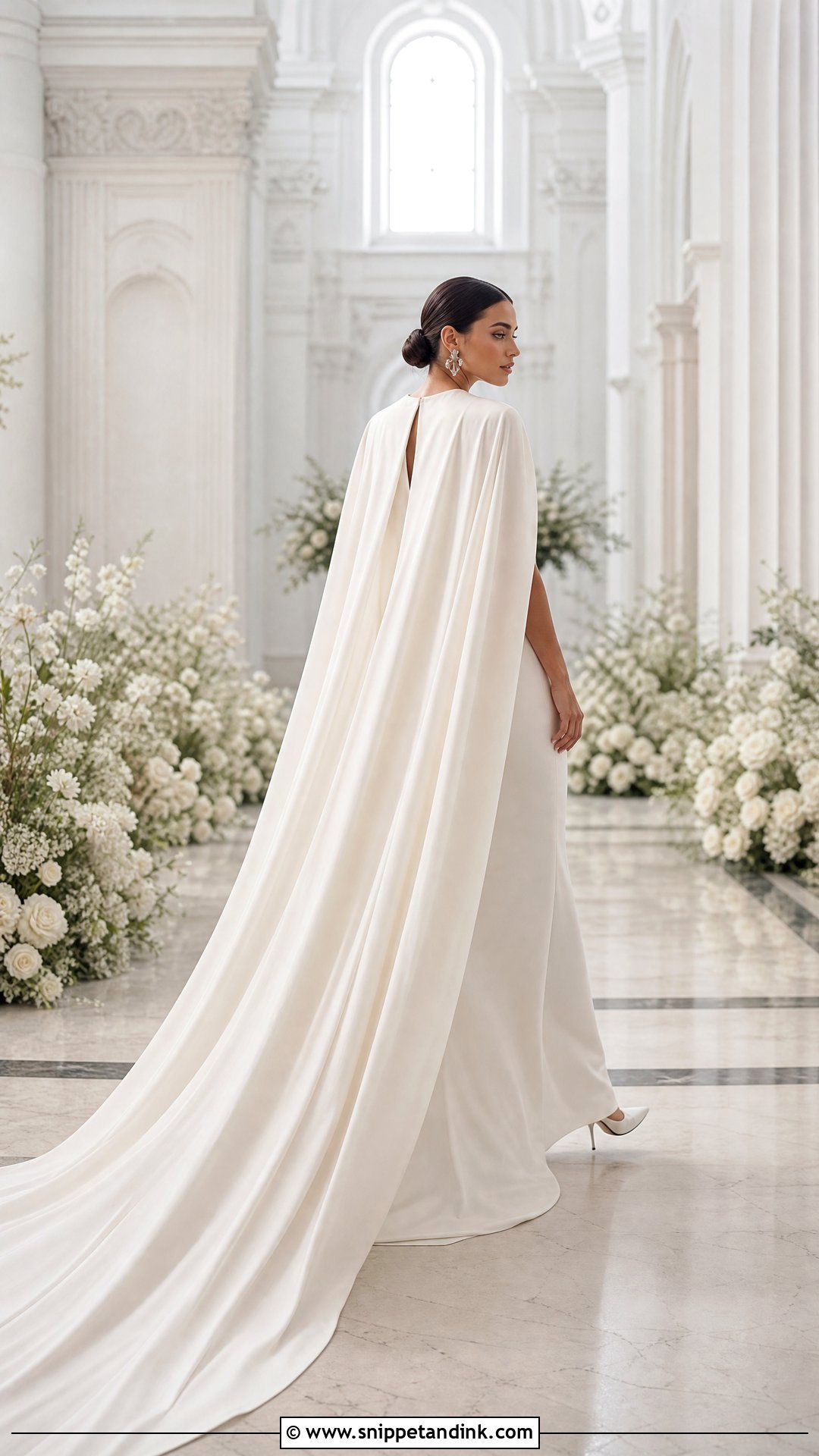
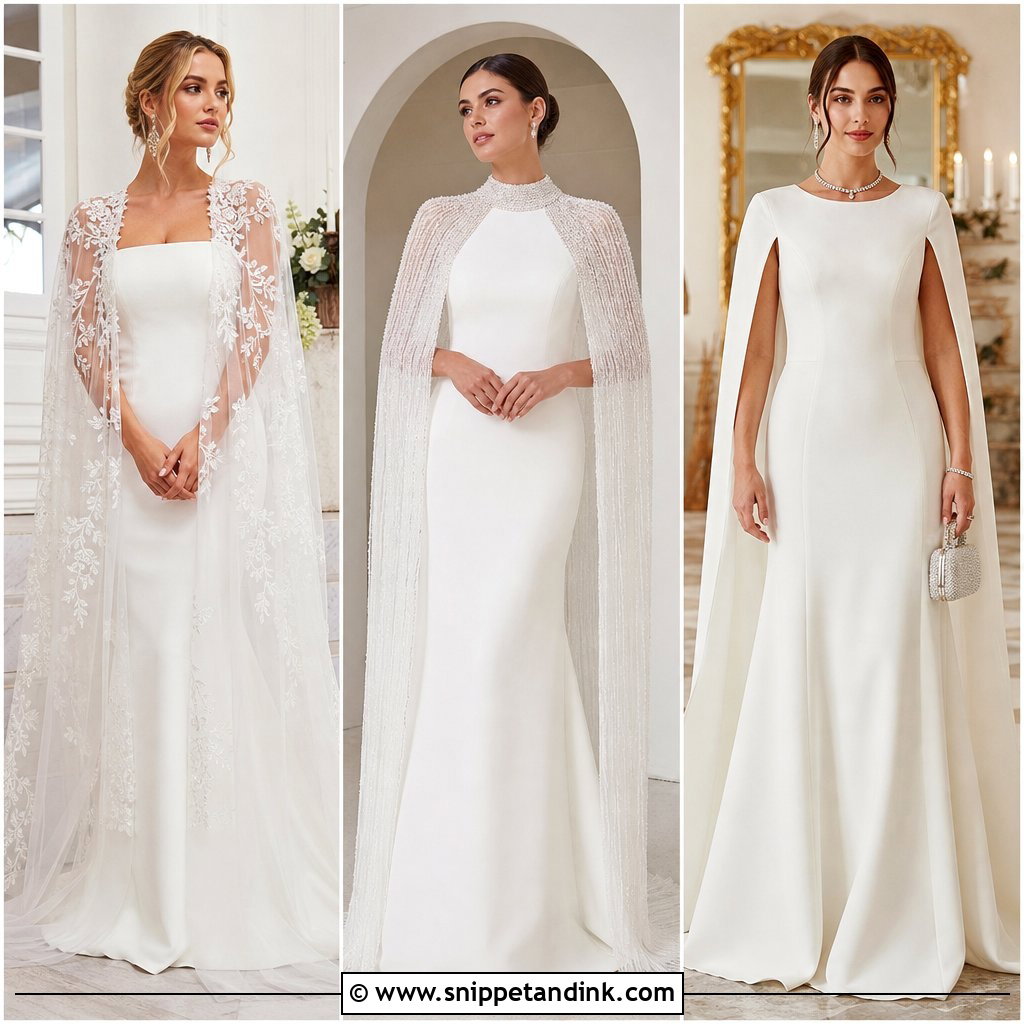
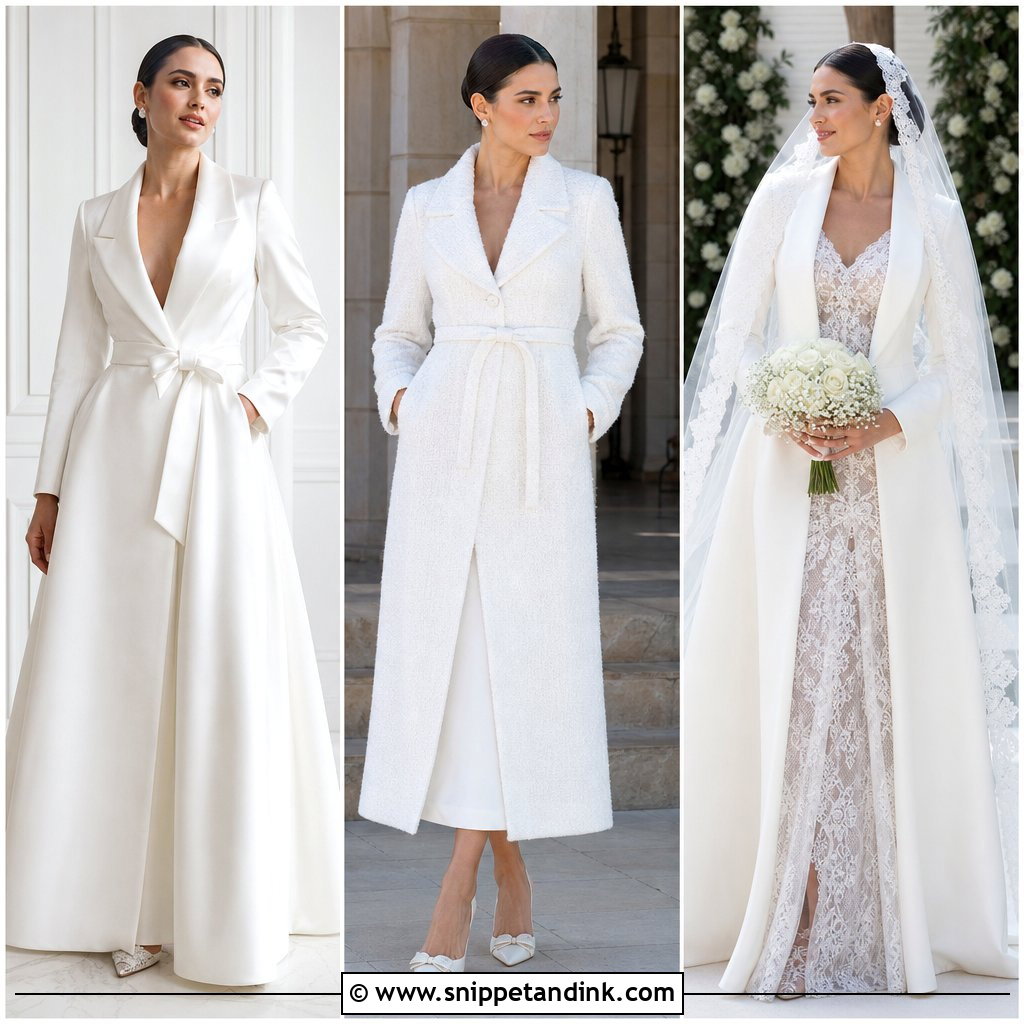
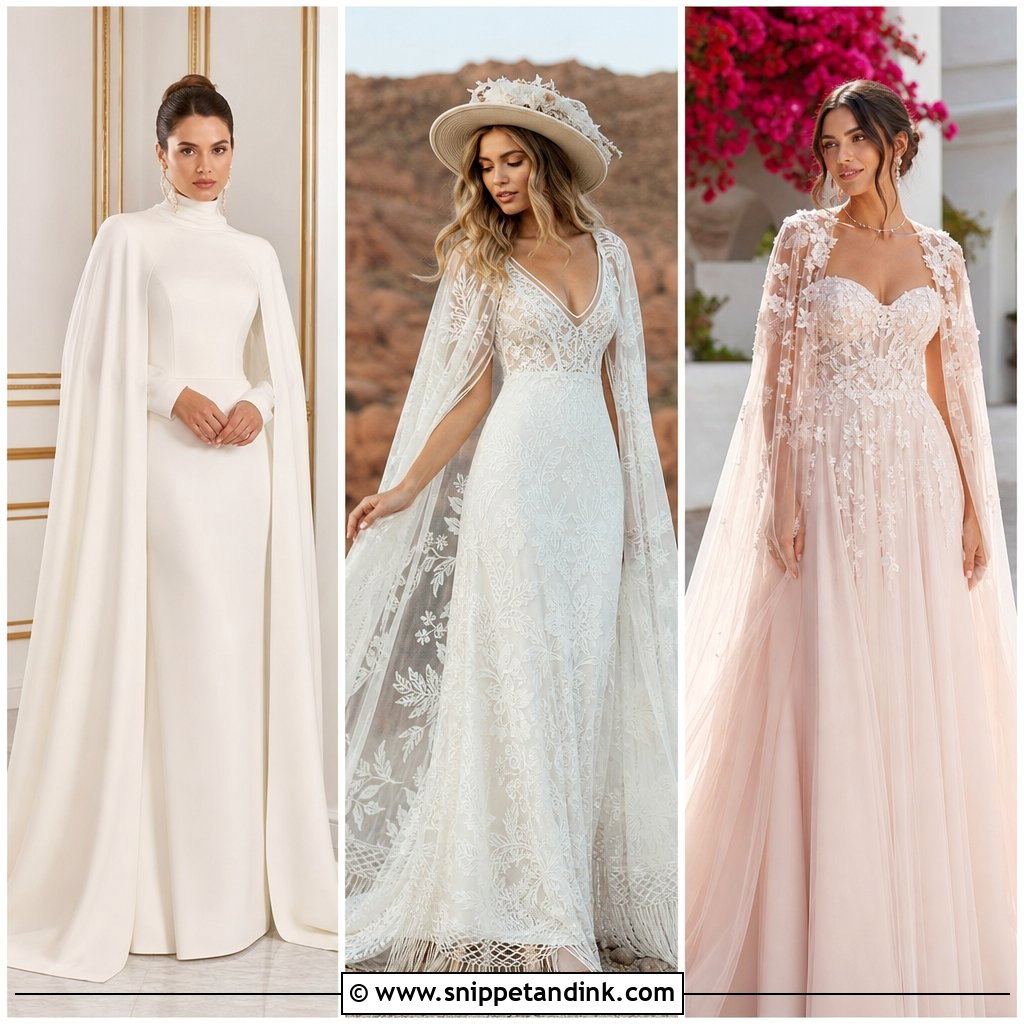
A cathedral-length cape over a plain crepe gown is the most dramatic entrance on this list. The cape acts as a detachable train, fastening at the shoulders and reaching just past the hem. A column or trumpet shape underneath keeps the whole thing from looking bulky. Long capes pull backward on the shoulders, and over an hour that drag can tug a strapless bodice down, so I’d have the seamstress add small snaps or loops to anchor it. Practice walking, turning and sitting in it before the day. Remove it for the reception and she has a second, simpler look.
4. Pearl Tulle Winter Wedding Cape With Strapless Gown
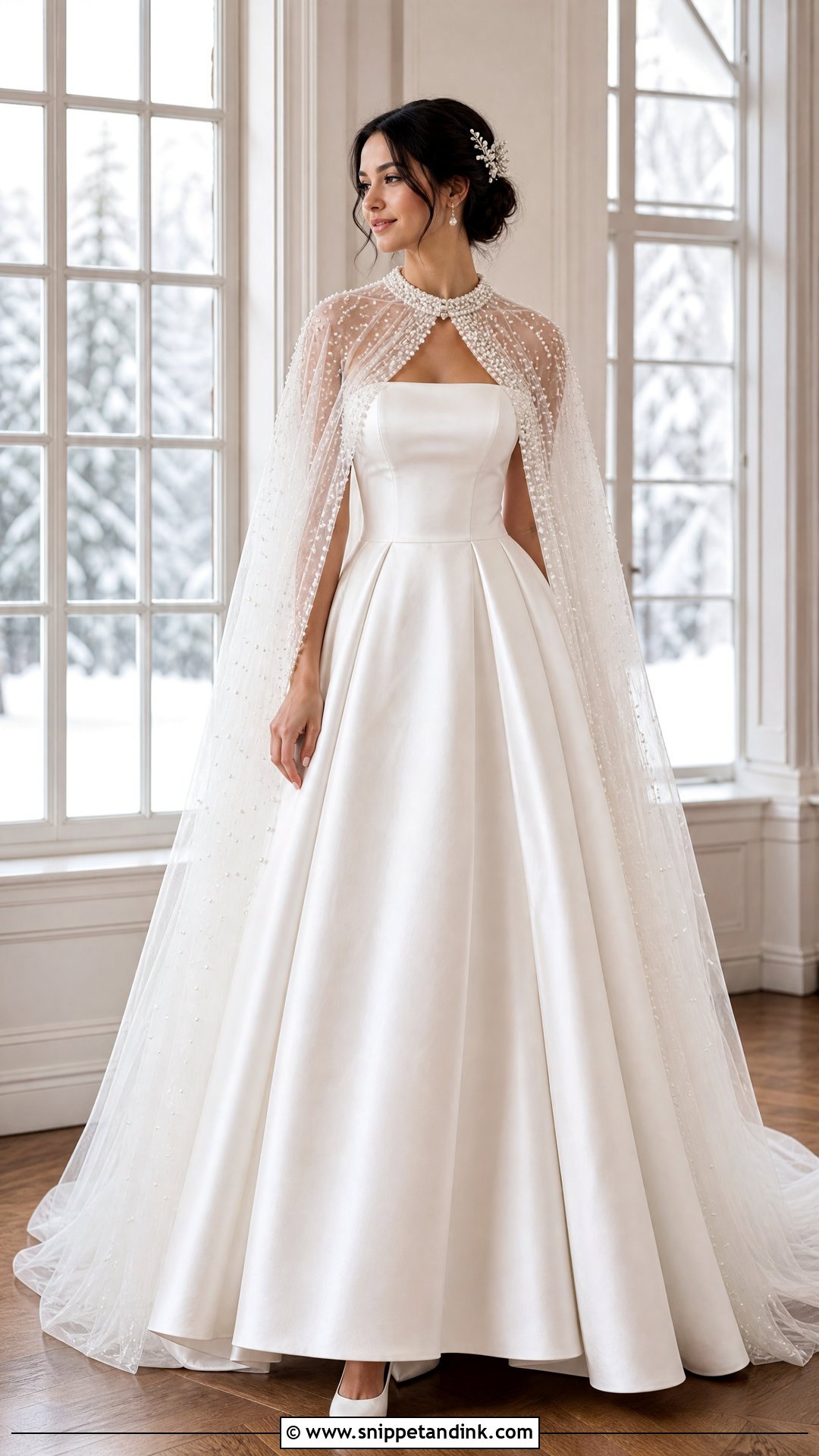
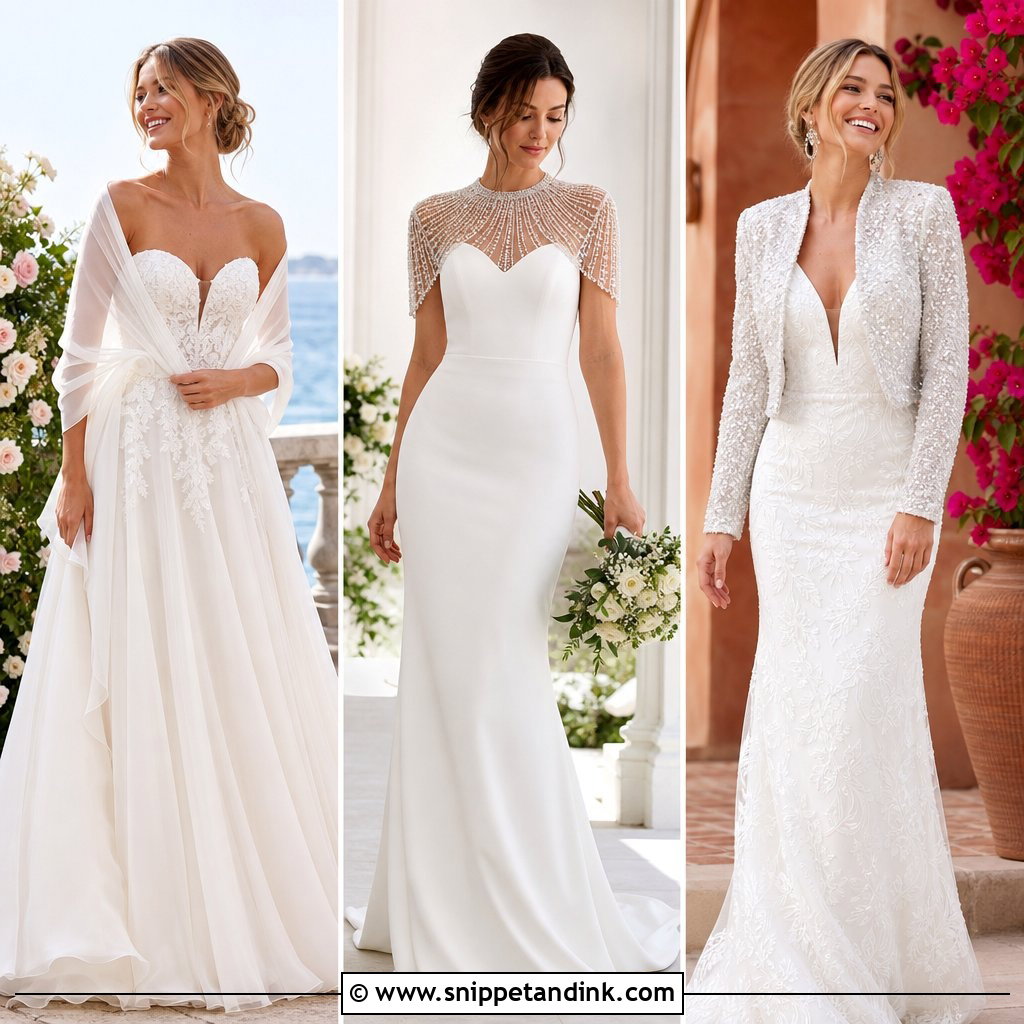
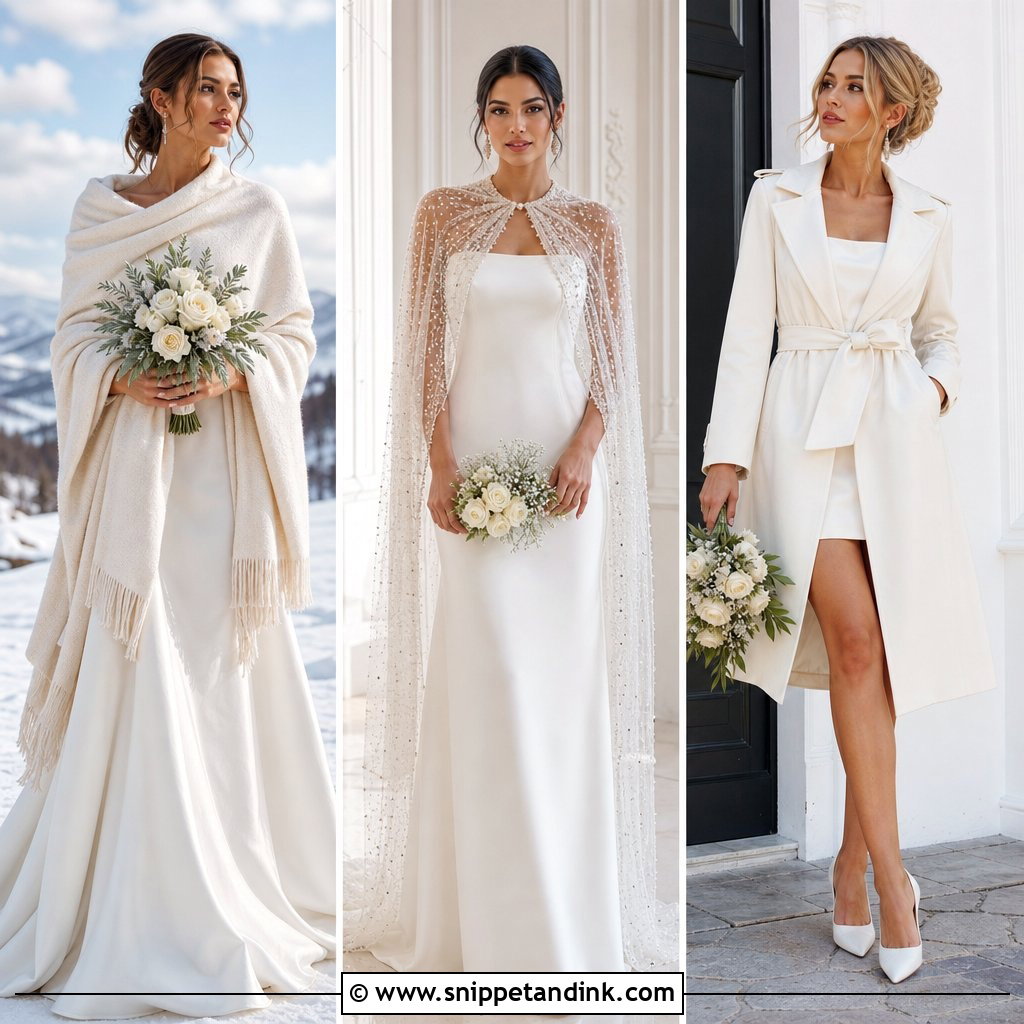
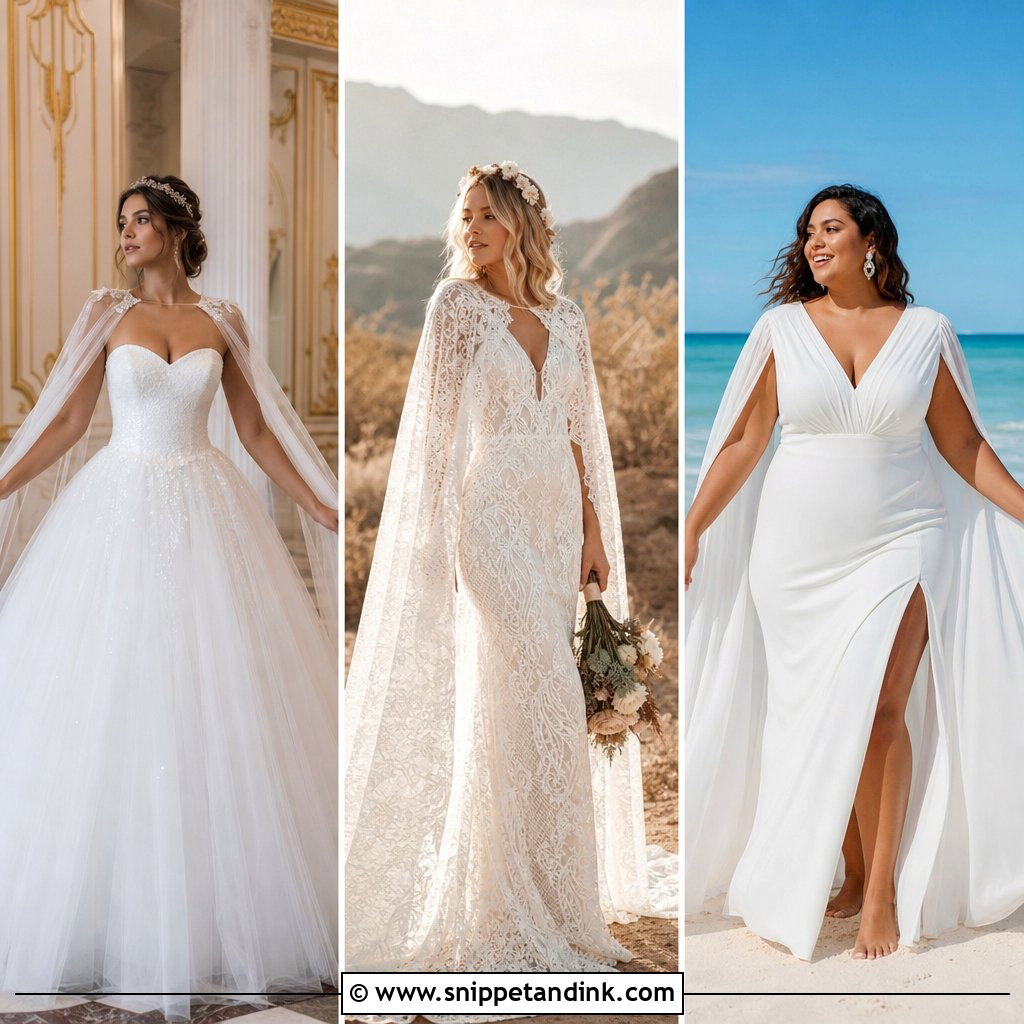
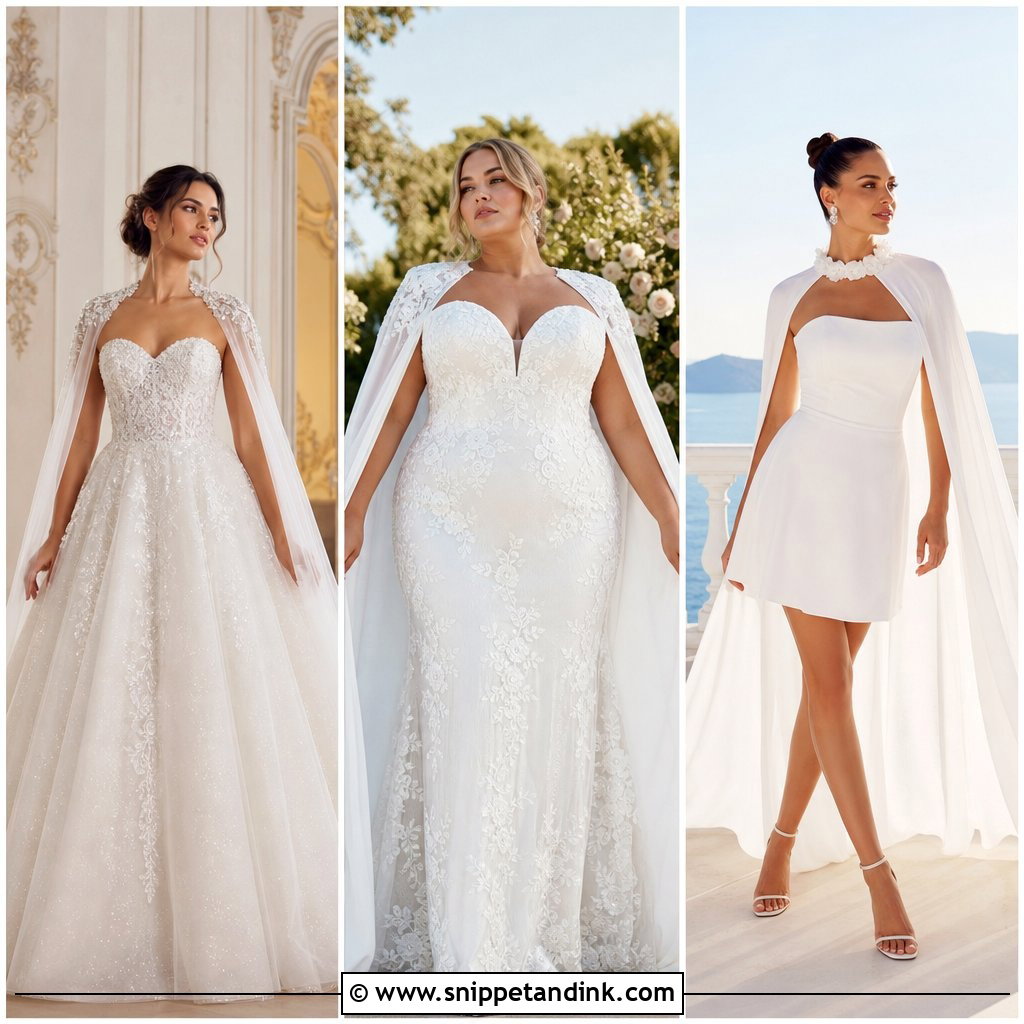
A sheer tulle cape dotted with tiny pearls does the job of a veil without covering the hair. Over a strapless gown with a straight or sweetheart neckline, it softens the shoulders while the bodice still shows. Fingertip or chapel length moves well and is easier to manage than cathedral. Tulle gives almost no warmth, so in real cold it’s a ceremony layer only, and a lined satin or Mikado skirt adds weight underneath. Carry the pearls through with small earrings and a pearl comb, but skip an embellished necklace.
5. Lace Winter Wedding Cape With Fit And Flare Dress
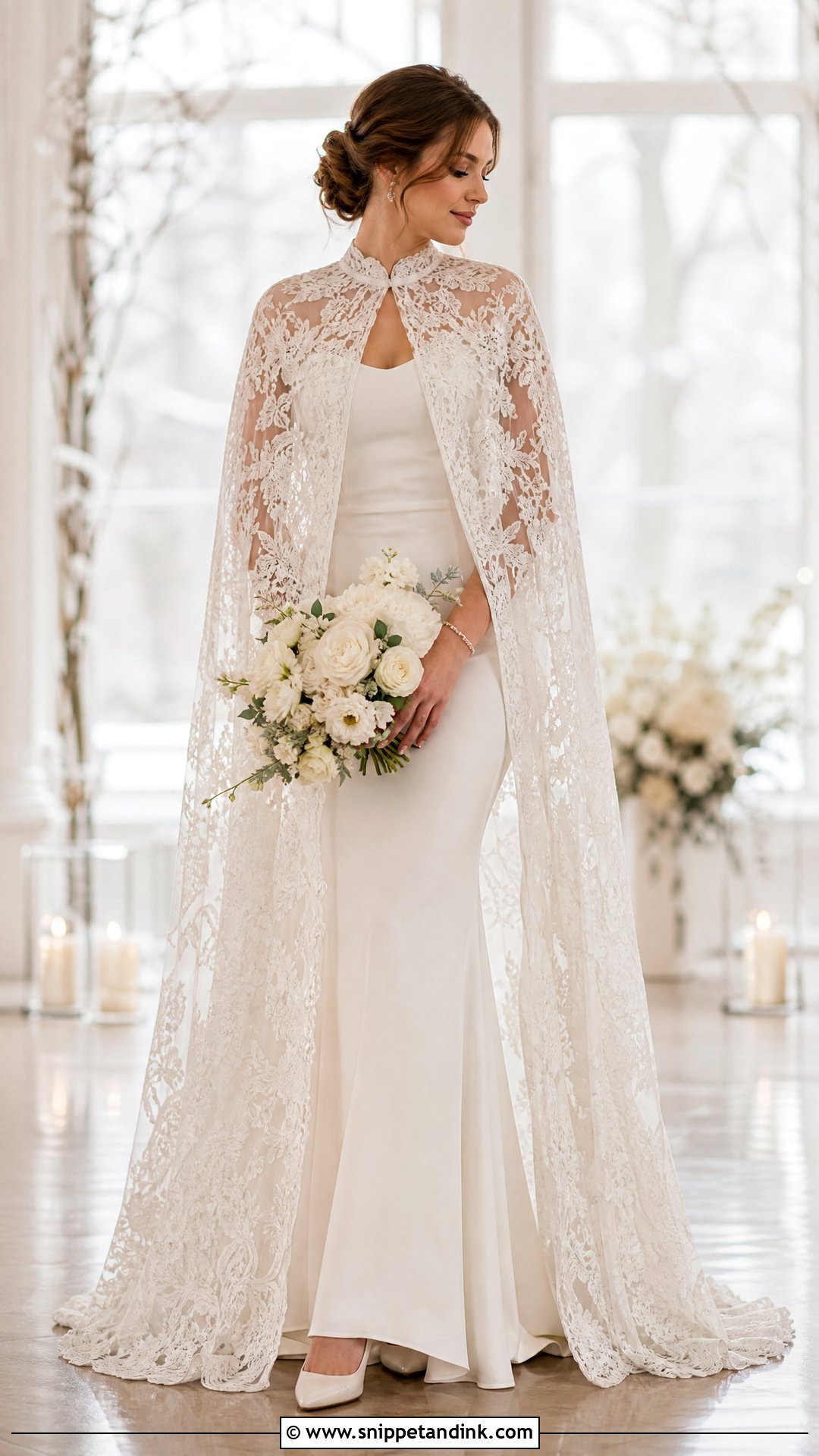
Lace on lace only works when the patterns don’t fight. If the gown is lace, I’d pick a cape lace with a different scale, either much finer or much bolder, so they read as two layers rather than a mismatch. Floral lace feels traditional; geometric lace looks current. Hip or floor length both work over a fit-and-flare, as long as the cape falls clear of the hips and train without bunching. Closed ivory heels, a delicate bracelet and a low twisted updo suit it, and a scalloped edge pairs well with round, loose flowers.
6. Wool Winter Wedding Cape With High Neck Gown
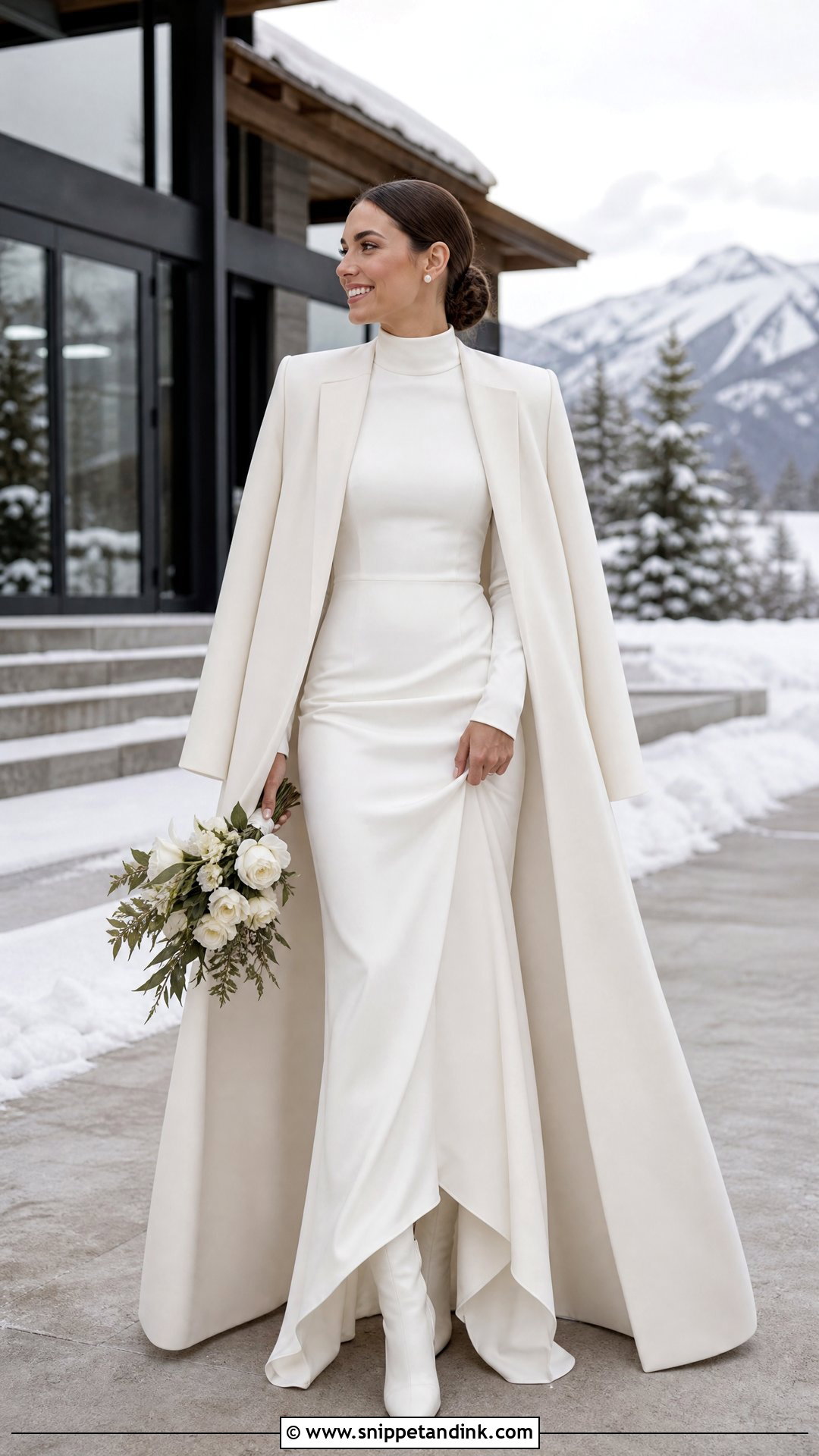
Wool is the cape for brides who will genuinely be outdoors in the cold. A tailored ivory wool cape over a high-neck, long-sleeve gown looks formal and keeps her warm. Mid-calf length with clean shoulders and enough width to clear the skirt works best. A lining makes a real difference, both for insulation and to stop the wool snagging on lace or beading underneath. Hidden closures or covered buttons, leather bridal boots, pearl studs and a bun sitting below the collar finish it for a mountain or modern venue.
7. Fur Trimmed Winter Wedding Cape With Mikado Gown
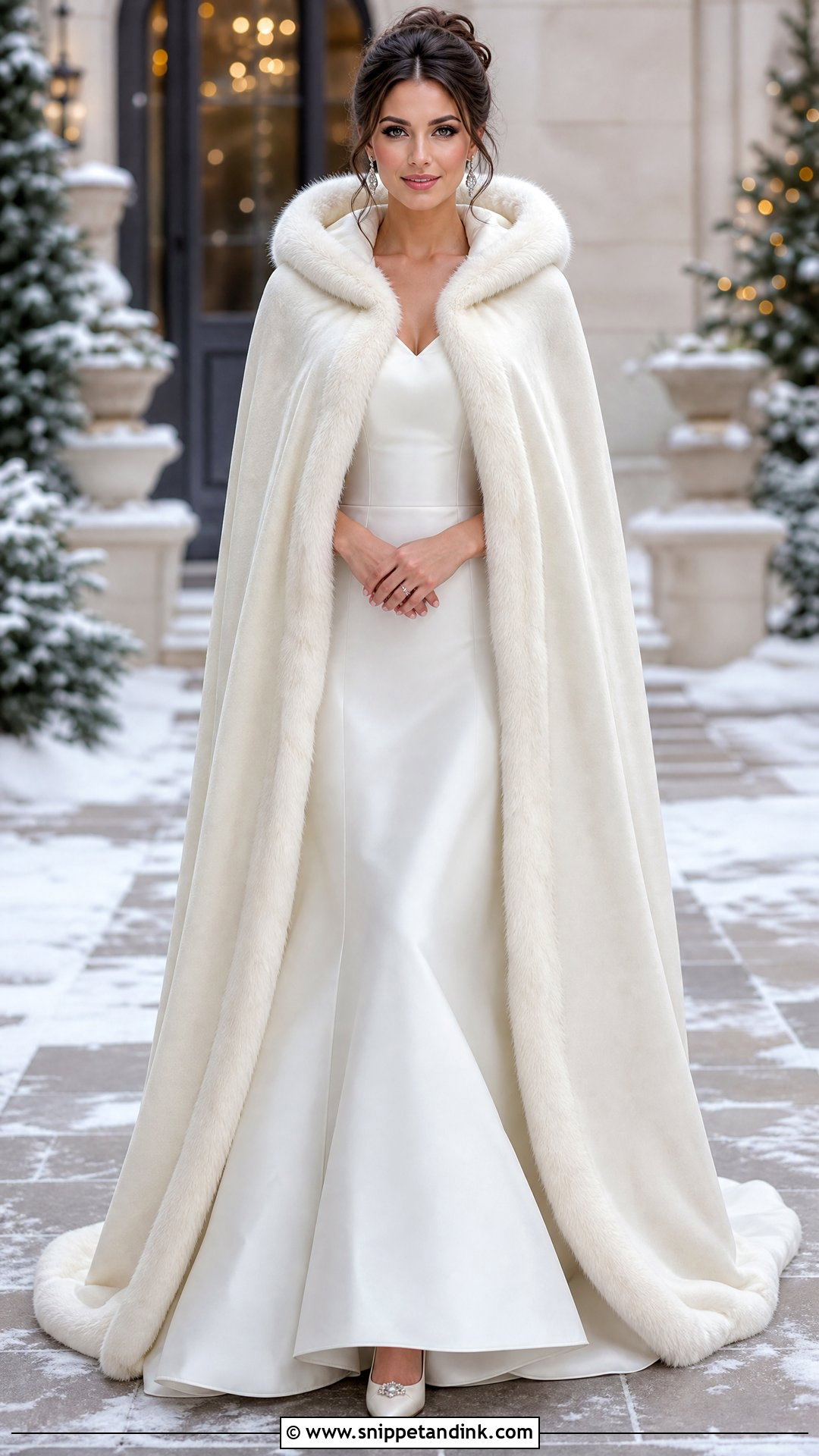
A fur-trimmed cape feels regal because the trim is limited to the edges. Smooth satin or velvet with faux fur around the neck and front opening suits a structured Mikado A-line, which has enough presence to hold its own. A softly draped hood adds coverage, though a stand collar looks more tailored. The fur at the collar brushes against makeup, so I’d keep foundation set with powder along the jaw. Crystal studs, a polished updo and pointed satin heels keep it formal, with a silver clasp at the center.
8. Short Winter Wedding Capelet With Tea Length Dress
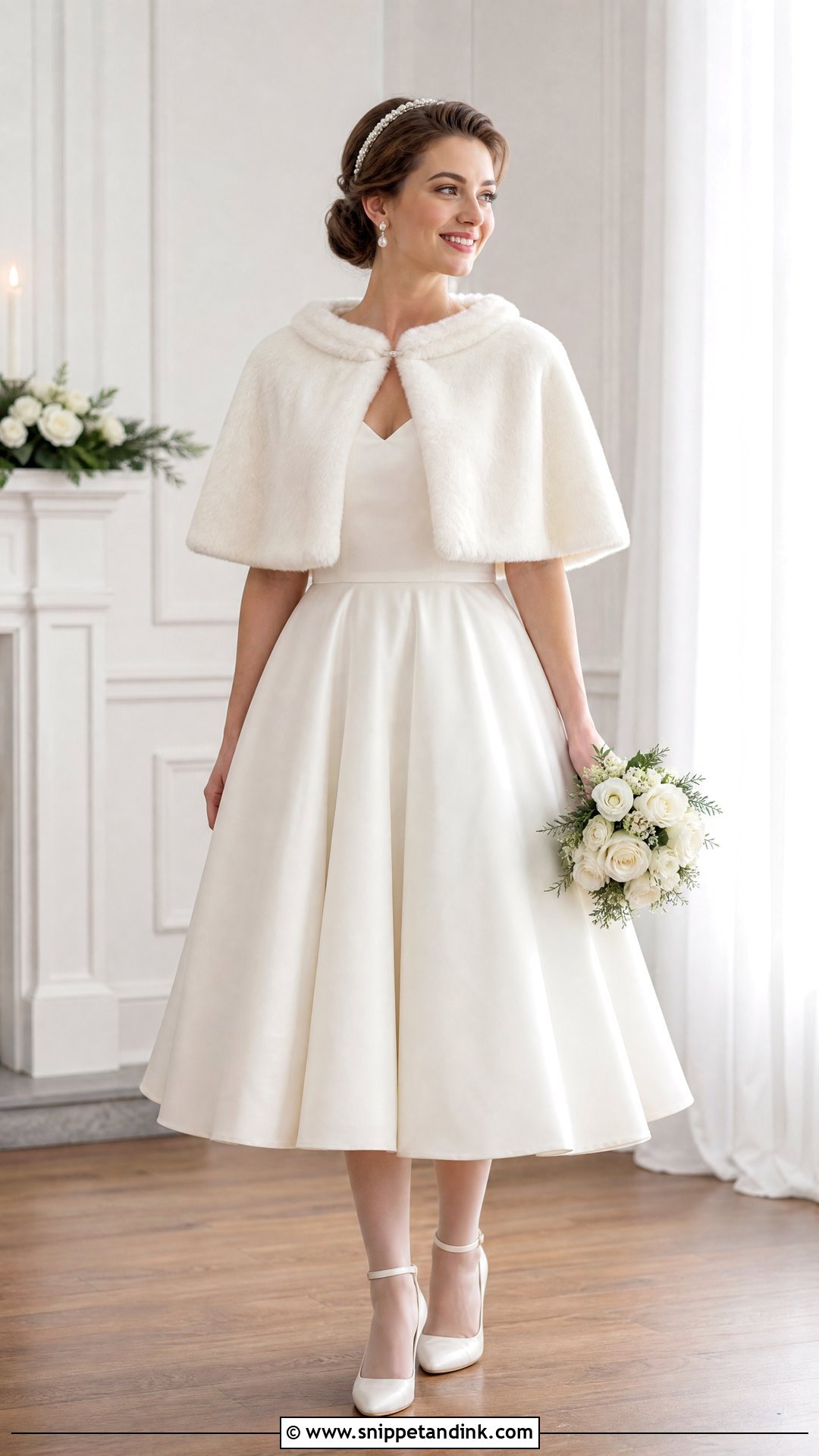
Capelets and tea-length dresses share a vintage spirit. The short cape stops above the waist so the waistline, full skirt and shoes all show. Ivory faux fur, velvet or wool all suit it; the skirt beneath needs enough structure to hold its volume. Ankle-strap pumps, sheer tights and pearl earrings complete the period feel. Choose one headpiece only, either a birdcage veil or a simple headband, because a capelet already frames the face. It’s the most practical cape here for a courthouse or small reception.
9. Satin Winter Wedding Cape With Sheath Dress
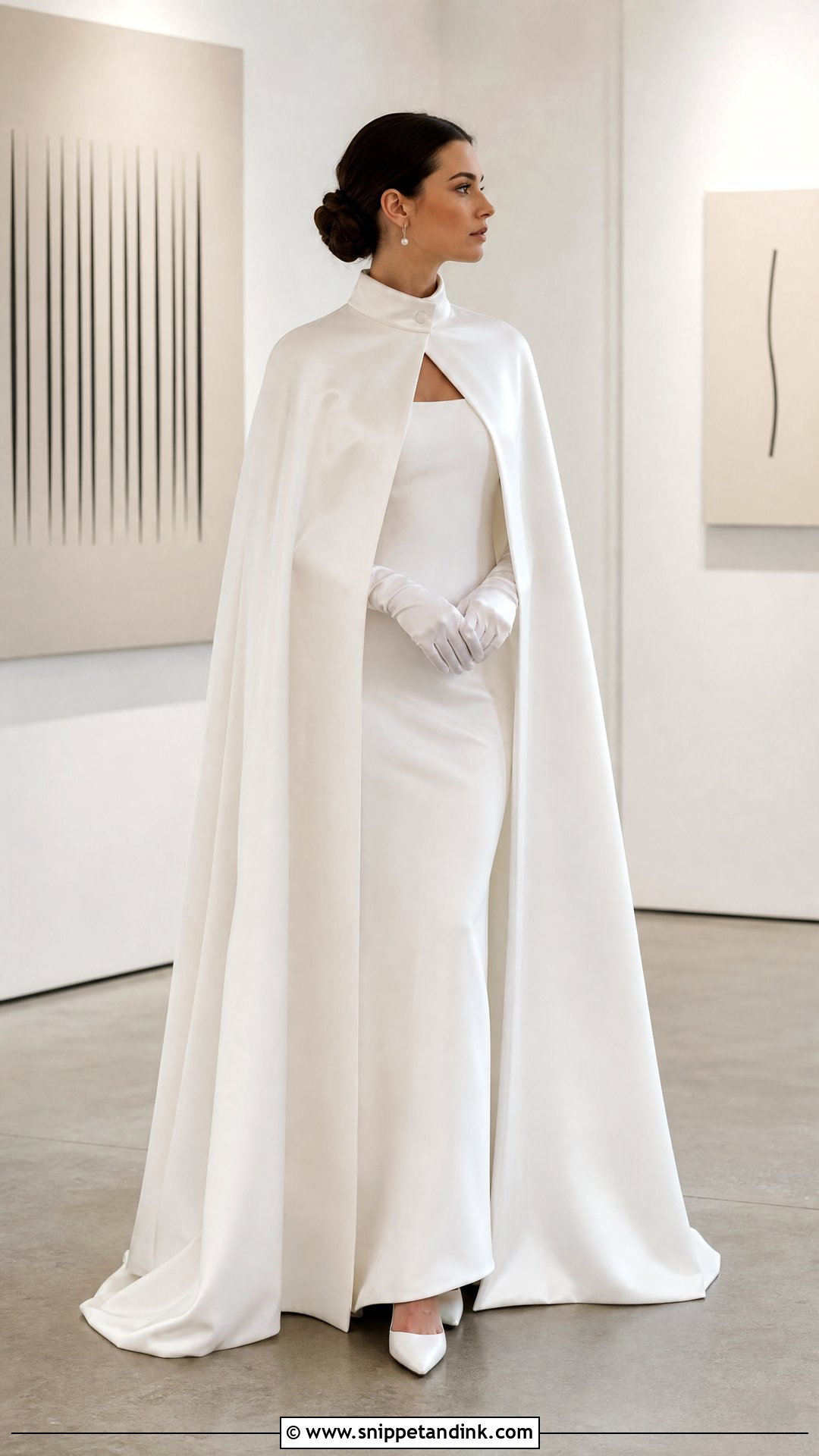
Two glossy fabrics side by side show every difference in white. That’s the main risk with a satin cape over a sheath, so match the cape to the gown’s exact ivory or white, ideally from the same fabric supplier. A floor-length design with a soft sheen and a clean shoulder closure turns a plain sheath ceremonial. Long gloves, pointed pumps, small drops and a sculpted bun keep it minimal. If the cape has its own train, keep the dress hem simple so the layers don’t tangle when she turns.
10. Beaded Winter Wedding Cape With Simple A-Line Gown
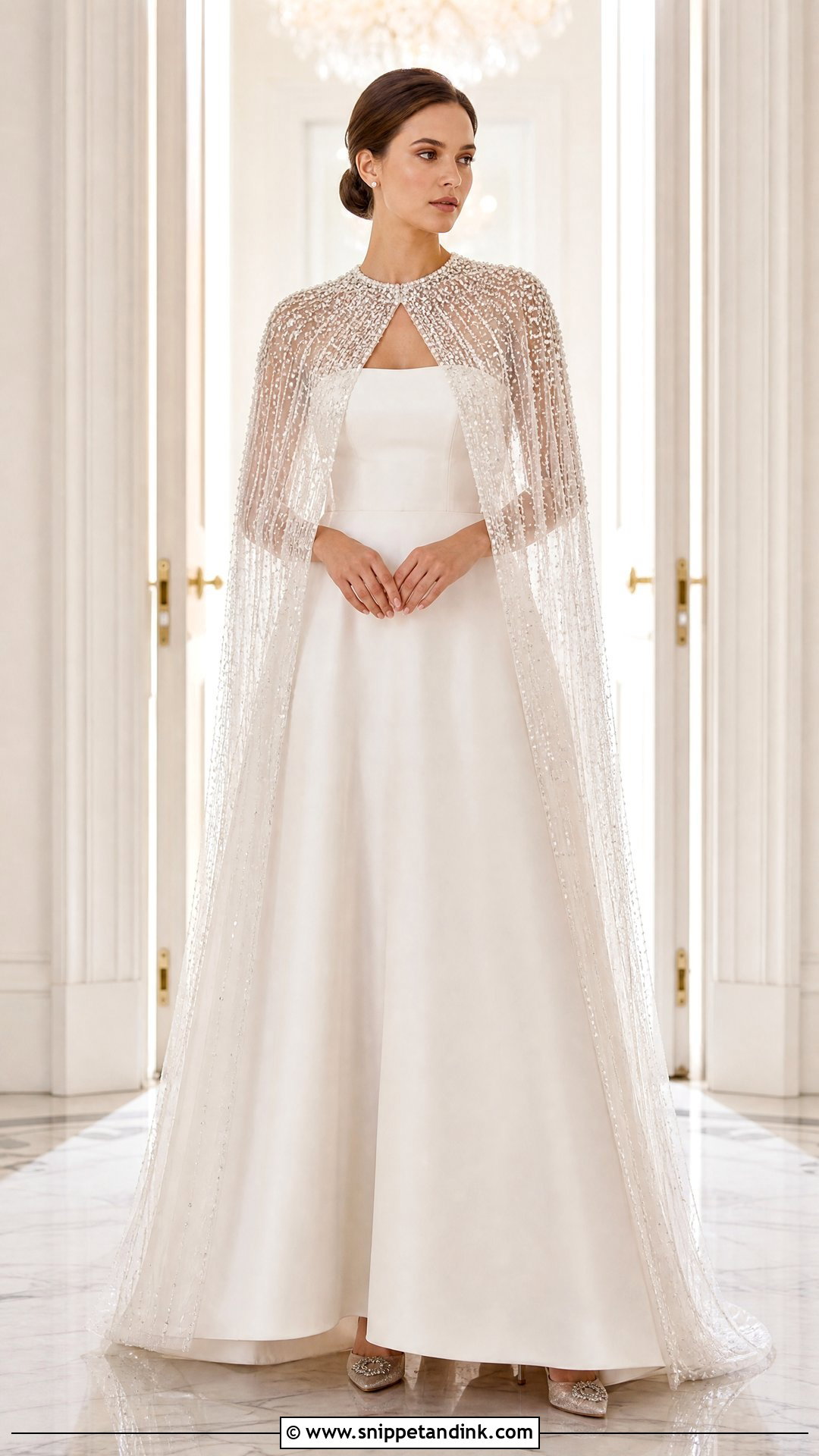
Beading over a plain gown gives all the sparkle without committing the dress itself. A beaded tulle cape over a simple crepe, satin or Mikado A-line lets the cape carry the detail. Scattered crystal, pearl or silver work looks lighter than dense beading, which is heavy and drags at the neckline. Before buying, I turn the cape inside out and run a hand over the back of the beading, because loose threads and rough knots will scratch bare shoulders and snag delicate fabric. Understated studs and a low bun are plenty; skip the necklace.
11. Crystal Winter Wedding Cape With Square Neck Dress
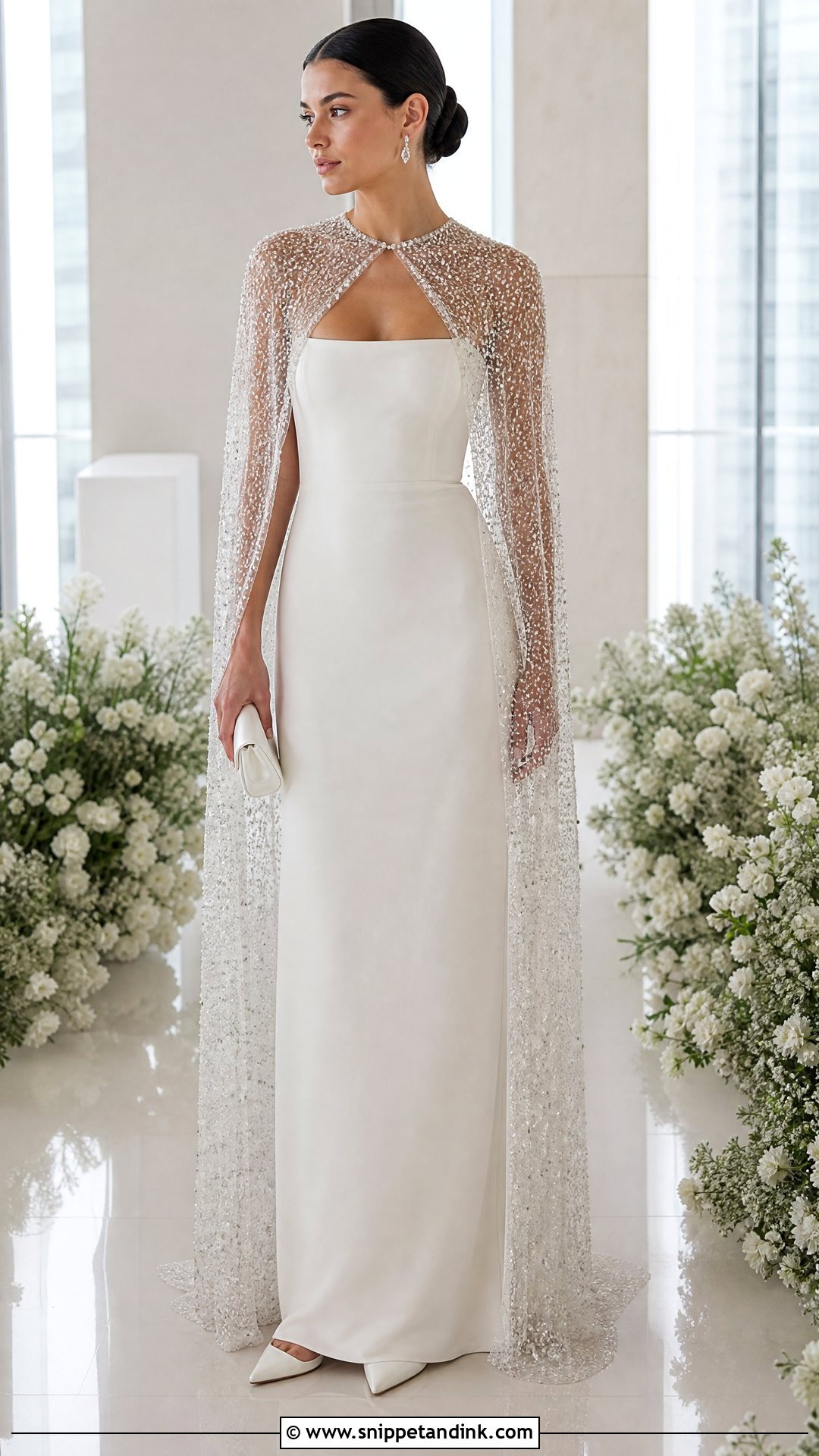
A crystal capelet softens a square-neck gown’s strong lines with a bit of movement. Choose a sheer shoulder-length design ending above the waist so the bodice seams still show. Column or A-line shapes support the modern look. The closure is where these go wrong; a bulky clasp sitting on top of a square neckline breaks its shape, so I’d look for a flat hook or a hidden snap. Crystal earrings, a sleek bun and pointed heels finish it, with one type of sparkle only. Bright indoor venues show off the crystals best.
12. Blush Winter Wedding Cape With Ivory Bridal Gown
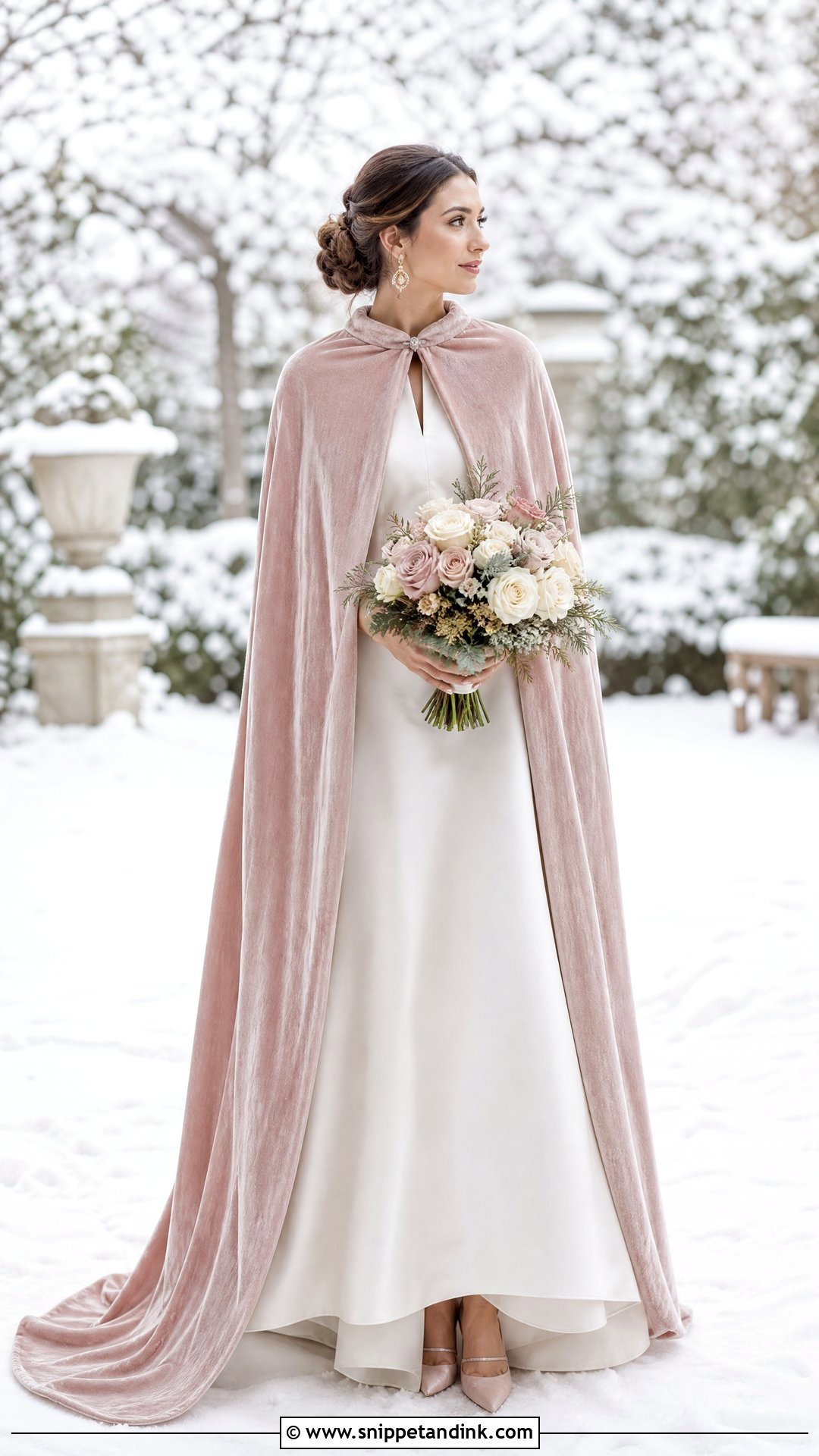
A blush cape adds color while staying soft. Over an ivory gown the contrast needs to look deliberate: dusty blush velvet with a satin A-line, or blush tulle over fitted crepe. Compare the cape and gown in daylight before deciding, since blush can turn peach or grey next to certain ivories under warm indoor bulbs. Rose-gold earrings, neutral closed heels and a bouquet of cream and muted pink connect the colors. A low bun or soft side waves keep the cape the focus.
13. Emerald Velvet Winter Wedding Cape With Ivory Dress
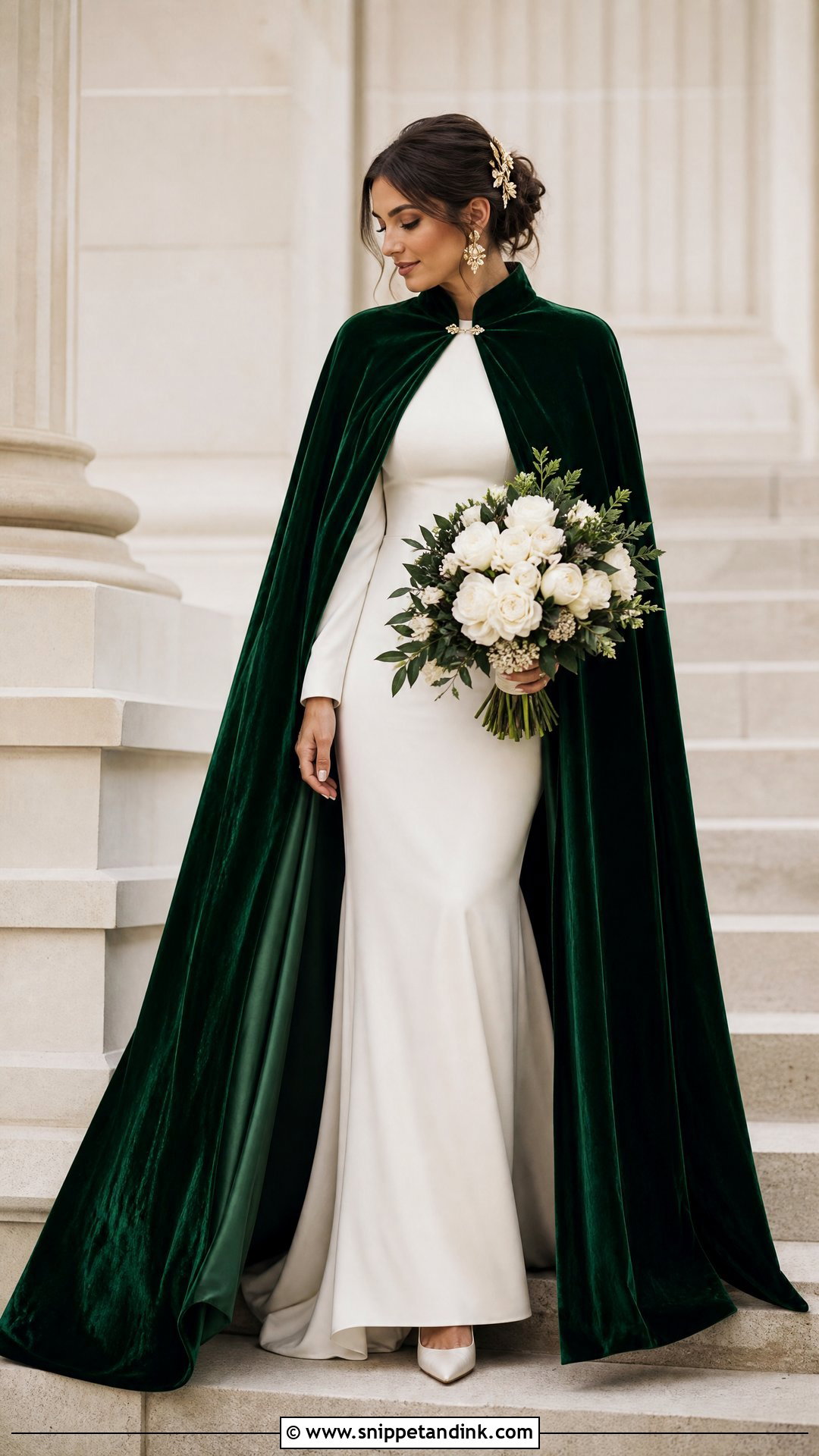
Emerald velvet over ivory is a confident bridal choice. A minimalist long-sleeve gown gives the color room. Floor length makes the strongest picture, but mid-calf is easier to walk in and less likely to drag through wet grass, which marks velvet badly. Gold earrings, ivory pointed pumps and a metallic comb in a low bun finish it. A white bouquet with dark greenery ties the cape to the flowers. I’d stop at one strong color; adding red or berry accents tips it toward Christmas.
14. Burgundy Winter Wedding Cape With Satin Gown
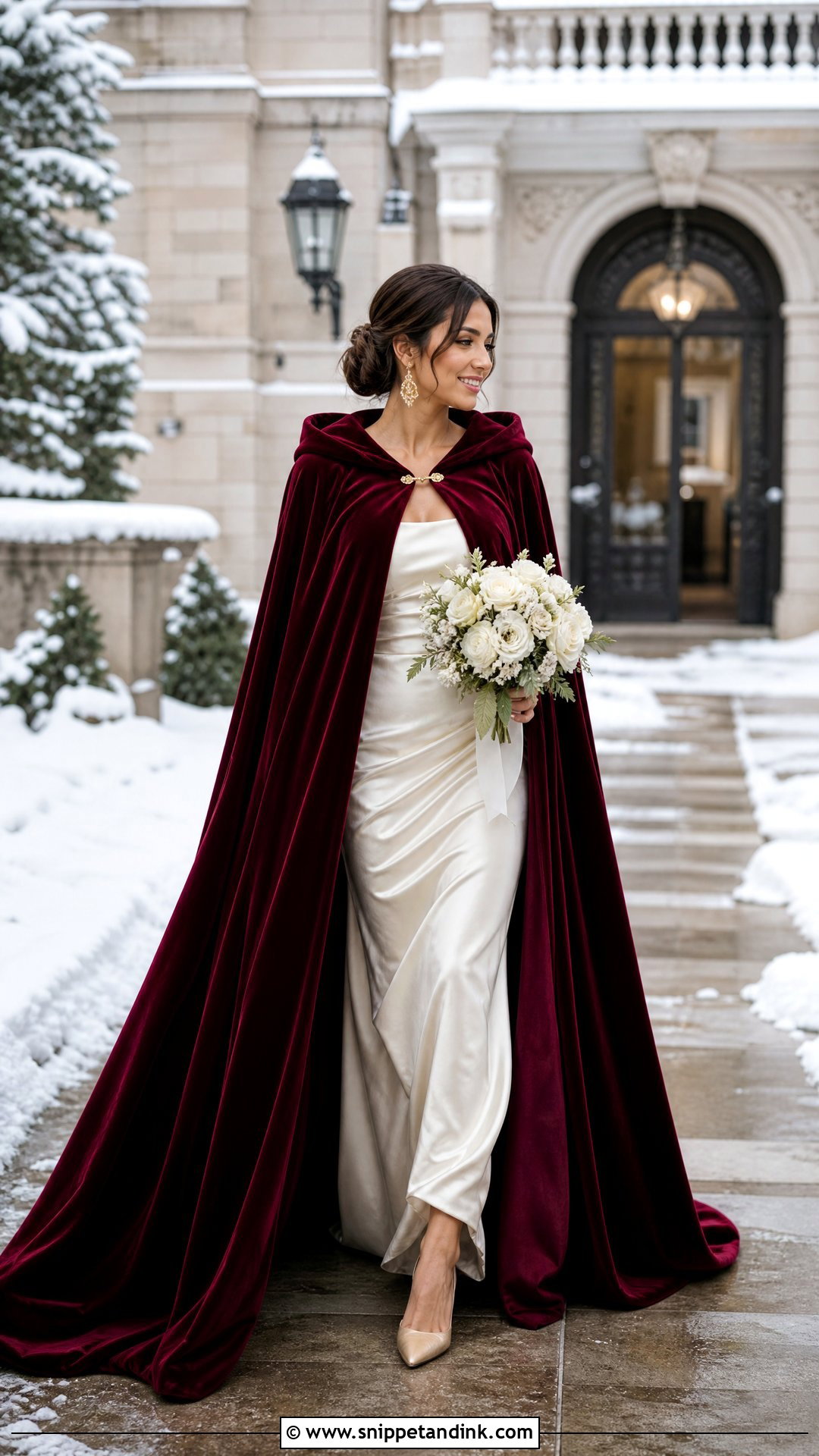
Burgundy velvet over champagne or ivory satin is warm and dramatic, and it suits ballrooms and historic venues. Keep the gown’s neckline simple and its embellishment light so the two don’t compete. Gold jewelry and neutral shoes avoid adding a third strong color. A front opening lets the satin bodice and waist show in photos. Any hood should be softly structured; an oversized hood on a dark cape can look like a costume. A low textured bun, a deep red lip and a cream bouquet complete it.
15. Navy Winter Wedding Cape With Silver Gown
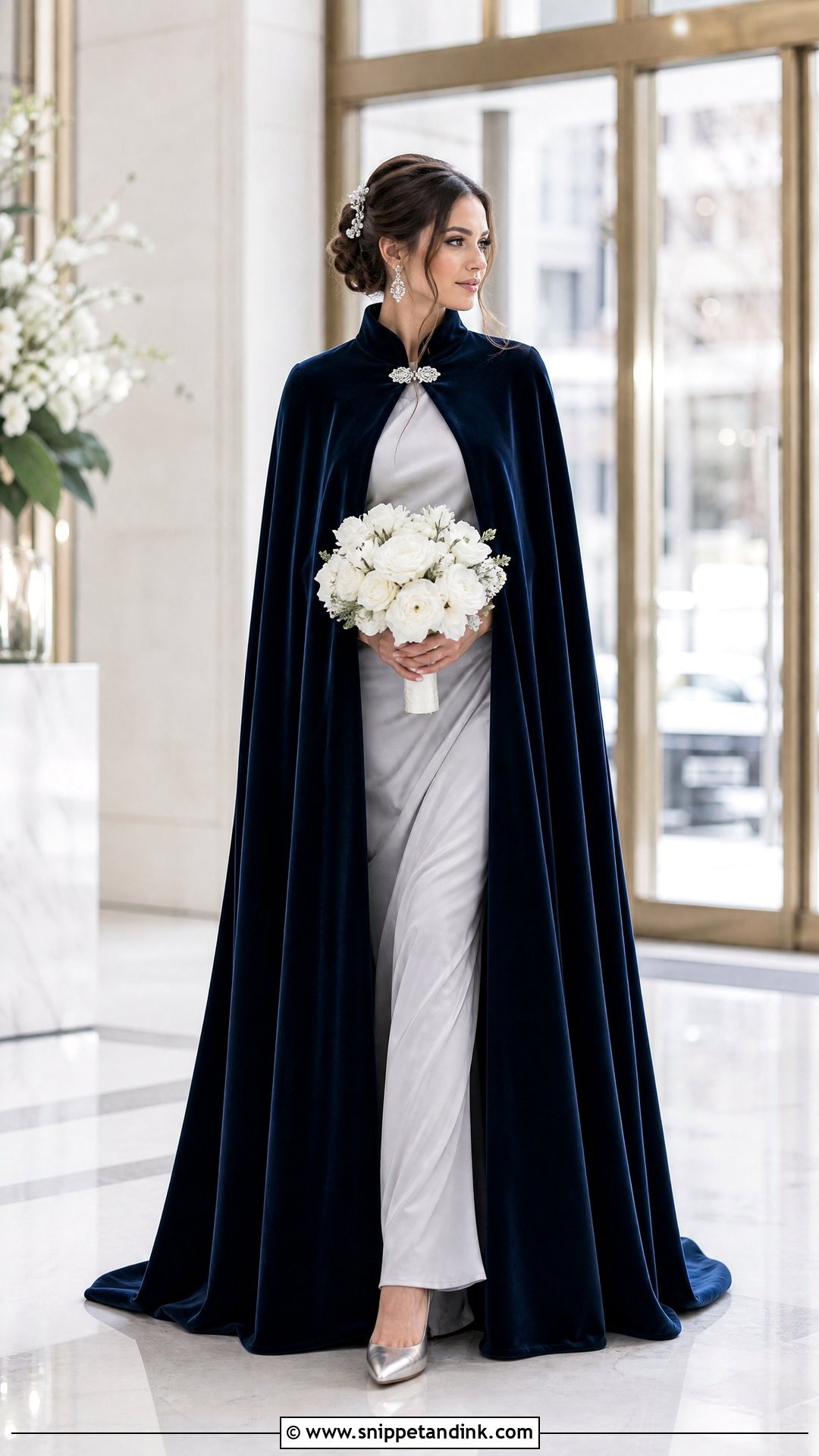
Navy against silver or cool ivory is the cape for brides who lean toward cool colors. Velvet reads formal; structured wool reads modern. A length between knee and ankle covers without hiding the gown. Navy velvet shows pale lint and fibers, so a lint roller in the bridal kit is not optional. Silver earrings, crystal hair pins and metallic closed pumps tie in with the gown, and a silver clasp connects the two colors. A fitted sheath keeps the silhouette long, with a mostly white bouquet and small touches of cool green.
16. Cashmere Winter Wedding Cape With Slip Dress
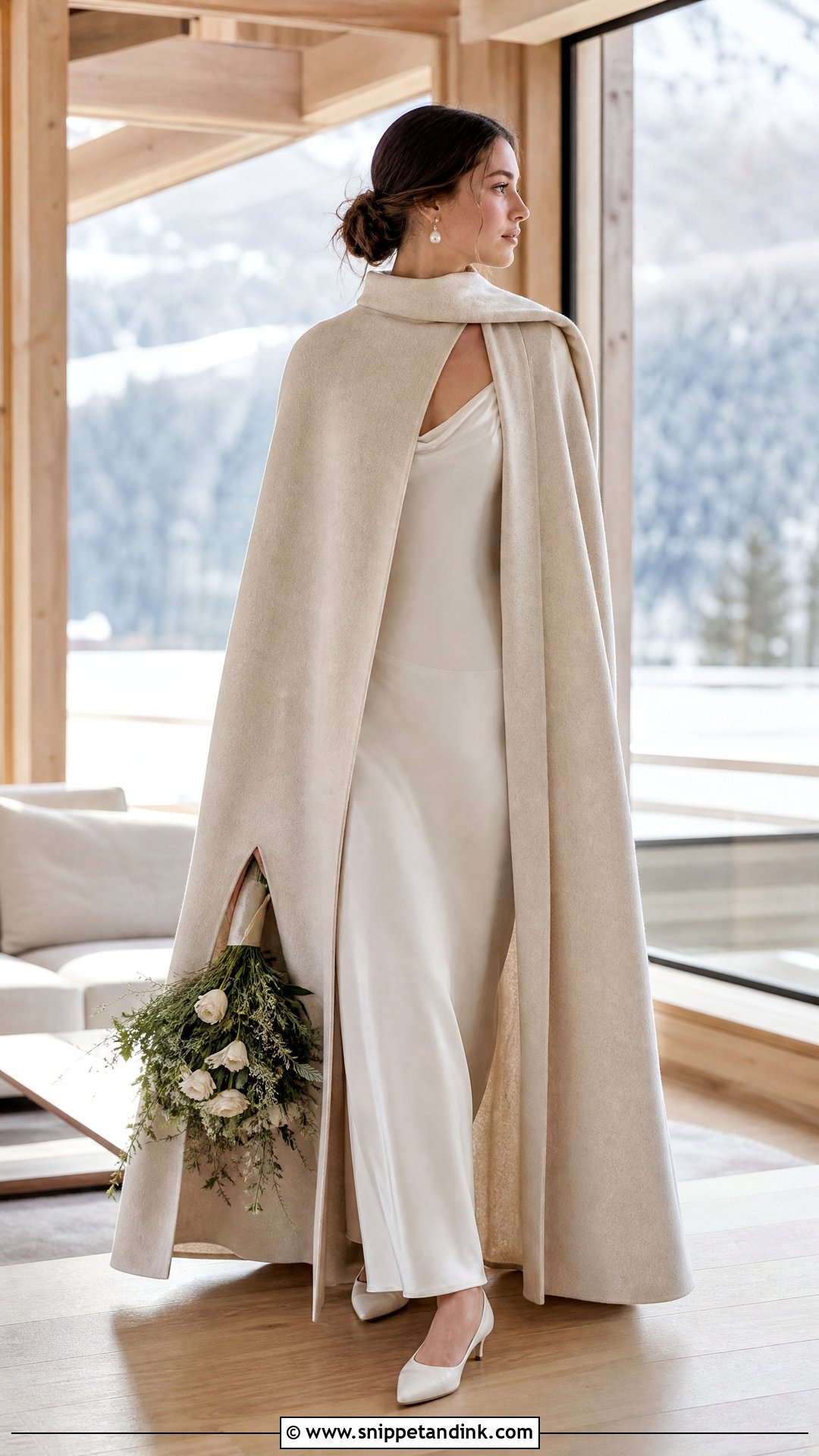
A cashmere cape over a slip gown is soft and relaxed, and it’s the cape I’d suggest to a bride who hates feeling dressed-up. Ivory or pale oatmeal ending at the hip or mid-thigh keeps the dress’s long line. Cashmere grabs satin, which can twist a bias-cut slip as she moves, so a silk lining inside the cape is worth paying for. Pearl earrings, a loose low bun and closed kitten heels finish it. Use it for travel and outdoor photos if the dress has no sleeves.
17. Reversible Winter Wedding Cape With Two Bridal Looks
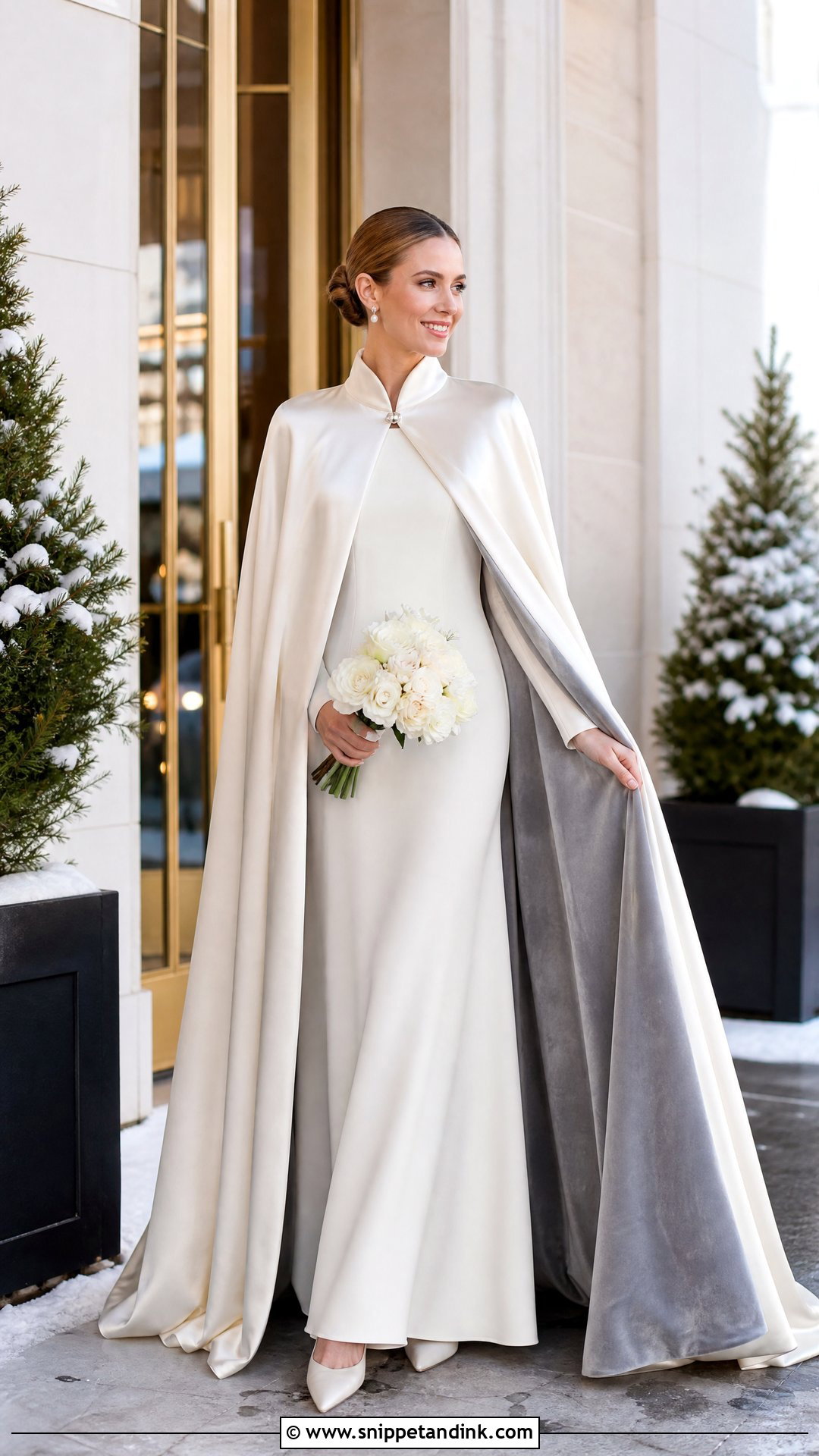
A reversible cape gives two looks without a second gown. Ivory satin on one side and velvet, blush or grey on the other lets her wear the bridal side for the ceremony and turn it for portraits or the reception entrance. The fastening has to look finished from both sides, which rules out most hooks; a ribbon tie or a brooch works better. A simple A-line or column dress suits both finishes. I’d check that each side drapes evenly, since two fabrics bonded together can pull and twist if they’re different weights.
18. Embroidered Winter Wedding Cape With Boho Dress
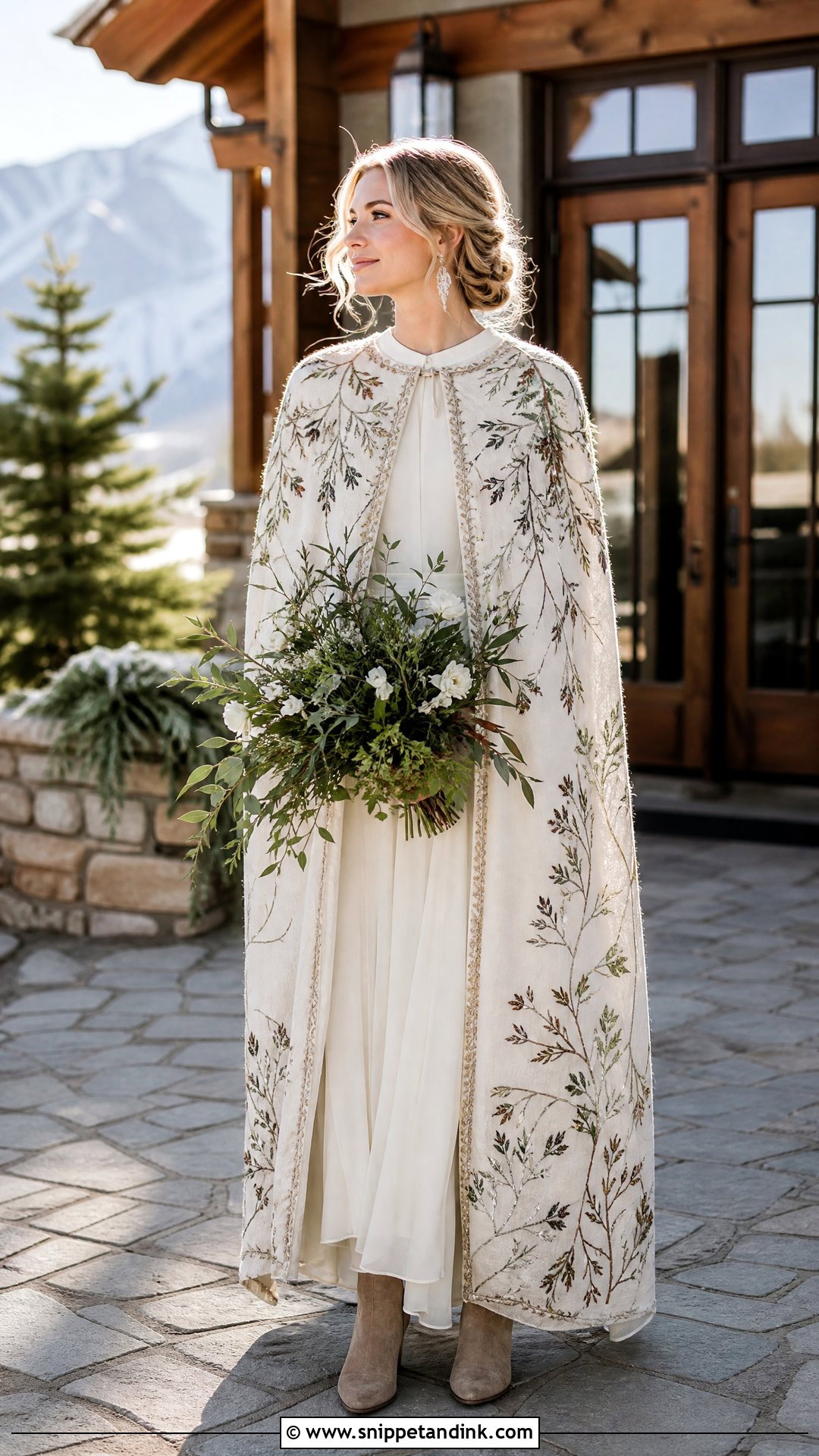
Embroidered capes suit relaxed winter weddings in woodland venues or mountain lodges. Pair a sheer or lightly lined cape with a flowing chiffon, crepe or soft lace dress. Botanical embroidery in ivory, silver, muted blue or pale gold adds detail without overpowering. Heavy embroidery on sheer fabric can pucker if it’s been stitched without a stabilizer, so look at the cape hanging, not flat on a table. Suede ankle boots, small drop earrings, textured hair and a loose green bouquet finish it.
19. High Collar Winter Wedding Cape With Princess Gown
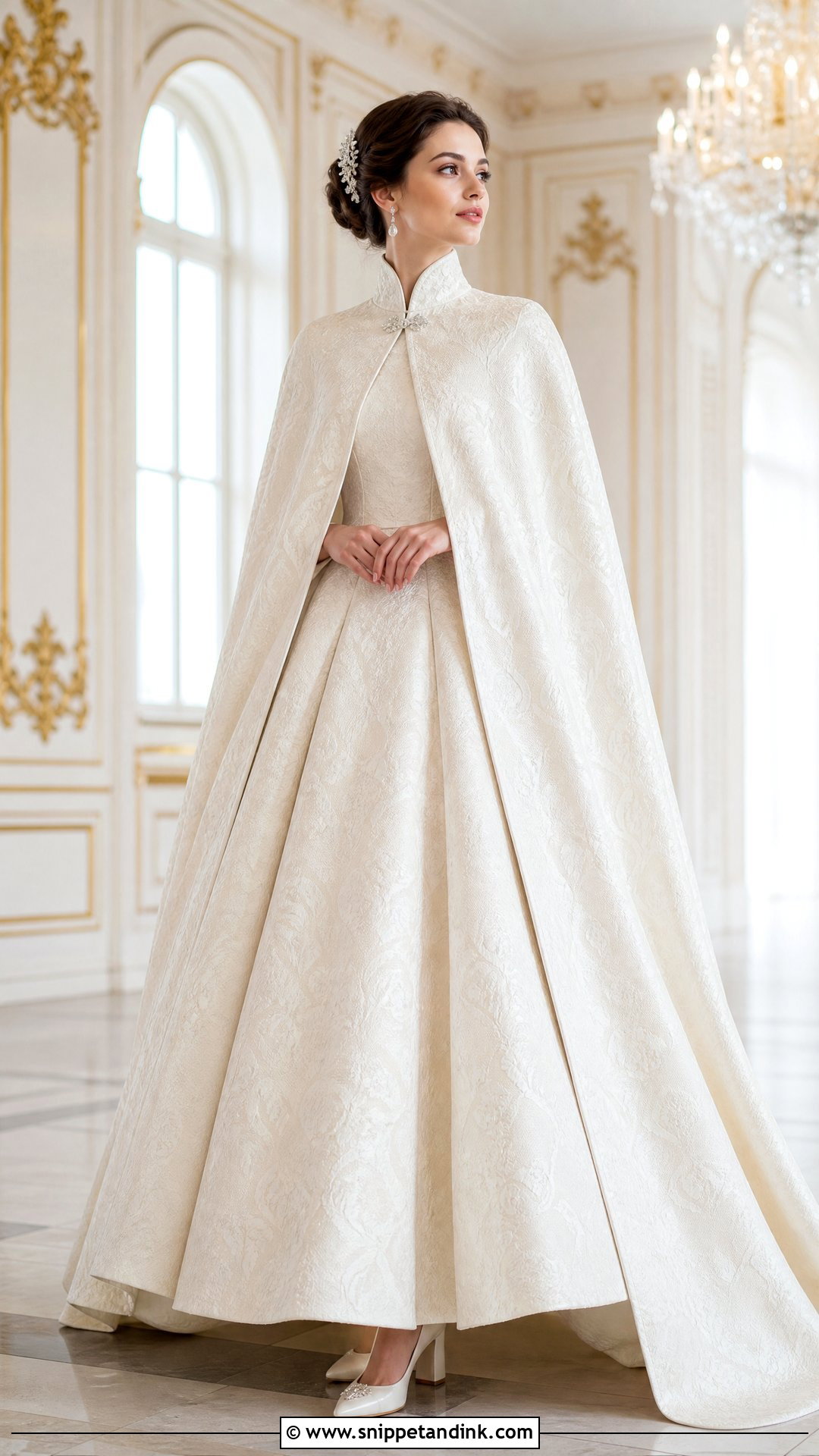
A high collar frames the face and gives a princess gown a regal top line. Ivory jacquard, velvet or structured satin with a stand collar and smooth front opening needs to be cut wide enough to clear the skirt without flattening it. A waist-length capelet shows the gown’s shape, while floor length makes a bigger entrance. High collars push hair worn down forward, so a polished updo is the better partner. Pearl-and-crystal earrings and satin block heels finish it, and skip any large necklace.
20. Detachable Train Winter Wedding Cape With Modern Gown
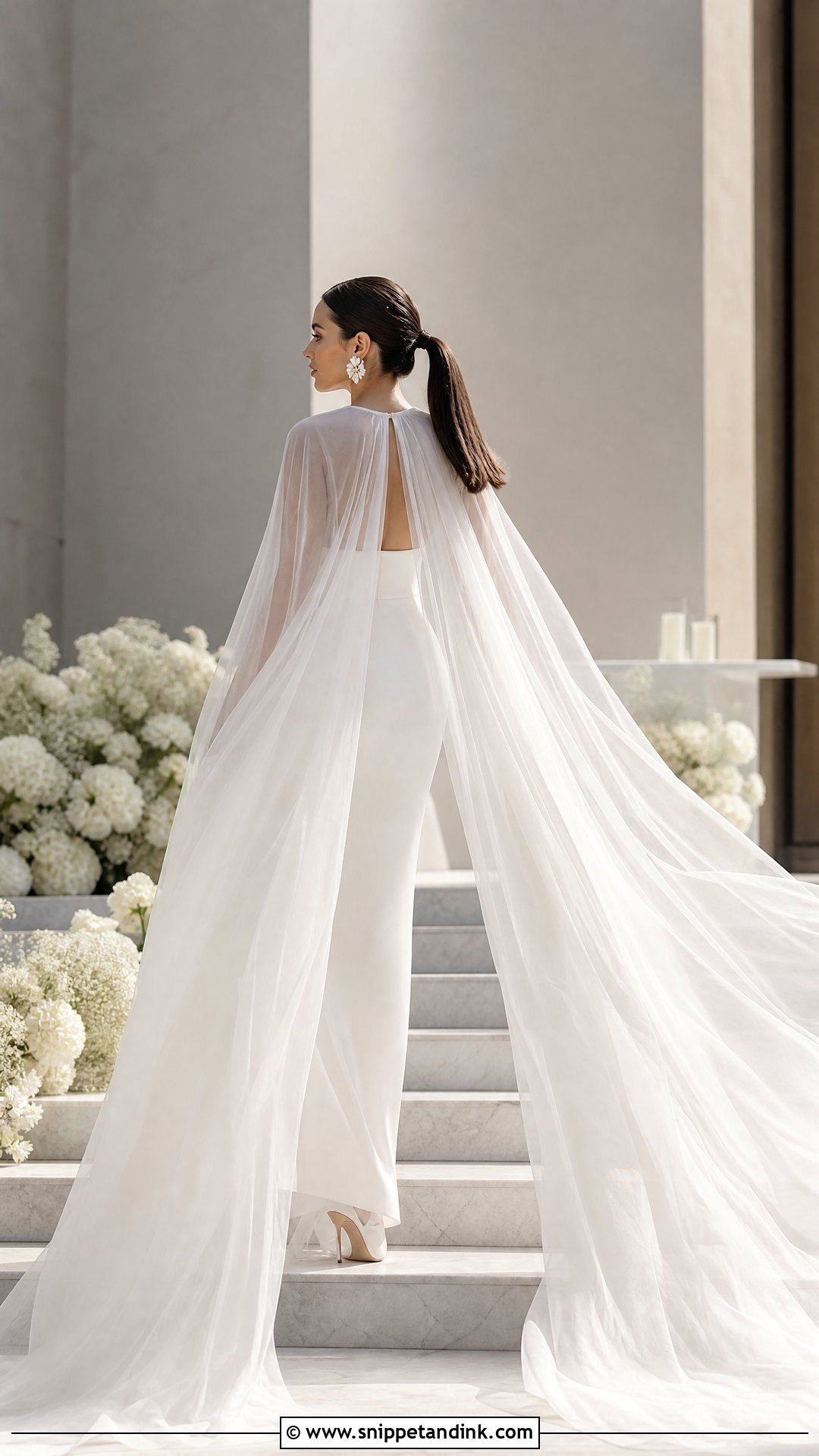
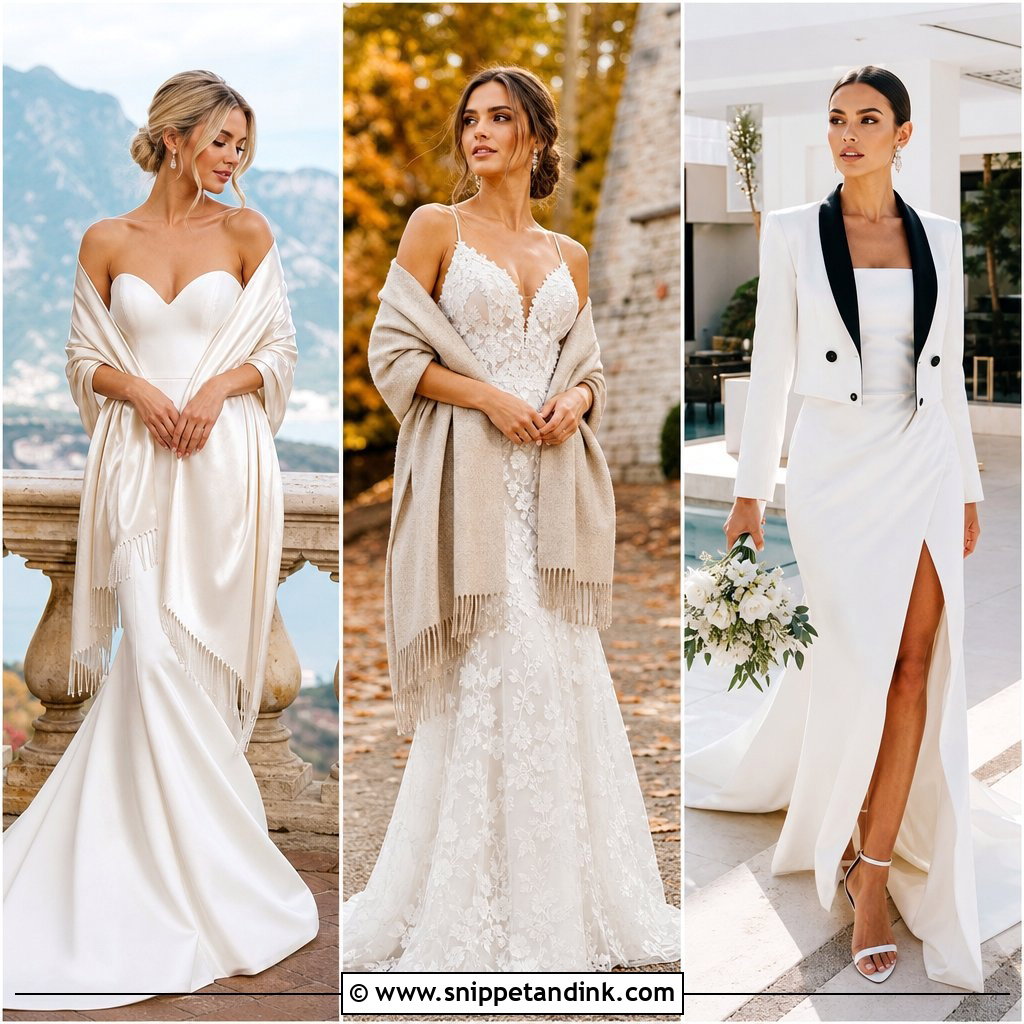
A detachable train cape turns a plain modern gown into a ceremony look and back again. Sheer tulle, crepe or satin fastening at the back of the shoulders and extending past the hem gives the effect of a long train. It suits a column, trumpet or bridal jumpsuit with clean lines. The attachment is the thing to rehearse. She should be able to release it alone in a restroom, or have one named person who knows exactly how it unhooks. Sculptural earrings, a sleek ponytail or bun, pointed heels and a small bouquet keep the cape visible.
Matching the White, Fixing the Drag and Storing It Afterward
Getting the color right
Bridal whites vary more than people expect, from bright white to ivory to a warm champagne. Ask the bridal shop for a fabric swatch of the gown and take it with you when buying the cape, or order the cape from the gown’s designer. Check the two together in daylight, never only under shop lighting.
Timing and fit
Custom capes can take several weeks to a few months, and lead times vary widely between makers, so order early enough to bring the cape to a gown fitting. That’s when a seamstress can add small loops, snaps or hooks to stop a heavy cape sliding backward and pulling at the bodice or throat.
After the day
Hang velvet and wool on a wide padded hanger; folding velvet leaves crush marks that are hard to steam out. Brush faux fur gently and store it with room to breathe, not squashed in a box. Beaded and tulle capes are best wrapped in acid-free tissue and stored flat, since their own weight can stretch them on a hanger over time.
Walk, Sit and Hug in the Cape Before the Wedding
A cape should suit the gown, the venue and the forecast all at once. Faux fur and wool give real warmth, while lace, tulle, satin, velvet and beading range from soft to dramatic. Think about how it falls over the gown, where it fastens and how easily it comes off. Keep shoes, jewelry, hair and flowers in the same mood. Then do a full dress rehearsal at home: walk, sit, turn and hold the bouquet with every layer on. Anything that slips or pulls will show itself in ten minutes.
You'll Like These Ideas:


Leave a Reply