
More brides now come to me wanting their locs to be the centerpiece of the wedding look rather than something to work around, and I love that shift. Thick freeform locs, fine microlocs and neat Sisterlocks each behave differently in my hands, but all of them can be shaped into something formal. A good bridal style for locs frames your face, carries your veil securely and still feels like you. Below are twenty loc wedding hairstyles, each with what I’d tell you at the consultation: how it’s built, what it suits and when I’d suggest something else.
Freeform Locs Suit Shapes That Follow Their Character
Freeform locs vary in thickness and some may be joined together. I don’t try to make them look uniform for a wedding, because forcing them into a strict pattern rarely looks right. I build styles that let their different sizes show: a loose high bun, a large twisted crown or locs worn down with a few flowers.
Precise styles like flat-twisted sides, tiny petals or a narrow French roll work better on cultivated locs of an even size. If your inspiration photos are all of uniform locs, we’ll adapt them rather than copy them.
Freeform locs are often thick and long, so I check the weight before committing to height. I’ll gather them loosely in my hands at the trial, hold them in place for a minute and ask how your scalp feels. That simple test tells us whether a crown-level style is realistic or whether a lower shape will keep you comfortable until the last song.
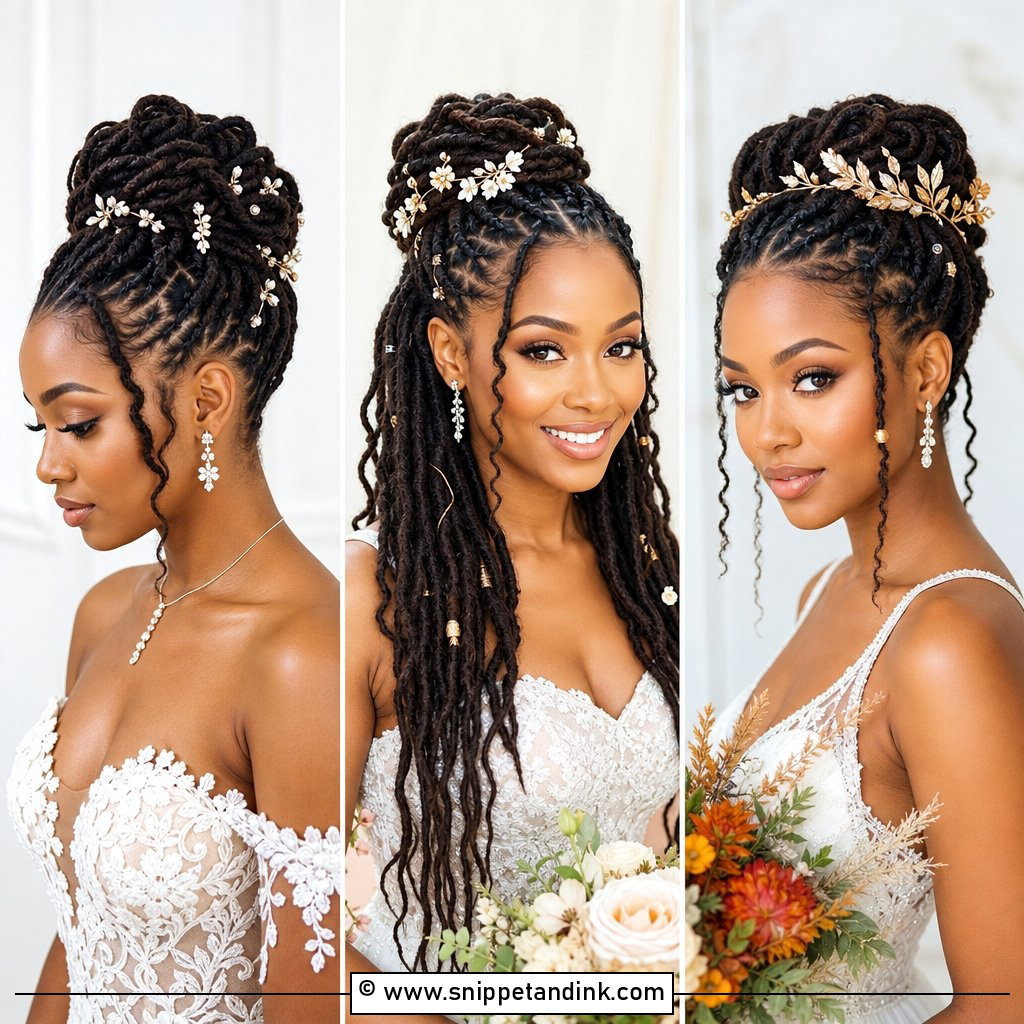
1. High Bun With Locs
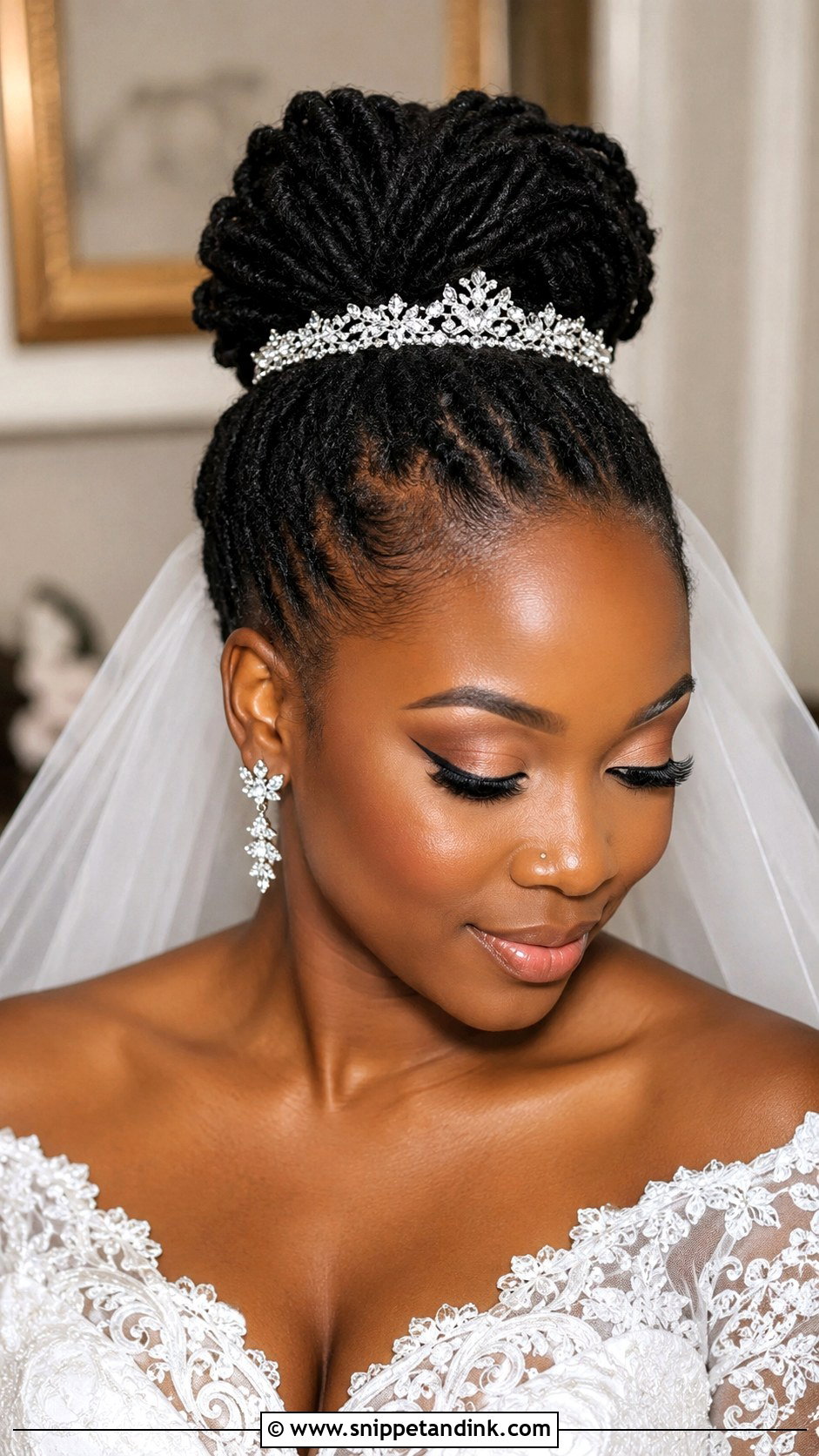
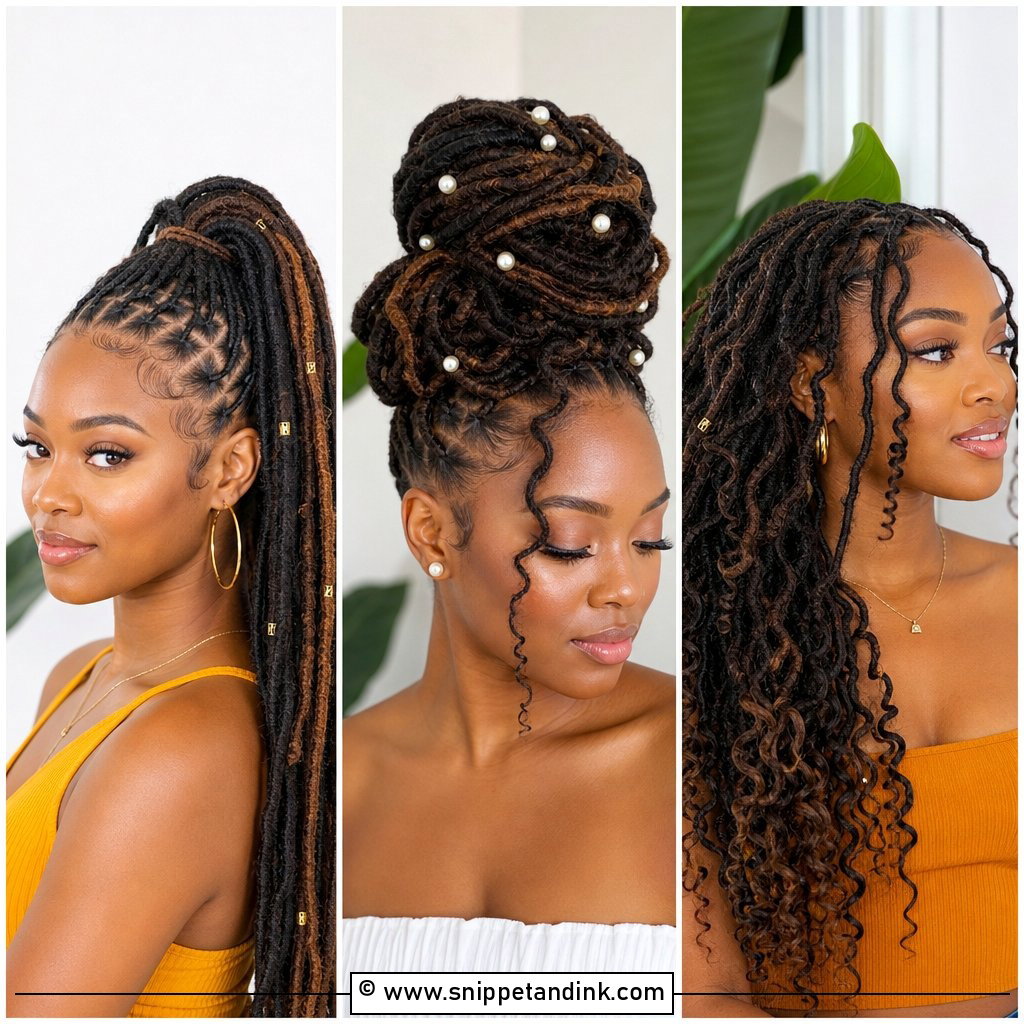
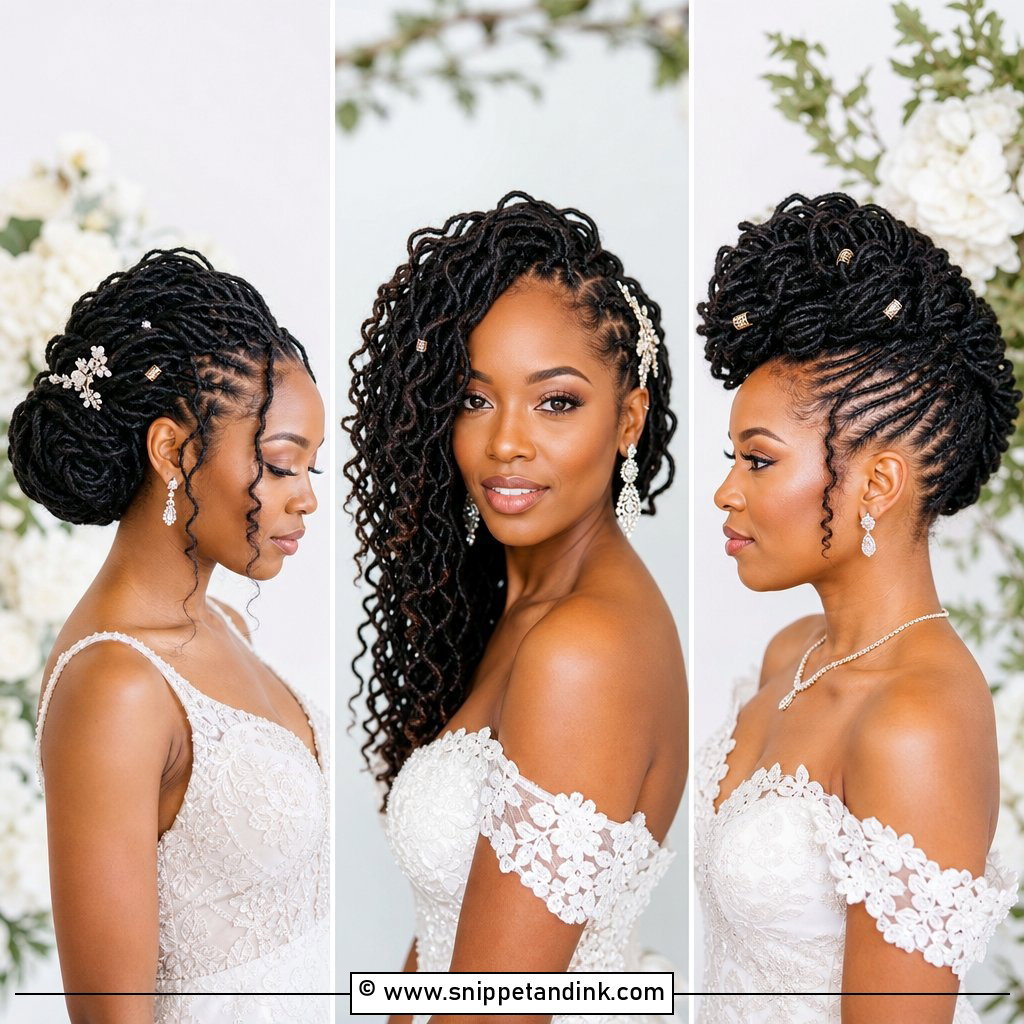
The high bun is the most requested formal loc style I do. I gather the locs toward the crown and wrap them into a smooth, sculpted shape, pinning each layer so the weight is shared. It lengthens the neck and shows off statement earrings, and a veil, tiara or birdcage piece sits neatly beneath it. My honest caution: if your locs reach past your waist, a bun this high can pull at the hairline and feel tight by dinner, so I’d test it for a few hours at the trial.
2. Loc Crown Braid
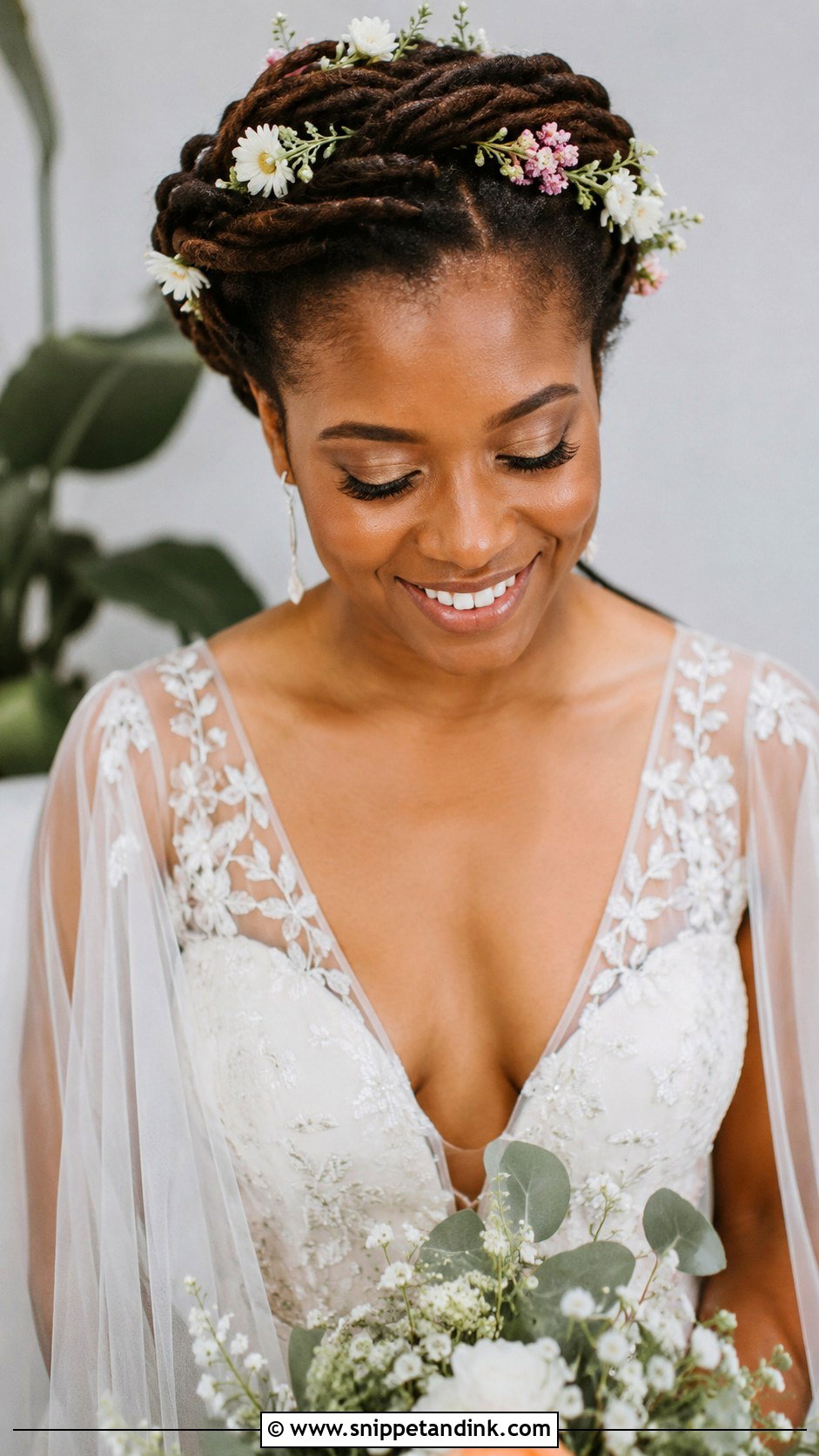
A crown braid wraps the head like a natural tiara. I braid or twist the locs into one thick band and lay it around the hairline, pinning it close so it doesn’t lift when you tilt your head. It frames the eyes and smile and keeps everything secure, which is ideal for an outdoor wedding where wind would play havoc with loose locs. Fresh flowers tucked into the braid suit boho brides. It also stays flat enough to sleep in, if you want it for a second-day brunch.
3. Side-Swept Bridal Locs
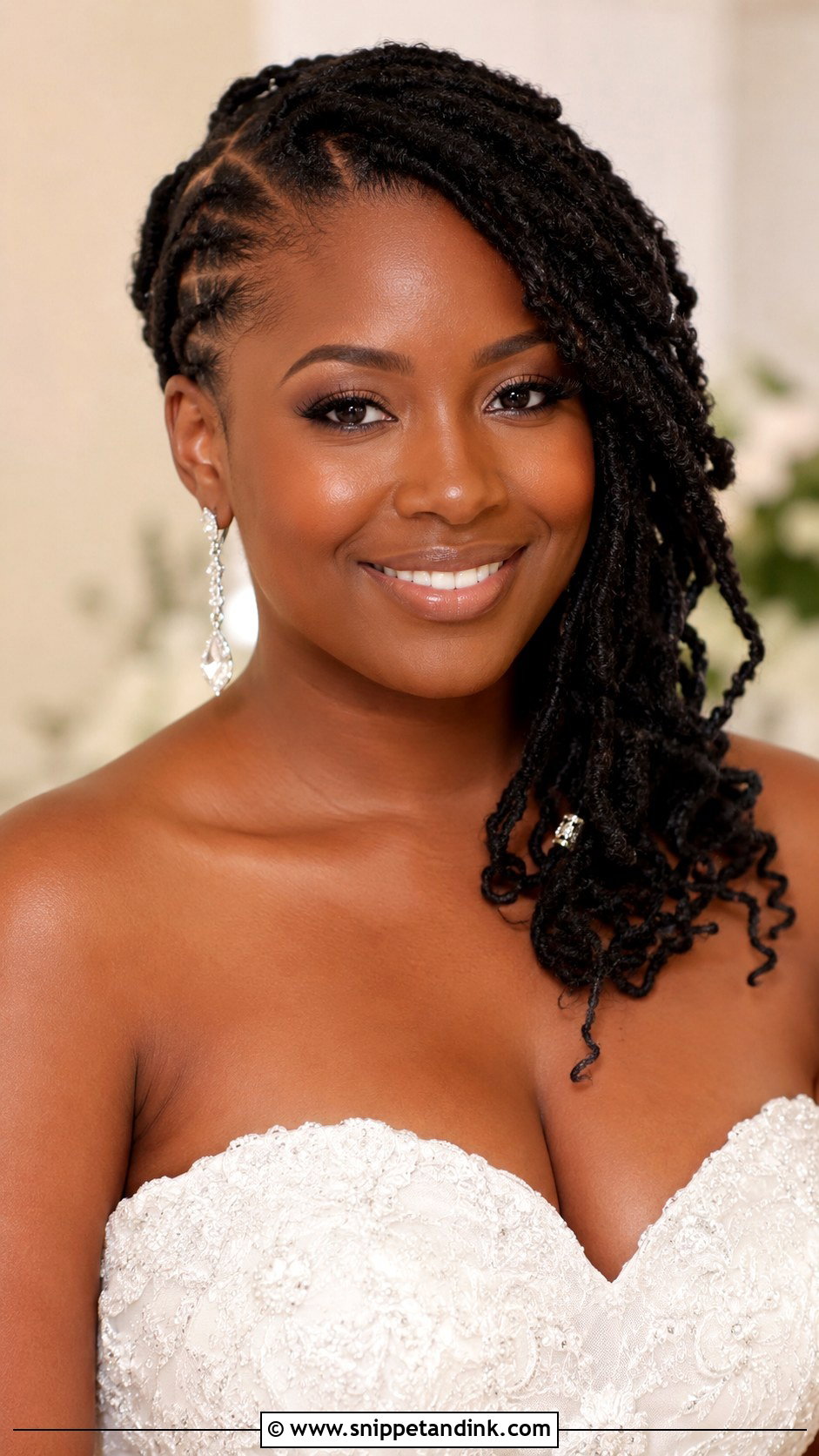
Pulling the locs over one shoulder gives a soft, open profile. I gather them to one side and anchor the far side with two or three flat twists, which hold far better than pins alone on heavy locs. It shows off dangling earrings on the bare side and suits a sweetheart neckline well. The movement looks lovely as you walk and dance. If your gown has beading or lace on that shoulder, though, I’d rethink it; loc fibers catch on embellishment over a long day.
4. Loc Mohawk Updo
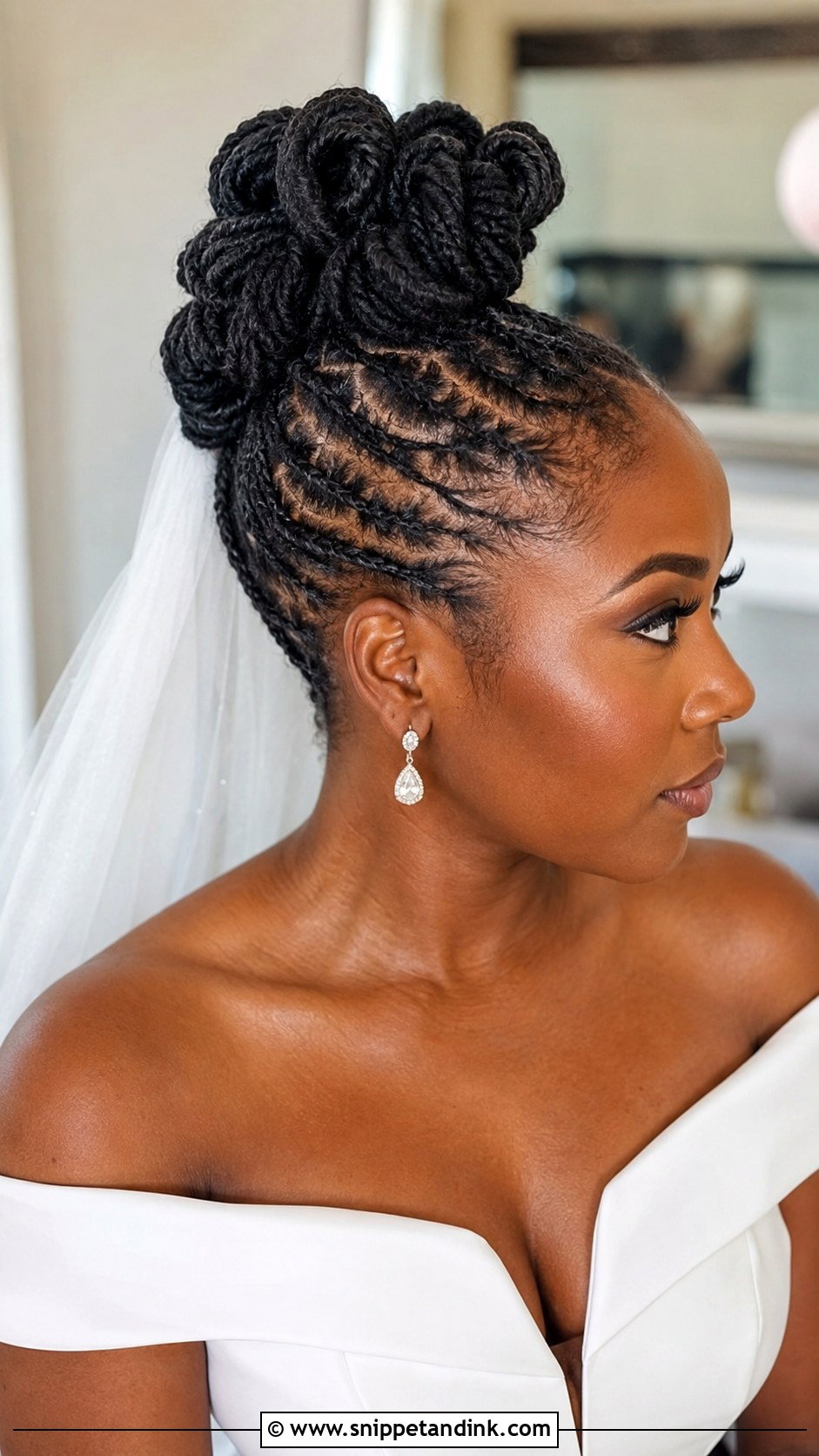
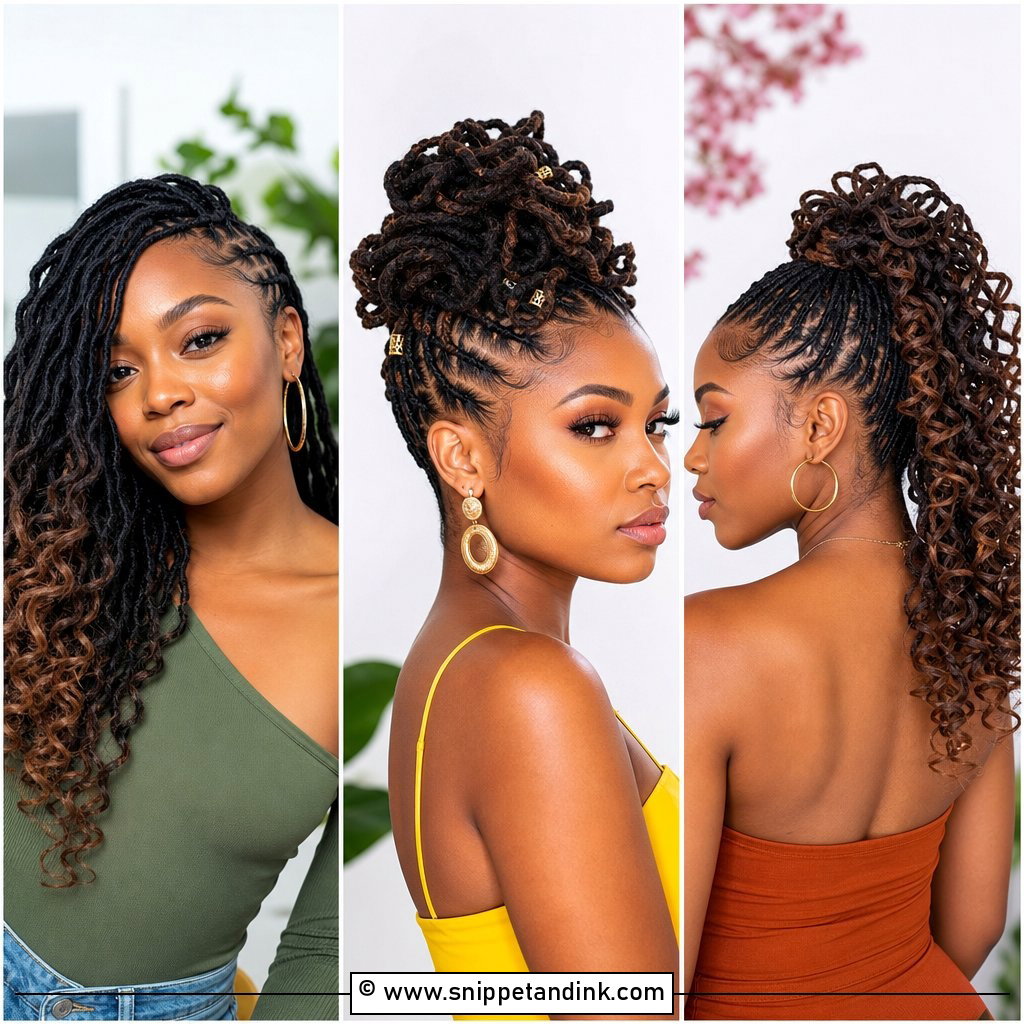
The loc mohawk updo makes the boldest statement on this list. I flat twist or braid the sides close to the scalp, leaving a central strip from front to back, then curl, roll or stack that strip into small buns for height. The sides take the most time and need to be even, since they frame your face in every profile shot. It suits a fashion-forward bride in a modern gown. If you’d like a veil, choose a short one fixed behind the crown, where it won’t flatten the center.
5. Loc Updo With Face-Framing Pieces
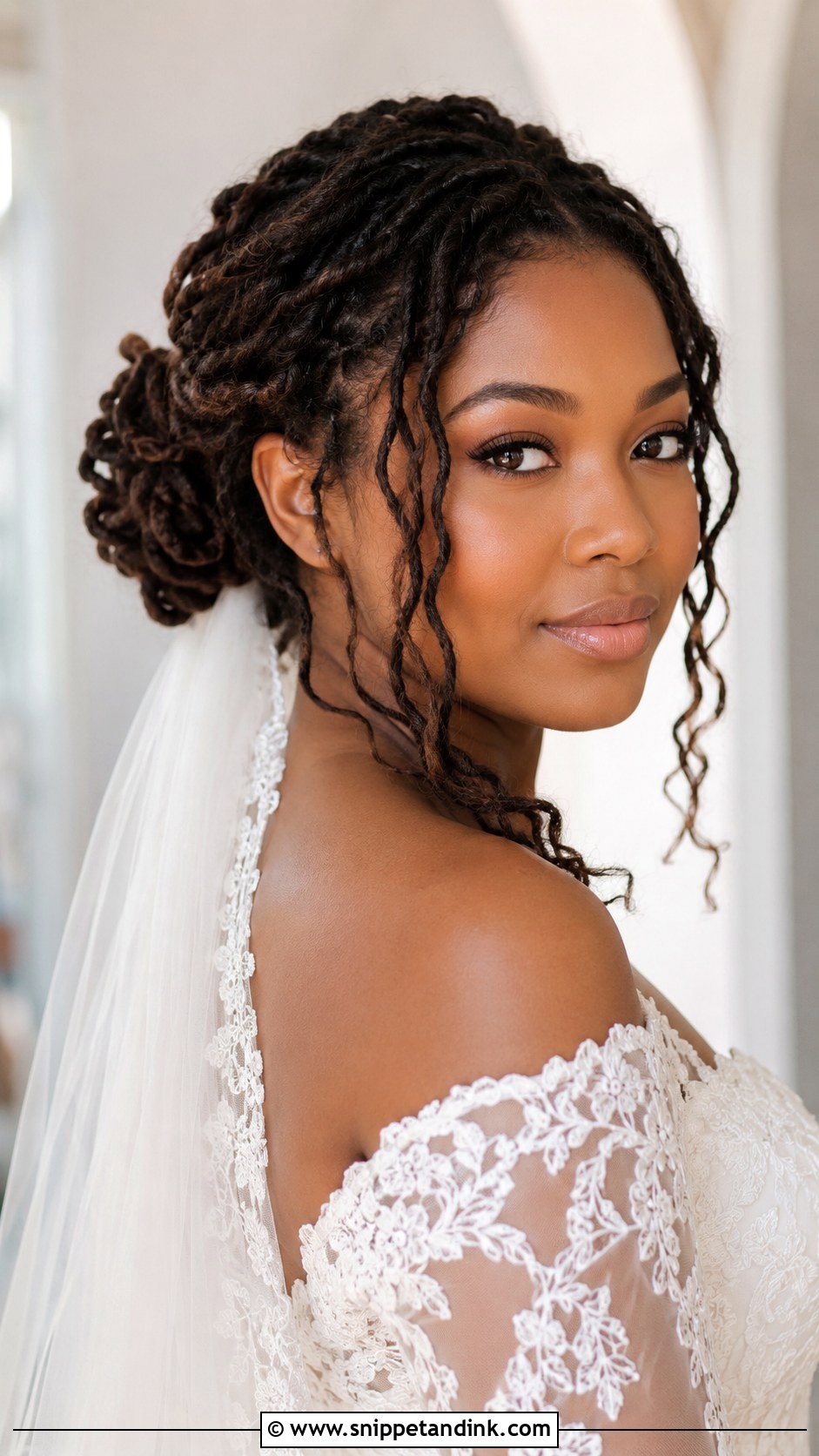
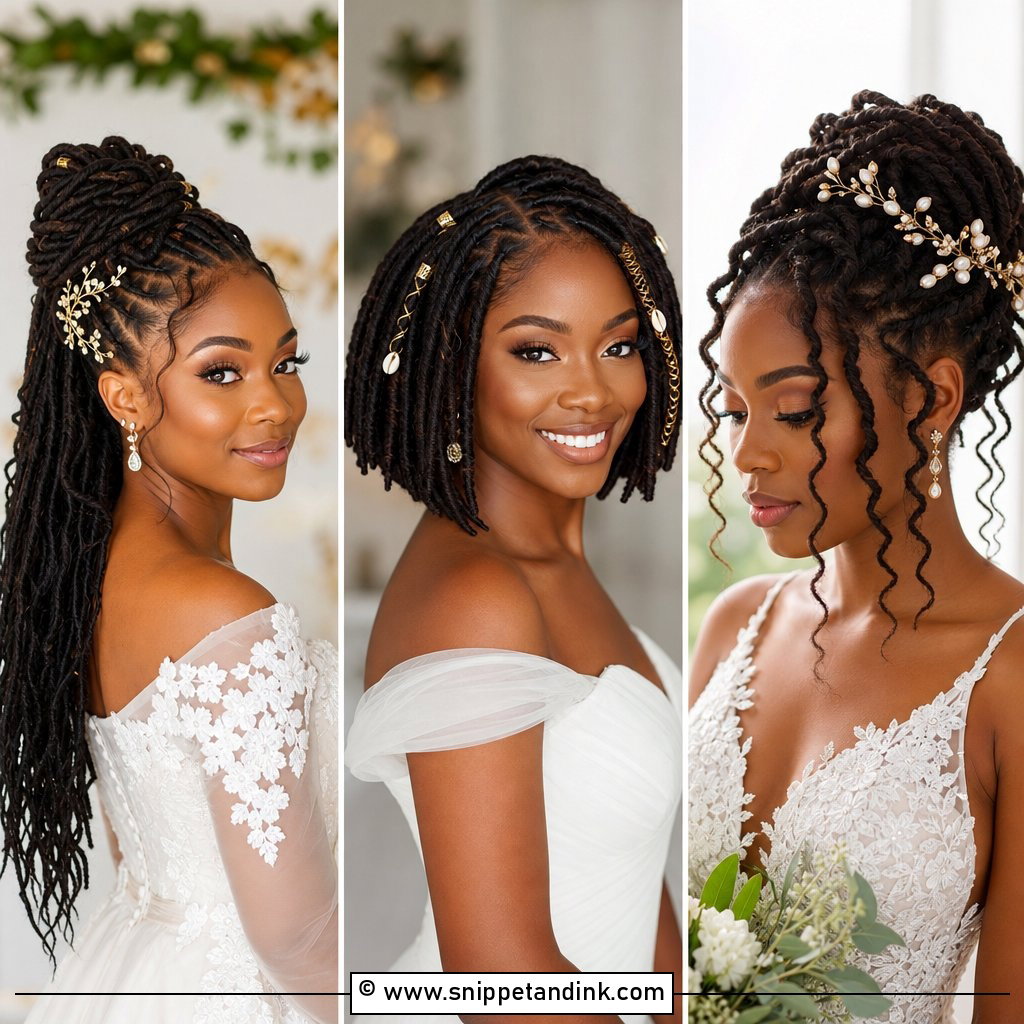
A slightly undone updo can be the most flattering of all. I pin most of the locs into a loose bun or a cluster of twists at the back and leave a few soft locs to frame the face. The secret is picking which locs come down: I choose ones that naturally fall toward the cheekbones, not random strands that stick out. It pairs with soft makeup and a flowing veil, and suits brides who want polish without stiffness.
6. Bantu Knot Curls
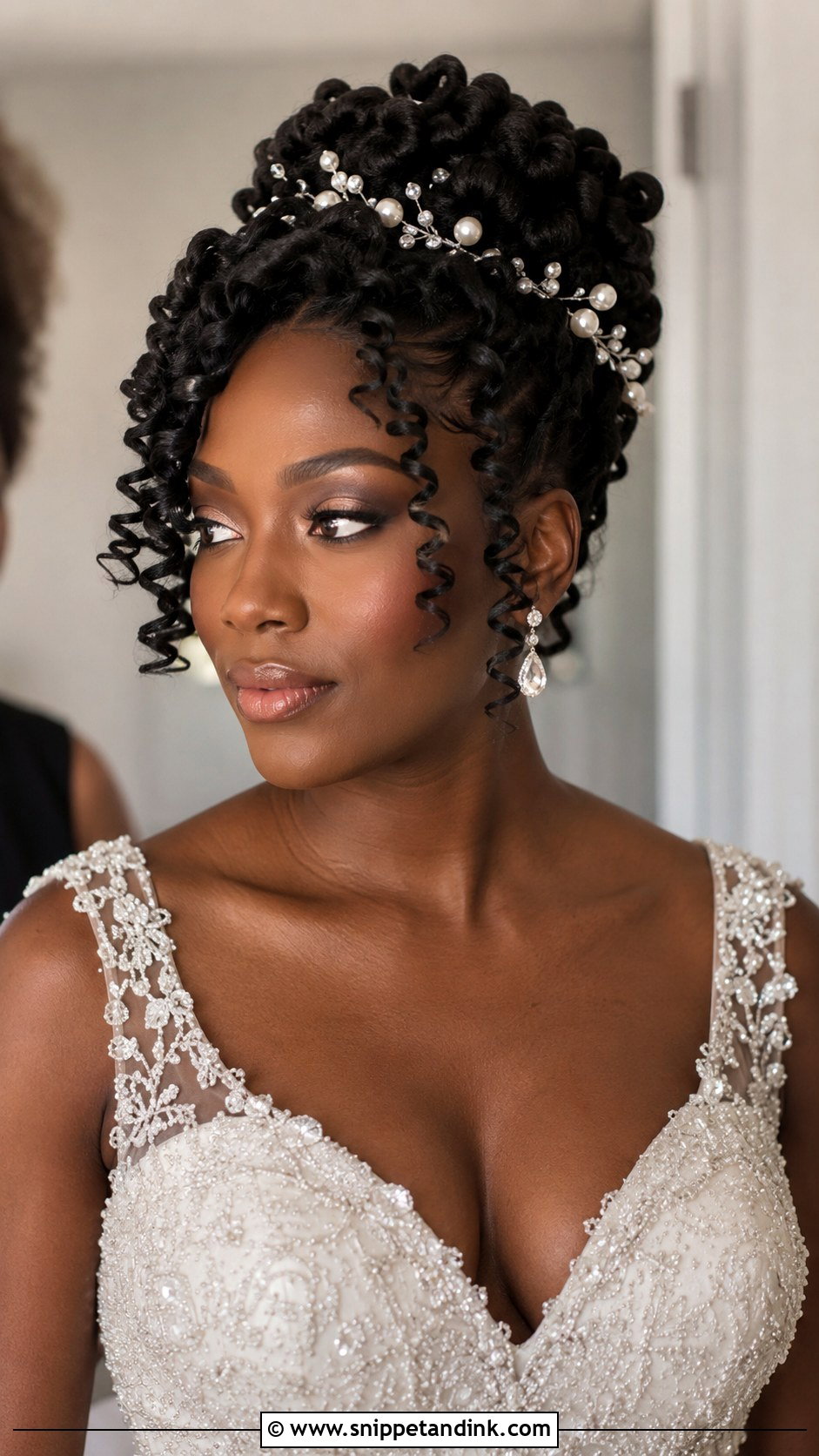
Bantu knots give two looks for one sitting. Worn as knots, they’re bold and geometric; taken down, they release into spiral curls full of definition. Many brides wear the knots for the ceremony and unravel them before the reception. As a protective style, knots set a day or two early also keep the locs tidy and moisturized in the run-up. Take them down with oiled fingers and separate the curls gently, as rushing creates frizz. Wedding-day timing is key: allow twenty minutes for the reveal.
7. Loc French Roll
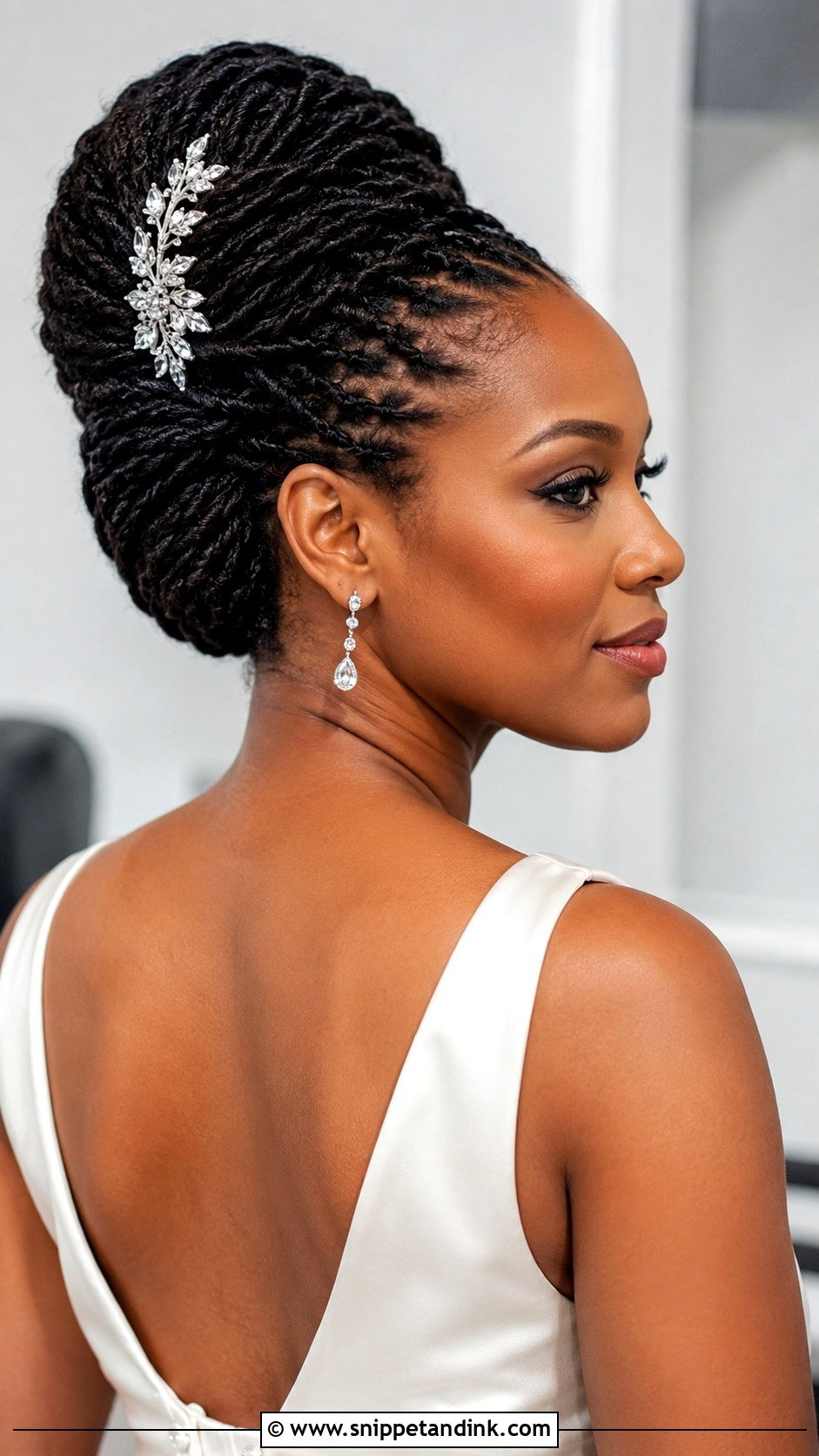
The French roll brings vintage polish to locs. I sweep the locs to one side, fold them into a vertical roll along the back of the head and pin along its seam, tucking long ends inside so it stays slim. It suits black-tie and formal weddings and highlights the jaw and neck. Leave a few face-framing locs loose, or keep it completely smooth. A jeweled comb or pearl pins along the roll add sparkle. It works best on medium locs; very thick ones make the roll bulky.
8. Half-Up Half-Down Locs
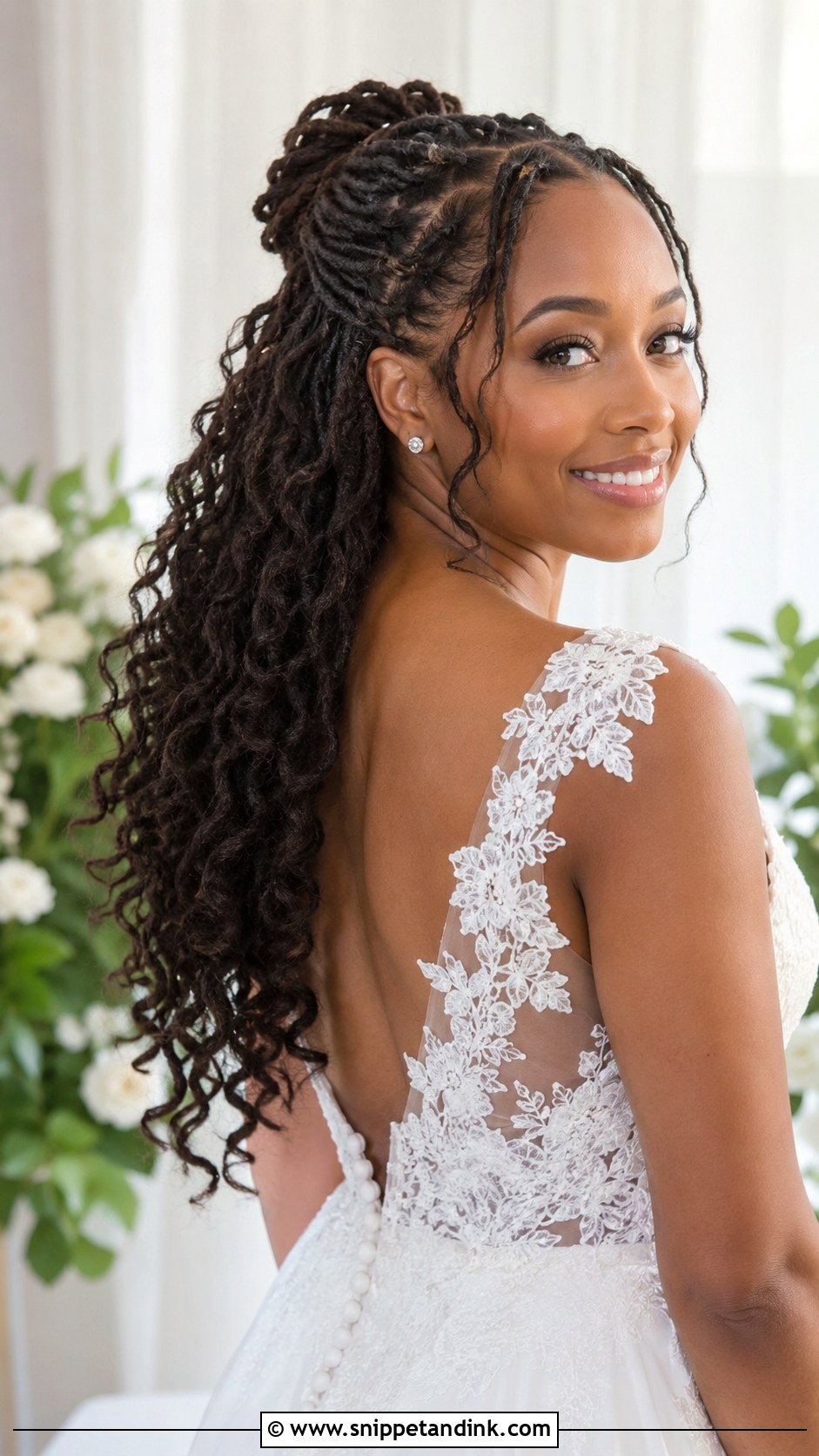
Half up, half down is a sensible middle ground. I gather the top section at the crown and secure it, letting the rest flow down the back and shoulders, which keeps locs off the face during vows and still shows your length. Curling the loose locs adds softness. Flowers or pins can decorate the top section. If your locs are heavy, I’d make the gathered part smaller than you’d expect, since a large section pulls back on the crown.
9. Loc Bun With Pearl Accents
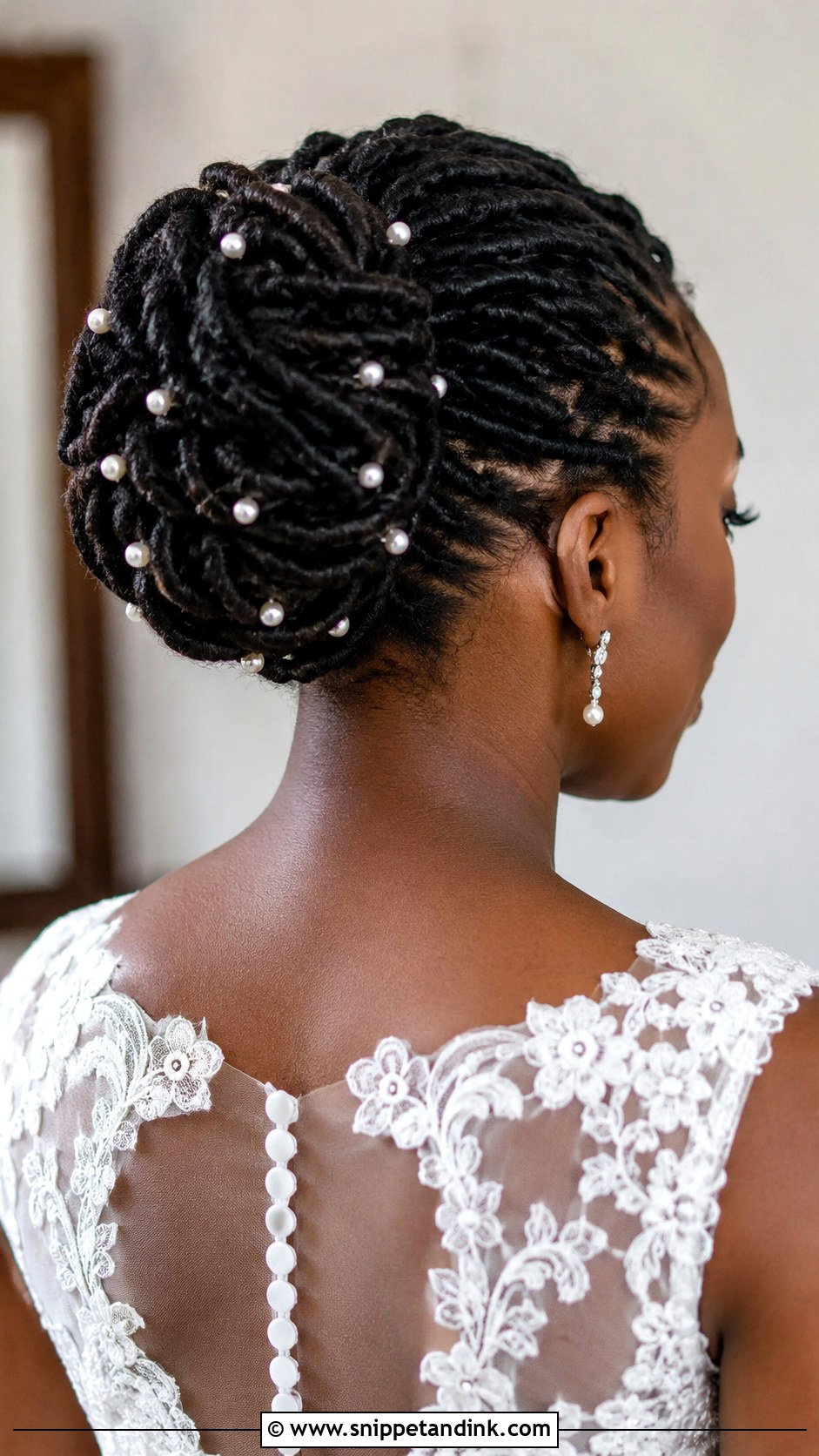
Pearls and bridal locs pair naturally. I build a smooth, sculpted bun, low or high, then scatter pearl pins through it, angling each so the pearl sits on the surface rather than sinking into the loc texture. The sheen catches light softly and adds refined glamour. I’d use pins rather than glue-on pearls, which can leave residue. It’s a natural match for classic weddings, lace gowns, soft makeup and delicate jewelry.
10. Goddess Loc Updo
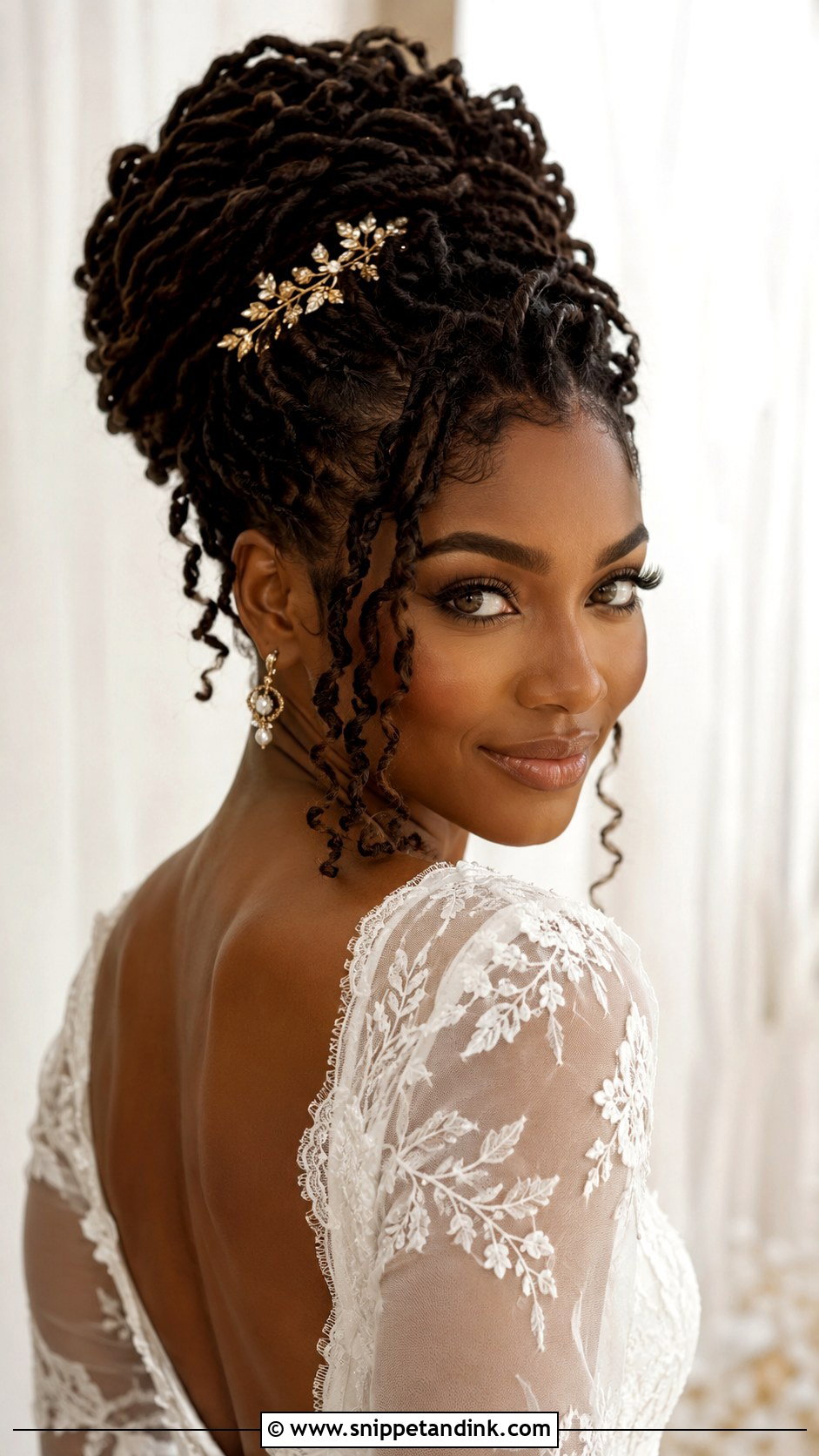
Goddess locs have loose, curly ends that give a soft, bohemian movement. They’re usually installed as faux locs, so they’re lighter than mature natural locs of the same length, which makes big updos more comfortable. Pinned up, they make voluminous shapes with curls peeking out around the face. Floral crowns and gold accessories suit them. Install them at least a week ahead so the curls relax and you’re used to the feel before the wedding.
11. Low Bun With Locs
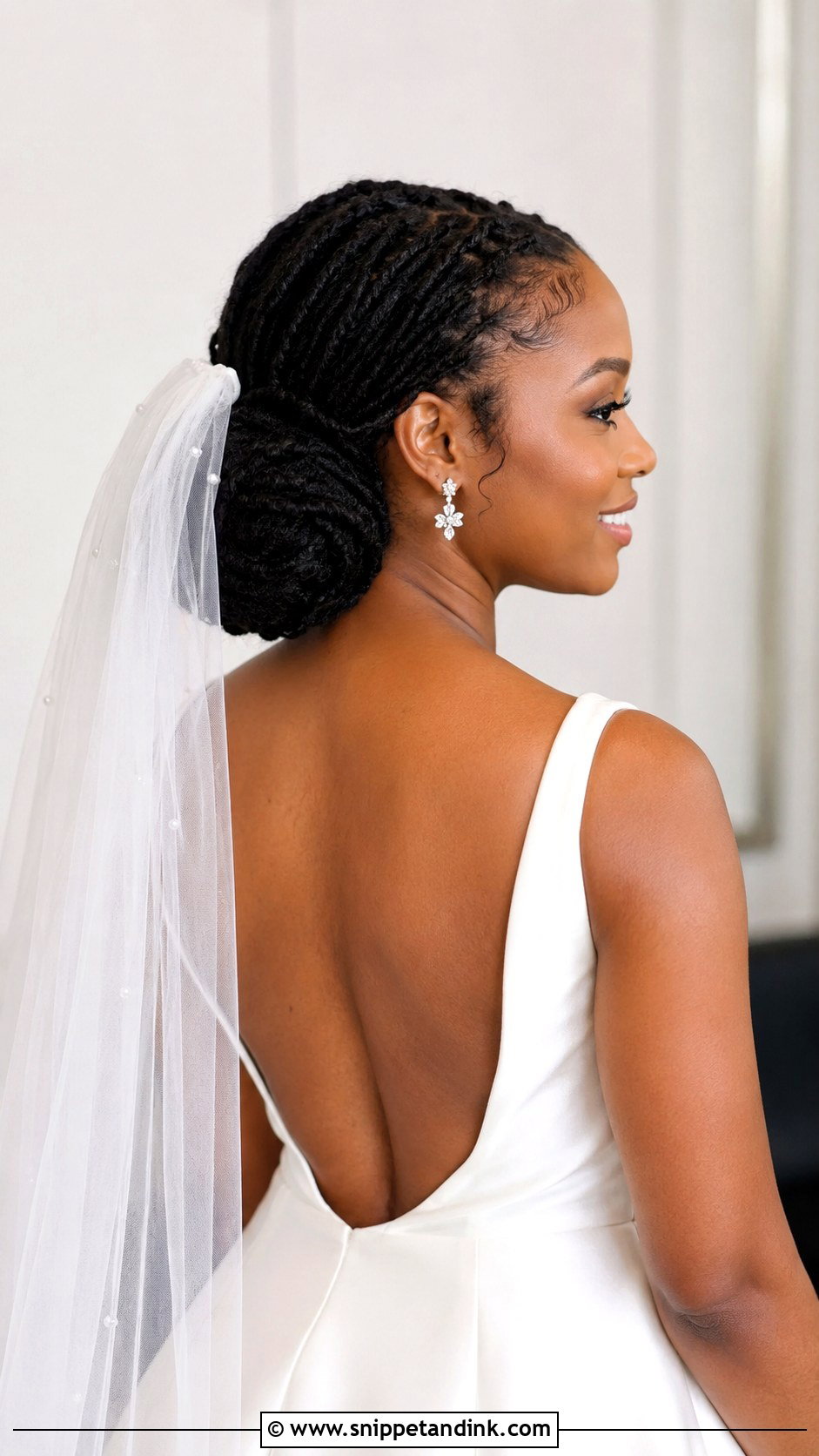
The low bun is the style I trust most for a long day. I gather the locs at the nape and coil them into a soft, rounded shape; sitting low, it puts almost no strain on the hairline. It anchors a long cathedral veil well, draped from just above the bun. The plain shape lets your features and jewelry lead. Add a jeweled piece for sparkle or keep it minimal, and it works equally well at a formal or intimate wedding.
12. Loc Ponytail With Curls
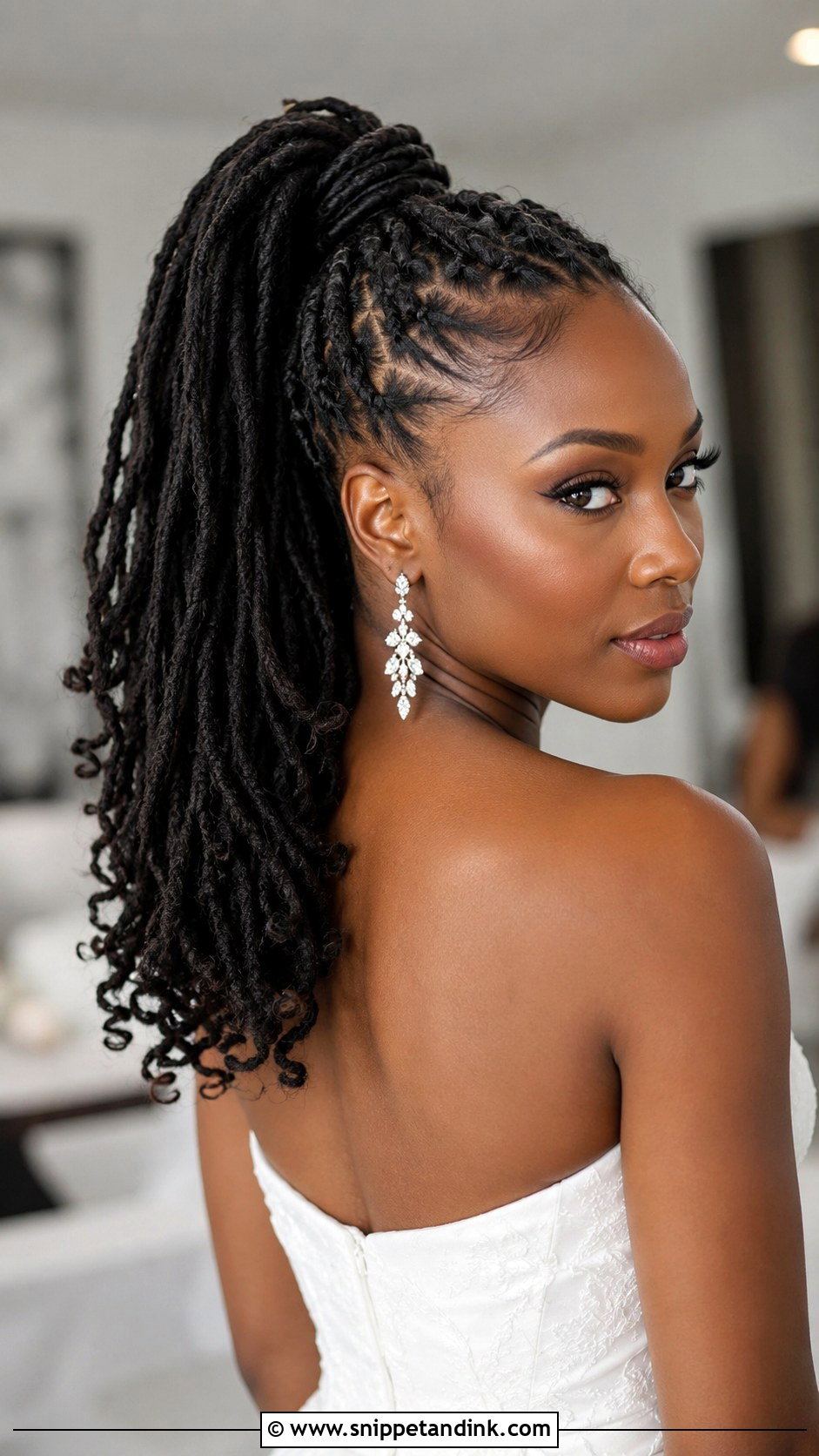
A ponytail with curled ends gives movement as you walk. I gather the locs high for drama or low for something more classic, wrap one loc around the base to hide the elastic, then set the ends on rods the night before so they curl softly. High ponytails pull more at the edges, so I’d suggest the low version for long, heavy locs. It’s comfortable from ceremony to reception and swings nicely on the dance floor.
13. Loc Chignon With Veil
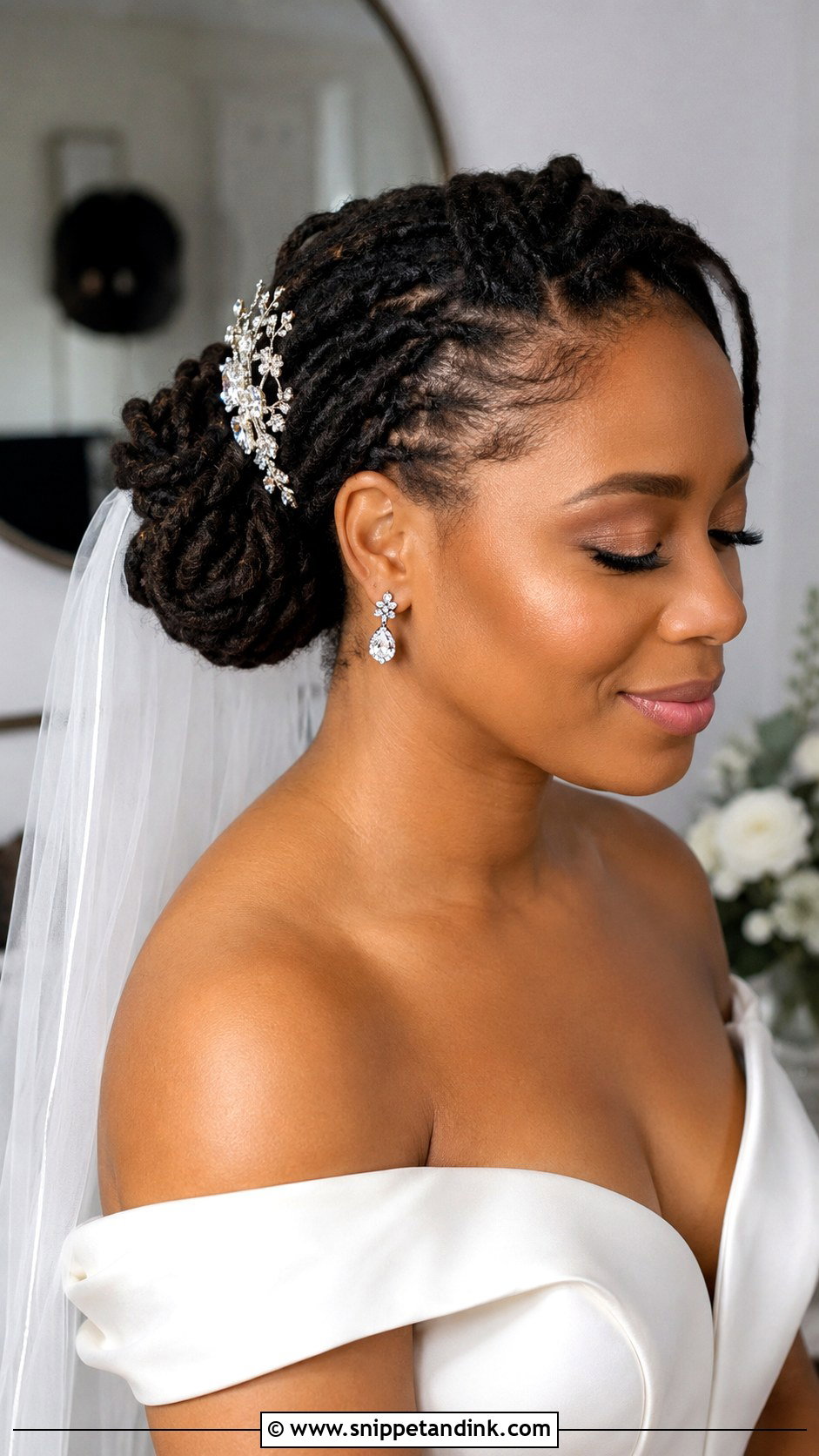
The chignon translates well to locs. I coil them into a smooth, low knot at the back of the head and pin it deeply, which creates a firm anchor for a veil, whether a dramatic cathedral length or a fingertip one. That firmness is the real advantage: nothing shifts as the veil is lifted or removed. A loc chignon complements modern and traditional gowns alike. A sparkling comb above the knot adds a touch of old Hollywood.
14. Flower-Adorned Loc Updo
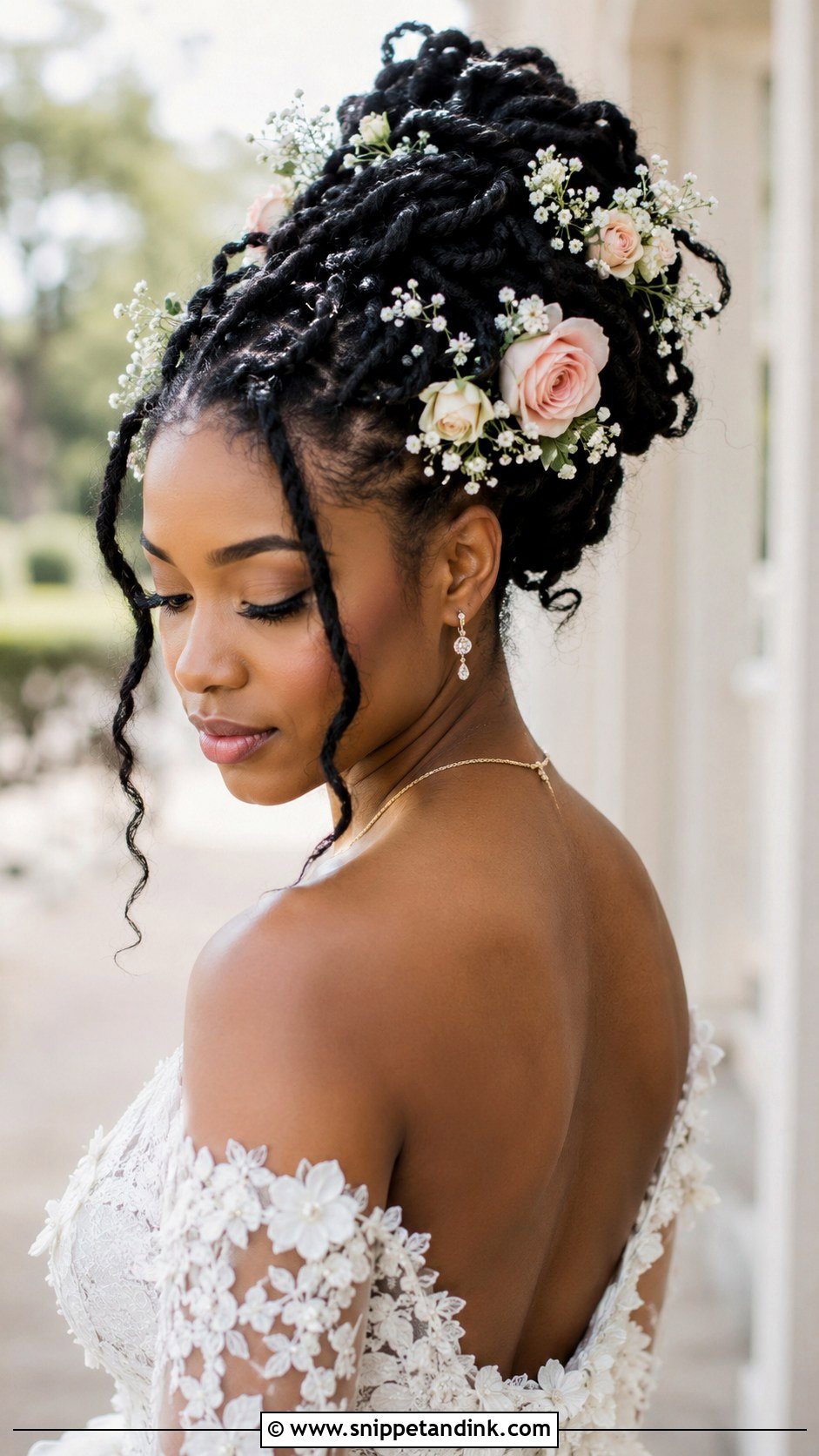
Flowers turn a loc updo into a garden piece. I style the locs into a sculpted bun or twisted updo, then tuck real or silk blooms into the gaps between coils, where they grip naturally. Baby’s breath, roses and orchids are popular, and matching a few to the bouquet ties everything together. For a hot outdoor wedding, silk flowers are a reasonable choice; they don’t wilt and they don’t shed petals into your locs. A few small buds or a fuller arrangement both work for spring and boho weddings.
15. Microloc Bridal Updo
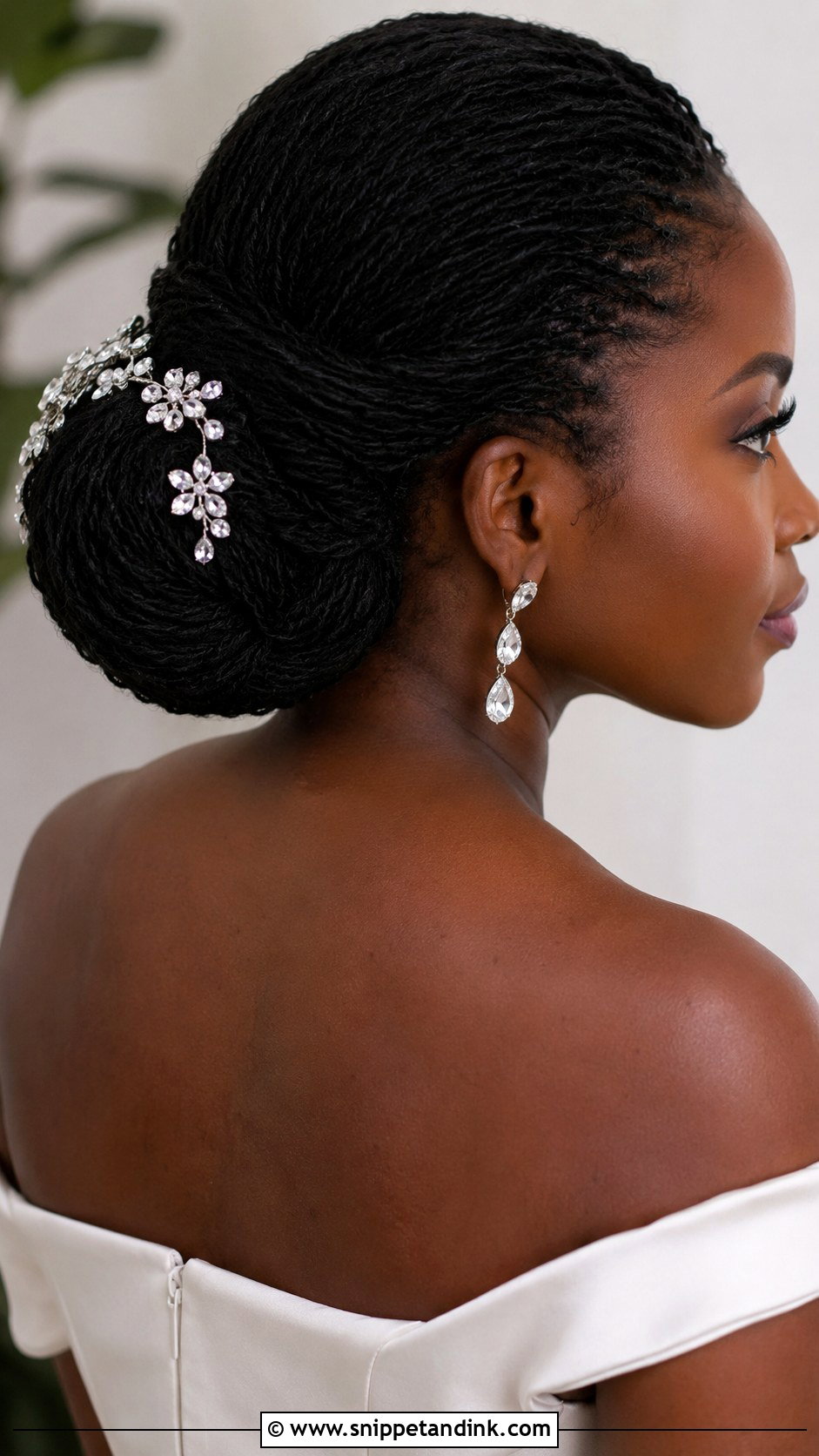
Microlocs are fine enough to behave almost like loose hair, so they suit intricate work. I can sweep them into detailed updos, braid them into a crown or twist them into a chignon with sharp, clean lines. They hold curls well too, if you’d like softness. The trade-off is time: there are many more locs to place, so book a longer appointment. Pearl or crystal pins sit nicely among them.
16. Sisterlocks Wedding Style
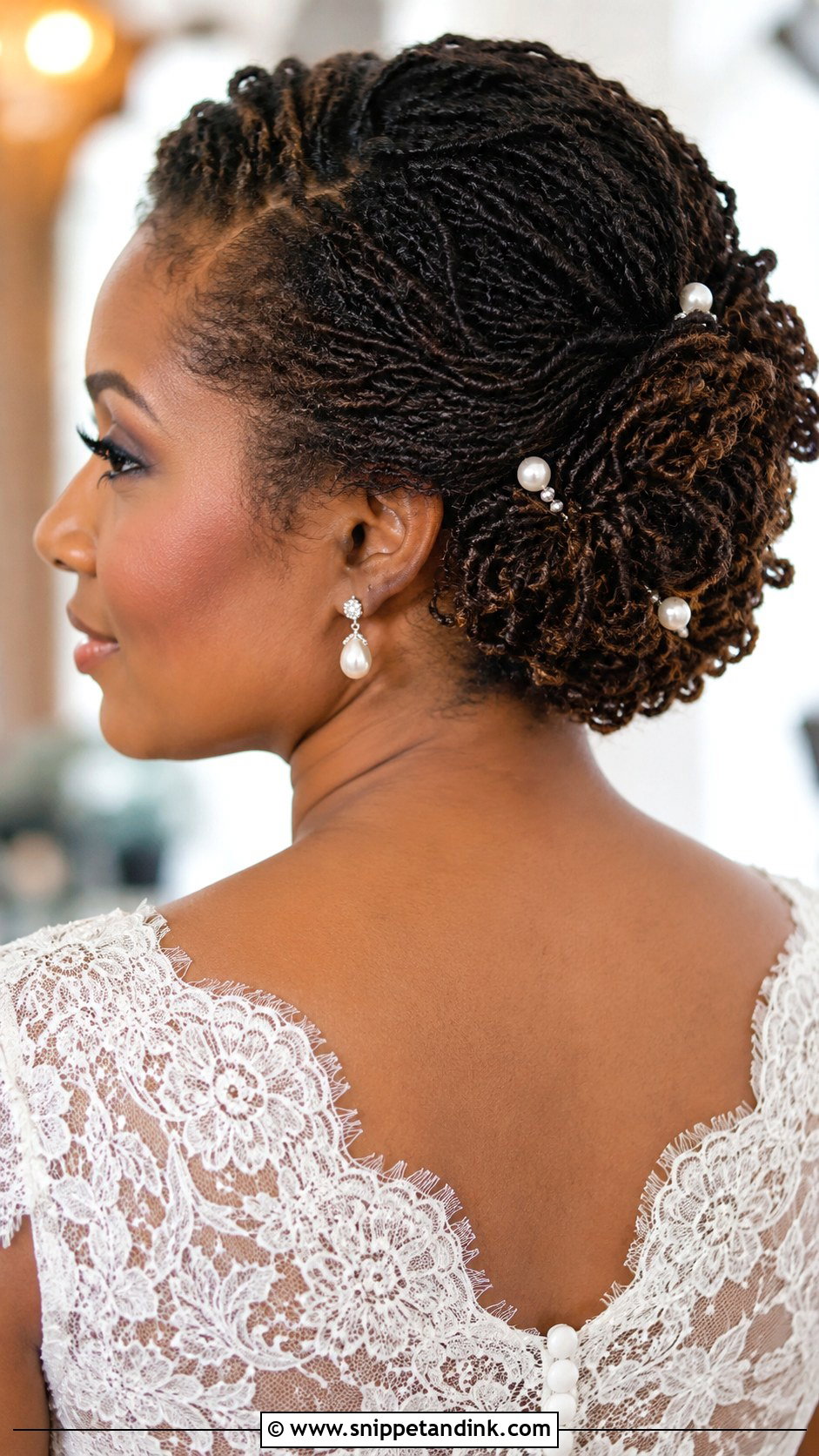
Sisterlocks are formed with a special tool into very small, uniform locs, and that uniformity is what makes them so precise to style. These delicate locs sweep into romantic updos, curls or pearl-dotted buns, and they hold detailed shapes well. I’d talk to your Sisterlocks consultant about when your last retightening should be; ideally a week or two before, so the roots look neat without feeling tight. Wear them up in a chignon or down in waves.
17. Loc Top Knot
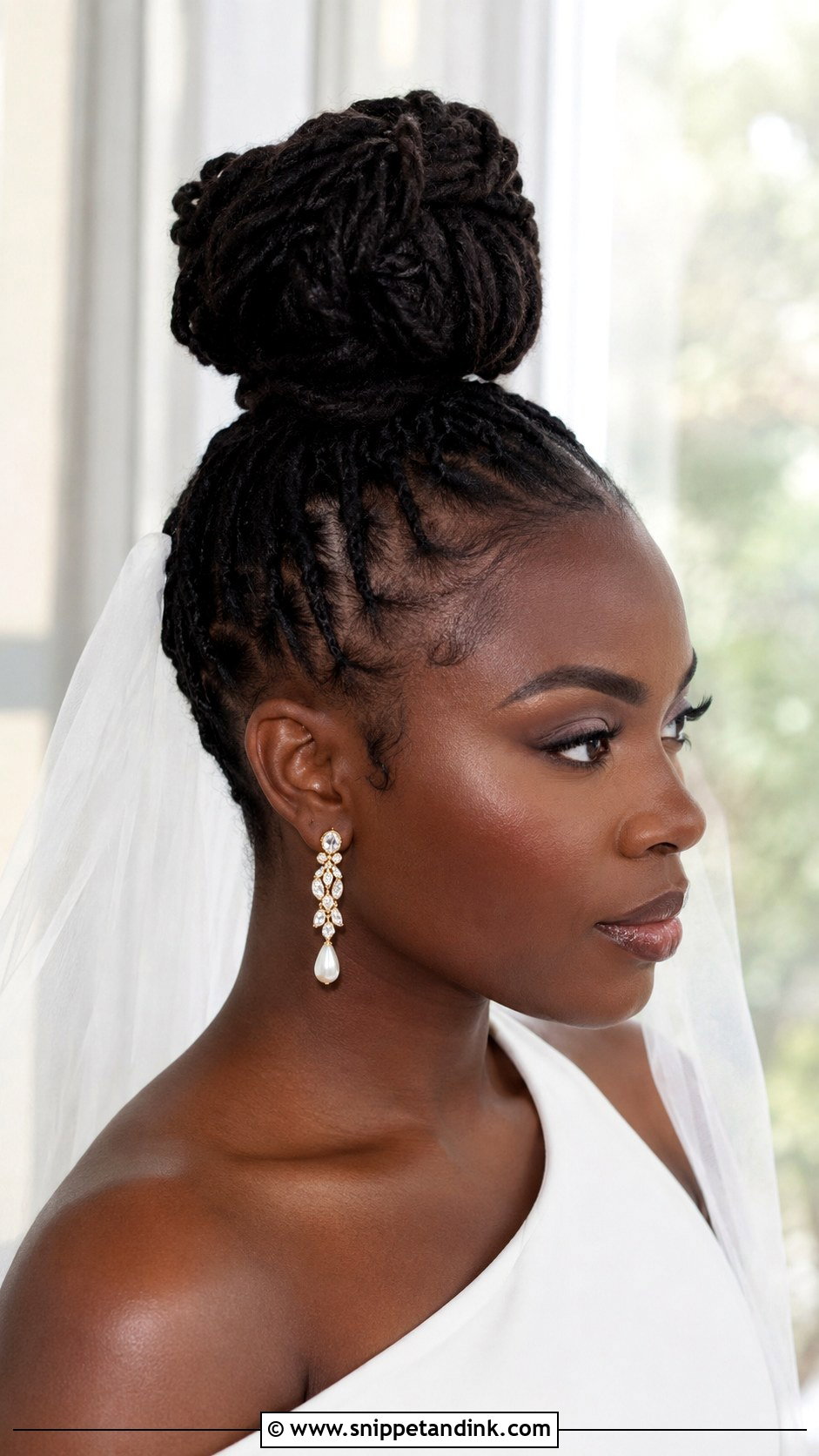
The top knot is clean and sculptural. I gather the locs high on the crown and wrap them into a neat, rounded knot, which lengthens the neck and pairs well with bold earrings and a contemporary gown. Smooth the sides for polish, or leave a little texture for softness. Shorter locs suit this best; long ones make the knot large and heavy on the crown, which I’d only do if you already wear it comfortably.
18. Curled Loc Half Updo
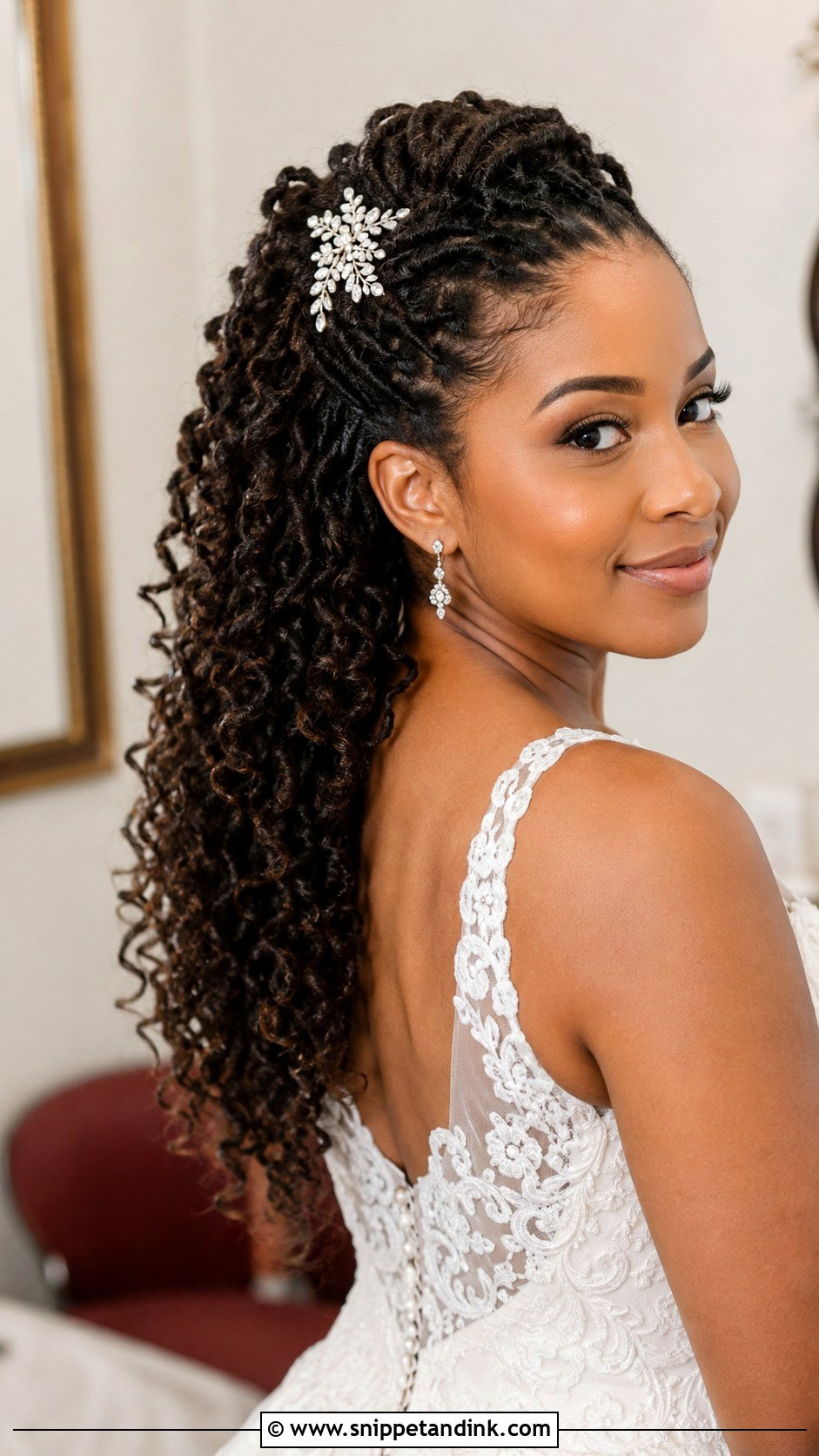
Curled locs in a half updo bring romance and movement. I pin back the top portion, then set the rest on flexi rods for defined springy curls that frame the shoulders. Rods need to stay in until the locs are fully dry inside, which often means overnight. A sparkling clip or fresh flowers decorate the pinned section. Curled locs keep their shape for days, so this look holds well from ceremony to after-party.
19. Loc Halo Braid With Flowers
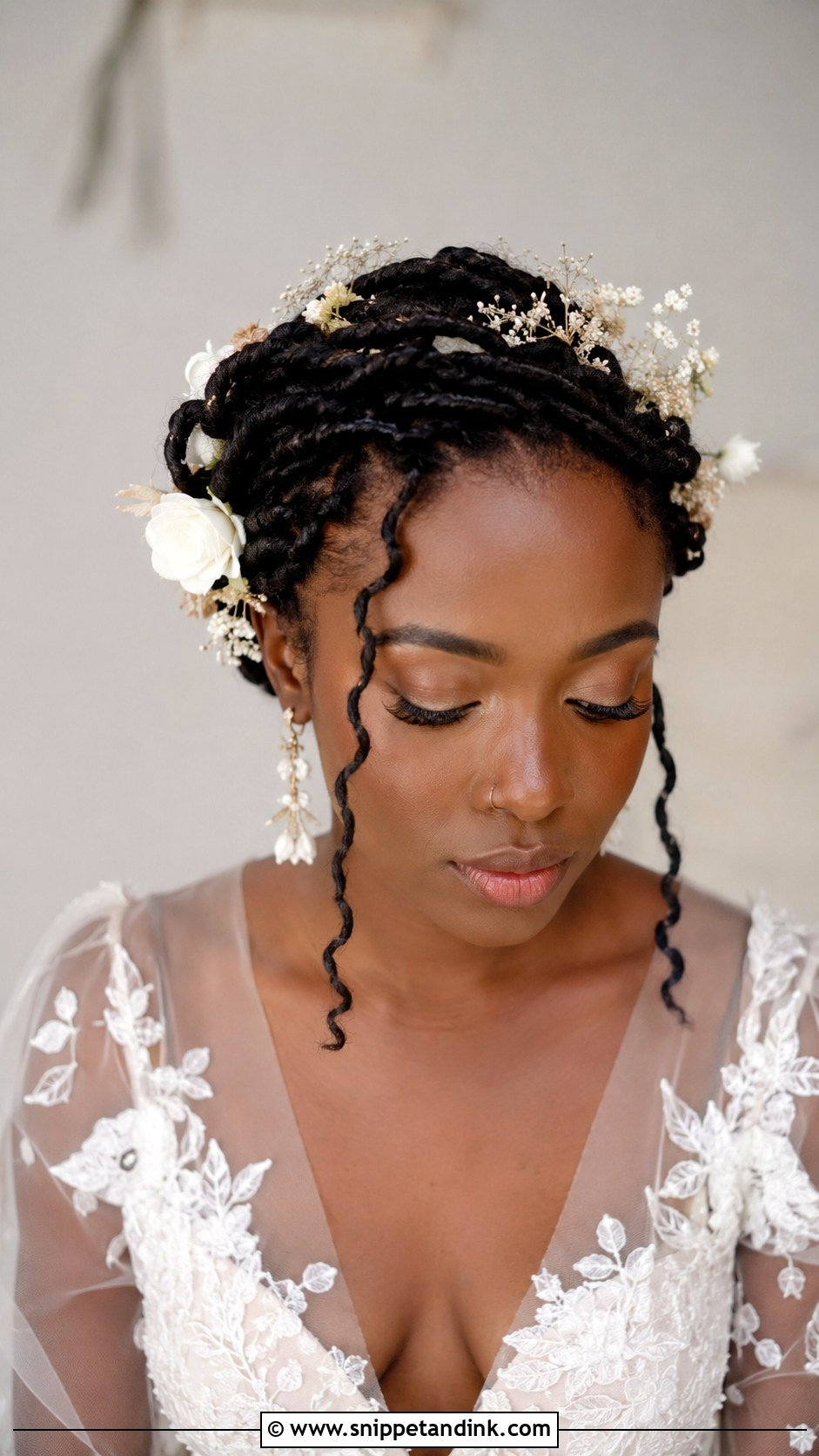
A halo braid with flowers combines structure and romance. I braid the locs into a ring around the head and then tuck flowers along it, choosing small sturdy blooms so they don’t overwhelm the braid. It suits outdoor and bohemian weddings and frames the face well. Baby’s breath gives a soft, airy look; brighter blooms add color. It’s secure enough for a full day of hugging and dancing.
20. Sleek Loc Updo With Tiara
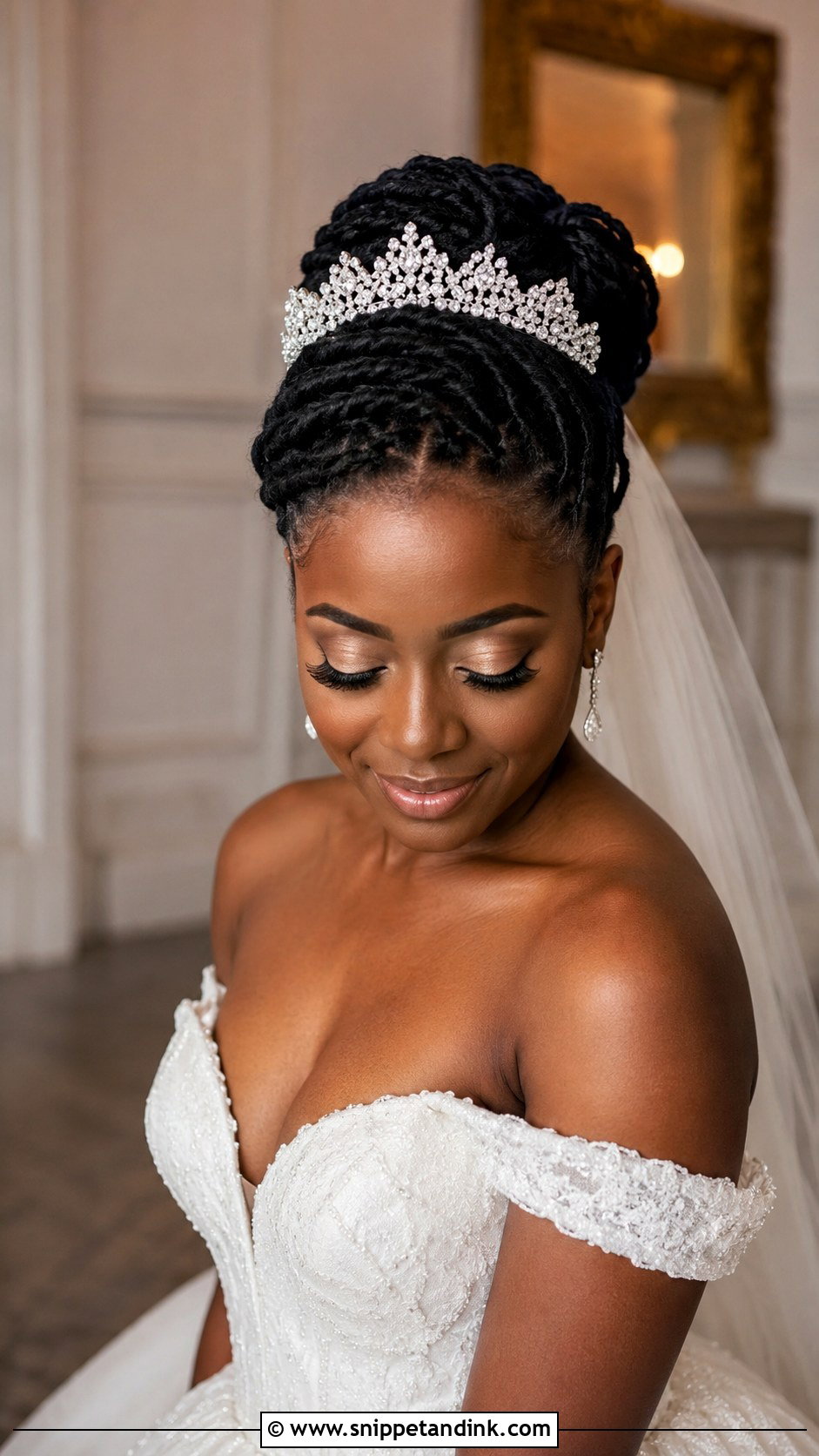
A sleek updo with a tiara is the most formal style here. I smooth the locs and shape them into a polished bun or twisted updo, building a flat platform at the front where the tiara’s combs can grip. The tiara catches light against the loc texture, and the clean shape gives it a proper base. It suits ballroom weddings. Bring the tiara to your trial, since each one sits differently and some need extra pins or a small elastic loop.
Anchoring a Veil in Locs So It Never Slides
Veil combs are designed for loose hair, and their teeth slide straight through smooth locs. My approach is to give the comb something to hold.
- I create a small, tight base where the veil will sit, usually a pinned coil or a twist.
- The comb goes into that base, teeth pointing toward the face, then is pushed back.
- Two U-pins cross through the comb’s frame on each side to lock it in place.
- For heavy cathedral veils, I sew a small loop to the comb so it can be pinned through.
Have your maid of honor practice removing it at the trial, so she doesn’t pull out half the updo with it.
If It Rains, Locs Get Heavier
Locs absorb water like a sponge, and once wet they stay heavy and slow to dry. A loc updo caught in a downpour can sag and feel damp for hours. Keep a large umbrella with your photographer and a dry cloth in your bag. The good news is that locs don’t frizz or lose their curl pattern the way a silk press does in humidity, so a misty day is far less stressful for you than for a straightened bride.
Wear Your Locs Like Your Everyday Self, Dressed Up
Locs belong front and center on a wedding day, and these styles show how far they can go, from a sleek high bun to a flower-filled crown or a bold mohawk. Thick freeform locs, microlocs and Sisterlocks each have looks they’re suited to. Pearls, flowers or a tiara make any of them personal. Bring your accessories to a trial, trust a stylist experienced with locs, and pick the look you’d be glad to see in your photos years from now.
You'll Like These Ideas:


Leave a Reply