
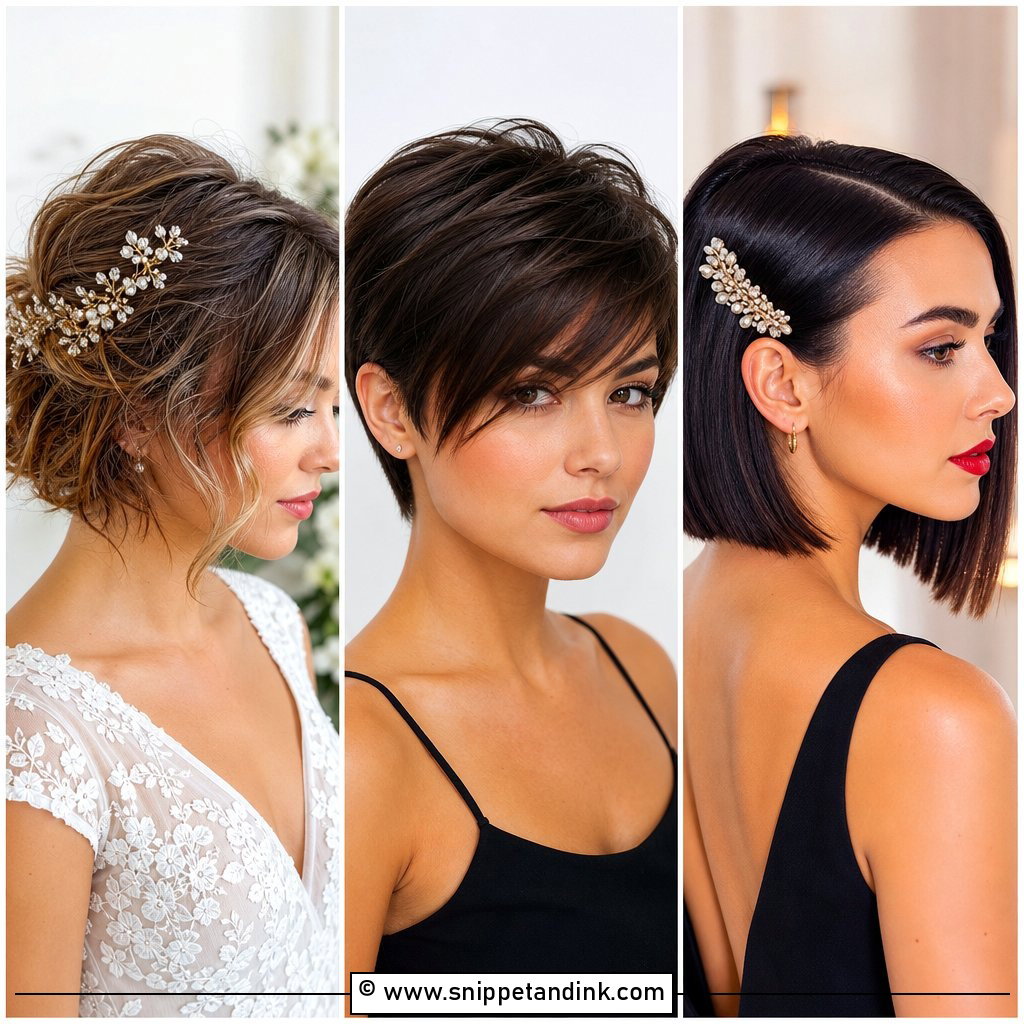
Short-haired brides often arrive at a trial apologizing for their length, and there’s no need. A short cut gives me a clear shape to work from, and the good wedding styles build on your real length and texture instead of fighting them. A chin-length bob softens with waves, a pixie turns formal with shine and a pearl comb, and a lob can be pinned half up. What matters is that the style feels secure under a veil and still looks like you. Each of these can be done quickly on the morning without extensions.
Growing It Out for the Wedding Rarely Pays Off
If you’re engaged with short hair, someone has probably suggested growing it out for the wedding. Unless you have well over a year and actually want long hair afterwards, I’d think twice. Hair growing from pixie to bob, or bob to shoulder length, passes through an in-between stage that is the hardest length of all to style: too short to pin up neatly, too long to hold a sharp shape on its own.
A cut that’s freshly shaped and at the length it was designed for nearly always photographs better. Time it around how fast your style loses its line.
- Pixies and very short crops: final cut about a week before, so edges are clean but not raw.
- Sharp, blunt bobs: roughly one to two weeks before, once the line has settled.
- Lobs and softer layered cuts: two to three weeks before, which lets the layers relax.
- Keep the same stylist for the final cut and the trial if you can, so nobody changes the shape unexpectedly.
1. Short Hair Wedding Soft Waves
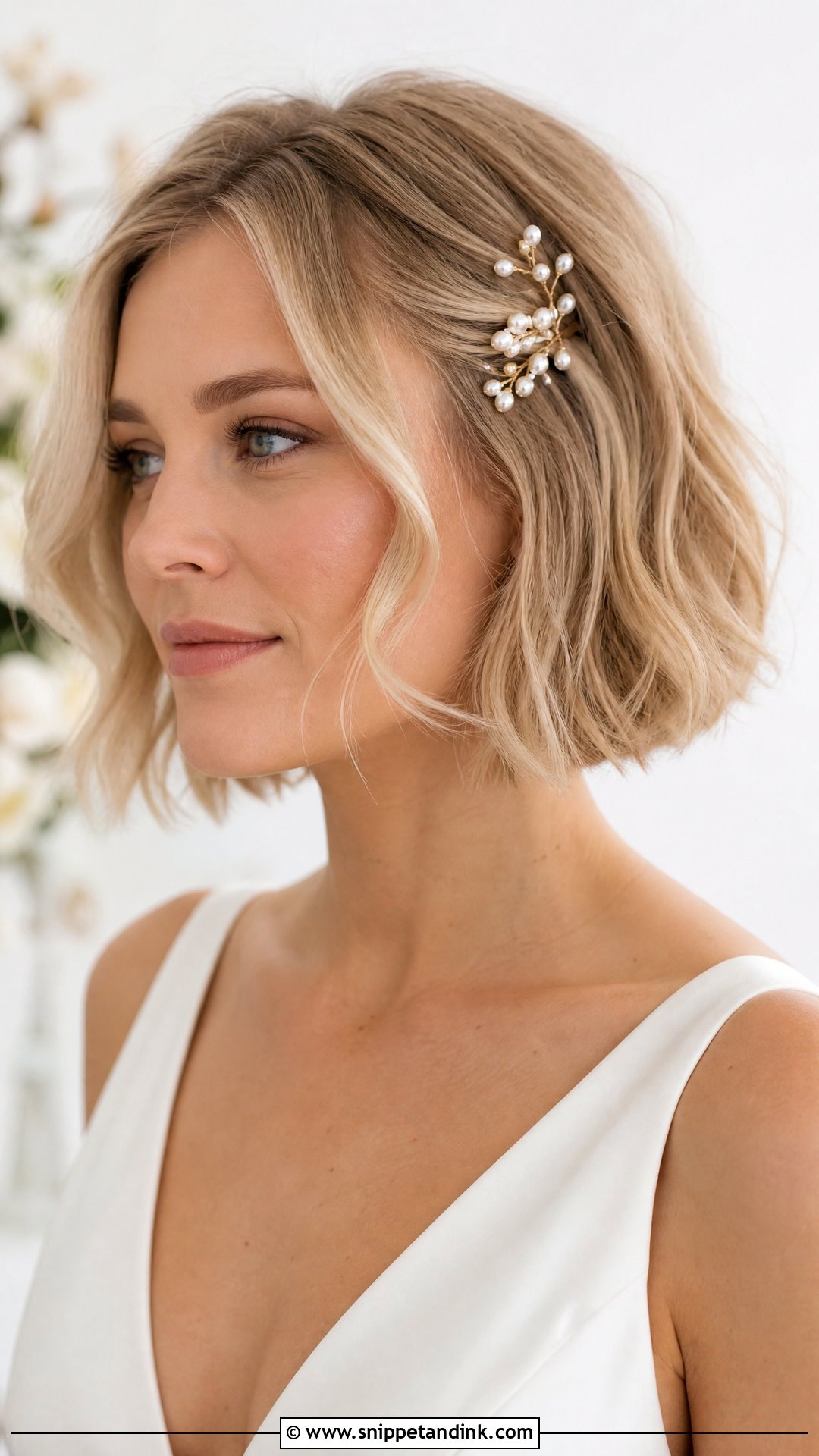
Waves add movement without changing the character of the cut. They work on a bob, lob, bixie or grown-out pixie, as long as there’s enough length to wrap once around a small wand. I start the bend around the cheekbone and leave the root smooth, then brush out once cool so the waves join instead of sitting as separate curls. A side part adds shape; a middle part looks cleaner. Pearl pins or a small floral comb sit easily in the brushed-out wave.
2. Short Hair Wedding Sleek Bob
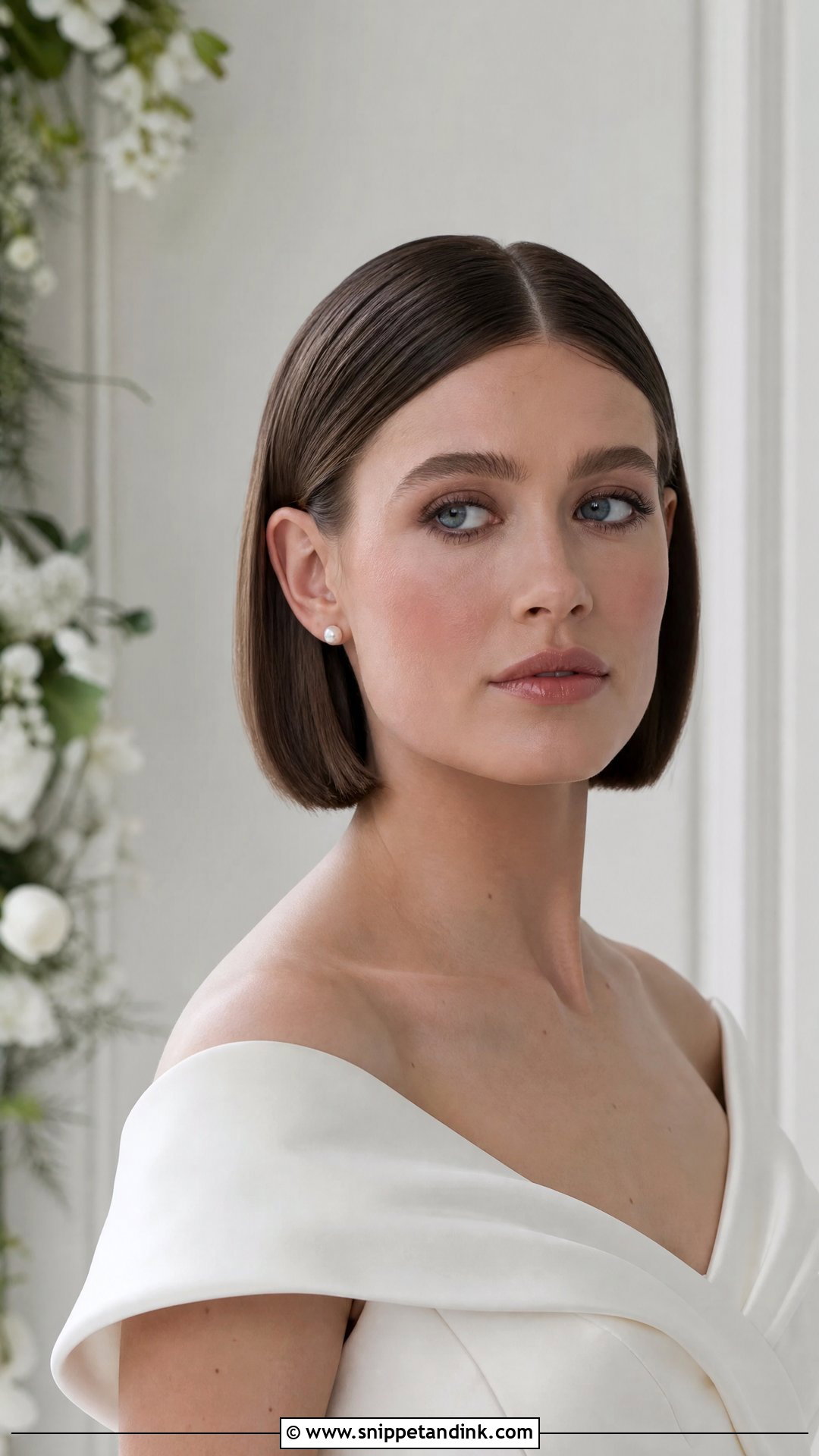
A sleek bob depends on a sharp line and real shine, so a fresh cut matters more here than for any other style in this list. It suits high necklines and structured or minimalist dresses because the clean edge echoes the dress. I smooth with a cream, flat iron in thin sections and finish with a light shine spray; too much product and the ends clump together by the speeches. Tuck one side behind the ear to show an earring or a veil comb.
3. Short Hair Wedding Finger Waves
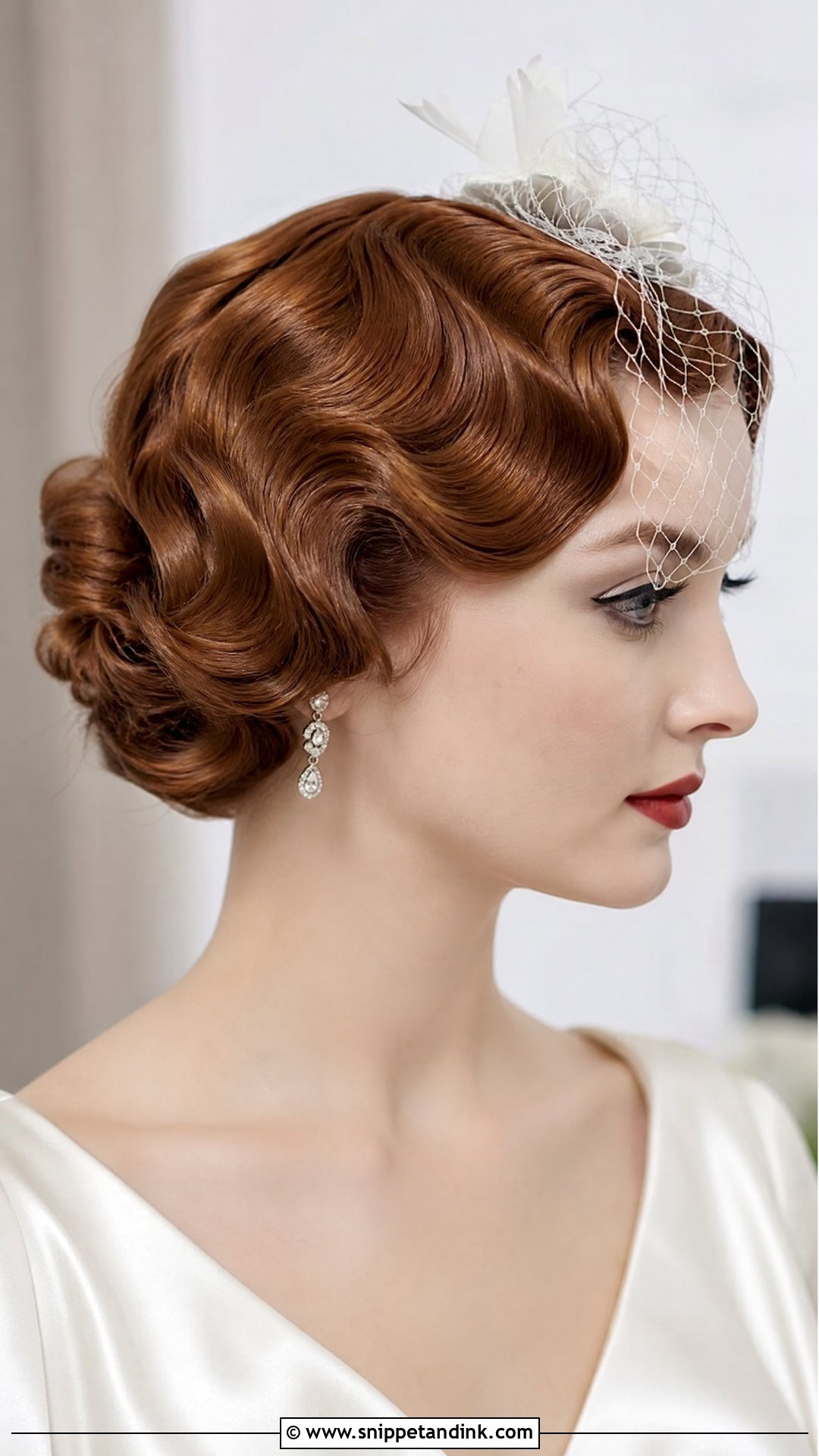
Finger waves give short hair a vintage formality with no extra length needed, and they’re one of the few styles that look better the shorter the hair is. Pixies, cropped bobs and chin-length cuts all take them. The S-pattern is set into damp hair with a strong gel or setting lotion and left to dry fully before the cast is softened, so allow time. They sit close to the head, which makes them reliable at a windy outdoor ceremony. I’d pair them with a birdcage veil or bold earrings, not a big floral piece.
4. Short Hair Wedding Half Up Twist
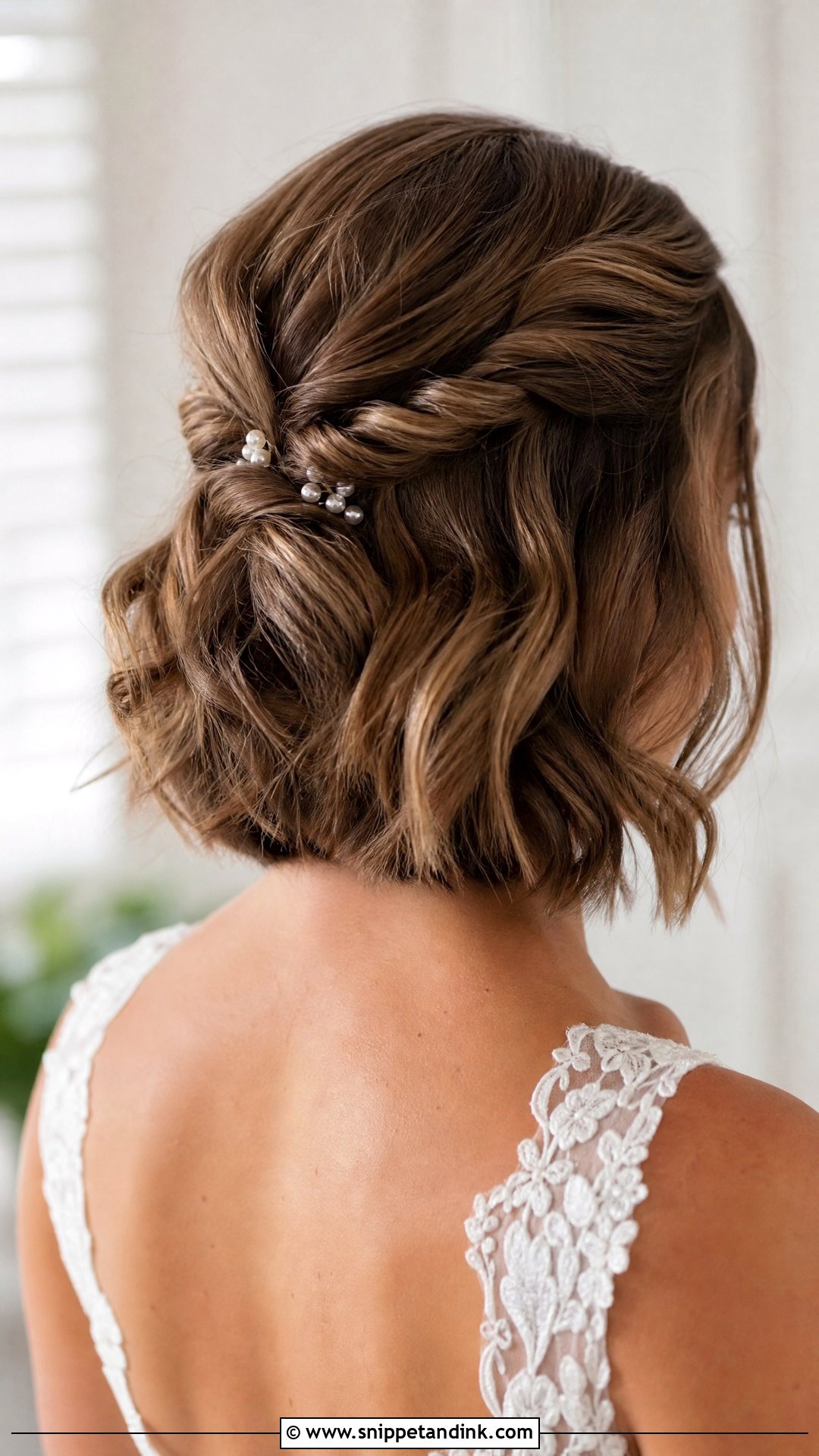
Twisting the top pieces back keeps short hair off the face during the vows while the ends stay soft. On a bob or lob, waves go in first; straight short hair is too slippery for a twist to hold. Take small sections from both sides, twist toward the crown and pin with the pin sliding into the twist so it disappears. A pearl clip can sit over the join. It leaves space underneath for a veil comb, which matters on short hair where there isn’t much else for a comb to grip.
5. Short Hair Wedding Low Bun
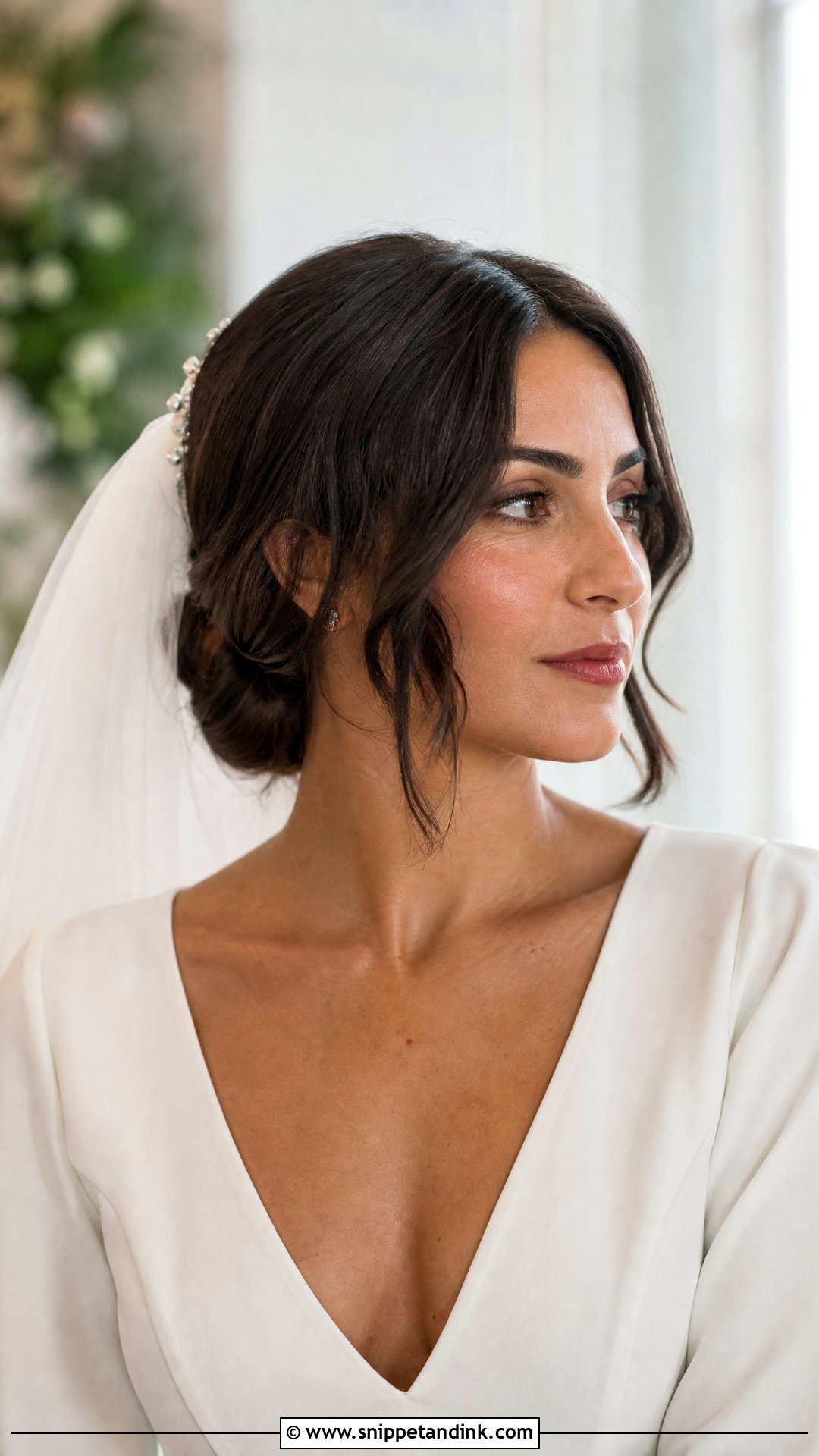
A low bun is possible once the hair reaches the nape, but it has to be small. The mistake is trying to make an oversized bun from chin-length hair; it ends up loose and full of pins. I tuck the shorter layers in with texture spray, a couple of hidden elastics and plenty of pins, and accept a petite shape. Face pieces are optional. The bun then makes a solid anchor for a veil, and it suits a backless dress.
6. Short Hair Wedding Pixie With Headband
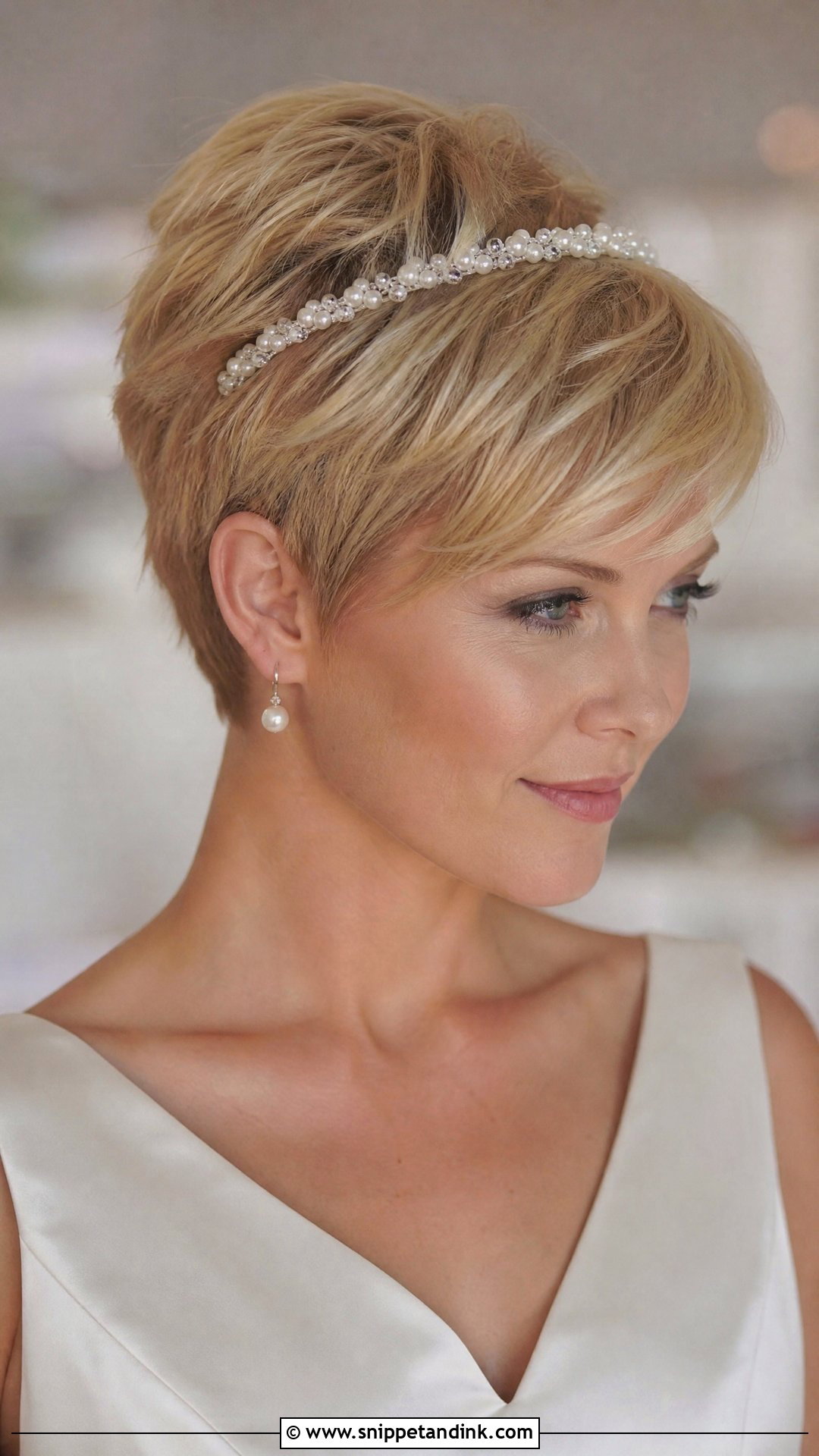
With a pixie cut, the headband is doing most of the bridal work, so choose it like jewelry. Pearl, crystal or satin all work if it’s in scale with your face; a wide padded band can swamp a small pixie. Style the hair either softly textured or smoothed, with a little lift at the crown so the band has something to sit against. No pinning or curling is needed, which is why it’s my calmest morning of the lot.
7. Short Hair Wedding Curly Bob
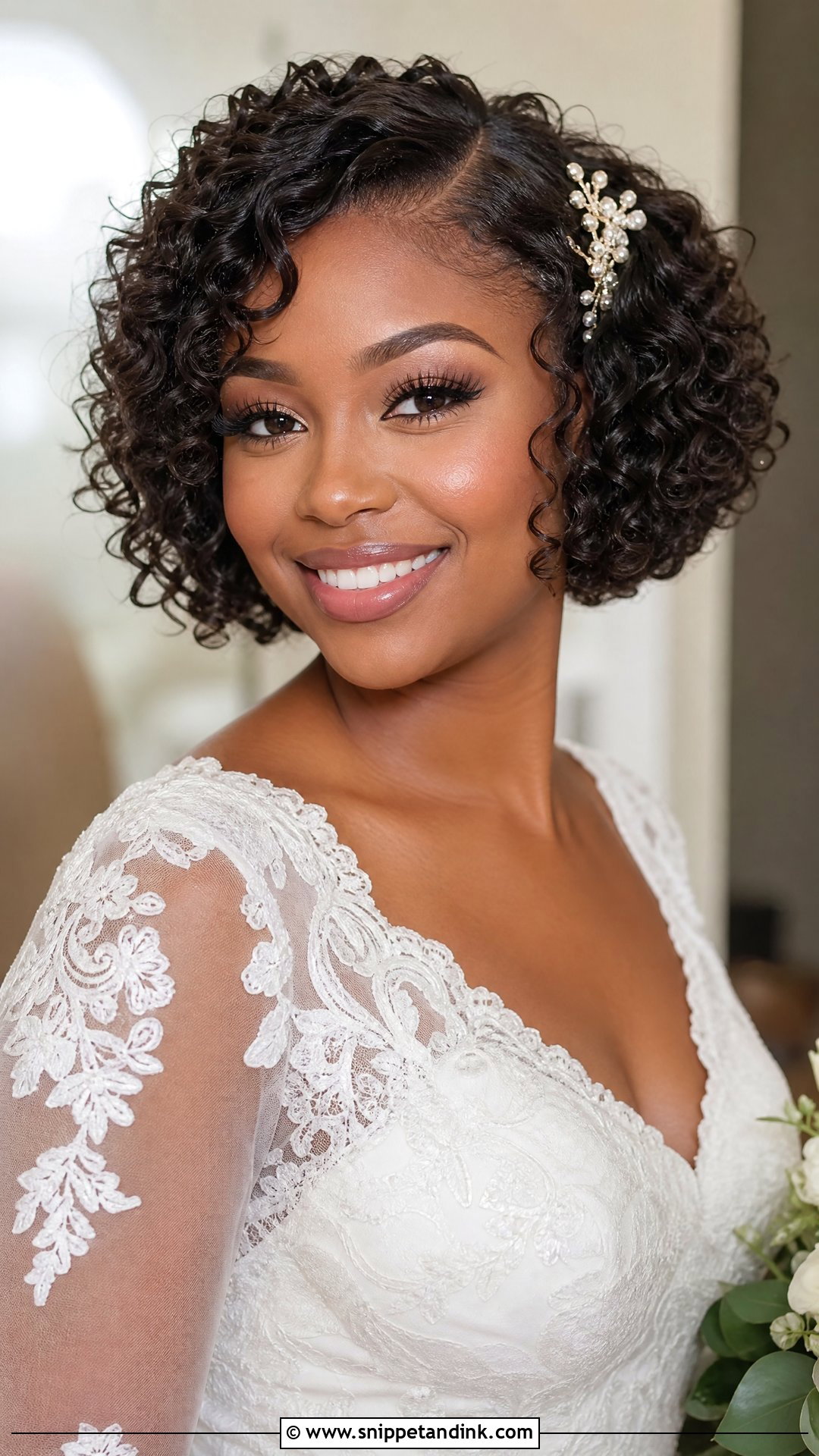
A curly bob depends on the curl pattern being hydrated and shaped, not just curled. I build volume at the sides and crown while keeping the ends controlled, so the outline stays balanced rather than triangular. Product choice follows texture: curl cream for looser curls, gel or mousse for tighter ones. Then hands off until it’s dry. A side clip or a short veil makes it bridal without flattening the curls.
8. Short Hair Wedding Side Part Waves
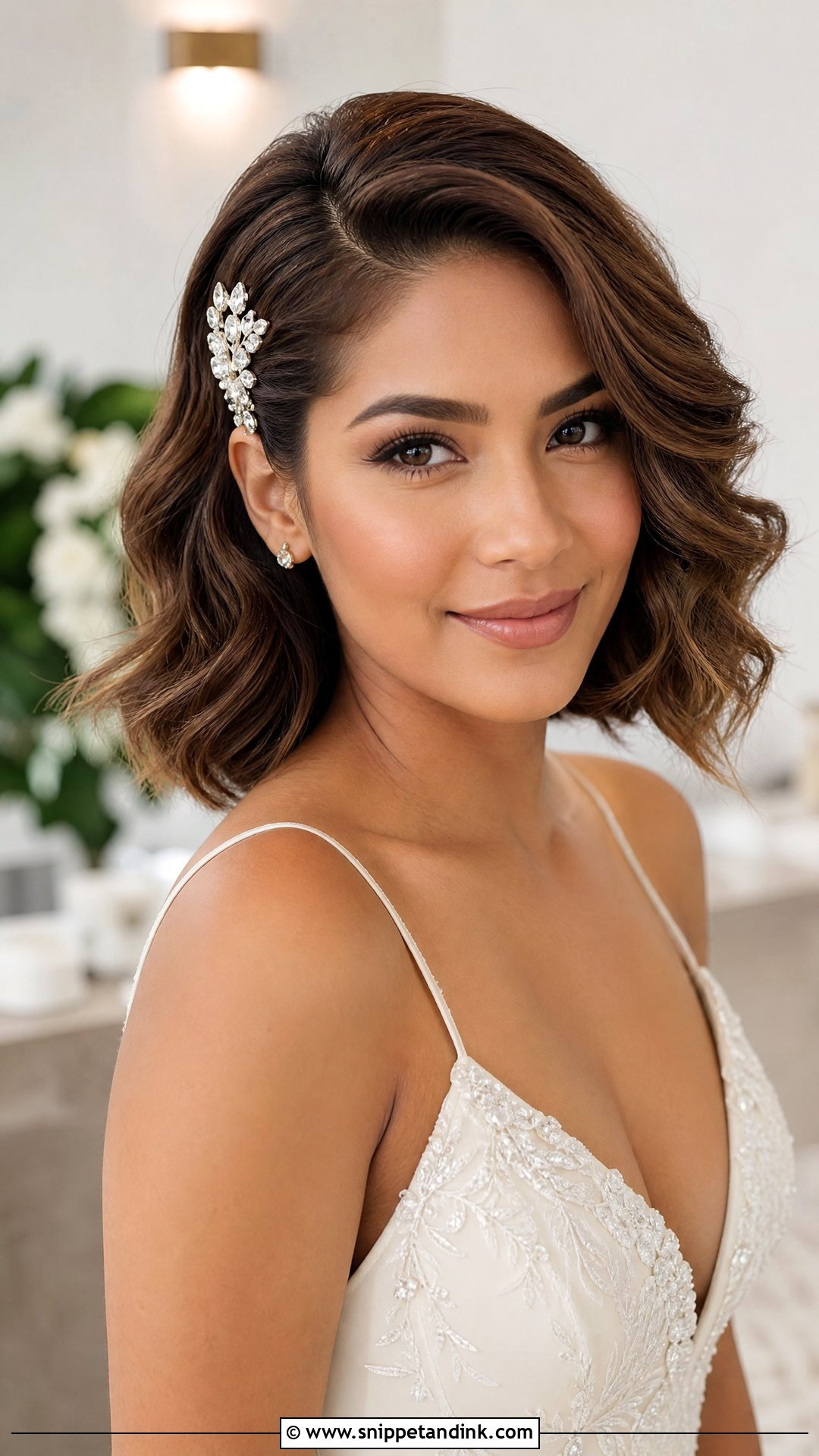
A deep side part lifts the crown instantly, which short hair often needs. The waved ends soften the jaw and cheekbones, and one side can tuck behind the ear under a jeweled clip while the fuller side falls forward. Fine hair needs texture spray to hold the wave; thick hair needs a smoothing cream so the waves don’t puff. Watch the fuller side in photos, though. If it falls over one eye during the vows, pin it back slightly.
9. Short Hair Wedding Braided Crown
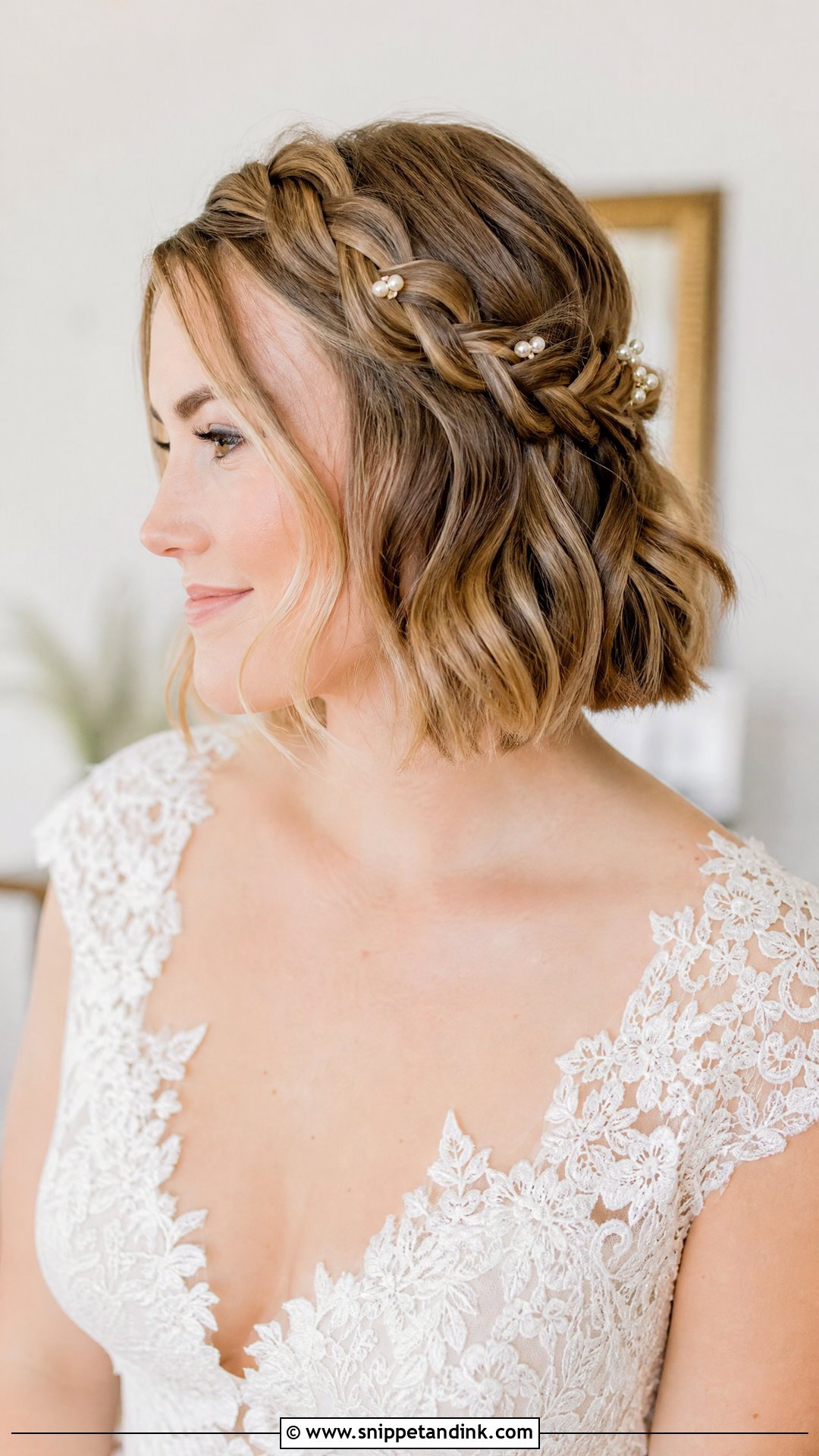
One large braid around the head isn’t possible on short hair, so I braid two small sections from the temples and pin them where they meet at the back. From the front it reads as a crown. Chin-length bobs and layered lobs suit it, with the rest of the hair waved for fullness. Very short layers will poke out of a braid; a little pomade on the fingers while braiding keeps them in. Tiny pearl pins or small florals suit a garden wedding.
10. Short Hair Wedding Textured Pixie
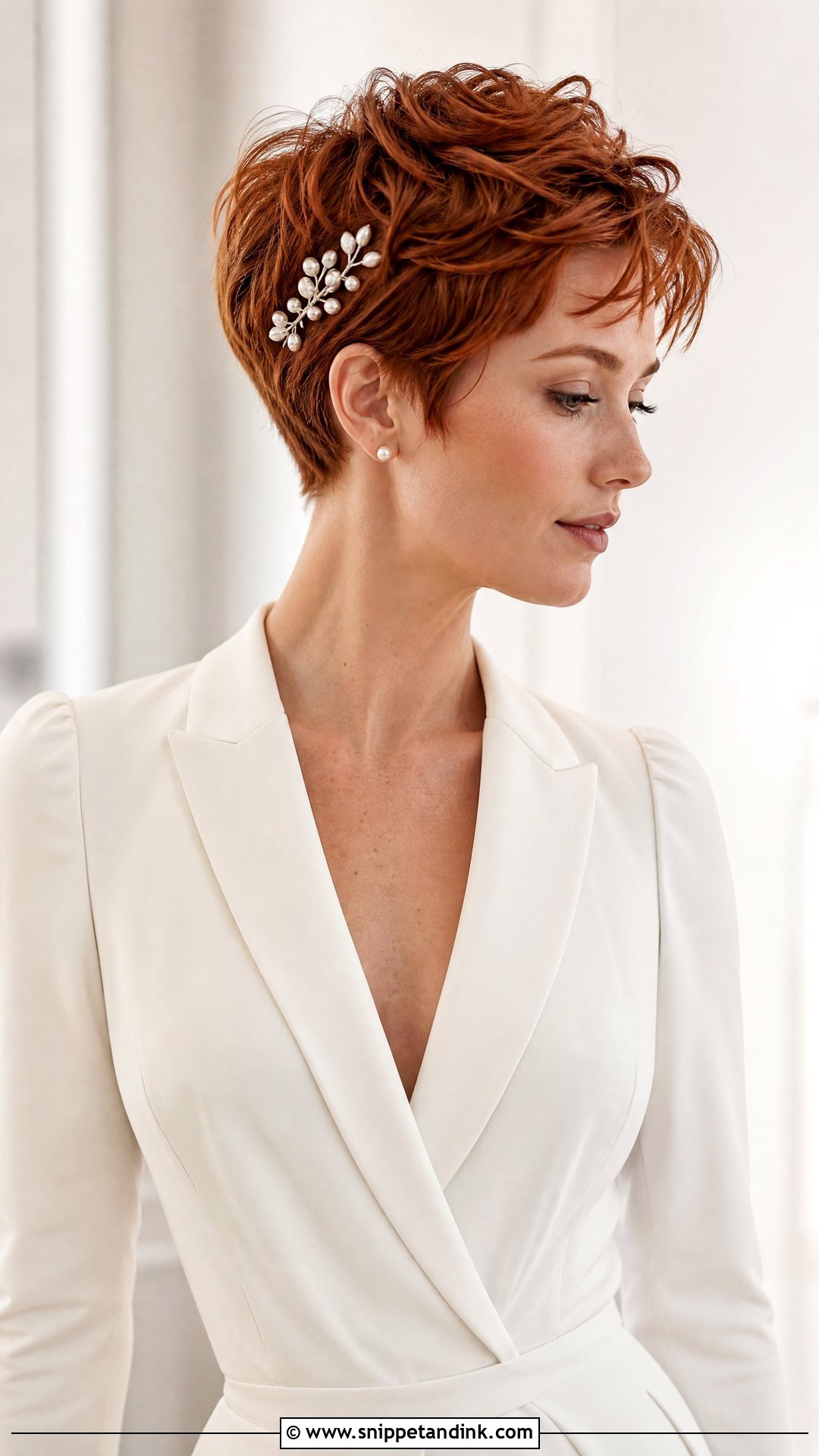
A textured pixie suits a bride who wants nothing to drop or frizz during the day. The shape comes from lift at the crown, separated pieces at the front and clean edges around the ears. I use a matte paste worked through dry hair with fingertips; a heavy gel makes the pieces look wet in flash photos. A small pearl comb or a short veil at the side adds the bridal note. It’s the most heat-proof style here.
11. Short Hair Wedding Faux Updo
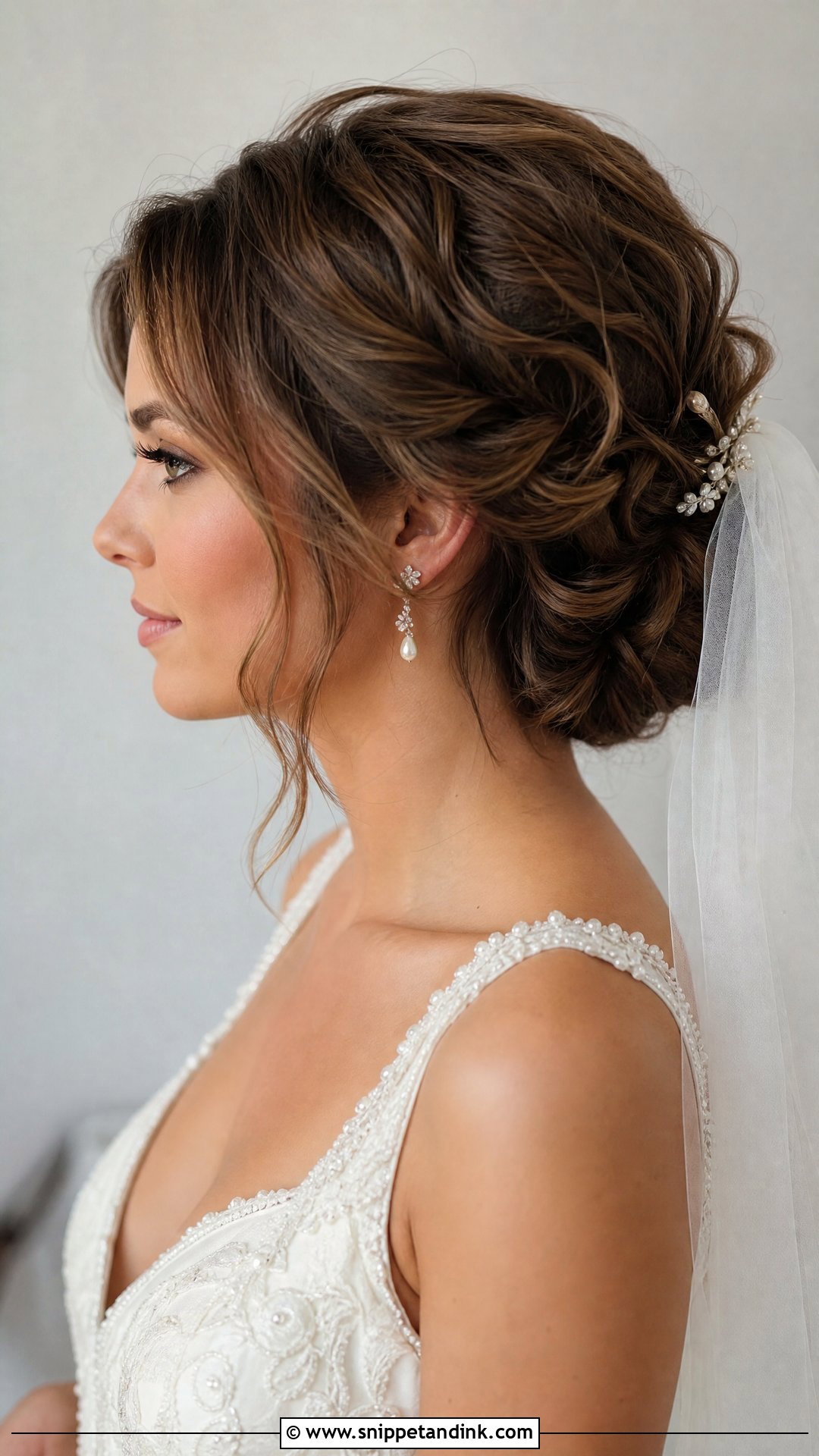
A faux updo gives a bob or lob the outline of an updo without the length. I curl the hair, sweep the front away from the face, then roll the lower layers inward and pin them so they look gathered at the back. It holds best on second-day hair. The back gets a lot of attention during the ceremony, so it has to look neat up close. A comb or veil placed just above the pinned area gets extra support from it.
12. Short Hair Wedding Pearl Clip
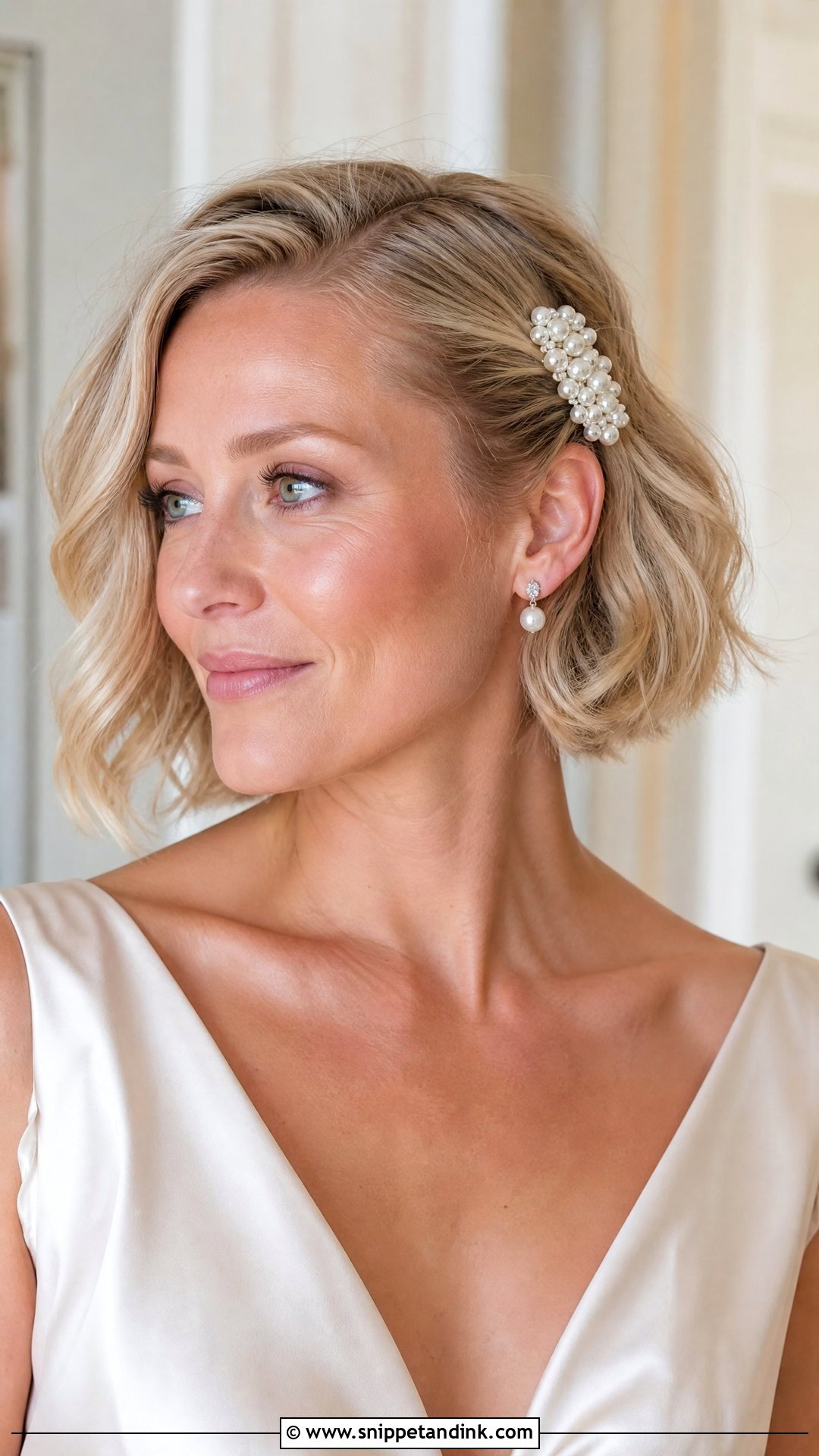
A pearl clip works with waves, a sleek bob or a soft pixie, and placement is what makes it look chosen rather than added. Above one ear, at a side part or at the back of a half-up section all look deliberate; dead center on top rarely does. Keep the rest of the hair simple so the clip reads clearly. On fine short hair, texture spray first, otherwise the clip slides toward the ends within an hour.
13. Short Hair Wedding Messy Chignon
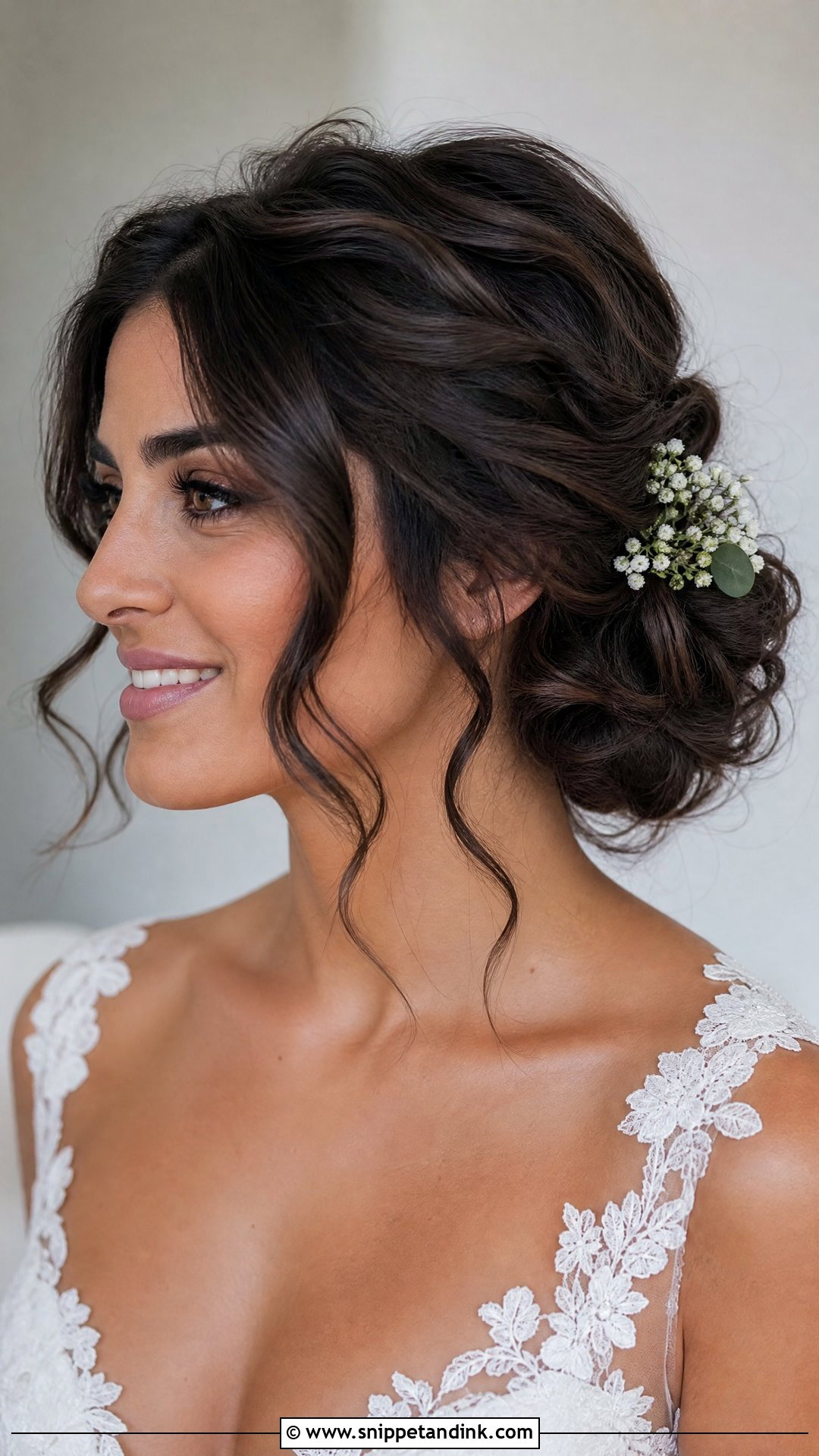
A messy chignon is forgiving because it isn’t meant to be perfect, and touch-ups during the day are easy. It needs hair that reaches the nape. Curl first, gather low and pin into a loose shape, letting short pieces stay out around the face if they won’t tuck. Strong pins and a flexible spray hold it through the reception. It sits naturally with lace and a soft veil at a garden venue.
14. Short Hair Wedding Side Swept Pixie
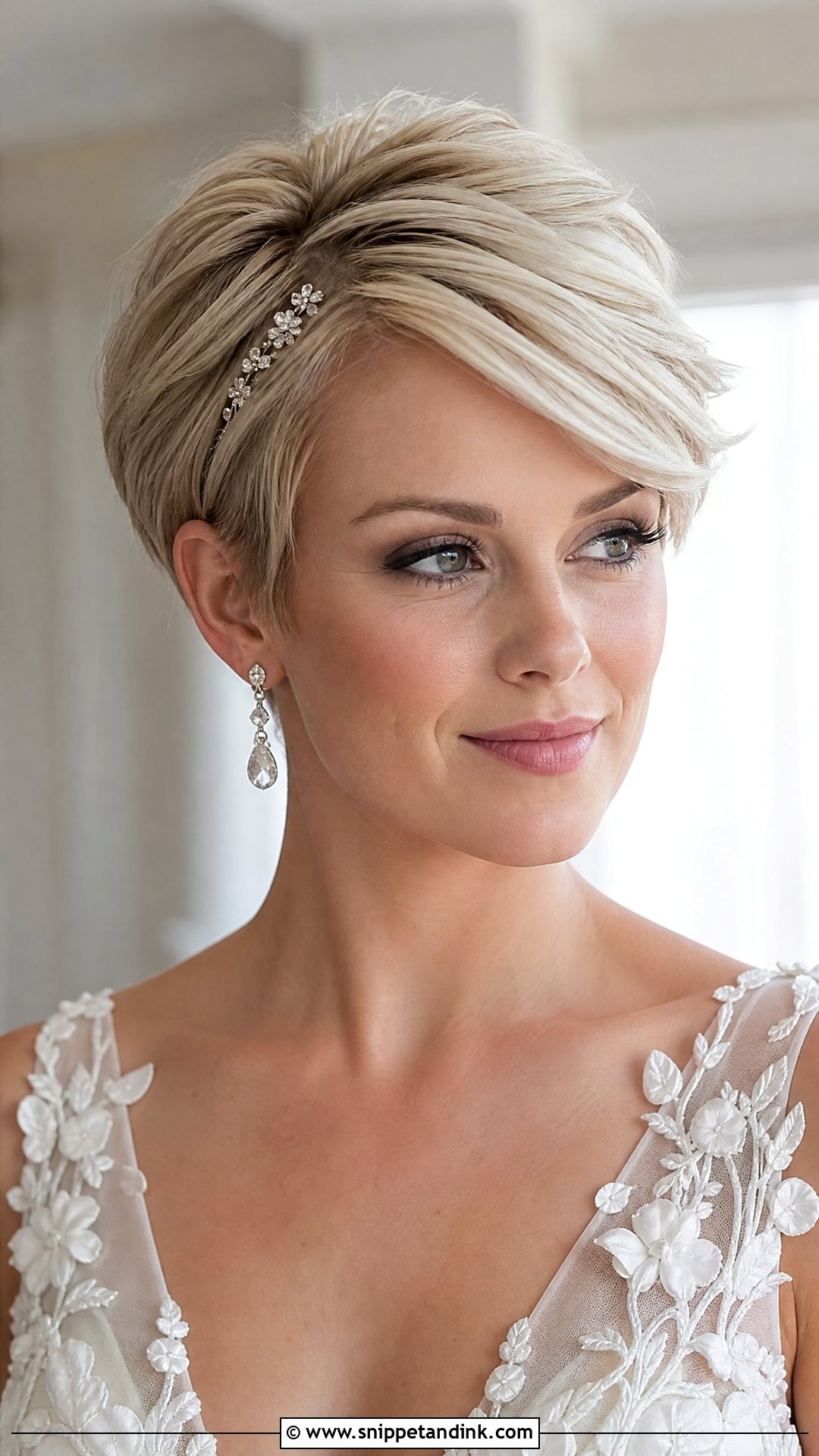
Brushing a pixie’s longer top pieces across the forehead adds softness around the eyes and gives the cut direction. It can be shiny or softly textured, depending on how polished the makeup is. There’s no tight pulling or pinning, so it stays comfortable all day. Before the wedding I ask for the edges to be cleaned up and a little crown lift built in; without them a side-swept pixie can look flat in profile photos.
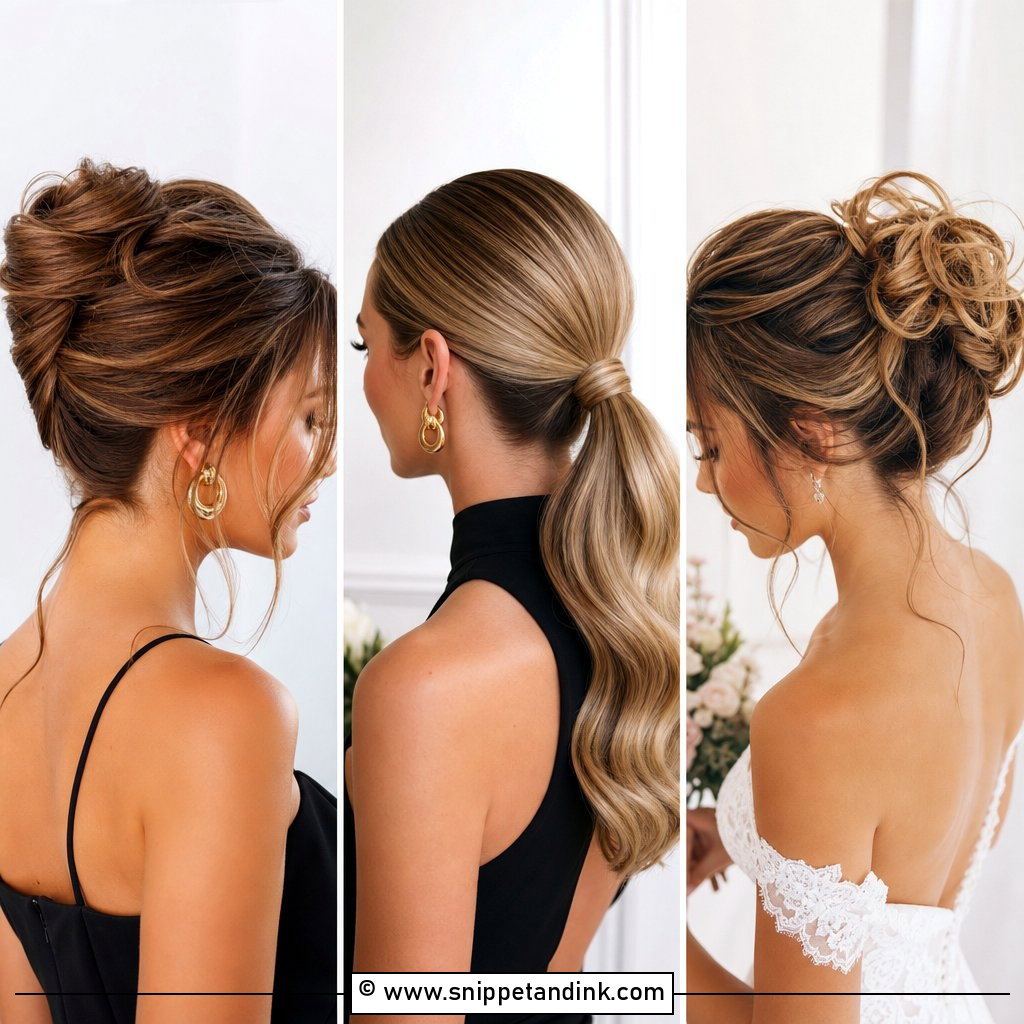
15. Short Hair Wedding Bob With Veil
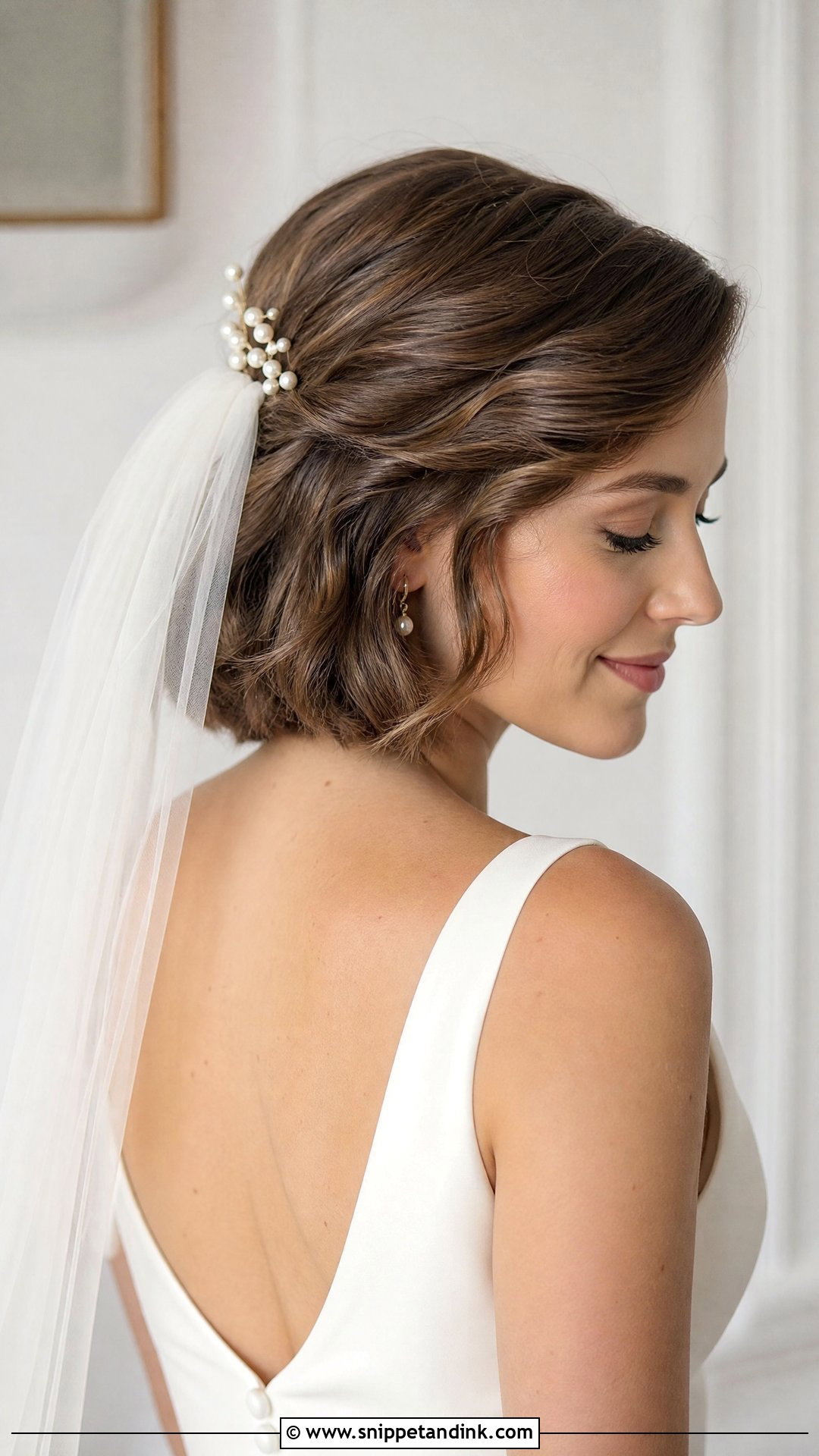
With a bob, veil placement changes the whole look. A comb at the crown adds height, while one placed lower behind the bob feels softer. Very smooth bobs give a comb nothing to grip, so I add dry texture or crossed pins where it will sit. The bob itself can be sleek, waved or curled under. Pearl pins help keep a veil in place without changing the hairstyle.
The Back of Your Neck Shows Up in Half the Photos
With long hair, the back of your head is mostly hair. With short hair it’s your nape, your hairline and the top of your dress, all on show for the whole ceremony while guests sit behind you. Fuzzy edges or a grown-out neckline look far more obvious there than in your front mirror.
Ask for the nape and the area around the ears to be cleaned up at your final cut, and check whether fine baby hairs along the neck need tidying. With a low or open back, the line where hair meets skin becomes part of the outfit, and a tapered edge looks neater than a soft fluffy finish.
Lightweight Combs and Bendable Pins for Shorter Lengths
Accessories behave differently on short hair. There’s less hair for a comb to bury into, so heavy jeweled pieces droop or tilt by the reception. I look for smaller combs with short, closely spaced teeth, slim clips with a firm grip and headbands with bendable ends that hug behind the ears without pressing.
- Cross two bobby pins under the spot where any comb will sit, then slide the comb over them.
- A short veil on a slim comb stays put far better than a long, heavy cathedral veil.
- Dry texture spray at the roots gives slippery, freshly washed short hair something to hold.
- Wear the accessory at home for an hour before the wedding to find any pressure spots.
Short Hair Gives You a Clear Shape to Build From
A short cut doesn’t limit what you can wear; it just tells you where to start. Waves soften a bob, texture and shine make a pixie formal, and a lob can be pinned into a faux updo or half-up twist. The style that works is the one that suits your texture, your neckline and how you like to feel. Bring photos to your trial, wear your actual accessories there and time the last cut so the line is fresh.
You'll Like These Ideas:


Leave a Reply