
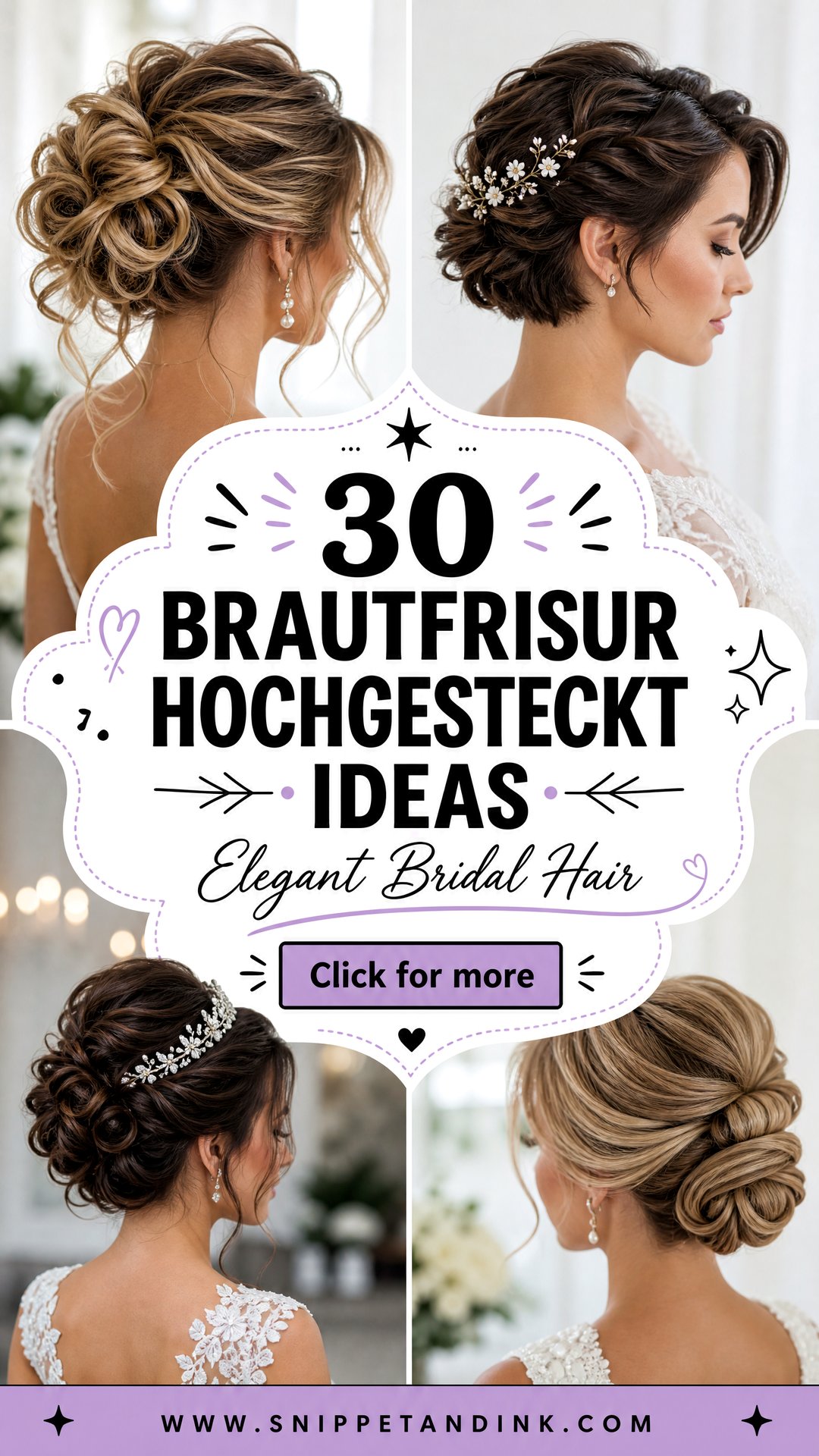
In German salons a pinned-up bridal style is called a Brautfrisur Hochgesteckt, and it is still the style I’m asked for most. The reason is practical: hair that is off the neck can’t be flattened by a veil, pulled by a hug or blown across your face during vows. Below are 30 updos I’d actually put on a bride, with notes on the hair each one needs, where it tends to fail and what I check before I start pinning. Read them with your own hair in mind, not just the photo.
Prepping Your Hair So Pins Actually Grip
Most updos that fall apart do so because of how the hair arrived, not how it was pinned. Squeaky-clean hair coated in a silicone conditioner is the hardest to work with: every pin slides straight out. I ask brides to wash the evening before or the morning of, skip heavy conditioner on the lengths and leave the hair free of oil or serum.
What you bring matters just as much. Here’s what I’d have ready on the morning:
- Hair completely dry, ideally blow-dried smooth so the base is even.
- Your veil, tiara, comb or flowers, so I can plan their exact placement.
- A shirt that buttons or zips at the front, so nothing gets pulled over the finished style.
- Any clip-in pieces you’ve agreed with your stylist, color-matched in daylight.
Fine or very heavy hair needs a different base
Fine hair benefits from a light texturizing spray and a bit of backcombing at the root so the pins catch. Very thick, heavy hair is the opposite problem: the weight drags the updo down, so I pin more anchor points and sometimes split the hair into two smaller buns stacked to look like one.
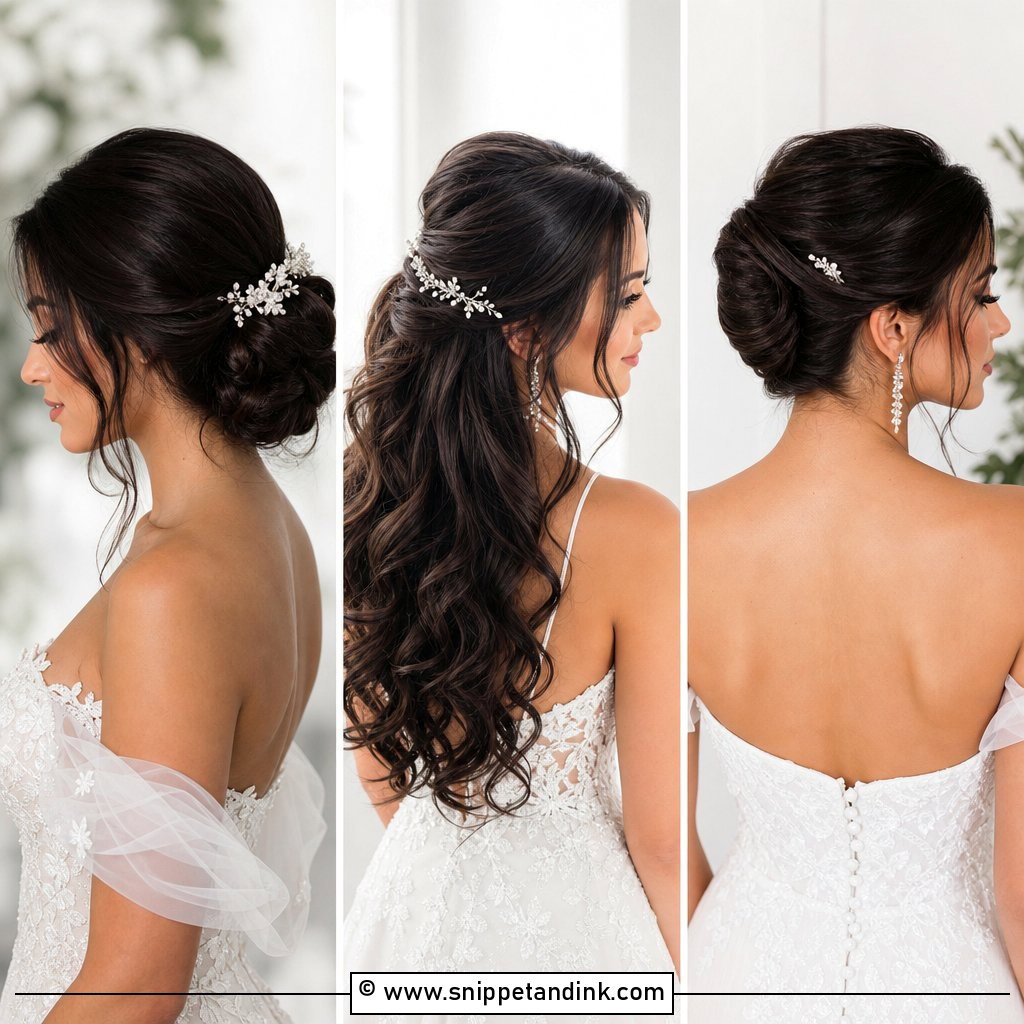
1. Low Bun Bridal Updo
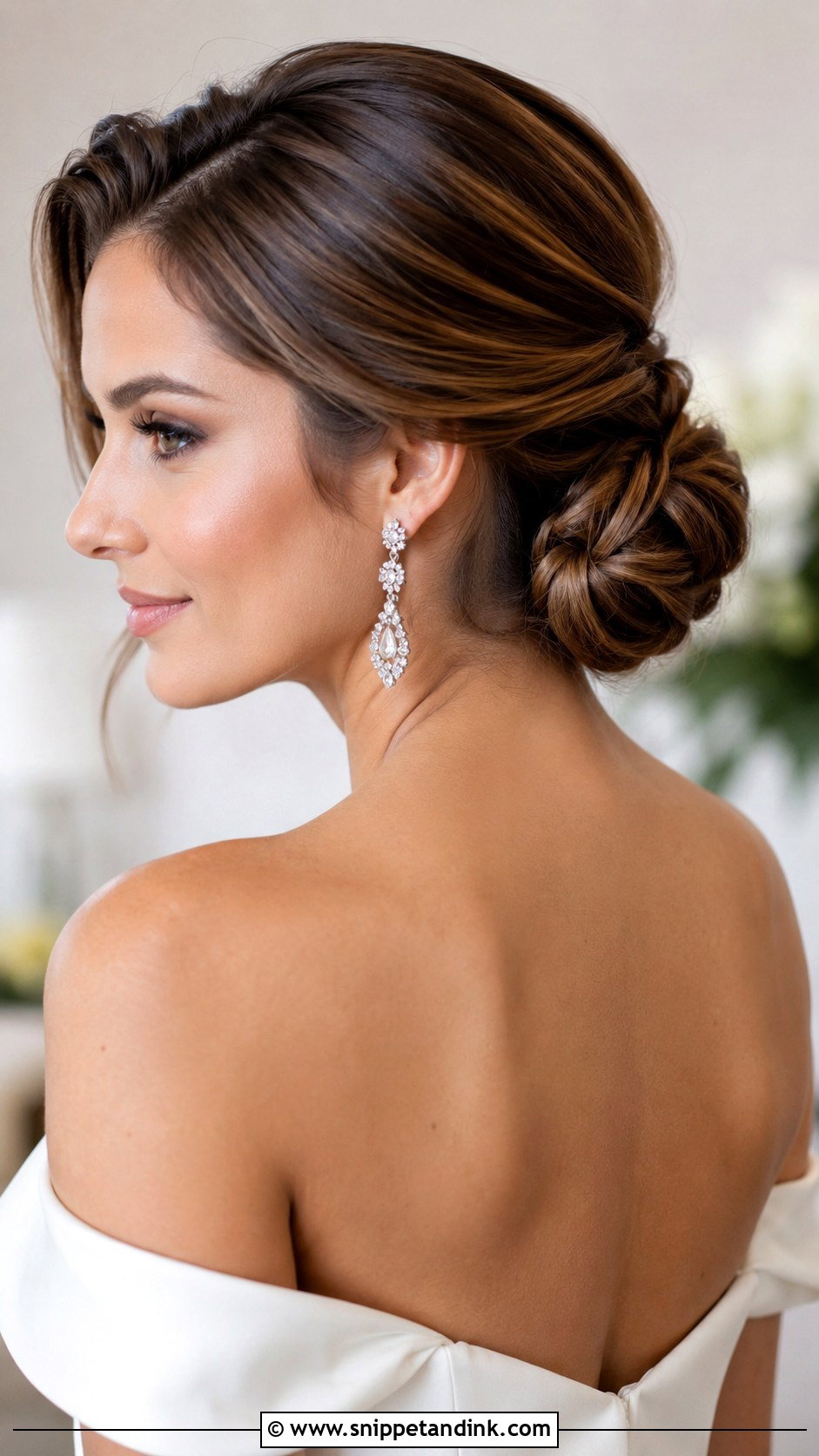
A low bun is the updo I trust most on a long day. It sits below the occipital bone, so the weight rests on the neck instead of dragging at the crown, and that means fewer headaches by the reception. I build it on a small elastic base and pin across it in an X, which gives a veil comb something solid to grip. Watch the height if your dress has a high back: too low and the bun rubs the collar every time you turn your head.
2. Braided Crown Updo
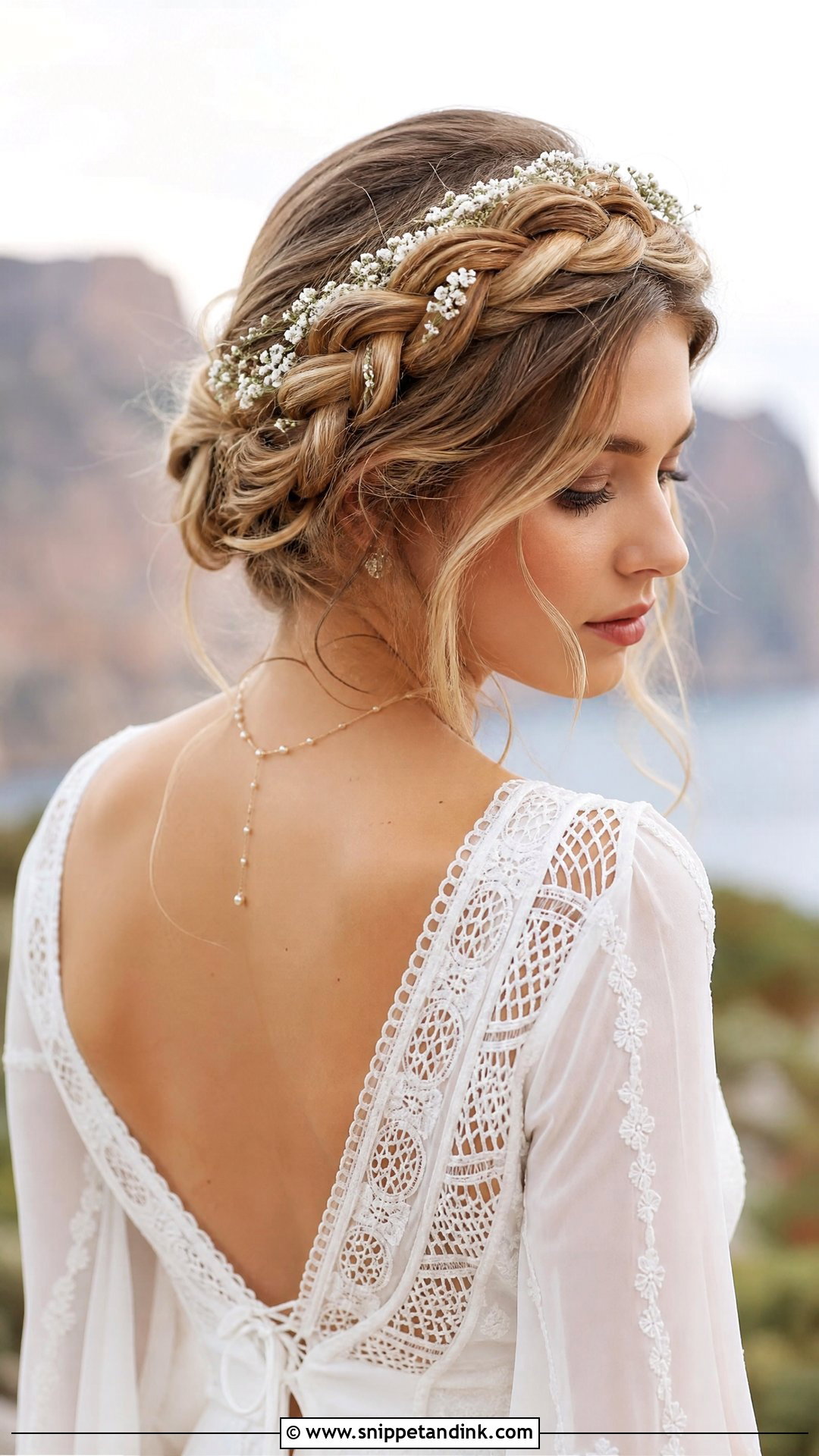
A braided crown only works if the braid starts close enough to the hairline to frame the face, so I section it right above the ears and keep the plait tight near the scalp. Shoulder-length hair usually runs out before the braid meets itself, and that’s where a matching clip-in weft saves the shape. Baby’s breath tucks in well here because the braid holds each stem without extra pins. It stays put through dancing, though I’d skip it under a heavy cathedral veil, which tends to sit awkwardly on top of the crown.
3. Twisted Chignon Updo
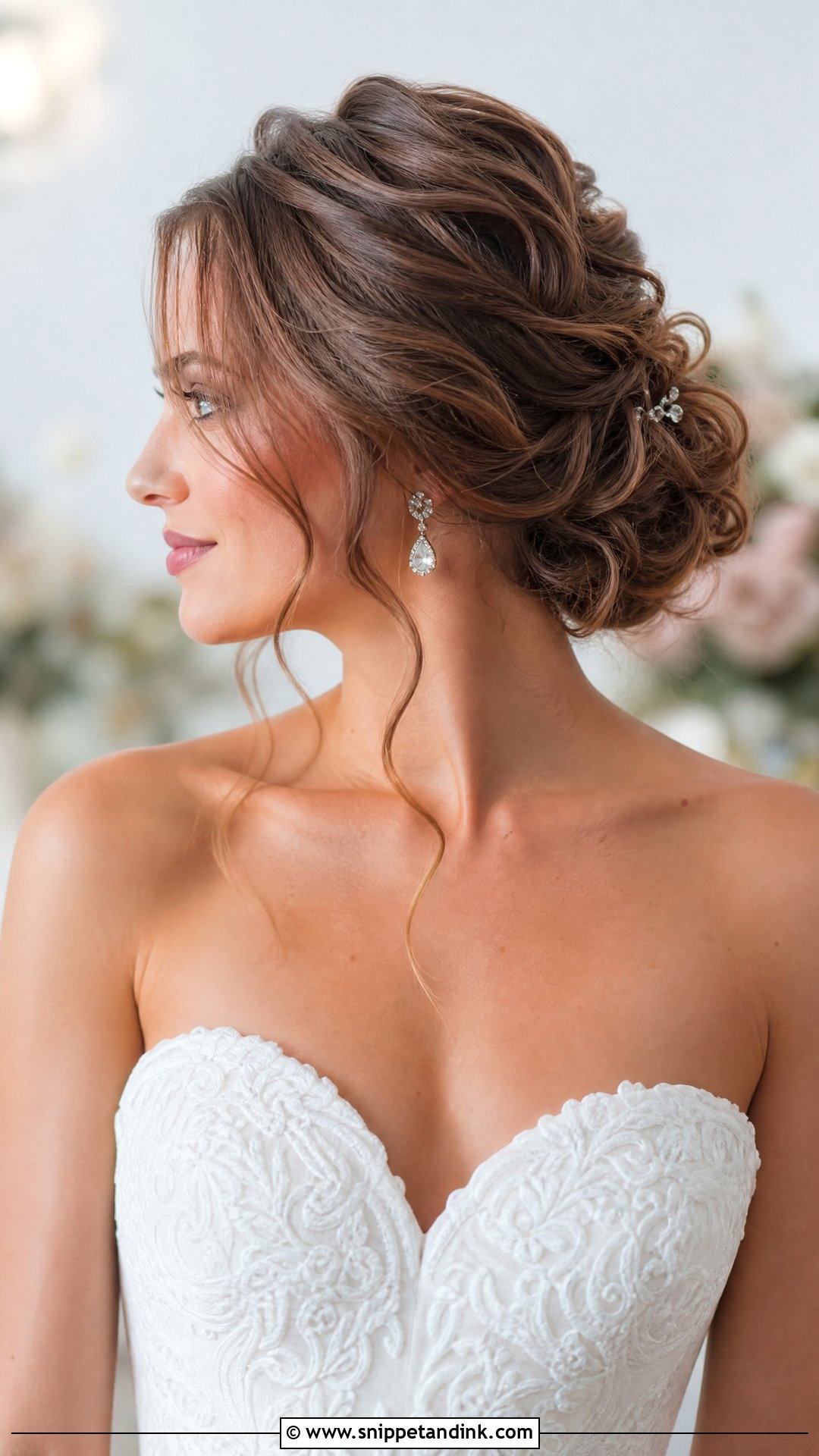
This is two or three rope twists wrapped into a low, looped knot, and the twists do the holding, so it needs fewer pins than a smooth chignon. I twist away from the face on both sides so the pattern mirrors itself at the back. Hair with some grip, like second-day hair or hair prepped with dry texture spray, keeps the twists defined; freshly washed silky hair slides and loosens by mid-afternoon. A sweetheart neckline and drop earrings leave the knot room to be seen.
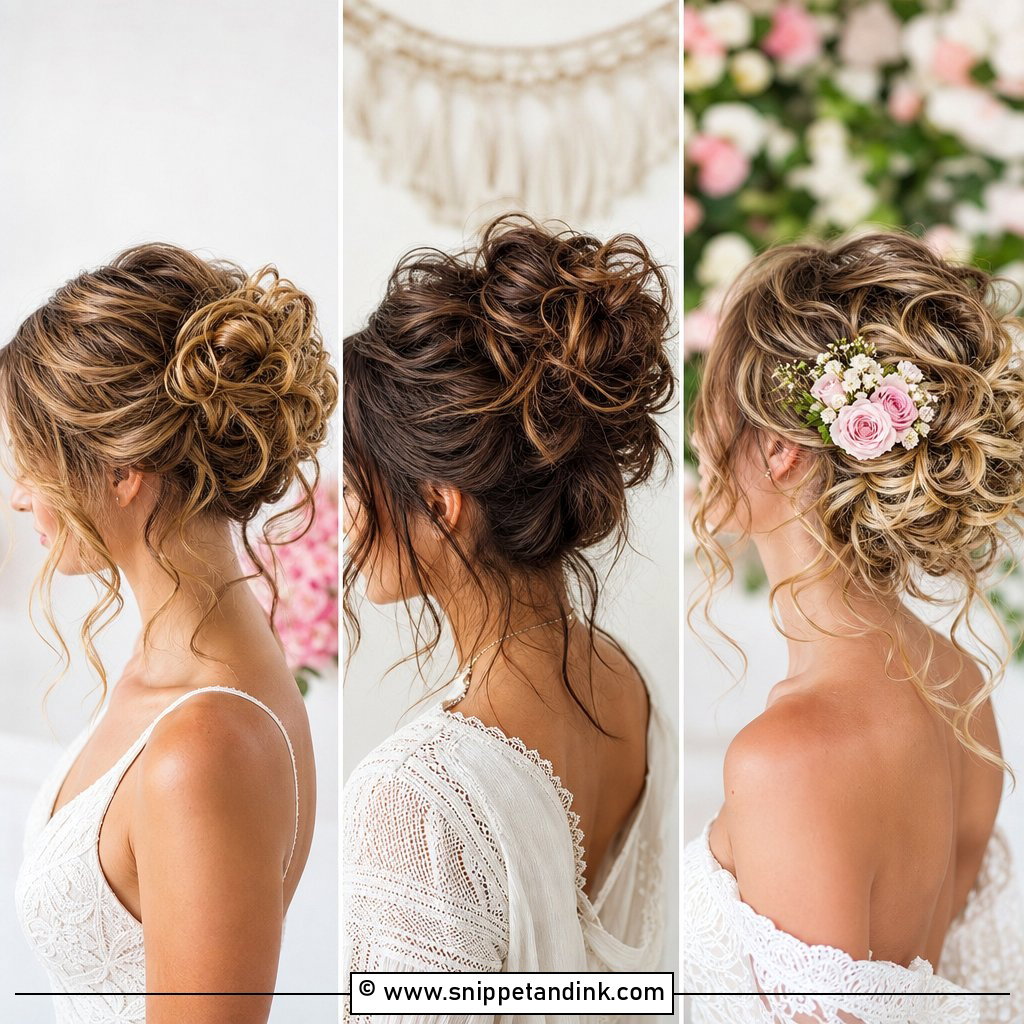
4. Messy Bun With Loose Curls
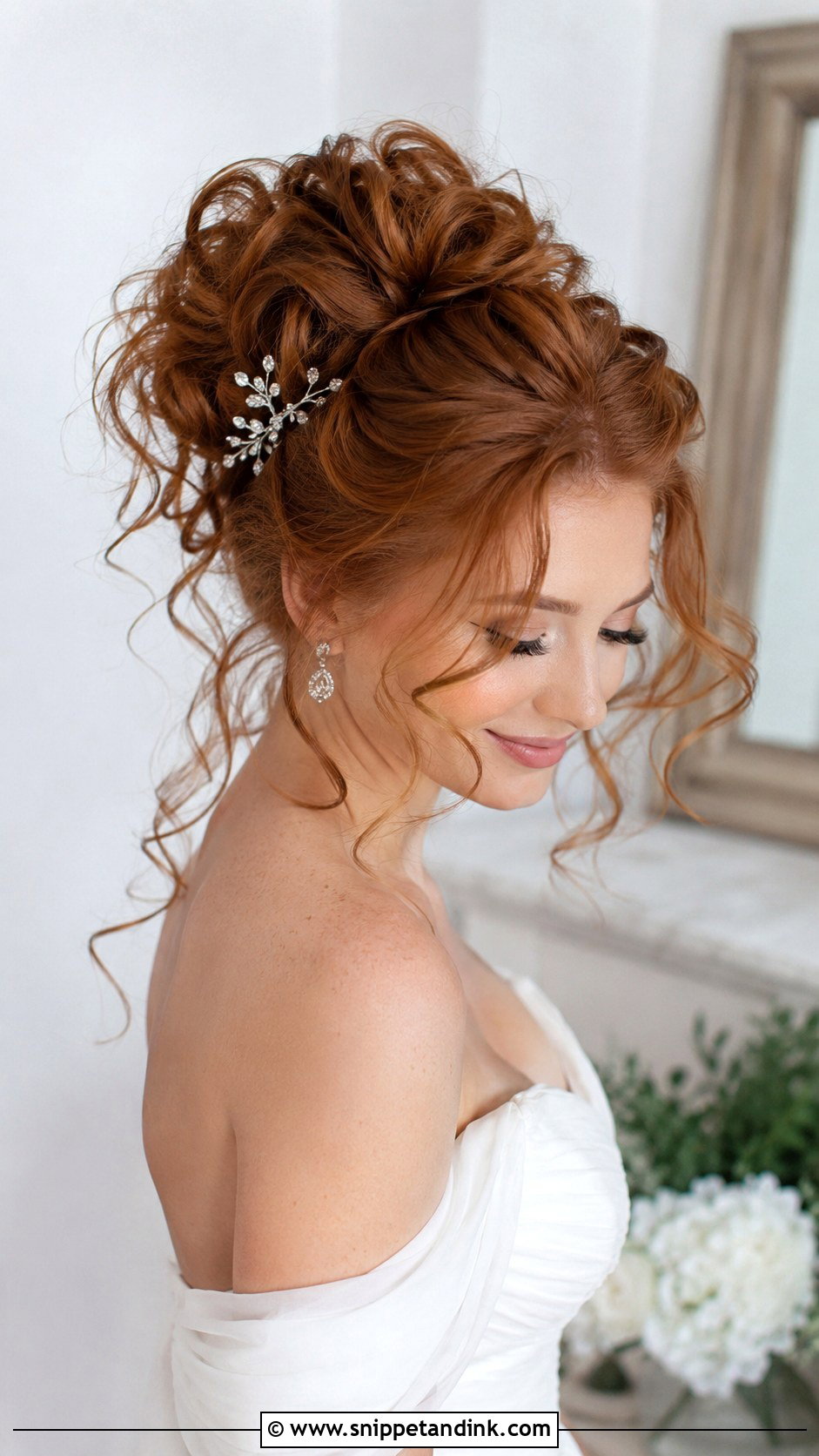
The messy bun is the hardest updo to make look accidental. Every loose loop is placed and pinned, then pulled apart slightly with fingertips. I curl the whole head first with a medium barrel and let it cool before touching it, because curls that are brushed out warm fall flat within the hour. It’s forgiving at outdoor weddings since a bit of wind just adds to the shape, and a small bloom or sparkly pin can sit wherever a gap appears.
5. Sleek High Bun Updo
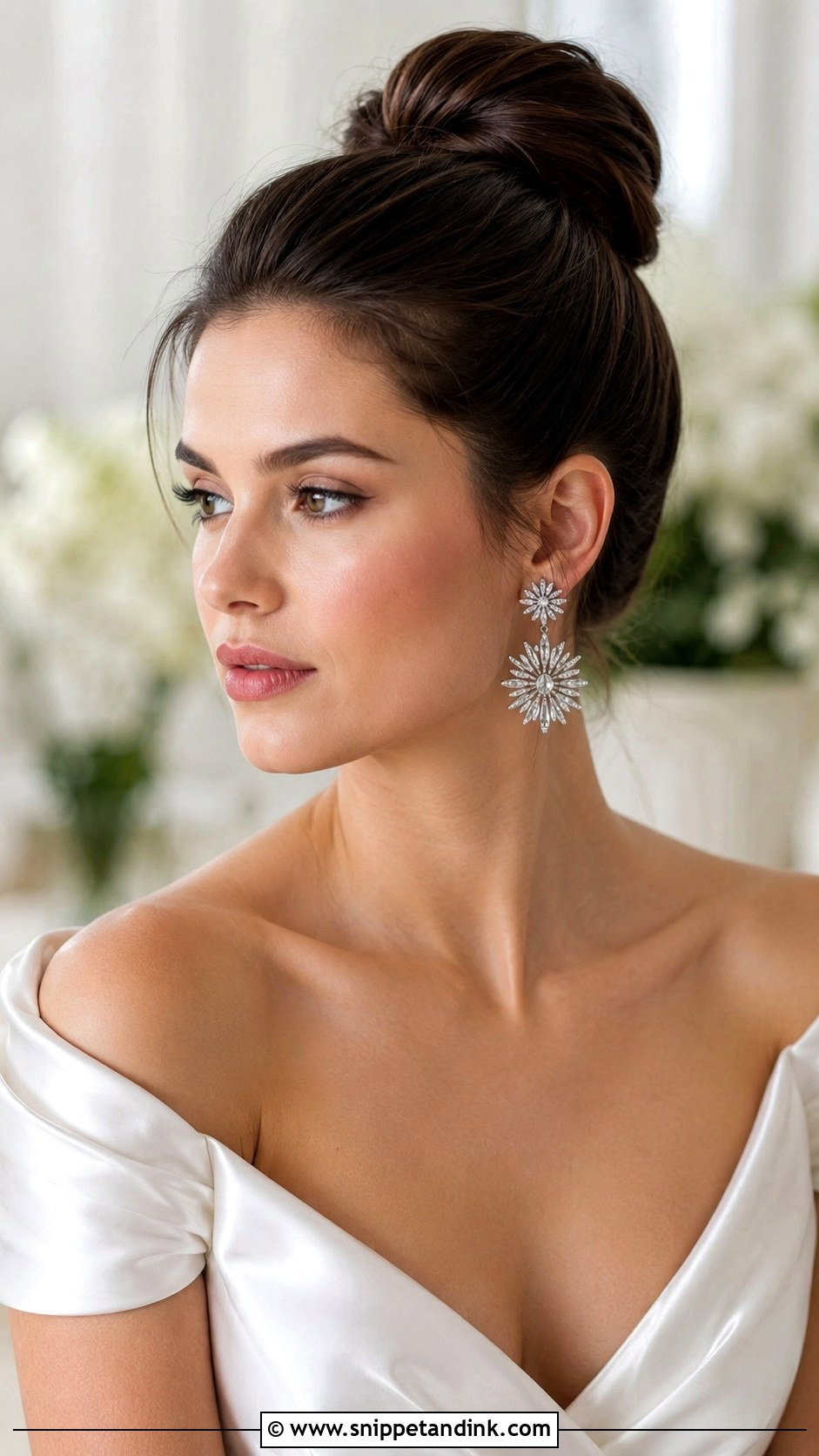
A sleek high bun shows every bump, so the brushing matters more than the bun. I smooth the hair up toward the crown with a boar bristle brush and a light gel, secure it with a strong elastic, then wrap. It draws the eye up to the face and suits an open neckline with bold earrings. The trade-off is tension: if your scalp is sensitive, a high ponytail base worn for twelve hours can ache, so we test it at the trial for at least a few hours before you commit.
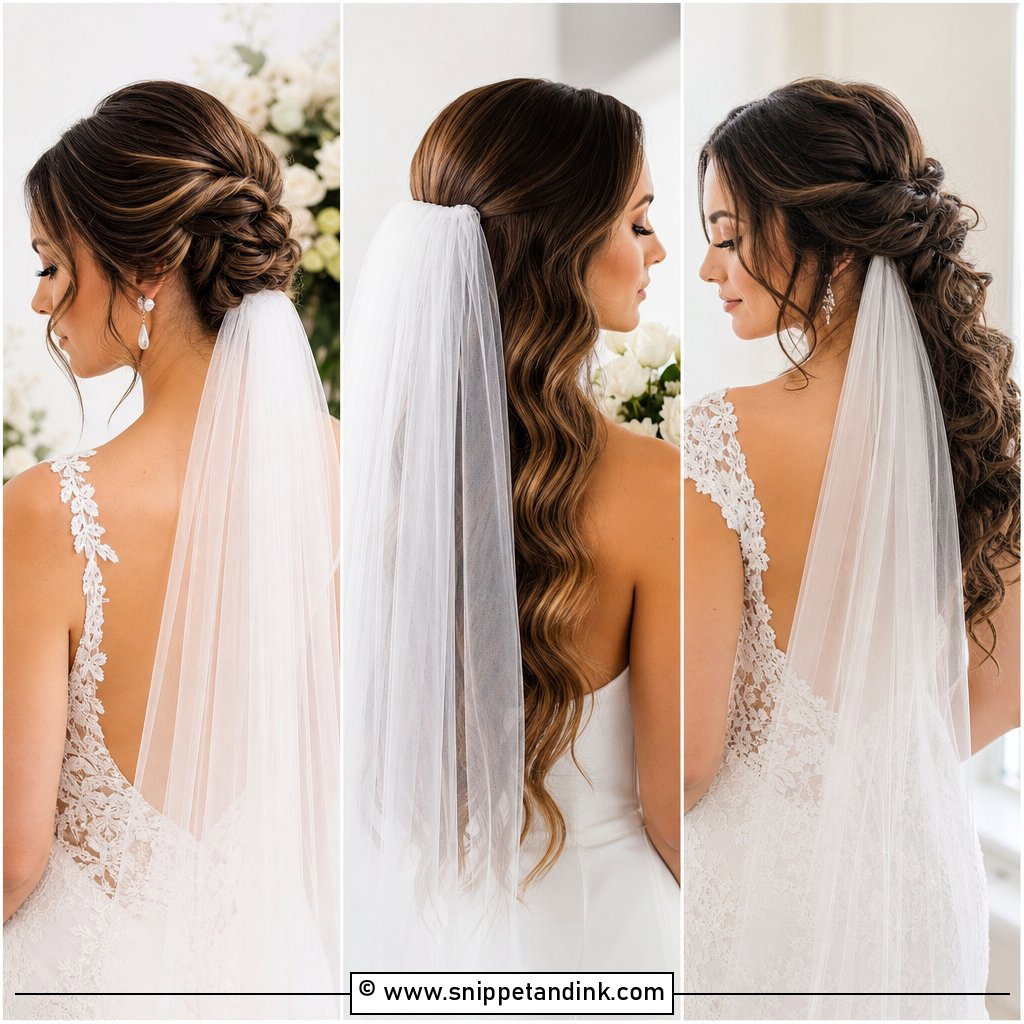
6. Bridal Updo With Veil
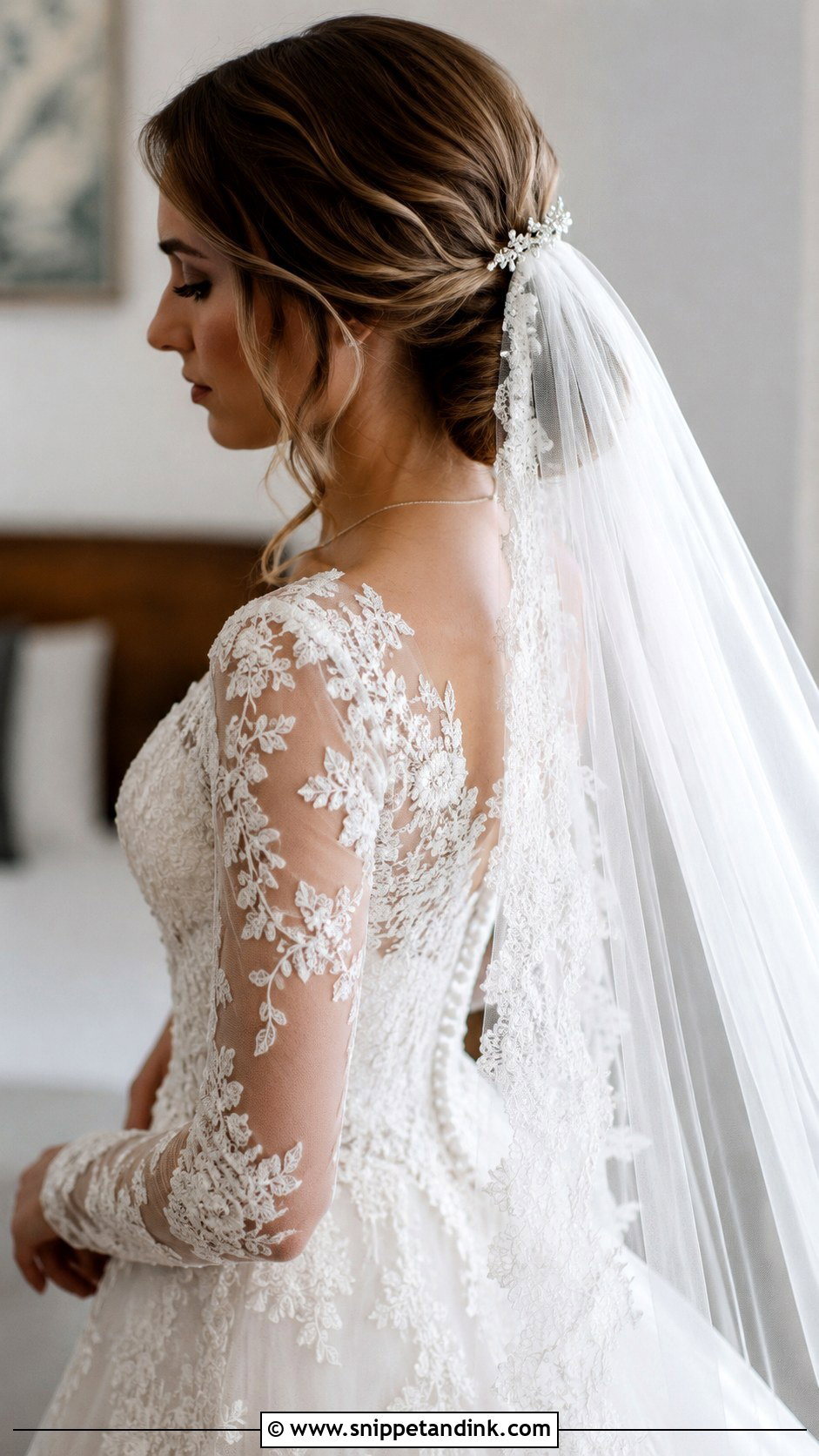
Here the updo is chosen for the veil, not the other way round. A cathedral veil needs a comb anchored under a solid section, usually just above or below a low bun, so the weight pulls against pins instead of loose hair. A short birdcage can clip to the side and suits soft waves pinned up. I plan the veil position at the trial so the hairstyle still looks finished when the veil comes off after the ceremony, which most brides want to do before the first dance.
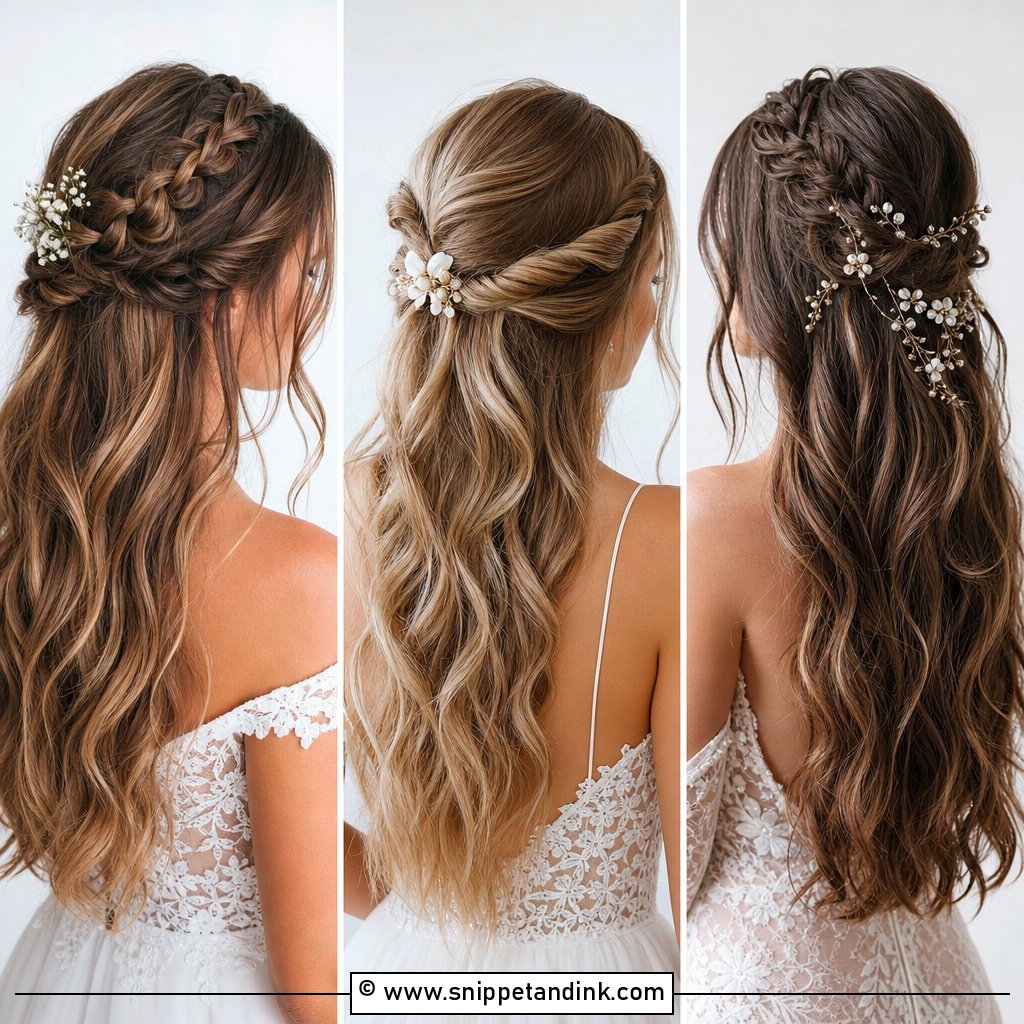
7. Boho Braided Updo
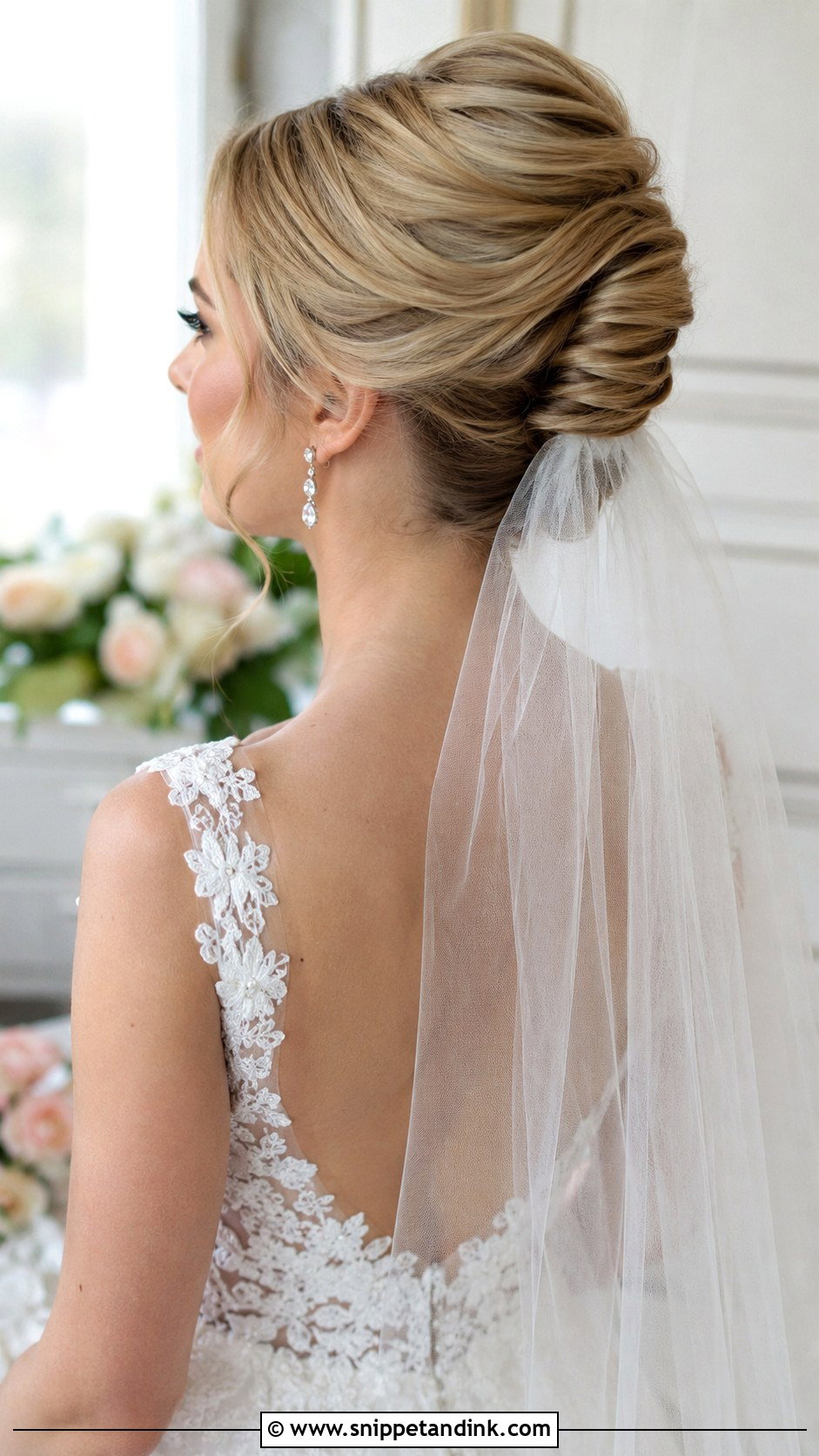
Boho braids rely on texture, so I prep with a texturizing spray and braid loosely, then pancake each braid by pulling the edges out. Thick, long hair gives the biggest result. Fine hair can look thin once the braids are opened up, and in that case I braid in a weft or keep the braids smaller and pin them closer together. Wildflowers and fine gold pins sit naturally in the gaps, and the style pairs well with flowing, lightweight dresses.
8. Elegant French Twist Updo
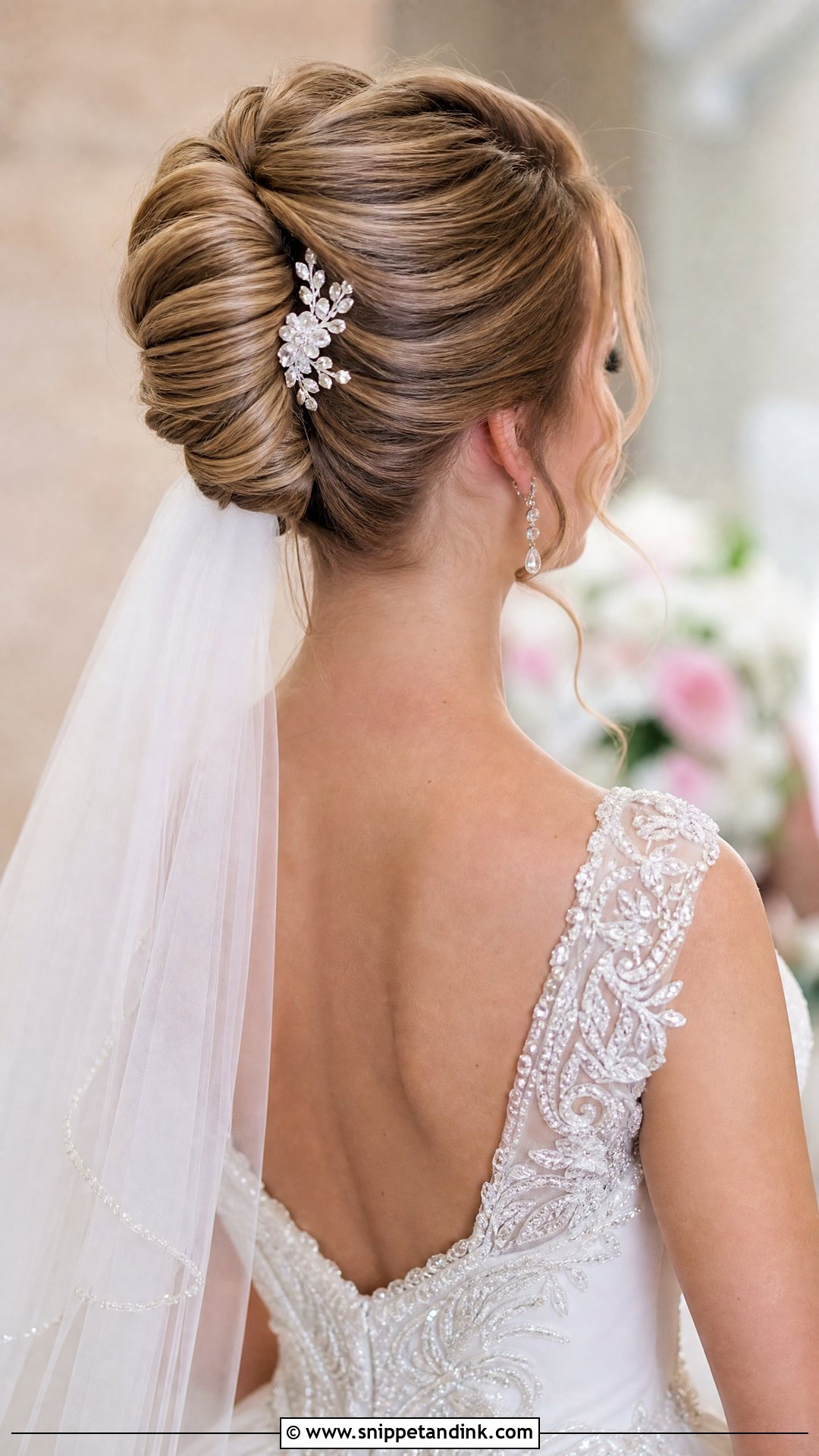
The French twist folds the hair vertically into a pleat up the back of the head, and it has held its place in bridal books for generations. The secret is a hidden backcomb at the root on the side you fold toward, which gives the pins something to bite into. Shoulder-length hair can just about manage it; very layered hair keeps poking out of the seam, so I smooth the ends with a wax stick. It sits flat at the back, which makes it one of the easier styles to wear with a tiara or a veil comb above the fold.
9. Low Chignon With Side Part
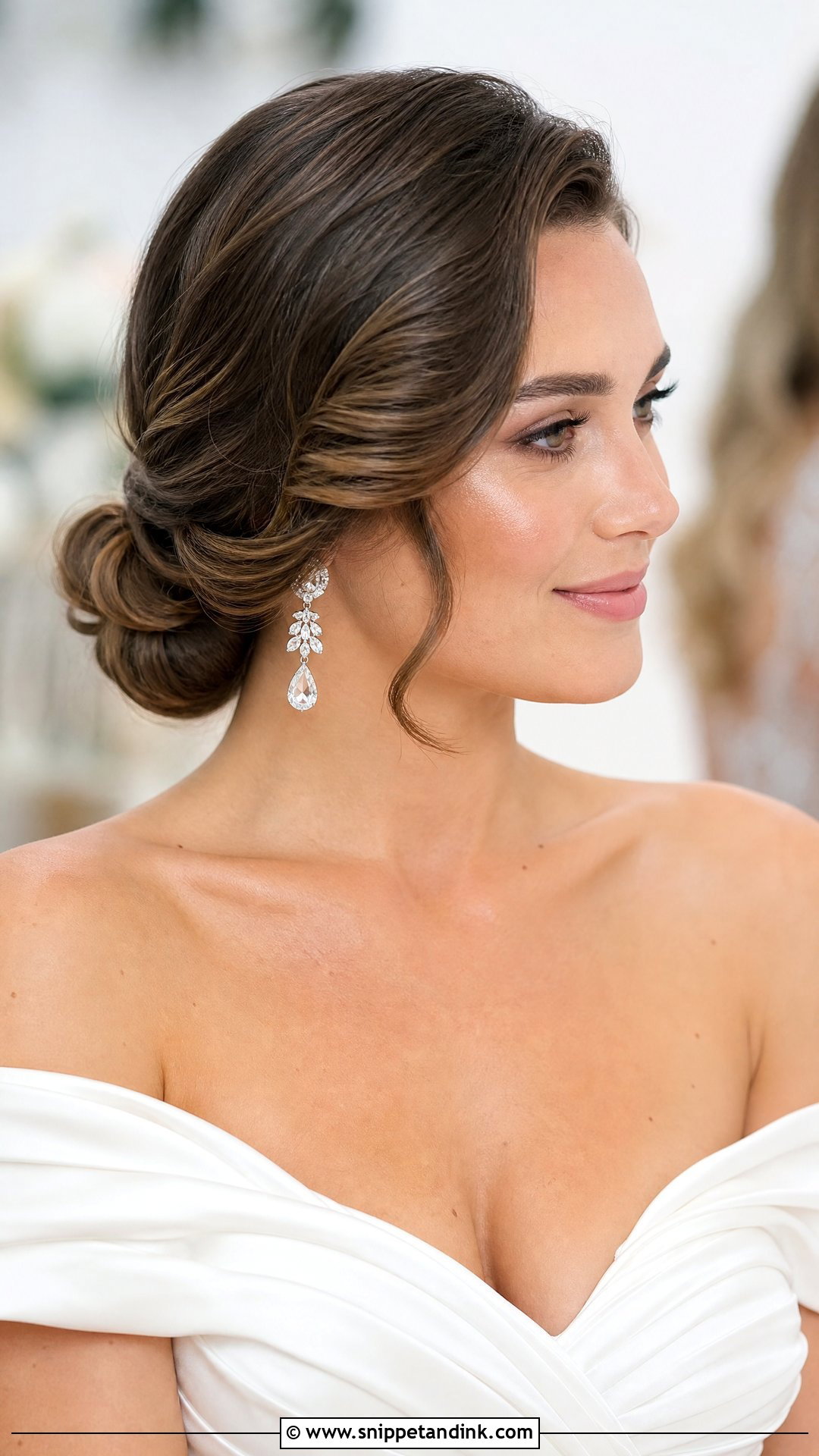
A deep side part changes the whole face, so I always check which side your hair naturally wants to fall to before I place it. Forcing a part against a cowlick looks fine in the mirror and lifts by the reception. The chignon itself sits low and slightly off-center, which balances an off-shoulder gown and frames statement earrings. A long veil slips in just above the knot without disturbing the sweep over the forehead.
10. Half Up Half Down Updo
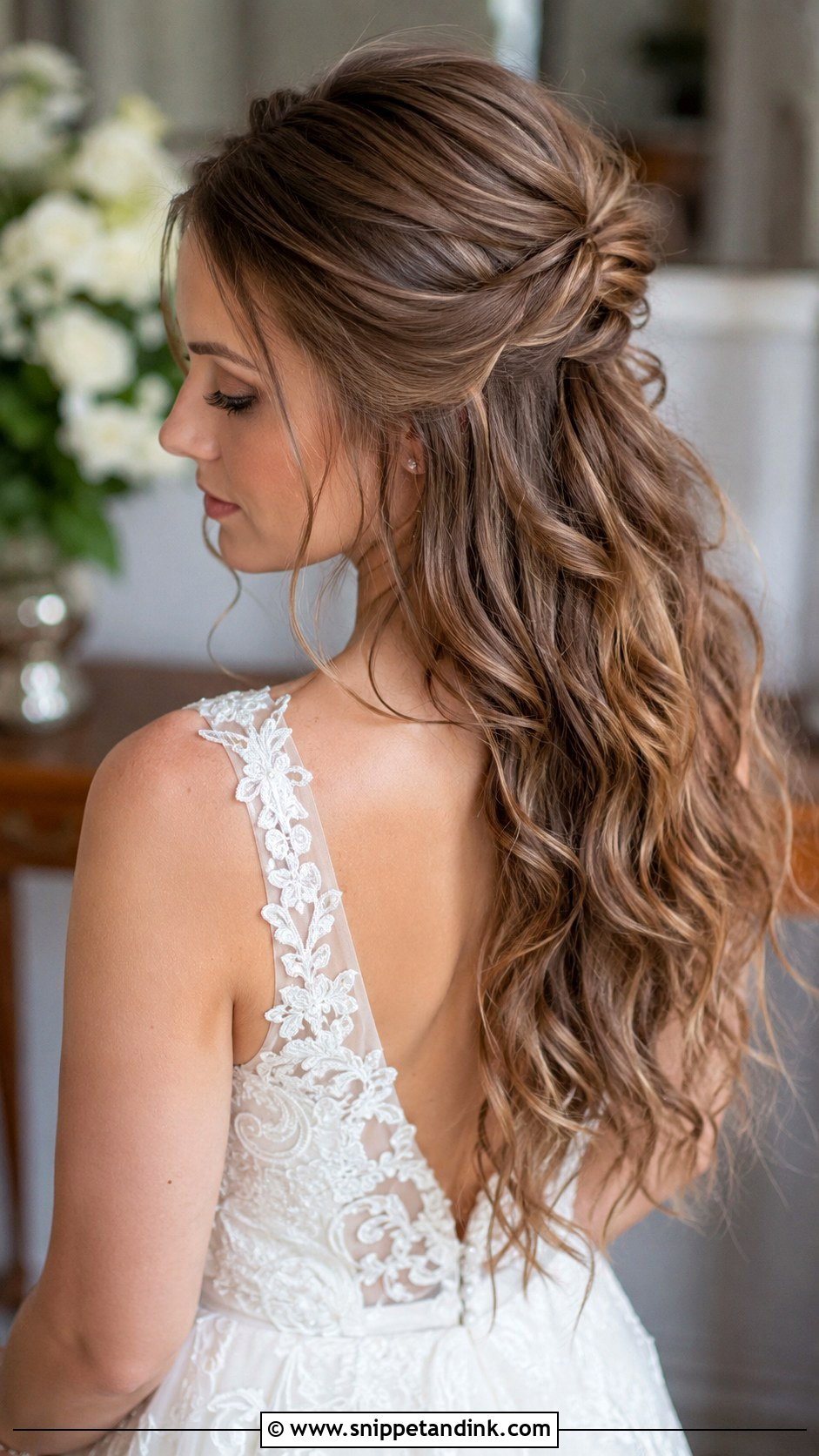
Strictly speaking this isn’t a full updo, and I tell brides that up front: the hair left down will relax over the day, especially in humidity. To slow that, I set the loose lengths in pin curls while makeup is being done and release them at the last minute. The pinned top section can be twisted, braided or dressed with flowers. It shows off long hair, but if your wedding is outdoors in summer, a full updo will look fresher in the evening photos.
11. Bridal Updo With Flowers
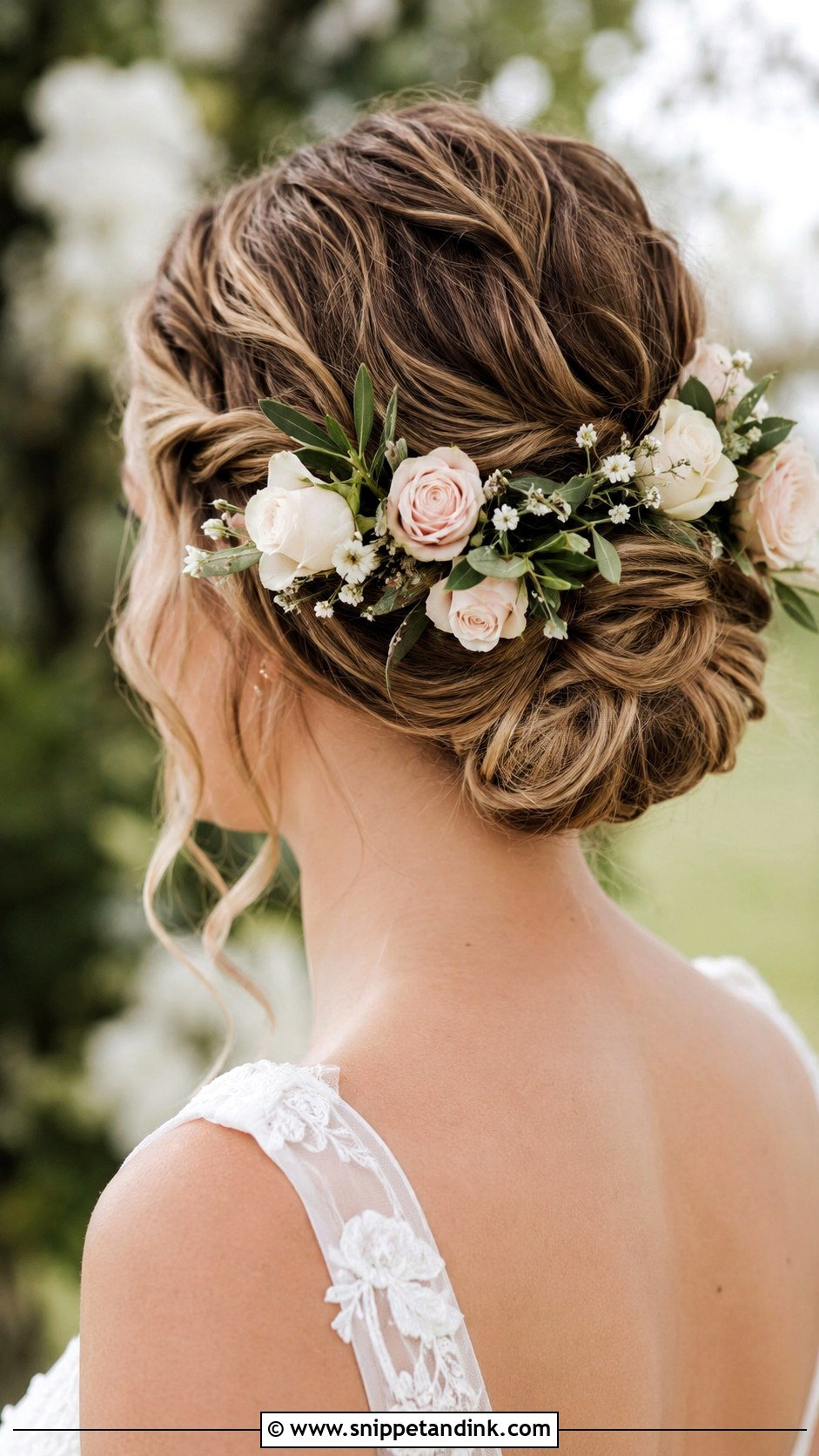
Real flowers wilt faster against warm skin and hair than they do in a bouquet, so I ask the florist for blooms that hold up out of water, like spray roses, wax flower and small orchids. Soft petals such as gardenias bruise and brown within hours. The flowers go in last, wired or pinned through the base of the bun so the stems don’t press on the scalp. Matching a few blooms to the bouquet ties the look together without needing many.
12. Vintage Pin Curl Updo
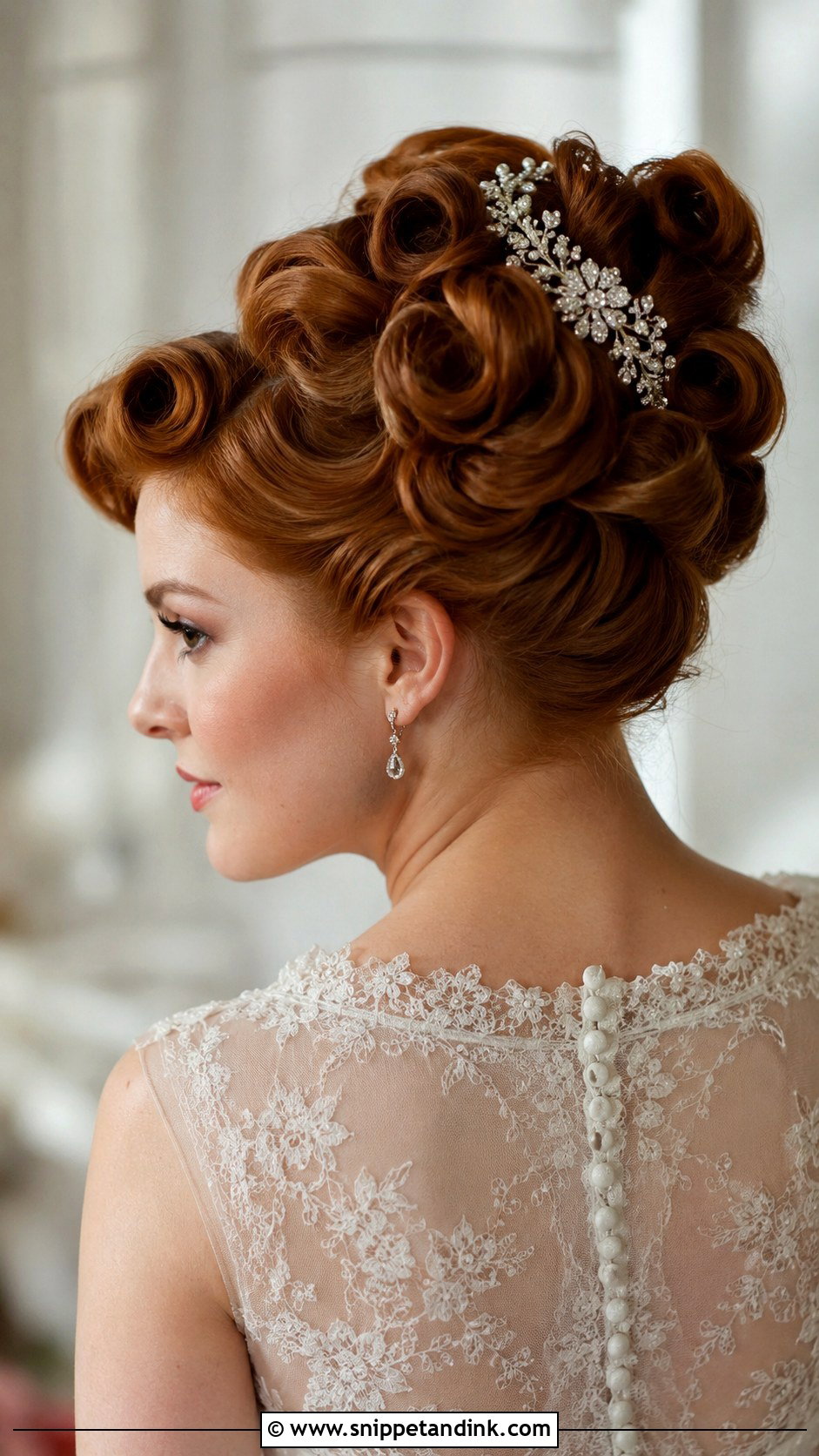
Pin curls are a set, not just a finish: each section is wound, pinned flat and left to cool before it’s brushed into shape. That’s why this style takes longer than most, and why I book extra chair time for it. It suits fine hair surprisingly well, since the set gives shape that holds. A sparkly comb or a birdcage veil completes the 1940s look, and a fitted lace gown carries it through without feeling like costume.
13. Loose Curly Updo
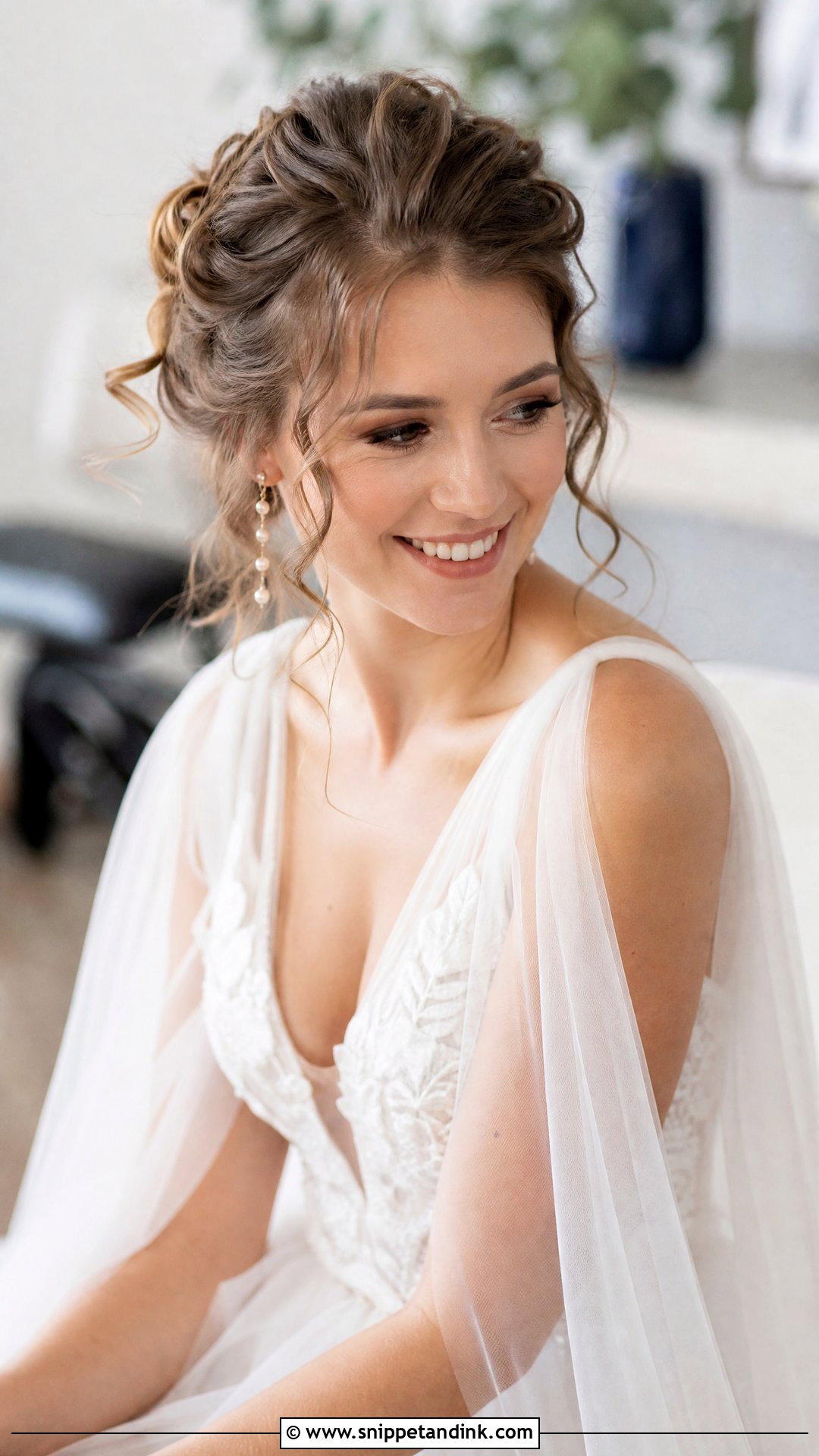
If your hair curls naturally, I’ll work with that pattern instead of ironing it out. I refresh the curls with a little water and cream, let them dry, then gather them loosely and pin in clusters so the curls stay defined rather than frizzing into one mass. The loose shape is forgiving if a curl drops. Wavy hair that only holds a weak pattern does better with a wand set first, otherwise it reads as limp in the evening.
14. Braided Bun Updo
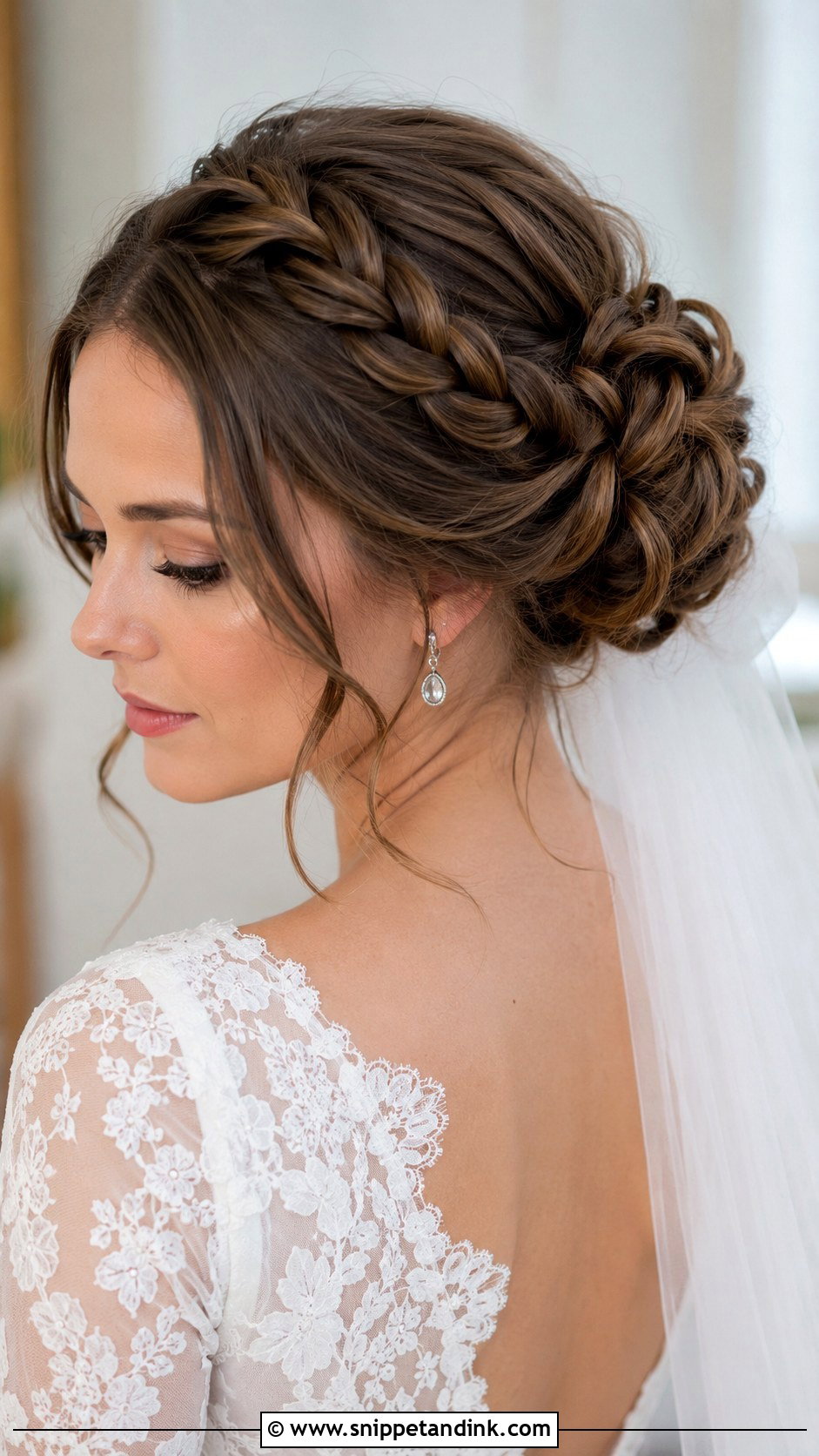
A braid wrapped around a bun hides the pins and covers the elastic, which is why I reach for it on brides with very slippery hair. The braid can also run along the crown into the bun for more detail from the side. I keep the braid a little tighter than a boho plait so it doesn’t lose definition by the evening. Veils and small florals both sit well where braid meets bun.
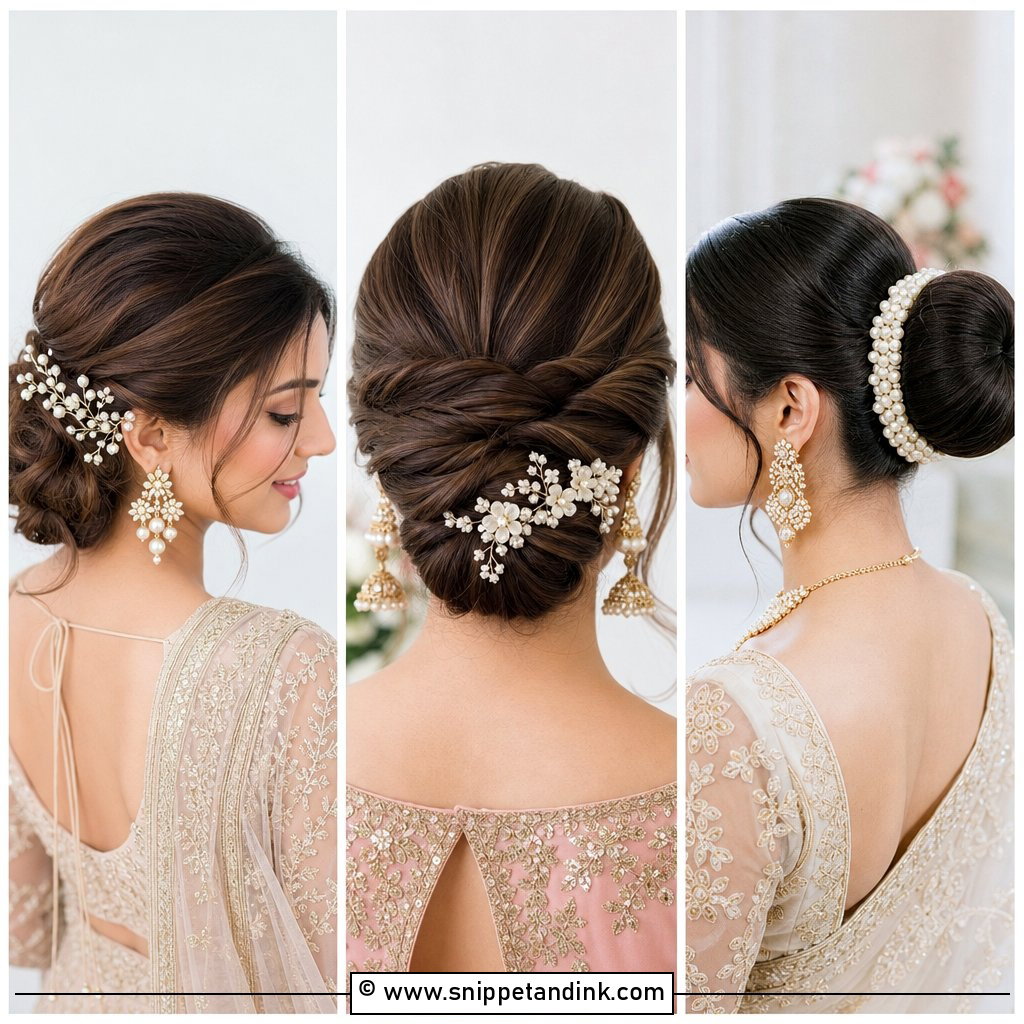
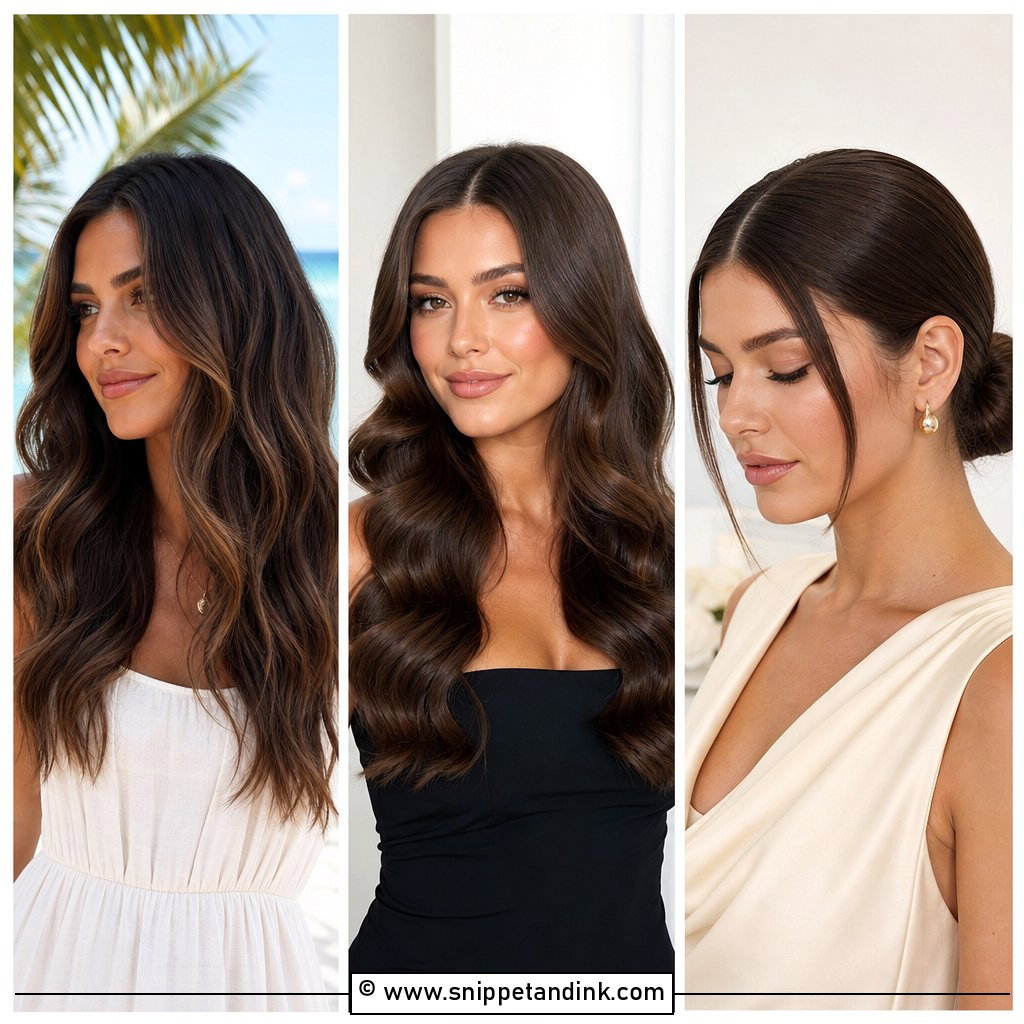
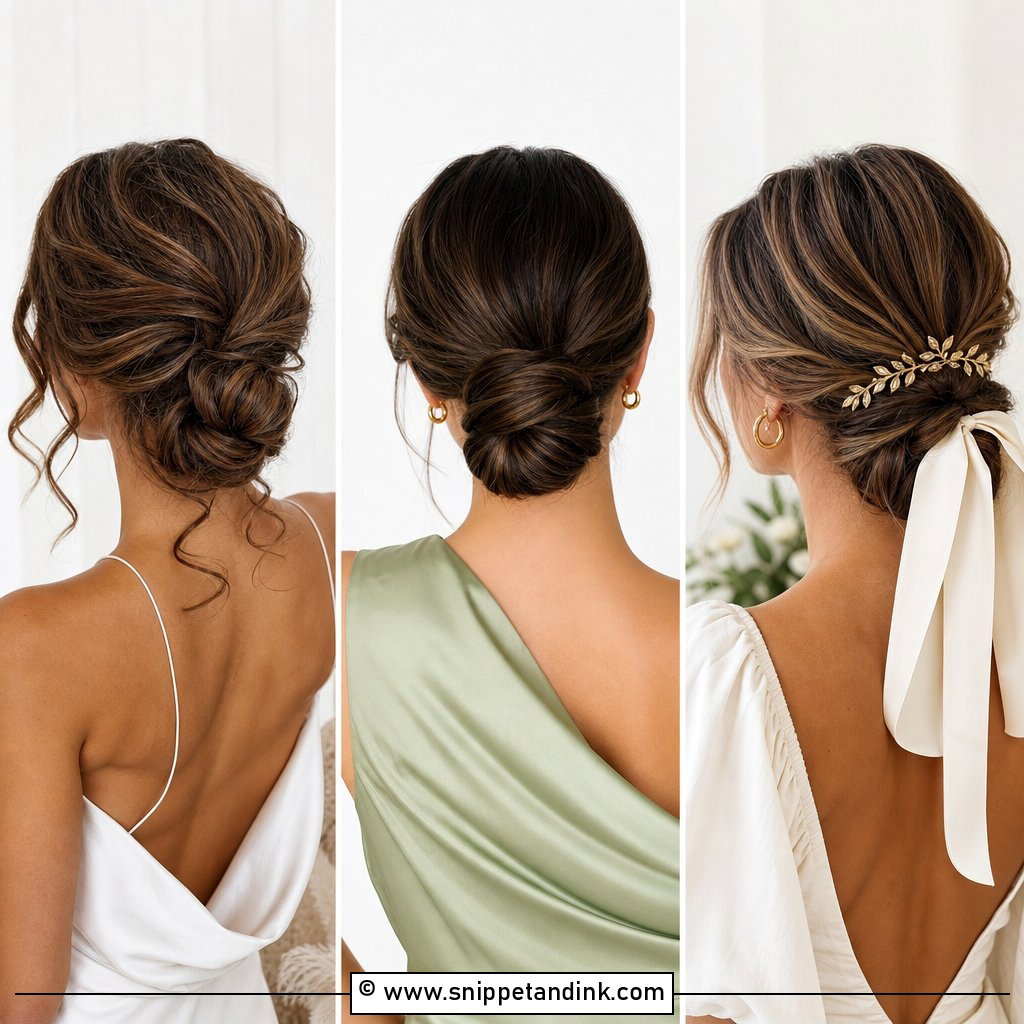
15. Sleek Wet Look Updo
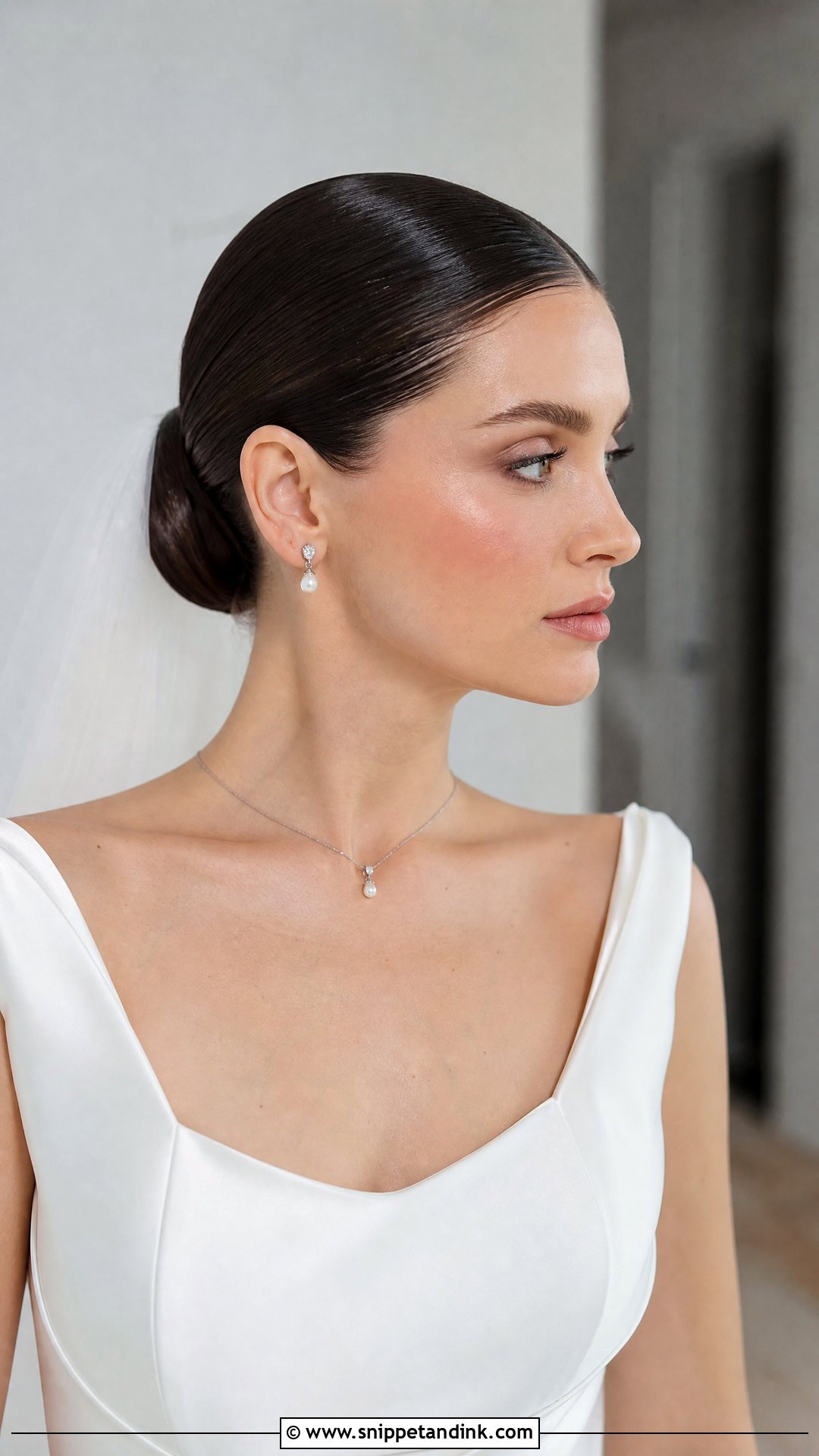
The wet look is gel worked through damp hair and slicked back into a tight bun, then sealed so it sets hard and glossy. Nothing about it hides, so the hairline needs to be even and the face is fully exposed. It doesn’t frizz in humidity, which makes it a smart pick for a hot venue. I’d steer you away from it if you’re not comfortable with your forehead and ears on show all day, or if you plan to take it down for the party, because set gel needs a wash to come out.
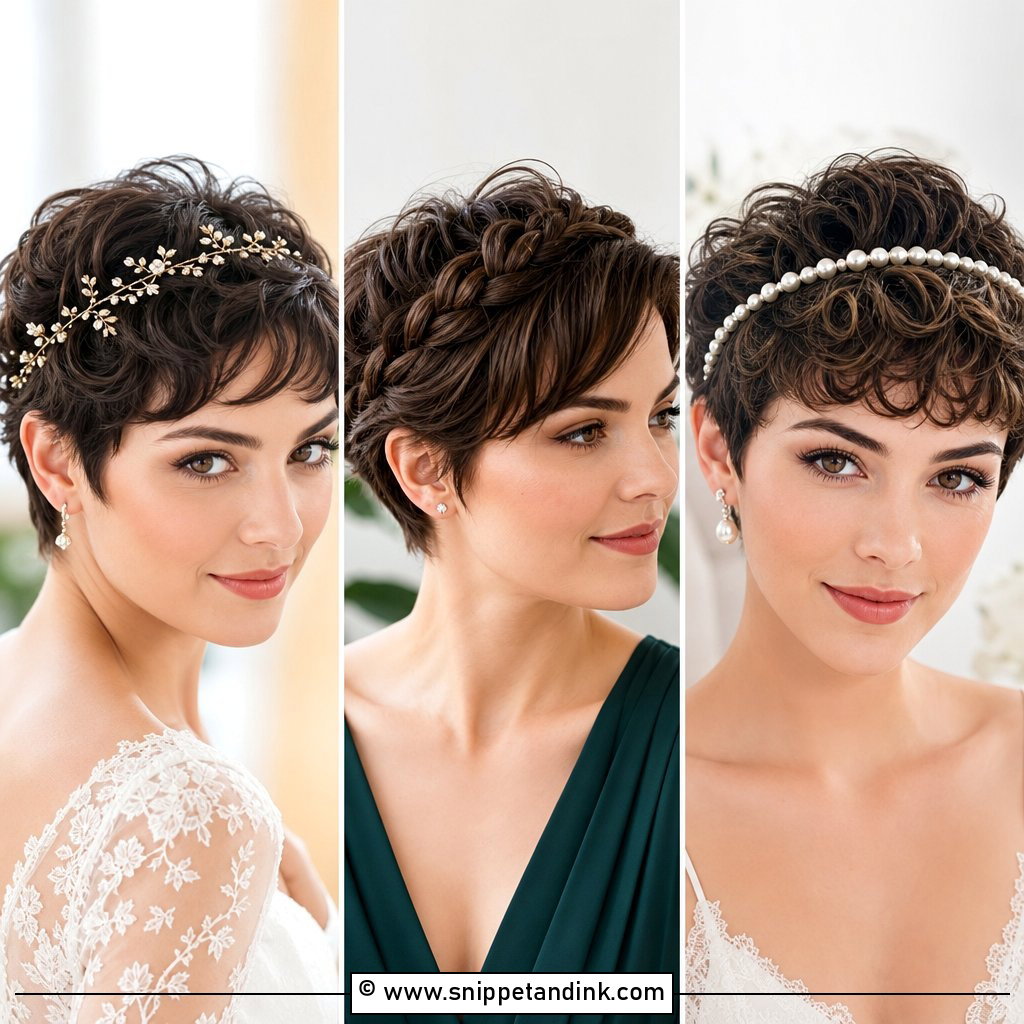
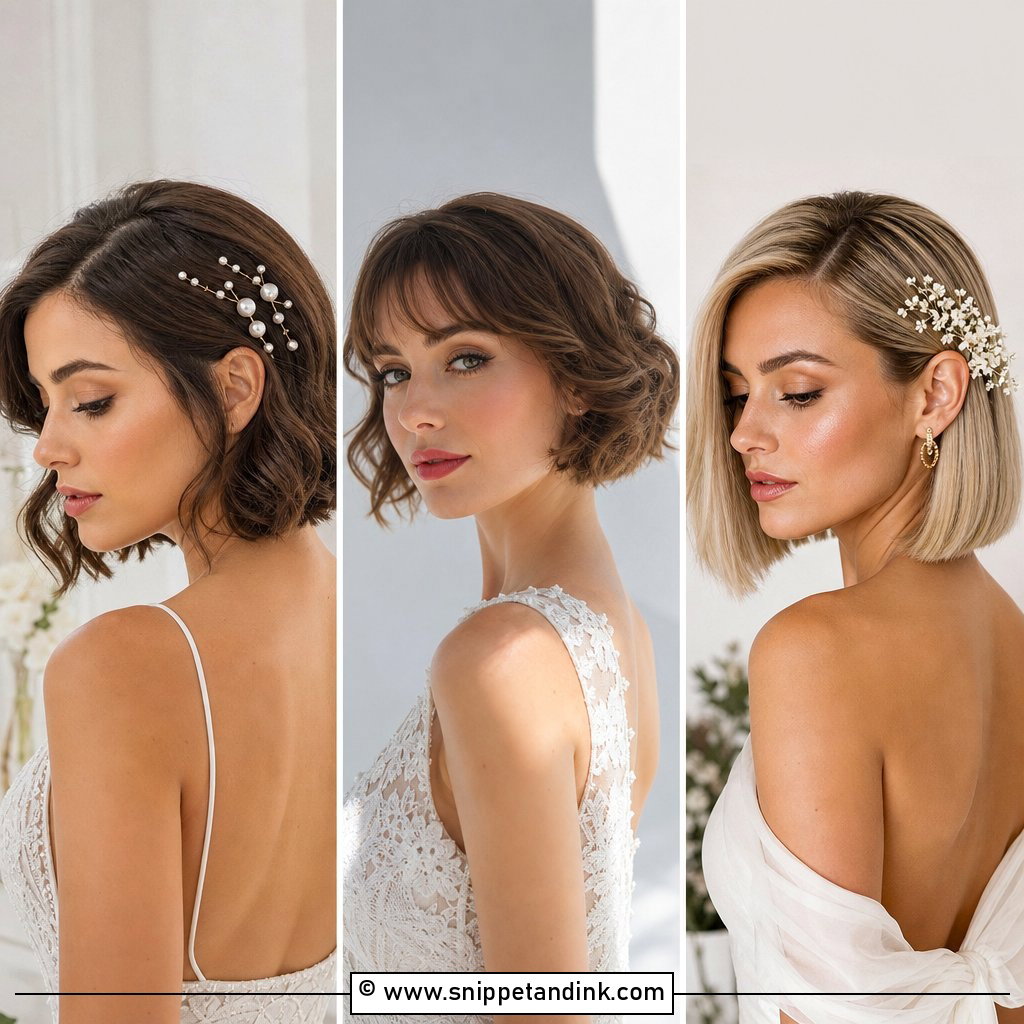
16. Updo For Short Hair
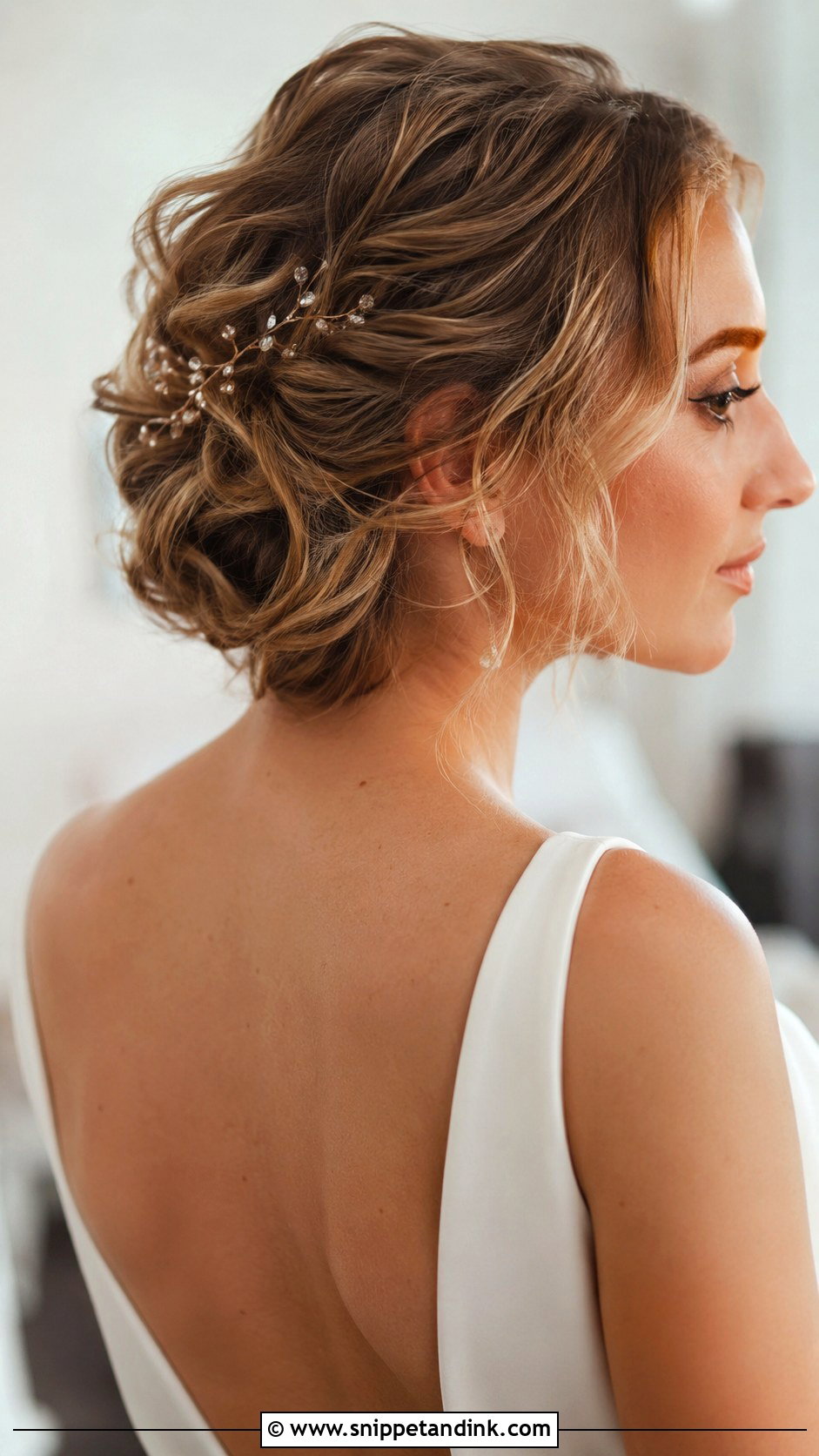
A bob can absolutely go up. I set it in curls first for grip, then twist small sections toward the nape and pin them in a row, which creates the outline of an updo without needing a bun. Pixie cuts are more about polished texture and a hair vine or small clip. If your hair is between a bob and the shoulders, a few clip-in pieces at the back make a real bun possible. Short hair also leaves your neck and jewelry in clear view, which is worth playing up.
17. Romantic Side Swept Updo
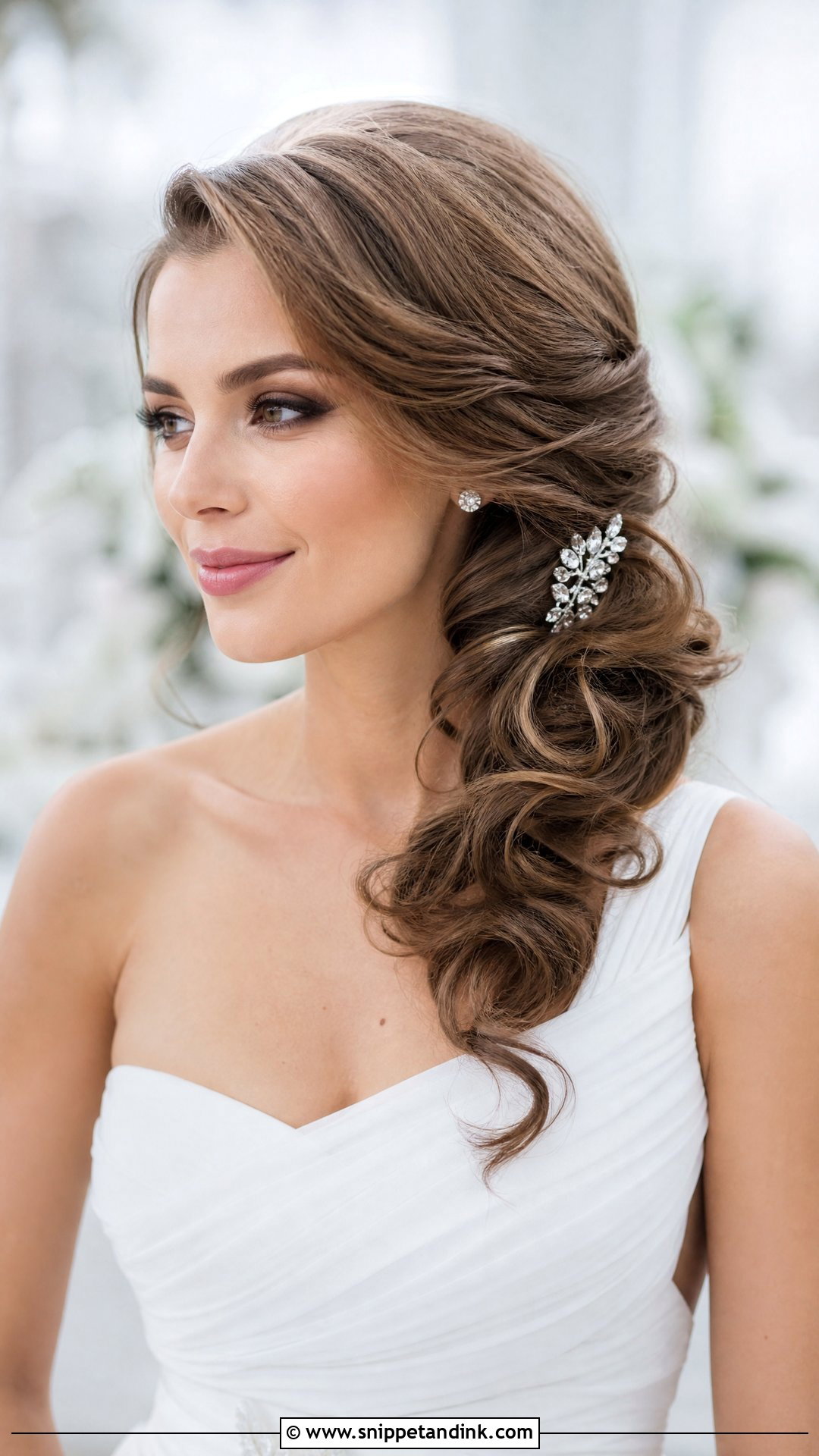
This one collects everything over one shoulder, so I build it on the side opposite your partner at the altar; that way the ceremony photos show your face, not a wall of hair. Pins go in at the nape on the far side to stop the whole style sliding toward the gathered side. Loose curls or smooth waves both work, and it suits one-shoulder gowns because the hair balances the bare side.
18. Classic Ballerina Bun
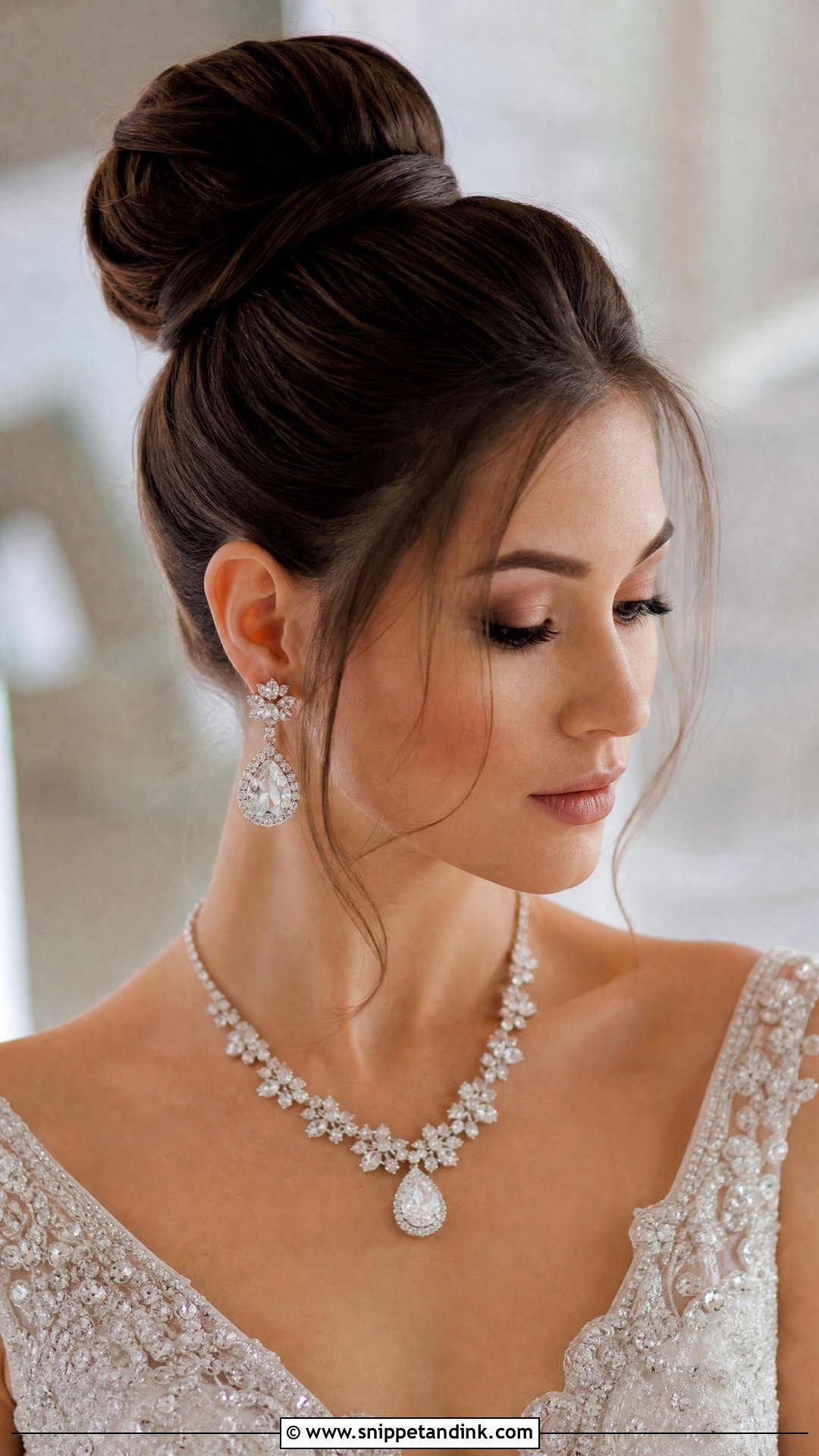
The ballerina bun is a high, smooth bun with no texture to hide behind, so I use a bun donut or a rolled base on finer hair to get the round shape. It’s fast and very secure, one of the few styles I’d happily do for a bride with an early ceremony and little chair time. A tiara or a comb sits in front of it easily. The minimalist finish suits modern dresses and clean jewelry.
19. Bridal Updo With Tiara
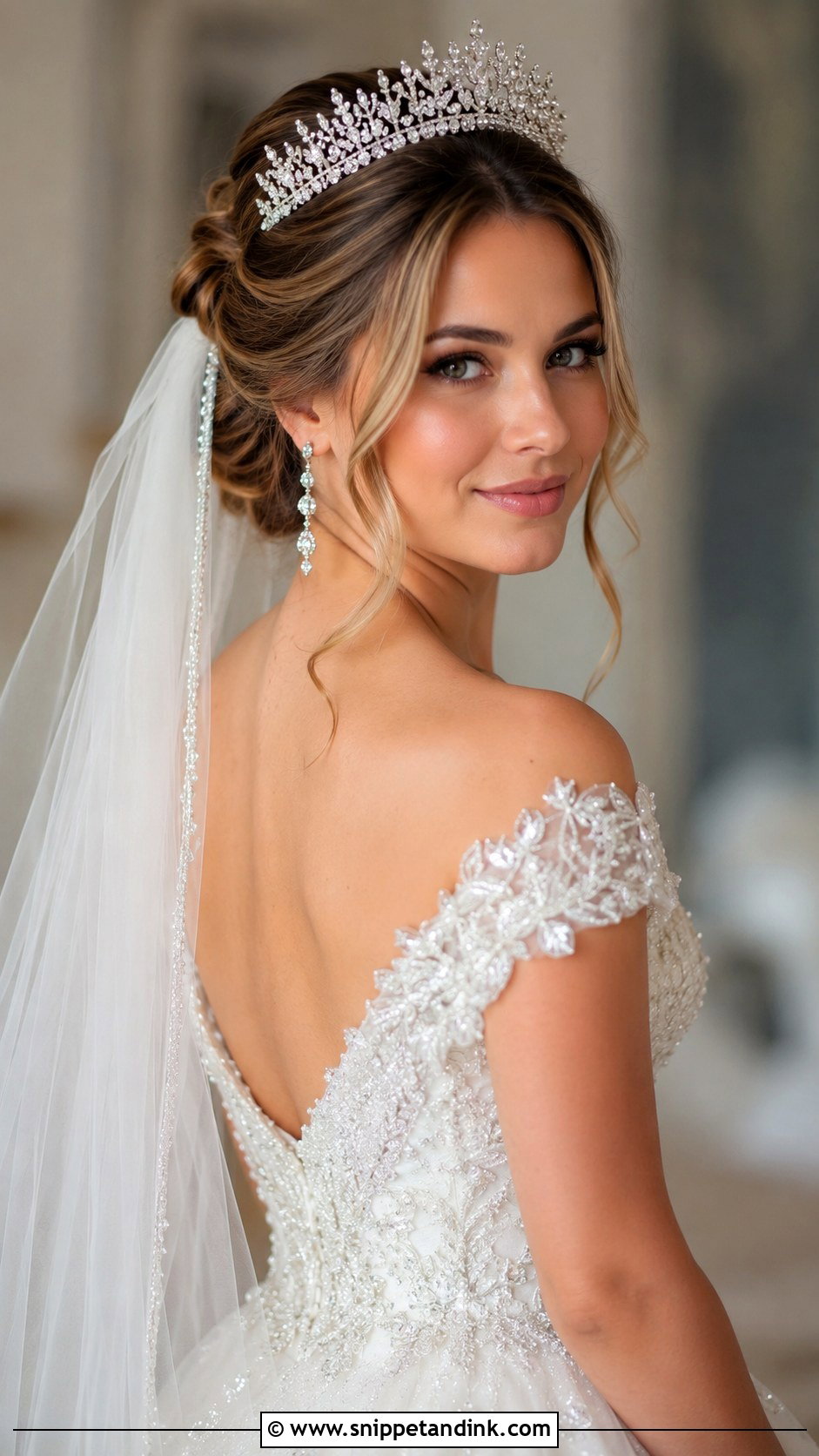
A tiara has a band that needs something to bite into, so I backcomb a strip of hair across the head and pin the tiara into it, with small pins looped through the frame at each side. Set it without that and it creeps forward through the day. The updo behind it can be a low bun, French twist or sleek chignon. Bring the tiara to your trial; I can’t plan the height of the front without it.
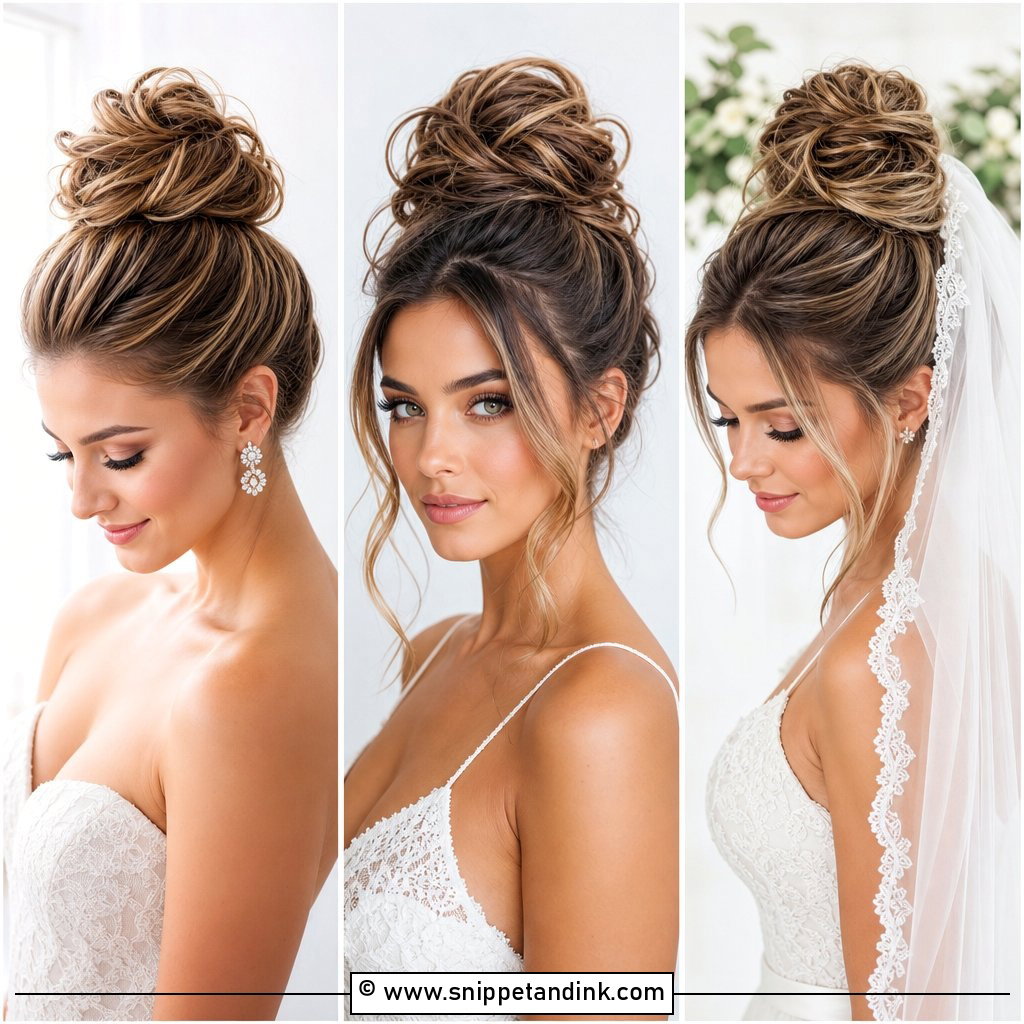
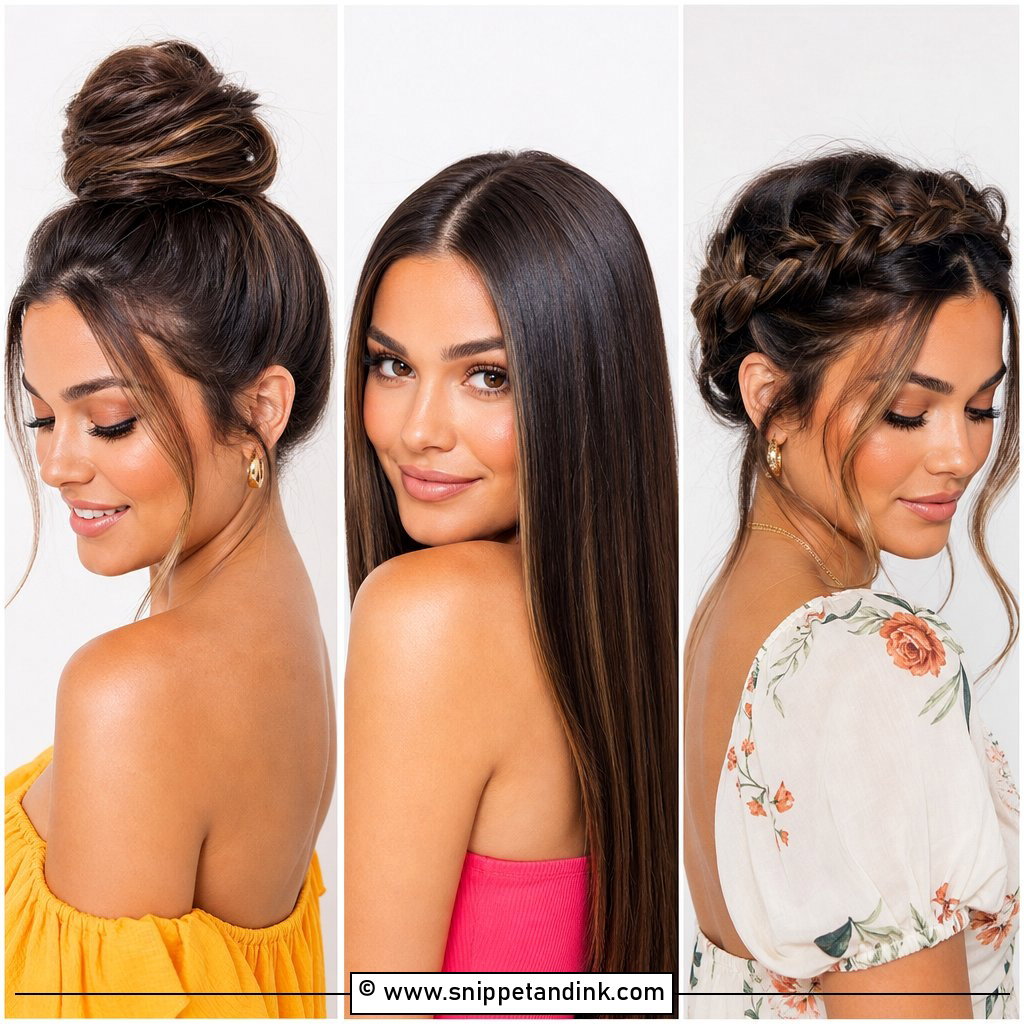
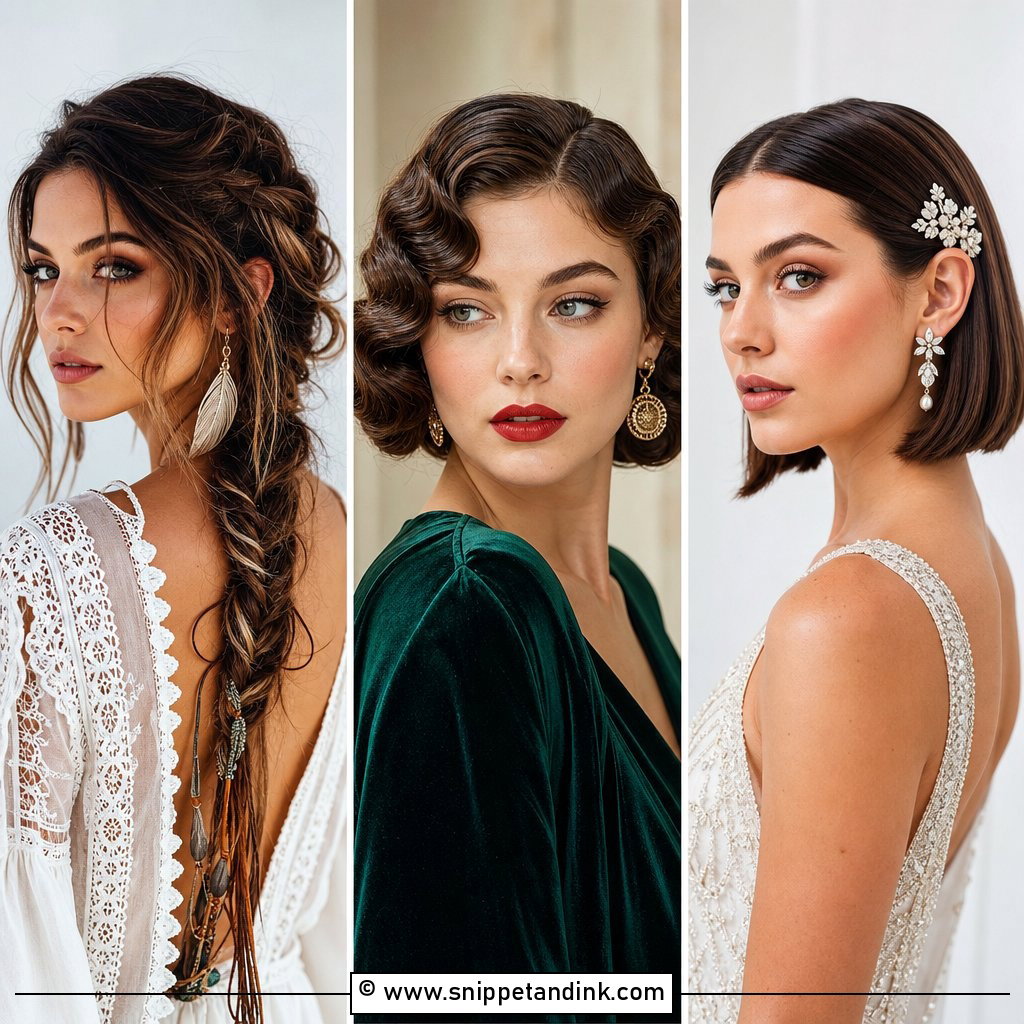
20. Textured Updo With Tendrils
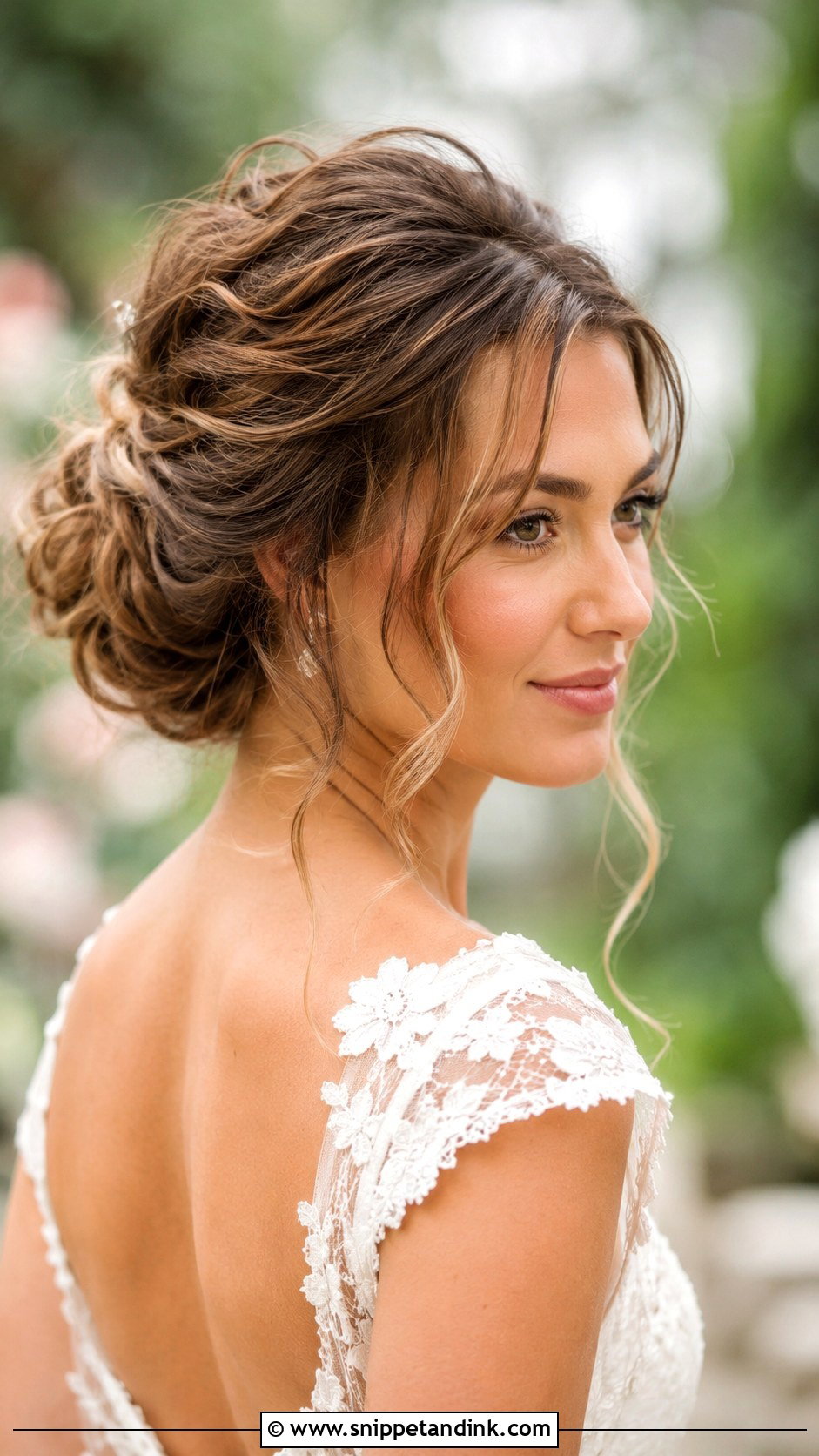
Tendrils need to be curled separately from the rest of the hair and with a smaller iron, otherwise they hang straight within an hour. I usually leave two or three per side and keep them out of the hairspray until the end so they move. The textured updo behind them is pinned loosely. If you’ll be in the sun or humid air, I’d keep the tendrils short, at chin length or above, because long ones droop and stick to the neck.
21. Fishtail Braid Updo
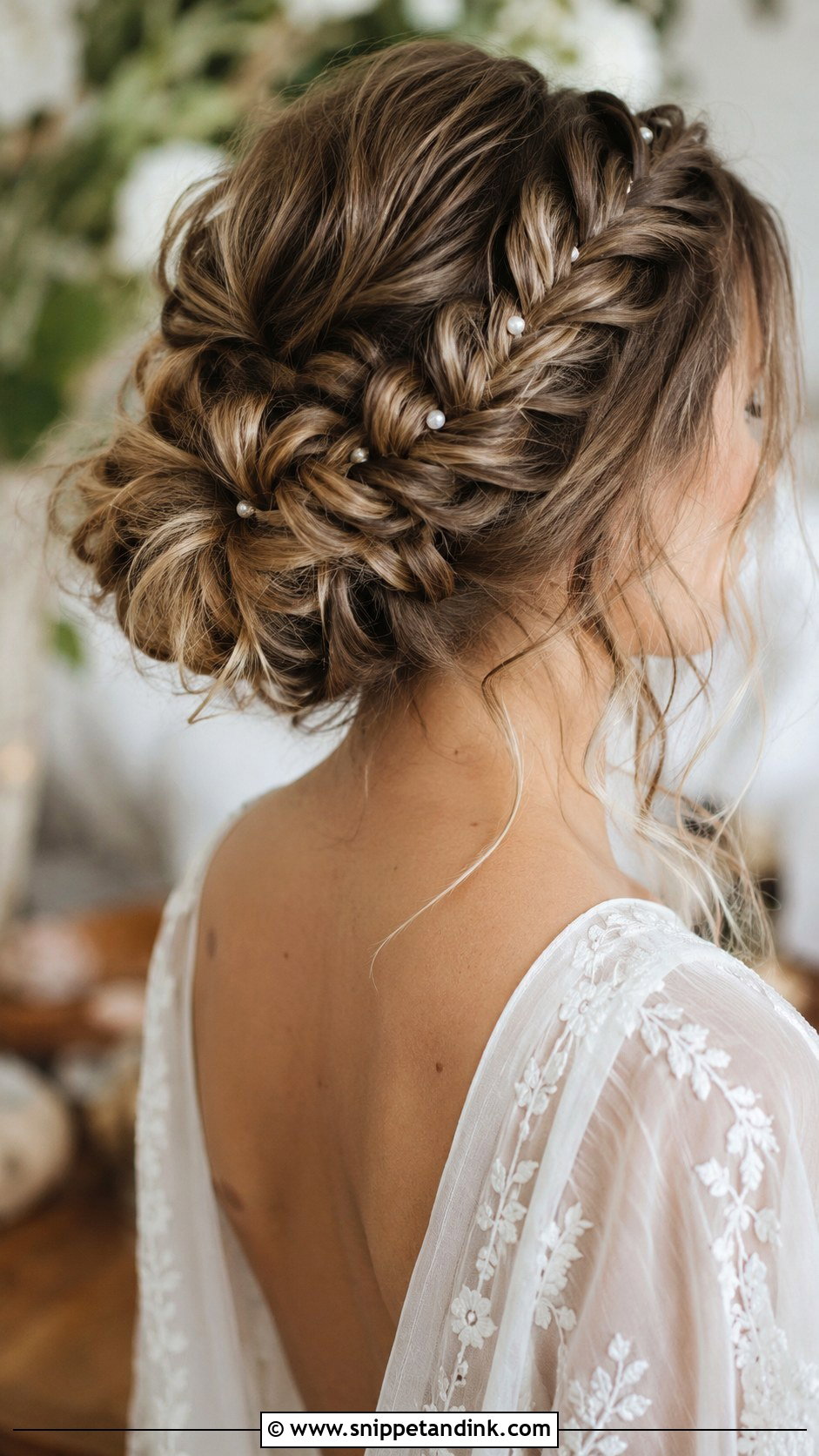
A fishtail is made of many fine crossovers, so it takes longer than a three-strand braid but looks richer when pulled apart. Woven into a bun or wrapped around the head, it holds very well because every section locks the next. Long, thick hair gives the clearest pattern; on fine or heavily layered hair the strands poke out and need a smoothing balm. Tiny pearls slot between the crossovers easily.
22. Glamorous Hollywood Updo
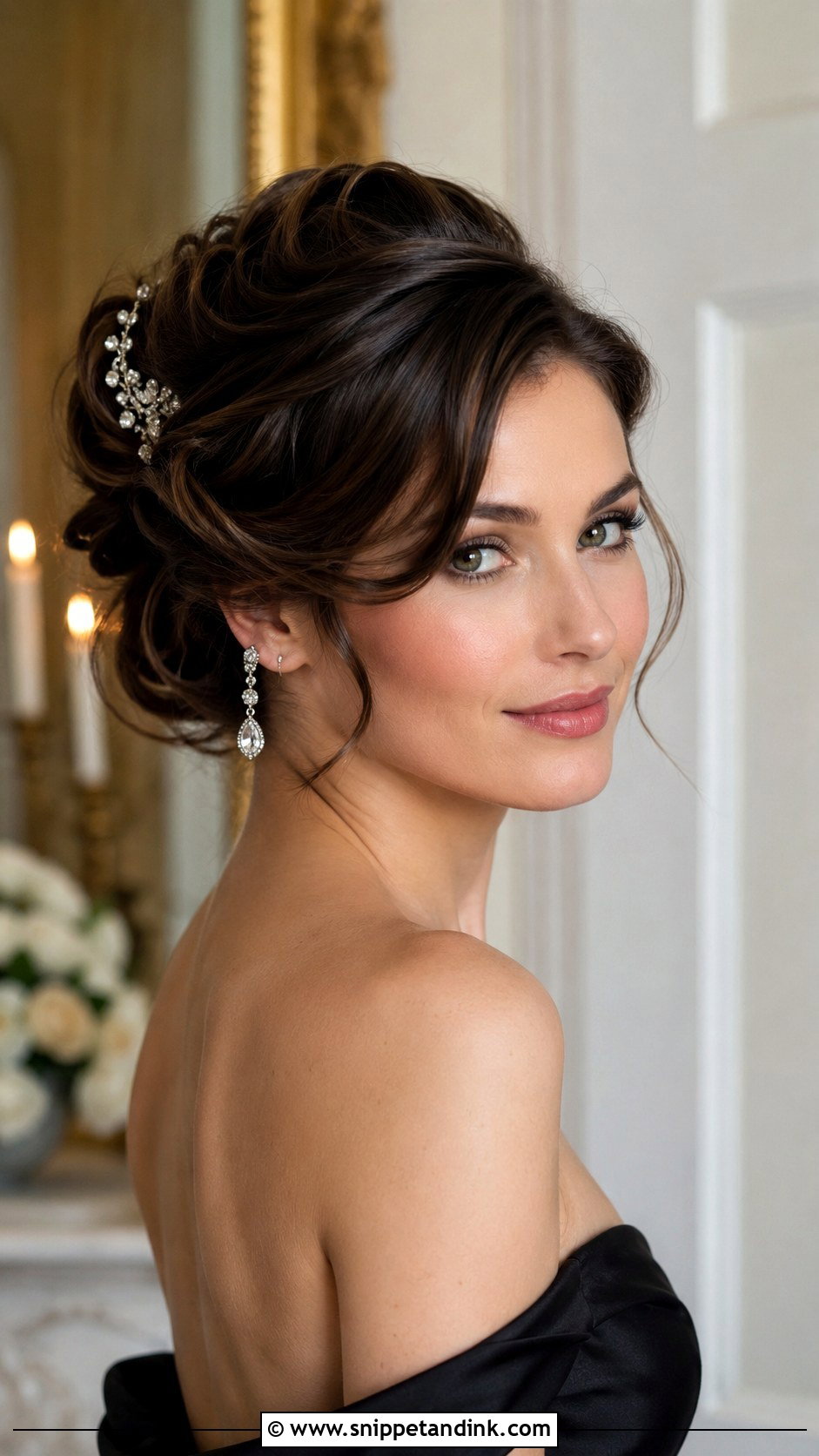
Old Hollywood volume is built in rollers. I set the hair in large Velcro or hot rollers, let it cool completely, then brush the set into smooth S-shaped waves before sweeping them up. Brushing too early is the usual reason this style collapses. A jeweled pin at the side catches the light, and the sculpted shape looks right with a fitted satin or silk gown at a black-tie wedding.
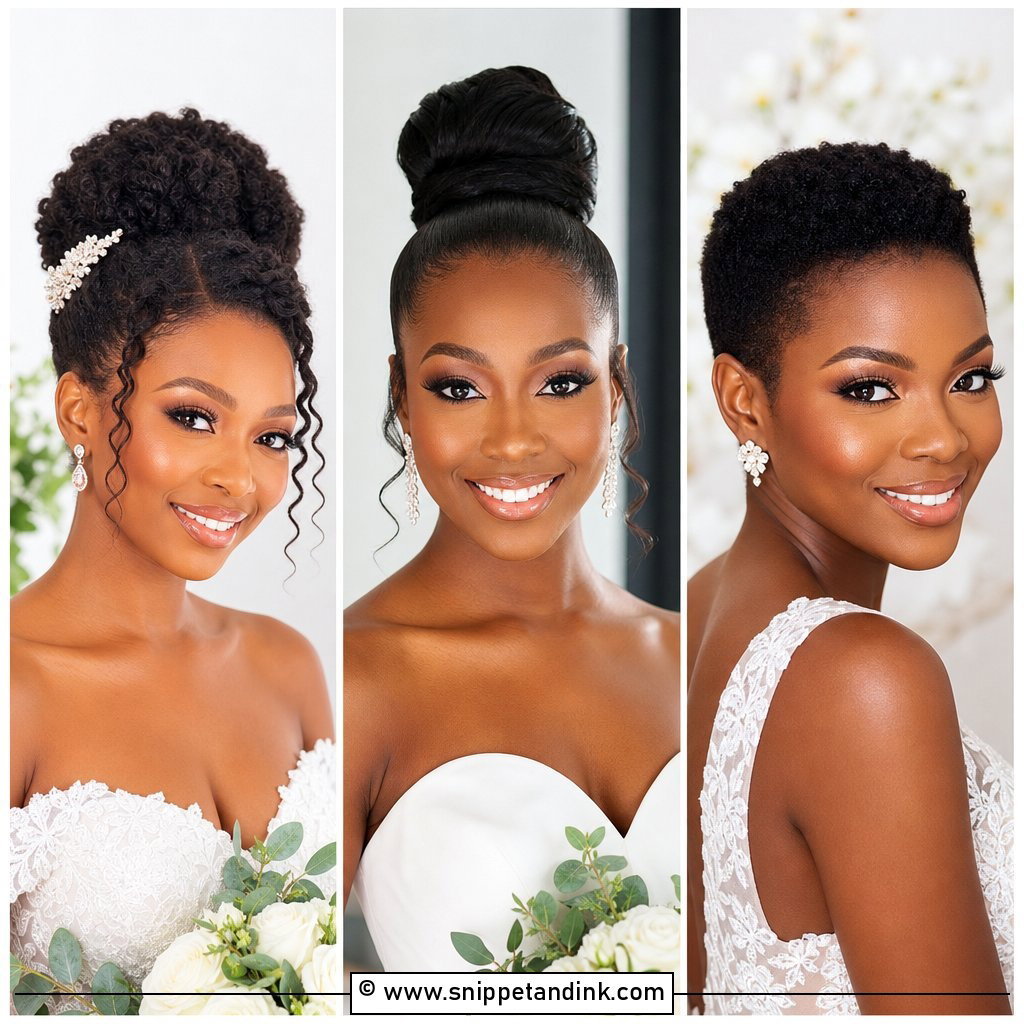
23. Curly Updo For Natural Hair
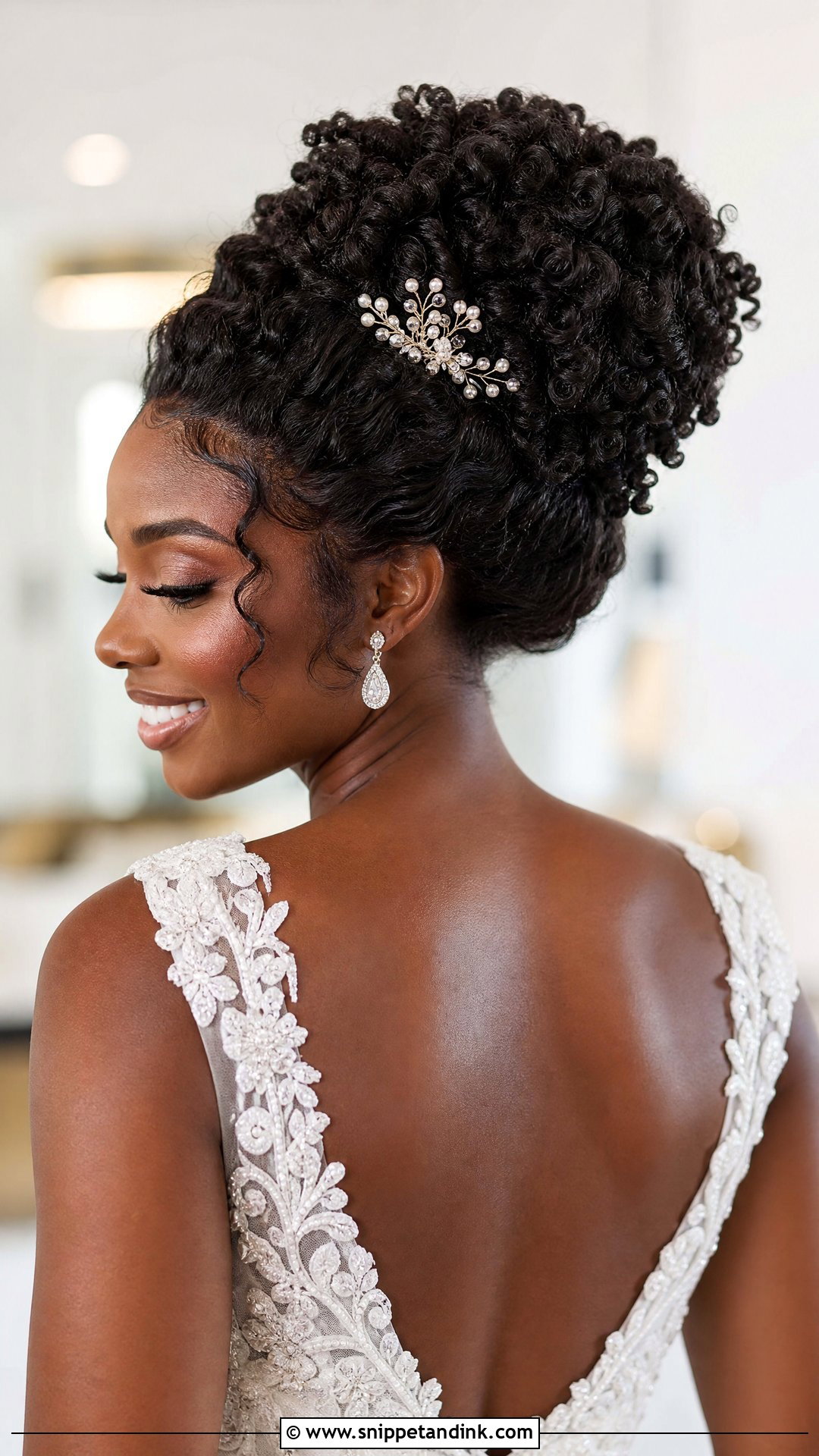
I start natural hair updos the day before with the bride, not on the morning, because detangling and stretching coils takes time and I won’t rush it with a brush. Coils are gathered up and pinned using U-pins, which grip textured hair better than bobby pins. This style suits kinky, coily, and curly hair and can be placed high for height or low under a veil. A flower or a jeweled headband adds detail without hiding the curl pattern, which is the whole point.
24. Low Knotted Bun
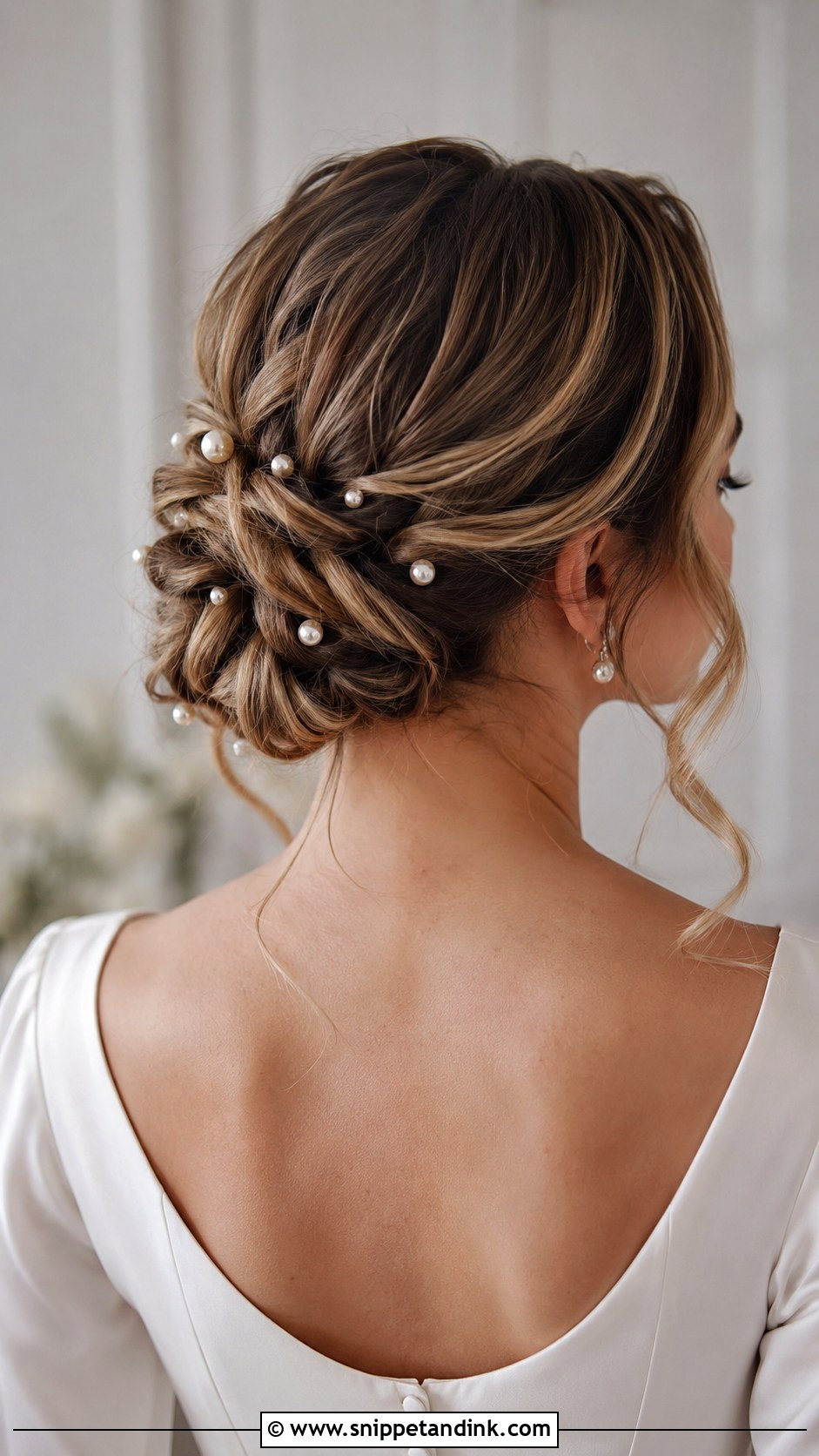
The low knotted bun is literally the hair tied in a loose knot and pinned, so it’s quick and suits smaller, intimate weddings where you want to look like yourself. It works best on medium to long hair with some body; very straight, fine hair can slip loose from the knot, so I add a light grip spray before tying. A few tendrils at the face soften it, and a flowing veil slides in just above.
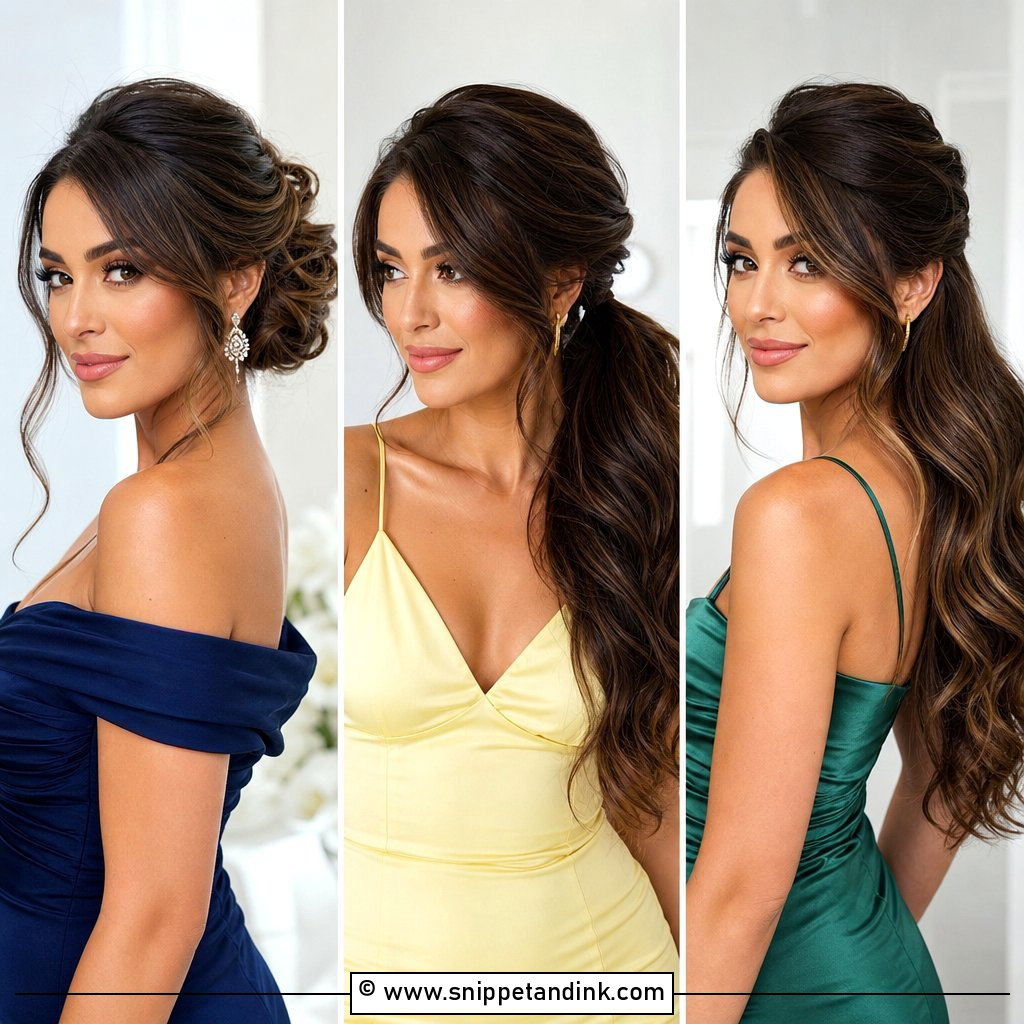
25. Updo With Pearl Accessories
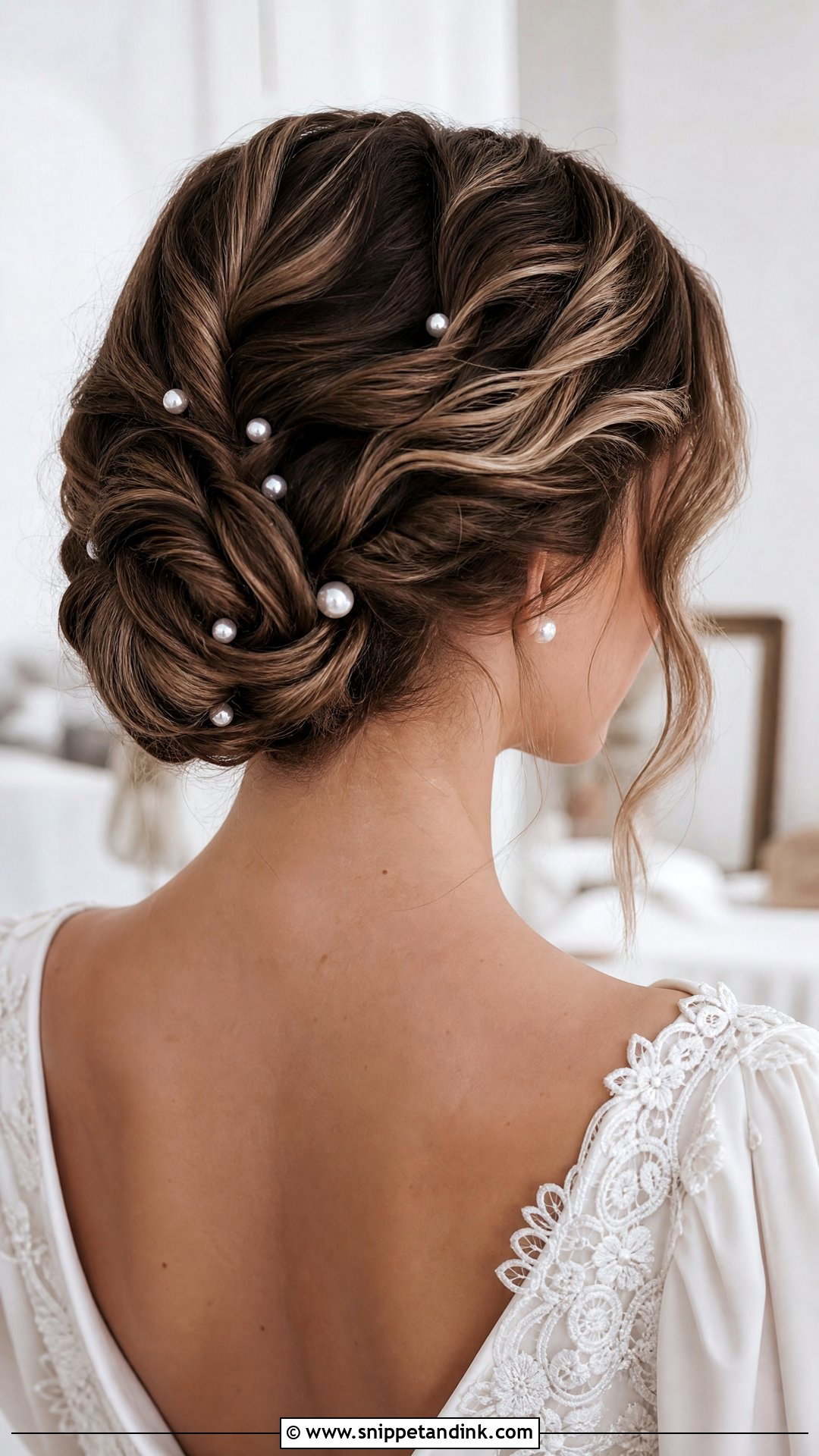
Pearl pins look best scattered unevenly, the way they’d fall naturally, rather than in a neat line. I place them after the hair is finished and set, angling each one into a solid section so it doesn’t slide out when you hug guests. A pearl comb is easier for low buns and chignons. If your earrings or necklace are pearl, matching the tone of white or ivory matters more than matching the size.
26. Voluminous Top Knot
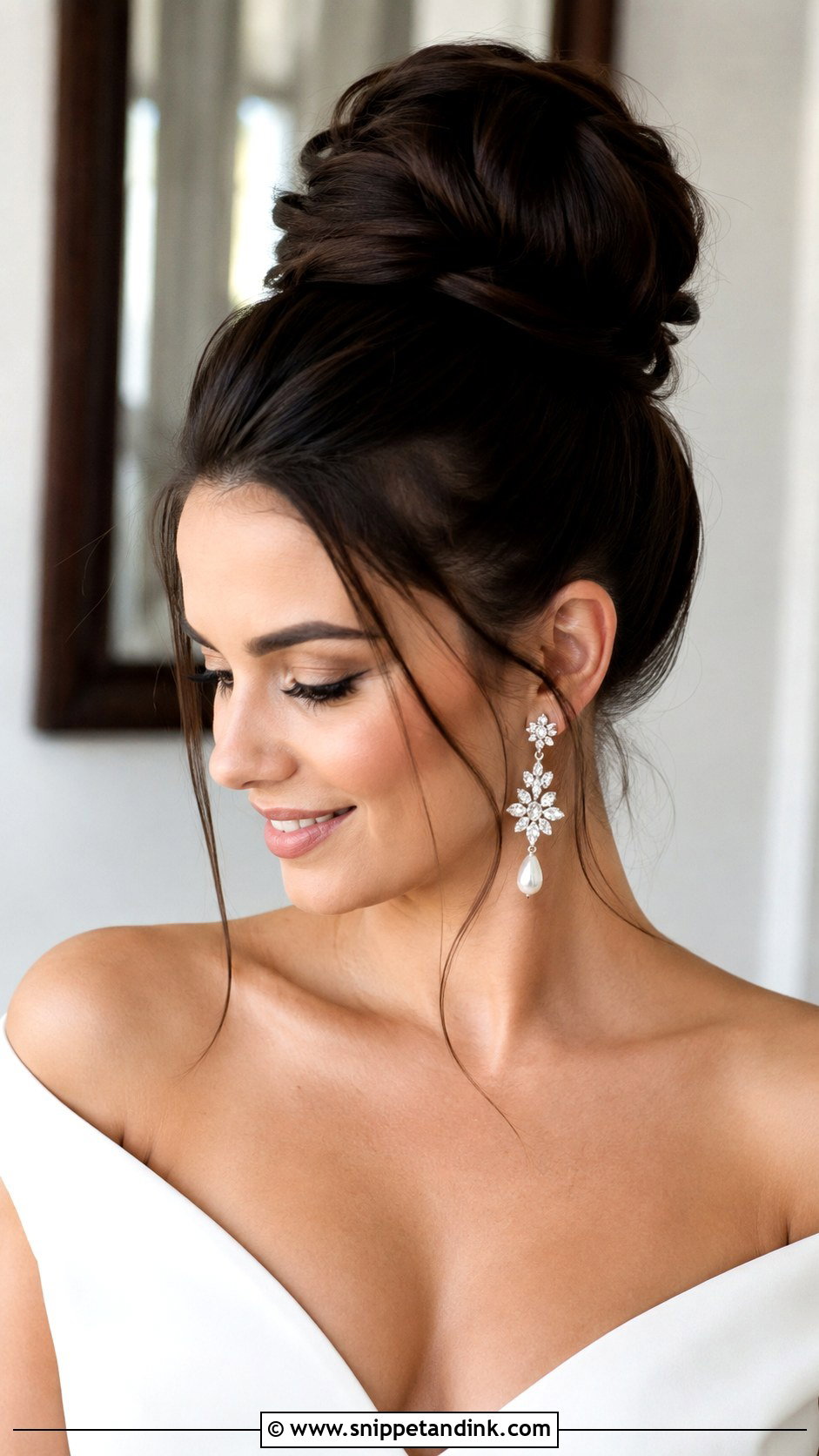
A top knot this full needs padding or a lot of backcombing, so it’s built on a base of teased hair or a bun donut. The height lengthens the neck and pulls focus to the face, which suits contemporary dresses with clean necklines and statement earrings. Weight sits right on top of the head, though, so I’d skip it if you’re prone to headaches or are wearing a heavy veil. Texture or sleekness is your choice; both hold firmly once pinned.
27. Braided Updo With Veil
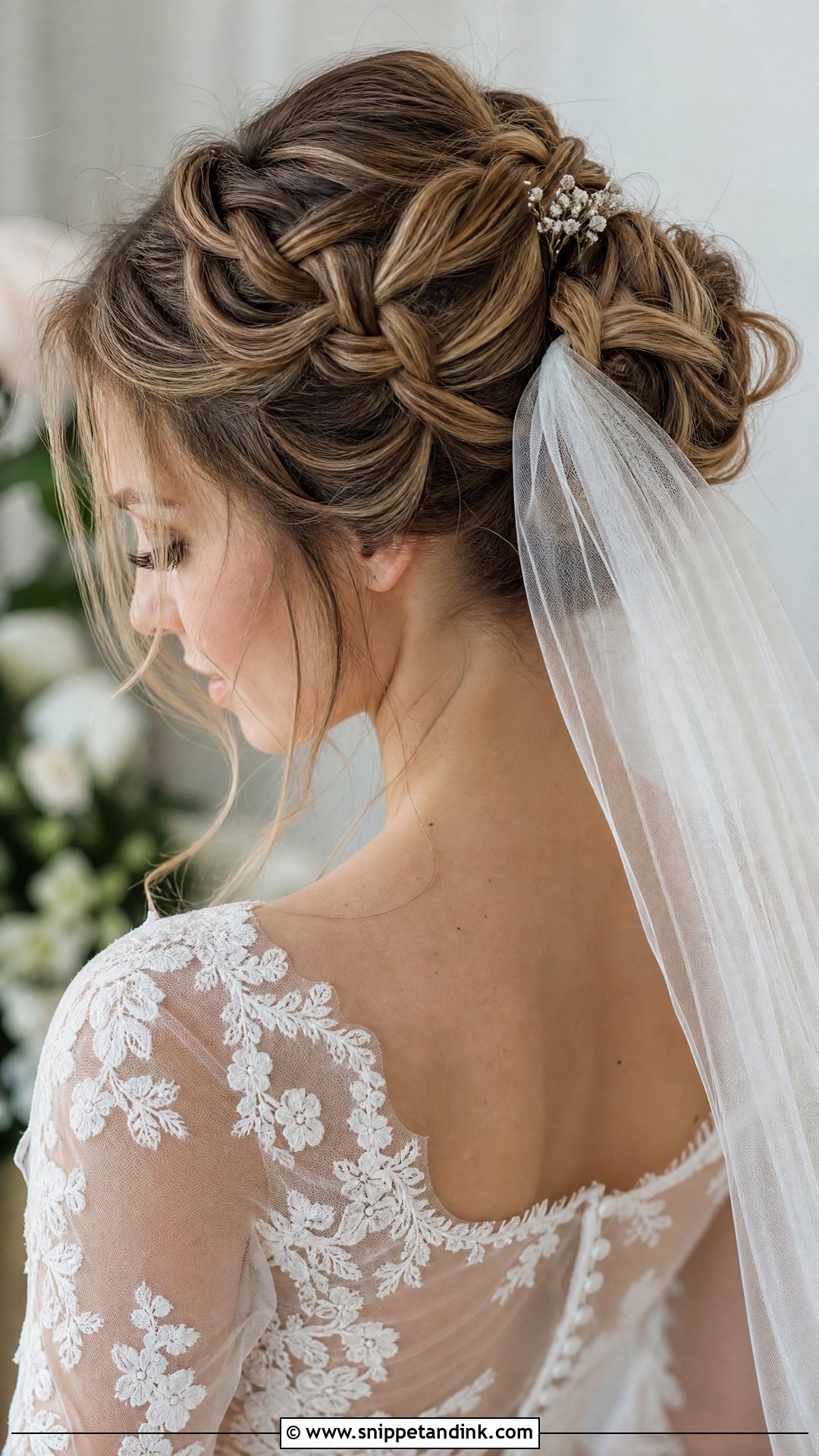
When braids and a veil share the back of the head, I place the veil comb into the thickest part of the braid or just underneath it, never into loose hair. Braids give a surprisingly firm grip. Plan which way the braid runs before the veil is chosen: a horizontal braid can show nicely above a short veil, while a long veil covers most of the work. Small pearls or flowers in the braid stay visible once the veil comes off.
28. Soft Waves Pinned Updo
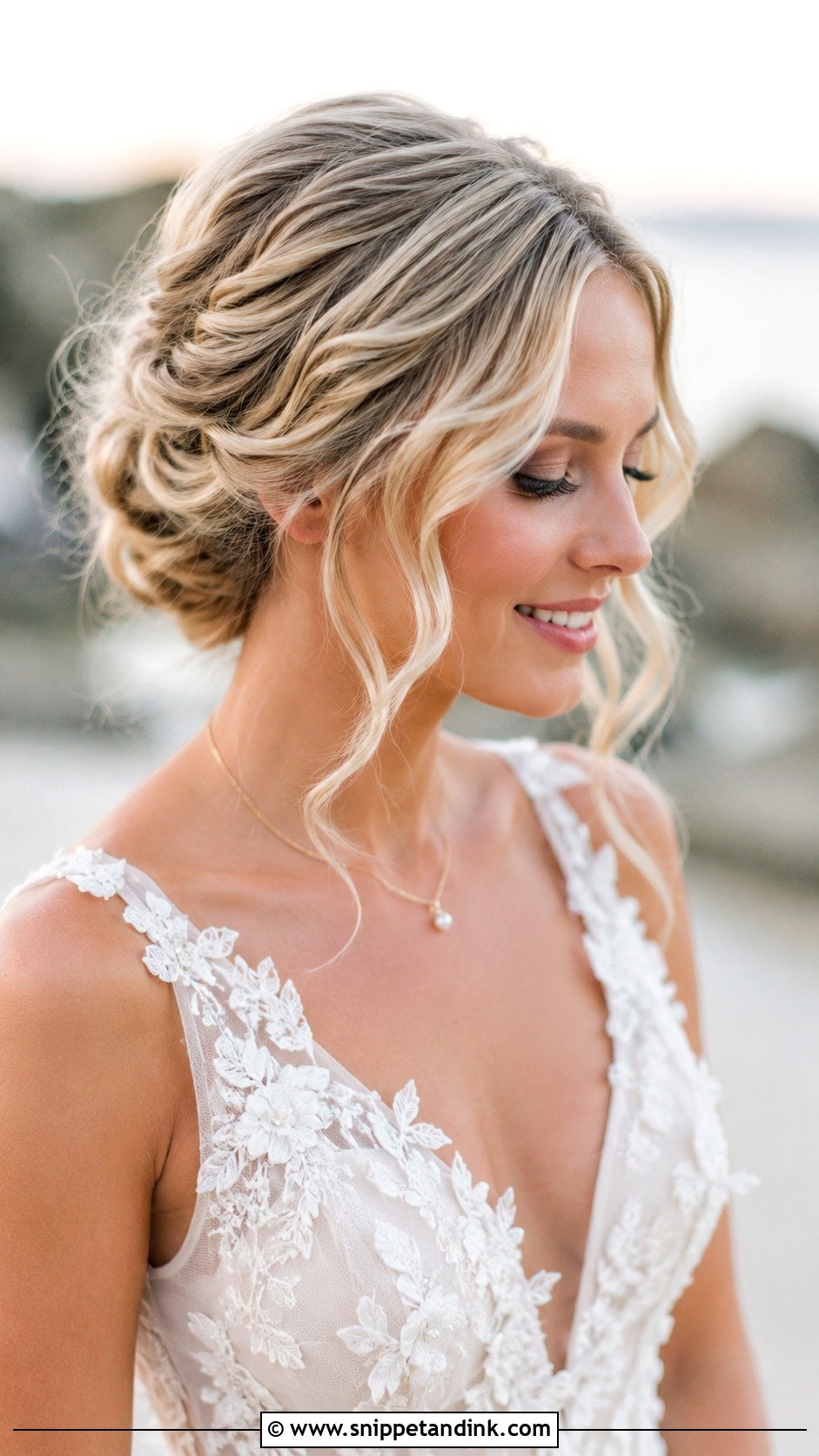
Soft waves pinned up need a set that holds. I curl in alternating directions, let the curls cool, brush lightly to break them into waves, then gather the hair low and pin it loose. A few strands are left to fall at the face. The relaxed shape suits beach and garden weddings well, but salty air relaxes waves quickly, so I use a firm-hold spray at the setting stage instead of only at the end.
29. Elegant Rolled Updo
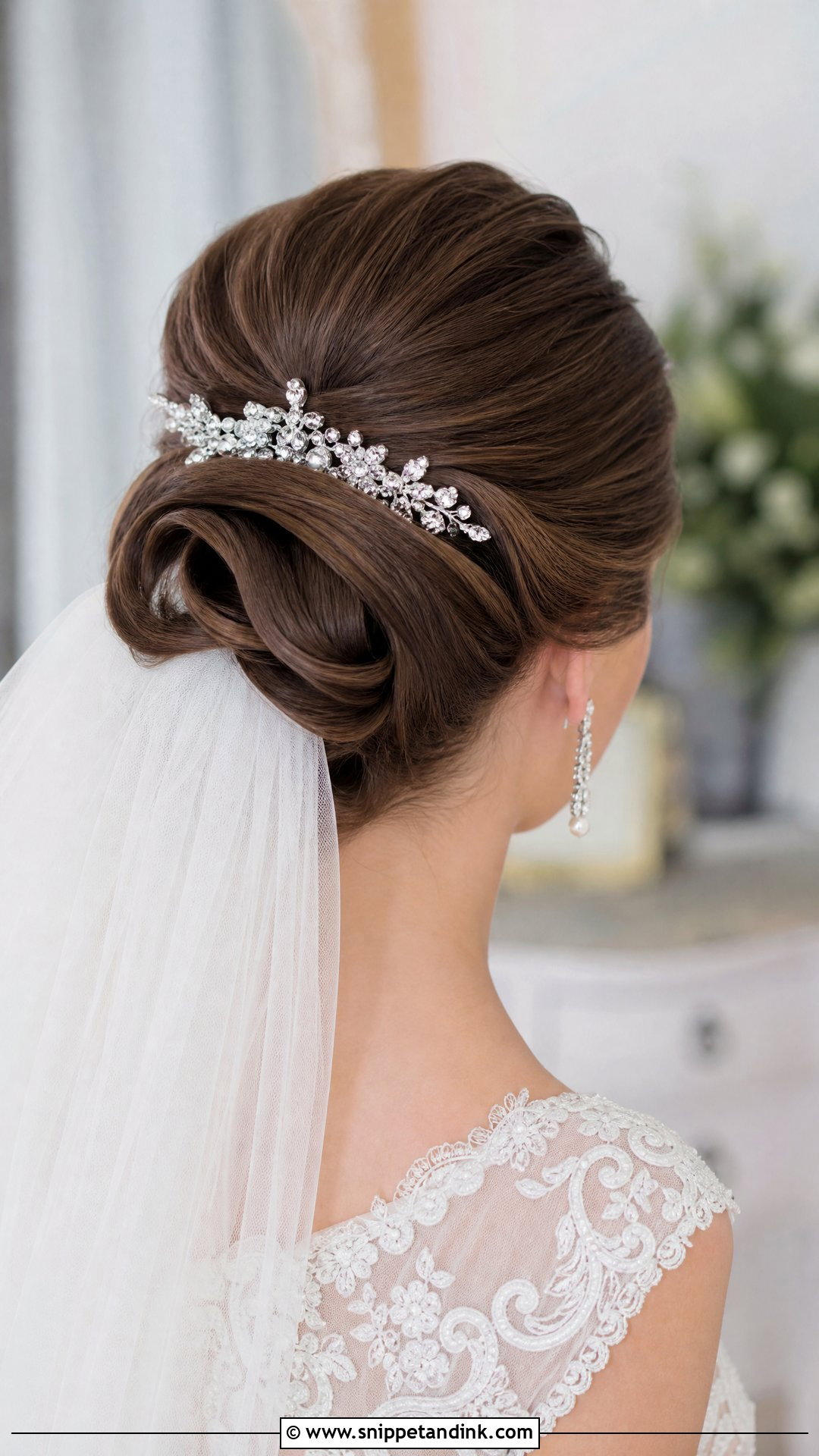
Rolls are created by smoothing a section over the fingers, rolling it toward the head and pinning it flat inside the roll so no pins show. It’s sculptural and very secure, best suited to formal and classic weddings. Medium-length hair often works better than very long hair, which can make the rolls bulky. A veil, tiara or jeweled comb can sit above the rolls, and a few loose pieces can soften it if you want less structure.
30. Garden Inspired Floral Updo
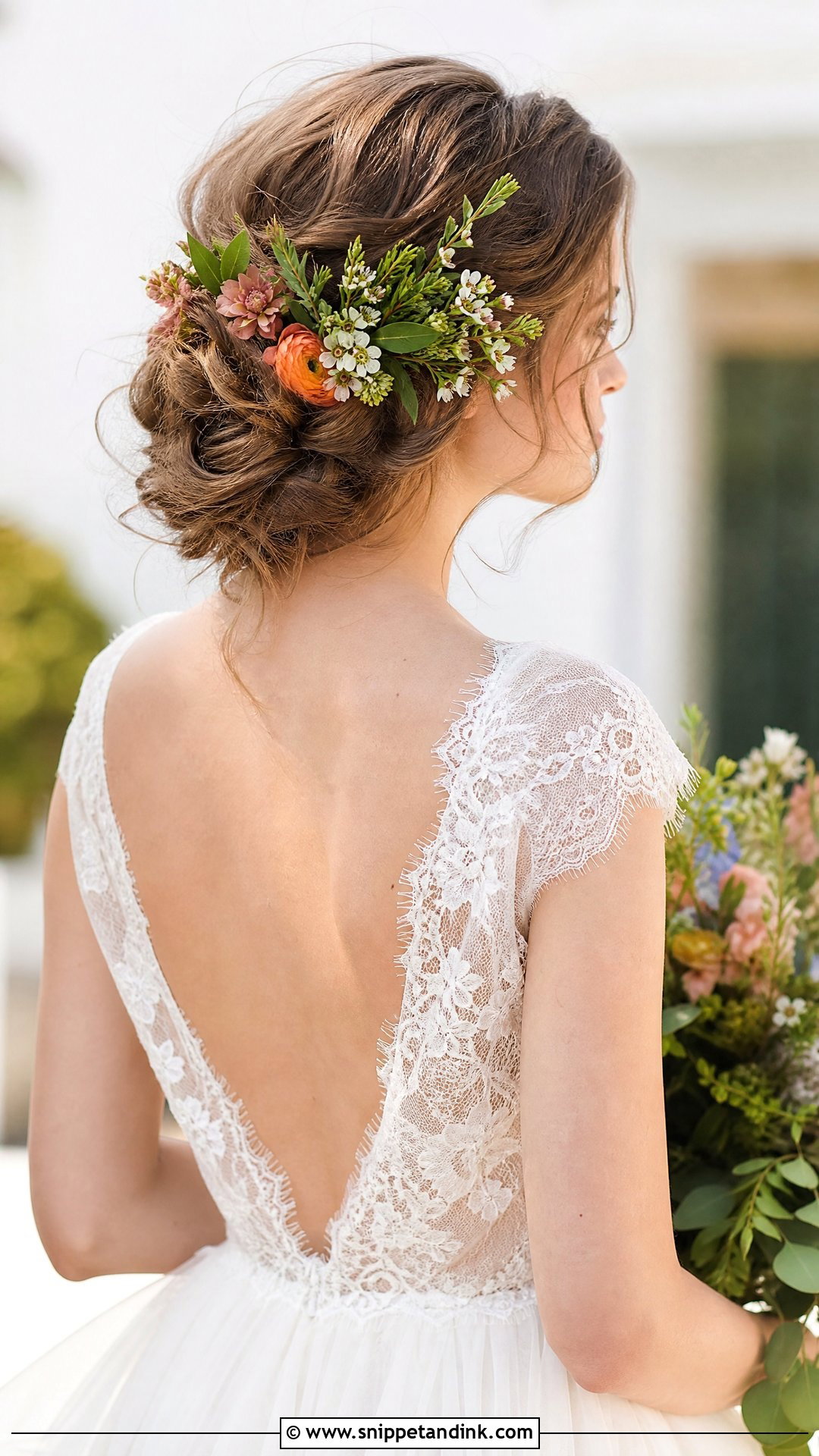
A garden updo uses florals throughout the hair, not just at one side, so I build the textured base first and then work the stems in from the bottom up. Pick blooms that last out of water; your florist will know which ones handle a full day. Mixing greenery, baby’s breath and colorful buds gives depth, and matching a few to the bouquet keeps it cohesive. It suits spring and garden weddings and sits naturally with a flowy gown.
How an Updo Behaves Between the Ceremony and the Last Dance
An updo changes over the day, and knowing how lets you plan for it. Curls relax, tendrils droop, and anything high on the head starts to feel heavy after a few hours. The sleek styles tend to stay put. Soft, textured updos loosen a little, which usually looks better in the evening, not worse.
I always give the maid of honor a small emergency kit: a handful of bobby pins in your hair color, a travel hairspray, a tail comb and two clear elastics. If a section slips, slide one pin in against the direction it’s falling, then cross a second over it in an X. Don’t pull the slipped section out and try to redo it in a bathroom mirror; it nearly always makes things worse.
Sliding the veil out without wrecking the style
Ask someone to hold the weight of the veil while you slide the comb out backward, following the angle it went in. Pulling it straight up drags the hair with it. Once it’s out, a quick press with the palm smooths the spot where the comb sat.
At the end of the night, find and remove every pin before brushing. Work your fingers through slowly, then use a wide-tooth comb from the ends upward. Brushing straight through backcombed hair is how breakage happens.
What Your Trial Updo Should Prove by Bedtime
The updo that works on your wedding day is the one that suits your hair’s texture, your veil and the weather, not only the photo you fell for. Bring two or three of these ideas to your trial, plus your veil and any hair pieces, and tell your stylist how long you need it to last. Then wear it for the rest of that day. How it looks at bedtime tells you more than how it looks in the chair.
You'll Like These Ideas:



Leave a Reply