
I book more low buns than any other bridal style, and the reason is practical before it is pretty. A bun at the nape gives a veil comb something solid to grip, keeps hair off the neckline so earrings and the back of the dress show, and stays comfortable through a long day of hugging and sitting. Within that one shape there is a lot of range, from slick and graphic to soft and loose. Here are twenty versions I’d put on a bride, with notes on what each one needs from your hair and how it holds up.
How Low Is Low? Placing the Bun Around Your Collar and Veil Comb
A low bun can sit anywhere from just below the crown bone to right at the nape, and an inch either way changes how it behaves. Before I start, I look at three things: the back of the dress, the veil and how much the bride will be sitting.
- High necks and lace collars need the bun a little higher, or it rubs on the fabric and flattens on one side by the reception.
- Open and low backs suit a bun right at the nape, which keeps the line of the neck clean.
- A heavy or cathedral veil needs a solid base above the bun for the comb. I braid or pin a small anchor there before I build the bun around it.
- If you will spend much of the day in a high-backed chair, a bun at the nape gets pushed out of shape. A slightly higher placement survives better.
- Check it from the side in a mirror. A bun that sits just below the ears lines up neatly with the jaw in profile photos, while one lower down the neck can look like it is sliding off.
1. Sleek Low Bun With Middle Part
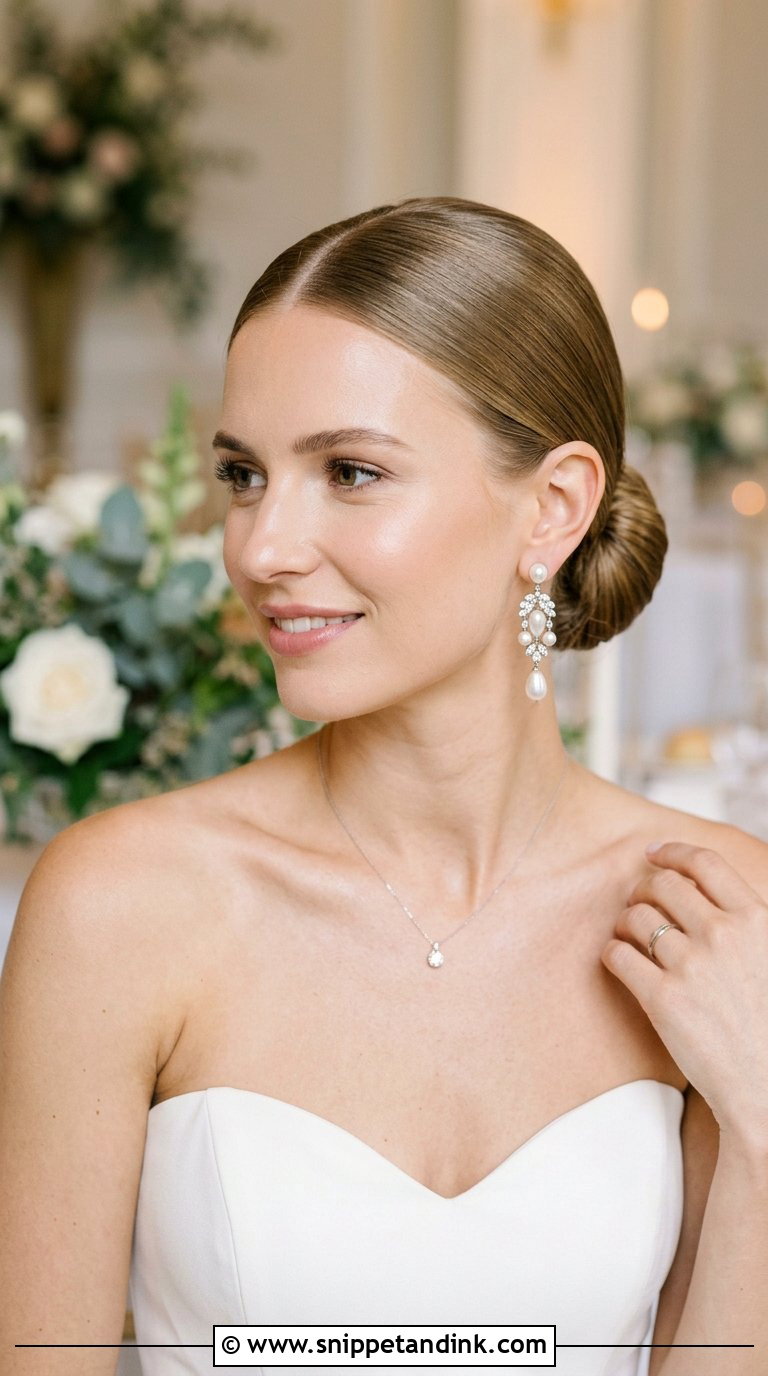
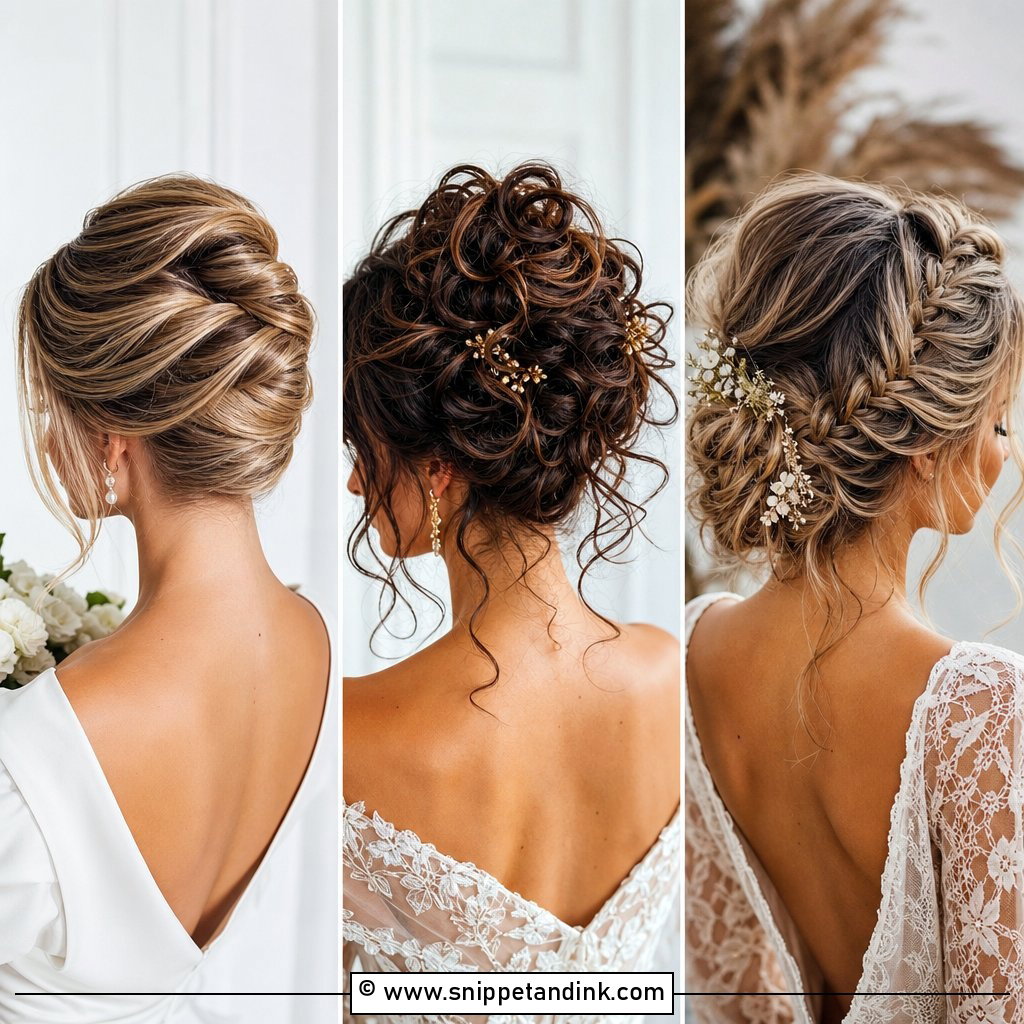
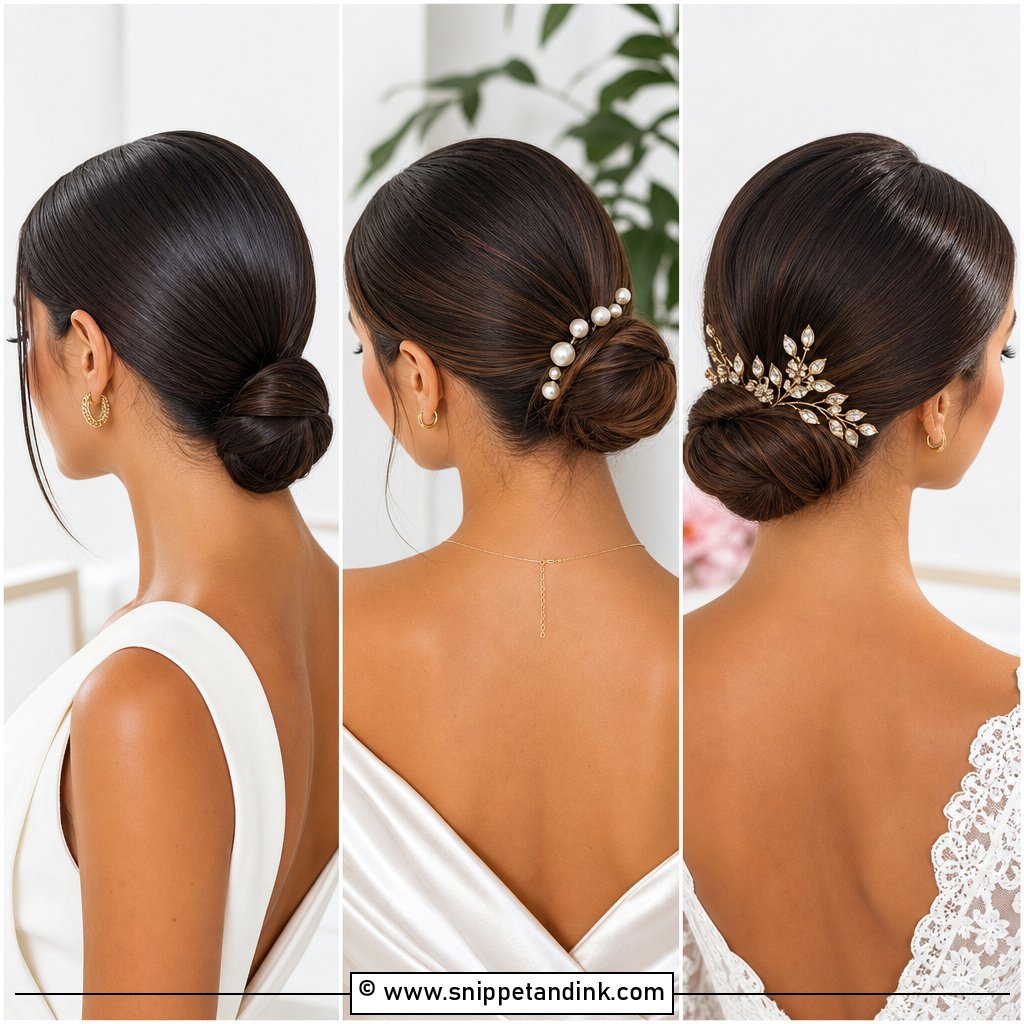
Sleek and centre-parted is the most graphic low bun on the list. Every strand goes back flat, so the face, the brows and the earrings do all the talking. I build it on hair that has been blow-dried completely smooth first; gel on top of frizz just gives you shiny frizz. The centre part is honest, too. It shows any asymmetry in the hairline, so look at it straight-on in a mirror before you commit. A firm-hold gel and a drop of serum keep it crisp for the whole day.
2. Classic Ballerina Low Bun
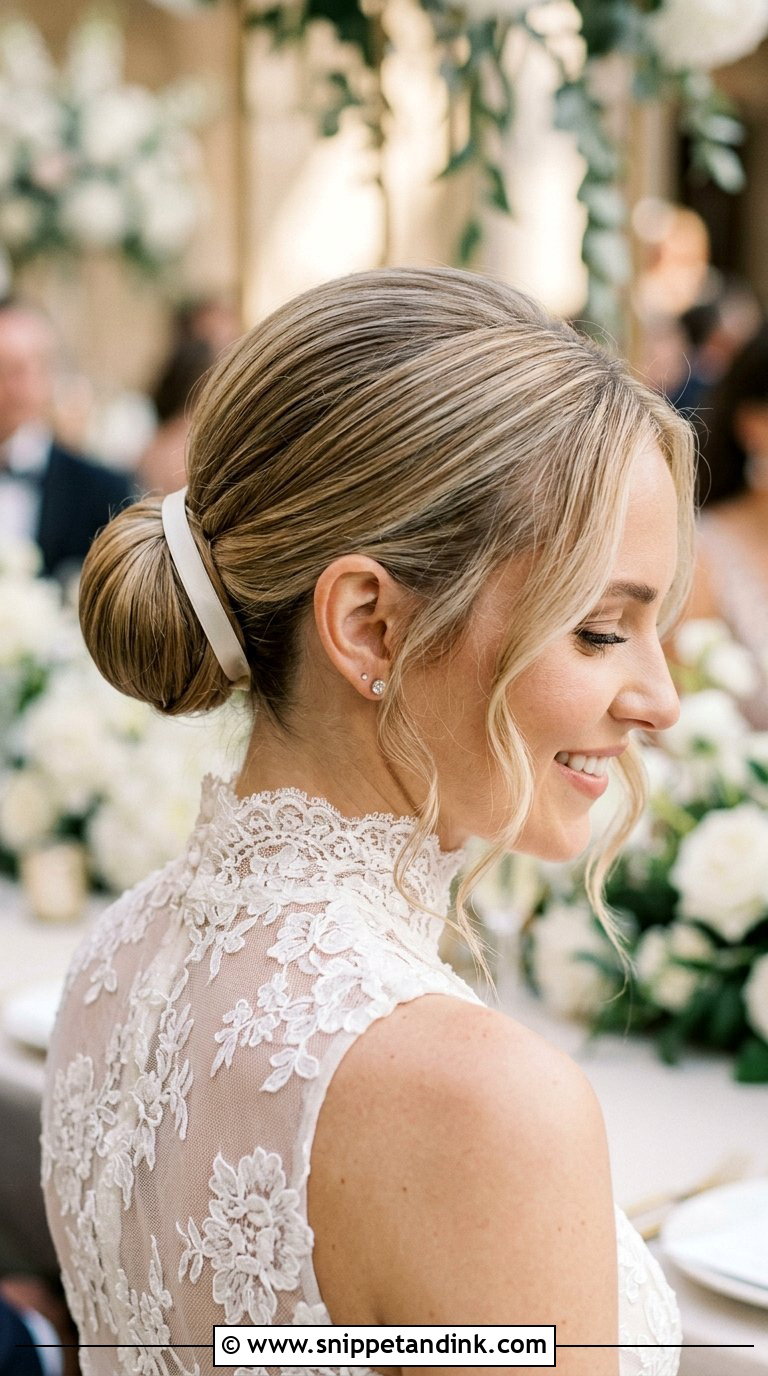
The ballerina bun is a neat, rounded coil set low at the nape. It sits under almost every veil and works with any neckline, which is why I suggest it to brides who are undecided. The trick to that clean round shape is a firm, smooth ponytail base; if the elastic is loose, the coil wobbles by evening. Wrap it with a satin ribbon or add a few small clips. A couple of soft curls at the face keep it from looking severe in close-ups.
3. Textured Low Bun With Face-Framing Strands
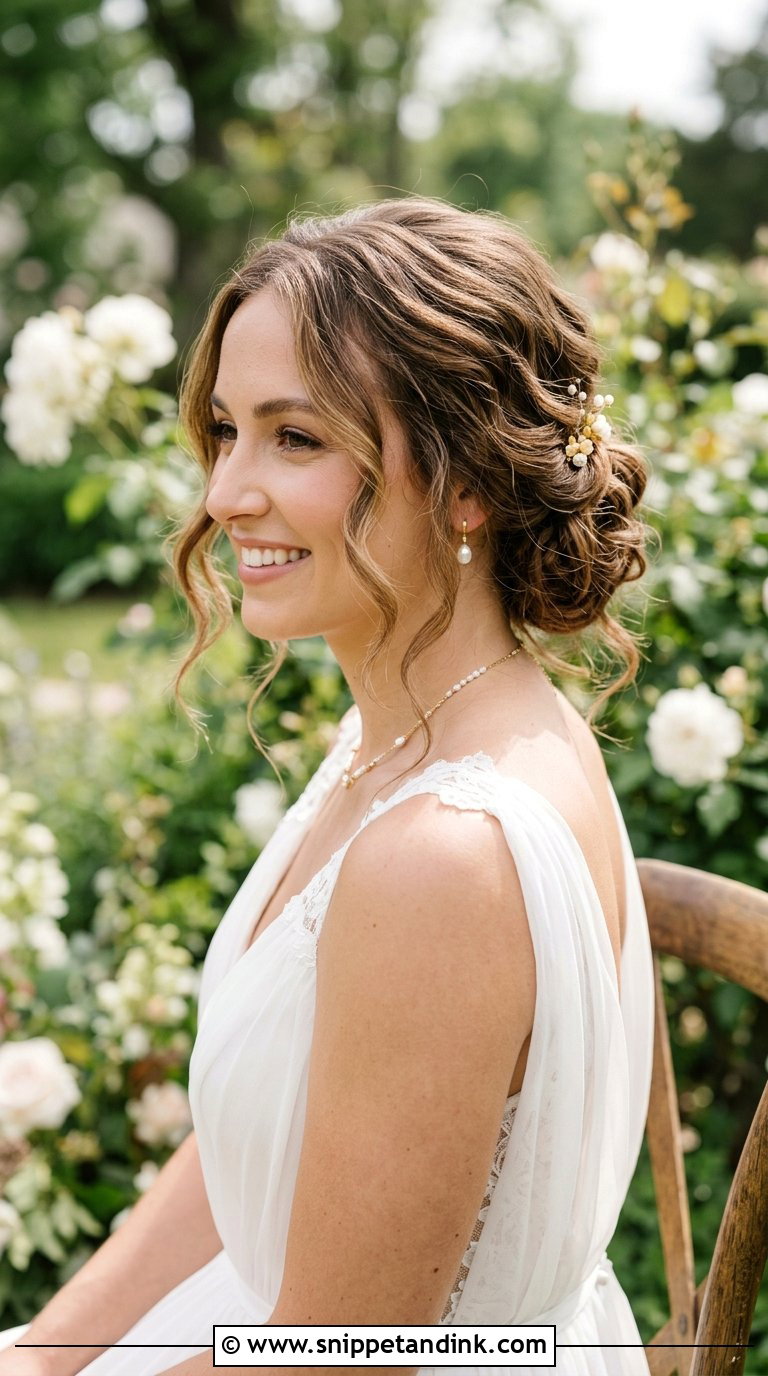
A textured low bun gives you shape without slickness. I curl the hair first with a medium iron, let it cool fully, then brush the curls into waves before pinning, so the texture survives instead of being pinned flat. A few strands left loose by the cheekbones soften the face. In natural light every bend in the hair catches, which is why I like it for outdoor ceremonies and relaxed gowns. Hair that drops curl quickly needs a texture spray before curling, or the bun goes flat within hours.
4. Sculptural Knot Low Bun
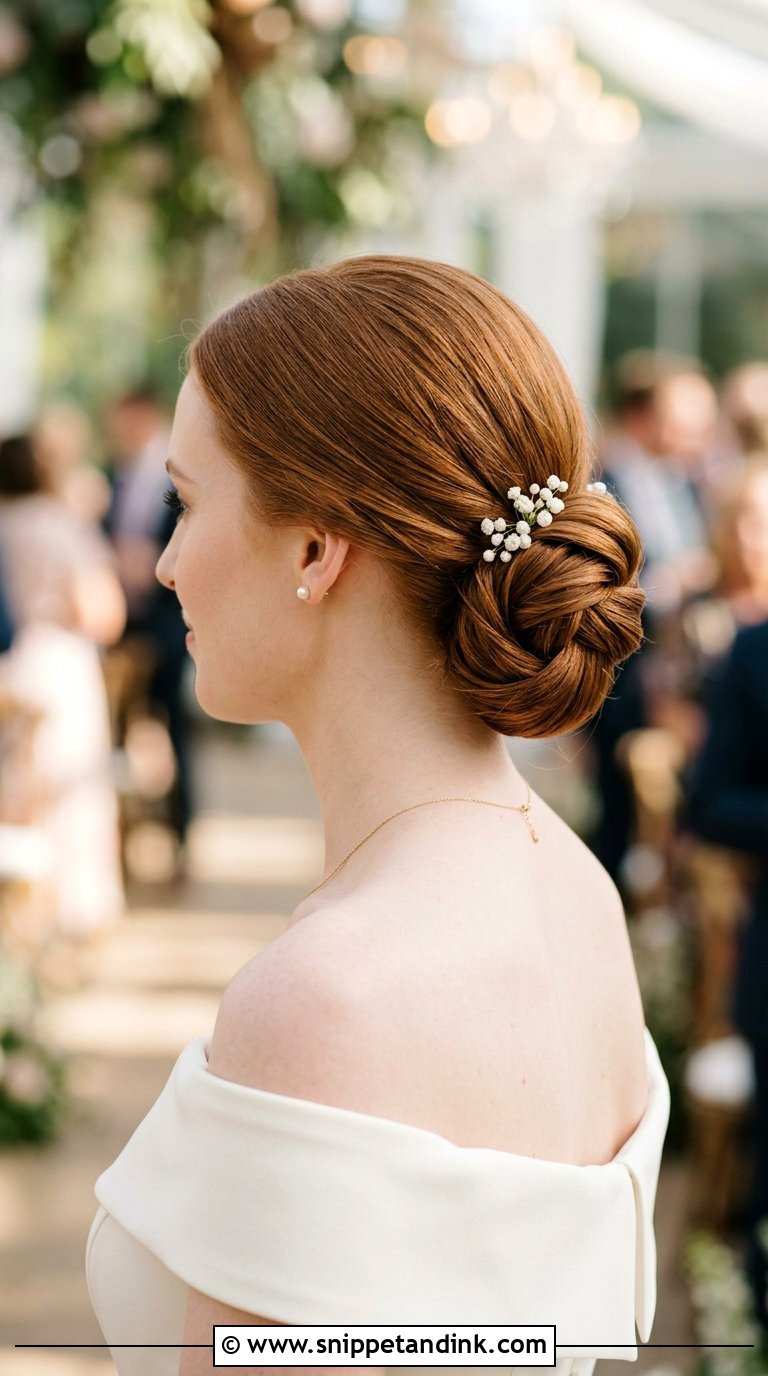
A sculptural knot low bun twists the hair into a clean, architectural shape, sometimes a single knot, sometimes loops or a tidy double knot. It shows the jawline and neck, so it sits naturally with strapless and off-shoulder dresses and clean-lined gowns. Keep accessories minimal; the knot is the detail. This is a shape that needs real length and density. On fine or shoulder-length hair I’d usually suggest something softer, because padding a sculptural knot shows.
5. Romantic Loose Low Bun
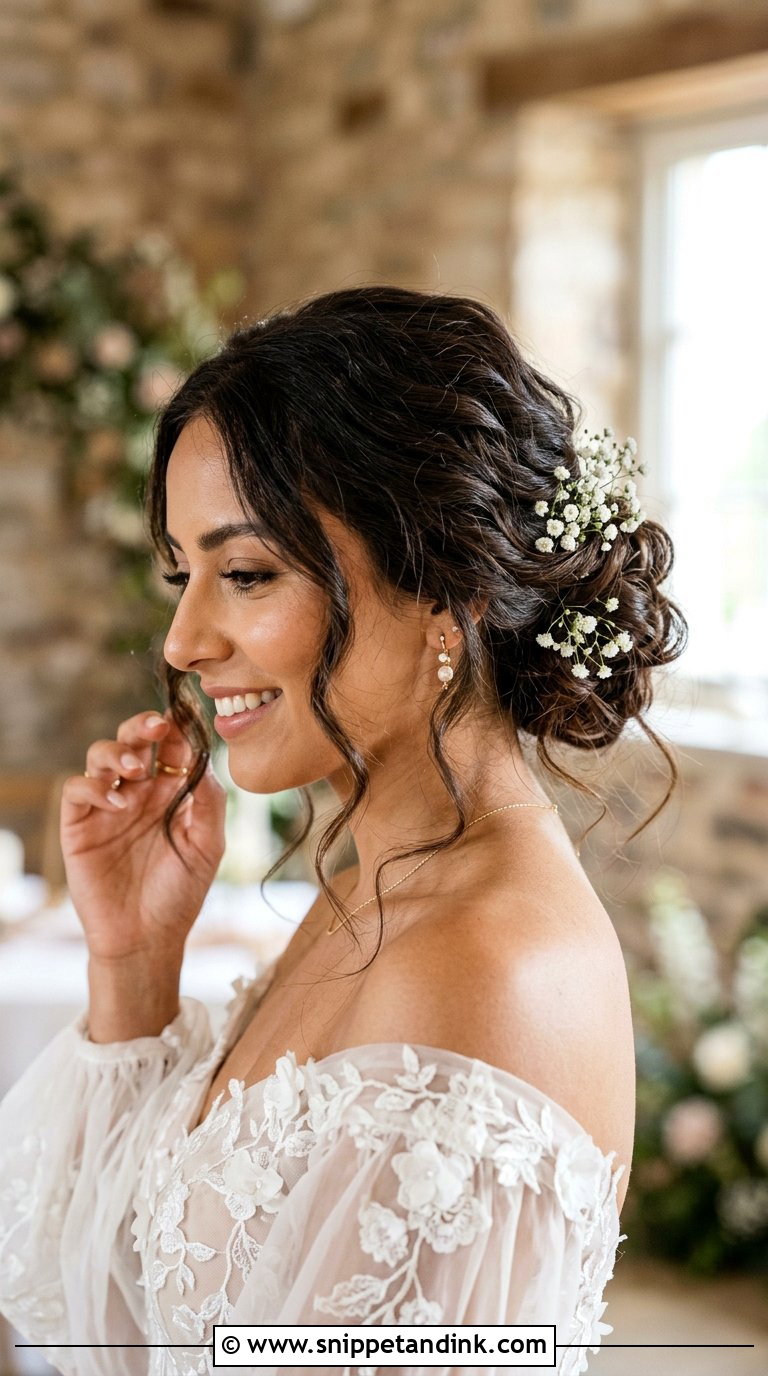
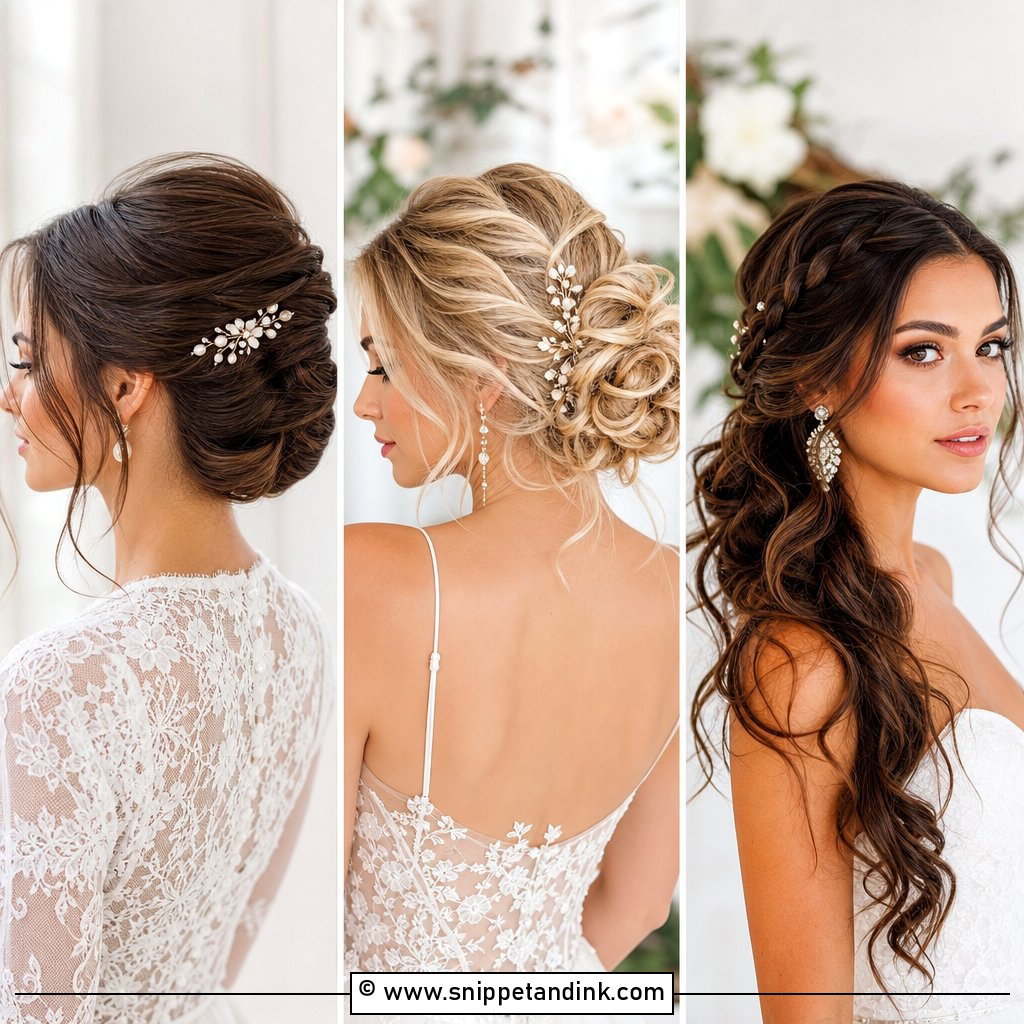
The loose low bun is pinned with deliberate slack, so the hair looks gathered rather than secured. Wispy pieces fall around the face. It goes well with flowing chiffon and outdoor ceremonies. Here is the honest part: loose looks need more pins than tight ones, not fewer. I anchor the base firmly with crossed bobby pins and then use U-pins for the soft outer sections, so it can be pulled and loosened without collapsing. Tuck in baby’s breath or small blooms if you want some flowers.
6. Low Chignon With Veil
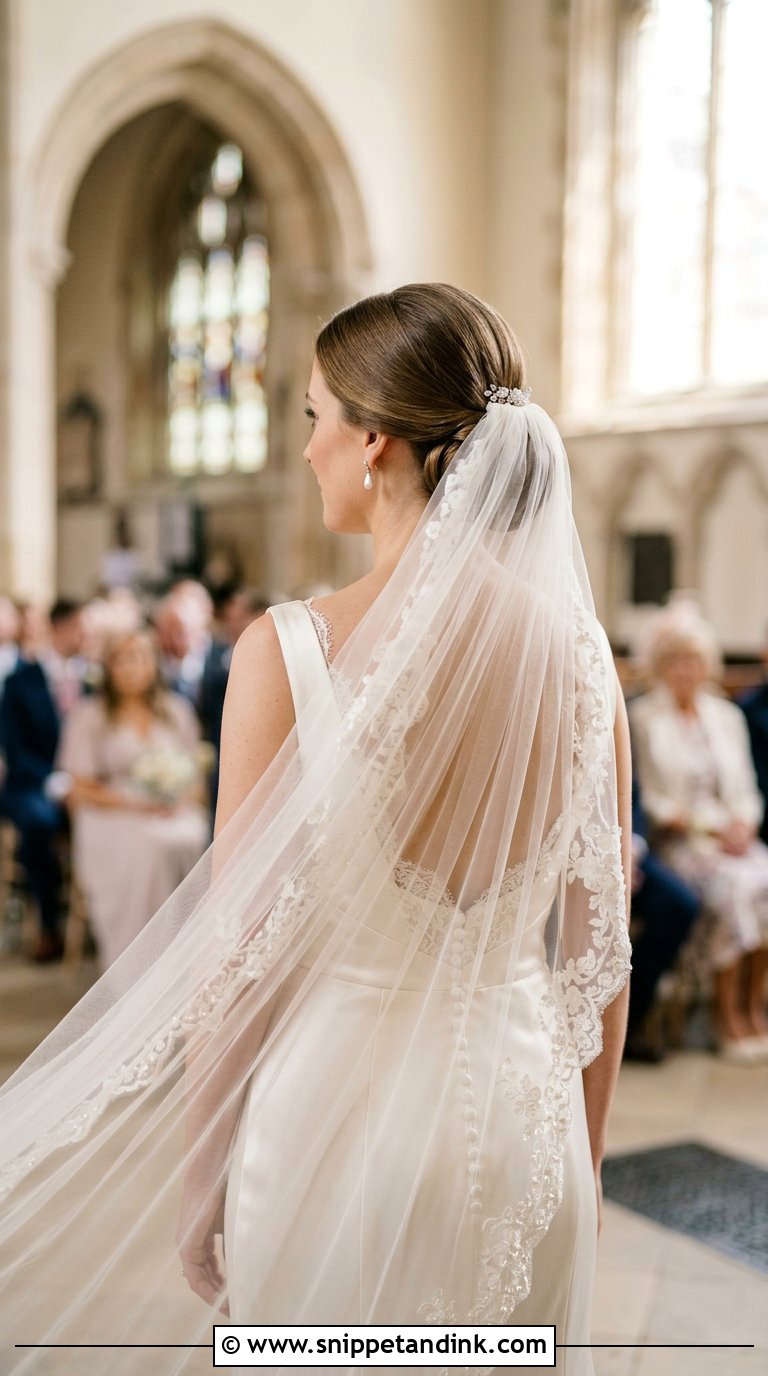
A smooth chignon at the base of the neck is the best anchor a veil can have. Cathedral or birdcage, the comb goes in just above the bun, where it grips the solid base instead of loose hair. That is why I recommend this style to brides planning a heavy or long veil. Once the veil comes off at the reception, the chignon still looks finished. Smooth sides read classic; softened sides read more relaxed and suit old Hollywood styling too.
7. Braided Low Bun
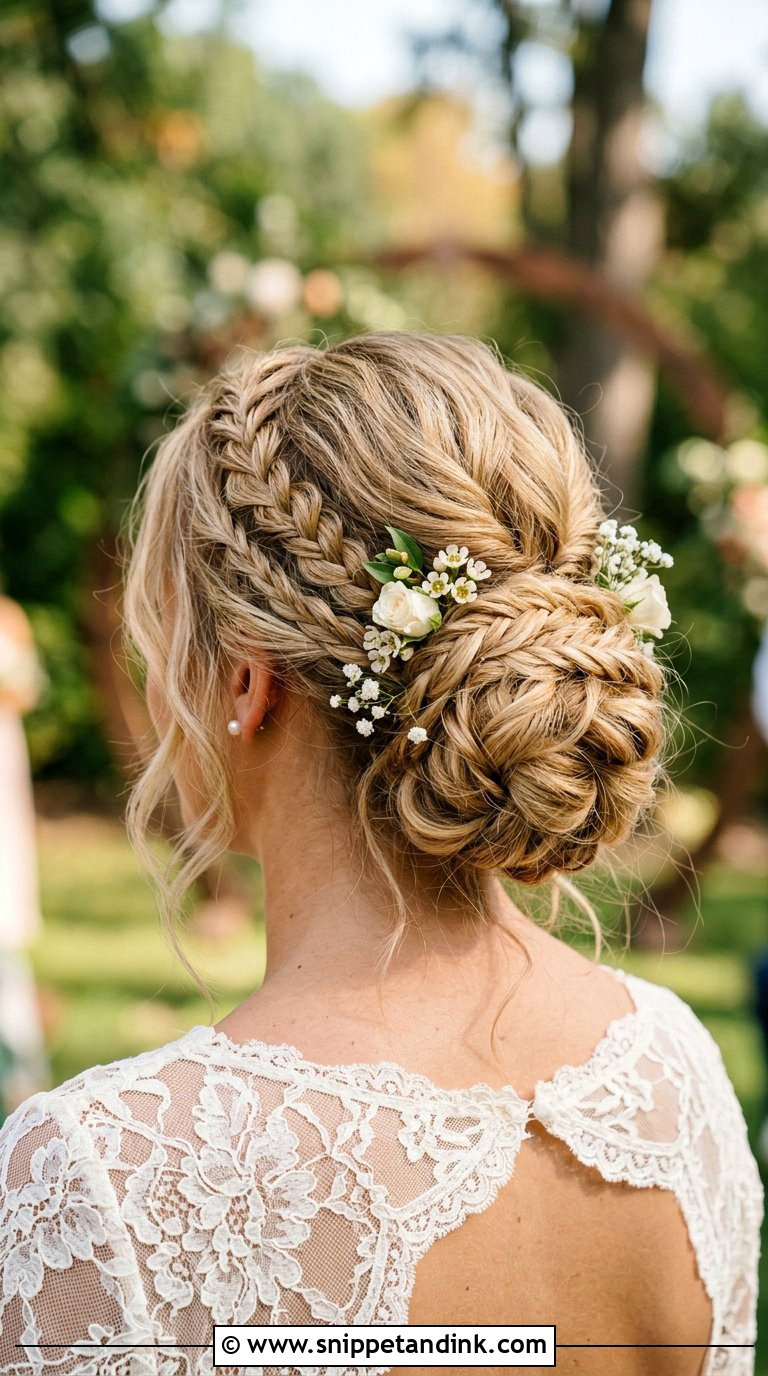
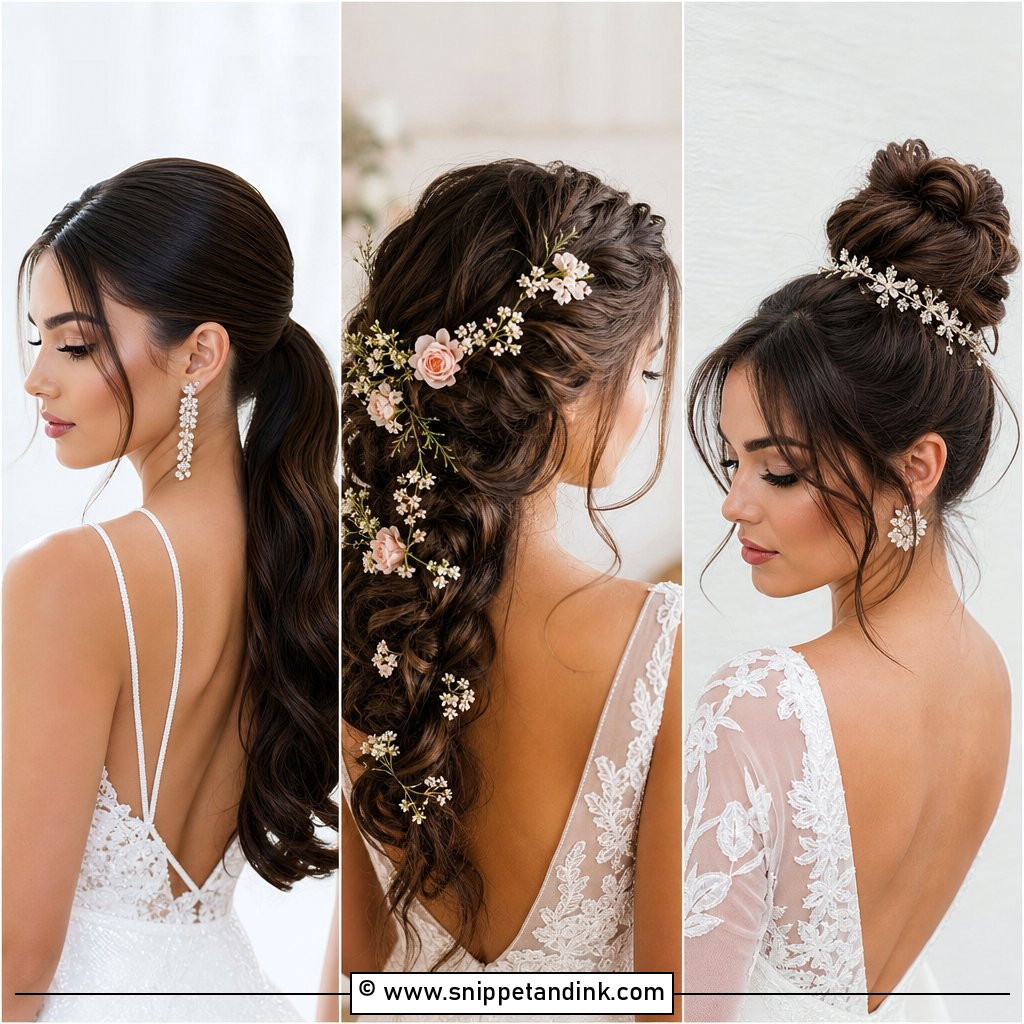
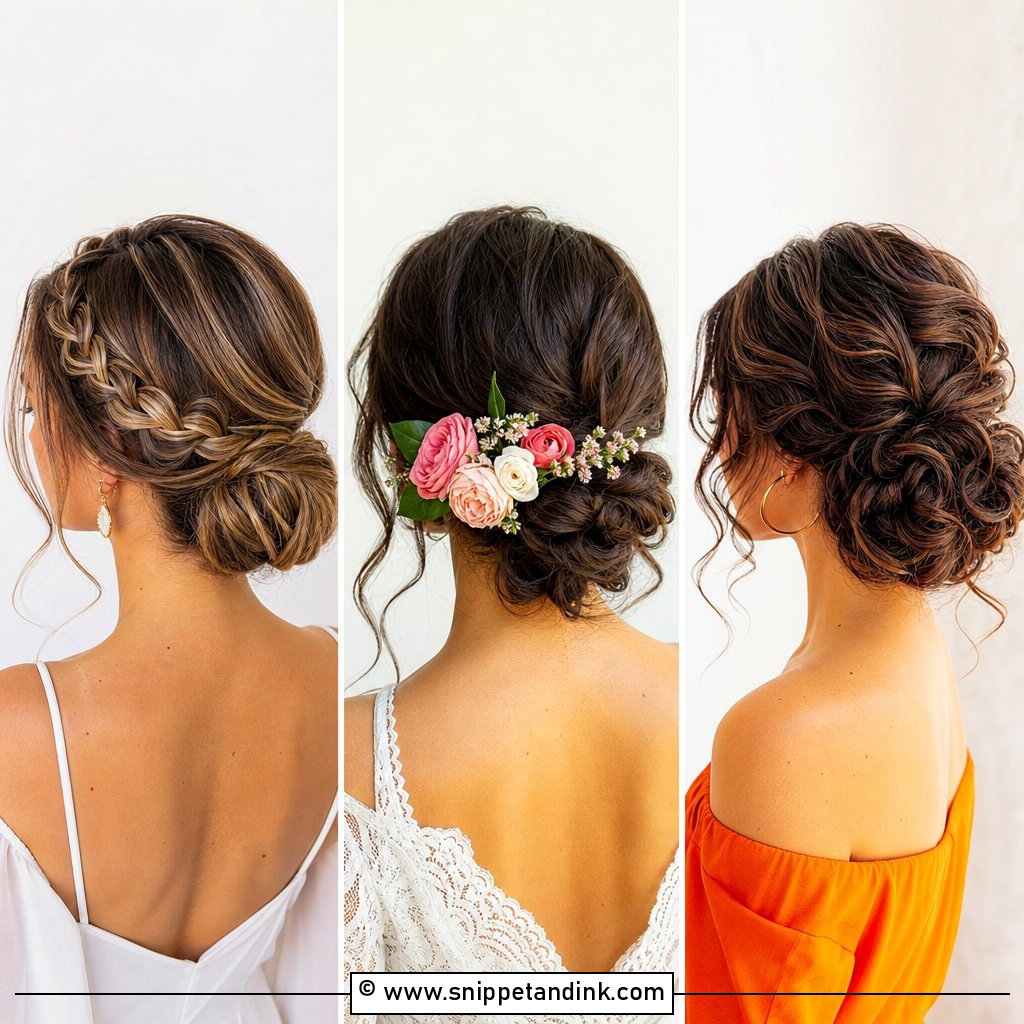
Braids add texture without losing structure. One accent braid along the side or several wrapped around the base both work. Up close every plait shows, which makes it a detail-lover’s style. There’s a practical bonus for fine hair: braiding and then gently pulling the plaits wider makes the hair look thicker than it is. A flower crown or a few delicate pins finish it.
8. Wet-Look Low Bun
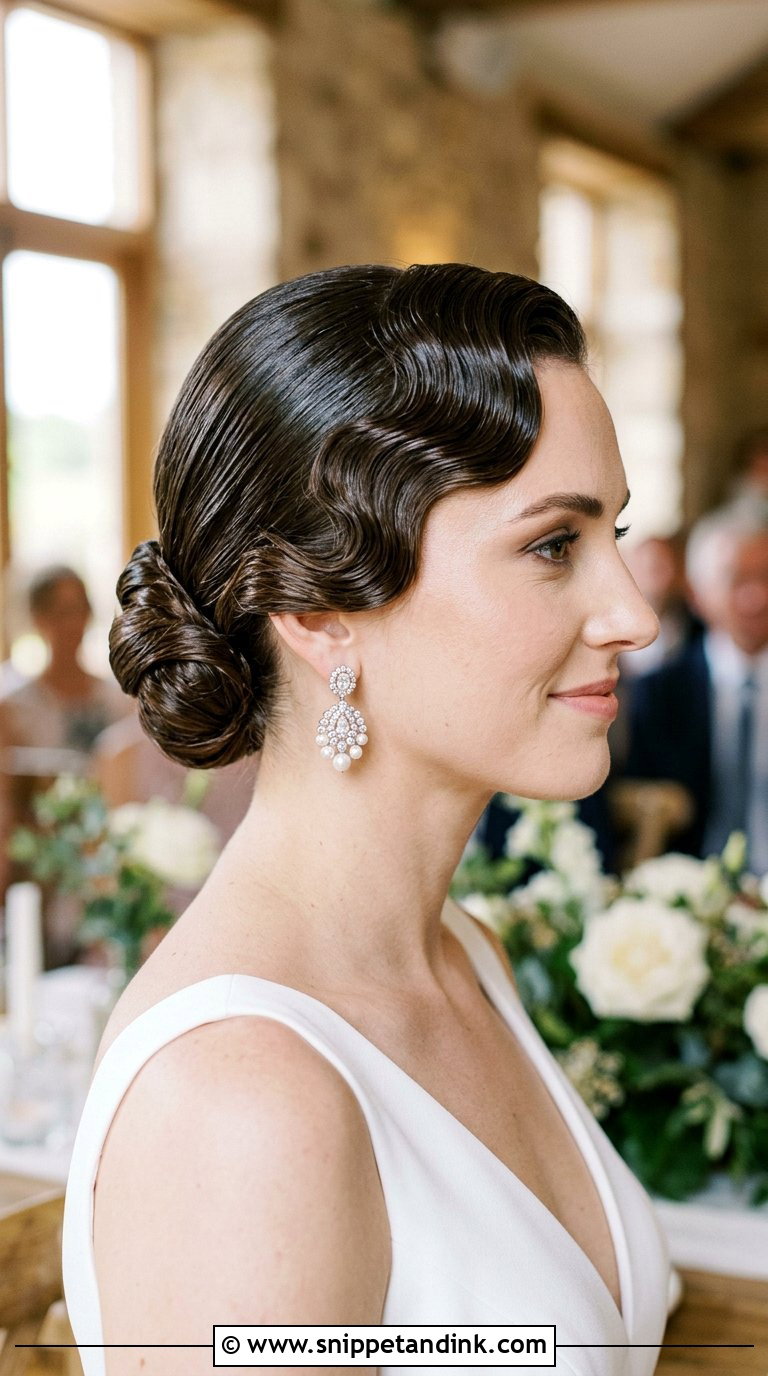
The wet-look low bun is slicked back with gel and shine products until it looks glossy and sculpted. Finger waves at the front give it a vintage edge. It pairs with minimalist gowns and statement jewelry. I’d steer a bride away from this one if her wedding is outdoors in heat: gel softens with sweat around the hairline, and once it starts to shift it is hard to fix without starting again. Under controlled indoor lighting, though, the sheen is spectacular.
9. Low Side Bun
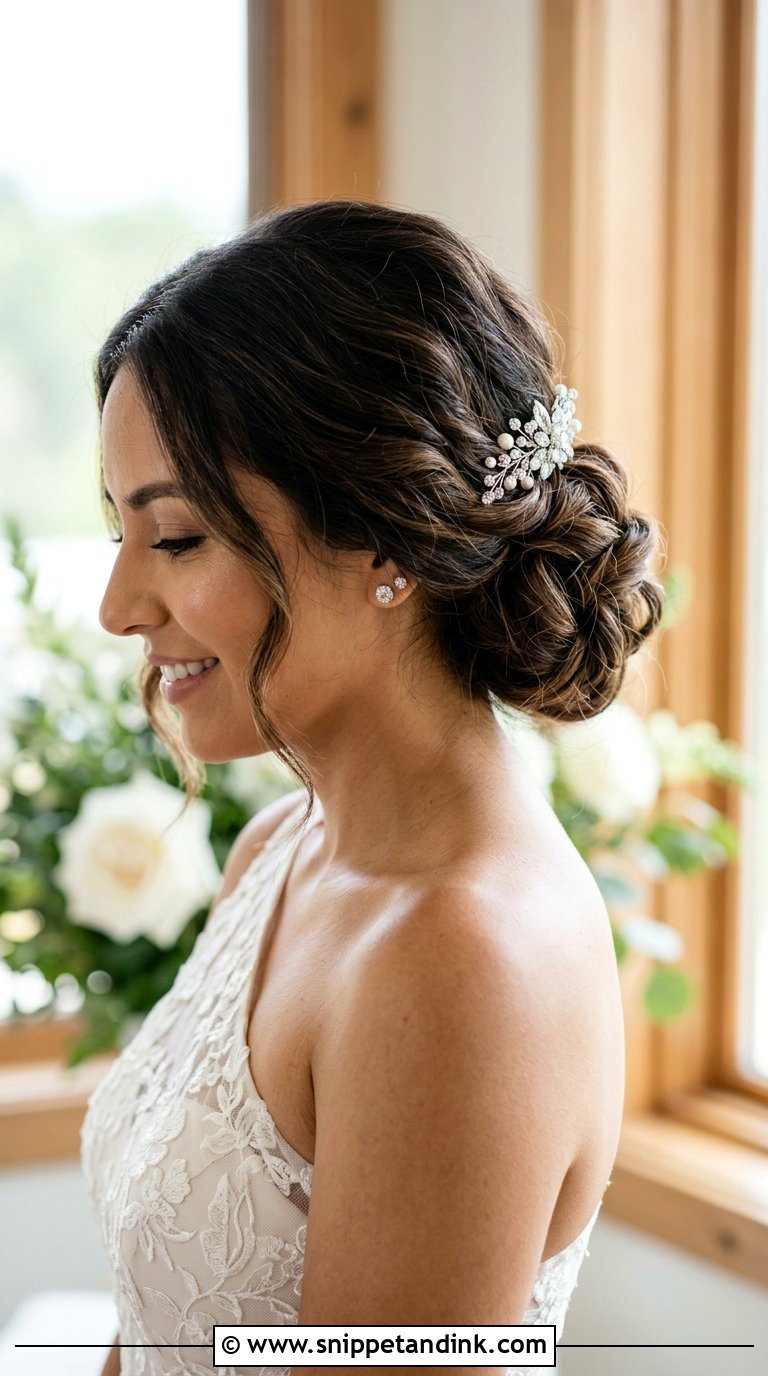
Shifting the bun to one side changes the whole silhouette. A low side bun shows off earrings on the open side and follows the line of a one-shoulder neckline. I place the bun on the side the photographer will see most during the ceremony, which is usually the side facing the guests, so ask your planner which way you will stand. Keep it sleek or loosen it, and balance it with a flower or jeweled pin on the opposite side.
10. Low Bun With Pearl Pins
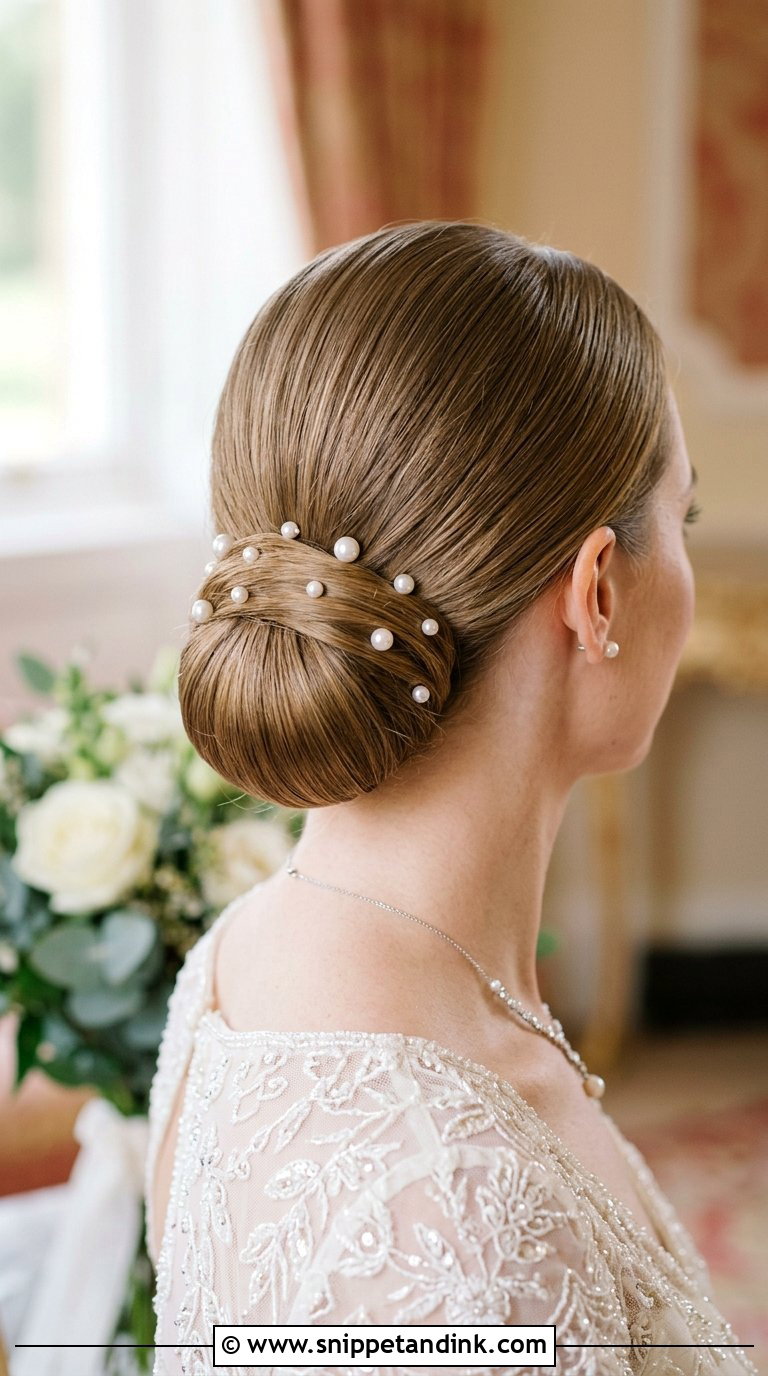
Pearl pins add a soft sheen to a low bun without competing with the dress. I scatter them across the bun or line them along a twist. Placement takes more planning than brides expect: pins tucked too deep vanish, and pins pushed into loose hair slide out by dinner. I set each one into a section of hair that is already anchored. It goes well with vintage-leaning gowns and pearl jewelry, and the bun stays the focus.
11. Low Bun With Flowers
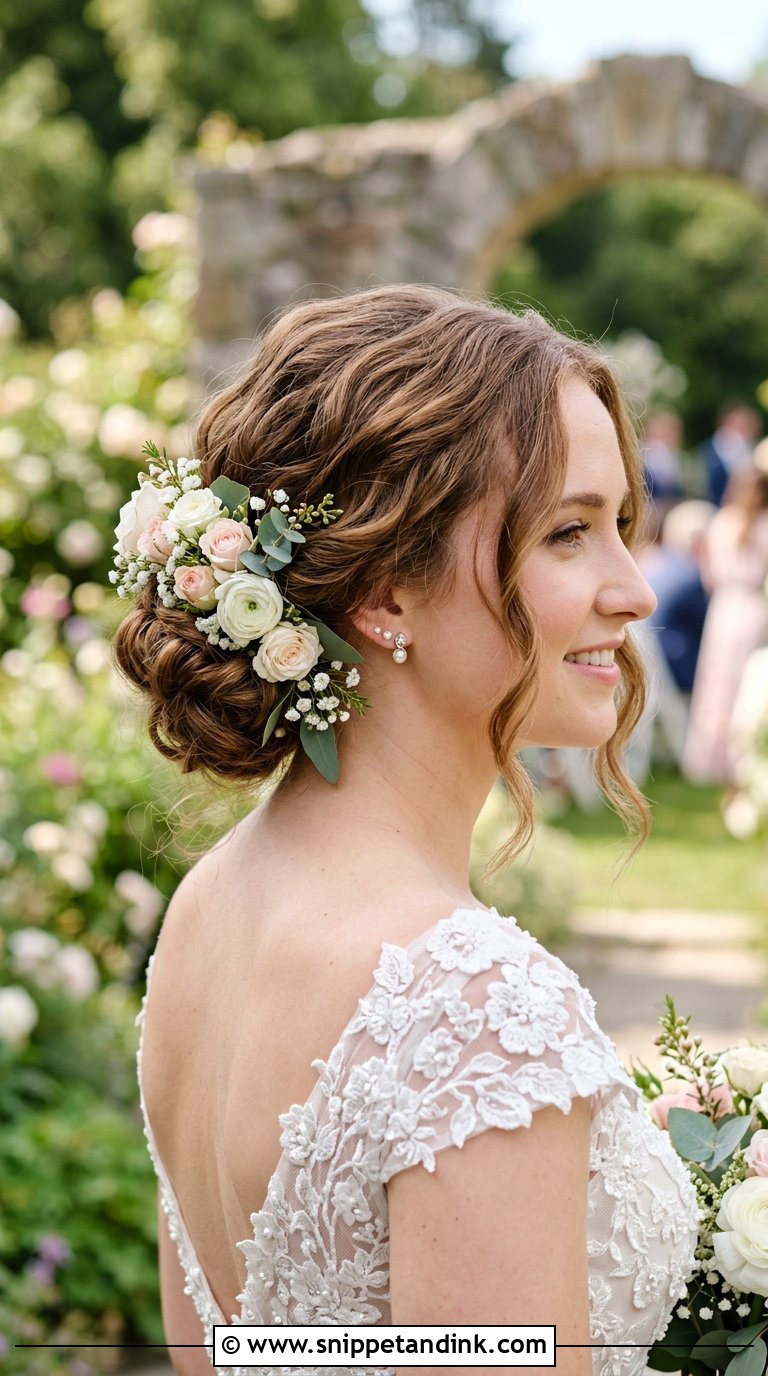
Flowers in a low bun look fresh and natural. Small blossoms can sit along the base or gather in a soft cluster to one side, ideally echoing the bouquet. Baby’s breath, roses and wildflowers all suit it. Fresh flowers wilt, so I ask the florist for blooms that are wired and conditioned, and I place them last, after all the hairspray. Faux flowers are a sensible choice for hot summer days or very long events.
12. Twisted Low Bun
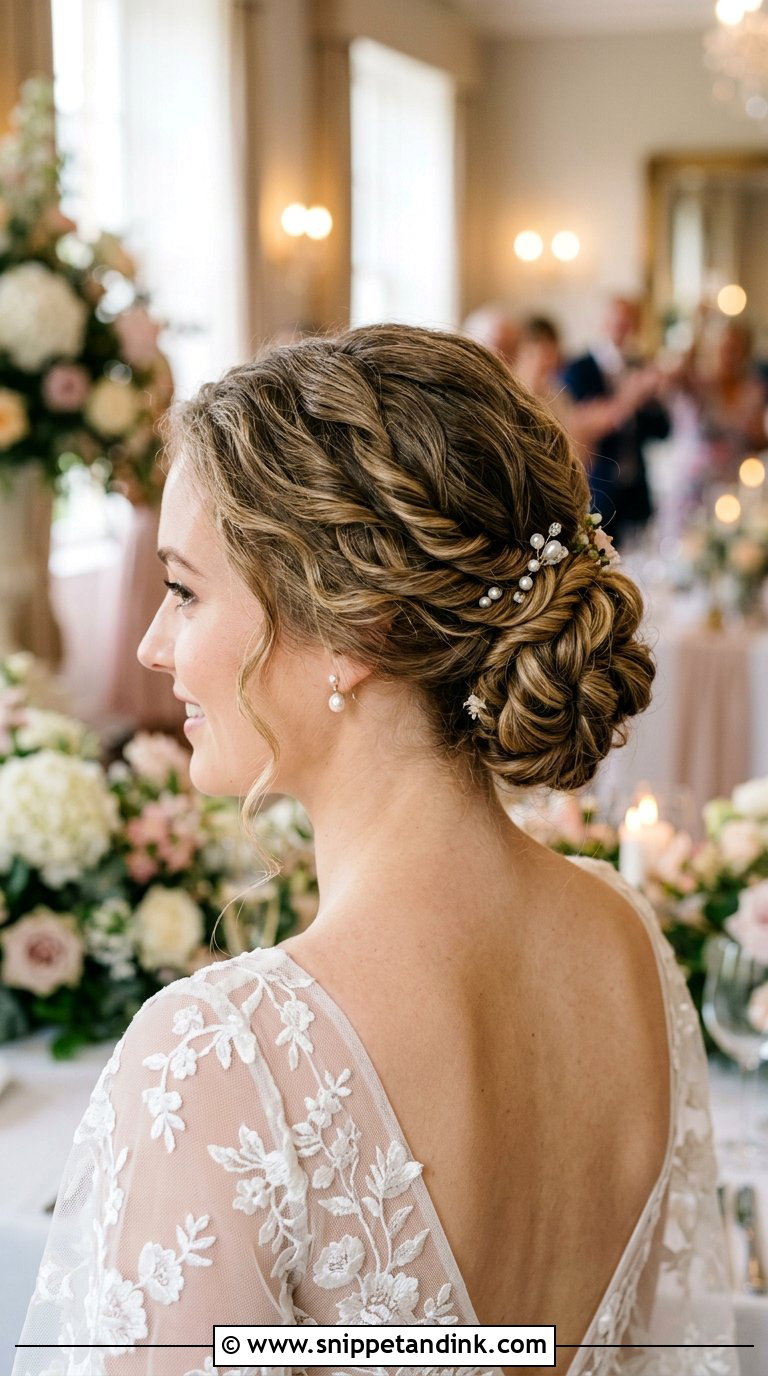
Twisting sections before pinning gives the bun a rope texture that catches light. It sits between sleek and undone, and it works well on medium to long hair because twists naturally fill out a shape. On very layered hair, shorter ends tend to spring out of the twists, so I set them with a little wax first. A few loose strands at the front soften it, and a simple comb or delicate pins finish the look.
13. Swept-Back Low Bun
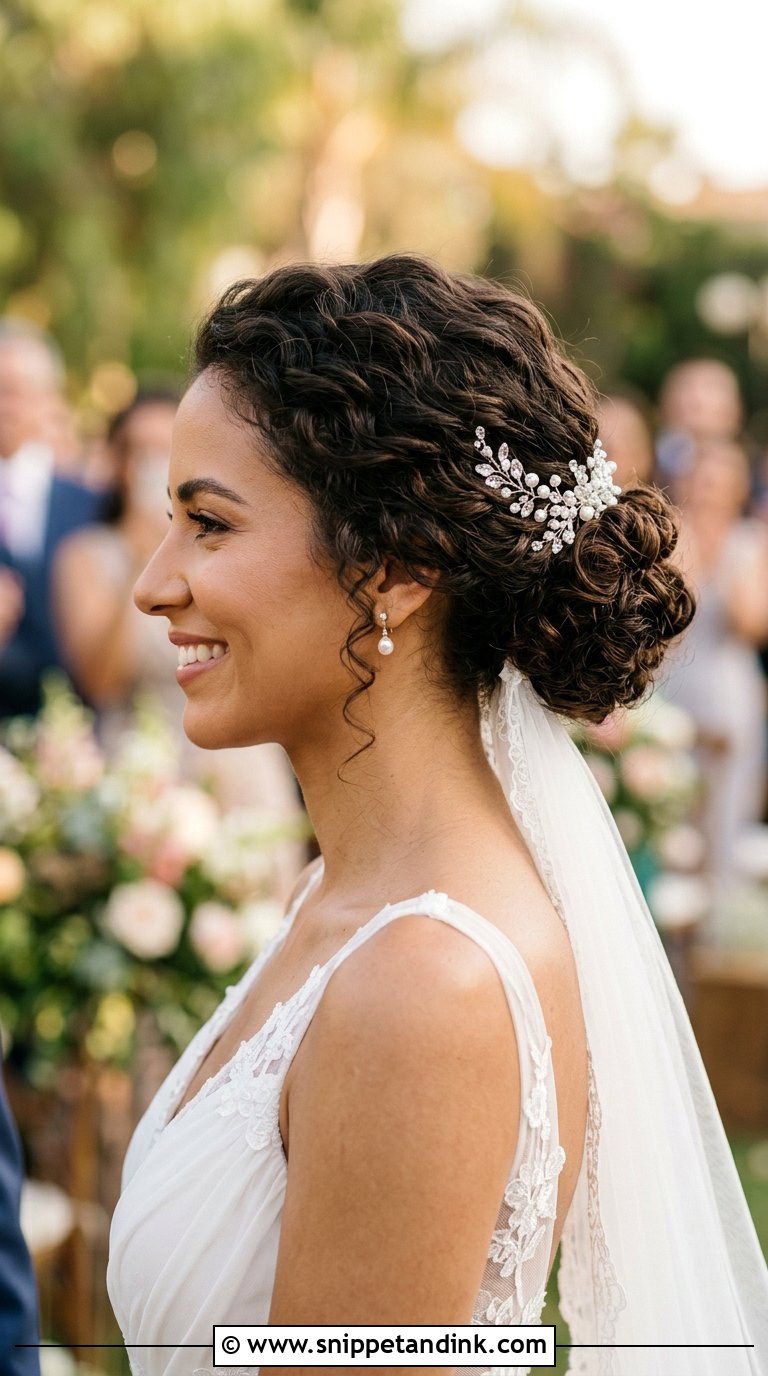
The swept-back bun keeps a little lift on top and pulls the hair away from the face into a low bun. It is the style I recommend most for wavy and curly hair, because it shows off the natural pattern instead of fighting it. For curls, I set the hair in its natural texture and avoid brushing through it once dry. Keep the crown soft and slightly raised. It works with a veil or a headpiece and stays comfortable all day.
14. Vintage Finger Wave Low Bun
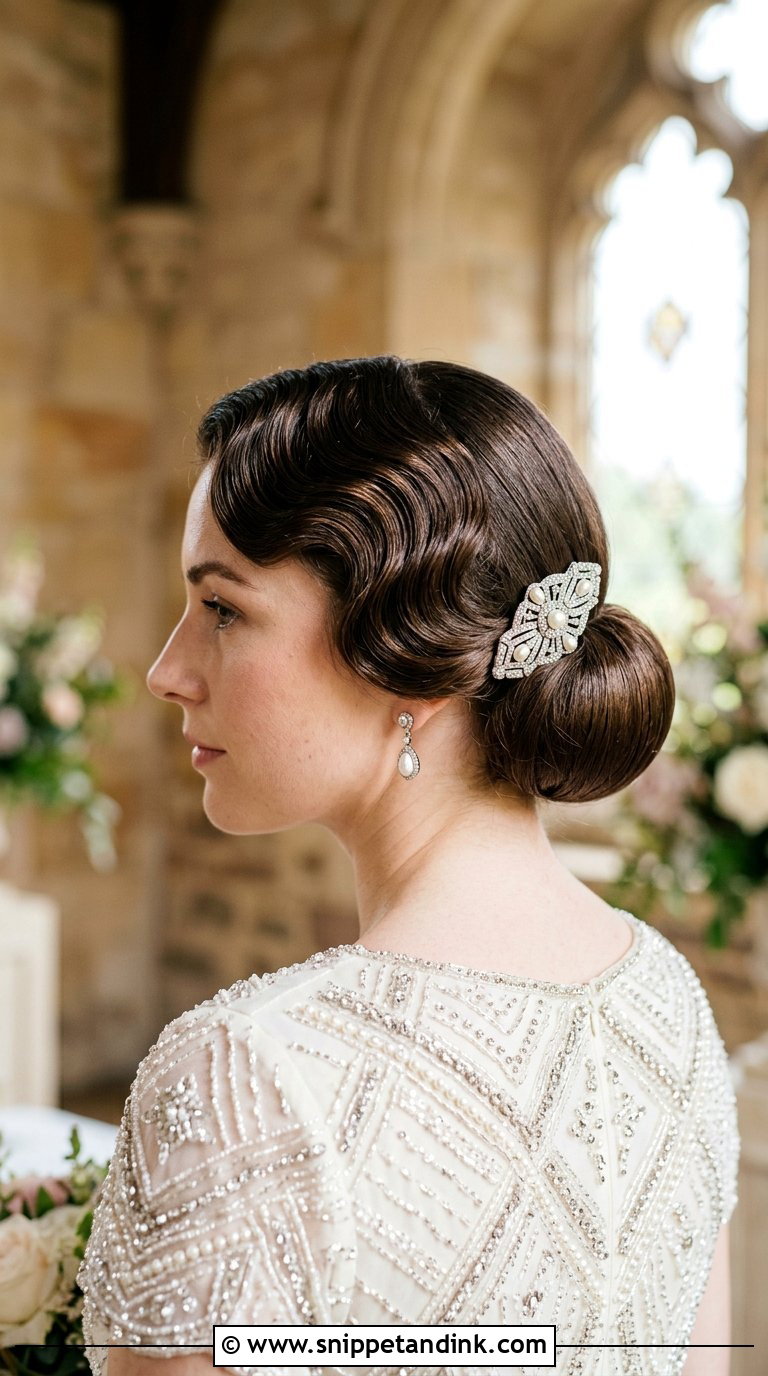
A vintage finger wave low bun pairs sculpted, glossy waves at the front with a smooth bun at the back. It is pure 1920s, so it suits art deco and vintage-styled weddings. The waves are shaped wet with setting gel and a fine comb, then left to set completely; a waved section that is touched before it dries loses its ridge. A jeweled hairpin or pearl clip at the side of the wave gives it some sparkle.
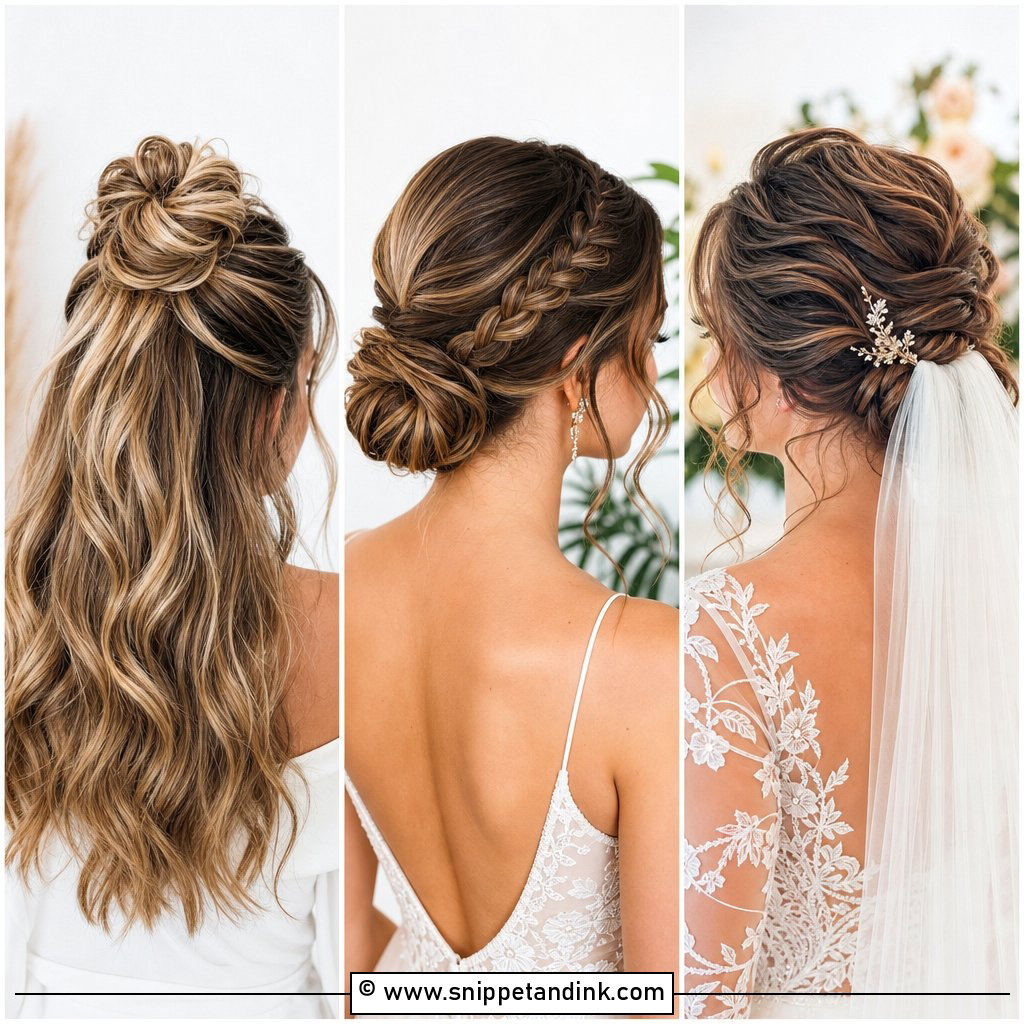
15. Low Bun With Hair Accessory
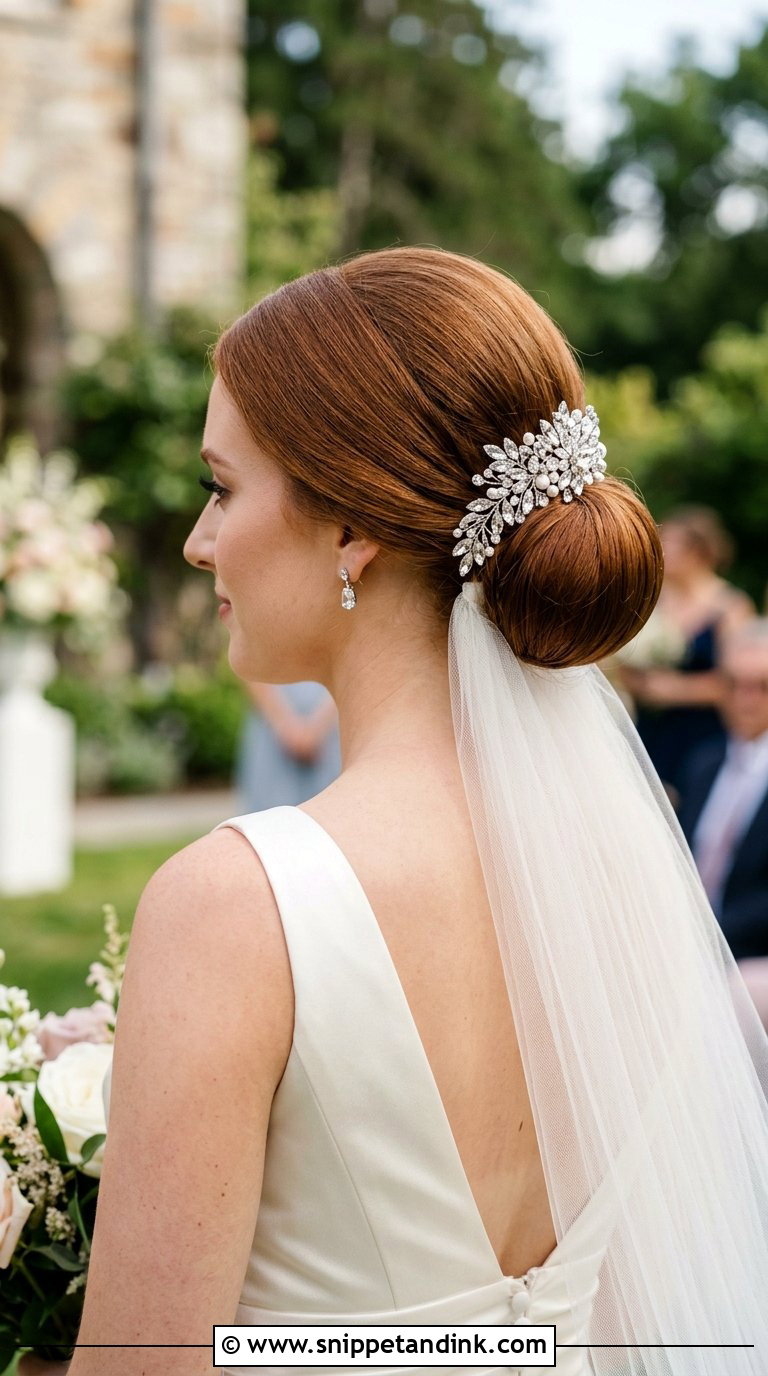
An accessory changes a plain low bun into something more personal. A sparkly hairpiece, jeweled comb or vintage clip tucks into or beside the bun and catches the eye, and it layers well with a veil. Choose a piece that talks to your jewelry and the details on your gown. From crystal slides to gold leaf combs, there are many shapes to try. Bring the actual accessory to your trial. Weight matters; a heavy comb needs a firm braid or pinned base to sit on, or it droops by evening.
16. Messy Low Bun
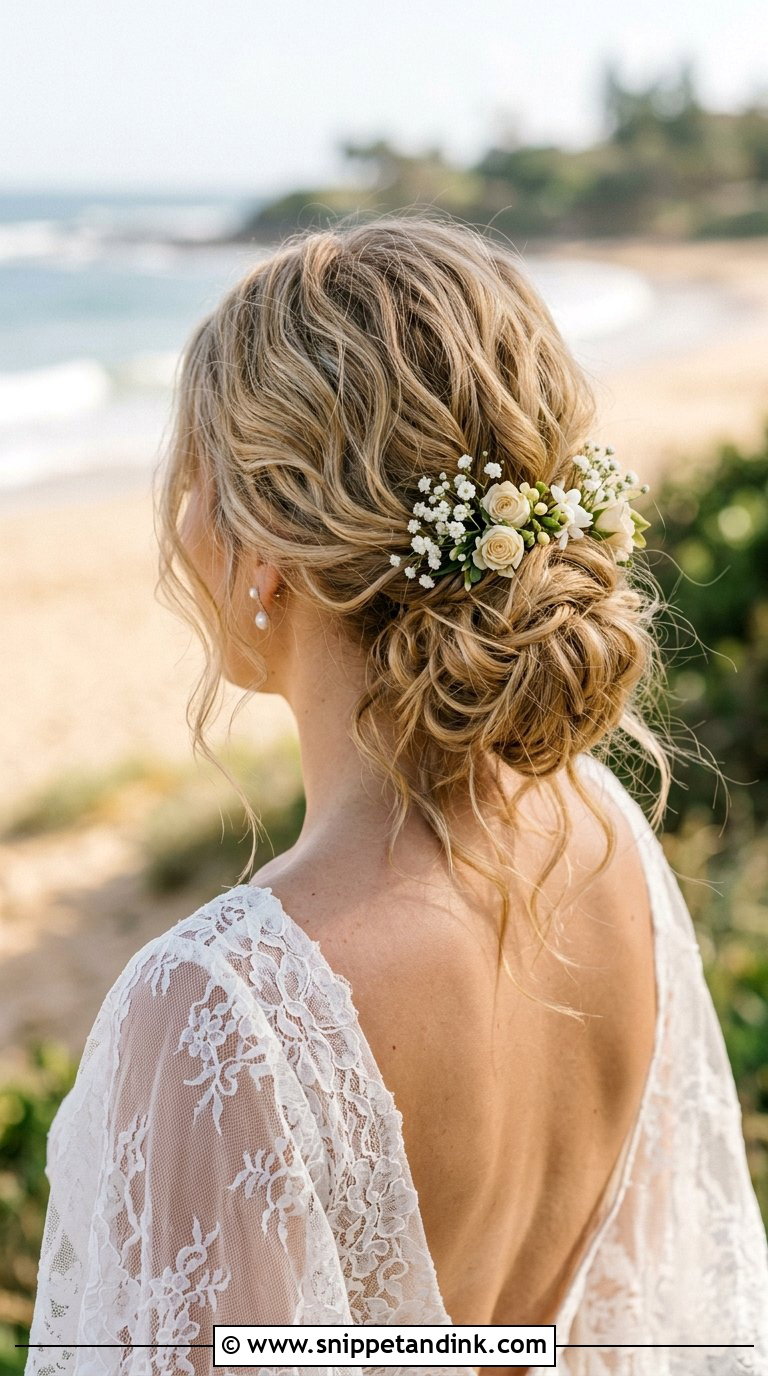
A messy low bun looks like five minutes’ work and takes considerably longer. The texture has to be built before it is pinned, then loosened by hand, piece by piece, so it looks relaxed from every angle rather than just flat at the back. It suits boho, beach and casual weddings and goes well with flowing gowns and natural makeup. Pull a few pieces loose at the crown and face, and add small flowers or a delicate pin.
17. Low Bun With Curtain Bangs
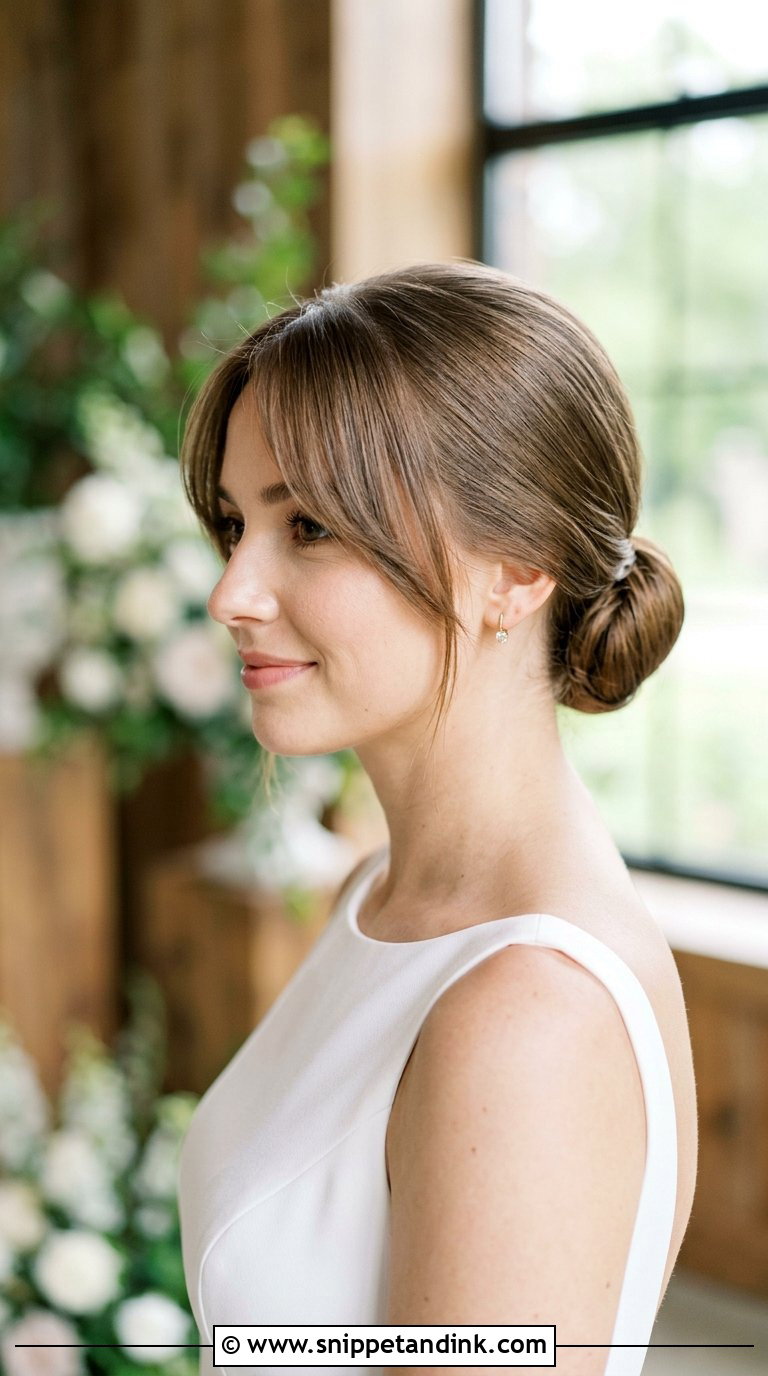
Curtain bangs and a low bun pair well: the fringe sweeps around the cheekbones while the rest of the hair gathers at the nape. It softens the features and looks current. If you are growing bangs for the wedding, don’t cut them in the final week; fresh bangs are often shorter and blunter than they will be after a few weeks. Style them with a round brush for a gentle bend, and keep the bun sleek for contrast or textured for a relaxed feel.
18. Fishtail Braid Low Bun
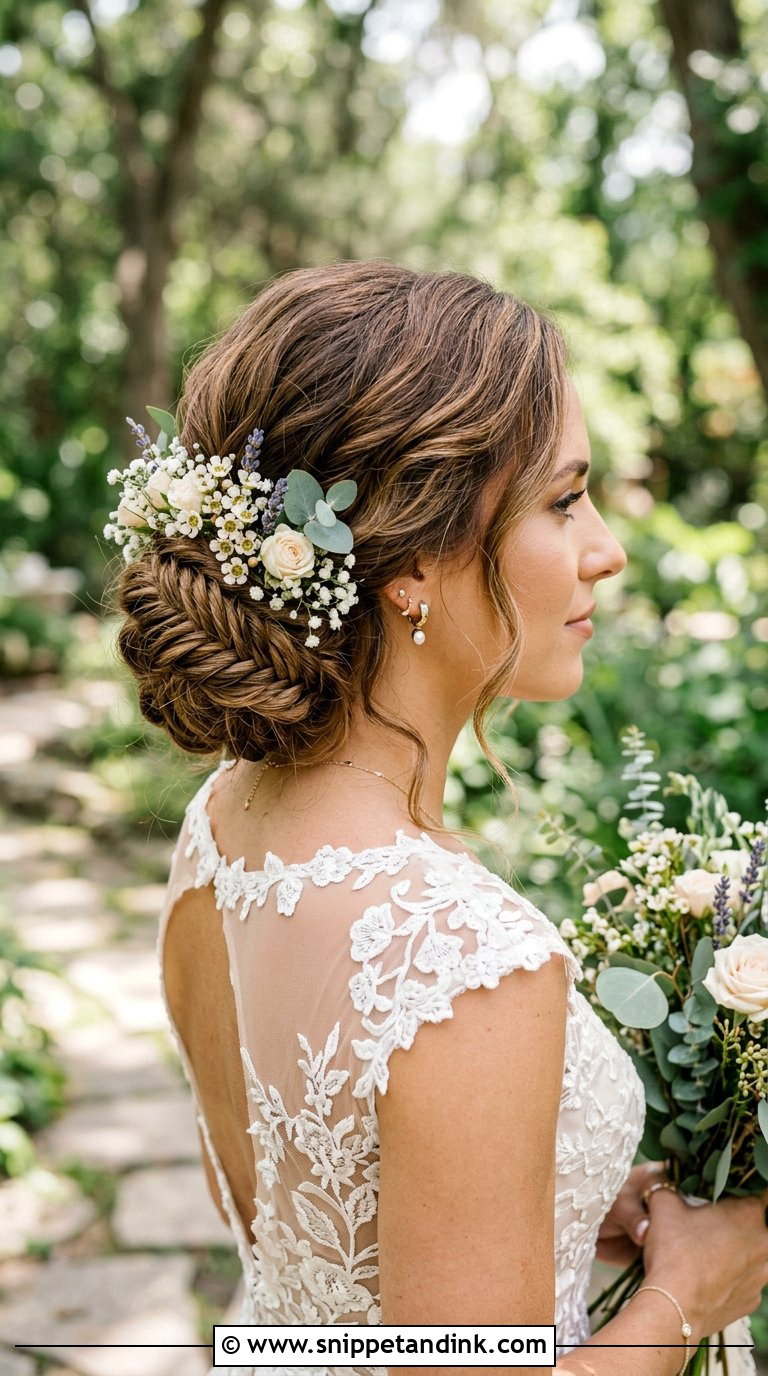
A fishtail braid can be woven into the bun, wrapped across it or used to build the whole shape. The tight, fine pattern looks handcrafted. It needs some length, roughly past the shoulders, for a fishtail to show its pattern, and on layered hair short ends poke out of the weave. I gently pull the braid wider before pinning to make it fuller. It suits boho and rustic weddings with wildflowers or simple pins.
19. Sleek Low Bun With Tendrils
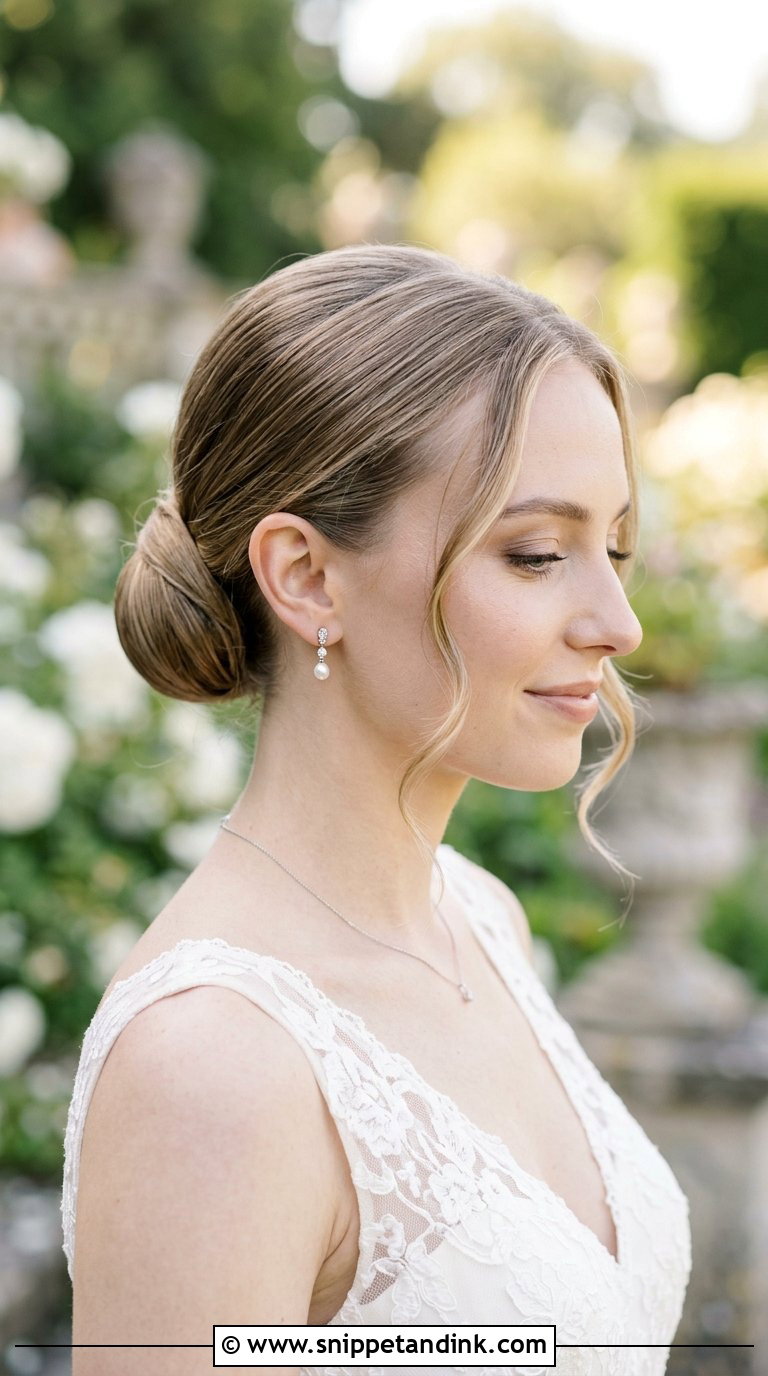
A sleek bun with a few thin tendrils is the compromise between polish and softness. The bun stays smooth, and the loose pieces frame the face. Tendrils need care, though. Too many and they look like the style has come loose; cut too short and they curl up like antennae. I usually leave two or three per side and curl them lightly. It works with modern and classic gowns alike.
20. Low Bun With Headband
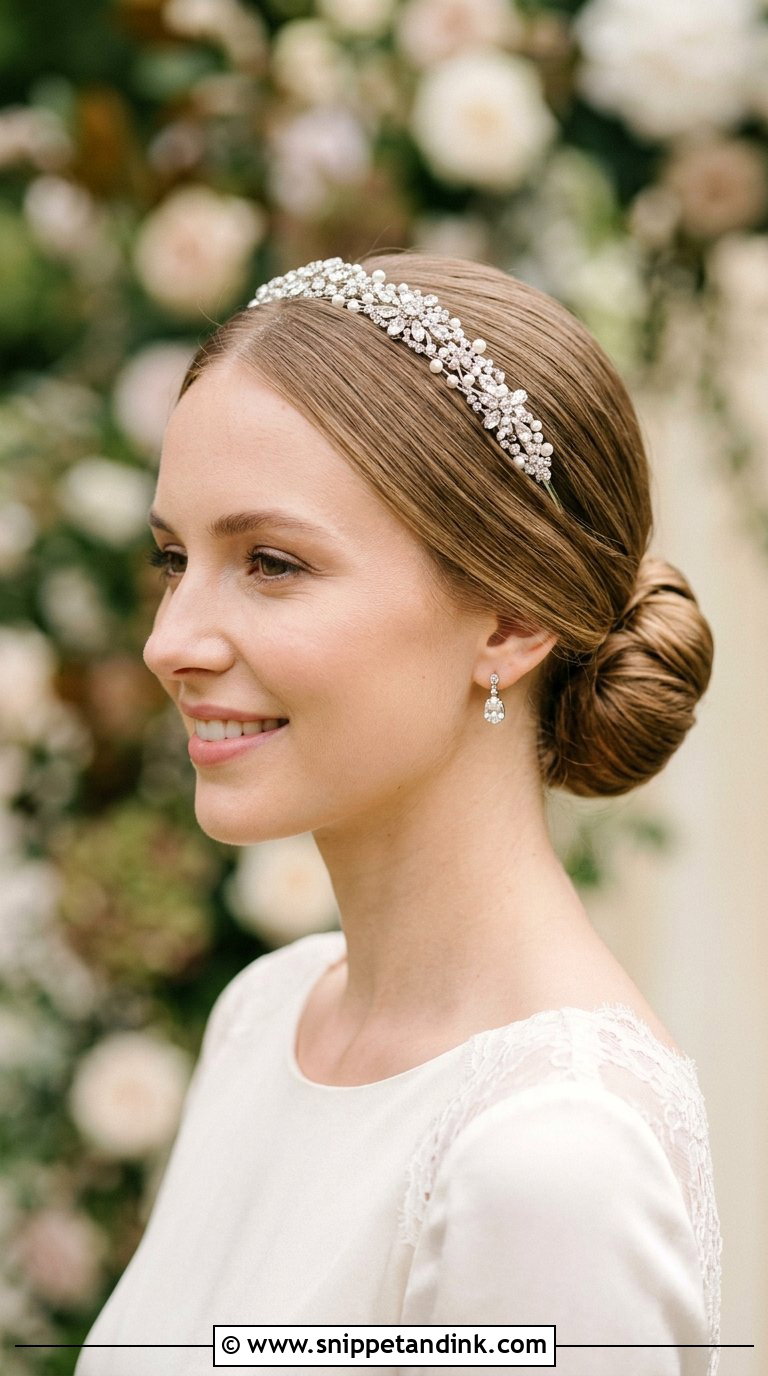
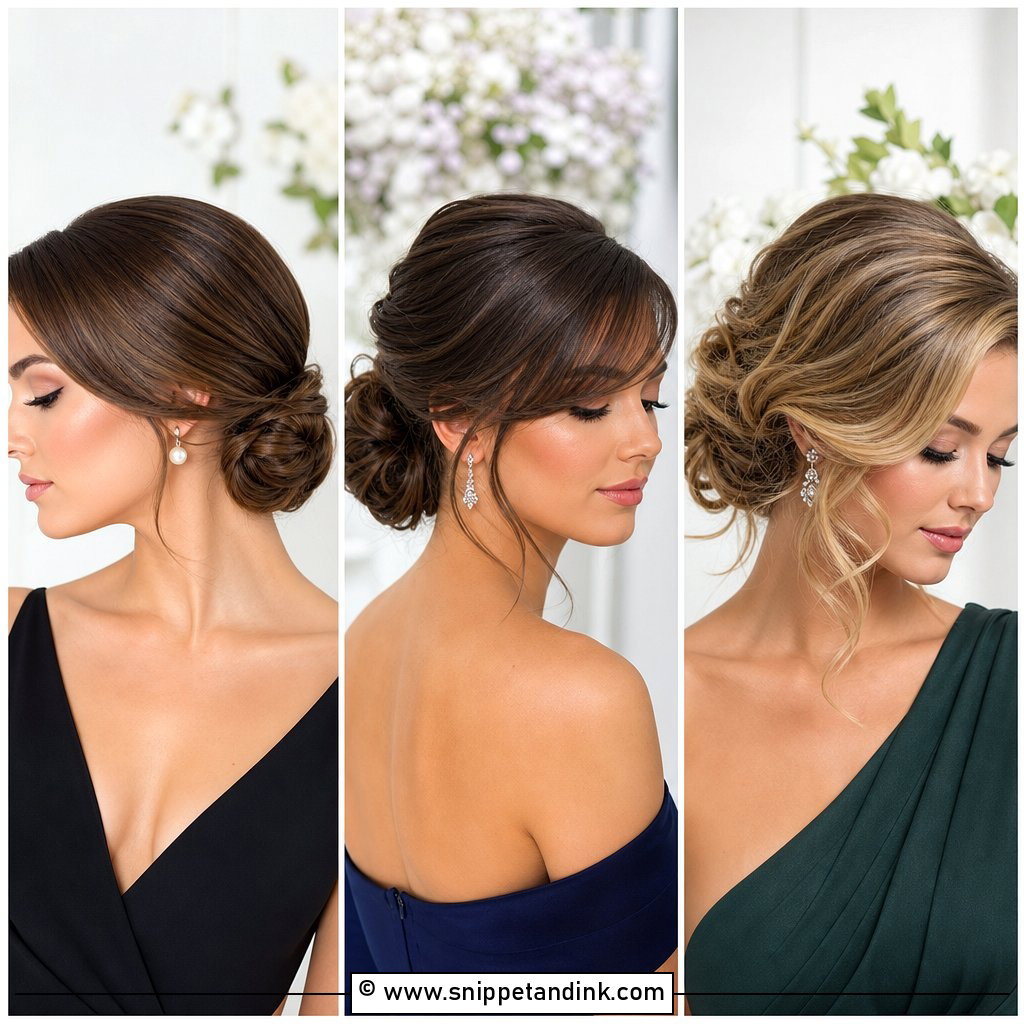
A headband adds a regal, slightly vintage touch: crystal, pearl or a delicate floral band across the crown, with the hair gathered into a smooth low bun behind. It is a defined accessory, so keep the gown simple. A veil can tuck under the band for a layered effect. Headbands press on the head behind the ears, and the rigid metal ones can start to ache after a few hours. Wear yours around the house for an afternoon before the wedding.
Building a Fuller Bun from Thin, Layered or Shoulder-Length Hair
Most bun inspiration photos are taken on long, thick hair or hair with extensions. That doesn’t mean a bride with less hair can’t wear one; it means the shape is built differently.
- Clip-in wefts matched to your colour add the most natural volume. Order them early so they can be colour-checked and trimmed to blend.
- A small mesh filler or rolled hair pad gives a bun its shape when length is short. Avoid big foam donuts on fine hair; they show through.
- Shoulder-length hair can make a small low bun, often by pinning sections in overlapping loops instead of twisting one coil.
- Heavy layering makes short ends pop out at the nape. A little wax and some flat pins there tidy them up.
Hair that is a day past washing usually holds pins better than freshly washed hair, since clean hair can be too slippery. If your hair gets oily quickly, wash it the evening before and use a dry shampoo at the roots in the morning.
Take Your Neckline and Veil Along to the Hair Trial
A low bun covers more ground than almost any other bridal style, from sleek modern knots to soft braids and flower-adorned styles. Hair length, texture and the wedding setting will narrow your options quickly. Save a few favourites, show them to your stylist, and bring the veil, the accessory and a top with a similar neckline to the trial. Seeing the bun with those pieces in place tells you more than any photo can.
You'll Like These Ideas:


Leave a Reply