
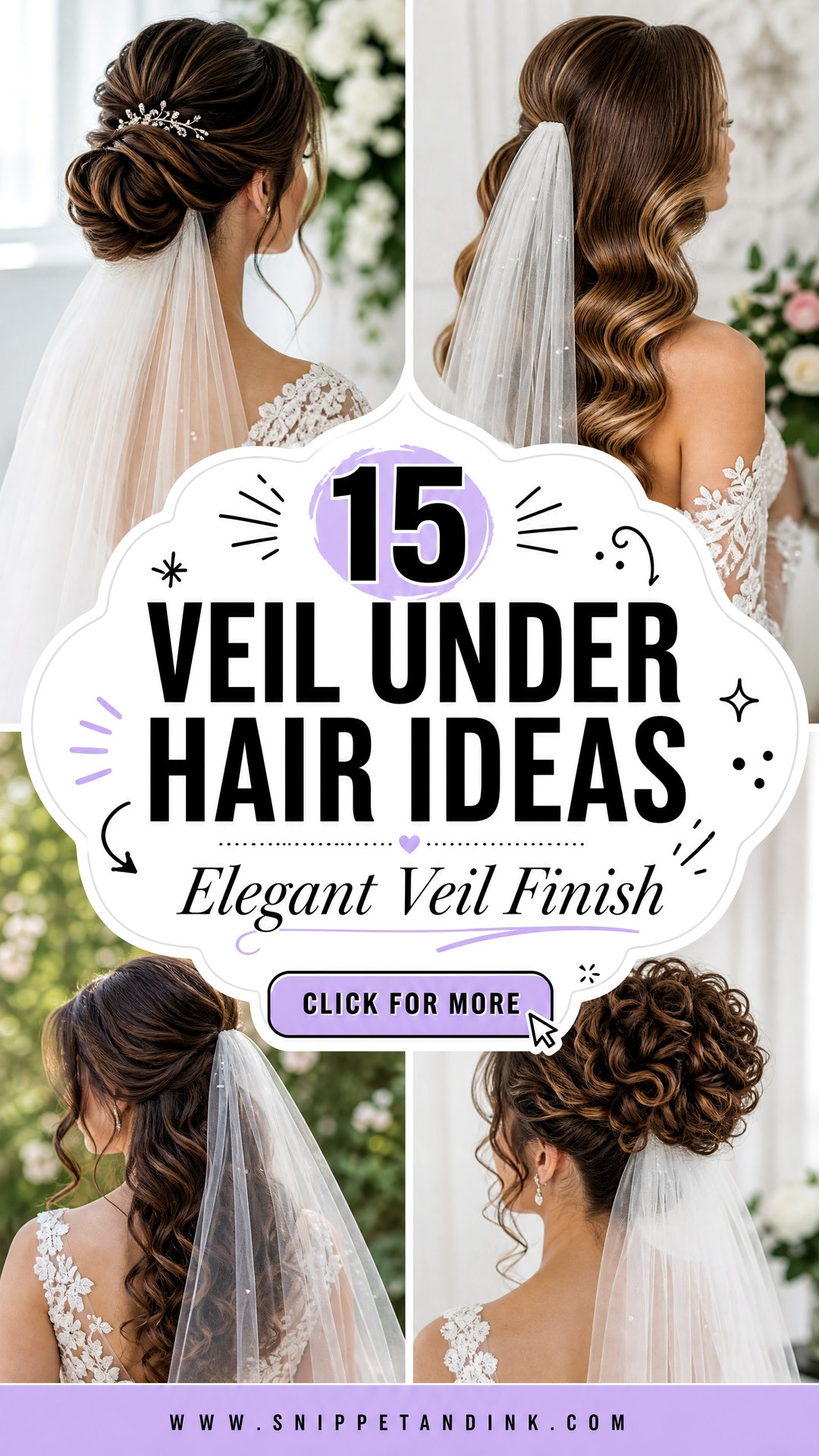
Setting the veil under the hair, instead of on top of the crown, means the style you spent the morning on stays visible the whole time. The comb sits beneath a bun, twist, braid, ponytail or half-up section, and the tulle falls from the nape. I suggest it a lot to brides with detailed updos, because a crown veil hides most of the back, and the back is what guests look at through the ceremony. It suits outdoor and garden ceremonies, beach vows, a courthouse and a formal reception equally. Here are fifteen ways to wear it, with what I’d watch for in each.
Which Veils Hang Well From the Nape?
Not every veil is made to sit low. Before you plan the hair around an under-placement, check a few details on the veil itself.
The gather and the comb
Most veils are gathered onto a comb. A narrow gather sits neatly under a bun; a very wide or heavily gathered top creates a puff of tulle at the nape that can look bulky from the side. If you love a veil with a wide gather, a veil maker can often regather it onto a smaller comb.
The tulle
Soft or silk tulle drapes down from the nape. Stiffer bridal tulle holds its shape, so at the nape it tends to stand away from the back like a fan. Hold the veil against the back of your head in the shop mirror and turn sideways to see how it falls.
Your neckline
- High necks and collars: the comb can end up resting on the fabric, so the bun may need to sit a little higher.
- Low or open backs: the tulle lies against bare skin and shows the dress through it, which most brides like.
- Drop veils and blushers usually need a crown placement to fall over the face, so they’re rarely a good fit for this style.
1. Veil Under Low Bun
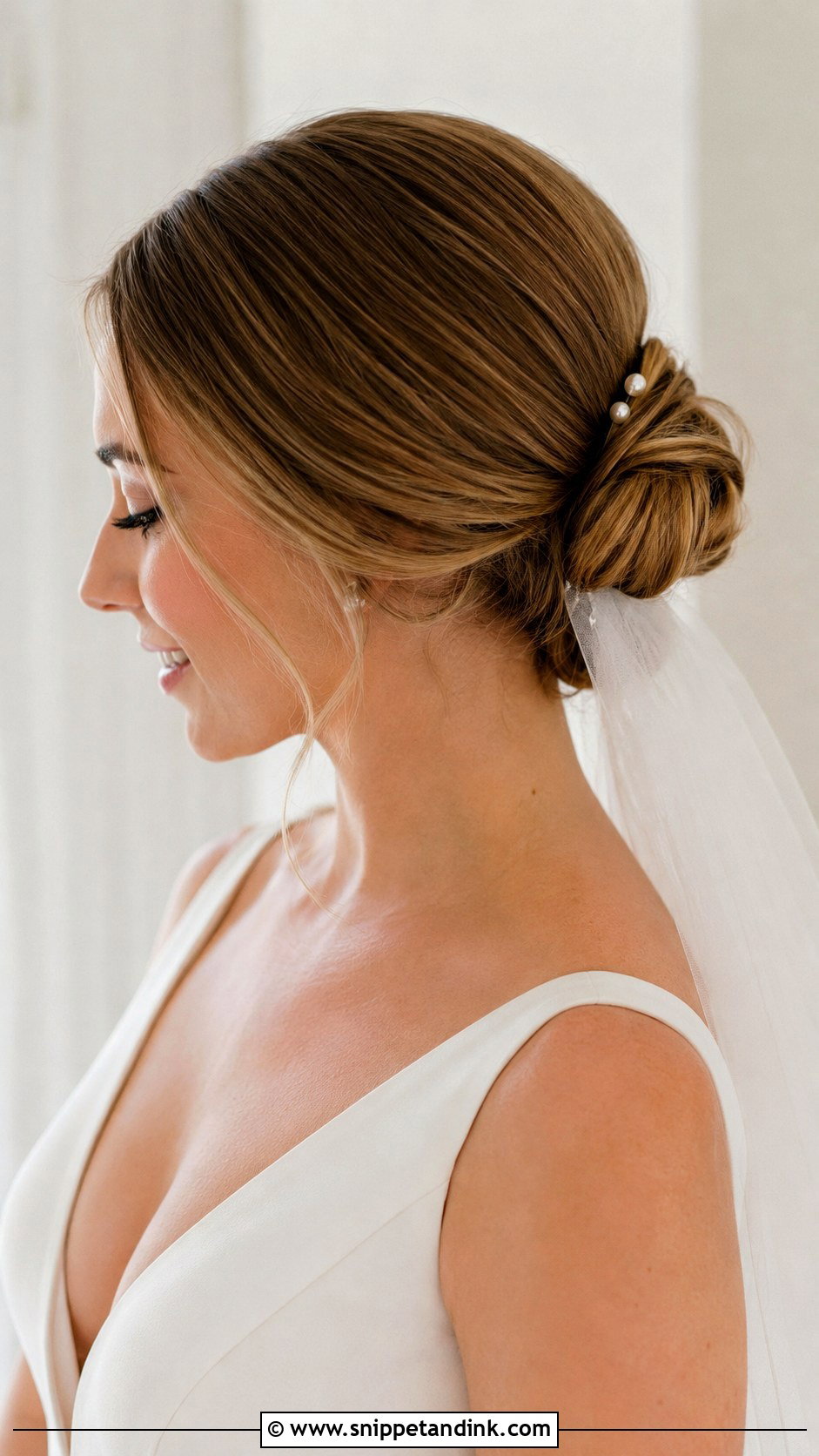
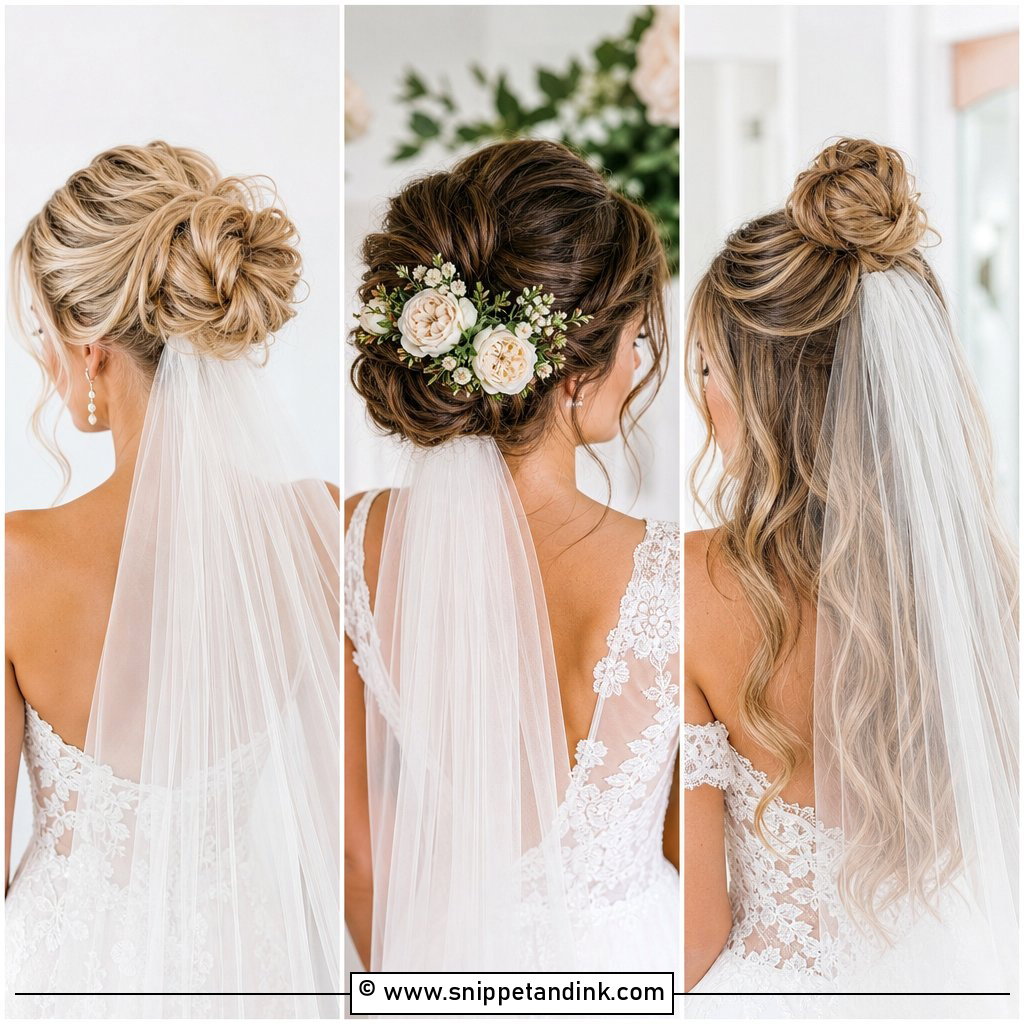
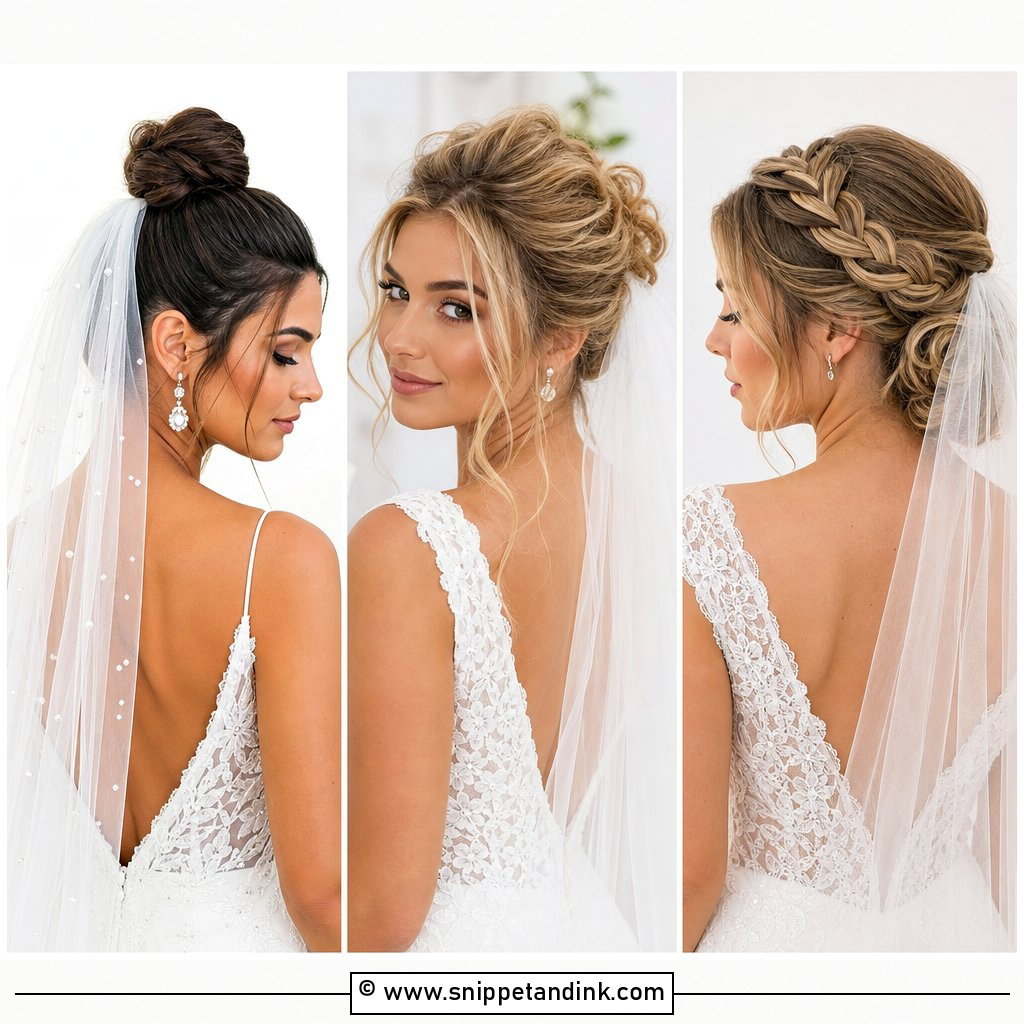
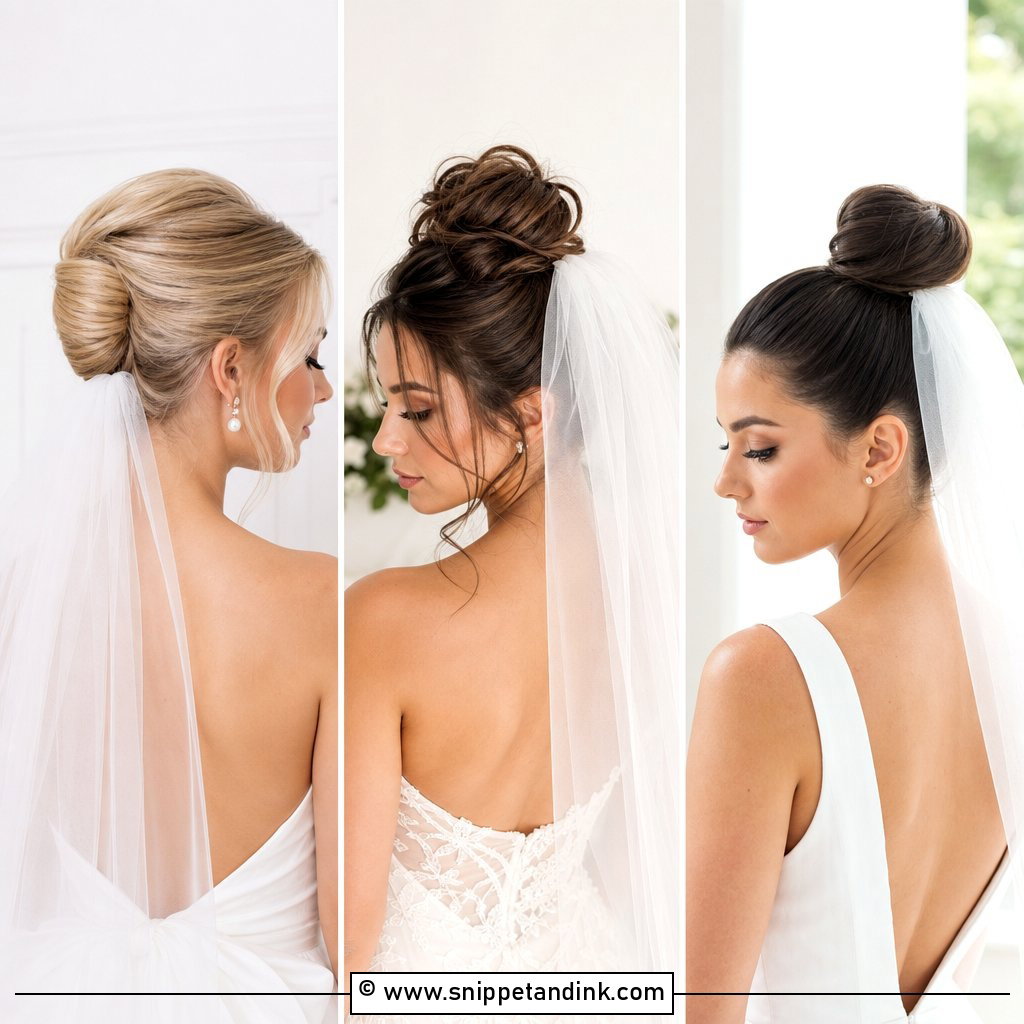
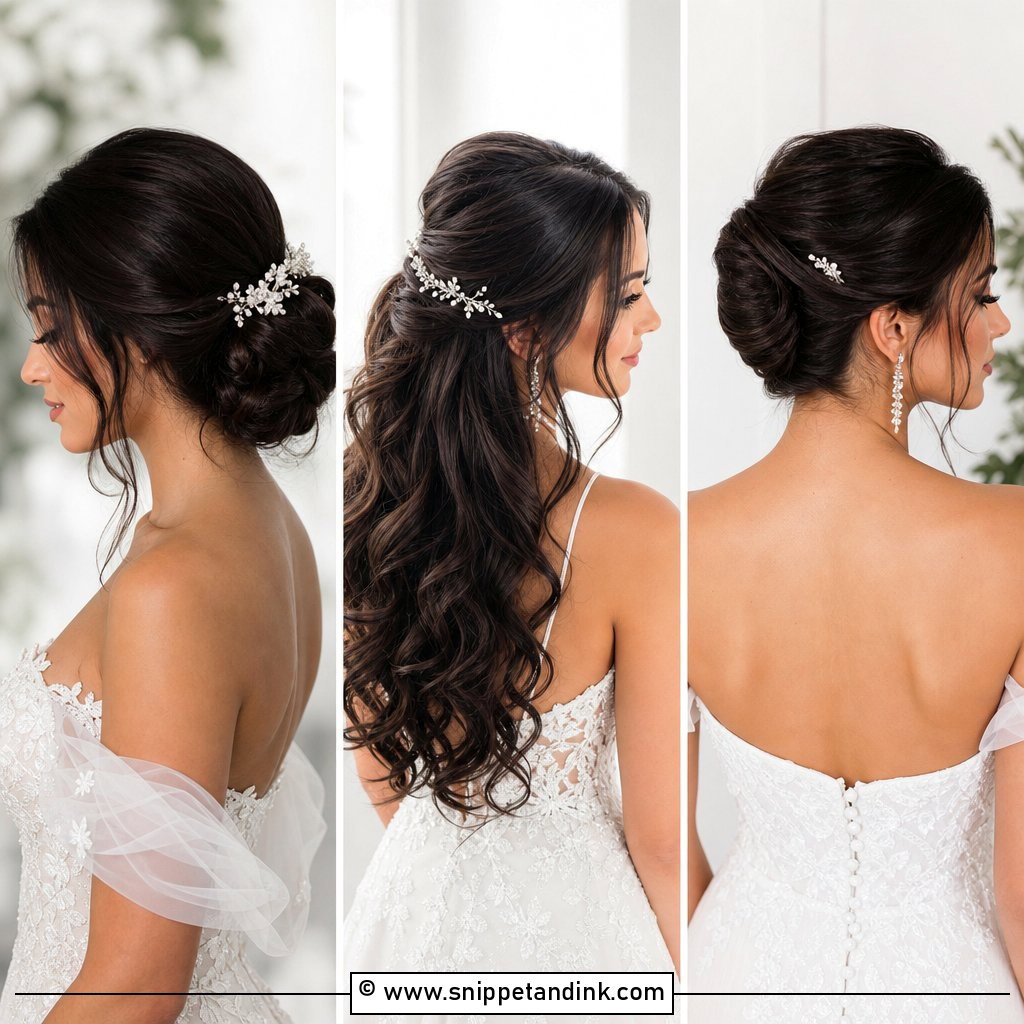
This is the classic version, and the one with the fewest things to go wrong. The bun is a ready-made base, so I slide the comb in directly underneath it and add two hidden pins through the comb’s edge into the bun itself. From there the tulle falls cleanly from the nape. Sleek centre parts, soft side parts and a twisted finish all sit well above it. Because the bun carries the weight, it can take anything from a simple tulle veil to a chapel or cathedral length.
2. Veil Under Messy Bun
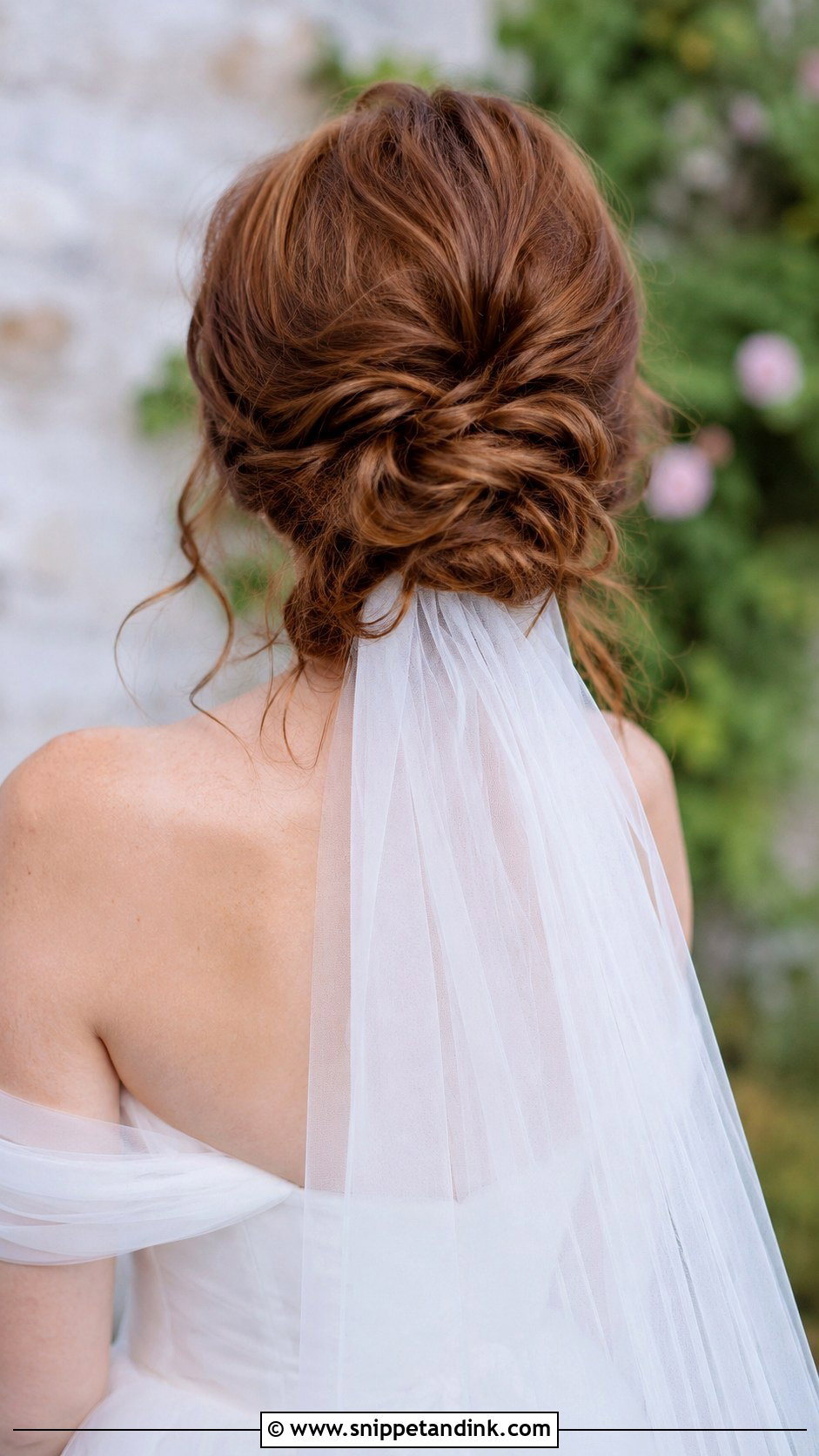
A messy bun under a veil stays romantic rather than unfinished as long as the shape underneath is firm. I pin the bun solidly first, then pull out the texture, the twists and the curled tendrils at the end. Pulling pieces loose after the veil is in can loosen the comb. Choose a light, single-layer veil here. Heavy tulle drags at airy texture and flattens it within an hour. Flowers or pins worked through the back stay on show above the veil line.
3. Veil Under Chignon
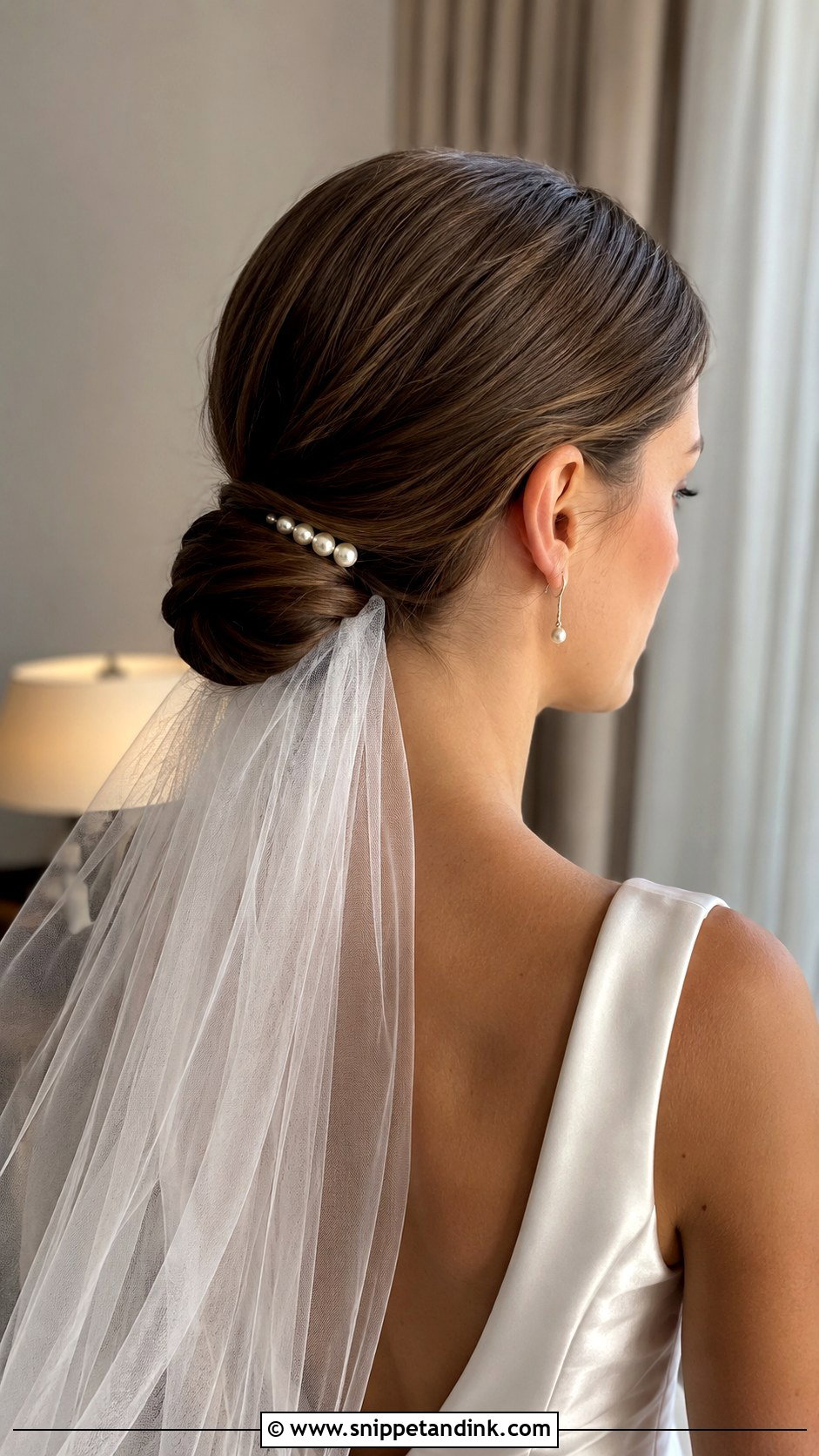
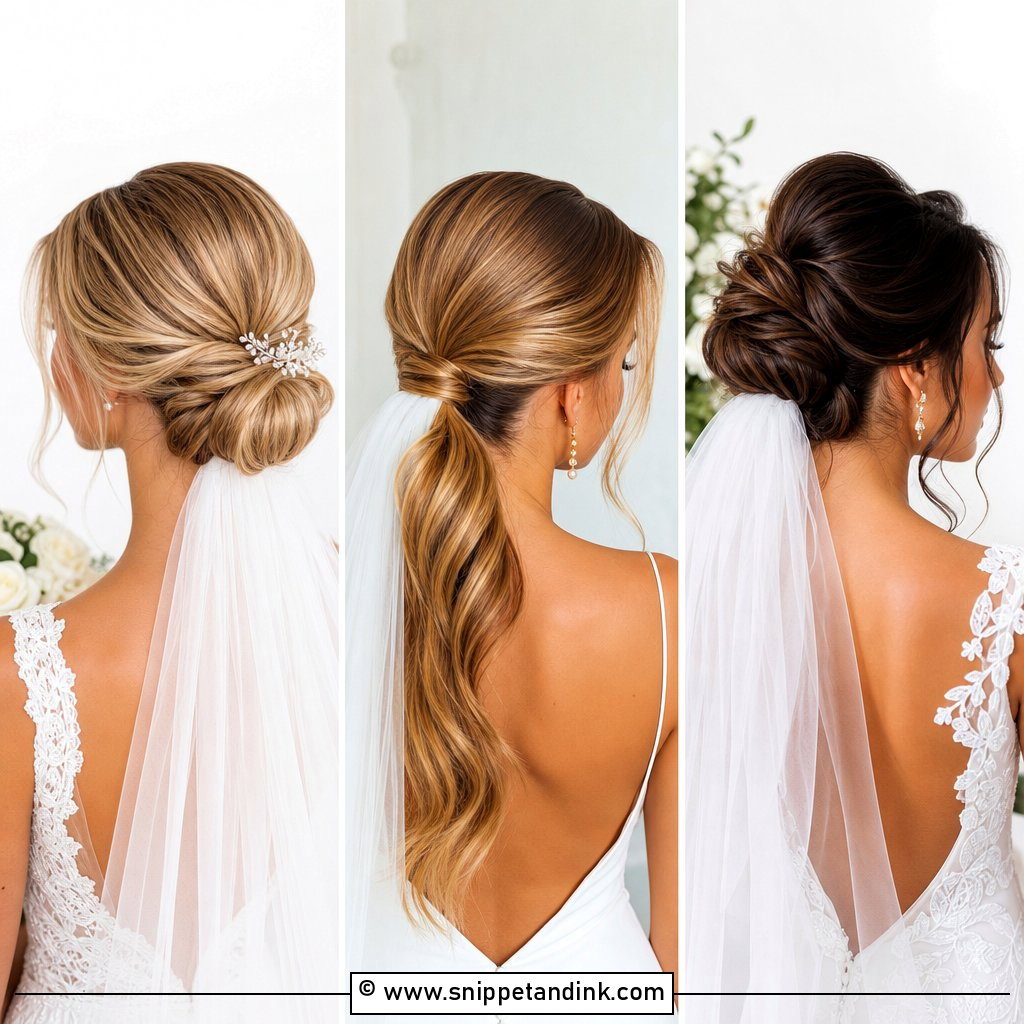
A chignon is smooth and tucked, which gives the veil one of the firmest seats on this list. I place the comb just below the roll, angled slightly upward, so the tulle drapes over the shoulders rather than sticking out at the bottom. Worn sleek it suits a formal ceremony; slightly undone, it softens. The chignon stays uncovered for the aisle and for portraits, so any comb, pearl pins or a narrow floral spray goes above the veil, never on top of it.
4. Veil Under Twisted Updo
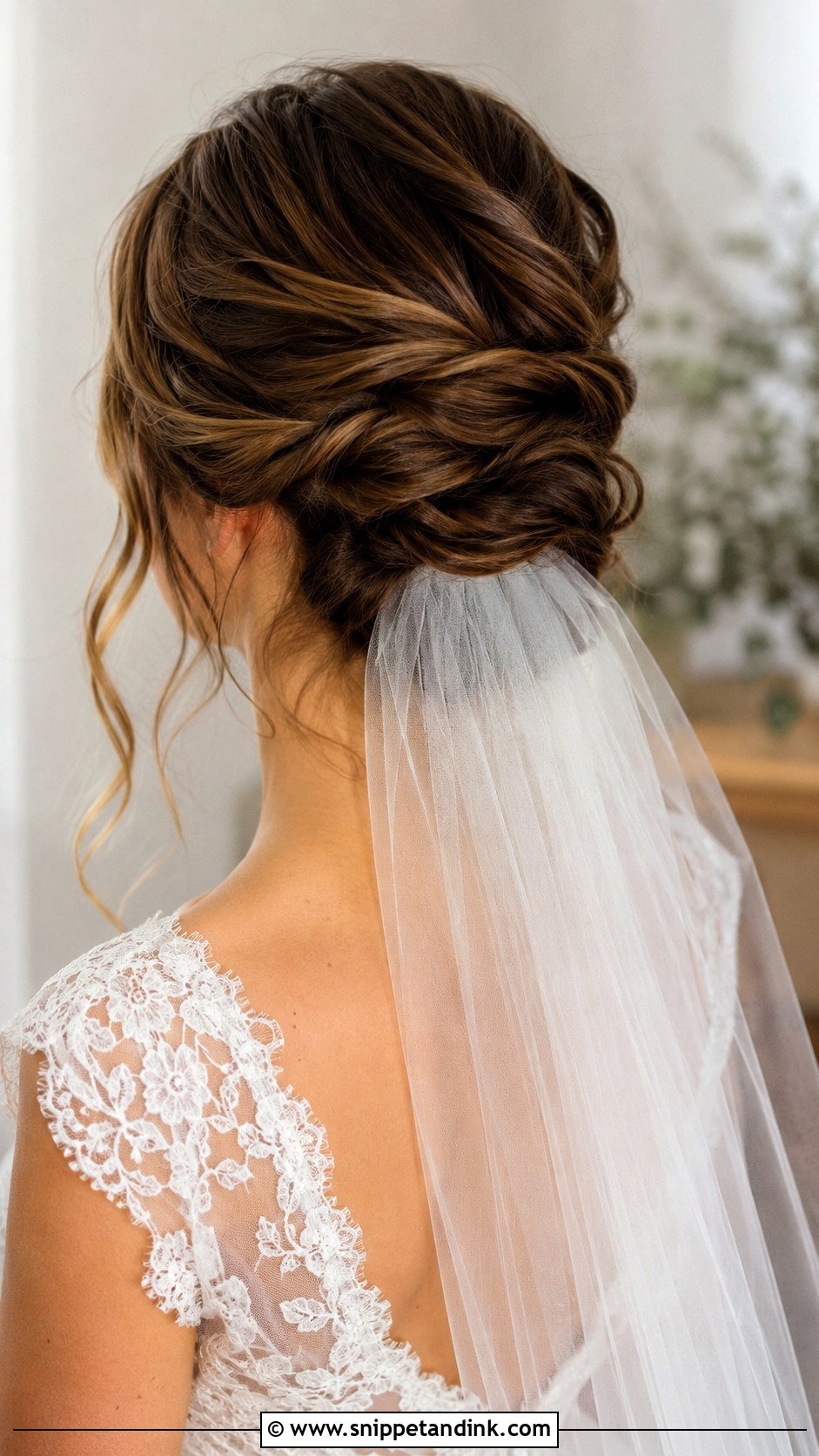
Twists give the back of the head movement, and that’s exactly what a crown veil would hide. They can wrap into a low bun, roll into a soft knot, or cross through the back. You need medium to long hair for enough structure to carry the comb. I tuck the comb under the lowest twist and reinforce it with pins matched to your hair colour, because silver pins catch the flash in close-up photos. A little shine spray and smooth face-framing pieces finish it.
5. Veil Under Braided Bun
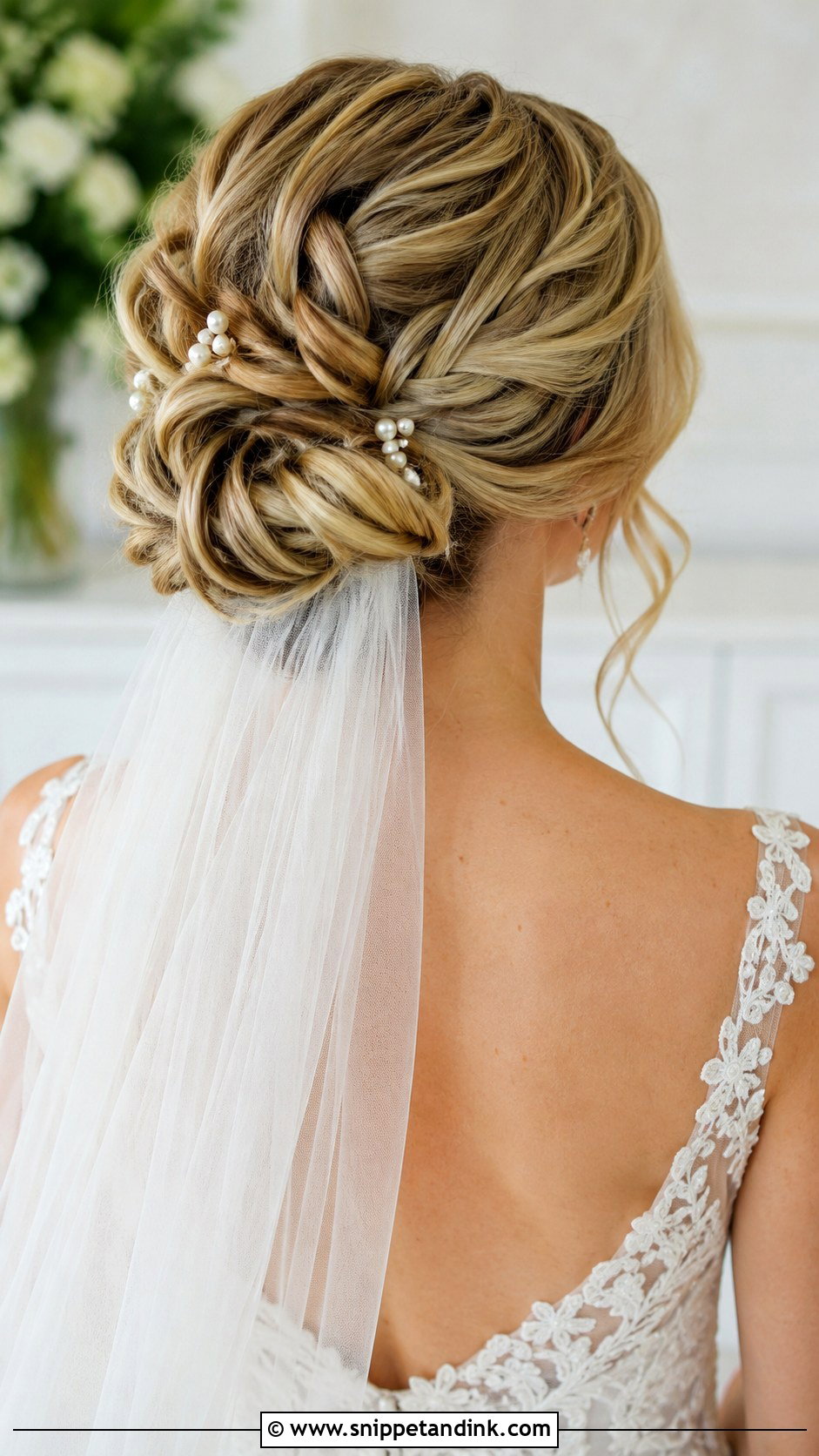
A braided bun gives the comb plenty to grip, which makes it my go-to for thick hair that tends to push combs out. Fishtails, Dutch braids, rope braids and a simple braid wrapped into a low bun all work. The texture of a braid also sits well against lace, since both are patterned and neither looks out of place beside the other. If the braid is tight, I loosen the front and the hairline so the style doesn’t look severe from the front.
6. Veil Under Half Up Hair
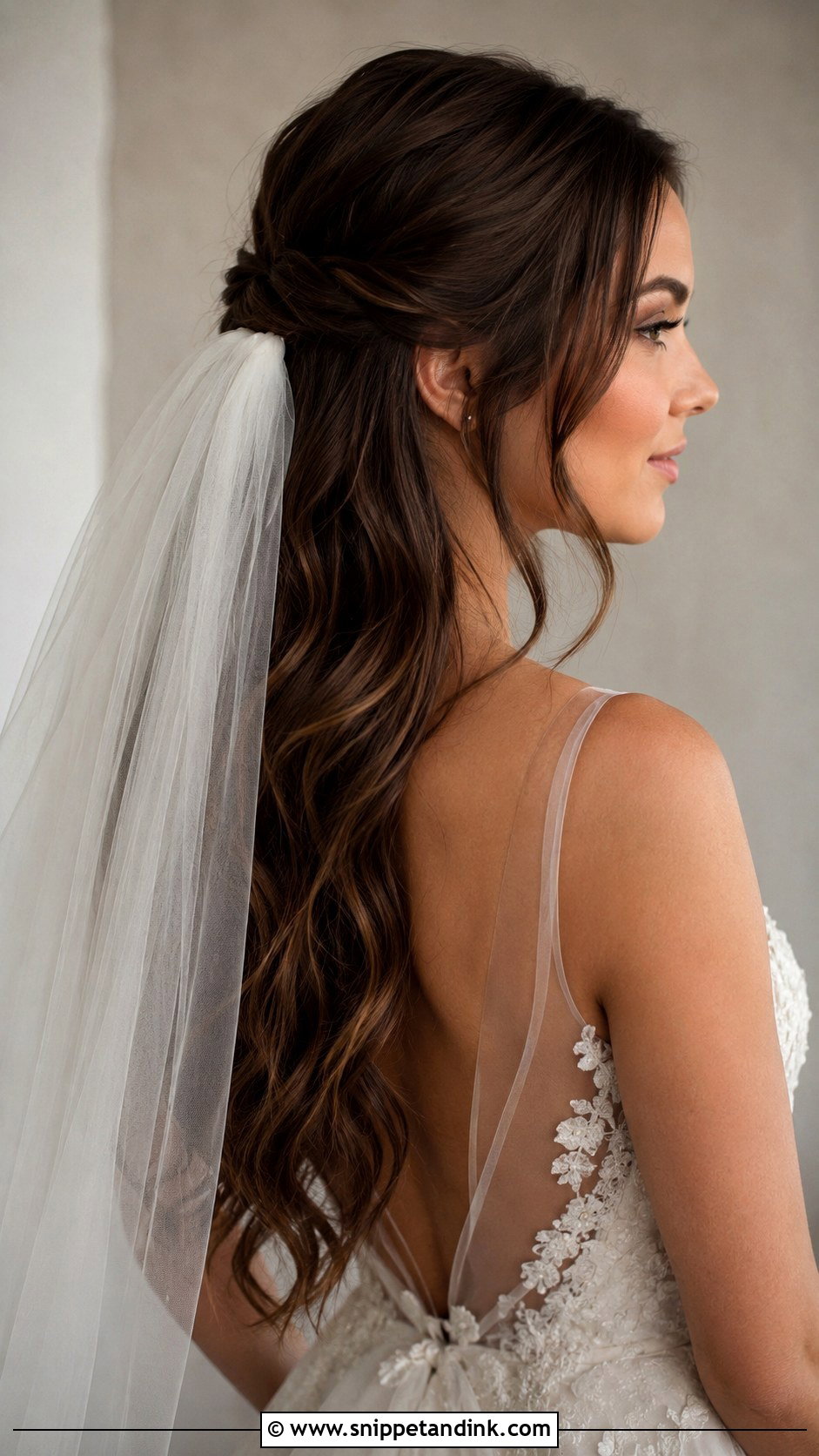
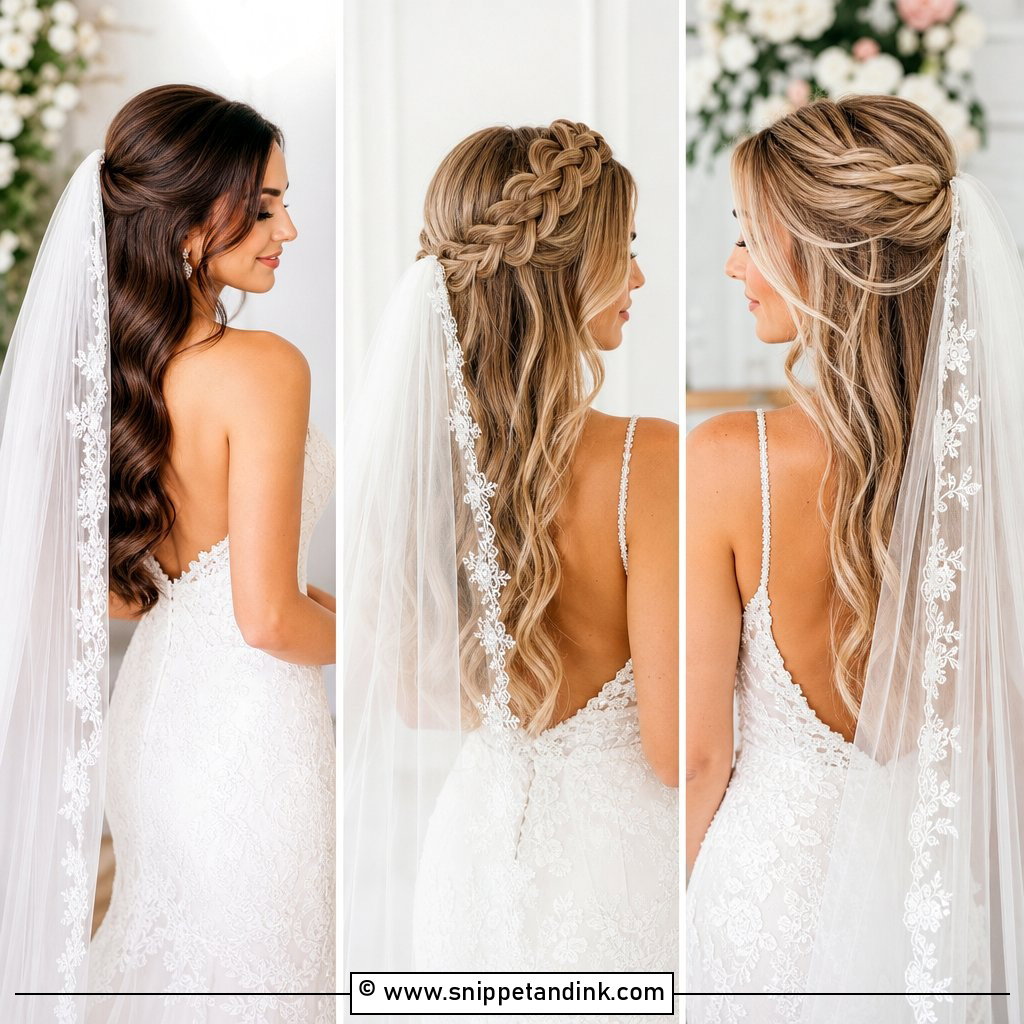
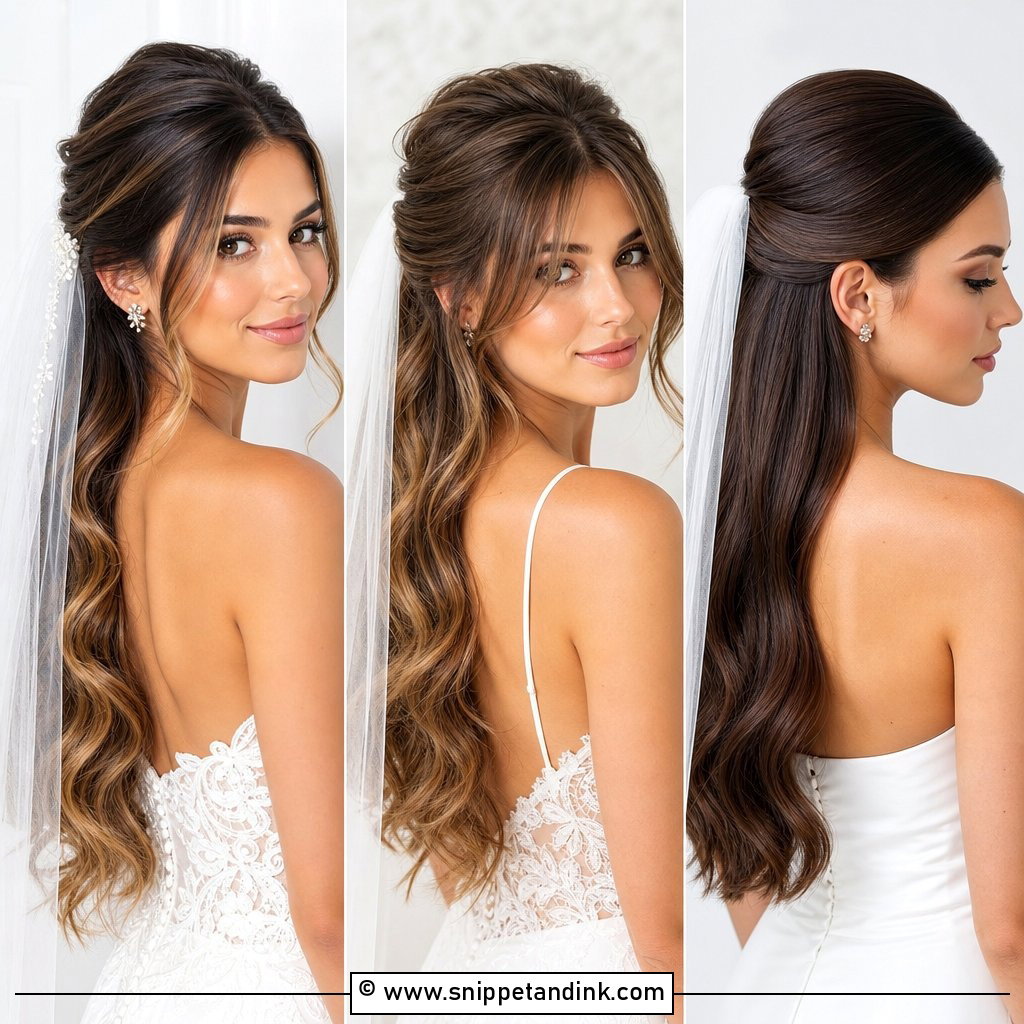
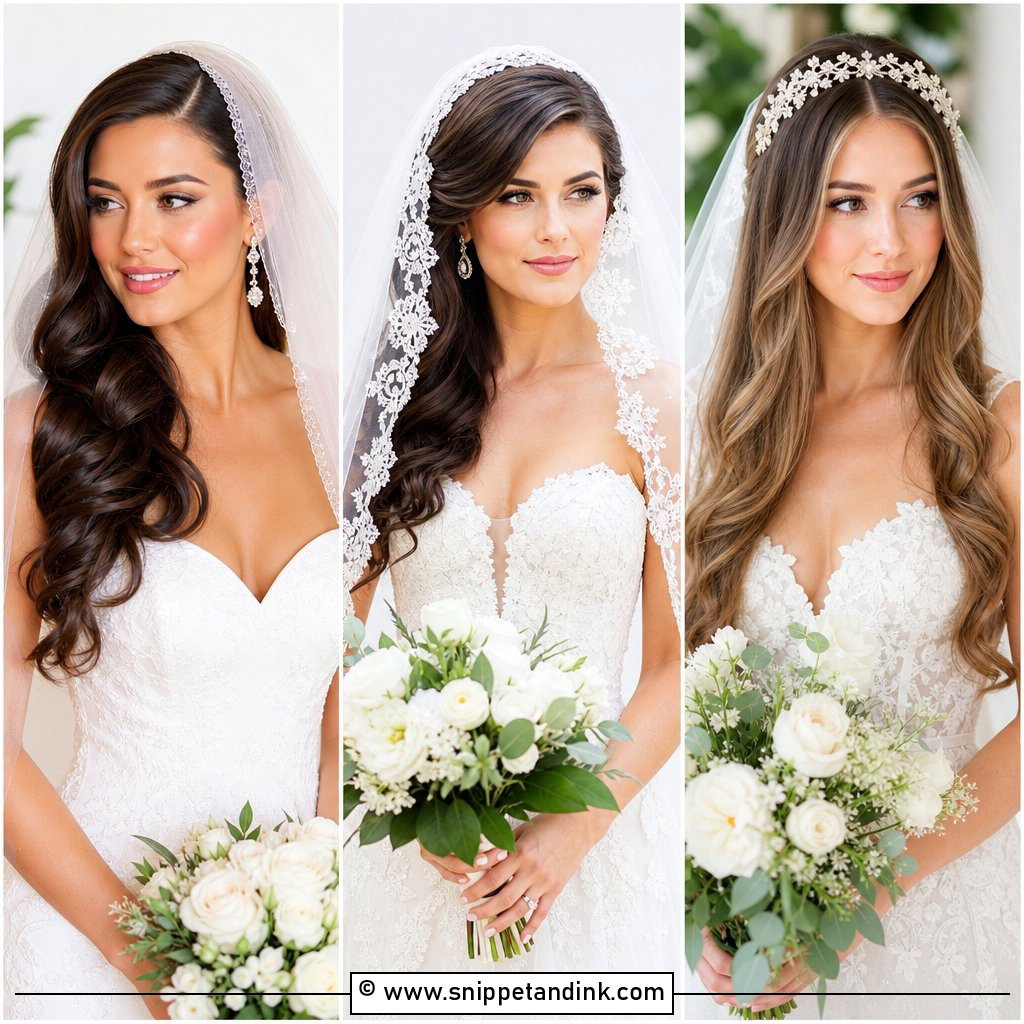
Half-up gives you the hair-down feeling with an anchor built in. The pinned top section holds the comb, and the veil sits below it, floating over loose waves, curls or blowout ends. The veil and the loose lengths move together, which reads well in candid photos. On fine hair the half-up section alone may not hold a long veil, so I add a small braid or twist across the back as extra grip.
7. Veil Under Hollywood Waves
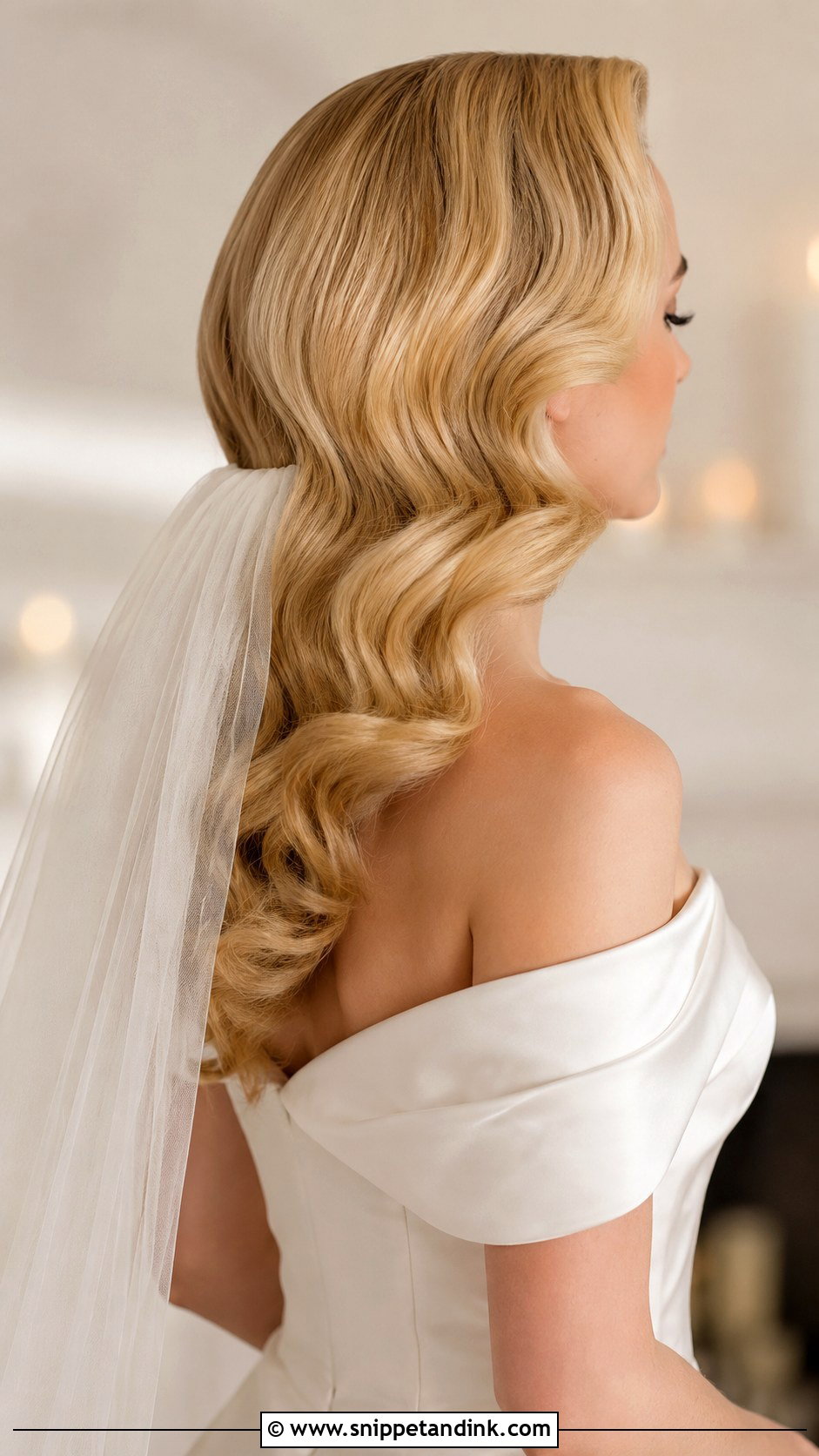
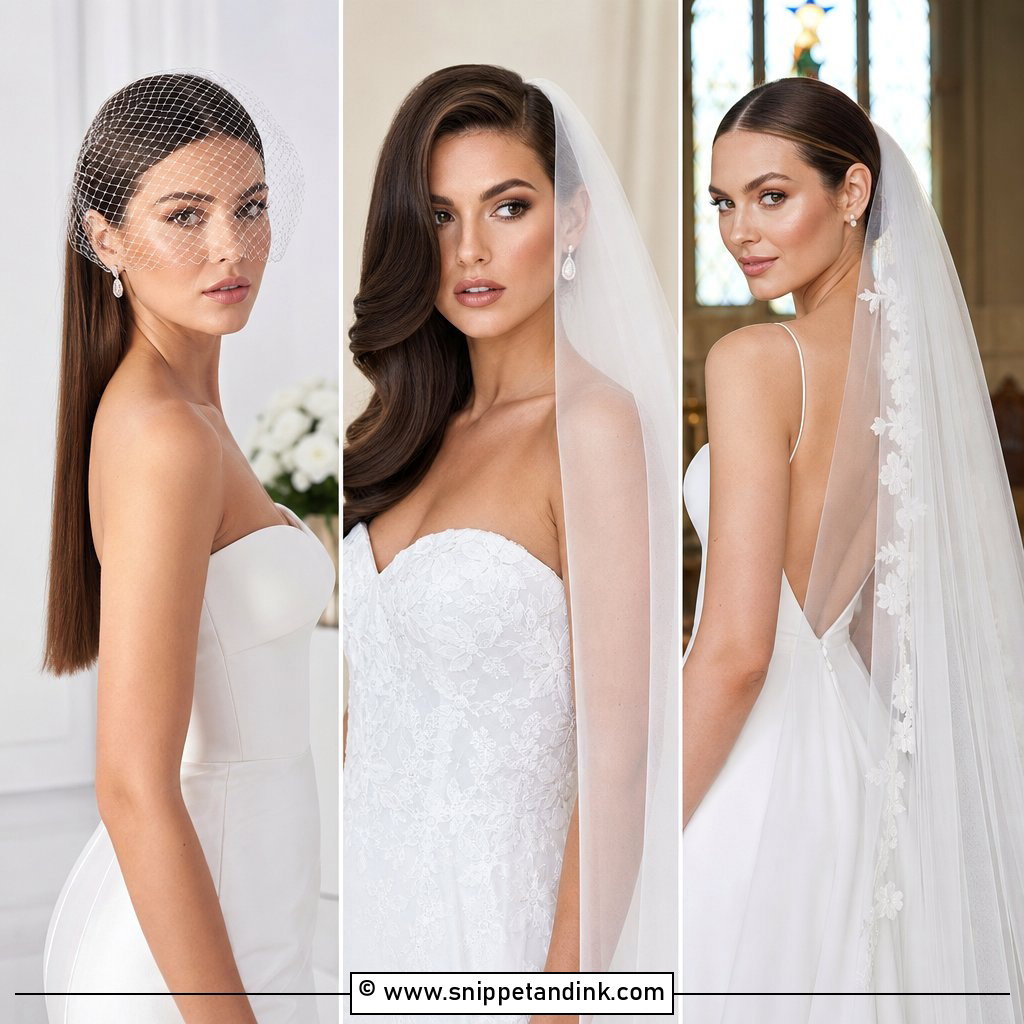
Hollywood waves are glossy and sculpted, and dropping the veil underneath keeps the ripple visible from crown to ends. The comb goes in under the top layer at the back, on a small hidden braid or a few discreet pins, before the waves are brushed into their final pattern. Brushing after the comb is in is the mistake; it lifts the comb and breaks the wave. Keep the veil plain. It suits formal rooms and vintage gowns.
8. Veil Under Loose Curls
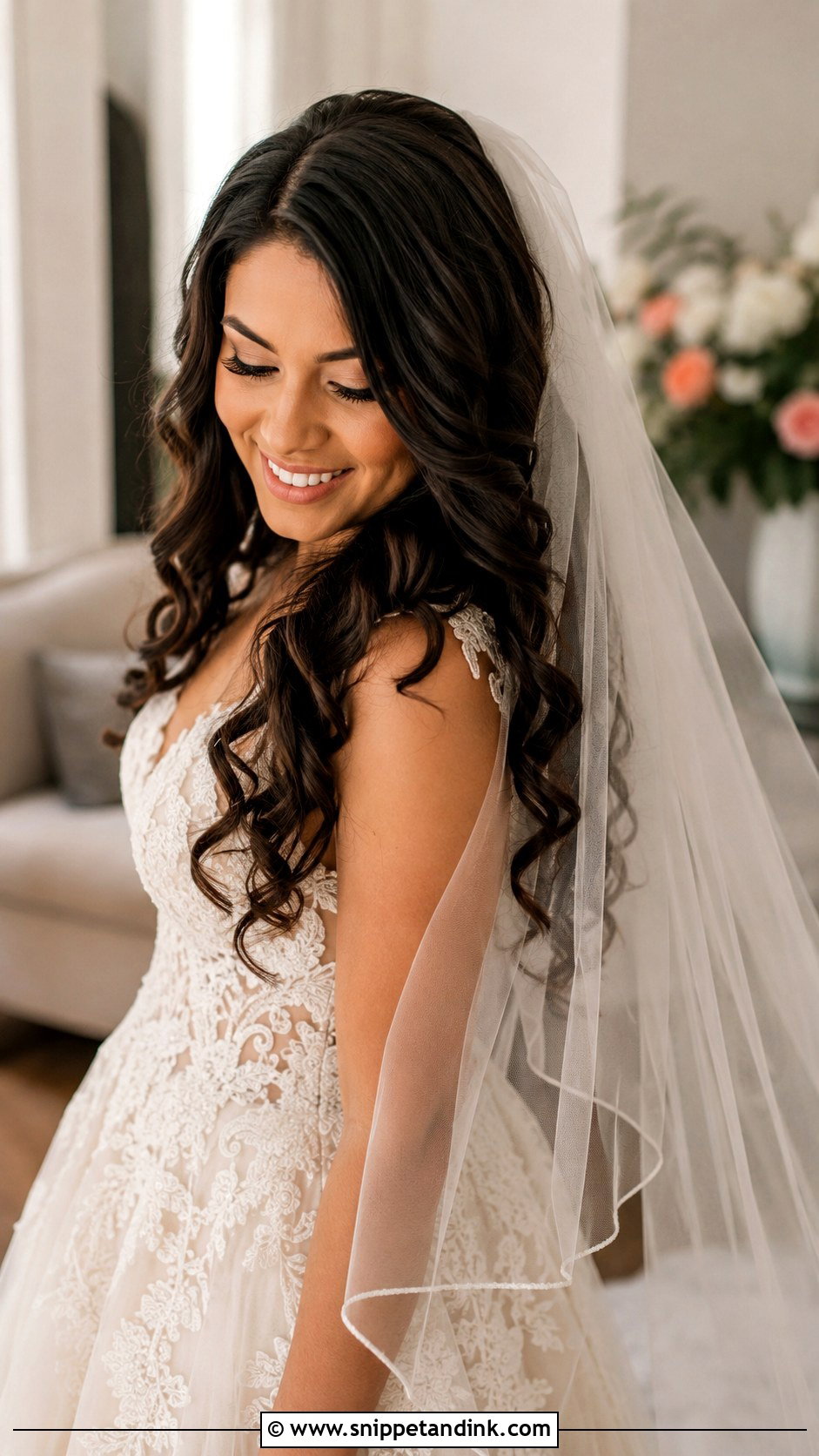
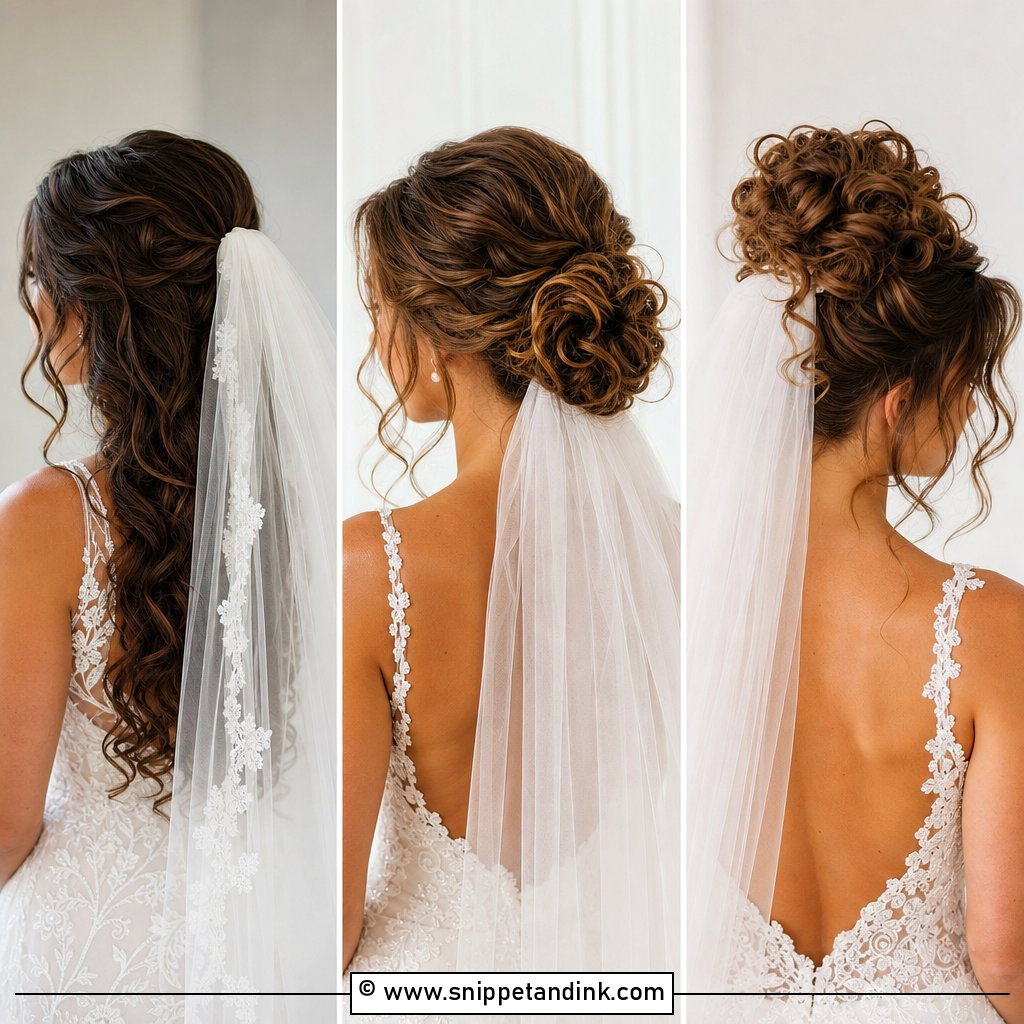
Curls are the hardest hair to slide a comb into, because the teeth slip straight through the open texture. I build a hidden base under the top layer, usually a tiny braid or crossed pins, so the curls themselves stay free. A fingertip or chapel veil adds movement without the weight that stretches curls out. Finish with a flexible spray. Anything stiff makes curls crunchy where they rub against the tulle.
9. Veil Under Low Ponytail
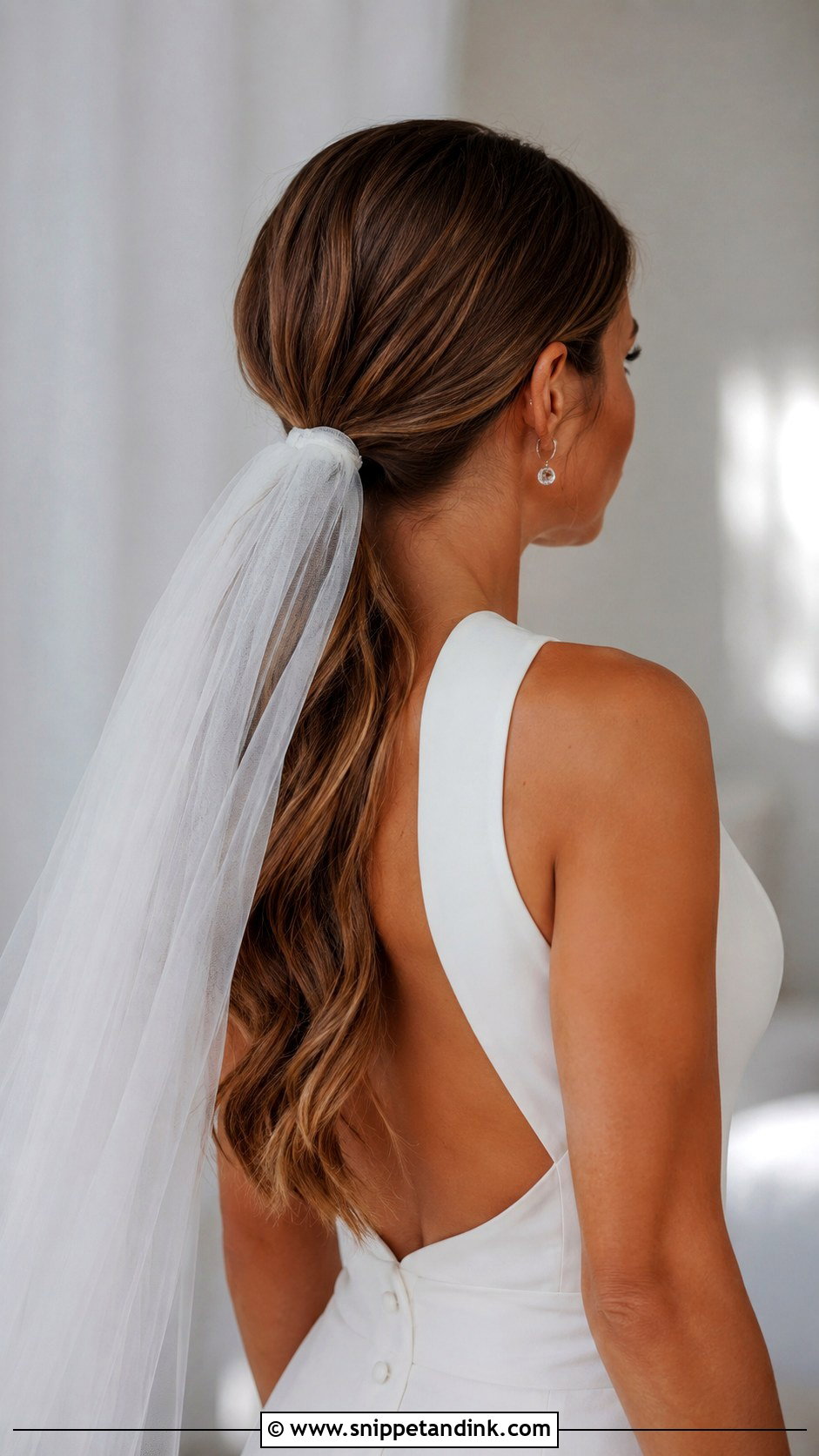
A low ponytail keeps hair off the face without a full updo, and it’s quicker in the chair than most buns. Smooth or softly waved, it gets a strand wrapped around the elastic, and the veil sits just below the base. That placement makes the veil and ponytail fall as one line down the back of a minimal dress or a low back. The risk is drooping: a heavy veil pulls the base downward over the hours. Keep it light, and I add a second elastic about an inch below the first to stop the ponytail sagging.
10. Veil Under Bubble Ponytail
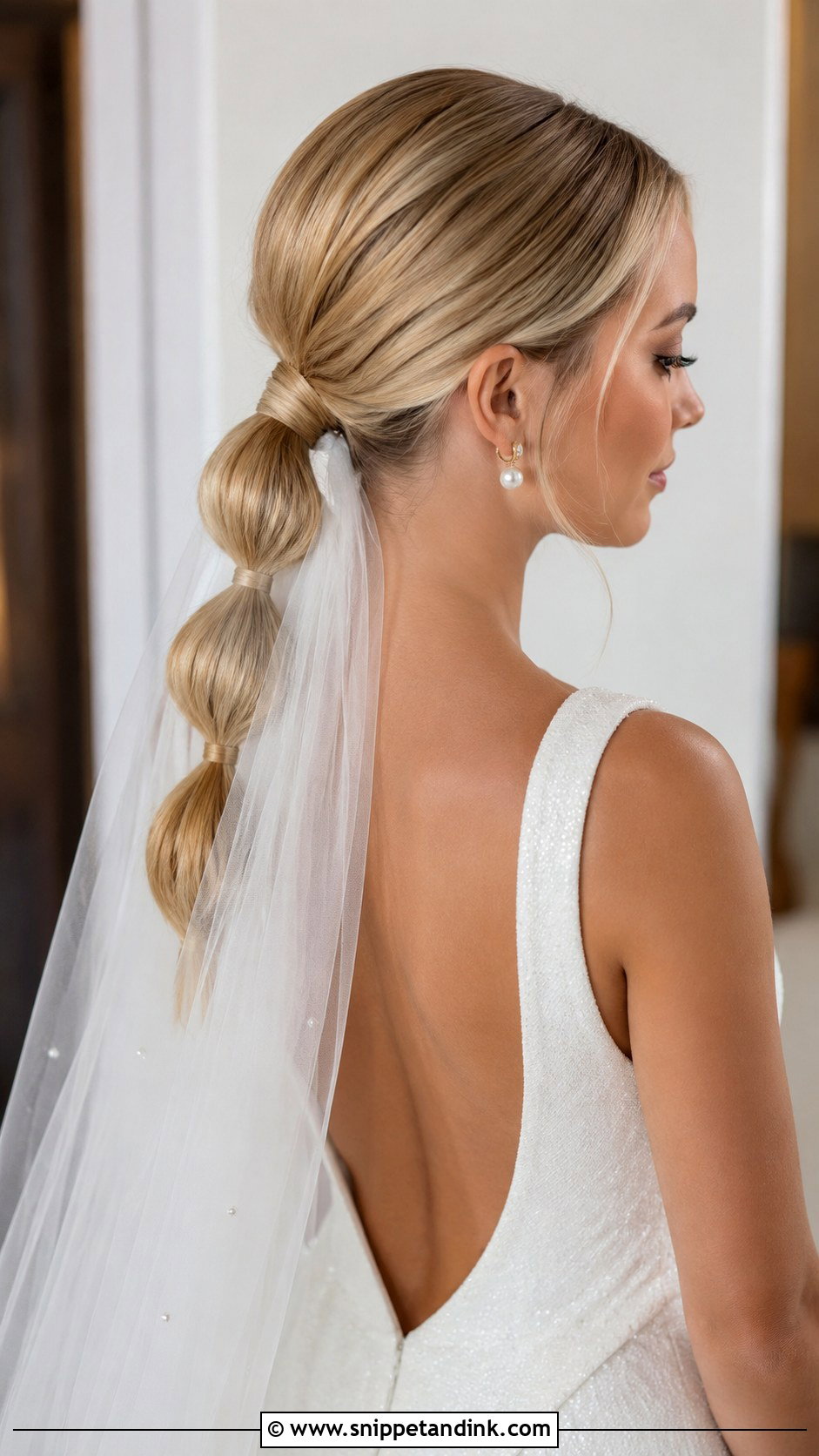
A bubble ponytail is the unexpected one here, for brides who’d like a modern shape. The rounded sections give volume and the veil keeps it bridal. Keep the ponytail low or mid-low so the tulle has room to fall. I use clear elastics and then wrap each with a thin strand of hair, which hides the bands in close-up photos. You’ll need long hair for at least four or five bubbles, otherwise it looks unfinished.
11. Veil Under Side Braid
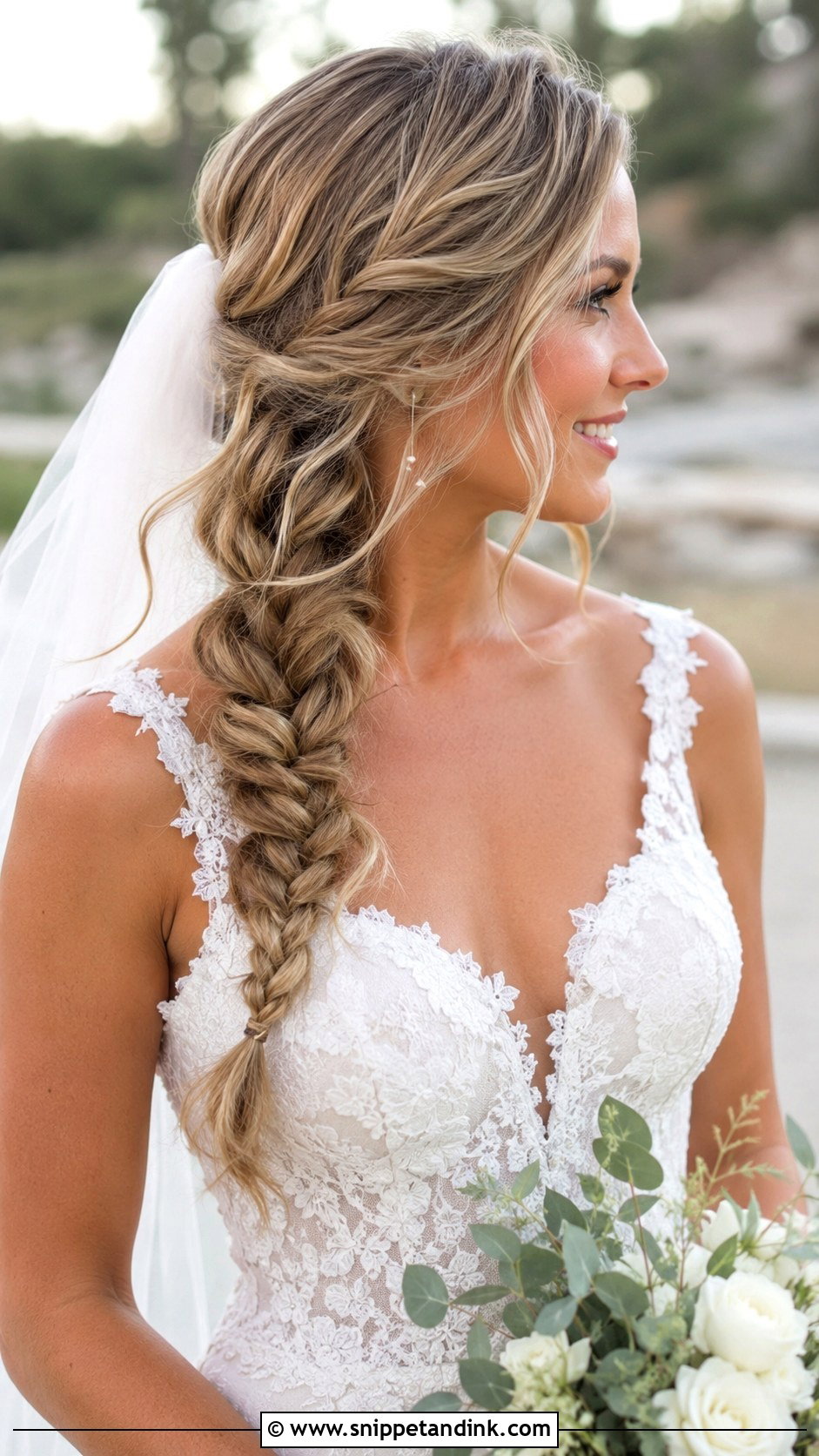
A side braid over one shoulder with the veil falling from the back has a storybook feel without being formal. A loose fishtail, Dutch braid or textured three-strand braid all suit it, with a few curls left at the face. Don’t anchor the veil into the braid itself. The braid moves every time you turn your head and would twist the veil with it. I set the comb at the lower back of the head, on a separate pinned section.
12. Veil Under Boho Braid
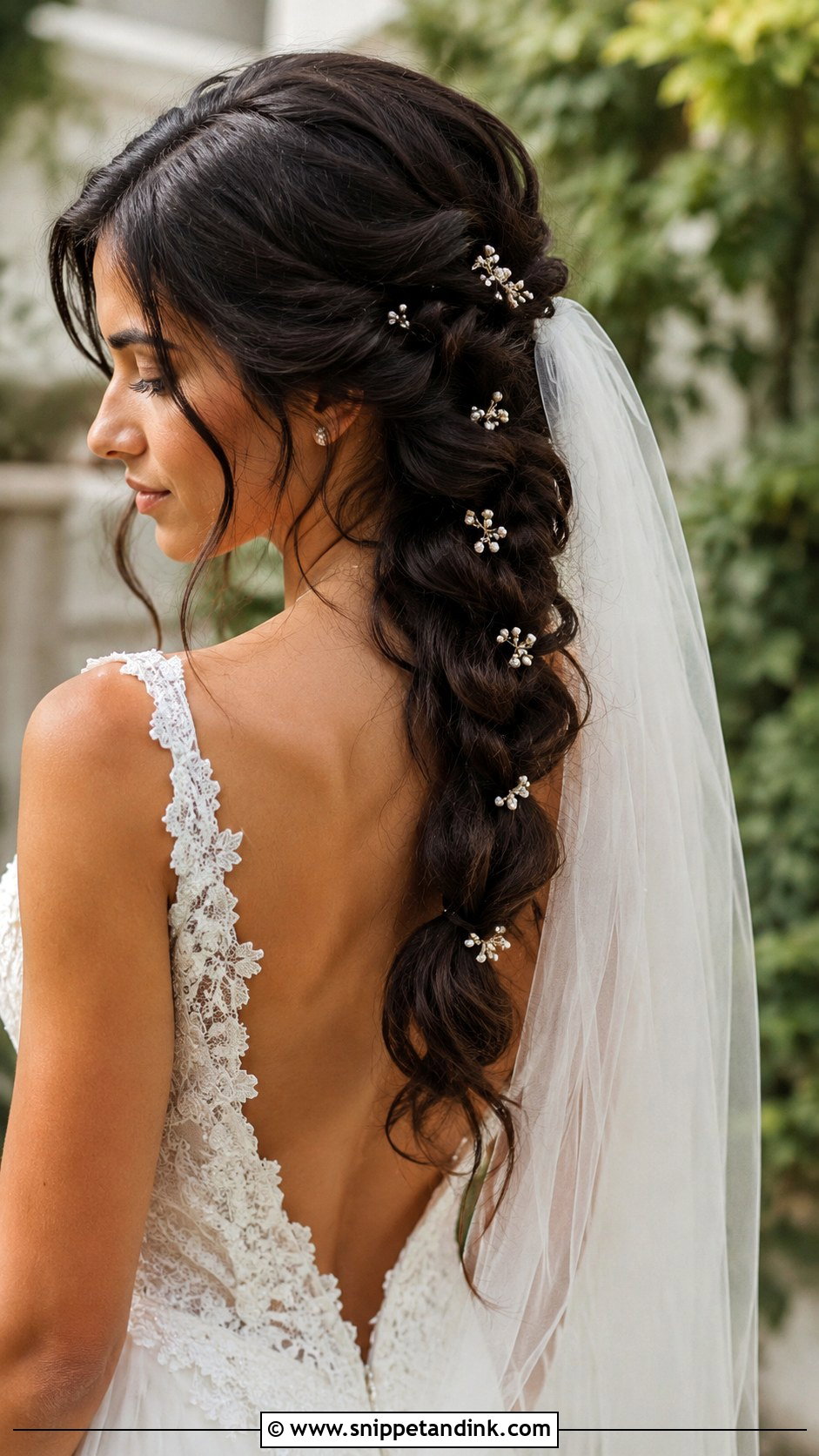
Pulled-apart braids, wispy pieces and a few small floral pins make up a boho style, with the veil flowing from the nape. It looks relaxed, but it needs real structure under it: a hidden braid or a pinned twist acts as the anchor while the visible braid stays loose. It sits naturally with lace dresses and outdoor venues. Scatter accessories rather than clustering them, or the braid looks crowded.
13. Veil Under Short Hair
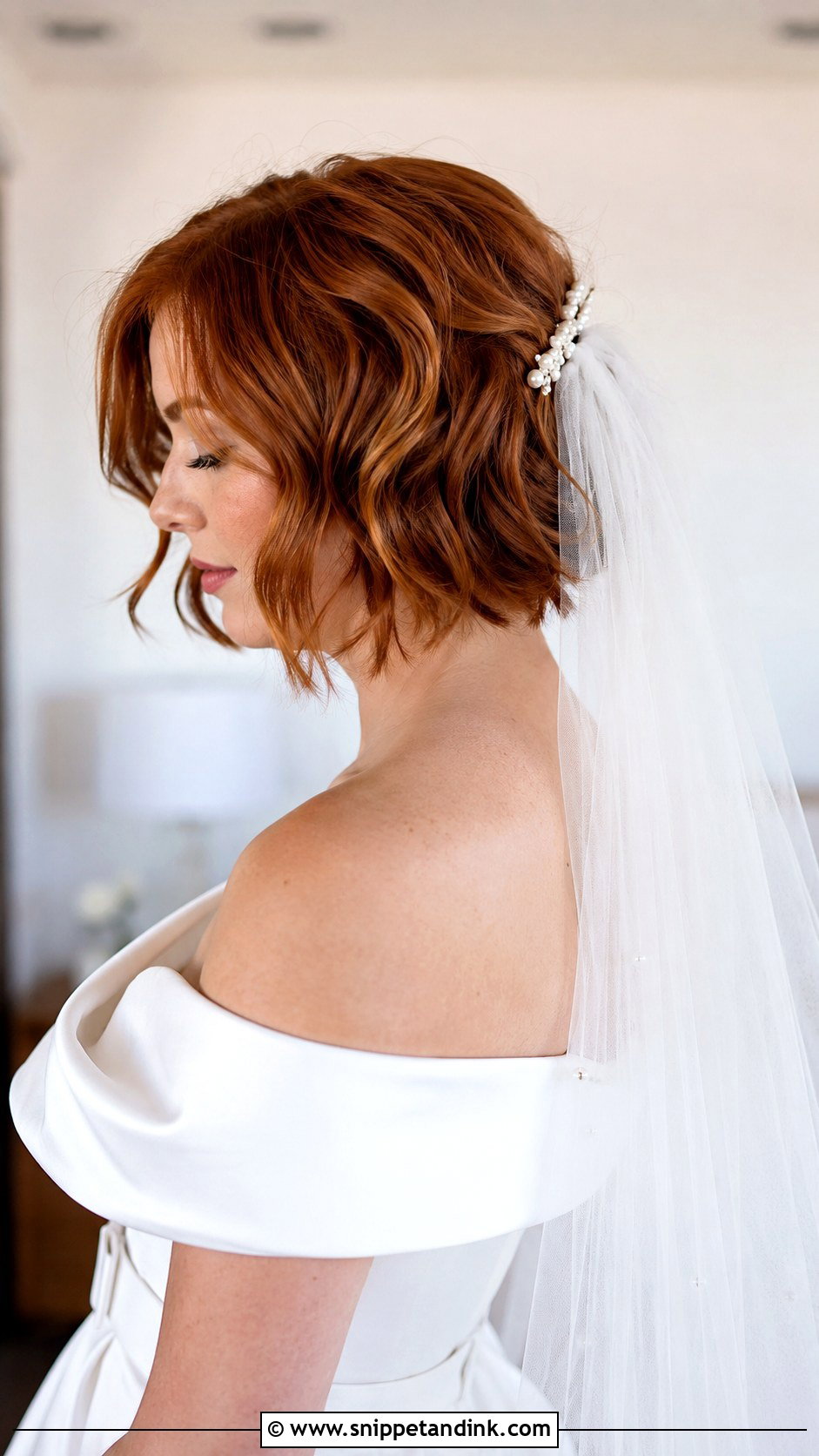
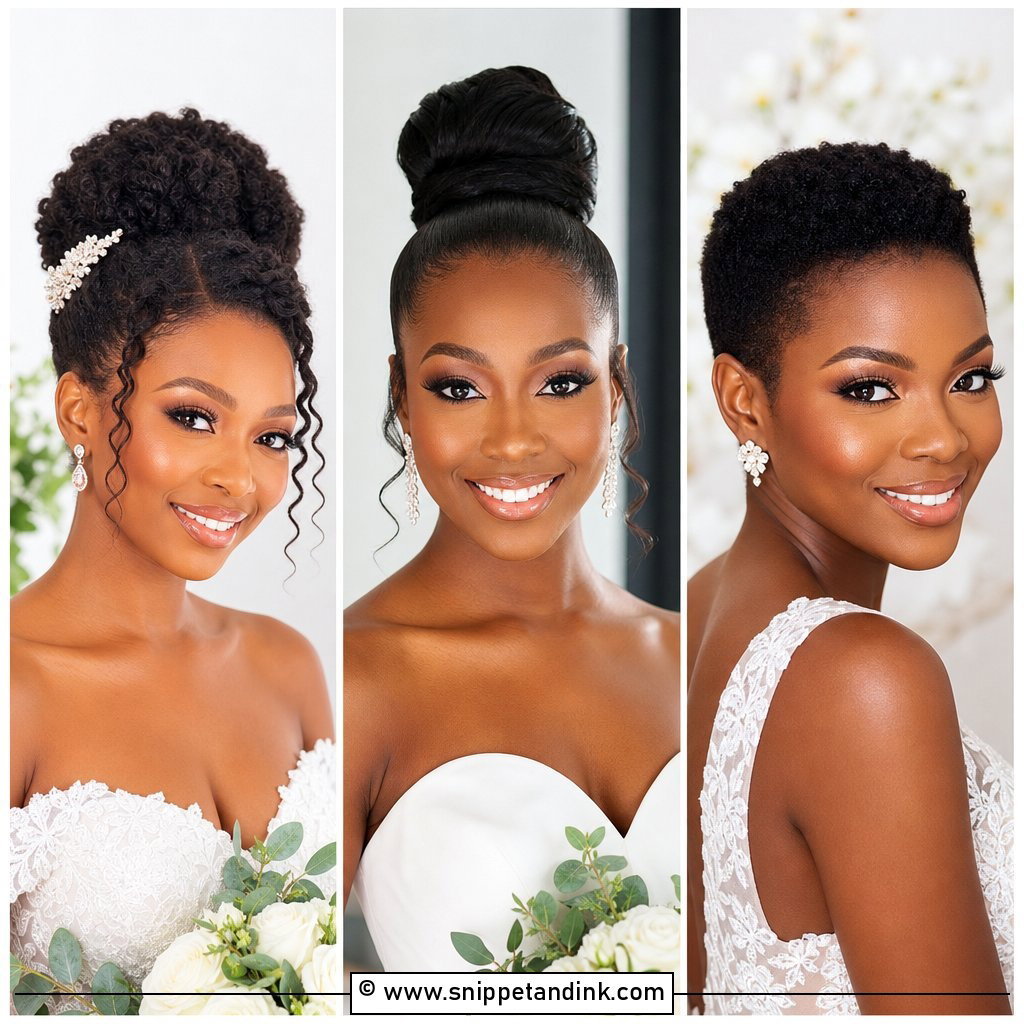
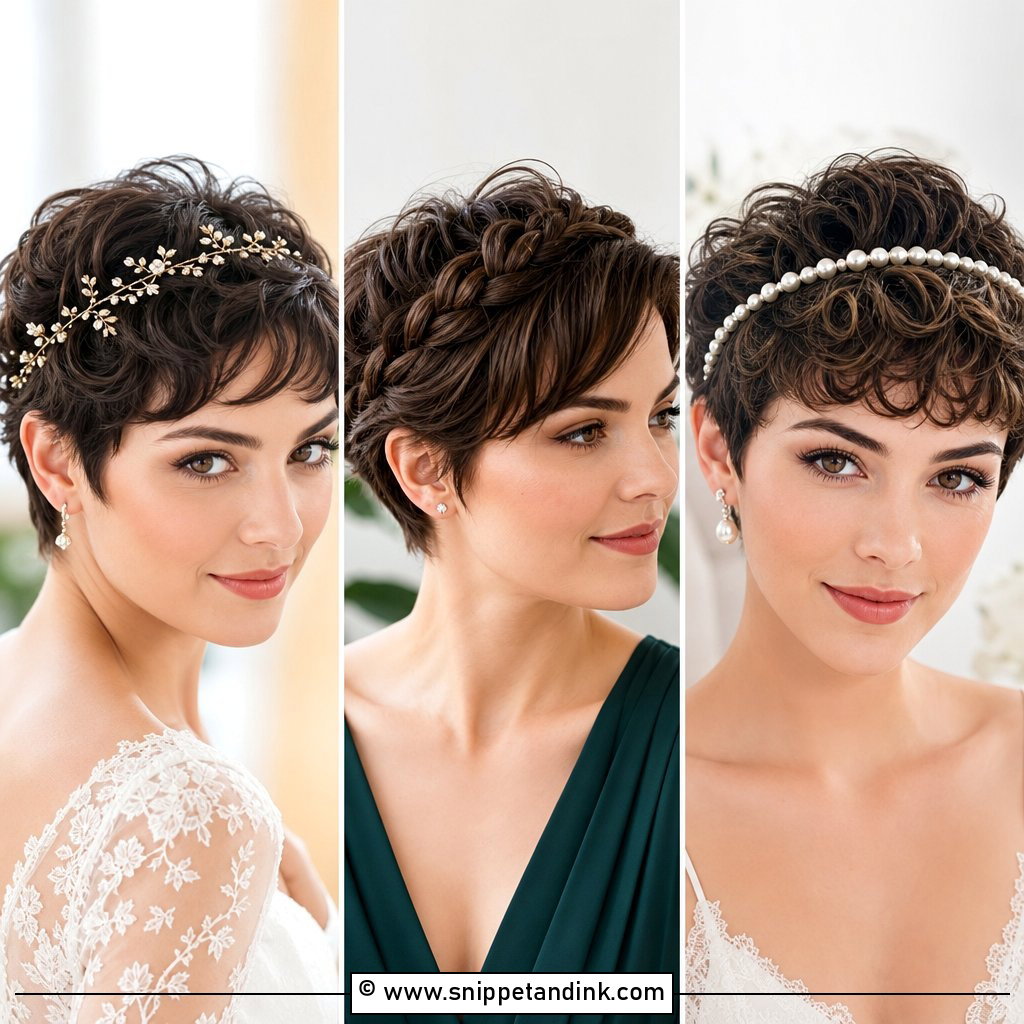
Short hair can wear a veil underneath with a bit of planning. A bob, lob, pixie or short curled cut may need hidden pins, a mini comb, or a tiny anchor braid if the length allows it. The veil sits low at the back, under a tucked section or a decorative clip. Pixie cuts often can’t hold a comb at the nape at all, and in that case I’d move the veil up to sit behind a clip rather than force it. Light tulle is easiest. Give the hair shape first, with soft waves, a deep side part or a polished blowout.
14. Veil Under Curly Updo
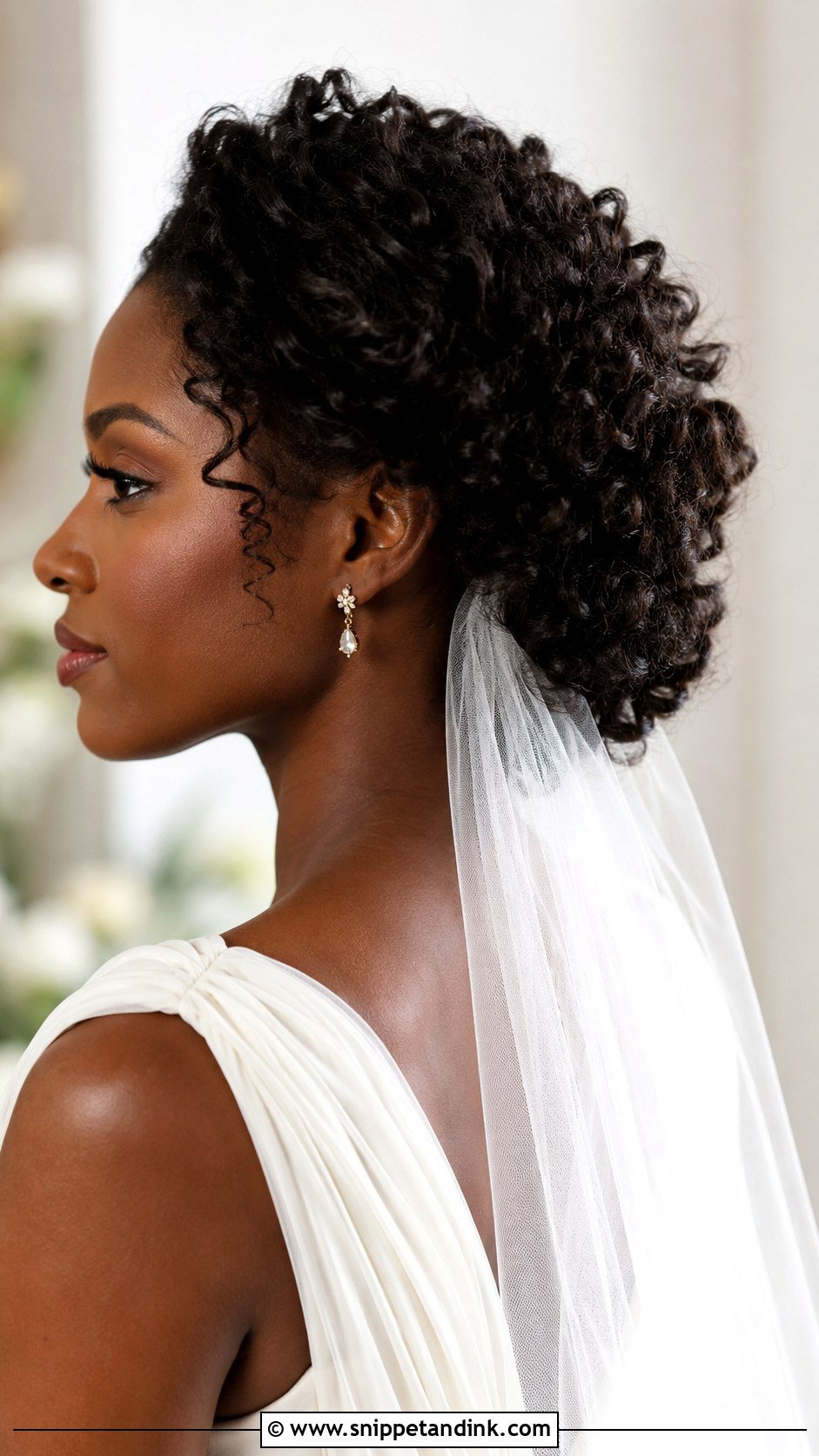
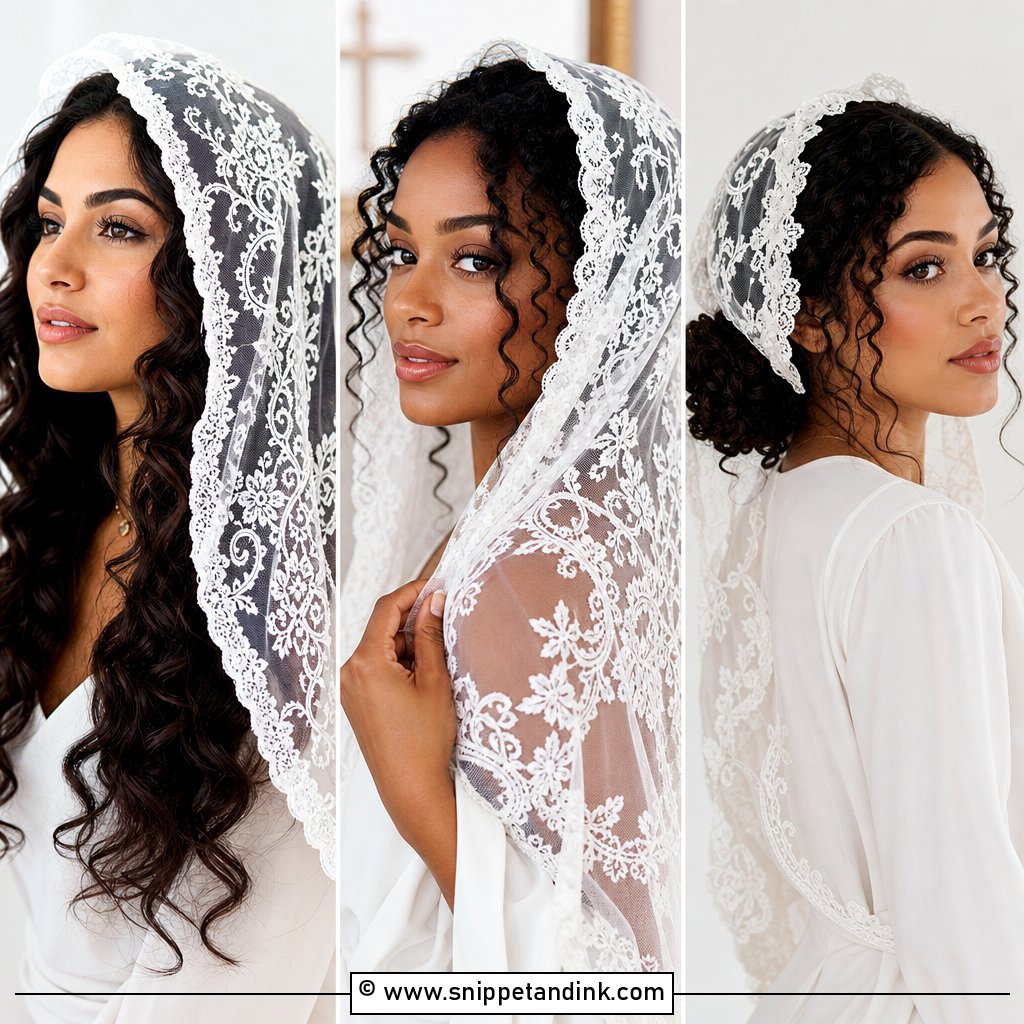
Curly updos have a lot of personality, and a veil underneath leaves it all showing. Curls can be pinned into a low bun, gathered into a soft puff shape, or arranged at the nape. I style defined, well-moisturised curls and pin with U-pins that hold bulk without crushing the pattern. A veil with a plain edge suits it best, because a busy border competes with the hair. Ask for pins that are secure but not tight, since curly updos can feel heavy by the evening.
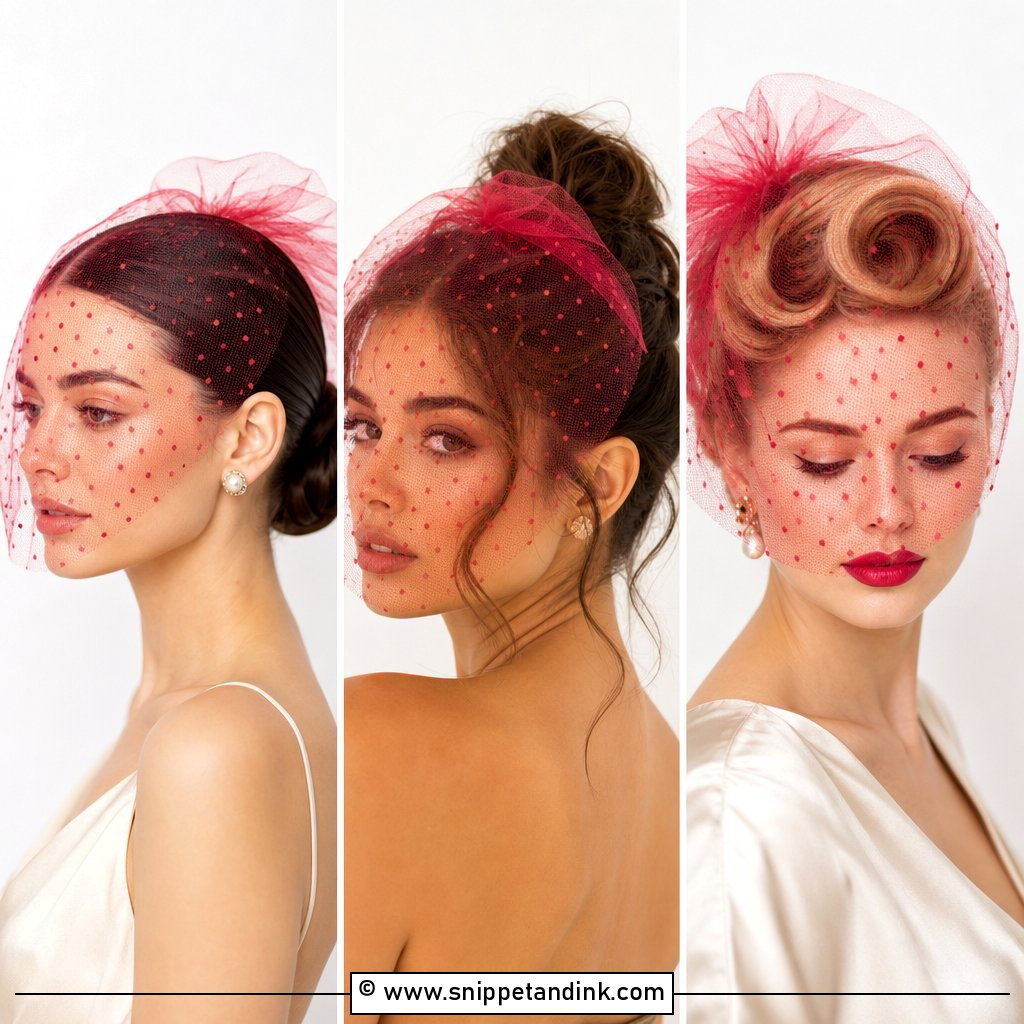
15. Veil Under Sleek Bun
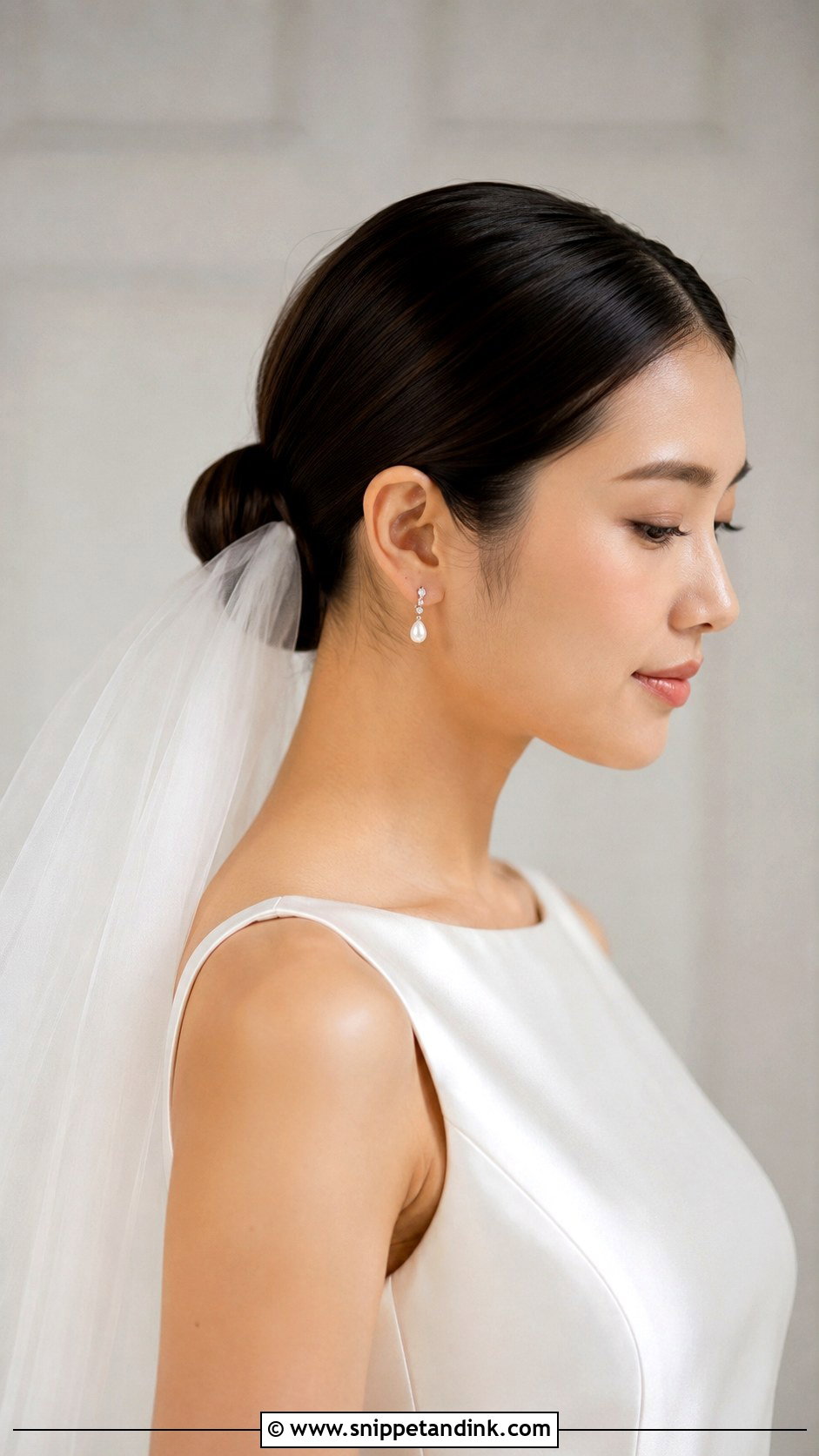
The sleek bun is the cleanest option: sharp part, glossy finish, no accessories needed. It can sit at the nape or slightly higher depending on the neckline and veil length. Smooth hair is slippery, which is the catch, so the comb needs a strong hidden anchor. I put a small braid or crossed pins under the bun before smoothing anything. A plain veil without a border keeps the whole look minimal.
Twenty Minutes of Everyone Looking at the Back of Your Head
During the ceremony your guests see your back far more than your face, and a nape veil puts the hair and the tulle right in their line of sight. At the trial I always step back a few metres and look from behind, the way the front row will.
Check that the comb sits centred under the style and that no plastic edge peeks out. If the veil hangs crooked, it’s nearly always because the comb was set a little off the midline, and a quarter-inch adjustment fixes it.
Sitting is the other moment to plan for. A low veil gets pressed between your back and the chair, and in the car it crushes against the seat. Ask someone to lift the tulle over the chair back as you sit, and travel with the veil off if the ride is long. The good news is that removing an under-placed veil barely touches the updo: slide the comb down and out, check the bun with a hand mirror, and you’re ready for dinner with the hair exactly as it was.
Your Updo Stays on Show From the Aisle Onward
A veil under the hair works when you want the style to stay in view and secure all day, whether it’s a low bun, loose curls, half-up, a braid or a sleek ponytail. What makes it hold is placement and support, so the veil looks like part of the style rather than something added at the last minute. Lighter veils are easier, and hidden pins or a small anchor braid make the biggest difference. If you can, bring your veil to the hair trial. I can only set the exact height and hold once I’ve felt its weight on your hair.
You'll Like These Ideas:



Leave a Reply