
An old money cake doesn’t announce itself. It looks as though it has always belonged on a silver tray in a long dining room, with ivory icing, careful piping and maybe a few sugar roses. When couples bring me this look, what they’re really asking for is restraint done well, and that’s harder to bake than it sounds: plain cakes show every uneven edge. The 20 designs below cover the classic routes into the style, with notes from my side of the bench on how each one is made and where it can go wrong.
Ivory, Cream or Pure White? Match the Icing to Your Dress First
Almost every cake in this style is some version of white, and that’s where couples get caught out. Pure white icing next to an ivory gown makes the dress look yellow in photos, and a deep cream cake beside a bright white gown can look dated. I tint buttercream and fondant to order, so the color is easy to adjust before baking.
Bring a fabric swatch from your dress, or at least a daylight photo of it, to your consultation. If your linens are a specific shade of ivory, a napkin helps too. I’d also mention whether your reception is lit by candles or daylight, since warm light pushes every white toward cream.
1. Ivory Lambeth Wedding Cake
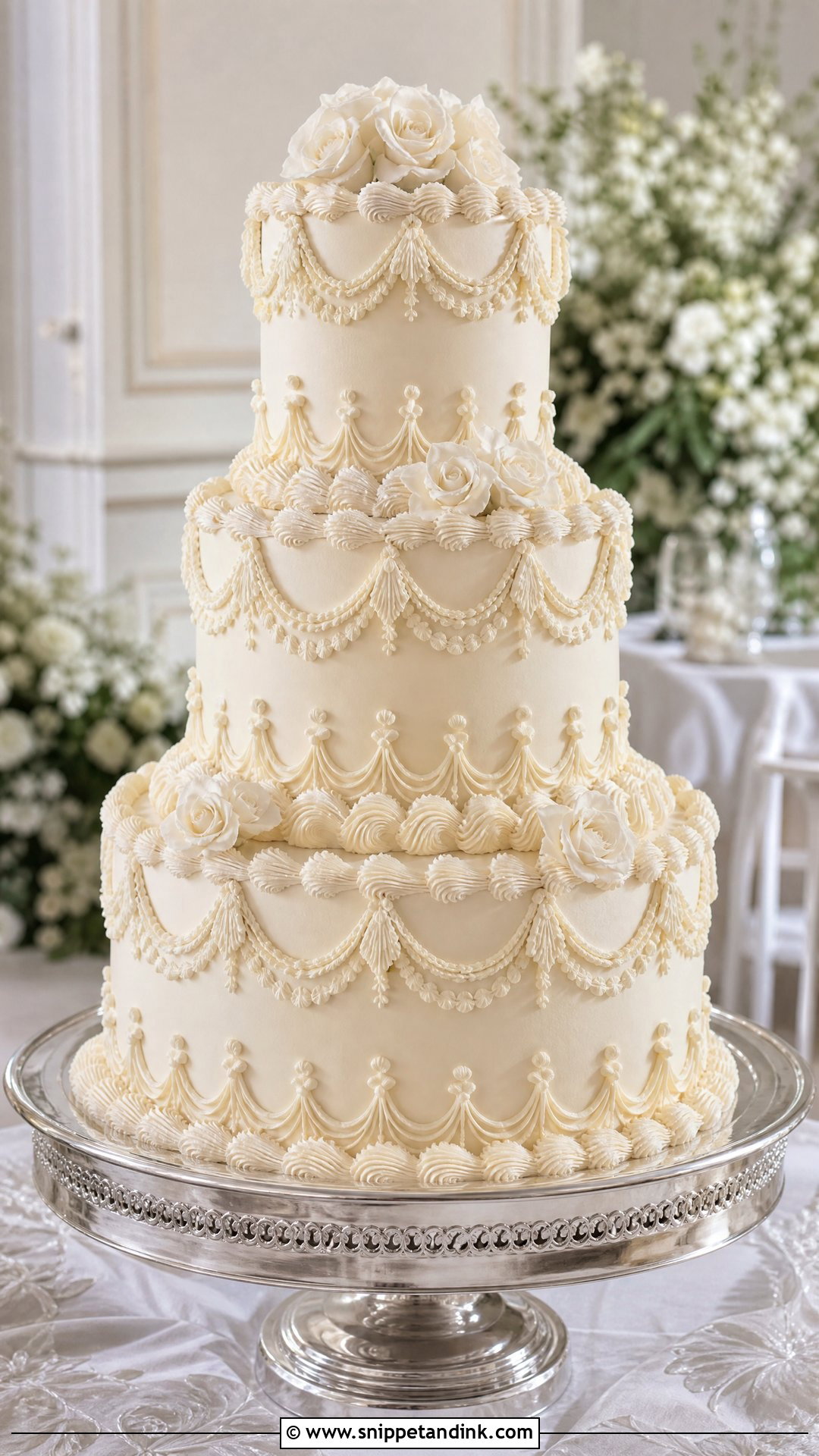
An ivory Lambeth wedding cake is built from layer upon layer of overpiped borders: shells, swags, scrolls and drop strings stacked so each tier looks framed. It’s slow work, and on a three-tier cake the piping alone can take most of a day, which is why Lambeth usually costs more than a plainer finish. I pipe it in a stiff buttercream or royal icing; soft buttercream won’t hold the ridges. Keep the color ivory so the shadows in the piping do the decorating. Two or three tiers on a silver or porcelain stand suit a ballroom or a tented estate lawn, as long as the tent isn’t hot.
2. Pearl Wedding Cake
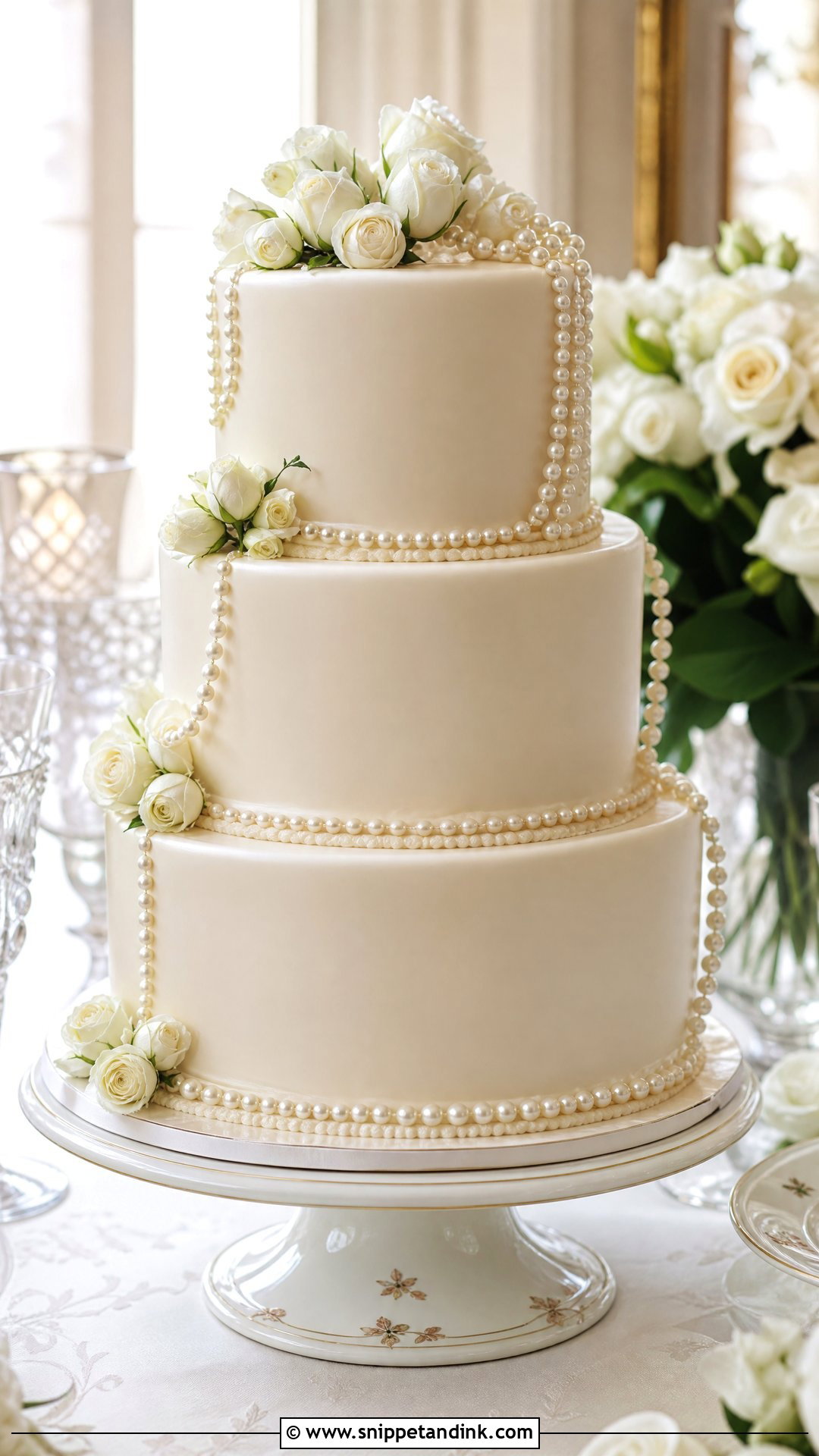
The trick with a pearl wedding cake is stopping before it looks like a costume. I apply sugar pearls one at a time with tweezers and a dot of edible glue, as single borders, scallops or a few vertical strands, and I leave most of the surface smooth. Hard sugar pearls are fine as a border but can be tough to bite through, so I keep them off the areas that become guest slices. For a small wedding, one smooth tier with a pearl rim and a few white flowers is enough.
3. White Bow Wedding Cake
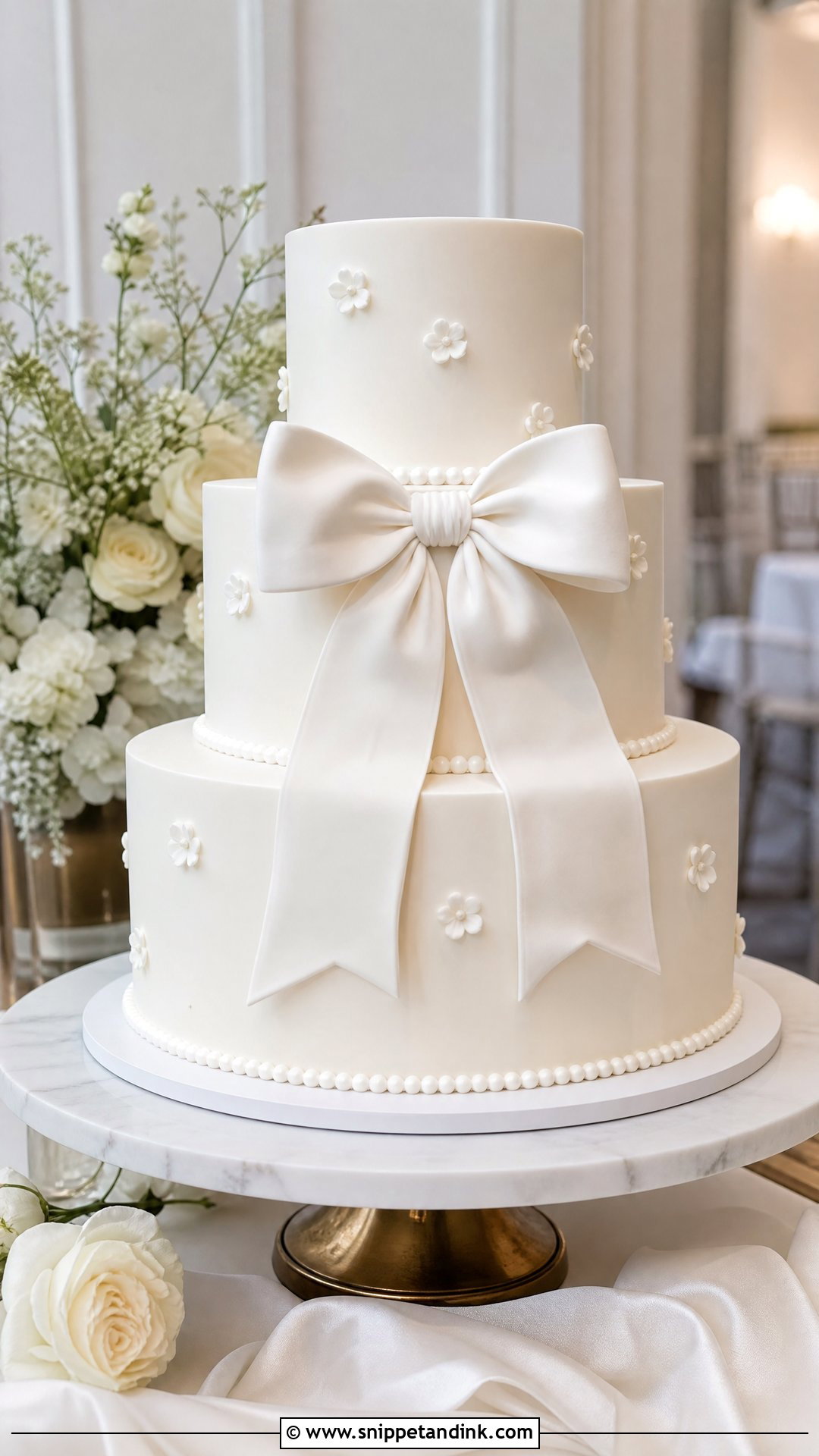
A bow only looks right if it seems to belong to the cake. I make most of mine in sugar paste, left to firm overnight so the loops hold their shape, or I use real satin ribbon backed with a strip of acetate or greaseproof paper. Without that backing, the butter in the frosting seeps into the satin and leaves dark patches within an hour. The bow usually sits on the middle tier or trails down the front, with fine piping or a small pearl border elsewhere and very little else.
4. Vintage Heart Wedding Cake
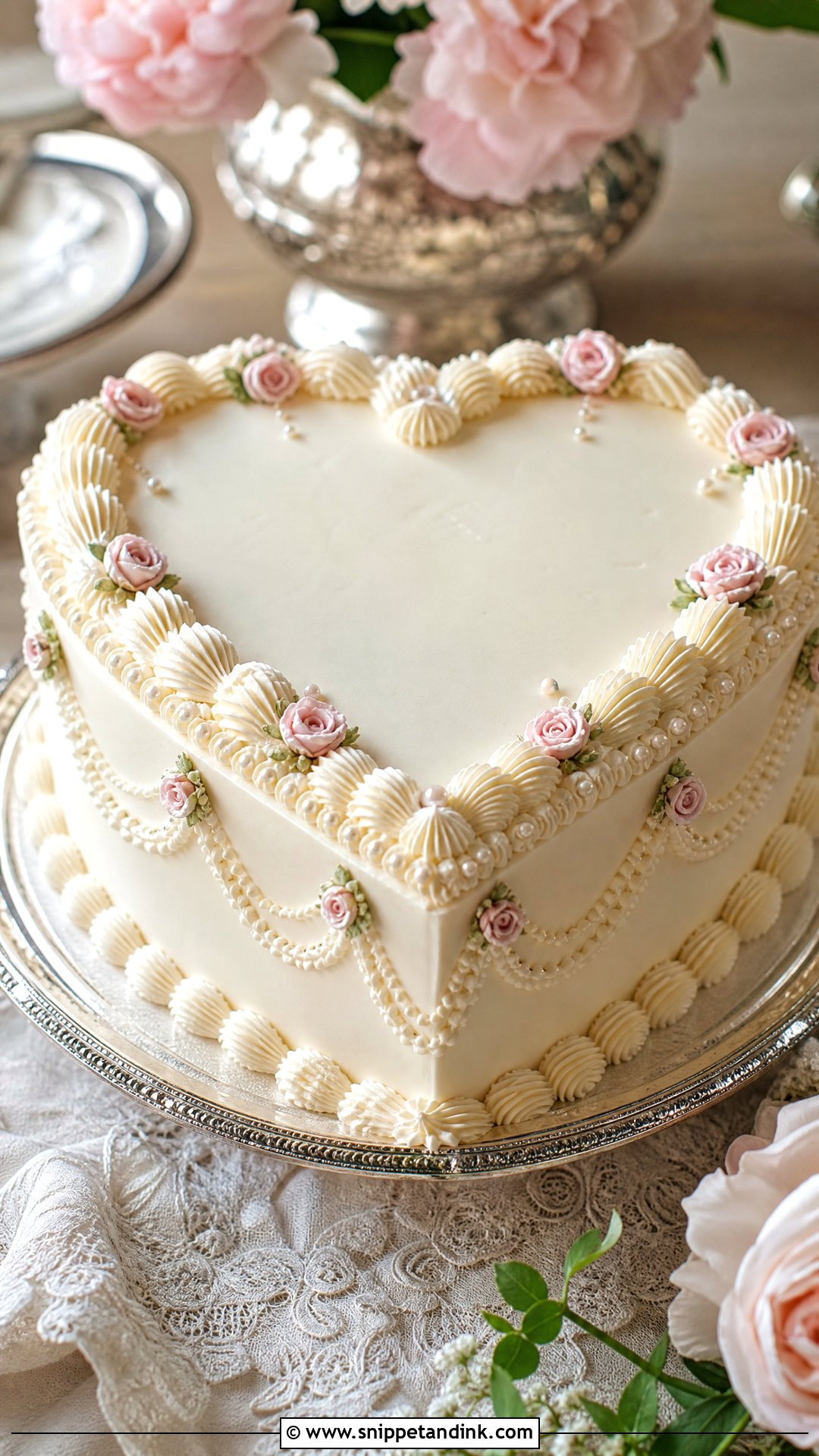
Heart-shaped cakes suit smaller weddings, luncheons and intimate dinners, partly because a heart doesn’t stack as easily as a round. I pipe them with scalloped borders, shells and tiny rosettes in ivory, cream or the palest pink. Bright colors push this design toward novelty, so I’d keep it soft. A single heart serves a small table on its own; stacked hearts need careful doweling because the point at the front has little support underneath. Set it on a silver tray and leave the rest of the table plain.
5. Lace Wedding Cake
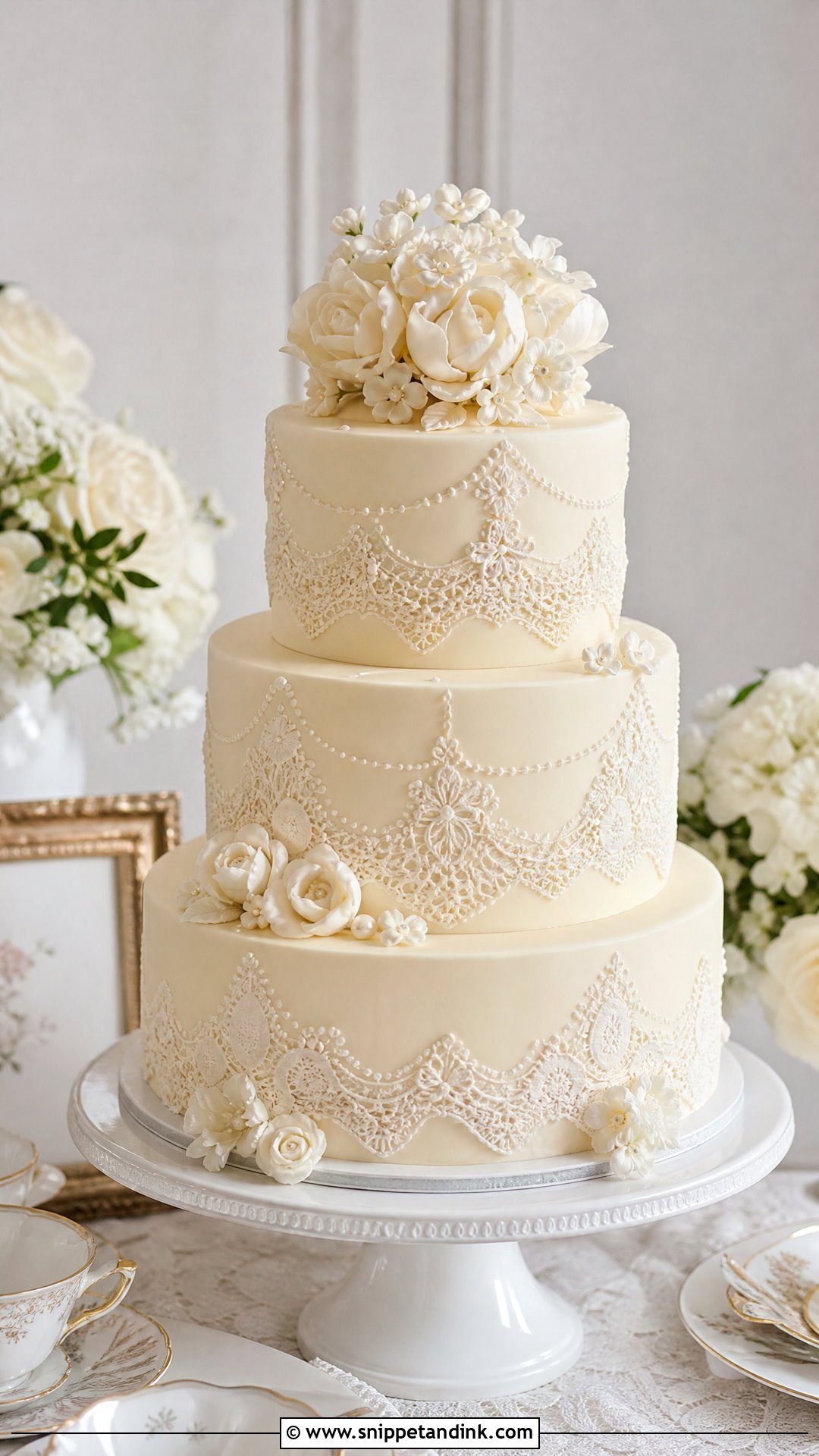
There are three ways I make a lace wedding cake: piped royal icing, fondant appliqué cut with a mold, or set edible lace sheets. Piped lace is the most delicate and the most labor; sheets are quicker and more even but can look printed up close. Ivory on ivory is the classic route, and a champagne base under ivory lace shows the pattern more clearly in photos. If the lace echoes your gown, bring a fabric swatch to the consultation rather than a photo; pattern scale is hard to judge from a screen.
6. Gold Trim Wedding Cake
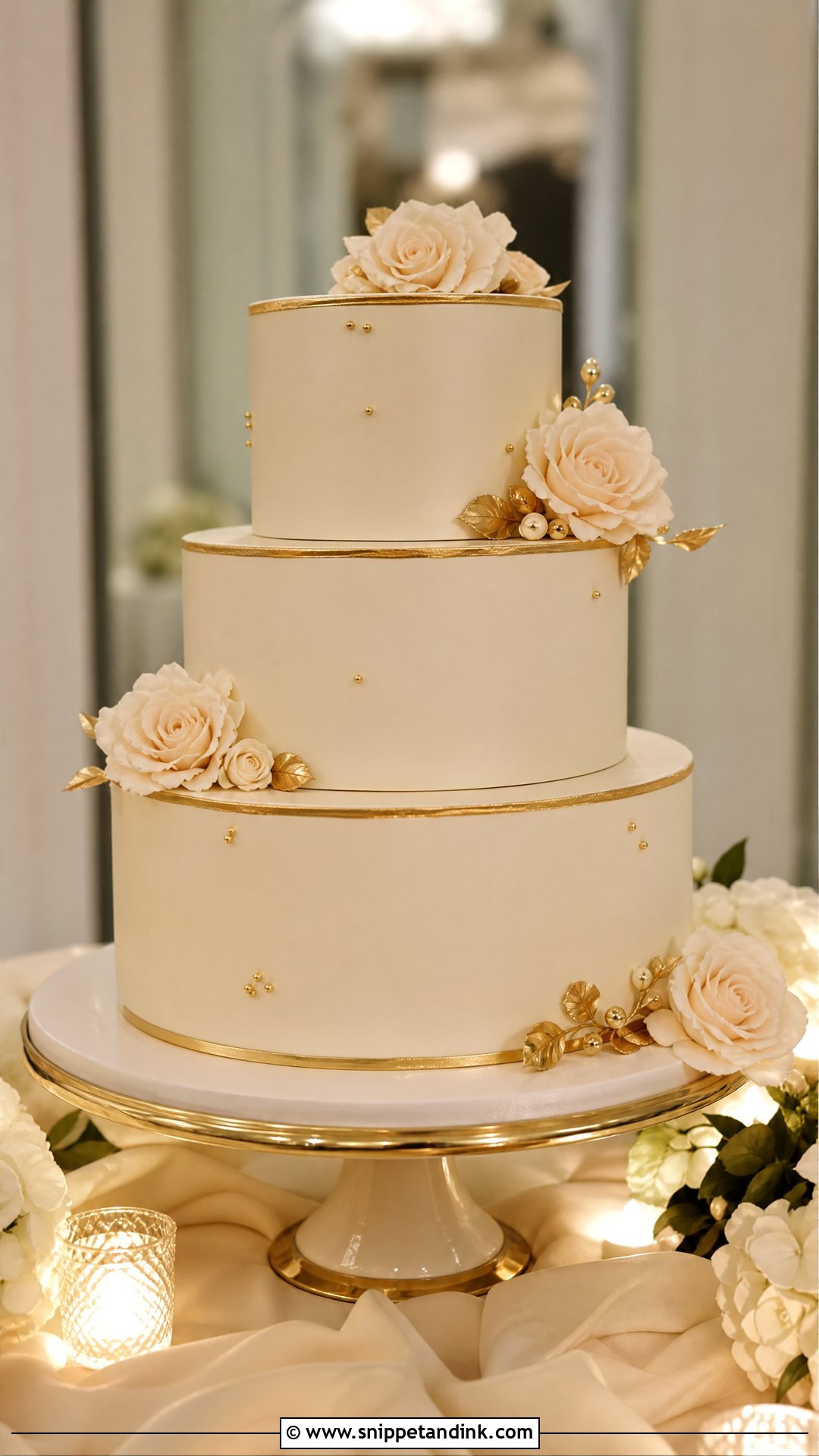
A gold trim wedding cake works when the gold is a line, not a coat. I hand-paint thin edges or fine scrolls with edible gold mixed in alcohol, which evaporates and leaves the metallic finish. One thing to ask any baker: whether the gold they use is labeled edible or only non-toxic, because some decorating dusts are not meant to be eaten. Smooth fondant takes paint more cleanly than buttercream. Three tiers with fine gold lines suit a candlelit dinner reception with crystal on the tables.
7. Sugar Rose Wedding Cake
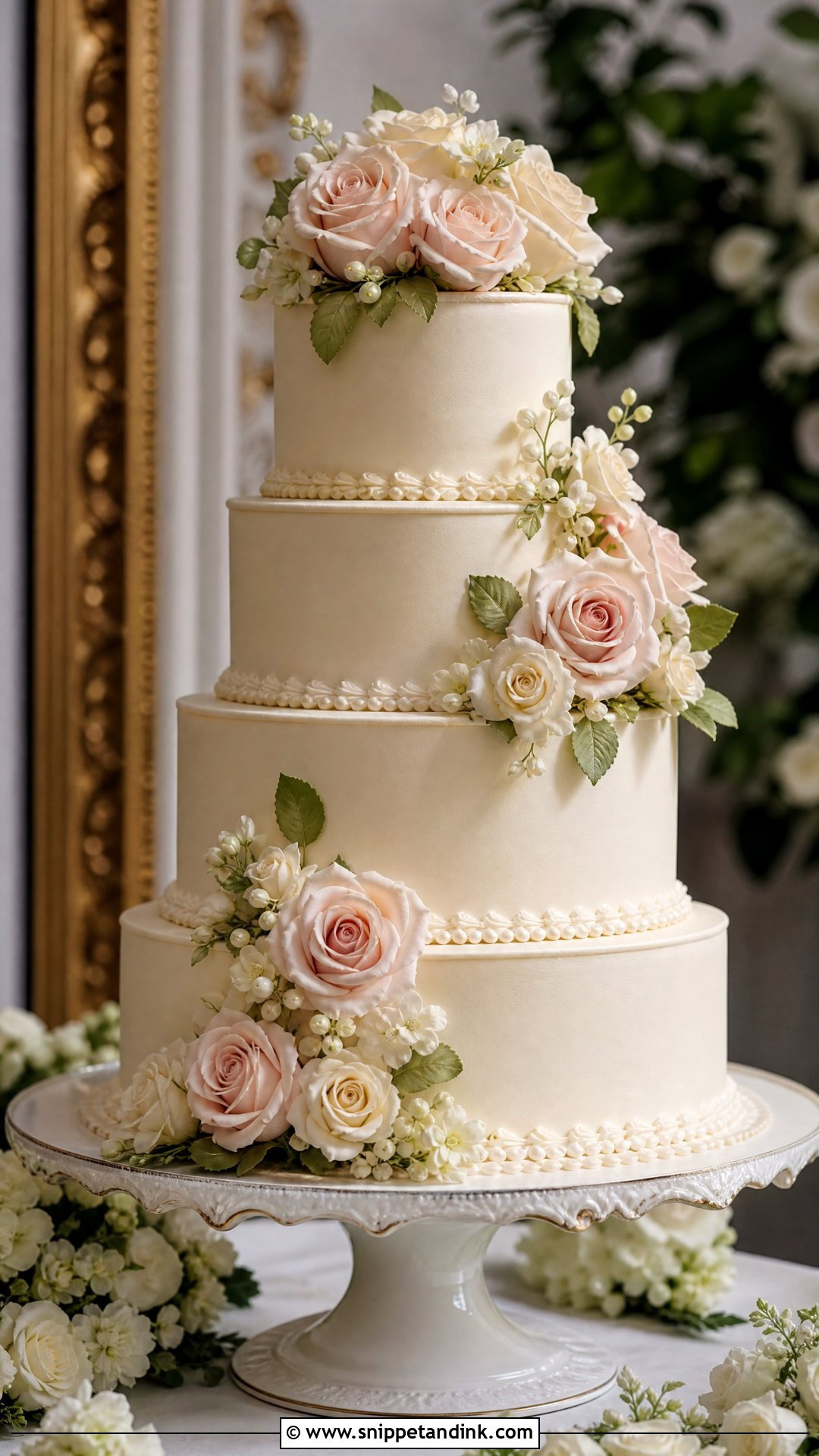
Sugar roses are made petal by petal from gum paste on wires, then dried for days before they’re colored, so they need ordering well ahead. The upside is that they won’t wilt in a warm room the way fresh roses can. Ivory, cream and barely-there blush keep the palette quiet. Small clusters read as old money; a heavy cascade starts to look theatrical. Because the wires can’t touch the cake, I insert each spray into a food-safe pick first, and I’d ask any baker you’re considering how they handle that.
8. Monogram Wedding Cake
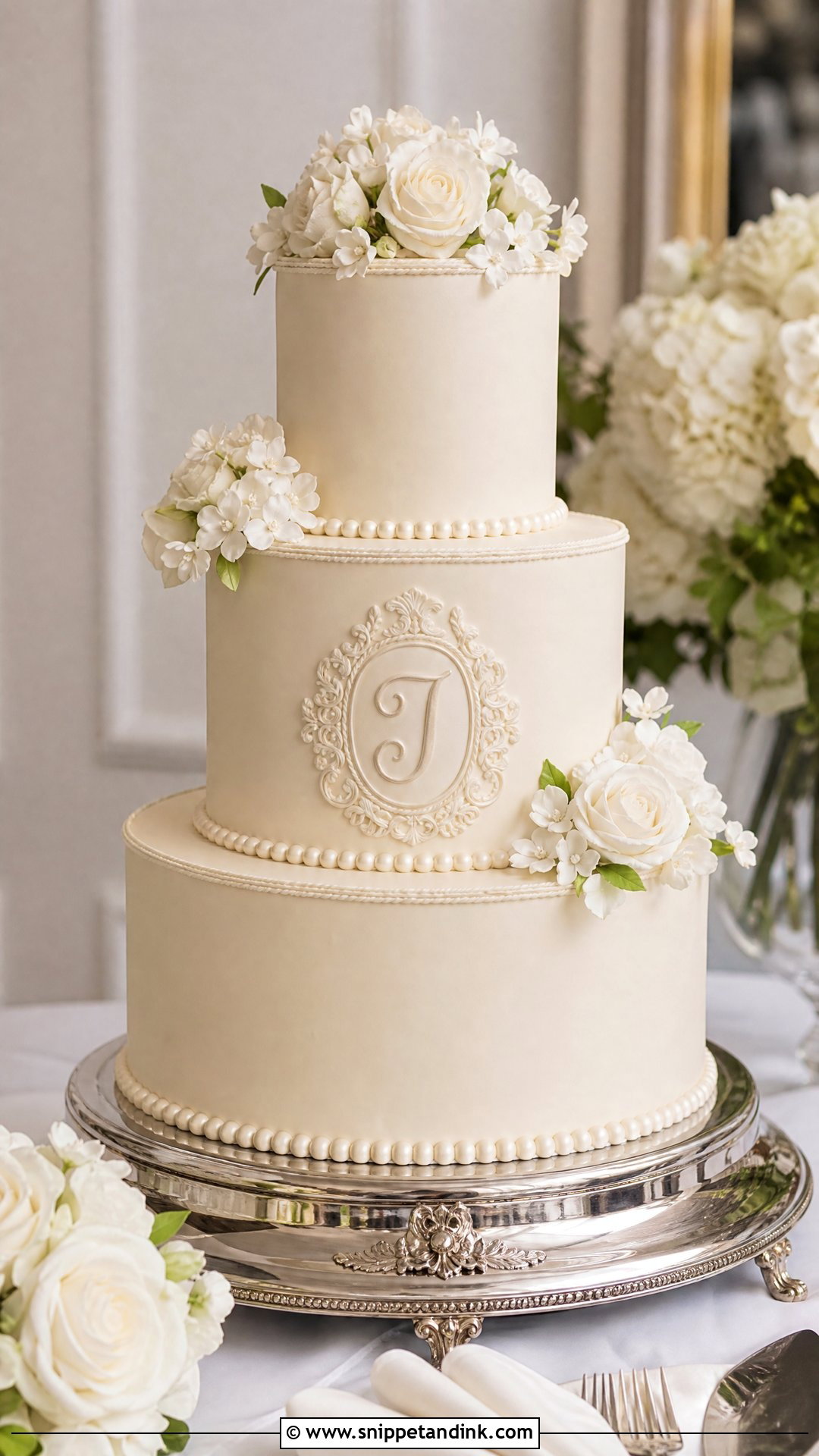
A monogram is the most personal detail on this list, and it needs restraint more than any other. I place it once, on the central tier, in piped icing, embossed fondant or a small sugar plaque. Match the lettering to your invitation suite by sending your baker the stationery file or a printed sample; script fonts copied by eye tend to drift. Keep the rest to ivory icing and one quiet border, so the initials sit like an engraving rather than a logo.
9. Satin Ribbon Wedding Cake
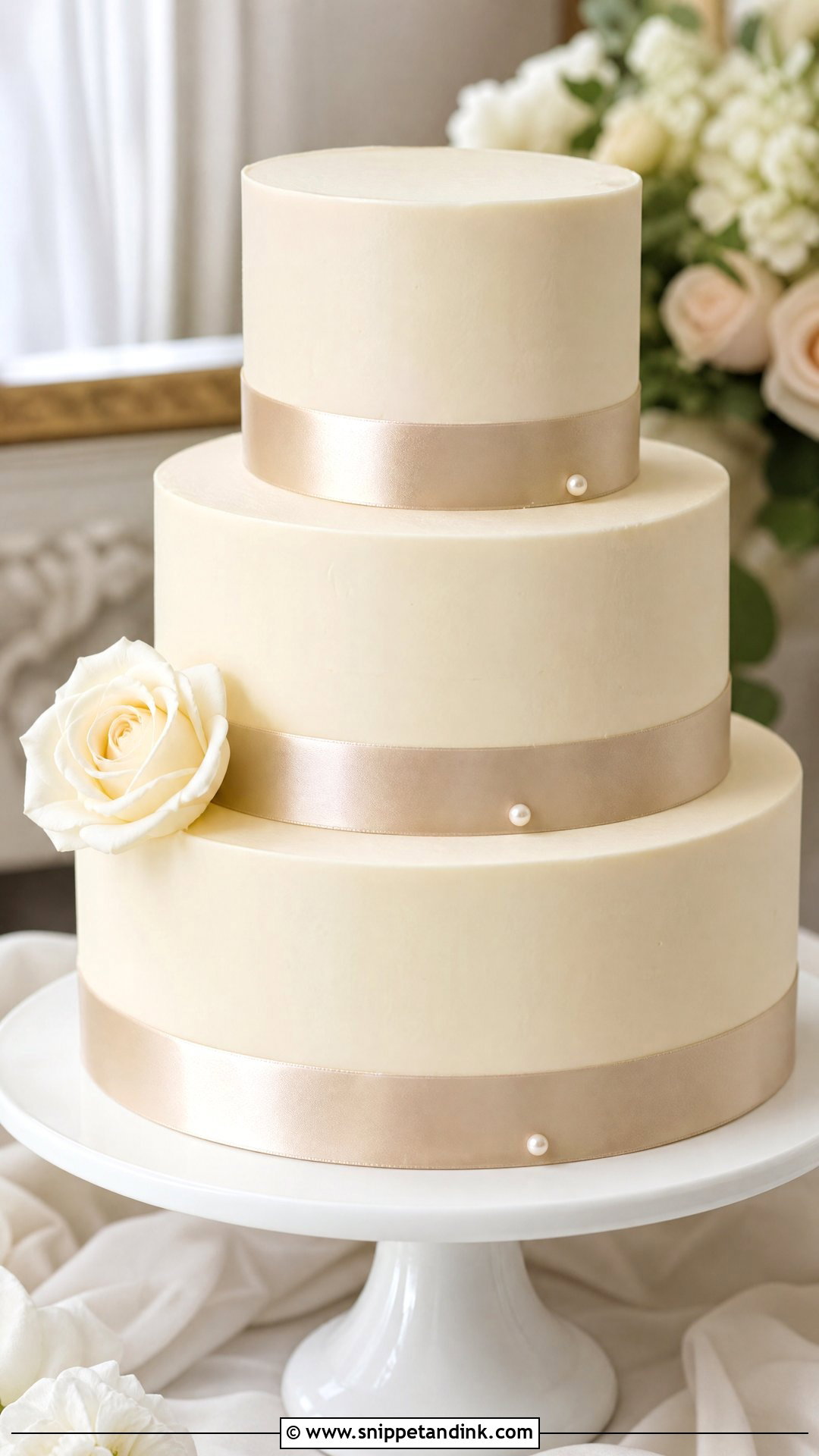
Ribbon gives each tier a clean horizontal line, almost like a tailored hem. That only looks expensive if the ribbon sits dead level and the join is hidden at the back, so I measure and pin it on site after stacking rather than before transport. Ivory cake with cream, champagne or pale blush ribbon is the soft version. Wired ribbon looks crisp in photos but can dent soft frosting, so I’d use it only on fondant. A single sugar flower is plenty of extra decoration.
10. Champagne Wedding Cake
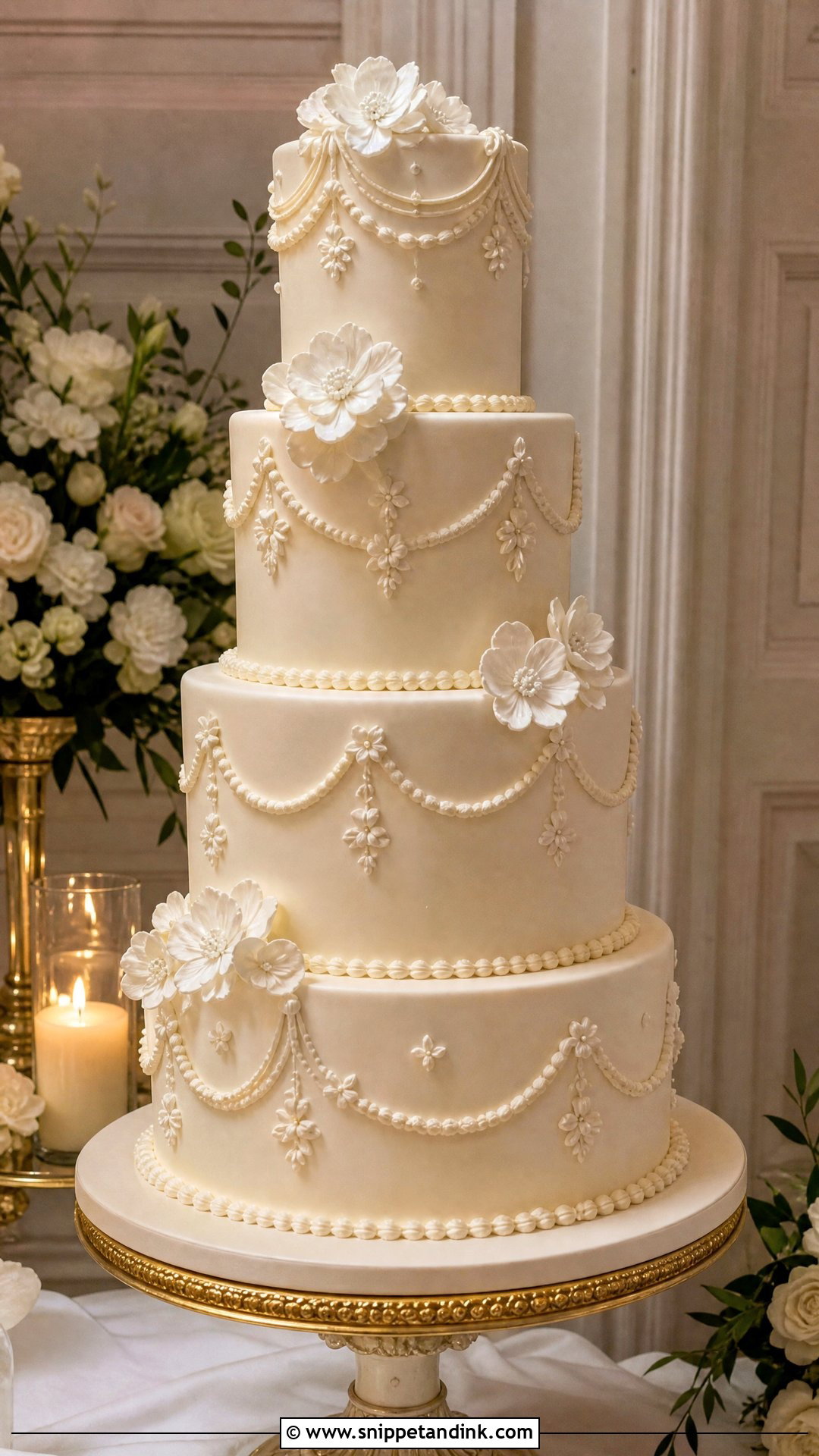
Champagne is a warm neutral somewhere between ivory and pale gold, and it can look quite different under candlelight than it does in my studio. I mix the color into the fondant or buttercream rather than spraying it on, which keeps it even. It suits evening receptions and historic rooms with warm lighting. Skip glitter here; a satin sheen from a light brush of pearl dust reads richer. Ask your baker for a color sample under the same kind of light as your venue, since champagne tones can look slightly beige by daylight.
11. Buttercream Ruffle Wedding Cake
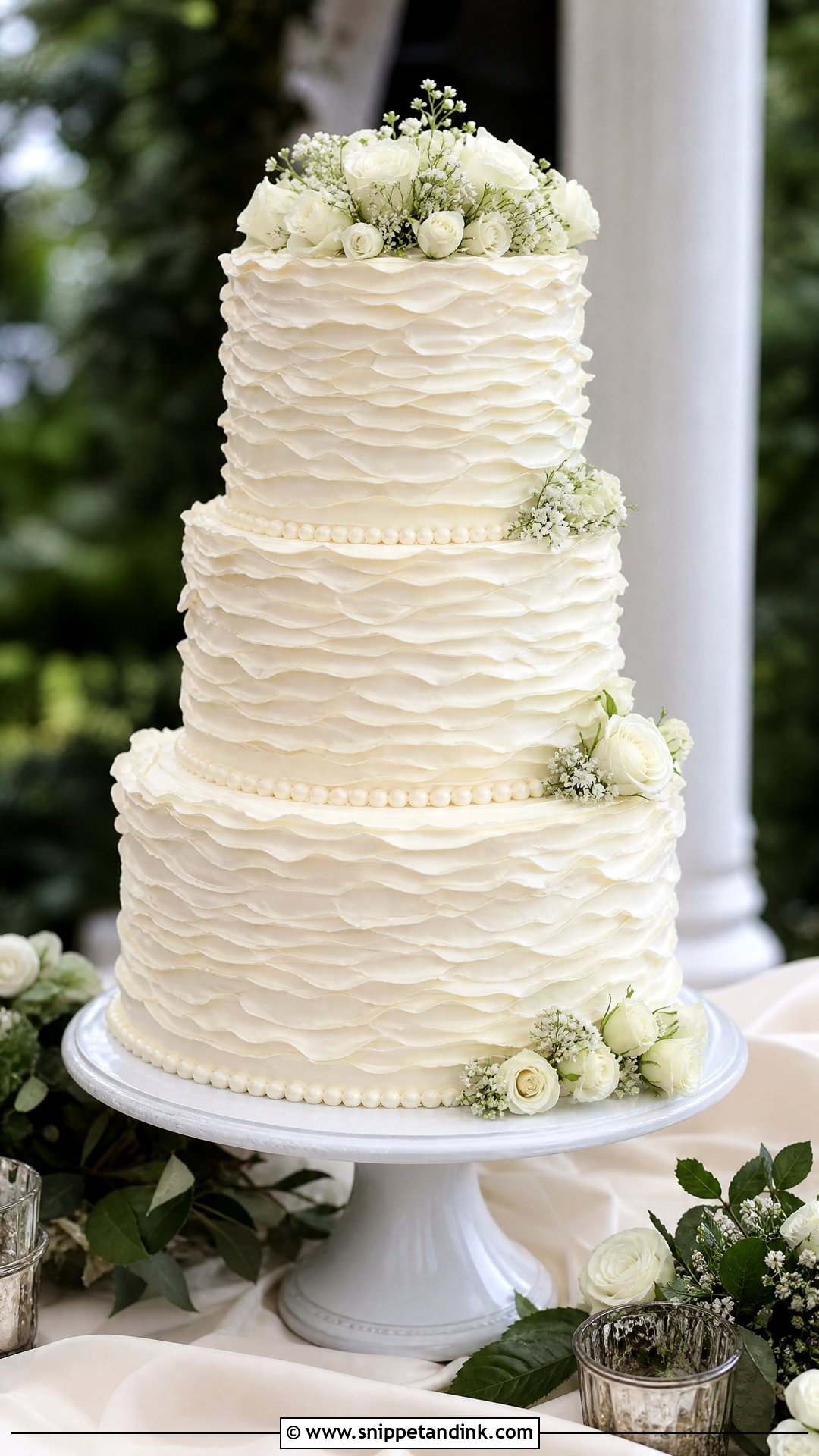
Buttercream ruffles are piped with a petal tip, row after row, and they’re one of the softer looks in this collection. The frosting needs to be stable, so I’d avoid this in an outdoor tent in midsummer; ruffles slump when buttercream warms. Ivory shows the shadows inside each fold. Wrap one tier for texture or every tier for a fuller look, and keep the decoration to a few white flowers and a plain stand.
12. Column Wedding Cake
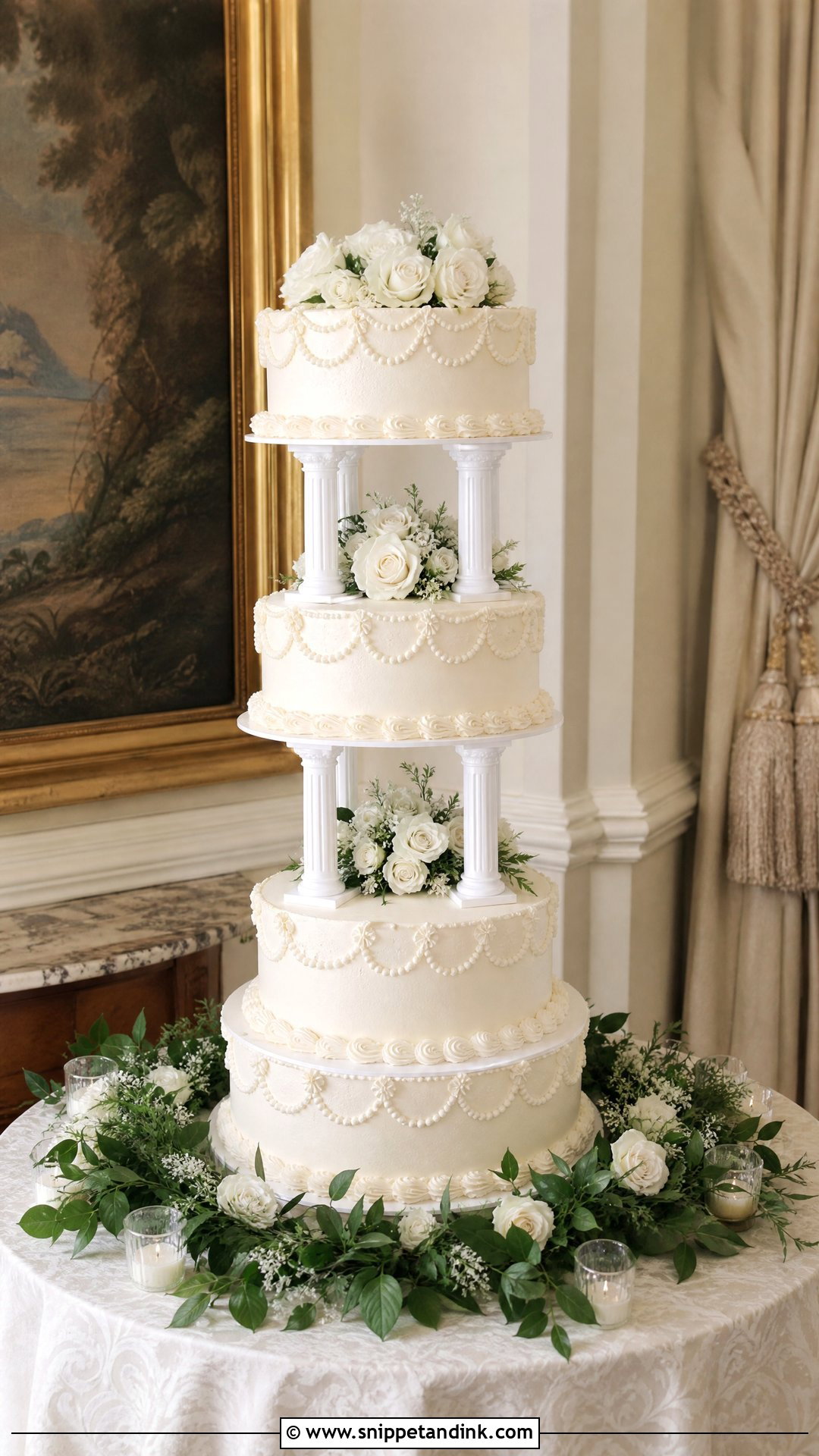
Separated tiers on pillars are the cake from a family album, and they need the most engineering. Each tier sits on its own board with dowels underneath, and the whole thing is assembled at the venue, not transported stacked. That means your baker needs setup time and a level table that won’t be bumped. I’d only suggest a column cake for a large room with a ceiling high enough to give it presence. White pillars, piped borders and flowers in the gaps keep it classic.
13. Cameo Wedding Cake
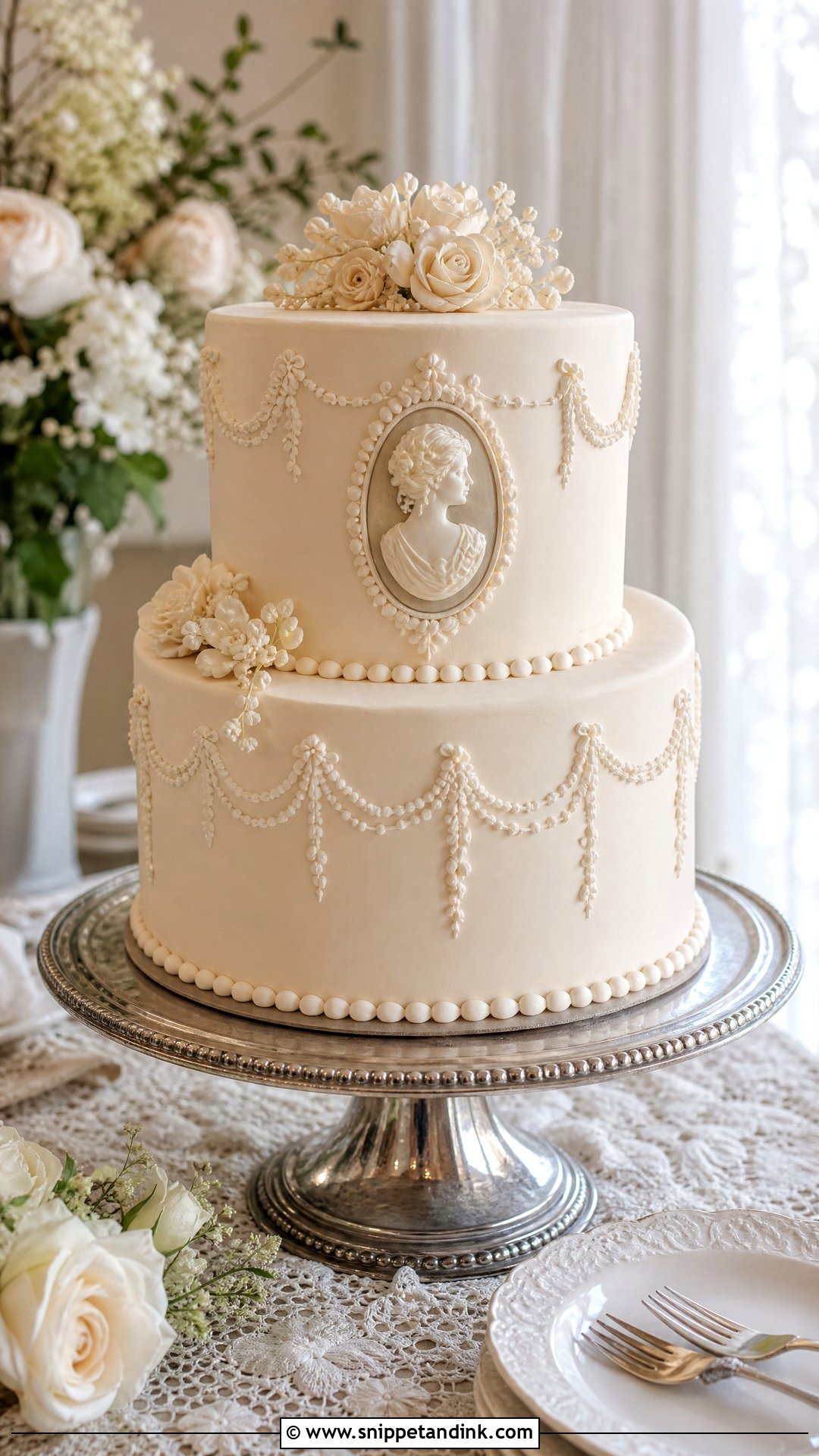
A cameo is usually a molded sugar plaque in ivory and soft beige, set on the front of one tier like a brooch. I tint the background a shade darker than the profile so it reads from across the room. Delicate piping or a pearl border around the edge makes it look finished rather than stuck on. Two or three smooth tiers suit it, and it fits vintage receptions in museums or historic houses especially well. If the cameo has meaning, such as a family piece, bring the original so the mold can follow its proportions.
14. Scalloped Wedding Cake
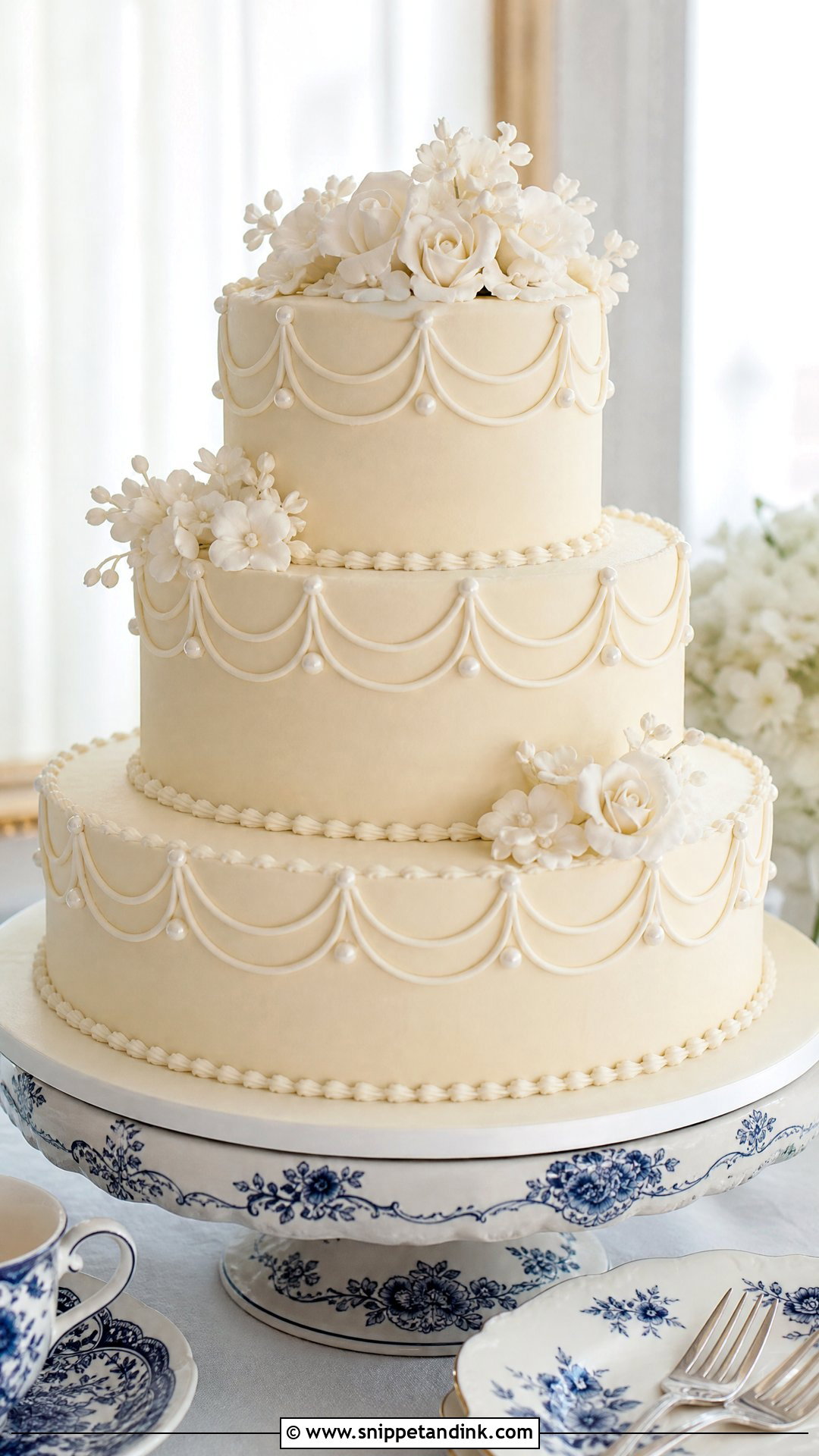
Scallops are one of the easiest details to adapt across a whole wedding. I can pipe them in buttercream, emboss them into fondant or build them from layered borders. Ivory and white are the safe choices; pale blush or soft blue give a quiet twist. A tiny pearl at each scallop point adds detail without fuss. It’s polished enough for a formal room and relaxed enough for a garden, and it pairs well with vintage china and low white centerpieces.


15. Blue Ribbon Wedding Cake
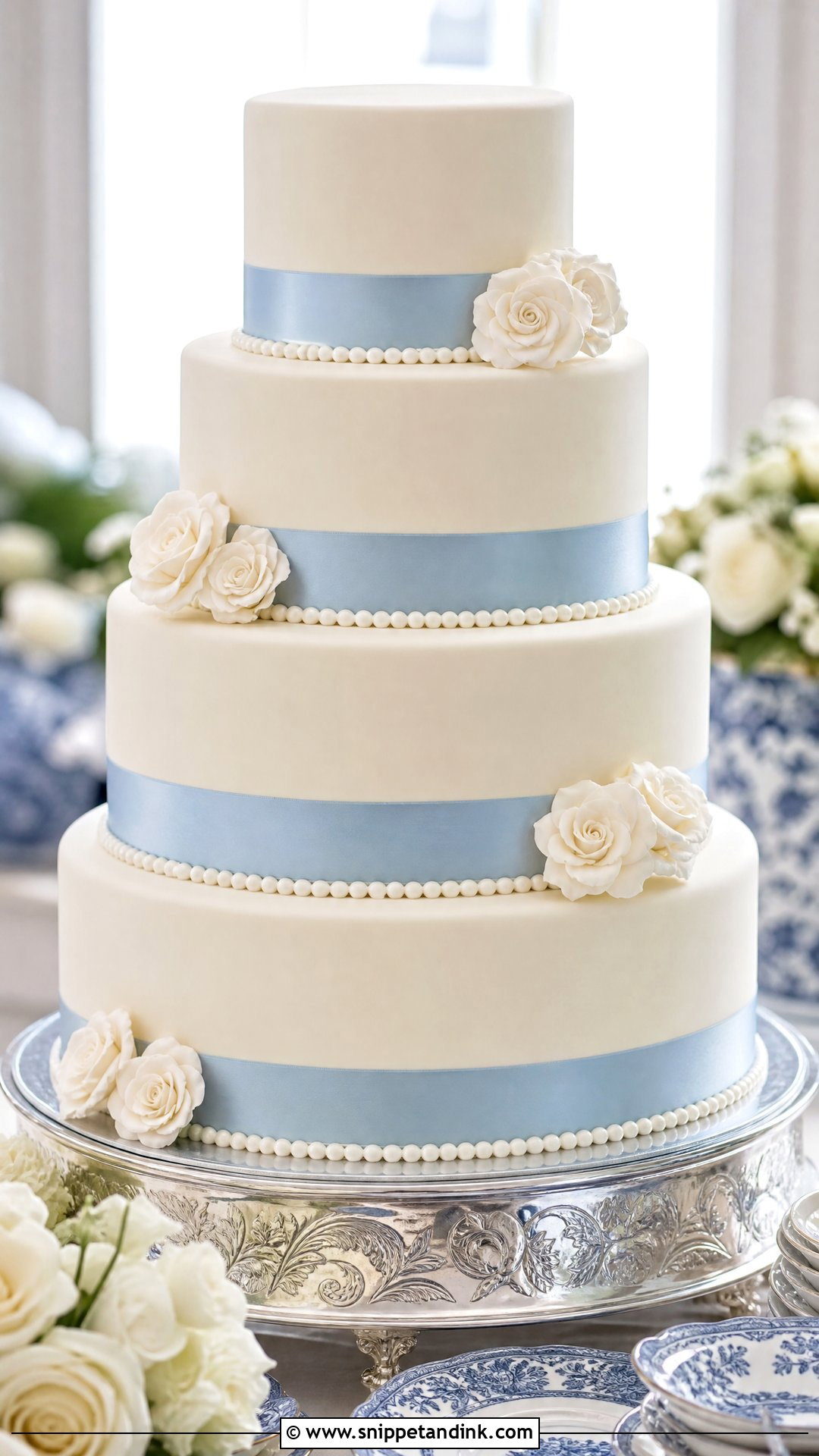
Blue ribbon is an easy way to carry something blue onto the cake table. The shade matters: dusty or powdery blues sit naturally against ivory, while bright blues look like a christening. As with any satin ribbon on buttercream, it needs a backing strip so it doesn’t stain. Pearl piping or white sugar flowers balance the color. Blue-and-white china on the dessert table ties it together nicely.
16. White Floral Wedding Cake
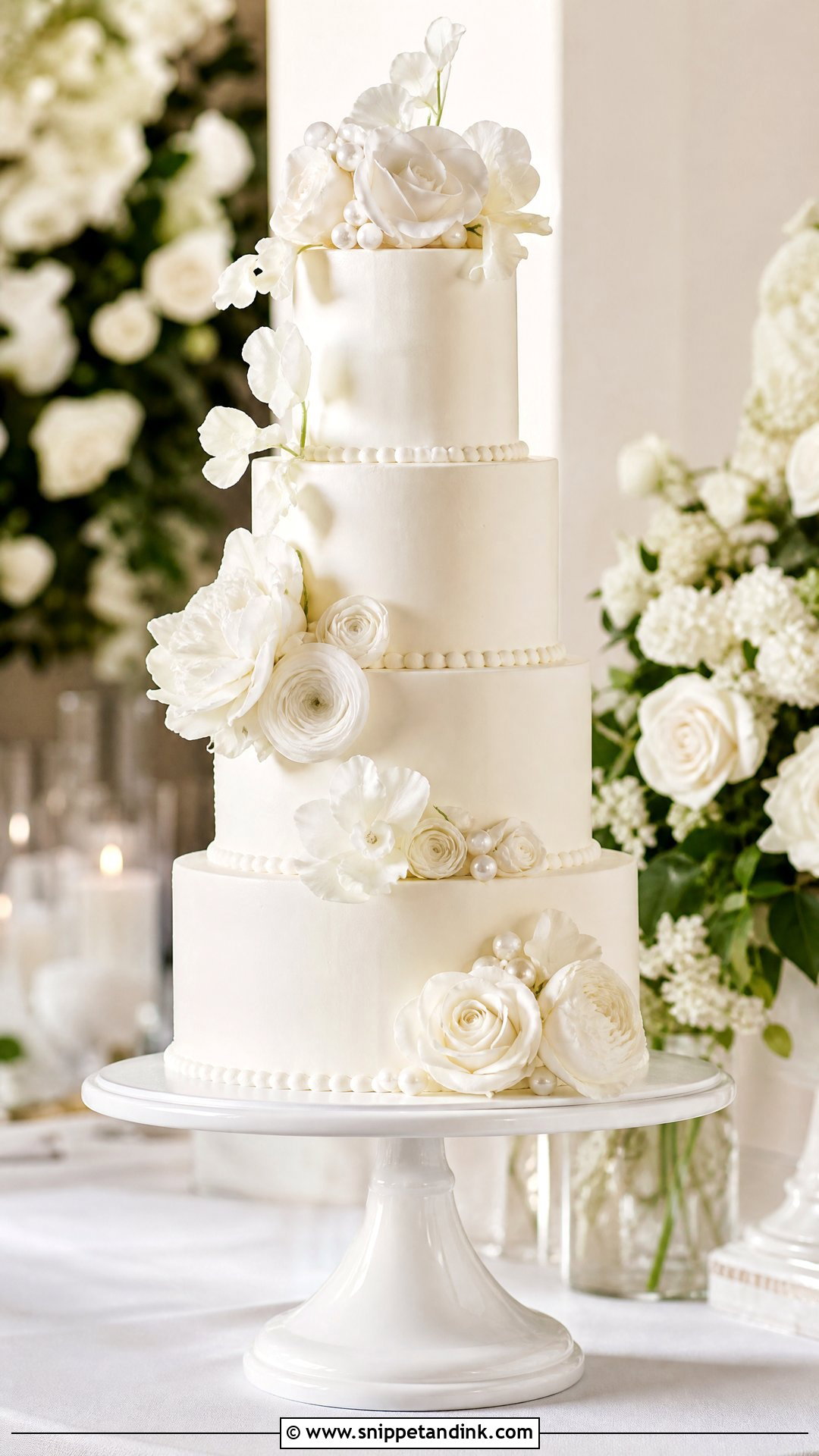
White flowers let shape and placement do the work. If you use fresh blooms, roses, ranunculus, orchids and sweet peas all suit the palette, but they must be pesticide-free and their stems wrapped or set into picks so they never touch the sponge. Some flowers are toxic, so I always ask the florist which stems are safe near food. Small clusters keep the cake old money; one huge cascade tends to hide the piping. Order the cake flowers from the same florist as your ceremony so the varieties match exactly.
17. Pleated Fondant Wedding Cake
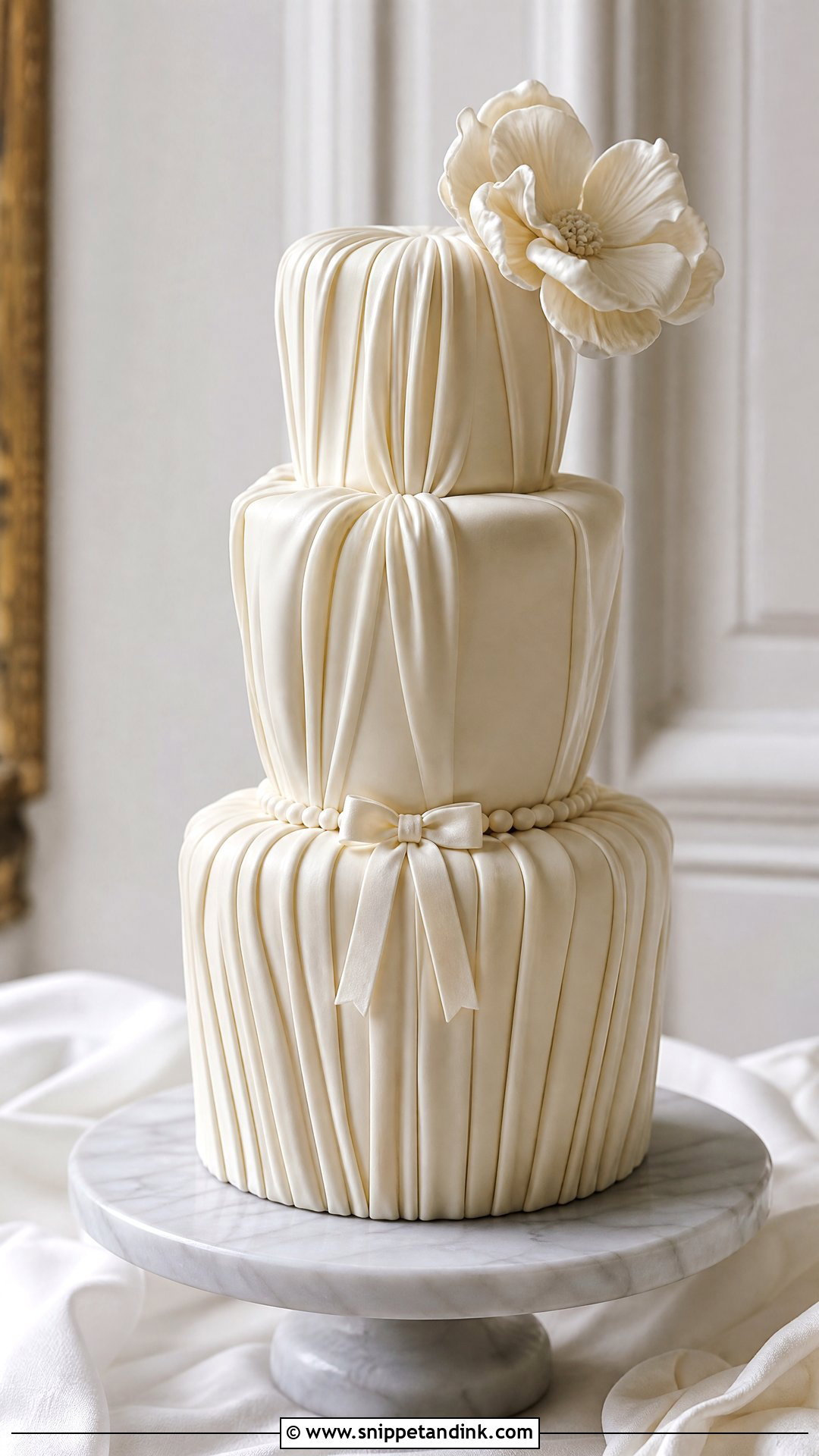
A pleated fondant wedding cake borrows directly from dressmaking. I roll the fondant thin, fold each pleat by hand and attach them while still soft, which means one tier can take hours. The pleats can cover one tier or the whole cake. Ivory is the classic choice; champagne or pale blush add warmth. Since the texture already says a lot, I’d add only a small bow or pearl edge. Fondant pleats also stand up to warmth better than buttercream details.
18. Silver Stand Wedding Cake
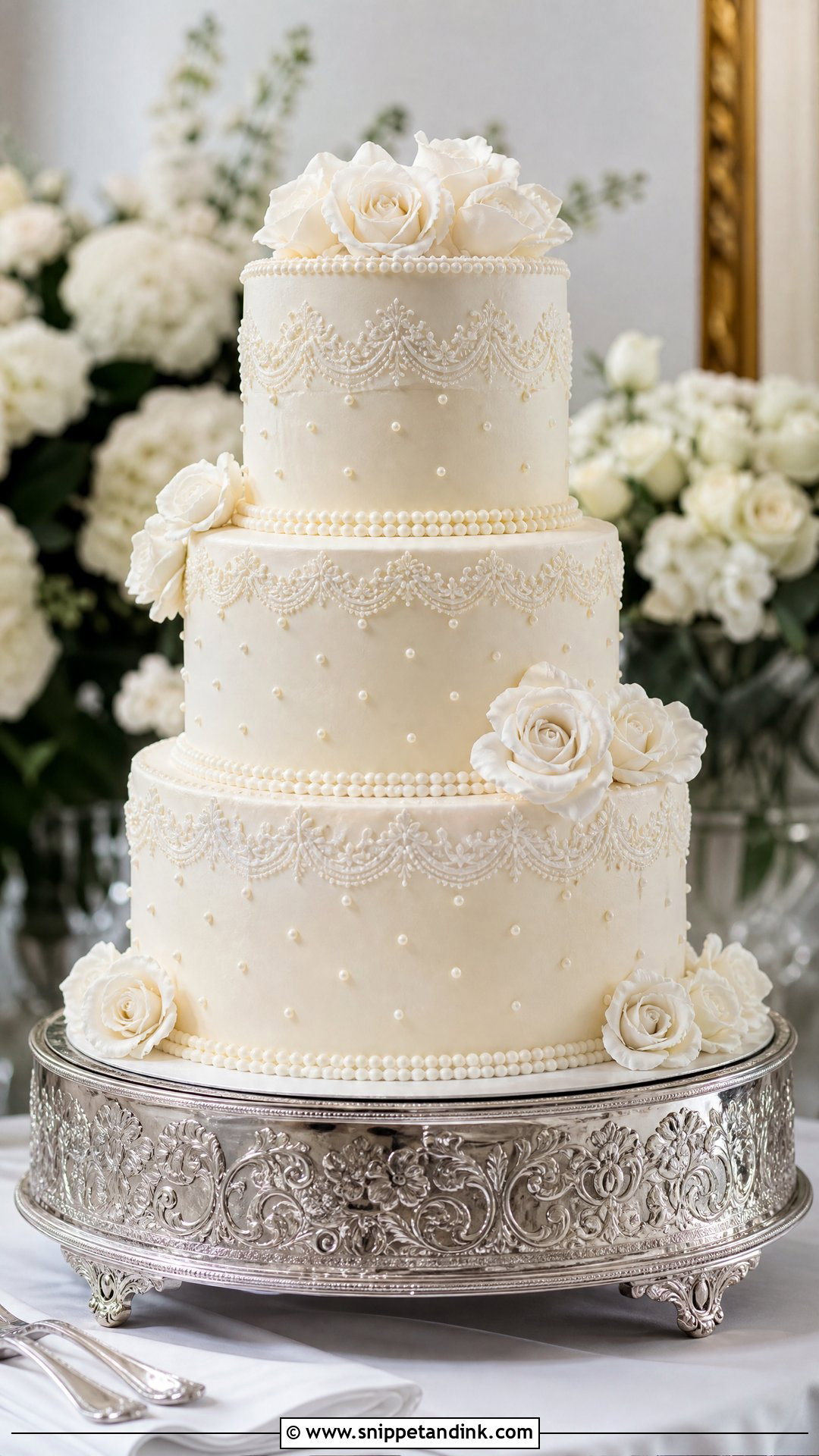
Sometimes the stand is the decoration. An ornate silver pedestal makes even a simple two-tier cake look like an heirloom, which is useful when the guest count is small and a tall cake would be out of proportion. Check the stand’s weight limit and top diameter with your baker; many vintage pedestals are narrower than a modern cake board. Ivory icing with a pearl border, lace piping or a few white roses, plus crisp linen and low candles, finishes the table.
19. Garden Estate Wedding Cake
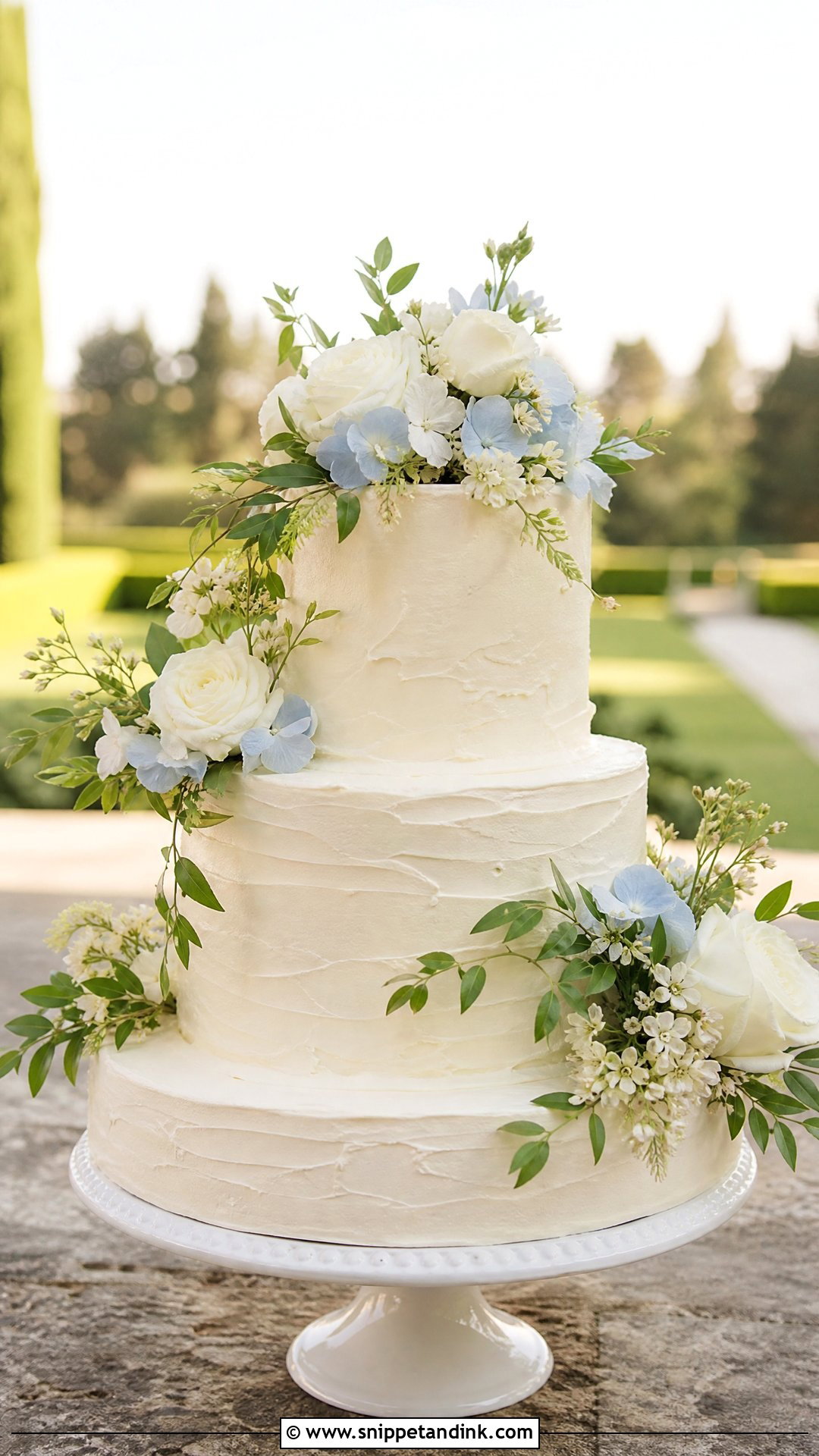
For a garden estate, I match the cake to the reception flowers rather than designing it on its own. Ivory or pale cream tiers with white roses, pale blue hydrangea florets or a few sugar blossoms sit well outdoors. Smooth or lightly textured icing won’t compete with the garden. Heat and direct sun are the risks: buttercream softens fast in sunlight, so I ask for the cake table to be in shade and the cake brought out as late as possible. A three-tier cake on a pedestal stand photographs well on a lawn.
20. Minimal Tiered Wedding Cake
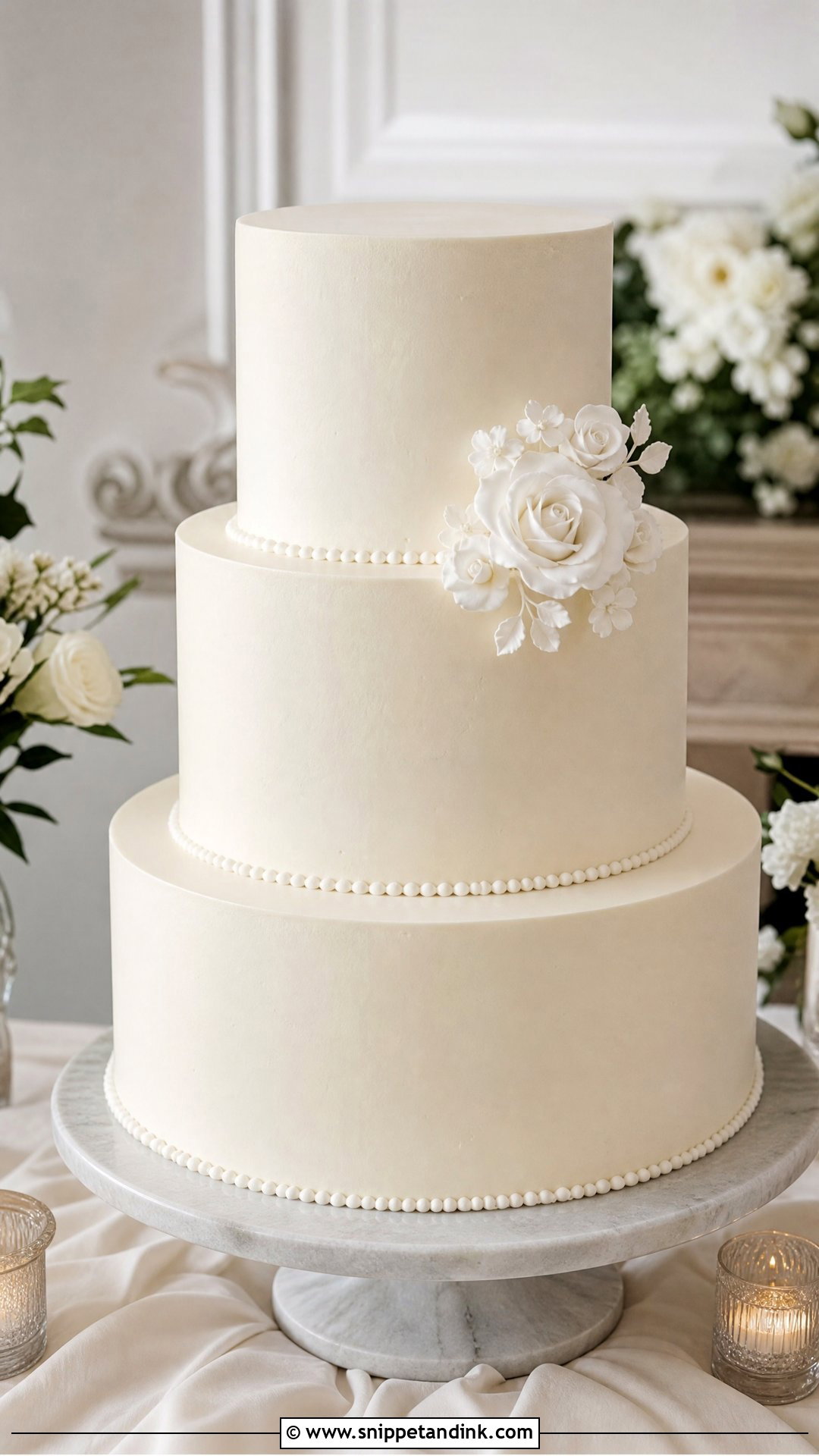
Minimal cakes are the ones I’m most nervous to deliver, because there’s nowhere to hide a dent or an uneven edge. The tiers need sharp tops, straight sides and proportions that step down evenly. Smooth ivory buttercream or fondant with one restrained detail, such as a pearl border, a satin ribbon or a few white flowers, is all it needs. What makes it look expensive is the finish, and a skilled baker’s portfolio will show you whether they can deliver that.
How Buttercream, Fondant and Sugar Work Hold Up at Your Venue
These finishes behave very differently once they leave a cool kitchen, and the venue often decides which designs are realistic.
- Buttercream softens in warm rooms and direct sun. Piped ruffles and Lambeth borders lose their crisp edges first. Indoors with air conditioning, they’re fine for the evening.
- Fondant copes with warmth better, but it sweats when a chilled cake meets a humid room. The beads of moisture usually dry on their own if nobody touches them.
- Sugar flowers and bows dislike humidity. In a damp marquee, petals can soften and droop, so I keep them boxed until the cake is set up.
- Separated and tall cakes need a sturdy, level table placed away from doorways, the dance floor and anywhere children run.
Lead Times for Hand-Piped and Hand-Made Details
The details that make a cake look old money are the slow ones, so timing matters more than for a simple buttercream cake. Many designers book up months ahead, especially for weekends in peak season, and the timings below are typical rather than fixed.
- Book the designer roughly six months out, earlier for popular dates.
- Arrange a tasting a few months before, once your guest count is roughly known, since it decides tier sizes.
- Confirm sugar flowers, cameos or monograms at least six weeks before, because they’re made and dried in advance.
- Give the final guest number, delivery time and venue contact about two weeks out, along with where the cake table will stand.
If your date is close, Lambeth piping and sugar roses may simply not fit the diary. A smooth cake with fresh flowers or a satin ribbon is far easier to turn around and still fits this style.
Restraint Still Has to Taste Good
Every cake here relies on a calm palette and one or two careful details rather than color or size. A ballroom suits columns or pearled tiers; a garden estate suits white flowers or soft ruffles, as long as there’s shade. Whatever you pick, taste before you decide, because an old money cake still gets cut and served, and a beautiful finish on a dry sponge is a poor trade.
You'll Like These Ideas:






Leave a Reply