
After the couple and the flowers, the cake is one of the things guests photograph most at a reception, and it sits there for hours being looked at from every side. That’s why I design display cakes in the round: the back matters, the height has to suit the room, and the finish has to hold up under whatever lighting the venue throws at it. Some couples want classic white tiers and flowers; others want Lambeth piping, pearls, fruit, sculptural shapes or a whole dessert table with one cake in the middle. Here are twenty display styles I build, with what each one needs from the table, the stand and the room.
Where the Cake Table Should Stand in the Room
A display cake can be perfect when it leaves my kitchen and still disappoint if the table is in the wrong place. I ask for the floor plan before I finalize the design, and I look for a spot that ticks these boxes:
- Away from the dance floor and speakers. Bass vibration and people bumping past are real risks to a tall cake.
- Out of direct sun, and away from heaters, fireplaces, candles on the same table and air vents blowing warm air.
- On a level floor, with a sturdy table. A wobbly folding table shows its lean through every tier above it.
- With a plain or deliberate background. A fire exit sign or a stack of chairs behind the cake ends up in every photo.
- With room for two people to stand beside it for the cutting, and a clear path for staff to wheel it out to be sliced.
Lighting is the other half. Reception rooms are often dimmed for dinner, and a cake in the dark looks flat in pictures. A single small spotlight aimed at the cake from the front and slightly above makes texture and piping visible. If the venue can’t do that, candles around the base on a separate low tier of the table help, kept a safe distance from flowers and fabric.
Finally, share the placement with your photographer and planner. I like to know which side the cake will be photographed from so I can face the best side of the design that way.
1. Three Tier Wedding Cake
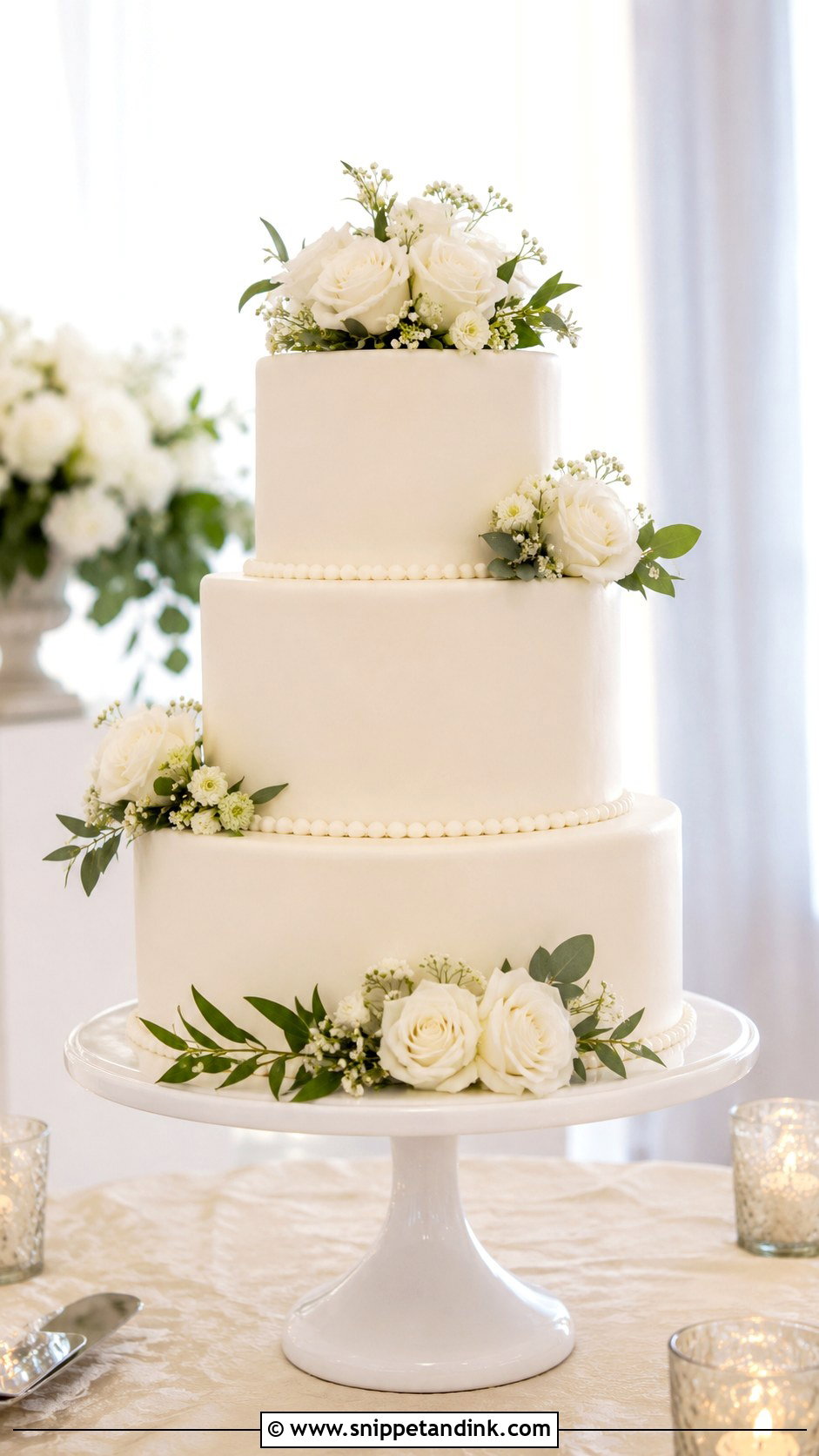
Three tiers is the height most reception rooms are built for: tall enough to read from the back of a ballroom, not so tall it towers over a garden table. Ivory buttercream or fondant with clean edges, a few flowers and a simple pedestal is the safe version. For something fresher, I give each tier its own finish, smooth on top, fine vertical lines in the middle, a pearl border at the base, so the cake has rhythm without extra decoration. Three tiers also gives room for three flavors, so you can offer vanilla, almond, lemon, or chocolate layers without forcing one choice on everyone.
2. Lambeth Wedding Cake
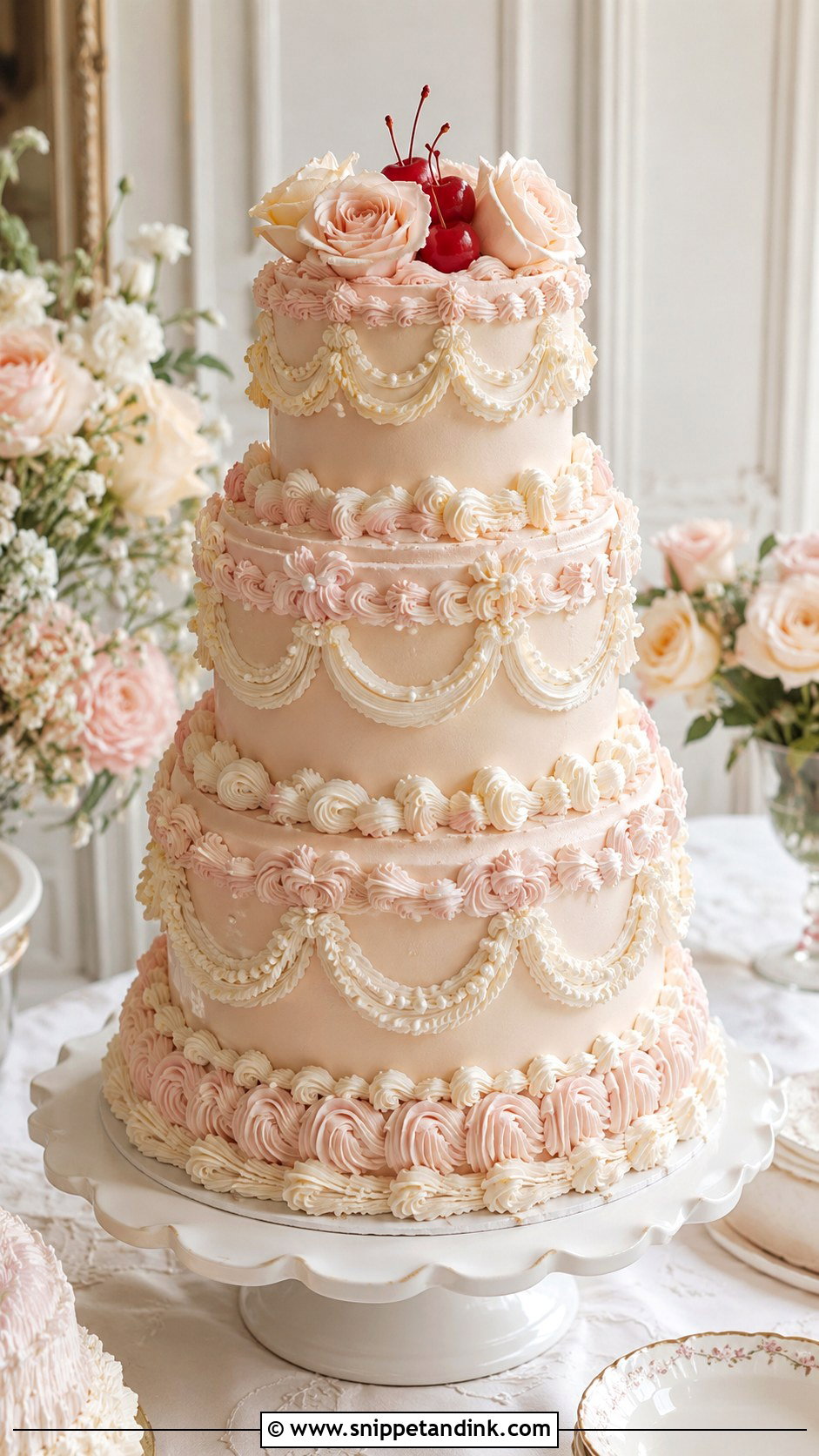
Lambeth cakes are piping showcases: overpiped borders built up in layers, with piped swags, shells, scrolls and drapes. In ivory, pale pink, butter yellow or baby blue they feel nostalgic but not dated, as long as the tier shape stays clean. The skill is in the spacing. Every border is built from several passes of piping, so if every inch is filled the cake looks crowded; I leave deliberate gaps so the eye can follow the pattern. Glacé cherries, pearls, sugar flowers or a small monogram finish it. Ask for a stiffer buttercream if the room will be warm, because soft icing lets those layers sag.
3. Pearl Wedding Cake
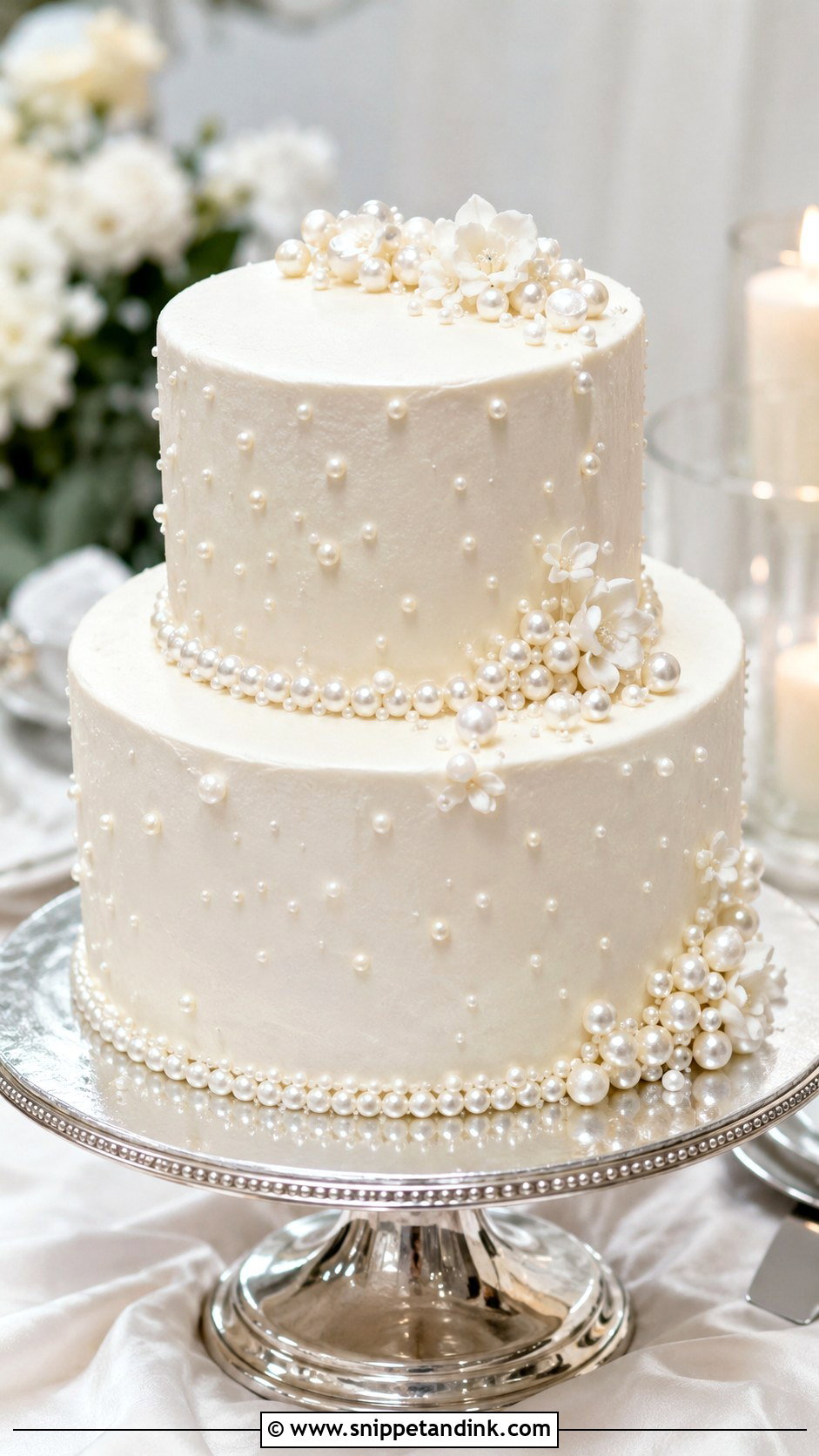
Pearls are the easiest way to make a display cake look bridal without competing with the flowers. They can run in neat rows, scatter lightly over each tier or outline borders and floral clusters, in white, ivory, champagne beige or blush buttercream. Satin linens, clear or silver stands and candlelight suit them, since pearls catch small points of light rather than shining flatly. For a modern display, pair one tall smooth tier with a shorter pearl-textured one and keep the flowers minimal. I place pearls with tweezers one at a time, which is why fully pearled cakes take longer than they look.
4. Pressed Flower Wedding Cake
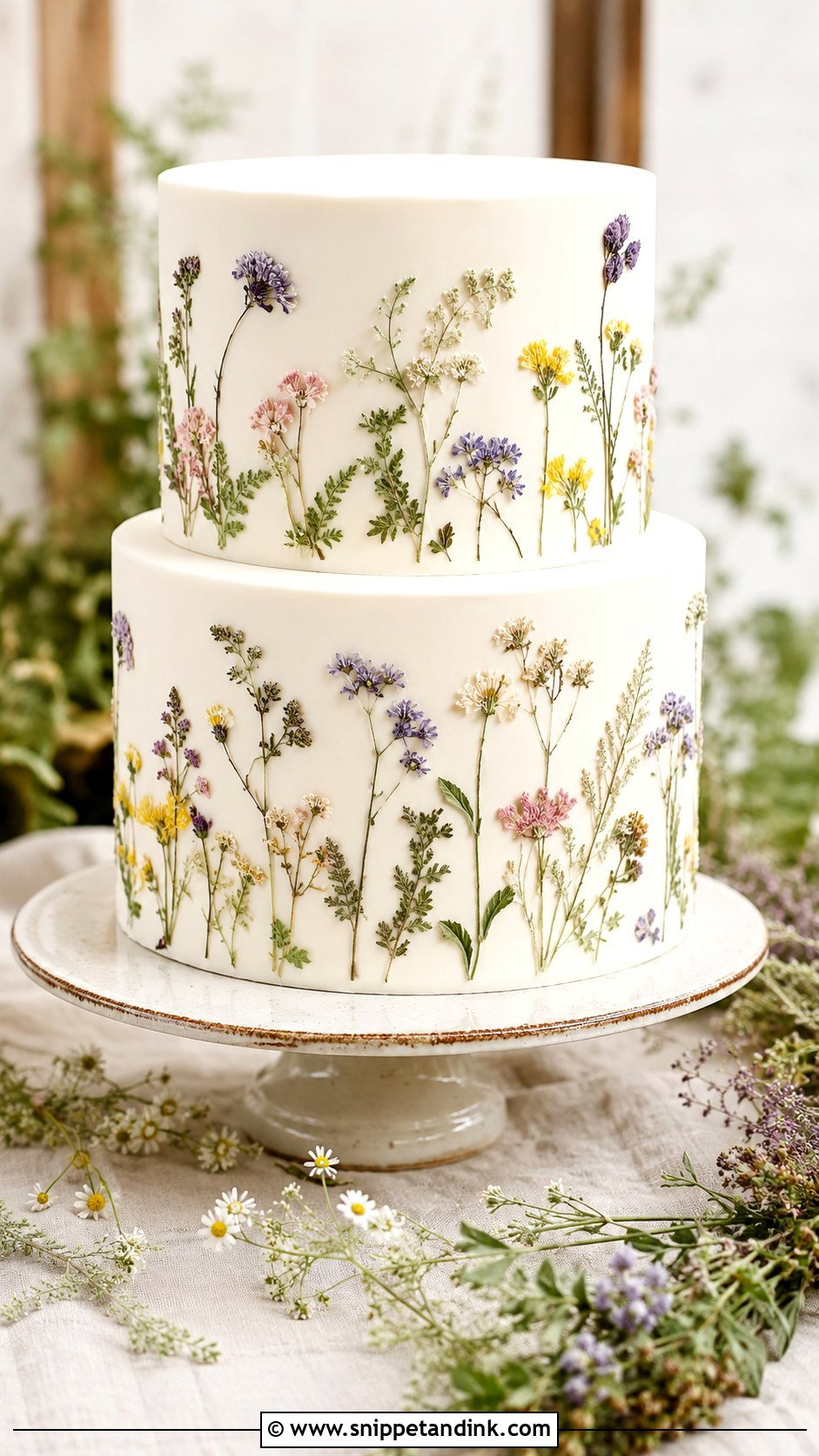
Pressed flowers turn the cake into a botanical print. Edible pressed blooms, or thin sugar versions, are laid flat across smooth buttercream, sparse and airy or dense and colorful. Pale yellow, lavender, blush, blue and soft green show best against white. Wooden tables, meadow arrangements and natural linen suit the look at garden and spring receptions. The question I always ask first is where the flowers came from: they need to be grown for eating, not bought from a florist, where stems are often treated. Pressed petals also fade in direct sun over a few hours.
5. Floral Cascade Wedding Cake
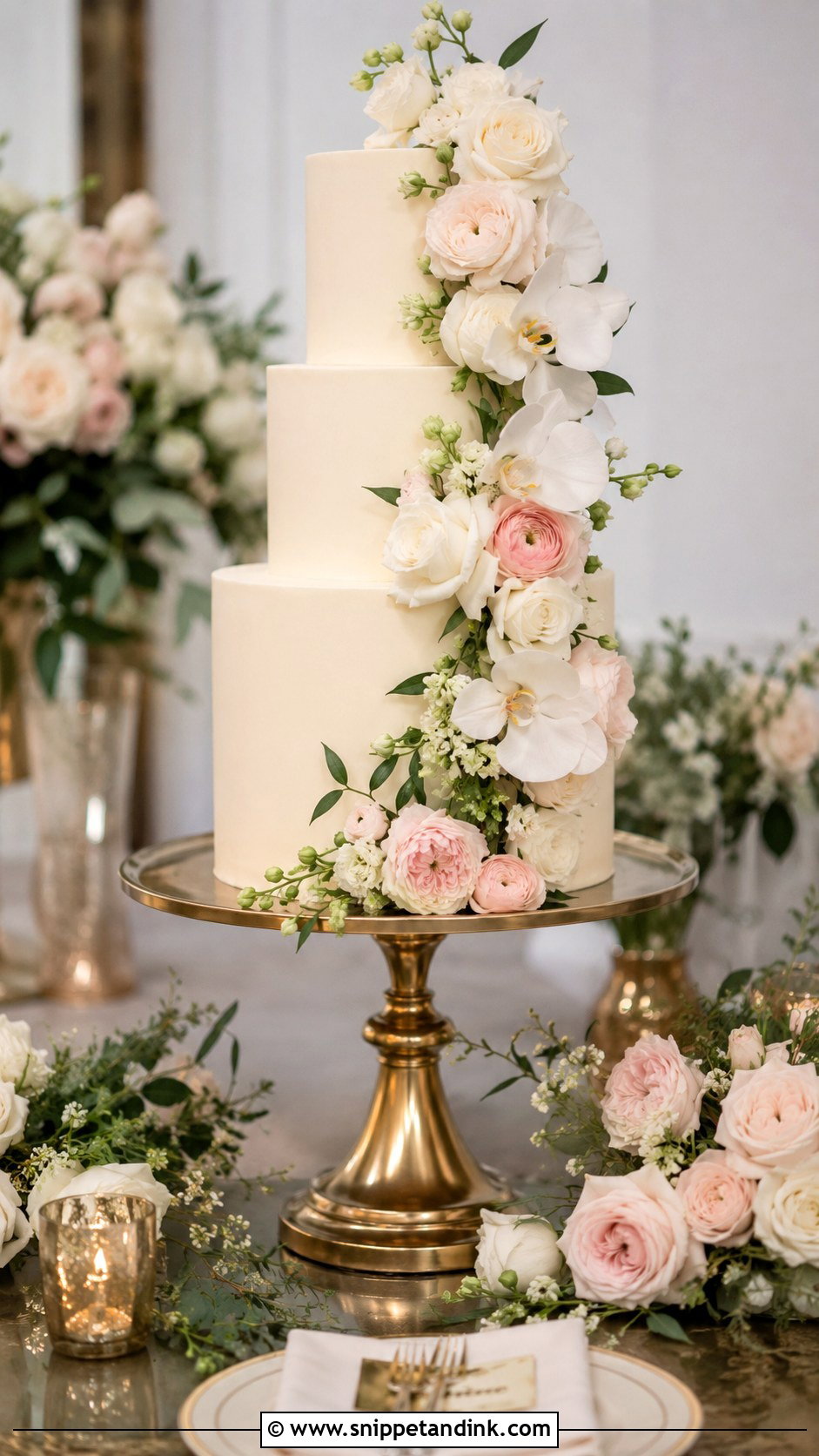
A cascade gives a display cake movement, drawing the eye from the top tier down one side in a single curved line. It can be fresh flowers, sugar flowers or a mix. Roses, ranunculus, orchids, peonies and small filler blooms are the usual choices, depending on season. Keep the cake underneath plain, smooth white or ivory buttercream, and lift it on a tall stand. Fresh stems go into food-safe picks so they never touch the sponge. Placed behind the sweetheart table or near the entrance, it’s often the first thing guests notice.
6. Square Wedding Cake
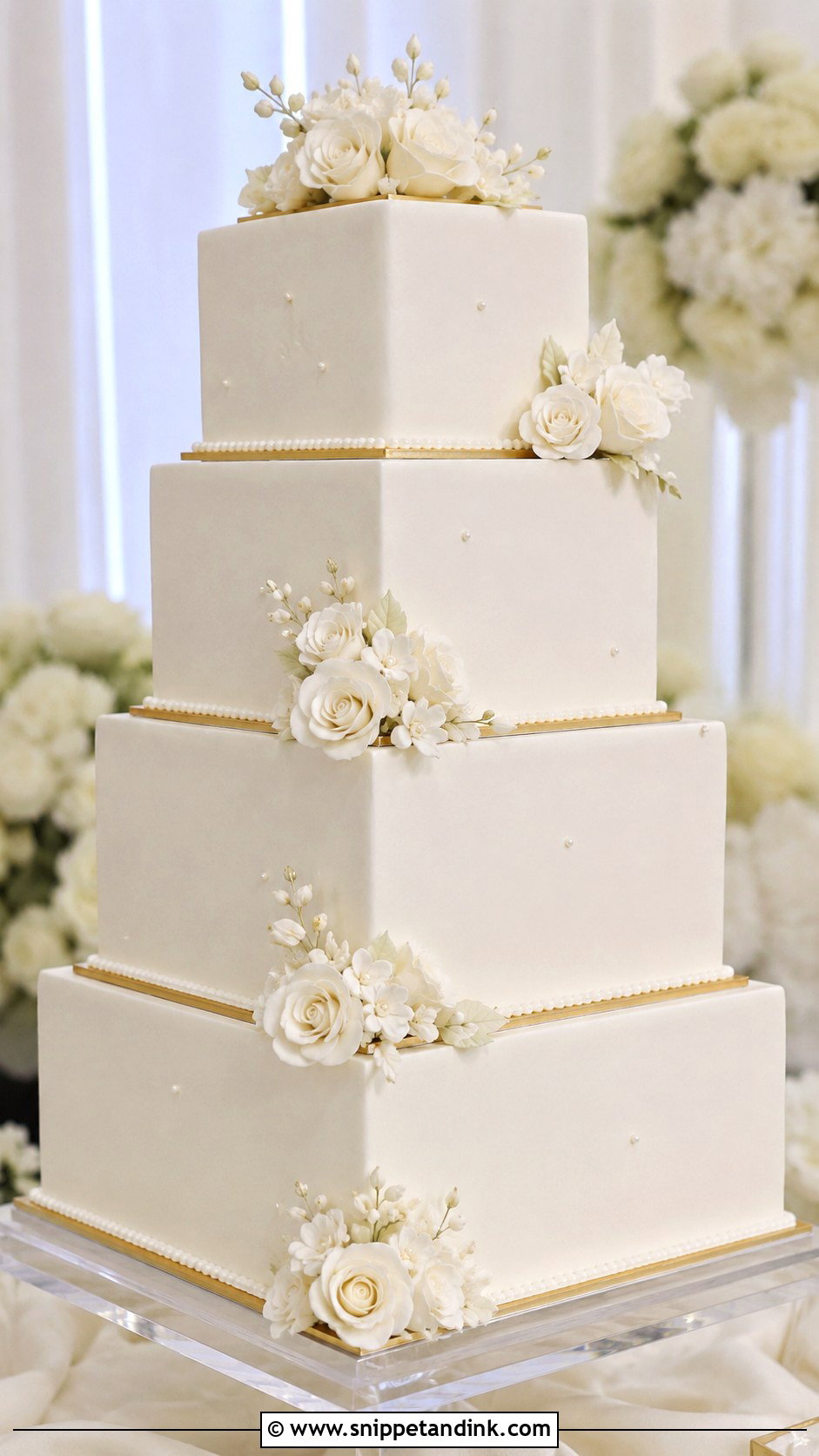
Square tiers look architectural in a way round ones don’t, which suits modern venues. Two, three or four tiers work depending on guest count and space. Smooth fondant gives the crispest edges; buttercream softens them. Sugar flowers on the corners, pearl borders or a fine gold edge finish it. Each flat face also makes a good canvas for quilting, a monogram or painted detail. The catch is transport: square corners are the first part of any cake to get scuffed, so I carry a small repair kit to the venue for exactly that.
7. Round Buttercream Wedding Cake
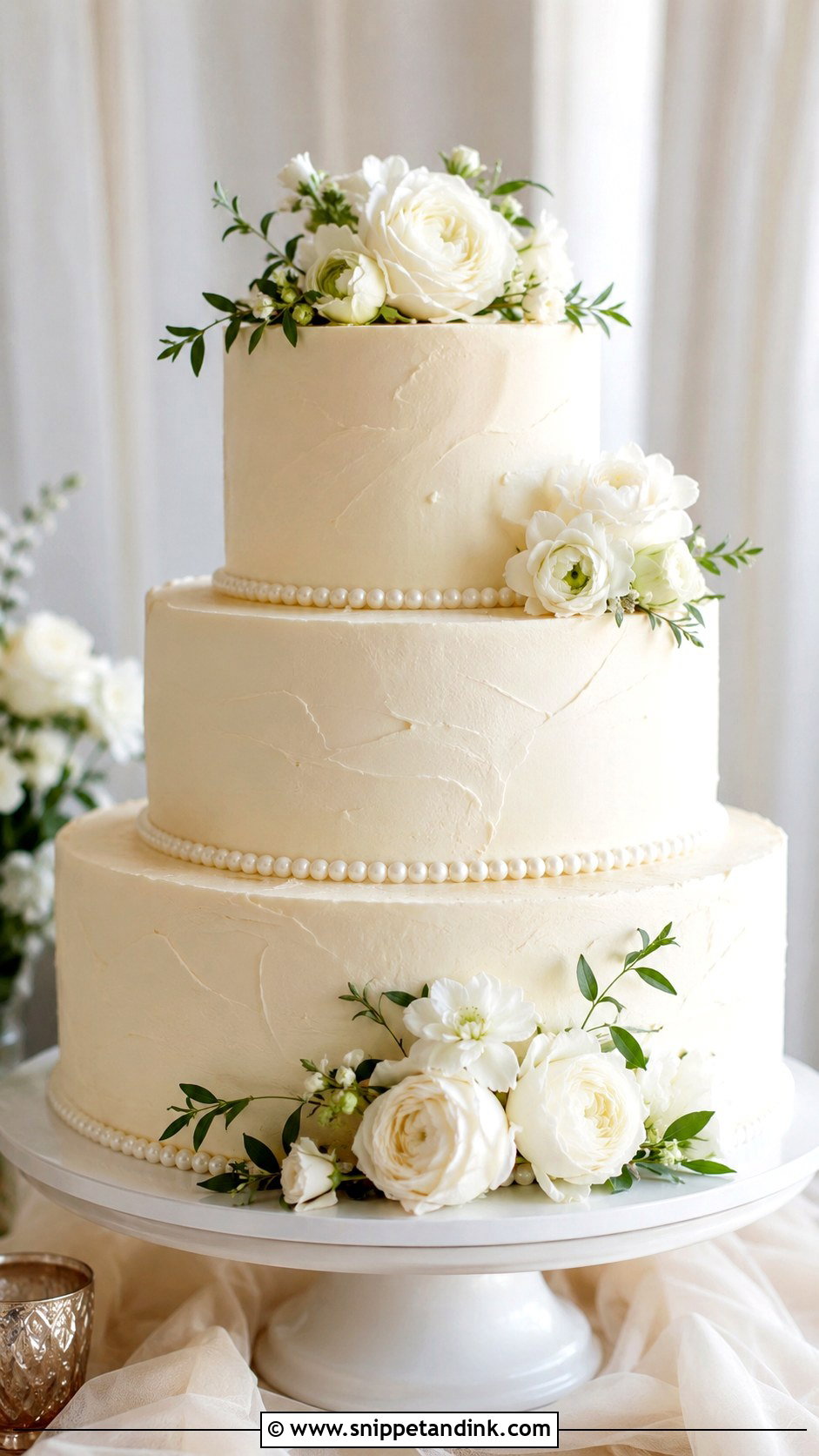
Round buttercream is the most adaptable base I make. It can go rustic with texture, classic with smooth sides or modern with sharp top edges and almost nothing on it, then take flowers, greenery, fruit, pearls or ribbon. It reads warmer than fondant on a display table and most guests prefer eating it. Pick one direction and commit; a buttercream cake carrying fruit, ribbon, pearls and flowers at once looks indecisive. Indoors or out, white with gentle texture and seasonal blooms is a safe starting point, with shade for the outdoor version.
8. Modern Minimal Wedding Cake
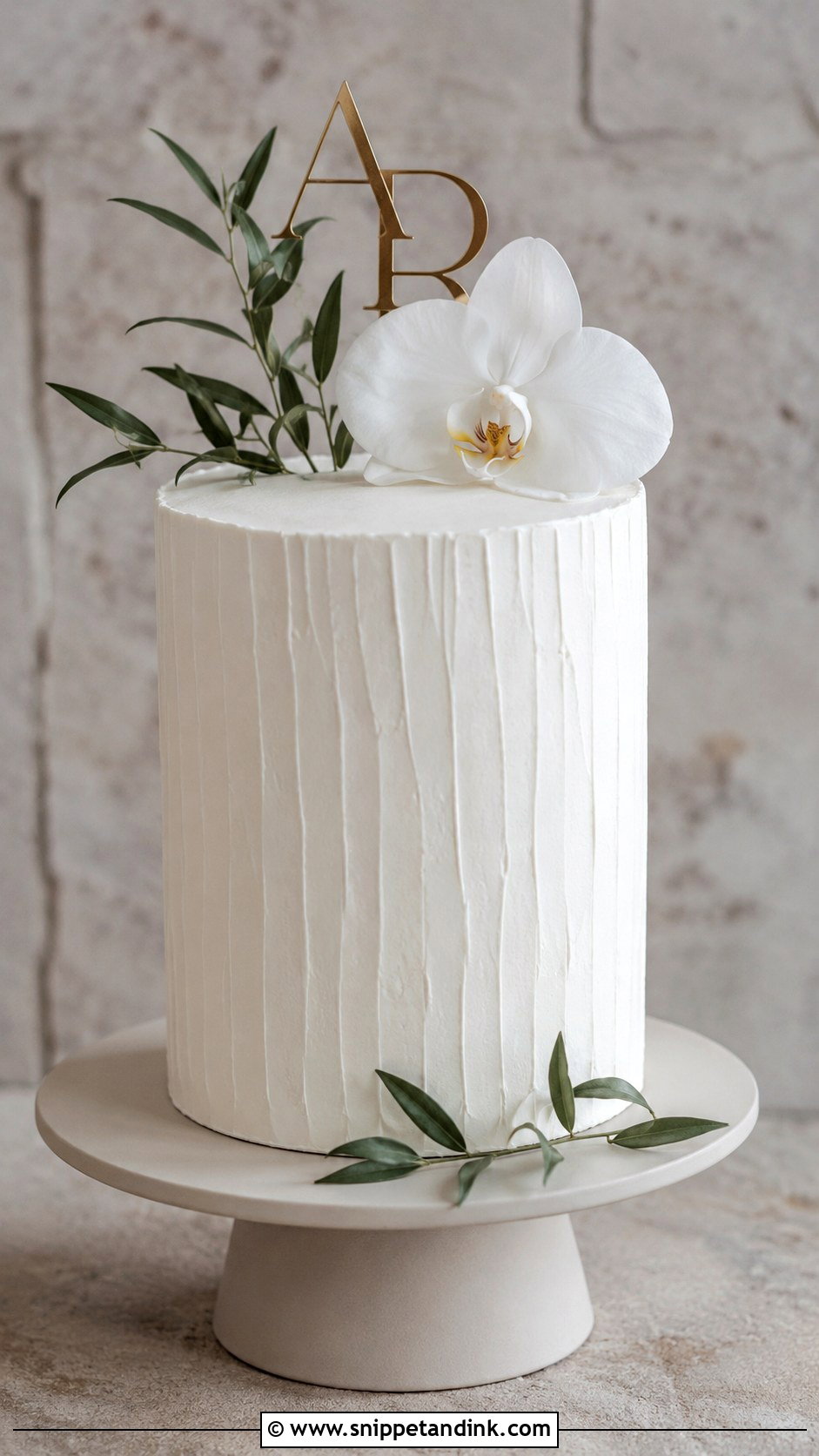
Minimal cakes rely on proportion, which means the baker has nowhere to hide. A tall single tier or a slim two-tier on a plain ceramic stand, smooth white buttercream or subtle ridges, maybe one fresh flower. Lofts, galleries, city weddings and small receptions suit it. The display table should be just as restrained: neutral linen, a few flowers nearby, nothing crowding the cake. Even a slight lean or a soft top edge shows on a cake this bare, so I chill and level each tier twice before stacking.
9. Vintage Wedding Cake
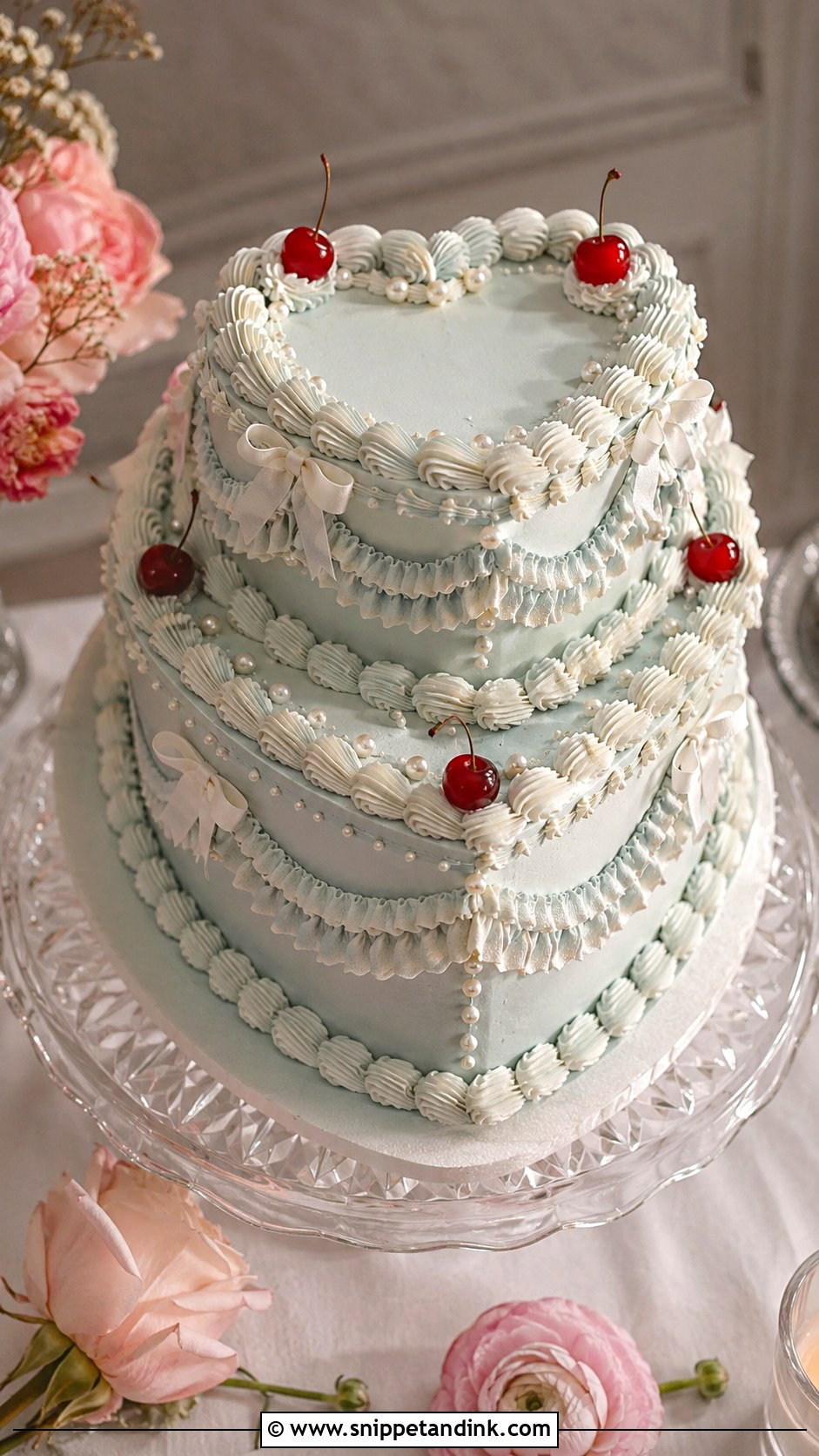
Vintage cakes are full of piped borders, ruffles, bows, shells and soft color, sometimes on a heart-shaped or domed tier. Ivory and blush feel classic; pale blue with red cherries feels retro and playful. Historic venues and garden receptions suit them. Quality piping is what separates charming from messy, so look closely at a baker’s past borders before booking. A refined stand and balanced colors keep it wedding-ready, with every border doing a structural job of framing the tier.
10. Fruit Wedding Cake
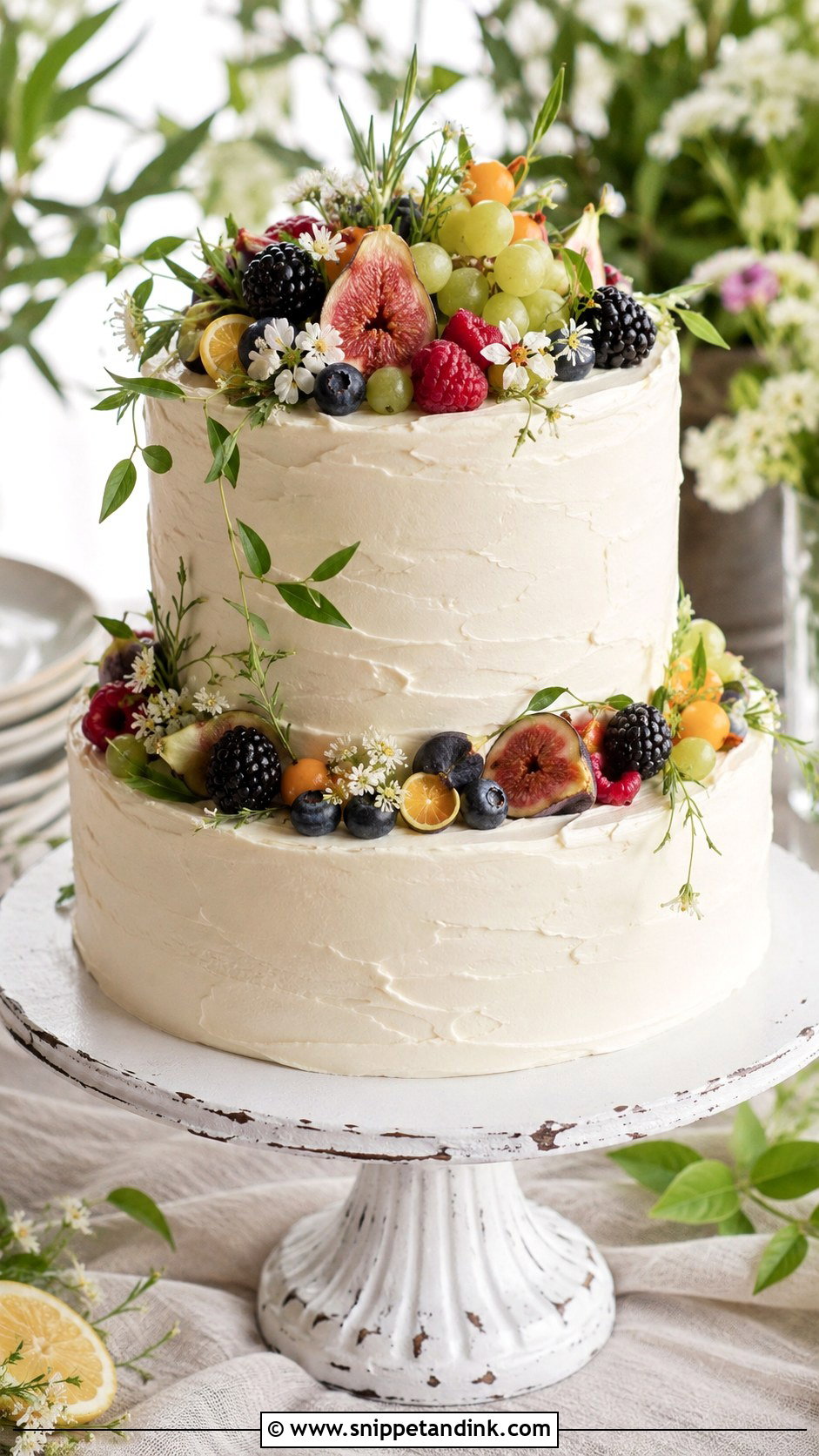
Fruit makes a display look abundant: figs, grapes, pears, berries, citrus slices or cherries, fresh or lightly sugared, in clusters around the tiers. Smooth, simple frosting lets the fruit lead. Vanilla, lemon, almond, olive oil and berry flavors suit it, and herbs or tiny flowers soften the arrangement. Cut fruit leaks juice and dulls within hours, so I dress the cake at the venue and glaze any cut faces. Whole figs and grapes last longest on display, which is why they appear on so many summer cakes.
11. Gold Leaf Wedding Cake
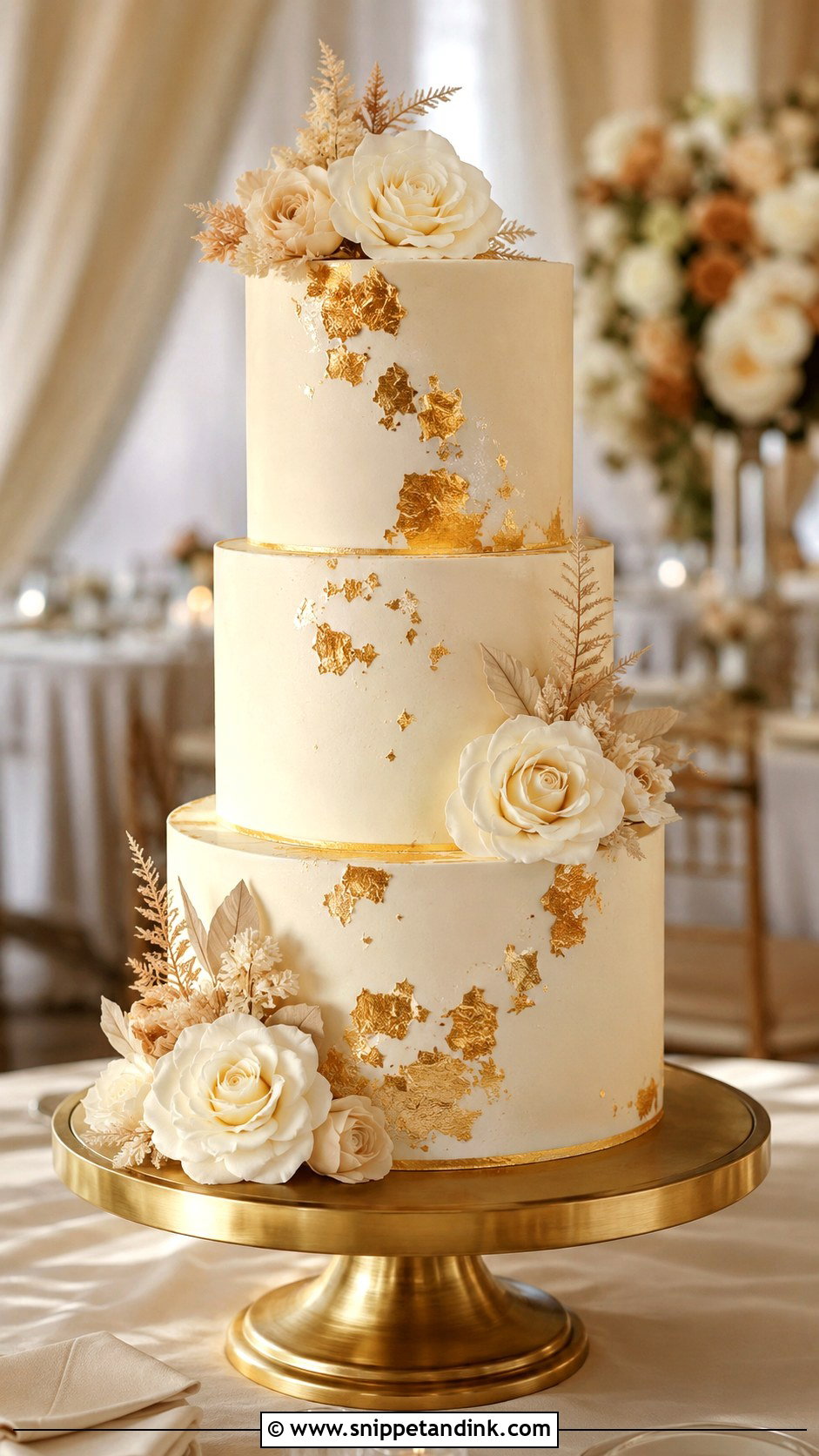
Edible gold leaf is thin enough to tear if you breathe on it, so it’s applied with a dry brush in pieces: around edges, over textured buttercream or as small accents near flowers. It looks best when the cake around it stays simple. Ivory, white, blush and warm beige all suit gold. Formal weddings suit smooth fondant with neat gold edging; romantic ones suit buttercream with gold flecks and soft blooms. A gold or clear stand ties the display together.
12. Black And White Wedding Cake
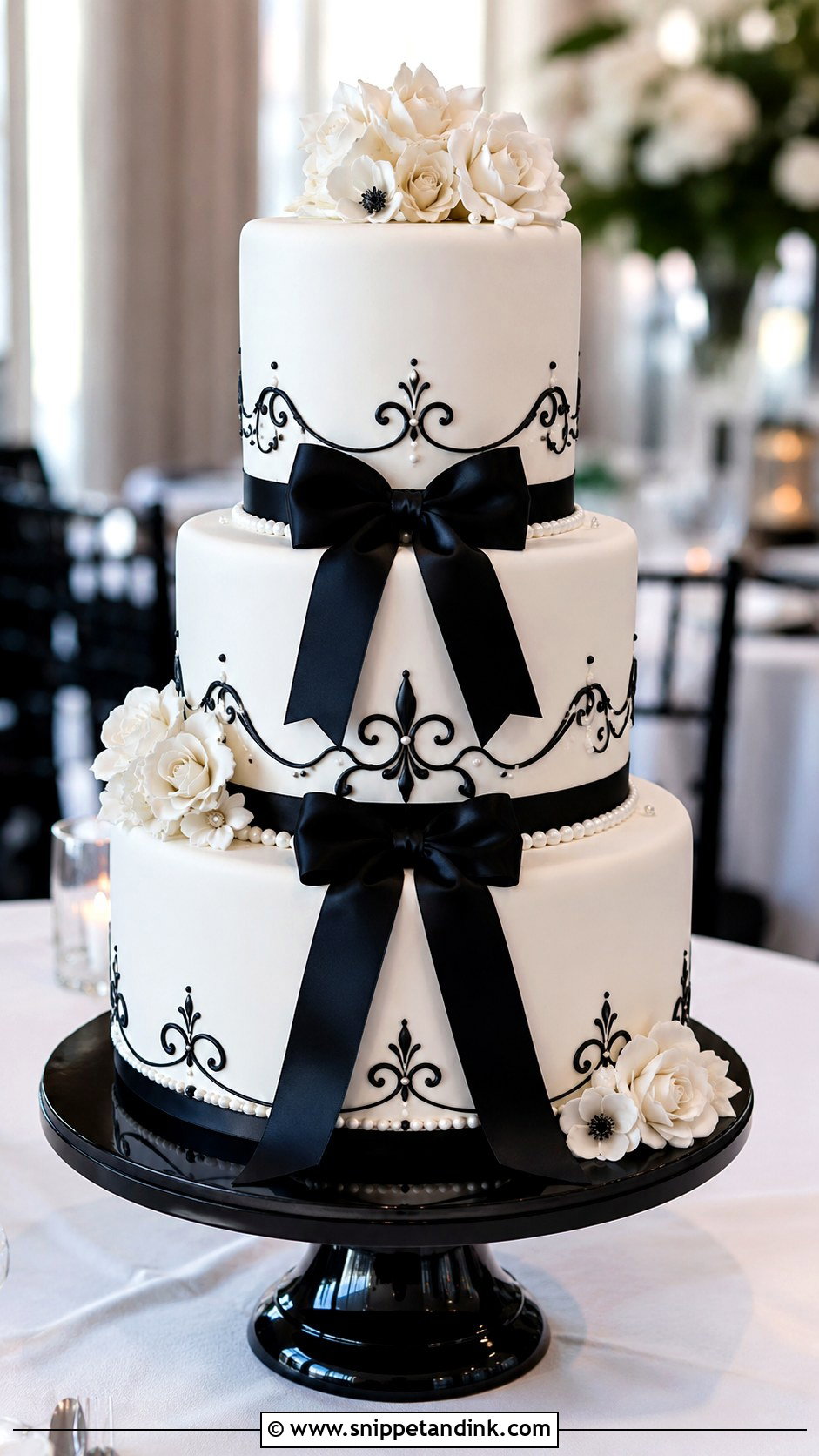
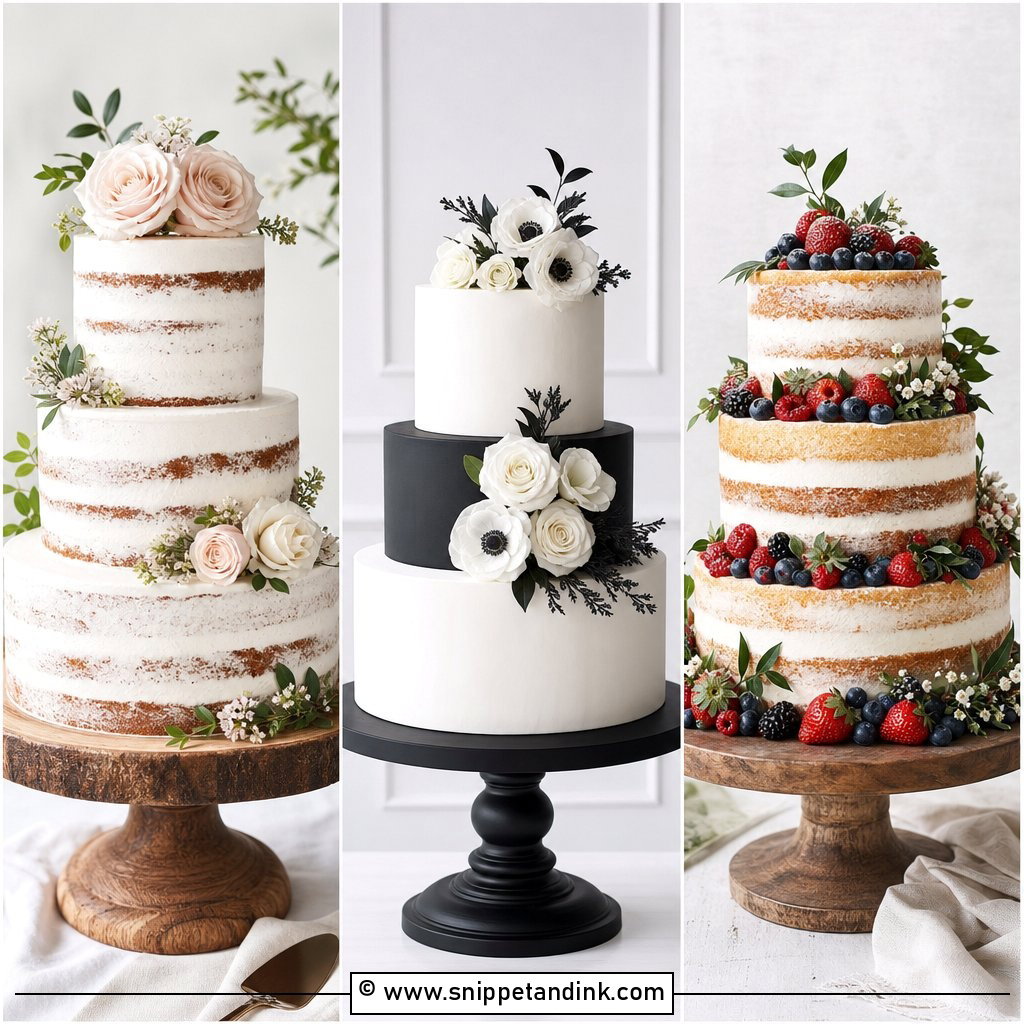
Black and white makes a bold display that still feels formal. The contrast can be gentle, black ribbon on white tiers, or graphic, with black fondant details, painted florals and sharp lines. Formal evening receptions and modern venues suit it. A white cake with black piping or bows, or a single black base tier, is usually enough; more than that starts to look heavy. White flowers, pearls or a clean monogram topper balance it. Light the table brightly, because black soaks up light and loses its detail in dim rooms.
13. Textured Buttercream Wedding Cake
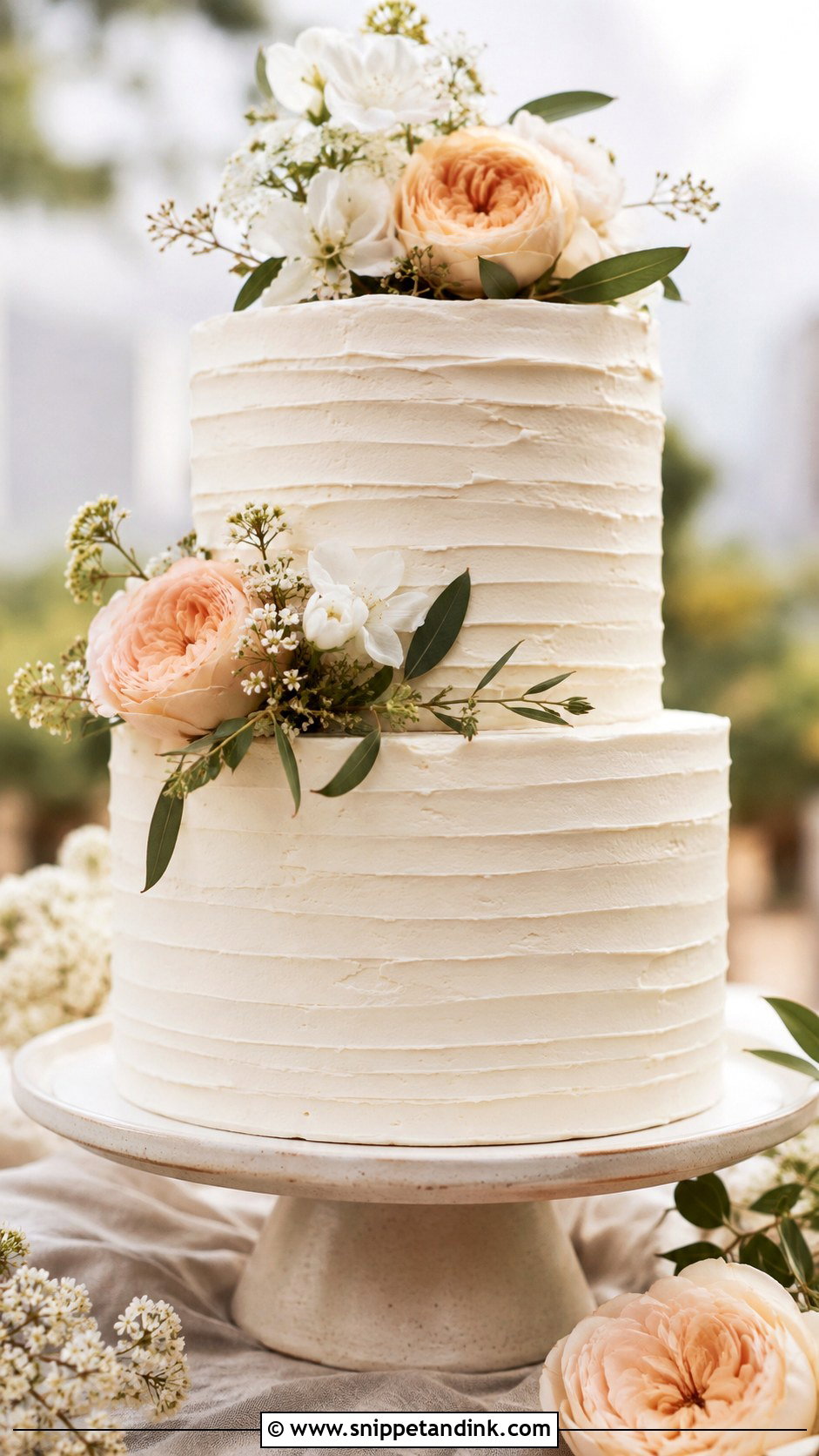
A textured buttercream wedding cake trades perfect smoothness for movement: horizontal combed lines, vertical ridges, palette-knife strokes or soft waves. White, ivory, beige, pale peach and sage suit it. Keep decoration light, a few flowers, greenery or fruit, so the texture shows. It fits barns, gardens, coastal venues and relaxed rooms, and it’s forgiving: small dents from transport disappear into the pattern, which is a real advantage on a long drive.
14. Marble Wedding Cake
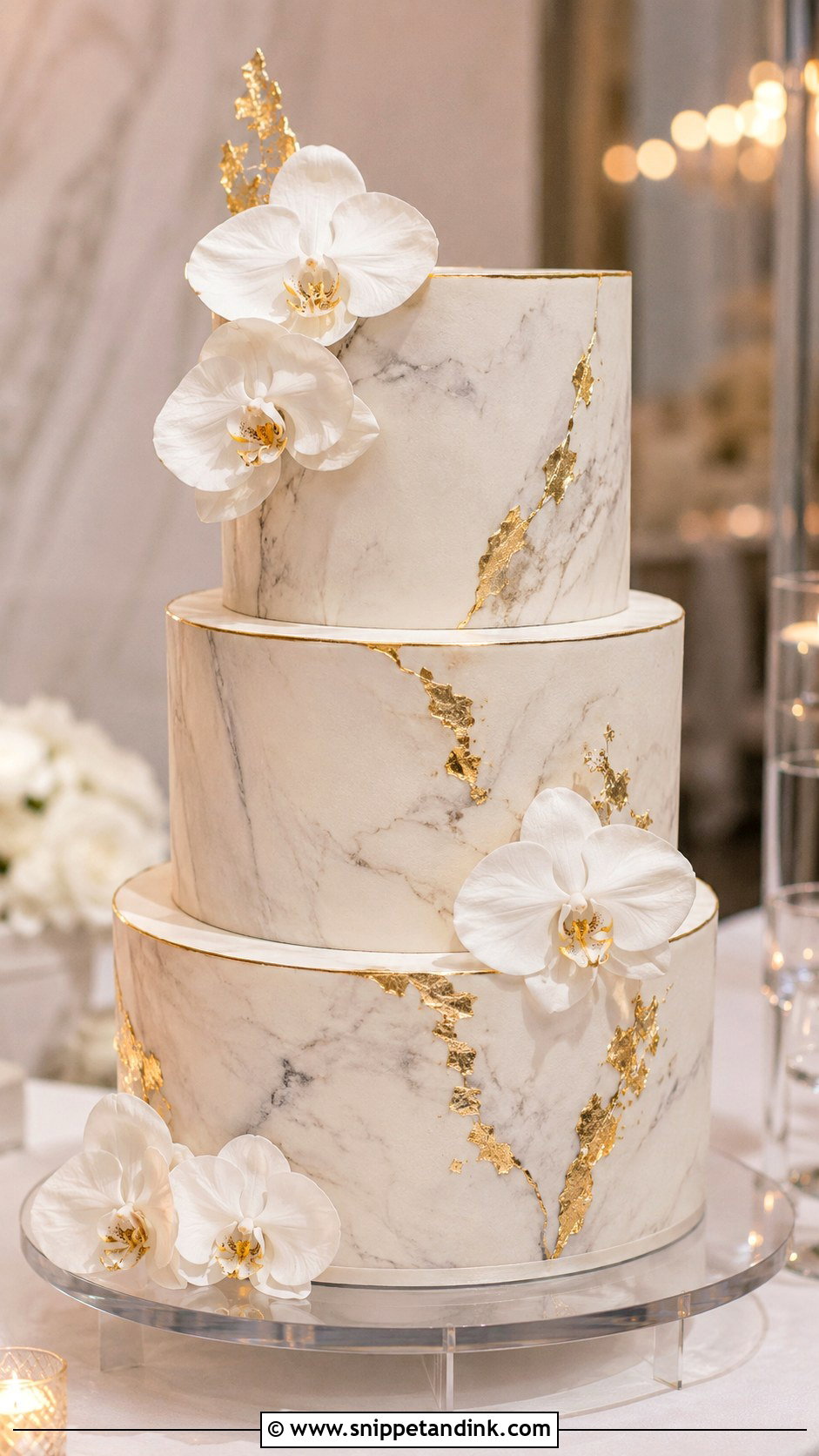
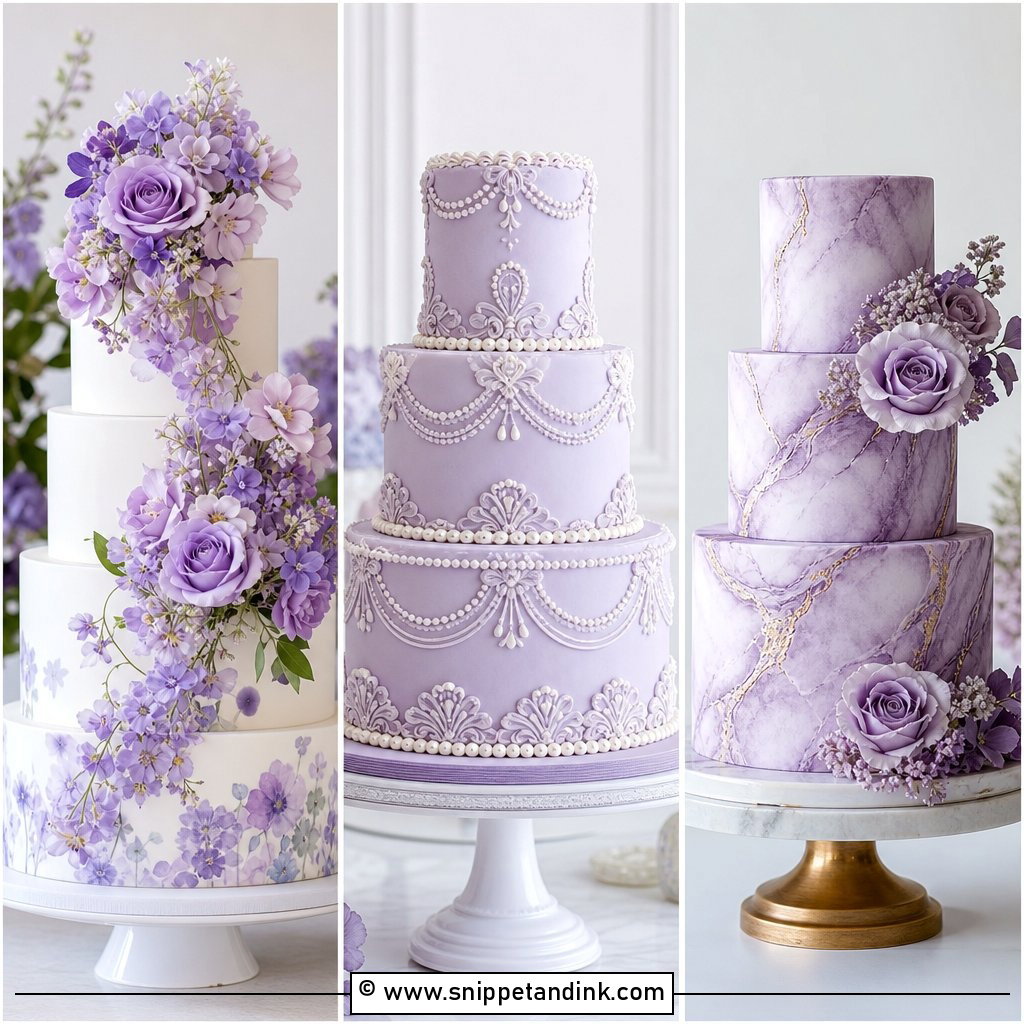
Marble looks artistic and modern, with soft gray, blush, beige or pale blue veining. On fondant, I knead streaks of color into the paste and roll it out so the veins run naturally; painted marble on a smooth surface is the alternative. Two or three tiers with gold leaf, sugar flowers or a simple acrylic topper suit hotels, galleries and rooms with stone, glass or metal. Keep the veining fine. Dark, heavy veins can look like the cake is cracked from a distance.


15. Dessert Table Wedding Cake
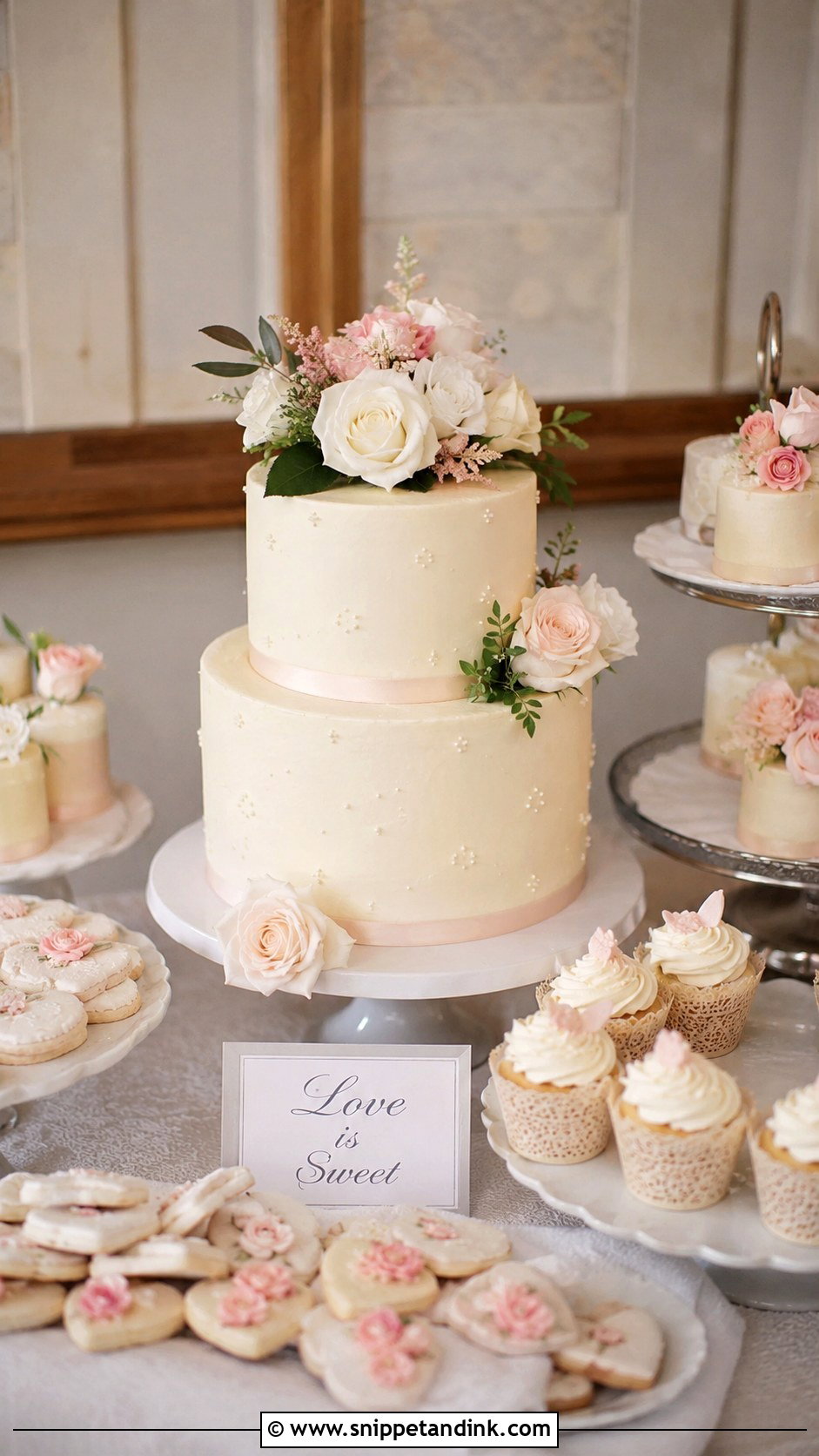
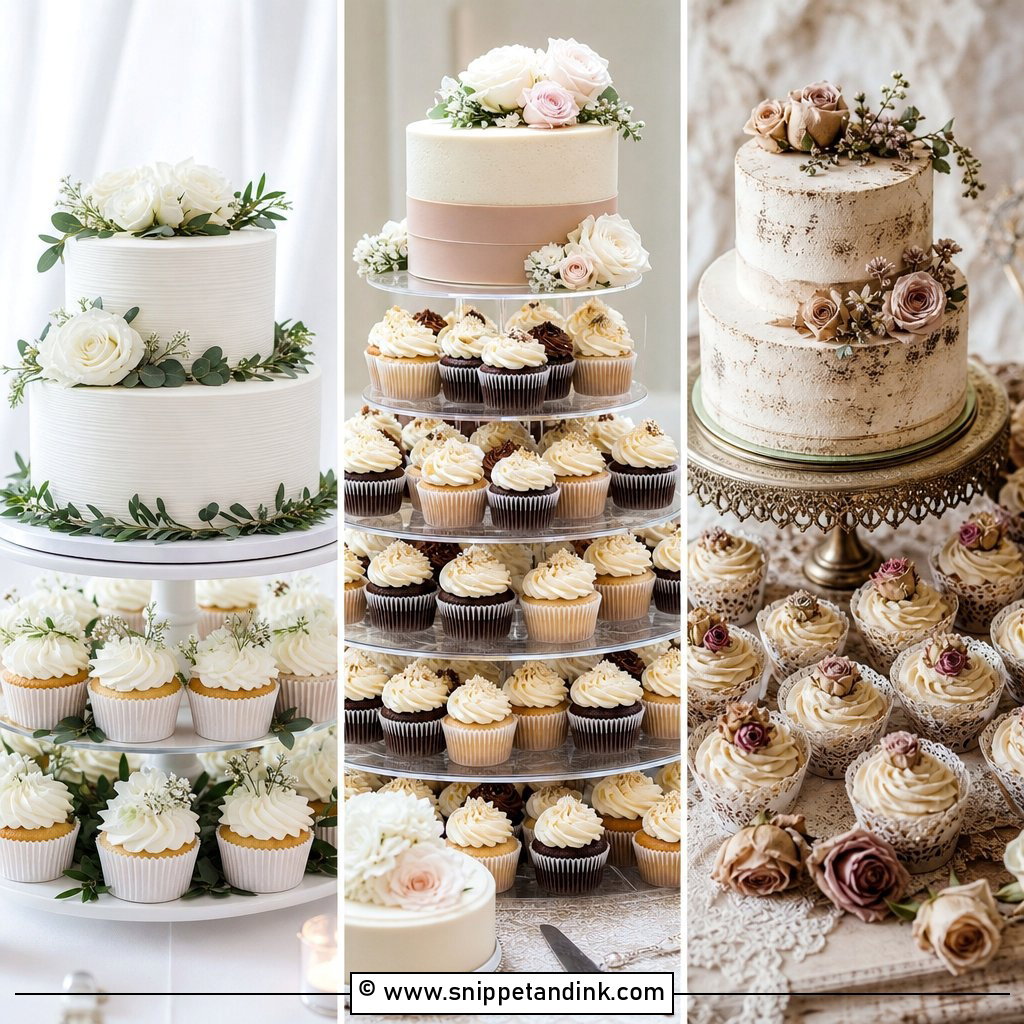
When the cake sits inside a dessert table, it doesn’t need to be large, because pastries, mini cakes, cookies and cupcakes fill the space around it. A two-tier cake in the center gives height and matching desserts layer out from there. Keep the colors linked, ivory, blush, gold and soft green for example, and use stands at several heights so the table has a skyline instead of a flat surface. The cake should still be the obvious centerpiece, a step taller than anything else.
16. One Tier Wedding Cake
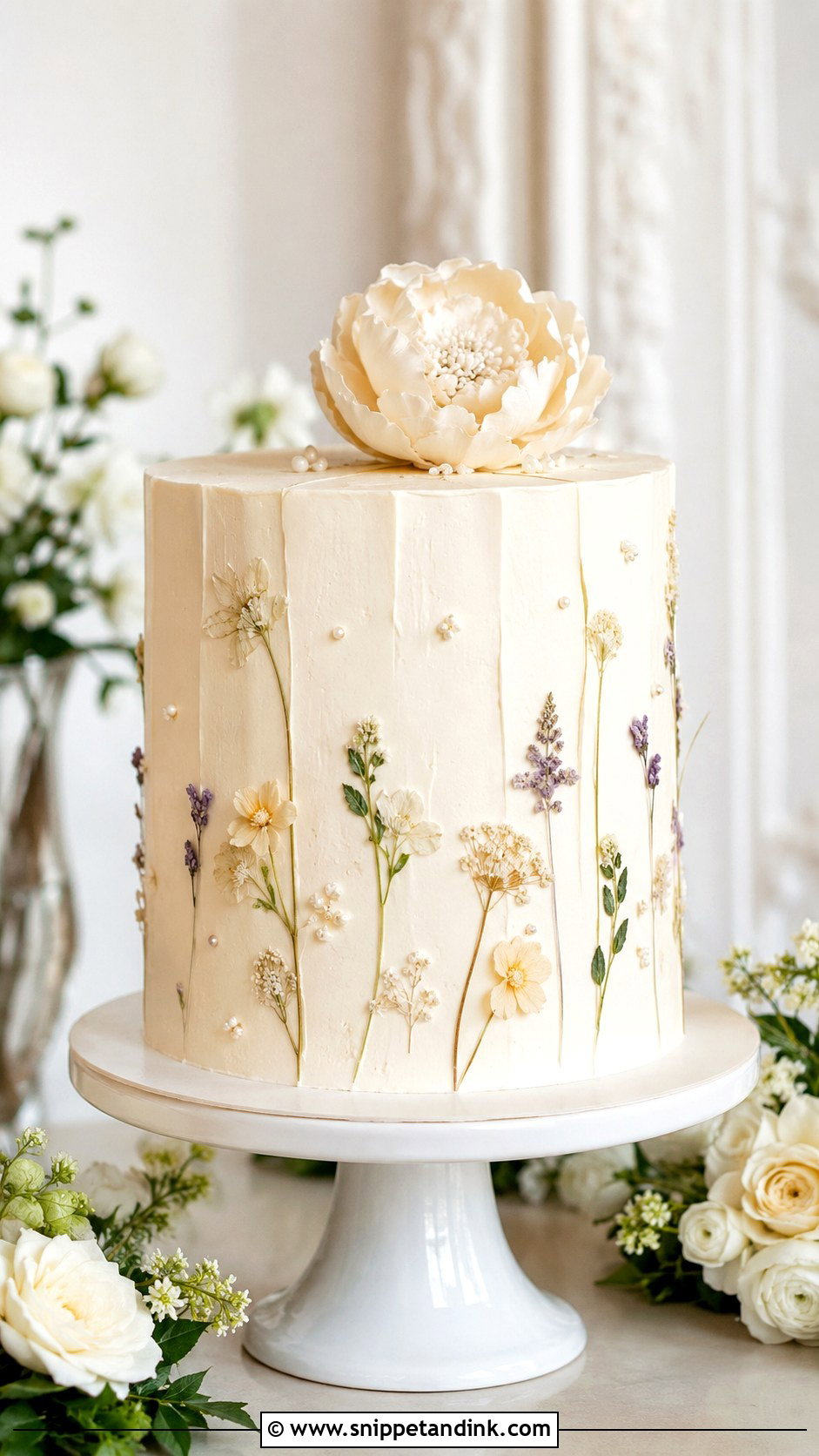
A one tier wedding cake holds its own on display if it’s tall and given a proper stage. It suits small weddings, elopements, courthouse celebrations and couples serving sheet cake from the kitchen. A tall single tier with smooth buttercream, sculptural piping, pressed flowers or fruit looks modern; a raised stand, good linen and flowers around it give it presence. With only one tier, the finish has to be flawless. Put the money into flavor: lemon elderflower, almond raspberry or vanilla bean with berry.
17. Tall Tier Wedding Cake
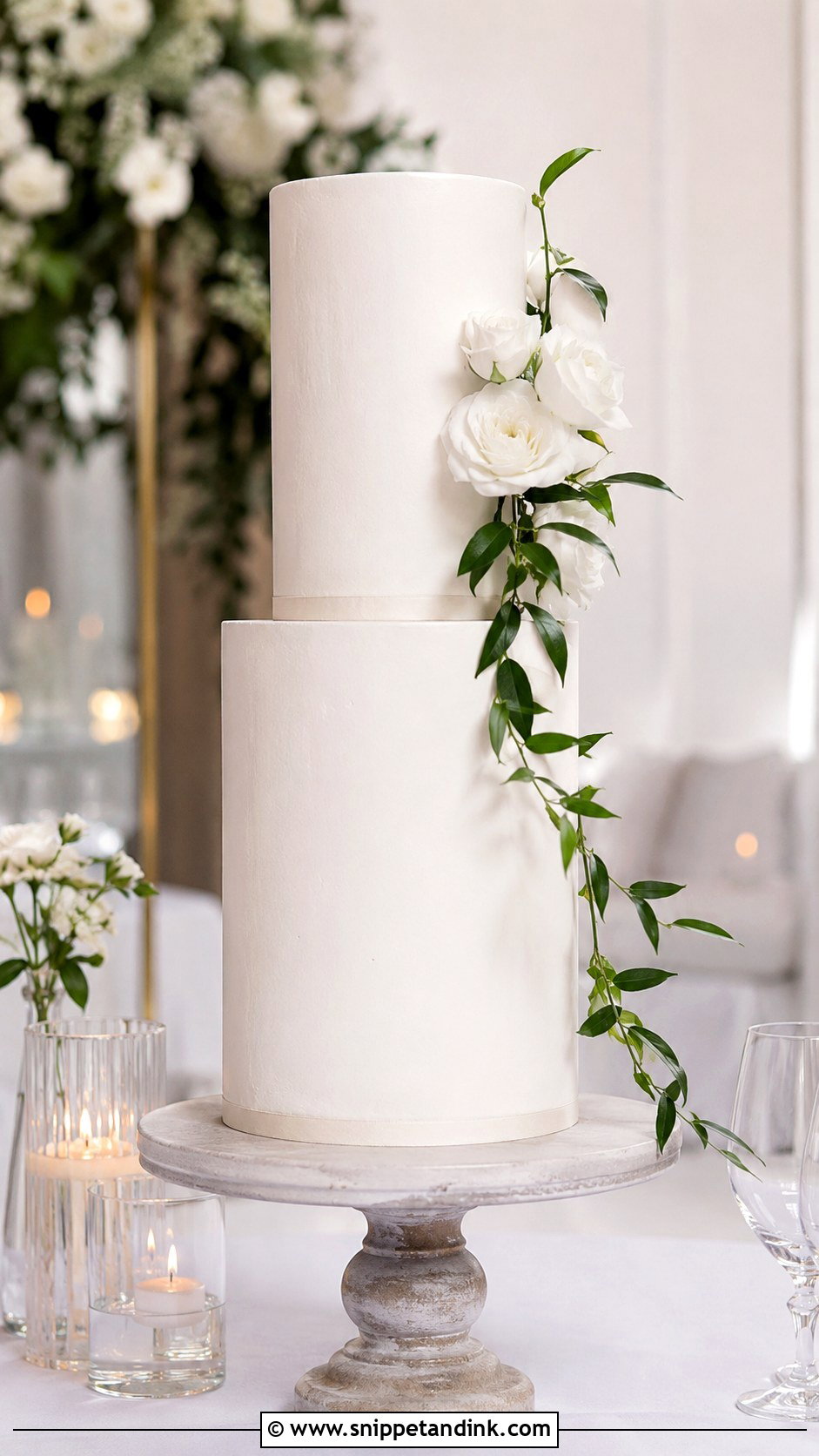
Extended tiers are taller than standard, often six inches or more each, which gives a slim, editorial silhouette. They suit smooth buttercream, clean fondant, a thin ribbon and very few flowers. You get height without adding tiers. Inside, a tall tier is really two stacked layers on their own boards with dowels between, otherwise it compresses under its own weight. Keep the base wider and the top slim, use a sturdy stand and keep decoration light so it doesn’t look top-heavy. Close-ups show off the clean lines.
18. Watercolor Wedding Cake
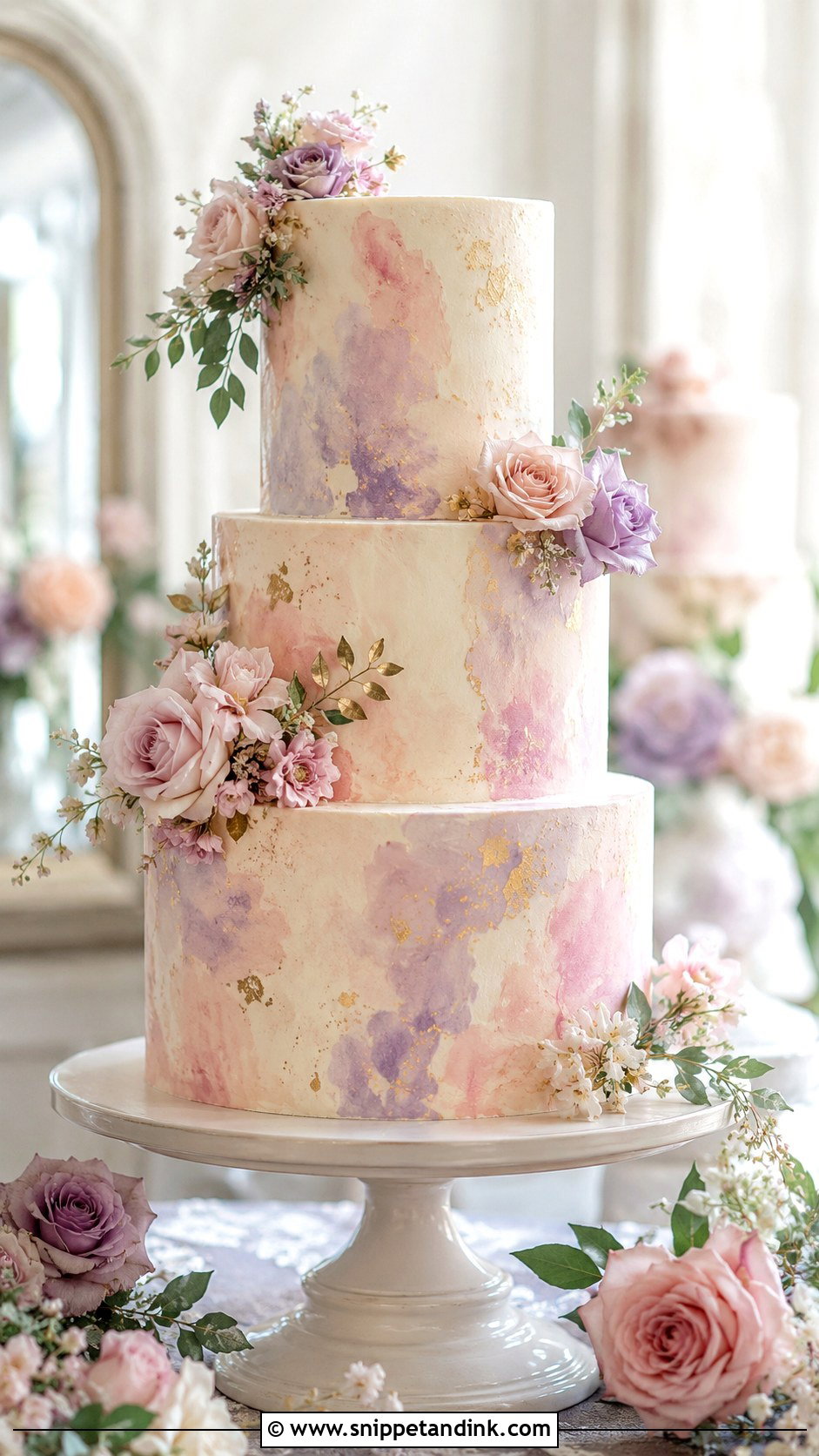
Watercolor cakes add color gently: pale pink, blue, lavender, peach or sage brushed and blended into the frosting. Paired with delicate flowers or a touch of gold, they suit spring weddings and garden venues. Gentle blending is the goal; hard streaks look like a mistake. On buttercream, I spread several shades and scrape them smooth together while the icing is cold. Round tiers with smooth sides and a few matching blooms at the base make the display feel coordinated.
19. Sugar Flower Wedding Cake
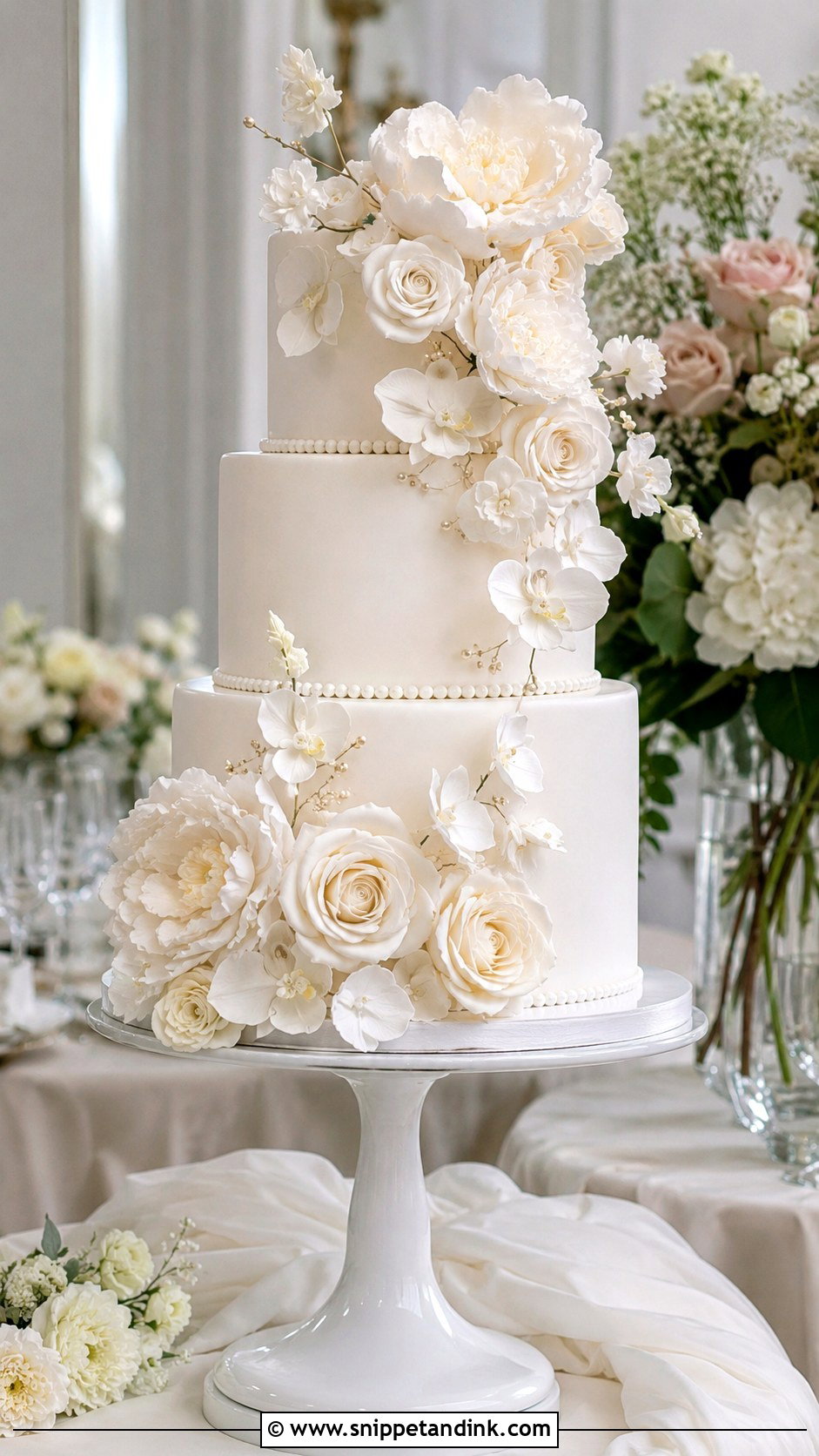
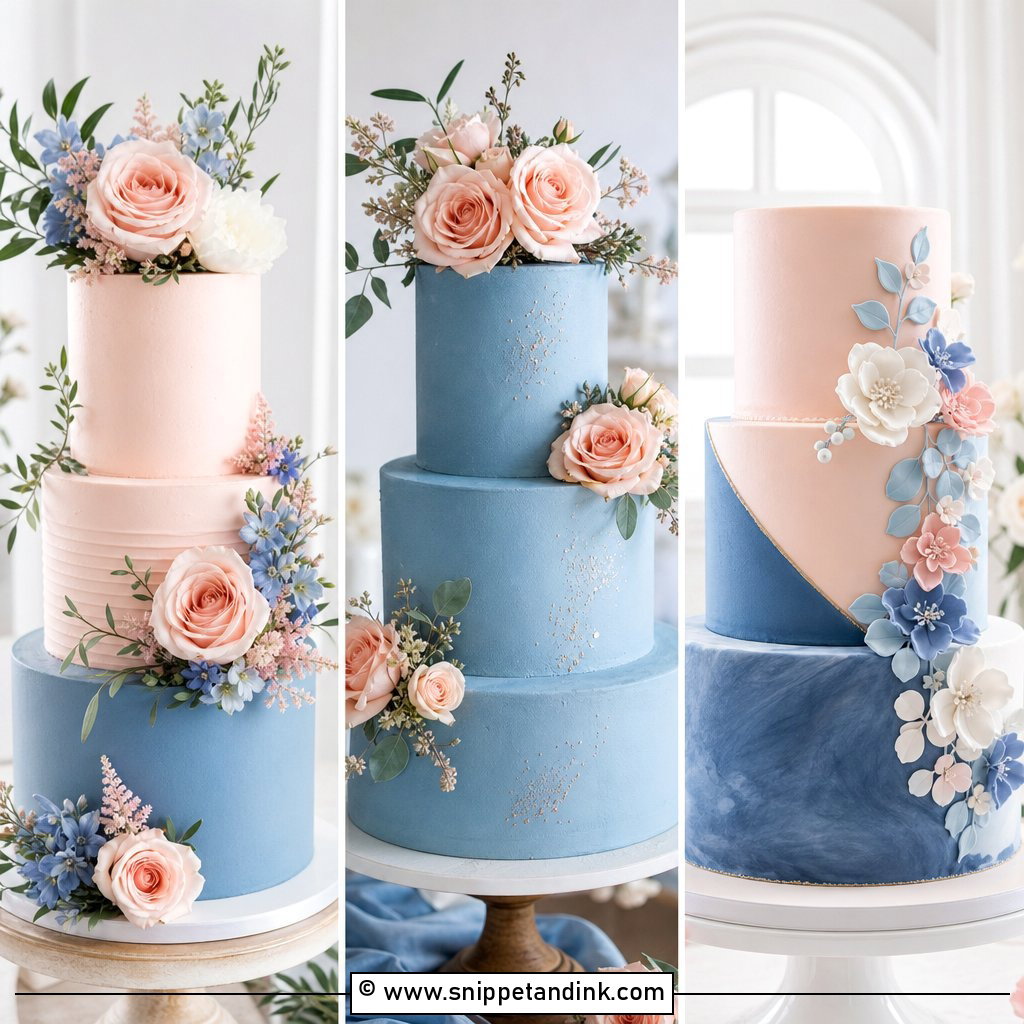
Sugar flowers don’t wilt under hot lights or a warm room, which is why I suggest them for long receptions and late cuttings. They can match your bouquet: roses, peonies, orchids, sweet peas, ranunculus. Each petal is rolled, shaped and dried separately, so they’re ordered weeks ahead and priced accordingly. A few large blooms often look more elegant than a cake covered edge to edge. Clusters, corners or a flowing line down one side all suit a clean fondant or buttercream backdrop. Many couples keep one afterward as a keepsake.

20. Sheet Wedding Cake
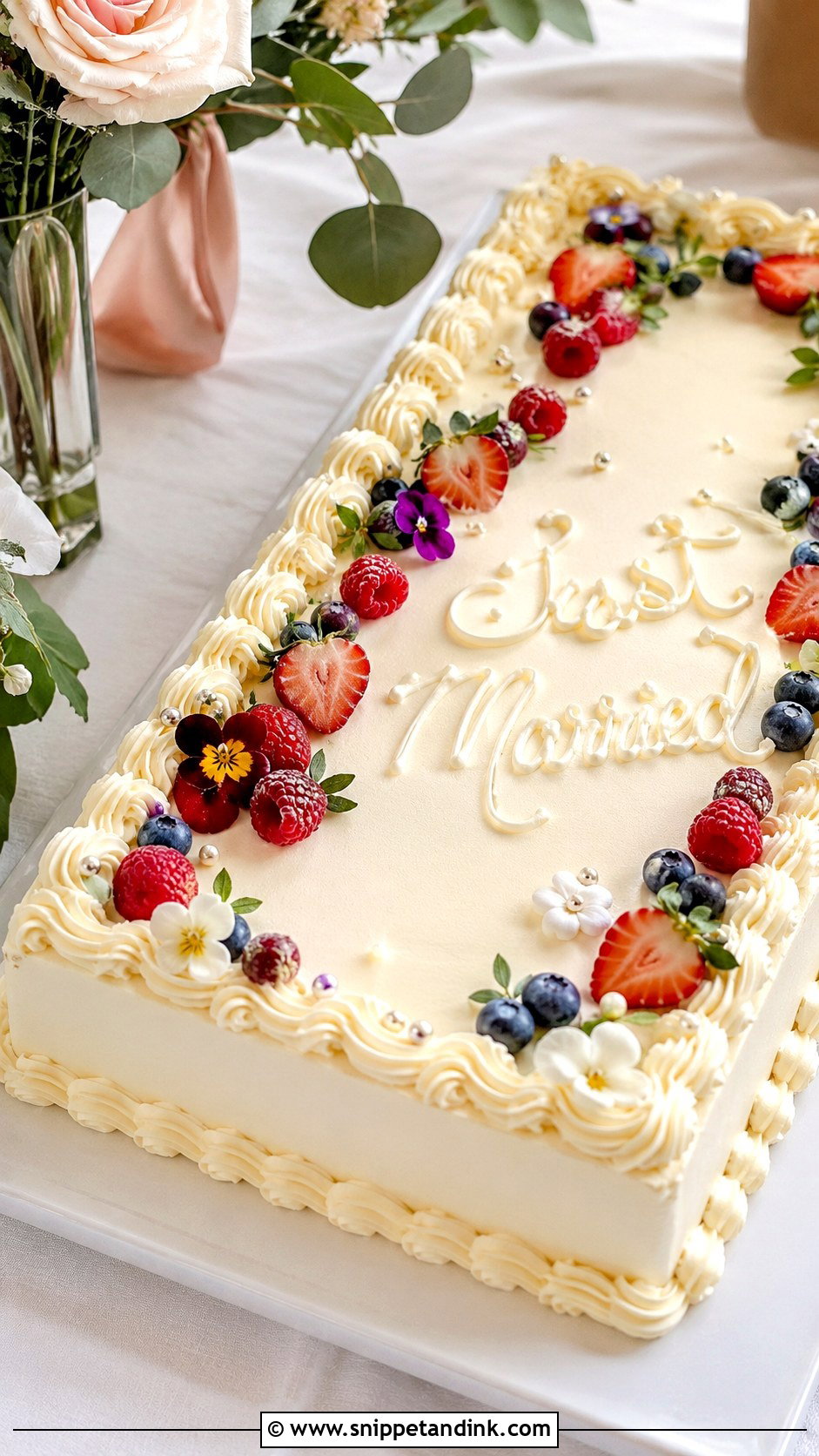
Sheet cakes are having a moment as display cakes rather than kitchen backups. A long rectangle reads generous and is very easy to serve. The top can carry piped borders, fresh berries, edible flowers, buttercream writing or rows of fine piping. Relaxed receptions and family-style meals suit it. Place it on a long table with flowers running alongside for a full display. The board matters more than people think: a long cake flexes if it’s carried on anything less than a rigid, thick board.
Stands and Risers Strong Enough for the Cake You Ordered
Tiered cakes are heavier than most couples guess, and a pretty stand from a home store isn’t always built to carry one. Before you buy or rent, check three things.
Load and footprint
Ask your baker for the cake’s approximate weight and the diameter of the base board, then make sure the stand’s top is at least as wide as that board and rated for the load. A board hanging over the edge of a narrow pedestal is a tipping risk. Glass and thin acrylic stands crack more easily than people expect under a heavy cake.
Height and stability
Tall pedestal stands look elegant but raise the center of gravity. With a cake that’s already tall, I prefer a low, wide stand or a riser built into the table. Ask whether the baker supplies a stand; many do, and they already know it fits.
Display cake versus serving cake
For large weddings, some couples display a smaller decorated cake and serve guests from plain cake cut in the kitchen, which keeps the display manageable and costs less. Tell the caterer in advance so the kitchen cake is plated at the same time the display cake is cut.
Height, Light and a Clear Path to the Cake
A display cake should belong to the couple, the room and the way guests move through the evening. Tall tiers make a classic focal point; a single tier or a sheet cake feels personal when styled with care. Piping, pearls, pressed flowers, fruit, gold leaf, marble and sugar flowers each set a different mood. Before deciding, I’d think about four practical things: how tall the room is, how it’s lit, what’s behind the table, and how many people need a slice. Get those right and the decoration has something to stand on.
You'll Like These Ideas:










Leave a Reply