
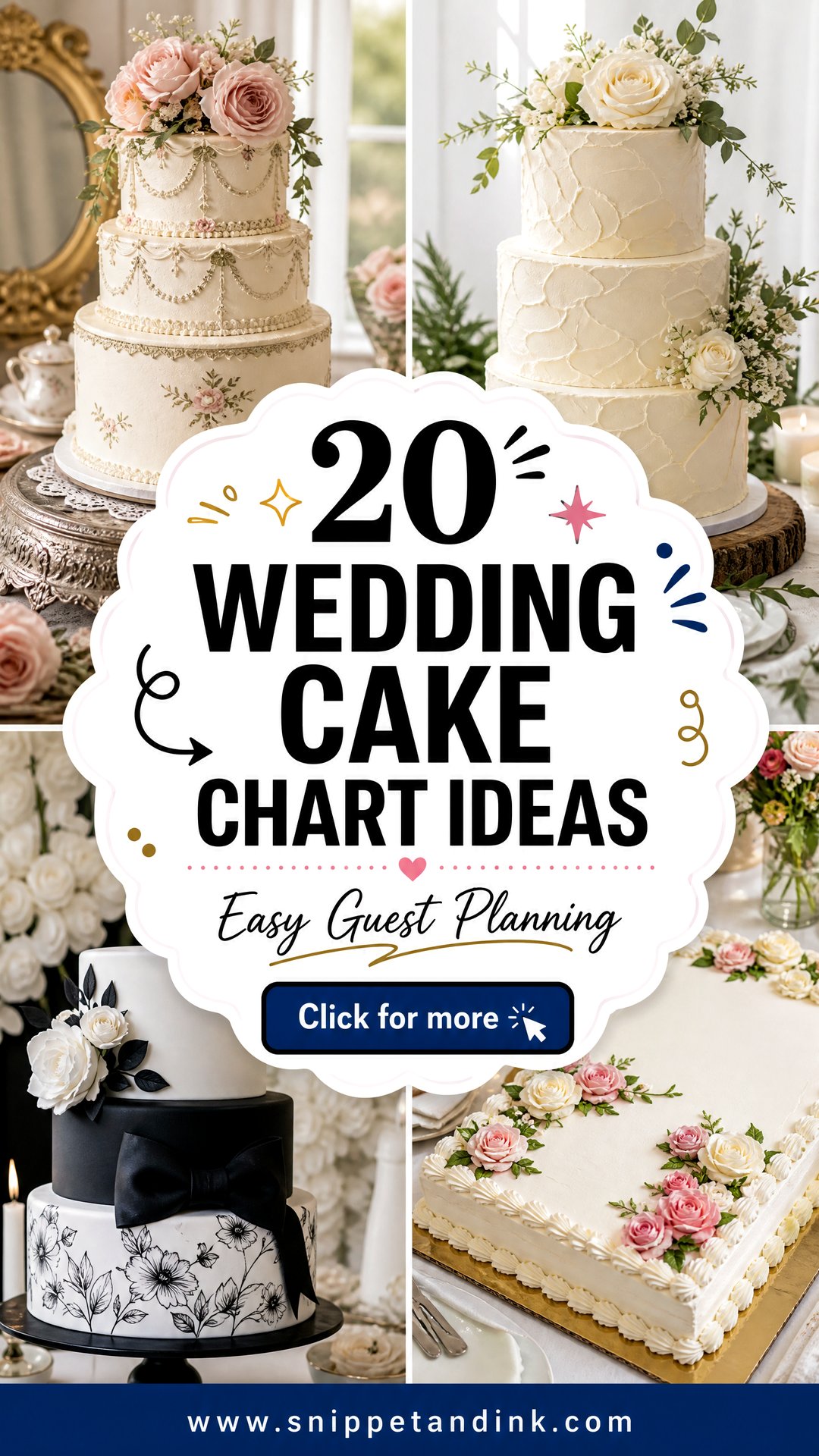
The cake table is one of the few corners of a reception that every guest walks past, photographs and then eats from, so it pays to plan it with numbers as well as pictures. The styles couples bring to me now lean on texture: buttercream piping, sculpted shapes, pressed flowers, soft colour, vintage detail, and flavours that say something about the two of them. Which one suits you depends on the venue, the season and, more than anything, how many people need a slice. I’ve set the ideas out like a planning chart, with a look, a mood and a flavour direction for each, and a serving guide just below. Here are the best picks for a 20 Wedding Cake Chart
Servings by Tier Size, Round and Square
Wedding portions are cut much smaller than party slices, usually a finger-wide piece about two inches long and as tall as the tier. These are the rough numbers I plan around for standard four-inch-tall tiers. Every baker cuts a little differently, so treat them as a guide and confirm with yours.
- 6-inch round: about 12 portions. 6-inch square: about 18.
- 8-inch round: about 24. 8-inch square: about 32.
- 10-inch round: about 38. 10-inch square: about 50.
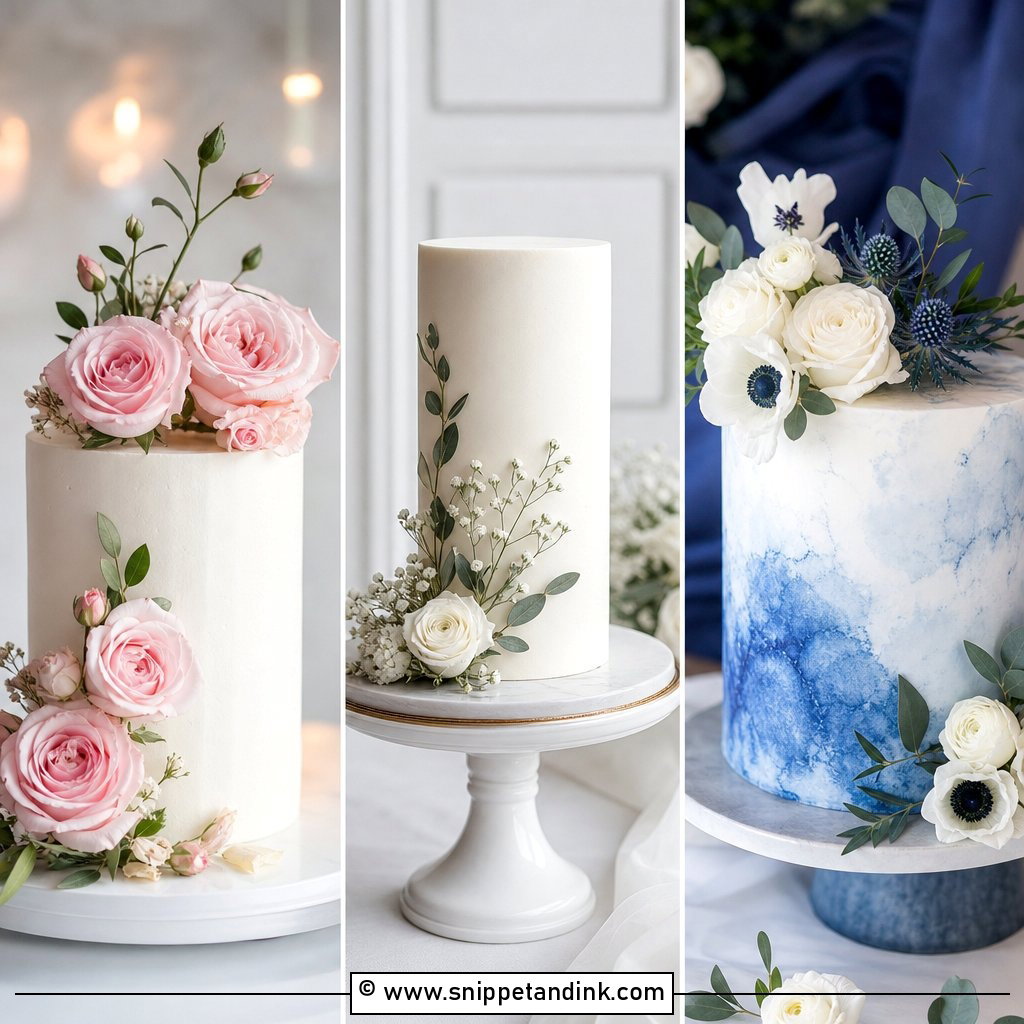
- 12-inch round: about 56. 12-inch square: about 72.
Add up the tiers, then decide whether the top tier is being saved for you; if it is, leave it out of the total. Taller double-height tiers serve roughly twice as many. If your caterer cuts larger dessert slices, plan for fewer portions per tier.
Give your baker a firm count about four weeks out, once replies are in. I would rather add a kitchen sheet cake late than rebuild a tiered design, because the tiers are often planned, boarded and partly made by then. Remember the people who are not on the seating plan but still get dessert: the band, the photographer, the planner and anyone working late in the kitchen.
1. Three Tier Wedding Cake
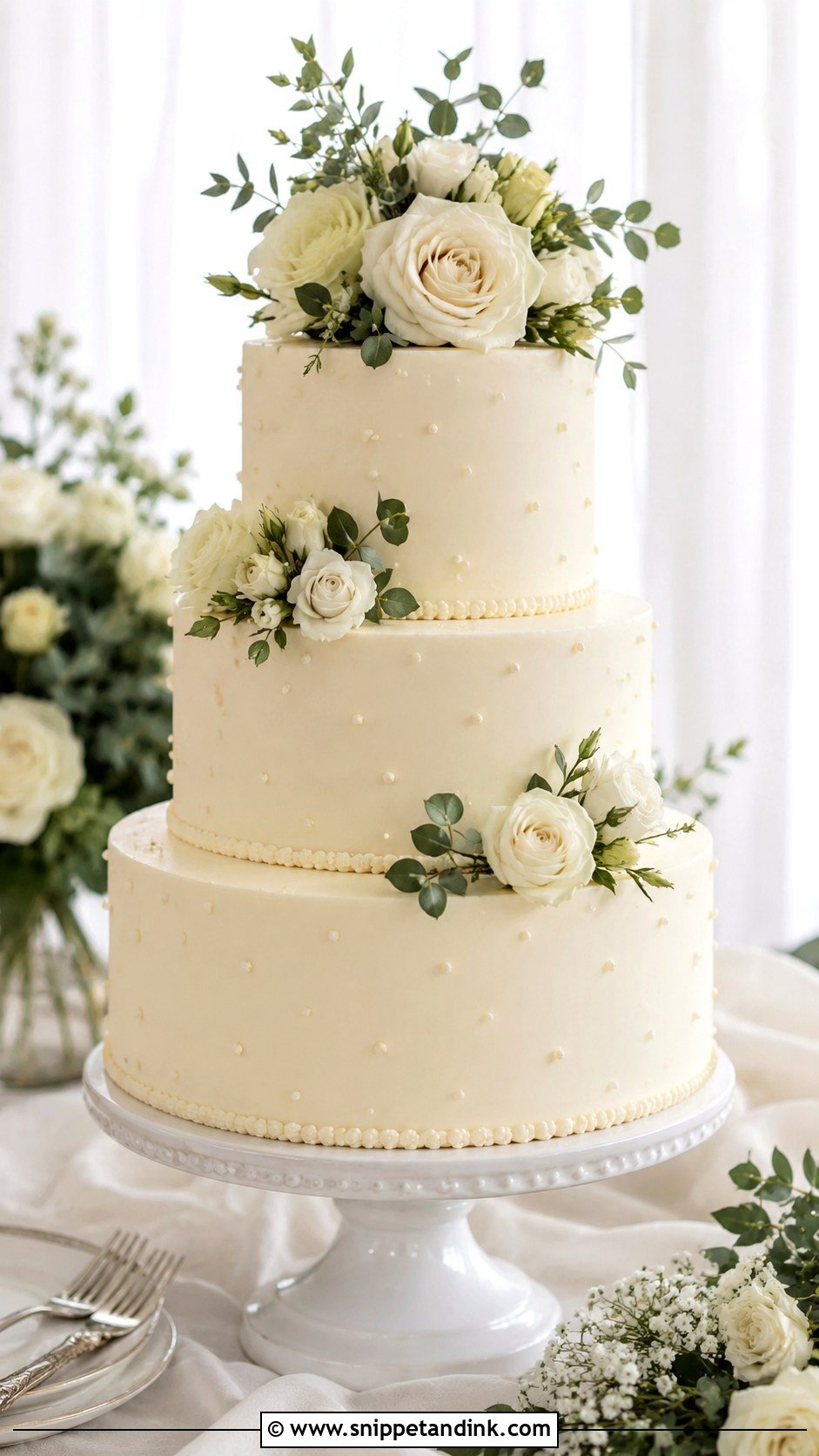
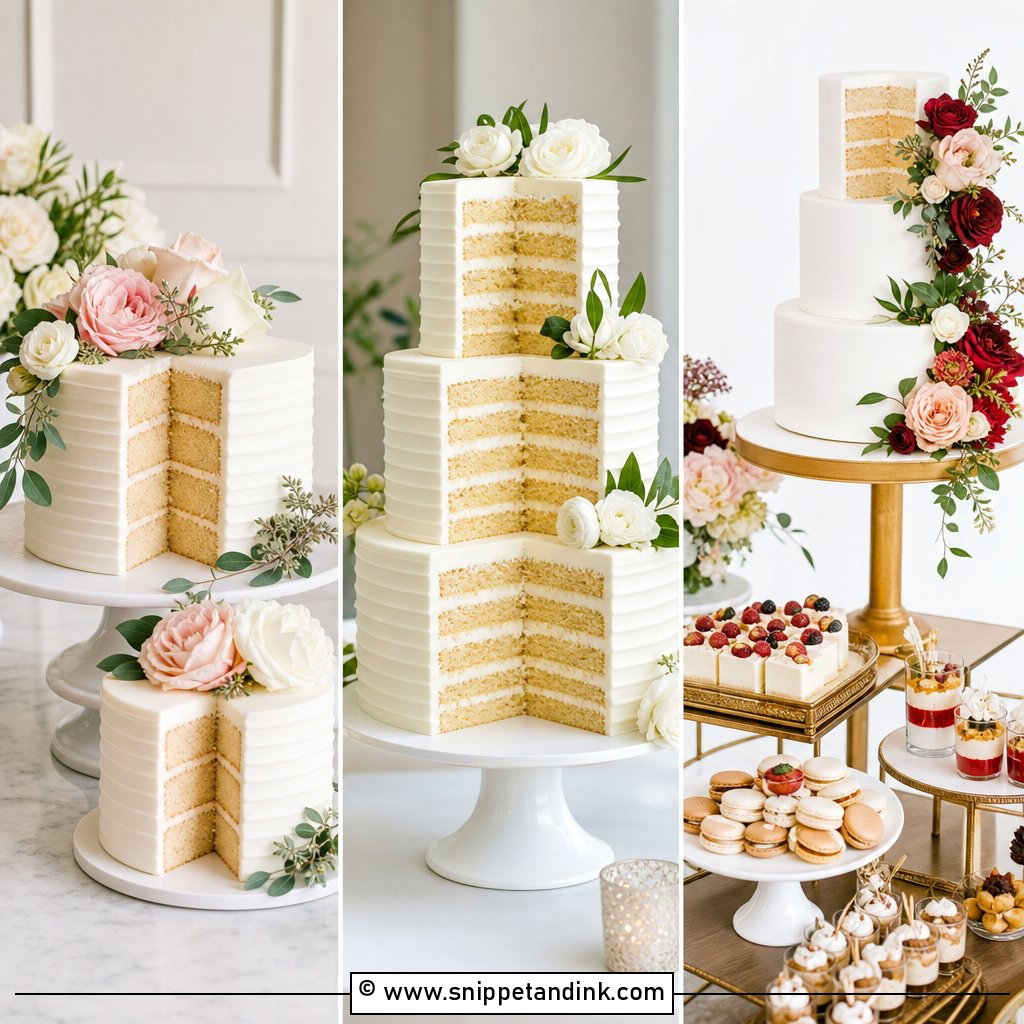
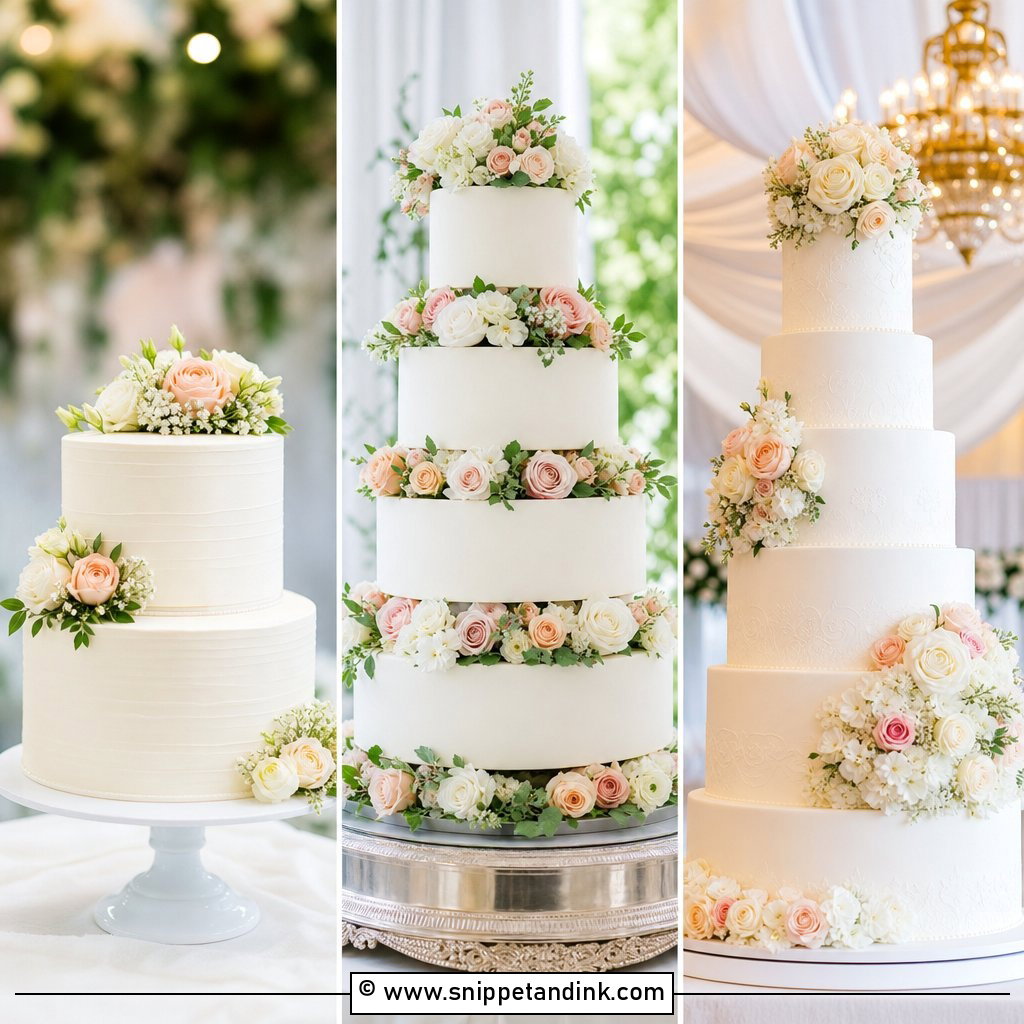
Three tiers is the size I quote most for weddings of around seventy guests, and it’s tall enough to read from the back of the room without towering. A six, eight and ten-inch stack gives roughly seventy-four wedding portions. Smooth ivory buttercream keeps it clean; a soft texture suits garden, rustic or modern rooms. Vanilla bean, almond, lemon and champagne-style sponges are the safe crowd pleasers. Roses, sugar flowers, pearls or delicate piping will match almost any palette.
2. Two Tier Wedding Cake
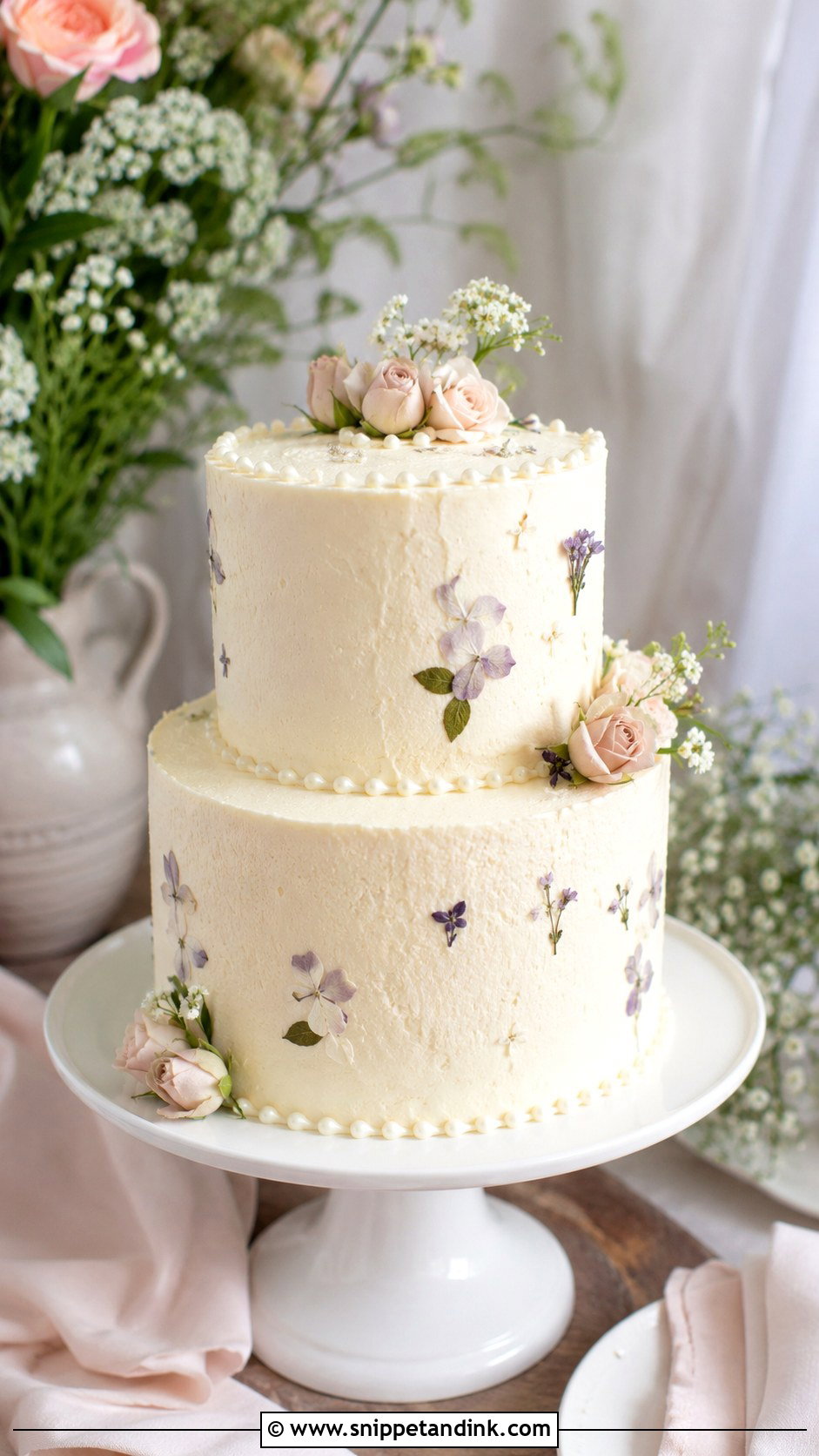
A two tier wedding cake covers around thirty-six portions at six and eight inches, which suits intimate weddings and courthouse receptions with little waste. For anything bigger, I pair it with cupcakes, small desserts or a plain kitchen sheet cake. Two tiers also means two flavours, lemon raspberry on one and vanilla almond on the other, say. Keep the outside simple: buttercream texture, pressed flowers, a small cluster of blooms or soft pearl piping.
3. Vintage Wedding Cake
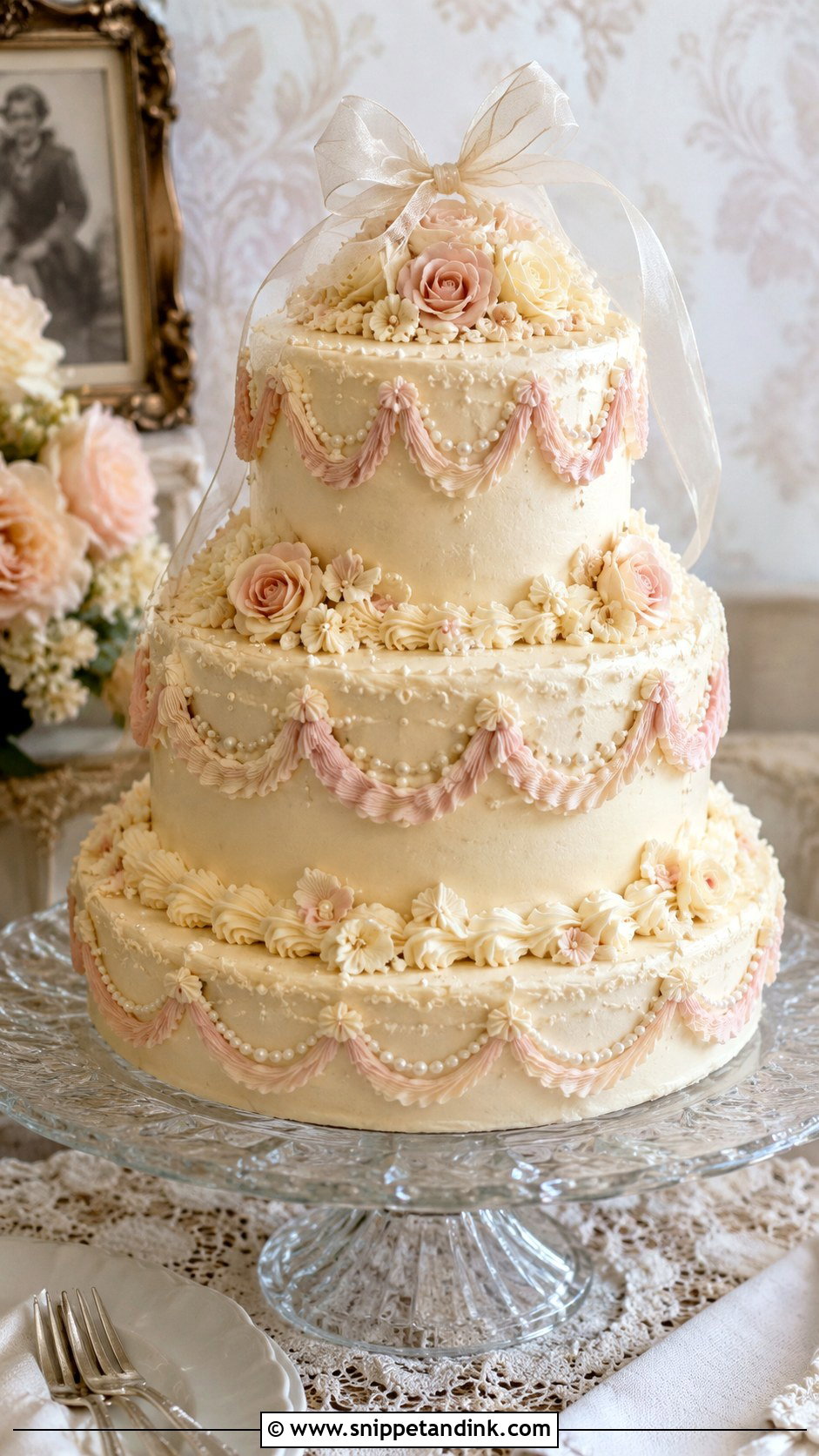
Vintage piping brings scallops, swags, rosettes and pearl dots, usually in a soft pastel, and the trick to keeping it polished is limiting the palette. I work with one main colour, one accent and two or three piping details repeated all the way up. More than that and it starts to look like an anniversary cake from the seventies, in the wrong way. Ballrooms, historic houses and garden receptions suit it. Vanilla, almond, red velvet and strawberry are the classic flavours underneath.
4. Lambeth Wedding Cake
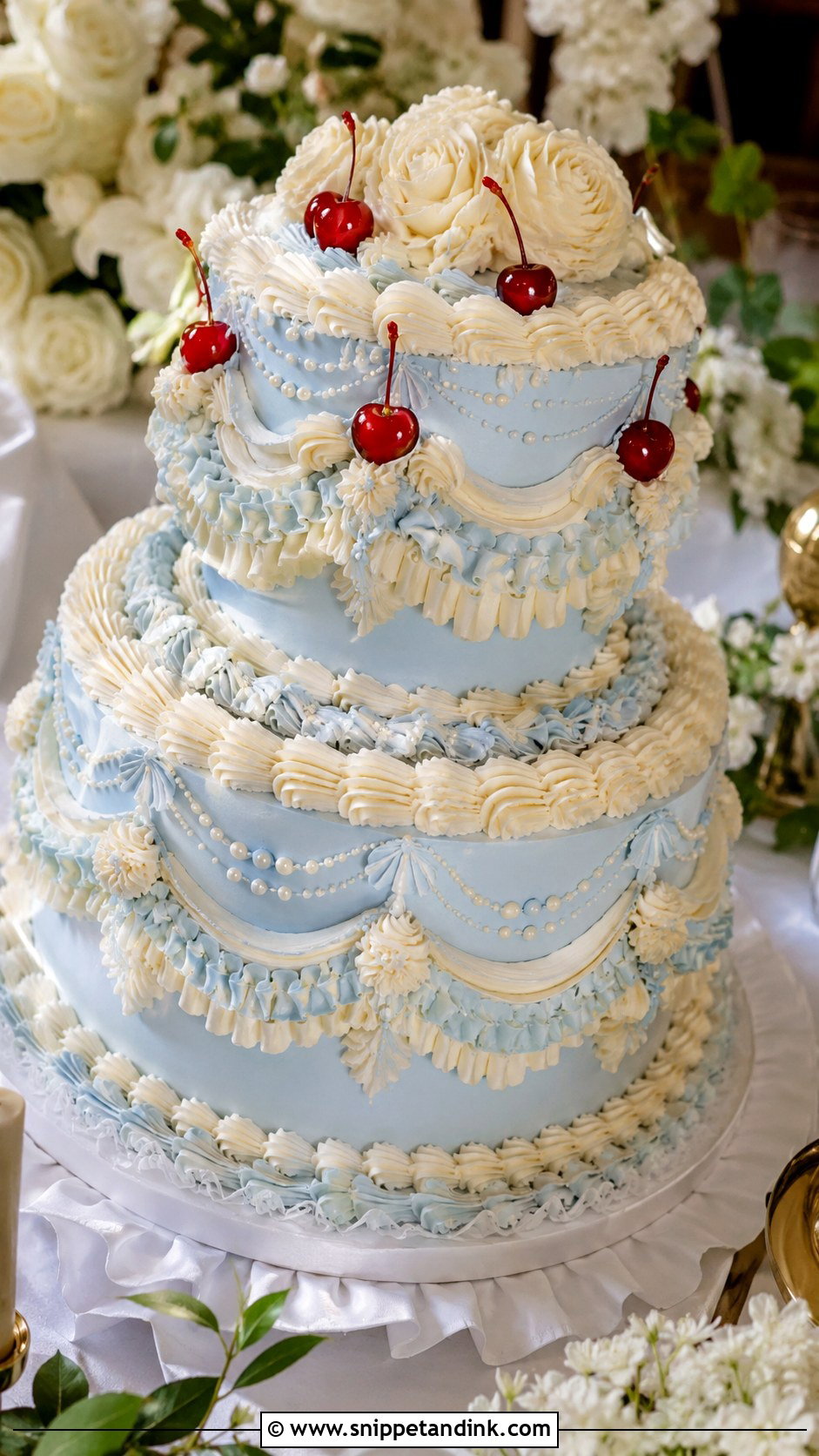
A Lambeth wedding cake is overpiping at its fullest: shell borders, garlands and ornate lines layered on top of one another until the sides look carved. It’s slow, skilled work, so it costs more per tier than a smooth finish, and that’s worth knowing before you choose three tiers of it. One statement tier on a plain stack gives the look for less. Ivory reads classic; baby blue, blush or sage feel fresher. Almond, vanilla bean or chocolate raspberry sit well underneath, finished with cherries, pearls, bows or sugar flowers.
5. Textured Buttercream Wedding Cake
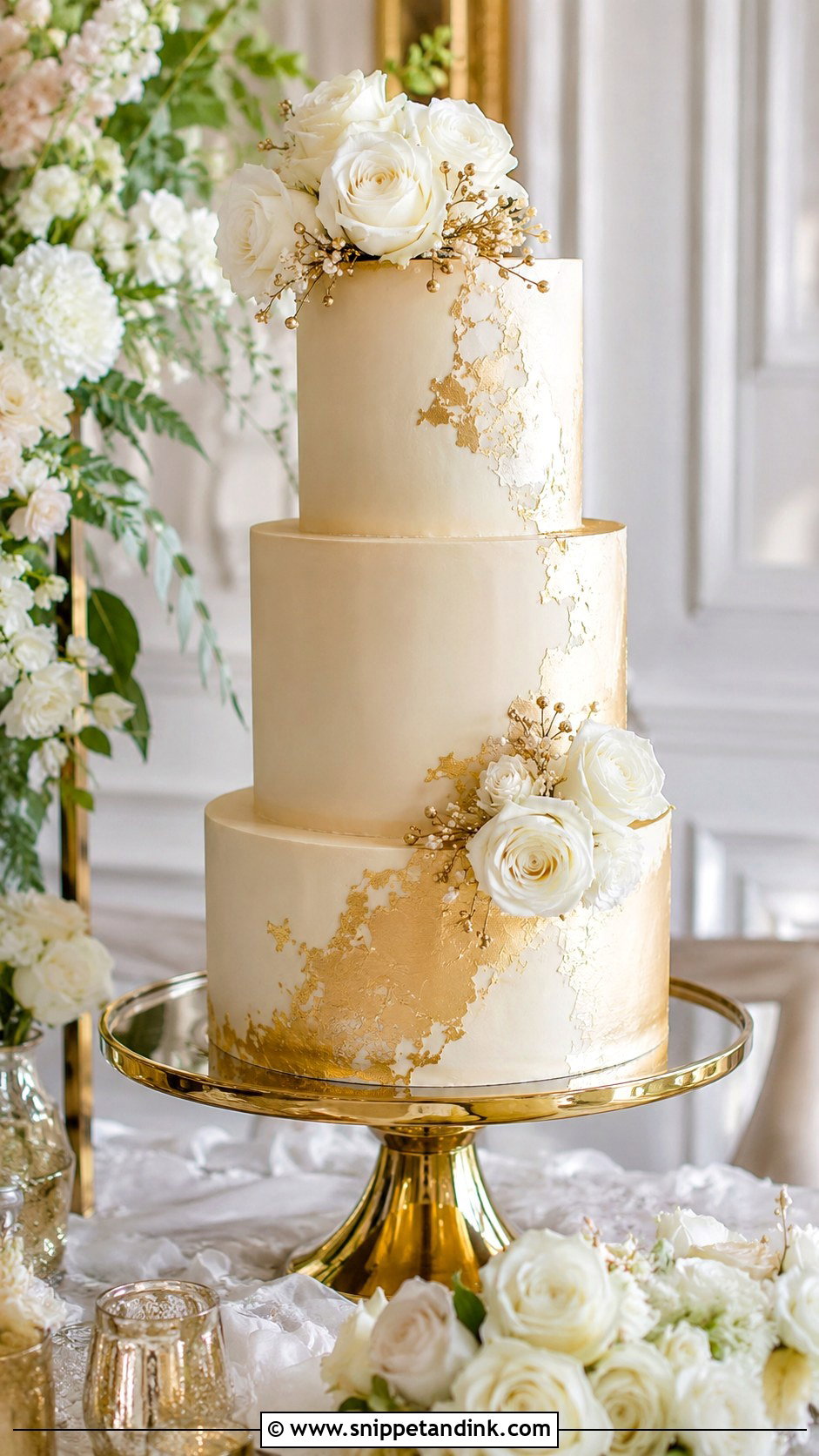
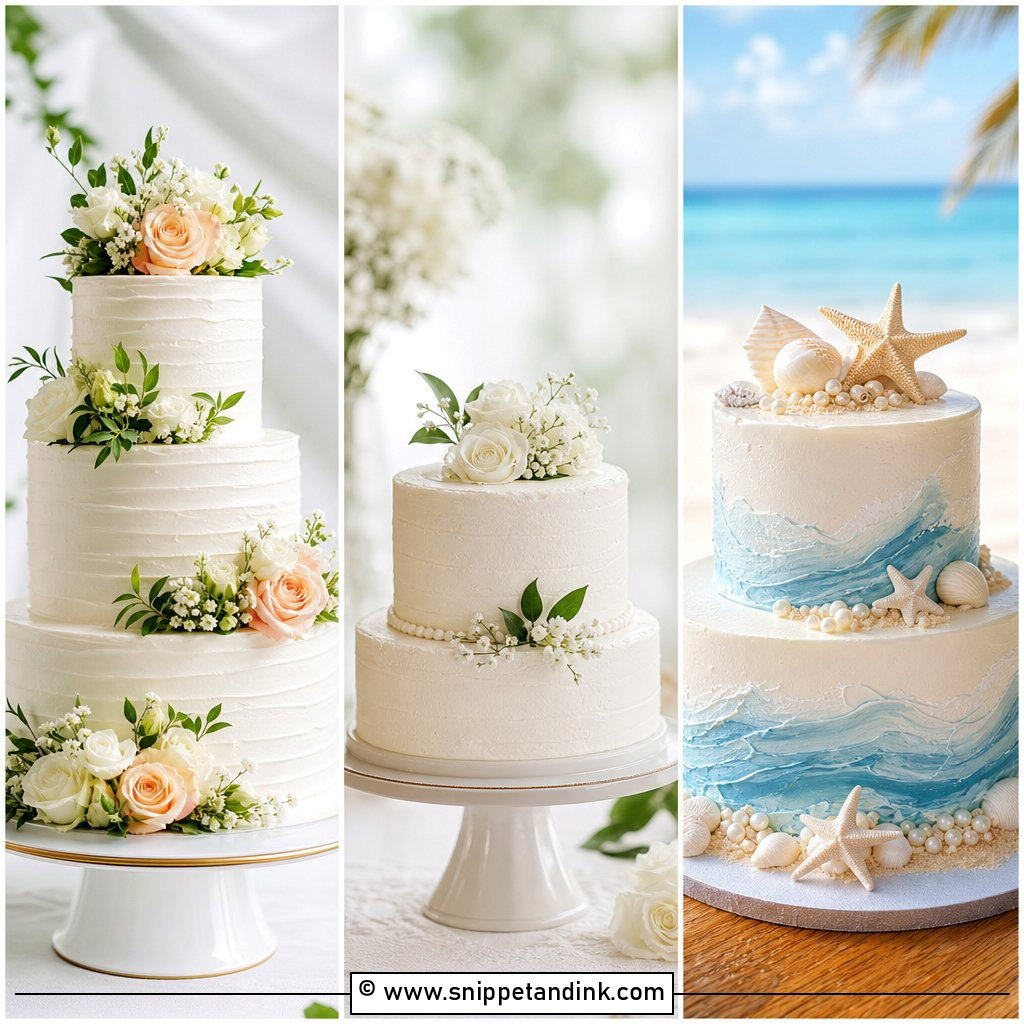
Texture is the finish I’d recommend for outdoor and barn weddings, because a palette-knife stroke or a combed ridge hides the small marks a warm day and a bumpy drive can leave. Light catches the ridges from every side, so it photographs well without colour. Ruffles, waves or gentle grooves all count. Keep the flavour simple, vanilla bean or lemon, since the outside already has plenty going on. Flowers, greenery, a few gold flecks or seasonal fruit finish it.
6. Minimalist Wedding Cake
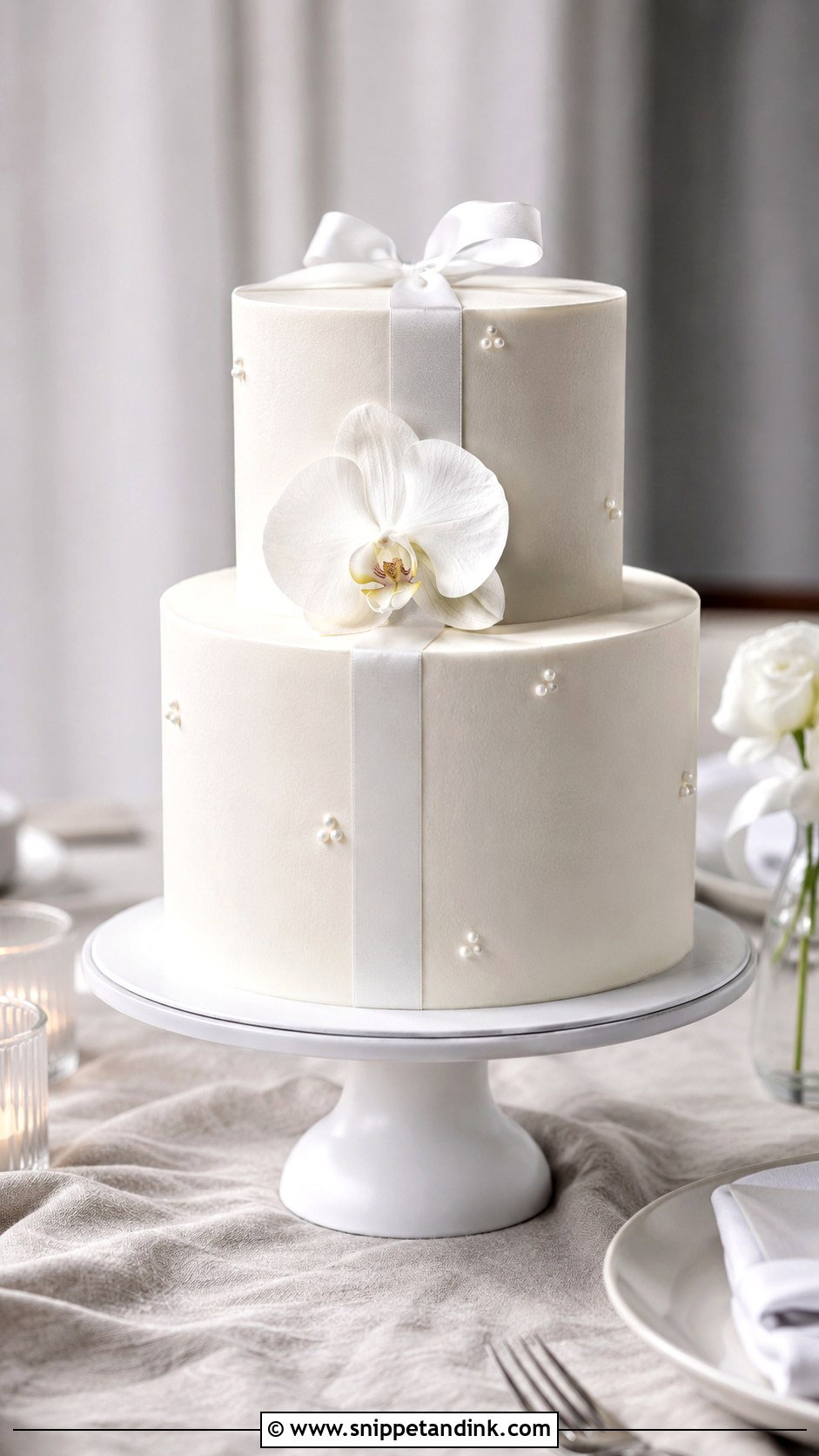
Minimalism leaves the baker nowhere to hide. Smooth buttercream or fondant, sharp edges and one or two accents, such as a single orchid, a silk ribbon, pearl dots or a small spray of flowers. I’d only book a minimalist cake with a baker whose portfolio shows truly crisp edges, because any lean or dent is obvious. Galleries, city venues and modern rooms suit it. Vanilla bean, coconut, lemon elderflower and almond keep the flavour as quiet as the design.
7. Floral Wedding Cake
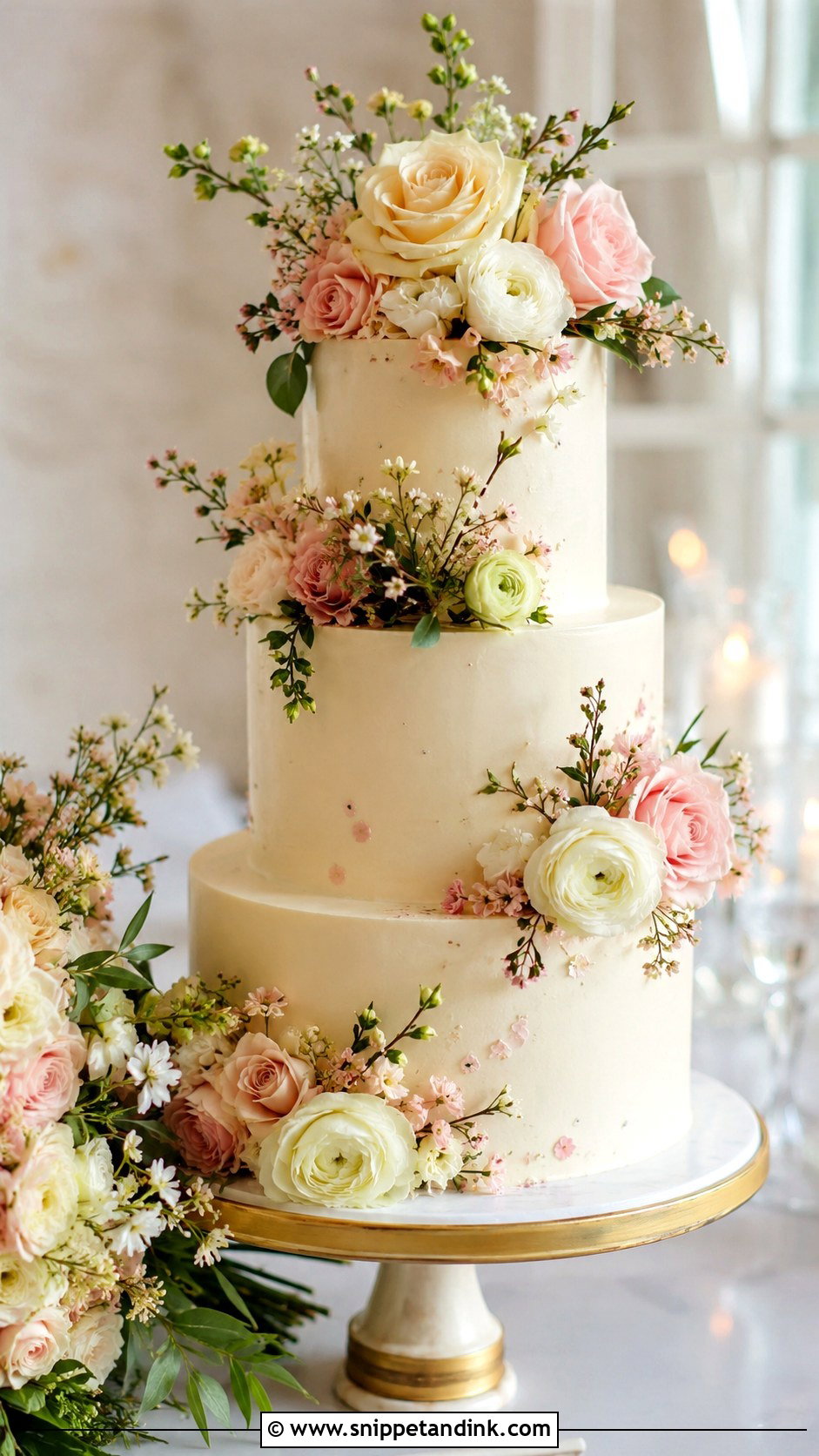
Flowers are the simplest bridge between the cake and the rest of the wedding, and each kind sets a different mood. Fresh stems look natural but wilt over a long reception. Sugar flowers cost more and last for years if kept dry. Pressed petals look botanical; piped buttercream ones feel vintage. Lemon, vanilla, pistachio and berry flavours sit well with all of them. Any fresh flower near the cake needs to be food-safe and spray-free, and placed with your baker’s agreement, never stuck straight into sponge.
8. Pressed Flower Wedding Cake
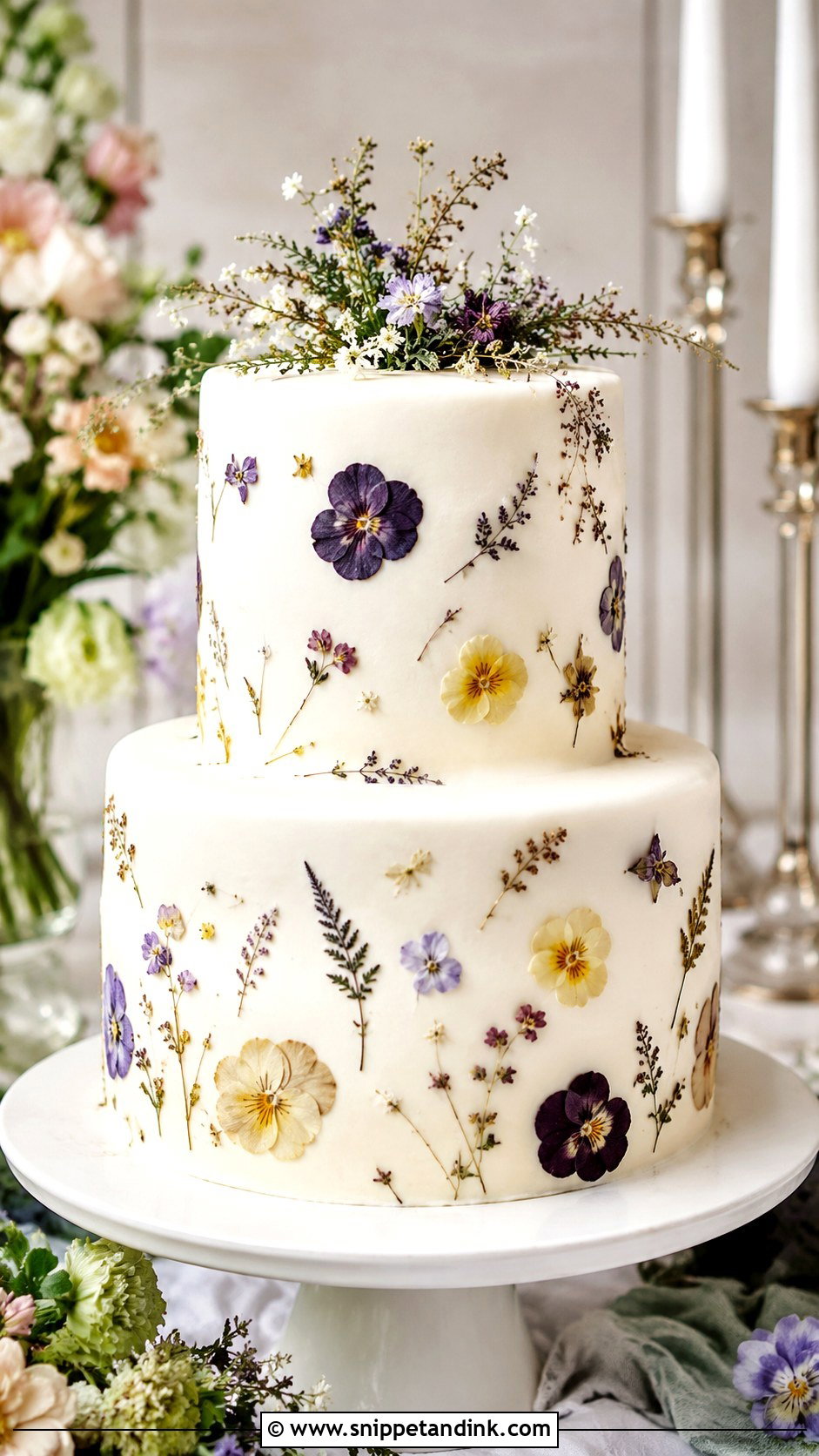
Pressed flowers lie flat against white or ivory icing like a botanical print, and they suit spring and garden weddings best. Keep the shape plain so the petals lead. Only edible varieties belong on a cake, such as violas, pansies or cornflowers, pressed and dried well ahead. They can fade under strong light, so I keep these cakes covered and out of direct sun until they’re displayed. Lemon elderflower, vanilla lavender, honey almond and orange blossom carry the same mood into the slice.
9. Pearl Wedding Cake
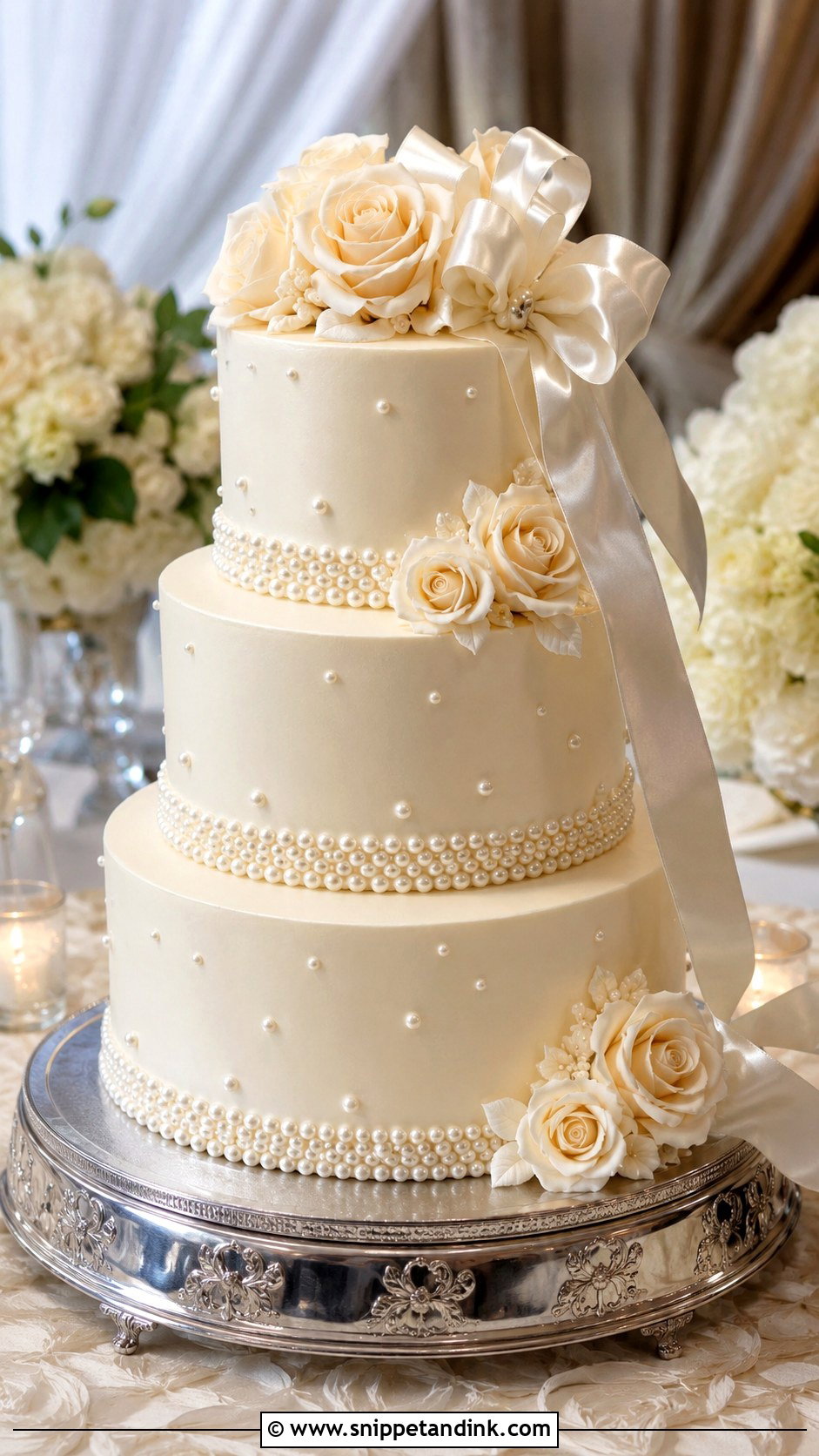
Pearls are all detail and no colour. Tiny sugar pearls can be scattered, set in neat rows or used to outline each tier. Hard sugar pearls crunch, so on the tiers that get served I often pipe soft buttercream pearls instead, which look nearly the same from a few feet away. Formal ballrooms and black-tie evenings suit it. Fondant, smooth buttercream or a light texture all work underneath. Vanilla almond, white chocolate raspberry and champagne-style sponges match the look, with ivory roses, satin ribbon or a touch of gold.
10. Gold Leaf Wedding Cake
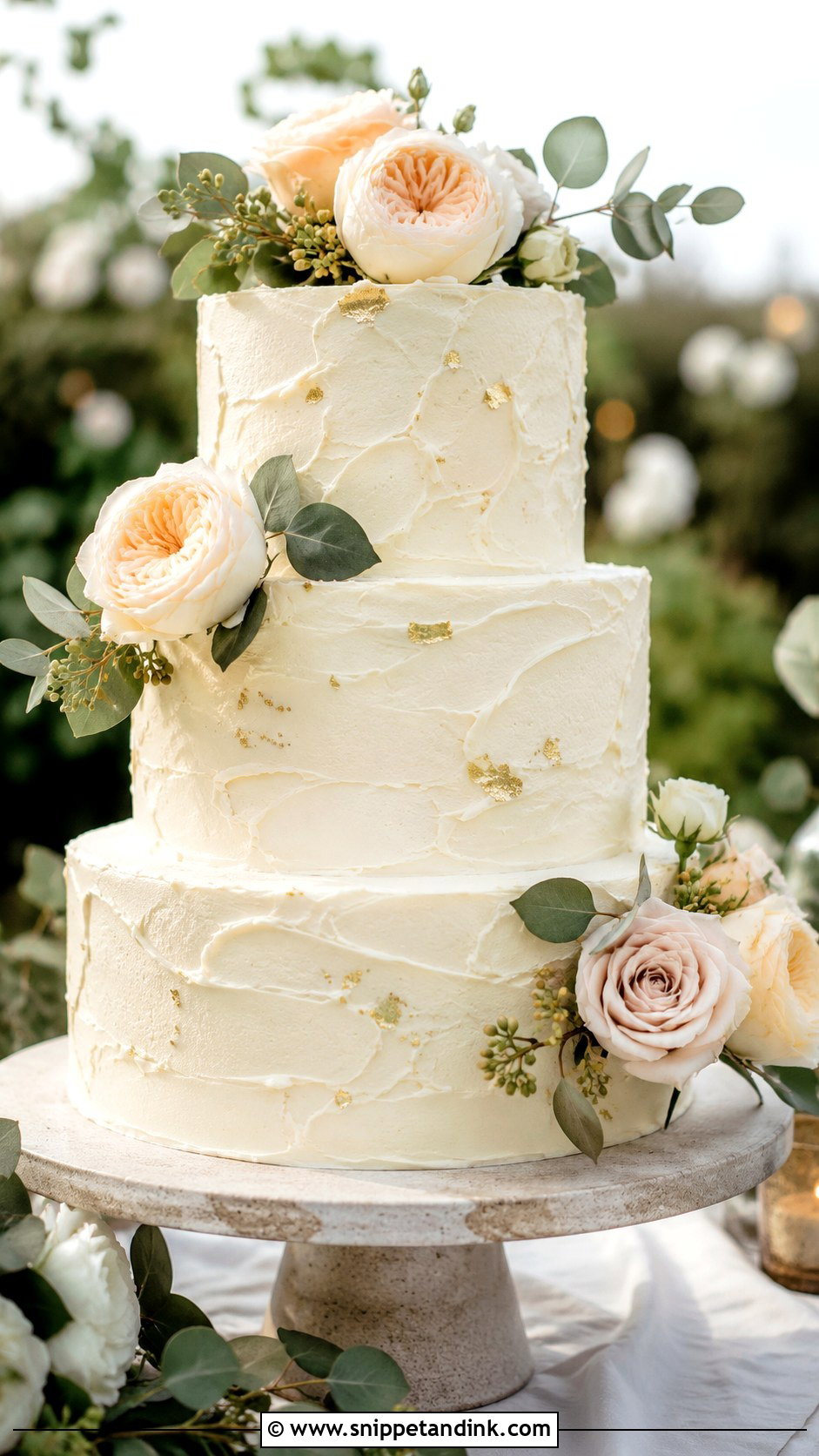
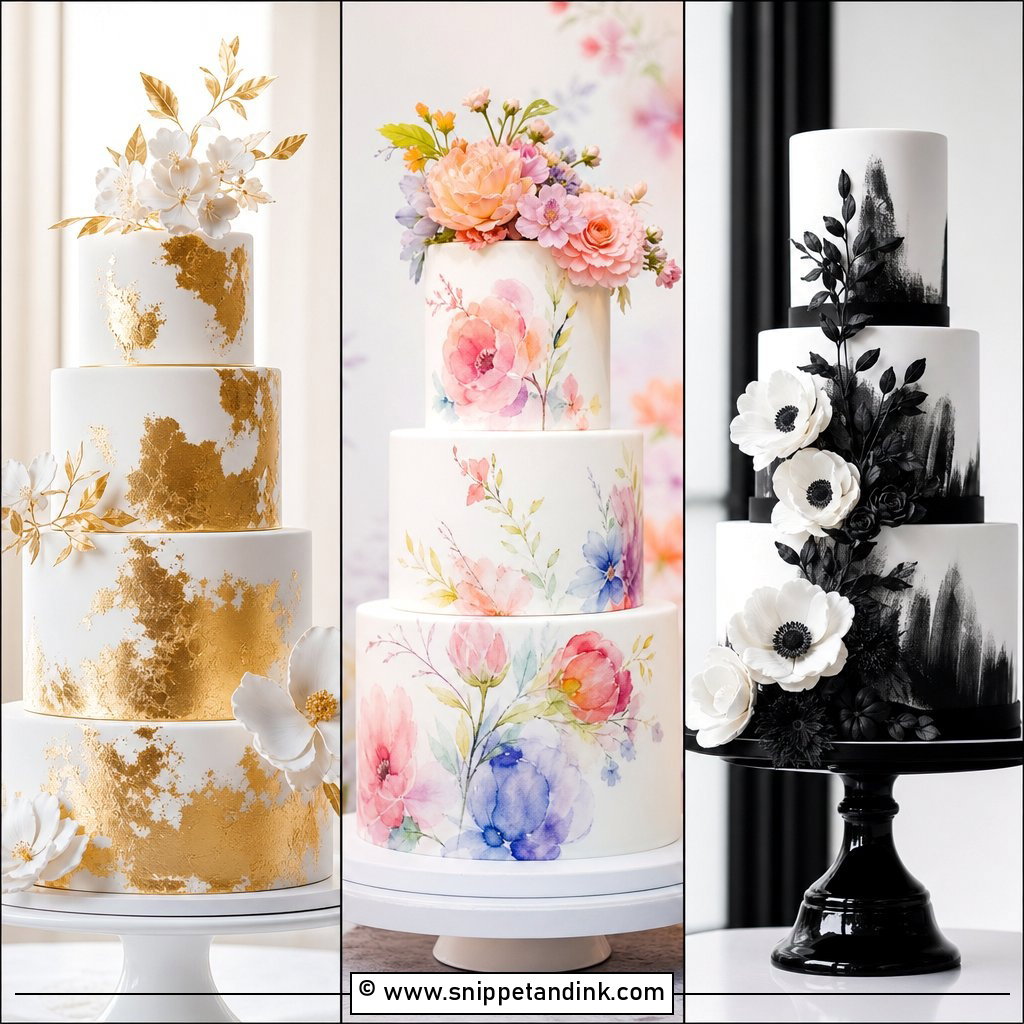
Use gold like jewellery, as an accent. Torn leaf down one side, a brushed edge or a few flakes around the flowers is plenty. Real gold leaf is so thin it lifts with a breath, which is why I apply it with a dry brush in a still room, never near an open window. It suits ivory, blush, emerald, navy and soft beige palettes. Caramel, almond, chocolate ganache and vanilla bean feel right with the warmth. A smooth or lightly textured background keeps the shine clean.
11. Square Wedding Cake
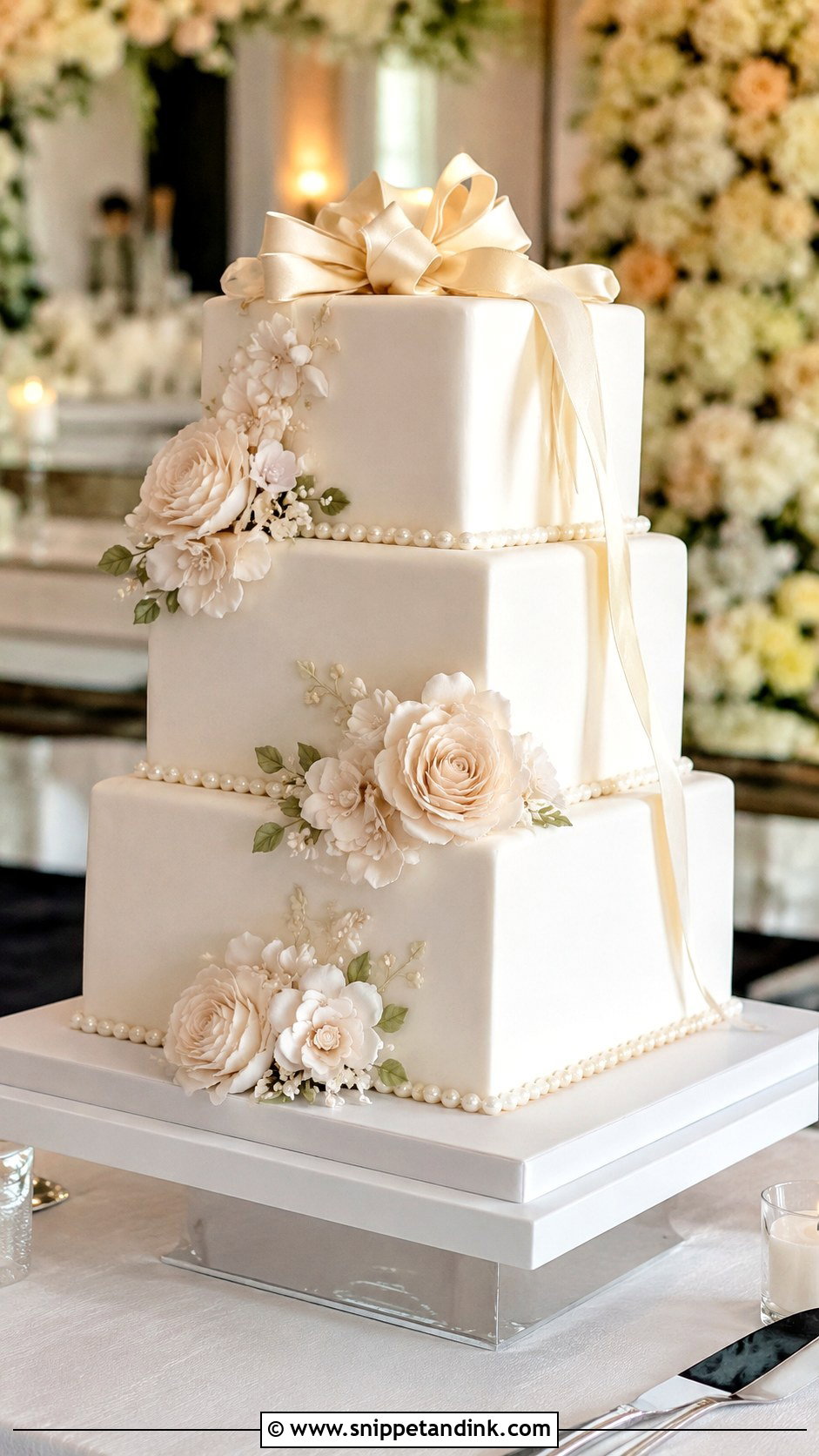
Square tiers look structured and a little unexpected, and they give more servings than a round of the same width: an eight-inch square cuts into around thirty-two wedding portions against about twenty-four for an eight-inch round. That makes square a useful trick for a bigger guest list on the same footprint. Stack them evenly or mix them with round tiers. Fondant gives the sharpest corners; buttercream is softer. Vanilla, almond, mocha and lemon raspberry are good choices. Ribbon borders, sugar flowers, pearl edging or vertical piping show off the shape.
12. Round Wedding Cake
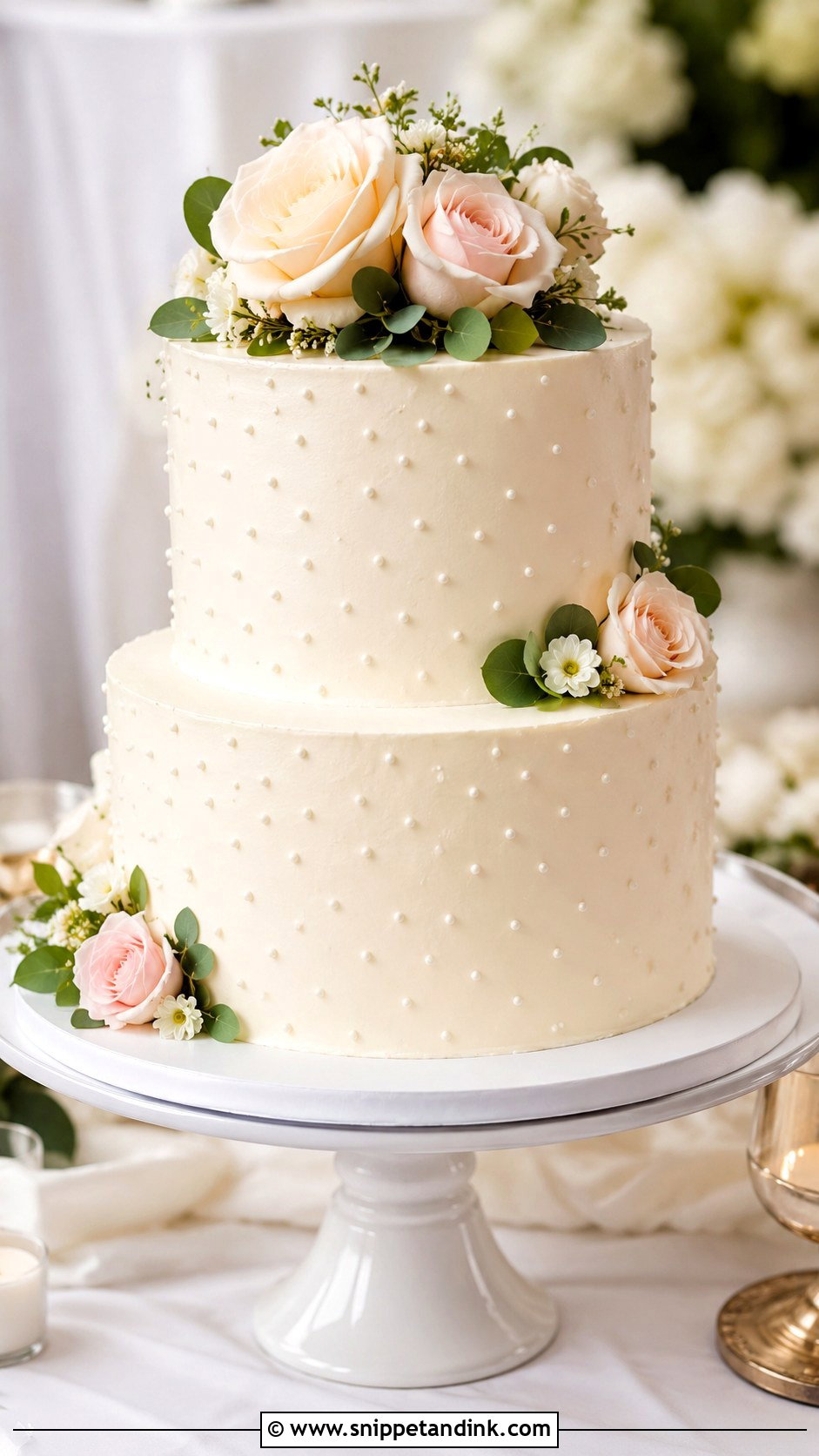
Round is the most adaptable shape on this chart. Classic with smooth white icing and roses, rustic with texture and greenery, modern with clean edges and one sculptural accent. It’s also the easiest to size up or down, from a small two tier cake to a five-tier display for a big ballroom. Vanilla bean, chocolate, lemon and almond raspberry are the usual flavours. If you can’t decide, round gives you and your baker the most room to adjust once the guest list settles.
13. Black And White Wedding Cake
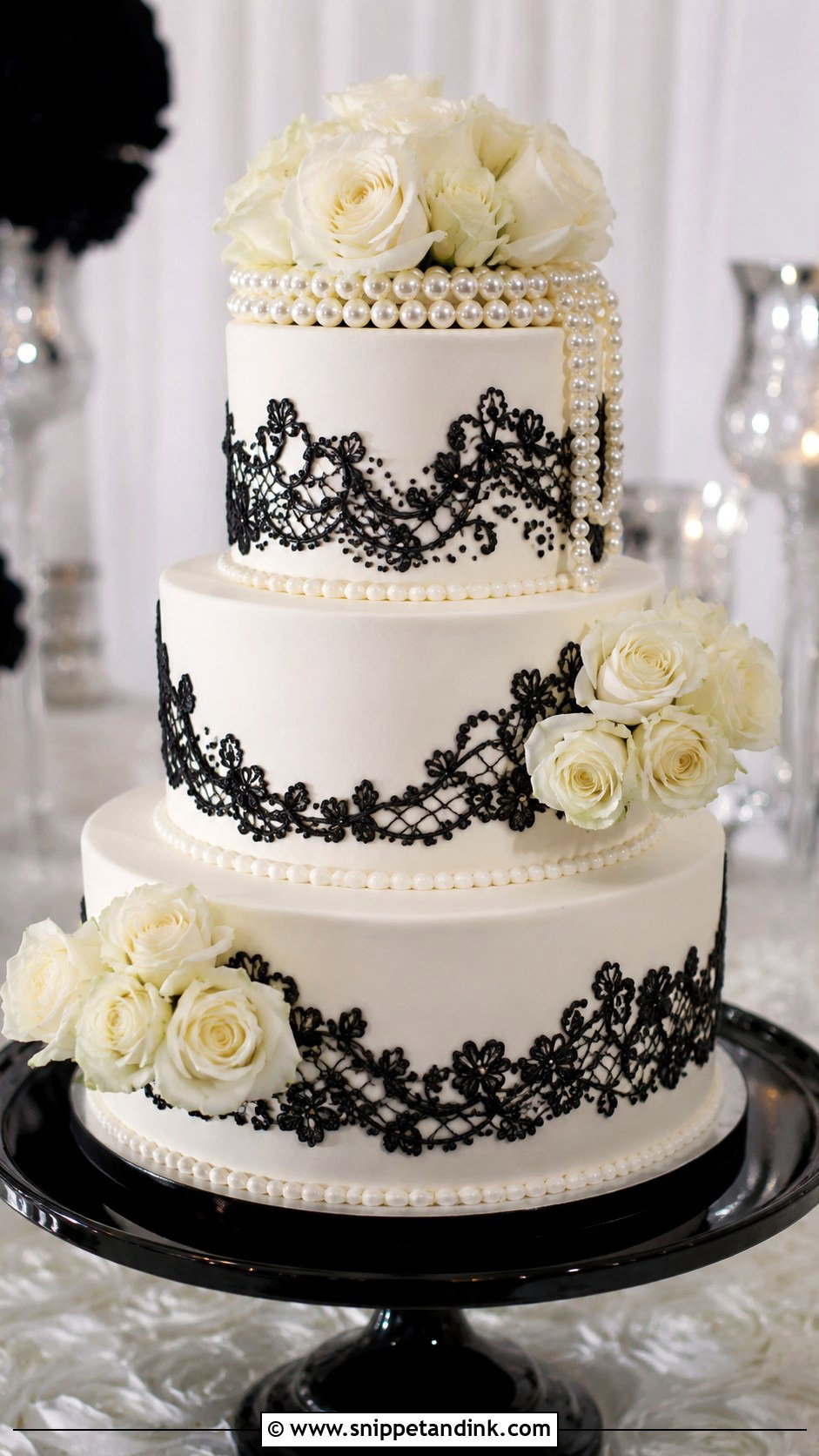
Black and white is graphic and suits formal rooms and evening receptions. White tiers with a black ribbon are the simplest version; black piping, painted florals, marble or lace patterns go more artistic. A full black coating takes heavy colouring that can stain mouths and taste bitter, so I keep the black for detail and build it from black cocoa where possible. Chocolate, vanilla, cookies and cream or black cocoa sponge fit the theme. Soft flowers, pearls or a smooth white base keep it from looking harsh.
14. Colorful Wedding Cake
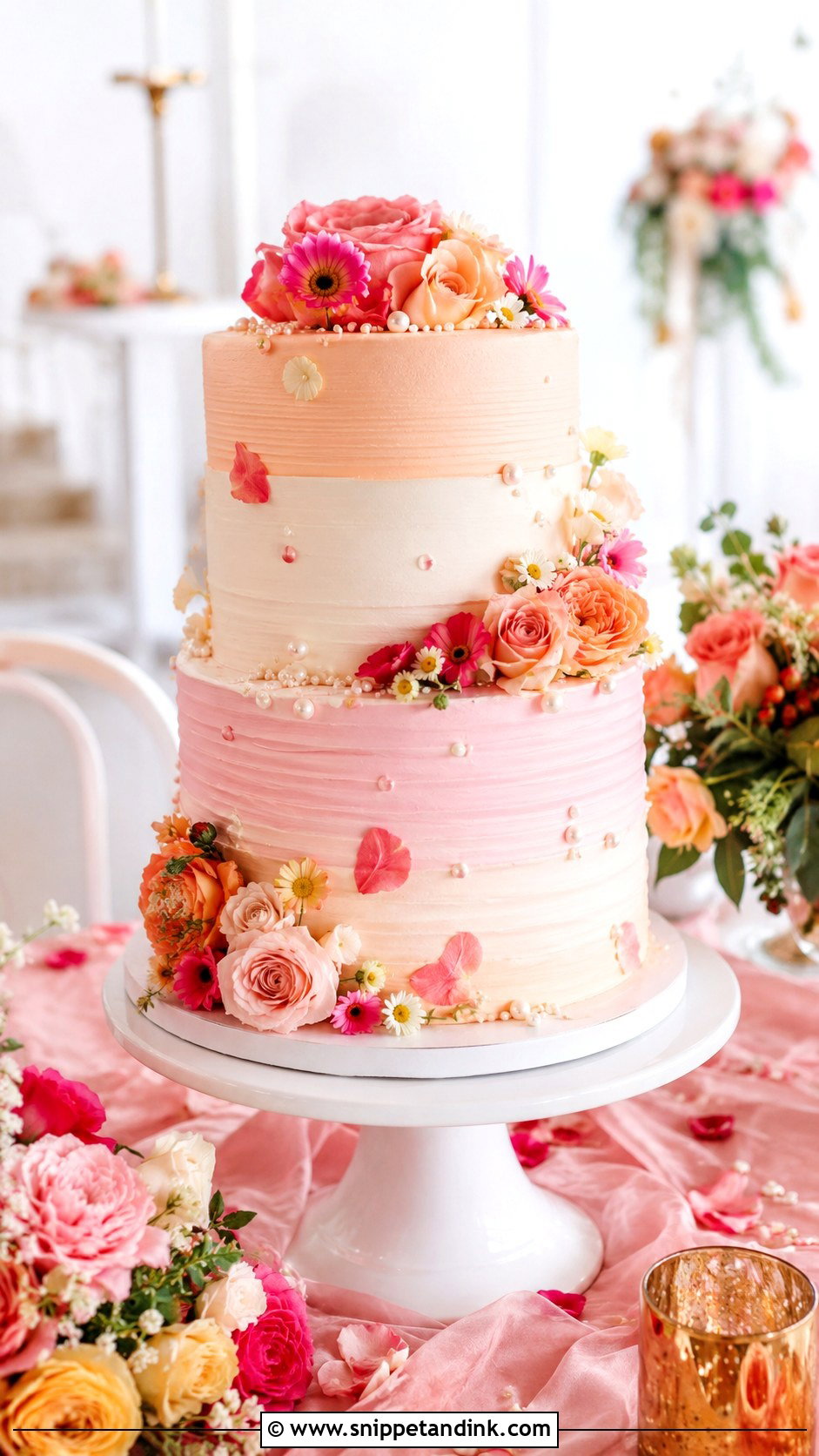
Colour is where a cake can carry real personality. It might come from pastel buttercream, painted fondant, flowers, fruit or piping. Blush, peach, lavender, sage and dusty blue feel romantic; brighter shades suit a playful party. My rule is to borrow colours already in your stationery or flowers so the cake feels part of the day rather than separate from it. Flavors like strawberry, lemon, funfetti, pistachio or raspberry can carry the colour inside the slice too.



15. Watercolor Wedding Cake
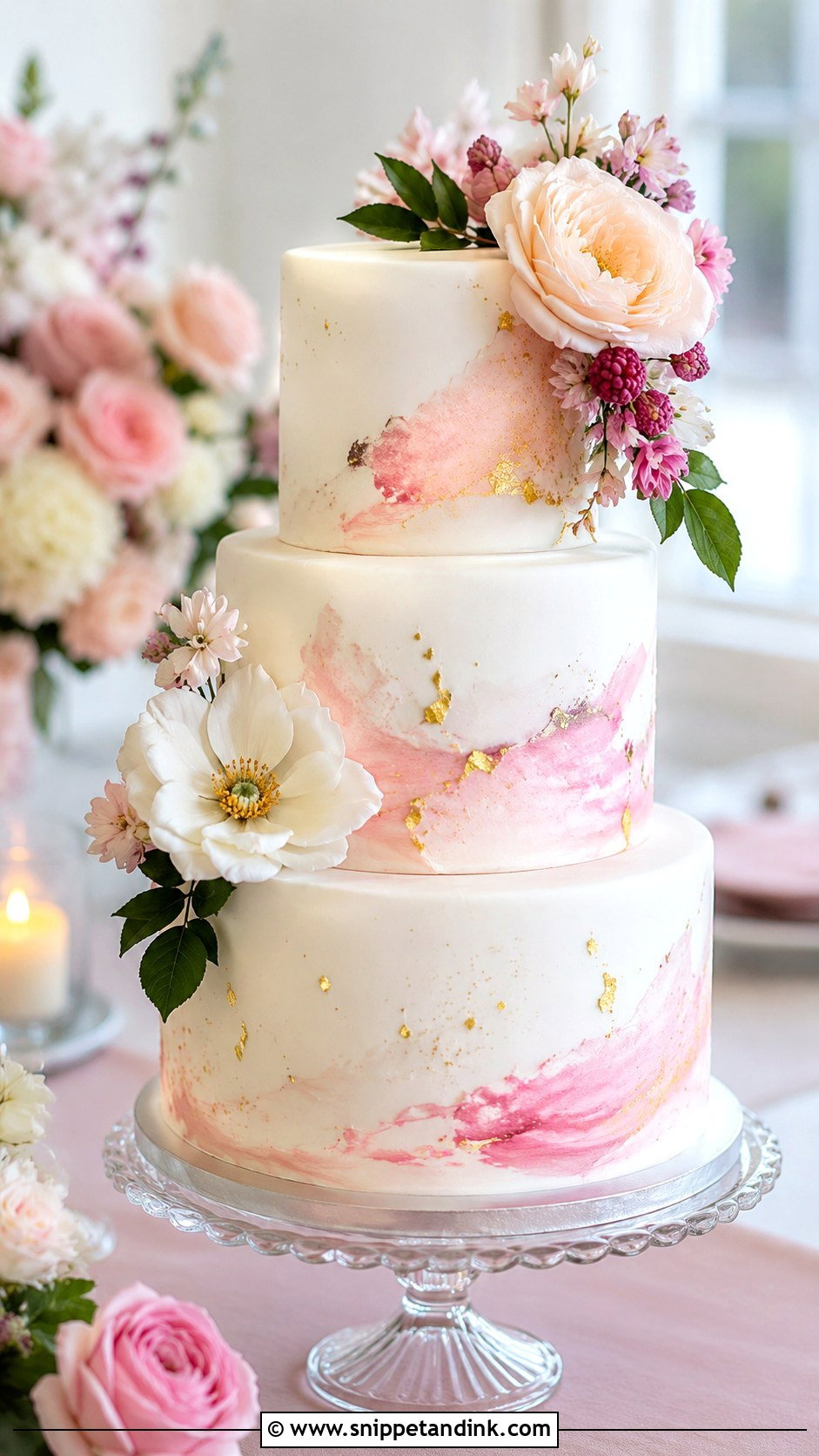
Watercolour finishes are brushed on in thin washes, usually with diluted gel colour on chilled buttercream or fondant, building the colour slowly so it stays soft. It looks hand-painted because it is. Garden, spring and beach weddings with pastel palettes suit it, in blue, blush, lavender, peach or sage. Keep the extras to a few sugar flowers, fresh blooms or a touch of metallic so the painting stays visible. Lemon, vanilla, almond and berry flavours match the light look.
16. Marble Wedding Cake
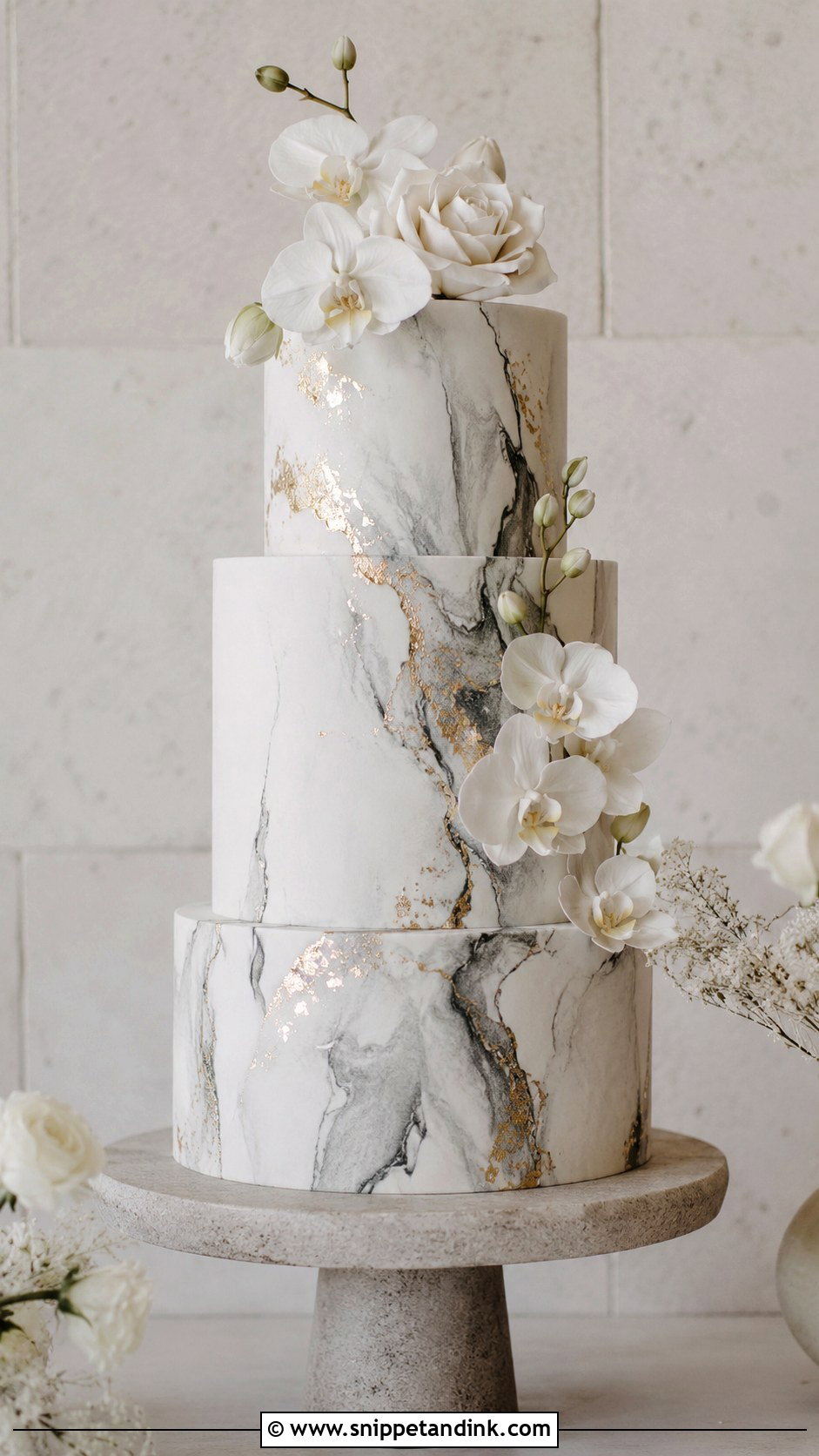
Marbling suits couples who like stone and clean modern rooms: rooftops, museums, minimalist venues. The veining can be soft grey, beige, blush, green or black. It only looks convincing on very smooth fondant or a glassy buttercream, and I keep the veins thin and irregular, since evenly spaced lines look fake. Chocolate, vanilla, mocha, salted caramel and almond all fit. Gold leaf, white orchids, sugar roses or a slim acrylic topper finish it without hiding the pattern.
17. Semi Naked Wedding Cake
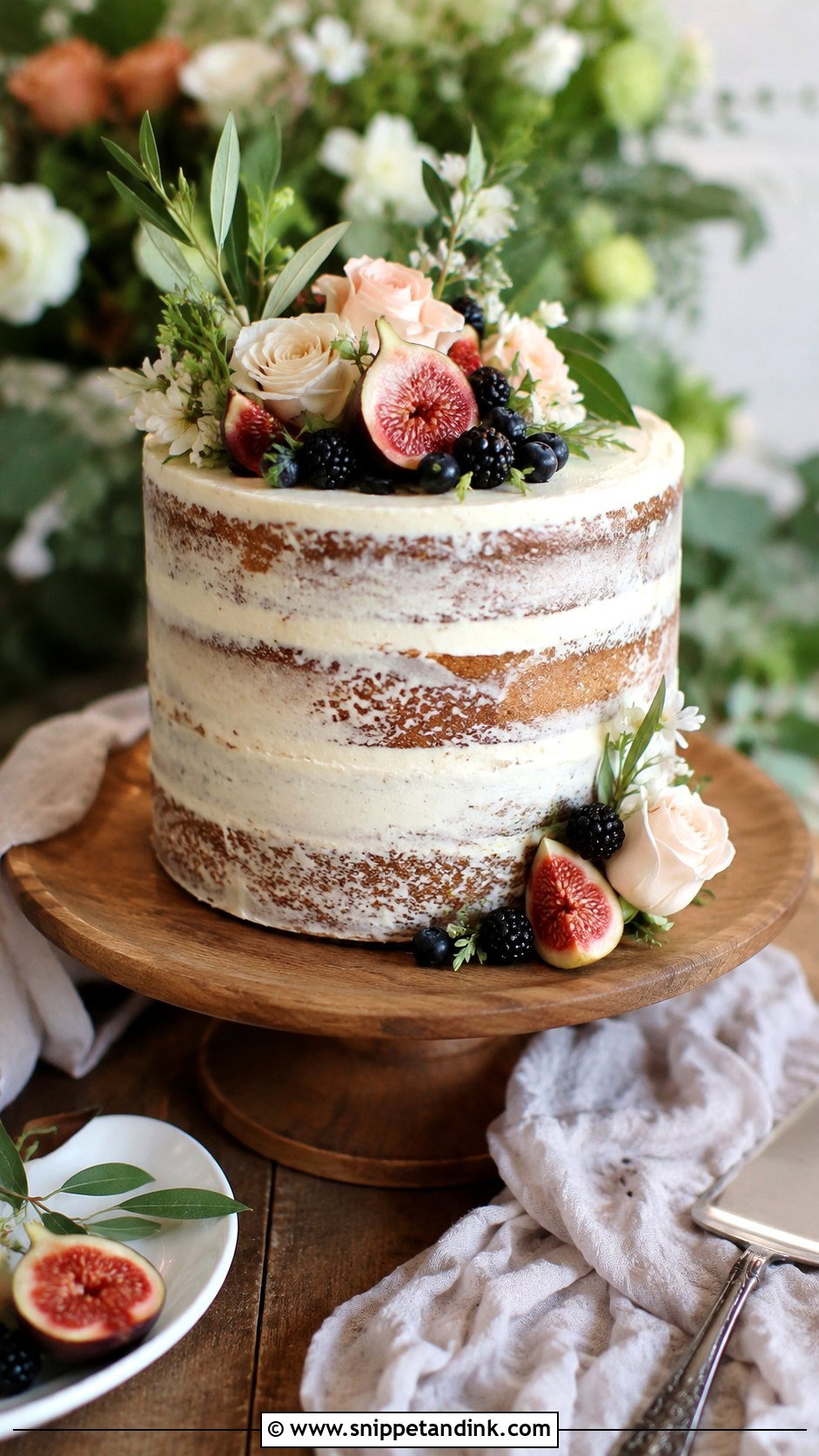
A thin scrape of frosting lets the sponge show through, which is why the sponge itself has to be excellent. I brush every layer with syrup, because the exposed sides dry faster than a fully iced cake. Barns, gardens and outdoor receptions suit the relaxed look, and vanilla, carrot, spice, lemon or chocolate sponges all show nicely. Berries, figs, flowers, herbs or greenery keep it seasonal. If you want a cake that feels unfussy but still special, this is a sound pick.
18. Drip Wedding Cake
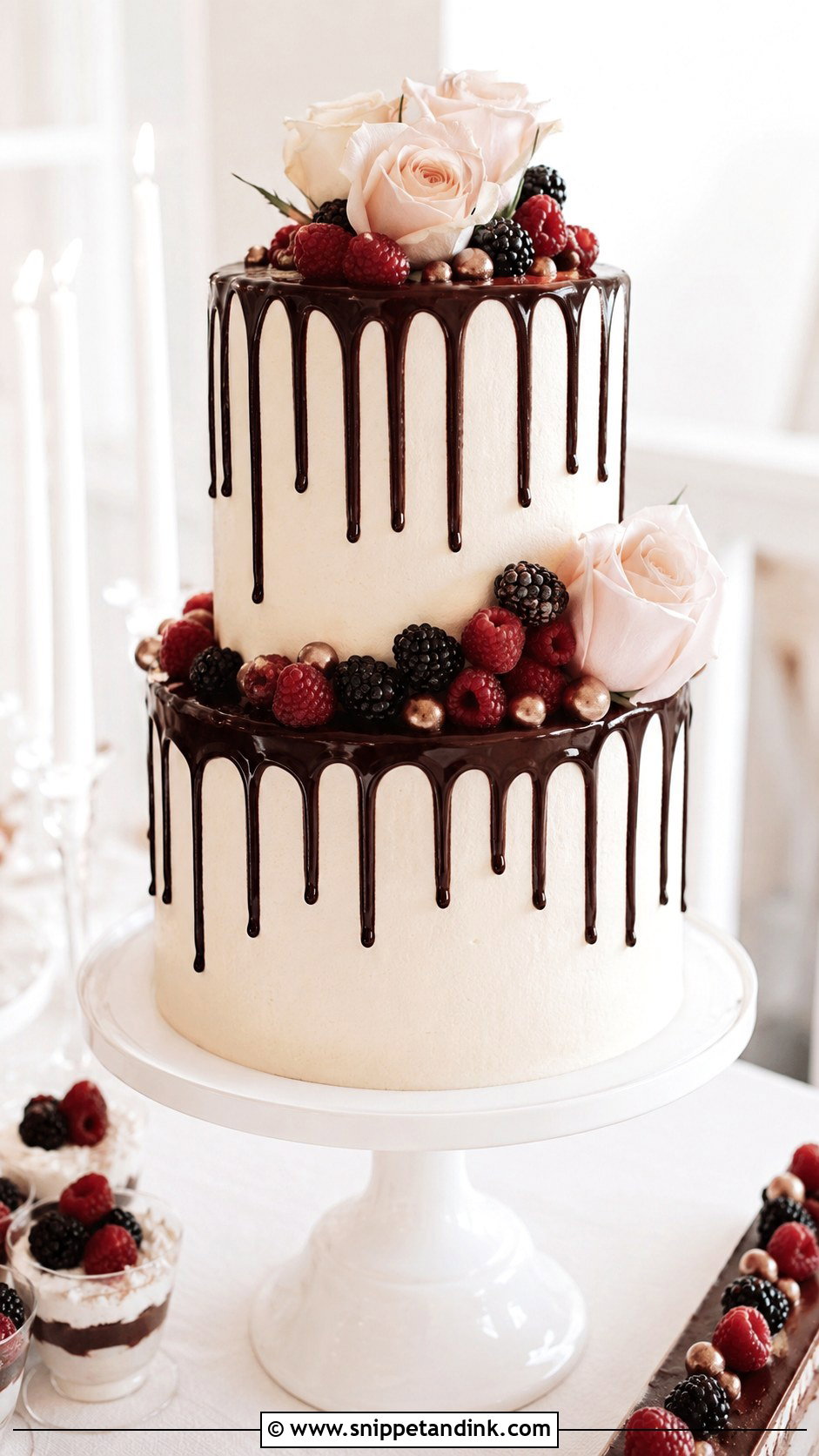
Drips add movement and a bit of fun. The drip can be white chocolate, caramel, dark chocolate or coloured ganache. Getting even drips is all about temperature; ganache that’s too warm runs to the board, and too cool it stops in stubby blobs, so I test one drip down the back before going round the cake. White on ivory feels soft; chocolate or caramel adds richness. Chocolate raspberry, vanilla caramel, mocha and lemon blueberry work underneath. Keep the topping balanced with a few flowers, macarons, berries or pearls.
19. Sheet Wedding Cake
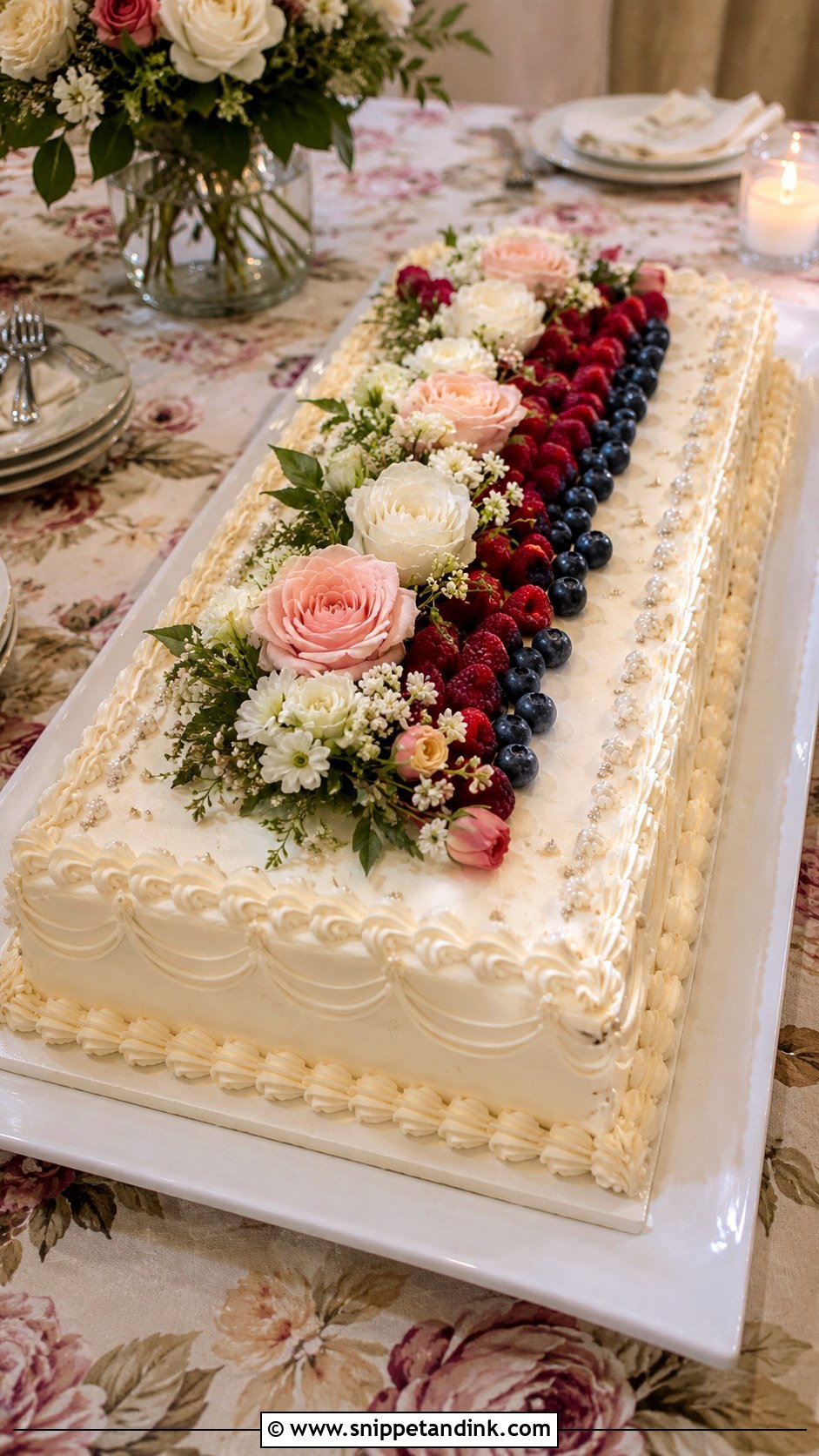
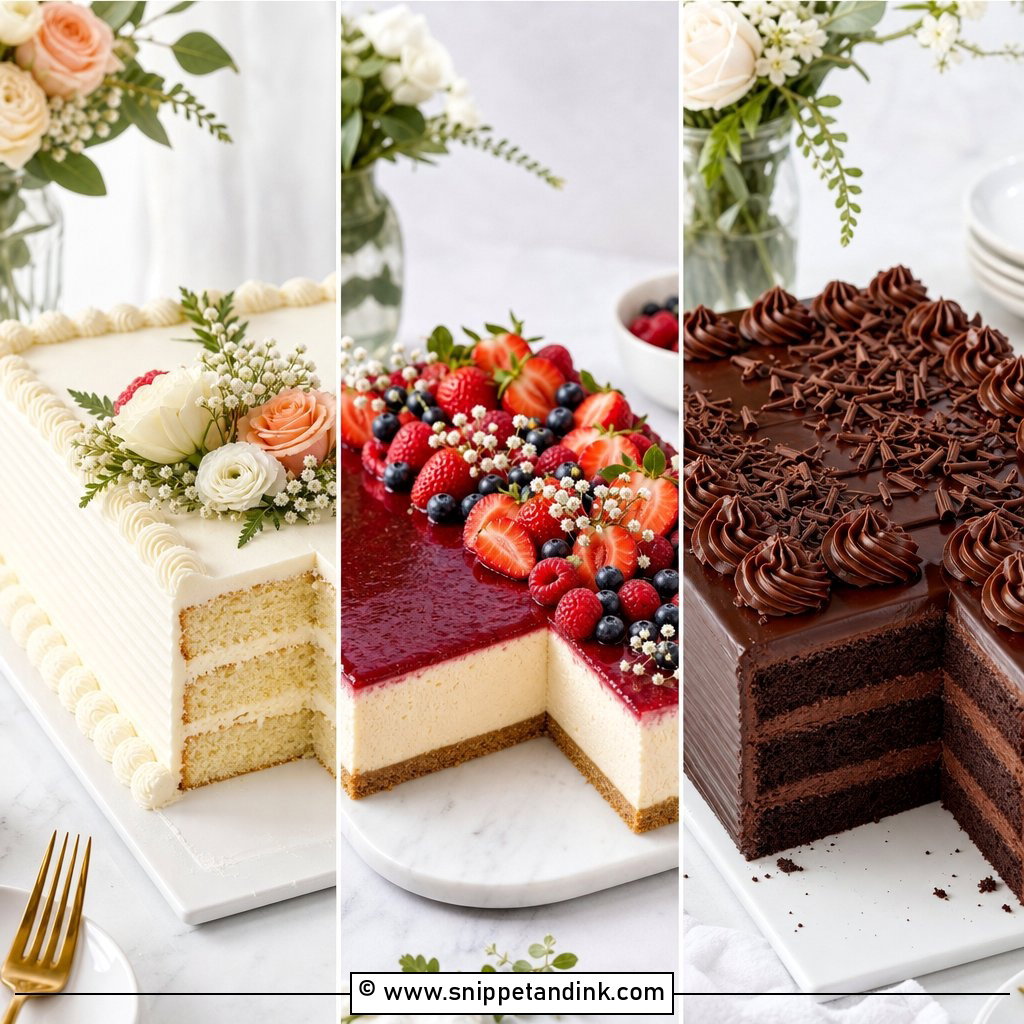
A sheet wedding cake is the most economical way to feed a large guest list. It can be the main cake, sit on a dessert table, or stay in the kitchen while a small tiered cake does the photos. Long sheet cakes look right with piped borders, fresh flowers, buttercream swags, rows of fruit or piped lettering. They slice into neat squares quickly, and that speeds up service for the caterer. Vanilla, chocolate, almond, lemon and red velvet all work. Give it a proper decorative finish so it feels like a wedding cake, not an office one.



20. Small Wedding Cake
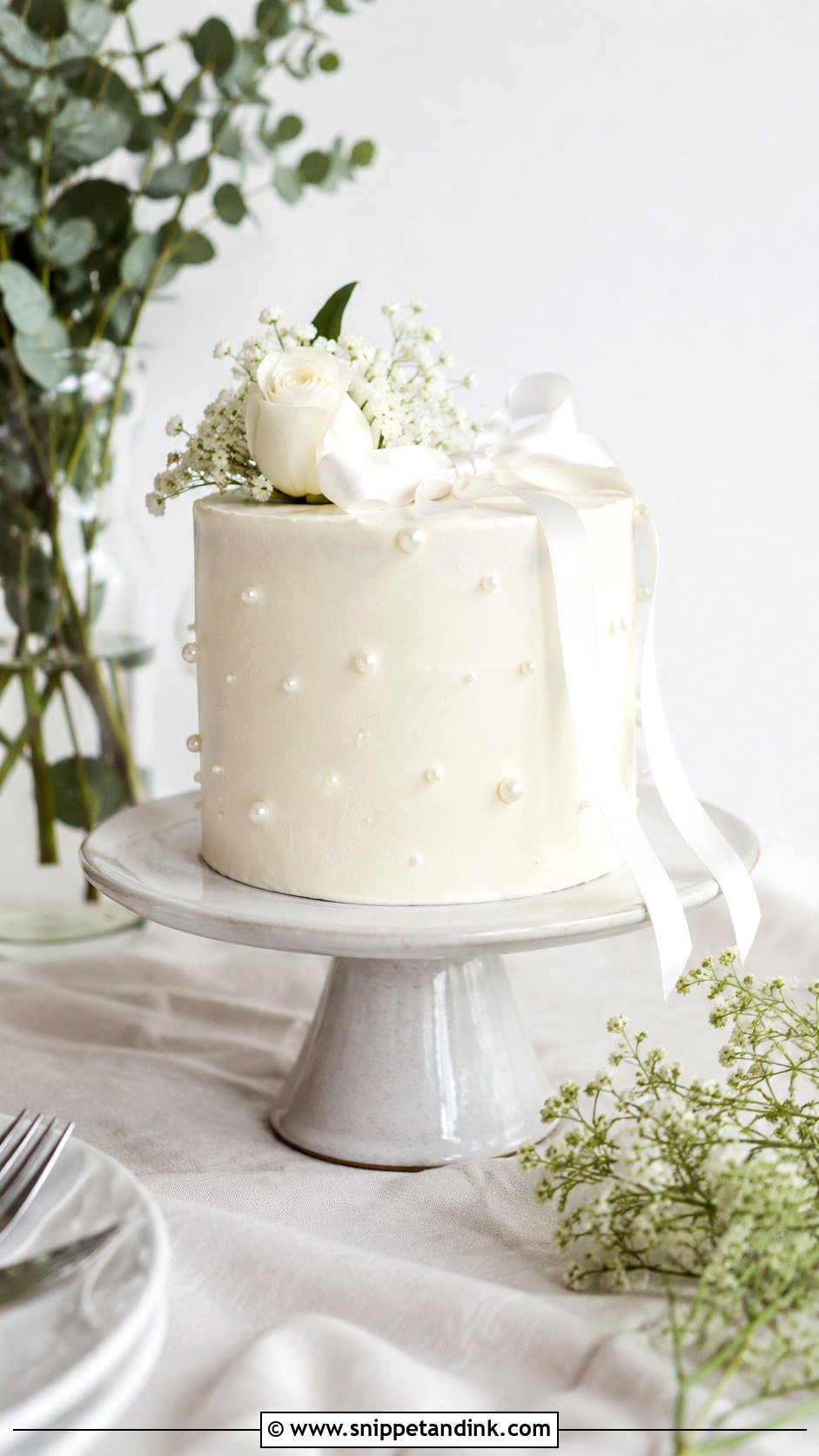
Small cakes are for elopements and micro weddings, and they let you be more adventurous with flavour because you’re not feeding a crowd with mixed tastes. A one tier or a petite two-tier cake looks complete with smooth buttercream, piped borders, fresh flowers, pearls or a short message. Pistachio raspberry, lemon lavender, chocolate espresso or coconut lime are the sort of combinations I’d try here. Set it on a good stand with flowers or linen around the base so it doesn’t look lost on the table.
Splitting Flavours Across Tiers Without Guesswork
Couples love the idea of a different flavour on every tier, and it works well as long as you plan it with the serving chart in front of you. The tiers aren’t equal; the bottom tier of a three-tier cake holds about half the portions.
- Put the flavour most guests will want, usually vanilla or chocolate, on the largest tier.
- Save the adventurous flavour, like pistachio or lavender, for a smaller tier where fewer slices are needed.
- Fillings that must stay cold, such as fresh cream or custard, are better kept to a cake that’s served soon after it’s set out.
- If one tier is meant to be nut-free or gluten-free, tell your baker early. A shared kitchen and stacked tiers make cross-contact likely, so for a serious allergy a separate small cake is safer.
At the tasting, I’d taste each sponge with its filling and frosting together, not separately. Flavours that are wonderful alone can clash in one bite.
Count Your Guests, Then Let the Cake Follow
The right cake fits your guest count, venue, season, budget and style, roughly in that order. A tall tiered cake gives a traditional focal point; a small cake with a kitchen sheet cake feels fresh and practical. Texture, vintage piping, pressed flowers, pearls, gold leaf and soft colour are all popular right now, but the smartest design is the one that belongs to the rest of your day. Save the styles that match your mood, taste flavours with your baker, and bring your final numbers to that tasting so the design and the servings are decided together.
You'll Like These Ideas:





Leave a Reply