
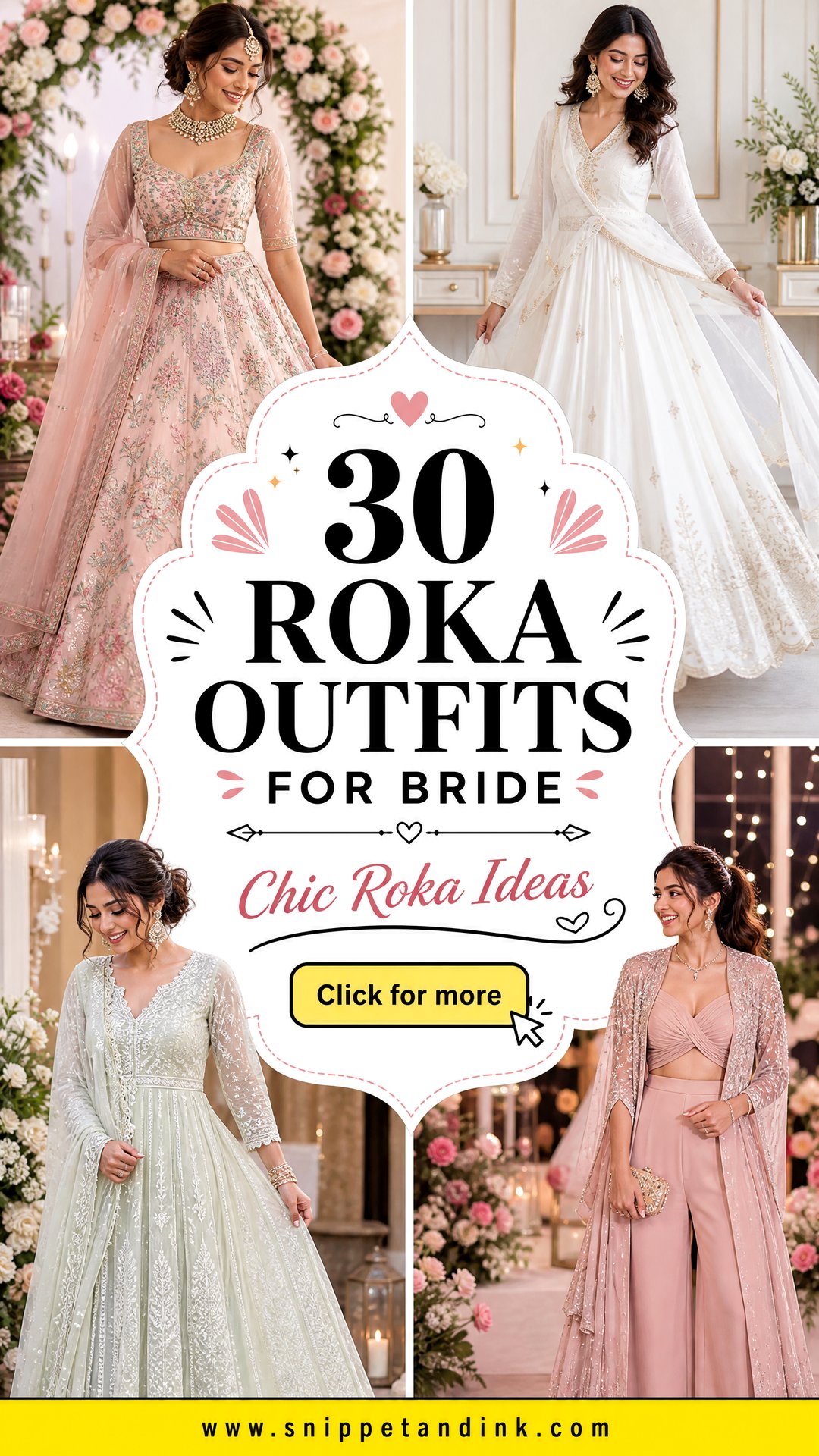
A roka is the first time two families sit together as one, and it is usually smaller, closer and more hands-on than the wedding itself. You’ll be greeting elders, bending for blessings, sitting through a short puja and posing for a hundred phone photos in a living room or a banquet hall. That is why I style roka brides a full step lighter than their wedding look. Light lehengas, sarees, Anarkalis, shararas, ghararas and a few fusion pieces all earn a place below, along with the colours, fabrics and small fit details that decide whether you are still comfortable three hours in.
Dressing for Floor Seating, Blessings and the Chunni
Most roka outfits fail on movement, not looks. Before I approve any outfit, I ask the bride how the ceremony actually runs, because the answer changes the silhouette more than any trend does.
- If the puja or tilak happens on the floor, sit cross-legged in the trial room for five minutes. Stiff can-can lehengas and narrow pre-drapes become miserable here, while Anarkalis, shararas and soft sarees cope well.
- You’ll bend to touch elders’ feet many times. Test the blouse for gaping at the back and the pallu or dupatta for slipping, and pin both before you leave the room.
- In many families the groom’s side drapes a chunni over the bride’s head. Leave room for it: skip a tall bun and a heavy maang tikka that would push the fabric up, and favour a low bun or soft open hair.
- Shagun means your hands are busy with a thali, sweets and gifts. Capes, jackets or a dupatta pinned at the shoulder keep both hands free.
Lighting matters too. A living room with tube lights will flatten pastels and warm up golds, so look at your outfit under the same kind of light you’ll be in, not only in a boutique’s spotlights.
1. Pastel Lehenga Roka Outfit
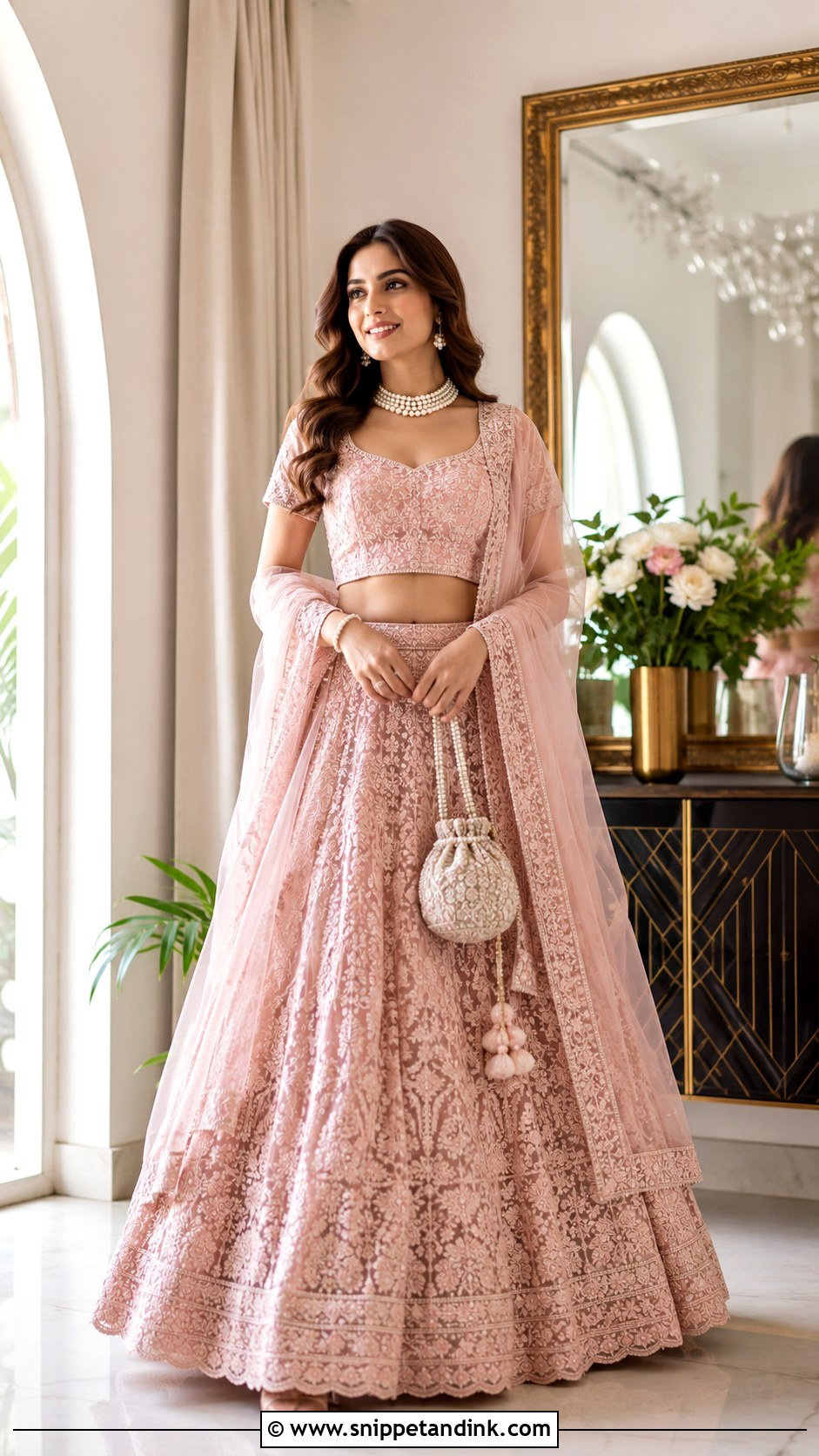
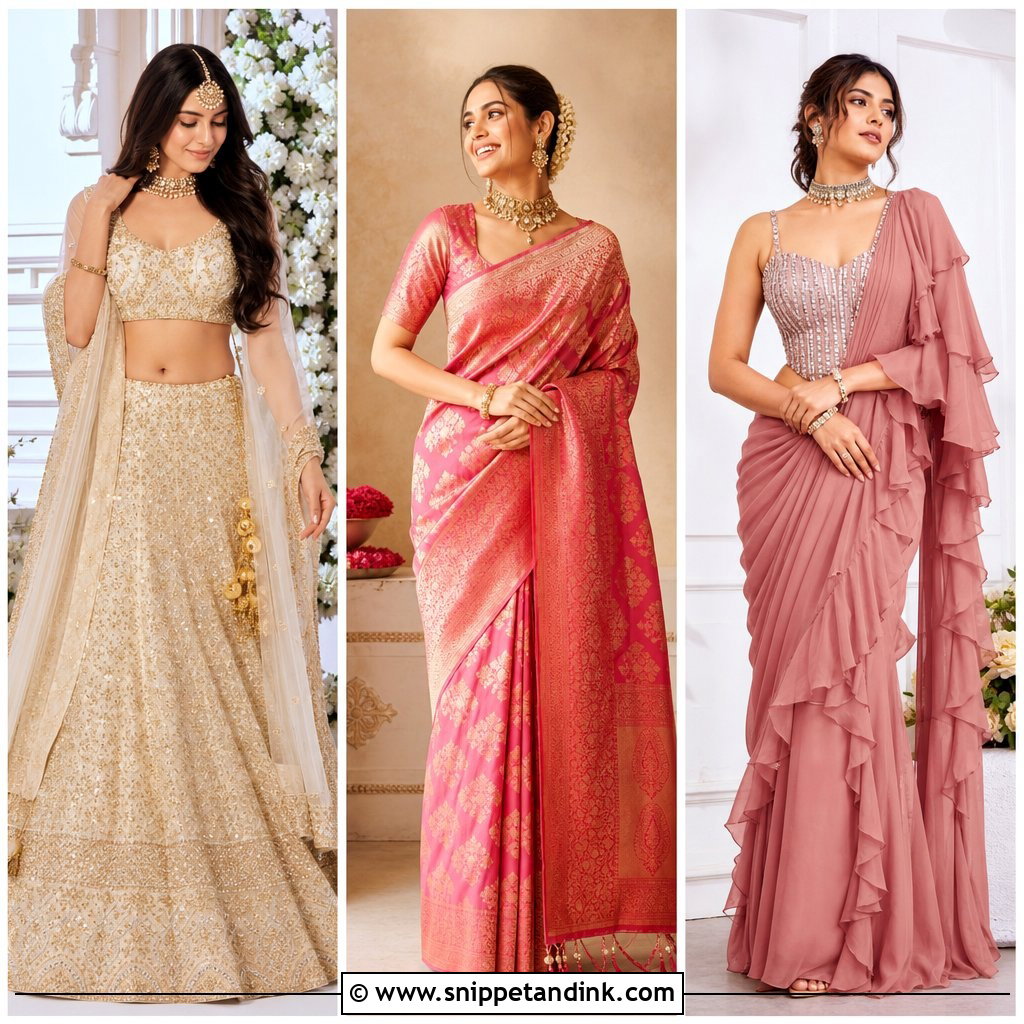
A pastel lehenga is where I start most roka fittings, because it reads bridal without competing with the red or deep tone many brides save for the wedding. Blush, mint, powder blue and peach all sit well against warm indoor lighting. Ask for thread or small sequin work on a lightweight can-can or no can-can at all; a stiff, heavy flare takes up half a sofa and fights you every time you sit. Pearl or polki earrings and a dewy base finish it without fuss.
2. Ivory Lehenga Roka Outfit
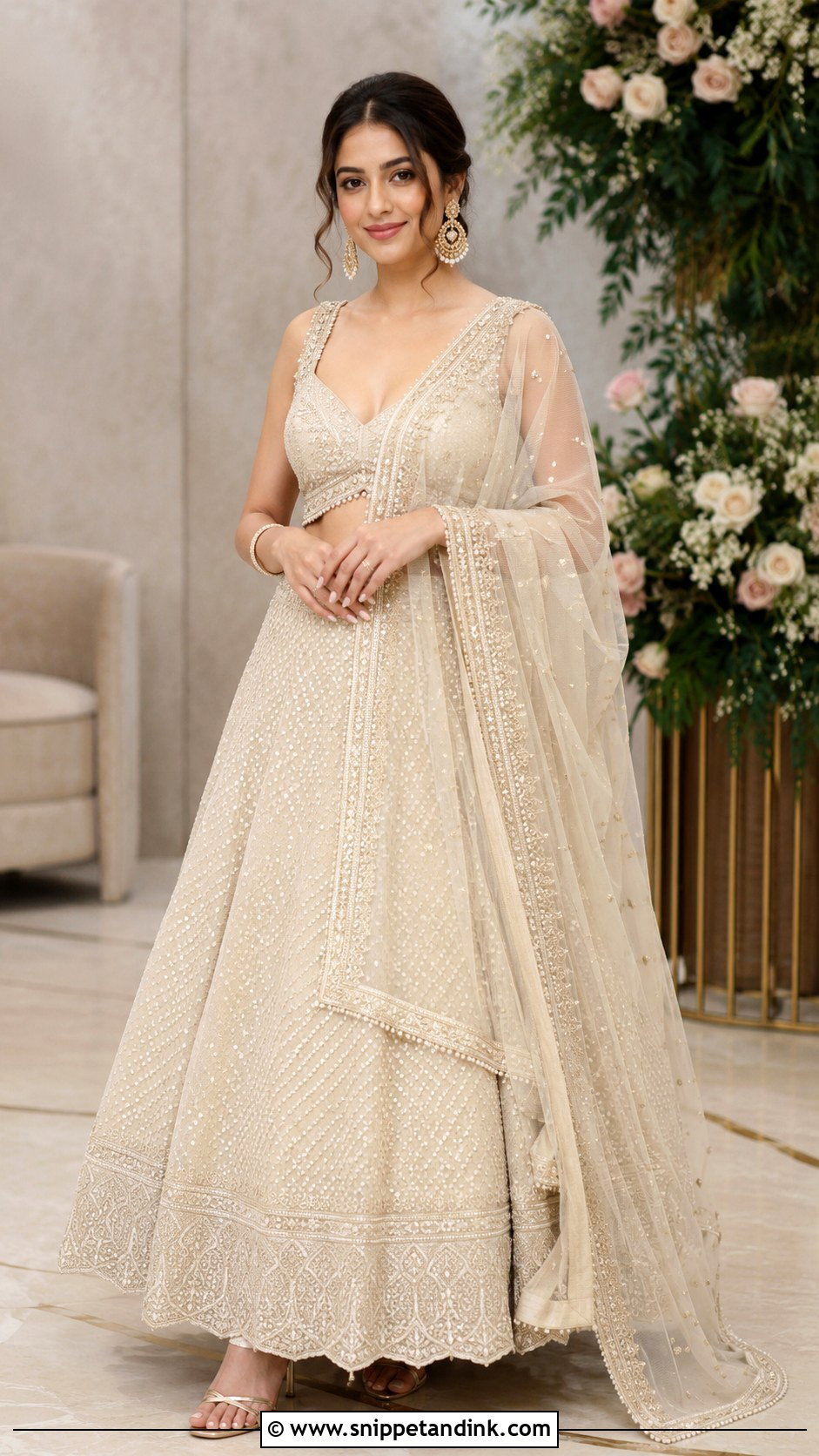
Ivory is quieter than people expect on camera. In organza or georgette with pearl or fine gold embroidery it looks expensive, but it also shows every mark, so I always pin a small stain pen and a few tissues into the potli. Pair a fitted blouse with a flowing dupatta, kundan earrings and metallic heels, and warm the face with champagne or rose tones so you don’t wash out next to the white. It suits hotel and indoor ceremonies far better than a dusty garden lawn.
3. Floral Lehenga Roka Outfit
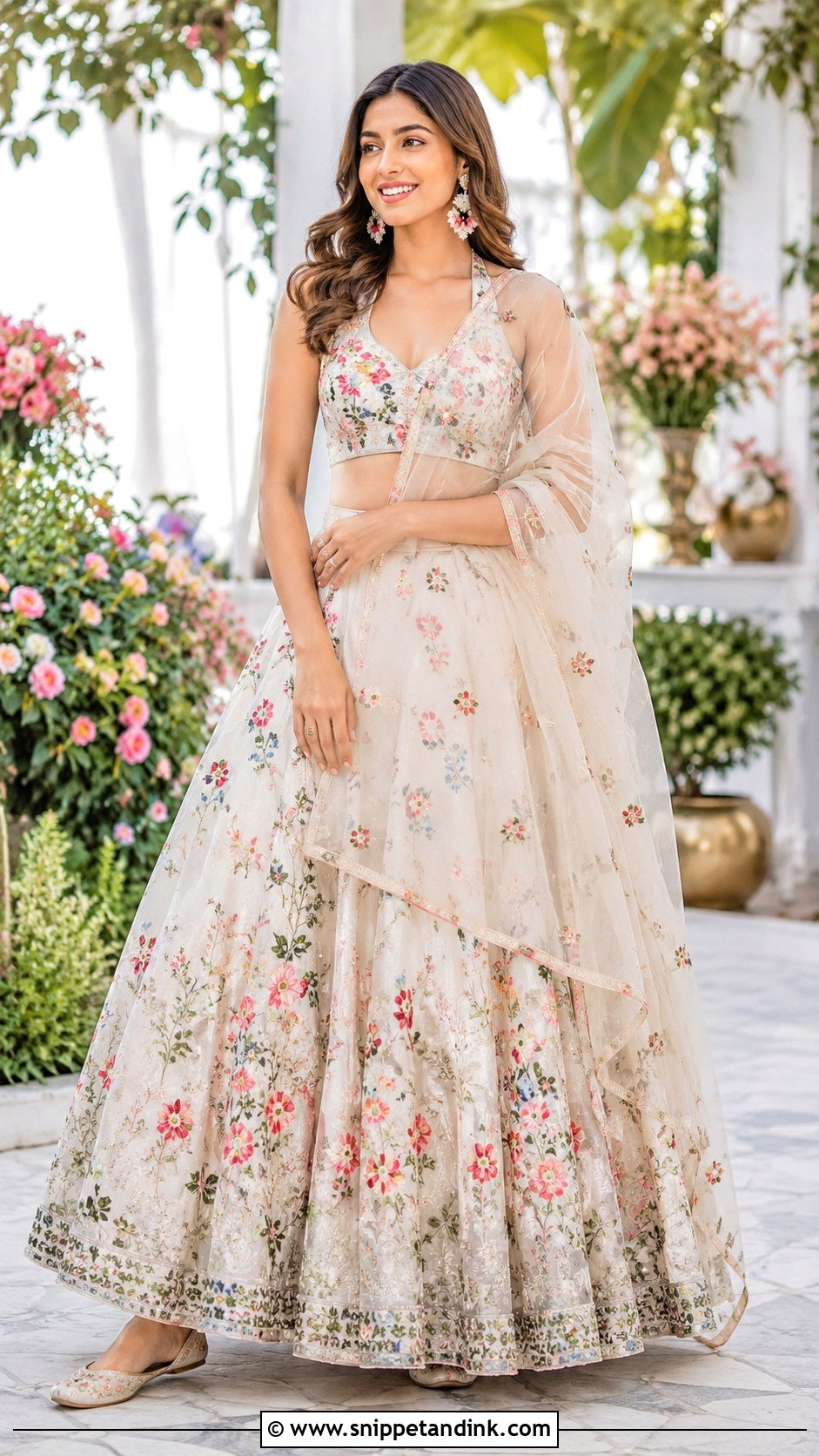
Florals give a roka a younger, happier mood than heavy embroidery does. The trick is scale: small printed or embroidered blooms read as texture from across the room, while oversized prints can swallow a petite frame in group photos. Keep the blouse plain and the dupatta soft so the skirt does the talking, then add floral earrings and juttis. Daylight is where this one shines, so I’d save it for a morning or lunch ceremony rather than a dimly lit evening hall.
4. Organza Saree Roka Outfit
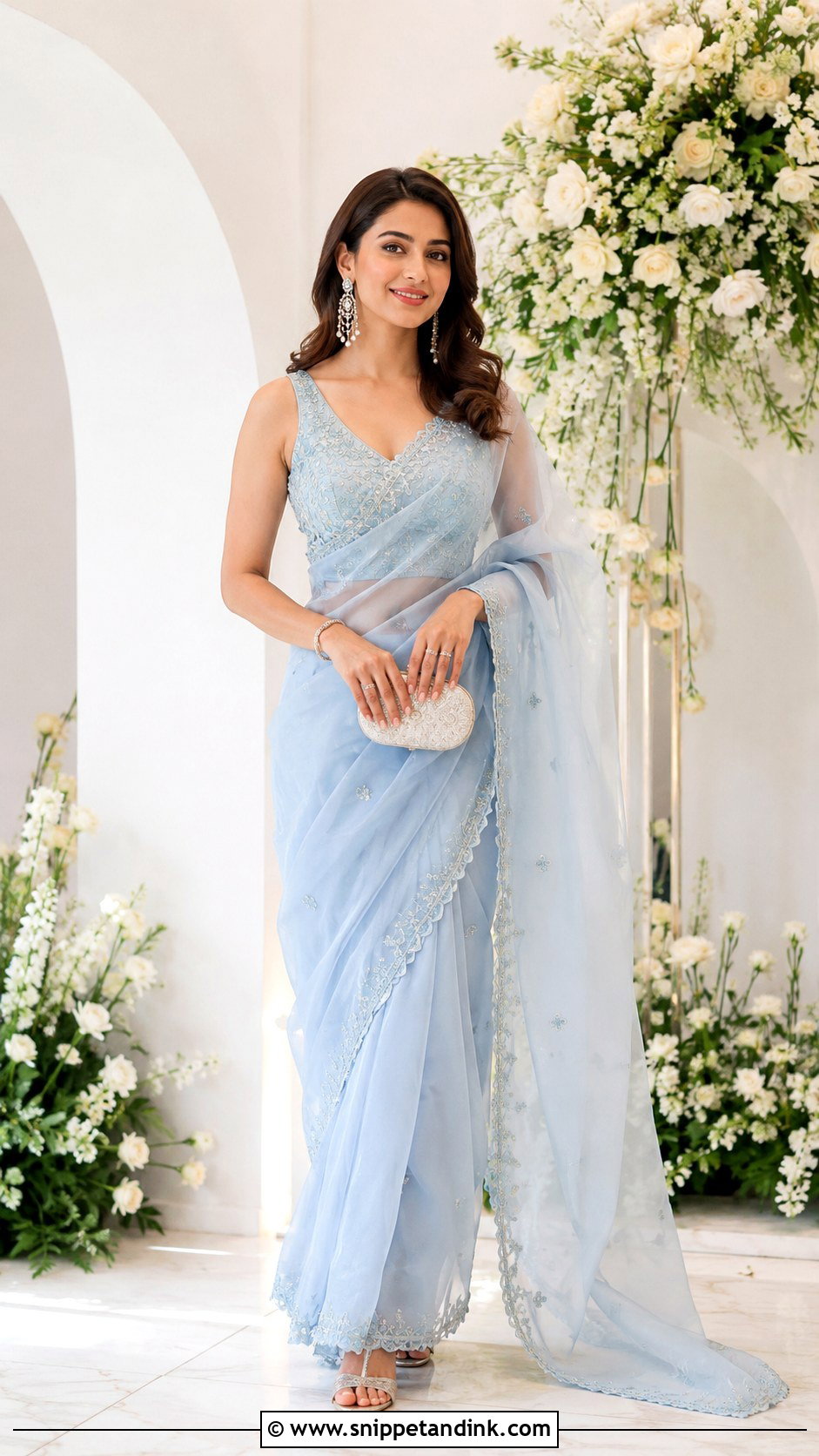
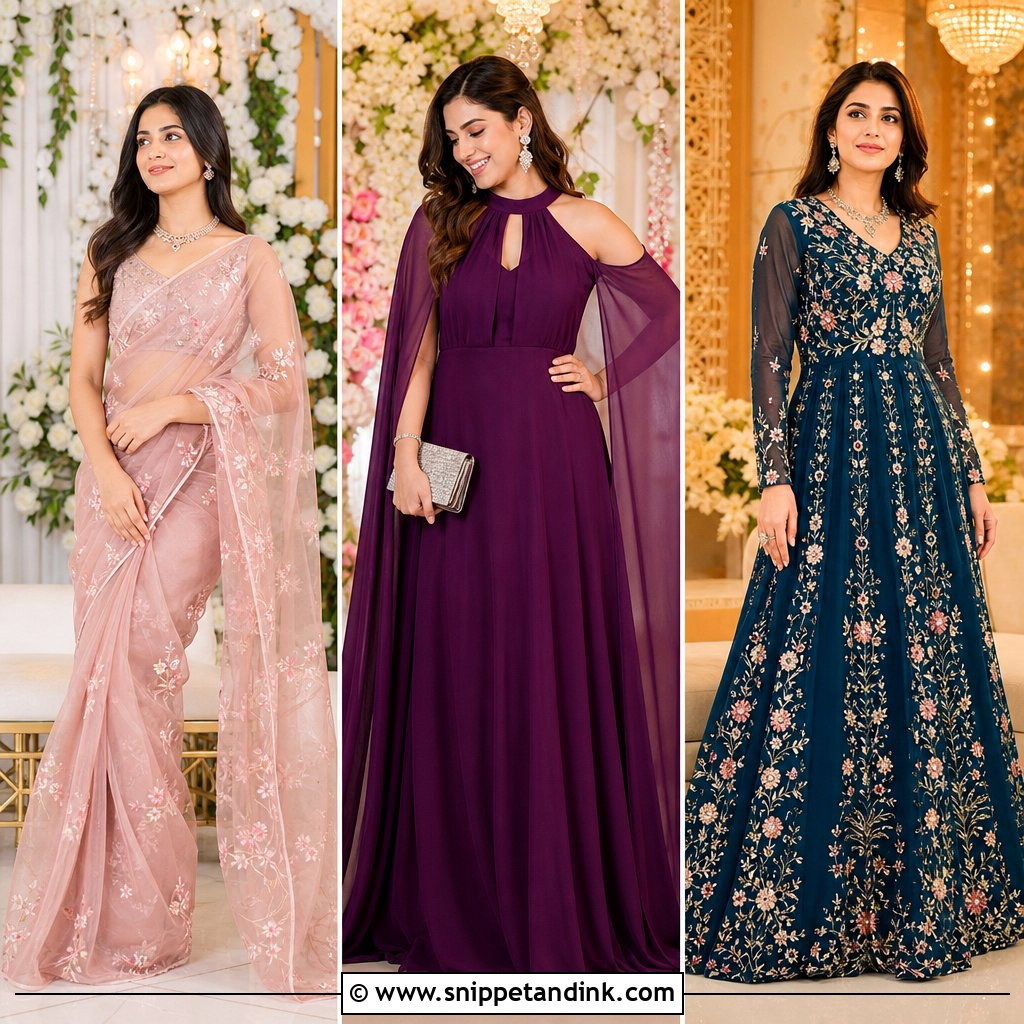
Organza holds its shape, so a saree in it gives you crisp pleats and volume with almost no weight. The catch is that it doesn’t forgive a lazy drape. I pin the pleats at the waist and again at the shoulder before the bride leaves the room, because organza slides more than silk and the pallu will creep forward when you bend to touch elders’ feet. Pastel or soft metallic shades with an embroidered blouse and a low bun look composed without trying to be the wedding.
5. Banarasi Saree Roka Outfit
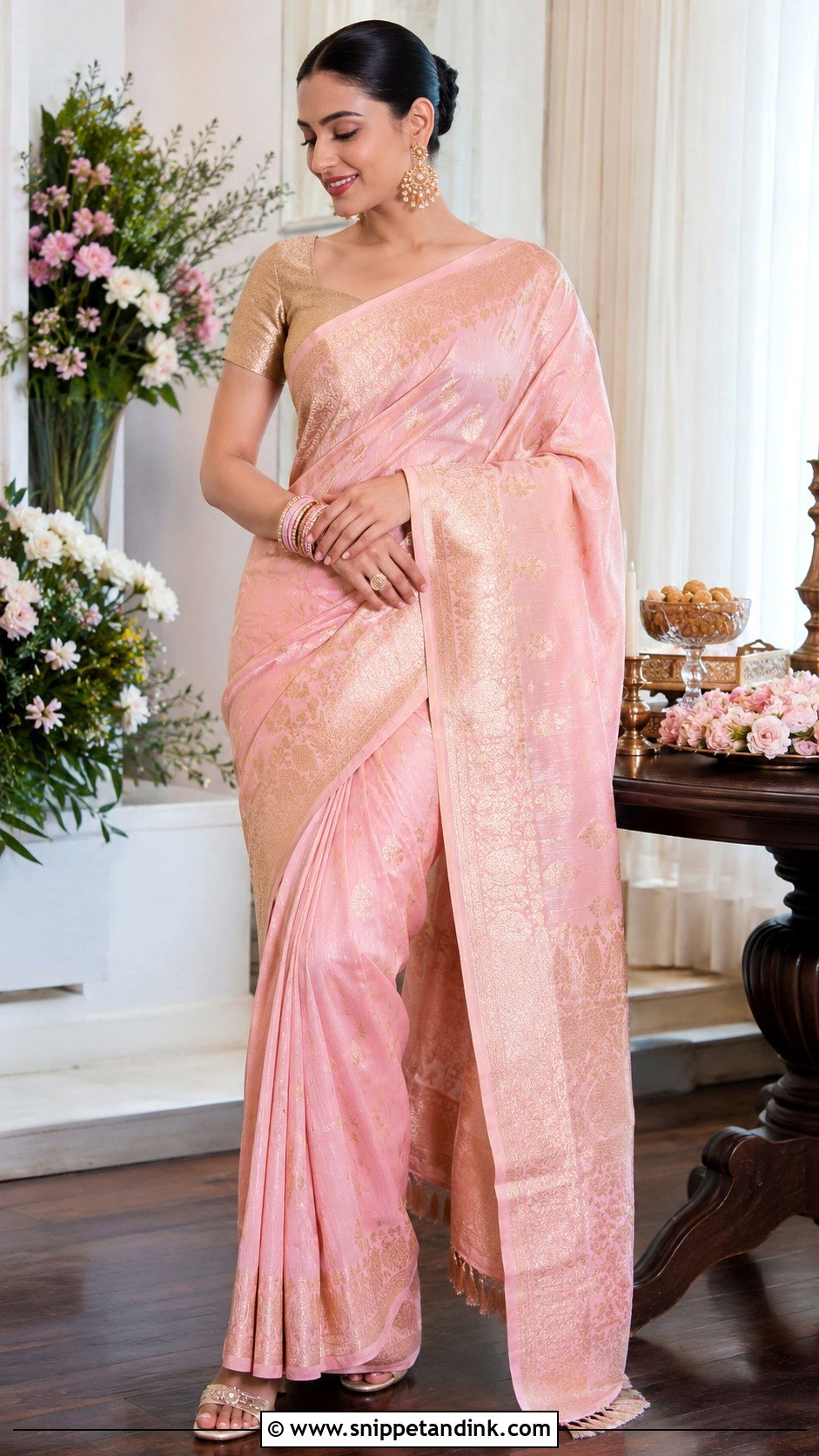
Banarasi carries family weight. Mothers and grandmothers often own one, and wearing a family piece at the roka is a gesture elders notice. Classic pink, emerald or gold suit a formal or temple-style ceremony, and lilac or mint keep it lighter. Because the zari is already doing so much, I’d stop at earrings and bangles and skip a heavy necklace. One fit warning: older Banarasi blouses were cut for a different body, so get it opened up and refitted at least two weeks ahead.
6. Silk Saree Roka Outfit
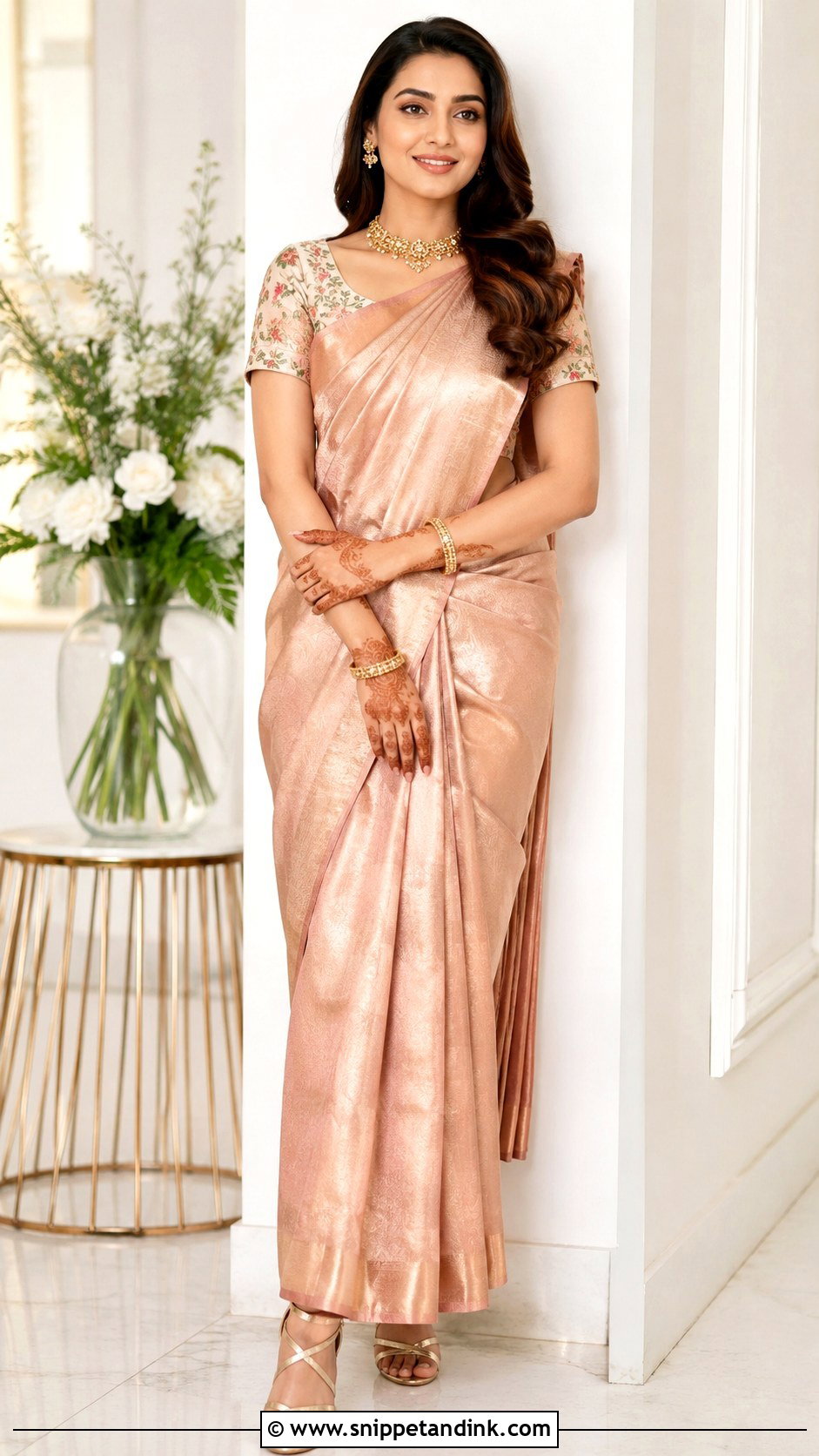
A soft silk saree is the easiest classic to get right. Tissue silk and light festive silks in rose gold, teal, coral or mustard catch the light without the stiffness of heavier weaves. My only caution is creasing: silk marks badly when you sit cross-legged for the ceremony, so pick a softer silk if the rituals happen on the floor. A contrast blouse adds interest, gold jewellery keeps it traditional, and neat hair stops it from looking casual.
7. Pre Draped Saree Roka Outfit
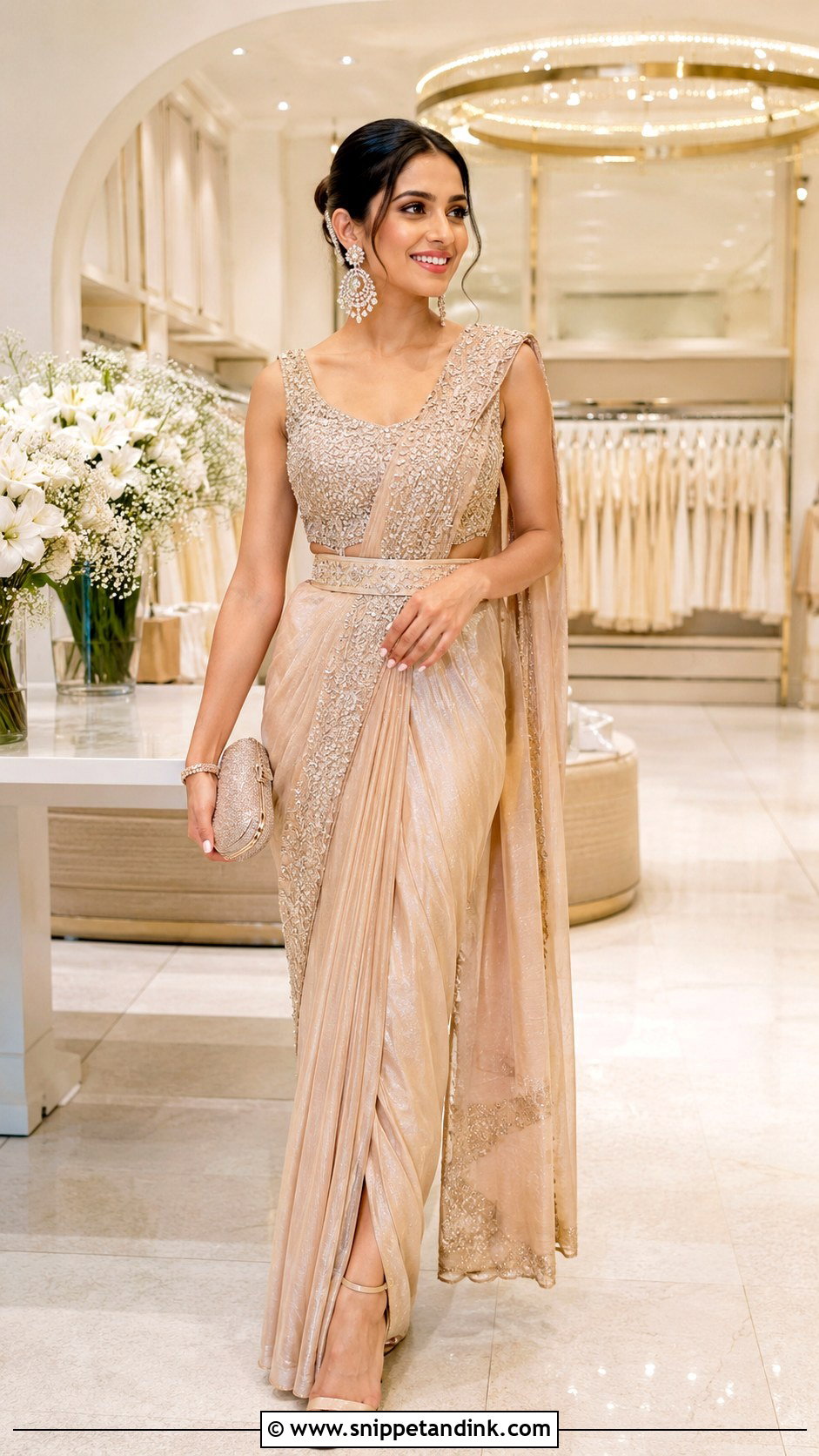
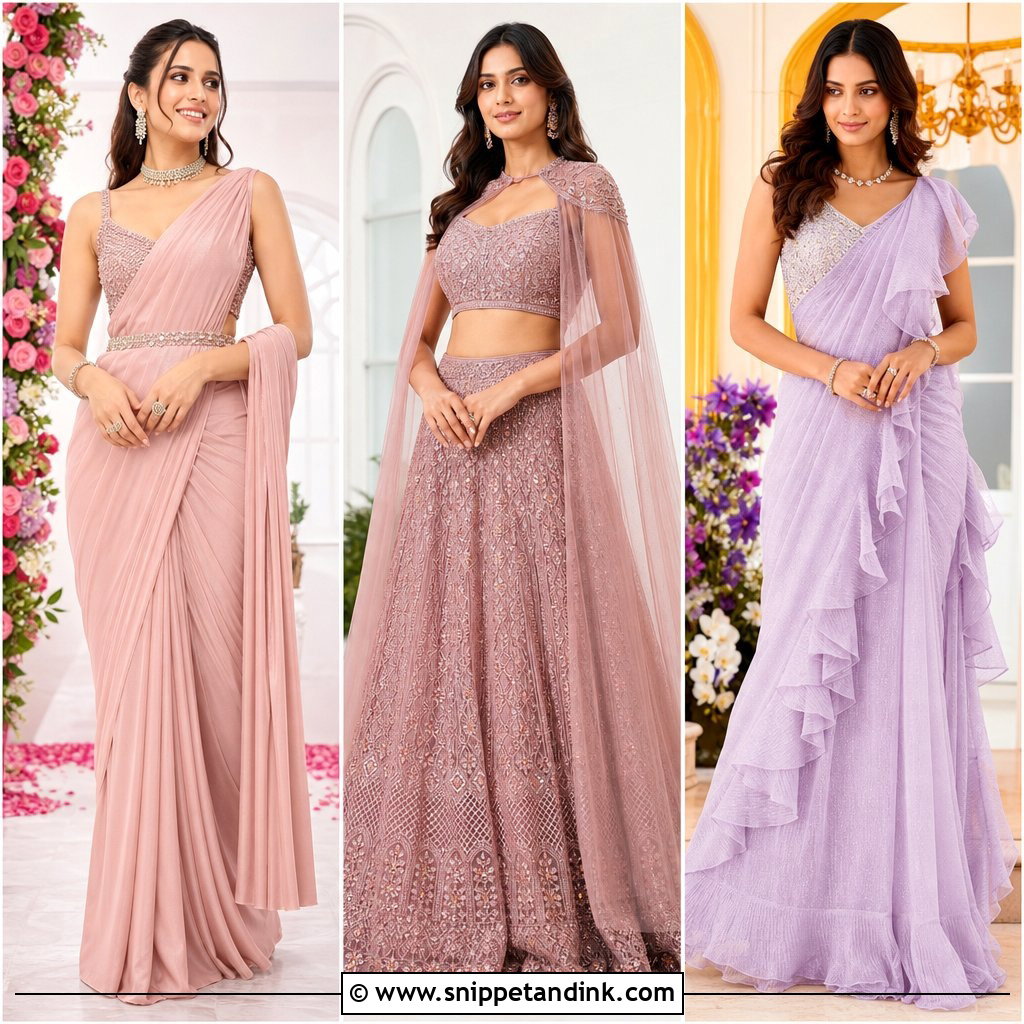
Pre-draped sarees solve the biggest roka problem, which is a saree coming loose halfway through the evening. The pleats are stitched, the pallu is fixed, and you can be ready in minutes. Georgette, crepe and satin move best. Before you buy, sit down in it in the trial room; some pre-drapes are cut so close at the knee that a deep bow or floor seating becomes awkward. A belt or cape sleeve adds the festive layer, and sleek heels keep the line long.
8. Anarkali Suit Roka Outfit
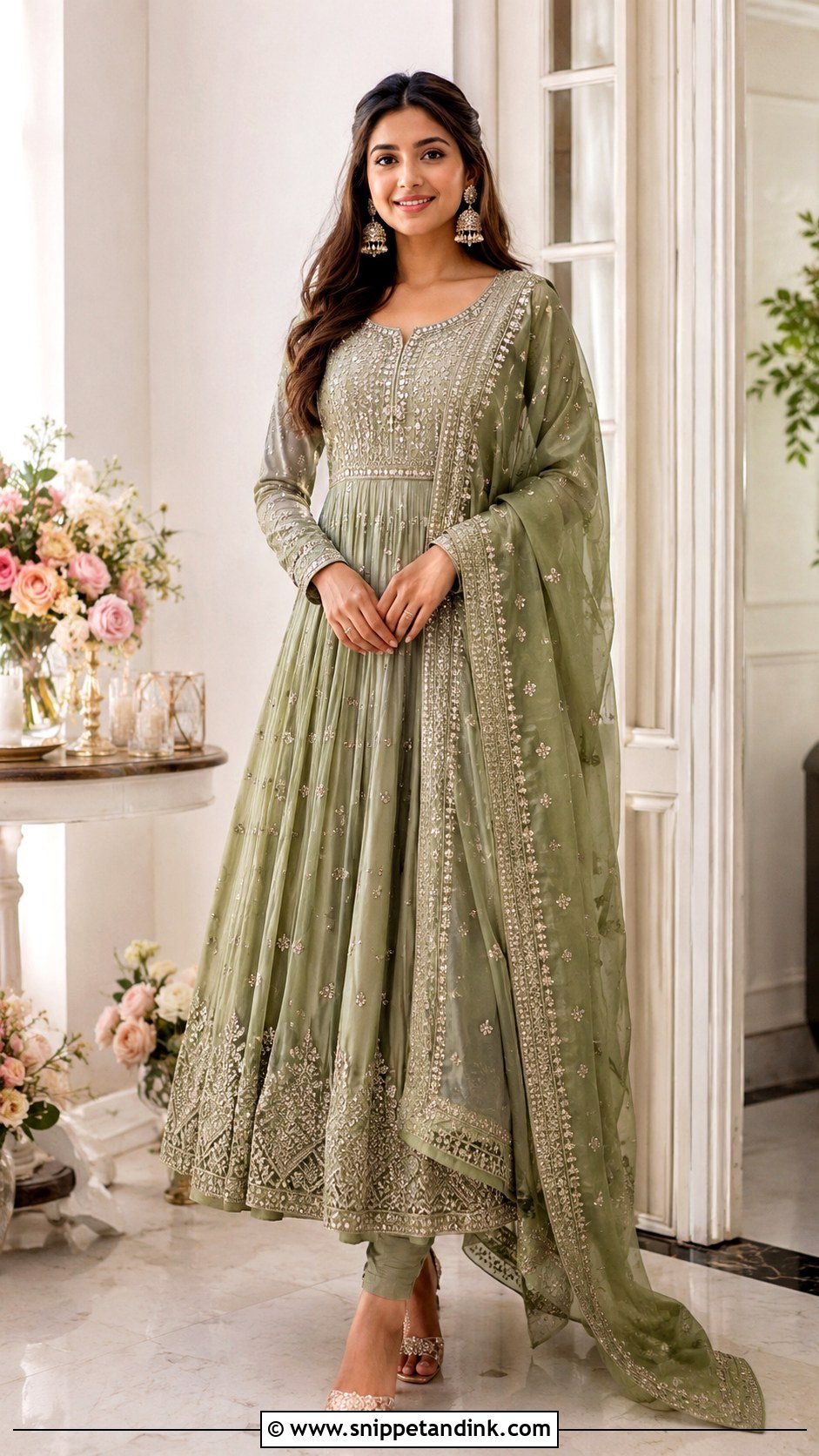
The Anarkali is the outfit I reach for when a bride tells me she’ll be on her feet greeting guests for hours. The flare moves with you, you can sit without arranging a skirt, and a floor-length cut still looks formal. Thread work, gota or light sequins in mauve, sage or soft gold keep it festive. Churidar under it, jhumkas, embellished sandals and a middle part are all it needs.
9. White Anarkali Roka Outfit
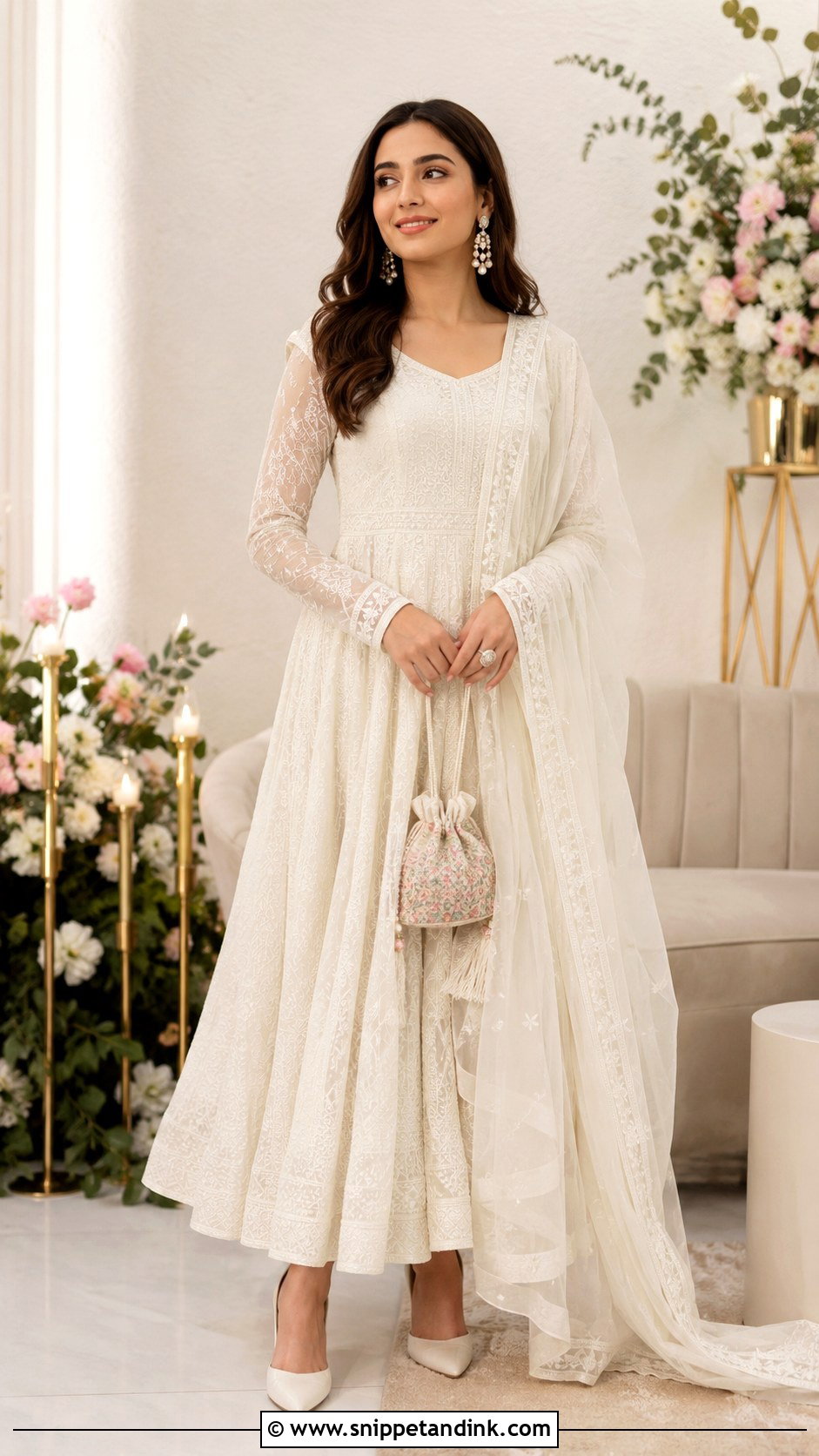
White Anarkalis with chikankari, pearl or mirror work feel fresh in daylight, but check one thing before committing: some families avoid all-white at auspicious events. If yours does, off-white with gold detailing or a blush dupatta usually settles it. I like a pastel potli as the only hint of colour, with pearl earrings and rosy makeup. Thin white fabric can go see-through under a flash, so ask whether the lining is full length.
10. Chikankari Anarkali Roka Outfit
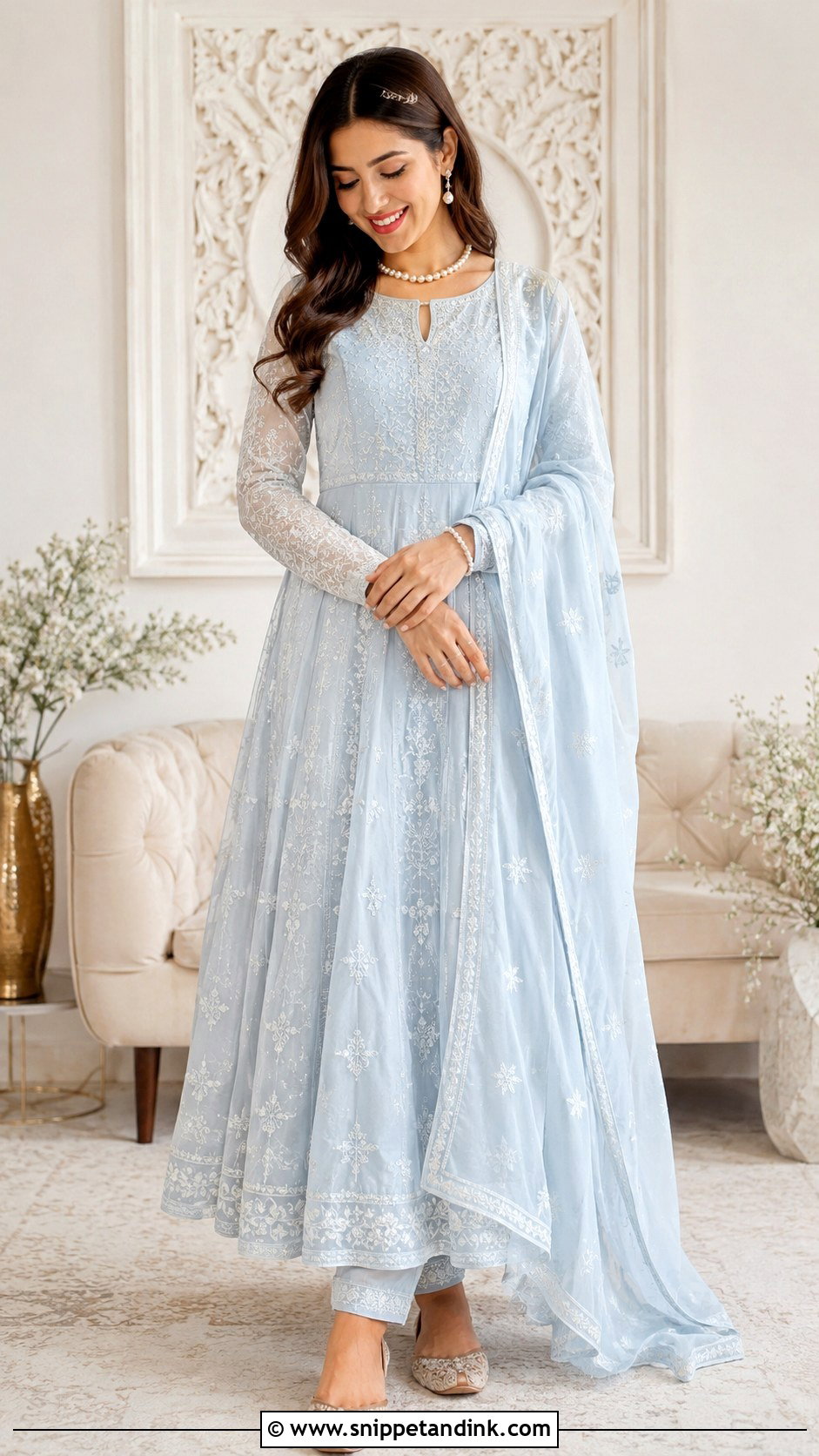
Chikankari is hand embroidery, and good pieces are light, breathable and quietly intricate, which makes them one of my favourites for warm-weather rokas. Ivory, pistachio, lemon and powder blue all work. Look closely at the stitching before you buy: hand chikankari has slight irregularities, while machine copies look flatter and perfectly even. A matching dupatta, pearls, juttis and a soft low bun keep the whole outfit gentle.
11. Sharara Suit Roka Outfit
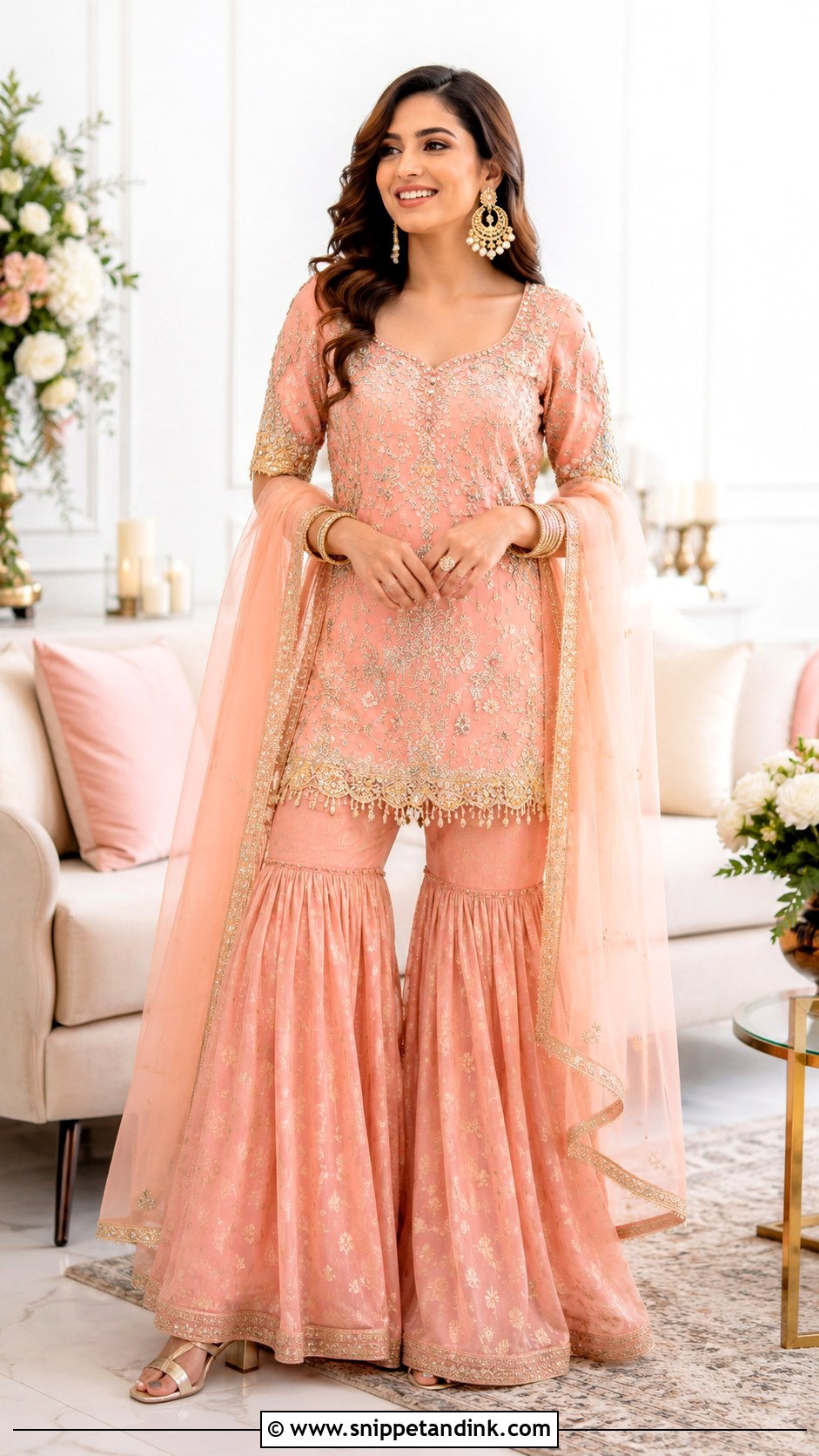
Shararas are easier to live in than a lehenga and more celebratory than a plain suit. A short embroidered kurti over wide pants in peach, mint, rose or teal, plus chandbalis and stacked bangles, gives you a proper festive silhouette. The thing I fix most often is length: shararas should just skim the floor in the heels you’ll actually wear, or you’ll be stepping on the flare on every staircase. Block heels help here more than stilettos.
12. Gharara Suit Roka Outfit
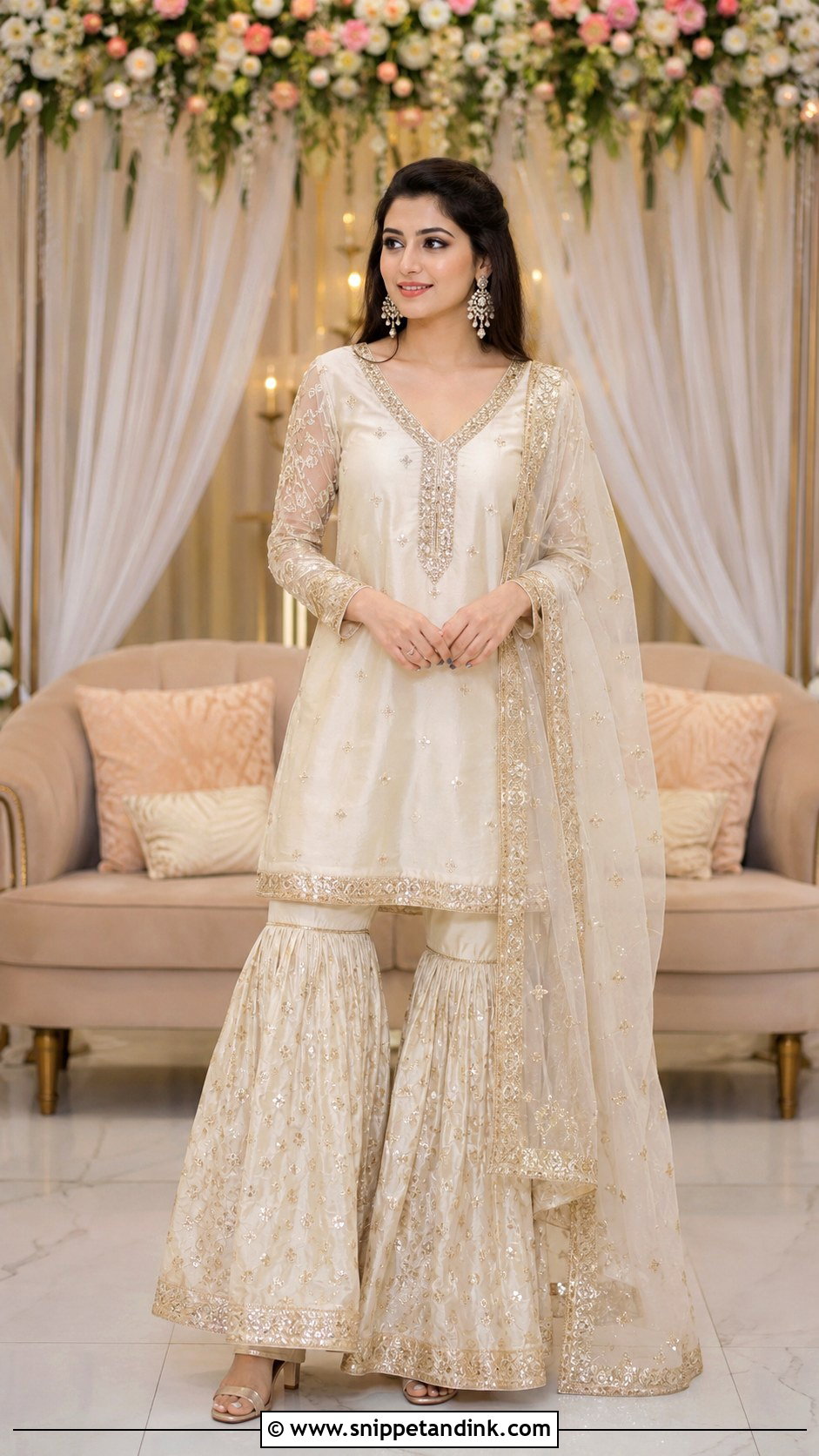
A gharara is fitted to the knee and then bursts out, joined by a decorative band at the knee that is half the charm. It reads more royal than a sharara and gives you a distinct shape in photos. Zari, gota or pearl work on a short kurti, a matching dupatta and statement earrings finish it. It does suit someone comfortable walking in a slightly restricted thigh; if you take big strides, try a sharara first.
13. Palazzo Suit Roka Outfit
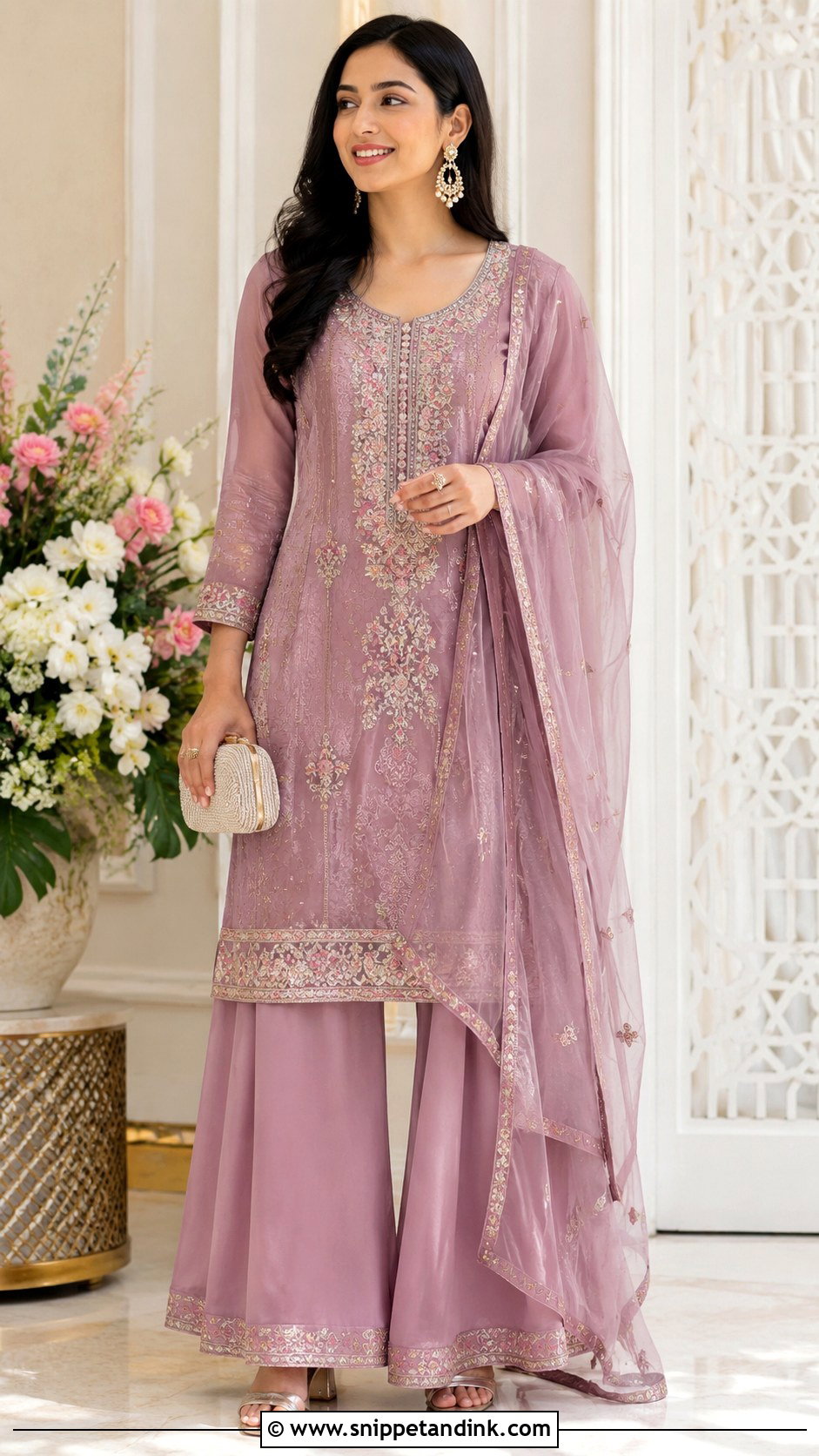
Palazzo suits are the outfit brides tell me they wear again most. An A-line or straight kurta with delicate embellishment, flowing palazzos and a soft dupatta in mauve, powder blue or coral looks polished at a brunch roka and later at a cousin’s mehndi. Choose palazzos with real drape, like georgette or crepe; stiff cotton ones balloon when you sit and look boxy in photos. Drop earrings and juttis are enough.
14. Straight Suit Roka Outfit
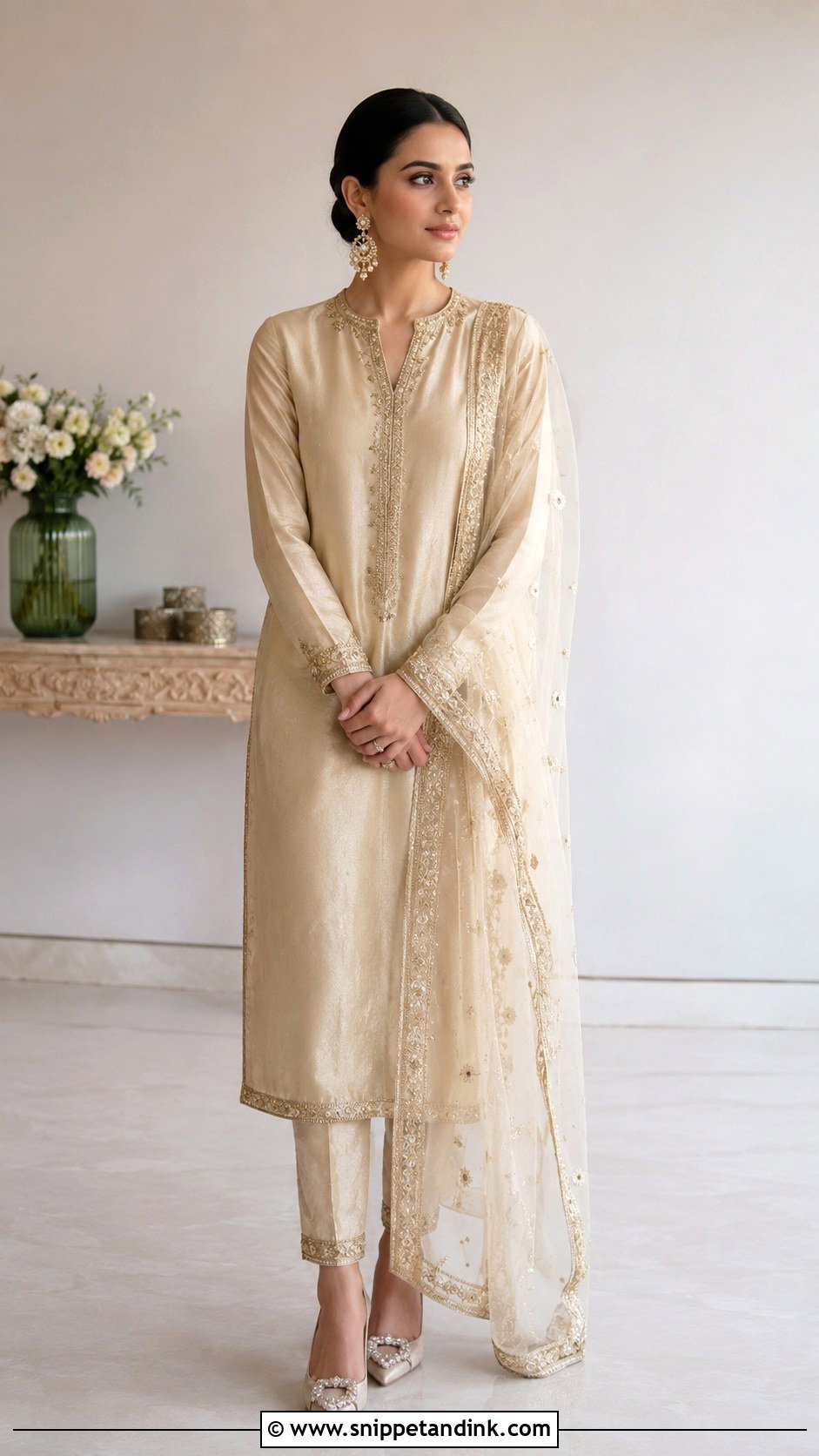
A straight suit only looks bridal when the fit is precise, so this is the one I send back to the tailor most. The kurta should skim the hips without pulling at the side seams, and the embroidery should sit at the neckline, sleeves or hem where the eye actually lands. Silk, chanderi or organza, a sheer dupatta, cigarette pants and pointed heels keep it formal. It suits small home rokas and formal family meetings, and it suits slim, tall frames more naturally than petite ones.
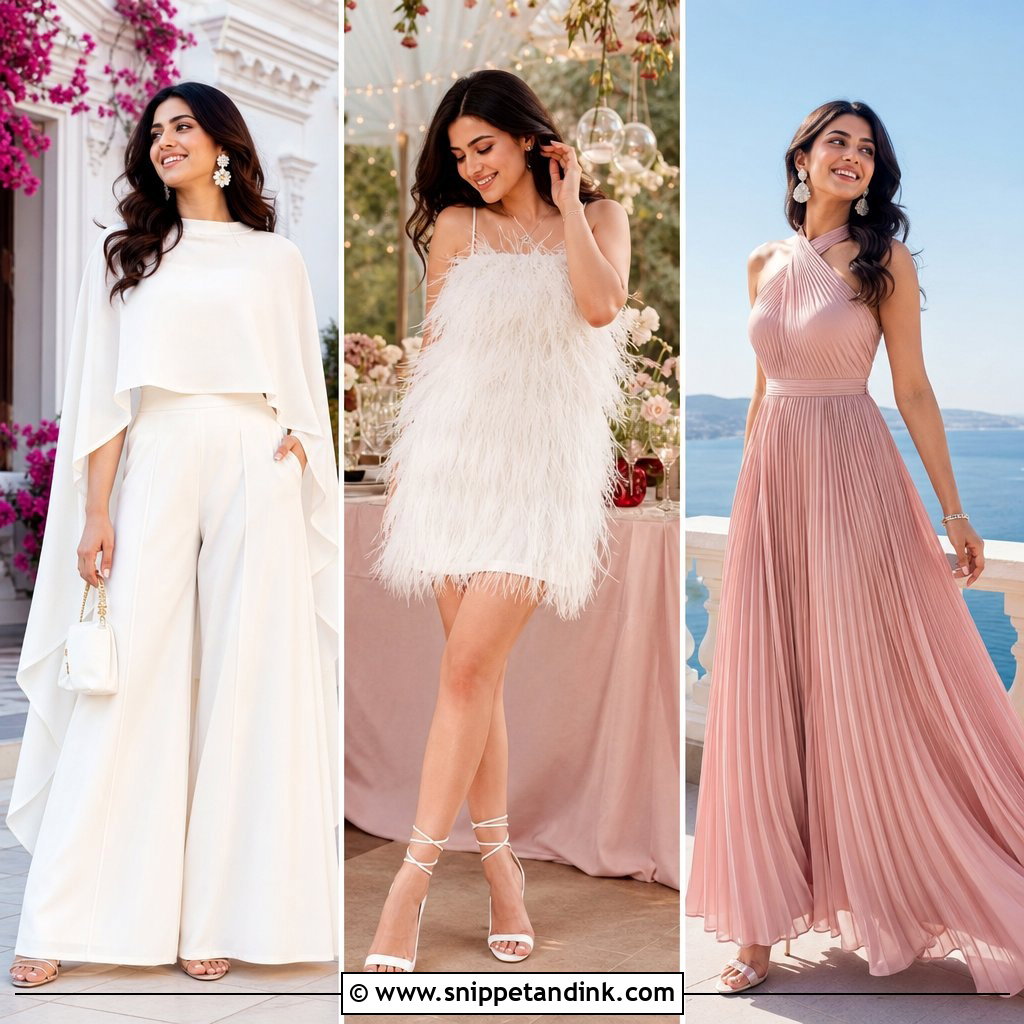
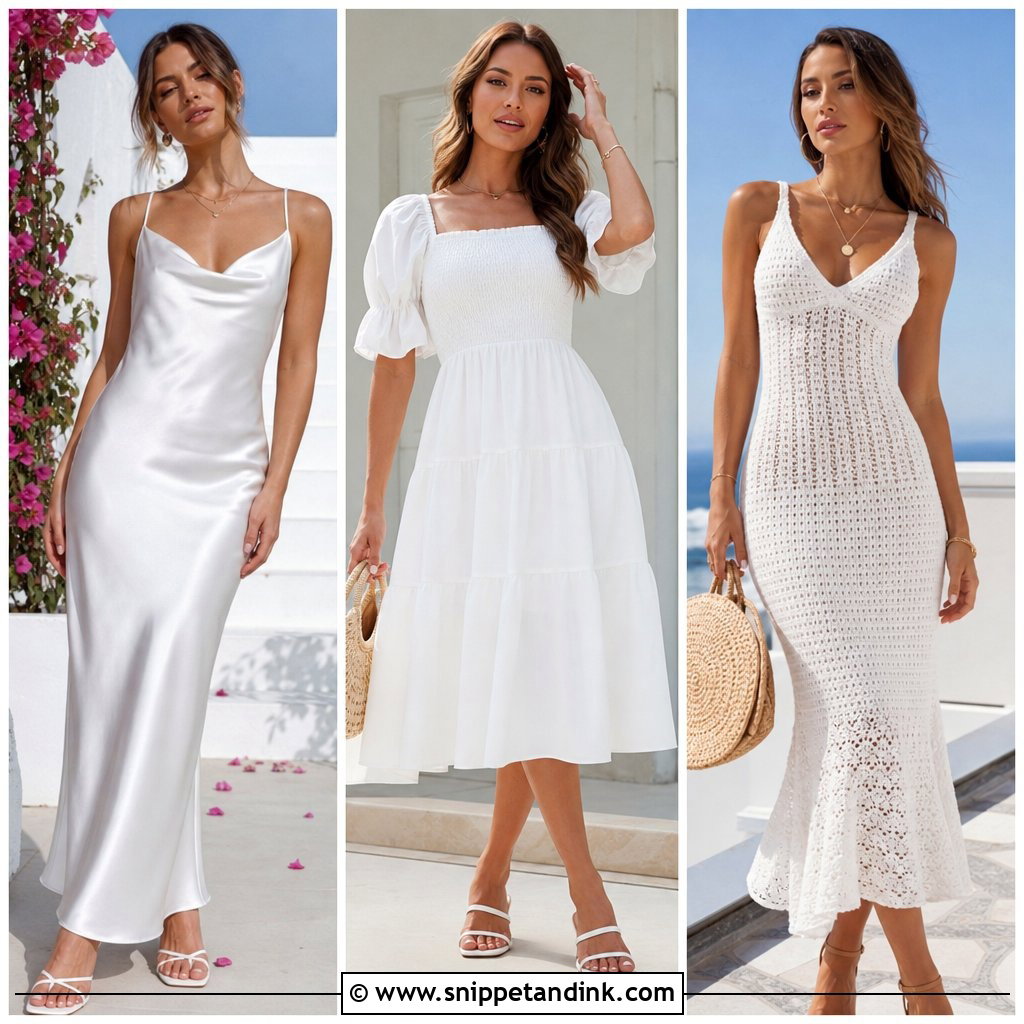
15. Kurta And Skirt Roka Outfit
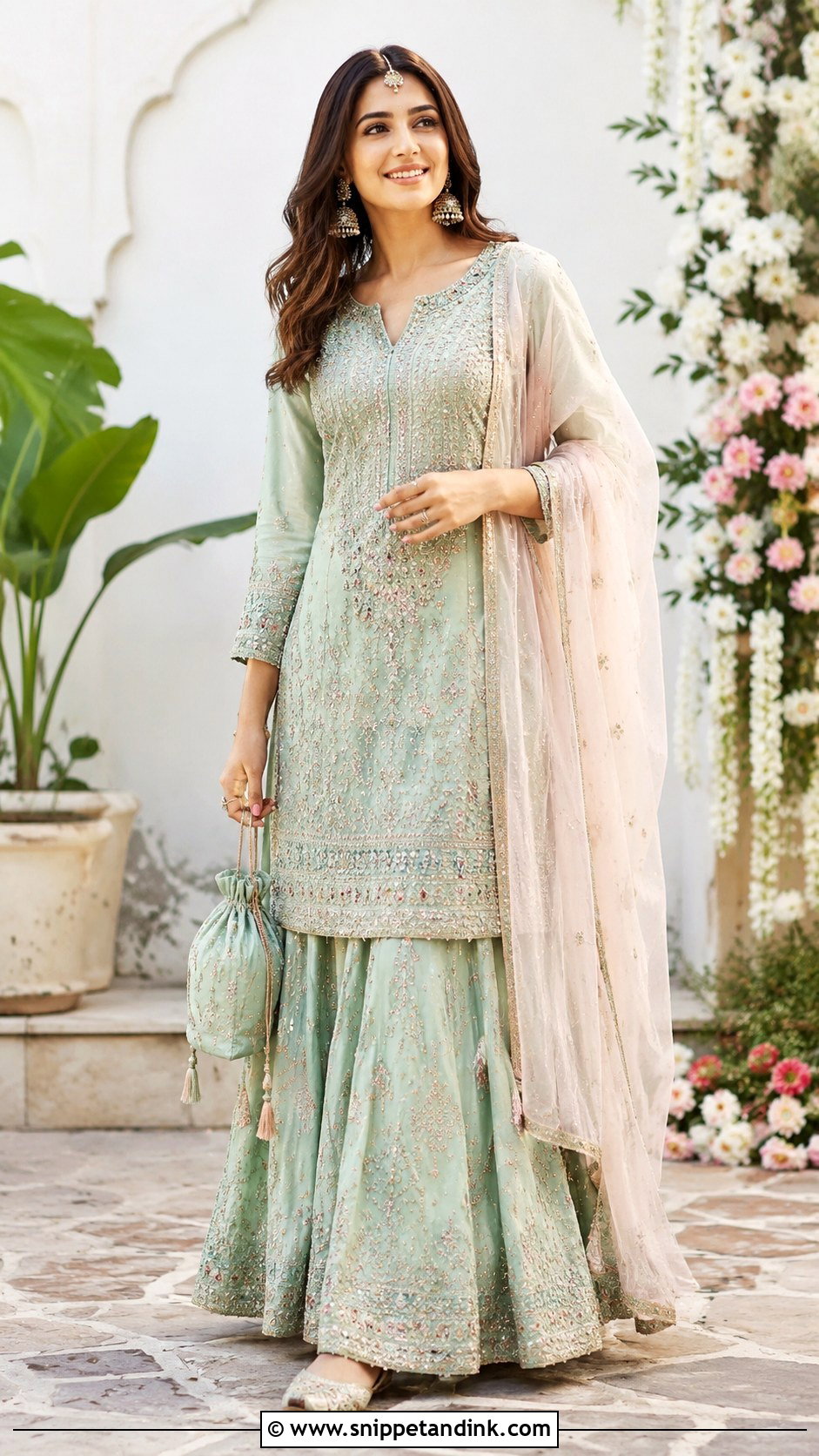
Think of a kurta and skirt as a lehenga that lets you breathe. You get the swing of a flared skirt with the coverage of a short or long embroidered kurta, and nothing digs in at the waist. Mirror work, gota or printed silk keep it festive, and juttis with a potli bag keep it grounded. I suggest it often for outdoor daytime rokas where you’ll be walking on grass.
16. Cape Lehenga Roka Outfit
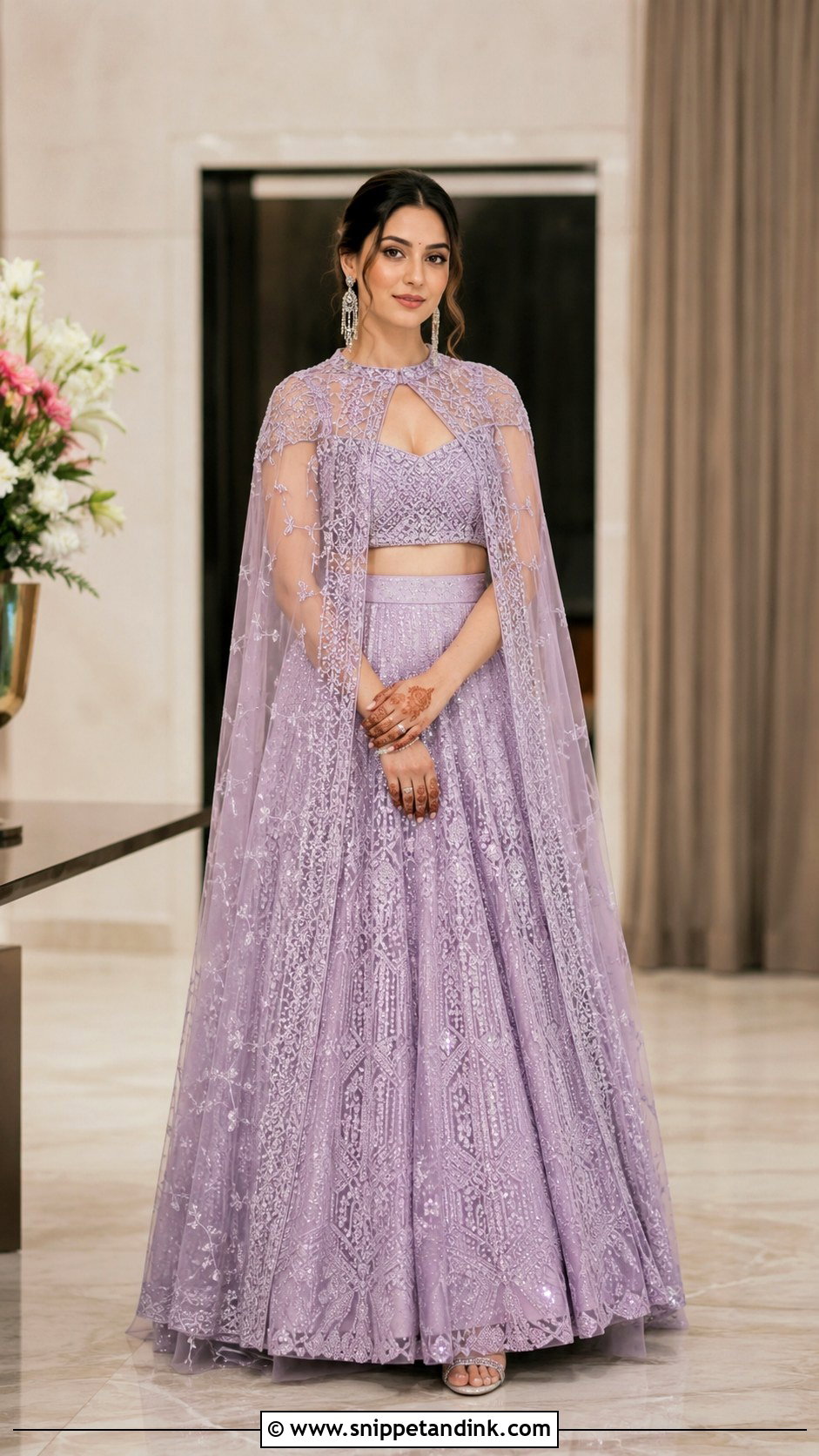
The cape replaces the dupatta, which means your hands stay free for the thali, the shagun and every hug. A light lehenga skirt, a fitted blouse and a sheer embroidered cape in a matching or tonal shade look modern and clean. Because the cape frames the neckline, I keep the neck bare and let earrings carry the jewellery. One practical note: some families expect the bride’s head to be covered for parts of the ritual, so keep a light chunni folded in your bag just in case.
17. Jacket Lehenga Roka Outfit
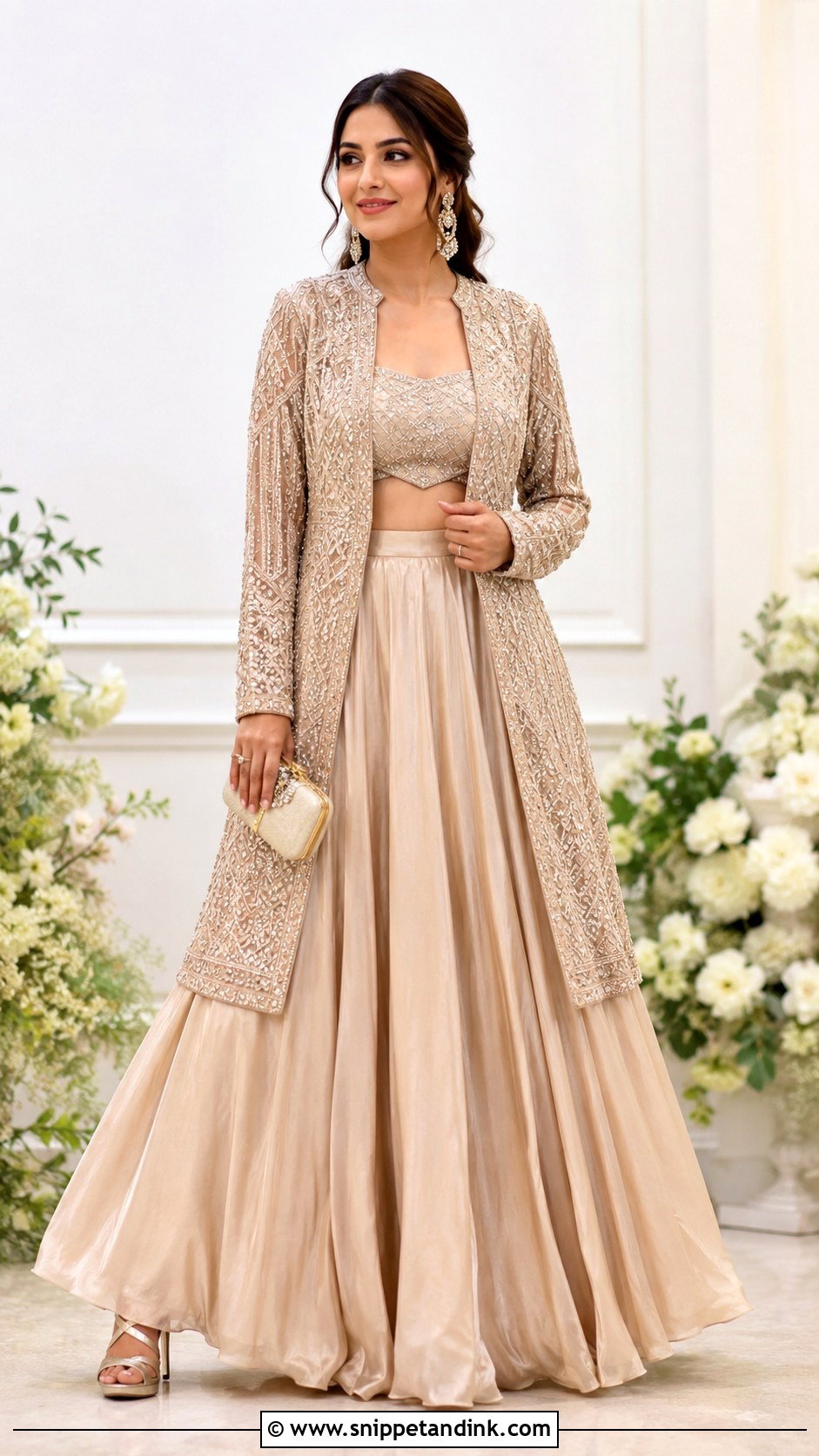
A jacket lehenga earns its place in winter or in a hard-air-conditioned hall. A long embroidered jacket over a crop top and light skirt gives coverage without losing shape, while a short mirror or zari jacket feels sharper. Watch the combined weight: a heavy jacket on a heavy skirt becomes tiring, so one of them should be plain. Heels and a sleek clutch finish it.
18. Peplum Lehenga Roka Outfit
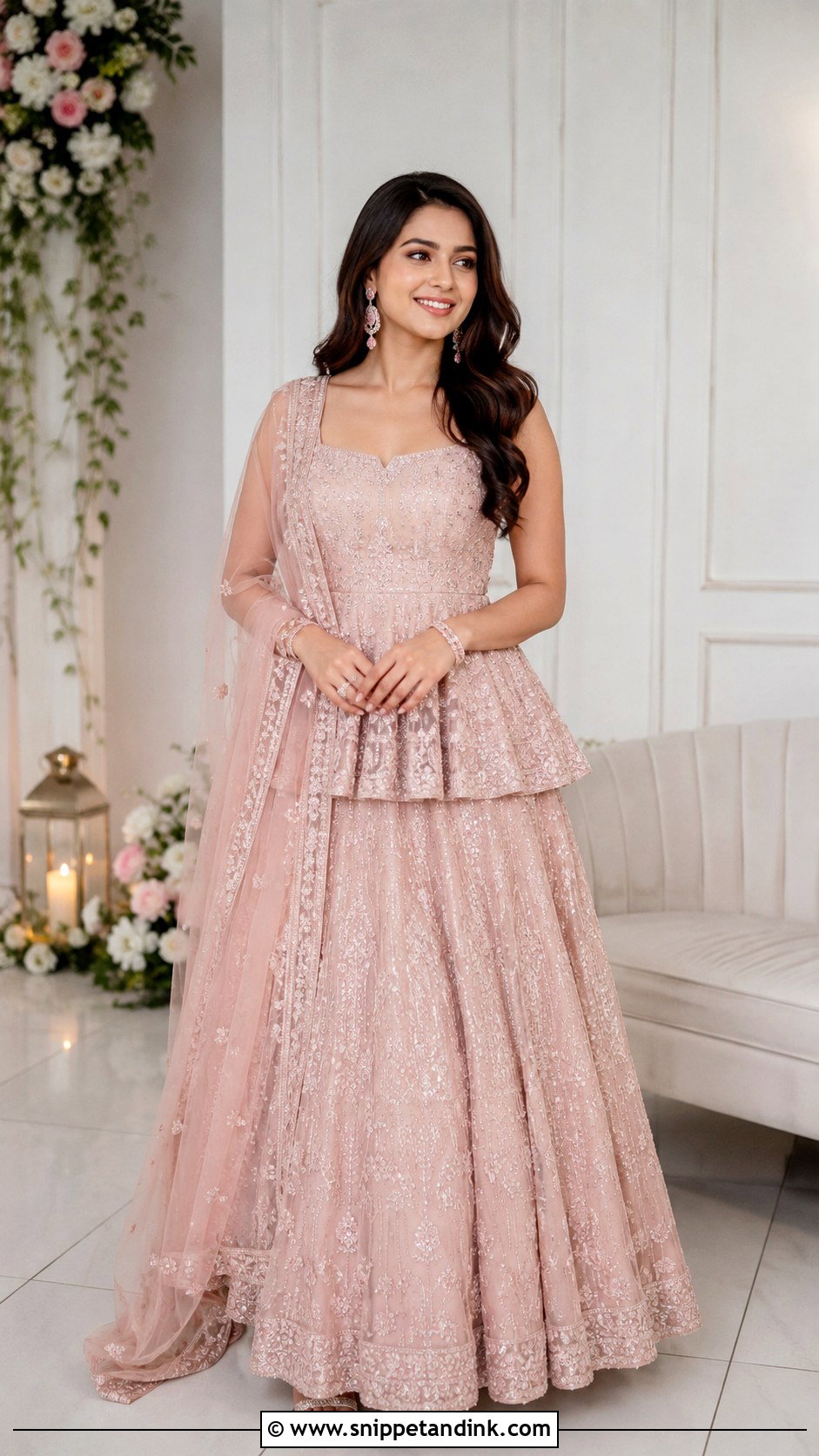
Peplum tops add structure at the waist and give coverage around the midsection, which is why I suggest them to brides who are self-conscious about a bare midriff in front of new in-laws. Soft embroidery or mirror work in blush, sage or lilac stays fresh. Get the peplum flare to start exactly at your natural waist; even an inch lower makes the torso look shorter in seated photos. A light dupatta and drop earrings round it off.
19. Co Ord Set Roka Outfit
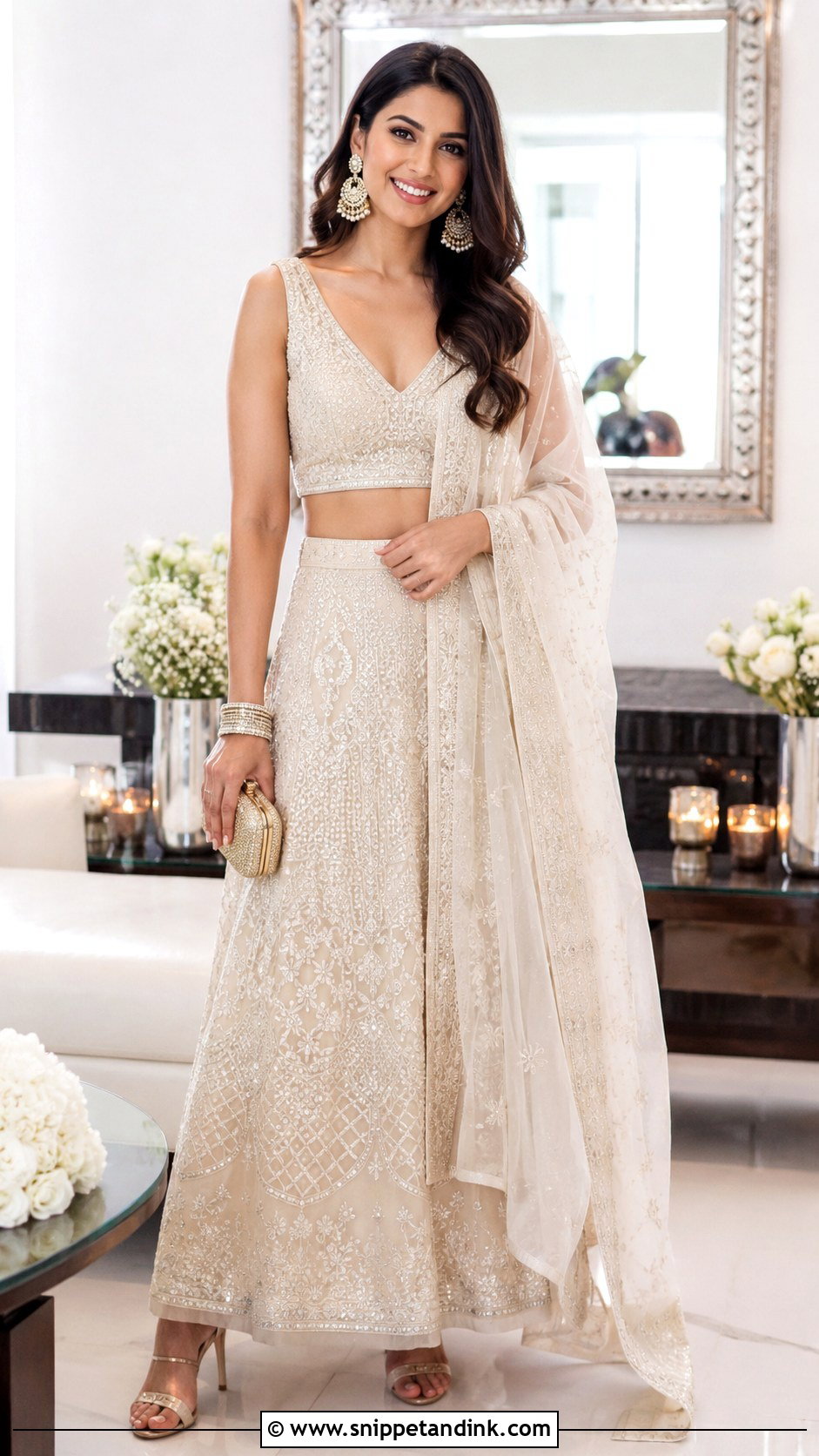
A festive co-ord is the most practical way to get a reusable roka outfit. A matching crop top and skirt, kurta and pants, or tunic and palazzo in brocade, embroidery or printed silk can later be split up and worn separately. Add a dupatta if your family leans traditional. Soft colours look refined, jewel tones look celebratory. My one rule: buy the pieces as a set from the same dye lot, because separates bought weeks apart rarely match under flash.
20. Indo Western Roka Outfit
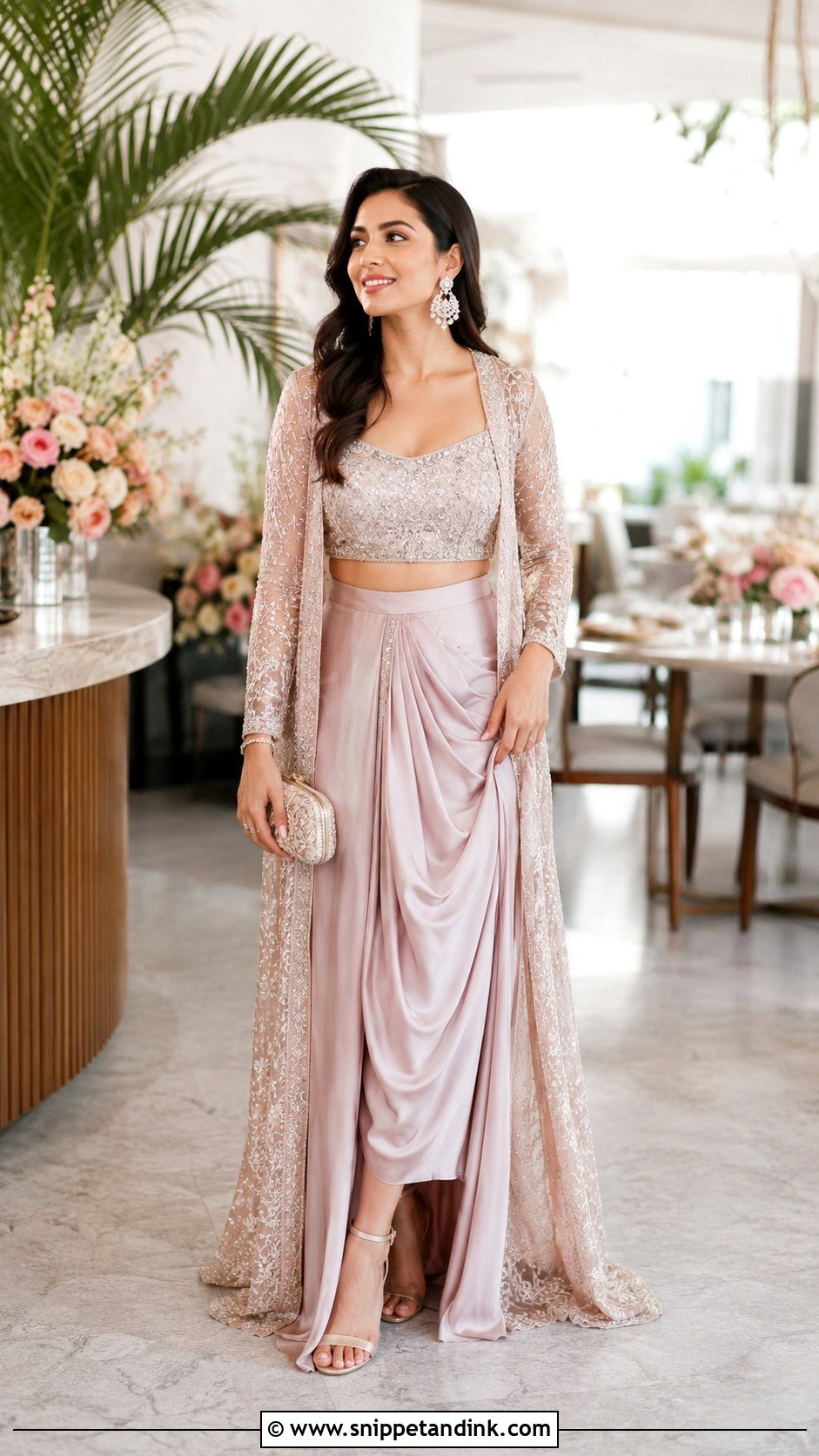
An Indo-western roka outfit works when the ceremony is in a restaurant or a hotel lounge and a full lehenga would feel out of place. A structured crop top with a draped skirt, an embellished tunic over flared pants, or a dhoti bottom with a festive jacket all read modern. Satin and crepe drape well, organza adds body. I’d keep the hair sleek and the earrings bold so the outfit doesn’t look like an office party dress.
21. Fusion Gown Roka Outfit
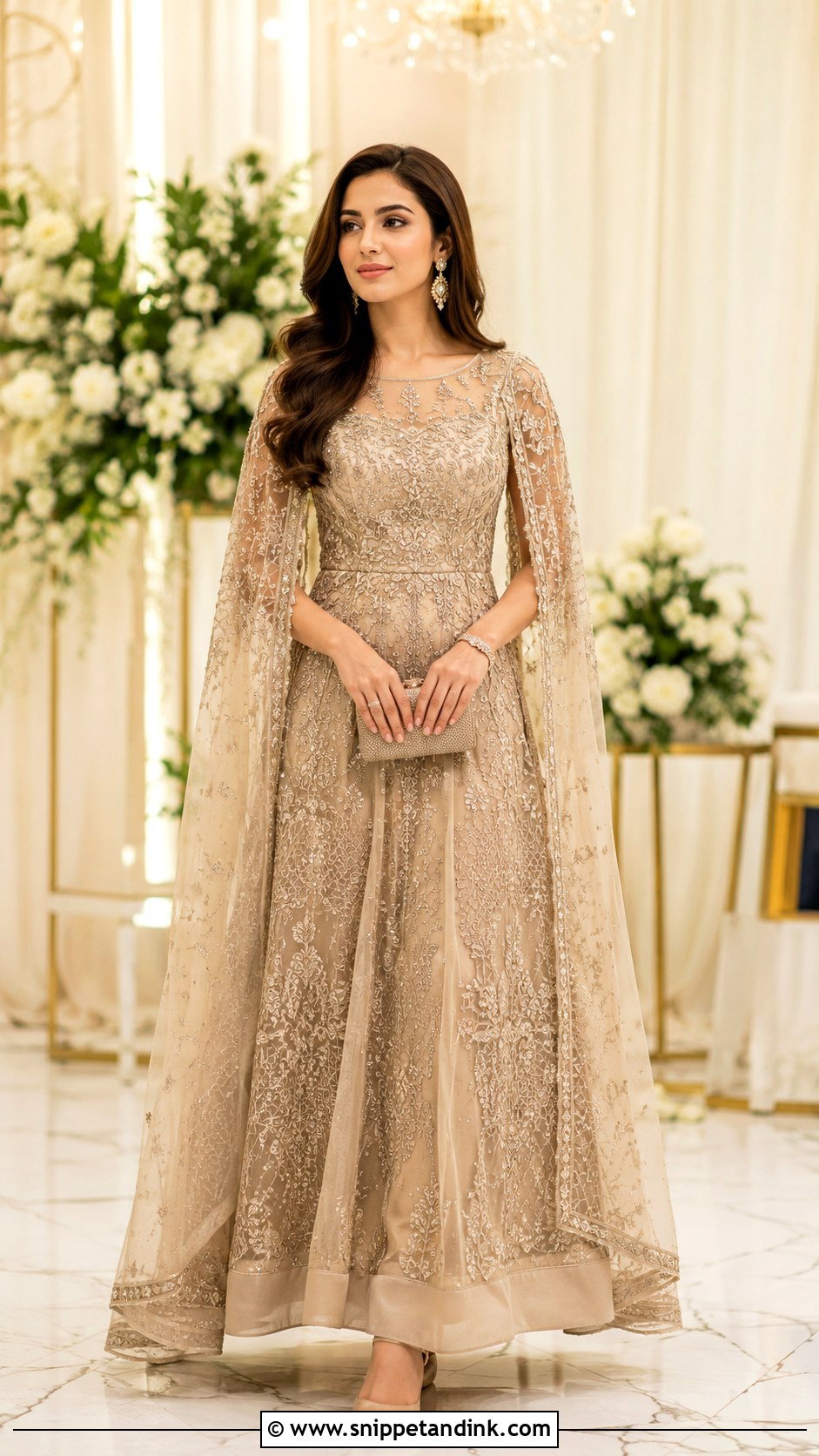
Fusion gowns are one-piece dressing, which some brides love because there is nothing to adjust. The risk is that a gown can look like a reception outfit. Keep the embellishment to the yoke or cape sleeves, choose an Anarkali-style flare or a dupatta drape, and stay with blush, lavender, champagne or deep teal. Delicate jewellery and a small clutch keep it a pre-wedding look rather than the main event.
22. Ruffle Saree Roka Outfit
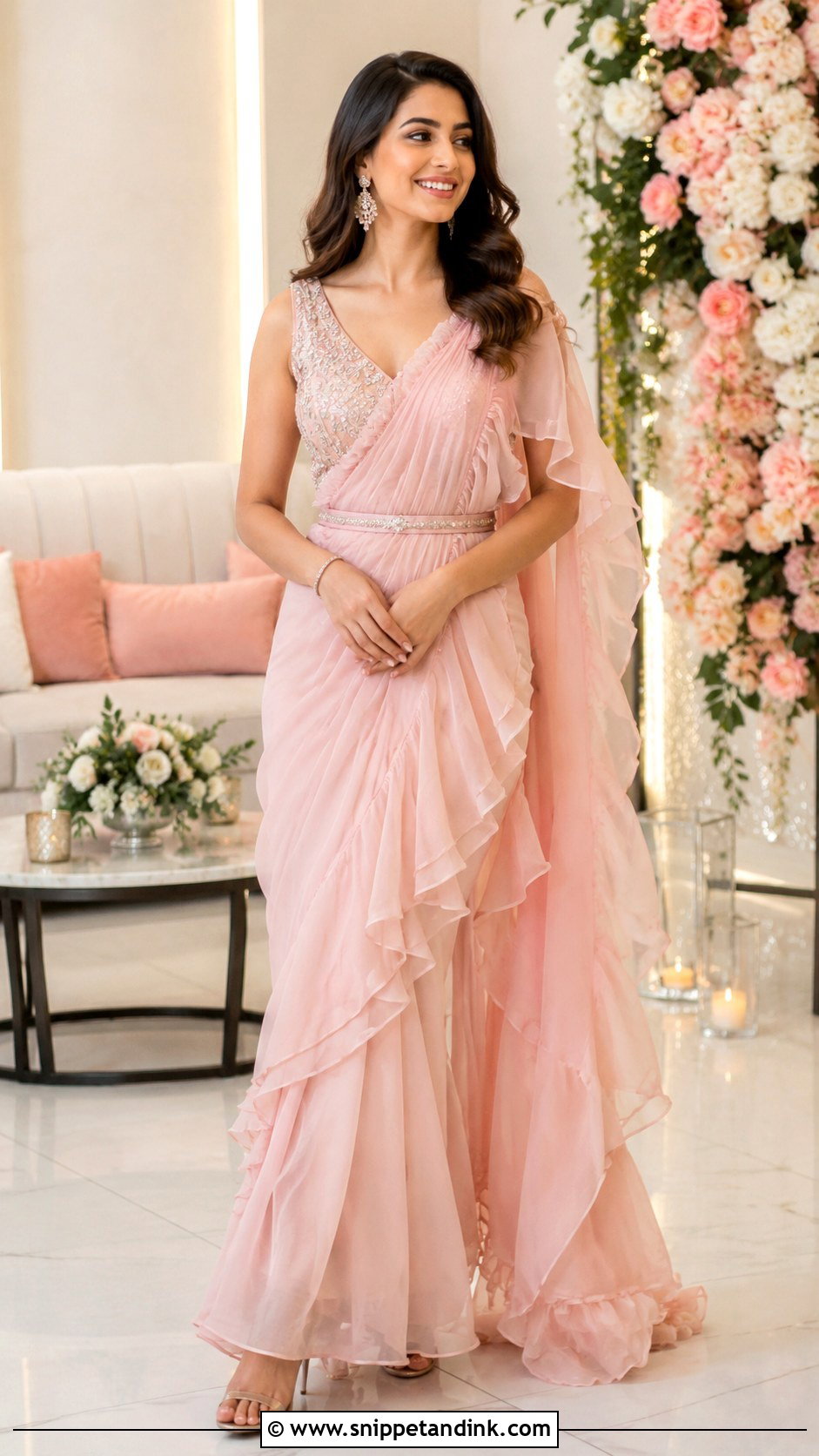
Ruffle sarees are fun and easy to carry, with the ruffles hiding small draping mistakes. They suit cocktail-style or restaurant rokas. Plain or lightly embellished in blush, mint or lavender, with an embroidered blouse, gives the festive weight. I add a slim belt for brides who are nervous about the pallu, since it pins the drape at the waist and stops it shifting when you hug relatives.
23. Sequin Saree Roka Outfit
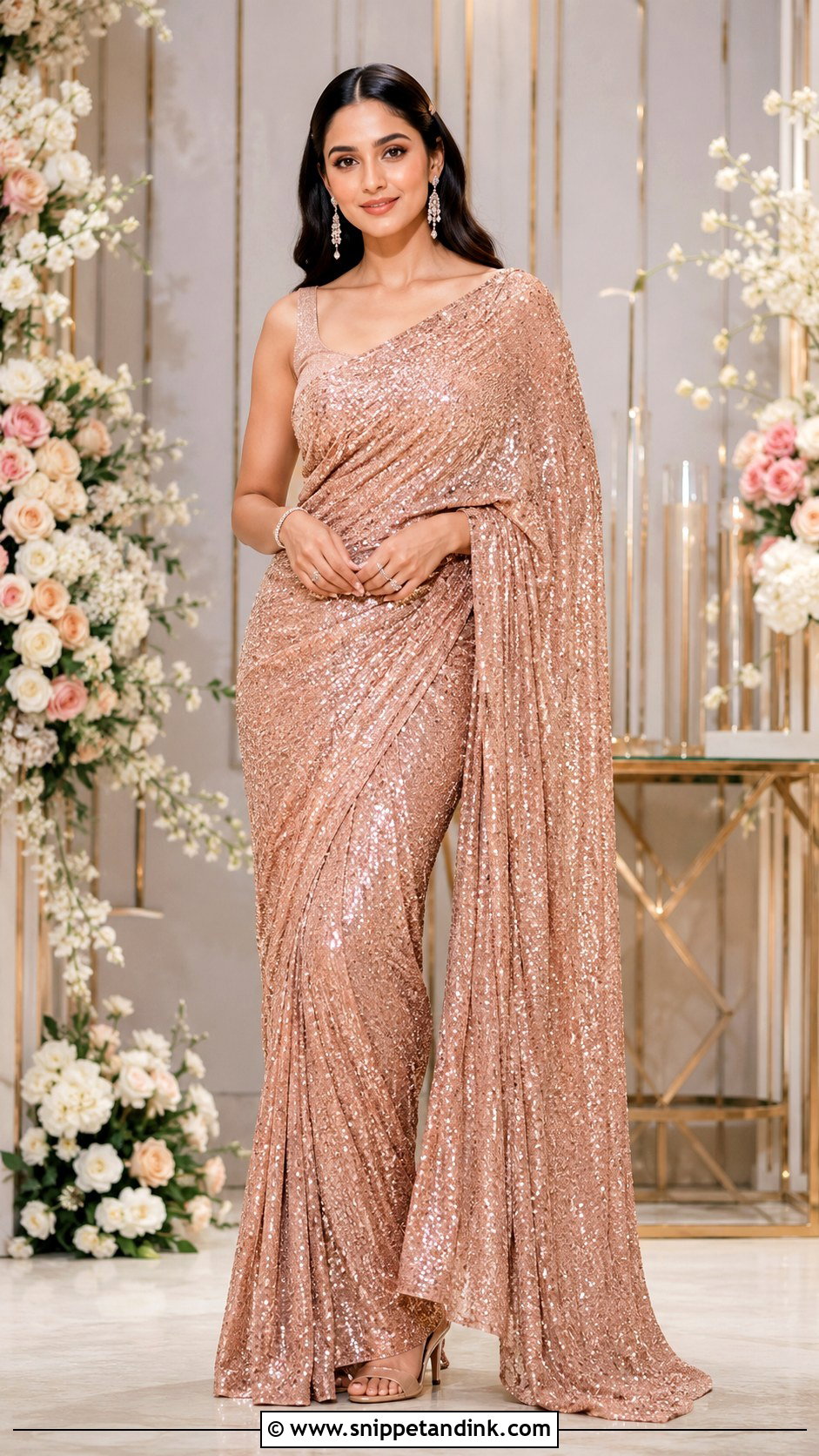
Sequins belong at evening rokas, where they catch warm lights. In daylight they can look flat or harsh. Champagne, rose gold or soft green sequins on a simple or sleeveless blouse, with just drop earrings and a bracelet, are plenty. Check the inside seams before buying; cheap sequin sarees scratch the arms and waist badly by the second hour, and a soft lining underneath the blouse saves your skin.
24. Mirror Work Lehenga Roka Outfit
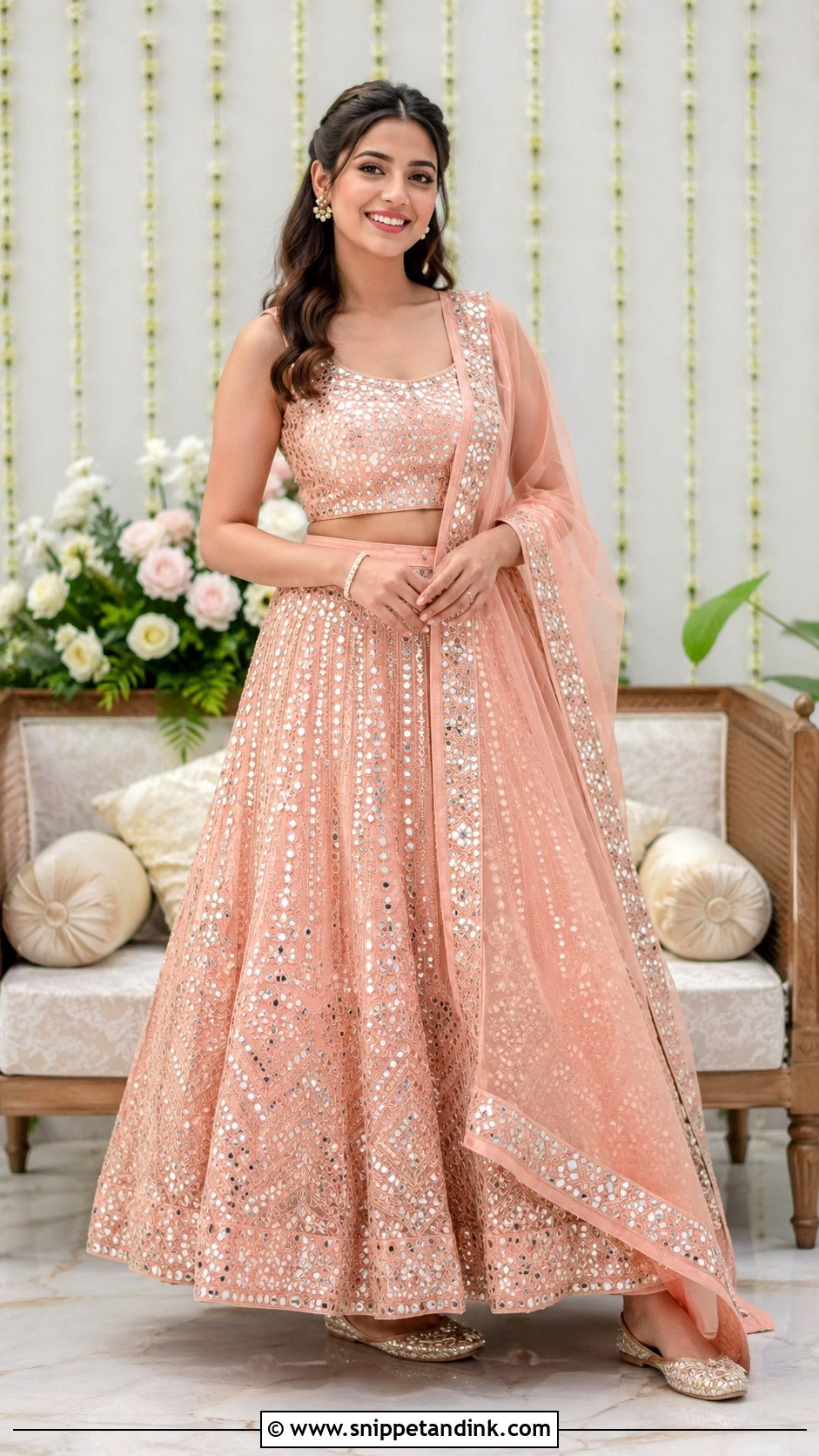
Mirror work bounces light, which makes a bride look lit from within at bright daytime ceremonies. On an ivory, peach, mint or yellow base the mirrors stay cheerful instead of heavy. I’d keep jewellery to small chandbalis or polki studs because mirrors and big stones start to fight. One trick when you try it on: turn under a ceiling light and see whether the mirrors flash into your face in photos. Smaller mirrors spaced apart photograph best.
25. Gota Patti Lehenga Roka Outfit
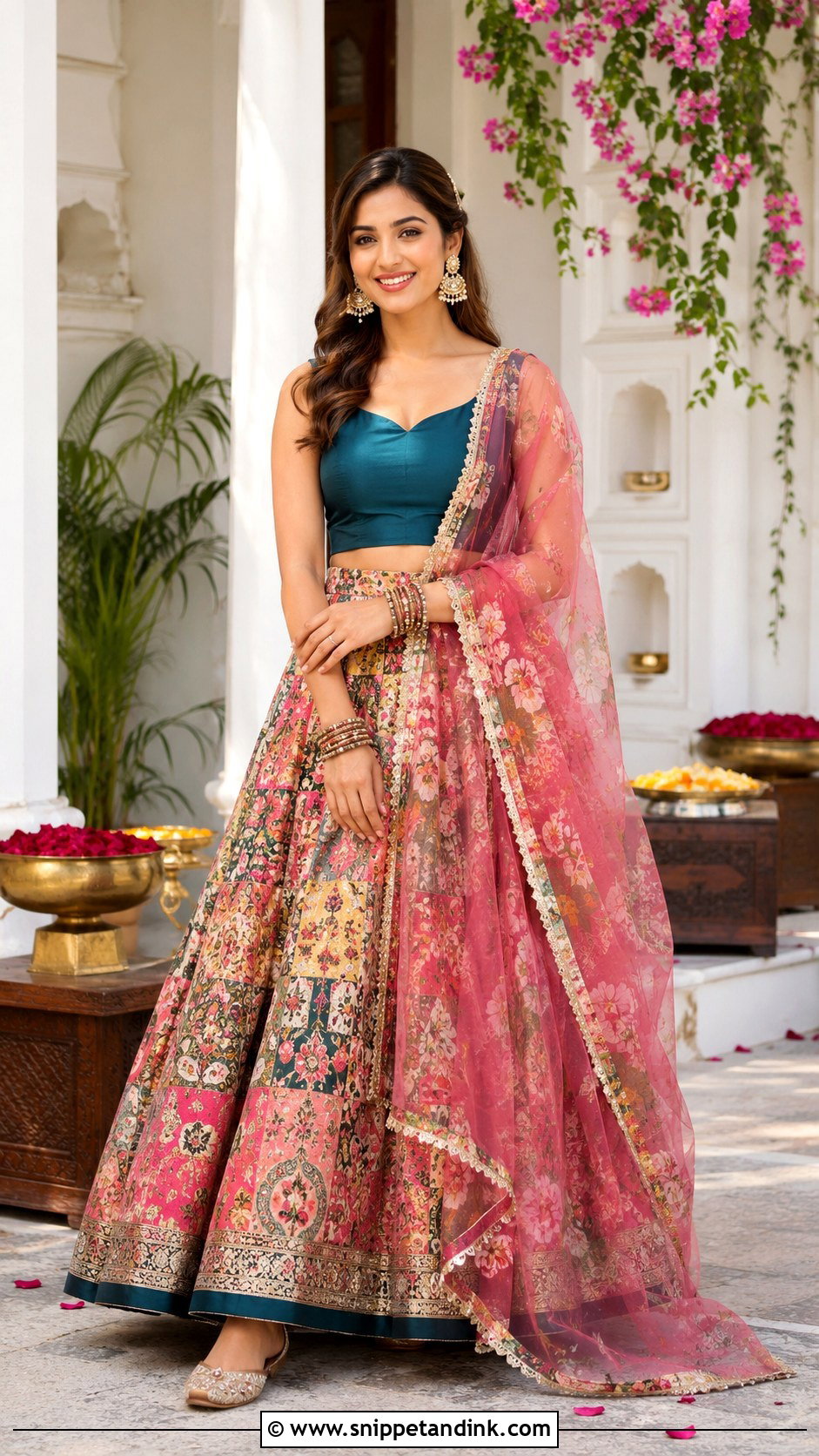
Gota patti is metallic ribbon appliqué, so you get shine with far less weight than stone or zardozi work, a real advantage for a long day. Peach, yellow, pink and sage all suit its traditional Rajasthani and North Indian feel. Gota can tarnish if stored damp, so wrap it in muslin afterwards rather than plastic. With kundan earrings, bangles and a soft half-up hairstyle, keep the makeup fresh rather than heavy.
26. Velvet Suit Roka Outfit
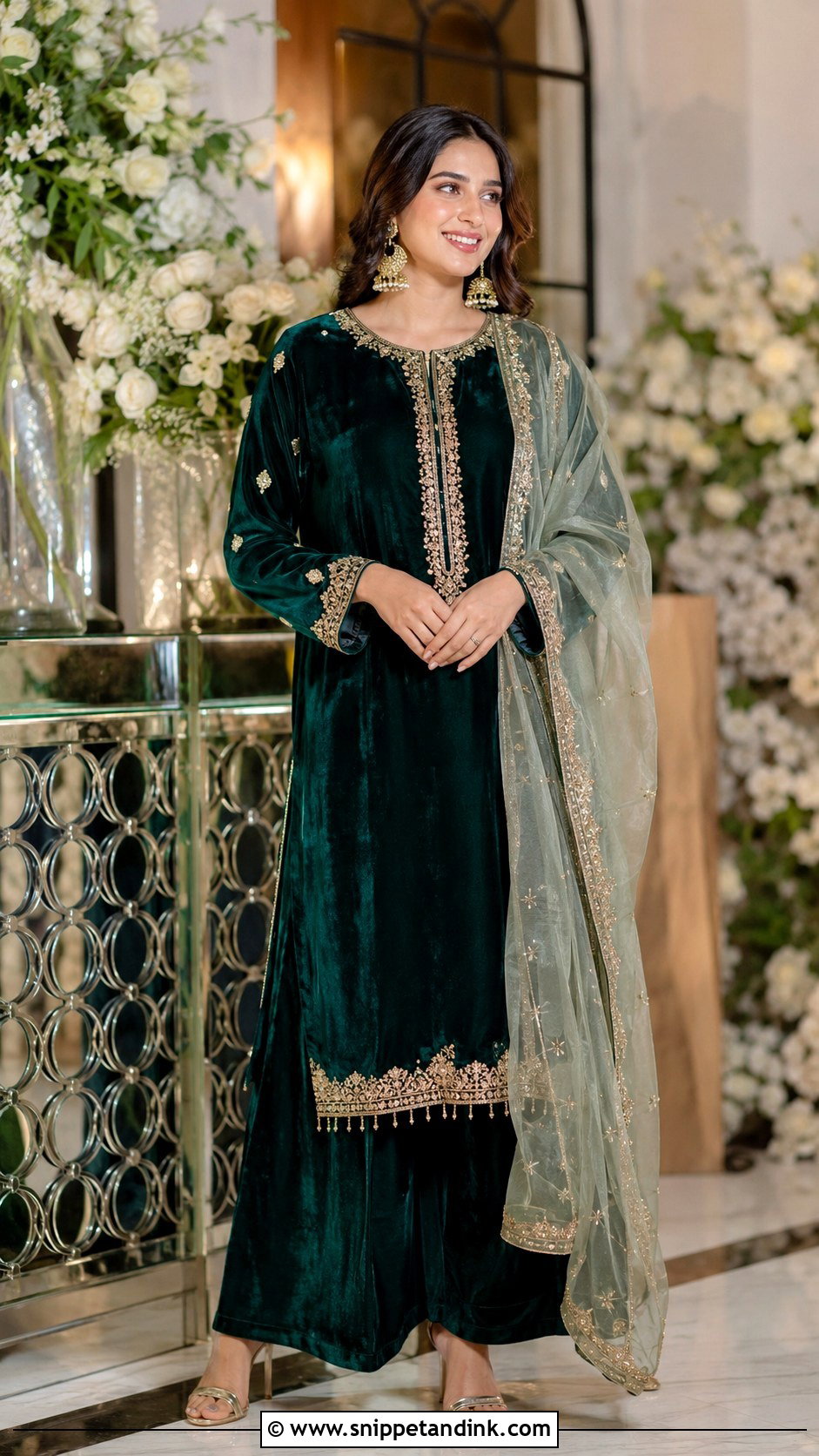
Velvet is the winter roka fabric. It looks rich with almost no embroidery, and it actually keeps you warm at an evening ceremony. Deep berry, navy, royal blue or maroon in a straight kurta with palazzos or a sharara look regal. I pair velvet with an organza or net dupatta to break the density. Avoid it entirely for daytime summer events; it gets hot and shows sweat marks quickly.
27. Printed Silk Lehenga Roka Outfit
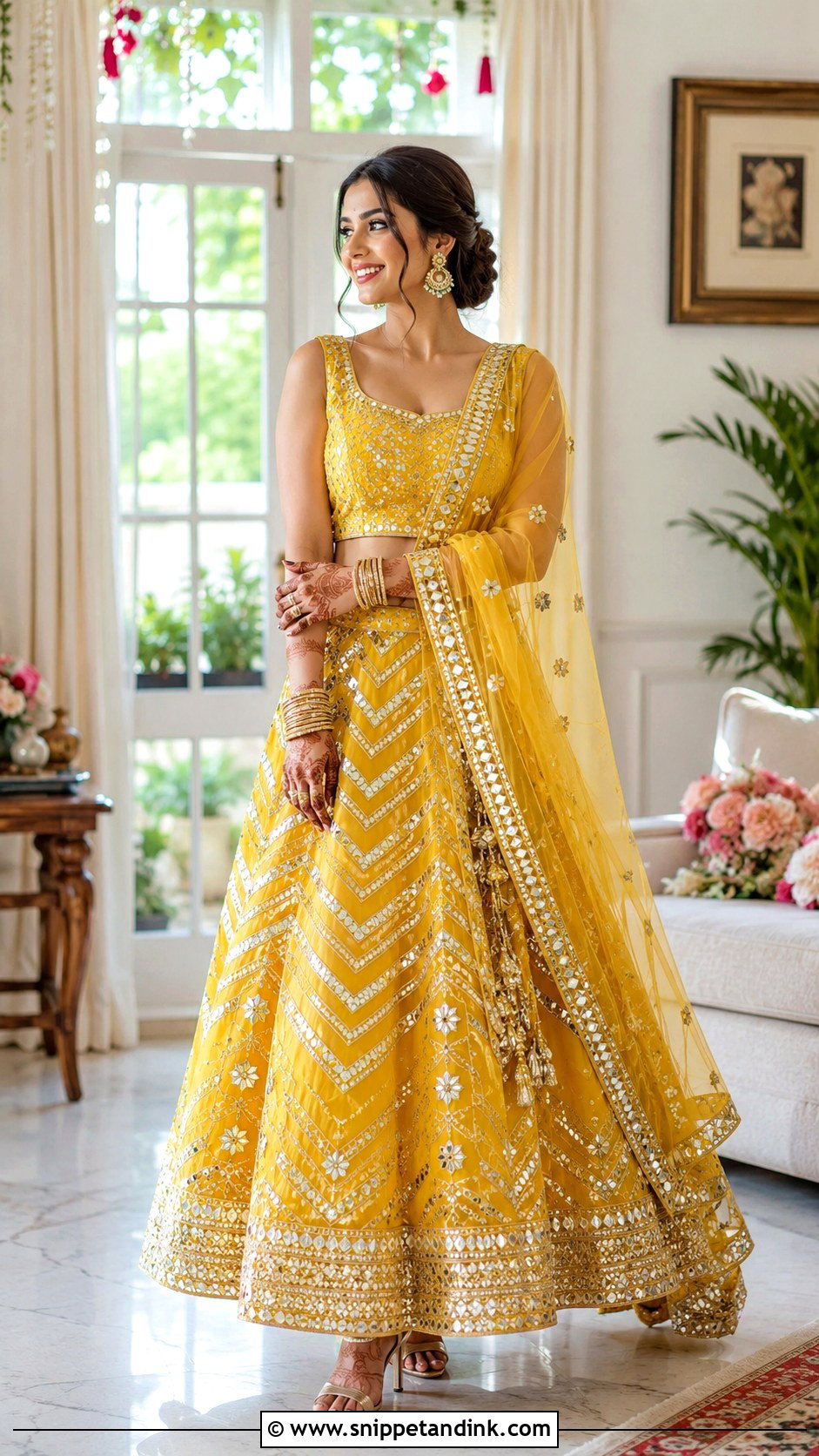
Printed silk lehengas feel festive and colourful while staying much lighter than heavily embroidered ones. Floral, paisley or block-inspired prints in rich but soft shades work well, paired with a solid blouse and a light dupatta so the print has room. Jhumkas, bangles and juttis keep it traditional. I like these for family lunch rokas and outdoor daytime ceremonies, where the print shows up clearly in natural light without needing extra embellishment.
28. Monochrome Roka Outfit
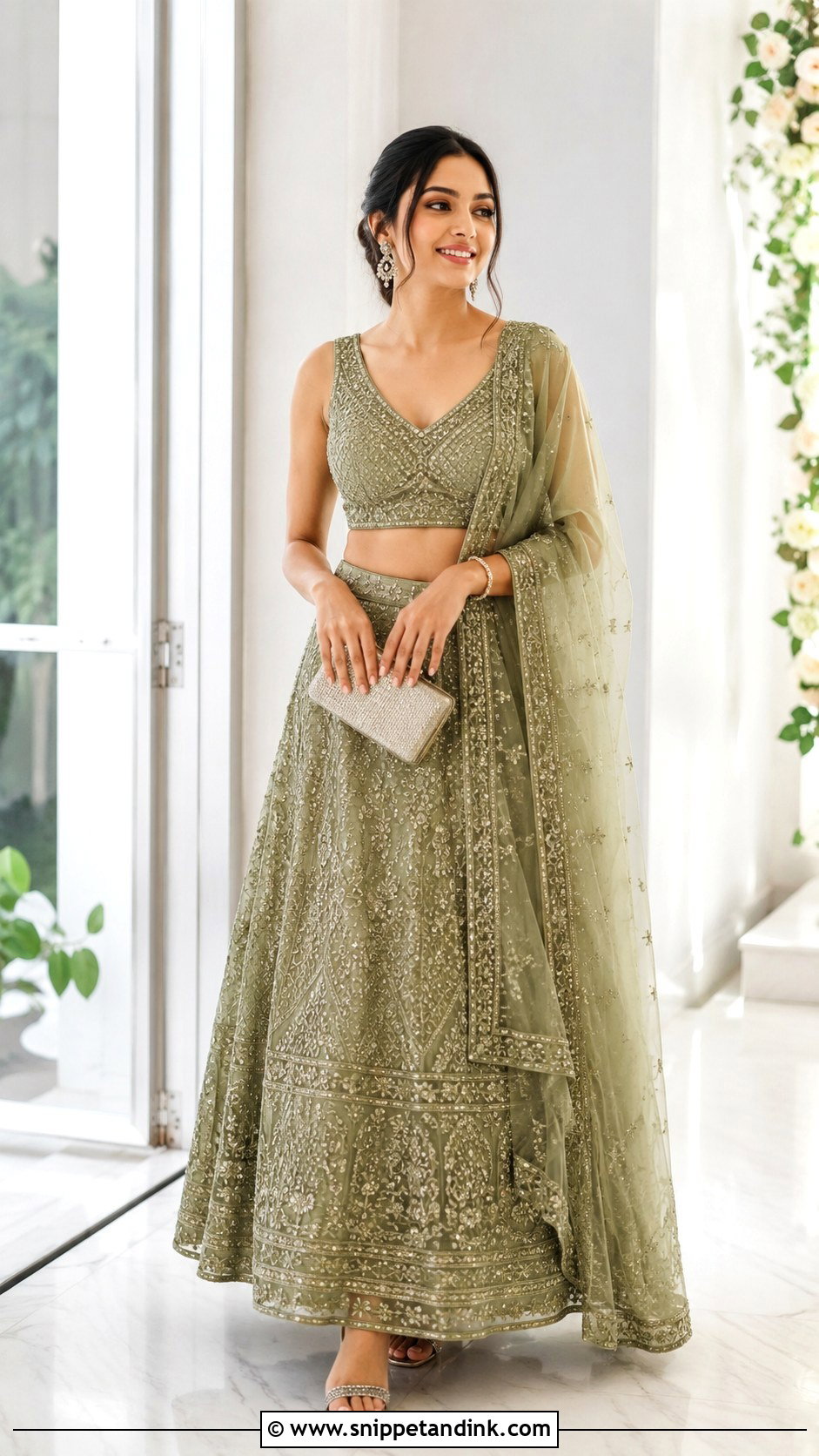
A monochrome roka outfit looks put-together because the eye travels head to toe without a break. Pick one colour, then carry it through blouse, skirt or pants, dupatta, shoes and bag. Soft pink, sage, lilac or champagne work especially well. The mistake I see most is a flat result, so mix textures inside that one colour: organza dupatta, silk skirt, sequin or thread embroidery. Tonal or metallic jewellery keeps it refined.
29. Jewel Tone Roka Outfit
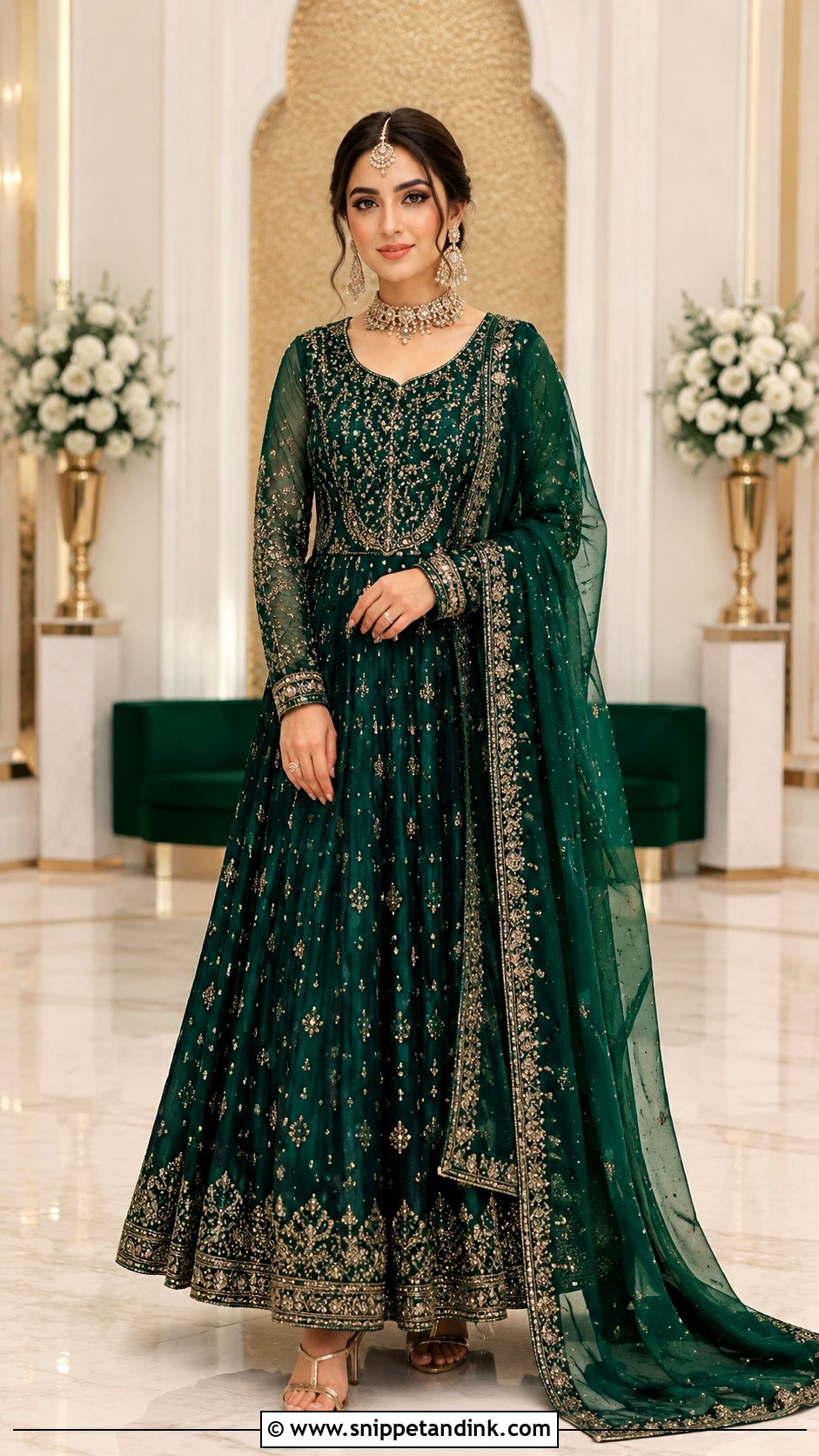
Jewel tones suit brides who feel washed out in pastels. Emerald, royal blue, ruby, deep purple and magenta are celebratory on their own, so the embroidery can stay balanced. Gold or kundan jewellery looks rich against them. Makeup needs a little more definition than with pastels, especially around the eyes, or the colour of the outfit takes over the face. Save these for evening rokas and formal indoor venues.
30. Minimal Roka Outfit
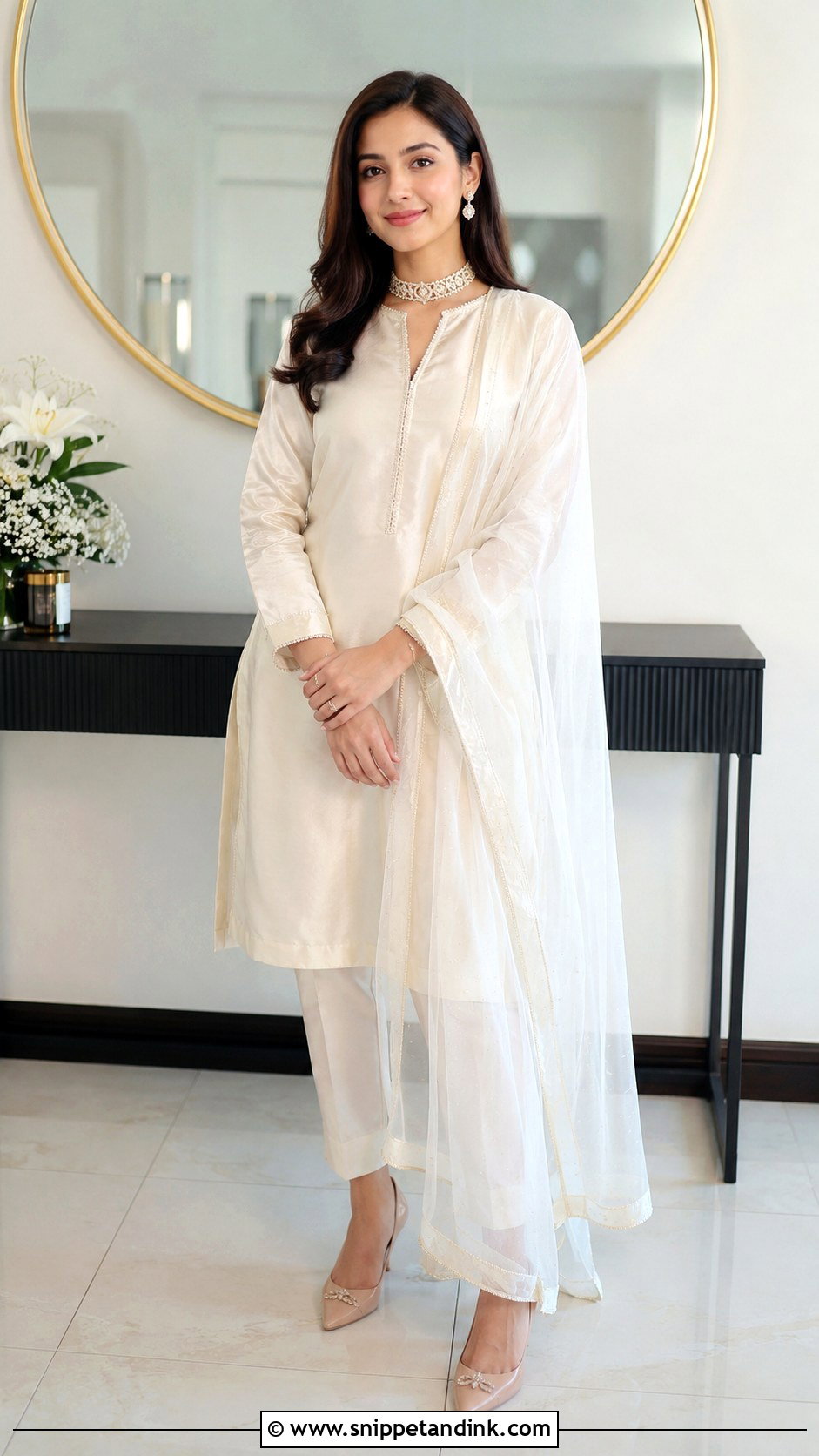
Minimal only works when fit and fabric are excellent, because there is no embroidery to hide a poor seam. A simple silk suit, plain organza saree, light lehenga or understated Anarkali in ivory, beige or soft gold depends on clean tailoring and graceful draping. Spend on one quality accessory, such as pearl earrings or a fine choker, rather than several cheaper ones. I recommend it to brides who want to look like themselves at a small home roka.
When the Roka Date Is Fixed Only Weeks Away
Rokas are often set at short notice once the families agree, sometimes within a fortnight. Custom embroidered pieces usually need weeks to make, so on a tight window I steer brides to ready-to-wear and spend the time on alterations instead.
What to prioritise in a short window
- Buy ready-made in your size or one size up; taking an outfit in is far easier than letting it out.
- Book the tailor the day you buy. Blouse fit, sleeve length and hem length in your actual heels are the three changes worth paying for.
- Do one full dress rehearsal two or three days before, with jewellery, shoes and dupatta pinned, so nothing new surprises you on the day.
Planning a second life for the outfit
A roka piece rarely has to be retired. Shararas, palazzo sets and co-ords split into separates for later festivals, and a light lehenga can return at a sibling’s mehndi with a new dupatta. Store embroidered pieces folded in muslin, with tissue between the folds of zari and gota, and keep them away from damp so the metal threads don’t tarnish.
Saving the Heaviest Lehenga for the Wedding
The roka outfit has one job: make you look like the bride while leaving room for the wedding to feel bigger. Pick your silhouette by how the ceremony runs, floor seating or sofa, home or hall, morning or evening, and let fabric follow the season. Then think about your family’s expectations on colour and head covering before you fall for a piece. Go softer for a small home ceremony and richer for a formal one. Get the fit right, try sitting and bowing in it, and the outfit will carry you through every blessing without a second thought.
You'll Like These Ideas:


Leave a Reply