
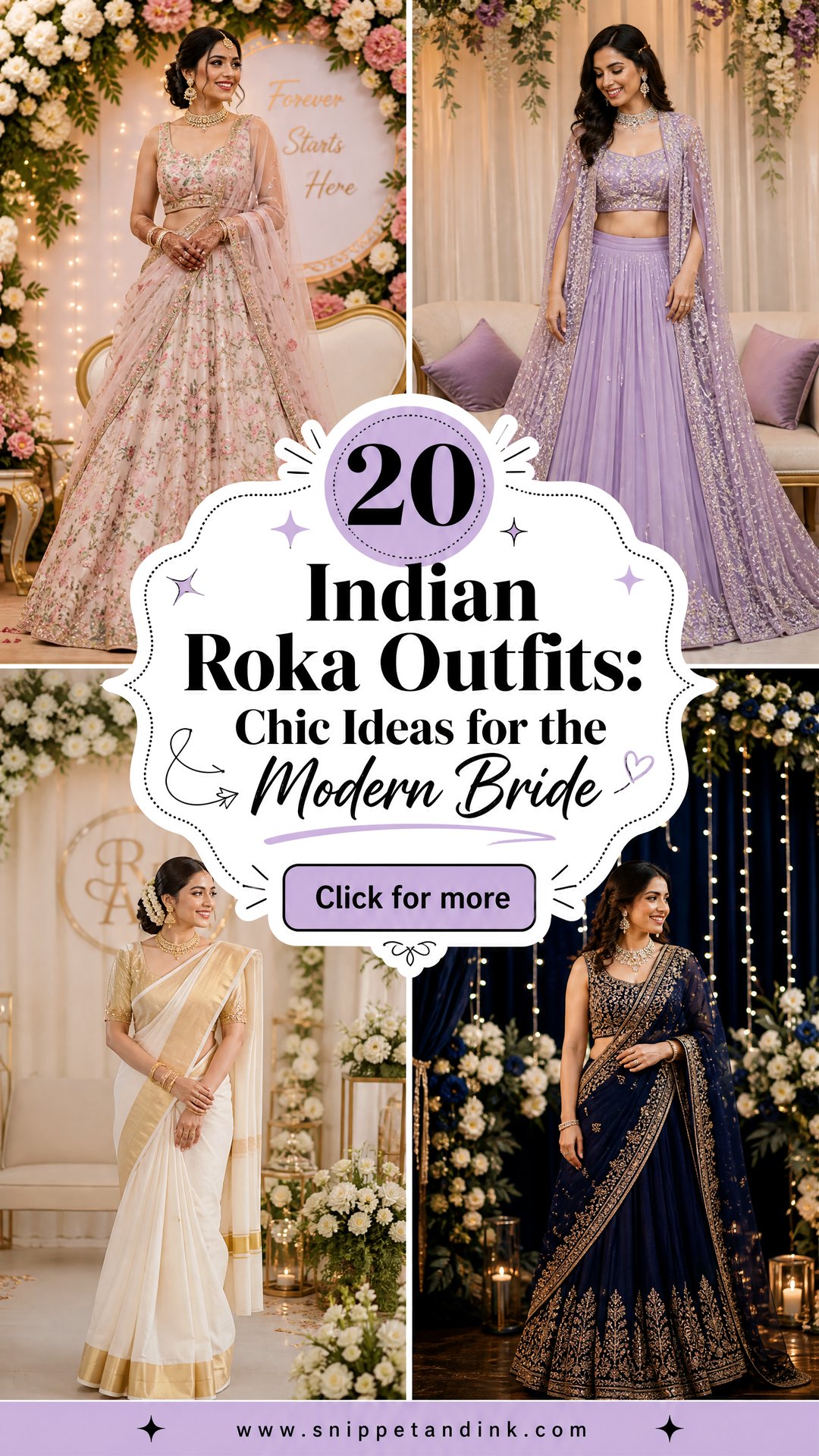
A Roka is usually smaller and closer than anything that follows it. Two families in a living room or a hotel lunch, blessings, sweets, and a lot of sitting on sofas and floor cushions while relatives come to you. So the outfit has a narrow brief: festive enough to feel like the start of something, light enough that it doesn’t look like you’ve worn the wedding early. I dress Roka brides in light lehengas, sarees, shararas and Anarkalis, and I always ask about the venue, the time of day and whether there’ll be seated rituals before I suggest a single color. The twenty looks below run from daytime pastels to evening jewel tones.
When the Roka Is Only a Few Weeks Away
Rokas are often fixed quickly once two families agree, which leaves no time for a hand-embroidered custom piece. In that case I shop ready-to-wear and plan on alterations, and I tell brides honestly what a tailor can and can’t do in a short window.
- Easy and quick: taking in a blouse or kurta at the side seams, shortening hems and sleeves, adding hooks, cups or a drawstring.
- Possible but slower: reshaping a neckline, adding lining, or re-hemming a lehenga with a border that has to be moved up.
- Usually not possible: letting a garment out by more than its seam allowance, or lengthening something that has no extra fabric folded inside.
So buy for the widest part of your body, usually bust or hips, and let the tailor take in the rest. Turn the garment inside out in the shop to see how much allowance is there before you pay.
1. Pastel Floral Lehenga Roka Outfit
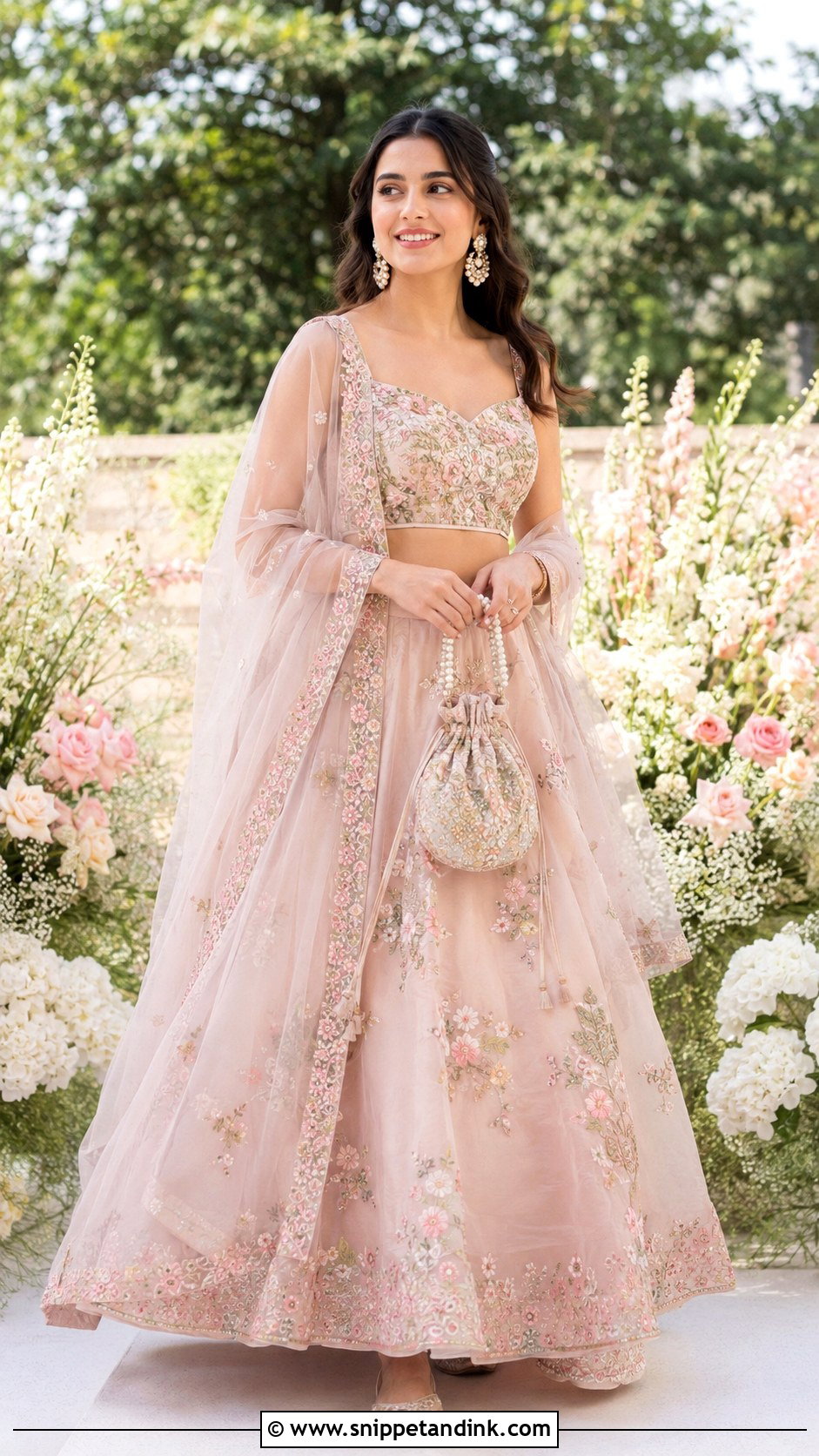
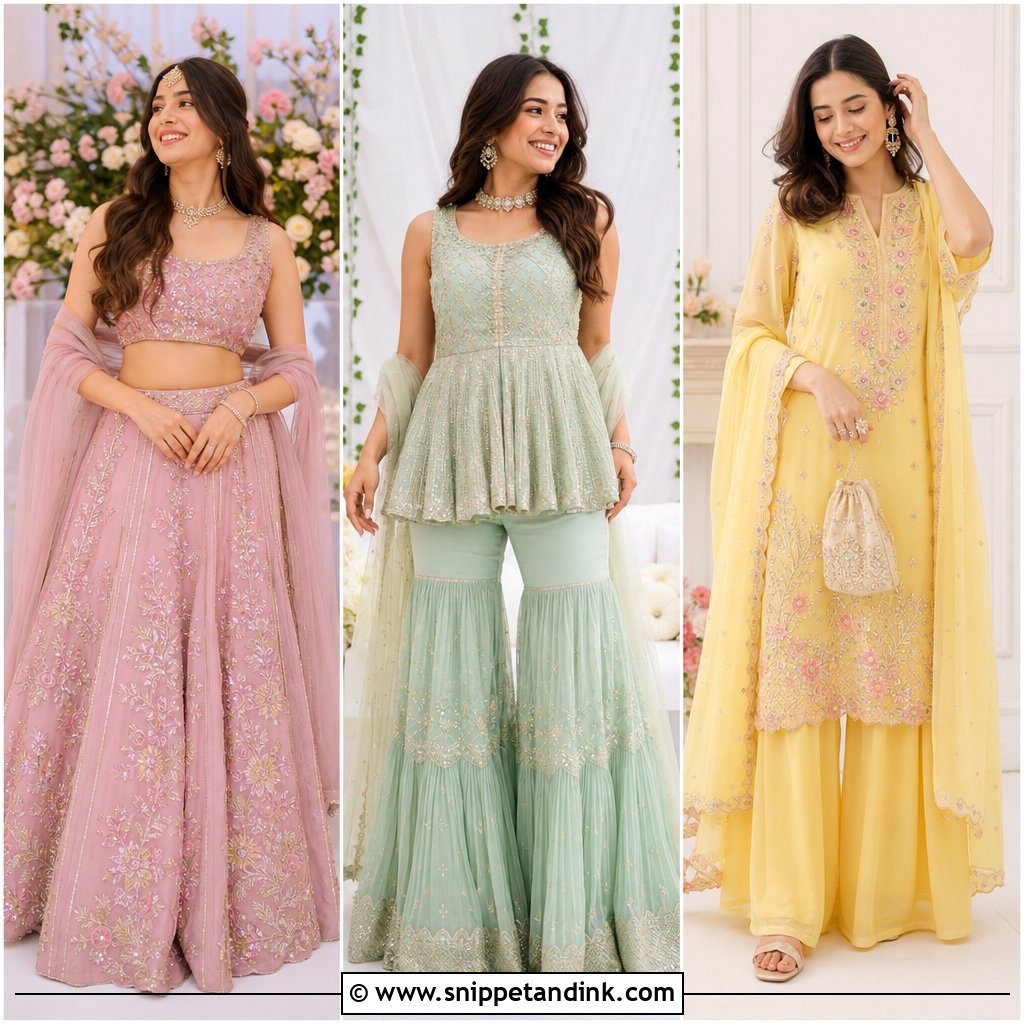
Floral lehengas belong to daylight. Choose organza, georgette or raw silk with scattered embroidered flowers, not dense bridal work, and a blouse with comfortable straps, short sleeves or a modest square neck. The sheer dupatta goes over one shoulder so the blouse stays visible. Scale matters with florals: I put petite brides in small motifs, since big blooms swallow a short frame, while taller or curvier brides carry a broader print well. Blush, mint, lilac and powder blue all suit a garden or a bright room. Pearl or kundan earrings, a small potli, juttis, and soft waves or a low bun.
2. Ivory Chikankari Anarkali Roka Outfit
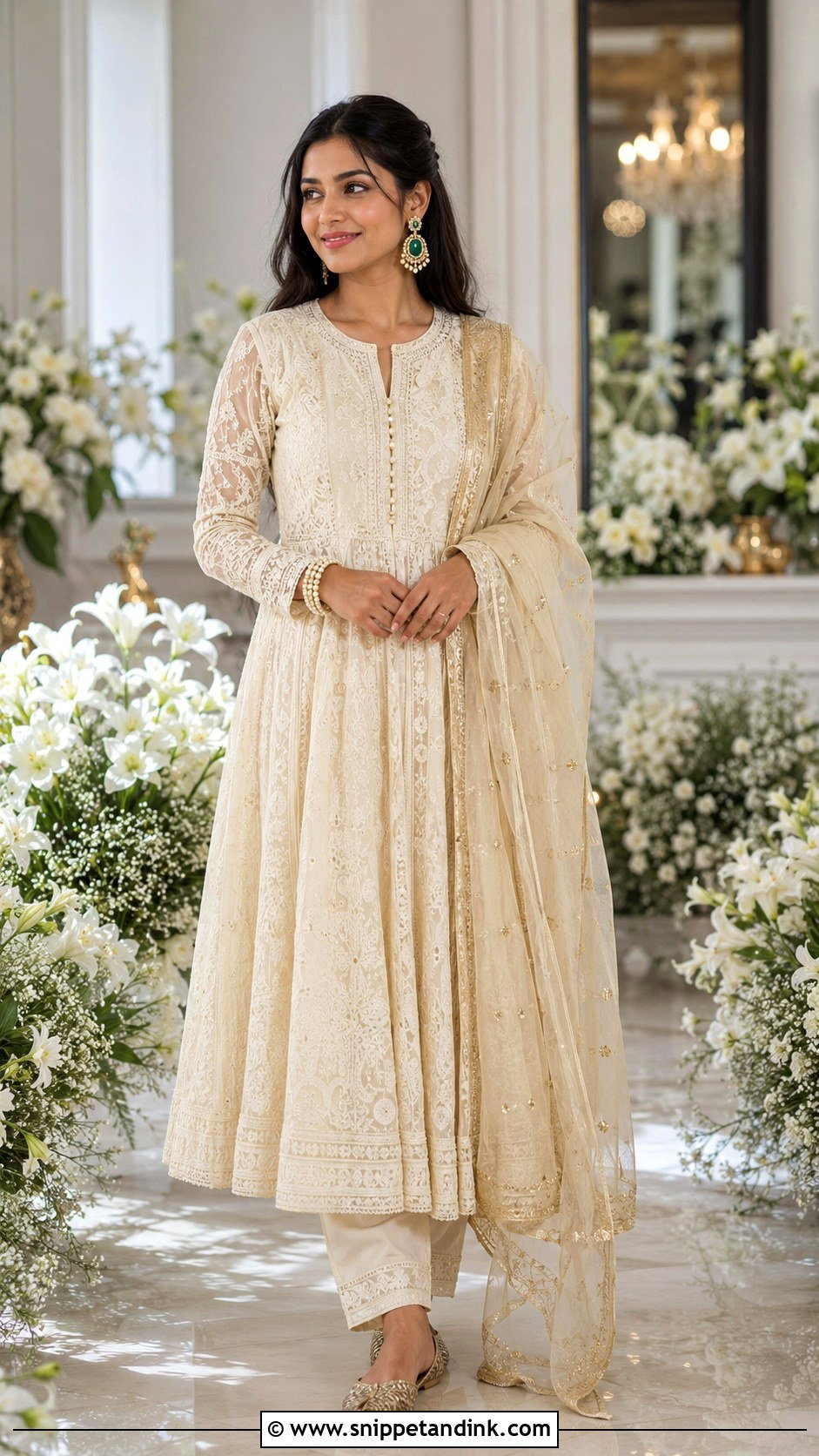
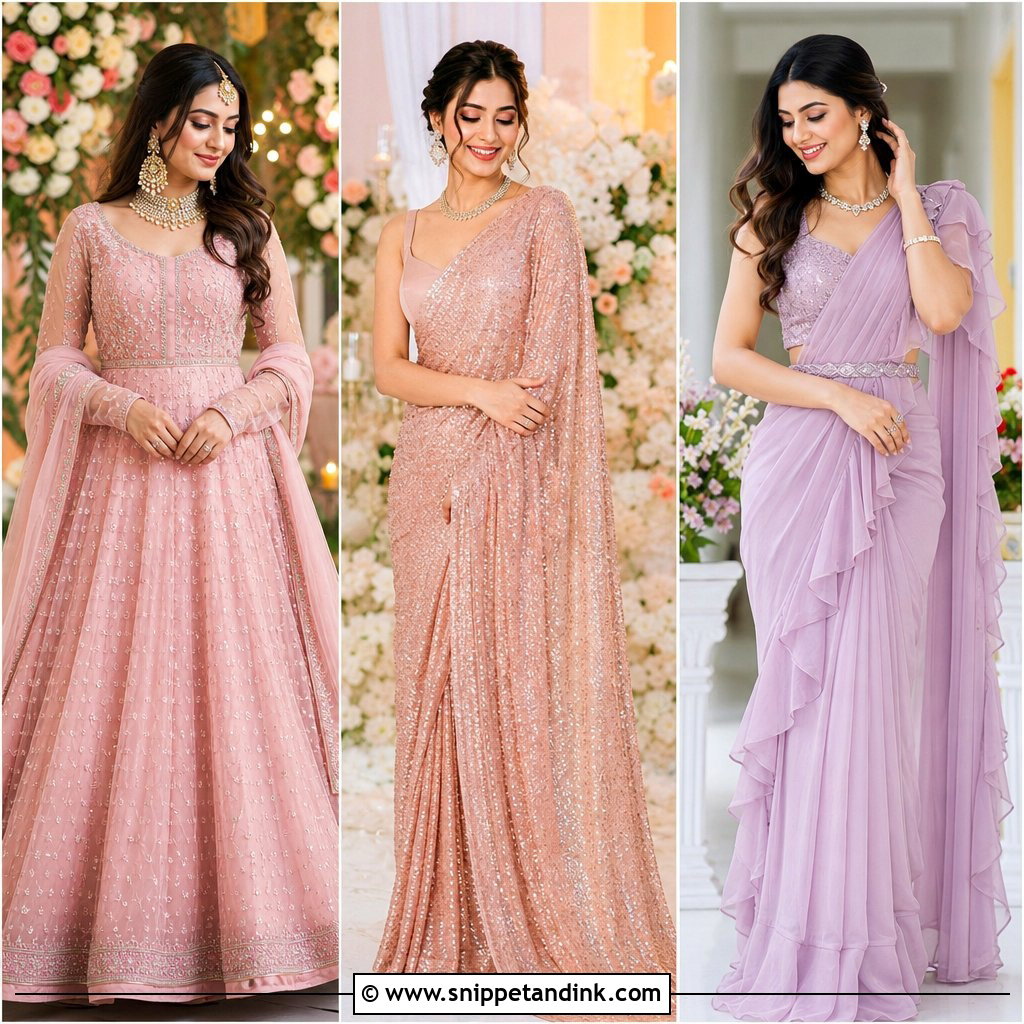
Chikankari is the answer when a bride wants tradition without shine. Soft ivory chikankari on a floor-length Anarkali, with tonal threadwork, a gentle flare and a few sequins, reads refined at a home ceremony or a daytime lunch. Check the transparency in daylight before you choose what goes underneath: fine chikan on thin mul often needs straight pants and a slip rather than a churidar. A pale gold or blush dupatta, emerald earrings, pearl bangles and gold juttis bring in color quietly. A sleek bun with small white flowers finishes it.
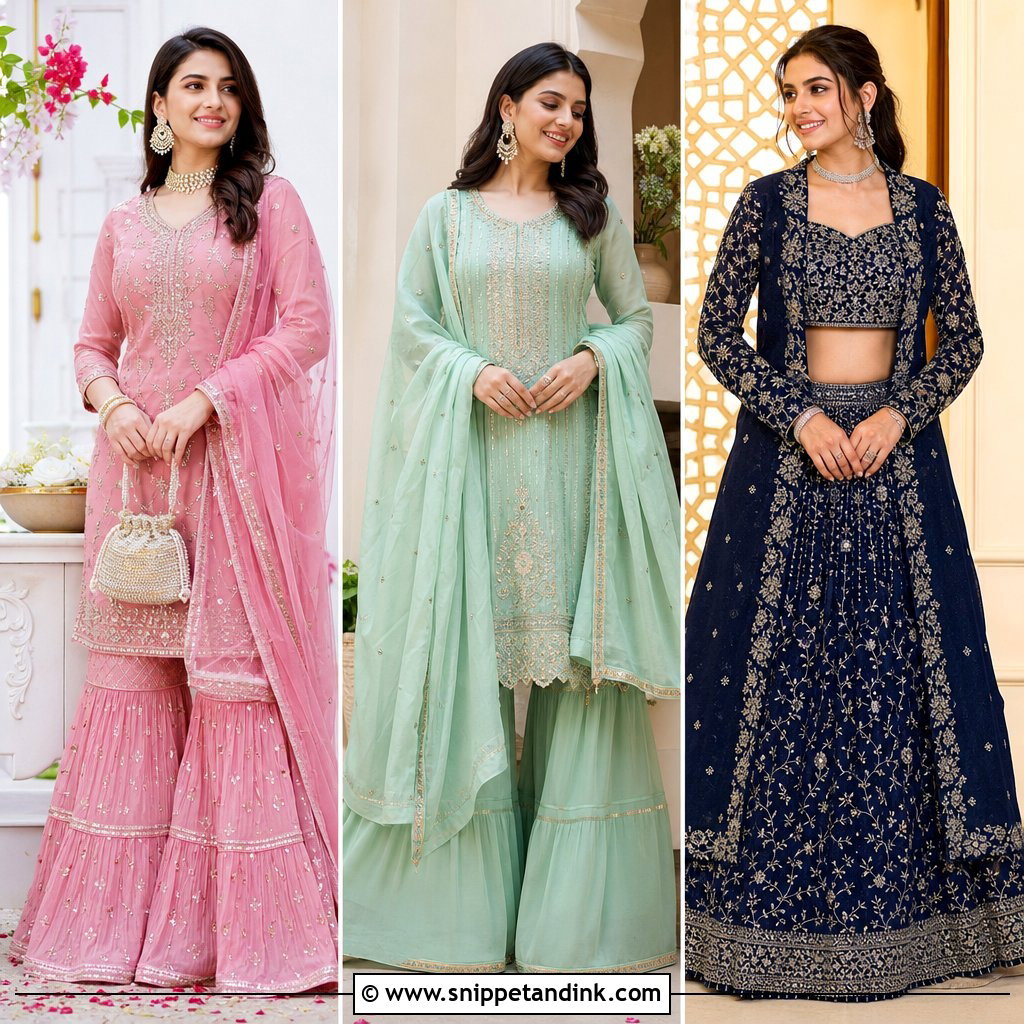
3. Blush Pink Sharara Roka Outfit
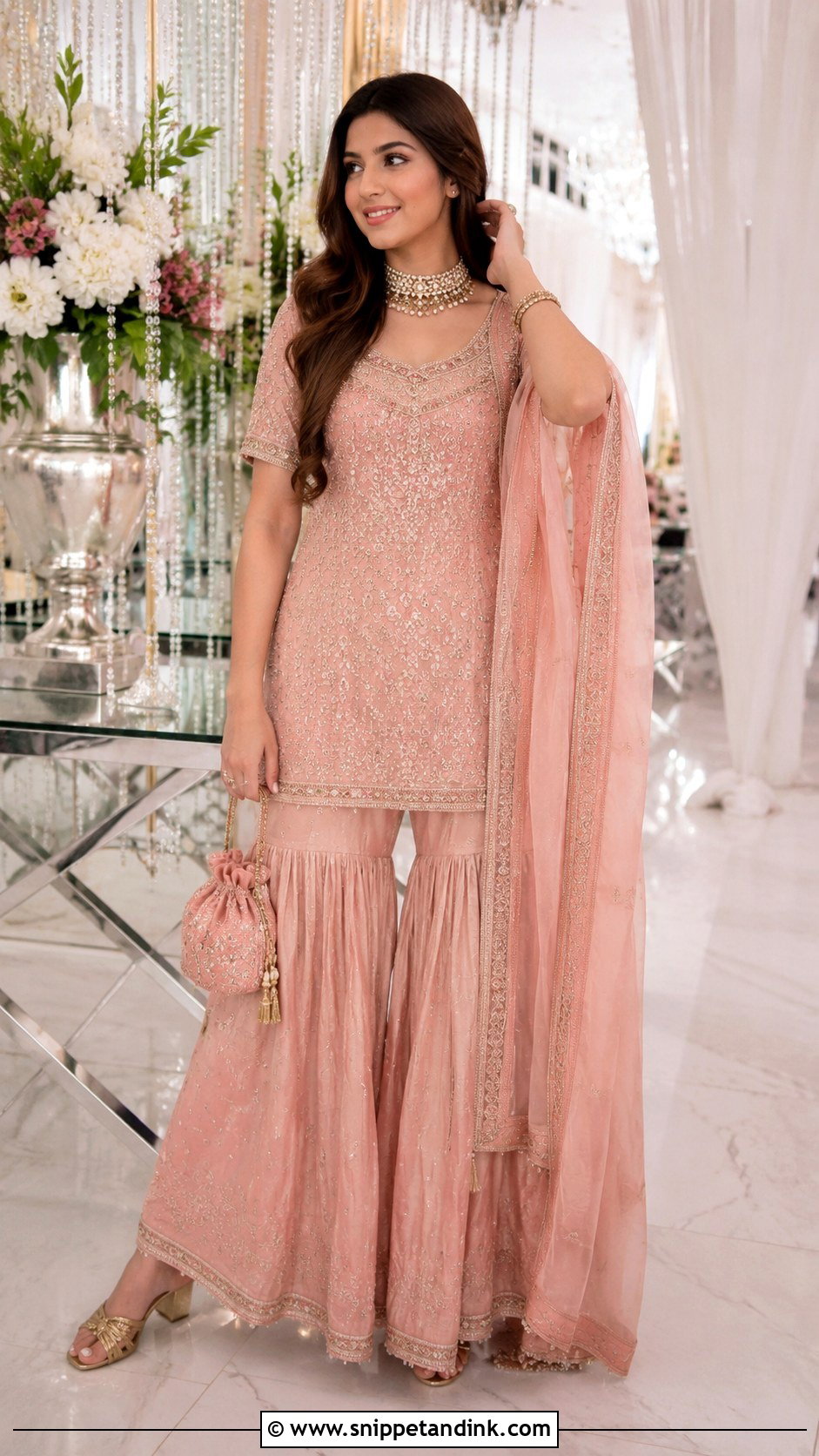
A blush pink sharara set is what I’d put a bride in for a long afternoon of greeting relatives. Wide flared pants under a short kurti ending at the upper thigh: that proportion keeps the flare visible and the whole shape balanced. Gota patti, pearls or fine zari carry better than heavy beadwork, which drags the sharara down and catches when you sit. Drape the dupatta over both arms or pin it at one shoulder. Kundan choker, small studs, metallic block heels or juttis, and a center-parted low ponytail. Blush pairs naturally with champagne, rose gold, ivory and soft green.
4. Red Banarasi Saree Roka Outfit
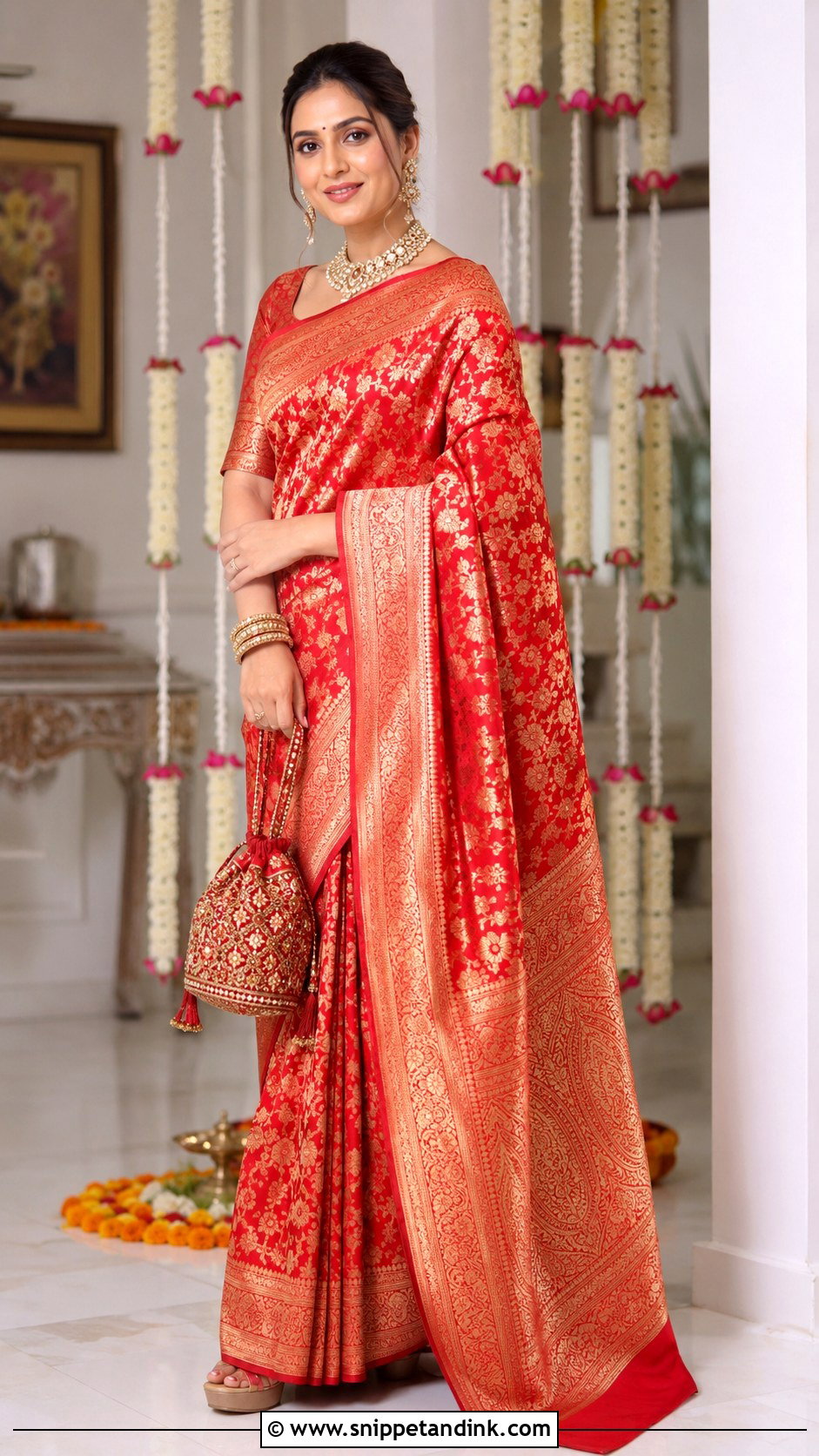
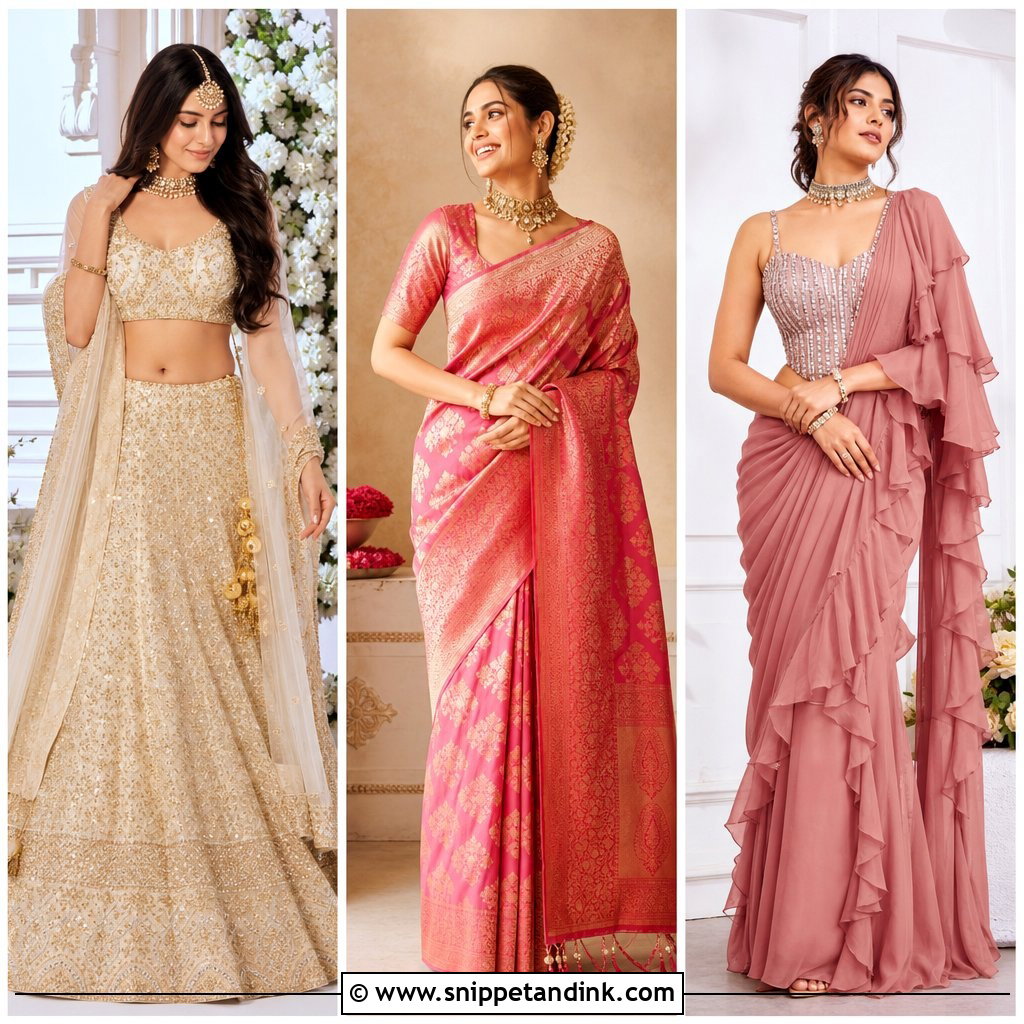
Red Banarasi at a Roka runs one risk: looking like the wedding. I get around it with a lighter weave, small butis or a restrained gold border instead of an all-over jaal. A fitted elbow-sleeve blouse in red, antique gold or contrasting pink, and a neatly pleated drape that holds through blessings and bending to touch feet. A short polki necklace, matching earrings, gold bangles, platform sandals and a structured potli. Soft gold eyes with a muted red lip, and a smooth low bun or braid so the weave stays the focus.
5. Mint Green Kurta Palazzo Roka Outfit
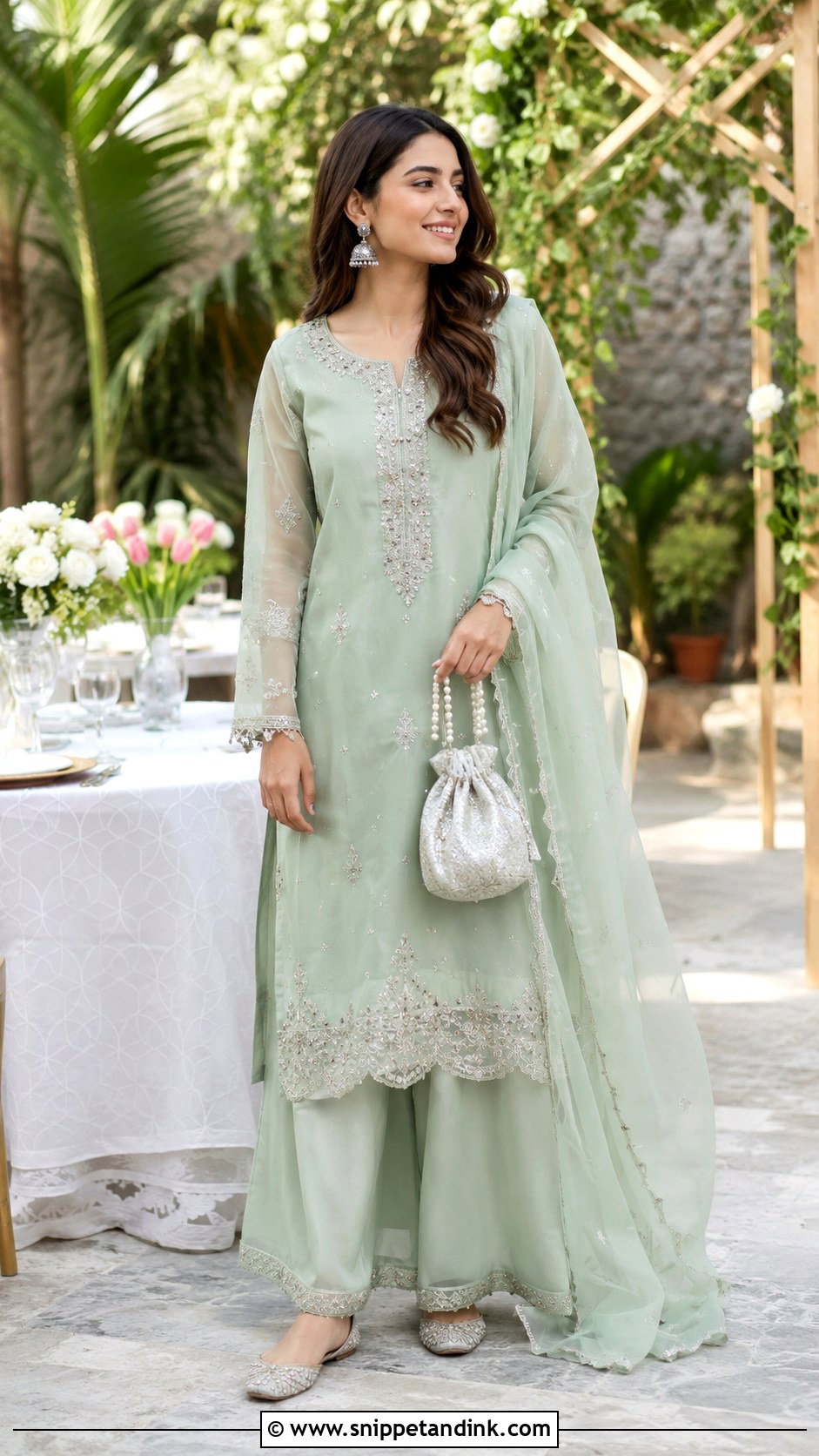
Mint and palazzos make the most comfortable outfit on this list, and comfort matters when you’ll be getting up and sitting down for hours. A long straight kurta with threadwork, pearls or silver gota at the neckline and cuffs, over palazzos in the same shade for one unbroken line. Pin an organza dupatta with embroidered corners at the shoulder. Silver jhumkas, a slim bracelet stack, embellished flats and a pearl-handled potli. I’d only suggest this for a spring or summer daytime Roka; mint looks faded under warm evening light.
6. Powder Blue Organza Saree Roka Outfit
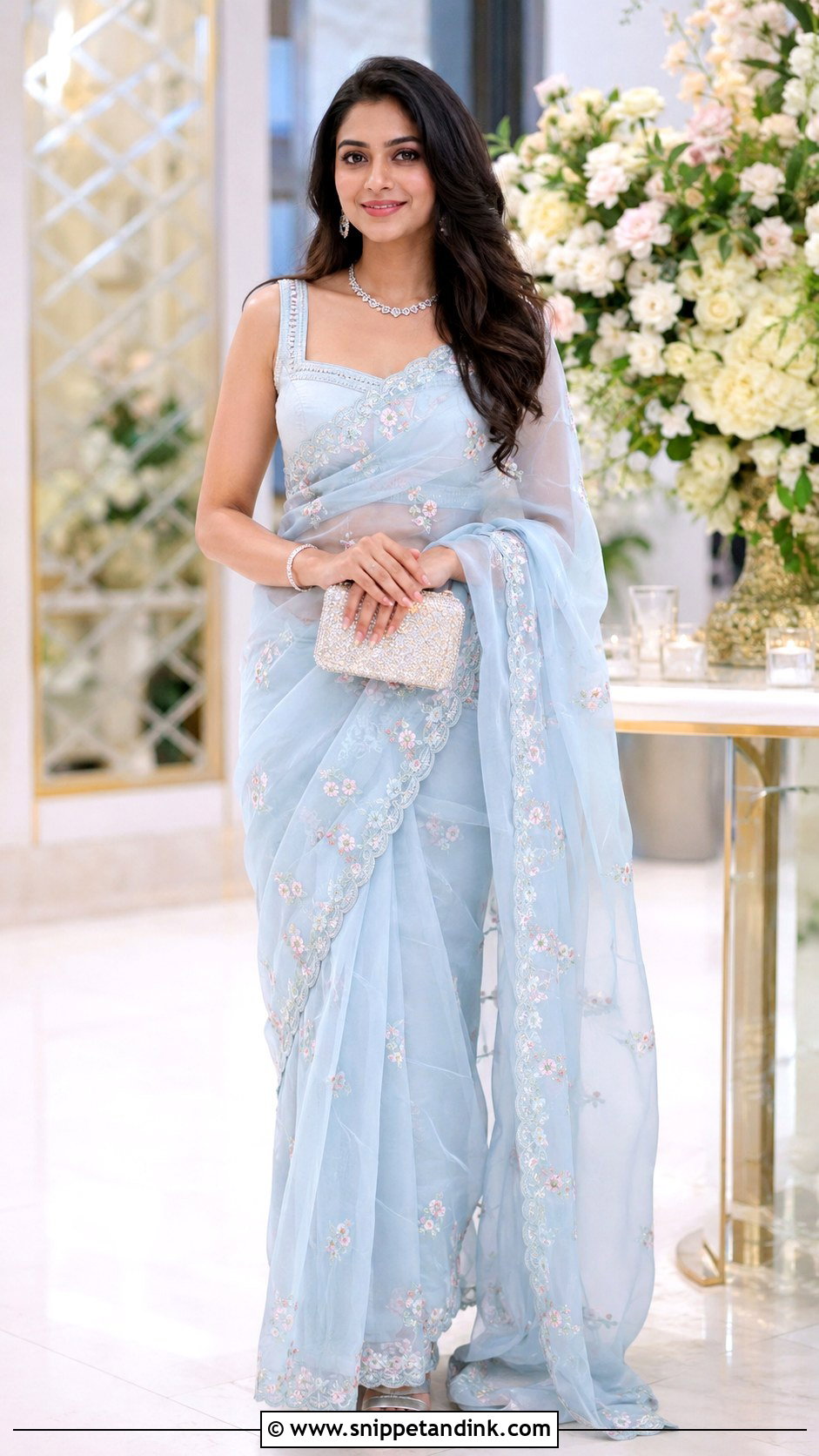
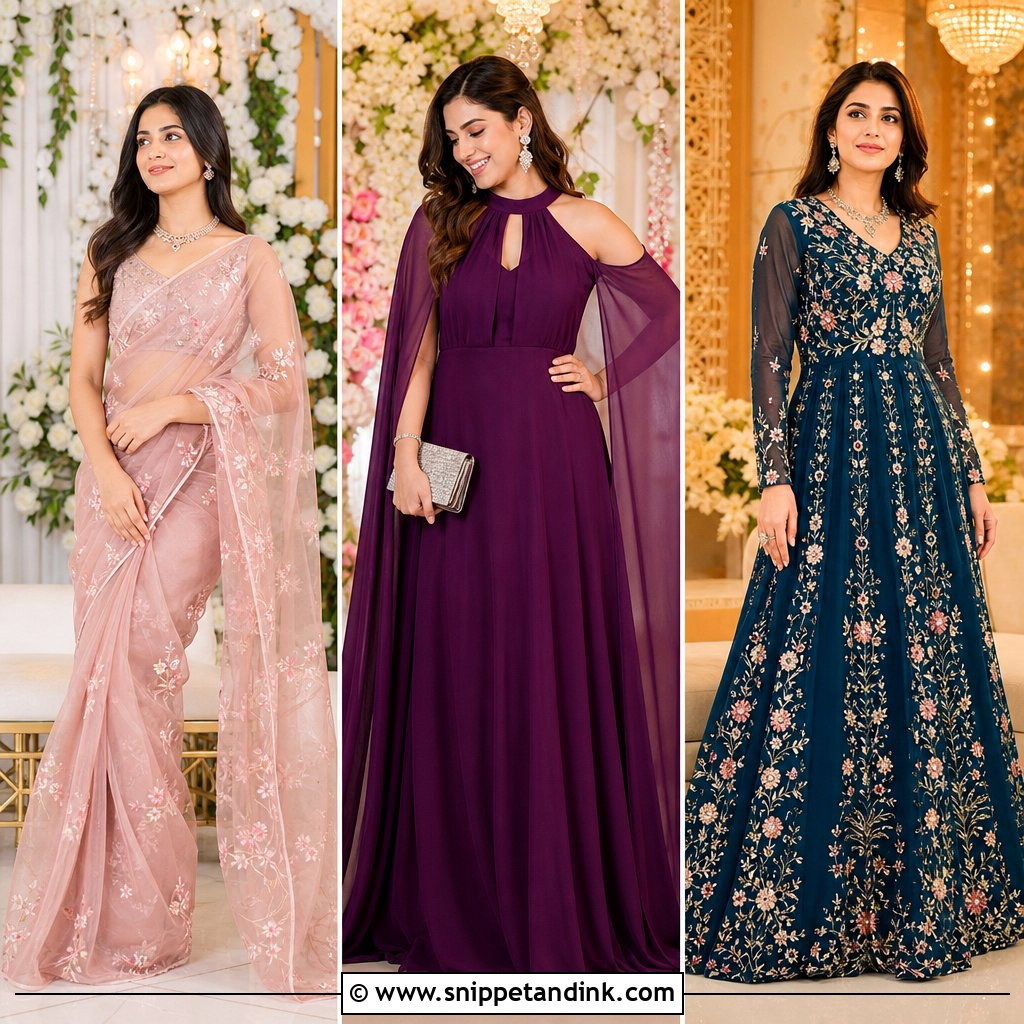
Organza holds its shape, which is lovely in the pleats and unforgiving if they’re careless. With a powder blue organza saree, I press and pin each pleat precisely and secure the shoulder drape well. Look for embroidered flowers, scalloped edges or a narrow sequin border, with a structured blouse in blue, silver or ivory; a square neck with elbow sleeves feels classic, sleeveless reads more modern. Diamond-look studs, a fine necklace, silver heels and a small clutch. Soft pink makeup stops the cool palette going flat. Finish with a polished ponytail or side-parted waves.
7. Emerald Green Velvet Anarkali Roka Outfit
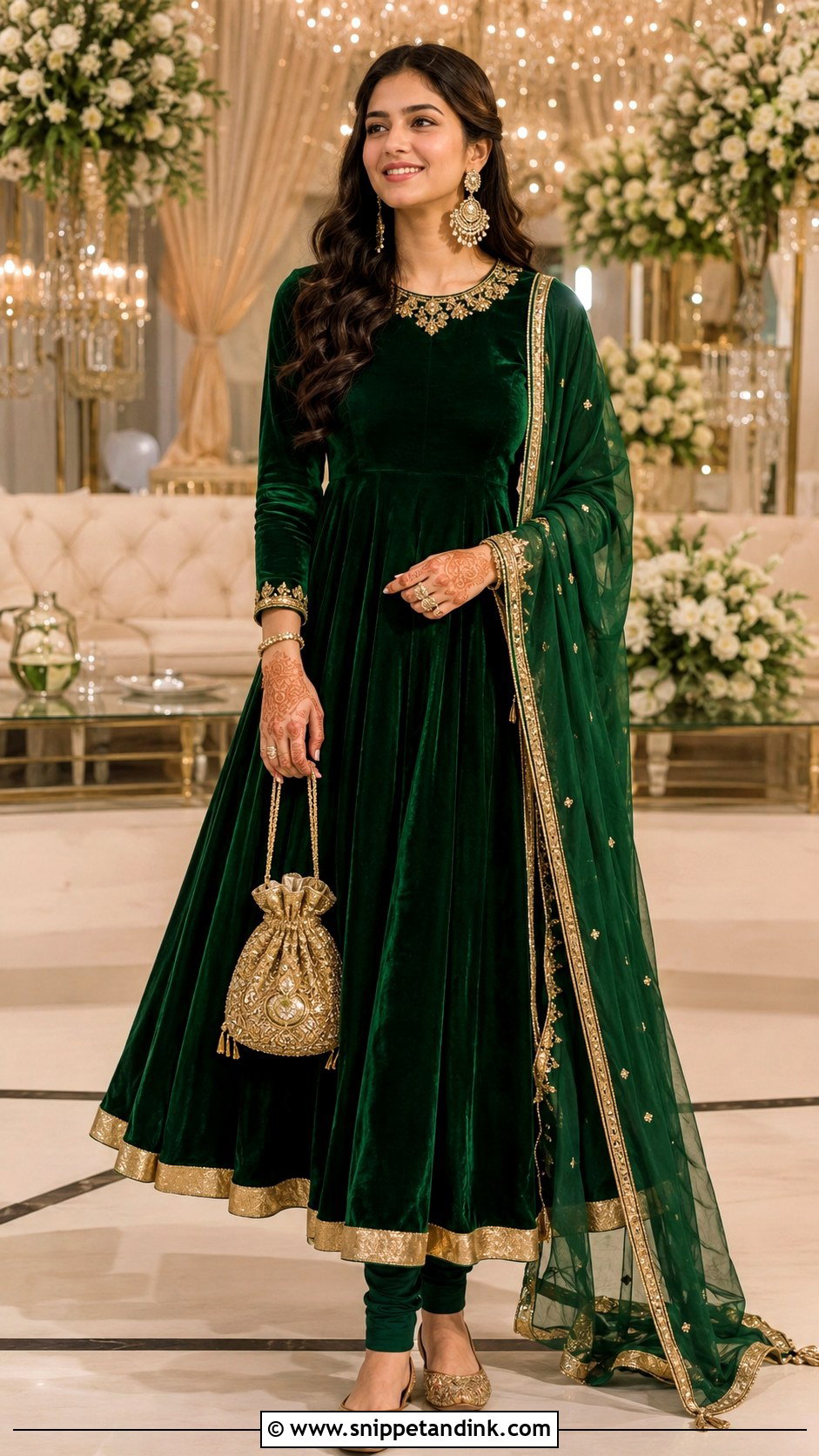
Velvet is for cool evenings only. In a heated room or on a mild night it turns heavy fast. For the right weather, an emerald velvet Anarkali with a fitted bodice, moderate flare and antique gold work at the neckline, sleeves or hem feels rich. I hold back on embellishment because velvet’s depth already does the work; too much embroidery and it starts looking weighed down. Slim churidar, a net or organza dupatta, kundan earrings, a statement ring, juttis and a maroon or antique gold potli. Low bun or smooth waves.
8. Peach Gharara Roka Outfit
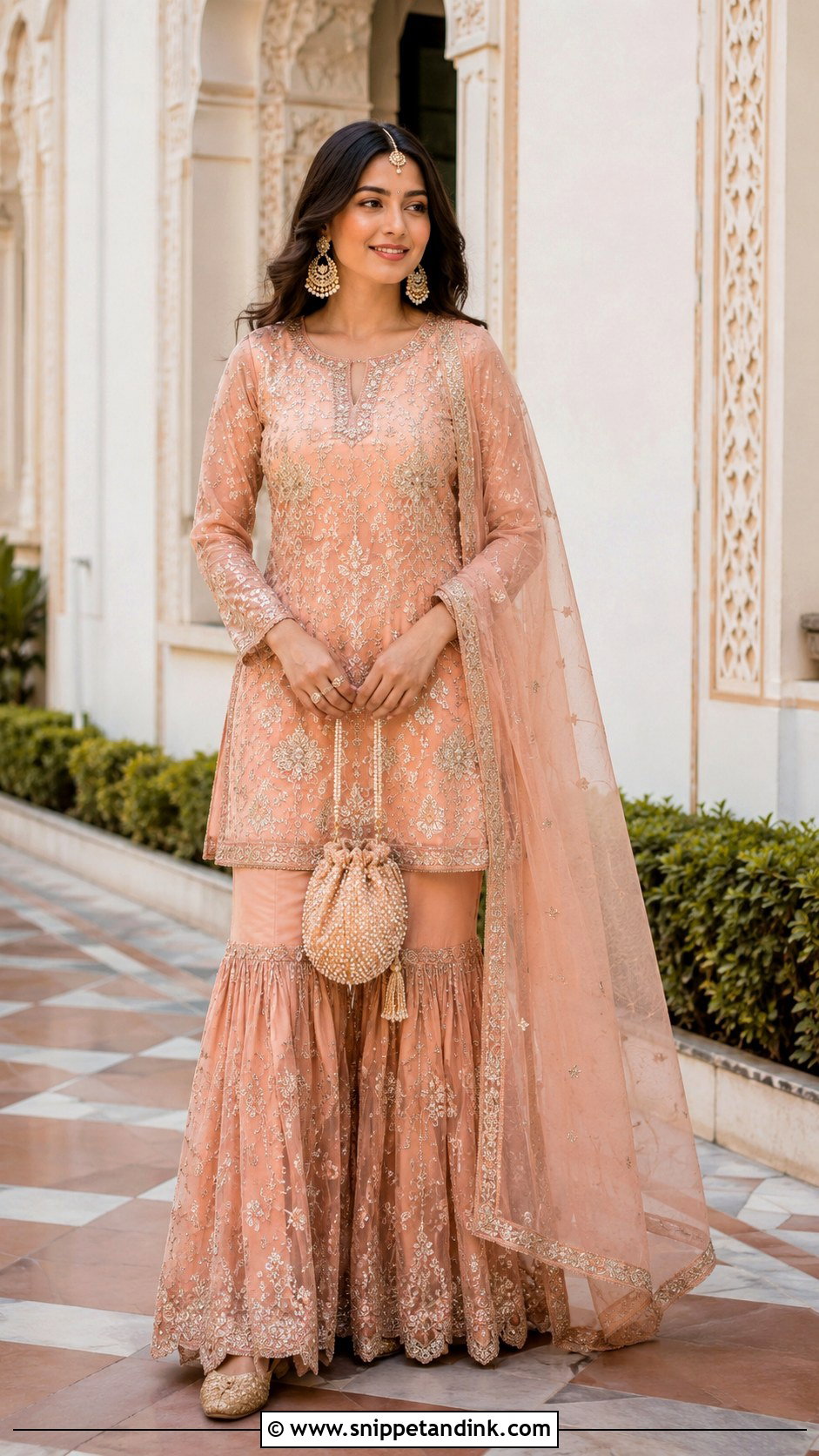
Gharara and sharara get confused all the time. The gharara is fitted to the knee, where a visible seam, usually covered by an embroidered band, opens into the flare. That seam is what gives it its old-world look. In peach, with a short kurti carrying zari, dabka or pearls, it suits a close family Roka. A chiffon or organza dupatta loosely over one shoulder, chandbalis, a small maang tikka, gold juttis and a beaded potli. Peach pairs well with ivory, antique gold and soft green. A braided bun or gentle curls, and a peach lip for daytime.
9. Lavender Cape Lehenga Roka Outfit
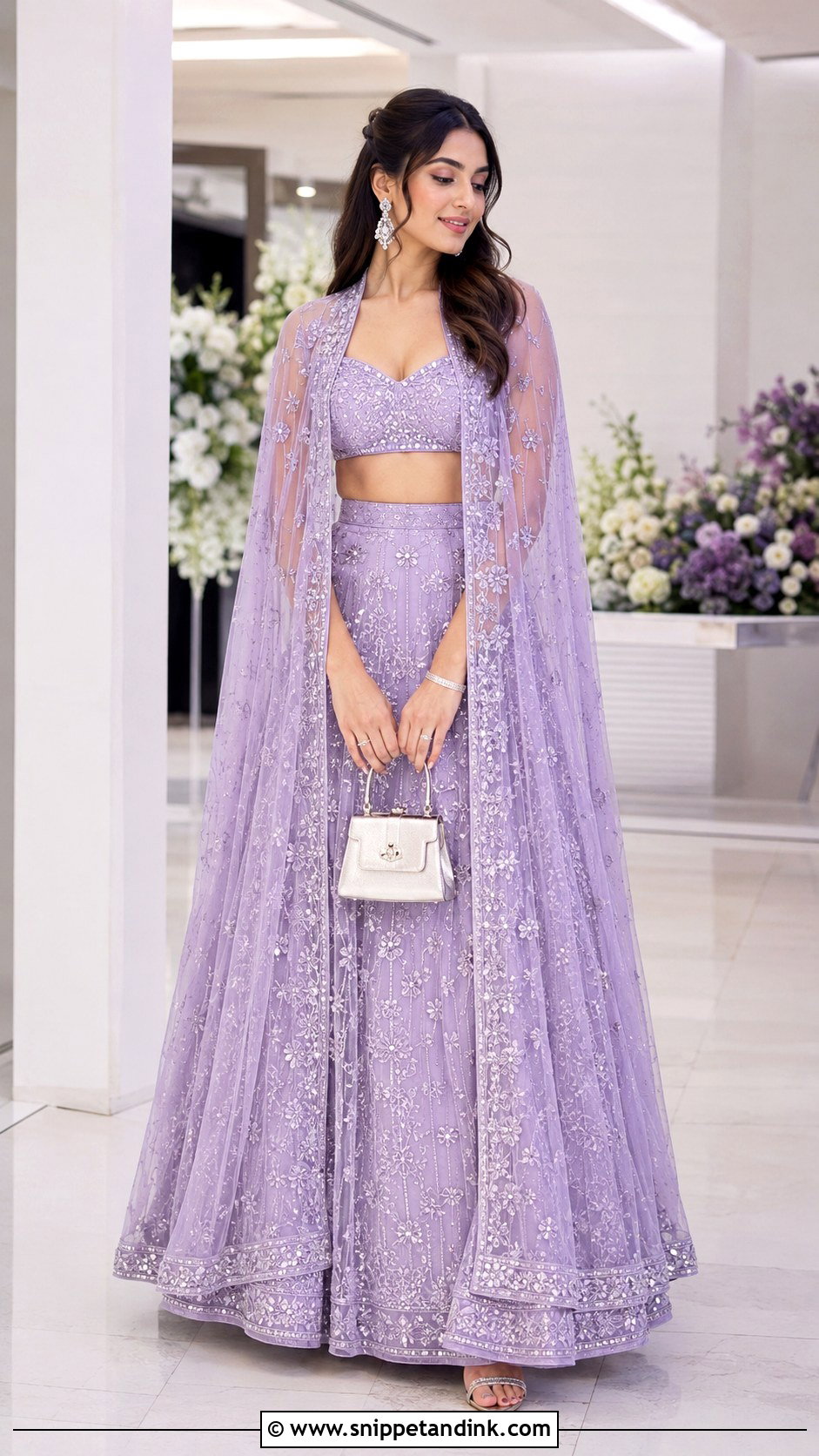
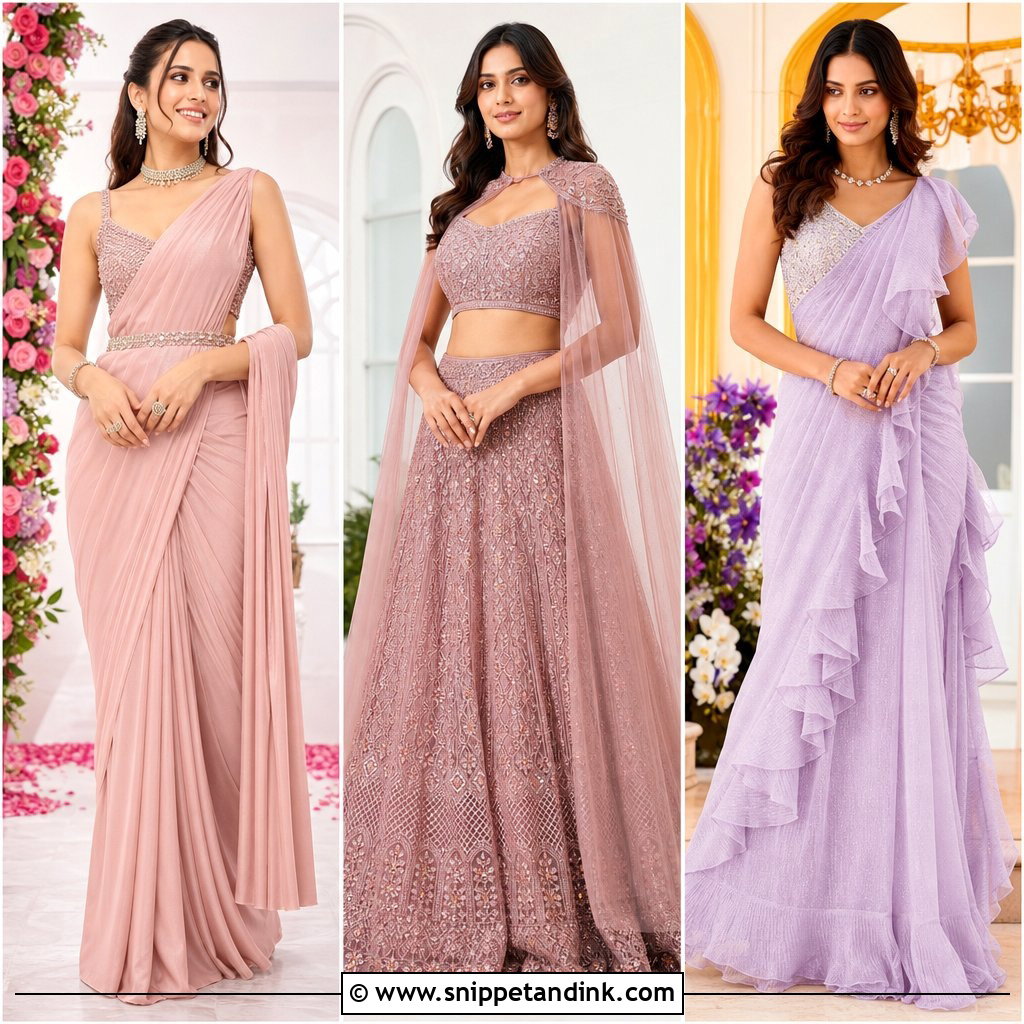
A cape lehenga solves the dupatta problem, nothing to re-pin, while still giving you coverage at the shoulders. Lavender suits an afternoon or early-evening Roka in a bright, neutral room. Pair a lightly embellished A-line skirt with a fitted crop blouse and a sheer cape, waist-length or floor-length. The embroidery should sit on the cape shoulders and borders so it frames the face; keep the skirt simple. A high waist gives coverage when you sit. I’d skip a big necklace if the cape neckline is worked. Crystal earrings, silver sandals, a structured mini bag and loose waves or a sleek ponytail.
10. Yellow Mirror Work Sharara Roka Outfit
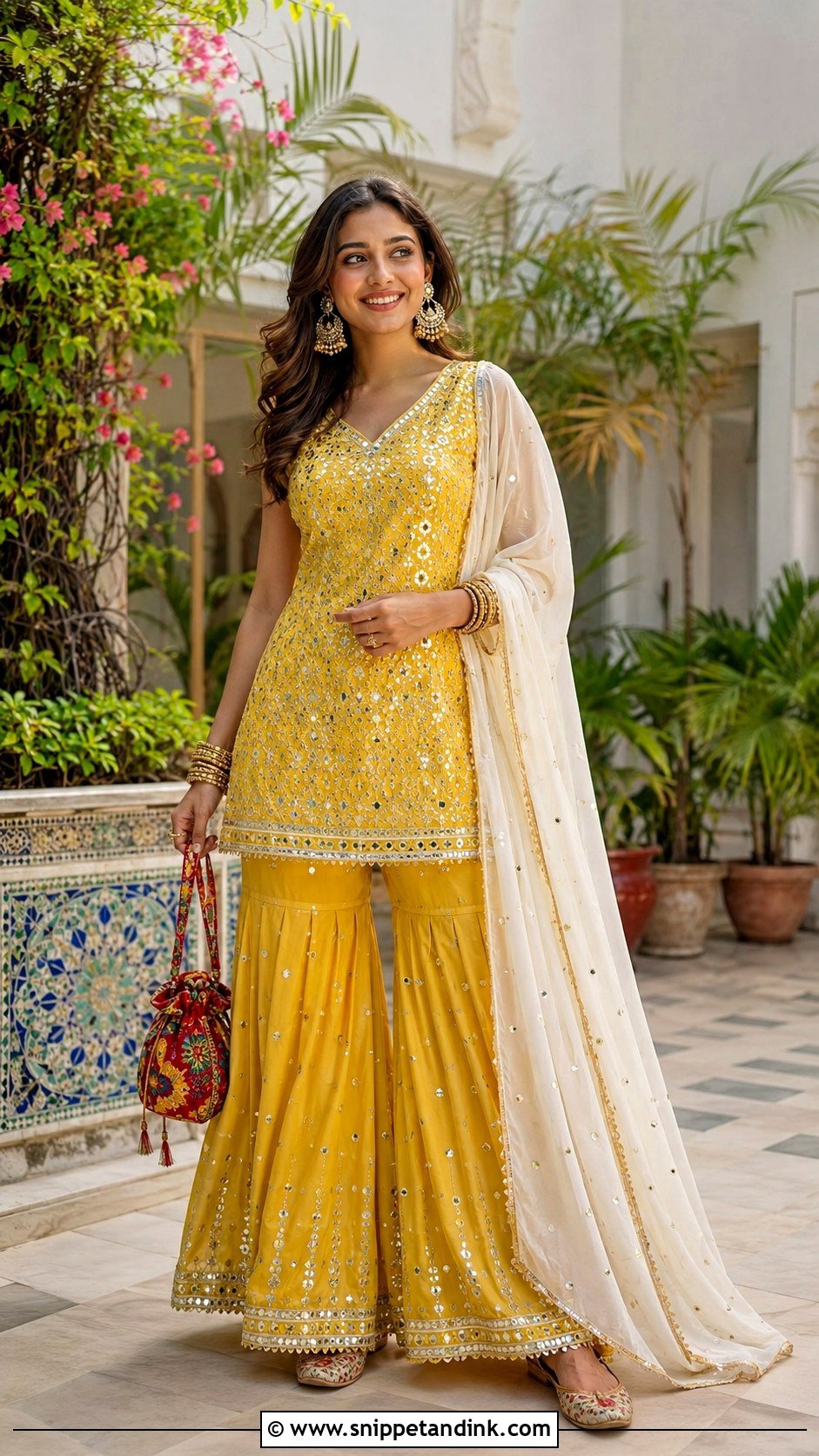
Yellow mirror work brings daytime energy, and the placement of the mirrors decides whether it looks festive or cluttered. Put the controlled mirror work on the short kurti and keep the sharara lighter, so the eye has one place to land. A plain or lightly bordered dupatta in yellow, ivory or pink, traditional jhumkas, stacked bangles and embroidered juttis. Mirror fabric weighs more than it looks, so the dupatta needs proper pins. A colorful potli can add turquoise or coral. Braided ponytail, fresh makeup and a rose-toned lip, for a garden, terrace or home celebration.
11. Teal Pre-Draped Saree Roka Outfit
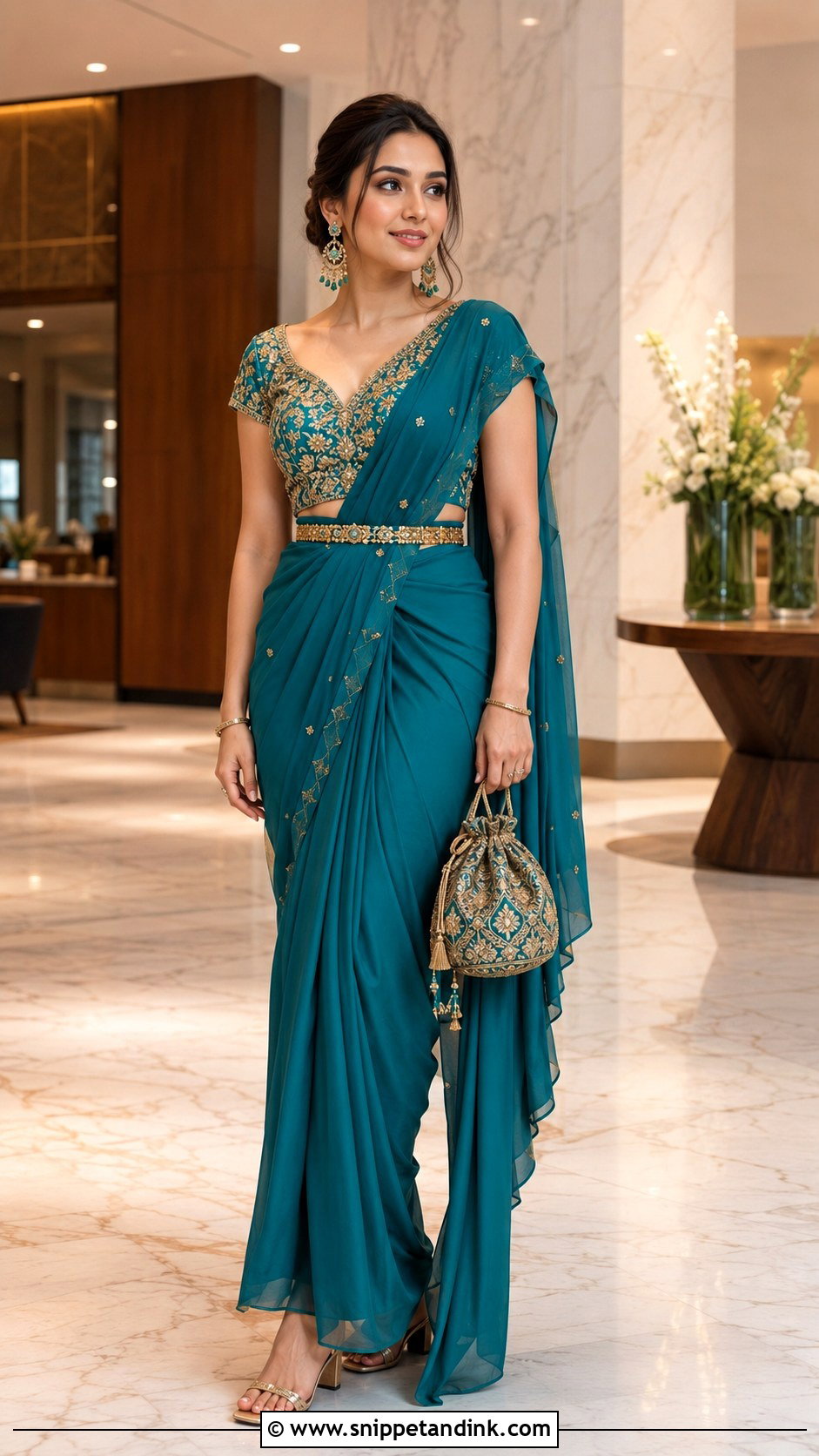
A pre-draped saree is the practical choice for a bride who has never worn a saree for hours. The pleats are stitched, the waist is defined, and the light pallu falls the same way every time you stand up. Teal works from afternoon into evening. Pair it with a fitted blouse with tonal embroidery or a modest asymmetric neckline, antique gold earrings, a slim waist belt, block heels and a structured potli. Keep the jewelry focused so the drape stays the feature. A sleek bun, bronze eyes and a neutral lip.
12. Rose Gold Indo-Western Gown Roka Outfit
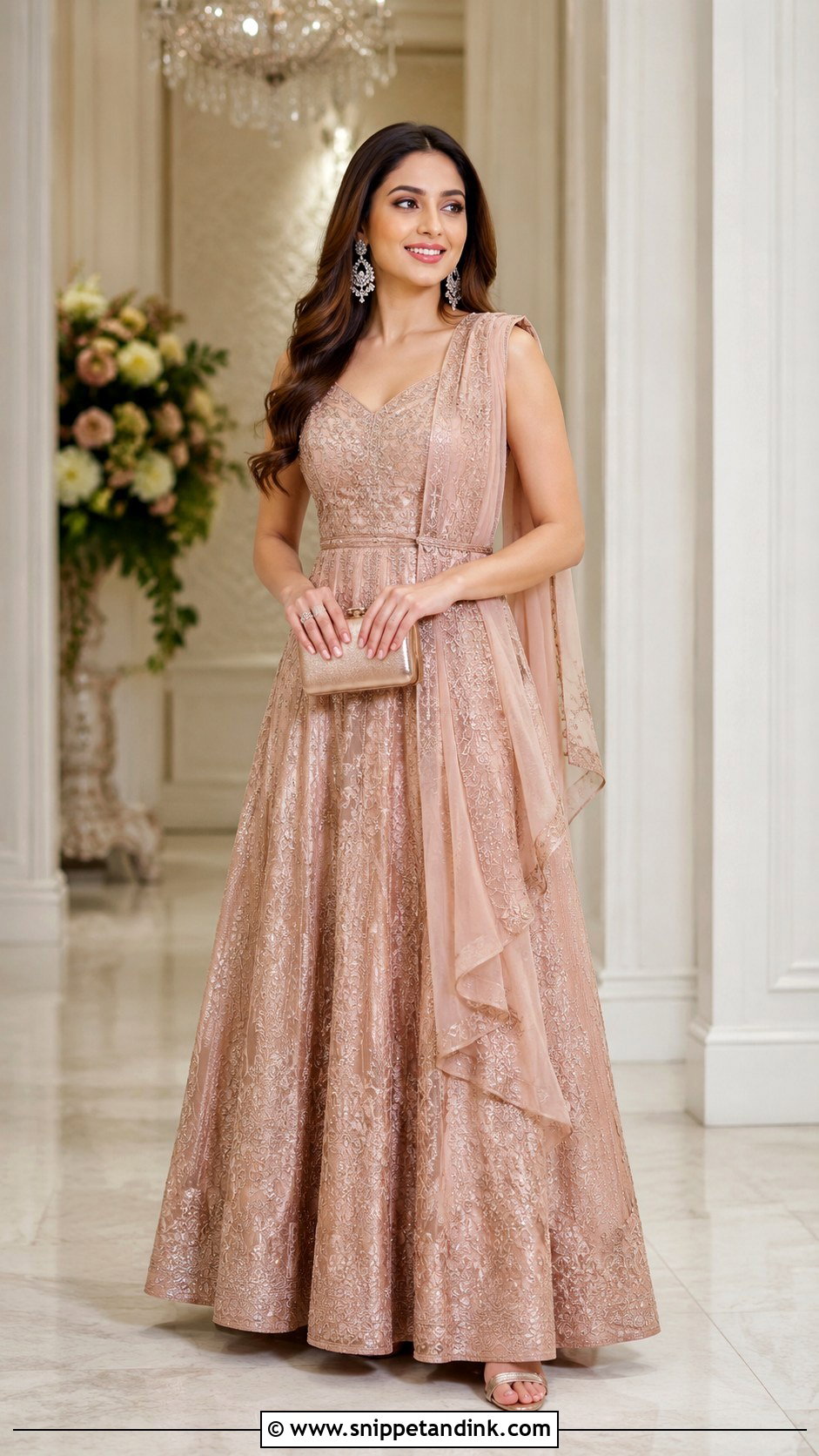
An Indo-Western gown fits a hotel, restaurant or evening Roka, and the trick is making it clearly Indian. I look for a draped shoulder panel, an attached cape or a dupatta-style detail, plus Indian embroidery on a rose gold floor-length gown with a defined waist and a skirt that lets you walk. Tonal sequins and threadwork, never an all-glitter surface that flattens in photos. Crystal drop earrings, a cocktail ring, metallic heels and a box clutch. If the neckline is worked, skip the necklace. Side-swept waves or a sleek low ponytail.
13. White And Gold Kasavu Saree Roka Outfit
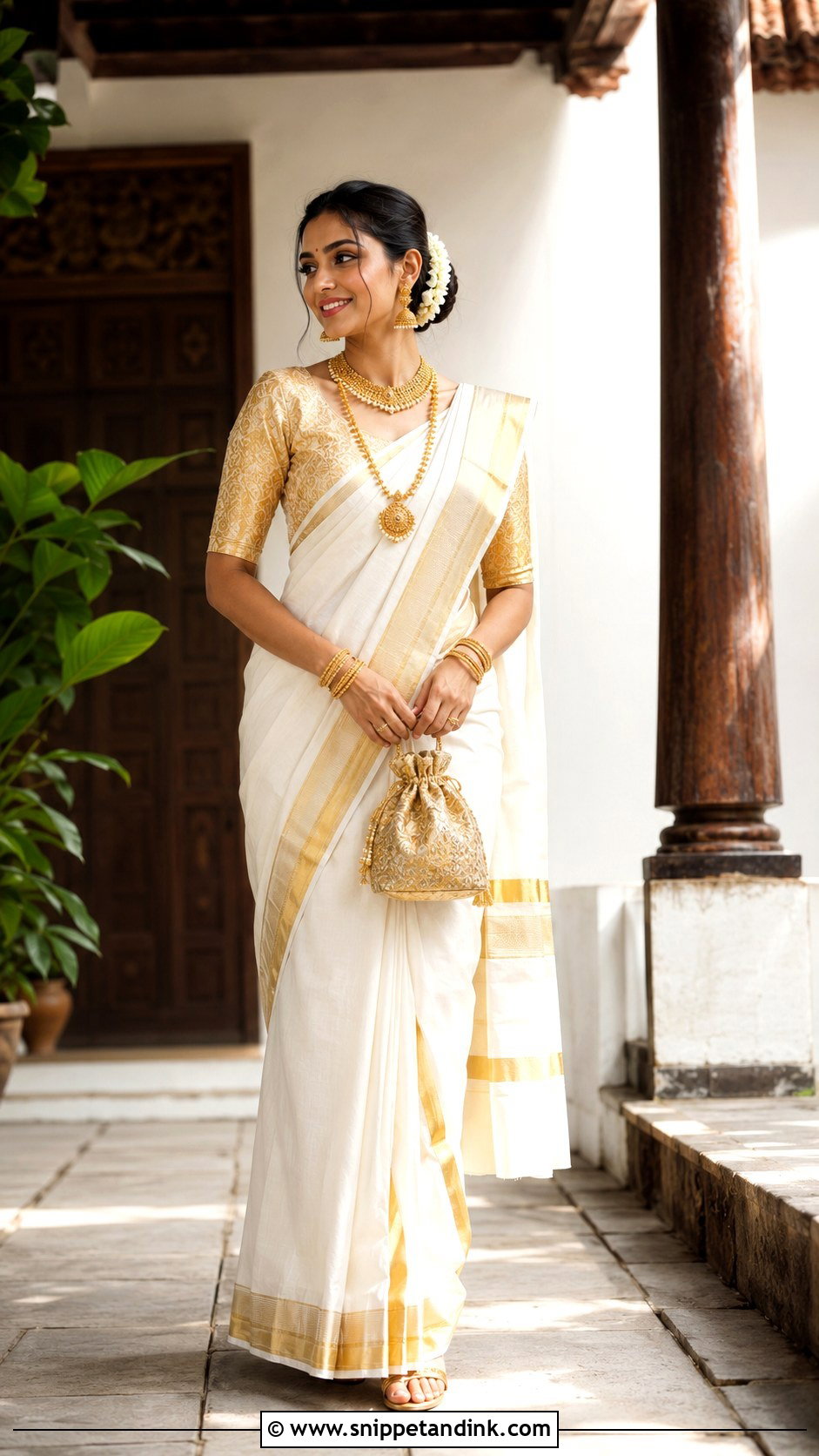
A white and gold Kasavu is understated in the best way, and the blouse changes its whole mood. Gold brocade makes it rich; emerald, magenta or maroon gives contrast and a little more personality. For a Roka with seated rituals, the drape has to be pinned well at the waist and shoulder, because handloom cotton relaxes and slips as the day warms up. Temple-style earrings, layered gold bangles, a small pendant, gold sandals and a structured potli. Fresh flowers around a low bun or braid, defined liner and a berry or rose lip.
14. Rani Pink Silk Lehenga Roka Outfit
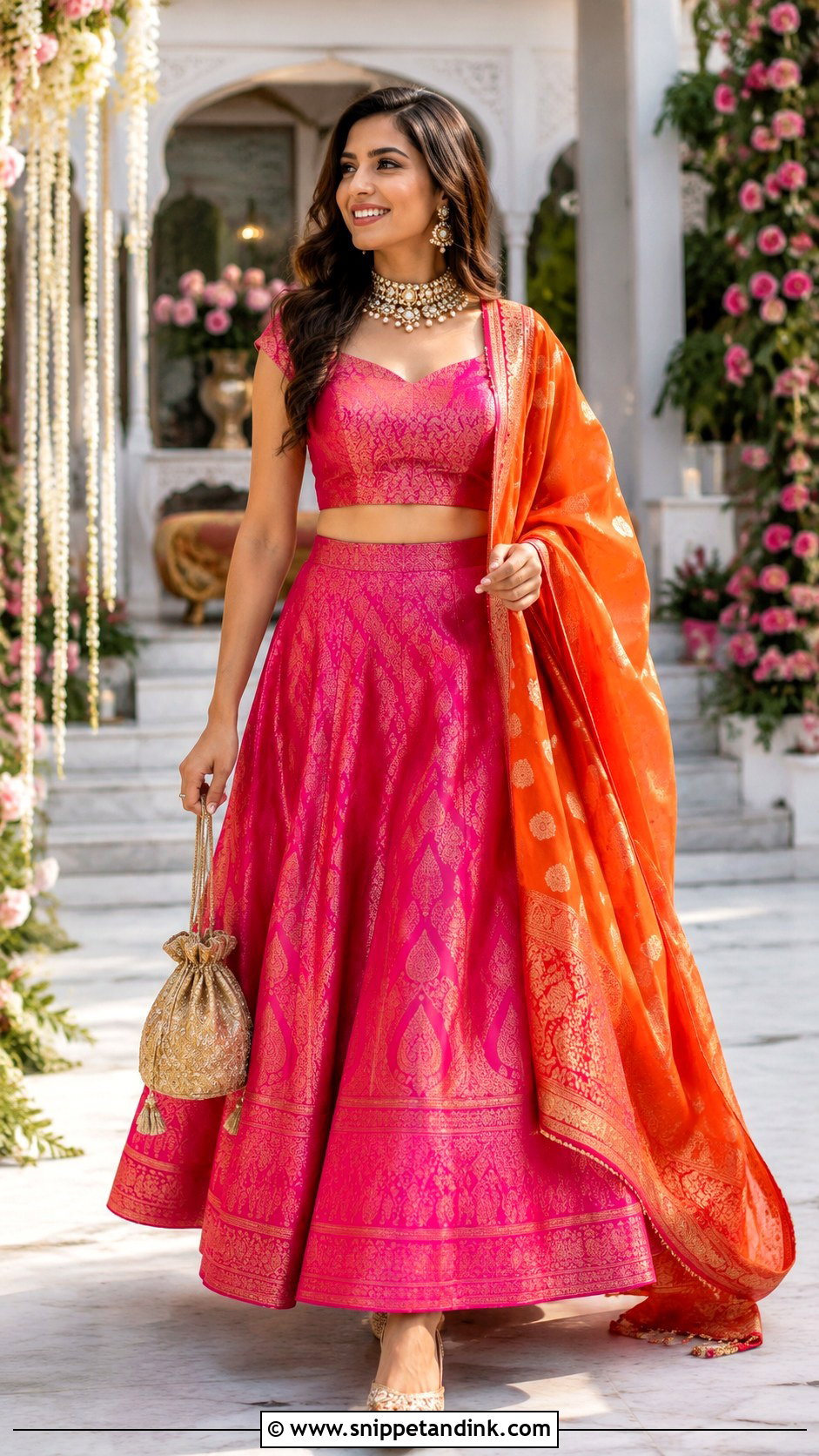
Rani pink makes an entrance, so I tone down the work to keep it Roka-appropriate. A silk lehenga with moderate flare and gold woven motifs rather than dense bridal embroidery, with an orange, red or green dupatta for a lively contrast or a matching pink one for a sleeker line. A high-waisted skirt and a correctly placed blouse hem define the waist on almost any body shape. Kundan choker, small earrings, embroidered juttis and an antique gold potli. Kohl-lined eyes and a muted pink lip keep your face from being overpowered by the color.
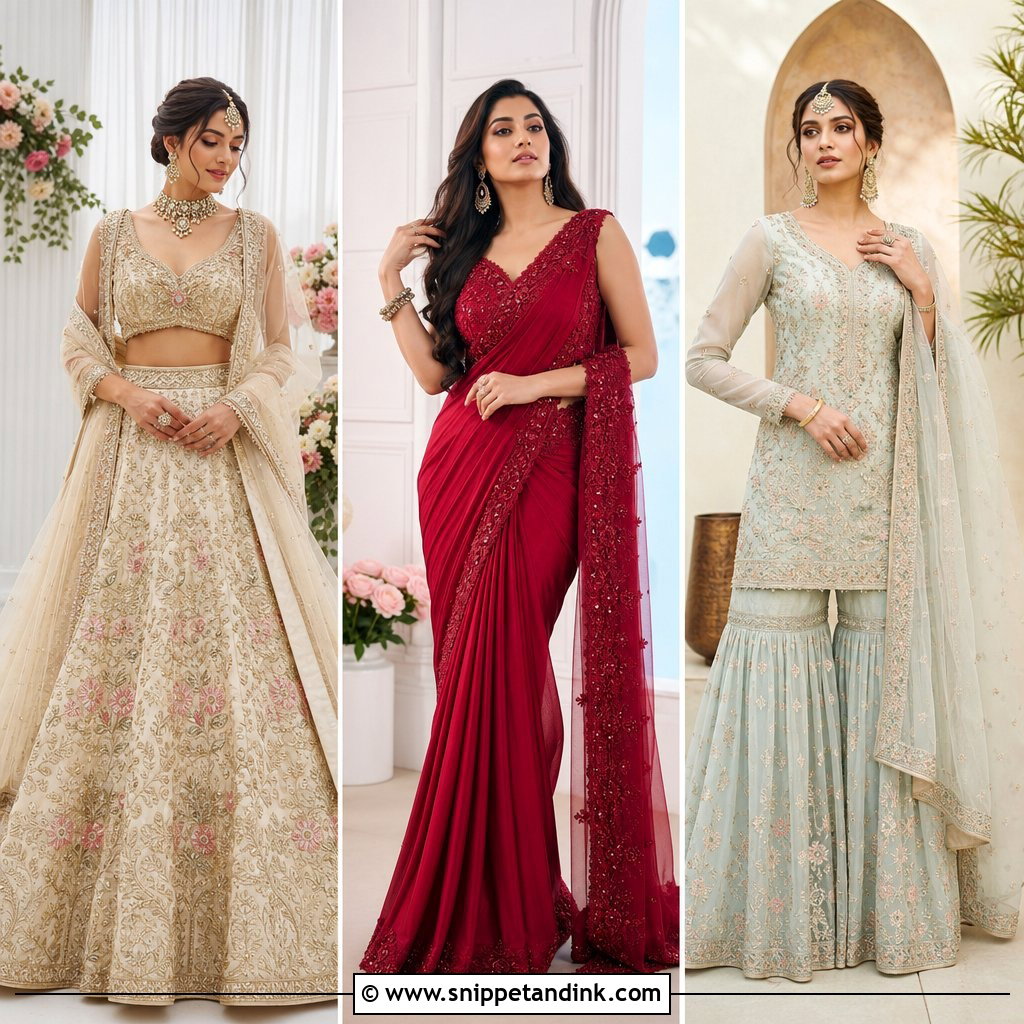
15. Sage Green Jacket Kurta Roka Outfit
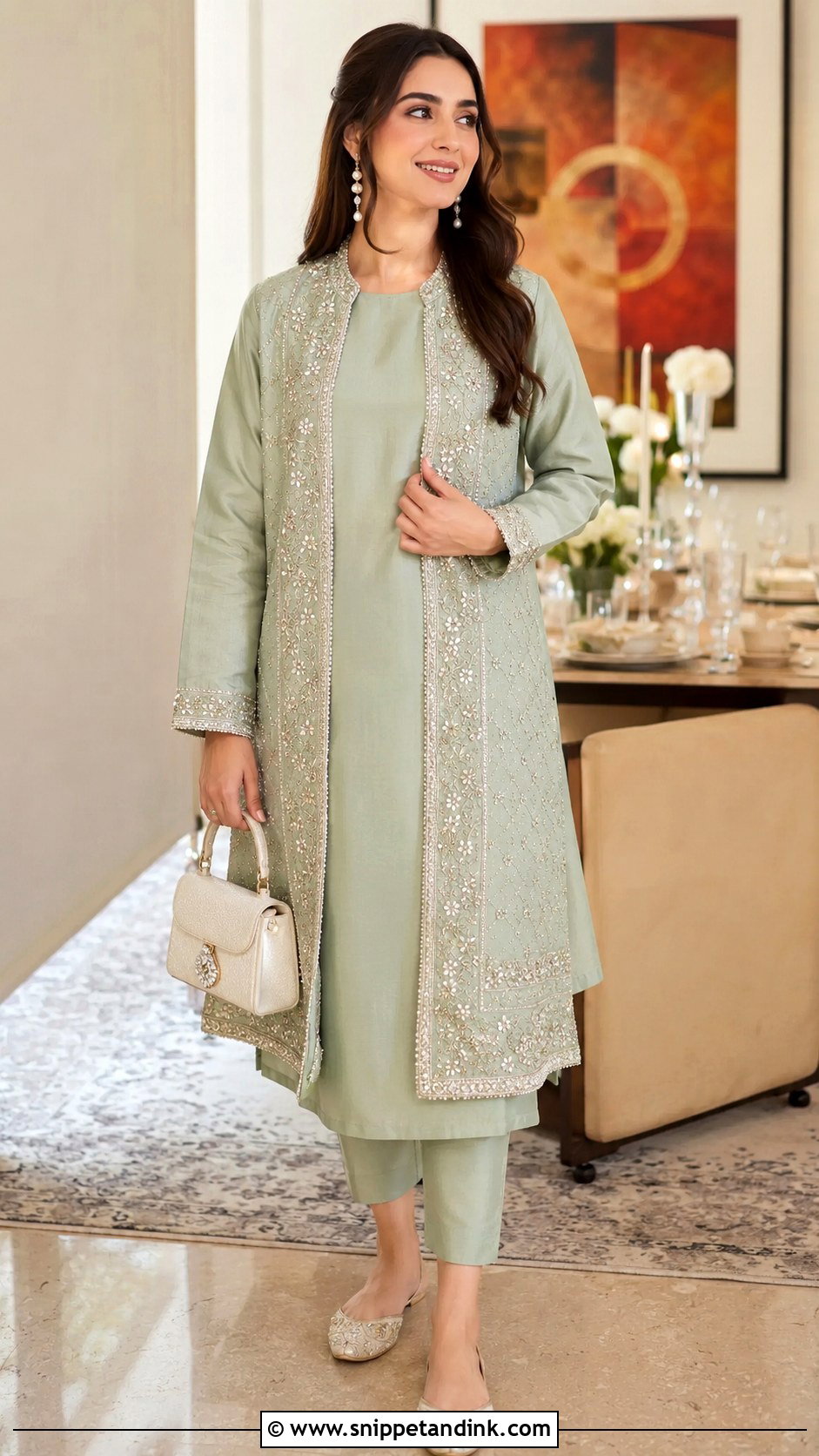
For a simple home Roka or a lunch, a sage jacket kurta set is the most relaxed outfit here. A sleeveless or short-sleeve straight kurta and cigarette pants, with an open embroidered jacket falling below the knee for movement and coverage. That open front draws a long vertical line, which flatters most heights. Fine threadwork, beads or small sequins give enough festive detail. The jacket replaces a dupatta, so there’s nothing to manage while you hold a plate of mithai. Pearl earrings, a fine bracelet, pointed juttis, a small ivory bag and soft waves.
16. Maroon Peplum Sharara Roka Outfit
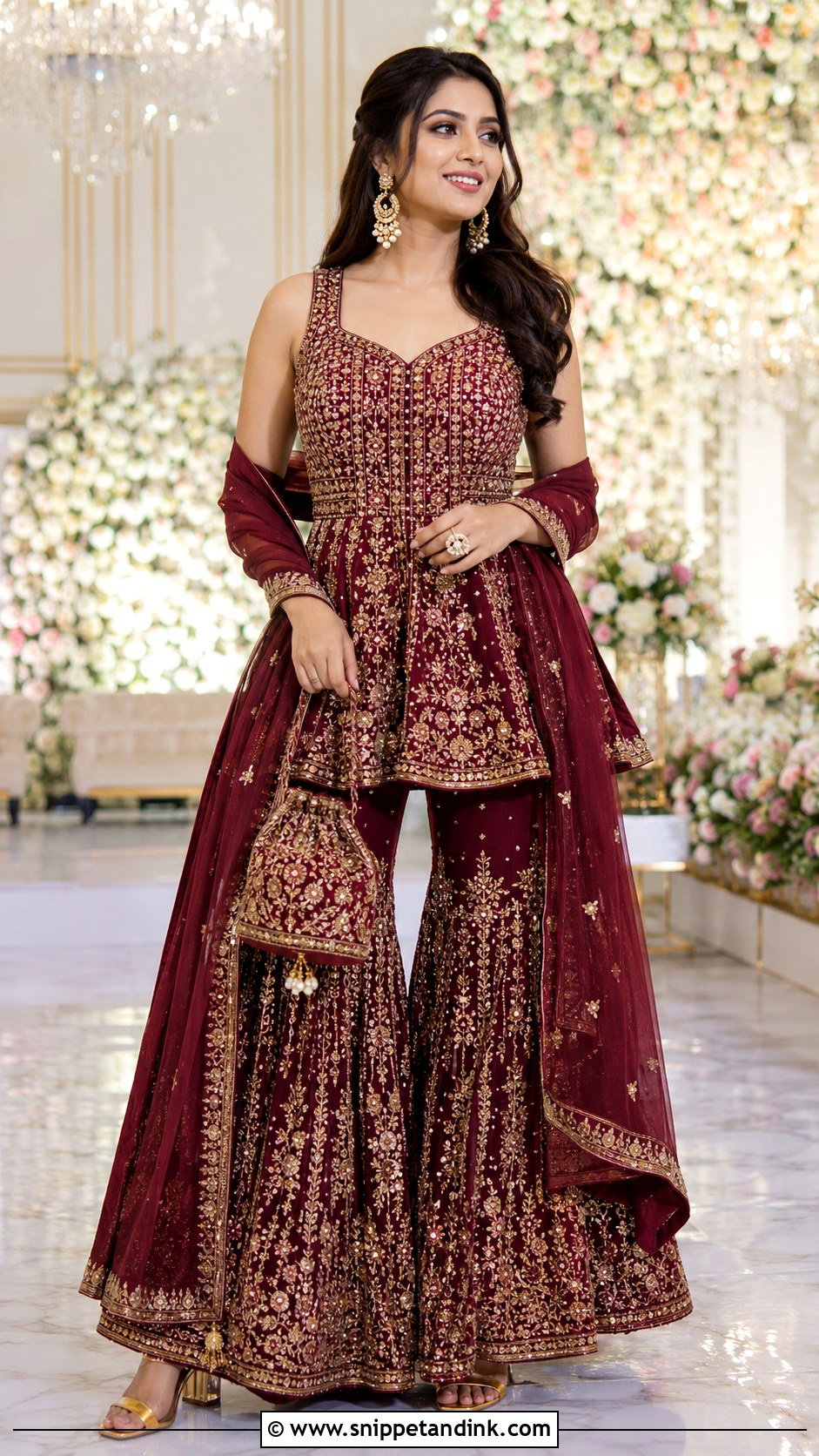
A peplum kurti is how I give a maroon sharara set more shape without a cropped blouse. The peplum defines the waist, then flares gently over the sharara, giving an hourglass line with full midriff coverage. Zari belongs at the neckline and the peplum hem; leave some fabric plain so the shape reads. A light net dupatta over one shoulder or both arms, polki earrings, gold block heels, a statement ring and a small potli. A smooth low bun shows the neckline. Softly smoked eyes and a berry lip for a formal evening.
17. Coral Chanderi Suit Roka Outfit
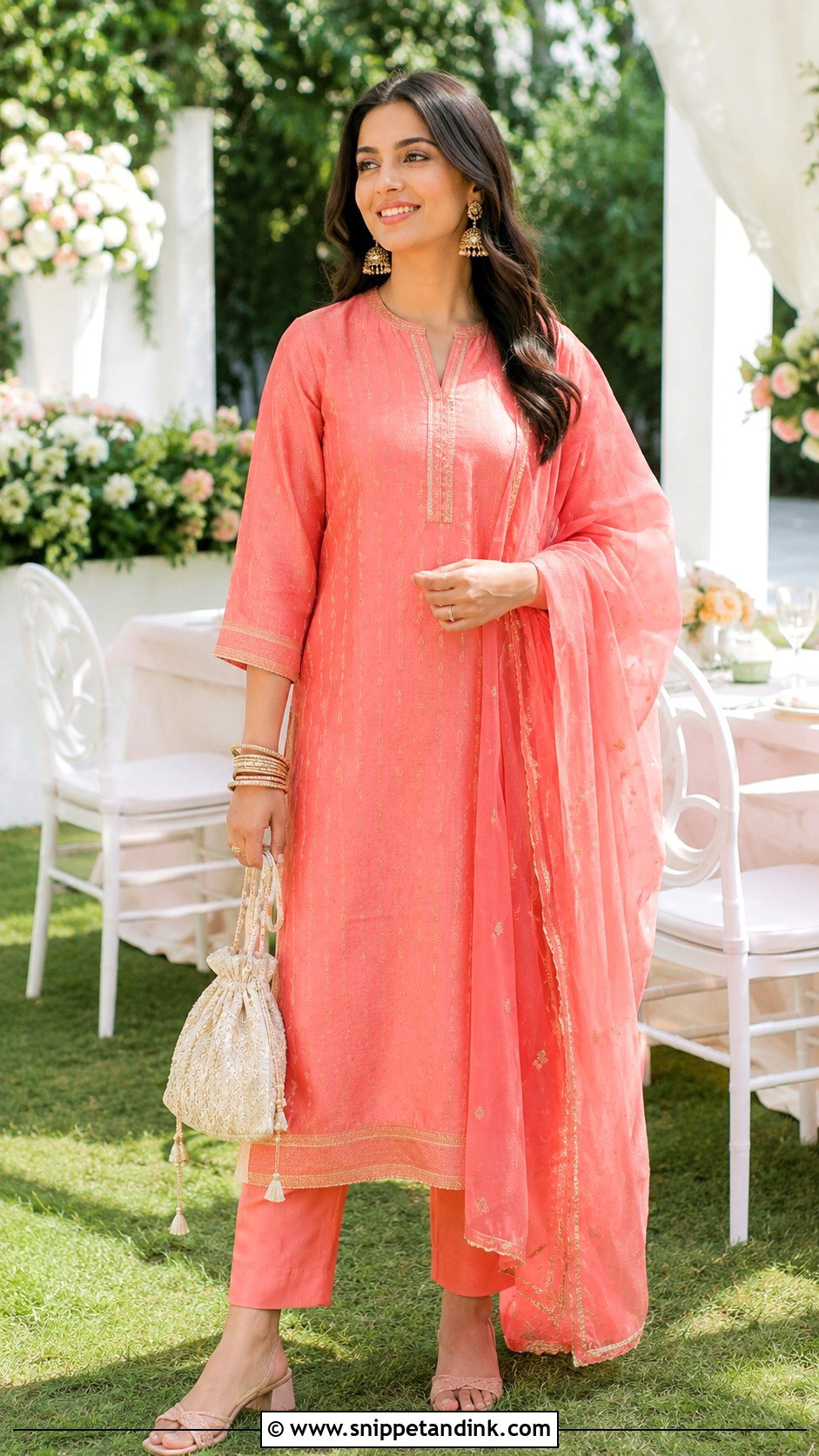
The gentle sheen of Chanderi gives a coral suit a finish that looks richer than its weight. Chanderi is a light silk-cotton weave, so it’s comfortable through a long meal and still has a soft shine. A knee or calf-length kurta, straight pants and a sheer matching dupatta; gold woven motifs, a detailed neckline and a narrow border are enough. Choose a cut that skims instead of clinging, because Chanderi creases where it’s tight. Gold jhumkas, stacked bangles, low block heels and an ivory potli. Coral glows in daylight and pairs with pearl, green or turquoise.
18. Navy Blue Lehenga Saree Roka Outfit
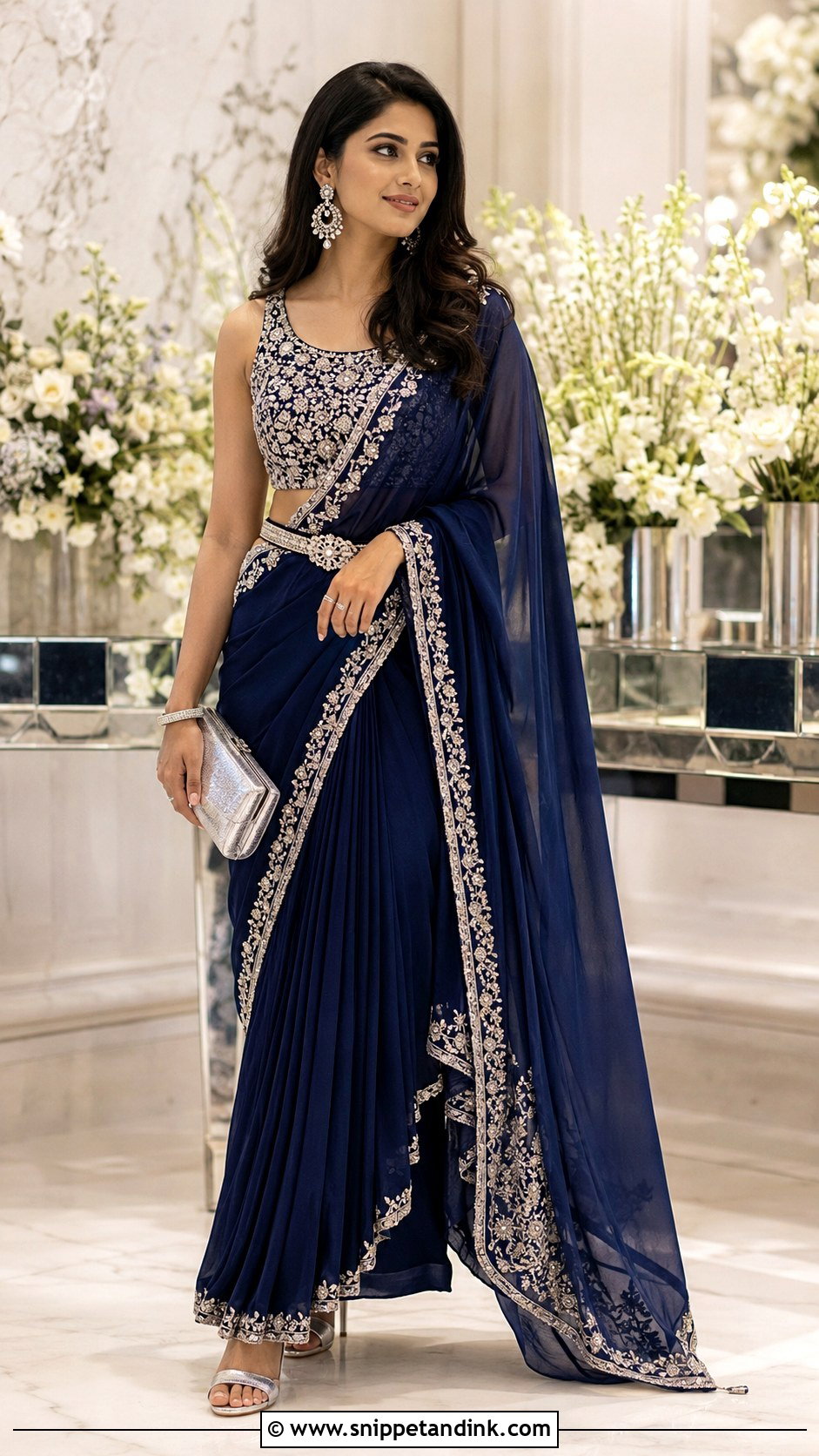
A lehenga saree gives you a saree’s line with a skirt’s security, and navy makes metallic embroidery pop under evening lights. Choose a pre-pleated lower half and a pallu that crosses the torso securely, attached or separate. The fitted blouse can carry silver, champagne or tonal work. Tailoring has to be exact here; a pallu that keeps slipping means you’ll spend the evening adjusting it instead of talking to people. Crystal chandbalis, a slim waist belt, metallic heels, a silver clutch and a sleek bun. Luminous skin, soft silver eyeshadow and a rose-nude lip.
19. Mauve Palazzo Anarkali Roka Outfit
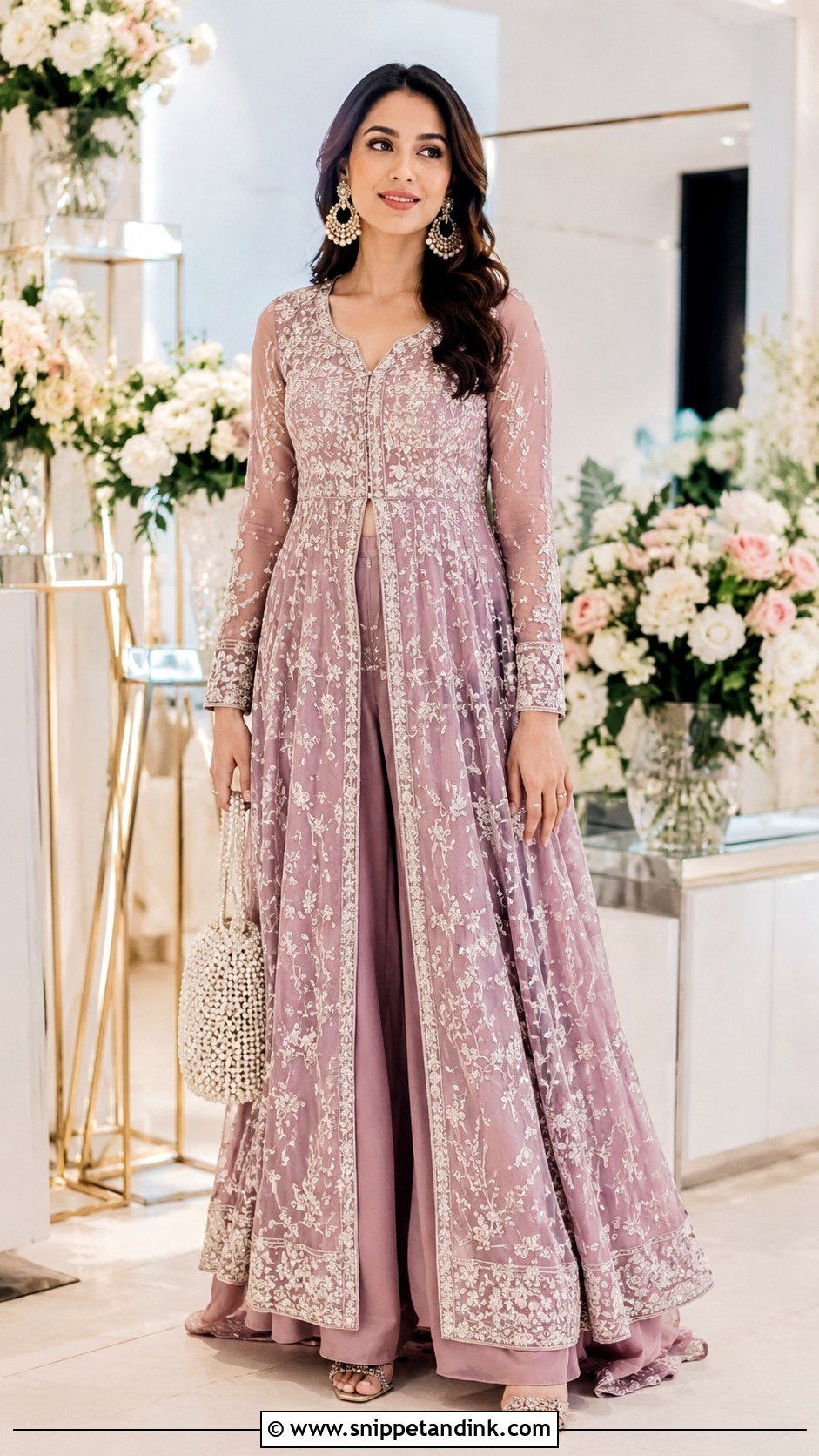
Mauve palazzo Anarkalis layer beautifully: a front-slit or high-low Anarkali over wide palazzos in the same color. The embroidery sits on the bodice, sleeve edges and open front to give the layers shape. I only add a dupatta if the neckline or the ritual needs coverage; otherwise the layered kurta has enough going on. Pearl chandbalis, a slim ring stack, embroidered heels and a beaded bag. Mauve sits well with silver, soft gold and plum. A half-up style or brushed-out waves, cool pink makeup and a touch of highlighter.
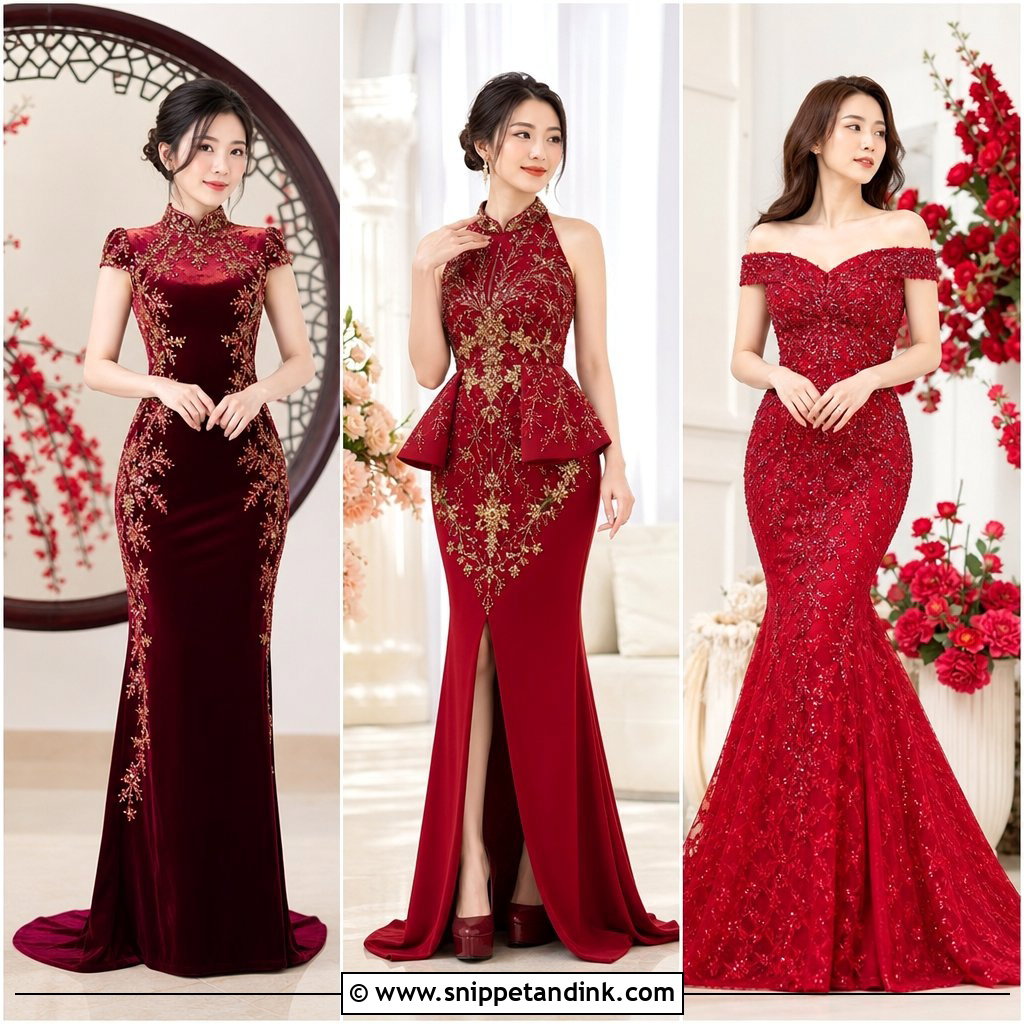
20. Orange Bandhani Lehenga Roka Outfit
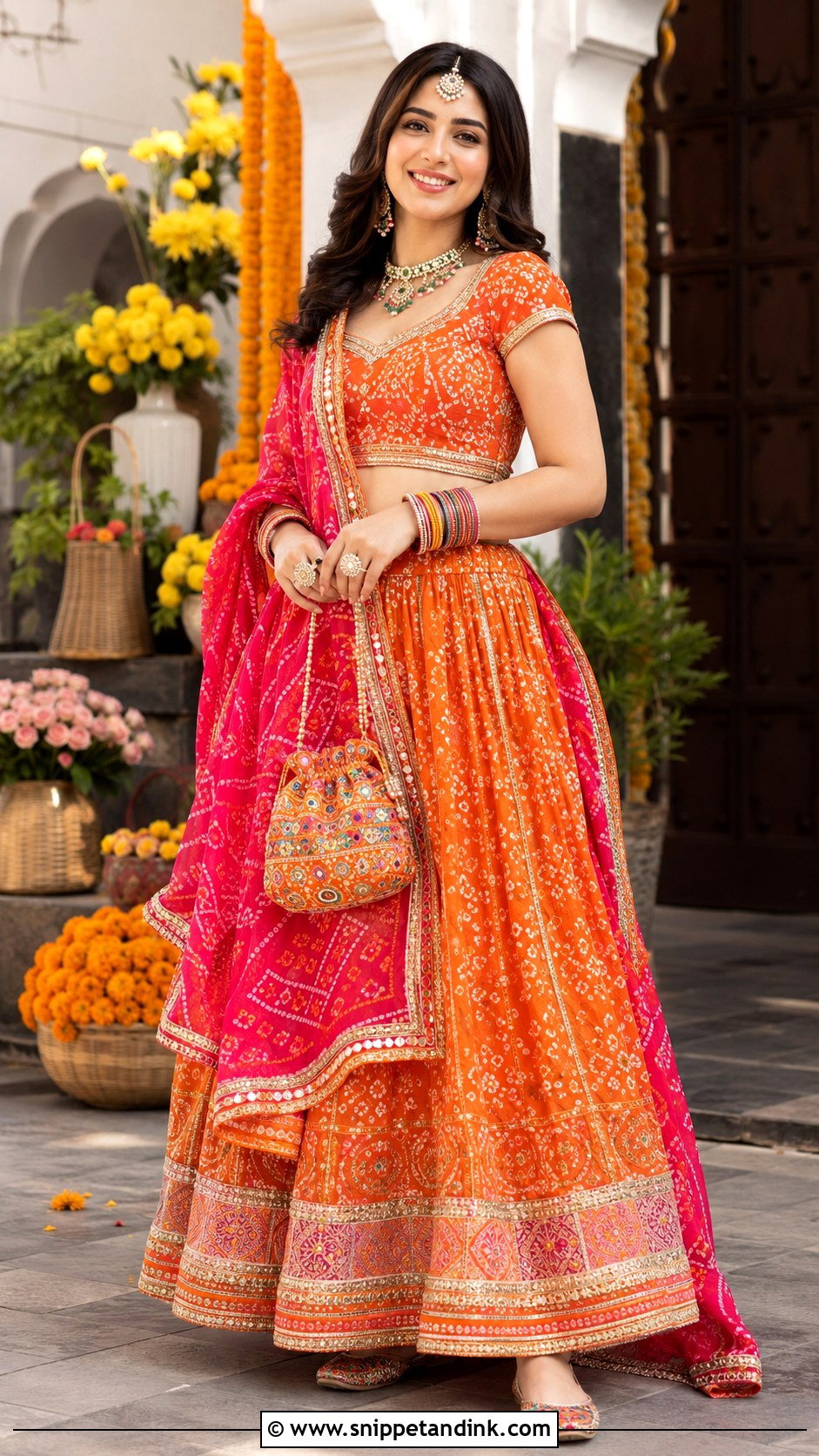
Bandhani carries regional meaning in many Gujarati and Rajasthani families, which makes orange bandhani a thoughtful pick for a traditional Roka. A light printed lehenga with a broad gota border, a solid or lightly embroidered blouse, and a pink, red or green bandhani dupatta for depth. Keep the flare moderate for an intimate room. Real tie-dyed bandhani can bleed if it gets damp, so I’d keep it away from rain and spilled drinks and never wear a pale blouse right under a wet dupatta. Oxidized gold or kundan, juttis, colorful bangles and a mirror-work potli; a textured braid and a coral lip.
Will Your In-Laws Bring a Chunni?
In many Punjabi families, the groom’s mother or an elder drapes a chunni over the bride’s head during the Roka or the chunni ceremony, often red or heavily bordered, and sometimes along with jewelry or a gift outfit. I always ask the bride to find out quietly what color it will be. A red chunni over a red lehenga disappears; over a powder blue saree it may clash in every photo.
Plan the hair for it too. A high bun or heavy maang tikka gets in the way when a chunni is placed on top, and a low bun or braid lets it sit naturally. Keep two or three spare pins in your potli so someone can fix it to your hair once it’s on.
Wearing the Roka outfit again
Because a Roka outfit is lighter than wedding wear, it’s often the piece that gets worn most afterwards, at cousins’ sangeets, festivals and family dinners. Separates help: a jacket kurta, a cape set or a saree with a plain blouse can be restyled. When I help pick one, I quietly check that at least one part of it will work without the rest.
Save the Heaviest Outfit for Later
A good Roka outfit feels festive in the first family photo and still comfortable at the last blessing. Let the venue and the hour guide you: pastels and breathable fabrics by day, jewel tones and richer textures in the evening. Spend your attention on tailoring, secure draping and shoes you can stand in for hours. Choose one or two statement pieces of jewelry instead of wearing them all at once. Keep the Roka a notch lighter than the wedding outfits to come, and it will look like what it is, a beginning.
You'll Like These Ideas:


Leave a Reply