
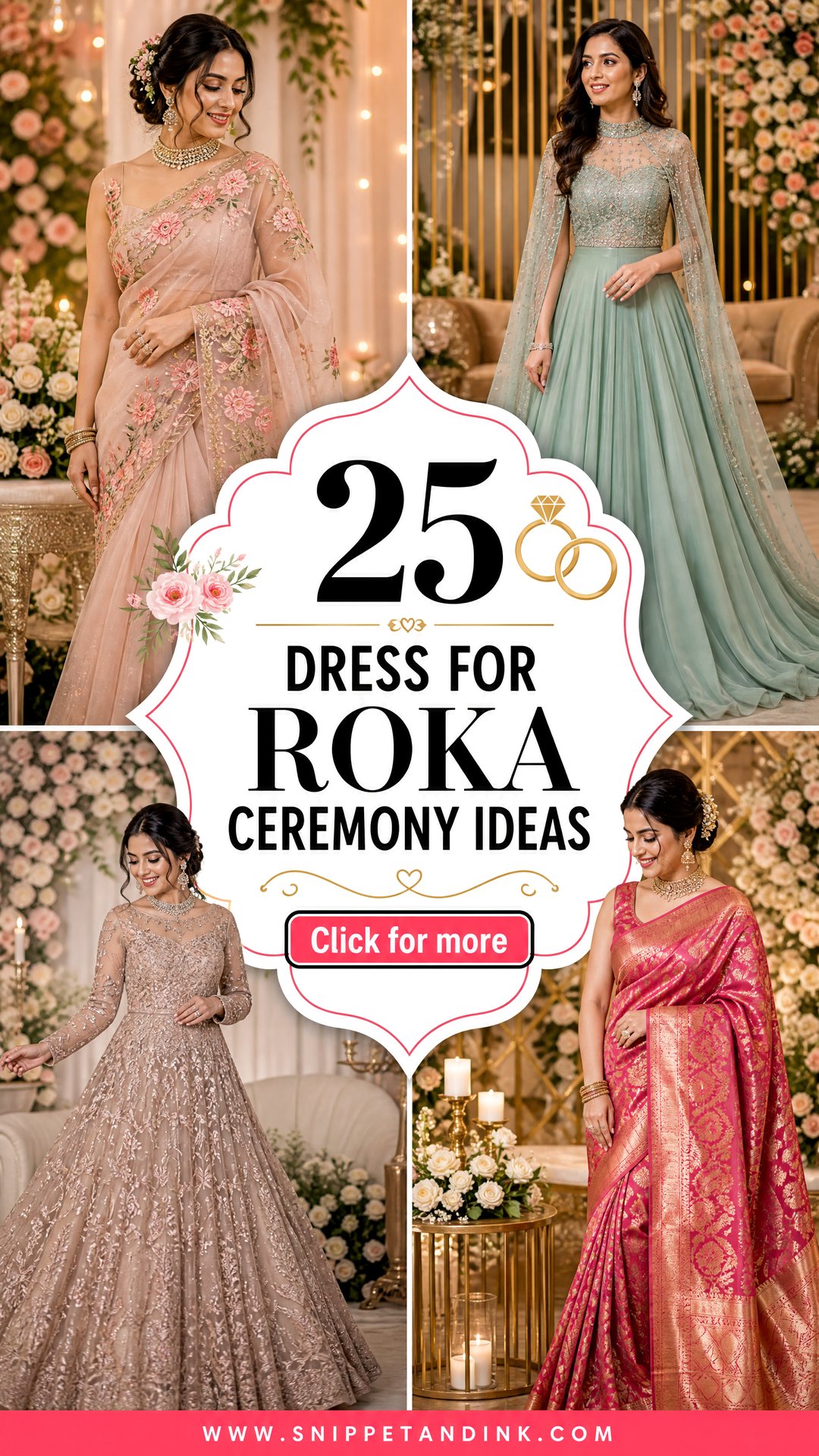
A roka is the moment two families formally say yes, and it’s usually smaller and quicker to arrange than anything else in the wedding calendar. That changes how I dress a bride for it. There may only be a couple of weeks’ notice, there’s often a puja with floor seating, and in many families a chunni will be placed over the bride’s head by her future in-laws. So the outfit needs to look festive in close-up family photos, sit comfortably through rituals and leave room for that dupatta. Organza, chanderi, light silk, georgette and crepe all handle this well. Below are lehengas, suits, sarees, shararas and Indo-western options, with notes on who each suits and what I’d check before you buy.
Leave Room on Your Head for the Chunni Your In-Laws Bring
In many Punjabi and North Indian families, the groom’s side brings a chunni and drapes it over the bride’s head as a sign of welcome. Sometimes they bring a whole outfit or jewellery too. Before I style a bride for her roka, I ask whether this will happen, because it changes three things.
- Your own dupatta. Wear it over one shoulder or pinned at the side, not on the head, so the chunni can go on top without a tangle of fabric.
- Your hair. A low bun or a neat low twist sits under a draped chunni well. A high bun or big volume at the crown pushes it off, and fresh curls get flattened anyway.
- Your colours. If you know the chunni is red or deep pink, a pastel or gold outfit underneath will show it off. Ask quietly if you can; most mothers-in-law are happy to share.
Keep a few U-pins and small safety pins in your bag. A sheer chunni slides on smooth hair and silk, and two hidden pins at the back of the head will hold it through blessings and photos.
1. Pastel Lehenga for Roka Ceremony
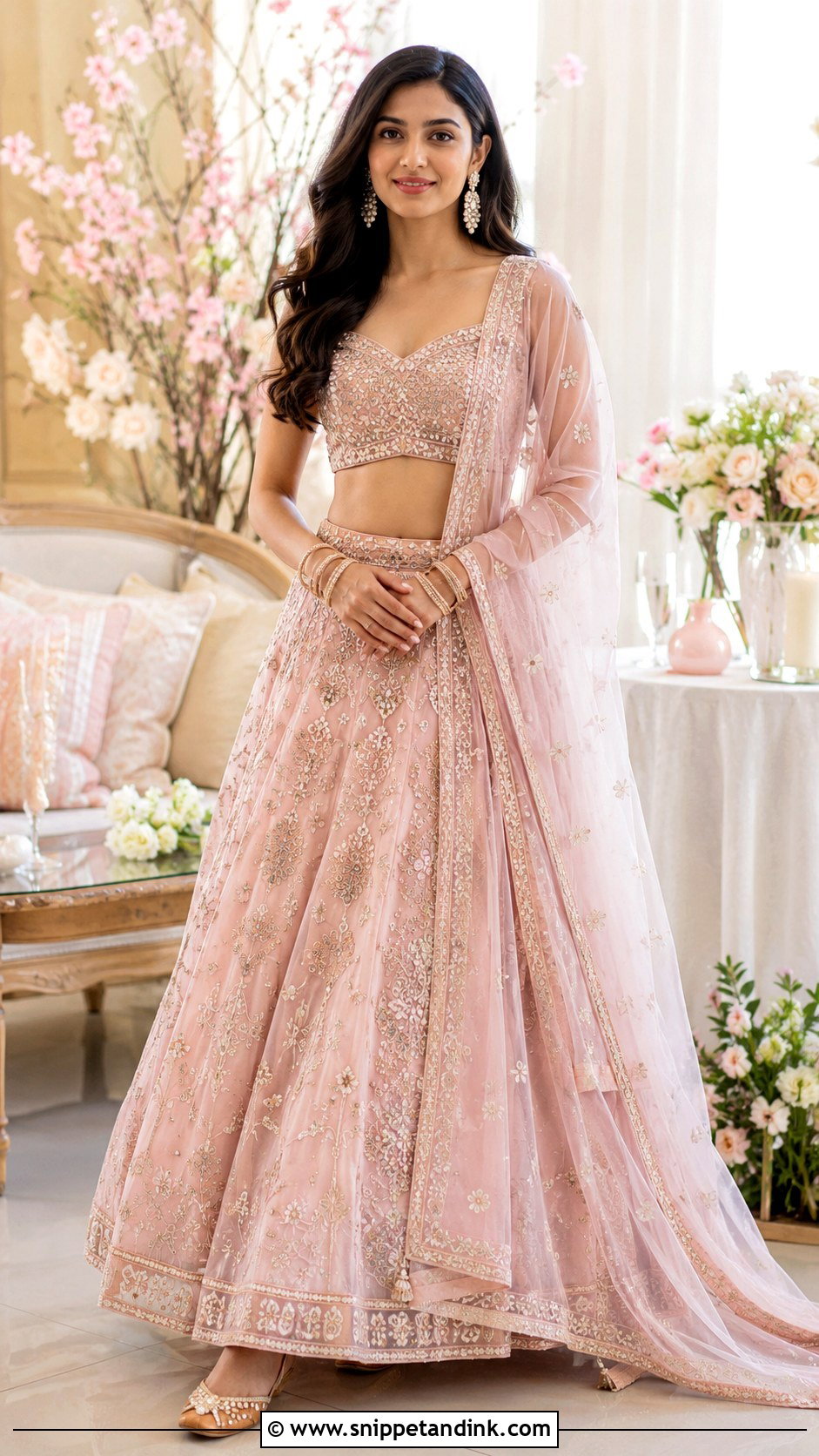
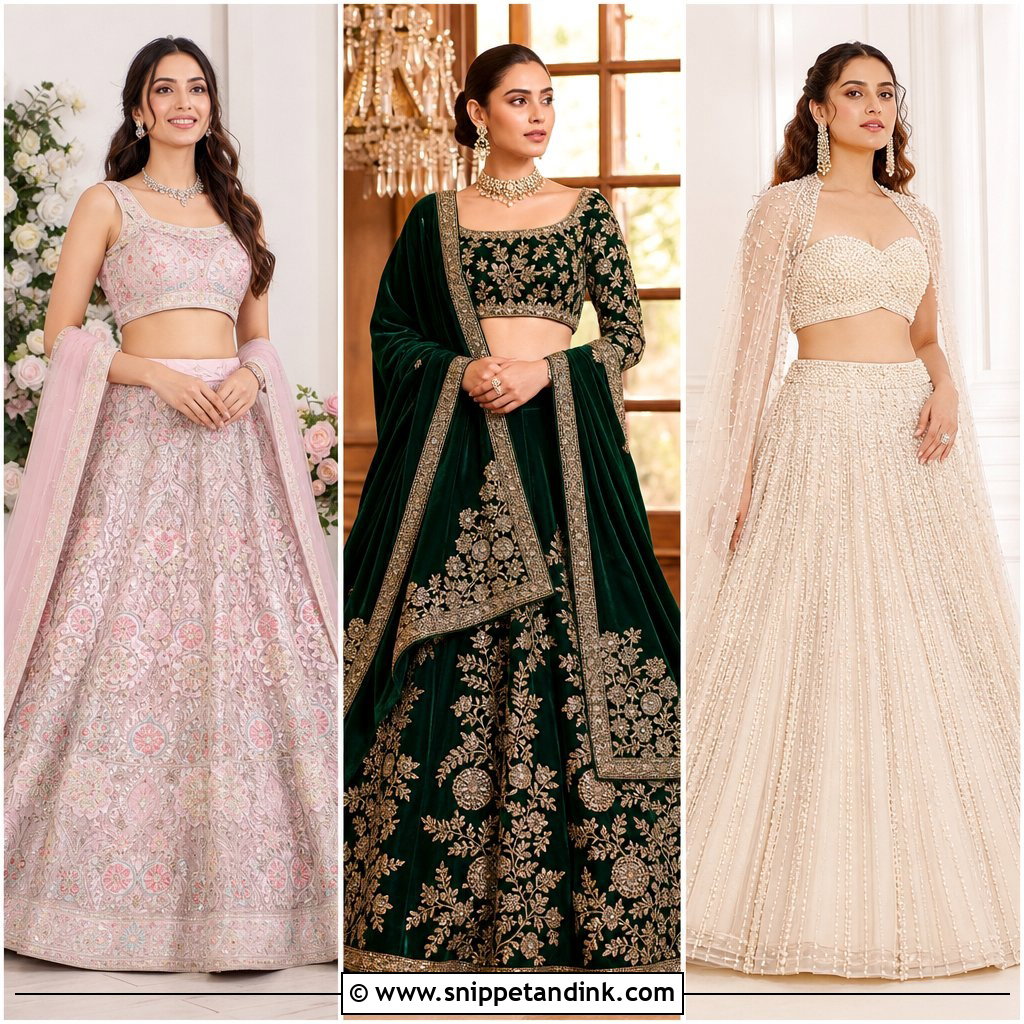
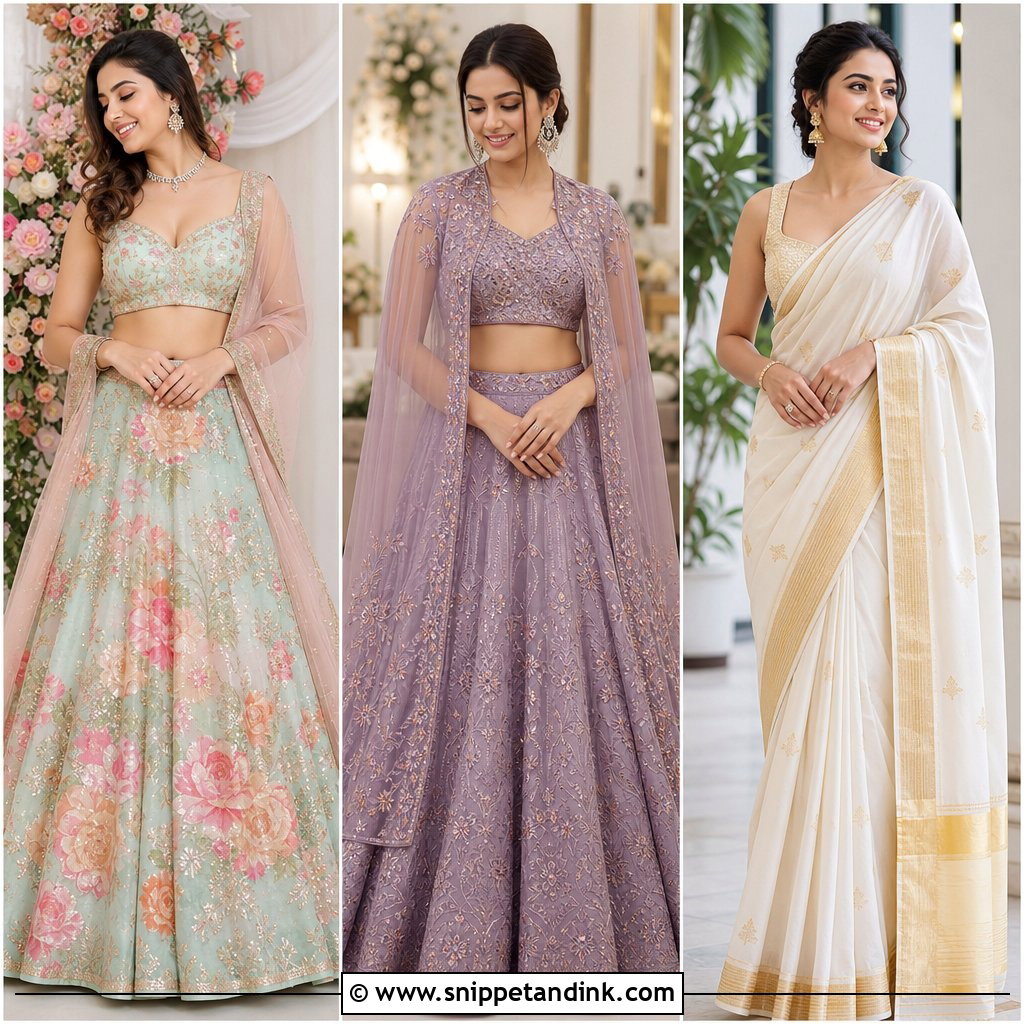
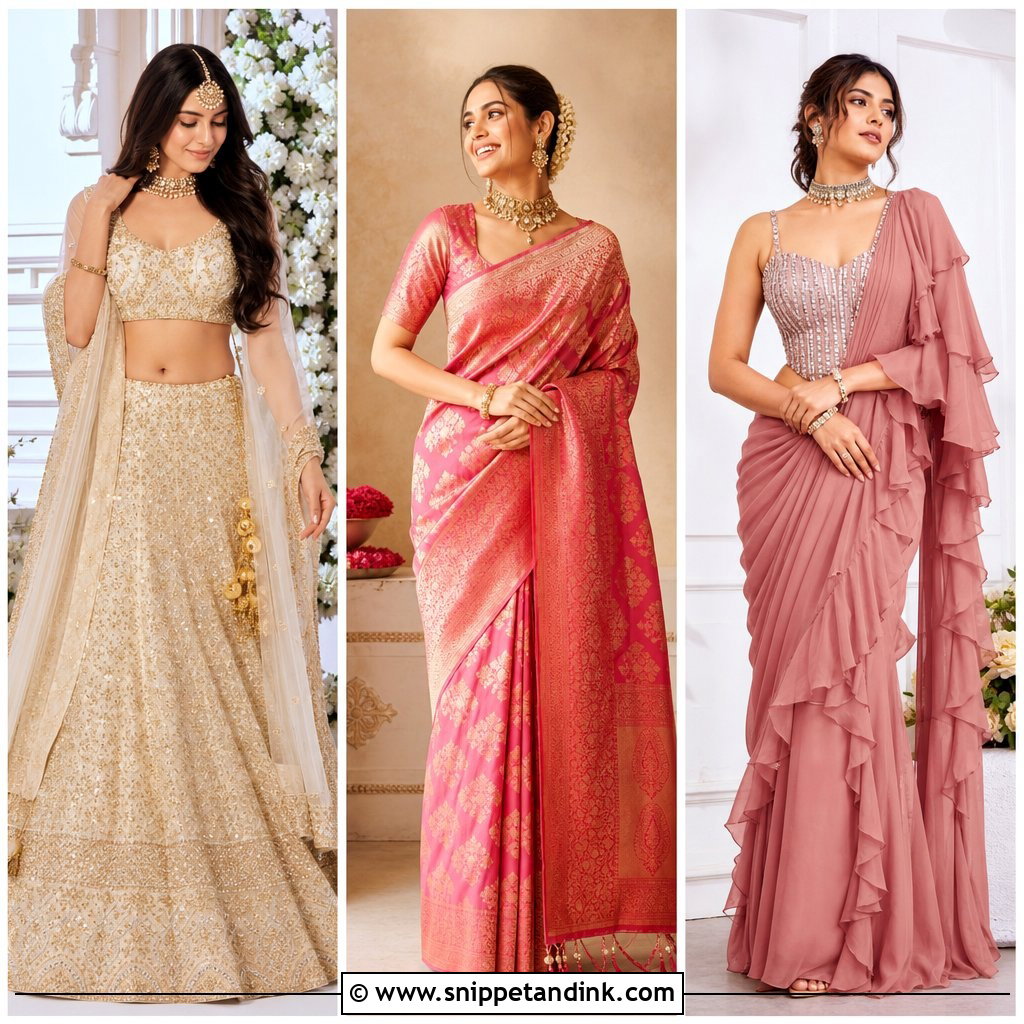
A pastel lehenga is the safe answer for a bride at her roka. It reads bridal without the weight of a wedding lehenga, and soft colours suit an intimate home function. Blush, mint, powder blue, peach and ivory all work with light embroidery, sequins or threadwork. Choose a fitted blouse and a soft dupatta over one shoulder, so a second chunni can go over your head later without the two fighting. Pearl earrings, a fine choker or small polki studs are enough. Block heels or embellished juttis carry you through rituals and photos without sore feet.
2. Anarkali Suit for Roka Ceremony
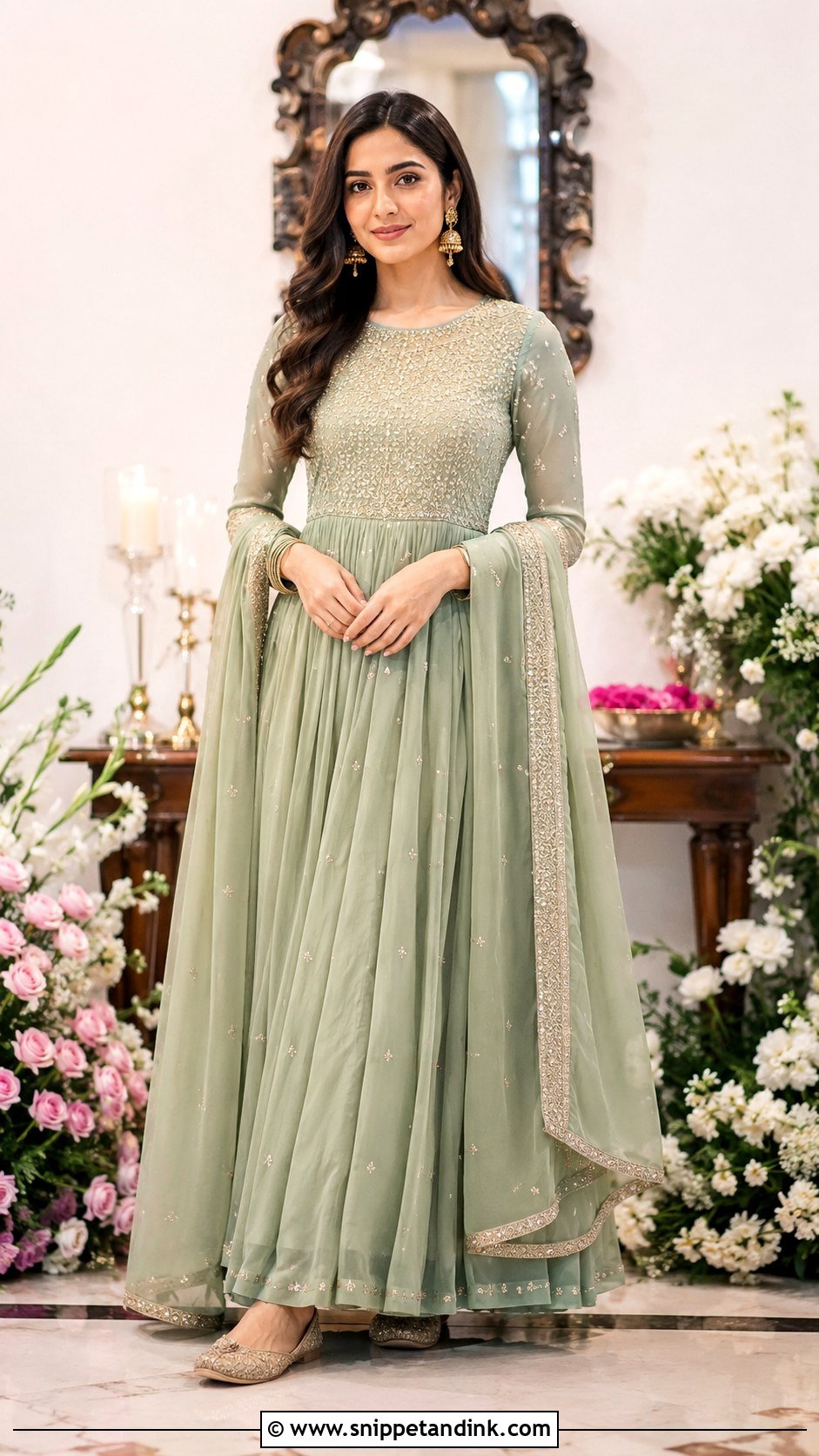
If a lehenga feels too much for a family roka, an Anarkali suit is my next suggestion. It flares as you move and covers well. Floor length in silk, georgette or chanderi suits both home and banquet hall settings. Light zari, mirror work, gota or resham embroidery keeps it balanced. With a high neckline, skip the necklace and put the attention on earrings. A sleek bun, soft curls or half-up hair all suit it. One check: sit on a low seat in it. Floor-length Anarkalis can bunch awkwardly at the knee if the flare starts too low.
3. Organza Saree for Roka Ceremony
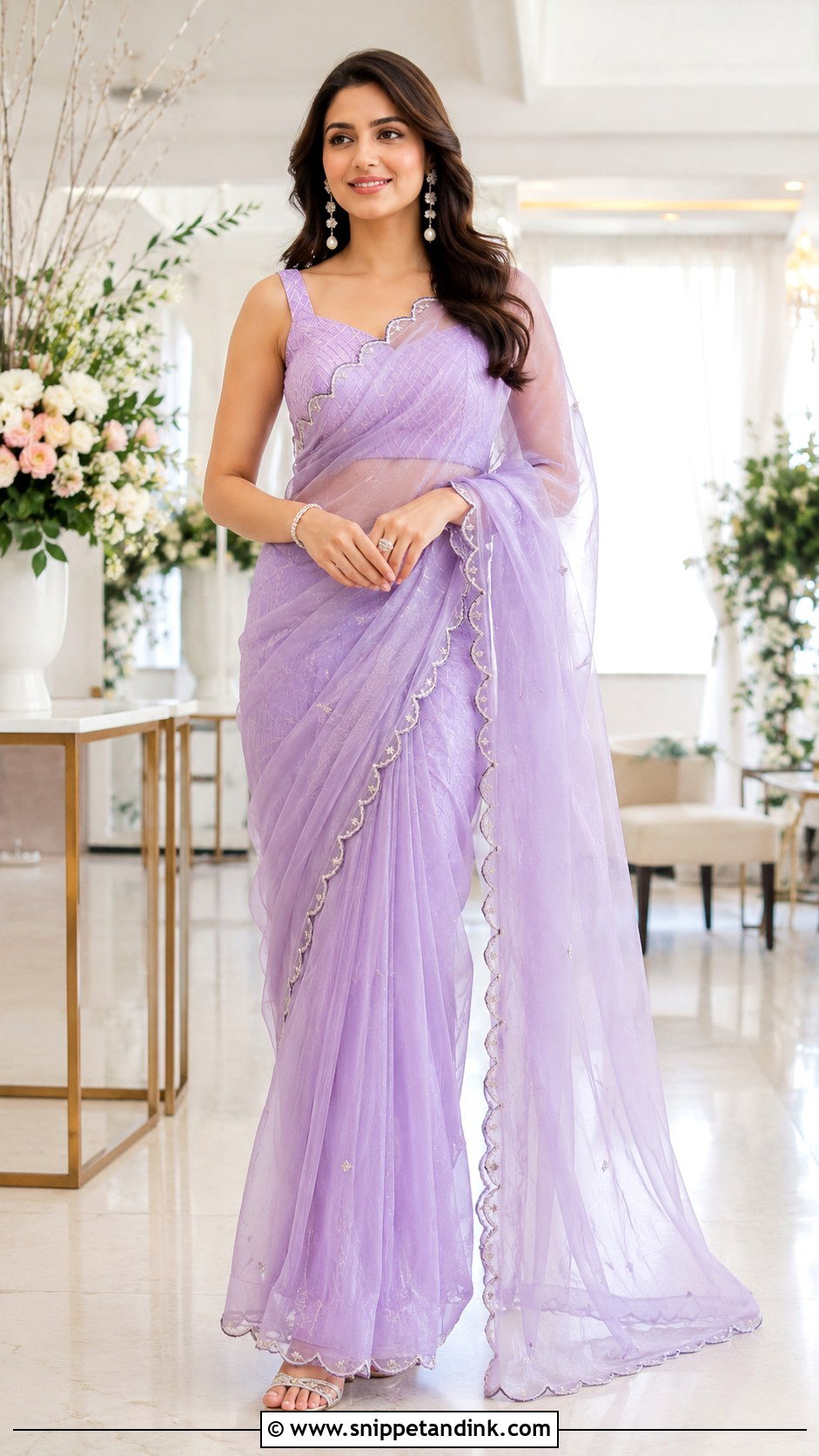
Organza gives you a saree’s drape at a fraction of the weight of bridal silk, which is why I like it for a daytime roka. Lavender, champagne, rose, sage and powder pink with floral embroidery, scalloped borders or a few sequins look light and fresh. Pair it with a structured blouse in a matching tone or a soft metallic. Organza is crisp and springy, so the pleats need firm pinning or they fan out by the end of the puja. Pearl drops, a slim bracelet and low heels finish it.
4. Sharara Set for Roka Ceremony
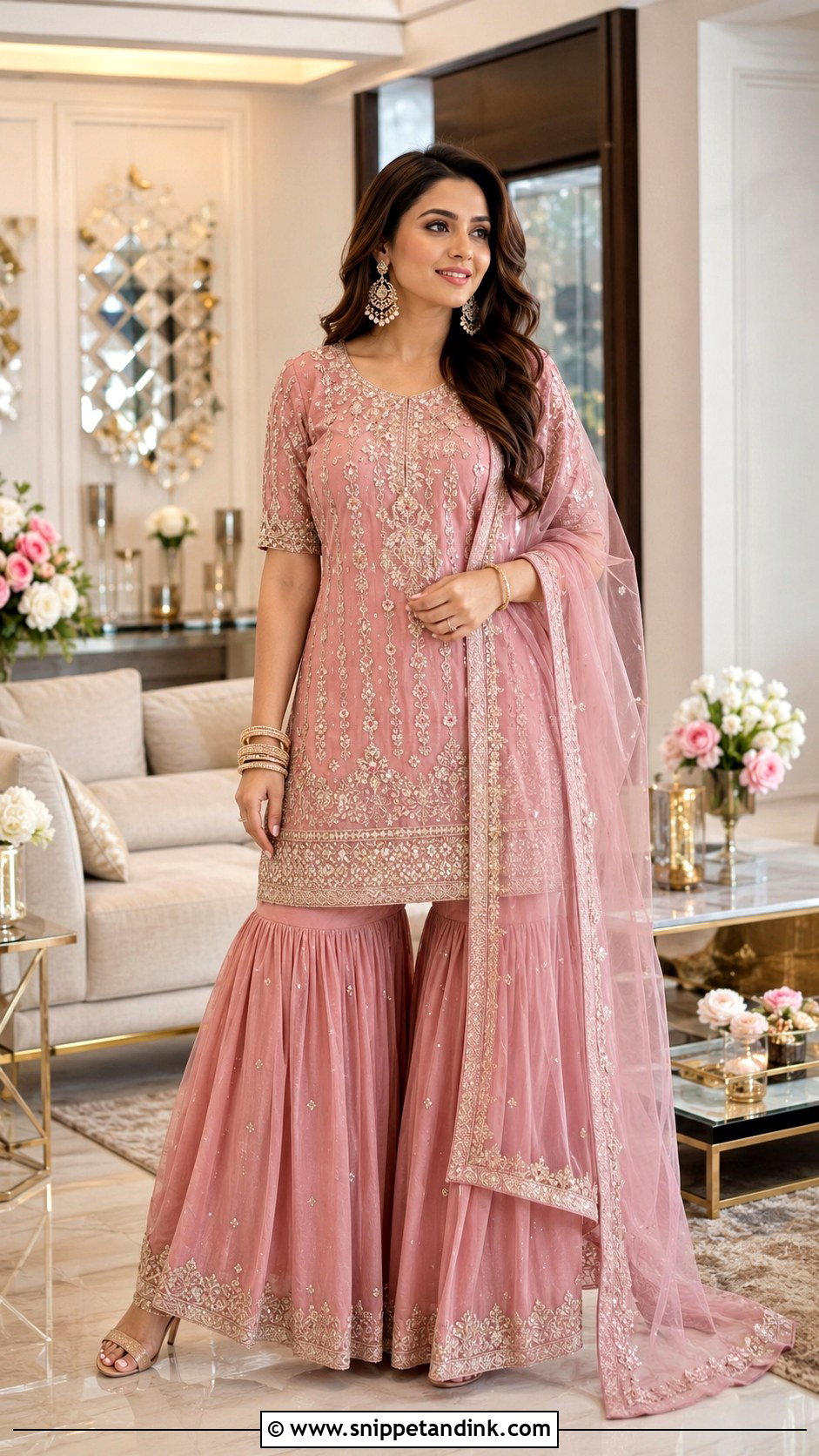
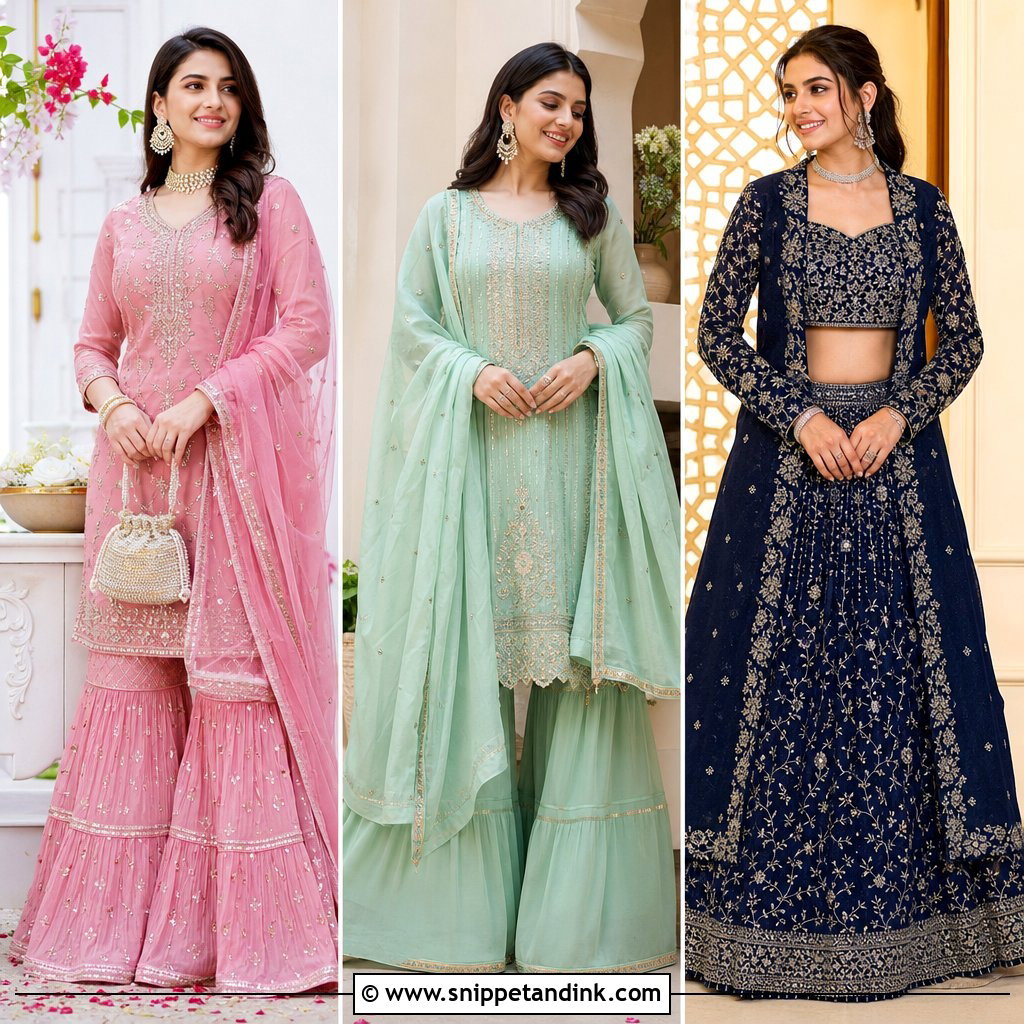
Shararas look dressed up even with very little embroidery, because the volume of the pants does the work. A short kurta, flared sharara and soft dupatta in georgette, silk or crepe is easy to wear for hours. Pastels suit a bride; emerald, wine and rani pink are strong picks for sisters and close family. Chandbalis or jhumkas are better than a heavy necklace if the neckline is already worked. Embellished heels or juttis complete it, and you can sit, mingle and dance without fuss.
5. Chanderi Suit for Roka Ceremony
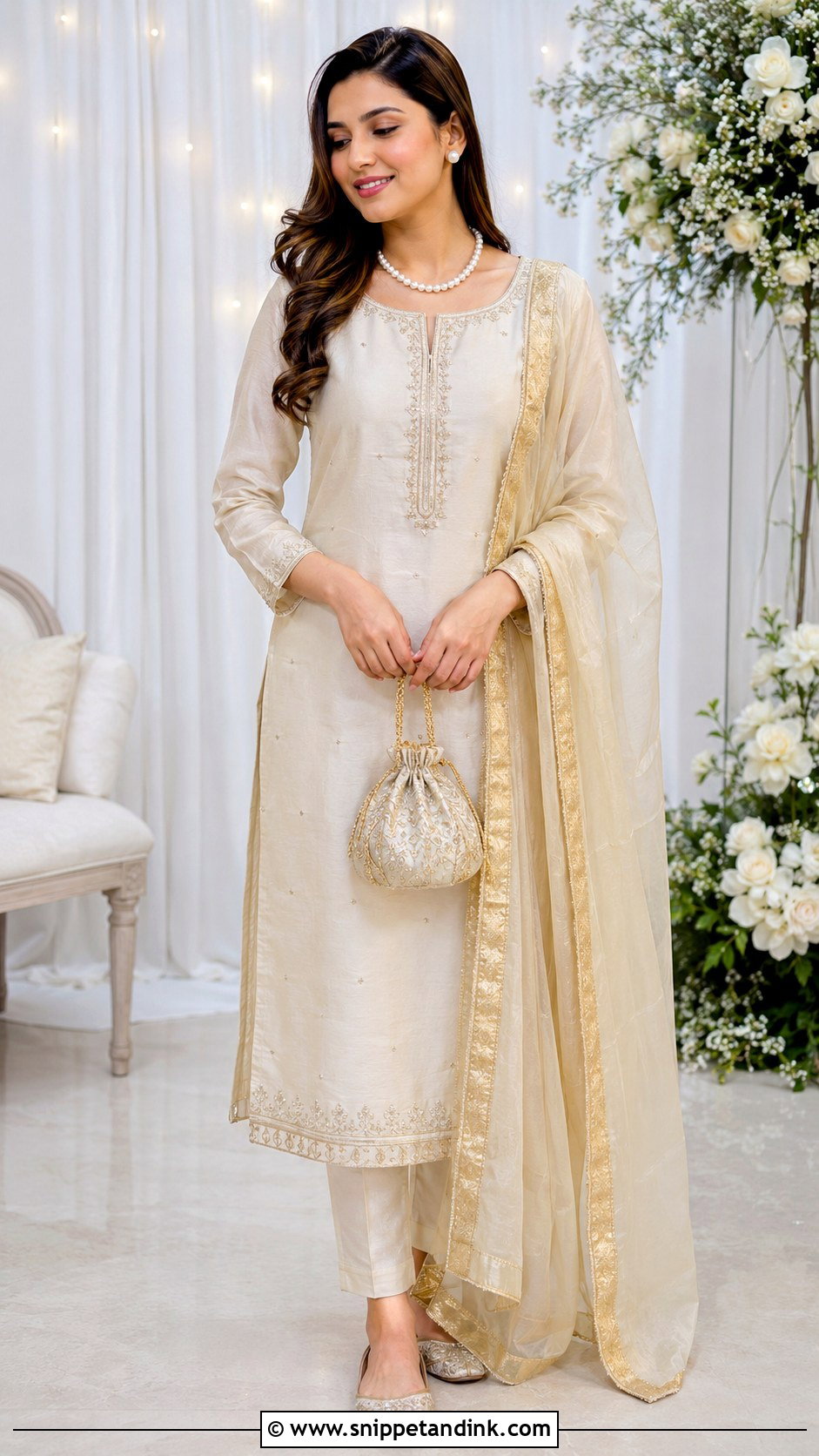
Chanderi has a natural soft sheen from its fine silk-cotton weave, so even a plain kurta set looks festive. Choose a straight or A-line kurta with slim pants or palazzos and a flowing dupatta. Soft gold, peach, pistachio, ivory and blush look especially refined. At a home roka, it hits the right level: polished, not theatrical. Pearl jewellery, small jhumkas or a fine pendant, embroidered juttis and a potli finish it. Mothers, sisters and guests wear this well. Chanderi creases a little when you sit, so a quick steam just before you leave helps.
6. Silk Saree for Roka Ceremony
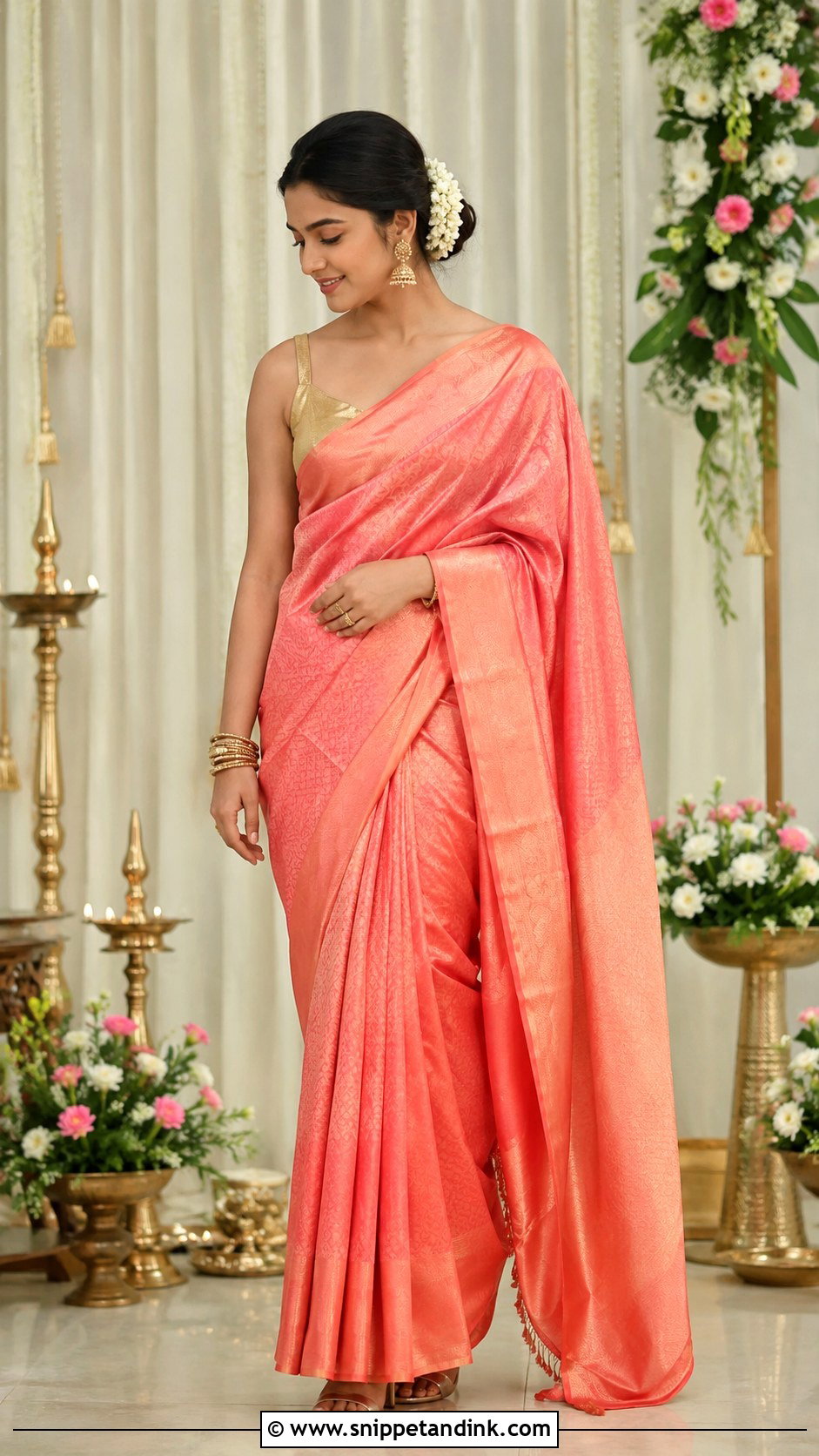
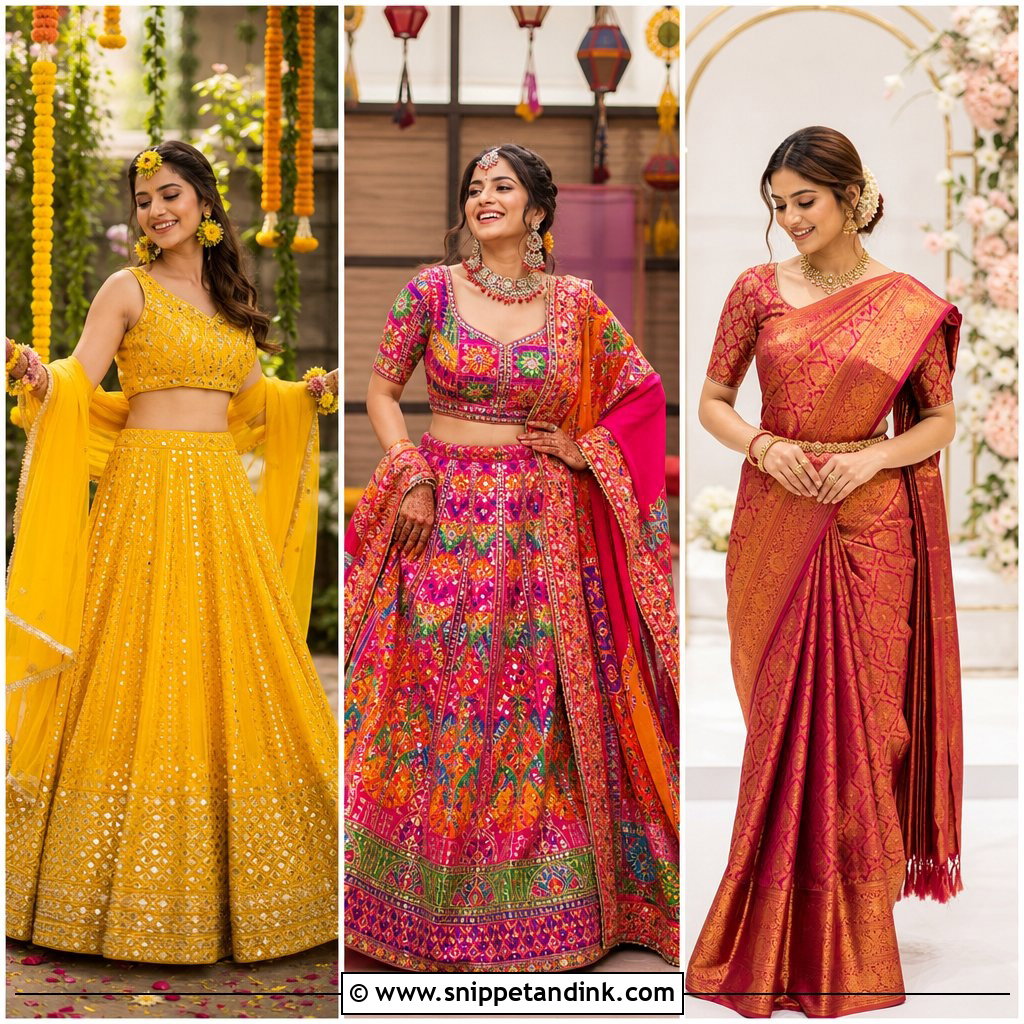
A silk saree is always appropriate at a traditional roka. For a smaller family function I’d steer away from very heavy bridal weaves and toward a lighter silk you can sit cross-legged in during the puja. Coral, gold, green, pink and soft maroon all look festive on camera. A well-fitted blouse and simple gold or temple jewellery are all it needs. Keep the drape clean and pinned. A low bun with fresh flowers suits it, and leaves the crown of the head clear for a chunni if your in-laws bring one.
7. Peplum Sharara for Roka Ceremony
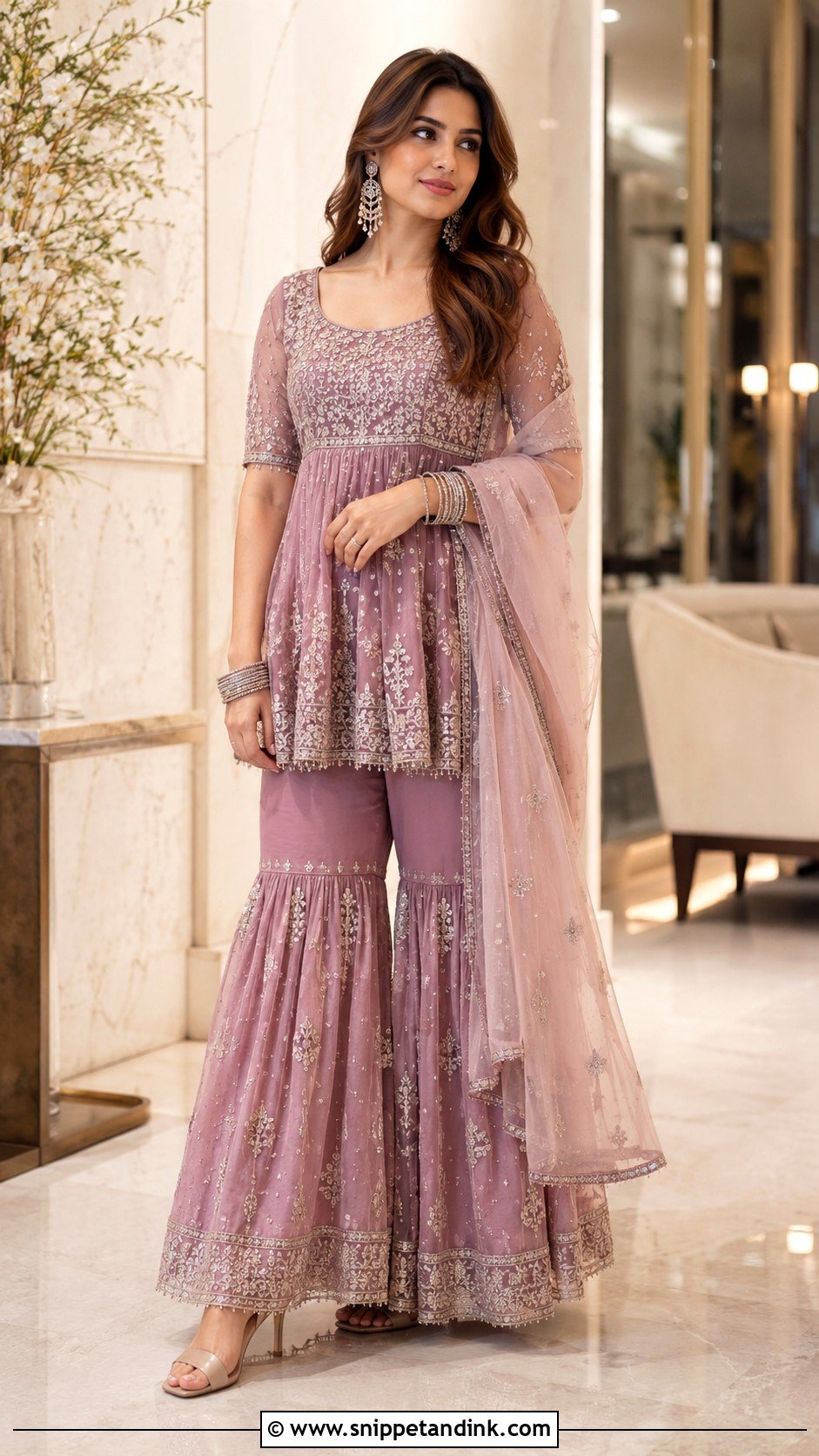
The peplum sharara is modern but still clearly Indian occasion wear, so a bride can look current in it without upsetting traditional relatives. The peplum shapes the waist and the sharara gives flow. Embroidered georgette, silk or organza in mauve, teal, champagne or rose pink suit it. Keep the dupatta light if the top is heavily worked. Long earrings, stacked bangles and a neat clutch complete it. Make sure the peplum isn’t fitted so tightly that a long sit at the puja becomes uncomfortable.
8. Jacket Lehenga for Roka Ceremony
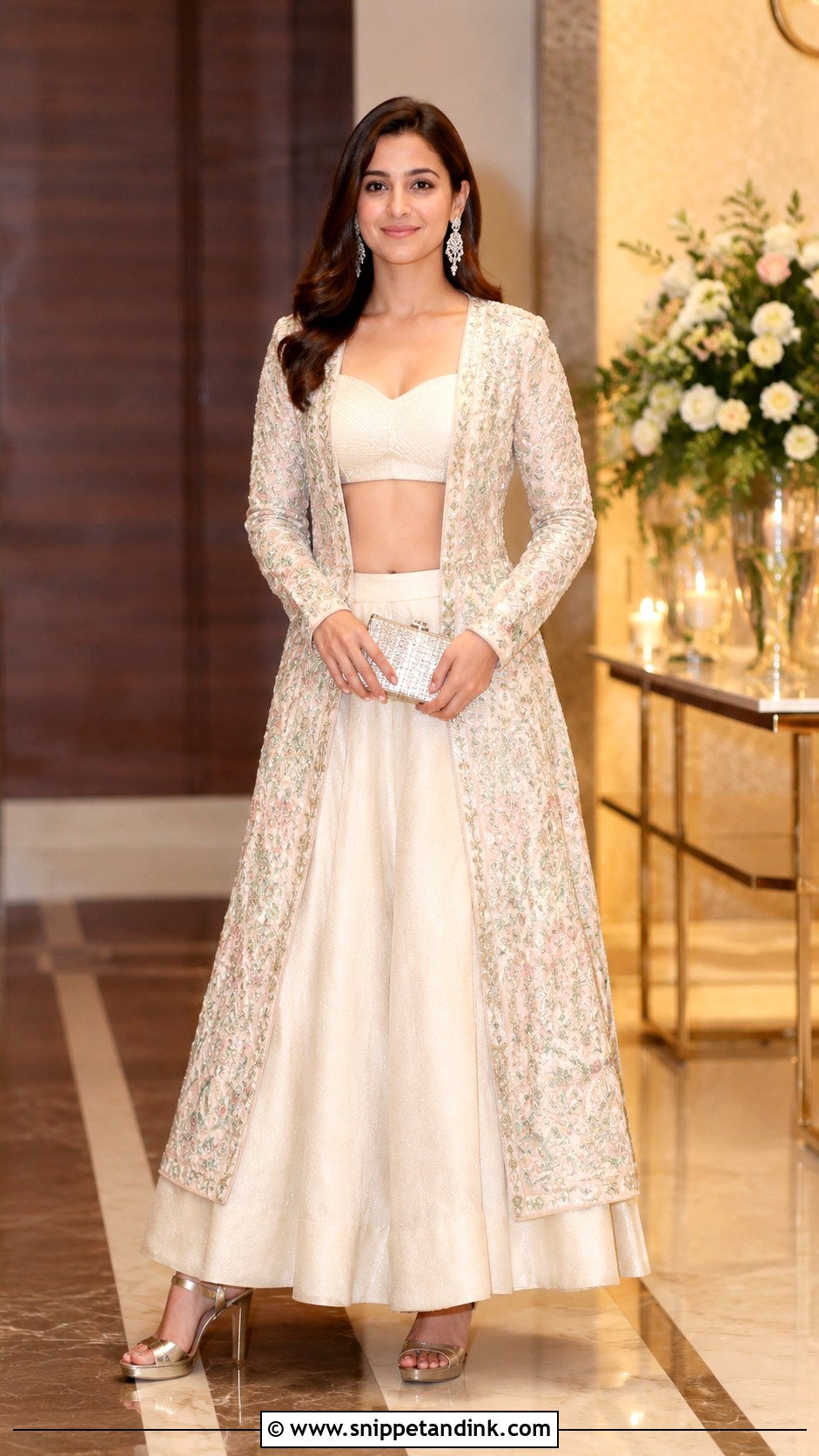
A jacket lehenga replaces the dupatta with an embroidered layer, cropped, cape-style or long and open, over a simple blouse and skirt. Ivory, gold, blush, lavender and sage all look polished. The jacket is the statement, so keep jewellery to studs or sleek earrings. Heels give a cleaner line. It’s my pick for evening, hotel or winter rokas. A practical note for brides: if the chunni ceremony is part of your family’s roka, a long jacket plus a draped chunni can feel heavy, so a cropped jacket is the better choice.
9. Palazzo Suit for Roka Ceremony
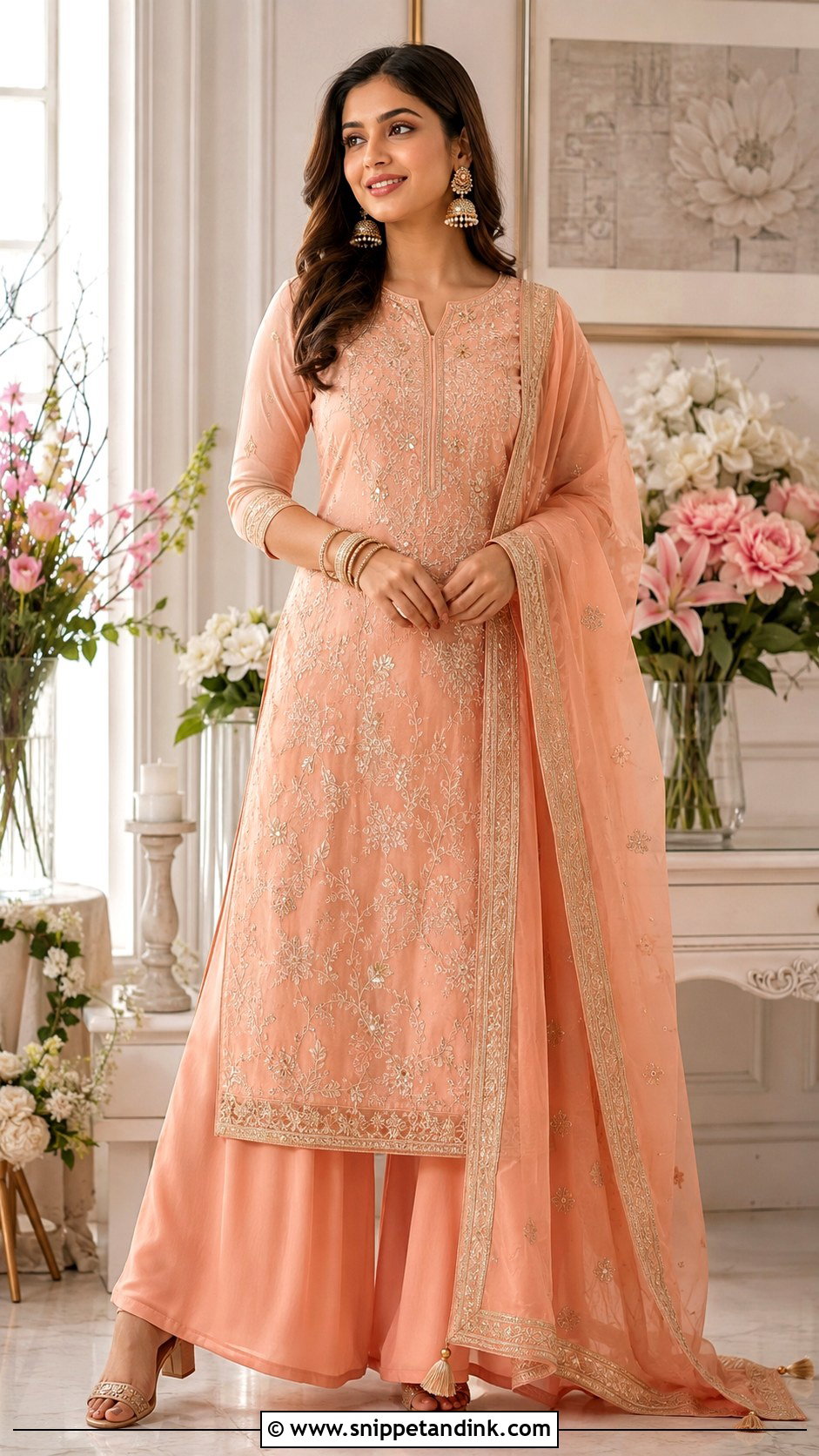
A palazzo suit gives you a dressy look with complete freedom of movement, which matters during long rituals and endless family photos. Choose a straight kurta or short kurti with wide palazzos and a coordinated dupatta. Silk, georgette, chanderi and muslin all work depending on the season. If the suit is plain, let a statement dupatta with zari, gota or embroidered borders carry the festivity. Jhumkas, bangles and block heels finish it. Guests, sisters and cousins wear this well, and so do brides who like understated dressing.
10. Floral Lehenga for Roka Ceremony
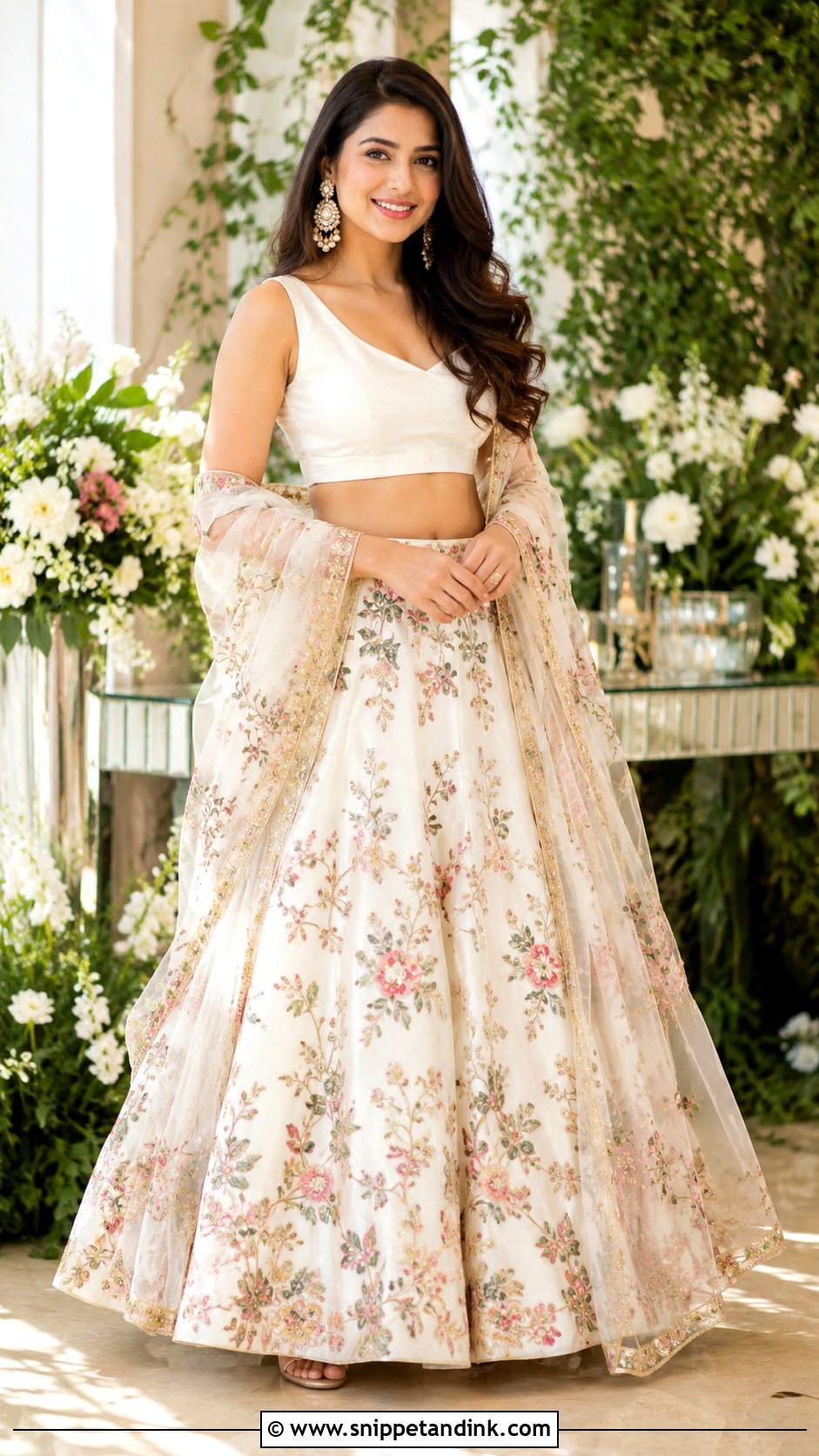
Floral lehengas suit daytime rokas in spring and summer, especially outdoors. Printed florals, thread embroidery or light 3D flowers look festive without crossing into wedding-lehenga territory. Ivory, blush, peach, mint and powder blue bases keep it fresh. Pair it with a simple blouse and sheer dupatta so the florals lead. Fresh makeup, soft curls and pearl or kundan earrings suit it, with neutral heels or embellished juttis. If the print is large, I keep the jewellery small; two competing patterns near the face look busy in close-up photos.
11. Gharara Set for Roka Ceremony
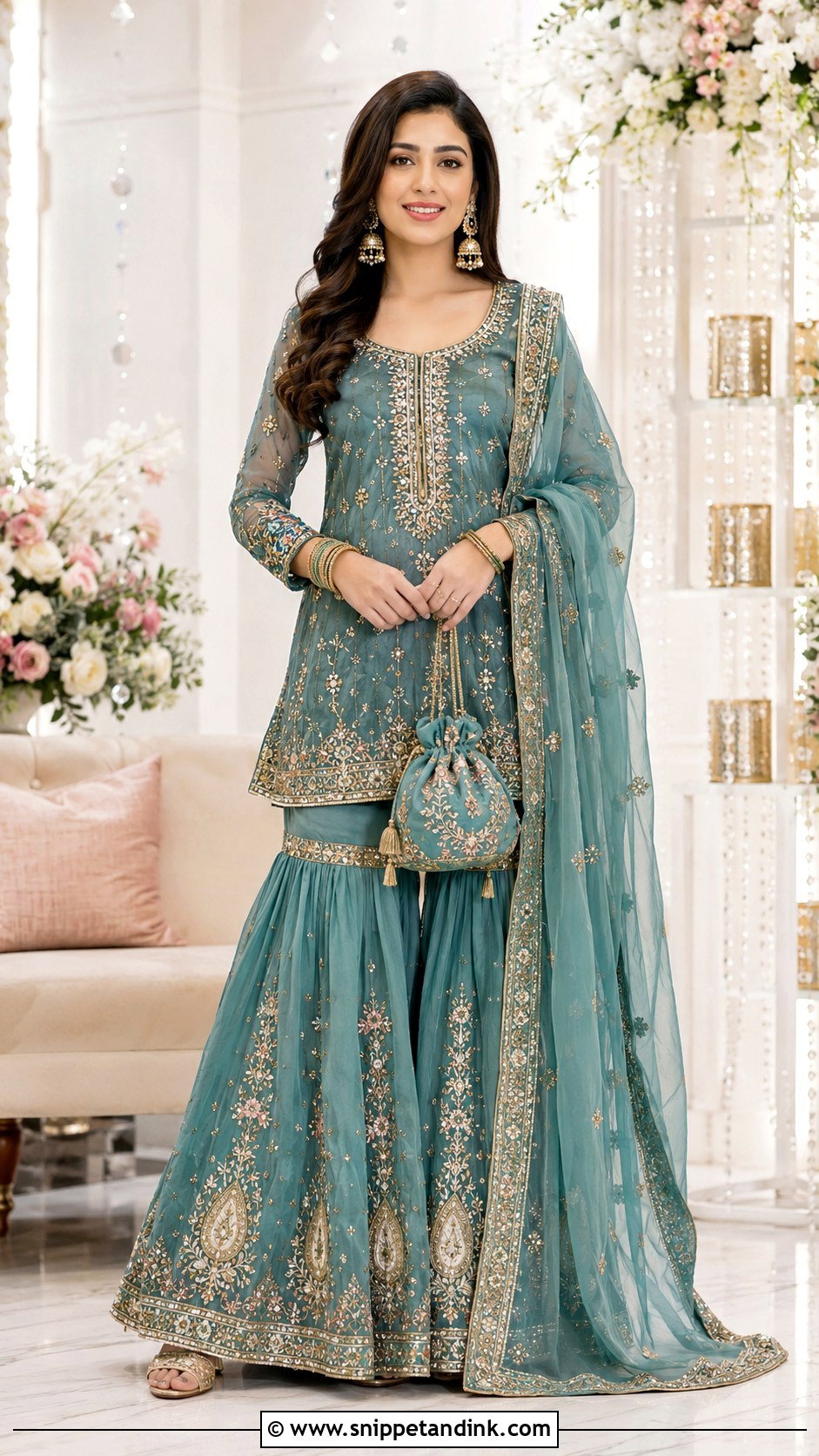
Ghararas fit closely to the knee and then flare out from a gathered joint, often trimmed with gota, so the silhouette is traditional and distinct. Choose a short kurta with delicate embroidery and a matching gharara and dupatta. Rose pink, ivory, teal, mustard and emerald all suit it. For the bride, softer shades with fine work; for family, richer colours. Jhumkas, bangles and a small potli complete the look. It feels at home at North Indian and Pakistani-inspired rokas. Walk a few steps before buying, because a wide flare from the knee takes some getting used to on stairs.
12. Cape Dress for Roka Ceremony
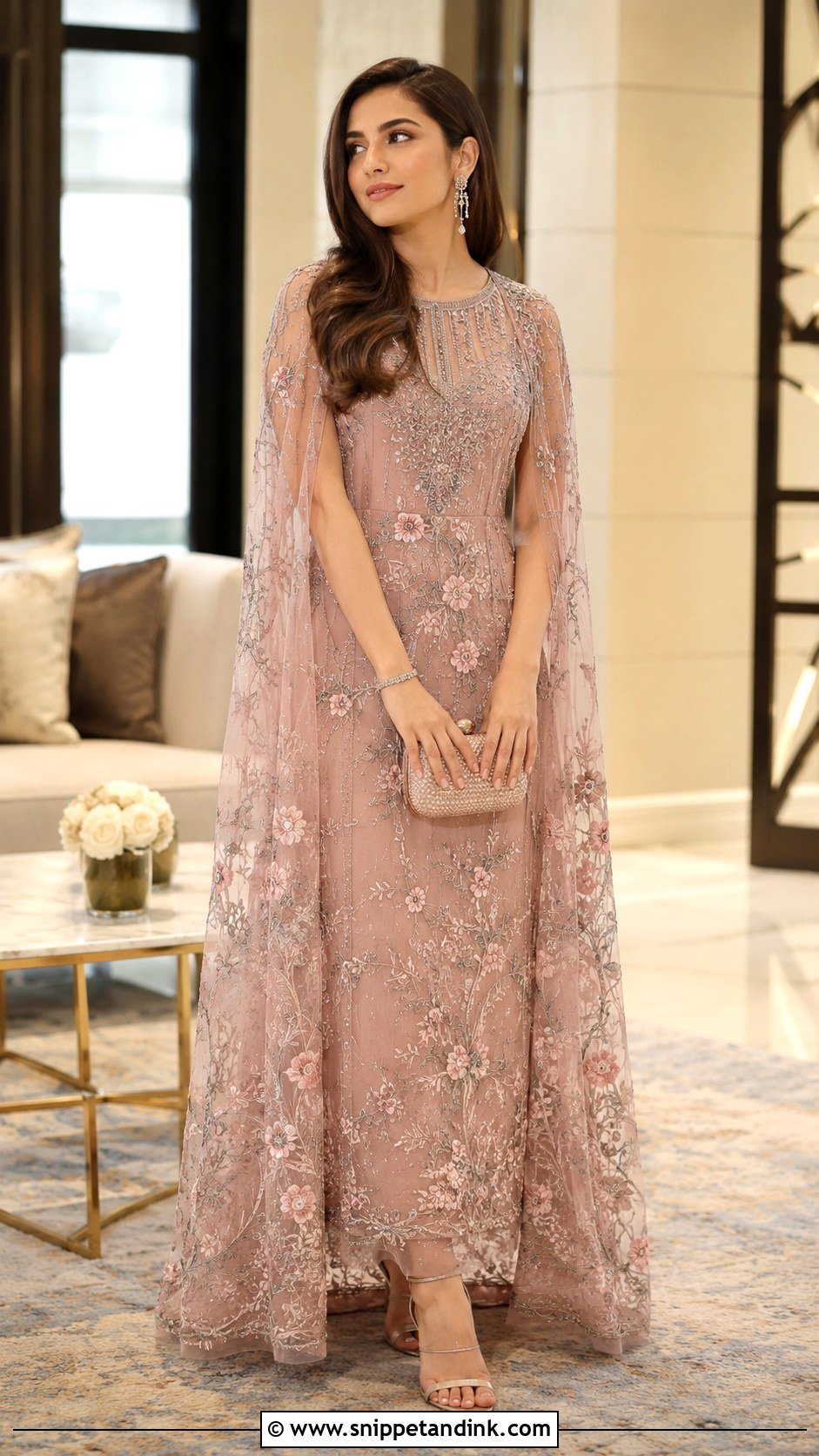
A cape dress suits a modern roka with a relaxed dress code, often held at a restaurant or hotel. Choose an embroidered maxi, long kurta dress or draped gown with a sheer cape attached at the shoulders. The cape brings movement and makes the outfit feel occasion-ready without a heavy dupatta. Soft metallics, dusty pink, mauve, sage and ivory are good colours. Drop earrings, a bracelet and strappy heels finish it. If your family expects a head covering during any ritual, carry a light dupatta in your bag, since a cape can’t do that job.
13. Kurta Skirt Set for Roka Ceremony
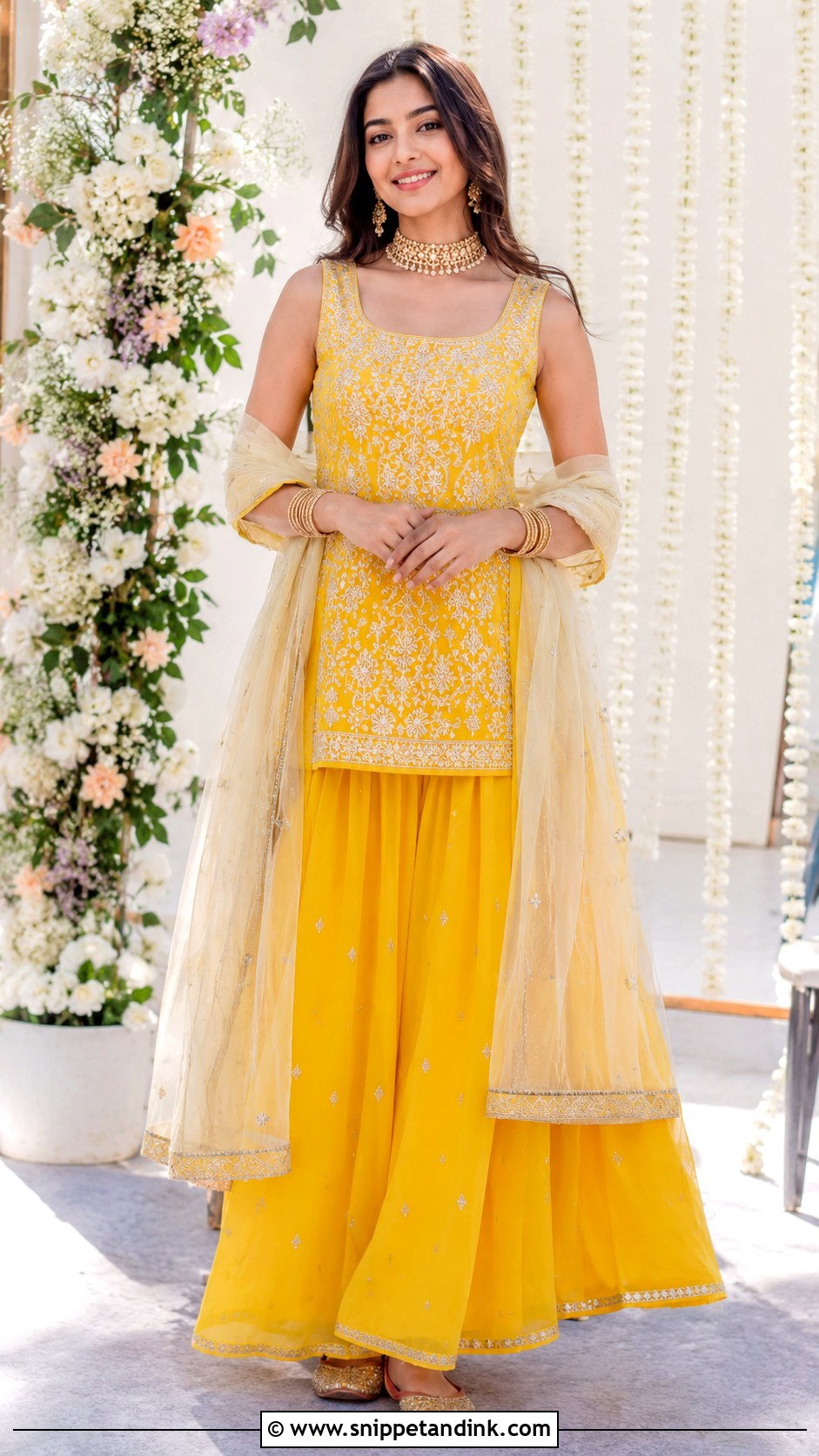
A kurta skirt set sits between a lehenga and a suit, and that middle ground is often exactly right for a roka. Choose a long or short kurta with a flowy skirt and light dupatta. Embroidered borders, mirror work or gota make it festive. Yellow, peach, rani pink, ivory and green all work. Pick a choker or long earrings depending on the neckline. If the kurta is heavily worked, keep the skirt plain. The pieces split easily afterwards, so the skirt can go with a plain top and the kurta with jeans or palazzos.
14. Embroidered Gown for Roka Ceremony
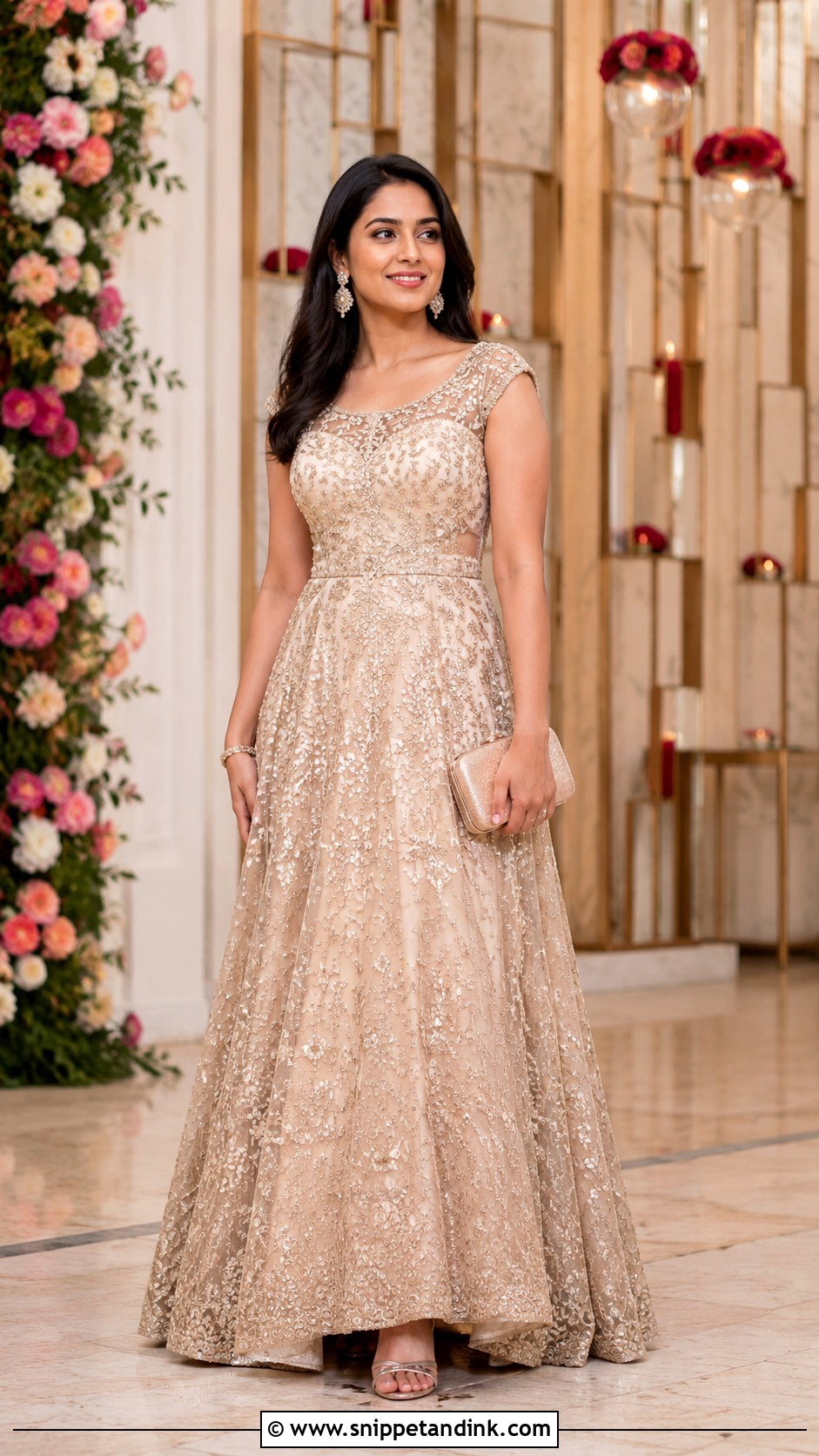
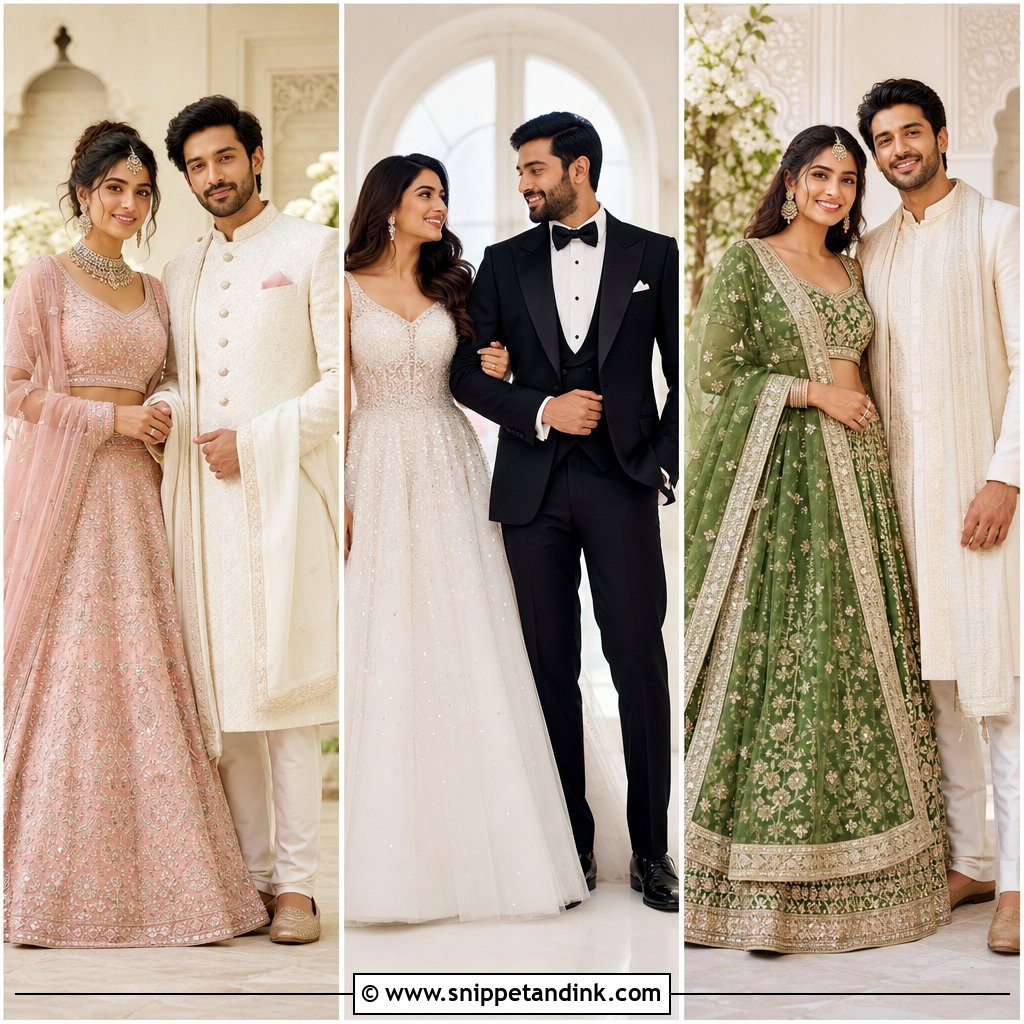
A gown suits brides who want the impact of occasion wear with no draping to manage. Choose an Indian-inspired gown with zari, sequins, threadwork or beading; A-line and empire-waist cuts are the most comfortable for sitting. Champagne, rose gold, lavender and powder blue are soft and pretty for a roka. Add a sheer dupatta only if your family prefers a traditional touch. Keep jewellery to earrings and a bracelet. Gowns work best at evening rokas in formal indoor venues, where you’ll mostly be standing and greeting.
15. Banarasi Saree for Roka Ceremony
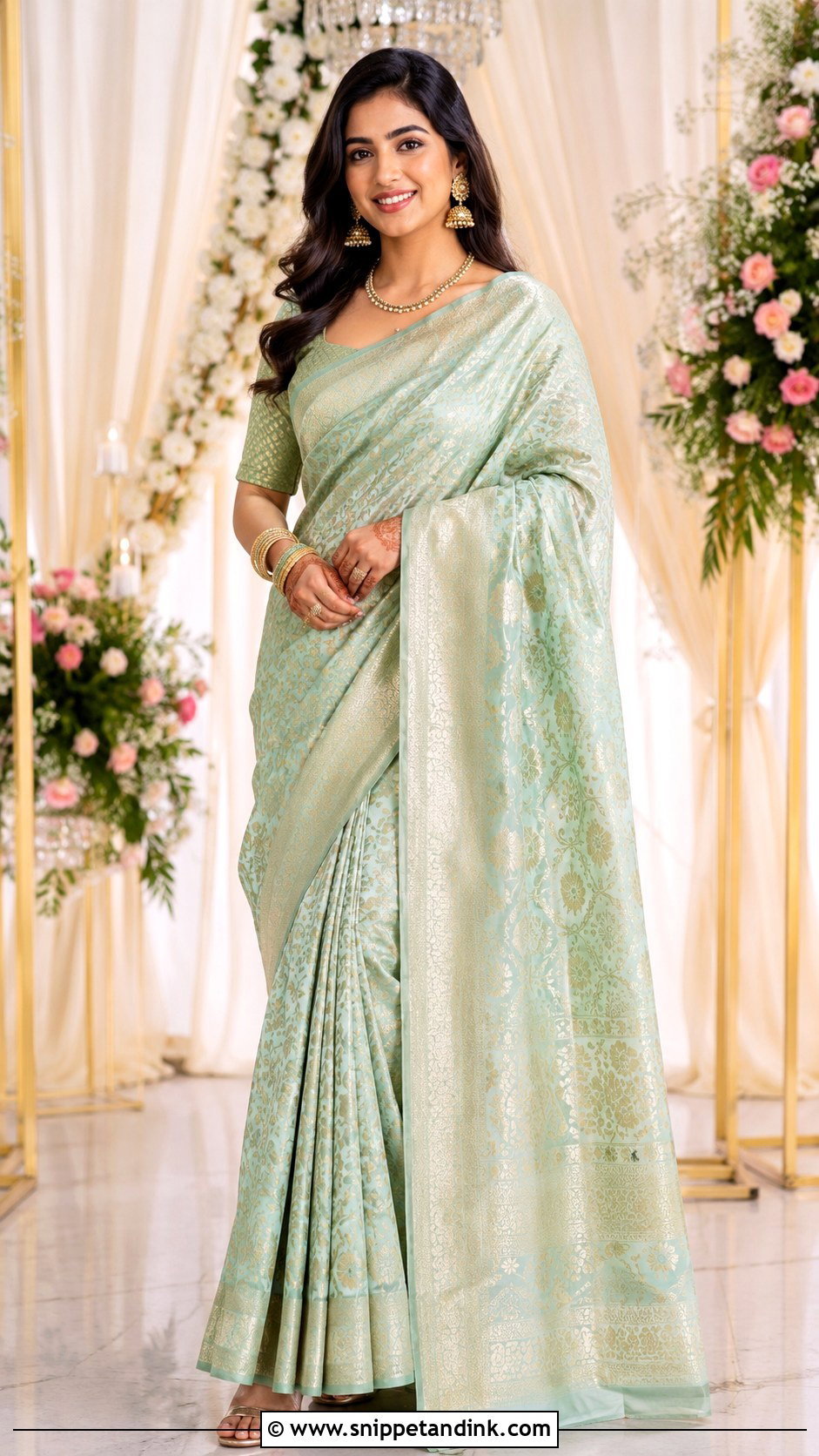
Banarasi silk is woven with zari on handlooms, so the fabric itself is the decoration and you need very few accessories. For a roka I’d choose a lighter Banarasi in a soft colour or a medium jewel tone rather than a heavy bridal piece. Pink, mint, gold, wine and turquoise all look rich. Pair it with a simple or brocade blouse, gold earrings, a fine necklace and bangles. Classic makeup and polished hair finish it. Brides, mothers and close family who love heritage dressing gravitate to this, and a well-kept Banarasi will last for decades.
16. Straight Suit for Roka Ceremony
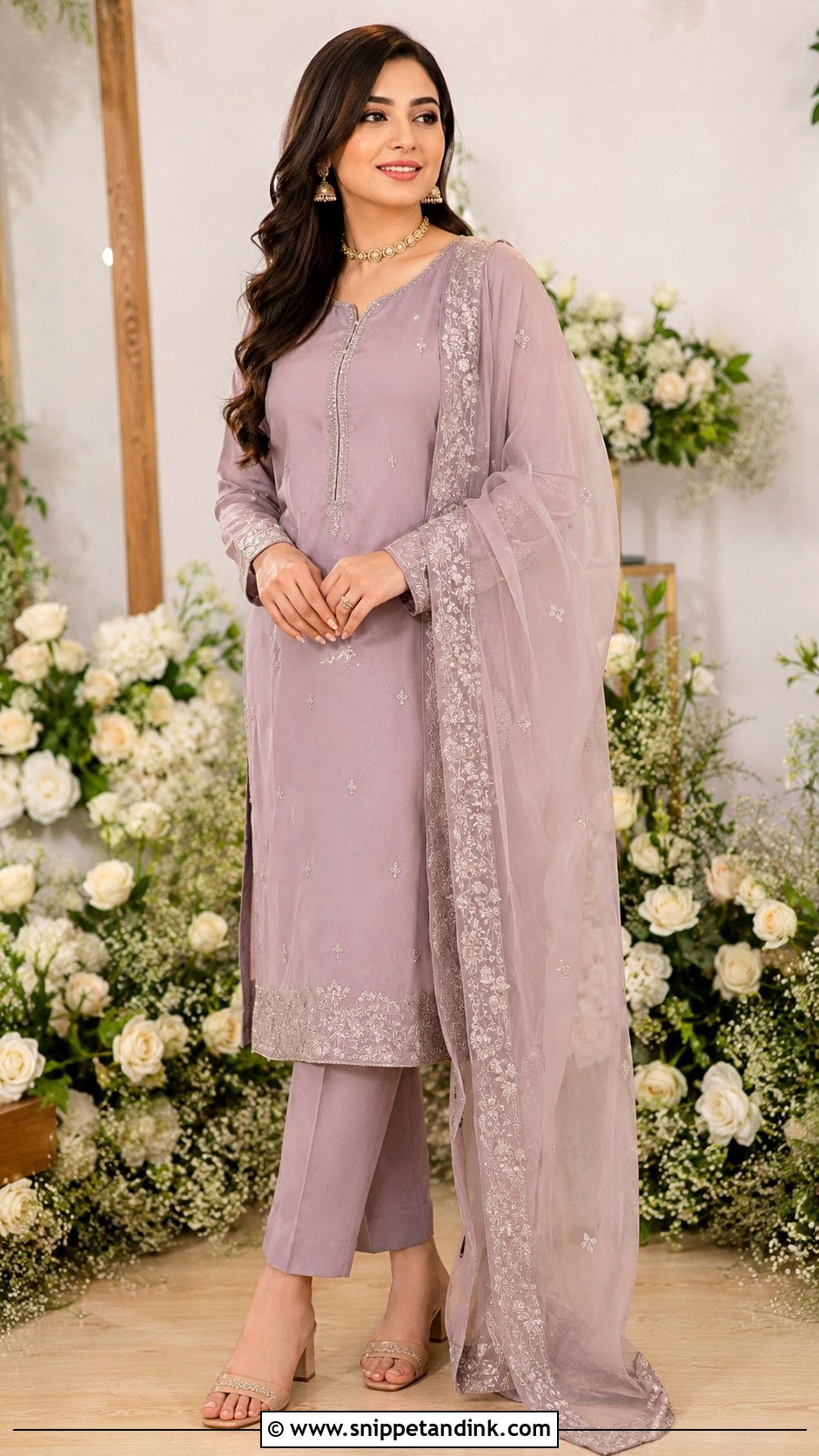
For a home roka where you want to look festive but not overdressed, a straight suit is the most practical option on this list. Choose a straight kurta with cigarette pants, churidar or narrow palazzos. The dupatta is where to add interest: embroidery, organza texture or a statement border. Ivory, peach, mauve, sage and maroon all work depending on the time of day. Studs, jhumkas or a small choker and comfortable juttis or low heels complete it. Brides, sisters, mothers and guests can all wear this.
17. Rani Pink Suit for Roka Ceremony
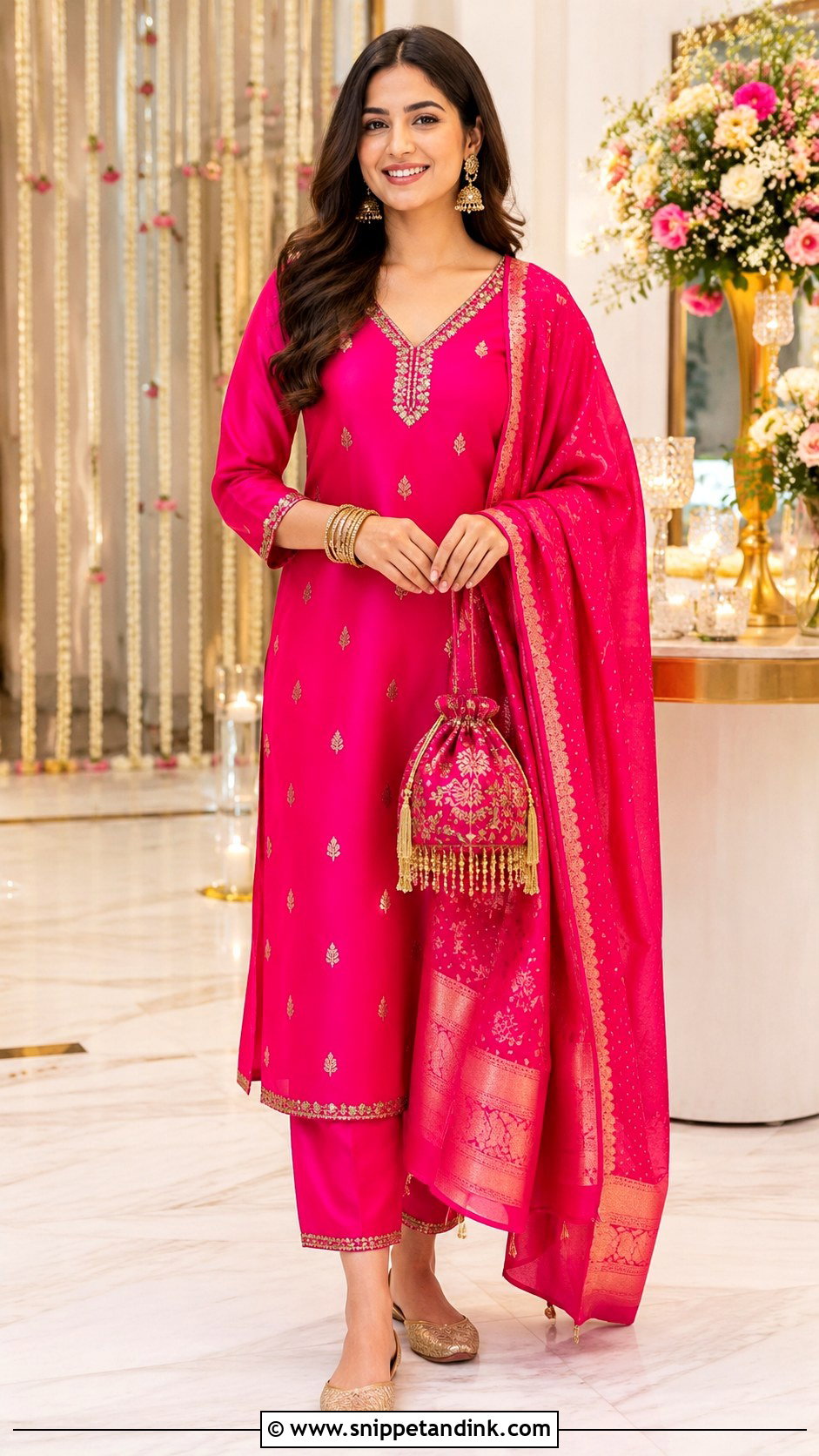
Rani pink is bright and traditional, and it’s often chosen for a roka precisely because it’s less bridal than red. A silk, chanderi, georgette or crepe suit with zari or gota accents looks right. A straight kurta with pants is elegant; an Anarkali or sharara version feels more celebratory. Gold jewellery, jhumkas and a matching or contrast dupatta finish it. Keep makeup fresh with soft pink tones. Brides who love colour and close family who want to stand out tend to choose this shade, and it photographs well under both daylight and indoor lighting.
18. Ivory Lehenga for Roka Ceremony
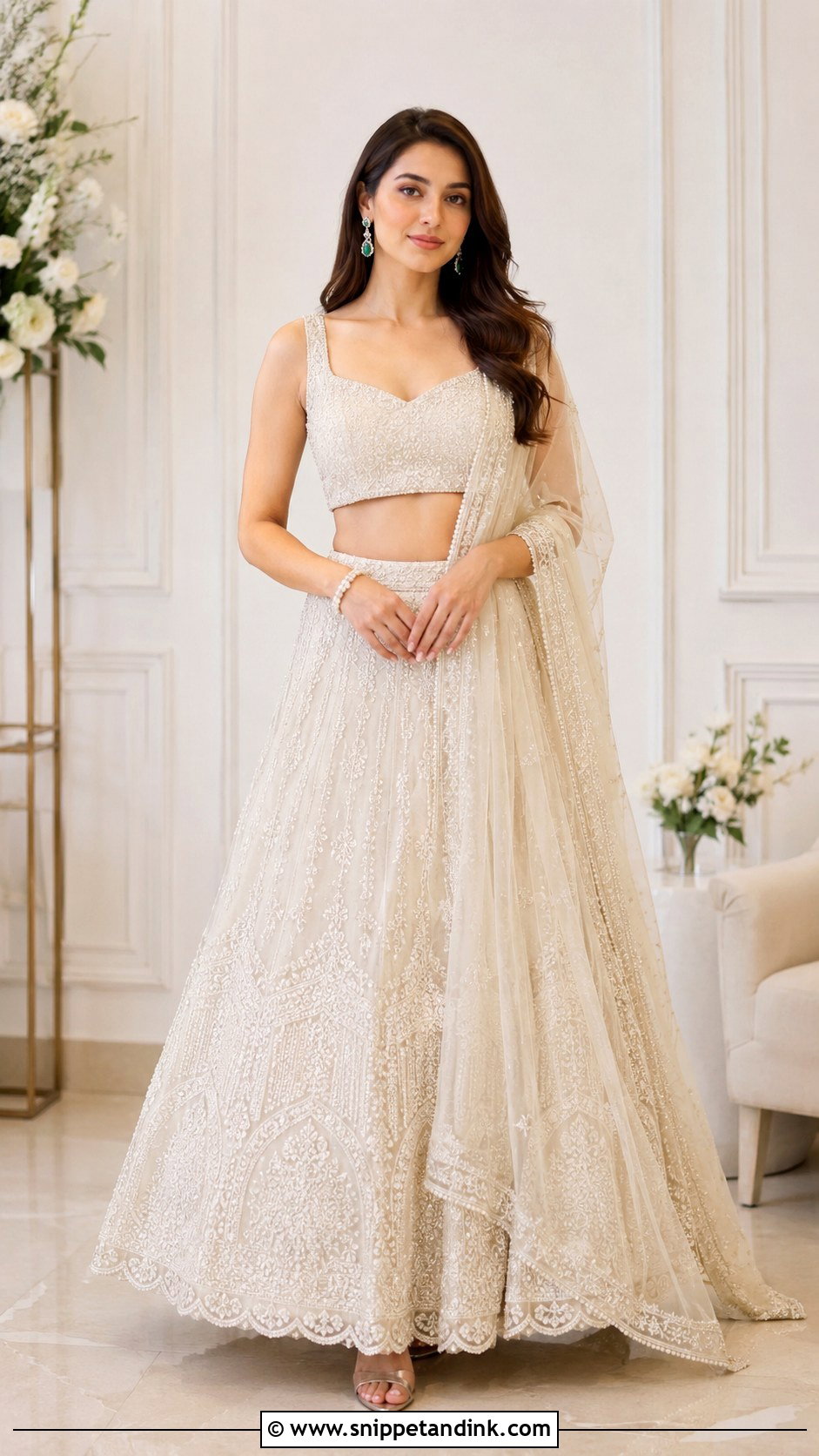
An ivory lehenga is calm and refined, a quiet luxury choice. Ivory with pearl work, chikankari, sequins, mirror work or soft gold embroidery looks lovely with a matching blouse and sheer dupatta. Ivory can wash out in photos, so add contrast through emerald earrings, pearls or polki, or a pastel dupatta. Neutral or metallic footwear finishes it. Before you commit, check with both families. Some traditional households avoid white and very pale shades at auspicious ceremonies, and a roka is not the place to find that out.
19. Printed Saree for Roka Ceremony
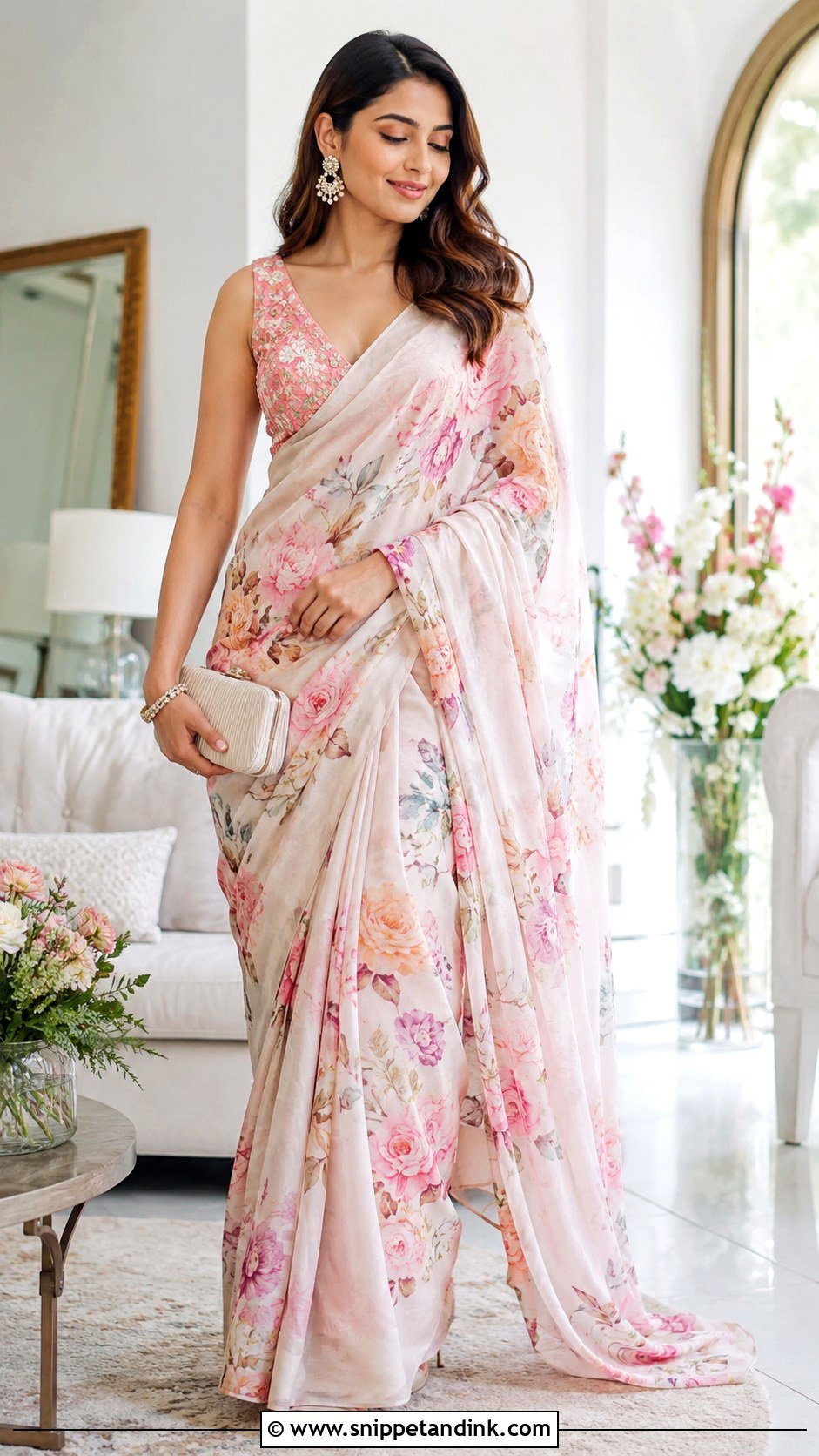
A printed saree is light and easy, which suits a relaxed daytime roka. Floral, paisley or hand-block prints in silk, organza, georgette or crepe all work. To make it festive, pair it with an embroidered blouse or a rich contrasting one. Pearl earrings, a bracelet and a small clutch are enough. It suits brides who want simplicity and guests who want to look polished without going heavy. You’ll wear it again long after the ceremony, which can’t be said for most roka outfits.
20. Mirror Work Lehenga for Roka Ceremony
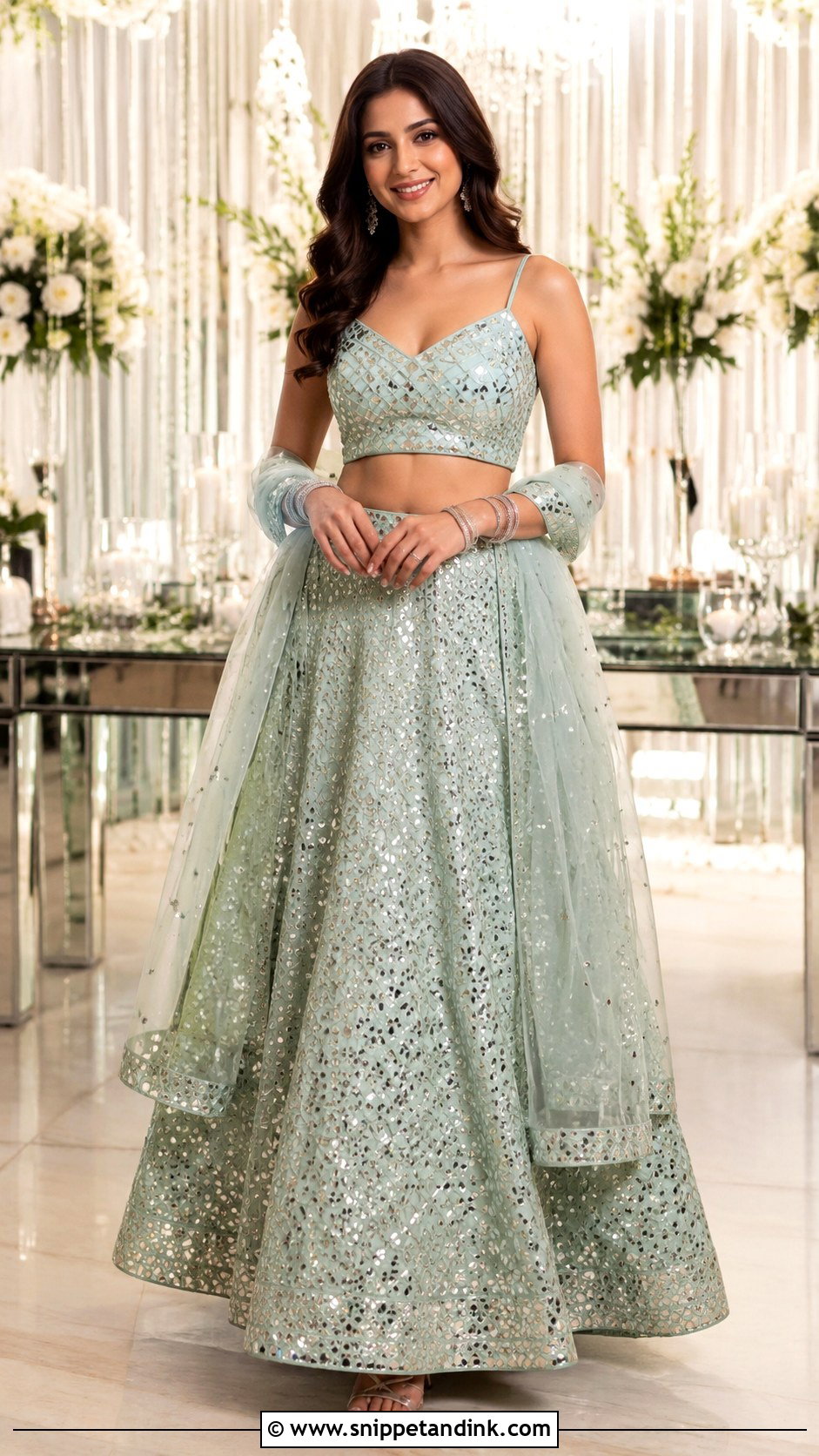
Mirror work brings sparkle to an evening roka or a venue with bright décor. I’d keep the mirrors small and scattered rather than all over, so the outfit stays proportionate to a family function. Peach, mint, yellow, aqua and blush balance the shine. A simple blouse and light dupatta complete it. Since the mirrors catch every light, keep jewellery to earrings and bangles. Soft waves or a sleek ponytail make it feel modern. Sisters and cousins with a lively style suit it, and so do brides who want a bit of fun.
21. Pakistani Suit for Roka Ceremony
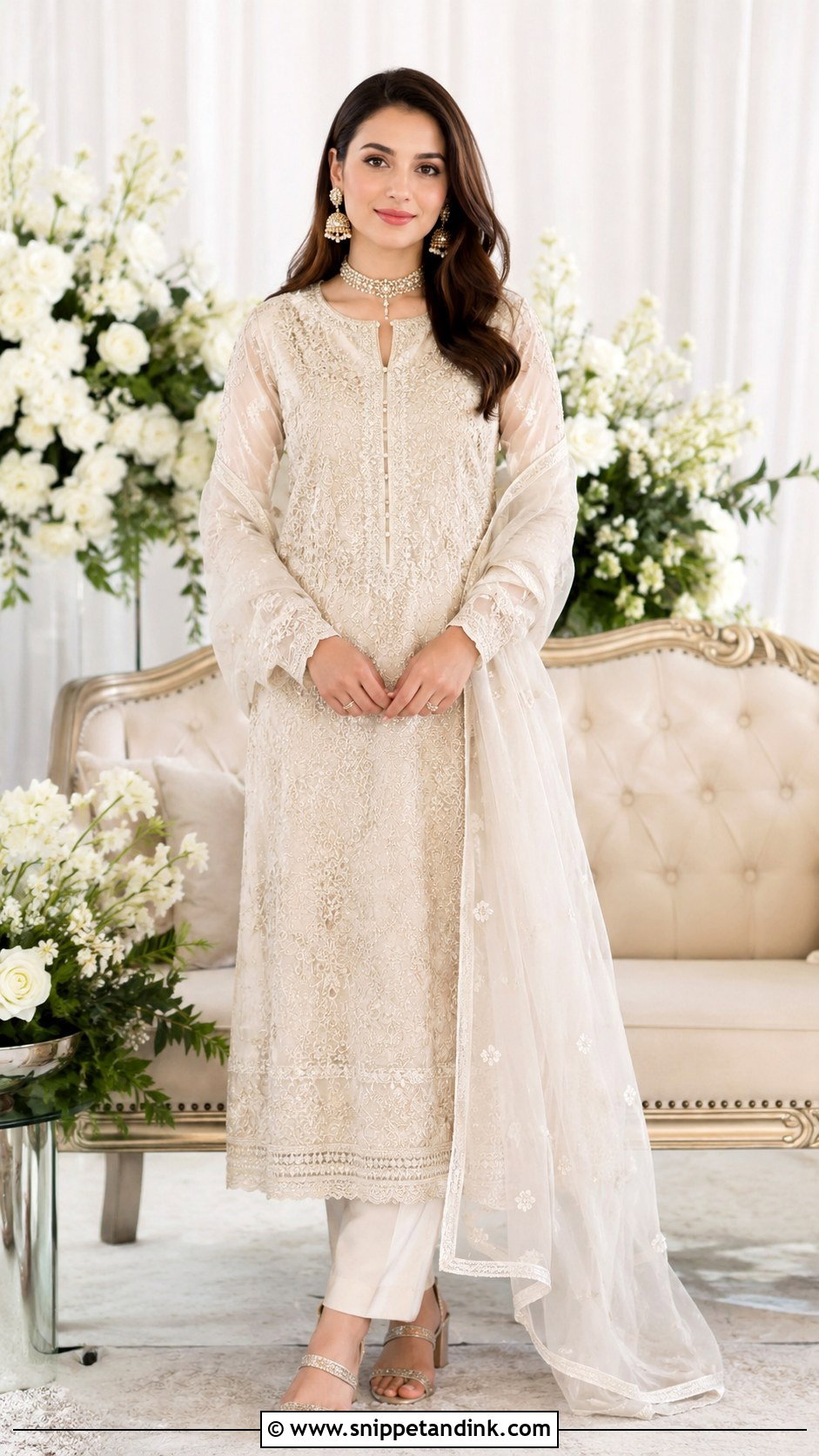
A Pakistani suit relies on length and fine embroidery rather than volume. Choose a long straight kurta with trousers and a delicate chiffon, organza or net dupatta. Embroidery at the neckline, sleeves and hem gives plenty of detail. Soft pastels, ivory, sage, dusty pink and deep green work well. Pearl earrings, jhumkas or a fine choker and block heels or embellished flats complete it. It’s modest and comfortable, which suits family-focused rokas at home. A chiffon dupatta also drapes easily over the head for the chunni or the puja.
22. Co Ord Set for Roka Ceremony
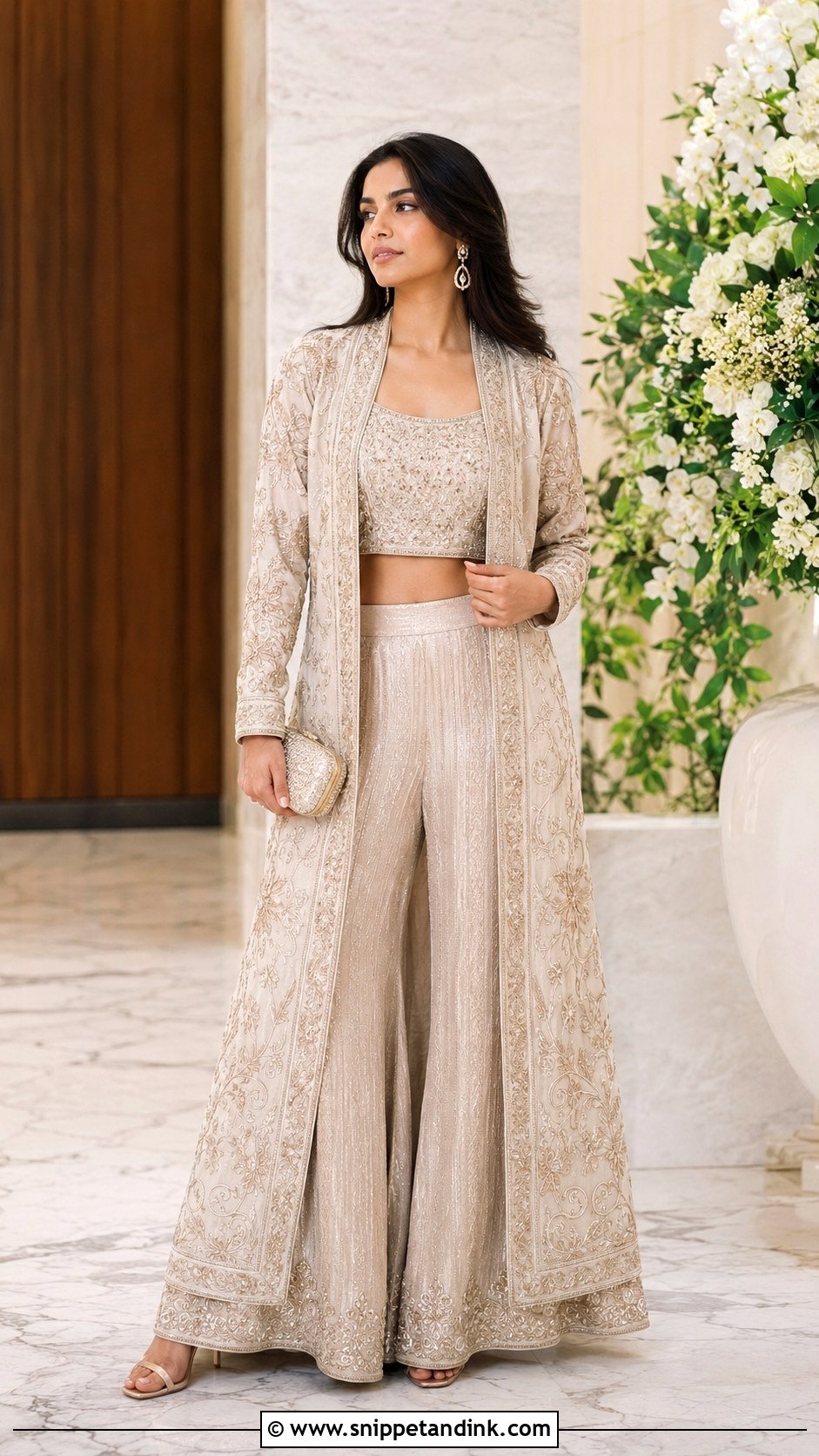
A festive co-ord is the modern route for a roka with a relaxed dress code. An ethnic set with an embroidered crop top and flared pants, a skirt or a long jacket looks polished with little styling. Silk, brocade, crepe and georgette all hold their shape. Add a dupatta for a more traditional finish. Champagne, teal, lavender, peach and rose gold feel fresh. Hoops, studs or a slim choker are enough. Smaller rokas, destination-style gatherings and bridesmaids who want something easy suit this. Check with elders first if the family is traditional, since a crop top may not suit a puja.
23. Velvet Suit for Roka Ceremony
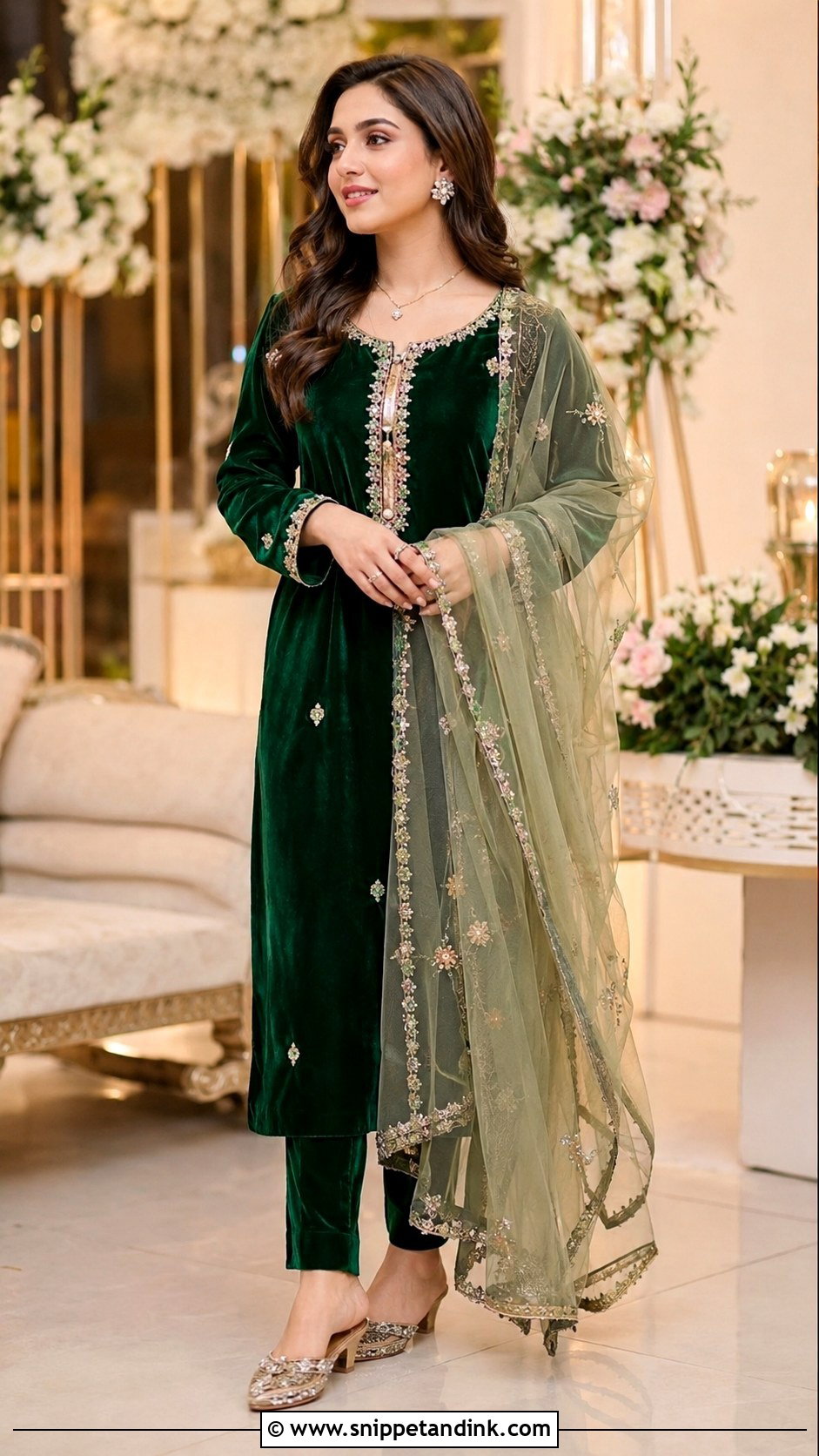
Velvet belongs at winter and evening rokas. Its pile gives depth, so even light embroidery looks luxurious. Choose a straight velvet kurta with pants and a lighter organza or chiffon dupatta to balance the weight. Emerald, wine, plum, navy and deep maroon are rich in velvet. Polki studs, small chandbalis or a fine necklace keep the jewellery traditional but not heavy, with heeled juttis or block heels. Velvet is warm, so it’s best indoors in cool weather; at a crowded summer function it becomes uncomfortable within the hour.
24. Yellow Suit for Roka Ceremony
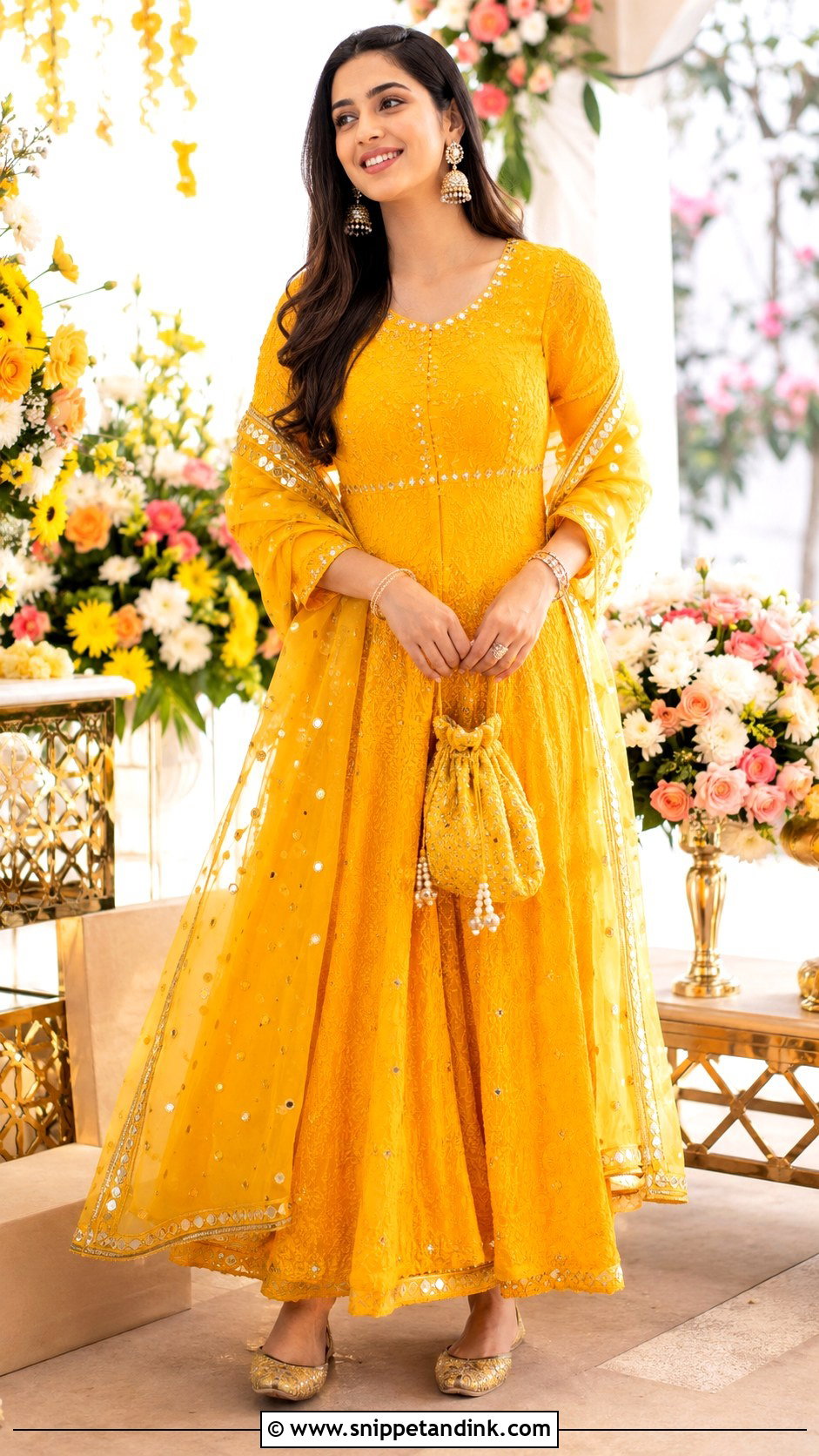
Yellow brings warmth to a daytime roka and doesn’t read bridal. Choose mustard, lemon, marigold or soft pastel yellow according to your skin tone; mustard and marigold flatter deeper and warmer complexions, while lemon suits cooler, fairer skin. A straight suit, Anarkali, palazzo suit or sharara all work in this colour. White, gold or mirror-work accents keep it fresh. Pearl earrings, jhumkas and light bangles complement it, with soft peach or rose makeup. It sits naturally at home ceremonies and garden functions with colourful flowers.
25. Indo Western Dress for Roka Ceremony
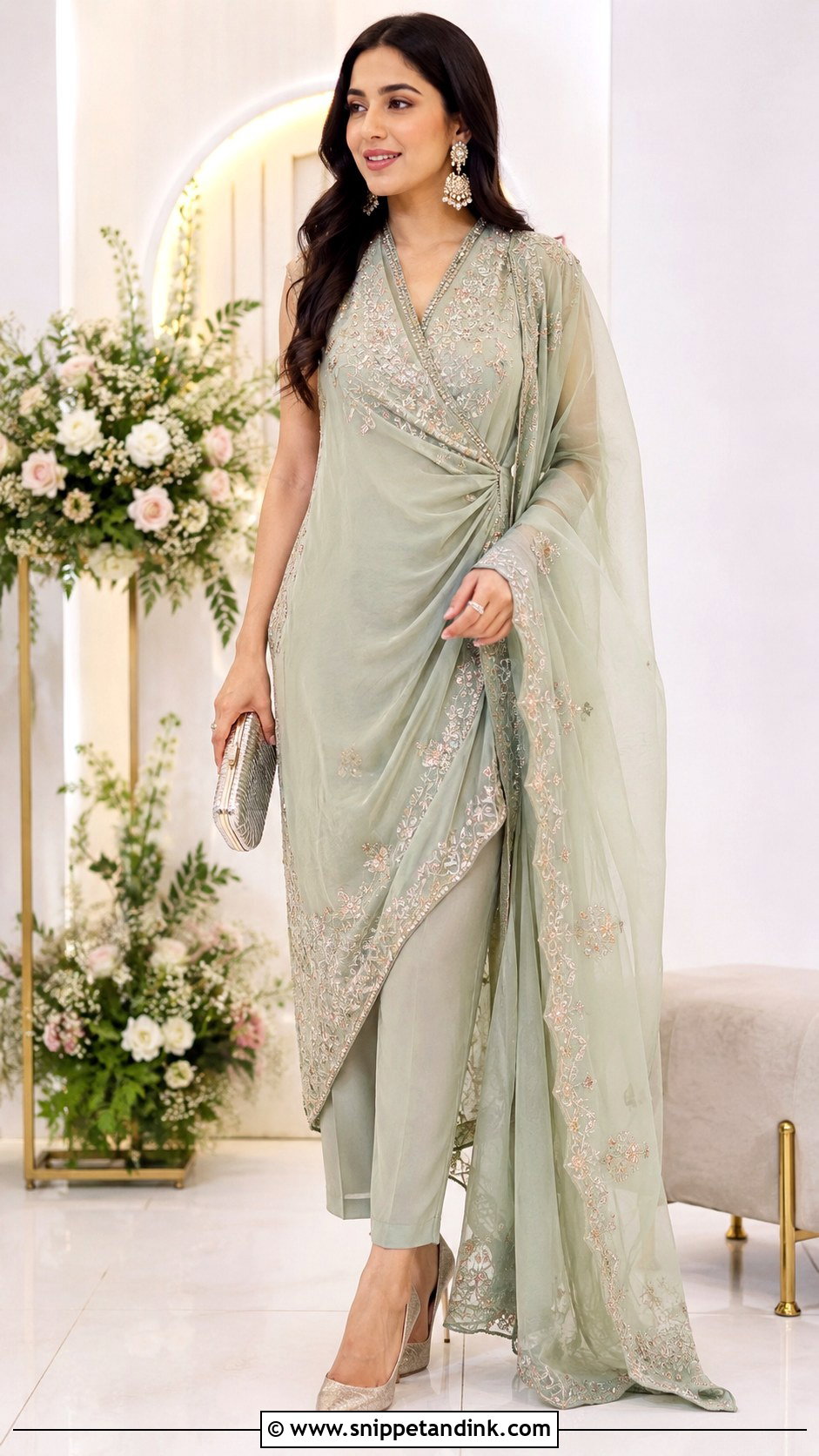
An Indo Western dress suits a bride whose style leans modern but who still wants something festive. Look for a draped dress, dhoti-style set, asymmetric kurta with pants or an embroidered maxi with Indian detailing. Crepe, georgette, silk and satin blends drape well. Mauve, champagne, teal, sage and blush look refined. Statement earrings, sleek heels and a small clutch finish it. If there are rituals, carry a light dupatta; you’ll want it for covering your head during the puja or the chunni ceremony.
A Roka Fixed at Two Weeks’ Notice Still Leaves Time for a Good Fit
Rokas are often set quickly once both families agree, sometimes within a week or two. That rarely leaves time for a fully custom outfit, especially during wedding season when tailors are booked up. This is how I’d use whatever time you have.
Buy ready-made, then alter
Shop for a ready-to-wear piece in the first few days. Most blouses and kurtas need only small adjustments at the bust, waist or sleeve, which a good tailor can turn around in days rather than weeks. A brand-new blouse stitched from fabric usually takes longer, so leave that for the wedding.
Do a full sit-down trial
Put on the whole outfit, jewellery and shoes included, and sit on the floor for ten minutes. Check that the blouse doesn’t ride up, the skirt doesn’t tug at the waist and the earrings aren’t pulling at your lobes.
Borrow before you buy
A mother’s or aunt’s silk saree, given a new blouse, is one of the most meaningful roka outfits I see. It’s also the quickest, since only the blouse needs making.
Dress for Blessings, Hugs and a Long Sit at the Puja
You don’t need the heaviest lehenga or the most expensive jewellery to look special at a roka. A well-fitted saree, suit, sharara, gown or lehenga looks right when the colour, fabric and accessories agree with each other. Think about the venue, the season, your family’s customs and how long you’ll be sitting during the puja. Neat hair, soft makeup and shoes you can stand in for hours make more difference than extra embroidery. Most of all, leave space for the moment the families bless you, because that’s the part everyone will remember.
You'll Like These Ideas:


Leave a Reply