
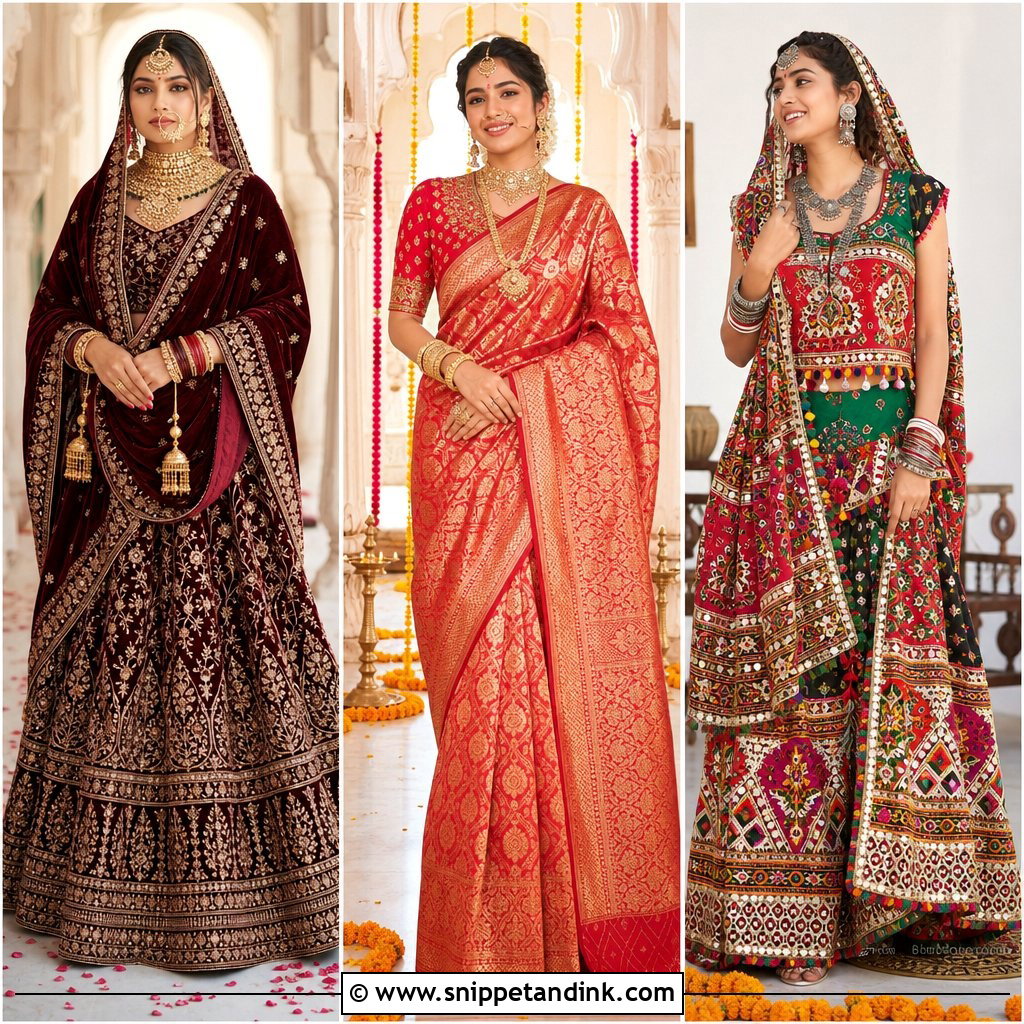
Of all the wedding events, the mehndi is the one where a bride is least able to fuss with her clothes. Her hands are out of action for hours, she’s sitting low on cushions, and later she’s pulled onto the floor to dance. So when I plan this outfit with a bride, the first questions are about sleeves, seating and weight, and colour comes after. Yellow, green, orange, pink, coral and multicolour palettes are still the favourites, and capes, printed lehengas, shararas, co-ords and lighter anarkalis keep showing up in 2026. Here are thirty bridal mehndi looks, each with the practical catch I’d point out at a fitting.
Planning the Mehndi Look Alongside the Wedding Lehenga
Most brides buy their wedding outfit first and treat the mehndi as an afterthought. I’d plan them together. When the two outfits share a colour or embroidery style, the album looks repetitive, so I usually push the mehndi into a different colour family and a lighter technique. A red zardozi wedding lehenga pairs well with a yellow gota mehndi; an ivory wedding look leaves room for a bright pink or multicolour one.
Weight is the other thing to plan. Your wedding lehenga may be heavy, and that’s fine for a ceremony where you stand and walk. At the mehndi you’ll be seated for a long time, then dancing. I aim for an outfit noticeably lighter than the wedding one, ideally something you can lift with one hand on its hanger.
- Put both outfits side by side on your phone screen before ordering and check they don’t look like the same event.
- Decide early whether you’ll change outfits between henna and dancing; that changes everything about the sleeves.
- If the haldi and mehndi share a day, plan two outfits. Turmeric and fresh paste don’t go well on the same fabric.
1. Yellow Lehenga For Mehandi Bride
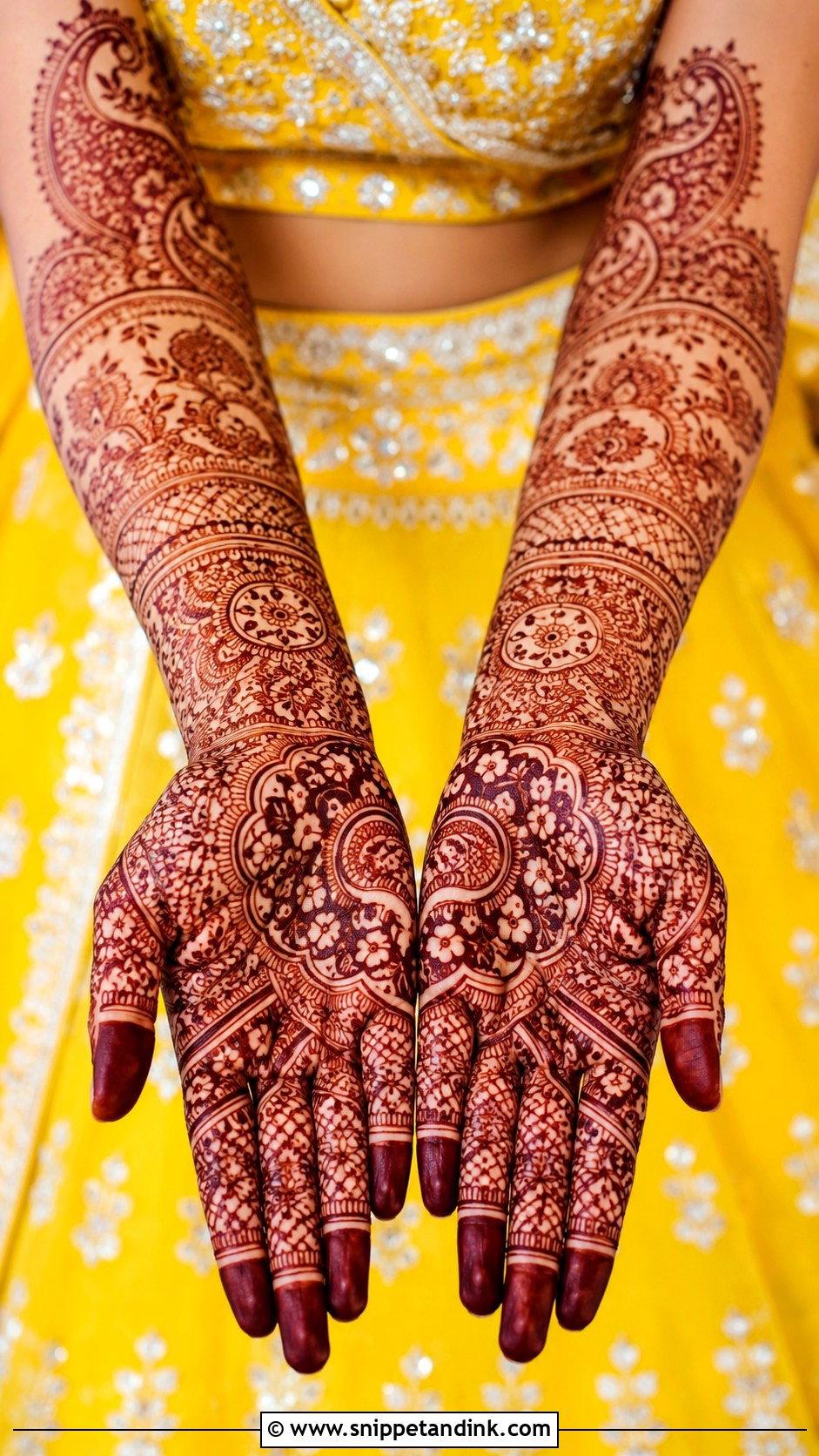
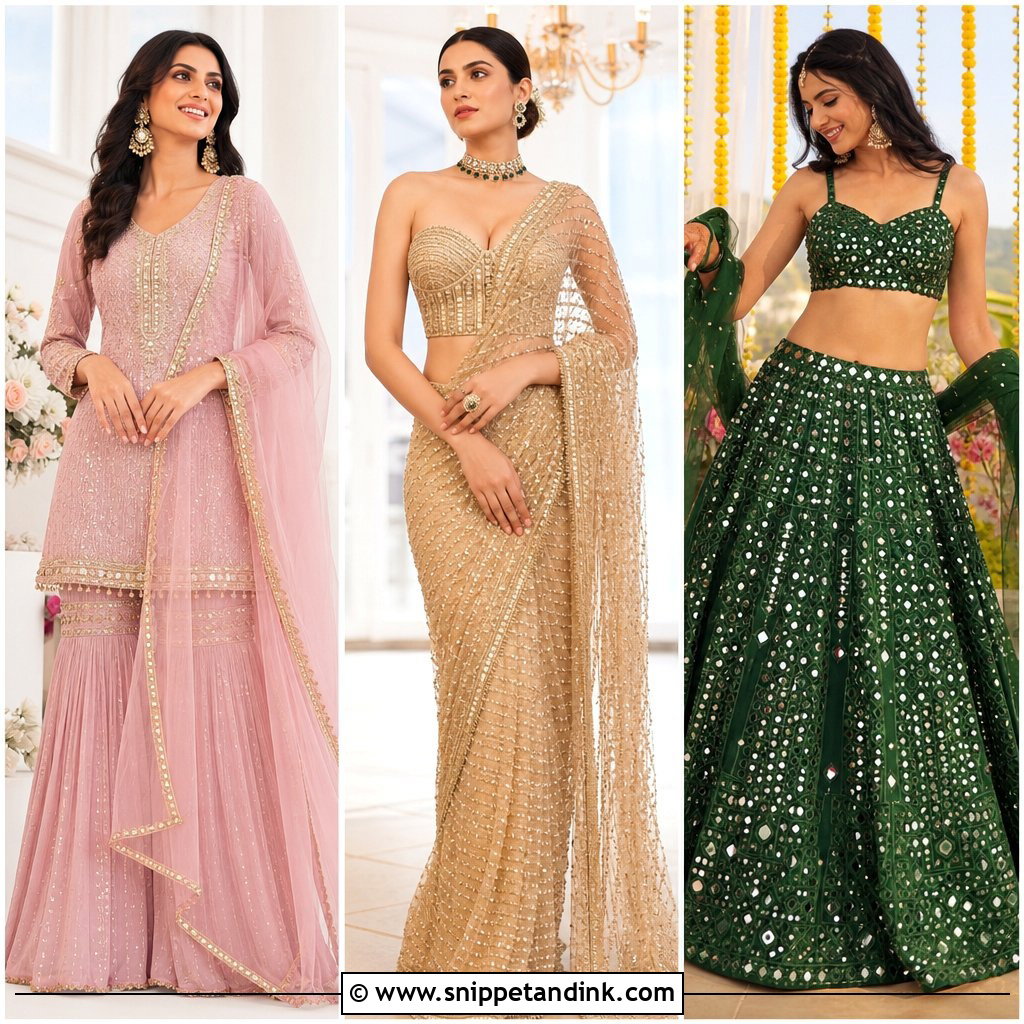
Yellow is the colour most families expect, and it earns that place because it looks festive even with very little embroidery. I keep the skirt light, in georgette, chanderi, organza or cotton silk, since a bride may sit for three or four hours while the artist works. Mirror work, gota patti or small sequins give enough shine for daylight photos. A sleeveless or short-sleeve blouse leaves the arms clear for full-hand designs, and the dupatta should be pinned on one shoulder before the paste goes on. Juttis and floral jewellery finish it without adding weight.
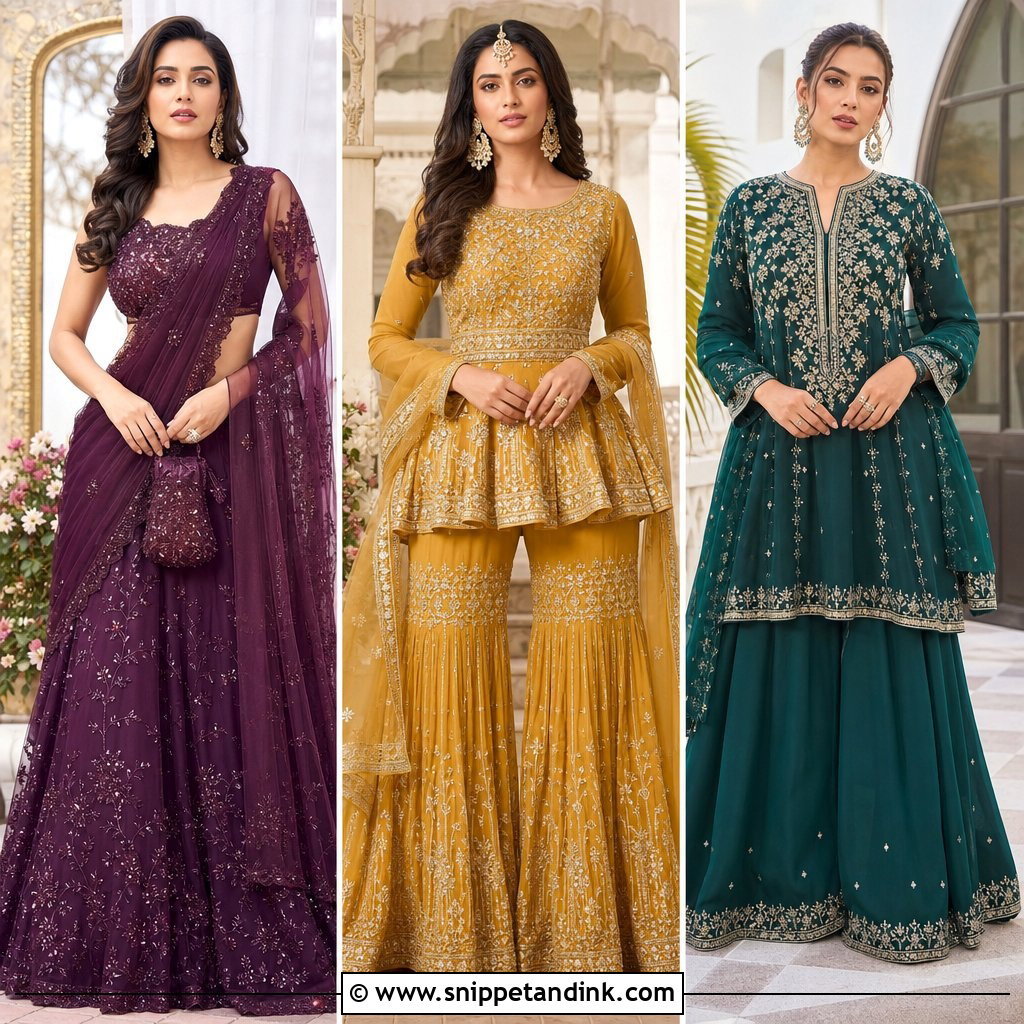
2. Green Sharara For Mehandi Bride
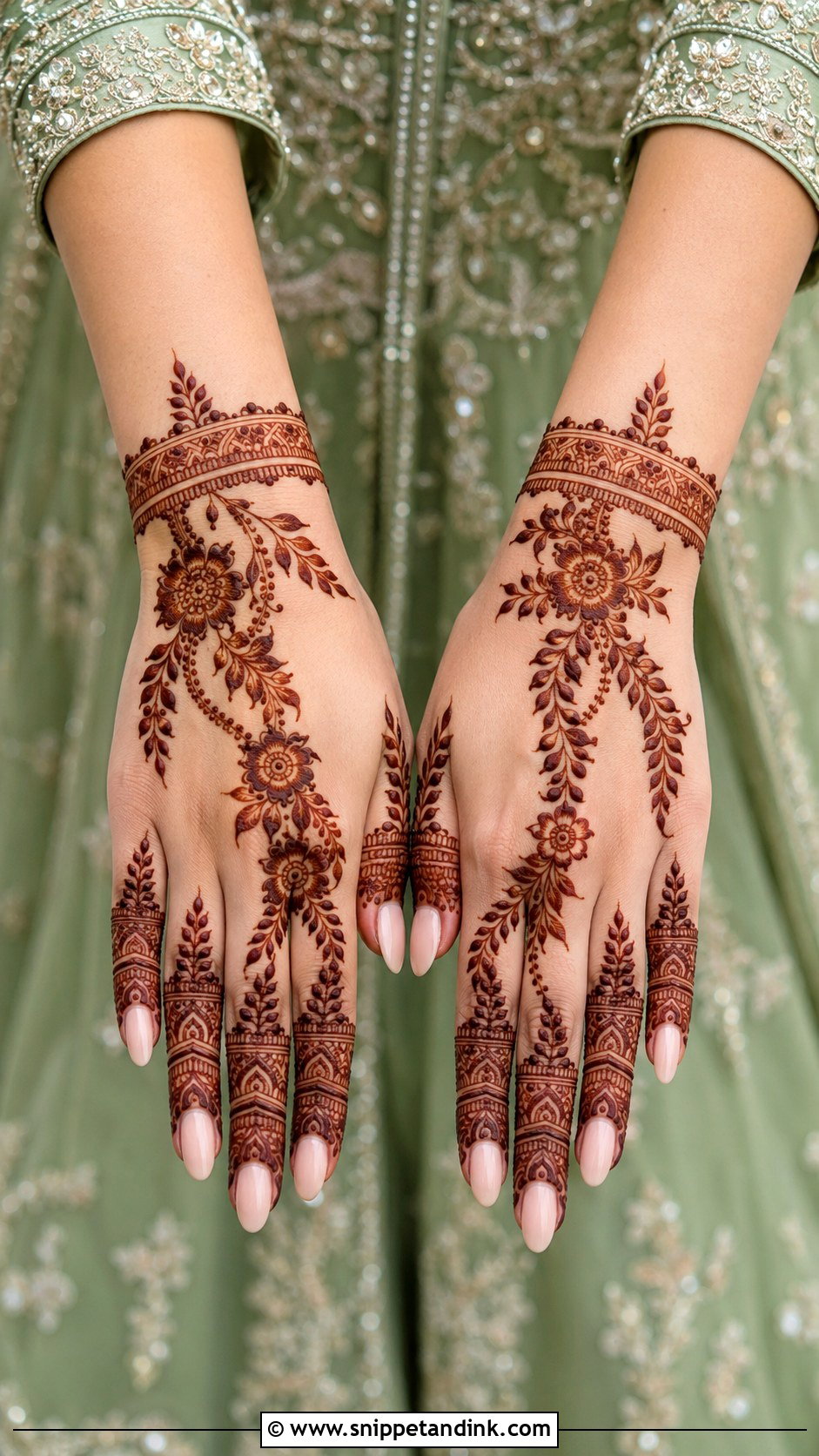
The sharara is my answer for brides who dread sitting cross-legged in a stiff skirt. Wide legs fold easily, and a short kurta on top keeps the proportion young. Emerald, lime, pista or a true mehndi green can all work, depending on what the decor is doing. Borders, mirror detail or floral threadwork make it read as bridal. One fit point: green shararas in heavy fabric can drag at the back hem, so I have them hemmed to the shoes, not to bare feet. Wear statement earrings rather than bangles, and add the dupatta around your neck only after the henna is dry.
3. Floral Lehenga For Mehandi Bride
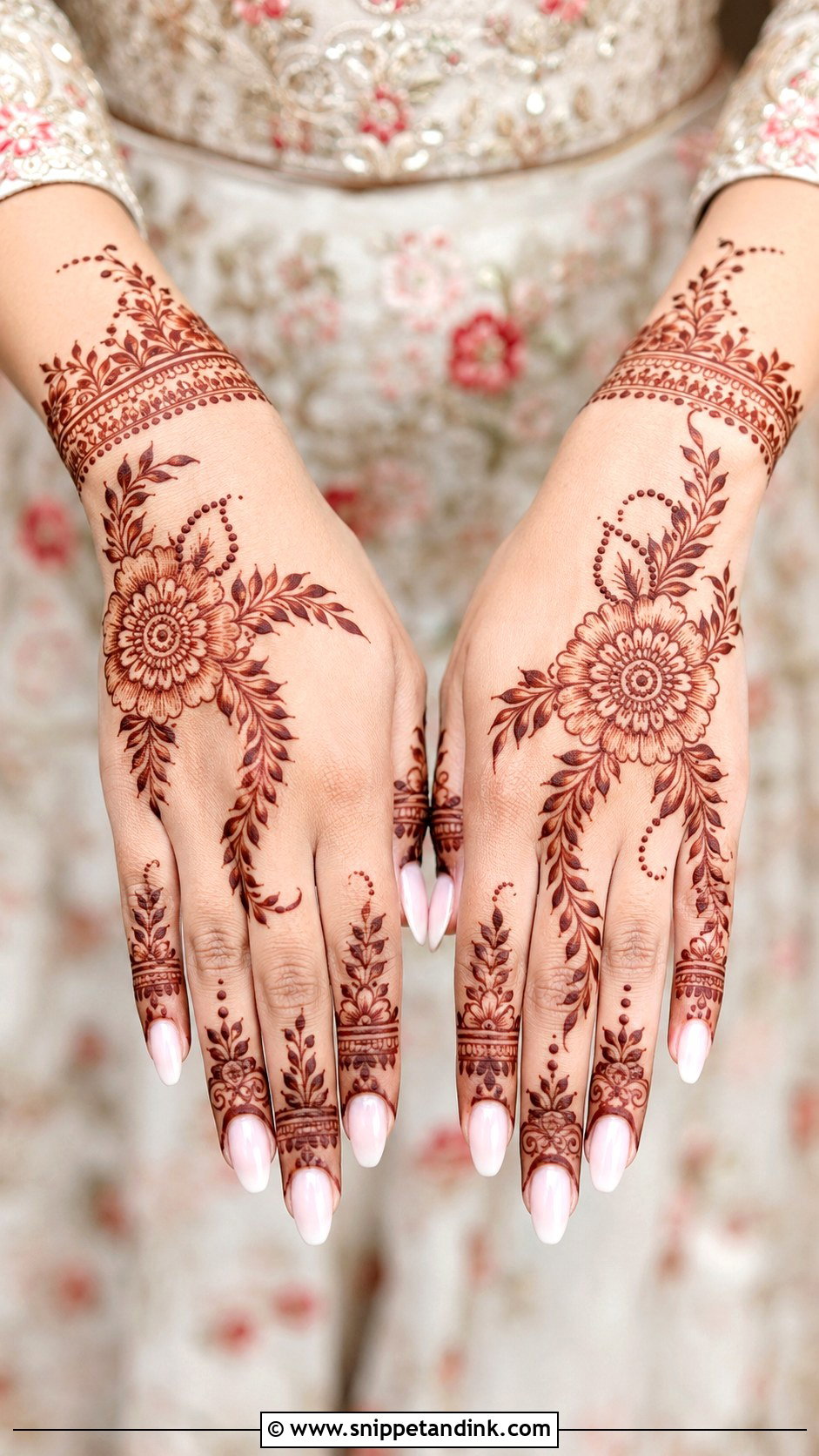
Florals soften a mehndi look and suit outdoor ceremonies, where prints look natural against greenery. A yellow, blush, mint, ivory or peach base with brighter flowers on top is the usual formula. I prefer a flowy skirt, a cropped blouse and a dupatta that sits well away from the hands. Florals work beside marigolds and jasmine and also hold up in a plain indoor room. The detail I check is print scale: big blooms suit a tall bride, while small florals look more balanced on a petite frame. Delicate jewellery is all it needs.
4. Multicolor Lehenga For Mehandi Bride
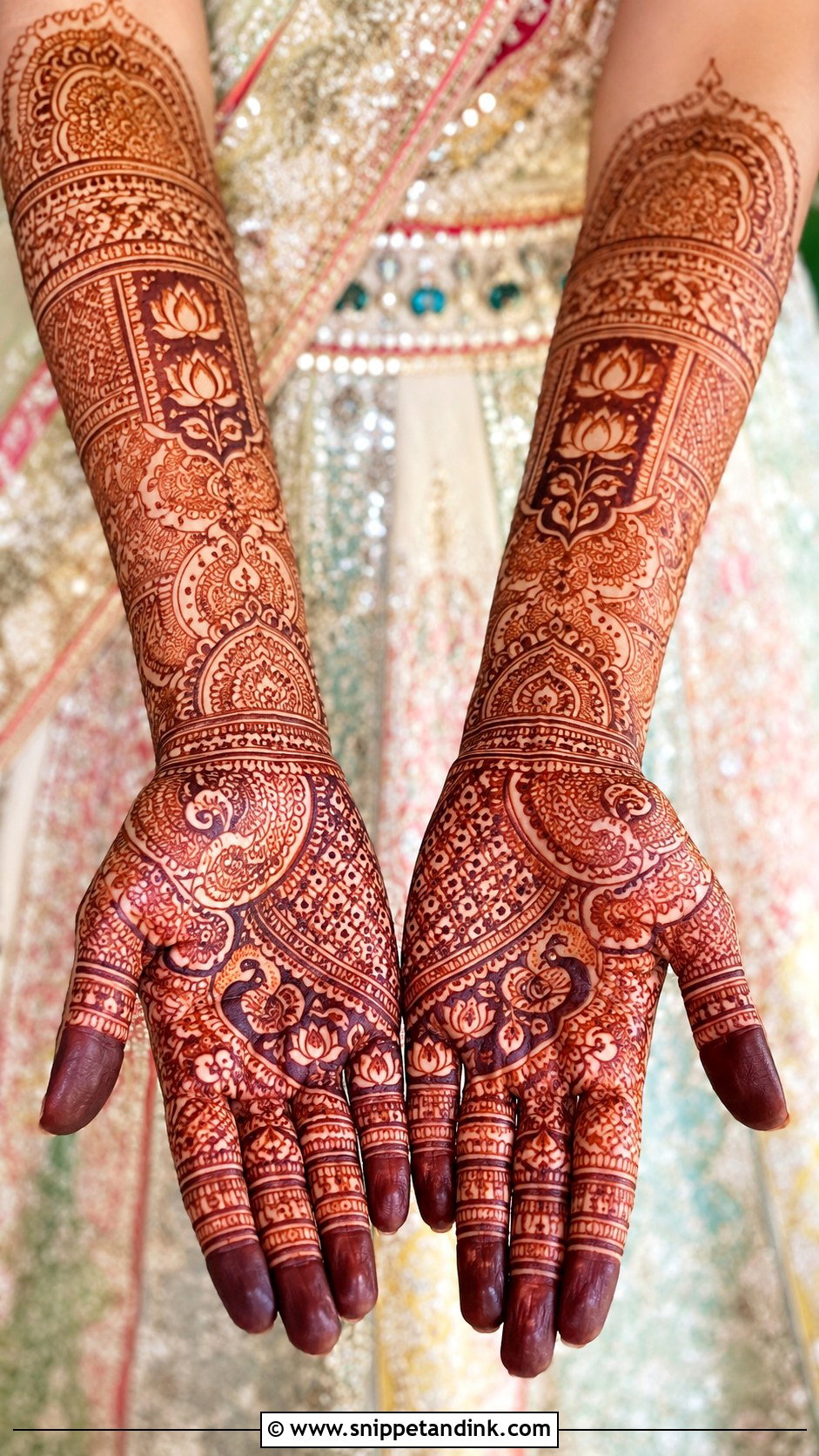
Colour-block panels, patchwork prints, mirror borders and contrasting blouses all fall under multicolour, and the trick is balance. Yellow, rani pink, turquoise, orange and green can sit together if the embroidery is even across the skirt; when one panel is far heavier, the eye goes straight to it. With this much colour, I limit jewellery to one strong piece, such as oversized earrings or a floral matha patti. Multicolour also makes a deep maroon henna stain stand out in close-ups, which matters at the one event where your hands are the centre of attention.
5. Pink Lehenga For Mehandi Bride
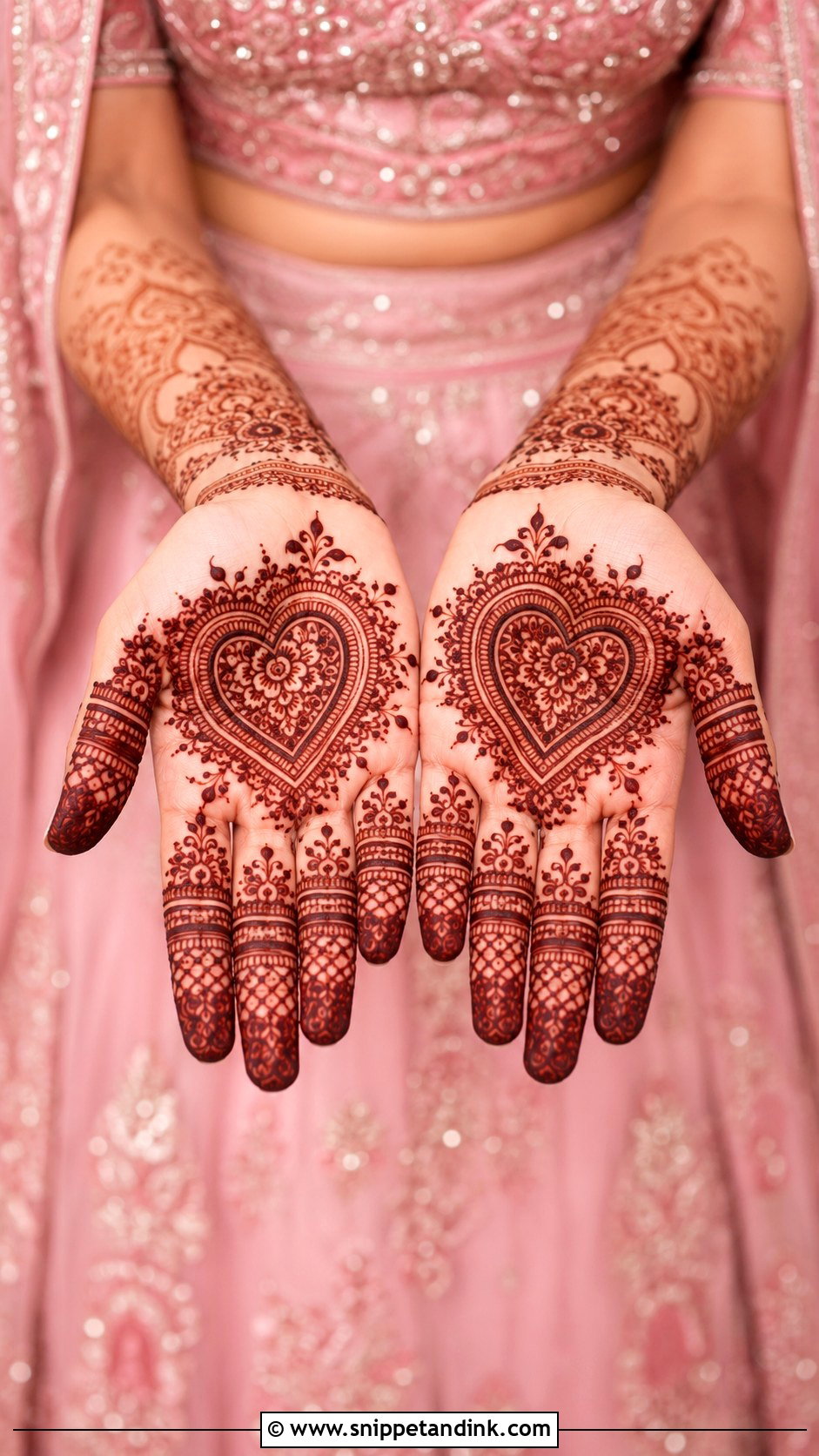
Pink is the colour I suggest when a bride’s wedding lehenga is red or ivory and she wants her mehndi to look clearly different in the album. Rani pink is bold and regal; blush is quieter and more modern. For daytime, mirror work, gota borders, floral embroidery or light zari all suit it. A cap-sleeve or sleeveless blouse is practical, and a green, orange or yellow dupatta gives a livelier contrast. Blush can look washed out against pale skin under midday sun, so I’d move those brides toward a mid pink.
6. Orange Lehenga For Mehandi Bride
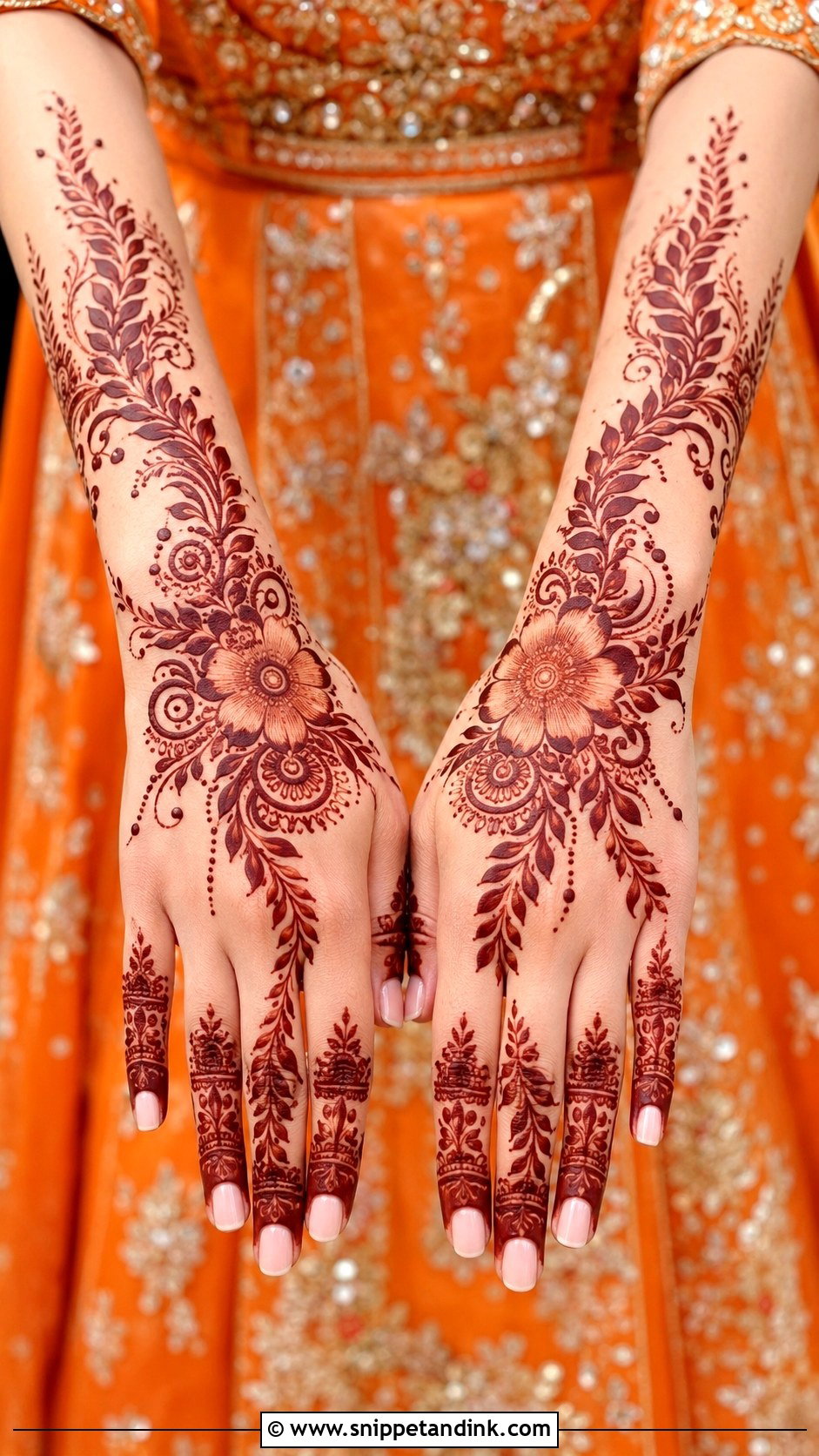
Orange sits right next to the reddish brown of a fresh henna stain on the colour wheel, so the hands look warm and rich against it in photos. Tangerine, marigold, burnt orange and coral-orange give you a range to match skin tone and decor. A light skirt with mirror work, thread embroidery or gota keeps it bridal without heat. Pairing it with a green blouse or a pink dupatta is a classic Indian combination. I’d skip tight sleeves and any high, stiff neckline, because orange already draws attention upward.
7. Cape Lehenga For Mehandi Bride
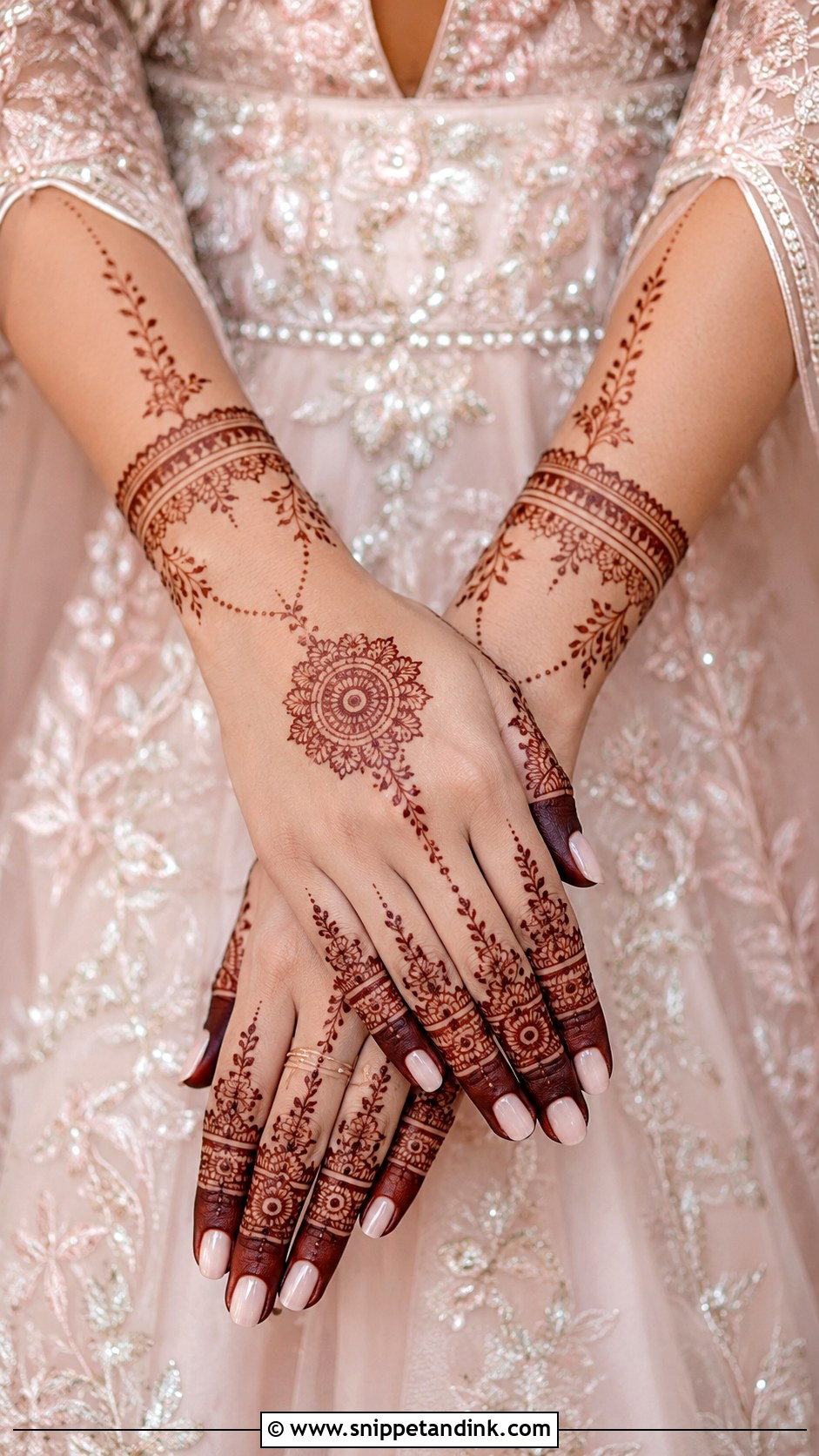
Brides like a cape for one reason: no dupatta slipping down onto wet hands. A sheer cape in organza, net or chiffon with embroidered edges gives movement in photos, and the lehenga underneath can be as plain or printed as you like. Yellow, mint, coral and pink are the usual picks. The fitting point I never skip is the cape’s front edge. If it falls past the wrist when the arms are held out for the henna artist, it will drag through the paste, so I have it shortened or cut away at the front.
8. Anarkali Suit For Mehandi Bride
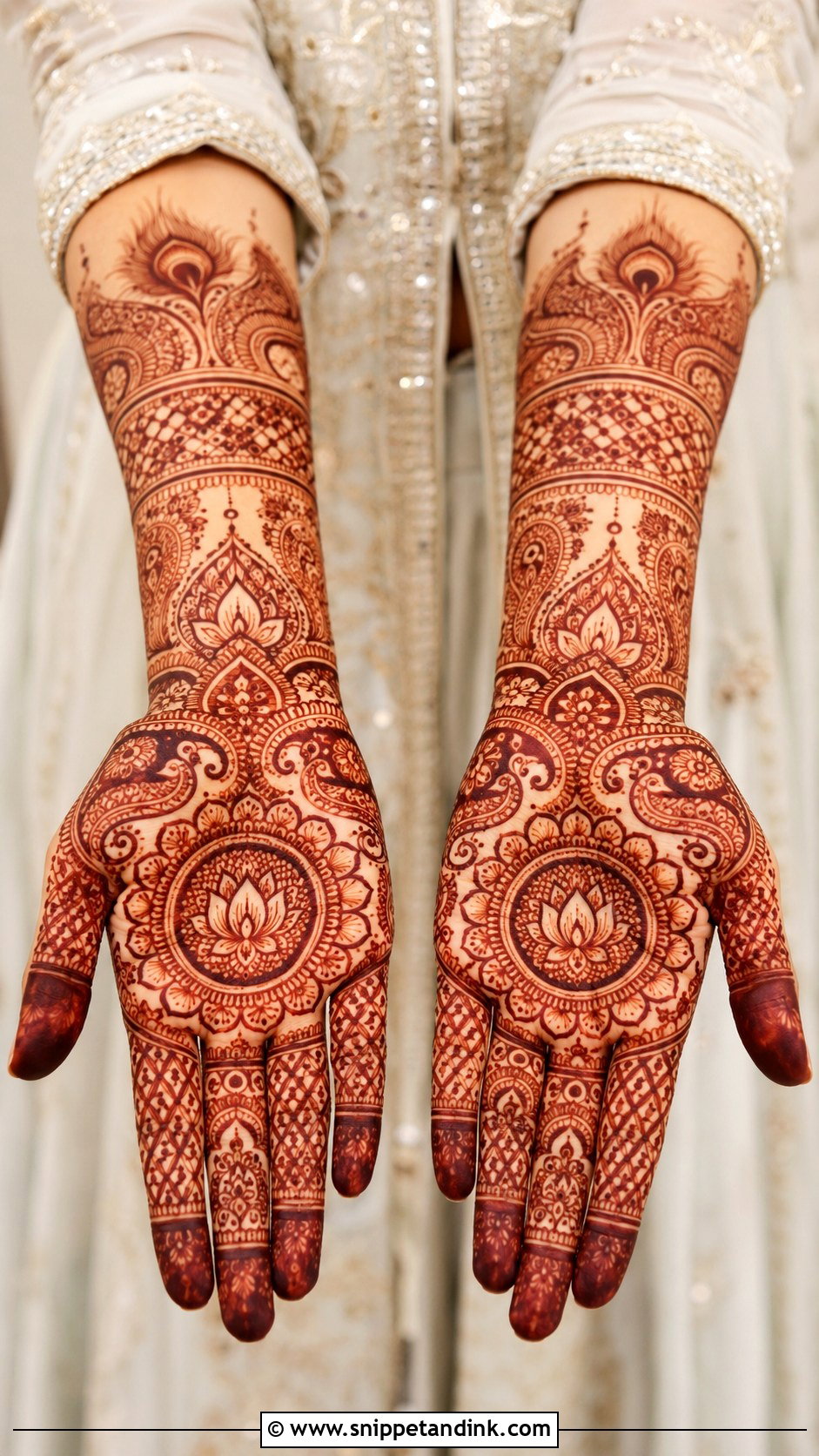
An anarkali gives full coverage and a bridal shape without the weight of a lehenga, which suits brides who’d rather not show the midriff. Bright yellow, green, orange or pink with embroidery at the neckline, hem and sleeves keeps it festive. Sleeves should be short, elbow length or absent. Because the flare is gathered at a high waist, there’s a lot of fabric in your lap when you sit, so I tell brides to spread the skirt behind them rather than bunching it in front, where it meets the drying paste. Chandbalis and a small maang tikka are plenty.
9. Printed Sharara For Mehandi Bride
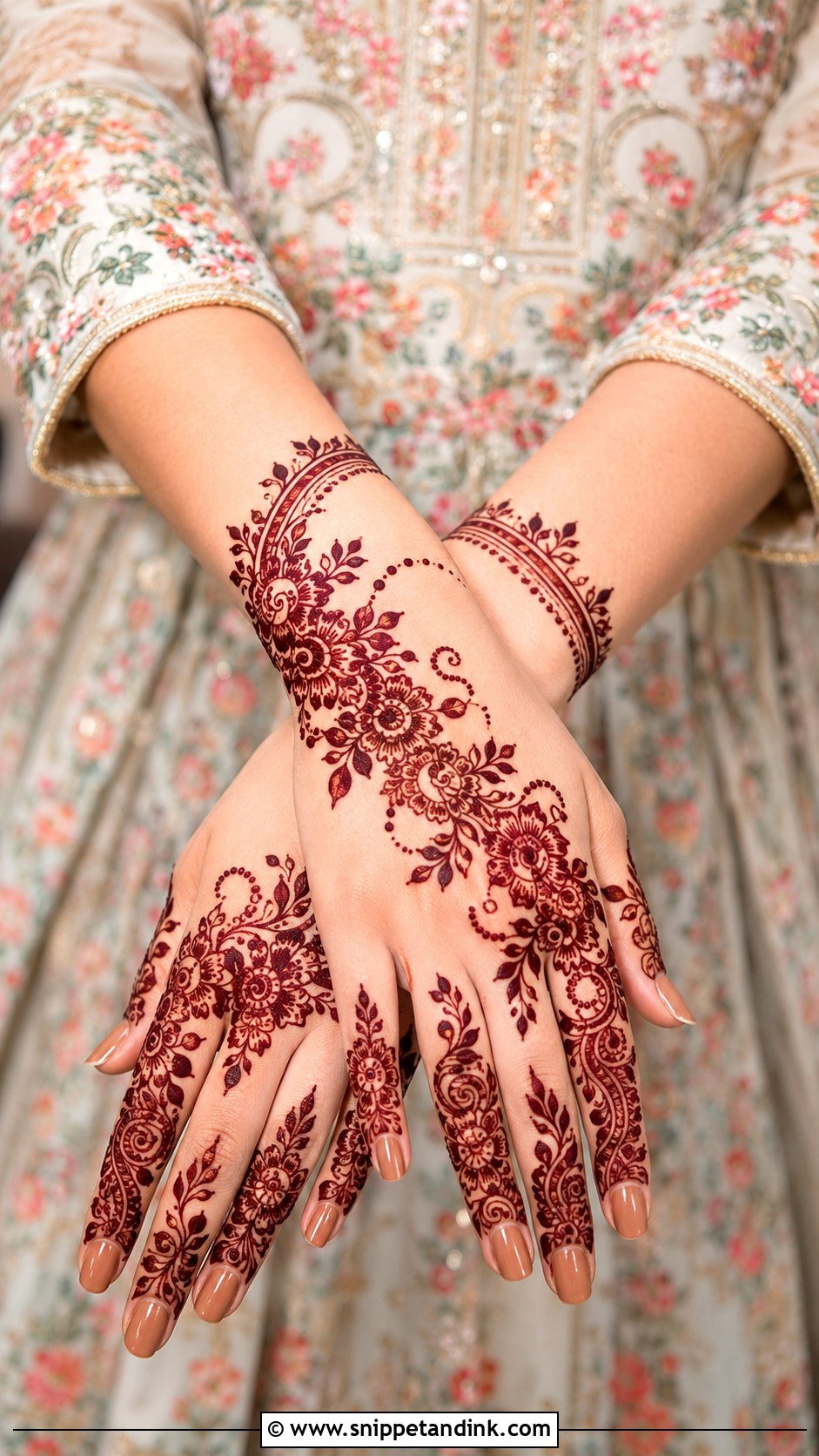
A printed sharara suits a relaxed mehndi at home or by a pool. Floral, paisley, leheriya, bandhani and tropical prints give colour without the heat of embroidery, and the wide legs make sitting for the artist much easier. A short kurta or a peplum top gives the outfit a waist. Yellow, green, fuchsia, turquoise or coral all keep the mood lively. With a print doing the work, I hold accessories back to earrings and a few hair flowers; more than that starts competing with the pattern.
10. Bandhani Lehenga For Mehandi Bride
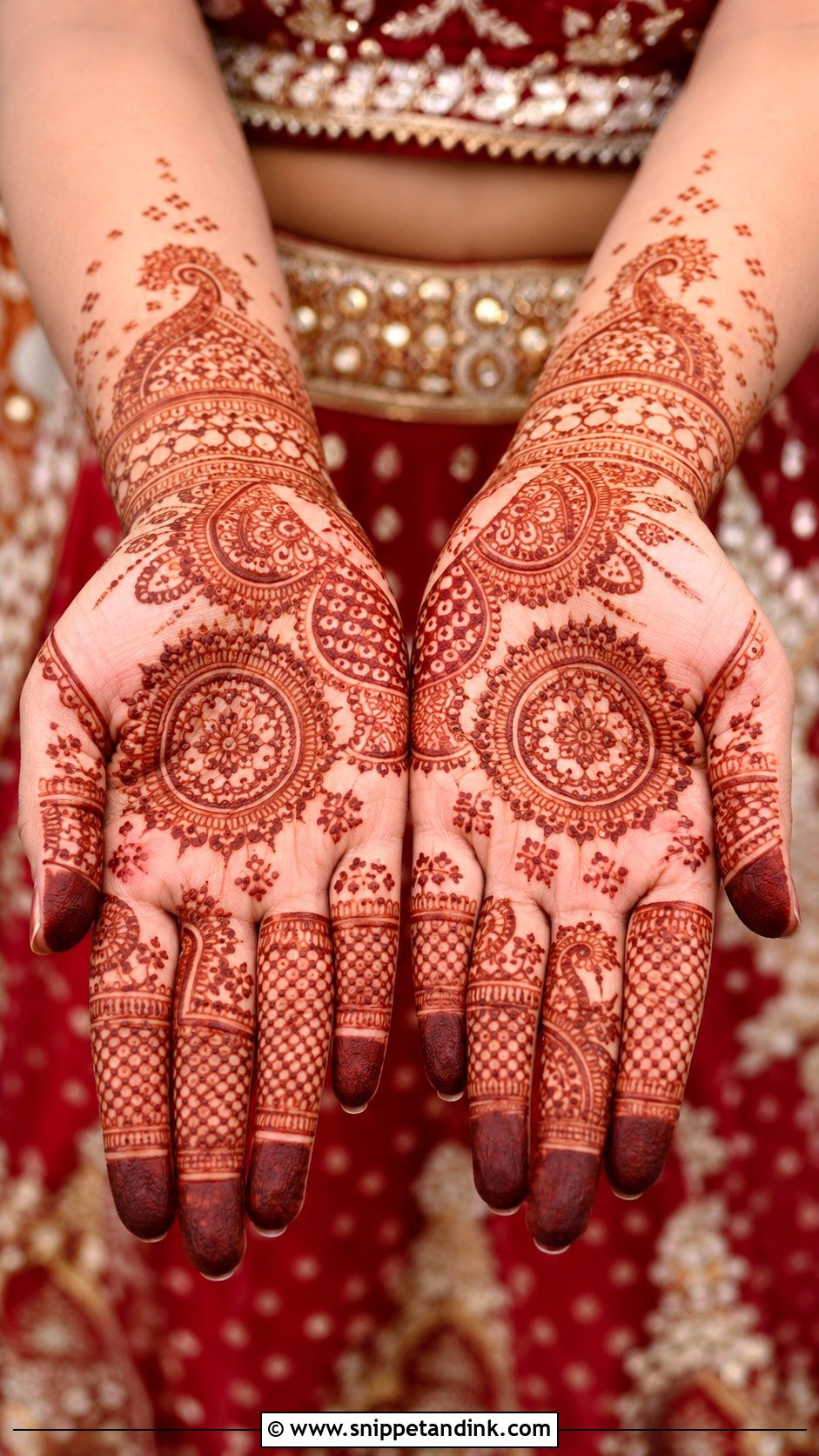
Bandhani dots come from tying the cloth before it’s dyed, and that hand work is part of its appeal for a mehndi. Yellow, red, green, orange and pink combinations are the most common. I’d choose a lightweight skirt with a gota patti border, a plain blouse to calm the print, and a bandhani dupatta to pull it together. Hand-dyed bandhani can bleed if it gets wet, so keep water glasses and damp hands away from the skirt, and never let it sit against a pale blouse in the rain. Earrings or hair flowers work better than bangles before the henna.
11. Mirror Work Lehenga For Mehandi Bride
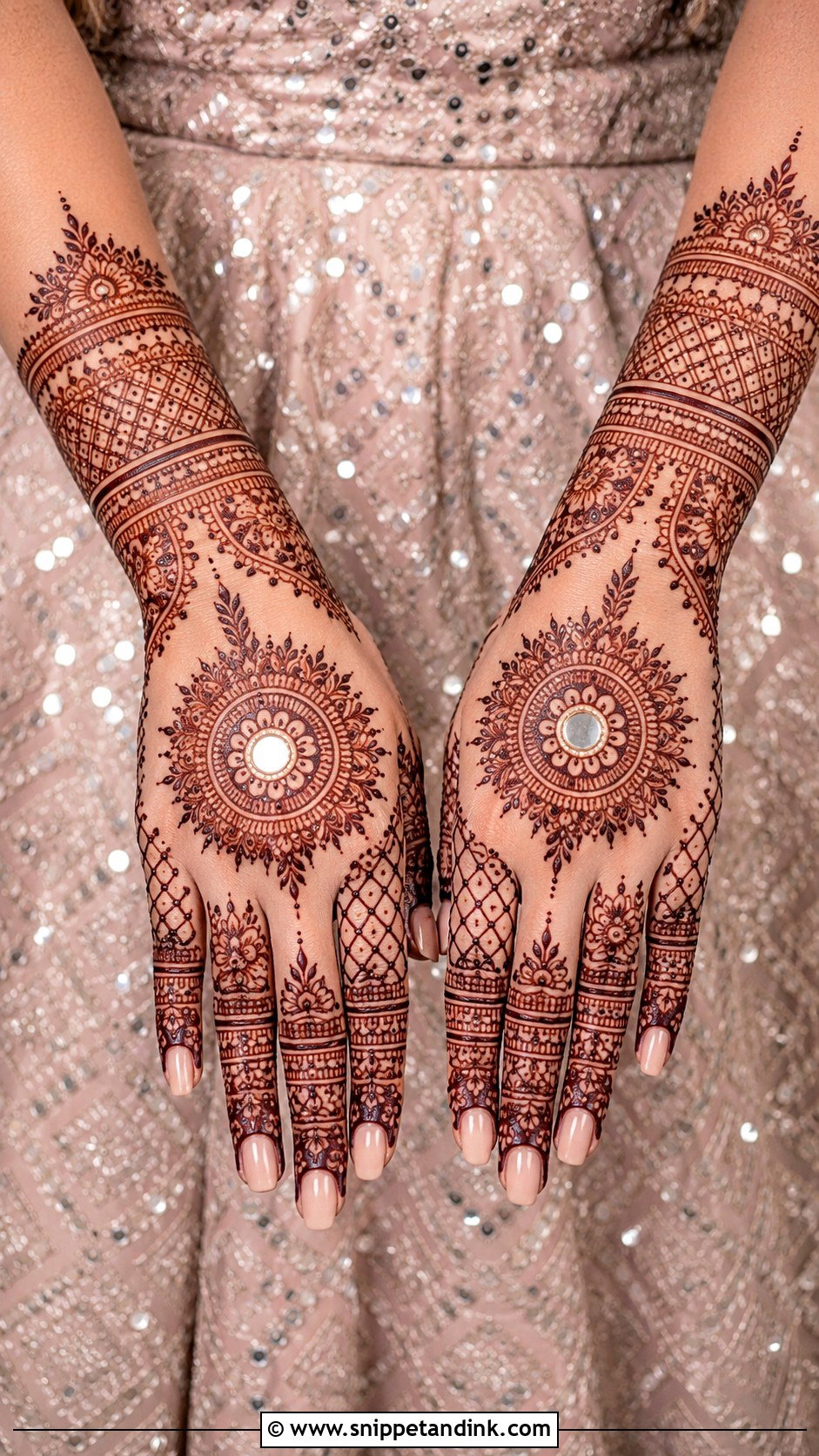
Mirror work does the sparkling for you, especially in daylight or under warm evening bulbs. Yellow, lime green, hot pink, orange and turquoise all make good bases. For a mehndi, I steer brides toward scattered mirrors rather than dense panels, because glass mirrors add real weight and the edges can catch fine skin on the inner arm. A sleeveless or short-sleeve choli keeps the arms ready for the artist. Keep the dupatta simple and secure, then add soft curls and juttis for dancing.
12. Gota Patti Lehenga For Mehandi Bride
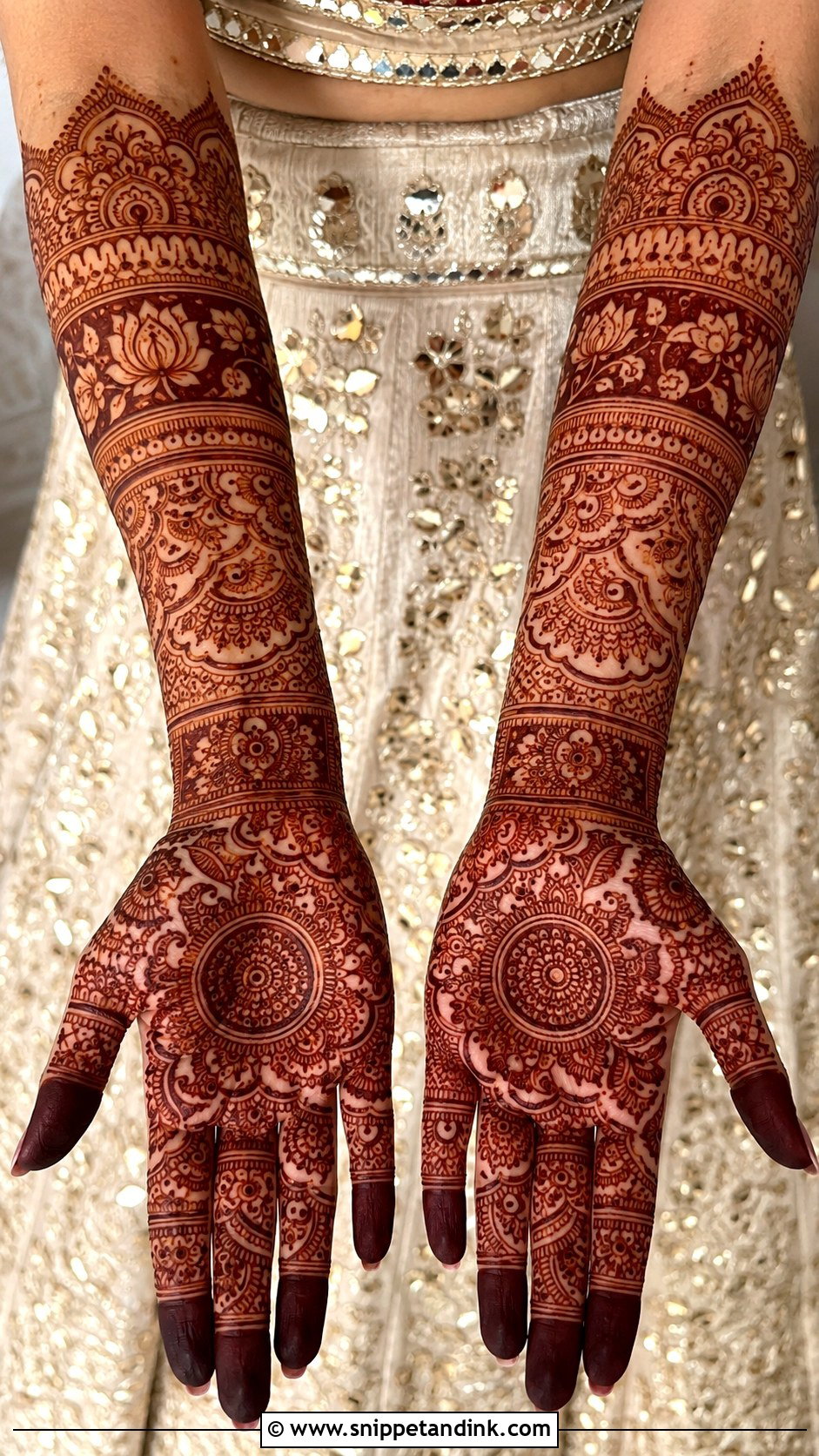
Gota patti is metallic ribbon cut and stitched onto fabric, so it shines without the weight of zardozi. Yellow and green are the traditional colours, but peach, coral, pink and ivory take gota well. I prefer scattered motifs with a border over a densely worked skirt, which gets hot and stiff by the end of a long afternoon. A short blouse and a neatly pinned light dupatta keep you free for the henna. After the event, store it in muslin, not plastic, because gota tarnishes in damp air.
13. Indo Western Co Ord For Mehandi Bride
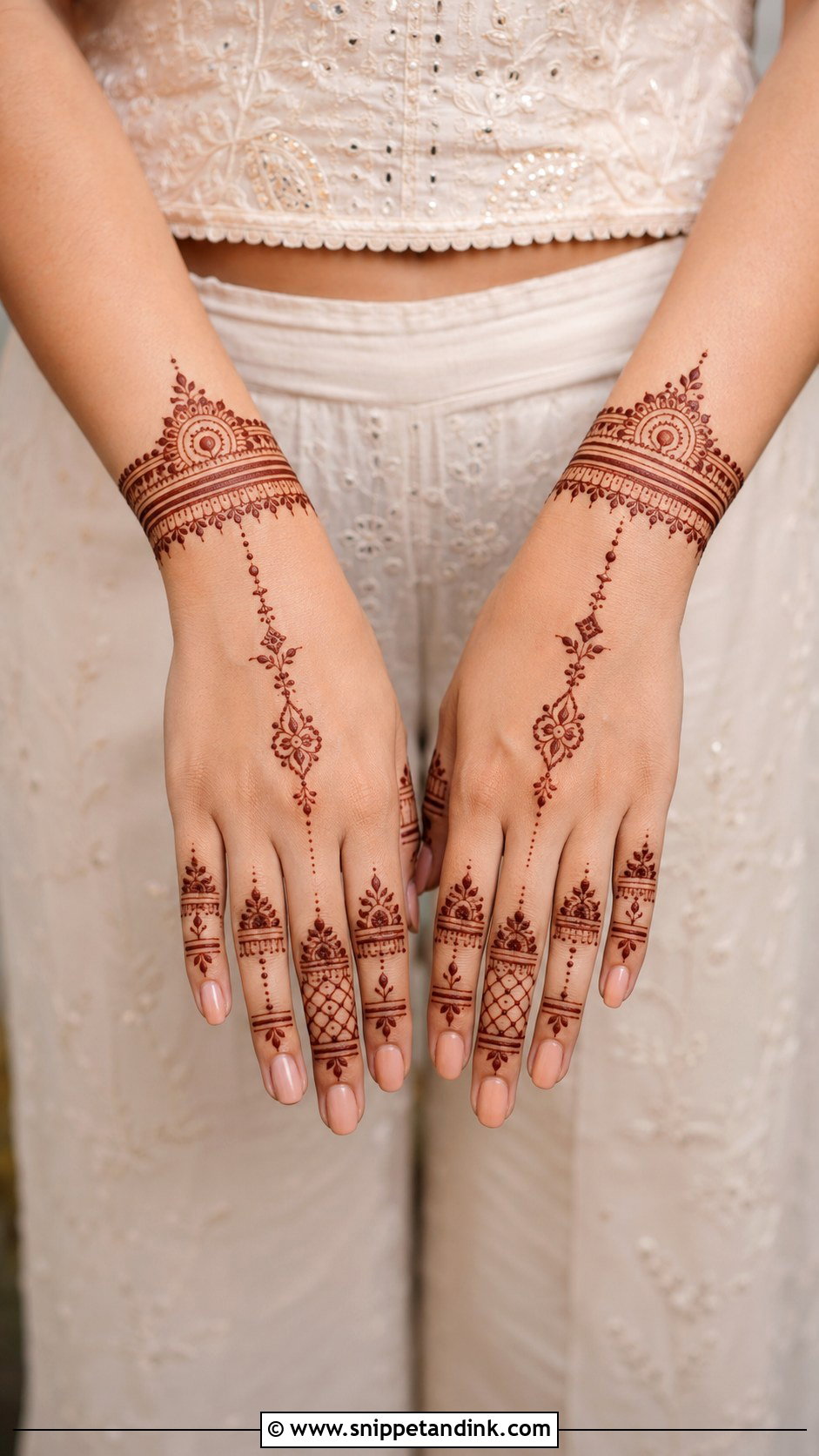
An Indo western co ord works for a bride who plans to dance, host and move around rather than sit on a stage. A crop top with palazzos, a skirt set or a structured kurta with wide trousers are the common shapes, and prints, mirror borders, tassels or a cape layer keep them festive. Look closely at the cuffs. Many co-ord tops have fitted wrists, and those are a problem with full hand designs. A sleek hairstyle and embroidered flats keep the whole look light.
14. Peplum Sharara For Mehandi Bride
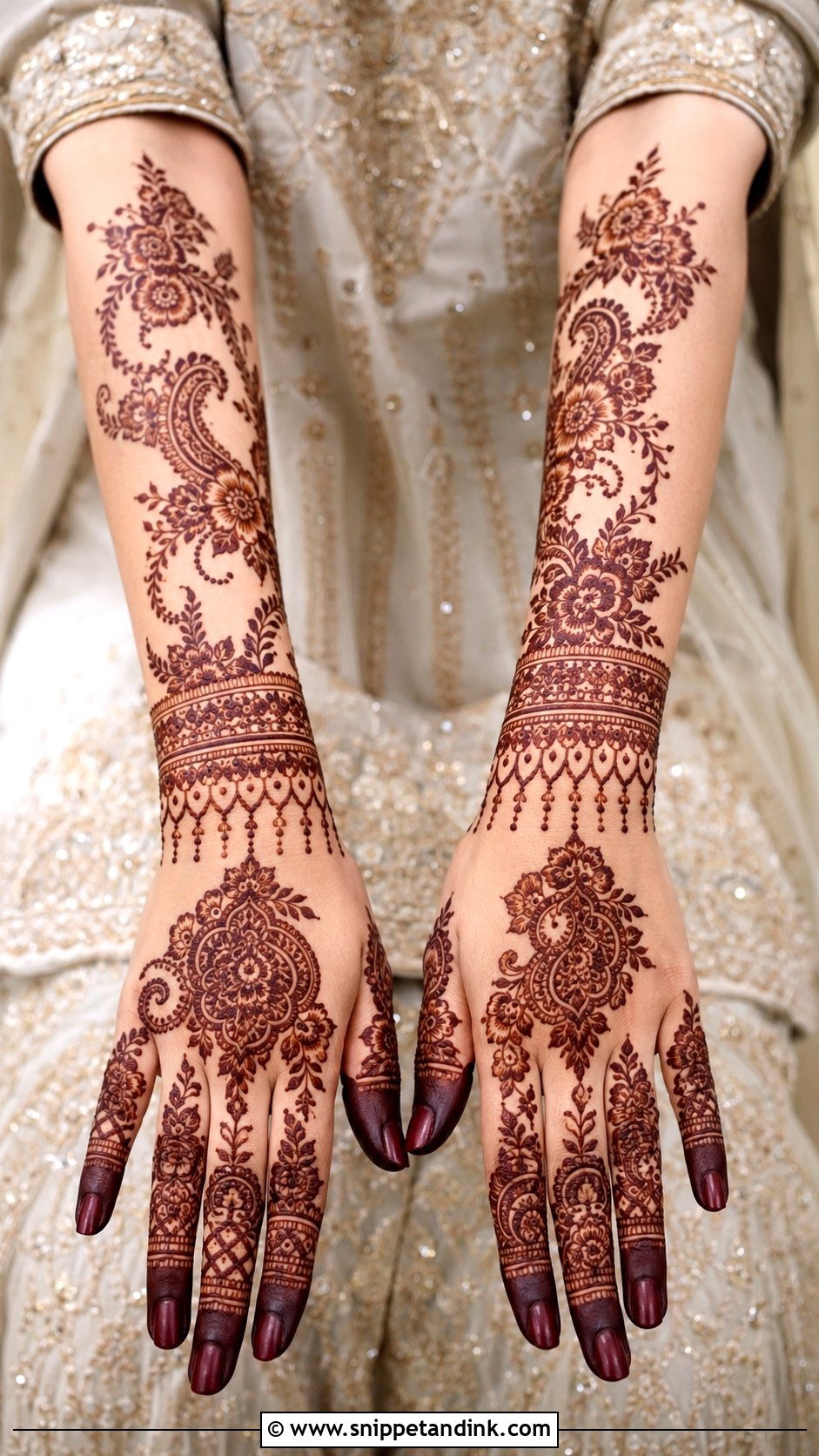
A peplum top flares out from a fitted waist, so over wide sharara pants it gives you a defined middle and a lot of movement when you spin. It reads as festive but less formal than a lehenga. Mirror work, gota patti, threadwork or florals all suit the peplum, and yellow, green, coral and pink are strong choices. Check that the peplum’s flare doesn’t sit right where your hands rest in your lap. If it does, you’ll be leaning your wet palms on the frill all afternoon. Keep wrist jewellery off until the stain sets.
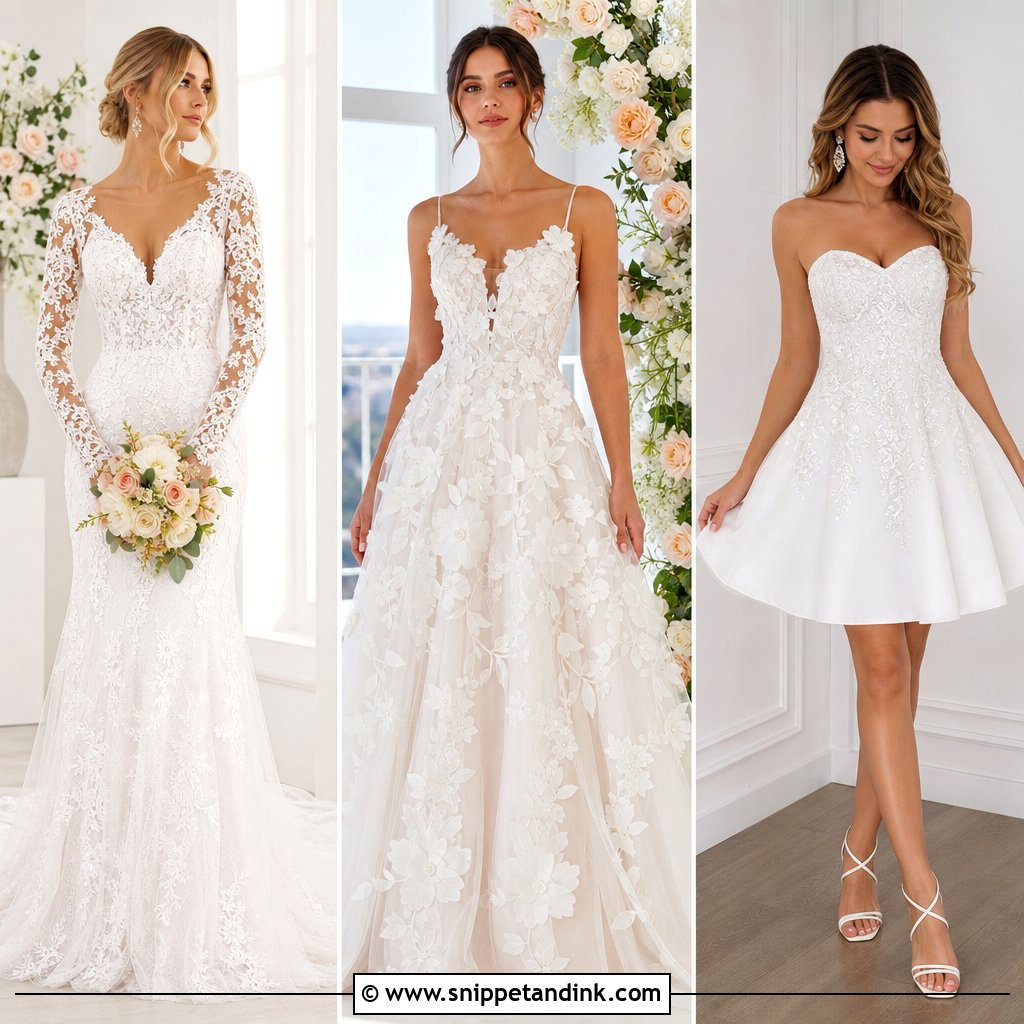

15. Palazzo Suit For Mehandi Bride
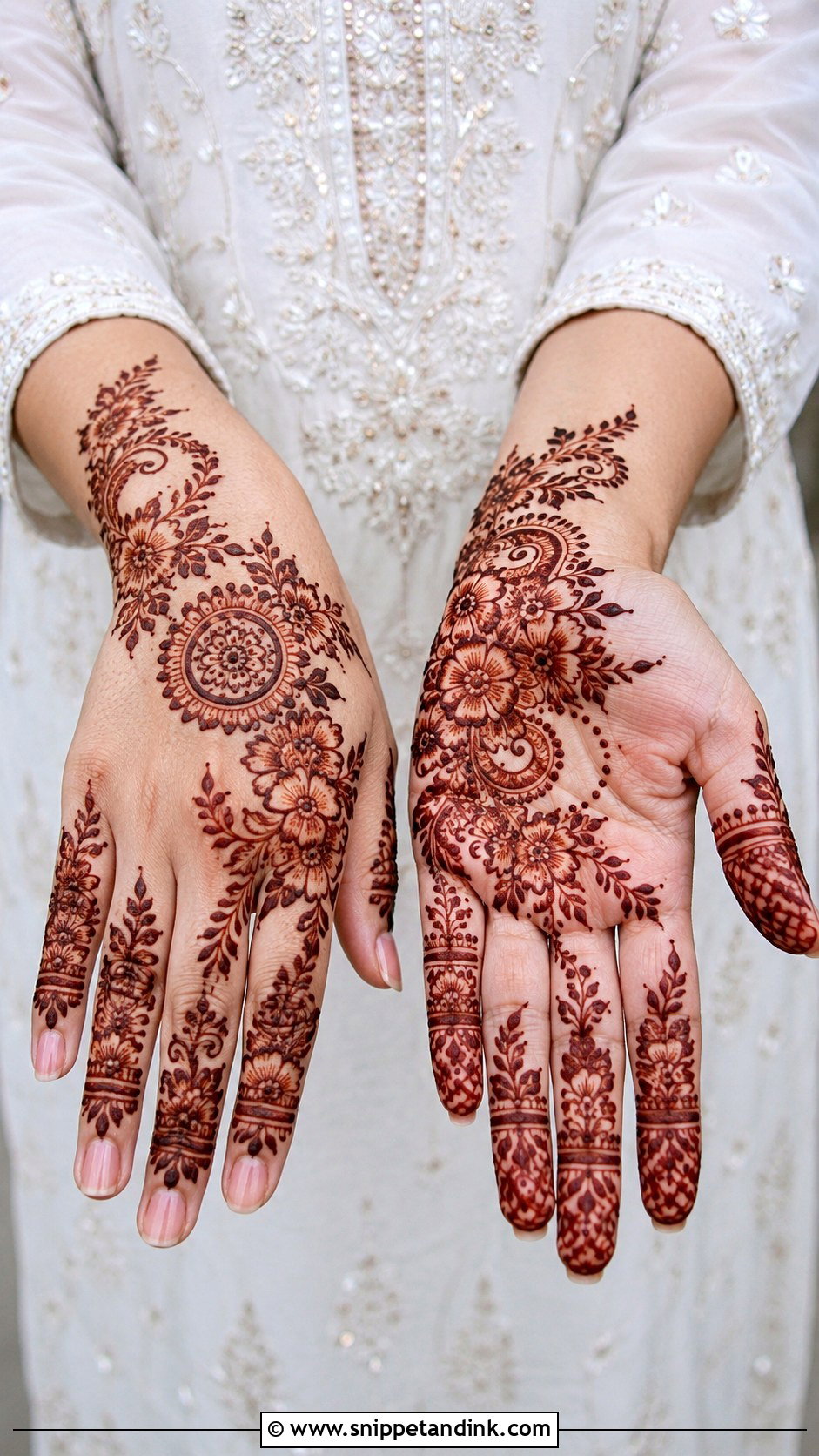
For an intimate home function, a palazzo suit is about the most comfortable bridal outfit there is. Loose pants let you sit, stand and dance without managing a skirt. A festive kurta with embroidery, mirror work or prints keeps it bridal, and short or no sleeves leave room for full-arm mehndi. Yellow, lime green, peach and fuchsia all suit daytime. I usually tell the bride to skip the dupatta entirely during application and put it on for the photos afterward. A soft braid and comfortable sandals complete it.
16. Chikankari Kurta Set For Mehandi Bride
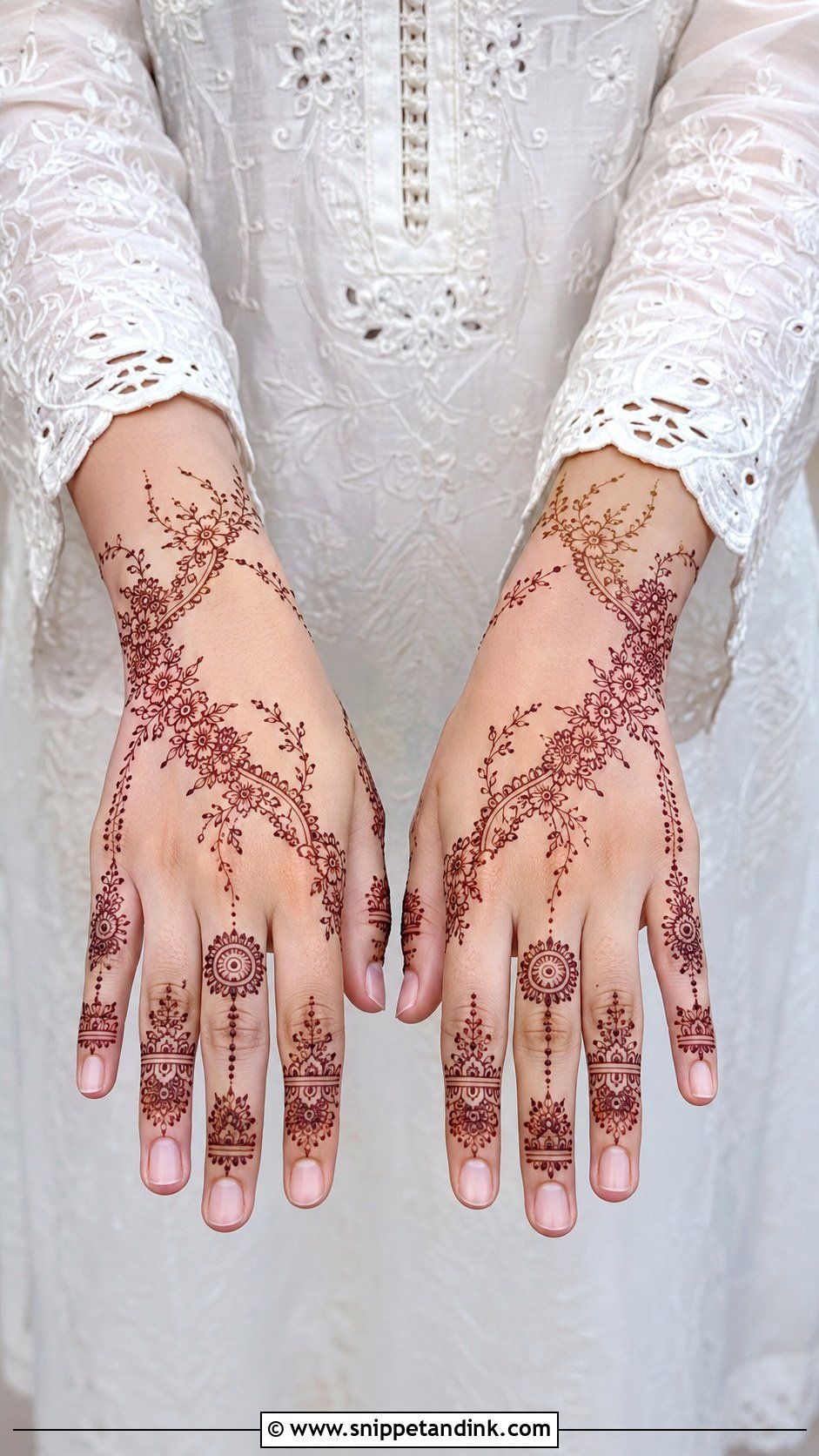
Chikankari is fine white-thread embroidery from Lucknow, traditionally worked on breathable cotton and georgette, which makes it ideal for summer heat. Pastel yellow, mint, peach, lavender or ivory with a colourful dupatta keeps it festive. Because the work is delicate, the bridal feeling has to come from jewellery, fresh flowers or embellished juttis. I’d only recommend it to a bride who’s comfortable with a quiet outfit, but if she is, it’s the best backdrop for very detailed henna, since nothing in the fabric competes with her hands.
17. Organza Lehenga For Mehandi Bride
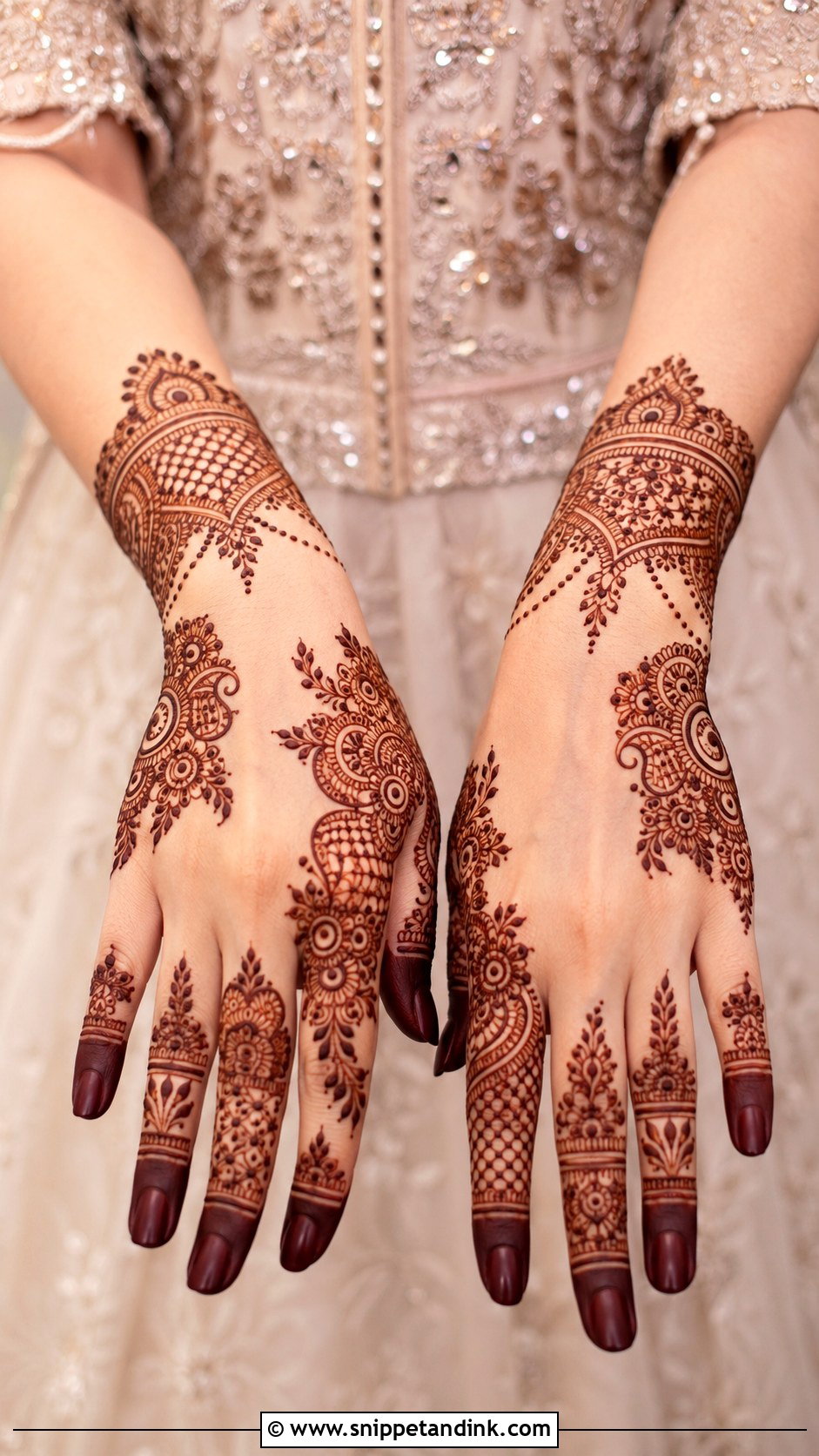
Organza has body without weight, so it gives a lehenga volume that doesn’t press on you during a long session. Floral embroidery, printed organza or light sequins keep it festive. Soft mint, peach, lemon yellow, blush or lavender read modern; coral or green give stronger contrast with henna. Organza creases sharply when you sit on it for hours, so I suggest a lining or an underlayer of softer fabric, and I’d have someone steam the skirt before the evening photos. Pin the dupatta, too, because organza floats in any breeze.
18. Silk Kurta With Lehenga Skirt For Mehandi Bride
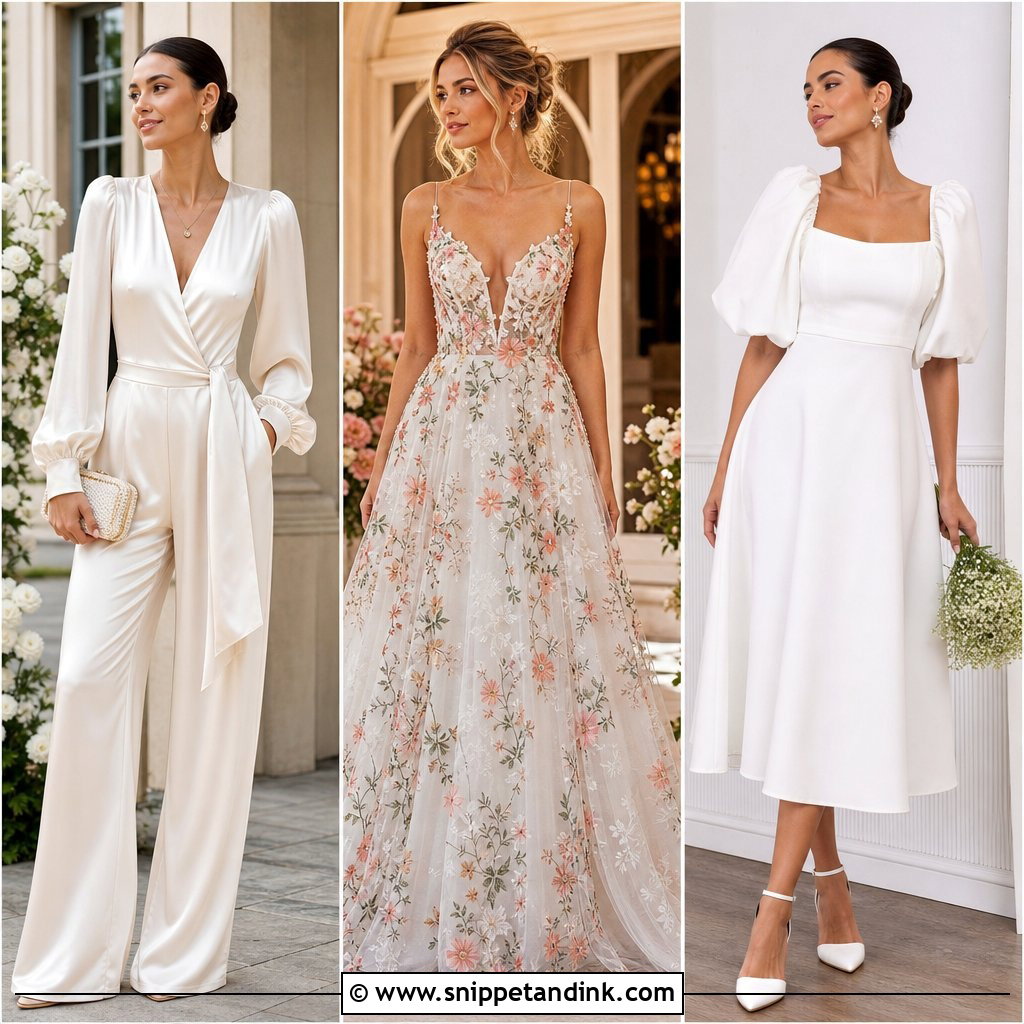
A silk kurta over a lehenga skirt gives the coverage of a suit with the volume of a lehenga, and it’s more comfortable than a fitted blouse for brides who dislike a tight choli. Use light silk, raw silk or cotton silk; heavy silk gets warm quickly. Elbow-length or short sleeves work for mehndi. Embroidered necklines, brocade skirts or gota borders give it a bridal finish. Yellow, green, magenta and orange all suit the pairing. The kurta length matters: I like it ending at mid-thigh, so it doesn’t bunch when you sit.
19. Rajasthani Lehenga For Mehandi Bride
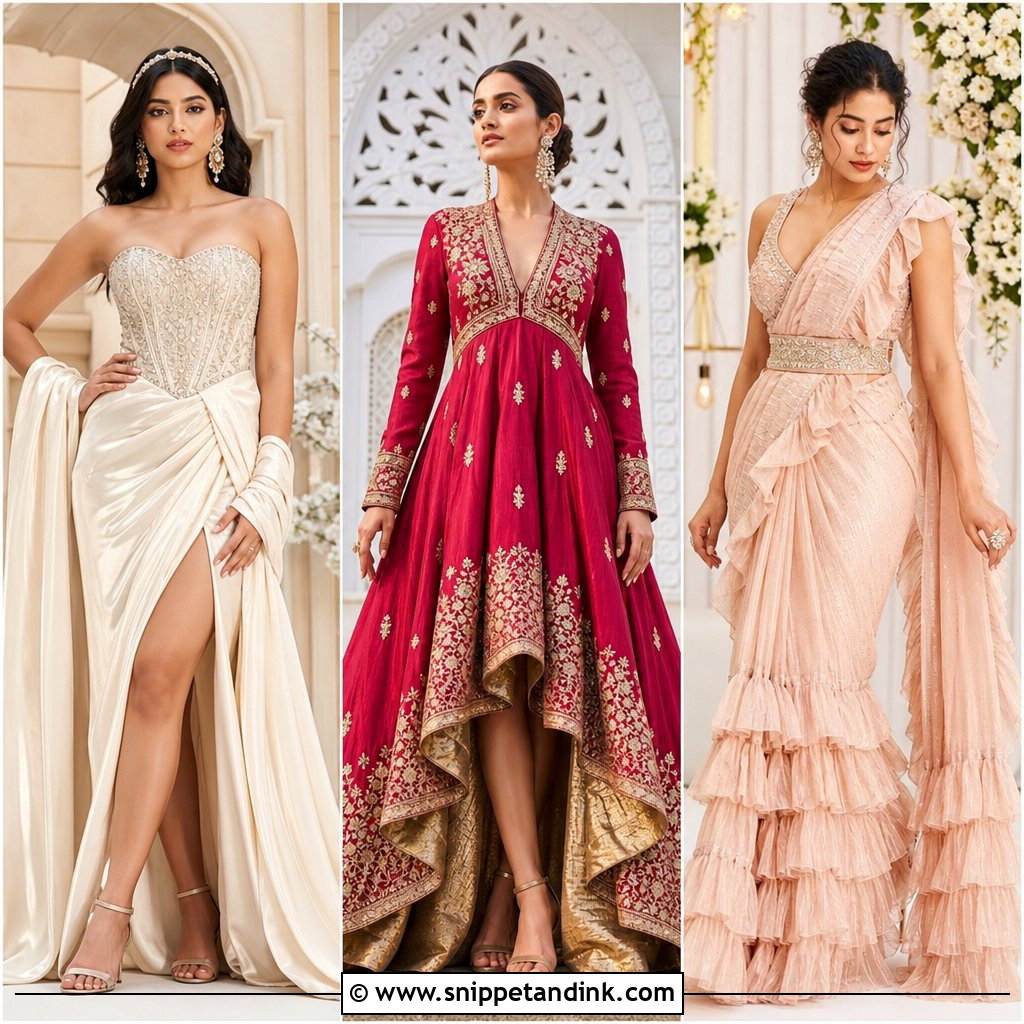
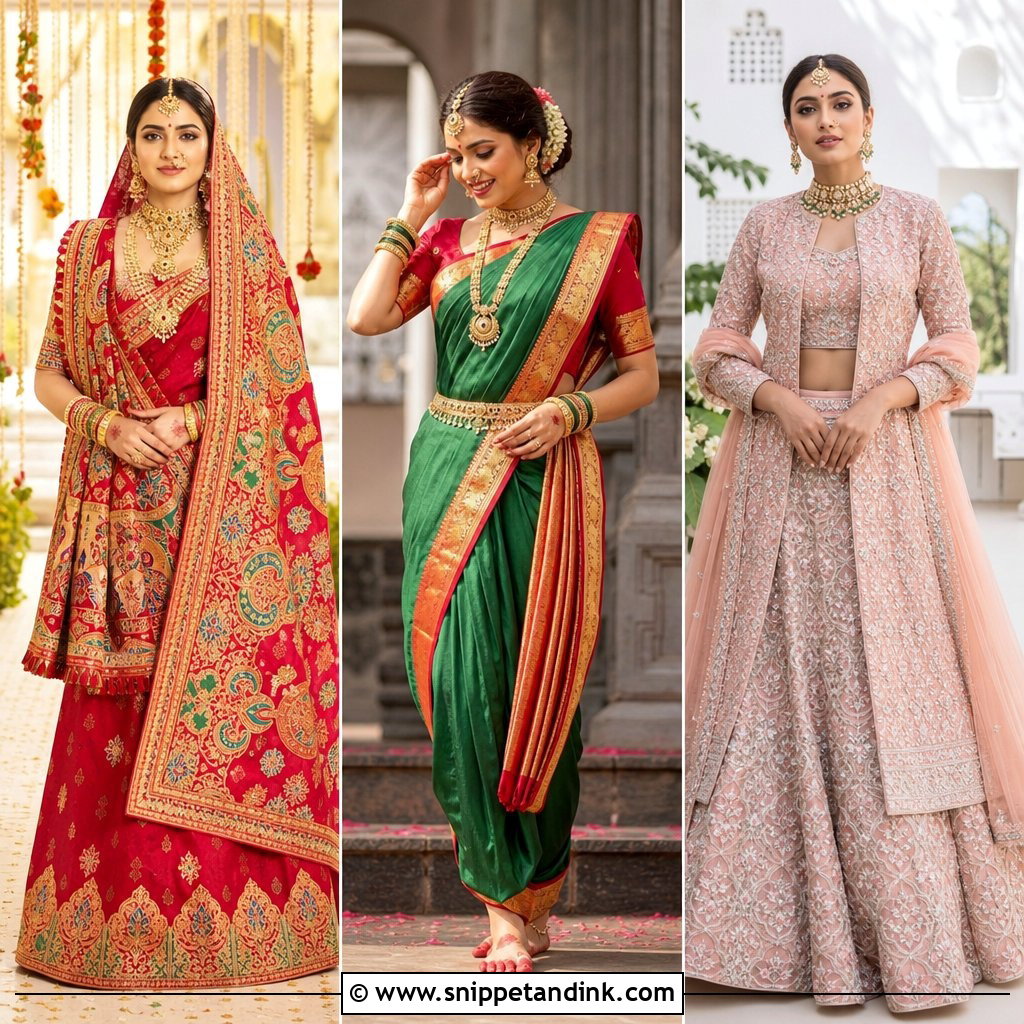
A Rajasthani lehenga carries a lot of craft in one outfit: bandhani, leheriya, mirror work, gota patti, tassels and contrast borders. For the mehndi, it gives a bride a traditional look without borrowing the weight of her wedding lehenga. Yellow, orange, green, red and pink in a balanced mix look right. Keep the blouse short and the dupatta light. A borla-style maang tikka, jhumkas and embroidered juttis suit it. With this much going on, I’d keep makeup simple so the outfit and the henna can carry the photos.
20. Punjabi Patiala Suit For Mehandi Bride
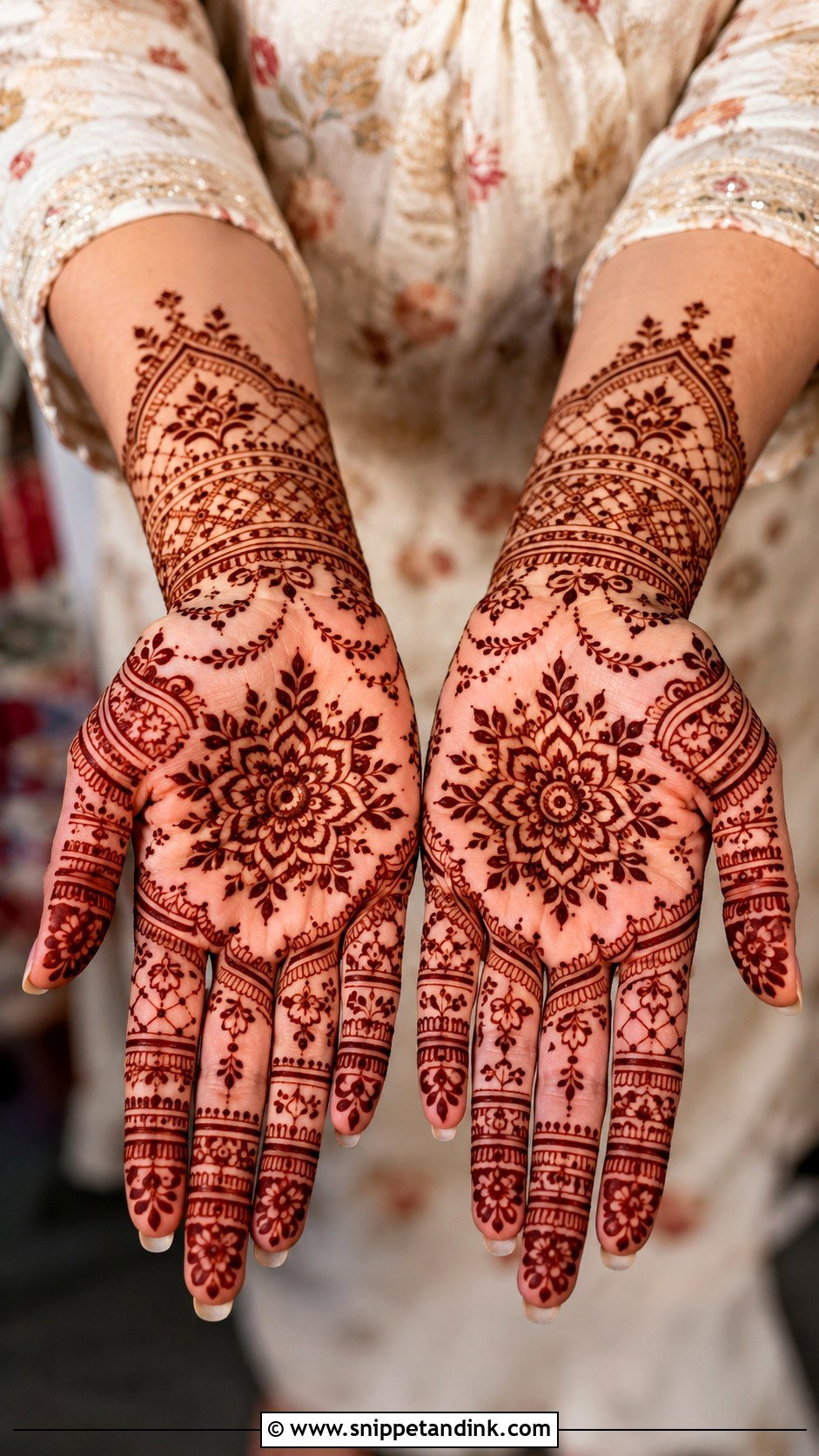
A Punjabi Patiala suit lets a bride join the giddha and the dholki rather than watch from the stage. The deep pleats of the salwar give room to move, and a short kurta keeps the look young. Mustard, parrot green, hot pink, orange and turquoise are classic. Phulkari embroidery on the dupatta adds the bridal note. Short or loose sleeves leave the hands free for henna. If you’re wearing a paranda, braid it in before the artist starts, because once the paste is on, nobody wants to work around your hands to do your hair.
21. Pakistani Gharara For Mehandi Bride
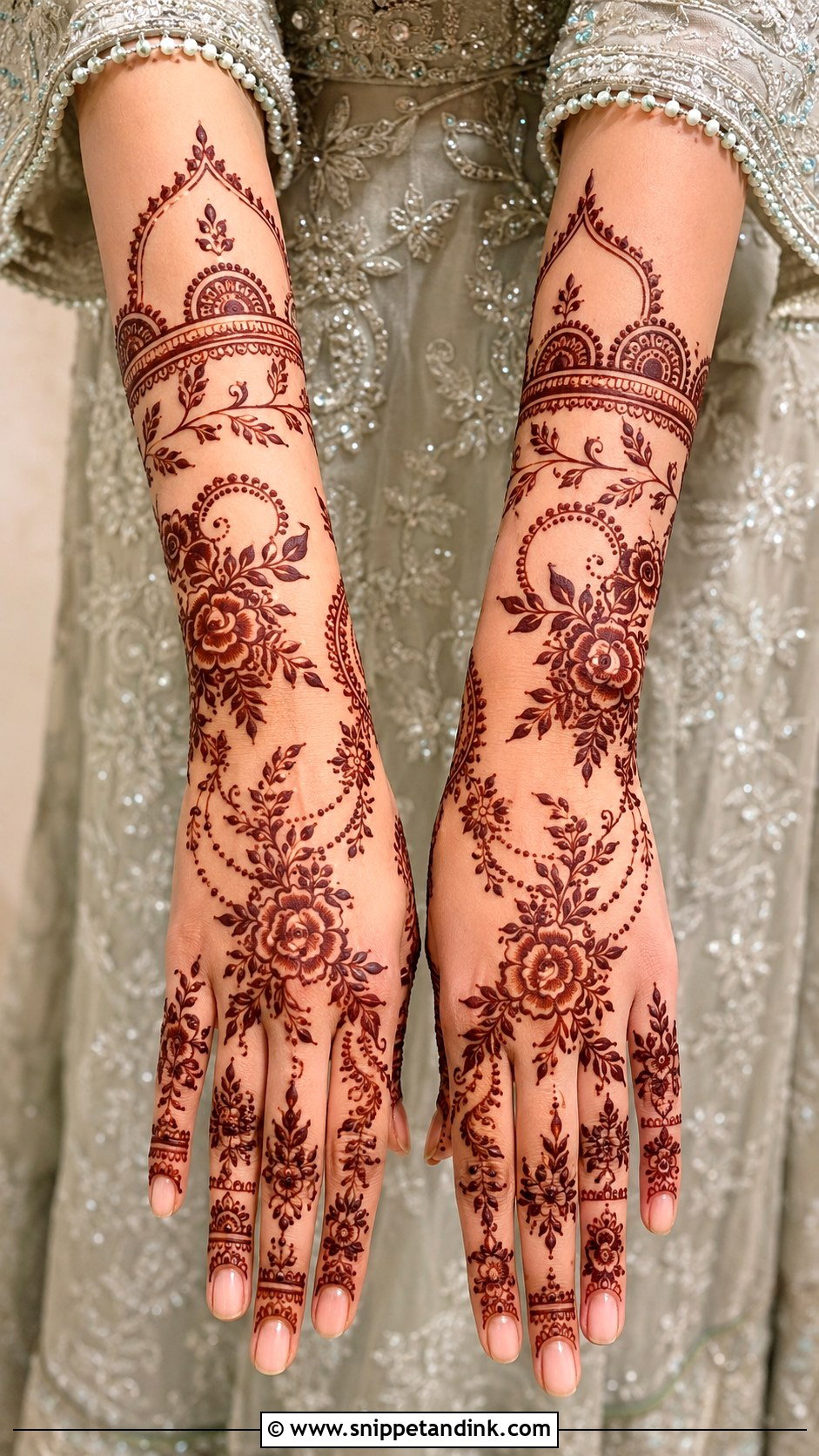
A Pakistani gharara pairs a short kurti and dupatta with pants that flare from the knee, and it has a stately look from every angle. Yellow, green, orange and pink are traditional, and ivory with colourful embroidery is a softer option. Gota, zari, mirror or thread details give the bridal finish. The knee joint is where I spend fitting time; set too low, it makes walking awkward and the flare drags. Pin the dupatta neatly before the henna starts, and let a passa and statement earrings do the decorating instead of bangles.
22. Pakistani Angrakha For Mehandi Bride
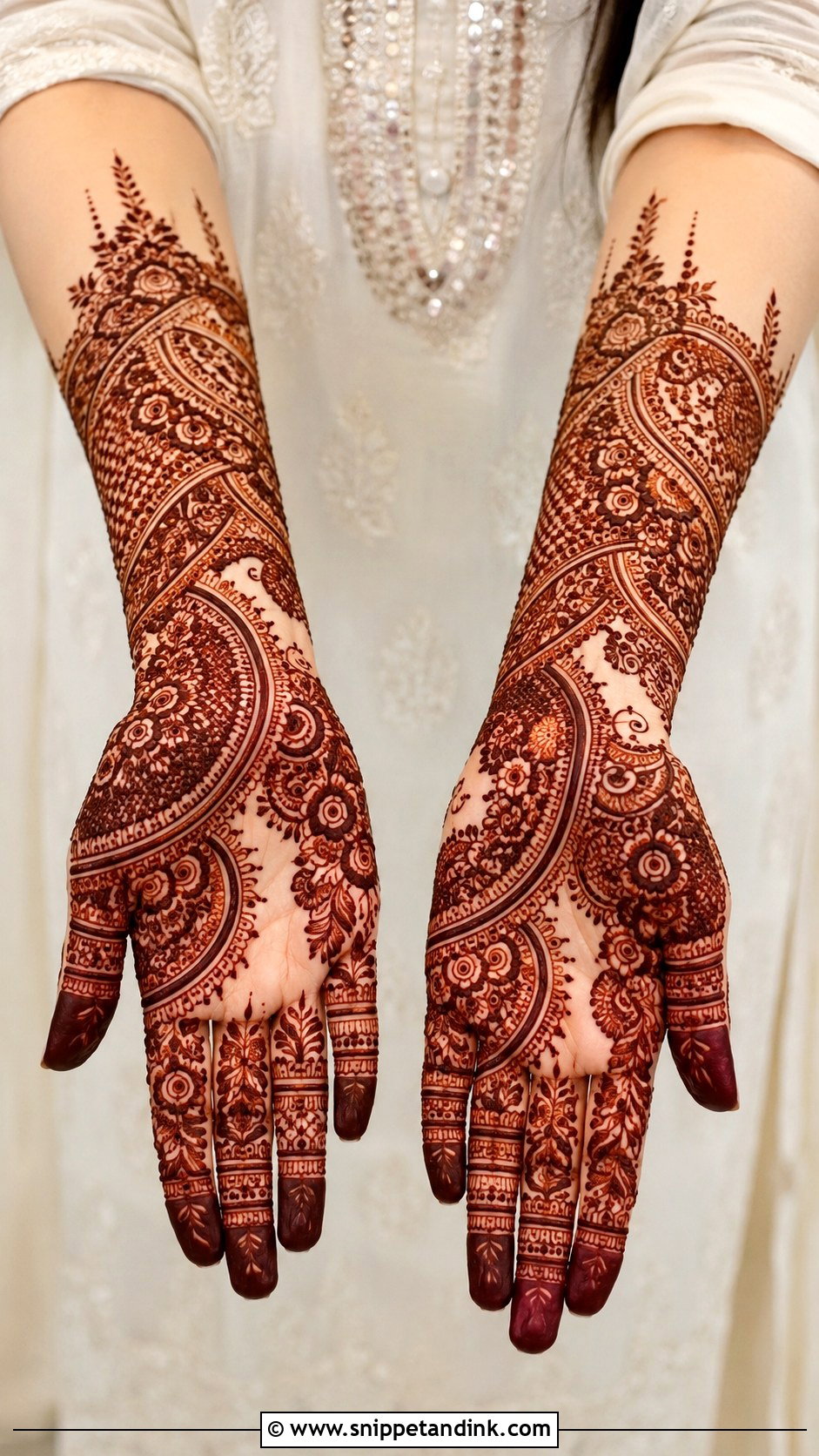
A Pakistani angrakha wraps across the front and ties at the side, with a soft flare below. It suits brides who want a traditional silhouette that isn’t a lehenga. Bright yellow, mehndi green, rust or fuchsia with light gota or threadwork look festive. Pair it with churidar, cigarette pants or sharara pants depending on formality. The wrap can gape when you lean forward to hold your hands out, so I add a hidden hook or a press stud inside the overlap. A passa, chandbalis and a simple dupatta finish it.
23. Pastel Lehenga For Mehandi Bride
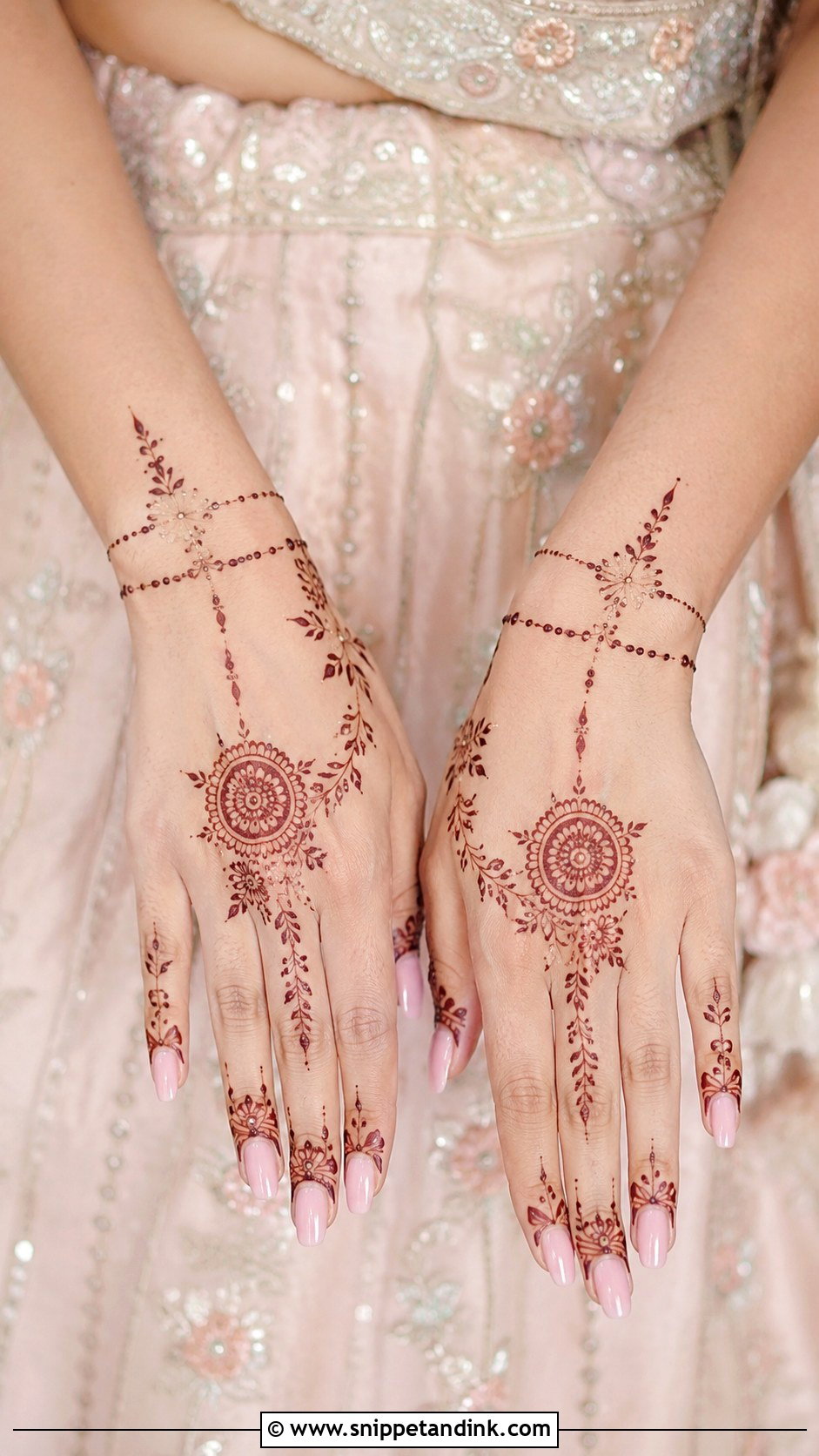
Pastels need help to look bridal. Mint, lavender, peach, powder blue and lemon all feel fresh in daylight, but a plain pastel skirt can look flat in photos, so I always add texture or contrast: mirror work, florals, pearls or a coloured border. A brighter dupatta or statement floral jewellery brings back the festive note. The upside is that soft fabric makes both minimal and detailed henna stand out clearly. Pastels work best at garden and smaller ceremonies where the light is natural.
24. Lavender Lehenga For Mehandi Bride
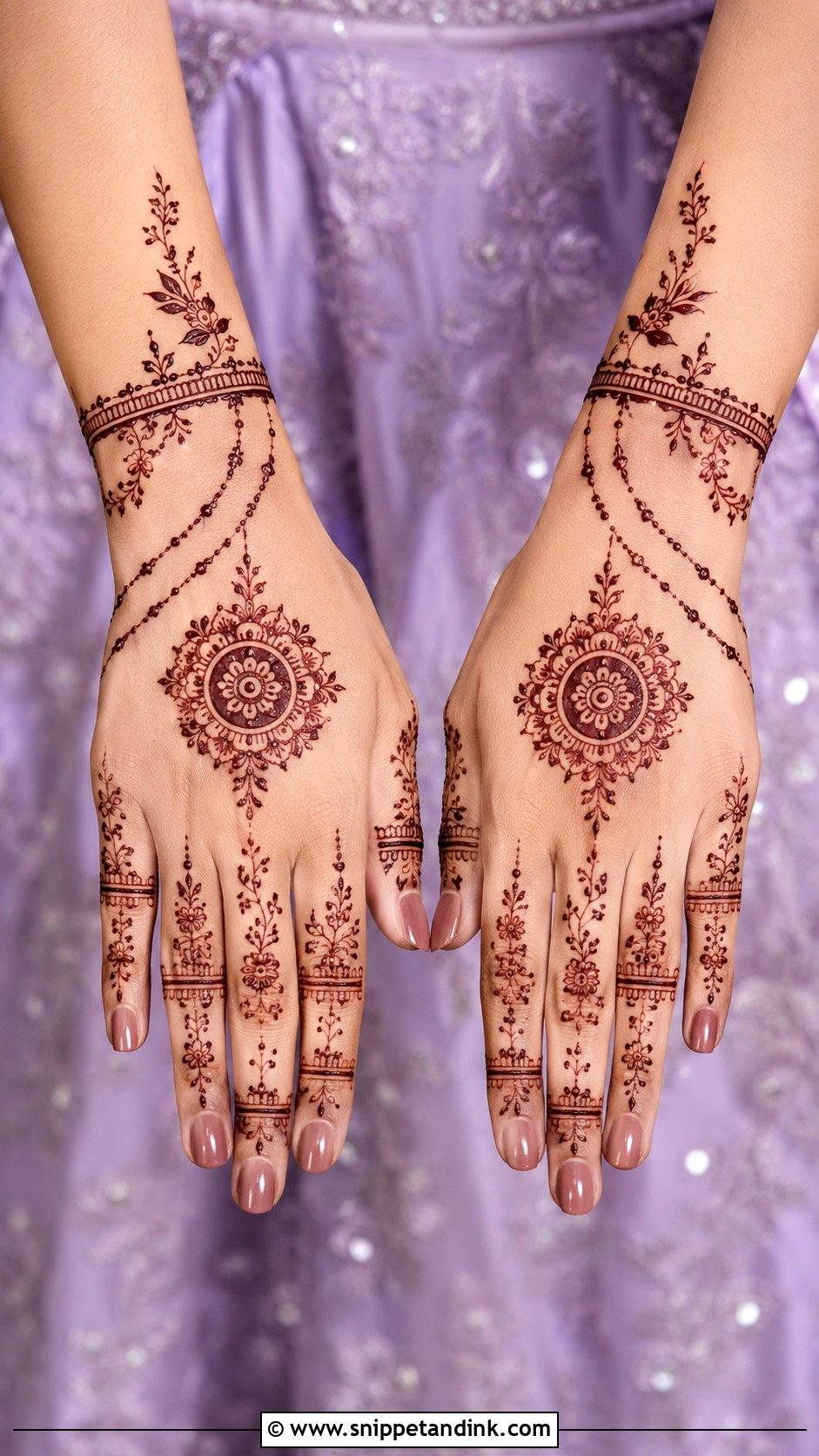
Lavender is an unexpected mehndi colour, and that’s the appeal. Silver mirror work, pastel florals or small multicolour thread details stop it from looking plain. A yellow or green dupatta brings back the traditional mood. Lavender is cool-toned, so warmth has to come from somewhere else; I use gold earrings, floral hair pieces and peach-toned makeup. Avoid tight wrist details on the blouse. Lavender also drains under fluorescent tent lighting, so ask your planner what the lights will be if the function runs into evening.

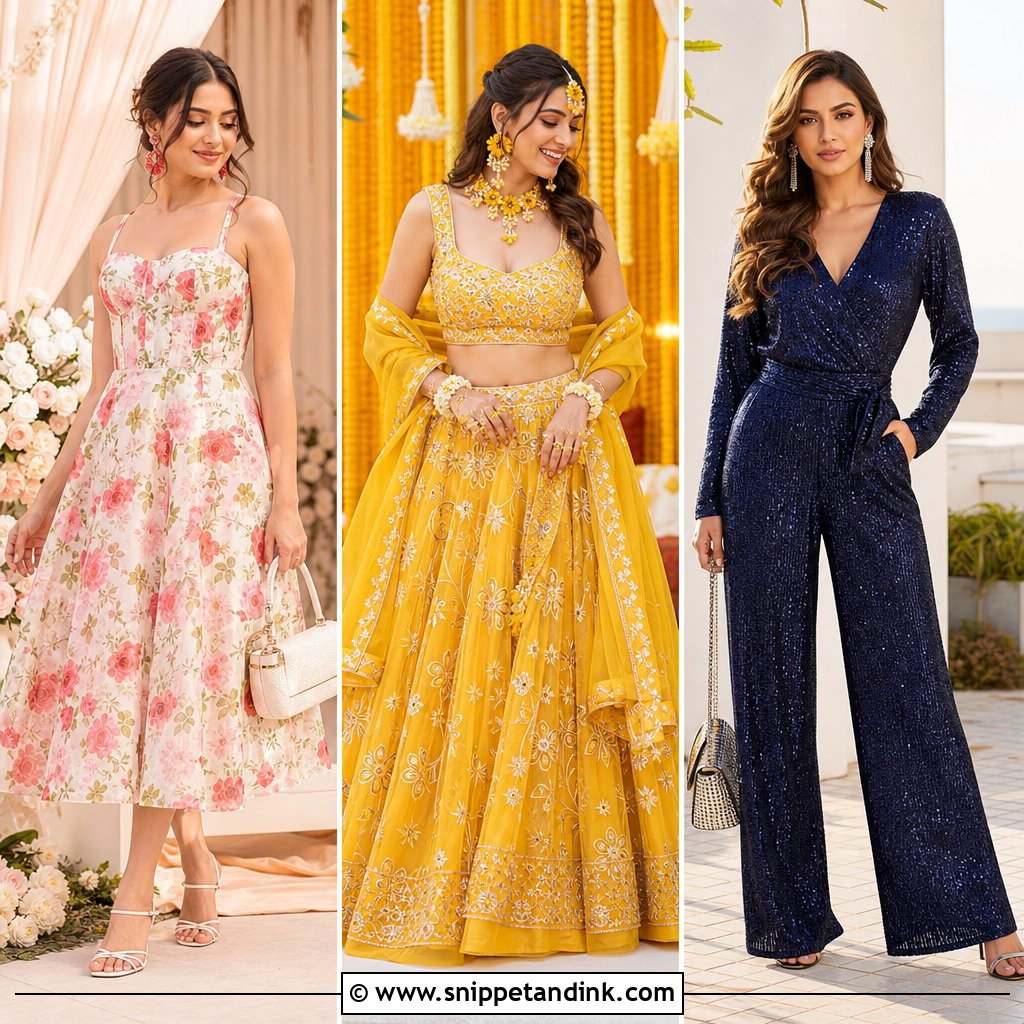
25. Coral Lehenga For Mehandi Bride
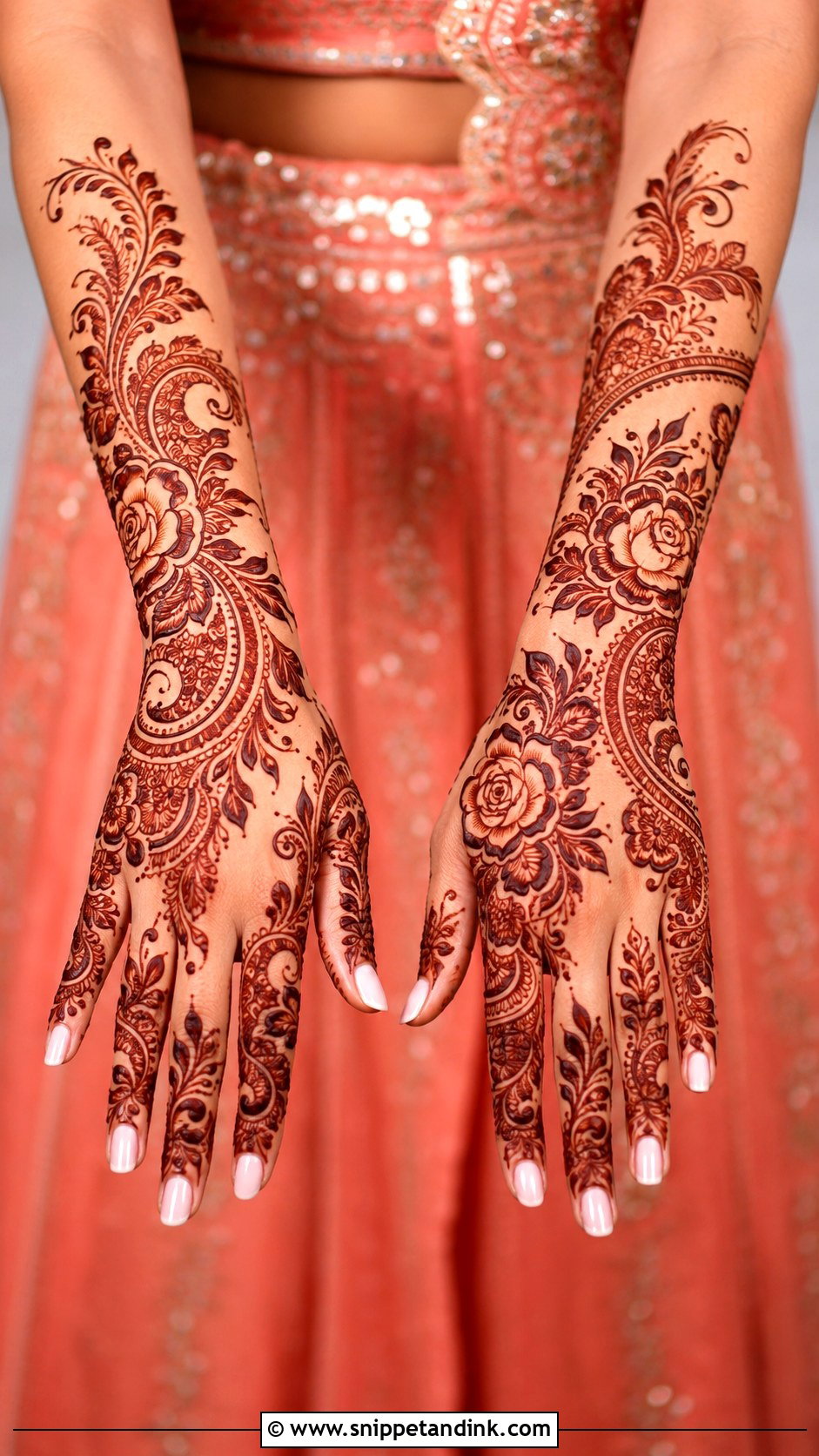
Coral sits between orange and pink and flatters a very wide range of skin tones, which is why I suggest it to brides who can’t decide between the two. It also brings out a deep maroon henna stain in photos. A lightweight skirt with mirror work, floral embroidery or gota borders keeps it festive. A sleeveless blouse and a pinned dupatta keep it practical during application. Coral pairs with mint, yellow, ivory or gold depending on the decor, and it works indoors and outdoors without changing character.
26. White And Yellow Lehenga For Mehandi Bride
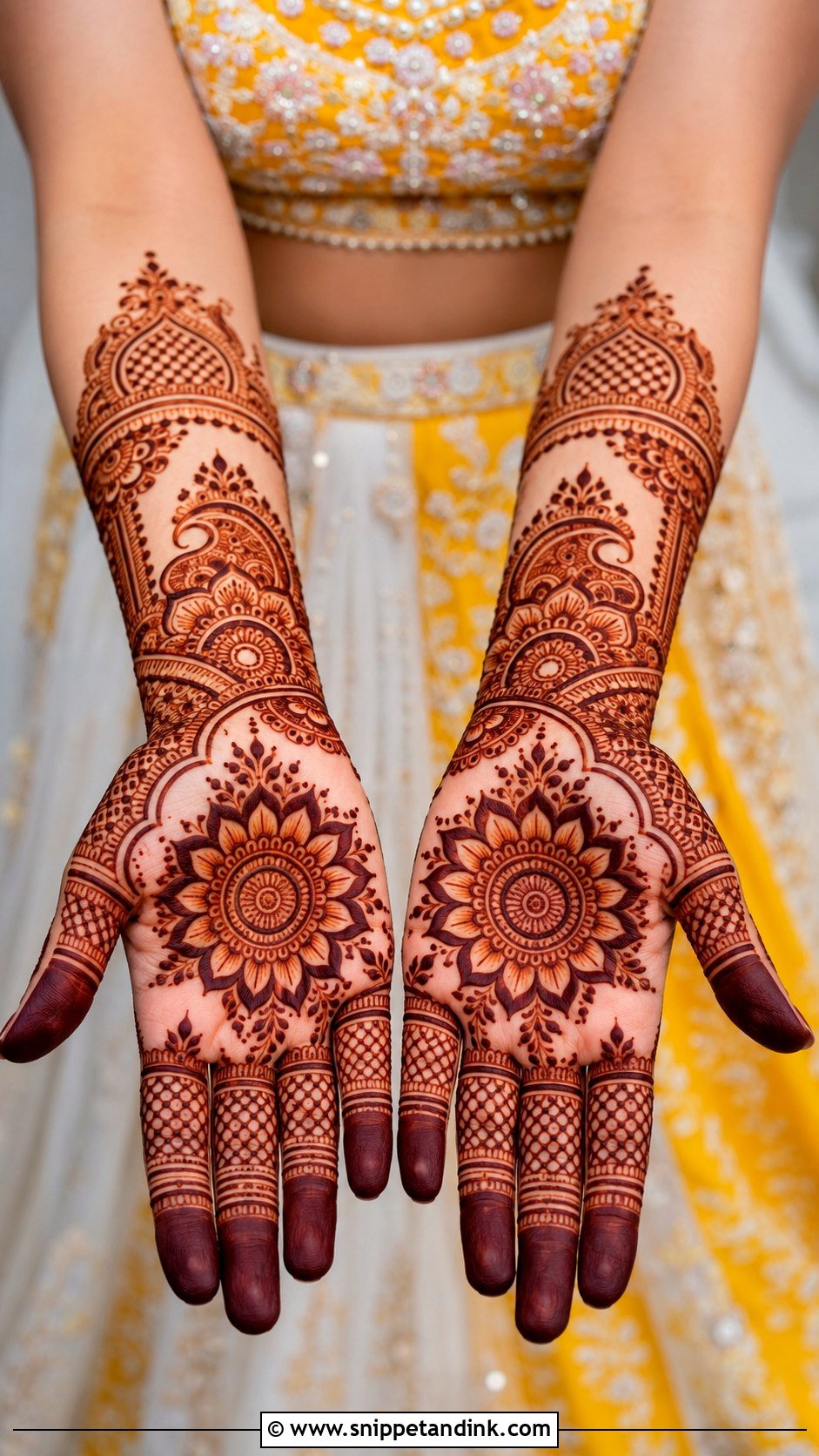
White with yellow is a sunny, clean combination: white as the base, yellow in the embroidery, borders or dupatta. Pure white can look plain, so mirror work, gota patti, florals or threadwork are what make it bridal. I’d only suggest this if the henna is applied before you dress or if your artist is very careful, because the sugar-lemon sealant and stray paste will mark white. And if the haldi is on the same day, change outfits in between, since turmeric stains are almost impossible to lift from white.
27. Blue Lehenga For Mehandi Bride
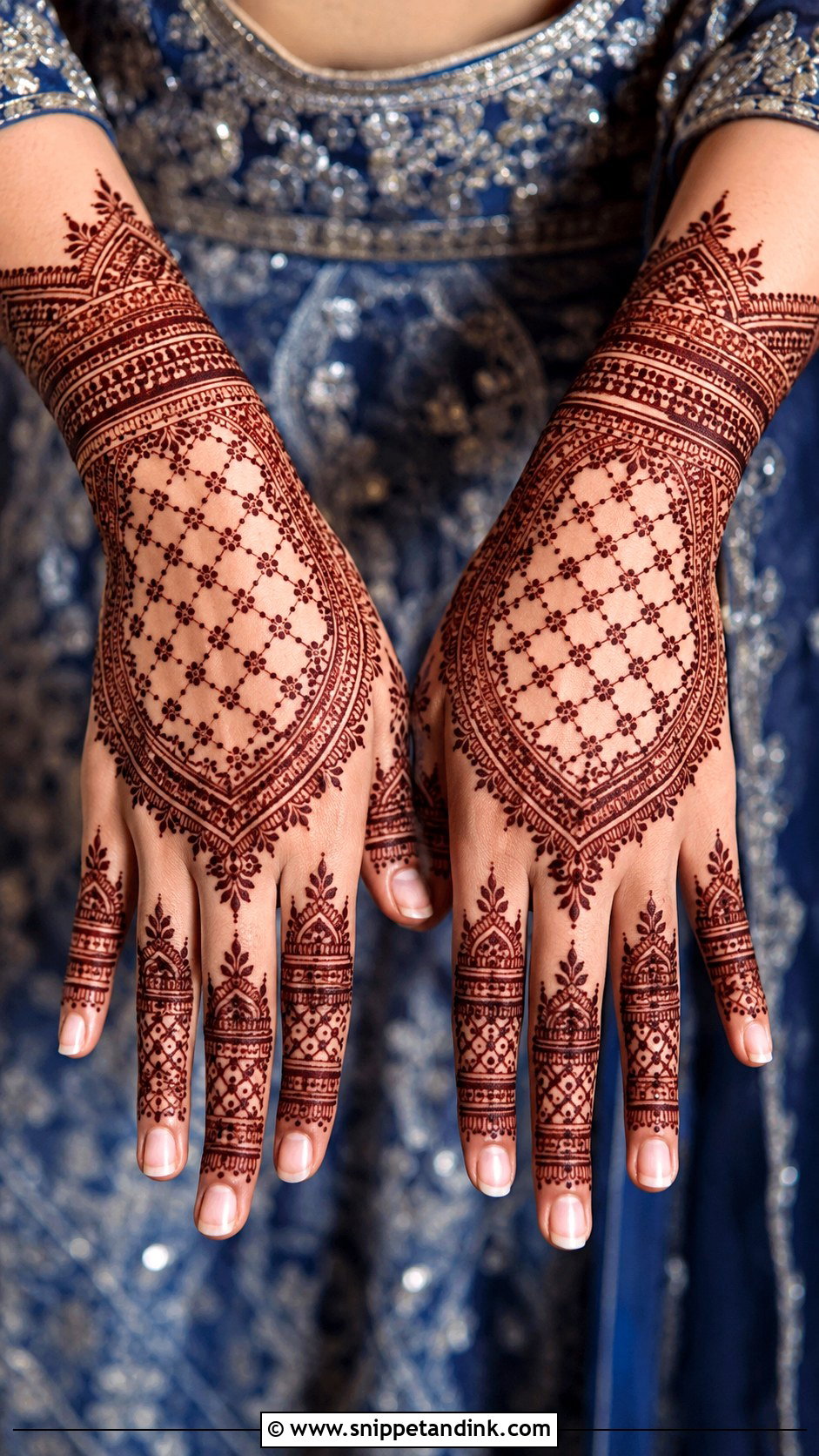
Blue is a fresh break from yellow and green. Turquoise and powder blue suit daytime; teal and royal blue look richer in the evening. Mirror work, colourful thread embroidery or contrast borders keep it festive, and a yellow, pink or orange dupatta brings back a traditional feel. I check blue under the actual venue lighting if I can, since some teals turn green on camera under warm bulbs. Silver jewellery, florals or kundan all suit it. Keep sleeves short and avoid heavy cuffs before the henna.
28. Skirt And Crop Top For Mehandi Bride
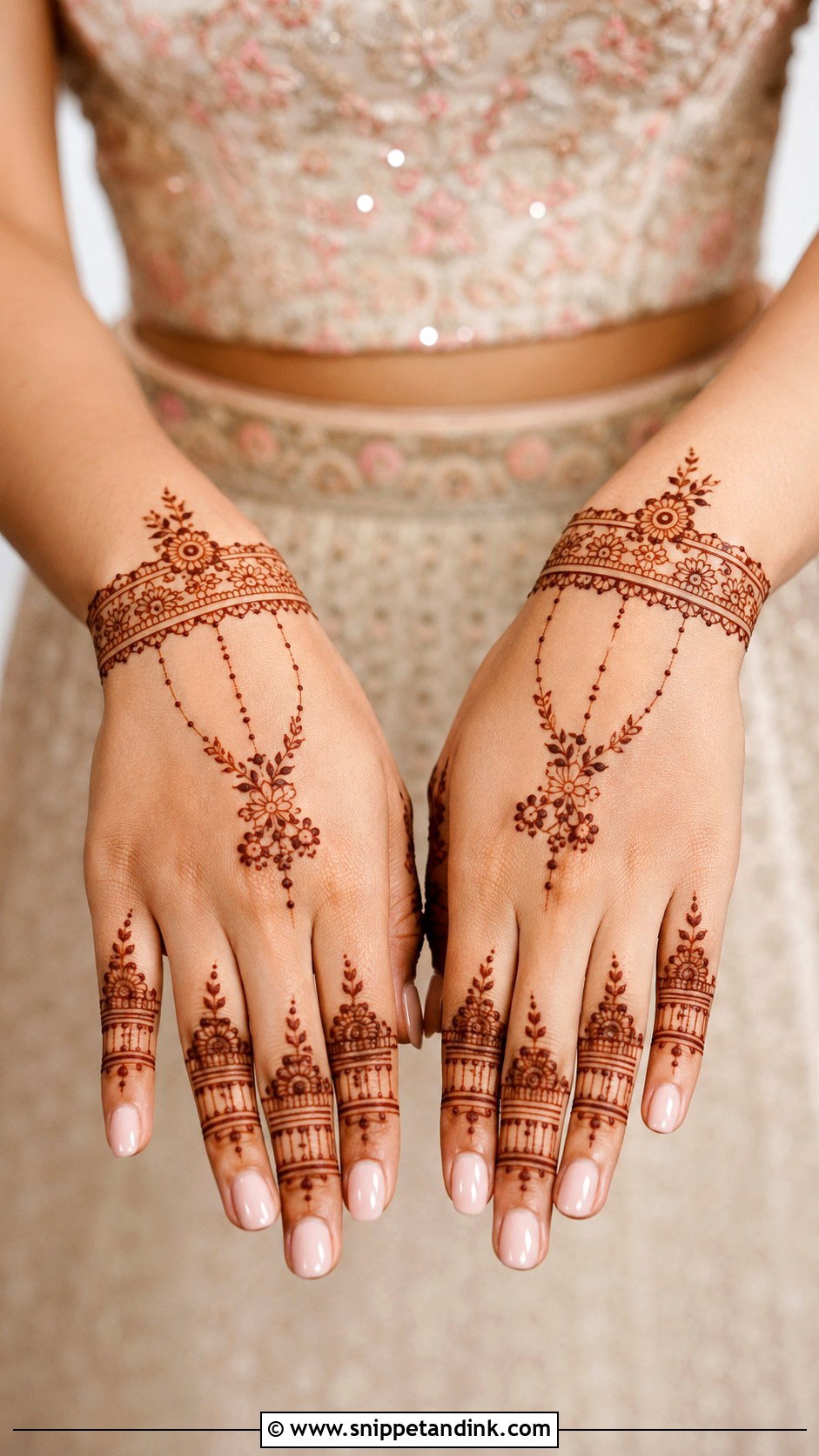
A skirt and crop top behaves like a lighter lehenga, and I suggest it when a bride means to dance most of the night. A printed skirt, a mirror work crop top or an embroidered waist belt makes it festive, and yellow, pink, green and orange suit the event. Add a cape, jacket or light dupatta after the henna dries. Keep the top sleeveless or short-sleeved. The honest catch: crop tops ride up when you raise your arms for the artist, so I’d choose a slightly longer top or a high-waisted skirt.
29. Jacket Lehenga For Mehandi Bride
A jacket lehenga swaps the dupatta for a jacket, which gives structure and drama in photos. Short, waist-length or long jackets all work. Underneath, a sleeveless blouse is essential, because the jacket comes off during the henna session and goes back on for the pictures afterward. Embroidered, mirror work or printed jackets all look festive; keep the skirt lighter so the whole outfit doesn’t become heavy. Yellow, green, coral and multicolour combinations work well. Make sure the jacket armholes are roomy enough to slip on without touching your hands.
30. Minimal Lehenga For Mehandi Bride
A minimal lehenga relies on colour, fit and fabric, with one standout detail instead of heavy embroidery. Think a plain yellow lehenga with a mirror border, a mint skirt with a floral blouse, or a coral set finished with tassels. I recommend this most when the bridal henna is very detailed, since plain clothing lets the hands take over every photo. Choose breathable fabric and a blouse that keeps the arms open. With so little decoration, fit becomes everything, so I’d book a proper final fitting rather than trusting a size chart.
A Realistic Timeline From Swatch to Final Fitting
Designer bridal outfits made to order often take several months, and even a lighter mehndi lehenga from a boutique can take longer than brides expect once embroidery and shipping are involved. Lead times vary a lot by maker and season, so ask before you fall in love with anything. This is the order I work in:
- Three to four months out: settle the colour and silhouette, and order anything custom or embroidered.
- Six to eight weeks out: first fitting. Sit on the floor in it, raise your arms, and dance for a minute.
- Two to three weeks out: final fitting with the exact shoes, blouse padding and jewellery you’ll wear.
- The week before: steam it, try on the full look once, and confirm who will pin your dupatta on the day.
For the day itself, I pack safety pins, fashion tape, a lint roller and a few dry cotton pads to blot stray paste before it sets. A ready-made outfit bought off the rack can skip most of the early steps, but it still needs that sitting-and-dancing test. Shortening a hem or loosening a sleeve takes a tailor very little time; finding out on the day that you can’t lift your arms is the thing to avoid.
Will You Still Want to Dance in It at Midnight?
Colour is only part of this decision. The outfit has to look festive, photograph well and stay comfortable while you hold still for the henna artist. Light fabric, short or loose sleeves, a pinned dupatta and jewellery that leaves your hands free matter more than any single trend. Yellow and green are always right, but pink, coral, lavender, blue, pastels and multicolour give brides much more room now. Lehenga, sharara, gharara, anarkali or co-ord, the one to wear is the one you can sit in for hours and still want to dance in afterward.
You'll Like These Ideas:





Leave a Reply