
The functions before an Indian wedding are where a bride gets to wear the textiles of her region and her family, often several of them in one week. A roka, engagement, haldi, mehndi, sangeet, puja or jaggo each has its own mood, and the outfit should suit what actually happens there: turmeric being smeared, hours of sitting for henna, a night of dancing, a long ritual on the floor. I’ve put together twenty complete looks below, with the jewelry, shoes and drape I’d pair with each and the practical catch I’d warn a client about. Some are light cotton for messy mornings, some are heavy silk for formal evenings, and several are handwoven sarees that carry real regional history.
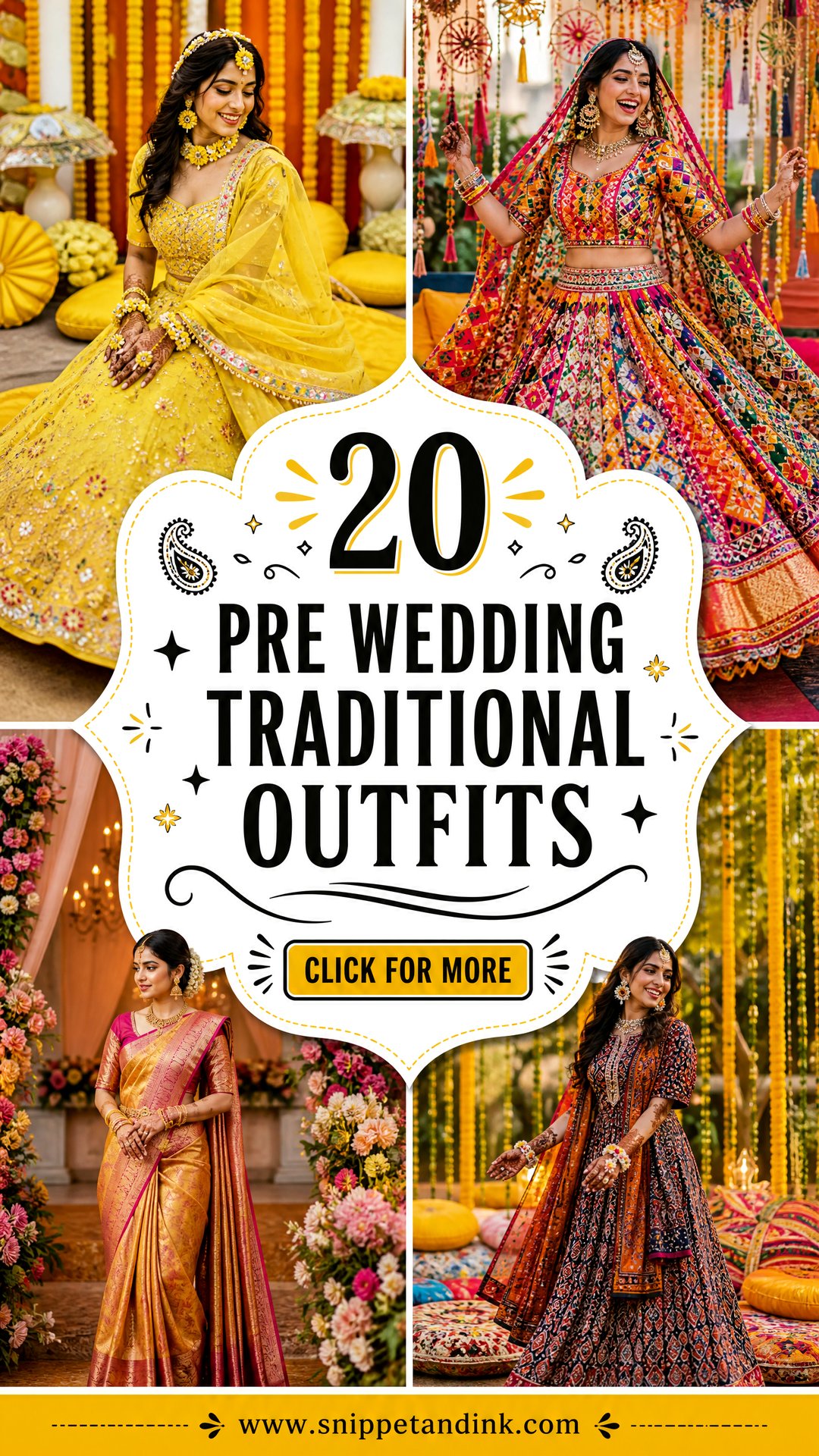
Which Fabric Belongs at Which Ritual?
Before I look at a single color, I ask the bride what will physically happen at each function. That decides the fabric, and the fabric decides almost everything else.
- Haldi: washable cotton, chanderi or georgette you’re willing to lose. Nothing heirloom, no fine zari.
- Mehndi: short or elbow sleeves, a lower half you can sit cross-legged in, and no dyes that might bleed onto wet henna.
- Sangeet and garba: light fabric with embellishment kept to the hem and borders, so the outfit swings rather than drags.
- Puja and blessings: breathable handloom, fitted enough to sit on the floor for an hour without the drape shifting.
- Engagement and roka: this is where heavy silk sarees and formal embroidery make sense, since you’re mostly standing and greeting.
If two functions fall on the same day, I plan a quick change and keep the lighter outfit for the earlier, messier ritual.
1. Yellow Haldi Lehenga Outfit
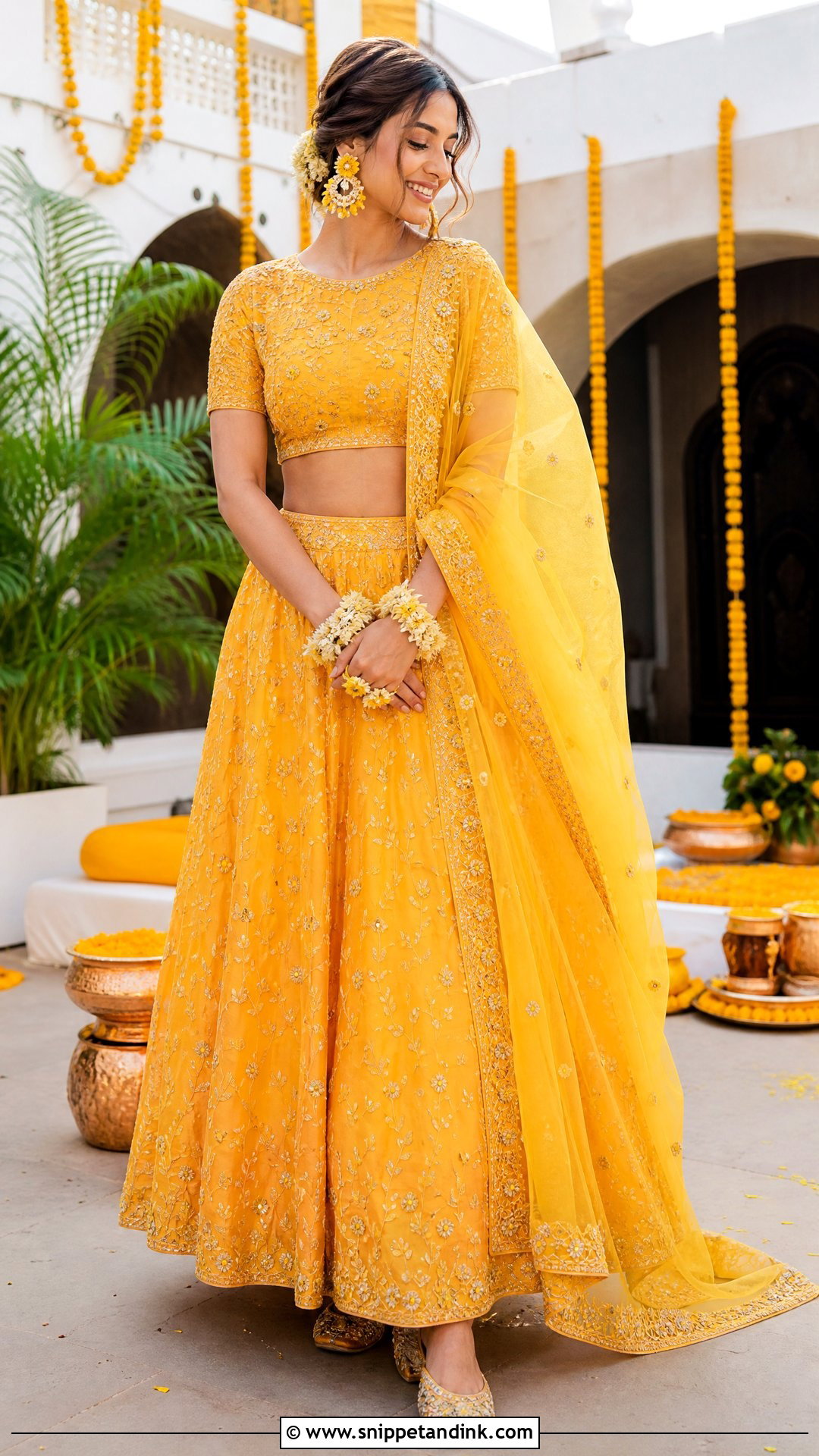
A yellow lehenga is the classic haldi choice, and I always build it on the assumption that it will be ruined. Turmeric paste stains silk and fine embroidery for good, so I pick cotton, georgette or chanderi with simple gota patti or a printed border. A short-sleeve blouse keeps your arms free for the paste. Pin the light dupatta to one shoulder, wear fresh flower jewelry and a small maang tikka, and put on flat juttis or sandals you don’t mind staining. Hair goes into a braid or low bun, makeup stays minimal, since it will be wiped off anyway.
2. Green Mehndi Sharara Outfit
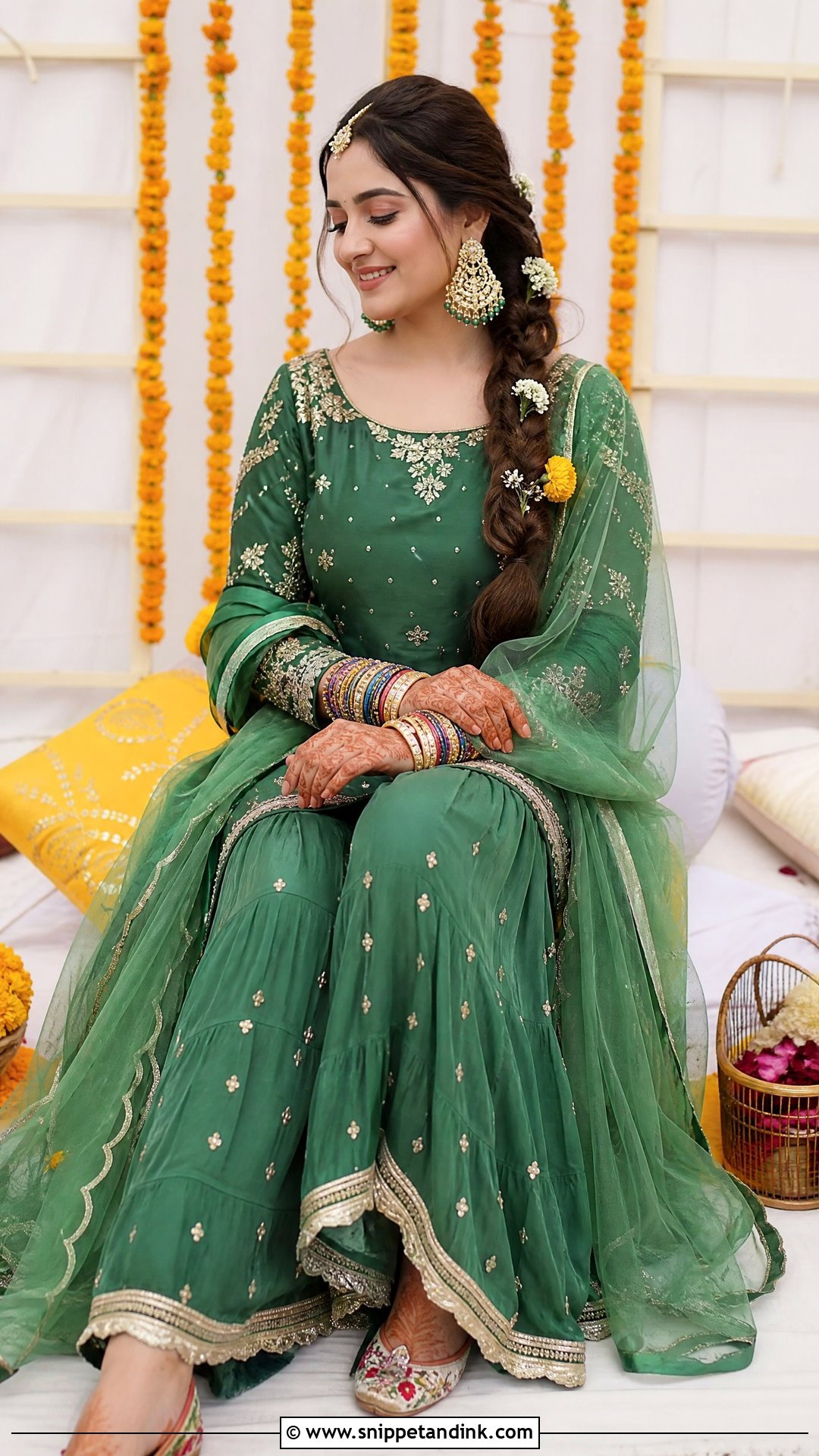
At a mehndi, the outfit has one job: let the artist reach your hands and arms for hours without anything rubbing. That’s why I like a short kurta with flowing sharara pants in deep green, olive, mint or emerald. You can sit cross-legged or on a low stool comfortably. Choose three-quarter or elbow sleeves, never full sleeves, and skip rings, hand chains and tight bangles until the paste has dried and come off. Mirror work, gota trim or small floral motifs keep it festive but light. Drape the dupatta over one shoulder and pin it there, and wear a side braid with tiny flowers so loose hair can’t land in wet henna.
3. Floral Anarkali Roka Outfit
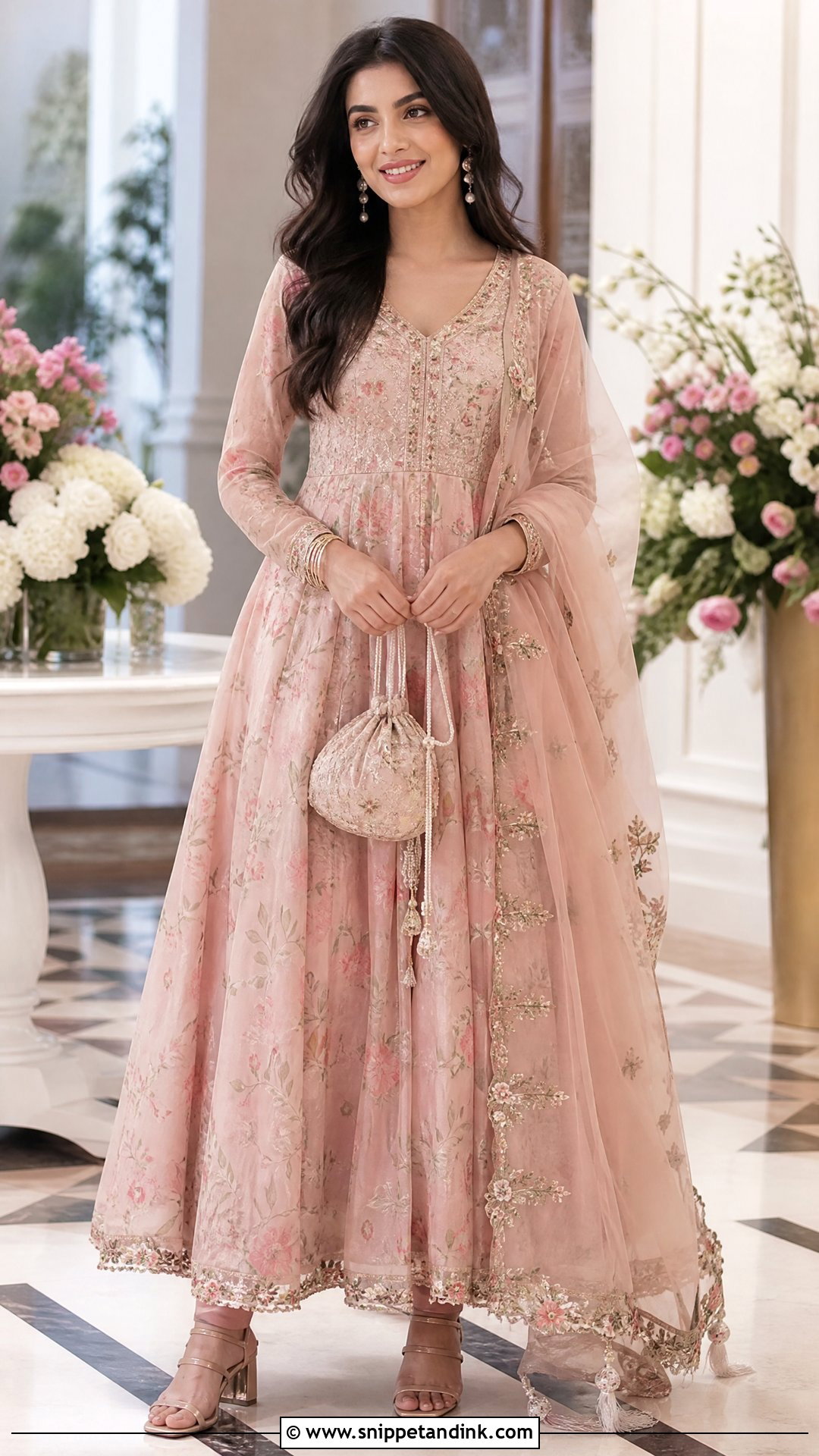
An anarkali suits a daytime roka ceremony because it looks formal for family introductions yet moves easily. I’d pick blush, peach, sage or powder blue in printed organza, chanderi or light silk, floor length or calf length. The fit I check first is the bodice seam: an anarkali flares from just under the bust, and if that seam sits too low, the whole dress looks dropped. Churidar pants and a dupatta edged in fine embroidery complete it. Pearl drops, a slim bangle set and a potli are plenty. Soft waves or a half-up style work well.
4. Bandhani Lehenga Mehndi Outfit
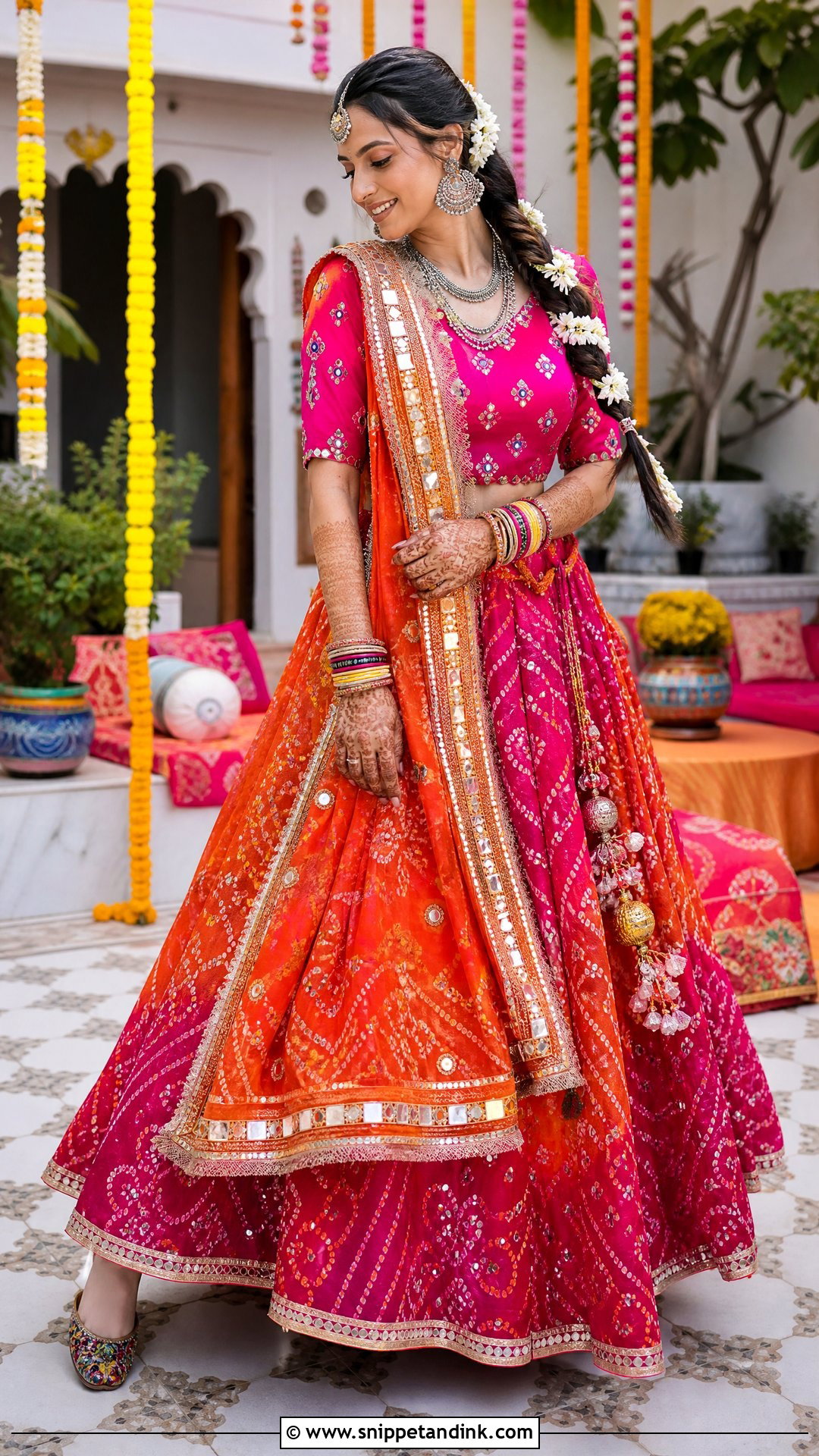
Bandhani is tie-dye done by hand, thousands of tiny knots resisted before dyeing, and you can see that craft in the dots. For a mehndi, I’d choose a skirt in red, fuchsia, orange, green or mustard bandhani and calm it with a solid embroidered blouse. A contrasting bandhani dupatta with mirror work or gota edging adds the bridal note. Oxidized silver jewelry and colorful bangles suit the textile better than polished gold. One practical warning: real bandhani can bleed dye the first time it gets damp, so keep it away from wet henna and don’t sit on light upholstery if it’s humid. Embroidered juttis and a flower-trimmed braid finish it.
5. Mirror Work Gharara Sangeet Outfit
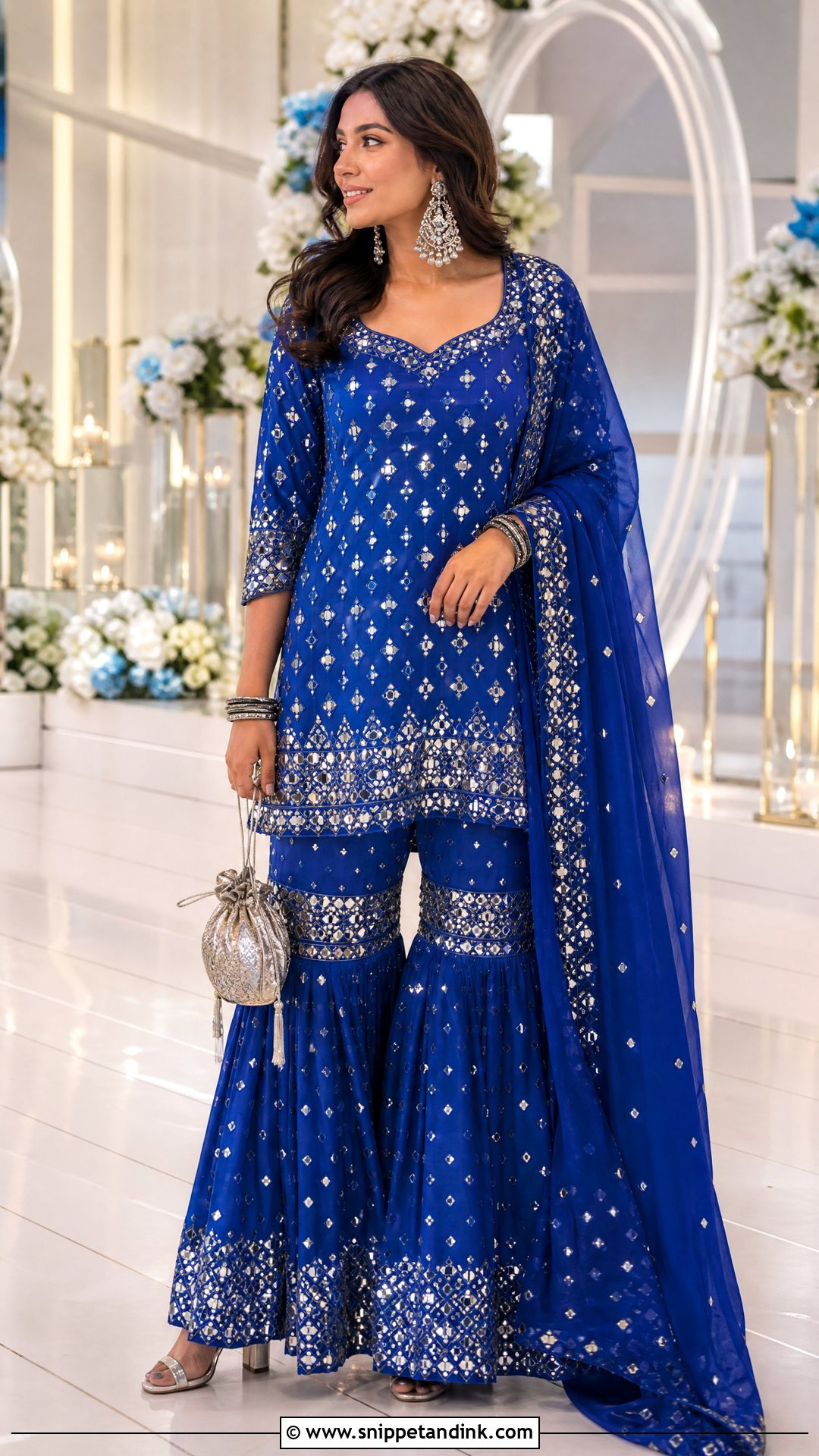
When the music begins, a mirror work gharara gives you sparkle without restricting your legs. The gharara is gathered at the knee, so it flares below the joint and you can kick and spin freely. I’d pair a fitted short kurti with ghararas in cobalt, emerald, magenta or deep purple. Mirrors and metallic thread catch stage lights well, but they add weight, so keep the fabric itself light. Drape a sheer dupatta across one shoulder and pin it. Low block heels or cushioned juttis are far steadier than stilettos for choreographed numbers, and a sleek ponytail or braid stays out of your face.
6. Banarasi Silk Saree Engagement Outfit
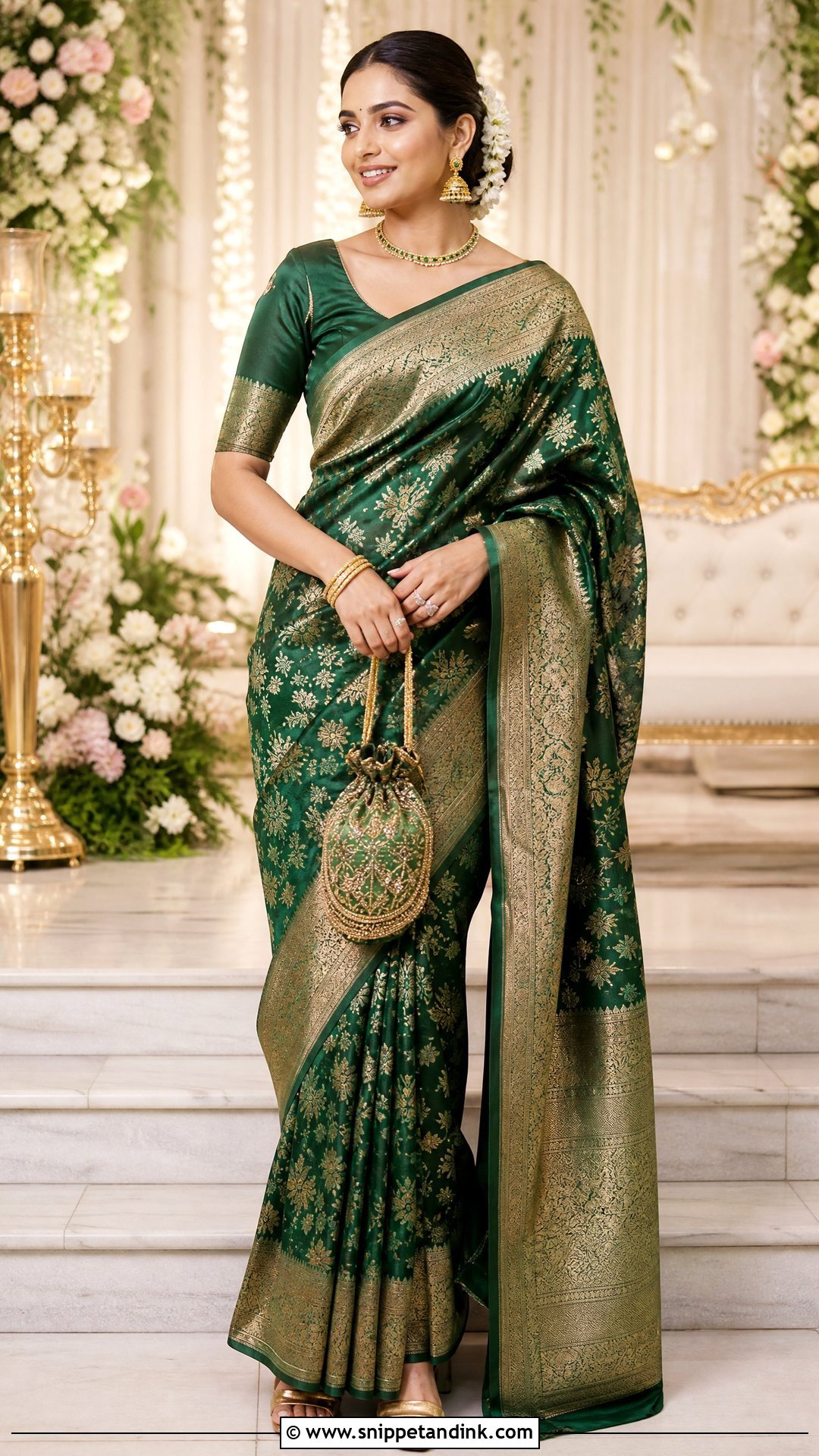
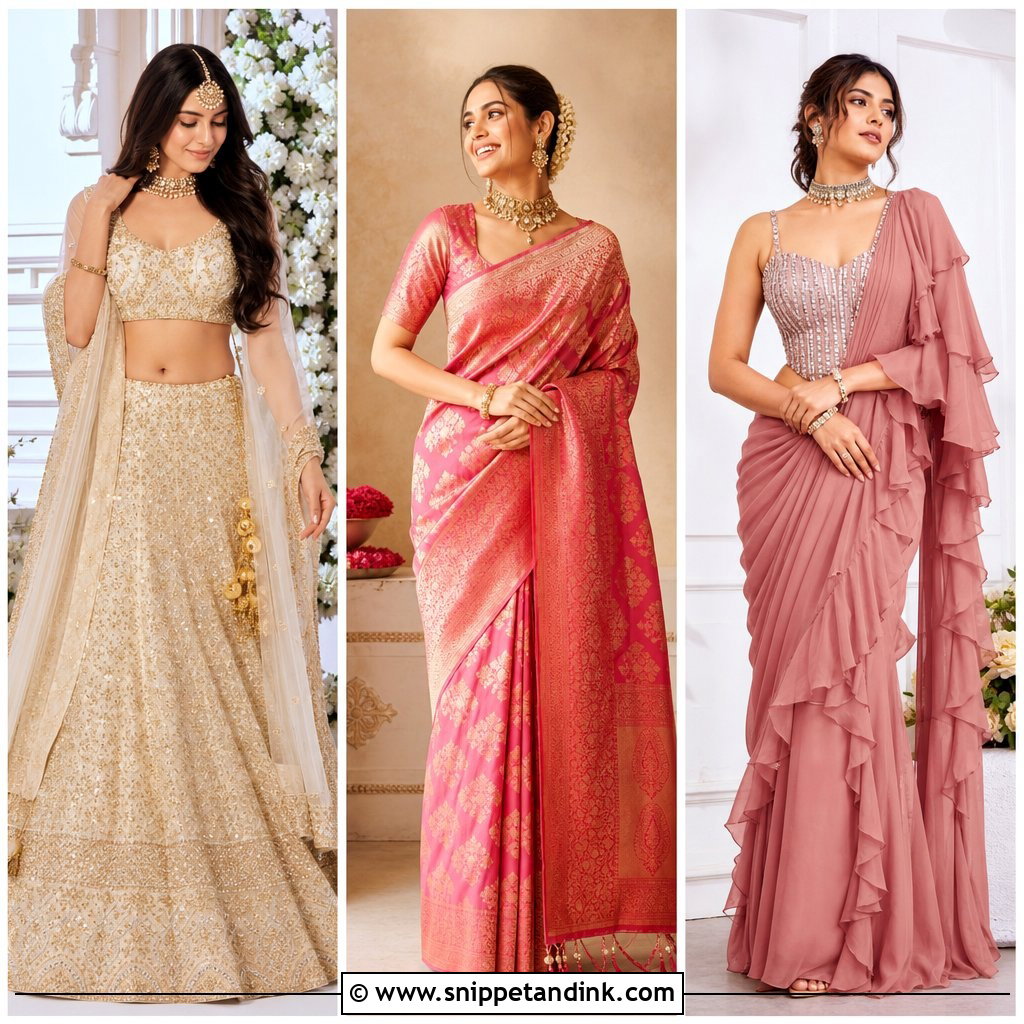
Banarasi silk is heavy, rich and woven with zari, and for an engagement it does most of the work on its own. Rani pink, emerald, royal blue, plum or muted gold all suit the traditional motifs. Because the fabric is thick, the pleats need to be set firmly and pinned at the waist, or they open up as you walk. I’d keep the blouse classic: elbow sleeves, a traditional neckline, a neatly finished back. Gold jhumkas, a short necklace, bangles and a small bindi are enough with this much texture. A smooth low bun with jasmine and block heels under the hem complete it.
7. Chikankari Kurta Haldi Outfit
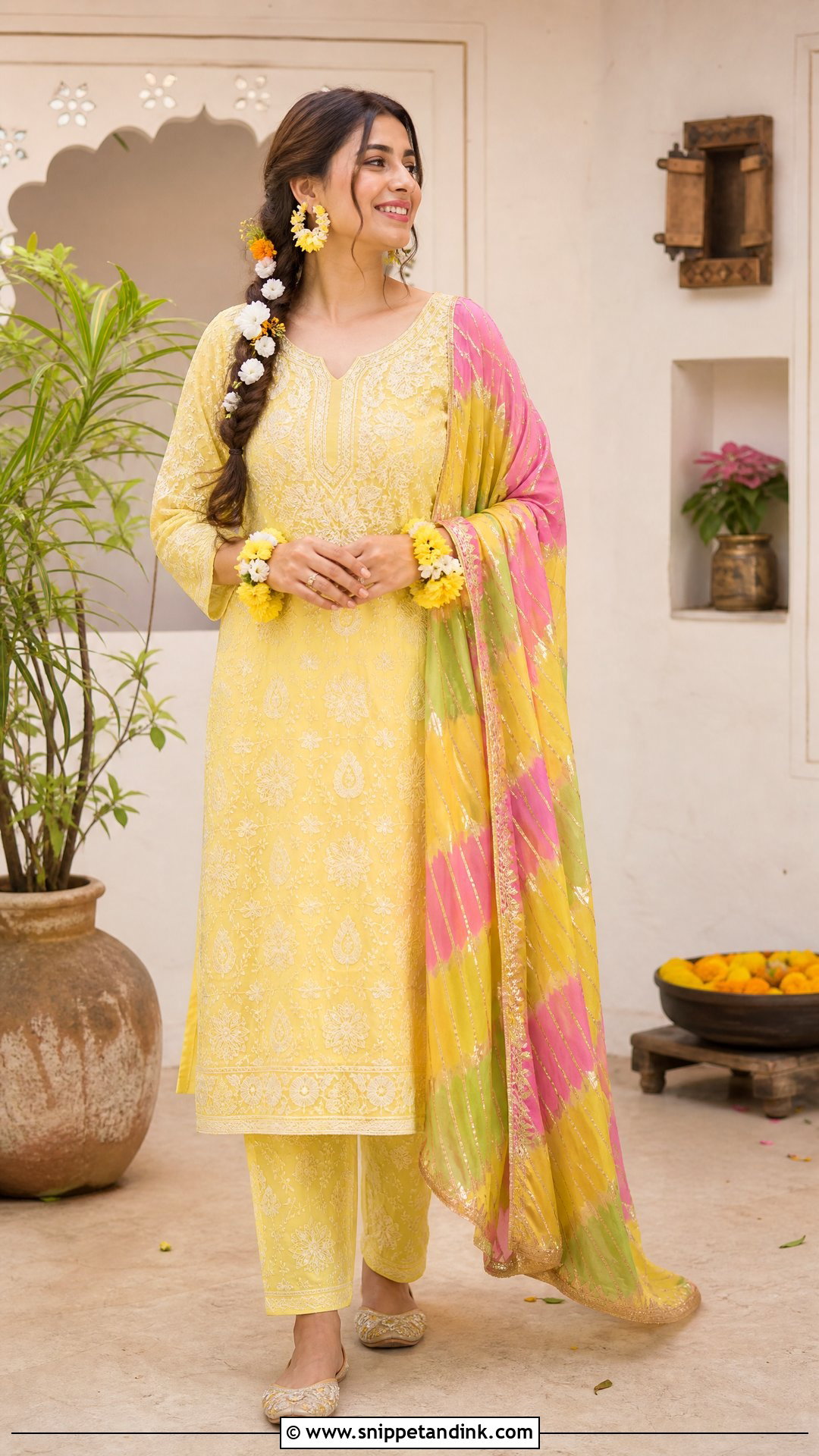
A chikankari kurta set is the softer haldi option for brides who don’t want a lehenga at a morning ritual. Chikankari is fine hand embroidery from Lucknow, usually on cotton or georgette, which means it washes better than most festive wear. Lemon yellow, marigold, ivory with yellow accents or pale peach all work. Straight pants are simplest; palazzos or a light sharara give more movement. I’d add a colorful leheriya or bandhani dupatta to absorb some of the turmeric. Flowers woven into a low braid, floral earrings and flat juttis keep it light for a home or courtyard haldi.
8. Patiala Suit Haldi Outfit
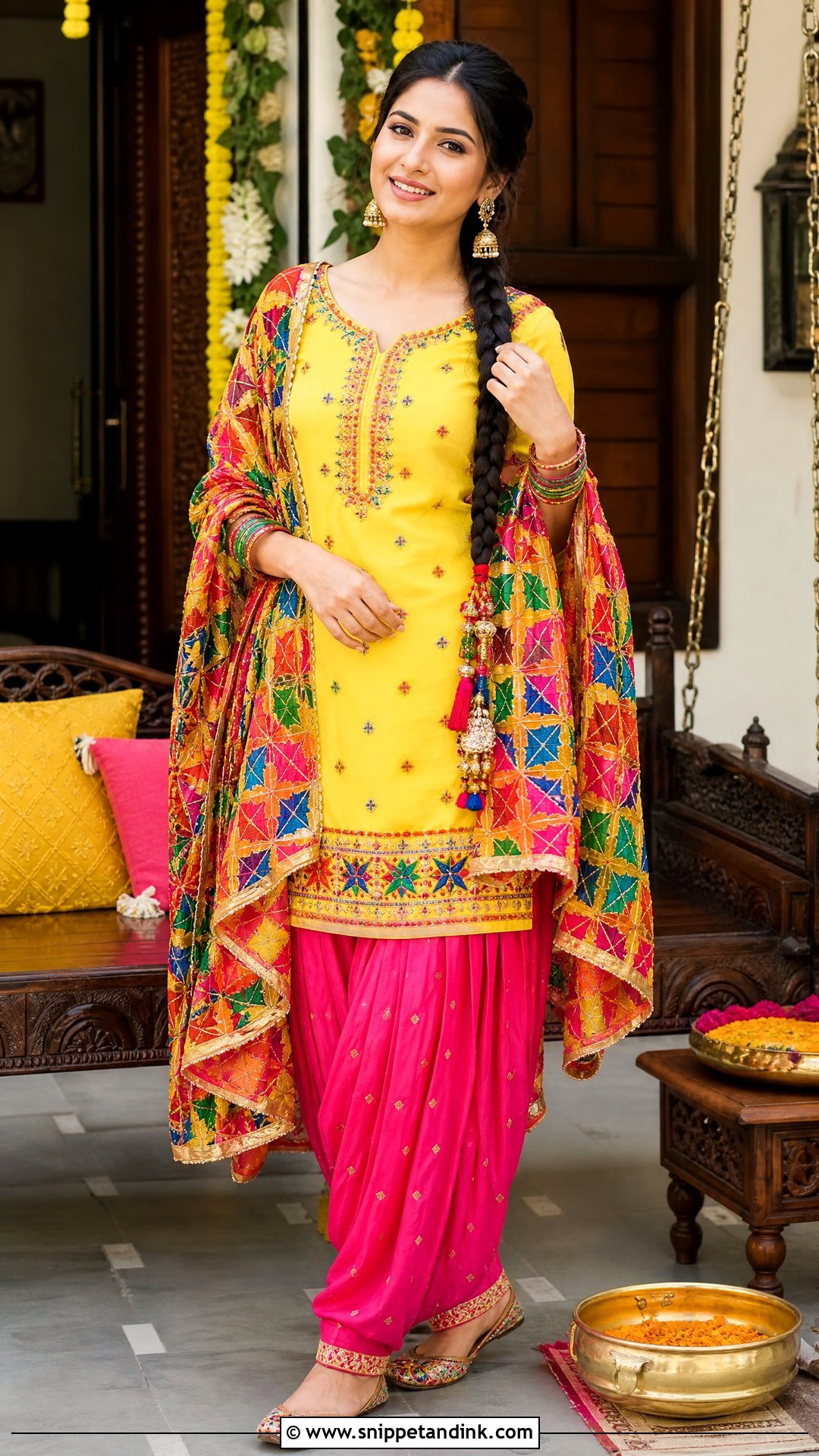
A Patiala suit is the most practical outfit I know for a lively haldi. The heavily pleated salwar gives you full freedom to sit on the floor and get up again without adjusting anything. Choose a short kurta in bright yellow, orange or pink with phulkari embroidery at the neck and sleeves, and a salwar in a contrasting color. A lightweight phulkari dupatta and a paranda woven into a long braid give it a Punjabi finish. Keep the jewelry to jhumkas and glass bangles, because haldi tends to turn playful and messy and anything delicate will get caught.
9. Phulkari Lehenga Jaggo Outfit
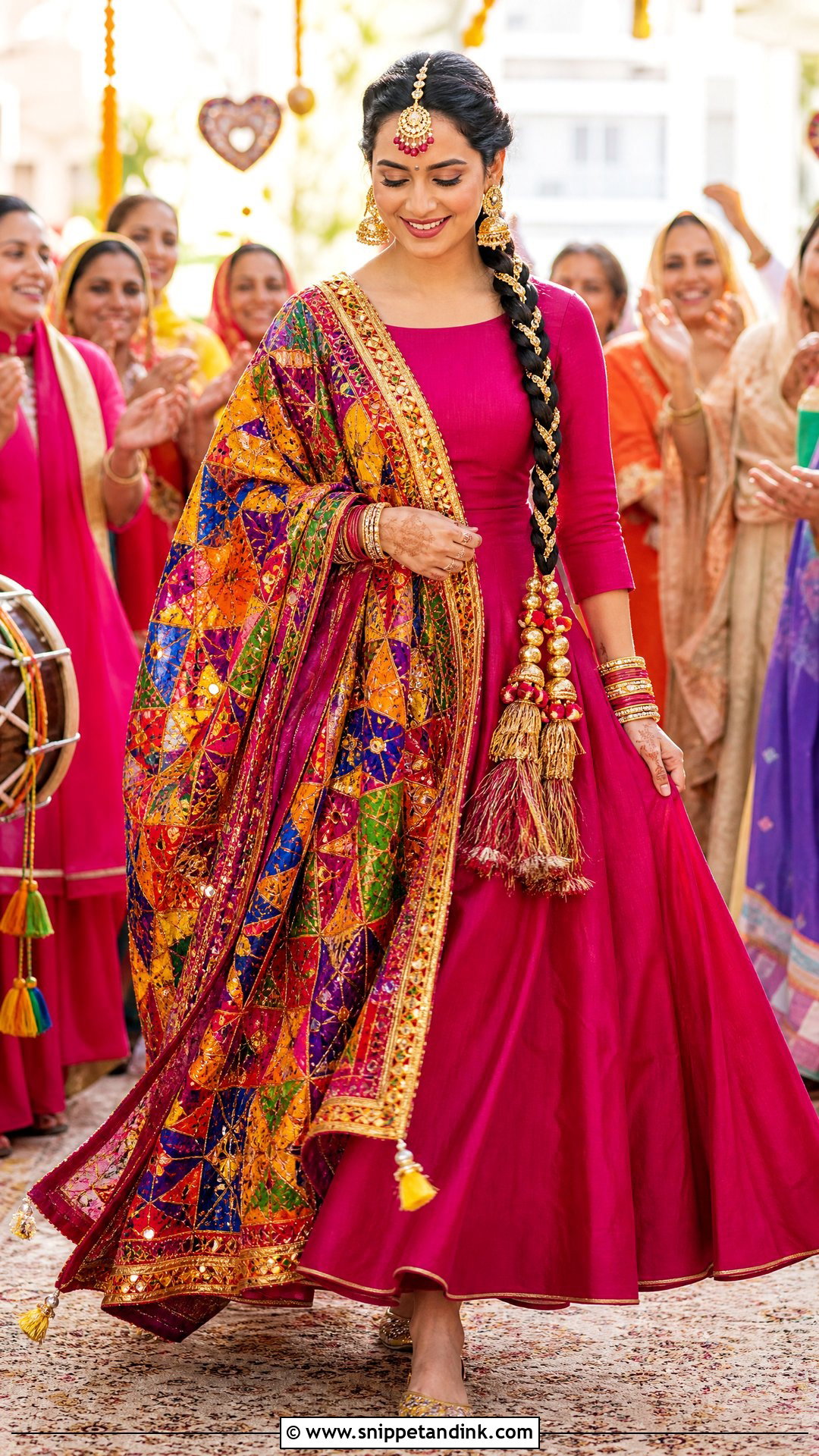
Phulkari means flower work, and the traditional dupatta is embroidered so densely that it is often the most valuable piece in the outfit. At a jaggo, where you’ll carry the decorated pot and dance through the night, I’d let that dupatta lead. Choose a plain raw-silk or cotton-silk skirt and a simple blouse in fuchsia, orange, red, mustard or green. Drape the dupatta across the torso and pin it for dancing. Gold jhumkas, colorful bangles, a small maang tikka, juttis and a bright paranda in a long braid finish it. If the phulkari is a family heirloom, pin through the plain edge, never through the embroidery.
10. Rajasthani Poshak Ceremony Outfit
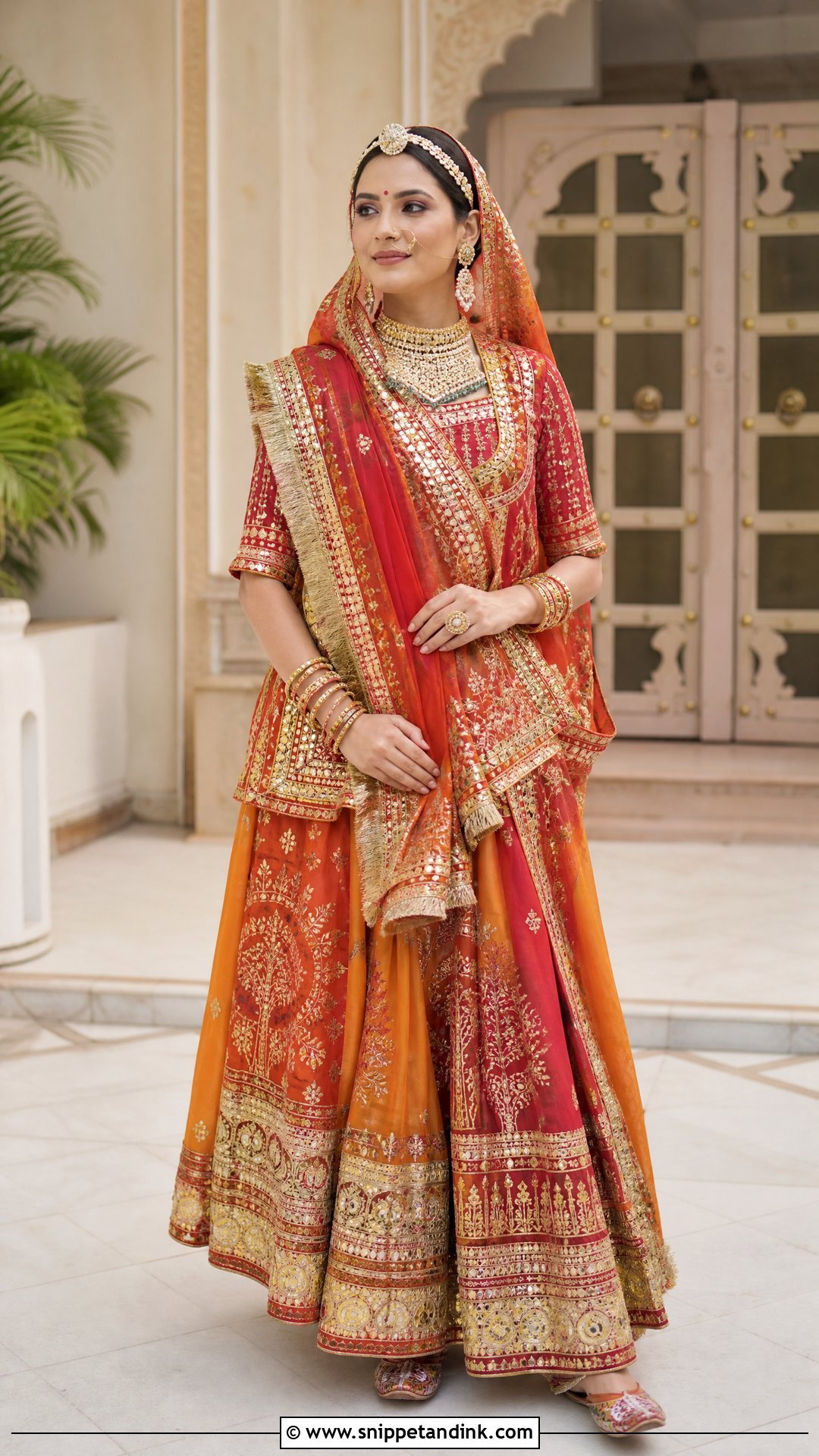
A Rajasthani poshak gives regal color and full coverage for a family ceremony. It usually has four parts: a kanchli or blouse, a kurti, a flared ghagra and an odhni over the head or shoulders. Red, saffron, green and rani pink with gota patti or zari borders are traditional. The tricky part is the odhni. I pin it at the back of the head into the hair, not on top, so the border falls flat instead of crumpling. Add a borla, traditional earrings, bangles, a necklace and embroidered mojaris, with kohl-lined eyes and a classic lip. It suits a puja or bhaat ceremony.
11. Gujarati Chaniya Choli Garba Outfit
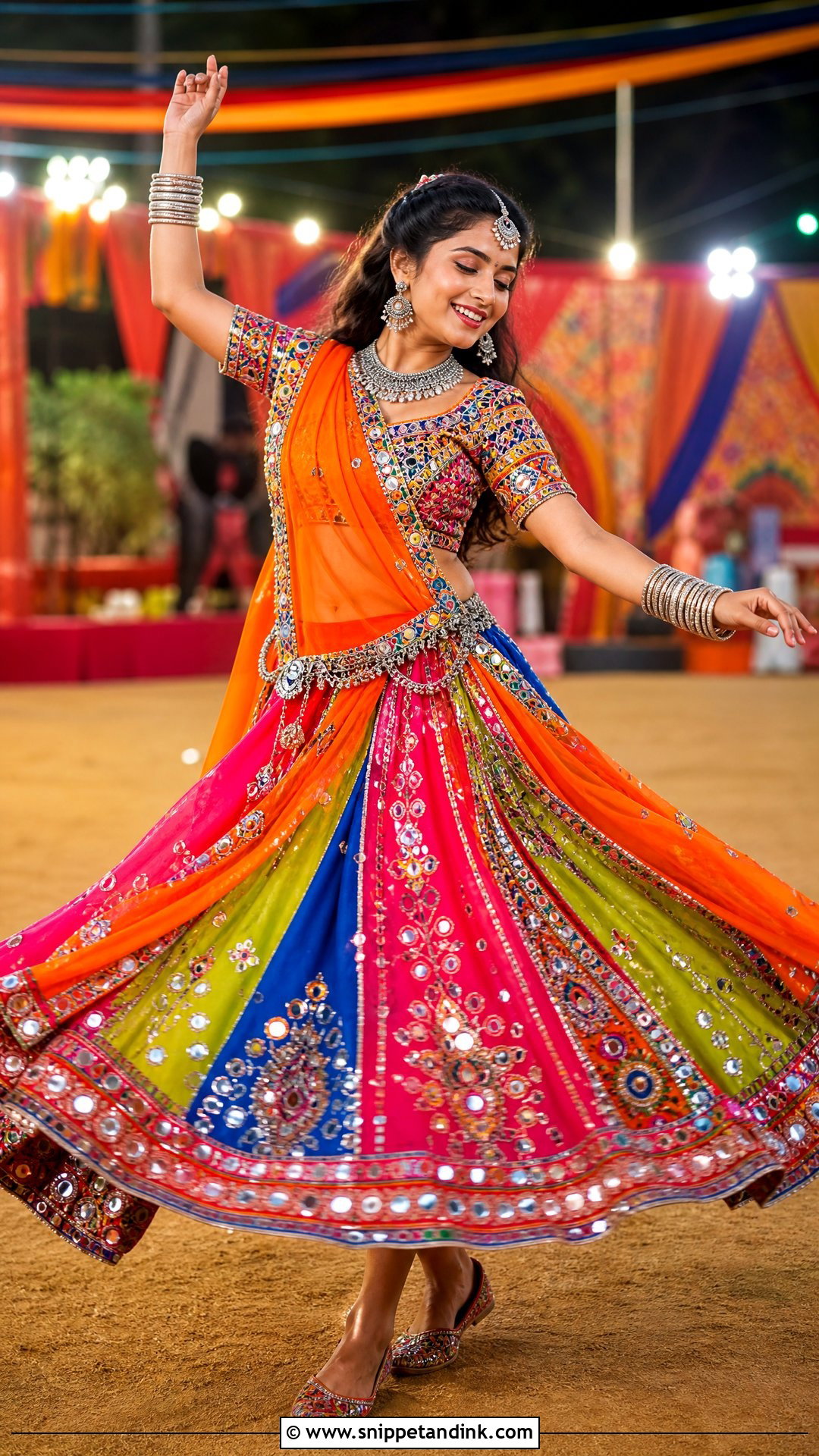
Garba is several rounds of circular dancing, so the chaniya choli for a pre-wedding garba celebration has to stay put while you spin. I fit the choli for support first, since a loose blouse rides up with every clap above the head. Cotton or light silk skirts swirl better than heavy ones. Pin the contrasting dupatta across the front and at the shoulder. Oxidized silver earrings, a bold necklace, stacked bangles and a waist belt layer well with the mirror work. Wear cushioned flats or mojaris, never heels, and a braid or secure ponytail.
12. Paithani Saree Sakharpuda Outfit
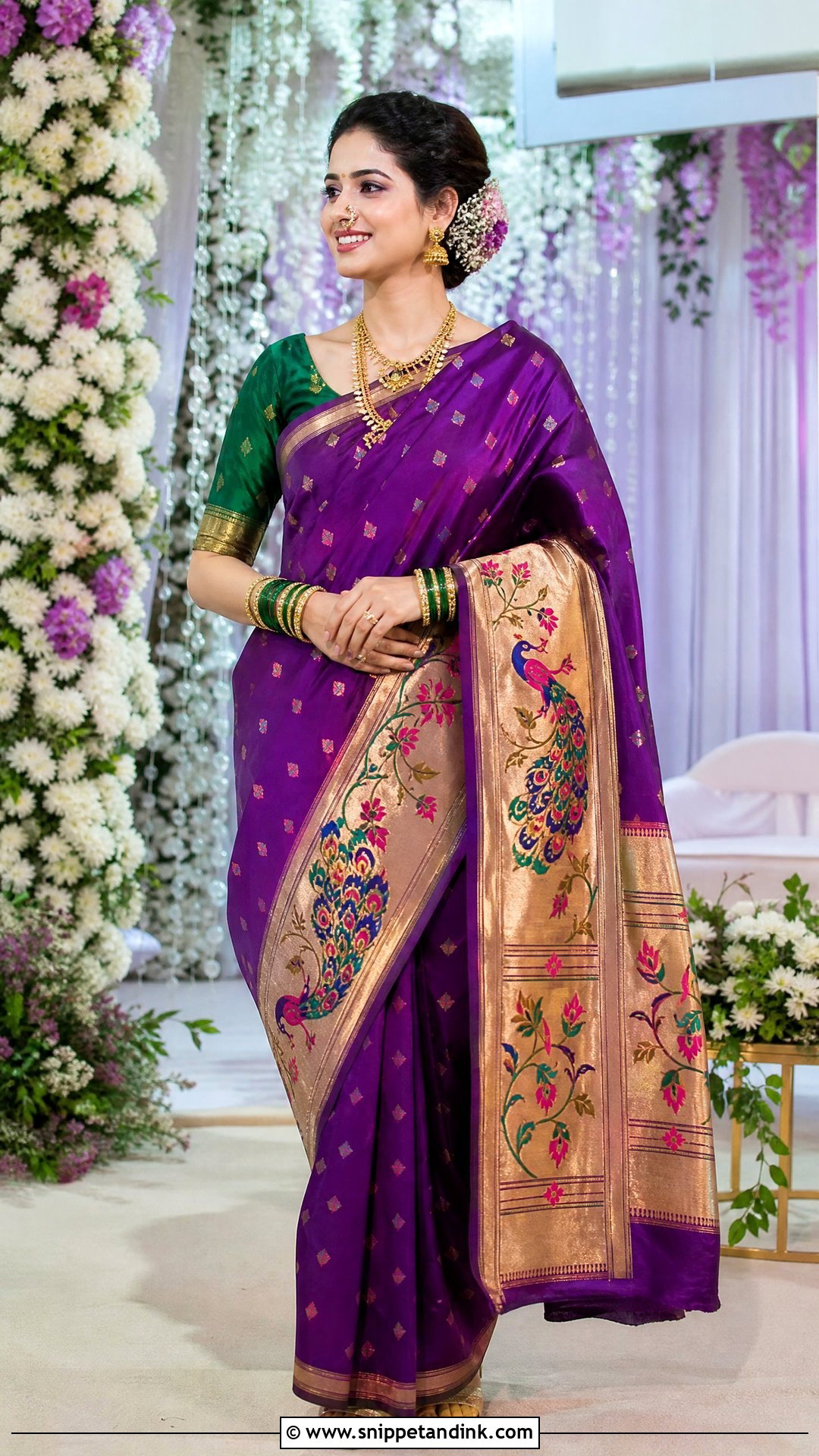
For a Maharashtrian sakharpuda, a Paithani saree carries real heritage: the peacock or floral pallu and contrasting zari border are woven, not printed, which is why good ones are expensive and heavy. Jewel tones are classic. I’d fit the blouse in a complementary shade with elbow sleeves. A nath, gold earrings, green glass bangles and a delicate necklace, plus a crescent bindi and a flowered low bun, complete the regional look. Low gold sandals help, and the pallu should be pleated and pinned at the shoulder so you can bend for rituals. It reads ceremonial without competing with the wedding outfit.
13. Kasavu Saree Pre Wedding Puja Outfit
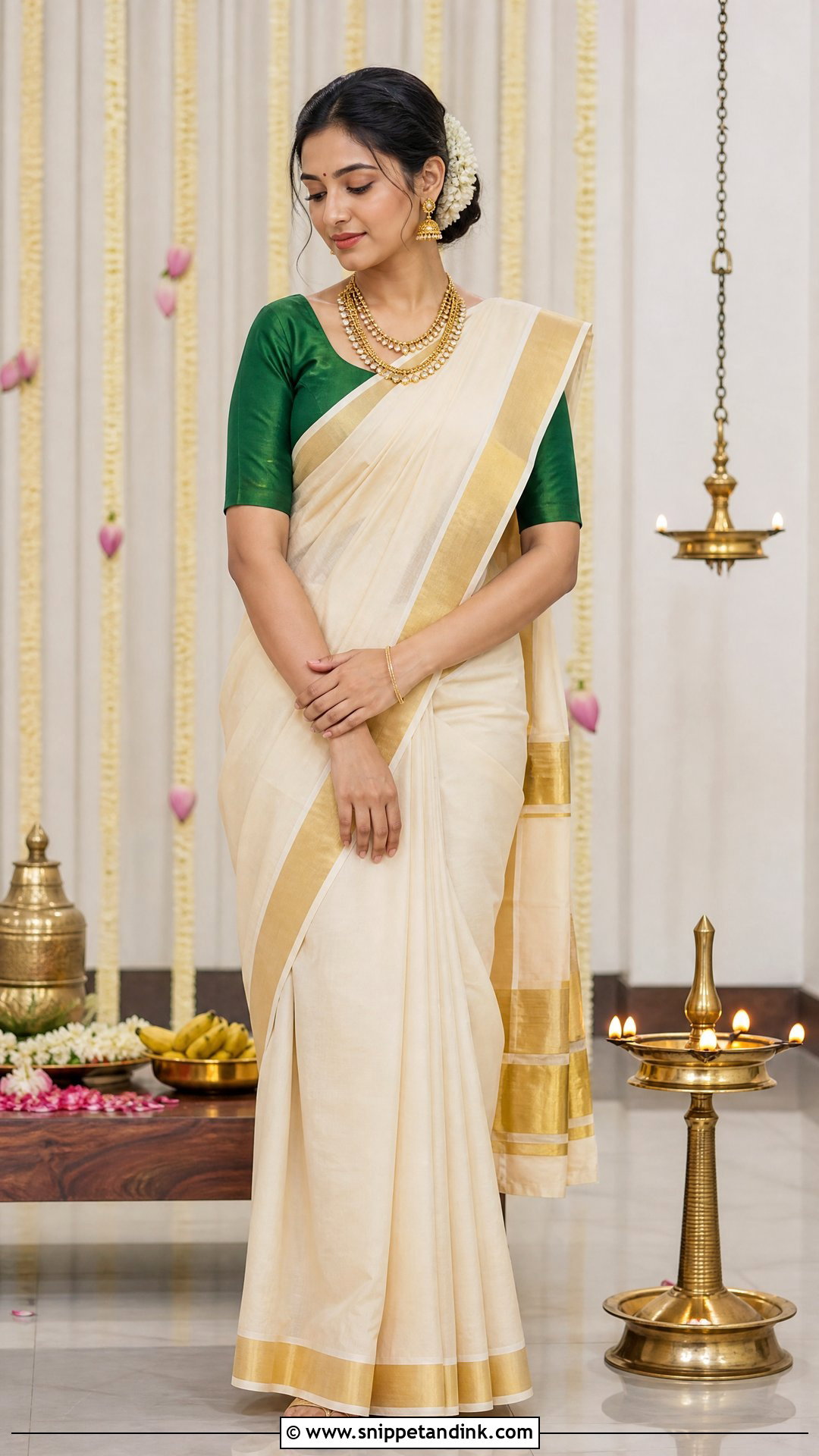
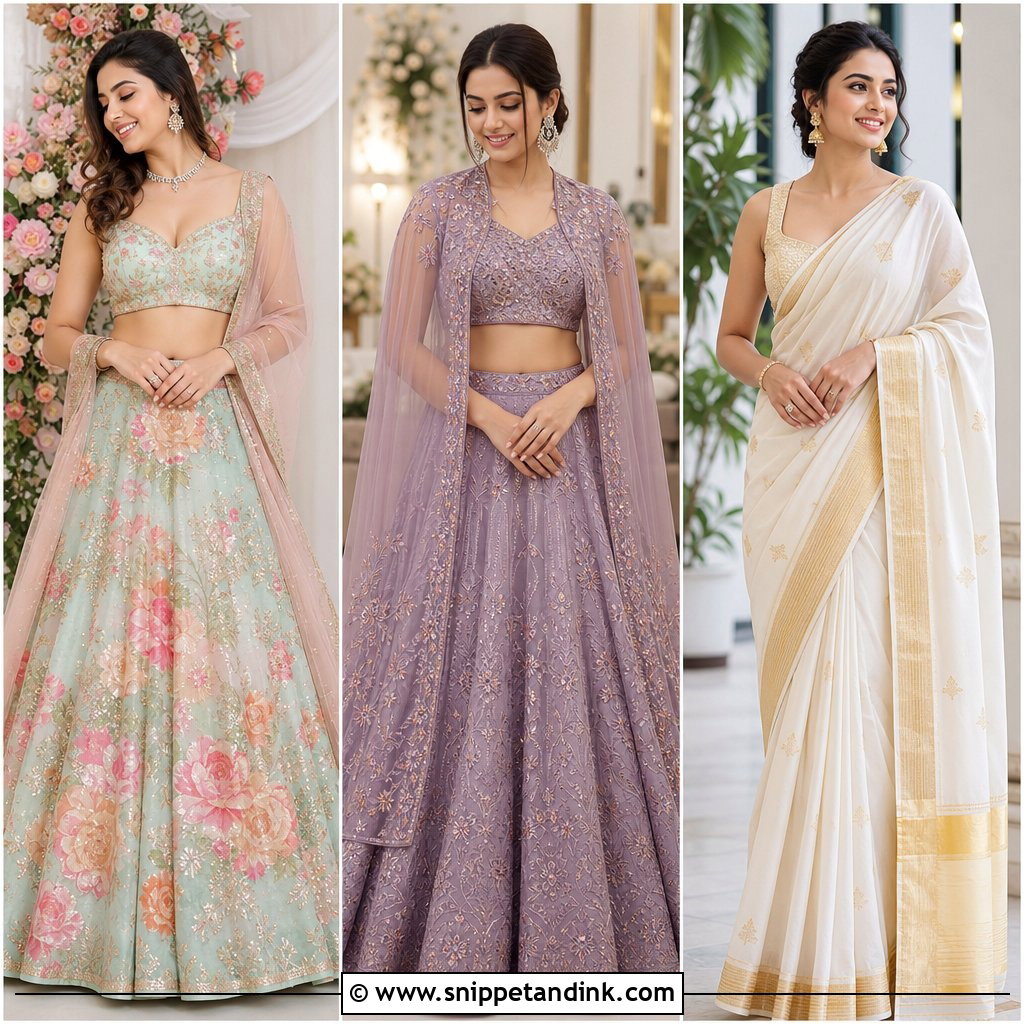
A Kerala kasavu saree, ivory with a gold border, is one of my favorite pieces for a morning puja because it’s cotton and stays cool while you sit through a long ritual. The plain ground shows every mark, though, so keep turmeric and kumkum away from your lap. A green, maroon, red or gold blouse gives gentle contrast. Gold jhumkas, a layered necklace, slim bangles and a small bindi suit it, along with a braid or low bun with jasmine. Flat gold sandals are easier for temple floors and for sitting down and standing up repeatedly.
14. Kanjeevaram Saree Engagement Outfit
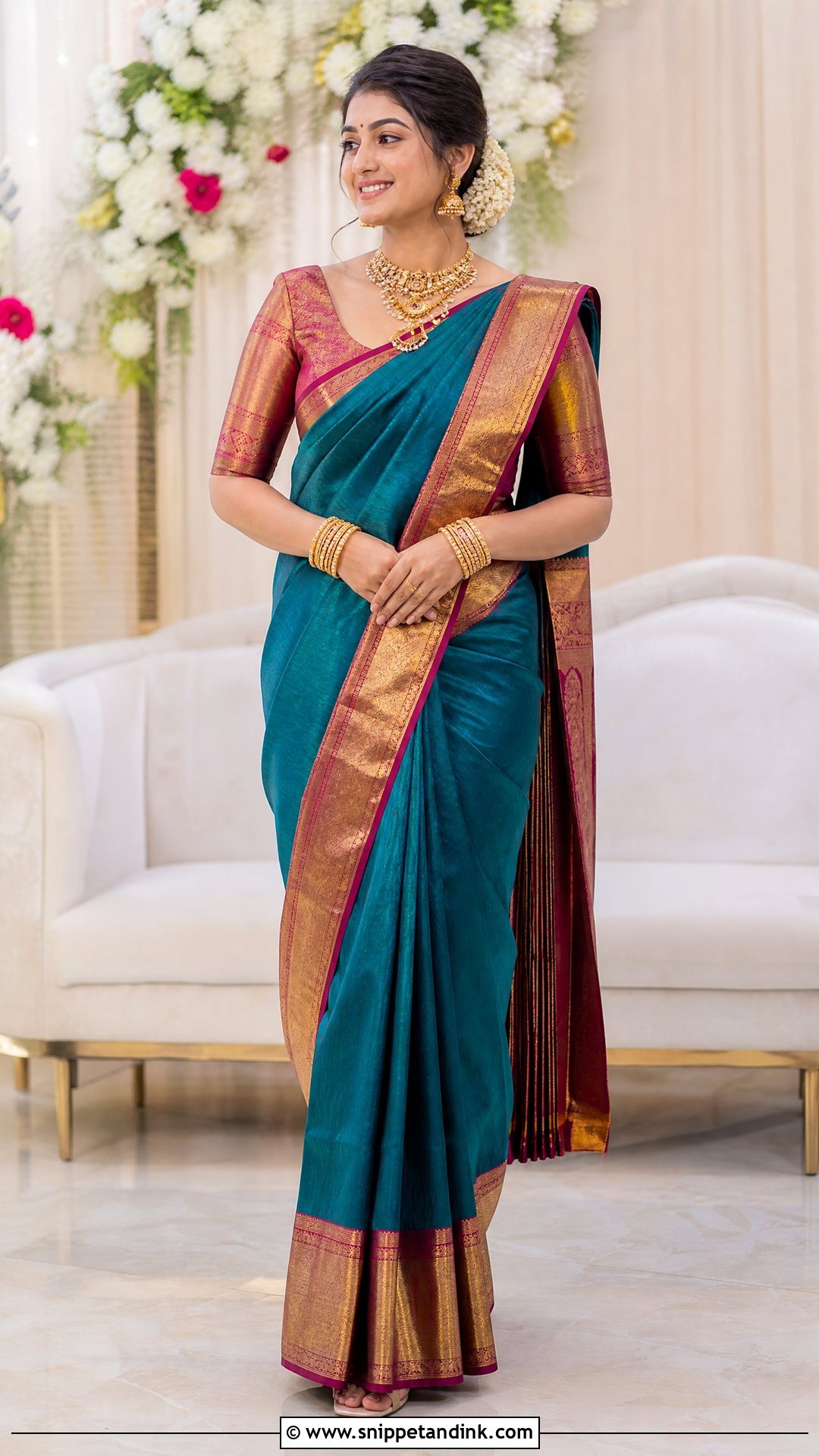
Kanjeevaram silk is woven heavier than most sarees, with the border often interlocked separately, and it sits on the body with real weight. For a ring ceremony, I’d choose maroon, teal, mustard, violet or deep pink so the contrasting zari border stands out. Because of that weight, a well-fitted petticoat with a firm drawstring matters more than with lighter sarees; a loose one lets the pleats sag within the hour. Pair it with a structured blouse with elbow sleeves, temple jewelry, gold bangles and jhumkas. A long braid with hair ornaments or a jasmine bun, plus block heels, completes it, and the saree will be reworn at festivals for years.
15. Mekhela Sador Blessing Ceremony Outfit
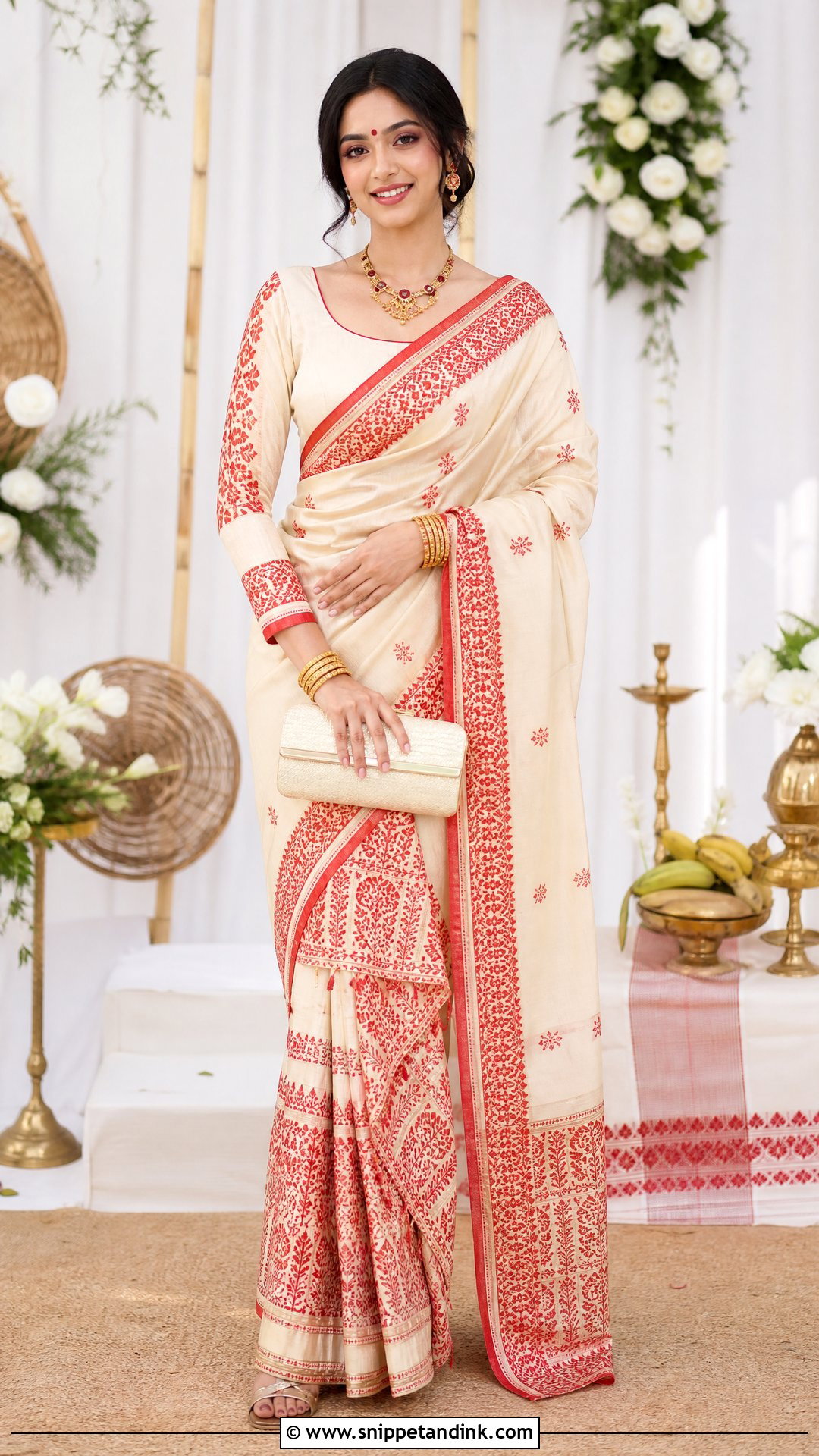
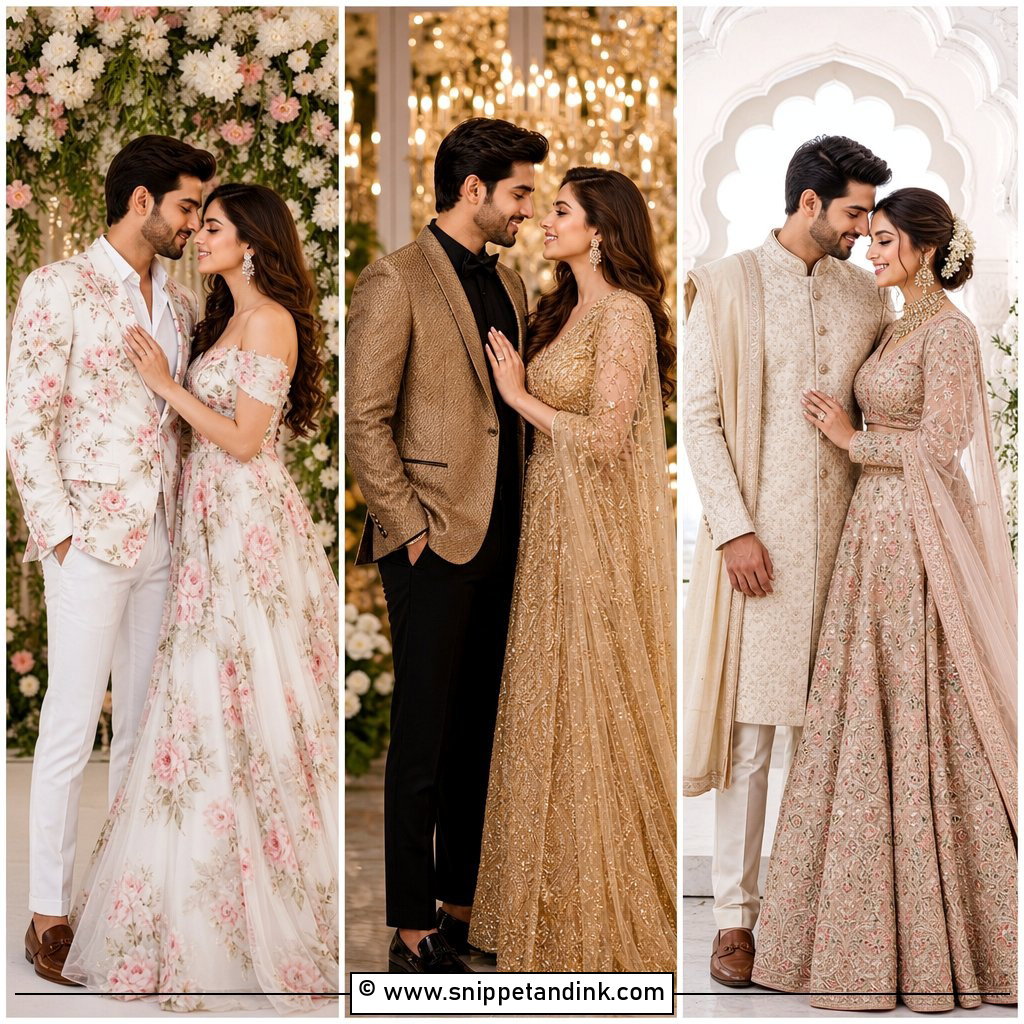
An Assamese mekhela sador is a two-piece garment: the mekhela is a cylindrical skirt pleated at the front, and the sador is draped over the upper body. For a blessing ceremony, I’d choose handwoven silk in cream, ivory, gold, red or soft pastels with traditional border motifs. Muga silk, with its natural golden sheen, is especially prized. Practice the sador drape before the day, since it’s less familiar to many stylists than a saree. Keep jewelry to Assamese earrings, a coordinating necklace and slim bangles, with a small bindi, a neat bun and low metallic sandals. The weave should be the focus.
16. Jamdani Saree Aiburobhat Outfit
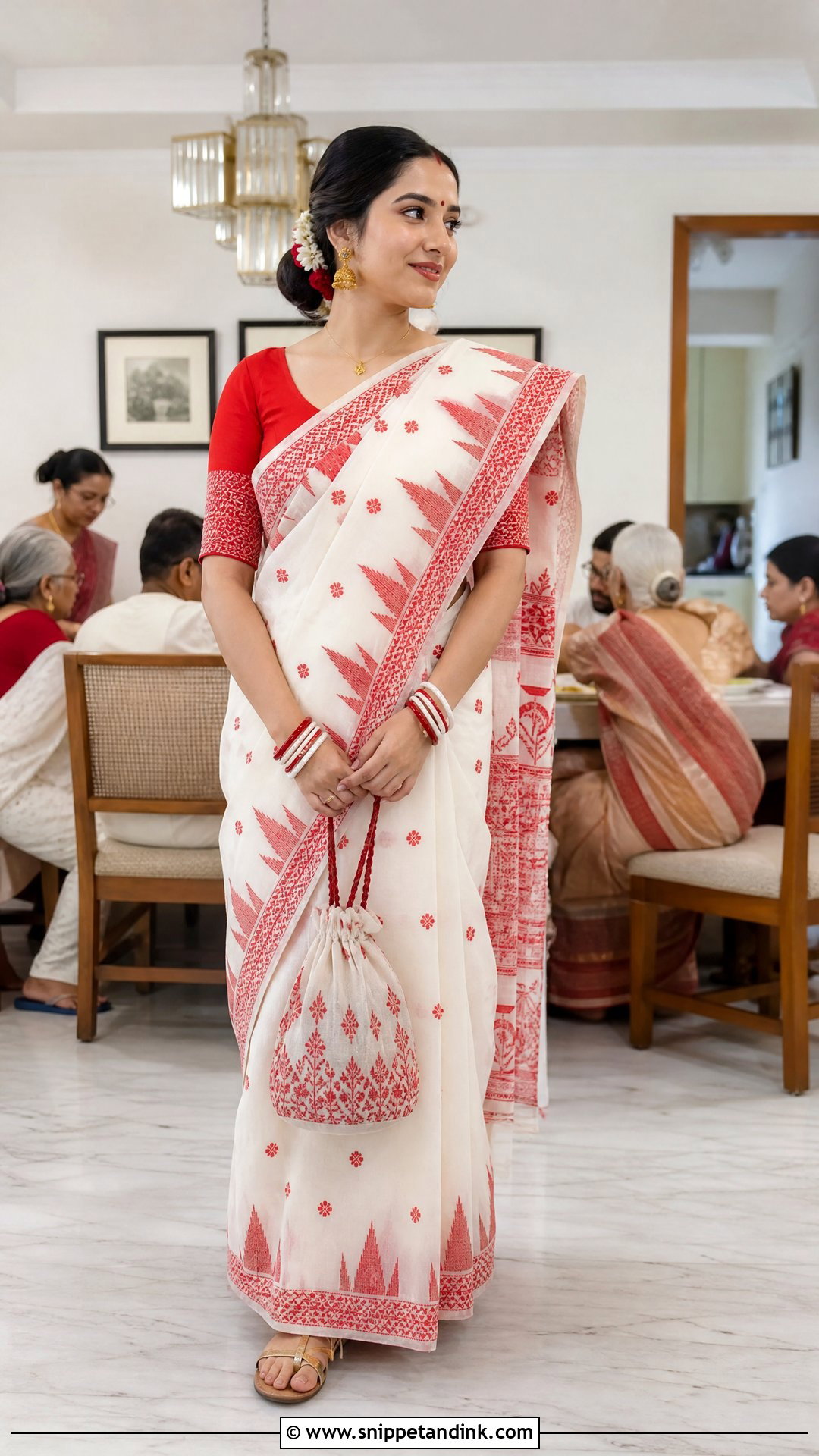
A Bengali aiburobhat is a family meal, so the outfit has to let you sit and eat comfortably. Cotton Jamdani is ideal: it’s finely woven, light and breathable, with motifs worked into the fabric on the loom. White, ivory, red, pink or pastel all suit it. A contrasting fitted blouse, gold earrings, a simple necklace, red-and-white bangles and a small red bindi give the recognizable Bengali finish. Jamdani is crisp and slightly sheer, so I always check that the petticoat matches the saree’s ground color. Add a low bun with flowers or natural waves, flat sandals and a small fabric potli.
17. Kalamkari Lehenga Sangeet Outfit
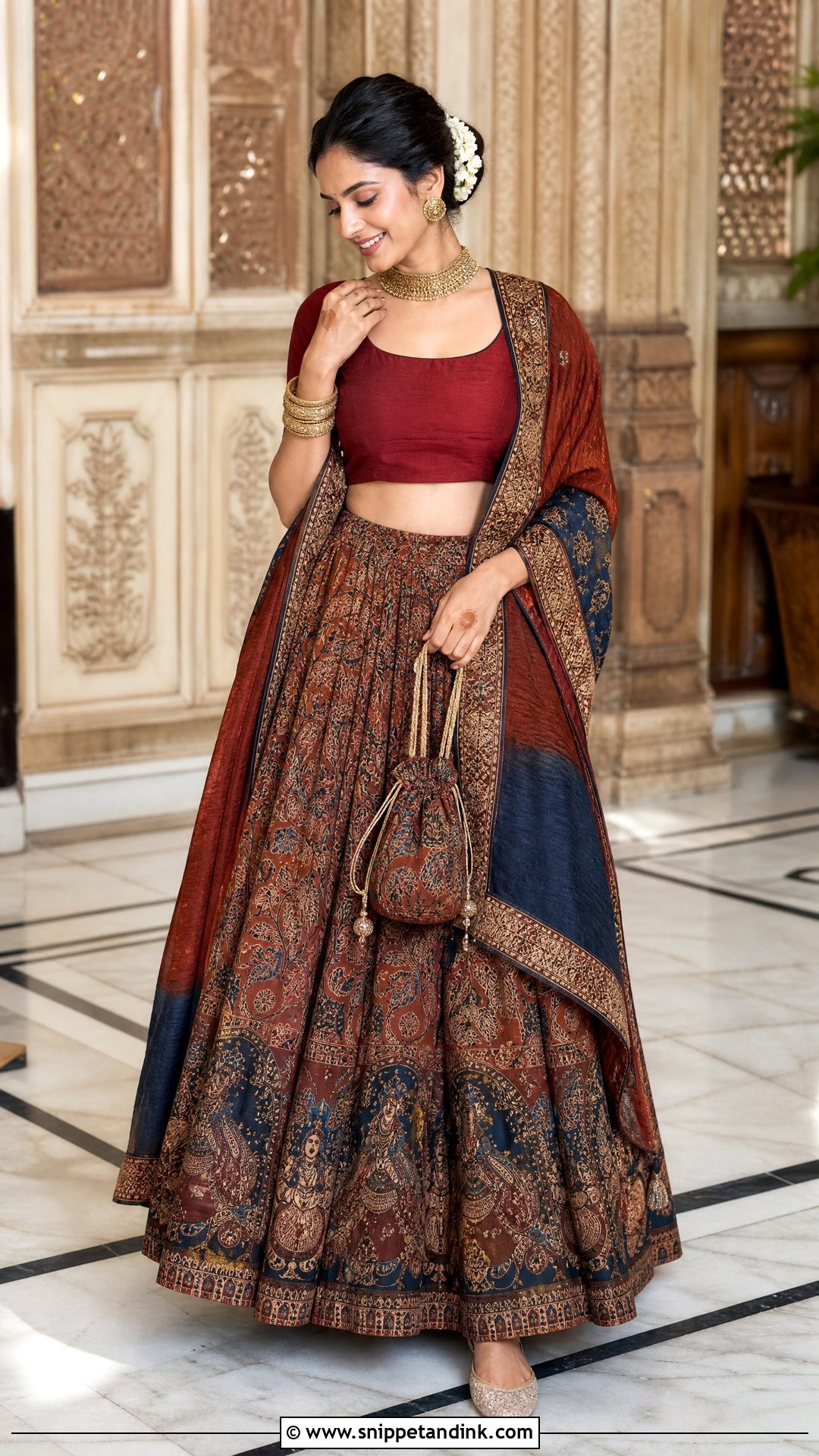
Kalamkari is hand-painted or block-printed with natural dyes, often in narrative scenes, which gives it a much earthier look than sequined sangeet wear. I’d choose a printed skirt in rust, indigo, maroon, mustard or forest green and pair it with a solid raw-silk blouse so the print has room. A dupatta with a decorative border adds movement. Antique gold earrings, a choker and slim bangles suit the handmade feel. Natural dyes can fade in strong sun and with harsh detergent, so this is a dry-clean piece. Block heels or juttis and a sleek braid or textured bun finish it for an outdoor or heritage-style evening.
18. Ajrakh Skirt And Kurta Mehndi Outfit
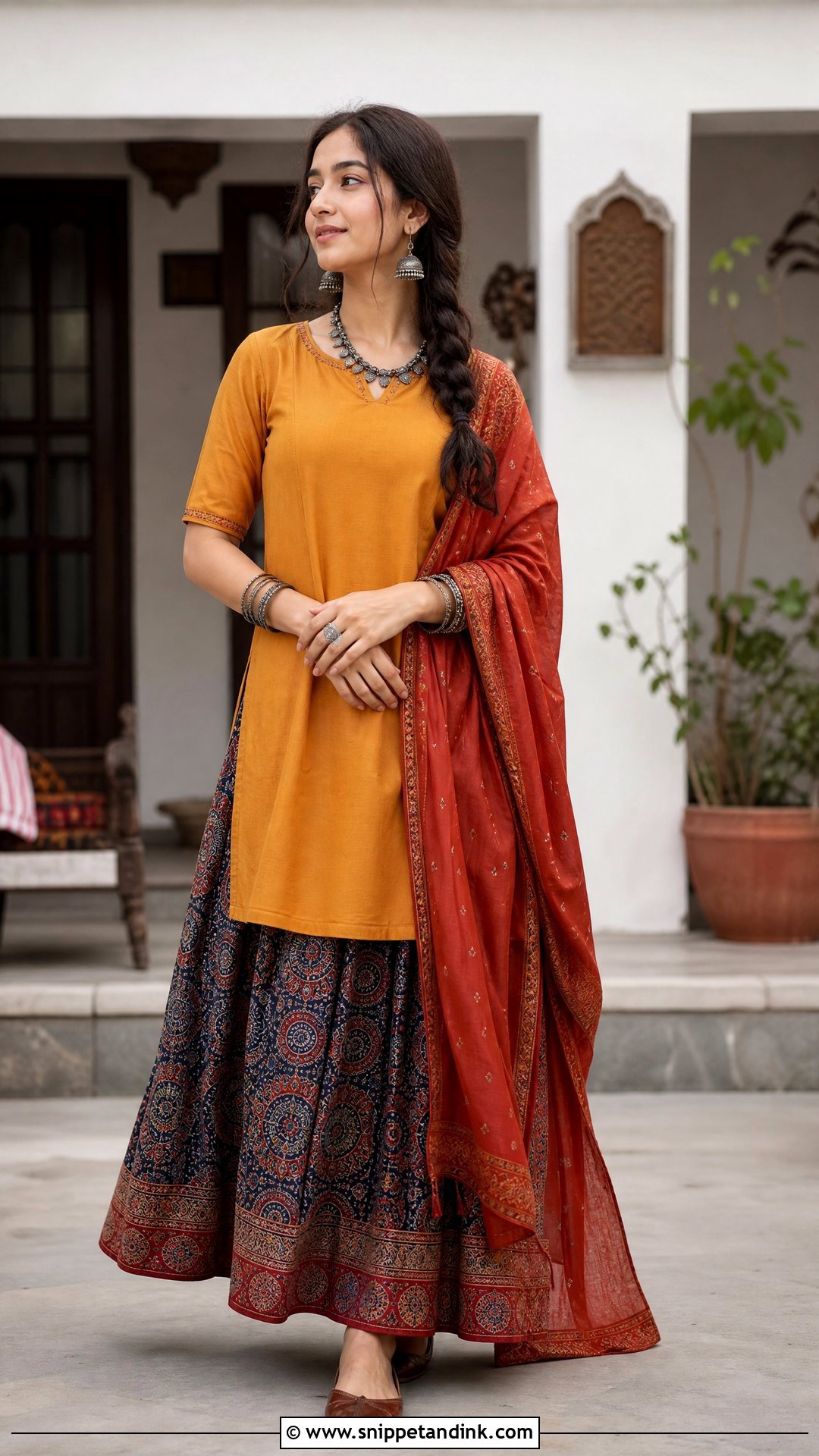
Ajrakh is a block-printing technique from Kutch and Sindh, traditionally in indigo and madder red, and the prints take many days of resisting and dyeing to make. For a relaxed mehndi, I’d pair a full Ajrakh skirt in indigo, madder, black or earthy brown with a solid short kurta. A rust, mustard or deep blue dupatta links the colors. Oxidized silver jhumkas, stacked bangles, a simple necklace and leather juttis suit the artisanal mood. Keep sleeves short or rolled for the henna, and wear a loose braid. It’s culturally rich but casual enough for a courtyard gathering.
19. Leheriya Saree Welcome Ceremony Outfit
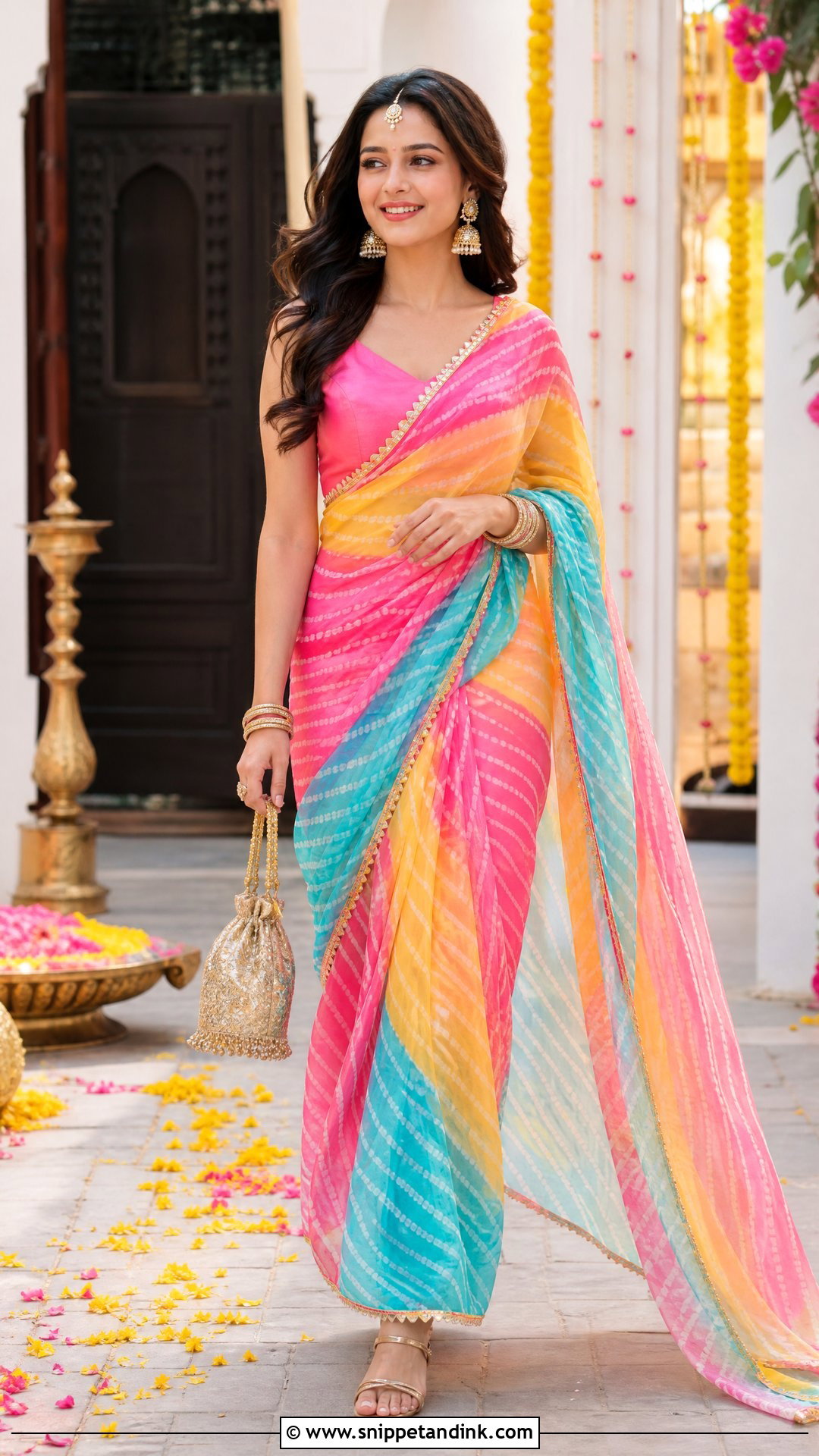
Leheriya is a Rajasthani tie-dye where the fabric is rolled and bound diagonally to create those waves. For a welcome ceremony, a lightweight chiffon or georgette leheriya in pink, yellow, green, orange or turquoise with a slim gota border looks joyful and stays cool during a long day. I match the blouse to one dominant color in the waves, never a third shade. Gold jhumkas, delicate bangles and a small maang tikka are enough. Pin the pallu at the shoulder so you can hug and greet guests without it sliding, and wear block heels with a light potli.
20. Velvet Lehenga Evening Sangeet Outfit
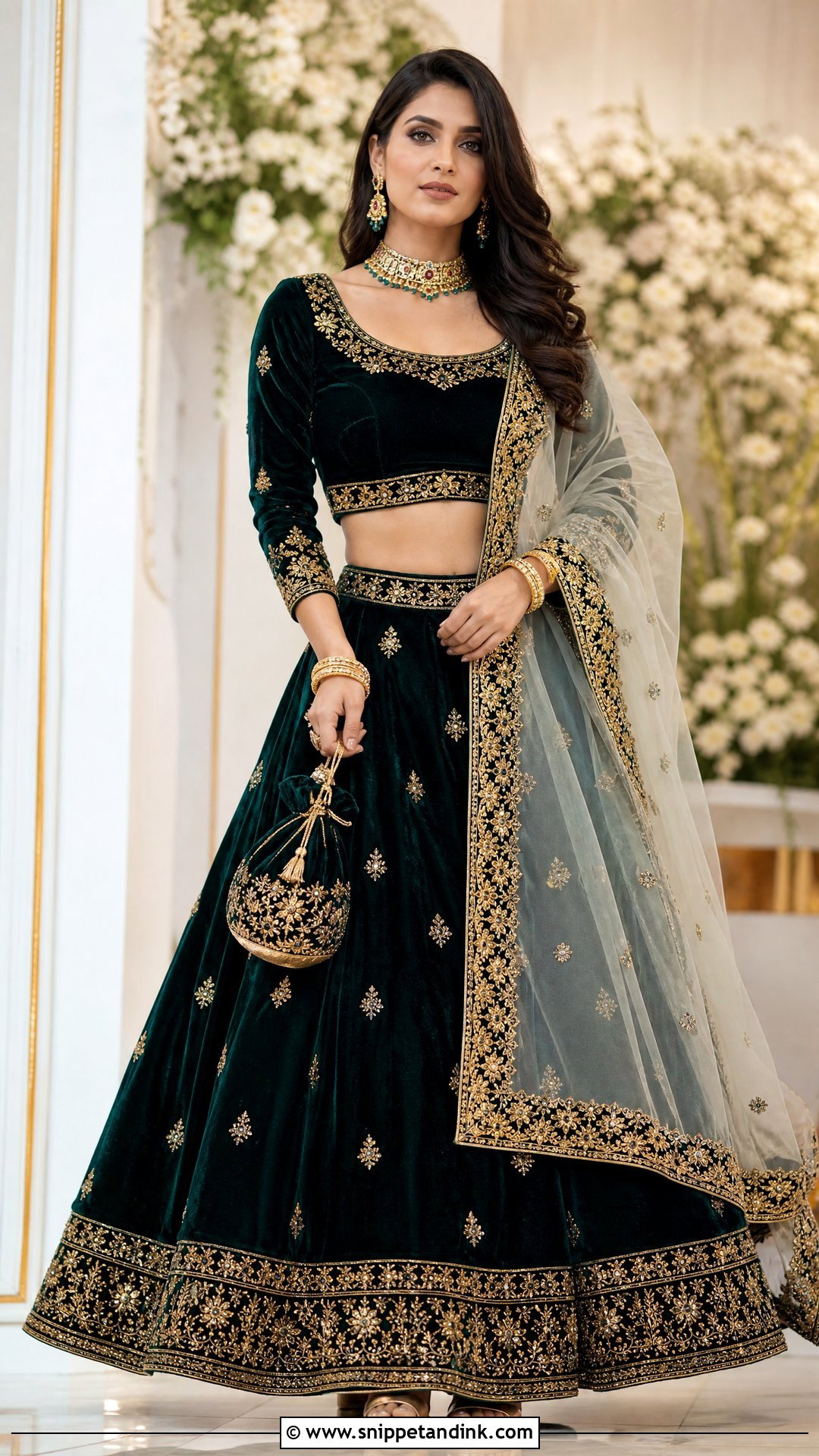
Velvet only makes sense for a cool-season, indoor sangeet. It’s warm and heavy, and under stage lights it looks deep and rich in a way silk doesn’t. I’d choose emerald, wine, navy, plum or maroon with restrained zardozi or antique gold embroidery, because velvet plus heavy embroidery gets uncomfortably heavy for dancing. A lighter net or organza dupatta keeps the overall weight down. A kundan choker, matching earrings, a few bangles and a structured potli suit it. Cushioned heels, a polished bun or sleek side part and luminous skin complete the look.
After the Functions: Turmeric Stains and Silk Storage
Most of these outfits are worth keeping, and a few will be passed down. What you do in the first week after the wedding decides whether they last.
Turmeric and henna marks
Rinse turmeric from cotton in cold water as soon as you can, since heat sets the yellow. On white or ivory cotton, drying the rinsed piece in direct sunlight helps fade what’s left. Don’t try home remedies on silk, zari or embroidery; take those straight to a dry cleaner who handles Indian bridal wear and point out the stain.
Storing handwoven silk
- Wrap Banarasi, Kanjeevaram and Paithani sarees in soft muslin or old cotton, never plastic, which traps moisture.
- Refold them every few months along different lines, because zari threads crack where they stay folded.
- Keep heavy lehengas flat or loosely rolled rather than on a hanger, so the embroidery doesn’t pull the waistband.
- Air everything in the shade once or twice a year, and keep it away from damp walls.
Pack the jewelry separately. Oxidized silver and kundan pieces go into small airtight pouches, since silver darkens unevenly when it sits in humid air, and I wipe off any sweat or makeup before they go away. Fresh flower jewelry can’t be saved, but the gota and mirror-work pieces from haldi and mehndi often can, after a gentle spot clean.
One Ritual at a Time, One Outfit at a Time
A good pre-wedding wardrobe respects the meaning of each ceremony and still lets you move, sit and eat through it. Work out what happens at each function first: haldi means stains, mehndi means hours of sitting, sangeet means dancing, a puja means time on the floor. Cotton and light weaves suit daytime rituals; silk, velvet and embroidery belong to formal evenings. Pin every dupatta and pleat, break in your footwear, and let the jewelry support the textile rather than fight it. Talk to both families about expectations early, then wear the pieces that feel true to you.
You'll Like These Ideas:


Leave a Reply