
By the walima, most brides I dress have already worn a bright mehndi outfit and a heavy red or deep-toned baraat look, and they are tired. The reception hosted by the groom’s family usually calls for something calmer: pastel lehengas, pearl-toned gowns, organza shararas, embroidered sarees and modest formal pieces that look right under ballroom lights or afternoon sun. Your role matters as much as your taste. A bride, a mother of the groom and a guest each dress for the walima differently. Below are 25 outfits I’d put in front of all three, with notes on who each suits and how to finish it.
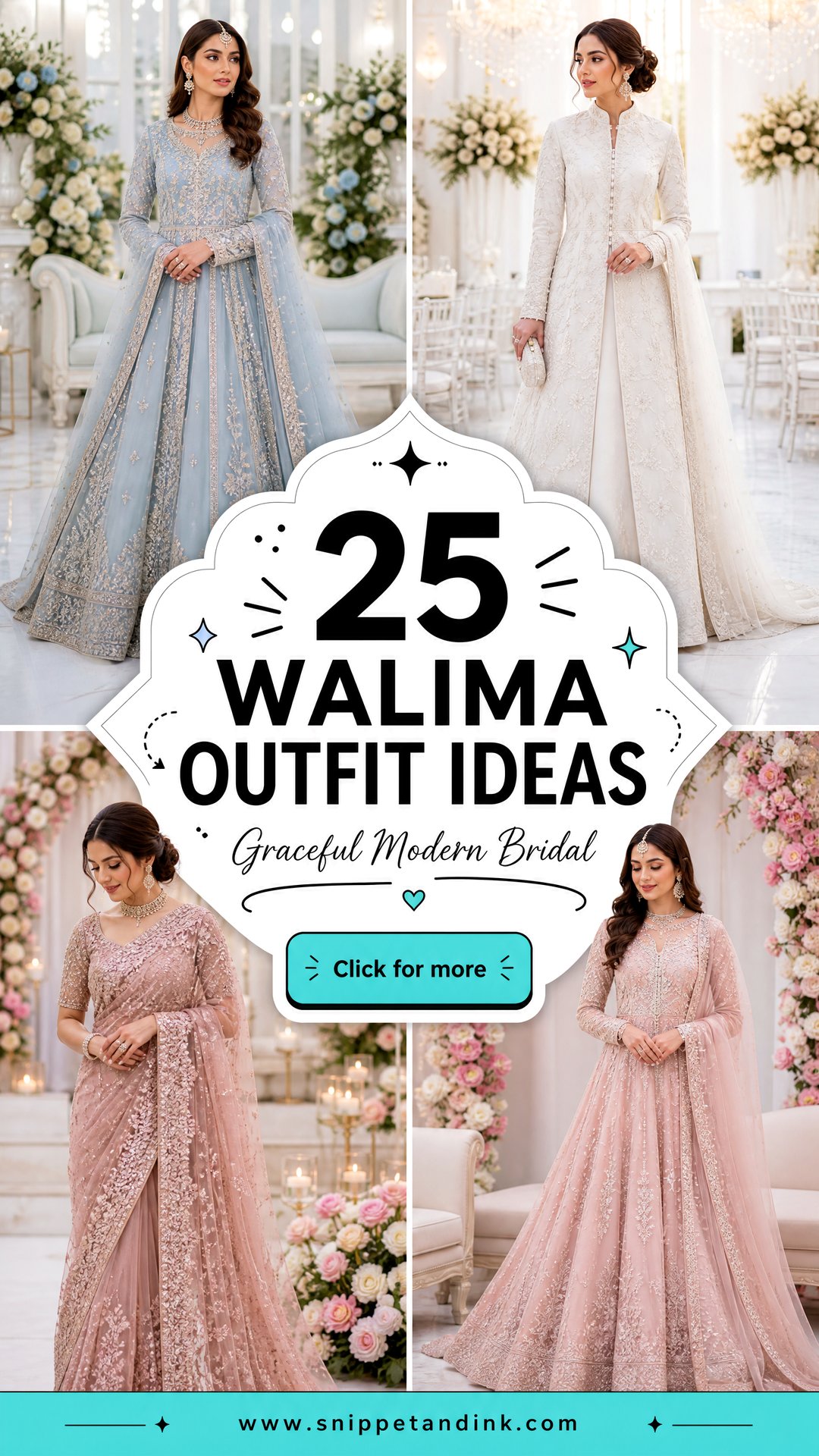
Bride, Mother or Guest: Your Role Sets the Rules
The same pastel lehenga can be the right choice for one woman at a walima and the wrong one for another. Before we talk colours, I always ask who is wearing it.
If you are the bride
In many families the groom’s side gifts or helps choose this outfit, so ask early whether that applies to you. You will sit on stage for long stretches and stand for every group photo, so weight and comfort matter more than at the baraat. I’d keep jewellery lighter than your wedding set, partly because your ears will still be sore from the day before.
If you are the groom’s mother or sister
You are a host, which means greeting every table. Choose a fabric that does not crush and a dupatta you can pin. Coordinate with the bride’s colour in advance so you complement it rather than match it.
If you are a guest
Ask a family member what the bride is wearing and avoid that shade. Stay lighter in embellishment than she is, cover your shoulders if the family is conservative, and keep a dupatta or wrap handy in case there is a prayer or nikah element during the evening.
1. Pastel Walima Lehenga
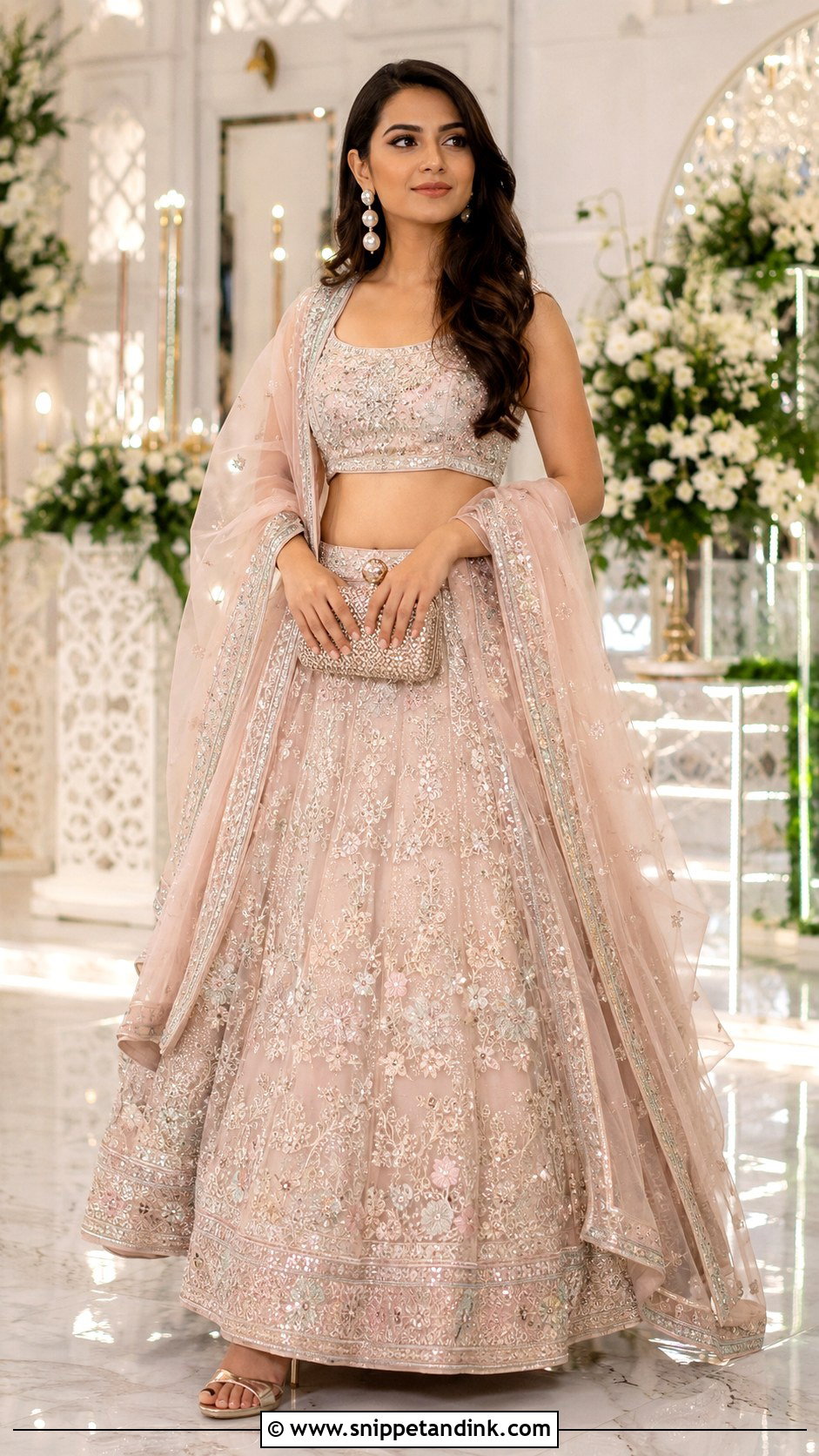
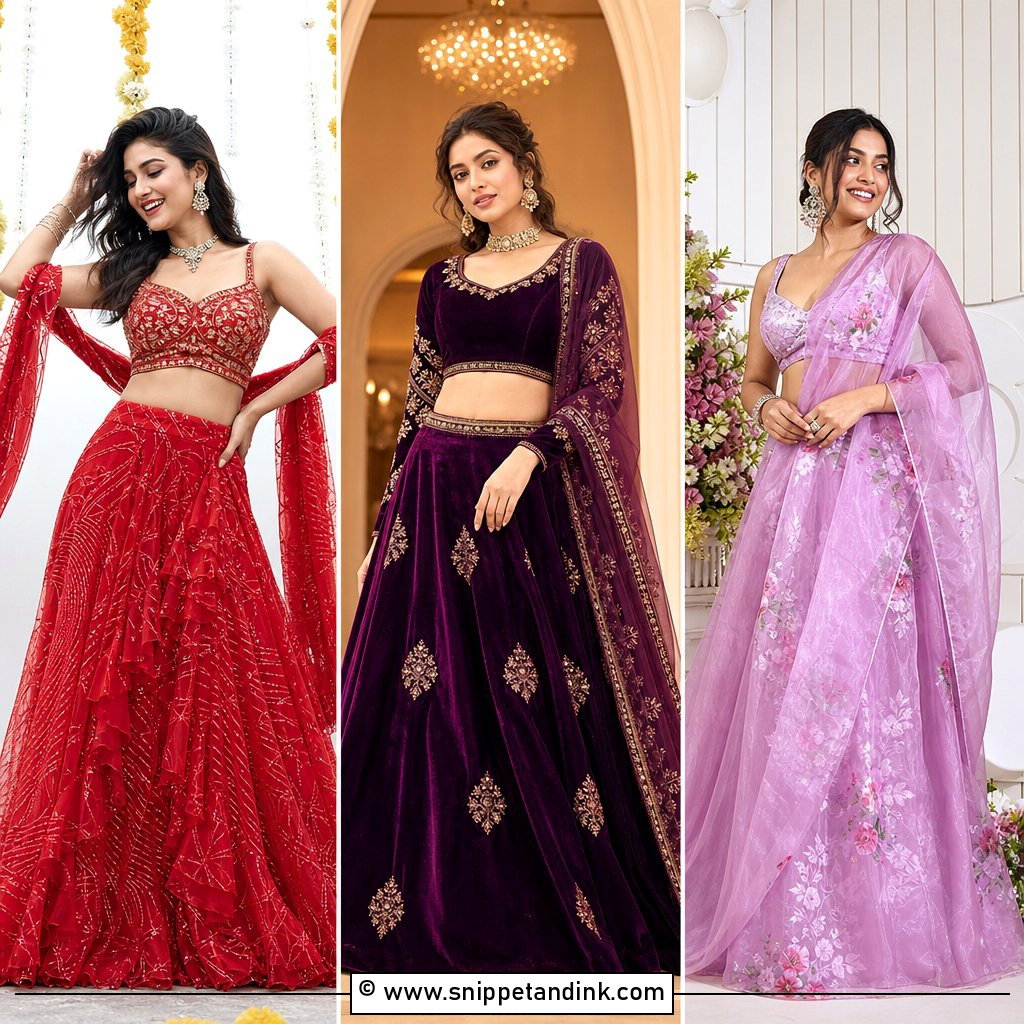
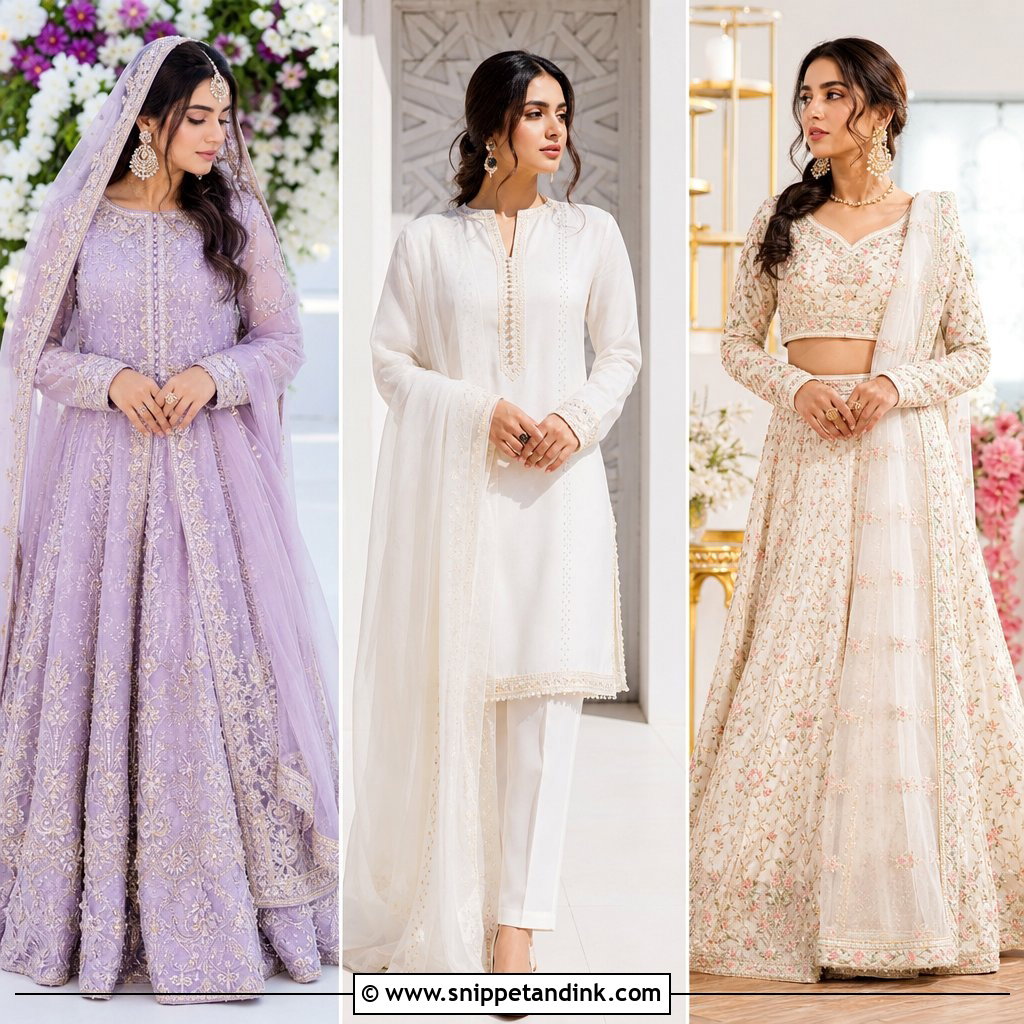
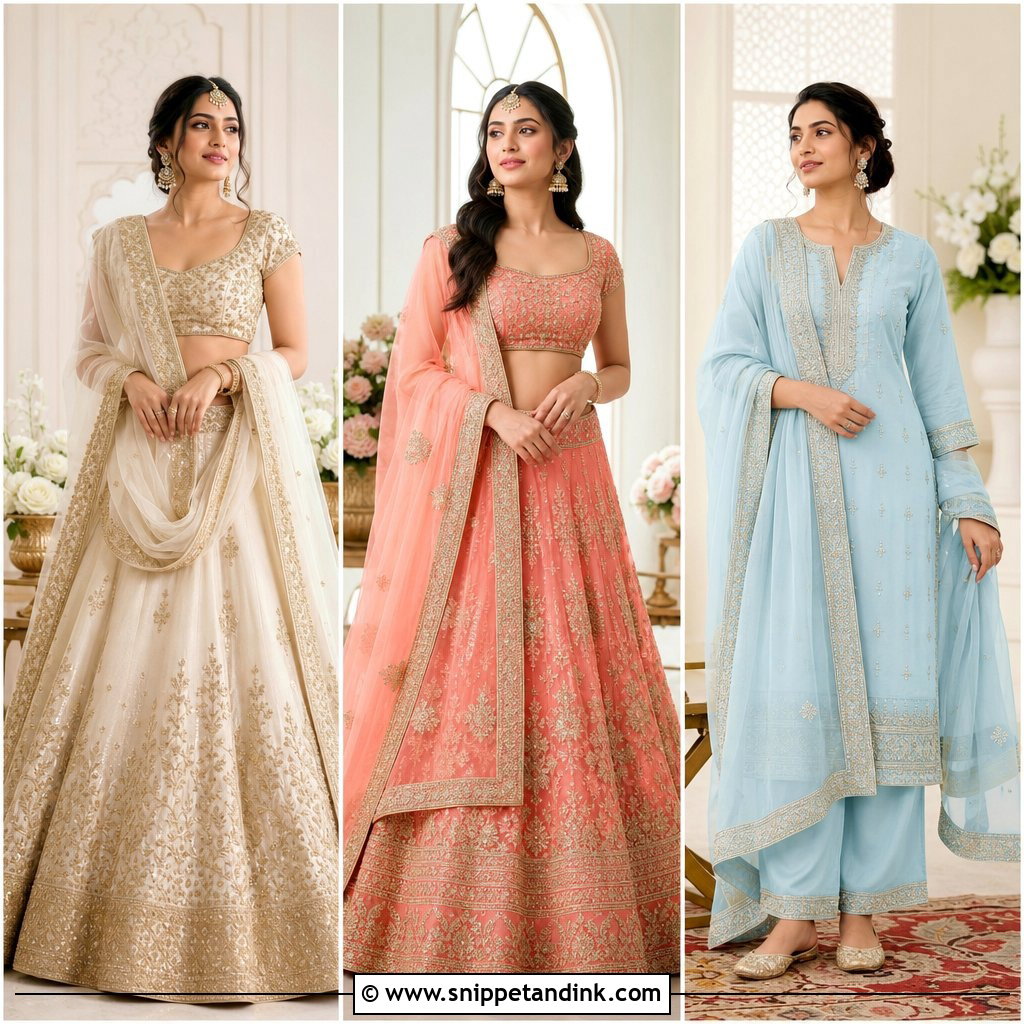
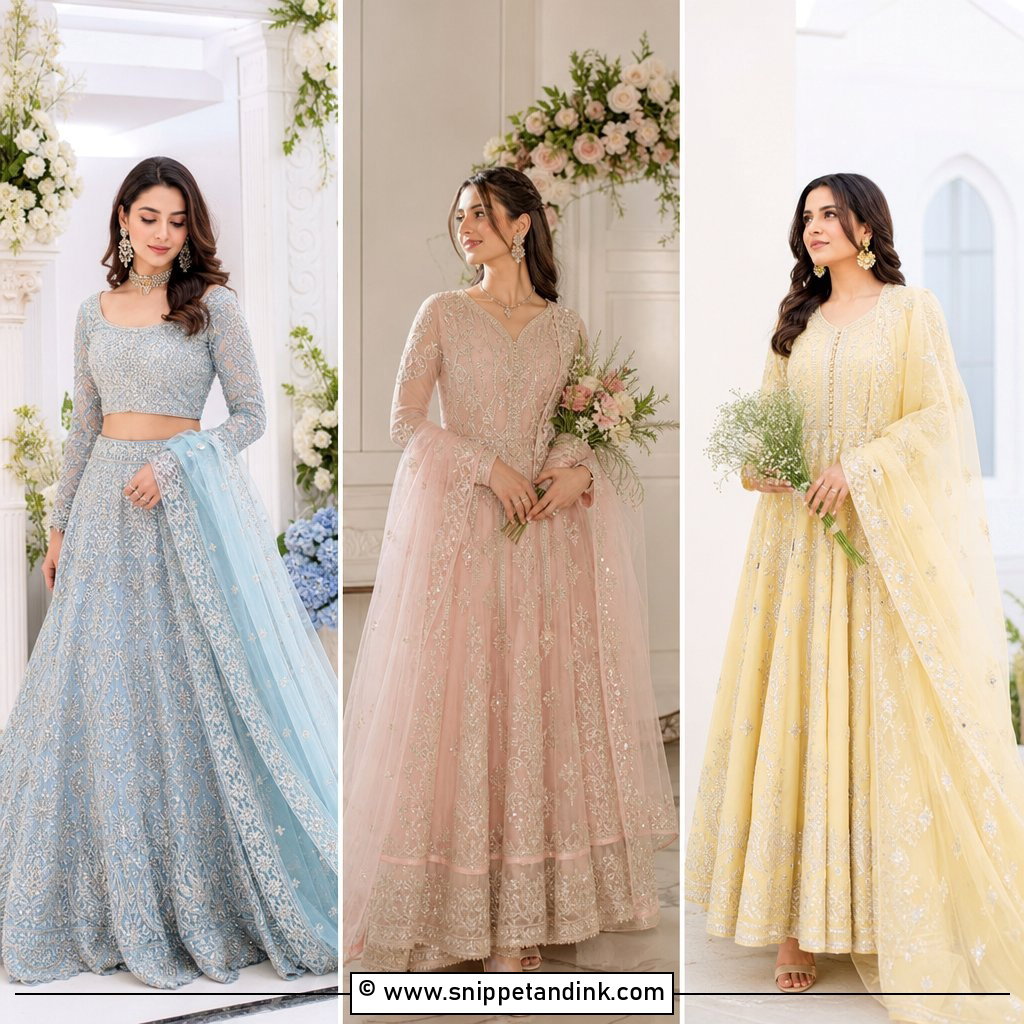
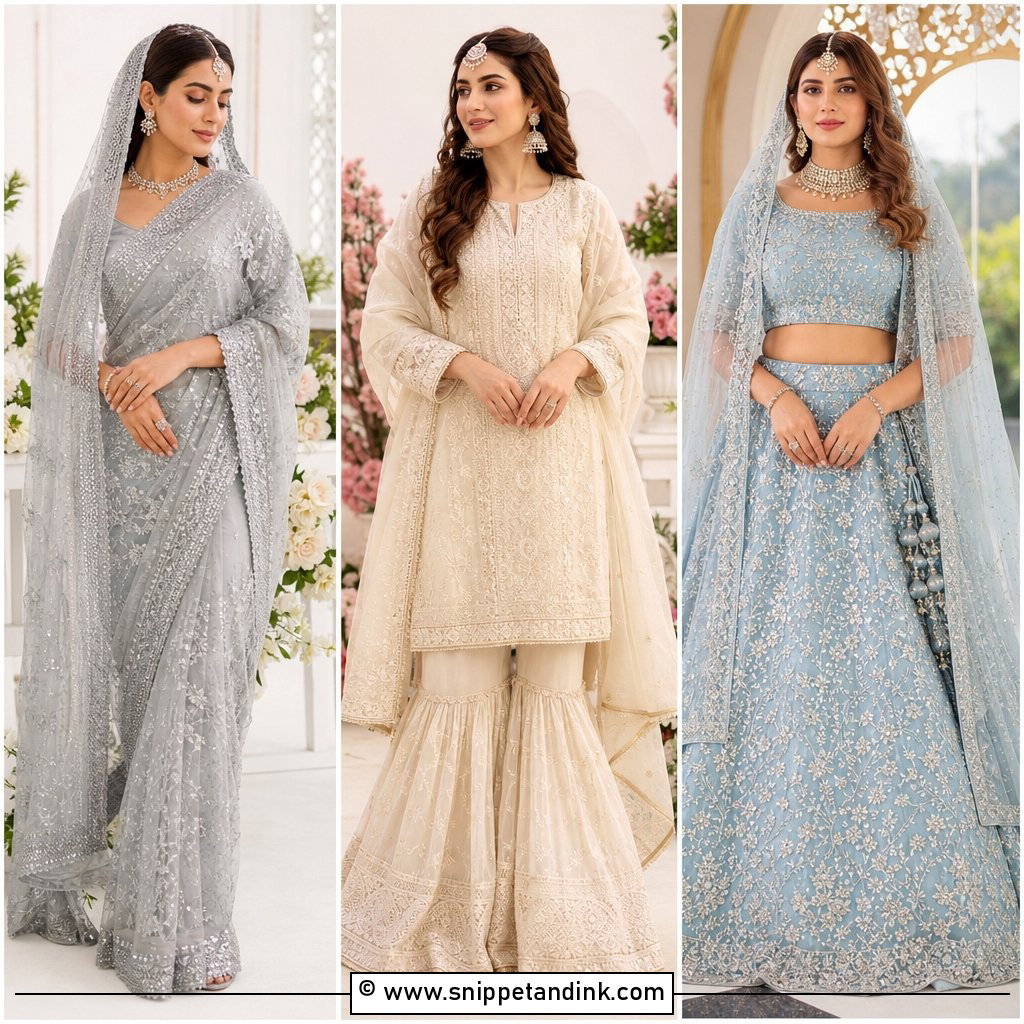
The pastel walima lehenga is the outfit I see most often on brides at this event, and for good reason: after a heavy baraat lehenga, organza or net feels like a relief. Blush, powder blue, mint, champagne and lilac all work with silver, pearl or crystal embroidery. A fitted blouse and a sheer dupatta over one shoulder keep it light. My one caution is the colour of the stage backdrop; ask the decorator, because a blush lehenga against blush flowers disappears in photos. Pearl earrings or a delicate polki set, metallic heels and fresh, dewy makeup finish it.
2. Champagne Walima Gown
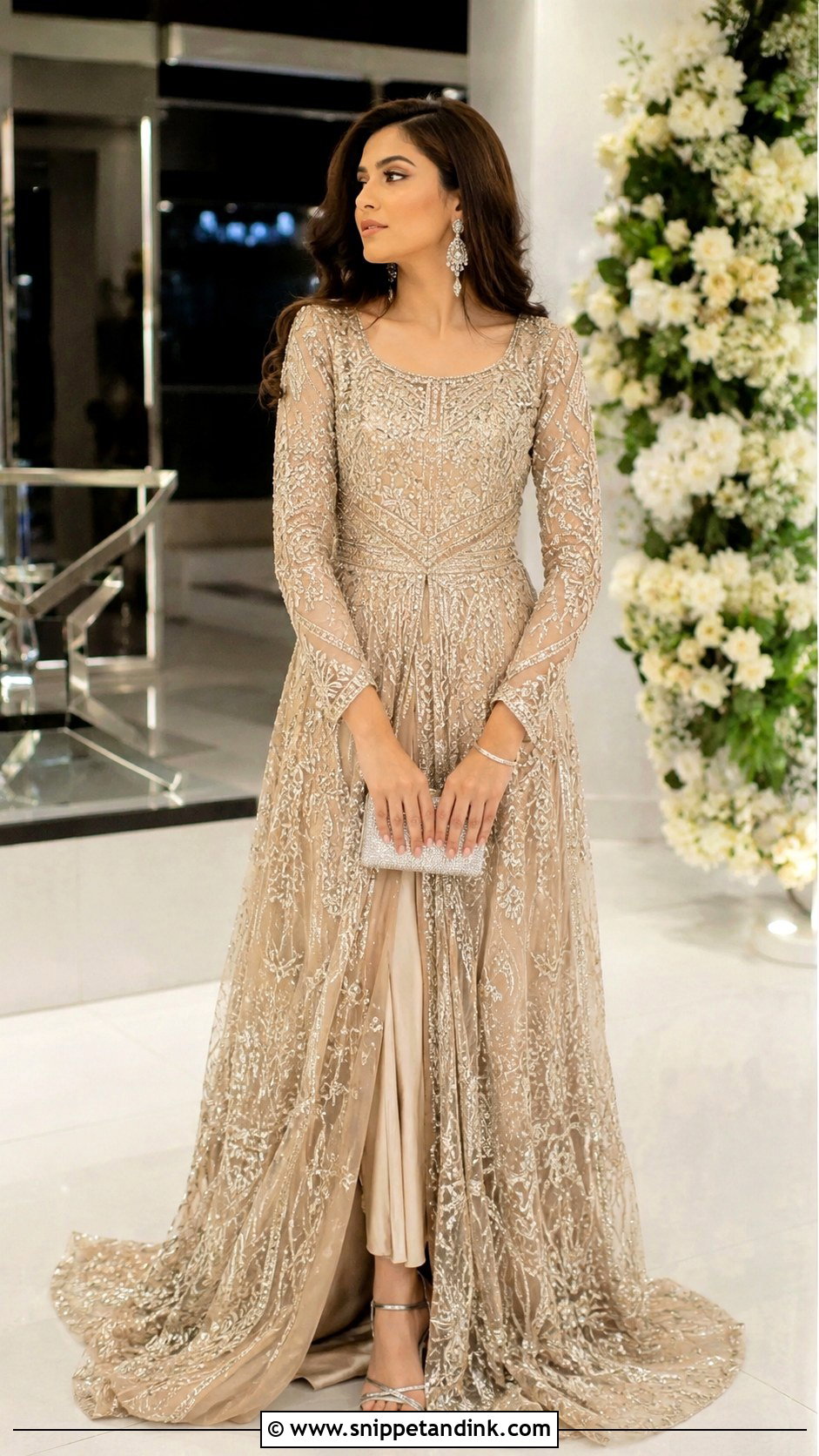
A champagne gown suits a bride who wants to move away from lehengas for the last event. Look for a structured bodice, a flowing floor-length skirt and fine embroidery at the neckline, sleeves or waist. Champagne takes silver, pearl, rose gold and crystal equally well. Under warm hall lighting it glows without the glare of full metallic fabric. I’d try it on in daylight too, though; on some fair skin tones champagne can look washed out until makeup adds warmth. Pointed heels and soft waves or a low bun complete it.
3. Ice Blue Walima Maxi
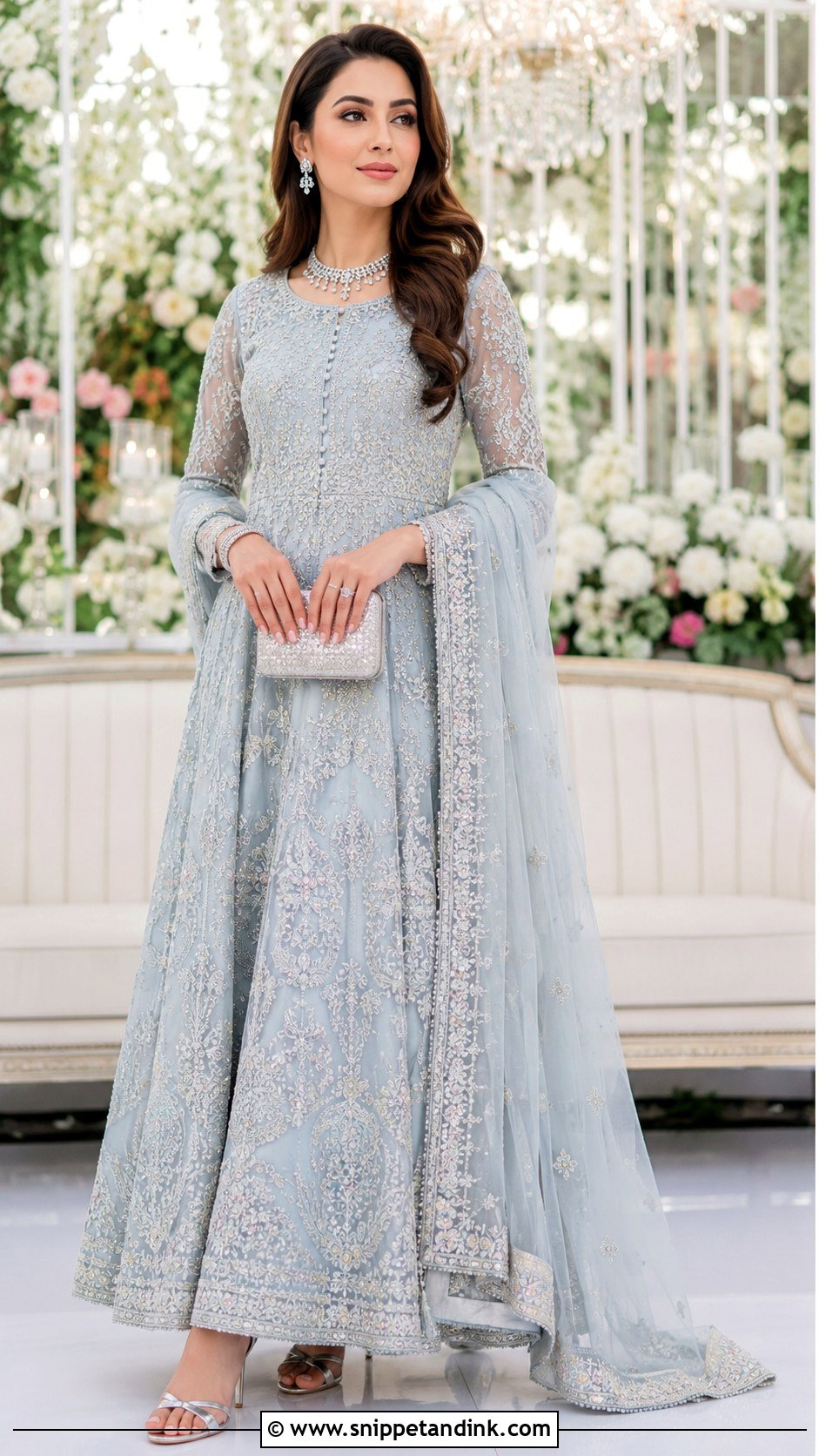
Ice blue reads cool and fresh, so it suits both a daytime garden walima and an evening in a ballroom. Choose a long maxi with silver threadwork, sequins or pearls, and add an organza or net dupatta if you want it to feel more traditional. Silver heels, crystal earrings and a small box clutch keep the palette cool. A soft shimmer on the lids and a nude pink lip suit it better than warm bronze tones. Brides, sisters of the bride and guests can all wear it, though a guest should check the bride is not in blue too.
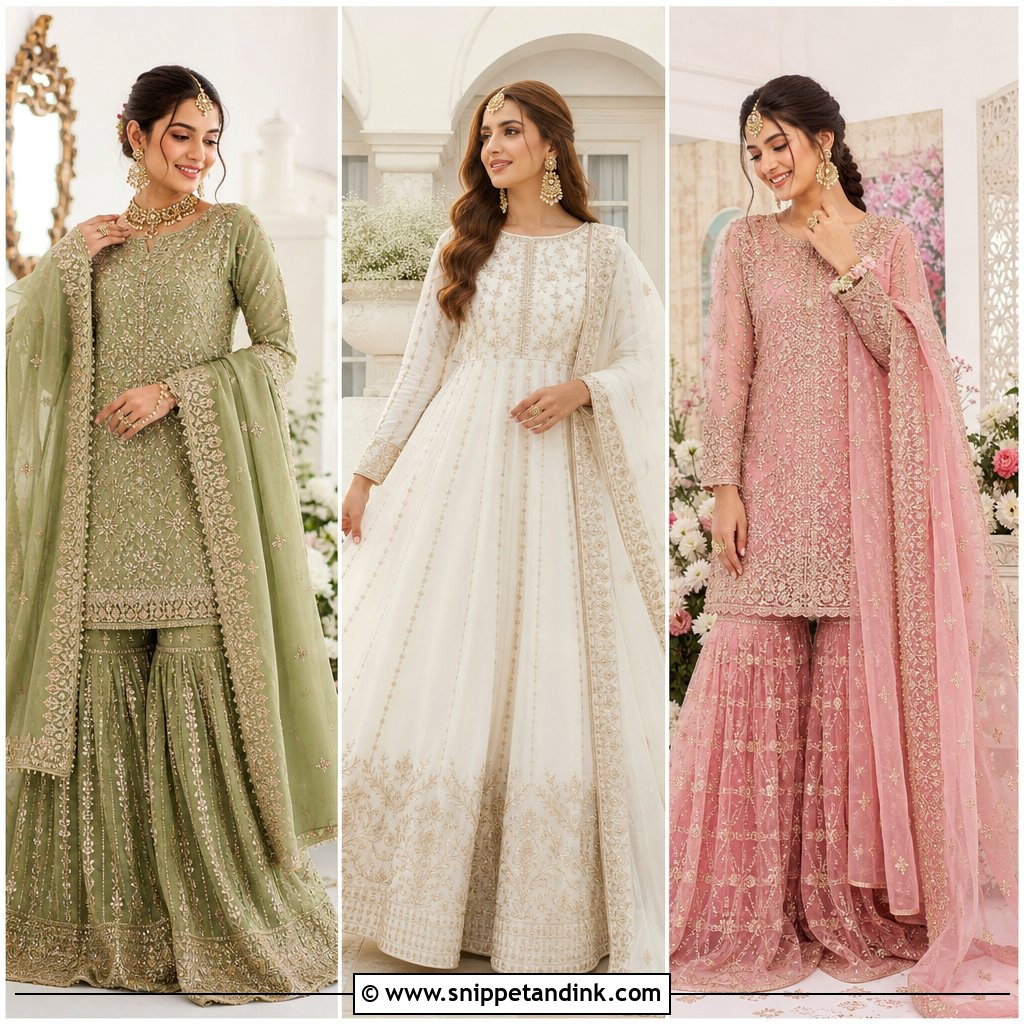
4. Blush Pink Walima Sharara
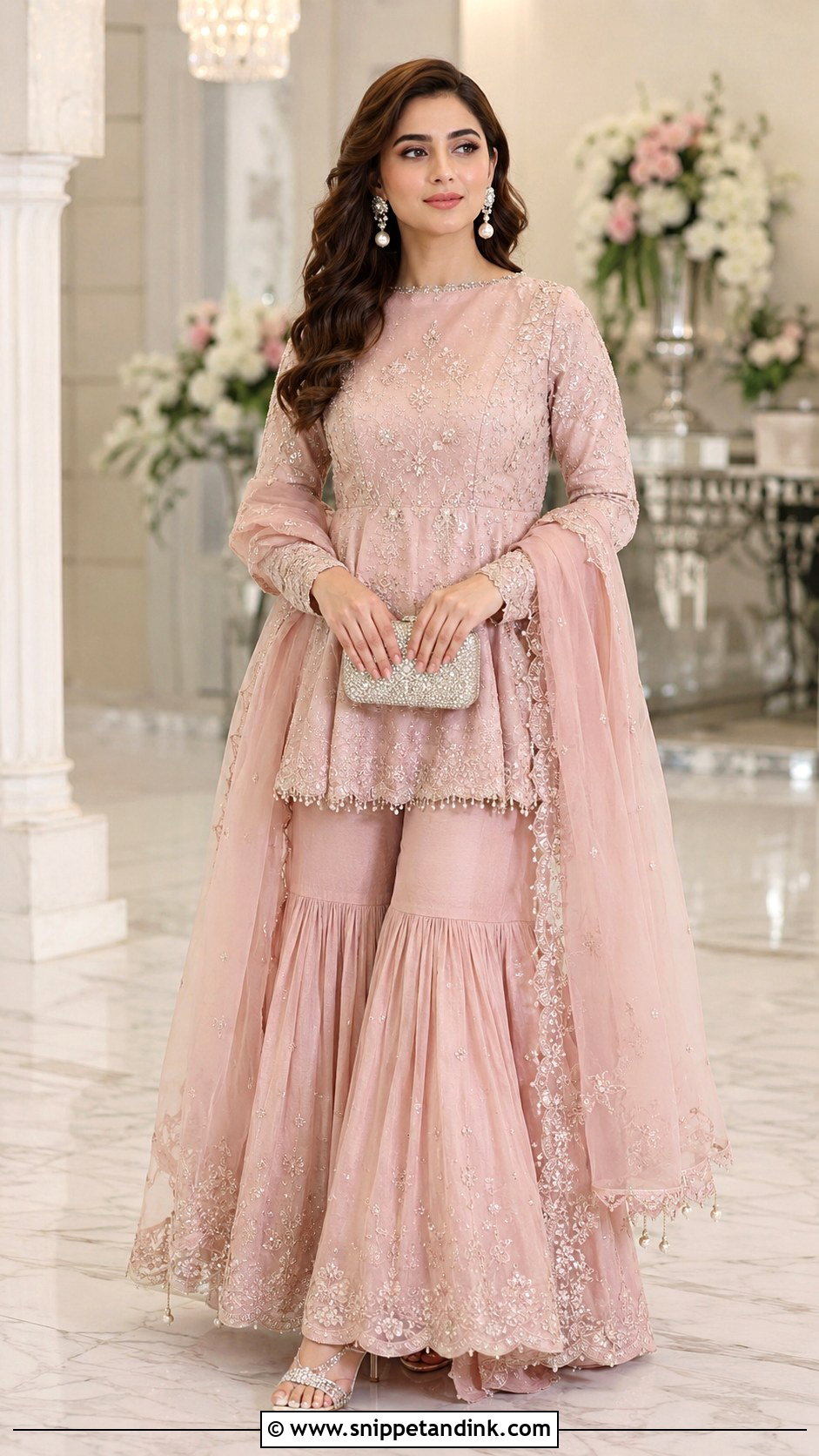
Shararas are what I suggest to anyone who will be on her feet greeting guests for hours. The wide legs move freely and nothing drags. Blush with ivory, silver or pale gold embroidery reads romantic without fuss, and a short peplum or straight kurta balances the volume. A matching organza dupatta adds the formal layer. Pin it at the shoulder before you leave home; a loose dupatta on a sharara gets stepped on surprisingly often. Soft curls, a half-up style or a low bun all suit it.
5. Ivory Walima Saree
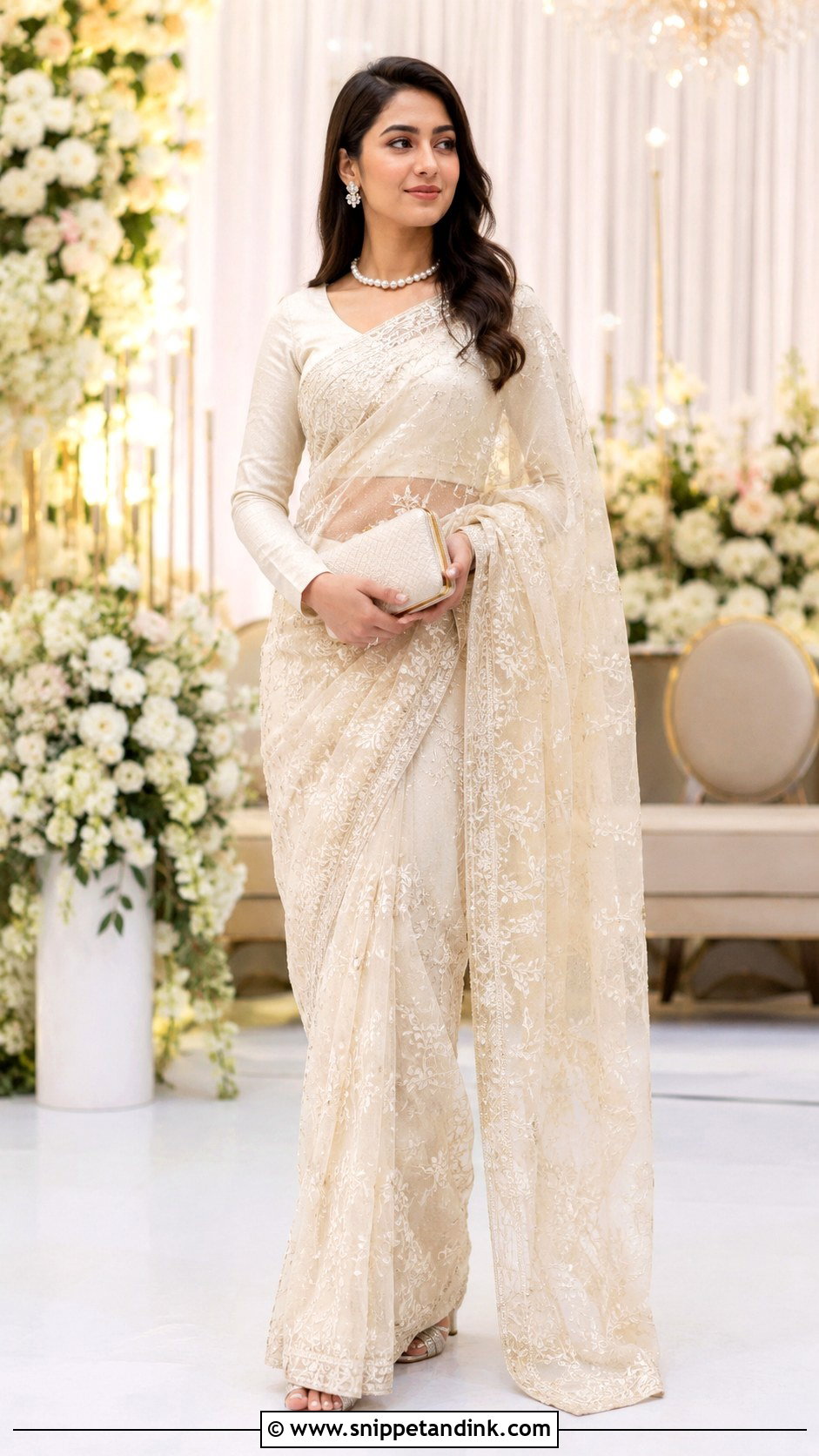
An ivory saree in chiffon, organza, tissue or silk with a quiet embroidered border is elegant and easy to wear. A matching blouse with full sleeves, elbow sleeves or a boat neck makes it more modest, which matters at many walimas. Pearls or silver keep it pale; emerald accents give it a little colour. I check one thing with ivory: whether the family considers white-adjacent colours suitable, since attitudes vary. Strappy heels, a structured clutch and defined eyes complete it.
6. Mint Green Walima Anarkali
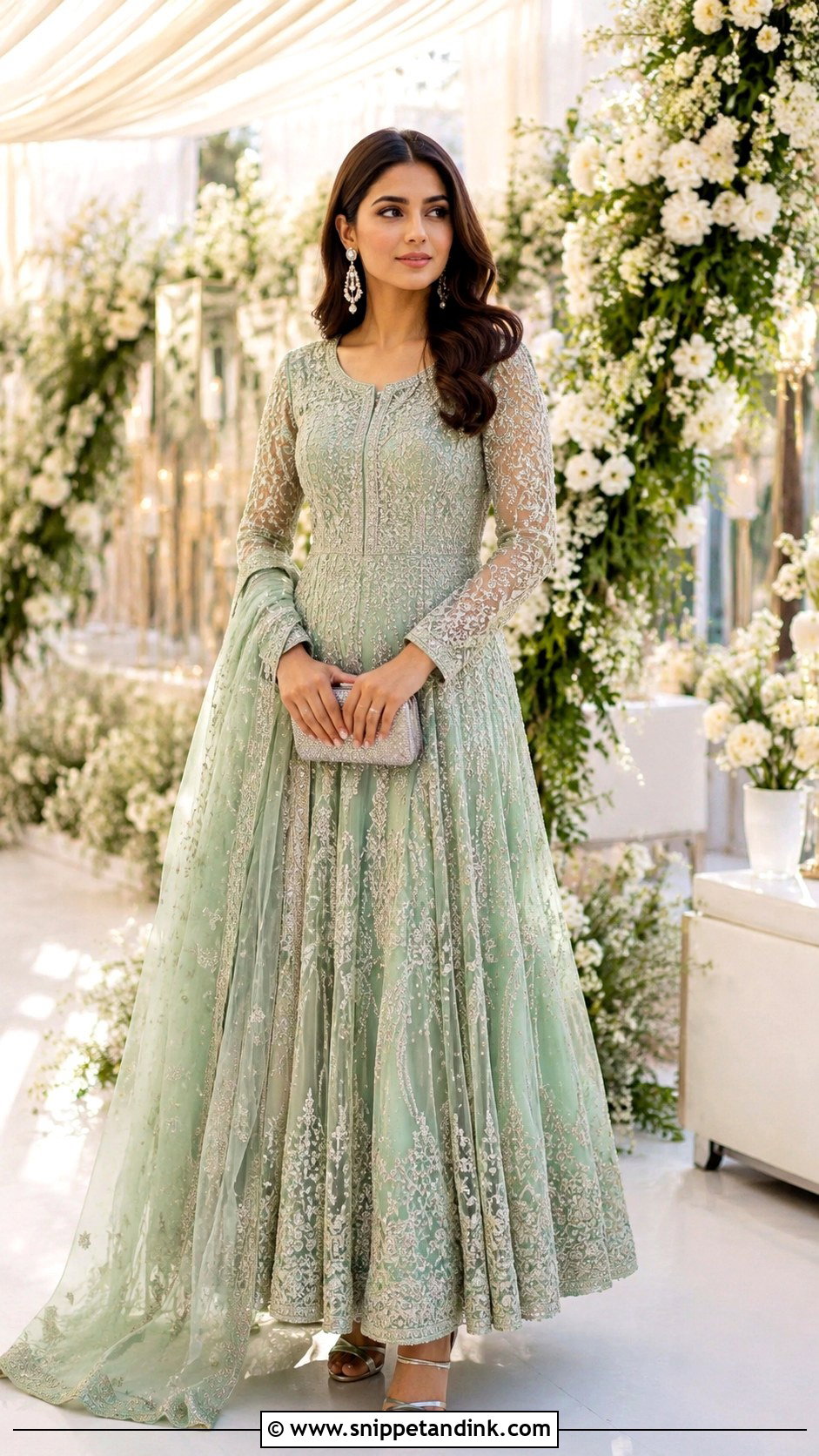
A mint Anarkali gives movement and coverage at once, which suits family members and guests who prefer a modest silhouette. Chiffon, georgette and organza keep it light, with delicate embroidery at the bodice, hem and sleeves. A matching or slightly paler dupatta keeps the look together. Mint pairs best with silver, pearls and clear crystal heels. It is especially fresh at spring and summer walimas. Be aware that mint can look grey under fluorescent hall lights, so view it under similar light before buying.
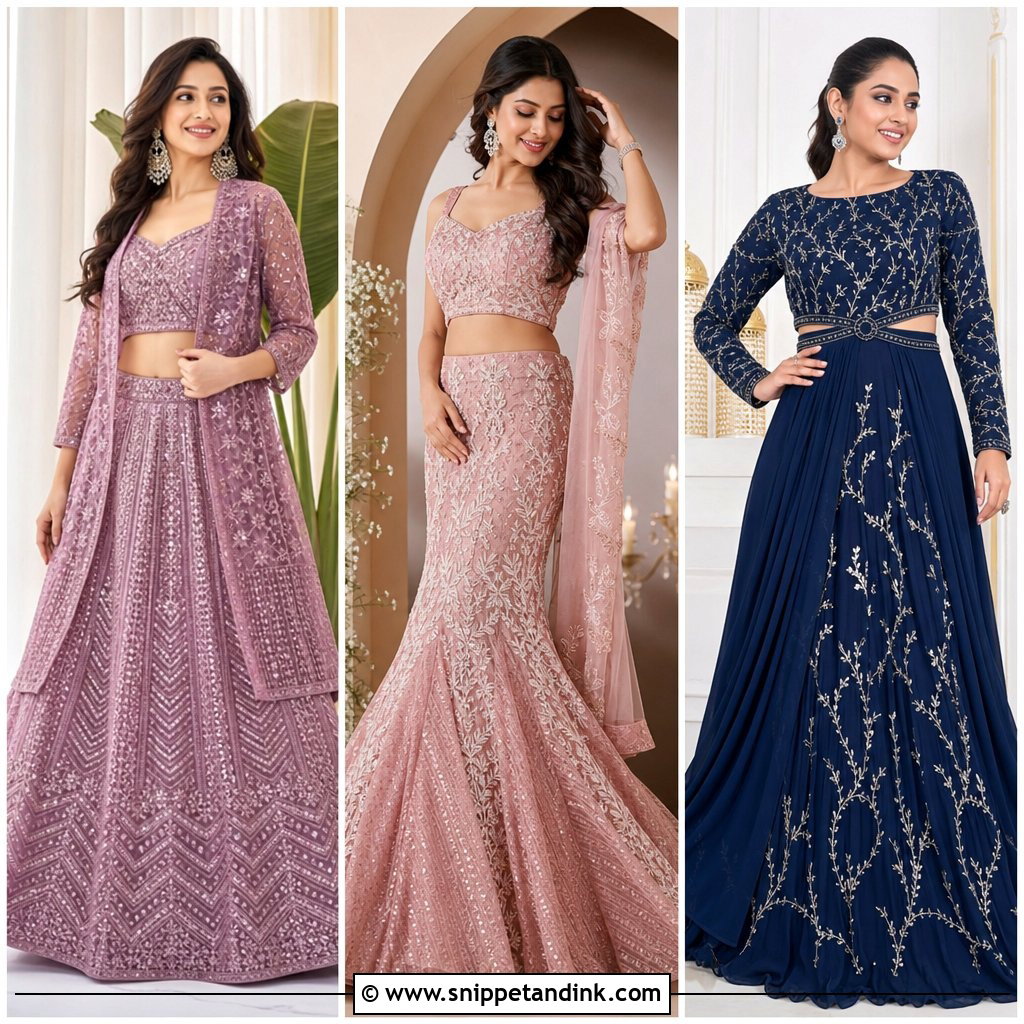
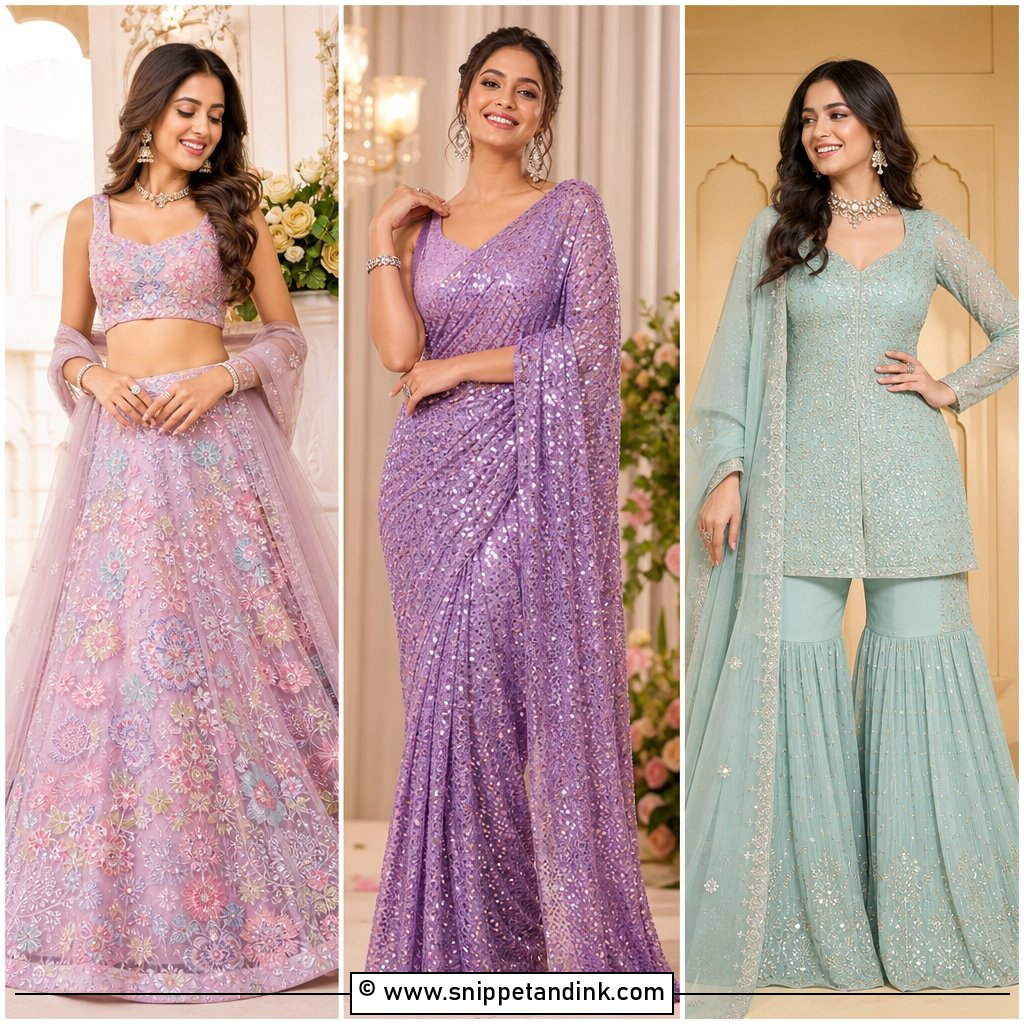
7. Lavender Walima Lehenga
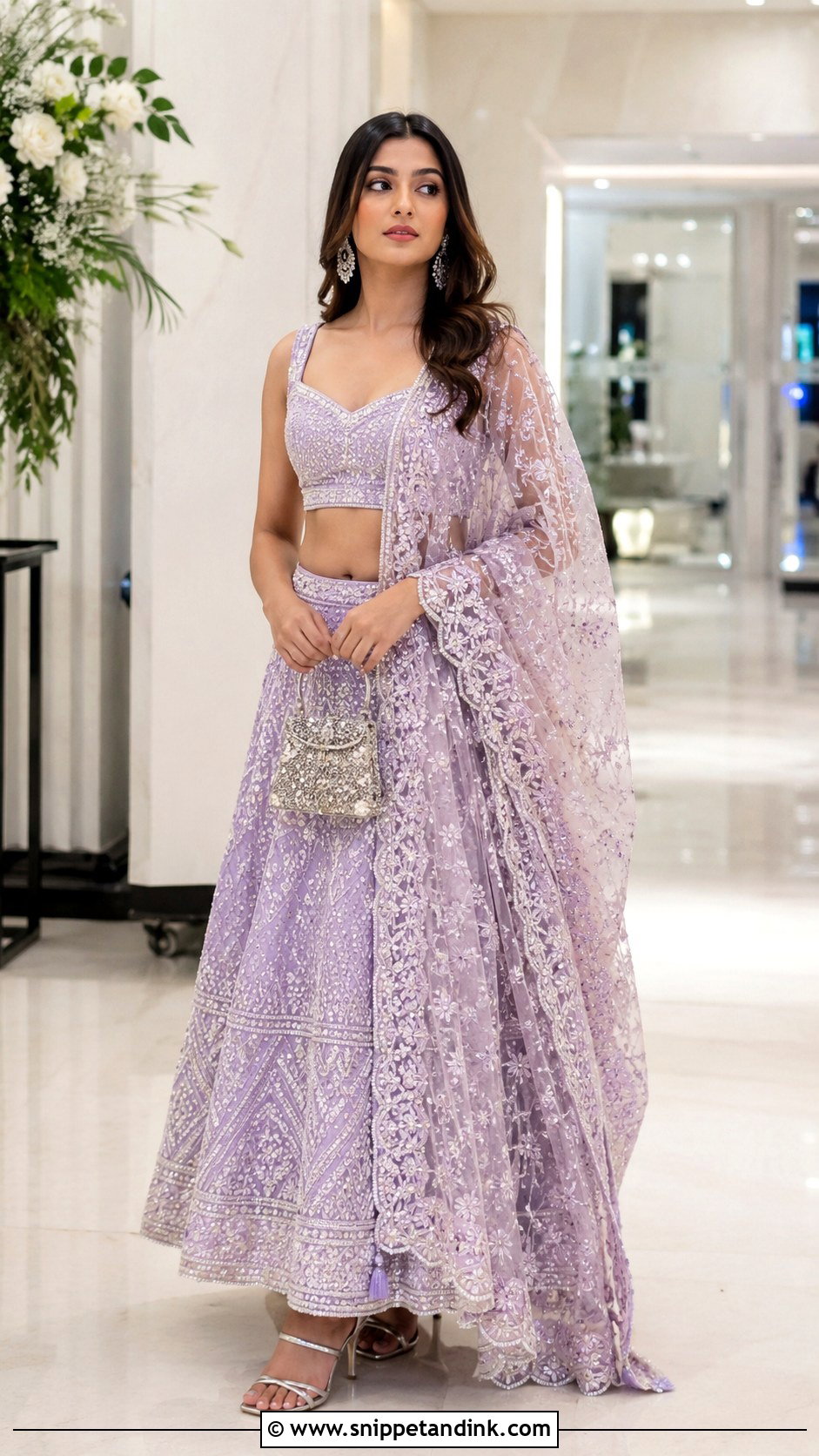
Lavender gives a pastel look a bit more character than the usual pink and ivory. A lavender lehenga with tonal embroidery, silver zari, sequins or pearls, a fitted choli and a sheer dupatta stays formal without weight. Diamond-style jewellery and silver heels keep it cool. For makeup I lean on cool pinks and a soft highlight; warm bronze fights the colour. Brides, close relatives and guests can all wear it, and it stands out without being a loud shade.
8. Silver Walima Gown
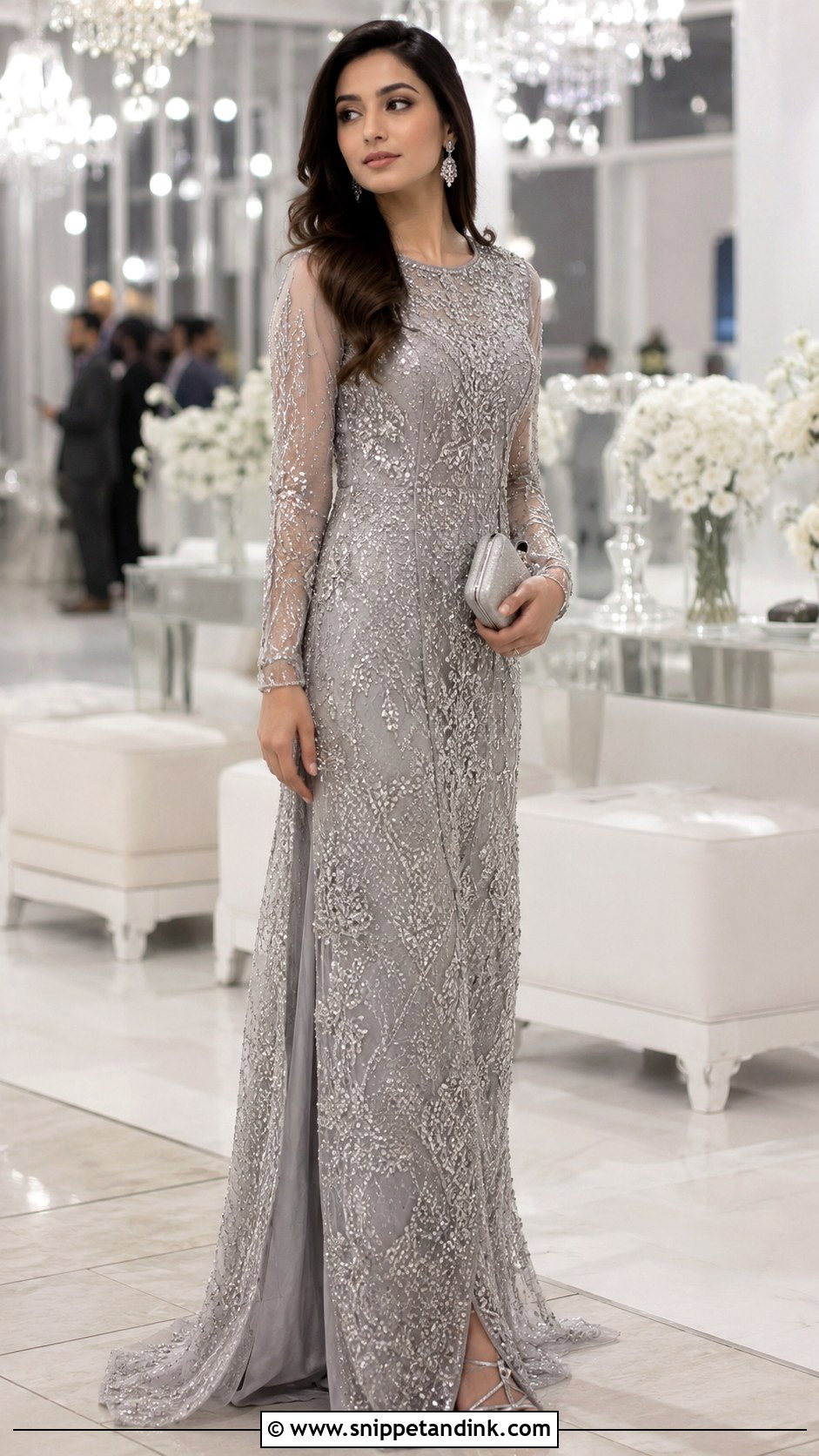
Silver comes alive at evening walimas, when the lighting makes metallic embroidery glow. A clean gown silhouette with sheer sleeves or a flowing cape keeps it modern. The risk with silver is looking costumed, so I keep the embellishment balanced and the jewellery small: crystal earrings, one bracelet, matching heels. A sleek bun or old-Hollywood waves finish it. It suits a bride who wants a contemporary walima look, or a guest at a very formal reception.
9. Powder Blue Walima Pishwas
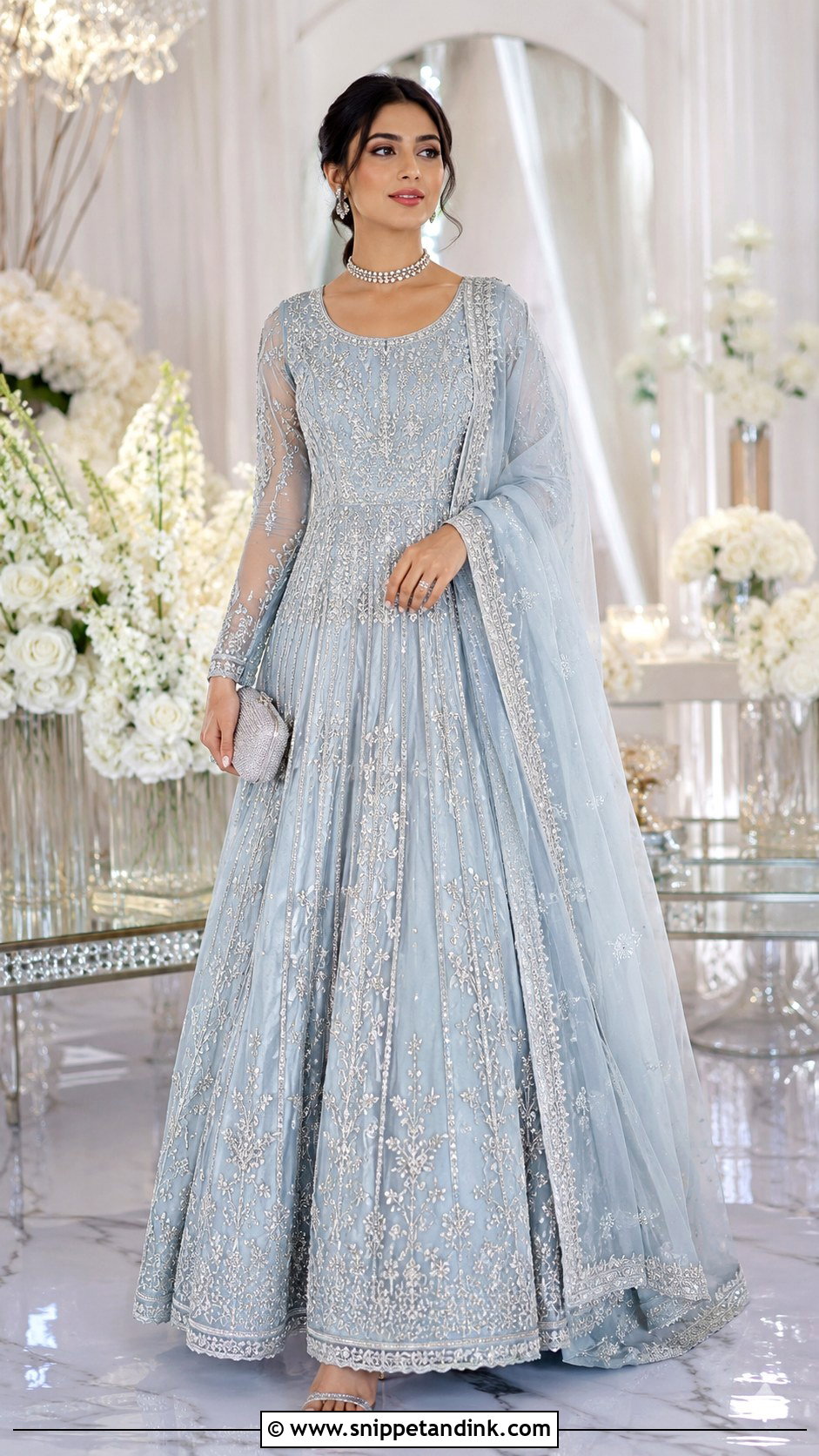
A pishwas is a long, flared frock with a fitted bodice, close to an Anarkali but usually fuller, and it carries a regal, Mughal-inspired feel. In powder blue with silver, white or pearl embroidery it stays light. A sheer dupatta with an embroidered border adds the formal touch. Silver khussas are more comfortable than heels if you will be standing for photos. I like a pearl choker and drop earrings with it. Brides wanting a classic South Asian shape in a softer colour, and sisters of the bride, both suit it.
10. Rose Gold Walima Lehenga
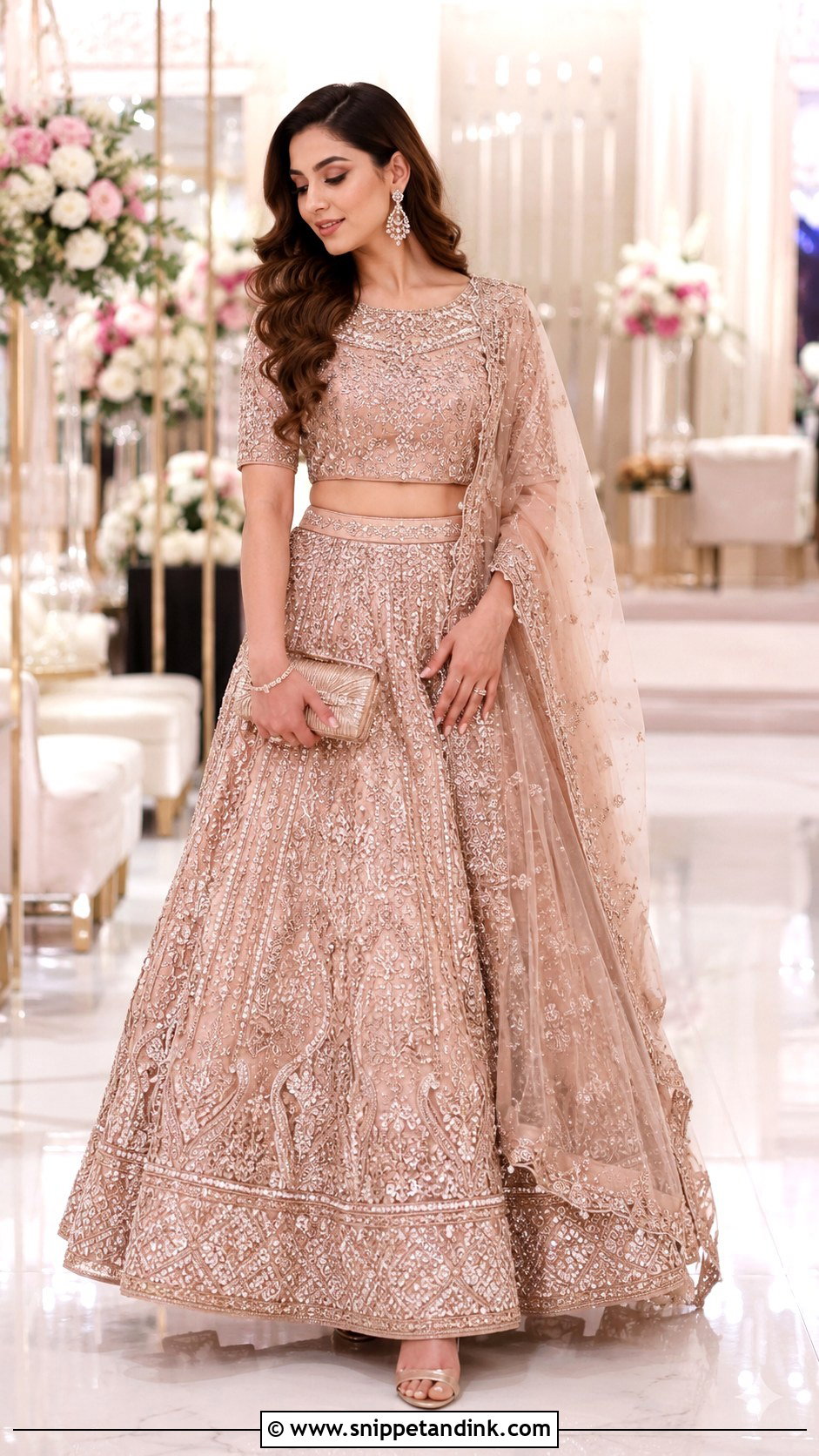
Rose gold has a warm metallic tone that flatters a wide range of skin tones and photographs well indoors and out. Choose delicate sequin work, zari or crystal embroidery, with a matching blouse and net dupatta. Because the fabric already shines, jewellery has to be chosen with care; pearl studs, a soft choker or crystal earrings are enough. Nude or metallic heels and a small clutch finish it. I recommend it to brides who want a slightly modern glow for the walima without drifting far from tradition.
11. White Walima Jacket Dress
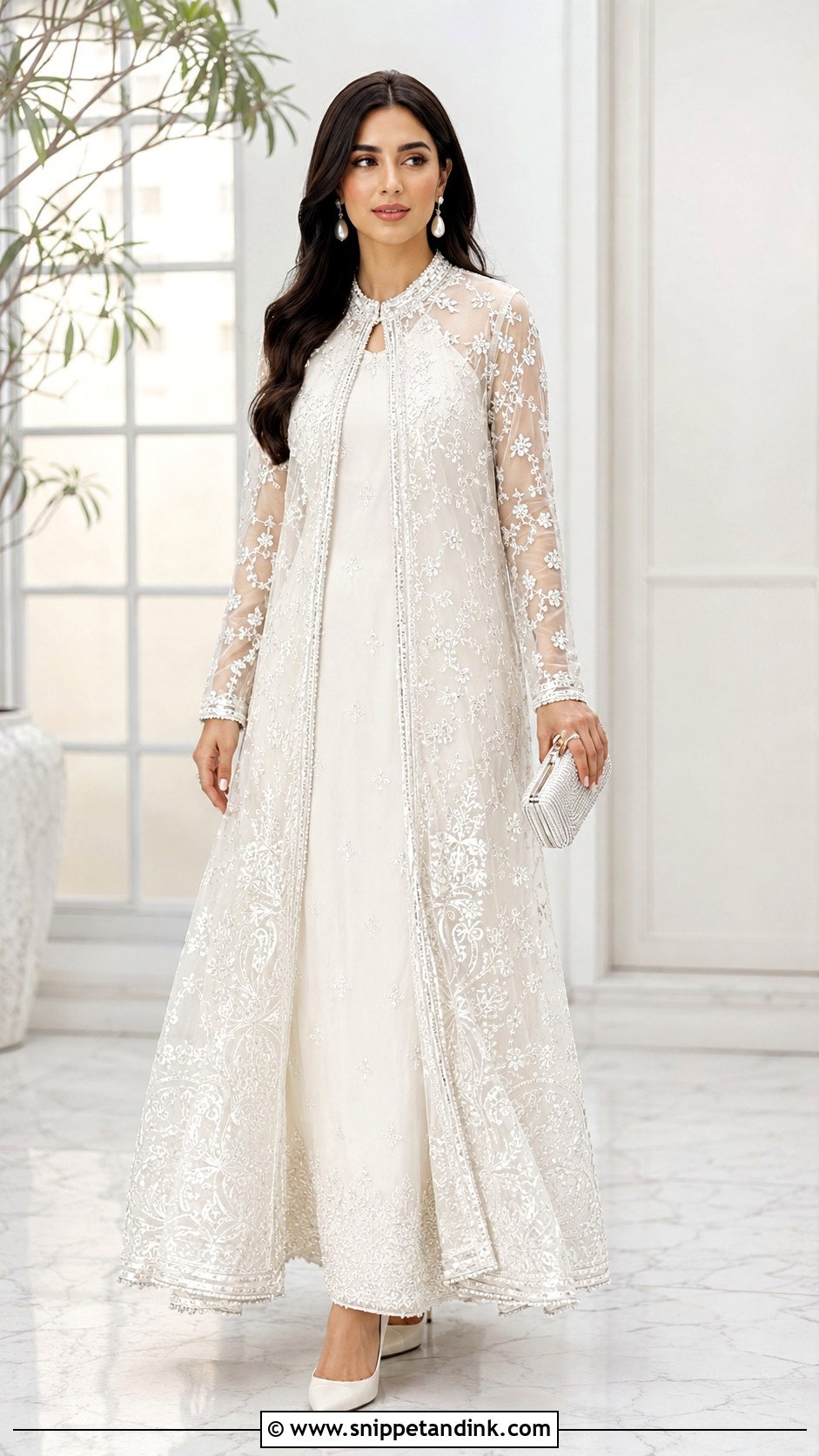
A long dress with an embroidered jacket over it gives coverage and structure in one outfit. The jacket can be sheer, structured or lightly embellished; it adds depth without much weight. White with silver, pearl or crystal detail looks crisp. Pointed heels, a sleek clutch and clean jewellery keep it modern, with a centre-part bun or soft waves. Guests who prefer sleeves and brides who want something current both suit it. A guest should, however, check that the bride isn’t in white before choosing it.
12. Peach Walima Gharara
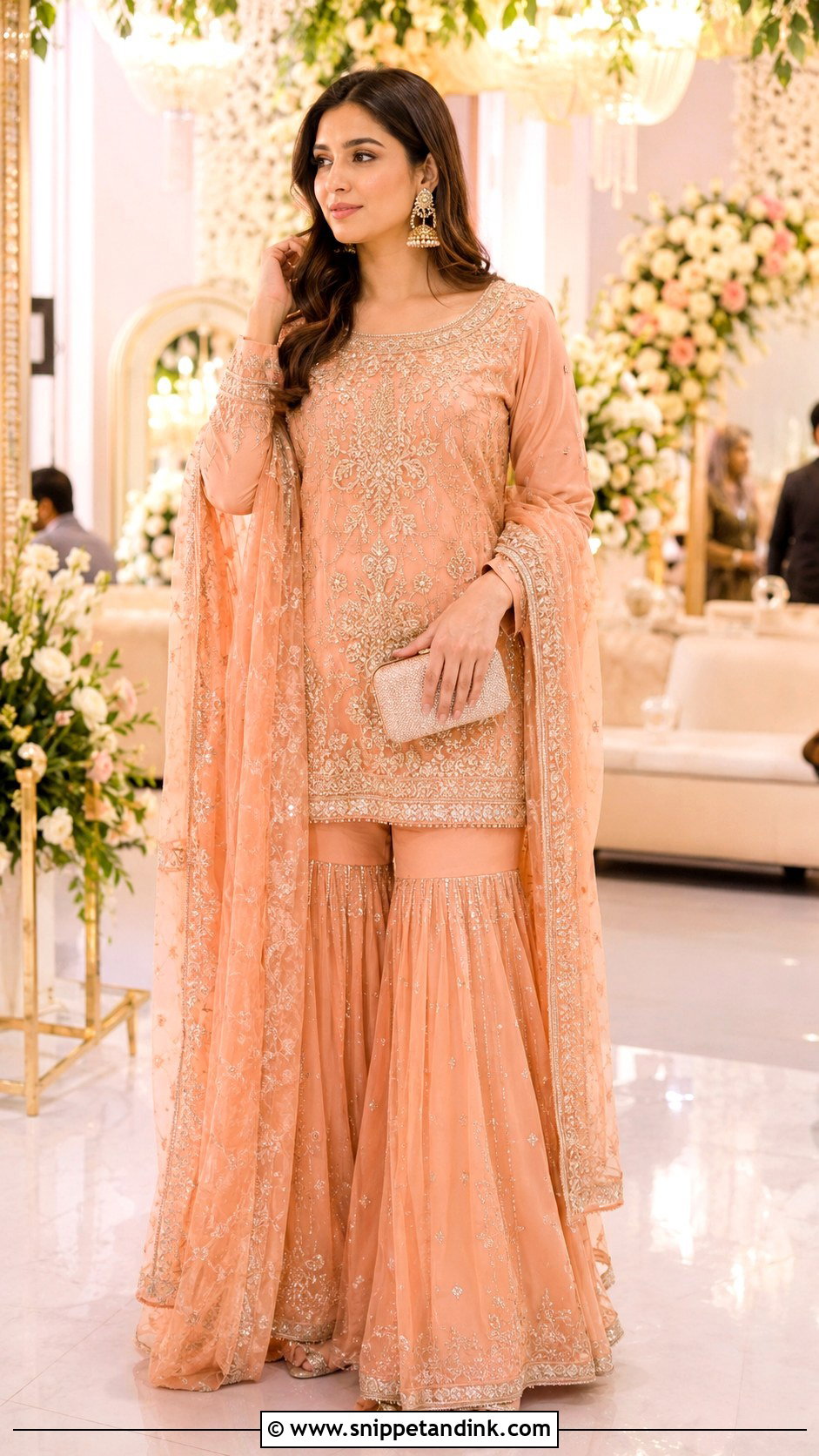
A peach walima gharara keeps a traditional shape in a softer colour. The gharara is fitted to the knee and flares below, often with a gota band at the joint, and a short kurti or peplum top keeps it festive. Champagne, ivory or pale gold embroidery warms the peach. Drape the dupatta over one shoulder so your hands stay free. Jhumkas, bangles and a compact clutch complete it. Peach works by day and by night, and it suits cousins, sisters and guests well.
13. Dusty Pink Walima Saree
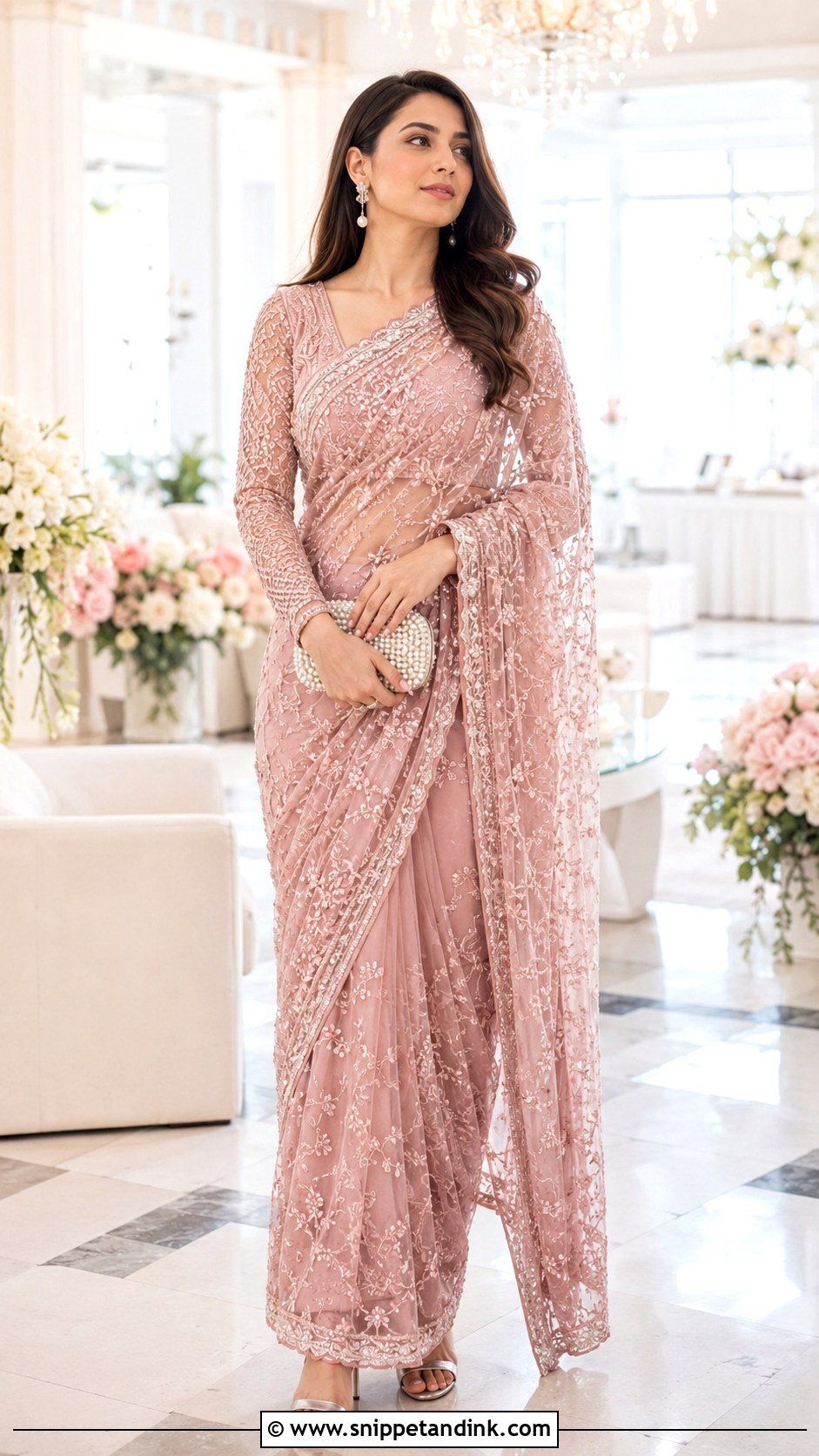
Dusty pink is muted enough to suit mothers and aunts as well as brides and younger guests, and it flatters many skin tones. Choose chiffon, silk, organza or net with subtle embroidery or a refined border. A full-sleeve or high-neck blouse adds polish and modesty. Pearls, silver heels and a beaded clutch complete it, with soft curls or a sleek bun. When I want a feminine look that doesn’t read as the bride’s own outfit, this is often where I go.
14. Sage Green Walima Sharara
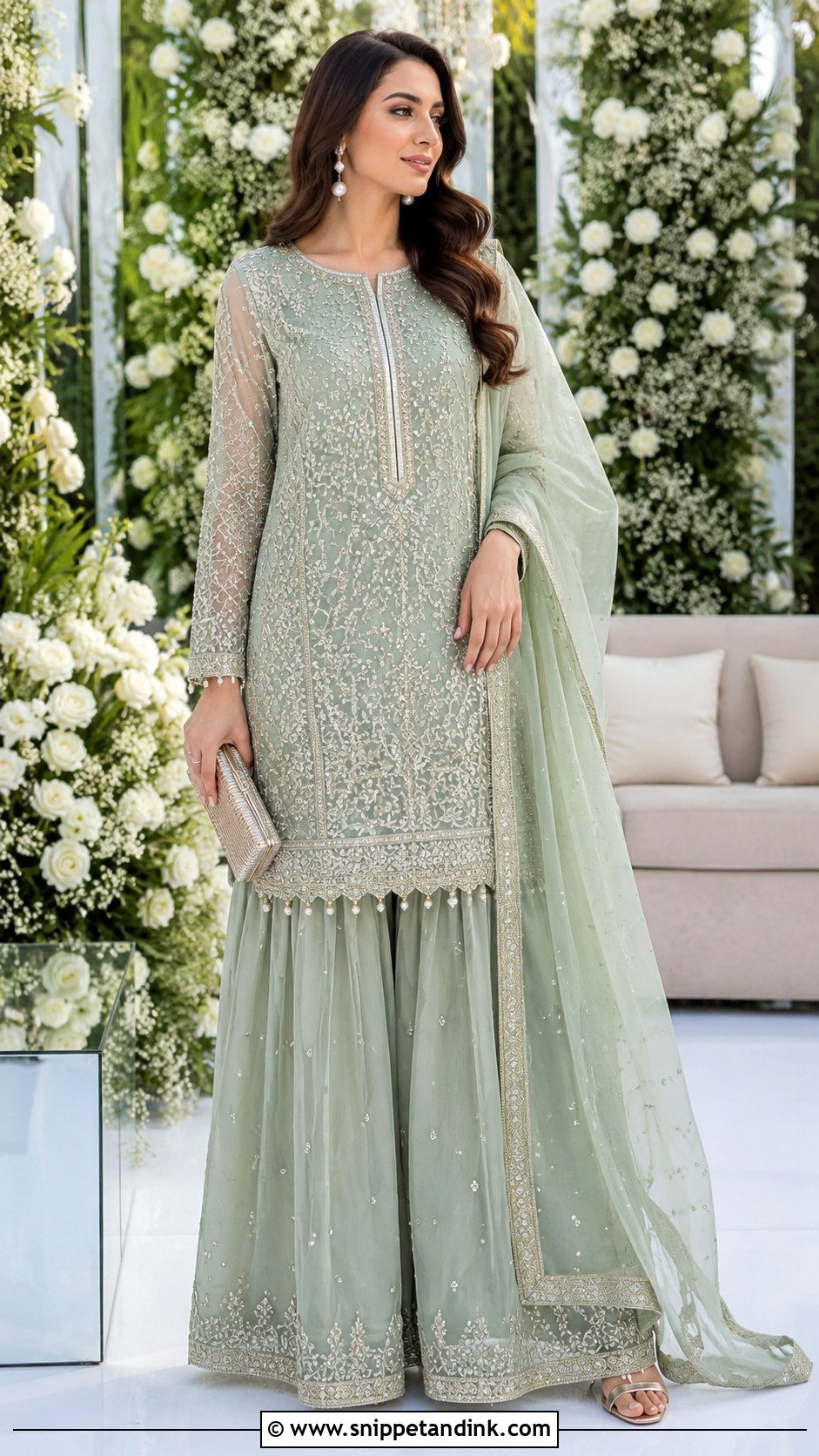
A sage green walima sharara is muted and modern, especially with silver or ivory embroidery. A long kurta over wide sharara legs looks graceful; a peplum top looks younger. A matching organza dupatta completes it without adding weight. Pearl earrings, metallic sandals and a structured clutch keep it calm. It suits outdoor walimas and summer receptions, and it stands out quietly among brighter guest outfits. Sage is one of the few greens that doesn’t clash with a pastel bride in group photos.

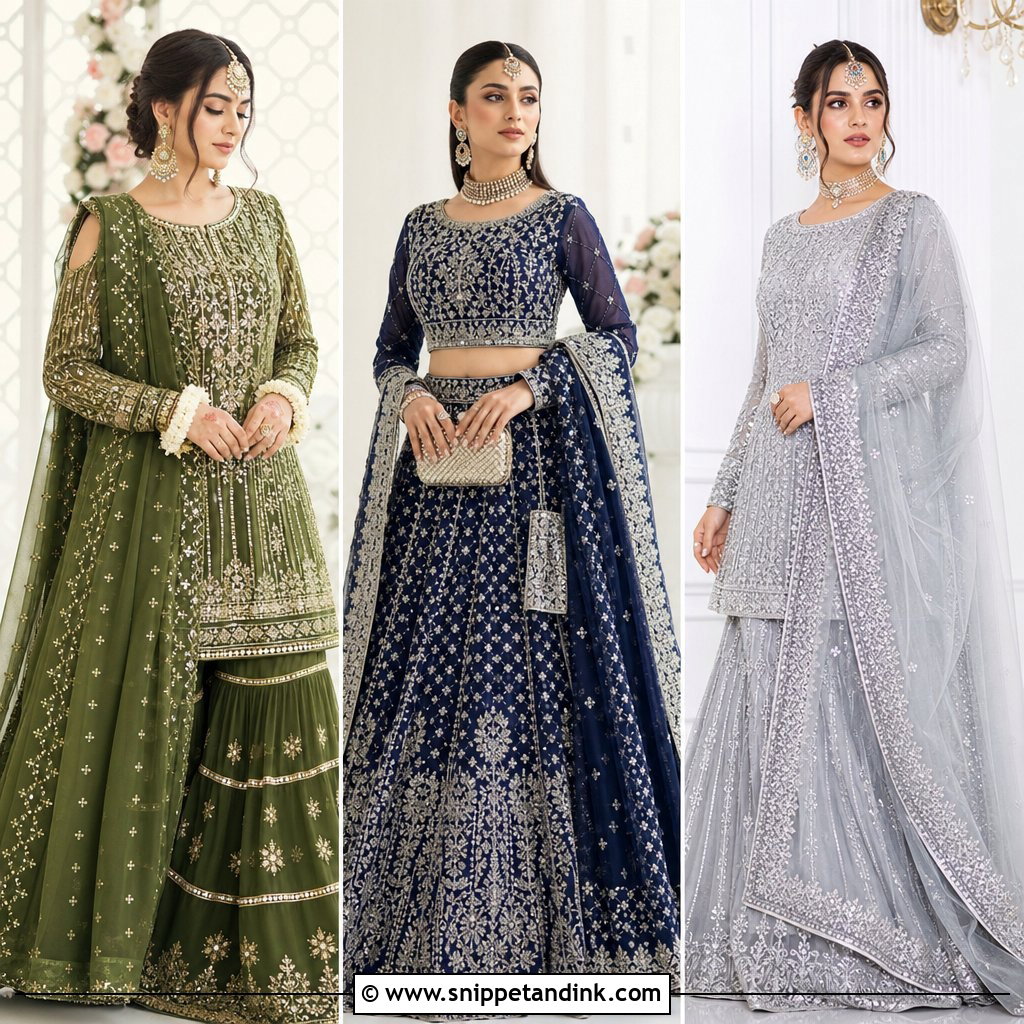
15. Lilac Walima Maxi Dress
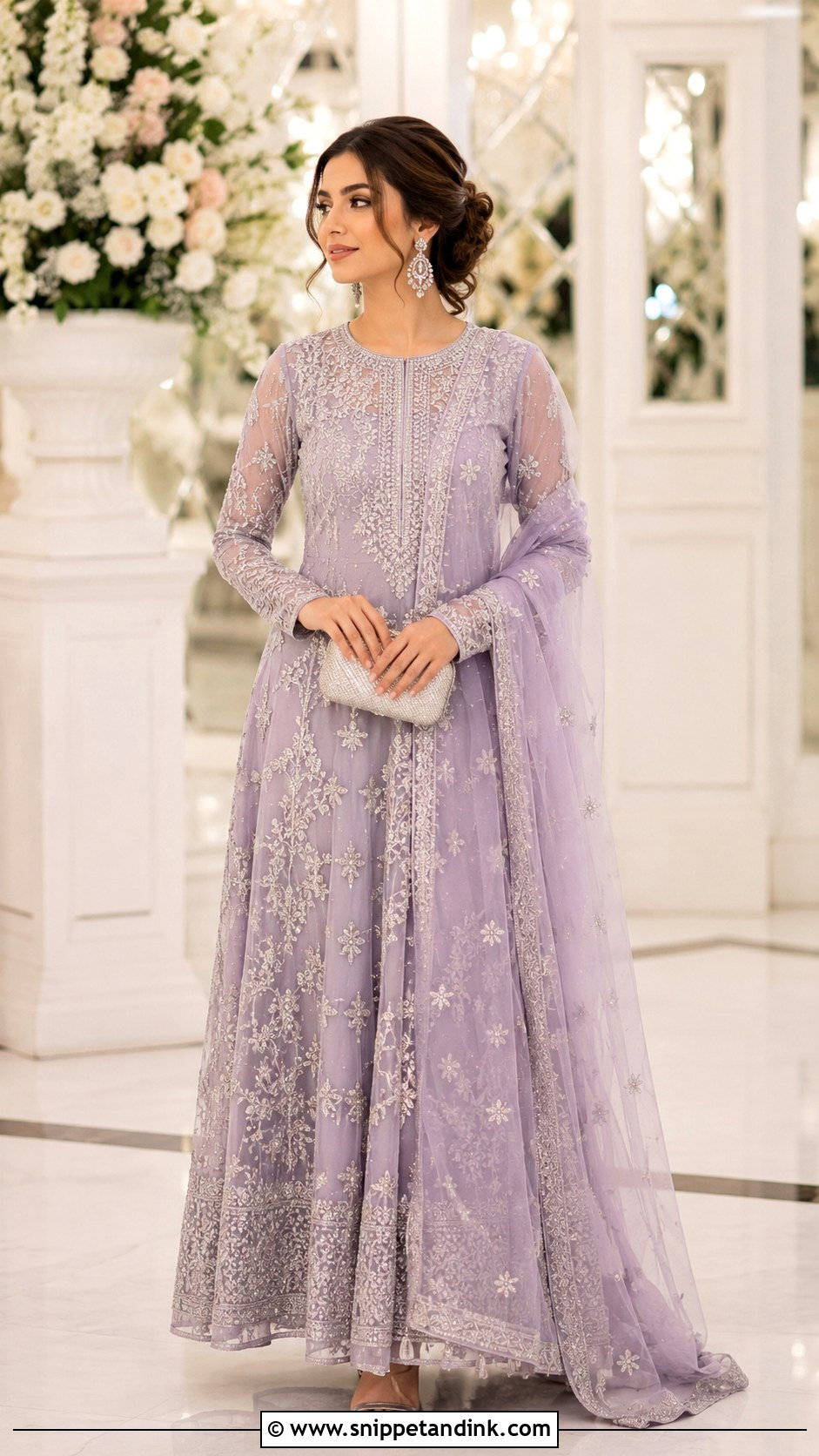
Lilac is slightly unexpected at a walima and keeps a maxi dress feeling formal. Look for embroidery on the bodice, sleeves or hem, and add a sheer dupatta for a traditional finish. Silver heels and crystal jewellery suit it. Keep makeup cool-toned: pink blush, soft shimmer and a rose lip. I suggest it to bridesmaids, cousins and guests who want something lighter than a lehenga or sharara, since a maxi needs no draping and no pinning.
16. Gold Walima Anarkali
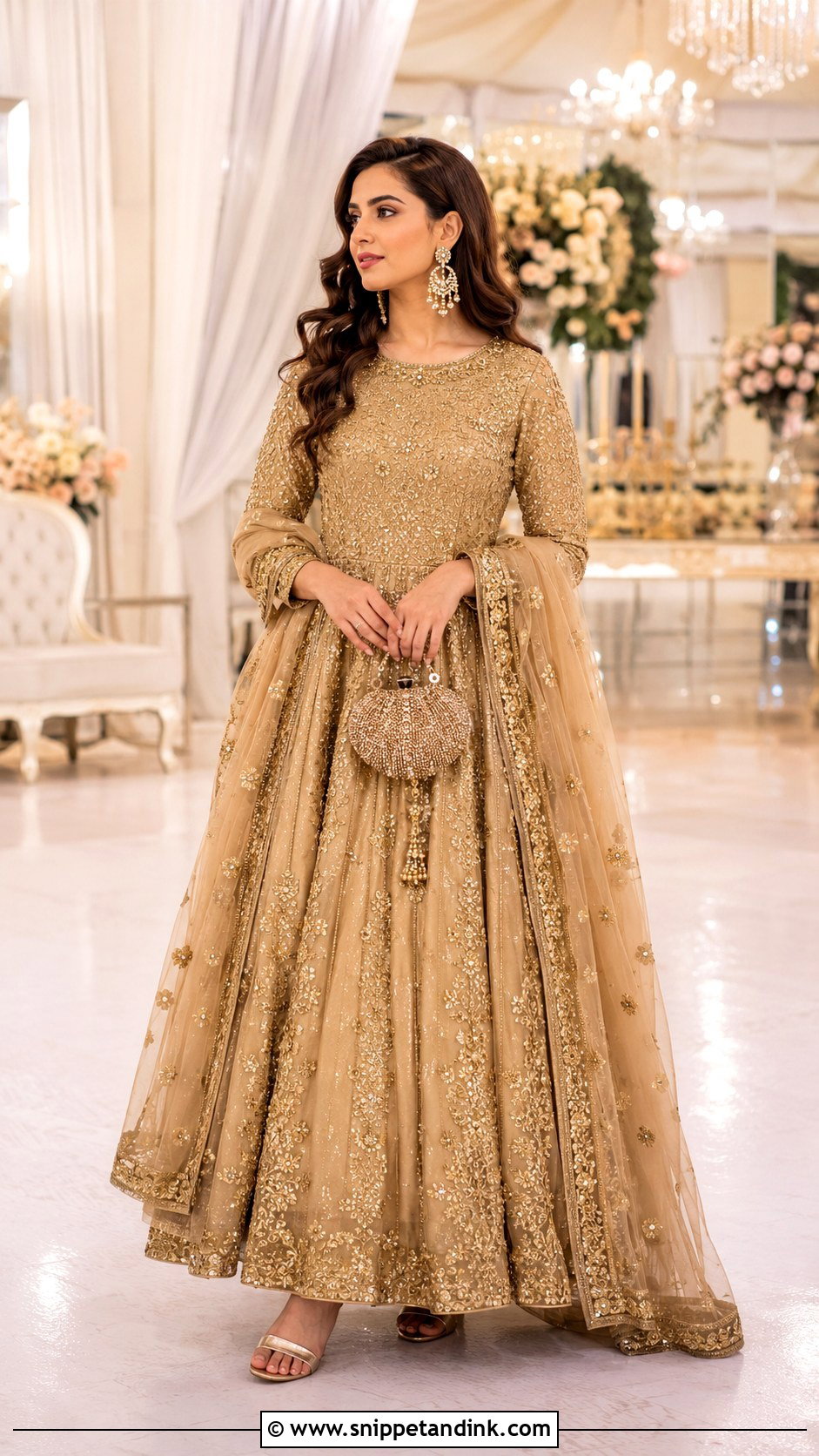
Gold Anarkalis suit grand evening walimas and close family who want something festive. Choose a soft gold, not a yellow gold, which can look brassy in photos. A long flared Anarkali with delicate embroidery, sheer sleeves and a matching dupatta is complete on its own. Pearl or polki jewellery, metallic heels and a beaded clutch are all it needs. Because the colour is rich, I keep hair simple: a neat bun, soft curls or side-parted waves.
17. Mauve Walima Lehenga
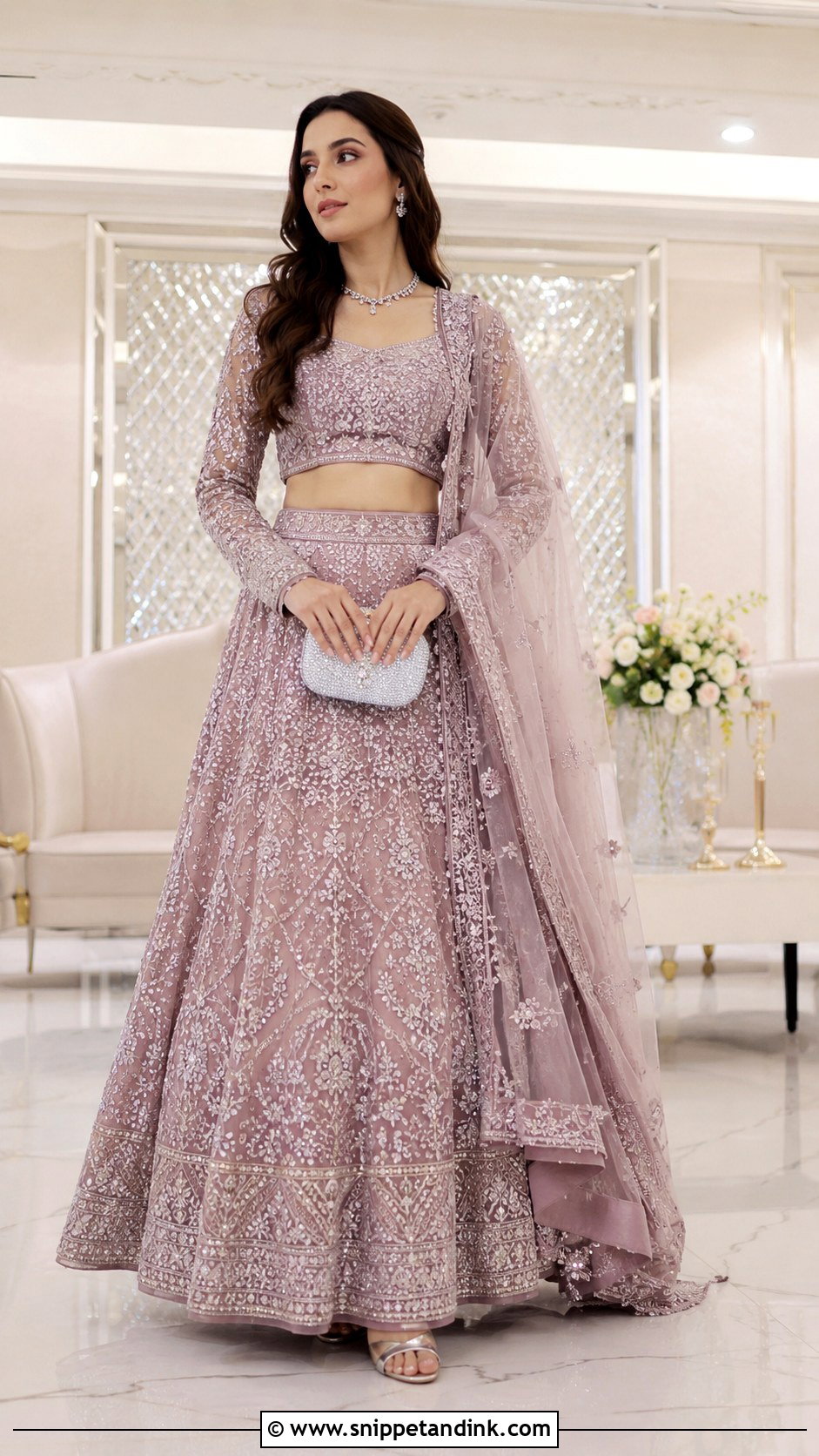
Mauve sits between pink, purple and neutral, which makes it flattering on many complexions and quietly sophisticated. A mauve lehenga with tonal embroidery, silver sequins or pearl work, a matching blouse and a sheer dupatta stay coordinated. Silver heels, a crystal clutch and delicate jewellery suit it. Soft glam makeup with rosy blush and defined eyes works especially well. Brides, sisters and guests can all wear it; it feels current without chasing a trend that dates quickly.
18. Pearl White Walima Lehenga
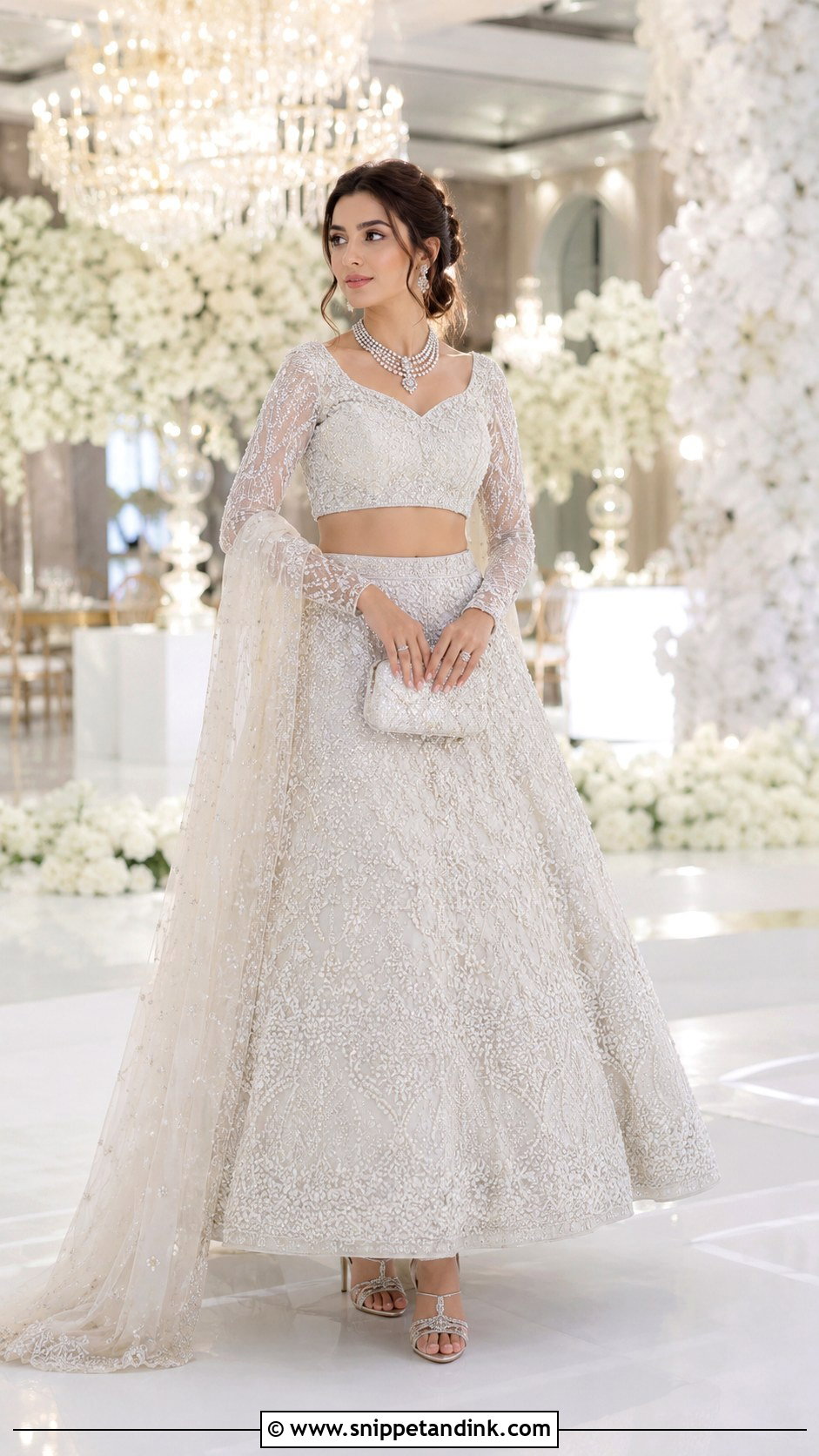
A pearl white lehenga only works if the fabric has texture, because flat white looks unfinished in photos. Pearl embroidery, crystal detail or fine silver threadwork give it depth. A sheer dupatta with an embellished border adds bridal presence. Pearl jewellery, silver heels and a delicate clutch keep it soft, with waves or a low bun. It suits a bride who wants a clean, luminous reception look and photographs especially well in natural light and bright interiors.
19. Teal Walima Saree
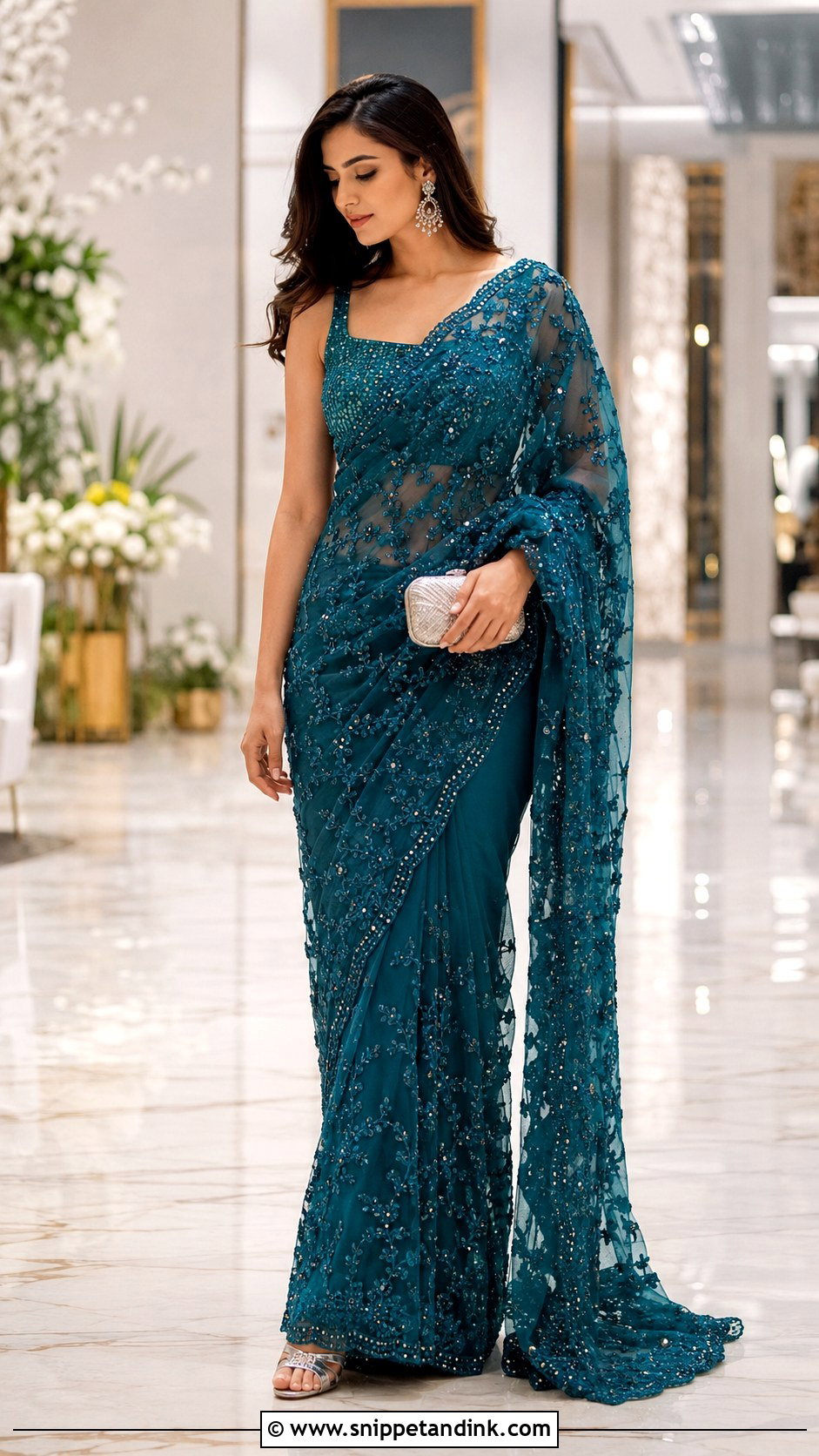
A teal walima saree suits guests who prefer deeper shades over pastels and still want to respect the walima’s soft mood. Teal reads festive without shouting, especially at evening receptions. Choose silk, chiffon or net with silver, antique gold or tonal embroidery, and a fitted blouse with a modest neckline. Match your heels to the metal of the embroidery. Statement earrings and soft glam makeup finish it. Teal also avoids the risk of clashing with a pastel bride.
20. Beige Walima Cape Outfit
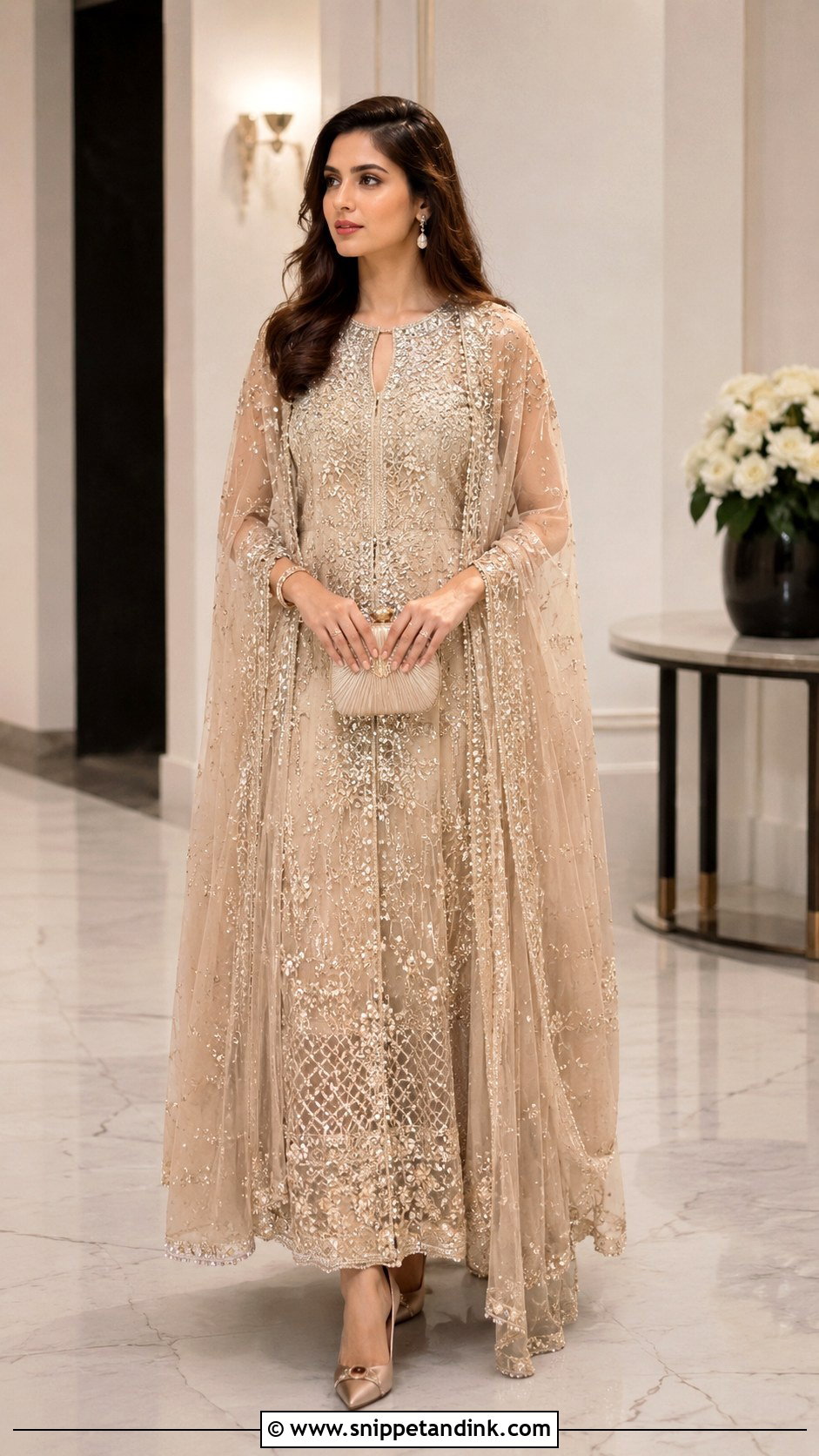
A cape replaces the dupatta and covers the shoulders and arms, which is why I suggest it to women who want coverage without the work of draping. It can go over a gown, straight trousers, a lehenga or a long dress. Beige, sand or soft taupe with silver, champagne or pearl detail looks modern. Pointed heels, delicate earrings and a structured clutch keep it sharp, and a sleek hairstyle lets the cape’s line show. It suits a contemporary reception best.
21. Emerald Green Walima Gharara
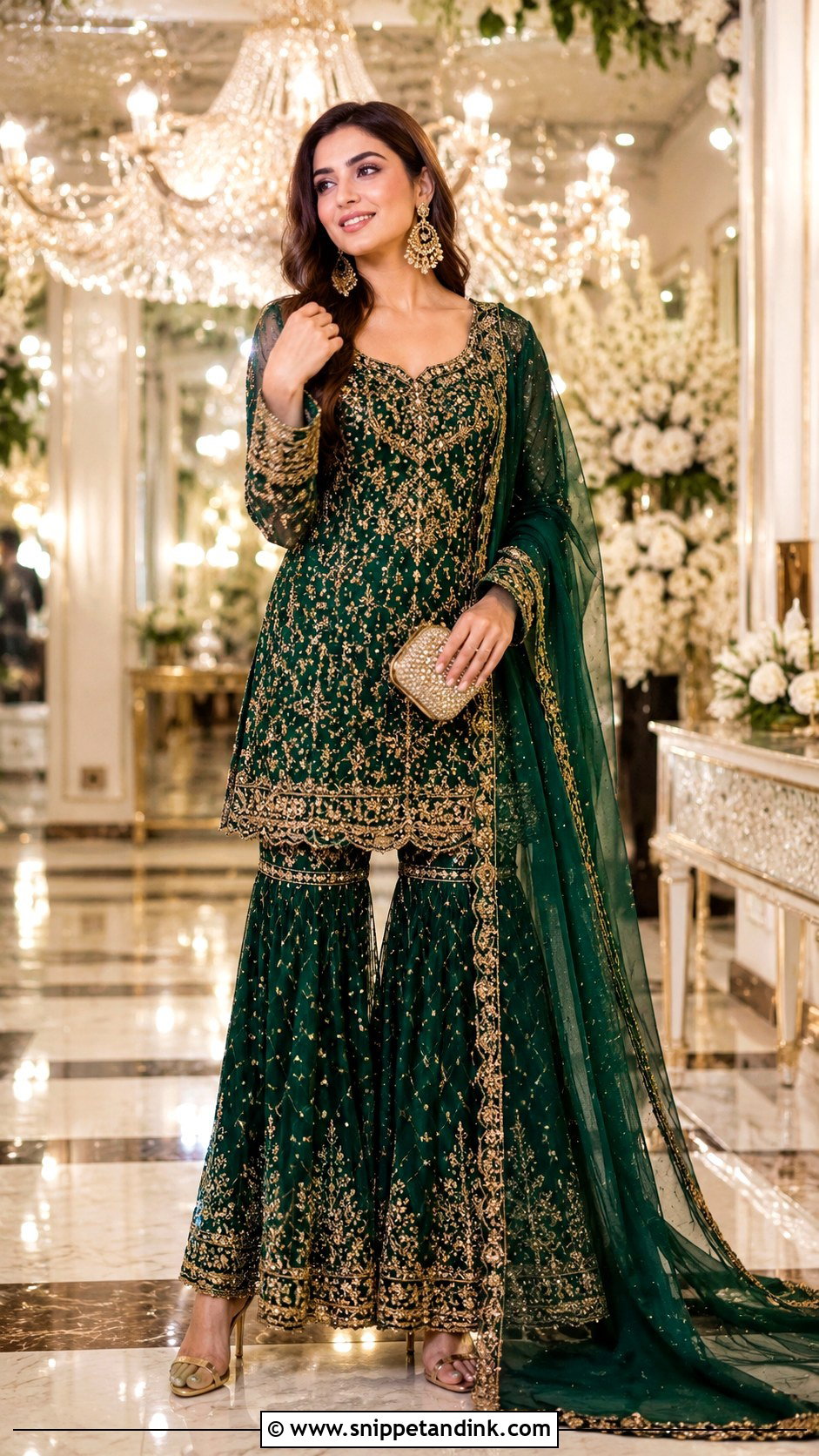
Emerald is a strong departure from the walima’s usual pastels, which makes it right for evening receptions, winter walimas and close family who want a festive colour. A gharara with gold or antique embroidery, a short kurti and matching dupatta are traditional and rich. Keep accessories restrained: gold earrings, bangles and a small clutch. I’d check with the bride first, since emerald worn by several relatives can dominate group photos.
22. Light Gold Walima Saree
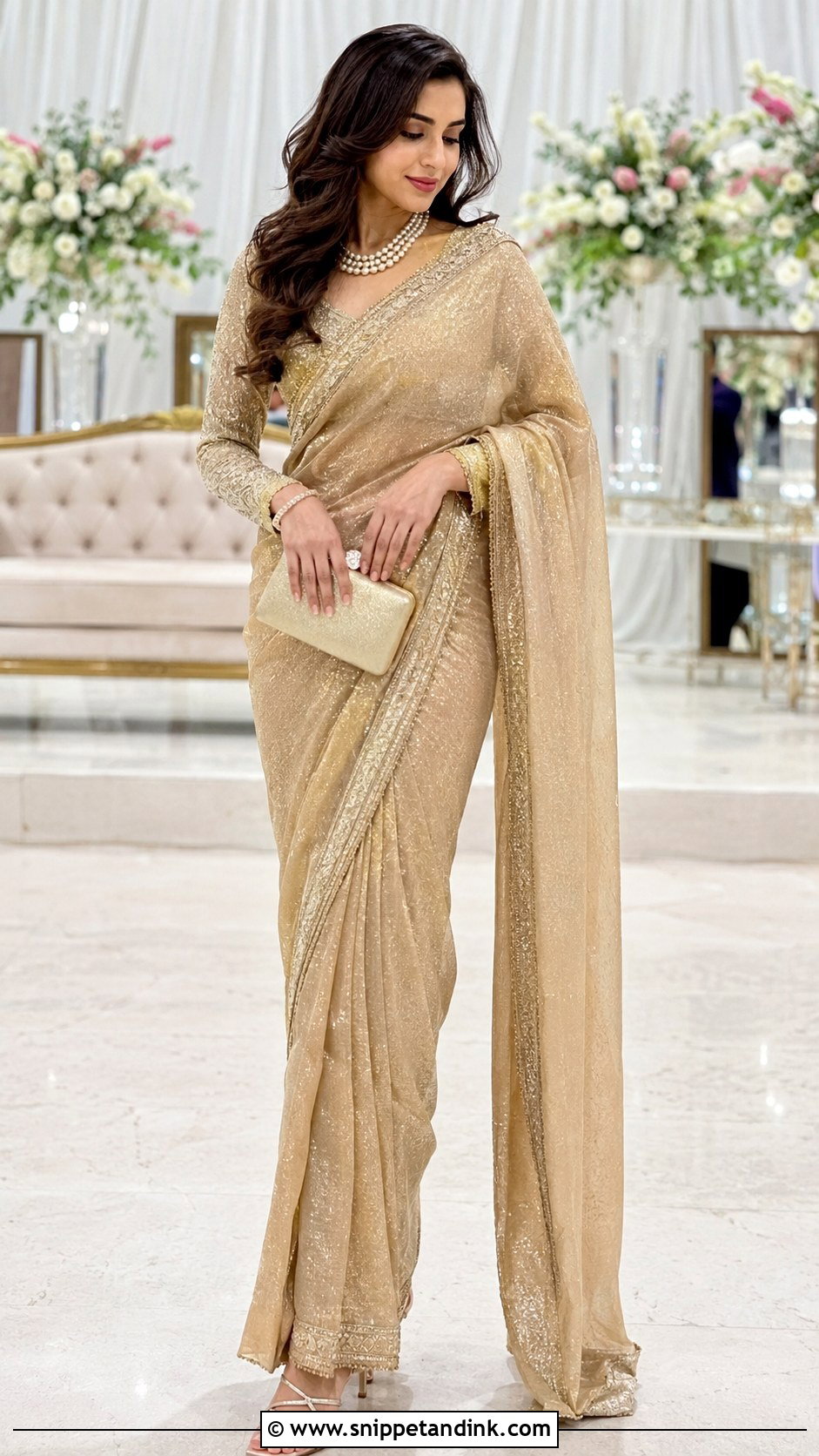
A light gold saree with a gentle sheen rather than glitter suits mothers, sisters and guests who want warmth without weight. Tissue, silk, organza and chiffon all suit it, with a matching blouse in delicate embroidery. Pearl or polki jewellery, metallic heels and a small clutch finish it. Soft waves, a low bun or a side parting all work. Tissue fabrics crush easily, so I advise mothers of the couple, who will sit and stand all evening, to choose silk or chiffon instead.
23. Powder Pink Walima Pishwas
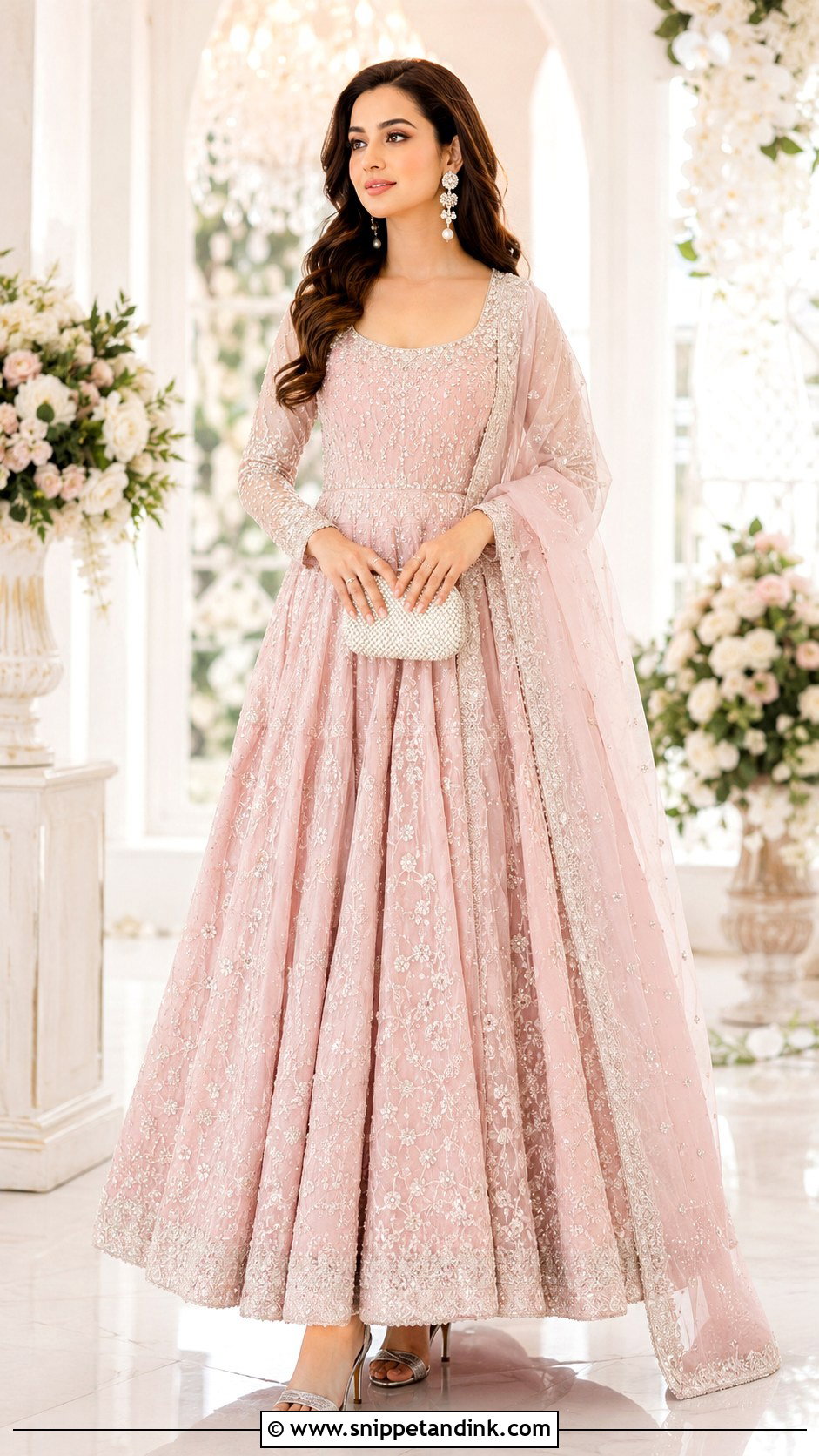
Powder pink in a pishwas is soft and traditional, and the flared skirt is comfortable for sitting, walking and greeting. Delicate silver, ivory or pearl embroidery keeps it light, and a matching dupatta with a fine border completes it. Silver heels, pearl earrings and a beaded clutch suit it. Rosy cheeks and a glossy lip keep makeup fresh. Brides, bridesmaids and close relatives can all wear it, though if the bride is in pink, a guest should step to another shade.
24. Grey Walima Maxi With Dupatta
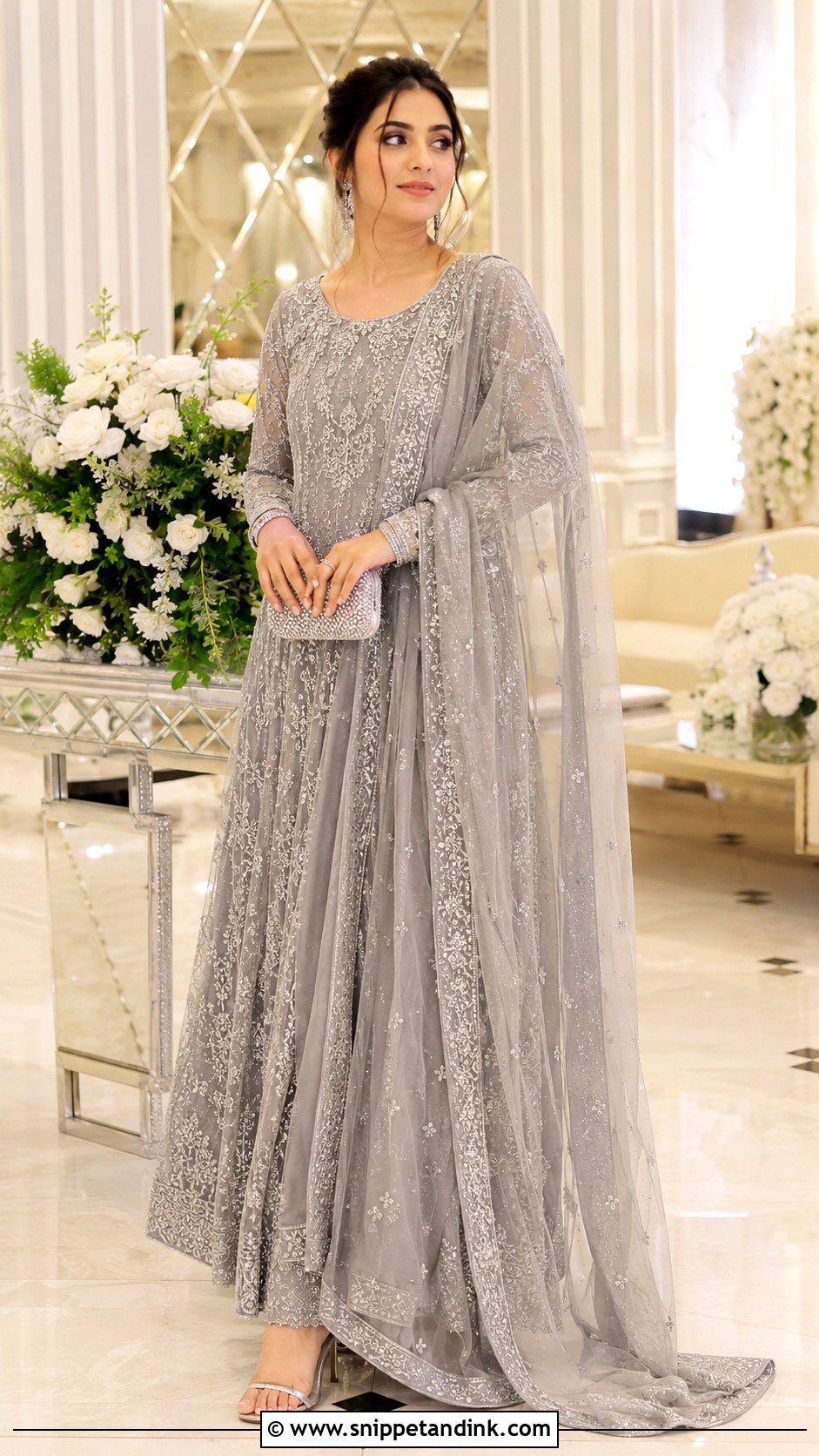
Grey suits women who prefer understated colour. Choose dove or silver-grey, not charcoal, which can read as mourning in some families. Silver, crystal, pearl or white-thread embroidery keeps it event-appropriate. A sheer dupatta adds the traditional touch; the maxi shape gives comfort and coverage. Silver heels, a crystal clutch and delicate jewellery finish it. Under bright evening lights grey photographs softly, making it a quiet, polished choice for guests, cousins and sisters.
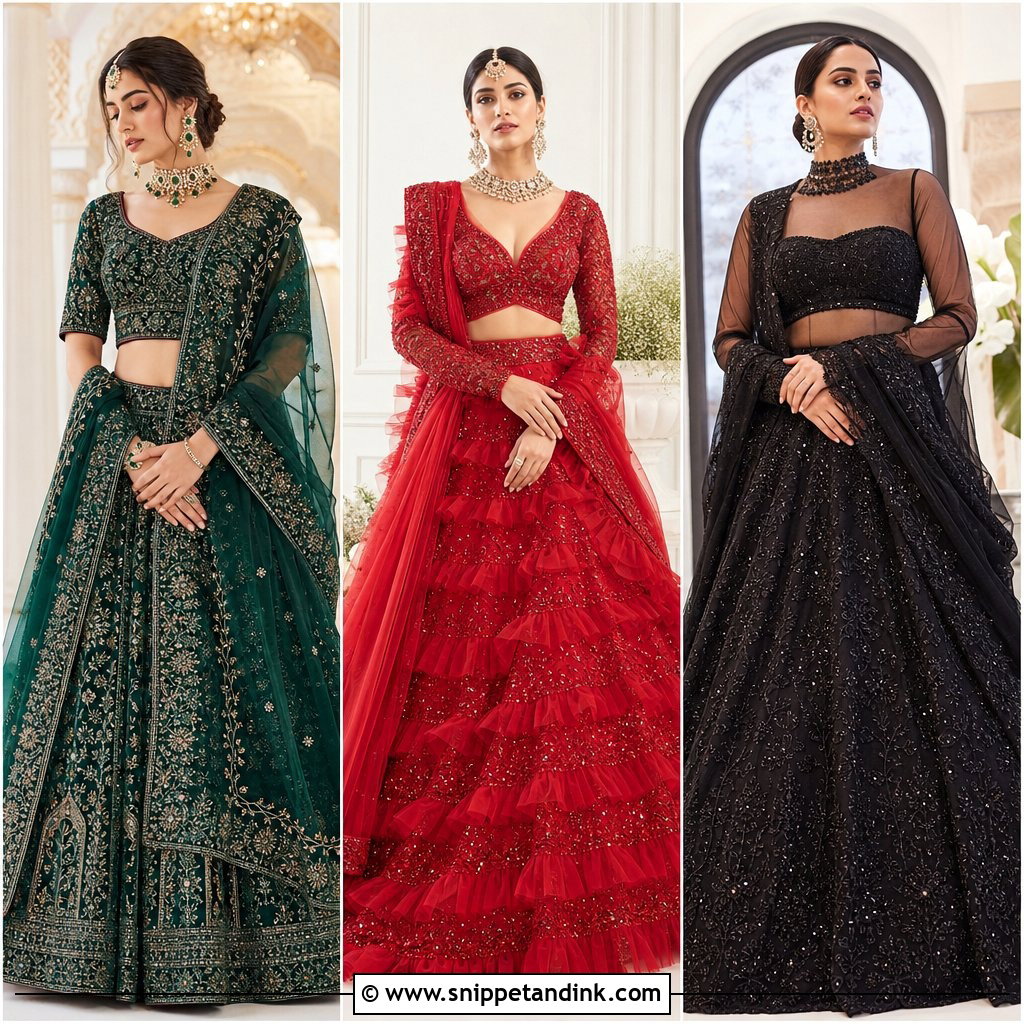

25. Formal Walima Pantsuit
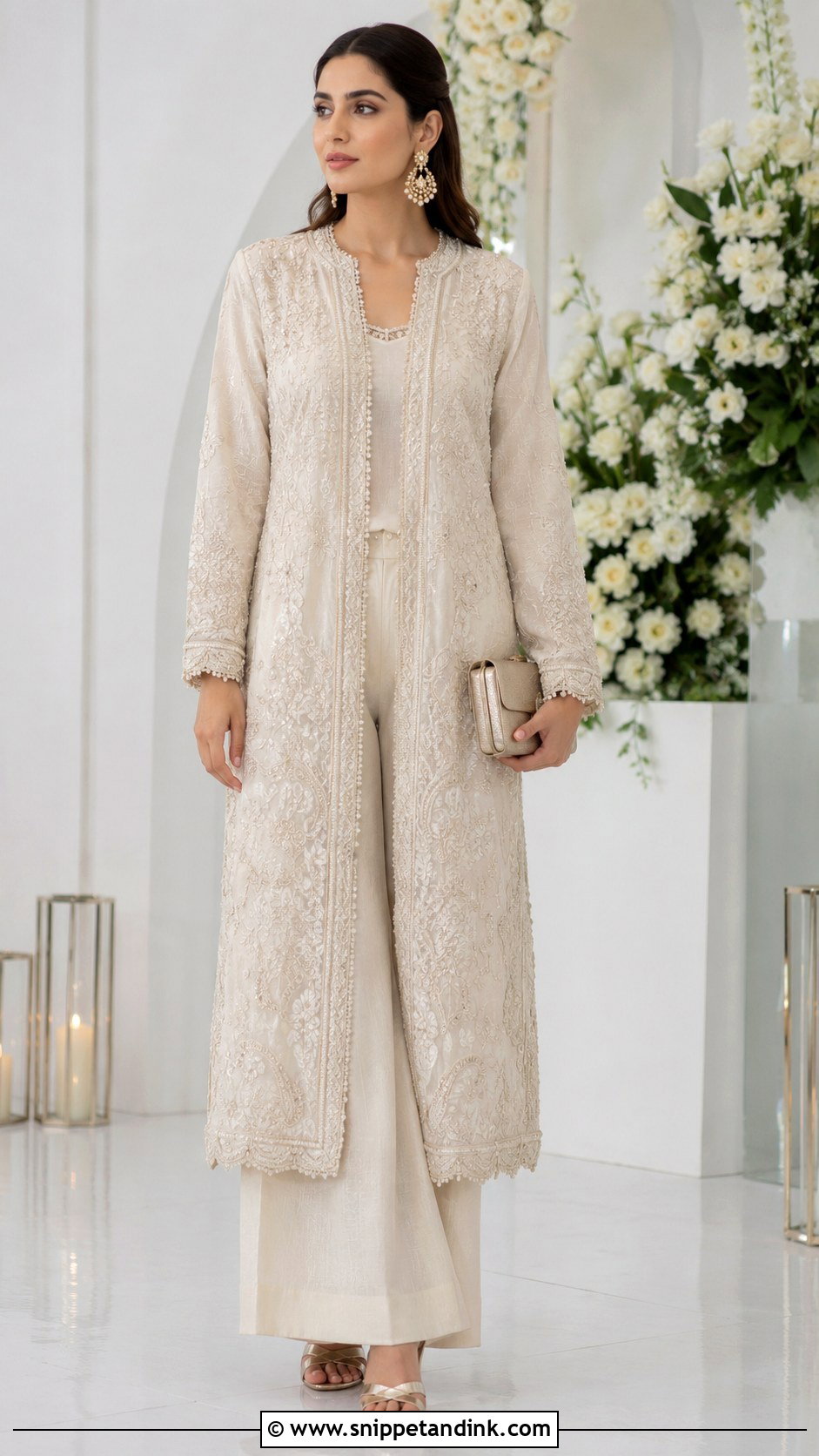
A formal walima pantsuit gives comfort, full coverage and a modern line. Choose a long tailored jacket over wide trousers with light embroidery and a dressy inner top. Ivory, champagne, blush, sage and powder blue suit the walima’s palette. Metallic heels, a structured clutch and statement earrings keep it formal, with a sleek bun or smooth blow-dry. I suggest it to women who would rather not wear a lehenga, saree or sharara at all, and it suits the older relatives as well as younger guests.
Why Pastels Change Colour Under Hall Lights
Most walima halls are lit with warm bulbs and stage spotlights, and pastels are the colours most affected by them. Mint can turn grey, ice blue can look white, and blush can vanish into skin. Silver and crystal embroidery, on the other hand, can flare into bright spots when a photographer uses flash.
- Look at your fabric swatch under a warm lamp at home, not only by the boutique window.
- Send your photographer a photo of the outfit so they can plan their lighting around it.
- Ask your makeup artist to add a little warmth to cheeks and lips if you are wearing a cool pastel, so your face does not look drained next to the stage flowers.
- Choose embroidery with mixed finishes, such as thread with a few sequins, rather than solid crystal, which reflects flash too strongly.
None of this means avoiding pastels. It means testing them in the light you will actually be standing in.
Soft Colour, Real Coverage, and Room to Sit
A walima outfit should feel polished and comfortable through a long reception. Pastels, soft metallics, pearl detail and graceful shapes rarely go wrong. Brides can lean toward gowns, lehengas, pishwas and capes; guests have sarees, shararas, Anarkalis and pantsuits. Whatever you wear, finish the whole look with shoes, jewellery, hair, makeup and the dupatta in mind. Respect the bride’s colour, think about who you’ll be sitting with, and choose something you can wear for five hours without adjusting.
You'll Like These Ideas:






Leave a Reply