
Put a matha patti on a plain bun and it suddenly looks regal. Wind fresh jasmine, gold jada pieces or a string of pearls down a long braid and it becomes ceremonial. That’s what hair jewelry does at an Indian wedding, and with haldi, mehendi, the pheras and the reception spread over several days, you get more than one chance to use it. Some brides want full temple jewelry, others prefer florals or a modern headband. Whatever you pick, the hairstyle underneath has to carry it, along with the dupatta and hours of sitting, bending and hugging. Below are fifteen accessories, each paired with the hairstyle I’d build to hold it.
Giving Each Function Its Own Headpiece
With four or five events across a few days, wearing the same heavy piece to all of them gets tiring and makes the photos blur together. A loose plan helps you shop once and avoid buying something that only suits one outfit.
- Haldi: flowers or nothing at all. Turmeric paste stains, and gold-plated pieces or pearls are hard to clean once it gets into the settings.
- Mehendi: a paranda or a floral braid. Your hands will be wet with henna for hours, so choose something nobody needs to adjust.
- Sangeet: a ponytail with a cuff, hair chains or a vine, anything that moves well while you dance.
- Wedding ceremony: the maang tikka, matha patti or passa that matches your bridal set, worn with the dupatta.
- Reception: lighter and more modern, such as a polki headband, a brooch or a tiara over soft curls.
Borrowed family jewelry usually belongs at the ceremony. If your mother’s tikka is the one piece that matters most to you, I’d build the wedding hairstyle around it rather than around a new set.
1. Maang Tikka Bridal Bun
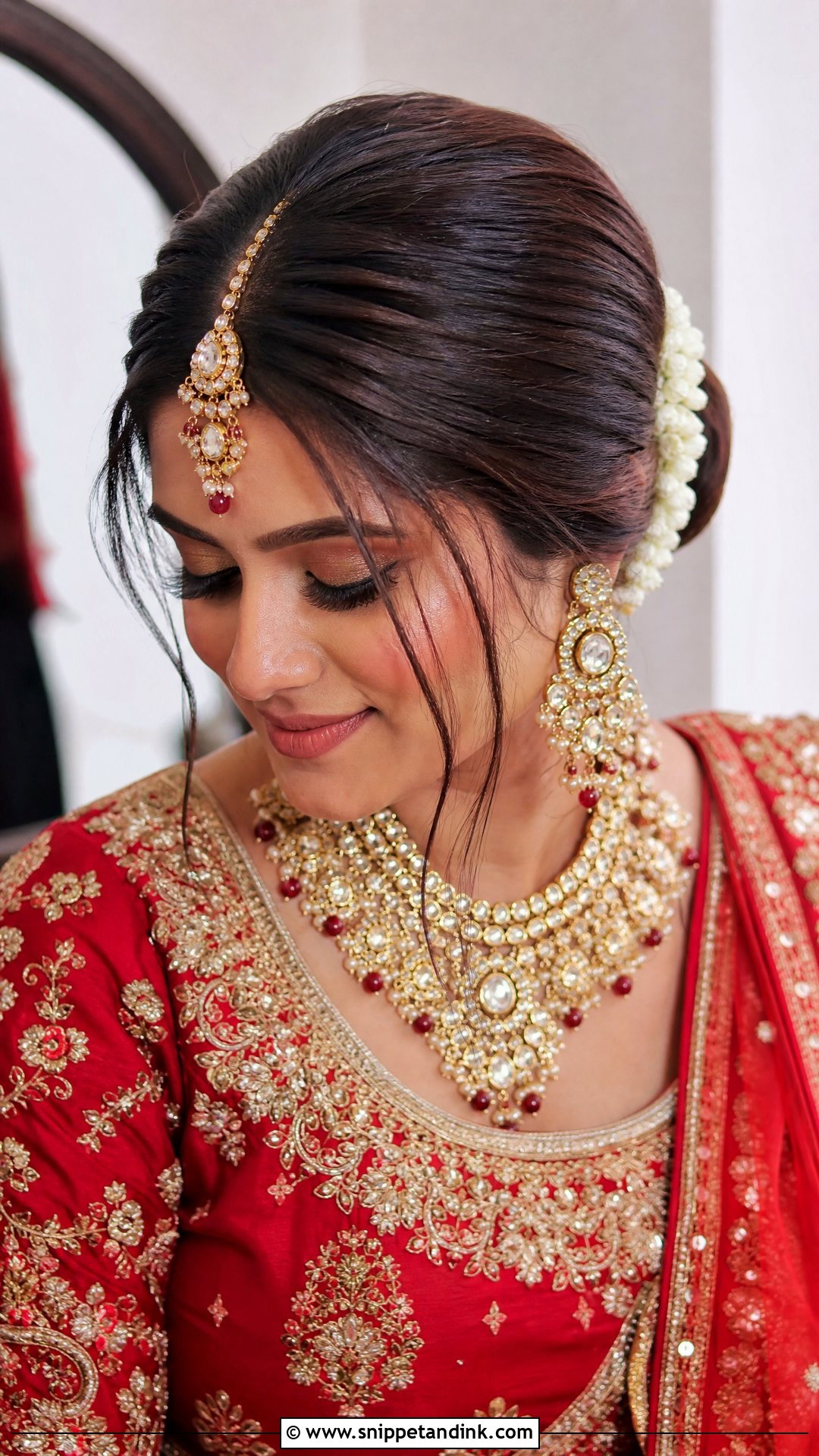
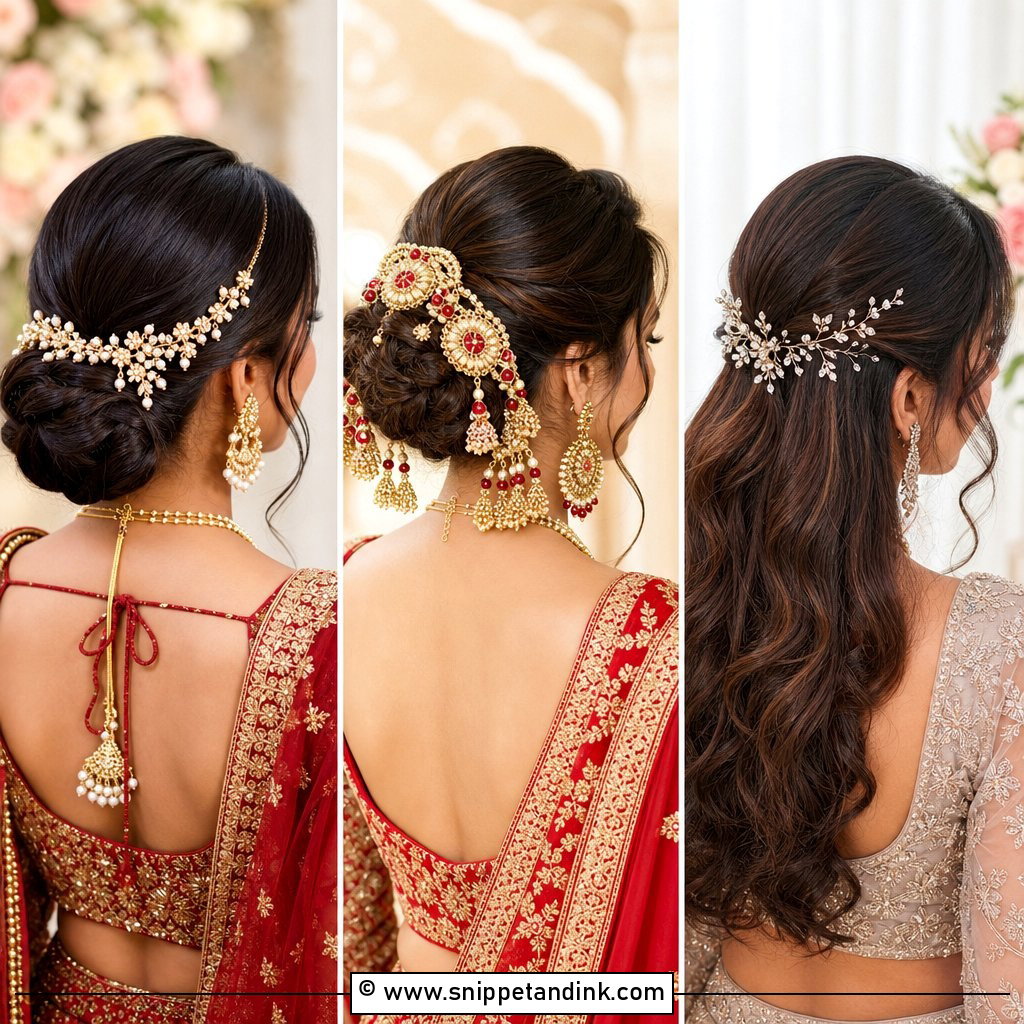
The tikka depends entirely on the parting. If the part is even a few millimetres off-centre, the pendant hangs crooked and every front-facing photo shows it, so I mark the part with a tail comb before anything else and hook the tikka into a tight little section at the crown. A maang tikka bridal bun, low or mid-height, stays secure under a dupatta and suits a lehenga or saree equally well. Round faces look softer with a couple of loose face-framing strands; longer faces can keep the front sleek. Choose kundan, polki or pearl to echo the embroidery on your outfit.
2. Matha Patti Bridal Hairstyle
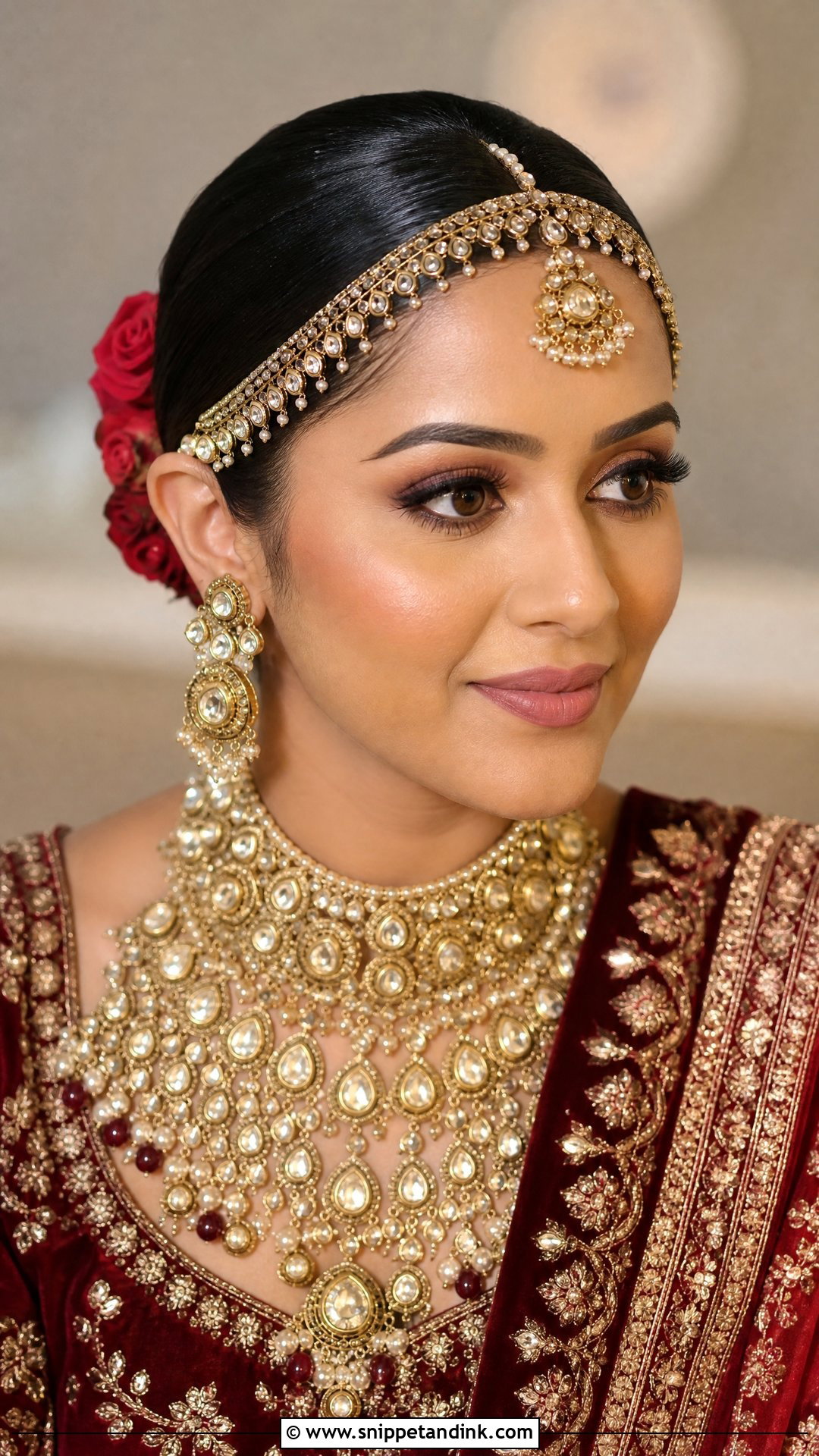
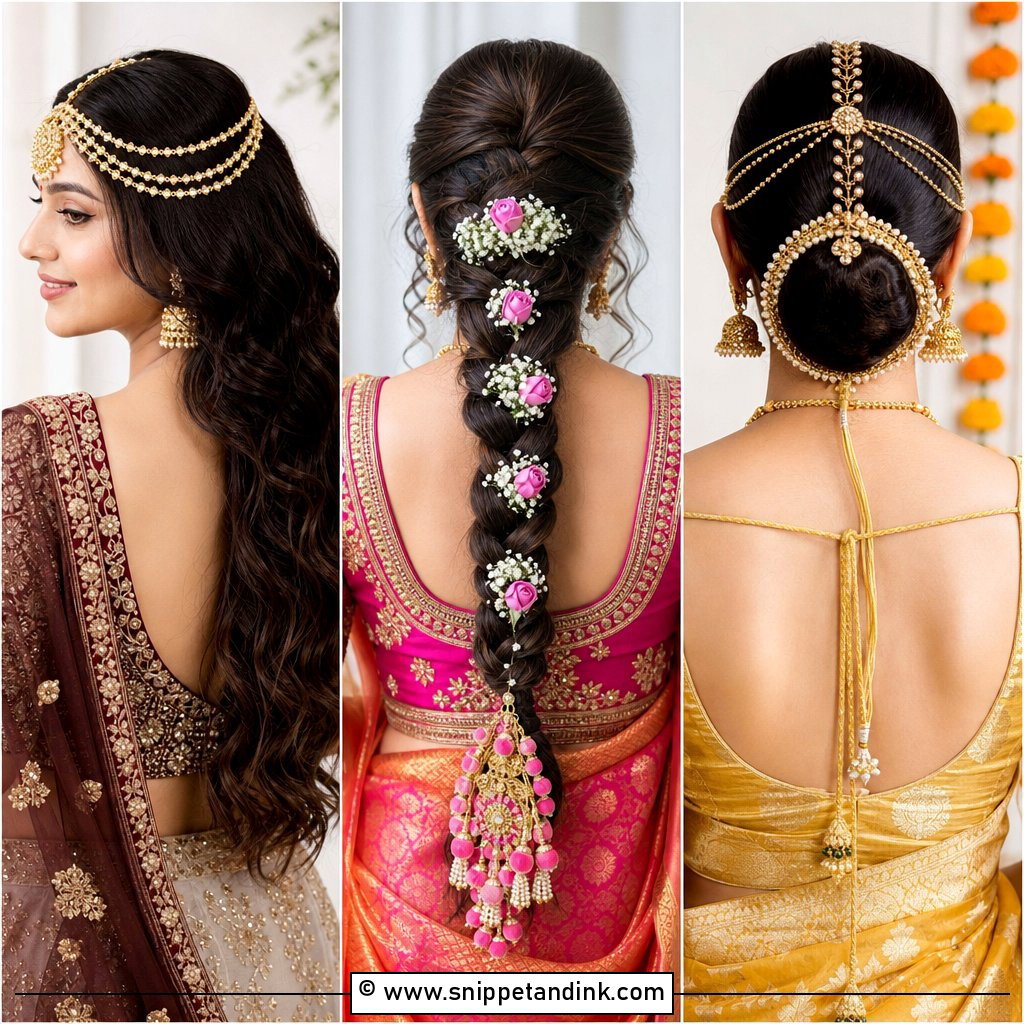
A matha patti sits across the whole hairline, so it frames the face far more than a single tikka does, and that framing suits the main ceremony. It needs a clean centre part, a smooth crown and a structured bun or braid behind it. With a heavily embroidered outfit I’d go for a thinner patti; a minimal outfit can take a wide one as the statement. The side chains should rest just above the ear, pinned at two points each, otherwise they slide down onto the temples by the time the pheras start. Pin the dupatta behind the crown so the patti stays visible from the front.
3. Passa Bridal Hairstyle
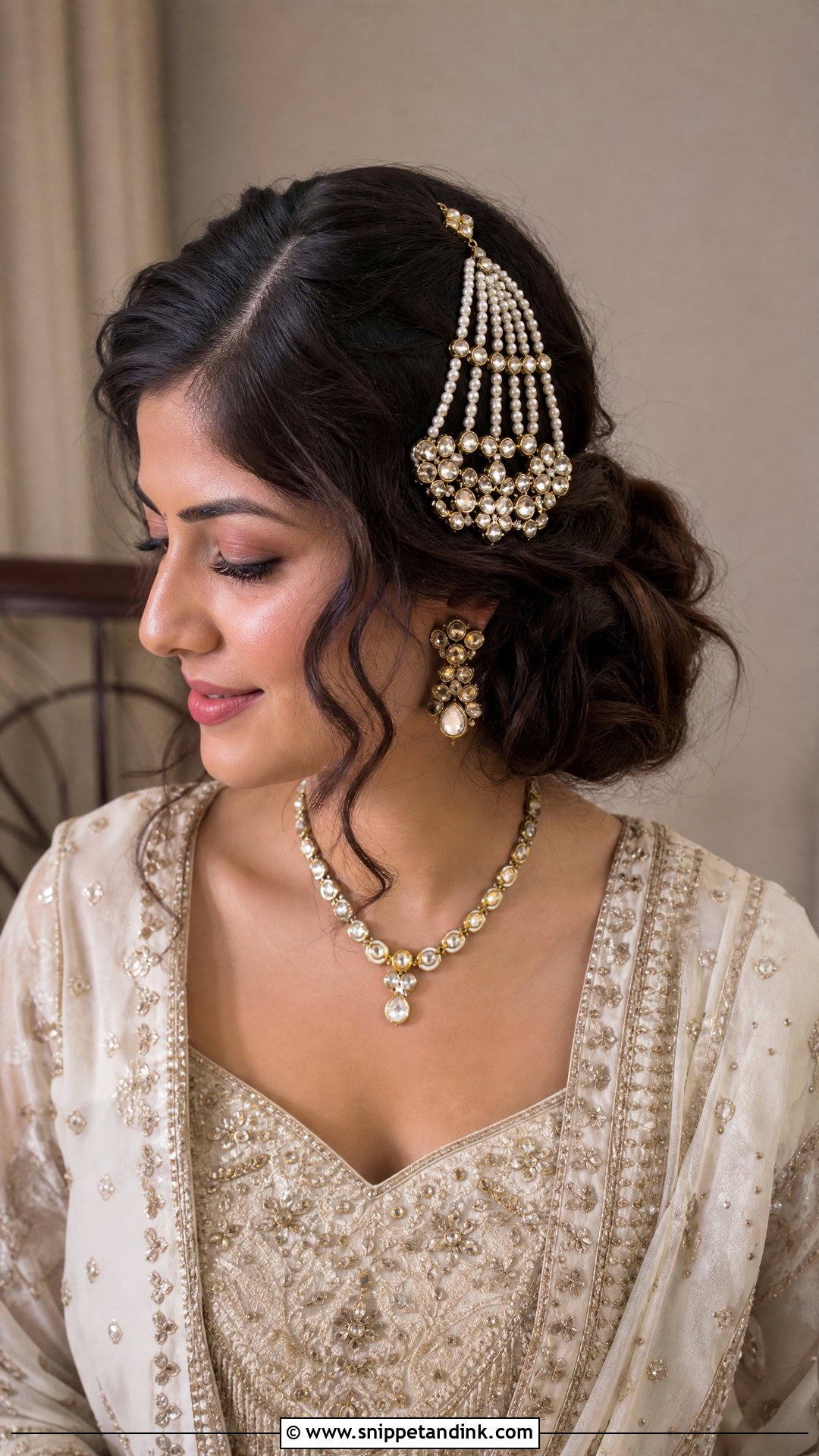
Sometimes called a jhoomar, the passa hangs on one side of the head, and that asymmetry is the whole appeal. A passa bridal hairstyle sits naturally with Mughal-inspired shararas, ghararas and heavily worked dupattas. Because all its weight sits on one side, I anchor it into a braided section rather than loose hair, and keep the opposite side clean so the look doesn’t feel crowded. Side-parted waves or a low bun support it best. If you’d like something traditional that isn’t the expected centre tikka, this is it.
4. South Indian Bridal Braid With Jada
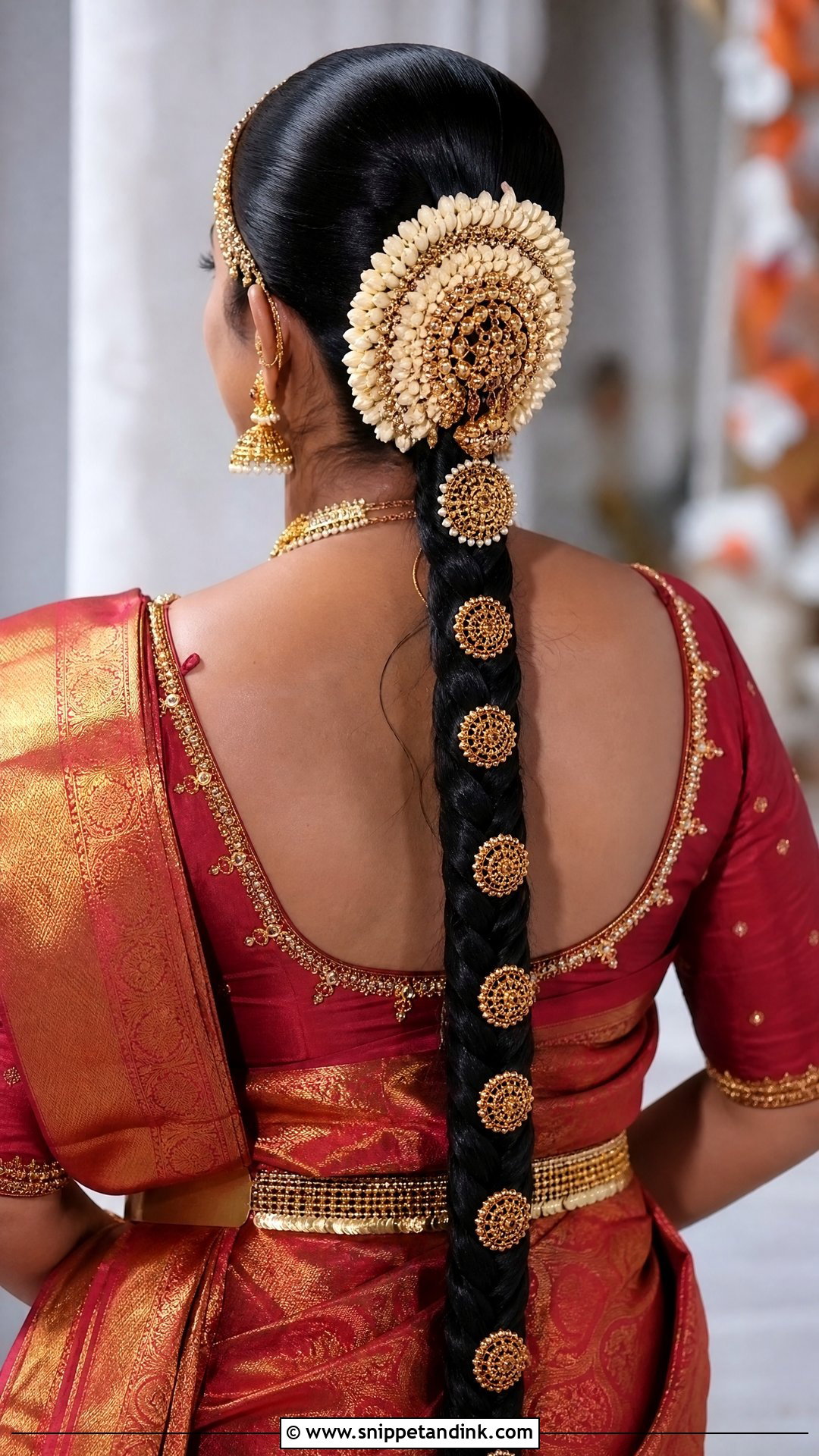
Length is the first conversation with a South Indian bridal braid. The braid is the main feature, decorated with jada pieces, temple motifs and flowers, and most brides need clip-in extensions to get the length and fullness it calls for. I colour-match the extensions in daylight and braid them in from the nape, so the join hides under the first jada ornament. It belongs with a silk saree, temple jewelry and a centre part. Jasmine or roses near the top soften the gold. Keep the front clean and very secure, because guests will mostly see this braid from behind and the side.
5. Poola Jada Bridal Hairstyle
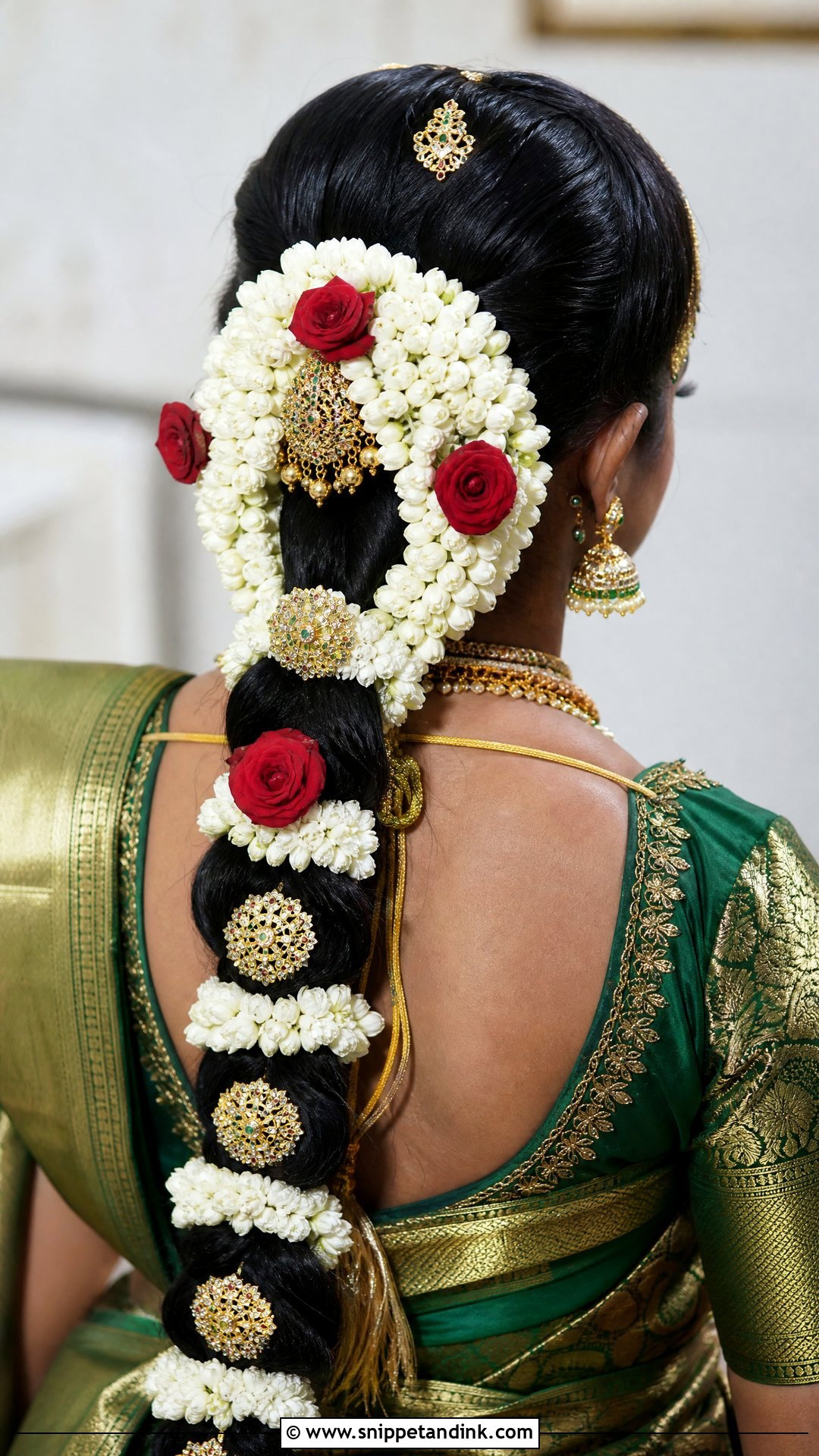
Flowers carry the whole look in a poola jada bridal hairstyle, arranged down the braid with gold ornaments or decorative discs between them. Jasmine gives scent, while roses, chrysanthemums and orchids bring colour. The flowers are stitched onto a base that’s then tied along the braid, so the braid itself must be firm, though not so tight it pulls at the nape for hours. Matching the flower colours to the saree border is the detail I always suggest. A lighter version with fewer rows suits pre-wedding rituals.
6. Jasmine Gajra Bridal Bun
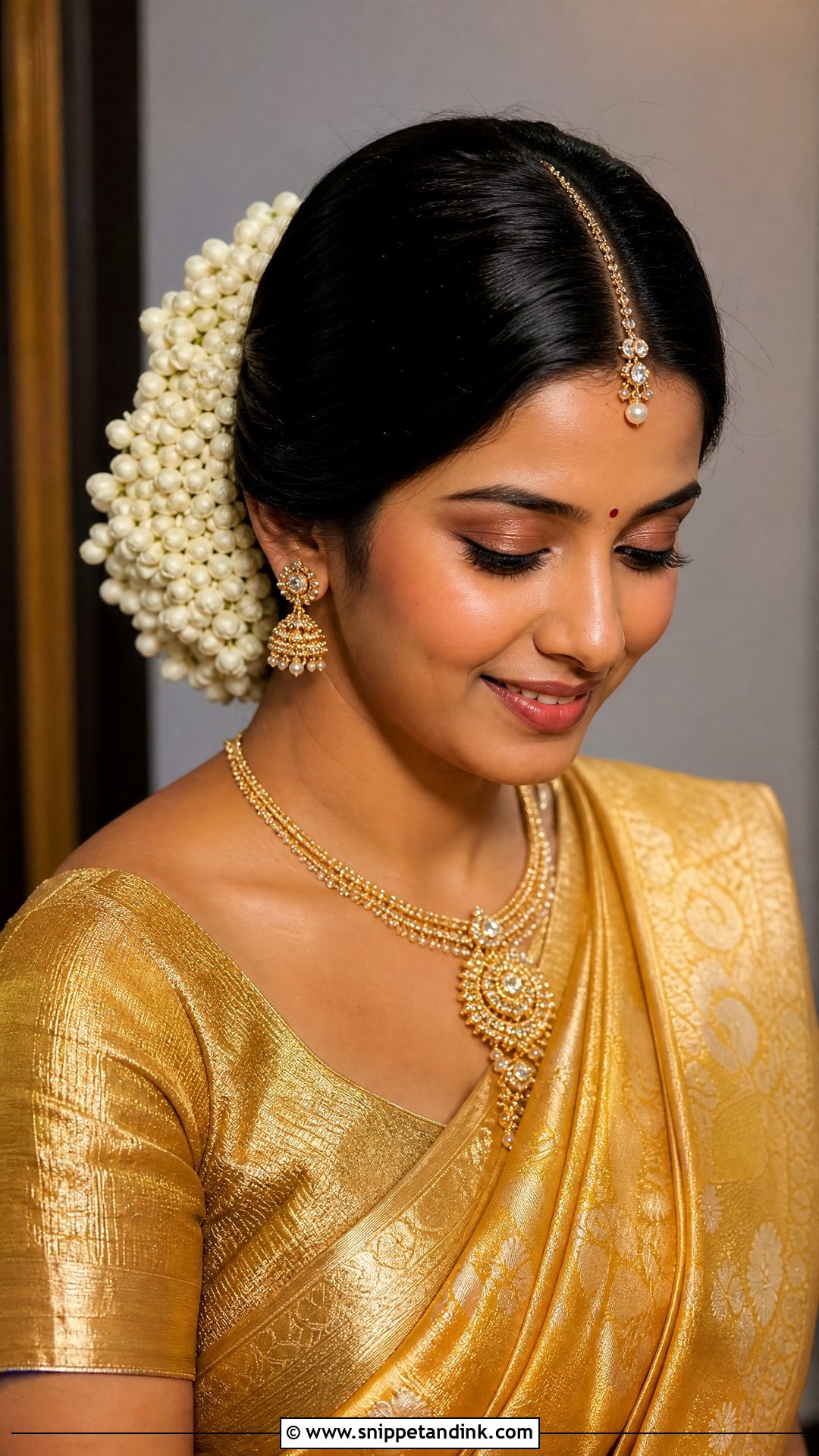
Few things say bride as quickly as jasmine wrapped around a bun. A jasmine gajra bridal bun goes with silk and Banarasi sarees, lehengas and simpler ceremony outfits alike. A sleek low bun looks traditional and a textured one looks more modern. The gajra gets pinned in a spiral, starting at the base of the bun, with U-pins every few centimetres so the strand doesn’t sag as the buds open and grow heavier. Add a tikka or a few pins for sparkle. The hair stays lifted off your neck, which you’ll appreciate by the evening.
7. Floral Bun Bridal Hairstyle
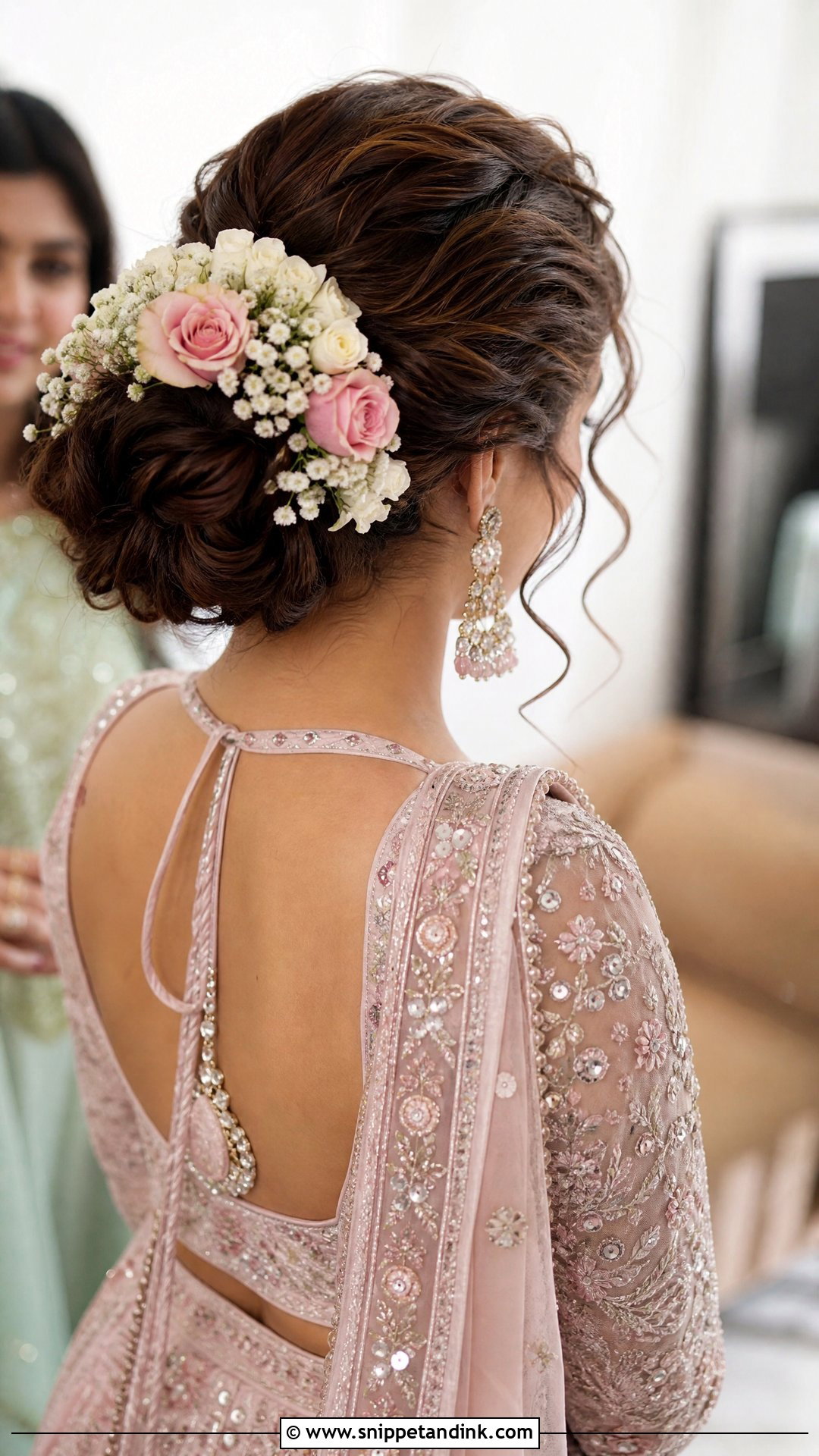
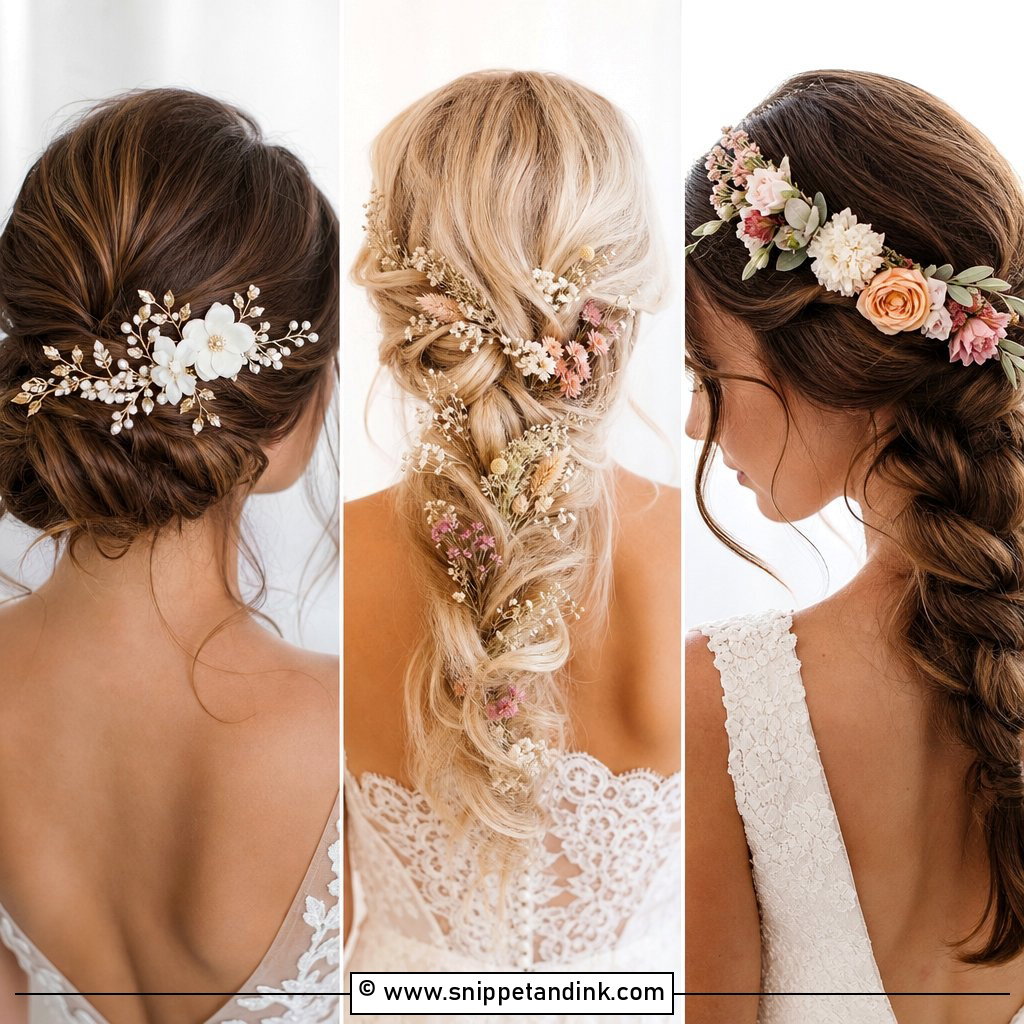
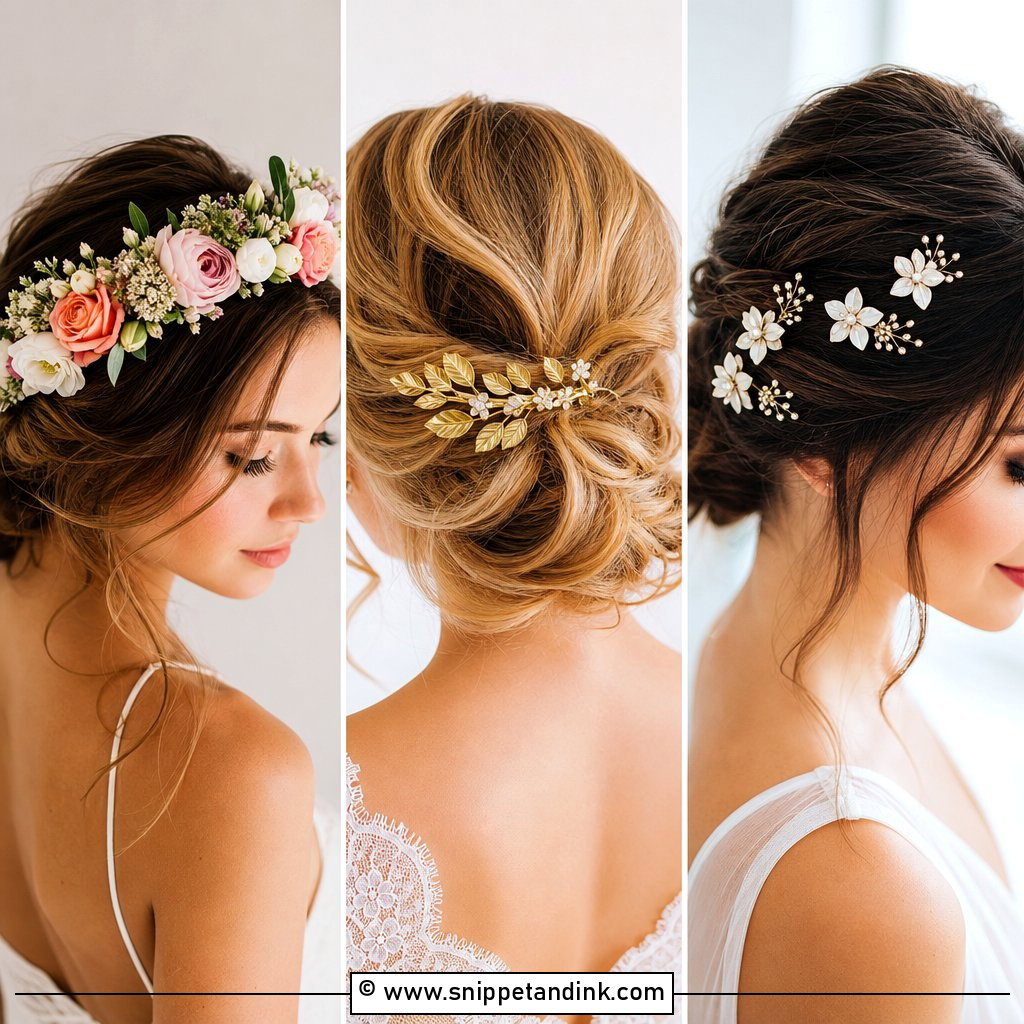
Not every bride wants white flowers, and a mixed floral bun brings colour and volume together. Roses, baby’s breath, orchids, mogra or whatever is in season can go in, low and round or clustered on one side of a sleek bun. Pastels look fresh at a daytime haldi or mehendi; deeper pinks, reds and ivory suit evening. I wire the heavier blooms on picks so they sit into the bun instead of resting on the surface and drooping. Go lighter on jewelry and makeup, since the flowers already pull a lot of attention in photos.
8. Pearl Hair Pins Bridal Bun
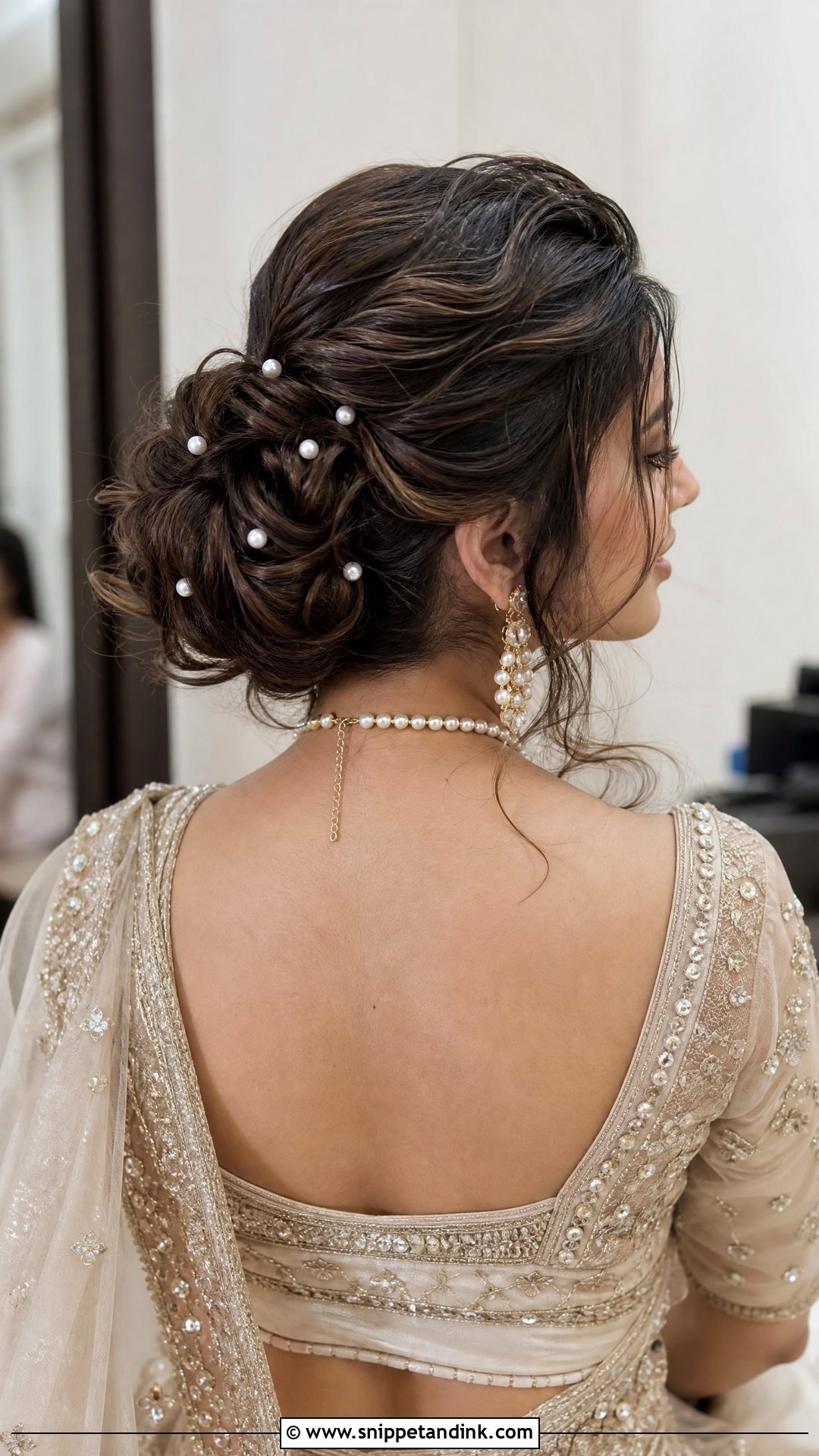
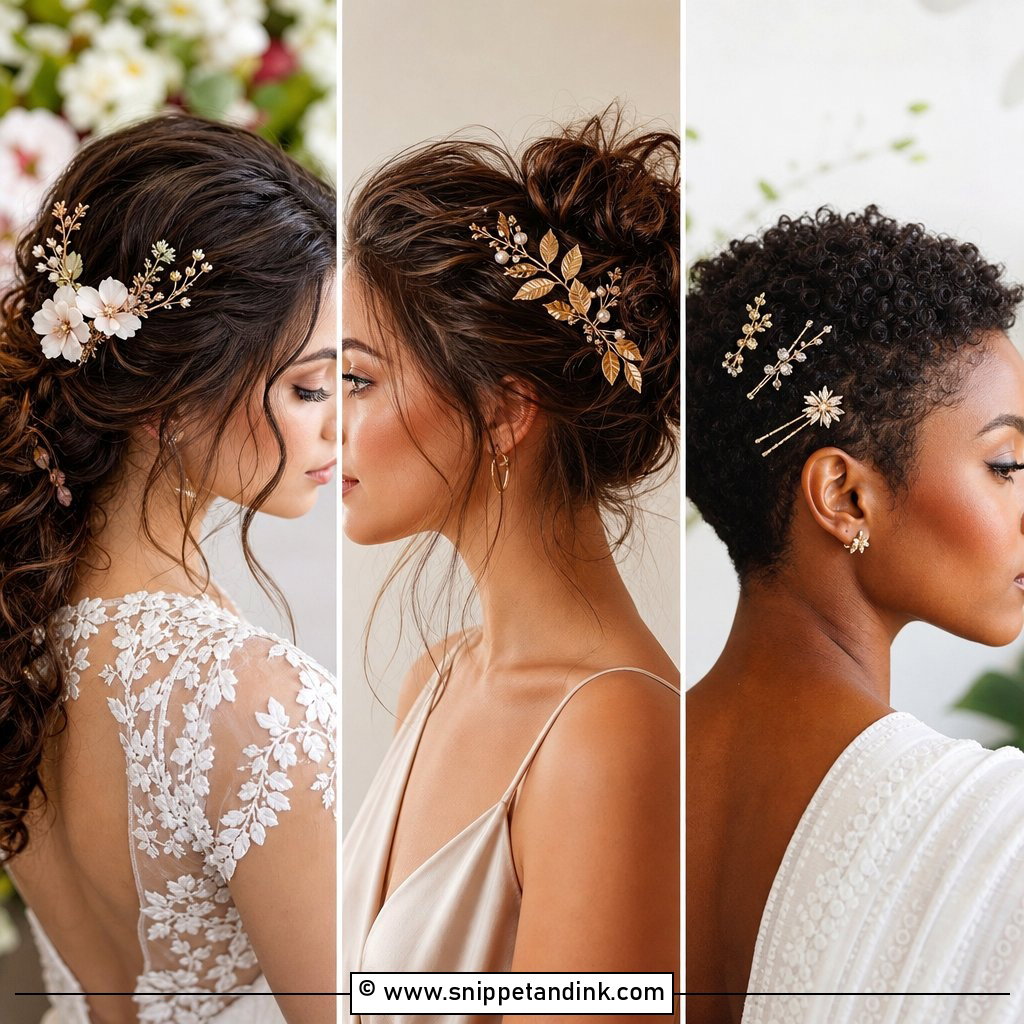
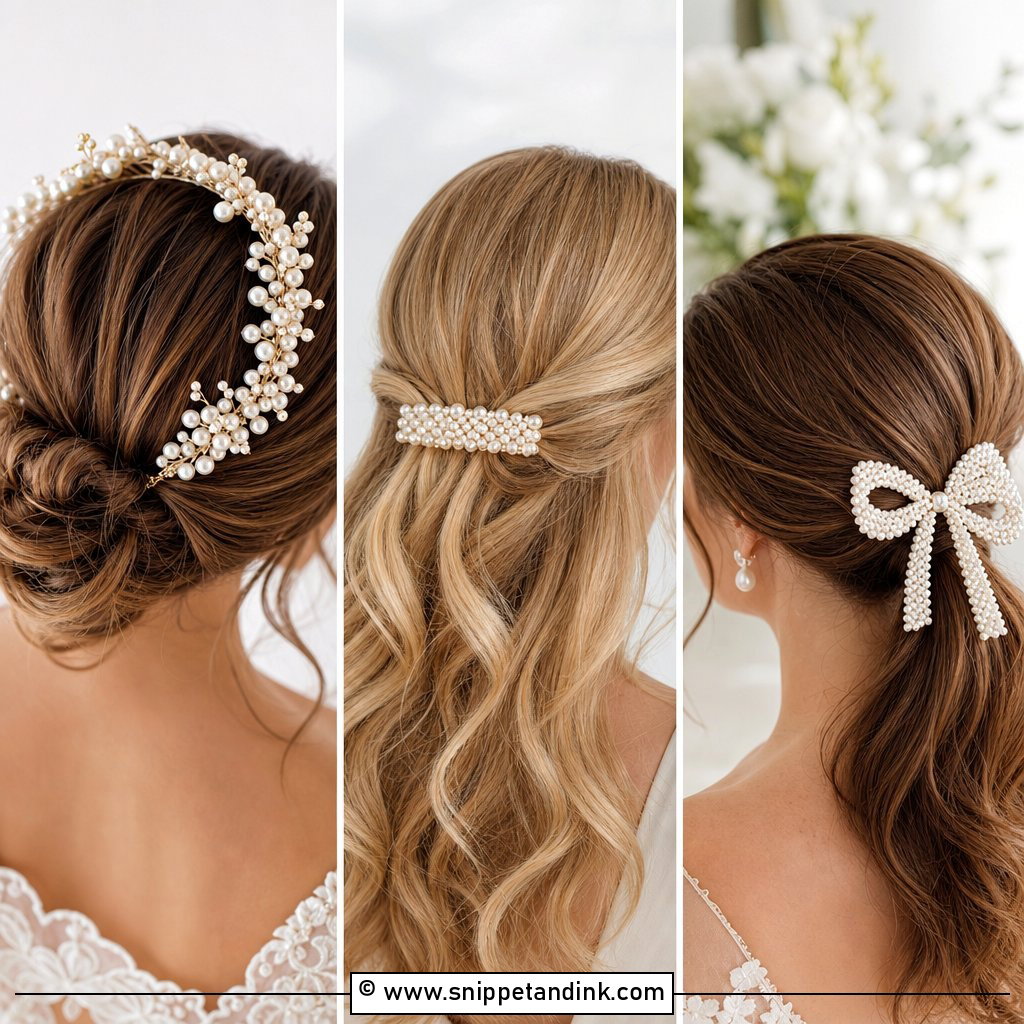
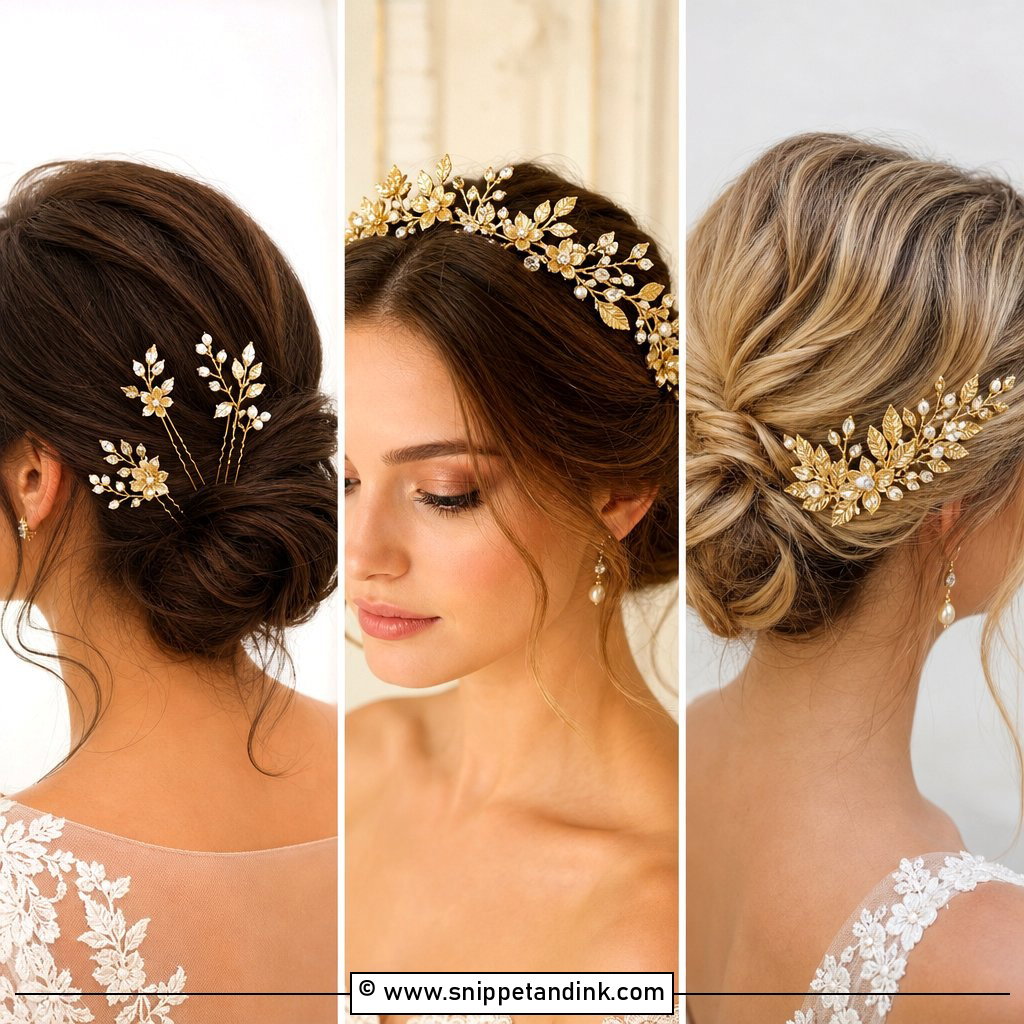
Pearl pins are the lightest option here, and that’s their main advantage. They add shine without pulling on the hair, which matters at a reception that runs past midnight. I scatter them through a textured bun, a side bun or a braided bun, pushing each pin in at an angle so it locks against the twist. Ivory, blush, champagne and pastel outfits suit pearls best. For an engagement or a minimal ceremony, this is the accessory I’d suggest first. Keep a few soft face-framing pieces and control the flyaways.
9. Polki Headband Bridal Hairstyle
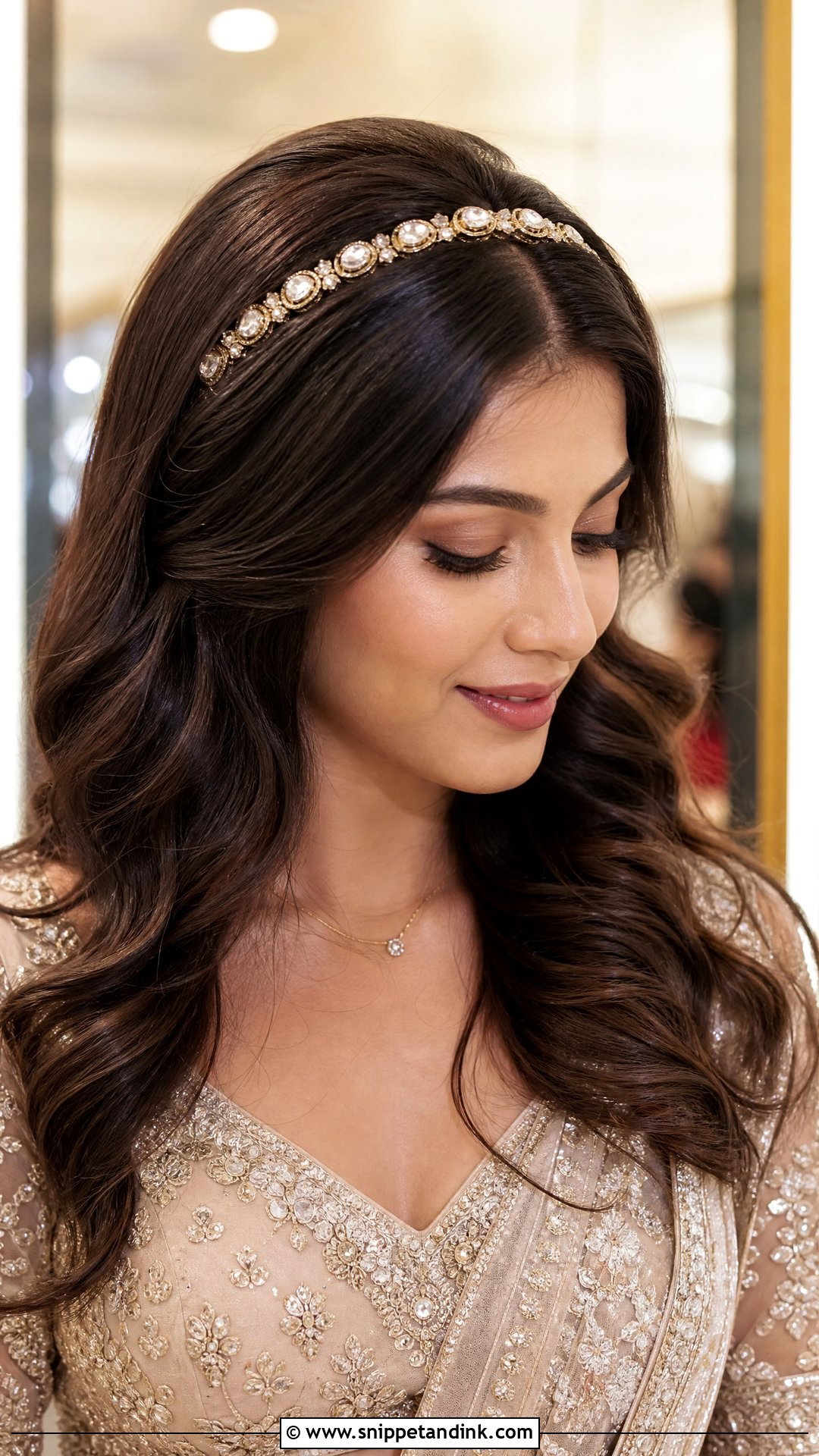
Headbands carry polki beautifully, and the result feels modern while still matching traditional jewelry. A polki headband bridal hairstyle is easier to wear than a matha patti and more noticeable than scattered pins. It sits over waves, a sleek bun or a half-up style. The crown must be smooth so the band lies flat; on teased hair it rocks back and forth. If the headband is wide, choose smaller earrings and skip forehead jewelry. Receptions, cocktail nights and contemporary lehengas are where it really works.
10. Kundan Hair Chain Bridal Hairstyle
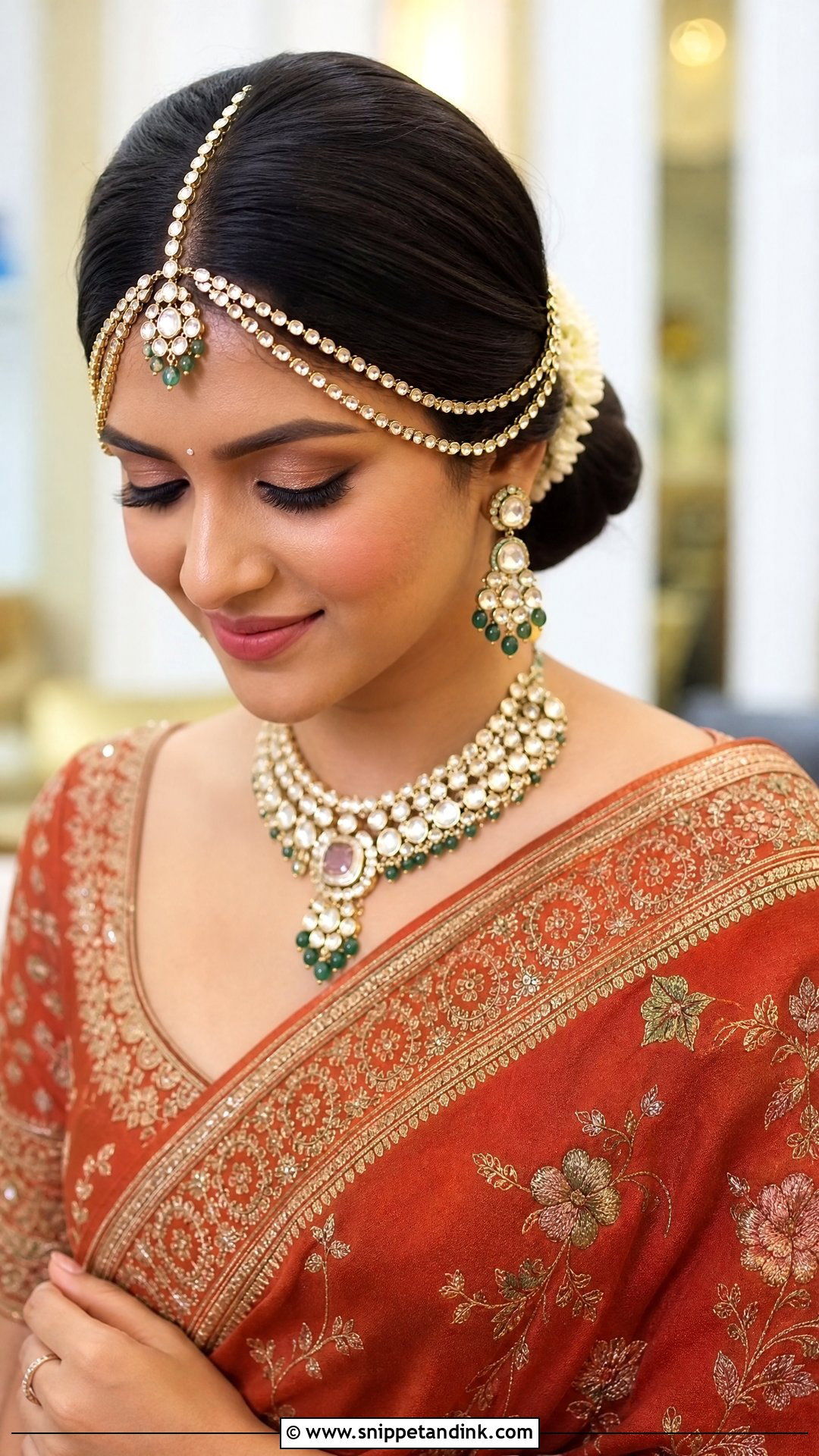
Hair chains move, which is both their charm and their problem. A kundan chain can drape from the centre part, circle the bun or layer over a braid, giving a lighter effect than a full matha patti. Every loop needs a hidden pin, though. I pin a chain roughly every few centimetres along its path, otherwise it slides as soon as you start dancing. Low buns, centre-parted waves and half-up styles all hold chains well. Match the metal and stones to your necklace and earrings so the set reads as one.
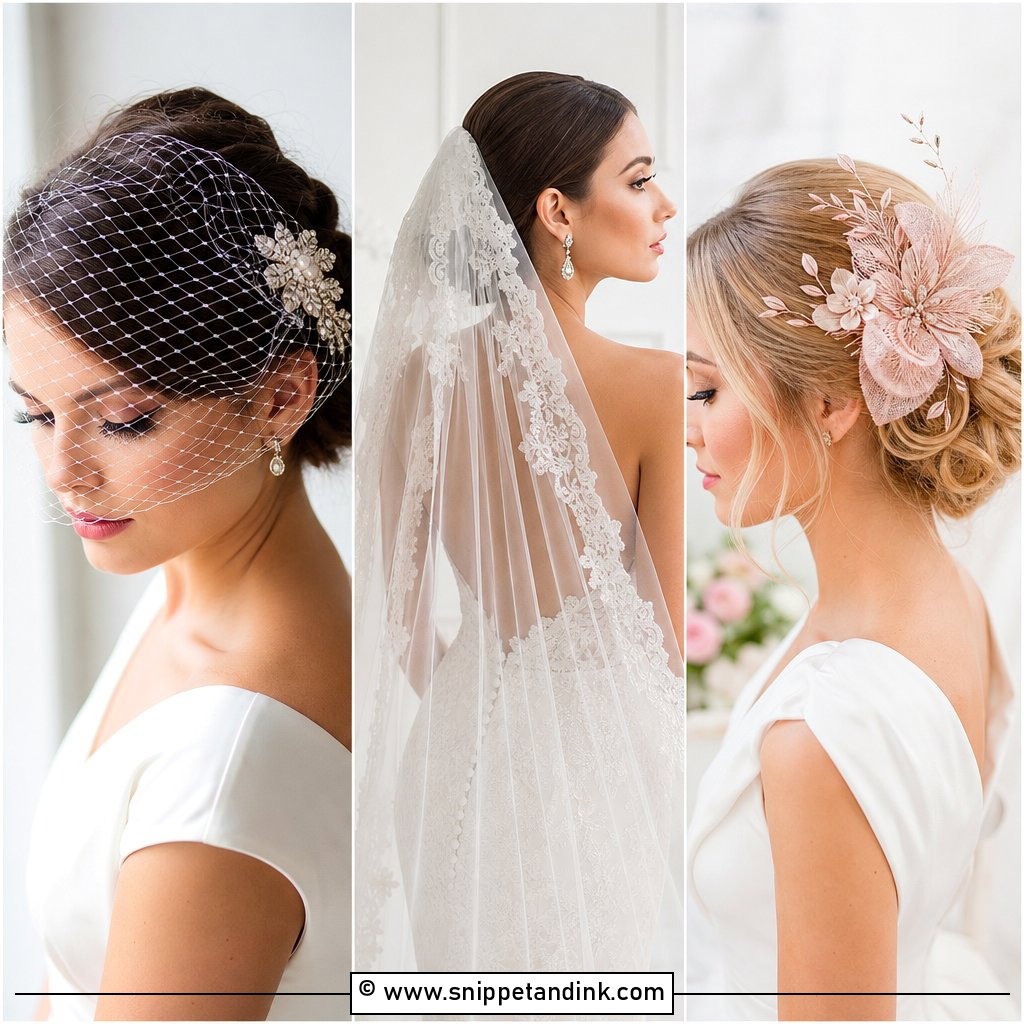
11. Bridal Bun With Hair Brooch
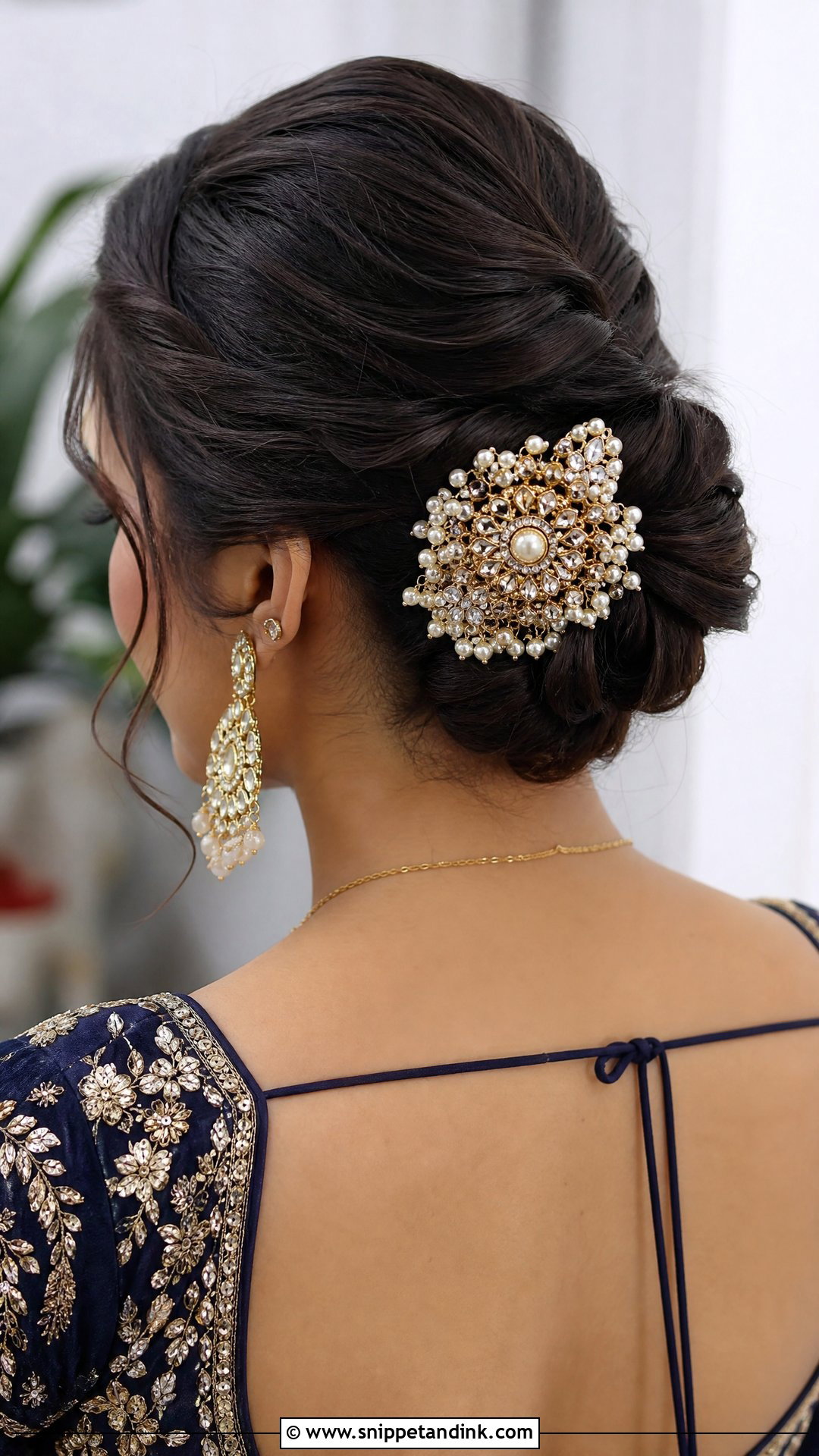
From the back, a plain bun can look unfinished in photos, and a brooch solves that with one piece. Place it at the side, above the bun or right in the centre. Kundan, pearl, polki and antique gold brooches are all common. Size is the thing I watch. A small brooch disappears in a large bun, while an oversized one presses into your head when you lean back in a chair. Smooth buns look formal, twisted ones softer. I secure the brooch with two crossed pins through its back loop rather than relying on its own clasp.
12. Bridal Braid With Paranda
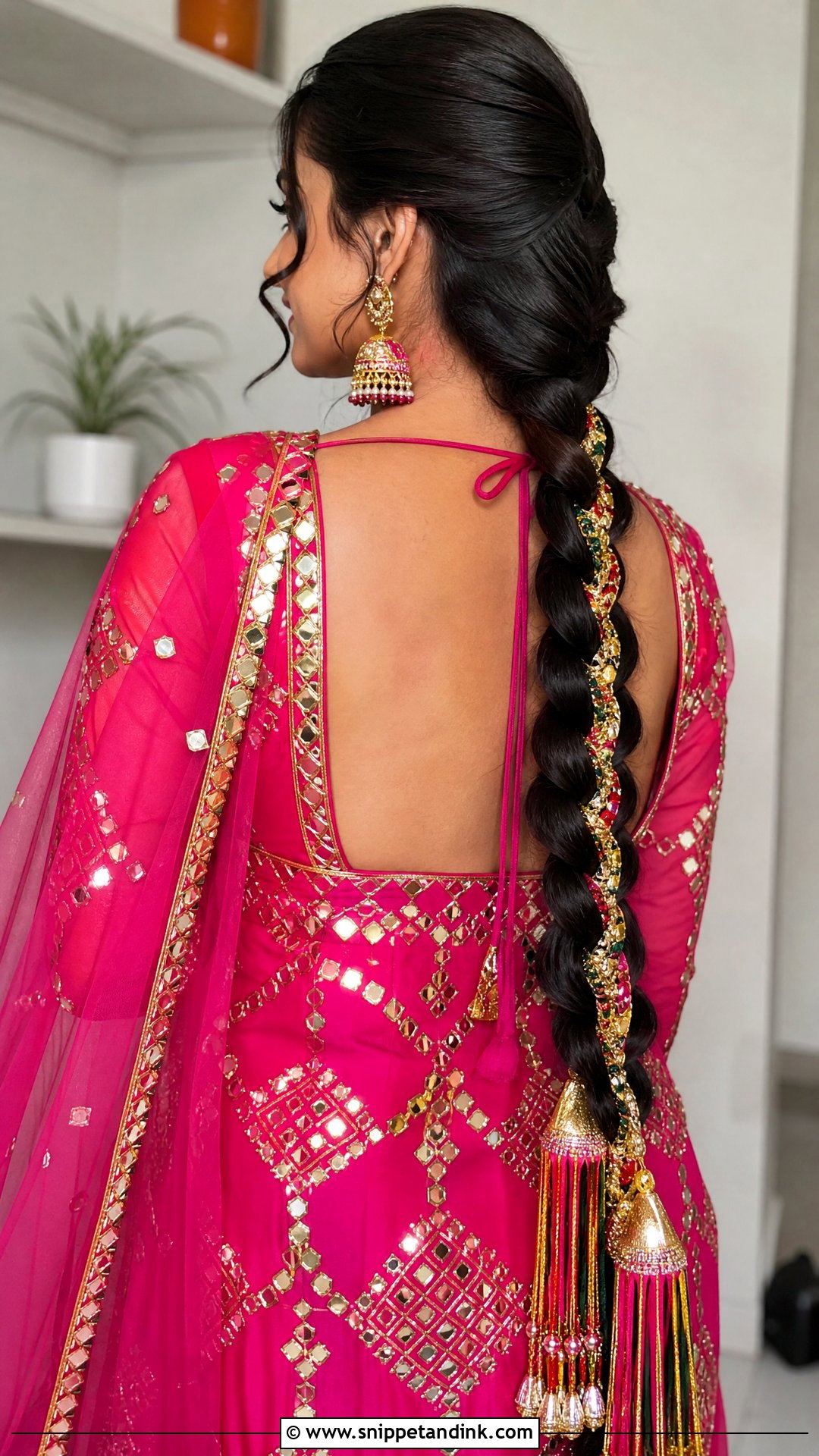
A paranda adds colour, length and tassels to a braid, bringing a Punjabi flavour that comes alive at mehendi, sangeet and haldi. Gold thread, mirror work, pearls and beads are all options, matched to the outfit. I braid the paranda in from about halfway down, so its tassels swing at the end and the base of the braid stays neat. Sleek, bubble or loosely pulled braids all work. It looks best in motion, during dancing especially. If the paranda is bright, keep the jewelry near the face simple.
13. Bridal Hairstyle With Tiara
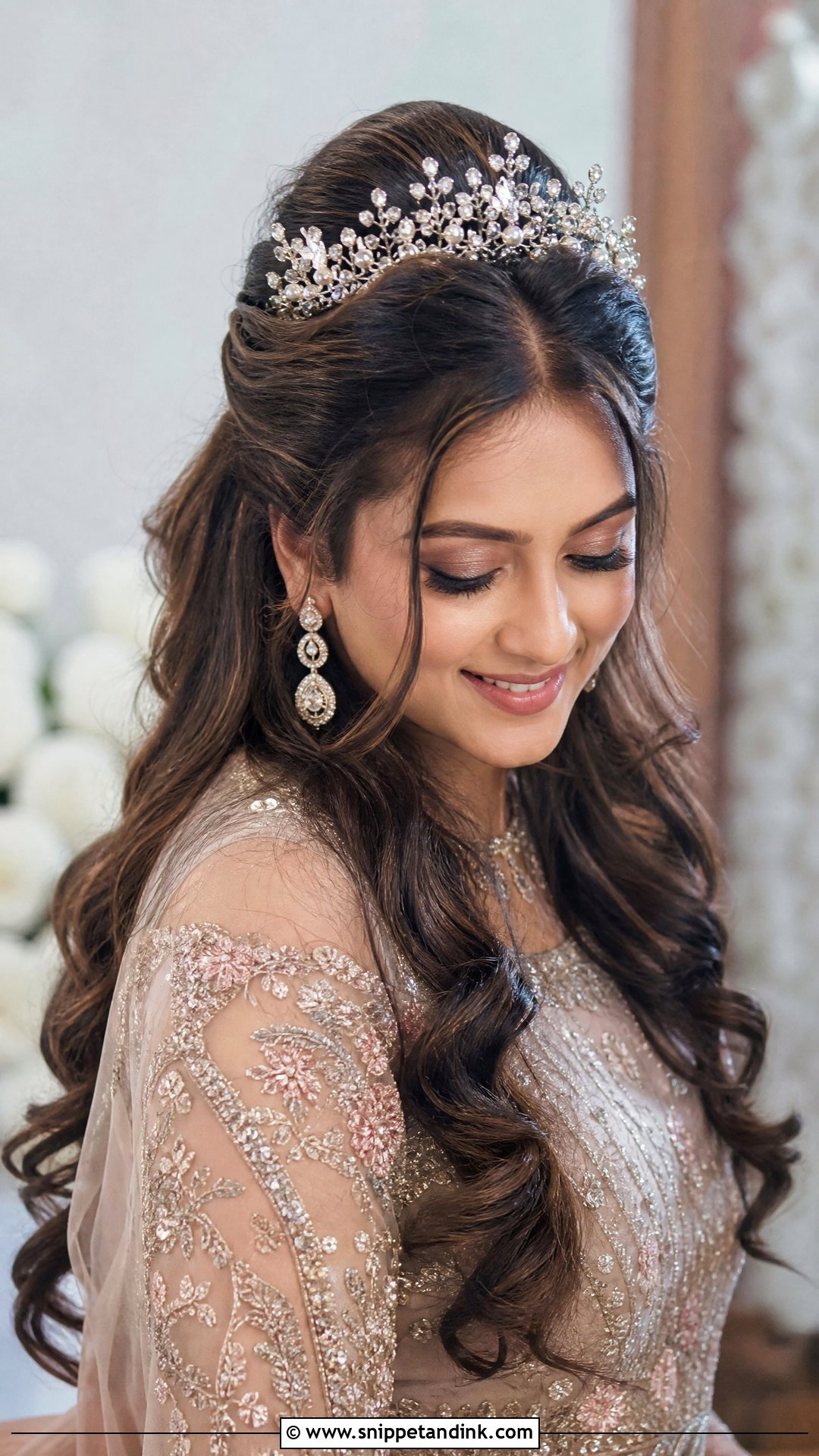
Tiaras sit higher on the crown than traditional forehead jewelry, which adds height and suits fusion weddings and reception looks. Soft curls, a half-up style or a polished low bun all support one. Height flatters round and heart-shaped faces in particular. To keep it connected to Indian bridal jewelry, choose pearls, crystals or soft gold detailing. I wouldn’t combine a tiara with a tikka or chains; one headpiece is enough. The hair underneath should stay glossy and controlled.
14. Bridal Half Up Hairstyle With Hair Vine
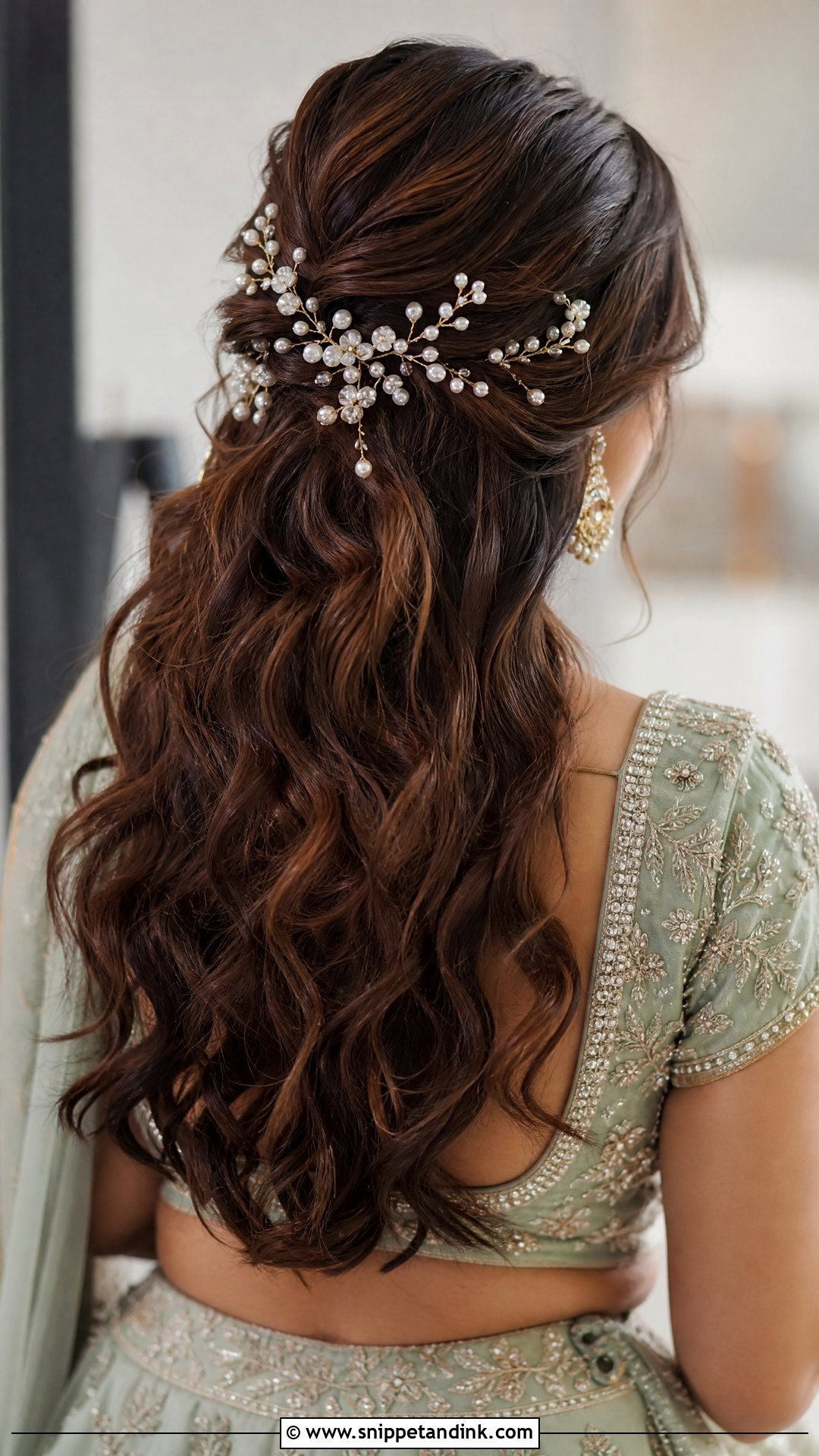
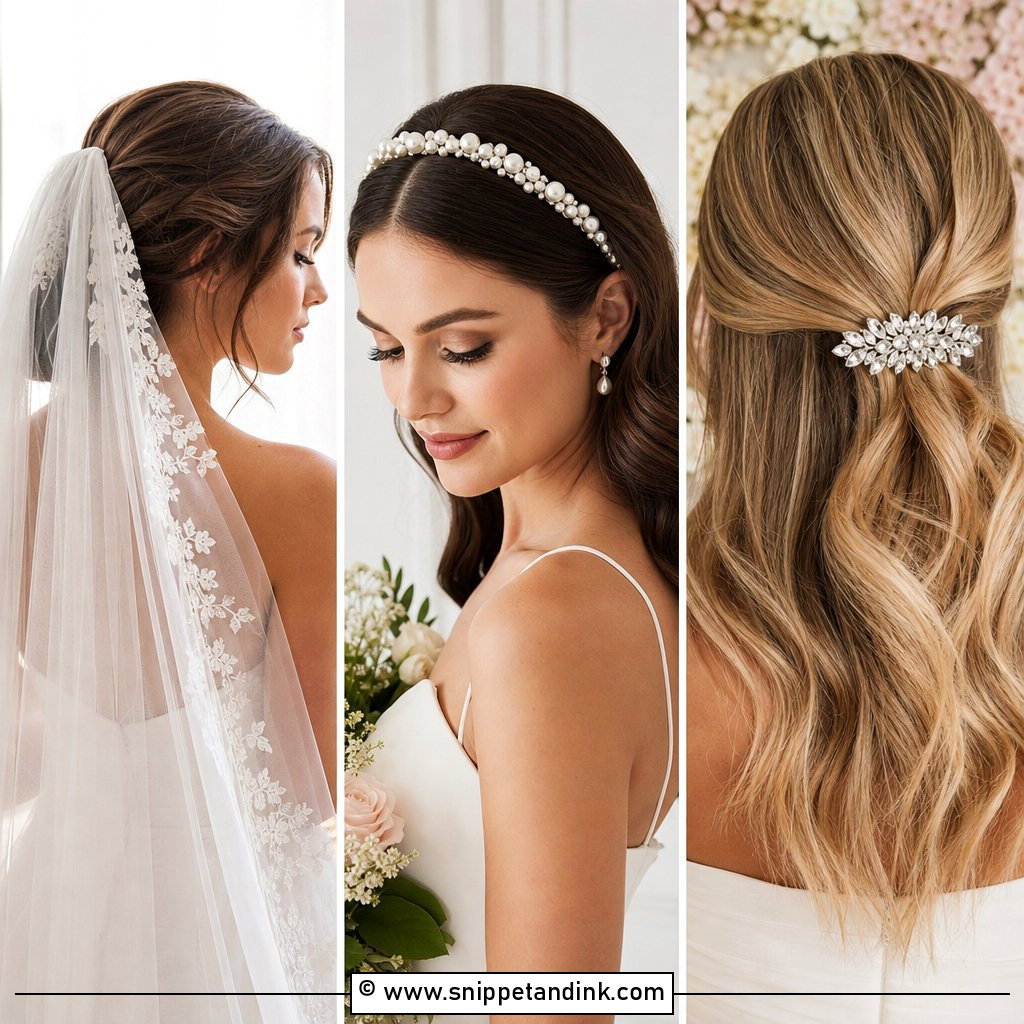
Half-up hair shows off length while keeping the face clear, and a vine gives the pinned section a reason to be there. The top section is pinned back, the rest falls in curls or waves, and a flexible vine is woven through the pinned area, along the crown or to one side. I thread the vine’s wire ends under the hair before pinning over them; laid on top, it slips within an hour. It suits engagement, reception, mehendi and bridesmaid styling. Pearl, crystal or tiny floral details keep it light and comfortable.
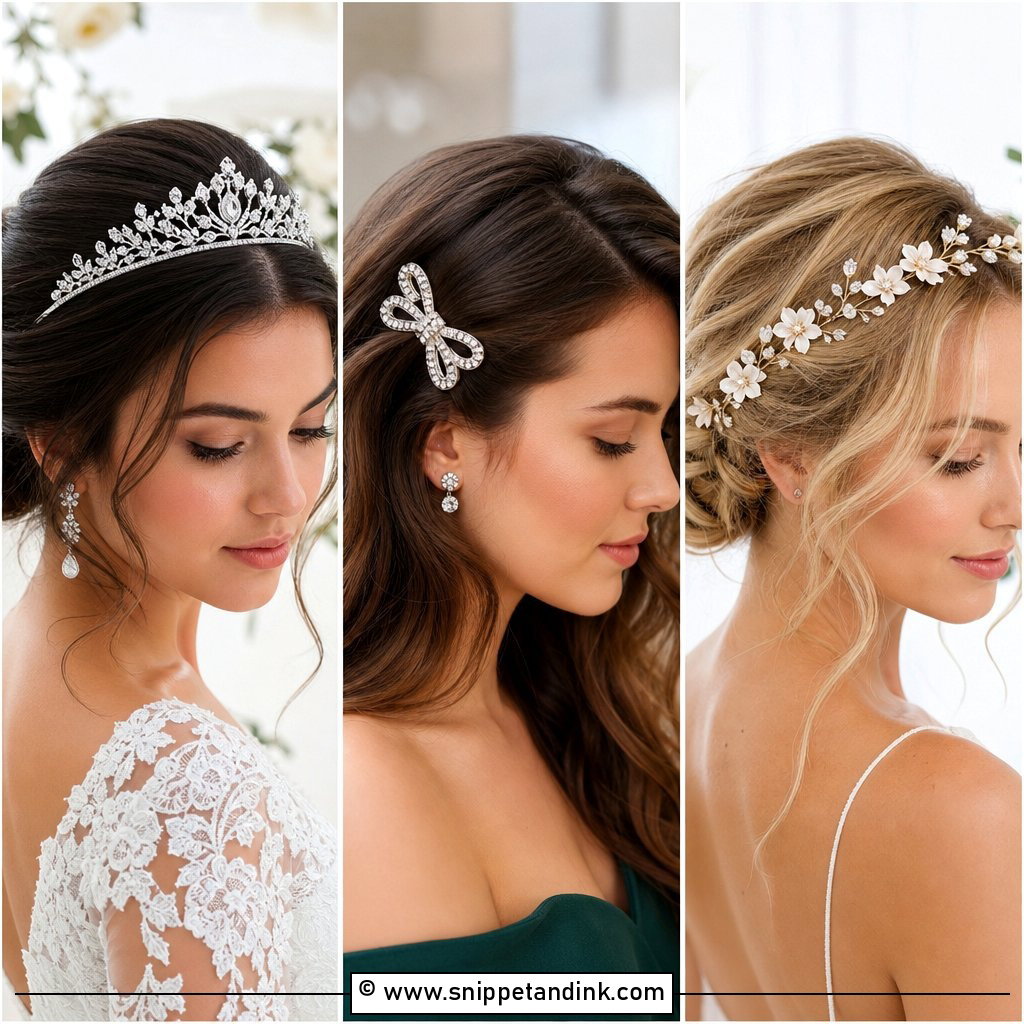
15. Bridal Ponytail With Hair Accessories
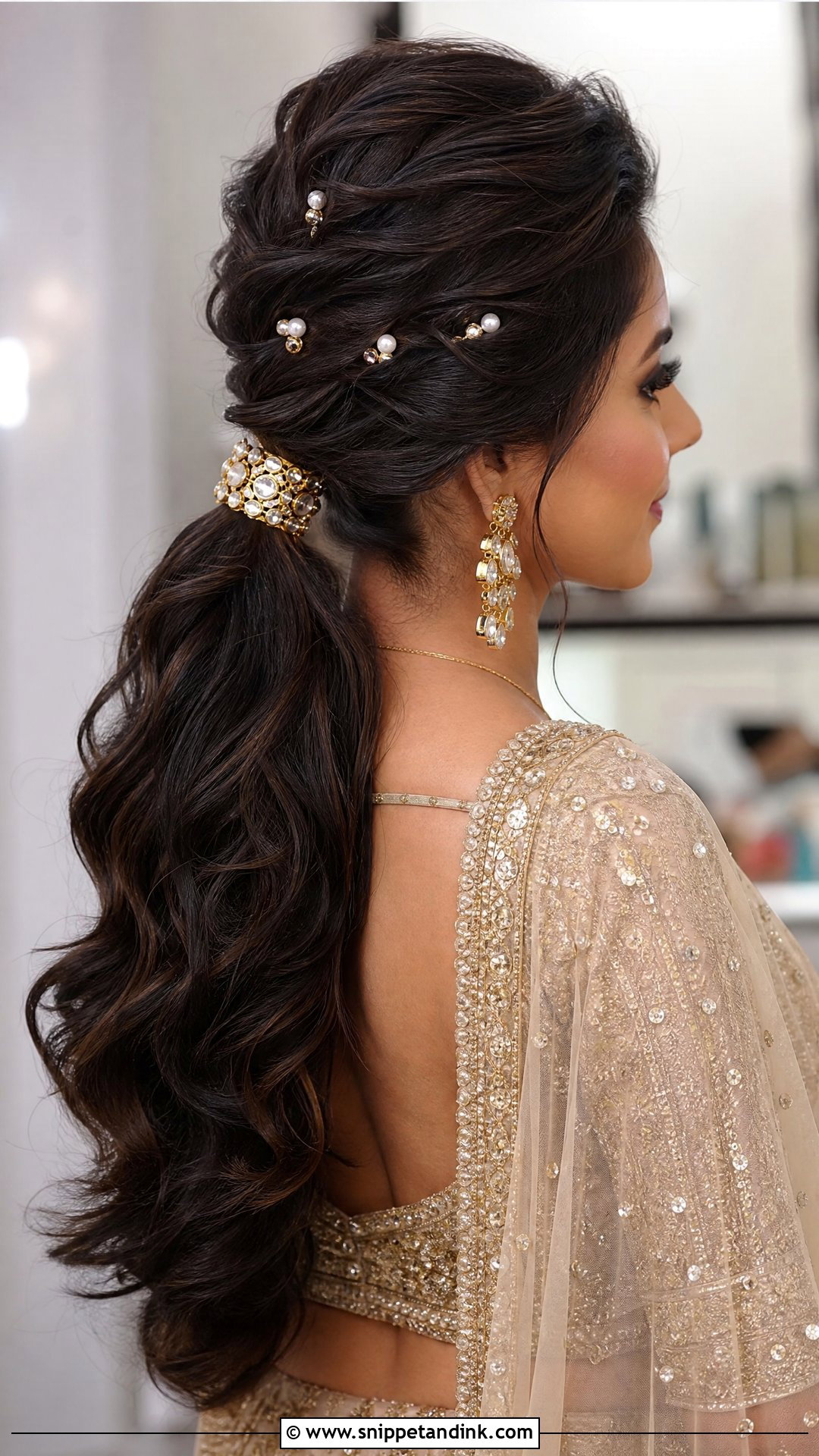
For a sangeet or reception, a ponytail is the most practical choice on this list: it stays secure and lets you dance without worrying. Height follows the outfit, so a high pony suits a sleeveless blouse and a low one sits better with a heavy dupatta. Pearl pins, kundan clips, chains or a cuff around the base dress it up. I wrap a strand of hair around the elastic before adding any cuff. Waves add volume, straight hair looks sleeker. Keep the crown smooth with a little lift.
Dupatta, Tikka, Passa: The Order Matters
Most of the trouble I see on the day comes from layering in the wrong sequence. The hair should be finished first, then the tikka or matha patti hooked into a small, firm section at the crown, then the passa if you’re wearing one, and the dupatta last. Pinning the dupatta before the jewelry pulls everything forward, and the tikka ends up sitting crooked over one eyebrow.
Weight is the other honest issue. Kundan and polki head jewelry can be heavy, and a passa hangs entirely on one side. Ask your stylist to build a small padded base or a tight braid under the hook so the weight rests on more hair, and to pin the chain along the parting every few centimetres. A side passa feels better with a counter pin on the opposite side that nobody sees.
Flowers for a jada or gajra
Order fresh strings for the morning of the ceremony, not the night before, and keep them wrapped in a damp cloth in a cool room until your stylist is ready. Buds that are just about to open last through the day far better than flowers already fully open at nine in the morning. If strong fragrance bothers you, mix in roses or a few silk blooms near your face so the jasmine sits further back.
Finally, plan the change between ceremony and reception. Taking down a matha patti and repinning a dupatta can easily eat half an hour, so build that into the timeline instead of rushing it with guests waiting.
Try the Whole Look on, Dupatta Included
Hair jewelry at an Indian wedding is part of the outfit, not an afterthought. A tikka or matha patti feels classic for the pheras, a poola jada or gajra carries regional tradition, and pins, vines, brooches and headbands lighten up the reception and smaller functions. Plan by event, your outfit and how comfortable you want to be. Then do a proper trial: full hairstyle, every accessory, the dupatta pinned on top. Sit, stand and turn your head. That’s the only way to know it will stay put.
You'll Like These Ideas:


Leave a Reply