
Brides bring me older gowns for two reasons: they want a dress nobody else at the wedding season will be wearing, or they want one that already has a family story stitched into it. Antique lace, 1920s beading, 1950s volume and a plain 1990s slip all belong in a modern wedding, as long as the veil, shoes and alterations agree with the era rather than fight it. Some of you will buy true vintage, which needs patience and a careful tailor. Others will choose a new gown cut from an older pattern, which is easier to fit. Both routes are covered below, era by era, with what I check before saying yes to each one.
Inspecting a Vintage Gown Before You Pay for It
With a new gown, you can reorder a size. With a vintage one, what is in front of you is all there is. Before I let a bride fall in love with an older dress, I go over it in good daylight, inside and out.
- Underarms and waist seams. Perspiration stains and weak stitching show up here first.
- Shattering. Some older silks were weighted with metallic salts and split in fine lines along folds. Shattered silk cannot be repaired, only covered.
- Yellowing and brown spots. Faint, even yellowing often lifts with professional cleaning; small brown spots from old sugar or champagne stains often don’t.
- Measurements, not labels. Vintage sizing runs small, so measure bust, waist and the hip line of the dress flat, and compare with your own.
- Seam allowance. Turn it inside out. Wide seams mean the dress can be let out; narrow, overlocked seams mean it can’t.
If you’re unsure, take it to a tailor who works with older fabrics before you buy. A short assessment costs far less than a dress you can’t wear.
1. Victorian Lace Old Wedding Dress
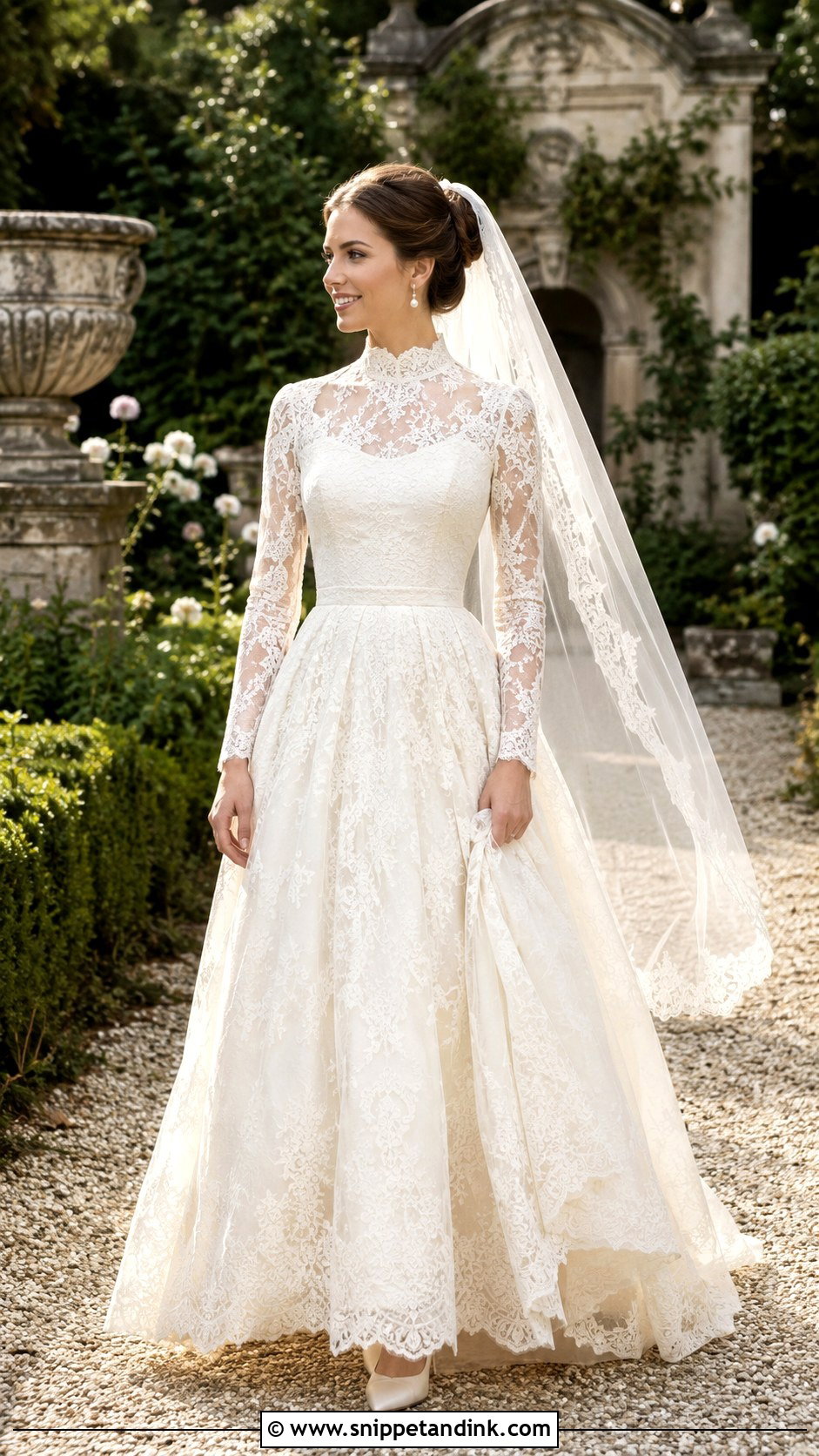
Covered necklines, fine sleeves and a fitted bodice over a flowing A-line skirt give the Victorian look its modest, detailed character. Because the dress carries so much lace, I keep the styling quiet: pearl drops, a soft updo and a narrow veil with a lace edge. Genuine Victorian lace is often over a century old, so check the sleeve seams and the underarms first, as that is where it tears. Ivory satin pumps or low block heels sit better with it than anything glossy, and a small bouquet of cream roses suits an estate or a garden.
2. Edwardian High Neck Old Wedding Dress
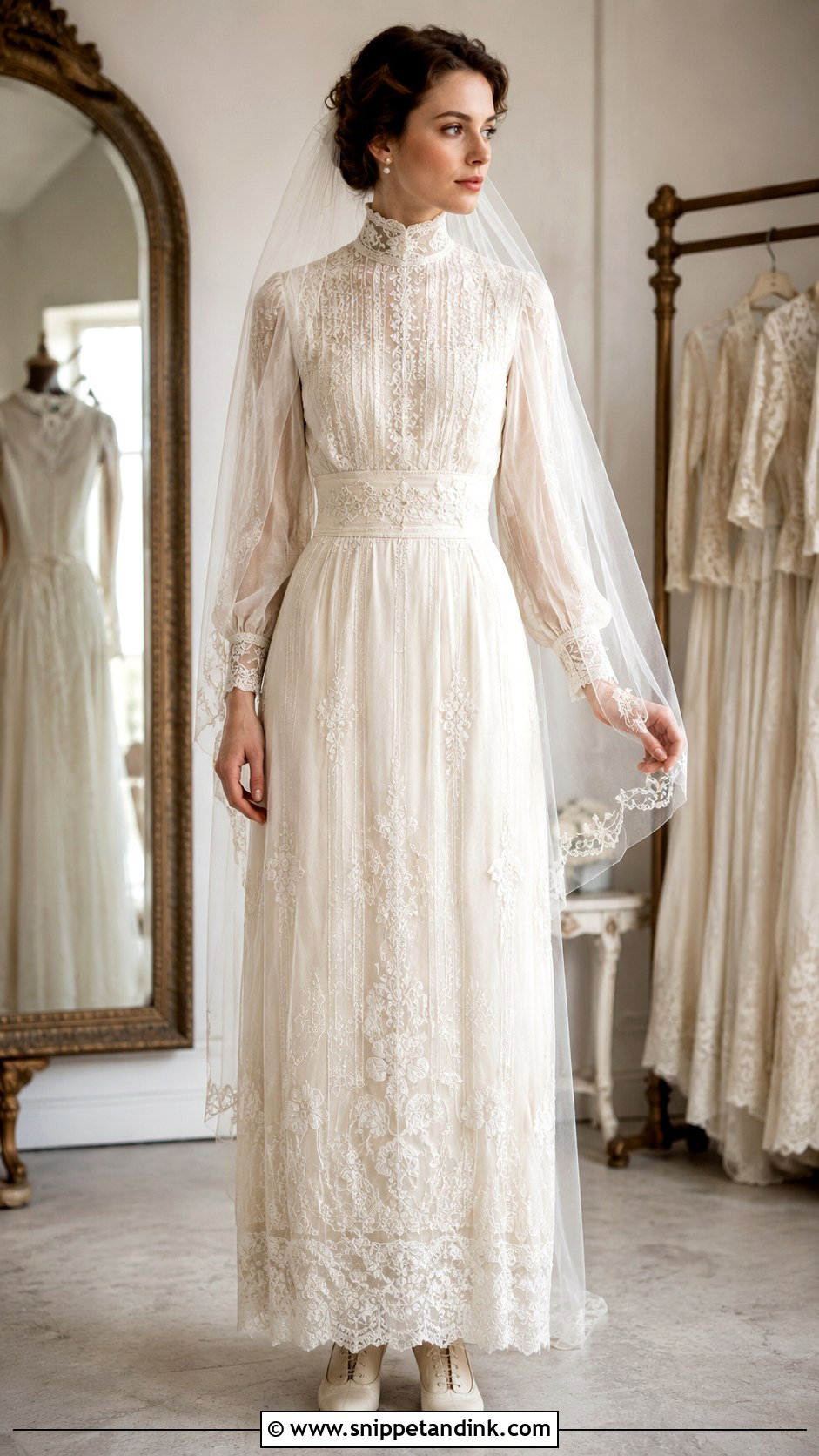
An Edwardian high neck old wedding dress has a softer line than people expect: light cotton lace, fine embroidery, rows of tiny buttons and a relaxed column that skims the body. The neckline already does the work, so pearl studs, a low bun and a sheer fingertip veil are enough. Many original Edwardian gowns are very sheer and fragile, and I’d have a tailor add a modern lining underneath rather than change the dress itself. Cream Mary Janes or lace-up bridal shoes suit the period.
3. 1920s Beaded Old Wedding Dress
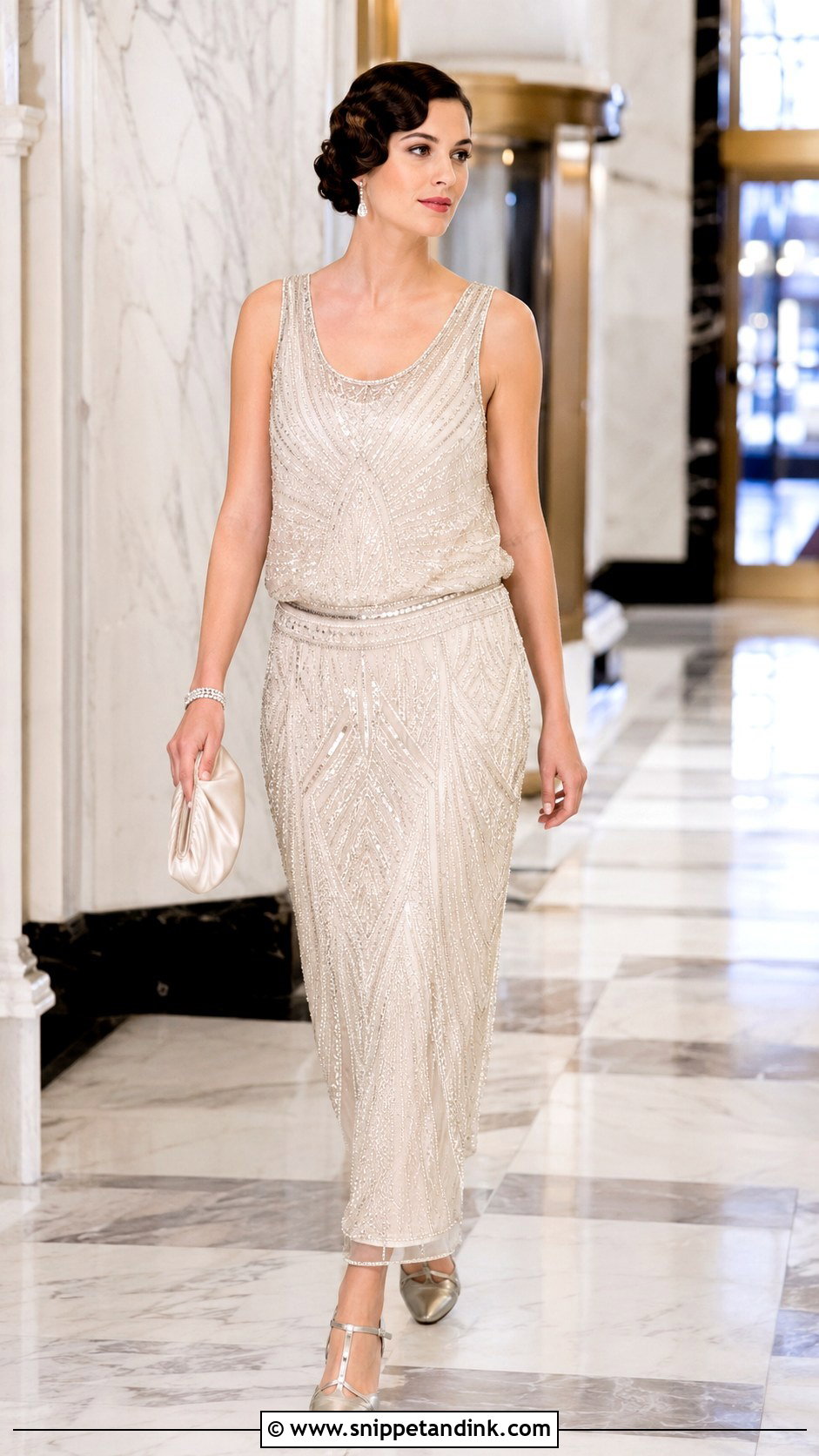
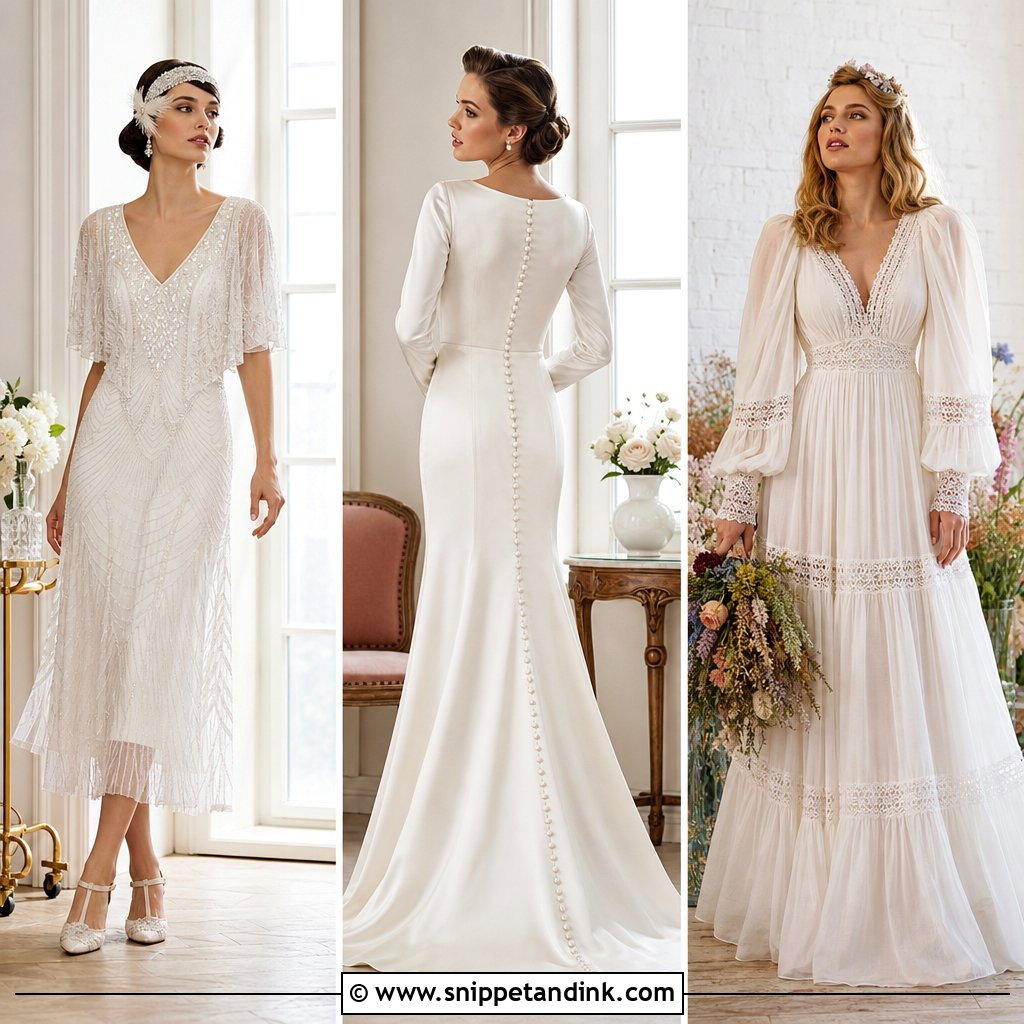
Movement and shine define the 1920s: a drop waist, a straight skirt and Art Deco beading that catches light as you walk. Original beaded dresses from this era are heavy, and the weight hangs from fine silk or chiffon, so a 1920s beaded old wedding dress should never be stored or even left on a hanger for long. Ivory, champagne or pearl tones keep it bridal. Pair it with metallic low heels, finger waves or pinned hair with a comb, and skip necklaces if the neckline is beaded.
4. 1930s Satin Old Wedding Dress
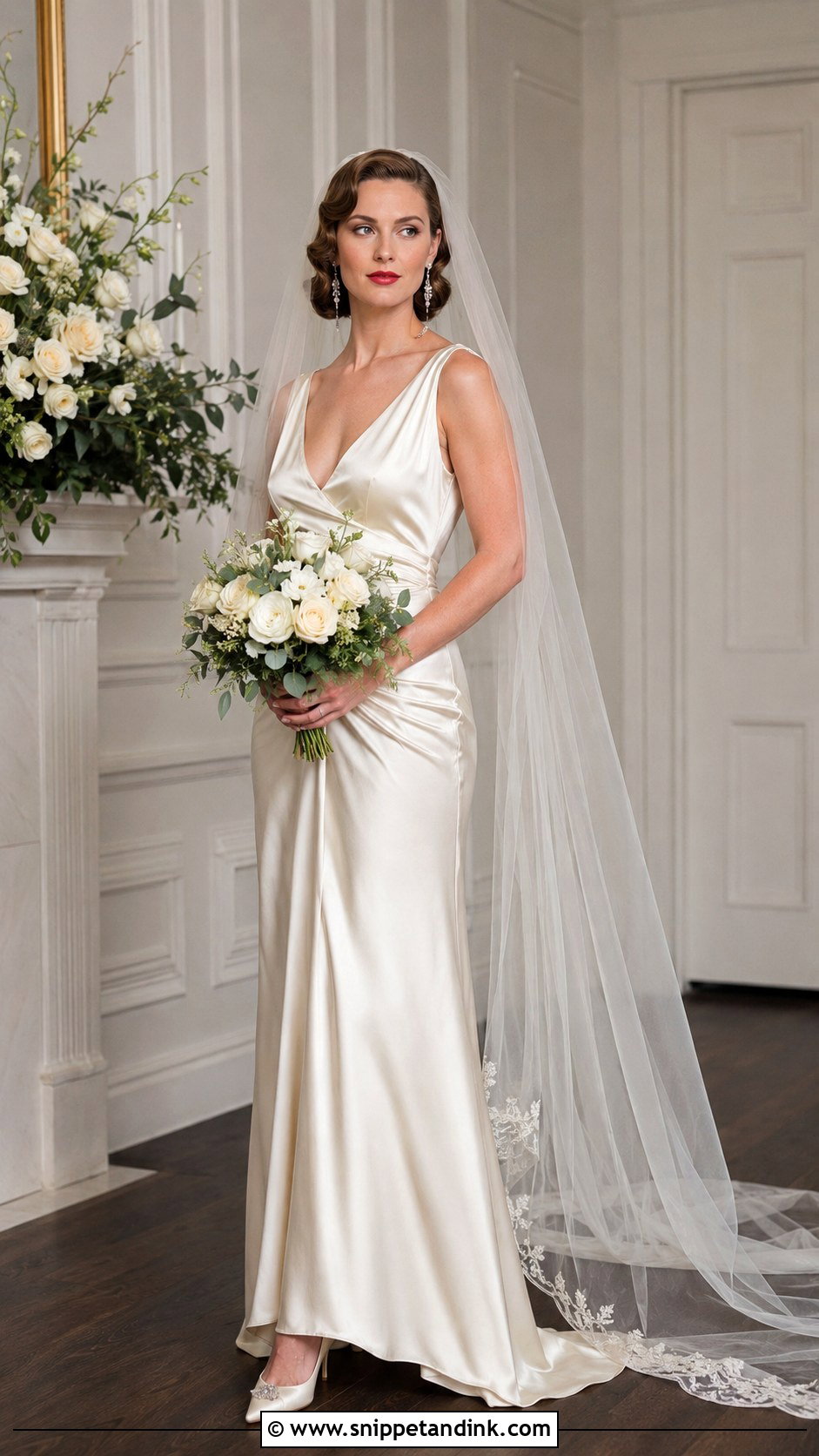
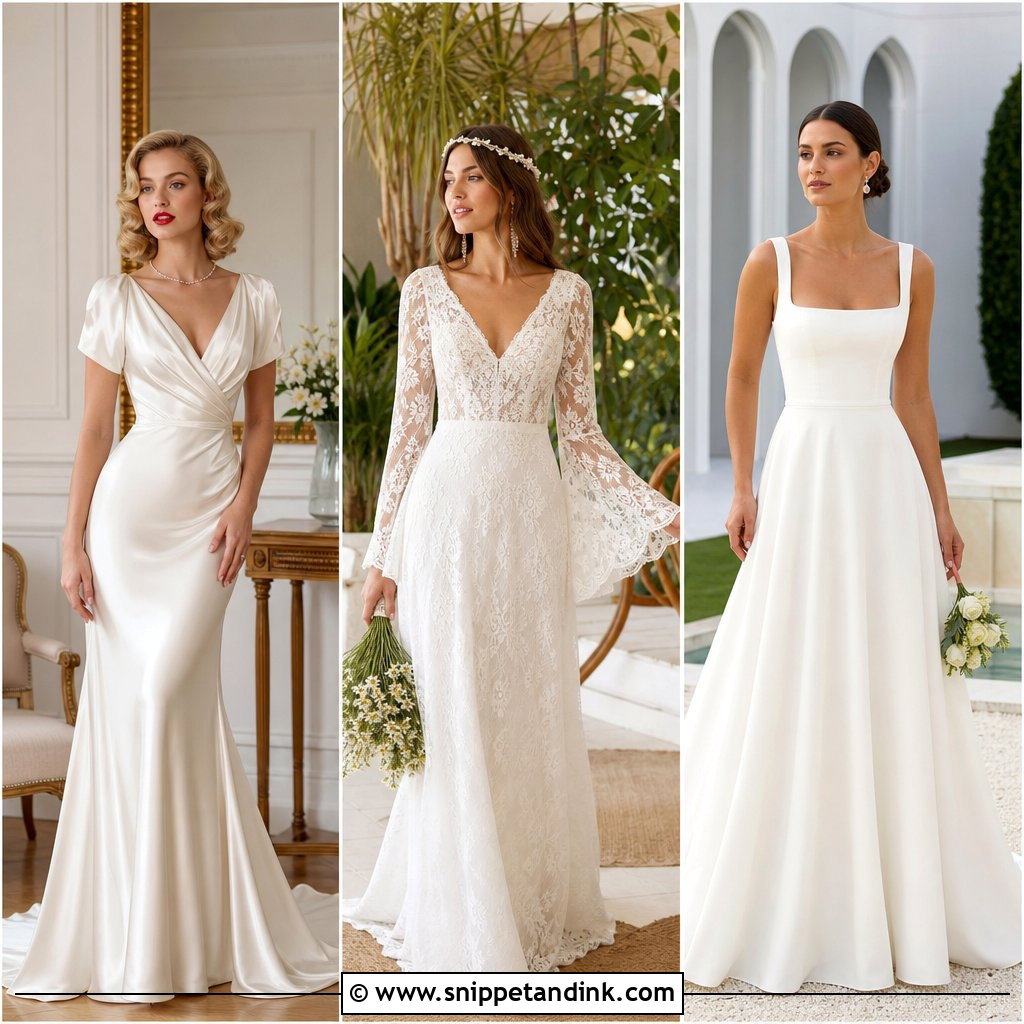
The appeal of a 1930s satin old wedding dress is the bias cut, which lets the fabric drape and follow the body. That same cut is unforgiving: bias satin shows every line underneath and stretches if hung for weeks, so I fit these dresses with the exact underwear you’ll wear. Ivory or warm cream works best, with pointed satin heels and crystal earrings. A chapel veil adds ceremony, while a silk capelet nods to old Hollywood, and calla lilies keep the bouquet as clean as the dress.
5. 1940s Tea Length Old Wedding Dress
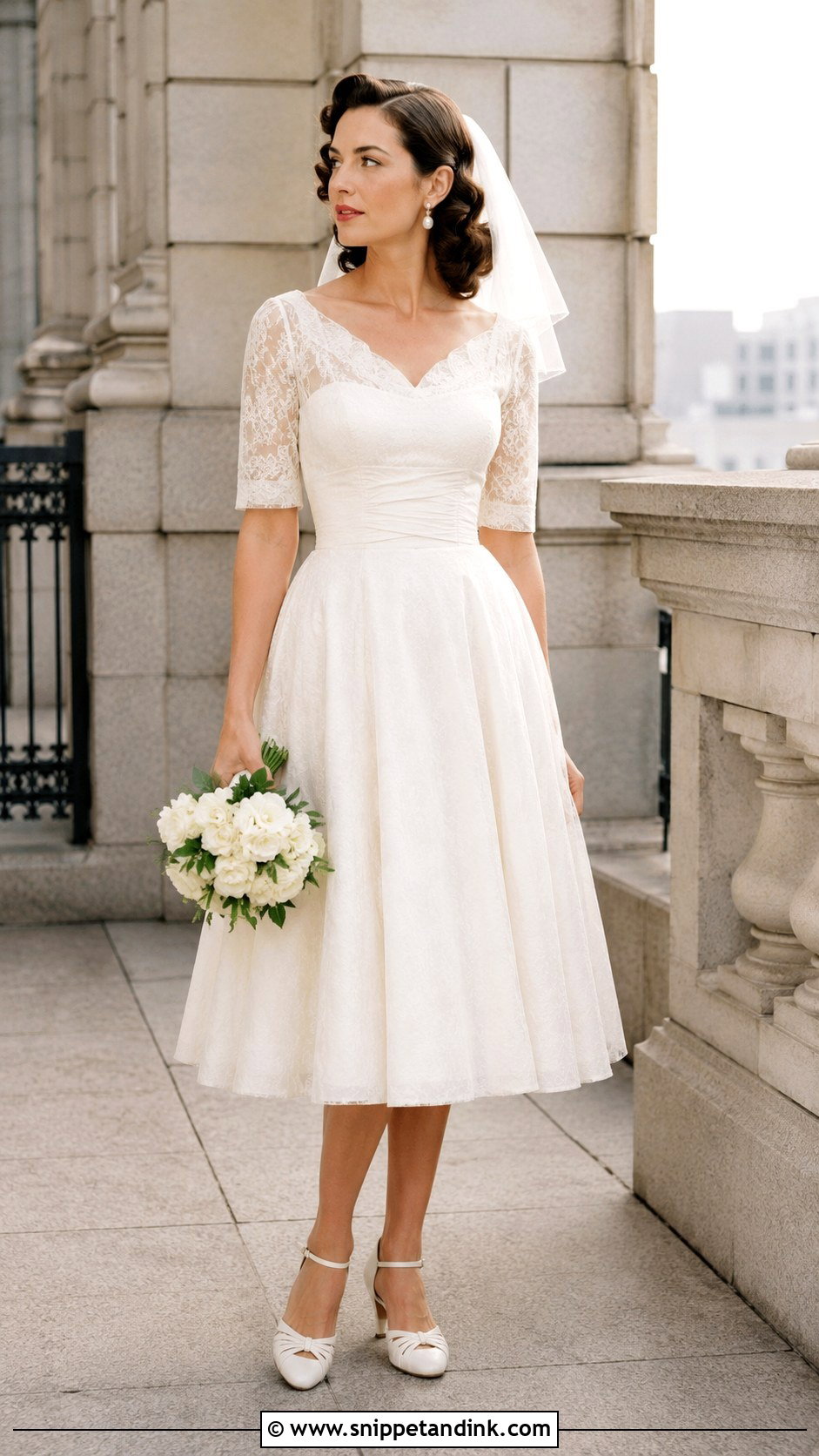
A 1940s tea length old wedding dress was designed for a practical era, and it still moves easily: a nipped waist, modest sleeves and a skirt between knee and ankle. With no train, you can walk anywhere. The hem shows your shoes, so ankle-strap heels in ivory need to be comfortable enough to stand in all day. Softly curled hair, pearl earrings and a birdcage or short veil match the decade, and it suits daytime and courthouse weddings.
6. 1950s Ball Gown Old Wedding Dress
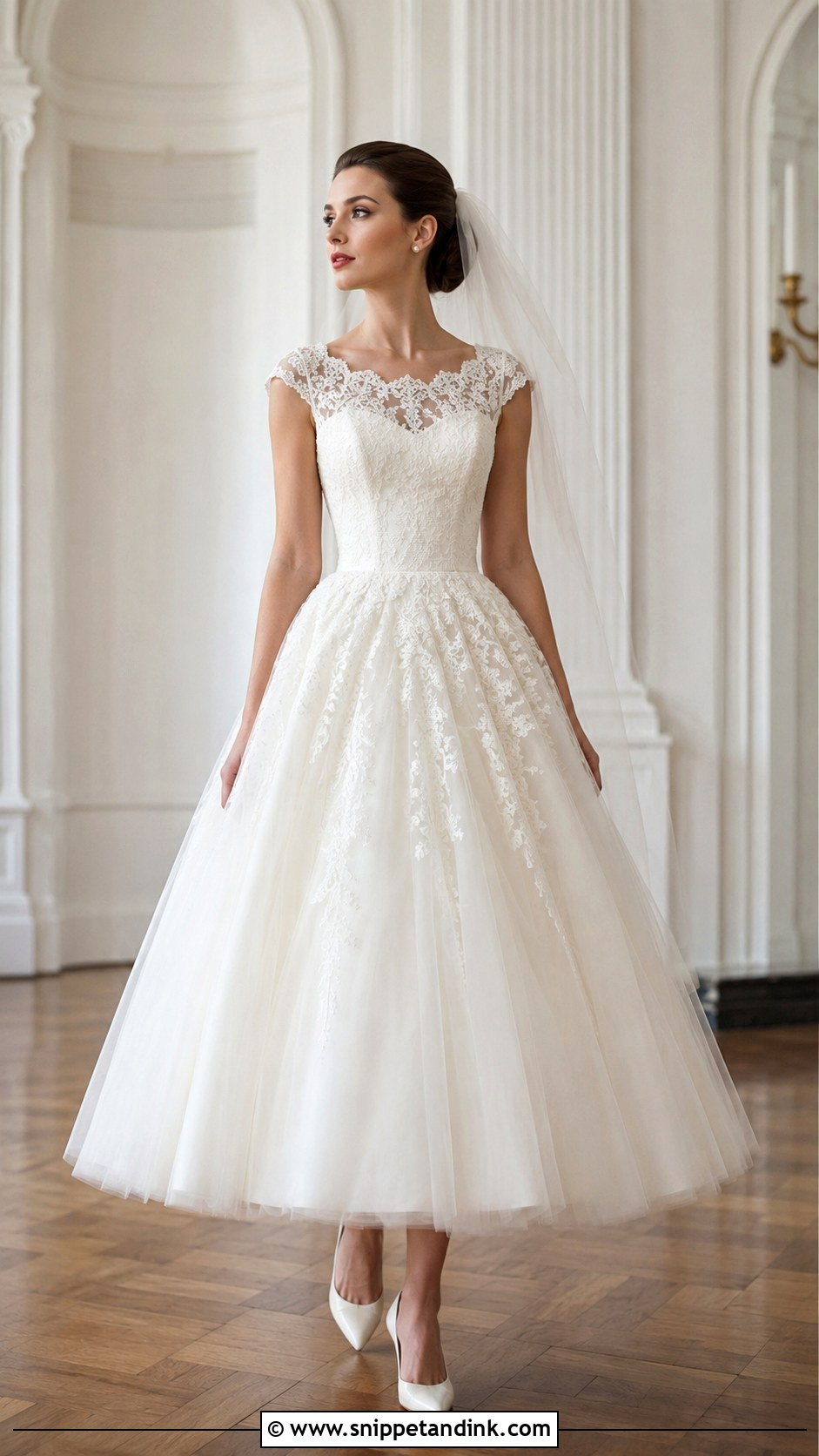
Full skirts, defined waists and layers of lace or tulle made the 1950s the decade of the big bridal entrance. The skirt carries the volume, so I keep everything else simple: pointed pumps, pearl studs and a veil that doesn’t compete. A waist-length veil shows off back buttons nicely. Check the petticoat on an original gown; old net can go limp or brittle, and a new petticoat underneath restores the shape without touching the dress. A round bouquet of roses or peonies matches the outline.
7. 1960s Mod Mini Old Wedding Dress
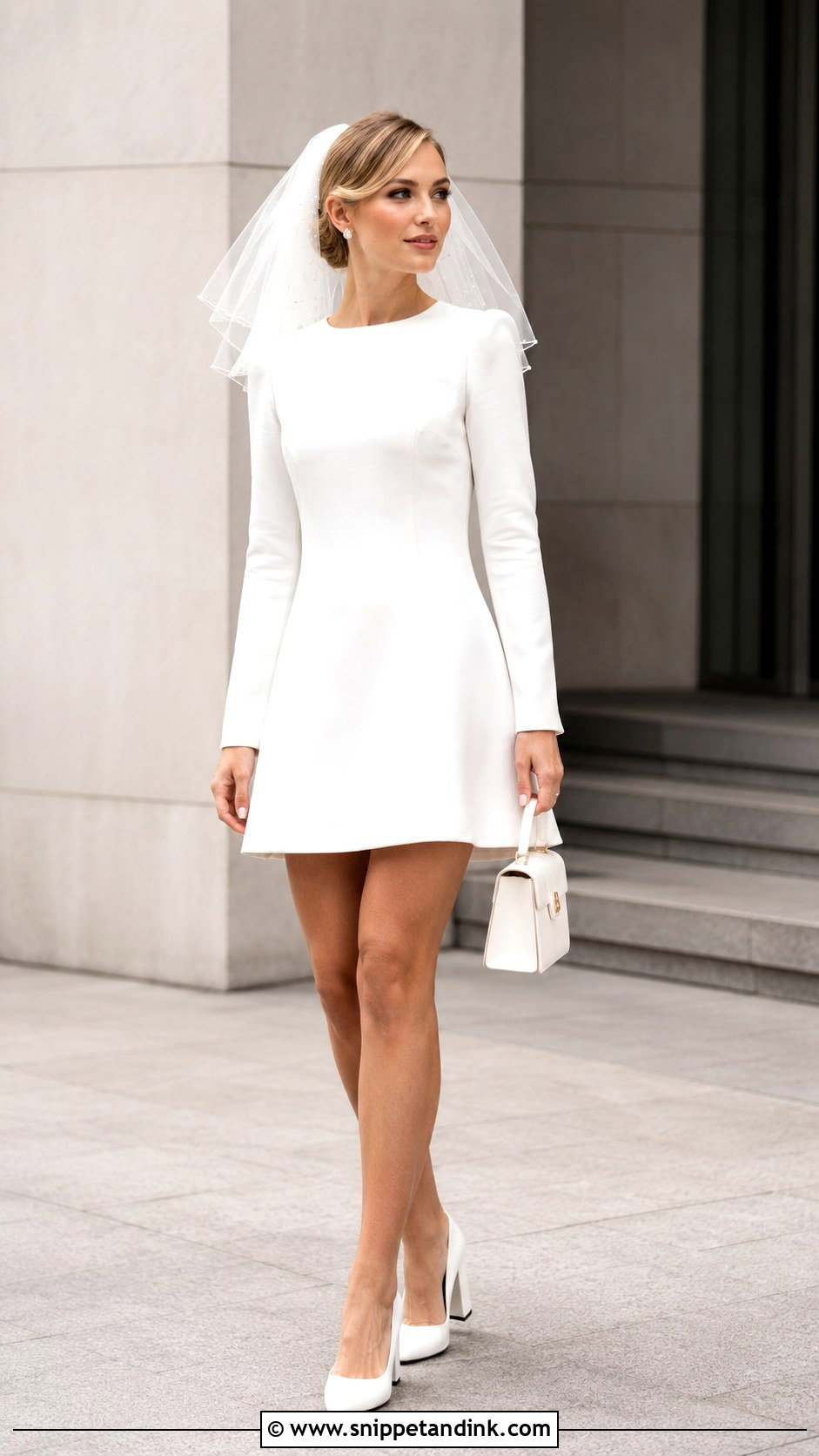
A 1960s mod mini is short, straight or slightly A-line, often with long sleeves, a high neck or bold graphic lace. Short dresses depend heavily on proportion, so I check the hem against your knee before anything else; a centimetre or two changes the whole look. White block heels, pearl studs and a bow veil suit it, along with defined eyes and a soft lip. It is very easy to dance in, which makes it a strong pick for city hall weddings and reception changes.
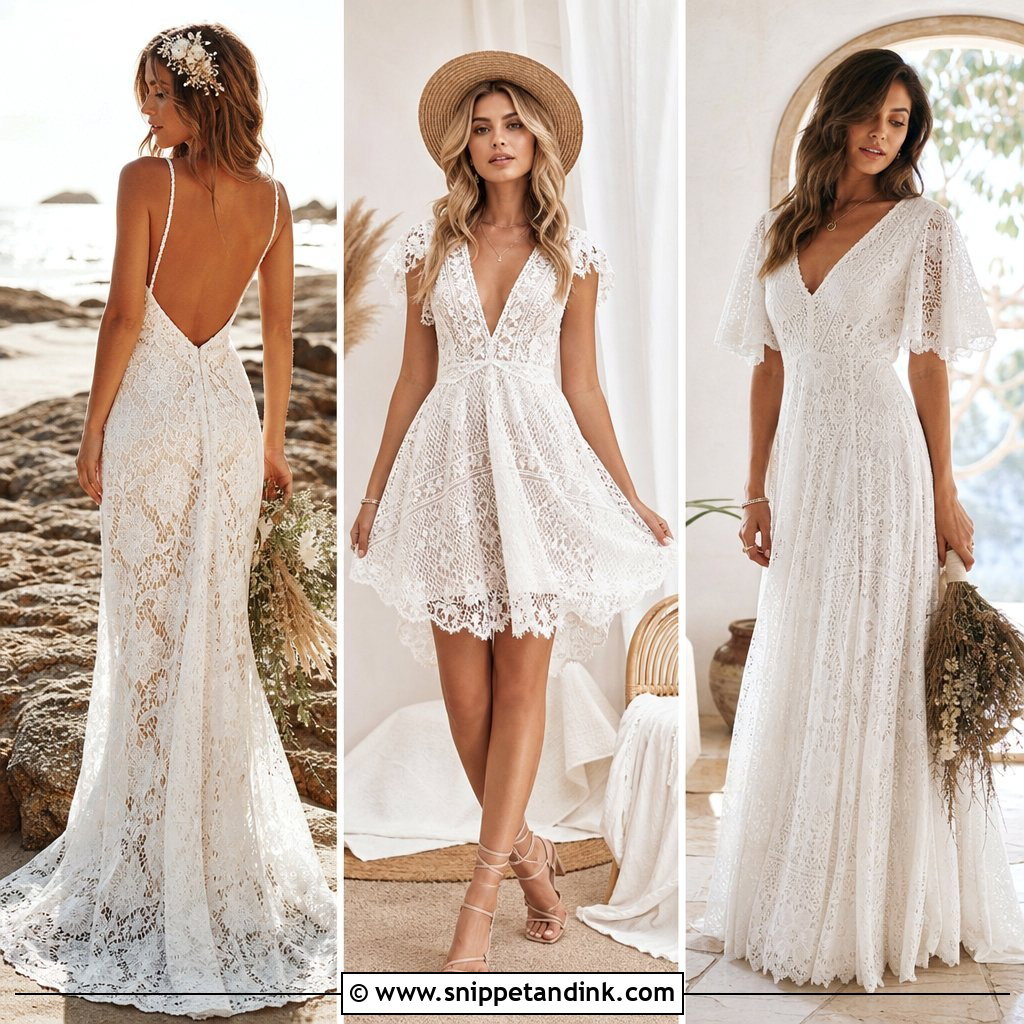
8. 1970s Boho Lace Old Wedding Dress
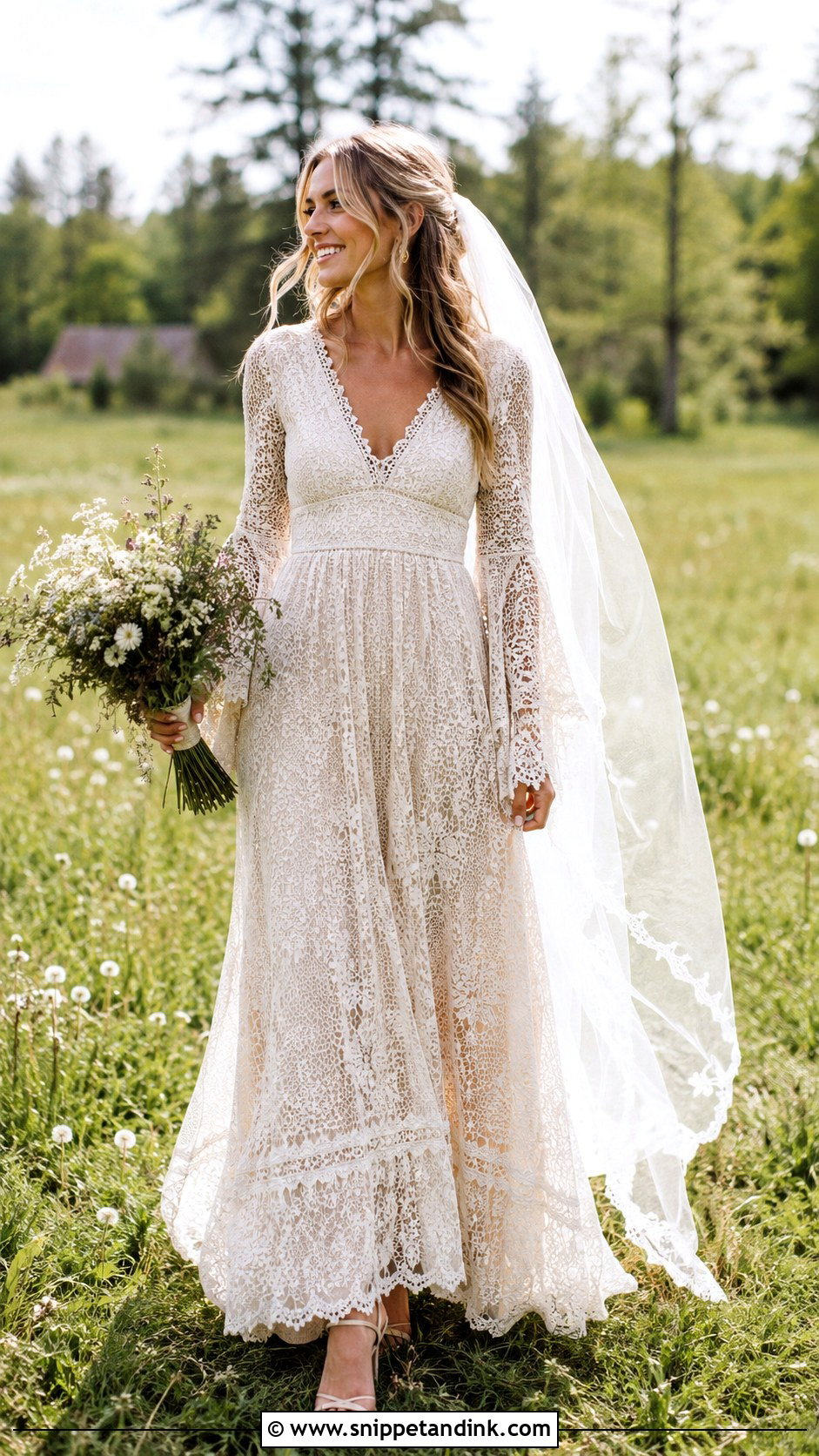
Bell sleeves, crochet lace, empire waists and soft cotton give a 1970s boho lace old wedding dress its relaxed texture. The risk is that it reads casual, so a long veil and a little gold or pearl jewellery help it look bridal. Cotton lace from the seventies is usually sturdier than older lace, but I still check the seams and any elastic, which perishes with age. Ivory sandals or suede ankle boots suit rustic and outdoor venues, with a wildflower bouquet.
9. 1980s Puff Sleeve Old Wedding Dress
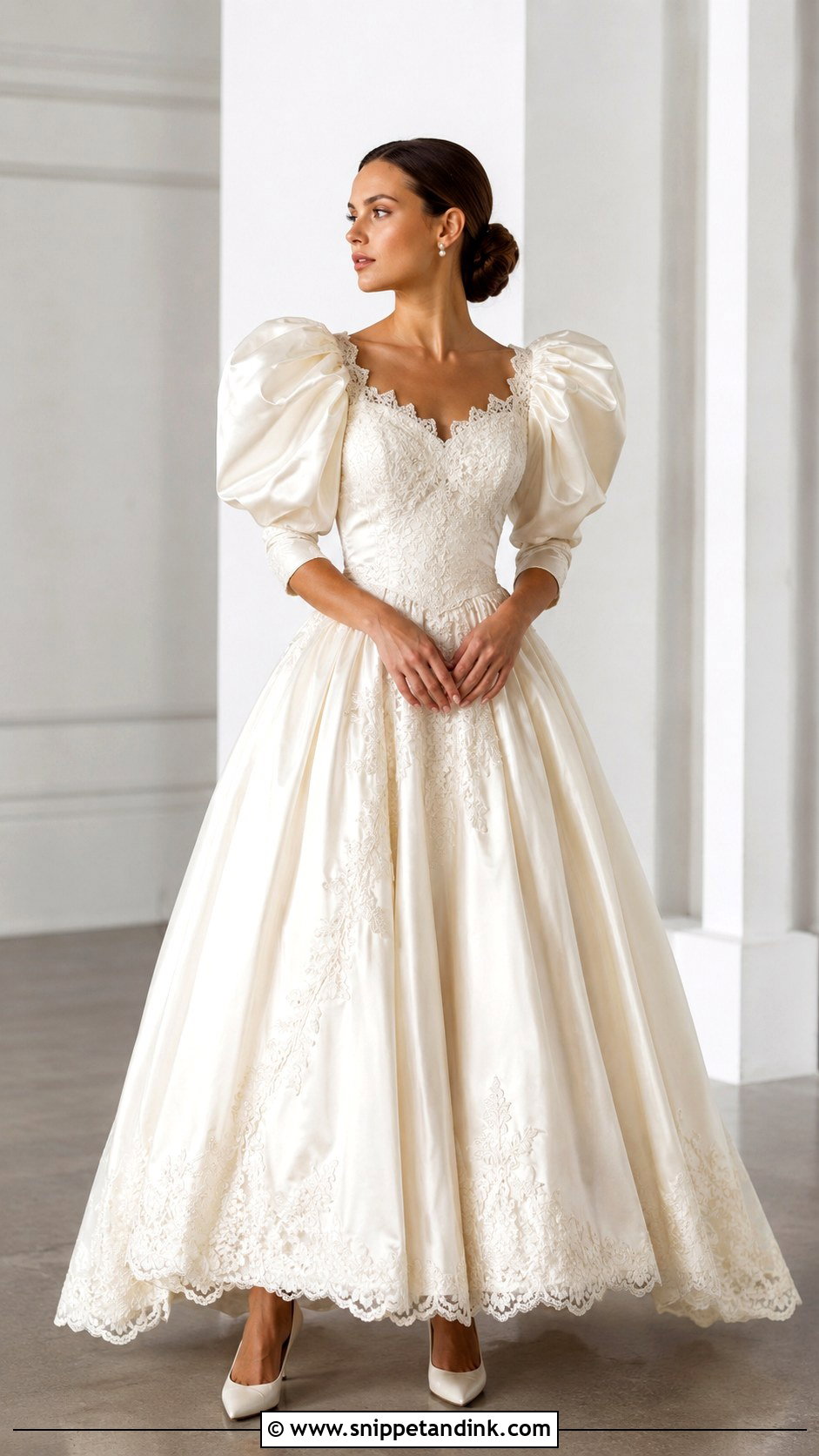
Big sleeves, lace appliqué, bows and long trains: 1980s gowns have presence, and with restraint they look surprisingly current. A good tailor can reduce the sleeve volume, remove some embellishment or take in the skirt without losing the character. I usually start by removing bows, because that alone changes the decade feel. Sleek ivory pumps, small earrings and a smooth low bun keep the sleeves as the only statement, and a plain bouquet of white roses softens it.
10. 1990s Slip Old Wedding Dress
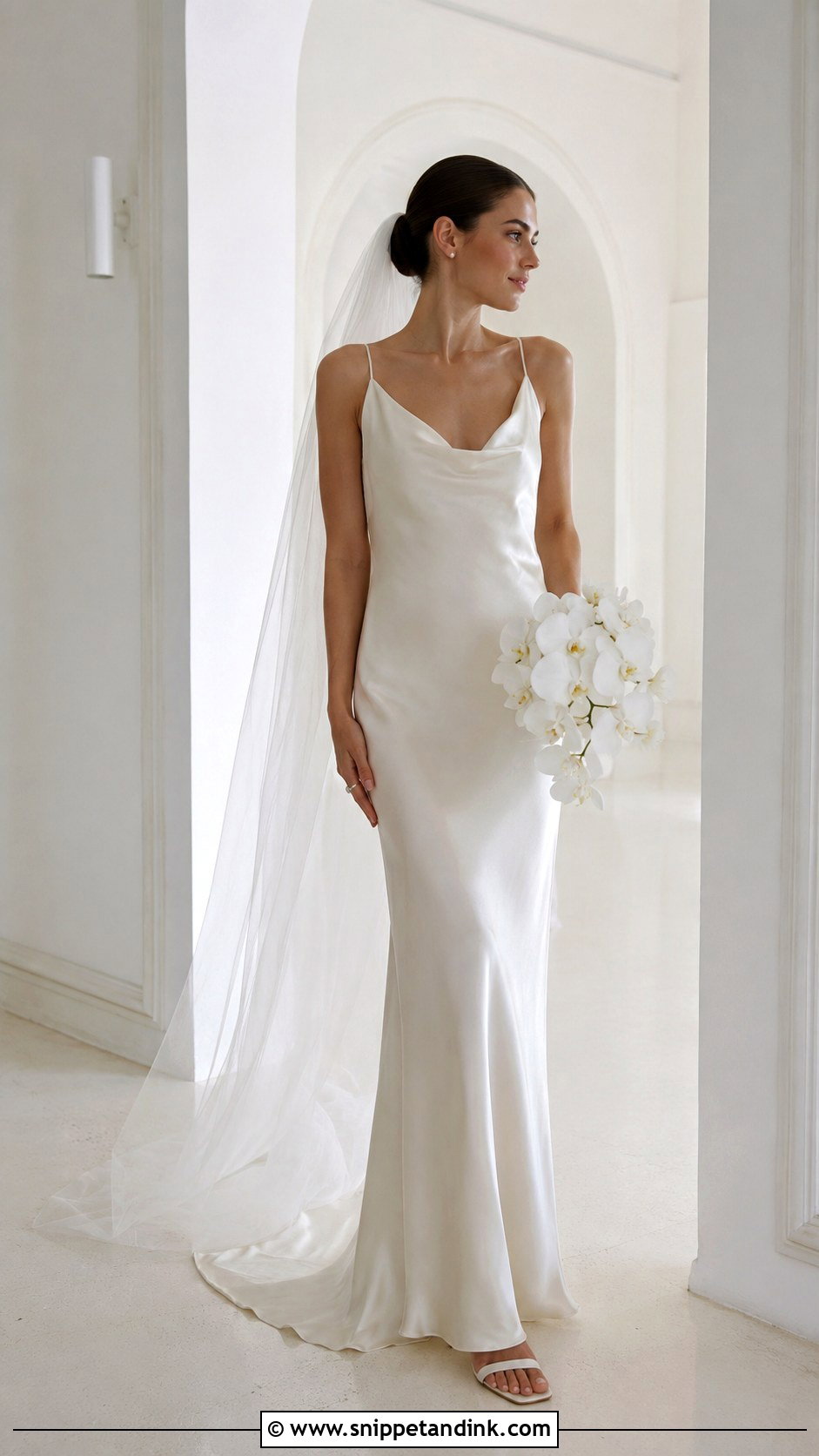
The 1990s slip looks simple, and that is exactly why it’s demanding. A bias cut, thin straps and soft satin or crepe hide nothing, so fit and underwear matter more here than on any other dress in this list. A long sheer veil, strappy sandals and small earrings keep it clean. For coverage, layer a sheer organza wrap or a tailored blazer. An orchid or rose bouquet finishes a quiet, modern look.
11. Antique Crochet Old Wedding Dress
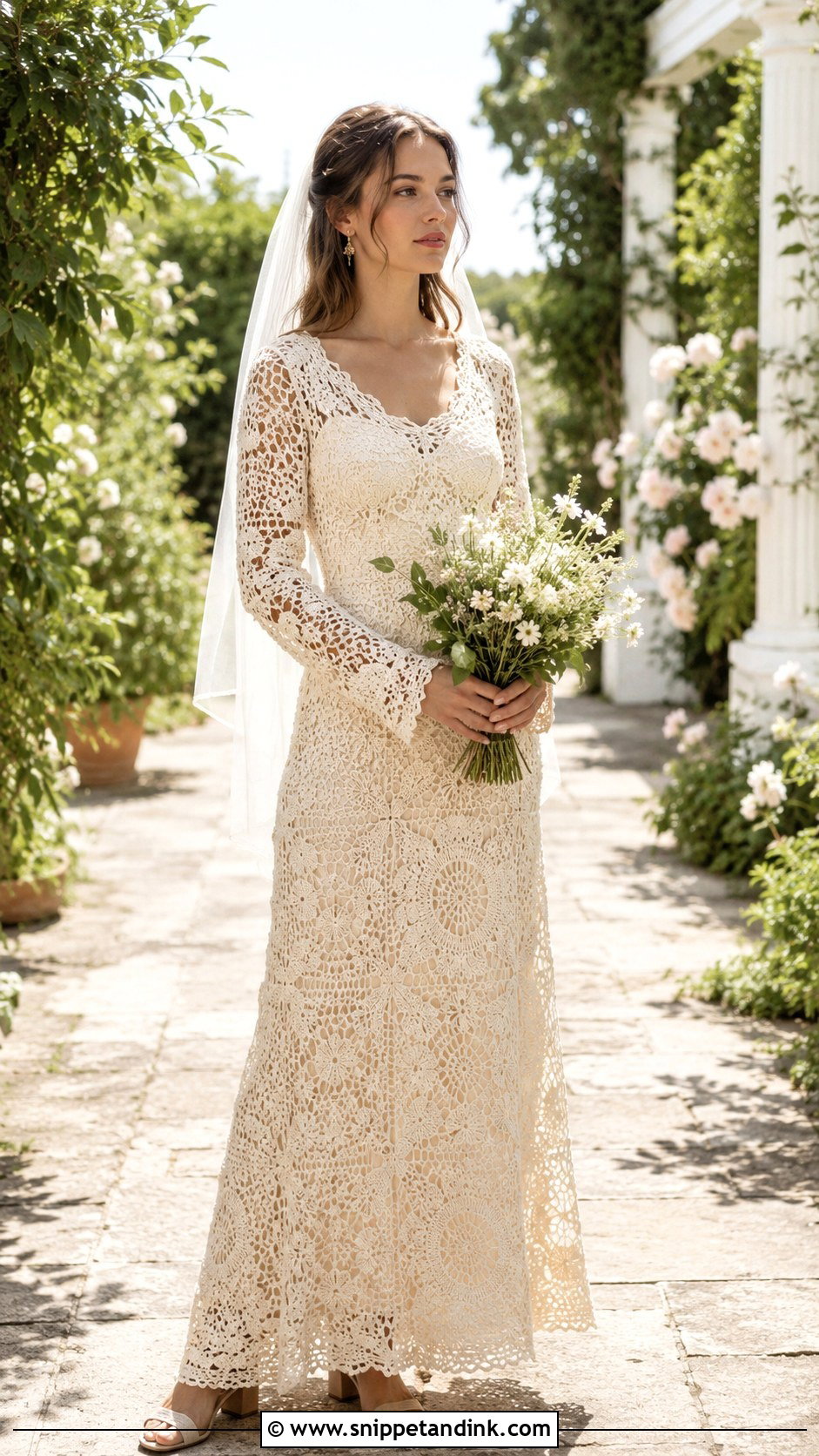
Antique crochet has handmade texture that no machine lace quite matches. Crochet gowns can be fitted, columnar or softly flared, and they almost always need a slip underneath. Match the lining to your skin tone rather than to the crochet, so the pattern shows. Crochet stretches under its own weight, so measure an old gown on a flat surface rather than on a hanger. A plain veil suits better than a lace one, with block heels and simple white flowers for summer outdoor weddings.
12. Heirloom Satin Old Wedding Dress
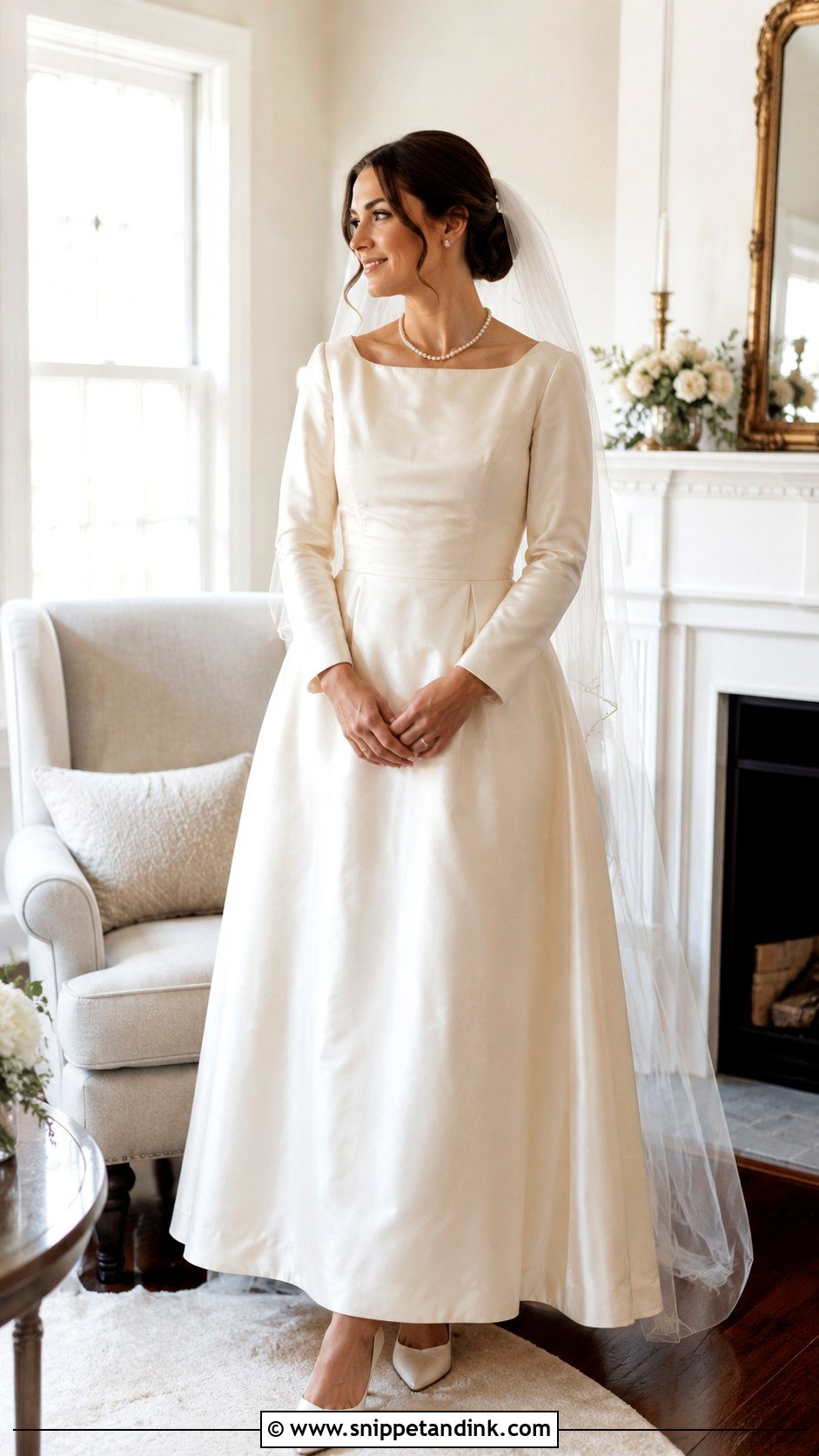
Family meaning changes how I approach an heirloom satin gown, because every alteration has to be something the family can live with. You can keep the shape or update the neckline, sleeves, hem or train. I always ask whether the alterations should be reversible, since a tailor can often fold and tack rather than cut. Slight yellowing on old satin is common; warm ivory accessories make it look intentional instead of aged. Choose a tailor who has worked with older fabrics and fragile seams.
13. Long Sleeve Lace Old Wedding Dress
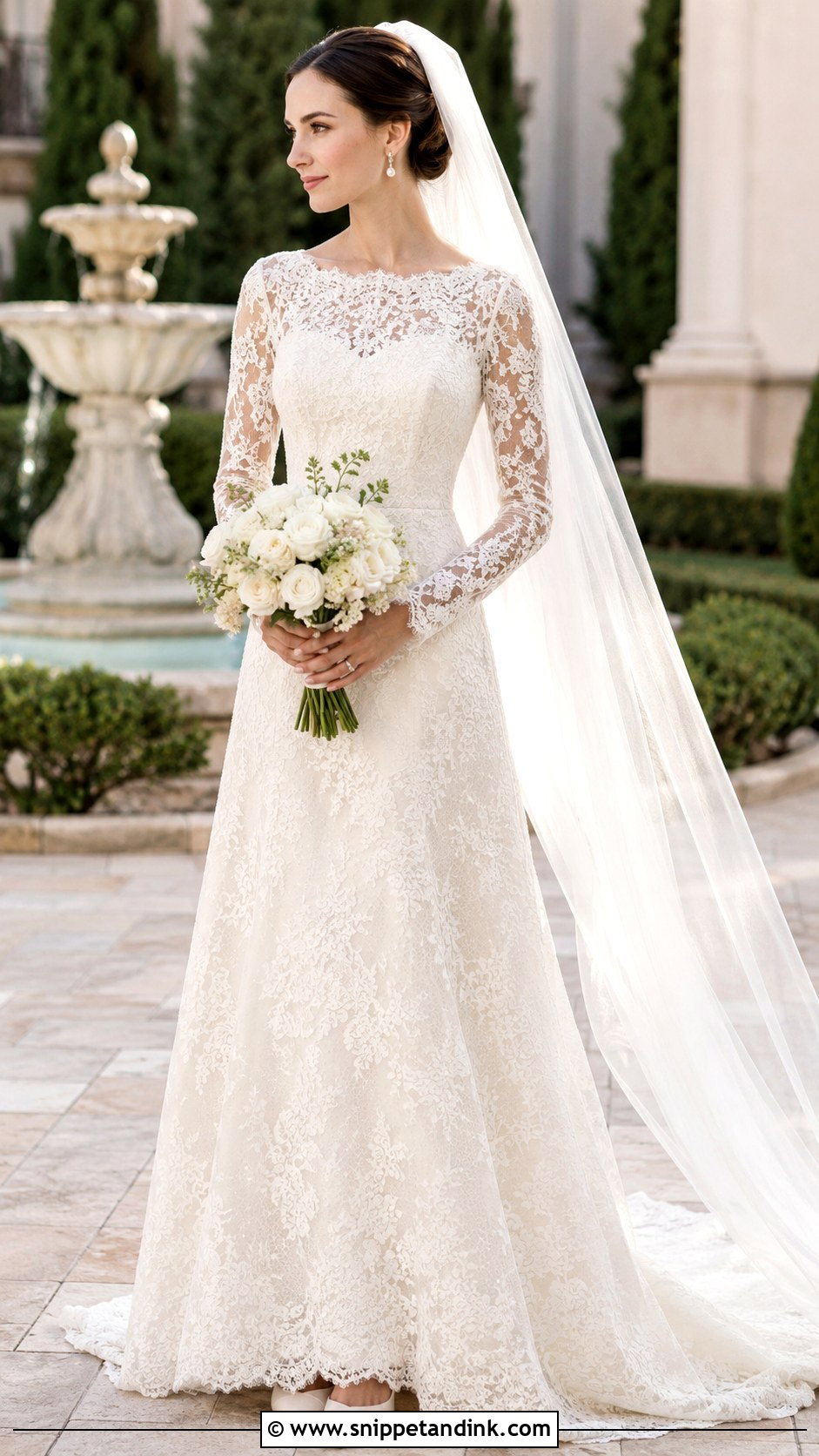
Long lace sleeves work in every season, and the shape varies a lot by era, from sheer and fitted to puffed or flared. When fitting older lace sleeves, I check arm movement first; vintage armholes are often cut higher and tighter than modern ones, which limits how high you can lift your arms. A fitted bodice over an A-line or column skirt suits most figures. Keep the bouquet simple if the lace is busy, and add an ivory wrap or cape for colder months.
14. High Neck Prairie Old Wedding Dress
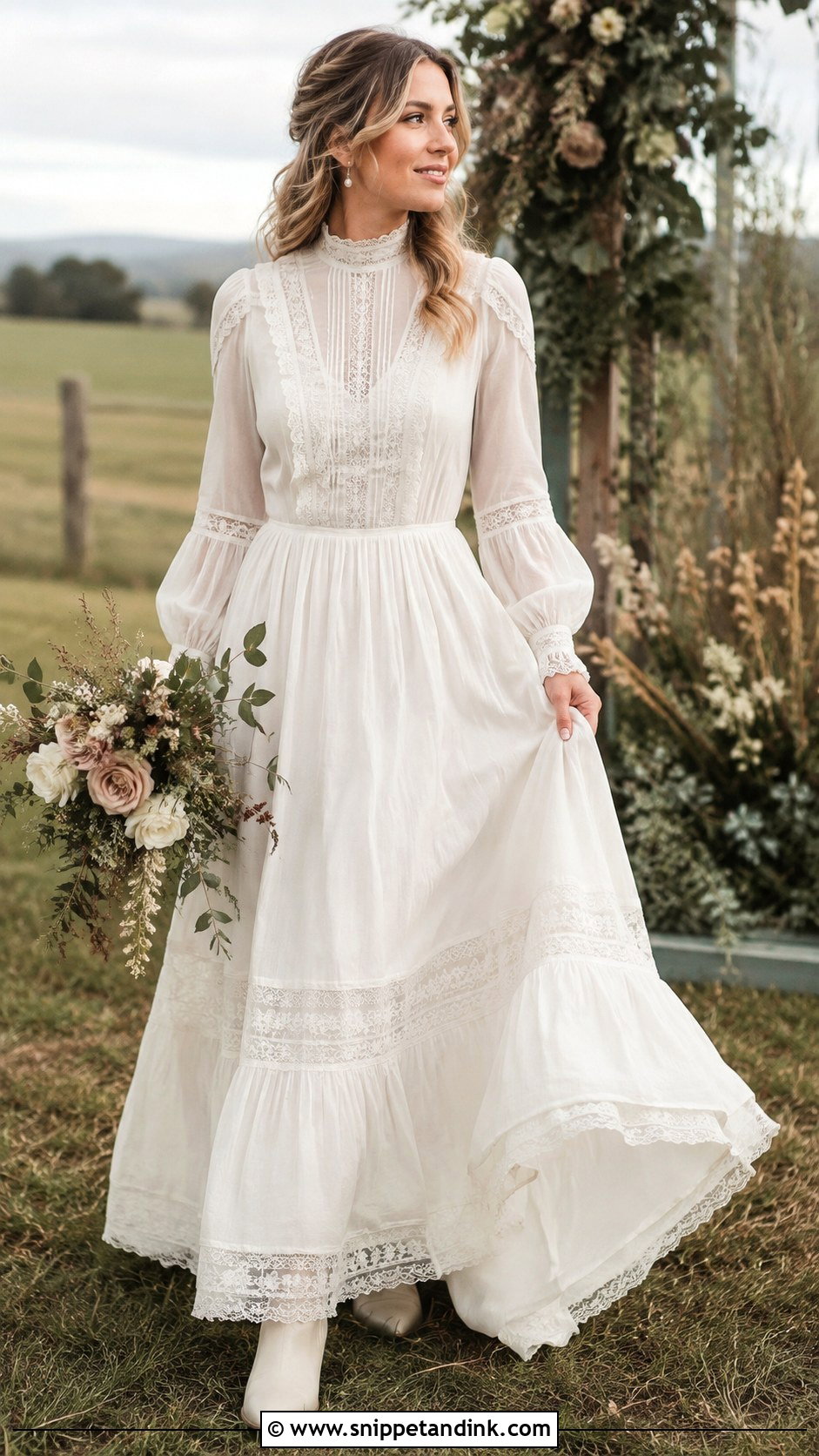
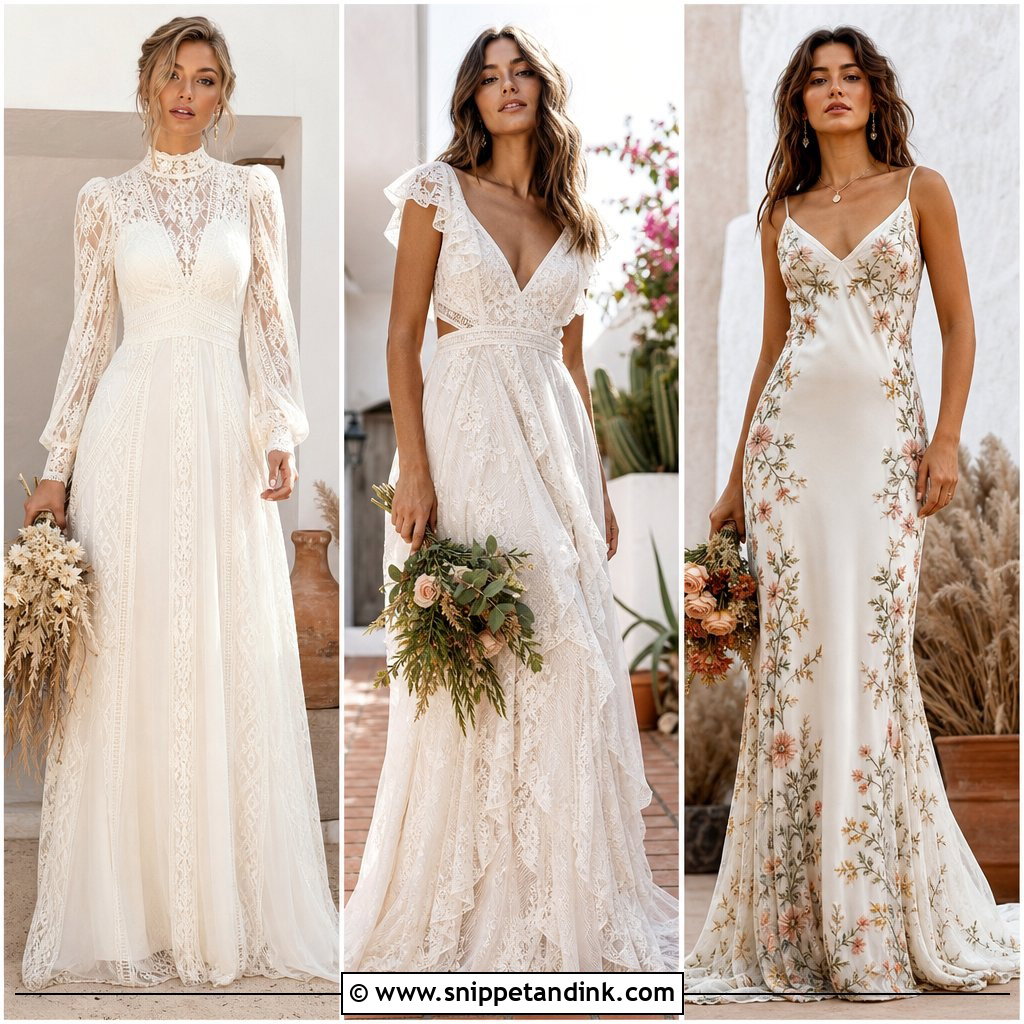
The prairie look grew out of the 1970s revival of Edwardian dress: soft sleeves, a high neck, lace trim and a gentle skirt. It can tip into costume quickly, so I avoid anything themed and keep accessories clean. Soft waves, small pearl earrings and ivory boots or block heels suit it. A simple veil or a ribbon in the hair is plenty, and daisies with roses suit outdoor and intimate weddings.
15. Courthouse Vintage Old Wedding Dress
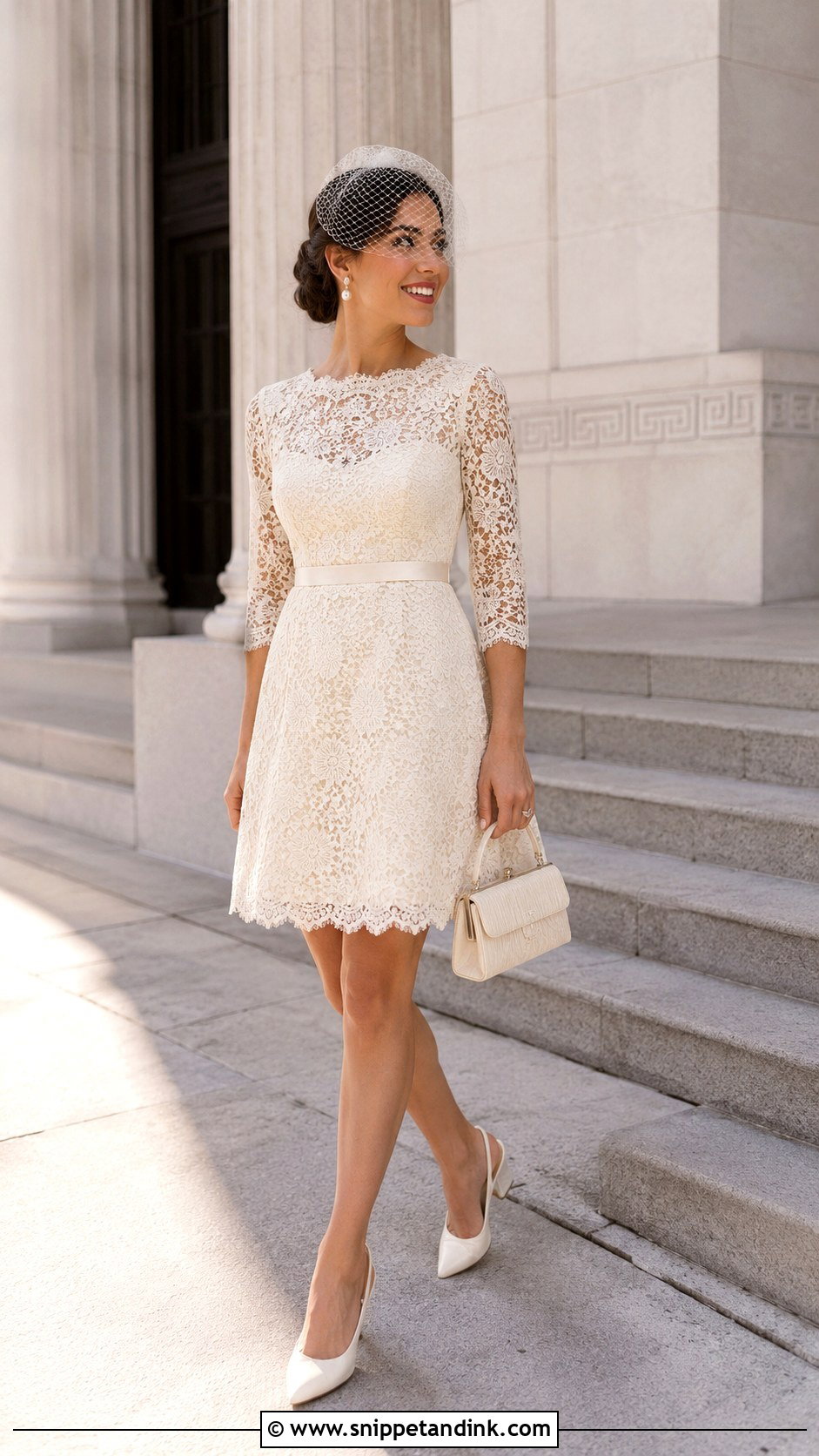
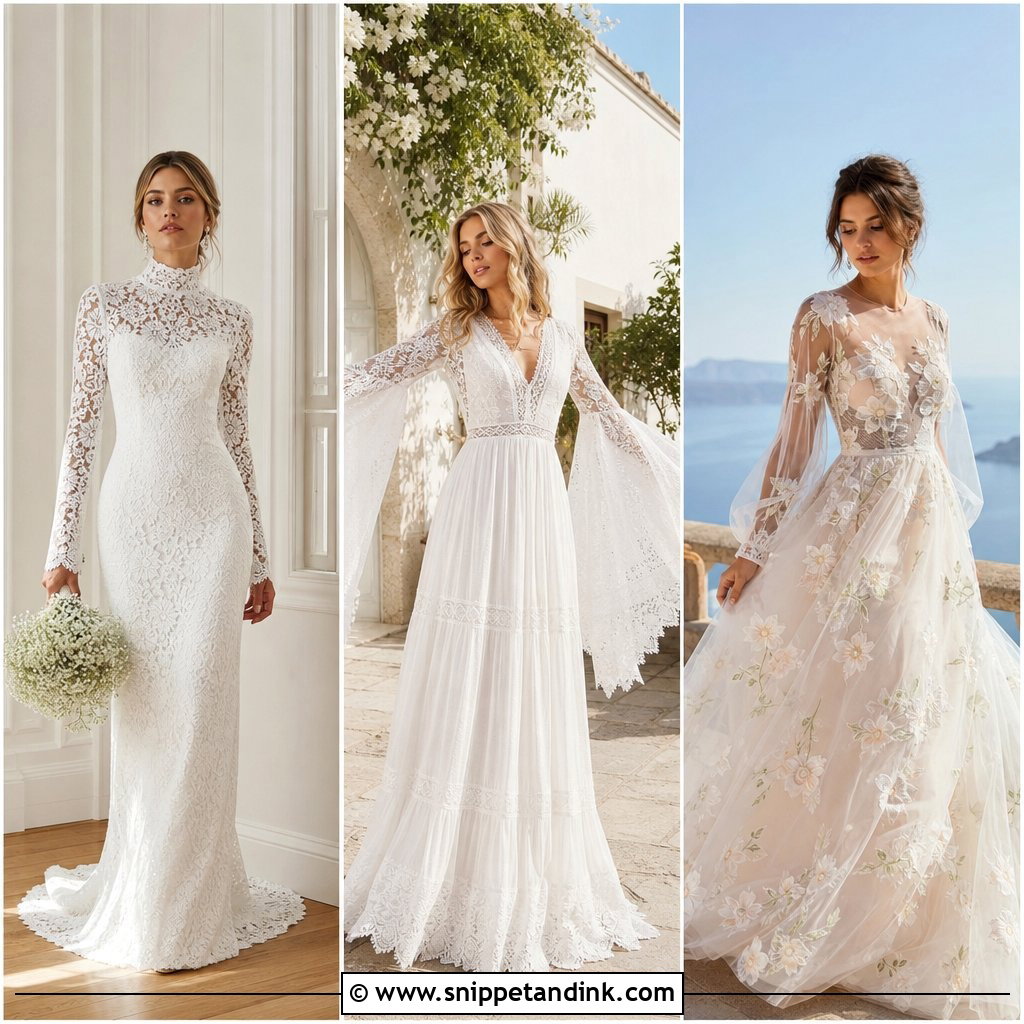
For a courthouse wedding, the dress should look polished but not formal: a short lace dress, a satin midi, a vintage skirt suit or a simple 1960s shift. Skirt suits from the forties and fifties often have small, structured shoulders, so try the jacket with your arms forward before buying. Slingbacks, a structured bag and pearl earrings finish it, and a birdcage veil or slim headband keeps it bridal. In colder months, a cropped jacket or tailored coat makes the outfit look complete.
16. Garden Vintage Old Wedding Dress
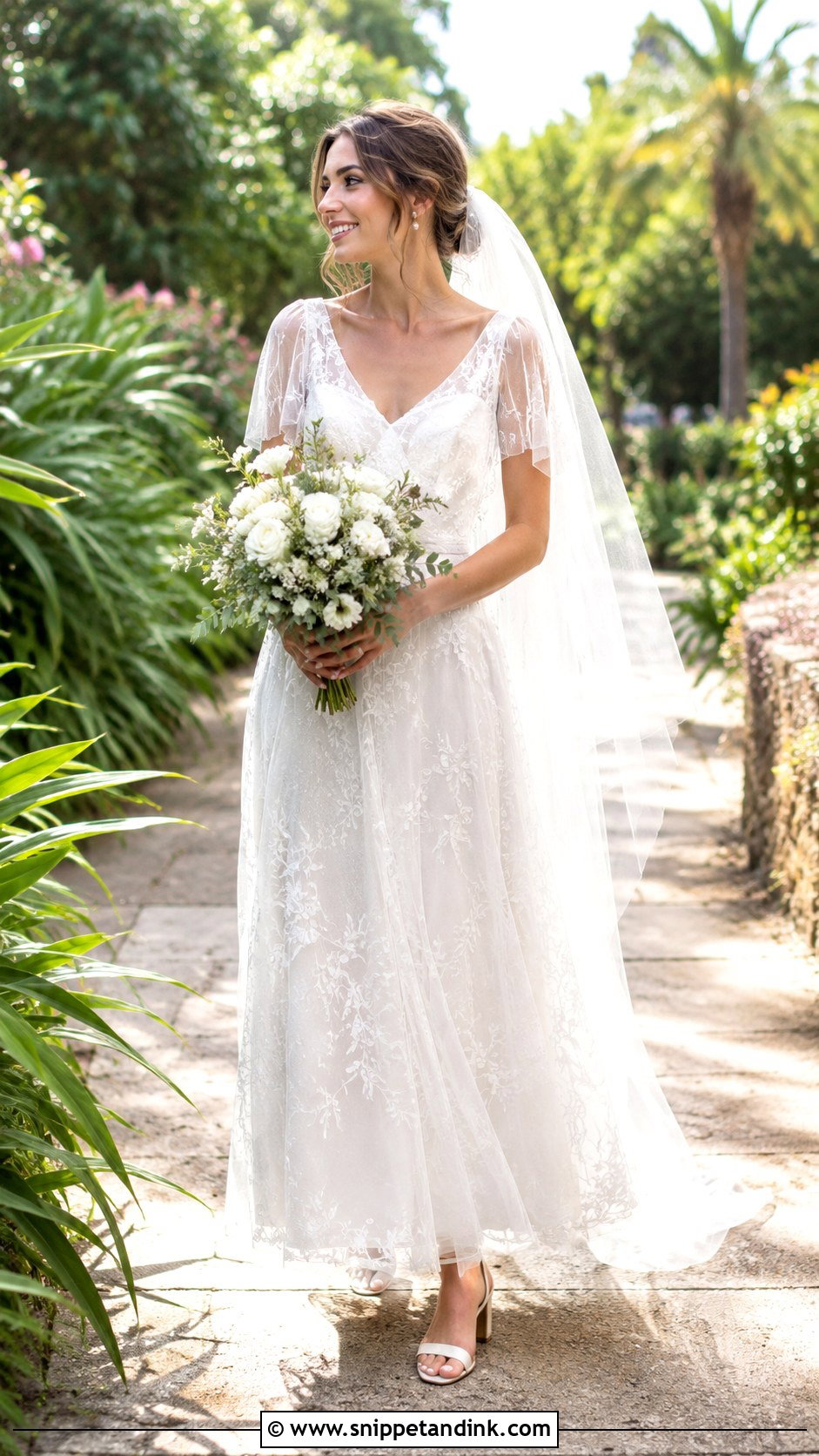
Lace, chiffon, embroidered tulle and cotton voile all suit a garden, especially with a flowing skirt or floral appliqué. Grass, pollen and damp ground are hard on antique fabric, so I’d keep a fragile vintage gown for indoor portraits and choose a sturdier vintage-inspired dress if you’ll be outside for hours. Block heels or dressy flats stop you sinking. Avoid long trains unless they bustle easily, and pair pearl earrings with a loose updo.
17. Beach Vintage Old Wedding Dress
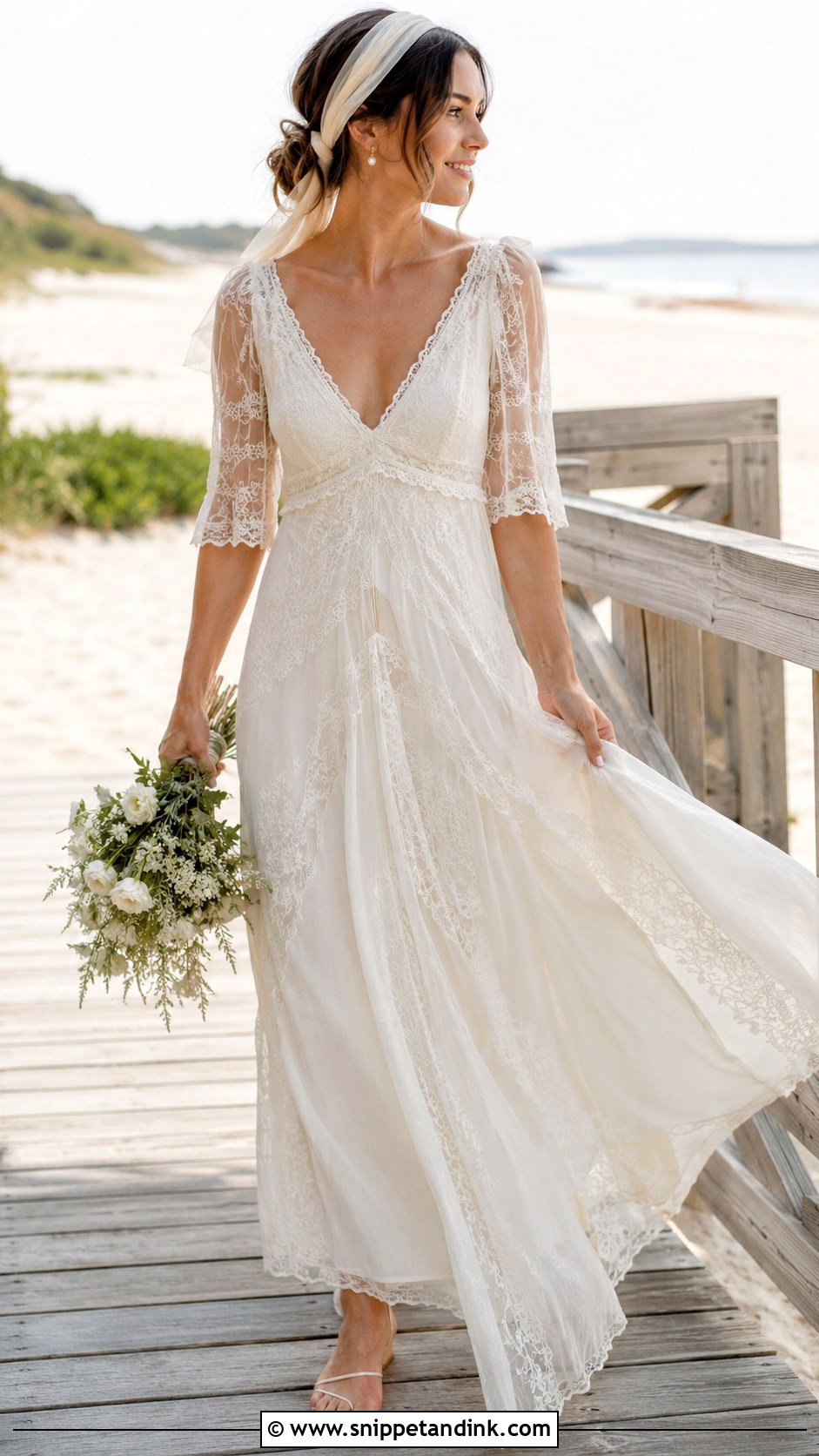
Light, breathable and simple is the rule for a vintage beach look: a 1930s-inspired satin slip, a 1970s cotton lace gown or soft chiffon with little structure. Salt water and sun are tough on old silk, which can weaken and discolour quickly, so a true antique gown is a risky choice for the shoreline. Flat sandals, pearl studs and a light veil or hair scarf keep it relaxed. Skip heavy beading in heat, and choose a train that lifts or bustles quickly.
18. Plus Size Vintage Old Wedding Dress
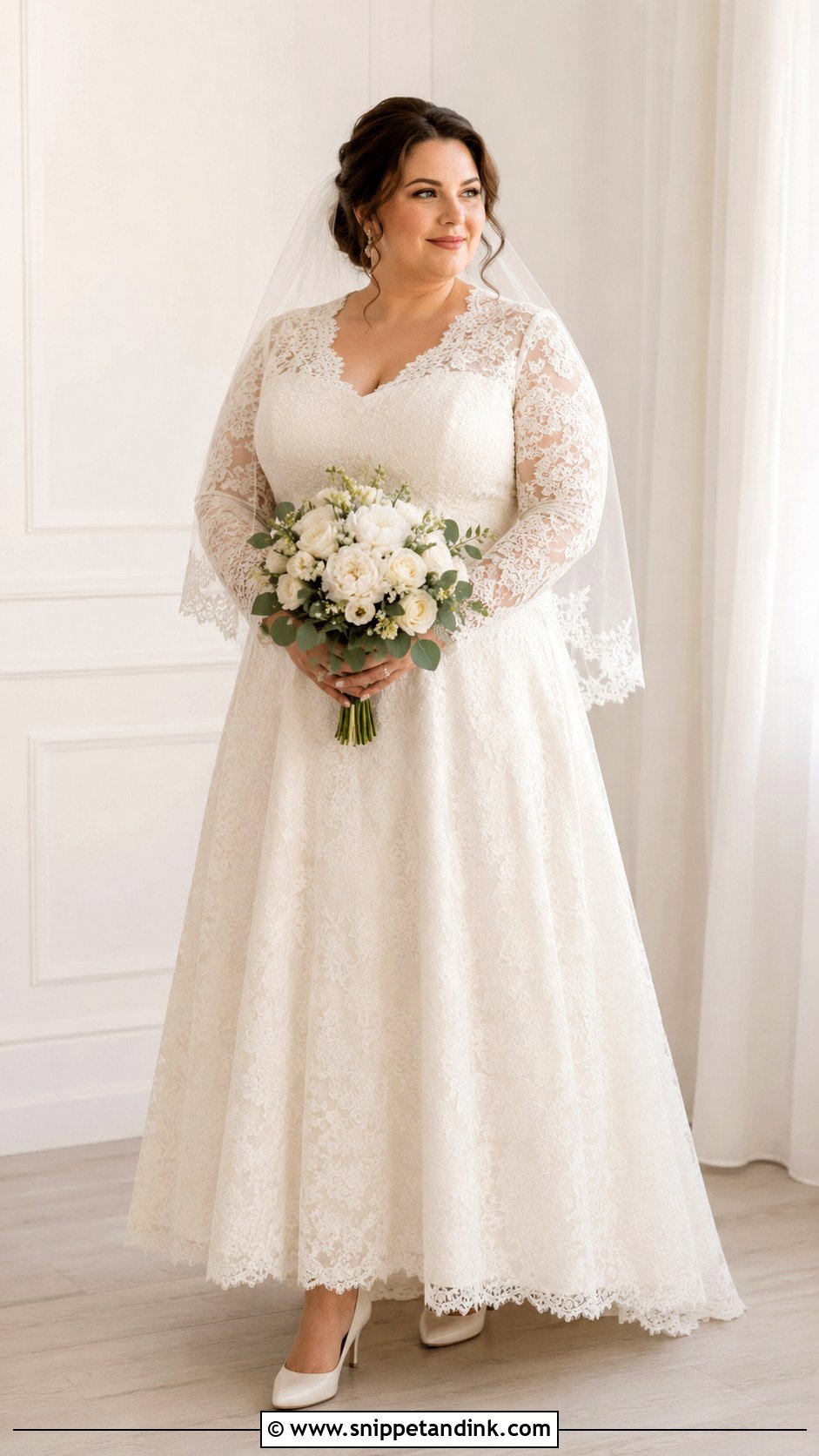
True vintage sizing runs small compared with modern labels, so a plus size vintage old wedding dress usually means either a vintage-inspired gown cut to modern sizing or an older dress carefully reconstructed. Look for supportive bodices, strong waist seams, comfortable sleeves and skirts that move easily. When reconstructing, I add panels in matching fabric at the side seams, which is less visible than letting out seams that may already be weak. Lace A-lines, satin ball gowns and long-sleeved columns all work, with jewellery that frames the face.
19. Petite Vintage Old Wedding Dress
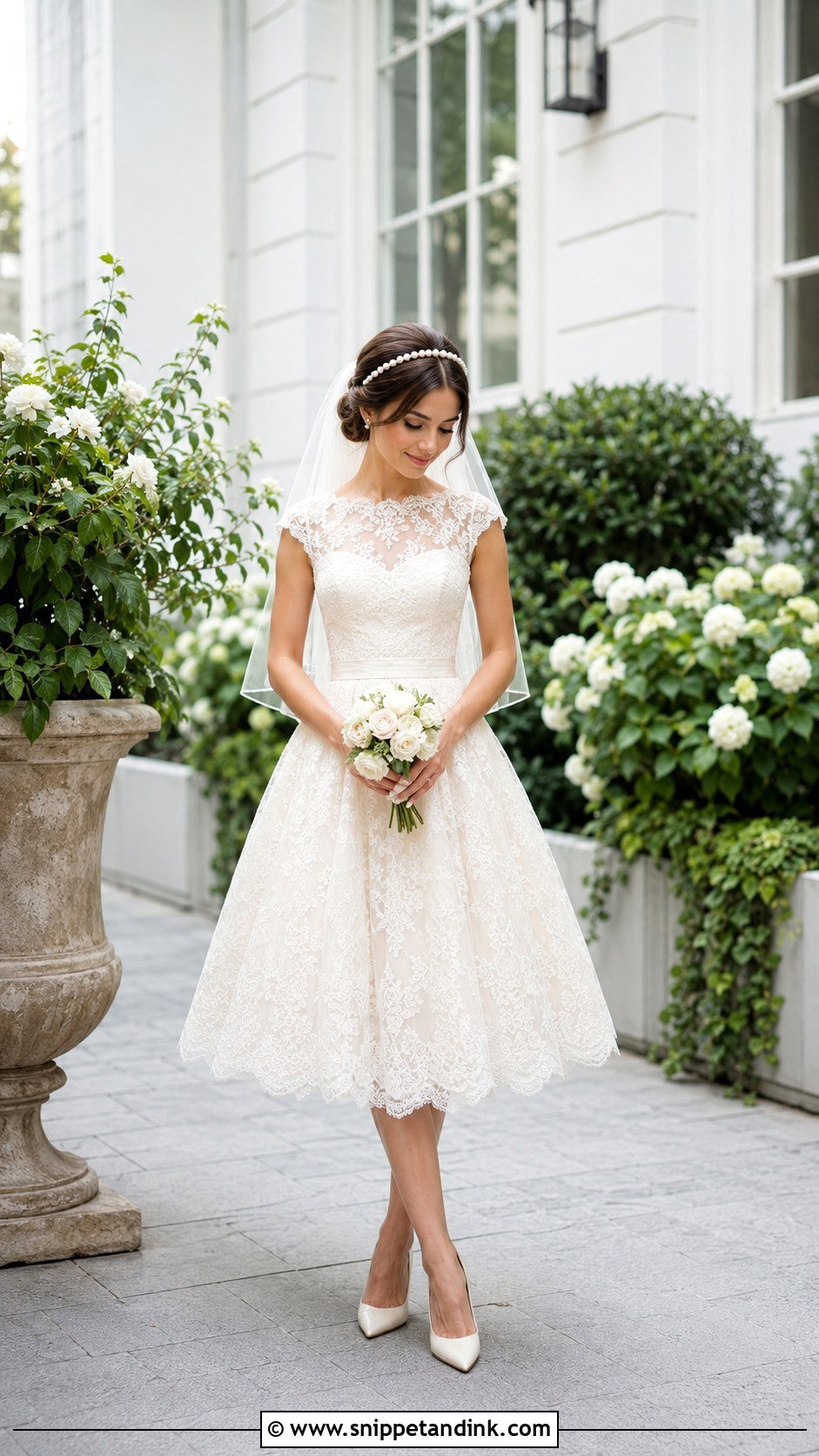
Tea-length dresses, 1960s minis, slim satin gowns and soft lace A-lines all lengthen a petite frame while keeping the vintage detail clear. Very heavy skirts can overwhelm your height. Hemming is the delicate part: on an antique gown, the lace border or beaded edge often is the hem, so a good tailor shortens from the waist or top of the skirt instead. A shorter veil, a small comb, pointed or slim block heels and a bouquet scaled to your frame keep it balanced.

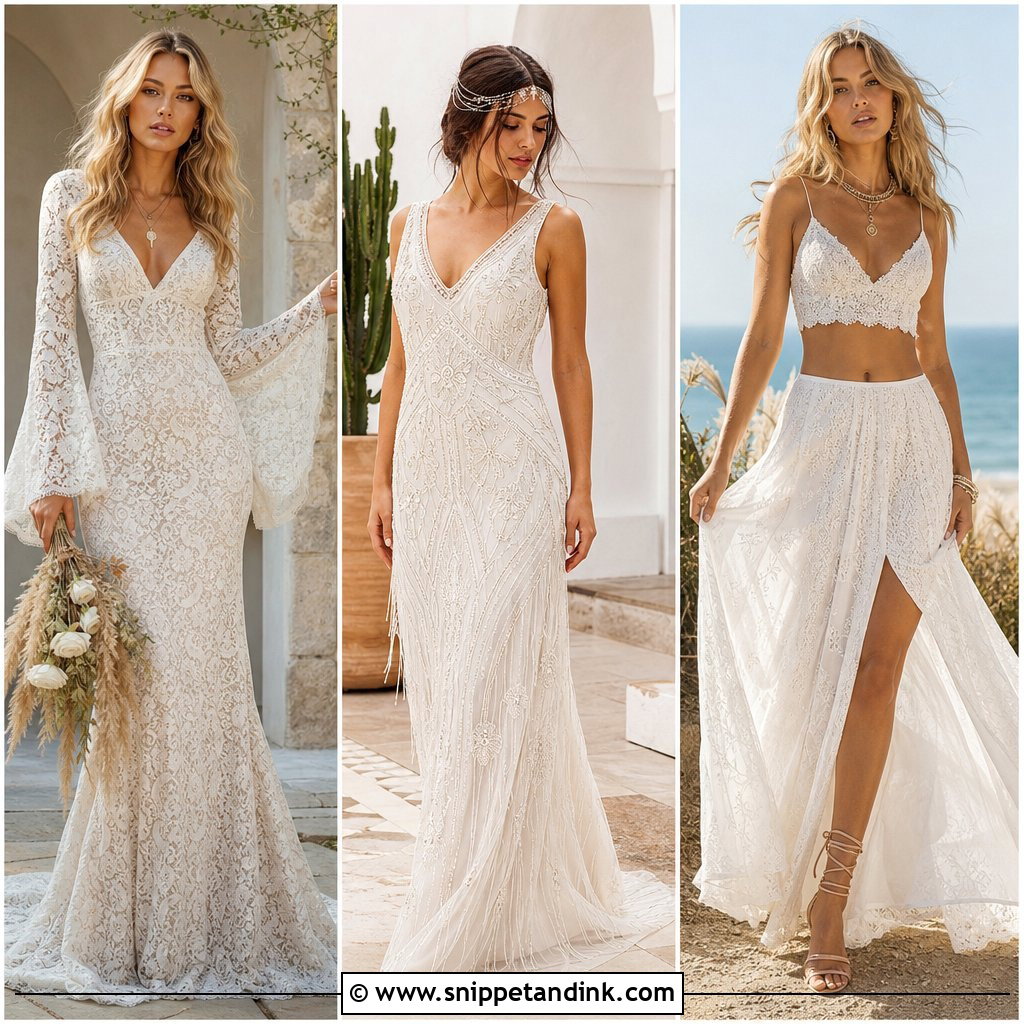
20. Maternity Vintage Old Wedding Dress
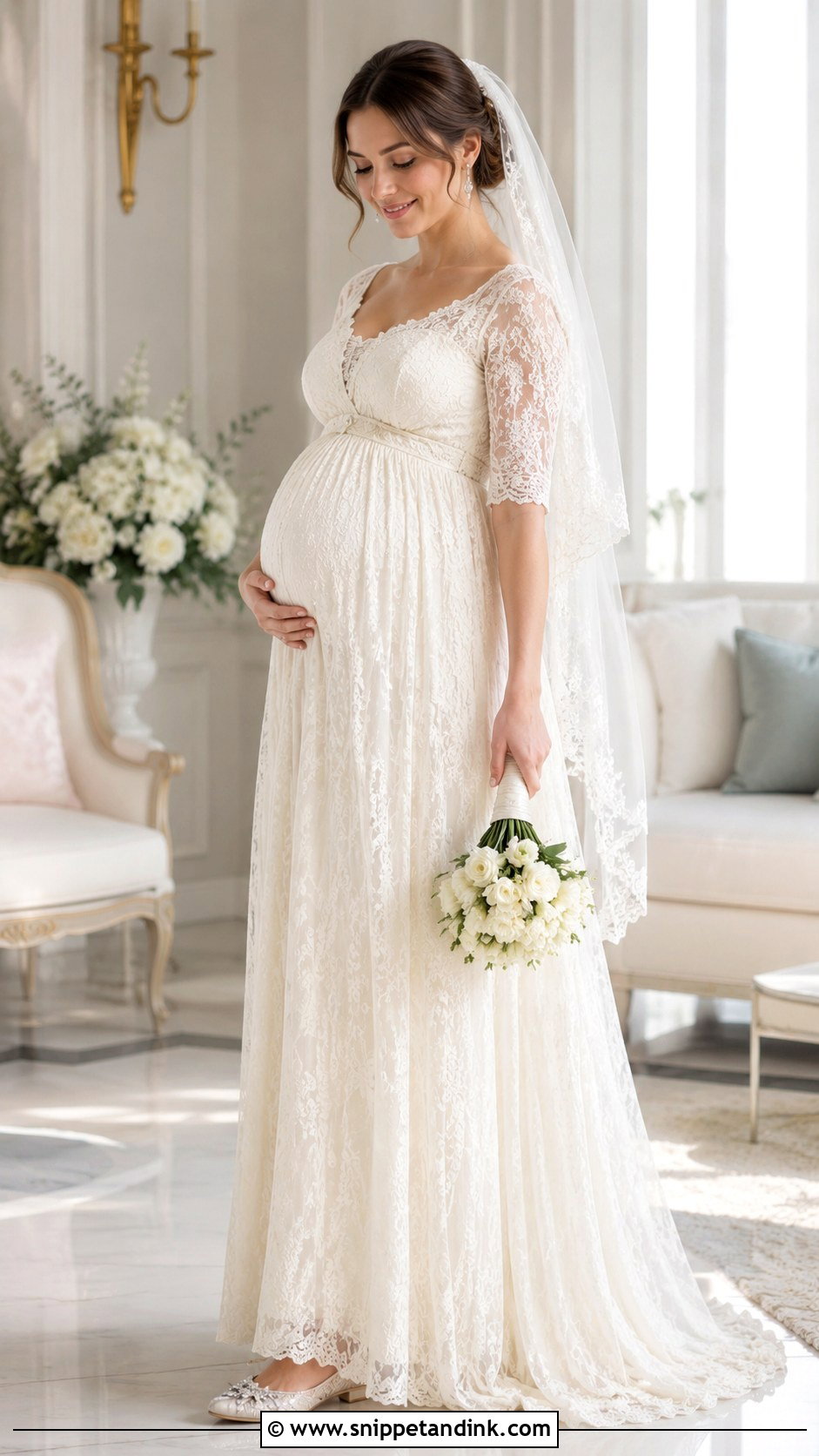
Comfort comes first in a maternity vintage dress, then romance. Empire waists, 1970s lace, soft chiffon and flowing Edwardian-inspired shapes all give room without losing shape. Avoid tight waist seams, heavy boning and delicate closures. If the wedding is weeks after your final fitting, I build in adjustable lacing or extra seam allowance, because bodies change quickly in pregnancy. Low heels or embellished flats, soft earrings and a light veil keep you comfortable and supported all day.
21. Second Look Vintage Old Wedding Dress
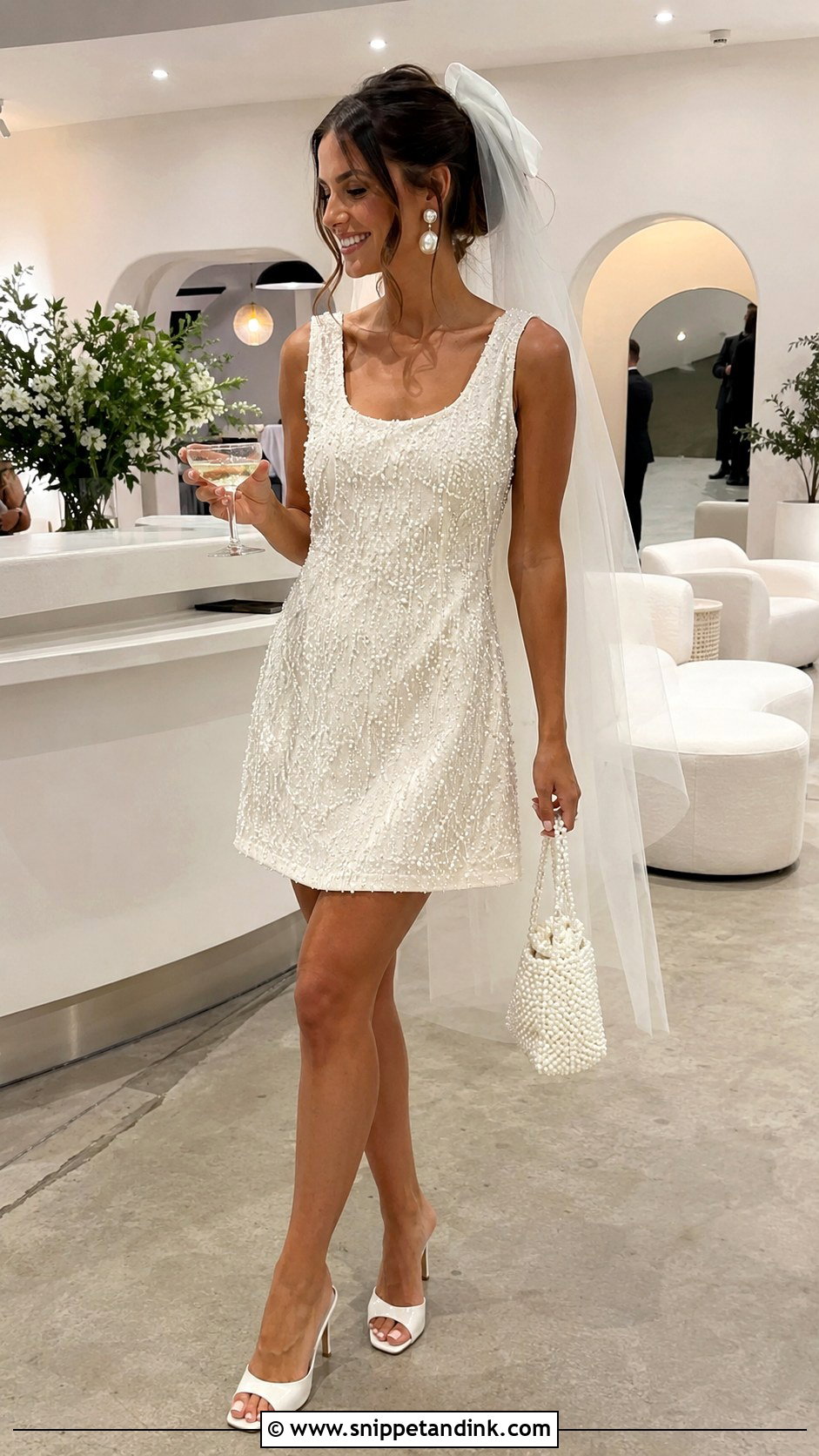
A vintage second look for the reception can be shorter, easier to dance in or more playful than the ceremony gown: a 1960s mini, a beaded 1920s-style dress, tea-length lace or a simple satin slip. It is also the kindest way to wear a family dress that is too fragile for a whole day, since you’ll only have it on for the evening. Comfortable heels, a small bag and statement earrings suit it, and a short veil or bow makes the change feel deliberate.
22. Short Vintage Old Wedding Dress
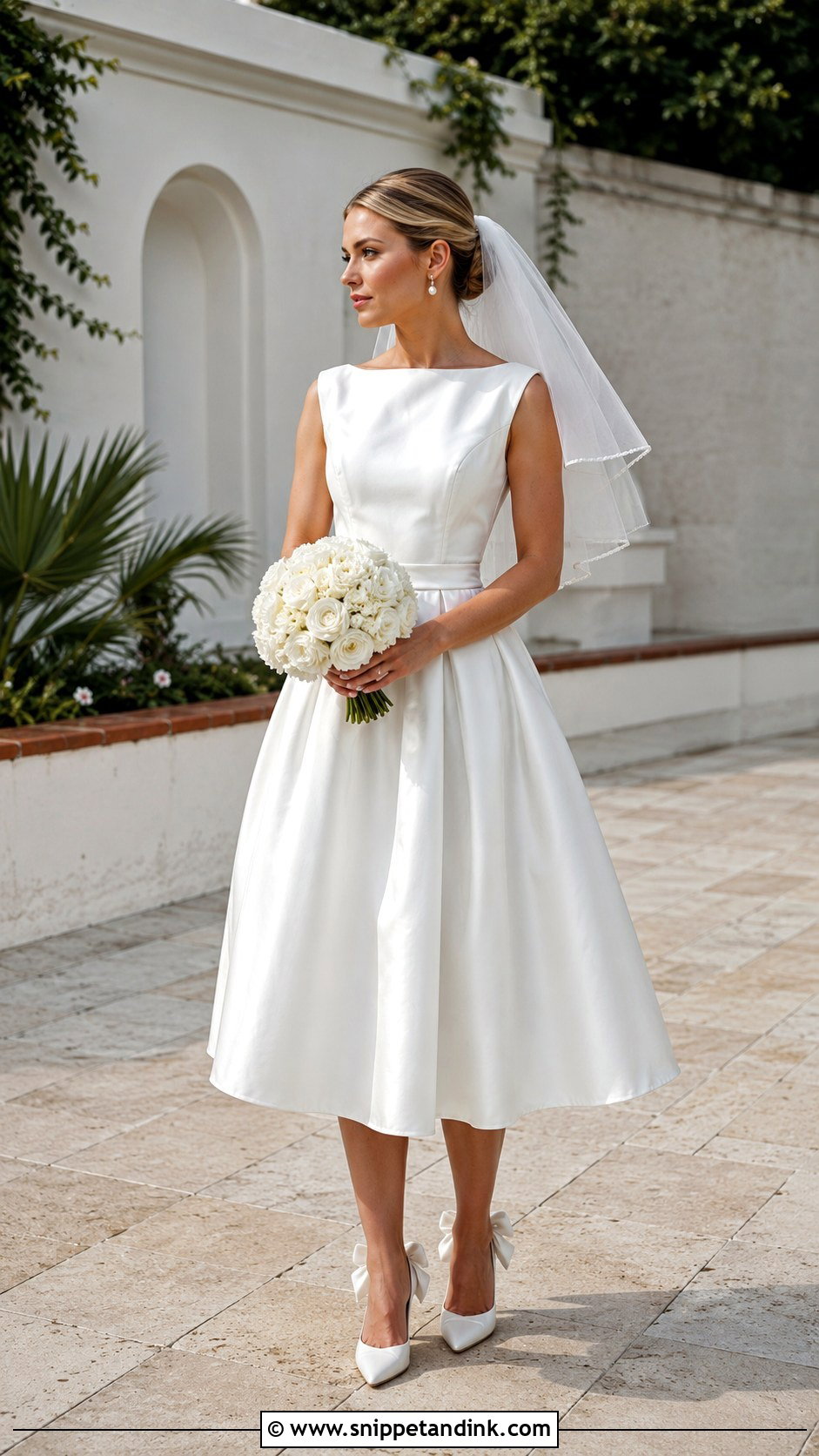
Short dresses put your legs and shoes on show. A 1950s tea dress, a 1960s shift, a lace mini or a satin midi all fit this idea, so the footwear finishes the outfit: white pumps, bow heels, slingbacks or embellished flats. If the dress feels plain, gloves or a hair bow add charm. Short vintage dresses were often worn with a stiff petticoat, and adding one back gives the skirt its original shape. Courthouse weddings and smaller ceremonies suit it.
23. Black And White Vintage Old Wedding Dress
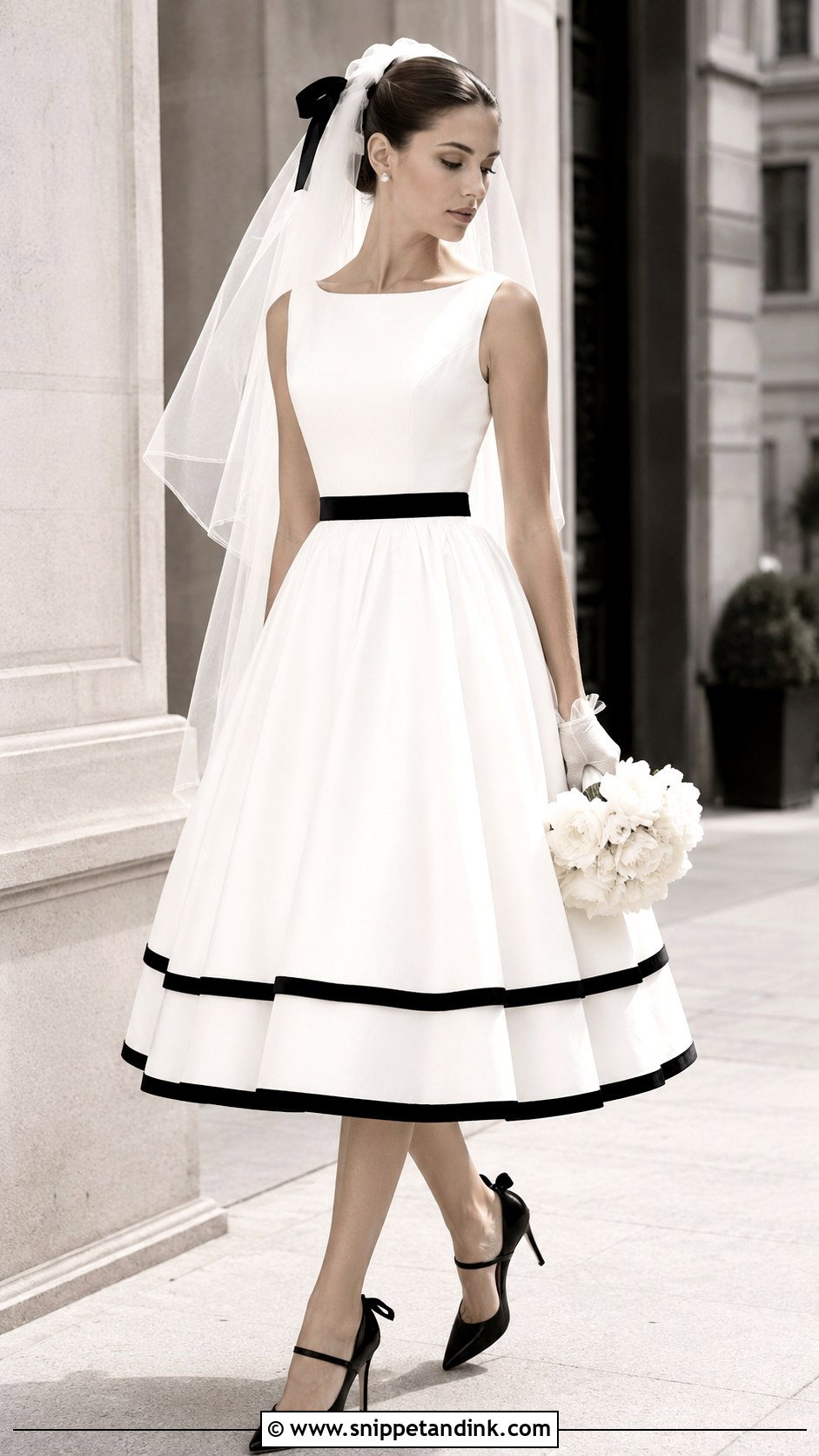
Black and white has a long history in bridal fashion: a white gown with black velvet ribbon, a vintage skirt suit with black trim, or tea-length with black accessories. Keep the styling graphic. Black satin heels, pearl earrings and a sleek veil or bow are enough. Check that the black trim on an older dress hasn’t faded to brown or grey, since that shows clearly beside fresh black shoes. A white bouquet with deep green stems suits a city wedding or a gallery venue.
24. Blush Vintage Old Wedding Dress
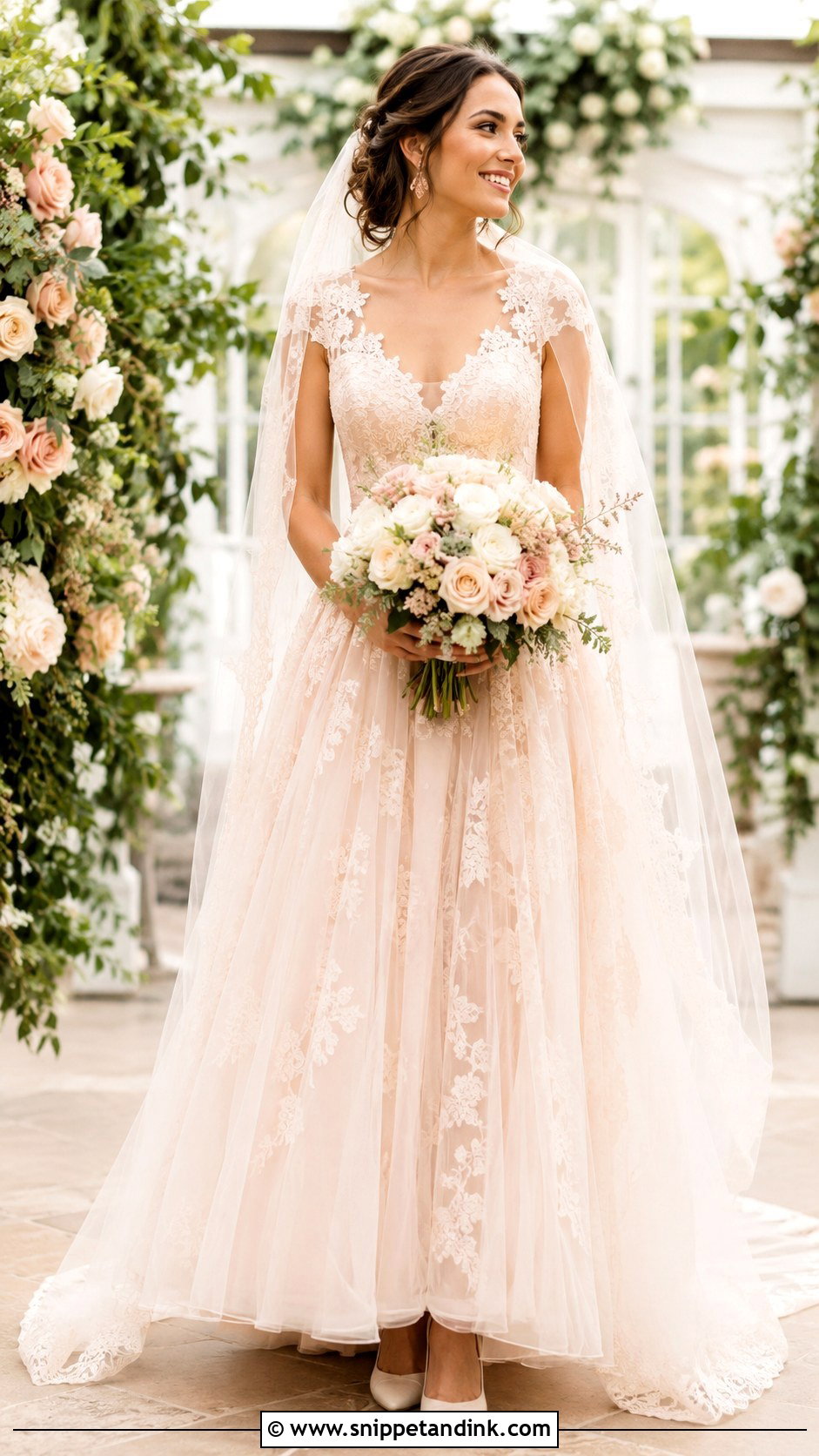
Blush on antique lace, tulle, satin or beading gives a soft alternative to ivory. Pale blush, champagne pink and dusty rose suit different skin tones, so hold the fabric near your face in daylight before choosing. True vintage blush often fades unevenly, usually where light hit the dress in storage, so check for patchiness before alterations; a tailor can sometimes move panels to hide it. Ivory or nude heels, rose-gold jewellery and a veil matched to the undertone complete it.


25. Restyled Family Old Wedding Dress
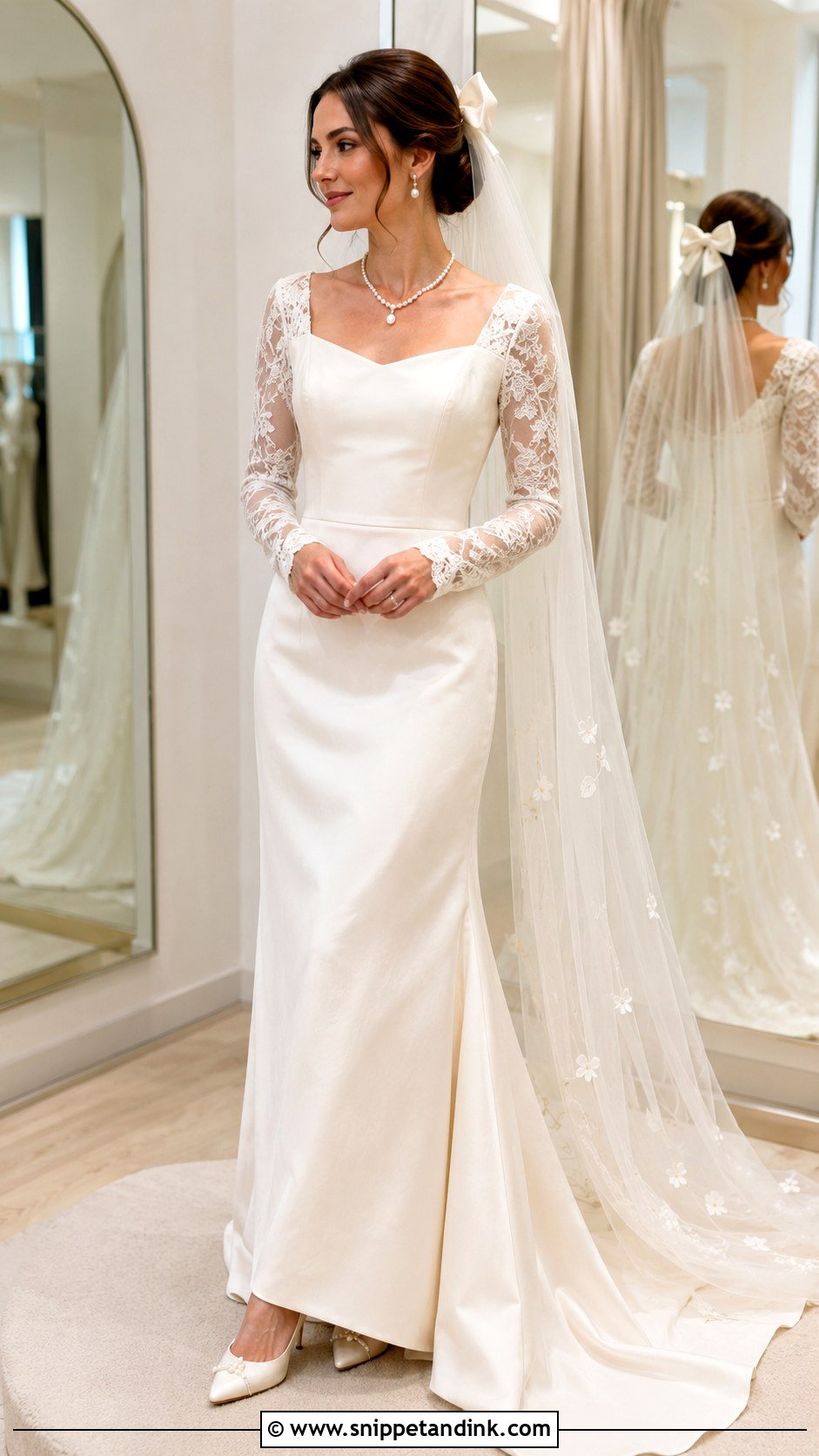
Restyling a family dress lets you honour the original and still make it yours. You might keep the lace sleeves, reuse the skirt, shorten the hem, remove a high collar or turn spare fabric into a veil, bow or wrap. I always photograph the dress before any cutting, so the family has a record of it as it was. If the gown is too damaged to wear, use its fabric for a bodice panel, a sash or a small accessory. Modern shoes and meaningful jewellery tie the old and new together.
Cleaning, Restoring and Storing an Old Dress Safely
Never try home bleach, stain remover or a washing machine on an older gown. Old fibres react unpredictably, and a single test spot in the wrong place can leave a permanent mark. A cleaner who specialises in wedding or historic garments will test hidden areas first and tell you honestly what may not come out.
Leave enough time
Restoration and alterations on a vintage gown take longer than on new bridalwear, often several months when lace repairs are needed. I’d start the process as soon as the dress is bought, and plan the final fitting a few weeks before the wedding.
After the wedding
- Have it cleaned soon, before any stains set.
- Store beaded and bias-cut dresses folded flat with acid-free tissue in the folds, never on a hanger.
- Avoid plastic bags and garment covers, which trap moisture; use a cotton cover or an acid-free box.
- Keep it somewhere dark and cool, away from attics and basements where temperature swings.
Older Fabric Asks for More Patience Than a New Gown
An old wedding dress gives you texture, detail and history that a new trend piece rarely has. Whichever era you choose, authentic antique or a modern gown inspired by the past, the same things decide whether it works: condition, fit, careful alterations and styling that respects the period without copying it. Give a vintage gown more time than you’d give a new one, and it will reward you with a dress nobody else could have worn.
You'll Like These Ideas:


Leave a Reply