
A gown on a hanger tells you very little. What I look at with a bride is the whole picture: how the dress moves down an aisle, what the veil does from behind, and which shoes she can actually stand in for nine hours. The looks below run from lace and satin classics through plain crepe to short reception dresses, each styled head to toe. Use them to sharpen what you ask for at appointments, and pay attention to the notes on fabric and fit, because that is where most gowns win or lose.
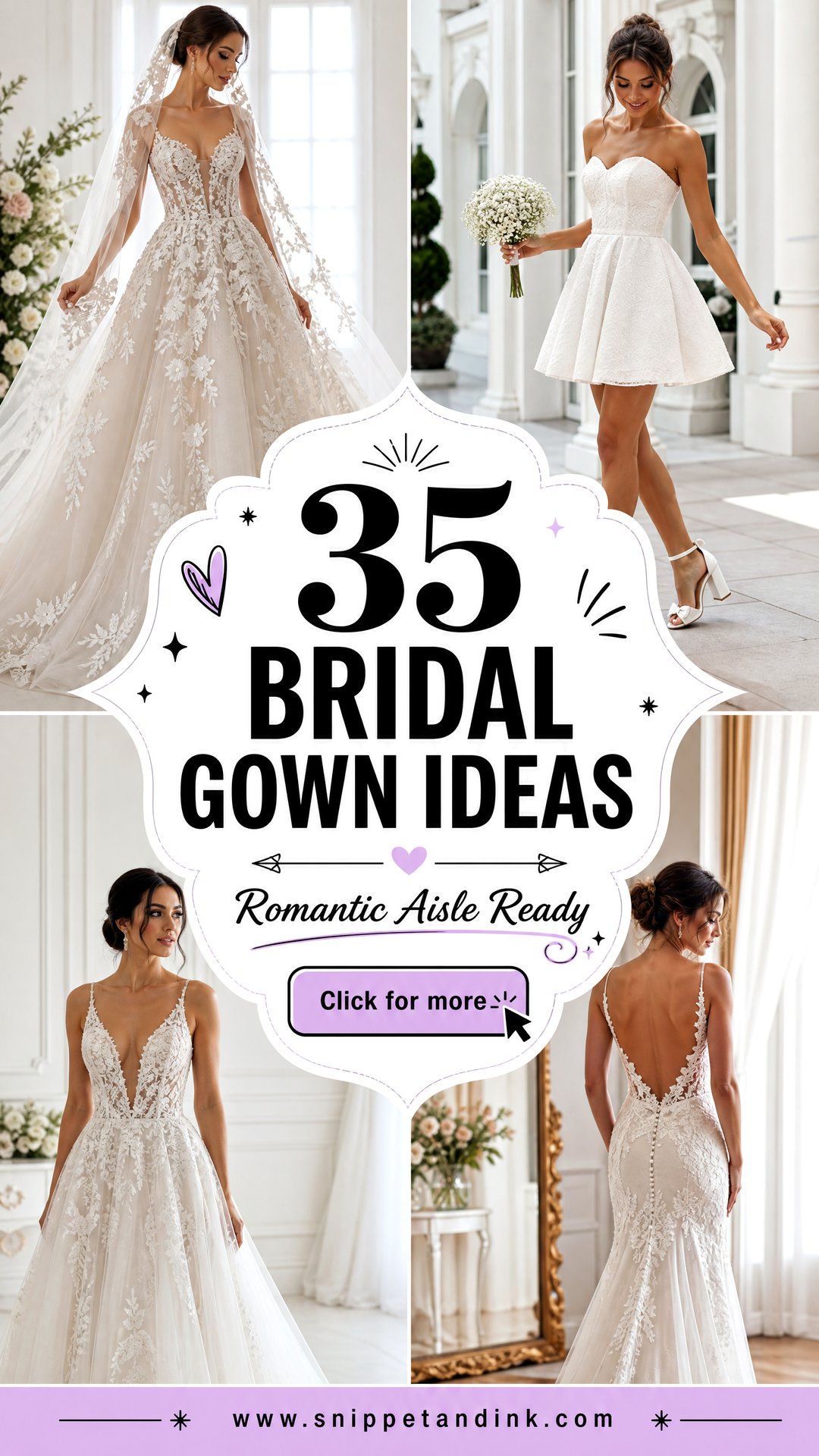
The Fitting Room Test I Give Every Gown Before a Bride Says Yes
A gown that looks right in the mirror can fail the moment you move. Before any bride decides, I put her through the same small routine, and I’d ask you to do it at every appointment, whichever style you’re trying.
- Sit on a hard chair for a full minute. Boning that feels fine standing can press into the ribs, and a fitted skirt shows how it creases.
- Raise both arms as if hugging someone taller. Strapless and off-shoulder bodices reveal straight away whether they slip.
- Walk ten steps and turn. Mermaid and slit skirts only show how they really behave in motion.
- Look at the back in a second mirror. Trains, bows and buttons are what guests watch during the vows.
- Check the fabric by a window if the shop allows it. Ivory, blush and blue tones all shift under shop lighting.
Bring shoes close to the heel height you plan to wear, along with the undergarments you expect to use. Hem length and bodice fit both change with them, and a seamstress can’t pin accurately to a guess.
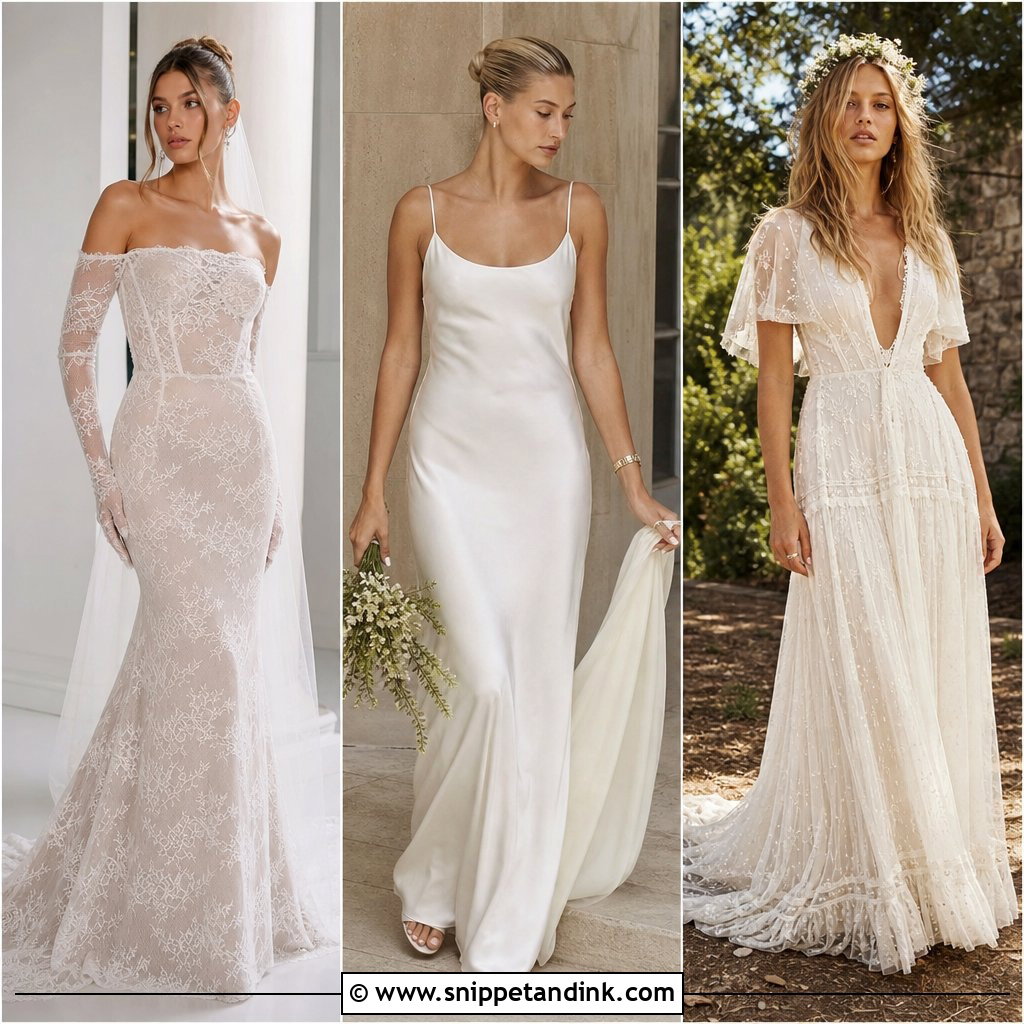
1. Lace Bridal Gown With Cathedral Veil
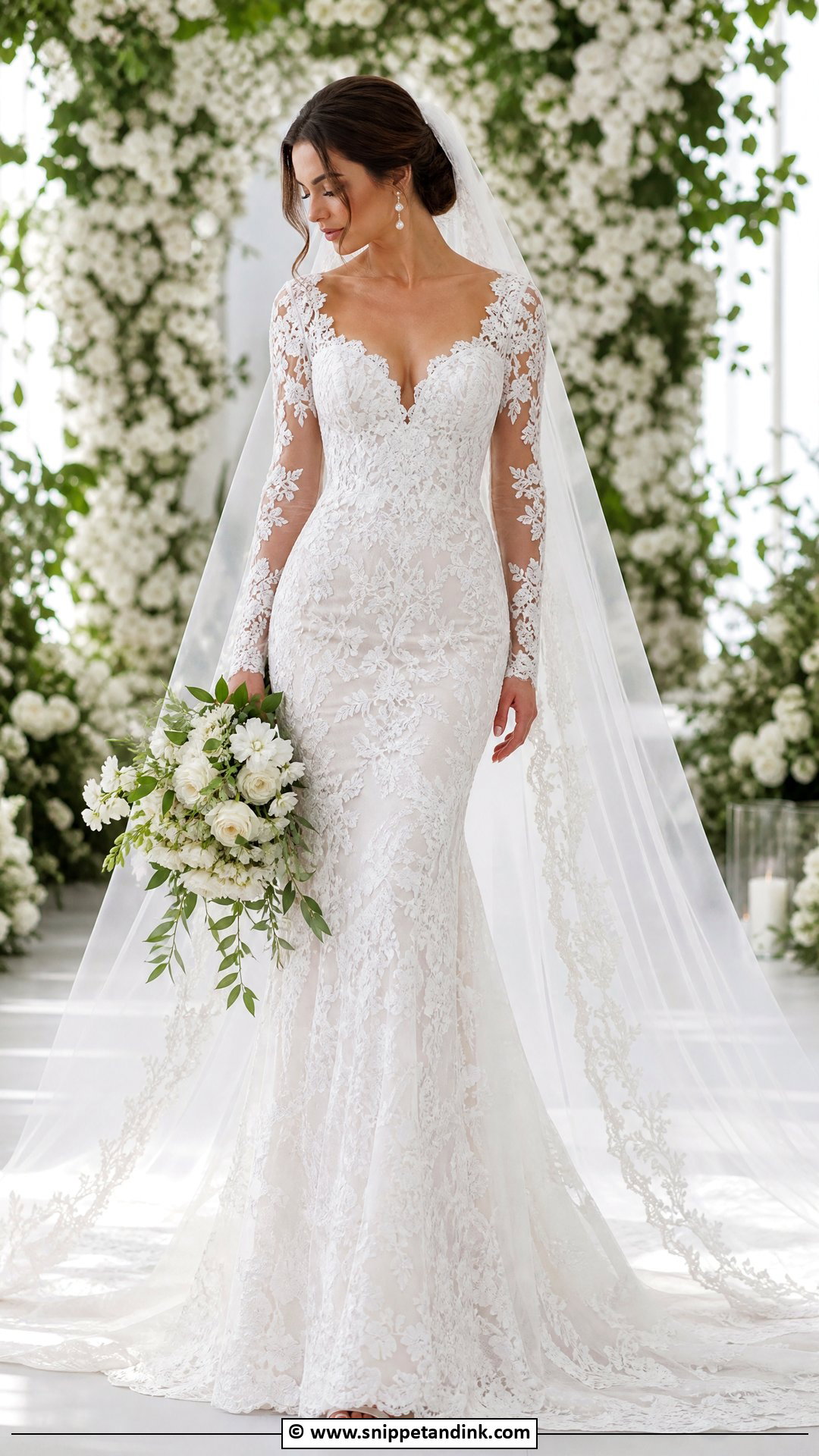
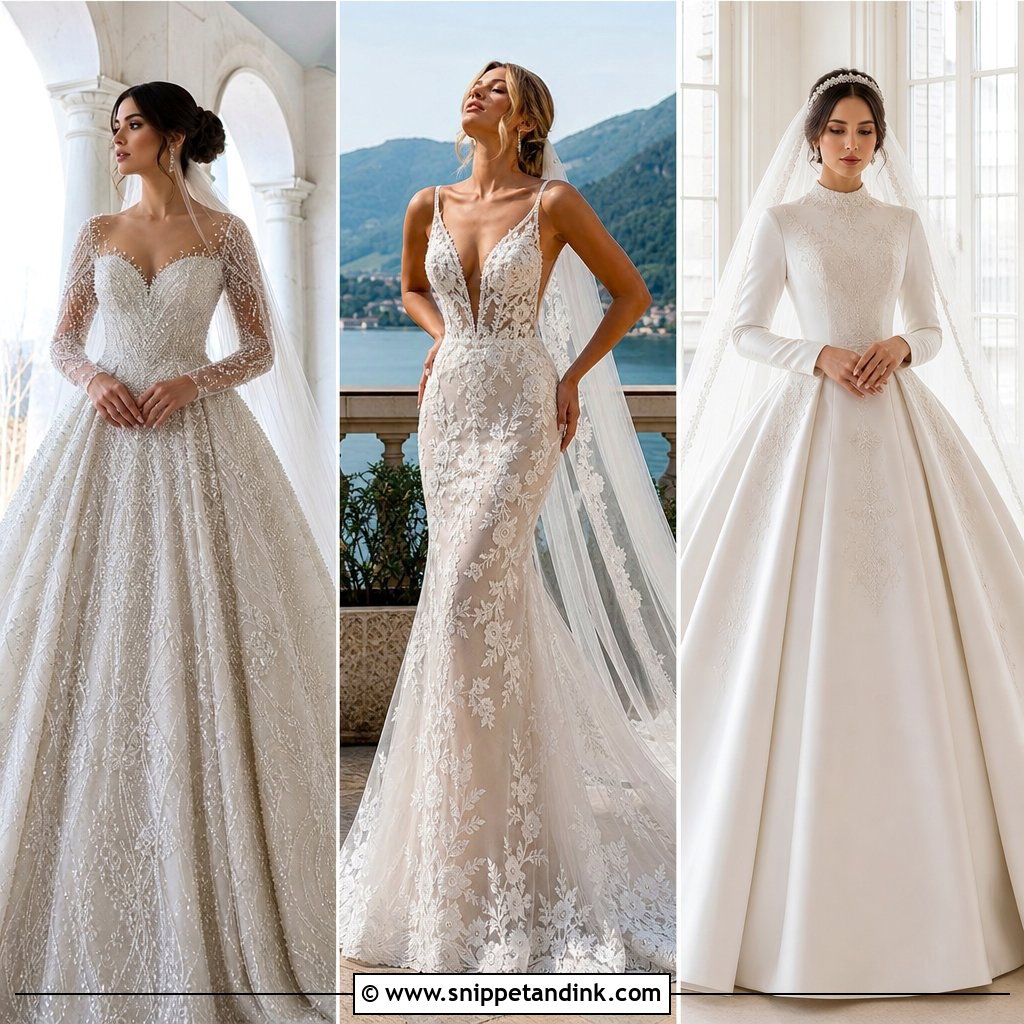
Lace with a cathedral veil is requested constantly for a good reason: the veil carries the drama, so the lace can stay quiet. I steer brides toward soft floral lace rather than dense patterning, because heavy lace under a long veil reads as busy in shots from behind. An A-line forgives more at the hip than a fitted cut. Pearl drops, a fine bracelet and ivory heels are plenty, with a low bun or soft waves. One practical note for garden venues: a cathedral veil drags across grass and gravel, so ask someone to lift and settle it once you reach the altar.
2. Satin Ball Gown With Pearl Jewelry
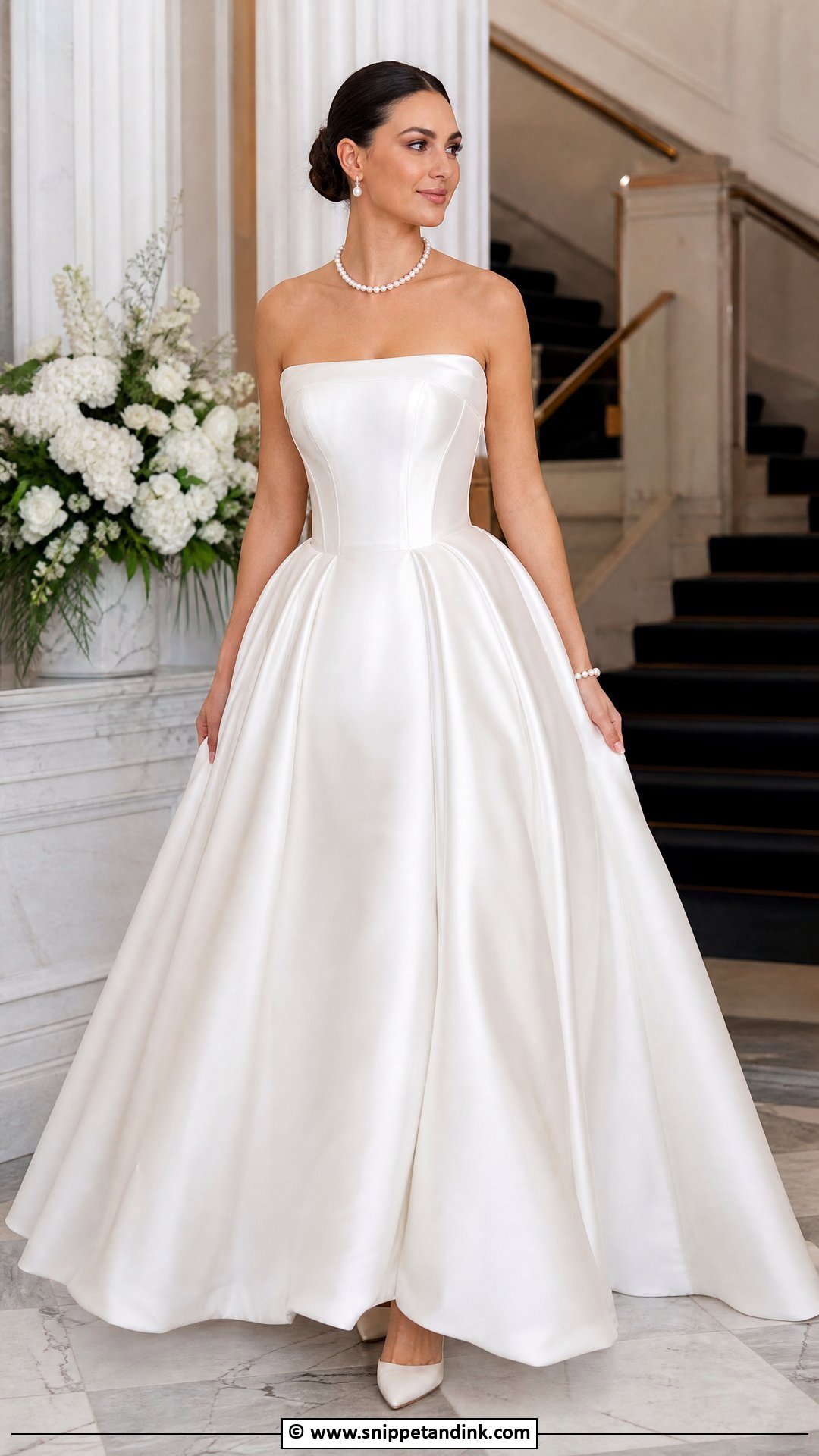
Satin shows everything, which is both its appeal and its risk. In a ball gown it gives you a classic princess shape with a cleaner face than tulle. I check two things first: that the bodice is boned firmly enough not to ripple at the waist seam, and that the satin is heavy enough not to keep every crease from the car ride. Pearls suit it because they add detail without fighting the sheen. Pointed ivory pumps, a plain veil and a smooth updo finish it, and hotel ballrooms are its natural home.
3. Strapless Bridal Gown With Long Gloves
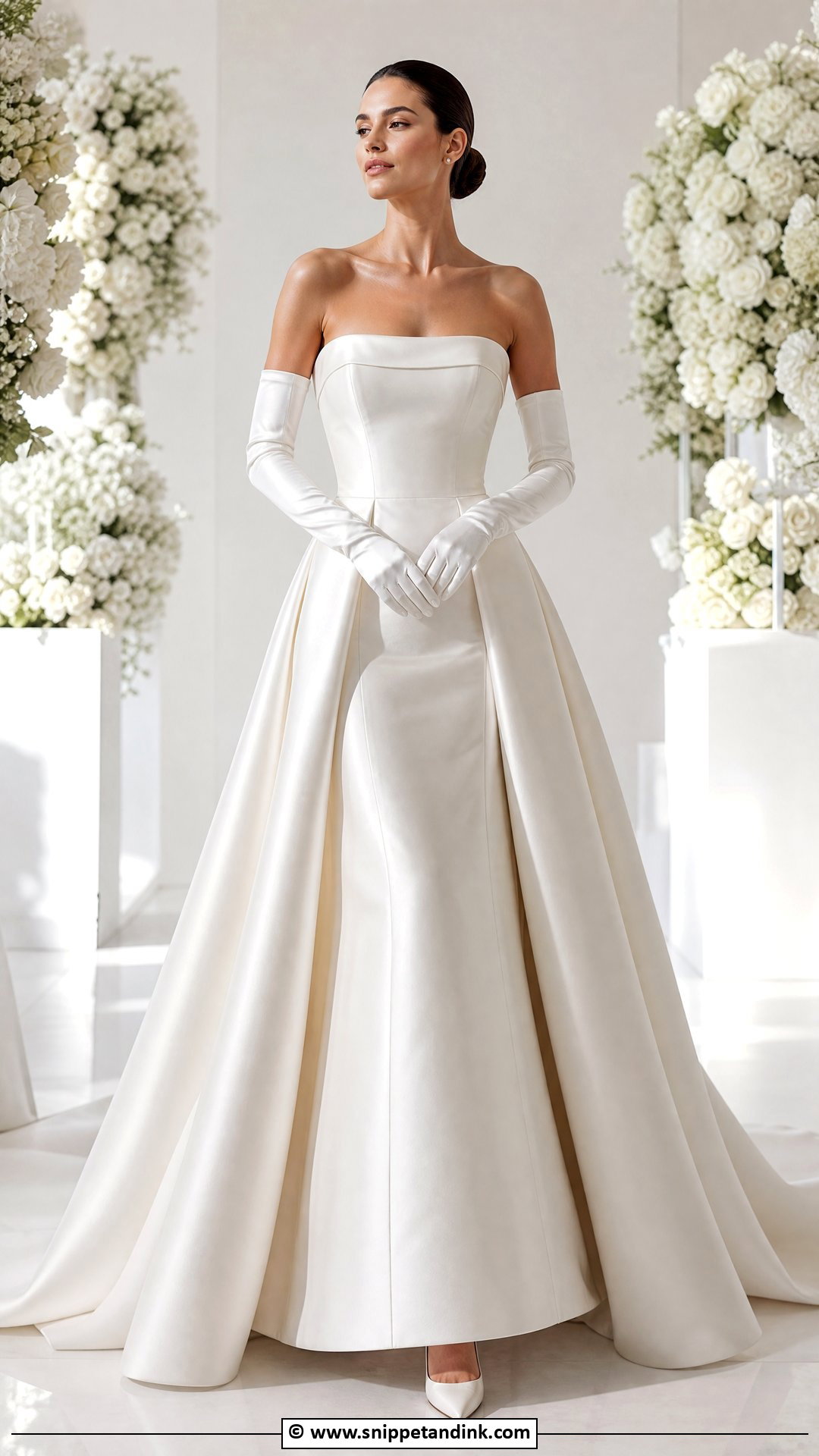
Long gloves turn a strapless bridal gown from simple into deliberate. With no straps, the bodice does all the holding, so I want satin, mikado or a firm crepe with real boning, and I have the bride raise both arms and hug someone in the fitting room before I sign off. Keep the earrings small so the gloves lead, then add a sleek bun and a chapel veil. Plan the ring exchange in advance. Removing the left glove before the ceremony, or choosing a style with a finger opening, saves an awkward tug at the altar.
4. Off Shoulder Bridal Gown With Soft Waves
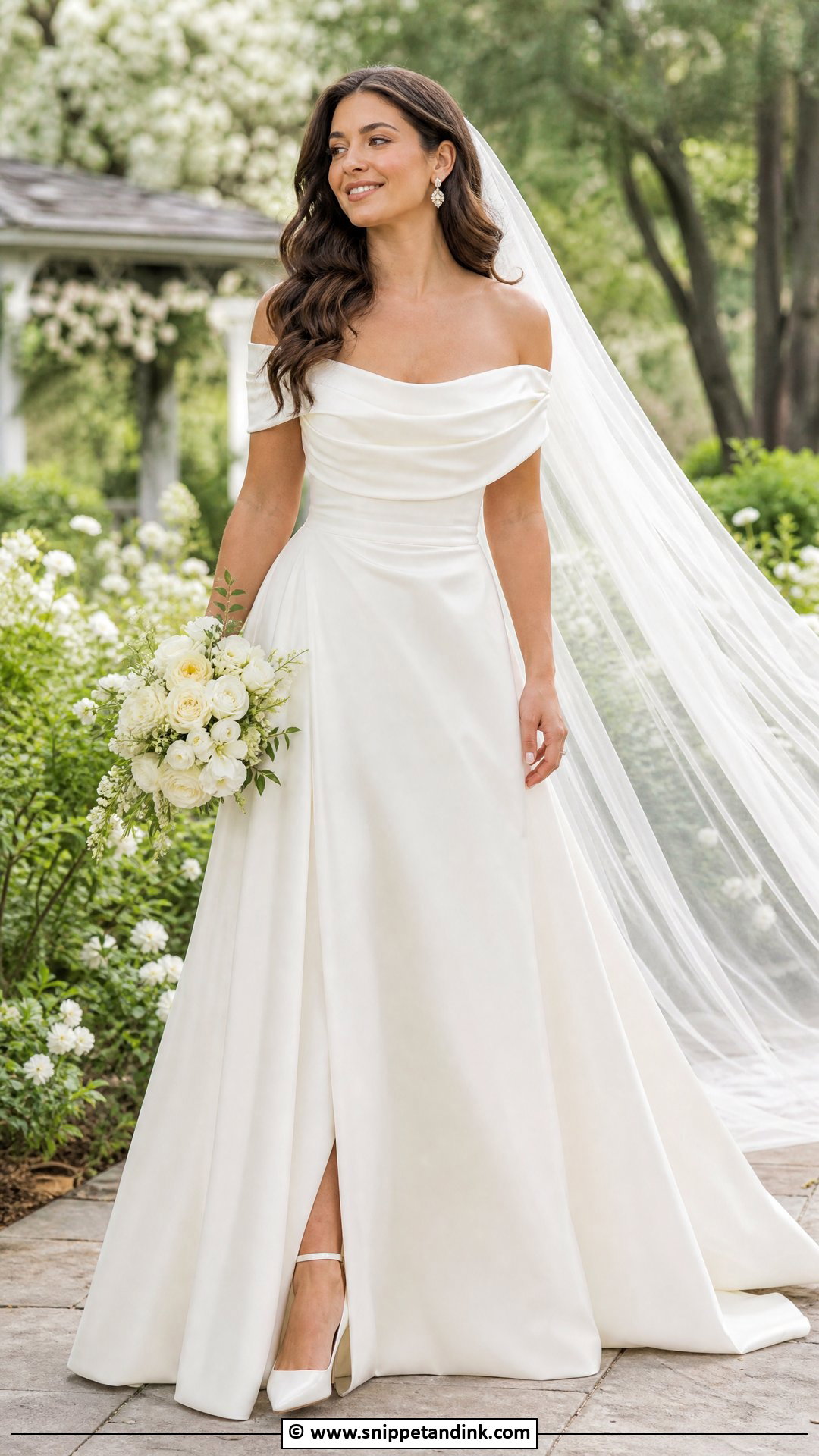
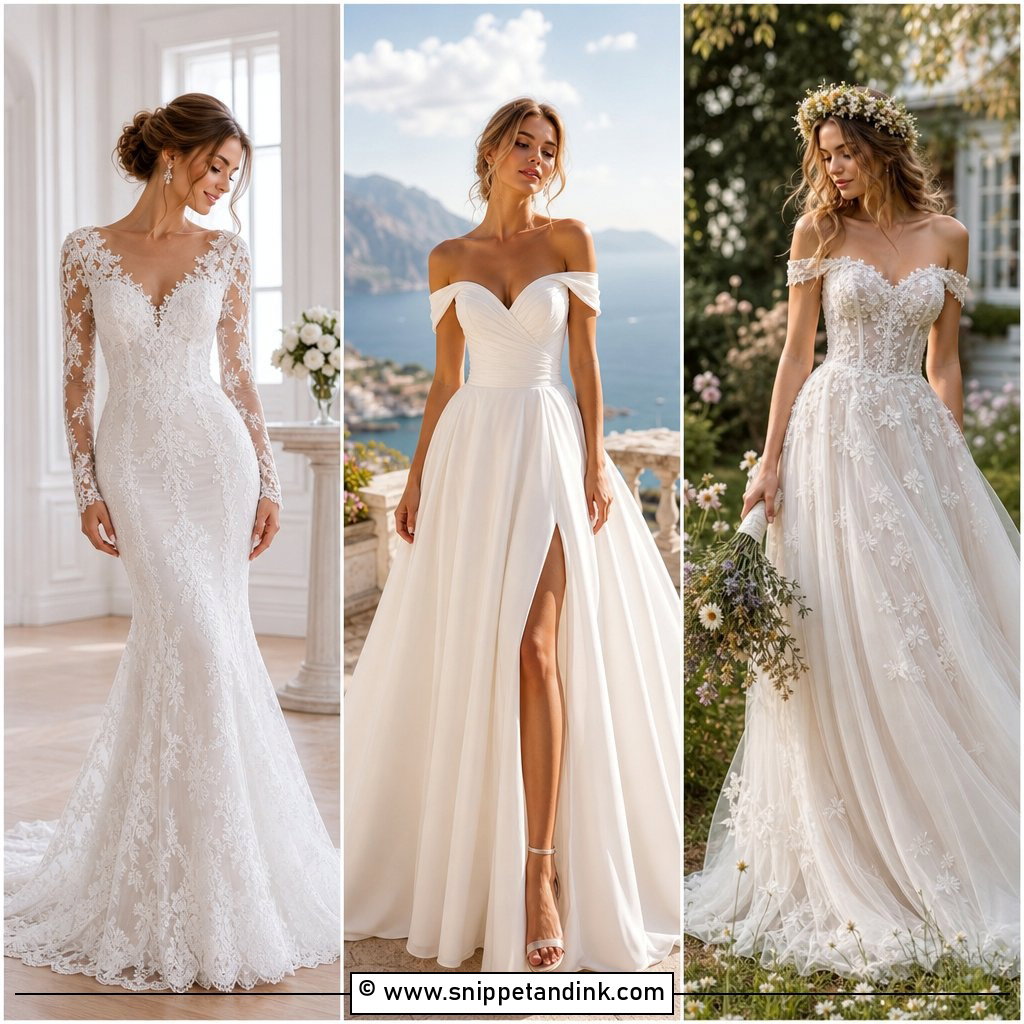
Off-the-shoulder necklines show the collarbones well, but they limit arm movement more than most brides expect. The band sits on the upper arm, so lifting your arms to hug or dance pulls the whole bodice down. I test that at every fitting, and sometimes the fix is a discreet elastic or a slightly lower band. Draped satin looks tailored; lace and tulle versions feel softer. Soft waves and a sheer veil keep it relaxed. It works across spring, summer and autumn, though on a cool evening you’ll want a wrap for walking between buildings.
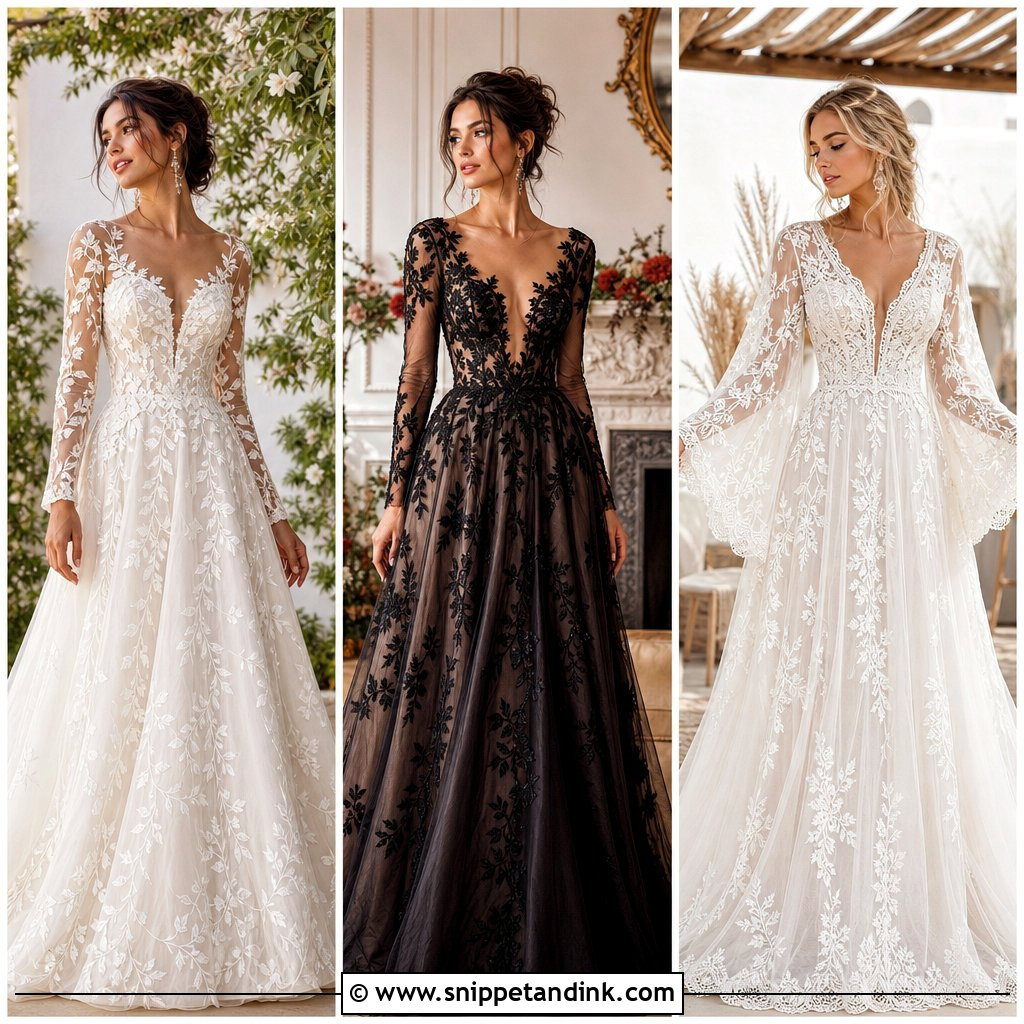
5. Long Sleeve Bridal Gown With Low Bun
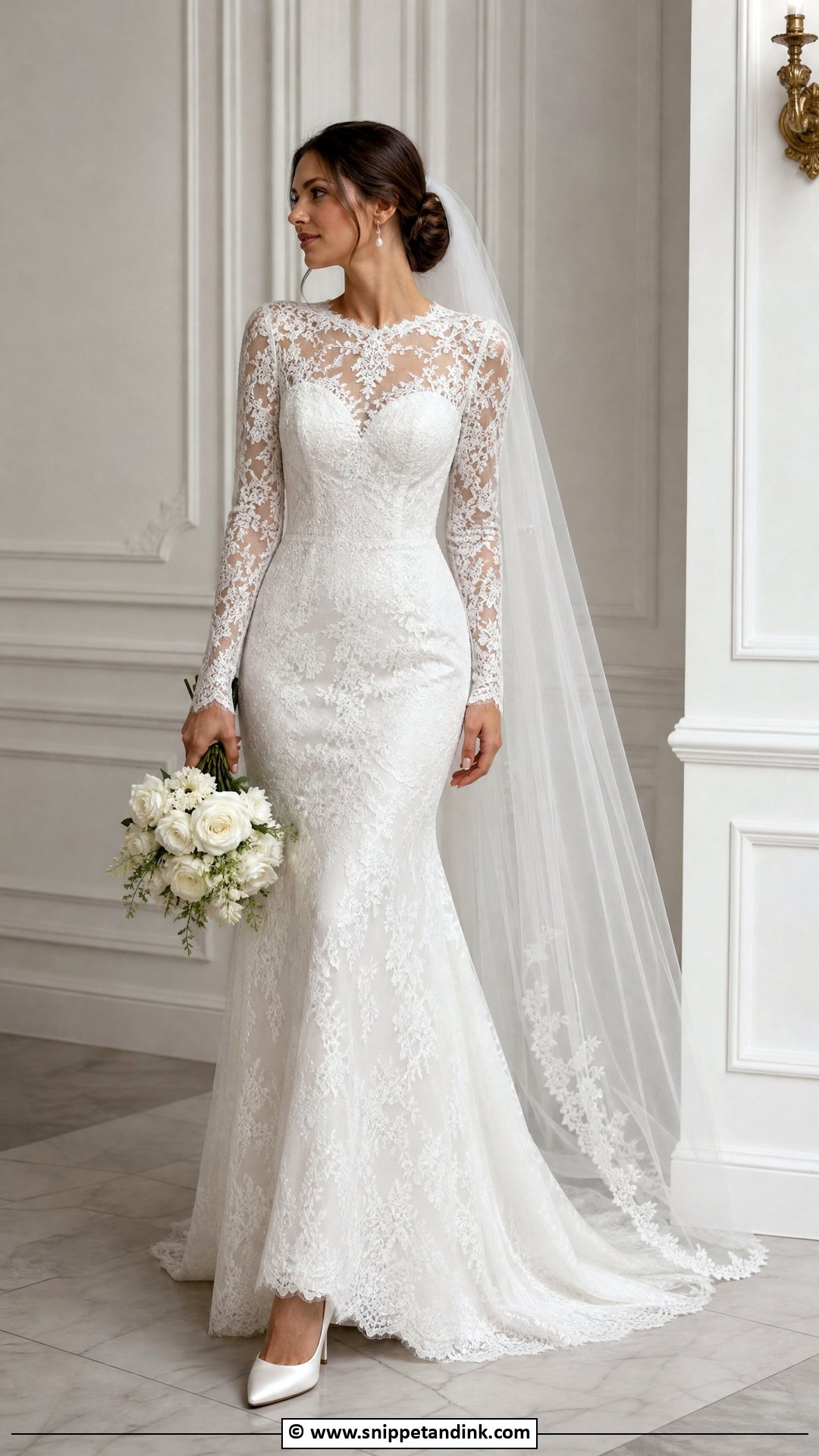
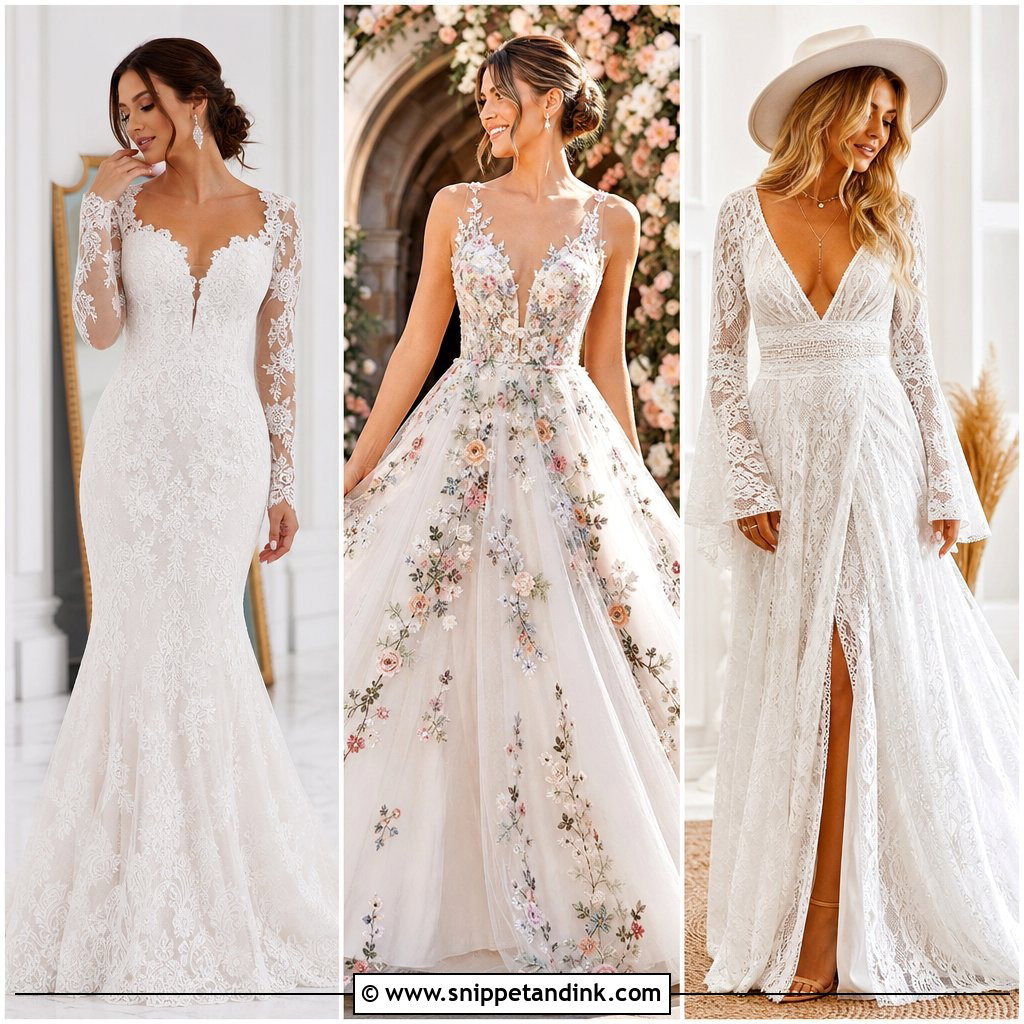
Sleeves are where tailoring shows most. A sleeve cut too tight at the bicep wrinkles every time you bend your elbow, and those folds appear in every bouquet photo. Sheer lace reads romantic, while crepe sleeves look sharper. A low bun keeps the sleeve and neckline visible. My accessory rule is simple: heavy lace or beading means pearl studs and nothing more, while a plain sleeve can carry a textured veil or bolder earrings. For cooler months, formal venues and anyone wanting coverage, this is the most comfortable option on the list.
6. Minimalist Crepe Bridal Gown With Sleek Bun
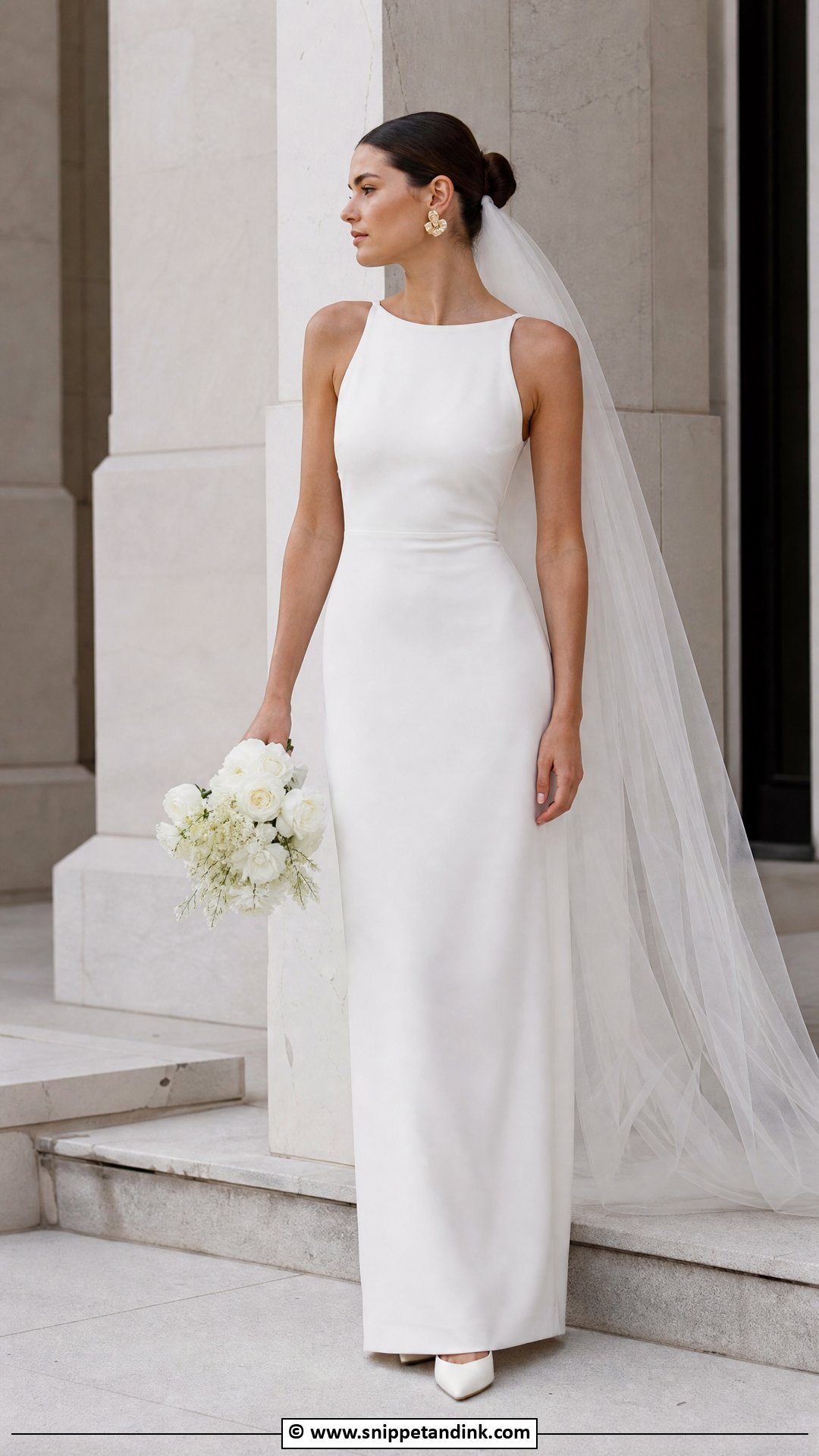
With crepe, the fit is the design. There’s no lace to hide a bubbling seam or a zip that pulls, so I spend more fitting time on a plain crepe sheath than on most embellished gowns. Sheath, column and fit-and-flare cuts all suit the fabric because it holds a smooth line. Crepe does show undergarment edges more than satin, so bring the exact shapewear you’ll wear to every fitting. Sculptural earrings, a sleek bun, pointed pumps and a long plain veil finish it, and it looks most at home in city venues and on rooftops.
7. Drop Waist Bridal Gown With Tulle Skirt
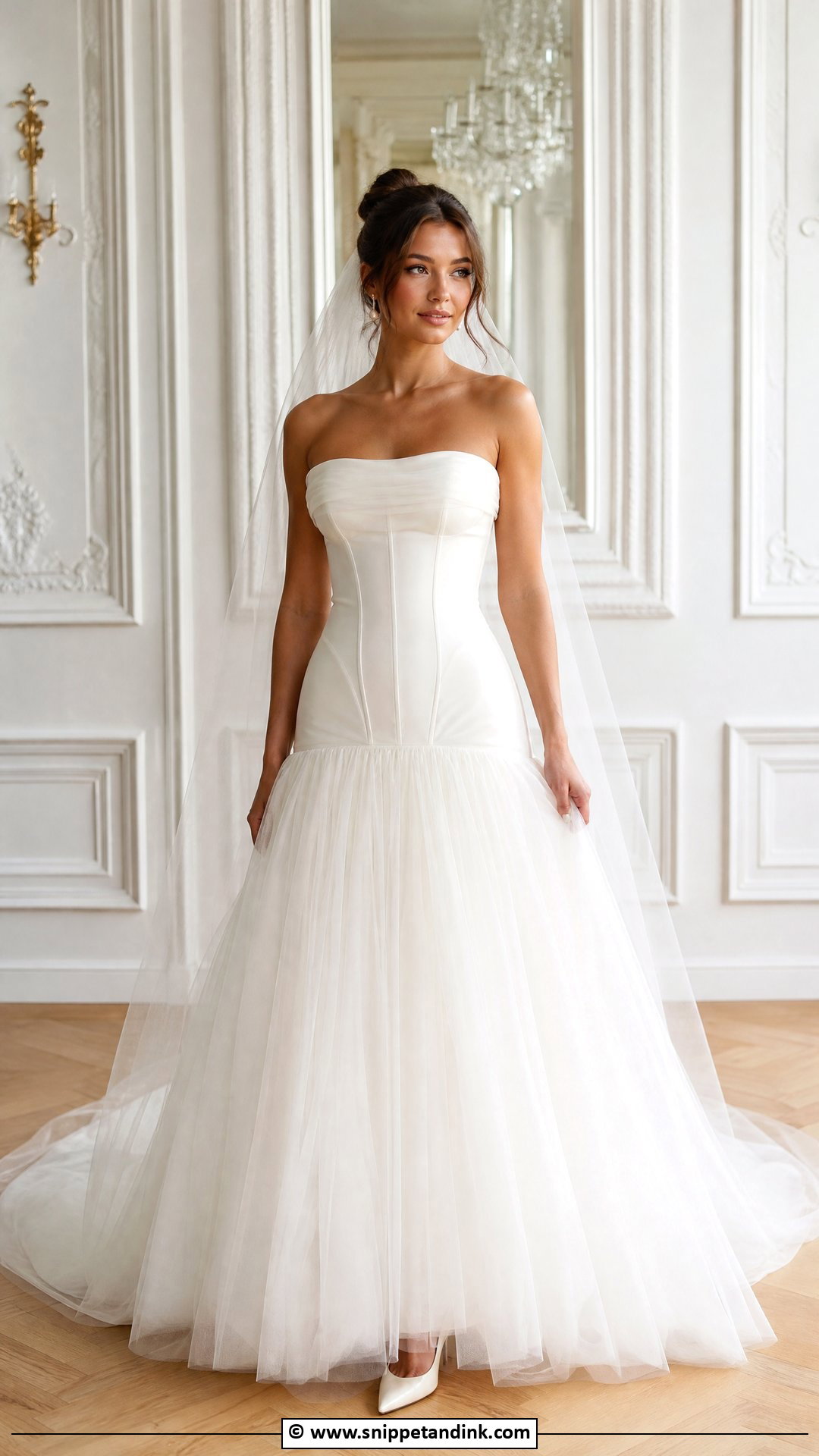
A drop waist bridal gown lengthens the torso and lets the skirt open out lower down, which gives real shape without any sparkle. On a long torso it is easy to wear. On a shorter torso I usually suggest a gentler drop, because a waist seam sitting too low can shorten the legs in full-length photos. A fitted bodice into soft tulle is the current version. A sheer veil, small earrings and delicate heels keep the line unbroken, and a large room gives the skirt the space it needs.
8. Corset Bridal Gown With A-Line Skirt
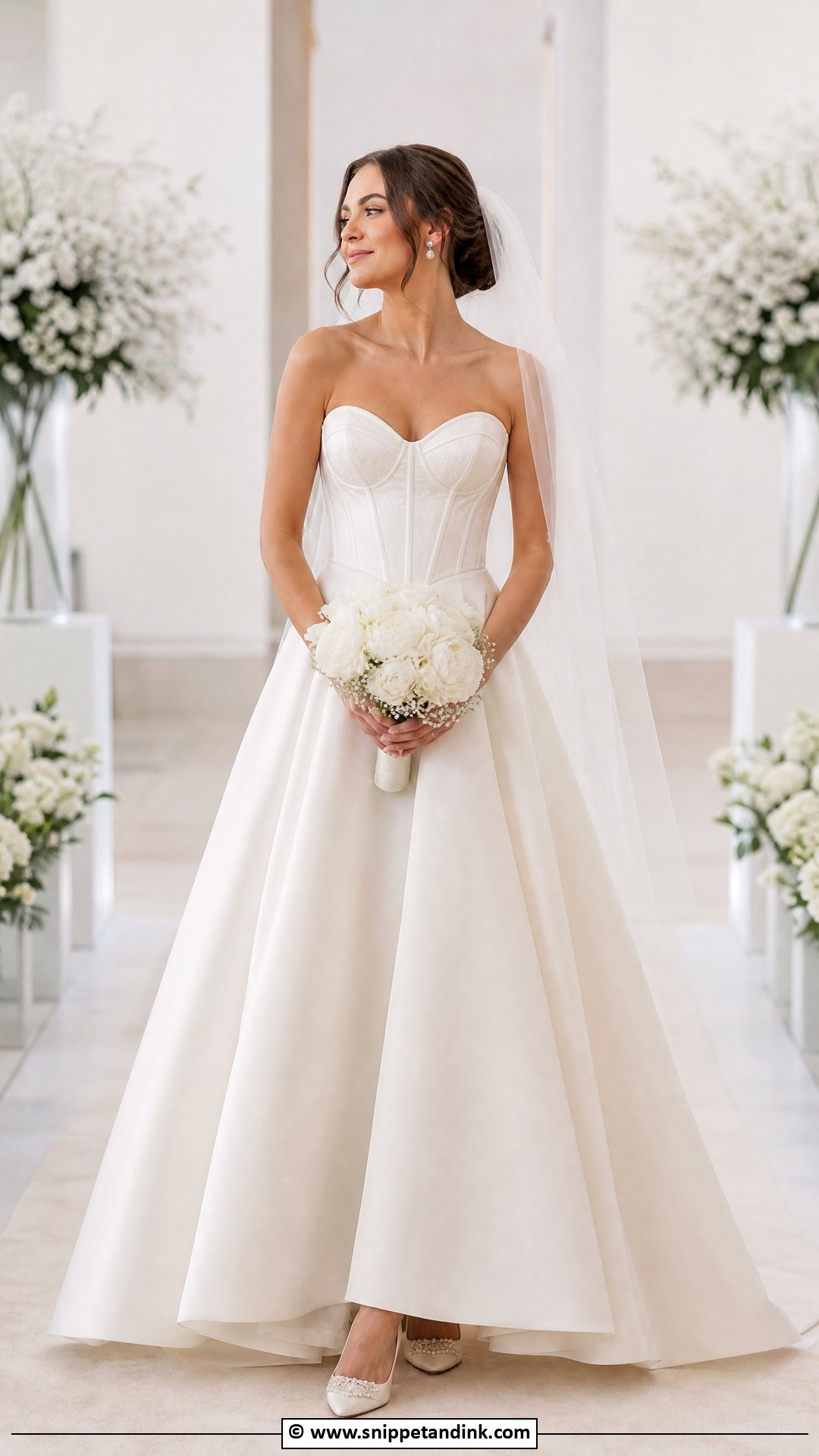
Of all the shapes here, this pairing is one of the easiest to wear through a long day. The corset handles support and waist definition, while the A-line skirt leaves your legs free for steps, dancing and sitting. I still make brides sit down at every fitting in a corset gown, because boning that feels fine standing can dig into the ribs at dinner. Satin reads classic, tulle softer and lace more vintage. A half-up style softens the structured top, and a medium veil with pearl earrings keeps things balanced.
9. Floral Applique Bridal Gown With Sheer Veil
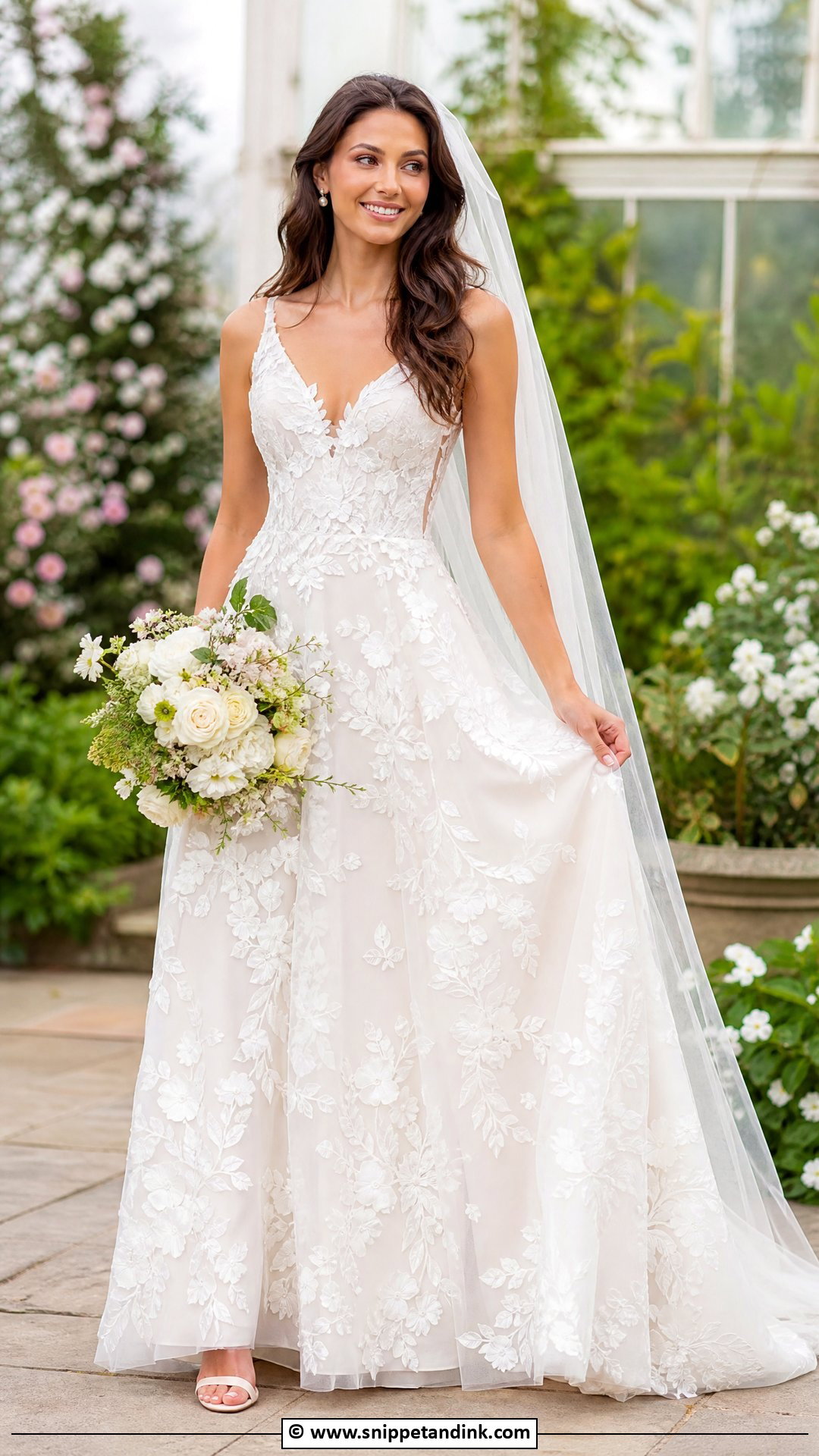
Raised appliqués catch side light, so they look richest in close-ups and open shade and flatten a little under harsh midday sun. Soft 3D flowers lean garden; flat appliqués look more classic. I keep the veil sheer so the work shows through. One caution from the alterations room: appliqués that cross a seam have to be lifted and re-stitched by hand when the bodice is taken in or the hem shortened, so ask your seamstress about it before the first pin goes in. Keep the bouquet loose and soft in colour so it doesn’t compete with the dress.
10. Beaded Bridal Gown With Crystal Earrings
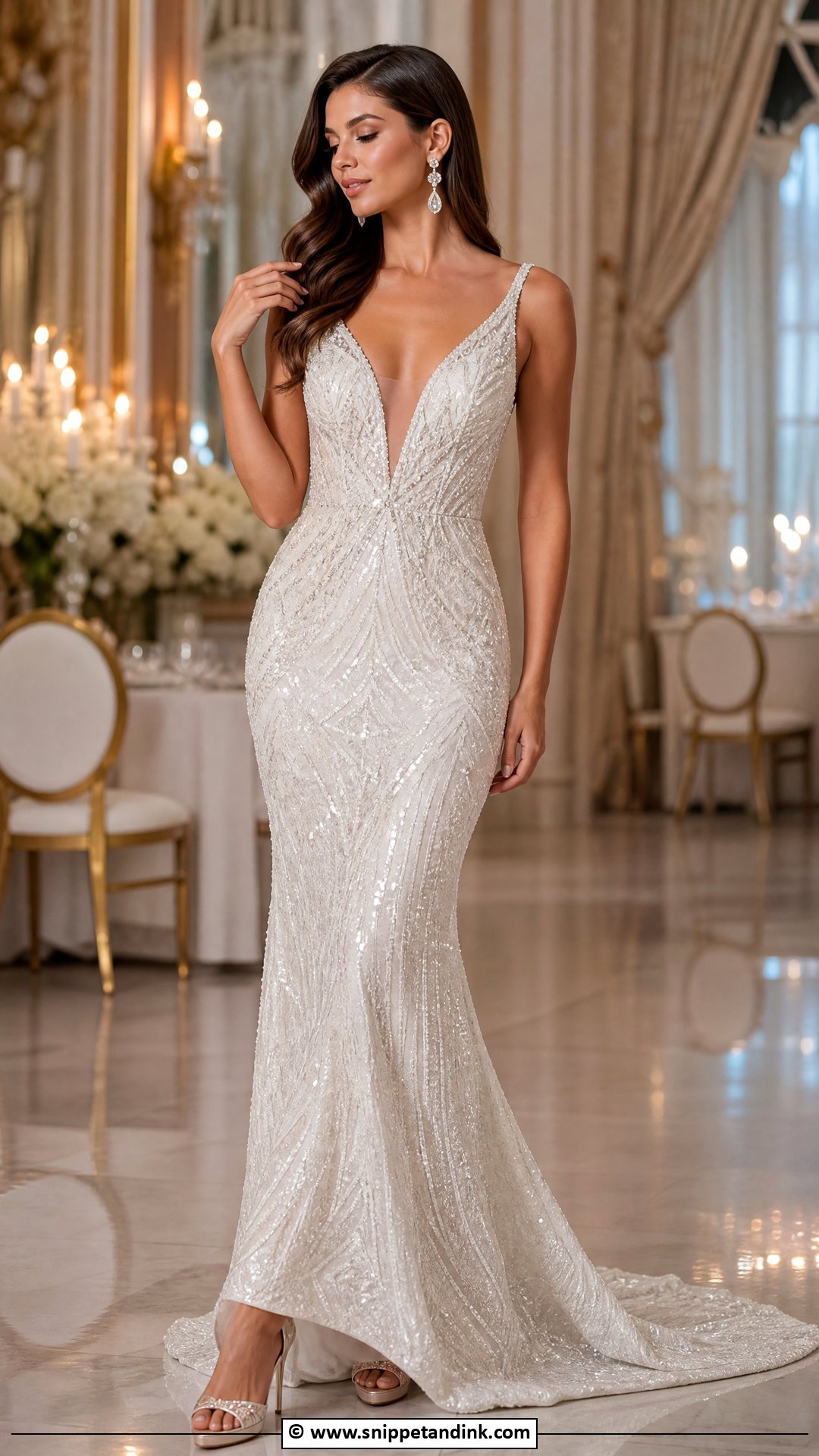
Beading is heavy. A fully beaded gown weighs noticeably more than a plain one, and that weight pulls on straps and seams through a long evening. I check where the inner arm rubs the side of the bodice, because that’s where beads snag skin and catch on lace sleeves. Choose beadwork that follows the gown’s lines instead of covering every inch. Crystal earrings are the natural match; skip the necklace if the neckline is detailed. Under ballroom and dance-floor lighting, the movement of the beads is the whole point.
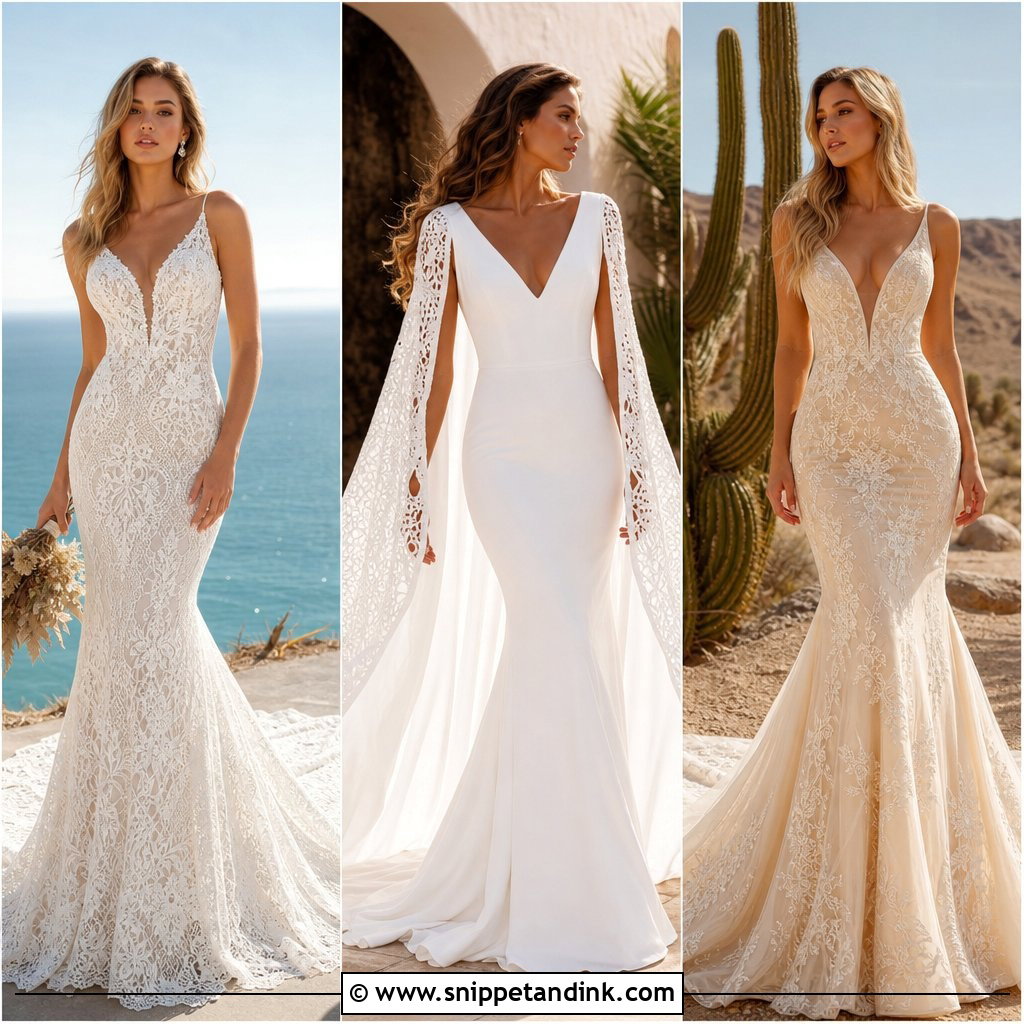
11. Mermaid Bridal Gown With Statement Veil
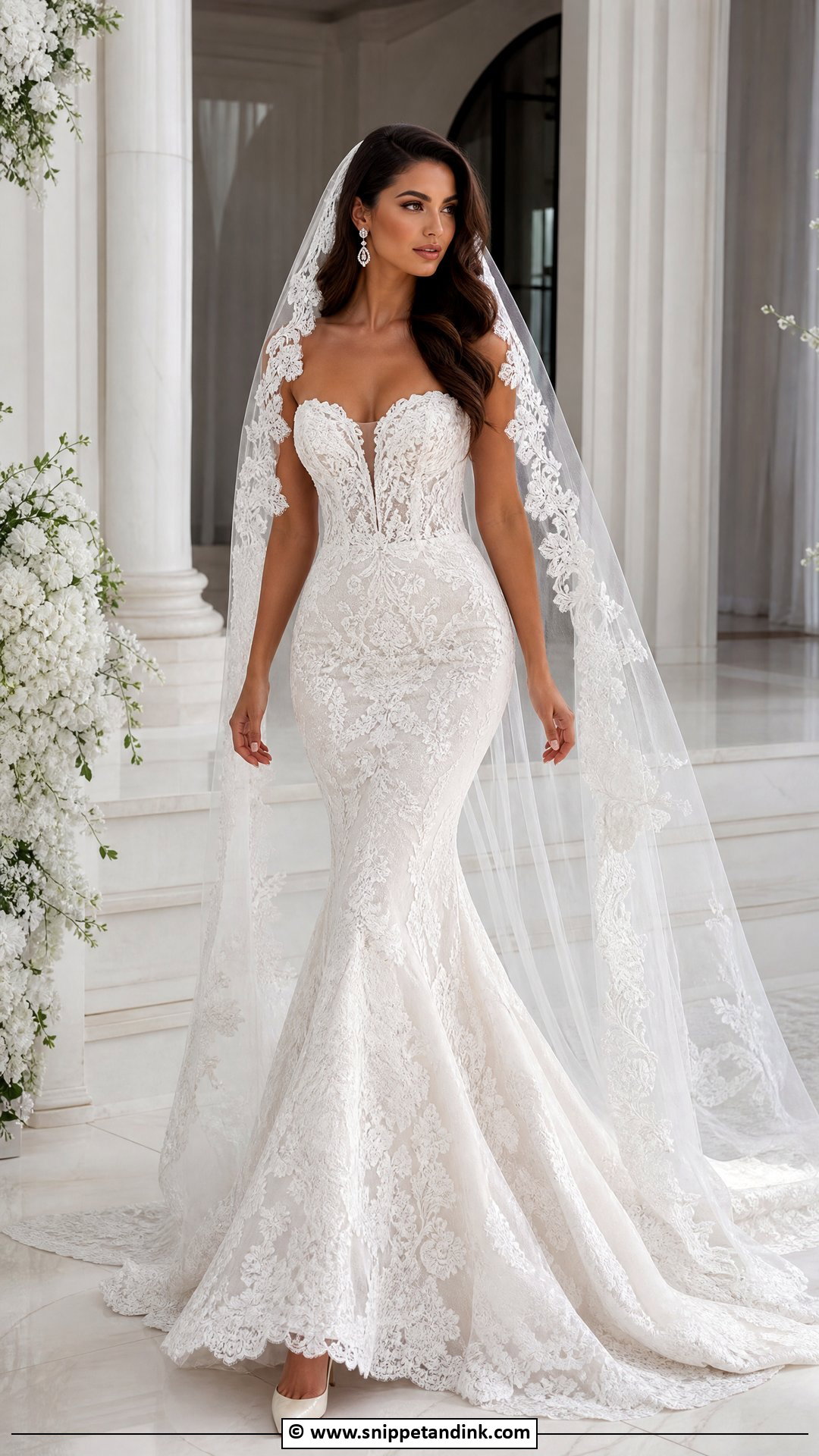
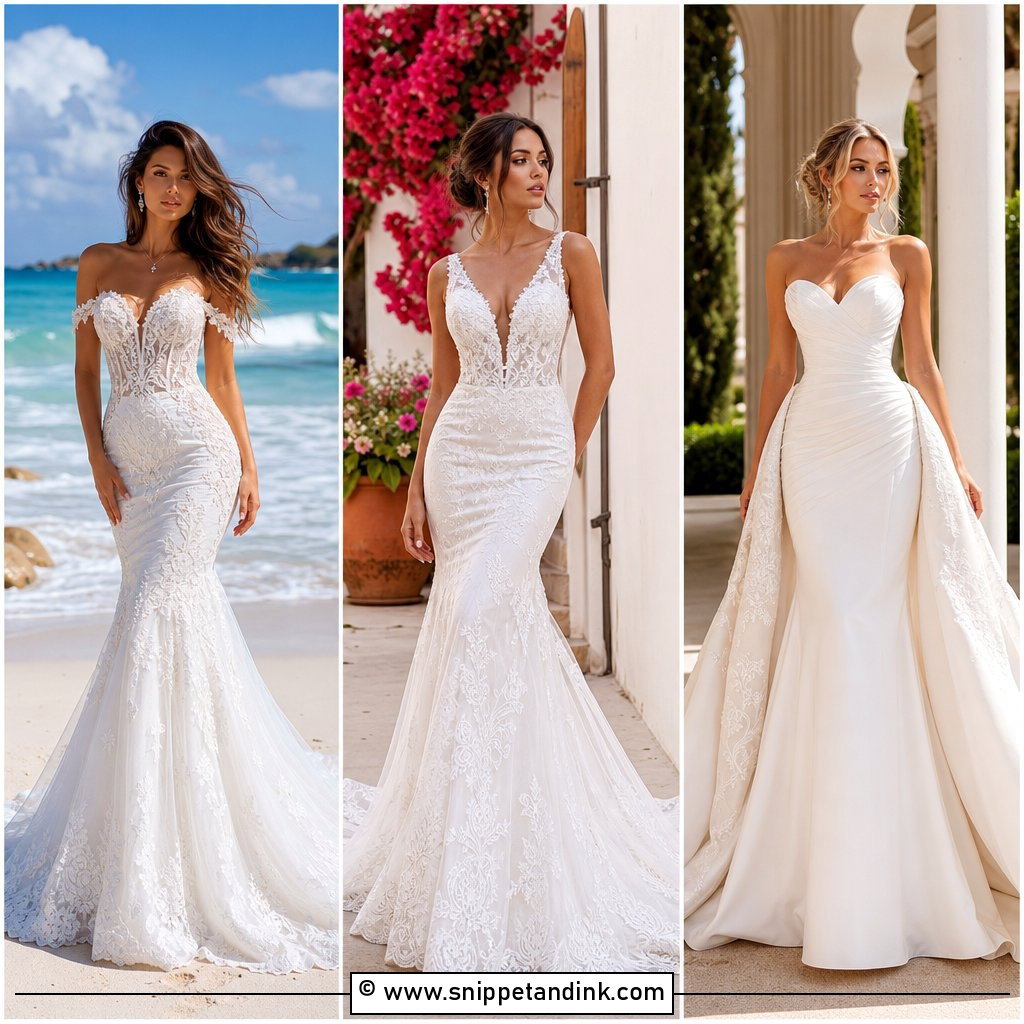
Mermaid gowns hold you closely from bust to knee, so the flare point decides everything. Set too high, the skirt swamps you; set too low, walking becomes a shuffle. I mark it while the bride walks across the room, never while she stands still. Lace reads romantic, crepe modern and satin glamorous. A statement veil softens the fitted shape, with a lace edge or pearls over a plain gown and a clean veil over a busy one. Practise sitting and getting into the car before the day, since these skirts don’t bend easily.
12. Sheath Bridal Gown With Pearl Veil
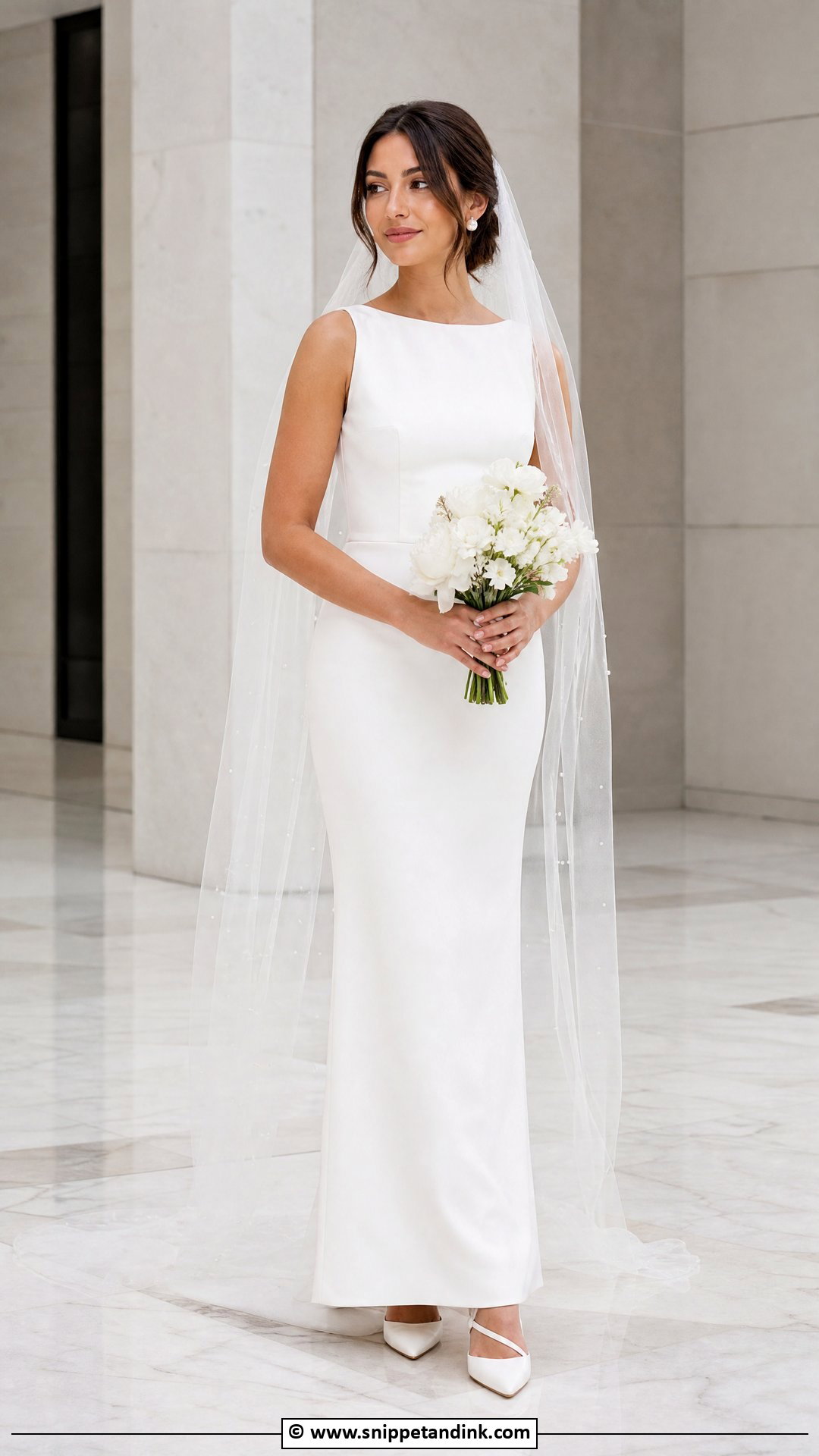
A sheath is the gown I suggest to brides who dislike feeling dressed up. It follows the body without volume, packs reasonably for travel and lets you move freely. The pearl veil adds the bridal detail it would otherwise lack. Crepe, satin and silk all give a clean finish, though silk wrinkles more after a car or plane journey. Slingback heels and pearl studs suit it. City halls, destination ceremonies and small dinners are where it shines; in a vast ballroom it can look underdressed.
13. Square Neck Bridal Gown With Satin Pumps
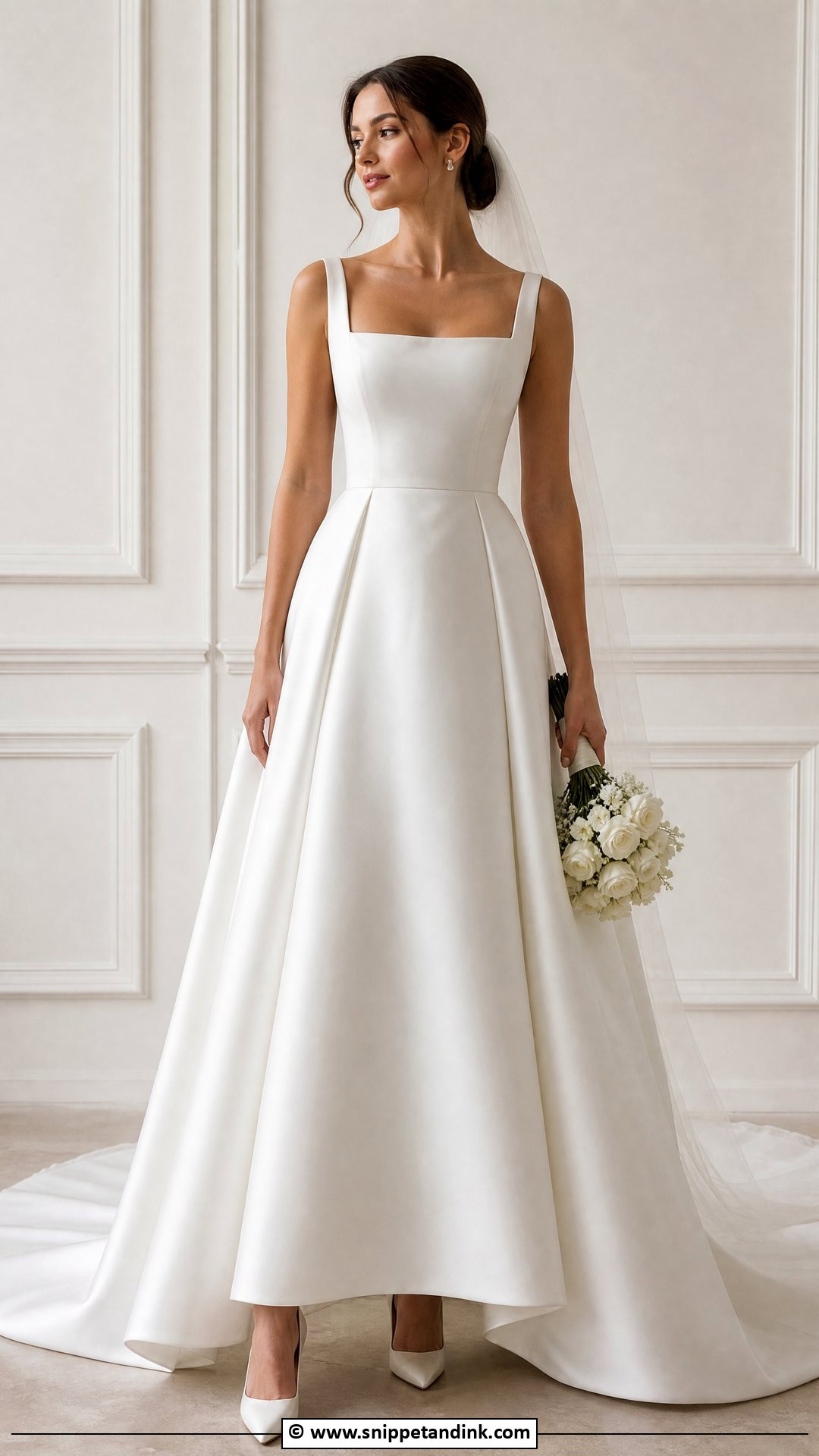
Square necklines frame the shoulders evenly, and they hold their shape on a moving body better than a sweetheart does. Strap width matters more than people think: very thin straps can read like lingerie, while wider straps or short sleeves look architectural. A satin A-line is the classic version; fitted crepe is sleeker. Satin pumps, a simple veil, small earrings and a low chignon finish it. Because it sits comfortably between formal and relaxed, it’s a safe call when a venue is hard to read.
14. Halter Bridal Gown With Clean Accessories
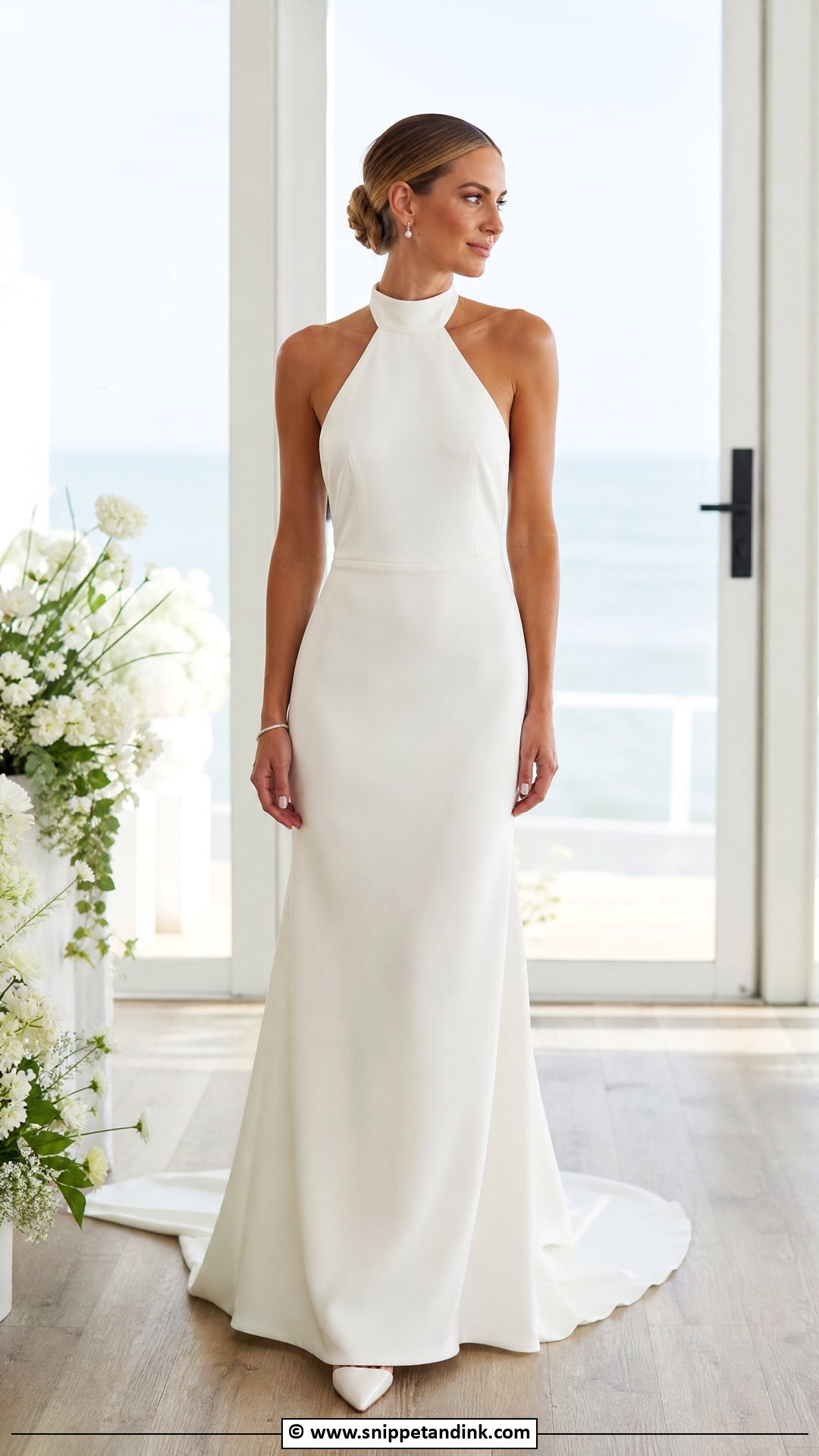
Halters pull the eye up to the neck and shoulders, so they reward good posture. The trade-off is weight, since the neck carries the bodice, and a heavily beaded halter can ache by the evening. The first thing I check is the closure at the nape, because a single hook there is a common failure point. Satin, crepe and silk look sleek, lace softer. Keep jewelry clean and wear a low bun or polished ponytail so the neckline and back stay visible. Modern and coastal venues suit it best.

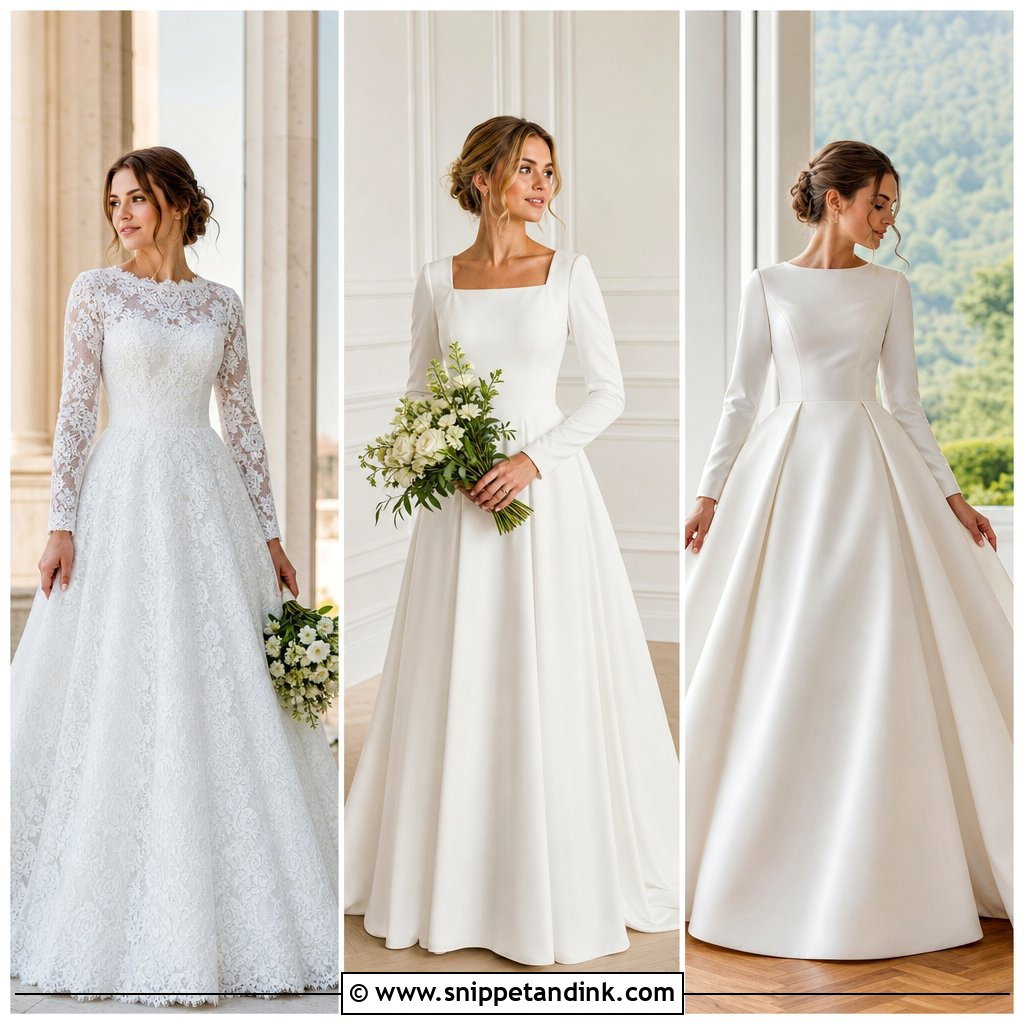
15. High Neck Bridal Gown With Button Back
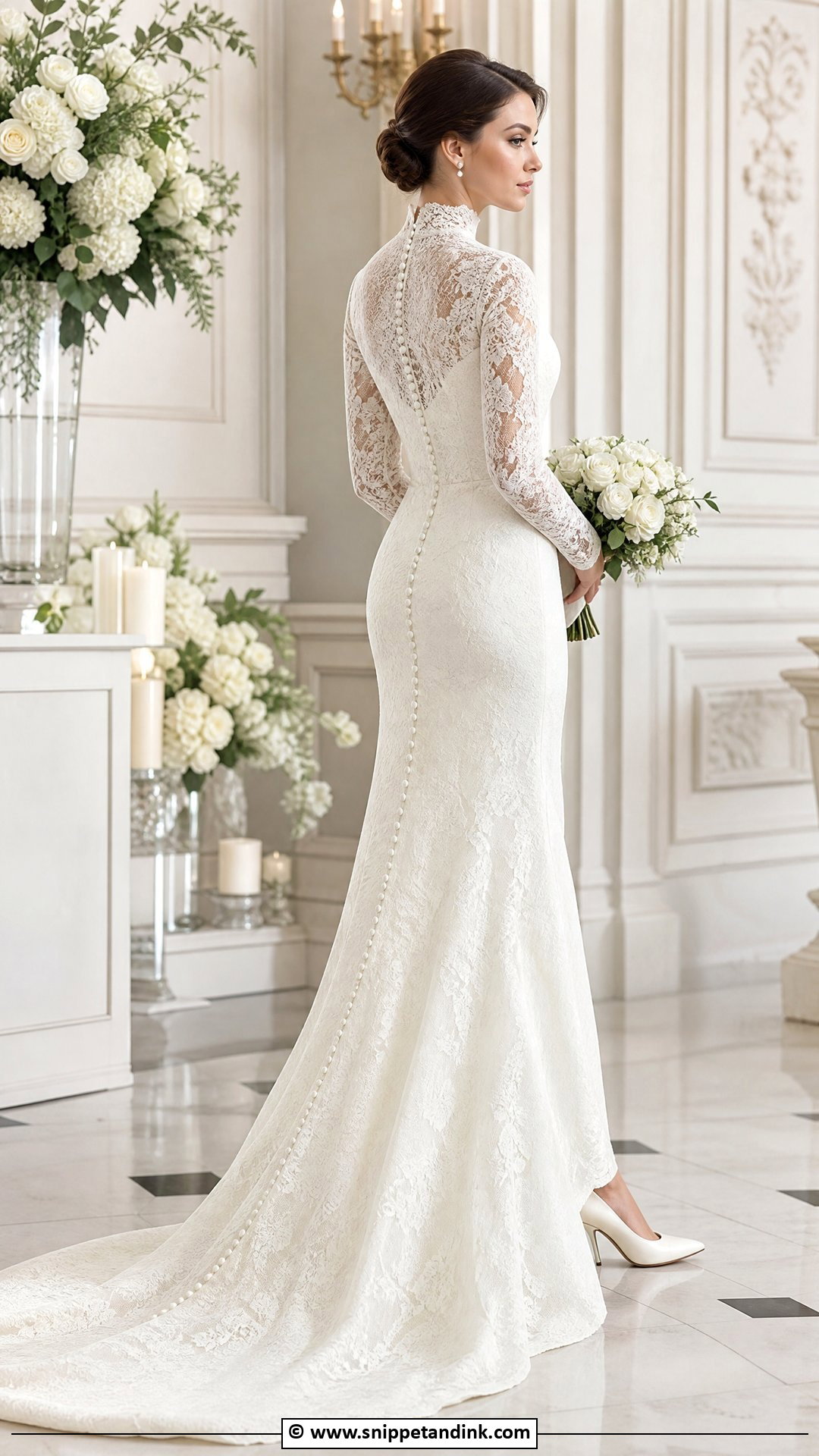
High necks sit best on a longer neck. When the neck is shorter, I’ll suggest an illusion yoke or a slightly lower line so the gown doesn’t crowd the chin. Lace makes it romantic; crepe or satin makes it cleaner. The button back is a treat during the walk away, but it takes time to fasten, so plan ten unhurried minutes and pack a button hook in the getting-ready kit. Pearl studs, a slim bracelet and a neat bun keep the neckline the focus in cooler weather and formal rooms.
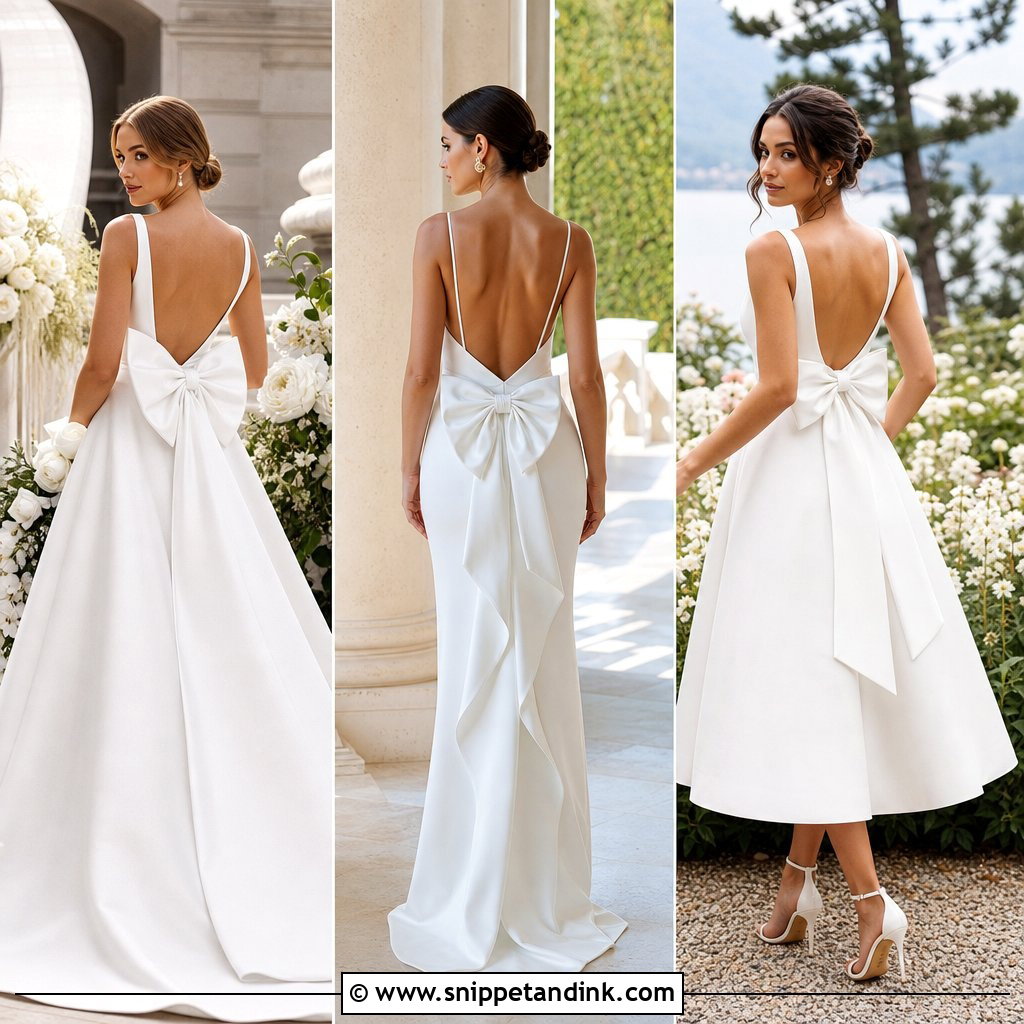
16. Tea Length Bridal Gown With Bow Heels
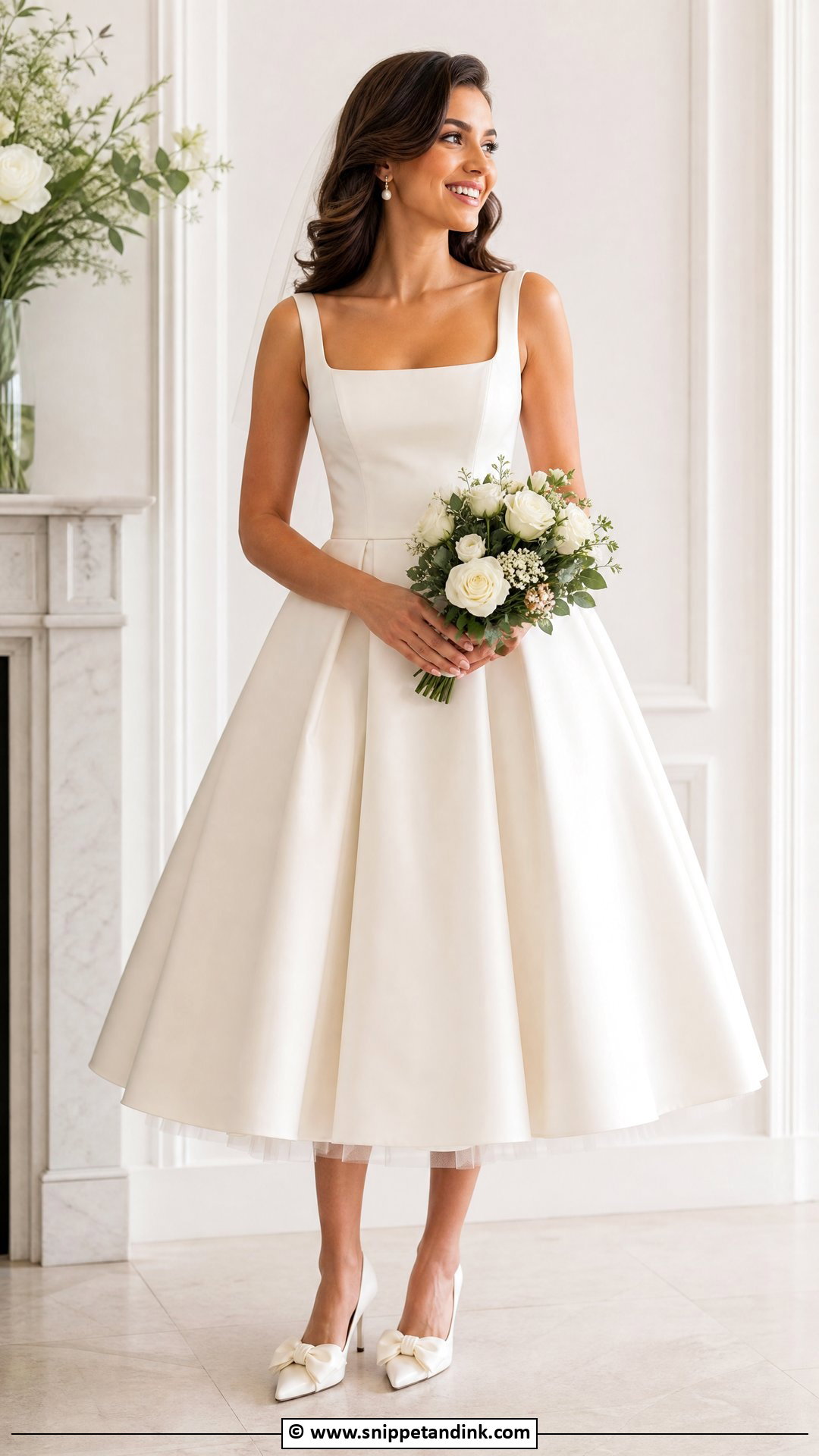
A tea length hem lands between knee and ankle, so your shoes are on full display, which is why bow heels work so well here. Exactly where the hem falls matters more than on a floor-length gown. On a petite frame, a hem at mid-calf can cut the leg, and I’ll often move it to just below the widest part of the calf. A full skirt looks vintage; clean satin looks current. Add pearls with a short veil or headband for civil ceremonies, garden parties or a reception change.
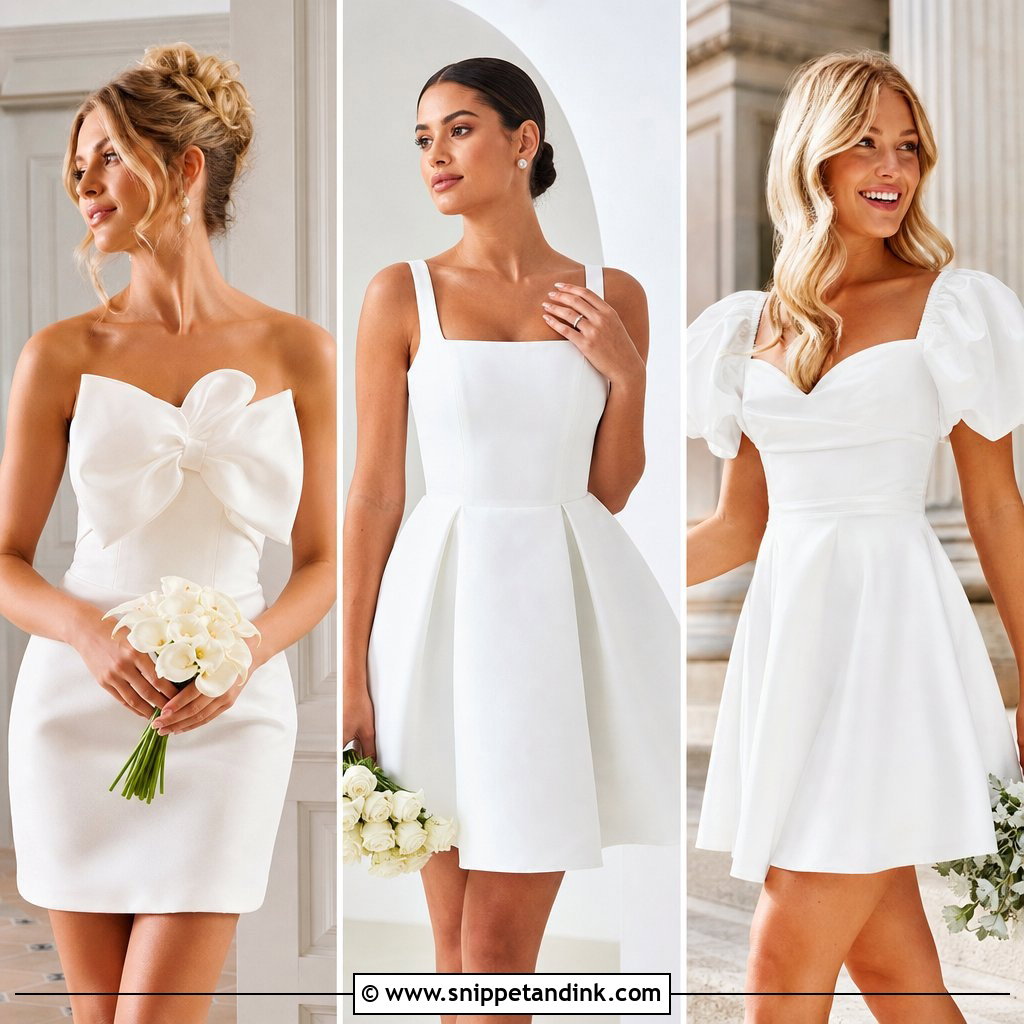
17. Short Bridal Gown With Block Heels
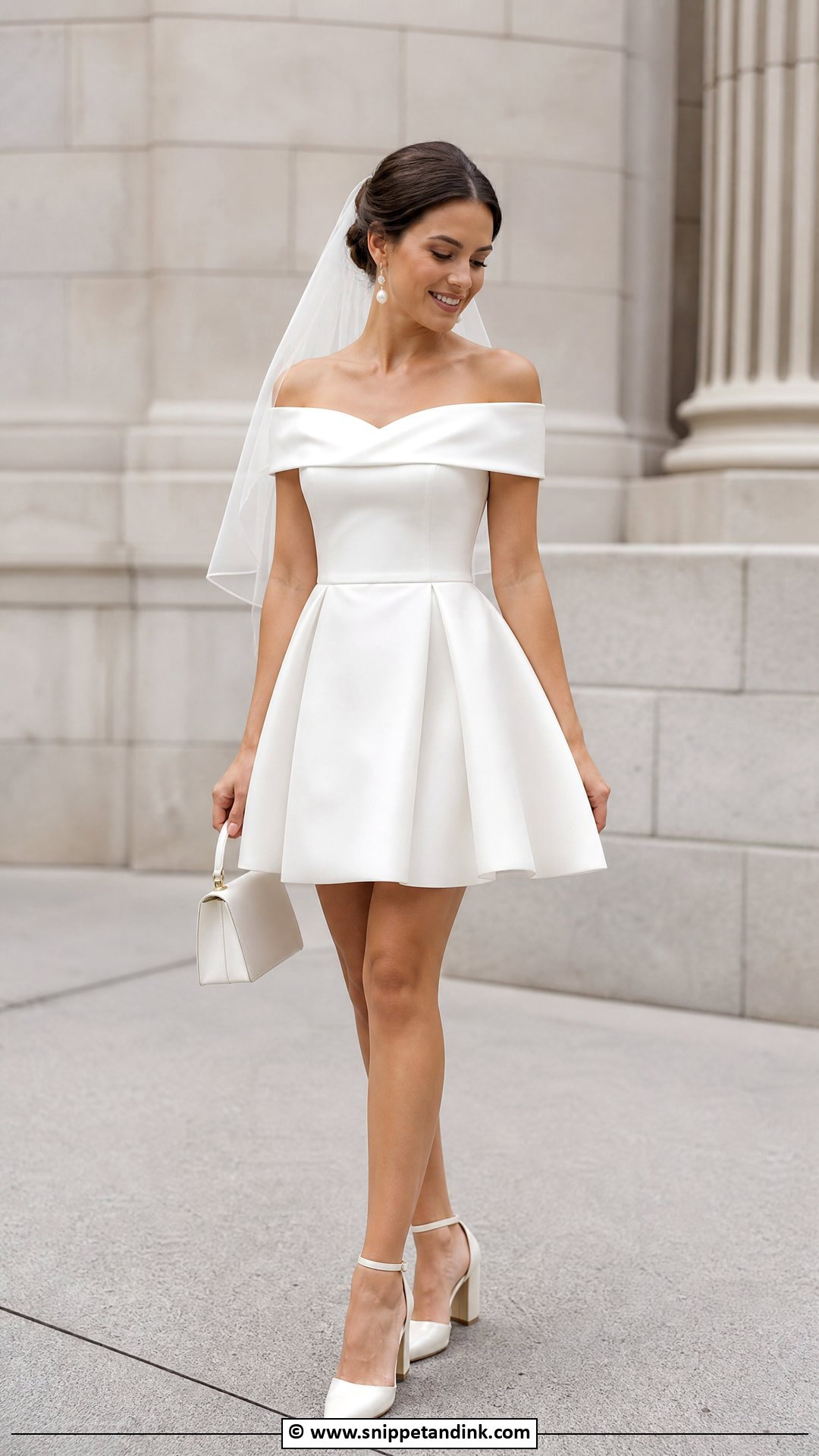
A short dress needs more styling, not less, to read as bridal. I look for structure, or a fabric like satin, crepe or lace that clearly says wedding, because a casual mini can look like a guest outfit in photos. Block heels make sense for courthouse steps, cobbles and dancing. Add pearl earrings, a small top-handle bag and a short veil or hair bow. Sit down in it before buying; a short skirt rides up further than you’d think on a low chair. Elopements and warm-weather parties suit it well.
18. Bridal Gown With Overskirt
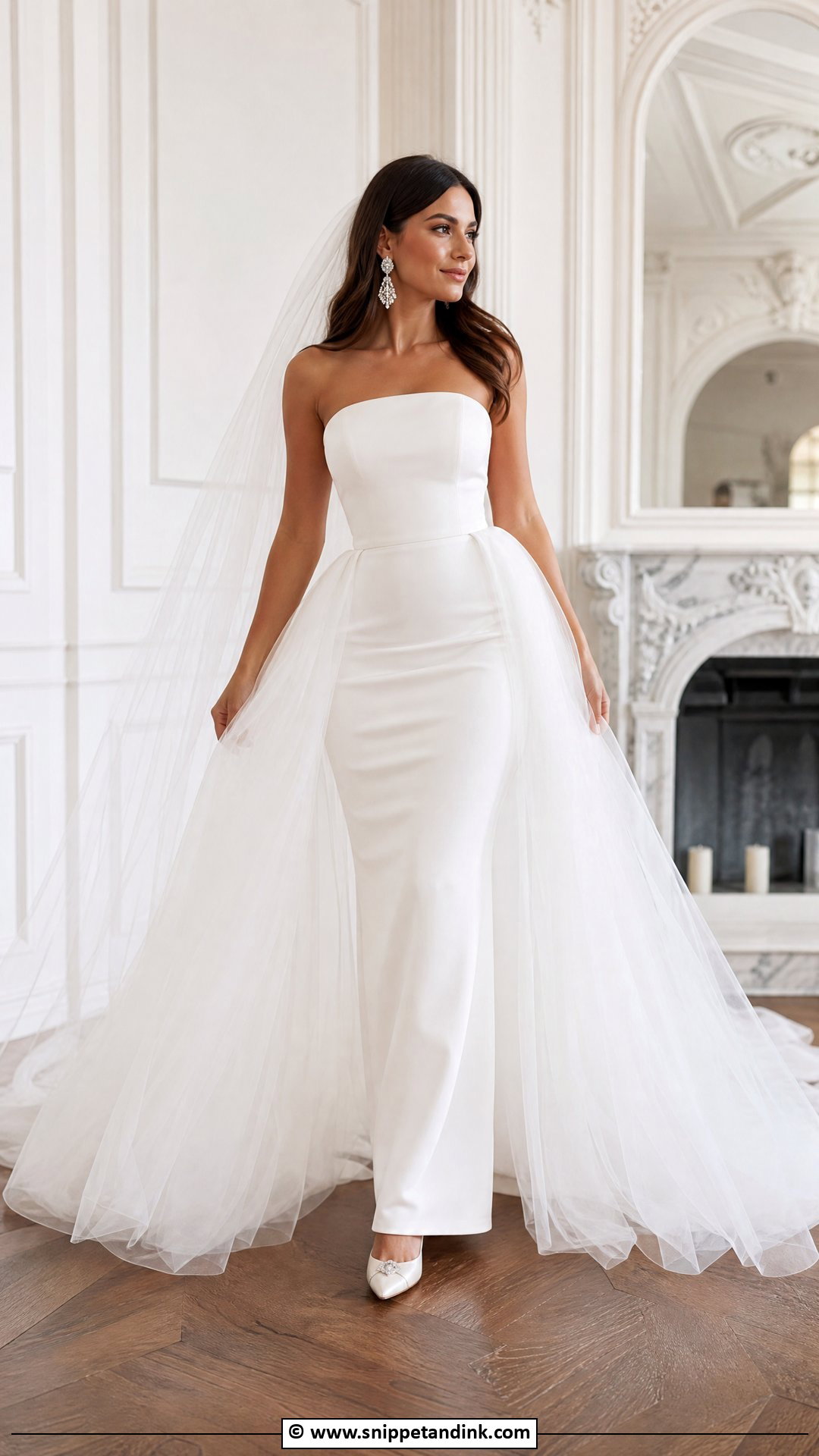
An overskirt gives you a full ceremony silhouette and a sleeker party dress without buying a second gown. Wear a fitted satin, lace or crepe base under a detachable tulle or organza overskirt, and practise removing it before the day. Most fasten with hooks or snaps at the waist, and whoever helps you needs to know where they are. Keep the long veil for the vows, then switch to statement earrings. Have a garment bag waiting so the overskirt doesn’t end up crushed on a chair.
19. Bridal Gown With Detachable Sleeves
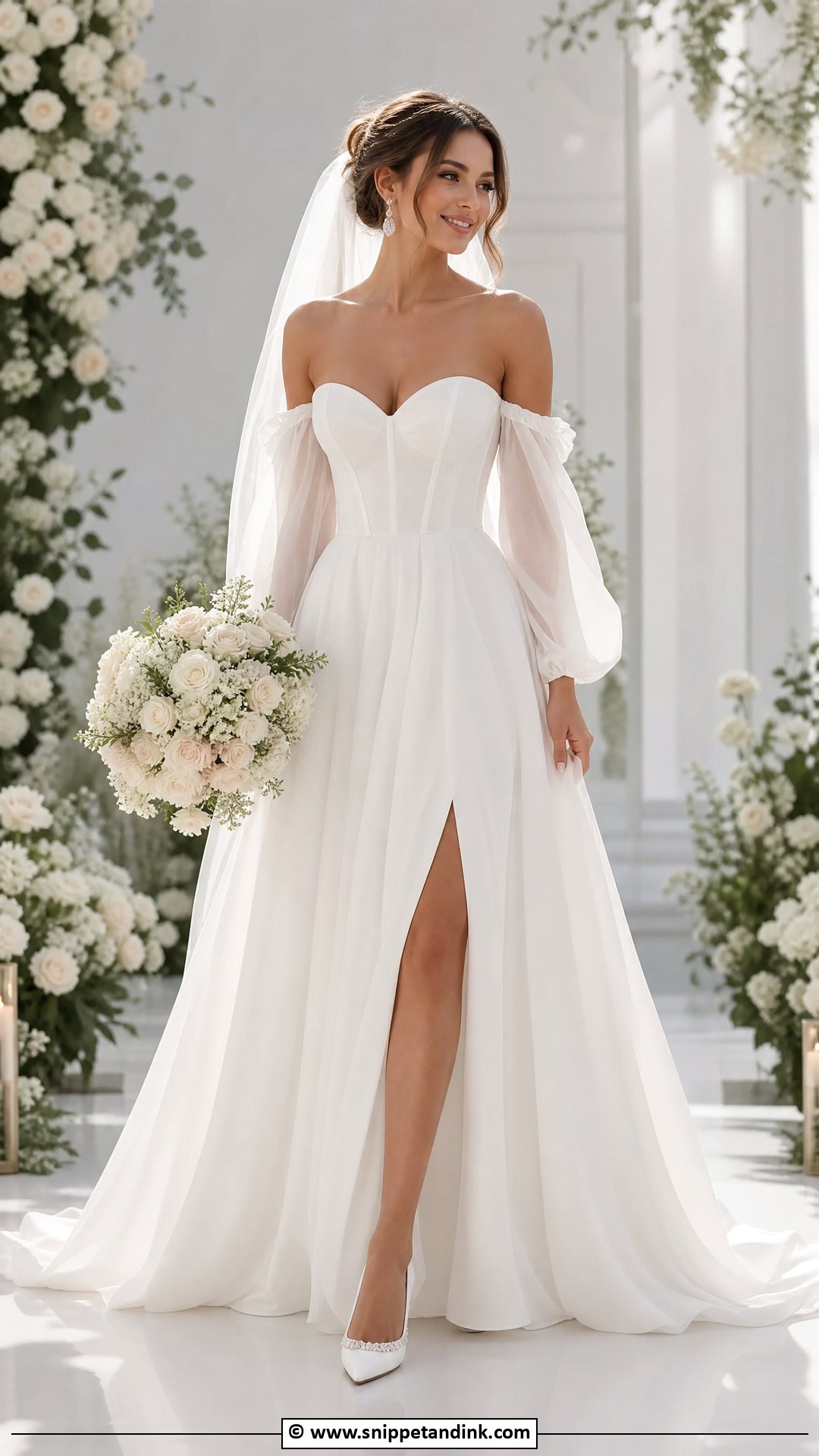
Detachable sleeves solve coverage for a ceremony that calls for it, then come off for dancing. How they attach is what I check: snaps or small buttons under the arm stay put, while ties tend to slip. Puff sleeves look current; fitted lace looks classic. They pair with strapless, sweetheart and corset bodices, but the bodice must look complete on its own, so judge it at the fitting without the sleeves first. A veil, pearl earrings and heels finish the ceremony version.
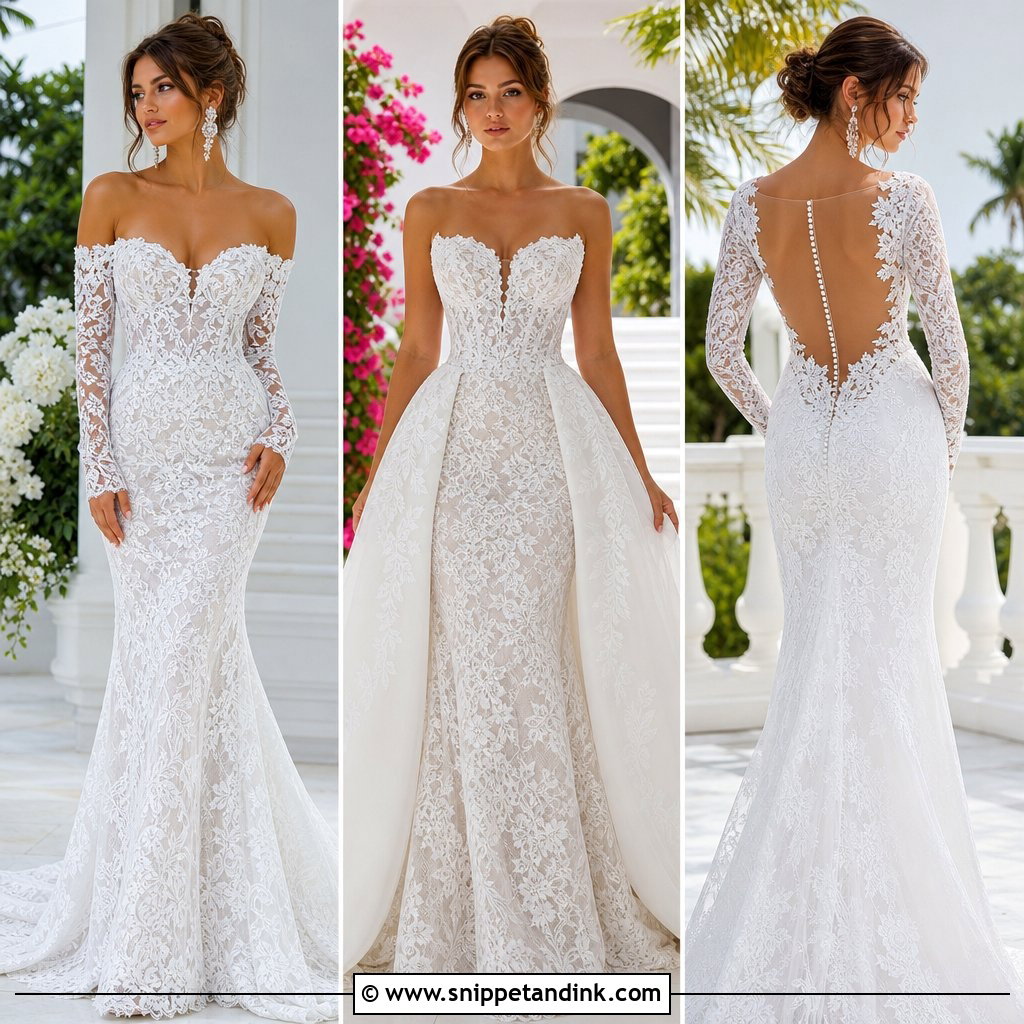
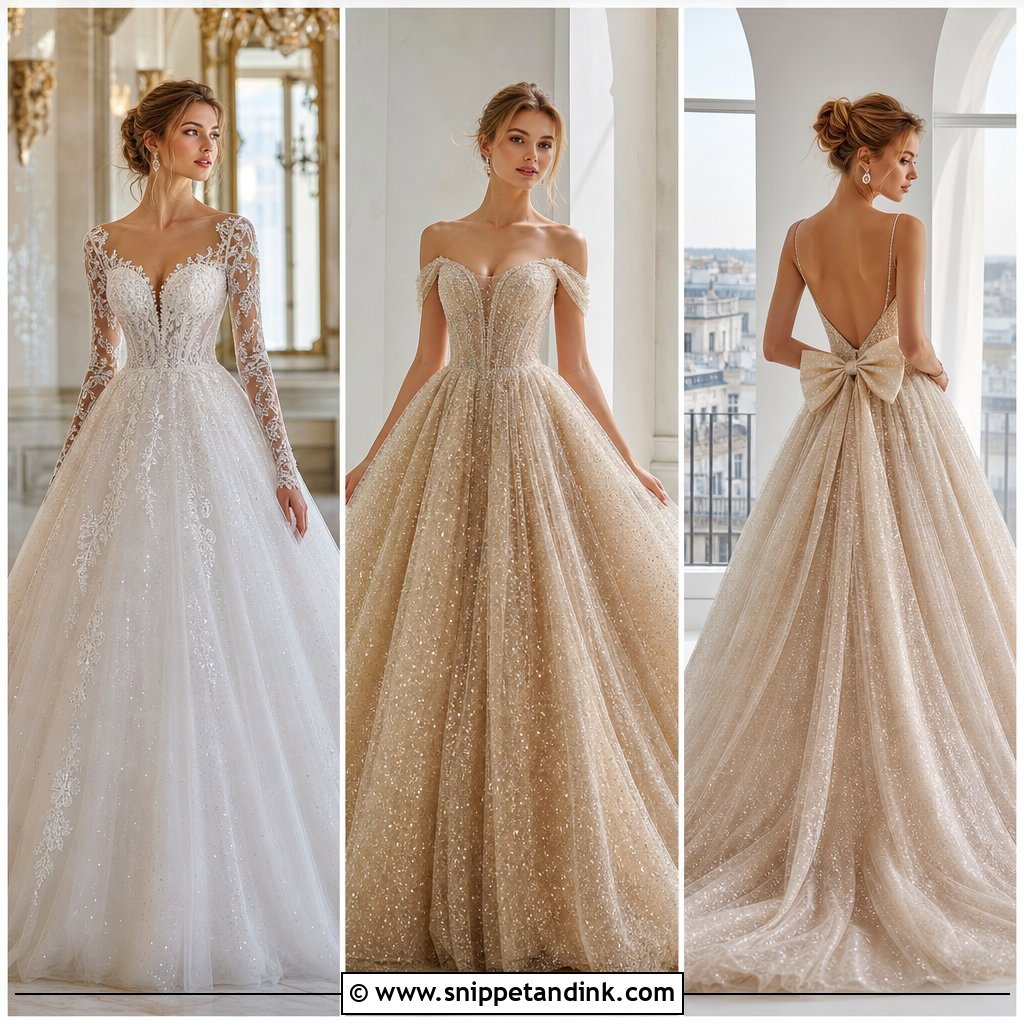
20. Bridal Gown With Bow Back
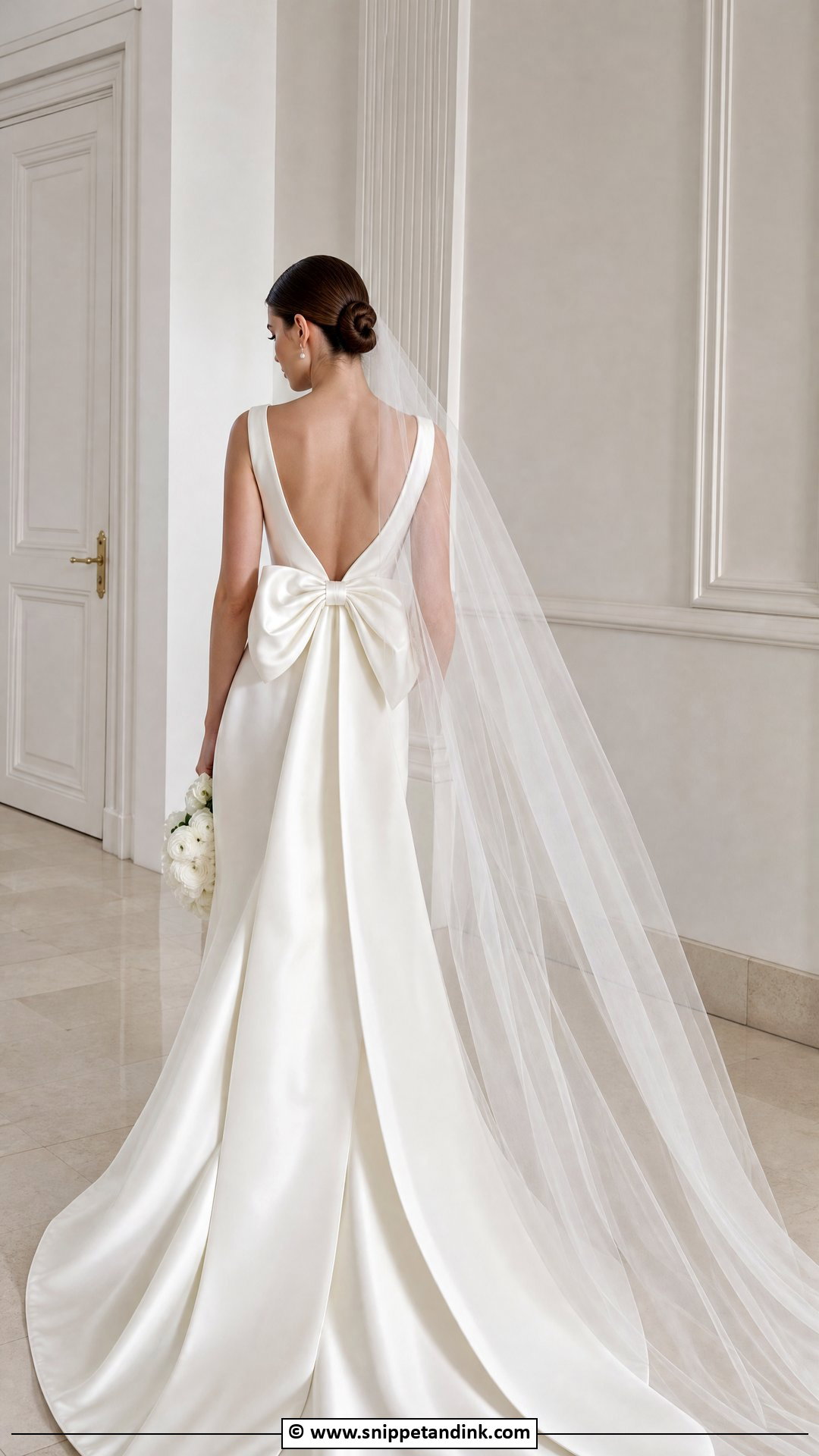
A back bow is designed to be seen leaving. Satin, mikado and crepe hold a bow’s structure, while soft chiffon droops. I keep the front plain so the back is clearly the point, and I ask brides how they’ll sit at dinner, because a large bow compresses against a chair back and can look flattened by the evening. A clean veil that comes off after the ceremony keeps it visible. Pearl earrings, simple heels and a low bun are all it needs.
21. Bridal Gown With Pearl Embellishment
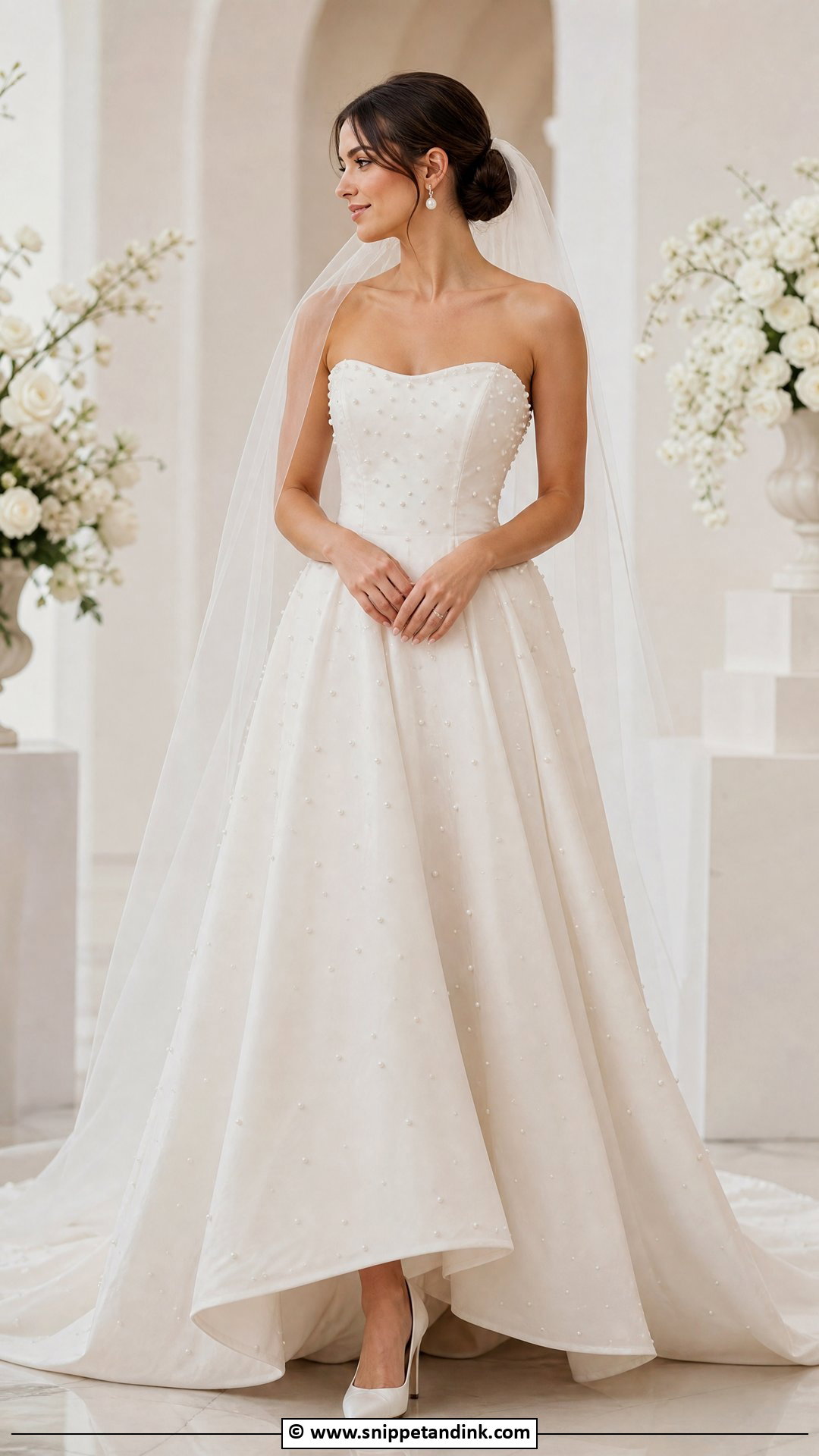
Scattered pearls feel delicate and current; dense pearl work feels heavier and more formal. Tulle, lace, crepe and sheer overlays all carry them. My first question in the shop is whether they’re sewn or glued. Hand-sewn pearls survive hugs and dancing, glued ones can pop off, so keep a few spares for emergency repairs either way. If pearls run across the neckline or sleeves, skip the necklace. Pearl studs, satin heels, a plain veil and a soft bun or loose waves keep the whole look calm.
22. Bridal Gown With 3D Flowers
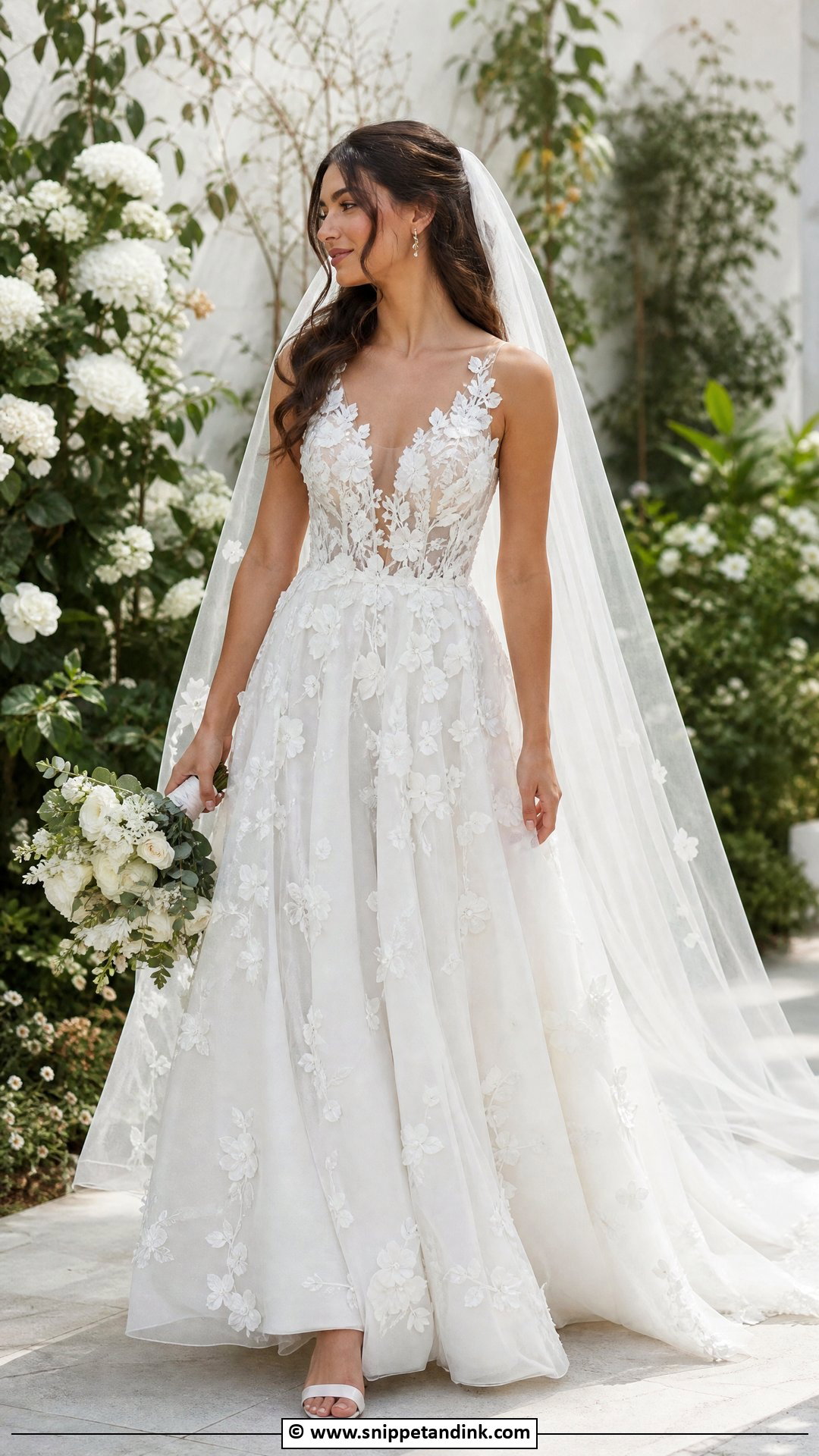
Three-dimensional flowers give more texture than any trim here, and they need the most protection. They crush under a seatbelt, a tight hug or a heavy bouquet pressed against the bodice, so I tell brides to carry the bouquet a little lower and away from the fabric. The flowers can be scattered over the bodice, trailing the skirt or tucked at the shoulders. Keep everything else quiet: simple heels, minimal jewelry and a sheer veil. A modest bouquet echoing the flower tones ties it together for an outdoor spring wedding.
23. Bridal Gown With Feather Trim
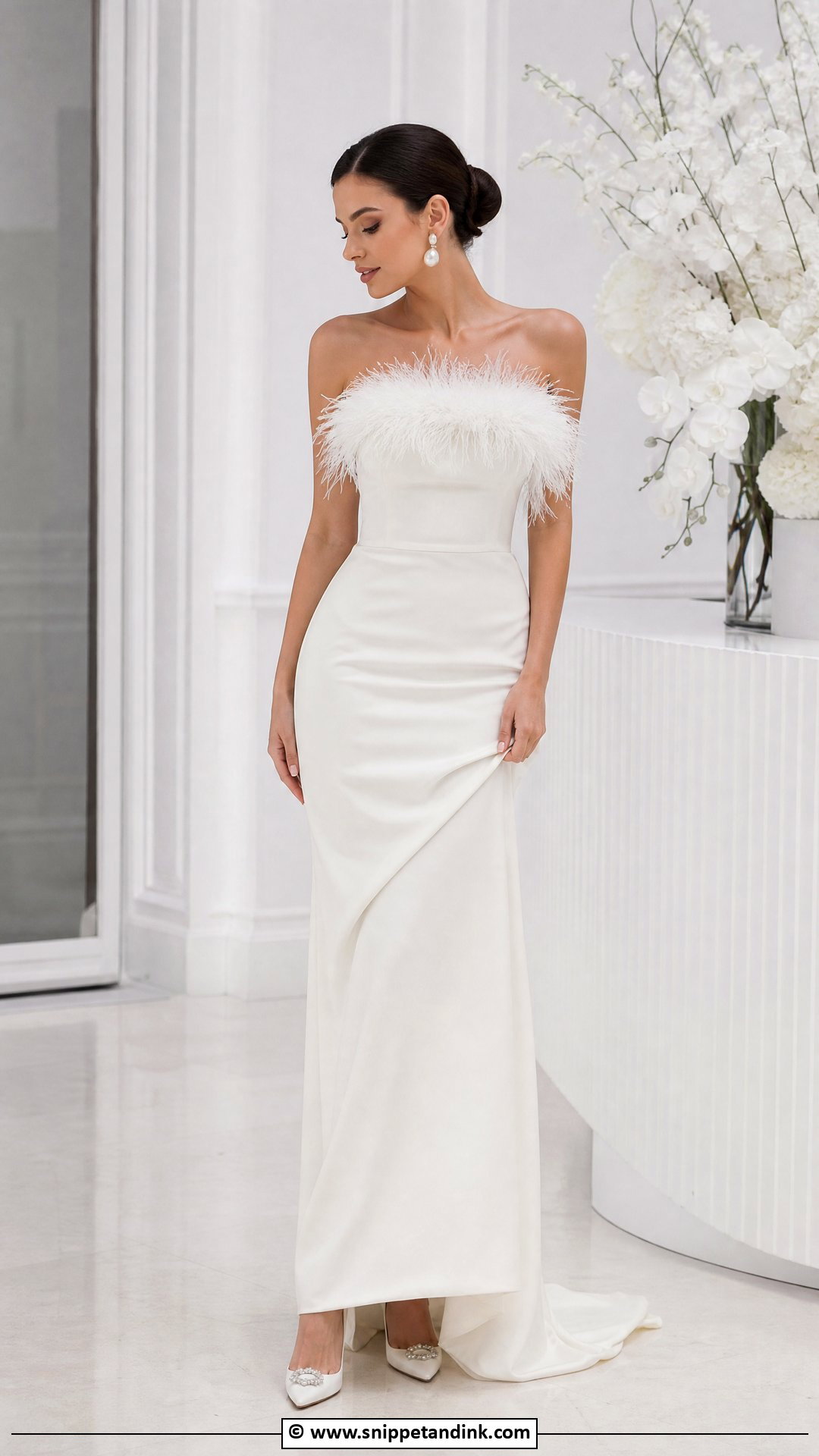
Feathers work when they live in one place: the neckline, hem, cuffs or a detachable wrap. Spread everywhere, the gown tips toward costume. A plain satin or crepe base keeps it chic. Be aware that feathers flatten in rain and humidity and shed a little, so a lint roller belongs in the kit. Pointed heels, clean earrings and a sleek hairstyle keep it tidy, and if the trim is full, drop the veil after the ceremony. It comes into its own as a reception dress or at a city wedding.
24. Bridal Gown With Cape Veil
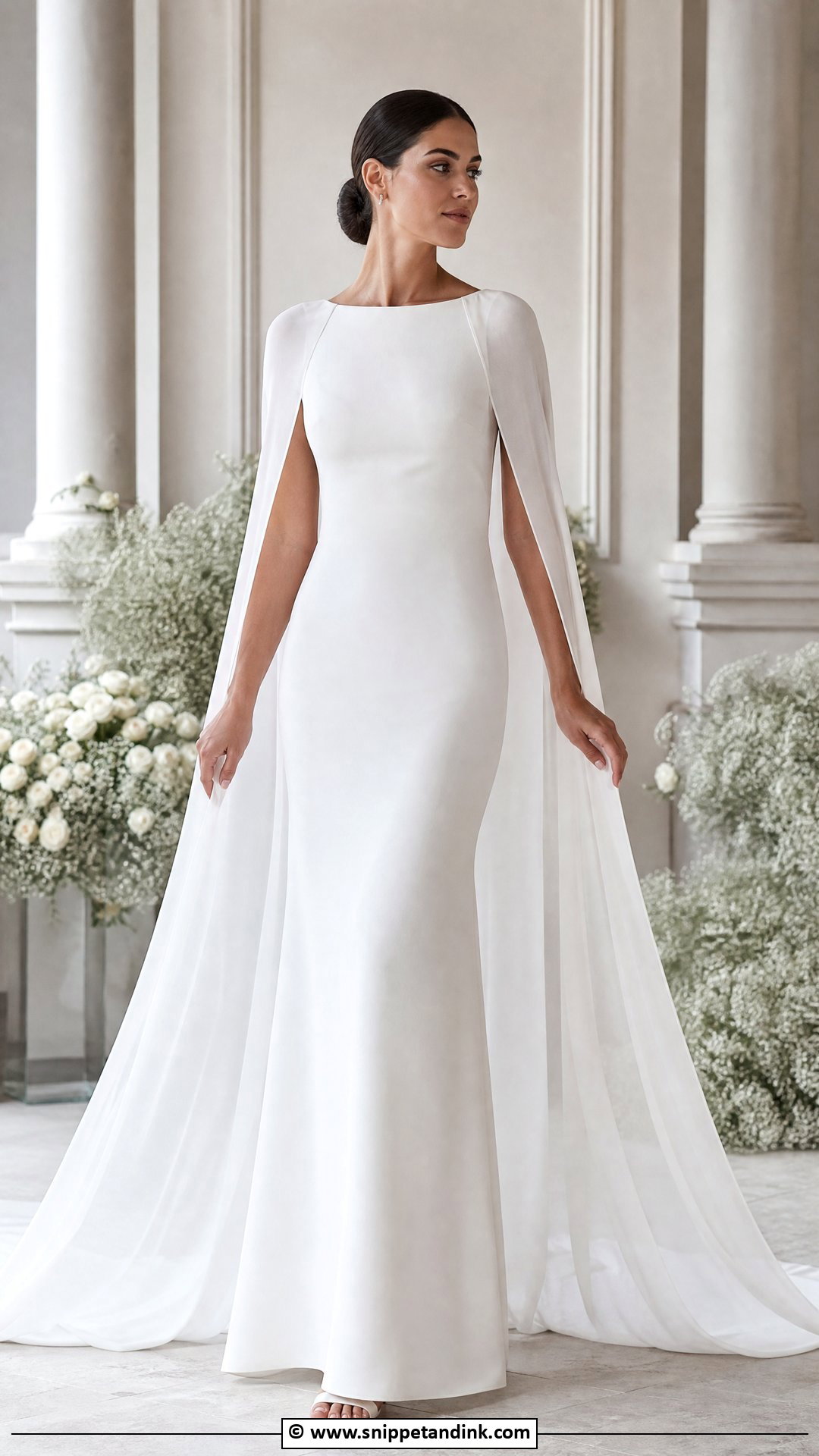
A cape veil fastens at the shoulders or back of the gown instead of the hair, which takes the weight off your head and stops it tugging at a hairstyle. It moves well as you walk and pairs best with minimal gowns, sheaths and structured crepe. Check the attachment at fittings; small snaps or loops sewn into the dress hold far better than pins. Keep jewelry simple with sleek heels and a polished style. You get a proper entrance without a single bead.
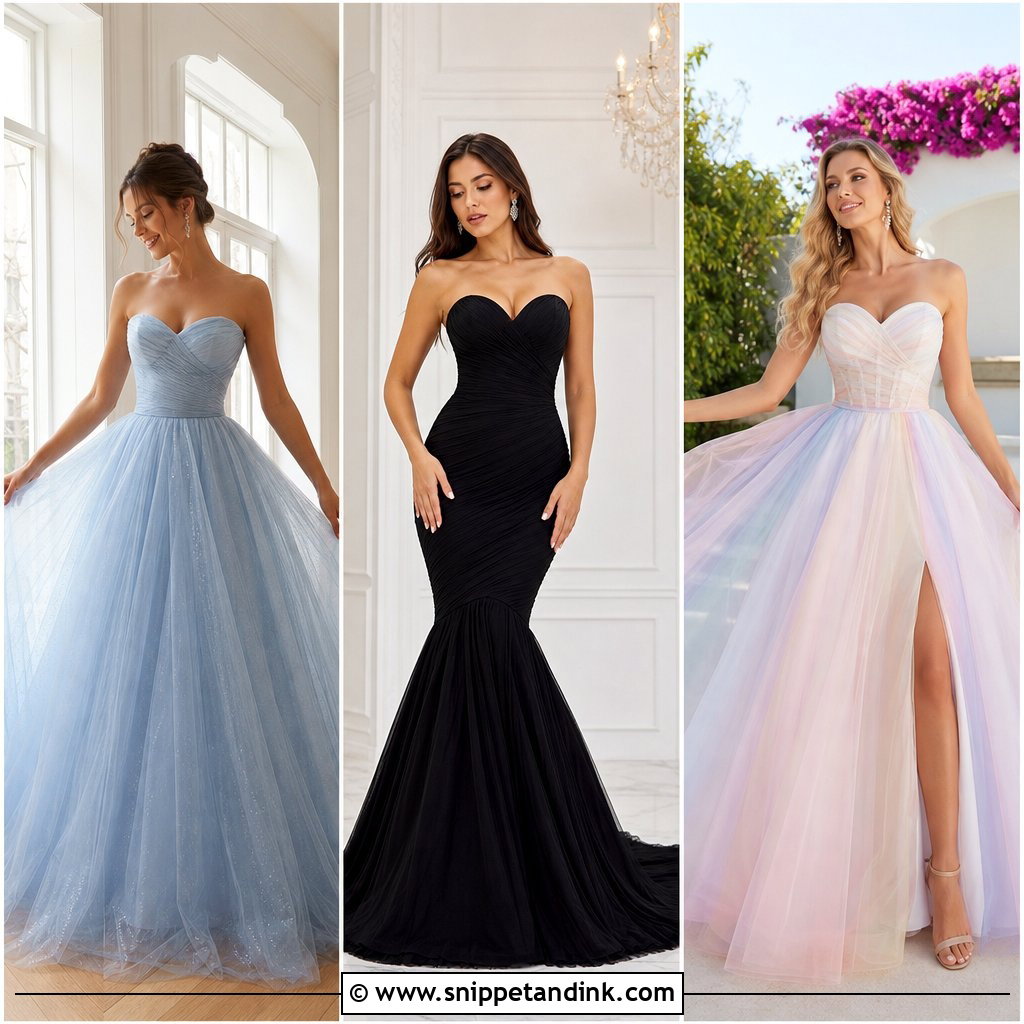
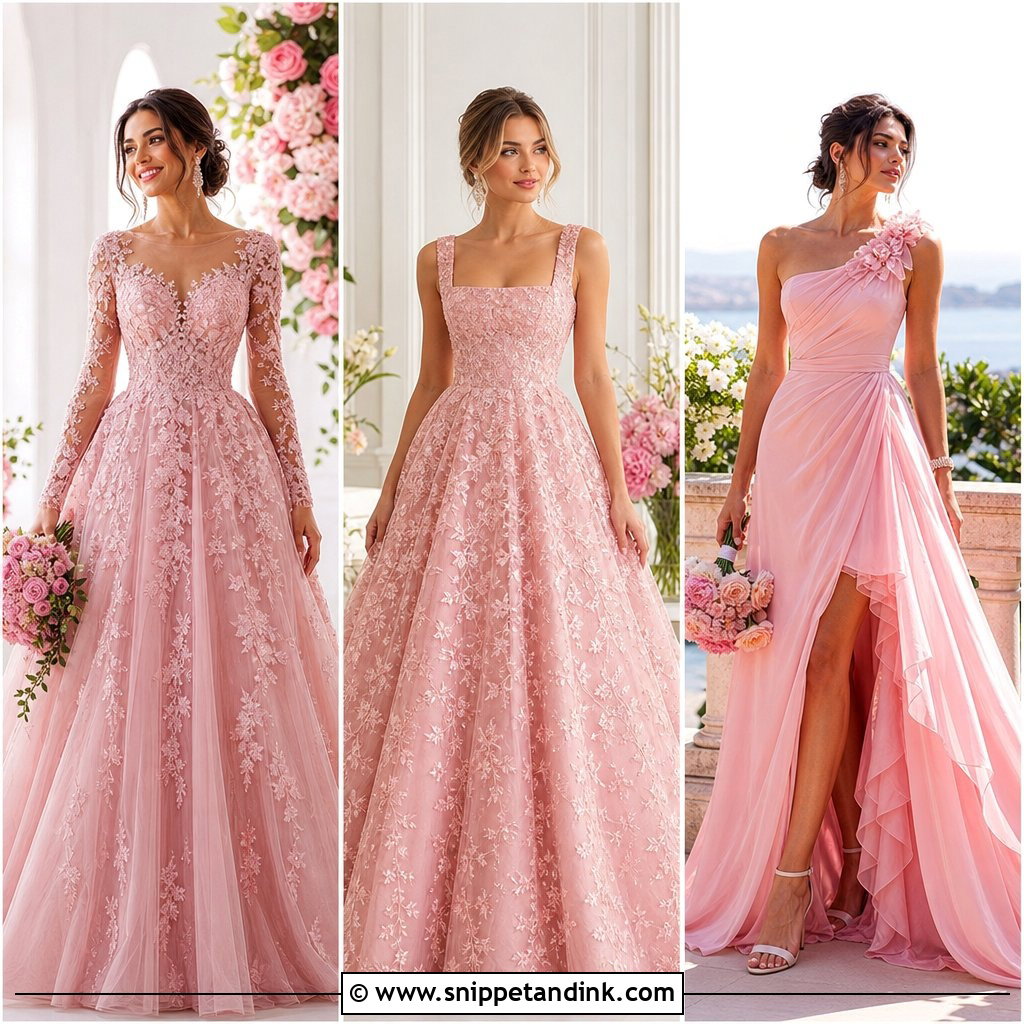
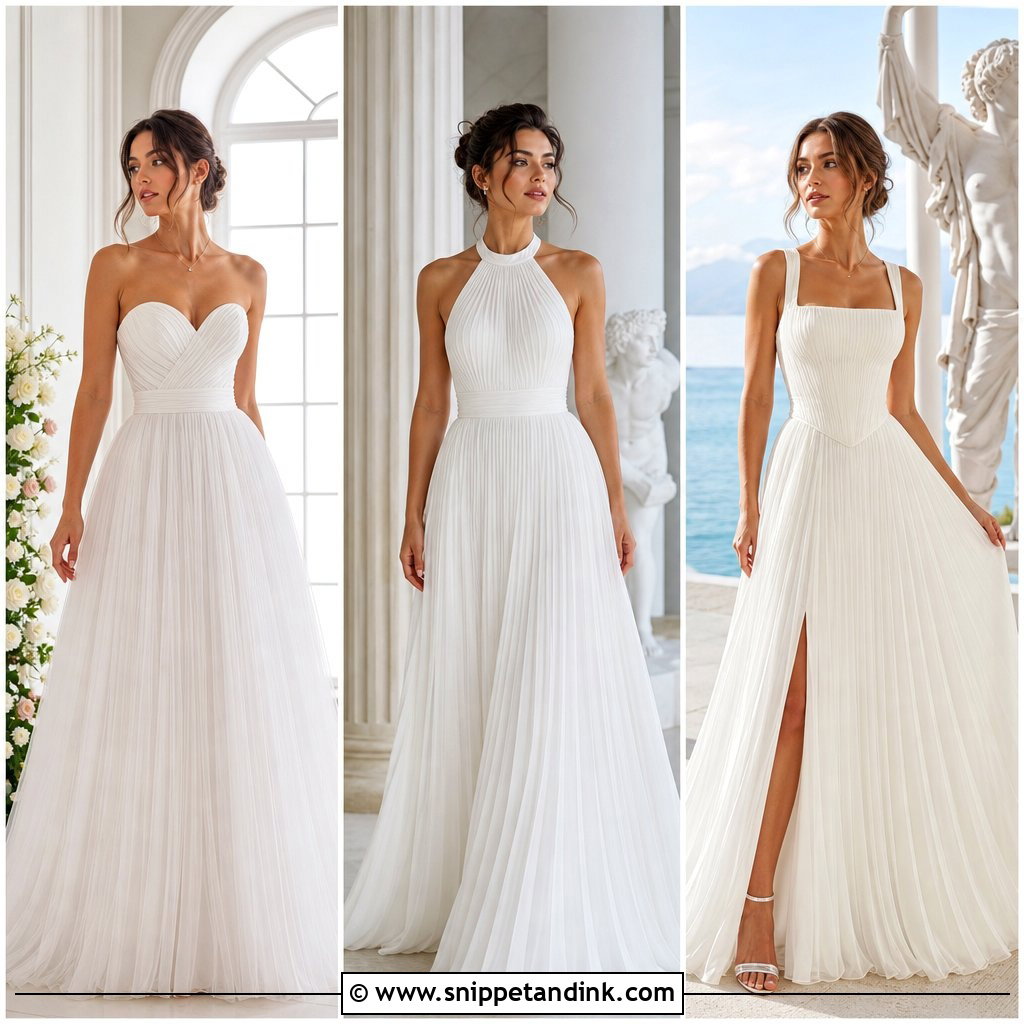
25. Bridal Gown With Dramatic Train
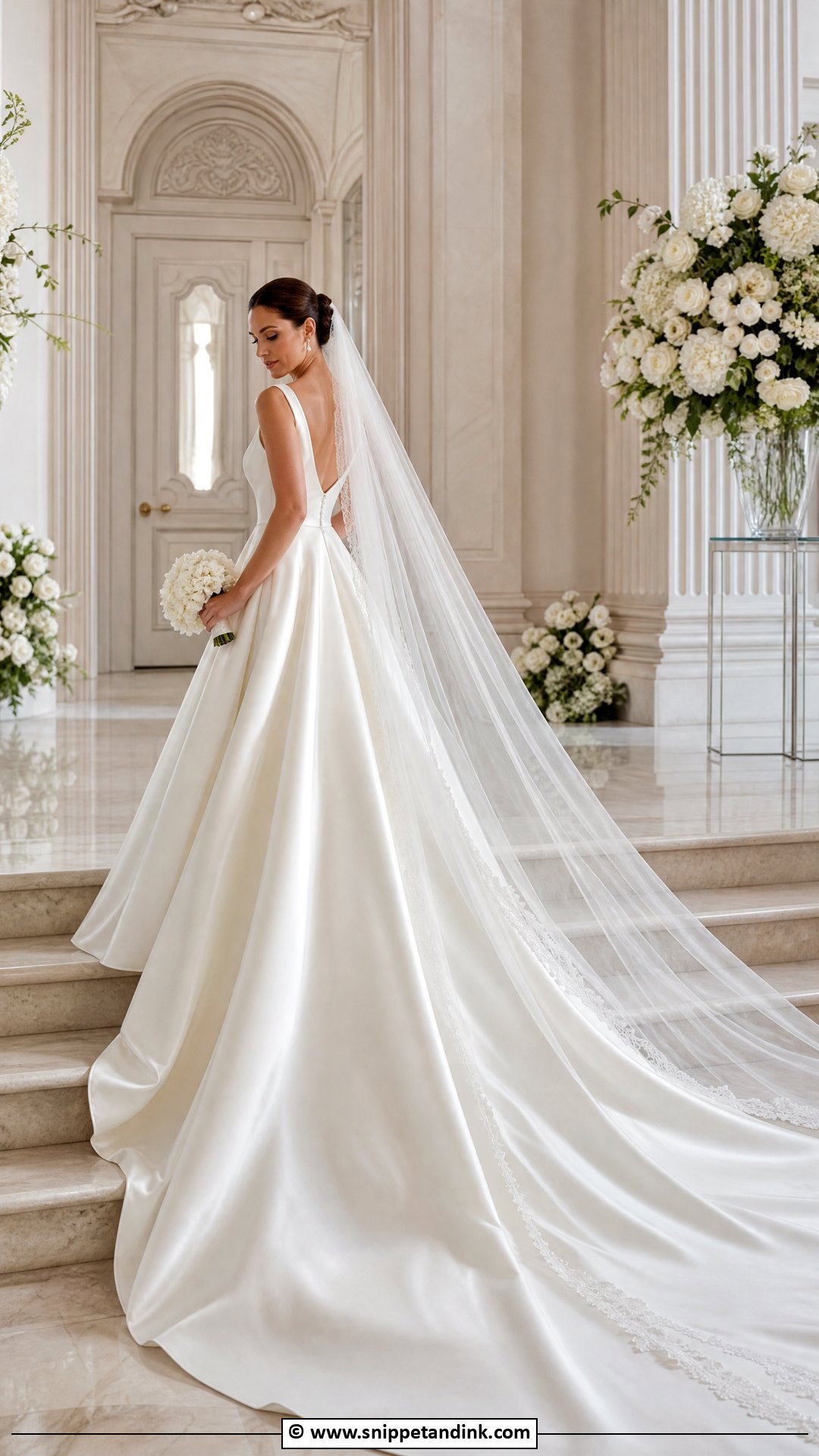
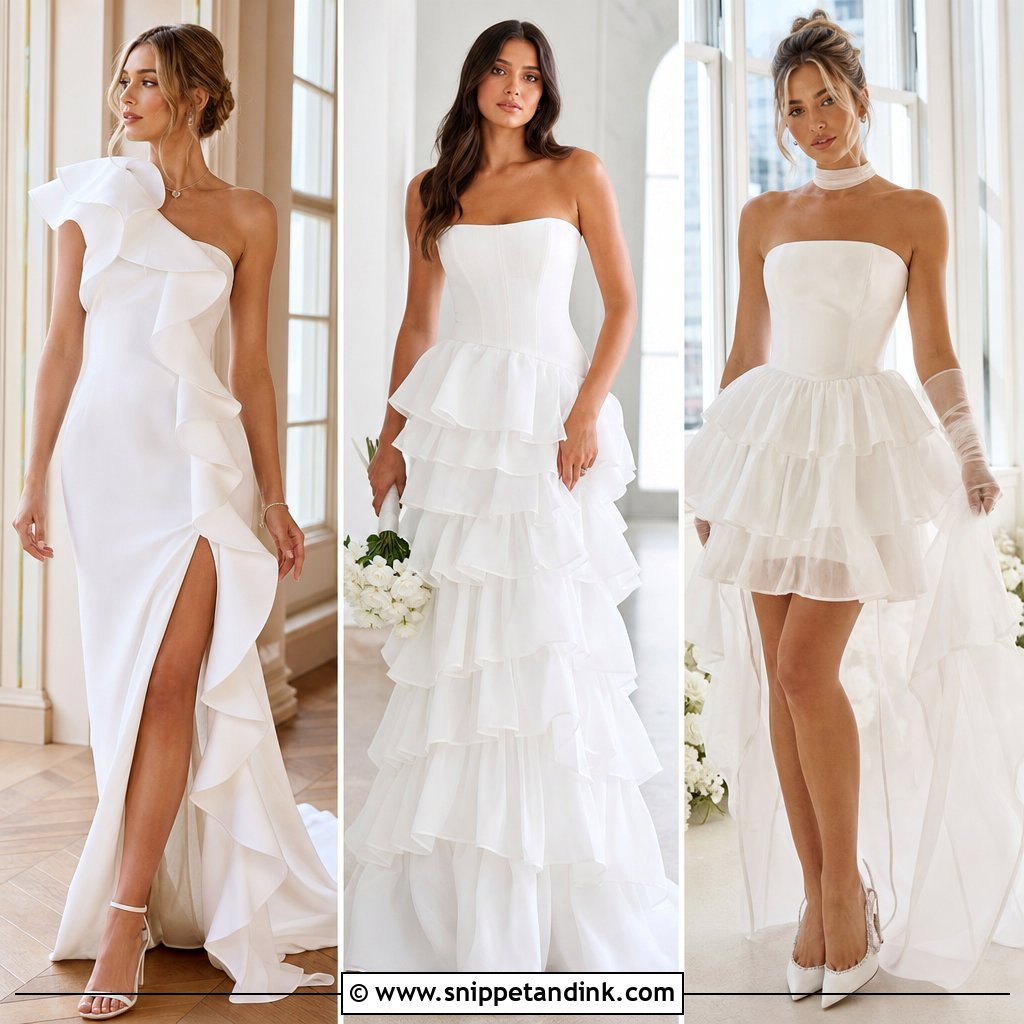
A long train needs a plan for the hours after the aisle. Make sure it bustles, and ask which bustle the dress uses, because an over-bustle and an under-bustle look quite different from behind. Lace, satin, tulle and organza all work if they match the gown’s mood. Pair it with a cathedral veil for maximum drama, or a shorter veil if the train is already doing the work. Formal settings and large spaces show it off best.
26. Bridal Gown With Slit Skirt
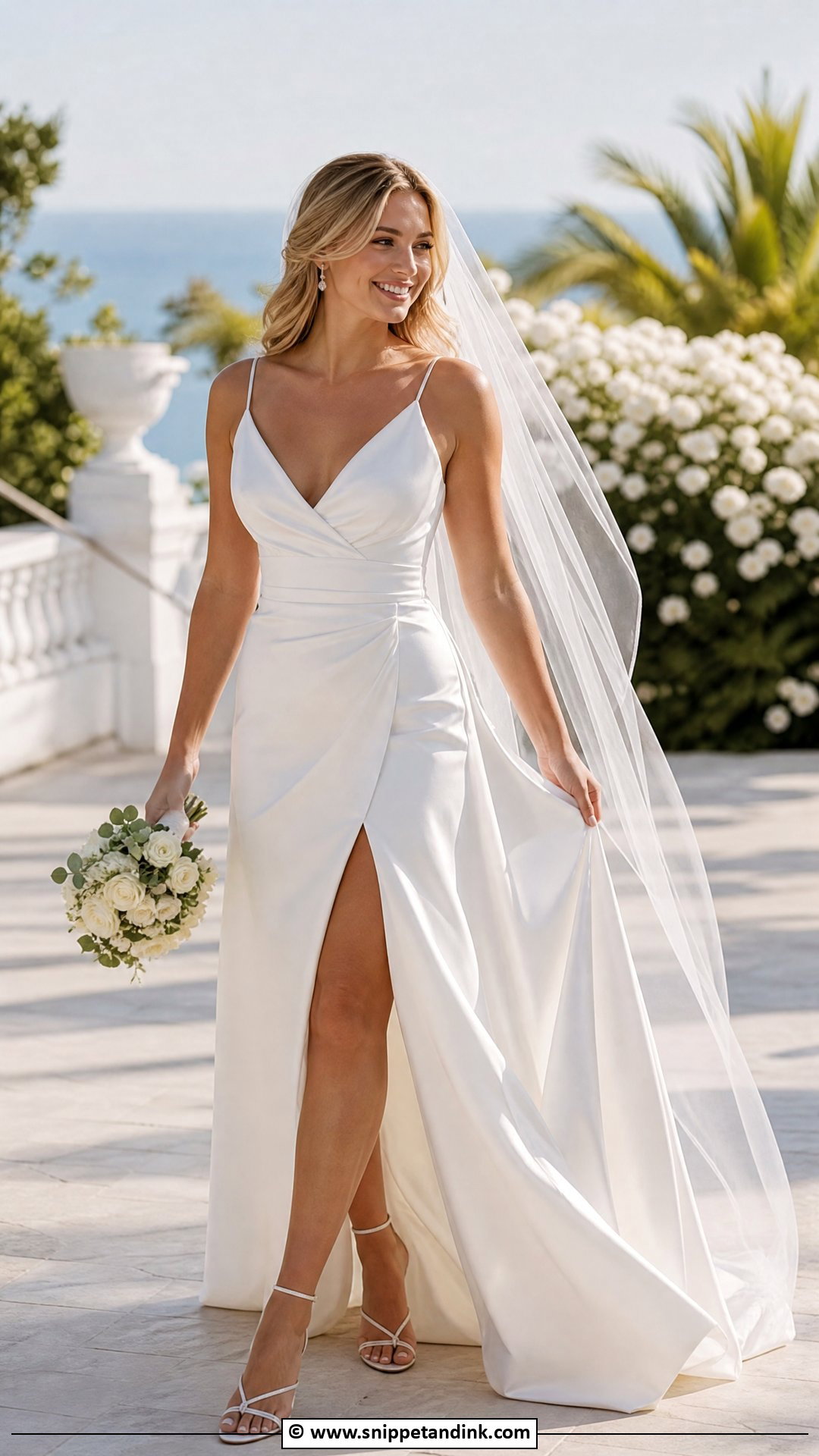
A slit adds movement, shows the shoes and is a relief on a hot day. I check slit height while the bride walks and climbs a step, because a slit that looks modest standing can open much higher on stairs. Satin, crepe, chiffon and soft A-lines all take one well. Strappy ivory heels, small earrings and a simple veil keep it balanced at a beach or outdoor ceremony.
27. Bridal Gown With Basque Waist
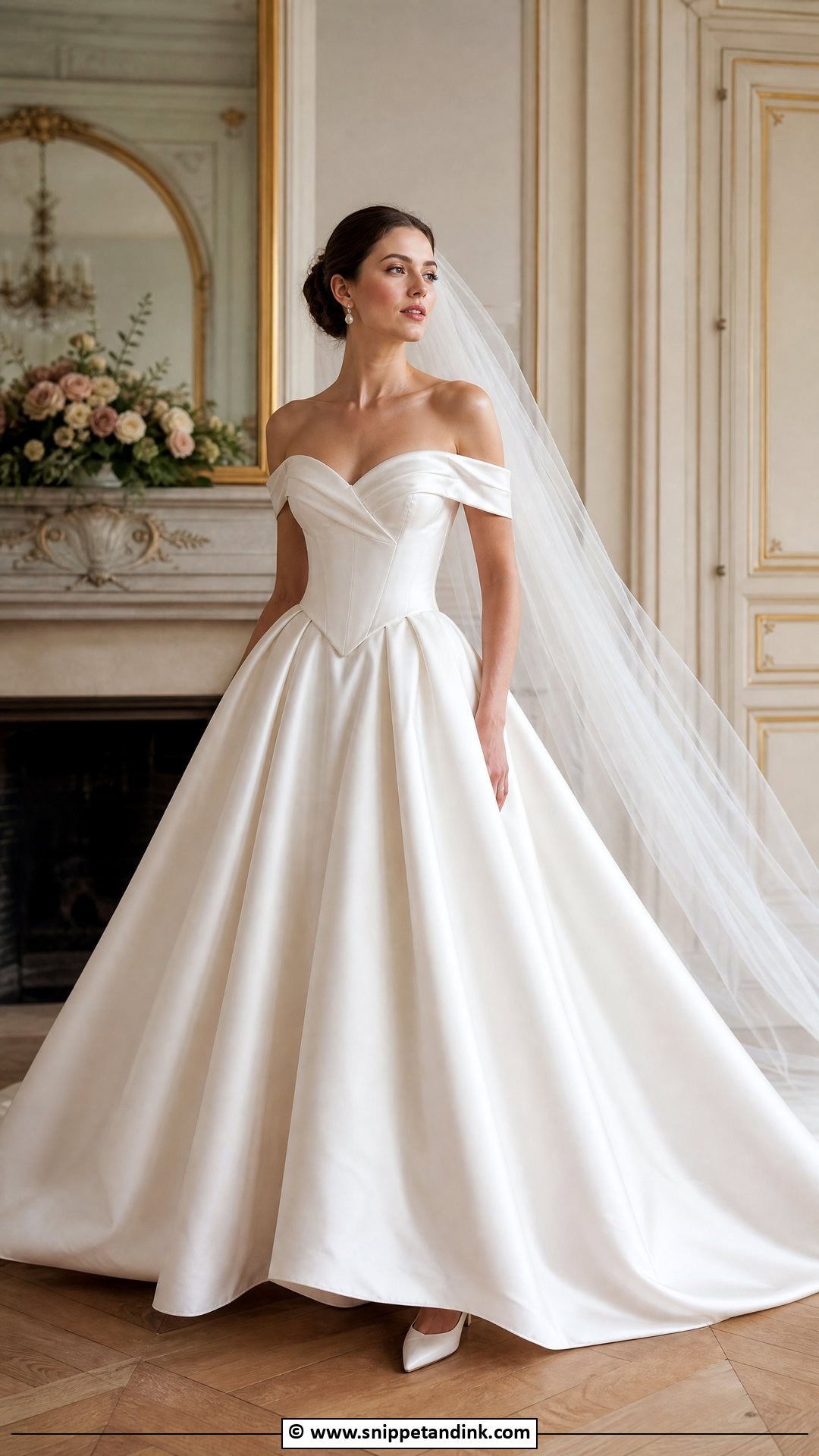
A basque waist dips to a point at the front, lengthening the torso and anchoring a full skirt. It works best with satin, corset bodices and generous skirts. That point has to sit exactly at center; if alterations shift it even slightly, it looks crooked in every front-on photo, so I always check it straight on in the mirror after taking in the sides. Skip belts and extra embellishment. A long veil, pearl earrings and classic pumps are enough for a bride who loves traditional, slightly regal shapes.
28. Bridal Gown With Sweetheart Neckline
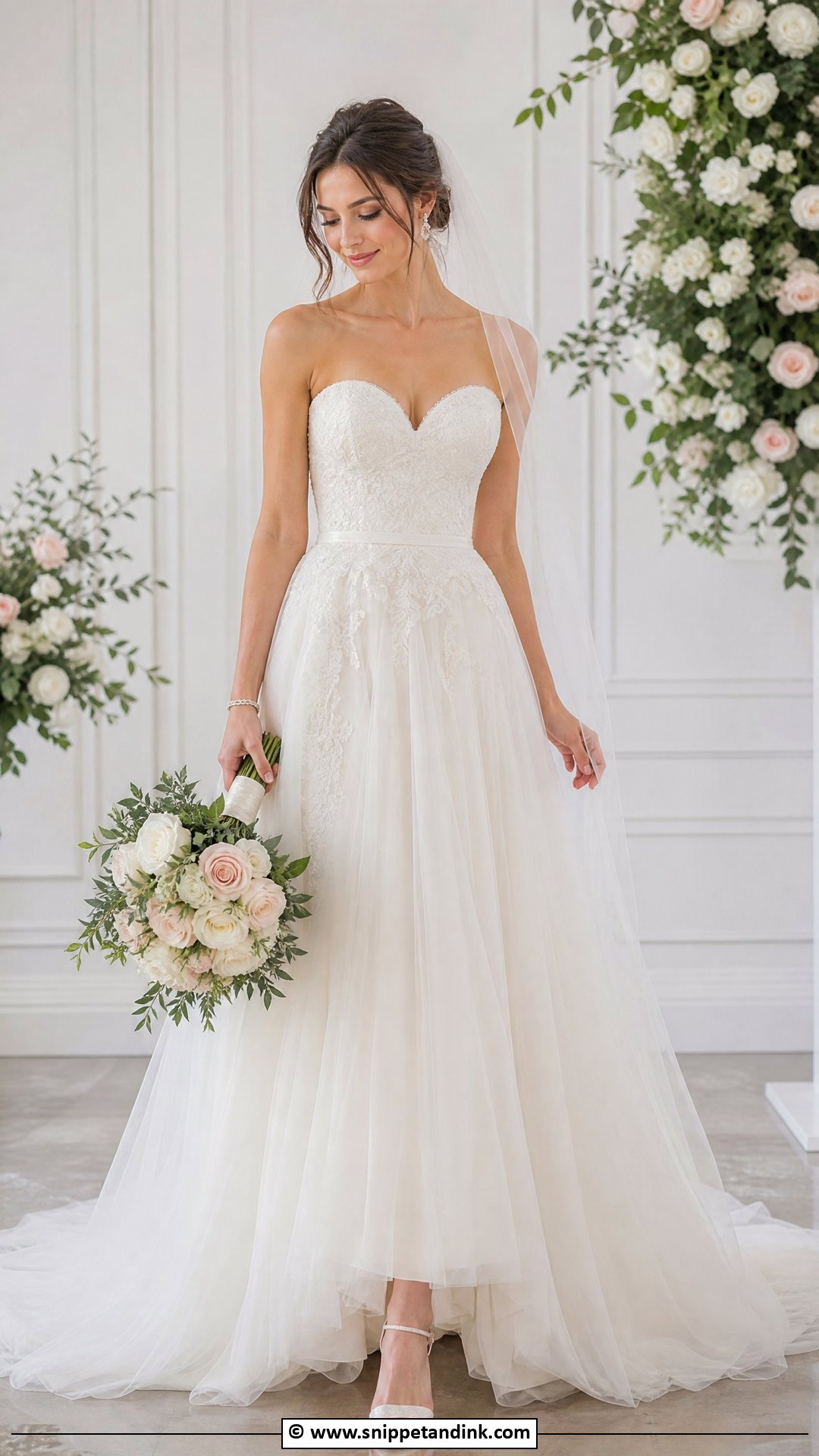
A sweetheart neckline bridal gown softens the bodice and suits strapless, corset and sleeved designs alike. It looks romantic in tulle, sharper in satin and dramatic in a mermaid cut. Watch the top edge: if the curves gape when you lean forward, it needs taking in. Add a necklace only when the neckline is plain and open; otherwise wear earrings and a bracelet. A fingertip veil, ivory heels and soft waves round it out, and it adapts to more body types than any other neckline here.
29. Bridal Gown With Straight Neckline
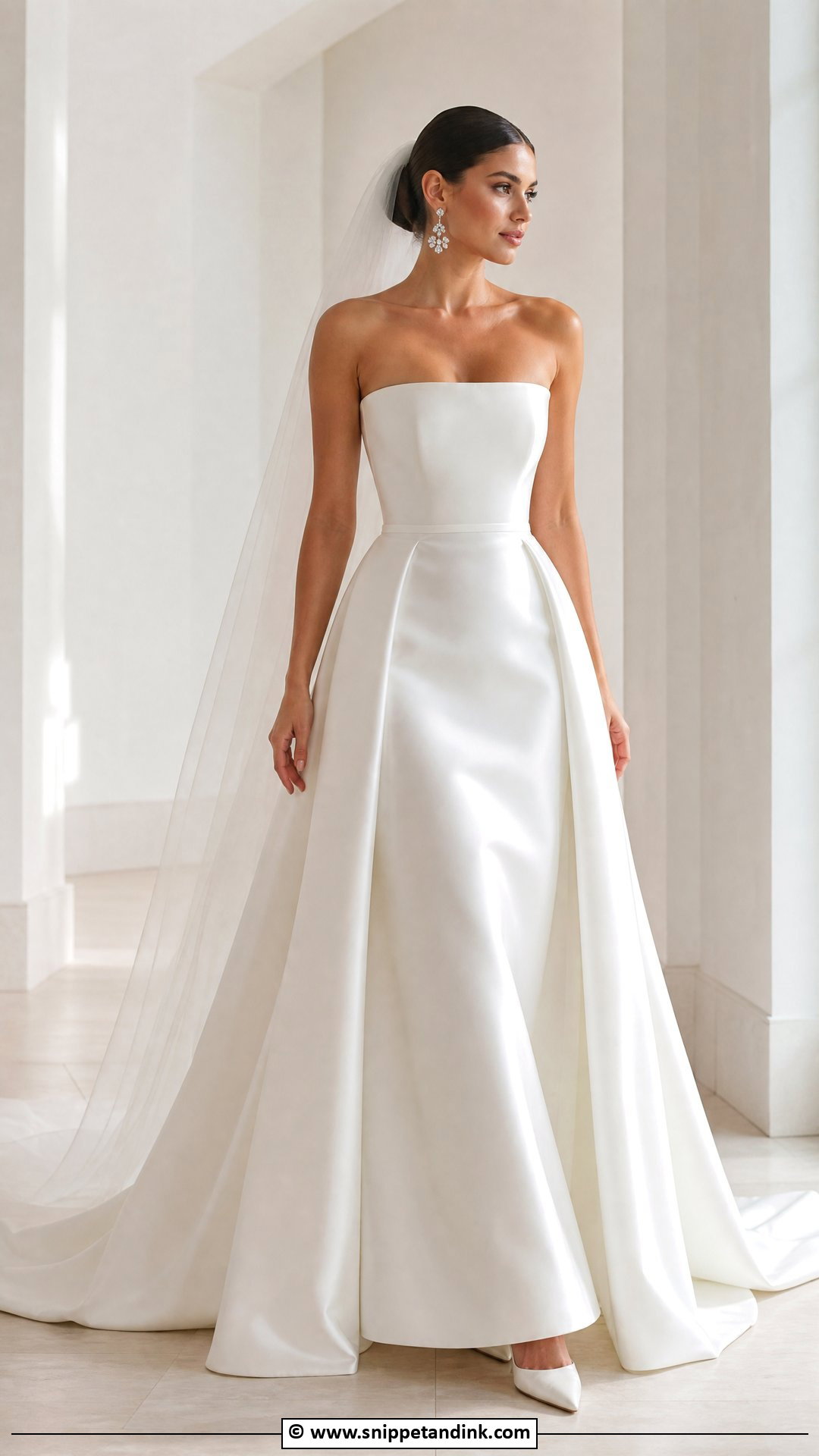
A straight neckline draws one clean line across the bodice, which suits strapless and thin-strap gowns in satin, crepe, mikado or minimal lace. It’s less forgiving than a sweetheart on a fuller bust, since there’s no curve to shape around, so the inner structure has to be good. Statement earrings, a sleek bun and pointed pumps match its modern mood, and a pearl veil softens it if the dress feels stark.
30. Bridal Gown With Plunging Neckline
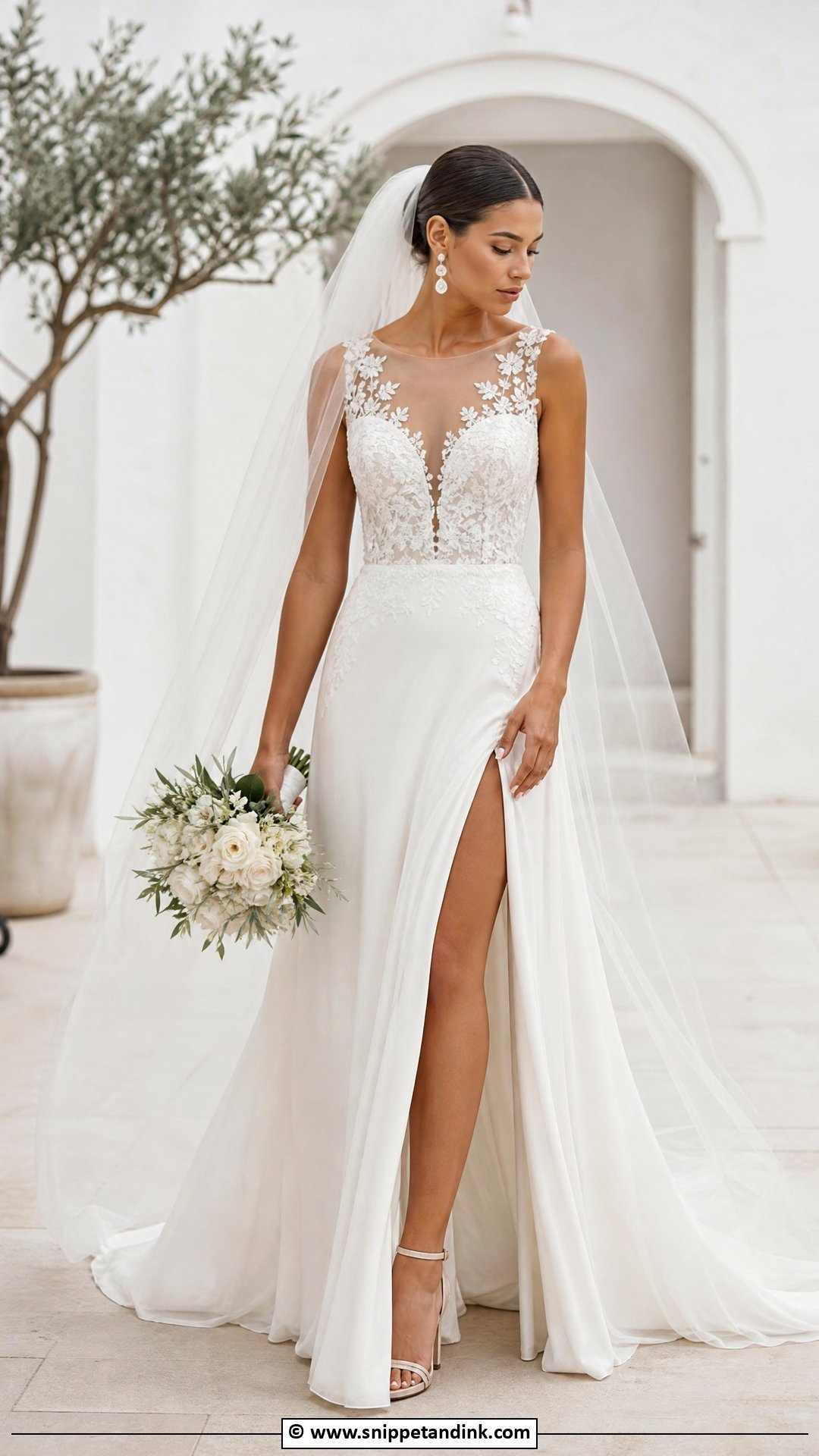
Plunging necklines look refined when the structure is right and anxious when it isn’t. I look for illusion mesh, wider straps or internal boning, plus fashion tape for both the fitting and the day. Test it by leaning forward and raising both arms. A soft A-line or sheath keeps the rest calm. Skip heavy necklaces; drop earrings and a fine bracelet are enough, and a long veil makes it feel more bridal at a modern or destination wedding.
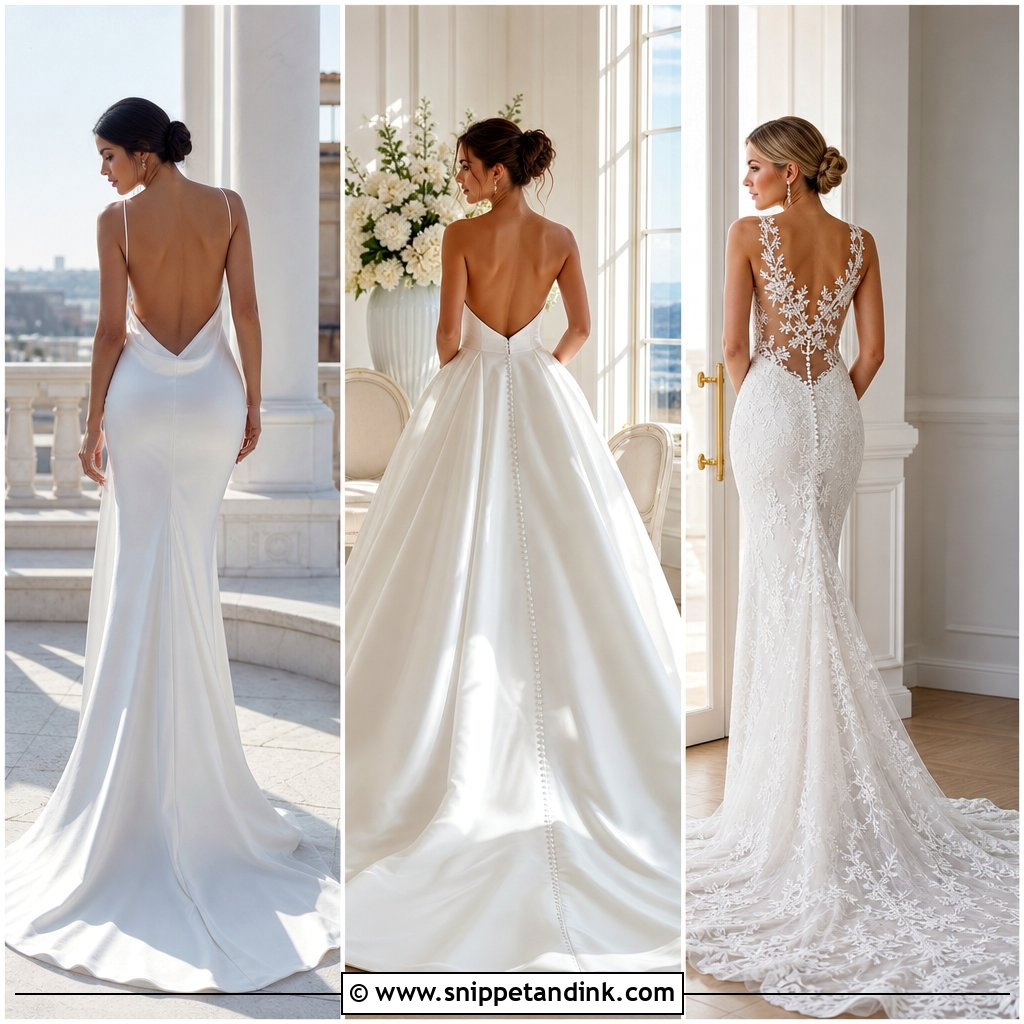
31. Bridal Gown With Open Back
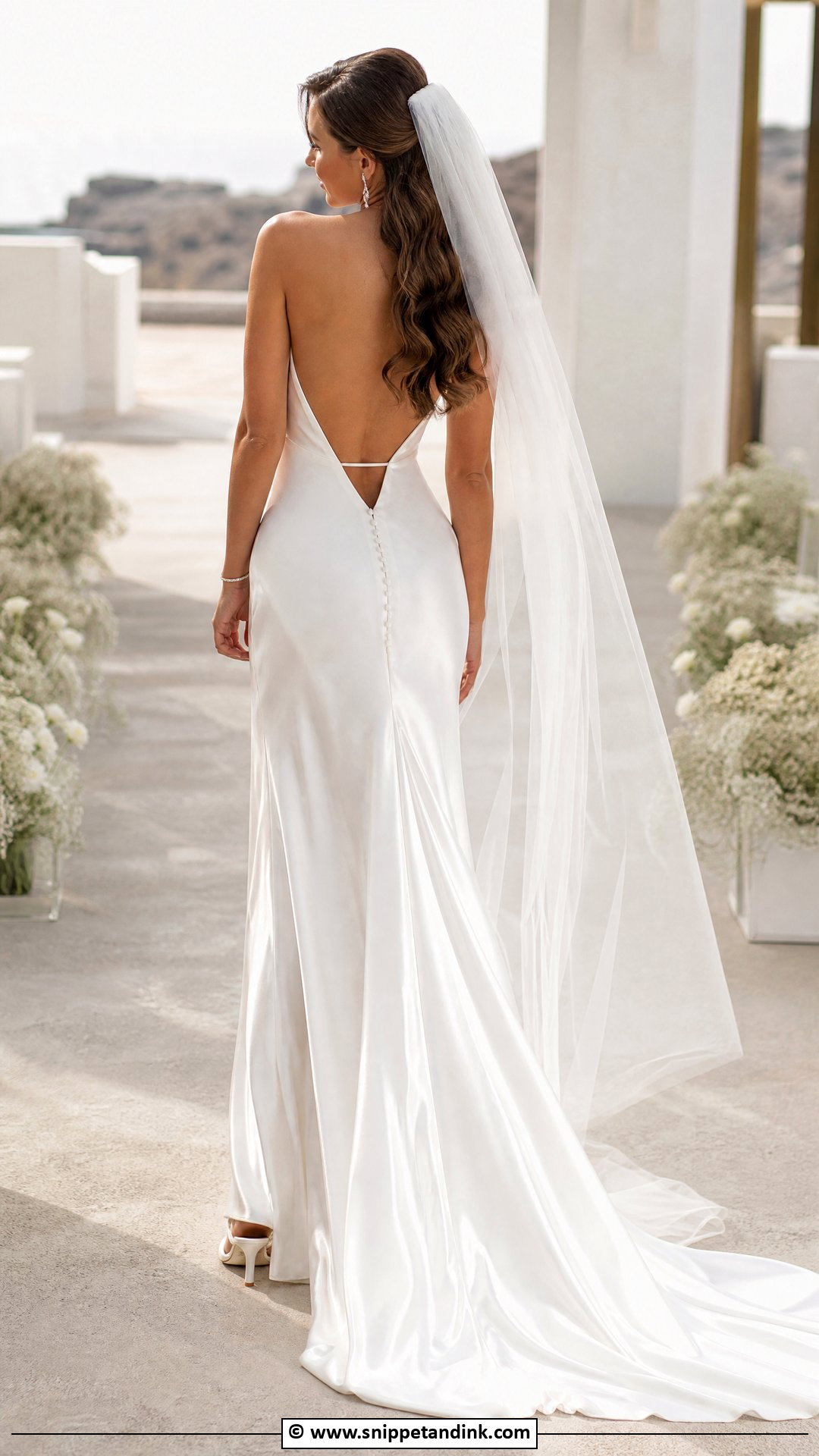
Open backs live or die on tailoring. The edges have to lie flat against the skin without gaping when you move your arms, and the bra question needs settling early, because a built-in cup or a backless solution changes how the alterations are done. Simple satin, lace or crepe lets the back lead. A low bun or side-swept waves keep it visible, and a sheer veil shows it through. Heels with clean straps finish it for a warm, outdoor day.
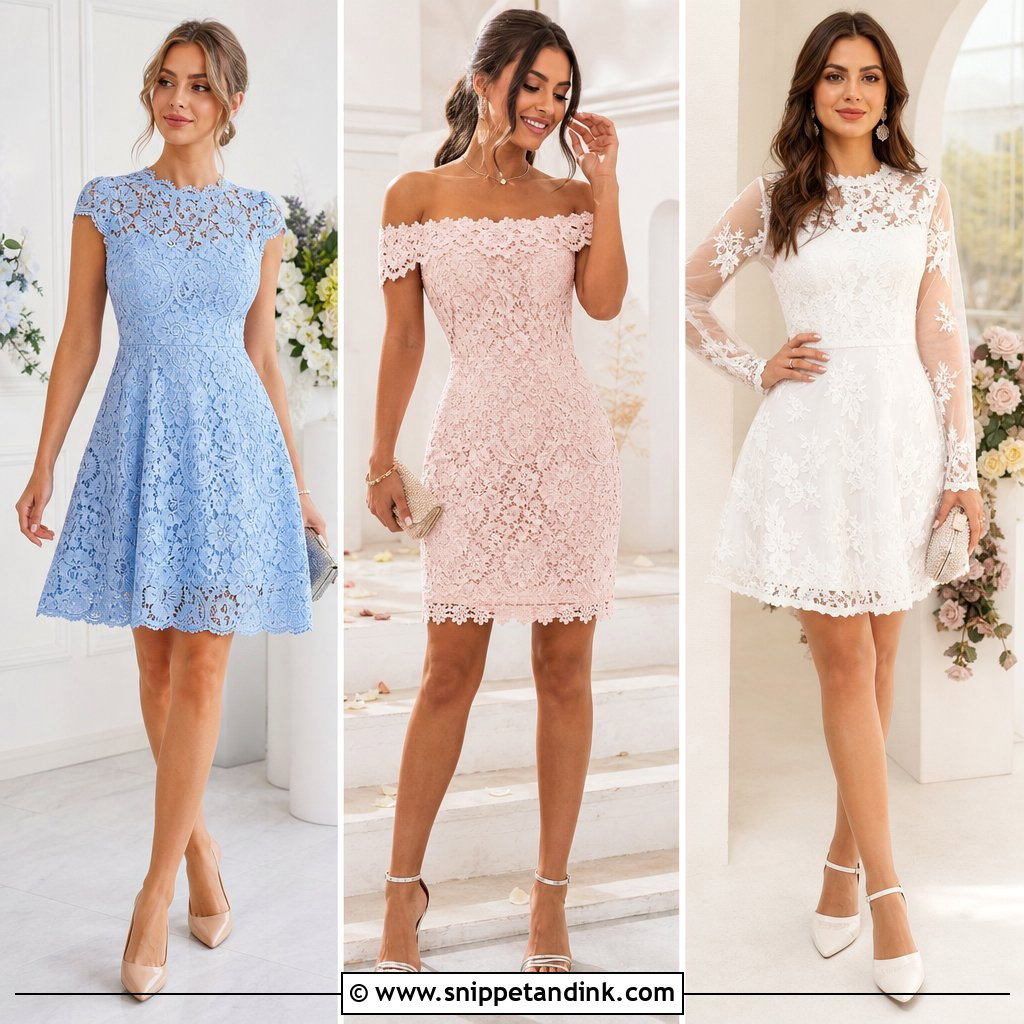
32. Bridal Gown With Blue Undertone
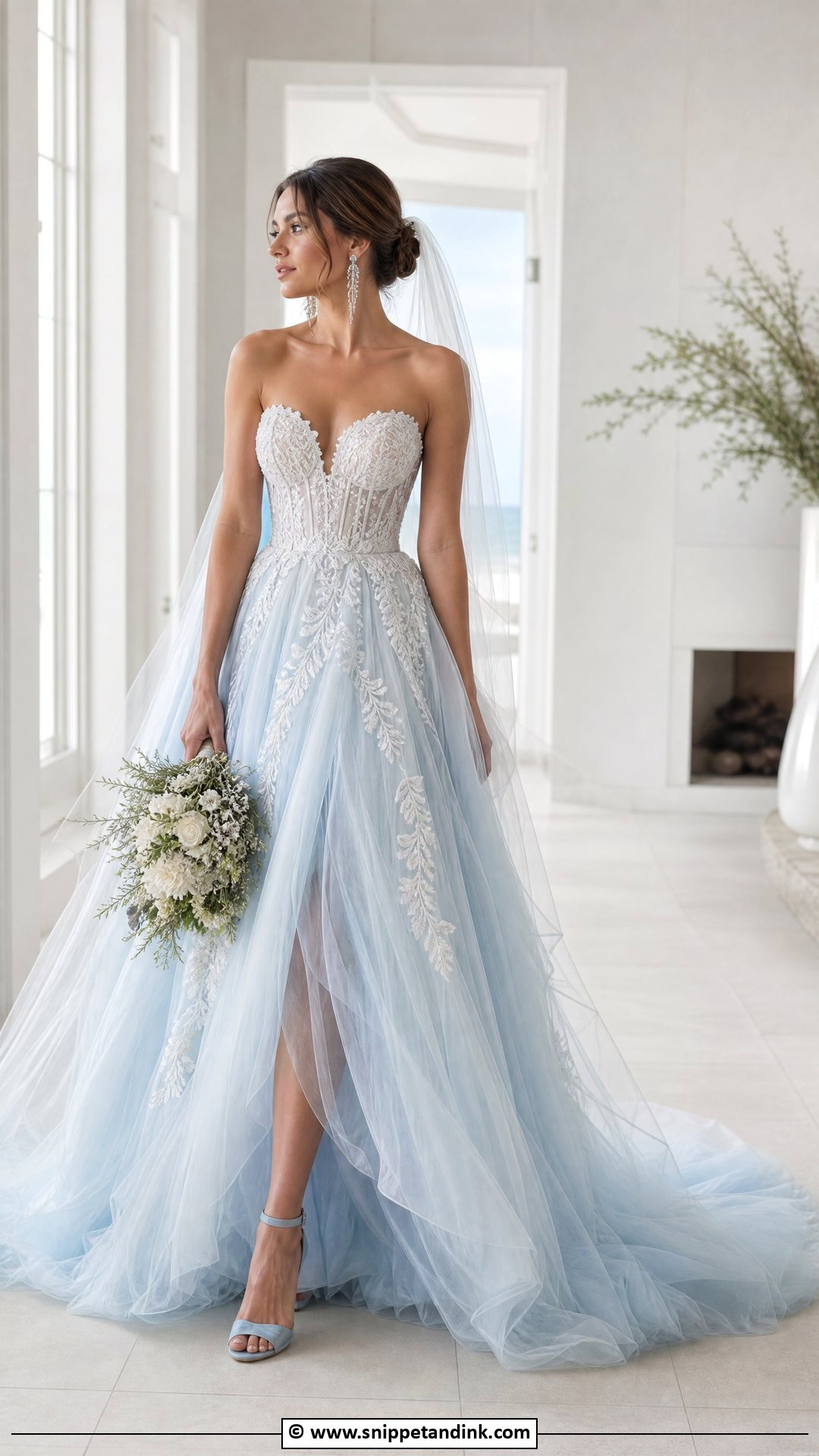
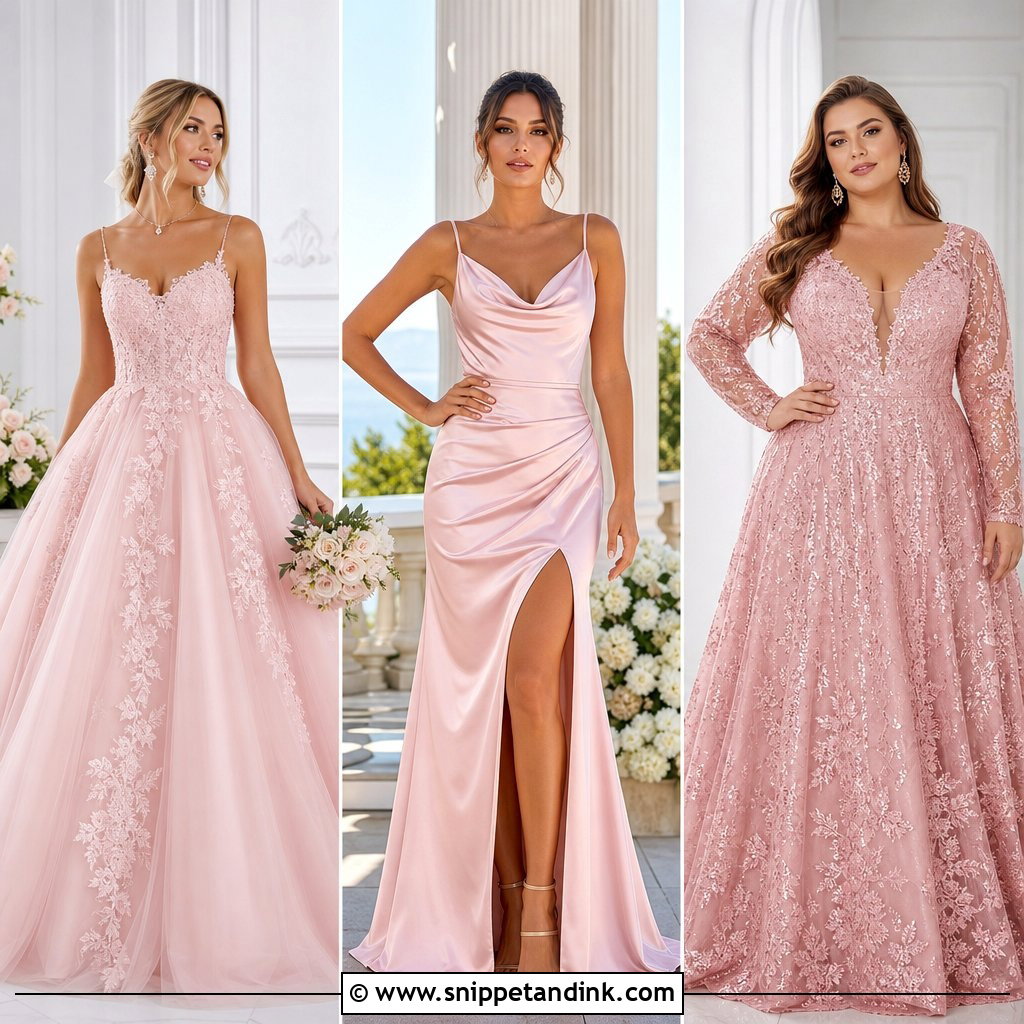
Pale blue, icy blue or blue-grey tulle still reads bridal while cooling the whole palette. Test it in daylight and in the venue’s indoor lighting before committing, because some blue tints turn greyish under warm bulbs. Silver jewelry, ivory or pale blue heels and a sheer veil suit it. A bouquet of white with a little pale blue ties things together without feeling like a theme. It’s especially good for winter weddings and coastal venues.
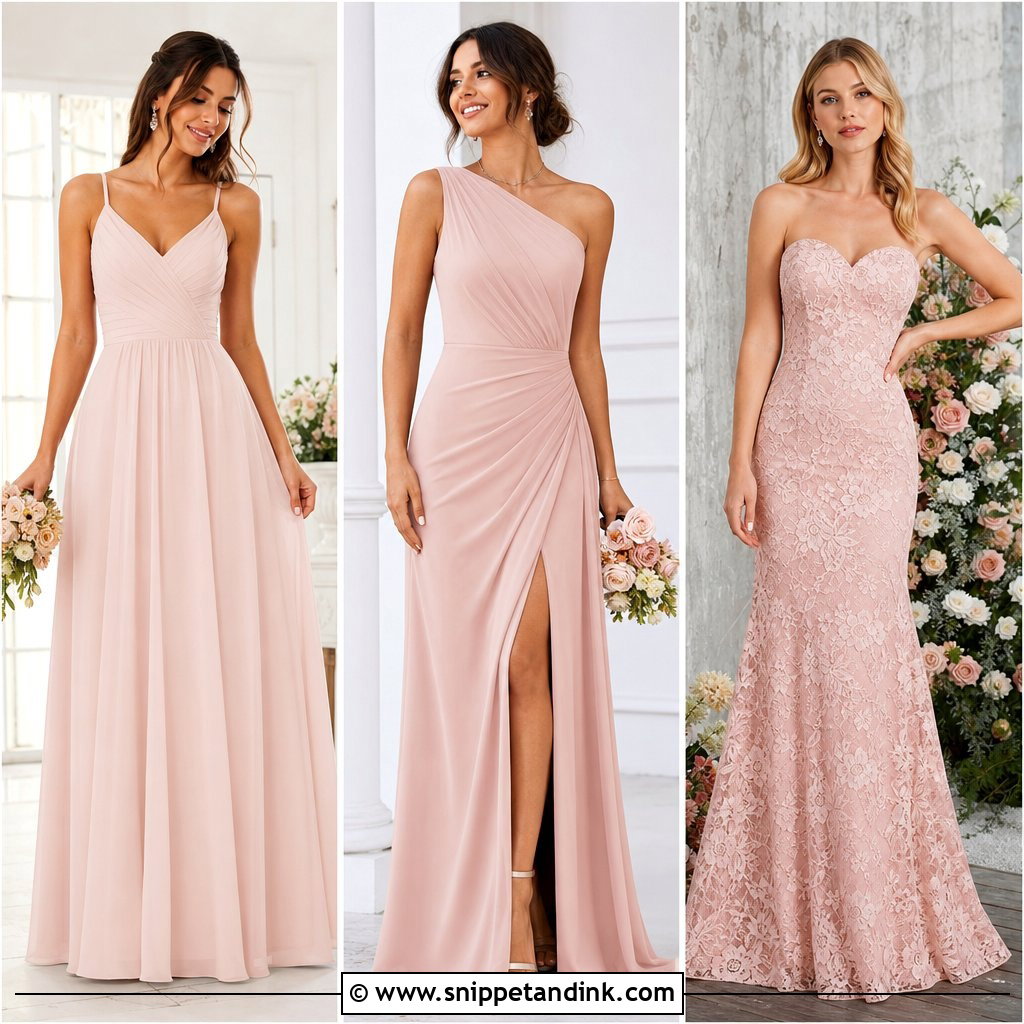
33. Blush Bridal Gown With Rose Gold Accessories
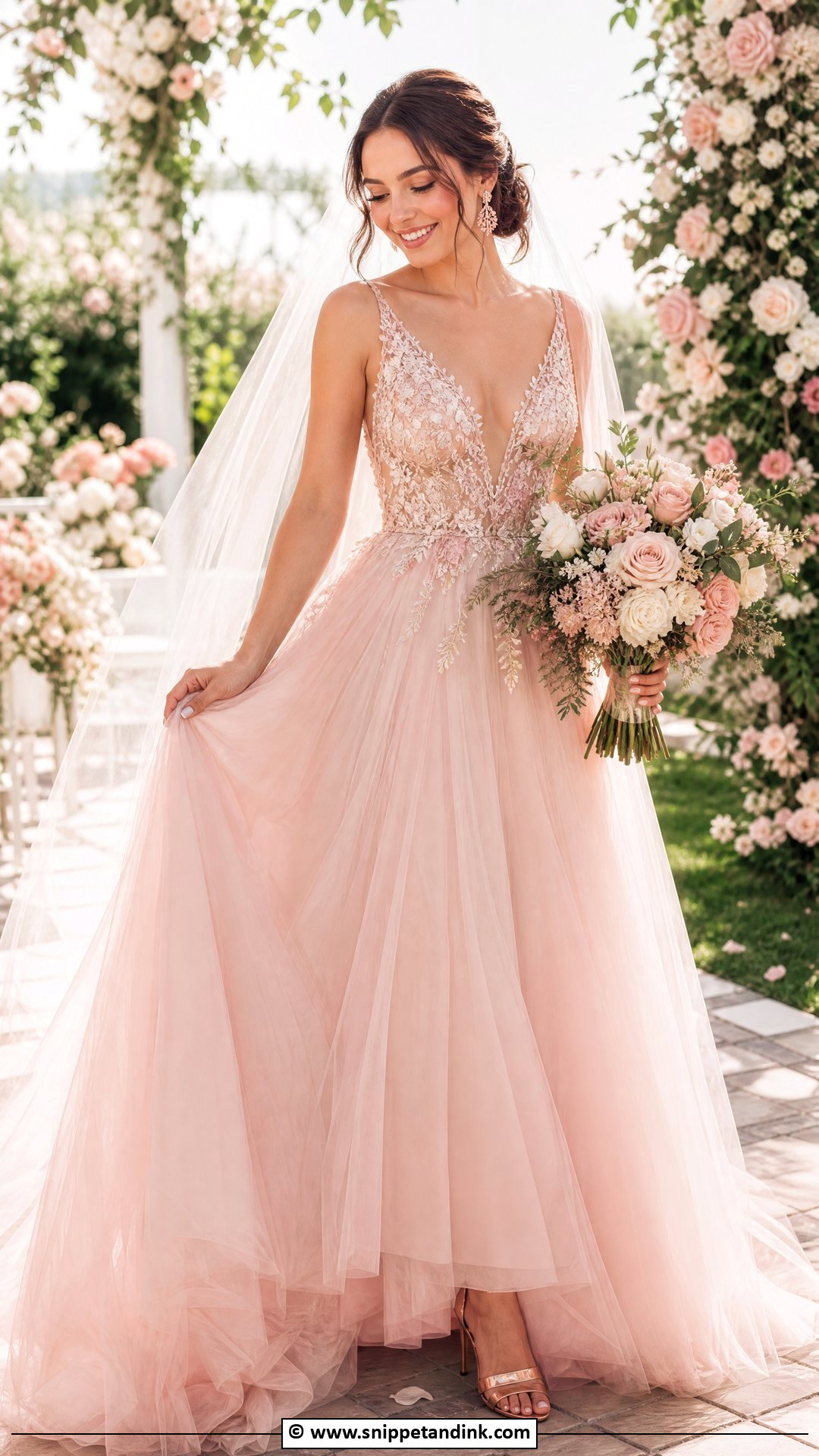
Blush flatters many skin tones, but the exact shade matters. A very pink blush can wash out fair skin with pink undertones, and a nude-leaning blush can vanish against medium skin in photos. Before anything else, I hold the fabric up to the bride’s face by a window. Rose gold accessories echo the warm undertone, with soft metallic heels, a simple veil and rosy makeup. Garden and spring weddings suit it well.
34. Vintage Bridal Gown With Birdcage Veil
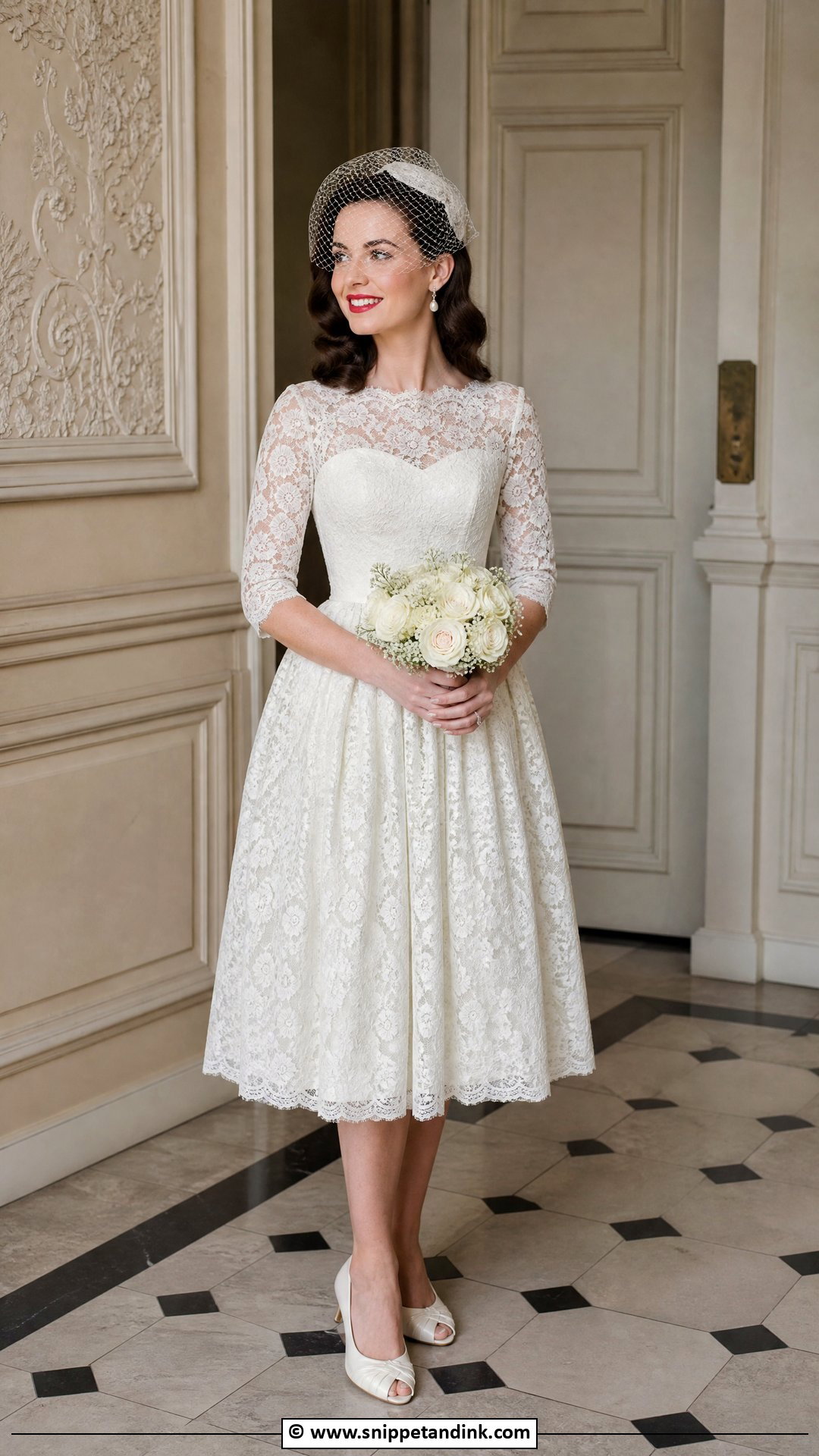
A birdcage veil is short and practical, sitting at the brow or across one eye, so nothing trails behind you. Vintage character comes from lace sleeves, a tea length skirt, satin buttons or a softly structured shape. Pin it onto a section of hair with some grip, since it sits at the front of the head where it gets knocked during hugs. Pearl earrings, low heels, a small bouquet and a soft updo or set waves complete it for a courthouse or a historic venue.
35. Reception Bridal Gown With Statement Shoes
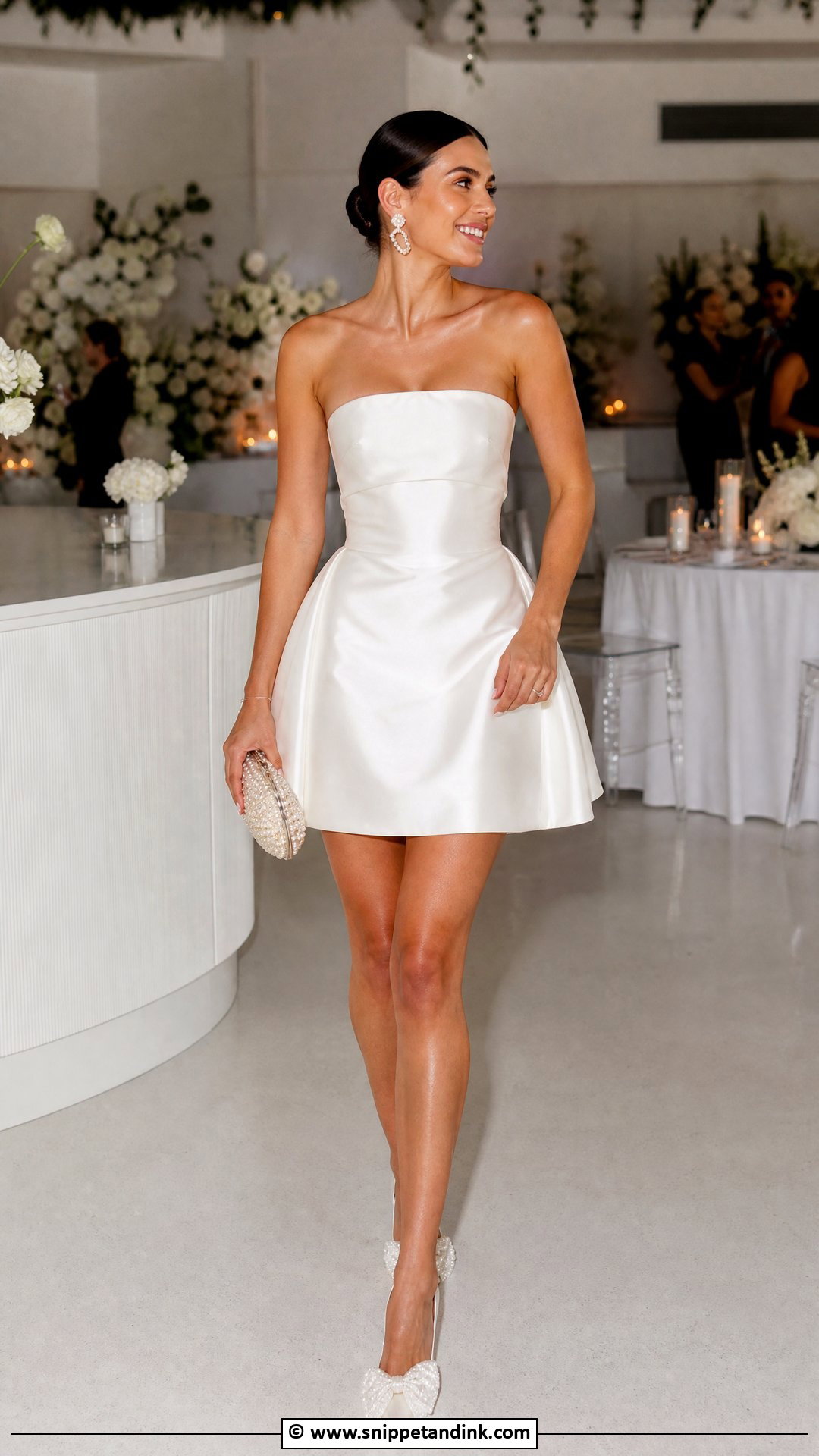
A reception dress has one job: letting you sit, walk and dance without thinking about it. A short dress, slim satin gown, feather mini or plain sheath can all manage that, and I tell brides to dance in it in the fitting room before buying. Statement shoes with pearls, bows or sparkle bring personality, and the hairstyle must stay secure. It can be your second look or your only dress at a relaxed party. Budget about twenty minutes for the change, with someone to help.
How Long a Gown Really Takes, From Order to Final Press
The timeline surprises most brides. Many gowns are made to order once you choose them, and production commonly runs several months, though it varies by designer and shop. If you want a made-to-order gown, I’d start shopping roughly nine to twelve months ahead, and earlier still for custom work. Sample sales and off-the-rack dresses shorten that a great deal.
Alterations come in rounds
Plan on two or three fittings, usually starting about two to three months out. The first fixes the big things: bust, waist and hem. The second checks those changes and sets the bustle. The last, around two weeks before, is when you wear your real shoes, undergarments and jewelry and walk the whole outfit. Small weight changes in the final months are normal, which is why I avoid finishing a bodice too early.
Teach the bustle to the person who will do it
Bring your maid of honour, or whoever will help you after the ceremony, to that last fitting. Many bustles use colour-coded ribbons or numbered hooks, and a few photos on her phone will save ten minutes of guessing in a corridor.
Get the Dress Cleaned Within a Few Weeks of the Wedding
Spilled champagne and sugary drinks dry clear and then turn yellow over the following months, so the gown should go to a cleaner who handles bridal fabrics soon after the wedding, not next year. Point out every mark you know about, including the hem, which collects grass, dust and the odd smear of cake.
- Store it folded in acid-free tissue inside an acid-free box, not in a plastic garment bag that traps moisture.
- Keep it somewhere dark with a steady temperature. Attics and basements swing too much.
- Don’t hang a heavy gown by its straps for months; the weight stretches the shoulders. Use the inner hanging loops or store it flat.
- Take it out about once a year and refold it along different lines so creases don’t set for good.
Wear It Through the Vows and the Last Dance
The right dress is the one you forget you’re wearing by the second hour. From lace and satin classics to crepe, coloured gowns, detachable pieces and short party dresses, these looks cover a lot of ground. Treat the gown, veil, shoes, jewelry, hair and bouquet as one outfit, and picture them at your venue at the time of day you’ll marry. Bring two or three favourites to your appointments, and sit, walk and lift your arms in each one before you decide.
You'll Like These Ideas:


Leave a Reply