
Most of my work on an Indian bridal look happens underneath the jewelry. A simple bun turns royal once a matha patti goes on; a long braid becomes ceremonial with a jada; loose waves read reception-ready with a few pearl pins. But the piece only looks right if the hair is built to hold it. The heaviest accessory is rarely the best one. What matters is how it sits with your face shape, where the dupatta will be pinned, the neckline of the outfit and how long you’ll wear it. Here are the pieces I set most often, with what each one needs from the hairstyle underneath.

How Heavy Is Too Heavy Once Everything Goes On?
Brides choose accessories one at a time, but they wear them all at once. A tikka, a passa, a jada, a gajra and a dupatta pinned at the crown all hang from the same few square inches of scalp. The total, not any single piece, decides how comfortable you’ll be by the vidaai.
I sort pieces into anchors and accents. An anchor is anything heavy that hooks or pins into a base section: the tikka, matha patti, passa, borla, jada or a temple set. An accent is light and decorative: pearl pins, a vine, small floral pins. My rule is two anchors at most, and they must sit in different zones, one at the front and one at the back.
What I check at the trial
- Whether the tikka hook lands on a pinned section, not loose hair.
- Whether you can look down, as you will for rituals, without anything shifting.
- Whether the dupatta pins clash with the bun pins; they need separate anchor points.
- How your scalp feels after an hour. Mild pressure is normal; a pulling or burning spot means a piece needs to move.
1. Maang Tikka With Sleek Bridal Bun
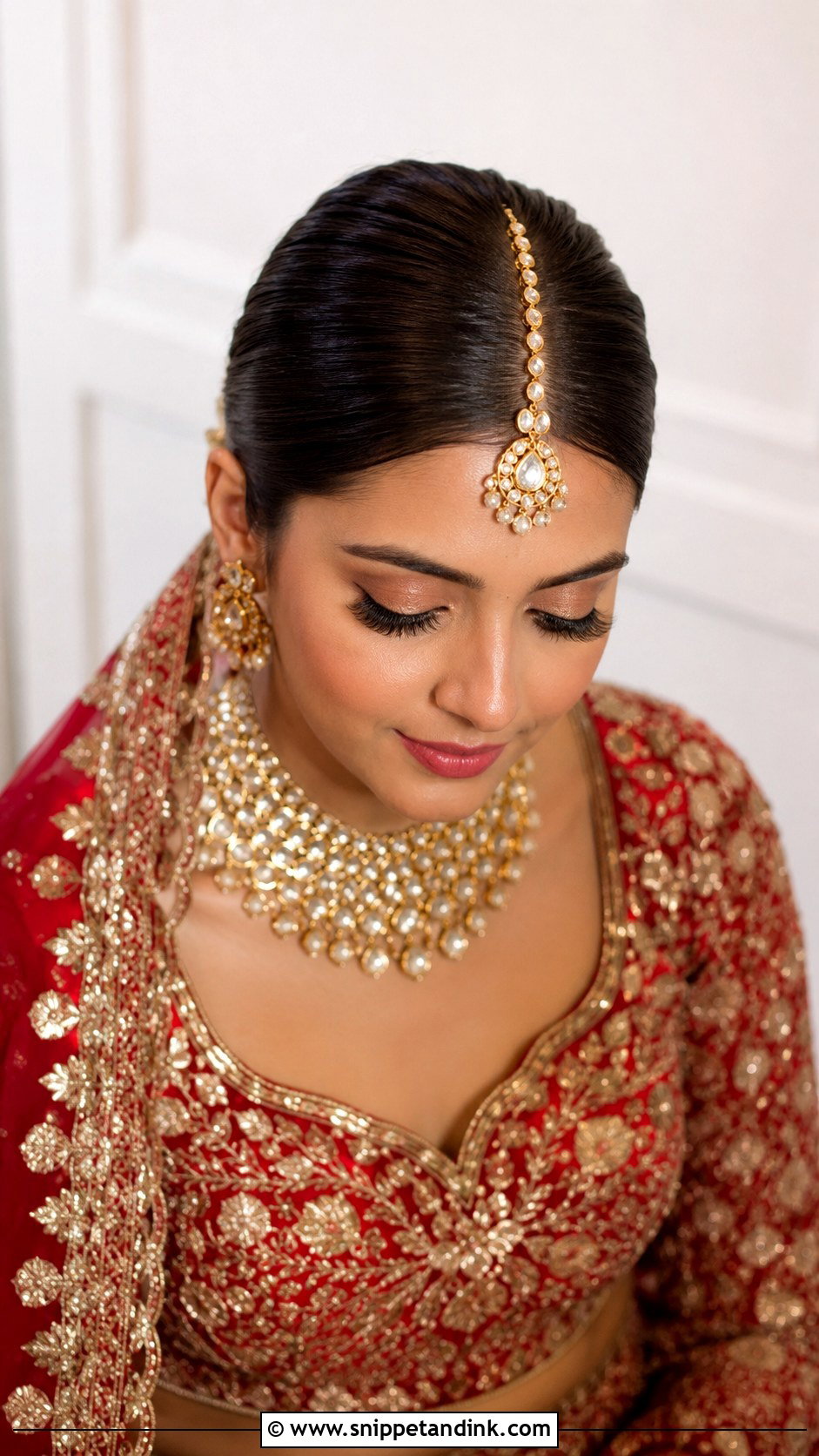
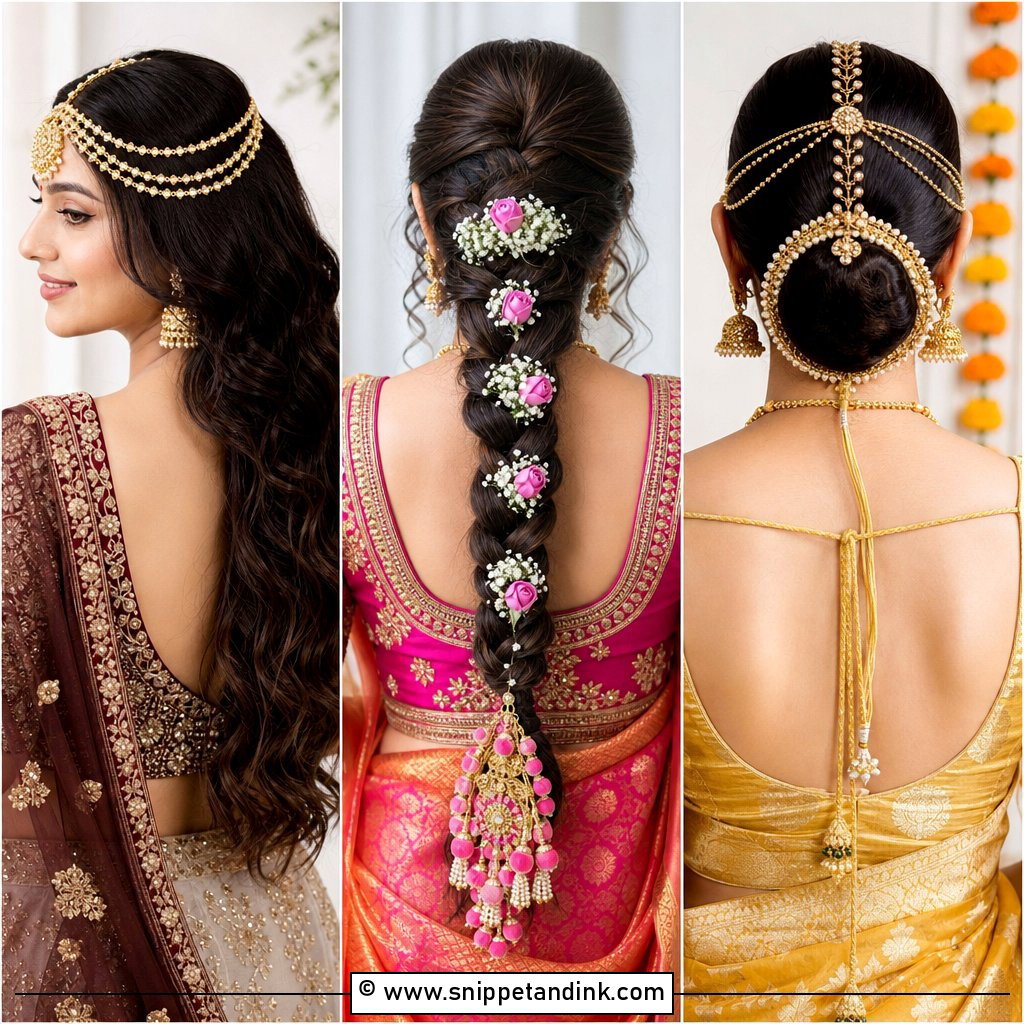
This is the pairing I set more than any other, because the center part gives the tikka a straight channel and the bun gives the dupatta somewhere to anchor. I hook the tikka into a small pinned section just behind the hairline, not into the bun, so it doesn’t swing when you bend at the pheras. Kundan suits a North Indian lehenga, plain gold suits a classic South Indian feel, and pearl fits softer outfits. Keep the front smooth; any bump at the part pushes the pendant off center by the second hour.
2. Matha Patti With Center Part Bridal Bun
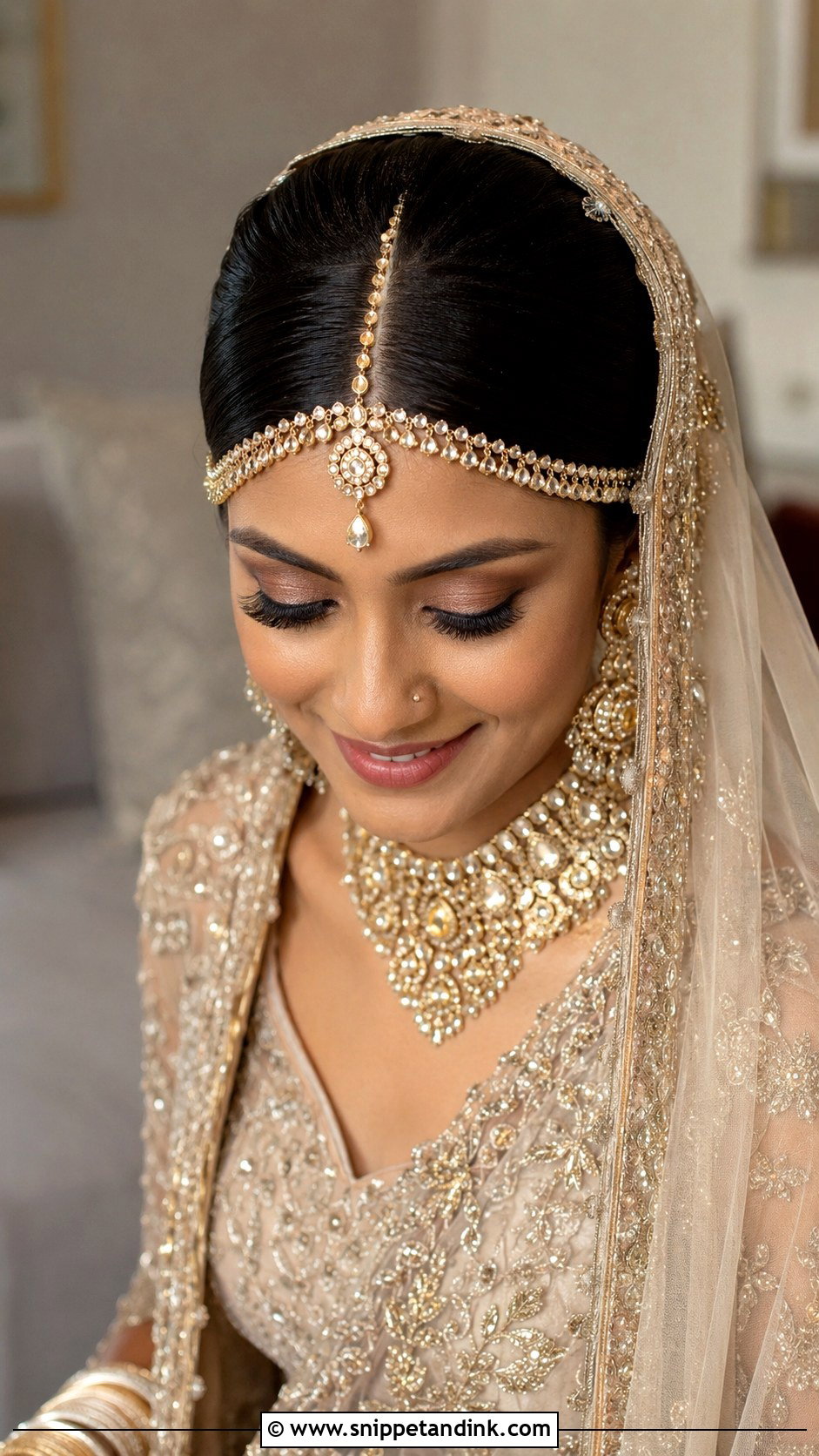
A matha patti frames the forehead without adding height, which helps brides with a long face or a high hairline. The side chains need to sit flat along the temples, so I hide two small pins under each chain where it meets the hair. Choose a dupatta drape that doesn’t cover the forehead, or the piece disappears. On a heavily embroidered outfit, go for a finer matha patti. A plain lehenga can carry a wider kundan or polki design. If you wear glasses for the ceremony, try the patti with them on at your trial, since the chains can catch on the frames.
3. Passa With Side Part Bridal Bun
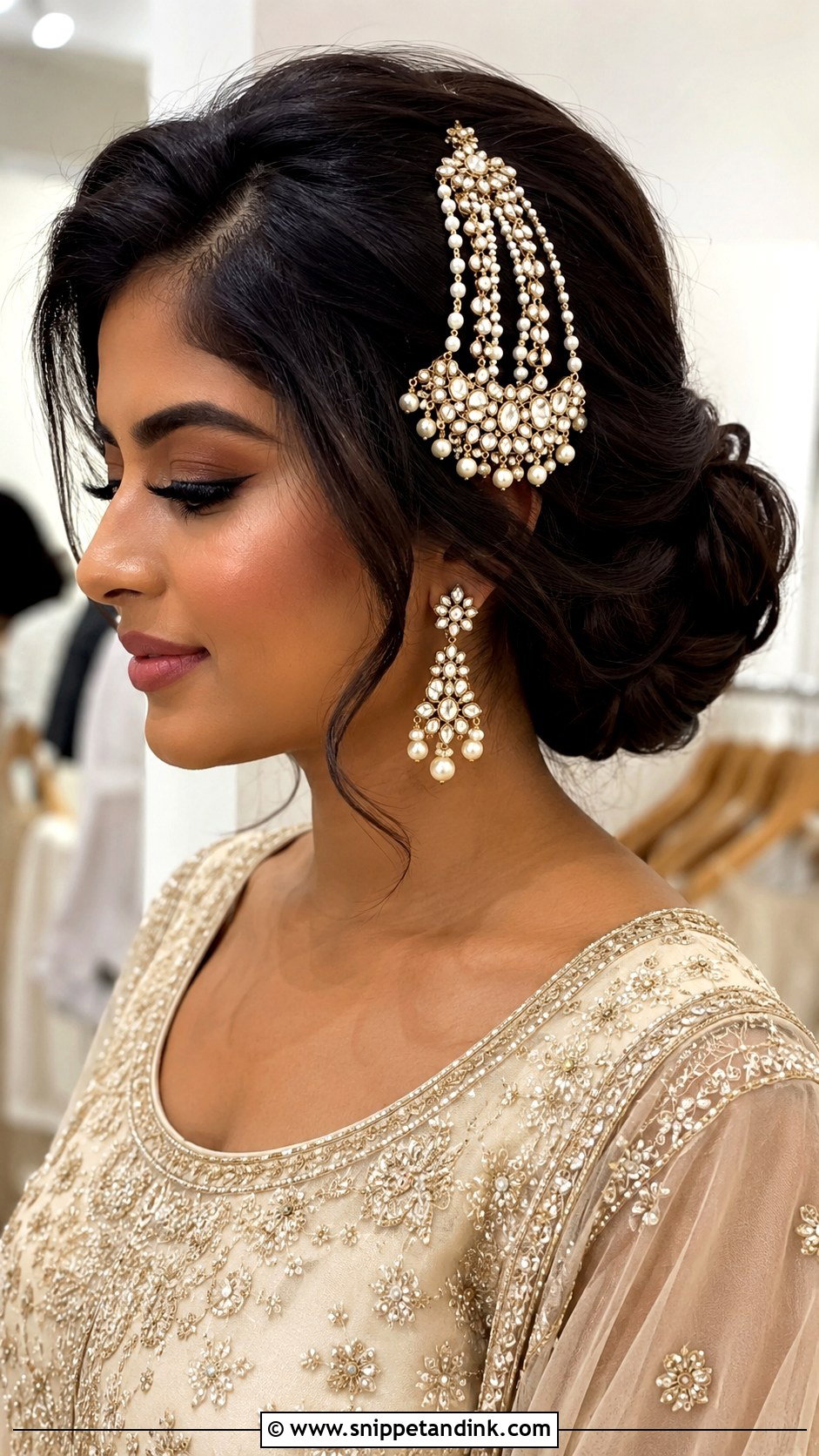
The passa, or jhoomar, sits at one temple and changes the whole balance of the face, so I always part the hair on that side and add a little volume at the crown to give it something to rest against. It’s traditional with shararas, ghararas and Muslim bridal outfits, though it’s turning up more with lehengas and reception sarees. A large passa and a large tikka fight each other. I’d shrink the tikka or skip it. The passa’s hook goes into a firmly pinned base section; if it’s hooked into loose waves, it slides toward the ear within an hour.
4. Jhoomar With Soft Bridal Waves
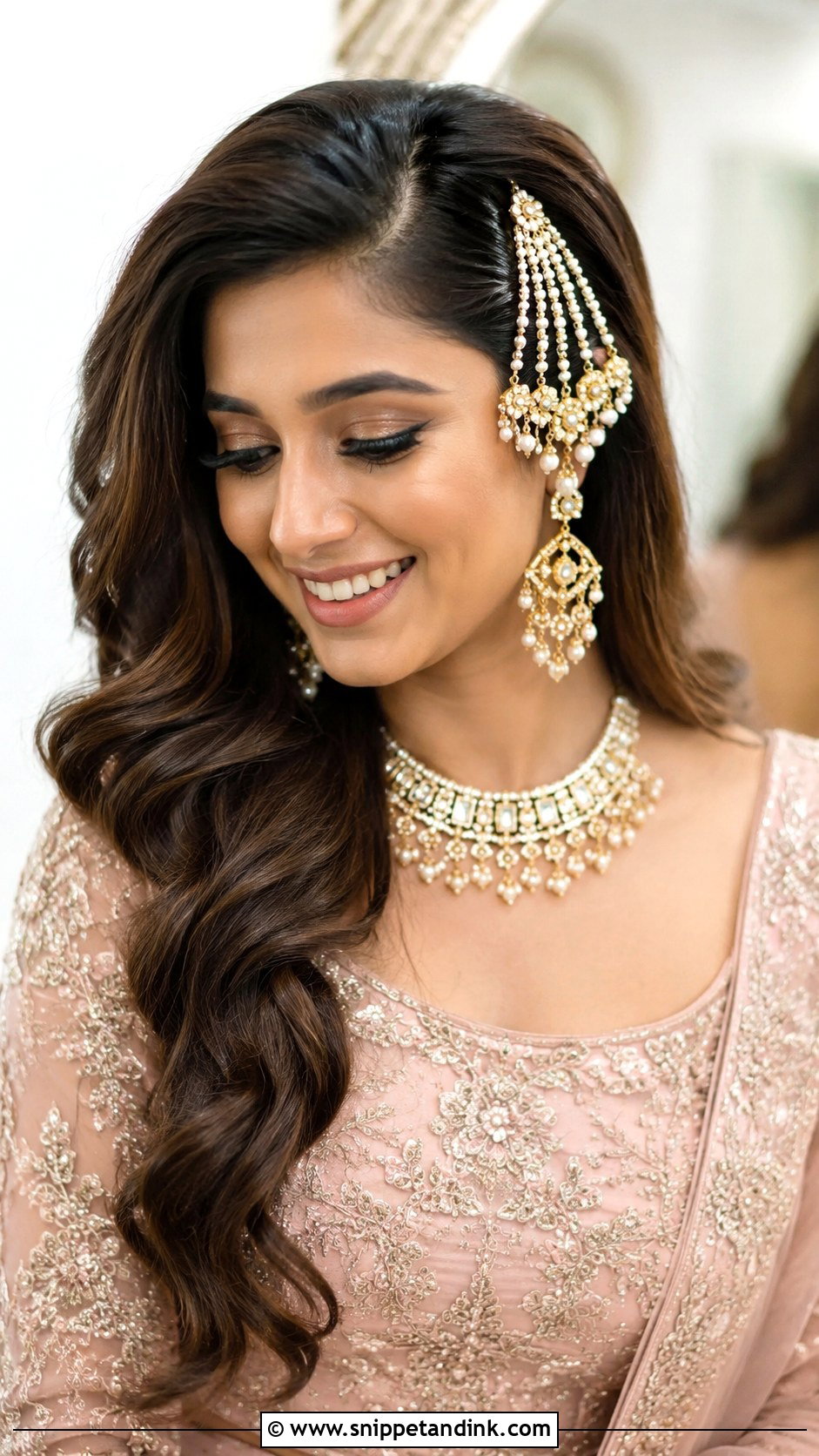
Soft waves give movement, but they don’t grip anything, which is the problem with wearing a jhoomar on open hair. My fix is a small backcombed and pinned pad on the jhoomar side, hidden under the top layer of waves, so the hook has a firm anchor. Done that way it holds through an engagement, sangeet, nikah or reception where the dupatta is lighter. Finish with a drop of serum through the lengths only. Serum near the roots makes the anchor section slippery.
5. Borla With Rajasthani Bridal Bun
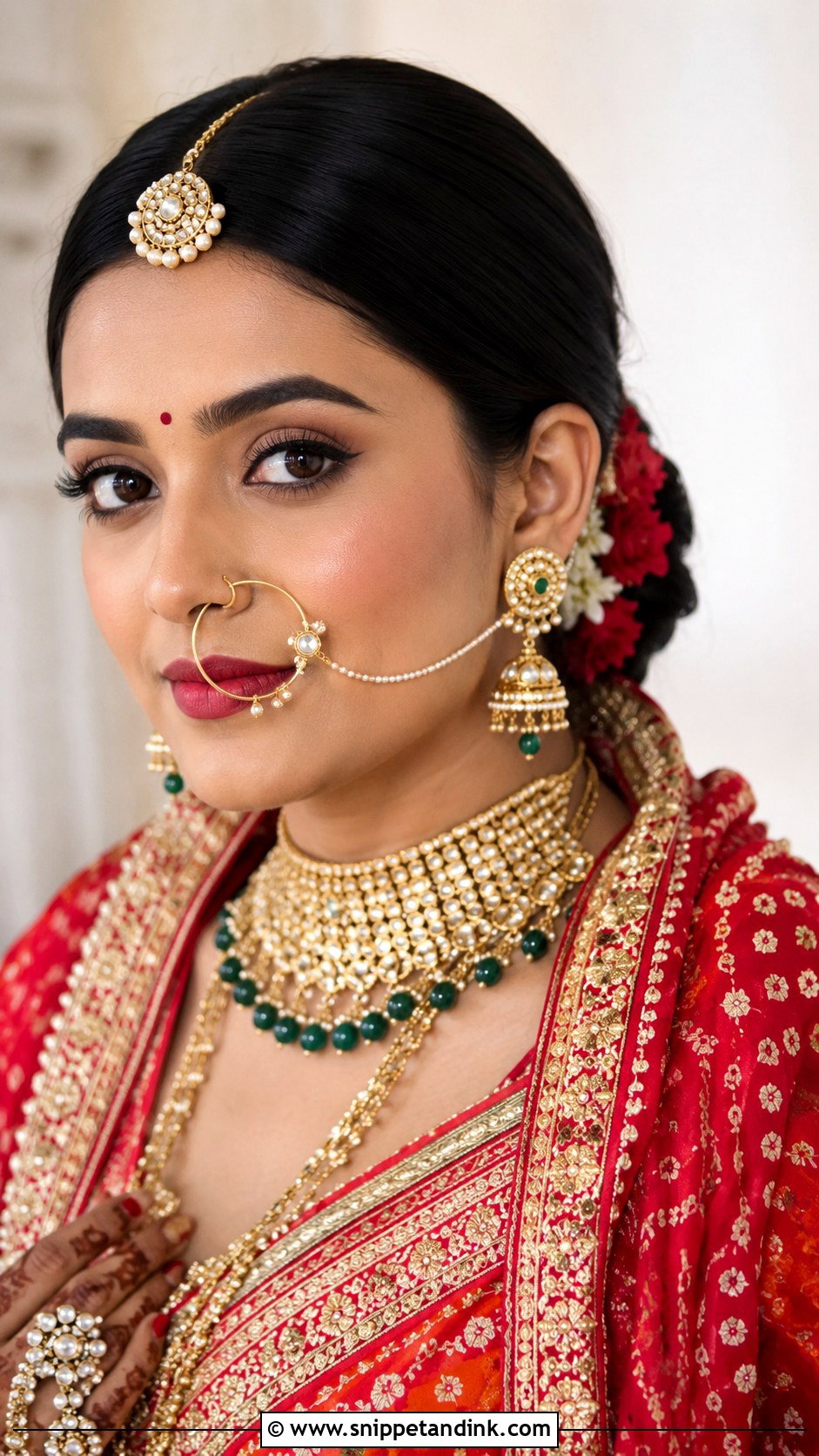
The borla is a round pendant that sits dead center on the forehead, so it shows any crookedness in the part immediately. Pairing it with a Rajasthani bridal bun works because the sleek middle part and tight bun keep everything symmetrical. It belongs with bandhani, gota patti and mirror-work lehengas, and it usually sits under a covered dupatta drape. I keep the front hair smooth and skip face-framing strands here; loose pieces hide the borla’s shape. Gajra on the bun is optional and adds scent without competing.
6. Jada With South Indian Bridal Braid
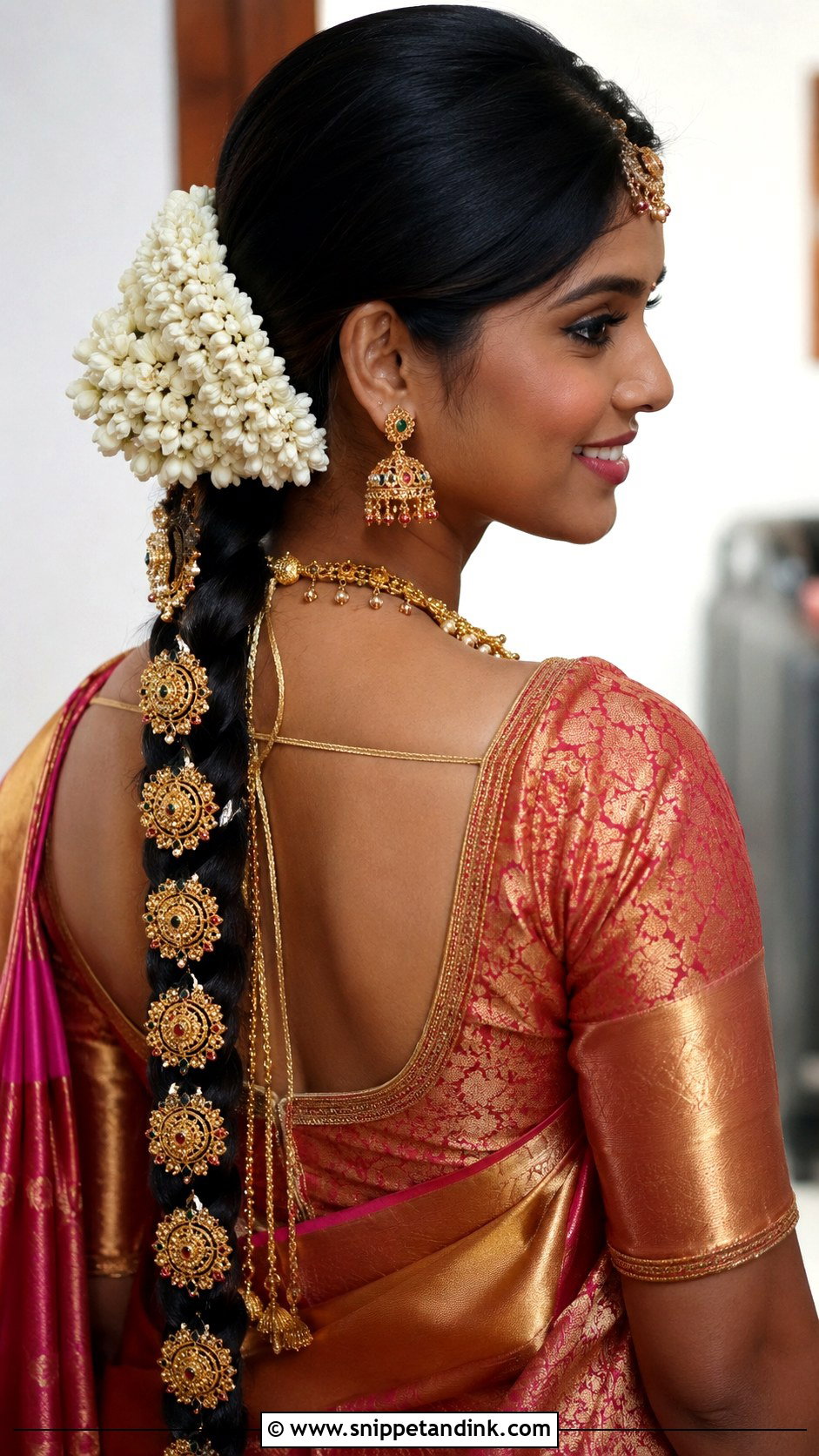
With a jada, the braid is the jewelry stand. On a South Indian bridal braid, the gold or temple pieces run down the full length, so the braid has to be even and firm from nape to tip. Most brides need extensions or a padded braid to get that length and width; natural hair is used when it’s already long and thick. I wrap jasmine at the top for fragrance and to cover where the jada attaches. Tell me if the braid pulls at the nape after twenty minutes at your trial. Over a several-hour ceremony, that tug turns into a headache.
7. Gajra With Low Bridal Bun
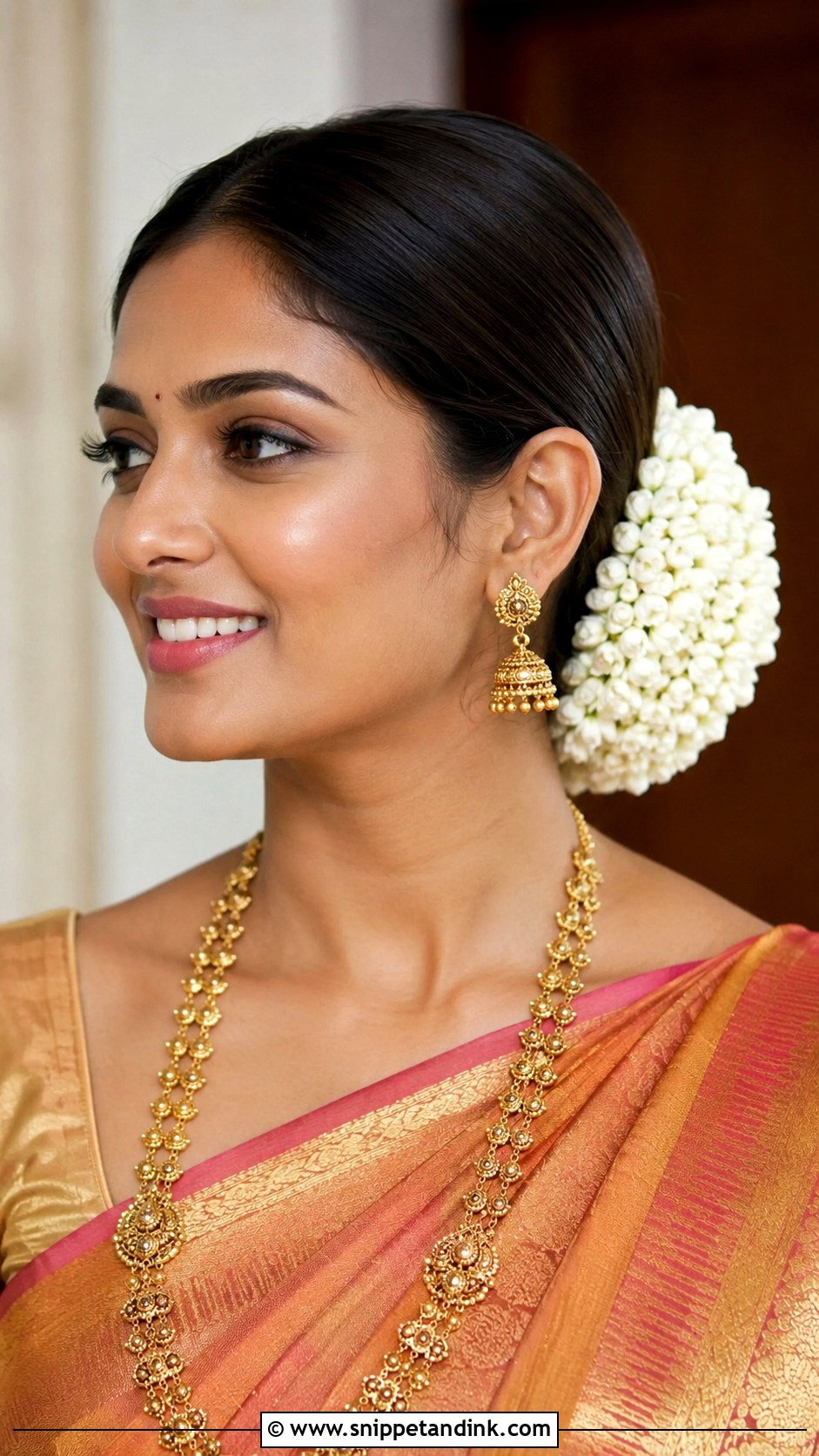
Wrapping a gajra around a low bun works across North Indian, South Indian, Maharashtrian, Bengali and Gujarati weddings, which is why it’s on almost every bride’s list. Fresh jasmine flowers soften heavy outfits and finish the back of the head neatly. A full circle reads traditional; a half-moon looks lighter. I secure the strand with U-pins and a fine hair net, because jasmine strings stretch slightly as the buds open and can loosen by evening. It sits comfortably alongside a maang tikka, matha patti or temple set.
8. Floral Bun Pins With Bridal Juda
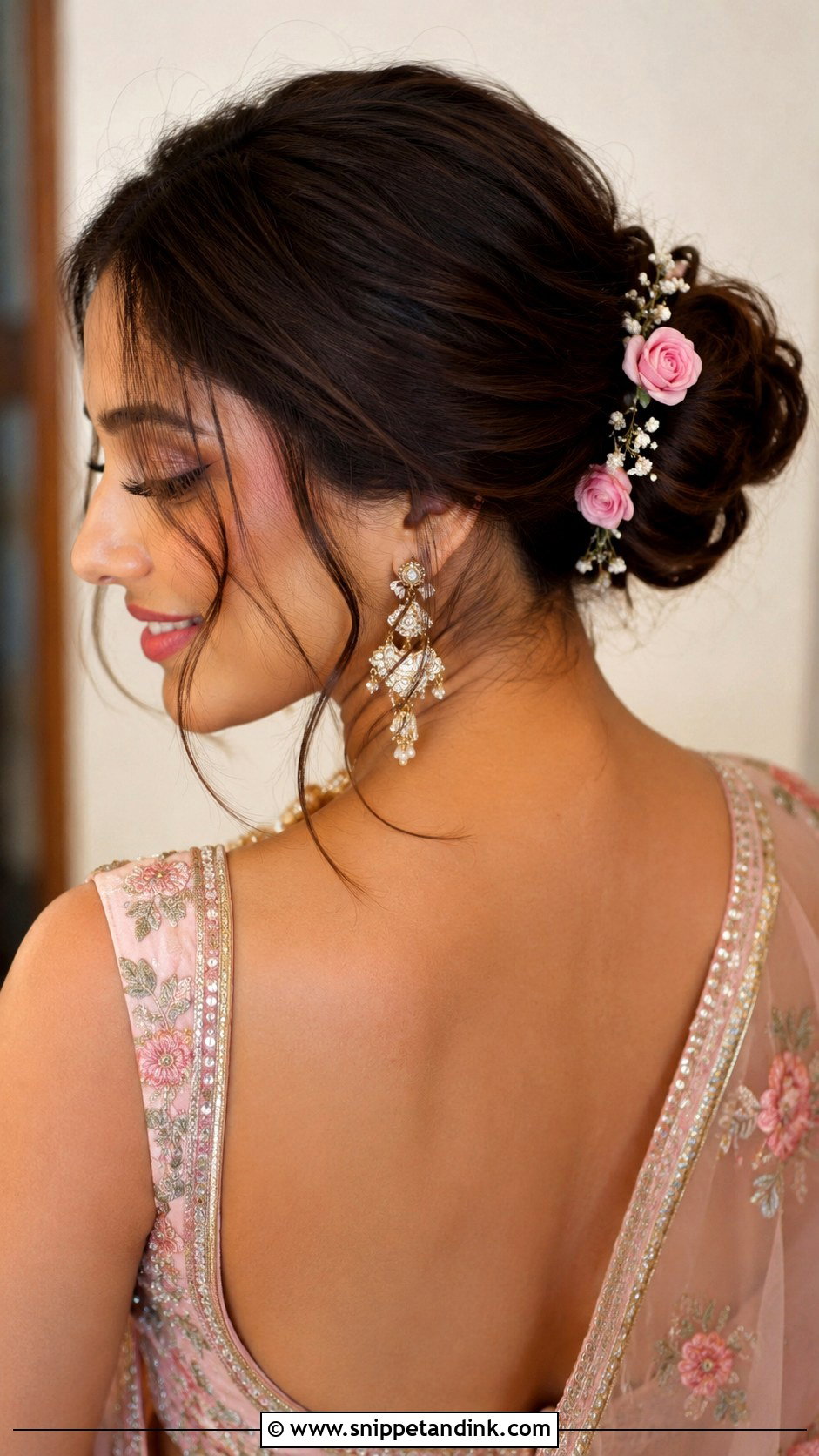
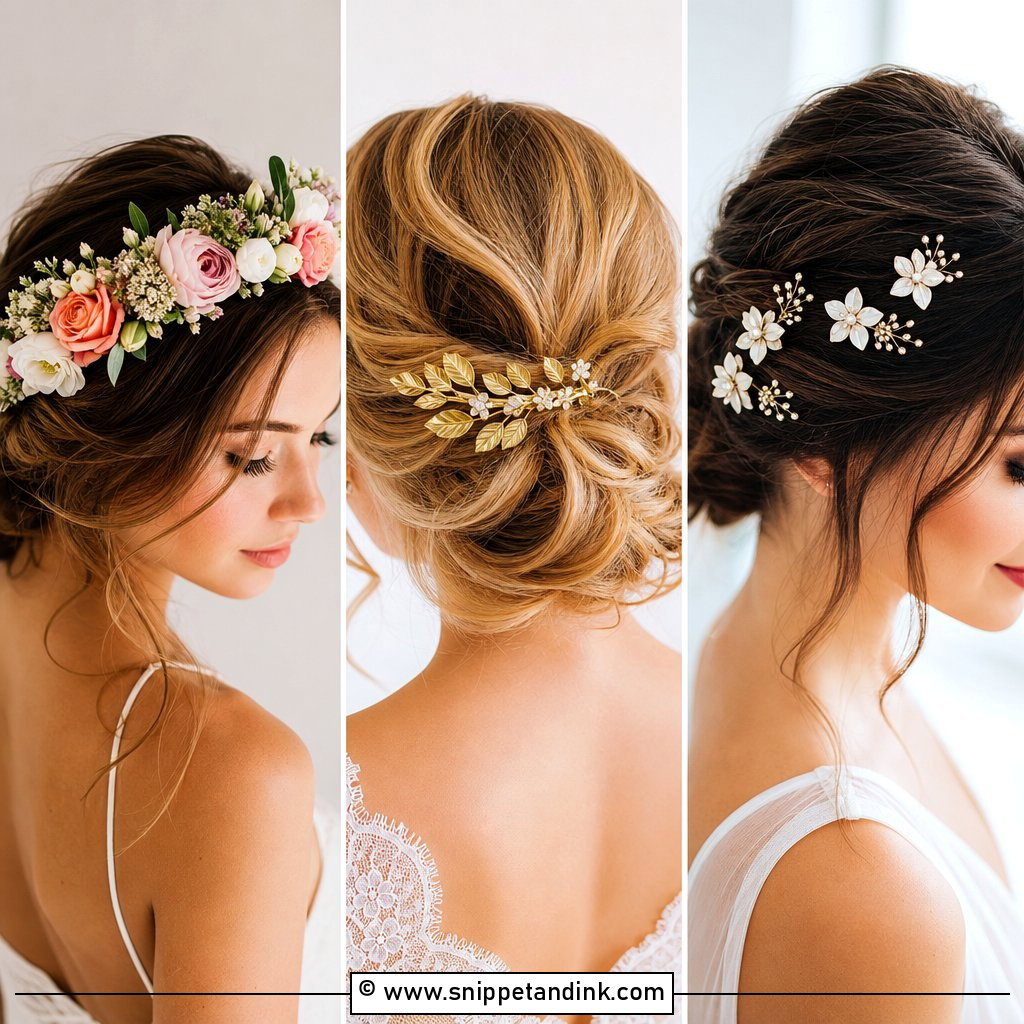
Floral bun pins give you flowers without the weight of a gajra. They can ring the bun, sit inside a braided bun or scatter through a textured updo, and they suit pastel lehengas, ivory sarees and modern outfits. On hot outdoor days I lean on silk flowers; fresh roses and baby’s breath look softer but start to droop after a few hours in sun. These pins are also the easiest way to keep detail at the back while a dupatta covers the top of the head, since the front stays clear and the pins stay visible from behind.
9. Pearl Pins With Messy Bridal Bun
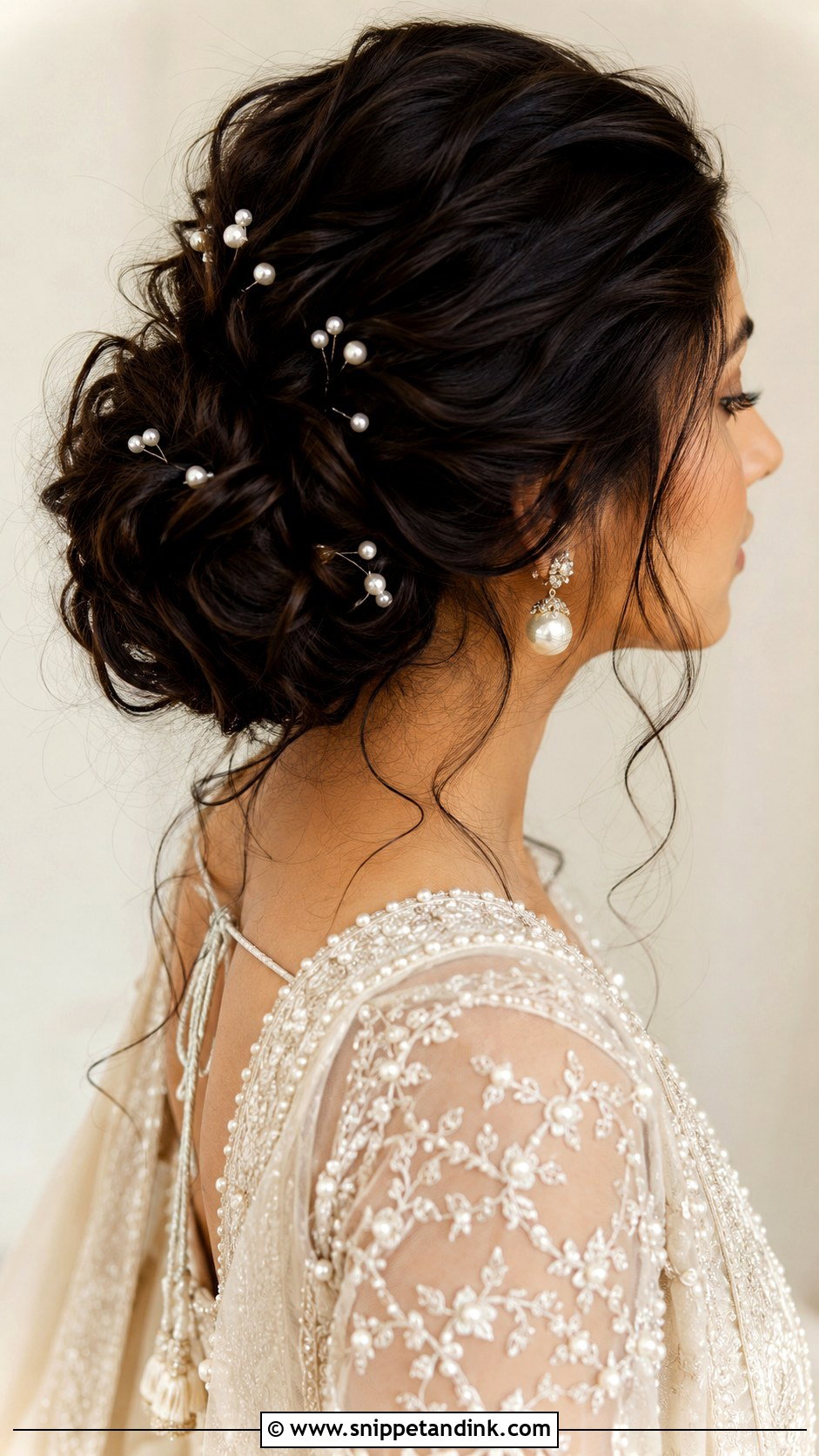
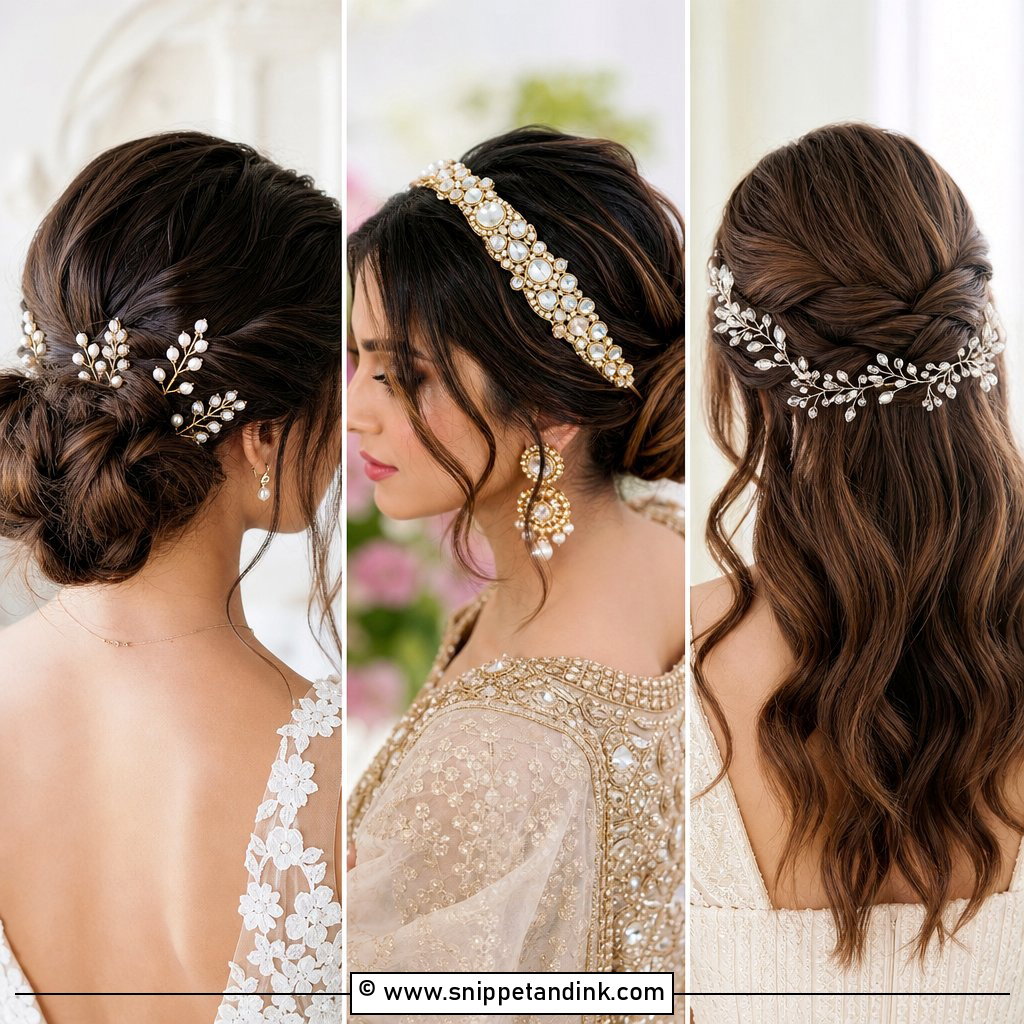
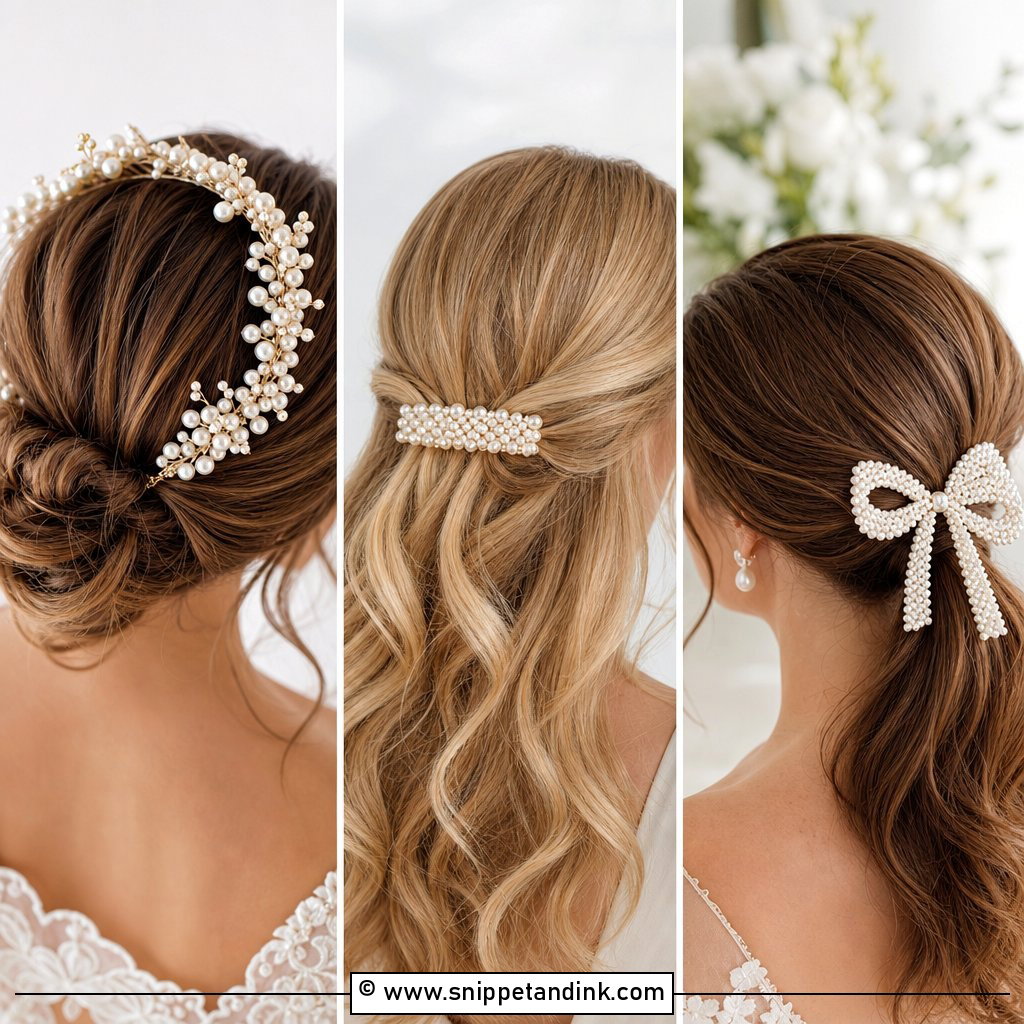
Pearls look best when they seem scattered but aren’t. I place them through the twists of a low textured bun using three pin sizes, larger pearls toward the center and small ones near the edges, so the bun has depth rather than looking dotted. It suits pastel lehengas, organza sarees and reception outfits with pearl work, and it’s a good route if you’d rather skip forehead jewelry. One warning: cheap pearl pins have shallow prongs that slip out of fine hair. Spring-grip or slide-grip pins hold far better.
10. Kundan Hair Chain With Bridal Braid
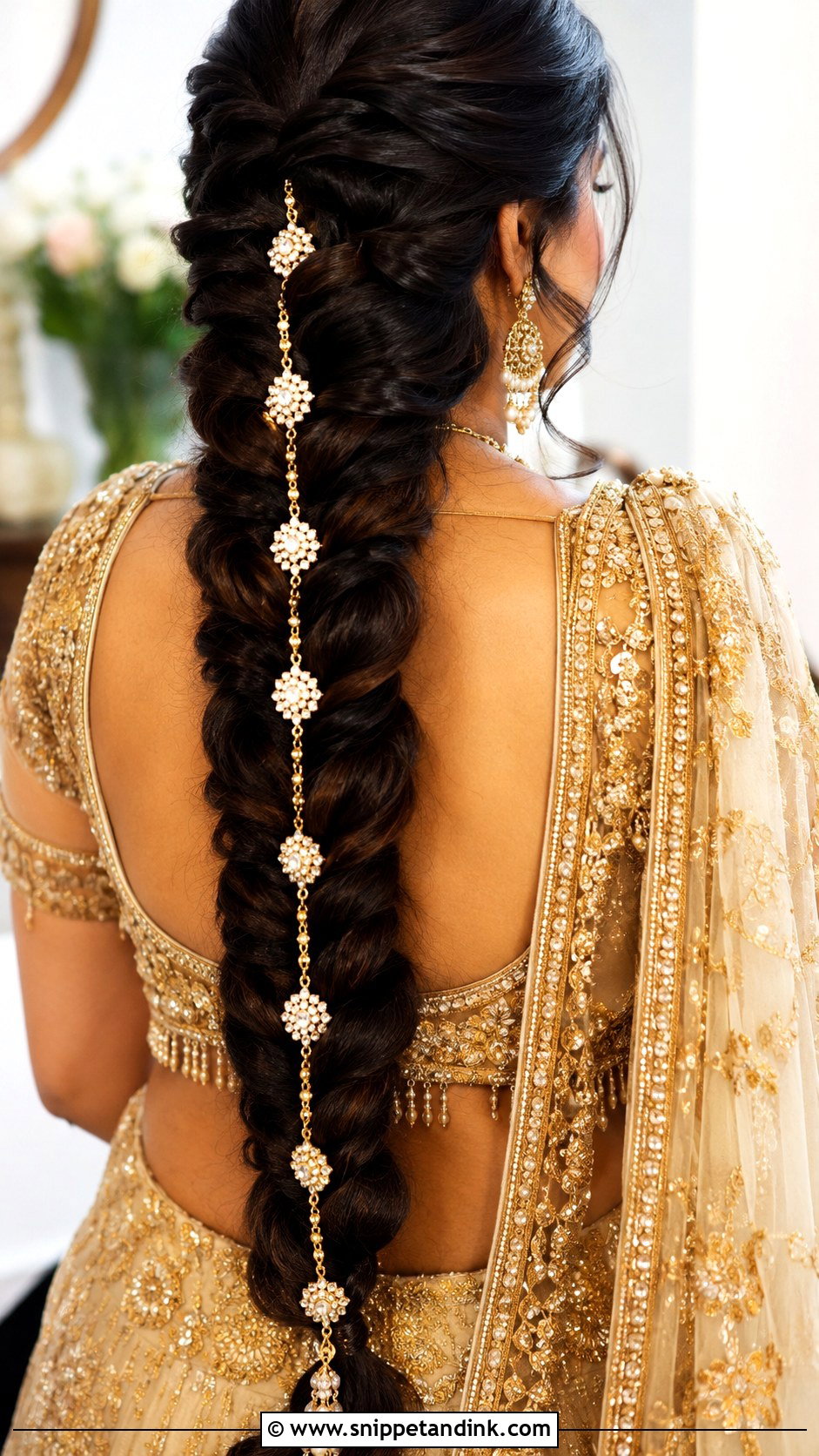
A kundan chain on a braid adds sparkle without covering the hair completely. It can run straight down the braid, spiral around sections or connect from the front jewelry to the back. I pancake the braid gently first so there’s more surface for the chain to rest on, then stitch it in place at intervals with small pins in a matching tone. It pairs with kundan necklaces, polki earrings and gold or champagne embroidery. On a thin braid, a chain pulls the braid flat and shows gaps; I’d add a clip-in braid for body.
11. Temple Hair Jewelry With Bridal Braid
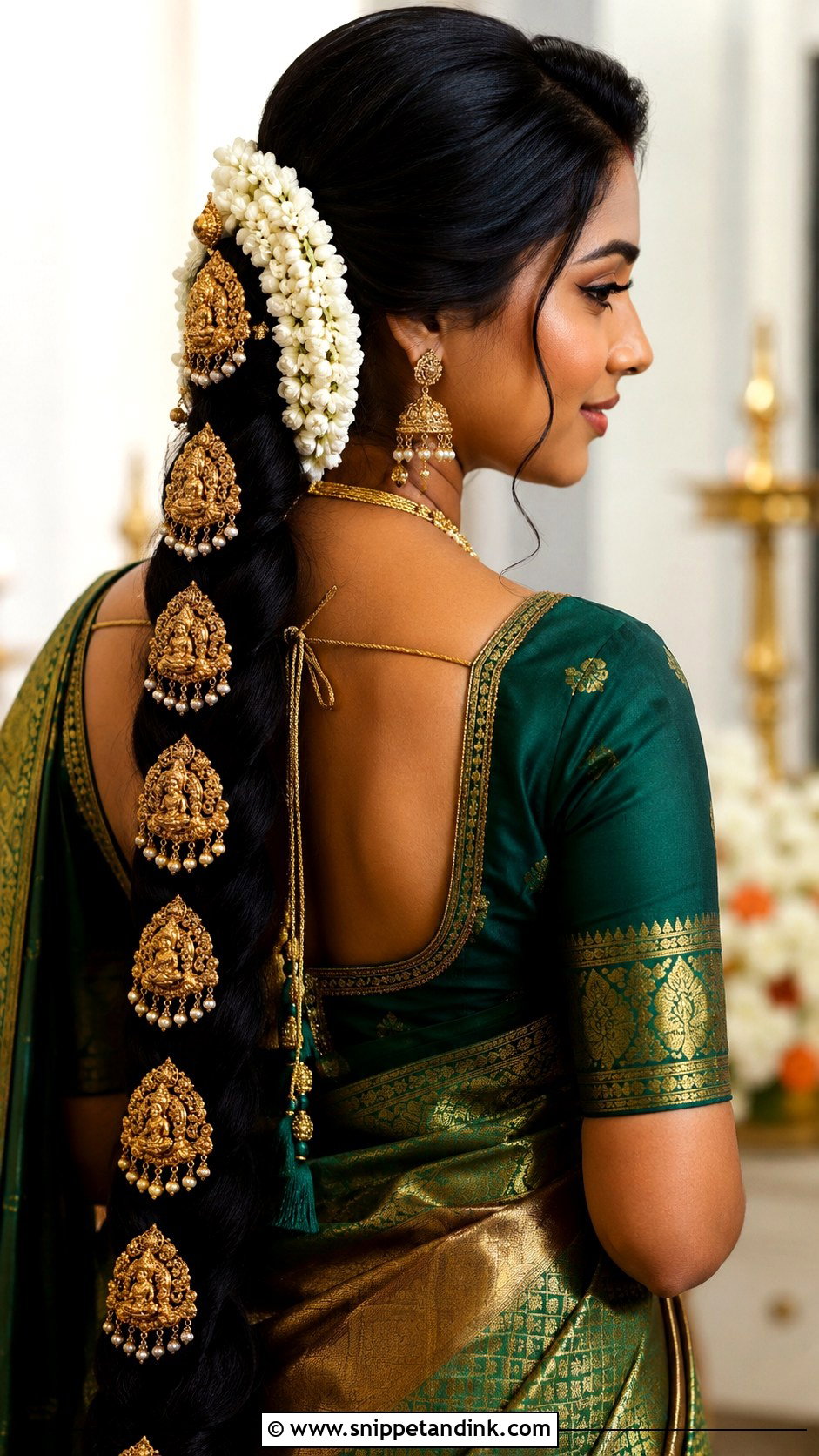
Temple pieces with goddess motifs, coin designs and traditional shapes are heavier than almost anything else here. They can sit along a braid, around a bun or at the braid base, and they belong with Kanjeevaram silk, temple necklaces and fresh jasmine. Because of the weight, I section and pad the braid before any jewelry goes on, and I spread the pieces out instead of stacking them high near the crown. A rich ceremonial look is worth it only if you can still turn your head comfortably at the end of the rituals.
12. Bridal Hair Brooch With Low Bun
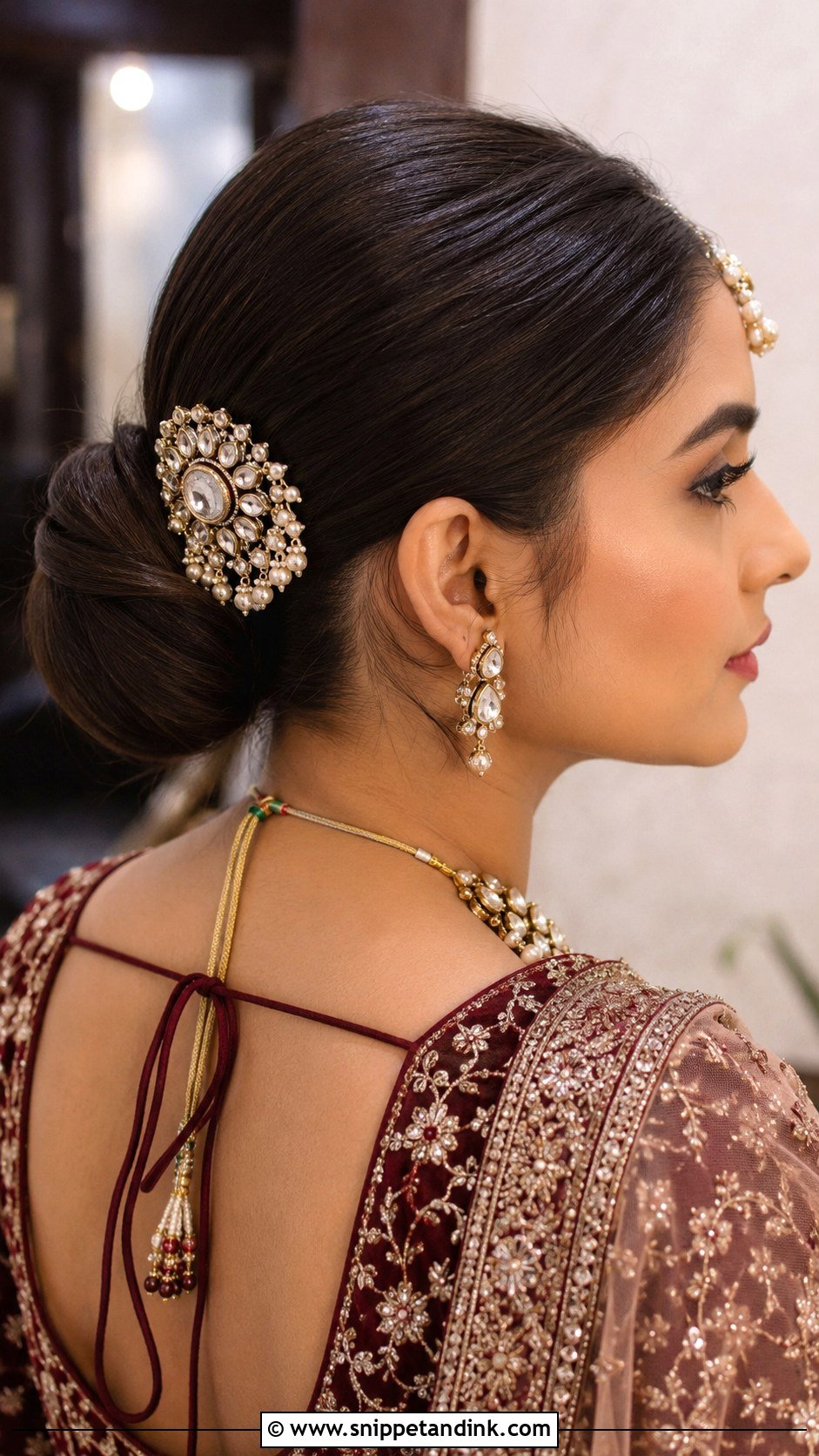
One strong brooch on a low bun often looks more finished than six small pins. It can sit on one side of the bun, just above it or where the veil is pinned. Kundan suits a traditional lehenga, pearls a soft saree and crystals a reception outfit. The bun needs to be smooth but not pulled flat, or the brooch tilts and shows its clasp. I put two hidden pins through the brooch frame into the bun so it can’t rotate.
13. Crystal Hair Vine With Half Up Bridal Hair
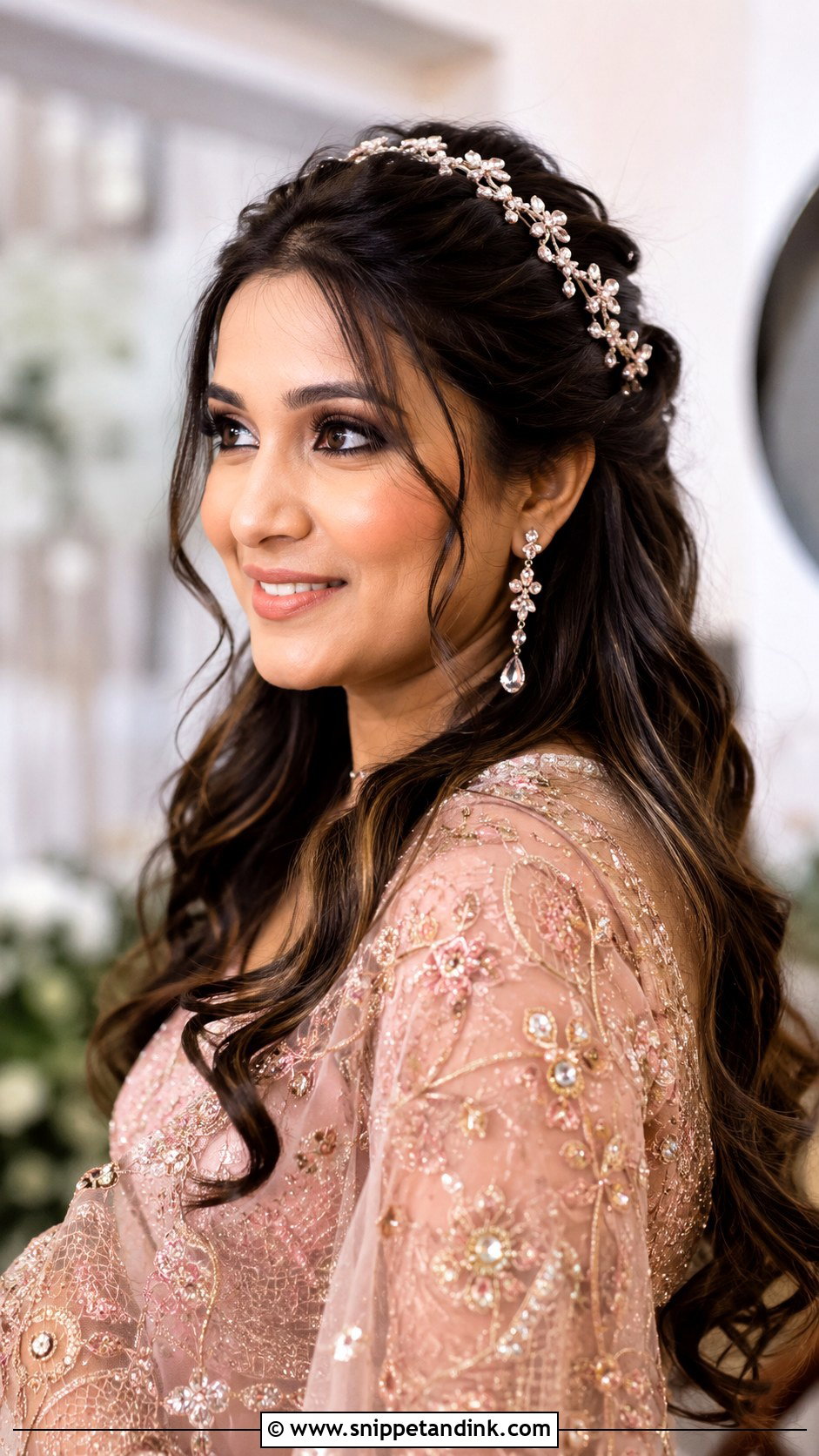
A crystal vine sparkles without the weight of a matha patti, so it’s my usual choice when a bride wants her long hair to show. I pin the top section back, curl the lengths and lace the vine along the pinned section or curve it around the crown, wiring the ends under the hair. It’s suited to an engagement, a reception, cocktails or a contemporary ceremony. Half-up curls lose shape faster than an updo, so I set each curl and let it cool fully before brushing out.
14. Bridal Tiara With Indian Reception Hair
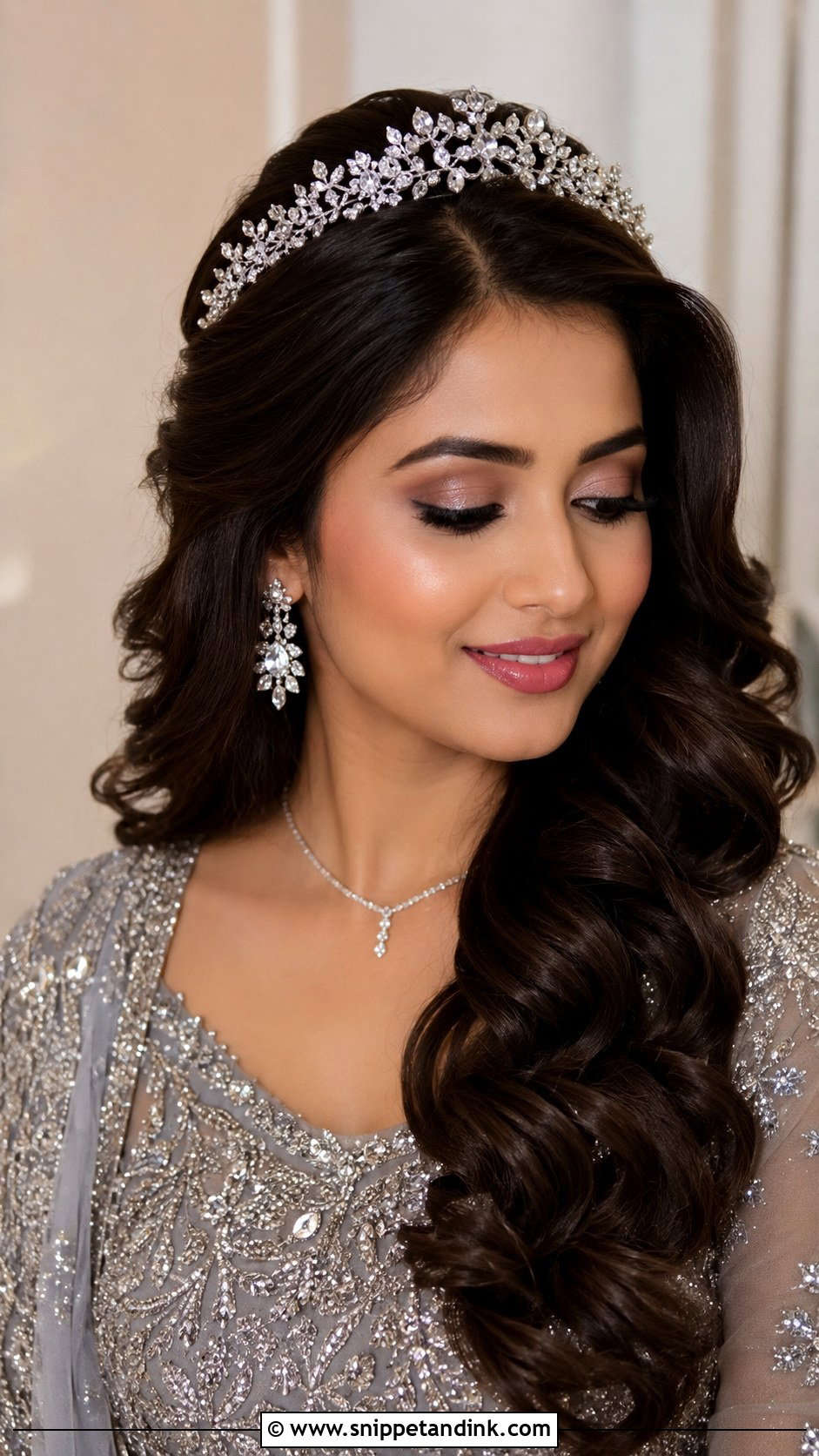
A tiara isn’t traditional, and I’d say that honestly, but with a gown, an Indo-western lehenga or a softly draped saree it can work well for a reception. Voluminous waves, a half-up style or a smooth low bun give it the best base. Match the metal to your jewelry: silver crystals with white stones, gold with yellow gold, pearls with pearls. Leave out forehead pieces entirely when the tiara goes on. The combs need to be pushed into backcombed hair on both sides, or the tiara rides forward.
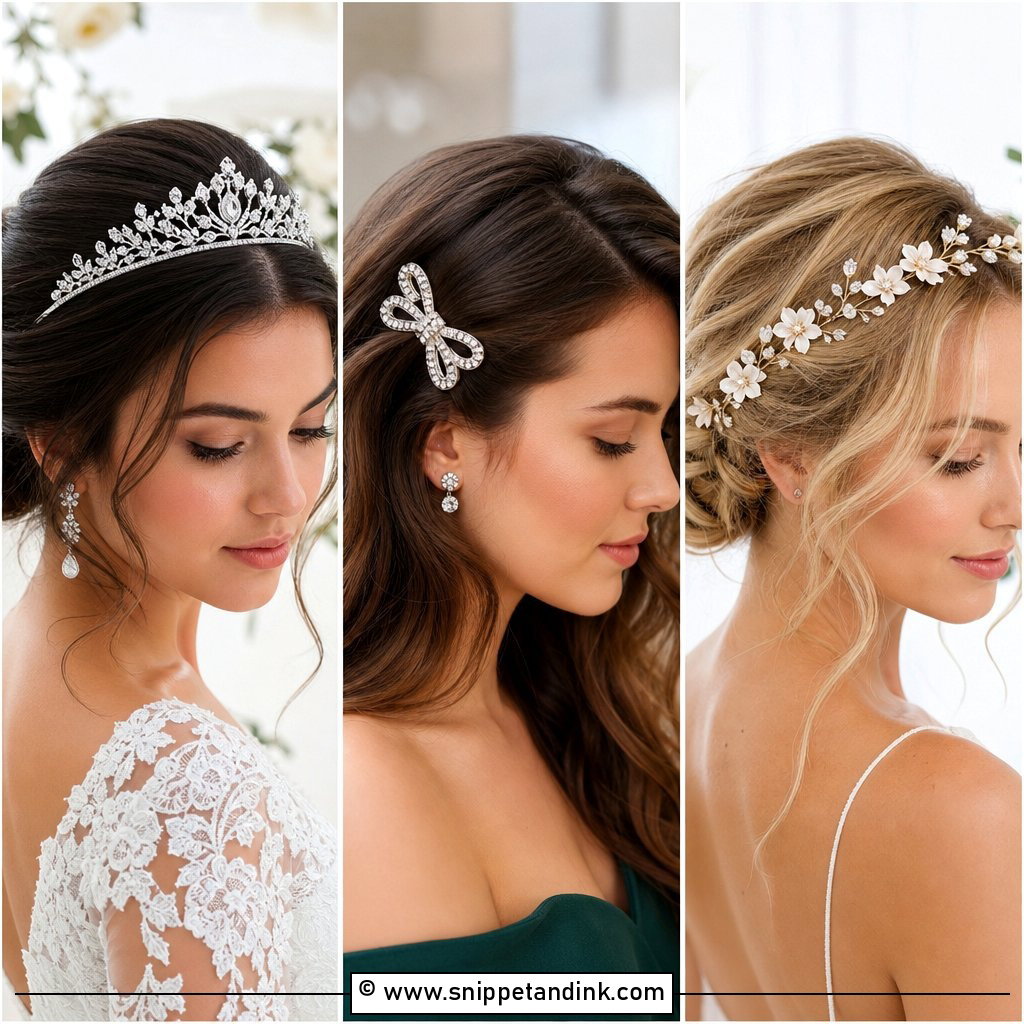
15. Paranda With Punjabi Bridal Braid
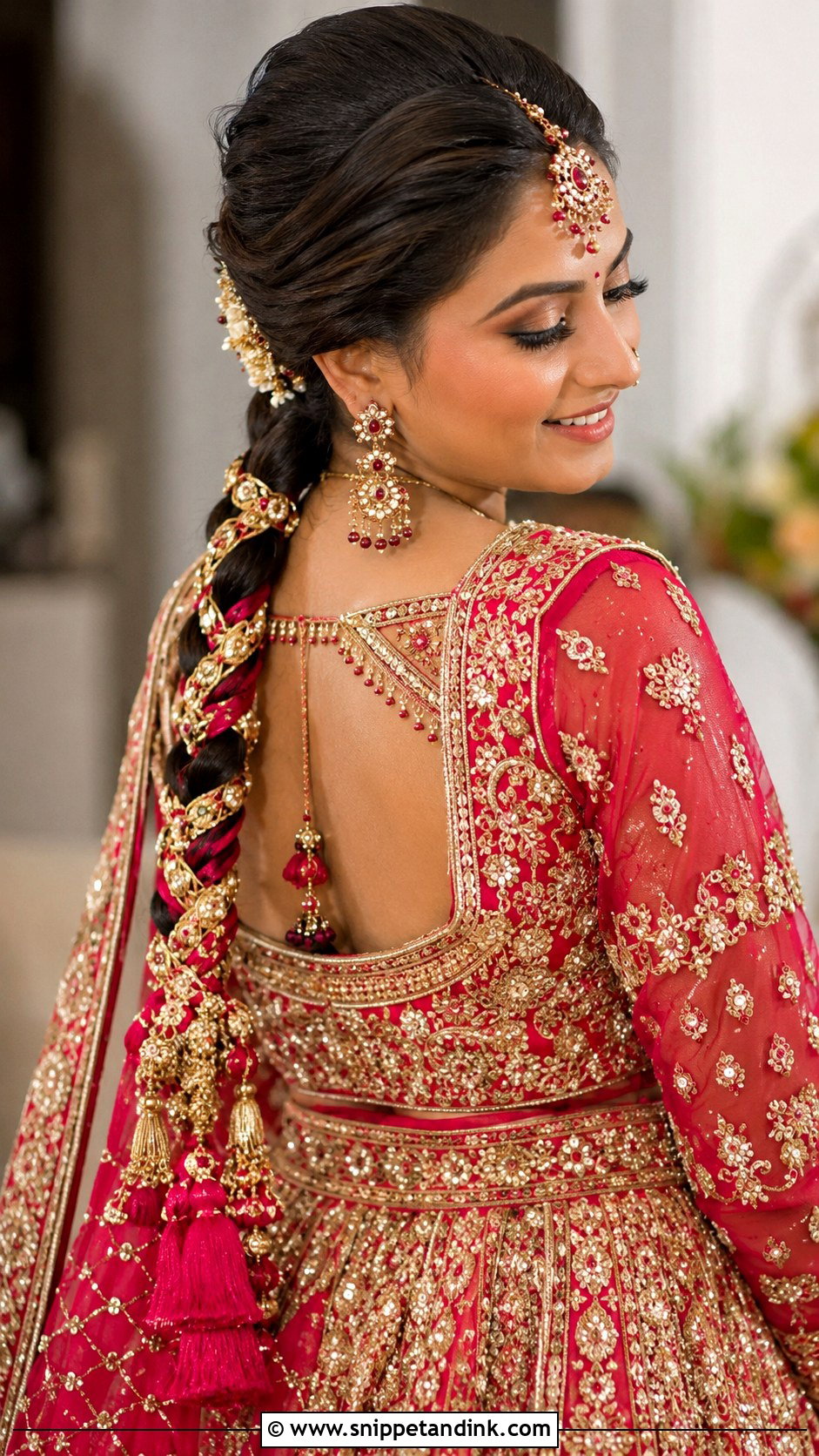
A paranda is woven right into the braid and finished with tassels, beads, threads or metallic ends. On a Punjabi bridal braid it adds swing and color for the wedding, mehndi, sangeet and pre-wedding events. Matching it to the lehenga, dupatta, bangles or embroidery ties the look together. It also fills out a thin braid, since the woven threads add body. I tie it in from the very top of the braid and secure the tail with a covered elastic so the tassels don’t loosen as you dance. A maang tikka, passa or a few flowers at the base complete it.
Repair Kit for Slipping Tikkas and Broken Hooks
Jewelry fails in small ways on a wedding day. A hook opens, a tikka chain tangles in the dupatta, a pearl pin works loose during a hug. None of it needs your stylist if someone in your party carries a small pouch and knows what’s in it.
- U-pins and bobby pins in your hair color, a dozen of each.
- A few small safety pins for dupatta edges and chain ends.
- Small flat-nose pliers or tweezers to close an opened jewelry hook.
- Clear hair elastics to re-tie a braid end or a paranda tail.
- A travel-size hairspray and a fine-tooth comb for smoothing the part.
Hand the pouch to one person, usually a sister or cousin who has watched your trial. I show that person where each anchor sits so a quick fix doesn’t mean pulling the whole look apart.
Kundan, polki and plated pieces in the hair
Rough metal backs and open prongs snag hair, especially fine or freshly washed hair. Before the wedding, run each piece through a silk scarf. Anything that catches will catch in your hair too, and a small strip of felt or tape on the back solves it. Plated pieces can also rub off onto light hair under heat, so keep them away from damp, sweaty roots.
One Hero Piece, Then Let the Rest Step Back
Accessories shape the whole look, from a matha patti that frames the face to a long jada or a scatter of pearl pins. Pick one main piece and let the hairstyle support it: a sleek bun under heavy jewelry, waves under a vine or jhoomar. Your ceremony length, outfit, hair length and dupatta drape matter more than trends. Bring every piece to your trial, wear them all for at least an hour, and pay attention to what you notice on your scalp before you notice it in the mirror.
You'll Like These Ideas:


Leave a Reply