
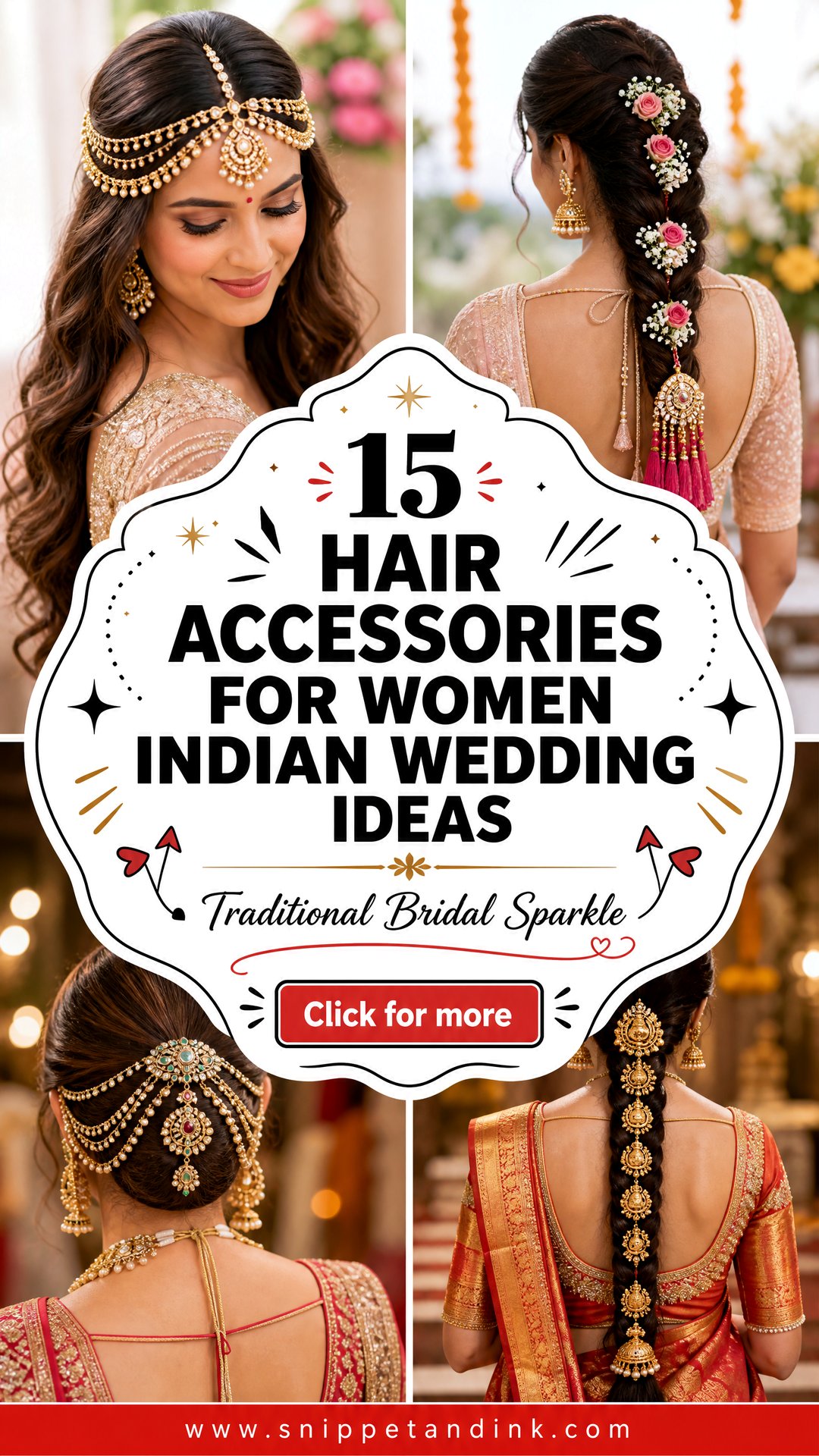
Put the same low bun on three different women, add a maang tikka to one, a gajra to the next and a crystal vine to the third, and you get three completely different moods. That’s what Indian wedding hair accessories do. A braid finished with a paranda or temple pieces becomes the main event; loose waves turn festive with a few pearls. Because an Indian wedding usually runs across several functions, from mehendi and haldi to the ceremony and reception, you get several chances to wear them. The rule I keep coming back to when I pin these in is balance: one statement piece, matched to the outfit’s metalwork, on a hairstyle built to hold its weight.
One Headpiece Per Function, Not the Same One All Week
Brides often buy one big piece and wear it to everything. I’d rather spread the accessories across the events, matching weight and formality to what’s actually happening at each one.
- Haldi: turmeric gets everywhere. Fresh flowers or an inexpensive floral set you won’t mind staining. Leave the kundan at home.
- Mehendi: you’ll sit still for hours with wet hands, so anything that needs adjusting is a problem. A paranda braid or flower bun looks festive and stays put.
- Sangeet: you’ll dance. Choose secure pieces like a juda pin, passa or bun cuff over long chains that swing into your face.
- Ceremony: this is the moment for the heirloom tikka, matha patti, sheesh phool or full temple braid.
- Reception: a lighter change feels wonderful after the ceremony weight. Crystal vines, pearl pins or a minimal tikka go well with gowns and lighter lehengas.
For bridesmaids and guests, a simple rule: stay one notch lighter than the bride at every function. A small tikka or gajra reads festive without competing.
1. Maang Tikka Bridal Bun
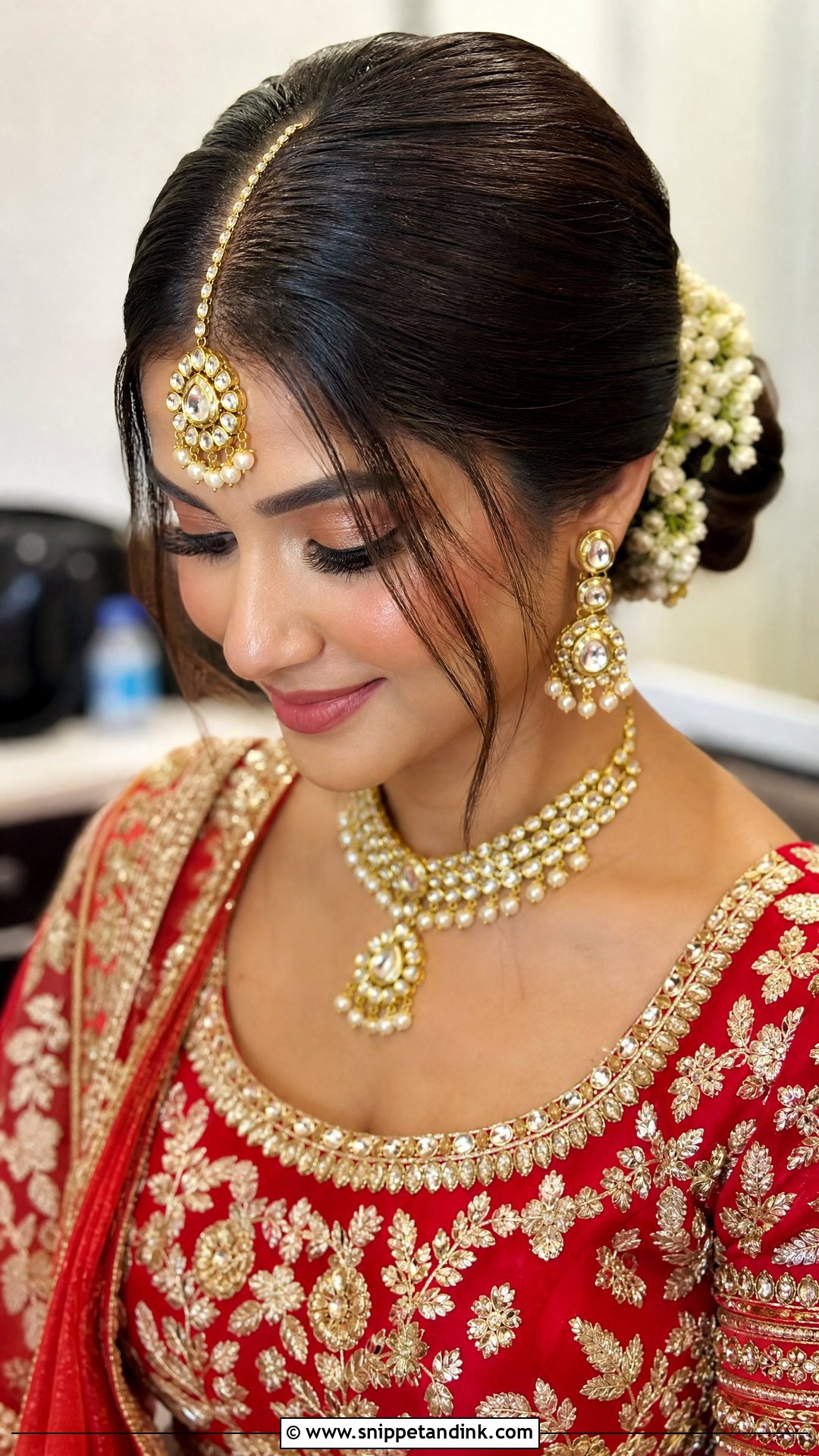
The tikka and the center part are made for each other, which is why this pairing has lasted generations. What makes it look right is a part that’s dead straight and a tikka that lies flat on the forehead rather than tilting forward. I run the chain back along the part, then anchor its hook under the bun with two crossed hidden pins, so the weight pulls back, not down onto the brow. With a heavily embroidered lehenga or saree, I’d go for a medium tikka; an oversized one fights with the dupatta border. A couple of soft face-framing pieces soften the overall effect if a sleek part feels severe on you.
2. Matha Patti Open Hair
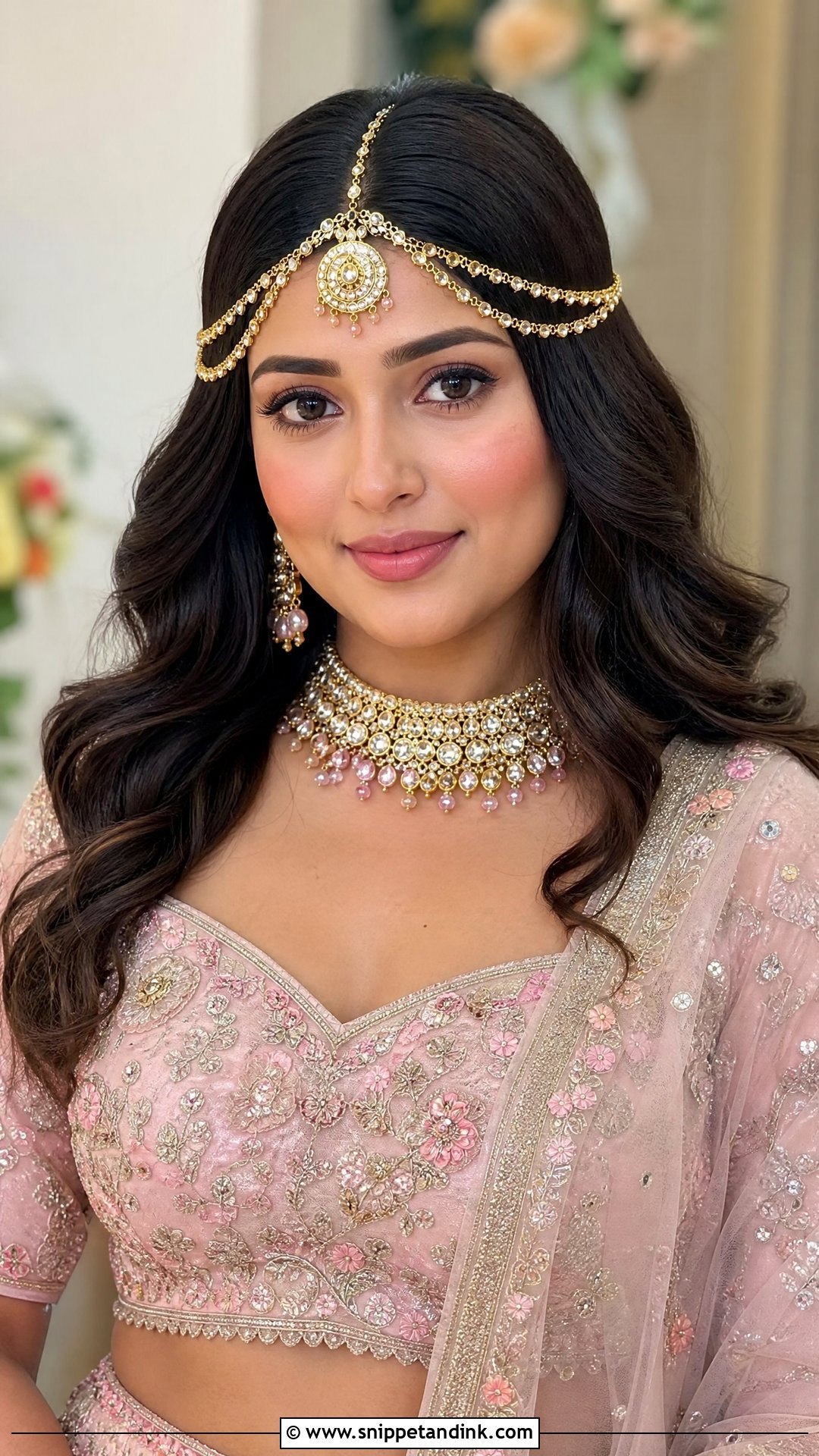
Matha patti with open hair gives a rich bridal look without a tight updo. The side chains frame the forehead and the loose hair keeps things soft. I always build a little volume at the crown first, because the matha patti needs something to grip; on flat, silky hair the side chains slide down toward the eyebrows within an hour. Longer and squarer face shapes tend to suit it, since the side chains add width. Keep the waves polished so the jewelry looks deliberate. If the dupatta is heavy, have it pinned behind the crown so it doesn’t drag the headpiece back.
3. Passa Side Swept Curls
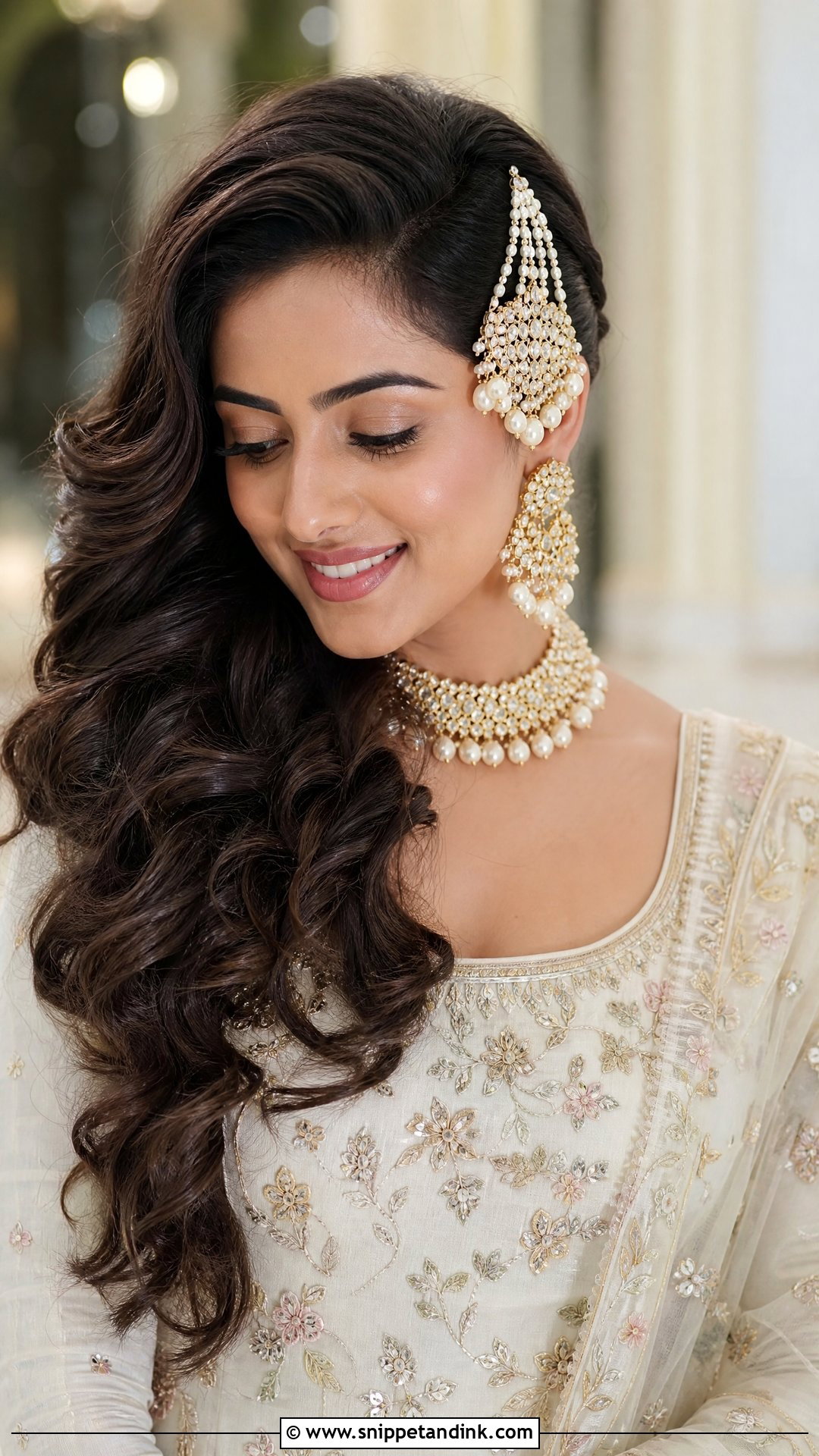
Pinning a passa is mostly about the opposite side. The passa, also called a jhoomar, sits on one side of the head, so the curls get swept over the other shoulder to balance it. I keep the passa side sleek, with hidden pins in a small flat braid underneath to take the weight; pinning straight into smooth hair lets it slip. Match the passa to your earrings and neckline, especially with pearls, kundan or gold work. It suits a nikah, reception or sangeet, and it reads clearly in profile shots, so make sure your photographer knows which side it’s on.
4. Gajra Bridal Bun
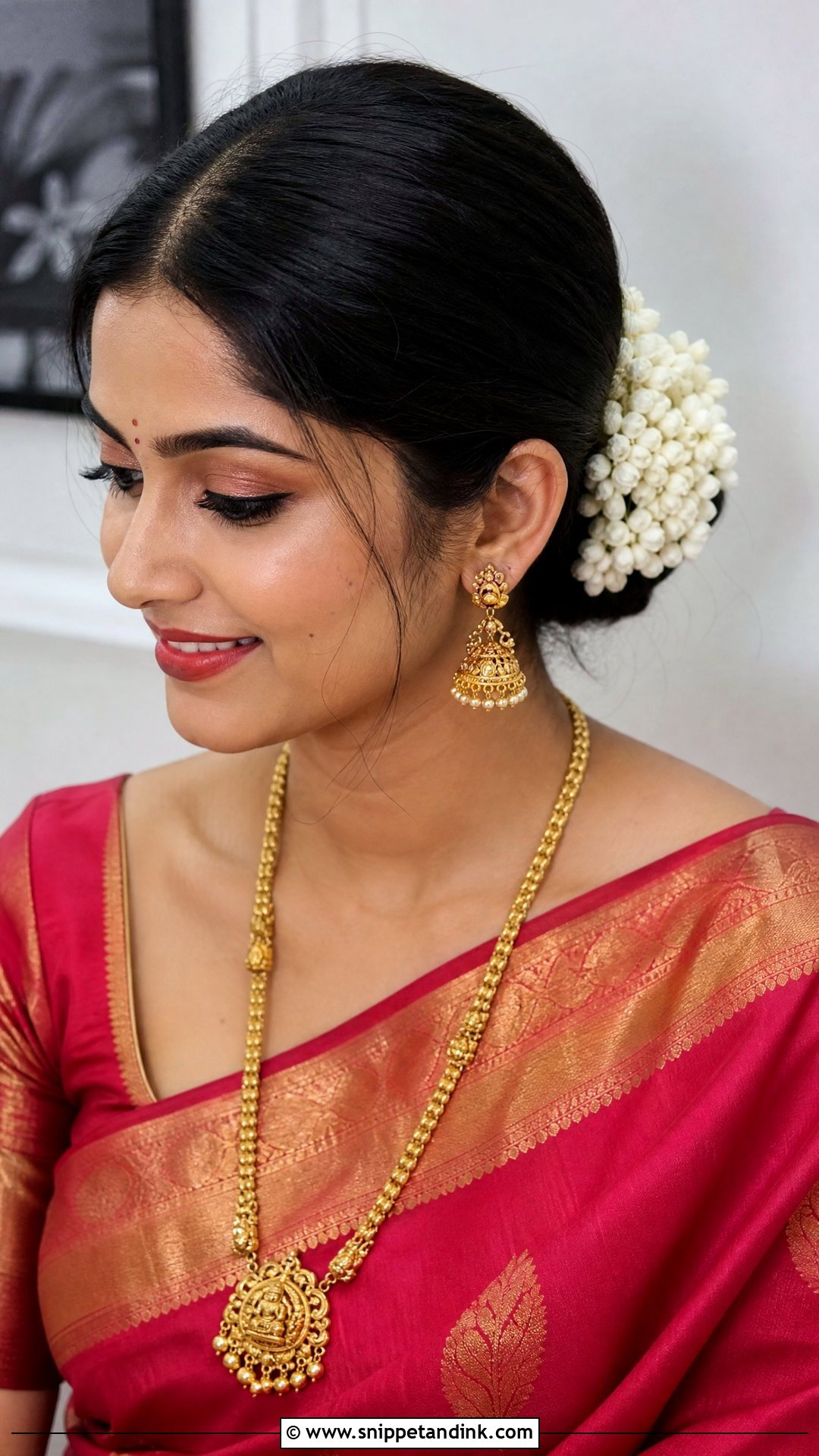
Fresh jasmine around a bun brings a scent nothing else at the wedding can match. A gajra bun is also practical for long ceremonies, because the hair stays lifted and secure. Wrap the gajra fully for a fuller look or use a single strand for a cleaner, modern finish. One thing worth knowing: jasmine buds open and start to brown within several hours, especially in heat, so I’d order the gajra for the morning of the function and keep it wrapped in a damp cloth in the fridge until it goes on. Pin it close against the bun with U-pins every few inches; loose loops droop as the flowers soften.
5. Floral Braid With Paranda
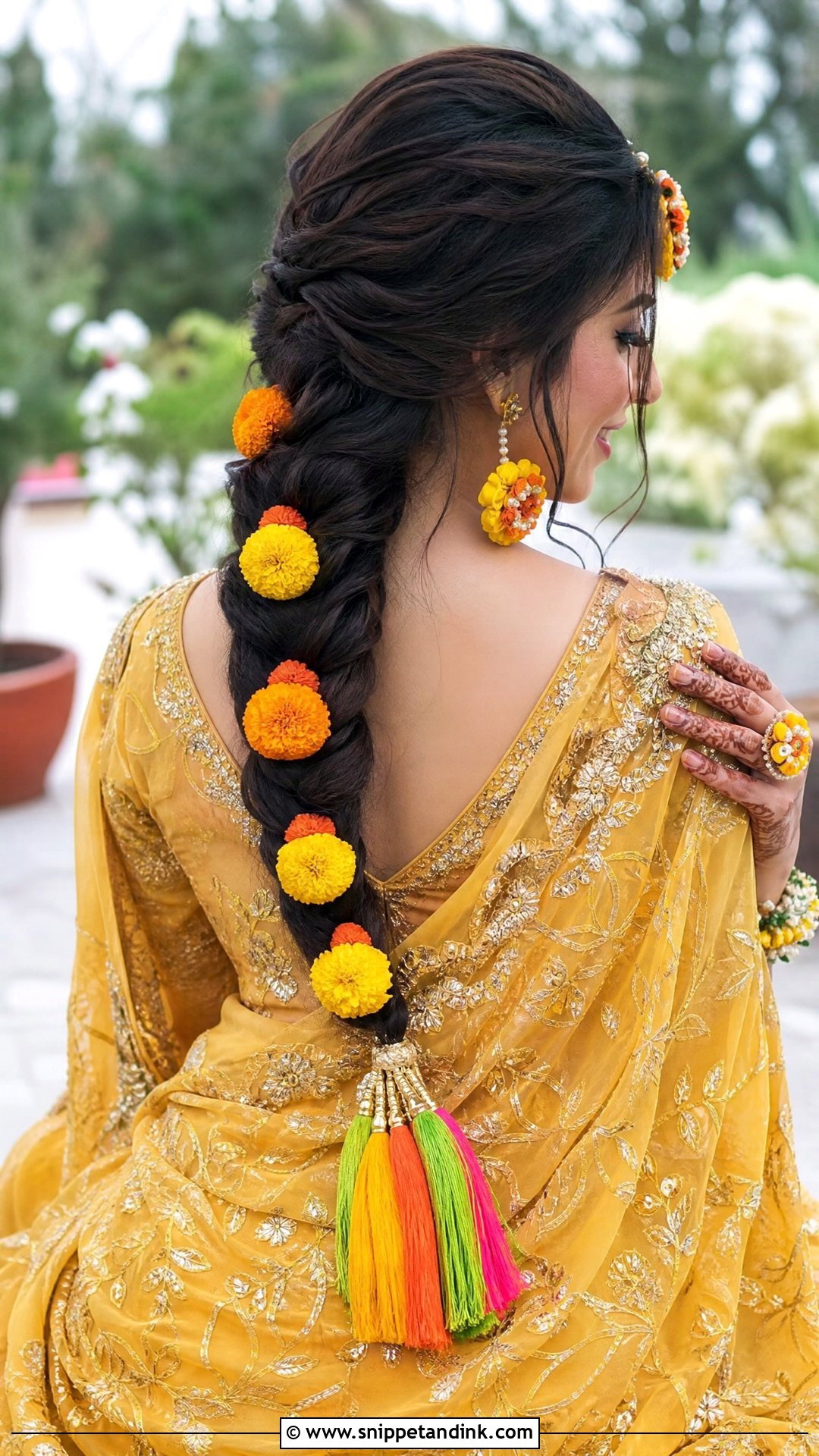
A floral braid with paranda brings color, length and swing, and the flowers keep it from feeling casual. It belongs at mehendi, haldi and Punjabi wedding functions. A bright paranda can pick up the outfit color; a gold-toned one feels more traditional. Start the paranda about a third of the way down the braid and plait it in as one of the three strands, rather than tying it on at the end, so it can’t slip off when you dance. Keep the braid slightly full so the tassels and flowers have room to show.
6. Jadau Hair Chain Bun
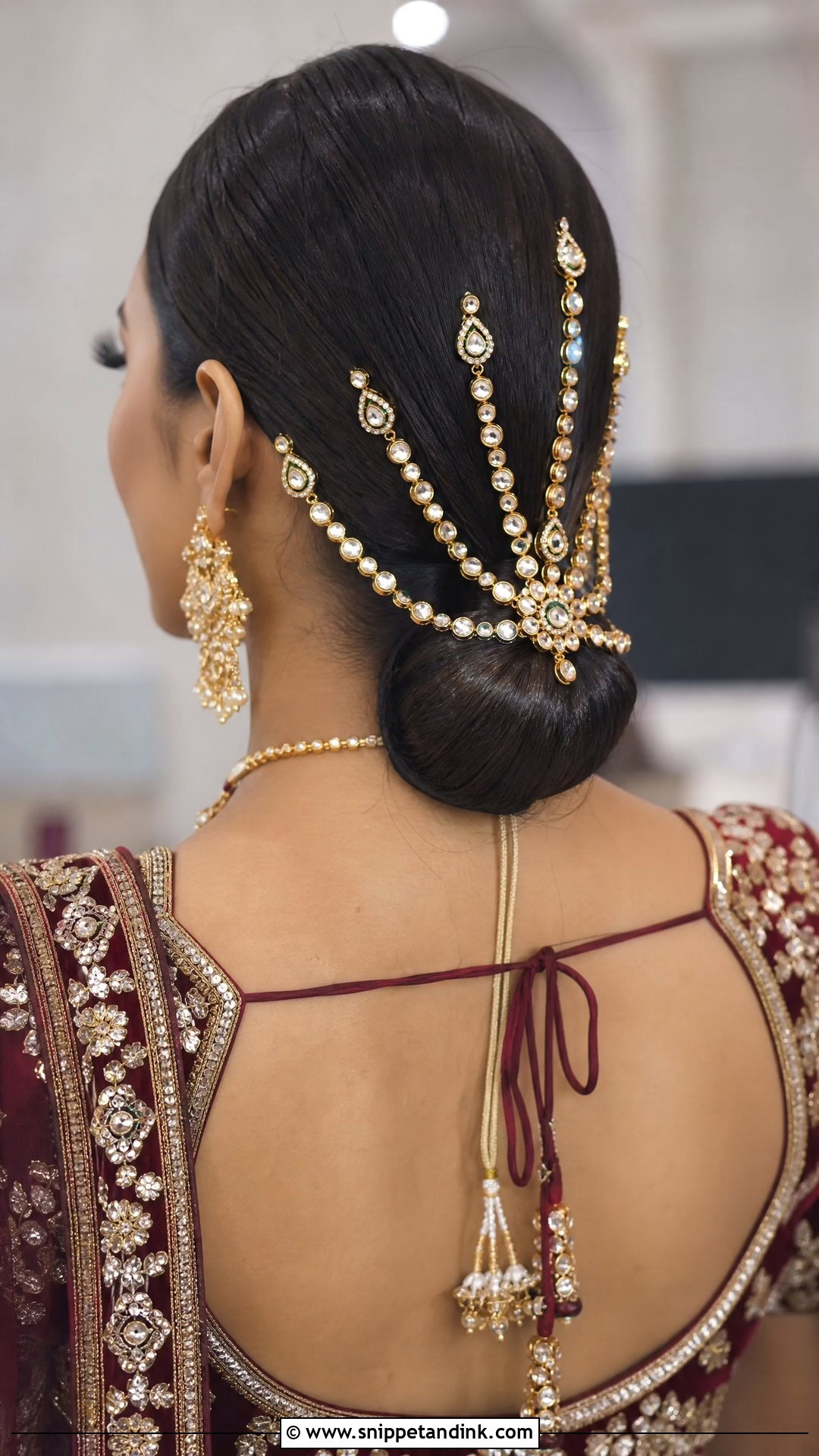
A jadau chain lets one piece do the work of several. It can drape from the center part toward the bun, across the sides, or around the bun itself. The smoother the base, the better the stones show, so a sleek low bun is the natural partner. Jadau sits well with kundan, polki and antique gold details on the outfit. I’d coordinate the earrings and necklace with it without making them identical, and pin the chain at three or four points along its length; a chain held only at the ends sags into a loop by the second hour.
7. Kundan Juda Pin Bun
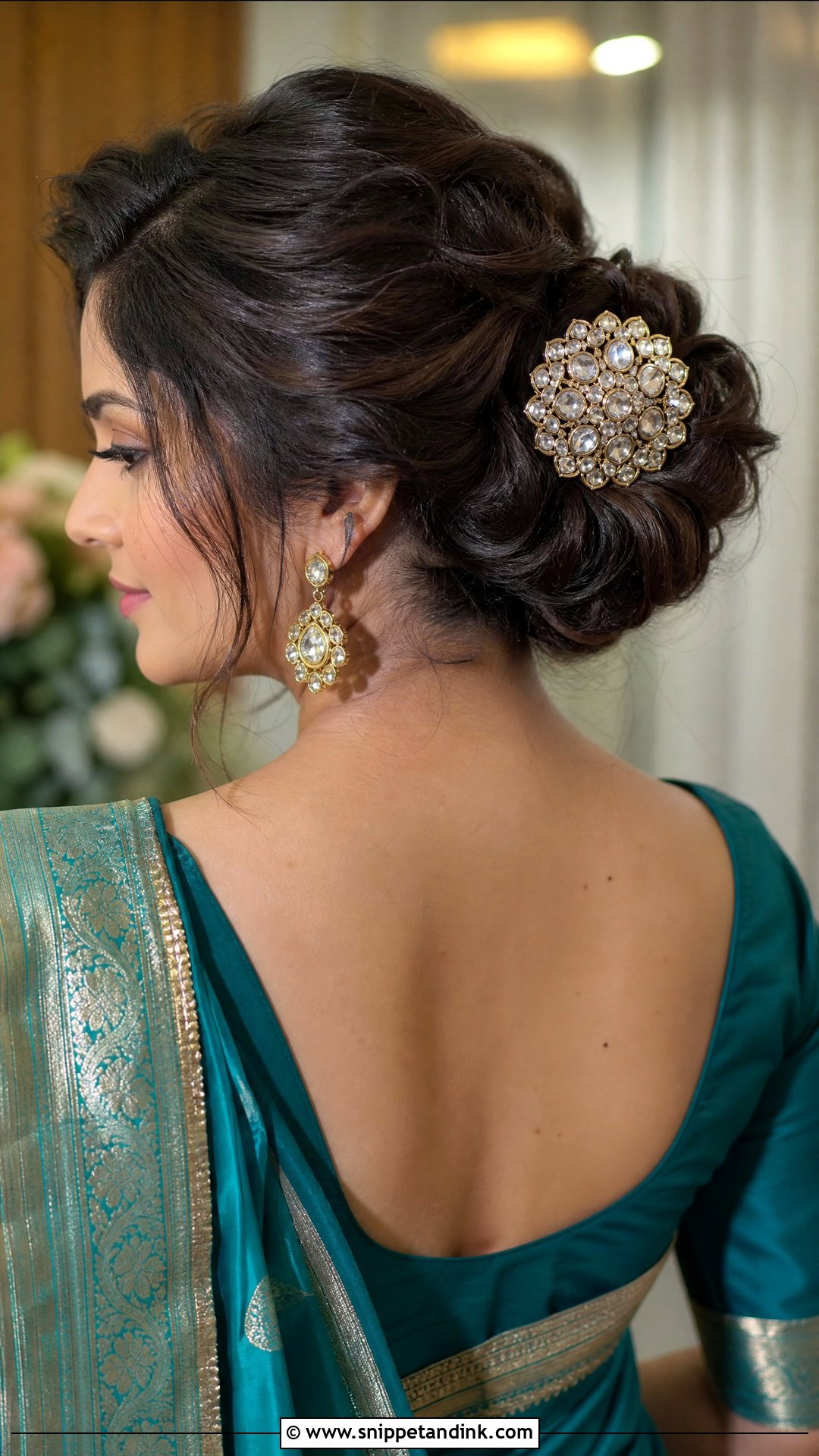
Size the juda pin to the bun. That’s the main thing I check, because a small pin vanishes into thick hair and a large one on a fine-haired bun pulls the whole thing sideways. The pin sits in the center or side of the bun and adds a sparkling focal point without covering the style. Low buns, braided buns and soft textured buns all take one. It’s a smart choice for bridesmaids, mothers of the bride, or a lighter reception look. Back it up with a couple of extra U-pins so it stays comfortable and doesn’t twist.
8. Pearl Hair Pins Half Up Hair
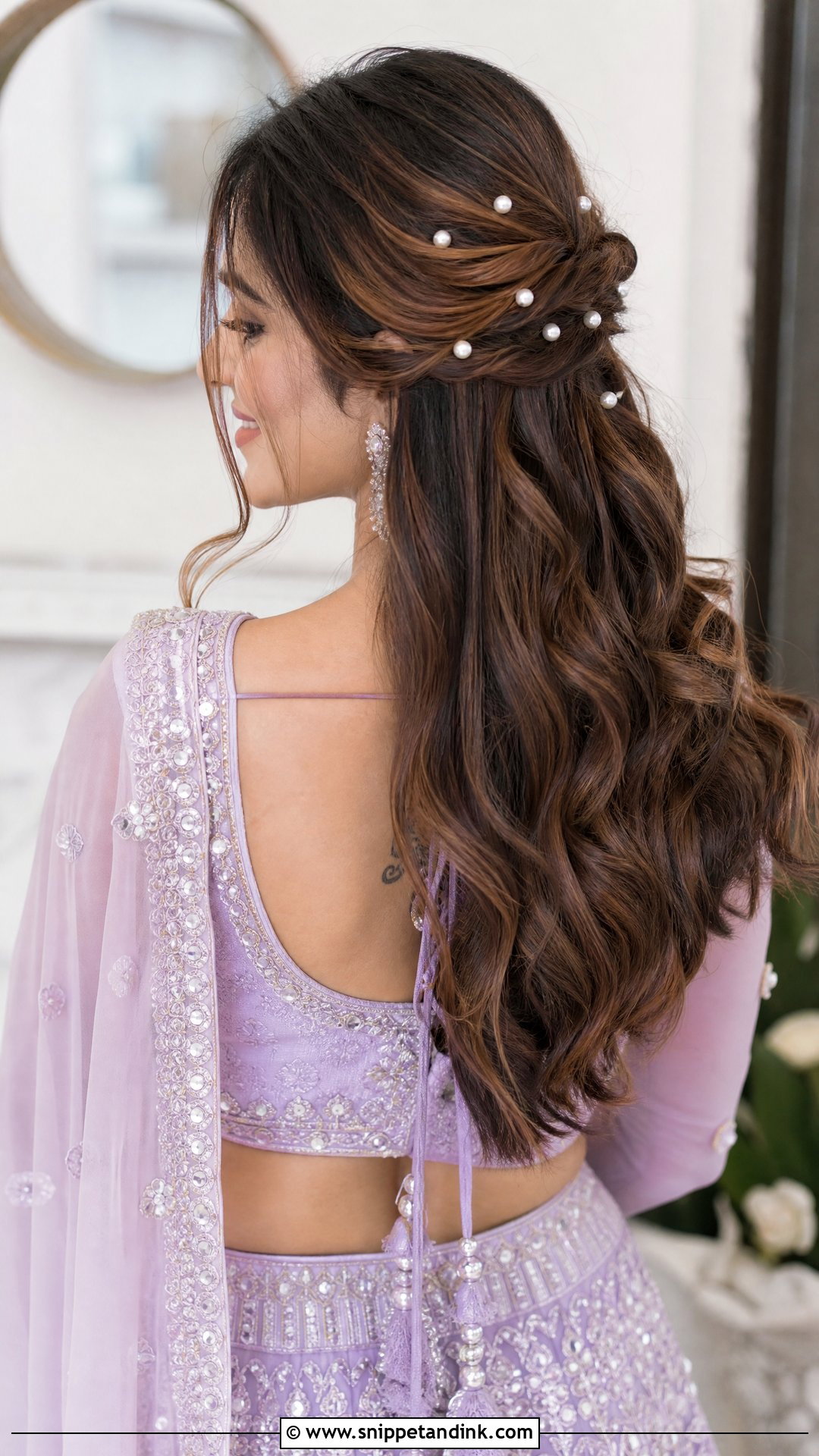
Pearl pins on half up hair give polish without weight, which suits engagement parties, receptions and bridesmaids who want to look dressed but not bridal. The top section is pinned back gently and the rest falls in waves or curls. Scatter the pins around the twist or crown in an uneven pattern; a straight row looks stiff and draws a line across the back of the head in photos. Pastel lehengas, pearl jewelry and lighter dupattas suit it. Use pins with a spring or a bend, since straight pearl pins slide out of soft curls.
9. Temple Jewelry Bridal Braid
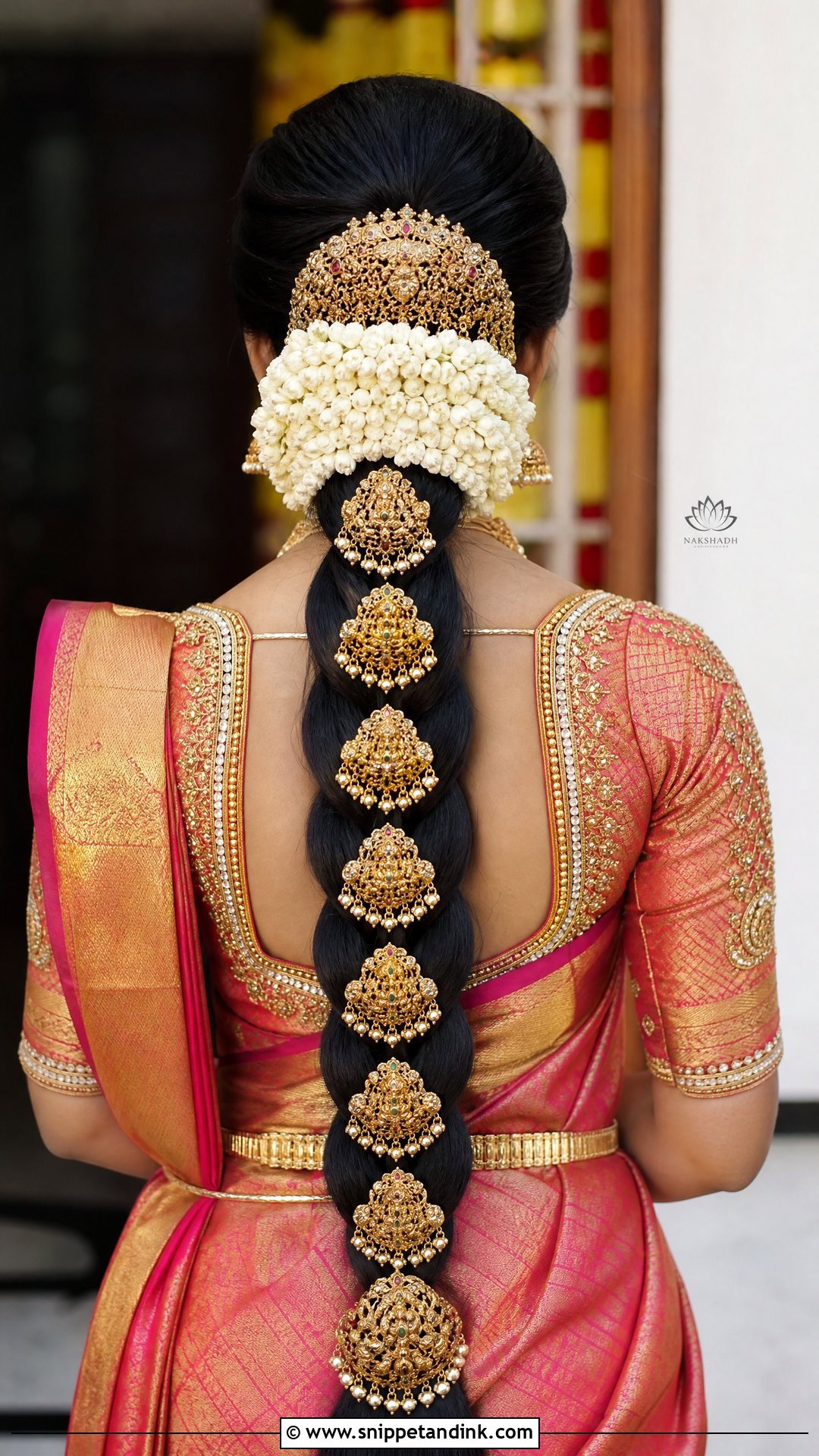
In South Indian bridal styling, the long temple braid is about as traditional as it gets. It’s usually smooth and dressed from top to bottom with gold ornaments, flowers or both, and it pairs naturally with Kanjeevaram sarees, layered necklaces and classic gold earrings. Most brides need hair extensions to get the full length, and I’d blend those in before the jewelry goes on. Build volume at the crown so the braid doesn’t look flat under the gold. The braid stays neat through long rituals, which is a big part of its appeal.
10. Sheesh Phool Bridal Hairstyle
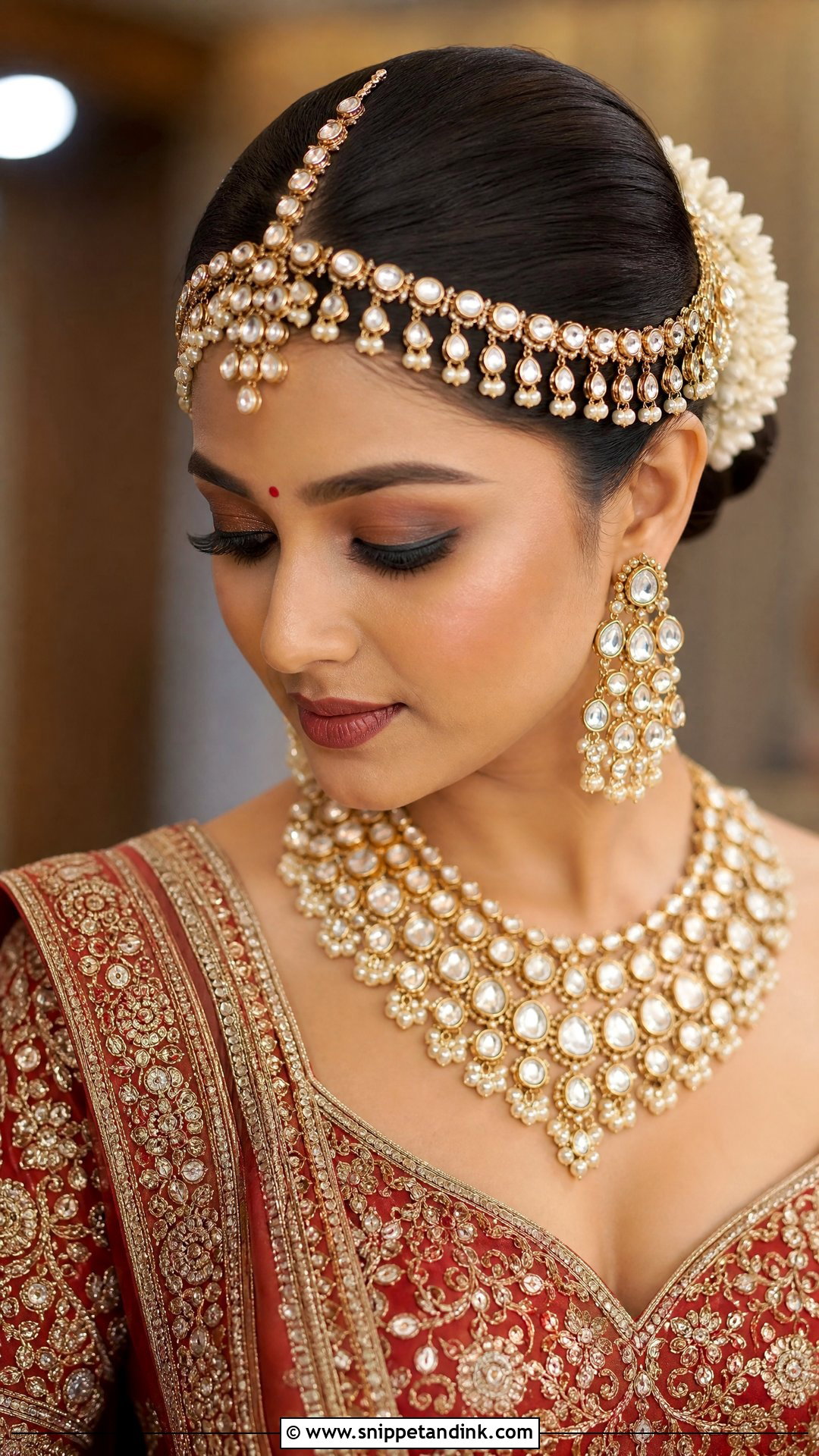
Sheesh phool spreads across the crown like a small headpiece, so it’s the one to choose if a single tikka feels too quiet. Because it’s visually strong, I keep everything around it controlled: a center-parted bun, soft waves or a structured updo, with no stray pieces competing. It belongs with Mughal-inspired lehengas, heavy dupattas and full traditional jewelry. Pin it at several points, not just the center, and walk, sit and turn your head at the trial. If it shifts during any of those, it needs more anchoring.
11. Rajasthani Borla Bridal Bun
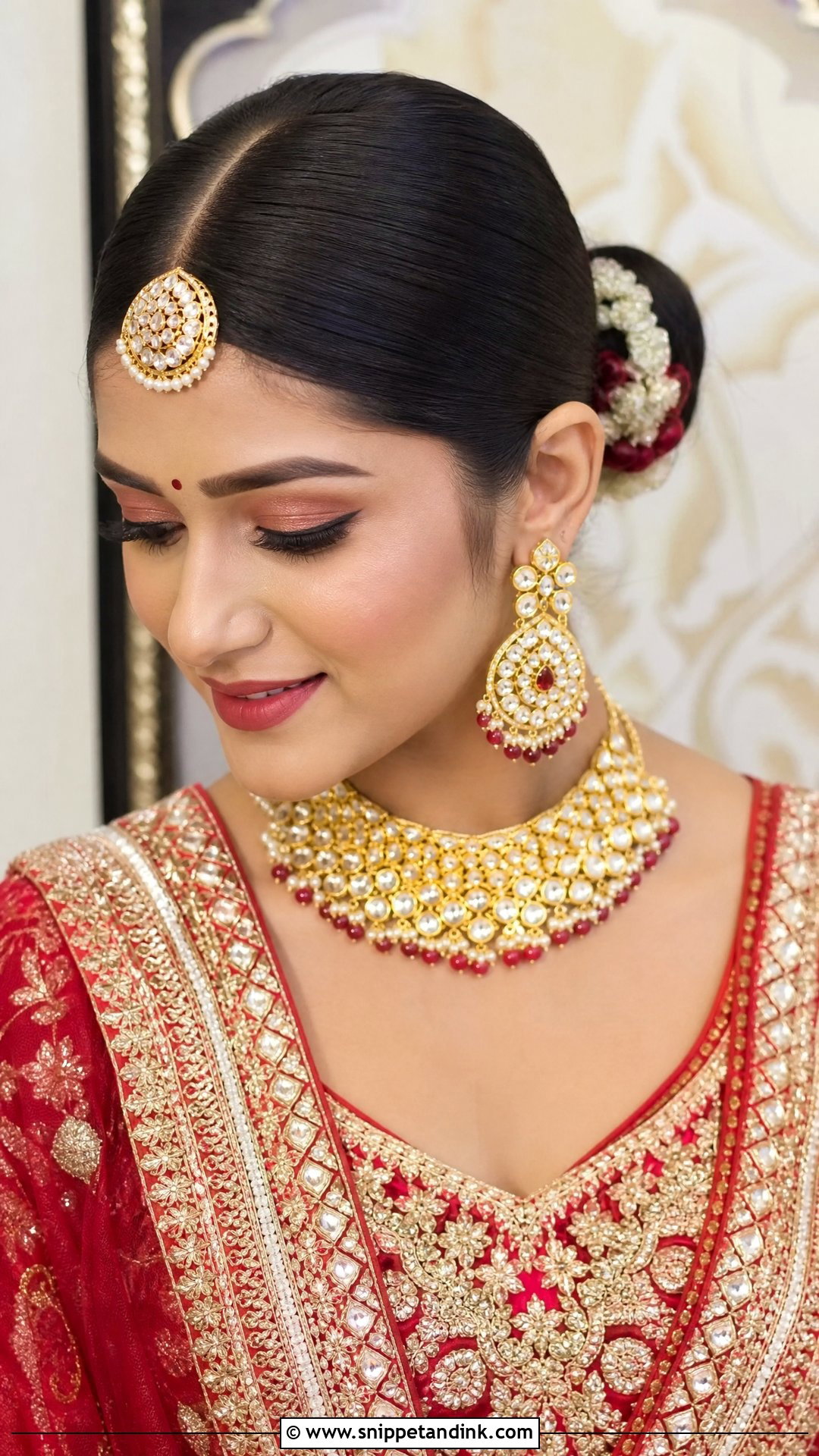
The round dome of a borla sits at the center of the forehead and stands out instantly. A Rajasthani borla bridal bun keeps the hair calm so it can. A sleek middle part and a low or mid bun work best. Pair it with a matha patti for a heavier bridal look or wear it alone. It sits well with bandhani, gota patti, mirror work and traditional red or maroon outfits. Borlas are heavier than flat tikkas, so I’d anchor the chain with a hidden pin at the crown to stop it pulling toward the eyebrows.
12. Crystal Hair Vine Waves
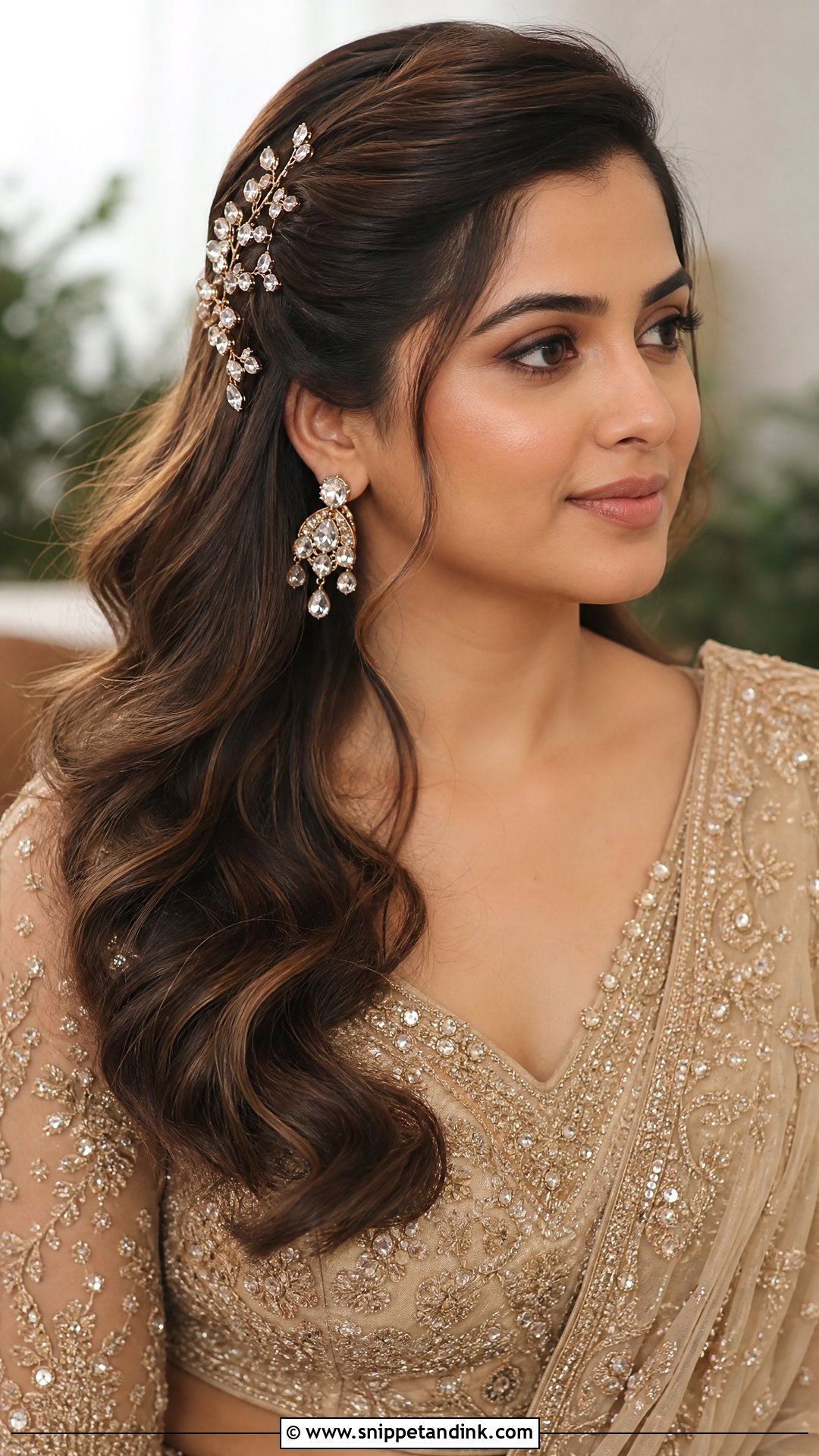
Crystal vines bring sparkle without the weight of traditional gold, which makes them easy to wear at receptions and cocktail events, or with lighter lehengas and gowns. The vine can be tucked into one side, woven through a half-up style or laid across soft waves at the back. I weave the wire through small sections and bend the ends under so nothing scratches. Smooth, glossy waves let the crystals look refined; frizzy texture makes them look busy. Silver, champagne and pastel outfits suit it best.
13. Fresh Flower Bun With Dupatta
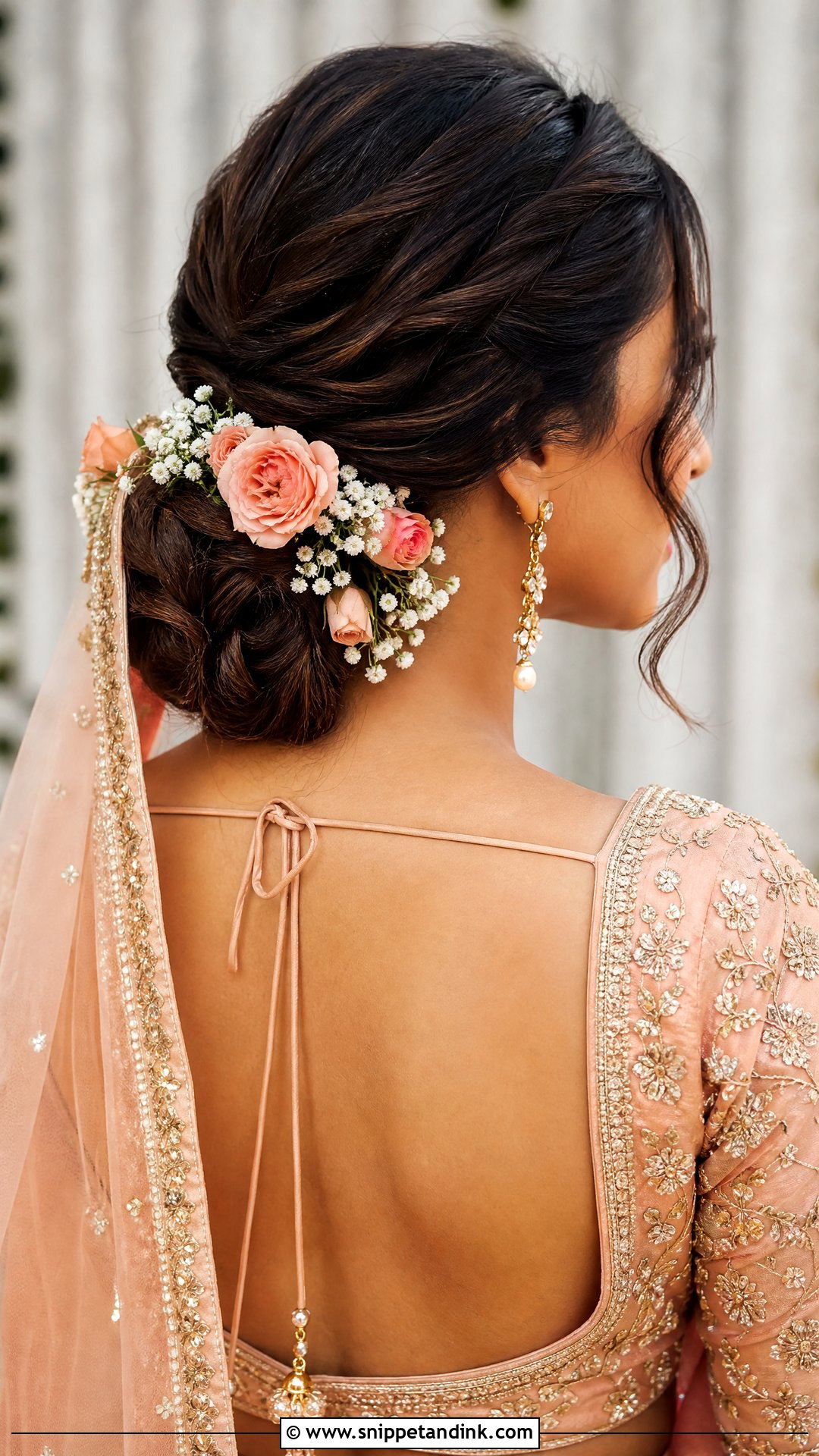
Under a ceremony dupatta, a low flower bun earns its place because it supports the fabric. The bun gives the dupatta a secure base and the flowers soften the back of the look. Roses, jasmine, baby’s breath and orchids all work, depending on your outfit colors. With a heavy dupatta, keep the flowers tight against the bun; anything sticking out gets crushed when the fabric goes on. Orchids and roses hold up better than baby’s breath in heat, which wilts fast, so I’d use that only for indoor or cooler daytime ceremonies.
14. Gold Bun Cuff Bridal Updo
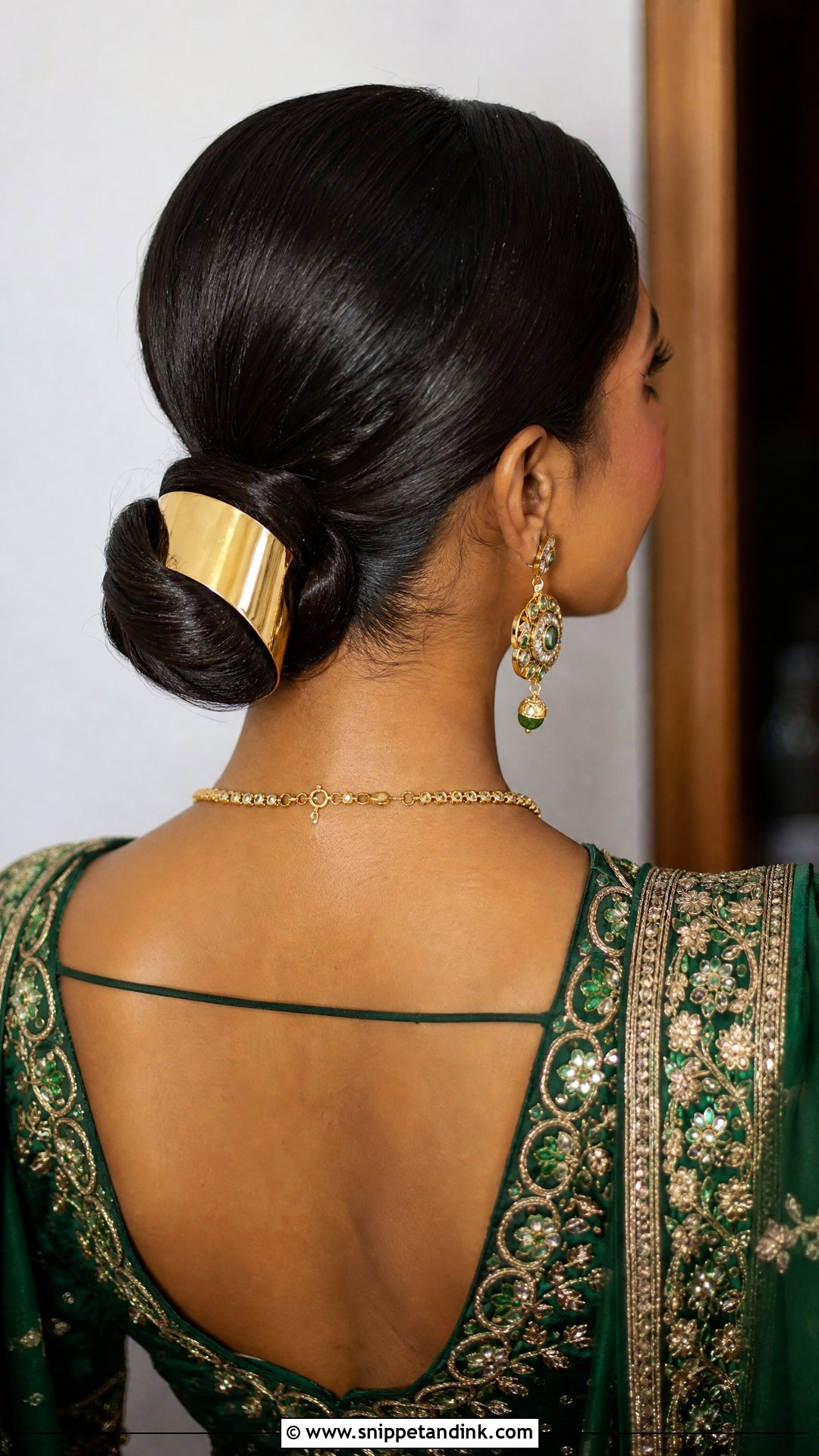
No loose flowers, no scattered pins: a gold bun cuff wraps around the bun and gives it a clean border. It needs a smooth chignon, a low bun or a twisted bun with a consistent shape, since the cuff exaggerates any lumps. Gold cuffs look right with sarees, lehengas and gowns carrying metallic embroidery. Keep the front center-parted or softly swept back depending on your face shape. I find it a good reception switch once the ceremony jewelry comes off and you’d like something festive but pared back.
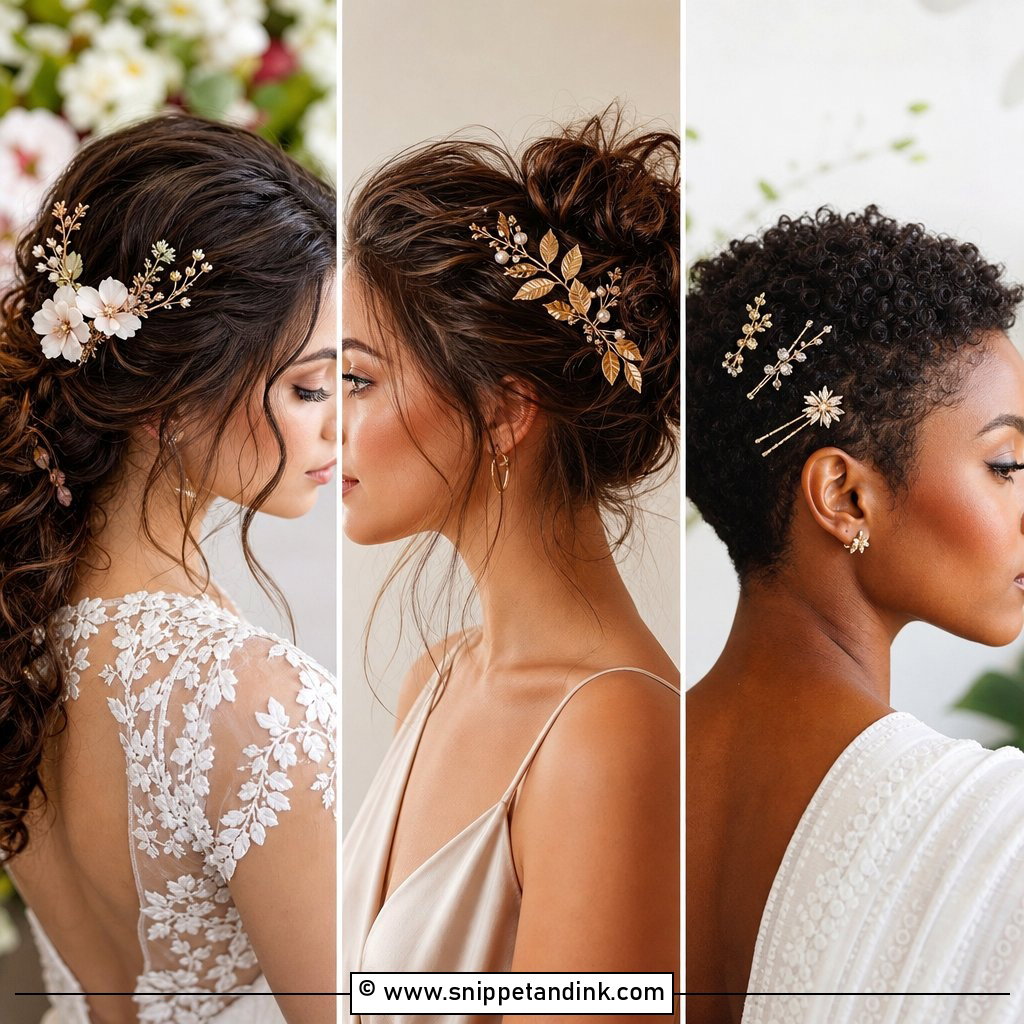
15. Minimal Maang Tikka Loose Waves
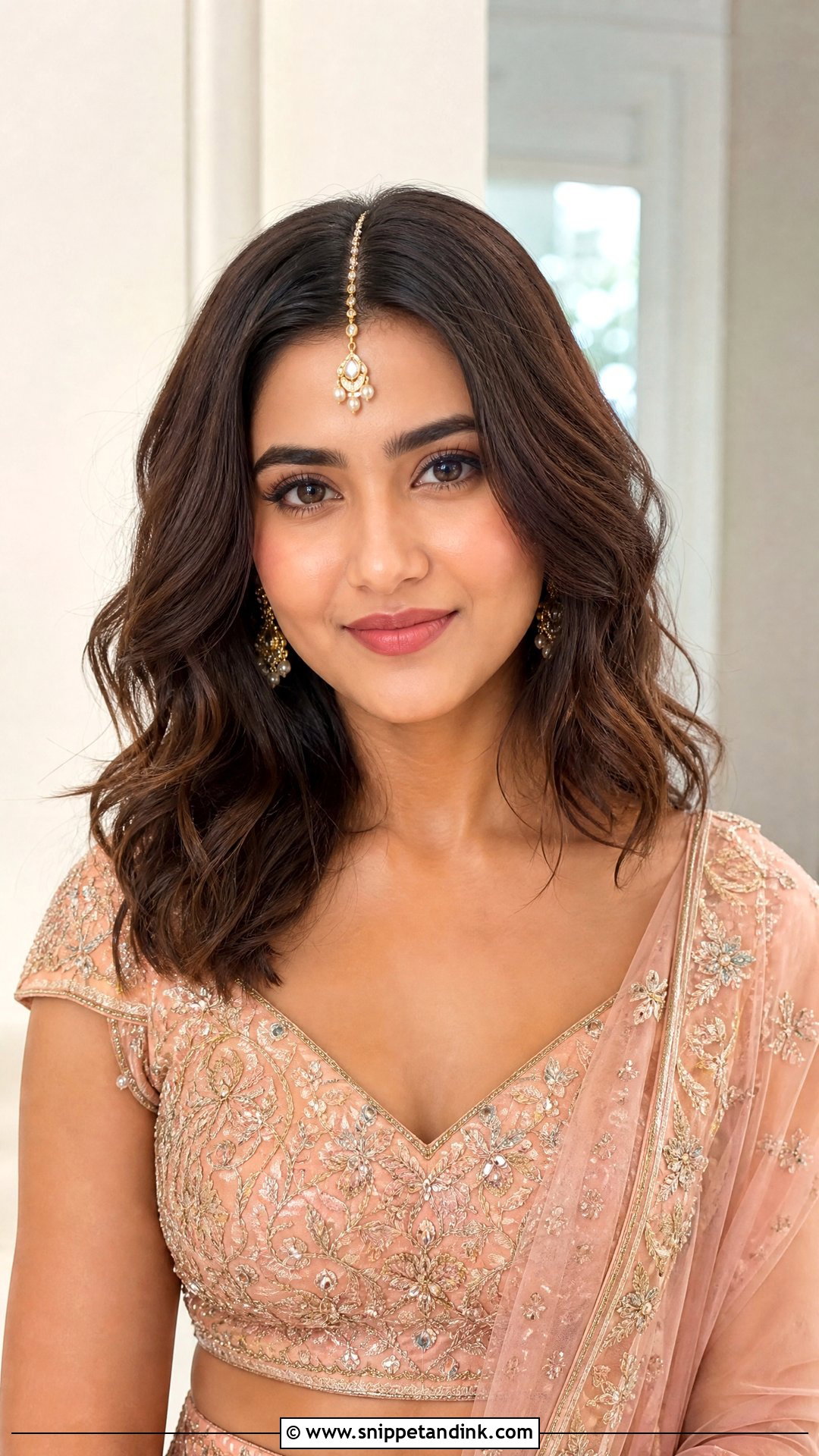
Small tikka, clean middle part, soft waves: this is the lightest look here and probably the easiest to wear for hours. It suits bridesmaids, guests, or a bride who wants a simple mehendi or engagement look. Match the tikka to your earrings and keep everything else quiet. I add a little volume at the crown and pin the chain flat along the part, because on silky waves a small tikka drifts off-center as soon as you turn your head.
How Heavy Is Too Heavy for a Long Ceremony
A full matha patti plus a passa plus a heavy dupatta adds real weight to your head, and you’ll feel it by hour three. Headaches from pins and pulling are something brides mention to me again and again once the photos are done.
- Wear the actual pieces at home for two hours before the wedding, ideally with the dupatta pinned on top. If your temples ache by then, simplify.
- I anchor heavy chains with U-pins into a small hidden braid or a little backcombing, never straight onto a smooth part where they drag.
- Spread the weight around: if the tikka is large, skip the passa, or choose a lighter sheesh phool.
- Plan a moment between ceremony and reception to remove the heaviest piece. The hair still looks finished with just the bun and a pin.
Caring for Kundan, Pearls and Gold-Plated Pieces Afterwards
Hair jewelry spends hours in contact with hairspray, sweat and perfume, which is hard on stones and plating. The night of the wedding, gently wipe each piece with a soft, dry cloth before packing it away. Don’t use water on kundan or polki, since moisture can get behind the stones and dull the foil.
Store each piece separately so chains don’t tangle and stones don’t scratch each other. Gold-plated and imitation pieces keep their color longer in a small zip pouch with a silica gel sachet, away from bathroom humidity. Pearls are the exception: keep them in a soft cloth pouch rather than airtight plastic, and put them on last, after any spray has dried.
Heavy Lehenga, Lighter Hair Jewelry
Think of the hair piece as part of the whole outfit rather than a separate purchase. A heavily worked lehenga can carry a matha patti, a sheesh phool or temple braid jewelry; a lighter outfit usually looks better with pearls, flowers or a small tikka. Keep comfort, the length of each function and where the dupatta sits in mind, then check it from the side and back in a mirror. A trial with the real pieces, pinned the way I’ll pin them on the day, tells you more than any photo can.
You'll Like These Ideas:


Leave a Reply